WO2024204504A1 - 切削インサート、刃先交換式回転切削工具 - Google Patents
切削インサート、刃先交換式回転切削工具 Download PDFInfo
- Publication number
- WO2024204504A1 WO2024204504A1 PCT/JP2024/012584 JP2024012584W WO2024204504A1 WO 2024204504 A1 WO2024204504 A1 WO 2024204504A1 JP 2024012584 W JP2024012584 W JP 2024012584W WO 2024204504 A1 WO2024204504 A1 WO 2024204504A1
- Authority
- WO
- WIPO (PCT)
- Prior art keywords
- cutting edge
- blade
- edge
- cutting
- corner
- Prior art date
- Legal status (The legal status is an assumption and is not a legal conclusion. Google has not performed a legal analysis and makes no representation as to the accuracy of the status listed.)
- Ceased
Links
Images




Classifications
-
- B—PERFORMING OPERATIONS; TRANSPORTING
- B23—MACHINE TOOLS; METAL-WORKING NOT OTHERWISE PROVIDED FOR
- B23C—MILLING
- B23C5/00—Milling-cutters
- B23C5/16—Milling-cutters characterised by physical features other than shape
- B23C5/20—Milling-cutters characterised by physical features other than shape with removable cutter bits or teeth or cutting inserts
- B23C5/202—Plate-like cutting inserts with special form
-
- B—PERFORMING OPERATIONS; TRANSPORTING
- B23—MACHINE TOOLS; METAL-WORKING NOT OTHERWISE PROVIDED FOR
- B23C—MILLING
- B23C5/00—Milling-cutters
- B23C5/02—Milling-cutters characterised by the shape of the cutter
- B23C5/06—Face-milling cutters, i.e. having only or primarily a substantially flat cutting surface
-
- B—PERFORMING OPERATIONS; TRANSPORTING
- B23—MACHINE TOOLS; METAL-WORKING NOT OTHERWISE PROVIDED FOR
- B23C—MILLING
- B23C5/00—Milling-cutters
- B23C5/02—Milling-cutters characterised by the shape of the cutter
- B23C5/10—Shank-type cutters, i.e. with an integral shaft
-
- B—PERFORMING OPERATIONS; TRANSPORTING
- B23—MACHINE TOOLS; METAL-WORKING NOT OTHERWISE PROVIDED FOR
- B23C—MILLING
- B23C5/00—Milling-cutters
- B23C5/02—Milling-cutters characterised by the shape of the cutter
- B23C5/10—Shank-type cutters, i.e. with an integral shaft
- B23C5/109—Shank-type cutters, i.e. with an integral shaft with removable cutting inserts
-
- B—PERFORMING OPERATIONS; TRANSPORTING
- B23—MACHINE TOOLS; METAL-WORKING NOT OTHERWISE PROVIDED FOR
- B23C—MILLING
- B23C5/00—Milling-cutters
- B23C5/16—Milling-cutters characterised by physical features other than shape
- B23C5/20—Milling-cutters characterised by physical features other than shape with removable cutter bits or teeth or cutting inserts
- B23C5/22—Securing arrangements for bits or teeth or cutting inserts
- B23C5/2204—Securing arrangements for bits or teeth or cutting inserts with cutting inserts clamped against the walls of the recess in the cutter body by a clamping member acting upon the wall of a hole in the insert
- B23C5/2208—Securing arrangements for bits or teeth or cutting inserts with cutting inserts clamped against the walls of the recess in the cutter body by a clamping member acting upon the wall of a hole in the insert for plate-like cutting inserts
-
- B—PERFORMING OPERATIONS; TRANSPORTING
- B23—MACHINE TOOLS; METAL-WORKING NOT OTHERWISE PROVIDED FOR
- B23C—MILLING
- B23C2200/00—Details of milling cutting inserts
- B23C2200/12—Side or flank surfaces
- B23C2200/125—Side or flank surfaces discontinuous
-
- B—PERFORMING OPERATIONS; TRANSPORTING
- B23—MACHINE TOOLS; METAL-WORKING NOT OTHERWISE PROVIDED FOR
- B23C—MILLING
- B23C2200/00—Details of milling cutting inserts
- B23C2200/20—Top or side views of the cutting edge
- B23C2200/203—Curved cutting edges
-
- B—PERFORMING OPERATIONS; TRANSPORTING
- B23—MACHINE TOOLS; METAL-WORKING NOT OTHERWISE PROVIDED FOR
- B23C—MILLING
- B23C2200/00—Details of milling cutting inserts
- B23C2200/20—Top or side views of the cutting edge
- B23C2200/205—Discontinuous cutting edges
-
- B—PERFORMING OPERATIONS; TRANSPORTING
- B23—MACHINE TOOLS; METAL-WORKING NOT OTHERWISE PROVIDED FOR
- B23C—MILLING
- B23C2200/00—Details of milling cutting inserts
- B23C2200/20—Top or side views of the cutting edge
- B23C2200/208—Wiper, i.e. an auxiliary cutting edge to improve surface finish
-
- B—PERFORMING OPERATIONS; TRANSPORTING
- B23—MACHINE TOOLS; METAL-WORKING NOT OTHERWISE PROVIDED FOR
- B23C—MILLING
- B23C2200/00—Details of milling cutting inserts
- B23C2200/28—Angles
- B23C2200/289—Positive clearance angles
-
- B—PERFORMING OPERATIONS; TRANSPORTING
- B23—MACHINE TOOLS; METAL-WORKING NOT OTHERWISE PROVIDED FOR
- B23C—MILLING
- B23C2200/00—Details of milling cutting inserts
- B23C2200/28—Angles
- B23C2200/293—Variable clearance angles
-
- B—PERFORMING OPERATIONS; TRANSPORTING
- B23—MACHINE TOOLS; METAL-WORKING NOT OTHERWISE PROVIDED FOR
- B23C—MILLING
- B23C2210/00—Details of milling cutters
- B23C2210/16—Fixation of inserts or cutting bits in the tool
- B23C2210/168—Seats for cutting inserts, supports for replacable cutting bits
Definitions
- the present invention relates to a cutting insert and an indexable rotary cutting tool.
- Patent Document 1 discloses a cutting insert that can increase the rigidity of the corner blade and improve processing efficiency.
- a polygonal plate-shaped cutting insert comprising a scooping surface constituting one of a pair of polygonal surfaces, a seating surface constituting the other of the pair of polygonal surfaces, a side surface connecting the scooping surface and the seating surface, and an attachment hole opening on the scooping surface and the seating surface and penetrating the cutting insert in the thickness direction, a cutting edge portion is provided on the intersection ridge between the scooping surface and the side surface, the cutting edge portion includes a corner blade and a main cutting edge connected to the corner blade, the main cutting edge is linear both in a plan view of the scooping surface seen from the front and in a side view of the side surface seen from the front, the corner blade includes a first arc blade connected to the main cutting edge and an outermost circular arc blade located at the outermost periphery within the corner blade, and the first arc blade and the outermost circular arc blade are arc-shaped cutting edges having different radii of curvature.
- the main cutting edge is linear when viewed from two mutually perpendicular directions, so that during cutting, the entire direction in which the main cutting edge extends cuts into the workpiece evenly.
- the temperature distribution is distributed over the entire main cutting edge. Since there is no localized temperature rise on the main cutting edge, wear on the rake face of the main cutting edge due to temperature rise can be suppressed.
- the outermost circular arc blade with a large radius of curvature is arranged on the outermost periphery of the corner blade, and the outermost circular arc blade and the main cutting blade 21 can be connected at a short distance by the first circular arc blade with a relatively small radius of curvature.
- the strength of the corner blade can be improved.
- the length of the main cutting blade can be secured to be longer.
- a cutting insert is provided that can ensure the strength of the corner cutting edge while suppressing the temperature increase of the main cutting edge, enabling highly efficient machining.
- the radius of curvature Rout of the outermost circular arc blade may be the largest among the radii of curvature of the multiple arc-shaped cutting edges that make up the corner blade, and when the overall cutting edge length of the corner blade is L2 and the cutting edge length of the outermost circular arc blade is Lout, the configuration may be such that L2-Lout ⁇ Lout is satisfied.
- the corner blade may be configured to consist of only arc-shaped cutting edges with two different radii of curvature.
- the main cutting edge may be a straight cutting edge, and may be configured to satisfy 0.35 x D1 ⁇ L1 ⁇ 0.60 x D1, where L1 is the cutting edge length of the main cutting edge and D1 is the inscribed circle diameter of the rake face.
- the seating surface and the cutting edge portion are parallel to each other in the side view, and the cutting edge portion includes the corner edge, the main cutting edge, a wiper edge adjacent to the main cutting edge on the opposite side to the corner edge, and an inner circular arc edge adjacent to the wiper edge on the opposite side to the main cutting edge, and the cutting edge length of the main cutting edge may be L1 and the cutting edge length of the wiper edge may be L3, so that 0.25 ⁇ L3/L1 ⁇ 0.50 is satisfied.
- the radius of curvature Rout of the outermost circular arc blade may be an integer multiple of 1 mm.
- any one of (1) to (6) when a virtual line VL is defined perpendicular to the main cutting edge from the center line of the mounting hole in the plan view, the intersection of the virtual line VL and the main cutting edge is defined as point S, and the intersection of the virtual line VL and the outer peripheral edge of the mounting hole is defined as point T, the shortest distance L5 between point S and point T may be greater than the distance L6 from the center line O1 to point T.
- the corner blade may have an outer blade connected to the opposite side of the main cutting blade, the outermost circular arc blade and the outer blade are smoothly connected, the first circular arc blade and the main cutting blade are smoothly connected, and the main cutting blade and the wiper blade may be connected via a convex curved blade that protrudes radially outward from the center line of the mounting hole.
- a replaceable cutting tool comprising a cutting insert according to any one of (1) to (8) and a holder to which the cutting insert is removably attached and which rotates about a rotation axis, the holder having an insert mounting seat that contacts the clearance surface of the cutting insert against the wiper blade and the seating surface.
- a cutting insert having a polygonal plate shape, and a holder to which the cutting insert is detachably attached and which rotates around a rotation axis, the cutting insert having a rake face constituting one of a pair of polygonal faces, a seating face constituting the other of the pair of polygonal faces, a side face connecting the rake face and the seating face, and an attachment hole opening on the rake face and the seating face and penetrating the cutting insert in a thickness direction, the cutting insert having a cutting edge portion provided on an intersecting ridge line between the rake face and the side face, the cutting edge portion having a corner edge and a mounting hole connected to the corner edge.
- the corner edge includes a first arc blade connected to the main cutting edge and an outermost arc blade located at the outermost periphery within the corner edge, the first arc blade and the outermost arc blade being arc-shaped cutting edges having different radii of curvature in a tool rotation trajectory, and the holder has an insert mounting seat which contacts the relief surface of the cutting insert facing the wiper blade and the seating surface. (10) may include any of (2) to (8).
- a cutting insert capable of high-efficiency machining that can suppress temperature rise in the main cutting edge while ensuring the strength of the corner cutting edge, and a replaceable cutting edge rotary cutting tool equipped with the cutting insert.
- FIG. 1 is a perspective view showing a cutting insert according to an embodiment.
- FIG. 2 is a plan view showing a configuration of a rake face of the cutting insert shown in FIG.
- FIG. 3A is an enlarged partial plan view of the cutting insert.
- FIG. 3B is an enlarged partial plan view of the cutting insert.
- FIG. 4 is a side view showing a configuration of a side surface of the cutting insert.
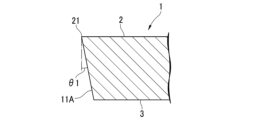
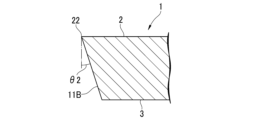
- 5A is a cross-sectional view of the cutting insert taken along line Va-Va in FIG. 5B is a cross-sectional view of the cutting insert taken along line Vb-Vb in FIG. 2.
- FIG. FIG. 6 is a side view of the indexable rotary cutting tool.
- FIG. 7 is a perspective view of an indexable rotary cutting tool.
- FIG. 8 is a perspective view showing the holder with the cutting insert 1 removed.
- FIG. 1 is a perspective view showing a cutting insert 1 of an embodiment.
- FIG. 2 is a plan view showing the configuration of the rake face 2 of the cutting insert 1 shown in FIG. 1.
- FIG. 3A is a partial plan view of the cutting insert 1 showing an enlarged portion of FIG. 2.
- FIG. 3B is a partial plan view of the cutting insert 1 showing an enlarged portion of FIG. 3A.
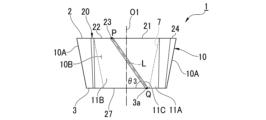
- FIG. 4 is a side view showing the configuration of the side surface 10 of the cutting insert 1.
- the cutting insert 1 has a polygonal plate shape (a quadrangular plate shape in this embodiment) that is rotationally symmetric with respect to a center line O1 extending in the thickness direction.
- the center line O1 is the central axis of a mounting hole 7 that penetrates the cutting insert 1 in the thickness direction.
- the direction along the center line O1 may simply be referred to as the thickness direction.
- the direction perpendicular to the center line O1 may simply be referred to as the radial direction.
- the circumferential direction around the axis centered on the center line O1 may simply be referred to as the circumferential direction.
- the cutting insert 1 comprises a scooping surface 2 constituting one of a pair of polygonal surfaces, a seating surface 3 constituting the other of the pair of polygonal surfaces, a side surface 10 connecting the scooping surface 2 and the seating surface 3, and a mounting hole 7 for mounting to a holder.
- the scooping surface 2 and the seating surface 3 are formed in a substantially rectangular shape.
- the seating surface 3 is included inside the projection area of the scooping surface 2 in the thickness direction.
- the side surface 10 has two side surfaces 10A continuing to the long sides of the scooping surface 2 and two side surfaces 10B continuing to the short sides of the scooping surface 2.
- the cutting insert 1 is removably attached to the tip of the holder 31 by a clamp screw 38.
- the cutting surface 2 and the seating surface 3 are formed with mounting holes 7 that penetrate the cutting insert 1 in the thickness direction.
- the clamp screw 38 is inserted into the mounting holes 7.
- the mounting holes 7 extend along the center line O1 of the cutting insert 1.
- the mounting hole 7 is a tapered through hole with the center line O1 as its central axis.
- the scooping surface 2 includes a reference surface 2a that is parallel to the seating surface 3.
- a cutting edge portion 20 is provided at the intersection ridge between the scooping surface 2 and the side surface 10.
- the cutting edge portion 20 includes an outer peripheral edge 25, a corner edge 24, a main cutting edge 21, a wiper edge 22, and an inner peripheral arc edge 26.
- the main cutting edge 21 and wiper edge 22 are provided at the ridgeline where the side 10B connects to the short side of the scooping face 2 intersects with the side 10A connects to the long side of the scooping face 2.
- a corner edge 24 is provided between the main cutting edge 21 and the outer peripheral edge 25.
- An inner circular arc edge 26 is provided on the side of the wiper edge 22 opposite the main cutting edge 21.
- the inner circular arc edge 26 is located at the corner of the scooping face 2.
- the corner edges 24 are located at two diagonally opposite corners, and the inner circular arc edge 26 is located at the other two corners.
- the cutting edge portion 20 has a convex curved edge 23 that connects the main cutting edge 21 and the wiper edge 22.
- the outer cutting edge 25, corner cutting edge 24, main cutting edge 21, convex curved edge 23, wiper edge 22, and inner circular arc edge 26 are arranged in this order in a rightward (clockwise) direction.
- two cutting edge portions 20 are provided at 180° intervals in the circumferential direction around the center line O1.
- the two cutting edge portions 20 are arranged rotationally symmetrically around the center line O1.
- the main cutting edge 21 is located on a short side of the rake face 2 and extends linearly in a plan view of the rake face 2.
- the main cutting edge 21 is the longest of the cutting edges constituting the cutting edge portion 20.
- the main cutting edge 21 faces the rotation direction TD of the holder 31 and faces the workpiece.
- the main cutting edge 21 is straight both in a plan view of the cutting face 2 (Fig. 2) and in a side view (Fig. 4) in which the side surface 10B is viewed from the front.
- the cutting edge being "straight" includes not only a completely straight line, but also a substantially straight line within a certain margin of error.
- a gentle arc shape with a curvature radius of more than 50 mm, or a meandering curve shape with a meandering width of 0.05 mm or less is included in the term "straight" in this specification.
- the corner blade 24 is connected to the main cutting edge 21 and is located at the corner of the rake face 2.
- the corner blade 24 has a compound arc shape made up of multiple arcs in the plan view shown in FIG. 2.
- the main cutting edge 21 extends in a straight line. Therefore, the boundary between the corner blade 24 and the main cutting edge 21 is determined by the boundary between the straight-line shaped portion and the arc shaped portion of the cutting edge portion 20.
- the corner blade 24 includes a first arc-shaped blade 24a connected to the main cutting blade 21 and an outermost arc-shaped blade 24b located at the outermost periphery of the corner blade 24.
- the first arc-shaped blade 24a and the outermost arc-shaped blade 24b are arc-shaped cutting blades having different radii of curvature.
- the radius of curvature Rout of the outermost arc-shaped blade 24b is larger than the radius of curvature R1 of the first arc-shaped blade 24a.
- the first circular arc blade 24a and the outermost circular arc blade 24b may be arc-shaped cutting edges having different radii of curvature on the tool rotation trajectory.
- the radius of curvature Rout of the outermost circular arc blade 24b is larger than the radius of curvature R1 of the first circular arc blade 24a.
- the main cutting edge 21 is straight in both a planar view of the cutting face 2 and a side view of the side surface 10B viewed from the front, and the corner edge 24 includes a first arc blade 24a connected to the main cutting edge 21 and an outermost arc blade 24b located at the outermost periphery within the corner edge 24, and the first arc blade 24a and the outermost arc blade 24b are arc-shaped cutting edges having different radii of curvature.
- the main cutting edge 21 is linear when viewed from both the front direction of the rake face 2 and the direction perpendicular to the rake face 2, so that during cutting, the entire direction in which the main cutting edge 21 extends cuts into the workpiece evenly.
- the temperature distribution when the cutting edge temperature rises due to cutting resistance is distributed over the entire main cutting edge 21. Since no local temperature rise occurs in the main cutting edge 21, wear on the rake face and flank of the main cutting edge 21 due to temperature rise can be suppressed.
- the corner blade 24 by configuring the corner blade 24 with arc-shaped cutting blades having different radii of curvature, the outermost circular cutting blade 24b with a large radius of curvature is arranged on the outermost periphery of the corner blade 24, and the outermost circular cutting blade 24b and the main cutting blade 21 can be connected at a short distance by the first circular cutting blade 24a with a relatively small radius of curvature.
- the strength of the corner blade 24 can be improved.
- the length of the main cutting blade 21 can be secured to be longer.
- the temperature rise area is distributed more widely and local temperature rise is suppressed, so that wear on the rake face and flank face can be further reduced.
- the cutting insert 1 capable of highly efficient machining is provided, which can suppress the temperature rise of the main cutting edge 21 while ensuring the strength of the corner edge 24 .
- the radius of curvature Rout of the outermost circular arc blade 24b is the largest among the radii of curvature of the multiple circular arc cutting edges (first circular arc blade 24a, outermost circular arc blade 24b) constituting the corner blade.
- L2-Lout is equal to the length La of the first circular arc blade 24a, but when the corner blade 24 is composed of three or more circular arc cutting edges, L2-Lout is the total length of the cutting edges other than the outermost circular arc blade 24b.
- the length of the outermost circular arc blade 24b is greater than the total length of the other circular arc cutting edges constituting the corner blade 24. According to this configuration, by increasing both the radius of curvature and the length of the outermost circular arc blade 24b located at the outermost periphery of the corner blade 24, it is possible to increase the strength of the outermost circular arc blade 24b, which is subjected to a load during cutting. The strength of the entire corner blade 24 can be increased, and the life of the cutting insert 1 can be extended.
- the corner blade 24 consists only of a first arc blade 24a and an outermost arc blade 24b.
- the corner blade 24 consists only of arc-shaped cutting edges with two different radii of curvature.
- the shape of the corner blade 24 is not too complicated, making the cutting insert 1 easy to manufacture.
- the radius of curvature Rout of the outermost circular arc blade 24b is preferably an integer multiple of 1 mm. This configuration simplifies the calculation of the machining process using the outermost circular arc blade 24b in computer aided manufacturing (CAM), making it easier to set machining conditions.
- CAM computer aided manufacturing
- the wiper blade 22 is located on the opposite side of the main cutting edge 21 from the corner edge 24.
- the wiper blade 22 is a straight cutting edge that extends in a direction that intersects with the main cutting edge 21.
- the wiper blade 22 extends at an angle relative to the extension direction of the main cutting edge 21 so as to approach the center line O1 as it moves away from the main cutting edge 21. Therefore, the boundary between the main cutting edge 21 and the wiper blade 22 has a shape that protrudes outward.
- a convex curved edge 23 is provided between the main cutting edge 21 and the wiper blade 22.
- the convex curved edge 23 may be arc-shaped, or may have a curved shape other than an arc.
- the cutting insert 1 of this embodiment has an outer peripheral edge 25 connected to the side of the corner edge 24 opposite to the main cutting edge 21, the outermost circular arc edge 24b and the outer peripheral edge 25 are smoothly connected, the first circular arc edge 24a and the main cutting edge 21 are smoothly connected, and the main cutting edge 21 and the wiper edge 22 are connected via a convex curved edge 23 that protrudes radially outward from the center line O1 of the mounting hole 7.
- smooth connection refers to a connection form in which the tangent directions of the two cutting edges coincide at the connection point of the two cutting edges, i.e., a tangential connection. According to this configuration, the multiple cutting edges are smoothly connected without any steps, so that good machining surface accuracy can be obtained.
- the cutting insert 1 in this embodiment is a positive type cutting insert, so as shown in Figs. 1 and 4, the side surface 10B continuing to the cutting edge portion 20, i.e., the clearance surface of the cutting edge portion 20, is an inclined surface that follows approximately the clearance angle.
- the clearance surface of the cutting edge portion 20 connects the rake face 2 and the seating surface 3.
- the side surface 10B mainly constitutes the clearance surface of the main cutting edge 21 and the wiper edge 22.
- the side surface 10B has a first side surface 11A that is continuous with the main cutting edge 21, and a second side surface 11B that is continuous with the wiper edge 22.
- the first side surface 11A and the second side surface 11B are partitioned to the left and right by a boundary region 11C that extends between the rake face 2 and the seating surface 3 in a side view.
- the boundary region 11C is continuous with the convex curved edge 23.
- the boundary region 11C is the boundary ridge between the first side 11A and the second side 11B.
- the boundary region 11C is formed in a convex curved shape so as to smoothly connect the first side 11A and the second side 11B.
- the convex curved blade 23 that continues to the boundary region 11C is also convex curved.
- the width of the boundary region 11C in a side view becomes wider or narrower depending on the convex curved shape.
- the width of the convex curved blade 23 and the boundary region 11C is not particularly limited and can be adjusted as appropriate based on the machined surface condition of the workpiece, etc.
- Fig. 5A is a cross-sectional view of the cutting insert 1 taken along line Va-Va in Fig. 2.
- Fig. 5B is a cross-sectional view of the cutting insert 1 taken along line Vb-Vb in Fig. 2.
- Line Va-Va is perpendicular to the main cutting edge 21, and line Vb-Vb is perpendicular to the wiper edge 22.
- ⁇ 1 shown in Fig. 5A is the clearance angle of the main cutting edge 21, and ⁇ 2 shown in Fig. 5B is the clearance angle of the wiper edge 22.
- the clearance angle ⁇ 2 of the wiper edge 22 is larger than the clearance angle ⁇ 1 of the main cutting edge 21.
- the clearance angle ⁇ 1 of the main cutting edge 21 and the clearance angle ⁇ 2 of the wiper edge 22 satisfy the relationship ⁇ 1 ⁇ 2.
- the clearance angle ⁇ 1 of the main cutting edge 21 and the clearance angle ⁇ 2 of the wiper edge 22 are different angles, the clearance angles ⁇ 1 and ⁇ 2 can be designed individually. As a result, by setting the clearance angle ⁇ 1 of the main cutting edge 21 to be small, the cutting edge strength of the main cutting edge 21 can be ensured. In addition, by setting the clearance angle ⁇ 2 of the wiper edge 22 to be large, wear of the second side surface 11B, which is the clearance surface of the wiper edge 22, can be suppressed. Since it is possible to achieve both the cutting edge strength of the main cutting edge 21 and the wear resistance of the wiper edge 22, a cutting insert 1 with a long life can be obtained.
- the boundary region 11C that separates the first side 11A and the second side 11B extends obliquely with respect to the center line O1 on the side 10B, as shown in FIG. 4.
- the width of the first side 11A in the direction along the short side of the rake face 2 gradually narrows from the rake face 2 toward the seating surface 3.
- the width of the second side 11B in the direction along the short side of the rake face 2 gradually widens from the rake face 2 toward the seating surface 3.
- the clearance angles ⁇ 1 and ⁇ 2 satisfy 8° ⁇ 1 ⁇ 18° and 12° ⁇ 2 ⁇ 25°.
- the clearance angle ⁇ 1 it is possible to ensure the strength of the cutting edge of the main cutting edge 21 while suppressing contact between the clearance face of the main cutting edge 21 and the surface of the workpiece. This facilitates highly efficient machining.
- the clearance angle ⁇ 1 be 9° or more.
- the clearance angle ⁇ 1 be 15° or less.
- the clearance angle ⁇ 2 is 15° or more. More preferably, the clearance angle ⁇ 2 is 20° or less.
- end point P is located at a position farther from the corner edge 24 than the center line O1 in a side view of the side surface 10B.
- the end point P is defined as the center point of the cutting edge length of the convex curved edge 23.
- the end point Q is defined as the center point of the ridge line length of the ridge line 3a formed at the intersection between the boundary region 11C and the seating surface 3.
- the end point P is located at a position farther from the corner edge 24 than the center line O1 in the side view of the side surface 10B, so that the entire convex curved edge 23, which is the intersection region between the boundary region 11C and the rake face 2, is located at a position farther from the corner edge 24 than the center line O1.
- the straight main cutting edge 21 has a larger range of cut into the workpiece than the arc-shaped cutting edge, and heat due to friction with the workpiece is dispersed over a wide range in the length direction of the main cutting edge 21.
- the length of the straight main cutting edge 21 is increased by the above configuration, so that temperature increases during cutting can be further suppressed and wear of the rake face and flank can be further reduced.
- FIG. 6 and 7 are perspective views showing the configuration of an indexable rotary cutting tool 30 having a plurality of cutting inserts 1 and a holder 31 to which the cutting inserts 1 are removably attached.
- FIG. 8 is a perspective view showing the holder 31 with the cutting inserts 1 removed.
- the replaceable cutting tool 30 performs cutting by rotating the holder 31 in the rotation direction TD around the rotation axis J1.
- the replaceable cutting tool 30 has a holder 31 that rotates around the axis of the rotation axis J1, and three cutting inserts 1 attached to the holder 31.
- the insert mounting seats 33 have a mounting seat bottom surface 34 and two mounting seat wall surfaces 35, 36.
- the mounting seat bottom surface 34 has a rectangular shape with an area approximately equal to that of the seating surface 3 of the cutting insert 1 and faces the rotational direction TD.
- the mounting seat wall surface 35 faces the tip side in the direction of the rotational axis J1 and extends in the radial direction of the holder 31 along the short side of the mounting seat bottom surface 34.
- the mounting seat wall surface 36 faces the radially outward side of the holder 31 and extends in the direction of the rotational axis J1 along the long side of the mounting seat bottom surface 34.
- a screw hole 37 is formed in approximately the center of the mounting seat bottom surface 34.
- the mounting seat bottom surface 34 faces and contacts the seating surface 3 of the cutting insert 1.
- the mounting seat wall surface 35 faces and contacts the side surface 10B of the cutting insert 1.
- the mounting seat wall surface 36 faces and contacts the side surface 10A of the cutting insert 1.
- the cutting insert 1 is attached to the insert mounting seat 33 of the holder 31 using a clamp screw 38.
- the cutting insert 1 is attached to the holder 31 by tightening the clamp screw 38 inserted into the mounting hole 7 into the screw hole 37 formed in the center of the bottom surface 34 of the mounting seat.
- the cutting insert 1 of this embodiment is fixed by bringing the seating surface 3 into close contact with the mounting seat bottom surface 34 of the holder 31 and bringing the side surfaces 10A and 10B into contact with the mounting seat wall surfaces 36 and 35, respectively. Furthermore, by tightening the clamp screw 38 into the screw hole 37, the seating surface 3 is pressed against the mounting seat bottom surface 34 and the side surfaces 10A and 10B are pressed against the mounting seat wall surfaces 36 and 35.
- the clearance angle ⁇ 2 of the second side surface 11B is larger than the clearance angle ⁇ 1 of the first side surface 11A, so that the width of the second side surface 11B in the direction perpendicular to the center line O1 increases toward the seating surface 3.
- a larger area of the second side surface 11B can be ensured compared to when the boundary region 11C extends parallel to the center line O1.
- a larger area of the second side surface 11B used as a restraining surface for the cutting insert 1 to the holder 31 can be ensured. Since the contact area between the second side surface 11B and the mounting seat wall surface 35 can be increased, the restraining force of the cutting insert 1 to the holder 31 can be increased.
- the end point Q shown in FIG. 4 is located closer to the corner edge 24 than the center line O1 (on the right side in the figure). This allows the width of the second side surface 11B in the direction perpendicular to the center line O1 to be greater, thereby further increasing the binding force of the cutting insert 1 to the holder 31.
- the angle ⁇ 3 between the straight line L connecting the end point P and the end point Q and the seating surface 3 satisfies 45° ⁇ 3 ⁇ 85°.
- the angle ⁇ 3 is 50° or more.
- the angle ⁇ 3 By setting the angle ⁇ 3 to 85° or less, the area of the second side surface 11B can be secured to be sufficiently large, and the area of the restraining portion between the cutting insert 1 and the holder 31 can be increased. Since the cutting insert 1 can be firmly restrained, it becomes easier to perform high-efficiency machining. More preferably, the angle ⁇ 3 is 80° or less.
- the main cutting edge 21 is a straight cutting edge, and when the cutting edge length of the main cutting edge 21 is L1 and the inscribed circle diameter of the cutting face 2 is D1, it is preferable to satisfy 0.35 x D1 ⁇ L1 ⁇ 0.60 x D1.
- the cutting edge length L1 of the main cutting edge 21 is 0.35 ⁇ D1 or more, the length of the linear main cutting edge 21 can be sufficiently secured, so that the radial cutting depth ae can be made large, enabling highly efficient machining.
- the linear main cutting edge 21 is long, the temperature rise during cutting can be suppressed, and the life of the cutting insert 1 is extended. More preferably, the cutting edge length L1 is 0.40 ⁇ D1 or more.
- the cutting edge length L1 of the main cutting edge 21 By setting the cutting edge length L1 of the main cutting edge 21 to 0.60 ⁇ D or less, the area of the second side surface 11B can be secured to be sufficiently large, and the area of the restraining portion between the cutting insert 1 and the holder 31 can be increased. Since the cutting insert 1 can be firmly restrained, it becomes easier to perform highly efficient machining. More preferably, the cutting edge length L1 is 0.55 ⁇ D1 or less.
- the seating surface 3 and the cutting edge portion 20 are parallel to each other in a side view in which the side surface 10B is seen from the front.
- the cutting edge portion 20 includes a corner edge 24, a main cutting edge 21, a wiper edge 22 adjacent to the main cutting edge 21 on the side opposite to the corner edge 24, and an inner circumferential arc edge 26 adjacent to the wiper edge 22 on the side opposite to the main cutting edge 21.
- the cutting edge length of the main cutting edge 21 is L1 and the cutting edge length of the wiper edge 22 is L3, it is preferable that 0.25 ⁇ L3/L1 ⁇ 0.50 is satisfied.
- the straight wiper blade 22 By making the length L3 of the wiper blade 22 0.25 times or more that of the main cutting edge 21, the straight wiper blade 22 also becomes long. Finishing of the machined surface can be performed efficiently. Wear of the wiper blade 22 can also be suppressed. More preferably, L3/L1 is 0.30 or more. If the wiper blade 22 is made too long, the main cutting edge 21 will become short, so it is preferable that the length of the wiper blade 22 is 0.50 times or less that of the main cutting edge 21. More preferably, L3/L1 is 0.45 or less.
- a virtual line VL is defined that is perpendicular to the main cutting edge 21 from the center line O1 of the mounting hole 7, and the intersection point of the virtual line VL and the main cutting edge 21 is defined as point S, and the intersection point of the virtual line VL and the outer peripheral edge of the mounting hole 7 is defined as point T. It is preferable that the shortest distance L5 between point S and point T is greater than the distance L6 from the center line O1 to point T.
Landscapes
- Engineering & Computer Science (AREA)
- Mechanical Engineering (AREA)
- Milling Processes (AREA)
Priority Applications (4)
| Application Number | Priority Date | Filing Date | Title |
|---|---|---|---|
| EP24780605.2A EP4691674A1 (en) | 2023-03-29 | 2024-03-28 | Cutting insert and replaceable-edge rotary cutting tool |
| CN202480005031.8A CN120265410A (zh) | 2023-03-29 | 2024-03-28 | 切削刀片及可转位刀片式旋转切削工具 |
| KR1020257017308A KR20250099187A (ko) | 2023-03-29 | 2024-03-28 | 절삭 인서트, 날끝 교환식 회전 절삭 공구 |
| JP2025511123A JPWO2024204504A1 (https=) | 2023-03-29 | 2024-03-28 |
Applications Claiming Priority (2)
| Application Number | Priority Date | Filing Date | Title |
|---|---|---|---|
| JP2023-053265 | 2023-03-29 | ||
| JP2023053265 | 2023-03-29 |
Publications (1)
| Publication Number | Publication Date |
|---|---|
| WO2024204504A1 true WO2024204504A1 (ja) | 2024-10-03 |
Family
ID=92906771
Family Applications (1)
| Application Number | Title | Priority Date | Filing Date |
|---|---|---|---|
| PCT/JP2024/012584 Ceased WO2024204504A1 (ja) | 2023-03-29 | 2024-03-28 | 切削インサート、刃先交換式回転切削工具 |
Country Status (5)
| Country | Link |
|---|---|
| EP (1) | EP4691674A1 (https=) |
| JP (1) | JPWO2024204504A1 (https=) |
| KR (1) | KR20250099187A (https=) |
| CN (1) | CN120265410A (https=) |
| WO (1) | WO2024204504A1 (https=) |
Citations (8)
| Publication number | Priority date | Publication date | Assignee | Title |
|---|---|---|---|---|
| JPS57162008U (https=) * | 1981-04-02 | 1982-10-12 | ||
| JP2001287112A (ja) * | 2000-04-07 | 2001-10-16 | Hitachi Tool Engineering Ltd | 高送りスローアウェイ式回転工具 |
| JP2002506394A (ja) * | 1997-06-30 | 2002-02-26 | サンドビック アクティエボラーグ | 割り出し可能な切削加工インサート |
| JP2017164900A (ja) * | 2013-07-18 | 2017-09-21 | 京セラ株式会社 | 切削インサート、切削工具および切削加工物の製造方法 |
| WO2018012463A1 (ja) * | 2016-07-11 | 2018-01-18 | 京セラ株式会社 | 切削インサート、切削工具及び切削加工物の製造方法 |
| JP2022151053A (ja) | 2021-03-26 | 2022-10-07 | 株式会社Moldino | 切削インサート及び刃先交換式回転切削工具 |
| JP2022174559A (ja) * | 2021-05-11 | 2022-11-24 | 株式会社Moldino | 切削インサート及び刃先交換式回転切削工具 |
| JP2023053265A (ja) | 2018-08-10 | 2023-04-12 | 大唐移▲動▼通信▲設▼▲備▼有限公司 | 信号の送信および受信方法、ネットワーク装置、および端末 |
-
2024
- 2024-03-28 JP JP2025511123A patent/JPWO2024204504A1/ja active Pending
- 2024-03-28 WO PCT/JP2024/012584 patent/WO2024204504A1/ja not_active Ceased
- 2024-03-28 KR KR1020257017308A patent/KR20250099187A/ko active Pending
- 2024-03-28 EP EP24780605.2A patent/EP4691674A1/en active Pending
- 2024-03-28 CN CN202480005031.8A patent/CN120265410A/zh active Pending
Patent Citations (8)
| Publication number | Priority date | Publication date | Assignee | Title |
|---|---|---|---|---|
| JPS57162008U (https=) * | 1981-04-02 | 1982-10-12 | ||
| JP2002506394A (ja) * | 1997-06-30 | 2002-02-26 | サンドビック アクティエボラーグ | 割り出し可能な切削加工インサート |
| JP2001287112A (ja) * | 2000-04-07 | 2001-10-16 | Hitachi Tool Engineering Ltd | 高送りスローアウェイ式回転工具 |
| JP2017164900A (ja) * | 2013-07-18 | 2017-09-21 | 京セラ株式会社 | 切削インサート、切削工具および切削加工物の製造方法 |
| WO2018012463A1 (ja) * | 2016-07-11 | 2018-01-18 | 京セラ株式会社 | 切削インサート、切削工具及び切削加工物の製造方法 |
| JP2023053265A (ja) | 2018-08-10 | 2023-04-12 | 大唐移▲動▼通信▲設▼▲備▼有限公司 | 信号の送信および受信方法、ネットワーク装置、および端末 |
| JP2022151053A (ja) | 2021-03-26 | 2022-10-07 | 株式会社Moldino | 切削インサート及び刃先交換式回転切削工具 |
| JP2022174559A (ja) * | 2021-05-11 | 2022-11-24 | 株式会社Moldino | 切削インサート及び刃先交換式回転切削工具 |
Also Published As
| Publication number | Publication date |
|---|---|
| JPWO2024204504A1 (https=) | 2024-10-03 |
| EP4691674A1 (en) | 2026-02-11 |
| KR20250099187A (ko) | 2025-07-01 |
| CN120265410A (zh) | 2025-07-04 |
Similar Documents
| Publication | Publication Date | Title |
|---|---|---|
| JP6532940B2 (ja) | 両面型切削インサートおよびフライス工具 | |
| JP6146924B2 (ja) | 切削インサートおよび切削工具 | |
| JP5844906B2 (ja) | フライス用両面切削インサート | |
| EP2596889B1 (en) | A cutting insert and a milling tool | |
| KR101618393B1 (ko) | 절삭 인서트 및 인서트 착탈식 절삭 공구 | |
| CN108472751B (zh) | 切削刀片及可转位刀片式切削工具 | |
| CN103140315B (zh) | 销铣刀插入件和使用该插入件的刀具 | |
| JPWO2007142224A1 (ja) | 切削工具及び切削インサート | |
| JP6627991B2 (ja) | 切削インサート、刃先交換式回転切削工具及び工具本体 | |
| JP6964092B2 (ja) | 面溝入れのための金属切削溝入れインサート | |
| JP6612152B2 (ja) | 切削インサートおよび切削工具 | |
| JP6842940B2 (ja) | 刃先交換式回転切削工具 | |
| JP6197958B2 (ja) | 切削インサートおよび刃先交換式切削工具 | |
| JP7705024B2 (ja) | 切削インサート及び刃先交換式回転切削工具 | |
| JP4650272B2 (ja) | 丸駒インサート着脱式ラフィングエンドミル | |
| JP2022151053A (ja) | 切削インサート及び刃先交換式回転切削工具 | |
| WO2024204504A1 (ja) | 切削インサート、刃先交換式回転切削工具 | |
| JP5633395B2 (ja) | 切削インサートおよび刃先交換式切削工具 | |
| WO2024204506A1 (ja) | 切削インサート、刃先交換式回転切削工具 | |
| JP6493510B1 (ja) | 切削インサート | |
| JP2023013251A (ja) | 切削インサートおよび刃先交換式回転切削工具とそのボデー | |
| JP2026047564A (ja) | 切削インサート、刃先交換式回転切削工具 | |
| JP2020163489A (ja) | 切削インサートおよび刃先交換式カッター | |
| JP2007237302A (ja) | ピンミラーカッター | |
| JP2025077797A (ja) | 切削インサート |
Legal Events
| Date | Code | Title | Description |
|---|---|---|---|
| 121 | Ep: the epo has been informed by wipo that ep was designated in this application |
Ref document number: 24780605 Country of ref document: EP Kind code of ref document: A1 |
|
| WWE | Wipo information: entry into national phase |
Ref document number: 202480005031.8 Country of ref document: CN |
|
| ENP | Entry into the national phase |
Ref document number: 20257017308 Country of ref document: KR Kind code of ref document: A |
|
| WWP | Wipo information: published in national office |
Ref document number: 1020257017308 Country of ref document: KR |
|
| WWP | Wipo information: published in national office |
Ref document number: 202480005031.8 Country of ref document: CN |
|
| ENP | Entry into the national phase |
Ref document number: 2025511123 Country of ref document: JP Kind code of ref document: A |
|
| WWE | Wipo information: entry into national phase |
Ref document number: 2025511123 Country of ref document: JP |
|
| WWE | Wipo information: entry into national phase |
Ref document number: 2024780605 Country of ref document: EP |
|
| NENP | Non-entry into the national phase |
Ref country code: DE |
|
| ENP | Entry into the national phase |
Ref document number: 2024780605 Country of ref document: EP Effective date: 20251029 |
|
| ENP | Entry into the national phase |
Ref document number: 2024780605 Country of ref document: EP Effective date: 20251029 |
|
| ENP | Entry into the national phase |
Ref document number: 2024780605 Country of ref document: EP Effective date: 20251029 |
|
| ENP | Entry into the national phase |
Ref document number: 2024780605 Country of ref document: EP Effective date: 20251029 |
|
| ENP | Entry into the national phase |
Ref document number: 2024780605 Country of ref document: EP Effective date: 20251029 |
|
| ENP | Entry into the national phase |
Ref document number: 2024780605 Country of ref document: EP Effective date: 20251029 |
|
| ENP | Entry into the national phase |
Ref document number: 2024780605 Country of ref document: EP Effective date: 20251029 |
|
| ENP | Entry into the national phase |
Ref document number: 2024780605 Country of ref document: EP Effective date: 20251029 |
|
| WWP | Wipo information: published in national office |
Ref document number: 2024780605 Country of ref document: EP |