WO2024204471A1 - 異常検知システム - Google Patents
異常検知システム Download PDFInfo
- Publication number
- WO2024204471A1 WO2024204471A1 PCT/JP2024/012516 JP2024012516W WO2024204471A1 WO 2024204471 A1 WO2024204471 A1 WO 2024204471A1 JP 2024012516 W JP2024012516 W JP 2024012516W WO 2024204471 A1 WO2024204471 A1 WO 2024204471A1
- Authority
- WO
- WIPO (PCT)
- Prior art keywords
- wireless device
- time
- wireless
- wireless devices
- information
- Prior art date
- Legal status (The legal status is an assumption and is not a legal conclusion. Google has not performed a legal analysis and makes no representation as to the accuracy of the status listed.)
- Ceased
Links
Images








Classifications
-
- G—PHYSICS
- G01—MEASURING; TESTING
- G01N—INVESTIGATING OR ANALYSING MATERIALS BY DETERMINING THEIR CHEMICAL OR PHYSICAL PROPERTIES
- G01N22/00—Investigating or analysing materials by the use of microwaves or radio waves, i.e. electromagnetic waves with a wavelength of one millimetre or more
- G01N22/04—Investigating moisture content
-
- G—PHYSICS
- G01—MEASURING; TESTING
- G01C—MEASURING DISTANCES, LEVELS OR BEARINGS; SURVEYING; NAVIGATION; GYROSCOPIC INSTRUMENTS; PHOTOGRAMMETRY OR VIDEOGRAMMETRY
- G01C15/00—Surveying instruments or accessories not provided for in groups G01C1/00 - G01C13/00
Definitions
- the present invention relates to a system, a method, a wireless device, and a ground improvement body.
- landslides such as the collapse of mountain or cliff slopes, landslides, and debris flows.
- ground displacement is monitored.
- tilt sensors are installed on slopes to monitor ground displacement (see, for example, Patent Document 2).
- the situation regarding natural disasters can change from moment to moment, and in some cases, more accurate information is needed to understand the situation, such as the moisture content at an exact time.
- Patent Document 4 discloses a technology for detecting rockfalls on the road by laying optical fiber on the side of the road and utilizing the change in the polarization state of the optical signal in the optical fiber when a large external force is applied, such as when a rock falls on the optical fiber.
- the technology in Patent Document 4 does not require workers to detect road abnormalities themselves, it does not take into consideration the detection of abnormalities according to the time of day. For example, the operating status of roads, buildings, or facilities may vary greatly depending on the time of day, even on the same day.
- a first objective of the present invention is to provide a system that calculates information that can be used to detect anomalies.
- a second objective of the present invention is to provide a system that calculates information that can be used to detect the occurrence or possibility of a disaster.
- a third objective of the present invention is to provide a system for observing ground displacement.
- a fourth objective of the present invention is to provide a system and method that can acquire moisture content or information that can identify moisture content in association with time.
- a fifth objective of the present invention is to provide a system and method that can identify the condition of a road, building, or facility.
- a system comprising at least one computer device, the system comprising communication means for communicating between at least two wireless devices and calculation means for calculating information usable for detecting an anomaly;
- the present invention can provide a system that calculates information that can be used to detect anomalies.
- the present invention can provide a system for observing ground displacement.
- the present invention can provide a system and method that can acquire moisture content or information that can identify the moisture content in association with time.
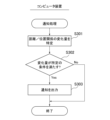
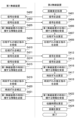
- FIG. 11 is a flowchart showing a notification process according to an embodiment of the present invention.
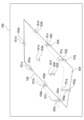
- FIG. 2 is a diagram showing an example of a display screen of the system according to the embodiment of the present invention.
- 1 is a block diagram showing a system configuration according to an embodiment of the present invention; 1 is a block diagram showing a hardware configuration of a wireless device according to an embodiment of the present invention; 1 is a block diagram showing a hardware configuration of a computer device according to an embodiment of the present invention.
- FIG. 11 is a flowchart of a distance calculation process according to an embodiment of the present invention.
- FIG. 11 is a flowchart showing a notification process according to an embodiment of the present invention.
- 1 is a block diagram showing a configuration of a system according to an embodiment of the present invention; FIG.
- FIG. 2 is a block diagram showing a hardware configuration of a first device according to the embodiment of the present invention.
- FIG. 2 is a block diagram showing a hardware configuration of a second device according to an embodiment of the present invention.
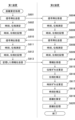
- FIG. 4 is a flowchart showing a distance calculation process according to an embodiment of the present invention.
- 1 is a block diagram showing a configuration of an acquisition device according to an embodiment of the present invention;
- FIG. 11 is a flowchart showing an information acquisition process according to an embodiment of the present invention.
- FIG. 11 is a flowchart showing a location specification process according to an embodiment of the present invention.
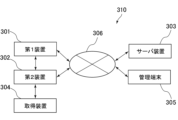
- FIG. 1 is a block diagram showing a configuration of a system according to an embodiment of the present invention
- 1 is a block diagram showing a configuration of an optical fiber sensing system according to an embodiment of the present invention.
- FIG. 11 is a flowchart showing an information specifying process according to an embodiment of the present invention.
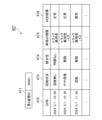
- FIG. 4 is a diagram showing an example of a road condition management table according to the embodiment of the present invention.
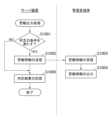
- FIG. 11 is a flowchart showing a warning output process according to the embodiment of the present invention.
- FIG. 2 is a diagram showing an example of an in-store situation management table according to an embodiment of the present invention.
- each process constituting the flowchart described below is random, so long as no contradictions or inconsistencies occur in the process content, and it is also possible to omit some of the processes constituting the flowchart, or to add new processes to each process constituting the flowchart, so long as no contradictions or inconsistencies occur in the process content.
- the device that executes each process constituting the flowchart can be changed to another device, so long as it does not go against the spirit of the present invention. In that case, the process content can be changed so that no contradictions or inconsistencies occur in the process content.
- the system of the present invention is a system that includes at least one computer device.
- the system of the present invention calculates information that can be used to detect anomalies.
- anomalies refer to temperature changes in roads, buildings, or facilities; intrusion of humans or animals; falling rocks; the occurrence or possibility of occurrence of a disaster, and the like.
- the type of disaster is not particularly limited and can be designed as appropriate.
- the type of disaster may be, for example, a landslide.
- the system of the present invention will be described in detail in the following embodiments 1 to 4.
- the distance between the ground improvement bodies i.e., the distance between the wireless devices
- the distance between the wireless devices may be information that can be used to detect the occurrence of a disaster or the possibility of the occurrence of a disaster.
- FIG. 1 is a block diagram showing the configuration of a system according to an embodiment of the present invention.
- the system 110 includes ground improvement bodies 101 (101a, 101b, 101c, 101d, and 101e), wireless devices 102 (102a, 102b, 102c, 102d, and 102e), and a computer device 103.
- the wireless devices 102 and the computer device 103 are communicatively connected to each other via a communication network 104.
- the wireless devices 102a and the computer device 103 are communicatively connected, but it is sufficient that any one or more of the wireless devices 102 are communicatively connected to the computer device 103.
- the wireless devices 102 can be mutually connected by wireless communication.
- one ground improvement body 101 is equipped with one wireless device 102, but one ground improvement body 101 may be equipped with two or more wireless devices 102.
- the system 110 is equipped with five ground improvement bodies 101 and wireless devices 102, but the number of ground improvement bodies 101 and wireless devices 102 may be two or more.
- the number of computer devices 103 may be one or more and is not particularly limited.
- wireless devices 102 may also be provided at other predetermined locations different from the location where the ground improvement body 101 is provided.
- wireless devices 102 may be provided on steel towers or utility poles. It is preferable that the other predetermined locations different from the location where the ground improvement body 101 is provided are located in places where ground displacement is unlikely to occur.
- the wireless devices 102 provided on the ground improvement body 101 and the wireless devices 102 installed at other predetermined locations can be connected to each other by wireless communication. In this case, the number of ground improvement bodies 101 and wireless devices 102 may be one or more.
- ground improvement body refers to a member for reinforcing the ground.
- the ground improvement body 101 may be capable of being inserted independently into the ground.
- the ground improvement body 101 may be a rod-shaped body such as a rock bolt, anchor, or pile.
- the ground improvement body 101 may also include a member for holding down the ground, such as a bearing plate, in addition to the rock bolt, anchor, or pile.
- ground improvement body 101 such as a rock bolt, anchor, or pile
- the axial force and sliding force generated in the ground improvement body 101 are balanced on the surface (slide surface) where the soft ground and hard ground come into contact, making it possible to stabilize soil masses such as slopes.
- grout or the like may be injected around the ground improvement body 101. By injecting grout or the like around the ground improvement body 101, the area around the ground improvement body 101 is hardened, making it possible to stabilize the soil mass.
- the shape, material, and diameter of the ground improvement body 101 such as a rock bolt, anchor, or pile are not particularly limited and can be designed as appropriate.
- the shape of the ground improvement body 101 such as a rock bolt, anchor, or pile may be cylindrical, triangular prism, or square prism.
- the shape, material, and size of the ground improvement body 101 such as a bearing plate are not particularly limited and can be designed as appropriate.
- the shape, material, and size of the ground improvement body 101 such as a bearing plate need only be designed so that it can hold down the ground depending on the location where the ground improvement body 101 is to be installed.
- Figure 2 is a diagram showing an example of a method of installing a system according to an embodiment of the present invention.
- Figure 2 (A) is a diagram showing an example of the surface of a slope when a system is installed on a slope where trees are growing.
- the ground improvement body 101a is equipped with a wireless device 102a
- the ground improvement body 101b is equipped with a wireless device 102b
- the ground improvement body 101c is equipped with a wireless device 102c.
- the ground improvement body 101 is also equipped with a rock bolt 111 and a bearing plate 112.
- the ground improvement body 101 is equipped with a circular bearing plate 112 centered on the rock bolt 111.
- the wireless device 102 is provided near the rock bolt 111 on the bearing plate 112, but the location of the wireless device 102 in the ground improvement body 101 is not particularly limited and can be designed as appropriate.
- the location of the wireless device 102 may be near the part of the rock bolt 111 that is exposed on the ground surface, or near the part of the rock bolt 111 that is buried underground.
- the support plates 112 are connected to each other by wire ropes 113.
- the reference numerals are omitted for the wire ropes other than the wire rope 113 connecting support plate 112a and support plate 112b.
- a sensing cable may be installed along the wire rope 113.
- the sensing cable may be a fiber cable including a sensing optical fiber.
- the sensing optical fiber can detect sound, vibration, temperature, etc.
- optical fiber sensing is not particularly limited, and any known type can be used.
- the type of optical fiber sensing may be distributed or multi-point.
- optical fiber sensing may be a method of observing strain, vibration, or temperature changes along the length of the optical fiber by injecting a light pulse into one end of the optical fiber and observing the backscattered light generated in the optical fiber.
- the system is equipped with a fiber cable including optical fiber, and is equipped with sensing means that detects sound, vibration, and/or temperature using the optical fiber, making it possible to predict the occurrence of a landslide at an early stage.
- the rock bolt 111 is inserted into the ground so that it is approximately perpendicular to the slope 115, but the angle at which the rock bolt 111 is inserted is not particularly limited and can be designed as appropriate.
- the wireless device 102 is capable of connecting via communication to wireless devices 102 provided in other ground improvement bodies 101.
- the wireless device 102 is also capable of connecting via communication to a computer device 103.
- FIG. 3 is a block diagram showing the hardware configuration of a wireless device according to an embodiment of the present invention.
- Wireless device 102 includes a control unit 121, an RF chip 122, an oscillator 123, a clock 124, and a phase detector 125.
- RF chip 122 includes a clock 124 and a phase detector 125.
- Wireless device 102 may include elements other than control unit 121, RF chip 122, oscillator 123, clock 124, and phase detector 125 as necessary.
- the oscillator 123 oscillates at a predetermined frequency and outputs a signal to provide operational timing for each part of the device.
- An atomic oscillator or a crystal oscillator can be used as the oscillator 123.
- the clock 124 uses the output signal of the oscillator 123 as a source of oscillation to keep time and output the time.
- the control unit 121 controls the time kept by the clock 124 to be transmitted to the other wireless device 102 via the RF chip 122.
- the phase detector 125 detects the phase of the carrier wave constituting the information received from the other wireless device 102, and detects the phase of the signal oscillated by the oscillator 123 in the wireless device 102.
- FIG. 4 is a block diagram showing the hardware configuration of a computer device according to an embodiment of the present invention.
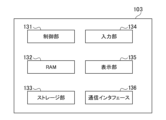
- the computer device 103 includes a control unit 131, a RAM 132, a storage unit 133, an input unit 134, a display unit 135, and a communication interface 136, each of which is connected by a bus.
- the control unit 131 is composed of a CPU and a ROM.
- the control unit 131 executes programs stored in the storage unit 133 and controls the computer device 103.
- the RAM 132 is the work area of the control unit 131.
- the storage unit 133 is a storage area for saving programs and data. In other words, the storage unit 133 functions as a recording medium that stores programs.
- the control unit 131 performs calculations based on the programs and data read from the RAM 132, and the data input by the input unit 134.
- the program may be stored in a recording medium such as a CD-ROM.
- the program stored in the recording medium may be installed in the wireless device 102 or the computer device 103 to execute a specified function.
- the program may be distributed from a computer device external to the system.
- the program distributed from the computer device external to the system may be installed in the wireless device 102 or the computer device 103 to execute a predetermined function.
- the wireless device 102 provided in the ground improvement body 101 transmits and receives signals with the wireless devices 102 provided in other ground improvement bodies 101 at a predetermined interval.
- the predetermined interval is not particularly limited and can be designed as appropriate.
- the transmission and reception of signals may be performed at 1 minute intervals, 10 minute intervals, or 60 minute intervals.
- the distance between wireless devices 102 is calculated based on the propagation time of communication between the wireless devices 102.
- the distance between the wireless devices 102 can be calculated by multiplying the propagation time of communication between the wireless devices 102 by the propagation speed of the communication.
- the propagation time of communication between wireless devices 102 i.e., the propagation time of a signal
- the propagation time of communication between wireless devices 102 can be calculated by transmitting and receiving a signal between wireless devices 102 and finding the difference between the time the signal is transmitted and the time the signal is received.
- the time the signal is transmitted and the time the signal is received are kept by an internal clock provided in the wireless device 102. Therefore, the smaller the time difference between the internal clocks of the wireless devices 102, the more accurately the propagation time can be calculated.
- phase of the internal clock in the wireless device 102 may be shifted in the phase of the internal clock in the wireless device 102, that is, the phase of the signal oscillated by the oscillator 123 in the wireless device 102, between the wireless devices 102.
- the phase of the internal clock in the wireless device 102 is also referred to as the phase of the wireless device 102.
- the phase shift in the internal clocks between the wireless devices 102 is also referred to as the phase shift between the wireless devices 102.
- phase of the signal oscillated by oscillator 123 in wireless device 102 and the phase of the carrier wave constituting the information transmitted by wireless device 102 are approximately equal.
- the wireless devices 102 that transmit and receive signals are the first wireless device 102 and the second wireless device 102. Also, the first wireless device 102 calculates the distance between the first wireless device 102 and the second wireless device 102.
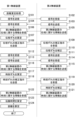
- FIG. 5 is a diagram showing a flowchart of distance calculation processing according to an embodiment of the present invention.
- step S103 information about the phase of the second wireless device 102 is transmitted from the second wireless device 102 to the first wireless device 102 (step S105). Then, the first wireless device 102 receives the transmitted information about the phase (step S106). The first wireless device 102 calculates the phase shift between the first wireless device 102 and the second wireless device 102 (step S107). Next, an instruction to correct the phase shift of the second wireless device 102 (hereinafter also referred to as a phase shift correction instruction) is transmitted from the first wireless device 102 to the second wireless device 102 (step S108). The second wireless device 102 receives the transmitted phase shift correction instruction (step S109). Then, the second wireless device 102 corrects the phase shift of the second wireless device 102 (step S110).
- a phase shift correction instruction hereinafter also referred to as a phase shift correction instruction
- the signal in step S101 may include a signal transmission request to transmit a signal to the first wireless device 102 that transmitted the signal.
- the first wireless device 102 may measure the phase when the signal is transmitted and store the phase in a memory in the control unit 121 of the first wireless device 102.
- the phase when the signal is transmitted may be the phase of a carrier wave that constitutes the transmitted signal.
- the second wireless device 102 may measure the phase when the signal is transmitted and store the phase in a memory in the control unit 121 of the second wireless device 102.
- the phase when the signal is transmitted may be the phase of a carrier wave that constitutes the transmitted signal.
- the first wireless device 102 may measure the phase when the signal is received and store the phase in a memory in the control unit 121 of the first wireless device 102.
- the phase when the signal is received may be the phase of a signal oscillated by the oscillator 123 of the clock of the first wireless device 102 when the signal is received.
- the information regarding the phase of the second wireless device 102 transmitted to the first wireless device 102 in step S105 may include information regarding the phase when the second wireless device 102 received a signal in step S102, and information regarding the phase when the second wireless device 102 transmitted a signal in step S103.
- the phase shift can be calculated based on the phase difference between the phase of the carrier wave constituting the signal transmitted from the first wireless device 102 to the second wireless device 102 and the phase of the signal oscillated by the oscillator 123 of the second wireless device 102 when the signal is received by the second wireless device 102, and the phase difference between the phase of the carrier wave constituting the signal transmitted from the second wireless device 102 to the first wireless device 102 and the phase of the signal oscillated by the oscillator 123 of the clock of the first wireless device 102 when the signal is received by the first wireless device 102.
- the phase of the carrier wave constituting the signal transmitted from the first wireless device 102 to the second wireless device 102 is the phase of the signal transmitted in step S101.
- the phase of the signal oscillated by the oscillator 123 of the second wireless device 102 when the second wireless device 102 receives a signal is the phase of the signal received in step S102.
- the phase of the carrier wave constituting the signal transmitted from the second wireless device 102 to the first wireless device 102 is the phase of the signal transmitted in step S103.
- the phase of the signal oscillated by the oscillator 123 of the clock of the first wireless device 102 when the first wireless device 102 receives a signal is the phase of the signal received in step S104.
- phase shift between the first radio device 102 and the second radio device 102 is defined as ⁇ C
- the phase shift between the first radio device 102 and the second radio device 102 may be calculated using formula (3).
- the second radio device 102 may correct the phase of the second radio device 102 based on the calculated phase shift ⁇ C so as to synchronize with the phase of the first radio device 102. That is, the second radio device 102 may correct the phase of the signal generated by the oscillator 123 of the second radio device 102 based on the calculated phase shift ⁇ C so as to synchronize with the signal generated by the oscillator 123 of the first radio device 102.
- the phase correction in step S110 is controlled and executed by the control unit 121 of the second radio device 102.
- step S115 information about the time of the second wireless device 102 is transmitted from the second wireless device 102 to the first wireless device 102 (step S115). Then, the first wireless device 102 receives the transmitted information about the time (step S116). The first wireless device 102 calculates the time difference between the first wireless device 102 and the second wireless device 102 (step S117). Next, an instruction to correct the time difference of the second wireless device 102 (hereinafter also referred to as a time difference correction instruction) is transmitted from the first wireless device 102 to the second wireless device 102 (step S118). The second wireless device 102 receives the transmitted time difference correction instruction (step S119). Then, the second wireless device 102 corrects the time difference of the second wireless device 102 (step S120).
- a time difference correction instruction an instruction to correct the time difference of the second wireless device 102
- the signal in step S111 may include a signal transmission request to transmit a signal to the second wireless device 102 that transmitted the signal.
- the second wireless device 102 may clock the time when the signal was transmitted and store the time in a memory in the control unit 121 of the second wireless device 102.
- the first wireless device 102 may clock the time when the signal was received and store the time in a memory within the control unit 121 of the first wireless device 102.
- the first wireless device 102 may clock the time when the signal was transmitted and store the time in a memory within the control unit 121 of the first wireless device 102.
- the second wireless device 102 may clock the time when the signal was received and store the time in a memory within the control unit 121 of the second wireless device 102.
- the information relating to the time of the second wireless device 102 transmitted to the first wireless device 102 in step S115 may include information relating to the time when the second wireless device 102 transmitted a signal in step S111, and information relating to the time when the second wireless device 102 received a signal in step S114.
- the time difference can be calculated based on the time when the signal is transmitted from the second wireless device 102 to the first wireless device 102, the time when the signal is received at the first wireless device 102, the time when the signal is transmitted from the first wireless device 102 to the second wireless device 102, and the time when the signal is received at the second wireless device 102.
- the time when a signal is transmitted from the first wireless device 102 to the second wireless device 102 is the time when the signal is transmitted in step S111.
- the time when a signal is received at the first wireless device 102 is the time when the signal is received in step S112.
- the time when a signal is transmitted from the first wireless device 102 to the second wireless device 102 is the time when the signal is transmitted in step S113.
- the time when a signal is received at the second wireless device 102 is the time when the signal is received in step S114.
- the time difference T L between the first radio device 102 and the second radio device 102 may be calculated by equation (4).
- the instruction to correct the time difference in step S118 may be an instruction to correct the time of the second wireless device 102 so as to synchronize with the time of the first wireless device 102.
- the first wireless device 102 can calculate the distance between the second wireless device 102 and the first wireless device 102 by multiplying the propagation time calculated in step S123 by the propagation speed of the communication (e.g., the speed of light).
- a system for observing ground displacement comprising two or more ground improvement bodies, each of which comprises a wireless device, and a distance calculation means for calculating the distance between the wireless devices based on the propagation time of communication between the wireless devices, and the distance calculation means for calculating the distance based on the time difference between the internal clocks of the wireless devices.
- the system is equipped with a time difference calculation means that calculates the time difference between the internal clocks of the wireless devices by transmitting and receiving signals between the wireless devices, and a time difference correction means that corrects the time difference between the internal clocks of the wireless devices based on the calculated time difference, and the distance calculation means calculates the distance after the time difference correction means has corrected the time difference, so that the distance between the wireless devices can be accurately calculated.
- the system includes a phase shift calculation means that calculates the phase shift of the internal clocks between the wireless devices by transmitting and receiving signals between the wireless devices, and a phase shift correction means that corrects the phase shift of the internal clocks between the wireless devices based on the calculated phase shift, and the time shift calculation means calculates the time shift after the phase shift correction means corrects the phase shift, so that the distance between the wireless devices can be calculated more accurately.
- the distance between the second wireless device 102 and the first wireless device 102 may be calculated in the second wireless device 102.
- the method of calculating the phase shift and time shift between the second wireless device 102 and the first wireless device 102 can be designed as appropriate without relying on the above description.
- the number of times signals are transmitted and received between the second wireless device 102 and the first wireless device 102, and the contents of the information transmitted and received between the second wireless device 102 and the first wireless device 102 are not particularly limited. It is sufficient to be able to calculate the phase shift and time shift between the second wireless device 102 and the first wireless device 102.
- the distance is calculated after correcting the phase shift and time shift between the second wireless device 102 and the first wireless device 102 has been described, but the distance may be calculated without correcting the phase shift and/or time shift between the second wireless device 102 and the first wireless device 102.
- the distance may be calculated by correcting the time difference between the second wireless device 102 and the first wireless device 102 without correcting the phase difference between the second wireless device 102 and the first wireless device 102. In this case, steps S103 to S110 do not need to be performed.
- the distance may be calculated without correcting the phase shift and time shift between the second wireless device 102 and the first wireless device 102. Specifically, for example, after correcting the phase shift and time shift between the second wireless device 102 and the first wireless device 102, the distance may be calculated again within a predetermined time without correcting the phase shift and time shift. Alternatively, for example, the distance may be calculated based on the propagation time when the phase shift and time shift are theoretically corrected without actually correcting the phase shift and time shift between the second wireless device 102 and the first wireless device 102.
- the time difference in a typical clock is said to be less than one second per day. Therefore, after correcting the phase difference and time difference between the second wireless device 102 and the first wireless device 102, the phase and time of the internal clock in the second wireless device 102 and the phase and time of the internal clock in the first wireless device 102 are considered to be the same as when the phase difference and time difference were corrected, within a specified period of time.
- the propagation time when the phase shift and time shift are corrected can be calculated by steps S121 to S123 within a predetermined time without correcting the phase shift and time shift again by steps S103 to S120.
- the specified time may be 1 minute, 5 minutes, 10 minutes, 20 minutes, or 30 minutes.
- the propagation time when the phase shift and time shift are theoretically corrected based on the calculated phase shift and time shift may be calculated, and the distance may be calculated.
- steps S108 to S116 and steps S118 to S122 can be omitted.
- the distance between the second wireless device 102 and the first wireless device 102 can be calculated based on the propagation time, which is based on the time difference between the internal clock of the second wireless device 102 and the internal clock of the first wireless device 102.
- phase and time of the internal clock of the second wireless device 102 are corrected to be synchronized with the phase and time of the internal clock of the first wireless device 102, but the manner of correcting the phase and time shift is not limited to this. It is sufficient that the phase and time shift between the internal clock of the second wireless device 102 and the internal clock of the first wireless device 102 is corrected.
- the phase and time of the internal clock of the first wireless device 102 may be corrected to be synchronized with the phase and time of the internal clock of the second wireless device 102, or both the internal clocks of the first wireless device 102 and the second wireless device 102 may be corrected to be synchronized with each other.
- the distance between the wireless devices 102 can be calculated based on the propagation time of communication between the wireless device 102 provided in the ground improvement body 101 and the wireless device 102 installed at the other specified location. Also in this case, the distance can be calculated based on the difference in time between the internal clocks of the wireless device 102 provided in the ground improvement body 101 and the wireless device 102 installed at the other specified location. The above description of the distance calculation process can be adopted to the extent necessary for the manner of calculating the distance between the wireless devices 102.
- the system comprises a wireless device provided in the ground improvement body and a wireless device installed at another specified location, and comprises a distance calculation means for calculating the distance between the wireless devices based on the propagation time of communication between the wireless devices, and the distance calculation means calculates the distance based on the time difference between the internal clocks of the wireless devices, thereby providing a system for observing ground displacement.
- the system 110 is equipped with two or more wireless devices 102, and by calculating the distance between the wireless devices 102, it is possible to predict the possibility of ground displacement at the location where the wireless devices 102 are installed.
- the system 110 includes two wireless devices, it is possible to determine the positional relationship of the wireless devices on a line that includes two points when each wireless device is considered as a point. Also, when the system 110 includes three wireless devices, it is possible to determine the positional relationship of the wireless devices on a plane that includes the three points when each wireless device is considered as a point. Furthermore, when the system 110 includes four wireless devices, it is possible to determine the positional relationship of the wireless devices in a space that includes the four points when each wireless device is considered as a point, that is, the relative positional relationship of one point with respect to the other three points. Also, when the system 110 includes five or more wireless devices, it is possible to determine the positional relationship of the wireless devices in xyz space when each wireless device is considered as a point, that is, the position coordinates.
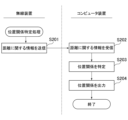
- FIG. 6 is a diagram showing a flowchart of the positional relationship determination process according to an embodiment of the present invention.
- information about the calculated distance is transmitted from the wireless device 102 that has calculated the distance between the wireless devices 102 to the computer device 103 (step S201).
- the computer device 103 receives the transmitted information about the distance between the wireless devices 102 (step S202).
- the computer device 103 identifies the positional relationship of the wireless devices 102 based on the distance between the wireless devices 102 (step S203).
- the computer device 103 outputs the identified positional relationship of the wireless devices 102 (step S204), and the positional relationship identification process ends.
- FIG. 6 a process is shown in which information relating to distance is transmitted from one wireless device 102 to a computer device 103. After calculating the distance between the wireless devices 102, each wireless device 102 transmits information relating to the distance between the wireless devices 102 to the computer device 103.
- the distance between the wireless devices 102 is to be calculated and/or which wireless device 102 is to calculate the distance between the wireless devices 102. It is also preferable that it is determined in advance which wireless device 102's internal clock time is to be used to correct the time difference and/or phase difference between the wireless devices 102.
- the information regarding the distance between the wireless devices 102 transmitted in step S201 may include information such as the distance between the wireless devices 102 calculated in step S124 of the distance calculation process and the time when the distance was calculated. For the distance between the wireless devices 102 used when identifying the positional relationship of the wireless devices 102, it is preferable that the time when the distance between the wireless devices 102 is calculated is synchronized. Then, in step S203, the positional relationship of the wireless devices 102 may be identified based on the distance between multiple wireless devices 102 calculated at the same time.
- the method of identifying the positional relationship of the wireless devices 102 based on the distance between the wireless devices 102 is not particularly limited, and any known method can be used.
- the positional relationship of the wireless devices 102 may be identified by three-point positioning.
- the number of wireless devices 102 required is smaller than that described above. In order to identify the positional relationship of the wireless devices 102, the system 110 only needs to include the required number of wireless devices 102 depending on the type of information that can be used.
- the positions of the other wireless devices 102 may be specified based on the wireless devices 102 whose positions have been specified in advance.
- the positions of the wireless devices 102 may be specified by using position information of the wireless devices 102 from GNSS, information on the inclination angle of the slope from an inclination sensor, etc., in addition to the distance between the wireless devices 102.
- position refers to an absolute position expressed by latitude, longitude, altitude, etc.
- positional relationship refers to a relative positional relationship expressed by the relationship between the positions of each object.
- step S204 the positional relationship of the wireless device 102 may be displayed on the display screen of the computer device 103.
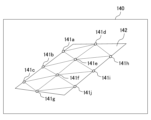
- Figure 7 is a diagram showing an example of a display screen of a system according to an embodiment of the present invention.
- an execution screen 140 showing the positional relationship of the wireless devices 102 is displayed on the display screen of the computer device 103.
- icons 141 141a to 141j
- the length of the dotted lines connecting the icons 141 corresponds to the distance between the wireless devices 102.
- a surface including all of the icons 141 is displayed as surface 142. If the wireless devices 102 are installed along a slope 115 as in FIG. 2, surface 142 is considered to correspond to the state of slope 115.
- the positional relationship of the wireless devices 102 is displayed, allowing the user to visually grasp the positional relationship of the wireless devices 102.
- the storage unit 133 of the computer device 103 stores the positional relationship between the ground improvement body 101 and the wireless device 102, and/or the positional relationship between the wireless device 102 and the slope 115.
- the storage unit 133 of the computer device 103 stores the positional relationship between the ground improvement body 101 and the wireless device 102, and/or the positional relationship between the wireless device 102 and the slope 115.
- the system is provided with a positional relationship determination means that determines the positional relationship of the wireless devices based on the calculated distance between the wireless devices, making it possible to estimate the ground condition based on the positional relationship of the wireless devices.
- the system of the present invention calculates the distance between the wireless devices 102 at a predetermined time interval, and therefore is able to identify changes in the distance between the wireless devices 102 and/or changes in the relative positions of the wireless devices 102. In addition, if the amount of change in the distance between the wireless devices 102 and/or the amount of change in the relative positions of the wireless devices 102 meets a predetermined condition, a notification may be output.
- FIG. 8 is a diagram showing a flowchart of the notification process according to an embodiment of the present invention.
- the computer device 103 identifies the amount of change in the distance between the received wireless devices 102 and/or the amount of change in the positional relationship of the identified wireless devices 102 (step S301).
- the computer device 103 determines whether the identified amount of change satisfies a predetermined condition (step S302). If it is determined that the identified amount of change satisfies the predetermined condition (Yes in step S302), the computer device 103 outputs a notification (step S303) and the notification process ends. On the other hand, if it is not determined that the identified amount of change satisfies the predetermined condition (No in step S302), step S303 is not performed and the notification process ends.
- the predetermined time is not particularly limited and can be designed as appropriate.
- the predetermined time may be 10 minutes, 1 hour, or 24 hours. If the predetermined time is 1 hour, for example, the amount of change between the distance between the wireless devices 102 and/or the positional relationship of the wireless devices 102 one hour ago and the current distance between the wireless devices 102 and/or the positional relationship of the wireless devices 102 may be specified.
- the distance between the wireless devices 102 and/or the positional relationship of the wireless devices 102 before the time for specifying the amount of change is also referred to as the "distance between the wireless devices 102 and/or the positional relationship of the wireless devices 102 before the change".
- the distance between the wireless devices 102 and/or the positional relationship of the wireless devices 102 after the time for specifying the amount of change is also referred to as the "distance between the wireless devices 102 and/or the positional relationship of the wireless devices 102 after the change".
- the system 110 may control the calculation of the distance between the wireless devices 102 according to the time interval for identifying the amount of change.
- the computer device 103 may transmit a signal to the wireless device 102 to control the time interval for calculating the distance between the wireless devices 102.
- the time interval for identifying the amount of change may also be changed according to the amount of change identified in step S301. For example, if the amount of change is greater than a predetermined value, there is a high possibility that the ground has been displaced. Therefore, the distance between the wireless devices 102 may be calculated and the amount of change may be identified at a shorter time interval than when the amount of change is less than the predetermined value.
- the predetermined value used to determine whether or not to change the time interval for identifying the amount of change may be the same as or different from the predetermined value used to determine whether or not to output a notification in step S302.
- the amount of change in the distance between the wireless devices 102 may be represented by a length.
- the amount of change in the positional relationship of the wireless devices 102 may be represented by, for example, the amount of change in the x-coordinate, the y-coordinate, and/or the z-coordinate.
- the direction of the change may be identified along with the amount of change.
- the amount of change in the positional relationship of the wireless devices 102 may be represented by a vector.
- the predetermined condition in step S302 is not particularly limited and can be designed as appropriate.
- the predetermined condition may be that the amount of change in distance between the wireless devices 102 is greater than a predetermined value, that the amount of change in distance between the wireless devices 102 is equal to or greater than a predetermined value, that the amount of change in the positional relationship of the wireless devices 102 is ... equal to or greater than a predetermined value, etc. If the amount of change in distance between the wireless devices 102 and/or the amount of change in the positional relationship of the wireless devices 102 is large, it is considered that there is a high risk of a landslide disaster occurring.
- a notification may be displayed on the display screen of computer device 103, or an audio notification may be output by a speaker of computer device 103.
- a notification may be transmitted from computer device 103 to another computer device. Then, a notification may be displayed on the display screen of the other computer device, or an audio notification may be output by a speaker of the other computer device.
- the content of the notification may be a notification that the amount of change in the distance between the wireless devices 102 and/or the amount of change in the positional relationship of the wireless devices 102 has satisfied a predetermined condition, or may be information regarding the amount of change in the distance between the wireless devices 102 and/or the amount of change in the positional relationship of the wireless devices 102.
- FIG. 9 is a diagram showing an example of a display screen of a system according to an embodiment of the present invention.
- an execution screen 150 showing the change in the positional relationship of the wireless device 102 is displayed on the display screen of the computer device 103.
- icons 151 (151a to 151j) drawn with gray lines correspond to the position of the wireless device 102 before the change.
- a surface including all of the icons 151 is displayed as surface 152. If the wireless device 102 is installed along a slope 115 as in FIG. 2, surface 152 is considered to correspond to the state of slope 115.
- icons 153 (153a to 153j) drawn with black lines correspond to the position of the wireless device 102 after the change.
- a surface including all of the icons 153 is displayed as surface 154. As in FIG. 2, if the wireless device 102 is installed along a slope 115, surface 154 is considered to correspond to the state of slope 115 after the change.
- the change in the positional relationship of the wireless device 102 is displayed, allowing the user to visually grasp the change in the positional relationship of the wireless device 102.
- the system can estimate ground displacement by providing a change amount determination means for determining the amount of change in the calculated distance between wireless devices and/or the positional relationship of the determined wireless devices.
- the system is equipped with a notification output means that outputs a notification when the identified amount of change meets a specified condition, making it easy to notify people of ground displacement.
- GNSS position measurement decreases on cloudy or rainy days compared to sunny days, but communication by wireless devices is hardly affected by the weather. Therefore, it is possible to determine the positional relationship of wireless device 102 regardless of the weather.
- the location in which the system 110 is installed is not particularly limited as long as it is a location in which ground displacement may occur.
- the system 110 may be installed on the wall of a tunnel.
- the distance between the wireless devices is calculated, and the occurrence of a landslide or the possibility of the occurrence of a landslide is detected. That is, in the second embodiment, the distance between the wireless devices may be information that can be used to detect the occurrence of a disaster or the possibility of the occurrence of a disaster.
- FIG. 10 is a block diagram showing the configuration of a system according to an embodiment of the present invention.
- the system 210 includes a first wireless device 202 installed on a ground improvement wall 201, a second wireless device 204 installed on a steel tower 203, a computer device 205, and a terminal device 206.
- the second wireless device 204 and the computer device 205 are communicatively connected to each other via a communication network 207a.
- the computer device 205 and the terminal device 206 are communicatively connected to each other via a communication network 207b.
- the first wireless device 202 and the second wireless device 204 can be connected to each other by wireless communication.
- the first wireless device 202 and the computer device 205 may also be communicatively connected to each other via a communication network.
- ground improvement wall refers to a wall in which the surface of the ground is covered with an improvement material such as cement in a planar manner in order to reinforce the ground.
- structure refers to a structure that is composed of multiple materials and members and whose weight is supported by a foundation or the like.
- the structure may be an architectural structure having a roof and columns or walls, or may be a civil engineering structure other than an architectural structure.
- the material that constitutes the structure is not particularly limited.
- the structure may be a concrete structure made of concrete, such as an airport, highway, high-rise building, station, or port, a steel structure made of steel, such as a steel bridge, factory, or other steel-framed building, or an earth structure made of earth, such as an embankment, embankment, or bank.
- a concrete structure made of concrete such as an airport, highway, high-rise building, station, or port
- a steel structure made of steel such as a steel bridge, factory, or other steel-framed building
- an earth structure made of earth such as an embankment, embankment, or bank.
- the first wireless device 202 can be installed, for example, on a ground improvement wall, a dam, a levee, a tunnel, and/or a bridge.
- the first wireless device 202 may be installed on the wall surface of a ground improvement wall, a dam, a levee, a tunnel, a bridge, or other structure.
- one first wireless device 202 is installed on one ground improvement wall 201, but two or more first wireless devices 202 may be installed on one ground improvement wall 201. In this case, two or more first wireless devices 202 installed on one ground improvement wall 201 may be able to connect to each other via wireless communication. Also, it is sufficient that any one or more of the two or more first wireless devices 202 installed on one ground improvement wall 201 can connect to the second wireless device 204 via wireless communication.
- FIG. 10 shows a system 210 having one ground improvement wall 201
- the system 210 may have two or more ground improvement walls 201.
- one or more first wireless devices 202 are installed in each of the two or more ground improvement walls 201.
- any one or more of the one or more first wireless devices 202 installed in each ground improvement wall 201 can be connected to the second wireless device 204 via wireless communication.
- one or more first wireless devices 202 installed in one ground improvement wall 201 may be able to be connected to one or more first wireless devices 202 installed in other ground improvement walls 201 via wireless communication.
- the system 210 may include two or more of one type of structure, or may include one or more of each of two or more types of structures. Even in this case, the description of the example in which the system 210 includes two or more ground improvement walls 201 can be adopted to the extent necessary.
- the second wireless device 204 is installed on a steel tower 203, but the second wireless device 204 may be installed in a predetermined location that is different from the structure in which the first wireless device 202 is installed. It is preferable that the second wireless device 204 is installed in a location where ground displacement is unlikely to occur. In addition, the second wireless device 204 may be installed in a structure other than the structure in which the first wireless device 202 is installed.
- the second wireless device 204 may be installed on a steel tower and/or utility pole.
- a communication connection cable provided on the steel tower and/or utility pole for the communication connection between the second wireless device 204 and the computer device 205.
- the communication connection cable may be an optical fiber cable.
- one second wireless device 204 is installed on one steel tower 203, but two or more second wireless devices 204 may be installed on one steel tower 203.
- two or more second wireless devices 204 installed on one steel tower 203 may be able to connect to each other by wireless communication.
- any one or more of the two or more second wireless devices 204 installed on one steel tower 203 are able to connect to the first wireless device 202 by wireless communication.
- any one or more of the two or more second wireless devices 204 installed on one steel tower 203 are connected to the computer device 205 so that they can communicate with each other.
- FIG. 10 shows a system 210 having one steel tower 203
- the system 210 may have two or more steel towers 203.
- one or more second wireless devices 204 are installed on each of the two or more steel towers 203.
- any one or more of the one or more second wireless devices 204 installed on each steel tower 203 can be connected to the first wireless device 202 via wireless communication.
- one or more second wireless devices 204 installed on one steel tower 203 may be able to be connected to one or more second wireless devices 204 installed on other steel towers 203 via wireless communication.
- system 210 may include two or more installation locations of the same type, or may include one or more of each of two or more types of installation locations. Even in this case, the description of the example in which system 210 includes two or more towers 203 may be adopted to the extent necessary.
- system 210 includes one computer device 205, but the system 210 may include two or more computer devices 205. Also, in FIG. 10, an example is shown in which the system 210 includes one terminal device 206, but the system 210 may include two or more terminal devices 206.
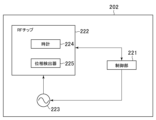
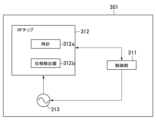
- FIG. 11 is a block diagram showing the hardware configuration of a wireless device according to an embodiment of the present invention.
- the first wireless device 202 includes a control unit 221, an RF chip 222, an oscillator 223, a clock 224, and a phase detector 225.
- the RF chip 222 includes a clock 224 and a phase detector 225.
- the first wireless device 202 may include elements other than the control unit 221, the RF chip 222, the oscillator 223, the clock 224, and the phase detector 225 as necessary.
- the control unit 221 is not particularly limited, but may be, for example, a microcomputer (microcontroller).
- the control unit 221 executes a program based on the program and data.
- the RF chip 222 receives and transmits radio signals. The data received by the RF chip 222 is subjected to calculation processing by the control unit 221.
- the oscillator 223 oscillates at a predetermined frequency and outputs a signal to provide operational timing for each part of the device.
- An atomic oscillator or a crystal oscillator can be used as the oscillator 223.
- the clock 224 keeps time using the output signal of the oscillator 223 as the source oscillation and outputs the time.
- the time kept by the clock 224 is controlled by the control unit 221 to be transmitted to another wireless device via the RF chip 222.
- the phase detector 225 detects the phase of the carrier wave constituting the information received from the other wireless device, and detects the phase of the signal oscillated by the oscillator 223 in the first wireless device 202.
- the clock 224 provided in the first wireless device 202 is also referred to as the internal clock of the first wireless device 202.
- the hardware configuration of the second wireless device 204 can be the same as that shown in FIG. 11.
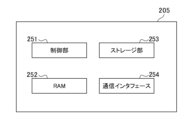
- FIG. 12 is a block diagram showing the hardware configuration of a computer device according to an embodiment of the present invention.
- the computer device 205 includes at least a control unit 251, a RAM 252, a storage unit 253, and a communication interface 254, each of which is connected by an internal bus.
- the control unit 251 is composed of a CPU and ROM, executes programs stored in the storage unit 253, and controls the computer device 205.
- the control unit 251 also has an internal timer that measures time.
- the RAM 252 is the work area of the control unit 251.
- the storage unit 253 is a storage area for saving programs and data. In other words, the storage unit 253 functions as a recording medium that stores programs.
- the control unit 251 reads out the programs and data from the RAM 252, and performs program execution processing based on information received from the second wireless device 204, etc.
- Computer device 205 may be a server device, or may be a terminal device such as a desktop or notebook personal computer, a tablet terminal, or a smartphone. Computer device 205 may function in a distributed manner across multiple computer devices. For example, instead of a server device, a distributed ledger technology such as a blockchain may be used.
- the hardware configuration and functions of the terminal device 206 may be adapted to the extent necessary from the description of the computer device 103 in the first embodiment.
- the program may be stored in a recording medium such as a CD-ROM.
- the program stored in the recording medium may be installed in the first wireless device 202, the second wireless device 204, the computer device 205, or the terminal device 206 to execute a predetermined function.
- the program may be distributed from a computer device external to the system.
- the program distributed from the computer device external to the system may be installed in the first wireless device 202, the second wireless device 204, the computer device 205, or the terminal device 206 to execute a predetermined function.
- the first wireless device 202 provided on the ground improvement wall 201 transmits and receives signals with the second wireless device 204 provided on the tower 203 at a predetermined interval.
- the predetermined interval is not particularly limited and can be designed as appropriate.
- the signals may be transmitted and received at 1-minute intervals, 10-minute intervals, or 60-minute intervals.
- the first wireless device 202 can calculate the distance between the first wireless device 202 and the second wireless device 204, i.e., the distance between the wireless devices, by transmitting and receiving signals with the second wireless device 204. Since the first wireless device 202 is provided on the ground improvement wall 201 and the second wireless device 204 is provided on the steel tower 203, if the distance between the wireless devices changes, there is a possibility that displacement has occurred in the ground on which the ground improvement wall 201 is installed and/or the ground on which the steel tower 203 is installed.
- the distance between wireless devices is calculated based on the propagation time of communication between the wireless devices.
- the distance between the wireless devices can be calculated by multiplying the propagation time of communication between the wireless devices by the propagation speed of the communication.
- the propagation time of communication between wireless devices i.e., the propagation time of a signal
- the propagation time of communication between wireless devices can be calculated by transmitting and receiving a signal between the wireless devices and finding the difference between the time the signal is sent and the time it is received.
- the time the signal is sent and the time it is received are kept by the internal clocks of the wireless devices. Therefore, the smaller the time difference between the internal clocks of the wireless devices, the more accurately the propagation time can be calculated.
- phase difference between the phases of the internal clocks of the wireless devices may be a difference between the phases of the internal clocks of the wireless devices, that is, the phase of the signal oscillated by oscillator 223 in first wireless device 202.
- the phase of the internal clock of a wireless device is also referred to as the phase of the wireless device.
- the phase difference between the internal clocks of wireless devices is also referred to as the phase difference between wireless devices.
- phase of the signal oscillated by the oscillator 223 in the first wireless device 202 and the phase of the carrier wave constituting the information transmitted by the first wireless device 202 are approximately equal.
- the phase difference between the internal clocks of the wireless devices is corrected, and then the distance between the wireless devices is calculated after the time difference between the internal clocks of the wireless devices is corrected.
- the distance between the first wireless device 202 and the second wireless device 204 is calculated in the second wireless device 204.
- FIG. 13 is a diagram showing a flowchart of distance calculation processing according to an embodiment of the present invention.
- a signal is transmitted from the second wireless device 204 to the first wireless device 202 (step S401). Then, the first wireless device 202 receives the transmitted signal (step S402). Next, a signal is transmitted from the first wireless device 202 to the second wireless device 204 (step S403). Then, the second wireless device 204 receives the transmitted signal (step S404).
- step S403 information about the phase of the first wireless device 202 is transmitted from the first wireless device 202 to the second wireless device 204 (step S405). Then, the second wireless device 204 receives the transmitted information about the phase (step S406). The second wireless device 204 calculates the phase shift between the first wireless device 202 and the second wireless device 204 (step S407). Next, an instruction to correct the phase shift of the first wireless device 202 (hereinafter also referred to as a phase shift correction instruction) is transmitted from the second wireless device 204 to the first wireless device 202 (step S408). The transmitted phase shift correction instruction is received by the first wireless device 202 (step S409). Then, the first wireless device 202 corrects the phase shift of the first wireless device 202 (step S410).
- a phase shift correction instruction is transmitted from the second wireless device 204 to the first wireless device 202 (step S408).
- the transmitted phase shift correction instruction is received by the first wireless device 202 (step S409).
- the first wireless device 202 correct
- the signal in step S401 may include a signal transmission request to transmit a signal to the second wireless device 204 that transmitted the signal.
- the second wireless device 204 may measure the phase when the signal is transmitted and store the phase in a memory in the control unit of the second wireless device 204.
- the phase when the signal is transmitted may be the phase of a carrier wave that constitutes the transmitted signal.
- the first wireless device 202 may measure the phase when the signal is received and store the phase in a memory in the control unit 221 of the first wireless device 202.
- the phase when the signal is received may be the phase of the signal oscillated by the oscillator 223 of the first wireless device 202 when the signal is received.
- the first wireless device 202 may measure the phase when the signal is transmitted and store the phase in a memory in the control unit 221 of the first wireless device 202.
- the phase when the signal is transmitted may be the phase of a carrier wave that constitutes the transmitted signal.
- the second wireless device 204 may measure the phase when the signal is received and store the phase in a memory in a control unit of the second wireless device 204.
- the phase when the signal is received may be the phase of a signal oscillated by an oscillator of a clock of the second wireless device 204 when the signal is received.
- the information regarding the phase of the first wireless device 202 transmitted to the second wireless device 204 in step S405 may include information regarding the phase when the first wireless device 202 received a signal in step S402, and information regarding the phase when the first wireless device 202 transmitted a signal in step S403.
- the phase shift can be calculated based on the phase difference between the phase of the carrier wave constituting the signal transmitted from the second wireless device 204 to the first wireless device 202 and the phase of the signal oscillated by the oscillator 223 of the first wireless device 202 when the signal is received by the first wireless device 202, and the phase difference between the phase of the carrier wave constituting the signal transmitted from the first wireless device 202 to the second wireless device 204 and the phase of the signal oscillated by the oscillator of the clock of the second wireless device 204 when the signal is received by the second wireless device 204.
- the phase of the carrier wave constituting the signal transmitted from the second wireless device 204 to the first wireless device 202 is the phase of the signal transmitted in step S401.
- the phase of the signal oscillated by the oscillator 223 of the first wireless device 202 when the first wireless device 202 receives a signal is the phase of the signal received in step S402.
- the phase of the carrier wave constituting the signal transmitted from the first wireless device 202 to the second wireless device 204 is the phase of the signal transmitted in step S403.
- the phase of the signal oscillated by the oscillator of the clock of the second wireless device 204 when the second wireless device 204 receives a signal is the phase of the signal received in step S404.
- the phase difference between the phase of the carrier wave constituting the signal transmitted from the second radio device 204 to the first radio device 202 and the phase of the signal oscillated by the oscillator 223 of the first radio device 202 when the first radio device 202 receives the signal is defined as ⁇ M
- the phase difference between the phase of the carrier wave constituting the signal transmitted from the first radio device 202 to the second radio device 204 and the phase of the signal oscillated by the oscillator of the second radio device 204 when the second radio device 204 receives the signal is defined as ⁇ F
- phase shift between the second radio apparatus 204 and the first radio apparatus 202 is defined as ⁇ C
- the phase shift between the second radio apparatus 204 and the first radio apparatus 202 may be calculated using formula (3).
- phase shift ⁇ C is calculated by the formula (3), but the phase shift ⁇ C to be calculated may be 2 ⁇ or 4 ⁇ , i.e., 2n ⁇ minus. n may be 0 or a positive integer. Therefore, based on the propagation time described below and the time difference between the second wireless device 204 and the first wireless device 202, it is possible to specify whether n is 0, 1, or 2 (that is, whether the value obtained by further subtracting 2n ⁇ from the phase difference ⁇ C calculated by the formula (3) is the original phase shift, or whether the value without the subtraction is the original phase shift).
- the signal transmitted from the second radio device 204 to the first radio device 202 and the signal transmitted from the first radio device 202 to the second radio device 204 may start with an output of any value rather than 0 at the start of transmission. In such a case, it is necessary to measure the phase and transmission time at the start of transmission and correct the phase shift ⁇ C. Note that by always keeping the phase at the start of transmission constant and transmitting at a specified time, it is possible to omit the process of measuring the phase and transmission time at the start of transmission and then correcting ⁇ C.
- the phase shift correction instruction in step S408 may be an instruction to correct the phase of the first wireless device 202 so as to synchronize with the phase of the second wireless device 204.
- the first radio device 202 may correct the phase of the first radio device 202 based on the calculated phase shift ⁇ C so as to synchronize with the phase of the second radio device 204. That is, the first radio device 202 may correct the phase of the signal generated by the oscillator 223 of the first radio device 202 based on the calculated phase shift ⁇ C so as to synchronize with the signal generated by the oscillator of the second radio device 204.
- the phase correction in step S410 is controlled and executed by the control unit 221 of the first radio device 202.
- the frequencies of the clock 224 of the first wireless device 202 and the clock of the second wireless device 204 are also adjusted. In other words, the phase is locked.
- the clock 224 of the first wireless device 202 and the clock of the second wireless device 204 will tick at the same frequency.
- the time difference between the first wireless device 202 and the second wireless device 204 is calculated and corrected when phase lock is established. While phase lock continues, the difference in time between the clock 224 of the first wireless device 202 and the clock of the second wireless device 204 does not change, making it possible to compare the times accurately.
- a signal is transmitted from the first wireless device 202 to the second wireless device 204 (step S411). Then, the transmitted signal is received by the second wireless device 204 (step S412). Next, a signal is transmitted from the second wireless device 204 to the first wireless device 202 (step S413). Then, the transmitted signal is received by the first wireless device 202 (step S414).
- step S415 information about the time of the first wireless device 202 is transmitted from the first wireless device 202 to the second wireless device 204 (step S415). Then, the second wireless device 204 receives the transmitted information about the time (step S416). The second wireless device 204 calculates the time difference between the second wireless device 204 and the first wireless device 202 (step S417).
- an instruction to correct the time difference of the first wireless device 202 (hereinafter also referred to as a time difference correction instruction) is transmitted from the second wireless device 204 to the first wireless device 202 (step S418). The first wireless device 202 receives the transmitted time difference correction instruction (step S419). Then, the first wireless device 202 corrects the time difference of the first wireless device 202 (step S420).
- the signal in step S411 may include a signal transmission request to transmit a signal to the first wireless device 202 that transmitted the signal.
- the first wireless device 202 may clock the time when the signal was transmitted and store the time in a memory in the control unit 221 of the first wireless device 202.
- the second wireless device 204 may clock the time when the signal was received and store it in a memory in the control unit of the second wireless device 204.
- the second wireless device 204 may clock the time when the signal was transmitted and store the time in a memory within the control unit of the second wireless device 204.
- the first wireless device 202 may clock the time when the signal was received and store the time in a memory within the control unit 221 of the first wireless device 202.
- the information relating to the time of the first wireless device 202 transmitted to the second wireless device 204 in step S415 may include information relating to the time when the first wireless device 202 transmitted a signal in step S411, and information relating to the time when the first wireless device 202 received a signal in step S414.
- the time difference can be calculated based on the time when a signal is transmitted from the first wireless device 202 to the second wireless device 204, the time when the signal is received at the second wireless device 204, the time when a signal is transmitted from the second wireless device 204 to the first wireless device 202, and the time when the signal is received at the first wireless device 202.
- the time when a signal is transmitted from the first wireless device 202 to the second wireless device 204 is the time when the signal is transmitted in step S411.
- the time when a signal is received at the second wireless device 204 is the time when the signal is received in step S412.
- the time when a signal is transmitted from the second wireless device 204 to the first wireless device 202 is the time when the signal is transmitted in step S413.
- the time when a signal is received at the first wireless device 202 is the time when the signal is received in step S414.
- the time difference T L between the second wireless device 204 and the first wireless device 202 may be calculated by equation (4).
- the instruction to correct the time difference in step S418 may be an instruction to correct the time of the first wireless device 202 so as to synchronize with the time of the second wireless device 204.
- the first radio device 202 may correct the time of the first radio device 202 based on the calculated time difference T L so as to be synchronized with the time of the second radio device 204.
- step S420 After the time offset of the first wireless device 202 is corrected in step S420, information about the time of the first wireless device 202 is transmitted from the first wireless device 202 to the second wireless device 204 (step S421). The transmitted information about the time is then received by the second wireless device 204 (step S422). Next, the second wireless device 204 calculates the propagation time of the communication between the second wireless device 204 and the first wireless device 202 (step S423). The second wireless device 204 then calculates the distance between the second wireless device 204 and the first wireless device 202 (step S424), and the distance calculation process ends.
- the information relating to the time of the first wireless device 202 in step S421 may include information relating to the time when the first wireless device 202 transmitted the information.
- the second wireless device 204 can calculate the propagation time of the communication between the first wireless device 202 and the second wireless device 204 from the difference between the time when the first wireless device 202 transmitted information in step S421 and the time when the second wireless device 204 received the information in step S422.
- the second wireless device 204 can calculate the distance between the first wireless device 202 and the second wireless device 204 by multiplying the propagation time calculated in step S423 by the propagation speed of the communication (e.g., the speed of light).
- the system comprises a first wireless device installed on a structure and a second wireless device installed at another specified location, and comprises a distance calculation means for calculating the distance between the wireless devices based on the propagation time of communication between the wireless devices, and the distance calculation means calculates the distance based on the time difference between the internal clocks of the wireless devices, thereby providing a system for observing ground displacement.
- the system is equipped with a time difference calculation means that calculates the time difference between the internal clocks of the wireless devices by transmitting and receiving signals between the wireless devices, and a time difference correction means that corrects the time difference between the internal clocks of the wireless devices based on the calculated time difference, and the distance calculation means calculates the distance after the time difference correction means has corrected the time difference, so that the distance between the wireless devices can be accurately calculated.
- the system includes a phase shift calculation means that calculates the phase shift of the internal clocks between the wireless devices by transmitting and receiving signals between the wireless devices, and a phase shift correction means that corrects the phase shift of the internal clocks between the wireless devices based on the calculated phase shift, and the time shift calculation means calculates the time shift after the phase shift correction means corrects the phase shift, so that the distance between the wireless devices can be calculated more accurately.
- the second wireless device 204 is described as performing the calculation of the phase shift, the instruction to correct the phase shift, the calculation of the time shift, the instruction to correct the time shift, the calculation of the propagation time, and the calculation of the distance.
- the calculation of the phase shift, the instruction to correct the phase shift, the calculation of the time shift, the instruction to correct the time shift, the calculation of the propagation time, and/or the calculation of the distance may be performed in the first wireless device 202 and/or the computer device 205. In that case, the information required for each process may be transmitted to the device that performs each process.
- the distance between the first wireless device 202 and the second wireless device 204 may be calculated in the first wireless device 202.
- the method of calculating the phase shift and time shift between the first wireless device 202 and the second wireless device 204 can be designed as appropriate without relying on the above description.
- the number of times signals are transmitted and received between the first wireless device 202 and the second wireless device 204 and the contents of the information transmitted and received between the first wireless device 202 and the second wireless device 204 are not particularly limited. It is sufficient to be able to calculate the phase shift and time shift between the first wireless device 202 and the second wireless device 204.
- the distance may be calculated without correcting the phase shift and/or time shift between the first wireless device 202 and the second wireless device 204.
- the distance may be calculated by correcting the time difference between the first wireless device 202 and the second wireless device 204 without correcting the phase difference between the first wireless device 202 and the second wireless device 204. In this case, steps S403 to S410 do not need to be performed.
- the distance may be calculated without correcting the phase shift and time shift between the first wireless device 202 and the second wireless device 204. Specifically, for example, after correcting the phase shift and time shift between the first wireless device 202 and the second wireless device 204, the distance may be calculated again within a predetermined time without correcting the phase shift and time shift. Alternatively, for example, the distance may be calculated based on the propagation time when the phase shift and time shift are theoretically corrected without actually correcting the phase shift and time shift between the first wireless device 202 and the second wireless device 204.
- the time difference in a typical clock is said to be less than one second per day. Therefore, after correcting the phase difference and time difference between the first wireless device 202 and the second wireless device 204, it is considered that within a certain period of time, the phase and time of the internal clock in the first wireless device 202 and the phase and time of the internal clock in the second wireless device 204 will be the same as when the phase difference and time difference were corrected.
- the propagation time when the phase shift and time shift are corrected can be calculated by steps S421 to S423 within a predetermined time without correcting the phase shift and time shift again by steps S403 to S420.
- the specified time may be 1 minute, 5 minutes, 10 minutes, 20 minutes, or 30 minutes.
- the propagation time when the phase shift and time shift are theoretically corrected based on the calculated phase shift and time shift may be calculated, and the distance may be calculated.
- steps S408 to S416 and steps S418 to S422 can be omitted.
- the phase difference and time difference between the first wireless device 202 and the second wireless device 204 may or may not be corrected.
- signals may be transmitted and received between the first wireless device 202 and the second wireless device 204 without calculating the propagation time of communication between the first wireless device 202 and the second wireless device 204, and the distance between the first wireless device 202 and the second wireless device 204 may be calculated from the transmission time of the signal, the reception time of the signal, and the propagation speed of the signal.
- step S423 may not be performed, and the distance between the first wireless device 202 and the second wireless device 204 may be calculated in step S424 based on the transmission time of the information in step S421, the reception time of the information in step S422, and the propagation speed of the information.
- the distance between the first wireless device 202 and the second wireless device 204 can be calculated based on the propagation time, which is determined based on the time difference between the internal clock of the first wireless device 202 and the internal clock of the second wireless device 204.
- phase and time of the internal clock of the first wireless device 202 are corrected to be synchronized with the phase and time of the internal clock of the second wireless device 204, but the manner of correcting the phase and time shift is not limited to this. It is sufficient that the phase and time shift between the internal clock of the first wireless device 202 and the internal clock of the second wireless device 204 is corrected.
- the phase and time of the internal clock of the second wireless device 204 may be corrected to be synchronized with the phase and time of the internal clock of the first wireless device 202, or both the internal clock of the second wireless device 204 and the internal clock of the first wireless device 202 may be corrected to be synchronized with each other.
- a notification process such as the following may be performed.
- FIG. 14 is a diagram showing a flowchart of the notification process according to an embodiment of the present invention.
- the second wireless device 204 which has calculated the distance between the wireless devices, transmits information about the calculated distance to the computer device 205 (step S501).
- the computer device 205 receives the transmitted information about the distance between the wireless devices (step S502).
- the computer device 205 identifies the amount of change in the received distance between the wireless devices (step S503).
- the computer device 205 determines whether the identified amount of change satisfies a predetermined condition (step S504).
- a notification is sent from the computer device 205 to the terminal device 206 (step S505).
- the sent notification is received by the terminal device 206 (step S506).
- the received notification is output by the terminal device 206 (step S507), and the notification process ends.
- steps S505 to S507 are not performed and the notification process ends.
- the information regarding the distance between the wireless devices transmitted in step S501 may include information such as the distance between the wireless devices calculated in step S424 of the distance calculation process and the time when the distance was calculated.
- the amount of change before and after the specified time may be identified.
- the specified time is not particularly limited and can be designed as appropriate.
- the specified time may be 10 minutes, 1 hour, or 24 hours. If the specified time is 1 hour, for example, the amount of change between the distance between the wireless devices 1 hour ago and the current distance between the wireless devices may be identified.
- the distance between the wireless devices before the time for identifying the amount of change is also referred to as the “distance between the wireless devices before the change.”
- the distance between the wireless devices after the time for identifying the amount of change is also referred to as the "distance between the wireless devices after the change.”
- the amount of change in distance may be determined, for example, by subtracting the distance between the wireless devices before the change from the distance between the wireless devices after the change.
- the system 210 may control the calculation of the distance between the wireless devices according to the time interval for identifying the amount of change.
- the computer device 205 may transmit a signal to the second wireless device 204 to control the time interval for calculating the distance between the wireless devices.
- the time interval for identifying the amount of change may also be changed according to the amount of change identified in step S503. For example, if the amount of change is greater than a predetermined value, there is a high possibility that the ground has been displaced. Therefore, the distance between the wireless devices may be calculated and the amount of change may be identified at a shorter time interval than when the amount of change is less than the predetermined value.
- the predetermined value used to determine whether to change the time interval for identifying the amount of change may be the same as or different from the predetermined value used to determine whether to output a notification in step S504.
- the specified condition in step S504 is not particularly limited and can be designed as appropriate.
- the specified condition may be that the amount of change in distance between the wireless devices is greater than a specified value, or that the amount of change in distance between the wireless devices is equal to or greater than a specified value. If the amount of change in distance between the wireless devices is large, it is considered that there is a high risk of a landslide disaster occurring.
- a notification may be displayed on the display screen of the terminal device 206, or the notification may be output as audio through the speaker of the terminal device 206.
- the content of the notification may be a notification that the change in distance between the wireless devices has satisfied a predetermined condition, or information regarding the change in distance between the wireless devices.
- the terminal device 206 may be used by the operator of the system 210, or may be used by a user of the system 210.
- the users of the system 210 may include managers of structures or designated locations in which wireless devices are installed, local governments or residents in the vicinity of structures or designated locations in which wireless devices are installed, etc.
- the system is equipped with a change amount determination means for determining the amount of change in the calculated distance between the wireless devices, and a notification output means for outputting a notification when the determined change amount satisfies a predetermined condition, making it easy to notify of ground displacement.
- the accuracy of GNSS position measurement is lower on cloudy or rainy days than on sunny days, but communication via wireless devices is hardly affected by the weather. Therefore, it is possible to calculate the distance between wireless devices without being affected by the weather.
- the third embodiment a case will be described in which wireless devices are installed at a predetermined location and within a predetermined distance from an acquisition device for acquiring information that can identify the moisture content below the ground surface or the moisture content below the ground surface, and the time difference between the wireless devices is calculated to correct the time of the wireless devices to acquire information that can identify the moisture content below the ground surface or the moisture content below the ground surface at an accurate time.
- the time difference between the wireless devices may be information that can be used to detect the occurrence or possibility of a disaster.
- the system 310 is composed of, for example, a first device 301, a second device 302, a server device 303, an acquisition device 304, a management terminal 305, and a communication network 306.
- the first device 301 can be connected to the server device 303 and the management terminal 305 via the communication network 306.
- the first device 301 can also be connected to the second device 302 directly.
- the first device 301 and the second device 302 may be wireless devices. That is, the first device 301 may be a first wireless device 301, and the second device 302 may be a second wireless device 302.
- the first device 301 is a reference device for synchronizing the clock of the second device 302, and one first device 301 can function as a first device for multiple second devices 302. Since the first device 301 is a reference device for synchronizing the clock of the second device 302, it is preferable that the first device 301 has a clock with higher accuracy.
- the system 310 may be composed of one or more first devices 301.
- a pyramidal relationship may be formed by having multiple second devices 302 exist for one first device 301, and each of these multiple second devices 302 functioning as a first device with respect to multiple other second devices.
- the second device 302 can be connected to the server device 303 and the management terminal 305 via the communication network 306.
- the time of the second device 302 is synchronized based on the time clocked by the first device 301, and the phase of the signal generated by the oscillator in the second device 302 is synchronized based on the phase of the signal generated by the oscillator in the first device 301.
- the second device 302 may also function as the first device 301 with respect to another second device.
- the time of the other second device is synchronized based on the time clocked by the second device 302, and the phase of the signal generated by the oscillator in the other second device is synchronized based on the phase of the signal generated by the oscillator in the second device 302.
- the acquisition device 304 may be a device capable of measuring the moisture content of soil or sand below the ground surface, or may be a device capable of measuring information that can identify the moisture content of soil or sand below the ground surface.
- the moisture content refers to the proportion of water contained in the hydrated soil or sand below the ground surface.
- the acquisition device 304 is capable of directly communicating with the second device 302 via a wireless or wired connection.
- the management terminal 305 can communicate with the server device 303 via the communication network 306.
- the management terminal 305 is a terminal used by a business operator or the like who manages the system 310.
- the first device 301 will be described.
- Fig. 16 is a block diagram showing a hardware configuration of the first device corresponding to at least one of the embodiments of the present invention.
- the first device 301 includes a control unit 311, an RF chip 312, and an oscillator 313.
- the RF chip 312 includes a clock 312a and a phase detector 312b.
- the first device 301 may include other components as necessary in addition to the control unit 311, the RF chip 312, the oscillator 313, the clock 312a, and the phase detector 312b.
- the control unit 311 is not particularly limited, but may be, for example, a microcomputer (microcontroller).
- the control unit 311 executes a program based on the program and data.
- the RF chip 312 receives and transmits radio signals. The data received by the RF chip 312 is subjected to calculation processing by the control unit 311.
- the oscillator 313 oscillates at a predetermined frequency and outputs a signal to provide operational timing for each part of the device.
- An atomic oscillator or a crystal oscillator can be used as the oscillator 313.
- the clock 312a keeps time using the output signal of the oscillator 313 as the source oscillation and outputs the time.
- the time kept by the clock 312a is controlled by the control unit 311 to be transmitted to the second device 302 via the RF chip 312.
- the phase detector 312b detects the phase of the carrier wave constituting the information received from the second device 302, and detects the phase of the signal oscillated by the oscillator 313 in the first device 301.
- the location where the first device 301 is installed is not particularly limited, but the first device 301 can be installed, for example, on a transmission tower for supporting an overhead power line. It is preferable that the first device 301 is fixedly installed in a predetermined location.
- Fig. 17 is a diagram showing a hardware configuration of the second device according to the embodiment of the present invention.
- the second device 302 includes a control unit 321, an RF chip 322, and an oscillator 323, which are connected by a bus.
- the RF chip 322 includes a clock 322a and a phase detector 322b.
- the second device 302 may include other components as necessary in addition to the control unit 321, the RF chip 322, the oscillator 323, the clock 322a, and the phase detector 322b.
- the control unit 321 is not particularly limited, but for example, a microcomputer can be used.
- the control unit 321 executes a program based on the program and data.
- the RF chip 322 receives and transmits radio signals. The data received by the RF chip 322 is subjected to calculation processing by the control unit 321.
- the oscillator 323 oscillates at a predetermined frequency and outputs a signal to provide operational timing for each part of the device.
- a crystal oscillator can be used as the oscillator 323.
- the clock 322a keeps time using the output signal of the oscillator 323 as a source of oscillation and outputs the time.
- the time kept by the clock 322a is controlled by the control unit 321 to be transmitted to the first device 301 via the RF chip 322.
- the phase detector 322b detects the phase of the carrier wave constituting the information received from the first device 301, and detects the phase of the signal oscillated by the oscillator 323 of the second device 302.
- the second device 302 is installed within a predetermined distance from the acquisition device 304.
- the second device 302 may be installed in contact with the acquisition device 304, or may be installed integrally with the acquisition device 304 (i.e., the acquisition device 304 may have the functions of the second device 302 and function as the second device 302), or may be installed at a position away from the acquisition device 304.
- "Within a predetermined distance" is a concept that includes not only the case where the second device 302 is installed in contact with the outer edge of the acquisition device, but also the case where the second device 302 is installed integrally with the acquisition device.
- the second device 302 When the second device 302 is installed at a position away from the acquisition device 304, it is preferable that the second device 302 is installed within a predetermined distance from the acquisition device 304, for example, within 10 m, within 5 m, or within 1 m.
- the second device 302 when the second device 302 is installed integrally with the acquisition device 304, it is a concept that includes the case where the acquisition device 304 has the functions of the second device 302. In order for the acquisition device 304 to accurately clock the time when the information is acquired, it is preferable that the acquisition device 304 has the functions of the second device 302 and also functions as the second device 302.
- server device Next, the server device will be described.
- the hardware configuration and functions of the server device 303 may adopt the description of the computer device 205 in the second embodiment to the extent necessary.
- the time shift and phase shift of the second device 302 are corrected based on the first device 301, so that the second device can keep accurate time.
- the distance between the first device 301 and the second device 302 can be calculated after correcting the time shift and phase shift of the second device 302.
- the second device 302 is installed within a predetermined distance from the acquisition device 304, and by measuring the position of the second device 302, it is possible to identify at which position the acquisition device 304 has acquired the moisture content or information that can identify the moisture content.
- the correction of time lag and phase lag, and the calculation of distance will be described below.
- the process of correcting time lag and phase lag and calculating distance (hereinafter, distance calculation process) can be executed, for example, at a predetermined time or when a predetermined condition is satisfied.
- Fig. 18 is a diagram showing a flowchart of the distance calculation process according to an embodiment of the present invention.
- the frequency of executing the distance calculation process is not particularly limited, and may be executed, for example, once a day at a predetermined time, or once every hour.
- step S601 information or a signal is transmitted from the first device 301 to the second device 302 (step S601).
- the first device 301 clocks the time when the information or signal was transmitted in step S601, and measures the phase at the time of transmission (step S602). Then, the clocked time and the measured phase are stored in the memory in the control unit 311 (step S603).
- the second device 302 receives the information or signal from the first device 301 (step S604).
- the second device 302 clocks the time when the information or signal was received in step S604, and measures the phase at the time of reception (step S605).
- the clocked time and the measured phase are then stored in the memory of the control unit 322 (step S606).
- the second device 302 transmits information or a signal to the first device 301 (step S607).
- the second device 302 clocks the time when the information or signal was transmitted in step S607, and measures the phase at the time of transmission (step S608).
- the clocked time and the measured phase are then stored in the memory in the control unit 322 (step S609).
- the first device 301 receives the information or signal transmitted in step S607 (step S610).
- the first device 301 clocks the time when the information or signal was received in step S610, and measures the phase at the time of reception (step S611).
- the clocked time and the measured phase are then stored in the memory of the control unit 311 (step S612).
- step S612 ends, the process proceeds to step S613.
- the first device 301 transmits to the second device 302 via the RF chip 312 the information stored in step S603 regarding the time when the signal was transmitted in step S601 and the phase at the time of transmission, and the information stored in step S612 regarding the time when the signal was received in step S610 and the phase at the time of reception (step S613).
- the second device 302 receives information regarding the time and phase at the time when the first device 301 transmitted the information or signal in step S601, and information regarding the time and phase at the time when the first device 301 received the information or signal in step S610 (step S614).
- step S615 the phase shift between the phase of the signal generated by the oscillator 313 of the first device 301 and the phase of the signal generated by the oscillator 323 of the second device 302 is calculated.
- the phase shift can be calculated based on the phase difference between the phase of the carrier wave constituting the information or signal transmitted from the first device 301 to the second device 302 and the phase of the signal oscillated by the oscillator 323 of the second device 302 when the information or signal is received by the second device 302, and the phase difference between the phase of the carrier wave constituting the information or signal transmitted from the second device 302 to the first device 301 and the phase of the signal oscillated by the oscillator 313 of the first device 301 when the information or signal is received by the first device 301.
- the phase of the carrier wave constituting the information or signal transmitted from the first device 301 to the second device 302 is the phase of the information or signal transmitted in step S601.
- Information regarding the phase is transmitted from the first device 301 to the second device 302 in step S613.
- the phase of the signal oscillated by the oscillator 323 of the second device 302 when the second device 302 receives the information or signal is the phase of the information or signal received in step S604.
- Information regarding the phase is measured by the second device 302 in step S605 and stored in step S606.
- the phase of the carrier wave constituting the information or signal transmitted from the second device 302 to the first device 301 is, for example, the phase of the information or signal transmitted in step S607.
- Information regarding the phase is stored by the second device 302 in step S609.
- the phase of the signal oscillated by the oscillator 313 of the first device 301 when the first device 301 receives information or a signal is, for example, the phase of the information or signal received in step S610.
- Information about the phase is measured in step S611 and transmitted from the first device 301 to the second device 302 in step S613.
- the phase of the carrier wave constituting the information or signal transmitted from the first device 301 to the second device 302 is a concept that includes not only the phase of the carrier wave constituting the information or signal transmitted from the first device 301 to the second device 302, but also the phase of the carrier wave constituting the signal obtained by mixing down this information or signal.
- the phase of the carrier wave constituting the information or signal transmitted from the second device 302 to the first device 301 is a concept that includes not only the phase of the carrier wave constituting the information or signal transmitted from the second device 302 to the first device 301, but also the phase of the carrier wave constituting the signal obtained by mixing down this information or signal.
- phase difference between the phase of the carrier wave constituting the information or signal transmitted from the first device 301 to the second device 302 and the phase of the signal oscillated by the oscillator 323 of the second device 302 when the second device 302 receives the information or signal is defined as ⁇ S
- the phase difference between the phase of the carrier wave constituting the information or signal transmitted from the second device 302 to the first device 301 and the phase of the signal oscillated by the oscillator 313 of the first device 301 when the first device 301 receives the information or signal is defined as ⁇ M
- the phase difference ⁇ P caused by the signal propagating between the first device 301 and the second device 302 can be calculated from the arithmetic mean of the phase difference ⁇ S and the phase difference ⁇ M.
- phase shift between the first device 301 and the second device 302 is defined as ⁇ C
- step S615 the phase shift between the first device 301 and the second device 302 is calculated using formula (3).
- phase shift ⁇ C is calculated by the formula (3), but the phase shift ⁇ C to be calculated may be 2 ⁇ or 4 ⁇ , i.e., 2n ⁇ minus. n may be 0 or a positive integer. Therefore, based on the propagation time T P described later and the time difference between the first device 301 and the second device 302, it is possible to determine whether n is 0, 1, or 2 (that is, whether the value obtained by further subtracting 2n ⁇ from the phase shift ⁇ C calculated by the formula (3) is the original phase shift, or whether the value without the subtraction is the original phase shift).
- the signal transmitted from the first device 301 to the second device 302 and the signal transmitted from the second device 302 to the first device 301 may start with an output of any value rather than 0 at the start of transmission. In such a case, it is necessary to measure the phase and transmission time at the start of transmission and correct the phase shift ⁇ C. Note that by always keeping the phase at the start of transmission constant and transmitting at a specified time, it is possible to omit the process of measuring the phase and transmission time at the start of transmission and then correcting ⁇ C.
- the phase of the signal generated by the oscillator 323 of the second device 302 is corrected based on the calculated phase shift ⁇ C so as to synchronize with the signal generated by the oscillator 313 of the first device 301 (step S616).
- the phase correction in step S616 is controlled and executed by the control unit 321.
- the phase shift of the oscillator 323 of the second device 302 occurs due to the influence of the surrounding environment of the second device 302. By periodically performing the synchronization process in this manner, the clock 322a of the second device 302 can be made to keep time with high accuracy.
- the first device 301 calculates the time difference between the first device 301 and the second device 302 based on the time when the first device 301 transmits information or a signal to the second device 302, the time when the second device 302 transmits information or a signal to the first device 301, the time when the information or signal is transmitted from the first device 301 and received and clocked by the second device 302, and the time when the information or signal is transmitted from the second device 302 and received and clocked by the first device 301 (step S617).
- the time when information or a signal is transmitted from the first device 301 to the second device 302 is the time when the information is transmitted in step S601.
- Information about the time is transmitted from the first device 301 to the second device 302 in step S613.
- the time when information or a signal is transmitted from the second device 302 to the first device 301 is the time when the information or a signal is transmitted in step S607.
- the information about the time is stored by the second device 302 in step S609.
- the time when the information or a signal is transmitted from the first device 301 and received and clocked by the second device 302 is the time when the information is received in step S604.
- the information about the time is clocked by the second device 302 in step S605 and stored in step S606.
- the time when the information or a signal is transmitted from the second device 302 and received and clocked by the first device 301 is the time when the information or a signal is received in step S610.
- the information regarding the time is clocked in step S611 and transmitted from the first device 301 to the second device 302 in step S613.
- step S617 the time difference between the first device 301 and the second device 302 is calculated by equation (4).
- the second device 302 corrects the time on the second device 302 based on the calculated time difference so as to be synchronized with the time on the first device 301 (step S618).
- the distance between the first device 301 and the second device 302 is calculated (step S619).
- the distance between the first device 301 and the second device 302 can be calculated by calculating the propagation time for the information or signal to propagate between the first device 301 and the second device 302 based on the substantial difference between the time when the information or signal is transmitted by the first device 301 and the time when the information or signal is received by the second device 302, and multiplying the propagation time by the propagation speed of the information or signal (e.g., the speed of light), thereby calculating the distance between the first device 301 and the second device 302.
- the propagation speed of the information or signal e.g., the speed of light
- the difference between the time when the first device 301 transmits the information or signal and the time when the second device 302 receives the information or signal can be calculated, for example, based on the time when the information or signal is transmitted from the first device 301 to the second device 302 in step S601 (the time when the information or signal is transmitted from the first device 301 to the second device 302 in step S613) and the time when the information or signal is received from the first device 301 to the second device 302 in step S604, which is the time stored in memory in step S606, and the time difference calculated in step S617.
- the distance between the first device 301 and the second device 302 can be calculated by calculating the propagation time for the information or signal to propagate between the first device 301 and the second device 302 based on the substantial difference between the time when the information or signal is transmitted by the second device 302 and the time when the information or signal is received by the first device 301, and multiplying the propagation time by the propagation speed of the information or signal (e.g., the speed of light).
- the difference between the time when the second device 302 transmits the information or signal and the time when the first device 301 receives the information or signal can be calculated, for example, based on the time when the information or signal is transmitted from the second device 302 to the first device 301 in step S607, which is stored in memory in step S609, the time when the information or signal is received by the first device 301 in step S610 (transmitted from the first device 301 to the second device 302 in step S613), and the time difference calculated in step S617.
- step S620 The distance between the first device 301 and the second device 302 calculated in step S619 is stored in the memory of the control unit 321 (step S620) in association with, for example, time information related to the calculated time, etc., and identification information capable of identifying the first device 301 (or position information of the first device 301).
- step S620 the distance calculation process is terminated.
- step S618 it is not necessary to correct the time shift, and the distance between the first device 301 and the second device 302 can be calculated based on the time shift calculated in step S617 without correcting the time shift.
- step S616 it is not necessary to correct the phase shift, and the distance between the first device 301 and the second device 302 can be calculated without correcting the phase shift.
- the time difference and phase difference between the first device 301 and the second device 302 are corrected and the distance between the first device 301 and the second device 302 is calculated.
- the process of calculating the distance between the first device 301 and the second device 302 can calculate the distance between one second device 302 and each of the multiple first devices 301.
- the distance between the first device 301 and the second device 302 is identified for as many first devices 301 as necessary to identify the position.
- the time shift correction process and the phase shift correction process can be performed only with one first device 301, and the time shift correction process and the phase shift correction process can be not executed when communicating with the other first devices 301.
- the distance between the first device 301 and the second device 302 is calculated in the second device 302, but instead of the second device 302, the distance between the first device 301 and the second device 302 may be calculated in the first device 301 by processing similar to that of step S619.
- the distance between the first device 301 and the second device 302 is stored in the memory in the control unit 311 in association with time information related to the calculated time, etc., and identification information capable of identifying the second device 302.
- the server device 303 may calculate the distance between the first device 301 and the second device 302 by processing similar to step S619.
- the server device 303 calculates the distance
- the information necessary for the calculation is received from the first device 301 and/or the second device 302.
- the server device 303 calculates the distance
- the distance between the first device 301 and the second device 302 is stored in the storage unit of the server device 303 in association with time information related to the calculated time, etc., identification information that can identify the first device 301 (or location information of the first device 301), and identification information that can identify the second device 302.
- the distance between the first device 301 and the second device 302 is calculated, but if there are multiple second devices 302, the distance between one second device 302 and a different second device 302 can be calculated.
- the propagation time for the information or signal to propagate between the first second device 302 and the different second device 302 is calculated based on the substantial difference between the time when the information or signal is transmitted by the first second device 302 and the time when the information or signal is received by the different second device 302, and the propagation time is multiplied by the propagation speed of the information or signal (e.g., the speed of light) to calculate the distance between the first second device 302 and the different second device 302.
- the acquisition device 304 is not particularly limited as long as it has a function of measuring the moisture content below the ground surface or a function of measuring information that can identify the moisture content below the ground surface.
- a known device can be used as a device having these functions.
- the acquisition device 304 measures information that can identify the moisture content below the ground surface, the moisture content can be identified based on the measured information.
- the information that can identify the moisture content below the ground surface acquired by the acquisition device 304 may be transmitted to another computer device, and the moisture content may be identified by the other computer device.
- Such an acquisition device 304 also includes a known moisture content sensor that acquires physical property values of soil or sand below the ground surface, such as the dielectric constant, electrostatic capacitance, thermal conductivity, or electrical conductivity, and identifies the moisture content based on the acquired information.
- the acquisition device 304 also includes a device that acquires the reception intensity of electromagnetic waves as information that can identify the moisture content, as described later.
- FIG. 19 is a block diagram showing the configuration of an acquisition device according to an embodiment of the present invention.
- FIG. 19 relates to an acquisition device that acquires the reception intensity of electromagnetic waves by an antenna as information that can identify the moisture content of soil or sand below the ground surface.
- Acquisition device 304 includes antenna 341, reactance circuit 342, and control circuit 343, which are electrically connected to each other. Acquisition device 304 may include other components as necessary in addition to antenna 341, reactance circuit 342, and control circuit 343.
- Antenna 341 has the function of receiving electromagnetic waves.
- the electromagnetic waves received by antenna 341 are preferably those transmitted from a specified transmitting antenna that is a specified distance away from antenna 341.
- the shape of the antenna 341 is not particularly limited as long as it can receive electromagnetic waves, and may be appropriately selected from rod-like, flat, spiral, and other shapes depending on the wavelength of the electromagnetic waves to be received.
- Antenna 341 may be installed on and near the ground surface at any point where it is desired to obtain information that can identify the moisture content.
- antenna 341 is installed on and near the ground surface formed by soil 345.
- the propagation loss of electromagnetic waves is smaller and the receiving sensitivity of antenna 341 is higher than when antenna 341 is installed underground or in a space away from the ground surface.
- the electromagnetic waves received by antenna 341 include electromagnetic waves of various wavelengths. From the viewpoint of improving the reception sensitivity of the electromagnetic waves received by antenna 341, it is preferable to provide a filter function for removing noise between antenna 341 and control circuit 343. By using a reactance circuit as this filter function, it becomes possible to remove electromagnetic waves in a frequency band different from the electromagnetic waves emitted by the transmitting antenna as noise. By using a reactance circuit whose resonant frequency matches or is close to the frequency of the electromagnetic waves emitted by the transmitting antenna, it is possible to remove electromagnetic waves in a frequency band different from the electromagnetic waves emitted by the transmitting antenna.
- the electromagnetic waves received by the antenna 341 are transmitted via the reactance circuit 342 to the control circuit 343 via the transmission line 344 as an AC signal containing information about the received electromagnetic waves.
- the control circuit 343 converts the AC signal into a DC signal proportional to the reception strength, and can transmit this DC signal to the server device 303 as information about the reception strength of the electromagnetic waves.
- the control circuit 343 can transmit this DC signal to the second device 302 as information about the reception strength of the electromagnetic waves.
- the process in which the second device 302 transmits information about the reception strength of the electromagnetic waves to the server device 303 corresponds to step S702, which will be described later.
- the server device 303 can determine the moisture content based on information related to the reception intensity. For example, for multiple soils with different moisture contents (with known moisture contents), the reception intensity (e.g., the intensity of the DC signal) when electromagnetic waves transmitted from a specific transmission antenna at a specific intensity and frequency are received by a receiving antenna is measured, and the relationship between the moisture content and the information related to the reception intensity is stored as a data table, or a relational expression between the moisture content and the reception power is stored.
- the reception intensity e.g., the intensity of the DC signal
- the moisture content can be determined by referring to the data table or substituting the above relational expression based on the reception intensity (e.g., the intensity of the DC signal received by the server device 303) when electromagnetic waves transmitted under the same conditions as the soil with a known moisture content, that is, electromagnetic waves transmitted from a specific transmission antenna at a specific intensity and frequency, are received by a receiving antenna.
- the moisture content is determined based on information related to the reception intensity in the server device 303 has been described, but the moisture content may also be determined based on information related to the reception intensity in the second device 302 or the acquisition device 304.
- this process of identifying the moisture content can be executed, for example, after the server device 303 receives information regarding reception strength in step S703 described below, and before the moisture content information is stored in the storage unit in step S706. If the process of identifying the moisture content is executed before the moisture content information is stored in the storage unit in step S706, the identified moisture content can be stored as the moisture content information in step S706.
- the frequency with which the acquisition device 304 acquires information that can identify the moisture content below the ground surface may be designed as appropriate. For example, if the acquisition device 304 is equipped with other sensors such as a temperature sensor, a humidity sensor, etc., the acquisition frequency may be automatically increased or decreased according to predetermined conditions set for the temperature, humidity, etc. measured by these other sensors. If the rate of increase in humidity over a predetermined time period exceeds a predetermined value, it is possible that the moisture content of the soil will increase, so the acquisition frequency can be increased from every 10 minutes to every 5 minutes or every minute, etc., in preparation for a disaster.
- the acquisition frequency can be increased from every 10 minutes to every 5 minutes or every minute, etc., in preparation for a disaster.
- the rate of increase in humidity over a predetermined time period falls below a predetermined value, it is possible that the moisture content of the soil will decrease, so the frequency with which information that can identify the moisture content is acquired can be reduced from every 5 minutes, every minute, etc., to every 10 minutes.
- the frequency with which the acquisition device 304 acquires information that can identify the moisture content below the ground surface may be changed depending on the environment surrounding the acquisition device 304. If another sensor, such as a humidity sensor, is installed in the acquisition device 304 and the information acquired by the sensor satisfies a predetermined condition (e.g., humidity is equal to or greater than a threshold), the frequency with which the acquisition device 304 acquires information that can identify the moisture content may be changed. Note that the frequency and timing with which the acquisition device 304 acquires information that can identify the moisture content may also be controlled by the second device 302.
- a predetermined condition e.g., humidity is equal to or greater than a threshold
- the information on the moisture content below the ground surface acquired by the acquisition device 304 or information that can identify the moisture content is associated with the date and time when this information was acquired (date and time clocked by the second device 302) and transmitted from the second device 302 to the server device 303, and stored in the storage unit of the server device 303.
- this information may be stored in the memory in the control unit 321 of the second device 302.
- Management terminal Regarding the hardware configuration and functions of the management terminal 305, the description regarding the computer device 103 in the first embodiment can be adopted to the extent necessary.
- the management terminal 305 can receive a warning from the server device 303 if an abnormality occurs in the moisture content information. Also, as described below, the moisture content information is stored in the server device 303 in association with time, so that the management terminal 305 can access the server device 303 and display the progress of the moisture content information over time in a graph or the like on the display screen of the management terminal 305.
- FIG. 20 is a diagram showing a flowchart of the information acquisition process for acquiring information capable of identifying the moisture content according to the embodiment of the present invention.
- the second device 302 receives the moisture content or information that can identify the moisture content (e.g., information about electromagnetic waves received by an antenna.
- the moisture content or information that can identify the moisture content may be collectively referred to as "moisture content information" from the acquisition device 304 (step S701).
- the moisture content information acquired by the second device 302 may be, for example, the moisture content acquired by the acquisition device 304, the soil's physical property values such as the permittivity, capacitance, thermal conductivity, or electrical conductivity acquired by the acquisition device 304, the moisture content identified based on the acquired physical property values, the reception strength of the electromagnetic waves by the antenna (including the strength when the strength of the signal received by the antenna is amplified or attenuated), and the moisture content identified based on the reception strength.
- the second device 302 clocks the time when the moisture content information was received in step S701, associates information (hereinafter also referred to as time information) relating to the time clocked by the second device 302 (the time when the moisture content information was received) with the moisture content information, and transmits the information to the server device 303 (step S702).
- time information information relating to the time clocked by the second device 302 (the time when the moisture content information was received) with the moisture content information
- the acquisition device 304 transmits the acquired moisture content information to the second device 302 immediately after acquiring the moisture content information. With this configuration, it is possible to reduce the discrepancy between the time when the moisture content information was acquired by the acquisition device 304 and the time clocked by the second device 302.
- the acquisition device 304 clocks the time when the acquisition device 304 acquired the moisture content information, and transmits the clocked time and the moisture content information in association with each other from the acquisition device 304 to the server device 303.
- the server device 303 receives the moisture content information associated with the time information from the second device 302 (step S703).
- the server device 303 determines whether the moisture content information received in step S703 satisfies a predetermined condition (step S704).
- the predetermined condition is not particularly limited, but may be that the moisture content information is an abnormal value that is different from normal.
- the range in which the moisture content information is an abnormal value can be appropriately set based on the moisture content of soil when river flooding or landslides have occurred in the past, or information that can identify the moisture content.
- the predetermined condition may be a condition that is determined based on the moisture content or information that can identify the moisture content.
- a configuration can be adopted in which the server device 303 specifies the predetermined condition based on past moisture content information and information on the disaster situation, such as whether a disaster occurred at that time, and if a disaster occurred, the extent of the disaster.
- step S704 If it is determined in step S704 that the moisture content information does not satisfy the predetermined condition, for example, if it is determined that the moisture content information is not an abnormal value (No in step S704), the moisture content information is stored in the storage unit in association with the time (time information) clocked by the second device 302 (step S706). This ends the information acquisition process.
- step S704 if it is determined in step S704 that the moisture content information satisfies the predetermined condition, for example if it is determined that the moisture content information is an abnormal value (Yes in step S704), a warning that the moisture content information is an abnormal value is sent to the management terminal 305 (step S705). Then, the moisture content information is stored in the storage unit in association with the time (time information) clocked by the second device 302 (step S706). This ends the information acquisition process.
- a business operator or the like managing the system 310 can send an emergency alert to a local government based on the warning. Also, when it is determined in step S704 that the moisture content information satisfies a predetermined condition, for example, when it is determined that the moisture content information is an abnormal value, information regarding the warning may be sent to a computer device having a predetermined relationship with the second device 302 or the acquisition device 304.
- the server device 303 can transmit information about a warning (for example, information indicating that the moisture content information is an abnormal value, or information for informing the user of a risk of a disaster, etc.) to a user terminal that is in a predetermined positional relationship with the second device 302 or the acquisition device 304 (for example, a user terminal within a predetermined range from the second device 302 or the acquisition device 304, a user terminal that exists in an area within a predetermined range from the second device 302 or the acquisition device 304, a user terminal that can communicate with a base station within a predetermined range from the second device 302 or the acquisition device 304, a user terminal carried by a resident of an area within a predetermined range from the second device 302 or the acquisition device 304, etc.).
- a warning for example, information indicating that the moisture content information is an abnormal value, or information for informing the user of a risk of a disaster, etc.
- the user may be a person who has made a contract to receive warnings from the system 310, or may be a person who has not made a contract to receive warnings from the system 310.
- the user terminal that receives this information may emit a sound notifying the warning or display information notifying the warning.
- a position identification process for identifying the position of the second device 302 will be described.
- the distance between one second device 302 and each of the multiple first devices 301 has been calculated in the distance calculation process.
- the position of the second device 302 (for example, the XY coordinates of the second device 302) can be identified based on the distance between one second device 302 and each of the three first devices 301 and the positions of the three first devices 301. Therefore, when one second device 302 and multiple first devices 301 are at the same height, the number of distances between the first device 301 and the second device 302 required to identify the position is three.
- the position of the second device 302 (for example, the XYZ coordinates, or the latitude, longitude, and altitude of the second device 302) can be specified based on the respective distances between the one second device 302 and the four first devices 301 and the respective positions of the four first devices 301. Therefore, when at least one of the second devices 302 and the multiple first devices 301 has a different height and is not on the same plane, the number of distances between the first device 301 and the second device 302 required to specify the position is four. In this case, it is preferable that the four first devices 301 are not on the same plane.
- the height at which at least one first device 301 is installed is different from the height at which the other three first devices 301 are installed. In this way, no matter where the second device 302 is located, it is possible to specify the position in three dimensions.
- FIG. 21 is a diagram showing a flowchart of the location identification process according to an embodiment of the present invention.
- the location identification process shown in FIG. 21 can be executed by, for example, the first device 301, the second device 302, or the server device 303.
- information on the distance between each of the multiple first devices 301 and the second device 302 (the distance calculated in step S619) is associated with time information on the calculated time, the identification information of the first device 301 (or the location information of the first device 301), and the identification information of the second device 302, and is transmitted to the first device 301 or the server device 303 for use.
- the location of the second device 302 is identified based on the distance between each of the multiple first devices 301 and the second device 302, and the locations of these first devices 301 (step S801).
- the location of the first device may be stored in advance in any of the first device 301, the second device 302, or the server device 303 that executes the location identification process.
- the calculation process for identifying the location of the second device 302 is not particularly limited.
- the identified position of the second device 302 is stored in the memory in the control unit 311 of the first device 301, the memory in the control unit 321 of the second device 302, or the storage unit of the server device 303 in association with time information related to the calculated time (time information related to the time when the distance was calculated or time information related to the time when the position was identified), the identification information of the first device 301 (or the position information of the first device 301), and the identification information of the second device 302 (step S802). Steps S801 and S802 end the position identification process.
- the distances between the second device 302 and each of the multiple first devices 301 are calculated at the same time or close to each other (for example, calculated when the propagation time of information or signals between each of the multiple first devices and the second device is measured at the same time or close to each other).
- a "close time” is not particularly limited, but is preferably a time within a predetermined time range from the time when the distance between a certain first device 301 and the second device 302 was calculated.
- the distance between each of the multiple first devices 301 and the second device 302 is calculated, and the position of the second device 302 is identified based on the calculated distance.
- the moisture content information and the location information of the identified second device 302 may be transmitted from the second device 302 to the server device 303 in association with the time (time information) clocked by the second device 302.
- the location information transmitted from the second device 302 to the server device 303 is the latest location information identified by the second device 302.
- the server device 303 can associate the time (time information) clocked by the second device 302 with the moisture content information and location information and store them in the storage unit.
- the server device 303 can also determine whether the value is abnormal based on the moisture content information and location information associated with the clocked time (time information). For example, since the range of moisture content that should be determined to be abnormal is thought to differ depending on the location where the acquisition device 304 is installed, a different value can be used as the threshold for determining that the moisture content information is abnormal depending on the location information.
- identifying location information makes it possible to detect changes in the location of the acquisition device 304, making it possible to grasp signs of landslides or debris flows.
- step S615 of the distance calculation process and/or the calculation of the time shift in step S617 are performed by the second device 302, but the calculation of the phase shift and/or the calculation of the time shift may also be performed by the first device 301 or the server device 303.
- the first device 301 or server device 303 that calculates the phase shift and/or time shift can receive data on the time when information or a signal was transmitted from the first device 301 to the second device 302, the time when information or a signal was transmitted from the second device 302 to the first device 301, the time when the information or signal was transmitted from the first device 301 and received and clocked by the second device 302, and the time when the information or signal was transmitted from the second device 302 and received and clocked by the first device 301, and based on these times, can calculate the phase shift/time shift between the first device 301 and the second device 302.
- the system includes a first wireless device, an acquisition device for acquiring the moisture content below the ground surface or information that can identify the moisture content below the ground surface, and a second wireless device installed within a predetermined distance from the acquisition device, and includes a time difference calculation means for calculating the time difference between the first wireless device and the second wireless device by communicating between the first wireless device and the second wireless device, a time correction means for correcting the time in the second wireless device based on the calculated time difference, and a storage means for storing the moisture content or information that can identify the moisture content in association with the time measured by the second wireless device, thereby providing a system that can acquire the moisture content or information that can identify the moisture content in association with the time.
- the system can correct the phase shift of the clocks between the wireless devices.
- the system can notify of the occurrence of a disaster or the possibility of a disaster occurring by providing a transmission means for transmitting information regarding a warning to at least one computer device when the moisture content or information that can identify the moisture content satisfies a predetermined condition.
- the transmission means can send a warning to a user who is near a location where a disaster has occurred or where a disaster may occur, for example.
- the specified conditions are thus determined based on the moisture content or information that can identify the moisture content, it is possible to send a warning, for example, based on the moisture content or information that can identify the moisture content when a disaster occurred in the past.
- the acquisition device is equipped with an antenna installed on and near the ground surface, and is equipped with a determination means for determining the moisture content below the ground surface based on information related to the electromagnetic waves received by the antenna, making it possible to determine the moisture content below the ground surface using electromagnetic waves.
- an acquisition device with an antenna installed on and near the ground surface, and with detection means for detecting that information relating to electromagnetic waves received by the antenna satisfies a predetermined condition, it becomes possible to detect, for example, the occurrence of a disaster or the possibility of a disaster occurring using electromagnetic waves.
- the system includes a server device, and the server device includes the storage means, so that the server device can store the moisture content or information that can identify the moisture content in association with time.
- the system includes a server device, and the server device includes the identification means, so that the water content below the ground surface can be identified in the server device.
- a system that includes at least one computer device and includes a calculation means that calculates information that can be used to detect the occurrence or possibility of a disaster based on communication between at least two wireless devices, it is possible to provide a system that calculates information that can be used to detect the occurrence or possibility of a disaster based on communication between at least two wireless devices.
- the distance calculation means and the time lag calculation means correspond to a subordinate concept of the calculation means.
- the calculation means need only have a function of calculating information that can be used to detect the occurrence of a disaster or to sense the possibility of a disaster occurring, and is not limited to those shown in the first to third embodiments.
- the present invention may include a plurality of calculation means with different functions.
- the system may also use the acquisition device for acquiring the water content below the ground surface or information that can identify the water content below the ground surface, or the optical fiber for sensing that detects sound, vibration, and/or temperature, alone or in combination with other devices.
- the system may use the information acquired by the acquisition device and/or the information detected by the optical fiber in the calculation means.
- information related to an optical signal received through an optical fiber may be information that can be used to detect an abnormality.
- FIG. 22 is a block diagram showing the configuration of a system according to an embodiment of the present invention.
- the system 410 of the present invention includes at least one computer device.
- the system 410 may include a plurality of first devices 401 (401a to 401z), a second device 402, a server device 403, an administrator terminal 404, and an optical fiber sensing system 406.
- the system 410 may include a plurality of second devices 402, a plurality of server devices 403, a plurality of administrator terminals 404, or a plurality of optical fiber sensing systems 406.
- the first device 401 and the second device 402 can be directly connected for communication.
- the second device 402 and the optical fiber sensing system 406 can be connected for communication.
- the first device 401, the second device 402, and the administrator terminal 404 can be connected for communication with the server device 403 via a communication network 405.
- the first device 401 is a reference device for synchronizing the clocks of the second devices 402, and one first device 401 can function as a device for synchronizing the clocks of the second devices 402 with respect to a plurality of second devices 402. Since the first device 401 is a reference device for synchronizing the clocks of the second devices 402, it is preferable that the first device 401 has a clock with higher accuracy.
- the hardware configuration and functions of the first device 401 according to this embodiment of the present invention may adopt the description of the first device 301 in the third embodiment to the extent necessary.
- the location where the first device 401 is installed is not particularly limited, but it is preferable that the first device 401 is installed at a fixed location where the installed location can be identified.
- the first device 401 may be installed, for example, on a transmission tower for supporting an overhead power line.
- multiple first devices 401 may be installed.
- the multiple first devices 401 may be arranged at predetermined distances (for example, every 500 m) or in a grid pattern.
- the installed location information of the first device 401 may be stored in the server device 403, etc., in association with identification information that can identify the first device 401.
- the second device 402 is a device installed near a receiving unit included in the optical fiber sensing system 406. Near the receiving unit means being within a predetermined distance from the receiving unit.
- the predetermined distance can be changed depending on the road, building, or facility. For example, when the system 410 identifies the status of the facility, the predetermined distance is preferably within 1 m, more preferably within 50 cm, and even more preferably within 10 cm.
- the second device 402 may be configured as a separate device from the signal detection device included in the optical fiber sensing system 406, or may be configured as a device integrated with the signal detection device.
- the second device 402 may be incorporated into the signal detection device. In the following embodiment, a case will be described in which the second device 402 is a separate device from the signal detection device, but if the second device 402 is a device integrated with the signal detection device, the processing that was executed by the second device 402 will be executed by the signal detection device.
- the second device 402 has not only a function as a computer device, but also a function of synchronizing the clock of the second device 402 with the time clocked by the first device 401 as a reference. Specifically, in the system 410, the time of the second device 402 is synchronized with the time clocked by the first device 401 as a reference, and the phase of the signal generated by the oscillator in the second device 402 is synchronized with the phase of the signal generated by the oscillator in the first device 401 as a reference.
- the second device 402 may also function as a device that serves as a reference for synchronizing the clock of the second device 402 with respect to another second device 402.
- the time of the other second device 402 is synchronized with the time clocked by the second device 402 as a reference
- the phase of the signal generated by the oscillator in the second device 402 is synchronized with the phase of the signal generated by the oscillator in the second device 402 as a reference.
- the hardware configuration of the second device 402 can be the same as that of the first device 401.
- the time clocked by the clock of the second device 402 is controlled by the control unit to be transmitted to the first device 401 via the RF chip.
- the phase detector detects the phase of the carrier wave constituting the information received from the first device 401, and detects the phase of the signal oscillated by the oscillator of the second device 402.
- the second device 402 may also be equipped with a GPS receiving unit.
- the GPS receiving unit receives GPS signals to identify the position of the second device 402.
- the server device 403 receives and analyzes information related to the optical signal and the time when the optical signal was received from the second device 402.
- the server device 403 can identify the status of the monitoring target by analyzing the information related to the optical signal, etc.
- the monitored objects include, for example, roads, buildings, or facilities.
- roads are a concept that includes not only paths on which vehicles or people travel, but also facilities associated with roads. Examples of roads include railway tracks, bridges, tunnels, etc.
- the server device 403 can identify, as the road conditions, for example, the road congestion status, the status regarding the soundness of the road, or the type of vehicle present on the road.
- the term "building” is not particularly limited, but is a concept that includes not only the building itself, but also parts of the building, such as floors, walls, and rooms, and the facilities within the building.
- buildings include residences, commercial facilities, buildings, stores, wooden structures, etc.
- the server device 403 can identify, as the status of the building, for example, the status of the building's health, information about the facilities within the building, or information about the activities of people or animals within the building.
- the equipment is not particularly limited, but may be, for example, equipment that generates slight vibrations when in operation. Examples include industrial machinery, construction machinery, precision machinery, electronic equipment, generators, air conditioning systems, transportation equipment, home appliances, office equipment, medical equipment, etc.
- the server device 403 can identify, as the equipment status, for example, the equipment's operating status, the equipment's durability, the manner in which the equipment is used, or the equipment's health status.
- the hardware configuration and functions of the server device 403 may be adapted to the extent necessary from the description of the computer device 205 in the second embodiment.
- the administrator terminal 404 is a terminal operated by an administrator.
- the administrator is not particularly limited, but may be, for example, a person who belongs to an organization that manages roads, buildings, or facilities. By using the administrator terminal 404, the administrator can grasp the status of the roads, buildings, or facilities.
- the administrator terminal 404 is not particularly limited as long as it has the functionality of a computer device. Examples of the administrator terminal 404 include conventional mobile phones, tablet terminals, smartphones, mobile terminals, desktop and notebook personal computers, etc.
- the hardware configuration and functions of the administrator terminal 404 may be the same as those described for the computer device 103 in the first embodiment, to the extent necessary.
- the control unit of the administrator terminal 4 outputs a signal for displaying characters and images on the display screen according to the results of the calculation process. For example, if the server device 403 determines that there is an abnormality in a road, building, or facility, the display unit of the administrator terminal 4 may display the details of the abnormality and the location where the abnormality occurred.
- the display screen of the display unit of the administrator terminal 4 may be a touch panel equipped with a touch sensor. In this case, the touch panel functions as the input unit of the administrator terminal 4.
- the optical fiber sensing system 406 transmits information about the optical signal received via the optical fiber 461 to the second device 402 or the server device 403. Alternatively, the optical fiber sensing system 406 may receive information about time from the second device 402 and analyze the information about the optical signal received via the optical fiber 461 and the time at which the optical signal was received.
- information about the optical signal may include the optical signal itself, an analog optical signal converted into a digital signal, and information obtained by analyzing the optical signal.
- FIG. 23 is a block diagram showing the configuration of an optical fiber sensing system 406 according to an embodiment of the present invention.
- the optical fiber sensing system 406 includes an optical fiber 461 and a signal detection device 460.
- the signal detection device 460 includes a detection unit 464 including a light source 462 and a receiving unit 463, a control unit 465, and a communication interface 66.
- the control unit 465 is, for example, a CPU, a main memory, etc.
- the optical fiber 461 is laid near a road, building, or facility.
- near a road, building, or facility means being within a specified distance from the road, building, or facility.
- the specified distance can be changed depending on the type of road, building, or facility, or depending on the condition of the specific road, building, or facility.
- the optical fiber 461 is laid near a road, it is preferably within 5 m, more preferably within 2 m, and even more preferably within 1 m.
- laying the optical fiber 461 includes cases where the optical fiber 461 is simply placed near the monitored object, and cases where the optical fiber 461 is fixed.
- the optical fiber 461 may be attached near the monitored object, may be embedded near the monitored object, or may be integrated into the monitored object.
- the optical fiber 461 may be an optical fiber used as a communication infrastructure.
- the optical fiber 461 is connected to the detection unit 464.
- the light source 462 is a light source for injecting pulsed light into the optical fiber 461.
- the light injected from the light source 462 into the optical fiber 461 generates an optical signal (also called back reflected light) that returns to the light source 462 side during transmission through the optical fiber 461.
- the optical signal generated in the optical fiber 461 is received by the receiving unit 463.
- the optical fiber sensing system 406 may, for example, periodically (e.g., every 0.01 seconds) input light from the light source 462 into the optical fiber 461 over a predetermined period of time (e.g., 1 second), and receive an optical signal at the receiver 463 via the optical fiber 461.
- the optical signal received by the receiver 463 may be converted into a digital signal.
- the distance calculation process includes a process of calculating the distance between each of the multiple first devices 401 and the second device 402 based on the propagation time of information or signals between each of the multiple first devices 401 and the second device 402.
- the distance calculation process can be executed, for example, at predetermined time intervals or whenever a predetermined condition is satisfied. For example, the distance calculation process can be executed once every few seconds, once every few hours, or once a day.
- the process of calculating and storing the distance between the first device 401 and the second device 402 in the distance calculation process may be omitted.
- the system 410 may execute a process of synchronizing the clocks of the first device 401 and the second device 402 in the distance calculation process.
- the system 410 can identify the position of the second device 402.
- the description of the position identification process in the third embodiment can be adopted to the extent necessary.
- the system 410 identifies the position of the second device 402 using the first device 401 and the second device 402, it is preferable to include at least four first devices 401. This is because, when the first device 401 is installed on a transmission tower, the first device 401 and the second device 402 are not at the same height.
- the location determination process may be executed in the second device 402.
- the location of the second device 402 may be determined by the first device 401 or the server device 403 instead of the second device 402.
- information on the distance between each of the multiple first devices 401 and the second device 402 (the distance calculated in the distance calculation process) is associated with time information on the calculated time, identification information of the first device 401, and identification information of the second device 402, and is transmitted to the first device 401 or the server device 403 for use.
- the identified position of the second device 402 is stored in the memory in the control unit of the first device 401 or in the storage unit of the server device 403 in association with time information related to the calculated time, the identification information of the first device 401, and the identification information of the second device 402.
- the position of the first device 401 used when identifying the position of the second device 402 may be stored in advance in any of the first device 401, the second device 402, or the server device 403 that executes the position identification process.
- the calculation process for identifying the position of the second device 402 in the position identification process is not particularly limited. As with the position identification process in embodiment 3, the position of the second device 402 may be identified based on the information between the first device 401 and the second device 402 calculated in the distance calculation process or the signal propagation time. As another method for identifying the position of the second device 402, for example, the GPS function of the second device 402 can be used.
- the administrator Before using the system 410, the administrator installs an application program for using the system 410 (hereinafter, referred to as an administrator application) on the administrator terminal 404.
- the administrator application can be downloaded from a predetermined website or the like. Note that when using the system 410, the administrator application may be accessible on a browser.
- the identification information for identifying the second device 402 may be the second device ID
- the identification information for identifying the administrator may be the administrator ID.
- the administrator ID may be set for each organization to which the administrator belongs. By using the administrator ID, multiple administrators can access the administrator app from their respective administrator terminals 404.
- the second device ID is stored in the storage unit 33 of the server device 403 in association with the administrator ID and information on the monitoring target corresponding to the second device 402.
- the second device ID may also be stored in the storage unit 43 of the administrator terminal 404 in association with the administrator app.
- the administrator terminal 404 may also be associated with multiple second device IDs. Note that if the second device 402 is installed in a fixed position, the second device ID may be location information of the second device 402.
- Figure 24 is a diagram showing a flowchart of the information identification process according to embodiments 4-1, 4-2, and 4-3 of the present invention.
- the optical fiber sensing system 406 causes light to be incident from the light source 462 into the optical fiber 461 (step S901).
- the receiver 463 receives an optical signal via the optical fiber 461 (step S902).
- the receiver 463 converts the optical signal received in step S902 into a digital signal (step S903).
- the digital signal corresponding to the optical signal is transmitted to the second device 402 via the communication interface 466 (step S904) and received by the second device 402 (step S905).
- Acquired information including the digital signal corresponding to the optical signal is transmitted from the second device 402 to the server device 403 (step S906) and received by the server device 403 (step S907).
- the acquired information includes information about the optical signal and the time when the optical signal was received.
- the acquired information may include the second device ID or location information of the second device 402.
- the time when the optical signal is received by the receiver 463 is determined by the clock of the second device 402.
- the time when the optical signal is received by the receiver 463 may be the time when the acquired information is received in step S905.
- the time when the optical signal is received by the receiver 463 may be the time when, in response to receiving the optical signal by the receiver 463, specific information is transmitted to the second device 402 and the specific information is received by the second device 402.
- the time at which the optical signal was received by the receiver 463 may be determined by transmitting the time required to transmit information regarding the optical signal to the second device 402 in step S904 and using this time information and the time at which the acquired information was received in step S905.
- the time at which the optical signal was received by the receiver 463 may be determined in the signal detection device 460 using time information of the clock of the second device 402 transmitted from the second device 402. In this case, the time at which the optical signal was received is determined in step S902.
- the server device 403 identifies status information, which is the road status, based on the acquired information received in step S907 (step S908).
- the road status identified in step S908 is the road status corresponding to the second device ID received in step S907.
- the road status identified in step S908 may be one piece of information or multiple pieces of information.
- the status information may include information on congestion status, health, vehicle type, or vehicle location. The processing of step S908 will be described later.
- the status information identified in step S908 is stored in the road status management table 407 of the server device 403 (step S909).
- the identified status information may be stored in association with the location information and time of the second device 402.
- FIG. 25 is a diagram showing an example of a road condition management table 407 according to embodiment 4-1 of the present invention.
- the storage unit of the server device 403 stores the road condition management table 407.
- the road condition management table 407 stores date and time 472, congestion status 473, health 474, vehicle type 475, and judgment result 476 in association with the second device ID 471.
- the road condition management table 407 may also store information other than the above.
- the congestion status 473, health 474, and vehicle type 475 are information identified in step S908.
- the congestion status 473 stores information related to the congestion status of the road, such as the degree of congestion.
- the health 474 stores information indicating the status related to the health of the road.
- the vehicle type 475 stores information related to the type of vehicle present on the road, such as light vehicles, passenger cars, trucks, etc.
- the determination result 476 stores information on whether the road conditions satisfy a predetermined condition in step S1001 described below, that is, whether the road conditions are normal or abnormal.
- the determination result 476 may be stored in the road condition management table 407 in step S1005 described below.
- the server device 403 may identify position information of vehicles present on the road, and store the positions of each vehicle in chronological order in the road condition management table 407.
- step S908 When the status information identified in step S908 is stored, the identified status information is transmitted from the server device 403 to the administrator terminal 404 (step S910) and is received by the administrator terminal 404 (step S911). The administrator terminal 404 outputs the received status information (step S912). The information identification process is completed by the processing of steps S901 to S912.
- the display screen of the display unit provided in the administrator terminal 404 may display the road conditions for each road in a list, or the road conditions may be displayed in association with the location of the road and the map. Also, in step S912, the display screen of the administrator terminal 404 may display the road conditions identified in step S908 in association with the location of the second device 402 corresponding to the road. It is preferable to change the display mode of the conditions, etc. displayed on the map depending on the contents. For example, if the judgment result 476 is normal, nothing in particular may be displayed, and if the judgment result 476 is abnormal, the area corresponding to the road determined to be abnormal may be displayed in red or flashing. This allows the administrator to effectively know that an abnormality has occurred on a specific road.
- step S908 is a process of identifying the condition of the road existing near the optical fiber 461 corresponding to the optical signal when the optical signal was received, in accordance with information about the optical signal received from the light source 462 via the optical fiber 461 and the time when the optical signal was received.
- the process of step S908 may also be a process of identifying the condition of the road existing near the optical fiber 461 corresponding to the optical signal when the multiple optical signals were received, in accordance with information about multiple optical signals and the time zone when the multiple optical signals were received. The time zone when the multiple optical signals were received is determined based on the first reception time and the last reception time when the optical signals were received.
- the server device 403 can identify the road conditions existing near the optical fiber corresponding to the received optical signal by adapting the fluctuation pattern or the fluctuation pattern over time of the information related to the received optical signal to a unique fluctuation pattern of the information related to the optical signal that fluctuates according to the road conditions. Also, the server device 403 can identify the road conditions existing near the optical fiber corresponding to the received optical signal at that time by adapting the fluctuation pattern or the fluctuation pattern over time of the information related to the received optical signal to a unique fluctuation pattern of the information related to the optical signal that fluctuates according to the time and the road conditions.
- the fluctuation pattern over time is the fluctuation pattern of the optical signal from the first reception time to the last reception time of multiple optical signals.
- the optical signal received through the optical fiber 461 is superimposed with parameters related to various conditions occurring on the road being monitored, such as vibrations, sound, temperature, stress, vehicle position/operation status, congestion, and health.
- the pattern of each parameter on the road is a dynamically changing variation pattern, and differs depending on the time the pattern is acquired and the condition of the road.
- a given parameter is in the same condition at the same time, it will show a similar variation pattern.
- the parameter is the vehicle position
- a unique variation pattern of the vehicle position at a given time can be acquired by associating a variation pattern according to the change in the vehicle position at a given time.
- the unique fluctuation pattern of the information on the optical signal that fluctuates according to the road conditions is stored in advance in the server device 403 in association with the road conditions occurring during the unique fluctuation pattern and the time of occurrence.
- the unique fluctuation pattern may also be stored in advance in the server device 403 in association with the road conditions occurring during the unique fluctuation pattern and the time period including the time of occurrence.
- the fixed fluctuation pattern may also be stored in advance in the server device 403 in association with the road attributes, date information, or day of the week information. Examples of road attributes include the width of the road, the number of lanes on the road, whether it is a highway or a general road, and the location where the road is located (e.g., urban or rural).
- the fixed fluctuation pattern may also be identified based on a fluctuation pattern previously acquired for the road on which the optical fiber 461 that inputs light is laid in step S901.
- the fluctuation pattern or the fluctuation pattern over time acquired by the signal detection device 460 is judged to be compatible with a plurality of inherent fluctuation patterns each corresponding to the road conditions to be identified, depending on the road conditions to be identified.
- the method of detecting the compatibility of the inherent fluctuation pattern with the fluctuation pattern is not particularly limited, and a known method can be applied. For example, pattern matching between the inherent fluctuation pattern and the fluctuation pattern may be performed.
- step S908 for example, the server device 403 identifies a fixed fluctuation pattern that corresponds to the time (or time period) at which the optical signal received in step S907 was received. Then, if the fluctuation pattern or the fluctuation pattern over time matches a unique fluctuation pattern, it is identified that the road conditions correspond to the unique fluctuation pattern.
- the server device 403 may determine the degree of match, or the length of match, between the fluctuation pattern or the fluctuation pattern over time and the inherent fluctuation pattern. For a given situation of the monitored object, the server device 403 can determine that a match is abnormal if the degree of match is greater than a threshold value, and that a match is normal if the value is always smaller than the threshold value. For example, if the fluctuation pattern includes vibrations greater than those expected to be caused by a vehicle, it is determined to be abnormal (e.g., an accident such as a rockfall has occurred), and that a fluctuation pattern of a digital signal corresponding to an optical signal is always within the range of expected vibrations caused by a vehicle, it is determined to be normal.
- a match is abnormal if the fluctuation pattern includes vibrations greater than those expected to be caused by a vehicle, it is determined to be abnormal (e.g., an accident such as a rockfall has occurred), and that a fluctuation pattern of a digital signal corresponding to an optical signal is always within the range
- the server device 403 can use the prediction model to identify the road conditions corresponding to the optical signal received via the optical fiber and the time (or time zone) at which the optical signal was received.
- the prediction model is machine-trained using information about the optical signal received via the optical fiber 461 laid near the road and information about the time (or time zone) at which the optical signal was received as input data, and information about the road conditions near the optical fiber 461 corresponding to the optical signal at the time the optical signal was received as output data.
- the prediction model is stored in the storage unit of the server device 403.
- the machine learning algorithm is not particularly limited, and any known algorithm can be used. For example, deep learning using linear regression, multiple regression analysis, support vector machines, decision trees, random forests, multilayer neural networks, etc. can be used.
- a multilayer neural network has an input layer, an output layer, and multiple intermediate layers. Weights are set for the edges connecting the nodes in each layer. Weights corresponding to each input to the node are set for the edges, and the edges are multiplied by the weights corresponding to each input to the node, and the values obtained by multiplying these weights and the bias are added. The value obtained by the addition is nonlinearly transformed using an activation function to calculate the activation value. The calculated activation value becomes the input value passed to the node in the next layer.
- the number of intermediate layers can be designed as appropriate.
- the weights are optimized using training data.
- the input data used is information about the optical signal received via the optical fiber 461 laid near the road, and information about the time (or time zone) when the optical signal was received.
- the input data may also include road attributes, date information, or day of the week information. Alternatively, a different prediction model may be constructed for each road attribute.
- the output data used is the condition of the road near the optical fiber 461 corresponding to the optical signal when the optical signal input in the input data is received.
- the input data and output data may be information previously acquired for the road on which the optical fiber 461 that inputs light in step S901 is laid.
- step S908 the server device 403 identifies a prediction model to which information is to be input, and inputs the information about the optical signal received in step S907 and the time (or time zone) at which the optical signal was received into the prediction model.
- the prediction model is identified according to the attributes of the monitored object corresponding to the second device ID.
- the server device 403 then acquires the road conditions output from the prediction model.
- the prediction model may be stored in another computer device. In this case, the server device 403 acquires the road conditions by transmitting the information about the optical signal received in step S907 and the time (or time zone) at which the optical signal was received to the other computer device.
- the server device 403 may use the conditions of the specific road identified in step S908 to identify the conditions of other roads. For example, the server device 403 may identify the vehicle's position on the road and determine the vehicle's speed from changes in the vehicle's position over time. The server device 403 may also determine that a speed of 10 km/h or less continues for a specific period of time (e.g., 30 minutes) is an abnormality (e.g., an assumption that a traffic jam has occurred).
- a specific period of time e.g. 30 minutes
- step S908 may be executed by the optical fiber sensing system 406.
- the optical fiber sensing system 406 may transmit information on the identified situation to the server device 403.
- the optical fiber sensing system 406 identifies the situation of the monitored object, it is preferable to store information required for each process, such as the inherent fluctuation pattern and the prediction model, in the signal detection device 460, for example.
- the server device 403 may identify the attributes of the road corresponding to the second device ID received in step S907, or information on the date of the month or the day of the week on which the optical signal was received in step S902.
- the process of step S908 may identify the location where the identified road condition is occurring.
- the location where the identified road condition is occurring (also called the occurrence location) is identified based on the time difference between the time when the light source 462 emits light and the time when the receiver 463 receives the light.
- the distance from the signal detection device 460 to the occurrence location is identified based on the time difference between the time when the light source 462 emits light in step S901 and the time when the receiver 463 receives the light in step S902.
- the occurrence location can be identified more accurately by matching the identified distance with the installation position of the optical fiber 461.
- Information on the identified occurrence location is stored in the road condition management table 407 in association with the road condition where the condition occurred.
- the information identification process may include an alarm output process (step S913).
- the information identification process may execute an alarm output process instead of the processes of steps S909 to S912.
- the alarm output process is executed after step S908.
- FIG. 26 is a diagram showing a flowchart of the alarm output process according to embodiment 4-1 of the present invention.
- the server device 403 identifies the situation information in step S908, it determines whether the identified situation satisfies a predetermined condition (step S1001). If the identified situation satisfies the predetermined condition, the server device 403 can determine that the situation is abnormal, or if the identified situation does not satisfy the predetermined condition, the situation is normal.
- the predetermined conditions are set by the administrator as appropriate.
- the predetermined conditions are not particularly limited, but are set according to information on the situation to be judged and time information.
- the predetermined conditions for road health 474 may be different between 8:00 and 10:00 and between 15:00 and 17:00.
- the predetermined conditions may be set according to information on the situation to be judged and time information, as well as road attributes, date information, or day of the week information.
- step S1001 the determination of whether the identified situation satisfies the predetermined condition may be performed by referring to a determination table stored in the storage unit of the server device 403, or may be performed based on the above-mentioned prediction model or a determination prediction model constructed for the purpose of the determination.
- the judgment table may store a predetermined condition in association with one piece of information included in the situation information identified in step S908, or may store a predetermined condition in association with two or more pieces of information included in the situation information.
- the judgment prediction model is machine-trained, for example, with information about road conditions as input data and information about whether the road conditions satisfy the predetermined condition as output data.
- the prediction model is stored in the storage unit of the server device 403. Note that when using the above-mentioned prediction model to determine whether the identified situation satisfies the predetermined condition, the processing of step S1001 is executed simultaneously in step S908.
- step S1001 If the identified situation satisfies the specified condition (YES in step S1001), the server device 403 transmits warning information to the administrator terminal 404 (step S1002). When the administrator terminal 404 receives the warning information (step S1003), it outputs the warning information (step S1004). In other words, when the situation identified by the processing in step S908 satisfies the specified condition, the system 410 controls so that information indicating that the specified condition is satisfied can be output to another device.
- the warning information may include, for example, information on the road on which the situation is specified, information indicating that an abnormality has occurred in the specified situation, information on the content of the abnormality, information on the location where the abnormality has occurred, or information on the second device 402 that detected the abnormality.
- the content of the warning information may be changed depending on the level of the abnormality. For example, if the abnormality in health is less than a specified time (e.g., 30 minutes), it is considered that there is little need for emergency action and a low alert level warning may be issued, and if the abnormality in health is more than a specified time (e.g., 3 hours), it is considered that there is a high need for emergency action and a high alert level warning may be issued.
- a specified time e.g. 30 minutes
- a specified time e.g. 3 hours
- a louder sound may be output, text or video with a conspicuous color scheme may be displayed on the display screen, or strong vibration may be output, compared to outputting warning information with a low alert level.
- the output of the warning information in step S1004 may be either the display of text or video on a display screen, or audio output.
- the administrator terminal 404 may be controlled to vibrate, make a predetermined sound, or emit a predetermined light in response to receiving the warning information, or may be controlled to output a pop-up notification, or may be controlled to launch an administrator app and output the warning information. By outputting in this manner, the administrator can be effectively informed of the road conditions. Also, the administrator can be made aware of roads that require some kind of action without having to constantly check the road conditions.
- step S1005 After transmitting the warning information in step S1002, or if the identified situation does not satisfy the predetermined conditions (NO in step S1001), the server device 403 stores the determination result in the road condition management table 407 (step S1005).
- the warning output process ends with the above steps S1001 to S1005.
- the information identification process (steps S901 to S912) is executed every predetermined time (e.g., every 30 minutes).
- the processes of steps S901 to S907 may be executed every predetermined first time (e.g., 1 minute), and the processes from step S908 onwards may be executed every predetermined second time (e.g., 30 minutes) that is longer than the predetermined first time. It is preferable that the information identification process is executed continuously.
- the position information of the second device 402 may be transmitted.
- the transmitted position information of the second device 402 may be determined by a position determination process. Since the position of the second device 402 is fixed near the receiving unit 463 of the optical fiber sensing system 406, the position determination in the position determination process needs to be performed only once. Alternatively, the position information of the second device 402 may be stored in the server device 403. Since it is necessary to correct the time difference of the second device 402, it is preferable that communication between the second device 402 and the first device 401 (for example, time synchronization process in the distance calculation process) is performed at a predetermined cycle while the information determination process is being performed.
- multiple optical fiber sensing systems 406 may be installed on the road for which the situation is to be identified.
- they may be embedded in the road itself, installed in a structure such as a tunnel, or installed on equipment such as a utility pole near the road.
- the fixed variation pattern or prediction model used in step S908 is set for each target on which multiple optical fiber sensing systems 406 are installed.
- the object of monitoring is a store such as a restaurant, and the manager is the owner of the store.
- An optical fiber 461 is installed in the store that is the object of monitoring.
- the information identification process in embodiment 4-2 can be applied to the extent that no contradictions arise by substituting stores for roads in the description of the information identification process in embodiment 4-1.
- embodiment 4-2 in addition to the matters described in embodiment 4-1, the following embodiments can be added or replaced.
- multiple optical fiber sensing systems 406 may be installed within the store. For example, they may be installed in the building itself, such as the walls, floors, and ceilings within the store, or they may be installed on items used by store employees, such as chairs, desks, and safes, or they may be installed in equipment within the store.
- step S1005 the status information identified in step S908 and the information determined in step S1001 are stored in the in-store status management table 408 by the server device 403.
- FIG. 27 is a diagram showing an example of the in-store status management table 408 according to embodiment 4-1 of the present invention.
- the storage unit of the server device 403 stores the in-store status management table 408.
- the in-store status management table 408 stores, for example, the second device ID 481, date and time 482, room temperature 483, human activity 484, equipment status 485, health 486, and determination result 487.
- the equipment status 485 stores the operating status of the refrigerator 485a and the gas stove 485b. Note that the in-store status management table 408 may store information other than the above.
- Room temperature 483, human activity 484, equipment status 485, and health 486 are information identified in step S908.
- Human activity 484 stores information indicating whether people are present in the store and what activities the people in the store are engaged in.
- Equipment status 485 stores information indicating the status of the equipment in the store.
- Health 486 stores information indicating the status related to the health of the store.
- Judgment result 487 stores information regarding whether the store status met a specified condition in step S1001, that is, whether the store status is normal or abnormal.
- the predetermined condition in step S1001 is set according to information on the situation to be determined and time information.
- the predetermined condition may be set according to the attributes of the monitored object.
- the predetermined condition for human activity 484 can be set to be "active" outside the store's business hours, and "no activity" during the store's business hours.
- Embodiment 4-3 As embodiment 4-3 of the present invention, an example will be described in which the monitored object is equipment.
- the monitored object is a food delivery robot
- the manager is a person who belongs to the store in which the food delivery robot is installed.
- Optical fiber 461 and second device 402 are installed in the food delivery robot, which is the monitored object.
- Embodiment 4-3 differs from the other embodiments in that the monitored object, the food delivery robot, and second device 402 are movable.
- the food delivery robot to be monitored and the second device 402 are mobile. Therefore, in step S906, the identified location information of the second device 402 is transmitted in association with the acquired information.
- the location information of the second device 402 is identified, for example, by a location identification process.
- the fixed fluctuation pattern or prediction model used in step S908 may be set for each type of equipment.
- the fixed fluctuation pattern or prediction model of equipment A can be used as the fixed fluctuation pattern or prediction model of equipment B, which is the same type of equipment as equipment A.
- the processes executed by the server device 403 in the above embodiment may be executed by the first device 401.
- the processes of steps S907 to S910 in the information identification process according to embodiment 4-1 and the processes of steps S1001, S1002, and S1005 in the alarm output process are executed by the first device 401.
- the processes executed by the server device 403 in the above embodiment may be executed by the second device 402 or the administrator terminal 404.
- the processes of steps S907 to S910 in the information identification process according to embodiment 4-1, and the processes of steps S1001, S1002, and S1005 in the alarm output process are executed by the second device 402 or the administrator terminal 404.
- the administrator terminal 404 may be provided with a means for outputting information indicating that a specified condition is satisfied when the situation identified by the process of step S908 satisfies the specified condition.
- steps S901 to S906 is executed by the second device 402 corresponding to the second device ID associated with the administrator ID, and the optical fiber sensing system 406 corresponding to the second device 402.
- the administrator terminal 404 can receive acquired information from multiple second devices 402.
- the operator of the system 410 can request a usage fee from the administrator, etc., as compensation for using the system 410.
- the server device 403 may calculate the usage fee according to the number of times the status of the identified monitoring target is stored in step S909 or S1005 in the information identification process according to embodiment 4-1, the calculation of the time difference or phase difference between the first device 401 and the second device 402 in the second device 402, or the correction of the time or phase of the second device 402.
- the frequency of performing the time correction or phase correction, the accuracy of the clock of the first device 401 that is the basis for calculating the time difference or phase difference, or the response speed of the first device 401, the second device 402, or the server device 403 can be controlled differently according to the usage fee. For example, the higher the usage fee, the higher the frequency of the time correction or phase correction, or the time difference or phase difference can be calculated based on a clock with higher accuracy.
- the monitoring target is a road and the administrator is a member of an organization that monitors the road
- the system 410 can also evaluate roads.
- the system 410 records the judgment results 476 in the road condition management table 407. Therefore, for example, if there are many road sections where the judgment results 476 continue to be evaluated as normal, the road can be highly rated as a road with a low possibility of abnormalities occurring, and if there are many road sections where the judgment results 476 continue to be evaluated as abnormal, the road can be low rated as a road with a high possibility of abnormalities occurring.
- the administrator can consider repair work, etc. for the road based on the evaluation.
- the system 410 may evaluate the building or equipment as in the embodiment 4-1. Based on the evaluation, the administrator can consider inspecting or repairing the building, or inspecting or replacing the equipment.
- a system comprising at least one computer device, which is equipped with information relating to an optical signal received from a light source via an optical fiber laid near a road, building or facility, and a situation identification means for identifying the status of the road, building or facility present near the optical fiber corresponding to the optical signal at the time the optical signal was received, according to the time the optical signal was received, thereby making it possible to identify the status of the road, building or facility according to the time.
- the situation identification means identifies the status of the road, building, or facility that exists near the optical fiber corresponding to the received optical signal by matching the fluctuation pattern of the information about the received optical signal with a unique fluctuation pattern of the information about the optical signal that fluctuates depending on the status of the road, building, or facility, and can grasp the status of the road, building, or facility that matches the unique fluctuation pattern.
- the situation identification means uses information about an optical signal received from a light source via an optical fiber laid near a road, building, or facility, and information about the time the optical signal was received as input data, and uses a machine-learned prediction model that uses the status of the road, building, or facility that exists near the optical fiber corresponding to the optical signal at the time the optical signal was received as output data to identify the status of the road, building, or facility that corresponds to the optical signal received via the optical fiber and the time the optical signal was received, so that the status of the road, building, or facility can be more accurately grasped using the prediction model.
- the situation identification means may identify the congestion status of the road, the status related to the health of the road, or the type of vehicles present on the road.
- the situation identification means may also identify the status related to the health of a building, information related to facilities within the building, or information related to the activities of people or animals within the building.
- the situation identification means may also identify the operating status of facilities, or the status related to the health of facilities.
- the system includes an output means for outputting information indicating that a specified condition is satisfied when the situation identified by the situation identification means satisfies the specified condition, and/or an output control means for controlling the output so that the information can be output to another device, so that, for example, an administrator can know that the identified situation satisfies the specified condition.
Landscapes
- Physics & Mathematics (AREA)
- General Physics & Mathematics (AREA)
- Health & Medical Sciences (AREA)
- Radar, Positioning & Navigation (AREA)
- Remote Sensing (AREA)
- Electromagnetism (AREA)
- Engineering & Computer Science (AREA)
- Life Sciences & Earth Sciences (AREA)
- Chemical & Material Sciences (AREA)
- Analytical Chemistry (AREA)
- Biochemistry (AREA)
- General Health & Medical Sciences (AREA)
- Immunology (AREA)
- Pathology (AREA)
- Testing Or Calibration Of Command Recording Devices (AREA)
Priority Applications (2)
| Application Number | Priority Date | Filing Date | Title |
|---|---|---|---|
| JP2025511093A JPWO2024204471A1 (https=) | 2023-03-29 | 2024-03-27 | |
| EP24780572.4A EP4692724A1 (en) | 2023-03-29 | 2024-03-27 | Abnormality detection system |
Applications Claiming Priority (6)
| Application Number | Priority Date | Filing Date | Title |
|---|---|---|---|
| JP2023-054007 | 2023-03-29 | ||
| JP2023054006 | 2023-03-29 | ||
| JP2023054007 | 2023-03-29 | ||
| JP2023-054006 | 2023-03-29 | ||
| JP2023056304 | 2023-03-30 | ||
| JP2023-056304 | 2023-03-30 |
Publications (1)
| Publication Number | Publication Date |
|---|---|
| WO2024204471A1 true WO2024204471A1 (ja) | 2024-10-03 |
Family
ID=92905756
Family Applications (1)
| Application Number | Title | Priority Date | Filing Date |
|---|---|---|---|
| PCT/JP2024/012516 Ceased WO2024204471A1 (ja) | 2023-03-29 | 2024-03-27 | 異常検知システム |
Country Status (3)
| Country | Link |
|---|---|
| EP (1) | EP4692724A1 (https=) |
| JP (1) | JPWO2024204471A1 (https=) |
| WO (1) | WO2024204471A1 (https=) |
Citations (5)
| Publication number | Priority date | Publication date | Assignee | Title |
|---|---|---|---|---|
| JP2000046597A (ja) | 1998-07-28 | 2000-02-18 | Hitachi Ltd | 河川堤防広域遠方監視システム、河川広域遠方総合監視システム |
| JP2000180219A (ja) | 1998-12-10 | 2000-06-30 | Hitachi Cable Ltd | 落石検知システム |
| JP2008064495A (ja) * | 2006-09-05 | 2008-03-21 | Ricoh Co Ltd | 時刻同期装置、時刻同期システム、時刻同期方法及びプログラム |
| JP2018146469A (ja) | 2017-03-08 | 2018-09-20 | 中国電力株式会社 | 地盤変位の観測方法、及び情報処理装置 |
| WO2019189192A1 (ja) * | 2018-03-27 | 2019-10-03 | 日本電気株式会社 | 光ファイバセンサ及び解析方法 |
-
2024
- 2024-03-27 JP JP2025511093A patent/JPWO2024204471A1/ja active Pending
- 2024-03-27 EP EP24780572.4A patent/EP4692724A1/en active Pending
- 2024-03-27 WO PCT/JP2024/012516 patent/WO2024204471A1/ja not_active Ceased
Patent Citations (5)
| Publication number | Priority date | Publication date | Assignee | Title |
|---|---|---|---|---|
| JP2000046597A (ja) | 1998-07-28 | 2000-02-18 | Hitachi Ltd | 河川堤防広域遠方監視システム、河川広域遠方総合監視システム |
| JP2000180219A (ja) | 1998-12-10 | 2000-06-30 | Hitachi Cable Ltd | 落石検知システム |
| JP2008064495A (ja) * | 2006-09-05 | 2008-03-21 | Ricoh Co Ltd | 時刻同期装置、時刻同期システム、時刻同期方法及びプログラム |
| JP2018146469A (ja) | 2017-03-08 | 2018-09-20 | 中国電力株式会社 | 地盤変位の観測方法、及び情報処理装置 |
| WO2019189192A1 (ja) * | 2018-03-27 | 2019-10-03 | 日本電気株式会社 | 光ファイバセンサ及び解析方法 |
Non-Patent Citations (1)
| Title |
|---|
| See also references of EP4692724A1 |
Also Published As
| Publication number | Publication date |
|---|---|
| JPWO2024204471A1 (https=) | 2024-10-03 |
| EP4692724A1 (en) | 2026-02-11 |
Similar Documents
| Publication | Publication Date | Title |
|---|---|---|
| US12412463B2 (en) | Systems and methods for early warning of seismic events | |
| Intrieri et al. | Design and implementation of a landslide early warning system | |
| KR102124546B1 (ko) | 비탈면 경보 장치와 연동된 낙석과 토석 대책 시설의 관리 및 경보 시스템 및 방법 | |
| Uchimura et al. | Precaution and early warning of surface failure of slopes using tilt sensors | |
| Uchimura et al. | Simple monitoring method for precaution of landslides watching tilting and water contents on slopes surface | |
| KR102051331B1 (ko) | 흙막이 가시설 공법의 선정 방법, 장치 및 컴퓨터 판독가능 기록 매체 | |
| JP3894494B2 (ja) | 土砂災害予知システム、地域情報提供システム及び土砂災害予知方法 | |
| Dikshit et al. | Early warning system using tilt sensors in Chibo, Kalimpong, Darjeeling Himalayas, India | |
| Ghorbani et al. | Geotechnical, structural and geodetic measurements for conventional tunnelling hazards in urban areas–The case of Niayesh road tunnel project | |
| Corsini et al. | Use of ROC curves for early warning of landslide displacement rates in response to precipitation (Piagneto landslide, Northern Apennines, Italy) | |
| KR102365368B1 (ko) | 비탈면 변위 모니터링 시스템 | |
| JP2002269656A (ja) | 河川情報提供システム | |
| JP2011256525A (ja) | トンネル監視方法 | |
| JP6520290B2 (ja) | 土砂災害予測システム、及び土砂災害予測方法 | |
| CN107526118A (zh) | 快速检测塌陷孔洞的系统及方法 | |
| CN114923519A (zh) | 工程地质监测系统及多期航拍测绘的三维地质建模方法 | |
| Limongelli et al. | S2HM in some European countries | |
| JP6916543B2 (ja) | 雨量予測システム | |
| JP2003232043A (ja) | 土砂異常検出装置、土砂異常検出システム、及び土砂異常検出方法 | |
| Peng et al. | Application of a Threshold‐Based Earthquake Early Warning Method to the M w 6.6 Lushan Earthquake, Sichuan, China | |
| WO2024204471A1 (ja) | 異常検知システム | |
| Tao et al. | Study on the correlation between real-time GNSS landslide acceleration monitoring and earthquake response: a case of May 2, 2023, MW= 5.2 Baoshan earthquake, Yunnan | |
| Cuomo et al. | The necessities and the perspectives of the monitoring/surveillance systems for multi-risk scenarios of urban areas including COVID-19 pandemic | |
| Soldovieri et al. | Multimodal sensing for sustainable structural health monitoring of critical infrastructures and built environment | |
| Krkač et al. | The Kostanjek landslide in the City of Zagreb: Forecasting and protective monitoring |
Legal Events
| Date | Code | Title | Description |
|---|---|---|---|
| 121 | Ep: the epo has been informed by wipo that ep was designated in this application |
Ref document number: 24780572 Country of ref document: EP Kind code of ref document: A1 |
|
| WWE | Wipo information: entry into national phase |
Ref document number: 2025511093 Country of ref document: JP |
|
| WWE | Wipo information: entry into national phase |
Ref document number: 2024780572 Country of ref document: EP |
|
| NENP | Non-entry into the national phase |
Ref country code: DE |
|
| ENP | Entry into the national phase |
Ref document number: 2024780572 Country of ref document: EP Effective date: 20251029 |
|
| ENP | Entry into the national phase |
Ref document number: 2024780572 Country of ref document: EP Effective date: 20251029 |
|
| ENP | Entry into the national phase |
Ref document number: 2024780572 Country of ref document: EP Effective date: 20251029 |
|
| ENP | Entry into the national phase |
Ref document number: 2024780572 Country of ref document: EP Effective date: 20251029 |
|
| ENP | Entry into the national phase |
Ref document number: 2024780572 Country of ref document: EP Effective date: 20251029 |
|
| ENP | Entry into the national phase |
Ref document number: 2024780572 Country of ref document: EP Effective date: 20251029 |
|
| ENP | Entry into the national phase |
Ref document number: 2024780572 Country of ref document: EP Effective date: 20251029 |
|
| ENP | Entry into the national phase |
Ref document number: 2024780572 Country of ref document: EP Effective date: 20251029 |
|
| WWP | Wipo information: published in national office |
Ref document number: 2024780572 Country of ref document: EP |