WO2024195167A1 - 記録再生制御装置、再生制御方法およびプログラム - Google Patents
記録再生制御装置、再生制御方法およびプログラム Download PDFInfo
- Publication number
- WO2024195167A1 WO2024195167A1 PCT/JP2023/037678 JP2023037678W WO2024195167A1 WO 2024195167 A1 WO2024195167 A1 WO 2024195167A1 JP 2023037678 W JP2023037678 W JP 2023037678W WO 2024195167 A1 WO2024195167 A1 WO 2024195167A1
- Authority
- WO
- WIPO (PCT)
- Prior art keywords
- recording
- unit
- range
- display
- control unit
- Prior art date
- Legal status (The legal status is an assumption and is not a legal conclusion. Google has not performed a legal analysis and makes no representation as to the accuracy of the status listed.)
- Ceased
Links
Images






Classifications
-
- G—PHYSICS
- G11—INFORMATION STORAGE
- G11B—INFORMATION STORAGE BASED ON RELATIVE MOVEMENT BETWEEN RECORD CARRIER AND TRANSDUCER
- G11B27/00—Editing; Indexing; Addressing; Timing or synchronising; Monitoring; Measuring tape travel
- G11B27/10—Indexing; Addressing; Timing or synchronising; Measuring tape travel
- G11B27/34—Indicating arrangements
-
- B—PERFORMING OPERATIONS; TRANSPORTING
- B60—VEHICLES IN GENERAL
- B60R—VEHICLES, VEHICLE FITTINGS, OR VEHICLE PARTS, NOT OTHERWISE PROVIDED FOR
- B60R1/00—Optical viewing arrangements; Real-time viewing arrangements for drivers or passengers using optical image capturing systems, e.g. cameras or video systems specially adapted for use in or on vehicles
- B60R1/20—Real-time viewing arrangements for drivers or passengers using optical image capturing systems, e.g. cameras or video systems specially adapted for use in or on vehicles
- B60R1/22—Real-time viewing arrangements for drivers or passengers using optical image capturing systems, e.g. cameras or video systems specially adapted for use in or on vehicles for viewing an area outside the vehicle, e.g. the exterior of the vehicle
- B60R1/23—Real-time viewing arrangements for drivers or passengers using optical image capturing systems, e.g. cameras or video systems specially adapted for use in or on vehicles for viewing an area outside the vehicle, e.g. the exterior of the vehicle with a predetermined field of view
- B60R1/26—Real-time viewing arrangements for drivers or passengers using optical image capturing systems, e.g. cameras or video systems specially adapted for use in or on vehicles for viewing an area outside the vehicle, e.g. the exterior of the vehicle with a predetermined field of view to the rear of the vehicle
-
- G—PHYSICS
- G07—CHECKING-DEVICES
- G07C—TIME OR ATTENDANCE REGISTERS; REGISTERING OR INDICATING THE WORKING OF MACHINES; GENERATING RANDOM NUMBERS; VOTING OR LOTTERY APPARATUS; ARRANGEMENTS, SYSTEMS OR APPARATUS FOR CHECKING NOT PROVIDED FOR ELSEWHERE
- G07C5/00—Registering or indicating the working of vehicles
-
- H—ELECTRICITY
- H04—ELECTRIC COMMUNICATION TECHNIQUE
- H04N—PICTORIAL COMMUNICATION, e.g. TELEVISION
- H04N5/00—Details of television systems
- H04N5/76—Television signal recording
- H04N5/765—Interface circuits between an apparatus for recording and another apparatus
- H04N5/77—Interface circuits between an apparatus for recording and another apparatus between a recording apparatus and a television camera
Definitions
- the present invention relates to a recording/playback control device, a playback control method, and a program.
- Dash cams that also serve as digital inner mirrors are becoming popular (see, for example, Patent Document 1).
- Such dash cams are equipped with at least a front camera and a rear camera, and function as a digital inner mirror by recording images from the front and rear cameras and displaying images from the rear camera on a display unit the same size as a rearview mirror.
- the image displayed in the digital inner mirror is a narrow range image that is partially cropped from the image from the rear camera.
- the display range of the rearward video recorded by the rear camera differs from the angle of view of the range that the vehicle driver actually sees in the digital inner mirror.
- the display size of other vehicles that the vehicle driver sees in the digital inner mirror differs from the display size of other vehicles displayed in the played back rear video, it may be difficult for the vehicle driver to properly explain the occurrence of an accident based on the played back rear video.
- This disclosure has been made in consideration of the above, and aims to make it easier to more appropriately understand the causes of accidents, etc., by clarifying the range that the vehicle driver is viewing through the digital inner mirror when playing back video from a drive recorder, such as event data.
- the recording and playback control device includes an imaging control unit that acquires video captured by a rear camera that captures the rear of the vehicle, a range determination unit that determines a first range to be displayed on a first display unit for the driver of the vehicle to check the rear of the vehicle from the video acquired by the imaging control unit, a recording control unit that records the video acquired by the imaging control unit in a recording unit, a playback control unit that plays back the video recorded by the recording control unit, and a display control unit that, when the video played back by the playback control unit is displayed on the first display unit or a second display unit different from the first display unit in a second range wider than the first range, displays information indicating the first range in the video displayed in the second range.
- the playback control method includes a playback control step of playing back video captured and recorded by a rear camera that captures the rear of the vehicle, and a display control step of displaying information indicating the first range on the video when the video played back in the playback control step is displayed in a second range wider than the first range on a first display unit or a second display unit different from the first display unit, which displays the video in a first range so that the driver of the vehicle can check the rear of the vehicle.
- the program disclosed herein causes a computer to execute a playback control step of playing back video captured and recorded by a rear camera that captures the rear of the vehicle, and a display control step of displaying information indicating the first range on the video when the video played back in the playback control step is displayed on a first display unit that displays the video in a first range so that the driver of the vehicle can check the rear of the vehicle, or on a second display unit different from the first display unit, in a second range that is wider than the first range.
- the range that the vehicle driver is viewing through the digital inner mirror can be clarified, which has the effect of making it easier to more appropriately understand the causes of accidents, etc.
- FIG. 1 is a block diagram showing an example of the configuration of a vehicle recording/reproducing device having a recording/reproducing control device according to the first embodiment.
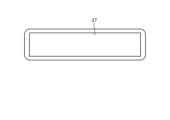
- FIG. 2 is a front view showing the first display unit.
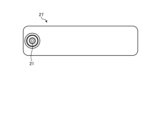
- FIG. 3 is a rear view showing the first display unit.
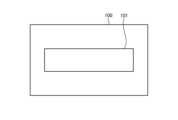
- FIG. 4 is a diagram showing an example of the photographing angle of view of the rear camera and the first range.
- FIG. 5 is a block diagram showing an example of the configuration of a playback device having the playback control device according to the first embodiment.
- FIG. 6 is a front view showing the second display unit.
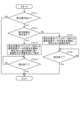
- FIG. 7 is a flowchart showing the flow of recording processing in the recording and reproduction control device according to the first embodiment.
- FIG. 8 is a flowchart showing the flow of the playback process in the recording and playback control device according to the first embodiment.
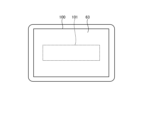
- FIG. 9 is a diagram showing an example in which an image of the first range is displayed on the second display unit.
- FIG. 10 is a diagram showing another example in which an image depicting the first range is displayed on the first display unit.
- FIG. 11 is a block diagram showing an example of the configuration of a vehicle recording/reproducing device having a recording/reproducing control device according to the second embodiment.
- FIG. 12 is a front view showing the first display unit and the line-of-sight detection camera.
- FIG. 13 is a flowchart showing the flow of recording processing in the recording and reproduction control device according to the second embodiment.
- FIG. 14 is a flowchart showing the flow of a playback process in the recording and playback control device according to the second embodiment.
- FIG. 15 is a flowchart showing the flow of recording processing in the recording and reproduction control device according to the third embodiment.
- FIG. 16 is a flowchart showing the flow of a playback process in the recording and playback control device according to the third embodiment.
- the recording and reproducing device may be implemented as a single vehicle recording and reproducing device 10 that is a digital inner mirror type drive recorder with a recording and reproducing function.
- the recording and reproducing device may be implemented as a recording and reproducing system that includes the vehicle recording and reproducing device 10 that is a digital inner mirror type drive recorder with at least a recording function, and a reproducing device 50 such as a navigation system, a smartphone, or a PC (Personal Computer) that reproduces the video recorded by the vehicle recording and reproducing device 10.
- the recording and reproducing device will be described as being implemented as a recording and reproducing system that includes the vehicle recording and reproducing device 10 and the reproducing device 50.
- FIG. 1 is a block diagram showing an example of the configuration of a vehicle recording/reproducing device having a recording/reproducing control device according to a first embodiment.
- Fig. 2 is a front view showing a first display unit.
- Fig. 3 is a rear view showing the first display unit.
- the vehicle recording/playback device 10 is implemented as a drive recorder integrated with a digital inner mirror.
- the vehicle recording/playback device 10 has the function of a drive recorder in addition to the function of a digital inner mirror.
- the vehicle recording/playback device 10 is fixed to a windshield or inner mirror (not shown).
- the vehicle recording/playback device 10 may be a portable device that can be used in a vehicle, in addition to being mounted on the vehicle.
- the vehicle recording/playback device 10 has a front camera 21, a rear camera 22, a recording unit 23, an acceleration sensor 24, an operation unit 25, a GNSS (Global Navigation Satellite System) receiving unit 26, a first display unit 27, and a recording/playback control device 30.
- GNSS Global Navigation Satellite System
- the front camera 21 is a camera that captures the front of the vehicle.
- the front camera 21 is described as a camera that can capture images at approximately 140° to 160° horizontally and approximately 60° to 80° vertically, but is not limited to this and may be a camera that can capture images of the entire sky at 360°, or a group of multiple cameras that capture images in each direction.
- the front camera 21 is disposed at the front of the vehicle interior. As shown in Figures 2 and 3, the front camera 21 is disposed on the rear side of the first display unit 27.
- the front camera 21 constantly captures images from when the vehicle's power source, such as the engine, starts to when it stops, that is, while the vehicle is operating. In this embodiment, the front camera 21 constantly captures images while the accessory power of the vehicle is ON.
- the front camera 21 outputs the captured images to the capture control unit 31 of the recording and playback control device 30.
- the images captured by the front camera 21 are, for example, moving images composed of images at 30 frames per second.
- the rear camera 22 is a camera that captures the rear of the vehicle.
- the rear camera 22 is described as a camera that can capture images at approximately 120° to 150° horizontally and at approximately 50° to 70° vertically, but is not limited to this and may be a camera that can capture images of the entire 360° sky, or a group of multiple cameras that capture images in each direction.
- the rear camera 22 is disposed at the rear of the interior of the vehicle or at the rear of the exterior of the vehicle.
- the rear camera 22 is disposed, for example, above the rear window and facing rearward.
- the rear camera 22 constantly captures images from when the vehicle's power source, such as the engine, starts to when it stops, that is, while the vehicle is operating.
- the rear camera 22 constantly captures images while the accessory power of the vehicle is ON.
- the rear camera 22 outputs the captured images to the capture control unit 31 of the recording and playback control device 30.
- the images captured by the rear camera 22 are, for example, moving images composed of images at 30 frames per second.
- the rear camera 22 serves both as a rear camera for the drive recorder and as a camera for the digital inner mirror.
- the image captured by the rear camera 22 is recorded as rear camera image for the drive recorder, and an image for the digital inner mirror is extracted from the image captured by the rear camera 22 and displayed on the display unit of the digital inner mirror.
- the recording unit 23 is used for temporary storage of data in the vehicle recording and playback device 10.
- the recording unit 23 is, for example, a semiconductor memory element such as a RAM (Random Access Memory) or a flash memory, or a recording unit such as a memory card.
- the recording unit 23 may be an external recording unit that is wirelessly connected via a communication device (not shown).
- the recording unit 23 records normal recording data or event data based on a control signal output from the recording control unit 34 of the recording and playback control device 30.
- the normal recorded data includes at least one of a forward image captured by the forward camera 11 and a rearward image captured by the rearward camera 22.
- the event data includes at least one of a forward image and a rearward image.
- the acceleration sensor 24 is a sensor that detects the acceleration applied to the vehicle.
- the acceleration sensor 24 outputs the detection result to the event detection unit 36 of the recording and playback control device 30.
- the acceleration sensor 24 is a sensor that detects acceleration in, for example, three axial directions.
- the three axial directions are the forward/backward, left/right, and up/down directions of the vehicle. Impacts on the vehicle can be detected by the acceleration in the three axial directions.
- the operation unit 25 can accept various operations for the vehicular recording/playback device 10.
- the operation unit 25 can accept an operation to manually save the captured video in the recording unit 23.
- the operation unit 25 is a touch panel provided on the first display unit 27.
- the operation unit 25 can accept an operation to play back the event data or normal recording data recorded in the recording unit 23.
- the operation unit 25 can accept an operation to erase the event data or normal recording data recorded in the recording unit 23.
- the operation unit 25 can accept an operation to end normal recording.
- the operation unit 25 outputs operation information to the operation control unit 37 of the recording/playback control device 30.
- the first display unit 27 is a display device of a digital inner mirror as shown in Figures 2 and 3.
- the first display unit 27 is a display including, for example, a liquid crystal display (LCD) or an organic electroluminescence (EL) display. As shown in Figures 2 and 3, the first display unit 27 is formed integrally with the forward camera 21.
- the first display unit 27 displays an image based on a video signal output from the display control unit 42 of the recording and playback control device 30.
- the first display unit 27 When the first display unit 27 functions as the display unit of the digital inner mirror, it displays the image captured by the rear camera 22. In this case, the first display unit 27 displays the image of a first range in the image captured by the rear camera 22. Furthermore, when the first display unit 27 functions as the display unit of the drive recorder, it is capable of displaying the image recorded in the recording unit 23. In this case, the first display unit 27 displays the image of a second range in the image captured by the rear camera 22. The first range and second range will be described later.
- the GNSS receiving unit 26 is composed of a GNSS receiver that receives GNSS signals from GNSS satellites.
- the GNSS receiving unit 26 outputs the received position information signal to the position information acquisition unit 38 of the recording and playback control device 30.
- the recording and playback control device 30 is an arithmetic processing device (control device) configured with, for example, a CPU (Central Processing Unit) and the like.
- the recording and playback control device 30 loads a stored program into memory and executes instructions contained in the program.
- the recording and playback control device 30 includes an internal memory (not shown), which is used to store a program that operates the recording and playback control device 30 and to temporarily store data in the recording and playback control device 30.
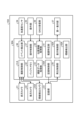
- the recording and playback control device 30 includes an imaging control unit 31, a buffer memory 32, an imaging data processing unit 33, a recording control unit 34, a playback control unit 35, an event detection unit 36, an operation control unit 37, a position information acquisition unit 38, a range identification unit 41, and a display control unit 42.
- the imaging control unit 31 acquires images of the surroundings of the vehicle. More specifically, the imaging control unit 31 acquires images captured by the front camera 21 and the rear camera 22. The imaging control unit 31 may control the imaging of the front camera 21 and the rear camera.
- the buffer memory 32 is an internal memory provided in the recording and playback control device 30, and is a memory that temporarily records a certain amount of video acquired by the shooting control unit 31 while updating it.
- the shooting data processing unit 33 converts the video temporarily stored in the buffer memory 32 into an arbitrary file format, such as MP4 format, encoded with an arbitrary codec, such as H.264 or MPEG-4 (Moving Picture Experts Group).
- the shooting data processing unit 33 generates a shooting file for a certain period of time from the video temporarily stored in the buffer memory 32.
- the shooting data processing unit 33 generates a file for 60 seconds of video in the order of recording from the video temporarily stored in the buffer memory 32.
- the shooting data processing unit 33 outputs the generated shooting file to the recording control unit 34.
- the shooting data processing unit 33 also outputs the generated shooting file to the display control unit 42.
- the shooting period of the video generated as the shooting file is 60 seconds as an example, but is not limited to this.
- the video referred to here may be data including audio in addition to the video captured by the front camera 21 and the rear camera 22.
- the recording control unit 34 controls the recording unit 23 to record the shooting files filed by the shooting data processing unit 33.
- the recording control unit 34 records the shooting files filed by the shooting data processing unit 33 as normal recording data, which is an overwritable shooting file, in the recording unit 23.
- the recording control unit 34 continues to record the shooting files generated by the shooting data processing unit 33 as normal recording data in the recording unit 23, and when the capacity of the recording unit 23 becomes full, it overwrites the oldest shooting file with a new shooting file and records it.
- the recording control unit 34 stores the video of a predetermined period in the shooting file generated by the shooting data processing unit 33 in the recording unit 23 as event data that is prohibited from being overwritten.
- Event data refers to a recording file or a recording file generated from video of a specified period before and after an event is detected during normal recording processing.
- An example of the specified period is a period of 10 seconds or more and 60 seconds or less before and after an event is detected.
- the playback control unit 35 plays back the video recorded by the recording control unit 34.
- the playback control unit 35 plays back shooting files such as event data or normal recording data.
- the playback control unit 35 controls the playback of shooting files such as event data or normal recording data recorded in the recording unit 23.
- the event detection unit 36 detects events for the vehicle.
- the method by which the event detection unit 36 detects events for the vehicle is arbitrary, but as an example, the event detection unit 36 detects an event based on the detection result of the acceleration sensor 24. In this case, the event detection unit 36 detects an event when acceleration equal to or greater than a threshold value detected by the acceleration sensor 24 is detected.
- the acceleration detected as an event by the event detection unit 36 is set to a threshold value that detects an impact on the vehicle.
- the operation control unit 37 acquires operation information of the operation accepted by the operation unit 25.
- the operation control unit 37 acquires save operation information indicating a manual save operation for saving event data at the timing of the operation, selection operation information indicating a selection operation of a captured file such as event data or normal recording data, playback operation information indicating a playback operation of the selected captured file, or erase operation information indicating an erase operation of the selected captured file, and outputs a control signal.
- the operation control unit 37 acquires end operation information indicating an operation to end normal recording, and outputs a control signal.
- the location information acquisition unit 38 calculates the current location information of the vehicle using a known method based on the radio waves received by the GNSS receiving unit 26.
- the event detection unit 36 detects an event
- the location information calculated by the location information acquisition unit 38 is stored together with the event data.
- the range determination unit 41 determines a first range, which is a display range to be displayed on the first display unit 27 for the vehicle driver to check the rear of the vehicle, for the image acquired by the shooting control unit 31. In other words, the range determination unit 41 determines a first range within the shooting angle of view of the image acquired by the shooting control unit 31, within which the vehicle driver checks the rear of the vehicle using the first display unit 27 when functioning as a digital inner mirror.
- the range determination unit 41 determines a preset range within the shooting angle of view of the image acquired by the shooting control unit 31 as the first range. In this embodiment, the range determination unit 41 may, for example, determine the center of the shooting angle of view of the image acquired by the shooting control unit 31 as the first range.
- the processing of the range determination unit 41 is executed, for example, when the recording control unit 34 records a captured file in the recording unit 23, or when the playback control unit 35 plays back event data or normal recording data.
- FIG. 4 is a diagram showing an example of the second range and the first range.
- the second range 100 may coincide with the shooting angle of view 100 of the rear camera 22.
- the first range 101 indicates the range that is displayed when the first display unit 27 functions as a digital inner mirror.
- the first range 101 is located, for example, in the center of the second range 100.
- the display control unit 42 controls the display of the image on the first display unit 27.
- the display control unit 42 outputs a video signal based on the image to be output to the first display unit 27. More specifically, the display control unit 42 outputs to the first display unit 27 a video signal of the image captured by the rear camera 22, or a video signal of the image to be displayed by playing back the event data or normal recording data recorded in the recording unit 23.
- the display control unit 42 may output the video signal of the event data or normal recording data played back by the playback control unit 35 to a second display unit 63 different from the first display unit 27 via a communication function such as Wi-Fi (registered trademark) or LAN (Local Area Network) that communicates with the playback control device 70.
- a communication function such as Wi-Fi (registered trademark) or LAN (Local Area Network) that communicates with the playback control device 70.
- the vehicular recording and playback device 10 includes a communication unit or interface unit (hereinafter referred to as "I/F") not shown.
- the display control unit 42 causes the second display unit 62 to display the video played by the playback control unit 35 on the second display unit 63 of the playback device 50
- the display control unit 42 causes the second display unit 62 to display the video of the second range and also displays information indicating the first range identified by the range identification unit 41.
- the display control unit 42 causes the second display unit 63 to display, for example, event data or normal record data
- the display control unit 42 causes a frame line or the like indicating the first range, which is the display range confirmed by the driver of the vehicle using the first display unit 27, which is the digital inner mirror.
- the information indicating the first range is, for example, a frame line indicating the periphery of the first range.
- the information indicating the first range is not limited to a frame line as long as it is in a form that allows the first range to be distinguished.
- the display control unit 42 causes the first display unit 27 to display a first range from the image captured by the rear camera 22. Specifically, as shown in FIG. 4, the display control unit 42 causes the first display unit 27 to display a range indicated by a first range 101 from the image captured by the rear camera 22 indicated by the shooting angle of view 100. In this case, the first range may be cut out from the image captured by the rear camera 22 and displayed on the first display unit 27.
- the display control unit 42 causes the first display unit 27 to function as the second display unit, it causes the first display unit 27 to display the entire image played back by the playback control unit 35. Specifically, as shown in FIG. 10, it causes the first display unit 27 to display the image played back by the playback control unit 35 without changing the aspect ratio. For example, when displaying event data or normal recording data on the first display unit 27, the display control unit 42 causes a frame line indicating a first range 101, which is the display range confirmed by the driver of the vehicle using the first display unit 27, which is a digital inner mirror.
- FIG. 5 is a block diagram showing an example of the configuration of a playback device having a playback control device according to the first embodiment.
- Fig. 6 is a front view showing a second display unit.
- the playback device 50 is a device separate from the recording/playback device 10, such as a navigation system or a personal computer.
- the playback device 50 can display event data or normal recording data captured by the recording/playback device 10.
- the playback device 50 has an I/F 61, an operation unit 62, a second display unit 63, and a playback control device 70.
- the I/F 61 is an interface for acquiring a video signal or a captured file from an external system.
- the I/F 61 is an interface for acquiring a video signal or a captured file from the recording and playback device 10.
- the I/F 61 is, for example, a wired interface for communicating with the recording and playback device 10, a wireless interface using a communication function such as Wi-Fi or LAN, or a reader for a recording medium such as a memory card.
- the playback device 50 may obtain the video played by the playback control unit 35 of the recording/playback device 10 via the I/F 61 and display it on the second display unit 63, or may obtain shooting files such as event data or normal recording data obtained from the recording/playback device 10 and display them on the second display unit 63 through playback by the playback control unit 73 of the playback device 50.
- the operation unit 62 can accept various operations for the playback device 50.
- the operation unit 62 is, for example, a touch panel provided on the second display unit 63.
- the operation unit 62 can accept an operation to play back event data or normal recording data, which is a shooting file acquired via the I/F 61.
- the operation unit 62 outputs operation information to an operation control unit 72 of the playback control device 70.
- the second display unit 63 is, for example, a display including a liquid crystal display or an organic EL display.
- the second display unit 63 functions as a display unit of the drive recorder, and can display event data or normal recording data captured by the recording and playback device 10.
- the second display unit 63 displays video based on a video signal output from the display control unit 74 of the playback control device 70.
- the second display unit 63 displays video acquired via the I/F 61.
- a second range of video in the video captured by the rear camera 22 is displayed on the second display unit 63.
- the second display unit 63 may display video captured by the rear camera 22, or may simultaneously display video captured by the rear camera 22 and video captured by the front camera 21.
- the second display unit 63 may be, for example, the first display unit 27 of the recording and playback device 10.
- the recording and playback control device 30 shown in FIG. 1 constitutes the present disclosure.
- the playback control device 70 is, for example, an arithmetic processing device (control device) configured with a CPU and the like.
- the playback control device 70 loads a stored program into memory and executes instructions contained in the program.
- the playback control device 70 includes an internal memory (not shown), which is used to store programs that operate the playback control device 70 and temporarily store data in the playback control device 70.
- the playback control device 70 includes an input control unit 71, an operation control unit 72, a playback control unit 73, and a display control unit 74.
- the input control unit 71 controls the acquisition of video signals and captured files from external devices such as the recording and playback device 10 via the I/F 61.
- the operation control unit 72 acquires operation information of the operation accepted by the operation unit 62. For example, the operation control unit 72 acquires selection operation information indicating a selection operation of event data or normal recording data, or playback operation information indicating a playback operation of event data or normal recording data, and outputs a control signal.
- the playback control unit 73 plays the selected event data or normal recording data.
- the playback control unit 73 controls the playback of the event data or normal recording data acquired via the I/F 61 based on the control signals for the selection operation and playback operation output from the operation control unit 72.
- the display control unit 74 controls the display of the image on the second display unit 63.
- the display control unit 74 outputs a video signal that causes the image to be output to the second display unit 63.
- the display control unit 74 causes the image to be displayed on the second display unit 63, it causes information indicating the first range identified by the range identification unit 41 of the recording/playback control device 30 to be displayed.
- the display control unit 74 displays the reproduced event data or normal recording data on the second display unit 63.
- the display control unit 74 displays the event data or normal recording data on the second display unit 63, it displays the event data or normal recording data in a second range on the second display unit 63 and displays information indicating the first range identified by the range identification unit 41 of the recording and reproduction control device 30.
- the display control unit 74 displays the event data or normal recording data on the second display unit 63, it displays a frame line indicating a first range 101, which is the display range confirmed by the driver of the vehicle using the first display unit 27, which is a digital inner mirror, for the image captured by the rear camera 22 indicated by the second range 100 in the displayed event data or normal recording data, as shown in FIG. 4.
- the playback device 50 functions only as a simple display device that displays video based on the video signal output from the recording and playback device 10
- the operation unit 62 and the operation control unit 72 and playback control unit 73 of the playback control device 70 are not essential components.
- the video played by the playback control unit 35 of the recording and playback device 10 is obtained from the recording and playback device 10 by the input control unit 71 via the I/F 61.
- the display control unit 74 then causes the video to be displayed on the second display unit 63.
- Fig. 7 is a flowchart showing the flow of the recording process in the recording and playback control device according to the first embodiment. Here, the case of performing normal recording process and event data recording process will be described.
- the process in FIG. 7 starts, for example, when the vehicle on which the vehicular recording and playback device 10 is mounted starts operating, and ends when the vehicle stops operating.
- the recording and playback control device 30 starts image capture, normal recording, and event detection (step S101). More specifically, the recording and playback control device 30 starts image capture by the front camera 21 and the rear camera through the image capture control unit 31.
- the recording and playback control device 30 generates image capture files for each image of a predetermined period from the images recorded in the buffer memory 32 through the image capture data processing unit 33.
- the recording and playback control device 30 causes the recording control unit 34 to record the image capture files in the recording unit 23.
- the recording and playback control device 30 starts event detection through the event detection unit 36 based on the detection results of the acceleration sensor 24.
- the recording and playback control device 30 proceeds to step S102.
- the recording and playback control device 30 determines whether or not an event has been detected by the event detection unit 36 (step S102). More specifically, if the recording and playback control device 30 determines that an event has been detected by the event detection unit 36 (Yes in step S102), the recording and playback control device 30 proceeds to step S103. If the recording and playback control device 30 does not determine that an event has been detected by the event detection unit 36 (No in step S102), the recording and playback control device 30 proceeds to step S104.
- the recording and playback control device 30 stores event data, which is video footage for a predetermined period of time before and after the event was detected (step S103). More specifically, the recording and playback control device 30 causes the recording data processing unit 33 to select from the shooting files recorded in the recording unit 23 a shooting file that includes at least the time when the event occurred, and stores this as event data in the recording unit 23 via the recording control unit 34. The recording and playback control device 30 proceeds to step S104.
- the recording and playback control device 30 determines whether or not to end image capture, normal recording, and event detection (step S104). More specifically, the recording and playback control device 30 determines to end image capture, normal recording, and event detection under any condition, such as when end operation information is output by the operation control unit 37 or when the vehicle operation ends (Yes in step S104), and ends the process. If end operation information is not output by the operation control unit 37, the recording and playback control device 30 determines not to end image capture, normal recording, and event detection (No in step S104), and executes the process of step S102 again.
- Fig. 8 is a flowchart showing the flow of the playback process in the recording and playback control device according to the first embodiment.
- the recording and playback control device 30 determines whether or not a playback operation has been performed (step S111).
- the target of the playback operation is a shooting file such as event data or normal recording data recorded in the recording unit 23.
- the playback operation includes the selection of a shooting file such as event data or normal recording data to be played back and an instruction to start playing the selected shooting file.
- the operation control unit 37 acquires operation information indicating a playback operation
- the recording and playback control device 30 determines that a playback operation has been performed.
- the recording and playback control device 30 proceeds to step S112.
- the recording and playback control device 30 ends the process.
- the recording and playback control device 30 determines whether or not a rear image has been played (step S112). More specifically, the recording and playback control device 30 determines that a rear image has been played when the event data or normal recording data to be played back, for which a playback operation has been performed by the operation control unit 37, contains a rear image.
- a rear image is, for example, when the event data or normal recording data to which a playback operation has been performed is event data or normal recording data based on an image captured by the rear camera 22, or event data or normal recording data based on an image captured by the front camera 21 and an image captured by the rear camera 22.
- step S112 may determine whether or not a playback operation has been performed on a rear image or an image including a rear image.
- the process of step S112 may determine whether or not information indicating a first range is included in the event data or normal recording data to be played back, instead of or in addition to determining whether or not a rear image has been played back.
- step S112 If the recording/playback control device 30 determines that rear video is being played back (Yes in step S112), it proceeds to step S113. If the recording/playback control device 30 does not determine that rear video is being played back (No in step S112), it proceeds to step S115.
- the recording and playback control device 30 starts playing the event data or normally recorded data to be played back, and displays the played back rear image with information indicating the first range added (step S113). More specifically, the recording and playback control device 30 starts playing the event data or normally recorded data to be played back using the playback control unit 35, generates a video signal including information indicating the first range for the rear image of the played back event data or normally recorded data, and outputs the video signal to the first display unit 27 using the display control unit 42, thereby displaying the image on the first display unit 27. After step S113, the recording and playback control device 30 proceeds to step S114.
- the recording and playback control device 30 determines whether or not to end playback of the event data or the normally recorded data (step S114).
- the recording and playback control device 30 determines to end playback of the event data or the normally recorded data when the event data or the normally recorded data has been played back to the end, or when an operation to stop playback has been performed.
- the recording and playback control device 30 determines to end playback (Yes in step S114), it ends the process.
- the recording and playback control device 30 does not determine to end playback (No in step S114), it executes the process of step S114 again.
- the recording and playback control device 30 starts playback of the event data or normal recording data to be played back, and displays the played back image (step S115). More specifically, the recording and playback control device 30 starts playback of the event data or normal recording data to be played back by the playback control unit 35, and causes the display control unit 42 to output a video signal to the first display unit 27, thereby displaying the image on the first display unit 27. After step S115, the recording and playback control device 30 proceeds to step S116.
- the recording and playback control device 30 determines whether or not to end playback of the event data or the normally recorded data (step S116). When the event data or the normally recorded data has been played back to the end, or when an operation to stop playback has been performed, the recording and playback control device 30 determines to end playback of the event data or the normally recorded data. When the recording and playback control device 30 determines to end playback (Yes in step S116), it ends the process. When the recording and playback control device 30 does not determine to end playback (No in step S116), it executes the process of step S116 again.
- step S113 a video signal including information indicating the first range is generated for the rear image of the played back event data or normal recording data, and transmitted to the playback device 50, whereby the second display unit 63 of the playback device 50 displays the event data or normal recording data video 100, which depicts information indicating the first range 101, as shown in FIG. 9.
- FIG. 9 is a diagram showing an example of a video depicting the first range displayed on the second display unit.
- the recording/playback control device 30 displays event data or normal recording data on the first display unit 27.
- the first display unit 27 displays an image 100 of the event data or normal recording data, which depicts information indicating a first range 101, as shown in FIG. 10.
- FIG. 10 is a diagram showing another example in which an image depicting a first range is displayed on the first display unit.
- the first display unit 27 displays the event data or normal recording data.
- this embodiment when an accident or the like occurs, the extent to which the driver of the vehicle was able to check the causative event or the like can be easily and objectively presented. In this way, this embodiment can make it easier to more appropriately grasp the cause of an accident or the like when reproducing event data or the like.
- the driver of the vehicle can easily recognize the distance to other vehicles, etc., because the first range is displayed.
- Fig. 11 is a block diagram showing a configuration example of a vehicle recording and reproducing device having a recording and reproducing control device according to a second embodiment.
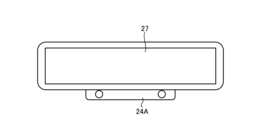
- Fig. 12 is a front view showing a first display unit and a gaze detection camera.
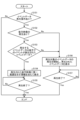
- Fig. 13 is a flowchart showing a flow of a recording process in the recording and reproducing control device according to the second embodiment.
- Fig. 14 is a flowchart showing a flow of a reproducing process in the recording and reproducing control device according to the second embodiment.
- the vehicle recording and reproducing device 10A has a basic configuration similar to that of the vehicle recording and reproducing device 10 of the first embodiment.
- the vehicle recording and reproducing device 10A differs from the first embodiment in that it includes a gaze detection camera 24A and a gaze detection unit 43A, and in the processing in the shooting control unit 31A, the recording control unit 34A, and the display control unit 42A.
- the gaze detection camera 24A is a camera that captures images so that the driver's gaze can be detected. As shown in FIG. 12, the gaze detection camera 24A is a camera provided around the display screen of the first display unit 27. The gaze detection camera 24A may be disposed on the dashboard. The gaze detection camera 24A captures an image in a direction opposite to the display screen of the first display unit 27. In this embodiment, the gaze detection camera 24A is, for example, a camera that captures an image of the face of the driver of the vehicle. The gaze detection camera 24A may be a group of multiple cameras. The gaze detection camera 24A is, for example, a visible light camera or a near-infrared camera.
- the gaze detection camera 24A may be, for example, a combination of a visible light camera and a near-infrared camera. In this embodiment, the gaze detection camera 24A constantly captures images while the accessory power of the vehicle is ON. The gaze detection camera 24A outputs the captured image to the capture control unit 31A of the recording and playback control device 30A.
- the gaze detection unit 43A detects the gaze direction of the vehicle driver from the image captured by the gaze detection camera 24A, which captures the direction facing the display screen of the first display unit 27.
- the gaze detection unit 43A recognizes the face of the vehicle driver included in the captured image from the image captured by the gaze detection camera 24A and acquired by the image data acquisition unit 111, and detects the gaze direction from the detected eye image.
- the gaze detection unit 43A detects that the vehicle driver is looking at the first display unit 27 from the corneal reflex and pupil position from the image capturing the face (both eyes) of the vehicle driver.
- the gaze detection unit 43A may determine that the vehicle driver has looked at the first display unit 27 when it detects that the vehicle driver's gaze is directed toward the first display unit 27 and the gaze of the vehicle driver continues to be directed toward the first display unit 27 for, for example, 0.5 seconds or more.
- the recording control unit 34A records information indicating that the driver's line of sight is directed toward the first display unit 27 in association with the video.
- the display control unit 42A causes the information indicating the first range identified by the range identification unit 41 to be displayed during the period in which the gaze detection unit 43A detects that the gaze of the vehicle driver is directed toward the first display unit 27.
- the range determination unit 41 displays information indicating the first range identified during the period in which the gaze detection unit 43A detects that the gaze of the vehicle driver is directed toward the first display unit 27.
- Steps S124, S125, and S126 shown in Fig. 13 are similar to steps S104, S102, and S103 in the flowchart shown in Fig. 7.
- the recording and playback control device 30A starts shooting, normal recording, event detection, and gaze detection (step S121). More specifically, the recording and playback control device 30A starts shooting with the front camera 21, rear camera 22, and gaze detection camera 24A through the shooting control unit 31.
- the recording and playback control device 30A generates a shooting file for each video of a predetermined period from the video recorded in the buffer memory 32 through the shooting data processing unit 33.
- the recording and playback control device 30A records the shooting file in the recording unit 23 through the recording control unit 34A.
- the recording and playback control device 30A detects an event based on the detection result of the acceleration sensor 24 through the event detection unit 36.
- the recording and playback control device 30A detects the driver's gaze direction from the video captured by the line detection camera 24A through the gaze detection unit 43A.
- the recording and playback control device 30A proceeds to step S122.
- the recording and playback control device 30A uses the gaze detection unit 43A to determine whether the driver's gaze is directed toward the first display unit 27 (step S122). If the gaze detection unit 43A determines that the driver's gaze is directed toward the first display unit 27 (Yes in step S122), the recording and playback control device 30A proceeds to step S123. If the gaze detection unit 43A does not determine that the driver's gaze is directed toward the first display unit 27 (No in step S122), the recording and playback control device 30A proceeds to step S124.
- the recording and playback control device 30A assigns gaze information to the video to be recorded (step S123). More specifically, the recording and playback control device 30A assigns gaze information including the period during which it is determined that the line of sight is directed toward the first display unit 27 to the captured image file recorded in the recording unit 23 by the captured image data processing unit 33. The recording and playback control device 30A saves the recorded data with the gaze information assigned to it in the recording unit 23 by the recording control unit 34A. The recording and playback control device 30A proceeds to step S124.
- Steps S131 to S132 and steps S136 to S138 shown in Fig. 14 are similar to steps S111 to S112 and steps S114 to S116 in the flowchart shown in Fig. 8.
- the recording and playback control device 30A starts playback of the event data or normally recorded data to be played back, and displays the played back rear video or video including the rear video (step S133). More specifically, the recording and playback control device 30A starts playback of the event data or normally recorded data to be played back by the playback control unit 35, and outputs a video signal that displays the rear video or video including the rear video of the played back event data or normally recorded data, thereby displaying the video on the first display unit 27. After step S133, the recording and playback control device 30A proceeds to step S134.
- the recording and playback control device 30A determines whether or not the driver is facing the first display unit 27 (step S134). More specifically, if the event data or normal recording data being played back contains information indicating that the driver is facing the first display unit 27, the recording and playback control device 30A determines that the driver is facing the first display unit 27. If the recording and playback control device 30A determines that the driver is facing the first display unit 27 (Yes in step S134), it proceeds to step S135. If the recording and playback control device 30A does not determine that the driver is facing the first display unit 27 (No in step S134), it proceeds to step S136.
- the recording and playback control device 30A adds information indicating the first range to the rear image being played back and displays it (step S135). More specifically, the recording and playback control device 30A generates a video signal including information indicating the first range for the rear image of the event data or normal recording data being played back by the playback control unit 35, and outputs the video signal to the first display unit 27 by the display control unit 42A, thereby displaying the image on the first display unit 27. The recording and playback control device 30A proceeds to step S136.
- Fig. 15 is a flowchart showing the flow of recording processing in the recording and playback control device according to the third embodiment.
- Fig. 16 is a flowchart showing the flow of playback processing in the recording and playback control device according to the third embodiment.
- the vehicular recording and playback device 10 according to this embodiment differs from the first embodiment in the processing in the event detection unit 36, the recording control unit 34, and the display control unit 42.
- the event detection unit 36 In addition to detecting an event for the vehicle, the event detection unit 36 also detects the direction in which the event occurs on the vehicle. More specifically, the event detection unit 36 detects the direction in which the event occurs from the direction of acceleration acting on the vehicle.
- the recording control unit 34 stores the event data in the recording unit 23 together with information indicating the direction in which the event occurred. More specifically, the recording control unit 34 associates the event data with information indicating the direction in which the event was detected, and stores the data in the recording unit 23.
- the display control unit 42 When the display control unit 42 causes the second display unit 63 to display event data based on an event that has occurred behind the vehicle, the display control unit 42 also causes the second display unit 63 to display information indicating the first range identified by the range identification unit 41.
- Steps S141, S142, and S144 shown in Fig. 15 are similar to steps S101, S102, and S104 in the flowchart shown in Fig. 7.
- step S142 If it is determined that an event has been detected (Yes in step S142), the video of a predetermined period before and after the time point at which the event was detected is stored as event data, along with information indicating the direction in which the event occurred (step S143). More specifically, the recording and playback control device 30 causes the shooting data processing unit 33 to select from the shooting files recorded in the recording unit 23 a shooting file that includes at least the time point at which the event occurred as event data, and causes the recording control unit 34 to store in the recording unit 23 information indicating the direction in which the event occurred together with the event data. The recording and playback control device 30 proceeds to step S144.
- step S152 steps S154 and S155, and step S157 shown in Fig. 16 are similar to those in step S112, steps S113 and S114, and step S116 in the flowchart shown in Fig. 8.
- the recording and playback control device 30 determines whether or not there has been an operation to play back the event data (step S151).
- a playback operation includes the selection of a shooting file such as the event data to be played back and an instruction to start playing the selected shooting file.
- the recording and playback control device 30 determines that there has been an operation to play back the event data.
- the recording and playback control device 30 proceeds to step S152.
- the recording and playback control device 30 ends the process.
- step S152 determines whether the event data to be played back is event data in which a rearward event has been detected (step S153). More specifically, when the event occurrence direction associated with the event data to be played back is rearward, the recording and playback control device 30 determines that the event data to be played back is event data in which a rearward event has been detected. When the recording and playback control device 30 determines that the event data to be played back is event data in which a rearward event has been detected (Yes in step S153), it proceeds to step S154.
- step S153 When the recording and playback control device 30 does not determine that the event data to be played back is event data in which a rearward event has been detected (No in step S153), it proceeds to step S156. Also, in step S156, the recording and playback control device 30 starts playing the event data to be played back and displays the played back video.
- the components of the vehicle recording/playback device and playback device shown in the figure are functional concepts and do not necessarily have to be physically configured as shown in the figure.
- the specific form of each device is not limited to that shown in the figure, and all or part of them may be functionally or physically distributed or integrated in any unit depending on the processing load and usage status of each device.
- the configuration of the vehicle recording/playback device and playback device is realized, for example, as software, such as a program loaded into memory.
- software such as a program loaded into memory.
- these are described as functional blocks realized by the cooperation of these hardware and software.
- these functional blocks can be realized in various forms, using only hardware, only software, or a combination of both.
- the above-mentioned playback process may be executed by the playback control device 70 of the playback device 50.
- the process performed by the operation control unit 37 is executed by the operation control unit 72
- the process performed by the display control unit 42 is executed by the display control unit 74.
- the event data or normal recording data captured by the recording/playback device 10 is added with the first range and stored in the memory card.
- the playback device 50 acquires the video via the I/F 61, information indicating the first range is added to the rear video.
- the recording and playback control method has been described as being executed by a recording and playback device, but it may also be executed by a recording and playback system.
- the video resulting from the event is the video from when the event is detected and filming begins until a predetermined period of time has passed, and an example of the predetermined period is a period of 10 seconds or more and 60 seconds or less.
- the configuration of the present disclosure may be such that, when the video recorded by the recording control unit 34 of the recording and playback control device 30 shown in FIG. 1 is played back by the playback control device 70 shown in FIG. 5 and displayed on the second display unit 63, the video recorded by the recording control unit 34 is played back by the playback control unit 73 and displayed on the second display unit 63.
- the configuration of the present disclosure realized by the playback control device 70 can be expressed as shown in Supplementary Notes 1 to 5 below.
- a playback control device comprising:
- the image acquisition unit further acquires information indicating that the line of sight of the driver of the vehicle is directed toward the first display unit,
- the display control unit causes the second display unit to display the video reproduced by the reproduction control unit
- the display control unit causes the first display unit to display information indicating a range to be displayed during a period in which it is detected that the line of sight of the driver of the vehicle is directed toward the first display unit, based on the information acquired by the video acquisition unit.
- the display control unit causes information indicating a range to be displayed on the first display unit, which information has been acquired by the video acquisition unit, to be displayed on the second display unit when the reproduction control unit causes the event data acquired by the video acquisition unit to be displayed on the second display unit.
- the video acquisition unit further acquires, in addition to the event data, information indicating a direction in which the event occurs in the event data;
- the display control unit causes the second display unit to display the event data based on the event occurring behind the vehicle, the display control unit causes the second display unit to display information indicating a range to be displayed on the first display unit, the information having been acquired by the image acquisition unit. 4.
- a playback control device as described in appendix 3.
- the playback control method is executed by a playback control device.
- the image acquisition unit refers to the input control unit 71.
- the recording and playback control device, playback control method, and program disclosed herein can be used, for example, in digital inner mirror type drive recorders, navigation systems, smartphones, or recording and playback systems such as PCs.
- REFERENCE SIGNS LIST 10 Vehicle recording and playback device 21 Front camera 22 Rear camera 23 Recording unit 24 Acceleration sensor 25 Operation unit 26 GNSS receiving unit 27 First display unit 30 Recording and playback control device 31 Shooting control unit 32 Buffer memory 33 Shooting data processing unit 34 Recording control unit 35 Playback control unit 36 Event detection unit 37 Operation control unit 38 Position information acquisition unit 41 Range identification unit 42 Display control unit 50 Playback device 61 I/F 62 Operation unit 63 Second display unit 70 Playback control device 71 Input control unit 72 Operation control unit 73 Playback control unit 74 Display control unit
Landscapes
- Engineering & Computer Science (AREA)
- Multimedia (AREA)
- Signal Processing (AREA)
- Mechanical Engineering (AREA)
- Physics & Mathematics (AREA)
- General Physics & Mathematics (AREA)
- Time Recorders, Dirve Recorders, Access Control (AREA)
Priority Applications (2)
| Application Number | Priority Date | Filing Date | Title |
|---|---|---|---|
| JP2024552391A JPWO2024195167A1 (https=) | 2023-03-22 | 2023-10-18 | |
| US19/325,602 US20260011348A1 (en) | 2023-03-22 | 2025-09-11 | Record and replay control device, replay control method, and storage medium |
Applications Claiming Priority (2)
| Application Number | Priority Date | Filing Date | Title |
|---|---|---|---|
| JP2023-045657 | 2023-03-22 | ||
| JP2023045657 | 2023-03-22 |
Related Child Applications (1)
| Application Number | Title | Priority Date | Filing Date |
|---|---|---|---|
| US19/325,602 Continuation US20260011348A1 (en) | 2023-03-22 | 2025-09-11 | Record and replay control device, replay control method, and storage medium |
Publications (1)
| Publication Number | Publication Date |
|---|---|
| WO2024195167A1 true WO2024195167A1 (ja) | 2024-09-26 |
Family
ID=92841661
Family Applications (1)
| Application Number | Title | Priority Date | Filing Date |
|---|---|---|---|
| PCT/JP2023/037678 Ceased WO2024195167A1 (ja) | 2023-03-22 | 2023-10-18 | 記録再生制御装置、再生制御方法およびプログラム |
Country Status (3)
| Country | Link |
|---|---|
| US (1) | US20260011348A1 (https=) |
| JP (1) | JPWO2024195167A1 (https=) |
| WO (1) | WO2024195167A1 (https=) |
Citations (2)
| Publication number | Priority date | Publication date | Assignee | Title |
|---|---|---|---|---|
| CN111361501A (zh) * | 2018-12-26 | 2020-07-03 | 阿尔派株式会社 | 电子镜装置及电子镜装置的显示控制方法 |
| JP2020170341A (ja) * | 2019-04-03 | 2020-10-15 | パイオニア株式会社 | 表示制御装置、表示制御方法及びプログラム |
-
2023
- 2023-10-18 WO PCT/JP2023/037678 patent/WO2024195167A1/ja not_active Ceased
- 2023-10-18 JP JP2024552391A patent/JPWO2024195167A1/ja active Pending
-
2025
- 2025-09-11 US US19/325,602 patent/US20260011348A1/en active Pending
Patent Citations (2)
| Publication number | Priority date | Publication date | Assignee | Title |
|---|---|---|---|---|
| CN111361501A (zh) * | 2018-12-26 | 2020-07-03 | 阿尔派株式会社 | 电子镜装置及电子镜装置的显示控制方法 |
| JP2020170341A (ja) * | 2019-04-03 | 2020-10-15 | パイオニア株式会社 | 表示制御装置、表示制御方法及びプログラム |
Also Published As
| Publication number | Publication date |
|---|---|
| JPWO2024195167A1 (https=) | 2024-09-26 |
| US20260011348A1 (en) | 2026-01-08 |
Similar Documents
| Publication | Publication Date | Title |
|---|---|---|
| JP6669240B1 (ja) | 記録制御装置、記録制御システム、記録制御方法、および記録制御プログラム | |
| JP6705470B2 (ja) | 記録再生装置、記録再生方法、およびプログラム | |
| JP2023181327A (ja) | 自動車用ドライビングレコーダ | |
| WO2020054125A1 (ja) | 記録再生装置、記録再生方法、およびプログラム | |
| JP6769504B2 (ja) | 車両用記録制御装置、車両用撮影装置、車両用記録制御方法およびプログラム | |
| US11539913B2 (en) | Recording control device, recording control system, recording control method, and computer program | |
| JP7626281B2 (ja) | 車両用記録装置および記録制御方法 | |
| WO2024195167A1 (ja) | 記録再生制御装置、再生制御方法およびプログラム | |
| CN114731386A (zh) | 记录控制装置、记录控制方法及记录控制程序 | |
| JP7447455B2 (ja) | 車両用記録制御装置および車両用記録制御方法 | |
| JP7367556B2 (ja) | 記録制御装置、記録制御方法、およびプログラム | |
| JP7680187B2 (ja) | 記録制御装置、記録制御方法、およびプログラム | |
| JP6959587B2 (ja) | 車両用記録制御装置、および車両用記録制御方法 | |
| JP7434919B2 (ja) | 記録制御装置、記録制御方法、およびプログラム | |
| JP2021044661A (ja) | 車両用記録制御装置、車両用記録装置、車両用記録制御方法およびプログラム | |
| WO2024116595A1 (ja) | 映像記録制御装置および映像記録方法 | |
| JP7452169B2 (ja) | 車両用記録制御装置、車両用記録装置、車両用記録制御方法及びプログラム | |
| JP7208493B2 (ja) | 記録制御装置、記録制御システム、記録制御方法、およびプログラム | |
| JP2023102599A (ja) | 映像記録装置、および映像記録方法 | |
| JP2020113029A (ja) | 記録制御装置、記録制御システム、記録制御方法、およびプログラム | |
| JP2021136599A (ja) | 記録制御装置、記録制御方法、およびプログラム | |
| KR20160054909A (ko) | Obd를 이용한 차량용 영상기록장치 | |
| JP2020120408A (ja) | 再生装置、再生方法、およびプログラム | |
| JP2021179736A (ja) | ドライブレコーダ及び画像記録方法 | |
| JP2021150678A (ja) | 記録制御装置、記録装置、記録制御方法およびプログラム |
Legal Events
| Date | Code | Title | Description |
|---|---|---|---|
| WWE | Wipo information: entry into national phase |
Ref document number: 2024552391 Country of ref document: JP |
|
| 121 | Ep: the epo has been informed by wipo that ep was designated in this application |
Ref document number: 23928740 Country of ref document: EP Kind code of ref document: A1 |
|
| NENP | Non-entry into the national phase |
Ref country code: DE |
|
| 122 | Ep: pct application non-entry in european phase |
Ref document number: 23928740 Country of ref document: EP Kind code of ref document: A1 |