WO2024185747A1 - 免疫グロブリン - Google Patents
免疫グロブリン Download PDFInfo
- Publication number
- WO2024185747A1 WO2024185747A1 PCT/JP2024/008128 JP2024008128W WO2024185747A1 WO 2024185747 A1 WO2024185747 A1 WO 2024185747A1 JP 2024008128 W JP2024008128 W JP 2024008128W WO 2024185747 A1 WO2024185747 A1 WO 2024185747A1
- Authority
- WO
- WIPO (PCT)
- Prior art keywords
- immunoglobulin
- multimer
- deletion
- present disclosure
- iga
- Prior art date
- Legal status (The legal status is an assumption and is not a legal conclusion. Google has not performed a legal analysis and makes no representation as to the accuracy of the status listed.)
- Ceased
Links
Images




Classifications
-
- C—CHEMISTRY; METALLURGY
- C07—ORGANIC CHEMISTRY
- C07K—PEPTIDES
- C07K16/00—Immunoglobulins [IG], e.g. monoclonal or polyclonal antibodies
- C07K16/46—Hybrid immunoglobulins
-
- A—HUMAN NECESSITIES
- A61—MEDICAL OR VETERINARY SCIENCE; HYGIENE
- A61P—SPECIFIC THERAPEUTIC ACTIVITY OF CHEMICAL COMPOUNDS OR MEDICINAL PREPARATIONS
- A61P31/00—Antiinfectives, i.e. antibiotics, antiseptics, chemotherapeutics
- A61P31/04—Antibacterial agents
-
- A—HUMAN NECESSITIES
- A23—FOODS OR FOODSTUFFS; TREATMENT THEREOF, NOT COVERED BY OTHER CLASSES
- A23K—FODDER
- A23K20/00—Accessory food factors for animal feeding-stuffs
- A23K20/10—Organic substances
- A23K20/142—Amino acids; Derivatives thereof
- A23K20/147—Polymeric derivatives, e.g. peptides or proteins
-
- A—HUMAN NECESSITIES
- A23—FOODS OR FOODSTUFFS; TREATMENT THEREOF, NOT COVERED BY OTHER CLASSES
- A23L—FOODS, FOODSTUFFS OR NON-ALCOHOLIC BEVERAGES, NOT OTHERWISE PROVIDED FOR; PREPARATION OR TREATMENT THEREOF
- A23L33/00—Modifying nutritive qualities of foods; Dietetic products; Preparation or treatment thereof
- A23L33/10—Modifying nutritive qualities of foods; Dietetic products; Preparation or treatment thereof using additives
- A23L33/17—Amino acids, peptides or proteins
- A23L33/18—Peptides; Protein hydrolysates
-
- A—HUMAN NECESSITIES
- A61—MEDICAL OR VETERINARY SCIENCE; HYGIENE
- A61P—SPECIFIC THERAPEUTIC ACTIVITY OF CHEMICAL COMPOUNDS OR MEDICINAL PREPARATIONS
- A61P1/00—Drugs for disorders of the alimentary tract or the digestive system
-
- A—HUMAN NECESSITIES
- A61—MEDICAL OR VETERINARY SCIENCE; HYGIENE
- A61P—SPECIFIC THERAPEUTIC ACTIVITY OF CHEMICAL COMPOUNDS OR MEDICINAL PREPARATIONS
- A61P37/00—Drugs for immunological or allergic disorders
- A61P37/02—Immunomodulators
- A61P37/04—Immunostimulants
-
- C—CHEMISTRY; METALLURGY
- C07—ORGANIC CHEMISTRY
- C07K—PEPTIDES
- C07K16/00—Immunoglobulins [IG], e.g. monoclonal or polyclonal antibodies
-
- C—CHEMISTRY; METALLURGY
- C07—ORGANIC CHEMISTRY
- C07K—PEPTIDES
- C07K16/00—Immunoglobulins [IG], e.g. monoclonal or polyclonal antibodies
- C07K16/18—Immunoglobulins [IG], e.g. monoclonal or polyclonal antibodies against material from animals or humans
-
- A—HUMAN NECESSITIES
- A61—MEDICAL OR VETERINARY SCIENCE; HYGIENE
- A61K—PREPARATIONS FOR MEDICAL, DENTAL OR TOILETRY PURPOSES
- A61K39/00—Medicinal preparations containing antigens or antibodies
- A61K2039/505—Medicinal preparations containing antigens or antibodies comprising antibodies
-
- A—HUMAN NECESSITIES
- A61—MEDICAL OR VETERINARY SCIENCE; HYGIENE
- A61K—PREPARATIONS FOR MEDICAL, DENTAL OR TOILETRY PURPOSES
- A61K38/00—Medicinal preparations containing peptides
-
- C—CHEMISTRY; METALLURGY
- C07—ORGANIC CHEMISTRY
- C07K—PEPTIDES
- C07K2317/00—Immunoglobulins specific features
- C07K2317/30—Immunoglobulins specific features characterized by aspects of specificity or valency
- C07K2317/35—Valency
-
- C—CHEMISTRY; METALLURGY
- C07—ORGANIC CHEMISTRY
- C07K—PEPTIDES
- C07K2317/00—Immunoglobulins specific features
- C07K2317/50—Immunoglobulins specific features characterized by immunoglobulin fragments
- C07K2317/52—Constant or Fc region; Isotype
-
- C—CHEMISTRY; METALLURGY
- C07—ORGANIC CHEMISTRY
- C07K—PEPTIDES
- C07K2319/00—Fusion polypeptide
- C07K2319/70—Fusion polypeptide containing domain for protein-protein interaction
-
- C—CHEMISTRY; METALLURGY
- C07—ORGANIC CHEMISTRY
- C07K—PEPTIDES
- C07K2319/00—Fusion polypeptide
- C07K2319/70—Fusion polypeptide containing domain for protein-protein interaction
- C07K2319/73—Fusion polypeptide containing domain for protein-protein interaction containing coiled-coiled motif (leucine zippers)
-
- C—CHEMISTRY; METALLURGY
- C12—BIOCHEMISTRY; BEER; SPIRITS; WINE; VINEGAR; MICROBIOLOGY; ENZYMOLOGY; MUTATION OR GENETIC ENGINEERING
- C12N—MICROORGANISMS OR ENZYMES; COMPOSITIONS THEREOF; PROPAGATING, PRESERVING, OR MAINTAINING MICROORGANISMS; MUTATION OR GENETIC ENGINEERING; CULTURE MEDIA
- C12N15/00—Mutation or genetic engineering; DNA or RNA concerning genetic engineering, vectors, e.g. plasmids, or their isolation, preparation or purification; Use of hosts therefor
- C12N15/09—Recombinant DNA-technology
- C12N15/63—Introduction of foreign genetic material using vectors; Vectors; Use of hosts therefor; Regulation of expression
- C12N15/79—Vectors or expression systems specially adapted for eukaryotic hosts
- C12N15/85—Vectors or expression systems specially adapted for eukaryotic hosts for animal cells
Definitions
- the present disclosure relates to a method for producing immunoglobulin multimers, and to immunoglobulin multimers, immunoglobulin variants capable of forming immunoglobulin multimers, compositions containing them, and uses of them.
- immunoglobulin isotypes including IgG, IgM, IgA, IgD, and IgE, each of which has a different function in the body.
- Immunoglobulins such as IgA and IgM are known to form multimers, such as dimers and pentamers, and function in the body.
- the number of binding sites for antigens increases, so they exhibit higher physiological activity than monomeric immunoglobulins, and it is believed that the more immunoglobulins contained in a multimer, the higher the physiological activity.
- Patent Document 1 WO2021/193553
- Patent Document 1 WO2021/193553
- the present disclosure provides immunoglobulin multimers and methods for producing the same, as well as immunoglobulin variants that can be used in the methods.
- the present disclosure provides methods and compositions that utilize the immunoglobulin multimers and immunoglobulin variants.
- the inventors of the present invention have explored methods for artificially producing immunoglobulin multimers and have unexpectedly found that high-quality immunoglobulin multimers can be efficiently obtained by using an immunoglobulin variant having a deletion at the C-terminus of at least one heavy chain.
- high-quality immunoglobulin multimers can be efficiently obtained by adding a heterologous amino acid sequence for promoting multimerization to the C-terminus of an immunoglobulin variant having a deletion at the C-terminus of at least one heavy chain.
- the present disclosure provides a method for producing immunoglobulin multimers.
- the present disclosure provides an immunoglobulin multimer.
- the present disclosure provides an immunoglobulin variant capable of forming immunoglobulin multimers.
- the present disclosure provides a pharmaceutical composition, a food composition, a feed composition, or a reagent composition containing an immunoglobulin multimer or an immunoglobulin variant.
- the present disclosure provides a method for treating or preventing a disease, disorder, or condition using an immunoglobulin multimer or an immunoglobulin variant.
- the present disclosure provides a test, testing or diagnostic method using an immunoglobulin multimer or an immunoglobulin variant.
- the present disclosure provides the following: [Item 1] contacting two or more immunoglobulins, the immunoglobulin variant having at least one deletion in the C-terminal multimerization-promoting region of at least one heavy chain; and binding the two or more immunoglobulins.
- a method for producing an immunoglobulin multimer comprising: [Item 2] 2. The method of claim 1, wherein the deletion is a deletion of one or more amino acids in the multimerization promoting region.
- [Item 3] 2. The method according to item 1, wherein a heterologous amino acid sequence that promotes multimerization is added to the C-terminus of an immunoglobulin variant having a deletion in the C-terminal multimerization promoting region.
- each of the plurality of immunoglobulins is IgA or IgM.
- [Item 5] 2. An immunoglobulin multimer produced by the method according to claim 1.
- [Item 6] An immunoglobulin multimer comprising two or more immunoglobulins, wherein at least one of the immunoglobulins constituting the two or more immunoglobulins is an immunoglobulin variant having a deletion in a C-terminal multimer formation ability-promoting region of at least one heavy chain.
- the present disclosure provides immunoglobulin multimers and methods for producing the same, and immunoglobulin variants capable of forming immunoglobulin multimers.
- the present disclosure has the effect of providing a method for utilizing immunoglobulin multimers or immunoglobulin variants capable of forming immunoglobulin multimers, and a composition containing immunoglobulin multimers or immunoglobulin variants capable of forming immunoglobulin multimers.
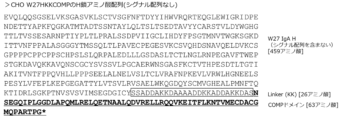
- FIG. 1 shows the heavy chain amino acid sequence of antibody CHO W27HAACOMP (signal sequence not shown).
- FIG. 2 shows the heavy chain amino acid sequence of antibody CHO W27HKKCOMP (signal sequence not shown).
- FIG. 3 shows the heavy chain amino acid sequence of antibody CHO W27HdirectCOMP (signal sequence not shown).
- FIG. 4 shows the heavy chain amino acid sequence of antibody CHO W27notailCOMP (signal sequence not shown).
- FIG. 5 shows the results of investigating the effects of the configuration of the IgA H chain C-terminal region and the configuration of the linker on multimer formation.
- Figure 6 shows the binding ability of W27 IgA multimers to Escherichia coli.
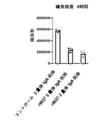
- FIG. 7 shows the results confirming that immunoglobulin multimers have excellent in vitro bacterial growth inhibitory effects.
- FIG. 8 shows the results confirming that immunoglobulin multimers have excellent in vivo bacterial-associated enteritis suppressing effects.
- the inventors of the present disclosure attempted to produce immunoglobulin multimers, but found it particularly difficult to efficiently produce immunoglobulin multimers that retained physiological activity. After further independent trial and error, they surprisingly and unexpectedly discovered that high-quality immunoglobulin multimers can be efficiently obtained by using an immunoglobulin variant having a deletion in the C-terminal multimer formation promoting region of the heavy chain. In particular, they unexpectedly discovered that high-quality immunoglobulin multimers can be efficiently obtained by adding a heterologous amino acid sequence to promote multimerization to the heavy chain C-terminus of the immunoglobulin variant.
- composition has the same meaning as is commonly understood by a person skilled in the art to which this disclosure pertains, but it also encompasses, for example, “comprises” and “consists of.” Specifically, a composition that "comprises” A may contain another component, B, in addition to containing only A.
- “separate” has the same meaning as commonly understood by those skilled in the art in the technical field to which this disclosure pertains, and may mean, for example, selectively obtaining a specific component from a mixed composition and excluding other components.
- “separate” in cases such as separating immunoglobulins from a culture medium, “separate” may have the same meaning as “isolate,” “purify,” “enrich,” or “concentrate.”
- protein refers to a substance that is composed of a polypeptide in which amino acids are linked by peptide bonds.
- polypeptides and peptides.
- lack has the same meaning as is commonly understood by those skilled in the art of the technical field to which this disclosure pertains, and means, for example, that the function or property originally possessed by the target molecule, region, etc. is reduced or completely lost.
- variant has the same meaning as commonly understood by those skilled in the art to which this disclosure pertains, but for example, when the subject is a protein, the variant means that the amino acid sequence has a mutation such as substitution, deletion, or addition of one or more amino acids. In another embodiment, variant means that a heterologous molecule is attached.
- the present disclosure provides a method for producing an immunoglobulin multimer.
- the method for producing an immunoglobulin multimer of the present disclosure has the following configuration: contacting two or more immunoglobulins, the immunoglobulin variant including at least one immunoglobulin variant having a deletion in the C-terminal multimerization-promoting region of at least one heavy chain; and binding the two or more immunoglobulins;
- the method of the present disclosure may further include a step of separating the immunoglobulin multimers produced by the binding.
- the environment in which the step of contacting two or more immunoglobulins is carried out is not particularly limited as long as it is an environment that allows binding of the two or more immunoglobulins to occur.
- the step can be carried out in an environment such as inside a cell, in a cell suspension, or in a test tube containing cellular components.
- the step of contacting two or more immunoglobulins can be achieved by expressing nucleic acid encoding the immunoglobulins in the cell, thereby contacting the two or more immunoglobulins in the cell.
- the environment in which the step of binding the two or more immunoglobulins is performed is not particularly limited as long as it is an environment that allows binding of the two or more immunoglobulins to occur.
- the step can be performed in an environment such as inside a cell, in a cell suspension, or in a test tube containing cell components.
- the step of binding the two or more immunoglobulins can be achieved by contacting the two or more immunoglobulins inside a cell, thereby causing interaction between globulin molecules.
- the binding mode of the two or more immunoglobulins includes all modes, including, for example, a covalent bond, an ionic bond, and a hydrophobic bond.
- the binding of the two or more immunoglobulins may be via a heterologous molecule bound to the immunoglobulin.
- the step of separating the immunoglobulin multimers produced by the binding is not particularly limited, and can be carried out using various methods commonly used for separating proteins in the technical field of the present disclosure.
- affinity chromatography, ion exchange chromatography, hydrophobic interaction chromatography, ethanol precipitation, reverse phase HPLC, chromatography on silica or using a cation exchange resin such as DEAE, chromatofocusing, SDS-PAGE, ammonium sulfate precipitation, gel filtration, and other techniques can be used alone or in combination.
- the produced immunoglobulin multimers in the step of separating the immunoglobulin multimers in the culture medium from other culture medium components, can be separated according to a standard method.
- a process such as cell destruction is not essential for isolating and purifying the immunoglobulin multimers.
- the method for producing immunoglobulin multimers of the present disclosure does not include a process for cell destruction.
- the cells used in the method for producing immunoglobulin multimers of the present disclosure may produce immunoglobulins intracellularly. The cells containing the immunoglobulin multimers intracellularly can be incorporated in a composition as an active ingredient themselves.
- the cells that produce the immunoglobulin multimers themselves can be orally administered.
- the cells may be destroyed before administration, but they do not have to be destroyed.
- the cells may express two or more types of immunoglobulin variants having different types of defects as immunoglobulin variants having a defect in at least one C-terminal multimerization-promoting region of a heavy chain.
- the cells used in the method of the present disclosure may express an immunoglobulin that has no defect in the C-terminal multimerization-promoting region, in addition to an immunoglobulin having a defect in at least one C-terminal multimerization-promoting region of a heavy chain.
- the type of immunoglobulin multimer produced is not particularly limited and can be selected from, for example, IgG, IgA, IgM, IgD, or IgE.
- the immunoglobulin is IgA or IgM.
- the resulting immunoglobulin multimer has physiological activity, for example, antigen-binding activity.
- the immunoglobulin multimers produced by the method of the present disclosure may include immunoglobulins from various organisms, such as humans, non-human primates, mice, rats, guinea pigs, rabbits, hamsters, dogs, cats, weasels, cows, pigs, horses, deer, wild boars, sheep, goats, camels, and the like.
- the immunoglobulin is a human immunoglobulin.
- the immunoglobulin produced by the method disclosed herein may have a natural amino acid sequence in the heavy or light chain, or may have a mutation relative to the natural sequence, in addition to the deletion of the C-terminal multimerization promoting region.
- Such mutations include addition, deletion, or substitution of amino acids, and include shortening of the N-terminus or C-terminus.
- Such mutations can adjust the antigen-binding ability, stability, and other properties of the produced immunoglobulin.
- the immunoglobulins contained in the immunoglobulin multimers produced by the method disclosed herein can include immunoglobulins that have a deletion in the C-terminal multimer formation-promoting region as well as immunoglobulins that do not have the deletion.
- immunoglobulins that have a deletion in the C-terminal multimer formation-promoting region and immunoglobulins that do not have the deletion may have a native amino acid sequence in the heavy or light chain, or may have a mutation relative to the native sequence.
- Such mutations include addition, deletion, and substitution of amino acids, and include shortening of the N-terminus or C-terminus.
- Such mutations can adjust the antigen binding ability, stability, and other properties of the produced immunoglobulin.
- the immunoglobulin constituting the immunoglobulin multimer produced by the method of the present disclosure may be a mixture of IgG, IgA, IgM, IgD, or IgE.
- it may be IgG, IgA, IgM, IgD, or IgE to which the IgA or IgM multimerization-promoting region or other region has been added by recombinant technology or the like, or a natural region has been partially replaced by said region.
- the immunoglobulin constituting the immunoglobulin multimer produced by the method of the present disclosure may be IgA or IgM in which a portion other than the multimerization-promoting region has been replaced by another class of immunoglobulin.
- an immunoglobulin is IgG, IgA, IgM, IgD, or IgE, it includes IgG, IgA, IgM, IgD, or IgE that contains a portion of another type of immunoglobulin and/or is replaced by a portion of another type of immunoglobulin.
- immunoglobulin constituting the immunoglobulin multimer produced by the method of the present disclosure is described as IgG, IgA, IgM, IgD, or IgE, it encompasses IgG, IgA, IgM, IgD, or IgE that each contains a portion of another type of immunoglobulin and/or is substituted by a portion of another type of immunoglobulin.
- the immunoglobulin multimer produced by the method of the present disclosure contains two or more immunoglobulins.
- the immunoglobulin multimer produced by the method of the present disclosure contains 2-3, 2-4, 2-5, 2-6, 2-7, 2-8, or 2-9 immunoglobulins.
- the immunoglobulin variant having a deletion in the C-terminal multimer formation-promoting region of at least one heavy chain used in the method of the present disclosure
- the immunoglobulin variant described below immunoglobulin variant having a deletion in the C-terminal multimer formation-promoting region
- Cells expressing immunoglobulin variants having a deletion in the C-terminal multimerization promoting region of at least one heavy chain are not particularly limited and can be appropriately selected by those skilled in the art. In one embodiment, it is preferable to use cells capable of producing various proteins derived from mammals, etc. that function by forming higher-order structures. Such cells can be appropriately selected from known cells such as mammalian cells such as COS cells, HEK cells, HELA cells, CHO cells, insect cells such as Sf9, yeast, filamentous fungi, etc., but are not limited thereto.
- Cells expressing the above immunoglobulins or immunoglobulin variants can be obtained by standard methods using genetic engineering. For example, they can be obtained by transducing a nucleic acid encoding the immunoglobulin or immunoglobulin variant into a cell capable of producing immunoglobulins.
- nucleic acid encoding an immunoglobulin or the like When a nucleic acid encoding an immunoglobulin or the like is transduced into a cell used in the method of the present disclosure, a person skilled in the art can adopt a specific method of introducing the nucleic acid based on publicly known information.
- the nucleic acid may be introduced in the form of a plasmid, an artificial chromosome, or the like, separately from the genome of the host cell, or may be incorporated into the genome of the host cell using genome editing technology or the like.
- the genome modification technology (genome editing technology) used in the method of the present disclosure can utilize various methods commonly used in the technical field of the present disclosure.
- the CRISPR-Cas system meganuclease (MN), zinc finger nuclease (ZFN), and transcription activation-like effector nuclease (TALEN), etc. can be used.
- MN meganuclease
- ZFN zinc finger nuclease
- TALEN transcription activation-like effector nuclease
- a filamentous fungus as a host cell
- a genome editing plasmid for creating multiple mutant strains in multiple steps as disclosed in JP 2018-191551, in a single-step mutation operation or a multi-step mutation operation, it is possible to obtain a genome-modified cell in which the plasmid for genome modification does not remain in the host cell after modification.
- vectors or nucleic acid constructs used in the genome modification operation included in the method for producing the host cell of the present disclosure various vectors or nucleic acid constructs generally used in the technical field of the present disclosure can be used.
- a vector having a selectable marker gene, a cloning site, and a control region (promoter and terminator) disclosed in JP 2012-179011 can be used.
- a vector containing the A when the CRISPR-Cas system is used in the genome modification operation, a vector containing the A.
- nidulans-derived DNA fragment AMA1 that enables autonomous replication of a plasmid and a DNA fragment designed to enable high expression of the Aoace2 gene, whose high expression significantly impairs growth, under specific conditions, as disclosed in JP 2018-191551, can be preferably used.
- the cell culturing conditions such as the medium composition, culture temperature, medium pH, and shaking conditions, can be adjusted and optimized as desired by a person skilled in the art based on known techniques. By optimizing these conditions, it is possible to improve the yield, yield, and quality of immunoglobulins, as well as to produce immunoglobulin multimers with desired properties, such as stability.
- the pH of the medium in which the cells are cultured can be adjusted to any pH between 4 and 11.
- the pH of the medium is selected from the ranges of 4.0 to 11.0, 4.5 to 10.0, 5.0 to 9.0, 5.5 to 8.5, or 6.0 to 8.0.
- the pH of the medium can be set to 5.0 or more, 5.5 or more, 6.0 or more, 6.5 or more, 7.0 or more, 7.5 or more, 8.0 or more, 8.5 or more, 9.0 or more, and 9.5 or more, as well as 11.0 or less, 10.5 or less, 10.0 or less, 9.5 or less, 9.0 or less, 8.5 or less, 8.0 or less, 7.5 or less, 7.0 or less, 6.5 or less, 6.0 or less, 5.5 or less, and 5.0 or less, or any combination of these upper and lower limits.
- the cells and cell components used are not particularly limited, and can be implemented using various configurations utilized for protein expression, reactions, etc. in the technical field of the present disclosure.
- the fact that the isolated immunoglobulin is in a polymeric form can be confirmed using various methods commonly used in the technical field of the present disclosure.
- the immunoglobulin isolated from the culture medium can be analyzed by non-reducing sodium dodecyl sulfate polyacrylamide gel electrophoresis (SDS-PAGE) to confirm that the immunoglobulin is in a polymeric form.
- the present disclosure provides immunoglobulin multimers.
- the immunoglobulin multimers provided by the present disclosure have the following structure: An immunoglobulin multimer comprising two or more immunoglobulins, wherein at least one of the immunoglobulins constituting the two or more immunoglobulins is an immunoglobulin variant having a deletion in a C-terminal multimer formation ability-promoting region of at least one heavy chain.
- the immunoglobulin multimer of the present disclosure is produced by the production method described above (Method for producing immunoglobulin multimers).
- the immunoglobulin multimers disclosed herein are immunoglobulin variants having a deletion in the C-terminal multimer formation ability-promoting region of at least one heavy chain, and can include two or more types of immunoglobulin variants having different types of deletions.
- the type of immunoglobulin constituting the immunoglobulin multimer of the present disclosure is not particularly limited and can be selected from, for example, IgG, IgA, IgM, IgD, or IgE.
- the immunoglobulin is IgA or IgM.
- the immunoglobulin multimer of the present disclosure has physiological activity, for example, antigen-binding activity.
- the immunoglobulin multimers of the present disclosure may include immunoglobulins from various organisms.
- they may be immunoglobulins from humans, non-human primates, mice, rats, guinea pigs, rabbits, hamsters, dogs, cats, weasels, cows, pigs, horses, deer, wild boars, sheep, goats, camels, etc.
- the immunoglobulin is a human immunoglobulin.
- the immunoglobulin multimers of the present disclosure may include immunoglobulins that have a deletion in the C-terminal multimer-forming ability-promoting region as well as immunoglobulins that do not have the deletion.
- immunoglobulins that have a deletion in the C-terminal multimer-forming ability-promoting region and immunoglobulins that do not have the deletion may have a native amino acid sequence in the heavy or light chain, or may have a mutation relative to the native sequence.
- Such mutations include addition, deletion, or substitution of amino acids, and include shortening of the N-terminus or C-terminus. Such mutations can adjust the antigen-binding ability, stability, and other properties of the immunoglobulin produced.
- the immunoglobulin constituting the immunoglobulin multimer of the present disclosure may be a mixture of IgG, IgA, IgM, IgD, or IgE.
- it may be IgG, IgA, IgM, IgD, or IgE to which the IgA or IgM multimerization-promoting region or other region has been added by recombinant technology or the like, or a natural region has been partially replaced by said region.
- the immunoglobulin constituting the immunoglobulin multimer of the present disclosure may be IgA or IgM in which a portion other than the multimerization-promoting region has been replaced by another class of immunoglobulin.
- an immunoglobulin when described as IgG, IgA, IgM, IgD, or IgE, it includes IgG, IgA, IgM, IgD, or IgE that contains a portion of another type of immunoglobulin and/or is replaced by a portion of another type of immunoglobulin.
- the immunoglobulin multimer of the present disclosure comprises two or more immunoglobulins.
- the immunoglobulin multimer of the present disclosure comprises 2-3, 2-4, 2-5, 2-6, 2-7, 2-8, or 2-9 immunoglobulins.
- the immunoglobulin variant contained in the immunoglobulin multimer of the present disclosure is an immunoglobulin variant described below (Immunoglobulin variant having a deletion in the C-terminal multimer formation promoting region).
- the present disclosure provides an immunoglobulin variant having a deletion in the C-terminal multimerization ability-promoting region.
- the immunoglobulin having a deletion in the C-terminal multimerization ability-promoting region of the present disclosure has the following configuration.
- the immunoglobulin variant having a deletion in the C-terminal multimer formation promoting region of the present disclosure is used in the above (method for producing immunoglobulin multimers).
- the immunoglobulin variants disclosed herein that have a deletion in the C-terminal multimer-forming ability-promoting region, and immunoglobulin variants that have a deletion in the C-terminal multimer-forming ability-promoting region of at least one heavy chain can include two or more types of immunoglobulin variants that have different types of deletions.
- the type of immunoglobulin of the immunoglobulin variant having a deletion in the C-terminal multimer formation ability promoting region of the present disclosure is not particularly limited, and can be selected from, for example, IgG, IgA, IgM, IgD, or IgE.
- the immunoglobulin variant of the present disclosure is IgA or IgM.
- the immunoglobulin variant of the present disclosure has physiological activity, for example, antigen-binding activity.
- the immunoglobulin variants of the present disclosure may include immunoglobulins from various organisms.
- they may be immunoglobulins from humans, non-human primates, mice, rats, guinea pigs, rabbits, hamsters, dogs, cats, weasels, cows, pigs, horses, deer, wild boars, sheep, goats, camels, etc.
- the immunoglobulin variant is a human immunoglobulin.
- the immunoglobulin variant having a deletion in the C-terminal multimerization-promoting region of the present disclosure may have a mixture of IgG, IgA, IgM, IgD, or IgE.
- it may be IgG, IgA, IgM, IgD, or IgE to which the IgA or IgM multimerization-promoting region or other region has been added by recombinant technology or the like, or a natural region has been partially replaced by said region.
- the immunoglobulin variant having a deletion in the C-terminal multimerization-promoting region of the present disclosure may be IgA or IgM in which a portion other than the multimerization-promoting region has been replaced by another class of immunoglobulin.
- the immunoglobulin variant when it is stated that the immunoglobulin variant is IgG, IgA, IgM, IgD, or IgE, it includes IgG, IgA, IgM, IgD, or IgE that contains a portion of the other type of immunoglobulin and/or has been replaced by a portion of the other type of immunoglobulin.
- the heavy chain C-terminal multimerization-promoting region of the immunoglobulin variant used in the method of the present disclosure includes a region that has the function of promoting the multimerization process when an immunoglobulin forms a multimer of dimer or more, or a region that stabilizes the multimer formed.
- the region may be one contained in a natural immunoglobulin, or may contain an amino acid mutation or a heterologous molecule.
- the region is one contained in a natural immunoglobulin.
- the deletion in the heavy chain C-terminal multimerization-promoting region of the immunoglobulin variant includes any embodiment that reduces or eliminates the multimerization-promoting function.
- the deletion causes a deletion of the beta sheet structure of the immunoglobulin heavy chain C-terminal region that contributes to the multimerization-promoting function (Int J Mol Sci. 2021 Dec; 22 (23): 12776.).
- the deletion may be a deletion, substitution, or insertion of one or more amino acid sequences.
- the deletion may be binding of a heterologous molecule to the region.
- the position of the deletion may be any position in the multimerization-promoting region.
- the deletion is a deletion of an amino acid sequence
- a more preferred embodiment is a deletion of one or more amino acids from the C-terminus.
- the deletion includes the amino acid sequence PTNVSVSVIMSEGDGICY (SEQ ID NO: 7) located at the C-terminus of the amino acid heavy chain.
- the immunoglobulin variant used in the method of the present disclosure may contain a heterologous amino acid sequence for promoting multimerization.
- a heterologous amino acid sequence for promoting multimerization.
- an amino acid sequence forming a coiled-coil domain can be used as such a heterologous amino acid sequence.
- the heterologous amino acid sequence can be derived from any of cartilage oligomer matrix protein (COMP), mannose-binding protein A, coiled-coil serine-rich protein 1, polypeptide release factor 2, SNAP-25, SNARE, Lac repressor, or apolipoprotein E.
- cartilage oligomer matrix protein (COMP), mannose-binding protein A, coiled-coil serine-rich protein 1, polypeptide release factor 2, SNAP-25, SNARE, Lac repressor, or apolipoprotein E.
- the heterologous amino acid sequence for promoting multimerization can be, for example, the coiled-coil assembly domain of cartilage oligomer matrix protein (COMP) described in JP2016-512309.
- the heterologous amino acid sequence can be fused to the N-terminus or C-terminus of the immunoglobulin protein, preferably the C-terminus.
- Various linker sequences can be used for the fusion as long as they do not lose the desired physiological function of the multimeric immunoglobulin, but they may not be used.
- a linker consisting of the amino acid sequence SSADDAKDAAKKDDAKKDDAKKDAS (SEQ ID NO: 4) or a linker consisting of the amino acid sequence SSADDAAADAAAADDAAADDAAADAS (SEQ ID NO: 5) can be used.
- the heterologous sequence linker or linker for promoting multimerization can be fused to the shortened N-terminus or C-terminus of the immunoglobulin.
- the class, amino acid sequence, etc. of the immunoglobulin having a deletion in the C-terminal multimer formation ability promoting region of the present disclosure is not particularly limited.
- the W27 antibody and the CHO cell-produced recombinant IgA of the W27 antibody described in WO 2014/142084, which have a mutation for protein L binding introduced into the light chain, RS_H000_L001 can be used (see WO 2023/277142.
- RS_H000_L001 will be referred to as "W27 IgA").
- an immunoglobulin derived from the W27 IgA antibody an immunoglobulin having an amino acid deletion in the C-terminal region of the heavy chain and an added COMP sequence (CHO W27notailCOMP IgA) can be used.
- a mouse IgV signal sequence for example a signal sequence containing the amino acid sequence MKCSWIIFFLMAVVTGVNS (SEQ ID NO: 6), can be added to the N-terminus.
- the light chain of CHO W27notailCOMP IgA has the same amino acid sequence as that of the modified CHO cell-produced recombinant IgA of the W27 antibody (RS_H000_L001), and the amino acid sequence of the light chain variable region (RS_LV001) has a mutation for binding to Protein L.
- the amino acid sequence of the light chain variable region RS_LV001 is shown below. >SEQ ID NO: 3: RS_LV001 light chain variable region amino acid sequence
- nucleic Acids Encoding Immunoglobulin Variants in one aspect, provides nucleic acids encoding the immunoglobulin variants described above (immunoglobulin variants having deletions in the C-terminal multimerization-promoting region).
- the nucleic acid may be a ribonucleotide or a deoxynucleotide.
- the nucleic acid may be in a single-stranded form or a double-stranded form, and is not particularly limited.
- the base sequence encoding the above-mentioned amino acid sequence is not limited to a nucleic acid consisting of one type of base sequence for one amino acid sequence, but may be determined by appropriately selecting various codons that encode the amino acids according to the intended use of the nucleic acid.
- the intended use may be to use the base sequence to express and produce an immunoglobulin having a deletion in the C-terminal multimer formation promoting region according to the present disclosure.
- various codons may be selected taking into consideration the codon frequency corresponding to the type of host cell used during production.
- nucleic acid according to the present disclosure may have a base sequence that encodes an amino acid sequence in which the mutation described above in (Immunoglobulin having a deletion in the C-terminal multimer formation promoting region) has been made with respect to SEQ ID NOs: 1 to 50.
- the immunoglobulin of the present disclosure is an antibody in which heavy and/or light chain CDR1-3 have amino acid sequences derived from mouse, and the other regions have amino acid sequences derived from human (this is sometimes referred to as a humanized antibody).
- the humanized antibody can be produced by preparing nucleic acid having base sequences encoding heavy and/or light chain CDR1-3 and base sequences encoding the other regions, and recombining the nucleic acid to form a heavy chain and a light chain. In one embodiment, some bases may be replaced with other bases in order to maintain the binding ability of the antibody.
- the base sequence of the nucleic acid of the present disclosure is not particularly limited, and an example thereof is the base sequence SEQ ID NO: 2, which corresponds to the amino acid sequence SEQ ID NO: 1 described above (immunoglobulin variant having a deletion in the C-terminal multimer formation promoting region).
- SEQ ID NO: 2 Nucleotide sequence of CHO W27HnotailCOMP (including the portion encoding the N-terminal mouse IgV signal sequence "MKCSWIIFFLMAVVTGVNS")
- the present disclosure provides a vector comprising a nucleic acid encoding an immunoglobulin variant.
- the vector can be produced by incorporating a nucleic acid encoding an immunoglobulin variant into a vector known in the art.
- the production method is not particularly limited, and various methods known to those skilled in the art can be used.
- the vectors disclosed herein can be used to express immunoglobulin variants by introducing them into host cells, and can also be used for genetic engineering applications in vitro, etc.
- a phage vector when used as an expression vector, a phage vector, a viral vector, a plasmid vector, etc. can be used.
- the disclosure provides a cell comprising a nucleic acid encoding an immunoglobulin variant, including, but not limited to, cultured cells and cells obtained from an in vivo source, as known in the art.
- the cell is a cell used in the above (method for producing immunoglobulin multimers) and expresses an immunoglobulin variant encoded by a nucleic acid.
- the various cells described above (method for producing immunoglobulin multimers) can be used as the cell.
- the cell does not necessarily express the immunoglobulin variant encoded by the nucleic acid.
- the cell may contain a nucleic acid encoding an immunoglobulin variant for the purpose of performing genetic engineering manipulation within the cell.
- the specific type of the cell is not particularly limited, and various cells known in the art may be used.
- the cell may be, for example, a mammalian cell, an avian cell, a reptilian cell, an amphibian cell, a fish cell, a fungal cell, a bacterial cell, an archaeal cell, etc., but is not limited to these.
- compositions comprising immunoglobulin multimers or immunoglobulin variants having deletions in the C-terminal multimerization-promoting region.
- the composition of the present disclosure can be provided as a composition containing a purified immunoglobulin multimer or immunoglobulin variant, a composition containing a host cell itself expressing an immunoglobulin multimer or an immunoglobulin variant, a composition containing a part or the whole of a culture medium of a host cell expressing an immunoglobulin multimer or an immunoglobulin variant, or a composition containing a host cell and a part or the whole of a culture medium.
- composition of the present disclosure is preferably provided in the form of a pharmaceutical composition, a food composition, a feed composition, a reagent composition, etc., but is not limited thereto.
- the pharmaceutical composition, the food composition, the feed composition, and the reagent composition of the present disclosure each include a material composition used to produce a final product.
- compositions disclosed herein are used to treat diseases, disorders, or conditions by utilizing the effects of immunoglobulin multimers or immunoglobulin variants having deletions in the C-terminal multimer formation-promoting region.
- the immunoglobulin multimer or immunoglobulin variant disclosed herein binds to an in vivo pathogen or an in vivo molecule expressing an abnormal function associated with a disease, disorder, condition, etc., and exerts an effect of inhibiting the proliferation of the pathogen in the body and/or an effect of promoting the excretion of the pathogen or the in vivo molecule expressing an abnormal function from the body.
- a pharmaceutical composition containing such an immunoglobulin multimer or immunoglobulin variant is used for the prevention or treatment of a disease, disorder, condition, etc. associated with the pathogen or the in vivo molecule expressing an abnormal function.
- treatment includes any treatment that improves or inhibits the progression of the disease, disorder, or condition.
- prevention of a disease, disorder, or condition includes any treatment that prevents, delays, or alleviates the "disease, disorder, or condition.”
- the "prevention” includes treating a subject who has a predisposition to developing the "disease, disorder, or condition.”
- the above pathogens include any pathogens associated with disease, disorders, conditions, etc. in the living body, including, but not limited to, viruses, bacteria, fungi, and parasites.
- the above endogenous molecules that express abnormal functions include any endogenous molecules that express abnormal functions associated with disease, disorders, conditions, etc.
- the endogenous molecules include molecules that are originally possessed by the target organism but that express abnormal functions due to changes in expression level, structural mutations, etc., as well as molecules that are introduced into the living body by pathogens, etc.
- the immunoglobulin multimers or immunoglobulin variants having deletions in the C-terminal multimer formation promoting region of the present disclosure include W27 IgA and variants thereof, which bind to C. difficile bacteria and have the effect of preventing or treating a disease, disorder, condition, etc.
- C. difficile bacteria Diseases associated with C. difficile bacteria are not particularly limited, but examples include inflammatory bowel disease, ulcerative colitis, Crohn's disease, allergies, asthma, obesity, autoimmune diseases, neonatal necrotizing enterocolitis, etc., with inflammatory bowel disease being preferred.
- Such pharmaceutical compositions according to the present disclosure need only contain an effective amount of the immunoglobulin multimers or immunoglobulin variants having a deletion in the C-terminal multimer formation promoting region according to the present disclosure, and can be appropriately set, for example, so that the content of the antibodies according to the present disclosure in 100% by weight of the pharmaceutical composition is in the range of 0.001 to 99.99% by weight, taking into consideration the type of disease to be treated, the dosage form, the method of administration, the subjects to be treated, the severity of the symptoms of the subjects, and the degree of effect exerted by administration.
- the term "effective amount” refers to an amount of the immunoglobulin multimer or immunoglobulin variant having a deletion in the C-terminal multimer formation promoting region disclosed herein that exerts a desired physiological effect in a living body.
- the pharmaceutical composition according to the present disclosure may contain a pharma- ceutical acceptable carrier or additive together with the immunoglobulin multimer or the immunoglobulin variant having a deletion in the C-terminal multimer formation promoting region according to the present disclosure.
- a pharma- ceutical acceptable carrier or additive means any carrier, diluent, excipient, suspending agent, lubricant, adjuvant, vehicle, delivery system, emulsifier, tablet disintegrant, absorbent, preservative, surfactant, colorant, flavoring, or sweetener, and any known carrier or additive may be used.
- Subjects to which the drug is administered are not particularly limited, but include, for example, mammals such as humans, mice, rats, guinea pigs, rabbits, hamsters, dogs, cats, weasels, cows, pigs, and birds such as chickens.
- the dosage and method of administration of the pharmaceutical composition vary depending on the type of disease, sex, species, age, general condition, severity of disease, and desired effect of the subject.
- the dosage is usually set appropriately within the range of 0.001 to 100 mg/kg/day.
- the administration method is not particularly limited, but is preferably administered to mucosal tissue, and examples of such administration methods include oral administration, nasal administration, and enteral administration.
- Enteral administration is not limited to administration via the anus, but also includes administration via a tube or the like inserted into the digestive tract from outside the individual, such as a gastrostomy.
- the location into which the digestive tract is inserted is not limited to the intestine, but may include the esophagus, stomach, small intestine (including the duodenum, jejunum, ileum, etc.), large intestine (including the cecum, colon, rectum, etc.), etc.
- the pharmaceutical composition according to the present disclosure may be administered in the above amount once a day, or in several divided doses. Furthermore, as long as it has a therapeutic effect against the above diseases, the administration interval may be daily, every other day, weekly, biweekly, every 2-3 weeks, monthly, bimonthly, or every 2-3 months.
- the food composition or feed composition according to the present disclosure includes the immunoglobulin multimer or the immunoglobulin variant having a deletion in the C-terminal multimer formation promoting region according to the present disclosure.
- the food composition according to the present disclosure includes all forms of food that are ingested, such as general foods, foods for specified health uses including conditional foods for specified health uses, nutritional supplements, functional foods, and foods for sick people.
- the physiological activity of the immunoglobulin multimer or the immunoglobulin variant having a deletion in the C-terminal multimer formation promoting region according to the present disclosure can be utilized.
- the food composition can be provided as a food composition labeled for intestinal regulation, for improving the intestinal environment, for optimizing the intestinal environment, for preventing intestinal putrefaction, etc.
- the proportion of immunoglobulin multimers or immunoglobulin variants lacking a C-terminal multimer formation promoting region in such food or feed compositions is not particularly limited, and may be adjusted appropriately depending on the form, use, etc. of the food or feed composition. Usually, it is about 0.001 to 99% by weight of the total amount of the composition.
- the amount of intake of the food composition or feed composition according to the present disclosure is not particularly limited, and can be set according to the desired effect, the desired degree of the effect, and other conditions.
- converted into the amount of immunoglobulin multimer according to the present disclosure it is usually about 0.001 to 100 mg/kg/day, which may be taken once or several times a day.
- the specific form of the above-mentioned food composition is not particularly limited, but examples include beverages such as soft drinks, carbonated drinks, nutritional drinks, fruit drinks, lactic acid drinks, and milk drinks; cold desserts such as ice cream, ice sherbet, and shaved ice; sweets such as candy, candy, gum, chocolate, tablet candy, snacks, biscuits, jellies, jams, creams, and baked goods; noodles such as soba, udon, harusame, Chinese noodles, and instant noodles; processed seafood and livestock foods such as kamaboko, ham, and sausages; dairy products such as processed milk and fermented milk; fats and oils and fats processed foods such as salad oil, tempura oil, margarine, mayonnaise, shortening, whipped cream, and dressings; seasonings such as sauces and sauces; soups, stews, salads, side dishes, furikake, pickles, bread, and cereals.
- beverages such as soft drinks, carbonated drinks, nutritional drinks, fruit drinks, lactic acid
- the food or feed composition according to the present disclosure can be provided as a composition containing an immunoglobulin multimer or an immunoglobulin variant having a deletion in the C-terminal multimer formation promoting region, as well as a composition containing a host cell itself expressing an immunoglobulin or a multimeric immunoglobulin, a composition containing a part or the whole of a culture medium of a host cell expressing an immunoglobulin multimer or an immunoglobulin variant having a deletion in the C-terminal multimer formation promoting region, or a composition containing the host cell and a part or the whole of a culture medium.
- the food or feed composition according to the present disclosure is provided as a composition produced through a culture process, for example, a fermentation process, of a host cell.
- the culture or brewed fermentation product may be used as a food composition as it is, or a part of the brewed fermentation product may be purified and used as a food composition.
- a solid component containing the host cell can be filtered from the culture or brewed fermentation product and provided as a liquid composition.
- Such a composition can contain the host cell itself, a part of the host cell, an extract of the host cell, a component that serves as a medium for the host cell, or a mixture of these.
- Non-limiting examples of such food compositions using filamentous fungi as host cells include mirin, sake, amazake, miso, soy sauce, shio koji, rice koji, soy sauce koji, barley koji, soybean koji, koji natto, sake lees fish koji: fish sauce base, ragi (Indonesia), ketchup (Indonesian miso, no tomatoes), soy sauce: hishi sake brewing, moromi lees, mochi koji, maki koji, chonggukjang, bonito flakes and other miscellaneous dried fish.
- the feed composition of the present disclosure can be provided as a feed composition labeled for intestinal regulation, intestinal environment improvement, intestinal environment optimization, intestinal putrefaction prevention, etc. for various animals.
- the specific form of the above-mentioned feed composition is not particularly limited, but for example, as long as the effect of the feed composition according to the present disclosure described above is not impaired, it may be mixed with normal feed or, if necessary, mixed with ingredients that can be added to normal feed to form a feed composition, or the feed composition itself may be used as feed. For example, it may be used as feed by mixing with pomace used in the production of fermented foods obtained by host cells.
- the reagent composition of the present disclosure is provided as a composition utilizing the physiological activity of an immunoglobulin multimer or an immunoglobulin variant having a deletion in the C-terminal multimer formation ability-promoting region.
- a reagent utilizing the specific antigen binding activity or the activity of agglutinating a bound target of an immunoglobulin multimer or an immunoglobulin variant having a deletion in the C-terminal multimer formation ability-promoting region can be used for the purpose of detecting, quantifying, recovering, eliminating, and the like a target molecule.
- the present disclosure provides a method for preventing or treating a disease, disorder, or condition.
- the method for preventing or treating a disease, disorder, or condition of the present disclosure utilizes the physiological activity of an immunoglobulin multimer or an immunoglobulin variant having a deletion in the C-terminal multimer formation ability-promoting region of the present disclosure.
- the immunoglobulin multimer or an immunoglobulin variant having a deletion in the C-terminal multimer formation ability-promoting region of the present disclosure binds to an in vivo pathogen or an in vivo molecule expressing an abnormal function related to a disease, disorder, condition, etc., and exerts an effect of inhibiting the proliferation of the pathogen in the body and/or an effect of promoting the excretion of the pathogen or the in vivo molecule expressing an abnormal function from the body.
- a method for preventing or treating a disease, disorder, condition, etc. related to the pathogen or the in vivo molecule expressing an abnormal function is provided to a subject in need of the prevention or treatment of the disease, disorder, condition, etc.
- the disclosed method for preventing or treating a disease, disorder, condition, etc. comprises: To a subject in need of prevention or treatment of a disease, disorder or condition associated with a pathogen or a biological molecule exhibiting an abnormal function, A method for preventing or treating a disease, disorder, or condition associated with a pathogen or a biological molecule that expresses an abnormal function, comprising the step of administering a composition comprising an immunoglobulin multimer that binds to the pathogen or the biological molecule that expresses an abnormal function, or an immunoglobulin having a deletion in a C-terminal multimer formation ability-promoting region.
- the disclosed method for preventing or treating a disease, disorder, or condition includes W27 IgA and its variants as an immunoglobulin multimer or immunoglobulin variant, and provides a method for preventing or treating a disease, disorder, condition, etc. associated with C. difficile bacteria by utilizing the binding action of the immunoglobulin multimer or immunoglobulin variant to C. difficile bacteria.
- the method for preventing or treating a disease, disorder, or condition disclosed herein comprises the step of administering to a subject in need of prevention or treatment of the disease, disorder, or condition an immunoglobulin multimer or an immunoglobulin variant having a deletion in the C-terminal multimer formation promoting region disclosed herein.
- the present disclosure provides a test, examination and diagnostic method.
- the test, examination and diagnostic method of the present disclosure utilizes the specific binding activity of an immunoglobulin multimer or an immunoglobulin variant having a deletion in the C-terminal multimer formation ability promoting region according to the present disclosure.
- the immunoglobulin multimer or an immunoglobulin variant having a deletion in the C-terminal multimer formation ability promoting region according to the present disclosure can specifically bind to a target molecule in a test sample, a test sample or an in vivo tissue.
- a test or examination method for determining the presence or absence of a target molecule in a test sample, a test sample or an in vivo tissue, and quantifying the amount of the target molecule present, by utilizing the specific binding activity of such an immunoglobulin multimer or an immunoglobulin variant having a deletion in the C-terminal multimer formation ability promoting region. Furthermore, in one aspect, a test or diagnostic method is provided for determining a subject's condition, disease, prognosis, disease risk, etc. based on the results of these tests and examinations.
- the disclosed test, testing and diagnostic methods comprise the following: A method for testing, examination and diagnosis comprising the steps of: contacting a test sample, a test sample or an in vivo tissue with an immunoglobulin multimer or an immunoglobulin variant having a deletion in a C-terminal multimer formation ability-promoting region; and detecting or quantifying a molecule that binds to the immunoglobulin multimer or the immunoglobulin variant having a deletion in the C-terminal multimer formation ability-promoting region in the test sample, the test sample or the in vivo tissue.
- DNA manipulation method E. coli DH5 ⁇ was used for DNA manipulation.
- PrimeSTARHS DNA polymerase (TaKaRa) was used for PCR.
- In-Fusion HD Cloning Kit (TaKaRa) was used for plasmid preparation. Plasmids were extracted by the alkaline SDS method. Nucleotide sequences were analyzed by contract with FASMAC Corporation.
- the purified immunoglobulin was quantified by ELISA.
- the details of the immunoglobulin quantification method are as follows. First, anti-goat-mouse IgA (Southern Biotech: 1040-01) was diluted with 0.05 M Na2CO3 to 2 ⁇ g/ml, and added to each well of a C96MaxiSorp Nunc-Immuno Plate (Thermo Fisher) (hereinafter referred to as an ELISA plate) at 50 ⁇ l/well, and immobilized at 4° C. overnight.
- ELISA plate C96MaxiSorp Nunc-Immuno Plate
- PBS containing 1% bovine serum albumin (BSA) (Wako) PBS-BSA was added to 150 ⁇ l/well, and the plate was left to stand overnight at 4° C. for blocking.
- a series of antibody solutions was prepared in a 96-well plate.
- the antibody solution was serially diluted with PBS-BSA at 1:1 dilution (x1, where x1/100 and x1/1000 of the purified antibody are designated as x1), 3:1 dilution (x1/3), 10:1 dilution (x1/10), 30:1 dilution (x1/30), 100:1 dilution (x1/100), 300:1 dilution (x1/300), 1000:1 dilution (x1/1000), and 3000:1 dilution (x1/3000).
- the serially diluted solutions were added to 50 ⁇ l/well and allowed to stand at room temperature for 1 hour to react.
- the plate was washed three times with PBS containing 0.05% Tween 20 (Chem Cruz) (PBS-T) using a plate washer, and then the secondary antibody, alkaline phosphatase (ALP)-conjugated anti-goat mouse IgA (Southern Biotech: 1040-04), was diluted in PBS-BSA to a final concentration of 0.5 ⁇ g/ml and added at 50 ⁇ l/well and allowed to stand at room temperature for 1 hour to react.
- PBS-T PBS containing 0.05% Tween 20 (Chem Cruz)
- ALP alkaline phosphatase
- a 2-ME-added buffer was added to the sample, which was then denatured at 95°C for 10 minutes, after which the sample was electrophoresed using the same 6% SDS-PAGE gel as for the non-reduced sample, and stained with Coomassie brilliant blue (CBB).
- CBB Coomassie brilliant blue
- E. coli DH5 ⁇ or BW38092 and its mutants, both K12 strains
- E. coli was aerobically cultured at 37°C (LB medium) overnight and collected by centrifugation. After washing the bacteria with PBS, the bacteria were suspended in 0.05M Na2CO3 buffer and coated on an ELISA plate (4°C overnight). After blocking with 1% BSA-added PBS as in the above-mentioned purified IgA antibody quantitative ELISA, a dilution series of each antibody was prepared in a 96-well plate and added, and reacted at room temperature for about 1 hour.
- the plate was washed with PBS containing 0.05% Tween 20, and the secondary antibody Alkaline Phosphatase (ALP)-conjugated anti-goat mouse IgA (Southern Biotech: 1040-04) was diluted in PBS-BSA to a final concentration of 0.5 ⁇ g/ml, added at 50 ⁇ l/well, and allowed to stand at room temperature for 1 hour for reaction.
- ALP Alkaline Phosphatase
- the color reaction was carried out in the same manner as above using an Alkaline Phosphatase tablet (Sigma).
- the ELISA plate after color development was incubated overnight at 4° C., and OD at 405 nm was measured using TriStar2 LB942 (BERTHOLD TECHNOLOGIES).
- test antibodies used were a pentameric IgA antibody of rW27 (SEQ ID NO: 4: a pentameric IgA antibody consisting of an IgA having a heavy chain having CHO W27notailCOMP and a light chain of the antibody RS_H000_L001 (see WO 2014/142084)), a dimeric IgA antibody of rW27 (a dimeric IgA antibody consisting of an IgA having a heavy chain and a light chain of the antibody RS_H000_L001 (see WO 2014/142084) and a J chain), and a control dimeric IgA antibody.
- SEQ ID NO: 4 a pentameric IgA antibody consisting of an IgA having a heavy chain having CHO W27notailCOMP and a light chain of the antibody RS_H000_L001
- dimeric IgA antibody of rW27 a dimeric IgA antibody consisting of an IgA having a heavy chain and a light chain
- SMC medium composition The above reagents were dissolved in 200 ml of sterile distilled water and sterilized in an autoclave. After cooling to about 60° C., 600 ⁇ l of 10% (w/v) L-cysteine was added and the appropriate amount was dispensed into a 10 cm plate.
- C. difficile selective medium plates were prepared by dissolving the reagents in Table 1 below in 400 ml of sterile distilled water and sterilizing in an autoclave. The mixture was allowed to cool naturally to 60°C, and 2 ml of Cycloserine (Sigma-Aldrich) (50 mg/ml) and 2 ml of Cefoxitin (Sigma-Aldrich) (1.6 mg/ml) were added, followed by dispensing appropriate amounts into 10 cm plates.
- Cycloserine Sigma-Aldrich
- Cefoxitin Sigma-Aldrich
- mice 8 weeks old were purchased from Nippon CLEA, and after acclimation for one week in a sterile isolator for infection experiments, a triple antibiotic mixture (gentamicin: 500 mg/kg, kanamycin: 150 mg/kg, metronidazole: 50 mg/kg) was orally administered for 4 days using a probe. After 4 days, the weight of each mouse was measured, and those that lost weight due to antibiotic administration were excluded, and the remaining mice were randomly divided into groups. On the day following the completion of antibiotic administration, each mouse was orally infected with C. difficile spores (10x10 3 cfu) using a probe.
- C. difficile spores 10x10 3 cfu
- the test antibodies used were a pentameric IgA antibody of rW27 (SEQ ID NO: 4: a pentameric IgA antibody consisting of an IgA having a heavy chain with CHO W27notailCOMP and a light chain of the antibody RS_H000_L001 (see WO 2014/142084)), a dimeric IgA antibody of rW27 (a dimeric IgA antibody consisting of an IgA having a heavy chain and a light chain of the antibody RS_H000_L001 (see WO 2014/142084) and a J chain), and a control dimeric IgA antibody. Thereafter, the antibody was administered at 300 ⁇ g once a day for a total of 7 days. From the 8th day onwards, the subjects were observed without antibody administration.
- Example 1 Preparation of immunoglobulins having deletions in the C-terminal multimer formation promoting region The effect on multimer formation of immunoglobulins having deletions in the C-terminal multimer formation promoting region was examined.
- immunoglobulin-encoding genes and vectors containing them were created and introduced into CHO cells according to standard methods, similar to the method described in Example 8 of WO2023/277166.
- the W27 antibody described in WO 2014/142084 and the CHO cell-produced recombinant IgA of the W27 antibody, in which a mutation for protein L binding was introduced into the light chain were used.
- RS_H000_L001 (W27 IgA) was used (see Japanese Patent Application No. 2021-110421).
- genome-modified CHO cells were produced by standard methods using a nucleic acid construct encoding IgA having a natural L chain and a fusion protein having the following configuration as the H chain, and the multimer formation state of the secreted IgA was examined.
- the amino acid sequences of the IgA heavy chains having each structure and the nucleic acid sequences encoding them are shown below.
- the mouse IgV signal sequence "MKCSWIIFFLMAVVTGVNS" was added to the N-terminus.
- the light chain of the W27 IgA antibody has the same amino acid sequence as the light chain of a variant of the W27 antibody CHO cell-produced recombinant IgA (RS_H000_L001) (see International Publication WO 2023/277142), and the amino acid sequence of the light chain variable region (RS_LV001) has a mutation for binding to Protein L. >RS_LV001 (SEQ ID NO: 3) (ibid.)
- Example 2 Binding properties of immunoglobulin multimers The binding ability of multimerized W27 IgA as an immunoglobulin multimer to E. coli was confirmed. As described in International Publication WO 2014/142084, it is known that W27 IgA antibodies expressed in mammalian cells bind to E. coli. Multimerized W27 IgA secreted from CHO cells was purified, and the E. coli binding ability of these IgA multimers was tested. For comparison, W27 IgA monomer (W27monomer) and W27 IgA dimer (W27 dimer) obtained by expressing unmodified W27 in CHO cells were simultaneously tested. As a result of measuring the binding strength to E.
- W27IgA antibody multimers secreted from CHO cells showed extremely high binding strength compared to the W27 IgA monomer (W27monomer) and the W27 IgA dimer (W27 dimer), as shown in Figure 6. Furthermore, among the W27 IgA antibody multimers secreted from CHO cells, W27notailCOMP, which lacks the C-terminal region and is bound to COMP without using a linker, showed the highest binding strength to E. coli.
- Example 3 Inhibitory effect of immunoglobulin multimers on C. difficile proliferation (in vitro)
- the multimerized W27 IgA was tested for its growth inhibitory effect on C. difficile bacteria.
- both the rW27 pentamer IgA antibody and the rW27 dimer IgA antibody exhibited superior growth inhibitory effects against C. difficile bacteria compared to the control dimer IgA antibody.
- the results show that the rW27 pentameric IgA antibody and the rW27 dimeric IgA antibody, which are immunoglobulin polymers, have excellent inhibitory effects on the proliferation of C. difficile in vitro.
- Example 4 Inhibitory effect of immunoglobulin multimers on C. difficile-associated enteritis (in vivo)
- the inhibitory effects of rW27 pentamer IgA antibody and rW27 dimer IgA antibody on C. difficile-associated enteritis were confirmed by in vivo administration tests.
- the rW27 dimeric IgA antibody showed a slight improvement in survival rate compared to the control dimeric IgA antibody
- the rW27 pentamer IgA antibody in particular has an excellent effect of suppressing C. difficile-associated enteritis in vivo.
Landscapes
- Health & Medical Sciences (AREA)
- Chemical & Material Sciences (AREA)
- Life Sciences & Earth Sciences (AREA)
- Organic Chemistry (AREA)
- General Health & Medical Sciences (AREA)
- Engineering & Computer Science (AREA)
- Genetics & Genomics (AREA)
- Medicinal Chemistry (AREA)
- Immunology (AREA)
- Proteomics, Peptides & Aminoacids (AREA)
- Molecular Biology (AREA)
- Bioinformatics & Cheminformatics (AREA)
- Pharmacology & Pharmacy (AREA)
- Public Health (AREA)
- Veterinary Medicine (AREA)
- Animal Behavior & Ethology (AREA)
- General Chemical & Material Sciences (AREA)
- Chemical Kinetics & Catalysis (AREA)
- Nuclear Medicine, Radiotherapy & Molecular Imaging (AREA)
- Biochemistry (AREA)
- Biophysics (AREA)
- Polymers & Plastics (AREA)
- Zoology (AREA)
- Biomedical Technology (AREA)
- Wood Science & Technology (AREA)
- Biotechnology (AREA)
- General Engineering & Computer Science (AREA)
- Oncology (AREA)
- Communicable Diseases (AREA)
- Food Science & Technology (AREA)
- Plant Pathology (AREA)
- Microbiology (AREA)
- Physics & Mathematics (AREA)
- Nutrition Science (AREA)
- Mycology (AREA)
- Animal Husbandry (AREA)
- Peptides Or Proteins (AREA)
- Medicines Containing Antibodies Or Antigens For Use As Internal Diagnostic Agents (AREA)
- Epidemiology (AREA)
- Micro-Organisms Or Cultivation Processes Thereof (AREA)
Priority Applications (6)
| Application Number | Priority Date | Filing Date | Title |
|---|---|---|---|
| AU2024233883A AU2024233883A1 (en) | 2023-03-03 | 2024-03-04 | Immunoglobulin |
| EP24767115.9A EP4678662A1 (en) | 2023-03-03 | 2024-03-04 | Immunoglobulin |
| CN202480016629.7A CN120826417A (zh) | 2023-03-03 | 2024-03-04 | 免疫球蛋白 |
| JP2024541772A JP7760200B2 (ja) | 2023-03-03 | 2024-03-04 | 免疫グロブリン |
| KR1020257030992A KR20250158030A (ko) | 2023-03-03 | 2024-03-04 | 면역 글로불린 |
| JP2025085668A JP2025128156A (ja) | 2023-03-03 | 2025-05-22 | 免疫グロブリン |
Applications Claiming Priority (2)
| Application Number | Priority Date | Filing Date | Title |
|---|---|---|---|
| JP2023033251 | 2023-03-03 | ||
| JP2023-033251 | 2023-03-03 |
Publications (1)
| Publication Number | Publication Date |
|---|---|
| WO2024185747A1 true WO2024185747A1 (ja) | 2024-09-12 |
Family
ID=92675164
Family Applications (1)
| Application Number | Title | Priority Date | Filing Date |
|---|---|---|---|
| PCT/JP2024/008128 Ceased WO2024185747A1 (ja) | 2023-03-03 | 2024-03-04 | 免疫グロブリン |
Country Status (7)
| Country | Link |
|---|---|
| EP (1) | EP4678662A1 (https=) |
| JP (2) | JP7760200B2 (https=) |
| KR (1) | KR20250158030A (https=) |
| CN (1) | CN120826417A (https=) |
| AU (1) | AU2024233883A1 (https=) |
| TW (1) | TW202440928A (https=) |
| WO (1) | WO2024185747A1 (https=) |
Citations (12)
| Publication number | Priority date | Publication date | Assignee | Title |
|---|---|---|---|---|
| WO2004046190A2 (en) * | 2002-11-18 | 2004-06-03 | University Of Warwick | Antibodies lacking vacuolar targeting signal peptide and capable of binding j-chain |
| JP2012179011A (ja) | 2011-03-01 | 2012-09-20 | Univ Of Tokyo | 糸状菌変異株及びこれを用いたタンパク質の製造方法 |
| WO2014142084A1 (ja) | 2013-03-11 | 2014-09-18 | 学校法人関西文理総合学園 | モノクローナルIgA抗体の製造方法 |
| JP2016512309A (ja) | 2013-03-14 | 2016-04-25 | フェデラル−モーグル コーポレイション | ダイクスタイプピストンリングおよびその製造方法 |
| JP2016520055A (ja) * | 2013-05-07 | 2016-07-11 | エフ.ホフマン−ラ ロシュ アーゲーF. Hoffmann−La Roche Aktiengesellschaft | 三量体型抗原結合分子 |
| JP2018191551A (ja) | 2017-05-16 | 2018-12-06 | 国立大学法人 東京大学 | 糸状菌におけるゲノム編集を用いる多段階による多重変異株の製造方法 |
| JP2021110421A (ja) | 2020-01-14 | 2021-08-02 | トヨタ自動車株式会社 | 車両用油量調整装置 |
| WO2021193553A1 (ja) | 2020-03-23 | 2021-09-30 | 東興薬品工業株式会社 | 多量体IgA抗体の作製法及び多重特異性多量体IgA抗体 |
| WO2022115963A1 (en) * | 2020-12-03 | 2022-06-09 | Zymeworks Inc. | Heterodimeric iga fc constructs and methods of use thereof |
| WO2023277142A1 (ja) | 2021-07-01 | 2023-01-05 | 国立大学法人 東京大学 | クロストリジウム・ディフィシル菌に結合する抗体 |
| WO2023277166A1 (ja) | 2021-07-02 | 2023-01-05 | 国立大学法人 東京大学 | クロストリジウム・ディフィシル菌の増殖を抑制するためのモノクローナル抗体含有組成物 |
| WO2024038839A1 (ja) * | 2022-08-15 | 2024-02-22 | 国立大学法人 東京大学 | 糸状菌を用いた免疫グロブリンまたは多量体免疫グロブリンの製造方法 |
-
2024
- 2024-03-04 TW TW113107750A patent/TW202440928A/zh unknown
- 2024-03-04 KR KR1020257030992A patent/KR20250158030A/ko active Pending
- 2024-03-04 WO PCT/JP2024/008128 patent/WO2024185747A1/ja not_active Ceased
- 2024-03-04 CN CN202480016629.7A patent/CN120826417A/zh active Pending
- 2024-03-04 AU AU2024233883A patent/AU2024233883A1/en active Pending
- 2024-03-04 JP JP2024541772A patent/JP7760200B2/ja active Active
- 2024-03-04 EP EP24767115.9A patent/EP4678662A1/en active Pending
-
2025
- 2025-05-22 JP JP2025085668A patent/JP2025128156A/ja active Pending
Patent Citations (12)
| Publication number | Priority date | Publication date | Assignee | Title |
|---|---|---|---|---|
| WO2004046190A2 (en) * | 2002-11-18 | 2004-06-03 | University Of Warwick | Antibodies lacking vacuolar targeting signal peptide and capable of binding j-chain |
| JP2012179011A (ja) | 2011-03-01 | 2012-09-20 | Univ Of Tokyo | 糸状菌変異株及びこれを用いたタンパク質の製造方法 |
| WO2014142084A1 (ja) | 2013-03-11 | 2014-09-18 | 学校法人関西文理総合学園 | モノクローナルIgA抗体の製造方法 |
| JP2016512309A (ja) | 2013-03-14 | 2016-04-25 | フェデラル−モーグル コーポレイション | ダイクスタイプピストンリングおよびその製造方法 |
| JP2016520055A (ja) * | 2013-05-07 | 2016-07-11 | エフ.ホフマン−ラ ロシュ アーゲーF. Hoffmann−La Roche Aktiengesellschaft | 三量体型抗原結合分子 |
| JP2018191551A (ja) | 2017-05-16 | 2018-12-06 | 国立大学法人 東京大学 | 糸状菌におけるゲノム編集を用いる多段階による多重変異株の製造方法 |
| JP2021110421A (ja) | 2020-01-14 | 2021-08-02 | トヨタ自動車株式会社 | 車両用油量調整装置 |
| WO2021193553A1 (ja) | 2020-03-23 | 2021-09-30 | 東興薬品工業株式会社 | 多量体IgA抗体の作製法及び多重特異性多量体IgA抗体 |
| WO2022115963A1 (en) * | 2020-12-03 | 2022-06-09 | Zymeworks Inc. | Heterodimeric iga fc constructs and methods of use thereof |
| WO2023277142A1 (ja) | 2021-07-01 | 2023-01-05 | 国立大学法人 東京大学 | クロストリジウム・ディフィシル菌に結合する抗体 |
| WO2023277166A1 (ja) | 2021-07-02 | 2023-01-05 | 国立大学法人 東京大学 | クロストリジウム・ディフィシル菌の増殖を抑制するためのモノクローナル抗体含有組成物 |
| WO2024038839A1 (ja) * | 2022-08-15 | 2024-02-22 | 国立大学法人 東京大学 | 糸状菌を用いた免疫グロブリンまたは多量体免疫グロブリンの製造方法 |
Non-Patent Citations (1)
| Title |
|---|
| See also references of EP4678662A1 |
Also Published As
| Publication number | Publication date |
|---|---|
| EP4678662A1 (en) | 2026-01-14 |
| JP2025128156A (ja) | 2025-09-02 |
| JP7760200B2 (ja) | 2025-10-27 |
| TW202440928A (zh) | 2024-10-16 |
| KR20250158030A (ko) | 2025-11-05 |
| AU2024233883A1 (en) | 2025-09-25 |
| CN120826417A (zh) | 2025-10-21 |
| JPWO2024185747A1 (https=) | 2024-09-12 |
Similar Documents
| Publication | Publication Date | Title |
|---|---|---|
| JP5916946B2 (ja) | モノクローナルIgA抗体の製造方法 | |
| JP7405386B2 (ja) | クロストリジウム・ディフィシル菌に結合する抗体 | |
| US20140328838A1 (en) | Caninised antibodies and method for production of same | |
| JP7430946B2 (ja) | クロストリジウム・ディフィシル菌の増殖を抑制するためのモノクローナル抗体含有組成物 | |
| EP3738599B1 (en) | Composition comprising probiotics and polypeptide having binding affinity for ige and use thereof | |
| JP7760200B2 (ja) | 免疫グロブリン | |
| EP4574840A1 (en) | Method for producing immunoglobulin or multimer immunoglobulin using filamentous fungus | |
| CA3284842A1 (en) | Immunoglobulin | |
| Plavec et al. | Secretion and surface display of binders of IL-23/IL-17 cytokines and their receptors in Lactococcus lactis as a therapeutic approach against inflammation | |
| TW202400235A (zh) | 治療或診斷炎症性腸疾病(ibd)之方法及組合物 | |
| JP5975399B2 (ja) | TGF−β受容体の活性化を抑制する活性を有する化合物、そのスクリーニング方法、並びにC型肝炎ウィルスに起因する疾患の予防又は治療のための組成物 | |
| US20210324038A1 (en) | Pd-l1 mutant having improved binding affinity for pd-1 | |
| US20250051426A1 (en) | Composition containing monoclonal antibody | |
| WO2024237217A1 (ja) | クロストリジオイデス・ディフィシル菌に結合する抗体 | |
| WO2025134928A1 (ja) | 結腸直腸がんを治療するための組成物 | |
| FI122200B (fi) | Uusia peptidejä ja menetelmiä niiden valmistamiseksi | |
| TW202229319A (zh) | 具有乳酸菌之胞外多醣之免疫賦活活性之提升作用之蛋白質、以及使用其之發酵乳及其製造方法 |
Legal Events
| Date | Code | Title | Description |
|---|---|---|---|
| WWE | Wipo information: entry into national phase |
Ref document number: 2024541772 Country of ref document: JP |
|
| 121 | Ep: the epo has been informed by wipo that ep was designated in this application |
Ref document number: 24767115 Country of ref document: EP Kind code of ref document: A1 |
|
| WWE | Wipo information: entry into national phase |
Ref document number: CN2024800166297 Country of ref document: CN Ref document number: 202480016629.7 Country of ref document: CN |
|
| WWE | Wipo information: entry into national phase |
Ref document number: AU2024233883 Country of ref document: AU |
|
| ENP | Entry into the national phase |
Ref document number: 1020257030992 Country of ref document: KR Free format text: ST27 STATUS EVENT CODE: A-0-1-A10-A15-NAP-PA0105 (AS PROVIDED BY THE NATIONAL OFFICE) |
|
| ENP | Entry into the national phase |
Ref document number: 2024233883 Country of ref document: AU Date of ref document: 20240304 Kind code of ref document: A |
|
| WWE | Wipo information: entry into national phase |
Ref document number: 202517094464 Country of ref document: IN |
|
| WWE | Wipo information: entry into national phase |
Ref document number: 2024767115 Country of ref document: EP |
|
| NENP | Non-entry into the national phase |
Ref country code: DE |
|
| WWP | Wipo information: published in national office |
Ref document number: 202480016629.7 Country of ref document: CN |
|
| WWP | Wipo information: published in national office |
Ref document number: 202517094464 Country of ref document: IN |
|
| ENP | Entry into the national phase |
Ref document number: 2024767115 Country of ref document: EP Effective date: 20251006 |
|
| ENP | Entry into the national phase |
Ref document number: 2024767115 Country of ref document: EP Effective date: 20251006 |
|
| ENP | Entry into the national phase |
Ref document number: 2024767115 Country of ref document: EP Effective date: 20251006 |
|
| ENP | Entry into the national phase |
Ref document number: 2024767115 Country of ref document: EP Effective date: 20251006 |