WO2024180927A1 - プログラム及び情報処理装置 - Google Patents
プログラム及び情報処理装置 Download PDFInfo
- Publication number
- WO2024180927A1 WO2024180927A1 PCT/JP2024/000711 JP2024000711W WO2024180927A1 WO 2024180927 A1 WO2024180927 A1 WO 2024180927A1 JP 2024000711 W JP2024000711 W JP 2024000711W WO 2024180927 A1 WO2024180927 A1 WO 2024180927A1
- Authority
- WO
- WIPO (PCT)
- Prior art keywords
- content
- character
- player
- predetermined
- predetermined parameter
- Prior art date
- Legal status (The legal status is an assumption and is not a legal conclusion. Google has not performed a legal analysis and makes no representation as to the accuracy of the status listed.)
- Ceased
Links
Images


Classifications
-
- A—HUMAN NECESSITIES
- A63—SPORTS; GAMES; AMUSEMENTS
- A63F—CARD, BOARD, OR ROULETTE GAMES; INDOOR GAMES USING SMALL MOVING PLAYING BODIES; VIDEO GAMES; GAMES NOT OTHERWISE PROVIDED FOR
- A63F13/00—Video games, i.e. games using an electronically generated display having two or more dimensions
- A63F13/60—Generating or modifying game content before or while executing the game program, e.g. authoring tools specially adapted for game development or game-integrated level editor
- A63F13/69—Generating or modifying game content before or while executing the game program, e.g. authoring tools specially adapted for game development or game-integrated level editor by enabling or updating specific game elements, e.g. unlocking hidden features, items, levels or versions
-
- A—HUMAN NECESSITIES
- A63—SPORTS; GAMES; AMUSEMENTS
- A63F—CARD, BOARD, OR ROULETTE GAMES; INDOOR GAMES USING SMALL MOVING PLAYING BODIES; VIDEO GAMES; GAMES NOT OTHERWISE PROVIDED FOR
- A63F13/00—Video games, i.e. games using an electronically generated display having two or more dimensions
- A63F13/70—Game security or game management aspects
- A63F13/79—Game security or game management aspects involving player-related data, e.g. identities, accounts, preferences or play histories
-
- A—HUMAN NECESSITIES
- A63—SPORTS; GAMES; AMUSEMENTS
- A63F—CARD, BOARD, OR ROULETTE GAMES; INDOOR GAMES USING SMALL MOVING PLAYING BODIES; VIDEO GAMES; GAMES NOT OTHERWISE PROVIDED FOR
- A63F13/00—Video games, i.e. games using an electronically generated display having two or more dimensions
- A63F13/50—Controlling the output signals based on the game progress
- A63F13/53—Controlling the output signals based on the game progress involving additional visual information provided to the game scene, e.g. by overlay to simulate a head-up display [HUD] or displaying a laser sight in a shooting game
- A63F13/533—Controlling the output signals based on the game progress involving additional visual information provided to the game scene, e.g. by overlay to simulate a head-up display [HUD] or displaying a laser sight in a shooting game for prompting the player, e.g. by displaying a game menu
-
- A—HUMAN NECESSITIES
- A63—SPORTS; GAMES; AMUSEMENTS
- A63F—CARD, BOARD, OR ROULETTE GAMES; INDOOR GAMES USING SMALL MOVING PLAYING BODIES; VIDEO GAMES; GAMES NOT OTHERWISE PROVIDED FOR
- A63F13/00—Video games, i.e. games using an electronically generated display having two or more dimensions
- A63F13/55—Controlling game characters or game objects based on the game progress
- A63F13/58—Controlling game characters or game objects based on the game progress by computing conditions of game characters, e.g. stamina, strength, motivation or energy level
-
- A—HUMAN NECESSITIES
- A63—SPORTS; GAMES; AMUSEMENTS
- A63F—CARD, BOARD, OR ROULETTE GAMES; INDOOR GAMES USING SMALL MOVING PLAYING BODIES; VIDEO GAMES; GAMES NOT OTHERWISE PROVIDED FOR
- A63F13/00—Video games, i.e. games using an electronically generated display having two or more dimensions
- A63F13/80—Special adaptations for executing a specific game genre or game mode
- A63F13/825—Fostering virtual characters
-
- A—HUMAN NECESSITIES
- A63—SPORTS; GAMES; AMUSEMENTS
- A63F—CARD, BOARD, OR ROULETTE GAMES; INDOOR GAMES USING SMALL MOVING PLAYING BODIES; VIDEO GAMES; GAMES NOT OTHERWISE PROVIDED FOR
- A63F13/00—Video games, i.e. games using an electronically generated display having two or more dimensions
- A63F13/90—Constructional details or arrangements of video game devices not provided for in groups A63F13/20 or A63F13/25, e.g. housing, wiring, connections or cabinets
Definitions
- the present invention relates to a program and an information processing device.
- content e.g., characters, items, etc.
- level e.g., level
- Patent Document 1 discloses a technique for merging groups of owned content that are of the same type together, reducing the amount of work required by the player to train the content.
- one idea is to set a piece of owned content with a specified parameter of a specified rank (e.g., third place) as the reference content, and make the specified parameters of other content (setting content) match the specified parameters of the reference content (reference parameters).
- a specified parameter of a specified rank e.g., third place
- the rank of a specified parameter within owned content varies depending on game play. For this reason, when a player wants to increase the specified parameter of the reference content, the player must first confirm which owned content is the reference content, then search for that reference content in a list of owned content, and specify that reference content as the content to be developed.
- the present invention was made in consideration of these problems, and its purpose is to provide a program and information processing device that can reduce the effort required to develop reference content.
- the program according to the first aspect of the present invention causes a computer to function as: extraction means for extracting a predetermined number of contents owned by a player in order of highest predetermined parameters; identification means for identifying, from the extracted contents, the content with the lowest predetermined parameter as a reference content; setting means for setting some or all of the owned contents not extracted as setting content; and control means for matching the predetermined parameters of each of the setting content with the predetermined parameters of the reference content, and the control means sets the reference content as a development target content, and when the player acquires a cost to increase the predetermined parameter of the development target content, automatically consumes the cost to increase the predetermined parameter of the development target content.
- control means changes the development target content to another content each time the reference content is changed to the other content.
- control means automatically consumes the cost until a predetermined parameter of the content to be developed reaches a predetermined value.
- the predetermined value is a value designated by the player.
- the predetermined value is a recommended value of a predetermined parameter corresponding to a predetermined quest.
- control means does not consume the cost when matching the predetermined parameters of the set content with the predetermined parameters of the reference content.
- the program according to a seventh aspect of the present invention causes a computer to function as an extraction means for extracting a predetermined number of contents owned by a player in descending order of a predetermined parameter, an identification means for identifying the extracted content with the lowest predetermined parameter as a reference content, a setting means for setting some or all of the owned contents not extracted as setting content, and a control means for matching the predetermined parameter of each of the setting content with the predetermined parameter of the reference content, and when the player acquires a cost to increase the predetermined parameter of the development target content with the reference content as the development target content, the control means inquires of the player as to whether or not to consume the cost to increase the predetermined parameter of the development target content.
- an information processing device includes an extraction means for extracting a predetermined number of contents owned by a player in order of highest predetermined parameters, an identification means for identifying the content with the lowest predetermined parameter from the extracted contents as a reference content, a setting means for setting some or all of the owned contents not extracted as setting contents, and a control means for matching the predetermined parameters of each of the setting contents with the predetermined parameters of the reference content, and the control means sets the reference content as a development target content, and when the player acquires a cost to increase the predetermined parameter of the development target content, automatically consumes the cost to increase the predetermined parameter of the development target content.
- an information processing device includes an extraction means for extracting a predetermined number of contents owned by a player in descending order of a predetermined parameter, an identification means for identifying the content with the lowest predetermined parameter from the extracted contents as a reference content, a setting means for setting some or all of the owned contents not extracted as setting content, and a control means for matching the predetermined parameter of each of the setting content with the predetermined parameter of the reference content, and when the player acquires a cost to increase the predetermined parameter of the development target content, the control means, with the reference content as the development target content, inquires the player as to whether or not to consume the cost to increase the predetermined parameter of the development target content.
- the present invention can reduce the effort required to develop reference content.
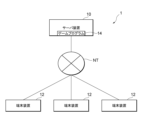
- FIG. 1 is a block diagram showing an example of the overall configuration of a game system according to an embodiment of the present invention.
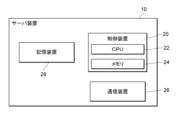
- FIG. 2 is a diagram illustrating an example of a hardware configuration of a server device.
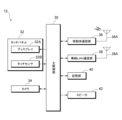
- FIG. 2 is a diagram illustrating an example of a hardware configuration of a smartphone as the terminal device illustrated in FIG. 1 .
- FIG. 2 is a block diagram illustrating an example of a functional unit of a server device.
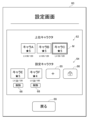
- FIG. 13 is a diagram showing an example of a setting screen for setting a set character.
- 11 is a flowchart showing an example (specific example 1) of the flow of a process for raising a character to be raised (reference character) in the game system according to the present embodiment.
- FIG. 1 is a block diagram showing an example of the overall configuration of a game system according to an embodiment of the present invention.
- FIG. 2 is a diagram illustrating an example of a hardware configuration of a server device.
- FIG. 2 is a diagram illustrating an example of a hardware configuration
- the present embodiment will be described with reference to the attached drawings. To facilitate understanding of the description, the same components and steps in each drawing will be given the same reference numerals as much as possible, and duplicate descriptions will be omitted.
- the server device 10 is an information processing device that provides the game execution results obtained by executing the game program 14, or the game program 14 itself, to the players of the terminal devices 12 via the communication network NT.
- the server device 10 provides the game program 14 itself to the players of the terminal devices 12.
- Each terminal device 12 is an information processing device owned by each player, which provides a game to each player by installing and executing the game program 14 received from the server device 10.
- These terminal devices 12 include various devices such as video game machines, arcade game machines, mobile phones, smartphones, tablets, and personal computers.
- FIG. 2 is a diagram illustrating an example of a hardware configuration of the server device 10. As shown in FIG.
- the server device 10 includes a control device 20, a communication device 26, and a storage device 28.
- the control device 20 is mainly configured with a CPU (Central Processing Unit) 22 and a memory 24.
- CPU Central Processing Unit
- the CPU 22 executes a predetermined program stored in the memory 24 or the storage device 28, etc., to function as various functional means. Details of these functional means will be described later.
- the communication device 26 is configured with a communication interface for communicating with an external device.
- the communication device 26 transmits and receives various information to and from the terminal device 12, for example.
- the storage device 28 is composed of a hard disk or the like. This storage device 28 stores various programs and information necessary for executing processes in the control device 20, including the game program 14, as well as information on the results of the processing.
- the server device 10 can be realized using an information processing device such as a dedicated or general-purpose server computer.
- the server device 10 may be composed of a single information processing device, or may be composed of multiple information processing devices distributed over the communication network NT.
- FIG. 2 shows only a portion of the main hardware configuration of the server device 10, and the server device 10 may have other configurations that are generally included in servers.
- the hardware configuration of the multiple terminal devices 12 may also have the same configuration as the server device 10, except for including, for example, an operating means, a display device, and a sound output device.
- FIG. 3 is a diagram showing an example of the hardware configuration of a smartphone as the terminal device 12 shown in FIG. 1.
- the terminal device 12 includes a main control unit 30, a touch panel (touch screen) 32, a camera 34, a mobile communication unit 36, a wireless LAN communication unit 38, a memory unit 40, and a speaker 42.
- the main control unit 30 is configured to include a CPU, memory, etc. This main control unit 30 is connected to a touch panel 32 as a display input device, a camera 34, a mobile communication unit 36, a wireless LAN communication unit 38, a memory unit 40, and a speaker 42.
- the main control unit 30 has the function of controlling these connection destinations.
- the touch panel 32 has both display and input functions, and is composed of a display 32A that performs the display function, and a touch sensor 32B that performs the input function.
- the display 32A is capable of displaying game images including operation input images such as button images, cross key images, and joystick images.
- the touch sensor 32B is capable of detecting the player's input position relative to the game image.
- the camera 34 has the function of taking still images and/or videos and storing them in the memory unit 40.
- the mobile communication unit 36 has the function of connecting to a mobile communication network via the antenna 36A and communicating with other communication devices connected to the mobile communication network.
- the wireless LAN communication unit 38 has the function of connecting to the communication network NT via the antenna 38A and communicating with other devices such as the server device 10 connected to the communication network NT.
- the storage unit 40 stores various programs and data, such as the game program 14 and play data indicating the game progress and player information of the game program 14.
- the play data may also be stored in the server device 10.
- the speaker 42 has the function of outputting game sounds, etc.
- the game according to the present embodiment includes a lottery game or quest in which a character can be acquired as an example of content, a training game in which the content (character) is trained, etc.
- the lottery game may be called gacha, lottery, summon, etc.
- the quest may be called a battle game, dungeon, exploration, mission, etc.
- the lottery game according to this embodiment is a game in which one or more characters (contents) are selected (randomly selected) from a group of characters (contents) to be selected in response to a request (instruction) to play the lottery game from the player.
- This lottery game is played based on the consumption of game currency owned by the player.
- the game currency includes, for example, paid currency and free currency.
- the paid currency is paid content that is given to the player based on the payment of money, a prepaid card, a credit card, electronic money, cryptocurrency, or the like. Examples of paid currency include paid items (paid items), paid coins (paid coins), and paid points (paid points).
- paid items paid items
- paid coins paid coins
- paid points paid points
- one paid item can be purchased for 150 yen.
- the free currency is free content that is given to the player by playing the game.
- free currency examples include non-paid items (free items), non-paid coins (free coins), and non-paid points (free points). Examples of playing the game include the player logging into the game and clearing a quest.
- the free currency can be consumed in various games without distinction from paid currency. For example, in a certain lottery game, paid items and non-paid items can be consumed without distinction. Note that in another lottery game, only paid items may be consumed.
- the quest in this embodiment is a game in which a deck (party) made up of characters owned by the player is pitted against enemy characters (including boss characters) that appear, based on instructions (requests) from the player to carry out a specified quest.
- a player can organize a deck to be used in a quest by arbitrarily selecting a predetermined number (e.g., 5) or less of characters from among the characters owned in an organization menu for organizing a deck to be used in a quest in advance.
- a player clears a quest the player can obtain a clear reward. Examples of clearing a quest include defeating all enemy characters that appear in the quest (reducing hit points to 0 or less) and defeating a boss character that appears at the end of the quest.
- the training game according to this embodiment is a game in which the player designates a character from among owned characters (owned contents) as the character to be trained (content to be trained), and strengthens or evolves the character to be trained by consuming the cost (material content) owned by the player.
- this cost material content
- examples of this cost (material content) include characters (material characters), material items (strengthening items), coins, game currency, etc. This cost can be acquired as a reward for clearing quests, as a game login bonus, or by making purchases at the in-game shop, etc.
- a first character synthesis is performed by consuming a predetermined cost for each predetermined parameter (e.g., level) of the character to be trained, thereby enhancing the character to be trained and increasing (changing) the predetermined parameter.
- predetermined parameter e.g., level
- Examples of the previously associated cost include material items and coins.
- a player can designate a character from a list of owned characters in a character strengthening menu, thereby making the character a character to be trained (character to be strengthened).
- the player can make a request (strengthening instruction) to increase a predetermined parameter of the character to be trained on a training screen including an image of the character to be trained.
- an evolution synthesis is performed in which the training target character evolves by consuming a cost previously associated with the training target character.
- the previously associated cost include a character with the same name as the training target character (same type of character) and a character with the same attributes as the training target character.
- the evolution of the training target character include an increase in the rarity of the training target character and an increase in the upper limit of a predetermined parameter (e.g., level) of the training target character.
- the player can designate one of the characters owned in the character evolution menu as a character to be developed (character to be evolved). By designating the character to be developed, the player can issue a request to evolve the character to be developed (an evolution instruction).
- the predetermined parameters of a setting character (setting content) described later automatically match (link) with the predetermined parameters of a reference character (reference content) described later, so the setting character cannot be designated as a character to be trained (character to be strengthened).
- the player cannot designate a setting character from the list of owned characters as a character to be trained (character to be strengthened) in the character strengthening menu. For example, if a player wishes to increase a specified parameter of a set character, the player must either increase the specified parameter of a reference character, or cancel the setting of the set character on the setting screen and then designate it as a character to be developed (character to be enhanced).
- FIG. 4 is a block diagram illustrating an example of the functional units of the server device 10. As shown in FIG.
- the server device 10 has, as its functional configuration, a storage means 50, an extraction means 52, an identification means 54, a setting means 56, and a control means 58.
- the storage means 50 is realized by one or more storage devices 28.
- the functional means other than the storage means 50 are realized by the control device 20 executing the game program 14 stored in the storage device 28 or the like. Note that all or part of these functional configurations may be provided in the terminal device 12.
- the storage means 50 has the function of storing player information 50A, character information 50B, quest information 50C, etc.
- Player information 50A is stored for each player in association with the player's player ID.
- This player information 50A includes, for example, the player's name, age, player rank, owned content information, reference character information, set character information, and settable number.
- a player's rank increases when the player gains player experience points.
- Owned content information includes owned character information, owned item information, etc.
- Owned character information is stored in association with an owned character ID for each owned character owned by the player.
- This owned character ID is assigned, for example, each time the player acquires (owns) a character. For example, the more recently acquired a character is by the player, the higher the owned character ID will contain. Also, for example, even for characters of the same type, the owned character ID will contain different values.
- Owned character information includes, for example, the character's character ID and ability parameters. Examples of ability parameters include level, hit points, attack power, defense power, etc. In this embodiment, for example, when a character's level increases through a training game, the character's hit points, attack power, defense power, etc. increase.
- Owned item information includes item IDs and quantities of various items owned by the player. These items include game currency (e.g., paid items and non-paid items), material items, coins, weapon items, armor items, etc.
- game currency e.g., paid items and non-paid items
- material items e.g., coins, weapon items, armor items, etc.
- the reference character information includes the owned character ID of the reference character, the target value, and an automatic training flag.
- the reference character is a character whose specified parameter (for example, level) is ranked in a specified order (for example, third place) from the top among the owned characters.
- the target value includes a specified value that is a target for the specified parameter. Examples of the specified value include a value specified by the player, a recommended value of the specified parameter corresponding to a specified quest, a value predetermined by the game operator, and an upper limit value of the specified parameter. Examples of the specified quest include a quest that the player has not yet cleared, and a quest in which a powerful boss character appears.
- the recommended value is, for example, a specified parameter recommended for clearing a specified quest.
- the automatic training flag is a flag that indicates whether or not the reference character is to be automatically trained. For example, this flag can be changed (ON/OFF) by an instruction from the player. In addition, this flag is changed to OFF when the specified parameter of the reference character reaches the target value (predetermined value).
- the set character information includes the owned character ID of each set character and the predetermined parameters (e.g., level) of each set character before setting.
- the set character is, for example, one or more characters that are owned by the player and that have been set (selected) in advance by the player.
- the configurable number includes the number of characters (upper limit) that the player can set as a configurable character. This configurable number increases, for example, as the player's rank increases or the player spends game currency.
- Character information 50B is stored for each character in association with the character ID of that character.
- Character information 50B includes, for example, the character's name and image (character image or icon image), ability information, required cost, rarity, etc. This character information 50B is updated as the game operator updates the game.
- Ability information includes the initial and upper limits of ability parameters (level, hit points, etc.), skills, etc.
- Skills include the ability to recover hit points of ally characters in quests and deal large damage to enemy characters.
- the required cost includes the type and quantity of material content required to increase a specified parameter (e.g., level) of a character. This required cost is, for example, determined in advance for each specified parameter (level). For example, the cost required for a character to reach a specified parameter (level) at which they can learn a skill is determined to be greater in type and quantity of material content than usual.
- Rarity includes a number ranging from 1 to 6, for example. This number may be expressed, for example, as the number of stars. Characters with high rarity are set with advantageous ability parameters (e.g., upper level limit) and skills in the game (e.g., quests).
- Quest information 50C is stored for each quest in association with the quest ID of that quest. Quest information 50C includes the quest name, difficulty level, enemy character information, clear reward information, etc.
- the difficulty level may be a number ranging from 1 to 6. For example, the higher the difficulty level number, the more difficult it is to complete.
- Enemy character information includes the character ID and ability parameters of each enemy character that appears in the quest.
- the clear reward information includes the clear reward that can be acquired when the quest is cleared.
- This clear reward can be game currency (non-chargeable item), character (material character), material item, player experience points, weapon item, armor item, etc. For example, the more difficult the quest, the greater the clear reward that can be acquired.
- the extraction means 52 is a functional means for extracting a predetermined number of characters.
- the extraction means 52 extracts a predetermined number of characters from among the characters owned by the player in order of highest predetermined parameters (e.g., level).
- An example of this predetermined number is three.
- the extraction means 52 extracts, from among the owned characters, characters whose predetermined parameters are ranked from the top to a predetermined rank (e.g., third place) as high-ranking characters (high-ranking content).
- a predetermined rank e.g., third place
- the extraction means 52 preferentially extracts from among the multiple characters the character whose owned character ID contains the highest numerical value (the character with the latest acquisition date and time).
- the extraction means 52 extracts a predetermined number of characters (higher level characters) at a predetermined timing.
- the predetermined timing include the timing when a predetermined parameter (e.g., level) of an owned character changes, the timing when the player acquires (owns) a character, the timing when an owned character is sold (released), the timing when an owned character is consumed as a material character, etc.
- the extraction means 52 may cause the setting means 56 to cancel the setting of the set character and extract the character.
- the identification means 54 is a functional means for identifying one of a predetermined number of characters (higher characters) extracted by the extraction means 52 at a predetermined timing as a reference character.
- the identification means 54 identifies a character having the lowest predetermined parameter (e.g., level) among the predetermined number of characters (higher characters) extracted by the extraction means 52 as a reference character. For example, when there are multiple characters having the lowest predetermined parameter among the extracted predetermined number of characters, the identification means 54 identifies a character having the highest numerical value included in the owned character ID (the character having the latest acquisition date and time) among the multiple characters as a reference character.
- the identification means 54 stores the owned character ID of the identified reference character in the reference character information of the player information 50A.
- the specification means 54 specifies, as the reference character, a character whose predetermined parameter is ranked in a predetermined order (for example, third place) from the top among the characters owned by the player.
- the setting means 56 is a functional means for setting characters as set characters.
- the setting means 56 sets some or all of the owned characters not extracted by the extraction means 52 as set characters.
- the setting means 56 sets one or more characters selected by the player from among the owned characters not extracted by the extraction means 52 on the setting screen as set characters.
- the setting means 56 sets one or more characters selected by the player from among the owned characters excluding the higher-ranked characters extracted by the extraction means 52 as set characters.
- the setting means 56 stores the owned character ID of the set set character in the set character information of the player information 50A.
- the setting means 56 cancels the setting of the set character in response to an instruction from the player on the setting screen to cancel the setting of the set character (e.g., pressing a setting cancellation button).
- the setting means 56 refers to the set character information in the player information 50A and returns (e.g., lowers) a predetermined parameter of the set character to the predetermined parameter before setting.
- the setting means 56 deletes the information of the character whose setting has been canceled from the set character information in the player information 50A.
- FIG. 5 shows an example of a setting screen 60 for setting a character.
- the setting screen 60 is displayed when the character setting menu is selected by the player.
- the setting screen 60 is provided with a higher-level character information area 62, a set character information area 64, an add set character button 65, an add settable number button 66, a cancel setting button 68, and a back button 69.
- the higher-ranking character information area 62 displays images of characters (higher-ranking characters) with higher (1st to 3rd) predetermined parameters (levels) than the reference character among the characters owned by the player, as well as the predetermined parameters (levels) of the higher-ranking characters. Also, a mark M is attached to the reference character.
- the set character information area 64 displays an image of a character that the player has set as a set character among the characters owned by the player, the predetermined parameters of the set character that are made to match the predetermined parameters of a reference character, etc. Note that the set character information area 64 may also display the predetermined parameters of each set character before they are set.
- the set character addition button 65 is a button for issuing an instruction to add a new set character from among the characters owned by the player, excluding high-ranking characters.
- the settable number increase button 66 is a button for issuing an instruction to increase the settable number of set characters by 1. This addition requires, for example, consumption of game currency.
- the setting release buttons 68 are buttons for issuing instructions to release the settings of the corresponding set characters. For example, when the setting release button 68 is pressed by a player, an image showing the corresponding set character is changed to a set character addition button 65.
- the back button 69 is a button for issuing an instruction to return (transition) to the main menu screen.
- the control means 58 is a functional means for controlling the entire game.
- the control means 58 matches the predetermined parameters of each set character with the predetermined parameters of a reference character.
- the predetermined parameters of the reference character are referred to as reference parameters or reference level.
- the control means 58 matches (links) the predetermined parameters (e.g., level) of one or more set characters with the predetermined parameters (e.g., level) of the reference character by referring to the owned character information, set character information, and reference character information of the player information 50A.
- the control means 58 does not consume the cost associated with the player (owned by the player) when matching the predetermined parameters of the set characters with the predetermined parameters of the reference character.
- the control means 58 automatically matches the predetermined parameters of each set character with the predetermined parameters of the reference character.
- control means 58 automatically increases a predetermined parameter of the character to be raised (content to be raised).
- the control means 58 automatically consumes the cost to increase the predetermined parameter (level) of the character to be raised.
- the control means 58 refers to the player information 50A and the character information 50B and judges whether or not the cost necessary to increase a predetermined parameter (level) of a reference character is available in the content owned by the player.
- the control means 58 automatically consumes the cost owned by the player to increase the predetermined parameter (level) of the reference character.
- control means 58 may increase the predetermined parameter (level) of the reference character as much as possible by maximizing costs from the content owned by the player.
- control means 58 may increase the predetermined parameter (level) of the reference character until it exceeds the predetermined parameter (level) of another higher-ranked character, and may restrict any further increase.
- control means 58 may increase the predetermined parameter of the reference character until the reference character is changed to another higher-ranked character.
- control means 58 automatically consumes costs until a predetermined parameter of the character to be developed (reference character) reaches a predetermined value.
- the control means 58 references a target value of the reference character information in the player information 50A, and automatically consumes costs to increase the predetermined parameter until the predetermined parameter of the reference character reaches a predetermined value, which is the target value.
- control means 58 changes the character to be developed to the other character. For example, when a predetermined parameter of the reference character is increased, causing another higher-ranking character to be changed to the reference character, the control means 58 changes the other higher-ranking character to the character to be developed.
- the control means 58 also manages the settable number of the player information 50A. For example, the control means 58 increases (increases) the settable number when the player rank increases or when the player spends game currency.
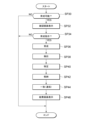
- ⁇ Flow of the cultivation process> 6 is a flow chart showing an example (specific example 1) of the process flow for training a character to be trained (reference character) in the game system 1 according to this embodiment.
- the process of the following steps is started, for example, when the automatic training flag is ON and the player acquires (possesses) a cost (material content).
- the order and contents of the following steps can be changed as appropriate.
- Step SP10 The control means 58 sets the reference character stored in the reference character information of the player information 50A as the character to be developed. That is, the control means 58 changes the character to be developed to another character every time the reference character is changed to the other character.
- the control means 58 refers to the player information 50A and the character information 50B and determines whether the player has the cost required to increase a predetermined parameter (level) of the character to be developed by 1. Then, if the determination is affirmative, the process proceeds to step SP12. On the other hand, if the determination is negative, the process proceeds to step SP26.
- Step SP12 The control means 58 automatically consumes the cost owned by the player to perform automatic training, increasing a predetermined parameter (level) of the character to be trained (reference character) by 1. Then, the process proceeds to step SP14.
- the extraction means 52 refers to the owned character information in the player information 50A and extracts a predetermined number (e.g., three) of characters from the owned characters in descending order of a predetermined parameter (e.g., level). For example, the extraction means 52 extracts, from the owned characters, character A whose predetermined parameter is 90, character B whose predetermined parameter is 65, and character C whose predetermined parameter is 60. Then, the process proceeds to step SP16.
- a predetermined number e.g., three
- a predetermined parameter e.g., level
- Step SP16 The identification means 54 identifies the character having the lowest predetermined parameter (e.g., level) from among the predetermined number of characters extracted in step SP14 as the reference character. For example, the identification means 54 identifies character C, whose predetermined parameter is 60, as the reference character. Then, the process proceeds to step SP18.
- the predetermined parameter e.g., level
- Step SP20 The control means 58 refers to the owned character information, set character information, and reference character information in the player information 50A and causes the predetermined parameters (e.g., level) of each set character to match (link) with the reference parameters.
- the control means 58 stores the predetermined parameters of each set character as 60, which is the predetermined parameter (reference parameter) of the reference character (character C), in the owned character information in the player information 50A. Then, the process proceeds to step SP22.
- Step SP22 The control means 58 judges whether or not a predetermined parameter (reference parameter) of the character to be trained (reference character) has reached a predetermined value. If the judgment is affirmative, the process proceeds to step SP24. On the other hand, if the judgment is negative, the process proceeds to step SP10.
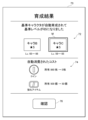
- Step SP26 The control means 58 displays a result screen including an image showing the result of training of the character to be trained (reference character) on the touch panel 32. Note that the control means 58 may not display the result screen when the player does not have enough cost to increase any of the predetermined parameters of the character to be trained (reference character).
- FIG. 7 shows an example of a results screen 70 (specific example 1) that shows the results of training the character being trained.
- control means 58 automatically trains the character to be trained (reference character), but the training may also be performed after inquiring of the player as to whether or not to train the character to be trained.
- the control means 58 inquires of the player whether or not to spend the cost to increase the predetermined parameter of the character to be developed. Next, when a development instruction is given by the player, the control means 58 increases the predetermined parameter of the character to be developed.
- ⁇ Flow of the cultivation process> 8 is a flow chart showing an example (specific example 2) of the process flow for training a character to be trained (reference character) in the game system 1 according to this embodiment.
- the process of the following steps is started when the player acquires (possesses) a cost (material content).
- the order and contents of the following steps can be changed as appropriate.
- Step SP30 The control means 58 sets the reference character stored in the reference character information of the player information 50A as the character to be developed.
- the control means 58 refers to the player information 50A and the character information 50B and calculates a numerical value (maximum value) that can increase a predetermined parameter (level) of the character to be developed by consuming the player's cost.
- the control means 58 judges whether the calculated numerical value is 1 or more. Then, if the judgment is judged as positive, the process proceeds to the process of step SP32. On the other hand, if the judgment is judged as negative, the process ends the series of processes shown in FIG. 8.
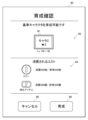
- Step SP32 The control means 58 causes the touch panel 32 to display a confirmation screen inquiring as to whether or not to raise the character to be raised (reference character).
- FIG. 9 shows an example of a confirmation screen 80 that inquires about raising a character to be raised.
- step SP34 processing proceeds to step SP34.
- Step SP36 The control means 58 uses the player's own cost to raise a predetermined parameter (level) of the character to be raised (reference character). For example, the control means 58 raises the predetermined parameter (level) of the character to be raised (reference character) to the numerical value (maximum value) calculated in step SP30. Then, the process proceeds to step SP38.
- Steps SP38 to SP44 The processing in steps SP38 to SP44 is similar to the processing in steps SP14 to SP20 described above, and therefore the description thereof will be omitted. Then, the processing proceeds to the processing in step SP46.
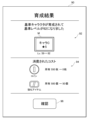
- Step SP46 The control means 58 causes the touch panel 32 to display a result screen including an image showing the result of raising the character to be raised (reference character).
- FIG. 10 shows an example of a result screen 90 (specific example 2) that shows the results of training the character to be trained.
- the result screen 90 is provided with a character to be trained information area 92 , a cost consumed information area 94 , and a confirmation button 98 .
- the development target character information area 92 displays an increase in a reference parameter (reference level), a character image showing the developed reference character, and predetermined parameters (levels) before and after development.
- the consumed cost information area 94 indicates that the player's owned cost (material content) has been consumed.
- control means 58 each time the reference content is changed to another content, changes the development target content to the other content.
- control means 58 automatically consumes costs until a specified parameter of the content to be developed reaches a specified value.
- the specified parameters of the reference content automatically rise to the specified values, reducing the effort required to develop the reference content.
- the specified parameters of the reference content do not automatically exceed the specified values, reducing cost consumption.
- the predetermined value is a value specified by the player.
- the specified parameters of the reference content automatically rise to a specified value based on the specified value specified by the player, reducing the effort required to develop the reference content.
- the specified parameters of the reference content do not automatically exceed the specified value, reducing cost consumption.
- the specified value is a recommended value for a specified parameter that corresponds to a specified quest.
- the specified parameters automatically rise to the recommended values for the specified quest, reducing the effort required to develop the reference content.
- the specified parameters of the reference content do not automatically exceed the specified values, reducing cost consumption.
- control means 58 does not incur any costs when matching the specified parameters of the set content with the specified parameters of the reference content.
- This configuration allows the player to reduce the effort required to obtain the cost of developing setting content, thereby motivating the player to play the game.
- the computer functions as an extraction means 52 that extracts a predetermined number of contents owned by the player in descending order of the predetermined parameter, an identification means 54 that identifies the extracted content with the lowest predetermined parameter as the reference content, a setting means 56 that sets some or all of the owned contents not extracted as the set content, and a control means 58 that matches the predetermined parameter of each of the set content with the predetermined parameter of the reference content, and when the player acquires the cost to increase the predetermined parameter of the development target content, the control means 58 inquires the player as to whether or not to spend the cost to increase the predetermined parameter of the development target content, with the reference content being the development target content.
- control means 58 has been described as matching the predetermined parameters of each set character with the predetermined parameters of the reference character when the predetermined parameters of the character to be developed (reference character) increase, but this is not limited to the above.
- the timing for matching the predetermined parameters may be at regular intervals, when the player logs in, before a setting screen or the like is displayed, before a quest is performed, when the player acquires (owns) a character, when an owned character is sold (released), when an owned character is consumed as a material character (material content), etc.
- the training game has been described as consuming a predetermined cost (material content) for each specified parameter of the character to be trained as the first character synthesis, but the first character synthesis may also consume a cost (material content) selected at will by the player.
- the first character synthesis may be a synthesis in which the player selects at will the character to be trained from the characters owned by the player and the cost (material content) to be consumed to strengthen the character to be trained.
- examples of the cost (material content) consumed in automatic training include characters with a rarity below a certain value and material items.
- control means 58 has been described as increasing a predetermined parameter of a character to be trained (reference character), but the predetermined parameter may also be decreased.
- the control means 58 may decrease the predetermined parameter by consuming a cost. Examples of this predetermined parameter include the number of turns required to activate a skill, and the cost value required to organize owned characters into a deck (party).
- the reference character may be the character with the predetermined parameter in a predetermined ranking (e.g. third place) from the bottom among the characters owned by the player.
- control means 58 does not consume the cost (material content) associated with the player when matching the specified parameters of the set character with the specified parameters of the reference character, but the cost may be consumed. Also, this cost may be the passage of time.
- control means 58 has been described as developing a reference character as a character to be developed, but some or all of the higher-ranking characters may also be developed as characters to be developed.
- control means 58 determines some or all of the higher-ranking characters as characters to be developed in response to a request from the player.
- the set characters are, for example, one or more characters that are set (selected) in advance by the player from among the characters owned by the player.
- the set characters may be set automatically, regardless of the player's selection.
- the setting means 56 may automatically set a predetermined number (up to a settable number) of characters owned that were not extracted by the extraction means 52. In this case, for example, the setting means 56 may preferentially set characters with high rarity or characters with low predetermined parameters (levels).
- the present embodiment has been described with respect to a case where the reference character is one character (one body), it may be multiple characters.
- the identification means 54 identifies the multiple characters as reference characters.
- the control means 58 may treat the multiple reference characters as characters to be trained and train them collectively (increase the predetermined parameters).
- the predetermined parameter is mainly a level, but it may be luck, a level cap, a skill level, rarity, hit points, attack power, defense power, etc.
Landscapes
- Engineering & Computer Science (AREA)
- Multimedia (AREA)
- Business, Economics & Management (AREA)
- Computer Security & Cryptography (AREA)
- General Business, Economics & Management (AREA)
- Physics & Mathematics (AREA)
- Optics & Photonics (AREA)
- Theoretical Computer Science (AREA)
- Human Computer Interaction (AREA)
- Management, Administration, Business Operations System, And Electronic Commerce (AREA)
Priority Applications (1)
| Application Number | Priority Date | Filing Date | Title |
|---|---|---|---|
| US19/314,532 US20250381484A1 (en) | 2023-03-02 | 2025-08-29 | Information processing device and recording medium |
Applications Claiming Priority (2)
| Application Number | Priority Date | Filing Date | Title |
|---|---|---|---|
| JP2023-032237 | 2023-03-02 | ||
| JP2023032237A JP7380936B1 (ja) | 2023-03-02 | 2023-03-02 | プログラム及び情報処理装置 |
Related Child Applications (1)
| Application Number | Title | Priority Date | Filing Date |
|---|---|---|---|
| US19/314,532 Continuation US20250381484A1 (en) | 2023-03-02 | 2025-08-29 | Information processing device and recording medium |
Publications (1)
| Publication Number | Publication Date |
|---|---|
| WO2024180927A1 true WO2024180927A1 (ja) | 2024-09-06 |
Family
ID=88729146
Family Applications (1)
| Application Number | Title | Priority Date | Filing Date |
|---|---|---|---|
| PCT/JP2024/000711 Ceased WO2024180927A1 (ja) | 2023-03-02 | 2024-01-12 | プログラム及び情報処理装置 |
Country Status (3)
| Country | Link |
|---|---|
| US (1) | US20250381484A1 (https=) |
| JP (2) | JP7380936B1 (https=) |
| WO (1) | WO2024180927A1 (https=) |
Families Citing this family (3)
| Publication number | Priority date | Publication date | Assignee | Title |
|---|---|---|---|---|
| JP7473061B1 (ja) | 2023-06-21 | 2024-04-23 | 株式会社セガ | プログラム及び情報処理装置 |
| JP7678461B1 (ja) | 2024-09-18 | 2025-05-16 | 株式会社バンク・オブ・イノベーション | プログラム、情報処理装置、情報処理方法、及び情報処理システム |
| JP7812532B1 (ja) * | 2025-06-17 | 2026-02-10 | 株式会社バンク・オブ・イノベーション | プログラム、情報処理装置、情報処理方法、及び情報処理システム |
Citations (2)
| Publication number | Priority date | Publication date | Assignee | Title |
|---|---|---|---|---|
| JP2014042588A (ja) * | 2012-08-24 | 2014-03-13 | Dna:Kk | ゲームプログラム、及び、情報処理装置 |
| JP2015119766A (ja) * | 2013-12-20 | 2015-07-02 | 株式会社 ディー・エヌ・エー | 情報処理装置、及び、ゲームプログラム |
Family Cites Families (5)
| Publication number | Priority date | Publication date | Assignee | Title |
|---|---|---|---|---|
| JP5486730B1 (ja) | 2013-12-11 | 2014-05-07 | 株式会社 ディー・エヌ・エー | ゲーム管理サーバ装置 |
| JP7311012B1 (ja) | 2022-12-12 | 2023-07-19 | 株式会社セガ | プログラム及び情報処理装置 |
| JP7264307B1 (ja) | 2022-12-12 | 2023-04-25 | 株式会社セガ | プログラム及び情報処理装置 |
| JP7298766B1 (ja) | 2022-12-12 | 2023-06-27 | 株式会社セガ | プログラム及び情報処理装置 |
| JP7298767B1 (ja) | 2022-12-12 | 2023-06-27 | 株式会社セガ | プログラム及び情報処理装置 |
-
2023
- 2023-03-02 JP JP2023032237A patent/JP7380936B1/ja active Active
- 2023-10-19 JP JP2023179932A patent/JP2024124312A/ja active Pending
-
2024
- 2024-01-12 WO PCT/JP2024/000711 patent/WO2024180927A1/ja not_active Ceased
-
2025
- 2025-08-29 US US19/314,532 patent/US20250381484A1/en active Pending
Patent Citations (2)
| Publication number | Priority date | Publication date | Assignee | Title |
|---|---|---|---|---|
| JP2014042588A (ja) * | 2012-08-24 | 2014-03-13 | Dna:Kk | ゲームプログラム、及び、情報処理装置 |
| JP2015119766A (ja) * | 2013-12-20 | 2015-07-02 | 株式会社 ディー・エヌ・エー | 情報処理装置、及び、ゲームプログラム |
Non-Patent Citations (2)
| Title |
|---|
| ANONYMOUS: "(BlueStacks: Guide of troop formation & character reinforcement for "Goddess of Victory: NIKKE".", 8 December 2022 (2022-12-08), XP093205122, Retrieved from the Internet <URL: https://www.bluestacks.com/ja/blog/game-guides/nikke-the-goddess-of-victory/ngv-enhancement-guide-ja.html> * |
| ANONYMOUS: "[NIKKE] Use synchronized devices [level sharing]. Raison Detre - Information site for games and smartphone.", 24 November 2022 (2022-11-24), XP093205120, Retrieved from the Internet <URL:URL: https://volx.jp/nikke-synchronize-device> * |
Also Published As
| Publication number | Publication date |
|---|---|
| JP2024124312A (ja) | 2024-09-12 |
| JP2024124228A (ja) | 2024-09-12 |
| US20250381484A1 (en) | 2025-12-18 |
| JP7380936B1 (ja) | 2023-11-15 |
Similar Documents
| Publication | Publication Date | Title |
|---|---|---|
| JP7302620B2 (ja) | プログラム及び情報処理装置 | |
| JP2025062020A (ja) | プログラム | |
| JP7298766B1 (ja) | プログラム及び情報処理装置 | |
| JP7264307B1 (ja) | プログラム及び情報処理装置 | |
| JP7380936B1 (ja) | プログラム及び情報処理装置 | |
| JP7298767B1 (ja) | プログラム及び情報処理装置 | |
| JP7347600B1 (ja) | プログラム及び情報処理装置 | |
| JP7836232B2 (ja) | プログラム及び情報処理装置 | |
| WO2024185338A1 (ja) | プログラム及び情報処理装置 | |
| WO2024262117A1 (ja) | プログラム及び情報処理装置 | |
| JP2024084110A (ja) | プログラム及び情報処理装置 | |
| JP2024010674A (ja) | プログラム及び情報処理装置 | |
| JP6703235B1 (ja) | プログラム及び情報処理装置 | |
| JP7424526B1 (ja) | プログラム及び情報処理装置 | |
| WO2024127810A1 (ja) | 記録媒体及び情報処理装置 | |
| JP7548391B1 (ja) | プログラム及び情報処理装置 |
Legal Events
| Date | Code | Title | Description |
|---|---|---|---|
| 121 | Ep: the epo has been informed by wipo that ep was designated in this application |
Ref document number: 24763412 Country of ref document: EP Kind code of ref document: A1 |
|
| NENP | Non-entry into the national phase |
Ref country code: DE |
|
| 122 | Ep: pct application non-entry in european phase |
Ref document number: 24763412 Country of ref document: EP Kind code of ref document: A1 |