WO2024176342A1 - 人物検出装置、システム、方法及びプログラムが格納された非一時的なコンピュータ可読媒体 - Google Patents
人物検出装置、システム、方法及びプログラムが格納された非一時的なコンピュータ可読媒体 Download PDFInfo
- Publication number
- WO2024176342A1 WO2024176342A1 PCT/JP2023/006201 JP2023006201W WO2024176342A1 WO 2024176342 A1 WO2024176342 A1 WO 2024176342A1 JP 2023006201 W JP2023006201 W JP 2023006201W WO 2024176342 A1 WO2024176342 A1 WO 2024176342A1
- Authority
- WO
- WIPO (PCT)
- Prior art keywords
- person
- detection
- detected
- aspect ratio
- area
- Prior art date
- Legal status (The legal status is an assumption and is not a legal conclusion. Google has not performed a legal analysis and makes no representation as to the accuracy of the status listed.)
- Ceased
Links
Images




Classifications
-
- G—PHYSICS
- G06—COMPUTING OR CALCULATING; COUNTING
- G06T—IMAGE DATA PROCESSING OR GENERATION, IN GENERAL
- G06T7/00—Image analysis
-
- G—PHYSICS
- G06—COMPUTING OR CALCULATING; COUNTING
- G06T—IMAGE DATA PROCESSING OR GENERATION, IN GENERAL
- G06T7/00—Image analysis
- G06T7/10—Segmentation; Edge detection
- G06T7/136—Segmentation; Edge detection involving thresholding
Definitions
- the present disclosure relates to a person detection device, a system, a method, and a non-transitory computer-readable medium on which a program is stored.
- Patent document 1 discloses a technology that determines whether an object captured in an image is a person or not.
- the present disclosure has been made to solve these problems, and aims to provide a person detection device, system, method, and non-transitory computer-readable medium that stores a program that can detect people with high accuracy.
- the human detection device comprises: An acquisition unit that acquires the captured image; a detection unit that detects a person from a frame constituting the video based on a predetermined person detection score threshold; an adjustment unit that adjusts a threshold value of the human detection score in accordance with an aspect ratio of an area in which a person is detected when a person is detected from the frame; Equipped with.
- the human detection system comprises: A camera that captures images of the surroundings; a human detection device capable of communicating with the photographing device,
- the human detection device includes: an acquisition unit that acquires an image captured by the imaging device; a detection unit that detects a person from a frame constituting the video based on a predetermined person detection score threshold; an adjustment unit that adjusts a threshold value of the human detection score in accordance with an aspect ratio of an area in which a person is detected when a person is detected from the frame; Equipped with.
- the person detection method includes: The computer acquiring the captured image; detecting people from frames constituting the video based on a predetermined people detection score threshold; When a person is detected from the frame, adjusting a threshold value of the person detection score according to an aspect ratio of an area in which the person is detected; Equipped with.
- the present disclosure relates to a non-transitory computer readable medium, comprising: On the computer, A process of acquiring the captured image; detecting a person from frames constituting the video based on a predetermined person detection score threshold; When a person is detected from the frame, a threshold value of the person detection score is adjusted according to an aspect ratio of an area in which the person is detected; A person detection program that executes the above is stored.
- the present disclosure provides a person detection device, system, method, and non-transitory computer-readable medium that stores a program that can accurately detect people.
- FIG. 1 is a block diagram showing a configuration of a human detection device according to a first embodiment. 4 is a flowchart showing the flow of a human detection method according to the first embodiment.
- FIG. 11 is a block diagram showing a configuration of a human detection system according to a second embodiment.
- FIG. 11 is a block diagram showing a configuration of a human detection device according to a second embodiment.
- FIG. 13 is a diagram showing an example of a frame in which a person is detected.
- 10 is a flowchart showing the flow of a human detection method according to a second embodiment.
- FIG. 11 is a block diagram showing a configuration of a human detection device according to a third embodiment.
- 10 is a flowchart showing the flow of a human detection method according to a third embodiment.
- ⁇ Embodiment 1> 1 is a block diagram showing a configuration of a human detection device 100 according to a first embodiment.
- the human detection device 100 includes an acquisition unit 110, a detection unit 120, and an adjustment unit 130.
- the human detection device 100 is connected to a network 500 (not shown), which may be wired or wireless.
- An image capture device 300 (not shown) and the like are connected to the network 500.
- the image capture device 300 is installed in a vehicle 310 (not shown), and is a device that captures images of the surroundings of the vehicle.
- the image captured by the image capture device 300 is usually a moving image, and includes a plurality of frames.
- the acquisition unit 110 acquires a video image captured by the imaging device 300 installed in the vehicle 310.
- the video image includes at least one frame, and usually includes multiple frames.
- the detection unit 120 detects a person from the frames that make up the video image acquired by the acquisition unit 110 based on a predetermined human detection score threshold.
- the human detection score is a numerical value calculated for each area in the frame.
- the human detection score is a numerical value higher in an area where a person is likely to be present than in other areas.
- the method of calculating the human detection score is not particularly limited, and existing technology can be applied.
- the predetermined human detection score threshold (hereinafter sometimes referred to as the "threshold”) is a numerical value that is set in advance, and is used when detecting a person from the frames that make up the video image.
- the threshold may be set to a different value depending on the area in the frame. If the human detection score in an area in the frame is equal to or lower than the threshold in that area, the detection unit 120 determines that
- the adjustment unit 130 adjusts the threshold value of the human detection score according to the aspect ratio of the area in which the person is detected.
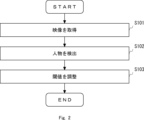
- FIG. 2 is a flowchart showing the flow of the person detection method according to the first embodiment.
- the acquisition unit 110 acquires a captured image (step S101).
- the detection unit 120 detects a person from the frames constituting the image based on a predetermined person detection score threshold (step S102). If a person is detected from the frame in step S102, the adjustment unit 130 adjusts the person detection score threshold (step S103). In this way, the person detection method according to this embodiment adjusts the person detection score threshold according to the aspect ratio of the area in which the person is detected, and therefore can detect people with high accuracy.
- the human detection device 100 includes a processor, a memory, and a storage device, which are not shown in the figure.
- the storage device stores a computer program that implements the processing of the human detection method according to this embodiment.
- the processor then loads the computer program from the storage device into the memory and executes the computer program. In this way, the processor realizes the functions of the acquisition unit 110, the detection unit 120, and the adjustment unit 130.
- the acquisition unit 110, detection unit 120, and adjustment unit 130 may each be realized by dedicated hardware.
- some or all of the components of each device may be realized by general-purpose or dedicated circuits, processors, etc., or a combination of these. These may be configured by a single chip, or may be configured by multiple chips connected via a bus. Some or all of the components of each device may be realized by a combination of the above-mentioned circuits, etc., and programs.
- a CPU Central Processing Unit
- GPU Graphics Processing Unit
- FPGA Field-Programmable Gate Array
- the multiple information processing devices, circuits, etc. may be centrally arranged or distributed.
- the information processing devices, circuits, etc. may be realized as a client-server system, cloud computing system, etc., in a form in which each is connected via a communication network.
- the functions of the human detection device 100 may be provided in the form of SaaS (Software as a Service).
- the second embodiment is a specific example of the first embodiment.
- Fig. 3 is a block diagram showing a configuration of a human detection system 200 according to the second embodiment.
- the human detection system 200 includes a photographing device 300 and a human detection device 400.
- the photographing device 300 is connected to the human detection device 400 via a network 500. Note that descriptions that overlap with the first embodiment will be omitted as appropriate.
- the person detection system 200 is a system for detecting a person from an image captured by a vehicle 310.
- the vehicle 310 is, for example, an automobile, but may be a vehicle other than an automobile, such as a motorcycle or a bicycle.
- the vehicle 310 is equipped with a photographing device 300.
- the photographing device 300 is a device that captures the scenery around the vehicle 310, for example, a drive recorder.
- the photographing device 300 includes a photographing unit 301 and a communication unit 302.
- the photographing unit 301 is a camera.
- the photographing unit 301 captures, for example, the scenery in front of the vehicle 310, that is, the scenery that can be seen by a driver seated in the driver's seat of the vehicle 310.
- the communication unit 302 is a communication interface with the network 500.
- the communication unit 302 transmits the image captured by the photographing unit 301 to the person detection device 400 via the network 500.
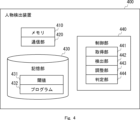
- FIG. 4 is a block diagram showing the configuration of the human detection device 400.
- the human detection device 400 includes a memory 410, a communication unit 420, a storage unit 430, and a control unit 440.
- the memory 410 is a storage area that temporarily stores the processing contents of the control unit 440, and is, for example, a volatile storage device such as a RAM (Random Access Memory).
- the communication unit 420 is an interface that communicates with the outside of the human detection device 400.
- the storage unit 430 is a storage device that stores a threshold value 431, a program 432, and the like.
- the threshold value 431 is a numerical value used when detecting a person based on the human detection score, and a different value may be set depending on the area within the frame.
- the program 432 is a computer program in which the human detection process according to this embodiment is implemented.
- the control unit 440 includes an acquisition unit 441, a detection unit 442, and an adjustment unit 443.
- the control unit 440 is a control device that controls the operation of the human detection device 400, and is, for example, a processor such as a CPU.
- the control unit 440 loads the program 432 from the storage unit 430 into the memory 410 and executes it. In this way, the control unit 440 realizes the functions of the acquisition unit 441, the detection unit 442, the adjustment unit 443, and the determination unit 444.
- the acquisition unit 441 acquires the video transmitted from the image capture device 300.
- the video usually contains multiple frames.
- the video may also contain identification information, etc.
- the identification information is information for identifying the vehicle 310 in which the image capture device 300 that captured the video is installed.
- the detection unit 442 detects people from the video acquired by the acquisition unit 441. Specifically, the detection unit 442 calculates a person detection score for each frame constituting the video acquired by the acquisition unit 441. Next, the detection unit 442 determines whether the person detection score is equal to or less than the threshold 431. The detection unit 442 calculates and determines the person detection score for each of the multiple frames.
- the threshold 431 is a preset numerical value used when detecting people based on the person detection score, and different values may be set depending on the area within the frame. The detection unit 442 determines that a person is included in a location within the frame where the person detection score is equal to or greater than the threshold.
- FIG. 5 is a diagram showing an example of a frame in which a person has been detected.
- Frame 10 shown in FIG. 5 is a frame constituting an image acquired by acquisition unit 441.
- the person detection score in the vicinity of person 20 is calculated to be higher than the person detection score in other areas.
- detection unit 442 determines that a person appears in area 30.
- the region 30 is rectangular as shown in FIG. 5.
- the direction perpendicular to the ground in the frame is the vertical direction
- the direction parallel to the ground is the horizontal direction.
- the side of the region 30 extending vertically is the vertical side 30a
- the side extending horizontally is the horizontal side 30b.
- the determination unit 444 calculates the aspect ratio by dividing the length of the vertical side 30a by the length of the horizontal side 30b, and determines that human detection has been successful if the aspect ratio is within a predetermined range.
- the predetermined range is 1 or more, preferably 1 to 4, and more preferably 2 to 3.5.
- the determination unit 444 determines that human detection has been successful if the aspect ratio is 1 or more, that is, if the region 30 is vertically elongated. Also, as shown in FIG. 5, a person is usually detected as an area 30 with an aspect ratio of 1 to 4, and a person who is walking in particular is detected as an area 30 with an aspect ratio of 2 to 3.5. Therefore, if the predetermined range is set to 1 to 4, and more preferably 2 to 3.5, a person can be determined with greater accuracy.
- the adjustment unit 443 adjusts the threshold of the person detection score. Specifically, when the determination unit 444 determines that the aspect ratio of the area 30 is less than 1, the adjustment unit 443 raises the threshold of the person detection score.
- the detection unit 442 performs person detection again from the frames constituting the video based on the adjusted threshold. When the threshold of the person detection score is raised, the detection unit 442 compares it with the threshold before the raising and detects a smaller area as an area where a person is likely to be photographed. When an area is detected again by performing the person detection again, the determination unit 444 may calculate the aspect ratio of the area and determine whether the aspect ratio is within a predetermined range.
- the human detection device 400 determines whether the object included in the area is a person by determining whether the aspect ratio of the area is within a predetermined range. Therefore, the human detection device 400 can detect people with high accuracy. Furthermore, when it is determined that human detection has failed, the human detection device 400 increases the threshold value of the human detection score and detects the person again. Therefore, it is possible to detect people with high accuracy compared to a case in which the threshold value of the human detection score is not adjusted.
- FIG. 6 is a flowchart showing the flow of the human detection process.
- a case where a video includes multiple frames will be described.
- the acquisition unit 441 acquires an image from the imaging device 300 (step S201).
- the detection unit 442 detects a person based on the threshold value 431 set in advance for each frame constituting the image acquired in step S201 (step S202). If a person is not detected in any of the multiple frames constituting the image (step S202 No), the person detection ends. If a person is detected in any frame (step S202 Yes), the determination unit 444 calculates the aspect ratio of the area in which the person is detected and determines whether the aspect ratio is within a predetermined range (step S203). If the aspect ratio is within the predetermined range (step S203 Yes), the person detection ends.
- the adjustment unit 443 raises the threshold value of the person detection score (step S204).
- the detection unit 442 performs person detection again for each frame constituting the image based on the raised threshold value (step S205). In this way, when it is determined that human detection has failed, the human detection device 400 according to this embodiment increases the threshold value of the human detection score and performs human detection again, thereby enabling accurate detection of humans.
- the determination unit 444 may calculate the aspect ratio of the area in which the person is detected again, and determine whether or not the aspect ratio is within a predetermined range. Furthermore, if the aspect ratio of the area in which the person is detected again is outside the predetermined range, the adjustment unit 443 may further increase the threshold of the person detection score, and the detection unit 442 may perform person detection again for each frame constituting the video based on the further increased threshold. In this way, by repeatedly detecting people and adjusting the threshold, the human detection device 400 can detect people with greater accuracy.
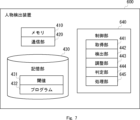
- FIG. 7 is a block diagram showing the configuration of the human detection device 600 according to the third embodiment.
- the human detection device 600 differs from the human detection device 400 shown in FIG. 4 in that it includes a control unit 640 instead of the control unit 440.
- the control unit 640 includes a processing unit 645 in addition to the components included in the control unit 440. The other components overlap with those of the first or second embodiment, and therefore the description will be omitted as appropriate.
- the control unit 640 includes an acquisition unit 441, a detection unit 442, an adjustment unit 443, a determination unit 444, and a processing unit 645.
- the acquisition unit 441 acquires video from the image capture device 300.
- the detection unit 442 detects people from frames constituting the video acquired by the acquisition unit 441 based on a threshold value of the person detection score.
- the determination unit 444 calculates the aspect ratio of the detected area 30, and determines that the person detection has been successful if the aspect ratio is within a predetermined range. If the determination unit 444 determines that the person detection has failed, the adjustment unit 443 adjusts the threshold value of the person detection score. If the determination unit 444 determines that the person detection has been successful, the processing unit 645 performs a masking process on the determined area 30, i.e., blurs it.
- the method of the masking process is not particularly limited, and is processed using existing technology.
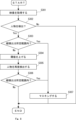
- FIG. 12 is a flowchart showing the flow of the human detection process.
- the acquisition unit 441 acquires an image from the imaging device 300 (step S301).
- the detection unit 442 detects a person based on the threshold value 431 set in advance for the frames constituting the image acquired in step S301 (step S302). If a person is not detected from the frames constituting the image (step S302 No), the person detection ends. If a person is detected from the frames constituting the image (step S302 Yes), the determination unit 444 calculates the aspect ratio of the area 30 in which the person is detected and determines whether the aspect ratio is within a predetermined range (step S303). If the aspect ratio of the area 30 is within the predetermined range (step S303 Yes), the processing unit 645 performs a masking process on the area 30 (step S307).
- step S303 No If the aspect ratio of the area 30 is outside the predetermined range (step S303 No), the adjustment unit 443 increases the threshold value of the person detection score (step S304). Next, the detection unit 442 performs human detection again for the frames that make up the video based on the increased threshold (step S305).
- the determination unit 444 calculates the aspect ratio for the region detected in step S305 and determines whether the aspect ratio is within a predetermined range (step S306). If the aspect ratio of the region 30 is outside the predetermined range (step S306 No), human detection ends. If the aspect ratio of the region 30 is within the predetermined range (step S306 Yes), the processing unit 645 performs a masking process on the region 30 (step S307).
- the human detection device 600 determines whether or not a detected object is a human based on the aspect ratio of the area. Therefore, the human detection device 600 can perform masking processing only on areas where it is determined that a human has been successfully detected, without performing masking processing on areas where an object other than a human has been erroneously detected.
- the configuration has been described as hardware, but the present disclosure is not limited to this. Any process in the present disclosure can also be realized by having a CPU execute a computer program.
- Non-transitory computer readable medium includes various types of tangible storage medium.
- Examples of non-transitory computer readable medium include magnetic recording media (e.g., flexible disks, magnetic tapes, hard disk drives), magneto-optical recording media (e.g., magneto-optical disks), CD-ROM (Read Only Memory), CD-R, CD-R/W, DVD (Digital Versatile Disc), and semiconductor memory (e.g., mask ROM, PROM (Programmable ROM), EPROM (Erasable PROM), flash ROM, RAM (Random Access Memory)).
- magnetic recording media e.g., flexible disks, magnetic tapes, hard disk drives
- magneto-optical recording media e.g., magneto-optical disks
- CD-ROM Read Only Memory
- CD-R Compact Only Memory
- CD-R/W Compact Disc
- DVD Digital Versatile Disc
- semiconductor memory e.g., mask ROM, PROM (Programmable ROM), EPROM (Erasable
- the program may also be provided to the computer by various types of transitory computer readable medium.
- Examples of transitory computer readable medium include electrical signals, optical signals, and electromagnetic waves.
- the temporary computer-readable medium can provide the program to the computer via a wired communication path, such as an electric wire or optical fiber, or via a wireless communication path.
Landscapes
- Engineering & Computer Science (AREA)
- Computer Vision & Pattern Recognition (AREA)
- Physics & Mathematics (AREA)
- General Physics & Mathematics (AREA)
- Theoretical Computer Science (AREA)
- Closed-Circuit Television Systems (AREA)
- Image Analysis (AREA)
Abstract
Description
撮影された映像を取得する取得部と、
所定の人物検出スコアの閾値に基づいて前記映像を構成するフレームから人物を検出する検出部と、
前記フレームから人物が検出された場合に、前記人物が検出された領域の縦横比に応じて前記人物検出スコアの閾値を調整する調整部と、
を備える。
周囲の映像を撮影する撮影装置と、
前記撮影装置と通信可能な人物検出装置と、を備え、
前記人物検出装置は、
前記撮影装置において撮影された映像を取得する取得部と、
所定の人物検出スコアの閾値に基づいて前記映像を構成するフレームから人物を検出する検出部と、
前記フレームから人物が検出された場合に、前記人物が検出された領域の縦横比に応じて前記人物検出スコアの閾値を調整する調整部と、
を備える。
コンピュータが、
撮影された映像を取得する工程と、
所定の人物検出スコアの閾値に基づいて前記映像を構成するフレームから人物を検出する工程と、
前記フレームから人物が検出された場合に、前記人物が検出された領域の縦横比に応じて前記人物検出スコアの閾値を調整する工程と、
を備える。
コンピュータに、
撮影された映像を取得する処理と、
所定の人物検出スコアの閾値に基づいて前記映像を構成するフレームから人物を検出する処理と、
前記フレームから人物が検出された場合に、前記人物が検出された領域の縦横比に応じて前記人物検出スコアの閾値を調整する処理と、
を実行させる人物検出プログラムが格納される。
図1は、実施形態1に係る人物検出装置100の構成を示すブロック図である。人物検出装置100は、取得部110、検出部120及び調整部130を備える。人物検出装置100は、図示しないネットワーク500に接続されている、ネットワーク500は、有線であってもよいし、無線であってもよい。ネットワーク500には、図示しない撮影装置300等が接続されている。撮影装置300は、図示しない車両310に設置されており、当該車両の周囲を撮影する装置である。撮影装置300が撮影した映像は、通常動画であり、複数のフレームを含む。
実施形態2は、上述した実施形態1の具体例である。図3は、実施形態2に係る人物検出システム200の構成を示すブロック図である。人物検出システム200は、撮影装置300及び人物検出装置400を備える。撮影装置300は、ネットワーク500を介して人物検出装置400に接続されている。なお、実施形態1と重複する説明については適宜省略する。
調整部443は、判定部444が人物検出に失敗したと判定すると、人物検出スコアの閾値を調整する。具体的には、調整部443は、判定部444によって領域30の縦横比が1未満であると判定された場合に、人物検出スコアの閾値を上げる。検出部442は、調整された閾値に基づいて、映像を構成するフレームから人物の検出を再度行う。人物検出スコアの閾値が上げられると、上げられる前に比較し、検出部442は、より少ない領域を人物が写っている可能性が高い領域として検出する。人物の検出を再度行うことによって領域が再度検出された場合、判定部444は、当該領域の縦横比を算出し、当該縦横比が所定の範囲内であるか否かを判定してもよい。
実施形態3は、上述した実施形態2の変形例である。本実施形態に係る人物検出装置600は、人物の検出に成功したと判定した場合、人物が検出された領域にマスキング処理を行う。図7は、実施形態3に係る人物検出装置600の構成を示すブロック図である。人物検出装置600は、図4に示した人物検出装置400に比較して、制御部440に代えて制御部640を備える点で異なる。制御部640は、制御部440が備える各構成に加えて、処理部645を備える。他の構成については実施形態1又は2と重複するため、説明についてを適宜省略する。
20 人物
30 領域
30a 縦辺
30b 横辺
100 人物検出装置
110 取得部
120 検出部
130 調整部
200 人物検出システム
300 撮影装置
301 撮影部
302 通信部
310 車両
400 人物検出装置
410 メモリ
420 通信部
430 記憶部
431 閾値
432 プログラム
440 制御部
441 取得部
442 検出部
443 調整部
444 判定部
500 ネットワーク
600 人物検出装置
640 制御部
645 処理部
Claims (9)
- 撮影された映像を取得する取得手段と、
所定の人物検出スコアの閾値に基づいて前記映像を構成するフレームから人物を検出する検出手段と、
前記フレームから人物が検出された場合に、前記人物が検出された領域の縦横比に応じて前記人物検出スコアの閾値を調整する調整手段と、を備える、
人物検出装置。 - さらに、前記縦横比が所定の範囲内である場合に、人物検出に成功したと判定する判定手段を備え、
前記縦横比は、前記人物が検出された領域において地面に垂直な方向の辺を縦辺とし、前記縦辺に直交する方向の辺を横辺として、前記縦辺を前記横辺で除した値であり、
前記所定の範囲は、前記縦横比が1以上である、
請求項1に記載の人物検出装置。 - 人物検出に失敗したと判定された場合、
前記調整手段は、前記人物検出スコアの閾値を上げ、
前記検出手段は、調整された前記人物検出スコアの閾値に基づいて、前記映像を構成するフレームから人物を再度検出する、
請求項2に記載の人物検出装置。 - 前記フレームから人物が再度検出された場合、
前記判定手段は、人物が再度検出された領域の前記縦横比が所定の範囲内である場合に、人物検出に成功したと判定する、
請求項3に記載の人物検出装置。 - さらに、人物検出に成功したと判定された場合に、前記人物が検出された前記領域にマスキング処理を行う処理手段を備える、
請求項2に記載の人物検出装置。 - 周囲の映像を撮影する撮影装置と、
前記撮影装置と通信可能な人物検出装置と、を備え、
前記人物検出装置は、
前記撮影装置において撮影された映像を取得し、
所定の人物検出スコアの閾値に基づいて前記映像を構成するフレームから人物を検出し、
前記フレームから人物が検出された場合に、前記人物が検出された領域の縦横比に応じて前記人物検出スコアの閾値を調整する、
人物検出システム。 - 前記人物検出装置は、
前記縦横比が所定の範囲内である場合に、人物検出に成功したと判定し、
前記縦横比は、前記人物が検出された領域において地面に垂直な方向の辺を縦辺とし、前記縦辺に直交する方向の辺を横辺として、前記縦辺を前記横辺で除した値であり、
前記所定の範囲は、前記縦横比が1以上である、
請求項6に記載の人物検出システム。 - コンピュータが、
撮影された映像を取得し、
所定の人物検出スコアの閾値に基づいて前記映像を構成するフレームから人物を検出し、
前記フレームから人物が検出された場合に、前記人物が検出された領域の縦横比に応じて前記人物検出スコアの閾値を調整する、
人物検出方法。 - コンピュータに、
映像を取得する処理と、
所定の人物検出スコアの閾値に基づいて前記映像を構成するフレームから人物を検出する処理と、
前記フレームから人物が検出された場合に、前記人物が検出された領域の縦横比に応じて前記人物検出スコアの閾値を調整する処理と、
を実行させる人物検出プログラムが格納された非一時的なコンピュータ可読媒体。
Priority Applications (2)
| Application Number | Priority Date | Filing Date | Title |
|---|---|---|---|
| PCT/JP2023/006201 WO2024176342A1 (ja) | 2023-02-21 | 2023-02-21 | 人物検出装置、システム、方法及びプログラムが格納された非一時的なコンピュータ可読媒体 |
| JP2025501970A JPWO2024176342A5 (ja) | 2023-02-21 | 人物検出装置、システム、方法及びプログラム |
Applications Claiming Priority (1)
| Application Number | Priority Date | Filing Date | Title |
|---|---|---|---|
| PCT/JP2023/006201 WO2024176342A1 (ja) | 2023-02-21 | 2023-02-21 | 人物検出装置、システム、方法及びプログラムが格納された非一時的なコンピュータ可読媒体 |
Publications (1)
| Publication Number | Publication Date |
|---|---|
| WO2024176342A1 true WO2024176342A1 (ja) | 2024-08-29 |
Family
ID=92500345
Family Applications (1)
| Application Number | Title | Priority Date | Filing Date |
|---|---|---|---|
| PCT/JP2023/006201 Ceased WO2024176342A1 (ja) | 2023-02-21 | 2023-02-21 | 人物検出装置、システム、方法及びプログラムが格納された非一時的なコンピュータ可読媒体 |
Country Status (1)
| Country | Link |
|---|---|
| WO (1) | WO2024176342A1 (ja) |
Citations (5)
| Publication number | Priority date | Publication date | Assignee | Title |
|---|---|---|---|---|
| JP2005128815A (ja) * | 2003-10-24 | 2005-05-19 | Matsushita Electric Ind Co Ltd | 人物検出装置及び人物検出方法 |
| JP2009266052A (ja) * | 2008-04-28 | 2009-11-12 | Hitachi Ltd | 異常行動検知装置 |
| JP2012048690A (ja) * | 2010-08-30 | 2012-03-08 | Secom Co Ltd | 監視装置 |
| WO2016199749A1 (ja) * | 2015-06-10 | 2016-12-15 | コニカミノルタ株式会社 | 画像処理システム、画像処理装置、画像処理方法、および画像処理プログラム |
| JP2018200698A (ja) * | 2013-09-13 | 2018-12-20 | コニカミノルタ株式会社 | 被監視者監視装置および該方法ならびに被監視者監視システム |
-
2023
- 2023-02-21 WO PCT/JP2023/006201 patent/WO2024176342A1/ja not_active Ceased
Patent Citations (5)
| Publication number | Priority date | Publication date | Assignee | Title |
|---|---|---|---|---|
| JP2005128815A (ja) * | 2003-10-24 | 2005-05-19 | Matsushita Electric Ind Co Ltd | 人物検出装置及び人物検出方法 |
| JP2009266052A (ja) * | 2008-04-28 | 2009-11-12 | Hitachi Ltd | 異常行動検知装置 |
| JP2012048690A (ja) * | 2010-08-30 | 2012-03-08 | Secom Co Ltd | 監視装置 |
| JP2018200698A (ja) * | 2013-09-13 | 2018-12-20 | コニカミノルタ株式会社 | 被監視者監視装置および該方法ならびに被監視者監視システム |
| WO2016199749A1 (ja) * | 2015-06-10 | 2016-12-15 | コニカミノルタ株式会社 | 画像処理システム、画像処理装置、画像処理方法、および画像処理プログラム |
Also Published As
| Publication number | Publication date |
|---|---|
| JPWO2024176342A1 (ja) | 2024-08-29 |
Similar Documents
| Publication | Publication Date | Title |
|---|---|---|
| CN107705552B (zh) | 一种应急车道占用行为检测方法、装置及系统 | |
| US20150139534A1 (en) | Image processing apparatus, imaging apparatus and distance correction method | |
| KR101704830B1 (ko) | 영상에서 물체 검출 장치 및 방법 | |
| JP2017033554A (ja) | ビデオデータ分析方法、装置及び駐車場モニタリングシステム | |
| US11688078B2 (en) | Video object detection | |
| JP7167325B2 (ja) | 運転者在席状態検出方法及び装置、機器並びにコンピュータ記憶媒体 | |
| US10200607B2 (en) | Image capturing apparatus, method of controlling the same, monitoring camera system, and storage medium | |
| JP2014056494A (ja) | 画像処理装置、オブジェクト検出方法、およびオブジェクト検出プログラム | |
| US11301974B2 (en) | Image processing apparatus, image processing method, image capturing apparatus, and storage medium | |
| KR20190024511A (ko) | 도로 상황 공유 방법 및 이를 실행하기 위해 기록매체에 기록된 컴퓨터 프로그램 | |
| KR20210022995A (ko) | 터널 판단 장치 및 터널 판단 방법 | |
| CN113762220B (zh) | 目标识别方法、电子设备、计算机可读存储介质 | |
| CN111183454B (zh) | 识别装置、识别方法及识别程序 | |
| JP4364275B2 (ja) | 画像処理方法、画像処理装置及びコンピュータプログラム | |
| US20260052228A1 (en) | Information processing apparatus, information processing method, computer-readable medium, and information processing system | |
| KR101341243B1 (ko) | 기상 현상으로 인해 훼손된 영상을 복원하는 장치 및 방법 | |
| JP7279892B2 (ja) | 顔向き検出装置、顔向き検出方法、及びプログラム | |
| WO2024176342A1 (ja) | 人物検出装置、システム、方法及びプログラムが格納された非一時的なコンピュータ可読媒体 | |
| JP7485449B2 (ja) | 監視装置、監視方法、及びプログラム | |
| JP2019040389A (ja) | 障害物検知装置、障害物検知方法、及び、障害物検知プログラム | |
| US11763596B2 (en) | Image capturing support apparatus, image capturing support method, and computer-readable recording medium | |
| WO2016147704A1 (ja) | 監視装置、監視システム、監視方法、及びコンピュータ読み取り可能な記録媒体 | |
| WO2024176339A1 (ja) | 移動体検出装置、システム、方法及びプログラムが格納された非一時的なコンピュータ可読媒体 | |
| JP6800388B1 (ja) | 検出装置、検出方法、及び検出プログラム | |
| JP2015204021A (ja) | 視線検出装置、視線検出方法 |
Legal Events
| Date | Code | Title | Description |
|---|---|---|---|
| 121 | Ep: the epo has been informed by wipo that ep was designated in this application |
Ref document number: 23923996 Country of ref document: EP Kind code of ref document: A1 |
|
| ENP | Entry into the national phase |
Ref document number: 2025501970 Country of ref document: JP Kind code of ref document: A |
|
| WWE | Wipo information: entry into national phase |
Ref document number: 2025501970 Country of ref document: JP |
|
| NENP | Non-entry into the national phase |
Ref country code: DE |
|
| 122 | Ep: pct application non-entry in european phase |
Ref document number: 23923996 Country of ref document: EP Kind code of ref document: A1 |