WO2024166833A1 - ブロック共重合体もしくはこれを含有する水分散液、接着剤、塗液、コーティング剤、又は成形体の製造方法 - Google Patents
ブロック共重合体もしくはこれを含有する水分散液、接着剤、塗液、コーティング剤、又は成形体の製造方法 Download PDFInfo
- Publication number
- WO2024166833A1 WO2024166833A1 PCT/JP2024/003575 JP2024003575W WO2024166833A1 WO 2024166833 A1 WO2024166833 A1 WO 2024166833A1 JP 2024003575 W JP2024003575 W JP 2024003575W WO 2024166833 A1 WO2024166833 A1 WO 2024166833A1
- Authority
- WO
- WIPO (PCT)
- Prior art keywords
- block copolymer
- protein
- adhesive
- producing
- substrate
- Prior art date
- Legal status (The legal status is an assumption and is not a legal conclusion. Google has not performed a legal analysis and makes no representation as to the accuracy of the status listed.)
- Ceased
Links
Images





Classifications
-
- C—CHEMISTRY; METALLURGY
- C08—ORGANIC MACROMOLECULAR COMPOUNDS; THEIR PREPARATION OR CHEMICAL WORKING-UP; COMPOSITIONS BASED THEREON
- C08J—WORKING-UP; GENERAL PROCESSES OF COMPOUNDING; AFTER-TREATMENT NOT COVERED BY SUBCLASSES C08B, C08C, C08F, C08G or C08H
- C08J3/00—Processes of treating or compounding macromolecular substances
- C08J3/20—Compounding polymers with additives, e.g. colouring
-
- C—CHEMISTRY; METALLURGY
- C07—ORGANIC CHEMISTRY
- C07K—PEPTIDES
- C07K1/00—General methods for the preparation of peptides, i.e. processes for the organic chemical preparation of peptides or proteins of any length
- C07K1/107—General methods for the preparation of peptides, i.e. processes for the organic chemical preparation of peptides or proteins of any length by chemical modification of precursor peptides
- C07K1/1072—General methods for the preparation of peptides, i.e. processes for the organic chemical preparation of peptides or proteins of any length by chemical modification of precursor peptides by covalent attachment of residues or functional groups
- C07K1/1077—General methods for the preparation of peptides, i.e. processes for the organic chemical preparation of peptides or proteins of any length by chemical modification of precursor peptides by covalent attachment of residues or functional groups by covalent attachment of residues other than amino acids or peptide residues, e.g. sugars, polyols, fatty acids
-
- C—CHEMISTRY; METALLURGY
- C07—ORGANIC CHEMISTRY
- C07K—PEPTIDES
- C07K14/00—Peptides having more than 20 amino acids; Gastrins; Somatostatins; Melanotropins; Derivatives thereof
- C07K14/435—Peptides having more than 20 amino acids; Gastrins; Somatostatins; Melanotropins; Derivatives thereof from animals; from humans
- C07K14/43504—Peptides having more than 20 amino acids; Gastrins; Somatostatins; Melanotropins; Derivatives thereof from animals; from humans from invertebrates
- C07K14/43513—Peptides having more than 20 amino acids; Gastrins; Somatostatins; Melanotropins; Derivatives thereof from animals; from humans from invertebrates from arachnidae
- C07K14/43518—Peptides having more than 20 amino acids; Gastrins; Somatostatins; Melanotropins; Derivatives thereof from animals; from humans from invertebrates from arachnidae from spiders
-
- C—CHEMISTRY; METALLURGY
- C08—ORGANIC MACROMOLECULAR COMPOUNDS; THEIR PREPARATION OR CHEMICAL WORKING-UP; COMPOSITIONS BASED THEREON
- C08G—MACROMOLECULAR COMPOUNDS OBTAINED OTHERWISE THAN BY REACTIONS ONLY INVOLVING UNSATURATED CARBON-TO-CARBON BONDS
- C08G75/00—Macromolecular compounds obtained by reactions forming a linkage containing sulfur with or without nitrogen, oxygen, or carbon in the main chain of the macromolecule
- C08G75/02—Polythioethers
- C08G75/04—Polythioethers from mercapto compounds or metallic derivatives thereof
- C08G75/045—Polythioethers from mercapto compounds or metallic derivatives thereof from mercapto compounds and unsaturated compounds
-
- C—CHEMISTRY; METALLURGY
- C08—ORGANIC MACROMOLECULAR COMPOUNDS; THEIR PREPARATION OR CHEMICAL WORKING-UP; COMPOSITIONS BASED THEREON
- C08G—MACROMOLECULAR COMPOUNDS OBTAINED OTHERWISE THAN BY REACTIONS ONLY INVOLVING UNSATURATED CARBON-TO-CARBON BONDS
- C08G81/00—Macromolecular compounds obtained by interreacting polymers in the absence of monomers, e.g. block polymers
-
- C—CHEMISTRY; METALLURGY
- C08—ORGANIC MACROMOLECULAR COMPOUNDS; THEIR PREPARATION OR CHEMICAL WORKING-UP; COMPOSITIONS BASED THEREON
- C08J—WORKING-UP; GENERAL PROCESSES OF COMPOUNDING; AFTER-TREATMENT NOT COVERED BY SUBCLASSES C08B, C08C, C08F, C08G or C08H
- C08J5/00—Manufacture of articles or shaped materials containing macromolecular substances
- C08J5/18—Manufacture of films or sheets
-
- C—CHEMISTRY; METALLURGY
- C08—ORGANIC MACROMOLECULAR COMPOUNDS; THEIR PREPARATION OR CHEMICAL WORKING-UP; COMPOSITIONS BASED THEREON
- C08J—WORKING-UP; GENERAL PROCESSES OF COMPOUNDING; AFTER-TREATMENT NOT COVERED BY SUBCLASSES C08B, C08C, C08F, C08G or C08H
- C08J7/00—Chemical treatment or coating of shaped articles made of macromolecular substances
- C08J7/04—Coating
- C08J7/0427—Coating with only one layer of a composition containing a polymer binder
-
- C—CHEMISTRY; METALLURGY
- C08—ORGANIC MACROMOLECULAR COMPOUNDS; THEIR PREPARATION OR CHEMICAL WORKING-UP; COMPOSITIONS BASED THEREON
- C08L—COMPOSITIONS OF MACROMOLECULAR COMPOUNDS
- C08L71/00—Compositions of polyethers obtained by reactions forming an ether link in the main chain; Compositions of derivatives of such polymers
-
- C—CHEMISTRY; METALLURGY
- C08—ORGANIC MACROMOLECULAR COMPOUNDS; THEIR PREPARATION OR CHEMICAL WORKING-UP; COMPOSITIONS BASED THEREON
- C08L—COMPOSITIONS OF MACROMOLECULAR COMPOUNDS
- C08L81/00—Compositions of macromolecular compounds obtained by reactions forming in the main chain of the macromolecule a linkage containing sulfur with or without nitrogen, oxygen or carbon only; Compositions of polysulfones; Compositions of derivatives of such polymers
-
- C—CHEMISTRY; METALLURGY
- C08—ORGANIC MACROMOLECULAR COMPOUNDS; THEIR PREPARATION OR CHEMICAL WORKING-UP; COMPOSITIONS BASED THEREON
- C08L—COMPOSITIONS OF MACROMOLECULAR COMPOUNDS
- C08L81/00—Compositions of macromolecular compounds obtained by reactions forming in the main chain of the macromolecule a linkage containing sulfur with or without nitrogen, oxygen or carbon only; Compositions of polysulfones; Compositions of derivatives of such polymers
- C08L81/02—Polythioethers; Polythioether-ethers
-
- C—CHEMISTRY; METALLURGY
- C08—ORGANIC MACROMOLECULAR COMPOUNDS; THEIR PREPARATION OR CHEMICAL WORKING-UP; COMPOSITIONS BASED THEREON
- C08L—COMPOSITIONS OF MACROMOLECULAR COMPOUNDS
- C08L89/00—Compositions of proteins; Compositions of derivatives thereof
-
- C—CHEMISTRY; METALLURGY
- C09—DYES; PAINTS; POLISHES; NATURAL RESINS; ADHESIVES; COMPOSITIONS NOT OTHERWISE PROVIDED FOR; APPLICATIONS OF MATERIALS NOT OTHERWISE PROVIDED FOR
- C09D—COATING COMPOSITIONS, e.g. PAINTS, VARNISHES OR LACQUERS; FILLING PASTES; CHEMICAL PAINT OR INK REMOVERS; INKS; CORRECTING FLUIDS; WOODSTAINS; PASTES OR SOLIDS FOR COLOURING OR PRINTING; USE OF MATERIALS THEREFOR
- C09D181/00—Coating compositions based on macromolecular compounds obtained by reactions forming in the main chain of the macromolecule a linkage containing sulfur, with or without nitrogen, oxygen, or carbon only; Coating compositions based on polysulfones; Coating compositions based on derivatives of such polymers
- C09D181/02—Polythioethers; Polythioether-ethers
-
- C—CHEMISTRY; METALLURGY
- C09—DYES; PAINTS; POLISHES; NATURAL RESINS; ADHESIVES; COMPOSITIONS NOT OTHERWISE PROVIDED FOR; APPLICATIONS OF MATERIALS NOT OTHERWISE PROVIDED FOR
- C09D—COATING COMPOSITIONS, e.g. PAINTS, VARNISHES OR LACQUERS; FILLING PASTES; CHEMICAL PAINT OR INK REMOVERS; INKS; CORRECTING FLUIDS; WOODSTAINS; PASTES OR SOLIDS FOR COLOURING OR PRINTING; USE OF MATERIALS THEREFOR
- C09D189/00—Coating compositions based on proteins; Coating compositions based on derivatives thereof
-
- C—CHEMISTRY; METALLURGY
- C09—DYES; PAINTS; POLISHES; NATURAL RESINS; ADHESIVES; COMPOSITIONS NOT OTHERWISE PROVIDED FOR; APPLICATIONS OF MATERIALS NOT OTHERWISE PROVIDED FOR
- C09D—COATING COMPOSITIONS, e.g. PAINTS, VARNISHES OR LACQUERS; FILLING PASTES; CHEMICAL PAINT OR INK REMOVERS; INKS; CORRECTING FLUIDS; WOODSTAINS; PASTES OR SOLIDS FOR COLOURING OR PRINTING; USE OF MATERIALS THEREFOR
- C09D189/00—Coating compositions based on proteins; Coating compositions based on derivatives thereof
- C09D189/02—Casein-aldehyde condensates
-
- C—CHEMISTRY; METALLURGY
- C09—DYES; PAINTS; POLISHES; NATURAL RESINS; ADHESIVES; COMPOSITIONS NOT OTHERWISE PROVIDED FOR; APPLICATIONS OF MATERIALS NOT OTHERWISE PROVIDED FOR
- C09J—ADHESIVES; NON-MECHANICAL ASPECTS OF ADHESIVE PROCESSES IN GENERAL; ADHESIVE PROCESSES NOT PROVIDED FOR ELSEWHERE; USE OF MATERIALS AS ADHESIVES
- C09J181/00—Adhesives based on macromolecular compounds obtained by reactions forming in the main chain of the macromolecule a linkage containing sulfur, with or without nitrogen, oxygen, or carbon only; Adhesives based on polysulfones; Adhesives based on derivatives of such polymers
- C09J181/02—Polythioethers; Polythioether-ethers
-
- C—CHEMISTRY; METALLURGY
- C09—DYES; PAINTS; POLISHES; NATURAL RESINS; ADHESIVES; COMPOSITIONS NOT OTHERWISE PROVIDED FOR; APPLICATIONS OF MATERIALS NOT OTHERWISE PROVIDED FOR
- C09J—ADHESIVES; NON-MECHANICAL ASPECTS OF ADHESIVE PROCESSES IN GENERAL; ADHESIVE PROCESSES NOT PROVIDED FOR ELSEWHERE; USE OF MATERIALS AS ADHESIVES
- C09J189/00—Adhesives based on proteins; Adhesives based on derivatives thereof
-
- C—CHEMISTRY; METALLURGY
- C09—DYES; PAINTS; POLISHES; NATURAL RESINS; ADHESIVES; COMPOSITIONS NOT OTHERWISE PROVIDED FOR; APPLICATIONS OF MATERIALS NOT OTHERWISE PROVIDED FOR
- C09J—ADHESIVES; NON-MECHANICAL ASPECTS OF ADHESIVE PROCESSES IN GENERAL; ADHESIVE PROCESSES NOT PROVIDED FOR ELSEWHERE; USE OF MATERIALS AS ADHESIVES
- C09J189/00—Adhesives based on proteins; Adhesives based on derivatives thereof
- C09J189/02—Casein-aldehyde condensates
-
- B—PERFORMING OPERATIONS; TRANSPORTING
- B32—LAYERED PRODUCTS
- B32B—LAYERED PRODUCTS, i.e. PRODUCTS BUILT-UP OF STRATA OF FLAT OR NON-FLAT, e.g. CELLULAR OR HONEYCOMB, FORM
- B32B7/00—Layered products characterised by the relation between layers; Layered products characterised by the relative orientation of features between layers, or by the relative values of a measurable parameter between layers, i.e. products comprising layers having different physical, chemical or physicochemical properties; Layered products characterised by the interconnection of layers
- B32B7/04—Interconnection of layers
- B32B7/12—Interconnection of layers using interposed adhesives or interposed materials with bonding properties
-
- C—CHEMISTRY; METALLURGY
- C07—ORGANIC CHEMISTRY
- C07K—PEPTIDES
- C07K2319/00—Fusion polypeptide
- C07K2319/20—Fusion polypeptide containing a tag with affinity for a non-protein ligand
- C07K2319/21—Fusion polypeptide containing a tag with affinity for a non-protein ligand containing a His-tag
-
- C—CHEMISTRY; METALLURGY
- C07—ORGANIC CHEMISTRY
- C07K—PEPTIDES
- C07K2319/00—Fusion polypeptide
- C07K2319/20—Fusion polypeptide containing a tag with affinity for a non-protein ligand
- C07K2319/23—Fusion polypeptide containing a tag with affinity for a non-protein ligand containing a GST-tag
-
- C—CHEMISTRY; METALLURGY
- C08—ORGANIC MACROMOLECULAR COMPOUNDS; THEIR PREPARATION OR CHEMICAL WORKING-UP; COMPOSITIONS BASED THEREON
- C08J—WORKING-UP; GENERAL PROCESSES OF COMPOUNDING; AFTER-TREATMENT NOT COVERED BY SUBCLASSES C08B, C08C, C08F, C08G or C08H
- C08J2389/00—Characterised by the use of proteins; Derivatives thereof
-
- C—CHEMISTRY; METALLURGY
- C08—ORGANIC MACROMOLECULAR COMPOUNDS; THEIR PREPARATION OR CHEMICAL WORKING-UP; COMPOSITIONS BASED THEREON
- C08J—WORKING-UP; GENERAL PROCESSES OF COMPOUNDING; AFTER-TREATMENT NOT COVERED BY SUBCLASSES C08B, C08C, C08F, C08G or C08H
- C08J2453/00—Characterised by the use of block copolymers containing at least one sequence of a polymer obtained by reactions only involving carbon-to-carbon unsaturated bonds; Derivatives of such polymers
Definitions
- the present invention relates to a method for producing a block copolymer or an aqueous dispersion, adhesive, coating liquid, coating agent, or molded article containing the block copolymer.
- Structural proteins such as silk fibroin and spider silk fibroin have the potential to exhibit excellent robustness, and are therefore attracting attention as alternatives to structural materials made of synthetic resins and the like.
- advances in recombinant technology have led to the development of mass production techniques for recombinant structural proteins that mimic the above-mentioned structural proteins (e.g., Patent Document 1).
- proteins have a structure in which multiple amino acids are bonded together, and this continuous structure of amino acids is called the main chain.
- the main chain of a protein contains amide groups (peptide bonds), and the side chains contain many polar groups such as carboxy groups, amide groups, amino groups, hydroxyl groups, and thiol groups. Proteins maintain their three-dimensional structure by forming many intramolecular hydrogen bonds, and can change their physical properties by forming intermolecular hydrogen bonds.
- the resins and other molded products obtained by heating and pressurizing structural proteins are thought to have excellent mechanical strength, but they are also brittle and prone to cracking and fracture when subjected to impacts. These circumstances are obstacles to using proteins as a replacement for general-purpose plastics.
- plasticizers are generally hydrophobic and have low compatibility with proteins that have many polar groups. Therefore, even if a plasticizer is mixed with the structural protein, phase separation occurs between the structural protein and the plasticizer, making it difficult to achieve the expected effect.
- a synthetic polymer (block copolymer) has a first segment containing a polypeptide backbone and one or more second segments bonded to the first segment, and the second segment contains a molecule that has a plasticizing function for the polypeptide backbone, phase separation does not occur between the protein and the plasticizer, and it is possible to produce a molded body with excellent flexibility (see Patent Document 2).
- the present invention therefore aims to provide an advantageous method for producing a new block copolymer. It also aims to provide an advantageous method for producing each of an aqueous dispersion, an adhesive, a coating liquid, a coating agent, or a molded body.
- a powdery block copolymer can be obtained by block copolymerizing a protein under mechanochemical conditions. That is, the present invention provides the following [1] to [21].
- nucleophilic functional group is a thiol group and the electrophilic functional group is a thiol-reactive group.
- the protein comprises a hydrophobic protein.
- the hydrophobic protein has a hydropathic index of greater than 0.
- the protein comprises an artificial protein.
- the artificial protein comprises an artificial structural protein.
- the protein contains two or more nucleophilic functional groups; The method according to any one of [1] to [11], wherein the molecule capable of plasticizing a protein contains two or more electrophilic functional groups.
- the protein contains two or more thiol groups, The method according to any one of [1] to [12], wherein the molecule capable of plasticizing a protein contains two or more thiol-reactive groups.
- the molecular weight of the molecule capable of plasticizing the protein is 10 or more when the molecular weight of the protein is taken as 100.
- [15] The method according to any one of [1] to [14], wherein the molecular weight of the molecule capable of plasticizing the protein is 100 or less, where the molecular weight of the protein is taken as 100.
- a method for producing a prepolymer comprising the step of mechanochemically treating a mixture containing a protein and a molecule capable of plasticizing the protein.
- the block copolymer contains, as unit structures, a protein and a molecule capable of plasticizing a protein.
- the method according to [16] or [17] further comprising a step of freeze-drying the mechanochemically treated product after the mechanochemical treatment step.
- a method for producing an aqueous dispersion of a block copolymer comprising a step of dispersing the block copolymer obtained by the method according to any one of [1] to [15] in an aqueous medium.
- a method for producing a water-dispersible adhesive comprising a step of dispersing a block copolymer obtained by the method according to any one of [1] to [15] in an aqueous medium.
- a method for producing a coating liquid comprising a step of dispersing the block copolymer obtained by the method according to any one of [1] to [15] in an aqueous medium.
- a method for producing a molded article comprising a step of molding a block copolymer obtained by the method according to any one of [1] to [15].
- a method for producing a solution-type adhesive comprising a step of dissolving the block copolymer obtained by the method according to any one of [1] to [15] in a solvent.
- a method for producing a film-like adhesive comprising a step of forming a film from a solution in which the block copolymer obtained by the method according to any one of [1] to [15] is dissolved.
- a method for producing a powdery adhesive comprising a step of obtaining a powder composition containing the block copolymer obtained by the method according to any one of [1] to [15].
- a method for producing an adhesive comprising: dissolving a block copolymer obtained by the method according to any one of [1] to [15] in a solvent; placing a solution between a plurality of adherends; and then removing the solvent from the solution to solidify the block copolymer, thereby adhering the adherends to each other.
- a method for producing an adhesive comprising: interposing an aqueous dispersion in which a block copolymer obtained by the method according to any one of [1] to [15] is dispersed in an aqueous medium between a plurality of adherends; removing the aqueous medium from the aqueous dispersion; and solidifying the block copolymer, thereby adhering the adherends to each other.
- a method for producing an adhesive comprising the steps of: softening a film containing a block copolymer obtained by the method according to any one of [1] to [15] by swelling or heating; interposing the film between a plurality of adherends; and curing the film in a state of being pressed against the adherends, thereby adhering the adherends to each other.
- a method for producing an adhesive comprising: heating a powder composition containing a block copolymer obtained by the method according to any one of [1] to [15], and then applying pressure to the powder composition through the adherends to solidify the powder composition in a state in which the powder composition is interposed between a plurality of adherends, thereby bonding the adherends together.
- a method for producing a solution-type coating agent comprising a step of dissolving the block copolymer obtained by the method according to any one of [1] to [15] in a solvent.
- a method for producing a water-dispersible coating agent comprising a step of dispersing the block copolymer obtained by the method according to any one of [1] to [15] in an aqueous medium.
- a method for producing a film-like coating agent comprising a step of forming a film from a solution in which the block copolymer obtained by the method according to any one of [1] to [15] is dissolved.
- a method for producing a powder coating agent comprising a step of obtaining a powder composition containing the block copolymer obtained by the method according to any one of [1] to [15].
- a method for producing a laminate having a substrate and a coating layer formed and laminated on at least a portion of a surface of the substrate comprising: supplying a solution in which a block copolymer obtained by the method according to any one of items [1] to [15] is dissolved in a solvent to at least a portion of the surface of the substrate, coating at least a portion of the surface of the substrate with the solution, and then removing the solvent from the solution to solidify the block copolymer, thereby forming a coating layer laminated on at least a portion of the surface of the substrate.
- a method for producing a laminate having a substrate and a coating layer formed and laminated on at least a portion of a surface of the substrate comprising the steps of: supplying an aqueous dispersion in which a block copolymer obtained by the method according to any one of items [1] to [15] is dispersed in an aqueous medium to at least a portion of a surface of the substrate; coating at least a portion of the surface of the substrate with the aqueous dispersion; removing the aqueous medium from the aqueous dispersion; and solidifying the block copolymer, thereby forming a coating layer and laminating it on at least a portion of the surface of the substrate.
- a method for producing a laminate having a substrate and a coating layer formed and laminated on at least a portion of a surface of the substrate comprising the steps of: softening a film containing a block copolymer obtained by the method according to any one of [1] to [15] by swelling or heating; placing the film on at least a portion of a surface of the substrate; and curing the film in a state of being pressed against the substrate, thereby forming the coating layer on at least a portion of the surface of the substrate.
- a method for producing a laminate having a substrate and a coating layer formed and laminated on at least a portion of a surface of the substrate comprising the steps of: placing a powder composition containing a block copolymer obtained by the method according to any one of [1] to [15] on at least a portion of a surface of the substrate; heating the powder composition while pressing the powder composition between a pressurizing body and the substrate to solidify the powder composition, thereby forming the coating layer on at least a portion of the surface of the substrate.
- a block copolymer according to the present invention it is not necessary to dissolve a protein or a molecule capable of plasticizing a protein in an organic solvent. Therefore, not only can a wider variety of proteins be used as the raw material for the target block copolymer, but also it is possible to advantageously simplify the production equipment. Therefore, according to the method according to the present invention, block copolymers of various structures can be produced more simply and at low cost. Moreover, the amount of organic solvent remaining in the obtained block copolymer can be reduced to zero or to a very small amount (in the case of liquid-assisted grinding).
- an aqueous dispersion in which the block copolymer is more uniformly dispersed an adhesive with excellent adhesive strength, a coating liquid capable of forming a coating film with a more uniform thickness, a coating agent capable of forming a coating layer with a more uniform thickness, and even a molded body with excellent flexibility and strength more simply and at low cost.
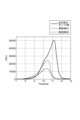
- 1 is a graph showing the results of GPC analysis of the film before and after the reaction in Comparative Example 1.
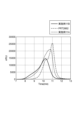
- 1 is a graph showing the results of GPC analysis of the powder before and after the reaction in Example 1.
- 1 is a graph showing the results of GPC analysis of the powder before and after the reaction in Example 2.
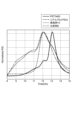
- 1 is a graph showing the results of GPC analysis of powders before and after reaction in Examples 3 and 4.
- 1 is a graph showing the results of GPC of the powder prepared in Example 5.
- 1 is a graph showing the results of GPC of the powder prepared in Example 6.
- (A) is a photograph showing the state of the product immediately before freeze-drying in Example 7 (left) and Comparative Example 2 (right) dispersed in RO water.
- Example 7 is a photograph showing the appearance of the powder immediately after freeze-drying in Example 7 (left) and Comparative Example 2 (right).
- C is a photograph showing the appearance of the film obtained in Comparative Example 3 after crushing.
- D is a photograph showing the appearance of the gel obtained in Comparative Example 4 after crushing.
- A shows the particle size and its occupancy ratio (cumulative) in Example 7 (solid line) and Comparative Example 4 (dashed line).
- B) shows the particle size and its occupancy ratio in Example 7 (solid line) and Comparative Example 4 (dashed line).
- A) is a micrograph of the powder of Comparative Example 4
- B is a micrograph of the powder of Example 7.
- FIG. 1 is a graph showing the results of turbidity tests for Example 7 and Comparative Example 4.
- A is a photograph showing the state of each suspension of Example 8 (left) and Comparative Example 5 (right).
- B is a photograph showing the state of the suspension when each Eppendorf tube shown in (A) is placed upside down. Photographs showing the state of each coating film of Example 9 (left) and Comparative Example 6 (right). Photograph (A) shows the state of the resin film of Example 10, and photograph (B) shows the state of the resin film of Comparative Example 7.
- (A) is a graph showing the results of the tensile test, and (B) is a box plot showing the elongation results shown in (A).
- Example 11A dotted line
- Example 11B solid line
- (A), (B) and (C) are photographs showing the appearance of the unmodified protein PRT2882, maleated polyethylene glycol and the product of Example 12, respectively.
- 1 is a graph showing GPC chromatograms of unmodified protein PRT2882, maleated polyethylene glycol, and the product of Example 12.
- 1 is a graph showing GPC chromatograms of unmodified protein PRT3463, dialdehyde PEG, Example 13, and Comparative Example 8.
- 1 is a photograph showing the state in which Example 13 and Comparative Example 8 are dissolved in DMSO.
- the materials exemplified in this specification may be used alone or in combination of two or more.
- the content of each component in the composition means the total amount of the multiple substances present in the composition, unless otherwise specified.
- the block copolymer according to the present embodiment is formed by binding a protein and a molecule capable of plasticizing the protein to each other.
- the block copolymer may have a repeating structure of a unit structure A consisting of one monomer of the protein and the molecule capable of plasticizing the protein and a unit structure B consisting of the other monomer of the protein and the molecule capable of plasticizing the protein, or may not have a repeating structure of the unit structure A and the unit structure B.
- the number of the unit structures A and B contained in the block copolymer, and the bonding form thereof, etc. are not particularly limited.
- the block copolymer may have a repeating structure such as an A-B diblock copolymer, an A-B-A triblock copolymer, an A-B-A-B tetrablock copolymer, or an A-B-A-B-A pentablock copolymer, or may have a non-repeating structure such as an A-A-B-A-B.
- the binding position of the molecule capable of plasticizing the protein in the main chain of the protein is not limited in any way.
- a binding position is appropriately selected depending on the properties required for the block copolymer itself, or for the composition or molded product obtained using the block copolymer, which will be described later.
- a preferred block copolymer has a structure having a molecule capable of plasticizing the protein at both ends of the protein. Such a block copolymer is more suitable as a prepolymer because the protein and the molecule capable of plasticizing the protein are easily reactive with each other.
- the block copolymer according to this embodiment is formed by the mutual reaction (bonding) of a reactive functional group (e.g., a nucleophilic functional group) contained in a protein and a reactive functional group (e.g., an electrophilic functional group) contained in a molecule capable of plasticizing a protein.
- a reactive functional group e.g., a nucleophilic functional group
- a reactive functional group e.g., an electrophilic functional group
- a block copolymer containing a modified protein, described below, into which a reactive functional group (e.g., an electrophilic functional group) has been introduced by chemical modification is formed by the mutual reaction (bonding) of a reactive functional group (e.g., an electrophilic functional group) of such a modified protein and a reactive functional group (e.g., a nucleophilic functional group) of a molecule capable of plasticizing a protein.
- a reactive functional group e.g., an electrophilic functional group
- a reactive functional group e.g., a nucleophilic functional group
- the number of reactive functional groups (e.g., nucleophilic functional groups) contained in the protein and the number of reactive functional groups (e.g., electrophilic functional groups) contained in the molecule capable of plasticizing the protein are not particularly limited and may be appropriately changed depending on the structure, form, etc. of the target block copolymer. In other words, by appropriately selecting the number of reactive functional groups contained in the protein and the number of reactive functional groups contained in the molecule capable of plasticizing the protein, a block copolymer having a desired structure or form is formed.
- the resulting block copolymer can be formed as a completed polymer in which the reactive functional groups contained in the protein and the reactive functional groups of the molecule capable of plasticizing the protein have reacted with each other without leaving anything behind.
- a block copolymer in which the number of reactive functional groups contained in the molecule capable of plasticizing the protein is greater than the number of reactive functional groups contained in the protein can be formed as a prepolymer in which all of the reactive functional groups of the protein have reacted with the reactive functional groups of the molecule capable of plasticizing the protein, while the molecule capable of plasticizing the protein leaves unreacted reactive functional groups with the reactive functional groups of the protein.
- the number of reactive functional groups contained in a protein refers to the number of reactive functional groups possessed by one molecule of protein when the block copolymer contains one molecule of protein, and refers to the total number of reactive functional groups possessed by each of the multiple molecules of protein when the block copolymer contains multiple molecules of protein.
- the number of reactive functional groups possessed by a molecule capable of plasticizing a protein refers to the number of reactive functional groups possessed by a molecule capable of plasticizing a protein when the block copolymer contains one molecule of protein, and refers to the total number of reactive functional groups possessed by each of the molecules capable of plasticizing a protein when the block copolymer contains multiple types of molecules capable of plasticizing a protein.
- the position of the reactive functional group in the protein or the molecule capable of plasticizing the protein is not limited in any way and is appropriately selected according to the structure and characteristics required for the block copolymer.
- the protein may have reactive functional groups at both ends. Reactive functional groups at both ends tend to appear outside the conformation of the protein. Therefore, a protein having reactive functional groups at both ends tends to react with the reactive functional groups of the molecule capable of plasticizing the protein, and it is easy to obtain a block copolymer in which the protein and the molecule capable of plasticizing the protein are bonded in a linear chain. If reactive functional groups are located at both ends of the protein, it becomes possible to place the molecule capable of plasticizing the protein at both ends of the protein. Therefore, when the block copolymer is a prepolymer, the molecule capable of plasticizing the protein tends to react with other compounds, and it is expected to be easier to form a network structure in a reaction using a prepolymer.
- the block copolymer according to this embodiment can have a desired structure or form by appropriately selecting the number and arrangement of reactive functional groups contained in the protein or the molecule capable of plasticizing the protein.
- a block copolymer formed by binding a protein having multiple reactive functional groups to a molecule capable of plasticizing a protein having a smaller number of reactive functional groups can have a structure in which multiple molecules capable of plasticizing the protein are bound to one protein molecule.
- a block copolymer formed by binding a molecule capable of plasticizing a protein having multiple reactive functional groups to a protein having a smaller number of reactive functional groups can have a structure in which multiple proteins are bound to one molecule capable of plasticizing the protein.
- a block copolymer formed by binding multiple molecules of a protein and a molecule capable of plasticizing a protein, each having reactive functional groups at both ends can have the repeating structure or non-repeating structure described above.
- the block copolymer according to this embodiment since the block copolymer according to this embodiment has molecules that can plasticize proteins bound to the proteins, its flexibility allows it to have a lower viscosity in a molten state when subjected to heating and pressure operations or shearing operations compared to proteins. Furthermore, the block copolymer with a lowered viscosity becomes flowable, and can be formed into a molded product by extrusion molding or the like.
- a plasticizer is not necessarily required for extrusion molding of the block copolymer according to this embodiment, but water and polyhydric alcohols such as ethylene glycol, glycerol, and triglycerol may be used to further increase fluidity.
- the block copolymer according to this embodiment can be produced by mechanochemically treating a mixture containing a protein and a molecule capable of plasticizing the protein.
- the protein may be a natural protein or an artificial protein. It may also be a modified protein obtained by chemically modifying the natural protein or artificial protein.
- the amino acid sequence of the natural protein, artificial protein, and modified protein is not particularly limited. In this specification, when simply referring to "protein", it includes natural proteins, artificial proteins, and modified proteins.
- Examples of the protein according to this embodiment include proteins that can be used for industrial purposes and proteins that can be used for medical purposes. "Usable for industrial purposes” means that the protein can be used for various general-purpose materials used indoors and outdoors. Specific examples of proteins that can be used for industrial purposes include structural proteins. For example, proteins having physical properties close to those required for the desired application can be used as structural proteins.
- proteins include spider silk, silkworm silk, keratin, collagen, elastin, and resilin, as well as proteins derived from these.
- the protein used may be artificial fibroin or artificial spider silk fibroin (artificially modified spider silk fibroin).
- proteins that can be used for medical purposes include enzymes, regulatory proteins, receptors, peptide hormones, cytokines, membrane or transport proteins, antigens used in vaccination, vaccines, antigen-binding proteins, immunostimulating proteins, allergens, full-length antibodies or antibody fragments or derivatives.
- an artificial protein refers to a protein that is artificially produced, and includes recombinant proteins and synthetic proteins.
- An artificial protein may have a domain sequence that is different from the amino acid sequence of a naturally occurring protein.
- An "artificial protein” may be a protein whose amino acid sequence has been modified based on the amino acid sequence of a naturally occurring protein (for example, a protein whose amino acid sequence has been modified by modifying the gene sequence of a cloned naturally occurring protein), or may be a protein that has been artificially designed and synthesized without relying on a naturally occurring protein (for example, a protein having a desired amino acid sequence by chemically synthesizing a nucleic acid that codes for a designed amino acid sequence).
- the amino acid sequence of an artificial protein can be freely designed, so when such an artificial protein is used in a molding material or molded body described below, the functions, characteristics, physical properties, etc. of the molding material or molded body can be arbitrarily controlled by appropriately designing the amino acid sequence of the artificial protein.
- a protein that is highly homologous to the target protein and is suitable for the purpose can be stably obtained. This advantageously stabilizes the quality of molding materials or molded bodies obtained using artificial proteins. From this perspective, artificial structural proteins are advantageously used as artificial proteins.
- the number of amino acid residues of the protein according to this embodiment is not particularly limited, and may be, for example, 50 or more.
- the number of amino acid residues may also be, for example, 100 or more, 150 or more, 200 or more, 250 or more, 300 or more, 350 or more, 400 or more, 450 or more, or 500 or more.
- the number of amino acid residues may be, for example, 5000 or less, 4500 or less, 4000 or less, 3500 or less, 3000 or less, 2500 or less, 2000 or less, 1500 or less, or 1000 or less.
- the preferred number of amino acid residues in the protein is, for example, 100 to 5000, 150 to 4500, 200 to 4000, 250 to 3500, 300 to 3000, 350 to 2500, 400 to 2000, 450 to 1500, or 500 to 1000.
- the molecular weight of the protein of this embodiment is not particularly limited, and may be, for example, 2 kDa to 500 kDa.
- the molecular weight of the protein of this embodiment may be, for example, 2 kDa or more, 3 kDa or more, 4 kDa or more, 5 kDa or more, 6 kDa or more, 7 kDa or more, 8 kDa or more, 9 kDa or more, 10 kDa or more, 20 kDa or more, 30 kDa or more, 40 kDa or more, 50 kDa or more, 60 kDa or more, 70 kDa or more, 80 kDa or more, 90 kDa or more, or 100 kDa or more, and may be 500 kDa or less, 400 kDa or less, less than 360 kDa, 300 kDa or less, or 200 kDa or less.
- Preferred molecular weights of the protein are, for example, 2 kDa to 500 kDa, 3 kDa to 500 kDa, 4 kDa to 500 kDa, 5 kDa to 500 kDa, 6 kDa to 500 kDa, 7 kDa to 500 kDa or more, 8 kDa to 500 kDa, 9 kDa to 500 kDa, 10 kDa to 500 kDa, 20 kDa to 400 kDa, 30 kDa to 360 kDa, 40 kDa to 360 kDa, 50 kDa to 360 kDa, 60 kDa to 300 kDa, 70 kDa to 300 kDa, 80 kDa to 300 kDa, 90 kDa to 200 kDa, or 100 kDa to 200 kDa.
- the protein according to this embodiment contains at least one nucleophilic functional group such as a serine residue, a threonine residue, a tyrosine residue, a lysine residue, or a cysteine residue.
- nucleophilic functional group such as a serine residue, a threonine residue, a tyrosine residue, a lysine residue, or a cysteine residue.
- the hydroxyl group of the serine residue, threonine residue, or tyrosine residue, the amino group of the lysine residue, or the sulfhydryl group of the cysteine residue in the protein is acylated. By such acylation, an electrophilic functional group can be introduced into the modified protein.
- the acylating agent used in this case has an electrophilic functional group such as (meth)acrylic ester, (meth)acrylamide, maleic acid monoester, maleic acid monoamide, maleic acid diester, maleic acid diamide, maleimide, or alkyl halide in the same molecule in addition to the site used for the acylation reaction, it is possible to introduce a reactive functional group into the protein.
- the protein has a serine residue, a threonine residue, or a tyrosine residue, the protein can be acylated more efficiently.
- the protein may have a total content of serine residues, threonine residues, and tyrosine residues (the ratio of the total number of serine residues, threonine residues, and tyrosine residues to the total number of amino acid residues) of, for example, 4% or more, 4.5% or more, 5% or more, 5.5% or more, 6% or more, 6.5% or more, or 7% or more.
- the upper limit of the total content of serine residues, threonine residues, and tyrosine residues is not particularly limited, but considering the amino acid composition of various proteins that can be suitably used as the protein and block copolymer according to this embodiment, it may be, for example, 35% or less, 33% or less, 30% or less, 25% or less, or 20% or less.
- the protein may be a modified protein in which a nucleophilic functional group has been introduced into a natural protein or an artificial protein.
- the nucleophilic functional group to be introduced may be, for example, a hydroxyl group, an amino group, or a thiol group.
- the amino group may be a primary amino group (-NH 2 ) or a secondary amino group (-NHR, where R is an alkyl group (e.g., a C 1-6 alkyl group) or an alkenyl group (e.g., a C 1-6 alkenyl group).
- the protein since the protein has an electrophilic functional group as a reactive functional group, it is preferable that the molecule capable of plasticizing the protein has a nucleophilic functional group as a reactive functional group.
- the block copolymer has a structure in which a nucleophilic functional group in the modified protein and an electrophilic functional group in a molecule capable of plasticizing the modified protein are bonded to each other.
- the block copolymer may have a repeating structure of a unit structure A consisting of one monomer of a protein and a molecule capable of plasticizing the protein, and a unit structure B consisting of the other monomer of the protein and the molecule capable of plasticizing the protein, or may not have a repeating structure of unit structure A and unit structure B.
- the number of unit structures A and B contained in the block copolymer, their bonding form, etc. are not particularly limited. They are appropriately selected according to the properties required, for example, for the block copolymer itself, or for the composition or molded product obtained using the block copolymer, which will be described later. That is, the block copolymer may have a repeating structure such as an A-B diblock copolymer, an A-B-A triblock copolymer, an A-B-A-B tetrablock copolymer, or an A-B-A-B-A pentablock copolymer, or may have a non-repeating structure such as an A-A-B-A-B.
- the bonding position of the molecule capable of plasticizing the protein in the main chain of the protein is not limited in any way. Such a bonding position is appropriately selected depending on the properties required for the block copolymer itself or for a composition or molded article obtained using the block copolymer, which will be described later.
- a preferred block copolymer has a structure having molecules capable of plasticizing a protein at both ends of the protein. Such a block copolymer is more suitable as a prepolymer because the protein and the molecules capable of plasticizing the protein are likely to react with each other.
- the protein may be, for example, a hydrophobic protein.
- a hydrophobic protein when a molded body is produced using the block copolymer as at least a part of the raw material, the water resistance of the molded body is improved, and when the molded body is used as a general-purpose industrial material, for example, the service life can be advantageously extended.
- the hydrophobicity or hydrophilicity of the functional substance when a functional substance is bound to the block copolymer, the hydrophobicity or hydrophilicity of the functional substance can be controlled to any value, and the hydrophobicity or hydrophilicity of the entire bond between the functional substance and the block copolymer can be adjusted.
- the entire bond can be shifted to the hydrophobic side compared to when the protein is hydrophilic, and the hydrophobicity or hydrophilicity of the entire bond can be controlled over a wider range.
- the hydrophobicity of a protein can be estimated using the average HI value of each amino acid constituting the protein as an index.
- the average HI value of a hydrophobic protein may be greater than 0, and may be, for example, 0.00 or more, 0.10 or more, 0.20 or more, 0.22 or more, 0.25 or more, 0.30 or more, 0.35 or more, 0.40 or more, 0.45 or more, 0.50 or more, 0.55 or more, 0.60 or more, 0.65 or more, or 0.70 or more.
- the upper limit is not particularly limited, but may be, for example, 1.00 or less, or 0.7 or less.
- the average HI value of a hydrophobic protein and the hydrophobicity of a repeating sequence unit, which will be described later, are determined according to a known method using the known hydrophobicity index of amino acid residues.
- the known hydrophobicity indexes of amino acid residues are shown in Table 1.
- the hydrophobicity may be calculated according to the method described in Kyte J, Doolittle R (1982) "A simple method for displaying the hydropathic character of a protein", J. Mol. Biol., 157, pp. 105-132.
- the hydrophobic protein is preferably one that has low solubility in an aqueous lithium bromide solution (concentration: 9 M) at 60°C. That is, the hydrophobic protein may have a maximum concentration, for example, of less than 30 mass%, less than 25 mass%, less than 20 mass%, less than 15 mass%, less than 10 mass%, less than 5 mass%, or less than 1 mass% when dissolved in an aqueous lithium bromide solution (concentration: 9 M) at 60°C.
- the hydrophobic protein may be one that is completely insoluble in an aqueous lithium bromide solution (concentration: 9 M) at 60°C. When the hydrophobic protein has low solubility in an aqueous lithium bromide solution at 60°C, the resulting block copolymer is more likely to have good water resistance (particularly water resistance suitable for industrial applications).
- the hydrophobic protein preferably has a water contact angle of 55° or more.
- the water contact angle of the hydrophobic protein is more preferably 60° or more, 65° or more, or 70° or more.
- the water contact angle can be evaluated by forming a film made of the hydrophobic protein on a substrate, dropping water onto the film, and measuring the contact angle after 5 seconds. If the water contact angle of the hydrophobic protein is 55° or more, the resulting block copolymer is more likely to have good water resistance (particularly water resistance suitable for industrial applications).
- the hydrophobic protein is preferably one that has excellent hot water resistance.
- the protein is preferably not decomposed for at least 5 hours. If the hydrophobic protein has excellent hot water resistance, the resulting block copolymer is likely to have good water resistance (especially water resistance suitable for industrial use) and hot water resistance.
- the protein according to the present embodiment may be, for example, a structural protein.
- a structural protein is a type of protein that can be used for industrial purposes, and refers to a protein involved in the structure of a living organism, a protein that constitutes a structure produced by a living organism, or a protein derived therefrom.
- a structural protein also refers to a protein that self-aggregates under certain conditions to form a structure such as a fiber, a film, a resin, a gel, a micelle, or a nanoparticle.
- a structural protein can be said to be a protein that has repeated motifs consisting of a characteristic amino acid sequence or a certain number of amino acid residues, and forms the skeleton of an organism or material. Examples of natural structural proteins include fibroin, keratin, collagen, elastin, and resilin.
- the structural protein may be an artificial structural protein.
- the term "artificial structural protein” refers to an artificially produced structural protein, and includes synthetic proteins and recombinant structural proteins produced from microorganisms using recombinant gene technology.
- the artificial structural protein may be a modified structural protein in which a portion of the amino acid sequence is modified based on the amino acid sequence of a naturally occurring structural protein from the standpoint of productivity, moldability, etc.
- the artificial structural protein according to this embodiment may have a glycine residue content of 10 to 55% based on the number of amino acid residues.
- the artificial structural protein may have 150 or more amino acid residues.
- the number of amino acid residues may be, for example, 200 or more or 250 or more, and is preferably 300 or more, 350 or more, 400 or more, 450 or more, or 500 or more.
- the artificial structural protein may have a glycine residue content of 10-55% based on the number of amino acid residues.
- the glycine residue content may be, for example, 10%-55%, 13%-55%, 15%-55%, 18%-55%, 20%-55%, 22%-55%, or 25%-55%.
- the artificial structural protein may have a total content (total content) of at least one amino acid residue selected from the group consisting of serine, threonine, and tyrosine (i.e., any of the following: serine residue content, threonine residue content, tyrosine residue content, sum of serine residue content and threonine residue content, sum of serine residue content and tyrosine residue content, sum of threonine residue content and tyrosine residue content, sum of serine residue content, threonine residue content and tyrosine residue content), alanine residue content, and glycine residue content, based on the number of amino acid residues.
- the total content may be, for example, 45% or more, 50% or more, 55% or more, or 60% or more. There is no particular upper limit to the total content, but it may be, for example, 90% or less, 85% or less, or 80% or less.
- the artificial structural protein may have a total content of serine residues, threonine residues, and tyrosine residues, based on the number of amino acid residues, of 4% or more, 4.5% or more, 5% or more, 5.5% or more, 6% or more, 6.5% or more, or 7% or more.
- the total content of serine residues, threonine residues, and tyrosine residues may be, for example, 35% or less, 33% or less, 30% or less, 25% or less, or 20% or less.
- the artificial structural protein according to this embodiment has an average distribution of serine, threonine, or tyrosine residues, and the total content of serine, threonine, and tyrosine residues in any 20 consecutive amino acid residues may be 4% or more, 5% or more, 10% or more, or 15% or more, and may be 50% or less, 40% or less, 30% or less, or 20% or less.
- alanine residue content, serine residue content, threonine residue content, and tyrosine residue content are the same as those obtained by replacing the alanine residue in the above formula with glycine residue, serine residue, threonine residue, and tyrosine residue, respectively.
- the artificial structural protein according to one embodiment may have a repetitive sequence. That is, the artificial structural protein according to this embodiment may have a plurality of amino acid sequences (repetitive sequence units) with high sequence identity within the artificial structural protein.
- the number of amino acid residues in the repetitive sequence unit is preferably 6 to 200.
- the total number of glycine residues, serine residues, glutamine residues and alanine residues relative to the total number of amino acid residues in the repetitive sequence unit may be 40% or more, 45% or more, 50% or more, 55% or more, 60% or more, 65% or more, or 70% or more.
- sequence identity between the repetitive sequence units may be, for example, 80% or more, 85% or more, 90% or more, 95% or more, 96% or more, 97% or more, 98% or more, or 99% or more.
- the hydrophobicity of the repeat sequence unit i.e., the total HI value of each amino acid contained in the repeat sequence
- the upper limit of the hydrophobicity of the repeat sequence unit is not particularly limited, but may be, for example, 1.0 or less, or 0.7 or less.
- the artificial structural protein according to one embodiment may include an (A) n motif.
- the (A) n motif means an amino acid sequence mainly composed of alanine residues.
- the number of amino acid residues in the (A) n motif may be 2 to 27, and may be an integer of 2 to 20, 2 to 16, or 2 to 12.
- the ratio of the number of alanine residues to the total number of amino acid residues in the (A) n motif may be 40% or more, and may be 45% or more, 50% or more, 55% or more, 60% or more, 65% or more, 70% or more, 80% or more, 83% or more, 85% or more, 86% or more, 90% or more, 95% or more, or 100% (meaning that the motif is composed only of alanine residues).
- the (A) n motif may be such that the total number of alanine residues, serine residues, threonine residues and valine residues relative to the total number of amino acid residues in the (A) n motif is 80% or more, preferably 85% or more, more preferably 90% or more, even more preferably 95% or more, and even more preferably 100% (meaning that it is composed of only one or more amino acid residues selected from alanine residues, serine residues, threonine residues and valine residues).
- the (A) n motifs present in the recombinant structural protein according to this embodiment may have the same amino acid sequence or different amino acid sequences.
- the artificial structural protein according to this embodiment will have these secondary structures repeatedly, and therefore, as described below, when the artificial structural protein is made into a molded product such as a fiber, film, or resin, it is expected that these secondary structures will provide high strength.
- the alanine residue content may be, for example, 10 to 40%, and may be 12 to 40%, 15 to 40%, 18 to 40%, 20 to 40%, or 22 to 40%.
- the glycine residue content may be, for example, 10 to 55%, and may be 11 to 55%, 13 to 55%, 15 to 55%, 18 to 55%, 20 to 55%, 22 to 55%, or 25 to 55%.
- alanine residue content refers to the number of alanine residues relative to the total number of amino acid residues that make up a protein, and is a value expressed by the following formula.
- Alanine residue content (number of alanine residues in protein / total number of amino acid residues in protein) x 100 (%)
- glycine residue content, serine residue content, threonine residue content, proline residue content and tyrosine residue content are the same as those obtained by replacing the alanine residue in the above formula with glycine residue, serine residue, threonine residue, proline residue and tyrosine residue, respectively.
- the structural protein preferably contains amino acids with relatively large side chains or amino acids with flexibility homogeneously throughout the entire sequence to a certain extent.
- the structural protein may contain a motif containing tyrosine residues, threonine residues, and proline residues in a repeated cycle. Such a structural protein is likely to inhibit the formation of strong intermolecular hydrogen bonds during processing of the molded product obtained by molding, and is likely to improve processability.
- the total content of proline residues, threonine residues, and tyrosine residues in any 20 consecutive amino acid residues may be 5% or more, more than 5.5%, 6.0% or more, more than 6.5%, 7.0% or more, more than 7.5%, 8.0% or more, more than 8.5%, 9.0% or more, 10.0% or more, or 15.0% or more.
- the total content of proline residues, threonine residues, and tyrosine residues in any 20 consecutive amino acid residues may be 50% or less, 40% or less, 30% or less, or 20% or less.
- the total content of serine residues, threonine residues and tyrosine residues may be, for example, 4% or more, 4.5% or more, 5% or more, 5.5% or more, 6% or more, 6.5% or more, or 7% or more.
- the total content of serine residues, threonine residues and tyrosine residues may be, for example, 35% or less, 33% or less, 30% or less, 25% or less, or 20% or less.
- the artificial structural protein may be an artificial fibroin.
- fibroin include naturally occurring fibroin.
- naturally occurring fibroin include fibroin produced by insects or spiders.
- Natural fibroin is a fibrous protein with a molecular weight of about 370,000, composed of two subunits, and has a high content of glycine, alanine, serine, and tyrosine residues, with these amino acid residues accounting for nearly 90% of the total number of amino acid residues.
- Natural fibroin has a crystalline region rich in amino acid residues with relatively small side chains such as glycine, alanine, and serine, and an amorphous region with amino acid residues with relatively large side chains such as tyrosine.
- a more specific example of naturally derived fibroin is a fibroin whose sequence information is registered in NCBI GenBank. For example, it can be confirmed by extracting from among the sequences registered in NCBI GenBank that contain INV as a division, sequences with spidroin, amplify, fibroin, "silk and polypeptide", or "silk and protein" as keywords in DEFINITION, a specific product character string from CDS, and a specific character string in TISSUE TYPE from SOURCE.
- artificial fibroin means artificially produced fibroin (man-made fibroin).
- the artificial fibroin may be a fibroin having an amino acid sequence different from that of naturally occurring fibroin, or may be a fibroin having an amino acid sequence identical to that of naturally occurring fibroin.
- the artificial fibroin may be produced by known methods, for example, by the method described in WO 2019/194263.
- Artificial fibroin may be a fibrous protein having a structure similar to that of naturally occurring fibroin, or may be a fibroin having a sequence similar to the repetitive sequence of naturally occurring fibroin. "A sequence similar to the repetitive sequence of fibroin” may be an actual sequence found in naturally occurring fibroin, or a sequence similar thereto.
- “Artificial fibroin” may be one that has an amino acid sequence specified in this disclosure, but that is based on naturally occurring fibroin and has its amino acid sequence modified (for example, one that has its amino acid sequence modified by modifying the gene sequence of a cloned naturally occurring fibroin), or one that has an amino acid sequence that is artificially designed without relying on naturally occurring fibroin (for example, one that has a desired amino acid sequence by chemically synthesizing a nucleic acid that codes for a designed amino acid sequence). Artificial fibroin that has had its amino acid sequence modified is also included in the category of artificial fibroin, so long as the amino acid sequence is different from that of naturally occurring fibroin.
- artificial fibroin examples include artificial silk fibroin (one that has had the amino acid sequence of silk protein produced by silkworms modified) and artificial spider silk fibroin (one that has had the amino acid sequence of spider silk protein produced by spiders modified). Since artificial fibroin is relatively easy to fibrillate and has a high fiber forming ability, it is preferable for the molding material to include artificial spider silk fibroin, and more preferably consists of artificial spider silk fibroin.
- the artificial fibroin may be a protein containing a domain sequence represented by formula 1: [(A) n motif-REP] m , or formula 2: [(A) n motif-REP] m- (A) n motif.
- the artificial fibroin may further have amino acid sequences (N-terminal sequence and C-terminal sequence) added to either or both of the N-terminal and C-terminal sides of the domain sequence.
- the N-terminal sequence and the C-terminal sequence are typically, but are not limited to, regions that do not have repetitions of amino acid motifs characteristic of fibroin and consist of about 100 amino acid residues.
- domain sequence refers to an amino acid sequence that produces a crystalline region specific to fibroin (typically corresponding to the (A) n motif in the amino acid sequence) and an amorphous region (typically corresponding to REP in the amino acid sequence), and means an amino acid sequence represented by formula 1: [(A) n motif-REP] m , or formula 2: [(A) n motif-REP] m- (A) n motif.
- the (A) n motif represents an amino acid sequence mainly composed of alanine residues, and has 2 to 27 amino acid residues.
- the number of amino acid residues in the (A) n motif may be an integer of 2 to 20, 4 to 27, 4 to 20, 8 to 20, 10 to 20, 4 to 16, 8 to 16, or 10 to 16.
- the ratio of the number of alanine residues to the total number of amino acid residues in the (A) n motif may be 40% or more, and may be 60% or more, 70% or more, 80% or more, 83% or more, 85% or more, 86% or more, 90% or more, 95% or more, or 100% (meaning that it is composed of only alanine residues).
- At least seven of the (A) n motifs present in the domain sequence may be composed of only alanine residues.
- REP indicates an amino acid sequence composed of 2 to 200 amino acid residues.
- REP may be an amino acid sequence composed of 10 to 200 amino acid residues.
- m indicates an integer of 2 to 300, and may be an integer of 10 to 300.
- the (A) n motifs present in multiple locations may be the same amino acid sequence as each other or different amino acid sequences.
- the REPs present in multiple locations may be the same amino acid sequence as each other or different amino acid sequences.
- artificial fibroins include artificial fibroins derived from the major ampullate silk protein produced in the spider's major ampullate gland as described in WO 2019/194263 (first artificial fibroin), artificial fibroins having a domain sequence with a reduced content of glycine residues (second artificial fibroin), artificial fibroins having a domain sequence with a reduced content of (A) n motifs (third artificial fibroin), artificial fibroins having a reduced content of glycine residues and (A) n motifs (fourth artificial fibroin), artificial fibroins having a domain sequence including a region with a locally high hydrophobic index (fifth artificial fibroin), and artificial fibroins having a domain sequence with a reduced content of glutamine residues (sixth artificial fibroin).
- first artificial fibroin artificial fibroins derived from the major ampullate silk protein produced in the spider's major ampullate gland as described in WO 2019/194263
- first artificial fibroin artificial fibro
- the artificial fibroin may contain a tag sequence at either or both of the N-terminus and C-terminus. This allows the artificial fibroin to be isolated, immobilized, detected, and visualized.
- PRT2662 which has the amino acid sequence shown in SEQ ID NO:8, is the sixth artificial fibroin containing a tag sequence.
- An example of a tag sequence is an affinity tag that utilizes specific affinity (binding ability, affinity) with other molecules.
- a specific example of an affinity tag is a histidine tag (His tag).
- His tag is a short peptide with a sequence of about 4 to 10 histidine residues, and has the property of specifically binding to metal ions such as nickel, so it can be used to isolate artificial fibroin by chelating metal chromatography.
- a specific example of a tag sequence is the amino acid sequence shown in SEQ ID NO: 9 (an amino acid sequence including a His tag sequence and a hinge sequence).
- tag sequences such as glutathione-S-transferase (GST), which specifically binds to glutathione, and maltose-binding protein (MBP), which specifically binds to maltose.
- GST glutathione-S-transferase
- MBP maltose-binding protein
- epitope tags that utilize antigen-antibody reactions.
- an antigenic peptide epitope
- epitope tags include HA tags (peptide sequence of influenza virus hemagglutinin), myc tags, and FLAG tags.
- a tag sequence that can be cleaved with a specific protease can also be used.
- a protease By treating the protein adsorbed via the tag sequence with a protease, it is possible to recover the artificial fibroin from which the tag sequence has been cleaved.
- artificial fibroins include those shown in Table 2. Specific examples of artificial fibroins also include PRT2662 (SEQ ID NO: 8), PRT2882 (SEQ ID NO: 10), and PRT3463 (SEQ ID NO: 11).
- the artificial fibroin may be an artificial fibroin having at least two or more characteristics of the first artificial fibroin, the second artificial fibroin, the third artificial fibroin, the fourth artificial fibroin, the fifth artificial fibroin, and the sixth artificial fibroin.
- the molecular weight of the artificial fibroin is not particularly limited, but may be, for example, 2 kDa or more and 700 kDa or less.
- the molecular weight of the artificial fibroin according to this embodiment may be, for example, 2 kDa or more, 3 kDa or more, 4 kDa or more, 5 kDa or more, 6 kDa or more, 7 kDa or more, 8 kDa or more, 9 kDa or more, 10 kDa or more, 20 kDa or more, 30 kDa or more, 40 kDa or more, 50 kDa or more, 60 kDa or more, 70 kDa or more, 80 kDa or more, 90 kDa or more, or 100 kDa or more, and may be 700 kDa or less, 600 kDa or less, 500 kDa or less, 400 kDa or less, less than 360 kDa, 300 kD
- the protein according to the present embodiment may be produced by a microbiological method.
- the protein may be produced by referring to the descriptions in WO 2017/188430, WO 2017/188434, WO 2017/222034, WO 2018/025886, WO 2019/022163, etc.
- Proteins can be produced, for example, by a method including a step of expressing a nucleic acid in a host transformed with an expression vector.
- expression methods include secretory production and fusion protein expression in accordance with the methods described in Molecular Cloning, 2nd Edition.
- proteins When expressed in yeast, animal cells, or insect cells, proteins can be obtained as polypeptides to which sugars or sugar chains have been added.
- the protein according to this embodiment can be produced, for example, by culturing a host transformed with an expression vector in a culture medium, producing and accumulating the protein in the culture medium, and collecting the protein from the culture medium.
- the method for culturing the host in the culture medium can be performed according to a method normally used for culturing the host.
- the molecule capable of plasticizing a protein may contain a partial structure capable of plasticizing a protein and one or more reactive functional groups (e.g., electrophilic functional groups).
- the molecule capable of plasticizing a protein may be a molecule in which the intermolecular force between the molecules is smaller than the intermolecular force between proteins, and when the two are mixed, the flexibility of the material or the breaking elongation in bending or pulling can be improved more than that of the protein alone.
- the molecule capable of plasticizing a protein is preferably one that is biodegradable or derived from biomass. As a result, it is fully expected that the block copolymer as a whole will have biodegradability, and further, the energy required for producing the block copolymer can be reduced.
- a molecule capable of plasticizing a protein forms a block copolymer by reacting a reactive functional group with a reactive functional group contained in the protein.
- a molecule capable of plasticizing a protein, which contains an electrophilic functional group as a reactive functional group forms a block copolymer by reacting with a nucleophilic functional group as a reactive functional group contained in the protein.
- a molecule capable of plasticizing a protein, which contains a nucleophilic functional group as a reactive functional group forms a block copolymer by reacting with an electrophilic functional group as a reactive functional group introduced into the modified protein.
- the number of reactive functional groups contained in the molecule capable of plasticizing a protein and the position in the molecule capable of plasticizing a protein are not limited in any way.
- a molecule capable of plasticizing a protein has at least one reactive functional group, and preferably has two or more reactive functional groups.
- a molecule capable of plasticizing a protein preferably has a chain-like chemical structure, and has one reactive functional group at each end of the molecular chain. This is expected to improve the reactivity of the reactive functional groups contained in the protein with other compounds.
- partial structures capable of plasticizing proteins include polyethers, polyesters, polycarbonates, polyamides, polyols, polyolefins, polyacetals, polyketals, poly(meth)acrylates, silicones, polyurethanes, polyalkyleneimines, phenolic resins, urea resins, and melamine resins.
- polyethers, polyesters, polycarbonates, polyamides, and polyols are preferably used as partial structures capable of plasticizing proteins
- polyethers, polyesters, and polycarbonates are particularly preferably used.
- polyethers include functional groups derived from polyalkylene glycols such as polyethylene glycol, polypropylene glycol, ethylene oxide/propylene oxide copolymer, and polybutylene glycol.
- polyalkylene glycols such as polyethylene glycol, polypropylene glycol, ethylene oxide/propylene oxide copolymer, and polybutylene glycol.
- the polyether may be directly bonded to a hetero element (O, N, S) in an ester, thioester, or amide group of a linker described below, which is contained in the molecule capable of plasticizing a protein, as necessary.
- the polyether may be directly bonded to an ester group, thioester group, or hetero element (O, N, S) in an amide group contained in a protein.
- a preferred partial structure is polyalkylene glycol.
- polyalkylene glycols include polyethylene glycol, polypropylene glycol, and polybutylene glycol.
- the molecular weight of the polyalkylene glycol portion may be 1 kDa to 100 kDa, 2 kDa to 50 kDa, or 3 kDa to 25 kDa, and the molecular weight of the molecule capable of plasticizing a protein (soft segment) may be 100 Da to 500 kDa, 200 Da to 250 kDa, or 300 Da to 125 kDa.
- polyesters include functional groups derived from polyesters such as polylactic acid, poly(3-hydroxybutanoic acid), polyhydroxybutanoic acid/hydroxyvaleric acid copolymer, polyhydroxybutanoic acid/4-hydroxybutanoic acid copolymer, polyhydroxybutanoic acid/hydroxyhexanoic acid copolymer, polytrimethylene terephthalate, butanediol/long-chain dicarboxylic acid copolymer, polyethylene terephthalate, polybutylene succinate, polybutylene succinate-adipate copolymer, polybutylene adipate-terephthalate copolymer, polycaprolactone, and poly(trimethylene furandicarboxylate) (PTF).
- the polyester group is preferably a functional group derived from a material classified as a biomass plastic or biodegradable plastic, such as polycaprolactone.
- polycarbonate groups include functional groups derived from polycarbonates that have an aliphatic hydrocarbon chain as the main skeleton, such as 1,6-hexanediol polycarbonate, 1,5-pentanediol polycarbonate, and 1,10-decanediol carbonate.
- polyamide group examples include functional groups derived from polyamides such as nylon 3, nylon 4, nylon 5, nylon 6, nylon 11, and nylon 610.
- the polyamide group is preferably a functional group derived from a polyamide classified as a biomass plastic or a biodegradable plastic.
- polystyrene groups examples include functional groups derived from polyols (polyvinyl alcohols, etc.) such as polyvinyl alcohol and ethylene-vinyl alcohol copolymers.
- the polyol group is preferably a functional group derived from a polyol classified as a biomass plastic or a biodegradable plastic.
- electrophilic functional groups include groups reactive to hydroxyl groups (hydroxy reactive groups), groups reactive to amino groups (amine reactive groups), and groups reactive to thiol groups (thiol reactive groups).
- Specific examples of electrophilic functional groups include at least one structural unit represented by any one of formulas (1) to (20), and may include at least one structural unit represented by any one of formulas (1), (2), (3), (4), (5), (6), (7), (8), (9), (10), (11), and (12). From the viewpoint of improving biodegradability, it is preferable to include at least one structural unit represented by any one of formulas (1), (2), (3), (4), (5), and (12).
- R2 represents a partial structure capable of plasticizing the protein.
- Y each independently represents an oxygen atom, a sulfur atom, or NR1
- R1 represents a hydrogen atom, a hydrocarbon group (e.g., a C1-6 alkyl group), an aromatic group (e.g., a phenyl group, a naphthyl group, a pyridyl group), a carbonyl group, or a sulfonyl group.
- R each independently represents a hydrogen atom, a hydrocarbon group (e.g., a linear or branched C1-6 alkyl group), or an aromatic group (e.g., a phenyl group, a naphthyl group, a pyridyl group).
- a hydrocarbon group e.g., a linear or branched C1-6 alkyl group
- an aromatic group e.g., a phenyl group, a naphthyl group, a pyridyl group.
- Z represents a hydrogen atom, a hydrocarbon group (e.g., a C 1-6 alkyl group), an aromatic group (e.g., a phenyl group, a naphthyl group, a pyridyl group), a halogen atom (e.g., a fluorine atom, a chlorine atom, a bromine atom, an iodine atom), a sulfonate group, or a fluorine-containing carboxylate group.
- X represents a halogen atom.
- the aromatic group may be further substituted with a halogen atom, a cyano group, a nitro group, an alkyl group (e.g., a C 1-6 alkyl group), a haloalkyl group (e.g., a trifluoromethyl group), or the like.
- Non-limiting examples of chemical structures of molecules capable of plasticizing proteins are shown below.
- the molecule capable of plasticizing proteins has, for example, one electrophilic functional group, it reacts with one nucleophilic functional group in the protein.
- the molecule capable of plasticizing proteins has, for example, two or more electrophilic functional groups, it is possible to bind multiple proteins to one molecule of the molecule capable of plasticizing proteins by reacting each of the electrophilic functional groups with the nucleophilic functional groups contained in each of the multiple molecules of the protein.
- the molecule capable of plasticizing proteins has two or more electrophilic functional groups, it is possible to bind the molecule capable of plasticizing proteins to the protein while leaving at least one of the multiple electrophilic functional groups in the molecule capable of plasticizing proteins unreacted with the nucleophilic functional group in the protein.
- Such a polymer is suitable for use as a prepolymer.
- Preferred molecules capable of plasticizing proteins have one electrophilic functional group at each end of the protein-plasticizing structure.
- Particularly preferred molecules capable of plasticizing proteins are the compounds shown below, where n may be 22-2273, 45-1136, or 68-568.
- the molecular weight of the molecule capable of plasticizing a protein is, for example, 200 to 700,000, 250 to 500,000, 300 to 400,000, 350 to 350,000, 400 to 300,000, 500 to 200,000, 600 to 1,000,000, 700 to 50,000, 800 to 10,000, 900 to 7,500, or 200 to 5,000.
- the molecular weight of the molecule capable of plasticizing a protein is 200 or more, the partial structure capable of plasticizing a protein is easily localized in the three-dimensional structure of the block copolymer, so that it is not necessary to increase the weight ratio of the molecule capable of plasticizing a protein, which must be introduced to exert a certain level of function, more than necessary.
- the molecular weight of the molecule capable of plasticizing a protein is 700,000 or less, the binding reactivity of the molecule capable of plasticizing a protein with the protein is less likely to decrease.
- the molecular weight of the molecule capable of plasticizing a protein described above is a weight average molecular weight, and is generally determined by a known method using GPC.
- the ratio of the molecular weight of the molecule capable of plasticizing a protein to the protein can be adjusted as appropriate depending on the application of the block copolymer.
- the molecular weight of the molecule (the total molecular weight when two or more molecules capable of plasticizing a protein are bonded to one protein) may be, for example, 1 to 10,000, 1.5 to 9,000, 2 to 8,000, 3 to 7,000, 5 to 5,000, 7 to 3,000, or 10 to 2,000, based on the molecular weight of the protein of 100.
- the plasticity (flexibility) of the molded body e.g., fiber, film, resin, etc.
- the plasticity may be insufficient, while if it exceeds 10,000, the plasticity may be excessively increased, and the rigidity of the molded body may be reduced.
- the molecular weight of the molecule may be, for example, 1.0 or more, 1.2 or more, 1.3 or more, 1.4 or more, 1.5 or more, 1.6 or more, 1.7 or more, 1.8 or more, 1.9 or more, 2.0 or more, 5.0 or more, 10 or more, 20 or more, 30 or more, or 40 or more, when the molecular weight of the protein is taken as 100.
- the upper limit is not particularly limited, but may be, for example, 200 or less, 150 or less, 100 or less, 80 or less, 70 or less, 60 or less, or 50 or less.
- the molecular weight of the molecule may be within the range of 1 to 200, 1.5 to 150, 5 to 130, 10 to 100, or 10 to 70, when the molecular weight of the protein is taken as 100.
- the ratio of the molecular weight of the protein to the molecular weight of the molecule is within the above range, for example, in a molded article obtained using the block copolymer, it is expected that the flexibility or extensibility of the entire block copolymer will be improved while the properties due to the presence of the protein (e.g., high mechanical strength) will be sufficiently maintained.
- the ratio of the molecular weight of the molecule to the molecular weight of the protein, as described above, taken as 100 is calculated as the weight average molecular weight.
- the content ratio of the protein and the molecule in the block copolymer can be adjusted appropriately depending on the use of the block copolymer.
- the content ratio may be, for example, 50 or more, 60 or more, 70 or more, 80 or more, 90 or more, 100 or more, 110 or more, 150 or more, 200 or more, 250 or more, 300 or more, 300 or more, 400 or more, 450 or more, 500 or more, 550 or more, or 600 or more of the protein when the molecule is taken as 100 by mass ratio.
- the upper limit of such a value is not particularly limited, but may be 1000 or less, 900 or less, 800 or less, or 700 or less.
- the content ratio of the protein and the molecule in the block copolymer By setting the content ratio of the protein and the molecule in the block copolymer to a value within the above range, wasteful use of the molecule is suppressed, and the production cost of the block copolymer can be suppressed.
- the reduction in the content ratio of the molecule to the protein in the block copolymer can be advantageously achieved, for example, by reducing the molecular weight of the protein.
- the molecular weight of the protein is, for example, preferably 200 to 1,000,000, more preferably 300 to 900,000, even more preferably 400 to 800,000, even more preferably 500 to 700,000, even more preferably 600 to 600,000, even more preferably 1,000 to 600,000, even more preferably 3,000 to 600,000, even more preferably 5,000 to 600,000, even more preferably 10,000 to 600,000, and even more preferably 5,000 to 100,000. If the molecular weight of the protein is less than 200, the protein (hard segment) may be too small relative to the molecules (soft segment) that can plasticize the protein.
- the rigidity of the molded body molded using the block copolymer (molding material) may be reduced, making it difficult to use it as a structure, for example.
- the molecular weight of the protein is more than 1,000,000, the reactivity of the linking reaction is reduced, so that the reaction cannot be completed in a time that allows commercial production of the material in chemical engineering, which may lead to localization of molecules that can plasticize the unreacted protein remaining in the molded body.
- the molecular weight of the protein may be 1,000 or more, 2,000 or more, 3,000 or more, 4,000 or more, 5,000 or more, 6,000 or more, 7,000 or more, 8,000 or more, 9,000 or more, 10,000 or more, 20,000 or more, 30,000 or more, 40,000 or more, 50,000 or more, 60,000 or more, 70,000 or more, 80,000 or more, 90,000 or more, or 100,000 or more.
- the molecular weight of the protein may be 400,000 or less, less than 360,000, 300,000 or less, or 200,000 or less. When the molecular weight of the protein is 200,000 or less, or 100,000 or less, it is expected that the amount of molecules that can plasticize the protein used to increase the flexibility of the block copolymer can be minimized. Note that the molecular weight of the protein is the weight average molecular weight.
- the molecular weights referred to in this specification are values measured by sodium dodecyl sulfate-polyacrylamide gel electrophoresis (SDS-PAGE).
- SDS-PAGE sodium dodecyl sulfate-polyacrylamide gel electrophoresis
- the electrophoresis is carried out as follows: First, 200 ⁇ L of 2 M lithium chloride DMSO solution is added to 2 mg of powder sample, and the sample is dissolved by stirring while heating at 80°C for 60 minutes and then at 95°C for 10 minutes. The sample is then diluted 50-fold with 10 M urea solution, and further diluted 2-fold with sample buffer (manufactured by Fujifilm Wako Pure Chemical Industries, Ltd.), and heated at 95°C for 5 minutes to denature the protein.
- sample buffer manufactured by Fujifilm Wako Pure Chemical Industries, Ltd.
- an SDS-PAGE gel (manufactured by Bio-lad) is attached to an electrophoresis apparatus (manufactured by Bio-lad), the apparatus is filled with SDS buffer, and the electrophoresis apparatus is connected to a power supply (manufactured by Biocraft, Ltd.). 10 ⁇ L of the denatured sample is added to each well of the SDS-PAGE gel, and a current is applied at 30 mA per sheet for 30 minutes. After electrophoresis, the SDS-PAGE gel is removed from the device, immersed in Oriole fluorescent gel stain (Bio-lad), and shaken for 1 hour. The gel is then placed on a UV sample tray (Bio-lad) and a stained image is obtained using a GelDocEZ gel imaging device (Bio-lad).
- a first embodiment of the present invention is a method for producing a block copolymer, comprising a step of mechanochemically treating a mixture containing a protein and a molecule capable of plasticizing the protein.
- the definition of the protein used in the method according to this embodiment can be taken into consideration by referring to the definition of the protein described above.
- the protein preferably includes a hydrophobic protein.
- the hydrophobic protein preferably has a hydropathic index of greater than 0.
- the protein may be an artificial protein, and preferably includes an artificial structural protein.
- the protein has two or more nucleophilic functional groups and the molecule capable of plasticizing the protein has two or more electrophilic functional groups.
- the nucleophilic functional groups and the electrophilic functional groups are bonded to each other to form a block copolymer that includes the protein and the molecule capable of plasticizing the protein as monomer units.
- the protein has two or more hydroxyl, amino, or thiol groups and the molecule capable of plasticizing the protein has two or more hydroxyl-, amine-, or thiol-reactive groups.
- the electrophilic functional group is, for example, a group represented by formula (1) to (20), and a preferred electrophilic functional group is a group represented by formula (1), (2), (6) to (8), (16) or (19), and a more preferred electrophilic functional group is a group represented by formula (1), (2) or (6).
- nucleophilic functional groups and electrophilic functional groups are a hydroxyl group and a hydroxy-reactive group represented by any of formulas (2) to (9), (13) to (17) and (19), an amino group and an amine-reactive group represented by any of formulas (2) to (9), (13) to (17) and (19), and a thiol group and a thiol-reactive group represented by any of formulas (1) to (6), (8), (10) to (15) and (18).
- R2 represents a partial structure capable of plasticizing the protein.
- Y each independently represents an oxygen atom, a sulfur atom, or NR1
- R1 represents a hydrogen atom, a hydrocarbon group (e.g., a C1-6 alkyl group), an aromatic group (e.g., a phenyl group, a naphthyl group, a pyridyl group), a carbonyl group, or a sulfonyl group.
- R each independently represents a hydrogen atom, a hydrocarbon group (e.g., a linear or branched C1-6 alkyl group), or an aromatic group (e.g., a phenyl group, a naphthyl group, a pyridyl group).
- a hydrocarbon group e.g., a linear or branched C1-6 alkyl group
- an aromatic group e.g., a phenyl group, a naphthyl group, a pyridyl group.
- Z represents a hydrogen atom, a hydrocarbon group (e.g., a C 1-6 alkyl group), an aromatic group (e.g., a phenyl group, a naphthyl group, a pyridyl group), a halogen atom (e.g., a fluorine atom, a chlorine atom, a bromine atom, an iodine atom), a sulfonate group, or a fluorine-containing carboxylate group.
- X represents a halogen atom.
- the aromatic group may be further substituted with a halogen atom, a cyano group, a nitro group, an alkyl group (e.g., a C 1-6 alkyl group), a haloalkyl group (e.g., a trifluoromethyl group), or the like.
- the amount of the molecule capable of plasticizing a protein used may be 1.5 to 7 equivalents per nucleophilic functional group contained in the protein.
- the amount of the molecule capable of plasticizing a protein used may preferably be 1.5 to 6.5 equivalents, 1.5 to 6 equivalents, 1.5 to 5.5 equivalents, 1.5 to 5 equivalents, 1.5 to 4 equivalents, 2 to 7 equivalents, 2 to 6.5 equivalents, 2 to 6 equivalents, 2 to 5.5 equivalents, 2 to 5 equivalents, 2 to 4.5 equivalents, 2.5 to 7 equivalents, 2.5 to 6.5 equivalents, 2.5 to 6 equivalents, 2.5 to 5.5 equivalents, 2.5 to 5 equivalents, or 2.5 to 4.5 equivalents per nucleophilic functional group.
- “Equivalent per nucleophilic functional group” means the molar equivalent of the molecule capable of plasticizing a protein per nucleophilic functional group contained in the protein.
- the number of reactive functional groups (e.g., electrophilic functional groups) possessed by the molecule capable of plasticizing a protein contained in the mixture is made to be in excess of the number of reactive functional groups (e.g., nucleophilic functional groups) contained in the protein, so that after the binding reaction between the molecule capable of plasticizing a protein and the protein, unreacted reactive functional groups remain in the molecule capable of plasticizing a protein.
- This can also be achieved, for example, by adjusting the amount (number of moles) of the protein and the molecule capable of plasticizing a protein used in the mixture.
- the amount (number of moles) of the molecule capable of plasticizing a protein used in the mixture is made greater than the amount (number of moles) of the protein used. If the amount (number of moles) of the molecule capable of plasticizing a protein used is large, the electrophilic functional groups will be in excess of the nucleophilic functional groups of the protein, and unreacted reactive functional groups may remain in the molecule capable of plasticizing a protein bound to the protein.
- the amount (molar number) of the molecule capable of plasticizing the protein used can be equal to or less than the amount (molar number) of the protein used, allowing unreacted reactive functional groups to remain in the molecule capable of plasticizing the protein bound to the protein. This can also produce a prepolymer.
- reactive functional groups e.g., electrophilic functional groups
- nucleophilic functional groups e.g., nucleophilic functional groups
- Mechanochemical processing is a process in which a chemical reaction is caused by the direct absorption of mechanical energy. Such mechanical energy may be exerted, for example, by impact force or shear force.
- mechanochemical processing is carried out using a rolling ball mill, a media stirring mill, a planetary mill, a jet mill, a mixer mill, an extruder (twin-screw extruder), etc.
- the protein and the molecule capable of plasticizing the protein are placed in a grinding jar, and media balls, etc. are added depending on the type of mill used.
- the grinding jar is then set in a mixer mill device and vibrated at a predetermined frequency and reaction time. At this time, a solvent, a base, a reaction accelerator, etc.
- the protein and the molecule capable of plasticizing the protein are added to the mixer mill, and the milling procedure is started to continuously knead the reactants.
- a solvent, a base, a reaction accelerator, etc. may be further added to the mixer mill.
- the protein and the molecule capable of plasticizing the protein are added to an extruder and kneaded. In this case, a solvent, a base, a reaction accelerator, etc. may be further added to the extruder. If mechanochemical treatment is performed using an extruder, it becomes possible to continuously produce the desired block copolymer.
- the frequency can be adjusted as appropriate by a person skilled in the art depending on the reaction, and may be, for example, 10-50 Hz, 10-45 Hz, 10-40 Hz, 10-35 Hz, 15-50 Hz, 15-45 Hz, 15-40 Hz, 15-35 Hz, 20-50 Hz, 20-45 Hz, 20-40 Hz, or 20-35 Hz.
- the reaction time can be the time until the raw protein disappears or a certain level of block copolymer is detected in infrared (IR) absorption spectroscopy, gel filtration chromatography (GPC), etc.
- the reaction time can be any time, for example, 30 to 240 minutes, 30 to 210 minutes, 30 to 180 minutes, 30 to 150 minutes, 30 to 120 minutes, 30 to 110 minutes, 30 to 100 minutes, 30 to 95 minutes, 60 to 240 minutes, 60 to 210 minutes, 60 to 180 minutes, 60 to 150 minutes, 60 to 120 minutes, 60 to 110 minutes, 60 to 100 minutes, It may be 60 to 95 minutes, 70 to 240 minutes, 70 to 210 minutes, 70 to 180 minutes, 70 to 150 minutes, 70 to 120 minutes, 70 to 110 minutes, 70 to 100 minutes, 70 to 95 minutes, 80 to 240 minutes, 80 to 210 minutes, 80 to 180 minutes, 80 to 150 minutes, 80 to 120 minutes, 80 to 110 minutes, 80 to 100 minutes, or 80 to 95 minutes.
- the solvent may be a solvent capable of swelling the protein or a solvent capable of dissolving at least one of the protein and the molecule capable of plasticizing the protein, but it must be a compound that is liquid at room temperature and pressure and does not chemically react with the protein.
- Mechanochemical treatment with the addition of such a solvent is known as liquid-assisted grinding (LAG), and is a method in which a small amount of solvent is added to a grinding jar to make the desired reaction proceed more efficiently.
- solvents examples include alcohol-based solvents such as methanol and ethanol, and aprotic polar solvents such as dimethyl sulfoxide (DMSO), N,N-dimethylformamide (DMF), N,N-dimethylacetamide (DMAc), N-methylpiperidone (NMP), and dihydrolevoglucosenone.
- DMSO dimethyl sulfoxide
- DMF N,N-dimethylformamide
- DMAc N,N-dimethylacetamide
- NMP N-methylpiperidone
- the amount of solvent used may be, for example, 0.01 g to 1 g per 1 g of protein mass, and may be 0.01 g to 0.8 g, 0.01 g to 0.6 g, 0.01 g to 0.4 g, or 0.01 g to 0.2 g.
- the amount of solvent used may be, for example, 1 to 100% by weight relative to the protein, and may be 1 to 80% by weight, 1 to 60% by weight, 1 to 40% by weight, or 1 to 20% by weight. It is believed that a trace amount of solvent forms a microscopic reaction field by swelling the protein or locally dissolving it. Note that the addition of a solvent is not always necessary; for example, when the molecule capable of plasticizing the protein is liquid at room temperature and pressure and has the above-mentioned function as a solvent, the addition of a solvent may not be necessary.
- the mixture may be removed from the grinding jar and washed with a solvent. Washing can remove unreacted substances and excess by-products produced by the reaction. Solvents used for washing include water, methanol, ethanol, acetonitrile, acetone, tetrahydrofuran, ethyl acetate, and hexane. After washing, the product may be dried to remove the solvent used for washing. Drying may be performed under reduced pressure.
- the average particle size of the block copolymer according to this embodiment is preferably 1 to 80 ⁇ m, 1 to 50 ⁇ m, 2 to 50 ⁇ m, 2 to 40 ⁇ m, 4 to 25 ⁇ m, 5 to 25 ⁇ m, 8 to 25 ⁇ m, or 8 to 16 ⁇ m.
- the average particle size is determined, for example, by the following method.
- the particles After uniformly dispersing the block copolymer particles or powder on a glass plate by suction in a vacuum chamber, the particles are measured five times each using a wet/dry image analysis particle size distribution meter (product name: DW-200 nano, manufactured by Jasco International Co., Ltd.), and a projected image is taken with a 10 megapixel camera, and the obtained projected image is analyzed using image analysis software.
- a wet/dry image analysis particle size distribution meter product name: DW-200 nano, manufactured by Jasco International Co., Ltd.
- the block copolymer according to the present embodiment is obtained as a powder having a smaller average particle size and a more uniform size by mechanochemically treating a mixture containing a protein and a molecule capable of plasticizing the protein, followed by freeze-drying.
- the average particle size of the block copolymer powder obtained by freeze-drying is, for example, about 1 to 30 ⁇ m, 1 to 20 ⁇ m, 1 to 10 ⁇ m, or 2 to 8 ⁇ m. Such a powdered block copolymer is easier to handle and the amount used can be finely adjusted.
- the freeze-dried block copolymer not only has a small average particle size, but also has a low tertiary structure, and is expected to have improved dispersibility in aqueous media (aqueous liquids) such as water, basic aqueous solutions, acidic aqueous solutions, and neutral aqueous solutions containing inorganic salts, and improved solubility in solvents.
- aqueous media aqueous liquids
- aqueous liquids such as water, basic aqueous solutions, acidic aqueous solutions, and neutral aqueous solutions containing inorganic salts, and improved solubility in solvents.
- aqueous media aqueous liquids
- the block copolymer powder obtained by mechanochemical treatment or the aqueous dispersion obtained by dispersing the block copolymer powder obtained by further freeze-drying it in an aqueous medium is applied to the surface of a substrate, the coating can be more uniform and even.
- the aqueous dispersion of the block copolymer powder can also be useful as a coating liquid for forming a coating film.
- the aqueous dispersion of the block copolymer powder can be applied to the surface of a substrate, another substrate can be attached, and the block copolymer can be cured to bond the two substrates.
- the aqueous dispersion of the block copolymer according to this embodiment can also be useful as a water-dispersible adhesive.
- aqueous dispersion of the block copolymer When the aqueous dispersion of the block copolymer is used as a coating liquid, for example, a predetermined colorant or an additive generally used in coating liquids and the like may be added, blended, or mixed into the aqueous dispersion of the block copolymer.
- a predetermined colorant or an additive generally used in coating liquids and the like When the aqueous dispersion of the block copolymer is used as a water-dispersible adhesive, an additive generally used in adhesives and the like may be added, blended, or mixed into the aqueous dispersion of the block copolymer.
- Such a coating liquid or water-dispersible adhesive made of the aqueous dispersion of the block copolymer according to this embodiment uses an aqueous medium such as water as a solvent, so it is suitable for application to materials with low organic solvent resistance and adhesion of materials with low organic solvent resistance, and the odor specific to organic solvents can also be reduced.
- the block copolymer produced by the mechanochemical method uses no organic solvent or only a very small amount of organic solvent (enough to swell the protein or molecules that can plasticize the protein) in the production process, so the organic solvent is less likely to remain and it is easier to purify as a powder.
- the block copolymer according to this embodiment can also be purified as smaller particles with a uniform particle size distribution, as described above.
- the average elongation value in a tensile test is preferably 3.5% or more, 3.6% or more, 3.7% or more, 3.8% or more, 3.9% or more, 4.0% or more, 4.1% or more, 4.2% or more, 4.3% or more, 4.4% or more, 4.5% or more, 4.6% or more, or 4.7% or more.
- a tensile test elongation value of 3.5% or more is considered to indicate sufficient adhesiveness.
- the block copolymer according to this embodiment is less likely to leave residual organic solvents, and is therefore more suitable for bonding materials with low organic solvent resistance than conventional water dispersions, water-dispersible adhesives, and coatings, and the odor specific to organic solvents can also be reduced.
- block copolymers are produced by the conventional solution method, the organic solvent is easily incorporated into the block copolymer, and even if the block copolymer is dried under reduced pressure, it is difficult to remove the organic solvent, resulting in large lumps.
- Such block copolymers have a lower hardness than the protein alone due to the effect of imparting a plastic partial structure to molecules that can plasticize the protein, making them difficult to pulverize. As a result, they cannot be pulverized into a powder with a uniform particle size distribution, and it is difficult to apply the powder to a substrate surface with a uniform thickness.
- the block copolymer cannot be sufficiently dried even by freeze-drying, it is difficult to obtain a powder with a small particle size and a uniform particle size distribution, and to produce the block copolymer with good reproducibility while maintaining the same quality.
- the method of the present invention can produce a block copolymer as a finished polymer or as a prepolymer.
- a prepolymer is a polymer with unreacted reactive functional groups, which is stopped at an appropriate intermediate stage in order to facilitate molding. It is generally manufactured by stopping the polymerization reaction at a state where the prepolymer has plasticity suitable for the application. Such a prepolymer can be adjusted to a desired shape by allowing the remaining polymerization reaction to proceed while molding.
- a prepolymer of a block copolymer has unreacted reactive functional groups (e.g., electrophilic functional groups), and any structure can be easily formed between block copolymers by reacting the unreacted reactive functional groups with, for example, other compounds having nucleophilic reactive functional groups.
- a prepolymer of a block copolymer can be made to exhibit a desired function according to the functional functional groups by binding the unreacted reactive functional groups to the functional groups, so that the finished block copolymer can exhibit a desired function according to the functional functional groups.
- a prepolymer of a block copolymer can be expected to have improved solubility in a specified solvent.
- the prepolymer of the block copolymer having two or more unreacted electrophilic functional groups may be further mixed with a compound having two or more nucleophilic functional groups to produce a finished polymer.
- the prepolymer having two or more unreacted electrophilic functional groups reacts with a compound having two or more nucleophilic functional groups to link multiple prepolymers together to form a block copolymer (finished polymer) with a higher degree of polymerization.
- the compound having two or more nucleophilic functional groups may be any substance having two or more nucleophilic functional groups in its chemical structure, and may be selected from the molecules exemplified above as molecules capable of plasticizing proteins.
- nucleophilic functional groups include hydroxyl groups, amino groups, and thiol groups.
- Examples of compounds having two or more nucleophilic functional groups include diols such as polyethylene glycol, polypropylene glycol, and polybutylene glycol, dithiols such as dithiothreitol and 2,2'-(ethylenedioxy)diethanethiol, and diamines such as polyethylenediamine.
- the amount of the compound having two or more nucleophilic functional groups used may be 1.5 to 7 equivalents per nucleophilic functional group contained in the prepolymer.
- the amount of the compound having two or more nucleophilic functional groups used may preferably be 1.5 to 6.5 equivalents, 1.5 to 6 equivalents, 1.5 to 5.5 equivalents, 1.5 to 5 equivalents, 1.5 to 4 equivalents, 2 to 7 equivalents, 2 to 6.5 equivalents, 2 to 6 equivalents, 2 to 5.5 equivalents, 2 to 5 equivalents, 2 to 4.5 equivalents, 2.5 to 7 equivalents, 2.5 to 6.5 equivalents, 2.5 to 6 equivalents, 2.5 to 5.5 equivalents, 2.5 to 5 equivalents, or 2.5 to 4.5 equivalents per nucleophilic functional group.
- a block copolymer (finished polymer) can be produced, for example, by dissolving a prepolymer in a solvent (e.g., DMSO), adding a compound having two or more nucleophilic functional groups, and stirring. If the polymerization reaction proceeds slowly, the reaction liquid can be heated.
- a resin film can be produced by dissolving a prepolymer in a solvent, adding a compound having two or more nucleophilic functional groups, casting the resulting mixture on a substrate surface, and drying the mixture by heating.
- One embodiment of the present invention is a method for producing a molded body, comprising the steps of mechanochemically treating a mixture containing a protein and a molecule having a plasticizing function for the protein to obtain a block copolymer, and molding the block copolymer.
- a composition containing the block copolymer may be obtained and then molded prior to molding the block copolymer.
- the block copolymer according to the present embodiment may be, for example, formed as a solid composition by itself.
- the block copolymer may also be formed as a solid or liquid composition by blending, adding, or mixing with other solid or liquid components.
- the other components contained in the block copolymer composition are not limited in any way, and any known components may be used.
- the solid composition of the block copolymer may be in the form of, for example, a powder, granules, agglomerates, gel, etc.
- the liquid composition of the block copolymer may be in the form of, for example, a solution or dispersion.
- the other components contained in the liquid composition of the block copolymer may be water, an organic solvent, an ionic liquid, or a supercritical liquid, which are generally used when forming a solid into a liquid composition.
- the block copolymer composition can be used as a molding material to obtain a predetermined molded body.
- Molded bodies molded using the block copolymer composition as a molding material include, for example, fibers, films, resins, gels, porous bodies, particles, etc. These molded bodies can be molded according to a known molding method using, for example, a composition containing a protein material as a molding material.
- the fibers can be obtained by a known spinning method such as a wet spinning method, a dry-wet spinning method, or a dry spinning method using a dope solution containing a block copolymer composition (preferably a powdery composition consisting of only block copolymers) and a solvent.
- the resin can be molded (manufactured) by heating and pressurizing the block copolymer composition (preferably a powdery composition consisting of only block copolymers) according to, for example, the method described in Japanese Patent No. 6830604.
- the film can be molded (manufactured) according to, for example, the method described in Japanese Patent No. 5678283.
- gels, porous bodies, particles, etc. can be molded (manufactured) in accordance with the methods described in, for example, Japanese Patent No. 5782580, Japanese Patent No. 5796147, Japanese Patent No. 5823079, etc.
- the resin can also be obtained, for example, by removing the solvent or dispersion medium from a composition (e.g., a gel) containing a block copolymer and a predetermined solvent or dispersion medium, etc., and solidifying it.
- the block copolymer according to this embodiment can be used as an adhesive for adhering an adherend or as a coating agent for laminating and forming a coating layer on a substrate, in the form of a solution, aqueous dispersion, film, or powder, containing the block copolymer as a main component.
- solution-type adhesives and solution-type coating agents, water-dispersible adhesives and water-dispersible coating agents, film-type adhesives and film-type coating agents, and powder-type adhesives and powder-type coating agents can be obtained, for example, by the following manufacturing methods.
- a solution adhesive or solution coating agent containing a block copolymer can be produced by a method including a step of dissolving the block copolymer obtained by the method of this embodiment in a solvent. According to such a method, unlike conventional solution adhesives or solution coating agents containing petroleum-derived components, a solution adhesive or solution coating agent having biodegradability can be easily obtained.
- Solvents used in the manufacture of solution adhesives and solution coating agents include aqueous media such as water in which block copolymers can be dissolved, basic aqueous solutions, acidic aqueous solutions, and neutral aqueous solutions containing inorganic salts, as well as organic solvents.
- organic solvents include formic acid, dimethyl sulfoxide (DMSO), hexafluoroisopropanol (HFIP), N,N-dimethylformamide (DMF), N,N-dimethylacetamide (DMAc), N-methylpiperidone (NMP), and dihydrolevoglucosenone.
- the block copolymer contained in the solution adhesive or solution coating agent is obtained by the manufacturing method according to this embodiment, and is not particularly limited as long as it is soluble in the aqueous medium or organic solvent described above.
- An adhesive or coating agent in which a block copolymer is dissolved in an aqueous medium has the advantage of being easier to handle than an adhesive or coating agent in which a block copolymer is dissolved in an organic solvent.
- the block copolymer according to this embodiment has a molecule that can plasticize a protein bound to the protein, and therefore has higher water solubility than a protein.
- an aqueous solution adhesive or aqueous solution coating agent in which a block copolymer is dissolved in an aqueous medium can have a higher protein content than an aqueous solution adhesive or aqueous solution coating agent in which a protein is simply dissolved in an aqueous medium.
- an aqueous solution adhesive or aqueous solution coating agent in which a block copolymer is dissolved in an aqueous medium it is expected that the adhesive strength of the adhesive or coating agent to the adherend surface of the adherend or the surface of the laminate, which will be described later, will be improved compared to the case in which an aqueous solution adhesive or aqueous solution coating agent in which a protein is dissolved in an aqueous medium is used.
- the concentration of the block copolymer in the solution adhesive or solution coating agent is appropriately determined based on the solubility of the block copolymer in the solvent, etc. Such a concentration may be, for example, 5 to 40 mass%, 10 to 35 mass%, 15 to 20 mass%, or 20 to 25 mass%.
- the solution adhesive or solution coating agent may contain components other than the block copolymer, such as various additives contained in known solution adhesives or solution coating agents, as necessary.
- a solution adhesive containing a block copolymer is used to manufacture an adhesive in which multiple adherends are bonded together.
- the solution adhesive is placed between multiple adherends to be bonded, and then the solvent in the solution adhesive is removed and the block copolymer is solidified to bond the adherends together to obtain an adhesive.
- This method has the advantage that an adhesive can be easily manufactured, since an adhesive having biodegradability is used to obtain an adhesive that reduces the environmental impact when disposed of.
- the material of the adherend is not particularly limited as long as it can be bonded with a solution adhesive containing a block copolymer, and may be an organic substance (e.g., cellulose products such as paper and wood, synthetic resins, protein products, etc.) or an inorganic substance (non-metallic substances such as metal and glass).
- organic substance e.g., cellulose products such as paper and wood, synthetic resins, protein products, etc.
- inorganic substance non-metallic substances such as metal and glass
- the specific method for producing an adhesive using a solution-type adhesive is not limited in any way.
- the solution-type adhesive may be applied or dripped onto at least one of the adherends to be bonded to each other, or the adherend surface of the adherend may be brought into contact with or immersed in the liquid surface of the solution-type adhesive to make the solution-type adhesive present on the adherend surface, and then the adherends may be overlapped or butted together with their adherend surfaces to interpose the solution-type adhesive between the adherends.
- the adherends when removing the solvent in the solution-type adhesive interposed between the adherends to solidify the block copolymer, the adherends may be heated, air-dried, or naturally dried while applying pressure from at least one of the overlapping or butting directions of the adherend surfaces so that the overlapped or butted adherend surfaces are in close contact with each other.
- pressure from at least one of the overlapping or butting directions of the adherend surfaces so that the overlapped or butted adherend surfaces are in close contact with each other.
- the solution-type coating agent containing a block copolymer is used to manufacture a laminate in which a coating layer is formed on the entire or part of the surface of a substrate.
- the solution-type coating agent is supplied to at least a part of the surface of the substrate on which the coating layer is to be formed, and the surface part of the substrate is coated with the solution-type coating agent.
- the solvent in the solution-type adhesive is then removed to solidify the block copolymer.
- a laminate can be obtained by forming a coating layer on at least a part of the surface of the substrate.
- This method also has the advantage that a laminate can be easily manufactured that can reduce the environmental load at the time of disposal, since a laminate can be obtained using a biodegradable coating agent.
- the material of the substrate is not particularly limited as long as it is capable of being adhered to the solution-type coating agent containing a block copolymer, and may be the same as the adherend to which the solution-type adhesive is adhered.
- the specific method for producing a laminate using a solution-type coating agent is not limited in any way.
- the solution-type coating agent may be applied or dropped onto at least a part of the substrate surface, or at least a part of the substrate surface may be brought into contact with or immersed in the liquid surface of the solution-type coating agent, thereby supplying the solution-type coating agent to at least a part of the substrate to form a layer of a predetermined thickness.
- the coating agent layer on the substrate surface may be heated, air-dried, or naturally dried to remove the solvent in the coating agent layer.
- a predetermined pressing body (pressurizing body) may be placed on the coating agent layer so as to cover the entire surface of the coating agent layer, and the coating agent layer may be pressed (pressurized) toward the substrate surface so that the coating agent layer is in close contact with the substrate surface. At this time, it is preferable that the pressing body does not adhere to the solution-type coating agent.
- the adhesion of the solution-type coating agent to the pressing body can be prevented by applying a release agent to the contact surface of the pressing body with the coating agent layer, attaching release paper to the contact surface, or by subjecting the contact surface to a surface treatment that prevents the coating agent from adhering, or by using a pressing body made of a material that does not adhere to the solution-type coating agent.
- Water-dispersible adhesives and water-dispersible coating agents containing block copolymers can be produced by a method including a step of dispersing the block copolymer obtained by the method of this embodiment in an aqueous medium. According to such a method, unlike conventional water-dispersible adhesives and water-dispersible coating agents containing petroleum-derived components, biodegradable water-dispersible adhesives and water-dispersible coating agents can be easily obtained.
- aqueous media used in the production of water-dispersible adhesives and water-dispersible coating agents include water in which block copolymers can be dispersed, basic aqueous solutions, acidic aqueous solutions, and aqueous solutions containing inorganic salts.
- the block copolymer contained in the water-dispersible adhesive or water-dispersible coating agent is obtained by the manufacturing method according to this embodiment, and is not particularly limited as long as it is dispersible in the aqueous medium described above.
- the content of the block copolymer in the water-dispersible adhesive or water-dispersible coating agent is appropriately determined taking into consideration the adhesion of the water-dispersible adhesive to the adherend, and the adhesion or fixation of the water-dispersible coating agent to the substrate.
- the water-dispersible adhesive or water-dispersible coating agent may contain components other than the block copolymer, such as various additives contained in known water-dispersible adhesives or water-dispersible coating agents, as necessary.
- the block copolymer according to this embodiment has a higher affinity for aqueous media containing water than proteins, since the protein is bound to a molecule capable of plasticizing the protein. Therefore, a water-dispersible adhesive or water-dispersible coating agent containing such a block copolymer can have a higher protein content (dispersion amount) and can disperse the block copolymer uniformly in the aqueous medium, compared to a water-dispersible adhesive or water-dispersible coating agent in which a protein is simply dispersed in an aqueous medium.
- Water-dispersible adhesives containing block copolymers are used to produce an adhesive in which multiple adherends are bonded together. For example, a water-dispersible adhesive is placed between multiple adherends to be bonded, and then the aqueous medium in the water-dispersible adhesive is removed and the block copolymer is solidified, thereby bonding the adherends together to produce an adhesive.
- This method has the advantage that an adhesive can be easily produced that reduces the environmental impact when disposed of, since an adhesive is obtained using a biodegradable adhesive.
- the material of the adherend is not particularly limited as long as it can be bonded with a water-dispersible adhesive containing a block copolymer, and it may be the same as an adherend bonded with a solution-based adhesive containing a block copolymer.
- the specific method for producing an adhesive using a water-dispersible adhesive is not limited in any way.
- a method similar to that used when interposing the above-mentioned solution-type adhesive between multiple adherends can be used.
- a method similar to that used when removing the solvent from the solution-type adhesive interposed between the adherends and solidifying the block copolymer can be used.
- the water-dispersible coating agent containing a block copolymer is used to manufacture a laminate in which a coating layer is formed on the entire or part of the surface of a substrate.
- the water-dispersible coating agent is supplied to at least a part of the surface of the substrate on which the coating layer is to be formed, and the surface part of the substrate is coated with the solution-like coating agent, and then the aqueous medium in the water-dispersible adhesive is removed to solidify the block copolymer.
- a laminate can be obtained by forming a coating layer on at least a part of the surface of the substrate.
- This method also has the advantage that a laminate can be easily manufactured, since a laminate can be obtained using a biodegradable coating agent, which can reduce the environmental load at the time of disposal.
- the material of the substrate is not particularly limited as long as it is capable of adhering to the water-dispersible coating agent containing a block copolymer, and may be the same as the substrate to which the coating layer is formed with the solution-like coating agent described above.
- the specific method for producing a laminate using a water-dispersible coating agent is not limited in any way.
- a method similar to that used when supplying the solution-like coating agent to the substrate surface described above can be used.
- a method similar to that used when removing the solvent from the solution-like coating agent supplied to the substrate surface to solidify the block copolymer can be used.
- a film-like adhesive or film-like coating agent containing a block copolymer can be produced by a method including a step of forming a film from a block copolymer solution in which the block copolymer obtained by the method of this embodiment is dissolved. According to such a method, unlike conventional film-like adhesives or film-like coating agents containing petroleum-derived components, a film-like adhesive or film-like coating agent having biodegradability can be easily obtained.
- the above-mentioned film forming method may be cast molding.
- a film forming solution used in the production of a film adhesive or a film coating agent for example, a block copolymer solution used as a solution adhesive or a solution coating agent is preferably used.
- a block copolymer solution used as a solution adhesive or a solution coating agent is preferably used.
- known methods and known conditions similar to those used when casting a protein solution can be used.
- the film-like adhesive containing the block copolymer is used to manufacture an adhesive in which multiple adherends are bonded together.
- the film-like adhesive is placed between multiple adherends to be bonded, and then the film-like adhesive is swelled or heated to soften it, and then the film-like adhesive is pressed against the adherends and cured, thereby bonding the adherends together to obtain an adhesive.
- the film-like adhesive may be softened by swelling or heating beforehand, and then placed between multiple adherends, and then the film-like adhesive may be pressed against the adherends and cured.
- the film-like adhesive softens when it absorbs moisture or is heated, and hardens when it is subsequently dried or cooled.
- the block copolymer contained in the film-like adhesive has the property of shrinking when contacted with water or heated, especially when it is formed into a molded body, the film-like adhesive also shrinks when contacted with water or heated. For this reason, when a film-like adhesive containing a block copolymer is placed between adherends in a swollen or heated and softened state, it partially bites into the gaps present on the adherend's surface, and in particular, if the decorative protein has the above-mentioned shrinkage property, it shrinks while biting into the gaps on the adherend's surface.
- the film-like adhesive hardens in this state, the film-like adhesive and the adherend are bonded together by the anchor effect.
- the film-like adhesive exhibits sufficient flexibility by containing as its main component a block copolymer in which a molecule that plasticizes the protein is bonded to the protein. Therefore, such a film-like adhesive exhibits higher flexibility when softened, and is therefore expected to be able to penetrate more fully into the gaps on the adherend's surface, resulting in even higher adhesive strength.
- the film-like adhesive has excellent flexibility, and therefore can be peeled off from the adherend after adhering to the adherend, and can be reused as a film-like adhesive, providing excellent functionality.
- the film-like adhesive When reusing the film-like adhesive, it may be washed with water after being peeled off from the adherend. It is also believed that the adhesion of the film-like adhesive to the adherend is due to hydrogen bonding occurring between the adherend and the block copolymer.
- an aqueous liquid such as water or a solution or dispersion containing water, which is absorbed by the film-like adhesive and can cause the film-like adhesive to shrink.
- the above-mentioned aqueous liquid may be dropped onto the film-like adhesive or multiple adherends may be immersed in the aqueous liquid, causing the film-like adhesive to absorb water and thus swelling and softening the film-like adhesive.
- a method may be used in which the film-like adhesive is placed between adherends and then heated and dried, air-dried, or naturally dried.
- the film-like adhesive When the film-like adhesive is heated to soften it, it may be heated before being interposed between the adherends, or the adherends and the film-like adhesive may be heated as a whole after the film-like adhesive is interposed between the adherends.
- the heating temperature There are no particular limitations on the heating temperature, so long as it is a temperature that can soften the film-like adhesive and does not adversely affect (e.g., does not decompose) the proteins contained in the film-like adhesive.
- a method of cooling it with a cooling device or allowing it to cool can be used.
- the film-like adhesive softened by swelling or heating In order for the film-like adhesive softened by swelling or heating to penetrate sufficiently into the gaps in the adherend's surface, it is desirable to bring the interface between the softened film-like adhesive and the adherend into intimate contact. For example, it is preferable to apply pressure to multiple adherends from at least one side in the overlapping or butting direction of the adherend's surfaces, and to press the softened film-like adhesive against the adherend while hardening it. Any common method can be used as the method for applying pressure to the adherend.
- the film-like coating agent containing a block copolymer is used to manufacture a laminate in which a coating layer is formed on the entire or part of the surface of a substrate.
- the film-like coating agent is placed so as to cover at least a part of the surface of the substrate, and the film-like coating agent is swelled or heated to soften it, and then the film-like coating agent is pressed against the substrate surface and hardened to obtain a laminate in which a coating layer is formed on at least a part of the substrate surface.
- the film-like coating agent may be softened by swelling or heating in advance, and then placed so as to cover at least a part of the substrate surface, and then hardened in a state in which the film-like coating agent is pressed against the adherend.
- These methods have the advantage that a laminate can be easily manufactured in which the environmental load at the time of disposal can be reduced, since the laminate can be obtained using a coating agent having biodegradability.
- the substrate may be one to which the film-like coating agent containing a block copolymer can be adhered, and may be the same as the adherend to which the film-like adhesive containing a block copolymer is adhered.
- the mechanism by which a film-like coating agent adheres to the surface of a substrate is believed to be similar to the mechanism by which a film-like adhesive adheres to the surface of an adherend. Therefore, the specific method for producing a laminate using a film-like coating agent can be the same as that for obtaining an adhesive using a film-like adhesive.
- the film-like coating agent may be pressed against the surface of the substrate using a pressing body similar to the pressing body used when pressing the solution-like coating agent coated on the substrate against the surface of the substrate.
- the film-like coating agent is not only expected to have high adhesive strength to the substrate, but can also be peeled off after adhesion and can be reused.
- powder compositions containing block copolymer powder obtained by the method of this embodiment are used.
- this powder composition contains a block copolymer as the main component, it may contain various secondary components such as residual additives.
- the block copolymer contained in the powder adhesive or powder coating agent is not particularly limited as long as it is obtained by the manufacturing method according to this embodiment.
- any of the block copolymers contained in solution adhesives or solution coating agents, water-dispersible adhesives or water-dispersible coating agents, and film adhesives or film coating agents may be used.
- the block copolymer according to this embodiment has a higher affinity for aqueous media (aqueous liquids) containing water than proteins.
- a powder adhesive or powder coating agent containing such a block copolymer can have a higher protein content (dispersion amount) and can disperse the block copolymer uniformly in the aqueous medium compared to a water-dispersible adhesive or water-dispersible coating agent in which a protein is simply dispersed in an aqueous medium.
- a powdery adhesive containing a modified protein is also used to produce an adhesive in which multiple adherends are bonded together.
- a powdery adhesive is placed between multiple adherends to be bonded, and the powdery adhesive is heated and pressurized through the adherends to solidify, thereby bonding the adherends together to produce an adhesive.
- This method has the advantage that an adhesive can be easily produced that reduces the environmental impact when disposed of, since an adhesive is obtained using a biodegradable adhesive.
- the adherends may be any that can be bonded with a powdery adhesive containing a block copolymer, and may be similar to an adherend that is bonded with a solution-based adhesive containing a block copolymer, for example.
- the specific method for producing an adhesive using a powdered adhesive is not limited in any way.
- the adherends are sandwiched between metal plates or the like from both sides opposite the adherend surface, and the metal plates are heated to heat the powdered adhesive between the adherends together with the adherends.
- the metal plate is pressed with a hand press or the like, and the powdered adhesive is pressed through the adherends for a predetermined period of time. This causes the powdered adhesive to resinify and solidify, adhering the adherends.
- the heating temperature, amount of pressure, and heating and pressurizing time for solidifying the powdered adhesive are appropriately selected from within the ranges that can resinify the modified protein, depending on the type of modified protein contained in the powdered adhesive.
- Powdered coating agents containing block copolymers are also used to manufacture laminates in which a coating layer is laminated over the entire or partial surface of a substrate.
- the powdered coating agent is placed on at least a portion of the surface of a substrate, and the powdered coating agent is heated and pressed between a pressurizing body and the substrate to solidify, thereby forming a coating layer on at least a portion of the surface of the substrate.
- the specific method for producing a laminate using a powder coating agent is not limited in any way.
- a metal plate or the like is placed so as to cover the entire powder adhesive placed on the surface of the substrate, and the metal plate is heated to heat the powder adhesive.
- the powder coating agent is resinified and solidified by pressing the powder adhesive between the metal plate and the substrate for a predetermined period of time using a hand press or the like.
- the heating temperature and amount of pressure, or the heating and pressing time, of the powder coating agent are the same as those used when obtaining an adhesive body using a powder adhesive.
- dimaleimide PEG a compound represented by the following formula (hereinafter also referred to as "dimaleimide PEG”) was used as a molecule capable of plasticizing a protein:
- Protein Block Copolymer Reaction (1) Preparation of Block Copolymer As described below, a protein having two thiol groups and polyethylene glycol having two maleimide groups (dimaleimide PEG) were reacted by a solution method or a mechanochemical method to prepare a block copolymer. The obtained block copolymer was evaluated using GPC. The following formula is a reaction schematic diagram of a protein having two thiol groups and PEG having two maleimide groups.
- Comparative Example 1 Preparation of block copolymer by solution method 27461 Da protein PRT2662 (SEQ ID NO: 8, 255 mg, 9.3 ⁇ mol) and about 20 kDa dimaleimide PEG (186 mg, 9.3 ⁇ mol) were suspended in DMSO (4.6 mL). Then, the mixture was heated to 100 ° C. in an oil bath and stirred for 15 minutes using a Hercules stirrer (trade name: MODEL HERAXLES / 16G, manufactured by Koike Precision Machinery Manufacturing Co., Ltd.), reacting the protein and dimaleimide PEG to obtain a brown transparent solution in which the reactants were dissolved.
- a Hercules stirrer trade name: MODEL HERAXLES / 16G, manufactured by Koike Precision Machinery Manufacturing Co., Ltd.
- the obtained solution was thinly applied to a metal plate with a release film (manufactured by Teijin Film Solutions Co., Ltd., thickness 38 ⁇ m) using a doctor blade (manufactured by Imoto Manufacturing Co., Ltd., coating width 80 mm, gap 400 ⁇ m) to obtain a coating film.
- the coating was then dried at 60° C. for 2 hours or more using a constant temperature air blower, and the solvent was then removed using a vacuum oven at 80° C. for 15 hours to obtain a brown, transparent film-like block copolymer (Comparative Example 1).
- Example 1 Preparation of block copolymer by mechanochemical method (water addition) Using a grinder (product name: Mixer Mill MM400, manufactured by Verder Scientific Co., Ltd.), a powder of 27461 Da protein PRT2662 (100 mg, 3.6 ⁇ mol) and a powder of about 20 kDa dimaleimide PEG (73 mg, 3.6 ⁇ mol), the dimaleimide PEG powder was put into a 1.5 mL capacity ball mill container of the grinder, and then RO water (100 ⁇ L) was dropped onto the powder in the container as a swelling solvent to wet the entire powder.
- a grinder product name: Mixer Mill MM400, manufactured by Verder Scientific Co., Ltd.
- RO water 100 ⁇ L
- Example 2 Preparation of block copolymer by mechanochemical method (DMSO added)
- the 27461 Da protein PRT2662 (100 mg, 3.6 ⁇ mol) and approximately 20 kDa dimaleimide PEG (73 mg, 3.6 ⁇ mol) were placed in a 1.5 mL ball mill container of the same grinder used in the preparation of the block copolymer of Example 1, and then DMSO (100 ⁇ L) was dropped as a swelling solvent to wet the entire powder.
- the grinder was vibrated at a frequency of 30 Hz to react the protein with the dimaleimide PEG. After 3 hours, the reaction product was vacuum dried at room temperature to obtain a white powdery block copolymer (Example 2).
- Example 3 Preparation of block copolymer by mechanochemical method (addition of ethanol)
- the 27461 Da protein PRT2662 (100 mg, 3.6 ⁇ mol) and approximately 20 kDa dimaleimide PEG (73 mg, 3.6 ⁇ mol) were placed in a 1.5 mL ball mill container of the same grinder used in the preparation of the block copolymer of Example 1, and then ethanol (100 ⁇ L) was dropped as a swelling solvent to wet the entire powder.
- the grinder was vibrated at a frequency of 30 Hz to react the protein with the dimaleimide PEG.
- the reaction product was vacuum dried at room temperature to obtain a white powdery block copolymer (Example 3).
- Example 4 Preparation of block copolymer by mechanochemical method (methanol addition)
- the 27461 Da protein PRT2662 (100 mg, 3.6 ⁇ mol) and approximately 20 kDa dimaleimide PEG (73 mg, 3.6 ⁇ mol) were placed in a 1.5 mL ball mill container of the same grinder used in the preparation of the block copolymer of Example 1, and then methanol (100 ⁇ L) was dropped as a swelling solvent to wet the entire powder.
- the grinder was vibrated at a frequency of 30 Hz to react the protein with the dimaleimide PEG. After 3 hours, the reaction product was vacuum dried at room temperature to obtain a white powdery block copolymer (Example 4).
- FIG. 1 is a photograph showing the appearance of the block copolymer film of Comparative Example 1 and the block copolymer powder of Example 1.
- A is a photograph showing the appearance of the protein PRT2662 powder before the reaction
- B is a powder of dimaleimide PEG before the reaction
- C is the block copolymer film of Comparative Example 1
- D is a photograph showing the appearance of the block copolymer powder of Example 1.
- Proteins were analyzed as HFIP solutions (final concentration: 1 mM) containing 0.1 wt % sodium trifluoroacetate. TCEP was added to proteins containing cysteine residues (final concentration: 10 mM) to prevent the formation of disulfide bonds. Samples were heated and shaken by a heating and shaking device (Front Lab The mixture was dissolved using a filter (MyBL-100S, manufactured by AS ONE Corporation) (45° C., 1500 rpm, 1 hour), and passed through a hydrophilic PTFE membrane filter (trade name: Dismic 25HP45AN, manufactured by AdvanTech) with a pore size of 0.45 ⁇ m to remove remaining insoluble matter.
- a filter MyBL-100S, manufactured by AS ONE Corporation
- a hydrophilic PTFE membrane filter trade name: Dismic 25HP45AN, manufactured by AdvanTech
- Example 4 the block copolymer powder peak (solid line) of Example 2 was confirmed at a retention time shorter than the protein peak (dashed line).
- each block copolymer powder peak of Examples 3 to 4 (dashed line: Example 3, dotted line: Example 4) was confirmed at a retention time shorter than the protein peak (solid line). This shows that both the block copolymer film and the block copolymer powder are made of proteins having higher molecular weights due to the dimaleimide PEG binding thereto.
- the block copolymer powders obtained under the conditions of vibration frequencies of 10 Hz, 20 Hz, and 30 Hz are referred to as Examples 5A, 5B, and 5C, respectively.
- FIG. 6 The results of GPC for each block copolymer powder of Examples 5A, 5B, and 5C are shown in FIG. 6.
- the solid line indicates the protein peak
- the dotted line indicates the block copolymer powder peak of Example 5A obtained by reacting at a frequency of 10 Hz
- the dashed line indicates the block copolymer powder peak of Example 5B obtained by reacting at a frequency of 20 Hz
- the dashed line indicates the block copolymer powder peak of Example 5C obtained by reacting at a frequency of 30 Hz.
- each block copolymer powder peak was confirmed at a shorter retention time than the protein peak.
- the higher the frequency during the reaction the shorter the retention time the block copolymer powder peak was detected. This indicates that within a certain range, regardless of the frequency during the reaction, the reaction between the protein and the dimaleimide PEG proceeds reliably, and also indicates that the higher the frequency within a certain range, the more the reaction between the protein and the dimaleimide PEG is promoted.
- Example 6A and 6B The block copolymer powders obtained under the conditions of 1 hour and 3 hours of reaction time are referred to as Examples 6A and 6B, respectively.
- FIG. 7 The results of GPC of the block copolymer powders of Examples 6A and 6B are shown in FIG. 7.
- the solid line indicates the protein peak
- the dotted line indicates the block copolymer powder peak of Example 6A obtained by reacting for 1 hour
- the dashed line indicates the block copolymer powder peak of Example 6B obtained by reacting for 3 hours.
- each block copolymer powder peak is confirmed at a shorter retention time than the protein peak.
- the longer the reaction time the shorter the retention time the block copolymer powder peak was detected.
- Comparative Example 3 Powdering of Block Copolymer Film Prepared by Solution Method 27461 Da protein PRT2662 (255 mg, 9.3 ⁇ mol) and about 20 kDa dimaleimide PEG (186 mg, 9.3 ⁇ mol) were suspended in DMSO (4.6 mL). The mixture was then heated to 100° C. in an oil bath and stirred for 15 minutes using a Hercules stirrer (trade name: MODEL HERAXLES/16G, manufactured by Koike Precision Machinery Manufacturing Co., Ltd.), reacting the protein with the dimaleimide PEG to obtain a brown transparent solution in which the reactants were dissolved.
- a Hercules stirrer trade name: MODEL HERAXLES/16G, manufactured by Koike Precision Machinery Manufacturing Co., Ltd.
- the obtained solution was thinly coated on a metal plate with a release film (manufactured by Teijin Film Solutions Co., Ltd., thickness 38 ⁇ m) using a doctor blade (manufactured by Imoto Manufacturing Co., Ltd., coating width 80 mm, gap 400 ⁇ m) to obtain a coating film.
- the coating was then dried at 60° C. for 2 hours or more in a constant temperature oven with a blower, and the solvent was removed using a vacuum oven at 80° C. for 15 hours to obtain a brown, transparent film.
- the film was placed in a 5 mL ball mill container (Verder Scientific) together with two 10 mm diameter grinding balls (Verder Scientific), and the ball mill (product name: MM400, Verder Scientific) was vibrated at a frequency of 30 Hz to grind the film. After 30 minutes, the ground product was vacuum dried at room temperature to obtain a brown, transparent, powdery block copolymer (Comparative Example 3).
- Comparative Example 4 Powdering of Block Copolymer Gel Prepared by Solution Method 27461 Da protein PRT2662 (255 mg, 9.3 ⁇ mol) and about 20 kDa dimaleimide PEG (186 mg, 9.3 ⁇ mol) were suspended in DMSO (4.6 mL). The mixture was then heated to 100° C. in an oil bath and stirred for 15 minutes using a Hercules Stirrer (product name: MODEL HERAXLES/16G, manufactured by Koike Precision Machinery Manufacturing Co., Ltd.) to react the protein and dimaleimide PEG, obtaining a brown transparent solution in which the reactants were dissolved.
- DMSO DMSO
- Hercules Stirrer product name: MODEL HERAXLES/16G, manufactured by Koike Precision Machinery Manufacturing Co., Ltd.
- This solution was poured into a mold formed of a metal plate, a release film (Teijin Film Solutions Co., Ltd., thickness 38 ⁇ m), and a silicone sheet cut into a mouth shape (manufactured by Togawa Rubber Co., Ltd.), and left to stand at room temperature for 15 hours or more.
- the mold into which the solution was poured was shaken in ethanol at room temperature using a shaker for 3 hours, and then washed twice for 10 minutes with RO water at 60°C to obtain a colorless and transparent gel of a block copolymer.
- the gel obtained was dried at 60°C for more than 2 hours in a constant temperature thermostat blower, and the solvent was removed using a vacuum oven at 80°C for 15 hours to obtain a brown, transparent, solid block copolymer.
- This solid was placed in a 5 mL ball mill container (manufactured by Verder Scientific Co., Ltd.) together with two 10 mm ⁇ grinding balls (manufactured by Verder Scientific Co., Ltd.), and ground by vibrating the ball mill (trade name: MM400, manufactured by Verder Scientific Co., Ltd.) at a frequency of 30 Hz. After 30 minutes, the ground product was vacuum dried at room temperature to obtain a light brown powdery block copolymer (Comparative Example 4).
- Example 7 Preparation of block copolymer powder using mechanochemical method and freeze-drying method 27461 Da protein PRT2662 (300 mg, 10.8 ⁇ mol) and about 20 kDa dimaleimide PEG (216 mg, 10.8 ⁇ mol) were placed in a 1.5 mL ball mill container of the same grinder used in the preparation of the block copolymer in Example 1, and then RO water (300 ⁇ L) was dropped as a swelling solvent to wet the entire powder. After putting 10 2 mm ⁇ balls (manufactured by AS ONE Co., Ltd.) in and sealing the container, the grinder was vibrated at a frequency of 30 Hz to react the protein with the dimaleimide PEG. After 3 hours, the reaction product was vacuum dried at room temperature to obtain a white powdery block copolymer (Example 7).
- FIG. 8(A) is a photograph showing the state in which the product immediately before freeze-drying in Example 7 (left) and Comparative Example 2 (right) was dispersed in RO water
- FIG. 8(B) is a photograph showing the appearance of the powder immediately after freeze-drying in Example 7 (left) and Comparative Example 2 (right).
- the block copolymer of Example 7 is well dispersed and becomes a uniform cloudy suspension
- the block copolymer of Comparative Example 2 is observed to have gel attached to the wall surface.
- FIG. 8(A) is a photograph showing the state in which the product immediately before freeze-drying in Example 7 (left) and Comparative Example 2 (right) was dispersed in RO water
- FIG. 8(B) is a photograph showing the appearance of the powder immediately after freeze-drying in Example 7 (left) and Comparative Example 2 (right).
- the block copolymer of Example 7 is well dispersed and becomes a uniform cloudy suspension
- the block copolymer of Comparative Example 2 is observed to
- FIG. 8(B) is a photograph showing the appearance of the block copolymer film of Comparative Example 3 after it has been crushed. It is considered that the block copolymer film of Comparative Example 3 is soft, so the force of the crushing ball is not reflected, and fine powder could not be obtained.
- FIG. 8(D) is a photograph showing the appearance of the block copolymer gel of Comparative Example 4 after it has been crushed. The resulting block copolymer powder was slightly colored as compared with the block copolymer powder of Example 7.
- FIG. 9 is a graph showing the particle size distribution of each block copolymer powder of Example 7 and Comparative Example 4.
- the solid line shows the particle size and its occupancy ratio (cumulative) of the block copolymer powder of Example 7, and the dashed line shows the particle size and its occupancy ratio (cumulative) of the block copolymer powder of Comparative Example 4.
- the solid line shows the particle size and its occupancy ratio of the block copolymer powder of Example 7, and the dashed line shows the particle size and its occupancy ratio of the block copolymer powder of Comparative Example 4.
- particles with a particle size of 1 ⁇ m or less, which are difficult to measure accurately, are excluded.
- Fig. 10(A) is a micrograph of the block copolymer powder of Comparative Example 4
- Fig. 10(B) is a micrograph of the block copolymer powder of Example 7.
- the block copolymer powder of Example 7 had more small particles than the block copolymer powder of Comparative Example 4, and had a more uniform particle size distribution.
- Block copolymers obtained by the solution method require the use of an organic solvent such as DMSO to dissolve proteins during preparation, and therefore the organic solvent is likely to remain inside.
- block copolymers obtained by the mechanochemical method do not require the use of an organic solvent to dissolve proteins during preparation, and therefore it is believed that no organic solvent remains inside.
- Example 8 Water Dispersibility Test 0.1 g of the block copolymer powder of Example 7 was placed in an Eppendorf tube, and RO water was added to give a solid content of 8%. The tube was then gently shaken by hand to prepare a block copolymer aqueous dispersion (Example 8).
- a block copolymer aqueous dispersion (Comparative Example 5) was prepared in the same manner as above, except that the block copolymer powder of Comparative Example 4 was used instead of the block copolymer powder of Example 7.
- a turbidity test was performed to confirm the dispersion state of the block copolymer in the obtained block copolymer aqueous dispersion of Example 8 and the block copolymer aqueous dispersion of Comparative Example 5.
- turbidity test> The turbidity of the dispersion was determined by turbidity measurement according to JIS K0101 "Industrial Water Testing Method".
- RO water manufactured by Unimat Life Co., Ltd., RO Pure Rainbow
- the mixture was placed in a cell for measuring absorbance (Cartel Co., Ltd., Disposable Cell 1.5 mL, 2-478-11), shaken well, and allowed to stand for 1 minute, and the absorbance was measured with an ultraviolet-visible spectrophotometer (Shimadzu Corporation, UV-2600). Since precipitation occurs in the solution in this experimental system, the absorbance was analyzed at a position 15 mm from the bottom of the cell.
- Figure 11 shows a comparison of turbidity by absorbance analysis of block copolymer powders of Comparative Example 4 and Example 7 dispersed in RO water at concentrations of 0.5 to 2.0%.
- the solid line shows the results of Example 7, and the dotted line shows the results of Comparative Example 4.
- Comparative Example 4 quickly formed a precipitate after shaking, so there was almost no coloring in the area where the laser light passed, and the absorbance was low.
- Example 7 maintained its white turbidity even after a certain amount of time had passed after shaking, and the absorbance was higher than that of the solution-based reactant. However, in Example 7, the absorbance did not change once the concentration reached a certain level. From the above results, the absorbance (Abs.) of the aqueous dispersion in which the block copolymer powder obtained by mechanochemical treatment was dispersed in RO water at a concentration of 1% is preferably greater than 22.0.
- Figure 12(A) is a photograph showing the dispersion state of the block copolymer in the block copolymer aqueous dispersion of Example 8 (left) and Comparative Example 5 (right).
- Figure 12(B) is a photograph showing the state of the aqueous dispersion when each Eppendorf tube shown in Figure 12(A) is placed upside down.
- the aqueous dispersion of Example 8 is uniformly dispersed to become cloudy, whereas the aqueous dispersion of Comparative Example 5 contains gel-like insoluble matter that adheres to the tube wall. This indicates that the block copolymer obtained by the mechanochemical method has higher water dispersibility than the block copolymer obtained by the solution method.
- Example 9 The block copolymer aqueous dispersion of Example 8 was thinly coated on a metal plate with a release film attached, placed in a constant temperature oven with air blower, and dried at 60° C. for 2 hours to obtain a block copolymer coating film (Example 9).
- a block copolymer coating film (Comparative Example 6) was obtained in the same manner as above, except that the block copolymer aqueous dispersion of Comparative Example 5 was used instead of the block copolymer aqueous dispersion of Example 8. Next, the properties of the obtained block copolymer coating film of Example 9 and the block copolymer coating film of Comparative Example 6 were visually confirmed.
- FIG. 13 (left) is a photograph showing the properties of the block copolymer coating film of Example 9
- FIG. 13 (right) is a photograph showing the properties of the block copolymer coating film of Comparative Example 6.
- the coating film of Example 9 was uniform in thickness, whereas the coating film of Comparative Example 6 was non-uniform in thickness, with some areas where the film was not formed.
- the block copolymer aqueous dispersion obtained by the mechanochemical method unlike the block copolymer aqueous dispersion obtained by the solution method, can be used as a coating liquid capable of forming a coating film of uniform thickness.
- a mold release agent DAIFREE (product name: MS-600, manufactured by Daikin Industries, Ltd.) was thinly baked on the inside of a 1.5 mm x 3.5 mm mold (manufactured by Global Machine Co., Ltd.) to perform anti-adhesion treatment.
- 2 g of the block copolymer powder of Example 7 was placed in a mold that had been treated to prevent adhesion at room temperature, and a metal lid connected to a pressure jack was closed. Thereafter, a pressure molding machine (product name: NT-100H, manufactured by NPa Systems Co., Ltd.) was used to apply a pressure of 15 MPa, heat to 130°C, and after reaching 130°C, heat and mold by keeping the temperature and pressure constant.
- Example 7 A block copolymer molded body (Comparative Example 7) was molded in the same manner as above, except that the block copolymer powder of Comparative Example 4 was used instead of the block copolymer powder of Example 7.
- FIG. 14(A) is a photograph showing the properties of the block copolymer molded product of Example 10
- FIG. 14(B) is a photograph showing the properties of the block copolymer molded product of Comparative Example 7.
- the block copolymer molded product of Example 10 showed no turbidity or cracking
- the block copolymer molded product of Comparative Example 7 showed a lot of turbidity and had such low strength that it easily cracked. This indicates that the block copolymer molded product obtained by the mechanochemical method is less turbid and has higher strength than the block copolymer molded product obtained by the solution method.
- Example 8 Preparation of Water-Dispersible Adhesive
- the block copolymer aqueous dispersion of Example 8 was thinly applied to an area of 15 mm x 15 mm at one end of a piece of wood (made of Japanese cypress, 1.5 mm x 40 mm x 2 mm), and another piece of wood of the same size was placed on top of it.
- the two pieces of wood were then fixed with clips, placed in a constant temperature thermostat with air blower, and dried at 60°C for 48 hours to bond the two pieces of wood together.
- two pieces of wood were bonded together in the same manner as above, except that the block copolymer aqueous dispersion of Comparative Example 5 was used instead of the block copolymer aqueous dispersion of Example 8.
- Figure 15(A) is a graph showing the results of the tensile test.
- the vertical axis shows stress
- the horizontal axis shows elongation
- the solid line shows the results of the tensile test of the wood bonded using the block copolymer aqueous dispersion of Example 8
- the dotted line shows the results of the tensile test of the wood bonded using the block copolymer aqueous dispersion of Comparative Example 5.
- FIG 15(A) the breaking elongation of the wood bonded using the block copolymer aqueous dispersion of Example 8 was about 11.8%, while the breaking elongation of the wood bonded using the block copolymer aqueous dispersion of Comparative Example 5 was about 5.5%.
- Figure 15(B) is a box plot showing the elongation results shown in Figure 15(A). As shown in Figure 15(B), the wood bonded using the block copolymer aqueous dispersion of Example 8 (left) had an average elongation of 4.7%, while the wood bonded using the block copolymer aqueous dispersion of Comparative Example 5 (right) had an average elongation of 3.3%.
- the resulting completed block copolymer polymer solution was applied to a release film (Teijin Film Solutions Co., Ltd., thickness 38 ⁇ m) attached to the surface of a metal plate using a doctor blade (manufactured by Imoto Manufacturing Co., Ltd.) with a coating width of 80 mm and a gap of 400 ⁇ m.
- the metal plate was dried at 60°C for at least 2 hours using a constant temperature air blower, and then the solvent was removed using a vacuum oven at 80°C for 15 hours to obtain a brown, transparent block copolymer finished polymer film (Example 11B).
- GPC Analysis Figure 16 is a graph showing the results of GPC for each of protein PRT2662 (dashed line), Example 11A (dotted line), and Example 11B (solid line). In both Example 11A and Example 11, the retention time shortened as the reaction proceeded, suggesting that the reaction was controlled as designed, in which the molecular weight increased as the reaction proceeded.
- a block copolymer can be produced by reacting a protein having one or more thiol groups with a polyethylene glycol (PEG) having one or more maleic acid ester groups under mechanochemical conditions using a mixer mill was evaluated using gel permeation chromatography (GPC) analysis.
- GPC gel permeation chromatography
- a test kneader (Labo Plastomill 3S150, manufactured by Toyo Seiki Seisakusho) equipped with a roller mixer model R60 (manufactured by Toyo Seiki Seisakusho, blade shape: roller type) was used as a counter-rotating roller type mixer.
- the reaction is outlined below:
- the product block copolymer has repeating units of the formula below joined by an asterisk (*).
- Example 12 10 kDa protein PRT2882 (15 g, 16 mmol), 11 kDa maleic acid esterified polyethylene glycol (15 g, 1.4 mmol), and reducing agent dithiothreitol (430 mg, 2.8 mmol) were weighed and mixed thoroughly. Before the reaction, the temperature in the feed chamber (60 mL) of the mixer mill was adjusted to 85° C. While the blades of the mixer mill were inching (10 rpm), the mixture containing 100 kDa recombinant protein PRT2882 was added in portions to the feed chamber, and then triethylamine (1.63 mL, 11.7 mmol) was added dropwise.
- the reaction was inched (10 rpm) until it became homogenous, and after confirming that both the torque and temperature were stable, the milling procedure was started and the reaction was continuously kneaded (50 rpm, 85° C., 1 hour) to obtain the product as a brown solid. After the reaction, a part of the product was scraped off and subjected to GPC measurement.
- FIG. 17 The appearance of the obtained product is shown in Figure 17 together with the unmodified protein PRT2882 and maleated polyethylene glycol.
- (A) is a photograph showing the appearance of the unmodified protein PRT2882
- (B) is a photograph showing the appearance of the maleated polyethylene glycol
- (C) is a photograph showing the appearance of the product.
- the resulting product was subjected to GPC analysis using the method described above. The results are shown in Figure 18.
- the dashed line is the chromatogram of the unmodified protein PRT2882
- the dotted line is the chromatogram of maleated polyethylene glycol
- the solid line is the chromatogram of the product.
- a peak appeared at a position with a shorter retention time than the peaks of each raw material, which suggests that the reaction had progressed to produce a block copolymer.
- the collected solid was partially dried on the filter and then transferred to a round bottom flask and dried under reduced pressure, first on a rotary evaporator (45° C.) until visibly dry, and then completely using an oil pump vacuum line to remove residual solvent and moisture, yielding the bis(dimethyl acetal) of PEG10K as a colorless amorphous solid.
- Step 2 Acid-catalyzed hydrolysis of the acetal Under ambient conditions, PEG10K bis(dimethylacetal) (18 g, 1.77 mmol) was suspended in 1 M hydrochloric acid (20 mL, 20.0 mmol) at room temperature with rapid stirring, and the reaction temperature was raised to 80° C. and continued to stir for 3 h until the reaction was complete. The reaction was cooled and the product was extracted with DCM (4 ⁇ 50 mL). The organic layers were combined, dried over anhydrous sodium sulfate, filtered, and concentrated under reduced pressure, and the product was triturated by pouring into ice-cold hexanes (200 mL) with rapid stirring.
- the product was isolated by filtration under reduced pressure and washed with hexanes.
- the collected solid was partially dried on the filter and transferred to a round-bottom flask and dried under reduced pressure, first on a rotary evaporator (45° C.) until visibly dry, and then completely using an oil pump vacuum line to remove residual solvent and moisture, to give the dialdehyde of PEG10K (PEG-I) as a white amorphous solid.
- the resulting solution was then thinly coated on a metal plate with a release film (manufactured by Teijin Film Solutions Co., Ltd., thickness 38 ⁇ m) using a doctor blade (manufactured by Imoto Manufacturing Co., Ltd., coating width 80 mm, gap 400 ⁇ m) to obtain a coating film.
- the coating was then dried at 60° C. for 2 hours or more using a constant temperature air blower, and the solvent was then removed using a vacuum oven at 80° C. for 15 hours to obtain a brown, transparent film-like block copolymer (Comparative Example 8).
- the powder of Example 13 dissolved completely in DMSO, whereas the powder derived from the film of Comparative Example 8 became in a gel state.
- the powder of Example 13 had a small particle size and the multidimensional structure between proteins was loosened, so it was easily dissolved, whereas the powder derived from the film of Comparative Example 8 had a large particle size and many multidimensional structures between proteins formed during film formation, which is thought to have reduced its solubility. From these results, it was confirmed that the mechanochemical method is more advantageous for synthesizing polymer compounds in the reaction of amines and aldehydes than reactions in the liquid phase.
Landscapes
- Chemical & Material Sciences (AREA)
- Organic Chemistry (AREA)
- Health & Medical Sciences (AREA)
- Chemical Kinetics & Catalysis (AREA)
- Medicinal Chemistry (AREA)
- Polymers & Plastics (AREA)
- Life Sciences & Earth Sciences (AREA)
- Engineering & Computer Science (AREA)
- Materials Engineering (AREA)
- Wood Science & Technology (AREA)
- General Health & Medical Sciences (AREA)
- Genetics & Genomics (AREA)
- Biophysics (AREA)
- Molecular Biology (AREA)
- Proteomics, Peptides & Aminoacids (AREA)
- Biochemistry (AREA)
- Manufacturing & Machinery (AREA)
- Insects & Arthropods (AREA)
- Gastroenterology & Hepatology (AREA)
- Analytical Chemistry (AREA)
- General Chemical & Material Sciences (AREA)
- Zoology (AREA)
- Toxicology (AREA)
- Tropical Medicine & Parasitology (AREA)
- Graft Or Block Polymers (AREA)
- Manufacture Of Macromolecular Shaped Articles (AREA)
Priority Applications (3)
| Application Number | Priority Date | Filing Date | Title |
|---|---|---|---|
| EP24753276.5A EP4653449A1 (en) | 2023-02-08 | 2024-02-02 | Method for producing block copolymer or aqueous dispersion containing same, adhesive, coating liquid, coating agent, or molded body |
| JP2024576310A JPWO2024166833A1 (https=) | 2023-02-08 | 2024-02-02 | |
| CN202480010707.2A CN120641432A (zh) | 2023-02-08 | 2024-02-02 | 一种嵌段共聚物或者含有该嵌段共聚物的水分散液、粘合剂、涂覆液、涂料或成型体的制造方法 |
Applications Claiming Priority (6)
| Application Number | Priority Date | Filing Date | Title |
|---|---|---|---|
| JP2023-017760 | 2023-02-08 | ||
| JP2023017760 | 2023-02-08 | ||
| JP2023-059942 | 2023-04-03 | ||
| JP2023059942 | 2023-04-03 | ||
| JP2023-117420 | 2023-07-19 | ||
| JP2023117420 | 2023-07-19 |
Publications (1)
| Publication Number | Publication Date |
|---|---|
| WO2024166833A1 true WO2024166833A1 (ja) | 2024-08-15 |
Family
ID=92262689
Family Applications (1)
| Application Number | Title | Priority Date | Filing Date |
|---|---|---|---|
| PCT/JP2024/003575 Ceased WO2024166833A1 (ja) | 2023-02-08 | 2024-02-02 | ブロック共重合体もしくはこれを含有する水分散液、接着剤、塗液、コーティング剤、又は成形体の製造方法 |
Country Status (4)
| Country | Link |
|---|---|
| EP (1) | EP4653449A1 (https=) |
| JP (1) | JPWO2024166833A1 (https=) |
| CN (1) | CN120641432A (https=) |
| WO (1) | WO2024166833A1 (https=) |
Citations (5)
| Publication number | Priority date | Publication date | Assignee | Title |
|---|---|---|---|---|
| JP2004514002A (ja) * | 2000-11-10 | 2004-05-13 | シュバルツ ファルマ アクチェンゲゼルシャフト | 新規ポリエステル、その製法および前記ポリエステルから製造されるデポー剤 |
| JP2008138090A (ja) * | 2006-12-01 | 2008-06-19 | Mitsubishi Chemicals Corp | 水性樹脂分散体、これを含有してなる塗料、接着剤、積層体及びその製造方法 |
| CN106832964A (zh) * | 2017-03-03 | 2017-06-13 | 唐爱兰 | 一种疏水微生物蛋白质/聚烯烃复合材料及制备方法 |
| CN106832555A (zh) * | 2017-03-05 | 2017-06-13 | 唐爱兰 | 一种疏水微生物蛋白质/聚乙烯‑乙酸乙烯复合材料及制备方法 |
| JP2020164856A (ja) * | 2019-03-29 | 2020-10-08 | 日油株式会社 | 分岐型分解性ポリエチレングリコール結合体 |
Family Cites Families (13)
| Publication number | Priority date | Publication date | Assignee | Title |
|---|---|---|---|---|
| JP5678283B2 (ja) | 2012-12-26 | 2015-02-25 | スパイバー株式会社 | クモ糸タンパク質フィルム及びその製造方法 |
| JP5782580B2 (ja) | 2013-04-25 | 2015-09-24 | Spiber株式会社 | ポリペプチドヒドロゲル及びその製造方法 |
| WO2014175179A1 (ja) | 2013-04-25 | 2014-10-30 | スパイバー株式会社 | ポリペプチドパーティクル及びその製造方法 |
| US10065997B2 (en) | 2013-04-25 | 2018-09-04 | Spiber Inc. | Polypeptide porous body and method for producing same |
| WO2015178466A1 (ja) | 2014-05-21 | 2015-11-26 | 味の素株式会社 | フィブロイン様タンパク質の製造法 |
| CN108137814B (zh) | 2015-09-18 | 2021-08-24 | 丝芭博株式会社 | 模压成形体和模压成形体的制造方法 |
| KR102242785B1 (ko) | 2016-04-28 | 2021-04-20 | 스파이버 가부시키가이샤 | 개변 피브로인 |
| BR112018067899A2 (pt) | 2016-04-28 | 2019-04-24 | Spiber Inc. | fibroína modificada, ácido nucléico, vetor de expressão, hospedeiro, e, produto. |
| WO2017222034A1 (ja) | 2016-06-23 | 2017-12-28 | Spiber株式会社 | 改変フィブロイン |
| JP7452830B2 (ja) | 2016-08-02 | 2024-03-19 | Spiber株式会社 | 組換えタンパク質の生産方法 |
| WO2019022163A1 (ja) | 2017-07-26 | 2019-01-31 | Spiber株式会社 | 改変フィブロイン |
| EP3789525A4 (en) | 2018-04-03 | 2022-03-16 | Spiber Inc. | HIGHLY COMPRESSED SYNTHETIC FIBROUS TWISTED YARN AND METHOD OF PRODUCTION, AND SYNTHETIC FIBER TWISTED YARN AND METHOD OF PRODUCTION THEREOF |
| JPWO2021187502A1 (https=) | 2020-03-16 | 2021-09-23 |
-
2024
- 2024-02-02 JP JP2024576310A patent/JPWO2024166833A1/ja active Pending
- 2024-02-02 WO PCT/JP2024/003575 patent/WO2024166833A1/ja not_active Ceased
- 2024-02-02 EP EP24753276.5A patent/EP4653449A1/en active Pending
- 2024-02-02 CN CN202480010707.2A patent/CN120641432A/zh active Pending
Patent Citations (5)
| Publication number | Priority date | Publication date | Assignee | Title |
|---|---|---|---|---|
| JP2004514002A (ja) * | 2000-11-10 | 2004-05-13 | シュバルツ ファルマ アクチェンゲゼルシャフト | 新規ポリエステル、その製法および前記ポリエステルから製造されるデポー剤 |
| JP2008138090A (ja) * | 2006-12-01 | 2008-06-19 | Mitsubishi Chemicals Corp | 水性樹脂分散体、これを含有してなる塗料、接着剤、積層体及びその製造方法 |
| CN106832964A (zh) * | 2017-03-03 | 2017-06-13 | 唐爱兰 | 一种疏水微生物蛋白质/聚烯烃复合材料及制备方法 |
| CN106832555A (zh) * | 2017-03-05 | 2017-06-13 | 唐爱兰 | 一种疏水微生物蛋白质/聚乙烯‑乙酸乙烯复合材料及制备方法 |
| JP2020164856A (ja) * | 2019-03-29 | 2020-10-08 | 日油株式会社 | 分岐型分解性ポリエチレングリコール結合体 |
Non-Patent Citations (4)
| Title |
|---|
| GRAIVER D., WAIKUL L. H., BERGER C., NARAYAN R.: "Biodegradable soy protein–polyester blends by reactive extrusion process", JOURNAL OF APPLIED POLYMER SCIENCE, JOHN WILEY & SONS, INC., US, vol. 92, no. 5, 5 June 2004 (2004-06-05), US , pages 3231 - 3239, XP093198987, ISSN: 0021-8995, DOI: 10.1002/app.20344 * |
| KOGA, Tomoyuki et al., Spider silk-inspired peptide multiblock hybrid copolymers for self-healable thin film materials, Materials Advances, 28 October 2021, vol. 2, issue 24, pp. 7851-7860, DOI:10.1039/d1ma00823d * |
| OBERMEYER ALLIE C., OLSEN BRADLEY D.: "Synthesis and Application of Protein-Containing Block Copolymers", ACS MACRO LETTERS, AMERICAN CHEMICAL SOCIETY, UNITED STATES, vol. 4, no. 1, 5 January 2015 (2015-01-05), United States, pages 101 - 110, XP093198985, ISSN: 2161-1653, DOI: 10.1021/mz500732e * |
| See also references of EP4653449A1 * |
Also Published As
| Publication number | Publication date |
|---|---|
| EP4653449A1 (en) | 2025-11-26 |
| CN120641432A (zh) | 2025-09-12 |
| JPWO2024166833A1 (https=) | 2024-08-15 |
Similar Documents
| Publication | Publication Date | Title |
|---|---|---|
| Yang et al. | Superstrong adhesive of isocyanate-free polyurea with a branched structure | |
| Wei et al. | Water-resistant zein-based adhesives | |
| Balu et al. | Tough photocrosslinked silk fibroin/graphene oxide nanocomposite hydrogels | |
| AU2018282131B2 (en) | Additive manufacturing using recombinant collagen-containing formulation | |
| Jenkins et al. | Integrating mussel chemistry into a bio-based polymer to create degradable adhesives | |
| Li et al. | Gelatin microgel incorporated poly (ethylene glycol)-based bioadhesive with enhanced adhesive property and bioactivity | |
| Polizzotti et al. | Three-dimensional biochemical patterning of click-based composite hydrogels via thiolene photopolymerization | |
| TWI695845B (zh) | 微細纖維素纖維複合體 | |
| Qie et al. | Fully biobased adhesive from chitosan and tannic acid with high water resistance | |
| Ma et al. | Bioinspired synthetic wet adhesives: from permanent bonding to reversible regulation | |
| Kim et al. | Enhanced water retention maintains energy dissipation in dehydrated metal-coordinate polymer networks: another role for Fe-catechol cross-links? | |
| KR101881587B1 (ko) | 3d 프린팅용 실크피브로인 구조체의 제조방법 | |
| Shavandi et al. | Keratin based thermoplastic biocomposites: a review | |
| Heichel et al. | Dual-mode cross-linking enhances adhesion of silk fibroin hydrogels to intestinal tissue | |
| Schmidt et al. | Underwater bonding with a biobased adhesive from tannic acid and zein protein | |
| Xiong et al. | Fast-curing mussel-inspired adhesive derived from vegetable oil | |
| Guo et al. | Chemosynthesis of poly (ε-lysine)-analogous polymers by microwave-assisted click polymerization | |
| Maeng et al. | Self-healable adhesive hydrogel with a preserved underwater adhesive ability based on histidine–zinc coordination and a bioengineered hybrid mussel protein | |
| Elsayed et al. | Biodegradable package films of poly (L-Lactic) acid/extracted gelatin blend from white leather fibers | |
| Tang et al. | Bioinspired by sandcastle worm glue: An underwater reversible adhesive modulated by pH environments based on urushiol | |
| WO2024166833A1 (ja) | ブロック共重合体もしくはこれを含有する水分散液、接着剤、塗液、コーティング剤、又は成形体の製造方法 | |
| Kang et al. | A biomimetic water-resistant adhesive based on ε-polylysine/tannic acid complexation | |
| Chan | Proteins in the design of sustainable plastics alternatives | |
| Hejazi et al. | Chitosan/poly-γ-glutamic acid crosslinked hydrogels: characterization and application as bio-glues | |
| Qie et al. | A curable underwater adhesive based on poly (propylene oxide) and tannic acid coacervate |
Legal Events
| Date | Code | Title | Description |
|---|---|---|---|
| 121 | Ep: the epo has been informed by wipo that ep was designated in this application |
Ref document number: 24753276 Country of ref document: EP Kind code of ref document: A1 |
|
| ENP | Entry into the national phase |
Ref document number: 2024576310 Country of ref document: JP Kind code of ref document: A |
|
| WWE | Wipo information: entry into national phase |
Ref document number: 2024576310 Country of ref document: JP |
|
| WWE | Wipo information: entry into national phase |
Ref document number: 202480010707.2 Country of ref document: CN |
|
| NENP | Non-entry into the national phase |
Ref country code: DE |
|
| WWP | Wipo information: published in national office |
Ref document number: 202480010707.2 Country of ref document: CN |
|
| WWP | Wipo information: published in national office |
Ref document number: 2024753276 Country of ref document: EP |