WO2024150818A1 - 固体炭素資源の自然発熱抑制方法およびこれを用いた固体炭素資源貯蔵方法 - Google Patents
固体炭素資源の自然発熱抑制方法およびこれを用いた固体炭素資源貯蔵方法 Download PDFInfo
- Publication number
- WO2024150818A1 WO2024150818A1 PCT/JP2024/000610 JP2024000610W WO2024150818A1 WO 2024150818 A1 WO2024150818 A1 WO 2024150818A1 JP 2024000610 W JP2024000610 W JP 2024000610W WO 2024150818 A1 WO2024150818 A1 WO 2024150818A1
- Authority
- WO
- WIPO (PCT)
- Prior art keywords
- solid carbon
- petroleum
- carbon resource
- based additive
- heat generation
- Prior art date
- Legal status (The legal status is an assumption and is not a legal conclusion. Google has not performed a legal analysis and makes no representation as to the accuracy of the status listed.)
- Ceased
Links
Images

Classifications
-
- C—CHEMISTRY; METALLURGY
- C10—PETROLEUM, GAS OR COKE INDUSTRIES; TECHNICAL GASES CONTAINING CARBON MONOXIDE; FUELS; LUBRICANTS; PEAT
- C10L—FUELS NOT OTHERWISE PROVIDED FOR; NATURAL GAS; SYNTHETIC NATURAL GAS OBTAINED BY PROCESSES NOT COVERED BY SUBCLASSES C10G OR C10K; LIQUIFIED PETROLEUM GAS; USE OF ADDITIVES TO FUELS OR FIRES; FIRE-LIGHTERS
- C10L10/00—Use of additives to fuels or fires for particular purposes
-
- C—CHEMISTRY; METALLURGY
- C10—PETROLEUM, GAS OR COKE INDUSTRIES; TECHNICAL GASES CONTAINING CARBON MONOXIDE; FUELS; LUBRICANTS; PEAT
- C10L—FUELS NOT OTHERWISE PROVIDED FOR; NATURAL GAS; SYNTHETIC NATURAL GAS OBTAINED BY PROCESSES NOT COVERED BY SUBCLASSES C10G OR C10K; LIQUIFIED PETROLEUM GAS; USE OF ADDITIVES TO FUELS OR FIRES; FIRE-LIGHTERS
- C10L5/00—Solid fuels
- C10L5/02—Solid fuels such as briquettes consisting mainly of carbonaceous materials of mineral or non-mineral origin
- C10L5/26—After-treatment of the shaped fuels, e.g. briquettes
-
- C—CHEMISTRY; METALLURGY
- C10—PETROLEUM, GAS OR COKE INDUSTRIES; TECHNICAL GASES CONTAINING CARBON MONOXIDE; FUELS; LUBRICANTS; PEAT
- C10L—FUELS NOT OTHERWISE PROVIDED FOR; NATURAL GAS; SYNTHETIC NATURAL GAS OBTAINED BY PROCESSES NOT COVERED BY SUBCLASSES C10G OR C10K; LIQUIFIED PETROLEUM GAS; USE OF ADDITIVES TO FUELS OR FIRES; FIRE-LIGHTERS
- C10L5/00—Solid fuels
- C10L5/02—Solid fuels such as briquettes consisting mainly of carbonaceous materials of mineral or non-mineral origin
-
- C—CHEMISTRY; METALLURGY
- C09—DYES; PAINTS; POLISHES; NATURAL RESINS; ADHESIVES; COMPOSITIONS NOT OTHERWISE PROVIDED FOR; APPLICATIONS OF MATERIALS NOT OTHERWISE PROVIDED FOR
- C09K—MATERIALS FOR MISCELLANEOUS APPLICATIONS, NOT PROVIDED FOR ELSEWHERE
- C09K21/00—Fireproofing materials
- C09K21/06—Organic materials
-
- C—CHEMISTRY; METALLURGY
- C09—DYES; PAINTS; POLISHES; NATURAL RESINS; ADHESIVES; COMPOSITIONS NOT OTHERWISE PROVIDED FOR; APPLICATIONS OF MATERIALS NOT OTHERWISE PROVIDED FOR
- C09K—MATERIALS FOR MISCELLANEOUS APPLICATIONS, NOT PROVIDED FOR ELSEWHERE
- C09K21/00—Fireproofing materials
- C09K21/14—Macromolecular materials
-
- C—CHEMISTRY; METALLURGY
- C10—PETROLEUM, GAS OR COKE INDUSTRIES; TECHNICAL GASES CONTAINING CARBON MONOXIDE; FUELS; LUBRICANTS; PEAT
- C10L—FUELS NOT OTHERWISE PROVIDED FOR; NATURAL GAS; SYNTHETIC NATURAL GAS OBTAINED BY PROCESSES NOT COVERED BY SUBCLASSES C10G OR C10K; LIQUIFIED PETROLEUM GAS; USE OF ADDITIVES TO FUELS OR FIRES; FIRE-LIGHTERS
- C10L5/00—Solid fuels
- C10L5/02—Solid fuels such as briquettes consisting mainly of carbonaceous materials of mineral or non-mineral origin
- C10L5/04—Raw material of mineral origin to be used; Pretreatment thereof
-
- C—CHEMISTRY; METALLURGY
- C10—PETROLEUM, GAS OR COKE INDUSTRIES; TECHNICAL GASES CONTAINING CARBON MONOXIDE; FUELS; LUBRICANTS; PEAT
- C10L—FUELS NOT OTHERWISE PROVIDED FOR; NATURAL GAS; SYNTHETIC NATURAL GAS OBTAINED BY PROCESSES NOT COVERED BY SUBCLASSES C10G OR C10K; LIQUIFIED PETROLEUM GAS; USE OF ADDITIVES TO FUELS OR FIRES; FIRE-LIGHTERS
- C10L5/00—Solid fuels
- C10L5/02—Solid fuels such as briquettes consisting mainly of carbonaceous materials of mineral or non-mineral origin
- C10L5/26—After-treatment of the shaped fuels, e.g. briquettes
- C10L5/32—Coating
-
- C—CHEMISTRY; METALLURGY
- C10—PETROLEUM, GAS OR COKE INDUSTRIES; TECHNICAL GASES CONTAINING CARBON MONOXIDE; FUELS; LUBRICANTS; PEAT
- C10L—FUELS NOT OTHERWISE PROVIDED FOR; NATURAL GAS; SYNTHETIC NATURAL GAS OBTAINED BY PROCESSES NOT COVERED BY SUBCLASSES C10G OR C10K; LIQUIFIED PETROLEUM GAS; USE OF ADDITIVES TO FUELS OR FIRES; FIRE-LIGHTERS
- C10L5/00—Solid fuels
- C10L5/40—Solid fuels essentially based on materials of non-mineral origin
- C10L5/44—Solid fuels essentially based on materials of non-mineral origin on vegetable substances
- C10L5/442—Wood or forestry waste
-
- C—CHEMISTRY; METALLURGY
- C10—PETROLEUM, GAS OR COKE INDUSTRIES; TECHNICAL GASES CONTAINING CARBON MONOXIDE; FUELS; LUBRICANTS; PEAT
- C10L—FUELS NOT OTHERWISE PROVIDED FOR; NATURAL GAS; SYNTHETIC NATURAL GAS OBTAINED BY PROCESSES NOT COVERED BY SUBCLASSES C10G OR C10K; LIQUIFIED PETROLEUM GAS; USE OF ADDITIVES TO FUELS OR FIRES; FIRE-LIGHTERS
- C10L5/00—Solid fuels
- C10L5/40—Solid fuels essentially based on materials of non-mineral origin
- C10L5/44—Solid fuels essentially based on materials of non-mineral origin on vegetable substances
- C10L5/447—Carbonized vegetable substances, e.g. charcoal, or produced by hydrothermal carbonization of biomass
-
- C—CHEMISTRY; METALLURGY
- C10—PETROLEUM, GAS OR COKE INDUSTRIES; TECHNICAL GASES CONTAINING CARBON MONOXIDE; FUELS; LUBRICANTS; PEAT
- C10L—FUELS NOT OTHERWISE PROVIDED FOR; NATURAL GAS; SYNTHETIC NATURAL GAS OBTAINED BY PROCESSES NOT COVERED BY SUBCLASSES C10G OR C10K; LIQUIFIED PETROLEUM GAS; USE OF ADDITIVES TO FUELS OR FIRES; FIRE-LIGHTERS
- C10L9/00—Treating solid fuels to improve their combustion
- C10L9/10—Treating solid fuels to improve their combustion by using additives
-
- C—CHEMISTRY; METALLURGY
- C10—PETROLEUM, GAS OR COKE INDUSTRIES; TECHNICAL GASES CONTAINING CARBON MONOXIDE; FUELS; LUBRICANTS; PEAT
- C10L—FUELS NOT OTHERWISE PROVIDED FOR; NATURAL GAS; SYNTHETIC NATURAL GAS OBTAINED BY PROCESSES NOT COVERED BY SUBCLASSES C10G OR C10K; LIQUIFIED PETROLEUM GAS; USE OF ADDITIVES TO FUELS OR FIRES; FIRE-LIGHTERS
- C10L2200/00—Components of fuel compositions
- C10L2200/04—Organic compounds
- C10L2200/0407—Specifically defined hydrocarbon fractions as obtained from, e.g. a distillation column
-
- C—CHEMISTRY; METALLURGY
- C10—PETROLEUM, GAS OR COKE INDUSTRIES; TECHNICAL GASES CONTAINING CARBON MONOXIDE; FUELS; LUBRICANTS; PEAT
- C10L—FUELS NOT OTHERWISE PROVIDED FOR; NATURAL GAS; SYNTHETIC NATURAL GAS OBTAINED BY PROCESSES NOT COVERED BY SUBCLASSES C10G OR C10K; LIQUIFIED PETROLEUM GAS; USE OF ADDITIVES TO FUELS OR FIRES; FIRE-LIGHTERS
- C10L2230/00—Function and purpose of a components of a fuel or the composition as a whole
- C10L2230/08—Inhibitors
-
- C—CHEMISTRY; METALLURGY
- C10—PETROLEUM, GAS OR COKE INDUSTRIES; TECHNICAL GASES CONTAINING CARBON MONOXIDE; FUELS; LUBRICANTS; PEAT
- C10L—FUELS NOT OTHERWISE PROVIDED FOR; NATURAL GAS; SYNTHETIC NATURAL GAS OBTAINED BY PROCESSES NOT COVERED BY SUBCLASSES C10G OR C10K; LIQUIFIED PETROLEUM GAS; USE OF ADDITIVES TO FUELS OR FIRES; FIRE-LIGHTERS
- C10L2290/00—Fuel preparation or upgrading, processes or apparatus therefore, comprising specific process steps or apparatus units
- C10L2290/06—Heat exchange, direct or indirect
-
- C—CHEMISTRY; METALLURGY
- C10—PETROLEUM, GAS OR COKE INDUSTRIES; TECHNICAL GASES CONTAINING CARBON MONOXIDE; FUELS; LUBRICANTS; PEAT
- C10L—FUELS NOT OTHERWISE PROVIDED FOR; NATURAL GAS; SYNTHETIC NATURAL GAS OBTAINED BY PROCESSES NOT COVERED BY SUBCLASSES C10G OR C10K; LIQUIFIED PETROLEUM GAS; USE OF ADDITIVES TO FUELS OR FIRES; FIRE-LIGHTERS
- C10L2290/00—Fuel preparation or upgrading, processes or apparatus therefore, comprising specific process steps or apparatus units
- C10L2290/20—Coating of a fuel as a whole or of a fuel component
-
- C—CHEMISTRY; METALLURGY
- C10—PETROLEUM, GAS OR COKE INDUSTRIES; TECHNICAL GASES CONTAINING CARBON MONOXIDE; FUELS; LUBRICANTS; PEAT
- C10L—FUELS NOT OTHERWISE PROVIDED FOR; NATURAL GAS; SYNTHETIC NATURAL GAS OBTAINED BY PROCESSES NOT COVERED BY SUBCLASSES C10G OR C10K; LIQUIFIED PETROLEUM GAS; USE OF ADDITIVES TO FUELS OR FIRES; FIRE-LIGHTERS
- C10L2290/00—Fuel preparation or upgrading, processes or apparatus therefore, comprising specific process steps or apparatus units
- C10L2290/22—Impregnation or immersion of a fuel component or a fuel as a whole
-
- C—CHEMISTRY; METALLURGY
- C10—PETROLEUM, GAS OR COKE INDUSTRIES; TECHNICAL GASES CONTAINING CARBON MONOXIDE; FUELS; LUBRICANTS; PEAT
- C10L—FUELS NOT OTHERWISE PROVIDED FOR; NATURAL GAS; SYNTHETIC NATURAL GAS OBTAINED BY PROCESSES NOT COVERED BY SUBCLASSES C10G OR C10K; LIQUIFIED PETROLEUM GAS; USE OF ADDITIVES TO FUELS OR FIRES; FIRE-LIGHTERS
- C10L2290/00—Fuel preparation or upgrading, processes or apparatus therefore, comprising specific process steps or apparatus units
- C10L2290/24—Mixing, stirring of fuel components
-
- Y—GENERAL TAGGING OF NEW TECHNOLOGICAL DEVELOPMENTS; GENERAL TAGGING OF CROSS-SECTIONAL TECHNOLOGIES SPANNING OVER SEVERAL SECTIONS OF THE IPC; TECHNICAL SUBJECTS COVERED BY FORMER USPC CROSS-REFERENCE ART COLLECTIONS [XRACs] AND DIGESTS
- Y02—TECHNOLOGIES OR APPLICATIONS FOR MITIGATION OR ADAPTATION AGAINST CLIMATE CHANGE
- Y02E—REDUCTION OF GREENHOUSE GAS [GHG] EMISSIONS, RELATED TO ENERGY GENERATION, TRANSMISSION OR DISTRIBUTION
- Y02E50/00—Technologies for the production of fuel of non-fossil origin
- Y02E50/10—Biofuels, e.g. bio-diesel
Definitions
- the present invention relates to a method for suppressing spontaneous heat generation of a solid carbon resource and a method for storing a solid carbon resource using the same.
- Solid carbon resources such as coal and biomass charcoal, the use of which is expected to expand in the future, are sometimes stored in large quantities in yards, etc.
- solid carbon resources generate heat naturally, so their temperature must be carefully controlled.
- Patent Document 1 discloses a method of suppressing heating and spontaneous heating by using a heating and spontaneous ignition suppressant containing at least one substance selected from a radical scavenger and an oxygen scavenger to reduce the amount of radicals generated by the reaction between carbonaceous powder and oxygen, and also describes that the agent may contain a nonionic surfactant.
- Patent Document 2 also discloses a method for producing modified coal in which spontaneous combustion is suppressed by drying the coal in an atmosphere containing a radical scavenger made of an organic compound having a hydroxyl group, such as alcohol or phenol.
- Patent Document 3 discloses a stabilization method in which coal is heated at a temperature of 100 to 350°C until its moisture content becomes substantially 0% by weight, and then oxidized, thereby simultaneously dehydrating the coal and preventing spontaneous combustion.
- Patent Document 1 requires the use of large amounts of specific compounds, which poses a cost problem. For example, adding a significant amount of a nonionic surfactant as a heat inhibitor to carbonaceous powder, which is used in large amounts industrially, is likely to further increase production costs. Also, in the method described in Patent Document 2, it is difficult from a cost perspective to add a significant amount of an organic compound having a hydroxyl group.
- Patent Document 3 heat generation is suppressed by carrying out an oxidation process after dehydrating the coal, but the effectiveness of the oxidation process when dehydration is not required is unclear.
- the present invention was made in consideration of the above problems, and its purpose is to provide an inexpensive and simple method for suppressing spontaneous heat generation in solid carbon resources and a method for storing solid carbon resources using the same.
- a method for suppressing spontaneous heat generation of a solid carbon resource comprising the step of adding a petroleum-based additive as a spontaneous heat generation inhibitor to the solid carbon resource.
- (4) A method for storing a solid carbon resource comprising storing a solid carbon resource treated by the method according to any one of (1) to (3).
- the spontaneous heat generation of the solid carbon resource can be reduced at low cost and simply.
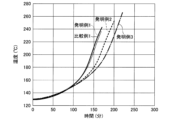
- 1 is a graph showing corrected temperature rise curves of Test Nos. 1 to 4 (Comparative Example 1, Invention Examples 1 to 3).
- 1 is a graph comparing the values of the T200 delay time calculated from the corrected temperature rise curves of Test Nos. 1 to 4 (Comparative Example 1, Invention Examples 1 to 3).
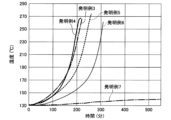
- 1 is a graph showing corrected temperature rise curves of Test No. 4 (Invention Example 3) of Example 1 and Test Nos. 5 to 8 (Invention Examples 4 to 7) of Example 2.
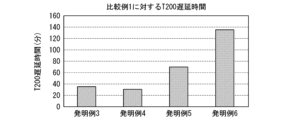
- 1 is a graph comparing the values of the T200 delay time calculated from the corrected temperature rise curves of Test No. 4 (Invention Example 3) of Example 1 and Test Nos. 5 to 7 (Invention Examples 4 to 6) of Example 2.
- solid carbon resource refers to any solid material mainly composed of carbon, and is not particularly limited thereto.
- solid carbon resource refers to a carbonaceous material used as a raw material for coke production, or as a fuel or a heating agent in power generation or converters.
- carbonaceous materials include fossil resources (coal such as anthracite, bituminous coal, subbituminous coal, lignite, and peat) and organic resources derived from living organisms (biomass itself, and biomass charcoal (carbonized or semi-carbonized biomass such as charcoal and black pellets) produced by heat treatment of biomass as a material).
- petroleum-based heavy oil refers to heavy components obtained by refining petroleum, or crude oil with high viscosity and high specific gravity
- petroleum-based tar refers to a viscous black to brown oily substance produced by thermal decomposition of petroleum or petroleum-derived substances
- petroleum-based pitch refers to the residue obtained after refining petroleum or diesel from crude oil, or the residue obtained by vacuum distillation of petroleum.
- petroleum heavy oil is liquid at room temperature (20° C.), while petroleum tar and petroleum pitch are solid at room temperature (20° C.).
- the petroleum-based additive is composed of at least one of petroleum heavy oil, petroleum tar, and petroleum pitch.
- the petroleum-based additive is an additive derived from petroleum, and is a petroleum additive.
- the petroleum-based additive is preferably composed of at least one of petroleum tar and petroleum pitch, more preferably composed of at least one of petroleum heavy oil and petroleum pitch, and even more preferably composed of petroleum pitch.
- the present invention relates to a method for suppressing spontaneous heat generation of a solid carbon resource, which includes a step of adding a petroleum-based additive to a solid carbon resource, and a method for storing a solid carbon resource that has been treated using this method.
- Petroleum-based additives have traditionally been used industrially as a binder for coal when the coal is used as a raw material for coke production. Specifically, they are used as binders that exhibit caking properties at high temperatures (350°C to 550°C) to complement the caking properties of coal with low expansion properties (such as non-caking coal).
- the present inventors have newly discovered that petroleum-based additives have the effect of suppressing spontaneous heat generation of a solid carbon resource by adding and mixing the additive with the solid carbon resource. That is, in the present invention, a petroleum-based additive is used as an additive for suppressing spontaneous heat generation (spontaneous heat generation inhibitor).
- the flow of the coke production process in the pig iron making process in the steel industry is a ship stacking process, a coal storage process (yard, etc.), a coal blending process, a crushing process, a molding process, and a coke oven charging process, in that order, with the petroleum-based additive as a binder being added to the coal that has been blended with a specified amount of raw coal in the coal blending process after the coal blending process (see JP 2014-70125, JP 2008-120973, etc.).
- the petroleum-based additive is added at one or both of the following stages: after the ship-stacking process and before the coal storage process (for example, the stage from when coal (raw coal) is unloaded from the ship to when it is transported to a coal storage location such as a yard) and after the coal storage process and before the coal blending process (for example, the stage from when coal is transported from the coal storage location to the coal blending location).
- the petroleum-based additive When the petroleum-based additive is used as a spontaneous heat suppressant, the effect of the petroleum-based additive can be obtained at any stage before the coke oven charging process, but the possibility of spontaneous combustion downstream can be suppressed by adding the petroleum-based additive upstream of the process flow.
- the petroleum-based additive When the petroleum-based additive is used as a spontaneous heat suppressant for coal in processes other than the pig iron making process in the steel industry (for example, the coal-fired power generation process), the additive is added at a stage before the process in which coal is used as fuel.
- the additive may be added at least at any stage of the following stages: after the ship-stacking process and before the coal storage process, when the coal is stored in the yard, when the coal is transported from the yard to the coal storage tank, when the coal is stored in the coal storage tank, or when the coal is blended; and the additive is preferably added upstream.
- a spontaneous heat generation inhibitor can be mixed with coal before it is stored in a yard or coal layer, or a spontaneous heat generation inhibitor can be added to the coal during storage (in storage).
- a heat generation suppression process of a solid carbon resource is performed by adding a petroleum-based additive.
- the pretreatment of the solid carbon resource is, for example, a particle size adjustment process of the solid carbon resource that is the raw material.
- the pretreatment of the petroleum-based additive is, for example, a particle size adjustment process of the petroleum-based additive that is the raw material.
- the pretreatment of the petroleum-based additive is performed as necessary. For example, it can be performed when the petroleum-based additive is solid.
- the particle size adjustment of the solid carbon resource and the petroleum-based additive can be performed, for example, by pulverization or classification.
- the pulverization can be performed using various pulverizers such as a ball mill, a bead mill, a mortar, and a hammer mill.
- the classification can be performed, for example, by a dry classifier such as a classification sieve, a gravity classifier, an inertial classifier, or a centrifugal classifier.
- the particle size of the petroleum-based additive in order to advance the oxidation inhibition reaction in a short time, it is preferable to make the particle size of the petroleum-based additive relatively small to promote the oxidation inhibition reaction.
- the petroleum-based additive preferably has a particle size of less than 5 mm, and more preferably a particle size of less than 2 mm.
- the petroleum-based additive when mixing with the solid carbon resource, if the petroleum-based additive is too fine, it will not mix well, so it is preferable that the petroleum-based additive has a particle size of 1 mm or more. The particle size is specified using a sieve.
- Particles that pass through a sieve with X mm mesh are defined as having a particle size of less than X mm, and particles that do not pass through a sieve with X mm mesh are defined as having a particle size of X mm or more.
- Pretreatment of the solid carbon resource is carried out as necessary.
- pretreatment of the solid carbon resource is not necessarily required.
- the solid carbon resource is pretreated in order to mix the solid carbon resource and the petroleum-based additive more uniformly, and the average particle size of the solid carbon resource is preferably 0.5 to 1.5 times the average particle size of the petroleum-based additive, and more preferably is approximately the same as the average particle size of the petroleum-based additive (0.8 to 1.2 times).
- the average particle size of the solid carbon resource is preferably 0.5 times or more the average particle size of the petroleum-based additive, and more preferably 0.8 times or more.
- the average particle size of the solid carbon resource is preferably 1.5 times or less the average particle size of the petroleum-based additive, and more preferably 1.2 times or less.
- the average particle size is the arithmetic mean particle size calculated by measuring the sample mass w i of each particle size division i using a specified sieve with different sieve meshes (mesh opening size) and weighting the representative value of each particle size division by the mass fraction of each particle size division.
- the petroleum-based additive addition step is a step of adding a petroleum-based additive to a solid carbon resource as a spontaneous heat generation inhibitor.
- the petroleum-based additive addition step is preferably a step of adding the petroleum-based additive to the solid carbon resource as a spontaneous heat generation inhibitor at 20 to 80° C. or less.
- the amount of the petroleum-based additive added to the solid carbon resource is 0.1% by mass or more, preferably 1.0% by mass or more, and more preferably 5.0% by mass or more. If the amount of the petroleum-based additive is too small, the effect of suppressing spontaneous heat generation of the solid carbon resource cannot be obtained.
- the petroleum-based additive on the solid carbon resource (for example, one that is being piled up in a yard or one that is stored in a yard).
- the above-mentioned adding step and mixing step can be performed at the same time.
- a mixing process may be added using heavy machinery or the like.
- the storage step is a step of storing the solid carbon resource to which the petroleum-based additive has been added.
- the solid carbon resource to which the petroleum-based additive has been added (hereinafter also referred to as the solid carbon resource after addition) has suppressed spontaneous heat generation, and can therefore be stored in a yard, a storage tank, or the like for a predetermined period of time.
- the petroleum-based additive is a by-product of petroleum-based heavy oil or petroleum refining, and has a structure similar to that of fossil fuels, so the solid carbon resource (e.g., coal, etc.) with suppressed heat generation can be used as it is as fuel for a power generation device or as a raw material for coke production.
- This embodiment further includes a heating step between the mixing step (the petroleum-based additive adding step when the mixing step is omitted) and the storage step in the first embodiment.
- the solid carbon resource is in a state in which the spontaneous heat generation property is reduced by the addition of the petroleum-based additive.
- the inventors have found that the spontaneous heat generation property of the solid carbon resource can be further suppressed by further heating in an inert gas atmosphere after adding the petroleum-based additive.
- the inert gas atmosphere is used because the solid carbon resource may burn if heated in the air.
- the second embodiment it is preferable to first perform a pre-treatment step of the solid carbon resource and a pre-treatment step of the petroleum-based additive, then perform a petroleum-based additive adding step, then perform a mixing step, then perform a heating step, and then perform a storage step. From the viewpoint of suppressing spontaneous heat generation of the solid carbon resource, it is sufficient to perform at least the petroleum-based additive adding step, and if storage is also performed, it is preferable to perform the storage step subsequently. From the viewpoint of further suppressing spontaneous heat generation of the solid carbon resource, it is preferable to perform a heating step. However, in order to enjoy the effect of this embodiment to the maximum extent, it is preferable to perform each of the above-mentioned steps. The steps other than the heating step are the same as those in the first embodiment, so that the description thereof will be omitted. The heating step will be described in detail below.
- the heating step is a step of heating the solid carbon resource to which the petroleum-based additive has been added under an inert gas atmosphere. That is, in the heating step, the added solid carbon resource is put into a heating furnace filled with an inert gas, and the added solid carbon resource is heated using the heating furnace. The added solid carbon resource is put into an inactive state by the heating process, and the spontaneous heat generation property is further reduced.
- this heating step since it is not necessary to use a chemical or the like, it is possible to reduce costs.
- an inert gas such as nitrogen gas has a high supply stability and is a simple operation, the treatment can be performed simply.
- the spontaneous heat generation property of the solid carbon resource is further reduced, and it is possible to implement a relatively low-cost and simple method for suppressing spontaneous heat generation of a solid carbon resource and a method for storing a solid carbon resource using the same.
- the heat treatment temperature of the added solid carbon resource is preferably 20°C or higher, more preferably 40°C or higher, more preferably 60°C or higher, more preferably 80°C or higher, more preferably 120°C or higher, and more preferably 200°C or higher.
- the carbonization temperature is, for example, 600 to 1000°C. Therefore, the heat treatment temperature is preferably 1000°C or lower, more preferably 800°C or lower, and more preferably 600°C or lower.
- the heat treatment time is preferably 1 hour or more, taking into consideration that the oxidation inhibition reaction is carried out sufficiently.
- the heat treatment time is preferably 1 hour or more, more preferably 12 hours or more.
- the heat treatment time is preferably 168 hours or less, more preferably 72 hours or less.
- the atmosphere during the heat treatment is an inert gas atmosphere in order to prevent the solid carbon resource from burning after addition.
- the inert gas that can be used in this case is nitrogen gas, argon gas, etc.
- Example 1 As the solid carbon resource, biomass charcoal derived from acacia (acacia wood), which has high heat generation, was used. Each of the four tests (Test Nos. 1 to 4) shown in Table 1 below was evaluated using a spontaneous heat evaluation device. The carbonization temperature of the biomass charcoal used in the test is unknown, but since the temperature of the material at the kiln outlet was 595°C, it was heated to at least 595°C or higher. Petroleum-based pitch was used as the petroleum-based additive. This petroleum-based pitch was produced by thermally decomposing the vacuum distillation residue of petroleum, which is the raw material, using heated steam at 600°C or higher.
- the mixed sample was filled into a sample container built into a spontaneous heat evaluation device (Spontaneous ignition tester, Shimadzu Corporation, SIT-2), and the spontaneous ignition of each sample of test No. 1 to 4 was measured using the spontaneous heat evaluation device.
- the sample temperature was raised by external heating until it reached 130°C.
- the atmosphere inside the device was switched from nitrogen to air, and the external heating was turned off. This point was designated as the test start time, and the temperature-time behavior due to spontaneous heat of the sample was confirmed.
- the sample temperature was measured every 5 seconds, and a temperature-time (vertical axis-horizontal axis) heating curve was obtained.
- the temperature rise rate is delayed by adding the petroleum-based additive.
- the temperature rise rates of the petroleum-based additive and the solid carbon resource are the same, and corrected the obtained temperature rise curve to eliminate the effect of the delay in the temperature rise rate due to the heat capacity of the petroleum-based additive.
- the temperature rise rate (dT/dt) is calculated by differentiating the temperature rise curve obtained by measurement.
- the temperature rise rate is divided by the mass of (solid carbon resource + petroleum-based additive) to obtain the temperature rise rate per unit mass of the mixture of the solid carbon resource (biomass charcoal) and the petroleum-based additive. For example, when 20 mass% of the petroleum-based additive is added, the temperature rise rate (dT/dt) is divided by 1.2.
- the heating rate per unit mass of this solid carbon resource was integrated and returned to the temperature-time curve (hereinafter also referred to as the corrected heating curve).
- the spontaneous heat generation of each sample was evaluated based on the time it took for the sample temperature shown in this corrected heating curve to reach 200°C from 130°C (hereinafter also referred to as T200). Note that the larger the T200 value, the more suppressed the spontaneous heat generation.
- Fig. 1 is a graph showing the corrected temperature rise curves of Test Nos. 1 to 4 (Comparative Example 1, Invention Examples 1 to 3).
- Fig. 2 is a graph comparing the T200 values calculated from the corrected temperature rise curves (Fig. 1). More specifically, it is a graph showing the T200 delay time of each invention example (T200 of invention example - T200 of Comparative Example 1) based on T200 of Comparative Example 1. T200 is shown in Table 1. As shown in FIG. 2, the T200 values show that the spontaneous heat generation properties of all of Test Nos. 2 to 4 (Invention Examples 1 to 3) are lower than that of Test No. 1 (Comparative Example 1) where no petroleum additives were added.
- Example 2 The same solid carbon resource (acacia-derived (acacia wood) biomass charcoal) and petroleum-based additive (petroleum-based pitch) as in Example 1 were crushed and classified to have a particle size in the range of 1.0 mm or more and less than 1.7 mm. 0.2 g or 0.05 g of the petroleum-based additive was added to 1 g of the solid carbon resource (biomass charcoal) at 20° C. and mixed. Then, the samples were heated for 12 hours under a nitrogen atmosphere at the temperature shown in Table 2 below. After each sample was allowed to cool to room temperature (20° C.), the temperature rise curve of each sample after this treatment was measured using a spontaneous ignition evaluation device (SIT-2) as in Example 1, and the same correction as in Example 1 was performed.
- SIT-2 spontaneous ignition evaluation device
- FIG. 3 is a graph showing the corrected temperature rise curves of Test No. 4 (Invention Example 3) of Example 1 and Test Nos. 5 to 8 (Invention Examples 4 to 7) of Example 2.
- FIG. 4 is a graph showing the corrected temperature rise curves of Test No. 4 (Invention Example 3) of Example 1 and Test No. 5 to 8 (Invention Examples 4 to 7) of Example 2.
- 1 is a graph comparing the T200 values calculated from the corrected temperature rise curves of Examples 5 to 7 (Examples 4 to 6). More specifically, the graph shows the T200 delay time of each Example (T200 of Example - T200 of Comparative Example 1) based on the T200 of Comparative Example 1. Table 2 shows the T200 (Table 1 shows Example 3).
Landscapes
- Chemical & Material Sciences (AREA)
- Organic Chemistry (AREA)
- Oil, Petroleum & Natural Gas (AREA)
- Engineering & Computer Science (AREA)
- Life Sciences & Earth Sciences (AREA)
- Combustion & Propulsion (AREA)
- Geology (AREA)
- Geochemistry & Mineralogy (AREA)
- General Life Sciences & Earth Sciences (AREA)
- Environmental & Geological Engineering (AREA)
- Materials Engineering (AREA)
- Wood Science & Technology (AREA)
- Forests & Forestry (AREA)
- Ecology (AREA)
- Biodiversity & Conservation Biology (AREA)
- Sustainable Development (AREA)
- Solid Fuels And Fuel-Associated Substances (AREA)
- Carbon And Carbon Compounds (AREA)
- Fats And Perfumes (AREA)
- Organic Low-Molecular-Weight Compounds And Preparation Thereof (AREA)
Priority Applications (5)
| Application Number | Priority Date | Filing Date | Title |
|---|---|---|---|
| CN202480007560.1A CN120530183A (zh) | 2023-01-12 | 2024-01-12 | 固体碳资源的自然放热抑制方法及使用了其的固体碳资源贮藏方法 |
| EP24741590.4A EP4650418A4 (en) | 2023-01-12 | 2024-01-12 | METHOD FOR SUPPRESSING SPONTANEOUS HEAT GENERATION IN SOLID CARBONATE RESOURCES AND METHOD FOR STORING SOLID CARBONATE RESOURCES USING IT |
| JP2024570233A JP7684625B2 (ja) | 2023-01-12 | 2024-01-12 | 固体炭素資源の自然発熱抑制方法およびこれを用いた固体炭素資源貯蔵方法 |
| US19/146,865 US20260117137A1 (en) | 2023-01-12 | 2024-01-12 | Inhibition method of spontaneous heat generation in solid carbon resources and storage method for solid carbon resources using the same |
| KR1020257022515A KR102955152B1 (ko) | 2023-01-12 | 2024-01-12 | 고체 탄소 자원의 자연 발열 억제 방법 및 이것을 사용한 고체 탄소 자원 저장 방법 |
Applications Claiming Priority (2)
| Application Number | Priority Date | Filing Date | Title |
|---|---|---|---|
| JP2023-002772 | 2023-01-12 | ||
| JP2023002772 | 2023-01-12 |
Publications (1)
| Publication Number | Publication Date |
|---|---|
| WO2024150818A1 true WO2024150818A1 (ja) | 2024-07-18 |
Family
ID=91897065
Family Applications (1)
| Application Number | Title | Priority Date | Filing Date |
|---|---|---|---|
| PCT/JP2024/000610 Ceased WO2024150818A1 (ja) | 2023-01-12 | 2024-01-12 | 固体炭素資源の自然発熱抑制方法およびこれを用いた固体炭素資源貯蔵方法 |
Country Status (6)
| Country | Link |
|---|---|
| US (1) | US20260117137A1 (https=) |
| EP (1) | EP4650418A4 (https=) |
| JP (1) | JP7684625B2 (https=) |
| CN (1) | CN120530183A (https=) |
| TW (1) | TWI876831B (https=) |
| WO (1) | WO2024150818A1 (https=) |
Cited By (2)
| Publication number | Priority date | Publication date | Assignee | Title |
|---|---|---|---|---|
| WO2025192523A1 (ja) * | 2024-03-15 | 2025-09-18 | 日本製鉄株式会社 | 炭素資源の自然発熱抑制剤、炭素資源の自然発熱抑制剤の製造方法、炭素資源の自然発熱抑制方法、及び炭素資源の貯蔵方法 |
| WO2025192528A1 (ja) * | 2024-03-15 | 2025-09-18 | 日本製鉄株式会社 | 炭素資源の自然発熱抑制剤、炭素資源の自然発熱抑制方法、及び炭素資源の貯蔵方法 |
Citations (14)
| Publication number | Priority date | Publication date | Assignee | Title |
|---|---|---|---|---|
| JPS5558295A (en) * | 1978-10-23 | 1980-04-30 | Conoco Inc | Coal fuel treating composition |
| JPS57128794A (en) * | 1981-02-02 | 1982-08-10 | Mitsubishi Heavy Ind Ltd | Preparation of improved coal using low-quality coal as raw material |
| JPS58127792A (ja) * | 1982-01-25 | 1983-07-29 | Hitachi Zosen Corp | 低品位炭の自然発火抑制法 |
| JPS58136697A (ja) * | 1982-02-05 | 1983-08-13 | Hitachi Zosen Corp | 石炭の造粒方法 |
| JPS58145789A (ja) * | 1982-02-23 | 1983-08-30 | Hitachi Zosen Corp | 低品位炭の自然発火抑制方法 |
| JPS5974189A (ja) | 1982-10-20 | 1984-04-26 | Idemitsu Kosan Co Ltd | 低品位炭の安定化方法 |
| JPS59227979A (ja) * | 1983-06-09 | 1984-12-21 | アトランテイツク・リツチフイ−ルド・カンパニ− | 粒状低品位石炭から低い自然発火性を有する乾燥粒状石炭燃料を製造する方法とそれに使用する装置 |
| JP2001164254A (ja) | 1999-12-02 | 2001-06-19 | Lion Corp | 炭素質粉体の昇温・自然発火抑制剤 |
| JP2008120973A (ja) | 2006-11-15 | 2008-05-29 | Nippon Steel Corp | 高炉用コークスの製造方法 |
| JP2011201947A (ja) | 2010-03-24 | 2011-10-13 | Mitsubishi Heavy Ind Ltd | 改質石炭製造装置 |
| JP2014070125A (ja) | 2012-09-28 | 2014-04-21 | Nippon Steel & Sumitomo Metal | 成型炭の製造方法 |
| JP2015063578A (ja) * | 2013-09-24 | 2015-04-09 | 株式会社神戸製鋼所 | 改質石炭の製造方法及び改質石炭 |
| JP2015063576A (ja) * | 2013-09-24 | 2015-04-09 | 株式会社神戸製鋼所 | 改質石炭の製造方法及び改質石炭 |
| JP2023002772A (ja) | 2011-09-23 | 2023-01-10 | レジニアス リミテッド | 脂肪細胞および細胞分泌物を使用する治療 |
Family Cites Families (10)
| Publication number | Priority date | Publication date | Assignee | Title |
|---|---|---|---|---|
| FR608421A (fr) * | 1925-12-28 | 1926-07-27 | Braunkohlen Produkte Aktien Ge | Procédé pour l'obtention de carbone pulvérulent aux basses températures |
| US5125932A (en) * | 1991-09-30 | 1992-06-30 | Lloyd Berg | Dissolution of coal with petroleum pitch |
| JP4580011B2 (ja) * | 2008-10-09 | 2010-11-10 | 株式会社神戸製鋼所 | 固形燃料の製造方法及び該製造方法により作製された固形燃料 |
| JP5759099B2 (ja) * | 2009-09-25 | 2015-08-05 | 宇部興産株式会社 | 固体燃料 |
| JP5627907B2 (ja) * | 2010-03-23 | 2014-11-19 | 太平洋セメント株式会社 | 低温酸化を抑制した石炭の製造方法 |
| CA2865453C (en) * | 2012-04-04 | 2020-04-14 | Nalco Company | Chemical additives to inhibit the air oxidation and spontaneous combustion of coal |
| JP6744285B2 (ja) * | 2017-11-22 | 2020-08-19 | 三菱重工業株式会社 | バイオマス燃料の製造プラント、製造プラントシステム、バイオマス燃料の製造方法、及びバイオマス燃料 |
| JP2020176184A (ja) * | 2019-04-16 | 2020-10-29 | 出光興産株式会社 | 石炭の自然発火抑制方法、貯炭設備及び搬送設備 |
| JP6838830B2 (ja) * | 2020-01-15 | 2021-03-03 | 一般財団法人電力中央研究所 | 炭素系固体燃料の発熱抑制方法 |
| AU2022209700A1 (en) * | 2021-01-21 | 2023-09-07 | Carbon Technology Holdings, LLC | Processes for producing biocarbon pellets with adjustable grindability index |
-
2024
- 2024-01-12 WO PCT/JP2024/000610 patent/WO2024150818A1/ja not_active Ceased
- 2024-01-12 CN CN202480007560.1A patent/CN120530183A/zh active Pending
- 2024-01-12 JP JP2024570233A patent/JP7684625B2/ja active Active
- 2024-01-12 US US19/146,865 patent/US20260117137A1/en active Pending
- 2024-01-12 EP EP24741590.4A patent/EP4650418A4/en active Pending
- 2024-01-12 TW TW113101312A patent/TWI876831B/zh active
Patent Citations (14)
| Publication number | Priority date | Publication date | Assignee | Title |
|---|---|---|---|---|
| JPS5558295A (en) * | 1978-10-23 | 1980-04-30 | Conoco Inc | Coal fuel treating composition |
| JPS57128794A (en) * | 1981-02-02 | 1982-08-10 | Mitsubishi Heavy Ind Ltd | Preparation of improved coal using low-quality coal as raw material |
| JPS58127792A (ja) * | 1982-01-25 | 1983-07-29 | Hitachi Zosen Corp | 低品位炭の自然発火抑制法 |
| JPS58136697A (ja) * | 1982-02-05 | 1983-08-13 | Hitachi Zosen Corp | 石炭の造粒方法 |
| JPS58145789A (ja) * | 1982-02-23 | 1983-08-30 | Hitachi Zosen Corp | 低品位炭の自然発火抑制方法 |
| JPS5974189A (ja) | 1982-10-20 | 1984-04-26 | Idemitsu Kosan Co Ltd | 低品位炭の安定化方法 |
| JPS59227979A (ja) * | 1983-06-09 | 1984-12-21 | アトランテイツク・リツチフイ−ルド・カンパニ− | 粒状低品位石炭から低い自然発火性を有する乾燥粒状石炭燃料を製造する方法とそれに使用する装置 |
| JP2001164254A (ja) | 1999-12-02 | 2001-06-19 | Lion Corp | 炭素質粉体の昇温・自然発火抑制剤 |
| JP2008120973A (ja) | 2006-11-15 | 2008-05-29 | Nippon Steel Corp | 高炉用コークスの製造方法 |
| JP2011201947A (ja) | 2010-03-24 | 2011-10-13 | Mitsubishi Heavy Ind Ltd | 改質石炭製造装置 |
| JP2023002772A (ja) | 2011-09-23 | 2023-01-10 | レジニアス リミテッド | 脂肪細胞および細胞分泌物を使用する治療 |
| JP2014070125A (ja) | 2012-09-28 | 2014-04-21 | Nippon Steel & Sumitomo Metal | 成型炭の製造方法 |
| JP2015063578A (ja) * | 2013-09-24 | 2015-04-09 | 株式会社神戸製鋼所 | 改質石炭の製造方法及び改質石炭 |
| JP2015063576A (ja) * | 2013-09-24 | 2015-04-09 | 株式会社神戸製鋼所 | 改質石炭の製造方法及び改質石炭 |
Non-Patent Citations (1)
| Title |
|---|
| See also references of EP4650418A1 |
Cited By (4)
| Publication number | Priority date | Publication date | Assignee | Title |
|---|---|---|---|---|
| WO2025192523A1 (ja) * | 2024-03-15 | 2025-09-18 | 日本製鉄株式会社 | 炭素資源の自然発熱抑制剤、炭素資源の自然発熱抑制剤の製造方法、炭素資源の自然発熱抑制方法、及び炭素資源の貯蔵方法 |
| WO2025192528A1 (ja) * | 2024-03-15 | 2025-09-18 | 日本製鉄株式会社 | 炭素資源の自然発熱抑制剤、炭素資源の自然発熱抑制方法、及び炭素資源の貯蔵方法 |
| JP7783556B1 (ja) * | 2024-03-15 | 2025-12-10 | 日本製鉄株式会社 | 炭素資源の自然発熱抑制剤、炭素資源の自然発熱抑制方法、及び炭素資源の貯蔵方法 |
| JP7810941B1 (ja) * | 2024-03-15 | 2026-02-04 | 日本製鉄株式会社 | 炭素資源の自然発熱抑制剤、炭素資源の自然発熱抑制剤の製造方法、炭素資源の自然発熱抑制方法、及び炭素資源の貯蔵方法 |
Also Published As
| Publication number | Publication date |
|---|---|
| EP4650418A1 (en) | 2025-11-19 |
| US20260117137A1 (en) | 2026-04-30 |
| JP7684625B2 (ja) | 2025-05-28 |
| EP4650418A4 (en) | 2025-12-17 |
| CN120530183A (zh) | 2025-08-22 |
| JPWO2024150818A1 (https=) | 2024-07-18 |
| TW202432807A (zh) | 2024-08-16 |
| KR20250111226A (ko) | 2025-07-22 |
| TWI876831B (zh) | 2025-03-11 |
Similar Documents
| Publication | Publication Date | Title |
|---|---|---|
| JP7684625B2 (ja) | 固体炭素資源の自然発熱抑制方法およびこれを用いた固体炭素資源貯蔵方法 | |
| KR101311575B1 (ko) | 소결광의 제조 방법 | |
| JP4893136B2 (ja) | 木質バイオマスを原料とした高炉操業方法 | |
| JP5547879B2 (ja) | 炭材内装酸化鉄塊成化物およびその製造方法、ならびに還元鉄または金属鉄の製造方法 | |
| Zuo et al. | Comparison of kinetic models for isothermal CO2 gasification of coal char-biomass char blended char | |
| JP4681688B2 (ja) | 鉄鉱石焼結用炭材 | |
| JP2012017528A (ja) | 木質バイオマスを原料とした高炉操業方法およびコークスの製造方法 | |
| JP7593537B1 (ja) | コークスの製造方法 | |
| Kieush et al. | Walnut shells as a potential fuel for iron ore sintering | |
| JP2024013201A (ja) | ウッドペレット製造方法 | |
| KR102955152B1 (ko) | 고체 탄소 자원의 자연 발열 억제 방법 및 이것을 사용한 고체 탄소 자원 저장 방법 | |
| RU2129142C1 (ru) | Способ получения топлива из лигнина | |
| WO2007089046A1 (ja) | 石炭・バイオマス複合燃料 | |
| KR101925882B1 (ko) | 저탄장 자연발화 방지방법 | |
| CA3279271A1 (en) | Inhibition method of spontaneous heat generation in solid carbon resources and storage method for solid carbon resources using the same | |
| JP6016001B1 (ja) | フェロコークスの製造方法 | |
| JP7143714B2 (ja) | 焼結用炭材の製造方法、焼結用炭材の原料選定方法及び焼結鉱の製造方法 | |
| US12312550B2 (en) | Method for providing raw material for an industrial process | |
| JP2002226864A (ja) | 廃プラスチックを用いたコークス製造方法 | |
| KR102474050B1 (ko) | 바이오매스 혼합 장입 원료를 이용한 고로 환원제비 저감 방법 | |
| Pólka et al. | Analysis of the ability to spontaneous combustion and ignition from hot plate of dried sewage dust | |
| RU2535473C1 (ru) | Способ получения нефтяных коксов с пониженным содержанием оксидов серы в дымовых газах горения | |
| WO2025115362A1 (ja) | コークスの製造方法 | |
| WO2025115363A1 (ja) | コークスの製造方法 | |
| AU2013243504B2 (en) | Chemical additives to inhibit the air oxidation and spontaneous combustion of coal |
Legal Events
| Date | Code | Title | Description |
|---|---|---|---|
| 121 | Ep: the epo has been informed by wipo that ep was designated in this application |
Ref document number: 24741590 Country of ref document: EP Kind code of ref document: A1 |
|
| WWE | Wipo information: entry into national phase |
Ref document number: 2024570233 Country of ref document: JP |
|
| WWE | Wipo information: entry into national phase |
Ref document number: 202517063545 Country of ref document: IN |
|
| ENP | Entry into the national phase |
Ref document number: 1020257022515 Country of ref document: KR Free format text: ST27 STATUS EVENT CODE: A-0-1-A10-A15-NAP-PA0105 (AS PROVIDED BY THE NATIONAL OFFICE) |
|
| WWE | Wipo information: entry into national phase |
Ref document number: 1020257022515 Country of ref document: KR |
|
| WWE | Wipo information: entry into national phase |
Ref document number: 202480007560.1 Country of ref document: CN |
|
| WWP | Wipo information: published in national office |
Ref document number: 202517063545 Country of ref document: IN |
|
| REG | Reference to national code |
Ref country code: BR Ref legal event code: B01A Ref document number: 112025013945 Country of ref document: BR |
|
| WWP | Wipo information: published in national office |
Ref document number: 1020257022515 Country of ref document: KR |
|
| NENP | Non-entry into the national phase |
Ref country code: DE |
|
| WWP | Wipo information: published in national office |
Ref document number: 202480007560.1 Country of ref document: CN |
|
| ENP | Entry into the national phase |
Ref document number: 112025013945 Country of ref document: BR Kind code of ref document: A2 Effective date: 20250704 |
|
| WWP | Wipo information: published in national office |
Ref document number: 2024741590 Country of ref document: EP |