WO2024143442A1 - 会合が制御されたポリペプチド - Google Patents
会合が制御されたポリペプチド Download PDFInfo
- Publication number
- WO2024143442A1 WO2024143442A1 PCT/JP2023/046857 JP2023046857W WO2024143442A1 WO 2024143442 A1 WO2024143442 A1 WO 2024143442A1 JP 2023046857 W JP2023046857 W JP 2023046857W WO 2024143442 A1 WO2024143442 A1 WO 2024143442A1
- Authority
- WO
- WIPO (PCT)
- Prior art keywords
- polypeptide
- region
- modification
- nucleic acid
- antibody
- Prior art date
- Legal status (The legal status is an assumption and is not a legal conclusion. Google has not performed a legal analysis and makes no representation as to the accuracy of the status listed.)
- Ceased
Links
Images



























Classifications
-
- C—CHEMISTRY; METALLURGY
- C07—ORGANIC CHEMISTRY
- C07K—PEPTIDES
- C07K16/00—Immunoglobulins [IG], e.g. monoclonal or polyclonal antibodies
-
- C—CHEMISTRY; METALLURGY
- C07—ORGANIC CHEMISTRY
- C07K—PEPTIDES
- C07K16/00—Immunoglobulins [IG], e.g. monoclonal or polyclonal antibodies
- C07K16/18—Immunoglobulins [IG], e.g. monoclonal or polyclonal antibodies against material from animals or humans
- C07K16/28—Immunoglobulins [IG], e.g. monoclonal or polyclonal antibodies against material from animals or humans against receptors, cell surface antigens or cell surface determinants
- C07K16/30—Immunoglobulins [IG], e.g. monoclonal or polyclonal antibodies against material from animals or humans against receptors, cell surface antigens or cell surface determinants from tumour cells
- C07K16/303—Liver or Pancreas
-
- C—CHEMISTRY; METALLURGY
- C07—ORGANIC CHEMISTRY
- C07K—PEPTIDES
- C07K16/00—Immunoglobulins [IG], e.g. monoclonal or polyclonal antibodies
- C07K16/18—Immunoglobulins [IG], e.g. monoclonal or polyclonal antibodies against material from animals or humans
- C07K16/36—Immunoglobulins [IG], e.g. monoclonal or polyclonal antibodies against material from animals or humans against blood coagulation factors
-
- C—CHEMISTRY; METALLURGY
- C07—ORGANIC CHEMISTRY
- C07K—PEPTIDES
- C07K2317/00—Immunoglobulins specific features
- C07K2317/30—Immunoglobulins specific features characterized by aspects of specificity or valency
- C07K2317/31—Immunoglobulins specific features characterized by aspects of specificity or valency multispecific
-
- C—CHEMISTRY; METALLURGY
- C07—ORGANIC CHEMISTRY
- C07K—PEPTIDES
- C07K2317/00—Immunoglobulins specific features
- C07K2317/50—Immunoglobulins specific features characterized by immunoglobulin fragments
- C07K2317/52—Constant or Fc region; Isotype
-
- C—CHEMISTRY; METALLURGY
- C07—ORGANIC CHEMISTRY
- C07K—PEPTIDES
- C07K2317/00—Immunoglobulins specific features
- C07K2317/50—Immunoglobulins specific features characterized by immunoglobulin fragments
- C07K2317/52—Constant or Fc region; Isotype
- C07K2317/526—CH3 domain
-
- C—CHEMISTRY; METALLURGY
- C07—ORGANIC CHEMISTRY
- C07K—PEPTIDES
- C07K2317/00—Immunoglobulins specific features
- C07K2317/90—Immunoglobulins specific features characterized by (pharmaco)kinetic aspects or by stability of the immunoglobulin
- C07K2317/92—Affinity (KD), association rate (Ka), dissociation rate (Kd) or EC50 value
-
- C—CHEMISTRY; METALLURGY
- C07—ORGANIC CHEMISTRY
- C07K—PEPTIDES
- C07K2317/00—Immunoglobulins specific features
- C07K2317/90—Immunoglobulins specific features characterized by (pharmaco)kinetic aspects or by stability of the immunoglobulin
- C07K2317/94—Stability, e.g. half-life, pH, temperature or enzyme-resistance
Definitions
- the present invention has been made in consideration of these circumstances, and an object of the present invention is to provide, for example, a polypeptide having a controlled inter-polypeptide association, a method for producing a polypeptide having a controlled association, a method for controlling polypeptide association, a nucleic acid encoding a polypeptide having a controlled association, and a composition containing the nucleic acid.
- nucleic acid wherein the modifications in multiple types of polypeptides are different from one another.
- nucleic acid wherein the combination of the multiple different modifications is a combination shown in Table 7.
- nucleic acid in which a first polypeptide having the modification has an increased ability to form an association with a polypeptide having the modification, compared to a polypeptide in which the modification is not introduced.
- the nucleic acid which is RNA, DNA, or a vector or plasmid carrying the nucleic acid.
- nucleic acid, wherein the first polypeptide is a polypeptide whose association is controlled.
- the present disclosure further relates to the following: Note that the following inventions also incorporate the technical features described in [1] to [22] above as appropriate.
- a polypeptide with controlled association said polypeptide having an Fc region with an alteration introduced therein, wherein the alteration introduced into the Fc region makes said polypeptide more likely to associate with a polypeptide having said alteration at the Fc region than a polypeptide not having said alteration.
- the polypeptide which is less likely to associate with a polypeptide that does not have the modification introduced therein than with a polypeptide having the modification introduced therein.
- C cysteine
- the polypeptide, wherein the disulfide bridge is a bridge between cysteines modified (introduced) in the Fc region.
- polypeptide which is more likely to associate with a polypeptide having the modification than with a polypeptide in which the modification has not been introduced, due to a combination of the effects of at least (2) disulfide bridges and (3) electrostatic charges.
- the polypeptide, wherein the electrostatic charge effect is caused by one or more charged amino acids modified (introduced) in the Fc region.
- the polypeptide, wherein the charged amino acid to be introduced is a positively charged amino acid and/or a negatively charged amino acid.
- nucleic acid is RNA, DNA, or a vector or plasmid carrying the nucleic acid.
- RNA is mRNA, genomic RNA, or circularized RNA.
- polypeptide containing an Fc region is an antibody.
- polypeptide containing the Fc region is a single domain antibody.
- polypeptide containing an Fc region is IgG.
- polypeptide comprising the Fc region does not associate with endogenous IgG.
- a method for expressing in a cell a polypeptide in which association between polypeptides comprising an Fc region is controlled comprising the steps of: (a) preparing a nucleic acid encoding a polypeptide comprising an Fc region such that the polypeptide comprising the Fc region is modified to a polypeptide that is more likely to associate with a polypeptide having the modification than with a polypeptide in which the modification is not introduced, by at least one of the following mechanisms: (1) steric complementarity, (2) disulfide bridges, and (3) electrostatic charge; (b) introducing the nucleic acid of step (a) into a cell.
- the nucleic acid is RNA, DNA, or a vector or plasmid carrying the nucleic acid.
- the RNA is mRNA, genomic RNA, or circularized RNA.
- the polypeptide containing the Fc region is an antibody.
- the method, wherein the polypeptide containing the Fc region is a single domain antibody.
- the method, wherein the polypeptide containing an Fc region is IgG.
- a method for producing a pharmaceutical composition comprising a vesicle containing a nucleic acid encoding a polypeptide in which association between Fc regions is controlled, the method comprising the steps of: (a) obtaining a nucleic acid encoding a polypeptide having an Fc region with an alteration, the polypeptide being more likely to associate with a polypeptide having the alteration than with a polypeptide not having the alteration due to at least one of the following mechanisms: (1) steric complementarity, (2) disulfide bridges, and (3) electrostatic charge; (b) contacting the vesicles with the nucleic acid of step (a).
- a pharmaceutical composition comprising the nucleic acid or the polypeptide and a pharma- ceutically acceptable carrier.
- a pharmaceutical composition comprising a nucleic acid encoding a polypeptide having an Fc region with controlled association.
- the pharmaceutical composition comprising the nucleic acid encapsulated in a vesicle.
- a pharmaceutical composition comprising a nucleic acid encoding a polypeptide having an Fc region with controlled association, and a vesicle.
- the pharmaceutical composition wherein the vesicle is a lipid nanoparticle (LNP), a virus, an extracellular vesicle (EV), or a liposome.
- LNP lipid nanoparticle
- EV extracellular vesicle
- nucleic acid is RNA, DNA, or a vector or plasmid carrying the nucleic acid.
- nucleic acid is RNA, DNA, or a vector or plasmid carrying the nucleic acid.
- the pharmaceutical composition for expressing in a cell a polypeptide in which association between Fc regions is controlled.
- the present disclosure relates to the following: [Aspect 1] A nucleic acid encoding a first polypeptide, the first polypeptide having an Fc region with an alteration introduced therein; A nucleic acid in which a first polypeptide is more likely to associate with a first polypeptide having an Fc region having an alteration introduced into the Fc region than a first polypeptide having an Fc region without the alteration.
- a method for obtaining a polypeptide having controlled association comprising the steps of obtaining a nucleic acid encoding said polypeptide, expressing the nucleic acid, wherein the polypeptide comprises an Fc region; A method in which the polypeptide is more likely to associate with a polypeptide having the modification at the Fc region due to the modification introduced into the Fc region than a polypeptide having an Fc region without the modification.
- a method for obtaining a polypeptide having controlled association comprising the steps of obtaining a nucleic acid encoding said polypeptide, expressing the nucleic acid, wherein the polypeptide comprises an Fc region;
- a method in which the polypeptide is more likely to associate with a polypeptide having the modification at the Fc region due to the modification introduced into the Fc region than a polypeptide having an Fc region without the modification.
- a method for controlling homomeric association of a polypeptide comprising the steps of obtaining a nucleic acid encoding said polypeptide, expressing the nucleic acid, wherein the polypeptide comprises an Fc region; A method in which the polypeptide is more likely to associate with a polypeptide having the modification at the Fc region due to the modification introduced into the Fc region than a polypeptide having an Fc region without the modification. [Aspect 22] 1.
- a method for promoting homozygous expression of a polypeptide comprising the steps of obtaining a nucleic acid encoding the polypeptide, expressing the nucleic acid, wherein the polypeptide comprises an Fc region; A method in which the polypeptide is more likely to associate with a polypeptide having the modification at the Fc region due to the modification introduced into the Fc region than a polypeptide having an Fc region without the modification. [Aspect 23] the second polypeptide having an altered Fc region; The composition of claim 4, wherein the second polypeptide is more likely to associate with the third polypeptide at the Fc region than with the second polypeptide due to a modification introduced in the Fc region.
- composition according to embodiment 1, wherein the Fc region into which the alterations have been introduced comprises amino acid alterations at one or more pairs of positions selected from the pairs of positions (a) to (d) according to EU numbering as follows: (a) Positions 394 and 405 (b) Positions 366, 368, and 407 (c) positions 347, 360, 399, 405, and 409 (d) positions 356, 392, 399, and 439.
- the Fc region into which the modification has been introduced has W, F, Y at position 394 (a) according to EU numbering.
- A, S, T, C, G, V at position 405 (b) W, Y, F at position 366 A, S, T, C, V, G at position 368 V, L, I, M, A, S, T, C, N, Q at position 407 (c) R, K, Y, H at position 347 E, D at position 360 V, L, I, M, S, T, C, H, A, N, Q, G at position 399 T, A, V, S, C, N, D, G at position 405 W, F, Y, H at position 409 (d) K, R at position 356 D, E at position 392 K, R at position 399 E, D at position 439 25.
- the Fc region into which the modification has been introduced has a W, F at position 394 (a) according to EU numbering.
- the present disclosure relates to the following: [Aspect 29]
- the composition according to embodiment 1, wherein the Fc region into which the alterations have been introduced comprises amino acid alterations at one or more pairs of positions selected from the pairs of positions (a) to (d) according to EU numbering as follows: (a) Positions 345, 347, 360, 366, 399, 407, and 409 (b) positions 356, 399, 409, and 439 (c) positions 356, 392, 399, and 409 (d) Positions 392, 399, and 409.
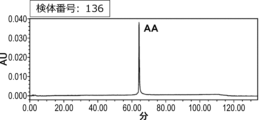
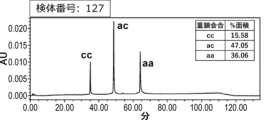
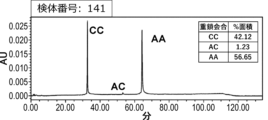
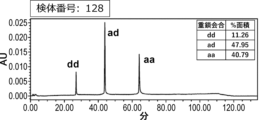
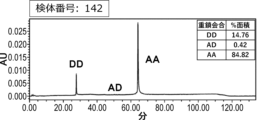
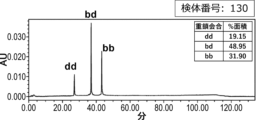
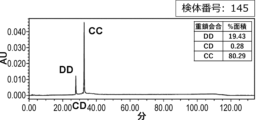
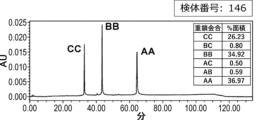
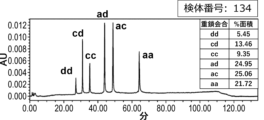
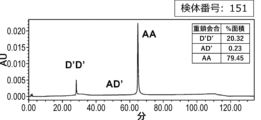
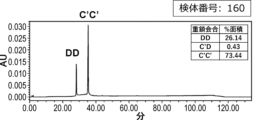
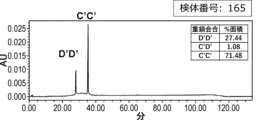
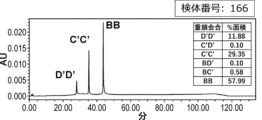
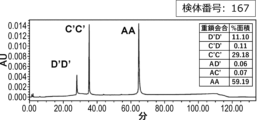
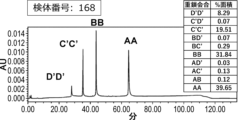
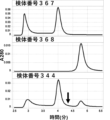
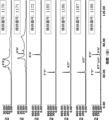
- Figure 3-16 shows the analysis results of simultaneous expression of two antibodies with CH3 modifications. Each peak position was assigned based on the elution position of one antibody during expression.
- Figure 3-17 shows the analysis results of simultaneous expression of two antibodies without CH3 modification. Each peak position was assigned based on the elution position of one antibody during expression.
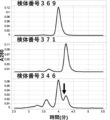
- Figure 3-18 shows the analysis results of simultaneous expression of two antibodies with CH3 modifications. Each peak position was assigned based on the elution position of one antibody during expression.
- Figure 3-19 shows the analysis results of simultaneous expression of two antibodies without CH3 modification. Each peak position was assigned based on the elution position of one antibody during expression.
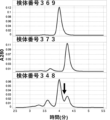
- Figure 3-20 shows the analysis results of simultaneous expression of two antibodies with CH3 modifications. Each peak position was assigned based on the elution position of one antibody during expression.
- Figures 5 to 9 show the analysis of the elution positions of sample antibodies with CH3 modifications, and the heavy chain homodimerization ability when the full-length heavy chain and Fc fragment were co-expressed.
- Figures 5 to 10 show the analysis of the elution position of a preparation antibody without CH3 modification and the heavy chain homodimerization ability when the full-length heavy chain and Fc fragment were co-expressed.
- Figures 5 to 11 show the analysis of the elution positions of standard antibodies with CH3 modifications, and the heavy chain homodimerization ability when the full-length heavy chain and Fc fragment were co-expressed.
- FIG. 6-7 show the results of peak assignment in the CIEX analysis of sample No. 1176.
- Various sample antibodies prepared by expressing various combinations of the various plasmids used for the expression of sample No. 1176 were analyzed, and the peaks of the intended heavy chain homodimer and heavy chain heterodimer, as well as other unintended peaks, were assigned.
- the heavy chain associations assigned to the peaks in the figures are shown.
- Figures 6-8 show the results of peak assignment in the CIEX analysis of sample No. 1180.
- amino acids are described by the one-letter or three-letter code or both, e.g., Ala/A, Leu/L, Arg/R, Lys/K, Asn/N, MeA, Asp/D, Phe/F, Cys/C, Pro/P, Gln/Q, Ser/S, Glu/E, Thr/T, Gly/G, Trp/W, His/H, Tyr/Y, Ile/I, or Val/V.
- a polypeptide may be derived from a natural biological source or produced by recombinant technology, but need not necessarily be translated from a specified nucleic acid. It may be generated in any manner, including chemical synthesis.
- a polypeptide described herein may be, in one embodiment, 10 amino acids or more, 20 amino acids or more, 25 amino acids or more, 50 amino acids or more, 75 amino acids or more, 100 amino acids or more, 200 amino acids or more, 500 amino acids or more, 1,000 amino acids or more in size.
- the polypeptide of the present disclosure is produced in vivo.
- the polypeptide of the present disclosure can be produced in vivo by introducing a nucleic acid encoding the polypeptide of the present disclosure into a living body.
- the polypeptide of the present disclosure is a polypeptide expressed in vivo.
- a polypeptide (an antibody in one embodiment) may be produced in bacteria, particularly if glycosylation and Fc effector functions are not required.
- antibody fragments and polypeptides see, for example, U.S. Patent Nos. 5,648,237, 5,789,199, and 5,840,523. (See also Charlton, Methods in Molecular Biology, Vol. 248 (BKC Lo, ed., Humana Press, Totowa, NJ, 2003), pp. 245-254, which describes the expression of polypeptide (antibody) fragments in E. coli.)
- the polypeptide may be isolated in a soluble fraction from the bacterial cell paste and may be further purified.
- eukaryotic microbes such as filamentous fungi or yeast, including fungal and yeast strains in which the glycosylation pathways have been "humanized,” resulting in the production of polypeptides (antibodies in one embodiment) with partial or fully human glycosylation patterns
- eukaryotic microbes such as filamentous fungi or yeast, including fungal and yeast strains in which the glycosylation pathways have been "humanized,” resulting in the production of polypeptides (antibodies in one embodiment) with partial or fully human glycosylation patterns
- polypeptide (antibody)-encoding vectors See Gerngross, Nat. Biotech. 22:1409-1414 (2004) and Li et al., Nat. Biotech. 24:210-215 (2006)).
- Host cells derived from multicellular organisms invertebrate and vertebrate
- invertebrate cells include plants and insect cells.
- Recombinant production of the polypeptides (antibodies in one embodiment) described herein can be performed in a manner similar to that described above by using a host cell that contains (e.g., is transformed by) one or more vectors that contain nucleic acids encoding an amino acid sequence that includes the entire polypeptide (antibody) or a portion of the polypeptide (antibody).
- the polypeptide of the present disclosure also includes a polypeptide that has undergone post-translational modification.
- an example of the polypeptide that has undergone post-translational modification includes an antibody that has undergone pyroglutamylation at the N-terminus of the heavy chain variable region and/or deletion of lysine at the C-terminus of the heavy chain. It is known in the art that such post-translational modification by pyroglutamylation at the N-terminus and deletion of lysine at the C-terminus has no effect on the activity of the antibody (Analytical Biochemistry, 2006, Vol. 348, p. 24-39).
- polypeptides and the like are used for convenience of distinction. The use of these terms is not intended to confer a particular order or orientation, unless otherwise specified.
- the polypeptide may be a TCR (T cell receptor) or a part of a TCR.
- the polypeptides of the present disclosure may be expressed in in vivo cells.
- intracellular expression of the polypeptide of the present disclosure is achieved by introducing the nucleic acid encoding the polypeptide of the present disclosure into target cells. Any standard method can be used to introduce nucleic acid into cells.For example, it includes microinjection, ballistic injection, electroporation, calcium phosphate precipitation, liposome, and transfection with retrovirus, adenovirus, adeno-associated virus, and vaccinia vector carrying the nucleic acid of interest.
- the nucleic acid encoding the polypeptide of the present disclosure can be introduced into the cells of a subject (in one embodiment, a human) by in vivo and ex vivo methods.
- the nucleic acid is directly injected into the subject, for example, at the site where treatment is required.
- the nucleic acid is introduced into cells using transfection with a viral vector (e.g., adenovirus, type I herpes simplex virus, or adeno-associated virus) and lipid-based systems (useful lipids for lipid-mediated gene transfer are, for example, DOTMA, DOPE, and DC-Chol) (for a review of specific gene marking and gene therapy protocols, see Anderson et al., Science 256:808-813 (1992) and WO93/25673 and the references cited therein).
- a viral vector e.g., adenovirus, type I herpes simplex virus, or adeno-associated virus
- lipid-based systems useful lipids for
- Intracellular expression of intrabodies can, in one embodiment, be achieved by introducing a nucleic acid encoding an antibody or a fragment thereof into the target cell.
- One or more nucleic acids encoding all or a portion of an antibody, including a polypeptide of the present disclosure can be delivered to the target cell such that one or more intrabodies are expressed.
- the polypeptides of the present disclosure, in which inter-polypeptide association is controlled can be used for the intracellular production of intrabodies.
- the polypeptide of the present disclosure may be a polypeptide having a variable region.
- the term "variable region” or “variable domain” refers to the domain of an antibody's heavy or light chain that is involved in binding the antibody to an antigen.
- the heavy and light chain variable domains (VH and VL, respectively) of natural antibodies usually have a similar structure, with each domain containing four conserved framework regions (FR) and three hypervariable regions (HVR). (See, for example, Kindt et al. Kuby Immunology, 6th ed., WH Freeman and Co., page 91 (2007).)
- a single VH or VL domain can confer antigen-binding specificity.
- HVR or CDR The polypeptide of the present disclosure is in one embodiment an antibody and may have HVRs or CDRs.
- the term "hypervariable region” or “HVR” as used herein refers to each region of an antibody variable domain that is hypervariable in sequence (“complementarity determining region” or “CDR") and/or forms structurally defined loops ("hypervariable loops") and/or contains antigen contact residues ("antigen contacts”).
- CDRs complementarity determining region
- CDRs complementarity determining regions
- antibodies typically contain six HVRs: three in the VH (H1, H2, H3) and three in the VL (L1, L2, L3).
- Exemplary HVRs herein include the following: (a) hypervariable loops occurring at amino acid residues 26-32 (L1), 50-52 (L2), 91-96 (L3), 26-32 (H1), 53-55 (H2), and 96-101 (H3) (Chothia and Lesk, J. Mol. Biol.
- HVR residues and other residues in the variable domain are numbered herein according to Kabat et al., supra.
- HVR-H1, HVR-H2, HVR-H3, HVR-L1, HVR-L2, and HVR-L3 are also referred to as "H-CDR1", “H-CDR2", “H-CDR3”, “L-CDR1”, “L-CDR2”, and “L-CDR3”, respectively.
- the polypeptide of the disclosure is an antibody and may have a variable region that comprises a framework.
- a polypeptide of the present disclosure may have a variable region that comprises a framework.
- "Framework" or "FR" refers to variable domain residues other than hypervariable region (HVR) residues.
- the FR of a variable domain typically consists of four FR domains: FR1, FR2, FR3, and FR4. Accordingly, the HVR and FR sequences typically appear in VH (or VL) in the following order: FR1-H1(L1)-FR2-H2(L2)-FR3-H3(L3)-FR4.
- the polypeptides of the present disclosure are antibodies.
- antibody is used herein in the broadest sense and encompasses a variety of antibody structures, including, but not limited to, monoclonal antibodies, polyclonal antibodies, monospecific antibodies, and antibody fragments, so long as they exhibit the desired antigen-binding activity.
- the polypeptides of the present disclosure are antibodies, and are not limited to a particular antibody class.
- the "class" of an antibody refers to the type of constant domain or region present in the antibody's heavy chain.
- the heavy chain constant domains corresponding to the different classes of immunoglobulins are called ⁇ , ⁇ , ⁇ , ⁇ , and ⁇ , respectively.
- the polypeptides of the present disclosure may be humanized antibodies.
- a "humanized” antibody refers to a chimeric antibody that contains amino acid residues from non-human HVRs and human FRs.
- a humanized antibody contains substantially all of at least one, and typically two, variable domains, in which all or substantially all HVRs (e.g., CDRs) correspond to those of a non-human antibody and all or substantially all FRs correspond to those of a human antibody.
- a humanized antibody may optionally contain at least a portion of an antibody constant region derived from a human antibody.
- Polynucleotides can include modified nucleotides, such as methylated nucleotides and their analogs.
- the sequence of nucleotides can be interrupted by non-nucleotide components.
- Polynucleotides can include modifications made after synthesis, such as conjugation to a label.
- the RNA of the present disclosure includes, for example, mRNA, genomic RNA, and circularized RNA.
- Examples of 5'-cap structures are cap0 (methylation of the first nucleobase, e.g., m7GpppN), cap1 (additional methylation of the ribose of the nucleotide adjacent to m7GpppN), cap2 (additional methylation of the ribose of the second nucleotide downstream of m7GpppN), cap3 (additional methylation of the ribose of the third nucleotide downstream of m7GpppN), cap4 (additional methylation of the ribose of the fourth nucleotide downstream of m7GpppN), ARCA (anti-reverse cap analog), modified ARCA (e.g., phosphothioate modified ARCA), inosine, N1-methyl-guanosine, 2'-fluoro-guanosine, 7-deaza-guanosine, 8-oxo-guanosine, 2-amino
- the polynucleotide of the present disclosure may include a 5' untranslated region (UTR) and a 3' untranslated region (UTR).
- the untranslated region may include a structure that promotes translation, such as an IRES (internal ribosome entry site).
- the nucleic acid encoding the polypeptide of the present disclosure is RNA (e.g., mRNA).
- the RNA includes one or more elements of a coding sequence (CDS), 5'UTR, 3'UTR, Cap, and poly A tail.
- the coding region includes a start codon and a stop codon.
- the RNA of the present disclosure may have one, more, or all uridines replaced with pseudouridine (N1-methylpseudouridine).
- the polynucleotides of the present disclosure may be formulated with a delivery agent, such as a lipidoid, liposome, lipoplex, lipid nanoparticle, polymeric compound, peptide, protein, cell, nanoparticle mimic, nanotube, or conjugate.
- the delivery agent may include a lipid, such as a lipid selected from the group consisting of cholesterol, fecosterol, sitosterol, ergosterol, campesterol, stigmasterol, brassicasterol, tomatidine, ursolic acid, alpha-tocopherol, and mixtures thereof.
- Fc region or “Fc domain” are used interchangeably and refer to a region in an antibody molecule that includes a hinge or a portion thereof, and a fragment consisting of the CH2 and CH3 domains.
- the Fc region of the IgG class refers to, for example, but is not limited to, a region from cysteine 226 (EU numbering) to the C-terminus, or from proline 230 (EU numbering) to the C-terminus.
- the Fc region exhibits 80% or more, preferably 90% or more, more preferably 95% or more, and most preferably 98% or more of the binding affinity to Fc receptors as the native IgG1 Fc region (or a polypeptide comprising the native IgG1 Fc region).
- the Fc region (or a polypeptide having the Fc region) binds to an Fc receptor.
- the Fc receptor is an Fc ⁇ receptor.
- the Fc receptor is a human Fc receptor.
- the Fc receptor is an activating Fc receptor.
- the Fc receptor is an activating human Fc ⁇ receptor, more specifically human Fc ⁇ RIIIa, Fc ⁇ RI, or Fc ⁇ RIIa.
- Fc receptor refers to a receptor that binds to the Fc region of an antibody.
- the FcR is a native human FcR.
- the FcR is one that binds IgG antibodies (gamma receptors), including receptors of the Fc ⁇ RI, Fc ⁇ RII, and Fc ⁇ RIII subclasses, including allelic variants and alternatively spliced forms of these receptors.
- Fc ⁇ RII receptors include Fc ⁇ RIIA ("activating receptor") and Fc ⁇ RIIB ("inhibiting receptor”), which have similar amino acid sequences that differ primarily in their cytoplasmic domains.
- Activating receptor Fc ⁇ RIIA contains an immunoreceptor tyrosine-based activation motif (ITAM) in its cytoplasmic domain.
- Inhibiting receptor Fc ⁇ RIIB contains an immunoreceptor tyrosine-based inhibition motif (ITIM) in its cytoplasmic domain.
- ITAM immunoreceptor tyrosine-based activation motif
- ITIM immunoreceptor tyrosine-based inhibition motif
- Fc receptor Fc receptor
- Fc receptor also encompassed by the term “Fc receptor” herein.
- the term “Fc receptor” or “FcR” also includes the neonatal receptor FcRn, which is responsible for regulating maternal IgG transfer to the fetus (Guyer et al., J. Immunol. 117:587 (1976) and Kim et al., J. Immunol. 24:249 (1994)) and immunoglobulin homeostasis. Methods for measuring binding to FcRn are known (see, e.g., Ghetie and Ward., Immunol.
- Fc ⁇ Receptor Fc ⁇ receptor refers to a receptor capable of binding to the Fc domain of an IgG1, IgG2, IgG3, or IgG4 monoclonal antibody and includes all members of a family of proteins substantially encoded by Fc ⁇ receptor genes.
- Fc ⁇ receptors are not limited to these examples.
- Fc ⁇ receptors include, but are not limited to, those derived from humans, mice, rats, rabbits, and monkeys.
- Fc ⁇ receptors may be from any organism.
- Mouse Fc ⁇ receptors include, but are not limited to, Fc ⁇ RI (CD64), Fc ⁇ RII (CD32), Fc ⁇ RIII (CD16), and Fc ⁇ RIII-2 (CD16-2), as well as unidentified mouse Fc ⁇ receptors, Fc ⁇ receptor isoforms, and allotypes thereof.
- Such preferred Fc ⁇ receptors include, for example, human Fc ⁇ RI (CD64), Fc ⁇ RIIA (CD32), Fc ⁇ RIIB (CD32), Fc ⁇ RIIIA (CD16), and/or Fc ⁇ RIIIB (CD16).
- the polynucleotide and amino acid sequences of Fc ⁇ RI are set forth in RefSeq Accession Nos. NM_000566.3 and NP_000557.1, respectively; the polynucleotide and amino acid sequences of Fc ⁇ RIIA are set forth in RefSeq Accession Nos.
- an Fc ⁇ receptor has binding activity to the Fc domain of an IgG1, IgG2, IgG3, or IgG4 monoclonal antibody can be assessed by ALPHA screens (amplified luminescence proximity homogeneous assays), surface plasmon resonance (SPR)-based BIACORE methods, and others, in addition to the FACS and ELISA formats described above (Proc. Natl. Acad. Sci. USA (2006) 103 (11), 4005-4010).
- ALPHA screens amplified luminescence proximity homogeneous assays
- SPR surface plasmon resonance
- Fc ⁇ Receptor Binding Activity The binding activity of an Fc region (Fc domain) to any of the Fc ⁇ receptors, Fc ⁇ RI, Fc ⁇ RIIA, Fc ⁇ RIIB, Fc ⁇ RIIIA, and/or Fc ⁇ RIIIB, can be assessed using the FACS and ELISA formats described above, as well as ALPHA screens (amplified luminescence proximity homogeneous assays) and surface plasmon resonance (SPR)-based BIACORE methods (Proc. Natl. Acad. Sci. USA (2006) 103 (11), 4005-4010).
- ALPHA screens amplified luminescence proximity homogeneous assays
- SPR surface plasmon resonance
- the ALPHA screen is carried out by ALPHA technology, which uses two types of beads: donor beads and acceptor beads, and is based on the following principle: A luminescence signal is detected only if the molecule linked to the donor bead interacts biologically with the molecule linked to the acceptor bead and the two beads are located in close proximity. A photosensitizer in the donor bead is excited by laser light and converts oxygen around the bead into excited singlet oxygen. When the singlet oxygen diffuses around the donor bead and reaches the nearby acceptor bead, it induces a chemiluminescence reaction in the acceptor bead. This reaction ultimately produces light.
- a luminescence signal is detected only if the molecule linked to the donor bead interacts biologically with the molecule linked to the acceptor bead and the two beads are located in close proximity.
- a photosensitizer in the donor bead is excited by laser light and converts oxygen around the bead into excited singlet oxygen. When the singlet oxygen diffuses
- the singlet oxygen generated by the donor bead will not reach the acceptor bead and the chemiluminescence reaction will not occur.
- a biotin-labeled antigen-binding molecule or antibody is immobilized on donor beads, and an Fc ⁇ receptor tagged with glutathione S-transferase (GST) is immobilized on acceptor beads.
- GST glutathione S-transferase
- the Fc ⁇ receptor interacts with a polypeptide containing a wild-type Fc region, resulting in a signal at 520-620 nm.
- a polypeptide with an untagged mutant Fc region competes with a polypeptide containing a wild-type Fc region for interaction with the Fc ⁇ receptor. Relative binding affinity can be determined by quantifying the decrease in fluorescence as a result of competition.
- Methods for biotinylating polypeptides such as antibodies using, for example, Sulfo-NHS-biotin are known.
- a suitable method for adding a GST tag to an Fc ⁇ receptor includes a method involving fusing a polypeptide encoding an Fc ⁇ receptor and a polypeptide encoding GST in frame, expressing the gene using a cell into which a vector carrying the fusion gene has been introduced, and then purifying the gene using a glutathione column.
- the induced signals can preferably be analyzed by fitting to a one-site competition model based on non-linear regression analysis using software such as, for example, GRAPHPAD PRISM (GraphPad; San Diego).
- One of the substances for observing the interaction is immobilized on the gold film of the sensor chip as a ligand.
- SPR signal When light is applied from the back of the sensor chip so that total reflection occurs at the interface between the gold film and the glass, the intensity of the reflected light is partially reduced at a certain site (SPR signal).
- the other substance for observing the interaction is injected onto the surface of the sensor chip as an analyte. When the analyte binds to the ligand, the mass of the immobilized ligand molecule increases.
- the polypeptides having an altered Fc region of the present disclosure retain Fc functions.
- a polypeptide having an altered Fc region of the present disclosure maintains the physicochemical properties of a polypeptide having a wild-type Fc region (in one embodiment, a wild-type IgG antibody, for example, wild-type IgG1).
- the physicochemical properties include the monomer rate of the polypeptide, thermal stability (for example, the thermal transition midpoint (Tm) value), antibody yield, etc.
- a polypeptide having an altered Fc region of the present disclosure does not change, does not decrease, or does not significantly decrease in the monomer rate, Tm value, or polypeptide (antibody) yield of the polypeptide, compared to the polypeptide (antibody) before the alteration.
- the monomer ratio of a polypeptide is not significantly reduced means that the monomer ratio is not reduced by 50% or more compared to a polypeptide having a wild-type Fc region, preferably not reduced by 30% or more, more preferably not reduced by 10% or more, and even more preferably not reduced by 5% or more.
- the monomer percentage of a polypeptide is measured by the following method. It is evaluated by size exclusion chromatography (SEC) analysis using ACQUITY UPLC H-Class (Waters).
- the running buffer is 50 mM phosphate buffer, pH 7.0 (Isekyu) containing 300 mM sodium chloride, and the analytical column is a custom-made TSKgel SuperSW3000 column (4.6 mm x 15 cm, 4 ⁇ m, Gel Lot 89R) (TOSOH). Chromatograms are recorded at a wavelength of UV 215 nm.
- the sample is diluted to 0.1 mg/mL and 10 ⁇ L is injected.
- the column temperature is set to 30°C, and measurements are performed for 10 minutes at a flow rate of 0.35 mL/min. Data analysis is performed using Empower3 (Waters).
- Empower3 Waters
- the peak area ratio (%) of the antibody monomer peak, aggregate, and degradation product estimated from an antibody standard sample (e.g., Tocilizumab) is calculated, and the monomer percentage is obtained.
- the Tm of a polypeptide is not significantly reduced means that the Tm value is not reduced by 30°C or more compared to a polypeptide having a wild-type Fc region. Preferably, it is not reduced by 20°C or more. More preferably, it is not reduced by 10°C or more. Even more preferably, it is not reduced by 5°C or more. Even more preferably, it is not reduced by 2°C or more.
- the Tm of a polypeptide (antibody Fc region) is evaluated by differential scanning fluorimetry (DSF).
- Tm determined by this method shows a good correlation with the Tm determined by differential scanning calorimetry, which is widely known as a method for evaluating the thermal stability of antibodies (Journal of Pharmaceutical Science 2010;4: 1707-1720).
- 5000-fold concentrated SYPRO orange protein gel stain (Invitrogen) was diluted 50-fold with 0.5 M PBS (Sigma), and 18 ⁇ L of the polypeptide solution containing Fc diluted to 0.1 mg/mL was mixed with 2 ⁇ L of this detection dye.
- not significantly decreasing the polypeptide (antibody) yield means that the polypeptide (antibody) yield is not decreased by 95% or more compared to a polypeptide having a wild-type Fc region. Preferably, it is not decreased by 80% or more. More preferably, it is not decreased by 50% or more. Even more preferably, it is not decreased by 30% or more. Even more preferably, it is not decreased by 10% or more.
- Polypeptide (antibody) yield is obtained by the following method.
- Plasmids encoding the full-length heavy and light chains of the antibody are transfected at a mass ratio of 1:1 or 1:2 into Expi293-F cells (Thermo Fisher Scientific) at 2E+6 cells/mL, a total of 1 ⁇ g per mL, and transiently expressed.
- ExpiFectamine293 transfection kit (Thermo Fisher Scientific) is used.
- the culture supernatant is collected and purified using MonoSpin ProA (GL science) or MonoSpin ProG (GL science).
- the amount of antibody purified at this time (mg) is the polypeptide (antibody) yield.
- the expression reduction rate can be calculated by expressing and purifying a polypeptide with a wild-type Fc region and a polypeptide with amino acid modifications in the Fc region in the same manner, and comparing the yields.
- the polypeptide having an altered Fc region of the present disclosure has an FcRn-binding ability or an Fc ⁇ R-binding ability that is not changed, not reduced, or not significantly reduced by the alteration of the CH3 interface, compared to the polypeptide (antibody) before alteration.
- the FcRn-binding ability of a polypeptide is not significantly reduced means that the KD value for FcRn is not 50-fold or more higher, preferably not 10-fold or more higher, more preferably not 2-fold or more higher, and even more preferably not 1.1-fold or more higher, as compared to a polypeptide having a wild-type Fc region.
- KD values for FcRn are obtained as follows. Binding to human fetal Fc receptor (FcRn) is assessed using Biacore T200 (Cytiva). The running buffer is 50 mM phosphate buffer, 150 mM NaCl, 0.05 w/v%-P20, pH 6.0, and the assessment is performed at 25°C. rProtein L (BioVision) is immobilized on Series S CM4 (Cytiva) as a ligand capture molecule. However, in the case of antibody molecules that do not bind to Protein L, other capture molecules such as Protein A or Protein G may be used. Approximately 400 RU of antibody are captured by interacting the antibody solution prepared in running buffer with this CM4 sensor chip.
- the human FcRn protein used in this measurement is prepared using the method described in WO2010107110. Human FcRn was diluted to 0, 250, 500, 1000, 2000, and 4000 nM in running buffer and allowed to bind to the captured antibodies. The chip was regenerated with 10 mM Glycine-HCl (pH 1.5) and measurements were performed by repeatedly capturing antibodies. The KD (M) of each antibody for FcRn was calculated using the Steady state model with Biacore T200 Evaluation Software 3.2.1. The binding ability to human FcRn can be compared by calculating the ratio of the KD value of a polypeptide with amino acid modifications in the Fc region to that of a polypeptide with a wild-type Fc region.
- the amount of Fc ⁇ R binding per captured amount of antibody is measured by the following method.
- the binding activity of the prepared Fc variants to each human Fc ⁇ receptor is evaluated using Biacore T200 (Cytiva).
- the running buffer used was 50 mM phosphate buffer, 150 mM NaCl, 0.05 w/v% P20, pH 7.4, and the evaluation was performed at 25°C.
- rProtein L BioVision
- the antibody solution prepared in the running buffer was then allowed to interact with this CM4 sensor chip, capturing approximately 500 RU of antibody for human Fc ⁇ RIa measurement and 2000 RU for other human Fc ⁇ R measurements.
- the human Fc ⁇ R protein used in this measurement was prepared by the method described in WO2022220275. Human Fc ⁇ Rs were diluted in running buffer to 8nM for Fc ⁇ RIa and 1000nM for the other Fc ⁇ Rs, and allowed to bind to the captured antibodies. The chip was regenerated using 10mM Glycine-HCl (pH 1.5), and antibodies were repeatedly captured and measured. The binding activity of each antibody to each Fc ⁇ R was evaluated by calculating the Fc ⁇ R binding amount (RU) per unit antibody amount using Biacore T200 Evaluation Software version 3.2.1.
- a polypeptide (antibody in one embodiment) having an altered Fc region of the present disclosure has the same binding ability to FcRn and the same binding ability to Fc ⁇ R as a wild-type polypeptide (e.g., IgG1).
- the polypeptides of the present disclosure have affinity between themselves (for example, between CH3s).
- the polypeptide of the present disclosure binds to FcRn or Fc ⁇ R.
- the binding can be evaluated by the affinity of the polypeptide of the present disclosure for FcRn or Fc ⁇ R.
- “Affinity” refers to the strength of non-covalent interaction between one binding site of a molecule (e.g., a polypeptide or an antibody) and its binding partner (e.g., FcRn).
- the affinity of a molecule X to its partner Y can generally be expressed by the dissociation constant (KD), which is the ratio of the dissociation rate constant and the association rate constant (koff and kon, respectively).
- Affinity can be measured by established methods known in the art, including those described herein.
- a specific method for measuring affinity is surface plasmon resonance (SPR).
- KD is measured by radiolabeled antigen binding assay (RIA).
- RIA is performed using the Fab version of the antibody of interest and its antigen.
- the solution binding affinity of a polypeptide to an analyte is measured by equilibrating the polypeptide with a minimal concentration of ( 125 I)-labeled antigen in the presence of an increasing series of unlabeled antigens, and then capturing the bound analyte with a plate coated with an anti-polypeptide antibody.
- control of association of the present disclosure is control of association between homologous polypeptides, and in one embodiment, control of association between homologous heavy chains or between homologous CH3s.
- association of a polypeptide having an altered Fc region with a polypeptide having a wild-type Fc region is controlled.
- association of the modified CH3 with the wild-type CH3 is controlled.
- the controlled association of the present disclosure includes controlled association between any polypeptides, for example any polypeptide comprising an Fc region.
- the present disclosure relates to a polypeptide (also referred to as a "polypeptide of the present disclosure") having an Fc region with a modification introduced into it.
- the polypeptide of the present disclosure is in one embodiment an antibody, and may have a variable region or variable domain.
- the disclosure relates to a polypeptide having an altered heavy chain Fc region, a heavy chain CH3.
- a polypeptide of the disclosure comprises a heavy chain Fc region.
- the polypeptide comprises, for example, a CH3 region.
- the polypeptide of the present disclosure is an antibody heavy chain.
- the polypeptide of the present disclosure can have an antigen-binding domain, a heavy chain variable region and/or a light chain variable region.
- a polypeptide having an Fc region incorporating a modification of the present disclosure is more likely to associate with a polypeptide having the modification than a polypeptide that does not have the modification.
- a polypeptide having an Fc region incorporating a modification of the present disclosure associates less with a polypeptide that does not have the modification than with a polypeptide that has the modification.
- the polypeptide having the Fc region in which the modification of the present disclosure is introduced is less likely to form a heterodimer with another polypeptide that does not have the modification. In one embodiment, the polypeptide of the present disclosure is less likely to form a heterodimer than a homodimer. In one embodiment, the polypeptide of the present disclosure is more likely to form a homodimer than a heterodimer. In one embodiment, a polypeptide having an Fc region into which a modification of the present disclosure has been introduced has an increased ability to form an association with a polypeptide having the modification, compared to a polypeptide without the modification.
- polypeptides having an Fc region into which a modification of the present disclosure has been introduced associate with each other.
- the polypeptides of the present disclosure form homomers (homodimers, homodimerized bodies).
- the polypeptide of the present disclosure exhibits stronger homodimer-promoting ability compared to a control (e.g., a polypeptide before modification, wild-type IgG, etc.).
- the polypeptide of the present disclosure is a polypeptide in which the association between the polypeptides is controlled.
- the association is between Fc regions and between CH3 regions.
- the polypeptides of the present disclosure do not associate or are poorly associated with endogenous IgG or antibody fragments comprising the Fc region thereof.
- the polypeptide of the present disclosure having an introduced modification is more likely to associate with a polypeptide having the introduced modification than with a polypeptide not having the introduced modification due to at least one of the following effects: (1) steric complementarity (also referred to as “steric hindrance”), (2) disulfide bridges (also referred to as “disulfide bonds”), or (3) electrostatic charge (also referred to as "charge") caused by the introduced modification.
- modifications introduced into the polypeptides of the present disclosure are modifications that result in (1) steric complementarity (also referred to as "steric hindrance”), (2) disulfide bridges (also referred to as “disulfide bonds”), or (3) electrostatic charges.
- the modification that causes steric complementarity (steric hindrance) of the present disclosure includes modifying amino acid residues present in a region that causes association between polypeptides (e.g., the CH3 interface) to bulky amino acids and/or small amino acids.
- the amino acid residues are simultaneously modified to bulky and small amino acids.
- the original small or non-bulky amino acids before modification are substituted with bulky amino acids, or the original bulky or non-bulky amino acids are substituted with small amino acids.
- An embodiment of the "bulky amino acid” is an amino acid having a molecular weight larger than that of the amino acid before modification.
- Examples of bulky amino acids include tyrosine (Y), tryptophan (W), arginine (R), histidine (H), phenylalanine (F), leucine (L), valine (V), isoleucine (I), methionine (M), serine (S), threonine (T), cysteine (C), asparagine (N), glutamine (Q), lysine (K), aspartic acid (D), and glutamic acid (E).
- An embodiment of the "small amino acid” is an amino acid having a molecular weight smaller than that of the amino acid before modification.
- small amino acids include alanine (A), threonine (T), leucine (L), valine (V), asparagine (N), serine (S), isoleucine (I), methionine (M), glycine (G), cysteine (C), glutamine (Q), lysine (K), arginine (R), histidine (H), aspartic acid (D), and glutamic acid (E).
- the protrusion is constructed, for example, by replacing a small amino acid side chain at the interface of the polypeptide of the present disclosure with a larger side chain (e.g., tyrosine or tryptophan).
- a compensatory cavity (hole) of the same or similar size as the protrusion is created at the interface of the polypeptide, for example, by replacing a large amino acid side chain with a smaller one (e.g., alanine or threonine).
- the steric complementarity is due to the presence of a knob and a hole in the Fc region.
- the modification introduced into the polypeptide of the present disclosure is a modification that introduces a knob and a hole into the Fc region.
- the knob and the hole in the Fc region induce or promote homodimer formation of the polypeptide of the present disclosure.
- both the knob and the hole are introduced into the same molecule of a polypeptide of the disclosure.
- amino acid modifications for steric complementarity include, for example, the following modifications (amino acid substitutions): Q347E, T350V, L351Y, S354Y, Y349T, E357N, S364H, T366W, T366Y, T366V, T366L, L368A, K370E, K392L, T394W, T394F, D399V, D399M, F405A, F405L, F405T, Y
- T394W/F405A (“/" means that all the modifications before and after are included; the same applies below), T366W/L368A/Y407V, T366Y/Y407T, T366W/Y407A, T366Y/T394W/F405A/Y407T, E357N/K370E/D399V/F405T/K409W, Y349T/S364H/T394F/F405A, T394F/F405A, Q347E/S354Y/T366Y/Y407T, T350V/L351Y/T366L/T394W/F405A, K392L/T394W/F405A/Y407V, T350V
- the modification introduced into the polypeptide of the present disclosure is a modification that generates disulfide bridges (disulfide bonds) between the modified polypeptides.
- modifications that introduce disulfide bridges include, for example, substituting an amino acid residue other than cysteine with cysteine.
- the modification is the introduction of one or more cysteines into the Fc region, hi one embodiment, the modification is the substitution of one or more amino acids in the Fc region with cysteines.
- disulfide bridges are formed between the modified polypeptides, stabilizing the homodimer.
- At least one amino acid substitution to a cysteine residue is introduced into a polypeptide having an Fc region, such that a disulfide bridge is formed between the introduced cysteine and a pre-existing cysteine.
- at least two amino acid substitutions to cysteine residues are introduced into a polypeptide having an Fc region, and disulfide bridges are formed between the introduced cysteines.
- disulfide bridges are formed between the polypeptides of the present disclosure.
- a disulfide bridge is formed between an engineered (introduced) cysteine in one of the polypeptides forming the homodimer and a corresponding cysteine at the same position in the other polypeptide.
- the disulfide bridge is formed between an engineered (introduced) cysteine in one polypeptide forming the homodimer and a cysteine at a different position in the other polypeptide.
- sites for amino acid modification (substitution) to cysteine for disulfide bridges (disulfide bond control) include the following sites in the Fc region. 349th, 351st, 354th, 356th, 357th, 392nd, 394th, 397th, 399th (EU numbering)
- modification (substitution with cysteine) of one or more of the above sites is combined.
- the modification introduced into the polypeptide of the present disclosure is a modification that introduces two or more amino acids having opposite charges.
- "Having an opposite charge” means, for example, that when at least one of two or more amino acid residues is selected from amino acid residues included in either one of the above groups (a) and (b), the remaining amino acid residues are selected from amino acid residues included in the other group.
- the modifications to be introduced into the polypeptide of the present disclosure can be a combination of multiple types of modifications.
- the combination of the multiple types of modifications is a combination selected from the group consisting of (1) steric complementarity, (2) disulfide bridges, and (3) electrostatic charges.
- modifications introduced into the polypeptides of the present disclosure include modifications that introduce all of: (1) steric complementarity, (2) disulfide bridges, and (3) electrostatic charges.
- an IgG format is used as the antibody format to be modified in the present disclosure.
- a wild-type IgG with no modification in Fc or an IgG with modification in Fc is used.
- various antibody formats such as a format in which Fc is linked to VHH or scFv, or an antibody format in which amino acid modifications that change Fc function are introduced can be used.
- an IgG format in which the Fc region is deglycosylated or includes modifications that enhance binding to FcRn, inhibit binding to Fc ⁇ R, and promote hexamer formation can be used.
- a polypeptide including Fab, VHH, or scFv, or an Ig format including an Fc linked to a polypeptide other than Fab, VHH, or scFv can be used.
- an IgG format including amino acid modifications that do not affect the Fc interface can be used.
- the amino acid modifications of the present disclosure that promote homodimer formation can be used simultaneously with amino acid modifications that promote heterodimer formation (e.g., knobs-into-holes modifications, etc.).
- the present disclosure relates to a method for co-expressing homodimers and heteroaggregates.
- the method comprises: obtaining a nucleic acid encoding a first polypeptide; obtaining a nucleic acid encoding a second polypeptide; obtaining a nucleic acid encoding a third polypeptide; and/or expressing said nucleic acid; has.
- the Fc region into which the modifications have been introduced includes an Fc region into which modifications (for example, a combination of modifications) that show strong inhibition of heteromeric association have been introduced.
- modifications for example, a combination of modifications
- Examples of the combination of modifications that show strong inhibition of heteromeric association include the amino acid modifications shown in Tables 19 to 21.
- the Fc region into which the alterations have been introduced contains amino acid alterations at one or more pairs of positions selected from the pairs of positions according to EU numbering shown below in (a) to (d).
- (a) Positions 394 and 405 (b) Positions 366, 368, and 407 (c) positions 347, 360, 399, 405, and 409 (d) positions 356, 392, 399, and 439.
- the Fc region into which the alteration has been introduced has W, F, Y at position 394 (a) according to EU numbering.
- the amino acid sequence includes at least one amino acid selected from the group consisting of:
- the Fc region into which the alteration has been introduced comprises a W, F at position 394 (
- the amino acid sequence includes at least one amino acid selected from the group consisting of:
- the Fc region into which the alterations have been introduced contains amino acid alterations at one or more pairs of positions selected from the pairs of positions according to EU numbering shown below in (a) to (d).
- the Fc region into which the alteration has been introduced has an R,E R, K at position 347 D, E at position 360 At position 366, V M, Q, N, H, I, F, Y, T, S, V, L at position 399 At position 407, A V, Q, N, H, L, I, F, Y, T, S at position 409 (b) K, R, H at position 356 K, R, H at position 399 E, D at position 409 E, D at position 439 (c) K, R, H at position 356 D, E at position 392 K, R, H at position 399 D, E at position 409 (d) D, E at position 392 K, R at position 399 D, E at position 409
- the amino acid sequence includes at least one amino acid selected from the group consisting of:
- Polypeptide Purification Polypeptides (antibodies in one embodiment) prepared as described herein may be purified by techniques known in the art, such as, for example, high performance liquid chromatography, ion exchange chromatography, gel electrophoresis, affinity chromatography, and size exclusion chromatography.
- the actual conditions used to purify a particular protein will depend in part on factors such as net charge, hydrophobicity, hydrophilicity, and the like, and will be apparent to one of skill in the art.
- Affinity chromatography purification can use an antibody, ligand, receptor, or antigen to which the polypeptide binds.
- affinity chromatography purification of a polypeptide (e.g., an antibody) of the present disclosure can use a matrix with protein A or protein G. Sequential protein A or G affinity chromatography and size exclusion chromatography can be used to isolate the polypeptide.
- the purity of the polypeptide of the present disclosure can be determined by any of a variety of well-known analytical methods, including gel electrophoresis and high pressure liquid chromatography.
- the composition of the present disclosure in one embodiment, comprises: a nucleic acid encoding a first polypeptide; A nucleic acid encoding a second polypeptide; and a nucleic acid encoding a third polypeptide.
- the first polypeptide has an Fc region into which a modification has been introduced, and the modification introduced into the Fc region makes the first polypeptide more likely to associate with a first polypeptide having the modification at its Fc region than a first polypeptide having an Fc region without the modification.
- the second polypeptide is more likely to associate with the third polypeptide than with the second polypeptide.
- the second polypeptide has an Fc region with an alteration introduced therein, the alteration introduced in the Fc region making the second polypeptide more likely to associate with the third polypeptide at the Fc region than the second polypeptide.
- the dose can be selected, for example, from the range of 0.001 mg to 100,000 mg per patient.
- the dose of the pharmaceutical composition of the present disclosure is not limited to these doses.
- the pharmaceutical composition of the present disclosure is a pharmaceutical composition comprising the nucleic acid of the present disclosure.
- the pharmaceutical composition is a pharmaceutical composition comprising the nucleic acid of the present disclosure encapsulated in a vesicle.
- the vesicle include lipid nanoparticles (LNPs), viruses, extracellular vesicles (EVs), liposomes, and the like.
- a polypeptide of the present disclosure in one embodiment, by administering a nucleic acid molecule encoding a polypeptide of the present disclosure (an antibody in one embodiment) directly to a subject, administering the nucleic acid molecule in a state in which it is contained (encapsulated) in a vesicle, or transferring a nucleic acid molecule encoding a polypeptide of the present disclosure to a subject via electroporation, or administering a cell containing a nucleic acid molecule encoding a polypeptide of the present disclosure to be expressed and secreted to a subject.
- the present disclosure relates to a method for promoting homozygous expression of a polypeptide.
- the method in one embodiment comprises the steps of obtaining a nucleic acid encoding the polypeptide; expressing the nucleic acid, wherein the polypeptide comprises an Fc region; This method is such that, due to a modification introduced into the Fc region, the polypeptide is more likely to associate with a polypeptide having the modification at the Fc region than a polypeptide having an Fc region without the modification.
- SEQ ID NOs: 1 to 60, 78 to 101, and 104 to 114 are full-length heavy chains
- SEQ ID NO: 61 is a light chain
- SEQ ID NOs: 62 to 77, and 102 to 103 are Fc fragments.
- the numerical value "0" in the table shown in the examples is interpreted as having the same significant digits as other numerical values in the same column. For example, if the significant digits of other numerical values in the same column are up to one decimal place, "0" is interpreted as "0.0".
- Plasmids expressing the full-length heavy chain with these amino acid modifications and the Fc fragment below the hinge region without modifications were created by methods known to those skilled in the art.
- these two plasmids and a plasmid encoding the light chain were simultaneously expressed in mammalian cells, full-length IgG heavy chain homodimers, Fc fragment homodimers, and heterodimers in which the two are associated were formed.
- the expression ratios of these three can be analyzed by size exclusion chromatography (SEC) analysis because of differences in molecular weight.
- SEC size exclusion chromatography
- the peak area ratios were calculated and compared with that of (WT) human IgG1 without the modifications. If heavy chain homodimer formation is promoted, it is expected that the heterodimer area ratio will be lower than that of WT-IgG1.
- the gene combinations and sequence numbers of each antibody used in screening are shown in Table 1.
- Example 3 Evaluation of physicochemical properties of antibodies with amino acid modifications introduced into CH3 interface The effects of CH3 interface modifications on antibody expression level, monomer content (%), and thermal denaturation midpoint temperature (Tm) were compared.
- the yields of the antibodies prepared in Example 2 are shown in Table 3.
- the monomer content in the purified antibody was evaluated by the SEC analysis method described in Example 1. In analyzing the SEC analysis results, components eluted on the higher molecular weight side than the monomer were collectively regarded as aggregates, and components eluted on the lower molecular weight side than the monomer were collectively regarded as decomposition products, and the monomer content (%) was calculated.
- the analytical results are shown in Table 3.
- the fluorescence change with temperature was observed at 470 nm (excitation wavelength) / 555 nm (emission wavelength).
- the temperature at which the fluorescence transition was observed was determined using the Rotor-Gene Q Series Software (QIAGEN) from the data obtained, and this value was taken as the Tm value.
- the antibody used in this test had a Fab Tm of approximately 95°C, which is significantly higher than the Tms of CH2 and CH3. Therefore, in this test, the Tm value observed at the lowest temperature was considered to be the Tm value change due to the Fc modification and was used for comparison. The results are shown in Table 3.
- Example 5 Identification of amino acid modification pairs capable of simultaneously expressing multiple antibodies
- a gene was created in which the amino acid modifications shown in Table 4 were also introduced into the Fc fragment of IgG1. These were exhaustively combined to search for a modification pair that would promote heavy chain homodimer formation between the modified Fcs.
- the light chain of SEQ ID NO: 61 was used for expression.
- the antibody was expressed by a method similar to that described in Example 1.
- the homodimerization-promoting ability of each modification pair was determined by whether the amount of heterodimerized body after SEC analysis was reduced compared to that of the same modification pair (for example, when WT-IgGs are expressed together, the amount of heterodimerized body is 52%, so a combination showing an amount of heterodimerized body of less than 52% can be determined to be a pair that has the ability to promote homodimerization).
- the sequence numbers used in the experiment, their combinations, and the formation rate of heterodimers are shown in Table 5. It is assumed that modification pairs that have a relationship that suppresses heterodimerization in the experimental results will not cause hetero-association no matter how many combinations are used.
- Example 6 Confirmation of simultaneous expression of multiple antibodies by ion exchange chromatography (IEC)
- IEC ion exchange chromatography
- pairs capable of simultaneous expression of two or more antibodies were identified.
- multiple IgG antibodies with modifications were simultaneously expressed in Expi293F.
- the plasmids were used for transfection so that the total mass ratio of the plasmid encoding the heavy chain to the plasmid encoding the light chain was 1:1.
- the heavy chains were used so that the mass ratio of each heavy chain was equal.
- Each antibody after purification with Protein A was analyzed by ion exchange chromatography (IEC).
- an antibody in which the same heavy chain of SEQ ID NO: 1 homodimerizes and has a common light chain is shown as aa.
- aa an antibody in which the same heavy chain of SEQ ID NO: 1 homodimerizes and has a common light chain
- Example 8 Evaluation of human Fc ⁇ receptor binding of antibodies with modifications introduced into the CH3 region
- the binding activity of the prepared variants to each human Fc ⁇ receptor was evaluated using Biacore T200 (Cytiva).
- the running buffer was 50 mM phosphate buffer, 150 mM NaCl, 0.05 w/v%-P20, pH 7.4, and the evaluation was performed at 25°C.
- rProtein L BioVision was immobilized on Series S CM4 (Cytiva) as a ligand capture molecule.
- Example 9 Evaluation of ECM binding of antibodies with modifications introduced into the CH3 region Next, the effect of heavy chain homoassociation-promoting modified antibodies on non-specific binding was confirmed.
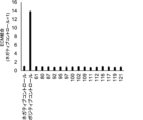
- a system for evaluating binding to extracellular matrix (ECM) is known as a system for evaluating non-specific binding in vitro, and this assay system was used for evaluation (US patent 2014/0080153). The results of the measurement are shown in Figure 4. The binding to ECM was the same whether or not the CH3 interface was modified.
- Example 10 Evaluation of heavy chain homodimer formation ability between different IgG subclasses In Examples 1-9, evaluation was performed using antibodies of the IgG1 subclass. However, other IgG subclasses (IgG2, IgG4) are also important as therapeutic antibodies, and when preventing association with endogenous antibodies in the body, it is important that heavy chain heterodimers are not formed between different subclasses. Here, some of the modifications that showed strong heavy chain homodimer formation ability in IgG1 were also applied to different IgG subclasses, and the heavy chain homodimer formation ability was confirmed by SEC analysis.
- the template subclass used for antibody expression, amino acid modifications, sequence numbers, and area ratios are shown in Table 13 (if no modifications were introduced, "-" is displayed).
- Antibody expression and analysis were performed according to the method described in Example 1. However, since affinity purification with Protein A is difficult for pairs including IgG3, they were purified using MonoSpin ProG (GL science).
- the results in Table 13 show that all of the subclass pairs, IgG1, IgG2, and IgG4, have the ability to form heavy chain homodimers.
- analysis of the combination of WT-IgG1, IgG2, and IgG4 with WT-IgG3 revealed that WT-IgG1, IgG2, and IgG4 are inherently less likely to pair with IgG3. Therefore, these amino acid modifications that do not form heavy chain heterodimers between IgG1, IgG2, and IgG4 are considered to be less likely to form heavy chain hetero-associations with WT-IgG3.
- Example 11 Evaluation of heavy chain homodimer formation ability in antibodies with different IgG formats and Fc modifications
- a basic IgG format was used, and a wild-type IgG with no modifications other than CH3 interface control was used for the Fc.
- various antibody formats such as formats in which Fc is linked to VHH or scFv, and antibodies into which amino acid modifications that change Fc function have been introduced.
- some of the modifications that showed strong heavy chain homodimer formation ability in IgG were applied to various antibody formats and Fc-modified antibodies, and the heavy chain homodimer formation ability was confirmed by SEC analysis.
- the heavy chain backbone or amino acid modifications contained therein (and their functions) of the template antibody used for antibody expression, the amino acid modifications that promote heavy chain homodimer formation, the sequence number, and the area ratio are shown in Table 14 (if no modification was introduced, it is written as "-").
- Antibody expression and analysis were performed according to the method described in Example 1. However, aggregate components were detected for antibodies containing the E345R/E430G/S440Y modifications that promote hexamer formation of IgG in SEC analysis. In addition, complete separation of homo- and hetero-aggregates was difficult for pairs containing the scFv.LH-Fc or scFv.HL-Fc formats.
- the samples with 0% hetero-association (%), 95% or more monomer rate of homodimer, Tm of 65°C or more, and yield (mg) of 0.15 mg or more are sample numbers 80, 87, 92, 95, 97, 100, 102, 109, 111, 119, and 121, and the modifications contained in these samples also have excellent heavy chain homodimer formation ability and physicochemical properties.
- this modification set can be used as an alternative to the set of modifications T366V/D399M/Y407A/K409V, E356K/D399K/K409E/K439E, E356K/K392D/D399K/K409D, K392D/D399K/K409D, and E356K/K392D/D399K/K439E and can be applied as an Fc modification that allows expression of multiple homodimers.
- amino acid modifications that suppressed the percentage of hetero-assembly to 10% or less in Table 15 are shown in Table 20. Each of these amino acid combinations may be more preferable modifications that suppress hetero-assembly. Furthermore, amino acid modifications that suppressed the rate of hetero-assembly to 0% in Table 15 are shown in Table 21. Each of these amino acid combinations may be further preferred hetero-assembly-suppressing modifications.
- Example 13 Evaluation of simultaneous expression of homodimers and hetero-associates
- the amino acid modifications found in the present invention that promote homodimer formation may be used simultaneously with amino acid modifications that promote heterodimer formation (e.g., knob-into-hole modifications, etc.).
- amino acid modifications that promote heterodimer formation e.g., knob-into-hole modifications, etc.
- some of the modifications that showed strong heavy chain homodimer formation ability in IgG were co-expressed with an antibody containing a knob-into-hole modification, and the efficiency (%) of the formation of the desired homodimer and heterodimer when co-expressed with WT-IgG1 was compared by IEC analysis.
- Antibody preparation and IEC analysis were performed according to the method described in Example 6.
- Table 22 Combinations of heavy chain heterodimer-promoting variants and heavy chain homodimer-promoting variants, and various preparations of unintended aggregates.
- the amino acid modifications contained in the heavy chains represented by the heavy chain abbreviations in the table are as follows.
- knob-into-hole modifications were used to promote heteroassembly, but other reported modifications can also be used.
- SEED strand-exchange engineered domain
- TCR heterodimeric T-cell receptor
- BEAT Fc heterodimeric T-cell receptor
- T366W/S354C-T366S/L368A/Y407V/Y349C K409D/K392D-D399K/E356K
- S364H/F405A-Y349T/T394F D221E/P228E/L368E-D221R/P228R/K409R
- F405L-K409R T350V/T366L/K392L/T394W-T350V/L351Y/F405A/Y407V
- a modification that promotes homodimer formation a modification set that does not have a modification of the same residue number as the amino acid modification that promotes hetero-association, or a modification set that has significantly different amino acid properties (in terms of size and charge) is more preferable because it is assumed that unintended association promotion due to each modification is unlikely to occur.
- one hetero-association and one homo-association were expressed, but the number of samples to be expressed simultaneously is not limited to this.
- modifications with different modified residue numbers are preferentially combined.
- it is possible to express multiple amino acid modifications that promote homo-associations which are composed of amino acids with different properties even if they contain modifications with the same amino acid residue numbers that promote the multiple hetero-associations. This makes it possible to simultaneously express multiple hetero-associations and multiple homo-associations with high purity.
- Example 14 Evaluation of the ability to promote heavy chain homodimer formation in a mammalian cell expression system using mRNA Next, it was verified whether the effect of promoting homodimer formation could be obtained even when transfected into mammalian cells as messenger RNA (mRNA) instead of a plasmid.
- mRNA messenger RNA
- mRNA containing sequences encoding the antibody heavy and light chains listed in Tables 23 and 24 various antibodies listed in Table 25 were transiently expressed in mammalian cells by a method known to those skilled in the art, and purified by a method known to those skilled in the art.
- the prepared mRNA was transfected into 1 mL of Expi293 cells at 2.5E+6 cells/mL at the mass ratio shown in Table 25, and the antibody was transiently expressed.
- the culture supernatant was collected 4 days after transfection, and the antibody was purified by a method known to those skilled in the art.
- the prepared antibodies were analyzed according to the IEC method described in Example 6, and the area ratios at the time of triple-chain transfection are shown in Table 25.
- the ratio of hetero-aggregates was significantly reduced in constructs containing amino acid modifications that promote homodimer formation.
- Example 15 Preparation of mRNA-encapsulated lipid nanoparticles (mRNA-LNP)
- the lipid nanoparticles (mRNA-LNP) encapsulating mRNA shown in Tables 23 and 24 were prepared by the general lipid composition and preparation method described in the literature (Hou X, et al., Nat Rev Mater. 2021;6(12):1078-1094., Weng Y, et al., Biotechnol Adv. 2020 May-Jun;40:107534, Webb C, et al., Mol Pharm. 2022 Apr 4;19(4):1047-1058.).
- the mRNA-LNP was prepared by mixing the lipid ethanol solution and the mRNA aqueous solution at a ratio of 1:3 (vol/vol) using NanoAssemblr Ignite (Precision NanoSystems).
- the prepared mRNA-LNP was diluted with approximately 3 times the volume of PBS, and then the external buffer components were replaced with PBS using an Amicon 100 kDa centrifugal filter (Millipore) and concentrated to the desired concentration.
- the resulting mRNA-LNP was filtered using a 0.22 ⁇ m sterile filter.
- the final mRNA-LNP was stored at ⁇ 80°C until further use.
- the particle size, polydispersity index (PdI), and zeta potential of the mRNA-LNP were measured using a Zetasizer NanoZS (Malvern Panalytical).
- the mRNA-LNP samples were diluted 20-fold in PBS before particle size and PdI measurements, and 170-fold in 10 mM phosphate buffer (pH 7.2) before zeta potential measurements.
- Total RNA concentration and free RNA in mRNA-LNP samples were determined by a fluorescence-based assay (Ribogreen® reagent, ThermoFisherScientific). Encapsulation efficiency was calculated as (total RNA - free RNA)/total RNA.
- mRNA-LNP samples were appropriately diluted with 1x TBE buffer containing 1% Triton-X100 and Ribogreen® reagent to determine total RNA, or diluted with 1x TBE buffer containing Ribogreen® reagent alone to determine free RNA.
- a standard curve was used to generate mRNA-LNPs and was generated by utilizing starting RNA solution diluted in 1x TBE buffer containing Ribogreen® reagent +/- 1.0% Triton-X100.
- RNA-LNP sample was incubated at room temperature for about 5 minutes in the absence of light and measured using a SpectraMax M3 Microplate Reader (Molecular Devices) with excitation, auto cutoff, and emission wavelengths set at 488 nm, 515 nm, and 525 nm, respectively. Total RNA and free RNA were determined from the appropriate standard curves.
- LNPs were prepared with encapsulation >90%, particle size ⁇ 100 nm, and PdI ⁇ 0.1. LNPs encapsulating the corresponding mRNAs were mixed to obtain the combinations of mRNAs 1 to 3 shown in Table 26, and subjected to the in vivo test of Example 16.
- Example 16 Evaluation of the ability to promote heavy chain homodimer formation in in vivo expression in mice using mRNA-LNP To verify the in vivo effect of amino acid modifications that promote heavy chain homodimer formation, the mRNA-LNP prepared in Example 15 was intravenously administered at 1.0 mg RNA/kg to C57BL6/J mice (male, 6 weeks old). The names of the mRNA-LNPs used in the in vivo test, the mRNAs contained therein and their mass ratios, and the abbreviations of the expression samples are shown in Table 26. Whole blood was collected from the jugular vein of the mice 3 and 7 days after administration, and plasma was collected after centrifugation at 4°C, 12,000 rpm for 5 minutes.
- the antibodies were labeled with biotin and Alexa Fluor 647 using the Fisher Scientific and Alexa Fluor 647 Antibody Labeling Kit (A20186, Life Technologies).
- biotin and Alexa Fluor 647 using the Fisher Scientific and Alexa Fluor 647 Antibody Labeling Kit (A20186, Life Technologies).
- A20186, Life Technologies For homodimer measurements, collected plasma or plasma diluted 2-200 times with C57BL/6J (male, 8 weeks old, Jackson Laboratory Japan) pooled plasma was mixed with an equal volume of Rexxip A-max (P0004821, Gyros Protein Technologies).
- the plasma mixed with an equal volume of Rexxip A-max was mixed 1:1:1 with biotin-labeled antibody and Alexa Fluor 647-labeled antibody diluted with Rexxip A (P0004820, Gyros Protein Technologies) (final concentration of biotin-labeled antibody and Alexa Fluor 647-labeled antibody was 1 ug/mL) and incubated for 2 hours at room temperature.
- the plasma sample was mixed with biotin-labeled TIA0124-rabbitFc and Alexa Fluor 647-labeled TIA0124-rabbitFc at a ratio of 1:1:1.
- plasma samples were mixed with biotin-labeled Human GPC3 Core Protein and Alexa Fluor 647-labeled Human GPC3 Core Protein at a ratio of 1:1:1.
- plasma samples were mixed with biotin-labeled rAQ8-mIgG2b and Alexa Fluor 647-labeled rAQ8-mIgG2b in a 1:1:1 ratio.
- plasma samples were mixed 1:1:1 with biotin-labeled rAJ540-rbtIgG and Alexa Fluor 647-labeled rAJ540-rbtIgG.
- the incubated samples were measured using a Gyrolab xP workstation or Gyrolab xPand.
- a Gyrolab Bioaffy 1000 (P0004253, Gyros Protein Technologies) was used as a measurement disk.
- a mixture of the biotin-labeled antibody, Alexa Fluor 647-labeled antibody, and plasma sample incubated as described above was added to the measurement disk, and the biotin-labeled antibody-homodimer-Alexa Fluor 647-labeled antibody complex was captured in the reaction layer in the disk.
- the amount of the captured complex was detected by the fluorescent signal of Alexa647 (Detect PMT 1%).
- the fluorescent signal of Alexa647 was analyzed by Gyro Evaluator (version 3.7.2.5976, Gyros Protein Technologies).
- the collected plasma was diluted 3-5 times with pooled plasma from C57BL/6J mice (male, 8 weeks old, Jackson Laboratory Japan) and mixed with an equal volume of Rexxip A-max (P0004821, Gyros Protein Technologies).
- the plasma mixture was measured using a Gyrolab xP workstation or Gyrolab xPand.
- a Gyrolab Bioaffy 1000 (P0004253, Gyros Protein Technologies) was used as the measurement disk.
- Biotin-labeled antibodies diluted to 25 ug/mL with PBS 0.05% Tween 20 (P3563, SIGMA-ALDRICH) were added to the measurement disk and immobilized in the reaction layer inside the disk.
- the expression of anti-CD3/GPC3 heterodimers was suppressed by 72 to 878 times or more, and the expression of anti-FIXa/FX heterodimers was suppressed by 241 to 446 times or more.
- the inhibitory effect of the heterodimers on expression continued even 7 days after administration, with the anti-CD3/GPC3 heterodimer showing 84- to 717-fold or more inhibition of expression, and the anti-FIXa/FX heterodimer showing 184- to 375-fold or more inhibition of expression. This demonstrated that the designed molecule can suppress the expression of heterodimers in vivo.
Landscapes
- Chemical & Material Sciences (AREA)
- Health & Medical Sciences (AREA)
- Organic Chemistry (AREA)
- Life Sciences & Earth Sciences (AREA)
- Immunology (AREA)
- Medicinal Chemistry (AREA)
- Biophysics (AREA)
- General Health & Medical Sciences (AREA)
- Genetics & Genomics (AREA)
- Biochemistry (AREA)
- Molecular Biology (AREA)
- Proteomics, Peptides & Aminoacids (AREA)
- Hematology (AREA)
- Gastroenterology & Hepatology (AREA)
- Cell Biology (AREA)
- Peptides Or Proteins (AREA)
- Micro-Organisms Or Cultivation Processes Thereof (AREA)
- Preparation Of Compounds By Using Micro-Organisms (AREA)
Priority Applications (3)
| Application Number | Priority Date | Filing Date | Title |
|---|---|---|---|
| CN202380085639.1A CN120344665A (zh) | 2022-12-27 | 2023-12-27 | 具有受控缔合的多肽 |
| EP23912220.3A EP4644548A1 (en) | 2022-12-27 | 2023-12-27 | Polypeptide with controlled association |
| JP2024567908A JPWO2024143442A1 (https=) | 2022-12-27 | 2023-12-27 |
Applications Claiming Priority (2)
| Application Number | Priority Date | Filing Date | Title |
|---|---|---|---|
| JP2022210580 | 2022-12-27 | ||
| JP2022-210580 | 2022-12-27 |
Publications (1)
| Publication Number | Publication Date |
|---|---|
| WO2024143442A1 true WO2024143442A1 (ja) | 2024-07-04 |
Family
ID=91717763
Family Applications (1)
| Application Number | Title | Priority Date | Filing Date |
|---|---|---|---|
| PCT/JP2023/046857 Ceased WO2024143442A1 (ja) | 2022-12-27 | 2023-12-27 | 会合が制御されたポリペプチド |
Country Status (4)
| Country | Link |
|---|---|
| EP (1) | EP4644548A1 (https=) |
| JP (1) | JPWO2024143442A1 (https=) |
| CN (1) | CN120344665A (https=) |
| WO (1) | WO2024143442A1 (https=) |
Cited By (1)
| Publication number | Priority date | Publication date | Assignee | Title |
|---|---|---|---|---|
| WO2025228542A1 (en) * | 2024-05-03 | 2025-11-06 | Genmab B.V. | Method for co-expression of a plurality of antibodies |
Citations (27)
| Publication number | Priority date | Publication date | Assignee | Title |
|---|---|---|---|---|
| US4816567A (en) | 1983-04-08 | 1989-03-28 | Genentech, Inc. | Recombinant immunoglobin preparations |
| US4892538A (en) | 1987-11-17 | 1990-01-09 | Brown University Research Foundation | In vivo delivery of neurotransmitters by implanted, encapsulated cells |
| WO1993025673A1 (en) | 1992-06-04 | 1993-12-23 | The Regents Of The University Of California | In vivo gene therapy with intron-free sequence of interest |
| US5283187A (en) | 1987-11-17 | 1994-02-01 | Brown University Research Foundation | Cell culture-containing tubular capsule produced by co-extrusion |
| WO1996007321A1 (en) | 1994-09-06 | 1996-03-14 | The Uab Research Foundation | Methods for modulating protein function in cells using intracellular antibody homologues |
| US5648237A (en) | 1991-09-19 | 1997-07-15 | Genentech, Inc. | Expression of functional antibody fragments |
| US5731168A (en) | 1995-03-01 | 1998-03-24 | Genentech, Inc. | Method for making heteromultimeric polypeptides |
| US5789199A (en) | 1994-11-03 | 1998-08-04 | Genentech, Inc. | Process for bacterial production of polypeptides |
| US5840523A (en) | 1995-03-01 | 1998-11-24 | Genetech, Inc. | Methods and compositions for secretion of heterologous polypeptides |
| US5959177A (en) | 1989-10-27 | 1999-09-28 | The Scripps Research Institute | Transgenic plants expressing assembled secretory antibodies |
| US6004940A (en) | 1992-07-17 | 1999-12-21 | Dana-Farber Cancer Institute, Inc. | Intracellular targeting of endogenous proteins |
| US6040498A (en) | 1998-08-11 | 2000-03-21 | North Caroline State University | Genetically engineered duckweed |
| US6248516B1 (en) | 1988-11-11 | 2001-06-19 | Medical Research Council | Single domain ligands, receptors comprising said ligands methods for their production, and use of said ligands and receptors |
| US6420548B1 (en) | 1999-10-04 | 2002-07-16 | Medicago Inc. | Method for regulating transcription of foreign genes |
| US20030104402A1 (en) | 2001-01-23 | 2003-06-05 | University Of Rochester | Methods of producing or identifying intrabodies in eukaryotic cells |
| WO2003077945A1 (en) | 2002-03-14 | 2003-09-25 | Medical Research Council | Intracellular antibodies |
| WO2004009618A2 (en) | 2002-07-18 | 2004-01-29 | Crucell Holland B.V. | Recombinant production of mixtures of antibodies |
| WO2004092219A2 (en) | 2003-04-10 | 2004-10-28 | Protein Design Labs, Inc | Alteration of fcrn binding affinities or serum half-lives of antibodies by mutagenesis |
| WO2006106905A1 (ja) * | 2005-03-31 | 2006-10-12 | Chugai Seiyaku Kabushiki Kaisha | 会合制御によるポリペプチド製造方法 |
| US7125978B1 (en) | 1999-10-04 | 2006-10-24 | Medicago Inc. | Promoter for regulating expression of foreign genes |
| WO2010107110A1 (ja) | 2009-03-19 | 2010-09-23 | 中外製薬株式会社 | 抗体定常領域改変体 |
| WO2013157953A1 (en) | 2012-04-20 | 2013-10-24 | Merus B.V. | Methods and means for the production of ig-like molecules |
| WO2014015804A1 (zh) | 2012-07-25 | 2014-01-30 | 苏州康宁杰瑞生物科技有限公司 | 利用电荷排斥作用制备同二聚体蛋白混合物的方法 |
| JP2014504265A (ja) * | 2010-11-05 | 2014-02-20 | ザイムワークス,インコーポレイテッド | Fcドメイン中に突然変異を有する、安定したヘテロ二量体抗体の設計 |
| WO2017205014A1 (en) | 2016-05-26 | 2017-11-30 | Qilu Puget Sound Biotherapeutics Corporation | Mixtures of antibodies |
| JP2022513999A (ja) * | 2018-12-18 | 2022-02-09 | ゲンマブ エー/エス | ヘテロダイマー抗体の作製方法 |
| WO2022220275A1 (ja) | 2021-04-15 | 2022-10-20 | 中外製薬株式会社 | 抗C1s抗体 |
-
2023
- 2023-12-27 JP JP2024567908A patent/JPWO2024143442A1/ja active Pending
- 2023-12-27 CN CN202380085639.1A patent/CN120344665A/zh active Pending
- 2023-12-27 WO PCT/JP2023/046857 patent/WO2024143442A1/ja not_active Ceased
- 2023-12-27 EP EP23912220.3A patent/EP4644548A1/en active Pending
Patent Citations (31)
| Publication number | Priority date | Publication date | Assignee | Title |
|---|---|---|---|---|
| US4816567A (en) | 1983-04-08 | 1989-03-28 | Genentech, Inc. | Recombinant immunoglobin preparations |
| US4892538A (en) | 1987-11-17 | 1990-01-09 | Brown University Research Foundation | In vivo delivery of neurotransmitters by implanted, encapsulated cells |
| US5283187A (en) | 1987-11-17 | 1994-02-01 | Brown University Research Foundation | Cell culture-containing tubular capsule produced by co-extrusion |
| US6248516B1 (en) | 1988-11-11 | 2001-06-19 | Medical Research Council | Single domain ligands, receptors comprising said ligands methods for their production, and use of said ligands and receptors |
| US6417429B1 (en) | 1989-10-27 | 2002-07-09 | The Scripps Research Institute | Transgenic plants expressing assembled secretory antibodies |
| US5959177A (en) | 1989-10-27 | 1999-09-28 | The Scripps Research Institute | Transgenic plants expressing assembled secretory antibodies |
| US5648237A (en) | 1991-09-19 | 1997-07-15 | Genentech, Inc. | Expression of functional antibody fragments |
| WO1993025673A1 (en) | 1992-06-04 | 1993-12-23 | The Regents Of The University Of California | In vivo gene therapy with intron-free sequence of interest |
| US6329173B1 (en) | 1992-07-17 | 2001-12-11 | Dana-Farber Cancer Institute, Inc. | Method of intracellular binding target molecules |
| US6004940A (en) | 1992-07-17 | 1999-12-21 | Dana-Farber Cancer Institute, Inc. | Intracellular targeting of endogenous proteins |
| WO1996007321A1 (en) | 1994-09-06 | 1996-03-14 | The Uab Research Foundation | Methods for modulating protein function in cells using intracellular antibody homologues |
| US5789199A (en) | 1994-11-03 | 1998-08-04 | Genentech, Inc. | Process for bacterial production of polypeptides |
| US7695936B2 (en) | 1995-03-01 | 2010-04-13 | Genentech, Inc. | Knobs and holes heteromeric polypeptides |
| US5840523A (en) | 1995-03-01 | 1998-11-24 | Genetech, Inc. | Methods and compositions for secretion of heterologous polypeptides |
| US5731168A (en) | 1995-03-01 | 1998-03-24 | Genentech, Inc. | Method for making heteromultimeric polypeptides |
| US6040498A (en) | 1998-08-11 | 2000-03-21 | North Caroline State University | Genetically engineered duckweed |
| US6420548B1 (en) | 1999-10-04 | 2002-07-16 | Medicago Inc. | Method for regulating transcription of foreign genes |
| US7125978B1 (en) | 1999-10-04 | 2006-10-24 | Medicago Inc. | Promoter for regulating expression of foreign genes |
| US20030104402A1 (en) | 2001-01-23 | 2003-06-05 | University Of Rochester | Methods of producing or identifying intrabodies in eukaryotic cells |
| WO2003077945A1 (en) | 2002-03-14 | 2003-09-25 | Medical Research Council | Intracellular antibodies |
| WO2004009618A2 (en) | 2002-07-18 | 2004-01-29 | Crucell Holland B.V. | Recombinant production of mixtures of antibodies |
| WO2004092219A2 (en) | 2003-04-10 | 2004-10-28 | Protein Design Labs, Inc | Alteration of fcrn binding affinities or serum half-lives of antibodies by mutagenesis |
| WO2006106905A1 (ja) * | 2005-03-31 | 2006-10-12 | Chugai Seiyaku Kabushiki Kaisha | 会合制御によるポリペプチド製造方法 |
| WO2010107110A1 (ja) | 2009-03-19 | 2010-09-23 | 中外製薬株式会社 | 抗体定常領域改変体 |
| JP2014504265A (ja) * | 2010-11-05 | 2014-02-20 | ザイムワークス,インコーポレイテッド | Fcドメイン中に突然変異を有する、安定したヘテロ二量体抗体の設計 |
| WO2013157953A1 (en) | 2012-04-20 | 2013-10-24 | Merus B.V. | Methods and means for the production of ig-like molecules |
| JP2015514417A (ja) * | 2012-04-20 | 2015-05-21 | メルス・ベー・フェー | Ig様分子の生産方法および生産手段 |
| WO2014015804A1 (zh) | 2012-07-25 | 2014-01-30 | 苏州康宁杰瑞生物科技有限公司 | 利用电荷排斥作用制备同二聚体蛋白混合物的方法 |
| WO2017205014A1 (en) | 2016-05-26 | 2017-11-30 | Qilu Puget Sound Biotherapeutics Corporation | Mixtures of antibodies |
| JP2022513999A (ja) * | 2018-12-18 | 2022-02-09 | ゲンマブ エー/エス | ヘテロダイマー抗体の作製方法 |
| WO2022220275A1 (ja) | 2021-04-15 | 2022-10-20 | 中外製薬株式会社 | 抗C1s抗体 |
Non-Patent Citations (48)
| Title |
|---|
| "Antibodies: A Practical Approach", 1988, IRL PRESS |
| "Methods in Enzymology", ACADEMIC PRESS, INC, article "PCR 2: A Practical Approach" |
| "Monoclonal Antibodies: A Practical Approach", 2000, OXFORD UNIVERSITY PRESS |
| "Oligonucleotide Synthesis", 1984 |
| "Remington's Pharmaceutical Sciences", 1980 |
| "Sequences of proteins of immunological interest", NIH PUBLICATION |
| ANAL BIOCHEM., vol. 360, no. 1, 1 January 2007 (2007-01-01), pages 75 - 83 |
| ANALYTICAL BIOCHEMISTRY, vol. 348, 2006, pages 24 - 39 |
| ANDERSON ET AL., SCIENCE, vol. 256, 1992, pages 808 - 813 |
| ANNU REV. BIOPHYS. BIOMOL. STRUCT, vol. 35, 2006, pages 225 - 249 |
| C.A. JANEWAYP. TRAVERS, IMMUNOBIOLOGY, 1997 |
| CAPEL ET AL., IMMUNOMETHODS, vol. 4, 1994, pages 25 - 34 |
| CARTER, J IMMUNOL METH, vol. 248, 2001, pages 7 - 15 |
| CHEN ET AL., J. MOL. BIOL., vol. 293, 1999, pages 865 - 881 |
| CHOTHIALESK, J. MOL. BIOL., vol. 196, 1987, pages 901 - 917 |
| CLARKSON ET AL., NATURE, vol. 352, 1991, pages 624 - 628 |
| DAERON, ANNU. REV. IMMUNOL, vol. 15, 1997, pages 203 - 234 |
| DE HAAS ET AL., J. LAB. CLIN. MED, vol. 126, 1995, pages 330 - 41 |
| FRONT IMMUNOL., vol. 7, 6 October 2016 (2016-10-06), pages 394 |
| GERNGROSS, NAT. BIOTECH., vol. 22, 2004, pages 1409 - 1414 |
| GHETIE ET AL., NATURE BIOTECHNOLOGY, vol. 15, no. 7, 1997, pages 637 - 640 |
| GHETIEWARD, IMMUNOL. TODAY, vol. 18, no. 12, 1997, pages 592 - 598 |
| GRAHAM ET AL., J. GEN VIROL., vol. 36, 1977, pages 59 |
| GUYER ET AL., J. IMMUNOL., vol. 117, 1976, pages 587 |
| HINTON ET AL., J. BIOL. CHEM., vol. 279, no. 8, 2004, pages 6213 - 6216 |
| J BIOL CHEM., vol. 292, no. 43, 27 October 2017 (2017-10-27), pages 17885 - 17896 |
| J. P. MATHERP.E. ROBERTS: "Introduction to Cell and Tissue Culture", 1998, ACADEMIC PRESS |
| JOURNAL OF PHARMACEUTICAL SCIENCE, vol. 4, 2010, pages 1707 - 1720 |
| KIM ET AL., J. IMMUNOL., vol. 24, 1994, pages 249 |
| KINDT ET AL.: "Kuby Immunology", 2007, W.H. FREEMAN AND CO, pages: 91 |
| KONTERMANN, METHODS, vol. 34, 2004, pages 163 - 170 |
| KUNKEL ET AL., PROC. NATL. ACAD. SCI. USA, vol. 82, 1985, pages 488 - 492 |
| LI, BIOTECH., vol. 24, 2006, pages 210 - 215 |
| MACCALLUM ET AL., J. MOL. BIOL., vol. 262, 1996, pages 732 - 745 |
| MARASCO, GENE THERAPY, vol. 4, 1997, pages 11 - 15 |
| MATHER ET AL., ANNALS N.Y. ACAD. SCI., vol. 383, 1982, pages 44 - 68 |
| MATHER, BIOL. REPROD., vol. 23, 1980, pages 243 - 251 |
| NAT BIOTECHNOL., vol. 16, no. 7, July 1998 (1998-07-01), pages 677 - 81 |
| P. FINCH, ANTIBODIES, 1997 |
| PORTOLANO ET AL., J. IMMUNOL., vol. 150, 1993, pages 880 - 887 |
| PROC NATL ACAD SCI U S A., vol. 110, no. 13, 26 March 2013 (2013-03-26), pages 5145 - 50 |
| PROC. NATL. ACAD. SCI. U.S.A., vol. 100, no. 11, 2003, pages 6353 - 6357 |
| PROC. NATL. ACAD. SCI. USA, vol. 103, no. 11, 2006, pages 4005 - 4010 |
| RAVETCHKINET, ANNU. REV. IMMUNOL, vol. 9, 1991, pages 457 - 92 |
| RIDGWAY ET AL., PROT ENG, vol. 9, 1996, pages 617 - 621 |
| See also references of EP4644548A1 |
| URLAUB ET AL., PROC. NATL. ACAD. SCI. USA, vol. 77, 1980, pages 4216 |
| YAZAKIWU: "Methods in Molecular Biology", vol. 248, 2003, HUMANA PRESS, pages: 255 - 268 |
Cited By (1)
| Publication number | Priority date | Publication date | Assignee | Title |
|---|---|---|---|---|
| WO2025228542A1 (en) * | 2024-05-03 | 2025-11-06 | Genmab B.V. | Method for co-expression of a plurality of antibodies |
Also Published As
| Publication number | Publication date |
|---|---|
| JPWO2024143442A1 (https=) | 2024-07-04 |
| EP4644548A1 (en) | 2025-11-05 |
| CN120344665A (zh) | 2025-07-18 |
Similar Documents
| Publication | Publication Date | Title |
|---|---|---|
| TWI818387B (zh) | 結合cd3之抗體 | |
| JP7085666B2 (ja) | Dll3標的多重特異性抗原結合分子およびその使用 | |
| ES2597228T3 (es) | Procedimiento para la selección y la producción de entidades de objetivación, como dianas, altamente selectivas y multiespecíficas, personalizadas, las cuales contienen por lo menos dos entidades de unión diferentes, y utilización de éstas | |
| JP2019088290A (ja) | Asgpr抗体およびその使用 | |
| KR20220161156A (ko) | 면역 활성화 다중 특이성 항원 결합 분자 및 그의 사용 | |
| TW201311893A (zh) | 使用包含第一型mhc之複合體透過循環病毒特異性毒殺t細胞以移除標的細胞之方法 | |
| CN116888153A (zh) | 与γ-δT细胞受体结合的抗体 | |
| KR20220161375A (ko) | 다중 특이성 항원 결합 분자를 제조하기 위한 방법 | |
| JP2026010057A (ja) | 部位特異的Notch活性化分子およびその使用 | |
| CN117003872A (zh) | 含有突变轻链可变区骨架的单链抗体片段 | |
| JP2025038001A (ja) | Pdgf-bおよびpdgf-dに結合する抗原結合分子ならびにその使用 | |
| WO2024143442A1 (ja) | 会合が制御されたポリペプチド | |
| JP2023537553A (ja) | ワンアームド抗原結合分子およびその使用 | |
| CN119698294A (zh) | 结合γ-δT细胞受体的变体抗体 | |
| JP2026513097A (ja) | 新規な抗NaPi2b抗体およびそれをベースとする抗体-薬物コンジュゲート、治療的方法、ならびにそれらの使用 | |
| CN121909288A (zh) | 用于治疗庞贝病的抗TfR:GAA和抗CD63:GAA插入 | |
| HK40121051A (zh) | 具有受控缔合的多肽 | |
| KR20240052854A (ko) | Mhc 단백질 기반 이종 이량체를 포함하는 이중 특이적 항체 | |
| US20250353881A1 (en) | Immunoreceptor inhibitory proteins and related methods | |
| HK40095327A (zh) | 含有突变轻链可变区骨架的单链抗体片段 | |
| TW202535927A (zh) | 與ceacam5結合之抗體 | |
| TW202528359A (zh) | 具有條件活性的多特異性抗體 | |
| TW202606763A (zh) | 特異性結合經修飾之寡核苷酸的抗體 | |
| KR20260051042A (ko) | 단일 및 다중특이성 항-trem2 항체, 그 방법 및 용도 | |
| CN121646605A (zh) | 环化抗体分子 |
Legal Events
| Date | Code | Title | Description |
|---|---|---|---|
| 121 | Ep: the epo has been informed by wipo that ep was designated in this application |
Ref document number: 23912220 Country of ref document: EP Kind code of ref document: A1 |
|
| WWE | Wipo information: entry into national phase |
Ref document number: 2024567908 Country of ref document: JP |
|
| WWE | Wipo information: entry into national phase |
Ref document number: CN2023800856391 Country of ref document: CN Ref document number: 202380085639.1 Country of ref document: CN |
|
| WWP | Wipo information: published in national office |
Ref document number: 202380085639.1 Country of ref document: CN |
|
| WWE | Wipo information: entry into national phase |
Ref document number: 2023912220 Country of ref document: EP |
|
| NENP | Non-entry into the national phase |
Ref country code: DE |
|
| ENP | Entry into the national phase |
Ref document number: 2023912220 Country of ref document: EP Effective date: 20250728 |
|
| ENP | Entry into the national phase |
Ref document number: 2023912220 Country of ref document: EP Effective date: 20250728 |
|
| WWP | Wipo information: published in national office |
Ref document number: 2023912220 Country of ref document: EP |