WO2024135294A1 - 分析システム、情報処理装置、及び消耗品の交換推奨日を提供する提供方法 - Google Patents
分析システム、情報処理装置、及び消耗品の交換推奨日を提供する提供方法 Download PDFInfo
- Publication number
- WO2024135294A1 WO2024135294A1 PCT/JP2023/043116 JP2023043116W WO2024135294A1 WO 2024135294 A1 WO2024135294 A1 WO 2024135294A1 JP 2023043116 W JP2023043116 W JP 2023043116W WO 2024135294 A1 WO2024135294 A1 WO 2024135294A1
- Authority
- WO
- WIPO (PCT)
- Prior art keywords
- recommended
- calculation unit
- expiration date
- consumables
- time
- Prior art date
- Legal status (The legal status is an assumption and is not a legal conclusion. Google has not performed a legal analysis and makes no representation as to the accuracy of the status listed.)
- Ceased
Links
Images





Classifications
-
- G—PHYSICS
- G01—MEASURING; TESTING
- G01N—INVESTIGATING OR ANALYSING MATERIALS BY DETERMINING THEIR CHEMICAL OR PHYSICAL PROPERTIES
- G01N35/00—Automatic analysis not limited to methods or materials provided for in any single one of groups G01N1/00 - G01N33/00; Handling materials therefor
- G01N35/00584—Control arrangements for automatic analysers
- G01N35/00594—Quality control, including calibration or testing of components of the analyser
- G01N35/00613—Quality control
- G01N35/00663—Quality control of consumables
-
- G—PHYSICS
- G01—MEASURING; TESTING
- G01N—INVESTIGATING OR ANALYSING MATERIALS BY DETERMINING THEIR CHEMICAL OR PHYSICAL PROPERTIES
- G01N35/00—Automatic analysis not limited to methods or materials provided for in any single one of groups G01N1/00 - G01N33/00; Handling materials therefor
-
- G—PHYSICS
- G01—MEASURING; TESTING
- G01N—INVESTIGATING OR ANALYSING MATERIALS BY DETERMINING THEIR CHEMICAL OR PHYSICAL PROPERTIES
- G01N35/00—Automatic analysis not limited to methods or materials provided for in any single one of groups G01N1/00 - G01N33/00; Handling materials therefor
- G01N35/00584—Control arrangements for automatic analysers
- G01N35/00722—Communications; Identification
- G01N35/00871—Communications between instruments or with remote terminals
-
- G—PHYSICS
- G06—COMPUTING OR CALCULATING; COUNTING
- G06F—ELECTRIC DIGITAL DATA PROCESSING
- G06F11/00—Error detection; Error correction; Monitoring
- G06F11/30—Monitoring
- G06F11/34—Recording or statistical evaluation of computer activity, e.g. of down time, of input/output operation ; Recording or statistical evaluation of user activity, e.g. usability assessment
-
- G—PHYSICS
- G01—MEASURING; TESTING
- G01N—INVESTIGATING OR ANALYSING MATERIALS BY DETERMINING THEIR CHEMICAL OR PHYSICAL PROPERTIES
- G01N35/00—Automatic analysis not limited to methods or materials provided for in any single one of groups G01N1/00 - G01N33/00; Handling materials therefor
- G01N35/00584—Control arrangements for automatic analysers
- G01N35/00722—Communications; Identification
- G01N2035/00891—Displaying information to the operator
Definitions
- the present disclosure relates to an analysis system, an information processing device, and a method for providing a recommended replacement date for consumables.
- Automatic analyzers are devices that dispense and mix a given volume of sample and reagent into a reaction vessel, react them in a reaction tank at a constant temperature, and quantify the test substance based on changes in absorbance and turbidity. They are widely used primarily in the field of clinical testing. To maintain the analytical precision of an automatic analyzer and keep it in a trouble-free condition, it is essential to regularly inspect and maintain each mechanism of the automatic analyzer and replace parts.
- the automated analyzer of Patent Document 1 predicts the time when consumables such as reagents will need to be replaced based on the device's past measurement history, and predicts the recommended time to replace the consumables when the number of samples processed per unit time will be reduced by the predicted time.
- Patent Document 1 the expiration date of the consumables is not taken into consideration when calculating the recommended timing, so there is a possibility that the performance of the automatic analyzer may decrease due to deterioration of the consumables caused by the operation of the device or oxidation.
- a preset fixed value such as the number of samples processed is used when determining whether or not to replace the consumables, but these values are merely theoretical, fixed periods. Therefore, in Patent Document 1, the period may deviate from the recommended replacement timing of the consumables of the automatic analyzer that is actually in operation, and it is necessary to predict the recommended replacement timing of the consumables based on the actual condition of the consumables.
- the present disclosure has been made in consideration of the above-mentioned problems, and aims to provide an analysis system, an information processing device, and a method for providing a recommended replacement date for consumables while taking into account the expiration date of the consumables.
- the analytical system disclosed herein is an analytical system comprising an analytical device that uses consumables to analyze samples, and an information processing device communicatively connected to the analytical device, the analytical device having a recording unit that records alarm information related to the consumables, and a transmission unit that transmits the alarm information recorded in the recording unit to the information processing device, the information processing device having a calculation unit having a processor and memory, the calculation unit receives the alarm information transmitted by the transmission unit, calculates the expiration date of the consumables based on the received alarm information, calculates the next recommended time for providing the consumables using the calculated expiration date, and notifies a terminal device related to the service that provides the consumables of the calculated recommended time for providing the consumables.
- the information processing device disclosed herein is communicatively connected to an analysis device that uses consumables to analyze samples, and includes a recording unit that records alarm information related to the consumables, and a calculation unit having a processor and memory.
- the calculation unit calculates the expiration date of the consumables based on the alarm information recorded in the recording unit, calculates the next recommended time for providing the consumables using the calculated expiration date, and notifies a terminal device related to the service that provides the consumables of the calculated recommended time for providing the consumables.
- the method of providing the recommended replacement date for consumables disclosed herein is a method of providing the recommended replacement date for consumables used in analyzing samples by an analytical device, and includes recording alarm information related to the consumables, calculating the expiration date of the consumables based on the alarm information, calculating the next recommended time for providing the consumables using the calculated expiration date, and notifying a terminal device related to a service that provides the consumables of the calculated recommended time for providing the consumables.
- FIG. 1 is a schematic diagram showing the overall configuration of an automatic analysis system 100.
- FIG. 1 is a hardware block diagram of a cloud server 103.
- 11 is a flowchart showing the processing flow of a maintenance/inspection management calculation unit 138.
- 11 is a flowchart showing a calculation flow for calculating a recommended date for providing a light source lamp.
- 11 is a flowchart showing a calculation flow for calculating a recommended date for providing an ion selective electrode.
- 13 is a flowchart showing a calculation flow for calculating other recommended provision dates.
- 11 is a flowchart showing a calculation flow for calculating a usage period.
- 11 is a flowchart showing a registration flow for registering an inventory quantity.
- FIG. 13 is a diagram showing a display screen for maintenance and inspection information.
- FIG. 13 is a diagram showing a maintenance and inspection information registration screen.
- FIG. 13 is a diagram showing a person in charge designation screen.
- the processing performed by executing a program may be described.
- the computer executes the program using a processor (e.g., CPU, GPU), and performs the processing defined by the program using storage resources (e.g., memory) and interface devices (e.g., communication ports). Therefore, the subject of the processing performed by executing the program may be the processor.
- the subject of the processing performed by executing the program may be a controller, device, system, computer, or node having a processor.
- the subject of the processing performed by executing the program may be a calculation unit, and may include a dedicated circuit that performs specific processing.
- the dedicated circuit is, for example, an FPGA (Field Programmable Gate Array), an ASIC (Application Specific Integrated Circuit), a CPLD (Complex Programmable Logic Device), etc.
- the program may be installed on the computer from a program source.
- the program source may be, for example, a program distribution server or a computer-readable storage medium.
- the program distribution server may include a processor and a storage resource that stores the program to be distributed, and the processor of the program distribution server may distribute the program to be distributed to other computers.
- two or more programs may be realized as one program, and one program may be realized as two or more programs.
- FIG. 1A is a schematic diagram showing the overall configuration of an automatic analysis system 100.
- the overall configuration of the automatic analysis system 100 will be described with reference to Fig. 1A.
- the automatic analysis system 100 includes one or more analysis devices 101, a cloud server 103 (information processing device) communicatively connected to the analysis device 101 via a network 102, a terminal device of a service company (hereinafter referred to as a service company terminal 104) communicatively connected to the cloud server 103 via the network 102, and a terminal of a laboratory technician of the analysis device 101 (hereinafter referred to as a laboratory technician terminal 105) communicatively connected to the service company terminal 104 via the network 102.
- a cloud server 103 information processing device
- a service company terminal 104 communicatively connected to the cloud server 103 via the network 102
- a laboratory technician terminal 105 a terminal of a laboratory technician of the analysis device 101
- one or more analytical devices 101 are installed in each of the multiple facilities 106.
- Each analytical device 101 in the multiple facilities 106 is communicatively connected to the cloud server 103 via the network 102.
- the network 102 in this embodiment is the Internet, but may also be a LAN (Local Area Network), a WAN (Wide Area Network), or an intranet.
- LAN Local Area Network
- WAN Wide Area Network
- intranet an intranet
- the cloud server 103 in this embodiment is a server on the cloud, but it may also be an on-premise server installed in the facility 106.
- the automated analysis system 100 accumulates the operation information 111 and setting information 112 of the analysis device 101 in a database (recording unit) 131 of the cloud server 103 via the network 102, calculates the recommended replacement timing for each consumable of the analysis device 101 based on the operation information 111 of the analysis device 101, and displays this recommended replacement timing on the service company terminal 104.
- the analysis device 101 has consumables such as a light source lamp and an ion selective electrode, and uses these consumables to analyze a sample.
- the consumables may be various parts constituting the analysis device 101, or may be reagents used in the analysis device 101.
- the consumables are, for example, a light source lamp that irradiates light onto an analysis target of the analysis device 101, an ion selective electrode that selectively responds to a specific ion of the analysis target and outputs a value corresponding to the ion concentration, and a reagent used for detecting or quantifying a substance.
- One or more analysis devices 101 are installed in each of the multiple facilities 106.
- Operation information 111 and setting information 112 of the analysis device 101 are recorded in a recording unit composed of a hard disk drive (HDD) or a solid state drive (SSD) of the analysis device 101.
- the operation information 111 includes consumables used by the analyzer 101, test request information, sample measurement results, operation history of the analyzer, alarm information of the analyzer (alarm history, alarm contents), power-on time of the analyzer, operating time of the analyzer, maintenance information of the analyzer (date of maintenance, number of consumables in stock), etc.
- the setting information 112 includes system setting information of the analyzer 101, maintenance setting information of the analyzer 101, etc.
- the communication device 113 (transmitter) of the analysis device 101 transmits the above-mentioned operation information 111 and setting information 112 to the cloud server 103 via the network 102.
- Each of the multiple analysis devices 101 transmits the operation information 111 and setting information 112 to the cloud server 103 by real-time processing or batch processing.
- the cloud server 103 collects the operation information 111 and the setting information 112 transmitted from one or more analysis devices 101, and accumulates them in a database (storage unit) 131.
- the cloud server 103 has the database (storage unit) 131 and a calculation unit 132 that performs various calculations.
- the database (recording unit) 131 includes three databases: an operation information database 133 in which operation information 111 collected from one or more analysis devices 101 is accumulated, a setting information database 134 in which setting information collected from one or more analysis devices 101 is accumulated, and a service information database 135 in which information on services provided by a service company is accumulated.
- the database (recording unit) 131 also records programs such as a database management application, a recommended date calculation program that calculates the recommended date for replacing consumables, and a service information registration program that registers information on services provided by a service provider.
- the calculation unit 132 has a calculation module 136 and a registration processing calculation unit 137.
- the service information database 135 in the database (recording unit) 131 of the cloud server 103 contains service information registered by the service company's staff using the service company terminal 104. Specifically, the service information stored in the service information database 135 contains information such as the date when the service company performed the maintenance and inspection service (provision date), the name of the object of the service provision (item name), the number of consumables provided (provision number), and person in charge information.
- provision date the date when the service company performed the maintenance and inspection service
- provision number the name of the object of the service provision
- provision number the registration processing calculation unit 137 registers the service information registered by the service company terminal 104 in the service information database 135.
- the calculation module 136 has a maintenance and inspection management calculation unit 138 and a usage period calculation unit 139. Although the specific calculation method will be described in detail later, the maintenance and inspection management calculation unit 138 calculates the recommended time for providing the consumable (e.g., the recommended date for providing) based on the operation information 111 stored in the operation information database 133, the setting information 112 stored in the setting information database 134, and the service information stored in the service information database 135. The calculation module 136 then notifies the service company terminal 104 of the service company that provides the consumable of the calculated recommended time for providing the consumable.
- the maintenance and inspection management calculation unit 138 calculates the recommended time for providing the consumable (e.g., the recommended date for providing) based on the operation information 111 stored in the operation information database 133, the setting information 112 stored in the setting information database 134, and the service information stored in the service information database 135.
- the calculation module 136 then notifies the service company terminal 104 of the service company that provides the consumable of the calculated recommended time for providing
- the expiration date calculation unit 139 calculates the expiration date of the consumables based on the operation information 111 (e.g., the cumulative number or frequency of occurrence of alarms related to the consumables) stored in the operation information database 133. This allows the service company to know the appropriate timing for maintenance and inspection according to the operating status of the user's analysis device 101, and makes it possible to maintain the performance of the analysis device 101.
- the operation information 111 e.g., the cumulative number or frequency of occurrence of alarms related to the consumables
- the service company terminal 104 displays the results calculated by the calculation module 136 on the display unit of the service company terminal 104. In addition, the service company terminal 104 transmits a confirmation email of the service provision date (date of visit to the facility 106) to the client's laboratory technician terminal 105 via the network 102 as necessary.
- the service company terminal 104 is assumed to be a terminal within the service company, but it is not limited to being a terminal within the service company, and may be a personal computer, smartphone, tablet, etc. of a service technician outside the service company.
- the service company terminal 104 receives, for example, HTML (HyperText Markup Language) data showing the results calculated by the calculation module 136, and is capable of referring to the results on a web browser installed on the service company terminal 104.
- HTML HyperText Markup Language
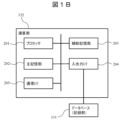
- Fig. 1B is a hardware block diagram of the cloud server 103.
- the calculation unit 132 has a processor 201, a main memory unit 202, an auxiliary memory unit 203, an input/output I/F 204, and a communication I/F 205.
- the processor 201 is a central processing unit (CPU), a graphics processing unit (GPU), a digital signal processor (DSP), an application specific integrated circuit (ASIC), or the like.
- the main memory unit 202 is a dynamic random access memory (DRAM) or the like, and is used as a working area for the processor 201.
- DRAM dynamic random access memory
- the auxiliary memory unit 203 is a read only memory (ROM) or the like, and stores, for example, the BIOS of the cloud server 103.
- the input/output I/F 204 is, for example, a serial ATA (SATA) interface, and writes data to a database (storage unit) 131 composed of an HDD or SSD, and reads data from the database (storage unit) 131.
- the communication I/F 205 communicates with the network 102, and connects the cloud server 103 to the analysis device 101, the service company terminal 104, and the laboratory technician terminal 105 so as to be able to communicate with each other.
- I/F is an abbreviation for interface.
- FIG. 5 is a flowchart showing the processing flow of the maintenance and inspection management calculation unit 138.
- the maintenance and inspection management calculation unit 138 executes a recommendation function that calculates and displays a recommended date for providing consumables. From here, an example of the processing flow of the maintenance and inspection management calculation unit 138 will be explained step by step. Each step in FIG. 2 is executed by the processor 201 executing a recommended date calculation program stored in the database (recording unit) 131. Below, each step will be explained as being executed by the maintenance and inspection management calculation unit 138.
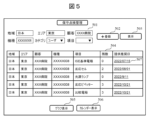
- the maintenance and inspection management calculation unit 138 acquires the input information entered into the search condition input unit 501 (see FIG. 5) (S201).
- the maintenance and inspection management calculation unit 138 determines whether an item name (e.g., "light source lamp” or "ion selective electrode”) has been specified from the input information acquired in S201 (S202). If an item name has not been specified, the maintenance and inspection management calculation unit 138 executes the processes of S203, S204, and S205. If an item name has been specified, the maintenance and inspection management calculation unit 138 executes the process corresponding to the specified item. For example, if the item names specified are "light source lamp” and "ion selective electrode," the maintenance and inspection management calculation unit 138 executes the processes of S203 and S204.
- an item name e.g., "light source lamp” or "ion selective electrode
- the maintenance and inspection management calculation unit 138 executes a process to calculate the next recommended date for providing the light source lamp (hereinafter referred to as the light source lamp recommended date) (S203).
- the light source lamp recommended date The process flow for calculating the light source lamp recommended date will be described in detail later.
- the maintenance and inspection management calculation unit 138 executes a process to calculate the next recommended date for providing an ion selective electrode (hereinafter referred to as the recommended date for providing an ion selective electrode) (S204).
- the recommended date for providing an ion selective electrode (hereinafter referred to as the recommended date for providing an ion selective electrode)
- the maintenance and inspection management calculation unit 138 executes a process to calculate the next recommended supply date (hereinafter, other recommended supply date) for consumables other than the light source lamp and ion selective electrode (hereinafter, referred to as other consumables) (S205).
- the maintenance and inspection management calculation unit 138 calculates the recommended timing for providing the light source lamp, the ion selective electrode, and other consumables using different algorithms (S203, S204, S205).
- the maintenance and inspection management calculation unit 138 displays the processing results on the display unit of the service company terminal 104 (see the result display table 504 in Figure 5) (S206).
- FIG. 2A is a flowchart showing a calculation flow for calculating the recommended date for providing a light source lamp.
- the flowchart in FIG. 2A shows details of the process of S203 in FIG. 2, and is executed when an item name is not specified in the search condition input unit 501, or when a light source lamp is specified.
- the maintenance and inspection management calculation unit 138 calculates the recommended date for providing a light source lamp using the expiration date.
- the maintenance and inspection management calculation unit 138 calculates the recommended date for providing a light source lamp using the parameter.
- the expiration date is the expiration date of a consumable (light source lamp) calculated by the expiration date calculation unit 139 based on alarm information. A detailed description will be given below.
- the maintenance and inspection management calculation unit 138 obtains information that matches the input information obtained in S201 from the operation information database 133, the setting information database 134, the service information database 135, and the expiration date calculation unit 139 (S2A01).
- the maintenance and inspection management calculation unit 138 determines whether or not maintenance has been performed on the light source lamp in the facility 106 between the date of the previous service provided by the service provider and the current date based on the information acquired in S2A01 (S2A02). If no maintenance has been performed between the date of the previous service provided by the service provider and the current date (S2A02: No), the maintenance and inspection management calculation unit 138 executes processing of S2A03, and if maintenance has been performed (S2A02: Yes), it executes processing of S2A04.
- the maintenance inspection management calculation unit 138 sets the inventory quantity of light source lamps at the facility 106 to the inventory quantity registered at the time of the previous maintenance service by the service provider (S2A03).
- the maintenance and inspection management calculation unit 138 calculates the inventory number of light source lamps in the facility 106 using the following formula (S2A04). (Number of inventory registered at the time of the previous maintenance service by the service provider) - (Number of maintenance services within the period) x (Number of light source lamps required for one maintenance service)
- the maintenance and inspection management calculation unit 138 determines whether or not operation information 111 for a certain period or more has been accumulated in the operation information database 133 (S2A05). If operation information 111 for a certain period or more has not been accumulated (S2A05: No), the maintenance and inspection management calculation unit 138 executes the process of S2A06. On the other hand, if operation information 111 for a certain period or more has been accumulated (S2A05: Yes), the maintenance and inspection management calculation unit 138 executes the process of S2A07.
- the fixed period is, for example, a value such as six months or two years. This fixed period may be set by the service provider, or may be a value that is set in the service information database 135 of the database (recording unit) 131 from the initial state.
- the maintenance and inspection management calculation unit 138 calculates the recommended date for providing the light source lamp to the facility 106 using the following formula (S2A06). (Last maintenance date) + (Number of light source lamps in stock at the facility + 1) x (cycle) - 1
- the maintenance and inspection management calculation unit 138 calculates the timing when the operation rate of the analysis device 101 is the lowest in a predetermined cycle based on the operation information 111 acquired from the operation information database 133 in S2A01. Specifically, the maintenance and inspection management calculation unit 138 collects statistics on the device operation status (average number of measured specimens) for each day of the week, and sets the day of the week with the lowest value (the least operation) as the Nth day of the week (S2A07).
- the maintenance and inspection management calculation unit 138 calculates the actual replacement period A (S2A08).
- the light source lamp is always on while the analytical device 101 is powered.
- the guaranteed time of the light source lamp is managed as the setting information 112 in the setting information database 134. If the following condition is met ( ⁇ >number of days until expiration), the actual replacement period A of the light source lamp is set to the number of days until expiration.
- ⁇ (warranty time) ⁇ (power-on time of the device from the date of the previous maintenance to the current date) ⁇ (number of days elapsed from the date of the previous maintenance to the current date) ⁇ number of days until expiration date
- the actual replacement period A of the light source lamp is set to the above ⁇ .
- the number of days until the expiration date is calculated using the processing results of the expiration date calculation unit 139, which will be described later.
- the maintenance and inspection management calculation unit 138 calculates the recommended date for providing the light source lamp based on the day of the week determined in S2A07 and the actual replacement period A calculated in S2A08 (S2A09).
- the recommended date for providing the light source lamp in the facility 106 is (Last maintenance date) + (Number of light source lamps in stock at the facility + 1) x (Actual replacement cycle A) - 1
- the date is calculated as the date N days before the date and closest to the date.
- FIG. 2B is a flowchart showing a calculation flow for calculating the recommended date for providing an ion selective electrode.
- the flowchart in FIG. 2B shows details of the process of S204 in FIG. 2, and is executed when the item name is not specified in the search condition input unit 501 or when an ion selective electrode is specified.
- the maintenance and inspection management calculation unit 138 calculates the recommended date for providing an ion selective electrode using the expiration date.
- the maintenance and inspection management calculation unit 138 calculates the recommended date for providing an ion selective electrode using the parameter.
- the expiration date is the expiration date of a consumable (ion selective electrode) calculated by the expiration date calculation unit 139 based on alarm information. The following will be described in detail.
- the maintenance and inspection management calculation unit 138 obtains information that matches the input information obtained in S201 from the operation information database 133, the setting information database 134, the service information database 135, and the expiration date calculation unit 139 (S2B01).
- the maintenance inspection management calculation unit 138 determines whether or not maintenance has been performed on the ion selective electrode in the facility 106 between the date of the previous service provided by the service provider and the current date based on the information acquired in S2B01 (S2B02). If no maintenance has been performed between the date of the previous service provided by the service provider and the current date (S2B02: No), the maintenance inspection management calculation unit 138 executes processing of S2B03, and if maintenance has been performed (S2B02: Yes), it executes processing of S2B04.
- the maintenance and inspection management calculation unit 138 sets the inventory number of ion selective electrodes at the facility 106 to the inventory number registered at the time of the previous maintenance service by the service provider (S2B03).
- the maintenance and inspection management calculation unit 138 calculates the number of ion selective electrodes in stock at the facility 106 using the following formula (S2B04). (Number of stocks registered at the time of the previous maintenance service by the service provider) - (Number of maintenances during the period) x (Number of ion selective electrodes required for one maintenance)
- within the period refers to the period from the date of the previous service provided by the service provider to the current date. Specific examples are similar to those for light source lamps, so their explanation will be omitted.
- the maintenance and inspection management calculation unit 138 determines whether or not operation information 111 for a certain period or more has been accumulated in the operation information database 133 (S2B05). If operation information 111 for a certain period or more has not been accumulated (S2B05: No), the maintenance and inspection management calculation unit 138 executes the process of S2B06. On the other hand, if operation information 111 for a certain period or more has been accumulated (S2B05: Yes), the maintenance and inspection management calculation unit 138 executes the process of S2B07.
- the maintenance and inspection management calculation unit 138 calculates the recommended date for providing an ion selective electrode to the facility 106 using the following formula (S2B06). (Date of last maintenance) + (Number of ion selective electrodes in stock at the facility + 1) x (Period) - 1
- the period in the above formula is included in the information obtained from the setting information database 134 in S2B01.
- the maintenance inspection management calculation unit 138 calculates the timing at which the operating rate of the analysis device 101 will be the lowest within a specified period, based on the operation information 111 obtained from the operation information database 133 in S2B01. Specifically, the maintenance inspection management calculation unit 138 collects statistics on the device operating status (average number of measured samples) for each day of the week, and sets the day of the week with the lowest value (the least operating day) as the Nth day of the week (S2B07).
- the maintenance and inspection management calculation unit 138 calculates the actual replacement period B (S2B08).
- the number of specimens that can be measured by the ion selective electrode is managed as the setting information 112 in the setting information database 134.
- the actual replacement period B of the ion selective electrode is set to the expiration date number of days, which will be described later.
- ⁇ (number of samples that can be measured)
- ISE ion selective electrode
- the actual replacement period B of the ion selective electrode is set to the above ⁇ .
- the number of days until the expiration date is calculated using the processing results of the expiration date calculation unit 139, which will be described later.
- the maintenance and inspection management calculation unit 138 calculates the recommended date for providing an ion selective electrode based on the day of the week determined in S2B07 and the actual replacement period B calculated in S2B08 (S2B09).
- the recommended date for providing an ion selective electrode in the facility 106 is (Date of last maintenance) + (Number of ion selective electrodes in stock at the facility + 1) x (Actual replacement period B) - 1
- the date is calculated as the date N days before the date and closest to the date.
- FIG. 2C is a flowchart showing a calculation flow for calculating the recommended date for other consumables.
- the flowchart in FIG. 2C shows details of the process of S205 in FIG. 2, and is executed when the name of an item other than the light source lamp and the ion selective electrode is specified in the search condition input unit 501.
- the maintenance and inspection management calculation unit 138 calculates the recommended time for other consumables to be provided using the operation rate.
- this parameter is less than a predetermined value
- the maintenance and inspection management calculation unit 138 calculates the recommended time for other consumables to be provided using the power supply rate.
- the expiration date is the expiration date of the consumables (other consumables) calculated by the expiration date calculation unit 139 based on alarm information. A detailed description will be given below.
- the maintenance and inspection management calculation unit 138 obtains information that matches the input information obtained in S201 from the operation information database 133, the setting information database 134, the service information database 135, and the expiration date calculation unit 139 (S2C01).
- the maintenance and inspection management calculation unit 138 determines whether or not operation information 111 for a certain period or more has been accumulated in the operation information database 133 (S2C02). If operation information 111 for a certain period or more has not been accumulated (S2C02: No), the maintenance and inspection management calculation unit 138 executes the process of S2C03. On the other hand, if operation information 111 for a certain period or more has been accumulated (S2C02: Yes), the maintenance and inspection management calculation unit 138 executes the process of S2C04.
- the maintenance and inspection management calculation unit 138 calculates the other recommended provision date for the facility 106 using the following formula (S2C03). (Last maintenance date) + (cycle) - 1
- the period is included in the information obtained from the setting information database 134 in S2C01.
- the maintenance inspection management calculation unit 138 calculates the timing at which the operating rate of the analysis device 101 is lowest within a specified period based on the operation information 111 obtained from the operation information database 133 in S2C01. Specifically, the maintenance inspection management calculation unit 138 compiles statistics on the device operating status (average number of measured samples) for each day of the week based on the operation information 111 obtained from the operation information database 133 in S2C01, and sets the day of the week with the lowest value (the least operating day) as the Nth day of the week (S2C04).
- the maintenance/inspection management calculation unit 138 calculates the power supply rate and the operation rate of the analysis device 101 during a predetermined period based on the operation information 111 acquired from the operation information database 133 in S2C01 (S2C05). Specifically, the maintenance/inspection management calculation unit 138 calculates the power supply rate and the operation rate by the following formulas.
- (Electrical conduction rate) (electrical conduction time during a specified period) ⁇ (specified period)
- operation rate) (operation time during a specified period) ⁇ (specified period)
- the specified period is a value such as the past month or the past year. This value may be set by the service company, or may be a value that is set in the service information database 135 of the database (recording unit) 131 from the initial state.
- the maintenance/inspection management calculation unit 138 calculates a recommended period based on the operation rate using the following formula.
- (Recommended cycle) (5 hours ⁇ 24 hours ⁇ 25 days ⁇ 30 days) ⁇ (operation rate) ⁇ (theoretical cycle)
- (theoretical cycle) is the operation rate for one month under standard operating hours.
- the maintenance/inspection management calculation unit 138 calculates the recommended cycle based on the power conduction rate using the following formula.
- (Recommended cycle) (8 hours ⁇ 24 hours ⁇ 25 days ⁇ 30 days) ⁇ (current duty) ⁇ (theoretical cycle)
- (8 hours ⁇ 24 hours ⁇ 25 days ⁇ 30 days) is the power conduction rate for one month under standard operating hours.
- the maintenance and inspection management calculation unit 138 sets the expiration date to the actual replacement period C. If not, it sets the recommended period to the actual replacement period C.
- the theoretical period described above is a period calculated based on the standard usage time, and is included in the setting information 112 of the setting information database 134 acquired in S201.
- the number of days until the expiration date is calculated using the processing results of the expiration date calculation unit 139, which will be described later.
- the maintenance and inspection management calculation unit 138 calculates other recommended provision days based on the day of the week determined in S2C04 and the actual replacement cycle C calculated in S2C06 (S2C07).
- the other recommended provision days in the facility 106 are as follows: (Last maintenance date) + (actual replacement cycle C) - 1
- the date is calculated as the date N days before the date and closest to the date.
- Fig. 3 is a flow chart showing a calculation flow for calculating the expiration date. From here, an example of a processing flow of the expiration date calculation unit 139 will be described step by step. Each step in Fig. 3 is executed by the processor 201 executing a recommended date calculation program stored in the storage unit 131. In the following, the description will be given assuming that the expiration date calculation unit 139 executes each step.
- the expiration date calculation unit 139 acquires the input information entered in the search condition input unit 501 (see FIG. 5), and acquires the operation information 111 and the setting information 112 of the analysis device 101 that matches the input information from the operation information database 133 and the setting information database 134 (S301).
- the expiration date calculation unit 139 calculates the minimum value C_min of the cumulative operating time (hereinafter referred to as cumulative operating time) of the analysis device 101 during multiple maintenance cycles between multiple maintenance operations performed within a fixed period of time for the selected item from the information acquired in S301 (S302).
- the fixed period is a value such as six months or two years. This fixed period may be set by the responsible service company, or may be a value set in the service information database 135 of the database (recording unit) 131 from the initial state.
- the expiration date calculation unit 139 obtains the number of alarms related to the selected item that are performed within a certain period of time from the date of maintenance of the selected item to the date on which the minimum cumulative operating time C_min is reached. If the item has undergone maintenance multiple times within a certain period of time, the number of alarms related to the item from the date of all maintenance to the date on which the minimum cumulative operating time C_min is reached is obtained. An alarm is information that is output when an abnormality occurs during operation of the analysis device 101. The expiration date calculation unit 139 then counts the number of cases where the alarm occurrence situation satisfies the condition for determining that there is an increasing trend, and sets this to b.
- the condition for determining the increasing trend here may be set by the service company in charge, or may be a value that is set from the initial state in the service information database 135 of the database (recording unit) 131.
- the item is confirmation of up and down operation of the ISE unit drive mechanism
- C_min is 3 months
- the fixed period is the period from January 10, 2022 to July 9, 2022
- the condition for determining an increasing trend is the number of alarms occurring of 100 or more.
- the expiration date calculation unit 139 sets the number of maintenance operations performed for each item within a certain period to a (S304).
- the usage period calculation unit 139 substitutes C_min, a, and b calculated in S302, S303, and S304 into the following formula to calculate the usage period (accumulated operating time) (S305).
- Expiration date (cumulative operating time) (2 x a x C_min) / ( ⁇ 2 (0.025, 2 x b + 2))
- the expiration date calculation unit 139 calculates the number of days elapsed since the last maintenance date and the accumulated operating time for each item, and sets these as X and Y, respectively (S306).
- the expiration date calculation unit 139 passes the expiration date of each item calculated in S307 to the maintenance, inspection, and management calculation unit 138 (S308).
- Fig. 4 is a flow chart showing a registration flow for registering the stock quantity of consumables. From here, an example of a processing flow of the registration processing calculation unit 137 will be explained step by step. Each step in Fig. 4 is executed by the processor 201 executing a service information registration program stored in the database (storage unit) 131. In the following, each step will be explained as being executed by the registration processing calculation unit 137.
- the registration processing calculation unit 137 acquires information from the service information database 135 and the registration information 601 (see FIG. 6) (S401).
- the registration processing calculation unit 137 judges whether or not all the registration information has been input from the information acquired in S401 (S402). If all the registration information has been input (S402: Yes), the registration processing calculation unit 137 executes processing S403, and if all the registration information has not been input (S402: No), it executes processing S405.
- the registration processing calculation unit 137 obtains the inventory quantity up to the registration date of the registration item of the facility 106 from the information obtained in S401, and calculates the inventory quantity after registration of the registration item of the facility 106 (inventory quantity after registration) using the following formula (S403).
- (Quantity in stock after registration) (Quantity in stock up until registration date) + (Quantity registered)
- the registration processing calculation unit 137 displays an error message on the screen (S405).
- the cloud server 103 displays a display screen on the Web browser of the service company terminal 104 (Web client) for selecting one of the light source lamp, the ion selective electrode, and other consumables other than the light source lamp and the ion selective electrode, and displays the recommended time for providing the consumables selected by the user.
- the maintenance and inspection information is displayed in a list, so that the information can be easily confirmed.
- the registration function of the service information provided by the service company, the calendar display function of the maintenance and inspection information, and the graph display function can be used by transitioning from this screen.
- the processing flow by the maintenance and inspection management calculation section 138 in FIG. 2 and the processing flow by the expiration date calculation section 139 in FIG. 3 are executed. After the processing is completed, the processing results are displayed in the result display table 504. The display results are sorted in order of the closest recommended service provision date.
- the information can be registered using the registration button 502.
- Clicking the registration button 502 displays the maintenance and inspection information registration screen in FIG. 6.
- Clicking the graph display button 505 displays the recommended maintenance and inspection dates (graph display) screen in FIG. 8.
- Clicking the calendar display button 506 displays the recommended maintenance and inspection dates (calendar display) screen in FIG. 9.
- (Maintenance and inspection information registration screen) 6 is a diagram showing a maintenance and inspection information registration screen.
- the service technician inputs information about the provided service in 601 and clicks a registration button 602.
- the registration information is uploaded to the cloud server 103 via the network 102, and the registration processing calculation unit 137 executes the registration process. After that, the screen returns to the maintenance and inspection information display screen of FIG. 5.
- (Visit date confirmation email sending screen) 7 is a diagram showing the sending screen for the visit date confirmation email.
- the content displayed on the sending screen 701 is automatically created based on the information in the corresponding row of the result display table 504.
- the user can also manually edit the content on the sending screen 701.
- the service technician checks the content of the email, and if there are no problems, clicks the send button 702 to send the email to the customer. Thereafter, the sending screen 701 returns to the maintenance and inspection information display screen of FIG. 5.
- the graph display screen 801 displays maintenance inspection information for one month from the current date.
- the maintenance inspection information includes a vertical axis showing the number of maintenance inspections and a horizontal axis showing the date, and the number of maintenance inspections is displayed as a bar graph for each date.
- the graph display screen 801 returns to the maintenance inspection information display screen of FIG. 5 by clicking a close button 802.
- Fig. 9 is a diagram showing the recommended maintenance and inspection dates (calendar display) screen.
- the calendar display screen 901 displays maintenance and inspection information for one month from the current date in a calendar format. Clicking on a link 902 displays the maintenance and inspection person registration screen of Fig. 10. After completing the confirmation, clicking on a close button 903 on the calendar display screen 901 returns the user to the maintenance and inspection information display screen of Fig. 5.
- (Person in charge designation screen) 10 is a diagram showing the person in charge designation screen.
- the person in charge of maintenance and inspection is displayed on the person in charge designation screen 1001.
- a list of the user names of the people in charge of the area in the area column 1001a and the customer in the customer column 1001b is displayed.
- the person in charge can be designated by clicking the person in charge to be designated.
- the close button 1003 is clicked and the person in charge designation screen 1001 returns to the maintenance and inspection information display screen of FIG. 5.
- the present disclosure is not limited to the above-described embodiments, and includes various modified examples.
- the above-described embodiments have been described in detail to clearly explain the present disclosure, and are not necessarily limited to those having all of the configurations described.
- it is possible to replace a part of the configuration of one embodiment with the configuration of another embodiment and it is also possible to add the configuration of another embodiment to the configuration of one embodiment.
- the calculation unit calculates the expiration date of consumables such as the light source lamp and the ion selective electrode based on the alarm information (the cumulative number of alarm occurrences or the alarm occurrence frequency), but the expiration date of the consumables may also be calculated based on the content of the alarm (such as the level of severity of the alarm).
Landscapes
- Engineering & Computer Science (AREA)
- Physics & Mathematics (AREA)
- General Physics & Mathematics (AREA)
- Quality & Reliability (AREA)
- Theoretical Computer Science (AREA)
- General Engineering & Computer Science (AREA)
- Life Sciences & Earth Sciences (AREA)
- Health & Medical Sciences (AREA)
- Chemical & Material Sciences (AREA)
- Analytical Chemistry (AREA)
- Biochemistry (AREA)
- General Health & Medical Sciences (AREA)
- Immunology (AREA)
- Pathology (AREA)
- Computer Hardware Design (AREA)
- Management, Administration, Business Operations System, And Electronic Commerce (AREA)
- Automatic Analysis And Handling Materials Therefor (AREA)
Priority Applications (3)
| Application Number | Priority Date | Filing Date | Title |
|---|---|---|---|
| JP2024565736A JPWO2024135294A1 (https=) | 2022-12-19 | 2023-12-01 | |
| KR1020257019613A KR20250105456A (ko) | 2022-12-19 | 2023-12-01 | 분석 시스템, 정보 처리 장치, 및 소모품의 교환 추천일을 제공하는 제공 방법 |
| CN202380085394.2A CN120693523A (zh) | 2022-12-19 | 2023-12-01 | 分析系统、信息处理装置以及提供消耗品的更换推荐日的提供方法 |
Applications Claiming Priority (2)
| Application Number | Priority Date | Filing Date | Title |
|---|---|---|---|
| JP2022-201766 | 2022-12-19 | ||
| JP2022201766 | 2022-12-19 |
Publications (1)
| Publication Number | Publication Date |
|---|---|
| WO2024135294A1 true WO2024135294A1 (ja) | 2024-06-27 |
Family
ID=91588243
Family Applications (1)
| Application Number | Title | Priority Date | Filing Date |
|---|---|---|---|
| PCT/JP2023/043116 Ceased WO2024135294A1 (ja) | 2022-12-19 | 2023-12-01 | 分析システム、情報処理装置、及び消耗品の交換推奨日を提供する提供方法 |
Country Status (4)
| Country | Link |
|---|---|
| JP (1) | JPWO2024135294A1 (https=) |
| KR (1) | KR20250105456A (https=) |
| CN (1) | CN120693523A (https=) |
| WO (1) | WO2024135294A1 (https=) |
Citations (6)
| Publication number | Priority date | Publication date | Assignee | Title |
|---|---|---|---|---|
| JP2003279583A (ja) * | 2002-03-20 | 2003-10-02 | Olympus Optical Co Ltd | 分析システムの精度管理方法、費用管理方法、在庫管理方法、並びに運用管理方法 |
| JP2004219352A (ja) * | 2003-01-17 | 2004-08-05 | Toshiba Corp | 分析装置及び管理システム |
| JP2011209275A (ja) * | 2010-03-30 | 2011-10-20 | Sysmex Corp | 消耗品を供給するためのシステム、装置、および方法 |
| JP2016045004A (ja) * | 2014-08-20 | 2016-04-04 | 株式会社島津製作所 | 分析装置管理システム |
| JP2019045446A (ja) * | 2017-09-07 | 2019-03-22 | 株式会社日立ハイテクノロジーズ | 自動分析装置 |
| CN111192665A (zh) * | 2018-11-14 | 2020-05-22 | 深圳迈瑞生物医疗电子股份有限公司 | 耗材管理方法、耗材管理装置及样本分析仪 |
Family Cites Families (1)
| Publication number | Priority date | Publication date | Assignee | Title |
|---|---|---|---|---|
| JP7306948B2 (ja) | 2019-10-09 | 2023-07-11 | 株式会社日立ハイテク | 自動分析装置 |
-
2023
- 2023-12-01 JP JP2024565736A patent/JPWO2024135294A1/ja active Pending
- 2023-12-01 CN CN202380085394.2A patent/CN120693523A/zh active Pending
- 2023-12-01 WO PCT/JP2023/043116 patent/WO2024135294A1/ja not_active Ceased
- 2023-12-01 KR KR1020257019613A patent/KR20250105456A/ko active Pending
Patent Citations (6)
| Publication number | Priority date | Publication date | Assignee | Title |
|---|---|---|---|---|
| JP2003279583A (ja) * | 2002-03-20 | 2003-10-02 | Olympus Optical Co Ltd | 分析システムの精度管理方法、費用管理方法、在庫管理方法、並びに運用管理方法 |
| JP2004219352A (ja) * | 2003-01-17 | 2004-08-05 | Toshiba Corp | 分析装置及び管理システム |
| JP2011209275A (ja) * | 2010-03-30 | 2011-10-20 | Sysmex Corp | 消耗品を供給するためのシステム、装置、および方法 |
| JP2016045004A (ja) * | 2014-08-20 | 2016-04-04 | 株式会社島津製作所 | 分析装置管理システム |
| JP2019045446A (ja) * | 2017-09-07 | 2019-03-22 | 株式会社日立ハイテクノロジーズ | 自動分析装置 |
| CN111192665A (zh) * | 2018-11-14 | 2020-05-22 | 深圳迈瑞生物医疗电子股份有限公司 | 耗材管理方法、耗材管理装置及样本分析仪 |
Also Published As
| Publication number | Publication date |
|---|---|
| KR20250105456A (ko) | 2025-07-08 |
| CN120693523A (zh) | 2025-09-23 |
| JPWO2024135294A1 (https=) | 2024-06-27 |
Similar Documents
| Publication | Publication Date | Title |
|---|---|---|
| JP7551844B2 (ja) | 診断分析装置において精度管理を行う方法、システムおよびサーバ | |
| JP5795268B2 (ja) | ネットワーク化された診断臨床分析装置の差し迫った分析故障を検出するための方法 | |
| JP4991586B2 (ja) | 自動分析装置 | |
| CN107407686B (zh) | 自动分析装置 | |
| Westgard et al. | Establishing evidence-based statistical quality control practices | |
| JP4584579B2 (ja) | バイオメトリック・クオリティ管理プロセス | |
| JP5425487B2 (ja) | 自動分析装置 | |
| JP5147906B2 (ja) | 精度管理システム | |
| US20160132375A1 (en) | Method for detecting the impending analytical failure of networked diagnostic clinical analyzers | |
| JP2004219352A (ja) | 分析装置及び管理システム | |
| Vincent et al. | Six Sigma performance of quality indicators in total testing process of point-of-care glucose measurement: A two-year review | |
| Park et al. | Quality improvement of outpatient clinical chemistry tests through a novel middleware-laboratory information system solution | |
| EP4361640A1 (en) | Diagnosis system, automated analysis device, and diagnostic method | |
| CN113574390A (zh) | 数据解析方法、数据解析系统以及计算机 | |
| WO2024135294A1 (ja) | 分析システム、情報処理装置、及び消耗品の交換推奨日を提供する提供方法 | |
| JP2012032188A (ja) | 自動分析システム | |
| US20230297046A1 (en) | Forecasting future laboratory performance | |
| Steindel et al. | Quality control practices for calcium, cholesterol, digoxin, and hemoglobin: a College of American Pathologists Q-probes study in 505 hospital laboratories | |
| Sioufi et al. | Full Blood Count–Internal QC Protocol: a review by the Royal College of Pathologists of Australasia Quality Assurance Programs (RCPAQAP) Pty Ltd–Haematology | |
| JP7538072B2 (ja) | 自動分析装置及びデータ出力方法 | |
| Wang et al. | A modified quality control protocol for infectious disease serology based on the Westgard rules | |
| AlMuhairi et al. | Evaluation of the Analytical Performance of Biochemistry Assays in a Private Hospital Laboratory in the United Arab Emirates Using Sigma Metrics | |
| Kang et al. | Quality Management for Biomonitoring of Smoking Harmful Effects | |
| WO2024181059A1 (ja) | 自動分析装置、および自動分析方法 | |
| WO2025220380A1 (ja) | 自動分析システム及び診断方法 |
Legal Events
| Date | Code | Title | Description |
|---|---|---|---|
| 121 | Ep: the epo has been informed by wipo that ep was designated in this application |
Ref document number: 23906662 Country of ref document: EP Kind code of ref document: A1 |
|
| WWE | Wipo information: entry into national phase |
Ref document number: 2024565736 Country of ref document: JP |
|
| WWE | Wipo information: entry into national phase |
Ref document number: CN2023800853942 Country of ref document: CN Ref document number: 202380085394.2 Country of ref document: CN |
|
| WWE | Wipo information: entry into national phase |
Ref document number: 1020257019613 Country of ref document: KR |
|
| WWP | Wipo information: published in national office |
Ref document number: 1020257019613 Country of ref document: KR |
|
| NENP | Non-entry into the national phase |
Ref country code: DE |
|
| WWP | Wipo information: published in national office |
Ref document number: 202380085394.2 Country of ref document: CN |
|
| 122 | Ep: pct application non-entry in european phase |
Ref document number: 23906662 Country of ref document: EP Kind code of ref document: A1 |