WO2024134895A1 - 香味発生物品の香料担持構成部材およびその製造方法、香味発生物品、並びに塗工液およびその製造方法 - Google Patents
香味発生物品の香料担持構成部材およびその製造方法、香味発生物品、並びに塗工液およびその製造方法 Download PDFInfo
- Publication number
- WO2024134895A1 WO2024134895A1 PCT/JP2022/047723 JP2022047723W WO2024134895A1 WO 2024134895 A1 WO2024134895 A1 WO 2024134895A1 JP 2022047723 W JP2022047723 W JP 2022047723W WO 2024134895 A1 WO2024134895 A1 WO 2024134895A1
- Authority
- WO
- WIPO (PCT)
- Prior art keywords
- flavor
- menthol
- tobacco
- coating liquid
- viscosity
- Prior art date
- Legal status (The legal status is an assumption and is not a legal conclusion. Google has not performed a legal analysis and makes no representation as to the accuracy of the status listed.)
- Ceased
Links
Images








Classifications
-
- A—HUMAN NECESSITIES
- A24—TOBACCO; CIGARS; CIGARETTES; SIMULATED SMOKING DEVICES; SMOKERS' REQUISITES
- A24B—MANUFACTURE OR PREPARATION OF TOBACCO FOR SMOKING OR CHEWING; TOBACCO; SNUFF
- A24B15/00—Chemical features or treatment of tobacco; Tobacco substitutes, e.g. in liquid form
- A24B15/18—Treatment of tobacco products or tobacco substitutes
- A24B15/28—Treatment of tobacco products or tobacco substitutes by chemical substances
-
- A—HUMAN NECESSITIES
- A24—TOBACCO; CIGARS; CIGARETTES; SIMULATED SMOKING DEVICES; SMOKERS' REQUISITES
- A24D—CIGARS; CIGARETTES; TOBACCO SMOKE FILTERS; MOUTHPIECES OF CIGARS OR CIGARETTES; MANUFACTURE OF TOBACCO SMOKE FILTERS OR MOUTHPIECES
- A24D1/00—Cigars; Cigarettes
- A24D1/02—Cigars; Cigarettes with special covers
-
- A—HUMAN NECESSITIES
- A24—TOBACCO; CIGARS; CIGARETTES; SIMULATED SMOKING DEVICES; SMOKERS' REQUISITES
- A24B—MANUFACTURE OR PREPARATION OF TOBACCO FOR SMOKING OR CHEWING; TOBACCO; SNUFF
- A24B15/00—Chemical features or treatment of tobacco; Tobacco substitutes, e.g. in liquid form
- A24B15/18—Treatment of tobacco products or tobacco substitutes
- A24B15/28—Treatment of tobacco products or tobacco substitutes by chemical substances
- A24B15/281—Treatment of tobacco products or tobacco substitutes by chemical substances the action of the chemical substances being delayed
-
- A—HUMAN NECESSITIES
- A24—TOBACCO; CIGARS; CIGARETTES; SIMULATED SMOKING DEVICES; SMOKERS' REQUISITES
- A24B—MANUFACTURE OR PREPARATION OF TOBACCO FOR SMOKING OR CHEWING; TOBACCO; SNUFF
- A24B15/00—Chemical features or treatment of tobacco; Tobacco substitutes, e.g. in liquid form
- A24B15/18—Treatment of tobacco products or tobacco substitutes
- A24B15/28—Treatment of tobacco products or tobacco substitutes by chemical substances
- A24B15/281—Treatment of tobacco products or tobacco substitutes by chemical substances the action of the chemical substances being delayed
- A24B15/282—Treatment of tobacco products or tobacco substitutes by chemical substances the action of the chemical substances being delayed by indirect addition of the chemical substances, e.g. in the wrapper, in the case
-
- A—HUMAN NECESSITIES
- A24—TOBACCO; CIGARS; CIGARETTES; SIMULATED SMOKING DEVICES; SMOKERS' REQUISITES
- A24B—MANUFACTURE OR PREPARATION OF TOBACCO FOR SMOKING OR CHEWING; TOBACCO; SNUFF
- A24B15/00—Chemical features or treatment of tobacco; Tobacco substitutes, e.g. in liquid form
- A24B15/18—Treatment of tobacco products or tobacco substitutes
- A24B15/28—Treatment of tobacco products or tobacco substitutes by chemical substances
- A24B15/281—Treatment of tobacco products or tobacco substitutes by chemical substances the action of the chemical substances being delayed
- A24B15/283—Treatment of tobacco products or tobacco substitutes by chemical substances the action of the chemical substances being delayed by encapsulation of the chemical substances
-
- A—HUMAN NECESSITIES
- A24—TOBACCO; CIGARS; CIGARETTES; SIMULATED SMOKING DEVICES; SMOKERS' REQUISITES
- A24B—MANUFACTURE OR PREPARATION OF TOBACCO FOR SMOKING OR CHEWING; TOBACCO; SNUFF
- A24B15/00—Chemical features or treatment of tobacco; Tobacco substitutes, e.g. in liquid form
- A24B15/18—Treatment of tobacco products or tobacco substitutes
- A24B15/28—Treatment of tobacco products or tobacco substitutes by chemical substances
- A24B15/30—Treatment of tobacco products or tobacco substitutes by chemical substances by organic substances
-
- A—HUMAN NECESSITIES
- A24—TOBACCO; CIGARS; CIGARETTES; SIMULATED SMOKING DEVICES; SMOKERS' REQUISITES
- A24B—MANUFACTURE OR PREPARATION OF TOBACCO FOR SMOKING OR CHEWING; TOBACCO; SNUFF
- A24B15/00—Chemical features or treatment of tobacco; Tobacco substitutes, e.g. in liquid form
- A24B15/18—Treatment of tobacco products or tobacco substitutes
- A24B15/28—Treatment of tobacco products or tobacco substitutes by chemical substances
- A24B15/30—Treatment of tobacco products or tobacco substitutes by chemical substances by organic substances
- A24B15/34—Treatment of tobacco products or tobacco substitutes by chemical substances by organic substances containing a carbocyclic ring other than a six-membered aromatic ring
-
- A—HUMAN NECESSITIES
- A24—TOBACCO; CIGARS; CIGARETTES; SIMULATED SMOKING DEVICES; SMOKERS' REQUISITES
- A24D—CIGARS; CIGARETTES; TOBACCO SMOKE FILTERS; MOUTHPIECES OF CIGARS OR CIGARETTES; MANUFACTURE OF TOBACCO SMOKE FILTERS OR MOUTHPIECES
- A24D1/00—Cigars; Cigarettes
- A24D1/002—Cigars; Cigarettes with additives, e.g. for flavouring
-
- A—HUMAN NECESSITIES
- A24—TOBACCO; CIGARS; CIGARETTES; SIMULATED SMOKING DEVICES; SMOKERS' REQUISITES
- A24D—CIGARS; CIGARETTES; TOBACCO SMOKE FILTERS; MOUTHPIECES OF CIGARS OR CIGARETTES; MANUFACTURE OF TOBACCO SMOKE FILTERS OR MOUTHPIECES
- A24D1/00—Cigars; Cigarettes
- A24D1/02—Cigars; Cigarettes with special covers
- A24D1/025—Cigars; Cigarettes with special covers the covers having material applied to defined areas, e.g. bands for reducing the ignition propensity
-
- A—HUMAN NECESSITIES
- A24—TOBACCO; CIGARS; CIGARETTES; SIMULATED SMOKING DEVICES; SMOKERS' REQUISITES
- A24D—CIGARS; CIGARETTES; TOBACCO SMOKE FILTERS; MOUTHPIECES OF CIGARS OR CIGARETTES; MANUFACTURE OF TOBACCO SMOKE FILTERS OR MOUTHPIECES
- A24D3/00—Tobacco smoke filters, e.g. filter tips or filtering inserts; Filters specially adapted for simulated smoking devices; Mouthpieces of cigars or cigarettes
- A24D3/06—Use of materials for tobacco smoke filters
- A24D3/08—Use of materials for tobacco smoke filters of organic materials as carrier or major constituent
- A24D3/10—Use of materials for tobacco smoke filters of organic materials as carrier or major constituent of cellulose or cellulose derivatives
-
- A—HUMAN NECESSITIES
- A24—TOBACCO; CIGARS; CIGARETTES; SIMULATED SMOKING DEVICES; SMOKERS' REQUISITES
- A24D—CIGARS; CIGARETTES; TOBACCO SMOKE FILTERS; MOUTHPIECES OF CIGARS OR CIGARETTES; MANUFACTURE OF TOBACCO SMOKE FILTERS OR MOUTHPIECES
- A24D3/00—Tobacco smoke filters, e.g. filter tips or filtering inserts; Filters specially adapted for simulated smoking devices; Mouthpieces of cigars or cigarettes
- A24D3/06—Use of materials for tobacco smoke filters
- A24D3/14—Use of materials for tobacco smoke filters of organic materials as additive
-
- C—CHEMISTRY; METALLURGY
- C11—ANIMAL OR VEGETABLE OILS, FATS, FATTY SUBSTANCES OR WAXES; FATTY ACIDS THEREFROM; DETERGENTS; CANDLES
- C11B—PRODUCING, e.g. BY PRESSING RAW MATERIALS OR BY EXTRACTION FROM WASTE MATERIALS, REFINING OR PRESERVING FATS, FATTY SUBSTANCES, e.g. LANOLIN, FATTY OILS OR WAXES; ESSENTIAL OILS; PERFUMES
- C11B9/00—Essential oils; Perfumes
Definitions
- the present invention relates to a flavor-carrying component for a flavor-generating article and a method for producing the same, a flavor-generating article, and a coating liquid and a method for producing the same.
- Flavor-generating products that contain a flavor source such as a tobacco flavor source include flavor inhalers that allow the user to inhale the flavor and smokeless tobacco products that allow the user to inhale the product directly into the nasal or oral cavity to enjoy the tobacco flavor.
- Flavor inhalers can be broadly divided into combustion-type flavor inhalers, such as conventional cigarettes, non-combustion heating-type flavor inhalers known as heated tobacco products, and non-heating-type flavor inhalers, in which the user inhales the flavor without burning or heating the flavor source.
- flavor-generating products are required to provide users with a stable flavor over the period of use.
- volatile flavor components such as menthol are added to a flavor source in a solution state in these flavor-generating products, the flavor components dissipate over long periods of storage, resulting in a problem in that the flavor effect does not last.
- Various reports have been made to date on solving the problem of flavor component dissipation that occurs during storage.
- Patent Document 1 discloses that by spraying a coating liquid containing a flavor and a flavor retention agent onto a component of a flavor-generating product, the flavor can be incorporated into the flavor-generating product while suppressing evaporation.
- the inventors of the present invention have noticed that increasing the viscosity of a coating liquid containing a flavor and a flavor retention agent makes it difficult for the flavor to volatilize, but makes it difficult to apply the coating liquid to the components of a flavor-generating product, while decreasing the viscosity of the coating liquid makes it easier to apply the coating liquid to the components of a flavor-generating product, but makes it easier for the flavor to volatilize.
- the present invention aims to solve the above problem, that is, to achieve both ease of application of the coating liquid to the components of a flavor-generating product and storage stability of the flavor.
- a component of a flavor generating article provides a fragrance-carrying component for a flavor-generating article, which comprises a fragrance composition supported on the component and containing particles containing hydroxypropyl cellulose and menthol, the viscosity of a 2% by mass aqueous solution at 20°C being 100 mPa ⁇ s or less, and glycerin as a dispersion medium.
- a flavor-generating article that includes the flavor-carrying component according to the first aspect.
- preparing a mixed liquid by mixing hydroxypropyl cellulose having a viscosity of 100 mPa ⁇ s or less at 20°C in a 2% by mass aqueous solution with menthol at a temperature equal to or higher than the melting point of menthol; and mixing the mixture with glycerin.
- the fourth aspect producing a coating fluid according to a method according to a third aspect; and applying the coating liquid to a component of the flavor-generating article.
- a coating liquid for coating a component of a flavor-generating article comprising particles containing hydroxypropyl cellulose and menthol, the viscosity of which in a 2% by mass aqueous solution at 20°C is 100 mPa ⁇ s or less, and glycerin as a dispersion medium.
- the present invention makes it possible to achieve both ease of application of the coating liquid to the components of the flavor-generating product and storage stability of the flavor.
- FIG. 1 is a schematic cross-sectional view showing an example of a fragrance-carrying component.
- FIG. 2 is a flow chart showing the process of preparing a coating liquid.
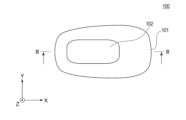
- FIG. 3A is a schematic front view showing an example of an aerosol generating device.
- FIG. 3B is a schematic top view of the aerosol generating device shown in FIG. 3A.
- FIG. 3C is a schematic bottom view of the aerosol generating device shown in FIG. 3A.
- FIG. 4 is a schematic cross-sectional side view showing an example of a tobacco stick.
- FIG. 5 is a cross-sectional view taken along line III-III of the aerosol generating device shown in FIG. 3B.
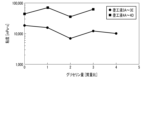
- FIG. 6 is a graph showing the viscosity of the coating liquid.
- FIG. 1 is a schematic cross-sectional view showing an example of a fragrance-carrying component.
- FIG. 2 is a flow chart showing the process of preparing a coating liquid.
- FIG. 3A is
- FIG. 7 is a graph showing the viscosity of the coating liquid.
- FIG. 8 is a graph showing the menthol aroma retention of the coating liquid.
- FIG. 9 is a graph showing the menthol aroma retention of the coating liquid.
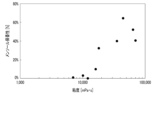
- FIG. 10 is a graph showing the relationship between viscosity and menthol aroma retention.
- FIG. 11 is a graph showing the relationship between viscosity and menthol aroma retention.
- FIG. 12 is a graph showing the transmission spectrum of the coating liquid.
- FIG. 13 is a graph showing the relationship between viscosity and menthol aroma retention.
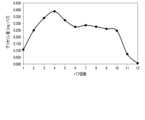
- FIG. 14 is a graph showing the relationship between the number of puffs and the amount of menthol.
- FIG. 15 is a graph showing the relationship between the number of puffs and the amount of glycerin.
- the inventors have newly discovered that when a coating liquid containing low-viscosity hydroxypropyl cellulose, menthol, and glycerin is prepared by the specific process shown in Figure 2, it is possible to prepare a coating liquid that has high storage stability of the flavor despite its low viscosity, and have completed the present invention.
- Fragrance-carrying component of the flavor-generating article (hereinafter, simply referred to as the "fragrance-carrying component") is A component of a flavor generating article;
- the composition is supported on the component and includes particles containing hydroxypropyl cellulose and menthol, the viscosity of a 2% by mass aqueous solution at 20°C being 100 mPa ⁇ s or less, and a fragrance composition containing glycerin as a dispersion medium.
- Flavor-generating articles include flavor inhalers that allow a user to inhale a flavor (eg, tobacco flavor) and smokeless tobacco products that allow a user to inhale a tobacco flavor by inhaling the product directly into the nasal or oral cavity.
- a flavor eg, tobacco flavor
- smokeless tobacco products that allow a user to inhale a tobacco flavor by inhaling the product directly into the nasal or oral cavity.
- a flavor inhaler is any inhaler that contains a flavor source and allows a user to inhale a flavor derived from the flavor source.
- the flavor source contained in a flavor inhaler is preferably a tobacco flavor source.
- Specific examples of flavor inhalers include combustion flavor inhalers that provide a user with a flavor by burning a flavor source; non-combustion heating flavor inhalers (also called Heated Tobacco Sticks) that provide a user with a flavor by heating the flavor source without burning it; and non-heating flavor inhalers that provide a user with a flavor without burning or heating the flavor source.
- Smokeless tobacco is a product that contains a flavor source, and the user can taste the flavor derived from the flavor source by holding the product directly in the nasal or oral cavity.
- the flavor source contained in smokeless tobacco is preferably a tobacco flavor source. Snuff and chewing tobacco are known examples of smokeless tobacco.
- the "constituent member of the flavor-generating article” is a base member for supporting the flavor composition. Therefore, in the following description, the constituent member of the flavor-generating article is also referred to as a "base member.”
- the base member is, for example, a tobacco filler.
- the tobacco filler is a tobacco material that functions as a tobacco flavor source in a flavor-generating article.
- the tobacco filler is, for example, tobacco shreds, a tobacco molded body (e.g., tobacco sheet, tobacco granules), or a combination thereof.
- Tobacco shreds refer to cut pieces of leaf tobacco (dried tobacco leaves) that are ready to be incorporated into a flavor-generating article.
- Tobacco sheet refers to a tobacco molded body or a cut piece thereof formed into a sheet from tobacco materials such as tobacco shreds and tobacco shreds generated at raw material factories and manufacturing plants, such as leaf shreds and shreds.
- Tobacco granules refer to a tobacco molded body formed into granules from tobacco materials such as tobacco shreds and tobacco shreds generated at raw material factories and manufacturing plants, such as leaf shreds and shreds.
- the flavor-carrying component when the base member is a tobacco filler, the flavor-carrying component is referred to as a "flavor-carrying tobacco filler.” Specifically, when the base member is a tobacco molded body, the flavor-carrying component is referred to as a “flavor-carrying tobacco molded body.” Similarly, when the base member is a sheet tobacco, the flavor-carrying component is referred to as a "flavor-carrying sheet tobacco.”
- Figure 1 shows a flavor-carrying sheet tobacco 1, in which a flavor composition 1b is formed on top of the sheet tobacco 1a.
- the sheet tobacco 1a has voids, so in Figure 1, the flavor composition 1b penetrates into the voids in the sheet tobacco 1a.
- the base member may be tobacco paper.
- the tobacco paper is used to wrap the tobacco filler in the flavor inhaler.
- the base member may be a filter.
- the base member may be a filter material (e.g., cellulose acetate fiber, paper, or film) that constitutes a filter, or a plug wrapper that is wrapped around the filter material.
- the fragrance-carrying component is referred to as a "fragrance-carrying filter material.”
- the “fragrance composition” is carried on a base member and includes the following ingredients: Hydroxylpropyl cellulose having a viscosity of a 2% by mass aqueous solution at 20°C of 100 mPa ⁇ s or less; Menthol, and Glycerin.
- Hydroxylpropyl cellulose having a viscosity of 100 mPa ⁇ s or less in a 2% by mass aqueous solution at 20° C.” is also referred to as "low-viscosity hydroxypropyl cellulose.”
- the fragrance composition can be formed by applying a coating liquid containing low-viscosity hydroxypropyl cellulose, menthol, and glycerin to a base member, and drying the base member coated with the coating liquid. Drying can be performed, for example, by leaving the base member coated with the coating liquid at room temperature (e.g., 15 to 25°C). Drying can be performed until the coating liquid becomes solid when observed visually.
- the fragrance composition may be present so as to form a layer on the surface of the component of the flavor-generating product, or, if the surface of the component of the flavor-generating product has irregularities, it may be present only in the concaves.
- the "low-viscosity hydroxyl propyl cellulose" used in the present invention has a viscosity of 100 mPa ⁇ s or less in a 2% by weight aqueous solution at 20°C.
- the hydroxyl propyl cellulose used in the present invention has a viscosity of 50 mPa ⁇ s or less in a 2% by weight aqueous solution at 20°C, preferably 50 mPa ⁇ s or less, more preferably 30 mPa ⁇ s or less, and even more preferably 10 mPa ⁇ s or less.
- the lower limit of this viscosity is not particularly limited, but is, for example, 1.0 mPa ⁇ s.
- the viscosity of a 2% by weight aqueous solution at 20°C refers to the viscosity measured at 20°C and 60 rpm using a B-type viscometer (JIS Z8803:2011).
- Low viscosity hydroxypropyl cellulose is commercially available, for example Celny SSL (viscosity of 2% by weight aqueous solution at 20°C: 2.0-2.9 mPa ⁇ s) (Nippon Soda Co., Ltd.), Celny SL (viscosity of 2% by weight aqueous solution at 20°C: 3.0-5.9 mPa ⁇ s) (Nippon Soda Co., Ltd.), and Celny L (viscosity of 2% by weight aqueous solution at 20°C: 6.0-10.0 mPa ⁇ s) (Nippon Soda Co., Ltd.).
- Celny SSL viscosity of 2% by weight aqueous solution at 20°C: 2.0-2.9 mPa ⁇ s
- Celny SL viscosity of 2% by weight aqueous solution at 20°C: 3.0-5.9 mPa ⁇ s
- Celny L viscosity of 2% by weight aqueous solution
- the low-viscosity hydroxypropyl cellulose is preferably contained in the fragrance composition in an amount of 20 to 70 parts by mass per 100 parts by mass of menthol.
- the low-viscosity hydroxypropyl cellulose is more preferably contained in the fragrance composition in an amount of 30 to 70 parts by mass, and even more preferably 40 to 60 parts by mass per 100 parts by mass of menthol.
- Glycerin is preferably contained in the fragrance composition in an amount of 40 to 120 parts by mass per 100 parts by mass of menthol. Glycerin is more preferably contained in the fragrance composition in an amount of 60 to 110 parts by mass, and even more preferably 80 to 100 parts by mass per 100 parts by mass of menthol.
- the fragrance-carrying component described above can be manufactured by the method described below. That is, according to another aspect, preparing a mixed liquid by mixing hydroxypropyl cellulose having a viscosity of 100 mPa ⁇ s or less at 20°C in a 2% by mass aqueous solution with menthol at a temperature equal to or higher than the melting point of menthol; mixing the mixture with glycerin to prepare a coating liquid; and applying the coating liquid to a component of a flavor-generating article.
- Fig. 2 Preparation process of coating liquid
- Fig. 2 first, low-viscosity hydroxypropyl cellulose and menthol are mixed at a temperature equal to or higher than the melting point of menthol (S1), and then the resulting mixture is mixed with glycerin (S2), thereby preparing the coating liquid.
- S1 melting point of menthol
- S2 glycerin
- the melting point of menthol is approximately 43°C. Therefore, "a temperature equal to or higher than the melting point of menthol” refers to a temperature equal to or higher than 43°C. Therefore, the mixing step (S1) of low-viscosity hydroxypropyl cellulose and menthol can be carried out at a temperature within a range of, for example, 45 to 100°C, preferably 50 to 100°C, and more preferably 60 to 100°C.
- the mixing step (S2) of the mixed liquid and glycerin can be carried out at any temperature, but is preferably carried out at the same temperature as the mixing step (S1).
- the preferred composition of the coating liquid is the same as the preferred composition of the fragrance composition. That is, the low-viscosity hydroxypropyl cellulose is preferably contained in the coating liquid in an amount of 20 to 70 parts by mass per 100 parts by mass of menthol. The low-viscosity hydroxypropyl cellulose is more preferably contained in the coating liquid in an amount of 30 to 70 parts by mass, and even more preferably in an amount of 40 to 60 parts by mass per 100 parts by mass of menthol. The glycerin is preferably contained in the coating liquid in an amount of 40 to 120 parts by mass per 100 parts by mass of menthol. The glycerin is more preferably contained in the coating liquid in an amount of 60 to 110 parts by mass, and even more preferably in an amount of 80 to 100 parts by mass per 100 parts by mass of menthol.
- a "low-viscosity, cloudy coating liquid" is obtained as follows.
- S1 hydroxypropyl cellulose dissolves in menthol.
- S2 the phase of the mixture of hydroxypropyl cellulose and menthol and the phase of glycerin are mixed, and when this is stirred, the mixture of hydroxypropyl cellulose and menthol is dispersed in droplets in glycerin.
- hydroxypropyl cellulose interacts with glycerin at the interface of the droplets, and menthol is present in the droplets of the mixture of hydroxypropyl cellulose and menthol in a state protected by the interaction between hydroxypropyl cellulose and glycerin.
- the "low-viscosity, cloudy coating liquid” is considered to be a colloidal dispersion of particles containing hydroxypropyl cellulose and menthol in glycerin.
- Coating process of coating liquid By coating the above-mentioned coating liquid on a component of the flavor-generating article, a flavor-carrying component can be manufactured. Coating can be performed by any method as long as the coating liquid is applied to the surface of the component of the flavor-generating article. For example, coating can be performed by extruding and adding the coating liquid onto the surface of the component of the flavor-generating article using a slit feeder, or by applying the coating liquid to the surface of the component of the flavor-generating article using a film applicator or the like.
- the coating liquid is applied to the constituent members of the flavor-generating product and then dried and solidified. Once solidified, the coating liquid is called a "flavor composition.”
- the "low-viscosity, cloudy coating liquid” is excellent in that it is easy to apply to the constituent members of a flavor-generating article due to its low viscosity.
- the "low-viscosity, cloudy coating liquid” is excellent in that it has high storage stability of menthol after application to the constituent members of a flavor-generating article.
- the flavor-carrying component manufactured using the "low-viscosity, cloudy coating liquid” is excellent in that it can stably release menthol throughout the puffing period of a flavor inhaler.
- Coating liquid and its manufacturing method are also one aspect of the present invention. That is, according to yet another aspect, there is provided a method for manufacturing a coating liquid for coating a component of a flavor-generating article, comprising the steps of: preparing a mixed liquid by mixing hydroxypropyl cellulose having a viscosity of 100 mPa ⁇ s or less at 20°C in a 2% by mass aqueous solution with menthol at a temperature equal to or higher than the melting point of menthol; and mixing the mixture with glycerin.
- the coating liquid can be produced as described in the section " ⁇ 2-1> Coating liquid preparation process.”
- the above-mentioned coating liquid is characterized in that, when a transmission spectrum is obtained over the wavelength range of 500 to 700 nm using a spectrophotometer, it has a transmittance of 10% or less over the entire wavelength range of 500 to 700 nm (see Example 4 below). In other words, the above-mentioned coating liquid is characterized in that it is cloudy. In addition, as already mentioned, the above-mentioned coating liquid is characterized in that it has a low viscosity.
- Flavor-Generating Article can be incorporated into any flavor-generating article. That is, according to another aspect, there is provided a flavor-generating article including the above-mentioned "flavor-carrying component”.
- the flavor generating article of the present invention has the same configuration as a normal flavor generating article, except that the components of the normal flavor generating article are replaced with the above-mentioned "flavor-carrying components".
- the flavor generating article of the present invention may replace multiple components of the normal flavor generating article (e.g., tobacco filler and filter) with the above-mentioned "flavor-carrying components", or may replace one component of the normal flavor generating article (e.g., tobacco filler) with the above-mentioned "flavor-carrying components”.
- the entire tobacco filler may be replaced with the above-mentioned "flavor-carrying tobacco filler”, or a part of the tobacco filler may be replaced with the above-mentioned "flavor-carrying tobacco filler”.
- flavor-generating products include combustion-type flavor inhalers, non-combustion heating-type flavor inhalers, non-heating-type flavor inhalers, and smokeless tobacco.
- combustion type flavor inhaler is a flavor inhaler that provides a flavor to a user by burning a flavor source such as a tobacco filler (e.g., tobacco shreds or molded tobacco body).
- a tobacco filler e.g., tobacco shreds or molded tobacco body.
- combustion type flavor inhalers include cigarettes, pipes, kiseru, cigars, and cigarillos.
- a "non-combustion heating type flavor inhaler” is a flavor inhaler that provides a flavor to a user by heating a flavor source such as a tobacco filler without burning it.
- heating type flavor inhalers include: A carbon heat source type flavor inhaler that heats a tobacco filler with the combustion heat of a carbon heat source (see, for example, WO2006/073065); An electrically heated flavor inhaler including a tobacco stick containing a tobacco filler and a heating device for electrically heating the tobacco stick (see, for example, WO2010/110226); or a liquid atomization flavor inhaler that generates an aerosol by heating a liquid aerosol source with a heater, and inhales a flavor derived from the tobacco filler together with the aerosol (see, for example, WO2015/046385). etc.
- non-heated flavor inhaler is a flavor inhaler that provides a user with flavor without burning or heating a flavor source such as a tobacco filler.
- a non-heated flavor inhaler is a non-heated tobacco flavor inhaler that includes an inhaler body with an air flow passage that circulates air by inhalation, and tobacco granules arranged in the air flow passage (see, for example, WO2012/023515).
- “Smokeless tobacco” is a product that allows users to enjoy the tobacco flavor by placing the product directly into the nasal or oral cavity.
- the former are called nasal tobacco products, and the latter are called oral tobacco products.
- An example of the former is snuff, and an example of the latter is chewing tobacco.
- flavor-carrying component can be incorporated into a flavor inhaler.
- the flavor inhaler is more preferably a non-combustion heating type flavor inhaler.
- a tobacco stick including a flavor source containing the above-mentioned "flavor-containing tobacco filler" (e.g., a flavor-containing tobacco molded body) and a wrapping paper wrapped around the flavor source; and a heater for heating the flavor source contained in the tobacco stick.
- the tobacco stick may further include a filter on the downstream side of the flavor source (i.e., on the mouth side).
- a tobacco stick comprising a flavor source containing a tobacco filler, a tip plug arranged on the upstream side of the flavor source (i.e., the side opposite to the mouthpiece) and containing the above-mentioned "flavor-carrying filter material", and a wrapping paper wrapped around the flavor source and the tip plug;
- a non-combustion heating type flavor inhaler including the flavor source contained in the tobacco stick and a heater for heating the end plug.
- FIG. 3A is a schematic front view of an example of the aerosol generating device.
- Figure 3B is a schematic top view of the aerosol generating device shown in Figure 3A.
- Figure 3C is a schematic bottom view of the aerosol generating device shown in Figure 3A.
- Figure 4 is a schematic side cross-sectional view of an example of a tobacco stick.
- Figure 5 is a cross-sectional view taken along line III-III of the aerosol generating device shown in Figure 3B.
- the drawings may include an X-Y-Z Cartesian coordinate system.
- the Z axis faces vertically upward
- the X-Y plane is arranged to cut the aerosol generating device 100 horizontally
- the Y axis is arranged to extend from the front to the back of the aerosol generating device 100.
- the Z axis can also be referred to as the insertion direction of the tobacco stick contained in the chamber 150 of the atomizing unit 130 described below, or the axial direction of the chamber 150.
- the X axis is a direction perpendicular to the Y axis and the Z axis, and the X axis and the Y axis can also be referred to as the radial direction perpendicular to the axial direction of the chamber 150, or the radial direction of the chamber 150.
- the aerosol generating device 100 is configured to generate an aerosol containing a flavor by heating a tobacco stick having a flavor source that includes the above-mentioned "flavor-carrying tobacco filler.”
- the aerosol generating device 100 has an outer housing 101 (corresponding to an example of a housing), a slide cover 102, and a switch unit 103.
- the outer housing 101 constitutes the outermost housing of the aerosol generating device 100 and has a size that fits in the user's hand. When the user uses the flavor inhaler, the user can hold the aerosol generating device 100 in his/her hand and inhale the aerosol.
- the outer housing 101 may be formed by assembling multiple members.
- the outer housing 101 is made of resin, for example, and in particular, may be formed of polycarbonate (PC), ABS (Acrylonitrile-Butadiene-Styrene) resin, PEEK (Polyetheretherketone) or a polymer alloy containing multiple types of polymers, or a metal such as aluminum.
- PC polycarbonate
- ABS Acrylonitrile-Butadiene-Styrene
- PEEK Polyetheretherketone
- a polymer alloy containing multiple types of polymers or a metal such as aluminum.
- the outer housing 101 has an opening (not shown) for receiving a tobacco stick, and the sliding cover 102 is slidably attached to the outer housing 101 to close this opening.
- the sliding cover 102 is configured to be movable along the outer surface of the outer housing 101 between a closed position (position shown in Figures 3A and 3B) in which the opening of the outer housing 101 is closed, and an open position (position shown in Figure 5) in which the opening is open.
- a user can manually operate the sliding cover 102 to move the sliding cover 102 between the closed position and the open position. This makes it possible to permit or restrict access of tobacco sticks to the inside of the aerosol generating device 100.
- the switch unit 103 is used to switch the operation of the aerosol generating device 100 on and off.
- a user can insert a tobacco stick into the aerosol generating device 100 and operate the switch unit 103 to supply power from a power source (see reference numeral 121 in FIG. 5) to a heater (see reference numeral 140 in FIG. 5), thereby heating the tobacco stick without burning it.
- the switch unit 103 may be a switch provided outside the outer housing 101, or may be a switch located inside the outer housing 101. When the switch is located inside the outer housing 101, the switch is indirectly pressed by pressing the switch unit 103 on the surface of the outer housing 101. In this example, an example in which the switch of the switch unit 103 is located inside the outer housing 101 will be described.
- the aerosol generating device 100 may further have a terminal (not shown).
- the terminal may be an interface that connects the aerosol generating device 100 to, for example, an external power source. If the power source provided in the aerosol generating device 100 is a rechargeable battery, connecting the external power source to the terminal allows the external power source to pass current through the power source and charge the power source. Also, connecting a data transmission cable to the terminal may enable data related to the operation of the aerosol generating device 100 to be transmitted to an external device.
- FIG. 4 is a schematic side cross-sectional view of an example of a tobacco stick 200.
- the aerosol generating device 100 and the tobacco stick 200 form a flavor inhaler.
- the tobacco stick 200 has a smokable article 201, a tubular member 204, a hollow filter portion 206, and a filter portion 205.
- the smokable article 201 is wrapped in a first wrapping paper 202.
- the tubular member 204, hollow filter portion 206, and filter portion 205 are wrapped in a second wrapping paper 203 that is different from the first wrapping paper 202.
- the second wrapping paper 203 also wraps a portion of the first wrapping paper 202 that wraps the smokable article 201. This connects the tubular member 204, hollow filter portion 206, and filter portion 205 to the smokable article 201.
- the second wrapping paper 203 may be omitted, and the tubular member 204, hollow filter portion 206, and filter portion 205 may be connected to the smokable article 201 using the first wrapping paper 202.
- a lip release agent 207 is applied to the outer surface of the second wrapping paper 203 near the end on the filter portion 205 side to make it easier for the user to release their lips from the second wrapping paper 203.
- the portion of the tobacco stick 200 to which the lip release agent 207 is applied functions as the mouthpiece of the tobacco stick 200.
- the smokable article 201 contains the above-mentioned "flavor-carrying tobacco filler” as a flavor source.
- the "flavor-carrying tobacco filler” may be used alone as a flavor source for a heated flavor inhaler, or may be mixed with a tobacco filler that is typically used in heated flavor inhalers and used as a flavor source.
- the flavor-carrying tobacco filler is, for example, a flavor-carrying tobacco molded body.
- the flavor-carrying tobacco molded body is, for example, a flavor-carrying sheet tobacco.
- the first wrapping paper 202 that wraps the smokable article 201 may be a breathable sheet member.
- the tubular member 204 may be a paper tube or a hollow filter.
- the tobacco stick 200 includes the smokable article 201, the tubular member 204, the hollow filter portion 206, and the filter portion 205, but the configuration of the tobacco stick 200 is not limited to this.
- the hollow filter portion 206 may be omitted, and the tubular member 204 and the filter portion 205 may be disposed adjacent to each other.
- FIG. 5 is a cross-sectional view taken along line III-III of the aerosol generating device 100 shown in FIG. 3B.
- an inner housing 110 (corresponding to an example of a housing) is provided inside the outer housing 101 of the aerosol generating device 100.
- the inner housing 110 is made of resin, for example, and may be formed of polycarbonate (PC), ABS (Acrylonitrile-Butadiene-Styrene) resin, PEEK (Polyetheretherketone), or a polymer alloy containing multiple types of polymers, or a metal such as aluminum. From the viewpoint of heat resistance and strength, the inner housing 110 is preferably made of PEEK.
- a power supply unit 120 and an atomization unit 130 are provided in the internal space of the inner housing 110.
- the power supply unit 120 has a power supply 121.
- the power supply 121 may be, for example, a rechargeable battery or a non-rechargeable battery.
- the power supply 121 is electrically connected to the atomization unit 130. This allows the power supply 121 to supply power to the atomization unit 130 so as to appropriately heat the tobacco stick 200.
- the atomization section 130 has a metallic chamber 150 (corresponding to an example of a cylindrical section) that extends in the insertion direction (Z-axis direction) of the tobacco stick 200, a heater 140 that covers part of the chamber 150, a heat insulating section 132, and a substantially cylindrical insertion guide member 134 (corresponding to an example of a guide section) that abuts against the opening of the chamber 150.
- the chamber 150 is configured to surround the periphery of the tobacco stick 200.
- the heater 140 is configured to include a heating section that contacts the outer peripheral surface of the chamber 150 and heats the tobacco stick 200 inserted into the chamber 150.
- a bottom member 136 (corresponding to an example of an abutment portion) is provided at the bottom of the chamber 150.
- the bottom member 136 abuts against the tobacco stick 200 inserted into the chamber 150 in the insertion direction of the tobacco stick 200, and can function as a stopper to position the tobacco stick 200.
- the chamber 150 and the bottom member 136 form a storage portion that stores at least a portion of the tobacco stick 200.
- the bottom member 136 can be formed from a resin material, for example.
- the bottom member 136 has an uneven surface with which the tobacco stick 200 abuts, and can define a first air flow path that can supply air to the air intake of the tobacco stick 200 (i.e., communicates with the tobacco stick 200 stored in the storage portion).
- the bottom member 136 is made of resin, for example, and may be made of polycarbonate (PC), ABS (Acrylonitrile-Butadiene-Styrene) resin, PEEK (Polyether Ether Ketone), a polymer alloy containing multiple types of polymers, or a metal such as aluminum. Note that the bottom member 136 is preferably made of a material with low thermal conductivity to prevent heat from being transferred to the insulating portion 132, etc.
- the insulating section 132 is generally cylindrical and is arranged to cover the chamber 150.
- the insulating section 132 may include, for example, an aerogel sheet.
- the insertion guide member 134 is provided between the slide cover 102 in the closed position and the chamber 150.
- the insertion guide member 134 may be made of, for example, a resin, and may be formed in particular from polycarbonate (PC), ABS (Acrylonitrile-Butadiene-Styrene) resin, PEEK (Polyether Ether Ketone), or a polymer alloy containing multiple types of polymers.
- the insertion guide member 134 may be formed from metal, glass, ceramic, or the like. From the viewpoint of heat resistance, it is preferable that the insertion guide member 134 is PEEK.
- the insertion guide member 134 communicates with the outside of the aerosol generating device 100, and guides the insertion of the tobacco stick 200 into the chamber 150 by inserting the tobacco stick 200 into the insertion guide member 134.
- the tobacco stick 200 can be easily inserted into the chamber 150.
- the aerosol generating device 100 further has a first holding part 137 and a second holding part 138 that hold both ends of the chamber 150 and the insulating part 132.
- the first holding part 137 is positioned so as to hold the ends of the chamber 150 and the insulating part 132 on the negative Z-axis side.
- the second holding part 138 is positioned so as to hold the ends of the chamber 150 and the insulating part 132 on the slide cover 102 side (positive Z-axis side).
- a component of a flavor-generating article A fragrance-carrying component of a flavor-generating article, comprising: particles carried on the component, the particles containing hydroxypropyl cellulose and menthol, the viscosity of a 2% by weight aqueous solution at 20°C being 100 mPa ⁇ s or less; and a fragrance composition containing glycerin as a dispersion medium.
- a fragrance-carrying component according to [A1] wherein the viscosity of the hydroxypropyl cellulose is 50 mPa ⁇ s or less, preferably 30 mPa ⁇ s or less, more preferably 10 mPa ⁇ s or less, and even more preferably 6 mPa ⁇ s or less.
- [A4] The fragrance-carrying component according to any one of [A1] to [A3], wherein the hydroxypropyl cellulose is contained in the fragrance composition in an amount of 20 to 70 parts by mass, preferably 30 to 70 parts by mass, more preferably 40 to 60 parts by mass, per 100 parts by mass of the menthol.
- [A5] The fragrance-carrying component according to any one of [A1] to [A4], wherein the glycerin is contained in the fragrance composition in an amount of 40 to 120 parts by mass, preferably 60 to 110 parts by mass, and more preferably 80 to 100 parts by mass, per 100 parts by mass of the menthol.
- [A6] The flavor-carrying component according to any one of [A1] to [A5], wherein the flavor-generating article is a flavor inhaler, preferably a non-combustion heating type flavor inhaler.
- [A7] The flavor-carrying component according to any one of [A1] to [A6], wherein the component of the flavor-generating article is a tobacco filler, a filter, or a tobacco cigarette paper.
- [A8] The flavor-carrying component according to any one of [A1] to [A7], wherein the component of the flavor-generating article is a tobacco molded product, a filter, or a tobacco cigarette paper.
- a flavor-generating article comprising the flavor-carrying component according to any one of [A1] to [A9].
- [C1] A method for preparing a mixed liquid by mixing hydroxypropyl cellulose having a viscosity of 100 mPa ⁇ s or less in a 2% by mass aqueous solution at 20°C with menthol at a temperature equal to or higher than the melting point of menthol; and mixing the mixture with glycerin.
- [C2] The method according to [C1], wherein the coating liquid has a transmittance of 10% or less over the entire wavelength range of 500 to 700 nm.
- [C5] The method according to any one of [C1] to [C4], wherein the hydroxypropyl cellulose is mixed with the menthol in an amount of 20 to 70 parts by mass, preferably 30 to 70 parts by mass, more preferably 40 to 60 parts by mass, per 100 parts by mass of the menthol.
- [C6] The method according to any one of [C1] to [C5], wherein the glycerin is mixed with the mixed liquid in an amount of 40 to 120 parts by mass, preferably 60 to 110 parts by mass, and more preferably 80 to 100 parts by mass, per 100 parts by mass of the menthol.
- [C7] The method according to any one of [C1] to [C6], wherein the temperature equal to or higher than the melting point of menthol is 43° C. or higher, preferably 45 to 100° C., more preferably 50 to 100° C., and even more preferably 60 to 100° C.
- [D1] Producing a coating fluid according to any one of the methods described in [C1] to [C7]; and applying the coating liquid to a component of the flavor-generating article.
- the flavor generating article is a flavor inhaler, preferably a non-combustion heating type flavor inhaler.
- [D3] The method according to [D1] or [D2], wherein the constituent member of the flavor generating article is a tobacco filler, a filter, or a tobacco cigarette paper.
- [D4] The method according to any one of [D1] to [D3], wherein the constituent member of the flavor generating article is a tobacco molded product, a filter, or a tobacco cigarette paper.
- [D5] The method according to any one of [D1] to [D4], wherein the constituent member of the flavor generating article is a tobacco filler, preferably a tobacco molded product, more preferably a sheet tobacco.
- a coating liquid for coating a constituent member of a flavor-generating article comprising particles containing menthol and hydroxypropyl cellulose, the viscosity of a 2% by mass aqueous solution at 20°C being 100 mPa ⁇ s or less, and glycerin as a dispersion medium.
- the coating liquid according to [E1] having a transmittance of 10% or less over the entire wavelength range of 500 to 700 nm.
- [E5] The coating liquid according to any one of [E1] to [E4], wherein the hydroxypropyl cellulose is mixed with the menthol in an amount of 20 to 70 parts by mass, preferably 30 to 70 parts by mass, more preferably 40 to 60 parts by mass, per 100 parts by mass of the menthol.
- [E6] The coating liquid according to any one of [E1] to [E5], wherein the glycerin is mixed with the mixed liquid in an amount of 40 to 120 parts by mass, preferably 60 to 110 parts by mass, and more preferably 80 to 100 parts by mass, per 100 parts by mass of the menthol.
- [E7] A coating fluid produced by the method according to any one of [C1] to [C7].
- Celny SSL (viscosity of 2% by weight aqueous solution at 20°C: 2.0-2.9 mPa ⁇ s) (Nippon Soda Co., Ltd.) was used as low-viscosity hydroxypropyl cellulose (hereinafter referred to as HPC).
- HPC and menthol manufactured by Takasago International Corporation
- HPC and menthol were placed in a beaker in a mass ratio of 2:5 and mixed by stirring in an 80°C water bath. This allowed the HPC to dissolve in the menthol.
- glycerin special grade reagent from Wako Pure Chemical Industries, Ltd.
- Coating Solutions 2A to 2E Coating Solutions 2A to 2E were prepared in the same manner as Coating Liquids 1A to 1E, except that the compositions (mass ratios) of the coating liquids were changed as follows.
- Coating solution 2A HPC: menthol: glycerin 3: 5: 0
- Coating solution 2B HPC: menthol: glycerin 3: 5: 1
- Coating solution 2C HPC: menthol: glycerin 3: 5: 2
- Coating solution 2D HPC: menthol: glycerin 3: 5: 3
- Coating solution 2E HPC: menthol: glycerin 3: 5: 4
- Coating Solutions 3A to 3E were prepared in the same manner as Coating Solutions 1A to 1E, except that a high-viscosity HPC, namely Celny H (viscosity of a 2% by mass aqueous solution at 20°C: 1000 to 4000 mPa ⁇ s) (Nippon Soda Co., Ltd.) was used as the HPC. Since Celny H has a higher viscosity than Celny SSL, the blending amount was reduced to 1/10.
- HPC high-viscosity HPC
- Coating liquid 4A to 4D Coating liquid 4A to 4D
- Coating liquid 4A HPC: menthol: glycerin 0.3: 5: 0
- Coating liquid 5A to 5B Low-viscosity HPC (Celny SSL), menthol, and glycerin were placed in a beaker in a mass ratio of 2:5:4, and simultaneously mixed by stirring in a water bath at 80° C. to prepare Coating Liquid 5A. Further, low-viscosity HPC (Celny SSL), menthol and glycerin were placed in a beaker in a mass ratio of 3:5:4, and simultaneously mixed by stirring in a water bath at 80° C. to prepare Coating Liquid 5B.
- Solid matter was produced in Coating Liquids 5A and 5B. This solid matter is thought to be a reaction product of glycerin and HPC. For this reason, the following viscosity measurements could not be carried out for Coating Liquids 5A and 5B.
- Viscosity Measurement The viscosities (complex viscosities by elastic modulus measurement) of Coating Liquids 1A to 1E, 2A to 2E, 3A to 3E, and 4A to 4D were measured by a rheometer.
- a RheoStress1 rheometer manufactured by Thermo Scientific HAAKE was used as the rheometer. The viscosity was measured at 60°C.
- menthol was extracted from the piece of filter paper and the amount of menthol (M0) was determined by GC-FID analysis.
- menthol aroma retention (M1/M0) x 100
- Example 3 Relationship between viscosity and menthol aroma retention Based on the results of viscosity in Example 1 and the results of menthol aroma retention in Example 2, the relationship between viscosity and menthol aroma retention is shown in a graph. The relationship between viscosity and menthol aroma retention when a low-viscosity HPC is used is shown in Figure 10. The relationship between viscosity and menthol aroma retention when a high-viscosity HPC is used is shown in Figure 11.
- coating liquids capable of exhibiting high menthol aroma retention despite their low viscosity were found.
- the data for coating liquids capable of exhibiting high menthol aroma retention despite their low viscosity are the two data circled in Figure 10.
- the above coating liquid is particularly excellent in that it can achieve both ease of application of the coating liquid and storage stability of the fragrance.
- the viscosity of the coating liquid and the menthol aroma retention of the coating liquid were investigated using the same procedures as in Examples 1 and 2, but using propylene glycol instead of glycerin.
- propylene glycol was used instead of glycerin
- the menthol aroma retention of the coating liquid decreased as the viscosity decreased.
- Example 4 Viscosity of hydroxypropyl cellulose From the results of Example 1, when a low-viscosity HPC (Celny SSL) was used, the viscosity of the coating liquid tended to decrease when the amount of glycerin exceeded a certain value (mass ratio: 2) ( Figure 6). In addition, the coating liquid with such a decreased viscosity was characterized by its appearance being cloudy. It is believed that the cloudy coating liquid is formed by dispersing particles containing HPC and menthol in a colloidal state in glycerin. Therefore, in Example 4, coating liquids were prepared using HPCs of various viscosities, and it was examined whether the above-mentioned clouding occurred.
- Coating solution 10A Celny SSL: Menthol: Glycerin 2:5:4 (Coating solution 10A is the same as coating solution 1E in Example 1)
- Coating solution 10B Celny SSL: Menthol: Glycerin 3: 5: 4 (Coating solution 10B is the same as coating solution 2E in Example 1)
- Coating solution 10C Celny SL: Menthol: Glycerin 1: 5: 3 Coating solution 10D
- Coating Liquid 10G was prepared as follows. Low-viscosity HPC (Celny SSL), menthol, ethanol, propylene glycol, and glycerin were placed in a beaker in a mass ratio of 0.15:5:2.9:0.18:0.18, and mixed simultaneously by stirring in a water bath at 80° C. to prepare Coating Liquid 10G.
- Coating Solutions 10H and 10I were prepared in the same manner as for Coating Solutions 5A and 5B in Example 1. That is, low-viscosity HPC (Cellny SSL), menthol, and glycerin were placed in a beaker in a mass ratio of 2:5:4, and simultaneously mixed by stirring in a water bath at 80° C. to prepare Coating Liquid 10H. Also, low-viscosity HPC (Cellny SSL), menthol, and glycerin were placed in a beaker in a mass ratio of 3:5:4, and simultaneously mixed by stirring in a water bath at 80° C. to prepare Coating Liquid 10I.
- low-viscosity HPC Cellny SSL
- menthol menthol
- glycerin were placed in a beaker in a mass ratio of 3:5:4, and simultaneously mixed by stirring in a water bath at 80° C. to prepare Coating Liquid 10I.
- Coating solution 10A about 6% (cloudy) Coating solution 10B: about 5% (cloudy) Coating solution 10C: about 2% (cloudy) Coating solution 10D: about 2% (cloudy) Coating solution 10E: about 38% (almost transparent) Coating solution 10F: about 49% (almost transparent) Coating solution 10G: Approximately 100% (completely transparent) Coating Liquid 10H: Unmeasurable Coating Liquid 10I: Unmeasurable Tap water (blank): Approximately 100% (completely transparent)
- Solid matter was produced in coating solutions 10H and 10I. This solid matter is thought to be a reaction product of glycerin and HPC. For this reason, transmittance measurements could not be performed on coating solutions 10H and 10I.
- the coating liquid becomes cloudy when Celny SSL (2.0-2.9 mPa ⁇ s), Celny SL (3.0-5.9 mPa ⁇ s), and Celny L (6.0-10.0 mPa ⁇ s) are used as HPCs. From these results, it is believed that the coating liquid becomes cloudy when an HPC having a viscosity of, for example, 100 mPa ⁇ s or less, preferably 50 mPa ⁇ s or less, more preferably 30 mPa ⁇ s or less, and even more preferably 10 mPa ⁇ s or less is used as an HPC.
- Example 5 Relationship between viscosity and menthol aroma retention Example 4 showed that Celny SSL (2.0-2.9 mPa ⁇ s), Celny SL (3.0-5.9 mPa ⁇ s), and Celny L (6.0-10.0 mPa ⁇ s) can be used as HPCs. Therefore, in Example 5, coating solutions of various compositions were prepared using these three types of HPCs, and the relationship between the viscosity of the coating solution and menthol aroma retention was investigated.
- the above coating liquid is particularly excellent in that it can achieve both ease of application of the coating liquid and storage stability of the fragrance.
- Example 6 Inhalation evaluation using a heated flavor inhaler
- a coating liquid was applied to a sheet tobacco to prepare a flavor-supported sheet tobacco, and the prepared flavor-supported sheet tobacco was incorporated into a tobacco stick and an inhalation evaluation was performed.
- [6-1] Preparation of tobacco sticks (example of the present invention) A tobacco filler (sheet tobacco) was extracted from a commercially available tobacco stick (see FIG. 4), and 10 mg of a coating liquid having the following composition (mass ratio) was applied to the sheet tobacco and allowed to cool, thereby producing a flavor-supported sheet tobacco 20A.
- the flavor-supporting sheet tobacco 20A was returned to the original tobacco stick to prepare a tobacco stick 20A.
- Comparative Example In the comparative example, a 100% menthol solution obtained by melting solid menthol was used as the coating liquid. Similarly, 10 mg of this coating liquid was applied to a sheet tobacco and allowed to cool. In this way, a flavor-containing sheet tobacco 20B was produced. The flavor-containing sheet tobacco 20B was returned to the original tobacco stick to produce a tobacco stick 20B.
- the amount of menthol and glycerin in the collected smoke was evaluated by GC measurement (Agilent, 6890 Series GC-FID).
- the example of the present invention was able to release a greater amount of menthol in the latter puffs compared to the comparative example (where a 100% menthol solution was applied). It was also confirmed that a sufficient amount of glycerin was released in the smoke over the entire puff period up to the 10th puff.
- the present invention is not limited to the above-described embodiments, and can be modified in various ways in the implementation stage without departing from the gist of the invention.
- the embodiments may also be implemented in appropriate combination, in which case the combined effects can be obtained.
- the above-described embodiments include various inventions, and various inventions can be extracted by combinations selected from the multiple constituent elements disclosed. For example, if the problem can be solved and an effect can be obtained even if some constituent elements are deleted from all the constituent elements shown in the embodiments, the configuration from which these constituent elements are deleted can be extracted as an invention.
- 1 flavor-carrying sheet tobacco, 1a ... sheet tobacco, 1b ... flavor composition, 100...aerosol generating device, 101...outer housing, 102...slide cover, 103...switch section, 110...inner housing, 120...power supply section, 121...power supply, 130...atomization section, 132...insulation section, 134...insertion guide member, 136...bottom member, 137...first holding section, 138...second holding section, 140...heater, 150...chamber, 200...tobacco stick, 201...smokable article, 202...first cigarette paper, 203...second cigarette paper, 204...cylindrical member, 205...filter section, 206...hollow filter section, 207...lip release agent.
Landscapes
- Chemical & Material Sciences (AREA)
- Chemical Kinetics & Catalysis (AREA)
- Health & Medical Sciences (AREA)
- General Health & Medical Sciences (AREA)
- Toxicology (AREA)
- General Chemical & Material Sciences (AREA)
- Engineering & Computer Science (AREA)
- Materials Engineering (AREA)
- Life Sciences & Earth Sciences (AREA)
- Oil, Petroleum & Natural Gas (AREA)
- Wood Science & Technology (AREA)
- Organic Chemistry (AREA)
- Manufacture Of Tobacco Products (AREA)
Priority Applications (5)
| Application Number | Priority Date | Filing Date | Title |
|---|---|---|---|
| CN202280102457.6A CN120302895A (zh) | 2022-12-23 | 2022-12-23 | 风味产生制品的香料负载构成构件及其生产方法、风味产生制品、涂覆溶液及其生产方法 |
| PCT/JP2022/047723 WO2024134895A1 (ja) | 2022-12-23 | 2022-12-23 | 香味発生物品の香料担持構成部材およびその製造方法、香味発生物品、並びに塗工液およびその製造方法 |
| JP2024565558A JP7849508B2 (ja) | 2022-12-23 | 2022-12-23 | 香味発生物品の香料担持構成部材およびその製造方法、香味発生物品、並びに塗工液およびその製造方法 |
| KR1020257021419A KR20250116080A (ko) | 2022-12-23 | 2022-12-23 | 향미 발생 물품의 향료 담지 구성 부재 및 이의 제조 방법, 향미 발생 물품, 그리고 코팅 용액 및 이의 제조 방법 |
| EP22969276.9A EP4640077A1 (en) | 2022-12-23 | 2022-12-23 | Fragrance-carrying constituent member of flavor-generating article and method for producing same, flavor-generating article, and coating solution and method for producing same |
Applications Claiming Priority (1)
| Application Number | Priority Date | Filing Date | Title |
|---|---|---|---|
| PCT/JP2022/047723 WO2024134895A1 (ja) | 2022-12-23 | 2022-12-23 | 香味発生物品の香料担持構成部材およびその製造方法、香味発生物品、並びに塗工液およびその製造方法 |
Publications (1)
| Publication Number | Publication Date |
|---|---|
| WO2024134895A1 true WO2024134895A1 (ja) | 2024-06-27 |
Family
ID=91587941
Family Applications (1)
| Application Number | Title | Priority Date | Filing Date |
|---|---|---|---|
| PCT/JP2022/047723 Ceased WO2024134895A1 (ja) | 2022-12-23 | 2022-12-23 | 香味発生物品の香料担持構成部材およびその製造方法、香味発生物品、並びに塗工液およびその製造方法 |
Country Status (5)
| Country | Link |
|---|---|
| EP (1) | EP4640077A1 (https=) |
| JP (1) | JP7849508B2 (https=) |
| KR (1) | KR20250116080A (https=) |
| CN (1) | CN120302895A (https=) |
| WO (1) | WO2024134895A1 (https=) |
Citations (9)
| Publication number | Priority date | Publication date | Assignee | Title |
|---|---|---|---|---|
| JPH0775542A (ja) * | 1993-07-13 | 1995-03-20 | Daicel Chem Ind Ltd | たばこフィルターおよびその製造方法 |
| WO2006073065A1 (ja) | 2005-01-06 | 2006-07-13 | Japan Tobacco Inc. | 非燃焼型喫煙物品用炭素質熱源組成物 |
| WO2010110226A1 (ja) | 2009-03-23 | 2010-09-30 | 日本たばこ産業株式会社 | 非燃焼タイプ香味吸引物品 |
| WO2012023515A1 (ja) | 2010-08-20 | 2012-02-23 | 日本たばこ産業株式会社 | タバコフレーバー放出材およびそれを含有する非加熱型タバコフレーバー吸引器 |
| WO2013011899A1 (ja) | 2011-07-15 | 2013-01-24 | 日本たばこ産業株式会社 | 香料担持低吸着性粒子、シガレット用フィルタ、フィルタ付きシガレットおよび香料担持低吸着性粒子の製造方法 |
| JP2014172886A (ja) * | 2013-03-12 | 2014-09-22 | Lion Corp | フィルム状口腔用組成物 |
| WO2015046385A1 (ja) | 2013-09-30 | 2015-04-02 | 日本たばこ産業株式会社 | 非燃焼型香味吸引器及びカプセルユニット |
| WO2021177023A1 (ja) * | 2020-03-04 | 2021-09-10 | 日本たばこ産業株式会社 | たばこ製品の香料担持構成部材、たばこ製品およびこれらの製造方法 |
| JP2023008482A (ja) * | 2021-07-06 | 2023-01-19 | 日本たばこ産業株式会社 | たばこ製品の香味料担持構成部材及びこの製造方法 |
-
2022
- 2022-12-23 JP JP2024565558A patent/JP7849508B2/ja active Active
- 2022-12-23 EP EP22969276.9A patent/EP4640077A1/en active Pending
- 2022-12-23 KR KR1020257021419A patent/KR20250116080A/ko active Pending
- 2022-12-23 CN CN202280102457.6A patent/CN120302895A/zh active Pending
- 2022-12-23 WO PCT/JP2022/047723 patent/WO2024134895A1/ja not_active Ceased
Patent Citations (9)
| Publication number | Priority date | Publication date | Assignee | Title |
|---|---|---|---|---|
| JPH0775542A (ja) * | 1993-07-13 | 1995-03-20 | Daicel Chem Ind Ltd | たばこフィルターおよびその製造方法 |
| WO2006073065A1 (ja) | 2005-01-06 | 2006-07-13 | Japan Tobacco Inc. | 非燃焼型喫煙物品用炭素質熱源組成物 |
| WO2010110226A1 (ja) | 2009-03-23 | 2010-09-30 | 日本たばこ産業株式会社 | 非燃焼タイプ香味吸引物品 |
| WO2012023515A1 (ja) | 2010-08-20 | 2012-02-23 | 日本たばこ産業株式会社 | タバコフレーバー放出材およびそれを含有する非加熱型タバコフレーバー吸引器 |
| WO2013011899A1 (ja) | 2011-07-15 | 2013-01-24 | 日本たばこ産業株式会社 | 香料担持低吸着性粒子、シガレット用フィルタ、フィルタ付きシガレットおよび香料担持低吸着性粒子の製造方法 |
| JP2014172886A (ja) * | 2013-03-12 | 2014-09-22 | Lion Corp | フィルム状口腔用組成物 |
| WO2015046385A1 (ja) | 2013-09-30 | 2015-04-02 | 日本たばこ産業株式会社 | 非燃焼型香味吸引器及びカプセルユニット |
| WO2021177023A1 (ja) * | 2020-03-04 | 2021-09-10 | 日本たばこ産業株式会社 | たばこ製品の香料担持構成部材、たばこ製品およびこれらの製造方法 |
| JP2023008482A (ja) * | 2021-07-06 | 2023-01-19 | 日本たばこ産業株式会社 | たばこ製品の香味料担持構成部材及びこの製造方法 |
Non-Patent Citations (1)
| Title |
|---|
| See also references of EP4640077A1 |
Also Published As
| Publication number | Publication date |
|---|---|
| JP7849508B2 (ja) | 2026-04-21 |
| EP4640077A1 (en) | 2025-10-29 |
| CN120302895A (zh) | 2025-07-11 |
| JPWO2024134895A1 (https=) | 2024-06-27 |
| KR20250116080A (ko) | 2025-07-31 |
Similar Documents
| Publication | Publication Date | Title |
|---|---|---|
| JP7473239B2 (ja) | シガレット | |
| US20240389643A1 (en) | Aerosol generating article and aerosol generating device comprising same | |
| EP3881699A1 (en) | Non-combustion heated smoking article and non-combustion heated smoking system | |
| US11399563B2 (en) | Aerosol-generating article having novel tobacco substrate | |
| EP3881698A1 (en) | Non-combustion-heated smoking product and non-combustion-heated smoking system | |
| EP3949772A1 (en) | Cooling segment, non-combustion heating type flavor inhalation article, method for using non-combustion heating type flavor inhalation article, and non-combustion heating type flavor inhalation system | |
| JP7171910B2 (ja) | 加熱型香味吸引器用香料含有シートおよび加熱型香味吸引器 | |
| JP2025108710A (ja) | タバコ媒質、及びそれを含むエアロゾル生成物品 | |
| EP4201234A1 (en) | Aerosol generating device including a plurality of cartridges | |
| JP7849508B2 (ja) | 香味発生物品の香料担持構成部材およびその製造方法、香味発生物品、並びに塗工液およびその製造方法 | |
| JP7648351B2 (ja) | たばこ充填材およびたばこ製品 | |
| JP7419548B2 (ja) | たばこ充填材、非燃焼加熱型香味吸引器、およびたばこ充填材の製造方法 | |
| WO2025257950A1 (ja) | 香味発生物品の香料担持構成部材、香味発生物品、および塗工液 | |
| KR102789997B1 (ko) | 멘솔과 향미제가 첨가된 카트리지 및 이를 포함하는 에어로졸 생성 시스템 | |
| EP4585072A1 (en) | Smoking article including lyocell tow | |
| US20260101922A1 (en) | Tobacco filler and heat-not-burn flavor inhaler | |
| EP4585062A1 (en) | Smoking article including lyocell tow | |
| EP4585069A1 (en) | Smoking article including lyocell tow | |
| JP7681726B2 (ja) | 漂白されたたばこ残渣およびその製造方法、再生たばこ材料およびその製造方法、並びにたばこ製品 | |
| EP4585071A1 (en) | Smoking article including lyocell tow | |
| RU2787099C1 (ru) | Содержащая ароматизатор пластинка для ингалятора ароматического вещества нагревательного типа и ингалятор ароматического вещества нагревательного типа | |
| WO2023145009A1 (ja) | たばこ充填材および非燃焼加熱型香味吸引器 | |
| WO2024209554A1 (ja) | 香味吸引物品および香味吸引システム | |
| KR20250111713A (ko) | 라이오셀 토우를 포함하는 흡연 물품 | |
| WO2025027700A1 (ja) | 香味成分含有液の製造方法およびたばこ香味液の製造方法 |
Legal Events
| Date | Code | Title | Description |
|---|---|---|---|
| 121 | Ep: the epo has been informed by wipo that ep was designated in this application |
Ref document number: 22969276 Country of ref document: EP Kind code of ref document: A1 |
|
| WWE | Wipo information: entry into national phase |
Ref document number: 2024565558 Country of ref document: JP |
|
| WWE | Wipo information: entry into national phase |
Ref document number: CN2022801024576 Country of ref document: CN Ref document number: 202280102457.6 Country of ref document: CN |
|
| WWE | Wipo information: entry into national phase |
Ref document number: 1020257021419 Country of ref document: KR |
|
| WWP | Wipo information: published in national office |
Ref document number: 202280102457.6 Country of ref document: CN |
|
| WWE | Wipo information: entry into national phase |
Ref document number: 2022969276 Country of ref document: EP |
|
| NENP | Non-entry into the national phase |
Ref country code: DE |
|
| ENP | Entry into the national phase |
Ref document number: 2022969276 Country of ref document: EP Effective date: 20250723 |
|
| WWP | Wipo information: published in national office |
Ref document number: 1020257021419 Country of ref document: KR |
|
| ENP | Entry into the national phase |
Ref document number: 2022969276 Country of ref document: EP Effective date: 20250723 |
|
| ENP | Entry into the national phase |
Ref document number: 2022969276 Country of ref document: EP Effective date: 20250723 |
|
| WWP | Wipo information: published in national office |
Ref document number: 2022969276 Country of ref document: EP |