WO2024122018A1 - リースシステムおよびリース方法 - Google Patents
リースシステムおよびリース方法 Download PDFInfo
- Publication number
- WO2024122018A1 WO2024122018A1 PCT/JP2022/045248 JP2022045248W WO2024122018A1 WO 2024122018 A1 WO2024122018 A1 WO 2024122018A1 JP 2022045248 W JP2022045248 W JP 2022045248W WO 2024122018 A1 WO2024122018 A1 WO 2024122018A1
- Authority
- WO
- WIPO (PCT)
- Prior art keywords
- lease
- leasing
- maintenance
- leased
- operating
- Prior art date
- Legal status (The legal status is an assumption and is not a legal conclusion. Google has not performed a legal analysis and makes no representation as to the accuracy of the status listed.)
- Ceased
Links
Images



Classifications
-
- G—PHYSICS
- G06—COMPUTING OR CALCULATING; COUNTING
- G06Q—INFORMATION AND COMMUNICATION TECHNOLOGY [ICT] SPECIALLY ADAPTED FOR ADMINISTRATIVE, COMMERCIAL, FINANCIAL, MANAGERIAL OR SUPERVISORY PURPOSES; SYSTEMS OR METHODS SPECIALLY ADAPTED FOR ADMINISTRATIVE, COMMERCIAL, FINANCIAL, MANAGERIAL OR SUPERVISORY PURPOSES, NOT OTHERWISE PROVIDED FOR
- G06Q30/00—Commerce
- G06Q30/06—Buying, selling or leasing transactions
- G06Q30/0645—Rental transactions; Leasing transactions
Definitions
- This specification discloses a leasing system and a leasing method.
- Patent Document 1 recognizes equipment with an operating rate below a certain level as idle equipment based on information such as operating status, and if there is a user on the equipment introduction list who wants the equipment, it sends resale inquiry information to the user of the equipment recognized as idle equipment. If this inquiry information is accepted, it is possible to resell the idle equipment to another user and make effective use of it.
- the above-mentioned system aims to optimize leasing content and improve leasing efficiency by making effective use of unused equipment.
- a fixed lease fee is usually set, along with the number of units to be leased at the start of the lease. For this reason, depending on the operating status of the equipment at the leasing destination, the lease fee may be too high or too low, or the number of units to be leased may be too high or too low. For this reason, there is room for further improvement in optimizing the lease content.
- the primary purpose of this disclosure is to optimize the lease content based on the lease situation.
- the lease system of the present disclosure is A leasing system for leasing industrial equipment to a customer, comprising: an acquisition unit that acquires information regarding at least one of an operating status of the industrial equipment at a lease destination and a maintenance status of the industrial equipment; a setting unit that sets a proposed change in lease content by optimizing at least one of a lease fee and a lease quantity of the industrial equipment based on the acquired information; a presentation unit that presents the set change proposal to a customer;
- the gist of the project is to provide the following:
- the lease fee and/or number of leased units are optimized based on information regarding at least one of the operating status and maintenance status of the industrial equipment at the lessee, and a proposed change to the lease content is set and presented to the customer. This makes it possible to optimize the lease content by reflecting the leasing status at the lessee.
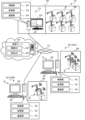
- FIG. 1 is a diagram showing an outline of the configuration of a leasing system 10.
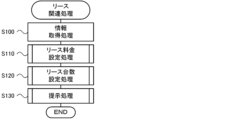
- 11 is a flowchart showing an example of a lease-related process.
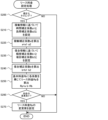
- 11 is a flowchart showing an example of a lease fee setting process.
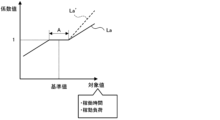
- FIG. 4 is an explanatory diagram showing an example of a correction coefficient setting map.
- FIG. 4 is an explanatory diagram showing an example of a correction coefficient setting map.
- FIG. 13 is an explanatory diagram showing an example of the transition of resale value and unrecovered amount.
- 11 is a flowchart showing an example of a lease number setting process.
- FIG. 13 is an explanatory diagram showing an example of a compatible vehicle number setting map.
- 11 is a flowchart showing an example of a presentation process.
- 10 is a flowchart showing a modified example of a process for setting the number of leased vehicles.
- FIG. 1 is a diagram showing an outline of the configuration of a leasing system 10.
- the leasing system 10 is a system for a leasing company 20 to lease various industrial devices to multiple client companies 30, and is operated by a management server 40 configured on a cloud server, for example.
- An example of an industrial device is a robot R that picks up parts and attaches them to an object.
- the robot R is a vertical multi-joint robot that has multiple links including a tip link to which an end effector or the like is attached, and multiple joints that connect the links so that they can rotate or turn.
- the work content of the robot R may be other work, and the robot R may be a horizontal multi-joint type or a parallel link type.
- the industrial device to be leased is not limited to the robot R, and may be other types of devices.
- the leasing company 20 can store inventory of one or more robots R in the inventory area 28. All of the robots R of the leasing company 20 may be leased, and there may be no inventory of the robot R in the inventory area 28.
- two customer companies 30 customer companies 30A and 30B are illustrated as an example, but one or more may be used.
- the customer company 30 to which the robot R is leased is also referred to as the leasing company.
- the leasing company 20 has a leasing company terminal 21 that exchanges information with the customer terminal 31 of each client company 30 and the management server 40.
- the leasing company terminal 21 has a control unit 22, a memory unit 23, and a communication unit 24.
- the control unit 22 has a CPU, ROM, RAM, etc.
- the memory unit 23 is an HDD, SSD, etc., and stores various application programs and various information.
- the communication unit 24 is connected to the network 12, etc., and communicates with the customer terminal 31 of each client company 30 and the management server 40.
- various instructions from the administrator are input to the leasing company terminal 21 through an input unit 25 such as a keyboard or mouse.
- the leasing company terminal 21 displays various information related to leasing and the results of leasing-related processing performed by the management server 40 on a display unit 26 such as a display.
- the client company 30 has a client terminal (client company terminal) 31 that exchanges information with the management terminal 21 and the management server 40.
- client terminal 31 client company terminal
- One or more leased robots R are placed in a work area 38 in the factory of the client company 30, and work is performed by the robots R.
- the customer terminal 31 also includes a control unit 32, a storage unit 33, and a communication unit 34.
- the control unit 32 has a CPU, ROM, RAM, etc.
- the storage unit 33 is a HDD, SSD, etc., and stores various application programs and various information.
- the communication unit 34 is connected to the network 12, etc., and communicates with the leasing company terminal 21, the management server 40, etc.
- the customer terminal 31 also receives various instructions and various information from employees of the customer company 30, such as workers in the work area 38, via an input unit 35 such as a keyboard or mouse.
- the customer terminal 31 also displays various information related to leasing and the results of leasing-related processing performed by the management server 40 on a display unit 36 such as a display.
- the management server 40 is configured on a well-known cloud server provided in a cloud environment, and manages the entire leasing system 10.
- the management server 40 communicates with the leasing company terminal 21, the customer terminal 31, the leasing robot R, etc. via the network 12, and stores the various information received for each leasing customer company 30.
- the leasing robot R is connected to the network 12 by wire or wirelessly, and transmits information on the operating status (operating information) and information on the maintenance status (maintenance information) to the management server 40.
- the robot R may have a built-in wireless communication function such as a fifth generation mobile communication system (5G) or LPWA (Low Power Wide Area), and may transmit information to the management server 40 using this function.
- 5G fifth generation mobile communication system
- LPWA Low Power Wide Area
- the robot R may be connected to the network 12 via the LAN of the leasing customer company 30, and transmit information to the management server 40 via the LAN.
- the management server 40 stores the operation information of each robot R in an operation database (operation DB) 42 for each client company 30, and stores the maintenance information of each robot R in a maintenance database (maintenance DB) 44 for each client company 30.
- the management server 40 also stores information on the number of robots R leased, the number in stock, the lease fee, the lease status, and the like for each client company 30.
- the number of robots R in stock for each client company 30 is calculated by subtracting the number of robots R leased under lease from the total number of robots R registered in the management server 40 for each client company 30.
- the leasing company terminal 21 of the leasing company 20 can access various information managed by the management server 40 via the network 12, and can temporarily store the accessed information in the storage unit 23.
- the lease company 20 when creating a lease contract, the lease company 20 obtains information from the client company 30 on the content of the work to be performed by the robot R, such as the work object, production quantity, required production capacity, and production period. Next, based on the obtained information, the lease company 20 sets each item of the robot R to be leased, such as the model and specifications, the number of units to be leased, and the lease period. Note that the lease company 20 is not limited to setting each item, and the client company 30 may set each item. Next, the lease company 20 determines the lease fee based on each item and the client company 30's leasing track record, creates a lease contract, and presents it to the client company 30.
- the lease company 20 concludes a lease contract with the client company 30 and leases the set number of robots R. Note that the content of the concluded lease contract is uploaded from the lease company terminal 21 to the management server 40 and stored. Alternatively, the lease contract may be created and stored on the management server 40.
- the operating status of the robot R at the lessee may change significantly. For example, a significant reduction in production may occur, resulting in an excessive number of robots initially leased, and the robot R may be left idle or with its operating time reduced. In that case, the customer company 30 will continue to pay more lease fees than necessary. Alternatively, a significant increase in production may occur, resulting in an excessive number of robots initially leased, and the robot R may be placed under an excessive load, such as increasing the operating time of the robot R to increase production volume or increasing the operating speed of the robot R to increase production capacity. In addition to production reductions and increases, excessive loads may also be placed on the robot R due to changes in the content of the work.
- the maintenance status of the robot R differs depending on the customer company 30, and the degree of wear and tear of each part of the robot R may differ.
- maintenance work may not be performed at an appropriate frequency or for the necessary items.
- the leasing company 20 may incur higher-than-expected costs for repairing or replacing parts of the robot R, or the resale value may fall more than expected, making it difficult to make a profit from the lease fee paid at the time of the contract.
- FIG. 2 is a flowchart showing an example of lease-related processing.
- the management server 40 performs information acquisition processing (S100), lease fee setting processing (S110), lease number setting processing (S120), and presentation processing (S130).
- the management server 40 may perform the lease-related processing periodically or based on instructions from the lease company 20.
- the management server 40 may display a menu screen that can be executed by the lease system 10 on the lease company terminal 21, and perform the processing of FIG. 2 when an instruction to optimize the lease contents is received on the menu screen. Similarly, the management server 40 may perform the lease-related processing upon receiving an instruction from the customer company 30.
- the information acquisition process of S100 is a process for acquiring operation information and maintenance information of the robot R.
- the management server 40 acquires, for example, the operation time and operation load of the robot R as the operation information.
- the management server 40 receives the operation start time and operation end time of the robot R from the robot R, calculates the operation time for each operation day, and stores it in the operation DB 42.
- the management server 40 receives, for example, the torque value of each drive motor that drives each joint of the robot R from the robot R as a load value indicating the operation load, and stores it in the operation DB 42.
- the load value indicating the operation load is not limited to the torque value, and may be the current value of each drive motor or the output value of the robot R.
- the management server 40 may store the load values received from the robot R at every predetermined time in the operation DB 42 in chronological order during the operation of the robot R, or may calculate a representative value such as the maximum value or average value of the load value for each operation day and store it in the operation DB 42.
- the management server 40 also acquires the maintenance frequency and maintenance items of the robot R as maintenance information. For example, when maintenance work is performed by a worker or the like and the maintenance record is entered into the operation panel of the robot R, an application on the worker's mobile terminal, the customer terminal 31, or the like, the management server 40 receives the maintenance record, calculates the maintenance frequency, and stores it in the maintenance DB 44. When entering the maintenance record, the user is prompted to enter the items that have been carried out out of multiple items, such as applying grease to each part of the robot R, checking for looseness in the joints, tightening the bolts of each part, and checking the connections of the connectors. The management server 40 then receives the entered items and the number of items, and stores, for example, the number of items in the maintenance DB 44 as a maintenance item.
- the management server 40 acquires the necessary operation information and maintenance information from the operation DB 42 and maintenance DB 44. If multiple robots R are leased to one client company 30, the management server 40 may store operation information and maintenance information for each robot R and acquire operation information and maintenance information for each robot R. The management server 40 may also directly store each piece of information transmitted in chronological order in the operation DB 42 and maintenance DB 44, and acquire the necessary operation information and maintenance information by calculating the necessary values (representative values, etc.) in S100.
- the lease fee setting process in S110 is executed based on the flowchart shown in FIG. 3.
- the management server 40 determines whether it is time to optimize the lease fee (S200), and if it determines that it is not time to optimize, ends the lease fee setting process.
- the optimization timing is the timing when enough information has been acquired by executing the information acquisition process in S100 to grasp changes in the robot R's situation.
- the optimization timing is set appropriately, for example, every few weeks or every few months.
- FIG. 4 is an explanatory diagram showing an example of a correction coefficient setting map.
- the horizontal axis represents the target value, which is the operating time or operating load
- the vertical axis represents the coefficient value, with the time correction coefficient a1 and load correction coefficient a2 being set based on the setting line La.
- the setting line La is set so that when the target value is within a reference range A that includes the reference value (reference time, reference load), the coefficient value is set to 1, and when the target value is outside the reference range A, the coefficient value is set to a larger value the larger the target value is, and the coefficient value is set to a smaller value the smaller the target value is.
- the time correction coefficient a1 is set to a value of 1 when the operating time is within the reference range A, and is set to a larger value the longer the operating time is outside the reference range A, and is set to a smaller value the shorter the operating time is outside the reference range A.
- the load correction coefficient a2 is set to a value of 1 when the operating load is within the reference range A, and is set to a larger value the higher the operating load is outside the reference range A, and is set to a smaller value the lower the operating load is outside the reference range A. Note that it is not necessary to use the same setting line La for the time correction coefficient a1 and the load correction coefficient a2.
- a setting line La' that increases the coefficient value to a greater extent when the value is greater than the reference range A may be used. Furthermore, outside the reference range A, the coefficient value may be kept constant even if the target value becomes smaller.
- FIG. 5 is an explanatory diagram showing an example of a correction coefficient setting map.
- the horizontal axis is the target value, which is the maintenance frequency or maintenance item (number of items)
- the vertical axis is the coefficient value, with the frequency correction coefficient b1 and item correction coefficient b2 being set based on the setting line Lb.
- the setting line Lb is set so that when the target value is within a reference range A that includes the reference value (reference frequency, reference number of items), the coefficient value is set to 1, and when the target value is outside the reference range A, the larger the target value is, the smaller the coefficient value is, and the smaller the target value is, the larger the coefficient value is.
- the frequency correction coefficient b1 is set to a value of 1 when the maintenance frequency is within the reference range A, and is set to a larger value as the maintenance frequency is lower outside the reference range A, and is set to a smaller value as the maintenance frequency is higher.
- the item correction coefficient b2 is set to a value of 1 when the maintenance item is within the reference range A, and is set to a larger value as the maintenance items are fewer outside the reference range A, and is set to a smaller value as the maintenance items are more. Note that the frequency correction coefficient b1 and the item correction coefficient b2 are not limited to using the same setting line Lb.
- a setting line Lb' that increases the degree of increase when the value is smaller than the reference range A may be used. Also, outside the reference range A, the coefficient value may be constant even if the target value increases. Also, for information that places more importance on the impact of the operation information and maintenance information, a correction coefficient setting map may be used in which a setting line is determined so that the degree of increase in the coefficient value increases.
- the basic fee Rb is determined in advance for each type (model) of the robot R as a lease fee when the operating time, operating load, maintenance frequency, and maintenance items are set to their respective reference values.
- the management server 40 determines whether the calculated lease fee Rp has changed from the current lease fee Rp (S260), and if it determines that there has been no change, ends the lease fee setting process.
- the management server 40 may determine whether there has been a change based on whether the difference between the calculated lease fee Rp and the current lease fee Rp is equal to or greater than a predetermined amount.
- the lease fee Rp presented to the customer may be set in stages, and the management server 40 may determine whether there has been a change based on whether the calculated lease fee Rp has become a different stage from the current lease fee Rp. If the management server 40 determines that there is a change, it sets a proposed change to the lease fee Rp (S270) and ends the lease fee setting process. If there are multiple leasees, the management server 40 executes S210 to S270 for each lease.
- FIG. 6 is an explanatory diagram showing an example of the transition of the resale value and the unrecovered amount.
- the horizontal axis is the time period and the vertical axis is the amount.
- Line L1 shows the resale value of the robot R.
- Line L2 shows the unrecovered amount of the robot R.
- the unrecovered amount is, for example, the amount remaining after subtracting the accumulated amount of the lease fee Rp from the acquisition price of the robot R.
- the lease fee Rp (basic fee Rb) is set so that the unrecovered amount falls below the resale value at a relatively early timing T1 (L1>L2).
- the resale value of the robot R may fall more than expected (L1') and fall below the unrecovered amount (L1' ⁇ L2).
- the lease fee setting process increases the lease fee Rp depending on the situation, so that the unrecovered amount can be quickly reduced (L2') and the unrecovered amount can be made to fall below the resale value (L1'>L2').
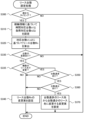
- the lease number setting process in S120 is executed based on the flowchart shown in FIG. 7.
- the management server 40 judges whether it is time to optimize the lease number (S300), and if it is not, ends the lease number setting process.
- the optimization timing in S300 is the same as S200 in the lease fee setting process, but it may be a different timing. If the management server 40 judges in S300 that it is time to optimize, it sets the time-corresponding number n1, which is the lease number Rn corresponding to the operating time, and the load-corresponding number n2, which is the lease number Rn corresponding to the operating load, based on the operation information acquired in S100 (S310). Next, the management server 40 calculates the optimized lease number Rn based on the time-corresponding number n1 and the load-corresponding number n2 (S320).
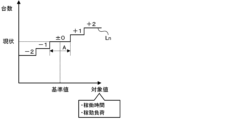
- Figure 8 is an explanatory diagram showing an example of a compatible number setting map.
- the horizontal axis is the target value of operating time or operating load
- the vertical axis is the number of units
- the time compatible number n1 and the load compatible number n2 are set based on the setting line Ln.
- the setting line Ln sets the compatible number to ⁇ 0 units when the operating time or operating load is within the reference range A.
- the setting line Ln is set so that the number increases or decreases in stages, so that the number increases as the operating time or operating load increases (+1 unit, +2 units) and decreases as the operating time or operating load decreases (-1 unit, -2 units).
- the management server 40 calculates the lease number Rn by adding the larger number of the time compatible number n1 and the load compatible number n2 to the current number, for example.
- the management server 40 may calculate the number of leased units Rn by adding the average number of units of the time-responsive number n1 and the load-responsive number n2 to the current number.
- the time-responsive number n1 and the load-responsive number n2 are not limited to using the same setting line Ln. For the number of units that is more sensitive to the impact, a setting line that increases in degree when the number is greater than the reference range A may be used.
- the setting line Ln is not limited to a stepwise increase or decrease in the number of units, but may be a coefficient that increases or decreases in a non-stepwise manner.
- the management server 40 may calculate the number of leased units Rn by multiplying the reference number of leased units by the set coefficient, rounding the fractional part of the value to an integer value.
- the management server 40 determines whether the calculated number of leased units Rn has changed from the current number of leased units Rn (S330), and if it determines that there has been no change, it ends the lease number setting process. On the other hand, if the management server 40 determines that there has been a change, it sets a proposed change to the number of leased units Rn (S340) and ends the lease number setting process. Note that if there are multiple leasees, the management server 40 executes S310 to S340 for each leasee.
- the presentation process of S130 is executed based on the flowchart shown in FIG. 9.
- the management server 40 determines whether or not a proposed change to the lease fee Rp has been set in the lease fee setting process (S400), and if it determines that a proposed change to the lease fee Rp has been set, presents the proposed change to the lease fee Rp to the leasing company 20 and the leasing customer company 30 (S410). If the management server 40 determines that a proposed change to the lease fee Rp has not been set, it skips S410.
- the management server 40 determines whether or not a proposed change to the number of leased units Rn has been set in the leased unit number setting process (S420), and if it determines that a proposed change has been set, it presents the proposed change to the number of leased units Rn to the leasing company 20 and the leasing customer company 30 (S430) and ends the presentation process. If the management server 40 determines that a proposed change to the number of leased units Rn has not been set, it skips S430 and ends the presentation process.
- the management server 40 displays the proposed changes to the lease fee Rp and the number of leased units Rn on the display unit 26 of the leasing company terminal 21.
- the management server 40 also displays the proposed changes to the lease fee Rp and the number of leased units Rn on the display unit 36 of the customer terminal 31.
- the management server 40 may present the proposed changes by displaying the proposed changes in an application on a mobile terminal owned by an employee of the leasing company 20 or the customer company 30.
- the leasing company 20 may decide the timing of presenting the proposed changes to the customer company 30 and whether or not to present them.
- the leasing company 20 changes the lease contract based on the proposed changes and continues leasing the robot R with the changed contents. This makes it possible to optimize the lease fee Rp and the number of leased units Rn. Furthermore, the leasing company 20 may not only present a proposed change to the lease fee Rp or the number of leased units Rn, but may also explain the proposed change to the client company 30 and discuss the proposed change with the client company 30. Furthermore, if the client company 30 accepts a proposed change that is a partial revision of the proposed change, the leasing company 20 may amend the lease contract based on the proposed revision and continue leasing the robot R with the revised content.
- the management server 40 that executes S100 of the leasing-related processing of this embodiment corresponds to the acquisition unit
- the management server 40 that executes S110 and S120 of the leasing-related processing corresponds to the setting unit
- the management server 40 that executes S130 of the leasing-related processing corresponds to the presentation unit. Note that this embodiment also clarifies an example of the leasing method of this disclosure by explaining the leasing-related processing.
- a proposed change is set that optimizes the lease fee Rp and the number of leased units Rn based on the operation information and maintenance information of the robot R at the leasing company, and the proposed change is presented to the customer. This makes it possible to optimize the lease contents by reflecting the operation status and maintenance status of the robot R at the leasing company.
- the management server 40 also acquires operating time and operating load as operating information, and calculates the lease fee Rp so that the longer the operating time outside of the reference range A, the higher the operating load, and the higher the lease fee Rp tends to be. Therefore, the operating time and operating load can be reflected in the calculation of the lease fee Rp, and the lease content can be optimized.
- the management server 40 also acquires maintenance frequency and maintenance items as maintenance information, and calculates the lease fee Rp so that the lower the maintenance frequency outside of the reference range A, the higher the lease fee Rp tends to be. Therefore, the maintenance frequency and items can be reflected in the calculation of the lease fee Rp, and the lease content can be optimized.
- the management server 40 also acquires the operating time and operating load as operating information, and calculates the number of leased units Rn so that the number increases as the operating time increases and as the operating load increases. Therefore, the operating time and operating load can be reflected in the calculation of the number of leased units Rn, making it possible to optimize the lease contents.
- the lease fee Rp is calculated so that it tends to increase the longer the operating time outside the reference range A and the higher the operating load, but this is not limited to this.
- the lease fee Rp may be calculated so that it tends to increase the longer the operating time and the higher the operating load, without setting a fixed range for a coefficient such as the reference range A.
- the management server 40 may acquire at least one of the operating time and the operating load as the operating information.
- the lease fee Rp is calculated so that it tends to be higher the lower the maintenance frequency outside the reference range A and the fewer the maintenance items, but this is not limited to this.
- the lease fee Rp may be calculated so that it tends to be higher the lower the maintenance frequency and the fewer the maintenance items, without setting a fixed range for a coefficient such as the reference range A.
- the management server 40 may acquire at least one of the maintenance frequency and the maintenance items as the maintenance information.
- the lease fee Rp is calculated by acquiring the operation information and the maintenance information, but this is not limited to this, and either one of the operation information or the maintenance information may be acquired to calculate the lease fee Rp.
- both the lease fee Rp and the number of leased units Rn are optimized, but this is not limited to this, and only one of them may be performed.
- one of S110 and S120 in FIG. 2 may be processed and the other process may be omitted.
- one of S400, S410 and S420, S430 in FIG. 9 may be processed and the other process may be omitted.
- the management server 40 may store only one of the operation DB 42 and the maintenance DB 44. Note that since maintenance information is not necessary for calculating the number of leased units Rn, when only the number of leased units Rn is optimized, the management server 40 may only acquire the operation information.
- a change proposal is set to simply increase or decrease the lease quantity Rn, but this is not limited to this.
- a change proposal to change the lease destination of the robot R may be set.
- FIG. 10 is a flowchart showing a lease quantity setting process of a modified example.
- the same process numbers are used for the same processes as in the embodiment, and descriptions are omitted.
- the management server 40 determines in S330 that there is a change in the lease quantity Rn, it determines whether there is a change at multiple lessees (S335).
- the management server 40 determines that there is no change at multiple lessees, it sets a change proposal for the lease quantity Rn for one lessee in S340 and ends the lease quantity setting process.
- the management server 40 determines whether there have been changes at multiple lease parties, it determines whether there are any lease parties with an excessive number of leased units Rn, that is, a number that is greater than the calculated number of leased units Rn (S350). If the management server 40 determines that there are any lease parties with an excessive number of leased units, it further determines whether there are any lease parties with an insufficient number of leased units Rn, that is, a number that is less than the calculated number of leased units Rn (S360). If the management server 40 determines that there are no lease parties with an excessive number of leased units in S350 or that there are no lease parties with an insufficient number of leased units in S360, it proceeds to S340.
- the management server 40 determines in S350 that there is a lease party with an excess of units and in S360 that there is a lease party with an under-number of units, it sets a change proposal to change the lease party with an excess of units to one with an under-number of units (S370), and ends the lease number setting process.
- a change proposal to reduce the number of leased units is presented to the lease party with an excess of units, as in S430, and a change proposal to increase the number of leased units is presented to the lease party with an under-number of units, as in S430.
- both lease parties (client company 30) agree to these change proposals, the leasing company 20 changes the lease party of the robot R from one with an excess of units to one with an under-number of units.
- the management server 40 can adjust the number of leased units between lessees who have an excess of leased units and lessees who have an under-leased number of leased units, thereby optimizing the number of leased units.
- the leasing company 20 can transfer robots R from a lessee who has an excess of leased units due to, for example, being in the off-season to a lessee who has an under-leased number of leased units due to being in the busy season.
- one or more robots R can be transferred from customer company 30A to customer company 30B, or one or more robots R can be transferred from customer company 30B to customer company 30A.
- the leasing company 20 can meet the needs of lessees who have an under-leased number of leased units without increasing the inventory of robots R.
- the management server 40 performs the lease-related processing for one leasing company 20, but this is not limited thereto, and the management server 40 may perform the lease-related processing for multiple leasing companies 20. That is, the leasing system 10 may accept applications for use from multiple leasing companies 20 and manage the lease contents for each leasing company 20. In this case, the management server 40 may store various information such as operation information and maintenance information for each leasing company 20, perform the lease-related processing for each leasing destination of the leasing company 20, and present a proposal for changing the lease contents. In addition, the management server 40 (one entity) stores various information (manages the database) and performs the lease-related processing (processing to optimize the lease contents), but this is not limited to being performed by one entity, and may be performed by different entities.
- the operation information and maintenance information may be stored on a cloud server, and the leasing company terminal 21 may acquire the operation information and maintenance information from the cloud server and perform the lease-related processing.
- the management server 40 is configured on a cloud server, but this is not limited thereto, and the leasing company terminal 21 may function as the management server, that is, the leasing system 10 may be managed by the leasing company terminal 21. In that case, the leasing company terminal 21 can store various information such as operation information and maintenance information and execute leasing-related processing.
- This disclosure can be used in technical fields such as leasing industrial equipment.
Landscapes
- Business, Economics & Management (AREA)
- Accounting & Taxation (AREA)
- Finance (AREA)
- Development Economics (AREA)
- Economics (AREA)
- Marketing (AREA)
- Strategic Management (AREA)
- Physics & Mathematics (AREA)
- General Business, Economics & Management (AREA)
- General Physics & Mathematics (AREA)
- Engineering & Computer Science (AREA)
- Theoretical Computer Science (AREA)
- Management, Administration, Business Operations System, And Electronic Commerce (AREA)
Priority Applications (2)
| Application Number | Priority Date | Filing Date | Title |
|---|---|---|---|
| PCT/JP2022/045248 WO2024122018A1 (ja) | 2022-12-08 | 2022-12-08 | リースシステムおよびリース方法 |
| JP2024562514A JPWO2024122018A1 (https=) | 2022-12-08 | 2022-12-08 |
Applications Claiming Priority (1)
| Application Number | Priority Date | Filing Date | Title |
|---|---|---|---|
| PCT/JP2022/045248 WO2024122018A1 (ja) | 2022-12-08 | 2022-12-08 | リースシステムおよびリース方法 |
Publications (1)
| Publication Number | Publication Date |
|---|---|
| WO2024122018A1 true WO2024122018A1 (ja) | 2024-06-13 |
Family
ID=91379043
Family Applications (1)
| Application Number | Title | Priority Date | Filing Date |
|---|---|---|---|
| PCT/JP2022/045248 Ceased WO2024122018A1 (ja) | 2022-12-08 | 2022-12-08 | リースシステムおよびリース方法 |
Country Status (2)
| Country | Link |
|---|---|
| JP (1) | JPWO2024122018A1 (https=) |
| WO (1) | WO2024122018A1 (https=) |
Citations (4)
| Publication number | Priority date | Publication date | Assignee | Title |
|---|---|---|---|---|
| JP2006252567A (ja) * | 2001-10-18 | 2006-09-21 | Omron Corp | 知識活用装置とそれに用いられる状態空間ナビゲータ、およびそれを用いたビジネスモデル |
| JP2007114854A (ja) * | 2005-10-18 | 2007-05-10 | Orix Auto Corp | 車両賃借管理システム、方法及びコンピュータプログラム |
| JP4995996B1 (ja) * | 2012-03-30 | 2012-08-08 | 住友三井オートサービス株式会社 | リース車両最適台数算出システム |
| WO2019187065A1 (ja) * | 2018-03-30 | 2019-10-03 | 本田技研工業株式会社 | 作業機のレンタル管理装置、作業機のレンタル管理方法、作業機のレンタル管理プログラム |
-
2022
- 2022-12-08 JP JP2024562514A patent/JPWO2024122018A1/ja active Pending
- 2022-12-08 WO PCT/JP2022/045248 patent/WO2024122018A1/ja not_active Ceased
Patent Citations (4)
| Publication number | Priority date | Publication date | Assignee | Title |
|---|---|---|---|---|
| JP2006252567A (ja) * | 2001-10-18 | 2006-09-21 | Omron Corp | 知識活用装置とそれに用いられる状態空間ナビゲータ、およびそれを用いたビジネスモデル |
| JP2007114854A (ja) * | 2005-10-18 | 2007-05-10 | Orix Auto Corp | 車両賃借管理システム、方法及びコンピュータプログラム |
| JP4995996B1 (ja) * | 2012-03-30 | 2012-08-08 | 住友三井オートサービス株式会社 | リース車両最適台数算出システム |
| WO2019187065A1 (ja) * | 2018-03-30 | 2019-10-03 | 本田技研工業株式会社 | 作業機のレンタル管理装置、作業機のレンタル管理方法、作業機のレンタル管理プログラム |
Also Published As
| Publication number | Publication date |
|---|---|
| JPWO2024122018A1 (https=) | 2024-06-13 |
Similar Documents
| Publication | Publication Date | Title |
|---|---|---|
| Östlin et al. | Product life-cycle implications for remanufacturing strategies | |
| US8666516B2 (en) | Advanced planning system | |
| CN111915254A (zh) | 一种适用于汽车售后配件的库存优化控制方法和系统 | |
| AU2004202606A1 (en) | Electric-power-generating-facility operation management support system, electric-power-generating-facility operation management support method, and program for executing operation management support method on computer | |
| US20110161189A1 (en) | Extreme Capacity Management in an Electronic Marketplace Environment | |
| KR102345145B1 (ko) | 고객정보 연계 및 활용에 의한 생산물류 erp 자동화 시스템 | |
| KR20210082921A (ko) | 생산물류 erp 자동화 시스템의 협력사 및 고객사의 상호연결관계 파라미터의 설정방법 | |
| JP2003167615A (ja) | 生産計画立案装置および方法 | |
| JP2019040483A (ja) | 電力取引策定装置 | |
| CN113222405A (zh) | 一种建筑行业从业者日常工作的在线管理和控制平台 | |
| CN112766530B (zh) | 生产准备及生产启动作业辅助装置、系统及方法 | |
| Hanany et al. | The transshipment fund mechanism: Coordinating the decentralized multilocation transshipment problem | |
| WO2024122018A1 (ja) | リースシステムおよびリース方法 | |
| JP7392725B2 (ja) | 交渉システム、交渉方法および交渉プログラム | |
| JP2004192473A (ja) | 電力資源取引システム及び電力資源取引サーバ | |
| JP2010176272A (ja) | サプライチェーンの効率化支援方法 | |
| CN114386906A (zh) | 一种数据处理方法、装置、电子设备和存储介质 | |
| JP2000210845A (ja) | 生産管理装置及び生産管理方法 | |
| KR20200129254A (ko) | 네트워크상의 장비 유지보수 서비스 방법 및 시스템 | |
| Perdomo-Rivera | A framework for a decision support model for supply chain management in the construction industry | |
| JP2002099598A (ja) | 機械及び機械部品の残存価値算出システムおよび残存価値算出方法 | |
| CN114648271A (zh) | 基于社区团购模式的物流数据处理方法、装置及设备 | |
| JP4162920B2 (ja) | 生産計画確定期間算出システム、方法およびその方法をコンピュータに実行させるプログラム | |
| JP2002024438A (ja) | 機械の保守契約管理システムおよび保守契約管理方法 | |
| WO2025220189A1 (ja) | マーケットシステムおよび発注促進方法 |
Legal Events
| Date | Code | Title | Description |
|---|---|---|---|
| 121 | Ep: the epo has been informed by wipo that ep was designated in this application |
Ref document number: 22967866 Country of ref document: EP Kind code of ref document: A1 |
|
| WWE | Wipo information: entry into national phase |
Ref document number: 2024562514 Country of ref document: JP |
|
| NENP | Non-entry into the national phase |
Ref country code: DE |
|
| 122 | Ep: pct application non-entry in european phase |
Ref document number: 22967866 Country of ref document: EP Kind code of ref document: A1 |