WO2024122012A1 - データ収集システム - Google Patents
データ収集システム Download PDFInfo
- Publication number
- WO2024122012A1 WO2024122012A1 PCT/JP2022/045221 JP2022045221W WO2024122012A1 WO 2024122012 A1 WO2024122012 A1 WO 2024122012A1 JP 2022045221 W JP2022045221 W JP 2022045221W WO 2024122012 A1 WO2024122012 A1 WO 2024122012A1
- Authority
- WO
- WIPO (PCT)
- Prior art keywords
- sensor terminal
- management node
- terminal
- information
- metadata
- Prior art date
- Legal status (The legal status is an assumption and is not a legal conclusion. Google has not performed a legal analysis and makes no representation as to the accuracy of the status listed.)
- Ceased
Links
Images




Classifications
-
- H—ELECTRICITY
- H04—ELECTRIC COMMUNICATION TECHNIQUE
- H04L—TRANSMISSION OF DIGITAL INFORMATION, e.g. TELEGRAPHIC COMMUNICATION
- H04L69/00—Network arrangements, protocols or services independent of the application payload and not provided for in the other groups of this subclass
- H04L69/16—Implementation or adaptation of Internet protocol [IP], of transmission control protocol [TCP] or of user datagram protocol [UDP]
- H04L69/168—Implementation or adaptation of Internet protocol [IP], of transmission control protocol [TCP] or of user datagram protocol [UDP] specially adapted for link layer protocols, e.g. asynchronous transfer mode [ATM], synchronous optical network [SONET] or point-to-point protocol [PPP]
-
- H—ELECTRICITY
- H04—ELECTRIC COMMUNICATION TECHNIQUE
- H04Q—SELECTING
- H04Q9/00—Arrangements in telecontrol or telemetry systems for selectively calling a substation from a main station, in which substation desired apparatus is selected for applying a control signal thereto or for obtaining measured values therefrom
Definitions
- This disclosure relates to sensing data collection in the Internet of Things (IoT).
- IoT Internet of Things
- Non-Patent Document 1 reports a method that uses LLDP (Link Layer Discovery Protocol, see Non-Patent Document 3 for example).
- Non-Patent Document 2 data related to the sensing data
- metadata data related to the sensing data
- Cameras are used that wake up from a sleep state and begin capturing images when a person or other object approaches. In this way, if sensing data can be acquired when an event occurs, the power consumption of the sensor terminal can be reduced. If multiple sensor terminals related to the event start operating when an event occurs, more information related to the event can be acquired.
- the purpose of this disclosure is to enable multiple sensor terminals to work together when an event occurs.
- the present disclosure relates to a data collection system that collects sensing data detected by a secondary sensor terminal and a main sensor terminal, which have different detection targets, into a management node.
- the secondary sensor terminal detects its own detection target, it transmits an event occurrence notification using an extension area of the layer 2 communication protocol.
- the main sensor terminal executes the operation determined by instructions from the management node.
- the management node executes the data collection method of the present disclosure. Specifically, when the management node receives an event occurrence notification that a detection target has been detected by the secondary sensor terminal using an extension area of the layer 2 communication protocol, it issues an instruction to the primary sensor terminal in response to the event occurrence notification.
- the action specified in the instruction may be the initiation of detection in the main sensor terminal.
- the main sensor terminal may be woken up from a sleep state when it receives the instruction.
- the main sensor terminal may be a camera terminal that captures images.
- the action specified in the instruction may be to add a marker to the captured video data.
- the detection target of the secondary sensor terminal includes the approach of an object, including a person or an object.
- the secondary sensor terminal detects that an object, including a person or an object, has approached the device itself. This detection causes the secondary sensor terminal to send an event occurrence notification.
- This disclosure makes it possible for multiple sensor terminals to work together when an event occurs.
- FIG. 1 is a diagram illustrating a data collection system according to the present disclosure.
- FIG. 2 is a diagram illustrating a terminal of a data collection system according to the present disclosure.
- FIG. 2 is a diagram illustrating a management node of a data collection system according to the present disclosure.
- 1 is a diagram illustrating a frame transmitted from a terminal to a management node. FIG. An example of terminal arrangement is shown.
- FIG. 1 is a diagram illustrating a data collection system according to the present disclosure.
- FIG. 1 is a diagram illustrating a data collection system according to the present disclosure.
- the data collection system 301 is a data collection system that performs communication from a terminal 11 to a network device 12 by utilizing an extension area of a standardized communication protocol (such as LLDP, HTIP, IEEE802.11, etc.),
- the terminal 11 stores the sensing data detected by the sensor device in an area of the frame defined by the communication protocol, which is different from the area for storing the metadata, and transmits the data to the network device 12.
- the network device 12 transfers the frame to the management node 13,
- the management node 13 is characterized in that it associates the sensing data with the metadata and stores them based on information for identifying the terminal 11 that is written in the frame.
- the data collection network 15 is a network that connects the terminals 11 that exist within a specific range to the management node 13.
- the data collection network 15 is, for example, a local area network (LAN), a field area network (FAN), an IoT area network, etc.
- LAN local area network
- FAN field area network
- IoT area network IoT area network
- FIG. 2 is a diagram for explaining the terminal 11.
- the terminal 11 is, for example, an IoT sensor terminal that senses an observation target and generates sensing data.
- the terminal 11 has a sensor device 11a, a sensing data storage processing unit 11b, a device information storage processing unit 11c, a communication protocol operation unit 11d1 , metadata detection units ( 11e1 , 11e2 , 11e3 , ...), and a metadata storage processing unit 11f.
- the sensor device 11a senses an object to be observed and acquires sensing data (main data).
- the sensing data may be, for example, temperature, images, acceleration, sound, light, CO2, etc.
- the device information storage processing unit 11c collects device information of the observed target (e.g., the device manufacturer name, model name, model number, etc.) and stores the information in a specified position of the frame (an area that can be used for unique purposes, such as an "extension area” or "optional area” specified by the protocol).
- the sensing data storage processing unit 11b stores the sensing data from the sensor device 11a in a specified position of the frame (such as the payload portion defined by the protocol).
- the sensing data storage processing unit 11b may process the sensing data before storing it in the frame, for example by converting it into a shortened code and storing it, or by splitting it into multiple frames and storing them (fragmentation), so that it conforms to the format/restrictions of the frame's unique extension area.
- the sensing data storage processing unit 11b can arbitrarily set the timing for storing the sensing data in the frame.
- the storage timing can be each time the sensing data is updated, or the sensing data can be stored not sequentially but after it has been accumulated for a certain period of time.
- the sensing data storage processing unit 11b can store a record (log) of the sensing data or the results of specific calculations/statistical processing in the frame.
- the type of sensing data stored in the frame and the storage timing may be fixed or variable.
- the type of sensing data and the storage timing may be dynamically changed by the judgment of the terminal 11 itself or an instruction from the management node 13.
- the frame transmission period may be fixed or variable.
- the frame transmission period may be dynamically changed based on the judgment of the terminal 11 itself or an instruction from the management node 13.
- the metadata detection unit 11e acquires information (metadata) other than device information.
- Information other than device information is, for example, location information of the detection target, time information, person, object, or event information, and other information.
- the present invention does not limit the information other than device information to these.
- the metadata detection unit 11e has a location information detection unit 11e 1 , a time detection unit 11e 2 , a person, object, or event detection unit 11e 3 , and other detection units.
- the location information detection unit 11e 1 is, for example, a GPS, an acceleration sensor, a gyro sensor, or an RSSI receiver for Wi-Fi signals, BLE (Bluetooth Low Energy) beacon signals, etc.
- the location metadata detected by the location information detection unit 11e 1 is information about a location acquired from a GPS signal, a BLE beacon signal, radio wave information of wireless communication, radio wave information of non-communication (television, radio, radio clock, other noise, etc.), power information, visible light information, sound wave information, vibration information, acceleration information, or other location metadata source.
- the time detection unit 11e2 is, for example, an information receiver from GPS or NTP (Network Time Protocol).
- the time metadata detected by the time detection unit 11e2 is information about time acquired from a GPS signal, information from the NTP, or other time metadata sources.
- the person, object, and event detection unit 11e 3 is a receiver that receives, for example, information from a BLE beacon (carried by a person), a smartphone carried by a person, or information from image analysis results.
- the person, object, or event metadata detected by the person, object, and event detection unit 11e 3 is information about a person, object, or event obtained from a BLE beacon carried by a person, information from a smartphone carried by a person, information from image analysis results, or other current event metadata sources.
- Other metadata detected by the detection unit includes information regarding the network configuration of the data collection network 15.
- the metadata detection unit 11e may detect all of the multiple detection targets, or may detect any one of them.
- the metadata storage processing unit 11f stores the data detected by the metadata detection unit 11e as metadata in an extension area or an option area in the frame set by the communication protocol.
- the metadata storage processing unit 11f can store metadata in the control frame of an IEEE 804.11 wireless LAN.
- various metadata are stored in the "Vendor Specific” area, which is an extension area of a Probe Request frame.
- various metadata are stored in the "Vendor Specific” area, which is an extension area of a Probe Response frame.
- the metadata storage processing unit 11f may process the metadata before storing it in the frame, for example by converting it into a shortened code and storing it, or by splitting it and storing it in multiple frames (fragmentation), so that it conforms to the format/restrictions of the frame's unique extension area.
- the metadata storage processing unit 11f can arbitrarily set the timing for storing metadata in a frame.
- the storage timing can be each time the metadata is updated, or the metadata can be stored not sequentially but after it has been accumulated for a certain period of time.
- the metadata storage processing unit 11f can store a record (log) of the metadata or the results of specific calculations/statistical processing in the frame.
- the type of metadata stored in the frame and the storage timing may be fixed or variable.
- the type of metadata and the storage timing may be dynamically changed at the discretion of the terminal 11 itself or in response to an instruction from the management node 13.
- the communication protocol operation unit 11d 1 transmits a frame in which sensing data and device information are stored in a predetermined area and metadata is stored in an extension area or an option area to the network device 12 using a lightweight and standardized communication protocol such as LLDP or HTIP (Home network Topology Identifying Protocol).
- the communication protocol of the frame in which the sensing data is stored and the communication protocol of the frame in which the device information is stored may be the same or different.
- the metadata storage processing unit 11f may store the metadata in a frame of one of the communication protocols (a frame in which the sensing data is stored or a frame in which the device information is stored) or in a frame of both communication protocols (a frame in which the sensing data is stored and a frame in which the device information is stored).
- the terminal 11 also has a function of operating according to instructions from the management node 13, etc. Specifically, the terminal 11 has an instruction interpretation unit 11g, and when the terminal itself changes the BLE beacon signal or metadata information (information to be transmitted, radio wave intensity, transmission frequency, etc.) according to instructions from the management node 13, the terminal transmits the information to the outside.
- the terminal 11 When transmitting information using the same protocol as communication with the network device 12, the terminal 11 operates the communication protocol operation unit 11d1.
- the terminal 11 When transmitting information using a protocol different from that for communication with the network device 12, the terminal 11 has a communication protocol operation unit 11d2 in addition to the communication protocol operation unit 11d1, and operates the communication protocol operation unit 11d2 .
- the terminal 11 itself is a beacon signal source for other terminals to grasp metadata.
- the terminal 11 may be a beacon signal source for identifying location metadata, or a beacon terminal carried by a worker to identify nearby people.
- the network device 12 is, for example, a network switch, a wireless access point, a wireless repeater, etc.
- the network device 12 sends the frames uploaded from the lower data collection network 15 to the management node 13 as is.
- the network device 12 may have a metadata processing unit (metadata detection unit 11e and metadata storage processing unit 11f) that the terminal 11 has. Even if the network device 12 does not have the sensor device 11a, it can add metadata such as its own unique information such as its own MAC address and a connection port to a frame sent from the terminal 11 and transfer the frame to the management node 13. If the network device 12 has a metadata processing section, it becomes possible to grasp the logical connection from the management node 13 to the terminal 11, and a more accurate logical/physical network management map can be created. In other words, even if the network device 12 is a network switch (switching hub) or a wireless repeater that does not have layer 3 or higher functions, this technology operates at layer 2, making it possible to manage and understand the connections between network devices, including the network
- the communication protocol operation unit 13a receives frames in which sensing data and metadata are stored from the terminal 11 and the network device 12.
- the information processing unit 12b extracts the following sensing data, device information, and metadata from the received frames, and organizes them in the information storage unit 13c based on information that identifies the individual terminal 11 (e.g., MAC address).
- the management node 13 refers to metadata related to a location and stores the main data acquired at the same location or within a certain area in the format of [location metadata, main data]. [supplement] Further details on location metadata. Like GPS information, there are cases where the information has become direct location metadata at the time of sensing by the terminal 11.
- FIG. 4 is a diagram explaining a frame 41 transmitted from the terminal 11 to the management node 13.
- the network device 12 is not shown in FIG. 4.
- the frame 41 is a layer 2 communication frame such as an Ethernet (registered trademark) frame or a Wi-Fi communication frame.
- the frame 41 is composed of a logical identifier 41a of the communication device such as a MAC address, a source and destination identifier 41b such as an IP address, an area 41c in which sensing data such as temperature and images are stored, and an extension area 41d in which metadata is stored.
- the identifier 41b and area 41c form a layer 3 communication packet.
- the management node 13 for example, links the MAC address of the logical identifier 41a with the location metadata of the extension area 41d to [MAC address, location metadata], and links the MAC address of the logical identifier 41a with the installer metadata of the extension area 41d to [MAC address, installer metadata], and organizes them in the information storage unit 13c.
- the data collection system 301 can acquire network configuration information, device information, sensing data, and metadata of terminals and devices using a communication protocol that does not require high performance.
- (Embodiment 2) 5 shows an example of terminal arrangement.
- the system of this embodiment includes camera terminals C1 to C8 that capture images and function as terminals 11, and human presence sensor terminals T1 to T13 that detect the approach of people.
- the present disclosure includes terminals 11 with different sensor types.
- the camera terminals C1 to C8 function as primary sensor terminals
- the human presence sensor terminals T1 to T13 function as secondary sensor terminals.
- the camera terminals C1 to C8 and the human presence sensor terminals T1 to T13 are sensor terminals with limited resources, such as battery-powered.
- workers wear lightweight devices (small battery-powered devices such as BLE beacons, smartphones, and smartwatches) and move around the warehouse.
- human sensor terminals T1 to T13 detect the position and status of the workers (moving, stopped), and camera terminals C1 to C8 capture images of the workers.
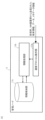
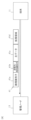
- FIGS. 6 and 7 are diagrams illustrating the data collection system 302 of this embodiment.
- the sensor terminals are a human presence sensor terminal 11T and a camera terminal 11C.
- the sensor device 11a provided in the human presence sensor terminal 11T is any sensor capable of detecting a person, such as an infrared detection device.
- the sensor device 11a provided in the camera terminal 11C is a camera device.
- the higher-level management node 14 comprises a data/metadata collection unit 14a that collects various information stored in the management node 13, an information processing unit 14b that processes the various information collected by the data/metadata collection unit 14a, and an information storage unit 14c.
- the information processing unit 14b comprises a position information calculation unit 14ba that calculates the positions of the human sensor terminal 11T and the camera terminal 11C, and an instruction unit 14bc that issues instructions to the management node 13 and the sensor terminal 11.
- the human presence sensor terminal 11T which is a secondary sensor terminal, detects an event that is the detection target of the device itself, it wakes up from sleep. Immediately after waking up from sleep, the human presence sensor terminal 11T promptly sends an event occurrence notification. At this time, the human presence sensor terminal 11T stores the event occurrence notification in the extension area of the layer 2 communication frame.
- the human presence sensor terminal T8 shown in FIG. 5 stores an event occurrence notification indicating that a person has been detected in the extension area of the layer 2 communication frame and transmits it to the management node 13. In this embodiment, by using a layer 2 communication frame, event occurrence notification can be sent with low latency.
- the management node 13 When the management node 13 receives an event occurrence notification from the human sensor terminal T8, it issues an instruction to the camera terminal 11C associated with the human sensor terminal T8.
- the camera terminals C3, C5, and C8, which have location metadata close to that of the human sensor terminal T8, can be exemplified.
- the selection of the camera terminals C3, C5, and C8 can be performed in advance for each human sensor terminal 11T by the position information calculation unit 14ba.
- the management node 13 acquires in advance from the instruction unit 14bc that the camera terminals 11C near the human sensor terminal T8 are the camera terminals C3, C5, and C8, and issues instructions to the camera terminals C3, C5, and C8 based on this.
- instructions are not issued to other unrelated camera terminals 11C, and the camera terminals 11C can be put into sleep mode when not needed, thereby saving power consumption of the camera terminals 11C.
- the camera terminal 11C When the camera terminal 11C receives an instruction from the management node 13, it wakes up from sleep mode and starts capturing images.
- the instruction arrives with low latency, making it possible to start capturing images quickly. This makes it possible to perform detailed analysis later, improving the value of the data.
- Camera terminal 11C transmits the video data obtained by capturing images to management node 13.
- management node 13 in this embodiment can obtain video data from camera terminals C3, C5, and C8 shown in FIG. 5. This allows video data from multiple angles, where capturing images is started quickly, to be accumulated, thereby increasing the value of the data.
- the timing at which the camera terminal 11C transmits the video data may be real-time, but the present disclosure is not limited to this.
- the camera terminal 11C may transmit the captured video data to at least one of the management node 13 and the upper management node 14 upon receiving an upload instruction or streaming instruction from the upper management node 14 connected above the management node 13.
- the camera terminal 11C corresponding to the human sensor terminal 11T may be stored in advance in the information storage unit 13c, but the present disclosure is not limited to this.
- the human sensor terminal T8 may store the location where the human sensor terminal T8 detected a person in the extension area 41d of the layer 2 communication frame as location metadata together with an event occurrence notification.
- the position information calculation unit 14ba selects the camera terminal 11C corresponding to the location metadata, and the instruction unit 14bc gives instructions to the corresponding camera terminal 11C.
- the detection result from the human presence sensor terminal 11T is used as a trigger to start imaging by the camera terminal 11C.
- This makes it possible to constantly capture images of the worker from multiple angles.
- an event occurrence notification is sent using the extension area 41d of the layer 2 communication protocol, so that imaging can be started promptly in the camera terminals C3, C5, and C8 immediately after the event occurs. Therefore, even if the monitored subject is moving at high speed, this disclosure makes it possible to quickly start capturing image data from multiple angles immediately after the event occurs. Furthermore, because instructions are not given to unnecessary camera terminals 11C, it is possible to reduce power consumption of camera terminals 11C when and where they are not needed.
- an example has been shown in which the instruction from the management node 13 is to start imaging, but the present disclosure is not limited to this.
- an instruction to add a marker may be given instead of starting imaging. This makes it possible to add markers to the video data captured by the camera terminals C3, C5, and C8 shown in FIG. 5. This makes it easier to trace back a desired event from the vast amount of accumulated video data.
- the detection result from the human presence sensor terminal 11T is used as a trigger for the camera terminal 11C to start capturing images, but it is not limited to the human presence sensor terminal 11T, and it may be detection of the proximity of an object including a person or an object, or the occurrence of one or more arbitrary events.
- arbitrary metadata strong impact, sound, change, etc.
- each terminal 11 can detect may be used as an arbitrary trigger in an arbitrary sensor terminal.
- the above-mentioned terminal 11 and management node 13 can also be realized by a computer and a program, and the program can be recorded on a recording medium or provided via a network.
- Terminal 11T Human sensor terminal 11C: Camera terminal 11a: Sensor device 11b: Sensing data storage processing unit 11c: Device information storage processing unit 11d1, 11d2: Communication protocol operation unit 11e, 11e1, 11e2, 11e3, ...: Metadata detection unit 11f: Metadata storage processing unit 11g: Instruction interpretation unit 12: Network device 12A: Access point 13: Management node 13a: Communication protocol operation unit 13b: Information processing unit 13c: Information storage unit 14: Upper management node 14a: Data/metadata collection unit 14ba: Position information calculation unit 14bc: Instruction unit 14c: Information storage unit 15: Data collection network 41: Frame 41a: Logical identifier 41b: Source/destination identifier 41c: Main data area 41d: Extension area 301-302: Data collection system
Landscapes
- Engineering & Computer Science (AREA)
- Computer Networks & Wireless Communication (AREA)
- Computer Security & Cryptography (AREA)
- Signal Processing (AREA)
- Telephonic Communication Services (AREA)
Priority Applications (2)
| Application Number | Priority Date | Filing Date | Title |
|---|---|---|---|
| JP2024562508A JPWO2024122012A1 (https=) | 2022-12-08 | 2022-12-08 | |
| PCT/JP2022/045221 WO2024122012A1 (ja) | 2022-12-08 | 2022-12-08 | データ収集システム |
Applications Claiming Priority (1)
| Application Number | Priority Date | Filing Date | Title |
|---|---|---|---|
| PCT/JP2022/045221 WO2024122012A1 (ja) | 2022-12-08 | 2022-12-08 | データ収集システム |
Publications (1)
| Publication Number | Publication Date |
|---|---|
| WO2024122012A1 true WO2024122012A1 (ja) | 2024-06-13 |
Family
ID=91379019
Family Applications (1)
| Application Number | Title | Priority Date | Filing Date |
|---|---|---|---|
| PCT/JP2022/045221 Ceased WO2024122012A1 (ja) | 2022-12-08 | 2022-12-08 | データ収集システム |
Country Status (2)
| Country | Link |
|---|---|
| JP (1) | JPWO2024122012A1 (https=) |
| WO (1) | WO2024122012A1 (https=) |
Citations (7)
| Publication number | Priority date | Publication date | Assignee | Title |
|---|---|---|---|---|
| JP2012242991A (ja) * | 2011-05-18 | 2012-12-10 | Nissan Motor Co Ltd | 移動体監視装置及び移動体の監視方法 |
| JP2014216663A (ja) * | 2013-04-22 | 2014-11-17 | 三菱電機ビルテクノサービス株式会社 | 映像データ送信装置及び映像データ管理システム |
| JP2017076938A (ja) * | 2015-10-16 | 2017-04-20 | キヤノン株式会社 | 情報処理装置 |
| JP2019050452A (ja) * | 2017-09-07 | 2019-03-28 | キヤノン株式会社 | 制御装置、制御方法、プログラム、及び監視システム |
| WO2019176519A1 (ja) * | 2018-03-12 | 2019-09-19 | ソニー株式会社 | サーバ装置、基地局、および端末装置、並びに通信システム |
| WO2021166261A1 (ja) * | 2020-02-21 | 2021-08-26 | 日本電信電話株式会社 | データ収集システム及びデータ収集方法 |
| WO2022149250A1 (ja) * | 2021-01-08 | 2022-07-14 | 日本電信電話株式会社 | データ収集装置、センサ端末、メタデータ収集システム、メタデータ収集方法、及びプログラム |
-
2022
- 2022-12-08 WO PCT/JP2022/045221 patent/WO2024122012A1/ja not_active Ceased
- 2022-12-08 JP JP2024562508A patent/JPWO2024122012A1/ja active Pending
Patent Citations (7)
| Publication number | Priority date | Publication date | Assignee | Title |
|---|---|---|---|---|
| JP2012242991A (ja) * | 2011-05-18 | 2012-12-10 | Nissan Motor Co Ltd | 移動体監視装置及び移動体の監視方法 |
| JP2014216663A (ja) * | 2013-04-22 | 2014-11-17 | 三菱電機ビルテクノサービス株式会社 | 映像データ送信装置及び映像データ管理システム |
| JP2017076938A (ja) * | 2015-10-16 | 2017-04-20 | キヤノン株式会社 | 情報処理装置 |
| JP2019050452A (ja) * | 2017-09-07 | 2019-03-28 | キヤノン株式会社 | 制御装置、制御方法、プログラム、及び監視システム |
| WO2019176519A1 (ja) * | 2018-03-12 | 2019-09-19 | ソニー株式会社 | サーバ装置、基地局、および端末装置、並びに通信システム |
| WO2021166261A1 (ja) * | 2020-02-21 | 2021-08-26 | 日本電信電話株式会社 | データ収集システム及びデータ収集方法 |
| WO2022149250A1 (ja) * | 2021-01-08 | 2022-07-14 | 日本電信電話株式会社 | データ収集装置、センサ端末、メタデータ収集システム、メタデータ収集方法、及びプログラム |
Also Published As
| Publication number | Publication date |
|---|---|
| JPWO2024122012A1 (https=) | 2024-06-13 |
Similar Documents
| Publication | Publication Date | Title |
|---|---|---|
| Vattapparamban et al. | Indoor occupancy tracking in smart buildings using passive sniffing of probe requests | |
| US10952041B2 (en) | Control device and method for processing a service using a plurality of sensor devices in a distributed manner while suppressing a communication load | |
| JP2017514335A (ja) | 複数のネットワーク・インターフェースのための多重rf無線支持を有するネットワーク・レンジ・エクステンダ | |
| CN106643888A (zh) | 基于6LoWPAN的楼宇环境监测系统 | |
| US20180049127A1 (en) | Automatic uploading method and portable information capturing device capable of automatic uploading | |
| CN106717068B (zh) | 一种nan设备之间的距离测量方法及nan设备 | |
| JP2013187703A (ja) | 通信装置、通信装置の制御方法、プログラム | |
| WO2024122012A1 (ja) | データ収集システム | |
| US12389306B1 (en) | Transmitting announcement messages between network devices and building network connectivity graphs | |
| JP6614782B2 (ja) | 通信装置、制御方法、及びプログラム | |
| JP2020188299A (ja) | 通信装置、通信装置の制御方法およびプログラム | |
| WO2024195018A1 (ja) | 移動体監視システム及び方法 | |
| CN101160870A (zh) | 完成传感器网络任务的方法和装置 | |
| WO2024122011A1 (ja) | データ収集システム | |
| WO2024084641A1 (ja) | 位置検出サーバ及び位置変動把握方法 | |
| WO2024122017A1 (ja) | データ収集システム | |
| JP7388534B2 (ja) | データ収集システム及びデータ収集方法 | |
| CN112714454B (zh) | 一种无线传感器网络的监控方法及相关设备 | |
| WO2024122013A1 (ja) | データ収集システム | |
| CN107846340B (zh) | 一种基于lora星型组网的物联网应用系统 | |
| WO2019084798A1 (zh) | 无线信号增强设备、方法、系统和存储介质 | |
| WO2024232070A1 (ja) | データ収集システム | |
| WO2024201562A1 (ja) | データ収集システム | |
| Zhao et al. | A hybrid network architecture by integrating both 2.4 GHz network and Sub-GHz network and its application in field environment surveillance system | |
| WO2024122016A1 (ja) | データ収集システム |
Legal Events
| Date | Code | Title | Description |
|---|---|---|---|
| 121 | Ep: the epo has been informed by wipo that ep was designated in this application |
Ref document number: 22967861 Country of ref document: EP Kind code of ref document: A1 |
|
| WWE | Wipo information: entry into national phase |
Ref document number: 2024562508 Country of ref document: JP |
|
| NENP | Non-entry into the national phase |
Ref country code: DE |
|
| 122 | Ep: pct application non-entry in european phase |
Ref document number: 22967861 Country of ref document: EP Kind code of ref document: A1 |