WO2024106186A1 - フツリン酸ガラス、近赤外線カットフィルタ及び撮像装置 - Google Patents
フツリン酸ガラス、近赤外線カットフィルタ及び撮像装置 Download PDFInfo
- Publication number
- WO2024106186A1 WO2024106186A1 PCT/JP2023/039006 JP2023039006W WO2024106186A1 WO 2024106186 A1 WO2024106186 A1 WO 2024106186A1 JP 2023039006 W JP2023039006 W JP 2023039006W WO 2024106186 A1 WO2024106186 A1 WO 2024106186A1
- Authority
- WO
- WIPO (PCT)
- Prior art keywords
- glass
- less
- content
- transmittance
- light
- Prior art date
- Legal status (The legal status is an assumption and is not a legal conclusion. Google has not performed a legal analysis and makes no representation as to the accuracy of the status listed.)
- Ceased
Links
Images


Classifications
-
- C—CHEMISTRY; METALLURGY
- C03—GLASS; MINERAL OR SLAG WOOL
- C03C—CHEMICAL COMPOSITION OF GLASSES, GLAZES OR VITREOUS ENAMELS; SURFACE TREATMENT OF GLASS; SURFACE TREATMENT OF FIBRES OR FILAMENTS MADE FROM GLASS, MINERALS OR SLAGS; JOINING GLASS TO GLASS OR OTHER MATERIALS
- C03C3/00—Glass compositions
- C03C3/12—Silica-free oxide glass compositions
- C03C3/23—Silica-free oxide glass compositions containing halogen and at least one oxide, e.g. oxide of boron
- C03C3/247—Silica-free oxide glass compositions containing halogen and at least one oxide, e.g. oxide of boron containing fluorine and phosphorus
-
- C—CHEMISTRY; METALLURGY
- C03—GLASS; MINERAL OR SLAG WOOL
- C03C—CHEMICAL COMPOSITION OF GLASSES, GLAZES OR VITREOUS ENAMELS; SURFACE TREATMENT OF GLASS; SURFACE TREATMENT OF FIBRES OR FILAMENTS MADE FROM GLASS, MINERALS OR SLAGS; JOINING GLASS TO GLASS OR OTHER MATERIALS
- C03C3/00—Glass compositions
- C03C3/32—Non-oxide glass compositions, e.g. binary or ternary halides, sulfides or nitrides of germanium, selenium or tellurium
- C03C3/325—Fluoride glasses
-
- C—CHEMISTRY; METALLURGY
- C03—GLASS; MINERAL OR SLAG WOOL
- C03C—CHEMICAL COMPOSITION OF GLASSES, GLAZES OR VITREOUS ENAMELS; SURFACE TREATMENT OF GLASS; SURFACE TREATMENT OF FIBRES OR FILAMENTS MADE FROM GLASS, MINERALS OR SLAGS; JOINING GLASS TO GLASS OR OTHER MATERIALS
- C03C4/00—Compositions for glass with special properties
- C03C4/08—Compositions for glass with special properties for glass selectively absorbing radiation of specified wave lengths
- C03C4/082—Compositions for glass with special properties for glass selectively absorbing radiation of specified wave lengths for infrared absorbing glass
-
- G—PHYSICS
- G02—OPTICS
- G02B—OPTICAL ELEMENTS, SYSTEMS OR APPARATUS
- G02B5/00—Optical elements other than lenses
- G02B5/20—Filters
- G02B5/22—Absorbing filters
Definitions
- the present invention relates to fluorophosphate glass, near-infrared cut filters, and imaging devices, and in particular to fluorophosphate glass, near-infrared cut filters, and imaging devices that are used in color correction filters for solid-state imaging devices such as digital still cameras and color video cameras, and that have excellent light transmittance in the visible range and excellent light absorption in the near-infrared range.
- Solid-state imaging elements such as CCD and CMOS used in digital still cameras have spectral sensitivity that ranges from the visible region to the near-infrared region around 1200 nm. As solid-state imaging elements cannot achieve good color reproduction as is, the visibility of the solid-state imaging elements is corrected using near-infrared cut filter glass to which a specific substance that absorbs infrared light has been added.
- This near-infrared cut filter glass selectively absorbs wavelengths in the near-infrared range and has high weather resistance.
- Optical glass made by adding Cu to fluorophosphate glass has been developed and is used. The compositions of these glasses are disclosed in Patent Documents 1 to 3.
- the near-infrared cut filter is made thinner, the amount of light absorbed by Cu2 + contained in the glass decreases, which weakens the absorption of light with wavelengths in the near-infrared region. Also, when the amount of Cu is increased to increase the amount of light absorbed by Cu2+ , the content of Cu + that absorbs light with wavelengths in the visible light region increases, which reduces the transmittance of light in the visible region.
- the present invention was made based on this background, and aims to provide fluorophosphate glass, a near-infrared cut filter, and an imaging device that can maintain a high transmittance of light in the visible range while keeping the transmittance of light in the near-infrared range low.
- the present invention is as follows.
- the present invention provides fluorophosphate glass, a near-infrared cut filter, and an imaging device that can maintain a high transmittance of light in the visible range while keeping the transmittance of light in the near-infrared range low.
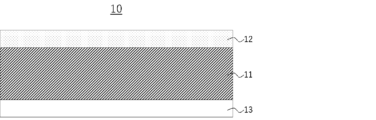
- FIG. 1 is a cross-sectional view of a near-infrared cut filter according to one embodiment of the present invention.
- FIG. 2 is a cross-sectional view showing a modified example of the near-infrared cut filter according to one embodiment of the present invention.
- FIG. 3 is a cross-sectional view that illustrates an example of an imaging device that uses the near-infrared cut filter according to one embodiment of the present invention.
- FIG. 4 is a graph showing the transmittance of light having a wavelength of 200 nm to 1200 nm in Example 9 (Example) and Example 19 (Comparative Example).
- FIG. 5 is a graph showing the transmittance of light having a wavelength of 350 nm to 550 nm in Example 9 (Example) and Example 19 (Comparative Example).
- a fluorophosphates glass according to an embodiment of the present invention (hereinafter also referred to as the fluorophosphates glass of the present embodiment, or simply as fluorophosphates glass or glass) is characterized in that it contains P, Cu, Mo, and F, and that the content ratio of Mo 6+ to Cu 2+ (Mo 6+ /Cu 2+ ) is 0.01 to 0.39 on a mass basis.
- Cu is contained in glass in the form of Cu 2+ or Cu + , and Cu 2+ is a component that absorbs light with wavelengths in the near-infrared region, so the transmittance of light in the near-infrared region is suppressed to be low, but Cu + is a component that absorbs light with wavelengths in the visible region, so the transmittance of light in the visible region is low.
- Mo exists in glass as Mo 6+ (hexavalent).
- Mo 5+ has the characteristic of absorbing light with a wavelength of about 400 nm, and therefore the transmittance of light with a wavelength of about 400 nm did not increase.
- fluorophosphate glass containing Cu and Mo was not known, and the above is considered to be a new finding discovered by the present inventors.
- Mo content increases, the influence of absorption of light with wavelengths in the visible light range by Mo 5+ increases, and the transmittance in the visible range decreases, so it is considered important to set the content ratio of Cu to Mo within a specific range.
- the present invention should not be construed as being limited to the above-mentioned mechanism of action.
- the components that may constitute the fluorophosphate glass of this embodiment and their suitable contents are described below.
- the content of each component and the total content are expressed in mass %.
- the transmittance of the glass of this embodiment includes the reflective properties of the glass surface (i.e., it is not the internal transmittance of the glass).
- P is contained as P 5+ .
- P5 + is the main component forming fluorophosphate glass and is an essential component for enhancing the near-infrared cutoff property. If the content of P5+ is 30% or more, the effect is sufficiently obtained, and if it is 70% or less, problems such as glass becoming unstable or weather resistance decreasing are unlikely to occur. Therefore, the content of P5+ is preferably 30 to 70%.
- the content of P5 + is more preferably 32% or more, even more preferably 34% or more, even more preferably 35% or more, most preferably 36% or more, and more preferably 60% or less, even more preferably 50% or less, even more preferably 45% or less, and most preferably 43% or less.
- the raw material for P5 + it is preferable to use phosphoric acid or a salt thereof from the viewpoint of suppressing corrosion of the platinum crucible and suppressing volatilization of the components.
- F is contained as F 2 ⁇ .
- F- is an essential component for stabilizing glass and improving weather resistance.
- the content of F- in the glass is expressed as an exclusive percentage when the component elements other than F- contained in the glass are taken as 100 mass%.
- the F- content is preferably 5 to 70% by external ratio. If the F- content is 5% or more by external ratio, the weather resistance effect is sufficient, and if it is 70% or less by external ratio, problems such as a decrease in light transmittance in the visible region, a decrease in mechanical properties such as strength, hardness, and elastic modulus, and an increase in ultraviolet transmittance are unlikely to occur.
- the F- content is more preferably 6% or more by external ratio, even more preferably 8% or more by external ratio, even more preferably 8.5% or more by external ratio, most preferably 10% or more by external ratio, and more preferably 60% or less by external ratio, even more preferably 50% or less by external ratio, even more preferably 40% or less by external ratio, and most preferably 25% or less by external ratio.
- Cu is contained as Cu + or Cu2 + , but the contents described in this specification are all when Cu2 + is present.
- Cu 2+ is an essential component for cutting near-infrared rays.
- the content of Cu 2+ is preferably 1 to 20%. If the content of Cu 2+ is 1% or more, the effect of increasing the light transmittance in the visible region of the glass obtained when co-added with Mo is sufficiently obtained, and if the content of Cu 2+ is 20% or less, problems such as the generation of devitrification foreign matter in the glass and the decrease in the light transmittance in the visible region are unlikely to occur.
- the content of Cu 2+ is more preferably 2% or more, even more preferably 2.5% or more, even more preferably 3% or more, most preferably 3.5% or more, and more preferably 18% or less, even more preferably 16% or less, even more preferably 13% or less, and most preferably 11.5% or less.
- the total Cu content is the total amount of Cu expressed in mass %, including monovalent, divalent, and other valences present, and when the glass of the present embodiment (excluding the content of F- ) is taken as 100 mass %, the range of the total Cu content in the glass is preferably 1 to 20 mass %. If the total Cu content is 1 mass % or more, the near-infrared blocking effect can be sufficiently obtained even if the glass plate thickness is thin, and if it is 20 mass % or less, the decrease in visible transmittance can be suppressed.
- the content of Cu + expressed in mass % can be determined in a range such that (Cu + /total Cu content) x 100 [%] is 0.01 to 4.0%.
- Mo is contained as Mo 5+ or Mo 6+ , but in this specification, the content is described when all Mo is present as Mo 6+ .
- Mo6 + is an essential component for increasing the transmittance of light in the visible region of glass.
- the inventors prepared fluorophosphate glass containing Cu and fluorophosphate glass containing Cu and Mo, and confirmed their optical properties. As a result, the inventors confirmed a phenomenon in which the transmittance of light with wavelengths of 400 nm to 540 nm is significantly increased in the latter glass compared to the former glass. As described above, this phenomenon is hypothesized to be due to the following.
- Mo exists as Mo 6+ (hexavalent) in glass.
- Cu + in the glass releases electrons (e - ) to become Cu 2+ (Cu + ⁇ Cu 2+ +e - ), and Mo 6+ receives the electrons released by Cu + to become Mo 5+ (pentavalent) (Mo 6+ +e - ⁇ Mo 5+ ).
- Mo 5+ has the characteristic of absorbing light with a wavelength of about 400 nm, and therefore the transmittance of light with a wavelength of about 400 nm did not increase.
- the content of Mo6 + is preferably 0.01 to 4%. If the content of Mo6 + is 0.01% or more, the effect of increasing the transmittance of light in the visible region of the glass is sufficiently obtained, and if the content is 4% or less, problems such as a decrease in the near-infrared cutoff property and the generation of devitrification in the glass are unlikely to occur.
- the content of Mo6+ is more preferably 0.05% or more, even more preferably 0.1% or more, even more preferably 0.2% or more, and most preferably 0.3% or more, and more preferably 3.5% or less, even more preferably 3% or less, even more preferably 2% or less, and most preferably 1% or less.
- the content ratio of Mo 6+ and Cu 2+ is 0.01 to 0.39 on a mass basis.
- the absorption of light of wavelengths in the visible light range by Cu + can be sufficiently suppressed, and the absorption of light of wavelengths in the near-infrared range by Cu 2+ can be sufficiently promoted.
- the decrease in the transmittance of the visible range by Mo 5+ can be suppressed.
- the content ratio of Mo 6+ and Cu 2+ is more preferably 0.02 or more, even more preferably 0.03 or more, even more preferably 0.05 or more, and most preferably 0.1 or more, and more preferably 0.35 or less, even more preferably 0.3 or less, even more preferably 0.25 or less, and most preferably 0.2 or less.
- Al 3+ is a component that forms glass and is a component for increasing the strength of glass, increasing the weather resistance of glass, and the like.
- the content of Al 3+ is preferably 0 to 20%.
- the content of Al 3+ is more preferably 2% or more, even more preferably 3% or more, even more preferably 3.5% or more, and most preferably 5% or more, and more preferably 18% or less, even more preferably 15% or less, even more preferably 13% or less, and most preferably 10% or less.
- AlF3 As the raw material for Al3 + , AlF3 , Al2O3 , Al(OH) 3 , etc. can be used. Among them, it is preferable to use AlF3 , since problems such as an increase in melting temperature, generation of unmelted matter, and instability of the glass due to a decrease in the amount of F- charged are unlikely to occur.
- Li + is a component for lowering the melting temperature of glass, lowering the liquidus temperature of glass, stabilizing glass, etc.
- the content of Li + is preferably 0 to 20%. If the content of Li + is 20% or less, problems such as glass becoming unstable or near-infrared cutoff properties decreasing are unlikely to occur.
- the content of Li + is more preferably 1% or more, even more preferably 2% or more, even more preferably 4% or more, most preferably 5% or more, and more preferably 18% or less, even more preferably 15% or less, even more preferably 12% or less, and most preferably 10% or less.
- Na can be contained as Na + .
- Na + is a component for lowering the melting temperature of glass, lowering the liquidus temperature of glass, stabilizing glass, and the like.
- the effect of increasing the light transmittance in the visible region of glass obtained when co-doped with Mo can be sufficiently obtained.
- Oxygen ions are present around Cu + in the fluorophosphate glass, and these oxygen ions are negatively charged.
- the electric field generated by the negative charge has the function of inhibiting the movement of electrons (e - ) between the Cu + and Mo 6 + (Cu + ⁇ Cu 2 + + + e - ) and (Mo 6 + + e - ⁇ Mo 5 + ).
- the negative charge of the oxygen ions is electrically neutralized by the positive charge carried by Na + .
- the transfer of electrons between the Cu + and Mo5 + is promoted, the proportion of Cu + having optical absorption characteristics in the visible region is reduced, and the optical transmittance in the visible region is increased.
- the Na + content is preferably 0.1 to 25%. If the Na + content is 25% or less, the glass is less likely to become unstable.
- the Na + content is more preferably 0.5% or more, even more preferably 1% or more, even more preferably 2% or more, and most preferably 3% or more, and more preferably 20% or less, even more preferably 18% or less, even more preferably 14% or less, and most preferably 10% or less.
- the content ratio of Mo 6+ and Na + (Mo 6+ /Na + ) is preferably 0.01 to 10 on a mass basis. By being in the above range, the effect of increasing the light transmittance in the visible region of the glass obtained when Mo 6+ and Na + are co-added can be more sufficiently obtained.
- the content ratio of Mo 6+ and Na + (Mo 6+ /Na + ) on a mass basis is more preferably 0.03 or more, even more preferably 0.05 or more, even more preferably 0.08 or more, most preferably 0.1 or more, and more preferably 5 or less, even more preferably 3 or less, even more preferably 1.5 or less, and most preferably 1 or less.
- K + is a component that has the effect of lowering the melting temperature of glass, lowering the liquidus temperature of glass, etc.
- the content of K + is preferably 0 to 20%. If the content of K + is 20% or less, it is preferable because the glass is less likely to become unstable.
- the content of K + is more preferably 15% or less, even more preferably 10% or less, even more preferably 5% or less, and most preferably 3% or less.
- R + (one or more components selected from Li + , Na + , and K + ) is a component for lowering the melting temperature of glass, lowering the liquidus temperature of glass, stabilizing glass, and the like. If the total amount of R + , that is, the total amount of Li + , Na + , and K + ( ⁇ R + ) is 0.1% or more, the effect is sufficiently obtained, and if it is 30% or less, it is preferable because the glass is less likely to become unstable. Therefore, the content of ⁇ R + is preferably 0.1 to 30%.
- the content of ⁇ R + is more preferably 1% or more, even more preferably 3% or more, even more preferably 5% or more, most preferably 8% or more, and more preferably 28% or less, even more preferably 25% or less, even more preferably 20% or less, and most preferably 13% or less.
- Mg 2+ is a component for lowering the melting temperature of glass, lowering the liquidus temperature of glass, stabilizing glass, increasing the strength of glass, etc.
- the content of Mg 2+ is preferably 0 to 10%. If the content of Mg 2+ is 10% or less, problems such as glass becoming unstable and reduced near-infrared cutoff properties are unlikely to occur.
- the content of Mg 2+ is more preferably 8% or less, even more preferably 6% or less, even more preferably 5% or less, and most preferably 3% or less.
- Ca2 + is a component for lowering the melting temperature of glass, lowering the liquidus temperature of glass, stabilizing glass, increasing the strength of glass, etc.
- the Ca2+ content is preferably 0 to 20%. If the Ca2 + content is 20% or less, problems such as glass becoming unstable and near-infrared cutoff properties decreasing are unlikely to occur.
- the Ca2 + content is more preferably 0.1% or more, even more preferably 1% or more, even more preferably 2% or more, and most preferably 3% or more, and more preferably 18% or less, even more preferably 15% or less, even more preferably 10% or less, and most preferably 6% or less.
- Sr2 + is a component for lowering the melting temperature of glass, lowering the liquidus temperature of glass, stabilizing glass, etc.
- the content of Sr2+ is preferably 0 to 30%. If the content of Sr2+ is 30% or less, problems such as glass becoming unstable and near-infrared cutoff properties decreasing are unlikely to occur.
- the content of Sr2+ is more preferably 0.1% or more, even more preferably 1% or more, even more preferably 3% or more, and most preferably 5% or more, and more preferably 25% or less, even more preferably 20% or less, even more preferably 15% or less, and most preferably 10% or less.
- Ba2 + is a component for lowering the melting temperature of glass, lowering the liquidus temperature of glass, stabilizing glass, etc.
- the content of Ba2+ is preferably 0 to 40%. If the content of Ba2+ is 40% or less, problems such as glass becoming unstable and near-infrared cutoff properties decreasing are unlikely to occur.
- the content of Ba2+ is more preferably 0.1% or more, even more preferably 5% or more, even more preferably 10% or more, and most preferably 15% or more, and more preferably 35% or less, even more preferably 30% or less, even more preferably 25% or less, and most preferably 23% or less.
- R 2+ (one or more components selected from Mg 2+ , Ca 2+ , Sr 2+ , and Ba 2+ ) is a component for lowering the melting temperature of glass, lowering the liquidus temperature of glass, stabilizing glass, and the like. If the total amount of R 2+ , i.e., the total amount of Mg 2+ , Ca 2+ , Sr 2+ , and Ba 2+ ( ⁇ R 2+ ) is 10% or more, the effect is sufficiently obtained, and if it is 45% or less, the glass is less likely to become unstable. Therefore, the content of ⁇ R 2+ is preferably 10 to 45%.
- the content of ⁇ R 2+ is more preferably 15% or more, even more preferably 20% or more, even more preferably 23% or more, most preferably 25% or more, and more preferably 40% or less, even more preferably 35% or less, even more preferably 33% or less, and most preferably 30% or less.
- Zn 2+ has the effect of lowering the melting temperature of glass, lowering the liquidus temperature of glass, etc.
- the content of Zn 2+ is preferably 0 to 30%. If the content of Zn 2+ is 30% or less, problems such as glass becoming unstable, deterioration of the solubility of glass, and deterioration of near-infrared cutoff properties are unlikely to occur.
- the content of Zn 2+ is more preferably 20% or less, even more preferably 15% or less, even more preferably 10% or less, and most preferably 5% or less.
- Rb + is a component that has the effect of lowering the melting temperature of glass, lowering the liquidus temperature of glass, etc.
- the content of Rb + is preferably 0 to 10%. If the content of Rb + is 10% or less, the glass is less likely to become unstable.
- the content of Rb + is more preferably 8% or less, even more preferably 6% or less, even more preferably 4% or less, and most preferably 2% or less.
- Cs + is a component that has the effect of lowering the melting temperature of glass, lowering the liquidus temperature of glass, etc.
- the content of Cs + is preferably 0 to 10%. If the content of Cs + is 10% or less, the glass is less likely to become unstable.
- the content of Cs + is more preferably 8% or less, even more preferably 6% or less, even more preferably 4% or less, and most preferably 2% or less.
- B3 + may be contained in the range of 20% or less in order to stabilize the glass. If the content of B3+ is 20% or less, problems such as deterioration of the weather resistance of the glass and deterioration of the near-infrared cutoff property are unlikely to occur.
- the content of B3+ is more preferably 15% or less, further preferably 10% or less, further more preferably 8% or less, and most preferably 5% or less.
- SiO2 , GeO2 , ZrO2 , SnO2 , TiO2 , CeO2, WO3 , Y2O3 , La2O3 , Gd2O3 , Yb2O3 , and Nb2O5 may be contained in a range of 10 % or less in order to improve the weather resistance of the glass. If the content of these components is 10% or less, problems such as the generation of devitrification in the glass and the deterioration of the near-infrared cutoff property are unlikely to occur.
- the content of the above components is preferably 4% or less, more preferably 3% or less, even more preferably 2% or less, and even more preferably 1% or less.
- Fe2O3 , Cr2O3 , Bi2O3 , NiO, V2O5 , MnO2 and CoO are all components that , when present in glass, reduce the transmittance of light in the visible region. Therefore, it is preferable that these components are not substantially contained in the glass.
- substantially not contained in the glass means that they are not contained except for unavoidable impurities, and that the components are not actively added. Specifically, it means that the content of each of these components in the glass is about 100 mass ppm or less.
- the fluorophosphate glass of this embodiment preferably has a thermal expansion coefficient in the range of 30°C to 300°C of 60 ⁇ 10 -7 /°C to 180 ⁇ 10 -7 /°C, more preferably 65 ⁇ 10 -7 /°C to 175 ⁇ 10 -7 /°C, and even more preferably 70 ⁇ 10 -7 /°C to 170 ⁇ 10 -7 /°C.
- the fluorophosphate glass of this embodiment When the fluorophosphate glass of this embodiment is used as a color correction filter (near-infrared cut filter glass) for a solid-state imaging element, it may be directly bonded to the packaging material because it also functions as a cover glass for hermetically sealing the solid-state imaging element. In this case, if there is a large difference in the thermal expansion coefficient between the near-infrared cut filter glass and the packaging material, peeling or damage may occur at the joint, and the airtight state may not be maintained.
- the glass of this embodiment it is preferable for the glass of this embodiment to have a thermal expansion coefficient in the temperature range of 30°C to 300°C within the above range.
- the glass of this embodiment preferably has a spectral transmittance of 45% or less at a wavelength of 1200 nm, calculated as a plate thickness of 0.1 mm. In this way, glass with low transmittance of light in the near-infrared range is obtained.
- the above spectral transmittance is more preferably 40% or less, even more preferably 30% or less, and particularly preferably 25% or less.
- the above spectral transmittance can be measured by the method described in the examples.
- the glass of this embodiment preferably has an average transmittance of 88.5% or more for light with wavelengths of 450 nm to 500 nm when converted to a thickness of 0.1 mm. In this way, glass with high transmittance for light in the visible range can be obtained.
- the average transmittance of the light is preferably 88.6% or more, more preferably 88.7% or more, even more preferably 88.8% or more, even more preferably 88.9% or more, and most preferably 89.0% or more.
- the average transmittance can be measured by the method described in the examples.
- the glass of this embodiment preferably has an average transmittance of 89% or less for light with wavelengths of 350 nm to 400 nm when converted to a thickness of 0.1 mm. In this way, glass with low transmittance for light in the ultraviolet range is obtained.
- the average transmittance of the above light is more preferably 88% or less, even more preferably 86% or less, even more preferably 84% or less, and most preferably 82% or less.
- the above average transmittance can be measured by the method described in the examples.
- the glass of this embodiment more preferably has an average transmittance ratio A/B of 1.030 to 1.800, more preferably 1.050 to 1.600, even more preferably 1.060 to 1.400, and most preferably 1.080 to 1.300.
- the glass of this embodiment is usually used with a thickness of 2 mm or less.
- it is preferably used with a thickness of 1 mm or less, more preferably 0.5 mm or less, even more preferably 0.3 mm or less, and even more preferably 0.2 mm or less.
- it is preferably 0.05 mm or more.
- the glass of this embodiment can be produced, for example, as follows. First, the raw materials are weighed and mixed so as to obtain the above composition range (mixing step). This raw material mixture is placed in a platinum crucible and heated and melted at a temperature of 750 to 1000°C in an electric furnace (melting step). After thorough stirring and clarification, the mixture is cast into a metal mold, cut, polished and formed into a plate of a specified thickness (molding step).
- the highest temperature of the glass during melting is 1000°C or less. If the highest temperature of the glass during melting exceeds the above temperature, the transmittance characteristics may deteriorate.
- the above temperature is more preferably 970°C or less, even more preferably 950°C or less, and even more preferably 900°C or less.
- the temperature in the melting process is too low, problems such as devitrification during melting and a long melt-through time may occur, so the temperature is preferably 800°C or higher, and more preferably 850°C or higher.
- an optical multilayer film may be provided on at least one surface of the glass.
- optical multilayer films include IR cut films (films that reflect near-infrared rays), UV/IR cut films (films that reflect ultraviolet rays and near-infrared rays), UV cut films (films that reflect ultraviolet rays), and anti-reflection films. These optical thin films can be formed by known methods such as vapor deposition and sputtering.
- An adhesion-strengthening film may be provided between the fluorophosphate glass of this embodiment and the optical multilayer film.
- an adhesion-strengthening film By providing an adhesion-strengthening film, the adhesion between the glass and the optical multilayer film is improved, and film peeling can be suppressed.
- adhesion-strengthening films include silicon oxide (SiO 2 ), titanium oxide (TiO 2 ), lanthanum titanate (La 2 Ti 2 O 7 ), aluminum oxide (Al 2 O 3 ), a mixture of aluminum oxide and zirconium oxide (ZrO 2 ), magnesium fluoride (MgF 2 ), calcium fluoride (CaF 2 ), strontium fluoride (SrF 2 ), and fluorine silicone.
- the near-infrared cut filter of this embodiment includes the fluorophosphate glass of this embodiment described above. This makes it possible to obtain a near-infrared cut filter that can keep the transmittance of light in the near-infrared region low while maintaining a high transmittance of light in the visible region (particularly blue light).
- the near-infrared cut filter of this embodiment may include the following configuration in addition to the glass of this embodiment.
- the near-infrared cut filter 10 of this embodiment may include the fluorophosphate glass 11 of this embodiment, an infrared light reflecting film 12 formed on one main surface of the fluorophosphate glass 11 and made of a dielectric multilayer film that transmits light in the visible wavelength range but reflects light in the infrared wavelength range, and an anti-reflection film 13 formed on the other main surface of the fluorophosphate glass 11.
- the infrared light reflecting film 12 has the effect of imparting or enhancing a near-infrared cut filter function.
- This infrared light reflecting film 12 is composed of a dielectric multilayer film in which low-refractive index dielectric layers and high-refractive index dielectric layers are alternately laminated by a sputtering method, a vacuum deposition method, or the like.
- the low refractive index dielectric layer is made of a material having a refractive index of, for example, 1.6 or less, preferably 1.2 to 1.6. Specifically, silica (SiO 2 ), alumina, lanthanum fluoride, magnesium fluoride, sodium aluminum hexafluoride, etc. are used.
- the high refractive index dielectric layer is made of a material having a refractive index of, for example, 1.7 or more, preferably 1.7 to 2.5. Specifically, titania (TiO 2 ), zirconia, tantalum pentoxide, niobium pentoxide, lanthanum oxide, yttria, zinc oxide, zinc sulfide, etc. are used.
- the refractive index is the refractive index for light with a wavelength of 550 nm.
- the dielectric multilayer film can be formed by the above-mentioned sputtering method and vacuum deposition method, as well as ion beam method, ion plating method, CVD method, etc.
- Sputtering method and ion plating method are so-called plasma atmosphere treatments, and therefore can improve adhesion to the fluorophosphate glass 11.
- the anti-reflection film 13 has the function of improving the transmittance by preventing the reflection of light incident on the near-infrared cut filter 10 and efficiently utilizing the incident light, and can be formed by conventionally known materials and methods.
- the anti-reflection film 13 is composed of one or more layers of silica, titania, tantalum pentoxide, magnesium fluoride, zirconia, alumina, etc. formed by sputtering, vacuum deposition, ion beam, ion plating, CVD, etc., or silicate-based, silicone-based, fluoromethacrylate-based, etc. formed by sol-gel, coating, etc.
- the thickness of the anti-reflection film 13 is usually in the range of 100 to 600 nm.
- a second infrared light reflecting film made of a dielectric multilayer film that reflects light in the infrared wavelength region may be provided on the principal surface of the fluorophosphate glass 11 opposite to the principal surface on which the infrared light reflecting film 12 is formed, instead of the antireflection film 13, or between the antireflection film 13 and the fluorophosphate glass 11.
- a second antireflection film may be provided instead of the infrared light reflecting film 12, or on the infrared light reflecting film 12.
- the near-infrared cut filter of this embodiment may be provided with an absorption layer containing a near-infrared absorbing material having a maximum absorption wavelength in the near-infrared region on at least one of the main surfaces of the fluorophosphate glass of this embodiment.
- the near-infrared cut filter 100 may have the above-mentioned absorption layer 15 provided between the fluorophosphate glass 11 and the anti-reflection film 13.
- the absorption layer 15 may be provided between the fluorophosphate glass 11 and the infrared light reflecting film 12.
- a near-infrared absorbing dye is added to a transparent resin selected from an acrylic resin, an epoxy resin, an ene-thiol resin, a polycarbonate resin, a polyether resin, a polyarylate resin, a polysulfone resin, a polyethersulfone resin, a polyparaphenylene resin, a polyarylene ether phosphine oxide resin, a polyimide resin, a polyamideimide resin, a polyolefin resin, a cyclic olefin resin, and a polyester resin, and the near-infrared absorbing dye is added to a transparent resin formed by mixing one kind of these alone or two or more kinds of them, and the near-infrared absorbing dye is contained in the absorption layer.
- a transparent resin selected from an acrylic resin, an epoxy resin, an ene-thiol resin, a polycarbonate resin, a polyether resin, a polyarylate resin, a polysulfone resin, a poly
- the near-infrared absorbing dye it is preferable to use a near-infrared absorbing material made of at least one kind selected from the group consisting of squarylium dyes, phthalocyanine dyes, cyanine dyes and diimmonium dyes.
- a near-infrared cut filter that has excellent visible light transparency, has a specific near-infrared light shielding property, and has a spectral curve that is unlikely to shift even at a high incidence angle, an imaging device with excellent color reproducibility even for light at a high incidence angle can be obtained.
- the near-infrared cut filter When mounting a near-infrared cut filter on an imaging device, if the near-infrared cut filter has the infrared light reflecting film and anti-reflection film described above, it is usually preferable to mount the near-infrared cut filter on the imaging device so that the infrared light reflecting film is on the imaging lens side (external light incident side) and the anti-reflection film is on the solid-state imaging element (sensor) side.
- the imaging device 50 may have, for example, a solid-state imaging element 51, a near-infrared cut filter 52, an imaging lens 53, and a housing 54 that holds and fixes these, as shown in FIG. 3.
- a fluorophosphate glass containing P, Cu, Mo, and F in which the content ratio of Mo 6+ to Cu 2+ (Mo 6+ /Cu 2+ ) is 0.01 to 0.39 on a mass basis.
- a near-infrared cut filter comprising the fluorophosphates glass according to any one of (1) to (9).
- Examples will be described below, but the present invention is not limited to these examples. Examples and comparative examples of the fluorophosphate glass of the present invention are shown in Tables 1 and 2. Examples 1 to 14 are examples, and Examples 15 to 20 are comparative examples.
- Glass preparation For the glasses of Examples 1 to 20, the raw materials were weighed and mixed so that the glass components after melting had the composition (mass%) shown in Tables 1 and 2. The raw materials were charged into a platinum crucible with an internal volume of 1 L, and heated and melted in an electric furnace at the melting temperature shown in each table for 2 hours. The raw materials were then clarified, stirred, and poured into a rectangular mold with a length of 100 mm, a width of 80 mm, and a height of 20 mm that had been preheated to 50°C to 500°C.
- the molded product was then held at 300 to 500°C, and then slowly cooled at a rate of about 1°C/min to obtain a plate-shaped sample glass with a length of 40 mm, a width of 40 mm, and a plate thickness of 0.1 to 0.3 mm, both sides of which were optically polished.
- F- is the outer division.
- the glass contains O2- as an anion.
- the content of O2- is not shown because it varies depending on the content of highly volatile F-, but all glasses in the Examples and Comparative Examples contain O2- .
- the raw materials for the glass are not limited to those mentioned above, and known materials can be used.
- the transmittance of the glass samples prepared as described above was measured.
- the transmittance was measured at 1 nm intervals for light with wavelengths of 200 nm to 1200 nm using a spectrophotometer (V-570, manufactured by JASCO Corporation) and converted to a value for a plate thickness of 0.1 mm.
- the conversion was performed by first converting the obtained transmittance into an internal transmittance and using the following formula.
- T i2 T i1 (t2/t1) ⁇ T i1 : Internal transmittance of actual sample (before conversion) ⁇ t1 : Plate thickness of actual sample ⁇ T i2 : Internal transmittance after conversion ⁇ t2 : Plate thickness to be converted From the transmittance including the reflection loss of the front and back surfaces in the internal transmittance after conversion (T i2 ), the spectral transmittance at a wavelength of 1200 nm, the spectral transmittance at a wavelength of 420 nm, the average transmittance A of light with wavelengths of 450 nm to 500 nm, and the average transmittance B of light with wavelengths of 350 nm to 400 nm were obtained.
- FIG. 4 shows the transmittance of light having a wavelength of 200 nm to 1200 nm in Example 9 (Example) and Example 19 (Comparative Example).
- FIG. 5 shows the transmittance of light having a wavelength of 350 nm to 550 nm in Example 9 (Example) and Example 19 (Comparative Example).
- Examples 1 to 3 which are working examples, Mo was added so that Mo 6+ /Cu 2+ was in the range of 0.01 to 0.39 compared to Comparative Example 15, and therefore Examples 1 to 3 had improved spectral transmittance at 420 nm compared to Example 15.
- Comparative Example 16 which is a comparative example, Mo was added so that Mo 6+ /Cu 2+ exceeded 0.39 compared to Comparative Example 15, and therefore Example 16 had inferior spectral transmittance at 420 nm compared to Example 15.
- Examples 4 to 7 which are working examples, Mo was added so that Mo 6+ /Cu 2+ was in the range of 0.01 to 0.39 compared to Comparative Example 17, and therefore Examples 4 to 7 had improved spectral transmittance at 420 nm compared to Example 17. Also, Examples 4 to 7 were able to keep the spectral transmittance at a wavelength of 1200 nm low.
- Comparative Example 18 was added so that Mo 6+ /Cu 2+ exceeded 0.39 compared to Comparative Example 17, and therefore Example 18 had inferior spectral transmittance at 420 nm compared to Example 17.
- Examples 8 and 9 which are working examples, Mo was added to Example 19, which is a comparative example, so that the Mo 6+ /Cu 2+ ratio was in the range of 0.01 to 0.39. Therefore, Examples 8 and 9 had improved spectral transmittance at 420 nm compared to Example 19.
- Examples 10 and 11 which are working examples, Mo was added to Example 20, which is a comparative example, so that the Mo 6+ /Cu 2+ ratio was in the range of 0.01 to 0.39. Therefore, Examples 10 and 11 had improved spectral transmittance at 420 nm compared to Example 20.
- the Mo 6+ /Cu 2+ ratio was in the range of 0.01 to 0.39, and the spectral transmittance at a wavelength of 1200 nm could be kept low while maintaining a high spectral transmittance at 420 nm.
Landscapes
- Chemical & Material Sciences (AREA)
- Life Sciences & Earth Sciences (AREA)
- Engineering & Computer Science (AREA)
- Chemical Kinetics & Catalysis (AREA)
- General Chemical & Material Sciences (AREA)
- Geochemistry & Mineralogy (AREA)
- Materials Engineering (AREA)
- Organic Chemistry (AREA)
- Physics & Mathematics (AREA)
- General Physics & Mathematics (AREA)
- Optics & Photonics (AREA)
- Glass Compositions (AREA)
Priority Applications (3)
| Application Number | Priority Date | Filing Date | Title |
|---|---|---|---|
| CN202380078937.8A CN120129664A (zh) | 2022-11-18 | 2023-10-27 | 氟磷酸玻璃、近红外线截止滤光片和成像装置 |
| JP2024558746A JPWO2024106186A1 (https=) | 2022-11-18 | 2023-10-27 | |
| US19/196,886 US20250257002A1 (en) | 2022-11-18 | 2025-05-02 | Fluorophosphate glass, near-infrared blocking filter and imaging device |
Applications Claiming Priority (2)
| Application Number | Priority Date | Filing Date | Title |
|---|---|---|---|
| JP2022185114 | 2022-11-18 | ||
| JP2022-185114 | 2022-11-18 |
Related Child Applications (1)
| Application Number | Title | Priority Date | Filing Date |
|---|---|---|---|
| US19/196,886 Continuation US20250257002A1 (en) | 2022-11-18 | 2025-05-02 | Fluorophosphate glass, near-infrared blocking filter and imaging device |
Publications (1)
| Publication Number | Publication Date |
|---|---|
| WO2024106186A1 true WO2024106186A1 (ja) | 2024-05-23 |
Family
ID=91084492
Family Applications (1)
| Application Number | Title | Priority Date | Filing Date |
|---|---|---|---|
| PCT/JP2023/039006 Ceased WO2024106186A1 (ja) | 2022-11-18 | 2023-10-27 | フツリン酸ガラス、近赤外線カットフィルタ及び撮像装置 |
Country Status (5)
| Country | Link |
|---|---|
| US (1) | US20250257002A1 (https=) |
| JP (1) | JPWO2024106186A1 (https=) |
| CN (1) | CN120129664A (https=) |
| TW (1) | TW202428534A (https=) |
| WO (1) | WO2024106186A1 (https=) |
Citations (6)
| Publication number | Priority date | Publication date | Assignee | Title |
|---|---|---|---|---|
| JPH02204342A (ja) * | 1989-01-31 | 1990-08-14 | Hoya Corp | 近赤外線吸収フィルターガラス |
| JP2007290886A (ja) * | 2006-04-24 | 2007-11-08 | Schott Corp | 酸化銅(ii)を含んでいるアルミノリン酸塩ガラスおよび光フィルタリングのためのそれらの使用 |
| JP2008001543A (ja) * | 2006-06-21 | 2008-01-10 | Agc Techno Glass Co Ltd | 視感度補正フィルタガラス及び視感度補正フィルタ |
| JP2009263190A (ja) * | 2008-04-29 | 2009-11-12 | Ohara Inc | 赤外線吸収ガラス |
| CN110156317A (zh) * | 2019-05-27 | 2019-08-23 | 中国建筑材料科学研究总院有限公司 | 一种紫外、可见及近红外光吸收玻璃及其制备方法和应用 |
| WO2022009558A1 (ja) * | 2020-07-10 | 2022-01-13 | Hoya株式会社 | 近赤外線吸収ガラスおよび近赤外線カットフィルタ |
-
2023
- 2023-10-27 JP JP2024558746A patent/JPWO2024106186A1/ja active Pending
- 2023-10-27 CN CN202380078937.8A patent/CN120129664A/zh active Pending
- 2023-10-27 WO PCT/JP2023/039006 patent/WO2024106186A1/ja not_active Ceased
- 2023-11-17 TW TW112144499A patent/TW202428534A/zh unknown
-
2025
- 2025-05-02 US US19/196,886 patent/US20250257002A1/en active Pending
Patent Citations (6)
| Publication number | Priority date | Publication date | Assignee | Title |
|---|---|---|---|---|
| JPH02204342A (ja) * | 1989-01-31 | 1990-08-14 | Hoya Corp | 近赤外線吸収フィルターガラス |
| JP2007290886A (ja) * | 2006-04-24 | 2007-11-08 | Schott Corp | 酸化銅(ii)を含んでいるアルミノリン酸塩ガラスおよび光フィルタリングのためのそれらの使用 |
| JP2008001543A (ja) * | 2006-06-21 | 2008-01-10 | Agc Techno Glass Co Ltd | 視感度補正フィルタガラス及び視感度補正フィルタ |
| JP2009263190A (ja) * | 2008-04-29 | 2009-11-12 | Ohara Inc | 赤外線吸収ガラス |
| CN110156317A (zh) * | 2019-05-27 | 2019-08-23 | 中国建筑材料科学研究总院有限公司 | 一种紫外、可见及近红外光吸收玻璃及其制备方法和应用 |
| WO2022009558A1 (ja) * | 2020-07-10 | 2022-01-13 | Hoya株式会社 | 近赤外線吸収ガラスおよび近赤外線カットフィルタ |
Also Published As
| Publication number | Publication date |
|---|---|
| CN120129664A (zh) | 2025-06-10 |
| TW202428534A (zh) | 2024-07-16 |
| JPWO2024106186A1 (https=) | 2024-05-23 |
| US20250257002A1 (en) | 2025-08-14 |
Similar Documents
| Publication | Publication Date | Title |
|---|---|---|
| JP5036229B2 (ja) | 視感度補正フィルタガラス及び視感度補正フィルタ | |
| WO2024106186A1 (ja) | フツリン酸ガラス、近赤外線カットフィルタ及び撮像装置 | |
| JP5051817B2 (ja) | 視感度補正フィルタガラス及び視感度補正フィルタ | |
| JP7586387B1 (ja) | 光学フィルタ | |
| JP7485252B2 (ja) | 光学フィルタ用ガラス、光学フィルタ、及び固体撮像素子 | |
| JP7768271B2 (ja) | 光学フィルタ用ガラス及び光学フィルタ | |
| JP2008001546A (ja) | 視感度補正フィルタガラス及び視感度補正フィルタ | |
| WO2025009509A1 (ja) | フツリン酸ガラス、近赤外線カットフィルタ、光学デバイス | |
| TWI913941B (zh) | 光學濾光器用玻璃及光學濾光器 | |
| JP7722391B2 (ja) | フツリン酸ガラス及び近赤外線カットフィルタ | |
| JP2024020138A (ja) | 光学ガラス、光学素子、プレス成形用ガラスプリフォームおよび光学デバイス | |
| TW202421597A (zh) | 光學玻璃、光學元件、壓製成形用玻璃預形體及光學器件 | |
| WO2025041772A1 (ja) | 光学フィルタ | |
| WO2025009510A1 (ja) | 光学フィルタ | |
| CN121548557A (zh) | 玻璃、近红外线吸收截止滤光片和固态成像元件 | |
| TW202613052A (zh) | 氟磷酸鹽玻璃及近紅外線截止濾波器 |
Legal Events
| Date | Code | Title | Description |
|---|---|---|---|
| 121 | Ep: the epo has been informed by wipo that ep was designated in this application |
Ref document number: 23891339 Country of ref document: EP Kind code of ref document: A1 |
|
| WWE | Wipo information: entry into national phase |
Ref document number: 2024558746 Country of ref document: JP |
|
| WWE | Wipo information: entry into national phase |
Ref document number: 202380078937.8 Country of ref document: CN |
|
| WWP | Wipo information: published in national office |
Ref document number: 202380078937.8 Country of ref document: CN |
|
| NENP | Non-entry into the national phase |
Ref country code: DE |
|
| 122 | Ep: pct application non-entry in european phase |
Ref document number: 23891339 Country of ref document: EP Kind code of ref document: A1 |