WO2024100920A1 - 情報処理装置、情報処理方法及び情報処理用プログラム - Google Patents
情報処理装置、情報処理方法及び情報処理用プログラム Download PDFInfo
- Publication number
- WO2024100920A1 WO2024100920A1 PCT/JP2023/023115 JP2023023115W WO2024100920A1 WO 2024100920 A1 WO2024100920 A1 WO 2024100920A1 JP 2023023115 W JP2023023115 W JP 2023023115W WO 2024100920 A1 WO2024100920 A1 WO 2024100920A1
- Authority
- WO
- WIPO (PCT)
- Prior art keywords
- sound data
- electronic conference
- user
- users
- information processing
- Prior art date
- Legal status (The legal status is an assumption and is not a legal conclusion. Google has not performed a legal analysis and makes no representation as to the accuracy of the status listed.)
- Ceased
Links
Images




Classifications
-
- H—ELECTRICITY
- H04—ELECTRIC COMMUNICATION TECHNIQUE
- H04N—PICTORIAL COMMUNICATION, e.g. TELEVISION
- H04N7/00—Television systems
- H04N7/14—Systems for two-way working
- H04N7/15—Conference systems
Definitions
- This application relates to the technical field of information processing devices and the like that provide electronic conferences in which multiple users participate using terminal devices each connected to a communication line.
- Patent Document 1 discloses technology related to electronic conferences, and facial images of participants taking part in an electronic conference are displayed on the screen of a terminal device shown in Figure 18 of Patent Document 1. This allows participants to see at a glance who else is taking part in the electronic conference besides themselves.
- Patent Document 1 has the problem that it is difficult to know who else is participating in the electronic conference unless you look at the screen showing the participants during the electronic conference.
- the present invention aims to provide an information processing device or the like that allows a user to know who is participating in an electronic conference other than himself/herself, without having to look at a screen showing the participants during the electronic conference.
- the invention described in claim 1 is an information processing device that provides an electronic conference in which multiple users participate using terminal devices connected to a communication line, and is characterized by comprising: background sound data generating means that generates background sound data by synthesizing sound data assigned to the users participating in the electronic conference from among the different sound data assigned to each of the users; and transmission means that transmits the background sound data to the terminal devices used by each of the multiple users participating in the electronic conference.
- the invention described in claim 8 is an information processing method by an information processing device that provides an electronic conference in which multiple users participate using terminal devices connected to a communication line, and is characterized by including a background sound data generation step of generating background sound data by synthesizing sound data assigned to the users participating in the electronic conference from among the different sound data assigned to each of the users, and a transmission step of transmitting the background sound data to the terminal devices used by each of the multiple users participating in the electronic conference.
- the invention described in claim 9 is characterized in that a computer included in an information processing device that provides an electronic conference in which multiple users participate using terminal devices connected to a communication line functions as background sound data generating means that generates background sound data by synthesizing the sound data assigned to the users participating in the electronic conference from among the different sound data assigned to each of the users, and transmitting means that transmits the background sound data to the terminal devices used by each of the multiple users participating in the electronic conference.
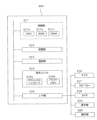
- FIG. 1 is a block diagram showing an example of a configuration of an information processing device 10 according to an embodiment.
- 1 is a schematic diagram showing an electronic conference system S in an embodiment.
- FIG. 2 is a block diagram showing a configuration example of an electronic conference server 100 according to an embodiment.
- FIG. 2 is a block diagram showing an example of the configuration of a terminal device 200 according to an embodiment.
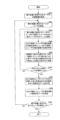
- 4 is a flowchart showing an example of a background sound generation process performed by the electronic conference server 100 in the embodiment.
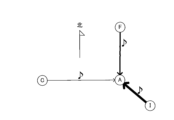
- 13 is a schematic diagram showing the relationship between the distance between users and the volume of sounds contained in the background sound in a modified example.
- FIG. 13 is a flowchart showing an example of a sound image localization data generation process performed by the electronic conference server 100 in a modified example.
- 10 is a flowchart showing an example of a volume control data generation process performed by the electronic conference server 100 in a modified example.
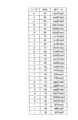
- FIG. 13 is a diagram showing an example of a sound data table in a modified example.
- the information processing device 10 is an information processing device that provides an electronic conference in which multiple users participate using terminal devices each connected to a communication line, and includes a background sound data generating means 11 and a transmitting means 12.
- the background sound data generating means 11 generates background sound data by synthesizing the sound data assigned to the users participating in the electronic conference from among the different sound data assigned to each of the users.
- the transmission means 12 transmits the background sound data to the terminal devices used by each of the multiple users participating in the electronic conference.
- the electronic conference system S includes an electronic conference server 100 and multiple terminal devices 200, and the electronic conference server 100 and each terminal device 200 are connected via a network (not shown).
- the network is formed by communication lines such as wireless LAN, wired LAN, communication carrier lines, optical fiber lines, and telephone lines, as well as communication devices such as routers, switching hubs, firewalls, wireless antennas, optical relay devices, and cables that connect them.
- the electronic conference server 100 provides an electronic conference venue for users A, C, F, and I who are participating in the electronic conference. For example, when the electronic conference server 100 receives a new request to provide an electronic conference from the terminal device 200 used by user A, it generates an electronic conference link that users A, C, F, and I access when joining the electronic conference, and transmits it to user A's terminal device 200. User A, who receives the electronic conference link, transfers the electronic conference link to the terminal devices 200 of users C, F, and I.
- the electronic conference server 100 connects each terminal device 200 and provides a venue for the electronic conference.
- the electronic conference server 100 also stores in advance sound data assigned to each of users A-I who may participate in the electronic conference.
- each of users A-I is assigned the sound of each instrument in classical music (user A: violin, user B: cello, user C: clarinet, user D: flute, user E: trumpet, user F: horn, user G: trombone, user H: timpani, user I: marimba).
- the electronic conference server 100 generates background sound data "BGM.mp3" by synthesizing the sound data "aaa.mp3", “ccc.mp3", “fff.mp3”, and "iii.mp3" assigned to the terminal devices 200 users A, C, F, and I who have accessed the electronic conference to participate in the electronic conference, and transmits the data to the terminal devices 200 of users A, C, F, and I.
- Each terminal device 200 then plays "BGM.mp3" during the electronic conference and outputs the background sound from the speakers.
- the background sound includes the sounds of a violin, clarinet, horn, and marimba
- users A, C, F, and I can thus know who else is participating in the electronic conference besides themselves. It is preferable to inform each user in advance which instrument has been assigned to each user.
- Fig. 3 is a block diagram showing an example of the configuration of the electronic conference server 100.
- the electronic conference server 100 comprises a control unit 111, a memory unit 112 consisting of a hard disk drive (HDD) or a solid state drive (SSD), a communication unit 113, a display unit 114, and an interface (I/F) unit 115, and a display unit 116 and an operation unit 117 are connected via the I/F unit 115.
- a control unit 111 a memory unit 112 consisting of a hard disk drive (HDD) or a solid state drive (SSD)
- a communication unit 113 a communication unit 113
- a display unit 114 and an interface (I/F) unit 115
- I/F interface
- the control unit 111 is composed of a CPU 111a that controls the entire control unit 111, a ROM 111b in which control programs and the like that control the control unit 111 are prestored, and a RAM 111c that temporarily stores various data.
- the control unit 111 or the CPU 111a corresponds to a "computer.”
- the control unit 111 executes various processes (including background sound generation process described below) to provide an electronic conference venue for multiple terminal devices 200 connected via a network.
- the storage unit 112 stores various programs such as an OS (Operating System) and application programs, as well as data and information used by the various programs.
- the storage unit 112 stores a program that causes the control unit 111 to synthesize sound data assigned to users participating in the electronic conference to generate background sound data, and transmit the data to the terminal device 200 of the user participating in the electronic conference.
- the various programs may be obtained, for example, from a server device or the like via a network, or may be read from a recording medium such as a USB memory.
- the storage unit 112 stores the sound data assigned to users A-I.
- the sound data is managed in a sound data table. Sound data is assigned to users by the electronic conference server 100, for example, when the users register to use an electronic conference provided by the electronic conference server 100. Users who wish to use an electronic conference are required to register as users with the electronic conference server 100 in advance, and at this time the electronic conference server 100 assigns sound data to the users along with their accounts and passwords.
- the communication unit 113 has a communication device, etc., and communicates with the terminal device 200 to send and receive data to and from the terminal device 200.
- the display unit 114 is configured with a graphics controller 114a and a buffer memory 114b consisting of a memory such as a VRAM (Video RAM).
- the graphics controller 114a controls the display unit 114 and the display section 116 based on control information sent from the control section 111.
- the buffer memory 114b also temporarily stores image data that can be displayed immediately on the display section 116. An image is then displayed on the display section 116 based on the image data output from the graphics controller 114a.
- the I/F unit 115 has the necessary structure and functions to connect the electronic conference server 100 to external devices such as the display unit 116 and the operation unit 117, and performs data conversion between the two as necessary.
- the display unit 116 is a liquid crystal display or the like, and displays an image based on the image data received from the display unit 114.
- the operation unit 117 detects the operation of the operator and transmits operation data indicating the operation content, etc. to the control unit 111.
- the control unit 111 determines which operation has been performed based on the operation data and performs processing according to the operation content.
- Fig. 4 is a block diagram showing an example of the configuration of the terminal device 200.
- the terminal device 200 includes a control unit 211, a memory unit 212 consisting of a HDD, SSD, etc., a communication unit 213, a display unit 214, and an interface (I/F) unit 215, and is connected to a microphone 216, a speaker 217, a camera 218, a display unit 219, and an operation unit 220 via the I/F unit 215.
- a control unit 211 a memory unit 212 consisting of a HDD, SSD, etc.
- a communication unit 213, a display unit 214 a communication unit 213, a display unit 214, and an interface (I/F) unit 215, and is connected to a microphone 216, a speaker 217, a camera 218, a display unit 219, and an operation unit 220 via the I/F unit 215.
- I/F interface
- the control unit 211 is composed of a CPU 211a that controls the entire control unit 211, a ROM 211b in which control programs and the like that control the control unit 211 are stored in advance, and a RAM 211c that temporarily stores various data.
- the control unit 211 or the CPU 211a corresponds to a "computer.”
- the control unit 211 executes various processes for participating in an electronic conference provided by the electronic conference server 100.
- the storage unit 212 stores various programs such as an OS and application programs, as well as data and information used by the various programs.
- the storage unit 212 stores a program that enables the control unit 211 to participate in an electronic conference.
- the various programs may be obtained, for example, from a server device or the like via a network, or may be read from a recording medium such as a USB memory.
- the communication unit 213 has a communication device, etc., and communicates with the electronic conference server 100 and other terminal devices 200 to send and receive data to and from each other.
- the display unit 214 is configured with a graphics controller 214a and a buffer memory 214b consisting of a memory such as a VRAM.
- the graphics controller 214a controls the display unit 214 and the display section 219 based on control information sent from the control section 211.
- the buffer memory 214b also temporarily stores image data that can be displayed immediately on the display section 219. Then, an image is displayed on the display section 219 based on the image data output from the graphics controller 214a.
- the I/F unit 215 has the necessary structure and functions to connect the terminal device 200 to external devices such as the microphone 216, speaker 217, camera 218, display unit 219, and operation unit 220, and performs data conversion between the two as necessary.
- the microphone 216 converts the voice (sound) of the user, etc. into an electrical signal.
- the electrical signal is sent to the control unit 211 via the I/F unit 215.
- the speaker 217 outputs sound data (electrical signals) as sound according to the control of the control unit 211.
- the speaker 217 outputs background sound based on background sound data received from the electronic conference server 100.
- the camera 218 transmits image data captured through the lens to the control unit 211 via the I/F unit 215.
- the display unit 219 is a liquid crystal display or the like, and displays an image based on the image data received from the display unit 214.
- FIG. 4 shows an example in which the terminal device 200 is a desktop PC
- the terminal device 200 may also be a notebook PC, a smartphone, a tablet terminal, etc.
- the control unit 211, memory unit 212, communication unit 213, display unit 214, interface (I/F) unit 215, microphone 216, speaker 217, camera 218, display unit 219, and operation unit 220 may be integrated.
- the operation unit 220 detects user operations and transmits operation data indicating the operation content, etc. to the control unit 211.
- the control unit 211 determines which operation has been performed based on the operation data and performs processing according to the operation content.
- Fig. 5 is a flowchart showing an example of the background sound generation process by the electronic conference server 100. Also, before the flowchart shown in Fig. 5 starts, it is assumed that an electronic conference link is distributed to the terminal devices 200 of the users participating in the electronic conference, and the electronic conference server 100 and each terminal device 200 are connected via a login process using an account and a password.
- control unit 111 (CPU 111a) identifies users participating in the electronic conference (step S101). Specifically, the control unit 111 identifies the terminal device 200 that has connected to the electronic conference server 100 via the electronic conference link based on the account used during the login process, etc.
- control unit 111 retrieves from the storage unit 112 the sound data assigned to each user (terminal device 200) identified in the processing of step S101 (step S102).
- control unit 111 synthesizes the sound data acquired in the processing of step S102 to generate background sound data (step S103). At this time, the control unit 111 synthesizes the sound data so that the sound of each piece of sound data is included in the background sound, that is, so that the sound assigned to each user participating in the electronic conference can be heard from the background sound.
- control unit 111 transmits the background sound data generated in the process of step S103 to the terminal device 200 of each user participating in the electronic conference (each terminal device 200 identified in the process of step S101) (step S104).
- the control unit 211 of each terminal device 200 that receives the background sound data outputs background sound based on the background sound data from the speaker 217.
- step S105 determines whether the electronic conference has ended. At this time, if the control unit 111 determines that the electronic conference has ended (step S105: YES), the control unit 111 ends the background sound generation process. On the other hand, if the control unit 111 determines that the electronic conference has not ended (step S105: NO), the control unit 111 proceeds to the process of step S106.
- control unit 111 determines whether there has been a change in the users participating in the electronic conference (step S106). Changes in the users participating in the electronic conference include cases where a new user joins the electronic conference and cases where a user participating in the electronic conference leaves the electronic conference. At this time, if the control unit 111 determines that there has been no change in the users participating in the electronic conference (step S106: NO), it proceeds to the process of step S105. That is, unless the electronic conference ends or there is a change in the users participating in the electronic conference, the processes of steps S105 and S106 are repeated.
- step S106 determines that there has been a change in the users participating in the electronic conference (step S106: YES)
- it proceeds to the process of step S101, identifies the users participating in the electronic conference at that time, generates background sound data again, and transmits it to each terminal device 200 of the users participating in the electronic conference.
- background sound based on the background sound data generated from the sound data assigned to each user participating in the electronic conference at that time is always output from the speaker 217 of the terminal device 200 of each user.
- the electronic conference server 100 in this embodiment provides an electronic conference in which multiple users participate using terminal devices 200 each connected to a communication line, and the control unit 111 (an example of a "background sound data generating means” and “transmitting means") generates background sound data by synthesizing the sound data assigned to the users participating in the electronic conference from the different sound data assigned to each user, and transmits the background sound data to the terminal devices 200 used by each of the multiple users participating in the electronic conference.
- the control unit 111 an example of a "background sound data generating means” and “transmitting means”
- background sounds based on background sound data generated from sound data assigned to each user participating in the electronic conference are output from the speaker 217 of each user's terminal device 200, so that each user can tell who else is participating in the electronic conference besides themselves from the sounds contained in the background sound, without having to look at the screen.
- the user can know who is participating in the electronic conference. Also, even if materials related to the electronic conference are displayed on the entire surface of the display unit 219 and information indicating the participants in the electronic conference is not displayed on the display unit 219, the user can know who is participating in the electronic conference.
- control unit 111 of the electronic conference server 100 regenerates background sound data when a user participating in the electronic conference joins (joining midway) or leaves (leaving midway) during the electronic conference, and transmits the regenerated background sound data to the terminal devices 200 used by each of the multiple users participating in the electronic conference.
- background sound corresponding to the user participating in the electronic conference is output from the speaker 217 of each terminal device 200 as appropriate, so that the user can know that there has been a change in the participants based on the change in background sound, and further, who has joined or left midway.
- the electronic conference server 100 receives location information (latitude, longitude, altitude information, etc.) from each terminal device 200, and the control unit 111 may determine how to output the sound included in the background sound assigned to each user participating in the electronic conference according to the location of the terminal device 200 used by each user based on the location information received from each terminal device 200.
- Each terminal device 200 may acquire location information by any means.
- the terminal device 200 may be provided with a GPS receiving unit and acquire location information based on a GPS signal received by the GPS receiving unit, or the user may input location information.
- [5.1.1. Modification 1-1] 6 is an example diagram showing the positions of users C, F, and I relative to user A.
- the sound image localization of the sound data included in the background sound output from the terminal device 200 of user A and assigned to users C, F, and I is set to the positions of the terminal devices 200 used by users C, F, and I to which the sound data that is the basis of the sound is assigned, based on the position of the terminal device 200 used by user A.
- control unit 111 of the electronic conference server 100 acquires position information of the terminal device 200 used by each user participating in the electronic conference, and generates sound image localization data that localizes the sound image of the sound data assigned to each user other than one user, among the sounds included in the background sound based on the background sound data transmitted to the terminal device 200 used by one user participating in the electronic conference, to the position of the terminal device 200 used by the user to which the sound data that is the basis of the sound is assigned, based on the position of the terminal device 200 used by the one user.
- control unit 111 generates sound image localization data for the terminal device 200 used by each user participating in the electronic conference, with each user participating in the electronic conference as the one user, and further transmits the sound image localization data generated for the terminal device 200 to the terminal device 200 used by each user participating in the electronic conference.
- the control unit 111 acquires position information of the terminal device 200 used by each of the users A, C, F, and I participating in the electronic conference, and generates sound image localization data that sets the sound image localization of the sound of the sound data assigned to each of the users C, F, and I other than user A, among the sounds included in the background sound based on the background sound data transmitted to the terminal device 200 used by user A participating in the electronic conference, to the position of the terminal device 200 used by each of the users C, F, and I to which the sound data that is the basis of the sound, based on the position of the terminal device 200 used by user A, and further transmits the data to the terminal device 200 used by user A.
- the control unit 111 also performs this process on the terminal devices 200 used by users C, F, and I other than user A. Then, based on the background sound data and sound image localization data received from the electronic conference server 100, the control unit 211 of the terminal device 200 outputs the background sound from the speaker 217, with the sound image localization of each sound included in the background sound set to the position of the user corresponding to the sound.
- This allows, for example, user A to ascertain the location of each user participating in the electronic conference from the direction of each sound contained in the background sound (user C is in the west direction, user F is in the north direction, and user I is in the southeast direction). In this case, it is assumed that speaker 217 has specifications and settings that allow for sound image localization.
- Fig. 7 is a flowchart showing an example of a sound image localization data generation process by the electronic conference server 100 in a modified example.
- the example shown in Fig. 6 when four users A, C, F, and I participate in the electronic conference will be described.
- control unit 111 acquires the location information of all users participating in the electronic conference (step S201). For example, the control unit 111 acquires the location information (latitude, longitude, altitude information, etc.) received in advance from the terminal device 200 used by each user participating in the electronic conference.
- location information latitude, longitude, altitude information, etc.
- control unit 111 selects one user to participate in the electronic conference (step S202).
- control unit 111 selects one user from among the users participating in the electronic conference other than the user selected in the process of step S202 (step S203). For example, if the control unit 111 selects user A in the process of step S202, it selects one of users C, F, or I.
- control unit 111 uses the position of the terminal device 200 used by the user selected in the processing of step S202 as a reference, and determines the position (e.g., the direction and distance from the reference) of the terminal device 200 used by the user selected in the processing of step S203 (step S204).
- control unit 111 stores the sound image position of the sound data assigned to the user selected in the process of step S203 among the sounds included in the background sound based on the background sound data (i.e., the background sound data generated in the background sound generation process) transmitted to the terminal device 200 used by each user participating in the electronic conference, in association with the position identified in the process of step S204 (step S205).
- the background sound data i.e., the background sound data generated in the background sound generation process
- control unit 111 determines whether or not all other users other than the user selected in step S202 have been selected in the process of step S203 (step S206). For example, if the control unit 111 has selected user A in the process of step S202, the control unit 111 determines whether or not all users C, F, and I have been selected in the process of step S203. If the control unit 111 determines that all other users have not been selected (step S206: NO), it proceeds to the process of step S203 and selects other users that have not been selected up to that point.
- control unit 111 determines that all other users have been selected (step S206: YES), it then generates sound image localization data indicating the correspondence between the sound and sound image localization stored in the process of step S205 for all other users (step S207). For example, if user A is selected in the processing of step S202, the control unit 111 generates sound image localization data in which the sound image localization of the sound data assigned to users C, F, and I is the position of the terminal device 200 used by users C, F, and I, using the terminal device 200 used by user A as the reference position.
- control unit 111 transmits the sound image localization data generated in the processing of step S207 to the terminal device 200 used by the user selected in the processing of step S202 (step S208).
- control unit 111 determines whether or not all users participating in the electronic conference have been selected in the process of step S202 (step S209). That is, the control unit 111 determines whether or not the four users A, C, F, and I have been selected in the process of step S202. If the control unit 111 determines that all users participating in the electronic conference have not been selected (step S209: NO), it proceeds to the process of step S202 and repeats the processes of steps S202 to S208 for each remaining user. On the other hand, if the control unit 111 determines that all users participating in the electronic conference have been selected (step S209: YES), it ends the sound image localization data generation process.
- the control unit 111 may combine the sound image localization data with the background sound data and transmit it, or may transmit it separately from the background sound data.
- the volume of the sound of the sound data respectively assigned to users C, F, and I which is included in the background sound output from the terminal device 200 of user A, is set to a volume according to the distance between the position of the terminal device 200 used by users C, F, and I to which the sound data that is the basis of the sound is assigned, and the position of the terminal device 200 used by user A.
- the thickness of the arrows extending from users C, F, and I to user A indicates the volume (the thicker the arrow, the louder the volume).
- control unit 111 (an example of a “distance calculation means” and “volume control data generation means") of the electronic conference server 100 acquires position information of the terminal device 200 used by each user participating in the electronic conference, and generates volume control data for adjusting the volume of the sound of sound data assigned to each user other than one user, among sounds included in the background sound based on the background sound data transmitted to the terminal device 200 used by one user participating in the electronic conference, according to the distance between the position of the terminal device 200 used by the user to which the sound data that is the basis of the sound is assigned, and the position of the terminal device 200 used by the one user.
- control unit 111 generates volume control data for the terminal device 200 used by each user participating in the electronic conference, with each user participating in the electronic conference as the one user, and further transmits the volume control data generated for the terminal device to the terminal device 200 used by each user participating in the electronic conference.
- the control unit 111 acquires location information of the terminal devices 200 used by each of the users A, C, F, and I participating in the electronic conference, and generates volume control data for adjusting the volume of the sound of the sound data assigned to each of the users C, F, and I other than user A among the sounds included in the background sound based on the background sound data to be transmitted to the terminal device 200 used by the user A participating in the electronic conference, according to the distance between the location of the terminal device 200 used by each of the users C, F, and I to which the sound data that is the basis of the sound is assigned and the location of the terminal device 200 used by user A, and further transmits the data to the terminal device 200 used by user A.
- the control unit 111 also performs this process on the terminal devices 200 used by the users C, F, and I other than user A.
- the control unit 211 of each of the terminal devices 200 of the users A, C, F, and I controls the volume of each sound included in the background sound based on the background sound data and volume control data received from the electronic conference server 100, and outputs the background sound from the speaker 217. This allows, for example, user A to determine the distance between him and each user participating in the electronic conference (user I is the closest, user F is the second closest, and user C is the third closest (farthest)) based on the difference in volume of each sound contained in the background sound.
- Fig. 8 is a flowchart showing an example of a volume control data generation process by the electronic conference server 100 in a modified example.
- the example shown in Fig. 6 (when four users A, C, F, and I participate in the electronic conference) will be described here.
- control unit 111 acquires the location information of all users participating in the electronic conference (step S301). For example, the control unit 111 acquires the location information (latitude, longitude, altitude information, etc.) received in advance from the terminal device 200 used by each user participating in the electronic conference.
- location information latitude, longitude, altitude information, etc.
- control unit 111 selects one user to participate in the electronic conference (step S302).
- control unit 111 calculates the distance between the terminal device 200 of each user participating in the electronic conference other than the user selected in the processing of step S302 and the terminal device 200 used by the user selected in the processing of step S302 (step S303). For example, if the control unit 111 selects user A in the processing of step S302, it calculates the distance between the terminal device 200 used by user A and the terminal devices 200 used by users C, F, and I.
- control unit 111 determines the volume of the sound data assigned to each user other than the user selected in the process of step S302, among the sounds included in the background sound based on the background sound data (i.e., the background sound data generated in the background sound generation process) transmitted to the terminal device 200 used by each user participating in the electronic conference, according to the distance calculated in the process of step S303 (step S304).
- the background sound data i.e., the background sound data generated in the background sound generation process
- control unit 111 generates volume control data indicating the volume of the sound data assigned to each of the other users determined in the process of step S304 (step S305). For example, if user A is selected in the process of step S302, the control unit 111 generates volume control data in which the sound of user I is the loudest, the sound of user F is the second loudest, and the sound of user C is the third loudest (lowest) volume.
- control unit 111 transmits the volume control data generated in the processing of step S305 to the terminal device 200 used by the user selected in the processing of step S302 (step S306).
- control unit 111 determines whether or not all users participating in the electronic conference have been selected in the process of step S302 (step S307). For example, the control unit 111 determines whether or not four users A, C, F, and I have been selected in the process of step S302. If the control unit 111 determines that all users participating in the electronic conference have not been selected (step S307: NO), it proceeds to the process of step S302 and repeats the processes of steps S302 to S306 for each remaining user. On the other hand, if the control unit 111 determines that all users participating in the electronic conference have been selected (step S307: YES), it ends the volume control data generation process.
- the control unit 111 may combine the volume control data with the background sound data and transmit it, or may transmit it separately from the background sound data.
- Modification 1-1 and Modification 1-2 may be combined.
- the sound assigned to user I is output from the speaker 217 of user A's terminal device 200 at the loudest volume from the southeast direction, the sound assigned to user F at the second loudest volume from the north direction, and the sound assigned to user C at the third loudest (lowest) volume from the west direction.
- This allows user A to know the direction in which users C, F, and I are located and the distance to them in comparison with other users.
- the control unit 111 of the electronic conference server 100 may generate background sound data by synthesizing sound data with the same BPM (Beats Per Minute). By synthesizing sound data with the same BPM, it is possible to generate background sound that is comfortable for the user (not harsh to the ears).
- BPM Beats Per Minute
- a plurality of pieces of sound data with different BPMs may be assigned to each user and stored in the storage unit 112 of the electronic conference server 100, and the control unit 111 may generate background sound data by synthesizing sound data with the same BPM among the sound data assigned to the users participating in the electronic conference.
- sound data with a BPM of "70” (user A's "aaa70.mp3", user C's “ccc70.mp3", user F's "fff70.mp3”, and user I's "iii70.mp3”) may be synthesized.
- the sound data with a BPM of "70", "80", or "90" to be synthesized may be selected randomly.
- sound data of natural sounds may be assigned to at least some users, and the control unit 111 may generate background sound data by synthesizing multiple pieces of sound data including the sound data of natural sounds.
- the control unit 111 may synthesize only the sound data of natural sounds.
- the control unit 111 may synthesize multiple pieces of sound data by adding the sound data of natural sounds to multiple pieces of sound data with the same BPM. Since natural sounds are unlikely to interfere with other sounds (for example, sounds with different BPMs), it is possible to generate background sounds that are comfortable (not harsh) for the user.
- the electronic conference provided by the electronic conference server 100 includes not only video or audio electronic conferences, but also text electronic conferences (e.g., chat).
- a server device providing a chat service may generate background sound data by synthesizing sound data assigned to the users participating in the chat, transmit the data to the terminal device of each user, and output background sound based on the background sound data received by each terminal device. This allows the user to know which users are participating in the chat from the sounds included in the background sound.
- an electronic conference is a place where multiple users participate using terminal devices connected to a communication line, and communicate with each other using video, audio, and text, regardless of the purpose, and may include, for example, everyday conversations and conversations while playing a game such as a communication game with multiple people.
Landscapes
- Engineering & Computer Science (AREA)
- Multimedia (AREA)
- Signal Processing (AREA)
- Telephonic Communication Services (AREA)
Priority Applications (1)
| Application Number | Priority Date | Filing Date | Title |
|---|---|---|---|
| JP2024557018A JP7825068B2 (ja) | 2022-11-11 | 2023-06-22 | サーバ装置、情報処理方法及び情報処理用プログラム |
Applications Claiming Priority (2)
| Application Number | Priority Date | Filing Date | Title |
|---|---|---|---|
| JP2022180852 | 2022-11-11 | ||
| JP2022-180852 | 2022-11-11 |
Publications (1)
| Publication Number | Publication Date |
|---|---|
| WO2024100920A1 true WO2024100920A1 (ja) | 2024-05-16 |
Family
ID=91032552
Family Applications (1)
| Application Number | Title | Priority Date | Filing Date |
|---|---|---|---|
| PCT/JP2023/023115 Ceased WO2024100920A1 (ja) | 2022-11-11 | 2023-06-22 | 情報処理装置、情報処理方法及び情報処理用プログラム |
Country Status (2)
| Country | Link |
|---|---|
| JP (1) | JP7825068B2 (https=) |
| WO (1) | WO2024100920A1 (https=) |
Citations (5)
| Publication number | Priority date | Publication date | Assignee | Title |
|---|---|---|---|---|
| JPH06165173A (ja) * | 1992-11-17 | 1994-06-10 | Nippon Telegr & Teleph Corp <Ntt> | 仮想社交界実現システム |
| JP2012089000A (ja) * | 2010-10-21 | 2012-05-10 | Nippon Telegr & Teleph Corp <Ntt> | 遠隔会議方法、遠隔会議システム及び遠隔会議プログラム |
| JP2014060548A (ja) * | 2012-09-14 | 2014-04-03 | Ricoh Co Ltd | 伝送システム、伝送端末、伝送管理システムおよびプログラム |
| WO2022054899A1 (ja) * | 2020-09-10 | 2022-03-17 | ソニーグループ株式会社 | 情報処理装置、情報処理端末、情報処理方法、およびプログラム |
| JP2022047223A (ja) * | 2020-09-11 | 2022-03-24 | 株式会社ソシオネクスト | 音声通信装置 |
-
2023
- 2023-06-22 JP JP2024557018A patent/JP7825068B2/ja active Active
- 2023-06-22 WO PCT/JP2023/023115 patent/WO2024100920A1/ja not_active Ceased
Patent Citations (5)
| Publication number | Priority date | Publication date | Assignee | Title |
|---|---|---|---|---|
| JPH06165173A (ja) * | 1992-11-17 | 1994-06-10 | Nippon Telegr & Teleph Corp <Ntt> | 仮想社交界実現システム |
| JP2012089000A (ja) * | 2010-10-21 | 2012-05-10 | Nippon Telegr & Teleph Corp <Ntt> | 遠隔会議方法、遠隔会議システム及び遠隔会議プログラム |
| JP2014060548A (ja) * | 2012-09-14 | 2014-04-03 | Ricoh Co Ltd | 伝送システム、伝送端末、伝送管理システムおよびプログラム |
| WO2022054899A1 (ja) * | 2020-09-10 | 2022-03-17 | ソニーグループ株式会社 | 情報処理装置、情報処理端末、情報処理方法、およびプログラム |
| JP2022047223A (ja) * | 2020-09-11 | 2022-03-24 | 株式会社ソシオネクスト | 音声通信装置 |
Also Published As
| Publication number | Publication date |
|---|---|
| JPWO2024100920A1 (https=) | 2024-05-16 |
| JP7825068B2 (ja) | 2026-03-05 |
Similar Documents
| Publication | Publication Date | Title |
|---|---|---|
| US9514723B2 (en) | Distributed, self-scaling, network-based architecture for sound reinforcement, mixing, and monitoring | |
| WO2009104564A1 (ja) | 仮想空間における会話サーバ、会話のための方法及びコンピュータ・プログラム | |
| JP7845371B2 (ja) | 音信号処理方法、端末、音信号処理システム、管理装置 | |
| JP7143874B2 (ja) | 情報処理装置、情報処理方法およびプログラム | |
| JP2022083443A (ja) | オーディオと関連してユーザカスタム型臨場感を実現するためのコンピュータシステムおよびその方法 | |
| JP2022053099A (ja) | サーバ装置 | |
| KR20210026656A (ko) | 유저 연계 기반 온라인 복합 음악활동 플랫폼 시스템 | |
| JP7825068B2 (ja) | サーバ装置、情報処理方法及び情報処理用プログラム | |
| KR101650071B1 (ko) | 온라인 음원 제작 시스템 및 방법 | |
| WO2012043451A1 (ja) | 通信装置、通信方法、および通信プログラム | |
| JP6220576B2 (ja) | 複数人による通信デュエットに特徴を有する通信カラオケシステム | |
| JP7630883B2 (ja) | カラオケ装置およびカラオケシステム | |
| JP2002182664A (ja) | カラオケシステム | |
| JP4422656B2 (ja) | ネットワークを用いた遠隔多地点合奏システム | |
| JP4131678B2 (ja) | 演奏データ通信システム | |
| JP2013217953A (ja) | 音響処理装置および通信音響処理システム | |
| JP2003339034A (ja) | ネットワーク会議システム、ネットワーク会議方法およびネットワーク会議プログラム | |
| WO2023276013A1 (ja) | 配信システム、音出力方法、及びプログラム | |
| JP6834398B2 (ja) | 音処理装置、音処理方法、及びプログラム | |
| JP6295675B2 (ja) | 音楽セッションシステム、方法及び端末装置 | |
| JP2026071366A (ja) | 音信号処理方法、端末、音信号処理システム、管理装置 | |
| US20260040022A1 (en) | System and method for immersive musical performance between at least two remote locations over a network | |
| JP7687339B2 (ja) | 情報処理装置、情報処理端末、情報処理方法、およびプログラム | |
| JP7685857B2 (ja) | コンテンツ配信システム及びプログラム | |
| WO2025229876A1 (ja) | 情報処理装置、情報処理方法、およびプログラム |
Legal Events
| Date | Code | Title | Description |
|---|---|---|---|
| 121 | Ep: the epo has been informed by wipo that ep was designated in this application |
Ref document number: 23888277 Country of ref document: EP Kind code of ref document: A1 |
|
| WWE | Wipo information: entry into national phase |
Ref document number: 2024557018 Country of ref document: JP |
|
| NENP | Non-entry into the national phase |
Ref country code: DE |
|
| 122 | Ep: pct application non-entry in european phase |
Ref document number: 23888277 Country of ref document: EP Kind code of ref document: A1 |