WO2024089925A1 - プログラム及び情報処理装置 - Google Patents
プログラム及び情報処理装置 Download PDFInfo
- Publication number
- WO2024089925A1 WO2024089925A1 PCT/JP2023/018506 JP2023018506W WO2024089925A1 WO 2024089925 A1 WO2024089925 A1 WO 2024089925A1 JP 2023018506 W JP2023018506 W JP 2023018506W WO 2024089925 A1 WO2024089925 A1 WO 2024089925A1
- Authority
- WO
- WIPO (PCT)
- Prior art keywords
- game
- player
- character
- reward
- control means
- Prior art date
- Legal status (The legal status is an assumption and is not a legal conclusion. Google has not performed a legal analysis and makes no representation as to the accuracy of the status listed.)
- Ceased
Links
Images


Classifications
-
- A—HUMAN NECESSITIES
- A63—SPORTS; GAMES; AMUSEMENTS
- A63F—CARD, BOARD, OR ROULETTE GAMES; INDOOR GAMES USING SMALL MOVING PLAYING BODIES; VIDEO GAMES; GAMES NOT OTHERWISE PROVIDED FOR
- A63F13/00—Video games, i.e. games using an electronically generated display having two or more dimensions
- A63F13/50—Controlling the output signals based on the game progress
- A63F13/53—Controlling the output signals based on the game progress involving additional visual information provided to the game scene, e.g. by overlay to simulate a head-up display [HUD] or displaying a laser sight in a shooting game
-
- A—HUMAN NECESSITIES
- A63—SPORTS; GAMES; AMUSEMENTS
- A63F—CARD, BOARD, OR ROULETTE GAMES; INDOOR GAMES USING SMALL MOVING PLAYING BODIES; VIDEO GAMES; GAMES NOT OTHERWISE PROVIDED FOR
- A63F13/00—Video games, i.e. games using an electronically generated display having two or more dimensions
- A63F13/55—Controlling game characters or game objects based on the game progress
- A63F13/58—Controlling game characters or game objects based on the game progress by computing conditions of game characters, e.g. stamina, strength, motivation or energy level
-
- A—HUMAN NECESSITIES
- A63—SPORTS; GAMES; AMUSEMENTS
- A63F—CARD, BOARD, OR ROULETTE GAMES; INDOOR GAMES USING SMALL MOVING PLAYING BODIES; VIDEO GAMES; GAMES NOT OTHERWISE PROVIDED FOR
- A63F13/00—Video games, i.e. games using an electronically generated display having two or more dimensions
- A63F13/60—Generating or modifying game content before or while executing the game program, e.g. authoring tools specially adapted for game development or game-integrated level editor
- A63F13/61—Generating or modifying game content before or while executing the game program, e.g. authoring tools specially adapted for game development or game-integrated level editor using advertising information
-
- A—HUMAN NECESSITIES
- A63—SPORTS; GAMES; AMUSEMENTS
- A63F—CARD, BOARD, OR ROULETTE GAMES; INDOOR GAMES USING SMALL MOVING PLAYING BODIES; VIDEO GAMES; GAMES NOT OTHERWISE PROVIDED FOR
- A63F13/00—Video games, i.e. games using an electronically generated display having two or more dimensions
- A63F13/60—Generating or modifying game content before or while executing the game program, e.g. authoring tools specially adapted for game development or game-integrated level editor
- A63F13/69—Generating or modifying game content before or while executing the game program, e.g. authoring tools specially adapted for game development or game-integrated level editor by enabling or updating specific game elements, e.g. unlocking hidden features, items, levels or versions
-
- A—HUMAN NECESSITIES
- A63—SPORTS; GAMES; AMUSEMENTS
- A63F—CARD, BOARD, OR ROULETTE GAMES; INDOOR GAMES USING SMALL MOVING PLAYING BODIES; VIDEO GAMES; GAMES NOT OTHERWISE PROVIDED FOR
- A63F13/00—Video games, i.e. games using an electronically generated display having two or more dimensions
- A63F13/70—Game security or game management aspects
- A63F13/79—Game security or game management aspects involving player-related data, e.g. identities, accounts, preferences or play histories
- A63F13/792—Game security or game management aspects involving player-related data, e.g. identities, accounts, preferences or play histories for payment purposes, e.g. monthly subscriptions
Definitions
- the present invention relates to a program and an information processing device.
- Games that allow players to acquire content are known.
- content e.g., characters, items, etc.
- Patent Document 1 discloses technology that allows players to use content they have acquired in games.
- the price required for acquisition e.g., game currency owned by the player
- the price required for acquisition is consumed in a lump sum, which does not provide sufficient motivation for the player to acquire the content.
- the present invention was made in consideration of these problems, and its purpose is to provide a program and information processing device that can motivate players to acquire content.
- the program according to the first aspect of the present invention causes a computer to function as an acquisition means for allowing a player to acquire content that can be used in a game, and as a control means for allocating the cost required for said acquisition from a reward when said player obtains a reward in the game.
- control means when the player clears a game using the content, the control means appropriates the compensation from a reward for clearing the game.
- control means allocates the entire compensation from the reward for completing the game.
- the acquisition means acquires one or more pieces of content randomly selected from a group of contents to be acquired.
- the acquisition means allows the player to acquire one or more pieces of content selected by the player from a content group to be acquired, and different amounts of the compensation are set for at least two pieces of content included in the content group.
- control means allocates a portion of the compensation from a reward for clearing the game each time the player clears the game using the content.
- control means provides the compensation free of charge if the player is unable to complete the game using the content.
- control means restricts a player's use of the content in a given game.
- the specified game is a game in which the completion reward is less than the appropriated amount.
- the compensation is appropriated from remuneration associated with the display of the advertising video.
- the present invention can motivate players to acquire content.
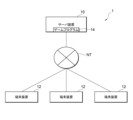
- FIG. 1 is a block diagram showing an example of the overall configuration of a game system according to a first embodiment.
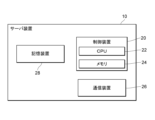
- FIG. 2 is a diagram illustrating an example of a hardware configuration of a server device.
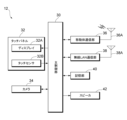
- FIG. 2 is a diagram illustrating an example of a hardware configuration of a smartphone as the terminal device illustrated in FIG. 1 .
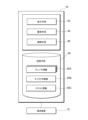
- FIG. 2 is a block diagram illustrating an example of a functional unit of a server device.
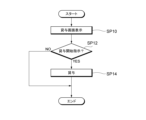
- 13 is a flowchart showing an example of the process flow for lending a loan character in the game system according to the first embodiment.
- FIG. 13 is a diagram showing an example of a lending screen according to the first embodiment;
- 13 is a flowchart showing an example of a process flow for allocating a loan amount from a clear reward in the game system according to the first embodiment.
- FIG. 11 is a diagram showing an example of a clear screen according to the first embodiment.
- 13 is a flowchart showing an example of a process flow for acquiring a character in a game system according to a second embodiment.
- FIG. 11 is a diagram showing an example of an acquisition screen according to the second embodiment.
- 13 is a flowchart showing an example of a process flow for allocating an acquired compensation from a clear reward in a game system according to a second embodiment.
- FIG. 11 is a diagram showing an example of a clear screen according to the second embodiment.
- FIG. 1 is a block diagram showing an example of the overall configuration of a game system 1 according to the first embodiment.
- the game system 1 includes a server device 10 and one or more terminal devices 12.
- the server device 10 and the terminal devices 12 are communicatively connected via a communication network NT such as an intranet, the Internet, or a telephone line.
- the server device 10 is an information processing device that provides the game execution results obtained by executing the game program 14, or the game program 14 itself, to the players of the terminal devices 12 via the communication network NT.
- the server device 10 provides the game program 14 itself to the players of the terminal devices 12.
- Each terminal device 12 is an information processing device owned by each player, and after the game program 14 received from the server device 10 is installed, it executes the information processing device to provide the game to each player.
- These terminal devices 12 include various devices such as video game machines, arcade game machines, mobile phones, smartphones, tablets, and personal computers.
- FIG. 2 is a diagram illustrating an example of a hardware configuration of the server device 10. As shown in FIG.
- the server device 10 includes a control device 20, a communication device 26, and a storage device 28.
- the control device 20 is mainly configured with a CPU (Central Processing Unit) 22 and a memory 24.
- CPU Central Processing Unit
- the CPU 22 executes a predetermined program stored in the memory 24 or the storage device 28, etc., to function as various functional means. Details of these functional means will be described later.
- the communication device 26 is configured with a communication interface for communicating with an external device.
- the communication device 26 transmits and receives various information to and from the terminal device 12, for example.
- the storage device 28 is composed of a hard disk or the like. This storage device 28 stores various programs and information necessary for executing processes in the control device 20, including the game program 14, as well as information on the results of processing.
- the server device 10 can be realized using an information processing device such as a dedicated or general-purpose server computer.
- the server device 10 may be composed of a single information processing device, or may be composed of multiple information processing devices distributed over the communication network NT.
- FIG. 2 shows only a portion of the main hardware configuration of the server device 10, and the server device 10 may have other configurations that are generally included in servers.
- the hardware configuration of the multiple terminal devices 12 may also have the same configuration as the server device 10, except for including, for example, an operating means, a display device, and a sound output device.
- FIG. 3 is a diagram showing an example of the hardware configuration of a smartphone as the terminal device 12 shown in FIG. 1.
- the terminal device 12 includes a main control unit 30, a touch panel (touch screen) 32, a camera 34, a mobile communication unit 36, a wireless LAN communication unit 38, a memory unit 40, and a speaker 42.
- the main control unit 30 is configured to include a CPU, memory, etc. This main control unit 30 is connected to a touch panel 32 as a display input device, a camera 34, a mobile communication unit 36, a wireless LAN communication unit 38, a memory unit 40, and a speaker 42.
- the main control unit 30 has the function of controlling these connection destinations.
- the touch panel 32 has both display and input functions, and is composed of a display 32A that performs the display function, and a touch sensor 32B that performs the input function.
- the display 32A is capable of displaying game images including operation input images such as button images, cross key images, and joystick images.
- the touch sensor 32B is capable of detecting the player's input position relative to the game image.
- the camera 34 has the function of taking still images and/or videos and storing them in the memory unit 40.
- the mobile communication unit 36 has the function of connecting to a mobile communication network via the antenna 36A and communicating with other communication devices connected to the mobile communication network.
- the wireless LAN communication unit 38 has the function of connecting to the communication network NT via the antenna 38A and communicating with other devices such as the server device 10 connected to the communication network NT.
- the storage unit 40 stores various programs and data, such as the game program 14 and play data indicating the game progress and player information of the game program 14.
- the play data may also be stored in the server device 10.
- the speaker 42 has the function of outputting game sounds, etc.
- the game according to the first embodiment includes a quest in which a character can be acquired as an example of content.
- This quest may be called a fighting game, a dungeon, a search, a mission, or the like.
- the quest in the first embodiment is a game in which a deck made up of the player's owned characters and loaned characters is pitted against enemy characters that appear in each stage based on instructions (requests) from the player to carry out a specified quest.
- a player can organize a deck (team) to be used in a quest by arbitrarily selecting a predetermined number (e.g., five) or less of characters from his or her owned or loaned characters in an organization menu for pre-organizing a deck (team) to be used in the quest.
- This quest is executed based on the consumption of a current stamina value associated with the player.
- the player can either continue by consuming game currency or give up (retire).
- game currency examples include paid items (e.g., paid stones and paid coins) and non-paid items (e.g., free stones and free coins).
- paid item is a paid item that is given to a player based on a payment by money, a prepaid card, a credit card, a cryptocurrency, or the like.
- non-paid item is a free item that is given to a player in the game. This non-paid item has, for example, a value equivalent to that of a paid item.
- the player clears the quest, that is, if the hit points of the final enemy character (boss character) are reduced to 0 or less, the player can acquire a clear reward.
- the clear reward include game currency (non-chargeable items), enemy characters (characters) that appear in the quest, player experience points, etc.
- FIG. 4 is a block diagram illustrating an example of the functional units of the server device 10. As shown in FIG.
- the server device 10 has, as its functional configuration, a storage means 50, a lending means 52, an acquisition means 54, and a control means 56.
- the storage means 50 is realized by one or more storage devices 28.
- the functional means other than the storage means 50 are realized by the control device 20 executing the game program 14 stored in the storage device 28 or the like.
- the storage means 50 has the function of storing player information 50A, character information 50B, quest information 50C, etc.
- Player information 50A is stored for each player in association with the player's player ID.
- This player information 50A includes, for example, the player's name, age, player rank, content information, etc.
- a player's rank increases when the player gains player experience points.
- Content information includes owned character information, owned item information, loaned character information, etc.
- the owned character information includes the character ID of each owned character owned by the player and the ability parameters of each character.
- ability parameters include level, hit points, attack power, defense power, etc.
- a character's level increases through a training game (e.g., synthesis)
- the character's hit points, attack power, defense power, etc. increase.
- compensation for such use is not appropriated from the reward.
- Owned item information includes item IDs and quantities of various items owned by the player. Examples of such items include game currency (e.g., paid items and non-paid items), weapon items, armor items, etc.
- game currency e.g., paid items and non-paid items
- weapon items e.g., weapon items, armor items, etc.
- the loaned character information includes information about the loaned characters (loaned content) loaned to the player.
- the loaned character information includes the character ID of each loaned character loaned to the player, the ability parameters of each loaned character, the payment amount, the number of times it has been cleared, the loan deadline, etc.
- the payment amount includes the total amount of the payment required for the loan (loan payment).
- the payment amount includes the total amount of game currency appropriated from the reward for clearing the game (quest).
- the number of times it has been cleared includes the total number of times the game (quest) has been cleared using the loaned character.
- the loan deadline includes, for example, the date and time when the loan ends. Information about loaned characters whose loan deadline has passed is deleted at any time.
- Character information 50B is stored for each character in association with the character ID of that character.
- Character information 50B includes, for example, the character's name, image, ability information, rarity, loan amount, etc. This character information 50B is updated as the game operator updates the game.
- Ability information includes the initial and maximum values of ability parameters, skills, etc.
- Skills include the ability to recover hit points of ally characters in in-game quests or deal large damage to enemy characters based on fulfilling the conditions for activation.
- An example of such an activation condition is when a character's skill gauge reaches a specified value. This skill gauge accumulates, for example, over time (number of turns), by being attacked by an enemy character, by attacking an enemy character, etc.
- Rarity includes a number ranging from 1 to 6, for example. This number may be expressed, for example, as the number of stars. Characters with high rarity are set with ability parameters, skills, etc. that are advantageous in the game (e.g. quests).
- the loan consideration includes the consideration required to loan the character to be loaned (loaned character).
- This loan consideration is, for example, the consideration for using (having used) the loaned character once in a game (e.g. a quest).
- a different amount (quantity) of loan consideration is set for each of at least two loaned characters included in the group of loaned characters to be loaned.
- the loan consideration for the first loaned character is 50 game currency
- the loan consideration for the second loaned character is 100 game currency.
- character information 50B does not include a loan consideration for characters that are not to be loaned.
- Quest information 50C is stored for each quest in association with the quest ID of that quest. Quest information 50C includes the name of the quest, the stamina consumed, enemy character information, difficulty level, clear reward information, etc.
- the consumed stamina value includes the value required to execute the quest. This consumed stamina value is consumed from the player's current stamina value, and for example, the higher the difficulty of the quest, the higher the value.
- Enemy character information includes the character ID and ability parameters of each enemy character that appears in each stage of the quest. These enemy characters include the boss character that appears at the end of the quest (final stage).
- the difficulty level may be a number ranging from 1 to 6. For example, the higher the difficulty level number, the more difficult it is to complete.
- Completion reward information includes the amount of game currency (non-paid items) that can be acquired when a quest is cleared, the character ID and drop rate of an acquireable character (e.g., a boss character), player experience points, etc.
- the reward for completing a certain quest includes 300 pieces of game currency.
- the drop rate is the probability that the player will acquire an acquireable character. For example, the higher the difficulty of the quest, the higher the drop rate.
- the lending means 52 is a functional means for lending a loaned character (loaned content) to a player.
- the lending means 52 lends a loaned character that can be used in a game (e.g., a quest) to the player.
- the lending means 52 lends one or more loaned characters to the player from a group of loaned characters to be lent that are prepared in advance by the game operator.
- the lending means 52 lends one or more loaned characters to the player that are arbitrarily selected by the player from a group of loaned characters to be lent in a character loan menu.
- the lending means 52 adds information on the loaned character loaned to the player to the loaned character information of the content information in the player information 50A.
- the acquisition means 54 is a functional means for allowing the player to acquire a character that can be used in the game.
- the acquisition means 54 allows the player to acquire the loaned character.
- the acquisition means 54 ends the loan of the loaned character and changes the loaned character to a owned character.
- the acquisition means 54 may continue the loan of the loaned character until the loan expiration date, and allow the player to acquire a character identical to the loaned character as a owned character.
- the acquisition means 54 allows the player to acquire the loaned character.
- This predetermined amount may be 100 pieces of game currency (non-chargeable items), an amount equal to the loan value of the loaned character, an amount obtained by multiplying the loan value by one or more coefficients (e.g., three times the loan value), an amount obtained by multiplying the rarity (1 to 6) of the loaned character by a predetermined value (e.g., 100), etc.
- the acquisition means 54 allows a player to acquire a loaned character when the number of times the player has cleared a game (e.g., a quest) using the loaned character reaches a predetermined number.
- the acquisition means 54 allows a player to acquire a loaned character when the number of times the loaned character information in the player information 50A for the loaned character has been cleared reaches a predetermined number. Examples of this predetermined number include 10 times, a number of times equal to the loan consideration for the loaned character (the amount of game currency), a number of times obtained by multiplying the rarity (1 to 6) of the loaned character by a predetermined value (e.g., 10), etc.
- the control means 56 is a functional means for controlling the entire game.
- the control means 56 when the player obtains a reward in the game, the control means 56 appropriates the compensation required for lending (loan compensation) from the reward.
- the control means 56 appropriates part or all of the compensation for using (having used) a loaned character once in the game (e.g., a quest) from the reward in the game.
- this compensation and compensation include game currency, characters, various items, etc.
- the control means 56 requires payment of part of the compensation (loan compensation) (consuming game currency owned by the player), and appropriates the remainder of the compensation from the reward.
- the control means 56 when a player clears a game (e.g., a quest), covers the cost of lending (loan cost) from the reward for clearing the game. Note that even if a player clears a game (quest) without using a loaned character, the control means 56 may cover the cost of lending the loaned character included in the loaned character information from the reward for clearing the game.
- the control means 56 when a player clears a game (e.g., a quest) using a loaned character, the control means 56 appropriates the compensation required for the loan (loan compensation) from the clear reward for the game. For example, when a player clears a quest and the deck used in the quest contains a loaned character, the control means 56 appropriates the loan compensation corresponding to the loaned character from the clear reward. In this case, for example, the control means 56 does not appropriate from the clear reward the loan compensation corresponding to a loaned character that was not used in the quest. In other words, when the deck used in the quest does not contain a loaned character, the control means 56 allows the player to obtain all of the clear reward for the quest.
- control means 56 covers all of the compensation (loan compensation) required for lending a loaned character from the reward for completing the game (quest).
- the control means 56 does not require payment of the compensation (loan compensation) when lending a loaned character (at the time of lending) or at the start of a quest that uses the loaned character, and instead covers the compensation only from the reward for completing the game.
- control means 56 appropriates the compensation from the completion reward of the game each time the player clears a game (quest) using the loaned character. For example, each time the player clears a quest using the loaned character, the control means 56 appropriates part or all of the compensation for using the loaned character in the quest from the completion reward of the quest.
- the control means 56 reduces the amount of compensation allocated from the clear reward when the number of times the player has cleared the game using the loaned character reaches a predetermined number.
- this predetermined number include seven times, a number equal to the loan compensation (amount of game currency) for the loaned character, or a number obtained by multiplying the rarity (1 to 6) of the loaned character by a predetermined value (e.g., 10).
- the control means 56 reduces the amount of game currency allocated from the clear reward from 50 to 30 when the number of times the player has cleared a quest using the loaned character reaches a predetermined number.
- the control means 56 if the player fails to clear the game using the loaned character, the control means 56 provides the compensation for the loan of the loaned character free of charge. For example, if the player fails to clear a quest with the loaned character in the deck and gives up without continuing, the control means 56 provides the compensation free of charge. In other words, the control means 56 provides the compensation corresponding to the loaned character from the clearing reward only if the player clears the quest using the loaned character.
- control means 56 restricts the use of the loaned character by the player in a specified game.
- the specified game include quests (games) that are less than the amount of compensation that the clearing reward covers, quests that are less than a portion of the amount of compensation that the clearing reward covers (for example, 1/10 of the amount), quests that the player has not cleared, quests that the player has cleared, quests with a specified difficulty level (for example, 1 or 6), and time-limited quests.
- ⁇ Loan processing flow> 5 is a flowchart showing an example of the process flow for lending a loan character in the game system 1 according to the first embodiment.
- the process of the following steps is started, for example, when the player selects the character loan menu.
- the order and contents of the following steps can be changed as appropriate.
- Step SP10 The control means 56 causes the touch panel 32 to display a loan screen including a group of loan characters to be loaned.
- FIG. 6 shows an example of a loan screen 60 according to the first embodiment.
- the loan screen 60 is provided with a loan character information area 62 , a selection button 63 , a cancel button 64 , and a loan execution button 66 .
- the loaned character information area 62 displays the rarity, ability parameters, loan price, etc. of each loaned character included in the loaned character group to be loaned. This loan price is, for example, the price required each time the loaned character is used in a quest.
- the selection button 63 is a button for issuing an instruction to arbitrarily select a corresponding loan character.
- the cancel button 64 is a button for issuing an instruction to cancel the lending of the lent character.
- the loan execution button 66 is a button for issuing an instruction to start loaning the selected loan character.
- Step SP12 The lending means 52 judges whether or not the lending execution button is instructed (pressed) on the lending screen. If the judgment is affirmative, the process proceeds to step SP14. On the other hand, if the judgment is negative, that is, if the cancel button is instructed (pressed), the process ends the series of processes shown in FIG. 5.
- the lending means 52 lends one or more lending characters selected on the lending screen to the player.
- the lending means 52 stores the character ID, ability parameters, payment amount, number of times cleared, etc. of the lending character to be lent in the lending character information in the player information 50A.
- the lending means 52 stores the initial value (0) for the payment amount and number of times cleared, and stores 23:59 seven days later as the lending deadline. Then, the process ends the series of processes shown in FIG. 5.
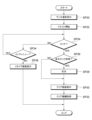
- ⁇ Appropriation process flow> 7 is a flowchart showing an example of the process flow for allocating the loan amount from the completion reward in the game system 1 according to the first embodiment.
- the process of the following steps is started, for example, when the player specifies a quest in the quest menu.
- the order and contents of the following steps can be changed as appropriate.
- Step SP20 The control means 56 receives a selection of a deck to be organized from the player's owned characters and loaned characters, and then the process proceeds to step SP22.
- Step SP22 The control means 56 starts a quest using each character that constitutes the deck selected in step SP20, and then the process proceeds to step SP24.
- Step SP24 The control means 56 judges whether or not a quest has been cleared. For example, the control means 56 judges in the affirmative when the hit points of a boss character appearing in the final stage of a quest become 0 or less. If the judgment is judged in the affirmative, the process proceeds to step SP26. On the other hand, if the judgment is judged in the negative, that is, if the hit points of all characters constituting the deck become 0 or less, the process proceeds to step SP34.
- Step SP26 The control means 56 determines whether or not the characters used in one quest include a loaned character. For example, the control means 56 refers to the loaned character information in the player information 50A to determine whether or not the deck selected in step SP20 includes a loaned character. If the determination is affirmative, the process proceeds to step SP28. On the other hand, if the determination is negative, the process proceeds to step SP30.
- the control means 56 appropriates the compensation (loan compensation) corresponding to one or more loaned characters used in one quest from the clear compensation acquired by the player in the one quest. For example, the control means 56 changes the amount of game currency to be appropriated according to the number of times of clearing the loaned character information in the player information 50A and the loan compensation in the character information 50B. Specifically, when the loan compensation is 50 game currencies and the number of times of clearing has not reached a predetermined number (e.g., 7 times), the control means 56 subtracts 50 game currencies from the clear compensation (e.g., 300 game currencies) and subtracts 30 game currencies from the clear compensation when the number of times of clearing has reached a predetermined number.
- a predetermined number e.g., 7 times
- control means 56 adds the appropriated compensation (e.g., 50 game currencies) to the amount of compensation payment for the loaned character information.
- the control means 56 also increments (+1) the number of times of clearing the loaned character information. Then, the process proceeds to the process of step SP30.
- Step SP30 The control means 56 causes the touch panel 32 to display a clear screen including information on the clear reward.
- FIG. 8 shows an example of a clear screen 70 according to the first embodiment.
- the clear screen 70 is provided with a clear reward information area 72 and a reward acquisition button 74 .
- the clear reward information area 72 displays the contents of the clear reward, etc.
- the clear reward information area 72 displays information indicating that the compensation has been appropriated (deducted) from the clear reward.
- the reward acquisition button 74 is a button for issuing an instruction to acquire a clear reward.
- Step SP32 The control means 56 allows the player to acquire the clear reward in response to pressing the reward acquisition button. For example, when the compensation required for lending the loan character is appropriated from the clear reward (game currency) in step SP28, the control means 56 allows the player to acquire the amount of clear reward obtained by subtracting the compensation from the clear reward. Then, the process ends the series of processes shown in FIG. 7.
- Step SP34 The control means 56 determines whether or not an instruction to continue the first quest has been given by the player. If the determination is affirmative, the process proceeds to step SP24. On the other hand, if the determination is negative, that is, if the player gives up (retires) from completing the first quest, the process proceeds to step SP36.
- Step SP36 The control means 56 causes a resignation screen, which indicates that completion of one quest has been given up, to be displayed on the touch panel 32. Then, the process ends the series of processes shown in FIG.
- control means 56 is described as paying the fee required for the loan (loan fee) from the reward for completing the quest, but the fee may also be paid from the reward associated with displaying the advertising video.
- the control means 56 appropriates the compensation required for lending from the compensation (advertising compensation) associated with the display of the advertising video.
- this compensation include game currency, characters, various items, etc.
- this compensation may be the same amount as the compensation required for lending, and the number of advertising videos displayed and the display time (playback time) may be increased as the compensation increases.
- the remuneration may be the same as the amount required for lending, or may be more than the amount. For example, after the amount required for lending is appropriated from the remuneration, the control means 56 allows the player to obtain the remaining amount of the remuneration.
- the advertisement video may be stored in the storage device 28 or in an external advertisement server.
- the advertisement video may be a video (still image or video) introducing a product or service (e.g., a game different from the game in question).
- the advertisement video may have an area (e.g., a screen transition button) for transitioning to a screen for purchasing or downloading (installing) the product or service.
- an advertising video is displayed (played) on the touch panel 32 of the terminal device 12 owned by a player, the game operator can receive advertising fees from the advertiser of that advertising video.
- the control means 56 each time an advertisement video is displayed (the player watches an advertisement video), the control means 56 appropriates part or all of the loan consideration from the remuneration associated with the display. For example, when a player configures a loaned character into a deck and starts a quest, the control means 56 automatically (compulsorily) displays the advertisement video and appropriates the consideration (loan consideration) for using (having used) the loaned character from the remuneration associated with the display.
- the control means 56 may display the advertisement video when the player gives an instruction to display the advertisement video. For example, the control means 56 may determine that the player viewing the advertisement video does not require the loan fee (does not consume the game currency owned by the player). The timing for displaying this advertisement video may be at the start or during a quest, or at the end of a quest (when the quest is cleared or retired), etc.
- a computer functions as a lending means 52 that lends loan content that can be used in a game to a player, and as a control means 56 that, when a player obtains a reward in a game, appropriates the cost of the loan from the reward.
- control means 56 when a player clears a game using loaned content, the control means 56 appropriates the compensation from the completion reward for that game.
- control means 56 allocates all of the compensation from the reward for clearing the game.
- the lending means 52 lends one or more lending contents from a group of lending contents to be lent, and a different amount of compensation is set for each of at least two pieces of lending content included in the group of lending contents.
- This configuration can motivate players to rent rental content that has a high price set for it.
- control means 56 each time a player clears a game using loaned content, the control means 56 appropriates the compensation from the clearing reward for that game.
- This configuration makes it possible to reduce the amount of completion reward allocated each time the game is completed, thereby giving players an incentive to borrow the rental content.
- the computer functions as an acquisition means 54 that allows the player to acquire the loaned content when the total amount of the appropriated compensation reaches a predetermined amount.
- the loaned content can be acquired based on the total amount of the paid compensation, which can motivate players to use the loaned content to complete multiple games, thereby making the games more lively.
- the computer functions as an acquisition means 54 that allows a player to acquire the loaned content when the player has completed the game using the loaned content a predetermined number of times.
- players can earn loaned content according to the number of times they clear a game, which gives players an incentive to use the loaned content to clear multiple games, making the game more lively.
- control means 56 reduces the compensation allocated from the completion reward when the number of times the player has completed the game using the loaned content reaches a predetermined number.
- control means 56 if the player is unable to complete the game using the loaned content, the control means 56 provides the content free of charge.
- control means 56 restricts the player's use of content in a given game.
- This configuration limits the use of loaned content in a given game, so game balance can be maintained.
- the specified game is a game for which the compensation is less than the compensation to be allocated as the completion reward.
- the compensation is appropriated from the remuneration associated with the display of the advertising video.
- the second embodiment differs from the first embodiment in that information on characters acquired by the player without paying the entire price required for acquisition (hereinafter referred to as "acquired characters") is stored in acquired character information described below, that the control means 56 appropriates the price required for acquisition of the acquired characters from the game rewards, and that acquired characters can be organized into a deck.
- acquired characters information on characters acquired by the player without paying the entire price required for acquisition
- the control means 56 appropriates the price required for acquisition of the acquired characters from the game rewards, and that acquired characters can be organized into a deck.
- the content information of the player information 50A includes acquired character information.
- This acquired character information includes, for example, information about acquired characters acquired by the player in a lottery game, acquisition menu, etc., without paying all of the price required for acquisition.
- the acquired character information includes the character ID of each acquired character acquired by the player in an acquisition menu, etc., the ability parameters of each acquired character, the price paid, etc.
- the price paid amount includes the total amount of the price required for acquisition (acquired price) paid.
- the price paid amount includes the total amount of game currency appropriated from the reward for clearing the game (quest). For example, the minimum value of this price paid amount is 0, and the maximum value is the price required for acquisition (acquired price).
- character information 50B includes an acquisition price.
- This acquisition price includes the price required to acquire the character to be acquired.
- This acquisition price is, for example, a price for acquiring the acquired character.
- a different amount of acquisition price is set for each of at least two characters included in the group of characters to be acquired.
- the acquisition price for the first character is 600 game currency
- the acquisition price for the second character is 1,200 game currency.
- the acquisition means 54 allows the player to acquire one or more characters randomly selected from a group of characters that are targets for acquisition.
- the acquisition means 54 allows the player to acquire one or more characters randomly selected (drawn) from a group of characters (contents) that are targets for acquisition (selection targets) as acquired characters (acquired contents).
- the acquisition means 54 allows the player to acquire one or more characters selected by the player from a group of characters that are targets for acquisition.
- the acquisition means 54 allows the player to acquire, as acquired characters (acquired contents), one or more characters arbitrarily selected by the player from a group of characters (contents) that are targets for acquisition (selection targets) in an acquisition menu.
- the control means 56 when the player acquires a reward in the game, the control means 56 appropriates the consideration required to acquire the acquired character (acquired consideration) from the reward. For example, the control means 56 appropriates part or all of the consideration for acquiring the acquired character from the reward in the game. For example, when acquiring an acquired character (at the time of acquisition) or at the start of a quest using the acquired character, the control means 56 requires payment of part of the consideration (acquired consideration) (consuming game currency owned by the player), and appropriates the remainder of the consideration from the reward.
- the control means 56 when the player clears a game (e.g., a quest), the control means 56 appropriates the compensation required for acquisition (acquired compensation) from the reward for clearing the game. Note that even if the player clears a game (quest) without using an acquired character, the control means 56 may appropriate the compensation for acquiring the acquired character included in the acquired character information from the reward for clearing the game.
- the control means 56 when a player clears a game (e.g., a quest) using an acquired character, the control means 56 appropriates the acquisition fee for the acquired character from the clear reward for the game. For example, when a player clears a quest and an acquired character is included in the deck used in the quest, the control means 56 appropriates the acquisition fee corresponding to the acquired character from the clear reward. In this case, for example, the control means 56 does not appropriate from the clear reward the acquisition fee corresponding to an acquired character that was not used in the quest. In other words, when an acquired character is not included in the deck used in the quest, the control means 56 allows the player to obtain all of the clear reward for the quest.
- a game e.g., a quest
- the control means 56 when a player clears a quest and an acquired character is included in the deck used in the quest, the control means 56 appropriates the acquisition fee corresponding to the acquired character from the clear reward. In this case, for example, the control means 56 does not appropriate from the clear reward the acquisition fee corresponding to
- control means 56 appropriates all of the compensation required for acquisition (acquired compensation) from the reward for clearing the game (quest). For example, when acquiring an acquired character (at the time of acquisition) or at the start of a quest that uses the acquired character, the control means 56 does not require payment of the compensation (acquired compensation), and instead appropriates the compensation only from the reward for clearing the game.
- the control means 56 each time the player clears a game (quest) using an acquired character, the control means 56 appropriates a portion of the compensation required for acquisition (acquired compensation) from the clearing reward for the game. For example, each time the player clears a quest using an acquired character, the control means 56 appropriates a portion of the compensation from the clearing reward for the quest. Specifically, each time the player clears a quest using an acquired character, the control means 56 appropriates the compensation from the clearing reward in installments (for example, 10 payments).
- An example of this portion of compensation is a number (for example, 60 game currencies) obtained by dividing the acquired compensation (for example, 600 game currencies) by a predetermined value (for example, 10).
- the control means 56 will not appropriate the acquired consideration from the clear reward even if the acquired character is used in a quest thereafter. Specifically, when the payment amount of the consideration for the acquired character information in the player information 50A for the acquired character reaches the acquired consideration, the control means 56 changes the acquired character to a owned character and ends appropriating the acquired consideration from the clear reward.
- the control means 56 if the player fails to clear the game using the acquired character, the control means 56 provides the compensation required to acquire the acquired character free of charge. For example, if the player is unable to clear a quest with the acquired character in the deck and gives up without continuing, the control means 56 provides the compensation free of charge. In other words, the control means 56 appropriates the compensation corresponding to the acquired character from the clearing reward only if the player clears the quest using the acquired character.
- control means 56 also restricts the use of acquired characters by the player in a specified game.
- the specified game include quests (games) that are less than the amount of compensation that the clearing reward covers, quests that are less than a portion of the amount of compensation that the clearing reward covers (e.g., 1/10 of the amount), quests that the player has not cleared, quests that the player has cleared, quests with a specified difficulty level (e.g., 1 or 6), and time-limited quests.
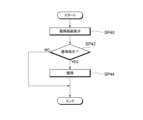
- ⁇ Acquisition process flow> 9 is a flowchart showing an example of the flow of processing for acquiring a character in the game system 1 according to the second embodiment.
- the processing of the following steps is started, for example, when the player selects a menu for acquiring a character.
- the order and contents of the following steps can be changed as appropriate.
- Step SP40 The control means 56 causes the touch panel 32 to display an acquisition screen including a group of characters to be acquired.
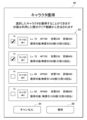
- FIG. 10 shows an example of an acquisition screen 80 according to the second embodiment.
- the acquisition screen 80 is provided with an acquired character information area 82 , a selection button 83 , a cancel button 84 , and an acquisition button 86 .
- the acquired character information area 82 displays the rarity, ability parameters, and acquisition price of each character included in the character group to be acquired. For example, the acquired character information area 82 displays that the acquisition price will be paid (appropriated) in installments over a predetermined number of times (e.g., 10).
- the selection button 83 is a button for issuing an instruction to arbitrarily select a corresponding character.
- the cancel button 84 is a button for issuing an instruction to cancel the acquisition of a character.
- the acquire button 86 is a button for issuing an instruction to start acquiring the selected character.
- step SP42 processing proceeds to step SP42.
- Step SP42 The acquisition means 54 judges whether or not the acquisition button has been instructed (pressed) on the acquisition screen. If the judgment is affirmative, the process proceeds to step SP44. On the other hand, if the judgment is negative, that is, if the cancel button has been instructed (pressed), the process ends the series of processes shown in FIG. 9.
- the acquisition means 54 allows the player to acquire one or more characters selected on the acquisition screen as acquired characters.
- the acquisition means 54 stores the character ID, ability parameters, payment amount, etc. of the acquired character in acquired character information in the player information 50A.
- the acquisition means 54 stores an initial value (0) in the payment amount. Then, the process ends the series of processes shown in FIG. 9.
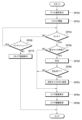
- ⁇ Appropriation process flow> 11 is a flowchart showing an example of the process flow for allocating the acquired compensation from the clear reward in the game system 1 according to the second embodiment.
- the process of the following steps is started, for example, when the player specifies a quest in the quest menu.
- the order and contents of the following steps can be changed as appropriate.
- Step SP50 The control means 56 receives a selection of a deck to be organized from the player's owned characters and acquired characters, and then the process proceeds to step SP52.
- Step SP52 The control means 56 starts a quest using each character that constitutes the deck selected in step SP50, and then the process proceeds to step SP54.
- Step SP54 The control means 56 judges whether or not one quest has been cleared. If the judgment is affirmative, the process proceeds to step SP56. On the other hand, if the judgment is negative, that is, if the hit points of all characters constituting the deck are equal to or less than 0, the process proceeds to step SP68.
- Step SP56 The control means 56 determines whether or not the characters used in one quest include an acquired character. For example, the control means 56 refers to acquired character information in the player information 50A to determine whether or not an acquired character is included in the deck selected in step SP50. If the determination is affirmative, the process proceeds to step SP58. On the other hand, if the determination is negative, the process proceeds to step SP60.
- Step SP58 The control means 56 appropriates a compensation (acquired compensation) corresponding to one or more acquired characters used in one quest from a clear reward that the player has acquired in the one quest.
- the control means 56 refers to the acquired compensation in the character information 50B and appropriates from the clear reward an amount of game currency obtained by dividing the acquired compensation by a predetermined value (e.g., 10).
- a predetermined value e.g. 10
- the control means 56 subtracts 60 pieces of game currency obtained by dividing the acquired compensation by the predetermined value of 10 from the clear reward.
- the control means 56 adds the appropriated compensation (e.g., 60 pieces of game currency) to the compensation payment amount of the acquired character information in the player information 50A.
- the process proceeds to the process of step SP60.
- Step SP60 The control means 56 judges whether or not the payment of the price (acquired price) corresponding to the acquired character has been completed. For example, the control means 56 judges whether or not the payment amount of the price for the acquired character information added up in step SP58 has reached the price (maximum value) required to acquire the acquired character. If the judgment is affirmative, the process proceeds to step SP62. On the other hand, if the judgment is negative, the process proceeds to step SP64.
- Step SP62 The acquiring means 54 changes the acquired character for which payment of the fee has been completed to a owned character. That is, the acquiring means 54 makes the acquired character owned by the player as a owned character. For example, the acquiring means 54 deletes information on the acquired character included in the acquired character information of the player information 50A, and stores the information in the owned character information. Then, the process proceeds to the process of step SP64.
- Step SP64 The control means 56 causes the touch panel 32 to display a clear screen including information on the clear reward.
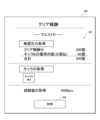
- FIG. 12 shows an example of a clear screen 90 according to the second embodiment.
- the clear screen 90 is provided with a clear reward information area 92 and a reward acquisition button 94 .
- the clear reward information area 92 displays the contents of the clear reward, etc.
- the clear reward information area 92 displays information indicating that the compensation has been appropriated (deducted) from the clear reward.
- step SP66 processing proceeds to step SP66.
- Step SP66 The control means 56 allows the player to acquire the clear reward in response to pressing the reward acquisition button. For example, when the compensation required to acquire the acquired character is appropriated from the clear reward (game currency) in step SP58, the control means 56 allows the player to acquire the amount of clear reward obtained by subtracting the compensation from the clear reward. Then, the process ends the series of processes shown in FIG. 11.
- Steps SP68 to SP70 The processing in steps SP68 to SP70 is the same as the processing in steps SP34 to SP36 described above, and therefore the description thereof will be omitted. Then, the processing ends with the series of processing steps shown in FIG.
- control means 56 is described as paying the compensation required for acquisition (acquired compensation) from the reward for clearing the quest, but the compensation may also be paid from the compensation associated with displaying the advertising video.
- the control means 56 appropriates the compensation required for acquisition from the compensation (advertising compensation) associated with the display of the advertising video.
- This compensation may be the same amount as the compensation required for acquisition, and the number of advertising videos displayed and the display time (playback time) may be increased as the compensation increases.
- This compensation may be the same as the compensation required for acquisition, or may be greater than the compensation.
- the control means 56 allows the player to obtain the remaining compensation.
- the control means 56 each time an advertisement video is displayed (the player watches an advertisement video), the control means 56 appropriates a part or all of the acquired consideration from the reward associated with the display. For example, when the player configures an acquired character into a deck and starts a quest, the control means 56 automatically (compulsorily) displays the advertisement video and appropriates the consideration (acquired consideration) for using (having used) the acquired character from the reward associated with the display. Note that the control means 56 may display the advertisement video when the player gives an instruction to display the advertisement video. For example, the control means 56 determines that no compensation is required (no game currency owned by the player is consumed) as a result of the player viewing the advertisement video.
- the computer functions as an acquisition means 54 that allows the player to acquire content that can be used in the game, and as a control means 56 that, when the player obtains a reward in the game, appropriates the cost required for the acquisition from the reward.
- control means 56 when a player clears a game using content, the control means 56 appropriates the compensation from the completion reward for that game.
- control means 56 covers the entire compensation from the reward for clearing the game.
- the acquisition means 54 acquires one or more pieces of content randomly selected from the content group to be acquired.
- the acquisition means 54 allows the player to acquire one or more pieces of content selected by the player from a content group to be acquired, and a different amount of compensation is set for each of at least two pieces of content included in the content group.
- This configuration can motivate players to acquire (select) content that has a high price set for it.
- control means 56 allocates a portion of the compensation from the completion reward for that game.
- This configuration makes it possible to reduce the amount of completion reward allocated each time a game is completed, thereby giving players an incentive to acquire content.
- control means 56 if the player is unable to complete the game using the content, the control means 56 provides the content free of charge.
- control means 56 restricts the player's use of content in a given game.
- This configuration limits the use of content acquired in a given game, helping to maintain game balance.
- the specified game is a game for which the compensation is less than the compensation to be allocated as the completion reward.
- the compensation is appropriated from the remuneration associated with the display of the advertising video.
- the loan consideration is described as a consideration for using (having used) a loaned character once in a game, but it may also be a consideration for loaning the loaned character until the loan expiration date.
- the control means 56 may allocate part or all of the consideration for loaning the loaned character until the loan expiration date from the reward in the game.
- the loan consideration may also be a consideration for using (having used) the loaned character multiple times in a game. For example, when the loaned character is used multiple times (e.g., three times) in a quest, the control means 56 may appropriate the loan consideration for the multiple uses from the remuneration.
- the lending means 52 lends one or more characters to the player from a group of characters to be lent that are prepared in advance by the game operator, but the lending means 52 may lend one or more characters to the player as loan characters from a group of characters owned by another player.
- the control means 56 may cause the other player who owns the loaned character to acquire a part or all of the loan consideration appropriated from the remuneration.
- the lending means 52 may lend to the player one or more loan characters randomly selected (drawn) from a group of loan characters.
- the control means 56 has been described as allocating all or part of the compensation from the reward in the game, but the compensation to be allocated may be changed depending on the quantity of the reward. For example, if the reward for completing a quest contains 300 pieces of game currency, the control means 56 sets the upper limit of the compensation to be allocated to 150 pieces of game currency. Also, for example, if the reward for completing a quest contains 600 pieces of game currency, the control means 56 sets the upper limit of the compensation to be allocated to 300 pieces of game currency.
- the timing for displaying this advertising video is described as being when a quest ends, but it may also be when logging in or when an advertising display menu is selected, etc.
- a character is mainly used as an example of content, but the content may be equipment items such as weapon items and armor items, cards, avatars, costumes, etc.
Landscapes
- Engineering & Computer Science (AREA)
- Multimedia (AREA)
- Physics & Mathematics (AREA)
- Optics & Photonics (AREA)
- Business, Economics & Management (AREA)
- Computer Security & Cryptography (AREA)
- General Business, Economics & Management (AREA)
- Theoretical Computer Science (AREA)
- Human Computer Interaction (AREA)
- Management, Administration, Business Operations System, And Electronic Commerce (AREA)
Applications Claiming Priority (2)
| Application Number | Priority Date | Filing Date | Title |
|---|---|---|---|
| JP2022-170020 | 2022-10-24 | ||
| JP2022170020A JP7311007B1 (ja) | 2022-10-24 | 2022-10-24 | プログラム及び情報処理装置 |
Publications (1)
| Publication Number | Publication Date |
|---|---|
| WO2024089925A1 true WO2024089925A1 (ja) | 2024-05-02 |
Family
ID=87201353
Family Applications (1)
| Application Number | Title | Priority Date | Filing Date |
|---|---|---|---|
| PCT/JP2023/018506 Ceased WO2024089925A1 (ja) | 2022-10-24 | 2023-05-17 | プログラム及び情報処理装置 |
Country Status (2)
| Country | Link |
|---|---|
| JP (2) | JP7311007B1 (enExample) |
| WO (1) | WO2024089925A1 (enExample) |
Family Cites Families (2)
| Publication number | Priority date | Publication date | Assignee | Title |
|---|---|---|---|---|
| JP6700701B2 (ja) * | 2015-09-30 | 2020-05-27 | 株式会社バンダイナムコエンターテインメント | ゲームシステム、及びプログラム |
| JP7235524B2 (ja) * | 2019-02-12 | 2023-03-08 | 株式会社コーエーテクモゲームス | 情報処理装置、情報処理方法及びプログラム |
-
2022
- 2022-10-24 JP JP2022170020A patent/JP7311007B1/ja active Active
-
2023
- 2023-05-17 WO PCT/JP2023/018506 patent/WO2024089925A1/ja not_active Ceased
- 2023-06-29 JP JP2023106603A patent/JP2024062376A/ja active Pending
Non-Patent Citations (3)
| Title |
|---|
| "Famitsu mobage (Weekly Famitsu Special Edition)", 25 June 2013, FAMITSU MOBAGE, JP, article ANONYMOUS: "FINAL FANTASY TACTICS S Employ units to strengthen your deck", pages: 20 - 21, XP009556146 * |
| "Unity Terakoya: Unity Terakoya: A classic introduction to smartphone game development", 21 August 2017, MDN CORPORATION, JP, ISBN: 978-4-8443-6677-5, article ITANO, KUMANBOW ET AL.: "Move the player character with buttons", pages: 193 - 198, XP009556144 * |
| EARTH DEFENSE FORCE IRON RAIN: ""Support weapons can be held up to the slot number and capacity limit", "Deduct from the clear reward by the number used"", DENGEKI PLAYSTATION, vol. 25 (672), no. 1(804), 28 January 2019 (2019-01-28), JP, pages 116, XP009556172 * |
Also Published As
| Publication number | Publication date |
|---|---|
| JP2024062376A (ja) | 2024-05-09 |
| JP7311007B1 (ja) | 2023-07-19 |
| JP2024062186A (ja) | 2024-05-09 |
Similar Documents
| Publication | Publication Date | Title |
|---|---|---|
| WO2023112552A1 (ja) | プログラム及び情報処理装置 | |
| WO2023112553A1 (ja) | プログラム及び情報処理装置 | |
| JP7092170B2 (ja) | プログラム及び情報処理装置 | |
| WO2024089924A1 (ja) | プログラム及び情報処理装置 | |
| JP2025123265A (ja) | プログラム及び情報処理装置 | |
| JP7188419B2 (ja) | プログラム及び情報処理装置 | |
| JP7473061B1 (ja) | プログラム及び情報処理装置 | |
| JP7248183B2 (ja) | プログラム及び情報処理装置 | |
| JP7303339B1 (ja) | プログラム及び情報処理装置 | |
| WO2024089925A1 (ja) | プログラム及び情報処理装置 | |
| JP7303338B1 (ja) | プログラム及び情報処理装置 | |
| JP7622713B2 (ja) | プログラム及び情報処理装置 | |
| JP7074242B1 (ja) | プログラム及び情報処理装置 | |
| JP7533529B2 (ja) | プログラム及び情報処理装置 | |
| JP7491011B2 (ja) | プログラム及び情報処理装置 | |
| WO2024047962A1 (ja) | プログラム及び情報処理装置 | |
| JP2024034919A (ja) | プログラム及び情報処理装置 | |
| JP2025061753A (ja) | プログラム及び情報処理装置 | |
| JP2023105185A (ja) | 情報処理装置及びプログラム | |
| WO2024241676A1 (ja) | プログラム及び情報処理装置 | |
| WO2024241679A1 (ja) | プログラム及び情報処理装置 |
Legal Events
| Date | Code | Title | Description |
|---|---|---|---|
| 121 | Ep: the epo has been informed by wipo that ep was designated in this application |
Ref document number: 23882142 Country of ref document: EP Kind code of ref document: A1 |
|
| NENP | Non-entry into the national phase |
Ref country code: DE |
|
| 122 | Ep: pct application non-entry in european phase |
Ref document number: 23882142 Country of ref document: EP Kind code of ref document: A1 |