WO2024075783A1 - 反応性NOxの定量方法及びニトロソ化合物の生成を抑制した製剤 - Google Patents
反応性NOxの定量方法及びニトロソ化合物の生成を抑制した製剤 Download PDFInfo
- Publication number
- WO2024075783A1 WO2024075783A1 PCT/JP2023/036245 JP2023036245W WO2024075783A1 WO 2024075783 A1 WO2024075783 A1 WO 2024075783A1 JP 2023036245 W JP2023036245 W JP 2023036245W WO 2024075783 A1 WO2024075783 A1 WO 2024075783A1
- Authority
- WO
- WIPO (PCT)
- Prior art keywords
- nox
- formulation
- nitroso compounds
- amount
- reactive
- Prior art date
- Legal status (The legal status is an assumption and is not a legal conclusion. Google has not performed a legal analysis and makes no representation as to the accuracy of the status listed.)
- Ceased
Links
Images

Classifications
-
- G—PHYSICS
- G01—MEASURING; TESTING
- G01N—INVESTIGATING OR ANALYSING MATERIALS BY DETERMINING THEIR CHEMICAL OR PHYSICAL PROPERTIES
- G01N33/00—Investigating or analysing materials by specific methods not covered by groups G01N1/00 - G01N31/00
- G01N33/15—Medicinal preparations ; Physical properties thereof, e.g. dissolubility
-
- G—PHYSICS
- G01—MEASURING; TESTING
- G01N—INVESTIGATING OR ANALYSING MATERIALS BY DETERMINING THEIR CHEMICAL OR PHYSICAL PROPERTIES
- G01N31/00—Investigating or analysing non-biological materials by the use of the chemical methods specified in the subgroup; Apparatus specially adapted for such methods
-
- A—HUMAN NECESSITIES
- A61—MEDICAL OR VETERINARY SCIENCE; HYGIENE
- A61K—PREPARATIONS FOR MEDICAL, DENTAL OR TOILETRY PURPOSES
- A61K47/00—Medicinal preparations characterised by the non-active ingredients used, e.g. carriers or inert additives; Targeting or modifying agents chemically bound to the active ingredient
- A61K47/06—Organic compounds, e.g. natural or synthetic hydrocarbons, polyolefins, mineral oil, petrolatum or ozokerite
- A61K47/16—Organic compounds, e.g. natural or synthetic hydrocarbons, polyolefins, mineral oil, petrolatum or ozokerite containing nitrogen, e.g. nitro-, nitroso-, azo-compounds, nitriles, cyanates
Definitions
- One embodiment of the present invention relates to a method for quantifying reactive NOx, and in particular to a method for quantifying reactive NOx contained in a drug substance, additive, or formulation for pharmaceutical use.
- one embodiment of the present invention relates to a formulation that suppresses the generation of nitroso compounds, designed based on the method for quantifying reactive NOx.
- Nitroso compounds are organic compounds that have a nitroso group, and nitrosamines are a type of nitroso compound that are generated when amines are nitrosated by a NOx source such as nitrous acid (the hydrogen on the amine nitrogen is replaced by a nitroso group). Some nitroso compounds have been pointed out as having a risk of carcinogenicity, and in recent years, the importance of evaluating nitroso compounds contained in pharmaceuticals has been suggested.
- the drug substance may be an amine or amide, which may react with the NOx source contained in the formulation and increase the amount of nitroso compounds during storage.
- Non-Patent Document 1 Non-Patent Document 1
- Various other compounds are also contained in additives as NOx sources, but it is thought that not all of them contribute to the reaction of generating nitroso compounds. Therefore, it is not realistic to identify and manage all individual NOx sources.
- One object of the present invention is to provide a method for quantifying reactive NOx, which is a source of NOx that may be involved in the production of nitroso compounds.
- one object of the present invention is to provide a formulation that suppresses the formation of nitroso compounds, designed based on a method for quantifying reactive NOx that may be involved in the formation of nitroso compounds.
- a method for quantifying reactive NOx includes contacting a sample with an amine source to produce a nitroso compound.
- the sample may be contacted with an amine source under sealed conditions and then heated to generate nitroso compounds.
- Nitroso compounds can be quantified and converted into the molecular weight of the nitrite ion.
- the amine source may be a secondary amine, a tertiary amine or a quaternary amine.
- the sample may be one selected from the group consisting of a drug substance, a pharma- ceutically acceptable excipient, a pharmaceutical composition, and a formulation.
- a formulation that contains a drug substance or a pharma- ceutical acceptable additive that has been evaluated by any of the above-mentioned reactive NOx quantification methods.
- the theoretical amount of nitroso compounds formed in the formulation is calculated as the amount of substance per tablet by using the total amount of reactive NOx per tablet, and the formulation may contain drug substances and pharma- ceutically acceptable excipients whose theoretical amount of nitroso compounds calculated as the amount of substance per tablet is below the allowable limit value of the nitroso compounds.
- a method for quantifying reactive NOx which is a source of NOx that may be involved in the generation of nitroso compounds.
- a formulation that inhibits the generation of nitroso compounds is provided, which is designed based on the method for quantifying reactive NOx that may be involved in the generation of nitroso compounds.
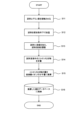
- FIG. 1 is a flow diagram showing a method for quantifying reactive NOx according to one embodiment of the present invention.
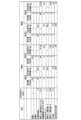
- 1 is a table showing formulations of Examples and Comparative Examples.
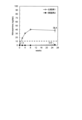
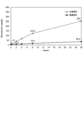
- FIG. 1 is a graph showing the change over time in the amount of nitroso compounds when the preparations of Comparative Example 1 and Example 2 are stored at 25° C. and 60% RH.
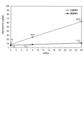
- FIG. 1 is a graph showing the transition of the amount of nitroso compounds when the preparations of Comparative Example 1 and Example 2 are stored at 40° C. and 75% RH.
- FIG. 1 is a graph showing the change over time in the amount of nitroso compounds when the preparations of Comparative Example 2 and Example 3 are stored at 25° C. and 60% RH.
- FIG. 1 is a graph showing the transition of the amount of nitroso compounds when the preparations of Comparative Example 2 and Example 3 are stored at 40° C. and 75% RH.
- nitroso compound is a general term for compounds having a nitroso group represented by the following chemical formula 1.
- nitroso compound is a general term for compounds having a structure in which a nitroso group is added to the nitrogen of an amine, amide, or the like.
- Nitroso compounds include N-nitrosonornicotine (NNN), 4-(methylnitrosamino)-1-(3-pyridyl)-1-butanone (NNK), 4-(methylnitrosamino)-1-(3-pyridyl)-1-butanol (NNAL), N,N'-dinitrosopentamethylenetetramine (DPT), N-nitrosomethylethylamine (NMEA), N-nitrosopiperidine (NPIP), N-nitrosopyrrolidine (NPYR), N-nitrosomorpholine (NMOR), N-nitrosoproline (NPRO), and N- Examples include, but are not limited to, nitrososarcosine (NSAR), N-nitrosodimethylamine (NDMA), N-nitrosodiethylamine (NDEA), N-nitrosomethylphenylamine (NMPA), N-nitrosodiisopropylamine (NDIPA), N-nitrosoethylisoprop
- NDMA, NDEA, NMPA, NDIPA, NEIPA, NDBA, and NMBA are nitroso compounds that may be present as impurities in drug substances and pharmaceutical products, as listed in Control of Nitrosamine Impurities in Human Drugs, Guidance for Industry, February 2021, Revision 1.
- NOx source is a general term for compounds containing a nitroso group that can generate a nitroso compound by reacting with an amine source.
- NOx is synonymous with nitrogen oxides.
- examples of NOx sources include, in addition to nitrous acid, nitrite ions, and nitrite salts, nitric acid and nitrate salts, nitrous acid ions, nitrite esters, peroxynitrite salts, nitrosonium ions, nitro compounds, anhydrous nitrous acid, dinitrogen tetroxide, nitrosyl halides, nitrosyl thiocyanates, nitrosophenols, nitrosothiols, aqua regia, nitric oxide, nitrogen dioxide, and nitrile chloride, but are not limited to these.
- reactive NOx refers to NOx that contributes to the production of nitroso compounds by reacting with an amine source among the NOx sources contained in the sample being measured. Since different NOx sources have different reactivity to amine sources, the NOx that contributes to the production of nitroso compounds in the sample being measured is quantified as reactive NOx.
- amine source is a general term for an amine compound capable of generating a nitroso compound by reacting with a NOx source.
- the amine source also includes compounds that undergo nitrosation, such as urea compounds and amide compounds.
- a secondary amine, tertiary amine, or quaternary amine can be used as the amine source. Since the reactivity of the amine source to the NOx source differs depending on the amine source, it is preferable to use an amine source that contributes to the generation of the nitroso compound to be measured.
- more accurate quantification of reactive NOx can be achieved by using a drug substance or a pharma- ceutical additive added to the pharmaceutical composition or formulation as the amine source.
- a “sample” refers to an additive, drug substance, or pharmaceutical composition that contains reactive NOx.
- the "acceptable limit” is the acceptable content of nitroso compounds in a pharmaceutical composition or formulation, and is the daily intake of mutagenic impurities that corresponds to a theoretical carcinogenic risk of 1 in 100,000.
- the acceptable limit is specified by notifications issued by regulatory authorities (for example, the Voluntary Inspection of the Risk of Nitrosamine Contamination in Pharmaceuticals dated October 8, 2021, and the calculation of limit values based on structure-activity relationships by the Recommended Acceptable Intake Limits for Nitrosamine Drug Substance Related Impurities (NDSRIs) Guidance for Industry).
- angiotensin II receptor antagonists ARBs
- ranitidine nizatidine
- metformin nizatidine
- other drugs may contain nitroso compounds as impurities.
- the inventors have investigated the possibility of nitroso compounds being generated in other known drug substances, and have found that many drug substances may generate nitroso compounds during the formulation process.
- nitroso compounds Based on the process by which nitroso compounds are produced, pharmaceutical substances can be classified into the following 10 categories: 1. Compounds known to generate nitroso compounds, such as metformin hydrochloride; 2. Compounds such as ranitidine that contain NO and an amine in the structure of the drug substance and may generate known nitroso compounds; 3. Compounds such as sartan drug substances that contain a tetrazole ring in the structure of the drug substance; 4. Compounds that may contain residual solvents such as dimethylamine or triethylamine that contribute to the generation of known nitroso compounds depending on the synthetic route of the drug substance; 5. Compounds that contain an amine structure such as a dimethylamine skeleton that generates known nitroso compounds; 6.
- Non-Patent Document 1 reports that a comprehensive evaluation of the amount of nitrite in additives revealed that nitrite was detected in many additives. This also makes it clear that controlling the amount of reactive NOx in additives is extremely important in order to reduce nitroso compounds in pharmaceutical compositions or formulations.
- the sample may be one selected from a drug substance, a pharma- ceutical acceptable additive, a pharmaceutical composition, and a formulation.
- a drug substance a pharma- ceutical acceptable additive
- a pharmaceutical composition a pharmaceutical composition
- a formulation a formulation for quantifying reactive NOx in food and food additives.
- FIG. 1 is a flow diagram showing the method for quantifying reactive NOx according to this embodiment.
- a sample is brought into contact with an amine source to generate a nitroso compound (step S11).
- 500 mg of a sample and 5 ⁇ l of a 50% solution of the amine source are added to a sealable container and mixed to bring the sample into contact with the amine source.
- a secondary amine, a tertiary amine, or a quaternary amine can be used as the amine source.
- a drug substance having an amine structure or a pharma- ceutical acceptable additive to be added thereto may be used as the amine source.
- the sample that has been in contact with the amine source is heated under sealed conditions to generate a nitroso compound (step S12).
- sealed conditions refers to a state in which the sample is sealed in a sealed container, or a state in which a container containing the sample is tightly sealed.
- the sample that has been in contact with the amine source is stored under sealed conditions in a thermostatic chamber at 60°C and 60% relative humidity (60% RH).
- the storage period is, for example, 2 days, 3 days, 1 week, 2 weeks, or 4 weeks.
- a suitable solvent is added to the sample that has been stored for a specified period of time to extract the nitroso compounds.
- a solid-liquid separation means such as a filter is used to remove solid components such as the sample from the extract to obtain a sample solution (step S13).
- the solvent can be appropriately selected from those that can dissolve the nitroso compounds and do not affect the quantification of the nitroso compounds.
- a water/methanol mixture (7:3) can be used.
- the amount of nitroso compounds in the sample solution is quantified (step S14).
- a liquid chromatography tandem mass spectrometer LC-MS/MS
- the method for quantifying the amount of nitroso compounds is not limited to LC-MS/MS.
- the amount of nitroso compounds is converted into the molecular weight of nitrite ions (step S15).
- the converted value is regarded as the amount of reactive NOx.
- the amount of reactive NOx in the obtained sample can be stored in a database (step S16).
- the reactive NOx quantification method according to this embodiment not only makes it possible to measure the amount of reactive NOx in a sample, but also makes it possible to confirm the possibility of the sample being nitrosated. Furthermore, even if the sample itself is a compound with a structure that does not nitrosate, it is possible to confirm the possibility that a nitroso compound will be generated due to impurities contained in the sample. As described above, the reactive NOx quantification method according to this embodiment does not require identifying the type of NOx source contained in the sample (such as nitrous acid or NOx other than nitrous acid) and does not require considering the reactivity of each NOx source contained in the sample, making it an extremely practical and simple quantification method.
- additives that contain a small amount of reactive NOx, it is possible to control the amount of nitroso compounds in a pharmaceutical composition or formulation to below the allowable limit. In one embodiment, it is preferable to select a combination of additives that results in an amount of reactive NOx of 50 ng/tab or less.
- antioxidants are known to have the effect of suppressing the production of nitroso compounds, and can be used in combination with additives for which the amount of reactive NOx has been calculated.
- the amount of nitroso compounds produced in tablets can be kept below the allowable limit.
- a pharmaceutical composition or preparation that suppresses the generation of nitroso compounds can be obtained.
- pharmaceutical composition refers to a mixture of a drug substance and one or more pharma- ceutical acceptable additives.
- preparation refers to a dosage form such as a granule or dry syrup obtained by granulating the pharmaceutical composition, an injection in which the pharmaceutical composition is dissolved in a pharma- ceutical acceptable solvent, a tablet obtained by compressing the pharmaceutical composition, or a capsule in which the pharmaceutical composition is encapsulated.
- a powder in which the pharmaceutical composition is used as it is is also included in the formulation.
- the formulation according to this embodiment includes a pharmaceutical composition containing an active pharmaceutical ingredient or a pharma- ceutical acceptable additive that has been evaluated by a method for quantifying reactive NOx.
- the solvent used in producing the pharmaceutical composition or formulation is preferably selected from solvents evaluated by the above-mentioned reactive NOx quantification method, and more preferably selected from solvents that produce a small amount of reactive NOx.
- the formulation when using wet granulation or spray drying, there is a possibility that the nitrosation reaction may be accelerated.
- the formulation when an additive containing a relatively large amount of reactive NOx is selected to obtain the desired characteristics of the formulation, the formulation may be manufactured by direct compression, in which the drug substance and a pharma- ceutically acceptable additive are mixed and compressed to suppress the nitrosation reaction, or by dry granulation.
- the relationship with the permissible limit value (mol/Tab) of the nitroso compound generated in the formulation can be clearly confirmed.
- the theoretical value of the substance amount of the nitroso compound can be derived by assuming that all of the reactive NOx contained in one tablet is used for the nitrosation of the amine source, and the amount and type of additives can be determined and formulated by comparing the theoretical value (mol/Tab) with the permissible limit value (mol/Tab) so that the theoretical value (mol/Tab) is below the permissible limit value (mol/Tab).
- Example 1 Using the above-mentioned method for quantifying reactive NOx, the reactive NOx contained in the known additives was quantified. 500 mg of each additive and 5 ⁇ L of 50% dimethylamine solution as an amine source were added to a vial, sealed, and stored in a thermostatic chamber at 60° C. and 60% RH for 3 days, 1 week, 2 weeks, or 4 weeks. 10 ml of a water/methanol mixture (7:3) was added to the obtained sample and stirred for 20 minutes to extract the generated nitroso compounds. The extract was filtered through a 0.45 ⁇ m hydrophilic poly(tetrafluoroethylene) membrane to obtain a sample solution.
- the sample solution was measured by LC-MS/MS, and the amount of NDMA in the sample solution was quantified.
- LC high performance liquid chromatography
- Nexera registered trademark
- MS/MS tandem mass spectrometer
- QTRAP registered trademark
- the quantified NDMA was converted into the molecular weight of the nitrite ion, and the amount of reactive NOx ( ⁇ g/g) was calculated under the following conditions.
- the measured amount of reactive NOx ( ⁇ g/g) contained in each additive is shown in Table 1. Note that Table 1 shows the maximum amount of reactive NOx during the storage period.
- Table 2 shows the amount of reactive NOx ( ⁇ g/g) contained in each additive for each storage period.
- Example 2 Using the drug substance 1 and additives whose reactive NOx content was measured, a formulation of Formulation B shown in FIG. 2 was produced by direct compression.
- Example 3 Using the drug substance 2 and additives whose reactive NOx content was measured, a formulation of Formulation B shown in FIG. 2 was produced by direct compression.
- Comparative Examples 1-2 and Examples 2-3 were packaged in PTP sheets and aluminum bags and stored for 26 weeks under conditions of 25°C and 60% RH or 40°C and 75% RH.
- the nitrosamines contained in the formulations after storage were measured using the method described above, and the amount of nitrosamines (ng/tab) in the formulations was quantified.
- Figure 3 shows the change in the amount of nitroso compounds when the formulations of Comparative Example 1 and Example 2 are stored at 25°C and 60% RH.
- Figure 4 shows the change in the amount of nitroso compounds when the formulations of Comparative Example 1 and Example 2 are stored at 40°C and 75% RH.
- Figure 5 shows the change in the amount of nitroso compounds when the formulations of Comparative Example 2 and Example 3 are stored at 25°C and 60% RH.
- Figure 6 shows the change in the amount of nitroso compounds when the formulations of Comparative Example 2 and Example 3 are stored at 40°C and 75% RH.
- the acceptable limit of nitroso compounds in drug substance 1, 96 ng/day, converted to a value per tablet is 10.7 ng/Tab.
- the amounts of nitroso compounds generated are 370 ng/Tab and 80 ng/Tab, respectively. Although these values are greater than the acceptable limit of nitroso compounds (10.7 ng/Tab), as shown in the results of Figures 3 and 4, the production of nitroso compounds was significantly suppressed in the formulation of Example 2, falling below the acceptable limit.
Landscapes
- Health & Medical Sciences (AREA)
- Life Sciences & Earth Sciences (AREA)
- Chemical & Material Sciences (AREA)
- General Health & Medical Sciences (AREA)
- Engineering & Computer Science (AREA)
- Biochemistry (AREA)
- Analytical Chemistry (AREA)
- General Physics & Mathematics (AREA)
- Immunology (AREA)
- Pathology (AREA)
- Physics & Mathematics (AREA)
- Molecular Biology (AREA)
- Pharmacology & Pharmacy (AREA)
- Medicinal Chemistry (AREA)
- Bioinformatics & Cheminformatics (AREA)
- Food Science & Technology (AREA)
- Biophysics (AREA)
- Chemical Kinetics & Catalysis (AREA)
- General Chemical & Material Sciences (AREA)
- Oil, Petroleum & Natural Gas (AREA)
- Epidemiology (AREA)
- Animal Behavior & Ethology (AREA)
- Public Health (AREA)
- Veterinary Medicine (AREA)
- Medicinal Preparation (AREA)
- Pharmaceuticals Containing Other Organic And Inorganic Compounds (AREA)
Priority Applications (3)
| Application Number | Priority Date | Filing Date | Title |
|---|---|---|---|
| JP2024555837A JPWO2024075783A1 (cg-RX-API-DMAC7.html) | 2022-10-05 | 2023-10-04 | |
| EP23874908.9A EP4600641A1 (en) | 2022-10-05 | 2023-10-04 | Method for quantifying reactive nox, and formulation for suppressing generation of nitroso compounds |
| US19/171,039 US20250231167A1 (en) | 2022-10-05 | 2025-04-04 | Method for quantifying reactive nox, and formulation for suppressing generation of nitroso compounds |
Applications Claiming Priority (4)
| Application Number | Priority Date | Filing Date | Title |
|---|---|---|---|
| US202263413327P | 2022-10-05 | 2022-10-05 | |
| US63/413,327 | 2022-10-05 | ||
| US202363438897P | 2023-01-13 | 2023-01-13 | |
| US63/438,897 | 2023-01-13 |
Related Child Applications (1)
| Application Number | Title | Priority Date | Filing Date |
|---|---|---|---|
| US19/171,039 Continuation US20250231167A1 (en) | 2022-10-05 | 2025-04-04 | Method for quantifying reactive nox, and formulation for suppressing generation of nitroso compounds |
Publications (1)
| Publication Number | Publication Date |
|---|---|
| WO2024075783A1 true WO2024075783A1 (ja) | 2024-04-11 |
Family
ID=90608063
Family Applications (1)
| Application Number | Title | Priority Date | Filing Date |
|---|---|---|---|
| PCT/JP2023/036245 Ceased WO2024075783A1 (ja) | 2022-10-05 | 2023-10-04 | 反応性NOxの定量方法及びニトロソ化合物の生成を抑制した製剤 |
Country Status (4)
| Country | Link |
|---|---|
| US (1) | US20250231167A1 (cg-RX-API-DMAC7.html) |
| EP (1) | EP4600641A1 (cg-RX-API-DMAC7.html) |
| JP (1) | JPWO2024075783A1 (cg-RX-API-DMAC7.html) |
| WO (1) | WO2024075783A1 (cg-RX-API-DMAC7.html) |
Cited By (4)
| Publication number | Priority date | Publication date | Assignee | Title |
|---|---|---|---|---|
| WO2025225724A1 (ja) * | 2024-04-26 | 2025-10-30 | 東和薬品株式会社 | 医薬原材料または医薬におけるニトロソ化合物の生成を低減する方法 |
| JP2025168321A (ja) * | 2024-04-26 | 2025-11-07 | 東和薬品株式会社 | 医薬原材料または医薬におけるニトロソ化合物の生成を低減する方法 |
| WO2025263523A1 (ja) * | 2024-06-21 | 2025-12-26 | 沢井製薬株式会社 | ミラベグロン含有製剤 |
| JP2026116143A (ja) * | 2024-12-27 | 2026-07-09 | 東和薬品株式会社 | フィルターおよびその適用 |
Citations (3)
| Publication number | Priority date | Publication date | Assignee | Title |
|---|---|---|---|---|
| JPS62294943A (ja) * | 1986-06-13 | 1987-12-22 | Lion Corp | 口臭検査方法 |
| JPH11118783A (ja) * | 1997-10-15 | 1999-04-30 | Nichiro Corp | 食品中の亜硝酸根の簡易測定用発色試薬と亜硝酸根の簡易測定法 |
| JP2014508108A (ja) * | 2010-12-06 | 2014-04-03 | ビーエーエスエフ ソシエタス・ヨーロピア | 芳香族アミンを製造するための方法 |
-
2023
- 2023-10-04 JP JP2024555837A patent/JPWO2024075783A1/ja active Pending
- 2023-10-04 EP EP23874908.9A patent/EP4600641A1/en active Pending
- 2023-10-04 WO PCT/JP2023/036245 patent/WO2024075783A1/ja not_active Ceased
-
2025
- 2025-04-04 US US19/171,039 patent/US20250231167A1/en active Pending
Patent Citations (3)
| Publication number | Priority date | Publication date | Assignee | Title |
|---|---|---|---|---|
| JPS62294943A (ja) * | 1986-06-13 | 1987-12-22 | Lion Corp | 口臭検査方法 |
| JPH11118783A (ja) * | 1997-10-15 | 1999-04-30 | Nichiro Corp | 食品中の亜硝酸根の簡易測定用発色試薬と亜硝酸根の簡易測定法 |
| JP2014508108A (ja) * | 2010-12-06 | 2014-04-03 | ビーエーエスエフ ソシエタス・ヨーロピア | 芳香族アミンを製造するための方法 |
Non-Patent Citations (8)
| Title |
|---|
| "Control of Nitrosamine Impurities in Human Drugs", February 2021, GUIDANCE FOR INDUSTRY |
| ANONYMOUS: "What are nitrosamines?", DFE PHARMA, 24 August 2022 (2022-08-24), XP093155960, Retrieved from the Internet <URL: https://dfepharma.com/jp/news/about-nitrosamines/> * |
| HIROSHI NISHIDA: "Detection of nitrous acid by α-naphthylamine", BUNSEKI KAGAKU - ANALYTICAL CHEMISTRY, vol. 13, no. 4, 1 January 1964 (1964-01-01), pages 361 - 362, XP093155954 * |
| JIREŠ JAKUB; DOUŠA MICHAL: "Nitrites as precursors of N-nitrosation in pharmaceutical samples – A trace level analysis", JOURNAL OF PHARMACEUTICAL AND BIOMEDICAL ANALYSIS, ELSEVIER B.V., AMSTERDAM, NL, vol. 213, 18 February 2022 (2022-02-18), AMSTERDAM, NL , XP087011676, ISSN: 0731-7085, DOI: 10.1016/j.jpba.2022.114677 * |
| LATB STAFF: "Importance of nitrite and nitrite ion measurement", THERMO FISHER SCIENTIFIC, 6 January 2022 (2022-01-06), XP093155957, Retrieved from the Internet <URL:https://www.thermofisher.com/blog/learning-at-the-bench/nitrite_ic_cmd_mkt/> * |
| NANDA KAUSIK K., TIGNOR STEVEN, CLANCY JAMES, MAROTA MELANIE J., ALLAIN LEONARDO R., D'ADDIO SUZANNE M.: "Inhibition of N-Nitrosamine Formation in Drug Products: A Model Study", JOURNAL OF PHARMACEUTICAL SCIENCES, AMERICAN CHEMICAL SOCIETY AND AMERICAN PHARMACEUTICAL ASSOCIATION, US, vol. 110, no. 12, 1 December 2021 (2021-12-01), US , pages 3773 - 3775, XP093146433, ISSN: 0022-3549, DOI: 10.1016/j.xphs.2021.08.010 * |
| R. BOETZEL ET AL.: "A Nitrite Excipient Database: A Useful Tool to Support N-Nitrosamine Risk Assessments for Drug Products", J. PHARM. SCI., vol. 112, 2023, pages 1615 - 1624 |
| RICARDA LEISTER: "Reducing the risk of nitrosoamine formation in pharmaceuticals: the role of pharmaceutical additives", MEGGLE JAPAN CO., LTD, 15 August 2023 (2023-08-15), pages 1 - 12, XP093155964, Retrieved from the Internet <URL:https://meggle.co.jp/wordpress/wp-content/uploads/2023/08/%E5%8C%BB%E8%96%AC%E5%93%81%E3%81%AB%E3%81%8A%E3%81%91%E3%82%8B%E3%83%8B%E3%83%88%E3%83%AD%E3%82%BD%E3%82%A2%E3%83%9F%E3%83%B3%E9%A1%9E%E7%94%9F%E6%88%90%E3%81%AE-%E3%83%AA%E3%82%B9%E3%82%AF%E8%BB%BD%E6%B8%9B%E3%81%AB%E3%81%A4%E3%81%84%E3%81%A6_%E5%8C%BB%E8%96%AC%E5%93%81%E6%B7%BB%E5%8A%A0%E5%89%A4%E3%81%AE%E5%BD%B9%E5%89%B2-1.pdf> * |
Cited By (4)
| Publication number | Priority date | Publication date | Assignee | Title |
|---|---|---|---|---|
| WO2025225724A1 (ja) * | 2024-04-26 | 2025-10-30 | 東和薬品株式会社 | 医薬原材料または医薬におけるニトロソ化合物の生成を低減する方法 |
| JP2025168321A (ja) * | 2024-04-26 | 2025-11-07 | 東和薬品株式会社 | 医薬原材料または医薬におけるニトロソ化合物の生成を低減する方法 |
| WO2025263523A1 (ja) * | 2024-06-21 | 2025-12-26 | 沢井製薬株式会社 | ミラベグロン含有製剤 |
| JP2026116143A (ja) * | 2024-12-27 | 2026-07-09 | 東和薬品株式会社 | フィルターおよびその適用 |
Also Published As
| Publication number | Publication date |
|---|---|
| US20250231167A1 (en) | 2025-07-17 |
| EP4600641A1 (en) | 2025-08-13 |
| JPWO2024075783A1 (cg-RX-API-DMAC7.html) | 2024-04-11 |
Similar Documents
| Publication | Publication Date | Title |
|---|---|---|
| EP4600641A1 (en) | Method for quantifying reactive nox, and formulation for suppressing generation of nitroso compounds | |
| WO2024075784A1 (ja) | ニトロソ化反応を抑制する添加剤の選定方法及びニトロソ化合物の生成を抑制した製剤 | |
| EP3261676B1 (en) | Liquid levothyroxine formulations | |
| US20250282535A1 (en) | Pharmaceutical packages and methods of reducing formation of n-nitrosodimethylamine | |
| JP5513660B2 (ja) | 結晶の差異評価への表面自由エネルギーの使用、表面自由エネルギーを指標として評価される結晶及び該結晶を含有してなる医薬組成物 | |
| EP2990038B1 (en) | Solid pharmaceutical composition | |
| EP4454703A2 (en) | Pharmaceutical compositions with low amounts of nitrosamine impurities and methods for producing the same | |
| Shakleya et al. | Nitrosamine mitigation: NDMA impurity formation and its inhibition in metformin hydrochloride tablets | |
| WO2023012376A2 (en) | Prevention of the conversion of pharmaceutical agents into toxic n-nitrosamine compounds | |
| Kumari et al. | Investigating the role of the reduced solubility of the pirfenidone–fumaric acid cocrystal in sustaining the release rate from its tablet dosage form by conducting comparative bioavailability study in healthy human volunteers | |
| Avdeef | Predicting Solubility of New Drugs: Handbook of Critically Curated Data for Pharmaceutical Research | |
| EP4230208A1 (en) | Stable pharmaceutical composition for oral administration | |
| CA3023259A1 (en) | Compositions and methods for treatment of inflammation or infection of the eye | |
| CN117129598A (zh) | 3-甲基-1-苯基-2-吡唑啉-5-酮原药的分析方法、该原药及其制造方法和应用 | |
| JP2017222592A (ja) | ビルダグリプチン含有医薬組成物、医薬組成物におけるビルダグリプチンの安定化方法、及びビルダグリプチンの安定化剤 | |
| CN103553996A (zh) | 抗胆碱药物组合物 | |
| US20230056424A1 (en) | Prevention of the conversion of pharmaceutical agents into toxic n-nitrosamine compounds | |
| DE202008007318U1 (de) | Langzeitstabile pharmazeutische Zubereitung mit dem Wirkstoff Glyceroltrinitrat | |
| CN117500790A (zh) | 含有他喹莫德的药物产品和用于评估所述产品的纯度的方法 | |
| CN102895201B (zh) | 丙戊酸半钠片剂及其制备方法 | |
| EP3593819A1 (en) | Compositions for therapeutic uses containing 5-htp and carbidopa | |
| JP6179515B2 (ja) | 安定化された内服用固形製剤 | |
| RU2445958C2 (ru) | Матричная таблетка с основой для пролонгированного высвобождения триметазидина и способ ее изготовления | |
| WO2025132869A1 (en) | Method for the preparation of vortioxetine pharmaceutical compositions with low amounts of nitrosamine impurities | |
| US20080063704A1 (en) | Stable gabapentin compositions |
Legal Events
| Date | Code | Title | Description |
|---|---|---|---|
| 121 | Ep: the epo has been informed by wipo that ep was designated in this application |
Ref document number: 23874908 Country of ref document: EP Kind code of ref document: A1 |
|
| WWE | Wipo information: entry into national phase |
Ref document number: 2024555837 Country of ref document: JP |
|
| WWE | Wipo information: entry into national phase |
Ref document number: 202517042339 Country of ref document: IN |
|
| NENP | Non-entry into the national phase |
Ref country code: DE |
|
| WWE | Wipo information: entry into national phase |
Ref document number: 2023874908 Country of ref document: EP |
|
| ENP | Entry into the national phase |
Ref document number: 2023874908 Country of ref document: EP Effective date: 20250506 |
|
| WWP | Wipo information: published in national office |
Ref document number: 202517042339 Country of ref document: IN |
|
| WWP | Wipo information: published in national office |
Ref document number: 2023874908 Country of ref document: EP |