WO2024070956A1 - 信号伝達装置 - Google Patents
信号伝達装置 Download PDFInfo
- Publication number
- WO2024070956A1 WO2024070956A1 PCT/JP2023/034533 JP2023034533W WO2024070956A1 WO 2024070956 A1 WO2024070956 A1 WO 2024070956A1 JP 2023034533 W JP2023034533 W JP 2023034533W WO 2024070956 A1 WO2024070956 A1 WO 2024070956A1
- Authority
- WO
- WIPO (PCT)
- Prior art keywords
- lead
- chip
- die pad
- wire
- sealing
- Prior art date
- Legal status (The legal status is an assumption and is not a legal conclusion. Google has not performed a legal analysis and makes no representation as to the accuracy of the status listed.)
- Ceased
Links
Images






















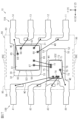
Classifications
-
- H—ELECTRICITY
- H10—SEMICONDUCTOR DEVICES; ELECTRIC SOLID-STATE DEVICES NOT OTHERWISE PROVIDED FOR
- H10D—INORGANIC ELECTRIC SEMICONDUCTOR DEVICES
- H10D84/00—Integrated devices formed in or on semiconductor substrates that comprise only semiconducting layers, e.g. on Si wafers or on GaAs-on-Si wafers
-
- H—ELECTRICITY
- H10—SEMICONDUCTOR DEVICES; ELECTRIC SOLID-STATE DEVICES NOT OTHERWISE PROVIDED FOR
- H10D—INORGANIC ELECTRIC SEMICONDUCTOR DEVICES
- H10D84/00—Integrated devices formed in or on semiconductor substrates that comprise only semiconducting layers, e.g. on Si wafers or on GaAs-on-Si wafers
- H10D84/01—Manufacture or treatment
- H10D84/02—Manufacture or treatment characterised by using material-based technologies
- H10D84/03—Manufacture or treatment characterised by using material-based technologies using Group IV technology, e.g. silicon technology or silicon-carbide [SiC] technology
- H10D84/038—Manufacture or treatment characterised by using material-based technologies using Group IV technology, e.g. silicon technology or silicon-carbide [SiC] technology using silicon technology, e.g. SiGe
-
- H—ELECTRICITY
- H10—SEMICONDUCTOR DEVICES; ELECTRIC SOLID-STATE DEVICES NOT OTHERWISE PROVIDED FOR
- H10W—GENERIC PACKAGES, INTERCONNECTIONS, CONNECTORS OR OTHER CONSTRUCTIONAL DETAILS OF DEVICES COVERED BY CLASS H10
- H10W72/00—Interconnections or connectors in packages
-
- H—ELECTRICITY
- H10—SEMICONDUCTOR DEVICES; ELECTRIC SOLID-STATE DEVICES NOT OTHERWISE PROVIDED FOR
- H10W—GENERIC PACKAGES, INTERCONNECTIONS, CONNECTORS OR OTHER CONSTRUCTIONAL DETAILS OF DEVICES COVERED BY CLASS H10
- H10W72/00—Interconnections or connectors in packages
- H10W72/071—Connecting or disconnecting
-
- H—ELECTRICITY
- H10—SEMICONDUCTOR DEVICES; ELECTRIC SOLID-STATE DEVICES NOT OTHERWISE PROVIDED FOR
- H10W—GENERIC PACKAGES, INTERCONNECTIONS, CONNECTORS OR OTHER CONSTRUCTIONAL DETAILS OF DEVICES COVERED BY CLASS H10
- H10W74/00—Encapsulations, e.g. protective coatings
- H10W74/01—Manufacture or treatment
-
- H—ELECTRICITY
- H10—SEMICONDUCTOR DEVICES; ELECTRIC SOLID-STATE DEVICES NOT OTHERWISE PROVIDED FOR
- H10W—GENERIC PACKAGES, INTERCONNECTIONS, CONNECTORS OR OTHER CONSTRUCTIONAL DETAILS OF DEVICES COVERED BY CLASS H10
- H10W90/00—Package configurations
Definitions
- This disclosure relates to a signal transmission device.
- a signal transmission device that includes a first die pad, a second die pad arranged at a distance from the first die pad, a first chip and a transformer chip mounted on the first die pad, a second chip mounted on the second die pad, and a sealing resin that seals the die pads and chips (see, for example, Patent Document 1).
- the first chip and the transformer chip are electrically connected by a wire
- the transformer chip and the second chip are electrically connected by another wire.
- a signal transmission device includes a first chip including an isolation transformer, a second chip that transmits and receives signals between the first chip and the second chip, a first die pad on which the first chip is mounted, a second die pad that is spaced apart from the first die pad in a first direction and on which the second chip is mounted, a plurality of first lead terminals that are arranged in a second direction intersecting the first direction in a plan view relative to both the first die pad and the second die pad and are arranged in the first direction, a plurality of second lead terminals that are arranged on the opposite side of the plurality of first lead terminals relative to both the first die pad and the second die pad in the second direction and are arranged in the first direction, inter-chip wires that connect the first chip and the second chip, and first lead wires that individually connect the first chip and the plurality of first lead terminals, the inter-chip wires being made of a material containing gold, and the first lead wires being made of a material containing copper or aluminum.
- the signal transmission device described above allows the wire height of the inter-chip wires to be inspected with greater precision.
- FIG. 1 is a perspective view of a signal transmission device according to a first embodiment.
- FIG. 2 is a side view of the signal transmission device of FIG.
- FIG. 3 is a side view of the signal transmission device of FIG. 1, seen from a different direction than that of FIG.
- FIG. 4 is an enlarged view of the second lead terminal and its periphery in FIG.
- FIG. 5 is an enlarged view of an end surface of an outer lead of the second lead terminal of FIG.
- FIG. 6 is a side view of the signal transmission device mounted on a circuit board.
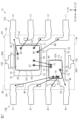
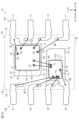
- FIG. 7 is a schematic plan view showing the internal configuration of the signal transmission device of FIG.
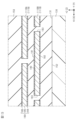
- FIG. 8 is an enlarged view of the first lead terminal and its periphery in FIG. FIG.
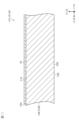
- FIG. 9 is a schematic cross-sectional view of the wire connection portion of the first lead terminal taken along line F9-F9 in FIG.
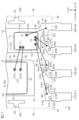
- FIG. 10 is an enlarged view of the second lead terminal and its periphery in FIG. 11 is a schematic cross-sectional view of the wire connection portion of the second lead terminal taken along line F11-F11 in FIG.
- FIG. 12 is a perspective view showing an enlarged structure of a portion of the first die pad wire.
- FIG. 13 is a circuit diagram of the signal transmission device of the first embodiment.
- FIG. 14 is a schematic plan view illustrating an example of the internal structure of the first chip in the signal transmission device according to the first embodiment.
- FIG. 15 is a schematic plan view showing an example of the internal structure of the first chip at a position different from that in FIG.
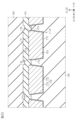
- FIG. 16 is a cross-sectional view showing the cross-sectional structure of the first transformer of the first chip and its periphery.
- FIG. 17 is an enlarged view of a part of the first chip in FIG.
- FIG. 18 is an enlarged view of the conductor of the first surface side coil in the first chip of FIG.
- FIG. 19 is an enlarged view of the conductor of the first back side coil in the first chip in FIG.
- FIG. 20 is a cross-sectional view showing a cross-sectional structure of a part of the circuit region of the first chip.
- FIG. 21 is an enlarged view of the first via and its periphery in FIG. FIG.
- FIG. 22 is an enlarged plan view of a first lead terminal and its periphery in a signal transmission device according to the second embodiment.
- FIG. 23 is an enlarged plan view of the second lead terminal and its periphery in the signal transmission device of the second embodiment.
- FIG. 24 is an enlarged plan view of the first chip, the second chip, and their periphery in the signal transmission device of the third embodiment.
- FIG. 25 is a plan view illustrating a schematic internal structure of a signal transmission device according to the fourth embodiment.
- FIG. 26 is an enlarged plan view of a first lead terminal and its periphery in a signal transmission device according to the fifth embodiment.
- FIG. 27 is an enlarged plan view of the second lead terminal and its periphery in the signal transmission device of the fifth embodiment.
- FIG. 28 is an enlarged plan view of a first lead terminal and its periphery in a signal transmission device according to the sixth embodiment.
- FIG. 29 is an enlarged plan view of the second lead terminal and its periphery in the signal transmission device of the sixth embodiment.
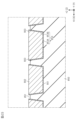
- FIG. 30 is a schematic cross-sectional view of a first chip and a first die pad in a signal transmission device according to the seventh embodiment.
- FIG. 31 is a schematic cross-sectional view of the first chip and the first die pad taken in a direction different from that of FIG.
- FIG. 32 is a schematic cross-sectional view of the second chip and the second die pad.
- FIG. 33 is a schematic cross-sectional view of the second chip and the second die pad taken in a direction different from that of FIG. FIG.
- FIG. 34 is a cross-sectional view illustrating an example of a manufacturing process for the signal transmission device of the seventh embodiment.
- FIG. 35 is a cross-sectional view showing a schematic example of a manufacturing process for the signal transmission device subsequent to FIG.
- FIG. 36 is a cross-sectional view illustrating an example of a manufacturing process for the signal transmission device following FIG. 35.
- FIG. 37 is a cross-sectional view showing a schematic example of a manufacturing process for the signal transmission device subsequent to FIG.
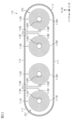
- FIG. 38 is a plan view illustrating a schematic internal structure of a signal transmission device according to the eighth embodiment.
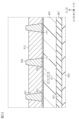
- FIG. 39 is a cross-sectional view showing the cross-sectional structure of the first transformer of the first chip and its periphery in the signal transmission device of the ninth embodiment.
- FIG. 39 is a cross-sectional view showing the cross-sectional structure of the first transformer of the first chip and its periphery in the signal transmission device of the ninth embodiment.
- FIG. 40 is an enlarged view of a part of the first chip in FIG.
- FIG. 41 is a cross-sectional view illustrating an example of a manufacturing process for the signal transmission device of the ninth embodiment.
- FIG. 42 is a cross-sectional view showing a schematic example of a manufacturing process for the signal transmission device subsequent to FIG. 41.
- FIG. 43 is a cross-sectional view showing a schematic example of a manufacturing process for the signal transmission device subsequent to FIG.
- FIG. 44 is a cross-sectional view showing the cross-sectional structure of the first transformer of the first chip and part of its periphery in the signal transmission device of the tenth embodiment.
- FIG. 45 is an enlarged view of the conductor of the first surface side coil in the first chip in the signal transmission device of the eleventh embodiment.
- FIG. 46 is a cross-sectional view illustrating an example of a manufacturing process for the signal transmission device of the eleventh embodiment.
- FIG. 47 is a cross-sectional view showing a schematic example of a manufacturing process for the signal transmission device following FIG. 46.
- FIG. 48 is a cross-sectional view showing a schematic example of a manufacturing process for the signal transmission device following FIG. 47.
- FIG. 49 is a cross-sectional view showing a schematic example of a manufacturing process for the signal transmission device subsequent to FIG. 50 is a cross-sectional view showing a schematic example of a manufacturing process for the signal transmission device subsequent to FIG. 49.
- FIG. 51 is a cross-sectional view showing a schematic example of a manufacturing process for the signal transmission device subsequent to FIG. 50.
- FIG. 51 is a cross-sectional view showing a schematic example of a manufacturing process for the signal transmission device subsequent to FIG. 50.
- FIG. 52 is a cross-sectional view showing the cross-sectional structure of the first transformer of the first chip and part of its periphery in the signal transmission device of the twelfth embodiment.
- FIG. 53 is a cross-sectional view illustrating an example of a manufacturing process for the signal transmission device according to the twelfth embodiment.
- FIG. 54 is a cross-sectional view showing a schematic example of a manufacturing process for the signal transmission device subsequent to FIG. 53.
- 55 is a cross-sectional view showing a schematic example of a manufacturing process for the signal transmission device subsequent to FIG. 54.
- FIG. 56 is a cross-sectional view showing a schematic example of a manufacturing process for the signal transmission device following FIG. 55.
- FIG. 55 is a cross-sectional view showing a schematic example of a manufacturing process for the signal transmission device following FIG. 55.
- FIG. 57 is a cross-sectional view showing a schematic example of a manufacturing process for the signal transmission device following FIG. 56.
- FIG. 58 is a plan view illustrating a schematic internal structure of the first chip in the signal transmission device according to the thirteenth embodiment.
- FIG. 59 is a schematic plan view showing an example of the internal structure of the first chip at a position different from that in FIG. 58 in the thickness direction of the first chip.
- FIG. 60 is a plan view that illustrates the internal structure of the first chip in the signal transmission device of the fourteenth embodiment.
- FIG. 61 is an enlarged view of the transformer insulating region in the first chip of FIG.
- FIG. 62 is a schematic plan view showing an example of the internal structure of the first chip at a position different from that in FIG.
- FIG. 63 is an enlarged view of the transformer insulating region in the first chip of FIG.
- FIG. 64 is a plan view showing a schematic internal structure of a signal transmission device according to a modified example.
- FIG. 65 is a plan view showing an example of the internal structure of the first chip in a signal transmission device according to a modified example.
- FIG. 66 is a schematic plan view showing the internal structure of the first chip at a position different from that in FIG. 65 in the thickness direction of the first chip.
- FIG. 67 is a plan view showing a schematic internal structure of a signal transmission device according to a modified example.
- FIG. 1 to 6 show the external structure of the signal transmission device 10.
- Figures 7 to 12 show the internal structure of the signal transmission device 10.
- Figure 13 shows the circuit configuration of the signal transmission device 10.
- Figures 14 to 21 show the internal structure of a first chip 60 (described later) of the signal transmission device 10.
- FIG. 1 shows a perspective view of the signal transmission device 10.
- Figs. 2 and 3 show a side view of the signal transmission device 10.
- Fig. 4 shows an enlarged view of a portion of a second lead terminal 44 of the signal transmission device 10, which will be described later.
- the package structure of the signal transmission device 10 is a small outline package (SOP).
- SOP small outline package
- the package structure of the signal transmission device 10 can be changed as desired, and may be a quad for non-lead package (QFN), dual flat package (DFP), dual inline package (DIP), quad flat package (QFP), single inline package (SIP), or small outline J-leaded package (SOJ), or various similar package structures.
- QFN quad for non-lead package
- DFP dual flat package
- DIP dual inline package
- QFP quad flat package
- SIP single inline package
- SOJ small outline J-leaded package
- the signal transmission device 10 includes a sealing resin 90, a plurality of first lead terminals 11-14 (four in the first embodiment) protruding from the sealing resin 90, and a plurality of second lead terminals 41-44 (four in the first embodiment) protruding from the sealing resin 90.
- the sealing resin 90 is formed in a rectangular plate shape.
- the thickness direction of the sealing resin 90 is the "Z direction", and two mutually perpendicular directions among the directions perpendicular to the Z direction are the "X direction” and the "Y direction”.
- the upper side of the Z direction is the "+Z direction", and the lower side is the "-Z direction”.
- the front side of the X direction is the "+X direction”
- the rear side is the "-X direction”.
- the right side of the Y direction is the "+Y direction”
- the left side is the "-Y direction”.
- planar view refers to viewing the signal transmission device 10 from the thickness direction of the sealing resin 90. Unless otherwise specified, planar view refers to viewing the signal transmission device 10 from the +Z direction.
- the shape of the sealing resin 90 in plan view is rectangular with the X direction being the short side direction and the Y direction being the long side direction.
- the dimension of the sealing resin 90 in the X direction is 3.8 mm or more and 4.0 mm or less
- the dimension of the sealing resin 90 in the Y direction is 4.8 mm or more and 5.0 mm or less
- the dimension (thickness) of the sealing resin 90 in the Z direction is 1.25 mm or more and 1.65 mm or less.
- the sealing resin 90 has a sealing surface 91, a sealing back surface 92 opposite the sealing surface 91, and first to fourth sealing side surfaces 93 to 96 connecting the sealing surface 91 and the sealing back surface 92.
- the sealing surface 91 is a surface facing the +Z direction
- the sealing back surface 92 is a surface facing the -Z direction.
- the first sealing side surface 93 and the second sealing side surface 94 form both end surfaces of the sealing resin 90 in the X direction
- the third sealing side surface 95 and the fourth sealing side surface 96 form both end surfaces of the sealing resin 90 in the Y direction.
- the first sealing side surface 93 is a surface facing the -X direction
- the second sealing side surface 94 is a surface facing the +X direction.
- the third sealing side surface 95 is a surface facing the -Y direction
- the fourth sealing side surface 96 is a surface facing the +Y direction.
- a recess 91A is formed in the sealing surface 91.
- the recess 91A is circular in a plan view.
- the recess 91A is recessed in a curved concave shape from the sealing surface 91.
- the recess 91A is formed in a portion of the sealing surface 91 that is closer to the second sealing side surface 94 and the third sealing side surface 95.
- the recess 91A serves as a marker for distinguishing the first lead terminals 11-14 from the second lead terminals 41-44.
- the first sealing side 93 includes a first front side 93A that is continuous with the sealing surface 91, a first back side 93B that is continuous with the sealing back surface 92, and a first central side 93C.
- the second sealing side 94 includes a second front side 94A that is continuous with the sealing surface 91, a second back side 94B that is continuous with the sealing back surface 92, and a second central side 94C.
- the first front side 93A and the second front side 94A are inclined in a direction away from each other as they move from the sealing surface 91 toward the sealing back surface 92.
- the connection portion between the first front side 93A and the sealing surface 91 is formed in a curved shape.
- connection portion between the second front side 94A and the sealing surface 91 is formed with an inclined surface 94AA.
- the angle formed by the inclined surface 94AA and the Z direction is greater than the angle formed by the second front side 94A and the Z direction.
- the angle between the inclined surface 94AA and the Z direction is, for example, 45°.
- the first back side surface 93B and the second back side surface 94B are inclined in a direction away from each other as they move from the sealing back surface 92 toward the sealing front surface 91.
- the connection portion between the first back side surface 93B and the second back side surface 94B and the sealing back surface 92 is formed in a curved shape.
- the first central side surface 93C is formed between the first front side surface 93A and the first back side surface 93B in the Z direction.
- the first central side surface 93C is connected to both the first front side surface 93A and the first back side surface 93B.
- the first central side surface 93C is formed as a flat surface along, for example, the YZ plane.
- the second central side surface 94C is formed between the second front side surface 94A and the second back side surface 94B in the Z direction.
- the second central side surface 94C is connected to both the second front side surface 94A and the second back side surface 94B.
- the second central side surface 94C is formed as a flat surface along the YZ plane, for example.
- the third sealing side 95 includes a third front side 95A that is continuous with the sealing surface 91, a third back side 95B that is continuous with the sealing back surface 92, and a third central side 95C.
- the fourth sealing side 96 includes a fourth front side 96A that is continuous with the sealing surface 91, a fourth back side 96B that is continuous with the sealing back surface 92, and a fourth central side 96C.
- the third front side 95A and the fourth front side 96A are inclined in directions away from each other as they move from the sealing surface 91 to the sealing back surface 92.
- the connection portions of the third front side 95A and the fourth front side 96A and the sealing surface 91 are formed in a curved shape.
- the third back side 95B and the fourth back side 96B are inclined in directions away from each other as they move from the sealing back surface 92 to the sealing surface 91.
- the connection portions of the third back side 95B and the fourth back side 96B and the sealing back surface 92 are formed in a curved shape.
- the third central side surface 95C is connected to both the third front surface side surface 95A and the third back surface side surface 95B.
- the third central side surface 95C is formed, for example, as a flat surface along the XZ plane.
- the fourth central side surface 96C is formed between the fourth front surface side surface 96A and the fourth back surface side surface 96B in the Z direction.
- the fourth central side surface 96C is connected to both the fourth front surface side surface 96A and the fourth back surface side surface 96B.
- the fourth central side surface 96C is formed, for example, as a flat surface along the XZ plane.
- the sealing resin 90 is formed, for example, by transfer molding.
- the third sealing side surface 95 is provided with a trace (not shown) of the gate of the molding die. This trace is formed when the resin portion located at the gate of the molding die is separated from the sealing resin 90.
- the trace is formed, for example, on the fourth central side surface 96C of the fourth sealing side surface 96.
- the fourth central side surface 96C is partitioned into three regions R1 to R3 in the X direction.
- the regions R1 to R3 are regions of the same size.
- the region R1 is a region of the fourth central side surface 96C closer to the second sealing side surface 94
- the region R3 is a region of the fourth central side surface 96C closer to the first sealing side surface 93
- the region R2 is a region between the regions R1 and R3 in the X direction.
- the above-mentioned trace may be provided in the region R1.
- the above-mentioned trace may also be provided in the region R2.
- the above-mentioned trace may also be provided in the region R3.
- the gate trace of the molding die may be formed on the third sealing side surface 95 instead of the fourth sealing side surface 96. Even in this case, the trace is formed, for example, on the third central side surface 95C of the third sealing side surface 95.
- the surface roughness Rz of each of the sealing surface 91, sealing back surface 92, and first to fourth sealing side surfaces 93 to 96 of the sealing resin 90 is, for example, 5 ⁇ m or more and 20 ⁇ m or less.
- the surface roughness Rz over the entire surface of each of the sealing surface 91 and sealing back surface 92 is, for example, 5 ⁇ m or more and 20 ⁇ m or less.
- the surface roughness Rz over the entire surface of each of the first to fourth front side surfaces 93A to 96A and the first to fourth back side surfaces 93B to 96B of the first to fourth sealing side surfaces 93 to 96 is, for example, 5 ⁇ m or more and 20 ⁇ m or less.
- the surface roughness Rz can be expressed as the sum of the height of the highest peak and the depth of the deepest valley among the contour curves at the reference length.
- the sealing surface 91, sealing back surface 92, and first to fourth sealing side surfaces 93 to 96 are roughened to have each surface roughness Rz of, for example, 5 ⁇ m or more and 20 ⁇ m or less.
- An example of surface roughening is shot blasting.
- the surface roughness Rz of each of the sealing surface 91, the sealing back surface 92, and the first to fourth sealing side surfaces 93 to 96 is, for example, 8 ⁇ m or more. In one example, the surface roughness Rz of each of the sealing surface 91, the sealing back surface 92, and the first to fourth sealing side surfaces 93 to 96 is, for example, 8 ⁇ m or more and 20 ⁇ m or less.
- the surface roughness Rz of the sealing surface 91 and the sealing back surface 92, and the first to fourth front side surfaces 93A to 96A and the first to fourth back side surfaces 93B to 96B may be greater than that of the first to fourth central side surfaces 93C to 95C. In one example, the surface roughness Rz of the sealing surface 91 and the sealing back surface 92, and the first to fourth front side surfaces 93A to 96A and the first to fourth back side surfaces 93B to 96B may be greater than the surface roughness Rz of the surfaces that make up the recess 91A.
- the surface roughness Rz of the sealing surface 91, the sealing back surface 92, and the first to fourth sealing side surfaces 93 to 96 was 5 ⁇ m or more and 20 ⁇ m or less, but this is not limited to this.
- the surface roughness Rz of each of the third sealing side surface 95 and the fourth sealing side surface 96 may be less than 5 ⁇ m or greater than 20 ⁇ m.
- the surface roughness Rz of each of the first sealing side surface 93 and the second sealing side surface 94 may be less than 5 ⁇ m or greater than 20 ⁇ m.
- the surface roughness Rz of each of the first to fourth sealing side surfaces 93 to 96 may be less than 5 ⁇ m or greater than 20 ⁇ m.
- the surface roughness Rz of the sealing surface 91 may be less than 5 ⁇ m or greater than 20 ⁇ m. In short, it is sufficient that the surface roughness Rz of at least one of the sealing surface 91, the sealing back surface 92, and the first to fourth sealing side surfaces 93 to 96 is 5 ⁇ m or more and 20 ⁇ m or less.
- the sealing resin 90 is made of an insulating material.
- One example of the insulating material is black epoxy resin.
- the sealing resin 90 contains sulfur (S) as an additive. By containing sulfur, the sealing resin 90 can increase the adhesive strength with the first frame 10A and the second frame 10B described below. On the other hand, by containing sulfur, the sealing resin 90 may cause sulfide corrosion of the copper (Cu)-based components in the signal transmission device 10.
- the concentration of sulfur added to the sealing resin 90 is set in consideration of the balance between improving the adhesive strength between the first frame 10A and the second frame 10B and the sealing resin 90 and suppressing sulfide corrosion. In one example, the concentration of sulfur added to the sealing resin 90 is set to 300 ⁇ g/g or less.
- the first lead terminals 11 to 14 include first outer lead portions 11B to 14B protruding from the sealing resin 90 to the outside.
- the first outer lead portions 11B to 14B protrude from the first sealing side surface 93 toward the -X direction.
- the first outer lead portions 11B to 14B are arranged at a distance from each other in the Y direction. It can be said that the first outer lead portions 11B to 14B are arranged in the longitudinal direction of the sealing resin 90.
- the first outer lead portions 11B to 14B are arranged in the order of the first outer lead portions 11B, 12B, 13B, and 14B from the fourth sealing side surface 96 toward the third sealing side surface 95.
- the Y direction is the arrangement direction of the first outer lead portions 11B to 14B.
- the Y direction is the arrangement direction of the first lead terminals 11 to 14.
- the first outer lead portions 11B to 14B have the same shape.
- the second lead terminals 41 to 44 include second outer lead portions 41B to 44B that protrude from the sealing resin 90 to the outside.
- the second outer lead portions 41B to 44B protrude from the second sealing side surface 94 toward the +X direction.
- the second outer lead portions 41B to 44B are arranged at a distance from each other in the Y direction. It can be said that the second outer lead portions 41B to 44B are arranged in the longitudinal direction of the sealing resin 90.
- the second outer lead portions 41B to 44B are arranged in the order of the second outer lead portions 41B, 42B, 43B, and 44B from the third sealing side surface 95 toward the fourth sealing side surface 96.
- the Y direction is the arrangement direction of the second outer lead portions 41B to 44B.
- the Y direction is the arrangement direction of the second lead terminals 41 to 44.
- the second outer lead portions 41B to 44B have the same shape.
- the width dimension (size in the Y direction) of the first outer lead portion 11B to 14B and the width dimension (size in the Y direction) of the second outer lead portion 41B to 44B are equal to each other.
- the width dimension of the first outer lead portion 11B to 14B and the width dimension of the second outer lead portion 41B to 44B are, for example, 0.35 mm or more and 0.51 mm or less.
- the pitch of the first outer lead portion 11B to 14B and the pitch of the second outer lead portion 41B to 44B are equal to each other.
- the pitch of the first outer lead portion 11B to 14B can be defined by the center-to-center distance between two outer lead portions adjacent in the Y direction among the first outer lead portion 11B to 14B.
- the pitch of the second outer lead portion 41B to 44B can be defined by the center-to-center distance between two outer lead portions adjacent in the Y direction among the second outer lead portion 41B to 44B.
- the pitch of the first outer lead portions 11B to 14B and the pitch of the second outer lead portions 41B to 484 are each, for example, approximately 1.27 mm.
- the shape of the first outer lead portion 11B and the shape of the second outer lead portion 44B when viewed from the Y direction are the same. Therefore, it can be said that the shapes of the first outer lead portions 11B to 14B and the shapes of the second outer lead portions 41B to 44B are the same.
- the configuration of the second outer lead portions 41B to 44B will be described. Below, the detailed configuration of the second outer lead portion 44B will be described, and the detailed configuration of the second outer lead portions 41B to 43B will be omitted.
- the second outer lead portion 44B includes a protruding portion 44P extending in the +X direction from the second sealing side surface 94, an intermediate portion 44Q extending in the -Z direction from the protruding portion 44P, and a connecting portion 44R extending in the +X direction from the intermediate portion 44Q.
- a curved first bend is formed between the protruding portion 44P and the intermediate portion 44Q
- a curved second bend is formed between the intermediate portion 44Q and the connecting portion 44R.
- the connecting portion 44R may be inclined toward the -Z direction as it approaches the +X direction.
- the acute angle formed by the connecting portion 44R and the X direction is, for example, greater than 0° and equal to or less than 8°.
- the second outer lead portion 44B includes an outer lead body 20A made of a metal material.
- metal materials include copper and aluminum (Al).
- the outer lead body 20A has an outer lead surface 21A, an outer lead back surface 22A opposite the outer lead surface 21A, a pair of outer lead side surfaces 23A (see FIG. 5) connecting the outer lead surface 21A and the outer lead back surface 22A, and an outer lead end surface 24A.
- the outer lead end surface 24A forms the tip surface of the connection portion 44R.
- the pair of outer lead side surfaces 23A are formed in a curved concave shape.
- the deepest position of the curved concave outer lead side surface 23A (the position where the pair of outer lead side surfaces 23A are closest in the Y direction) is closer to the outer lead back surface 22A than the center in the Z direction of the outer lead end surface 24A.
- the outer lead body 20A has a backside curved portion 25 formed at the connection between the outer lead backside 22A and the outer lead side surface 23A.
- the backside curved portion 25 curves upward (+Z direction) as it moves outward in the width direction (Y direction) of the outer lead body 20A. Therefore, both ends of the outer lead backside 22A in the Y direction are curved upward (+Z direction) as they move toward the pair of outer lead side surfaces 23A.
- the second outer lead portion 44B includes a plating layer 26 that covers the outer lead body 20A. More specifically, the plating layer 26 covers the entire surfaces of the outer lead surface 21A, the outer lead back surface 22A, and the outer lead side surface 23A, as well as a portion of the outer lead end surface 24A.
- the plating layer 26 includes an end surface plating layer 27 that covers the outer lead end surface 24A continuously from the outer lead back surface 22A toward the outer lead surface 21A.
- the end surface plating layer 27 is located away in the Z direction from the edge of the outer lead end surface 24A on the outer lead surface 21A side. Therefore, the outer lead end surface 24A is divided into an area covered by the end surface plating layer 27 and a main body exposed area 28 that is not covered by the end surface plating layer 27. In the main body exposed area 28, the outer lead main body 20A is exposed.
- the end surface plating layer 27 extends from the outer lead back surface 22A to a position closer to the outer lead surface 21A than the center of the outer lead end surface 24A in the Z direction. In one example, the end surface plating layer 27 covers approximately 2/3 of the outer lead end surface 24A in the Z direction.
- the tip edge 27A of the end surface plating layer 27 includes a shape that becomes uneven in the Z direction as it approaches the Y direction. In one example, the tip edge 27A of the end surface plating layer 27 includes a recess 27B near the center in the Y direction.
- leading edge 27A of the end surface plating layer 27 can be changed as desired.
- the leading edge 27A of the end surface plating layer 27 may include a plurality of recesses 27B.
- the recesses 27B may be omitted from the leading edge 27A of the end surface plating layer 27.
- the position of the tip edge 27A of the end surface plating layer 27 in the Z direction can be changed as desired.
- the end surface plating layer 27 may cover approximately 1/2 of the outer lead end surface 24A in the Z direction.
- the end surface plating layer 27 may cover approximately 1/4 of the outer lead end surface 24A in the Z direction.
- the end surface plating layer 27 may cover approximately 3/4 of the outer lead end surface 24A in the Z direction. In this way, the end surface plating layer 27 may cover a range of 1/4 to 3/4 of the outer lead end surface 24A in the Z direction.
- first outer lead portions 11B to 14B The configuration of the first outer lead portions 11B to 14B will be described. Below, the detailed configuration of the first outer lead portion 11B will be described, and the detailed configuration of the first outer lead portions 12B to 14B will be omitted.
- the first outer lead portion 11B includes a protruding portion 11P extending in the -X direction from the first sealing side surface 93, an intermediate portion 11Q extending in the -Z direction from the protruding portion 11P, and a connecting portion 11R extending in the -X direction from the intermediate portion 11Q.
- a curved first bend is formed between the protruding portion 11P and the intermediate portion 11Q
- a curved second bend is formed between the intermediate portion 11Q and the connecting portion 11R.
- the connecting portion 11R may be inclined toward the -Z direction as it approaches the -X direction.
- the acute angle formed by the connecting portion 11R and the X direction is, for example, greater than 0° and equal to or less than 8°.
- the first outer lead portion 11B like the second outer lead portion 44B, includes an outer lead body 20A and a plating layer 26 (see FIG. 4) that covers the outer lead body 20A.
- the plating layer 26 of the first outer lead portion 11B like the second outer lead portion 44B, also includes an end face plating layer 27 (see FIG. 5).
- a method for forming such an end surface plating layer 27 will be described below.
- a first lead frame (not shown) constituting the second outer lead portion 44B and a second lead frame (not shown) constituting the first outer lead portion 11B are cut by a die (punch). The cutting by the die can be performed on the first lead frame and the second lead frame before forming.
- both the first lead frame and the second lead frame before being cut by the mold include an outer lead body 20A (see FIG. 4) and a plating layer 26 that covers the outer lead surface 21A, the outer lead back surface 22A, and a pair of outer lead side surfaces 23A.
- the mold cuts the first lead frame and the second lead frame in the +Z direction for both the first lead frame and the second lead frame. This forms the first outer lead portion 11B and the second outer lead portion 44B, each of which includes the outer lead end surface 24A.
- the corners of the cut portion in the mold are rounded and curved. In other words, the corners are chamfered.
- the plating layer 26 on the back surface 22A of the outer lead is pulled toward the outer lead surface 21A, forming an end surface plating layer 27 (see FIG. 5) on the outer lead end surface 24A.
- the end surface plating layer 27 is formed on both the first outer lead portion 11B and the second outer lead portion 44B, when the signal transmission device 10 is mounted on the circuit board PCB by a conductive bonding material SD such as solder paste or silver (Ag) paste, as shown in Fig. 6, the bonding area between the first outer lead portion 11B and the second outer lead portion 44B and the conductive bonding material SD can be increased. More specifically, the outer lead back surface 22A of the connection portion 11R of the first outer lead portion 11B, the pair of outer lead side surfaces 23A (see Fig. 5), and the outer lead back surface 22A of the end of the intermediate portion 11Q on the connection portion 11R side are each bonded to the conductive bonding material SD.
- a conductive bonding material SD such as solder paste or silver (Ag) paste
- the end surface plating layer 27 of the first outer lead portion 11B bonds the outer lead end surface 24A (see Fig. 5) of the first outer lead portion 11B to the conductive bonding material SD.
- the bonding area between the first outer lead portion 11B and the conductive bonding material SD is increased by the bonding area between the end surface plating layer 27 and the conductive bonding material SD.
- the outer lead back surface 22A of the connection portion 44R of the second outer lead portion 44B, the pair of outer lead side surfaces 23A, and the outer lead back surface 22A of the end of the intermediate portion 44Q on the connection portion 44R side are each bonded to the conductive bonding material SD.
- the end surface plating layer 27 of the second outer lead portion 44B bonds the outer lead end surface 24A of the second outer lead portion 44B to the conductive bonding material SD.
- the bonding area between the second outer lead portion 44B and the conductive bonding material SD is increased by the bonding area between the end surface plating layer 27 and the conductive bonding material SD.
- a fillet is formed by the conductive bonding material SD bonded to the end surface plating layer 27 of each of the first outer lead portion 11B and the second outer lead portion 44B.
- the bonding area with the conductive bonding material SD is also increased and fillets are formed for the first outer lead portions 12B-14B and the second outer lead portions 41B-43B (both see FIG. 1).
- FIG. 7 shows the entire internal structure of the signal transmission device 10.
- the sealing resin 90 is shown by two-dot chain lines in order to make the drawings easier to understand.
- the signal transmission device 10 includes a first frame 10A, a second frame 10B, a first chip 60 mounted on the first frame 10A, and a second chip 70 mounted on the second frame 10B.
- the sealing resin 90 seals the first chip 60 and the second chip 70, and also partially seals the first frame 10A and the second frame 10B.
- the first frame 10A includes first lead terminals 11-14.
- the first frame 10A further includes a first die pad 30.
- the first lead terminals 11-14 and the first die pad 30 are formed from the same metal material. Examples of metal materials include copper and aluminum.
- the first lead terminal 14 located at the end closer to the third sealing side surface 95 in the Y direction is connected to the first die pad 30.
- the first lead terminal 14 and the first die pad 30 are integrated.
- the first lead terminals 11 to 13 are located closer to the first sealing side surface 93 than the first die pad 30 and are spaced apart from the first die pad 30.
- the first die pad 30 is disposed closer to the third sealing side surface 95 than the center of the sealing resin 90 in the Y direction. More specifically, the distance between the first die pad 30 and the third sealing side surface 95 in the Y direction is smaller than the distance between the first die pad 30 and the fourth sealing side surface 96 in the Y direction.
- the first die pad 30 has a size in the Y direction such that it overlaps all of the first lead terminals 11 and 12 and partially overlaps the first lead terminal 13 when viewed from the X direction.
- the first die pad 30 is disposed closer to the first sealing side surface 93 in the X direction. More specifically, the distance between the first die pad 30 and the first sealing side surface 93 in the X direction is smaller than the distance between the first die pad 30 and the second sealing side surface 94 in the X direction.
- the first chip 60 mounted on the first die pad 30 is formed in a flat plate shape.
- the shape of the first chip 60 in a plan view is roughly square.
- the first chip 60 is mounted on the first die pad 30 by a first conductive bonding material SD1. More specifically, the first chip 60 is die-bonded to the first die pad 30.
- the first chip 60 is disposed closer to the first sealing side surface 93 in the X direction relative to the first die pad 30. More specifically, in a plan view, the distance in the X direction between the edge of the first die pad 30 closest to the first sealing side surface 93 and the first chip 60 is smaller than the distance in the X direction between the edge of the first die pad 30 closest to the second sealing side surface 94 and the first chip 60.
- the first chip 60 is disposed in the center of the first die pad 30 in the Y direction.
- the second frame 10B is disposed at a distance from the first frame 10A.
- the second frame 10B includes second lead terminals 41-44.
- the second frame 10B further includes a second die pad 50.
- the second lead terminals 41-44 and the second die pad 50 are formed of the same metal material. Examples of metal materials include copper and aluminum.
- the second lead terminals 41-44 and the second die pad 50 are formed of the same metal material as the first lead terminals 11-14 and the first die pad 30.
- the second lead terminal 44 located at the end closer to the fourth sealing side surface 96 in the Y direction is connected to the second die pad 50.
- the second lead terminal 44 and the second die pad 50 are integrated.
- the second lead terminals 41-43 are located closer to the second sealing side surface 94 than the second die pad 50 and are spaced apart from the second die pad 50.
- the second die pad 50 is disposed in the Y direction away from the first die pad 30 and closer to the fourth sealing side surface 96 relative to the first die pad 30.
- the Y direction can be said to be the arrangement direction of the first die pad 30 and the second die pad 50.
- the first die pad 30 and the second die pad 50 can also be said to be arranged in the longitudinal direction of the sealing resin 90.
- the arrangement direction of the first die pad 30 and the second die pad 50 coincides with the arrangement direction of the first lead terminals 11-14 and the arrangement direction of the second lead terminals 41-44.
- the second chip 70 mounted on the second die pad 50 is formed in a flat plate shape.
- the shape of the second chip 70 in a plan view is a rectangle with the X direction being the longitudinal direction and the Y direction being the lateral direction.
- the size of the second chip 70 in the X direction is smaller than the size of the first chip 60 in the X direction.
- the size of the second chip 70 in the Y direction is smaller than the size of the first chip 60 in the Y direction.
- the second chip 70 is mounted on the second die pad 50 by the second conductive bonding material SD2. More specifically, the second chip 70 is die-bonded to the second die pad 50. Note that, for example, solder paste or silver paste is used as both the first conductive bonding material SD1 and the second conductive bonding material SD2.
- the second chip 70 is disposed closer to the first die pad 30 with respect to the second die pad 50. More specifically, in a plan view, the distance in the Y direction between the edge of the second chip 70 that is closer to the first die pad 30 and the second chip 70 is smaller than the distance in the Y direction between the edge of the second chip 70 that is closer to the fourth sealing side surface 96 and the second chip 70. The second chip 70 is disposed closer to the second sealing side surface 94 with respect to the second die pad 50.
- the distance in the X direction between the edge of the second die pad 50 that is closer to the second sealing side surface 94 and the second chip 70 is smaller than the distance in the X direction between the end face of the second die pad 50 that is closer to the first sealing side surface 93 and the second chip 70.
- the position of the second chip 70 with respect to the second die pad 50 can be changed arbitrarily.
- the second chip 70 may be disposed in the center of the second die pad 50 in the Y direction.
- the signal transmission device 10 further includes conductive members 10D and 10E.
- the conductive members 10D and 10E are formed, for example, from the same metal material as the first frame 10A and the second frame 10B.
- the conductive members 10D and 10E are disposed at a distance from each other. Furthermore, the conductive members 10D and 10E are disposed at a distance from both the first frame 10A and the second frame 10B. Therefore, both conductive members 10D and 10E are in an electrically floating state.
- the conductive members 10D and 10E are disposed in positions overlapping each other when viewed from the Y direction.
- the conductive members 10D and 10E are disposed in the center of the sealing resin 90 in the Y direction.
- the conductive member 10D is disposed closer to the third sealing side surface 95 than the first frame 10A and the second frame 10B.
- the conductive member 10D is exposed from the third sealing side surface 95. More specifically, a recess 95D is formed in a portion of the third sealing side surface 95 where the conductive member 10D is exposed.
- the recess 95D is formed in the center of the third sealing side surface 95 in the Z direction. That is, the recess 95D is provided in the third central side surface 95C (see FIG. 2).
- the recess 95D is recessed from the third sealing side surface 95 toward the fourth sealing side surface 96.
- the recess 95D is open toward the -Y direction.
- the conductive member 10D constitutes the bottom surface of the recess 95D.
- the conductive member 10E is disposed closer to the fourth sealing side surface 96 than the first frame 10A and the second frame 10B.
- the conductive member 10E is exposed from the fourth sealing side surface 96. More specifically, a recess 96D is formed in the portion of the fourth sealing side surface 96 where the conductive member 10E is exposed.
- the recess 96D is formed in the center of the fourth sealing side surface 96 in the Z direction. In other words, the recess 96D is provided in the fourth central side surface 96C (see FIG. 2).
- the recess 96D is recessed from the fourth sealing side surface 96 toward the third sealing side surface 95.
- the recess 96D is open toward the +Y direction.
- the conductive member 10E forms the bottom surface of the recess 96D.
- the relative positions of the first lead terminals 11 to 14, the first die pad 30, the second lead terminals 41 to 44, the second die pad 50, the first chip 60, and the second chip 70 will be described.
- the first die pad 30 is disposed closer to the first sealing side surface 93 in the X direction relative to the second lead terminals 41 to 44 and spaced apart from the second lead terminals 41 to 44. When viewed from the X direction, the first die pad 30 is disposed at a position overlapping with the second lead terminals 41, 42. The first die pad 30 is disposed closer to the third sealing side surface 95 than the second lead terminal 43. When viewed from the X direction, the first die pad 30 is disposed closer to the third sealing side surface 95 than the second lead terminal 43.
- the second die pad 50 is arranged closer to the fourth sealing side surface 96 than the center of the sealing resin 90 in the X direction.
- the size of the second die pad 50 in the X direction is equal to the size of the first die pad 30 in the X direction.
- the size of the second die pad 50 in the Y direction is smaller than the size of the first die pad 30 in the X direction.
- the second die pad 50 is arranged so as to be partially shifted in the X direction relative to the first die pad 30.
- the second die pad 50 is located closer to the second sealing side surface 94 than the first die pad 30.
- the edge of the second die pad 50 closer to the first sealing side surface 93 of both end edges in the X direction is located closer to the second sealing side surface 94 than the edge of the first die pad 30 closer to the first sealing side surface 93 of both end edges in the X direction.
- the edge of the second die pad 50 in the X direction that is closer to the second sealing side surface 94 is located closer to the second sealing side surface 94 than the edge of the first die pad 30 in the X direction that is closer to the second sealing side surface 94.
- the second die pad 50 is disposed closer to the second sealing side surface 94 in the X direction relative to the first lead terminals 11 to 14 and spaced apart from the first lead terminals 11 to 14. When viewed from the X direction, the second die pad 50 is disposed in a position that partially overlaps with the first lead terminals 11, 12. When viewed from the X direction, the second die pad 50 is disposed in a position that overlaps with the second lead terminal 43.
- the shortest distance between the first die pad 30 and the second die pad 50 in the Y direction is greater than the shortest distance between the first die pad 30 and the first lead terminal 13 in the Y direction.
- the distance between the first die pad 30 and the second die pad 50 in the Y direction is greater than the shortest distance between the second die pad 50 and the second lead terminal 43 in the Y direction.
- the shortest distance between the first die pad 30 and the second lead terminal 41 in the X direction is greater than the shortest distance between the first die pad 30 and the second die pad 50 in the Y direction.
- the shortest distance between the first die pad 30 and the second lead terminal 42 in the X direction is greater than the shortest distance between the first die pad 30 and the second die pad 50 in the Y direction.
- the shortest distance between the first die pad 30 and the second die pad 50 in the Y direction is equal to the shortest distance between the first die pad 30 and the second lead terminal 42 in the X direction.
- the shortest distance between the second die pad 50 and the first lead terminal 11 in the X direction is greater than the shortest distance between the first die pad 30 and the second die pad 50 in the Y direction.
- the shortest distance between the first die pad 30 and the second lead terminal 42 in the X direction is equal to the shortest distance between the first die pad 30 and the second lead terminal 41 in the X direction.
- the shortest distance between the first die pad 30 and the second die pad 50 in the Y direction may be equal to the shortest distance between the first die pad 30 and the first lead terminal 13 in the Y direction.
- the shortest distance between the first die pad 30 and the second die pad 50 in the Y direction may be greater than the shortest distance between the first die pad 30 and the first lead terminal 13 in the Y direction.
- the shortest distance between the first die pad 30 and the second die pad 50 in the Y direction may be equal to the shortest distance between the first die pad 30 and the second lead terminal 42 in the X direction.
- the shortest distance between the first die pad 30 and the second die pad 50 in the Y direction may be greater than the shortest distance between the first die pad 30 and the second lead terminal 42 in the X direction.
- the shortest distance between the first die pad 30 and the second die pad 50 in the Y direction may be equal to the shortest distance between the second die pad 50 and the first lead terminal 11 in the X direction.
- the shortest distance between the first die pad 30 and the second die pad 50 in the Y direction may be greater than the shortest distance between the second die pad 50 and the first lead terminal 11 in the X direction.
- the shortest distance between the first die pad 30 and the second die pad 50 in the Y direction and the shortest distance between the first die pad 30 and the second lead terminal 42 in the X direction may be different from each other. In one example, the shortest distance between the first die pad 30 and the second lead terminal 42 in the X direction and the shortest distance between the first die pad 30 and the second lead terminal 41 in the X direction may be different from each other.
- the first chip 60 When viewed from the Y direction, the first chip 60 is disposed at a position where it partially overlaps with the second chip 70. In a plan view, the first chip 60 is disposed closer to the first sealing side surface 93 than the second chip 70. More specifically, the edge closer to the first sealing side surface 93 of both ends of the first chip 60 in the X direction is disposed closer to the first sealing side surface 93 than the edge closer to the first sealing side surface 93 of both ends of the second chip 70 in the X direction. The edge closer to the second sealing side surface 94 of both ends of the first chip 60 in the X direction is disposed closer to the second sealing side surface 94 than the edge closer to the first sealing side surface 93 of both ends of the second chip 70 in the X direction. The edge closer to the second sealing side surface 94 of both ends of the first chip 60 in the X direction is disposed closer to the first sealing side surface 93 than the edge closer to the second sealing side surface 94 of both ends of the second chip 70 in the X direction.
- the shape of the first die pad 30 in plan view is a rectangle with the X direction being the longitudinal direction and the Y direction being the lateral direction.
- the first die pad 30 has three corners.
- a first curved surface 31 is formed in a corner portion of the first die pad 30 close to the first sealing side surface 93 and the fourth sealing side surface 96.
- a second curved surface 32 is formed in a corner portion of the first die pad 30 close to the second sealing side surface 94 and the third sealing side surface 95.
- a third curved surface 33 is formed in a corner portion of the first die pad 30 close to the second sealing side surface 94 and the fourth sealing side surface 96.
- the arc length of the third curved surface 33 is longer than the arc length of the first curved surface 31. It can be said that the radius of curvature of the third curved surface 33 is greater than the radius of curvature of the first curved surface 31. In one example, the arc length of the third curved surface 33 is more than twice the arc length of the first curved surface 31. In one example, the arc length of the third curved surface 33 is more than three times the arc length of the first curved surface 31. In one example, the arc length of the third curved surface 33 is more than four times the arc length of the first curved surface 31.
- the arc length of the third curved surface 33 is longer than the arc length of the second curved surface 32. It can be said that the radius of curvature of the third curved surface 33 is greater than the radius of curvature of the second curved surface 32. In one example, the arc length of the third curved surface 33 is more than twice the arc length of the second curved surface 32. In one example, the arc length of the third curved surface 33 is more than three times the arc length of the second curved surface 32. In one example, the arc length of the third curved surface 33 is more than four times the arc length of the second curved surface 32.
- the arc length of the third curved surface 33 provided at the corner portion of the first die pad 30 facing the second die pad 50 in the Y direction is longer than the arc length of each of the first curved surface 31 and the second curved surface 32 provided at the corner portion of the first die pad 30 that does not face the second die pad 50.
- the arc length of the first curved surface 31 is equal to the arc length of the second curved surface 32.
- the arc length of the first curved surface 31 and the arc length of the second curved surface 32 may be different from each other.
- the arc length of the third curved surface 33 can be changed arbitrarily within a range longer than the arc lengths of the first curved surface 31 and the second curved surface 32.
- the first frame 10A includes a first connection portion 34 that connects the first die pad 30 and the first lead terminal 14.
- the first connection portion 34 is provided at one of the four corner portions of the first die pad 30, which is closer to the first sealing side surface 93 and the third sealing side surface 95.
- the first connection portion 34 is provided at a position closer to the first sealing side surface 93 than the first chip 60.
- the shape of the first connection portion 34 is a substantially rectangular shape with the Y direction being the longitudinal direction and the X direction being the lateral direction.
- the first connection portion 34 extends toward the third sealing side surface 95. That is, the first connection portion 34 has a portion that protrudes toward the third sealing side surface 95 relative to the first die pad 30 in a plan view.
- This protruding portion is connected to the first lead terminal 14.
- the first lead terminal 14 is arranged shifted toward the third sealing side surface 95 relative to the first die pad 30. Additionally, the first lead terminal 14 is positioned so as to partially overlap the first die pad 30 when viewed from the X direction.
- a curved recess 35A is provided at the connection between the protruding portion of the first connection portion 34 and the first die pad 30.
- a curved recess 35B is provided at the connection between the first die pad 30 and the portion of the first connection portion 34 that overlaps with the first die pad 30 when viewed from the X direction.
- a curved protrusion 35C is provided at the corner portion of the first connection portion 34 closer to the first sealing side surface 93. In the example shown in FIG. 8, the arc length of each of the curved recesses 35A and 35B is longer than the arc length of the curved protrusion 35C.
- each of the first lead terminals 11 to 14 will now be described.
- the shapes of the first lead terminals 11 to 14 and the second lead terminals 41 to 44 are point-symmetric with respect to an imaginary line along the Y direction at the center of the sealing resin 90 in the X direction.
- the first lead terminals 11-14 include first inner lead portions 11A-14A provided within the sealing resin 90 and the first outer lead portions 11B-14B described above.
- the configuration of the first inner lead portions 11A-14A will be described below.
- the first inner lead portion 11A has an L-shape in plan view.
- the first inner lead portion 11A includes a wire connection portion 11AA and a lead connection portion 11AB that extends from the wire connection portion 11AA toward the first sealing side surface 93.
- the lead connection portion 11AB extends in the X-direction in a plan view.
- the lead connection portion 11AB is connected to the first outer lead portion 11B.
- the wire connection portion 11AA is a portion extending from the lead connection portion 11AB in the -Y direction.
- the shape of the wire connection portion 11AA in a plan view is a substantially rectangular shape with the Y direction being the longitudinal direction and the X direction being the lateral direction.
- the width dimension (size in the X direction) of the wire connection portion 11AA is smaller than the width dimension (size in the Y direction) of the lead connection portion 11AB. In one example, the width dimension of the wire connection portion 11AA is 1 ⁇ 3 or more and 1 ⁇ 2 or less of the width dimension of the lead connection portion 11AB.
- Bends 11AC and 11AD are provided between wire connection portion 11AA and lead connection portion 11AB. Both bend 11AC closer to third sealing side 95 and bend 11AD closer to fourth sealing side 96 are curved in plan view. The size of the arc of bend 11AC is larger than the size of the arc of bend 11AD. Therefore, lead connection portion 11AB becomes wider as it approaches wire connection portion 11AA.
- the first inner lead portion 12A has an L-shape in plan view.
- the first inner lead portion 12A includes a wire connection portion 12AA and a lead connection portion 12AB that extends from the wire connection portion 12AA toward the first sealing side surface 93.
- the lead connection portion 12AB extends in the X-direction in a plan view.
- the lead connection portion 12AB is connected to the first outer lead portion 12B.
- the wire connection portion 12AA is a portion extending from the lead connection portion 12AB in the -Y direction.
- the shape of the wire connection portion 12AA in a plan view is a substantially rectangular shape with the Y direction being the longitudinal direction and the X direction being the lateral direction.
- the width dimension (size in the X direction) of the wire connection portion 12AA is smaller than the width dimension (size in the Y direction) of the lead connection portion 12AB. In one example, the width dimension of the wire connection portion 12AA is 1 ⁇ 3 or more and 1 ⁇ 2 or less of the width dimension of the lead connection portion 12AB.
- Bends 12AC and 12AD are provided between the wire connection portion 12AA and the lead connection portion 12AB.
- the bend 12AC closer to the third sealing side 95 is formed in a curved shape in a plan view.
- the bend 12AD closer to the fourth sealing side 96 is formed as an inclined surface in a plan view. This inclined surface is inclined toward the first sealing side 93 as it moves from the third sealing side 95 to the fourth sealing side 96 in a plan view.
- the first inner lead portion 13A has an L-shape in plan view.
- the first inner lead portion 13A includes a wire connection portion 13AA and a lead connection portion 13AB that extends from the wire connection portion 13AA toward the first sealing side surface 93.
- the lead connection portion 13AB extends in the X-direction in a plan view.
- the lead connection portion 13AB is connected to the first outer lead portion 13B.
- the wire connection portion 13AA is a portion extending from the lead connection portion 13AB in the -Y direction.
- the shape of the wire connection portion 13AA in a plan view is a substantially rectangular shape with the Y direction being the longitudinal direction and the X direction being the lateral direction.
- the width dimension (size in the X direction) of the wire connection portion 13AA is smaller than the width dimension (size in the Y direction) of the lead connection portion 13AB.
- the width dimension of the wire connection portion 13AA is 1 ⁇ 3 or more and 1 ⁇ 2 or less of the width dimension of the lead connection portion 13AB.
- the size of the wire connection portion 13AA in the Y direction is smaller than the sizes of the wire connection portions 11AA and 12AA in the Y direction.
- Bends 13AC and 13AD are provided between the wire connection portion 13AA and the lead connection portion 13AB.
- the bend 13AC closer to the third sealing side 95 is formed in a curved shape in a plan view.
- the bend 13AD closer to the fourth sealing side 96 is formed as an inclined surface in a plan view. This inclined surface is inclined toward the first sealing side 93 as it moves from the third sealing side 95 to the fourth sealing side 96 in a plan view.
- the first inner lead portion 14A is connected to the first connection portion 34.
- the first inner lead portion 14A is disposed closer to the third sealing side surface 95 than the center of the first connection portion 34 in the Y direction.
- the first inner lead portion 14A extends along the X direction.
- the width dimension (size in the Y direction) of the first inner lead portion 14A is smaller than the size in the Y direction of the first connection portion 34.
- the lead connection portions 11AB to 13AB correspond to the "first portion of the first lead terminal," and the wire connection portions 11AA to 13AA correspond to the "second portion of the first lead terminal.”
- the X direction in which the lead connection portions 11AB to 13AB extend corresponds to the "second direction”
- the Y direction in which the wire connection portions 11AA to 13AA extend corresponds to the "first direction.”
- the wire connection portions 11AA to 13AA extend in a direction perpendicular to the direction in which the lead connection portions 11AB to 13AB extend in a plan view, but this is not limited to this.
- the wire connection portions 11AA to 13AA may extend in a direction intersecting the direction in which the lead connection portions 11AB to 13AB extend in a plan view.
- the second direction is not limited to a direction perpendicular to the first direction in a plan view, but may be a direction intersecting the first direction.
- Figure 9 shows the cross-sectional structure of the wire connection portion 11AA of the first inner lead portion 11A, cut along line F10-F10. Note that the cross-sectional structures of the wire connection portions 12AA, 13AA of the first inner lead portions 12A, 13A are similar to the cross-sectional structure of the wire connection portion 11AA, so a detailed description thereof will be omitted.
- the inner lead body 20B of the wire connection portion 11AA has an inner lead surface 21B, an inner lead back surface 22B opposite the inner lead surface 21B, and an inner lead side surface 23B connecting the inner lead surface 21B and the inner lead back surface 22B.
- the inner lead side surface 23B includes an opposing surface 24B facing the second die pad 50 (see FIG. 7).
- the inner lead surface 21B is the surface to which the first lead wire WB described below is bonded, and faces the same side as the sealing surface 91 (see FIG. 1).
- the opposing surface 24B is formed in a concave shape that is recessed away from the second die pad 50.
- the opposing surface 24B is recessed from both the end on the inner lead front surface 21B side and the end on the inner lead back surface 22B side toward the center of the opposing surface 24B in the Z direction.
- the deepest position of the concave opposing surface 24B is a position that is approximately 1/3 of the thickness of the wire connection portion 12AA from the inner lead back surface 22B. Note that the shape of the opposing surface 24B in the cross-sectional view of FIG. 9 can be changed as desired.
- a plating layer 29 is formed on the inner lead surface 21B.
- the plating layer 29 is formed of a material containing silver, for example.
- the plating layer 29 is formed over substantially the entire inner lead surface 21B in the wire connection portion 11AA.
- the thickness of the plating layer 29 is thinner than the thickness of the inner lead body 20B in the wire connection portion 11AA.
- End surface 29A of plating layer 29 closer to opposing surface 24B is formed at a position closer to lead connection portion 12AB (see FIG. 8) than the edge of inner lead surface 21B closer to opposing surface 24B.
- plating layer 29 does not cover the end surface of inner lead surface 21B closer to opposing surface 24B.
- the end of inner lead surface 21B, including the edge closer to opposing surface 24B, is in contact with sealing resin 90 (see FIG. 1).
- End surface 29A of plating layer 29 is inclined away from the edge of inner lead surface 21B closer to opposing surface 24B as it moves from the front surface to the back surface of plating layer 29.
- the distance in the X direction between the back surface of plating layer 29 and the edge of inner lead surface 21B closer to opposing surface 24B is, for example, equal to or greater than the thickness of plating layer 29. Note that the distance in the X direction between the back surface of plating layer 29 and the edge of inner lead surface 21B closer to opposing surface 24B can be changed as desired.
- the plating layer 29 does not cover the opposing surface 24B of the wire connection portion 11AA. Therefore, the opposing surface 24B is in contact with the sealing resin 90. Furthermore, although not shown, the plating layer 29 does not cover the edge of the wire connection portion 11AA that is closer to the first sealing side surface 93 in a plan view. Therefore, the side of the inner lead side surface 23B that faces the first sealing side surface 93 is not covered by the plating layer 29 and is in contact with the sealing resin 90.
- the plating layer 29 does not cover the tip edge of the wire connection portion 11AA in a plan view. Therefore, the tip surface of the inner lead side surface 23B (the side surface of the inner lead side surface 23B facing the third sealing side surface 95) is not covered by the plating layer 29 and is in contact with the sealing resin 90.
- the shape of the second die pad 50 in plan view is a rectangle with the X direction being the long direction and the Y direction being the short direction.
- the ratio of the size of the second die pad 50 in the X direction to the size of the Y direction is greater than the ratio of the size of the first die pad 30 in the X direction to the size of the Y direction.
- the shape of the second die pad 50 in plan view is elongated in the X direction compared to the first die pad 30.
- the second die pad 50 has three corners.
- a first curved surface 51 is formed in a corner portion of the second die pad 50 close to the second sealing side surface 94 and the third sealing side surface 95.
- a second curved surface 52 is formed in a corner portion of the second die pad 50 close to the first sealing side surface 93 and the fourth sealing side surface 96.
- a third curved surface 53 is formed in a corner portion of the second die pad 50 close to the first sealing side surface 93 and the third sealing side surface 95.
- the arc length of the third curved surface 53 is longer than the arc length of the first curved surface 51. It can be said that the radius of curvature of the third curved surface 53 is greater than the radius of curvature of the first curved surface 51. In one example, the arc length of the third curved surface 53 is more than twice the arc length of the first curved surface 51. In one example, the arc length of the third curved surface 53 is more than three times the arc length of the first curved surface 51. In one example, the arc length of the third curved surface 53 is more than four times the arc length of the first curved surface 51.
- the arc length of the third curved surface 53 is longer than the arc length of the second curved surface 52. It can be said that the radius of curvature of the third curved surface 53 is greater than the radius of curvature of the second curved surface 52. In one example, the arc length of the third curved surface 53 is more than twice the arc length of the second curved surface 52. In one example, the arc length of the third curved surface 53 is more than three times the arc length of the second curved surface 52. In one example, the arc length of the third curved surface 53 is more than four times the arc length of the second curved surface 52.
- the arc length of the third curved surface 53 provided at the corner portion of the second die pad 50 facing the first die pad 30 in the Y direction is longer than the arc length of each of the first curved surface 51 and the second curved surface 52 provided at the corner portion of the second die pad 50 not facing the first die pad 30.
- the arc length of the third curved surface 53 can be changed arbitrarily within a range longer than the arc lengths of the first curved surface 51 and the second curved surface 52.
- the arc length of the first curved surface 51 is equal to the arc length of the second curved surface 52. Note that the arc length of the first curved surface 51 and the arc length of the second curved surface 52 may be different from each other.
- the second frame 10B includes a second connection portion 54 that connects the second die pad 50 and the second lead terminal 44.
- the second connection portion 54 is provided at a corner portion of the second die pad 50 that is closer to the second sealing side surface 94 and the fourth sealing side surface 96 among the four corner portions of the second die pad 50.
- the second connection portion 54 is provided at a position closer to the second sealing side surface 94 than the second chip 70 in a planar view.
- the shape of the second connection portion 54 in a planar view is approximately rectangular with the Y direction as the longitudinal direction and the X direction as the lateral direction.
- the second connection portion 54 extends toward the fourth sealing side surface 96.
- the second connection portion 54 has a portion that protrudes toward the fourth sealing side surface 96 relative to the second die pad 50 in a planar view. This protruding portion is connected to the second lead terminal 44. In this way, the second lead terminal 44 is arranged shifted toward the fourth sealing side surface 96 relative to the second die pad 50. Additionally, the second lead terminal 44 is positioned so as to partially overlap the second die pad 50 when viewed from the X direction.
- a curved recess 55A is provided at the connection between the protruding portion of the second connection portion 54 and the second die pad 50.
- a curved recess 55B is provided at the connection between the portion of the second connection portion 54 that overlaps with the second die pad 50 when viewed from the X direction and the second die pad 50.
- a curved protrusion 55C is provided at the corner portion of the second connection portion 54 closer to the second sealing side surface 94. In the example shown in FIG. 10, the arc length of each of the curved recesses 55A and 55B is longer than the arc length of the curved protrusion 55C.
- the second lead terminals 41 to 44 include second inner lead portions 41A to 44A provided in the sealing resin 90 and the above-mentioned second outer lead portions 41B to 44B.
- the configuration of the second inner lead portions 41A to 44A will be described below.
- the second inner lead portion 41A has an L-shape in plan view.
- the second inner lead portion 41A includes a wire connection portion 41AA and a lead connection portion 41AB that extends from the wire connection portion 41AA toward the second sealing side surface 94.
- the lead connection portion 41AB is connected to the second outer lead portion 41B.
- the wire connection portion 41AA is a portion that extends from the lead connection portion 41AB in the +Y direction.
- the shape of the wire connection portion 41AA in a plan view is a substantially rectangular shape with the Y direction being the longitudinal direction and the X direction being the transverse direction.
- the width dimension (size in the X direction) of the wire connection portion 41AA is smaller than the width dimension (size in the Y direction) of the lead connection portion 41AB. In one example, the width dimension of the wire connection portion 41AA is 1/3 or more and 1/2 or less of the width dimension of the lead connection portion 41AB.
- Bends 41AC and 41AD are provided between the wire connection portion 41AA and the lead connection portion 41AB.
- the bend 41AC closer to the fourth sealing side 96 and the bend 41AD closer to the third sealing side 95 are both curved in plan view.
- the size of the arc of the bend 41AC is larger than the size of the arc of the bend 41AD. Therefore, the width of the lead connection portion 41AB increases toward the wire connection portion 41AA.
- the second inner lead portion 42A has an L-shape in plan view.
- the second inner lead portion 42A includes a wire connection portion 42AA and a lead connection portion 42AB that extends from the wire connection portion 42AA toward the second sealing side surface 94.
- the lead connection portion 42AB is connected to the second outer lead portion 42B.
- the wire connection portion 42AA is a portion that extends from the lead connection portion 42AB in the +Y direction.
- the shape of the wire connection portion 42AA in a plan view is a substantially rectangular shape with the Y direction being the longitudinal direction and the X direction being the transverse direction.
- the width dimension (size in the X direction) of the wire connection portion 42AA is smaller than the width dimension (size in the Y direction) of the lead connection portion 42AB. In one example, the width dimension of the wire connection portion 42AA is 1/3 or more and 1/2 or less of the width dimension of the lead connection portion 42AB.
- Bends 42AC, 42AD are provided between the wire connection portion 42AA and the lead connection portion 42AB.
- the bend 42AC closer to the fourth sealing side 96 is formed in a curved shape in a plan view.
- the bend 42AD closer to the third sealing side 95 is formed as an inclined surface in a plan view. This inclined surface is inclined toward the second sealing side 94 as it moves from the third sealing side 95 toward the fourth sealing side 96 in a plan view.
- the second inner lead portion 43A has an L-shape in plan view.
- the second inner lead portion 43A includes a wire connection portion 43AA and a lead connection portion 43AB that extends from the wire connection portion 43AA toward the second sealing side surface 94.
- the lead connection portion 43AB is connected to the second outer lead portion 43B.
- the wire connection portion 43AA is a portion that extends from the lead connection portion 43AB in the +Y direction.
- the shape of the wire connection portion 43AA in a plan view is a substantially rectangular shape with the Y direction being the longitudinal direction and the X direction being the transverse direction.
- the width dimension (size in the X direction) of the wire connection portion 43AA is smaller than the width dimension (size in the Y direction) of the lead connection portion 43AB.
- the width dimension of the wire connection portion 43AA is 1/3 or more and 1/2 or less of the width dimension of the lead connection portion 43AB.
- the size in the Y direction of the wire connection portion 43AA is smaller than the size in the Y direction of the wire connection portions 41AA and 42AA.
- Bends 43AC and 43AD are provided between the wire connection portion 43AA and the lead connection portion 43AB.
- the bend 43AC closer to the fourth sealing side 96 is formed in a curved shape in a plan view.
- the bend 43AD closer to the third sealing side 95 is formed as an inclined surface in a plan view. This inclined surface is inclined toward the second sealing side 94 as it moves from the third sealing side 95 to the fourth sealing side 96 in a plan view.
- the second inner lead portion 44A is connected to the second connection portion 54.
- the second inner lead portion 44A is disposed closer to the fourth sealing side surface 96 than the center of the second connection portion 54 in the Y direction.
- the second inner lead portion 44A extends along the X direction.
- the width dimension (size in the Y direction) of the second inner lead portion 44A is smaller than the size in the Y direction of the second connection portion 54.
- the lead connection portions 41AB to 43AB correspond to the "third portion of the second lead terminal," and the wire connection portions 41AA to 43AA correspond to the "fourth portion of the second lead terminal.”
- the X direction in which the lead connection portions 41AB to 43AB extend corresponds to the "second direction”
- the Y direction in which the wire connection portions 41AA to 43AA extend corresponds to the "first direction.”
- the wire connection portions 41AA to 43AA extend in a direction perpendicular to the direction in which the lead connection portions 41AB to 43AB extend in a plan view, but this is not limited to this.
- the wire connection portions 41AA to 43AA only need to extend in a direction intersecting the direction in which the lead connection portions 41AB to 43AB extend in a plan view.
- Figure 11 shows the cross-sectional structure of the wire connection portion 41AA of the second inner lead portion 41A in Figure 10, cut along line F11-F11.
- the cross-sectional structures of the wire connection portions 42AA, 43AA of the second inner lead portions 42A, 43A are similar to the cross-sectional structure of the wire connection portion 41AA, so a detailed description thereof will be omitted.
- the reference numerals relating to the second inner lead portion 41A in Figure 11 are the same as those relating to the first inner lead portion 11A.
- the inner lead body 20B of the wire connection portion 41AA has an inner lead surface 21B, an inner lead back surface 22B opposite the inner lead surface 21B, and an inner lead side surface 23B connecting the inner lead surface 21B and the inner lead back surface 22B.
- the inner lead side surface 23B includes an opposing surface 24B facing the first die pad 30 (see FIG. 10).
- the inner lead surface 21B is the surface to which the second lead wire WD (see FIG. 10) described later is bonded, and faces the same side as the sealing surface 91 (see FIG. 1).
- the opposing surface 24B is formed in a concave shape that is recessed away from the first die pad 30.
- the opposing surface 24B is recessed from both the end on the inner lead front surface 21B side and the end on the inner lead back surface 22B side toward the center of the opposing surface 24B in the Z direction.
- the deepest position of the concave opposing surface 24B is a position that is approximately 1/3 of the thickness of the wire connection portion 42AA from the inner lead back surface 22B.
- the shape of the opposing surface 24B in the cross-sectional view of FIG. 11 can be changed as desired.
- a plating layer 29 is formed on the inner lead surface 21B.
- the plating layer 29 is formed of a material containing silver, for example.
- the plating layer 29 is formed of the same material as the plating layer 29 of the wire connection portion 12AA (see FIG. 9).
- the plating layer 29 is formed over almost the entire inner lead surface 21B in the wire connection portion 41AA.
- the thickness of the plating layer 29 is thinner than the thickness of the inner lead body 20B of the wire connection portion 41AA.
- the thickness of the plating layer 29 of the wire connection portion 41AA is equal to the thickness of the plating layer 29 of the wire connection portion 11AA.
- the thickness of the plating layer 29 of the wire connection portion 41AA is within 20% of the thickness of the plating layer 29 of the wire connection portion 41AA, for example, it can be said that the thickness of the plating layer 29 of the wire connection portion 41AA is equal to the thickness of the plating layer 29 of the wire connection portion 11AA.
- End surface 29A of plating layer 29 closer to opposing surface 24B is formed at a position closer to lead connection portion 42AB (see FIG. 10) than the edge of inner lead surface 21B closer to opposing surface 24B.
- plating layer 29 does not cover the end surface of inner lead surface 21B closer to opposing surface 24B.
- the end of inner lead surface 21B, including the edge closer to opposing surface 24B, is in contact with sealing resin 90 (see FIG. 1).
- End surface 29A of plating layer 29 is inclined away from the edge of inner lead surface 21B closer to opposing surface 24B as it moves from the front surface to the back surface of plating layer 29.
- the distance in the X direction between the back surface of plating layer 29 and the edge of inner lead surface 21B closer to opposing surface 24B is, for example, equal to or greater than the thickness of plating layer 29. Note that the distance in the X direction between the back surface of plating layer 29 and the edge of inner lead surface 21B closer to opposing surface 24B can be changed as desired.
- the plating layer 29 does not cover the opposing surface 24B of the wire connection portion 41AA. Therefore, the opposing surface 24B is in contact with the sealing resin 90. Although not shown, the plating layer 29 does not cover the edge of the wire connection portion 41AA that is closer to the second sealing side surface 94 in a plan view. Therefore, the side of the inner lead side surface 23B that faces the second sealing side surface 94 is not covered by the plating layer 29 and is in contact with the sealing resin 90.
- the plating layer 29 does not cover the tip edge of the wire connection portion 41AA in a plan view. Therefore, the tip surface of the inner lead side surface 23B (the side surface of the inner lead side surface 23B facing the fourth sealing side surface 96) is not covered by the plating layer 29 and is in contact with the sealing resin 90.
- the first chip 60 mounted on the first die pad 30 has a chip surface 61, a chip back surface 62 (see FIG. 16) facing the opposite side to the chip surface 61 in the Z direction, and first to fourth chip side surfaces 63 to 66 connecting the chip surface 61 and the chip back surface 62.
- a chip front surface 61 faces the side opposite to the first die pad 30 side with respect to the first chip 60
- a chip back surface 62 faces the side facing the first die pad 30
- the first chip side surface 63 and the second chip side surface 64 constitute both end surfaces of the first chip 60 in the X direction in a plan view.
- the first chip side surface 63 is the chip side surface of the first chip 60 on the side where the first lead terminals 11 to 14 are arranged
- the second chip side surface 64 is the chip side surface of the first chip 60 on the side where the second lead terminals 41 to 44 are arranged.
- the third chip side surface 65 and the fourth chip side surface 66 constitute both end surfaces of the first chip 60 in the Y direction in a plan view.
- the third chip side surface 65 is the chip side surface closer to the third sealing side surface 95 of the sealing resin 90
- the fourth chip side surface 66 is the chip side surface closer to the second chip 70.
- the fourth chip side surface 66 constitutes an opposing surface facing the second chip 70.
- the first chip 60 has a plurality of first electrode pads 67 (two in the first embodiment), a plurality of second electrode pads 68 (three in the first embodiment), and one third electrode pad 69.
- Each of the first electrode pads 67, each of the second electrode pads 68, and the third electrode pad 69 is provided so as to be exposed from the chip surface 61.
- Each of the first electrode pads 67, second electrode pads 68, and third electrode pads 69 may include at least one of titanium (Ti), titanium nitride (TiN), copper, aluminum, and tungsten (W).
- each of the first electrode pads 67, second electrode pads 68, and third electrode pads 69 has a laminated structure of titanium and copper. Note that the material constituting one or two types of electrode pads among each of the first electrode pads 67, second electrode pads 68, and third electrode pads 69 may be different from the material constituting the remaining types of electrode pads.
- each of the first electrode pads 67, each of the second electrode pads 68, and each of the third electrode pads 69 includes aluminum.
- each of the first electrode pads 67, each of the second electrode pads 68, and each of the third electrode pads 69 exposed from the chip surface 61 has a thickness of 2 ⁇ m or more. Note that the thickness of each of the first electrode pads 67, each of the second electrode pads 68, and each of the third electrode pads 69 can be changed as desired.
- the multiple first electrode pads 67 are electrode pads electrically connected to the second chip 70.
- the multiple first electrode pads 67 are provided in a position closer to the fourth chip side surface 66 than the center in the Y direction of the chip surface 61 in a planar view.
- the multiple first electrode pads 67 are provided in a position closer to the second chip side surface 64 than the center in the X direction of the chip surface 61 in a planar view.
- the multiple first electrode pads 67 are arranged in a position overlapping with the second chip 70 when viewed from the Y direction.
- the multiple first electrode pads 67 are arranged in the same position as each other in the Y direction and spaced apart from each other in the X direction.
- the second electrode pads 68 are electrode pads that are individually and electrically connected to the first lead terminals 11 to 13.
- the second electrode pads 68 are provided at positions closer to the first chip side surface 63 than the center of the chip surface 61 in the X direction in a plan view.
- the third electrode pad 69 is an electrode pad electrically connected to the first die pad 30.
- the third electrode pad 69 has the same potential as the first die pad 30, i.e., the first ground potential.
- the third electrode pad 69 is provided at the end of the chip surface 61 closer to the first chip side surface 63 in the Y direction in a plan view.
- the second chip 70 mounted on the second die pad 50 has a chip surface 71, a chip back surface (not shown) facing the opposite side to the chip surface 71 in the Z direction, and first to fourth chip side surfaces 73 to 76 connecting the chip surface 71 and the chip back surface.
- the chip surface 71 faces the side opposite to the second die pad 50 with respect to the second chip 70
- the chip back surface faces the side facing the second die pad 50
- the first chip side surface 73 and the second chip side surface 74 constitute both end surfaces of the second chip 70 in the X direction in a plan view.
- the first chip side surface 73 is the chip side surface of the second chip 70 on the side where the first lead terminals 11 to 14 are arranged
- the second chip side surface 74 is the chip side surface of the second chip 70 on the side where the second lead terminals 41 to 44 are arranged.
- the third chip side surface 75 and the fourth chip side surface 76 constitute both end surfaces of the second chip 70 in the Y direction in a plan view.
- the third chip side surface 75 is the chip side surface closer to the third sealing side surface 95 of the sealing resin 90, and the fourth chip side surface 76 is the chip side surface closer to the fourth sealing side surface 96.
- the third chip side surface 75 can be said to be the side surface closer to the first chip 60, and can be said to be the surface facing the first chip 60.
- the second chip 70 has a plurality of first electrode pads 77 (two in the first embodiment), a plurality of second electrode pads 78 (three in the first embodiment), and one third electrode pad 79.
- Each of the first electrode pads 77, each of the second electrode pads 78, and the third electrode pad 79 are provided so as to be exposed from the chip surface 71.
- Each of the first electrode pads 77, second electrode pads 78, and third electrode pads 79 may include at least one of titanium, titanium nitride, copper, aluminum, and tungsten.
- each of the first electrode pads 77, second electrode pads 78, and third electrode pads 79 has a laminated structure of titanium and copper. Note that the material constituting one or two types of electrode pads among each of the first electrode pads 77, second electrode pads 78, and third electrode pads 79 may be different from the material constituting the remaining types of electrode pads.
- the multiple first electrode pads 77 are electrode pads that are individually and electrically connected to the multiple first electrode pads 67 of the first chip 60.
- the multiple first electrode pads 77 are provided in a position closer to the third chip side surface 75 than the center in the Y direction of the chip surface 71 in a planar view.
- the multiple first electrode pads 77 are provided in a position closer to the first chip side surface 73 than the center in the X direction of the chip surface 71 in a planar view.
- the multiple first electrode pads 67 are arranged in a position that overlaps with the first chip 60 when viewed from the Y direction.
- the multiple first electrode pads 77 are arranged in the same position as each other in the Y direction and spaced apart from each other in the X direction.
- the second electrode pads 78 are electrode pads that are individually and electrically connected to the second lead terminals 41 to 43.
- the second electrode pads 78 are provided in a position closer to the second chip side surface 74 than the center in the X direction of the chip surface 71 in a plan view.
- the second electrode pads 78 are arranged at the same positions as each other in the X direction and spaced apart from each other in the Y direction.
- the third electrode pad 79 is an electrode pad electrically connected to the second die pad 50.
- the third electrode pad 79 has the same potential as the second die pad 50, i.e., the second ground potential.
- the third electrode pad 79 is provided closer to the fourth chip side surface 76 than the center of the chip surface 71 in the Y direction in a plan view.
- the electrical connection configuration between the first chip 60 and the second chip 70 will be described.
- the first electrode pads 67 of the first chip 60 and the first electrode pads 77 of the second chip 70 are individually connected by a plurality of inter-chip wires WA (two in the first embodiment).
- the first electrode pads 67 and the first electrode pads 77 are individually and electrically connected.
- the distance in the Y direction between the two first electrode pads 67 on the first chip 60 is greater than the distance in the Y direction between the two first electrode pads 77 on the second chip 70. Therefore, in a plan view, the distance between the two inter-chip wires WA gradually increases from the first electrode pad 77 to the first electrode pad 67.
- the second electrode pads 68 of the first chip 60 and the first lead terminals 11 to 13 are individually connected by a plurality of first lead wires WB (three in the first embodiment). This allows the first chip 60 and the first lead terminals 11 to 13 to be individually and electrically connected.
- the first lead wire WB is a bonding wire formed by a wire bonding device.
- the bonded portion of the first lead wire WB with the second electrode pad 68 is a first bond portion
- the bonded portion with the first lead terminals 11 to 13 is a second bond portion.
- the first lead wire WB is connected to the wire connection portions 11AA to 13AA of the first inner lead portions 11A to 13A of the first lead terminals 11 to 13.
- the third electrode pad 69 of the first chip 60 and the first connection portion 34 are connected by a single first die pad wire WC. This means that the third electrode pad 69 is electrically connected to the first die pad 30. In other words, the third electrode pad 69 is at the first ground potential. It can also be said that the third electrode pad 69 is electrically connected to the first lead terminal 14.
- the wire WC for the first die pad is a bonding wire formed by a wire bonding device.
- the bond portion of the wire WC for the first die pad with the third electrode pad 69 is a first bond portion
- the bond portion of the wire WC for the first die pad with the first die pad 30 is a second bond portion.
- the second electrode pads 78 of the second chip 70 and the second lead terminals 41 to 43 are individually connected by multiple (three in the first embodiment) second lead wires WD. This electrically connects the second chip 70 and the second lead terminals 41 to 43 individually.
- the second lead wire WD is a bonding wire formed by a wire bonding device.
- the bonded portion of the second lead wire WD with the second electrode pad 78 is a first bond portion
- the bonded portion with the second lead terminals 41 to 43 is a second bond portion.
- the second lead wire WD is connected to the wire connection portions 41AA to 43AA of the second inner lead portions 41A to 43A of the second lead terminals 41 to 43.
- the third electrode pad 79 of the second chip 70 and the second connection portion 54 are individually connected by a single second die pad wire WE. This electrically connects the second chip 70 and the second die pad 50. Therefore, the third electrode pad 79 of the second chip 70 is at the second ground potential. It can also be said that the third electrode pad 79 is electrically connected to the second lead terminal 44.
- the wire WE for the second die pad is a bonding wire formed by a wire bonding device.
- the connection portion of the wire WE for the second die pad with the third electrode pad 79 is a first bond portion
- the joint portion with the second die pad 50 is a second bond portion.
- the material constituting the inter-chip wire WA is different from the material constituting each of the first lead wire WB, the first die pad wire WC, the second lead wire WD, and the second die pad wire WE.
- the first lead wire WB, the first die pad wire WC, the second lead wire WD, and the second die pad wire WE are each made of the same material.
- the inter-chip wire WA is made of a material containing gold.
- Each of the first lead wire WB, the first die pad wire WC, the second lead wire WD, and the second die pad wire WE is made of a material containing copper.
- each of the first lead wire WB, the first die pad wire WC, the second lead wire WD, and the second die pad wire WE is made of a copper wire whose surface is coated with palladium (Pd). This can improve oxidation resistance and corrosion resistance compared to a copper wire whose surface is not coated with palladium.
- each of the first lead wire WB, the first die pad wire WC, the second lead wire WD, and the second die pad wire WE may be made of a material containing aluminum.
- a security bond WB1 is formed on the second bond portion of each first lead wire WB.
- a security bond WC1 is formed on the second bond portion of the first die pad wire WC.
- a security bond WD1 is formed on the second bond portion of each second lead wire WD.
- a security bond WE1 is formed on the second bond portion of the second die pad wire WE.
- FIG. 12 shows a perspective view of the second bond portion of the first die pad wire WC and its surrounding area.
- the second bond portion of the first die pad wire WC includes a joint portion WCP joined to the first connection portion 34.
- the joint portion WCP is a portion that is crushed by being pressed against the first connection portion 34 by the wire bonding device.
- the thickness of the joint portion WCP is smaller than the diameter of the first die pad wire WC.
- the security bond WC1 is formed, for example, by providing a stud bump SB on the joint WCP.
- the stud bump SB is formed by ball bonding using a wire bonding device.
- the joint WCP is sandwiched between the first connection portion 34 and the stud bump SB.
- the configuration of the second bond portion of each of the first lead wire WB, the second lead wire WD, and the second die pad wire WE is the same as the configuration of the second bond portion of the first die pad wire WC. For this reason, a detailed description of the configuration of the second bond portion of each of the first lead wire WB, the second lead wire WD, and the second die pad wire WE will be omitted.
- the circuit configuration of the signal transmission device 10 of the first embodiment will be described with reference to FIG.
- the signal transmission device 10 includes a transmitting side circuit 300, a receiving side circuit 310, and a first transformer 321 configured to insulate the transmitting side circuit 300 from the receiving side circuit 310 and to exchange signals between the transmitting side circuit 300 and the receiving side circuit 310.
- the first chip 60 includes the receiving side circuit 310 and the first transformer 321
- the second chip 70 includes the transmitting side circuit 300.
- the signal transmission device 10 also includes input terminals P1 to P4, which are external terminals electrically connected to the transmitting circuit 300, and output terminals Q1 to Q4, which are external terminals electrically connected to the receiving circuit 310.
- the input terminal P1 is a power supply terminal (VCC1)
- the input terminal P2 is a first input terminal (IN+)
- the input terminal P3 is a second input terminal (IN-)
- the input terminal P4 is a ground terminal (GND1).
- the input terminal P1 corresponds to the second lead terminal 41
- the input terminal P2 corresponds to the second lead terminal 42
- the input terminal P3 corresponds to the second lead terminal 43
- the input terminal P4 corresponds to the second lead terminal 44.
- Output terminal Q1 is a power supply terminal (VCC2), output terminal Q2 is an output terminal (OUT), output terminal Q3 is a clamp terminal (CLAMP), and output terminal Q4 is a ground terminal (GND2).
- VCC2 power supply terminal
- OUT output terminal
- CLAMP clamp terminal
- GND2 ground terminal
- output terminal Q1 corresponds to first lead terminal 11
- output terminal Q2 corresponds to first lead terminal 12
- output terminal Q3 corresponds to first lead terminal 13
- output terminal Q4 corresponds to first lead terminal 14.
- the transmitting circuit 300 includes a transmitting section 301, an active filter section 302, a UVLO (Under Voltage Lock Out) section 303, and input filter sections 304 and 306 as functional sections, and resistors 305 and 307 as circuit elements.
- a transmitting section 301 an active filter section 302
- a UVLO (Under Voltage Lock Out) section 303 an active filter section 302
- input filter sections 304 and 306 as functional sections
- resistors 305 and 307 as circuit elements.
- the input side terminal P1 is electrically connected to the UVLO section 303
- the input side terminal P2 is electrically connected to the input side filter section 304
- the input side terminal P3 is electrically connected to the input side filter section 306.
- the active filter section 302 is electrically connected to the UVLO section 303 and the input side filter sections 304 and 306.
- the transmitter 301 is electrically connected to the first transformer 321.
- the transmitter 301 outputs a control signal to the receiver circuit 310 using the first transformer 321 based on a control signal from the active filter unit 302.
- the signal from input terminal P2 is input to active filter unit 302 via input filter unit 304, and the signal from input terminal P3 is input to active filter unit 302 via input filter unit 306.
- Active filter unit 302 is a circuit for extracting a signal of a specific frequency from the signals input to this circuit. Active filter unit 302 is configured to output the signal of the specific frequency to transmission unit 301 as a control signal.
- the UVLO unit 303 stops the operation of the active filter unit 302 when the voltage of the control power supply electrically connected to the input terminal P1 falls below the threshold voltage, thereby preventing malfunction.
- the input filter section 304 is configured to remove noise from a signal input from, for example, the input terminal P2 and output the signal to the active filter section 302.
- a resistor 305 is electrically connected to the conductive path between the input terminal P2 and the input filter section 304.
- the resistor 305 is, for example, a pull-down resistor.
- a first terminal of the resistor 305 is electrically connected to the conductive path, and a second terminal is electrically connected to the input terminal P4.
- the input filter section 306 is configured to remove noise from a signal input from, for example, the input terminal P3 and output the signal to the active filter section 302.
- a resistor 307 is electrically connected to the conductive path between the input terminal P3 and the input filter section 306.
- the resistor 307 is, for example, a pull-up resistor.
- a first terminal of the resistor 307 is electrically connected to the input terminal P1, and a second terminal is electrically connected to the conductive path.
- the receiving circuit 310 includes a receiving section 311, an output control section 312, a clamp control section 313, and a UVLO section 314 as functional sections, and first output switching elements 315A and 315B, a second output switching element 316, a resistor 317, a switching element 318, and a diode 319 as circuit elements.
- Output terminal Q1 is electrically connected to UVLO unit 314, output terminal Q2 is electrically connected to output control unit 312, and output terminals Q3 and Q4 are electrically connected to clamp control unit 313.
- the receiving unit 311 is electrically connected to output control unit 312 and clamp control unit 313.
- the UVLO unit 314 is electrically connected to output control unit 312 and clamp control unit 313.
- the UVLO unit 314 stops the operation of the output control unit 312 and the clamp control unit 313 when the voltage of the control power supply electrically connected to the output terminal Q1 falls below the threshold voltage, thereby preventing malfunctions.
- the receiving unit 311 is electrically connected to the first transformer 321.
- the receiving unit 311 receives a control signal from the transmitting unit 301 via the first transformer 321, and outputs the received control signal to the output control unit 312 and the clamp control unit 313.
- the output control unit 312 is a circuit for generating an output signal to be output by the signal transmission device 10 based on a control signal from the receiving unit 311 .
- the output control section 312 is electrically connected to the gates of the first output switching elements 315A and 315B and the gate of the second output switching element 316.
- an n-channel MOSFET is used as the first output switching element 315A and the second output switching element 316, and for example, a p-channel MOSFET is used as the first output switching element 315B.
- the drain of the first output switching element 315A and the source of the first output switching element 315B are electrically connected to the output terminal Q1.
- the drains of the first output switching element 315B and the second output switching element 316 are electrically connected to the output terminal Q2. Based on the on/off operation of the first output switching elements 315A and 315B and the second output switching element 316, a high-level output signal is generated.
- the resistor 317 is provided between the source of the first output switching element 315A and the gate of the second output switching element 316.
- the clamp control unit 313 is a circuit that controls the operation of a clamp circuit composed of a switching element 318 and a diode 319.
- a switching element 318 For example, an n-channel MOSFET is used as the switching element 318.
- the gate of the switching element 318 is electrically connected to the clamp control unit 313.
- the drain of the switching element 318 is electrically connected to the anode of the diode 319.
- the drain of the switching element 318 and the anode of the diode 319 are electrically connected to the output terminal Q3.
- the cathode of the diode 319 is electrically connected to the output terminal Q1.
- the source of the switching element 318 is electrically connected to the output terminal Q4.
- FIGS. Figures 14 and 15 show a schematic planar structure of an example of the internal configuration of the first chip 60.
- Figures 16 to 21 show a schematic cross-sectional structure of an example of the internal configuration of the first chip 60. Note that, to facilitate understanding of the drawings, some hatched lines have been omitted in the schematic cross-sectional structures of the first chip 60 in Figures 16 to 21.
- Fig. 14 shows a schematic planar structure of an example of an internal configuration close to a chip front surface 61 of the first chip 60.
- Fig. 15 shows a schematic planar structure of an example of an internal structure close to a chip back surface 62 of the first chip 60.
- the first chip 60 has an insulating transformer region 110, a circuit region 120, and a peripheral guard ring 100 that is connected to the insulating transformer region 110 and surrounds the circuit region 120.
- the circuit region 120 can be defined as the region surrounded by the peripheral guard ring 100 in a plan view, other than the insulating transformer region 110.
- the insulating transformer region 110 is a region that electrically insulates the circuit region 120 and the second chip 70 while allowing the transmission of signals between the circuit region 120 and the second chip 70.
- the insulating transformer region 110 is formed closer to the second chip side surface 64 than the center of the first chip 60 in the X direction in a plan view. In other words, the insulating transformer region 110 is formed in a region of the first chip 60 that is closer to the second chip 70 (see FIG. 7) in a plan view.
- the insulating transformer region 110 is formed closer to the fourth chip side surface 66 of the first chip 60 in a plan view.
- a first transformer 321 is formed in the insulating transformer region 110.
- one transformer is formed in the insulating transformer region 110.
- a first electrode pad 67A and a first electrode pad 67B are formed in the insulating transformer region 110.
- two first electrode pads 67 are formed in the insulating transformer region 110.
- the first electrode pad 67A and the first electrode pad 67B are arranged at the same position in the Y direction and spaced apart from each other in the X direction.
- the first transformer 321 includes a first front surface side coil 111A and a first back surface side coil 111B.
- Each of the first front side coil 111A and the first back side coil 111B may contain at least one of titanium, titanium nitride, copper, aluminum, and tungsten.
- the first front side coil 111A contains copper
- the first back side coil 111B contains aluminum.
- the first front side coil 111A has a laminated structure of titanium and copper
- the first back side coil 111B has a laminated structure of titanium nitride and aluminum.
- the first surface side coil 111A includes a first coil portion 111A1 that is spiral-shaped in a plan view, a first outer coil end portion 111A2, and a first inner coil end portion 111A3.
- the first outer coil end portion 111A2 constitutes the end portion in the winding direction at the outermost periphery of the first coil portion 111A1
- the first inner coil end portion 111A3 constitutes the end portion in the winding direction at the innermost periphery of the first coil portion 111A1.
- the first electrode pad 67A is disposed in an inner space including the winding center of the first coil portion 111A1 in a plan view. It can be said that the first electrode pad 67A is located more inward than the first coil portion 111A1.
- the first electrode pad 67A is connected to the first inner coil end 111A3. Therefore, it can be said that the first electrode pad 67A is electrically connected to the first end of the first surface side coil 111A.
- the first electrode pad 67B is positioned closer to the second chip side surface 64 than the first surface side coil 111A in a plan view.
- the first electrode pad 67B is connected to the first outer coil end 111A2 of the first surface side coil 111A. Therefore, it can be said that the first electrode pad 67B is electrically connected to the second end of the first surface side coil 111A.
- the first back side coil 111B is disposed opposite the first front side coil 111A (see FIG. 14) in the Z direction.
- the first back side coil 111B includes a first coil portion 111B1 that is spiral in plan view, a first outer coil end portion 111B2, and a first inner coil end portion 111B3.
- the first outer coil end portion 111B2 constitutes the end portion in the winding direction at the outermost periphery of the first coil portion 111B1
- the first inner coil end portion 111B3 constitutes the end portion in the winding direction at the innermost periphery of the first coil portion 111B1.
- the first outer coil end portion 111B2 is electrically connected to the functional portion of the circuit region 120.
- the first inner coil end portion 111B3 is electrically connected to the functional portion of the circuit region 120.
- the insulating transformer region 110 is formed with a surface side guard ring 115 that surrounds the first surface side coil 111A and the first electrode pads 67A and 67B in a plan view.
- the surface side guard ring 115 is configured to partition the insulating transformer region 110.
- the surface side guard ring 115 includes a circular first ring portion 115A that surrounds the first surface side coil 111A and is concentric with the winding center of the first surface side coil 111A, and a semicircular second ring portion 115B that surrounds the first electrode pad 67B and is connected to the first ring portion 115A.
- the first ring portion 115A is circular with an opening near the second chip side surface 64.
- the second ring portion 115B is connected to this opening.
- a back side guard ring 116 is formed in the insulating transformer region 110 to surround the first back side coil 111B in a plan view.
- the shape and size of the back side guard ring 116 are the same as those of the front side guard ring 115 (see FIG. 14).
- the back side guard ring 116 is formed at a position that overlaps with the front side guard ring 115.
- Insulating transformer region 110 multiple vias 117 are formed to connect front-side guard ring 115 and back-side guard ring 116. Each via 117 is positioned so that it overlaps both front-side guard ring 115 and back-side guard ring 116 in a plan view.
- the circuit area 120 is where the components of the receiver circuit 310 in FIG. 13 are formed, except for the first transformer 321.
- the circuit area 120 is where multiple functional units and multiple circuit elements of the receiver circuit 310 are formed.
- the multiple functional units include the receiver unit 311, the output control unit 312, the clamp control unit 313, and the UVLO unit 314 (see FIG. 13).
- the circuit region 120 is provided with multiple wiring layers (not shown).
- the multiple wiring layers include a wiring layer that electrically connects multiple functional units of the receiving circuit 310, and a wiring layer that electrically connects the multiple functional units to the first transformer 321 of the insulating transformer region 110.
- the peripheral guard ring 100 includes a front-side peripheral guard ring 101 and a back-side peripheral guard ring 102 .
- the front-side outer periphery guard ring 101 is formed so as to go around the outer periphery of the first chip 60 in a plan view.
- the front-side outer periphery guard ring 101 has a rectangular shape with four chamfered corners in a plan view.
- the front-side guard ring 115 is connected to the front-side outer periphery guard ring 101 by the front-side connection wiring 103. As a result, the front-side guard ring 115 is electrically connected to the front-side outer periphery guard ring 101.
- the shape and size of the rear-side outer peripheral guard ring 102 are the same as those of the front-side outer peripheral guard ring 101 (see FIG. 14).
- the rear-side guard ring 116 is connected to the rear-side outer peripheral guard ring 102 by the rear-side connection wiring 104. In this way, the rear-side guard ring 116 is electrically connected to the rear-side outer peripheral guard ring 102.
- the first chip 60 has multiple peripheral vias that connect the front-side peripheral guard ring 101 and the back-side peripheral guard ring 102.
- the front-side peripheral guard ring 101 and the back-side peripheral guard ring 102 are electrically connected by the multiple peripheral vias.
- Each peripheral via extends in the Z direction.
- FIG. 16 shows a cross-sectional structure with a portion of the first transformer 321 cut away.
- FIG. 17 is an enlarged view of a portion of the first transformer 321 in FIG. 16.
- FIG. 18 is an enlarged view of the F18 portion of the first front surface side coil 111A of the first transformer 321 in FIG. 17, and
- FIG. 19 is an enlarged view of the F19 portion of the first rear surface side coil 111B of the first transformer 321 in FIG. 17. Note that hatched lines have been omitted in FIG. 16 to make the drawing easier to understand.
- the first chip 60 has the above-mentioned substrate 130 and an element insulating layer 150 formed on the substrate 130 .
- the substrate 130 is formed of, for example, a semiconductor substrate.
- the substrate 130 is a semiconductor substrate formed of a material containing silicon (Si).
- the substrate 130 may use a wide band gap semiconductor or a compound semiconductor as a semiconductor substrate.
- the substrate 130 may use an insulating substrate formed of a material containing glass, or an insulating substrate formed of a material containing ceramics such as alumina.
- the wide bandgap semiconductor is a semiconductor substrate having a bandgap of 2.0 eV or more.
- the wide bandgap semiconductor may be silicon carbide (SiC).
- the compound semiconductor may be a III-V compound semiconductor.
- the compound semiconductor may include at least one of aluminum nitride (AlN), indium nitride (InN), gallium nitride (GaN), and gallium arsenide (GaAs).
- the substrate 130 is formed in a flat plate shape.
- the substrate 130 has a substrate front surface 131 and a substrate back surface 132 opposite the substrate front surface 131.
- the substrate back surface 132 constitutes the chip back surface 62 of the first chip 60.
- the element insulating layer 150 is in contact with the substrate surface 131. In one example, the element insulating layer 150 is formed over the entire surface of the substrate surface 131. In one example, the element insulating layer 150 is an oxide film formed from a material containing silicon oxide (SiO 2 ). The element insulating layer 150 may be formed by stacking a plurality of such oxide films. Note that the material forming the element insulating layer 150 can be changed as desired.
- the element insulating layer 150 has a layer surface 151 and a layer back surface 152 opposite the layer surface 151.
- the layer surface 151 faces the same side as the substrate surface 131, and the layer back surface 152 faces the same side as the substrate back surface 132.
- the layer back surface 152 is in contact with the substrate surface 131.
- first electrode pads 67A and 67B are formed on the element insulating layer 150.
- the first electrode pads 67A, 67B are in contact with a layer surface 151 of the element insulating layer 150.
- the first electrode pads 67A, 67B are formed at the same position as each other in the Z direction.
- the passivation film 161 is a film that protects the element insulating layer 150, and is formed to cover the layer surface 151.
- the passivation film 161 is formed to cover the first electrode pads 67A, 67B (see FIG. 14).
- the passivation film 161 has an opening (not shown) that exposes a part of the first electrode pads 67A, 67B in the Z direction.
- the protective film 162 is formed on the passivation film 161.
- the passivation film 161 is formed of a single layer of a silicon nitride (SiN) film or a silicon oxynitride (SiON) film.
- the passivation film 161 is formed of a laminated structure of a silicon oxide film and a silicon nitride film. In this case, the silicon nitride film may be formed on the silicon oxide film. In another example, the passivation film 161 is formed of a laminated structure of a silicon oxide film and a silicon oxynitride film. In this case, the silicon oxynitride film may be formed on the silicon oxide film.
- the thickness of the passivation film 161 (the size of the passivation film 161 in the Z direction) is thinner than the thickness of the protective film 162 (the size of the protective film 162 in the Z direction). In one example, the thickness of the passivation film 161 is 1 ⁇ 3 or less of the thickness of the protective film 162. In one example, the thickness of the passivation film 161 is 1 ⁇ 4 or less of the thickness of the protective film 162. In one example, the thickness of the passivation film 161 is 1 ⁇ 5 or more of the thickness of the protective film 162. In the example shown in FIG. 17, the thickness of the passivation film 161 is about 1.3 ⁇ m.
- the protective film 162 is formed on the passivation film 161.
- the protective film 162 is a film that protects the first chip 60, and is formed of a material that contains, for example, polyimide (PI).
- the protective film 162 can also be said to be a layer that relieves stress between the sealing resin 90 and the element insulating layer 150 and between the sealing resin 90 and the substrate 130.
- the protective film 162 constitutes the chip surface 61 of the first chip 60.
- the first surface side coil 111A and the first back side coil 111B of the first transformer 321 are arranged opposite each other with a gap in the Z direction.
- the element insulating layer 150 is interposed between the first surface side coil 111A and the first back side coil 111B in the Z direction.
- the first surface side coil 111A and the first back side coil 111B are provided in the element insulating layer 150. It can also be said that the first back side coil 111B is embedded in the element insulating layer 150.
- the first surface side coil 111A is arranged closer to the layer surface 151 of the element insulating layer 150 than the first back side coil 111B.
- the first back side coil 111B is arranged closer to the layer back surface 152 of the element insulating layer 150 (closer to the substrate 130) than the first surface side coil 111A.
- the first surface side coil 111A is exposed from the layer surface 151 of the element insulating layer 150 in the Z direction.
- the first front surface side coil 111A is covered with a passivation film 161.
- the first rear surface side coil 111B is disposed at a distance in the Z direction from the layer rear surface 152 of the element insulating layer 150. In other words, the first rear surface side coil 111B is disposed at a distance in the Z direction from the substrate 130.
- the element insulating layer 150 is interposed between the first rear surface side coil 111B and the substrate 130.
- the first surface side coil 111A is embedded in a recess 153 recessed from the layer front surface 151 of the element insulating layer 150 toward the layer back surface 152 (see FIG. 17).
- the recess 153 is formed in a spiral shape in a plan view.
- the first surface side coil 111A is formed by a single conductor 170 embedded in the recess 153. In other words, the first surface side coil 111A is configured by a single conductor 170 formed in a spiral shape in a plan view.
- the conductor 170 has a coil surface 171, a coil back surface 172 opposite the coil surface 171, and a pair of coil side surfaces 173 connecting the coil surface 171 and the coil back surface 172.
- the coil surface 171 faces the same side as the layer surface 151 of the element insulating layer 150, and the coil back surface 172 faces the same side as the layer back surface 152.
- the pair of coil side surfaces 173 are formed in a tapered shape whose size in the X direction decreases from the coil surface 171 toward the coil back surface 172.
- the coil back surface 172 and the pair of coil side surfaces 173 are in contact with the recess 153. In other words, the coil back surface 172 and the pair of coil side surfaces 173 are in contact with the element insulating layer 150.
- the coil surface 171 is covered with a passivation film 161.
- the conductive line 170 includes a barrier layer 174 and a metal layer 175 formed on the barrier layer 174 .
- the barrier layer 174 is formed so as to be in contact with the recess 153.
- the barrier layer 174 can be said to be a thin film interposed between the metal layer 175 and the element insulating layer 150.
- the metal layer 175 is formed so as to fill the recess 153.
- the metal layer 175 is formed of a material containing, for example, copper.
- the barrier layer 174 has a function of suppressing the diffusion of copper, for example.
- the barrier layer 174 may contain at least one of titanium, titanium nitride, tantalum (Ta), and tantalum nitride (TaN).
- the metal layer 175 may contain at least one of aluminum, gold (Au), silver, and tungsten (W).
- the thickness of the conductor 170 of the first front side coil 111A is thicker than the thickness of the passivation film 161 and thinner than the thickness of the protective film 162.
- the thickness of the conductor 170 is thicker than the thickness of the first back side coil 111B (see FIG. 17).
- the thickness of the conductor 170 is between two and three times the thickness of the passivation film 161.
- the thickness of the conductor 170 is 1 ⁇ 2 or less the thickness of the protective film 162.
- the thickness of the conductor 170 is 1 ⁇ 3 or more the thickness of the protective film 162.
- the thickness of the conductor 170 can be defined by the distance between the coil front surface 171 and the coil back surface 172 in the Z direction.
- the width dimension of the coil surface 171 of the conductor 170 (the length in the X direction in FIG. 18) is longer than the thickness of the conductor 170. In one example, the width dimension of the coil surface 171 is more than twice the thickness of the conductor 170. In one example, the width dimension of the coil surface 171 is less than three times the thickness of the conductor 170. In the example of FIG. 18, the width dimension of the coil surface 171 is approximately 6.8 ⁇ m.
- an element insulating layer 150 is interposed between adjacent conductors 170 in the X direction.
- the conductors 170 are spaced apart from each other in the X direction. The distance between adjacent conductors 170 in the X direction gradually increases from the coil surface 171 toward the coil back surface 172.
- the distance between adjacent conductors 170 in the X direction is defined as the distance between the coil surfaces 171 of adjacent conductors 170 in the X direction.
- This distance between conductors refers to the minimum distance between adjacent conductors 170 in the X direction.
- the distance between conductors is smaller than the length of the coil surface 171 in the X direction.
- the distance between conductors is 1 ⁇ 2 or less of the width dimension of the coil surface 171.
- the distance between conductors is 1 ⁇ 3 or less of the width dimension of the coil surface 171.
- the distance between conductors is 1 ⁇ 4 or less of the width dimension of the coil surface 171.
- the distance between conductors is 1 ⁇ 5 or less of the width dimension of the coil surface 171.
- the distance between conductors is 1 ⁇ 6 or less of the width dimension of the coil surface 171. In one example, the distance between conductors is 1 ⁇ 6 or less of the width dimension of the coil surface 171. In one example, the distance between conductors is 1 ⁇ 6 or less of the width dimension of the coil surface 171. In one example, the distance between conductors is 1 ⁇ 6 or more of the width dimension of the coil surface 171. The distance between conductors is smaller than the thickness of the conductors 170. In one example, the distance between the conductors is 1/2 or less of the thickness of the conductor 170. In another example, the distance between the conductors is 1/3 or more of the thickness of the conductor 170. In the example of FIG. 18, the distance between the conductors is about 1 ⁇ m.
- the first back side coil 111B is composed of two coil layers 111BA and 111BB.
- the coil layer 111BA constitutes a conductor closer to the layer front surface 151 of the element insulation layer 150
- the coil layer 111BB constitutes a conductor closer to the layer back surface 152.
- the coil layers 111BA and 111BB are arranged apart in the Z direction.
- the element insulation layer 150 is interposed between the coil layers 111BA and 111BB in the Z direction.
- Each of the coil layers 111BA and 111BB includes a conductor 180.
- the coil layer 111BA is constituted by the conductor 180 being formed in a spiral shape in a planar view
- the coil layer 111BB is constituted by another conductor 180 being formed in a spiral shape in a planar view.
- the number of turns of the first back side coil 111B can be defined as the sum of the number of turns of the coil layer 111BA and the number of turns of the coil layer 111BB.
- coil layer 111BA and coil layer 111BB are arranged to be offset from each other in the X direction.
- coil layer 111BA and coil layer 111BB are arranged to be partially overlapping.
- coil layer 111BA and coil layer 111BB are arranged to have portions that do not partially overlap.
- coil layer 111BA is arranged to be offset in the X direction from coil layer 111BB by 1/2 the width dimension of conductor 180 (length in the X direction in FIG. 19).
- each of the coil layers 111BA, 111BB is arranged to be shifted in the X direction with respect to the first surface side coil 111A.
- the coil layers 111BA, 111BB are arranged to partially overlap with the first surface side coil 111A.
- the coil layer 111BB is arranged to be shifted toward the inside of the first surface side coil 111A with respect to the first surface side coil 111A.
- the number of turns of coil layer 111BA and the number of turns of coil layer 111BB are the same.
- the number of turns of coil layers 111BA and 111BB is less than the number of turns of first surface side coil 111A.
- the number of turns of coil layer 111BA is 1/2 the number of turns of first surface side coil 111A
- the number of turns of coil layer 111BB is 1/2 the number of turns of first surface side coil 111A.
- the sum of the number of turns of coil layer 111BA and the number of turns of coil layer 111BB is the same as the number of turns of first surface side coil 111A. Therefore, the number of turns of first back surface side coil 111B is the same as the number of turns of first surface side coil 111A.
- the coil layers 111BA and 111BB are formed by conductors 180 of the same shape formed in a spiral shape in a plan view.
- the conductor 180 has a coil front surface 181, a coil back surface 182 opposite the coil front surface 181, and a pair of coil side surfaces 183 connecting the coil front surface 181 and the coil back surface 182.
- the coil front surface 181 faces the same side as the layer front surface 151 (see FIG. 17) of the element insulating layer 150
- the coil back surface 172 faces the same side as the layer back surface 152.
- the pair of coil side surfaces 183 extend along the Z direction.
- the coil front surface 181, the coil back surface 182, and the pair of coil side surfaces 183 each contact the element insulating layer 150.
- the conductive wire 180 includes a back-side barrier layer 184 , a metal layer 185 formed on the back-side barrier layer 184 , and a front-side barrier layer 186 formed on the metal layer 185 .
- the rear surface-side barrier layer 184 constitutes the coil rear surface 182 of the conductive wire 180.
- the rear surface-side barrier layer 184 can be considered to be a thin film interposed between the rear surface of the metal layer 185 and the element insulating layer 150 in the Z direction.
- the surface-side barrier layer 186 constitutes the coil surface 181 of the conductor 180.
- the surface-side barrier layer 186 can be considered a thin film interposed between the surface of the metal layer 185 and the element insulating layer 150 in the Z direction.
- the metal layer 185 has a thickness greater than that of the back-side barrier layer 184 and the front-side barrier layer 186.
- a pair of side surfaces of the metal layer 185 are not covered by either the back-side barrier layer 184 or the front-side barrier layer 186, and are in contact with the element insulating layer 150.
- the pair of side surfaces of the metal layer 185 form part of the Z direction of the pair of coil side surfaces 183.
- the metal layer 185 is formed of a material containing, for example, aluminum. Both the back side barrier layer 184 and the front side barrier layer 186 may contain titanium or titanium nitride. In this way, the material constituting the first back side coil 111B is different from the material constituting the first front side coil 111A.
- the material constituting the first front side coil 111A and the material constituting the first back side coil 111B can each be changed as desired.
- the material constituting the first front side coil 111A and the material constituting the first back side coil 111B may be the same.
- the thickness of the conductor 180 of the first back side coil 111B is thinner than the thickness of the protective film 162.
- the thickness of the conductor 180 is thinner than the thickness of the conductor 170.
- the thickness of the conductor 180 is 1 ⁇ 2 or less than the thickness of the conductor 170.
- the thickness of the conductor 180 is about 1 ⁇ 3 of the thickness of the conductor 170.
- the thickness of the conductor 180 is thinner than the thickness of the passivation film 161.
- the thickness of the conductor 180 is 1 ⁇ 2 or more than the thickness of the passivation film 161.
- the thickness of the conductor 180 can be defined by the distance in the Z direction between the coil front surface 181 and the coil back surface 182.
- the width dimension of the conductor 180 (the length in the X direction in FIG. 17) is longer than the thickness of the conductor 180. In one example, the width dimension of the conductor 180 is more than twice the thickness of the conductor 180. In one example, the width dimension of the conductor 180 is more than five times the thickness of the conductor 180. In one example, the width dimension of the conductor 180 is more than ten times the thickness of the conductor 180. In one example, the width dimension of the conductor 180 is more than twelve times the thickness of the conductor 180. In one example, the width dimension of the conductor 180 is more than fifteen times the thickness of the conductor 180. In one example, the width dimension of the conductor 180 is more than sixteen times the thickness of the conductor 180. In one example, the width dimension of the conductor 180 is about seventeen times the thickness of the conductor 180.
- the width dimension of conductor 180 is longer than the width dimension of conductor 170.
- the width dimension of conductor 180 is more than twice the width dimension of conductor 170.
- the width dimension of conductor 180 is less than three times the width dimension of conductor 170.
- the width dimension of conductor 180 is approximately 15.8 ⁇ m.
- the width dimension of conductor 170 can be defined as the size in a direction perpendicular to the direction in which conductor 170 extends in a planar view.
- the width dimension of conductor 180 can be defined as the size in a direction perpendicular to the direction in which conductor 180 extends in a planar view.
- an element insulating layer 150 is interposed between adjacent conductors 180 in the X direction.
- the conductors 180 are spaced apart from each other in the X direction.
- the distance between adjacent conductors 180 in the X direction (hereinafter, "inter-conductor distance") is the same from the coil front surface 181 to the coil back surface 182.
- the inter-conductor distance is smaller than the width dimension of the conductors 180. In one example, the inter-conductor distance is 1/2 or less of the width dimension of the conductors 180. In one example, the inter-conductor distance is 1/5 or less of the width dimension of the conductors 180.
- the inter-conductor distance is 1/10 or less of the width dimension of the conductors 180. In one example, the inter-conductor distance is 1/15 or less of the width dimension of the conductors 180. In one example, the inter-conductor distance is 1/16 or less of the width dimension of the conductors 180. In one example, the distance between the conductors is 1/17 or less of the width of the conductor 180. In one example, the distance between the conductors is 1/18 or less of the width of the conductor 180. In one example, the distance between the conductors is 1/19 or less of the width of the conductor 180. In one example, the distance between the conductors is 1/20 or more of the width of the conductor 180.
- the distance between the conductors is smaller than the thickness of the conductor 180.
- the distance between the conductors is 1/2 or more of the thickness of the conductor 180.
- the distance between the conductors of the coil layers 111BA and 111BB is smaller than the distance between the conductors of the first surface side coil 111A. In the example of FIG. 17, the distance between the conductors is about 0.8 ⁇ m.
- the distance in the Z direction between the first surface side coil 111A and the first back side coil 111B is greater than the distance in the Z direction between the layer back surface 152 of the element insulating layer 150 and the first back side coil 111B. In one example, the distance in the Z direction between the first surface side coil 111A and the first back side coil 111B is smaller than the width dimension of the conductor 180. The distance in the Z direction between the first surface side coil 111A and the first back side coil 111B is, for example, about 12.8 ⁇ m.
- the distance in the Z direction between the first surface side coil 111A and the first back side coil 111B can be defined by the distance in the Z direction between the coil back surface 172 of the conductor 170 and the coil front surface 181 of the conductor 180 of the coil layer 111BA.
- the distance in the Z direction between the first front side coil 111A and the first back side coil 111B is set according to the desired dielectric strength and the electric field strength of each of the first front side coil 111A and the first back side coil 111B.
- the conductor 170 of the first surface side coil 111A is formed so that its coil surface 171 is exposed in the Z direction from the element insulating layer 150, but this is not limited to the above.
- the conductor 170 of the first surface side coil 111A may be embedded in the element insulating layer 150. In other words, the coil surface 171 of the conductor 170 may be in contact with the element insulating layer 150. In other words, the conductor 170 may be disposed closer to the layer back surface 152 than the layer surface 151 of the element insulating layer 150.
- the circuit region 120 includes a plurality of wiring layers 121 and a substrate-side wiring layer 122 disposed closer to the substrate 130 than the wiring layers 121 .
- the wiring layer 121 is formed at the same position in the Z direction as the first surface side coil 111A of the first transformer 321. In other words, the surface of the wiring layer 121 is exposed from the layer surface 151 of the element insulating layer 150 and is covered with the passivation film 161. In the example shown in FIG. 20, the thickness of the wiring layer 121 is 2.8 ⁇ m.
- the multiple wiring layers 121 are, for example, individually electrically connected to the first to third electrode pads 67 to 69 (see FIG. 14).
- the substrate side wiring layer 122 is embedded in the element insulating layer 150.
- the substrate side wiring layer 122 includes a first wiring layer 122A, a second wiring layer 122B, and a third wiring layer 122C.
- the first wiring layer 122A is disposed closer to the substrate 130 in the Z direction than the second wiring layer 122B and the third wiring layer 122C.
- the first wiring layer 122A is disposed spaced apart in the Z direction from the layer back surface 152 of the element insulating layer 150. In other words, the first wiring layer 122A is disposed spaced apart in the Z direction from the substrate 130.
- the element insulating layer 150 is interposed between the first wiring layer 122A and the substrate 130 in the Z direction.
- the circuit region 120 includes a first via 123 that connects the wiring layer 121 and the substrate-side wiring layer 122.
- the first via 123 connects the wiring layer 121 and the first wiring layer 122A.
- the first via 123 is formed, for example, from the same material as the wiring layer 121. In the example shown in FIG. 20, the first via 123 is integrated with the wiring layer 121.
- the first via 123 includes a barrier layer 123A and a metal layer 123B, similar to the conductor 170.
- the materials constituting the barrier layer 123A and the metal layer 123B are the same as the materials constituting the barrier layer 174 and the metal layer 175 of the conductor 170 (both of which are shown in FIG. 18).
- the circuit region 120 includes a second via 124 that connects the first wiring layer 122A to the substrate 130, a third via 125 that connects the first wiring layer 122A to the second wiring layer 122B, and a fourth via 126 that connects the second wiring layer 122B to the third wiring layer 122C.
- the substrate-side wiring layer 122 is electrically connected to the substrate 130.
- the first to fourth vias 123 to 126 are formed of a material that contains, for example, tungsten.
- the first wiring layer 122A, the second wiring layer 122B, and the third wiring layer 122C have different thicknesses.
- the thickness of the first wiring layer 122A is thinner than both the thickness of the second wiring layer 122B and the thickness of the third wiring layer 122C.
- the thickness of the second wiring layer 122B is the same as the thickness of the third wiring layer 122C.
- the first to third wiring layers 122A to 122C are thinner in the Z direction near the substrate 130.
- the first to third wiring layers 122A to 122C are thicker as they move away from the substrate 130 in the Z direction.
- the thickness of the second wiring layer 122B and the third wiring layer 122C is less than twice the thickness of the first wiring layer 122A.
- the thickness of the first wiring layer 122A is, for example, 0.52 ⁇ m
- the thicknesses of the second wiring layer 122B and the third wiring layer 122C are, for example, 0.93 ⁇ m.
- the second wiring layer 122B is formed at the same position in the Z direction as the coil layer 111BB of the first back side coil 111B
- the third wiring layer 122C is formed at the same position in the Z direction as the coil layer 111BA.
- Signal transmission device 10 includes inter-chip wires WA that electrically connect first chip 60 and second chip 70, and first lead wires WB that individually connect first chip 60 and first lead terminals 11.
- Inter-chip wires WA are made of a material containing gold.
- First lead wires WB are made of a material containing copper or aluminum.
- the inter-chip wire WA is relatively important from the standpoint of the insulation reliability of the signal transmission device 10, and the height and shape of the wire must be inspected with high precision.
- the inter-chip wire WA is formed from a material containing gold, and therefore when the height of the inter-chip wire WA is inspected, for example, using X-ray inspection, the inter-chip wire WA is displayed more clearly than when the inter-chip wire WA is formed from a material containing copper or aluminum. Therefore, the height of the inter-chip wire WA can be inspected accurately. Furthermore, the shape of the inter-chip wire WA can also be inspected accurately.
- the first lead wire WB is less important than the inter-chip wire WA in terms of the insulation reliability of the signal transmission device 10.
- the first lead wire WB is made of a material containing copper or aluminum, costs can be reduced compared to when the first lead wire WB is made of a material containing gold. In this way, it is possible to achieve both improved quality and reduced costs for the signal transmission device 10.
- the first lead wire WB is a copper wire whose surface is coated with palladium. According to this configuration, the palladium coated on the surface of the copper wire can increase the bonding area of the bonding portion between the first lead wire WB, which serves as the second bond portion of the first lead wire WB, and the first lead terminals 11 to 13. This can increase the bonding strength between the first lead wire WB and the first lead terminals 11 to 13, thereby suppressing the occurrence of cracks in the bonding portions between the first lead wire WB and the first lead terminals 11 to 13.
- the signal transmission device 10 further includes a plurality of second lead wires WD that individually connect the second chip 70 to the second lead terminals 41 to 43.
- the second lead wires WD are formed from a material containing copper or aluminum.
- the second lead wire WD which is less important than the inter-chip wire WA from the standpoint of insulation reliability of the signal transmission device 10, is made of a material containing copper or aluminum, which allows for cost reduction compared to when the second lead wire WD is made of a material containing gold.
- the second lead wire WD is a copper wire whose surface is coated with palladium. According to this configuration, the same effect as that of (1-2) above can be obtained.
- the signal transmission device 10 further includes a first die pad wire WC that connects the first chip 60 and the first die pad 30.
- the first die pad wire WC is made of a material containing copper or aluminum.
- the first die pad wire WC is a copper wire whose surface is coated with palladium. According to this configuration, the same effect as that of (1-2) above can be obtained.
- a security bond WC1 is formed at the joint between the first die pad wire WC, which is the second bond portion of the first die pad wire WC, and the first die pad 30.
- the security bond WC1 can thicken the second bond portion of the wire WC for the first die pad. This can prevent cracks from occurring in the second bond portion of the wire WC for the first die pad.
- the signal transmission device 10 further includes a second die pad wire WE that connects the second chip 70 and the second die pad 50.
- the second die pad wire WE is made of a material containing copper or aluminum. This configuration provides the same effect as that of (1-3) above.
- a security bond WE1 is formed at the joint between the second die pad wire WE, which is the second bond portion of the second die pad wire WE, and the second die pad 50. This configuration provides the same effect as (1-7) above.
- Each of the first electrode pads 67, each of the second electrode pads 68, and each of the third electrode pads 69 of the first chip 60 has a thickness of 2 ⁇ m or more. According to this configuration, even if an inter-chip wire WA is bonded to each first electrode pad 67, it is possible to suppress the occurrence of cracks in the element insulating layer 150 directly below each first electrode pad 67. Even if a first lead wire WB is bonded to each second electrode pad 68, it is possible to similarly suppress the occurrence of cracks in the element insulating layer 150. Even if a first die pad wire WC is bonded to each third electrode pad 69, it is possible to similarly suppress the occurrence of cracks in the element insulating layer 150.
- the sealing resin 90 contains sulfur as an additive.
- the concentration of the sulfur added is 300 ⁇ g/g or less. This configuration can reduce sulfide corrosion of copper wires such as the first lead wire WB, the second lead wire WD, the first die pad wire WC, and the second die pad wire WE, whose surfaces are coated with palladium.
- a plating layer 29 is formed on the inner lead surface 21B of the wire connection portion 11AA of the first inner lead portion 11A of the first lead terminal 11.
- the plating layer 29 is not formed on the end of the inner lead surface 21B of the wire connection portion 11AA on the opposing surface 24B side, and the end is in contact with the sealing resin 90.
- This configuration can prevent peeling between the plating layer 29 at the end of the inner lead surface 21B of the wire connection portion 11AA near the opposing surface 24B and the sealing resin 90.
- the wire connection portions 12AA and 13AA of the first lead terminals 12 and 13 have a similar configuration, and therefore the same effect can be obtained.
- a plating layer 29 is formed on the inner lead surface 21B of the wire connection portion 41AA of the second inner lead portion 41A of the second lead terminal 41.
- the plating layer 29 is not formed on the end of the inner lead surface 21B of the wire connection portion 41AA on the opposing surface 24B side, and the end is in contact with the sealing resin 90.
- This configuration can prevent peeling between the plating layer 29 at the end of the wire connection portion 41AA on the inner lead surface 21B near the opposing surface 24B and the sealing resin 90.
- the wire connection portions 42AA and 43AA of the second lead terminals 42 and 43 have a similar configuration, and therefore the same effect can be obtained.
- a plating layer 26 is formed on the outer lead surface 21A, outer lead back surface 22A, and outer lead side surface 23A of the outer lead body 20A of the first outer lead portions 11B to 14B.
- the plating layer 26 is formed continuously from the outer lead back surface 22A to the outer lead surface 21A on the outer lead end surface 24A.
- the plating layer 26 is separated from the outer lead surface 21A.
- the conductive bonding material SD comes into contact with the plating layer 26 formed on the outer lead end surface 24A. This causes a fillet to be formed by the conductive bonding material SD in contact with the outer lead end surface 24A. Therefore, the mounting state of the signal transmission device 10 on the circuit board PCB can be easily confirmed.
- the outer surface of the sealing resin 90 is formed so as to have a surface roughness Rz of 8 ⁇ m or more. According to this configuration, the creepage distance between the first lead terminals 11-14 and the second lead terminals 41-44 via the sealing resin 90 is increased. Therefore, the dielectric strength between the first lead terminals 11-14 and the second lead terminals 41-44 can be improved.
- a signal transmission device 10 of the second embodiment will be described with reference to Fig. 22 and Fig. 23.
- the signal transmission device 10 of the second embodiment is different from the signal transmission device 10 of the first embodiment in the configuration of the first frame 10A and the second frame 10B.
- the configuration different from the first embodiment will be described in detail, and the same reference numerals will be used to designate the same components as the first embodiment, and the description thereof will be omitted.
- the shape of the inner lead portion 11A of the first lead terminal 11 of the first frame 10A among the first lead terminals 11 to 14 is different from that of the first embodiment. More specifically, in a plan view, the wire connection portion 11AA extends obliquely in a direction away from the first sealing side surface 93 as it moves from the fourth sealing side surface 96 toward the third sealing side surface 95.
- the direction in which the wire connection portion 11AA extends is the extension direction (second direction), and the direction perpendicular to the extension direction in a plan view is the width direction.
- the extension direction is the direction in which the virtual line L1 extends.
- the extension direction of the wire connection portion 11AA is the longitudinal direction, and the width direction is the transverse direction.
- the acute angle between the X direction and the extension direction is 10° or more and 20° or less. In the example shown in FIG. 22, the acute angle between the X direction and the extension direction (virtual line L1) is about 15°.
- the wire connection portion 11AA has a tip surface 11AE.
- the tip surface 11AE is the surface of the wire connection portion 11AA that faces the first die pad 30. It can also be said that the tip surface 11AE is the surface of the wire connection portion 11AA that faces the first die pad 30 in a planar view.
- the tip surface 11AE is also the surface of the wire connection portion 11AA that faces the first chip 60. It can also be said that the tip surface 11AE is the surface of the wire connection portion 11AA that faces the first chip 60 in a planar view.
- the tip surface 11AE of the wire connection portion 11AA is inclined with respect to the X direction. More specifically, in a plan view, the tip surface 11AE is inclined toward the first sealing side surface 93 as it moves from the fourth sealing side surface 96 toward the third sealing side surface 95. In one example, in a plan view, the tip surface 11AE is perpendicular to the extension direction of the wire connection portion 11AA. In other words, in a plan view, the tip surface 11AE is perpendicular to the imaginary line L1.
- the wire connection portion 11AA has an inclined surface 11AF.
- the inclined surface 11AF is formed in a portion of the wire connection portion 11AA close to the tip surface 11AE.
- the inclined surface 11AF faces the second die pad 50. Therefore, in a plan view, the inclined surface 11AF extends along the Y direction.
- the portion of the wire connection portion 11AA close to the tip surface 11AE has a shape in which a corner portion is cut out by the inclined surface 11AF.
- a single first lead wire WB is connected to the wire connection portion 11AA.
- the first lead wire WB extends from the first bond portion of the first chip 60 so as to pass through the tip surface 11AE of the wire connection portion 11AA.
- the first lead wire WB that has passed through the tip surface 11AE of the wire connection portion 11AA is joined to the center portion in the width direction of the wire connection portion 11AA.
- the acute angle formed between the first lead wire WB connected to the wire connection portion 11AA and the extension direction of the wire connection portion 11AA is 20° or less. In one example, the acute angle formed between the first lead wire WB connected to the wire connection portion 11AA and the extension direction of the wire connection portion 11AA is 15° or less. In one example, the acute angle formed between the first lead wire WB connected to the wire connection portion 11AA and the extension direction of the wire connection portion 11AA is 10° or less. In one example, the acute angle formed between the first lead wire WB connected to the wire connection portion 11AA and the extension direction of the wire connection portion 11AA is 5° or less.
- the extension direction of the first lead wire WB connected to the wire connection portion 11AA is parallel to the extension direction of the wire connection portion 11AA.
- the acute angle formed by the first lead wire WB connected to the wire connection portion 11AA and the extension direction of the wire connection portion 11AA can also be said to be the acute angle formed by the first lead wire WB connected to the wire connection portion 11AA and the imaginary line L1.
- the acute angle formed between the first lead wire WB connected to the wire connection portion 11AA and the tip surface 11AE of the wire connection portion 11AA in a planar view is 70° or more and less than 90°. In one example, the acute angle formed between the first lead wire WB connected to the wire connection portion 11AA and the tip surface 11AE is 80° or more and less than 90°. In one example, the acute angle formed between the first lead wire WB connected to the wire connection portion 11AA and the tip surface 11AE is 85° or more and less than 90°. It is preferable that the direction in which the first lead wire WB connected to the wire connection portion 11AA extends is perpendicular to the tip surface 11AE in a planar view.
- the first frame 10A differs from the first embodiment only in the shape of the first lead terminal 11, but this is not limited to the above.
- the first frame 10A may have two first lead terminals, the first lead terminals 11 and 12, that are different in shape.
- the first lead terminal 12 may have a shape in which the wire connection portion 12AA extends obliquely, similar to the first lead terminal 11.
- the first lead wire WB connected to the wire connection portion 12AA may be joined to a portion of the wire connection portion 12AA of the first lead terminal 12 that is closer to the lead connection portion 12AB.
- the shapes of the inner lead portions 41A, 42A of the second lead terminals 41, 42 among the second lead terminals 41 to 44 of the second frame 10B are different from those in the first embodiment.
- the wire connection portion 41AA extends obliquely in a direction away from the second sealing side surface 94 as it moves from the third sealing side surface 95 to the fourth sealing side surface 96.
- the direction in which the wire connection portion 41AA extends is the first extension direction (second direction), and the direction perpendicular to the first extension direction in a plan view is the first width direction.
- the first extension direction is the direction in which the virtual line L2 extends.
- the wire connection portion 41AA has the first extension direction as its longitudinal direction and the first width direction as its lateral direction.
- the acute angle between the X direction and the first extension direction is 10° or more and 20° or less.
- the acute angle between the X direction and the first extension direction is about 15°.
- the wire connection portion 41AA has a tip surface 41AE.
- the tip surface 41AE is the surface of the wire connection portion 41AA that faces the second die pad 50. It can also be said that the tip surface 41AE is the surface that faces the second die pad 50 in a planar view.
- the tip surface 41AE is the surface of the wire connection portion 41AA that faces the second chip 70. It can also be said that the tip surface 41AE is the surface that faces the second chip 70 in a planar view.
- the tip surface 41AE of the wire connection portion 41AA is inclined with respect to the X direction. More specifically, in a plan view, the tip surface 41AE is inclined toward the second sealing side surface 94 as it moves from the third sealing side surface 95 to the fourth sealing side surface 96. In one example, in a plan view, the tip surface 41AE is perpendicular to the first extension direction of the wire connection portion 41AA. In other words, in a plan view, the tip surface 41AE is perpendicular to the imaginary line L2.
- the wire connection portion 41AA has an inclined surface 41AF.
- the inclined surface 41AF is formed in a portion of the wire connection portion 41AA close to the tip surface 41AE.
- the inclined surface 41AF faces the first die pad 30. Therefore, in a plan view, the inclined surface 41AF extends along the Y direction.
- the inclined surface 41AF gives the portion of the wire connection portion 41AA close to the tip surface 41AE a shape in which the corner portion is cut out.
- the wire connection portion 42AA extends obliquely away from the second sealing side surface 94 as it moves from the third sealing side surface 95 toward the fourth sealing side surface 96.
- the direction in which the wire connection portion 42AA extends is the second extension direction (second direction), and the direction perpendicular to the second extension direction in a plan view is the second width direction.
- the second extension direction is the direction in which the virtual line L3 extends.
- the wire connection portion 42AA has the second extension direction as its longitudinal direction and the second width direction as its lateral direction.
- the acute angle between the X direction and the second extension direction (virtual line L3) is 10° or more and 20° or less. In the example shown in FIG. 23, the acute angle between the X direction and the second extension direction (virtual line L3) is about 15°.
- the wire connection portion 42AA has a tip surface 42AE.
- the tip surface 42AE is the surface of the wire connection portion 42AA that faces the second die pad 50. It can also be said that the tip surface 42AE is the surface that faces the second die pad 50 in a planar view.
- the tip surface 42AE is also the surface of the wire connection portion 42AA that faces the second chip 70. It can also be said that the tip surface 42AE is the surface that faces the second chip 70 in a planar view.
- the tip surface 42AE of the wire connection portion 42AA is inclined with respect to the X direction. More specifically, in a plan view, the tip surface 42AE is inclined toward the second sealing side surface 94 as it moves from the third sealing side surface 95 to the fourth sealing side surface 96. In one example, in a plan view, the tip surface 42AE is perpendicular to the second extension direction of the wire connection portion 42AA. In other words, in a plan view, the tip surface 42AE is perpendicular to the imaginary line L3.
- the maximum distance in the X direction between the wire connection portion 42AA and the second sealing side surface 94 in a plan view is smaller than the maximum distance in the X direction between the wire connection portion 41AA and the second sealing side surface 94 in a plan view. Therefore, the minimum distance in the X direction between the second die pad 50 and the wire connection portion 42AA is larger than the minimum distance in the X direction between the second die pad 50 and the wire connection portion 41AA.
- These minimum distances are, for example, larger than the distance in the Y direction between the first die pad 30 and the second die pad 50.
- the relationship between these minimum distances and the distance in the Y direction between the first die pad 30 and the second die pad 50 can be changed arbitrarily. In one example, these minimum distances may be equal to the distance in the Y direction between the first die pad 30 and the second die pad 50. Also, these minimum distances may be smaller than the distance in the Y direction between the first die pad 30 and the second die pad 50.
- One second lead wire WD is connected to the wire connection portion 41AA.
- the second lead wire WD extends from the first bond portion of the second chip 70 so as to pass through the tip surface 41AE of the wire connection portion 41AA.
- the second lead wire WD that has passed through the tip surface 41AE of the wire connection portion 41AA is joined to the center portion in the width direction of the wire connection portion 41AA.
- the acute angle formed by the second lead wire WD connected to the wire connection portion 41AA and the first extension direction of the wire connection portion 41AA is 10° or less. In one example, the acute angle formed by the second lead wire WD connected to the wire connection portion 41AA and the first extension direction of the wire connection portion 41AA is 5° or less. In one example, the acute angle formed by the second lead wire WD connected to the wire connection portion 41AA and the first extension direction of the wire connection portion 41AA is 3° or less. It is preferable that the direction in which the second lead wire WD connected to the wire connection portion 41AA extends is parallel to the first extension direction of the wire connection portion 41AA.
- the acute angle formed by the second lead wire WD connected to the wire connection portion 41AA and the first extension direction of the wire connection portion 41AA can also be said to be the acute angle formed by the second lead wire WD connected to the wire connection portion 41AA and the virtual line L2.
- the acute angle formed between the second lead wire WD connected to the wire connection portion 41AA and the tip surface 41AE of the wire connection portion 41AA is 70° or more and less than 90°. In one example, the acute angle formed between the second lead wire WD connected to the wire connection portion 41AA and the tip surface 41AE is 80° or more and less than 90°. In one example, the acute angle formed between the second lead wire WD connected to the wire connection portion 41AA and the tip surface 41AE is 85° or more and less than 90°. It is preferable that the direction in which the second lead wire WD connected to the wire connection portion 41AA extends is perpendicular to the tip surface 41AE.
- One second lead wire WD is connected to the wire connection portion 42AA.
- the second lead wire WD extends from the first bond portion of the second chip 70 so as to pass through the tip surface 42AE of the wire connection portion 42AA.
- the second lead wire WD that has passed through the tip surface 42AE of the wire connection portion 42AA is joined near the center portion in the width direction of the wire connection portion 42AA.
- the acute angle formed between the second lead wire WD connected to the wire connection portion 42AA and the second extension direction of the wire connection portion 42AA is 20° or less. In one example, the acute angle formed between the second lead wire WD connected to the wire connection portion 42AA and the second extension direction of the wire connection portion 42AA is 15° or less. In one example, the acute angle formed between the second lead wire WD connected to the wire connection portion 42AA and the second extension direction of the wire connection portion 42AA is 10° or less. In one example, the acute angle formed between the second lead wire WD connected to the wire connection portion 42AA and the second extension direction of the wire connection portion 42AA is 5° or less.
- the extension direction of the second lead wire WD connected to the wire connection portion 42AA and the second extension direction of the wire connection portion 42AA are parallel.
- the acute angle formed by the second lead wire WD connected to the wire connection portion 42AA and the second extension direction of the wire connection portion 42AA can also be said to be the acute angle formed by the second lead wire WD connected to the wire connection portion 42AA and the virtual line L3.
- the acute angle formed between the second lead wire WD connected to the wire connection portion 42AA and the tip surface 42AE of the wire connection portion 42AA in a plan view is 70° or more and less than 90°. In one example, the acute angle formed between the second lead wire WD connected to the wire connection portion 42AA and the tip surface 42AE is 80° or more and less than 90°. In one example, the acute angle formed between the second lead wire WD connected to the wire connection portion 42AA and the tip surface 42AE is 85° or more and less than 90°. It is preferable that the extension direction of the second lead wire WD connected to the wire connection portion 42AA and the tip surface 42AE are perpendicular in a plan view.
- the wire connection portion 11AA of the first lead terminal 11 includes a tip surface 11AE that intersects with the first lead wire WB connected to the wire connection portion 11AA in a plan view.
- the tip surface 11AE faces the first die pad 30.
- the first lead wire WB extends in roughly the same direction as the wire connection portion 11AA extends in a plan view, so the first lead wire WB can be joined while preventing it from shifting relative to the wire connection portion 11AA. This prevents a portion of the joint portion of the first lead wire WB from coming off the wire connection portion 11AA. Therefore, the first lead wire WB can be stably joined to the wire connection portion 11AA.
- the wire connection portions 41AA, 42AA of the second lead terminals 41, 42 include tip surfaces 41AE, 42AE that intersect in a plan view with the second lead wires WD connected to the wire connection portions 41AA, 42AA.
- the tip surfaces 41AE, 42AE face the second die pad 50.
- the second lead wire WD extends in roughly the same direction as the wire connection portions 41AA, 42AA in a plan view, so the second lead wire WD can be joined while preventing it from shifting relative to the wire connection portions 41AA, 42AA. This prevents a portion of the joint portion of the second lead wire WD from coming off the wire connection portions 41AA, 42AA. Therefore, the second lead wire WD can be stably joined to the wire connection portions 41AA, 42AA.
- the first lead wire WB connected to the wire connecting portion 11AA and the tip surface 11AE of the wire connecting portion 11AA are perpendicular to each other. With this configuration, it is easier to confirm the joining position of the first lead wire WB with the wire connecting portion 11AA, compared to when the first lead wire WB extends along the side surface of the wire connecting portion 11AA.
- This configuration makes it easier to confirm the joining position of the first lead wire WB with the wire connection parts 41AA, 42AA, compared to when the first lead wire WB extends along the side of the wire connection parts 41AA, 42AA.
- the wire connection portion 11AA of the first lead terminal 11 includes an inclined surface 11AF. According to this configuration, the corner of the portion of the wire connection portion 11AA close to the tip surface 11AE is cut out by the inclined surface 11AF, which makes it possible to increase the distance between the wire connection portion 11AA and the second die pad 50 in the X direction.
- the wire connection portion 41AA of the second lead terminal 41 includes an inclined surface 41AF. According to this configuration, the corner of the portion of the wire connection portion 41AA close to the tip surface 41AE is cut out by the inclined surface 41AF, which makes it possible to increase the distance between the wire connection portion 41AA and the first die pad 30 in the X direction.
- a signal transmission device 10 of the third embodiment will be described with reference to Fig. 24.
- the signal transmission device 10 of the third embodiment is different from the signal transmission device 10 of the first embodiment in the configuration of the inter-chip wire WA.
- the configuration different from the first embodiment will be described in detail, and the components common to the first embodiment will be denoted by the same reference numerals and their description will be omitted.
- the two first electrode pads 77A, 77B of the second chip 70 are arranged in the same position in the X direction as the two first electrode pads 67A, 67B of the first chip 60. More specifically, the first electrode pad 77A is arranged in the same position in the X direction as the first electrode pad 67A, and the first electrode pad 77B is arranged in the same position in the X direction as the first electrode pad 67B.
- the two inter-chip wires WA are formed so as to be parallel to each other in a planar view.
- the acute angle formed by the two inter-chip wires WA in a planar view is 5° or less, it can be said that the two inter-chip wires WA are parallel to each other.
- the acute angle formed by the two inter-chip wires WA in a planar view is greater than 0° and less than 3°. In one example, the acute angle formed by the two inter-chip wires WA in a planar view is greater than 3° and less than 5°.
- the two inter-chip wires WA extend along the Y direction in a planar view.
- the acute angle formed between each inter-chip wire WA and the Y direction in a planar view is 5° or less. In one example, the acute angle formed between each inter-chip wire WA and the Y direction in a planar view is 0° or more and 3° or less. In one example, the acute angle formed between each inter-chip wire WA and the Y direction in a planar view is more than 3° and 5° or less.
- each inter-chip wire WA is perpendicular to a side of the first chip 60 extending along the Y direction in a planar view.
- the angle between each inter-chip wire WA and a side of the first chip 60 extending along the Y direction in a planar view is 85° or more and 95° or less, it can be said that each inter-chip wire WA is perpendicular to a side of the first chip 60 extending along the Y direction in a planar view.
- each inter-chip wire WA is perpendicular to the long side (side extending along the Y direction) of the second chip 70 in a planar view.
- the angle between each inter-chip wire WA and the long side of the second chip 70 in a planar view is 85° or more and 95° or less, it can be said that each inter-chip wire WA is perpendicular to the long side of the second chip 70 in a planar view.
- the wire height of the two inter-chip wires WA is less likely to vary. Therefore, the wire height of the two inter-chip wires WA can be inspected with high precision.
- a signal transmission device 10 of the fourth embodiment will be described with reference to Fig. 25.
- the signal transmission device 10 of the fourth embodiment differs from the signal transmission device 10 of the first embodiment mainly in the configuration of the first frame 10A and the second frame 10B.
- the configuration different from the first embodiment will be described in detail, and the components common to the first embodiment will be denoted by the same reference numerals and their description will be omitted.
- the shape of the first inner lead portion 14A of the first lead terminal 14 is different from that of the first embodiment. More specifically, the first inner lead portion 14A includes a first outer lead connection portion 14AB1 and a first die pad connection portion 14AB2.
- the first outer lead connection portion 14AB1 is a portion that connects to the first outer lead portion 14B, and extends along the X direction. As in the first embodiment, the first outer lead portion 14B is positioned offset in the Y direction toward the third sealing side surface 95 relative to the first die pad 30. Therefore, the first outer lead connection portion 14AB1 is positioned offset in the Y direction toward the third sealing side surface 95 relative to the first die pad 30.
- the first die pad connection portion 14AB2 is a portion that connects the first outer lead connection portion 14AB1 and the first die pad 30.
- the first die pad connection portion 14AB2 is connected to the corner portion that is closer to the first sealing side surface 93 and the third sealing side surface 95 among the four corner portions of the first die pad 30.
- the first die pad connection portion 14AB2 extends in a straight line obliquely from the third sealing side surface 95 to the fourth sealing side surface 96 as it moves from the first sealing side surface 93 to the second sealing side surface 94. More specifically, in a plan view, as shown by the arrow in the first die pad connection portion 14AB2 in FIG.
- the direction in which the first die pad connection portion 14AB2 extends is toward the intersection of the two-dot chain lines in the first die pad 30 in FIG. 25.
- the intersection of the two-dot chain lines in the first die pad 30 indicates the center of gravity of the first die pad 30.
- the first die pad connection portion 14AB2 extends toward the center of gravity of the first die pad 30.
- a curved recess 36 is formed between the first die pad connection portion 14AB2 and the first die pad 30.
- the curved recess 36 is formed at the end of the first die pad connection portion 14AB2 closer to the fourth sealing side surface 96.
- the size of the arc of the curved recess 36 is smaller than the length of the arc of the third curved surface 33.
- the size of the arc of the curved recess 36 is equal to the length of the arc of the first curved surface 31 and the second curved surface 32, for example.
- the size of the arc of the curved recess 36 can be changed arbitrarily, and may be larger than the length of the arc of the first curved surface 31 and the second curved surface 32.
- the curved recess 36 may also be omitted.
- the shape of the second inner lead portion 44A of the second lead terminal 44 differs from that of the first embodiment. More specifically, the second inner lead portion 44A includes a second outer lead connection portion 44AB1 and a second die pad connection portion 44AB2.
- the second outer lead connection portion 44AB1 is a portion that connects to the second outer lead portion 44B, and extends along the X direction. As in the first embodiment, the second outer lead portion 44B is positioned offset in the Y direction toward the fourth sealing side surface 96 relative to the second die pad 50. Therefore, the second outer lead connection portion 44AB1 is positioned offset in the Y direction toward the fourth sealing side surface 96 relative to the second die pad 50.
- the second die pad connection portion 44AB2 is a portion that connects the second outer lead connection portion 44AB1 and the second die pad 50.
- the second die pad connection portion 44AB2 is connected to the corner portion that is closer to the second sealing side surface 94 and the fourth sealing side surface 96 among the four corner portions of the second die pad 50.
- the second die pad connection portion 44AB2 extends in a straight line obliquely from the fourth sealing side surface 96 to the third sealing side surface 95 as it moves from the second sealing side surface 94 to the first sealing side surface 93. More specifically, in a plan view, as shown by the arrow in the second die pad connection portion 44AB2 in FIG.
- the direction in which the second die pad connection portion 44AB2 extends is toward the intersection of the two-dot chain lines in the second die pad 50 in FIG. 25.
- the intersection of the two-dot chain lines in the second die pad 50 indicates the center of gravity of the second die pad 50.
- the second die pad connection portion 44AB2 extends toward the center of gravity of the second die pad 50.
- a curved recess 56 is formed between the second die pad connection portion 44AB2 and the second die pad 50.
- the curved recess 56 is formed at the end of the second die pad connection portion 44AB2 closer to the third sealing side surface 95.
- the arc size of the curved recess 56 is smaller than the arc length of the third curved surface 53.
- the arc size of the curved recess 56 is equal to the arc lengths of the first curved surface 51 and the second curved surface 52, for example.
- the arc size of the curved recess 56 can be changed arbitrarily, and may be larger than the arc lengths of the first curved surface 51 and the second curved surface 52.
- the curved recess 56 may also be omitted.
- the arrangement of the multiple second electrode pads 68 of the first chip 60 is different from that of the first embodiment.
- the arrangement of the multiple second electrode pads 68 shown in FIG. 25 is one example, and may be the arrangement of the multiple second electrode pads 68 of the first chip 60 of the first embodiment.
- the first lead terminal 14 includes a first outer lead connection portion 14AB1 that is disposed at least partially offset with respect to the first die pad 30, and a first die pad connection portion 14AB2 that is connected to the first die pad 30.
- the first die pad connection portion 14AB2 extends in a straight line obliquely from the first outer lead connection portion 14AB1 toward the center of gravity of the first die pad 30 in a plan view.
- This configuration reduces the amount of deformation of the first inner lead portion 14A and the first die pad 30 relative to the first outer lead portion 14B. This prevents force from being applied to the inter-chip wire WA and the first lead wire WB due to deformation of the first die pad 30.
- the second lead terminal 44 includes a second outer lead connection portion 44AB1 that is at least partially offset from the second die pad 50, and a second die pad connection portion 44AB2 that is connected to the second die pad 50.
- the second die pad connection portion 44AB2 extends in a straight line obliquely from the second outer lead connection portion 44AB1 toward the center of gravity of the second die pad 50 in a plan view.
- This configuration reduces the amount of deformation of the second inner lead portion 44A and the second die pad 50 relative to the second outer lead portion 44B. This prevents force from being applied to the inter-chip wire WA and the second lead wire WD due to deformation of the second die pad 50.
- the signal transmission device 10 of the fifth embodiment will be described with reference to Fig. 26 and Fig. 27.
- the signal transmission device 10 of the fifth embodiment is different from the signal transmission device 10 of the first embodiment mainly in the configuration of the first frame 10A and the second frame 10B.
- the configuration different from the first embodiment will be described in detail, and the same reference numerals will be used to designate the same components as the first embodiment, and the description thereof will be omitted.
- the first frame 10A of the fifth embodiment differs from the first embodiment in the configuration of the first lead terminals 11 to 13 among the first lead terminals 11 to 14. More specifically, as shown in FIG. 26, the first inner lead portions 11A to 13A of the first lead terminals 11 to 13 have through holes 11AG to 13AG that penetrate the first inner lead portions 11A to 13A in their thickness direction (Z direction) formed therein. Also, the first inner lead portions 11A, 12A have through holes 11AH, 12AH that penetrate the first inner lead portions 11A, 12A in their thickness direction formed therein.
- the through holes 11AG-13AG, 11AH, and 12AH are filled with sealing resin 90.
- the sealing resin 90 filled in the through holes 11AG-13AG, 11AH, and 12AH connects the sealing resin 90 provided closer to the sealing surface 91 (see FIG. 2) than the first inner lead portions 11A-13A with the sealing resin 90 provided closer to the sealing back surface 92 (see FIG. 2) than the first inner lead portions 11A-13A.
- the first lead terminal 14 is integrated with the first die pad 30, and therefore corresponds to the "first connection terminal.”
- the first lead terminals 11-13 are disposed away from the first die pad 30, and therefore correspond to the "first remote terminals.” Since through holes 11AG-13AG, 11AH, and 12AH are formed in the first lead terminals 11-13, it can be said that the first remote terminals have through holes that penetrate in the thickness direction of the first remote terminals. On the other hand, the first connection terminals do not have through holes.
- the through hole 11AG is formed in the lead connection portion 11AB of the first inner lead portion 11A.
- the shape of the through hole 11AG in plan view is circular.
- the through hole 11AH is formed in the wire connection portion 11AA.
- the through hole 11AH is formed in a portion of the wire connection portion 11AA closer to the lead connection portion 11AB.
- the shape of the through hole 11AH in plan view is an ellipse with its major axis in the Y-axis direction. Note that the shapes of each of the through holes 11AG, 11AH in plan view can be changed as desired.
- the first lead wire WB corresponding to the wire connection portion 11AA is bonded to a portion of the wire connection portion 11AA closer to the first chip 60 than the through hole 11AH.
- the second bond portion of the first lead wire WB is disposed away from the through hole 11AH in the Y direction in a plan view.
- the through hole 12AG is formed in the lead connection portion 12AB of the first inner lead portion 12A.
- the shape of the through hole 12AG in plan view is circular. In one example, the diameter of the through hole 12AG is the same as the diameter of the through hole 11AG.
- the through hole 12AH is formed in the wire connection portion 12AA. In one example, the through hole 12AH is formed in a portion of the wire connection portion 12AA closer to the lead connection portion 12AB.
- the shape of the through hole 12AH is an ellipse with its major axis in the Y-axis direction. In one example, the major axis length and minor axis length of the through hole 12AH are the same as the major axis length and minor axis length of the through hole 11AH. Note that the shape and size of each of the through holes 12AG, 12AH in plan view can be changed as desired.
- the first lead wire WB corresponding to the wire connection portion 12AA is bonded to a portion of the wire connection portion 12AA closer to the first chip 60 than the through hole 12AH.
- the second bond portion of the first lead wire WB is disposed away from the through hole 12AH in the Y direction in a plan view.
- the through hole 13AG is formed in the lead connection portion 13AB of the first inner lead portion 13A.
- the shape of the through hole 13AG in a plan view is circular.
- the diameter of the through hole 13AG is the same as the diameter of the through hole 11AG.
- the first lead wire WB corresponding to the wire connection portion 13AA is bonded to a portion of the wire connection portion 13AA closer to the first chip 60 than the through hole 13AG.
- the second bond portion of the first lead wire WB is positioned away from the through hole 13AG in both the X and Y directions in a plan view.
- the positions at which the through holes 11AG to 13AG are formed can be changed as desired.
- the through holes 11AG to 13AG can be formed across the wire connection parts 11AA to 13AA and the lead connection parts 11AB to 13AB.
- the positions at which the through holes 11AH and 12AH are formed can be changed as desired.
- the through hole 11AH can be formed closer to the tip surface of the wire connection part 11AA than the second bond part of the first lead wire WB connected to the wire connection part 11AA.
- the through hole 12AH can be formed closer to the tip surface of the wire connection part 12AA than the second bond part of the first lead wire WB connected to the wire connection part 12AA.
- the second frame 10B of the fifth embodiment differs from the first embodiment in the configuration of the second lead terminals 41 to 43 among the second lead terminals 41 to 44. More specifically, as shown in FIG. 27, the second inner lead portions 41A to 43A of the second lead terminals 41 to 43 have through holes 41AG to 43AG that penetrate the second inner lead portions 41A to 43A in their thickness direction (Z direction) formed. Also, the second inner lead portions 41A, 42A have through holes 41AH, 42AH that penetrate the second inner lead portions 41A, 42A in their thickness direction formed.
- the through holes 41AG-43AG, 41AH, and 42AH are filled with sealing resin 90.
- the sealing resin 90 filled in the through holes 41AG-43AG, 41AH, and 42AH connects the sealing resin 90 provided closer to the sealing surface 91 (see FIG. 2) than the second inner lead portions 41A-43A with the sealing resin 90 provided closer to the sealing back surface 92 (see FIG. 2) than the second inner lead portions 41A-43A.
- the second lead terminal 44 is integrated with the second die pad 50, and therefore corresponds to the "second connection terminal.”
- the second lead terminals 41 to 43 are disposed away from the second die pad 50, and therefore correspond to the "second remote terminals.” Since through holes 41AG to 43AG, 41AH, and 42AH are formed in the second lead terminals 41 to 43, it can be said that the second remote terminals have through holes that penetrate in the thickness direction of the second remote terminals. On the other hand, the second connection terminals do not have through holes.
- the through hole 41AG is formed in the lead connection portion 41AB of the second inner lead portion 41A.
- the shape of the through hole 41AG in plan view is circular.
- the through hole 41AH is formed in the wire connection portion 41AA.
- the through hole 41AH is formed in a portion closer to the tip of the wire connection portion 41AA.
- the shape of the through hole 41AH in plan view is an ellipse with its major axis in the Y-axis direction. Note that the shapes of each of the through holes 41AG, 41AH in plan view can be changed as desired.
- the second lead wire WD corresponding to the wire connection portion 41AA is bonded to a portion of the wire connection portion 11AA that is farther from the second chip 70 than the through hole 41AH.
- the second bond portion of the second lead wire WD is disposed away from the through hole 41AH in the Y direction in a plan view.
- the through hole 42AG is formed in the lead connection portion 42AB of the second inner lead portion 42A.
- the shape of the through hole 42AG in plan view is circular.
- the diameter of the through hole 42AG is the same as the diameter of the through hole 41AG.
- the through hole 42AH is formed in the wire connection portion 42AA.
- the through hole 42AH is formed in a portion of the wire connection portion 42AA closer to the lead connection portion 42AB.
- the shape of the through hole 42AH is an ellipse with its major axis in the Y-axis direction.
- the length of the major axis and the length of the minor axis of the through hole 42AH are the same as the length of the major axis and the minor axis of the through hole 41AH. Note that the shape and size of each of the through holes 42AG, 42AH in plan view can be changed as desired.
- the second lead wire WD corresponding to the wire connection portion 42AA is bonded to a portion of the wire connection portion 42AA closer to the second chip 70 than the through hole 42AH.
- the second bond portion of the second lead wire WD is disposed away from the through hole 42AH in the Y direction in a plan view.
- the through hole 43AG is formed in the lead connection portion 43AB of the second inner lead portion 43A.
- the shape of the through hole 43AG in a plan view is circular.
- the diameter of the through hole 43AG is the same as the diameter of the through hole 41AG.
- the second lead wire WD corresponding to the wire connection portion 43AA is bonded to a portion of the wire connection portion 43AA closer to the second chip 70 than the through hole 43AG.
- the second bond portion of the second lead wire WD is disposed away from the through hole 43AG in both the X and Y directions.
- the positions at which the through holes 41AG to 43AG are formed can be changed as desired.
- the through holes 41AG to 43AG can be formed across the wire connection parts 41AA to 43AA and the lead connection parts 41AB to 43AB.
- the positions at which the through holes 41AH and 42AH are formed can be changed as desired.
- the through hole 41AH can be formed closer to the lead connection part 11AB than the second bond part of the second lead wire WD connected to the wire connection part 11AA.
- the through hole 42AH can be formed closer to the tip surface of the wire connection part 12AA than the second bond part of the second lead wire WD connected to the wire connection part 12AA.
- the first lead terminals 11 to 14 have through holes 11AG to 13AG.
- the through holes 11AG to 13AG are filled with a sealing resin 90.
- the sealing resin 90 filled in the through holes 11AG-13AG can prevent the first lead terminals 11-13 from moving when an external force is applied to the first lead terminals 11-13. Therefore, it is possible to prevent force from being applied to the first lead wires WB due to the movement of the first lead terminals 11-13.
- the first lead terminals 11, 12 have through holes 11AH, 12AH formed in the wire connection portions 11AA, 12AA.
- the through holes 11AH, 12AH are filled with sealing resin 90.
- the through holes 11AH, 12AH are formed in the wire connection parts 11AA, 12AA, which have a relatively long length in the Y direction, so that the movement of the wire connection parts 11AA, 12AA can be suppressed by the sealing resin 90 filled in the through holes 11AH, 12AH. Therefore, it is possible to suppress the application of force to the first lead wire WB due to the movement of the wire connection parts 11AA, 12AA.
- the second lead terminals 41 to 43 have through holes 41AG to 43AG.
- the through holes 41AG to 43AG are filled with a sealing resin 90.
- the sealing resin 90 filled in the through holes 41AG to 43AG can suppress movement of the second lead terminals 41 to 44 when an external force is applied to the second lead terminals 41 to 44. Therefore, it is possible to suppress application of force to the second lead wires WD due to the movement of the second lead terminals 41 to 44.
- the second lead terminals 41, 42 have through holes 41AH, 42AH formed in the wire connection portions 41AA, 42AA.
- the through holes 41AH, 42AH are filled with sealing resin 90.
- the through holes 41AH, 42AH are formed in the wire connection parts 41AA, 42AA, which have a relatively long length in the Y direction, so that the movement of the wire connection parts 41AA, 42AA can be suppressed by the sealing resin 90 filled in the through holes 41AH, 42AH. Therefore, it is possible to suppress the application of force to the second lead wire WD due to the movement of the wire connection parts 41AA, 42AA.
- a signal transmission device 10 of the sixth embodiment will be described with reference to Figures 28 and 29.
- the signal transmission device 10 of the sixth embodiment differs from the signal transmission device 10 of the fifth embodiment in the configuration of the first frame 10A and the second frame 10B and the configuration of the wires.
- the configuration different from the fifth embodiment will be described in detail, and the same reference numerals will be used to designate the same components as the fifth embodiment, and the description thereof will be omitted.
- the first frame 10A of the sixth embodiment differs from the fifth embodiment in the configuration of the first lead terminal 13 among the first lead terminals 11 to 14. More specifically, as shown in FIG. 28, the through hole 13AG (see FIG. 26) is omitted from the first inner lead portion 13A of the first lead terminal 13.
- the first frame 10A includes two types of first lead terminals: a first specific terminal (first lead terminals 11, 12 in the sixth embodiment) that has a through hole formed in the first inner lead portions 11A-13A of the first lead terminals 11-13, and a second specific terminal (first lead terminal 13 in the sixth embodiment) that does not have a through hole formed therein.
- the configuration of the second bond portion of the first lead wire WB differs depending on the first specific terminal and the second specific terminal. More specifically, a security bond WB1 is formed on the second bond portion of the first lead wire WB connected to the wire connection portion 13AA of the first inner lead portion 13A of the first lead terminal 13 serving as the second specific terminal. On the other hand, no security bond WB1 is formed on the second bond portion of the first lead wire WB connected to the wire connection portions 11AA, 12AA of the first inner lead portions 11A, 12A of the first lead terminals 11, 12 serving as the first specific terminals.
- the multiple first lead wires WB include a first specific wire joined to a first specific terminal (first lead terminals 11 and 12 in the sixth embodiment) and a second specific wire joined to a second specific terminal (first lead terminal 13 in the sixth embodiment).
- a security bond is formed at the joint (second bond portion) of the second specific wire joined to the second specific terminal.
- the second frame 10B of the sixth embodiment differs in the configuration of the second lead terminal 43 among the second lead terminals 41 to 44. More specifically, as shown in FIG. 29, the through hole 43AG (see FIG. 27) is omitted from the second inner lead portion 43A of the second lead terminal 43.
- the second frame 10B includes two types of second lead terminals: a third specific terminal (second lead terminals 41, 42 in the sixth embodiment) in which a through hole is formed among the second inner lead portions 41A-43A of the second lead terminals 41-43, and a fourth specific terminal (second lead terminal 43 in the sixth embodiment) in which a through hole is not formed.
- the configuration of the second bond portion of the second lead wire WD differs depending on the third specific terminal and the fourth specific terminal. More specifically, a security bond WD1 is formed in the second bond portion of the second lead wire WD connected to the wire connection portion 43AA of the second inner lead portion 43A of the second lead terminal 43 serving as the fourth specific terminal. On the other hand, a security bond WD1 (see FIG. 27) is not formed in the second bond portion of the second lead wire WD connected to the wire connection portions 41AA, 42AA of the second inner lead portions 41A, 42A of the second lead terminals 41, 42 serving as the third specific terminals.
- the multiple second lead wires WD include a third specific wire joined to a third specific terminal (second lead terminals 41, 42 in the sixth embodiment) and a fourth specific wire joined to a fourth specific terminal (second lead terminal 43 in the sixth embodiment).
- a security bond is formed at the joint (second bond portion) of the fourth specific wire joined to the fourth specific terminal.
- the security bond WB1 can prevent the first lead wire WB from peeling off from the wire connection portion 13AA.
- the first lead terminals 11 and 12 have through holes 11AG, 11AH, 12AG, and 12AH formed therein. No security bond is formed in the second bond portion of the first lead wire WB joined to the wire connection portions 11AA and 12AA of the first lead terminals 11 and 12.
- the sealing resin 90 filled in the through holes 11AG, 11AH, 12AG, and 12AH suppresses movement of the first lead terminals 11 and 12, making it difficult for force to be applied to the first lead wire WB joined to the first lead terminals 11 and 12.
- the second lead terminal 43 does not have a through hole.
- a security bond WD1 is formed in the second bond portion of the second lead wire WD joined to the wire connection portion 43AA of the second lead terminal 43.
- the security bond WD1 can prevent the second lead wire WD from peeling off from the wire connection portion 43AA.
- the sealing resin 90 filled in the through holes 41AG, 41AH, 42AG, and 42AH suppresses movement of the second lead terminals 41 and 42, making it difficult for force to be applied to the second lead wire WD joined to the second lead terminals 41 and 42.
- a signal transmission device 10 of the seventh embodiment will be described with reference to Figures 30 to 37.
- the signal transmission device 10 of the seventh embodiment differs from the signal transmission device 10 of the first embodiment mainly in the configurations of the first chip 60 and the second chip 70.
- configurations different from the first embodiment will be described in detail, and components common to the first embodiment will be denoted by the same reference numerals and descriptions thereof will be omitted.
- FIG. 30 shows a schematic cross-sectional structure of the first die pad 30 and the first chip 60 cut in the XZ plane
- FIG. 31 shows a schematic cross-sectional structure of the first die pad 30 and the first chip 60 cut in the YZ plane.
- the substrate 130 of the first chip 60 has first to fourth substrate side surfaces 133 to 136 that connect the substrate front surface 131 and substrate back surface 132.
- the first substrate side surface 133 constitutes a part of the first chip side surface 63 of the first chip 60
- the second substrate side surface 134 constitutes a part of the second chip side surface 64
- the third substrate side surface 135 constitutes a part of the third chip side surface 65
- the fourth substrate side surface 136 constitutes a part of the fourth chip side surface 66.
- the substrate 130 can be divided into a first portion 137 and a second portion 138 by a step portion 139.
- the first portion 137 is a portion of the substrate 130 that is closer to the first die pad 30.
- the second portion 138 is a portion that is provided on the first portion 137.
- the step portion 139 is formed around the entire periphery of the substrate 130.
- the thickness dimension (size in the Z direction) of the first portion 137 is greater than the thickness dimension (size in the Z direction) of the second portion 138. In one example, the thickness dimension of the first portion 137 is more than twice the thickness dimension of the second portion 138. In one example, the thickness dimension of the first portion 137 is more than three times the thickness dimension of the second portion 138. In one example, the thickness dimension of the first portion 137 is less than four times the thickness dimension of the second portion 138.
- the first conductive bonding material SD1 is interposed between the first portion 137 and the first die pad 30 in the Z direction, and has a portion that protrudes from the first chip 60 in a direction perpendicular to the Z direction. This protruding portion forms a first fillet SDA between the first portion 137.
- the first fillet SDA is not formed in the second portion 138 due to the step portion 139.
- the first fillet SDA is formed over the entire first portion 137 in the Z direction.
- the height dimension (size in the Z direction) of the first fillet SDA can be changed as desired within a range lower than the step portion 139.
- the height dimension of the first fillet SDA may be approximately 1/2 the thickness dimension of the first portion 137.
- the position of the step portion 139 in the first chip 60 in the Z direction can be changed arbitrarily.
- the relationship between the thickness dimension of the first portion 137 and the thickness dimension of the second portion 138 can be changed arbitrarily.
- the thickness dimension of the first portion 137 may be equal to the thickness dimension of the second portion 138.
- the thickness dimension of the first portion 137 is 1/2 or less of the thickness dimension of the second portion 138.
- the thickness dimension of the first portion 137 is 1/3 or less of the thickness dimension of the second portion 138.
- the thickness dimension of the first portion 137 is 1/4 or more of the thickness dimension of the second portion 138.
- the thickness dimension of the first portion 137 is 1/4 or more and 3/4 or less of the thickness dimension (size in the Z direction) of the first chip 60.
- the width H1 of the step portion 139 is equal on the first to fourth substrate sides 133 to 136.
- the width H1 of the step portion 139 is, for example, about 3 ⁇ m.
- the width H1 of the step portion 139 can be defined, for example, by the distance between the portion of the first substrate side 133 that corresponds to the first portion 137 and the portion that corresponds to the second portion 138.
- FIG. 32 shows a schematic cross-sectional structure of the second die pad 50 and the second chip 70 cut in the XZ plane
- FIG. 33 shows a schematic cross-sectional structure of the second die pad 50 and the second chip 70 cut in the YZ plane.
- the wires WA, WD, WE and the sealing resin 90 are omitted in the cross-sectional structures of FIG. 32 and FIG. 33.
- the second chip 70 mounted on the second die pad 50 includes a substrate 230 .
- the substrate 230 is formed of, for example, a semiconductor substrate.
- the substrate 230 is a semiconductor substrate formed of a material containing silicon. Note that the substrate 230 may use a wide band gap semiconductor or a compound semiconductor as a semiconductor substrate. Also, instead of a semiconductor substrate, the substrate 230 may use an insulating substrate formed of a material containing glass, or an insulating substrate formed of a material containing ceramics such as alumina.
- the wide bandgap semiconductor is a semiconductor substrate having a bandgap of 2.0 eV or more.
- the wide bandgap semiconductor may be silicon carbide.
- the compound semiconductor may be a III-V compound semiconductor.
- the compound semiconductor may include at least one of aluminum nitride, indium nitride, gallium nitride, and gallium arsenide.
- the substrate 230 of the second chip 70 has first to fourth substrate side surfaces 233 to 236 that connect the substrate front surface 231 and substrate back surface 232.
- the first substrate side surface 233 constitutes part of the first chip side surface 73 of the second chip 70
- the second substrate side surface 234 constitutes part of the second chip side surface 74
- the third substrate side surface 235 constitutes part of the third chip side surface 75
- the fourth substrate side surface 236 constitutes part of the fourth chip side surface 76.
- the substrate 230 can be divided into a first portion 237 and a second portion 238 by a step portion 239.
- the first portion 237 is a portion of the substrate 230 that is closer to the second die pad 50.
- the second portion 238 is a portion that is provided on the first portion 237.
- the step portion 239 is formed around the entire periphery of the substrate 230.
- the thickness dimension (size in the Z direction) of the first portion 237 is greater than the thickness dimension (size in the Z direction) of the second portion 238. In one example, the thickness dimension of the first portion 237 is more than twice the thickness dimension of the second portion 238. In one example, the thickness dimension of the first portion 237 is more than three times the thickness dimension of the second portion 238. In one example, the thickness dimension of the first portion 237 is less than four times the thickness dimension of the second portion 238.
- the second conductive bonding material SD2 is interposed between the first portion 237 and the second die pad 50 in the Z direction, and has a portion that protrudes from the second chip 70 in a direction perpendicular to the Z direction.
- This protruding portion forms a second fillet SDB between the first portion 237.
- the second fillet SDB is not formed in the second portion 238 due to the step portion 239.
- the second fillet SDB is formed over the entire first portion 237 in the Z direction.
- the height dimension (size in the Z direction) of the second fillet SDB can be changed as desired within a range lower than the step portion 239.
- the height dimension of the second fillet SDB may be approximately 1/2 the thickness dimension of the first portion 237.
- the position of the step portion 239 in the second chip 70 in the Z direction can be changed arbitrarily.
- the relationship between the thickness dimension of the first portion 237 and the thickness dimension of the second portion 238 can be changed arbitrarily.
- the thickness dimension of the first portion 237 may be equal to the thickness dimension of the second portion 238.
- the thickness dimension of the first portion 237 is 1/2 or less of the thickness dimension of the second portion 238.
- the thickness dimension of the first portion 237 is 1/3 or less of the thickness dimension of the second portion 238.
- the thickness dimension of the first portion 237 is 1/4 or more of the thickness dimension of the second portion 238.
- the thickness dimension of the first portion 237 is 1/4 or more and 3/4 or less of the thickness dimension (size in the Z direction) of the second chip 70.
- the width H2 of the step portion 239 is equal to each other on the first to fourth substrate side surfaces 233 to 236.
- the width H2 of the step portion 239 is, for example, about 3 ⁇ m.
- the width H2 of the step portion 239 can be defined, for example, by the distance between the portion of the first substrate side surface 233 that corresponds to the first portion 237 and the portion that corresponds to the second portion 238.
- the manufacturing method of the first chip 60 includes the steps of preparing a substrate 830, forming an element insulating layer 850 on the substrate 830, forming a passivation film 861, forming a protective film 862, and singulating. An overview of each step will be described below. Note that Figs. 34 to 37 show a schematic cross-sectional structure of the first chip 60. In Figs. 35 to 37, the hatching lines of the passivation film 861 and the protective film 862 are omitted to make the drawings easier to understand.
- the substrate 830 including a plurality of substrates 130 is prepared.
- the receiving section 311, the output control section 312, the clamp control section 313, the UVLO section 314, the first output switching elements 315A and 315B, the second output switching element 316, the resistor 317, the switching element 318, and the diode 319 shown in FIG. 13 are formed.
- a SiO 2 film is laminated on a substrate surface 831 of the substrate 830 by, for example, a CVD method.
- the SiO 2 film is a film that constitutes the element insulating layer 850.
- the element insulating layer 850 is constituted by, for example, a laminated structure of a plurality of SiO 2 films.
- a process of forming the first back surface side coil 111B is carried out, for example, by sputtering and etching. Then, after the process of forming the first back surface side coil 111B is carried out, the process of forming the element insulating layer 850 on the substrate 830 is carried out again.
- a process is carried out to form the first surface side coil 111A and the first to third electrode pads 67 to 69 by sputtering and etching.
- the passivation film 861 is formed on the element insulating layer 850 by, for example, a CVD method.
- the passivation film 861 also covers the first surface side coil 111A and the first to third electrode pads 67 to 69.
- the protective film 862 is formed on the passivation film 861, for example, by a CVD method.
- the protective film 862 is formed, for example, over the entire surface of the passivation film 861.
- openings are formed, for example by etching, in both the protective film 862 and the passivation film 861 at positions that overlap with portions of each of the first to third electrode pads 67 to 69. As a result, portions of the first to third electrode pads 67 to 69 are exposed in the Z direction from both the protective film 862 and the passivation film 861.
- the step of dividing into individual pieces includes a first dicing step and a second dicing step.
- the substrate 830 is placed on the dicing tape DT.
- the back surface 832 of the substrate 830 is in contact with the dicing tape DT.
- the protective film 862, the passivation film 861, and the element insulating layer 850 are cut by the first dicing blade DB1, and a part of the substrate 830 in the Z direction is cut. As a result, a recess 833 is formed in the substrate 830.
- the substrate 830 is cut by the second dicing blade DB2.
- the second dicing blade DB2 is a blade that is narrower than the first dicing blade DB1.
- the second dicing blade DB2 cuts the substrate 830 from the recess 833 of the substrate 830. As a result, a step portion 839 is formed in the substrate 830.
- the dicing tape DT is then removed. Through the above processes, the first chip 60 is manufactured.
- Substrate 130 of first chip 60 has a first portion 137 including a back surface 132 of the substrate, a second portion 138 provided on first portion 137, and a step portion 139 formed so that second portion 138 is positioned inside substrate 130 relative to first portion 137.
- the step portion 139 can prevent the first conductive bonding material SD1 from creeping up onto the chip surface 61 of the first chip 60.
- the substrate 230 of the second chip 70 has a first portion 237 including the substrate back surface 232, a second portion 238 provided on the first portion 237, and a step portion 239 formed so that the second portion 238 is positioned inside the substrate 230 relative to the first portion 237.
- the step portion 239 can prevent the second conductive bonding material SD2 from creeping up onto the chip surface 71 of the second chip 70.
- a signal transmission device 10 of the eighth embodiment will be described with reference to Fig. 38.
- the signal transmission device 10 of the eighth embodiment differs from the signal transmission device 10 of the first embodiment in that the conductive members 10D and 10E are omitted.
- the configuration different from the first embodiment will be described in detail, and the components common to the first embodiment will be denoted by the same reference numerals and their description will be omitted.
- the signal transmission device 10 does not include conductive members 10D, 10E (see FIG. 7). Therefore, conductive member 10D is not exposed from the third sealing side 95 of the sealing resin 90. Furthermore, conductive member 10E is not exposed from the fourth sealing side 96 of the sealing resin 90. In this way, both the third sealing side 95 and the fourth sealing side 96 are made only of the resin material that makes up the sealing resin 90.
- the recess 95D (see FIG. 7) is omitted from the third sealing side surface 95
- the recess 96D (see FIG. 7) is omitted from the fourth sealing side surface 96. That is, the third central side surface 95C (see FIG. 2), which is the portion of the third sealing side surface 95 between the third front side surface 95A and the third back side surface 95B, forms a flat surface along the XZ plane throughout the entire X direction.
- the fourth central side surface 96C (see FIG. 2), which is the portion of the fourth sealing side surface 96 between the fourth front side surface 96A and the fourth back side surface 96B, forms a flat surface along the XZ plane throughout the entire X direction.
- this configuration can prevent static electricity and the like from entering the sealing resin 90 via the conductive member.
- the insulation distance between the first lead terminals 11-14 and the second lead terminals 41-44 can be made large. This can improve the dielectric strength of the signal transmission device 10.
- Ninth embodiment A signal transmission device 10 of the ninth embodiment will be described with reference to Figures 39 to 43.
- the signal transmission device 10 of the ninth embodiment is different from the signal transmission device 10 of the first embodiment in the configuration of the first chip 60.
- the differences in the configuration of the first chip 60 from the first embodiment will be described in detail.
- the same reference numerals are used for the components common to the first embodiment, and the description thereof will be omitted.
- a passivation film 161 is formed on the layer surface 151 of the element insulating layer 150, while a plurality of first electrode pads 67 are not formed on the layer surface 151.
- the passivation film 161 is in contact with the layer surface 151, and the plurality of first electrode pads 67 are disposed at a distance from the layer surface 151 in the Z direction.
- the passivation film 161 is formed over the entire layer surface 151 of the element insulating layer 150.
- the first chip 60 further includes a first organic insulating layer 191 formed on the passivation film 161, and a second organic insulating layer 192 formed on the first organic insulating layer 191.
- the first organic insulating layer 191 corresponds to the "first resin layer”
- the second organic insulating layer 192 corresponds to the "second resin layer.”
- Both the first organic insulating layer 191 and the second organic insulating layer 192 are formed of an insulating material having a relative dielectric constant different from that of the element insulating layer 150.
- Both the first organic insulating layer 191 and the second organic insulating layer 192 may contain at least one of polyimide, phenolic resin, and epoxy resin.
- the first organic insulating layer 191 and the second organic insulating layer 192 may be formed of the same resin material or different resin materials.
- the first organic insulating layer 191 is provided for the purpose of improving surge voltage resistance.
- the thickness of the first organic insulating layer 191 is thinner than the thickness of the element insulating layer 150.
- the thickness of the first organic insulating layer 191 is thinner than the distance in the Z direction between the coil surface 181 of the conductor 180 in the coil layer 111BA of the first back side coil 111B and the layer surface 151 of the element insulating layer 150.
- the thickness of the first organic insulating layer 191 is thicker than the thickness of the conductor 180.
- the thickness of the first organic insulating layer 191 is thicker than the thickness of the conductor 170 of the first front side coil 111A.
- the thickness of the first organic insulating layer 191 is set according to, for example, a desired dielectric strength voltage (dielectric breakdown resistance).
- the first surface side coil 111A and the multiple first electrode pads 67 are formed on the first organic insulating layer 191. In other words, both the first surface side coil 111A and the multiple first electrode pads 67 are provided outside the element insulating layer 150. It can also be said that both the first surface side coil 111A and the multiple first electrode pads 67 are arranged at a distance from the element insulating layer 150 in the Z direction. The first surface side coil 111A and the multiple first electrode pads 67 are provided at the same positions as each other in the Z direction. In this way, the first surface side coil 111A corresponds to a "surface side coil".
- the first surface side coil 111A and the multiple first electrode pads 67 are covered by a second organic insulating layer 192.
- the second organic insulating layer 192 has an opening 192A that exposes a portion of the surface of each first electrode pad 67 in the Z direction.
- the second organic insulating layer 192 is a protective film that protects the first chip 60 and constitutes the chip surface 61.
- the coil back surface 172 of the conductor 170 of the first surface side coil 111A is in contact with the first organic insulating layer 191.
- the first surface side coil 111A is covered with the first organic insulating layer 191 and the second organic insulating layer 192.
- the second organic insulating layer 192 is in contact with the coil front surface 171 and a pair of coil side surfaces 173 of the conductor 170.
- the second organic insulating layer 192 is interposed between adjacent conductors 170 in the Y direction of the first surface side coil 111A.
- the thickness of the second organic insulating layer 192 is thinner than the thickness of the element insulating layer 150.
- the thickness of the second organic insulating layer 192 is thinner than the distance in the Z direction between the coil surface 181 of the conductor 180 in the coil layer 111BA of the first back side coil 111B and the layer surface 151 of the element insulating layer 150.
- the thickness of the second organic insulating layer 192 is thicker than the thickness of the conductor 180.
- the thickness of the second organic insulating layer 192 is thicker than the thickness of the conductor 170.
- the thickness of the second organic insulating layer 192 is thicker than the thickness of the first electrode pad 67A (the size of the first electrode pad 67A in the Z direction).
- the first back surface side coil 111B is embedded in the element insulating layer 150, as in the first embodiment.
- the first back surface side coil 111B is disposed closer to the layer back surface 152 of the element insulating layer 150.
- the first back surface side coil 111B corresponds to the "back surface side coil.”
- both the element insulating layer 150 and the first organic insulating layer 191 are interposed between the first front side coil 111A and the first back side coil 111B in the Z direction.
- both an inorganic insulating layer and an organic insulating layer are interposed between the first front side coil 111A and the first back side coil 111B in the Z direction.
- three different layers, the element insulating layer 150, the passivation film 161, and the first organic insulating layer 191 are interposed between the first front side coil 111A and the first back side coil 111B in the Z direction.
- the front-side guard ring 115 (see FIG. 14) is formed on the first organic insulating layer 191. That is, the front-side guard ring 115 is provided at the same position in the Z direction as the first front-side coil 111A and the first electrode pad 67A.
- the via 117 is configured by a laminated structure of a first portion, a second portion, and a third portion. The first portion penetrates in the Z direction from the back-side guard ring 116 (see FIG. 15) to the layer surface 151 of the element insulating layer 150. The first portion is in contact with the back-side guard ring 116.
- the second portion penetrates the passivation film 161 in the Z direction to connect to the first portion and is formed on the passivation film 161.
- the second portion is covered by the first organic insulating layer 191.
- the third portion penetrates in the Z direction through a portion of the first organic insulating layer 191 that covers the second portion and connects to both the second portion and the front-side guard ring 115.
- the first chip 60 has a two-layer laminate structure of the first organic insulating layer 191 and the second organic insulating layer 192, but this is not limited to this.
- the first chip 60 may also have a structure in which three or more organic insulating layers are laminated.
- FIG. 41 to 43 a method for manufacturing the first chip 60, in particular a method for manufacturing the first surface side coil 111A will be described.
- Figures 41 to 43 mainly show a process for forming a part of the first surface side coil 111A in the element insulating layer 150.
- the manufacturing method of the first chip 60 includes the steps of preparing a substrate 830, forming an element insulating layer 850 on the substrate 830, forming a first back side coil 111B on the element insulating layer 850, and forming a passivation film 861 on the element insulating layer 850.
- the substrate 830 is a substrate that constitutes the multiple substrates 130.
- the element insulating layer 850 is formed over an area that corresponds to the multiple substrates 130.
- the element insulating layer 850 corresponds to the element insulating layer 150 of the first chip 60.
- the passivation film 861 is formed over the entire surface of the element insulating layer 850.
- the passivation film 861 corresponds to the passivation film 161 of the first chip 60.
- the manufacturing method of the first chip 60 includes a step of forming a first organic insulating layer 891. More specifically, the first organic insulating layer 891 is formed on the passivation film 861 by, for example, a spin coating method.
- the first organic insulating layer 891 may contain at least one of polyimide, phenolic resin, and epoxy resin.
- the first organic insulating layer 891 corresponds to the first organic insulating layer 191 of the first chip 60.
- the manufacturing method of the first chip 60 includes a step of forming the first surface side coil 111A and the first electrode pad 67A. More specifically, a barrier layer (not shown) constituting the first surface side coil 111A and the first electrode pad 67A is formed on the first organic insulating layer 191, for example, by sputtering.
- the barrier layer is a base conductive layer for plating the conductor 170 and the first electrode pad 67.
- the barrier layer may contain at least one of titanium, titanium nitride, tantalum, and tantalum nitride, for example.
- the barrier layer is removed from the positions other than the positions where the conductor 170 and the first electrode pad 67 of the first surface side coil 111A are to be formed, for example, by lithography and etching.
- a conductive material constituting the conductor 170 and the first electrode pad 67 is plated on the barrier layer.
- copper is used as the conductive material.
- the manufacturing method of the first chip 60 includes a step of forming a second organic insulating layer 892. More specifically, the second organic insulating layer 892 is formed on the first organic insulating layer 891 by, for example, spin coating. The second organic insulating layer 892 is formed so as to cover the first surface side coil 111A and the first electrode pad 67. Although not shown, the second organic insulating layer 892 is formed so as to cover the other first electrode pads 67. Next, an opening 892A that opens a part of the first electrode pad 67 in the Z direction is formed in the second organic insulating layer 892 by lithography and etching. Note that openings that open a part of each of the other first electrode pads 67 in the Z direction are also formed at the same time.
- the manufacturing method of the first chip 60 includes a singulation process.
- the substrate 830, the passivation film 861, the first organic insulating layer 891, and the second organic insulating layer 892 are cut by dicing. Through the above processes, the first chip 60 is manufactured.
- the first chip 60 includes a first organic insulating layer 191 provided on the element insulating layer 150, and a second organic insulating layer 192 provided on the first organic insulating layer 191.
- the first transformer 321 includes a first front surface side coil 111A disposed on the first organic insulating layer 191 and covered by the second organic insulating layer 192, and a first back surface side coil 111B disposed opposite the first front surface side coil 111A in the Z direction and embedded in the element insulating layer 150.
- the distance between the first front side coil 111A and the first back side coil 111B in the Z direction can be increased by thickening the first organic insulating layer 191.
- the insulation withstand voltage between the first front side coil 111A and the first back side coil 111B can be improved by thickening the first organic insulating layer 191. Therefore, in order to thicken the element insulating layer 150, it is not necessary to form the element insulating layer 150 into a laminated structure in which an etching stopper film formed of a silicon nitride film and an interlayer insulating film formed of a silicon oxide film are alternately laminated one by one. Therefore, the configuration of the element insulating layer 150 can be simplified.
- the first organic insulating layer 191 can be easily thickened by a spin coating method. As a result, the lead time can be shortened compared to the case where the element insulating layer 150 is thickened, and the manufacturing cost can be reduced.
- the signal transmission device 10 of the tenth embodiment will be described with reference to Fig. 44.
- the signal transmission device 10 of the tenth embodiment is different from the signal transmission device 10 of the first embodiment in the configuration of the first chip 60.
- the differences in the configuration of the first chip 60 from the first embodiment will be described in detail. Also, the same reference numerals are used for the components common to the first embodiment, and the description thereof will be omitted.
- the first chip 60 includes a low dielectric layer 193 having a lower dielectric constant than the passivation film 161.
- the low dielectric layer 193 is formed on the passivation film 161.
- the low dielectric layer 193 is formed over the entire surface of the passivation film 161.
- the low dielectric layer 193 is in contact with the surface of the passivation film 161. It can be said that the low dielectric layer 193 is interposed between the passivation film 161 and the sealing resin 90 in the Z direction so that the passivation film 161 and the sealing resin 90 do not come into contact with each other.
- the thickness of the low dielectric layer 193 (the size of the low dielectric layer 193 in the Z direction) is equal to or less than the thickness of the passivation film 161. In one example, the thickness of the low dielectric layer 193 is thinner than the thickness of the passivation film 161. The thickness of the low dielectric layer 193 can be changed as desired. In one example, the thickness of the low dielectric layer 193 may be thicker than the thickness of the passivation film 161.
- the protective film 162 is formed on the low dielectric layer 193.
- the protective film 162 is in contact with the surface of the low dielectric layer 193.
- the low dielectric layer 193 is sandwiched in the Z direction between the passivation film 161 and the protective film 162.
- the protective film 162 is in contact with the sealing resin 90.
- the thickness of the protective film 162 is thicker than the thickness of the low dielectric layer 193. In other words, the thickness of the low dielectric layer 193 is thinner than the thickness of the protective film 162.
- the relative dielectric constant of the element insulating layer 150 is about 4.1.
- the passivation film 161 is made of a material containing silicon nitride (SiN)
- the relative dielectric constant of the passivation film 161 is about 7.0. In other words, the relative dielectric constant of the passivation film 161 is higher than the relative dielectric constant of the element insulating layer 150.
- the relative dielectric constant of the protective film 162 is about 2.9.
- the sealing resin 90 is made of a material containing epoxy resin, the relative dielectric constant of the sealing resin 90 is about 3.9. That is, the relative dielectric constant of the sealing resin 90 is lower than the dielectric constant of the passivation film 161. The relative dielectric constant of the sealing resin 90 is higher than the dielectric constant of the protective film 162.
- the low dielectric layer 193 has a lower dielectric constant than the passivation film 161.
- the low dielectric layer 193 is equal to or lower than the dielectric constant of the element insulating layer 150. More specifically, the low dielectric layer 193 is lower than the dielectric constant of the element insulating layer 150.
- the low dielectric layer 193 may be equal to or lower than the dielectric constant of the sealing resin 90.
- the low dielectric layer 193 may be formed of a material containing silicon oxide (SiO 2 ), for example. In this way, the low dielectric layer 193 may be formed of the same material as the element insulating layer 150. The low dielectric layer 193 may have a lower dielectric constant than the element insulating layer 150.
- the low dielectric layer 193 may be formed of a low-K film.
- the low-K film may be appropriately selected from, for example, a carbon-added silicon oxide film (SiOC), a fluorine-added silicon oxide film (SiOF), a porous film, and the like.
- the low dielectric layer 193 When the low dielectric layer 193 is formed of a carbon-added silicon oxide film, the low dielectric layer 193 has a dielectric constant of 2.5 or more and 3.0 or less. When the low dielectric layer 193 is formed of a fluorine-added silicon oxide film, the low dielectric layer 193 has a dielectric constant of 3.4 or more and 3.8 or less. When the low dielectric layer 193 is formed of a porous film, the low dielectric layer 193 has a dielectric constant of less than 2.5. In this manner, by using a Low-K film for the low dielectric layer 193 , the relative dielectric constant of the low dielectric layer 193 can be made lower than those of the element insulating layer 150 and the sealing resin 90 .
- the first chip 60 includes an element insulating layer 150, a passivation film 161 formed on the element insulating layer 150 so as to cover the element insulating layer 150, and a low dielectric layer 193 formed on the surface of the passivation film 161 and having a relative dielectric constant lower than that of the passivation film 161.
- the sealing resin 90 covers the low dielectric layer 193.
- the low dielectric layer 193 is interposed between the passivation film 161 and the sealing resin 90, thereby preventing contact between the passivation film 161 and the sealing resin 90. This makes it possible to prevent partial discharges, and in turn, creeping discharges, caused by gaps that exist at the boundary between the sealing resin 90 and the passivation film 161. This makes it possible to improve the reliability of the first chip 60.
- the relative dielectric constant of the low dielectric layer 193 is equal to or lower than the dielectric constant of the sealing resin 90 . According to this configuration, the inception voltage of partial discharge at the boundary between the low dielectric layer 193 and the sealing resin 90 can be increased, thereby suppressing the occurrence of partial discharge, and ultimately creeping discharge, due to gaps existing at the boundary between the low dielectric layer 193 and the sealing resin 90.
- the thickness of the low dielectric layer 193 is equal to or less than the thickness of the passivation film 161. This configuration prevents the Z-direction dimension of the first chip 60 from increasing. In other words, the height of the first chip 60 can be reduced.
- a signal transmission device 10 of an eleventh embodiment will be described with reference to Figures 45 to 51.
- the signal transmission device 10 of the eleventh embodiment is different from the signal transmission device 10 of the first embodiment in the configuration of the first chip 60.
- the differences in the configuration of the first chip 60 from the first embodiment will be described in detail.
- the same reference numerals are used for the components common to the first embodiment, and the description thereof will be omitted.
- Fig. 45 shows an enlarged cross-sectional structure of a part of the first surface side coil 111A and its surroundings in the first chip 60. Note that, in order to make the drawing easier to understand, hatching lines of some of the components of the first chip 60 are omitted in Fig. 45.
- the surface side corner portion 176 formed by the coil surface 171 and the pair of coil side surfaces 173 of the conductor 170 of the first surface side coil 111A is formed in a rounded curved shape, unlike the first embodiment.
- the surface side corner portion 176 can also be said to have an R surface (curved surface). That is, in the eleventh embodiment, an R surface (curved surface) is formed in the portion between the coil surface 171 and the pair of coil side surfaces 173 of the conductor 170. More specifically, the R surface (curved surface) is formed by both the barrier layer 174 and the metal layer 175 that constitute the surface side corner portion 176.
- the coil surface 171 of the conductor 170 is located above the layer surface 151 of the element insulating layer 150. In other words, the conductor 170 protrudes from the layer surface 151 of the element insulating layer 150.
- the passivation film 161 covers the surface side corner portion 176 and the coil surface 171 of the conductor 170. Therefore, the surface side corner portion 176 is not in contact with the element insulating layer 150, but is in contact with the passivation film 161.
- the portion of the pair of coil side surfaces 173 of the conductor 170 that is closer to the coil back surface 172 than the surface side corner portion 176 is in contact with the element insulating layer 150.
- the relationship between the conductor 170 and the element insulating layer 150 can be changed as desired.
- the conductor 170 may be embedded in the element insulating layer 150.
- the element insulating layer 150 may be provided so that the surface side corner portion 176 of the conductor 170 and the coil surface 171 are in contact with the element insulating layer 150.
- a passivation film 161 is formed over the entire surface of the layer surface 151 of the element insulating layer 150.
- FIG. 46 to 51 a method for manufacturing the first chip 60, in particular a method for manufacturing the first surface side coil 111A will be described.
- Figures 46 to 51 mainly show a process for forming a part of the first surface side coil 111A in the element insulating layer 850.
- the method of manufacturing the first chip 60 includes the steps of preparing a substrate 830, forming an element insulating layer 850 on the substrate 830 (see FIG. 41, for example), and forming a first back side coil 111B (see FIG. 41) on the element insulating layer 850.
- the manufacturing method of the first chip 60 includes a step of forming a recess 853 in the element insulating layer 850. More specifically, in this step, the layer surface 851 of the element insulating layer 850 is selectively etched to form the recess 853.
- the recess 853 includes a bottom surface 853A and a pair of side surfaces 853B connecting the bottom surface 853A and the layer surface 851.
- the pair of side surfaces 853B are formed in a tapered shape approaching each other in the Y direction from the layer surface 851 toward the bottom surface 853A.
- the method for manufacturing the first chip 60 includes a step of forming a barrier layer 901. More specifically, the barrier layer 901 is formed on both the pair of side surfaces 853B and the bottom surface 853A of the recess 853 and the layer surface 851 of the element insulating layer 850, for example, by a sputtering method.
- the barrier layer 901 may contain tantalum or tantalum nitride.
- the barrier layer 901 is formed of a laminated structure (Ta/TaN/Ta) of a first layer containing tantalum, a second layer containing tantalum nitride laminated on the first layer, and a third layer containing tantalum laminated on the second layer.
- the manufacturing method of the first chip 60 includes a step of forming a metal layer 902. More specifically, a conductive material for the conductor 170 is plated and grown from the barrier layer 901. In one example, copper is plated and grown from the barrier layer 901. This forms the metal layer 902 in the recess 853 and on the element insulating layer 850.
- the metal layer 902 is formed, for example, from a material containing copper.
- the method for manufacturing the first chip 60 includes a step of removing the barrier layer 901 and the metal layer 902 on the element insulating layer 850. More specifically, both the barrier layer 901 and the metal layer 902 on the element insulating layer 850 are removed by chemical mechanical polishing (CMP). This exposes the layer surface 851 of the element insulating layer 850.
- CMP chemical mechanical polishing
- the manufacturing method of the first chip 60 includes a step of removing the upper end of the element insulating layer 850. More specifically, the entire upper end of the element insulating layer 850 is removed by dry etching or wet etching. As a result, the layer surface 851 after the upper end of the element insulating layer 850 is removed is located lower (closer to the bottom surface 853A of the recess 853) than the respective upper end surfaces of the barrier layer 901 and the metal layer 902. In other words, the upper ends of the barrier layer 901 and the metal layer 902 protrude from the layer surface 851.
- the manufacturing method of the first chip 60 includes a process of removing both ends in the Y direction (surface side corner portions 903 in FIG. 49) of the upper end portions of the barrier layer 901 and the metal layer 902. More specifically, a resist (not shown) is formed on the upper end surface of the metal layer 902. The resist is formed so that the surface side corner portions 903 are exposed in a plan view. Next, the barrier layer 901 and the metal layer 902 constituting the surface side corner portions 903 are removed by dry etching or wet etching. As a result, the surface side corner portions 903 are formed in a curved shape. Through the above process, the conductor 170 is formed. As a result, the first surface side coil 111A is formed. Although not shown, a plurality of first electrode pads 67 are formed in parallel with the process of forming the conductor 170 shown in FIG. 46 to FIG. 50.
- the manufacturing method of the first chip 60 includes a step of forming a passivation film 861. More specifically, the passivation film 861 is formed so as to cover the coil surface 171 and the surface side corner portion 176 of the conductor 170 and the layer surface 851 of the element insulating layer 850, for example, by chemical vapor deposition (CVD) or sputtering.
- the passivation film 861 is formed of a material containing, for example, silicon nitride.
- the manufacturing method of the first chip 60 includes a process of forming a protective film 862 (see FIG. 35).
- the protective film 862 is formed on the passivation film 861 by CVD or sputtering.
- the protective film 862 is formed of a material containing silicon oxide, for example.
- openings that expose parts of the first electrode pads 67 are formed in both the protective film 862 and the passivation film 861 by etching.
- the protective film 862, the passivation film 861, the element insulating layer 850, and the substrate 830 are cut by dicing to separate them into individual chips. Through the above processes, the first chip 60 is manufactured.
- the first surface side coil 111A of the first transformer 321 has a coil surface 171, a coil back surface 172 opposite the coil surface 171, and a coil side surface 173 connecting the coil surface 171 and the coil back surface 172.
- a curved surface is formed between the coil surface 171 and the coil side surface 173.
- This configuration can reduce electric field concentration at the surface corner portion 176, which is formed by the coil surface 171 and the coil side surface 173. This prevents the surface corner portion 176 from becoming the starting point of dielectric breakdown, thereby improving the dielectric strength of the first chip 60.
- a signal transmission device 10 of the twelfth embodiment will be described with reference to Figures 52 to 57.
- the signal transmission device 10 of the twelfth embodiment is different from the signal transmission device 10 of the first embodiment in the configuration of the first chip 60.
- the differences in the configuration of the first chip 60 from the first embodiment will be described in detail. Also, the same reference numerals are used for the components common to the first embodiment, and the description thereof will be omitted.
- Fig. 52 shows an enlarged cross-sectional structure of a part of the first surface side coil 111A and its surroundings in the first chip 60. Note that, in order to make the drawing easier to understand, hatching lines of some of the components of the first chip 60 are omitted in Fig. 52.
- the first chip 60 of the twelfth embodiment like the ninth embodiment, includes a first organic insulating layer 191 formed on the layer surface 151 of the element insulating layer 150, and a second organic insulating layer 192 formed on the first organic insulating layer 191. Both the first surface side coil 111A and the first electrode pad 67A are formed on the first organic insulating layer 191, like the ninth embodiment.
- the surface side corner portion 176 formed by the coil surface 171 and the pair of coil side surfaces 173 of the conductor 170 of the first surface side coil 111A is formed in a rounded curved shape, unlike the ninth embodiment.
- the surface side corner portion 176 can also be said to have an R surface (curved surface).
- an R surface (curved surface) is formed in the portion between the coil surface 171 and the pair of coil side surfaces 173 of the conductor 170.
- the coil surface 171 of the conductor 170 is located above the layer surface 151 of the element insulating layer 150. In other words, the conductor 170 protrudes from the layer surface 151 of the element insulating layer 150.
- the passivation film 161 covers the surface side corner portion 176 and the coil surface 171 of the conductor 170. Therefore, the surface side corner portion 176 is not in contact with the element insulating layer 150, but is in contact with the passivation film 161.
- the portion of the pair of coil side surfaces 173 of the conductor 170 that is closer to the coil back surface 172 than the surface side corner portion 176 is in contact with the element insulating layer 150.
- the back side corner portion 177 formed by the coil back side 172 and the pair of coil side surfaces 173 of the conductor 170 is formed in a rounded curved shape, unlike the ninth embodiment.
- the back side corner portion 177 can also be said to have an R surface (curved surface).
- an R surface (curved surface) is formed in the portion of the conductor 170 between the coil back side 172 and the pair of coil side surfaces 173.
- the conductor 170 is covered by the second organic insulating layer 192. More specifically, the coil surface 171, the pair of coil side surfaces 173, the front side corner portion 176, and the back side corner portion 177 of the conductor 170 are in contact with the second organic insulating layer 192.
- the conductive wire 170 is formed by a laminated structure of a seed layer 178 and a metal layer 179 formed on the seed layer 178 .
- the seed layer 178 constitutes the coil back surface 172. That is, the seed layer 178 is in contact with the first organic insulating layer 191.
- the seed layer 178 may contain at least one of titanium, titanium nitride, and copper, for example.
- the seed layer 178 is formed by a laminated structure of a first layer containing titanium and a second layer containing copper laminated on the first layer.
- the metal layer 179 is disposed at a distance from the first organic insulating layer 191 in the Z direction.
- the metal layer 179 includes a coil surface 171, a pair of coil side surfaces 173, a surface side corner portion 176, and a back side corner portion 177.
- the metal layer 179 is covered with a second organic insulating layer 192.
- Method of manufacturing the first chip A method for manufacturing the first chip 60, particularly a method for manufacturing the first surface side coil 111A, will be described with reference to FIGS.
- the method of manufacturing the first chip 60 includes the steps of preparing a substrate 830 (see, for example, FIG. 41), forming an element insulating layer 850 (see, for example, FIG. 41) on the substrate 130, forming a first back side coil 111B (see, for example, FIG. 41) on the element insulating layer 850, forming a passivation film 861 (see, for example, FIG. 41), and forming a first organic insulating layer 891 (see, for example, FIG. 41).
- the passivation film 861 is formed on the layer surface 851 of the element insulating layer 850 by, for example, a CVD method or a sputtering method.
- the first organic insulating layer 891 is formed on the passivation film 161 by, for example, a spin coating method.
- the method for manufacturing the first chip 60 includes a step of forming a seed layer 911. More specifically, the seed layer 911 is formed on the first organic insulating layer 191 by, for example, a sputtering method.
- the seed layer 911 may contain titanium and copper.
- the seed layer 911 is formed of a laminated structure (Ti/Cu) of a first seed layer 911A containing titanium and a second seed layer 911B containing copper laminated on the first seed layer 911A.
- the method for manufacturing the first chip 60 includes a step of forming a resist 920. More specifically, first, a resist 920 is formed on the seed layer 911. Next, the resist 920 is selectively exposed to light and developed to form openings 921 that expose the portions where the conductive wires 170 (see FIG. 52) are to be formed and the portions where the first electrode pads 67 (see FIG. 39) are to be formed.
- FIG. 53 shows an opening 921 where the conductor 170 is to be formed.
- the surfaces of the resist 920 constituting the opening 921 are tapered so that they approach each other toward the seed layer 911.
- the portion of the opening 921 of the resist 920 that contacts the seed layer 911 has an inward protrusion 922 that is curved and concave.
- the manufacturing method of the first chip 60 includes a step of forming a metal layer 912. More specifically, a conductive material for the conductor 170 is plated from the seed layer 911. In one example, copper is plated from the seed layer 911. This forms a metal layer 912 in the opening 921.
- the metal layer 912 is formed of a material containing copper, for example.
- the metal layer 912 is integrated with the second seed layer 911B.
- the interface between the second seed layer 911B and the metal layer 912 is shown by a two-dot chain line to make the drawing easier to understand. However, in reality, this interface may not be formed.
- the metal layer 912 is formed in the opening 921 where the first electrode pad 67 is to be formed. This produces the first electrode pad 67.
- the end of the metal layer 912 on the seed layer 911 side has a rounded corner formed by the inward protrusion 922 of the resist 920 to form an R surface (curved surface).
- the metal layer 912 is formed with an R surface (curved surface) that corresponds to the rear side corner portion 177 of the conductor 170.
- the method for manufacturing the first chip 60 includes a step of removing the resist 920 (see FIG. 54), thereby exposing the seed layer 911 and the metal layer 912.
- the manufacturing method of the first chip 60 includes a step of etching the seed layer 911 and the metal layer 912. In one example, this step includes a step of forming curved surfaces at both ends (front surface corner portions 913 in FIG. 55) of the upper end portion of the metal layer 912 in the Y direction, and a step of removing the second seed layer 911B of the seed layer 911. More specifically, a resist (not shown) is formed on the upper end surface of the metal layer 912. The resist is formed so that the front surface corner portions 913 are exposed in a plan view.
- the metal layer 912 constituting the front surface corner portions 913 is removed by dry etching or wet etching.
- the front surface corner portions 913 are formed with rounded R surfaces (curved surfaces). That is, in this step, the metal layer 912 is formed with R surfaces (curved surfaces) corresponding to the front surface corner portions 176 of the conductive wires 170.
- the second seed layer 911B is removed by dry etching or wet etching.
- the method of manufacturing the first chip 60 involves removing the seed layer 911 except for the portion where the metal layer 912 is laminated. More specifically, the seed layer 911 except for the portion where the metal layer 912 is laminated is removed by, for example, etching. Through the above steps, the conductor 170 is formed. This results in the first surface side coil 111A.
- the manufacturing method of the first chip 60 includes a process of forming the second organic insulating layer 192.
- the second organic insulating layer 192 is formed on the first organic insulating layer 191 by spin coating.
- the second organic insulating layer 192 is formed so as to cover the conductive wire 170 and the first electrode pads 67A, 67B.
- openings are formed in the second organic insulating layer 192 by etching, through which parts of the first electrode pads 67A, 67B are exposed.
- the first surface side coil 111A of the first transformer 321 has a coil surface 171, a coil back surface 172 opposite the coil surface 171, and a coil side surface 173 connecting the coil surface 171 and the coil back surface 172.
- a curved surface is formed between the coil surface 171 and the coil side surface 173.
- a curved surface is formed between the coil back surface 172 and the coil side surface 173.
- This configuration can alleviate electric field concentration at the front side corner portion 176 formed by the coil front surface 171 and the coil side surface 173, and can alleviate electric field concentration at the back side corner portion 177 formed by the coil back surface 172 and the coil side surface 173. This prevents the front side corner portion 176 and the back side corner portion 177 from becoming the starting point of dielectric breakdown, thereby improving the dielectric strength voltage of the first chip 60.
- a signal transmission device 10 of the thirteenth embodiment will be described with reference to Fig. 58 and Fig. 59.
- the signal transmission device 10 of the thirteenth embodiment is different from the signal transmission device 10 of the first embodiment in the configuration of the first chip 60.
- the differences in the configuration of the first chip 60 from the first embodiment will be described in detail. Also, the same reference numerals are used for the components common to the first embodiment, and the description thereof will be omitted.
- the first chip 60 has an insulating transformer region 110, a circuit region 120, and a peripheral guard ring 100 surrounding the insulating transformer region 110 and the circuit region 120.
- the circuit region 120 can be defined as the region surrounded by the peripheral guard ring 100 in a plan view other than the insulating transformer region 110.
- the insulating transformer region 110 is a region that electrically insulates the multiple functional units of the circuit region 120 from the second chip 70 while allowing the transmission of signals between the multiple functional units of the circuit region 120 and the second chip 70.
- the insulating transformer region 110 is formed closer to the second chip side surface 64 than the center of the first chip 60 in the X direction in a plan view. In other words, the insulating transformer region 110 is formed in a region of the first chip 60 that is closer to the second chip 70 in a plan view.
- the insulating transformer region 110 is formed closer to the third chip side surface 65 of the first chip 60. In other words, the distance between the insulating transformer region 110 and the third chip side surface 65 in the Y direction is smaller than the distance between the insulating transformer region 110 and the fourth chip side surface 66 in the Y direction.
- a first transformer 321 is formed in the insulating transformer region 110.
- the configuration of the first transformer 321 differs from that of the first embodiment.
- the first transformer 321 includes a first surface side coil 111A and a first back side coil 111B, and a second surface side coil 112A and a second back side coil 112B.
- the first surface side coil 111A and the second surface side coil 112A are disposed at the same position as each other in the Z direction.
- the first back side coil 111B and the second back side coil 112B are disposed at the same position as each other in the Z direction.
- Each of the first surface side coil 111A, the second surface side coil 112A, the first back side coil 111B, and the second back side coil 112B may contain at least one of titanium, titanium nitride, copper, aluminum, and tungsten.
- the first surface side coil 111A and the second surface side coil 112A each contain copper
- the first back side coil 111B and the second back side coil 112B each contain aluminum.
- the first surface side coil 111A and the second surface side coil 112A each have a laminated structure of titanium and copper
- the first back side coil 111B and the second back side coil 112B each have a laminated structure of titanium nitride and aluminum.
- the first surface side coil 111A and the second surface side coil 112A are arranged at the same position in the X direction and spaced apart from each other in the Y direction. In the example shown in FIG. 58, the first surface side coil 111A is arranged closer to the third chip side surface 65 than the second surface side coil 112A.
- the first back side coil 111B and the second back side coil 112B are arranged at the same position in the X direction and spaced apart from each other in the Y direction. In the example shown in FIG. 59, the first back side coil 111B is arranged closer to the third chip side surface 65 than the second back side coil 112B.
- a plurality of first electrode pads 67 are formed in the insulating transformer region 110.
- the plurality of first electrode pads 67 are arranged at the same positions in the X direction and spaced apart from each other in the Y direction.
- the plurality of first electrode pads 67 include three first electrode pads 67A to 67C.
- the first electrode pads 67A to 67C are arranged in the order of first electrode pads 67A, 67B, 67C from the third chip side surface 65 to the fourth chip side surface 66.
- the first surface side coil 111A includes a first coil portion 111A1 that is spiral-shaped in a plan view, a first outer coil end portion 111A2, and a first inner coil end portion 111A3.
- the first outer coil end portion 111A2 constitutes the end portion in the winding direction of the outermost periphery of the first coil portion 111A1
- the first inner coil end portion 111A3 constitutes the end portion in the winding direction of the innermost periphery of the first coil portion 111A1.
- the second surface side coil 112A includes a second coil portion 112A1 that is spiral-shaped in a plan view, a second outer coil end portion 112A2, and a second inner coil end portion 112A3.
- the second outer coil end portion 112A2 constitutes the end portion in the winding direction at the outermost periphery of the second coil portion 112A1
- the second inner coil end portion 112A3 constitutes the end portion in the winding direction at the innermost periphery of the second coil portion 112A1.
- the first electrode pad 67A is disposed in an inner space including the winding center of the first coil portion 111A1 in a plan view. It can be said that the first electrode pad 67A is located more inward than the first coil portion 111A1.
- the first electrode pad 67A is connected to the first inner coil end 111A3. Therefore, it can be said that the first electrode pad 67A is electrically connected to the first end of the first surface side coil 111A.
- the first electrode pad 67B is disposed between the first surface side coil 111A and the second surface side coil 112A in the Y direction in a plan view.
- the first electrode pad 67B is connected to the first outer coil end 111A2 of the first surface side coil 111A.
- the first electrode pad 67B is also connected to the second outer coil end 112A2 of the second surface side coil 112A. Therefore, it can be said that the first electrode pad 67B is electrically connected to the second end of the first surface side coil 111A and the second end of the second surface side coil 112A.
- the first electrode pad 67C is disposed in an inner space including the winding center of the second coil portion 112A1 in a plan view. It can be said that the first electrode pad 67C is located more inward than the second coil portion 112A1.
- the first electrode pad 67C is connected to the second inner coil end portion 112A3. Therefore, it can be said that the first electrode pad 67C is electrically connected to the first end portion of the second surface side coil 112A.
- the number of turns of the first surface side coil 111A and the second surface side coil 112A are equal to each other.
- the winding direction of the first surface side coil 111A and the winding direction of the second surface side coil 112A are opposite to each other.
- the first back side coil 111B is disposed opposite the first front side coil 111A (see FIG. 58) in the Z direction.
- the first back side coil 111B includes a first coil portion 111B1 having a spiral shape in a plan view, a first outer coil end portion 111B2, and a first inner coil end portion 111B3.
- the first outer coil end portion 111B2 constitutes an end portion in the winding direction at the outermost periphery of the first coil portion 111B1
- the first inner coil end portion 111B3 constitutes an end portion in the winding direction at the innermost periphery of the first coil portion 111B1.
- the first outer coil end portion 111B2 is electrically connected to the functional portion (receiving portion 311 shown in FIG. 13) of the circuit area 120.
- the first inner coil end portion 111B3 is electrically connected to the functional portion (receiving portion 311) of the circuit area 120.
- the second back side coil 112B is arranged opposite the second front side coil 112A (see FIG. 58) in the Z direction.
- the second back side coil 112B includes a second coil portion 112B1 that is spiral in plan view, a second outer coil end portion 112B2, and a second inner coil end portion 112B3.
- the second outer coil end portion 112B2 constitutes the end portion in the winding direction at the outermost periphery of the second coil portion 112B1, and the second inner coil end portion 112B3 constitutes the end portion in the winding direction at the innermost periphery of the second coil portion 112B1.
- the second outer coil end portion 112B2 is electrically connected to the functional portion (receiving portion 311) of the circuit area 120.
- the second inner coil end portion 112B3 is electrically connected to the functional portion (receiving portion 311) of the circuit area 120.
- the number of turns of the first back side coil 111B and the second back side coil 112B are equal to each other.
- the winding direction of the first back side coil 111B and the winding direction of the second back side coil 112B are opposite to each other.
- the number of turns of the first back side coil 111B and the second back side coil 112B is equal to the number of turns of the first surface side coil 111A and the second surface side coil 112A.
- the insulating transformer region 110 is formed with a surface side guard ring 115 that surrounds the first surface side coil 111A, the second surface side coil 112A, and the first electrode pads 67A to 67C in a plan view.
- the shape of the surface side guard ring 115 in a plan view is track-shaped, unlike the first embodiment.
- a back side guard ring 116 is formed in the insulating transformer region 110 to surround the first back side coil 111B and the second back side coil 112B in a plan view.
- the shape of the back side guard ring 116 in a plan view is a track shape.
- the shape and size of the back side guard ring 116 are the same as those of the front side guard ring 115.
- the back side guard ring 116 is formed at a position overlapping the front side guard ring 115.
- the insulating transformer region 110 has a plurality of vias 117 formed therein that connect the front-side guard ring 115 and the back-side guard ring 116.
- the vias 117 are arranged in positions that overlap both the front-side guard ring 115 and the back-side guard ring 116 in a plan view.
- the circuit region 120 is a region in which a plurality of functional units and a plurality of circuit elements are formed.
- the receiving unit 311, output control unit 312, clamp control unit 313, UVLO unit 314, first output switching elements 315A and 315B, second output switching element 316, resistor 317, switching element 318, and diode 319 shown in FIG. 13 are formed in the circuit region 120.
- the receiving unit 311, output control unit 312, clamp control unit 313, and UVLO unit 314 correspond to a plurality of functional units
- the first output switching elements 315A and 315B, second output switching element 316, resistor 317, switching element 318, and diode 319 correspond to a plurality of circuit elements.
- the circuit region 120 is provided with a plurality of wiring layers 121.
- the plurality of wiring layers 121 includes a wiring layer that electrically connects the plurality of functional units, and a wiring layer that electrically connects the plurality of functional units and the first transformer 321 of the insulating transformer region 110.
- the circuit region 120 is also provided with a plurality of second electrode pads 68 and one third electrode pad 69. Note that the arrangement of the plurality of second electrode pads 68 and one third electrode pad 69 is not limited to the arrangement shown in FIG. 58, and can be changed as desired.
- the peripheral guard ring 100 includes a front surface side peripheral guard ring 101 and a back surface side peripheral guard ring 102 .
- the front-side outer periphery guard ring 101 is formed so as to go around the outer periphery of the first chip 60 in a plan view.
- the front-side outer periphery guard ring 101 has a rectangular shape with four curved rounded corners.
- the front-side guard ring 115 is connected to the front-side outer periphery guard ring 101. More specifically, a portion of the front-side guard ring 115 close to the second chip side surface 64 is integrated with the front-side outer periphery guard ring 101. As a result, the front-side guard ring 115 is electrically connected to the front-side outer periphery guard ring 101.
- the shape and size of the back-side outer peripheral guard ring 102 are the same as those of the front-side outer peripheral guard ring 101 (see FIG. 58).
- the back-side guard ring 116 is connected to the back-side outer peripheral guard ring 102. More specifically, the portion of the back-side guard ring 116 closer to the second chip side surface 64 is integrated with the back-side outer peripheral guard ring 102. As a result, the back-side guard ring 116 is electrically connected to the back-side outer peripheral guard ring 102.
- the first chip 60 has multiple peripheral vias that connect the front-side peripheral guard ring 101 and the back-side peripheral guard ring 102.
- the front-side peripheral guard ring 101 and the back-side peripheral guard ring 102 are electrically connected by the multiple peripheral vias.
- Each peripheral via extends in the Z direction.
- the cross-sectional structure of the first surface side coil 111A and the second surface side coil 112A is the same as the cross-sectional structure of the first surface side coil 111A in the first embodiment.
- the cross-sectional structure of the first back side coil 111B and the second back side coil 112B is the same as the cross-sectional structure of the first back side coil 111B in the first embodiment.
- the signal transmission device 10 of the thirteenth embodiment provides the same effects as the first embodiment.
- a signal transmission device 10 of the fourteenth embodiment will be described with reference to Figures 60 to 63.
- the signal transmission device 10 of the fourteenth embodiment is different from the signal transmission device 10 of the first embodiment in the configuration of the first chip 60.
- the differences in the configuration of the first chip 60 from the first embodiment will be described in detail.
- the same reference numerals are used for the components common to the first embodiment, and the description thereof will be omitted.
- FIG. 60 shows a schematic planar structure of an example of the internal configuration close to the chip front surface 61 of the first chip 60.
- Fig. 61 is an enlarged view of an insulating transformer region 110, described later, in Fig. 60.
- Fig. 62 shows a schematic planar structure of an example of the internal structure close to the chip back surface 62 of the first chip 60.
- Fig. 63 is an enlarged view of the insulating transformer region 110 in Fig. 62.
- the first chip 60 has an insulating transformer region 110, a circuit region 120, and an outer guard ring 100 connected to the insulating transformer region 110 and surrounding the circuit region 120.
- the insulating transformer region 110 is a region that electrically insulates the circuit region 120 and the second chip 70 while allowing the transmission of signals between the circuit region 120 and the second chip 70.
- the insulating transformer region 110 is formed closer to the second chip side surface 64 than the center of the first chip 60 in the X direction in a plan view. In other words, the insulating transformer region 110 is formed in a region of the first chip 60 that is closer to the second chip 70 (see Figure 7) in a plan view.
- the insulating transformer region 110 extends across almost the entire first chip 60 in the Y direction.
- the insulation transformer region 110 includes two transformers.
- the first transformer 321 and the second transformer 322 are arranged at the same position in the X direction and spaced apart from each other in the Y direction. In the example shown in Fig. 60, the first transformer 321 is arranged closer to the third chip side surface 65 in the insulation transformer region 110, and the second transformer 322 is arranged closer to the fourth chip side surface 66 in the insulation transformer region 110.
- the first transformer 321 includes a first front side coil 111A and a first back side coil 111B, and a second front side coil 112A and a second back side coil 112B.
- the second transformer 322 includes a third front side coil 113A and a third back side coil 113B, and a fourth front side coil 114A and a fourth back side coil 114B.
- the first to fourth surface side coils 111A to 114A are arranged at the same positions in the X direction and spaced apart from each other in the Y direction.
- the first to fourth surface side coils 111A to 114A are arranged in the following order from the third chip side surface 65 to the fourth chip side surface 66: first surface side coil 111A, second surface side coil 112A, third surface side coil 113A, and fourth surface side coil 114A.
- the first to fourth back side coils 111B to 114B are arranged at the same positions in the X direction and spaced apart from each other in the Y direction.
- the first to fourth back side coils 111B to 114B are arranged in the following order from the third chip side surface 65 to the fourth chip side surface 66: first back side coil 111B, second back side coil 112B, third back side coil 113B, and fourth back side coil 114B.
- first surface side coil 111A, the second surface side coil 112A, the third surface side coil 113A, and the fourth surface side coil 114A are arranged at the same position in the Z direction.
- the first back side coil 111B, the second back side coil 112B, the third back side coil 113B, and the fourth back side coil 114B are arranged at the same position in the Z direction.
- Each of the first to fourth front side coils 111A to 114A and the first to fourth back side coils 111B to 114B may contain at least one of titanium, titanium nitride, copper, aluminum, and tungsten.
- the first to fourth front side coils 111A to 114A contain copper
- the first to fourth back side coils 111B to 114B contain aluminum.
- the first to fourth front side coils 111A to 114A have a layered structure of titanium and copper
- the first to fourth back side coils 111B to 114B have a layered structure of titanium nitride and aluminum.
- the first surface side coil 111A includes a first coil portion 111A1 that is spiral-shaped in a plan view, a first outer coil end portion 111A2, and a first inner coil end portion 111A3.
- the first outer coil end portion 111A2 constitutes the end portion in the winding direction at the outermost periphery of the first coil portion 111A1
- the first inner coil end portion 111A3 constitutes the end portion in the winding direction at the innermost periphery of the first coil portion 111A1.
- the second surface side coil 112A includes a second coil portion 112A1 that is spiral-shaped in a plan view, a second outer coil end portion 112A2, and a second inner coil end portion 112A3.
- the second outer coil end portion 112A2 constitutes the end portion in the winding direction at the outermost periphery of the second coil portion 112A1
- the second inner coil end portion 112A3 constitutes the end portion in the winding direction at the innermost periphery of the second coil portion 112A1.
- the first electrode pad 67A is disposed in an inner space including the winding center of the first coil portion 111A1 in a plan view. It can be said that the first electrode pad 67A is located more inward than the first coil portion 111A1.
- the first electrode pad 67A is connected to the first inner coil end 111A3. Therefore, it can be said that the first electrode pad 67A is electrically connected to the first end of the first surface side coil 111A.
- the first electrode pad 67B is disposed between the first surface side coil 111A and the second surface side coil 112A in the Y direction in a plan view.
- the first electrode pad 67B is connected to the first outer coil end 111A2 of the first surface side coil 111A.
- the first electrode pad 67B is also connected to the second outer coil end 112A2 of the second surface side coil 112A. Therefore, it can be said that the first electrode pad 67B is electrically connected to the second end of the first surface side coil 111A and the second end of the second surface side coil 112A.
- the first electrode pad 67C is disposed in an inner space including the winding center of the second coil portion 112A1 in a plan view. It can be said that the first electrode pad 67C is located more inward than the second coil portion 112A1.
- the first electrode pad 67C is connected to the second inner coil end portion 112A3. Therefore, it can be said that the first electrode pad 67C is electrically connected to the first end portion of the second surface side coil 112A.
- the third surface side coil 113A includes a third coil portion 113A1 that is spiral-shaped in a plan view, a third outer coil end portion 113A2, and a third inner coil end portion 113A3.
- the third outer coil end portion 113A2 constitutes the end portion in the winding direction at the outermost periphery of the third coil portion 113A1
- the third inner coil end portion 113A3 constitutes the end portion in the winding direction at the innermost periphery of the third coil portion 113A1.
- the fourth surface side coil 114A includes a fourth coil portion 114A1 that is spiral-shaped in a plan view, a fourth outer coil end portion 114A2, and a fourth inner coil end portion 114A3.
- the fourth outer coil end portion 114A2 constitutes the end portion in the winding direction of the outermost periphery of the fourth coil portion 114A1
- the fourth inner coil end portion 114A3 constitutes the end portion in the winding direction of the innermost periphery of the fourth coil portion 114A1.
- the first electrode pad 67D is disposed in an inner space including the winding center of the third coil portion 113A1 in a plan view. It can be said that the first electrode pad 67D is located more inward than the third coil portion 113A1. The first electrode pad 67D is connected to the third inner coil end portion 113A3. Therefore, it can be said that the first electrode pad 67D is electrically connected to the first end portion of the third surface side coil 113A.
- the first electrode pad 67E is disposed between the third surface side coil 113A and the fourth surface side coil 114A in the Y direction in a plan view.
- the first electrode pad 67E is connected to the third outer coil end 113A2 of the third surface side coil 113A.
- the first electrode pad 67E is also connected to the fourth outer coil end 114A2 of the fourth surface side coil 114A. Therefore, it can be said that the first electrode pad 67E is electrically connected to the second end of the third surface side coil 113A and the second end of the fourth surface side coil 114A.
- the first electrode pad 67F is disposed in an inner space including the winding center of the fourth coil portion 114A1 in a plan view. It can be said that the first electrode pad 67F is located more inward than the fourth coil portion 114A1. The first electrode pad 67F is connected to the fourth inner coil end portion 114A3. Therefore, it can be said that the first electrode pad 67F is electrically connected to the first end portion of the fourth surface side coil 114A.
- the first to fourth surface side coils 111A to 114A have the same number of turns.
- the winding direction of the first surface side coil 111A and the winding direction of the second surface side coil 112A are opposite to each other, and the winding direction of the third surface side coil 113A and the winding direction of the fourth surface side coil 114A are opposite to each other.
- the winding direction of the first surface side coil 111A and the winding direction of the third surface side coil 113A are the same direction, and the winding direction of the second surface side coil 112A and the winding direction of the fourth surface side coil 114A are the same direction.
- the first back side coil 111B is disposed opposite the first front side coil 111A (see FIG. 60) in the Z direction.
- the first back side coil 111B includes a first coil portion 111B1 that is spiral in plan view, a first outer coil end 111B2, and a first inner coil end 111B3.
- the first outer coil end 111B2 constitutes the end of the first coil portion 111B1 in the winding direction at the outermost periphery
- the first inner coil end 111B3 constitutes the end of the first coil portion 111B1 in the winding direction at the innermost periphery.
- the first outer coil end 111B2 is connected to a first connection wiring 118A that extends in the X direction.
- the first connection wiring 118A is electrically connected to the receiving unit 311 (see FIG. 13) of the circuit area 120 (see FIG. 60).
- the first inner coil end 111B3 is connected to a first wiring not shown.
- the first wiring is electrically connected to the receiving section 311 of the circuit area 120.
- the second back side coil 112B is arranged opposite the second front side coil 112A (see FIG. 60) in the Z direction.
- the second back side coil 112B includes a second coil portion 112B1 that is spiral in plan view, a second outer coil end 112B2, and a second inner coil end 112B3.
- the second outer coil end 112B2 constitutes the end of the second coil portion 112B1 in the winding direction at the outermost periphery
- the second inner coil end 112B3 constitutes the end of the second coil portion 112B1 in the winding direction at the innermost periphery.
- the second outer coil end 112B2 is connected to the second connection wiring 118B that extends in the X direction.
- the third back side coil 113B is disposed opposite the third front side coil 113A (see FIG. 60) in the Z direction.
- the third back side coil 113B includes a third coil portion 113B1 that is spiral in plan view, a third outer coil end 113B2, and a third inner coil end 113B3.
- the third outer coil end 113B2 constitutes the end of the third coil portion 113B1 in the winding direction at the outermost periphery
- the third inner coil end 113B3 constitutes the end of the third coil portion 113B1 in the winding direction at the innermost periphery.
- the third outer coil end 113B2 is connected to a third connection wiring 118C that extends in the X direction.
- the third connection wiring 118C is electrically connected to the receiving unit 311 of the circuit area 120.
- the third inner coil end 113B3 is connected to a third wiring not shown.
- the third wiring is electrically connected to the receiving unit 311 of the circuit area 120.
- the fourth back side coil 114B is arranged opposite the fourth front side coil 114A (see FIG. 60) in the Z direction.
- the fourth back side coil 114B includes a fourth coil portion 114B1 that is spiral in plan view, a fourth outer coil end 114B2, and a fourth inner coil end 114B3.
- the fourth outer coil end 114B2 constitutes the end of the fourth coil portion 114B1 in the winding direction at the outermost part
- the fourth inner coil end 114B3 constitutes the end of the fourth coil portion 114B1 in the winding direction at the innermost part.
- the fourth outer coil end 114B2 is connected to a fourth connection wiring 118D that extends in the X direction.
- the fourth connection wiring 118D is arranged in a position adjacent to the third connection wiring 118C in the Y direction.
- the fourth connection wiring 118D is arranged closer to the fourth back side coil 114B than the third connection wiring 118C.
- the fourth connection wiring 118D is electrically connected to the receiving portion 311 of the circuit area 120.
- the fourth inner coil end 114B3 is connected to a fourth wiring (not shown).
- the fourth wiring is electrically connected to the receiving portion 311 of the circuit area 120.
- the number of turns of the first to fourth back side coils 111B to 114B are equal to each other.
- the winding direction of the first back side coil 111B and the winding direction of the second back side coil 112B are opposite to each other, and the winding direction of the third back side coil 113B and the winding direction of the fourth back side coil 114B are opposite to each other.
- the winding direction of the first back side coil 111B and the winding direction of the third back side coil 113B are the same direction, and the winding direction of the second back side coil 112B and the winding direction of the fourth back side coil 114B are the same direction.
- the number of turns of the first to fourth back side coils 111B to 114B is equal to the number of turns of the first to fourth front side coils 111A to 114A.
- a surface side guard ring 115 is formed in the insulating transformer region 110, surrounding the first to fourth surface side coils 111A to 114A and the first electrode pads 67A to 67D in a plan view.
- the shape of the surface side guard ring 115 in a plan view is a track shape.
- a back side guard ring 116 is formed in the insulating transformer region 110 to surround the first to fourth back side coils 111B to 114B in a plan view.
- the shape of the back side guard ring 116 in a plan view is a track shape.
- the shape and size of the back side guard ring 116 are the same as those of the front side guard ring 115.
- the back side guard ring 116 is formed at a position that overlaps with the front side guard ring 115.
- Vias 117 are formed to connect front-side guard ring 115 and back-side guard ring 116. Vias 117 are positioned so as to overlap both front-side guard ring 115 and back-side guard ring 116 in plan view.
- the circuit region 120 is provided with a plurality of wiring layers 121.
- the plurality of wiring layers 121 include a wiring layer that electrically connects the plurality of functional units, and a wiring layer that electrically connects the plurality of functional units to the first transformer 321 and the second transformer 322 of the insulating transformer region 110.
- the plurality of functional units are formed in a position in the circuit region 120 closer to the chip back surface 62 (see FIG. 16) in the Z direction than the plurality of wiring layers 121.
- the plurality of functional units are formed in the same position in the Z direction as the first to fourth back surface side coils 111B to 114B. Note that the position in the Z direction at which the plurality of functional units are formed can be changed as desired.
- the circuit region 120 is provided with a plurality of second electrode pads 68 and one plurality of third electrode pads 69. Note that the number and arrangement of the plurality of second electrode pads 68 and the plurality of third electrode pads 69 are not limited to the arrangement shown in FIG. 60 and can be changed as desired.
- the peripheral guard ring 100 includes a front surface side peripheral guard ring 101 and a back surface side peripheral guard ring 102 .
- the front-side outer periphery guard ring 101 is connected to the front-side guard ring 115. More specifically, the front-side outer periphery guard ring 101 is connected to both ends of the front-side guard ring 115 in the Y direction.
- the front-side outer periphery guard ring 101 includes a first portion extending in the X direction at a position adjacent to the third chip side surface 65 in the Y direction in a plan view, a second portion continuing from the first portion and extending in the Y direction at a position adjacent to the second chip side surface 64 in the X direction, and a third portion continuing from the second portion and extending in the X direction at a position adjacent to the fourth chip side surface 66 in the Y direction.
- the front-side outer periphery guard ring 101 further includes a first connection portion extending in the Y direction from the first portion toward the front-side guard ring 115 and connected to the front-side guard ring 115, and a second connection portion extending in the Y direction from the third portion toward the front-side guard ring 115 and connected to the front-side guard ring 115. In this manner, the front-side outer peripheral guard ring 101 is electrically connected to the front-side guard ring 115 .
- the rear outer periphery guard ring 102 is connected to the rear guard ring 116. More specifically, the rear outer periphery guard ring 102 is connected to both ends of the rear guard ring 116 in the Y direction.
- the rear outer periphery guard ring 102 includes a first portion extending in the X direction at a position adjacent to the third chip side surface 65 in the Y direction in a plan view, a second portion continuing from the first portion and extending in the Y direction at a position adjacent to the second chip side surface 64 in the X direction, and a third portion continuing from the second portion and extending in the X direction at a position adjacent to the fourth chip side surface 66 in the Y direction.
- the rear outer periphery guard ring 102 further includes a first connection portion extending in the Y direction from the first portion toward the rear guard ring 116 and connected to the rear guard ring 116, and a second connection portion extending in the Y direction from the third portion toward the rear guard ring 116 and connected to the rear guard ring 116.
- the rear surface outer peripheral guard ring 102 is electrically connected to the rear surface outer peripheral guard ring 116.
- the shape and size of the rear surface outer peripheral guard ring 102 in a plan view are the same as those of the front surface outer peripheral guard ring 101.
- the rear surface outer peripheral guard ring 102 is disposed at a position that overlaps with the front surface outer peripheral guard ring 101 in a plan view.
- the first chip 60 has a number of peripheral vias that connect the front-side peripheral guard ring 101 and the back-side peripheral guard ring 102.
- the front-side peripheral guard ring 101 and the back-side peripheral guard ring 102 are electrically connected by the multiple peripheral vias.
- Each peripheral via extends in the Z direction.
- the signal transmission device 10 of the 14th embodiment provides the same effects as the first embodiment.
- At least one of the configurations of the second, fourth, fifth, seventh, eighth, tenth, and eleventh embodiments may be added to the signal transmission device 10 of the first embodiment. At least one of the configurations of the second, third, sixth to eighth, tenth, and eleventh embodiments may be added to the signal transmission device 10 of the first embodiment.
- At least one of the configurations of the second, fourth, sixth to eighth, tenth, and eleventh embodiments may be added to the signal transmission device 10 of the first embodiment.
- At least one of the configurations of the second, third, fifth, seventh, eighth, twelfth, and thirteenth embodiments may be added to the signal transmission device 10 of the ninth embodiment.
- At least one of the configurations of the second, fourth, fifth, seventh, eighth, twelfth, and thirteenth embodiments may be added to the signal transmission device 10 of the ninth embodiment. At least one of the configurations of the second, third, sixth to eighth, twelfth, and thirteenth embodiments may be added to the signal transmission device 10 of the ninth embodiment.
- At least one of the configurations of the second, fourth, sixth to eighth, twelfth, and thirteenth embodiments may be added to the signal transmission device 10 of the ninth embodiment.
- At least one of the configurations of the second, third, fifth, seventh, eighth, twelfth, and fourteenth embodiments may be added to the signal transmission device 10 of the ninth embodiment.
- At least one of the configurations of the second, fourth, fifth, seventh, eighth, twelfth, and fourteenth embodiments may be added to the signal transmission device 10 of the ninth embodiment. At least one of the configurations of the second, third, sixth to eighth, twelfth, and fourteenth embodiments may be added to the signal transmission device 10 of the ninth embodiment.
- At least one of the configurations of the second, fourth, sixth to eighth, twelfth, and fourteenth embodiments may be added to the signal transmission device 10 of the ninth embodiment.
- At least one of the configurations of the second, third, fifth, seventh, eighth, tenth, and eleventh embodiments may be added to the signal transmission device 10 of the thirteenth embodiment.
- At least one of the configurations of the second, fourth, fifth, seventh, eighth, tenth, and eleventh embodiments may be added to the signal transmission device 10 of the thirteenth embodiment. At least one of the configurations of the second, third, sixth to eighth, tenth, and eleventh embodiments may be added to the signal transmission device 10 of the thirteenth embodiment.
- At least one of the configurations of the second, fourth, sixth to eighth, tenth, and eleventh embodiments may be added to the signal transmission device 10 of the thirteenth embodiment. At least one of the configurations of the second, third, fifth, seventh, eighth, tenth, and eleventh embodiments may be added to the signal transmission device 10 of the fourteenth embodiment.
- At least one of the configurations of the second, fourth, fifth, seventh, eighth, tenth, and eleventh embodiments may be added to the signal transmission device 10 of the fourteenth embodiment. At least one of the configurations of the second, third, sixth to eighth, tenth, and eleventh embodiments may be added to the signal transmission device 10 of the fourteenth embodiment.
- At least one of the configurations of the second, fourth, sixth to eighth, tenth, and eleventh embodiments may be added to the signal transmission device 10 of the fourteenth embodiment.
- the first die pad 30 may be provided with one or more through holes penetrating the first die pad 30 in its thickness direction (Z direction). Each through hole is filled with sealing resin 90.
- the second die pad 50 may be provided with one or more through holes that penetrate the second die pad 50 in its thickness direction (Z direction). Each through hole is filled with sealing resin 90.
- the arc length of the third curved surface 33 of the first die pad 30 in a planar view can be changed arbitrarily.
- the arc length of the third curved surface 33 in a planar view may be equal to the arc length of the first curved surface 31 in a planar view.
- the arc length of the third curved surface 53 of the second die pad 50 in a planar view can be changed arbitrarily.
- the arc length of the third curved surface 53 in a planar view may be equal to the arc length of the first curved surface 51 in a planar view.
- the inclined surface 11AF may be omitted from the wire connection portion 11AA of the first lead terminal 11.
- the inclined surface 41AF may be omitted from the wire connection portion 41AA of the second lead terminal 41.
- an inclined surface may be formed on the tip surface 42AE of the wire connection portion 42AA of the second lead terminal 42 at a corner portion closer to the first die pad 30.
- the inclined surface is provided so as to cut out the corner portion.
- the inclined surface extends in the Y direction. With this configuration, the distance between the wire connection portion 42AA and the first die pad 30 in the X direction can be made large.
- the first inner lead portion 14A of the first embodiment may be applied to the first inner lead portion 14A of the fourth embodiment, or the second inner lead portion 44A of the first embodiment may be applied to the second inner lead portion 44A of the fourth embodiment.
- the security bond WB1 may be omitted from at least one of the multiple first lead wires WB. In the fifth embodiment, the security bond WD1 may be omitted from at least one of the second lead wires WD.
- either through hole 11AG or through hole 11AH may be omitted from first lead terminal 11.
- either through hole 12AG or through hole 12AH may be omitted from first lead terminal 12.
- either the through hole 41AG or the through hole 41AH may be omitted from the second lead terminal 41.
- either the through hole 42AG or the through hole 42AH may be omitted from the second lead terminal 42.
- the first lead terminal 13 may have a through hole other than the through hole 13AG.
- the second lead terminal 43 may have a through hole other than the through hole 43AG.
- the through holes 11AG, 11AH, 12AG, and 12AH may be omitted from the first lead terminals 11 and 12.
- the second bond portion of the first lead wire WB may have both a configuration in which the security bond WB1 is provided and a configuration in which the security bond WB1 is not provided.
- the security bond WB1 is provided on the second bond portion of the first lead wire WB at a location where the second bond portion of the first lead wire WB is considered to be relatively easy to peel off, and the security bond WB1 is not provided on the second bond portion of the first lead wire WB at a location where the second bond portion is considered to be relatively difficult to peel off.
- peeling of the second bond portion it is considered that the second bond portion of a relatively long first lead wire WB is easily peeled off, and the second bond portion of a relatively short first lead wire WB is difficult to peel off.
- a security bond WB1 is provided on the second bond portion of the relatively long first lead wire WB, and a security bond WB1 is not provided on the second bond portion of the relatively short first lead wire WB.
- the through holes 41AG, 41AH, 42AG, and 42AH may be omitted from the second lead terminals 41 and 42.
- the second bond portion of the second lead wire WD may have both a configuration in which the security bond WD1 is provided and a configuration in which the security bond WD1 is not provided.
- the security bond WD1 is provided at the second bond portion of the second lead wire WD at a location where the second bond portion of the second lead wire WD is considered to be relatively easy to peel off, and the security bond WD1 is not provided at the second bond portion of the second lead wire WD at a location where the second bond portion is considered to be relatively difficult to peel off.
- peeling of the second bond portion it is considered that the second bond portion of a relatively long second lead wire WD is easily peeled off, and the second bond portion of a relatively short second lead wire WD is difficult to peel off.
- a security bond WD1 is provided on the second bond portion of the relatively long second lead wire WD, and a security bond WD1 is not provided on the second bond portion of the relatively short second lead wire WD.
- the coverage area of the plating layer 29 covering the wire connection portions 11AA-13AA of the first lead terminals 11-13 can be changed as desired.
- the plating layer 29 may cover the entire inner lead surface 21B of each of the wire connection portions 11AA-13AA. In this case, a portion of the plating layer 29 may cover the opposing surface 24B of the wire connection portions 11AA-13AA.
- the end surface plating layer 27 may be omitted from at least one of the outer lead end surfaces 24A of the first outer lead portions 11B-14B of the first lead terminals 11-14.
- the end surface plating layer 27 may be omitted from at least one of the outer lead end surfaces 24A of the second outer lead portions 41B to 44B of the second lead terminals 41 to 44.
- the material constituting the inter-chip wire WA is not limited to gold and can be changed arbitrarily.
- the material constituting the inter-chip wire WA is not limited to gold and can be changed as desired.
- the material constituting the inter-chip wire WA is not limited to gold and can be changed as desired.
- the material constituting the inter-chip wire WA is not limited to gold and can be changed as desired.
- the material constituting the inter-chip wire WA is not limited to gold and can be changed as desired.
- the security bond WB1 may be omitted from each first lead wire WB. Also, the security bond WD1 may be omitted from each second lead wire WD.
- the material constituting the inter-chip wires WA is not limited to gold and can be changed arbitrarily.
- the first lead wire WB is not limited to copper or aluminum and can be arbitrarily changed. Furthermore, when the first lead wire WB is made of a copper wire, the palladium coating on the surface of the copper wire may be omitted.
- the security bond WC1 may be omitted from the first die pad wire WC.
- the security bond WE1 may be omitted from the second die pad wire WE.
- the configuration of the first chip 60 may be changed to the first chip 60 shown in Figures 65 and 66.
- the first chip 60 shown in Figures 65 and 66 has a larger ratio of the length in the longitudinal direction to the size in the lateral direction of the first chip 60 than the first chip 60 shown in Figures 60 to 63.
- the front-side outer peripheral guard ring 101 is formed in an annular shape so as to go around the outer periphery of the first chip 60.
- the portion of the front-side outer peripheral guard ring 101 that is adjacent to the second chip side surface 64 in the X direction and extends in the Y direction is connected to the front-side guard ring 115.
- the configuration of the first transformer 321 and the second transformer 322 in the insulating transformer region 110 is the same as the configuration of the first transformer 321 and the second transformer 322 in the first embodiment.
- the circuit region 120 has a plurality of functional units and a plurality of circuit elements of the first chip 60 formed therein.
- the plurality of functional units and the plurality of circuit elements are similar to the plurality of functional units and the plurality of circuit elements of the circuit region 120 of the first embodiment.
- the circuit region 120 includes a first circuit unit CR1, a second circuit unit CR2, and a third circuit unit CR3.
- the first circuit unit CR1 and the second circuit unit CR2 have, for example, a DMOSFET (Double-Diffused MOSFET) formed therein.
- the first circuit unit CR1 includes the output control unit 312 of FIG. 13
- the second circuit unit CR2 includes the clamp control unit 313 of FIG. 13.
- the third circuit unit CR3 has, for example, a protective element formed therein.
- the chip configurations shown in FIG. 65 and FIG. 66 may be applied to the second chip 70.
- the second chip 70 may be provided with an isolation transformer.
- the step portion 139 of the first chip 60 is not limited to being provided around the entire periphery of the substrate 130 in a plan view.
- the step portion 139 may be provided partially on the first to fourth substrate side surfaces 133 to 136 of the substrate 130.
- the step portion 239 of the second chip 70 is not limited to being provided around the entire circumference of the substrate 230 in a plan view.
- the step portion 239 may be provided partially on the first to fourth substrate sides 233 to 236 of the substrate 230.
- one of the step portion 139 of the first chip 60 and the step portion 239 of the second chip 70 may be omitted.
- a step portion is provided on at least one of the substrate 130 of the first chip 60 and the substrate 230 of the second chip 70.
- the surface roughness Rz of each of the sealing front surface 91, the sealing rear surface 92, and the first to fourth sealing side surfaces 93 to 96 of the sealing resin 90 may be less than 8 ⁇ m.
- the concentration of sulfur added to the sealing resin 90 can be changed as desired.
- the concentration of sulfur added to the sealing resin 90 may be greater than 300 ⁇ g/g.
- each of the third sealing side 95 and the fourth sealing side 96 can be changed as desired.
- a plurality of grooves 95E may be formed in the center of the third sealing side 95 in the X direction.
- a plurality of grooves 96E may be formed in the center of the fourth sealing side 96 in the X direction.
- the number of grooves 95E on the third sealing side 95 can be changed as desired.
- the third sealing side 95 may have only one groove 95E.
- the number of grooves 96E on the fourth sealing side 96 can be changed as desired.
- the fourth sealing side 96 may have only one groove 96E.
- the depth of the multiple grooves 95E is constant, but is not limited to this. In one example, the depth of the central groove 95E in the X direction among the multiple grooves 95E may be deeper than the depth of the grooves 95E at both ends in the X direction. Similarly, the depth of the multiple grooves 96E is constant, but is not limited to this. In one example, the depth of the central groove 96E in the X direction among the multiple grooves 96E may be deeper than the depth of the grooves 96E at both ends in the X direction.
- the signal transmission device 10 may be configured to transmit and receive signals in both directions between the first chip 60 and the second chip 70.
- the first chip 60 may have a transmitting unit in addition to the receiving unit 311, or may have a transmitting/receiving unit instead of the receiving unit 311.
- the second chip 70 may have a receiving unit in addition to the transmitting unit 301, or may have a transmitting/receiving unit instead of the transmitting unit 301.
- the signal transmission device 10 of each embodiment can be applied to an insulated gate driver that performs a switching operation of a power semiconductor element such as an IGBT (Insulated Gate Bipolar Transistor) that controls the drive of a motor.
- a power semiconductor element such as an IGBT (Insulated Gate Bipolar Transistor) that controls the drive of a motor.
- IGBT Insulated Gate Bipolar Transistor
- Such an insulated gate driver can be applied to an inverter device of an electric vehicle or a hybrid vehicle.
- the power supply voltage supplied to the first chip 60 of the signal transmission device 10 is 5V or 3.3V based on the ground potential.
- a voltage of, for example, 600V or more is applied transiently to the second chip 70 compared to the ground potential of the first chip 60.
- a half-bridge circuit in which a low-side switching element and a high-side switching element are connected in a totem pole shape is generally used as a motor driver circuit in an inverter device of a hybrid vehicle or
- the Z direction used in this disclosure does not necessarily have to be the vertical direction, nor does it have to completely coincide with the vertical direction.
- the various structures according to this disclosure are not limited to the "up” and “down” of the Z direction described in this specification being “up” and “down” in the vertical direction.
- the X direction may be the vertical direction
- the Y direction may be the vertical direction.
- Appendix A2 The signal transmission device according to Appendix A1, wherein the first lead wire (WA) is a copper wire having a surface coated with palladium.
- Appendix A3 Further comprising a plurality of second lead wires (WD) that individually connect the second chip (70) and the plurality of second lead terminals (41 to 43);
- the first die pad further includes a wire (WC) for a first die pad that connects the first chip (60) and the first die pad (30);
- the signal transmission device according to any one of Appendixes A1 to A3, wherein the first die pad wire (WC) is made of a material containing copper or aluminum.
- Appendix A5 Further comprising a second die pad wire (WE) connecting the second chip (70) and the second die pad (50), The signal transmission device according to any one of Appendixes A1 to A4, wherein the second die pad wire (WE) is made of a material containing copper or aluminum.
- the first die pad wire (WC) is a bonding wire
- the signal transmission device according to Appendix A4 wherein a security bond (WC1) is formed at a joint portion of the first die pad wire (WC) with the first die pad (30).
- the second die pad wire (WE) is a bonding wire, The signal transmission device according to Appendix A5, wherein a security bond (WE1) is formed at a joint portion of the second die pad wire (WE) with the second die pad (50).
- the plurality of first lead terminals (11 to 13) are a first portion (11AB to 13AB) extending in the second direction (X direction); a second portion (11AA-13AA) provided contiguous to the first portion (11AB-13AB) and extending in a direction intersecting the first portion (11AB-13A) in a plan view,
- the second portion (11AA to 13AA) includes a side surface (11AE) that intersects with the first lead wire (WB) connected to the second portion (11AA to 13AA) in a plan view,
- the signal transmission device according to any one of Appendices A1 to A7, wherein the side surface (11AE) faces the first die pad (30) in a plan view.
- Appendix A9 The signal transmission device according to any one of Appendices A1 to A8, wherein the plurality of inter-chip wires (WA) are formed so as to be parallel to each other in a plan view.
- the plurality of first lead terminals (11 to 14) are a first connection terminal (14) integrated with the first die pad (30); a first remote terminal (11-13) disposed at a distance from the first die pad (30);
- the first remote terminals (11 to 13) have through holes (11AG, 11AH, 12AG, 12AH, 13AG) penetrating in a thickness direction (Z direction) of the first remote terminals (11 to 13),
- the signal transmission device according to any one of Appendixes
- Each of the first lead terminals (11 to 14) is a first outer lead portion (11B to 14B) exposed to the outside of the sealing resin (90); a first inner lead portion (11A to 14A) provided inside the sealing resin (90) and connected to the first outer lead portion (11B to 14B);
- the plurality of first lead terminals (11 to 13) are a first specific terminal (11, 12) in which a through hole (11AG, 11AH, 12AG, 12AH) is formed in the
- the sealing resin (90) has a sealing surface (91), a sealing back surface (92) opposite to the sealing surface (91), and sealing side surfaces (93-96) connecting the sealing surface (91) and the sealing back surface (92),
- the sealing side surface (93 to 96) is a first sealing side surface (93) to which the first lead terminals (11 to 14) are exposed; a second sealing side surface (94) to which the second lead terminals (41 to 44) are exposed; a third sealing side (95) and a fourth sealing side (
- the first chip (60) is An element insulating layer (150); a first resin layer (191) provided on the element insulating layer (150); A second resin layer (192) provided on the first resin layer (191),
- the isolation transformer (321) is a front side coil (111A) disposed on the first resin layer (150) and covered with the second resin layer (192); A back side coil (111B) disposed opposite the front side coil (111A) in the thickness direction (Z direction) of the element insulating layer (150) and embedded in the element insulating layer (150).
- the signal transmission device according to any one of appendices A1 to A12.
- the first chip (60) is An element insulating layer (150); a passivation film (161) formed on the element insulating layer (150) so as to cover the element insulating layer (150); A low dielectric layer (193) is formed on the surface of the passivation film (161) and has a relative dielectric constant lower than that of the passivation film (161);
- the signal transmission device according to any one of Appendices A1 to A12, wherein the sealing resin (90) covers the low dielectric layer (193).
- the isolation transformer (321) is a surface side coil (111A) disposed near the chip surface (61) of the first chip (60); A back side coil (111B) arranged opposite to the front side coil (111A),
- the surface side coil (111A) is A coil surface (171); A back surface (172) of the coil opposite to the front surface (171) of the coil; A coil side surface (173) that connects the coil front surface (171) and the coil back surface (172),
- the signal transmission device according to any one of appendices A1 to A12, wherein a curved surface (176) is formed between the coil surface (171) and the coil side surface (172).
- the first chip (60) is A flat substrate (130) mounted on the first die pad (30); An element insulating layer (150) formed on the substrate (130) and having at least a part of the isolation transformer (321) provided thereon;
- the substrate (130) is a back surface (132) of the substrate facing the first die pad (30); a substrate surface (131) opposite to the substrate back surface (132); A substrate side surface (133 to 136) connecting the substrate back surface (132) and the substrate front surface (131); A first portion (137) including the rear surface (132) of the substrate; a second portion (138) disposed on the first portion (137) and including the substrate surface (131); A step portion (139) formed so that the second portion (138) is positioned inside the substrate (130) relative to the first portion (137).
- the signal transmission device according to any one of Appendixes A1 to A12.
- the first lead terminal (14) is a first outer lead connection portion (14AB1) disposed at least partially offset from the first die pad (30) in the first direction (Y direction); a first die pad connection portion (14AB2) connected to the first die pad (30); The signal transmission device according to any one of Appendices A1 to A16, wherein the first die pad connection portion (14AB2) extends in a straight line obliquely from the first outer lead connection portion (14AB1) toward the center of gravity of the first die pad (30) in a plan view.
- the first lead terminals (11 to 13) include first inner lead portions (11A to 13A) provided in the sealing resin,
- the first inner lead portion (11A to 13A) includes a wire connection portion (11AA to 13AA) to which the first lead wire (WB) is connected,
- the wire connection portion (11AA to 13AA) is an inner lead surface (21B) to which the first lead wire (WA) is bonded; an inner lead back surface (22B) facing the opposite side to the inner lead front surface (21B); and an
- first lead terminals (11 to 14) include first outer lead portions (11B to 14B) protruding to the outside of the sealing resin (90),
- the first outer lead portion (11B to 14B) is An outer lead surface (21A); an outer lead back surface (22A) facing the opposite side to the outer lead front surface (21A); an outer lead side surface (23A) connecting the outer lead surface (21A) and the outer lead back surface (22A) in a width direction (Y direction) of the first outer
- the signal transmission device according to any one of Appendices A1 to A19, wherein the outer surface of the sealing resin (90) is formed so as to have a surface roughness Rz of 8 ⁇ m or more.
- [Appendix A21] Further comprising a plurality of second lead wires (WD) that individually connect the second chip (70) and the plurality of second lead terminals (41 to 44);
- the plurality of second lead terminals (41 to 44) are a third portion (41AB to 43AB) extending in the second direction (X direction); a fourth portion (41AA to 43AA) provided contiguous with the third portion (41AB to 43AB) and extending in the first direction (Y direction) relative to the third portion (41AB to 43AB);
- the fourth portion (41AA to 43AA) includes a side surface (42AE) that intersects with the second lead wire (WD) connected to the fourth portion in a plan view,
- the signal transmission device according to any one of Appendixes A1 to A21, wherein the side surface (42AE) faces the second die pad (50) in a plan view.
- the second lead terminal (44) is a second outer lead connection portion (44AB1) disposed at least partially offset from the second die pad (50) in the first direction (Y direction); A second die pad connection portion (44AB2) connected to the second die pad (50), The signal transmission device according to any one of Appendices A1 to A17, wherein the second die pad connection portion (44AB2) extends in a straight line obliquely from the second outer lead connection portion (44AB1) toward the center of gravity of the second die pad (50) in a plan view.
- the plurality of second lead terminals (41 to 44) are a second connection terminal (44) integrated with the second die pad; and second remote terminals (41-43) disposed at a distance from the second die pad,
- the second remote terminals (41 to 43) have through holes (41AG, 41AH, 42AG, 42AH, 43AG) penetrating in a thickness direction (Z direction) of the second remote terminals (41 to 43),
- the signal transmission device according to any one of Appendixes A1 to
- second lead wires (WD) that individually connect the plurality of second lead terminals (41 to 44) and the second chip (70); a rectangular flat sealing resin (90) that seals the first chip (60), the second chip (70), the inter-chip wire (WA), the first lead wire (WB), the second lead wire (WD), the first die pad (30), and the second die pad (50) and partially seals the first lead terminals (11 to 14) and the second lead terminals (41 to 44);
- Each of the second lead terminals (41 to 44) is a second outer lead portion (41B to 44B) exposed to the outside of the sealing resin (90); a second inner lead portion (41A to 44A) provided inside the sealing resin (90) and connected to the second outer lead portion (41B to 44B);
- the plurality of second lead terminals (41 to 43) are a third specific terminal (41, 42) in which a through hole (41AG, 41AH, 42AG, 42AH) is formed in the second inner lead portion (41A, 42A) so
- the second lead terminals (41 to 44) include first inner lead portions (41A to 44A) provided in the sealing resin (90),
- the first inner lead portion (41A to 43A) includes a wire connection portion (41AA to 43AA) to which the second lead wire (WD) is connected,
- the wire connection portion (41AA to 43AA) is an inner lead surface (21B) to which the second lead wire (WD) is bonded; an inner lead back surface (22B) facing the opposite side to the inner lead front surface (21B); and an inner
- the plurality of second lead terminals (41 to 44) include second outer lead portions (41B to 44B) protruding to the outside of the sealing resin (90),
- the second outer lead portion (41B to 44B) is An outer lead surface (21A); an outer lead back surface (22A) facing the opposite side to the outer lead front surface (21A); outer lead side surfaces (23A) connecting the outer lead surface (21A) and the outer lead back surface (22A) at both ends in the width direction (Y direction
- the isolation transformer (321)
- Electric field concentration is likely to occur in the corners defined by the front and side surfaces of the first coil, which may result in a decrease in the dielectric strength of the first chip.
- [Effects of Appendix K1] According to the signal transmission device described in Appendix K1, the amount of deformation of the first die pad can be reduced.
- Appendix L1 a first chip (60) including an isolation transformer (321); A second chip (70) that transmits and receives signals between the first chip (60) and the second chip (70); a first die pad (30) on which the first chip (60) is mounted; a second die pad (50) on which the second chip (70) is mounted, the second die pad (50) being spaced apart from the first die pad (30) in a first direction (Y direction); a plurality of first lead terminals (11 to 14) arranged in a second direction (X direction) intersecting the first direction (Y direction) in a plan view with respect to both the first die pad (30) and the second die pad (50) and arranged in the first direction (Y direction); a plurality of second lead terminals (41-44) arranged on the opposite side of the plurality of first lead terminals (11-14) with respect to both
Landscapes
- Structures Or Materials For Encapsulating Or Coating Semiconductor Devices Or Solid State Devices (AREA)
Priority Applications (1)
| Application Number | Priority Date | Filing Date | Title |
|---|---|---|---|
| JP2024549321A JPWO2024070956A1 (https=) | 2022-09-29 | 2023-09-22 |
Applications Claiming Priority (2)
| Application Number | Priority Date | Filing Date | Title |
|---|---|---|---|
| JP2022156992 | 2022-09-29 | ||
| JP2022-156992 | 2022-09-29 |
Publications (1)
| Publication Number | Publication Date |
|---|---|
| WO2024070956A1 true WO2024070956A1 (ja) | 2024-04-04 |
Family
ID=90477717
Family Applications (1)
| Application Number | Title | Priority Date | Filing Date |
|---|---|---|---|
| PCT/JP2023/034533 Ceased WO2024070956A1 (ja) | 2022-09-29 | 2023-09-22 | 信号伝達装置 |
Country Status (2)
| Country | Link |
|---|---|
| JP (1) | JPWO2024070956A1 (https=) |
| WO (1) | WO2024070956A1 (https=) |
Citations (5)
| Publication number | Priority date | Publication date | Assignee | Title |
|---|---|---|---|---|
| JP2012174776A (ja) * | 2011-02-18 | 2012-09-10 | Mitsubishi Electric Corp | 電力用半導体装置 |
| JP2014093431A (ja) * | 2012-11-05 | 2014-05-19 | Renesas Electronics Corp | 半導体装置およびその製造方法 |
| JP2021056058A (ja) * | 2019-09-30 | 2021-04-08 | 三菱電機株式会社 | 半導体製造検査装置 |
| WO2022054550A1 (ja) * | 2020-09-09 | 2022-03-17 | ローム株式会社 | 半導体装置 |
| WO2022181402A1 (ja) * | 2021-02-25 | 2022-09-01 | ローム株式会社 | 絶縁モジュールおよびゲートドライバ |
-
2023
- 2023-09-22 WO PCT/JP2023/034533 patent/WO2024070956A1/ja not_active Ceased
- 2023-09-22 JP JP2024549321A patent/JPWO2024070956A1/ja active Pending
Patent Citations (5)
| Publication number | Priority date | Publication date | Assignee | Title |
|---|---|---|---|---|
| JP2012174776A (ja) * | 2011-02-18 | 2012-09-10 | Mitsubishi Electric Corp | 電力用半導体装置 |
| JP2014093431A (ja) * | 2012-11-05 | 2014-05-19 | Renesas Electronics Corp | 半導体装置およびその製造方法 |
| JP2021056058A (ja) * | 2019-09-30 | 2021-04-08 | 三菱電機株式会社 | 半導体製造検査装置 |
| WO2022054550A1 (ja) * | 2020-09-09 | 2022-03-17 | ローム株式会社 | 半導体装置 |
| WO2022181402A1 (ja) * | 2021-02-25 | 2022-09-01 | ローム株式会社 | 絶縁モジュールおよびゲートドライバ |
Also Published As
| Publication number | Publication date |
|---|---|
| JPWO2024070956A1 (https=) | 2024-04-04 |
Similar Documents
| Publication | Publication Date | Title |
|---|---|---|
| US10818601B1 (en) | Semiconductor device and method of manufacturing the same | |
| US5357139A (en) | Plastic encapsulated semiconductor device and lead frame | |
| US20080164588A1 (en) | High power semiconductor package | |
| CN110299292B (zh) | 半导体器件及其制造方法 | |
| JPH11354714A (ja) | マルチチップパッケ―ジ | |
| WO2007117844A2 (en) | Semiconductor die packages using thin dies and metal substrates | |
| US10522446B2 (en) | Semiconductor device and manufacturing method of the same | |
| US20240371738A1 (en) | Semiconductor device and corresponding method of manufacturing semiconductor devices | |
| US11562957B2 (en) | Semiconductor device and method of manufacturing the same | |
| JP2018006385A (ja) | 半導体装置 | |
| CN101192609A (zh) | 半导体集成电路及其制造方法 | |
| CN107665872A (zh) | 半导体装置及其制造方法 | |
| WO2024070956A1 (ja) | 信号伝達装置 | |
| US20240313043A1 (en) | Insulation chip and signal transmission device | |
| WO2024070967A1 (ja) | 信号伝達装置 | |
| WO2024070966A1 (ja) | 信号伝達装置 | |
| WO2024070958A1 (ja) | 信号伝達装置 | |
| JP2009038140A (ja) | 半導体装置およびその製造方法 | |
| WO2024070957A1 (ja) | 信号伝達装置 | |
| US11688678B2 (en) | Wiring board and semiconductor device | |
| US20230361006A1 (en) | Semiconductor device | |
| CN114597190A (zh) | 具有高电压隔离的模制半导体封装 | |
| WO2022080081A1 (ja) | 半導体装置 | |
| US20240063097A1 (en) | Semiconductor device | |
| US20100244275A1 (en) | Contact structure for an electronic circuit substrate and electronic circuit comprising said contact structure |
Legal Events
| Date | Code | Title | Description |
|---|---|---|---|
| 121 | Ep: the epo has been informed by wipo that ep was designated in this application |
Ref document number: 23872182 Country of ref document: EP Kind code of ref document: A1 |
|
| WWE | Wipo information: entry into national phase |
Ref document number: 2024549321 Country of ref document: JP |
|
| NENP | Non-entry into the national phase |
Ref country code: DE |
|
| 122 | Ep: pct application non-entry in european phase |
Ref document number: 23872182 Country of ref document: EP Kind code of ref document: A1 |