WO2024070459A1 - 抵抗スポット溶接方法及び溶接継手の製造方法 - Google Patents
抵抗スポット溶接方法及び溶接継手の製造方法 Download PDFInfo
- Publication number
- WO2024070459A1 WO2024070459A1 PCT/JP2023/031609 JP2023031609W WO2024070459A1 WO 2024070459 A1 WO2024070459 A1 WO 2024070459A1 JP 2023031609 W JP2023031609 W JP 2023031609W WO 2024070459 A1 WO2024070459 A1 WO 2024070459A1
- Authority
- WO
- WIPO (PCT)
- Prior art keywords
- magnetic field
- spot welding
- resistance spot
- nugget
- welding method
- Prior art date
- Legal status (The legal status is an assumption and is not a legal conclusion. Google has not performed a legal analysis and makes no representation as to the accuracy of the status listed.)
- Ceased
Links
Images
Classifications
-
- B—PERFORMING OPERATIONS; TRANSPORTING
- B23—MACHINE TOOLS; METAL-WORKING NOT OTHERWISE PROVIDED FOR
- B23K—SOLDERING OR UNSOLDERING; WELDING; CLADDING OR PLATING BY SOLDERING OR WELDING; CUTTING BY APPLYING HEAT LOCALLY, e.g. FLAME CUTTING; WORKING BY LASER BEAM
- B23K11/00—Resistance welding; Severing by resistance heating
- B23K11/10—Spot welding; Stitch welding
- B23K11/11—Spot welding
- B23K11/115—Spot welding by means of two electrodes placed opposite one another on both sides of the welded parts
-
- B—PERFORMING OPERATIONS; TRANSPORTING
- B23—MACHINE TOOLS; METAL-WORKING NOT OTHERWISE PROVIDED FOR
- B23K—SOLDERING OR UNSOLDERING; WELDING; CLADDING OR PLATING BY SOLDERING OR WELDING; CUTTING BY APPLYING HEAT LOCALLY, e.g. FLAME CUTTING; WORKING BY LASER BEAM
- B23K11/00—Resistance welding; Severing by resistance heating
- B23K11/16—Resistance welding; Severing by resistance heating taking account of the properties of the material to be welded
- B23K11/163—Welding of coated materials
- B23K11/166—Welding of coated materials of galvanized or tinned materials
-
- B—PERFORMING OPERATIONS; TRANSPORTING
- B23—MACHINE TOOLS; METAL-WORKING NOT OTHERWISE PROVIDED FOR
- B23K—SOLDERING OR UNSOLDERING; WELDING; CLADDING OR PLATING BY SOLDERING OR WELDING; CUTTING BY APPLYING HEAT LOCALLY, e.g. FLAME CUTTING; WORKING BY LASER BEAM
- B23K11/00—Resistance welding; Severing by resistance heating
- B23K11/36—Auxiliary equipment
-
- B—PERFORMING OPERATIONS; TRANSPORTING
- B23—MACHINE TOOLS; METAL-WORKING NOT OTHERWISE PROVIDED FOR
- B23K—SOLDERING OR UNSOLDERING; WELDING; CLADDING OR PLATING BY SOLDERING OR WELDING; CUTTING BY APPLYING HEAT LOCALLY, e.g. FLAME CUTTING; WORKING BY LASER BEAM
- B23K2101/00—Articles made by soldering, welding or cutting
- B23K2101/006—Vehicles
-
- B—PERFORMING OPERATIONS; TRANSPORTING
- B23—MACHINE TOOLS; METAL-WORKING NOT OTHERWISE PROVIDED FOR
- B23K—SOLDERING OR UNSOLDERING; WELDING; CLADDING OR PLATING BY SOLDERING OR WELDING; CUTTING BY APPLYING HEAT LOCALLY, e.g. FLAME CUTTING; WORKING BY LASER BEAM
- B23K2101/00—Articles made by soldering, welding or cutting
- B23K2101/18—Sheet panels
-
- B—PERFORMING OPERATIONS; TRANSPORTING
- B23—MACHINE TOOLS; METAL-WORKING NOT OTHERWISE PROVIDED FOR
- B23K—SOLDERING OR UNSOLDERING; WELDING; CLADDING OR PLATING BY SOLDERING OR WELDING; CUTTING BY APPLYING HEAT LOCALLY, e.g. FLAME CUTTING; WORKING BY LASER BEAM
- B23K2101/00—Articles made by soldering, welding or cutting
- B23K2101/34—Coated articles ; Surface treated articles
-
- B—PERFORMING OPERATIONS; TRANSPORTING
- B23—MACHINE TOOLS; METAL-WORKING NOT OTHERWISE PROVIDED FOR
- B23K—SOLDERING OR UNSOLDERING; WELDING; CLADDING OR PLATING BY SOLDERING OR WELDING; CUTTING BY APPLYING HEAT LOCALLY, e.g. FLAME CUTTING; WORKING BY LASER BEAM
- B23K2103/00—Materials to be soldered, welded or cut
- B23K2103/02—Iron or ferrous alloys
- B23K2103/04—Steel or steel alloys
Definitions
- the present invention relates to a resistance spot welding method and a method for manufacturing a welded joint using the resistance spot welding method.
- Resistance spot welding is widely used in the processing of the exteriors of vehicles such as automobiles because it produces a good-looking finish.
- Resistance spot welding is a technique in which pressure is applied to metals to join them together.
- resistance spot welding is a technique in which electrodes are placed on both sides of two or more metals to be joined (for example, steel plates), and electricity is passed through them while applying moderate pressure to gradually melt the metals, which are then cooled and the molten parts solidify, joining the metals together.
- the heat-affected zone that has undergone melting due to joining and is formed in and around the area where the metals are joined is called a nugget.
- the area joined via the nugget is called a welded joint.
- high-strength steel plates are sometimes used for vehicles such as automobiles, with the aim of improving crashworthiness by increasing the strength of the car body.
- high-strength steel plates are steel plates whose strength has been increased by adding not only large amounts of C but also various other alloying elements, but they are highly susceptible to hydrogen embrittlement. Therefore, the delayed fracture described above is a particularly big problem when resistance spot welding high-strength steel plates.
- Patent Document 1 discloses that after welding current is applied at a certain pressure, a post-current is applied at a higher pressure than this pressure, and the electrode is then held, thereby reducing the tensile residual stress in the weld and improving delayed fracture resistance. Patent Document 1 also discloses that after the electrode holding, further "post-weld heat treatment" is performed at 120-220°C for 100-6000 seconds, which reduces the amount of hydrogen that has penetrated into the weld and is advantageous in preventing delayed fracture.
- Patent Document 1 focuses on reducing the tensile residual stress by optimizing the pressure and current pattern to prevent delayed fracture, and there is room for further improvement in hydrogen embrittlement of steel sheets. Moreover, in the technology of Patent Document 1, the weld is rapidly cooled by the cooling time without current flow provided between the welding current flow and the post-current flow, so that a lot of hydrogen remains without diffusing to the outside of the nugget, increasing the amount of residual hydrogen in the nugget, and there is a concern that it is difficult to suppress delayed fracture caused by residual hydrogen.
- the present invention aims to provide a resistance spot welding method and a method for manufacturing a welded joint that can improve hydrogen embrittlement and thereby obtain a welded joint that exhibits excellent delayed fracture resistance.
- the present inventors have intensively studied ways to improve the delayed fracture resistance of the welded joint by releasing hydrogen generated or entering into the nugget during resistance spot welding to the outside of the steel sheet.
- the present inventors have obtained a new finding that applying a steady magnetic field to the steel sheet (joint) after joining is effective for improving the delayed fracture resistance of the welded joint without causing any change in the material due to a microstructural change caused by heat treatment.
- the inventors have discovered that in resistance spot welding, if a steady magnetic field is applied under specified conditions to a steel sheet after joining in which a nugget is formed, a welded joint exhibiting excellent resistance to delayed fracture can be easily obtained.
- a resistance spot welding method in which two or more overlapping steel sheets are clamped between a pair of welding electrodes, a current is passed through the steel sheets while applying pressure to the steel sheets, and a nugget is formed on the overlapping surfaces of the steel sheets to join the steel sheets together, a steady magnetic field is applied to a weld mark formed on the surface of the steel sheet after the joining by the joining, such that an angle ⁇ between a surface normal direction of the steel sheet after the joining and a direction of application of the steady magnetic field exceeds 0° and a magnetic flux density is 0.1 to 15 T.
- a "nugget” is usually formed on the overlapping surface between steel sheets (see reference numbers 12 and 22 in Figures 1 and 3) and cannot be directly seen from the surface of the steel sheets after resistance spot welding (see reference numbers 11 and 21 in Figures 1 and 3).
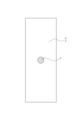
- the weld marks see reference number 6 in Figure 2 and reference numbers 13 and 23 in Figure 3 which are resistance spot weld points that appear on the surfaces of the overlapping steel sheets during this welding.
- the "magnetic flux density" can be measured, for example, according to the method described below.
- the resistance spot welding method according to claim 1 wherein the constant magnetic field is applied for 1 second or more.
- the resistance spot welding method according to claim 1 or 2 wherein at least one of the steel plates has a tensile strength of 780 MPa or more.
- the resistance spot welding method according to any one of 1 to 3 wherein at least one of the steel plates has a plating coating on at least one surface.
- the resistance spot welding method according to 4 wherein the plating coating is a hot-dip galvanized coating or a galvannealed hot-dip galvanized coating.
- a method for manufacturing a welded joint comprising joining steel plates together using the resistance spot welding method according to any one of [1] to [5] to obtain a welded joint.
- the resistance spot welding method of the present invention can effectively avoid the problem of delayed fracture even when joining steel plates together, without causing changes in the material properties of the steel plates due to structural changes caused by heat treatment. Furthermore, the manufacturing method of the welded joint of the present invention can easily produce a welded joint that exhibits excellent delayed fracture resistance.
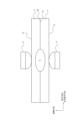
- FIG. 2 is a schematic diagram showing the formation of a nugget and joining of steel sheets together in accordance with an embodiment of the present invention
- FIG. 2 is a plan view of one surface side of the steel sheets after joining according to one embodiment of the present invention.
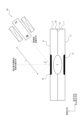
- FIG. 2 is a schematic diagram showing how a steady magnetic field is irradiated onto a weld mark on a surface of a joined steel plate after the steel plates are joined together in accordance with an embodiment of the present invention.
- two or more overlapping sheets for example steel sheets 1 and 2 are clamped between a pair of welding electrodes 4 and 5, and current is passed through them while applying pressure, forming a nugget 3 on the overlapping surfaces (overlapped portions) 12 and 22 of the steel sheets.
- a steady magnetic field is applied at a predetermined angle ⁇ and a predetermined magnetic flux density to at least one of the welding marks 13 and 23 that appear on the surfaces of the overlapping steel sheets during joining.
- the hydrogen that mainly accumulates in the nugget can be efficiently released to the outside of the steel sheet, and the problem of delayed fracture of the spot weld can be effectively and simply avoided without causing changes in the material due to structural changes caused by heat treatment.
- the method for manufacturing a welded joint of the present invention has the same characteristics as the resistance spot welding method of the present invention described above. And, by following the method for manufacturing a welded joint of the present invention, a welded joint having excellent delayed fracture resistance can be easily obtained.
- the reason why the delayed fracture resistance of steel sheets can be improved by applying a steady magnetic field to the steel sheets after joining is not clear, but the present inventors speculate as follows. That is, when a steady magnetic field is applied under a predetermined condition to the weld mark generated on the surface of the overlapped steel sheets during joining, the shape of the steel sheets changes due to the magnetostrictive effect. The change in shape is caused by the expansion of the lattice spacing, and the potential energy for diffusion decreases, so that the diffusion rate of hydrogen in the steel sheets increases and the hydrogen is desorbed from the surface.
- the magnetic field applied to the steel sheets under the predetermined conditions sufficiently and efficiently reduces the diffusible hydrogen in the steel, and thus sufficiently and efficiently reduces the hydrogen that accumulates in the steel, particularly in the nugget, which is a tensile residual stress portion, and therefore the delayed fracture resistance of the welded joint can be improved.
- the resistance spot welding method of the present invention will be described in detail according to several embodiments, but the resistance spot welding method of the present invention is not limited to these.
- the method for manufacturing a welded joint of the present invention has the same characteristics as those described in detail for the resistance spot welding method of the present invention, and the method for manufacturing a welded joint of the present invention is also not limited to the embodiments described below.
- the process of joining a plurality of steel sheets together to obtain a welded body is not particularly limited, and may be in accordance with general resistance spot welding conditions.
- General resistance spot welding energization conditions may be, for example, a current of 1 kA to 15 kA, an energization time of 100 ms to 2000 ms, and a pressure of 0.5 kN to 10 kN.
- a pair of welding electrodes 4, 5 are pressed against the surfaces 11, 21 of two overlapping steel sheets 1, 2 and electricity is applied.
- the current-applied portions of the overlapping surfaces 12, 22 of the steel sheets melt once due to resistance heating, and then solidify to form a nugget 3.
- the steel sheets 1, 2 are joined via the solid nugget 3.
- This nugget 3 does not usually appear directly on the surfaces 11, 21 of the steel sheets after joining.
- a burnt mark and/or a dented weld mark 6 is generated at the location where the welding electrodes 4, 5 were pressed.
- this weld mark 6 is also called the "nugget-equivalent surface" in the process of applying a steady magnetic field described later.
- the steel plate used in the resistance spot welding method of the present invention is not particularly limited, but is preferably a high-strength steel plate.
- the tensile strength of at least one of the multiple steel plates to be joined is preferably 780 MPa or more, more preferably 1000 MPa or more, and even more preferably 1300 MPa or more. It is even more preferable that all of the multiple steel plates to be joined have the above tensile strength.
- the tensile strength of the steel plate to be joined is less than 780 MPa, the degree of tensile residual stress generated in the nugget by resistance spot welding is small, so that delayed fracture is difficult to occur in the obtained welded joint.
- the tensile strength of the steel plate is not particularly limited, but can be 3000 MPa or less.
- the composition of the steel plate is not particularly limited, but it is preferable that the composition be such that the steel plate can be made into a high-strength steel plate as described above.
- a steel plate with a C content of 0.05% by mass or more and 0.50% by mass or less can be suitably used as the composition of the high-strength steel plate.
- the resistance spot welding method of the present invention is a welding method in which a steady magnetic field is applied in a non-contact manner and is not affected by the surface state of the steel sheets, any surface treatment such as plating can be applied to the steel sheets to be joined in order to impart desired properties to the steel sheets to be joined. It is preferable that at least one of the multiple steel sheets to be joined has been surface-treated on at least one surface.
- the at least one surface may be a surface corresponding to the surface of the steel sheets after joining, or a surface corresponding to the overlapping surface.
- the plating film by the surface treatment may be any of organic plating, inorganic plating, and metal plating, and may be plated according to a known method. Among them, from the viewpoint of preventing rust and corrosion, the plating film is preferably a hot-dip galvanized (GI) film or a hot-dip galvannealed (GA) film.
- a steady magnetic field is intentionally applied to at least one of the weld marks (surfaces equivalent to the nugget).
- the steady magnetic field it is essential that the steady magnetic field has a magnetic flux density of 0.1 T or more and 15 T or less, and the angle ⁇ between the surface normal direction of the joined steel sheets and the application direction of the steady magnetic field is greater than 0°.
- the steady magnetic field is applied without contacting the steel sheet.
- the magnetic flux density at the weld mark on the surface of the steel sheet after joining is preferably 0.1 T or more, more preferably 0.2 T or more, and even more preferably 0.5 T or more.
- the magnetic flux density at the weld mark on the surface of the steel sheet after joining is preferably 15 T or less, and more preferably 14 T or less.
- the "magnetic flux density" can be measured near the weld mark using a Teslameter, for example, by placing the probe of the Teslameter in a non-contact position directly above the weld mark.
- the magnetic flux density received by the weld mark (surface equivalent to the nugget) can be adjusted, for example, by adjusting the number of turns of the coil of the magnetic field application device or the current value.
- the angle ⁇ is preferably 15° or more, more preferably 30° or more.
- the upper limit of the angle ⁇ is 90°, and in this case, the steady magnetic field is applied parallel to the steel sheet surface.
- the time for applying the magnetic field to the weld mark is short, it may not be sufficient to desorb the hydrogen remaining in the nugget to the outside of the steel sheet, and the amount of hydrogen in the steel may not be reduced satisfactorily. Therefore, the time for applying the steady magnetic field is preferably 1 second or more, more preferably 5 seconds or more, and even more preferably 10 seconds or more. On the other hand, applying a steady magnetic field to the weld mark for 3600 seconds or more reduces productivity, so the time for applying the steady magnetic field is preferably less than 3600 seconds, more preferably 1800 seconds or less, and even more preferably 1500 seconds or less.
- Delayed fracture caused by resistance spot welding using a welding electrode may occur between 180 and 720 minutes, with the start of current flow being 0 seconds. It is preferable to apply a steady magnetic field before such delayed fracture occurs, and suppress or eliminate hydrogen accumulation in the nugget, which is a tensile stress portion of the steel sheet after joining. From this viewpoint, it is preferable to apply a steady magnetic field to the weld mark (nugget-equivalent surface) within 360 minutes from the start of current flow to the steel sheet, more preferably within 180 minutes, and even more preferably within 60 minutes.
- the lower limit of the time from the start of current flow to the start of application of the steady magnetic field is not particularly limited, but considering the time required for current flow itself, the lower limit of the above time is usually 10 seconds.
- the amount of remaining hydrogen is preferably 0.5 ppm or less in mass fraction, more preferably 0.3 ppm or less, and may be 0 ppm. Hydrogen remaining in the nugget causes hydrogen embrittlement in the welded joint, so the smaller the amount of remaining hydrogen, the better. In general, the higher the strength of the steel plate, the more likely delayed fracture is to occur in the resistance spot welding. However, in the present invention, a steady magnetic field is applied under predetermined conditions, so that the amount of remaining hydrogen can be effectively reduced even in the case of high strength steel plate.
- a typical device (magnetic field application device) that generates a magnetic field and applies it to an object can be used to apply the steady magnetic field.
- the magnetic field application device include electromagnets.
- the magnetic field application device can be a pair of electromagnets located on the upper steel plate side and the lower steel plate side, respectively.
- Each electromagnet can have an iron core, a coil that winds around the iron core, and a driving power source for passing a current through the coil. By turning on the driving power source and passing a continuous direct current through the coil, each electromagnet can be magnetized and a steady magnetic field can be generated.
- Each electromagnet has a magnetic pole face that is located toward the weld mark (nugget equivalent surface) at a predetermined interval, and by controlling the direction of the current flowing through the coil, the magnetic pole face of one electromagnet can be made an N pole and the magnetic pole face of the other electromagnet can be made an S pole. This pair of magnetic pole faces can be opposed to each other across the weld marks (nugget equivalent surfaces) on the upper and lower surfaces of the overlapped steel plates.
- the stationary magnetic field generated by the pair of electromagnets can be made such that its main magnetic flux is directed from the magnetic pole face (N pole) of one electromagnet to the magnetic pole face (S pole) of the other electromagnet, and this direction can be set as the direction of application of the stationary magnetic field.
- the direction of the stationary magnetic field coincides with the normal direction of the magnetic pole face. This allows the stationary magnetic field to be applied uniformly at a predetermined angle ⁇ with respect to the normal direction of the surface of the steel sheet after joining.
- the angle ⁇ can be said to be the angle between the normal direction of the magnetic pole face and the normal direction of the magnetic pole face, and the normal direction of the magnetic pole face can be said to be a straight line connecting the magnetic pole face and the weld mark.
- continuous direct current means a direct current whose current value is maintained continuously (preferably constant) rather than in a pulsed manner.
- stationary magnetic field means a magnetic field that is maintained continuously rather than in a pulsed manner, and includes a magnetic field formed by a stationary magnet and a magnetic field formed by an electromagnet to which a continuous direct current is supplied.
- the method of installing the magnetic field application device is not particularly limited.
- the magnetic field application device 30 may be installed so that the steady magnetic field is applied at an angle ⁇ to at least one side of the weld mark (reference numerals 13 and 23 in FIG. 3) in the shortest linear distance (L in FIG. 3).
- one magnetic field application device may be provided for each weld mark 13 or 23, or one or a plurality of magnetic field application devices capable of applying a steady magnetic field across a plurality of nugget-equivalent surfaces on one surface may be provided.
- the magnetic field application devices may be provided facing both surfaces 11, 21 of the steel sheet after joining.
- a steady magnetic field may be applied to only one of the weld marks, or to any of the multiple weld marks, or to all of the weld marks, or to the entire surface of the steel plate after joining.
- the shortest linear distance between the surface of the steel plate and the magnetic field application device is within 15 m, and it is more preferable that it is within 5 m.
- the amount of residual hydrogen in the nugget can be reduced without performing heat treatment. Therefore, in accordance with the present invention, compared to conventional techniques in which heat treatment is performed after welding, it is possible to obtain a welded joint that exhibits excellent delayed fracture resistance while avoiding the risk that the component composition and/or microstructure of the steel plate will change from the desired state due to heat. In addition, the present invention does not require a heating device to deal with hydrogen embrittlement, and is also advantageous in terms of work time and work costs.
- the present invention employs a simple method of applying a steady magnetic field without contacting the steel plate, making it particularly useful for resistance spot welding in automobile manufacturing, which requires numerous fine welding operations.
- the tensile strength was determined by preparing JIS No. 5 tensile test pieces from each steel plate in a direction perpendicular to the rolling direction and conducting tensile tests in accordance with the provisions of JIS Z 2241 (2011).
- a welded joint was obtained by clamping a plate set consisting of two overlapping steel plates (lower steel plate 1 and upper steel plate 2) between a pair of welding electrodes (lower electrode 4 and upper electrode 5) and joining them under the joining (current application) conditions shown in Table 1.
- This joining resulted in weld marks 6 (schematically represented by ellipses) on the surfaces of the steel plates (welded joint) after joining.
- the above-mentioned process was carried out while the lower electrode 4 and the upper electrode 5 were constantly water-cooled and the steel sheet was kept at room temperature (20° C.).
- DR-type electrodes made of chromium copper, each having a tip diameter (tip diameter) of 6 mm and a curvature radius of 40 mm, were used as the lower electrode 4 and the upper electrode 5.
- the pressure during joining was controlled by driving the lower electrode 4 and the upper electrode 5 with a servo motor, and a single-phase alternating current with a frequency of 50 Hz was supplied during current application.
- the magnetic flux density was measured by placing the probe tip of a Tesla meter (Lake Shore F41 type) parallel to the steel plate surface directly above the weld mark and at a height of 5 cm from the surface.
- the angle ⁇ is the angle between the normal direction of the surface of the joined steel plate (welded joint) and the straight line connecting the weld mark 6 and the magnetic pole face.
- the welded joints obtained were left to stand in the air at room temperature (20°C) for 24 hours, and after standing, it was judged by visual inspection whether delayed fracture occurred or not. Furthermore, if no nugget peeling or cracks were found by visual inspection from the surface, the cross section in the plate thickness direction including the center of the nugget was observed with an optical microscope (50x magnification) to confirm the presence or absence of cracks in the cross section.
- nugget peeling the phenomenon in which the nugget peels into two at the joint interface
- D the phenomenon in which the nugget peels into two at the joint interface
- C the crack that did not reach the surface was observed in the cross section including the center of the nugget after cross-section observation in the plate thickness direction including the center of the nugget was observed in the cross section
- B the welded joint was judged to have excellent delayed fracture resistance.
- the amount of hydrogen remaining in the nugget was measured by thermal desorption analysis.
- samples were obtained by cutting 1 cm x 1 cm x plate thickness from the welded joints obtained under each current flow condition that had not been subjected to a steady magnetic field, so that the resistance spot weld point was included in the center, and the samples were degreased with ethanol and subjected to thermal desorption analysis.
- samples were obtained by cutting 1 cm x 1 cm x plate thickness from the welded joints that had been subjected to a steady magnetic field, so that the resistance spot weld point was included in the center, and the samples were degreased with ethanol and subjected to thermal desorption analysis.
- the samples were heated at 200°C/hour, and the amount of hydrogen released from the samples was quantified every 5 minutes using a gas chromatograph, and the hydrogen release rate (wt/min) at each temperature was obtained.
- the amount of hydrogen released was calculated by integrating the hydrogen release rates obtained.
- the cumulative amount of hydrogen released up to 210°C was divided by the mass of the sample to obtain the part per million (ppm) remaining in the nugget as a mass fraction, which is listed in Table 1.
- Table 1 shows that in all welded joints obtained through application of a steady magnetic field under specific conditions, the amount of residual hydrogen in the nugget was sufficiently reduced, and as a result, no delayed fracture was observed, demonstrating good resistance to delayed fracture. In particular, good resistance to delayed fracture was achieved even in high-strength steel plates, which were previously prone to delayed fracture.
- the amount of residual hydrogen in the nugget was high and delayed fracture occurred, meaning that delayed fracture caused by residual hydrogen in the nugget could not be suppressed.
- the resistance spot welding method of the present invention makes it possible to effectively avoid the problem of delayed fracture after joining steel plates together. Furthermore, the manufacturing method of a welded joint of the present invention makes it possible to easily obtain a welded joint that exhibits excellent delayed fracture resistance. Therefore, the present invention is suitable for resistance spot welding high-strength steel plates, and can be suitably used in the manufacturing process of vehicle parts such as automobiles, and the assembly process of vehicle bodies.
Landscapes
- Engineering & Computer Science (AREA)
- Mechanical Engineering (AREA)
- Resistance Welding (AREA)
Priority Applications (6)
| Application Number | Priority Date | Filing Date | Title |
|---|---|---|---|
| KR1020257005539A KR20250040053A (ko) | 2022-09-29 | 2023-08-30 | 저항 스폿 용접 방법 및 용접 이음매의 제조 방법 |
| CN202380067960.7A CN119923302A (zh) | 2022-09-29 | 2023-08-30 | 电阻点焊方法和焊接接头的制造方法 |
| EP23871699.7A EP4578585A4 (en) | 2022-09-29 | 2023-08-30 | RESISTANCE SPOT WELDING METHOD AND WELDED JOINT MANUFACTURING METHOD |
| JP2023575677A JP7626253B2 (ja) | 2022-09-29 | 2023-08-30 | 抵抗スポット溶接方法及び溶接継手の製造方法 |
| MX2025002626A MX2025002626A (es) | 2022-09-29 | 2023-08-30 | Metodo de soldadura por puntos por resistencia y metodo de fabricacion de juntas soldadas |
| US19/110,095 US20260070147A1 (en) | 2022-09-29 | 2023-08-30 | Resistance spot welding method and welded joint manufacturing method |
Applications Claiming Priority (2)
| Application Number | Priority Date | Filing Date | Title |
|---|---|---|---|
| JP2022157121 | 2022-09-29 | ||
| JP2022-157121 | 2022-09-29 |
Publications (1)
| Publication Number | Publication Date |
|---|---|
| WO2024070459A1 true WO2024070459A1 (ja) | 2024-04-04 |
Family
ID=90477245
Family Applications (1)
| Application Number | Title | Priority Date | Filing Date |
|---|---|---|---|
| PCT/JP2023/031609 Ceased WO2024070459A1 (ja) | 2022-09-29 | 2023-08-30 | 抵抗スポット溶接方法及び溶接継手の製造方法 |
Country Status (7)
| Country | Link |
|---|---|
| US (1) | US20260070147A1 (https=) |
| EP (1) | EP4578585A4 (https=) |
| JP (1) | JP7626253B2 (https=) |
| KR (1) | KR20250040053A (https=) |
| CN (1) | CN119923302A (https=) |
| MX (1) | MX2025002626A (https=) |
| WO (1) | WO2024070459A1 (https=) |
Citations (4)
| Publication number | Priority date | Publication date | Assignee | Title |
|---|---|---|---|---|
| JP2008246538A (ja) * | 2007-03-30 | 2008-10-16 | Honda Motor Co Ltd | 抵抗溶接方法 |
| JP6194765B2 (ja) | 2013-11-08 | 2017-09-13 | 新日鐵住金株式会社 | 高強度鋼板のスポット溶接方法 |
| JP2019072764A (ja) * | 2017-10-16 | 2019-05-16 | Jfeスチール株式会社 | 抵抗スポット溶接方法および抵抗スポット溶接部材の製造方法 |
| JP2020530401A (ja) * | 2017-08-14 | 2020-10-22 | ノベリス・インコーポレイテッドNovelis Inc. | 電磁石によって強化された抵抗スポット溶接 |
Family Cites Families (2)
| Publication number | Priority date | Publication date | Assignee | Title |
|---|---|---|---|---|
| JPS6194765U (https=) | 1984-11-28 | 1986-06-18 | ||
| EP3015213B1 (en) * | 2013-06-26 | 2019-05-01 | JFE Steel Corporation | Indirect spot welding method |
-
2023
- 2023-08-30 EP EP23871699.7A patent/EP4578585A4/en active Pending
- 2023-08-30 MX MX2025002626A patent/MX2025002626A/es unknown
- 2023-08-30 KR KR1020257005539A patent/KR20250040053A/ko active Pending
- 2023-08-30 US US19/110,095 patent/US20260070147A1/en active Pending
- 2023-08-30 CN CN202380067960.7A patent/CN119923302A/zh active Pending
- 2023-08-30 JP JP2023575677A patent/JP7626253B2/ja active Active
- 2023-08-30 WO PCT/JP2023/031609 patent/WO2024070459A1/ja not_active Ceased
Patent Citations (4)
| Publication number | Priority date | Publication date | Assignee | Title |
|---|---|---|---|---|
| JP2008246538A (ja) * | 2007-03-30 | 2008-10-16 | Honda Motor Co Ltd | 抵抗溶接方法 |
| JP6194765B2 (ja) | 2013-11-08 | 2017-09-13 | 新日鐵住金株式会社 | 高強度鋼板のスポット溶接方法 |
| JP2020530401A (ja) * | 2017-08-14 | 2020-10-22 | ノベリス・インコーポレイテッドNovelis Inc. | 電磁石によって強化された抵抗スポット溶接 |
| JP2019072764A (ja) * | 2017-10-16 | 2019-05-16 | Jfeスチール株式会社 | 抵抗スポット溶接方法および抵抗スポット溶接部材の製造方法 |
Non-Patent Citations (1)
| Title |
|---|
| See also references of EP4578585A4 |
Also Published As
| Publication number | Publication date |
|---|---|
| JP7626253B2 (ja) | 2025-02-04 |
| MX2025002626A (es) | 2025-04-02 |
| EP4578585A4 (en) | 2025-12-31 |
| CN119923302A (zh) | 2025-05-02 |
| EP4578585A1 (en) | 2025-07-02 |
| KR20250040053A (ko) | 2025-03-21 |
| US20260070147A1 (en) | 2026-03-12 |
| JPWO2024070459A1 (https=) | 2024-04-04 |
Similar Documents
| Publication | Publication Date | Title |
|---|---|---|
| CN105358284B (zh) | 电阻点焊方法 | |
| TWI505890B (zh) | 電阻點銲接頭的評估方法 | |
| CN108025387B (zh) | 点焊方法 | |
| JP6372639B1 (ja) | 抵抗スポット溶接方法 | |
| JP2016068142A (ja) | スポット溶接方法 | |
| JP2018039019A (ja) | スポット溶接方法 | |
| US20240123539A1 (en) | Resistance spot welded joint and method for manufacturing resistance spot welded joint | |
| CN107921572A (zh) | 电阻点焊方法及焊接构件的制造方法 | |
| WO2016181996A1 (ja) | スポット溶接方法 | |
| JP7626253B2 (ja) | 抵抗スポット溶接方法及び溶接継手の製造方法 | |
| Chennaiah et al. | Influence of heat input and PWHT on the microstructure and mechanical properties in dissimilar (IS2062-EN8) welded joints | |
| KR102846871B1 (ko) | 저항 스폿 용접 방법 및 용접 이음매의 제조 방법 | |
| JP7296985B2 (ja) | 抵抗スポット溶接方法、および抵抗スポット溶接継手の製造方法 | |
| WO2023233704A1 (ja) | 溶接継手、溶接部材およびその製造方法、ならびに、抵抗スポット溶接方法 | |
| JP2019155473A (ja) | 抵抗スポット溶接部材の製造方法 | |
| CN113766990B (zh) | 电阻点焊方法、电阻点焊接头的制造方法 | |
| JP7476957B2 (ja) | 抵抗スポット溶接方法 | |
| JP7522977B2 (ja) | 抵抗スポット溶接方法 | |
| JP7355281B1 (ja) | 溶接継手、溶接部材およびその製造方法、ならびに、抵抗スポット溶接方法 | |
| JP7831700B2 (ja) | 抵抗スポット溶接部材およびその抵抗スポット溶接方法 | |
| JP7355282B1 (ja) | 溶接継手、溶接部材およびその製造方法、ならびに、抵抗スポット溶接方法 | |
| JP7831701B2 (ja) | 抵抗スポット溶接部材およびその抵抗スポット溶接方法 | |
| JP7558475B2 (ja) | 抵抗スポット溶接方法 | |
| KR102930512B1 (ko) | 저항 스폿 용접 방법 및 용접 이음매의 제조 방법 | |
| Jung | Spot weldability of TRIP steel with high carbon, high aluminium content |
Legal Events
| Date | Code | Title | Description |
|---|---|---|---|
| ENP | Entry into the national phase |
Ref document number: 2023575677 Country of ref document: JP Kind code of ref document: A |
|
| 121 | Ep: the epo has been informed by wipo that ep was designated in this application |
Ref document number: 23871699 Country of ref document: EP Kind code of ref document: A1 |
|
| ENP | Entry into the national phase |
Ref document number: 20257005539 Country of ref document: KR Kind code of ref document: A |
|
| WWE | Wipo information: entry into national phase |
Ref document number: 1020257005539 Country of ref document: KR |
|
| WWE | Wipo information: entry into national phase |
Ref document number: 202517019151 Country of ref document: IN Ref document number: MX/A/2025/002626 Country of ref document: MX |
|
| WWE | Wipo information: entry into national phase |
Ref document number: 2501001820 Country of ref document: TH |
|
| WWE | Wipo information: entry into national phase |
Ref document number: 202380067960.7 Country of ref document: CN |
|
| WWP | Wipo information: published in national office |
Ref document number: 202517019151 Country of ref document: IN Ref document number: 1020257005539 Country of ref document: KR |
|
| WWE | Wipo information: entry into national phase |
Ref document number: 2023871699 Country of ref document: EP |
|
| ENP | Entry into the national phase |
Ref document number: 2023871699 Country of ref document: EP Effective date: 20250325 |
|
| WWP | Wipo information: published in national office |
Ref document number: MX/A/2025/002626 Country of ref document: MX |
|
| NENP | Non-entry into the national phase |
Ref country code: DE |
|
| WWP | Wipo information: published in national office |
Ref document number: 202380067960.7 Country of ref document: CN |
|
| WWP | Wipo information: published in national office |
Ref document number: 2023871699 Country of ref document: EP |