WO2024043126A1 - 情報処理装置、情報処理方法および情報処理プログラム - Google Patents
情報処理装置、情報処理方法および情報処理プログラム Download PDFInfo
- Publication number
- WO2024043126A1 WO2024043126A1 PCT/JP2023/029392 JP2023029392W WO2024043126A1 WO 2024043126 A1 WO2024043126 A1 WO 2024043126A1 JP 2023029392 W JP2023029392 W JP 2023029392W WO 2024043126 A1 WO2024043126 A1 WO 2024043126A1
- Authority
- WO
- WIPO (PCT)
- Prior art keywords
- balance
- terminal device
- electronic money
- payment
- terminal
- Prior art date
- Legal status (The legal status is an assumption and is not a legal conclusion. Google has not performed a legal analysis and makes no representation as to the accuracy of the status listed.)
- Ceased
Links
Images





Classifications
-
- G—PHYSICS
- G06—COMPUTING OR CALCULATING; COUNTING
- G06Q—INFORMATION AND COMMUNICATION TECHNOLOGY [ICT] SPECIALLY ADAPTED FOR ADMINISTRATIVE, COMMERCIAL, FINANCIAL, MANAGERIAL OR SUPERVISORY PURPOSES; SYSTEMS OR METHODS SPECIALLY ADAPTED FOR ADMINISTRATIVE, COMMERCIAL, FINANCIAL, MANAGERIAL OR SUPERVISORY PURPOSES, NOT OTHERWISE PROVIDED FOR
- G06Q20/00—Payment architectures, schemes or protocols
- G06Q20/04—Payment circuits
- G06Q20/06—Private payment circuits, e.g. involving electronic currency used among participants of a common payment scheme
-
- G—PHYSICS
- G06—COMPUTING OR CALCULATING; COUNTING
- G06Q—INFORMATION AND COMMUNICATION TECHNOLOGY [ICT] SPECIALLY ADAPTED FOR ADMINISTRATIVE, COMMERCIAL, FINANCIAL, MANAGERIAL OR SUPERVISORY PURPOSES; SYSTEMS OR METHODS SPECIALLY ADAPTED FOR ADMINISTRATIVE, COMMERCIAL, FINANCIAL, MANAGERIAL OR SUPERVISORY PURPOSES, NOT OTHERWISE PROVIDED FOR
- G06Q20/00—Payment architectures, schemes or protocols
- G06Q20/30—Payment architectures, schemes or protocols characterised by the use of specific devices or networks
- G06Q20/32—Payment architectures, schemes or protocols characterised by the use of specific devices or networks using wireless devices
-
- G—PHYSICS
- G06—COMPUTING OR CALCULATING; COUNTING
- G06Q—INFORMATION AND COMMUNICATION TECHNOLOGY [ICT] SPECIALLY ADAPTED FOR ADMINISTRATIVE, COMMERCIAL, FINANCIAL, MANAGERIAL OR SUPERVISORY PURPOSES; SYSTEMS OR METHODS SPECIALLY ADAPTED FOR ADMINISTRATIVE, COMMERCIAL, FINANCIAL, MANAGERIAL OR SUPERVISORY PURPOSES, NOT OTHERWISE PROVIDED FOR
- G06Q20/00—Payment architectures, schemes or protocols
- G06Q20/30—Payment architectures, schemes or protocols characterised by the use of specific devices or networks
- G06Q20/36—Payment architectures, schemes or protocols characterised by the use of specific devices or networks using electronic wallets or electronic money safes
Definitions
- the present invention relates to an information processing device, an information processing method, and an information processing program.
- terminal devices have been developed that have a short-range (proximity) wireless communication function by being equipped with a non-contact IC (Integrated Circuit) chip, and are capable of wireless communication with a reader/writer located within a few centimeters, for example. has been done.
- a short-range wireless communication function by being equipped with a non-contact IC (Integrated Circuit) chip, and are capable of wireless communication with a reader/writer located within a few centimeters, for example. has been done.
- a secure element included in an IC chip performs arbitrary processing in conjunction with short-range wireless communication, allowing a terminal device to perform functions such as electronic money, transportation ticket functions, credit card functions, and personal authentication. card function can be realized.
- payment processing is performed by correlating monetary information called value with monetary value and increasing or decreasing the balance of value.
- value monetary information
- Patent Document 1 proposes a technology for sharing electronic money between multiple terminal devices.
- the first terminal device 10 in a state where pairing is realized between the first terminal device 10 and the second terminal device 20 that shares electronic money, the first terminal device 10 can perform electronic payment using electronic money.
- a synchronization process is performed to match the balance information stored in the own terminal device and the balance information stored in the second terminal device 20, and then the electronic payment is completed.
- electronic payment using shared electronic money is prohibited.
- the present disclosure proposes an information processing device, an information processing method, and an information processing program that can realize an electronic money function with high usability that prevents payment processing from competing among multiple terminal devices.
- an information processing device calculates the total balance of electronic money held in each of a plurality of terminal devices having an electronic money function. If the electronic payment using the electronic money is performed using a management unit that manages the balance as one balance whose use is shared between the parties, and one terminal device that is controlled to enable electronic payment among the plurality of terminal devices. includes an updating unit that updates an amount obtained by subtracting the amount used in the electronic payment from the one balance as the latest one balance whose usage is shared among the plurality of terminal devices.
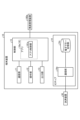
- FIG. 1 is a diagram showing the configuration of a system according to an embodiment.
- FIG. 2 is a diagram showing a conceptual diagram of an IC chip within a terminal device.
- 1 is a diagram illustrating a configuration example of a terminal device according to an embodiment. It is a diagram showing an example of the configuration of a balance management device according to an embodiment. It is a figure showing an example of a balance information storage part concerning an embodiment.
- It is a sequence diagram which shows the initial setting procedure regarding balance sharing when terminal devices are linked for the first time.
- FIG. 7 is a sequence diagram illustrating an additional setting procedure related to balance sharing when further linking terminal devices are added. It is a figure showing an example of a linking information storage part concerning an embodiment.
- FIG. 3 is a sequence diagram showing a link release procedure.
- FIG. 3 is a diagram showing an example of a selection screen for selecting an activation terminal.
- 1 is a block diagram showing an example of a hardware configuration of a computer corresponding to a balance management device 100 according to an embodiment of the present disclosure.
- the information processing device performs information processing to solve the above problems.
- the information processing device when sharing electronic value among multiple terminal devices, the information processing device realizes information processing that can accommodate various use cases such as using multiple terminal devices depending on the day or changing models. Furthermore, when electronic value is shared between a plurality of terminal devices, the information processing device realizes information processing that avoids competition due to simultaneous usage and achieves convenience such as simplicity and payment speed.
- FIG. 1 is a diagram showing the configuration of a system according to an embodiment.
- FIG. 1 shows a system 1 as an example of a system according to an embodiment.
- the system 1 may include a terminal device 10, a payment device 30, a balance management device 100, and a payment processing system 200. Further, the terminal device 10, the payment device 30, the balance management device 100, and the payment processing system 200 may be communicably connected via the network N by wire or wirelessly.
- the terminal device 10 is an information processing terminal used by an electronic money user, and is, for example, a smartphone, a tablet terminal, a notebook PC (Personal Computer), a desktop PC, a mobile phone, or a PDA (Personal Computer). Digital Assistant), wearable devices such as smart watches, etc.
- the terminal device 10 is equipped with a short-range wireless communication technology such as Felica (registered trademark).
- a short-range wireless communication technology such as Felica (registered trademark).
- the short-range wireless communication exchanged between the terminal device 10 and the payment device 30 is secure wireless communication over a distance of several centimeters using a predetermined encryption key.
- the terminal device 10 has electronic money functions such as payment processing using electronic money and balance increase/decrease processing using a built-in non-contact type IC chip 14 (see FIG. 3). Furthermore, the terminal device 10 can communicate with the balance management device 100. Communication with the balance management device 100 is performed by an application 16 (see FIG. 3), which is application software that provides various services related to electronic money.
- FIG. 1 shows an example in which the user Ux has a plurality of terminal devices 10, such as a terminal device 10-x1, a terminal device 10-x2, . . . , a terminal device 10-xn, etc. . Further, FIG. 1 shows, as a specific example of such selective usage, an example in which a user U1 has a terminal device 10-11, a terminal device 10-12, . . . , a terminal device 10-1n.
- terminal device 10-11 a terminal device 10-11
- terminal device 10-12 a terminal device 10-12
- terminal device 10-13 a terminal device 10-13
- the payment device 30 is a reader/writer device installed at checkout counters in physical stores, vending machines, automatic ticket gates at stations, and the like.
- the payment device 30 can be connected to the IC chip 14 by short-range wireless communication, and as a result, the user Ux can use electronic payment by bringing the terminal device 10 close to (holding over) the payment device 30. .
- the payment device 30 performs short-range wireless communication with the terminal device 10 and also communicates with the payment processing system 200 via the network N to transmit information such as the payment amount and between the payment processing system 200 and the terminal device 10. It is also possible to relay communications.
- business operator A that operates electronic money N as an electronic money type and business operator B that operates electronic money M as an electronic money type are members.
- An example is shown.
- the balance management device 100 and the payment processing system 200 may exist for each business.
- the balance management device 100 is an example of an information processing device according to an embodiment of the present disclosure
- FIG. 1 shows an example in which a balance management device 100a is provided in a system 1 as the balance management device 100 corresponding to a business operator A. is shown. Further, FIG. 1 shows an example in which the system 1 is equipped with a balance management device 100b as the balance management device 100 corresponding to business operator B.
- balance management device 100 when there is no need to distinguish, such as balance management device 100a, balance management device 100b, etc., it is simply written as balance management device 100.
- the balance management device 100 is a device that executes information processing according to the embodiment, and for example, a cloud that performs processing on the cloud side with respect to a terminal device 10 corresponding to an edge computer that performs edge processing near the user Ux. It can be a computer. That is, the balance management device 100 may be a server device.
- the payment processing system 200 is a server that manages the movement of monetary value based on the value of the corresponding electronic money type, and based on the payment log obtained from the payment device 30, company, etc.) and the user Ux.
- FIG. 1 shows an example in which a payment processing system 200a is included in a system 1 as a payment processing system 200 corresponding to a business operator A.
- the balance management device 100a and the payment processing system 200a have a relationship with a front server and a back system, and are communicably connected to each other.
- FIG. 1 shows an example in which the system 1 is equipped with a payment processing system 200b as the payment processing system 200 corresponding to business operator B.
- the balance management device 100b and the payment processing system 200b have a relationship with a front server and a back system, and are communicably connected to each other.
- payment processing system 200 when there is no need to distinguish between payment processing system 200a, payment processing system 200b, etc., they are simply referred to as payment processing system 200.
- FIG. 2 is a diagram showing a conceptual diagram of the IC chip 14 within the terminal device 10.
- the IC chip 14 is an electronic module that includes a CPU (Central Processing Unit), ROM (Read Only Memory), RAM (Random Access Memory), EEPROM (Electrically Erasable Programmable Read Only Memory), etc. 30 can be connected. Further, the IC chip 14 may be connected to the CPU of the terminal device 10 by wire.
- CPU Central Processing Unit
- ROM Read Only Memory
- RAM Random Access Memory
- EEPROM Electrically Erasable Programmable Read Only Memory
- the IC chip 14 incorporates (installs) electronic money application A corresponding to electronic money N provided by business operator A, and electronic money application B corresponding to electronic money M provided by business operator B. )be able to.
- the terminal device 10 is equivalent to having an electronic money card for electronic money N provided by business operator A and an electronic money card for electronic money M provided by business operator B. It can be said that it has the following functions.
- the IC chip 14 has, for example, a storage area where electronic money application A is formed and a storage area where electronic money application B is formed. These electronic money applications are executed by the control unit of the IC chip 14 (a functional unit formed by loading an OS (Operating System) and an application program running on the OS into the CPU in the chip).
- OS Operating System
- the user Ux can create an electronic money application A in the corresponding storage area by installing the application 16a corresponding to electronic money N among the applications 16 described above into the terminal device 10.
- the terminal device 10 has an electronic money N function.
- the terminal device 10 has the function of electronic money M.
- FIG. 3 is a diagram showing a configuration example of the terminal device 10 according to the embodiment. As shown in FIG. 3, the terminal device 10 according to the embodiment includes a communication section 11, an operation section 12, an output section 13, an IC chip 14, and a control section 15.
- the communication unit 11 is realized by, for example, a NIC (Network Interface Card).
- the communication unit 11 is wirelessly connected to the network N, and transmits and receives information to and from the balance management device 100, for example.
- the operation unit 12 functions as an input unit that receives various operations from the user Ux.
- the operation unit 12 receives, for example, an operation on the information output by the output unit 13 from the user Ux.
- the output unit 13 is a display screen realized by, for example, a liquid crystal display or an organic EL (Electro-Luminescence) display, and may be a display device for displaying various information. Furthermore, the output unit 13 is not limited to a display screen, and may be, for example, a speaker that outputs audio.
- the IC chip 14 has an electronic money function and is connected to the payment device 30 by short-range wireless communication.
- FIG. 3 shows a case where an A electronic money application is formed in the IC chip 14 by installing an application 16a corresponding to electronic money N. That is, the IC chip 14 has an electronic money function for electronic money N.
- the IC chip 14 has a communication section 14a and an electronic money storage section 14c.
- Communication department 14a When the communication unit 14a receives a command or the like related to electronic payment from the payment device 30 (reader/writer), the communication unit 14a executes processing according to the received command. For example, the communication unit 14a may control the balance stored in the electronic money storage unit 14c in response to a command input from the outside (for example, a command to change the amount).
- the electronic money storage unit 14c stores value balances, usage log data, and the like.
- the electronic money storage unit 14c may store a value balance resulting from charging electronic money N and a value balance resulting from electronic payment being performed using electronic money N.
- the control unit 15 is realized by a CPU, an MPU (Micro Processing Unit), or the like executing various programs stored in a storage device inside the terminal device 10 using a RAM as a work area. Further, the control unit 15 is realized by, for example, an integrated circuit such as an ASIC (Application Specific Integrated Circuit) or an FPGA (Field Programmable Gate Array).
- ASIC Application Specific Integrated Circuit
- FPGA Field Programmable Gate Array
- the application control unit 161a is formed by the control unit 15 (CPU) executing an application 16a, which is application software that provides various services related to the electronic money N of the business operator A. Further, when the application 16a is executed, an electronic money application A is formed in the storage area of the IC chip 14, and the IC chip 14 has the function of electronic money N.
- the application control unit 161a can access both the balance management device 100a of business operator A and the IC chip 14, as shown in FIG. That is, the application control unit 161a can provide a function for the user Ux to access the A electronic money application by operating the terminal device 10, and can mediate communication between the balance management device 100a and the IC chip 14. can.
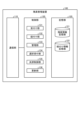
- FIG. 4 is a diagram showing a configuration example of the balance management device 100 according to the embodiment.
- the balance management device 100 includes a communication section 110, a storage section 120, and a control section 130.
- the communication unit 110 is realized by, for example, a NIC or the like.
- the communication unit 110 is wirelessly connected to the network N, and transmits and receives information to and from the terminal device 10 and the payment processing system 200, for example.
- the storage unit 120 is realized by, for example, a semiconductor memory device such as a RAM or a flash memory, or a storage device such as a hard disk or an optical disk.
- the storage unit 120 includes a balance information storage unit 121 and a linkage information storage unit 122.
- the balance information storage unit 121 stores information regarding a unique balance, which is an electronic money balance that each terminal device 10 individually holds according to the electronic money function installed in the terminal device.
- the balance management device 100 can obtain the unique balance by accessing the electronic money storage unit 14c of the terminal device 10 when the linking process described below is not performed.
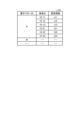
- FIG. 5 shows an example of the balance information storage unit 121 according to the embodiment.
- the balance information storage unit 121 has items such as "electronic money ID”, “terminal ID”, and "unique balance”.
- the "electronic money ID” indicates what type of electronic money function the terminal device 10 identified by the “terminal ID” is equipped with, and identification information that identifies the type of electronic money. “Terminal ID” indicates identification information that identifies the terminal device 10.
- the "inherent balance” is the electronic money balance (value This is information indicating the balance.
- FIG. 5 shows an example in which electronic money ID "N", terminal ID "10-11", and unique balance "x11" are associated.
- the terminal device 10 has an electronic payment function using electronic money N by executing an application 16a corresponding to electronic money N of business operator A. That is, an example is shown in which the terminal device 10 has a function similar to that of a built-in electronic money card of electronic money N. Further, this example shows an example where "x11" is held as the value balance of electronic money N in the electronic money storage unit 14c of the terminal device 10-11.
- the linking information storage unit 122 stores an "electronic money ID” that identifies the type of electronic money, a “terminal ID” that identifies each of the plurality of terminal devices 10 linked using account information, and a “terminal ID” that identifies each of the plurality of terminal devices 10 linked using account information.
- the "balance of 1" shared among 10 is stored in association with the "balance of 1". Details of the linking information storage unit 122 will be described later.
- the control unit 130 is realized by the CPU, MPU, or the like executing various programs (for example, information processing programs) stored in the storage device inside the balance management device 100 using the RAM as a work area. Further, the control unit 130 is realized by, for example, an integrated circuit such as an ASIC or an FPGA.
- the control unit 130 includes a reception unit 131, a linking unit 132, a management unit 133, a selection reception unit 134, a payment control unit 135, and an update unit 136. Realize or execute the information processing function or action described.
- the internal configuration of the control unit 130 is not limited to the configuration shown in FIG. 4, and may be any other configuration as long as it performs information processing to be described later.
- the connection relationship between the respective processing units included in the control unit 130 is not limited to the connection relationship shown in FIG. 4, and may be other connection relationships.
- the reception unit 131 receives various information from the terminal device 10. For example, when linking a plurality of terminal devices 10, the reception unit 131 may receive a predetermined request from the terminal device 10 to be linked. For example, the accepting unit 131 may accept an initial setting start request or an additional setting start request, which will be described later. Further, the reception unit 131 may also receive authentication information.
- the linking unit 132 performs a series of linking processes for linking the terminal devices 10 whose balances are to be shared, in response to a request from the user Ux.
- the management unit 133 manages the total balance of electronic money held in each of the plurality of terminal devices 10 having an electronic money function as one balance whose usage is shared among the plurality of terminal devices 10. For example, the management unit 133 stores an electronic money ID for identifying electronic money, a balance of 1 corresponding to the electronic money, and each of the multiple terminal devices 10 in response to an operation by the user Ux of the multiple terminal devices 10. It is managed by linking it with the terminal ID to be identified.
- the selection reception unit 134 receives selection of one terminal device among the plurality of terminal devices 10 that enables electronic payment. For example, the selection accepting unit 134 accepts a selection to switch one terminal device 10 that enables electronic payment from the current terminal device to another terminal device. Further, the selection receiving unit 134 may further receive an access from one terminal device 10 that is a target of activation in accordance with the selection.
- the payment control unit 135 controls one terminal device 10 selected as a validation target to enable electronic payment, while controlling other terminal devices not selected to be in a state in which electronic payment is not possible. For example, the payment control unit 135 controls the switching destination terminal device 10 to enable electronic payment, while making electronic payments to other terminal devices 10 other than the switching destination terminal device 10 among the plurality of terminal devices 10. Control to an impossible state.
- the payment control unit 135 updates the electronic money balance held by the accessed terminal device 10 as the latest balance of 1. Determine whether or not the Then, the payment control unit 135 controls the accessed terminal device 10 to enable electronic payment only when determining that the electronic money balance has been updated to the latest balance of 1.
- the updating unit 136 updates the electronic payment amount by 1.
- the amount deducted from the balance is updated as the latest balance whose usage is shared among the plurality of terminal devices 10.
- the update unit 136 provides the amount deducted from the balance with a usage amount of 1 to one terminal device 10 that is controlled to enable electronic payment among the plurality of terminal devices 10 and to the other terminal devices 10. By doing this, this amount is held as the latest balance of 1.
- FIGS. 6 and 7 a procedure for setting balance sharing by linking different terminal devices 10 will be explained using FIGS. 6 and 7.
- FIG. 6 an initial setting procedure will be described when the terminal devices 10 are linked together for the first time in balance sharing.
- FIG. 7 an additional setting procedure for adding a terminal device 10 to be linked in balance sharing will be explained.
- the three terminal devices 10, ie, the terminal device 10-11, the terminal device 10-12, and the terminal device 10-13, are selected depending on the operation by the user U1 who selectively uses them.
- a case is shown in which the devices 10 are linked.
- the terminal device 10-11, the terminal device 10-12, and the terminal device 10-13 the A electronic money application is formed in the IC chip 14 by installing the application 16a corresponding to electronic money N. That is, the terminal device 10-11, the terminal device 10-12, and the terminal device 10-13 have an electronic money function for electronic money N.
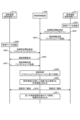
- FIG. 6 is a sequence diagram showing an initial setting procedure related to balance sharing when the terminal devices 10 are linked together for the first time.
- FIG. 6 shows an initial state in which a terminal device 10-11 holding a unique balance “x11” and a terminal device 10-12 holding a unique balance “x12” are linked in accordance with the operation of the user U1. The setup procedure will be shown.
- the terminal device 10-11 starts a dedicated management application AP corresponding to the IC chip 14 in response to an operation by the user U1 (step S601).
- the management application AP may be installed in advance on the terminal device 10 in which the IC chip 14 is mounted.
- the user U1 performs a login operation using one piece of account information (hereinafter referred to as account "U1") registered via the management application AP.
- account "U1" one piece of account information registered via the management application AP.
- the terminal device 10-11 receives the account "U1" through the login operation, it transmits an initial setting start request including the account "U1" to the balance management device 100a (step S602).
- the linking unit 132 of the balance management device 100a transmits the authentication information to the terminal device 10-11 when the initial setting start request is accepted by the accepting unit 131 (step S603).
- the linking unit 132 may transmit a one-time code.
- the user U1 After confirming the notification of authentication information via the terminal device 10-11, the user U1 then operates the terminal device 10-12.
- the terminal device 10-12 starts the management application AP in response to the operation of the user U1 (step S604).
- User U1 performs a login operation using a similar account "U1".
- the terminal device 10-12 receives the account "U1" through the login operation, it transmits an initial setting start request including the account "U1" to the balance management device 100a (step S605).
- the linking unit 132 of the balance management device 100a requests the terminal device 10-12 to input authentication information (step S606).
- the user U1 After confirming the authentication request via the terminal device 10-12, the user U1 inputs the authentication information (one-time code) notified to the terminal device 10-11 into the terminal device 10-12. For example, the user U1 inputs authentication information into the terminal device 10-12 via the management application AP.
- the terminal device 10-12 Upon receiving the authentication information, the terminal device 10-12 transmits this authentication information to the balance management device 100a (step S607).
- the linking unit 132 of the balance management device 100a connects the destination terminal device 10 to which the authentication information has been transmitted (i.e., the terminal device) based on the account “U1” and the one-time code. 10-11) and the receiving terminal device 10 (that is, the terminal device 10-12) that has received the authentication information, performs an authentication process to confirm the identity of the user U1 (step S608).
- the linking unit 132 performs an authentication process to confirm whether the user Ux of the terminal device 10-11 and the user Ux of the terminal device 10-12 are the same person corresponding to the account "U1". conduct.
- the linking unit 132 may decide not to share the balance and terminate the process at this point without proceeding to step S609.
- the linking unit 132 determines the balance X(x11+x12 ) is determined as the shared balance (step S609).
- the linking unit 132 may notify the terminal device 10-11 and the terminal device 10-12 that the authentication has been completed (step S610).
- the management unit 133 of the balance management device 100a registers each other's terminal devices 10 in a linked manner in the linking information storage unit 122, and causes them to share the balance X (step S611). For example, the management unit 133 uses the account "U1" to link the terminal device 10-11 and the terminal device 10-12, and the shared balance for the pair of the terminal device 10-11 and the terminal device 10-12. Manage X by associating it with each other.
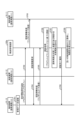
- FIG. 7 is a sequence diagram illustrating an additional setting procedure related to balance sharing when further connecting terminal devices 10 are added.
- the terminal device 10-13 holding the unique balance “x13” is further The additional setting procedure when added is shown.
- the terminal device 10-13 starts a dedicated management application AP corresponding to the IC chip 14 in response to an operation by the user U1 (step S701).
- User U1 performs a login operation using the same account "U1" as before.
- the terminal device 10-13 receives the account “U1" through the login operation, it transmits an additional setting start request including the account "U1" to the balance management device 100a (step S702).
- the linking unit 132 of the balance management device 100a transmits the authentication information to the terminal device 10-11 (step S703).
- the linking unit 132 may transmit a one-time code.
- the linking unit 132 of the balance management device 100a requests the terminal device 10-13 to input authentication information (step S704).
- the user U1 After confirming the authentication request via the terminal device 10-13, the user U1 inputs the authentication information (one-time code) notified to the terminal device 10-11 into the terminal device 10-13. For example, the user U1 inputs authentication information into the terminal device 10-13 via the management application AP.
- the terminal device 10-13 Upon receiving the authentication information, the terminal device 10-13 transmits this authentication information to the balance management device 100a (step S705).
- the linking unit 132 of the balance management device 100a connects the destination terminal device 10 to which the authentication information has been transmitted (i.e., the terminal device) based on the account “U1” and the one-time code. 10-11) and the receiving terminal device 10 (that is, the terminal device 10-13) that has received the authentication information, performs an authentication process to confirm the identity of the user U1 (step S706).
- the linking unit 132 performs an authentication process to confirm whether the user Ux of the terminal device 10-11 and the user Ux of the terminal device 10-13 are the same person corresponding to the account "U1". conduct.
- the linking unit 132 may decide not to share the balance and terminate the process at this point without proceeding to step S707.
- the linking unit 132 stores the unique balance x11 held by the terminal device 10-11, the unique balance x12 held by the terminal device 10-12, and the unique balance x12 held by the terminal device 10-13.
- the balance X (x11+x12+x13), which is the sum of the unique balance x13, is determined as the shared balance (step S707).
- the linking unit 132 may notify the terminal device 10-13 that the authentication has been completed (step S708).
- the management unit 133 of the balance management device 100a registers the additional terminal device 10 in a linked manner in the linked information storage unit 122, and causes the terminal device 10 to share the balance X (step 709).
- the management unit 133 further links the terminal device 10-13 using the account "U1" and shares information for the set of the terminal device 10-11, the terminal device 10-12, and the terminal device 10-13.
- Balance X is associated and managed.
- FIG. 8 is a diagram illustrating an example of the linking information storage unit 122 according to the embodiment.
- the terminal devices 10-11, 10-12, and 10-13 are linked by account "U1", which is one piece of account information registered by user U1. Further, according to the example of FIG. 8, the balances x11, x12, x13 of electronic money N held individually by each terminal device 10 are added up, and the added balance X is shared between each terminal device 10. managed as a shared balance.
- each terminal device 10 stores the electronic money ID for identifying the electronic money N and the terminal ID of the associated terminal device 10 in the IC chip 14. may be maintained in a state where they are associated with each other.
- the application control unit 161a of the terminal device 10-11 inputs the terminal ID “10-12” that identifies the terminal device 10-12 and the terminal device 10-12 for the electronic money ID “N” that identifies the electronic money N. -13 may be registered in the electronic money storage section 14c of the own device in association with the terminal ID "10-13".
- the application control unit 161a of the terminal device 10-12 inputs the terminal ID “10-11” that identifies the terminal device 10-11 and the electronic money ID “N” that identifies the electronic money N. -13 may be registered in the electronic money storage section 14c of the own device in association with the terminal ID "10-13".
- the application control unit 161a of the terminal device 10-13 inputs the terminal ID “10-11” that identifies the terminal device 10-11 and the electronic money ID “N” that identifies the electronic money N. -12 may be registered in the electronic money storage unit 14c of the own device in association with the terminal ID "10-12".
- each terminal device 10 can recognize which terminal device 10, in addition to itself, shares the balance X of electronic money N.
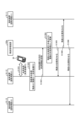
- FIG. 9 is a sequence diagram showing the link release procedure.
- FIG. 9 a case is shown in which, among the three terminal devices 10 linked according to the procedures of FIGS. 6 and 7, the terminal device 10-13 is deleted in response to an operation by the user U1.
- the terminal device 10-13 starts the management application AP in response to the operation of the user U1 (step S901).
- User U1 performs a login operation using the same account "U1" as before.
- the terminal device 10-13 receives the account "U1" through the login operation, it transmits a request to delete registered information including the account "U1" to the balance management device 100a (step S902).
- the management unit 133 of the balance management device 100a accesses the linked information storage unit 122 and deletes the registration information corresponding to the terminal device 10-13 (step S903).
- the terminal ID that identifies the terminal device 10-11, the terminal ID that identifies the terminal device 10-12, and the terminal ID that identifies the terminal device 10-13 are linked.
- the management unit 133 deletes the terminal ID that identifies the terminal device 10-13.
- the management unit 133 may notify the terminal device 10-13 that the deletion has been completed (step S904).
- each terminal device 10 may delete the card information corresponding to the terminal device 10-13 from the IC chip 14 (electronic money storage unit 14c) as the association of the terminal device 10-13 is released.
- the application control unit 161a of the terminal device 10-11 may delete the terminal ID "10-13” that is linked to the electronic money ID “N” that identifies electronic money N. Further, the application control unit 161a of the terminal device 10-12 may delete the terminal ID "10-13” that is linked to the electronic money ID "N” that identifies electronic money N.
- the terminal device 10-13 may delete the terminal ID "10-11” and the terminal ID "10-12” that are linked to the electronic money ID "N" that identifies electronic money N.
- FIGS. 10 and 11 the procedure of electronic payment lock control processing performed as pre-processing of balance update processing will be explained.
- FIG. 11 the procedure of the balance update process performed according to the electronic payment lock control process will be explained.
- FIG. 10 is a sequence diagram (1) showing the procedure of electronic payment lock control processing.
- FIG. 10 shows a scene in which electronic payment is performed for the first time using the terminal device 10-11 after the terminal device 10-11, the terminal device 10-12, and the terminal device 10-13 are linked.
- the user U1 selects the terminal device 10-11 from among the terminal device 10-11, the terminal device 10-12, and the terminal device 10-13 via the management application AP. , is selected as an activation terminal for enabling electronic payment using electronic money N (step S1001).
- the application control unit 161a of the terminal device 10-11 in response to the selection of the own device as the activation terminal, selects the selection content (for example, information specifying the terminal device 10-11 as the activation terminal).
- the information is transmitted to the balance management device 100a (step S1002).
- the selection receiving unit 134 of the balance management device 100a receives the selection of the terminal device 10-11 as the activation terminal to be activated for electronic payment using electronic money N.
- the payment control unit 135 of the balance management device 100a determines that electronic payment using electronic money N is not possible for the terminal device 10-12 and the terminal device 10-13. (steps S1003, S1004).
- the application control unit 161a of the terminal device 10-12 controls access to the electronic money N function (A electronic money application) in the IC chip 14 in accordance with the control from the payment control unit 135. .
- the application control unit 161a controls the electronic money N in the IC chip 14 to be in an unusable state by setting the electronic money N in a locked state.
- the application control unit 161a of the terminal device 10-13 also sets the electronic money N in the IC chip 14 to a locked state, thereby controlling the electronic money N to an unusable state.
- the payment control unit 135 controls the terminal device 10-11 to enable electronic payment using electronic money N, based on the information received by the selection reception unit 134 (step S1005).
- the application control unit 161a of the terminal device 10-11 controls access to the electronic money N function (A electronic money application) in the IC chip 14 in accordance with the control from the payment control unit 135. .
- the application control unit 161a controls the electronic money N in the IC chip 14 to be in a usable state by setting the electronic money N in the unlocked state.
- FIG. 11 is a sequence diagram (1) showing the procedure of balance update processing.
- the user U1 can perform electronic payment using electronic money N only on the terminal device 10-11.
- the user U1 holds the terminal device 10-11 over the payment device 30 installed at the store where the user is shopping.
- the communication unit 14a of the IC chip 14 and the payment device 30 are connected by short-range wireless communication, and payment processing according to the payment amount P1 is executed (step S1101).
- the application control unit 161a of the terminal device 10-11 executes a balance calculation process (step S1102). For example, the application control unit 161a calculates the balance X1 by subtracting the payment amount P1 from the current balance X shared between the terminal device 10-11, the terminal device 10-12, and the terminal device 10-13. Note that the balance calculation process may be performed on the balance management device 100a side.
- the application control unit 161a transmits payment information including the payment amount P1 to the balance management device 100a through a tap interaction (step S1103).
- the payment information may also include the balance X1.
- the balance X1 is not included in the payment information.
- the update unit 136 of the balance management device 100a updates the balance X1, which is the result of subtracting the payment amount P1 from the balance X in the current payment processing, as the latest shared balance to be shared between each terminal device 10 (step S1104 ). For example, the updating unit 136 updates the balance X registered as a shared balance in the linking information storage unit 122 to the balance X1.
- the update unit 136 transmits information indicating the balance X1 to the terminal device 10-11, thereby causing the terminal device 10-11 to hold the balance X1 as the latest shared balance (step S1105).
- the application control unit 161a of the terminal device 10-11 stores the balance X1 in the electronic money storage unit 14c.
- the updating unit 136 also transmits information indicating the balance X1 to the terminal devices 10-12 and 10-13, thereby holding the balance X1 as the latest shared balance (step S1106).
- each of the application control unit 161a of the terminal device 10-12 and the application control unit 161a of the terminal device 10-13 stores the balance X1 in the electronic money storage unit 14c of the own device.
- FIGS. 12 and 13 Processing procedure related to balance update (2)
- the procedure of balance update processing by the balance management device 100a will be explained using FIGS. 12 and 13.
- FIG. 12 a procedure for electronic payment lock control processing associated with switching of the activation terminal will be described.
- FIG. 13 a procedure for a balance update process performed according to the electronic payment lock control process will be explained.
- FIG. 12 is a sequence diagram (2) showing the procedure of electronic payment lock control processing.
- FIG. 12 shows a situation where the activation terminal for enabling electronic payment using electronic money N is switched from the terminal device 10-11 to the terminal device 10-12.
- the user U1 changes the activation terminal for enabling electronic payment using electronic money N from the terminal device 10-11 to the terminal device 10-12.
- the device 10-12 is selected again (step S1201).
- the application control unit 161a of the terminal device 10-12 in response to the selection of the own device as the activation terminal, selects the selection content (for example, information specifying the terminal device 10-12 as the activation terminal).
- the information is transmitted to the balance management device 100a (step S1202).
- the selection accepting unit 134 of the balance management device 100a accepts the selection of the terminal device 10-12 as the activation terminal to be activated for electronic payment using electronic money N.
- the payment control unit 135 of the balance management device 100a determines whether the balance of electronic money N held by the terminal device 10-12 has been updated as the latest shared balance, based on the information received by the selection reception unit 134. Determination is made (step S1203). For example, the payment control unit 135 determines the update status based on the consistency between the shared balance stored in the linking information storage unit 122 and the shared balance held by the terminal device 10-12 in the electronic money storage unit 14c. You may do so.
- the balance X1 is stored as a shared balance in the linkage information storage unit 122, and the balance X1 is also stored as a shared balance in the electronic money storage unit 14c of the terminal device 10-12.
- the payment control unit 135 can determine that the balance of electronic money N held by the terminal device 10-12 has been updated as the latest shared balance.
- the payment control unit 135 allows the terminal device 10-12 to use electronic money N only when it can be determined that the balance of electronic money N held by the terminal device 10-12 has been updated as the latest shared balance. Executes processing to enable electronic payment.
- the payment control unit 135 controls the terminal device 10-11 and the terminal device 10-13 to disable electronic payment using electronic money N based on the information received by the selection reception unit 134.
- the application control unit 161a of the terminal device 10-11 controls access to the electronic money N function (A electronic money application) in the IC chip 14 in accordance with the control from the payment control unit 135. .
- the application control unit 161a controls the electronic money N in the IC chip 14 to be in an unusable state by setting the electronic money N in a locked state.
- the application control unit 161a of the terminal device 10-13 also sets the electronic money N in the IC chip 14 to a locked state, thereby controlling the electronic money N to an unusable state.
- the payment control unit 135 controls the terminal device 10-12 to enable electronic payment using electronic money N (step S1205).
- the application control unit 161a of the terminal device 10-12 controls access to the electronic money N function (A electronic money application) in the IC chip 14 in accordance with the control from the payment control unit 135. .
- the application control unit 161a controls the electronic money N in the IC chip 14 to be in a usable state by setting the electronic money N in the unlocked state.
- FIG. 13 is a sequence diagram (2) showing the procedure of the balance update process.
- the user U1 can perform electronic payment using electronic money N only on the terminal device 10-12.
- the touch interaction connects the communication unit 14a of the IC chip 14 and the payment device 30 by short-range wireless communication, and payment processing according to the payment amount P2 is executed (step S1301).
- the application control unit 161a of the terminal device 10-12 executes balance calculation processing (step S1302). For example, the application control unit 161a calculates the balance X2 by subtracting the payment amount P2 from the current balance X1 shared between the terminal device 10-11, the terminal device 10-12, and the terminal device 10-13. Note that, similarly to the above example, the balance calculation process may be performed on the balance management device 100a side.
- the application control unit 161a transmits payment information including the payment amount P2 to the balance management device 100a (step S1303).
- the payment information may also include the balance X2.
- the balance X2 is not included in the payment information.
- the update unit 136 of the balance management device 100a updates the balance X2, which is the result of subtracting the payment amount P2 from the balance X1 in the current payment processing, as the latest shared balance to be shared between each terminal device 10 (step S1304 ). For example, the updating unit 136 updates the balance X1 registered as a shared balance in the linking information storage unit 122 to the balance X2.
- the updating unit 136 transmits information indicating the balance X2 to the terminal device 10-12, thereby causing the balance X2 to be held as the latest shared balance (step S1305).
- the application control unit 161a of the terminal device 10-11 stores the balance X2 in the electronic money storage unit 14c.
- the balance X1 previously stored in the electronic money storage section 14c is overwritten by the balance X2.
- the updating unit 136 also transmits information indicating the balance X1 to the terminal devices 10-11 and 10-13, thereby holding the balance X2 as the latest shared balance (step S1306).
- each of the application control unit 161a of the terminal device 10-11 and the application control unit 161a of the terminal device 10-13 stores the balance X2 in the electronic money storage unit 14c of the own device.
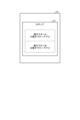
- FIG. 14 is a diagram showing an example of a selection screen for selecting an activation terminal.
- the selection screen G shown in FIG. 14 may be one screen realized by the management application AP, for example.
- the selection screen G On the selection screen G, the information currently shared between each terminal device 10 is displayed for each type of electronic money application (electronic money type) that is commonly installed on each of the linked terminal devices 10 including the own device. The current balance may be displayed. Further, on the selection screen G, a selection area ARx corresponding to each terminal device 10 may be provided so that any one of the linked terminal devices 10 can be selected as an activation terminal.
- electronic money type electronic money type
- the selection screen G shown in FIG. 14 corresponds to an example where the terminal device 10-11, the terminal device 10-12, and the terminal device 10-13 are linked, and the terminal device 10-11 can be selected as the activation terminal.
- area AR12 which is controlled so that the terminal device 10-12 can be selected as a validating terminal
- area AR13 which is controlled so that the terminal device 10-13 can be selected as a validating terminal.
- the user U1 uses the selection screen G to select the area AR11, thereby specifying the terminal device 10-11 as the activation terminal. Further, in the example of FIG. 12, the user U1 changes the activation terminal from the terminal device 10-11 to the terminal device 10-12 by selecting the area AR11 using the selection screen G in the same manner.
- the name (for example, terminal A) may be displayed.
- the name of the terminal device 10-12 (for example, Terminal B) is displayed in the area AR12 so that the user can easily see that the area AR12 is the operation target for activating the terminal device 10-12. It's okay to be.
- the name of the terminal device 10-13 (for example, C terminal) is displayed in the area AR13 so that the user can easily see that the area AR13 is the operation target for activating the terminal device 10-13. May be displayed.
- each terminal device 10 may be registered in advance by the user.
- balance management device 100 for example, a store affiliated with an existing electronic money service does not need to modify its infrastructure such as a payment device, so it can take advantage of the convenience of existing electronic money as is. I can do it.
- the user Ux can seamlessly use electronic money even when changing the model of the terminal device 10. can be continued.
- the balance management device 100 can provide an electronic money service with high usability.
- FIG. 15 is a block diagram illustrating an example hardware configuration of a computer corresponding to the balance management device 100 according to the embodiment of the present disclosure. Note that FIG. 15 shows an example of the hardware configuration of a computer corresponding to the balance management device 100 according to the embodiment of the present disclosure, and the configuration is not limited to that shown in FIG. 15.
- the computer 1000 includes a CPU (Central Processing Unit) 1100, a RAM (Random Access Memory) 1200, a ROM (Read Only Memory) 1300, an HDD (Hard Disk Drive) 1400, a communication interface 1500, and an input/output It has an interface 1600.
- CPU Central Processing Unit
- RAM Random Access Memory
- ROM Read Only Memory
- HDD Hard Disk Drive
- the CPU 1100 operates based on a program stored in the ROM 1300 or the HDD 1400 and controls each part. For example, the CPU 1100 loads programs stored in the ROM 1300 or HDD 1400 into the RAM 1200, and executes processes corresponding to various programs.
- the ROM 1300 stores boot programs such as BIOS (Basic Input Output System) that are executed by the CPU 1100 when the computer 1000 is started, programs that depend on the hardware of the computer 1000, and the like.
- BIOS Basic Input Output System
- the HDD 1400 is a computer-readable recording medium that non-temporarily records programs executed by the CPU 1100 and data used by the programs. Specifically, HDD 1400 records program data 1450.
- the program data 1450 is an example of an information processing program for realizing the information processing method according to the embodiment of the present disclosure, and data used by the information processing program.
- the communication interface 1500 is an interface for connecting the computer 1000 to an external network 1550 (for example, the Internet).
- CPU 1100 receives data from other devices or transmits data generated by CPU 1100 to other devices via communication interface 1500.
- the input/output interface 1600 is an interface for connecting the input/output device 1650 and the computer 1000.
- CPU 1100 receives data from an input device such as a keyboard or mouse via input/output interface 1600. Further, the CPU 1100 transmits data to an output device such as a display device, speaker, or printer via the input/output interface 1600.
- the input/output interface 1600 may function as a media interface that reads programs and the like recorded on a predetermined recording medium. Examples of media include optical recording media such as DVD (Digital Versatile Disc) and PD (Phase change rewritable disk), magneto-optical recording media such as MO (Magneto-Optical disk), tape media, magnetic recording media, semiconductor memory, etc. It is.
- the CPU 1100 of the computer 1000 controls the control shown in FIG.
- Various processing functions executed by each part of the unit 130 are realized. That is, the CPU 1100, the RAM 1200, and the like realize the information processing method by the balance management device 100 according to the embodiment of the present disclosure in cooperation with software (information processing program loaded on the RAM 1200).
- the present disclosure can also have the following configuration.
- a management unit that manages a combined balance of electronic money balances held in each of a plurality of terminal devices having an electronic money function as one balance whose use is shared among the plurality of terminal devices; If the electronic payment using electronic money is performed using one of the plurality of terminal devices that is controlled to enable electronic payment, the amount used for the electronic payment will be deducted from the balance of the first one.
- an updating unit that updates the received amount as the latest balance whose usage is shared among the plurality of terminal devices.
- the management unit identifies an electronic money ID for identifying the electronic money, the one balance corresponding to the electronic money, and each of the plurality of terminal devices in response to operations by users of the plurality of terminal devices.
- the information processing device which manages the information processing device in association with a terminal ID. (3) a reception unit that accepts selection of one terminal device among the plurality of terminal devices that enables the electronic payment;
- the information set forth in (1) above further comprises a payment control unit that controls the selected terminal device to enable electronic payment while controlling other terminal devices that are not selected to be in a state in which electronic payment is not possible. Processing equipment.
- the accepting unit accepts a selection to switch one terminal device that enables the electronic payment from the current terminal device to another terminal device,
- the payment control unit controls the switching destination terminal device to enable electronic payments, while disabling electronic payments to other terminal devices other than the switching destination terminal device among the plurality of terminal devices.
- the reception unit further accepts access from the terminal device targeted for activation,
- the payment control unit determines, when the access is accepted, whether the electronic money balance held by the accessed terminal device has been updated as the latest balance in item 1.
- Processing equipment. (6) The information set forth in (5) above, wherein the payment control unit controls the access source terminal device to enable electronic payment only when determining that the electronic money balance has been updated as the latest balance in item 1. Processing equipment. (7) The information processing device according to (3), wherein the payment control unit controls access rights corresponding to the electronic money function.
- the one terminal device controlled to enable electronic payment transmits payment information regarding the electronic payment to the information processing device in response to the electronic payment,
- the updating unit obtains the payment information
- the updating unit transfers the amount obtained by subtracting the usage amount from the one balance to the one terminal device that is controlled to enable electronic payment among the plurality of terminal devices;
- the information processing device according to (1) above, wherein the amount is held as the latest balance of 1 by providing it to a terminal device other than the terminal device.
- the management unit is configured to manage, as a plurality of terminal devices having the electronic money function, a balance that is a sum of electronic money balances held in each of the terminal devices that are linked to each other, and a balance that can be used among the terminal devices that are linked to each other.
- the information processing device according to (1) above, which manages the balance as one shared balance.
- the linking unit initially receives a request to start initial settings from each terminal device to be linked in response to a user's operation, and sends a request to start initial settings.
- the information processing apparatus according to (9) above, wherein when the information processing apparatus receives the user's identity from each terminal device, an authentication process for authenticating the identity of the user is executed between the respective terminal devices.
- the linking unit adds additional linkage to the group of terminal devices for which linkage has been completed in response to a user's operation.
- a request to start additional settings is received from another target terminal device, and when the request to start additional settings is received, the user's identity is authenticated between the other terminal device and the group of terminal devices.
- the information processing device according to (10) above, wherein the information processing device executes an authentication process.
- the linking unit associates the identification information of each of the terminal devices to be linked with each other and the account information of the user. 10) or the information processing device according to (11) above.
- An information processing method executed by an information processing device comprising: a management step of managing a combined balance of electronic money balances held in each of a plurality of terminal devices having an electronic money function as one balance whose use is shared among the plurality of terminal devices; If the electronic payment using electronic money is performed using one terminal device that is controlled to be communicable for electronic payment among the plurality of terminal devices, the amount used in the electronic payment is an updating step of updating the amount deducted from the balance as the latest balance whose use is shared among the plurality of terminal devices.
- (14) a management procedure for managing a combined balance of electronic money balances held in each of a plurality of terminal devices having an electronic money function as one balance whose use is shared among the plurality of terminal devices; If the electronic payment using electronic money is performed using one terminal device that is controlled to be communicable for electronic payment among the plurality of terminal devices, the amount used in the electronic payment is An information processing program for causing an information processing device to execute an update procedure for updating an amount deducted from a balance as the latest balance whose use is shared among the plurality of terminal devices.
Landscapes
- Business, Economics & Management (AREA)
- Engineering & Computer Science (AREA)
- Accounting & Taxation (AREA)
- Strategic Management (AREA)
- Physics & Mathematics (AREA)
- General Business, Economics & Management (AREA)
- General Physics & Mathematics (AREA)
- Theoretical Computer Science (AREA)
- Computer Networks & Wireless Communication (AREA)
- Finance (AREA)
- Financial Or Insurance-Related Operations Such As Payment And Settlement (AREA)
Priority Applications (1)
| Application Number | Priority Date | Filing Date | Title |
|---|---|---|---|
| JP2024542761A JPWO2024043126A1 (https=) | 2022-08-24 | 2023-08-14 |
Applications Claiming Priority (2)
| Application Number | Priority Date | Filing Date | Title |
|---|---|---|---|
| JP2022133565 | 2022-08-24 | ||
| JP2022-133565 | 2022-08-24 |
Publications (1)
| Publication Number | Publication Date |
|---|---|
| WO2024043126A1 true WO2024043126A1 (ja) | 2024-02-29 |
Family
ID=90013168
Family Applications (1)
| Application Number | Title | Priority Date | Filing Date |
|---|---|---|---|
| PCT/JP2023/029392 Ceased WO2024043126A1 (ja) | 2022-08-24 | 2023-08-14 | 情報処理装置、情報処理方法および情報処理プログラム |
Country Status (2)
| Country | Link |
|---|---|
| JP (1) | JPWO2024043126A1 (https=) |
| WO (1) | WO2024043126A1 (https=) |
Citations (5)
| Publication number | Priority date | Publication date | Assignee | Title |
|---|---|---|---|---|
| US20150339640A1 (en) * | 2013-01-25 | 2015-11-26 | Samsung Electronics Co., Ltd. | Payment support method and system |
| JP2020135072A (ja) * | 2019-02-13 | 2020-08-31 | LINE Pay株式会社 | 情報処理方法、プログラム、端末 |
| JP2021026317A (ja) * | 2019-07-31 | 2021-02-22 | グローリー株式会社 | 認証処理装置、決済端末、設定プログラム、決済システム、および決済方法 |
| JP2021082284A (ja) * | 2019-11-15 | 2021-05-27 | ライン プラス コーポレーションLINE Plus Corporation | メインアカウントに対して登録されたサブアカウントを利用する決済処理方法およびシステム |
| JP2022111282A (ja) * | 2019-12-30 | 2022-07-29 | Line株式会社 | プログラム、情報処理方法、端末 |
-
2023
- 2023-08-14 JP JP2024542761A patent/JPWO2024043126A1/ja active Pending
- 2023-08-14 WO PCT/JP2023/029392 patent/WO2024043126A1/ja not_active Ceased
Patent Citations (5)
| Publication number | Priority date | Publication date | Assignee | Title |
|---|---|---|---|---|
| US20150339640A1 (en) * | 2013-01-25 | 2015-11-26 | Samsung Electronics Co., Ltd. | Payment support method and system |
| JP2020135072A (ja) * | 2019-02-13 | 2020-08-31 | LINE Pay株式会社 | 情報処理方法、プログラム、端末 |
| JP2021026317A (ja) * | 2019-07-31 | 2021-02-22 | グローリー株式会社 | 認証処理装置、決済端末、設定プログラム、決済システム、および決済方法 |
| JP2021082284A (ja) * | 2019-11-15 | 2021-05-27 | ライン プラス コーポレーションLINE Plus Corporation | メインアカウントに対して登録されたサブアカウントを利用する決済処理方法およびシステム |
| JP2022111282A (ja) * | 2019-12-30 | 2022-07-29 | Line株式会社 | プログラム、情報処理方法、端末 |
Non-Patent Citations (1)
| Title |
|---|
| ANONYMOUS: "Released "Login Management" function to manage usage on multiple devices ~ Improving the convenience of online payments and strengthening security measures ~", PAYPAY CO., LTD., 26 January 2021 (2021-01-26), XP093142257, Retrieved from the Internet <URL:https://about.paypay.ne.jp/pr/20210126/01/> [retrieved on 20240318] * |
Also Published As
| Publication number | Publication date |
|---|---|
| JPWO2024043126A1 (https=) | 2024-02-29 |
Similar Documents
| Publication | Publication Date | Title |
|---|---|---|
| US11004061B2 (en) | Method and apparatus for payments between two mobile devices | |
| US11018724B2 (en) | Method and apparatus for emulating multiple cards in mobile devices | |
| JP5595434B2 (ja) | 情報処理サーバ、情報処理方法、情報処理プログラム及び情報処理プログラムを記録した記録媒体 | |
| CN103530775B (zh) | 用于提供可控的可信服务管理平台的方法和系统 | |
| EP2771978B1 (en) | System and method for presentation of multiple nfc credentials during a single nfc transaction | |
| US20160253669A1 (en) | Method for providing payment service and electronic device thereof | |
| CN103117856B (zh) | 在移动装置中配置应用的方法和装置 | |
| US20170083882A1 (en) | Secure payment method and electronic device adapted thereto | |
| US11966911B1 (en) | System and method for displaying customized graphic content on a mobile device | |
| CN103186858B (zh) | 可信服务管理方法 | |
| US20130139230A1 (en) | Trusted Service Management Process | |
| CN103268249B (zh) | 在移动装置中模拟多张卡的方法和装置 | |
| CN106133769A (zh) | 安全离线支付系统 | |
| AU2017212501A1 (en) | Digital asset conversion | |
| US20150095224A1 (en) | Customised Interaction With Computer Equipment | |
| CN103208065A (zh) | 在移动装置中个人化安全元件的方法和装置 | |
| CN108830586A (zh) | 使用移动装置结算支付的装置和方法 | |
| CN103325036B (zh) | 通过不安全网络进行安全交易的移动装置 | |
| WO2023071797A1 (zh) | 一种数字货币钱包的更新方法、终端及系统 | |
| WO2024043126A1 (ja) | 情報処理装置、情報処理方法および情報処理プログラム | |
| US20210224791A1 (en) | Method and system for controlling feedback communication to a user during an electronic interaction | |
| JP2019040547A (ja) | 情報処理装置およびプログラム | |
| KR102510167B1 (ko) | 플래시 메모리를 이용한 펌웨어 대용량 업데이트 개선 방법 및 이를 실행하기 위한 기록매체에 저장된 컴퓨터 프로그램 | |
| CN105830084A (zh) | 用于nfc交易的移动集成分配和交易系统和方法及其移动电子设备 | |
| GB2526540A (en) | Provisioning of secure host card emulation |
Legal Events
| Date | Code | Title | Description |
|---|---|---|---|
| 121 | Ep: the epo has been informed by wipo that ep was designated in this application |
Ref document number: 23857239 Country of ref document: EP Kind code of ref document: A1 |
|
| WWE | Wipo information: entry into national phase |
Ref document number: 2024542761 Country of ref document: JP |
|
| NENP | Non-entry into the national phase |
Ref country code: DE |
|
| 122 | Ep: pct application non-entry in european phase |
Ref document number: 23857239 Country of ref document: EP Kind code of ref document: A1 |