WO2024014536A1 - Sars関連コロナウイルスの検出試薬 - Google Patents
Sars関連コロナウイルスの検出試薬 Download PDFInfo
- Publication number
- WO2024014536A1 WO2024014536A1 PCT/JP2023/026063 JP2023026063W WO2024014536A1 WO 2024014536 A1 WO2024014536 A1 WO 2024014536A1 JP 2023026063 W JP2023026063 W JP 2023026063W WO 2024014536 A1 WO2024014536 A1 WO 2024014536A1
- Authority
- WO
- WIPO (PCT)
- Prior art keywords
- formula
- group
- sars
- represented
- following formula
- Prior art date
- Legal status (The legal status is an assumption and is not a legal conclusion. Google has not performed a legal analysis and makes no representation as to the accuracy of the status listed.)
- Ceased
Links
Images

Classifications
-
- G—PHYSICS
- G01—MEASURING; TESTING
- G01N—INVESTIGATING OR ANALYSING MATERIALS BY DETERMINING THEIR CHEMICAL OR PHYSICAL PROPERTIES
- G01N33/00—Investigating or analysing materials by specific methods not covered by groups G01N1/00 - G01N31/00
- G01N33/48—Biological material, e.g. blood, urine; Haemocytometers
- G01N33/50—Chemical analysis of biological material, e.g. blood, urine; Testing involving biospecific ligand binding methods; Immunological testing
- G01N33/53—Immunoassay; Biospecific binding assay; Materials therefor
- G01N33/569—Immunoassay; Biospecific binding assay; Materials therefor for microorganisms, e.g. protozoa, bacteria, viruses
- G01N33/56983—Viruses
-
- C—CHEMISTRY; METALLURGY
- C07—ORGANIC CHEMISTRY
- C07D—HETEROCYCLIC COMPOUNDS
- C07D487/00—Heterocyclic compounds containing nitrogen atoms as the only ring hetero atoms in the condensed system, not provided for by groups C07D451/00 - C07D477/00
- C07D487/02—Heterocyclic compounds containing nitrogen atoms as the only ring hetero atoms in the condensed system, not provided for by groups C07D451/00 - C07D477/00 in which the condensed system contains two hetero rings
- C07D487/04—Ortho-condensed systems
-
- C—CHEMISTRY; METALLURGY
- C12—BIOCHEMISTRY; BEER; SPIRITS; WINE; VINEGAR; MICROBIOLOGY; ENZYMOLOGY; MUTATION OR GENETIC ENGINEERING
- C12Q—MEASURING OR TESTING PROCESSES INVOLVING ENZYMES, NUCLEIC ACIDS OR MICROORGANISMS; COMPOSITIONS OR TEST PAPERS THEREFOR; PROCESSES OF PREPARING SUCH COMPOSITIONS; CONDITION-RESPONSIVE CONTROL IN MICROBIOLOGICAL OR ENZYMOLOGICAL PROCESSES
- C12Q1/00—Measuring or testing processes involving enzymes, nucleic acids or microorganisms; Compositions therefor; Processes of preparing such compositions
- C12Q1/02—Measuring or testing processes involving enzymes, nucleic acids or microorganisms; Compositions therefor; Processes of preparing such compositions involving viable microorganisms
- C12Q1/04—Determining presence or kind of microorganism; Use of selective media for testing antibiotics or bacteriocides; Compositions containing a chemical indicator therefor
-
- G—PHYSICS
- G01—MEASURING; TESTING
- G01N—INVESTIGATING OR ANALYSING MATERIALS BY DETERMINING THEIR CHEMICAL OR PHYSICAL PROPERTIES
- G01N21/00—Investigating or analysing materials by the use of optical means, i.e. using sub-millimetre waves, infrared, visible or ultraviolet light
- G01N21/75—Systems in which material is subjected to a chemical reaction, the progress or the result of the reaction being investigated
- G01N21/76—Chemiluminescence; Bioluminescence
-
- G—PHYSICS
- G01—MEASURING; TESTING
- G01N—INVESTIGATING OR ANALYSING MATERIALS BY DETERMINING THEIR CHEMICAL OR PHYSICAL PROPERTIES
- G01N33/00—Investigating or analysing materials by specific methods not covered by groups G01N1/00 - G01N31/00
- G01N33/48—Biological material, e.g. blood, urine; Haemocytometers
- G01N33/50—Chemical analysis of biological material, e.g. blood, urine; Testing involving biospecific ligand binding methods; Immunological testing
- G01N33/52—Use of compounds or compositions for colorimetric, spectrophotometric or fluorometric investigation, e.g. use of reagent paper and including single- and multilayer analytical elements
-
- G—PHYSICS
- G01—MEASURING; TESTING
- G01N—INVESTIGATING OR ANALYSING MATERIALS BY DETERMINING THEIR CHEMICAL OR PHYSICAL PROPERTIES
- G01N33/00—Investigating or analysing materials by specific methods not covered by groups G01N1/00 - G01N31/00
- G01N33/48—Biological material, e.g. blood, urine; Haemocytometers
- G01N33/50—Chemical analysis of biological material, e.g. blood, urine; Testing involving biospecific ligand binding methods; Immunological testing
- G01N33/58—Chemical analysis of biological material, e.g. blood, urine; Testing involving biospecific ligand binding methods; Immunological testing involving labelled substances
- G01N33/582—Chemical analysis of biological material, e.g. blood, urine; Testing involving biospecific ligand binding methods; Immunological testing involving labelled substances with fluorescent label
-
- G—PHYSICS
- G01—MEASURING; TESTING
- G01N—INVESTIGATING OR ANALYSING MATERIALS BY DETERMINING THEIR CHEMICAL OR PHYSICAL PROPERTIES
- G01N2333/00—Assays involving biological materials from specific organisms or of a specific nature
- G01N2333/005—Assays involving biological materials from specific organisms or of a specific nature from viruses
- G01N2333/08—RNA viruses
- G01N2333/165—Coronaviridae, e.g. avian infectious bronchitis virus
-
- G—PHYSICS
- G01—MEASURING; TESTING
- G01N—INVESTIGATING OR ANALYSING MATERIALS BY DETERMINING THEIR CHEMICAL OR PHYSICAL PROPERTIES
- G01N2469/00—Immunoassays for the detection of microorganisms
- G01N2469/10—Detection of antigens from microorganism in sample from host
Definitions
- the present invention relates to a novel compound or a salt or solvate thereof, a method for detecting a SARS-related coronavirus, and a detection agent for a SARS-related coronavirus.
- the SARS-CoV-2 virus the SARS-related coronavirus, has caused the novel coronavirus disease pandemic. In diagnosing infectious diseases, it is necessary to detect viruses.
- Current virus detection principles can be broadly classified into polymerase chain reaction (PCR) and antigen-antibody reaction. PCR amplifies genes possessed by viruses, and antigen-antibody reactions utilize the specific affinity between viral proteins and immunoglobulins. Due to the spread of the new coronavirus, efforts are being made to miniaturize and increase throughput of existing devices that have been used exclusively in molecular biology to make them suitable for use in medical settings. However, extending existing technologies is reaching its limits in simplicity and versatility, making it difficult to respond to large-scale outbreaks.
- Patent Document 1 discloses that a specific coelenterazine analog obtained by modifying luciferin, which is a substrate in the luciferin-luciferase reaction, is oxidized and catalyzed by human serum albumin and can emit light. However, nothing is disclosed about a luminescent substrate that can specifically detect a particular virus.
- An object of the present invention is to provide a novel compound or a salt or solvate thereof that can be used as a detection agent for a SARS-related coronavirus, a method for detecting a SARS-related coronavirus, and a detection agent for a SARS-related coronavirus.
- R 1 is a methyl group or any one group represented by the following formula (i-1) or (i-2);
- R 4 is a hydrogen atom, a hydroxyl group, a fluorine atom, a methoxy group, or a trifluoromethyl group.
- R 2 is a hydrogen atom or any one group represented by the following formula (ii);
- n is an integer from 1 to 5
- R 5 is any one of the groups represented by the following formula (v-1), (v-2) or (v-3).
- X 1 is a nitrogen atom or a CH group.
- ⁇ R 3 is any one of the groups represented by the following formula (iii-1) or (iii-2);
- R 1 is a group represented by the following formula (i-2),
- R 4 is the same as above.
- R 2 is a group represented by the following formula (ii);
- R 1 is a group represented by the following formula (i-1) (excluding natural Cypridina luciferin);
- R 1 is a methyl group
- R 2 is a group represented by the following formula (ii).
- a method for detecting a SARS-related coronavirus comprising a step of bringing a compound represented by the following general formula (2) or a salt or solvate thereof into contact with a biological sample collected from a subject.
- R 1 is a methyl group or any one group represented by the following formula (i-1) or (i-2);
- R 4 is a hydrogen atom, a hydroxyl group, a fluorine atom, a methoxy group, or a trifluoromethyl group.
- R 2 is a hydrogen atom or any one group represented by the following formula (ii);
- n is an integer from 1 to 5
- R 5 is any one of the groups represented by the following formula (v-1), (v-2) or (v-3).
- X 1 is a nitrogen atom or a CH group.
- ⁇ R 3 is any one of the groups represented by the following formula (iii-1) or (iii-2).
- R 2 is a group represented by the following formula (ii);
- R 3 is a group represented by the following formula (iii-2-2).
- a detection agent for a SARS-related coronavirus comprising a compound represented by the following general formula (2) or a salt or solvate thereof.
- R 1 is a methyl group or the following formula:
- R 4 is a hydrogen atom, a hydroxyl group, a fluorine atom, a methoxy group, or a trifluoromethyl group.
- R 2 is a hydrogen atom or the following formula:
- n is an integer from 1 to 5
- R 5 is the following formula:
- X 1 is a nitrogen atom or a CH group.
- R3 is the following formula:
- the present invention provides a novel compound or a salt or solvate thereof, a method for detecting a SARS-related coronavirus, and a detection agent for a SARS-related coronavirus.
- FIG. 1 shows the results of luminescent activity measurements of natural Cypridina luciferin, (i) each domain of the spike protein of the SARS-CoV-2 virus, and (ii) the spike proteins of other viruses.
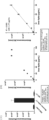
- FIG. 2(i) shows the cross-reactivity between natural Cypridina luciferin and immunoglobulin protein IgA.
- FIG. 2(ii) shows the correlation between the concentration of the spike protein of the SARS-CoV-2 virus and the luminescence intensity of natural Cypridina luciferin.
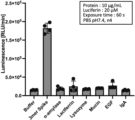
- FIG. 3 shows the cross-reactivity between natural Cypridina luciferin and various proteins.
- the compound of the present invention is represented by the following general formula (1).
- the compounds of the present invention have an imidazopyrazinone ring as a main skeleton and include derivatives of natural Cypridina luciferin.
- the wavy line part in a chemical formula shows a bonding position.
- R 1 is a methyl group or any one group represented by the following formula (i-1) or (i-2);
- R 4 is a hydrogen atom, a hydroxyl group, a fluorine atom, a methoxy group, or a trifluoromethyl group.
- R 2 is a hydrogen atom or any one group represented by the following formula (ii);
- n is an integer from 1 to 5
- R 5 is any one of the groups represented by the following formula (v-1), (v-2) or (v-3).
- X 1 is a nitrogen atom or a CH group.
- ⁇ R 3 is any one of the groups represented by the following formula (iii-1) or (iii-2);
- R 1 is a group represented by the following formula (i-2),
- R 4 is the same as above.
- R 2 is a group represented by the following formula (ii);
- n and R 5 are the same as above.
- R 1 is a group represented by the following formula (i-1) (excluding natural Cypridina luciferin);
- R 1 is a methyl group
- R 2 is a group represented by the following formula (ii).
- n and R 5 are the same as above.
- the configuration of C *1 may be either the R configuration shown in the following formula (i-1-R) or the following formula (i-1-S). Further, it may be either one steric configuration alone or a mixture thereof. Mixtures of R configuration and S configuration include racemates containing equal amounts of each configuration.
- the bonding position to the benzene ring skeleton is an ortho position or a meta position with respect to the other methylene group. It may be either the para position or the para position, preferably the para position.
- R 4 is preferably a hydrogen atom or a hydroxyl group.
- Preferred embodiments of the group represented by the above formula (i-2) include groups represented by the following formulas (i-2-1) and (i-2-2).
- n is an integer of 1 to 5, preferably 2 or 3.
- the group represented by the above formula (v-2) is a group represented by the following formula (v-2-1) or (v-2-2).
- R 2 include a hydrogen atom or a group represented by the following formula (ii-1) or (ii-2).
- the group represented by the above formula (iii-1) is a group represented by the following formula (iii-1-1) or (iii-1-2).
- the bonding position of R 6 to the benzene ring skeleton may be any of the ortho position, meta position, and para position with respect to the other imidazopyrazinone ring, preferably the para position. It is.
- R 3 is the above formula (iii-1-1) or (iii-1-2), or the following formula (iii-2-1), (iii-2-2), (iii-2- Examples include groups represented by 3) or (iii-2-4).
- Natural Cypridina luciferin is a compound represented by the following formula, and is not included in the compounds satisfying condition (A-ii).
- Preferred embodiments of the compound represented by the above general formula (1) include compounds represented by any of the following formulas.
- the present invention includes salts of the compound represented by the above general formula (1).
- salts include hydrohalides (e.g., hydrochloride, hydrobromide, and hydroiodide), inorganic acid salts (e.g., sulfates, nitrates, perchlorates, phosphoric acid, etc.) salts, carbonates, and bicarbonates), organic carboxylates (such as acetates, trifluoroacetates, maleates, tartrates, fumarates, and citrates), organic sulfonates (such as acetates, trifluoroacetates, maleates, tartrates, fumarates, and citrates),
- the compound of the present invention can be produced by condensing a coelenteramine derivative (x1) with a ketoacetal compound (x2-1) or a diacetyl compound (x2-2), for example, as shown in Scheme 1 or 2. .
- the reaction is carried out using approximately 1 to 4 moles of the ketoacetal compound (x2-1) or methylglyoxal (x2-2) per mole of coelenteramine derivative (x1) in the presence of water, and in the presence of an acid,
- the reaction proceeds advantageously by carrying out the reaction at a temperature of about 100°C for 1 to 5 hours.
- the reaction proceeds advantageously when carried out in a solvent.
- the solvent include ethanol and the like.
- the compound of the present invention or a salt or solvate thereof is useful, for example, as a detection agent for SARS-related coronavirus, and can be suitably used as a luminescent substrate in the method for detecting SARS-related coronavirus described below.
- the compound of the present invention is a derivative of Cypridina luciferin, it may not function as a luminescent substrate in the luciferin-luciferase reaction.
- the method for detecting SARS-related coronavirus of the present invention involves contacting a compound represented by the following general formula (2) or a salt or solvate thereof with a biological sample collected from a subject. including the step of
- R 1 is a methyl group or any one group represented by the following formula (i-1) or (i-2);
- R 4 is a hydrogen atom, a hydroxyl group, a fluorine atom, a methoxy group, or a trifluoromethyl group.
- R 2 is a hydrogen atom or any one group represented by the following formula (ii);
- n is an integer from 1 to 5
- R 5 is any one of the groups represented by the following formula (v-1), (v-2) or (v-3).
- X 1 is a nitrogen atom or a CH group.
- ⁇ R 3 is any one of the groups represented by the following formula (iii-1) or (iii-2).
- the method for detecting a SARS-related coronavirus of the present invention uses a compound represented by the above general formula (2) or a salt or solvate thereof as a luminescent substrate.
- R 1 , R 2 and R 3 are the same as in the compound represented by the above general formula (1), and their preferred embodiments are also the same.
- the compound represented by the above general formula (2) can be produced in the same manner as the compound represented by the above general formula (1).
- Preferred embodiments of the compound represented by the above general formula (2) include compounds represented by any of the following formulas.
- the compound represented by the above general formula (2) is used under the following conditions (B-i), (B-ii), and (B- Satisfies at least two of iii).
- R 1 is a group represented by the following formula (i-1);
- R 2 is a group represented by the following formula (ii);
- R 3 is a group represented by the following formula (iii-2-2).
- SARS-related coronavirus SARS-related coronaviruses belong to the genus Betacoronavirus and include SARS coronavirus-2 (Severe acute respiratory syndrome coronavirus 2; SARS-CoV-2) and SARS coronavirus (SARS-CoV). SARS-CoV-2 is believed to be the cause of acute respiratory illness (COVID-19) and has caused the COVID-19 pandemic. SARS-related coronaviruses are distinguished from the MERS coronavirus, which causes Middle East respiratory syndrome (MERS).
- MERS Middle East respiratory syndrome
- the subject is not particularly limited as long as it is a subject that can be infected with the SARS-related coronavirus.
- humans non-human primates, including non-human primates such as chimpanzees, other great apes and monkey species; domestic animals such as cows, sheep, pigs, goats and horses; domestic mammals such as dogs and cats. and small animals or laboratory animals, including rodents such as mice, rats and guinea pigs, preferably humans.
- subjects include adults, infants, and newborns.
- One preferred embodiment of the subject is a subject suspected of being infected with a SARS-related coronavirus.
- biological sample As a sample, a biological sample derived from a subject can be used as long as it is a sample in which a SARS-related coronavirus can be present. Specifically, examples include cells derived from a subject, body fluid samples, and the like. Examples of cells and biological tissues include oral mucosal cells, nasal mucosal cells, and epidermal tissues, which are easy to collect. Examples of body fluid samples include blood-derived samples, lymph fluid, urine, sweat, saliva, nasal secretions, tears, and the like.
- the method for detecting a SARS-related coronavirus of the present invention includes the step of bringing the compound represented by the above general formula (2) or a salt or solvate thereof into contact with a biological sample collected from a subject.
- the contacting conditions can be set according to the luciferin-luciferase reaction, such as the pH and salt concentration of the reaction solution, and the reaction temperature.
- the concentration of the compound represented by the above general formula (2) or its salt or solvate to be used is not particularly limited, and is preferably 5 to 100 ⁇ M, more preferably 20 to 50 ⁇ M. If it is at least the above lower limit, it is considered that a sufficient luminescence reaction rate can be achieved, so it is preferable. If it is below the above upper limit, it is preferable from the viewpoint of solubility of the compound etc.
- the reaction time is not particularly limited, and can be set to, for example, 10 seconds to 10 minutes, more preferably 30 seconds to 5 minutes, and even more preferably 1 to 3 minutes, since the luminescence reaction proceeds rapidly.
- the above-mentioned compound reacts with the spike protein of the SARS-related coronavirus, and the oxidized form of the above-mentioned compound transitions to an excited state, and light is emitted when the excited state transitions from the excited state to the ground state. Therefore, if a SARS-related coronavirus is present in the biological sample, luminescence will be observed after contact. That is, when luminescence is measured, it can be determined that the subject is infected with the SARS-related coronavirus.
- the method for detecting a SARS-related coronavirus of the present invention preferably further includes a step of measuring luminescence after the contacting step.
- the step of measuring luminescence can be performed using a general luminescence measuring device.
- the luminescence measurement device include a luminometer, a microscope equipped with a luminescence detection means, and a luminescence photographing device.
- SARS-related coronaviruses are detected.
- Subjects determined to be infected with the SARS-related coronavirus can take necessary measures, such as measures to prevent infection of other subjects and treatment.
- the present invention also provides a detection agent containing the compound represented by the above general formula (2) or a salt or solvate thereof.
- the detection agent is provided, for example, in the form of a composition.
- the composition may contain other components as necessary.
- Other ingredients include, for example, bases, carriers, solvents, dispersants, emulsifiers, buffers, stabilizers, excipients, binders, disintegrants, lubricants, thickeners, humectants, colorants, and fragrances. , chelating agents, and the like.
- the detection agent is also provided, for example, in the form of a kit for detecting a SARS-related coronavirus.
- the kit may include various reagents (eg, reaction solutions, etc.), instruments (eg, instruments for collecting and preserving biological samples), and the like. Further, as a method for using the kit, it may include a procedure manual describing the method for detecting the SARS-related coronavirus of the present invention.
- the compound of the present invention was synthesized by condensing a coelenteramine derivative with a ketoacetal compound or diacetyl as shown in Scheme 1 or 2.
- Coelenteramine derivatives were synthesized using reaction schemes 3 to 5 below.
- the reaction solution was degassed in vacuo, a catalytic amount of tetrakis(triphenylphosphine)palladium(0) was added, degassed again in vacuo, and stirred at 100° C. overnight.
- the palladium catalyst was removed by filtration through Celite.
- the resulting residue was extracted with ethyl acetate, then washed with distilled water and saturated brine, dried over sodium sulfate, and concentrated under reduced pressure.
- the obtained residue was dissolved in 1,4-dioxane (4 ml) and methanol (4 ml), and a 5N aqueous sodium hydroxide solution (3 ml) was added thereto, followed by stirring at room temperature overnight.
- the reaction solution was diluted with ethyl acetate, then washed with distilled water and saturated brine, dried over sodium sulfate, and concentrated under reduced pressure.
- reaction solution was degassed in vacuo, a catalytic amount of tetrakis(triphenylphosphine)palladium(0) was added, degassed again in vacuo, and stirred at 100° C. overnight.
- the palladium catalyst was removed by filtration through Celite. The resulting residue was extracted with ethyl acetate, then washed with distilled water and saturated brine, dried over sodium sulfate, and concentrated under reduced pressure.
- the reaction solution was degassed in vacuo, a catalytic amount of tetrakis(triphenylphosphine)palladium(0) was added, degassed in vacuo again, and stirred at 100° C. for 4 hours.
- the palladium catalyst was removed by filtration through Celite.
- the resulting residue was extracted with ethyl acetate, then washed with distilled water and saturated brine, dried over sodium sulfate, and concentrated under reduced pressure.
- the target compound was obtained from the literature: Photochem. Photobiol. Sci. , 2008, 7, 197-207. It was synthesized as described in .
- the target compound was synthesized according to the description in International Publication No. 2021/187531.
- the target compound was synthesized according to the description in International Publication No. 2021/187531.
- the target compound was synthesized according to the description in International Publication No. 2021/187531.
- the target compound was synthesized according to the description in International Publication No. 2021/187531.
- the target compound was synthesized according to the description in International Publication No. 2021/187531.
- the target compound was synthesized according to the description in JP-A-2012-95649.
- Example 1 Natural Cypridina luciferin (manufactured by ATTO Corporation, product number 3512055) and the Cypridina luciferin derivative obtained in the synthesis example were reacted with the spike protein derived from the SARS-CoV-2 virus, and luminescence was measured.
- SARS-CoV-2 virus-derived spike protein (manufactured by MS Techno Systems Co., Ltd., Trimeric SARS-CoV-2 Spike Protein, Full-length, BSV-COV-PR-34; purified protein solution) was used.
- the coronavirus spike protein normally forms a membrane-bound trimer on the viral envelope, so a trimer was used.
- a solution of human serum-derived IgA (manufactured by Fuji Film Wako Pure Chemical Industries, Ltd., product number 306-51123) was used as a control protein solution, and the signal-to-noise ratio (S/N ratio) was calculated. The results are shown in Table 1.
- Example 2 In order to identify the luminescent reaction field of natural Cypridina luciferin in the spike protein of the SARS-CoV-2 virus, in addition to the full-length SARS-CoV-2 spike protein, We then investigated the luminescent activity of each of these domains and natural Cypridina luciferin.
- the SARS coronavirus spike protein is divided into three domains: S1, S2 and receptor binding domain (RBD). The following protein samples were used. All are manufactured by Sino Biological, and all are monomers. It also comes in lyophilized form.
- SARS-CoV2 Spike S1+S2 product number 40589-V08H04
- SARS-CoV2 Spike S1 product number 40591-V08
- SARS-CoV2 Spike S2 product number 40590-V08H1
- SARS-CoV2 Spike RBD product number 40592-V08H
- SARS-CoV2 Spike RBD Y453F
- SARS-CoV2 Spike RBD Y453F
- SARS coronavirus which is a SARS-related coronavirus
- MERS coronavirus MERS coronavirus
- HoV human coronavirus
- the luminescent activity of natural Cypridina luciferin was used as a monomeric protein sample. All are manufactured by Sino Biological, and all are monomers. It also comes in lyophilized form.
- SARS-CoV Spike S1 (product number 40150-V05H1) MERS-CoV Spike S1 (product number HPLC-40069-V08H) HCoV-HKU1 Spike S1 (product number 40021-V08H) HCoV-NL63 Spike S1 (product number 40600-V08H) HCoV-229E Spike S1 (product number 40601-V08H) HCoV-OC43 Spike S1 (product number 40607-V08H1)
- the lyophilized protein was dissolved in 10mM PBS (pH 7.4) to obtain a protein solution.
- measurements were also performed using only the solvent (Buffer) instead of the protein sample.
- human serum-derived IgA (IgA; manufactured by Fuji Film Wako Pure Chemical Industries, Ltd., 306-51123) was used to prepare SARS coronavirus spike protein (Monomer spike; SARS-CoV2 Spike S1+S2 (product number 40589). -V08H04)).
- SARS coronavirus spike protein Monomer spike; SARS-CoV2 Spike S1+S2 (product number 40589). -V08H04)
- the lyophilized protein was dissolved in 10mM PBS (pH 7.4) to obtain a protein solution.
- PBS 10mM PBS
- measurements were also performed using only the solvent (Buffer) instead of the protein sample. The measurement conditions were as follows.
- Example 3 We verified the correlation between the concentration of the virus spike protein and the luminescence intensity of natural Cypridina luciferin.
- a trimer of the spike protein derived from the SARS-CoV-2 virus manufactured by MS Techno Systems Co., Ltd., Trimeric SARS-CoV-2 Spike Protein, Full-length, BSV-COV-PR-34.
- Measurement was carried out in the same manner as in Example 1 except that the concentration was changed.
- the results are shown in Figure 2(ii). It has been revealed that the luminescence intensity of natural Cypridina luciferin depends on the concentration of the viral spike protein.
- Example 4 Using various proteins as protein samples, we verified that natural Cypridina luciferin and the spike protein of the SARS coronavirus specifically caused a luminescent reaction. The following protein samples were used. Trimeric SARS-CoV-2 virus-derived spike protein (3-mer; manufactured by MS Techno Systems Co., Ltd., Trimeric SARS-CoV-2 Spike Protein, Full-length, product number BSV-COV-PR-34) ⁇ -amylase (manufactured by Fujifilm Wako Pure Chemical Industries, Ltd., product number 017-26371) Lactoferrin, human (manufactured by Sigma-Aldrich, product number L4040) Lysozyme, human, recombinant (plant expression) (Lysozyme; manufactured by Fujifilm Wako Pure Chemical Industries, Ltd., product number 181-02063) Mucin, derived from pig stomach (Mucin; manufactured by Fujifilm Wako Pure Chemical Industries, Ltd., product number 137-09162) Epidermal growth factor (EG
Landscapes
- Health & Medical Sciences (AREA)
- Life Sciences & Earth Sciences (AREA)
- Chemical & Material Sciences (AREA)
- Engineering & Computer Science (AREA)
- Immunology (AREA)
- Molecular Biology (AREA)
- Hematology (AREA)
- Urology & Nephrology (AREA)
- Biomedical Technology (AREA)
- Organic Chemistry (AREA)
- Physics & Mathematics (AREA)
- General Health & Medical Sciences (AREA)
- Biochemistry (AREA)
- Analytical Chemistry (AREA)
- Microbiology (AREA)
- General Physics & Mathematics (AREA)
- Pathology (AREA)
- Biotechnology (AREA)
- Medicinal Chemistry (AREA)
- Food Science & Technology (AREA)
- Cell Biology (AREA)
- Virology (AREA)
- Tropical Medicine & Parasitology (AREA)
- Proteomics, Peptides & Aminoacids (AREA)
- Wood Science & Technology (AREA)
- Zoology (AREA)
- Plasma & Fusion (AREA)
- Toxicology (AREA)
- Biophysics (AREA)
- Chemical Kinetics & Catalysis (AREA)
- Bioinformatics & Cheminformatics (AREA)
- General Engineering & Computer Science (AREA)
- Genetics & Genomics (AREA)
- Nitrogen Condensed Heterocyclic Rings (AREA)
Priority Applications (2)
| Application Number | Priority Date | Filing Date | Title |
|---|---|---|---|
| JP2024533768A JP7708478B2 (ja) | 2022-07-15 | 2023-07-14 | Sars関連コロナウイルスの検出試薬 |
| US18/994,321 US20260016473A1 (en) | 2022-07-15 | 2023-07-14 | Reagent for detecting sars-related coronavirus |
Applications Claiming Priority (2)
| Application Number | Priority Date | Filing Date | Title |
|---|---|---|---|
| JP2022114168 | 2022-07-15 | ||
| JP2022-114168 | 2022-07-15 |
Publications (1)
| Publication Number | Publication Date |
|---|---|
| WO2024014536A1 true WO2024014536A1 (ja) | 2024-01-18 |
Family
ID=89536879
Family Applications (1)
| Application Number | Title | Priority Date | Filing Date |
|---|---|---|---|
| PCT/JP2023/026063 Ceased WO2024014536A1 (ja) | 2022-07-15 | 2023-07-14 | Sars関連コロナウイルスの検出試薬 |
Country Status (3)
| Country | Link |
|---|---|
| US (1) | US20260016473A1 (https=) |
| JP (1) | JP7708478B2 (https=) |
| WO (1) | WO2024014536A1 (https=) |
Cited By (1)
| Publication number | Priority date | Publication date | Assignee | Title |
|---|---|---|---|---|
| WO2025084165A1 (ja) * | 2023-10-18 | 2025-04-24 | 国立研究開発法人産業技術総合研究所 | 抗体の変性状態の評価方法 |
Citations (2)
| Publication number | Priority date | Publication date | Assignee | Title |
|---|---|---|---|---|
| JP2012095649A (ja) * | 2005-09-26 | 2012-05-24 | National Institute Of Advanced Industrial Science & Technology | ウミホタルルシフェリン発光基質及びその製造法 |
| JP2018165265A (ja) * | 2017-03-28 | 2018-10-25 | 国立大学法人電気通信大学 | 新規セレンテラジン誘導体 |
-
2023
- 2023-07-14 WO PCT/JP2023/026063 patent/WO2024014536A1/ja not_active Ceased
- 2023-07-14 US US18/994,321 patent/US20260016473A1/en active Pending
- 2023-07-14 JP JP2024533768A patent/JP7708478B2/ja active Active
Patent Citations (2)
| Publication number | Priority date | Publication date | Assignee | Title |
|---|---|---|---|---|
| JP2012095649A (ja) * | 2005-09-26 | 2012-05-24 | National Institute Of Advanced Industrial Science & Technology | ウミホタルルシフェリン発光基質及びその製造法 |
| JP2018165265A (ja) * | 2017-03-28 | 2018-10-25 | 国立大学法人電気通信大学 | 新規セレンテラジン誘導体 |
Non-Patent Citations (2)
| Title |
|---|
| NISHIHARA RYO, NIWA KAZUKI, TOMITA TATSUNOSUKE, KURITA RYOJI: "Coelenterazine Analogue with Human Serum Albumin-Specific Bioluminescence", BIOCONJUGATE CHEMISTRY, AMERICAN CHEMICAL SOCIETY, US, vol. 31, no. 12, 16 December 2020 (2020-12-16), US , pages 2679 - 2684, XP055859050, ISSN: 1043-1802, DOI: 10.1021/acs.bioconjchem.0c00536 * |
| YOSHIAKI TOYA: "Chemistry of Vargula (formerly Cypridina) Bioluminescence", NIPPON NOGEIKAGAKU KAISHI, vol. 66, no. 4, 1 January 1992 (1992-01-01), pages 742 - 749, XP093127282 * |
Cited By (1)
| Publication number | Priority date | Publication date | Assignee | Title |
|---|---|---|---|---|
| WO2025084165A1 (ja) * | 2023-10-18 | 2025-04-24 | 国立研究開発法人産業技術総合研究所 | 抗体の変性状態の評価方法 |
Also Published As
| Publication number | Publication date |
|---|---|
| JP7708478B2 (ja) | 2025-07-15 |
| JPWO2024014536A1 (https=) | 2024-01-18 |
| US20260016473A1 (en) | 2026-01-15 |
Similar Documents
| Publication | Publication Date | Title |
|---|---|---|
| US10428075B2 (en) | Coelenterazine analogues | |
| EP1874117B1 (en) | Polycyclic carbamoylpyridone derivative having hiv integrase inhibitory activity | |
| CN109311911A (zh) | 用于制备取代多环吡啶酮衍生物及其晶体的方法 | |
| CN119677738A (zh) | 化合物及其用途 | |
| JP7708478B2 (ja) | Sars関連コロナウイルスの検出試薬 | |
| CN111909181A (zh) | 一类泛素化特异性蛋白酶抑制剂及其制备方法与应用 | |
| Juchum et al. | Scaffold modified Vemurafenib analogues as highly selective mitogen activated protein kinase kinase 4 (MKK4) inhibitors | |
| JP6978492B2 (ja) | 二重保護されたプロセレンテラジン基質 | |
| JP5800816B2 (ja) | 金属錯体、蛍光プローブ | |
| JP2018512859A (ja) | Ttk阻害剤化学療法の為の予後バイオマーカー | |
| JP2021534211A (ja) | セレンテラジン類似体 | |
| EP3649130B1 (en) | Serum stable pro-coelenterazine analogues | |
| CN104761524A (zh) | 一种化合物及其在制备抗寄生虫病药物中的应用 | |
| CN116284046B (zh) | 巴洛沙韦衍生物及其制备方法和应用 | |
| WO2024146599A1 (zh) | 一种二氢吡啶并[2,3-d]嘧啶酮的衍生物、其制备方法以及医药用途 | |
| CN118475563A (zh) | 花菁素-海藻糖类化合物、其制备方法及用途 | |
| WO2025008060A1 (en) | 1,6-naphthridine compounds as smarca2 inhibitors useful for the treatment of smarca4 deficient cancers | |
| JP6934164B2 (ja) | 新規イリジウム錯体、酸素濃度測定試薬、酸素濃度測定方法及び合成中間体 | |
| CN119060054B (zh) | 一种硝基芳环取代的咪唑并吡嗪化合物及其制备方法与应用 | |
| JP7641003B2 (ja) | 蛍光プローブ、液相の極性及び粘性を評価する方法、並びに化合物 | |
| WO2025084165A1 (ja) | 抗体の変性状態の評価方法 | |
| WO2004094432A1 (ja) | ビオチニル基含有ポルフィリン化合物及びその用途 | |
| AU2020410741B2 (en) | Novel organic electron transfer mediator and device comprising same | |
| JP5329867B2 (ja) | 酸化発色化合物の製造方法 | |
| CN118271286A (zh) | 一种以分子胶水为骨架的用于次氯酸根检测的荧光探针及其制备方法和应用 |
Legal Events
| Date | Code | Title | Description |
|---|---|---|---|
| 121 | Ep: the epo has been informed by wipo that ep was designated in this application |
Ref document number: 23839705 Country of ref document: EP Kind code of ref document: A1 |
|
| WWE | Wipo information: entry into national phase |
Ref document number: 2024533768 Country of ref document: JP |
|
| WWE | Wipo information: entry into national phase |
Ref document number: 18994321 Country of ref document: US |
|
| NENP | Non-entry into the national phase |
Ref country code: DE |
|
| 122 | Ep: pct application non-entry in european phase |
Ref document number: 23839705 Country of ref document: EP Kind code of ref document: A1 |
|
| WWP | Wipo information: published in national office |
Ref document number: 18994321 Country of ref document: US |