WO2023277145A1 - 多糖類ナノファイバー配合多糖類組成物の製造方法 - Google Patents
多糖類ナノファイバー配合多糖類組成物の製造方法 Download PDFInfo
- Publication number
- WO2023277145A1 WO2023277145A1 PCT/JP2022/026299 JP2022026299W WO2023277145A1 WO 2023277145 A1 WO2023277145 A1 WO 2023277145A1 JP 2022026299 W JP2022026299 W JP 2022026299W WO 2023277145 A1 WO2023277145 A1 WO 2023277145A1
- Authority
- WO
- WIPO (PCT)
- Prior art keywords
- polysaccharide
- nanofibers
- nanofiber
- mixture
- cellulose
- Prior art date
- Legal status (The legal status is an assumption and is not a legal conclusion. Google has not performed a legal analysis and makes no representation as to the accuracy of the status listed.)
- Ceased
Links
Images







Classifications
-
- C—CHEMISTRY; METALLURGY
- C08—ORGANIC MACROMOLECULAR COMPOUNDS; THEIR PREPARATION OR CHEMICAL WORKING-UP; COMPOSITIONS BASED THEREON
- C08L—COMPOSITIONS OF MACROMOLECULAR COMPOUNDS
- C08L1/00—Compositions of cellulose, modified cellulose or cellulose derivatives
- C08L1/08—Cellulose derivatives
- C08L1/10—Esters of organic acids, i.e. acylates
- C08L1/12—Cellulose acetate
-
- C—CHEMISTRY; METALLURGY
- C08—ORGANIC MACROMOLECULAR COMPOUNDS; THEIR PREPARATION OR CHEMICAL WORKING-UP; COMPOSITIONS BASED THEREON
- C08L—COMPOSITIONS OF MACROMOLECULAR COMPOUNDS
- C08L1/00—Compositions of cellulose, modified cellulose or cellulose derivatives
- C08L1/02—Cellulose; Modified cellulose
-
- C—CHEMISTRY; METALLURGY
- C08—ORGANIC MACROMOLECULAR COMPOUNDS; THEIR PREPARATION OR CHEMICAL WORKING-UP; COMPOSITIONS BASED THEREON
- C08J—WORKING-UP; GENERAL PROCESSES OF COMPOUNDING; AFTER-TREATMENT NOT COVERED BY SUBCLASSES C08B, C08C, C08F, C08G or C08H
- C08J5/00—Manufacture of articles or shaped materials containing macromolecular substances
- C08J5/04—Reinforcing macromolecular compounds with loose or coherent fibrous material
- C08J5/045—Reinforcing macromolecular compounds with loose or coherent fibrous material with vegetable or animal fibrous material
-
- C—CHEMISTRY; METALLURGY
- C08—ORGANIC MACROMOLECULAR COMPOUNDS; THEIR PREPARATION OR CHEMICAL WORKING-UP; COMPOSITIONS BASED THEREON
- C08L—COMPOSITIONS OF MACROMOLECULAR COMPOUNDS
- C08L3/00—Compositions of starch, amylose or amylopectin or of their derivatives or degradation products
- C08L3/02—Starch; Degradation products thereof, e.g. dextrin
-
- C—CHEMISTRY; METALLURGY
- C08—ORGANIC MACROMOLECULAR COMPOUNDS; THEIR PREPARATION OR CHEMICAL WORKING-UP; COMPOSITIONS BASED THEREON
- C08L—COMPOSITIONS OF MACROMOLECULAR COMPOUNDS
- C08L5/00—Compositions of polysaccharides or of their derivatives not provided for in groups C08L1/00 or C08L3/00
-
- C—CHEMISTRY; METALLURGY
- C08—ORGANIC MACROMOLECULAR COMPOUNDS; THEIR PREPARATION OR CHEMICAL WORKING-UP; COMPOSITIONS BASED THEREON
- C08L—COMPOSITIONS OF MACROMOLECULAR COMPOUNDS
- C08L5/00—Compositions of polysaccharides or of their derivatives not provided for in groups C08L1/00 or C08L3/00
- C08L5/08—Chitin; Chondroitin sulfate; Hyaluronic acid; Derivatives thereof
-
- D—TEXTILES; PAPER
- D01—NATURAL OR MAN-MADE THREADS OR FIBRES; SPINNING
- D01F—CHEMICAL FEATURES IN THE MANUFACTURE OF ARTIFICIAL FILAMENTS, THREADS, FIBRES, BRISTLES OR RIBBONS; APPARATUS SPECIALLY ADAPTED FOR THE MANUFACTURE OF CARBON FILAMENTS
- D01F2/00—Monocomponent artificial filaments or the like of cellulose or cellulose derivatives; Manufacture thereof
- D01F2/24—Monocomponent artificial filaments or the like of cellulose or cellulose derivatives; Manufacture thereof from cellulose derivatives
- D01F2/28—Monocomponent artificial filaments or the like of cellulose or cellulose derivatives; Manufacture thereof from cellulose derivatives from organic cellulose esters or ethers, e.g. cellulose acetate
-
- B—PERFORMING OPERATIONS; TRANSPORTING
- B29—WORKING OF PLASTICS; WORKING OF SUBSTANCES IN A PLASTIC STATE IN GENERAL
- B29C—SHAPING OR JOINING OF PLASTICS; SHAPING OF MATERIAL IN A PLASTIC STATE, NOT OTHERWISE PROVIDED FOR; AFTER-TREATMENT OF THE SHAPED PRODUCTS, e.g. REPAIRING
- B29C70/00—Shaping composites, i.e. plastics material comprising reinforcements, fillers or preformed parts, e.g. inserts
- B29C70/04—Shaping composites, i.e. plastics material comprising reinforcements, fillers or preformed parts, e.g. inserts comprising reinforcements only, e.g. self-reinforcing plastics
- B29C70/06—Fibrous reinforcements only
- B29C70/10—Fibrous reinforcements only characterised by the structure of fibrous reinforcements, e.g. hollow fibres
- B29C70/12—Fibrous reinforcements only characterised by the structure of fibrous reinforcements, e.g. hollow fibres using fibres of short length, e.g. in the form of a mat
-
- C—CHEMISTRY; METALLURGY
- C08—ORGANIC MACROMOLECULAR COMPOUNDS; THEIR PREPARATION OR CHEMICAL WORKING-UP; COMPOSITIONS BASED THEREON
- C08J—WORKING-UP; GENERAL PROCESSES OF COMPOUNDING; AFTER-TREATMENT NOT COVERED BY SUBCLASSES C08B, C08C, C08F, C08G or C08H
- C08J2301/00—Characterised by the use of cellulose, modified cellulose or cellulose derivatives
- C08J2301/08—Cellulose derivatives
- C08J2301/10—Esters of organic acids
- C08J2301/12—Cellulose acetate
-
- C—CHEMISTRY; METALLURGY
- C08—ORGANIC MACROMOLECULAR COMPOUNDS; THEIR PREPARATION OR CHEMICAL WORKING-UP; COMPOSITIONS BASED THEREON
- C08J—WORKING-UP; GENERAL PROCESSES OF COMPOUNDING; AFTER-TREATMENT NOT COVERED BY SUBCLASSES C08B, C08C, C08F, C08G or C08H
- C08J2303/00—Characterised by the use of starch, amylose or amylopectin or of their derivatives or degradation products
- C08J2303/02—Starch; Degradation products thereof, e.g. dextrin
-
- C—CHEMISTRY; METALLURGY
- C08—ORGANIC MACROMOLECULAR COMPOUNDS; THEIR PREPARATION OR CHEMICAL WORKING-UP; COMPOSITIONS BASED THEREON
- C08J—WORKING-UP; GENERAL PROCESSES OF COMPOUNDING; AFTER-TREATMENT NOT COVERED BY SUBCLASSES C08B, C08C, C08F, C08G or C08H
- C08J2305/00—Characterised by the use of polysaccharides or of their derivatives not provided for in groups C08J2301/00 or C08J2303/00
-
- C—CHEMISTRY; METALLURGY
- C08—ORGANIC MACROMOLECULAR COMPOUNDS; THEIR PREPARATION OR CHEMICAL WORKING-UP; COMPOSITIONS BASED THEREON
- C08J—WORKING-UP; GENERAL PROCESSES OF COMPOUNDING; AFTER-TREATMENT NOT COVERED BY SUBCLASSES C08B, C08C, C08F, C08G or C08H
- C08J2305/00—Characterised by the use of polysaccharides or of their derivatives not provided for in groups C08J2301/00 or C08J2303/00
- C08J2305/08—Chitin; Chondroitin sulfate; Hyaluronic acid; Derivatives thereof
-
- C—CHEMISTRY; METALLURGY
- C08—ORGANIC MACROMOLECULAR COMPOUNDS; THEIR PREPARATION OR CHEMICAL WORKING-UP; COMPOSITIONS BASED THEREON
- C08J—WORKING-UP; GENERAL PROCESSES OF COMPOUNDING; AFTER-TREATMENT NOT COVERED BY SUBCLASSES C08B, C08C, C08F, C08G or C08H
- C08J2401/00—Characterised by the use of cellulose, modified cellulose or cellulose derivatives
- C08J2401/08—Cellulose derivatives
- C08J2401/26—Cellulose ethers
- C08J2401/28—Alkyl ethers
-
- C—CHEMISTRY; METALLURGY
- C08—ORGANIC MACROMOLECULAR COMPOUNDS; THEIR PREPARATION OR CHEMICAL WORKING-UP; COMPOSITIONS BASED THEREON
- C08J—WORKING-UP; GENERAL PROCESSES OF COMPOUNDING; AFTER-TREATMENT NOT COVERED BY SUBCLASSES C08B, C08C, C08F, C08G or C08H
- C08J2405/00—Characterised by the use of polysaccharides or of their derivatives not provided for in groups C08J2401/00 or C08J2403/00
- C08J2405/08—Chitin; Chondroitin sulfate; Hyaluronic acid; Derivatives thereof
-
- C—CHEMISTRY; METALLURGY
- C08—ORGANIC MACROMOLECULAR COMPOUNDS; THEIR PREPARATION OR CHEMICAL WORKING-UP; COMPOSITIONS BASED THEREON
- C08L—COMPOSITIONS OF MACROMOLECULAR COMPOUNDS
- C08L2205/00—Polymer mixtures characterised by other features
- C08L2205/14—Polymer mixtures characterised by other features containing polymeric additives characterised by shape
- C08L2205/16—Fibres; Fibrils
Definitions
- the present disclosure relates to a method for producing a polysaccharide composition containing polysaccharide nanofibers.
- polysaccharide nanofibers such as cellulose nanofibers, chitosan nanofibers, and chitin nanofibers have already been proposed as fibers to be combined with resin (see, for example, Patent Document 1).
- cellulose nanofiber For example, cellulose nanofiber (CNF) is known to have a large specific surface area and excellent reinforcing effect.
- polysaccharide nanofibers have hydroxyl groups, which are hydrophilic groups, on their surface, and the presence of ester groups and ether groups modified with hydroxyl groups improves hydrophobicity and further increases steric bulkiness.
- ester groups and ether groups modified with hydroxyl groups improves hydrophobicity and further increases steric bulkiness.
- Patent Document 1 in order to uniformly disperse the polysaccharide nanofibers in the resin, after obtaining a dispersion containing a monomer, polysaccharide nanofibers, and a dispersion medium, which is a pre-stage of the resin, the monomer is polymerized. is proposed.
- a modified cellulose nanofiber (A) in which some of the hydroxyl groups of cellulose nanofibers are modified with a substituent having a carboxyl group, and a resin composition containing a resin (B) have been proposed.
- Patent Document 2 in order to obtain modified cellulose nanofibers (A), N-methyl-2-pyrrolidone (NMP) is added to an acetone slurry of cellulose nanofibers (CNF), and CNF is dispersed in NMP. Multiple rounds of purification were disclosed after reacting with polyacid anhydride.
- Patent Document 2 also discloses reacting the epoxy group, hydroxyl group, amino group, etc. of the resin (B) with the carboxyl group of the modified cellulose (A). The technology used has a large number of steps and is a time-consuming method.
- the present inventors have investigated a method for easily dispersing polysaccharide nanofibers from various viewpoints such as the type of resin (base material) in which polysaccharide nanofibers are to be dispersed and the dispersion method. and making the base material a polysaccharide whose molecular structure and repeating unit structure are similar to those of the polysaccharide nanofibers, and by adopting a specific dispersion method, the polysaccharide nanofibers are easily dispersed in the base material. I thought it was possible.
- an object of the present disclosure is to provide a polysaccharide composition containing polysaccharide nanofibers, which can obtain a polysaccharide composition containing polysaccharide nanofibers whose mechanical properties are enhanced by polysaccharide nanofibers, and which can be easily implemented. is to provide a manufacturing method of
- the present inventors have conducted intensive research to solve the above problems, and found that a polysaccharide composition containing polysaccharide nanofibers produced by a specific method has enhanced mechanical properties, and the method is The inventors have found that this is a method that can be easily implemented, leading to the present disclosure.
- Example aspects of this embodiment are described as follows. (1) a sol containing polysaccharide nanofibers (A); a polysaccharide (B); A step of mixing the polysaccharide (B) with a solvent (C) capable of dissolving it to obtain a mixture; drying the mixture to obtain a dry mixture; A method for producing a polysaccharide composition containing polysaccharide nanofibers.
- the polysaccharide nanofiber (A) is at least one polysaccharide nanofiber selected from bacterial cellulose nanofibers, plant-derived cellulose nanofibers, chitosan nanofibers, and chitin nanofibers, (1) A method for producing a polysaccharide nanofiber-containing polysaccharide composition according to 1.
- the polysaccharide (B) is at least one polysaccharide selected from cellulose derivatives, chitosan, chitin, starch, starch derivatives, tamarind gum, xanthan gum, guar gum, guar gum derivatives, and gellan gum, (1 ) or the method for producing the polysaccharide nanofiber-containing polysaccharide composition according to (2).
- any one of (1) to (4), wherein 0.1 to 60% by mass of the polysaccharide nanofiber (A) is contained in 100% by mass of the polysaccharide composition containing the polysaccharide nanofibers A method for producing the described polysaccharide nanofiber-containing polysaccharide composition.
- the molded article according to (7) which has a shape of film, pellet, powder, plate, thread, or container. This specification includes the disclosure content of Japanese Patent Application No. 2021-110253, which is the basis of priority of this application.
- a method for producing a polysaccharide nanofiber-containing polysaccharide composition that can obtain a polysaccharide nanofiber-containing polysaccharide composition whose mechanical properties are enhanced by polysaccharide nanofibers and that can be easily implemented. can provide.
- FIG. 4 is a diagram showing the shape of dumbbell-shaped test pieces obtained in Examples and Comparative Examples.
- the results of tensile tests of Examples 1 and 2 and Comparative Example 1 are shown.
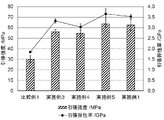
- the results of tensile tests of Example 1 and Comparative Examples 1 to 3 are shown.
- Results of tensile tests of Examples 1, 3 to 5, and Comparative Example 1 are shown.
- the results of tensile tests of Examples 6 and 7 and Comparative Example 1 are shown.
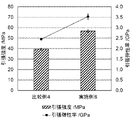
- the results of tensile tests of Example 8 and Comparative Example 4 are shown.
- the results of tensile tests of Example 9 and Comparative Example 5 are shown.
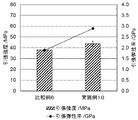
- the results of tensile tests of Example 10 and Comparative Example 6 are shown.
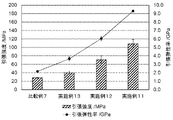
- Results of tensile tests of Examples 11 to 13 and Comparative Example 7 are shown.
- Example 8 The results of tensile tests of Examples 8, 14 to 18 and Comparative Example 4 are shown.
- the results of tensile tests of Example 19 and Comparative Example 8 are shown.
- the results of tensile tests of Example 20 and Comparative Example 9 are shown.
- the results of the tensile test of Example 21 and Comparative Example 10 are shown.
- the results of the tensile test of Example 22 and Comparative Example 11 are shown.
- 15 is a photograph of the yarn produced in Example 23 (FIG. 15, left) and the yarn produced in Comparative Example 12 (FIG. 15, right).
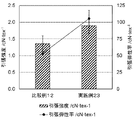
- the results of the tensile test of Example 23 and Comparative Example 12 are shown.
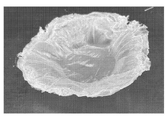
- 10 is a photograph of a cup-shaped molding produced in Example 24.
- FIG. 11 is a photograph of a dish-shaped molding produced in Example 24.
- One aspect of the present embodiment is a step of mixing a sol containing polysaccharide nanofibers (A), a polysaccharide (B), and a solvent (C) capable of dissolving the polysaccharide (B) to obtain a mixture. and drying the mixture to obtain a dry mixture.
- the manufacturing method of the polysaccharide nanofiber-containing polysaccharide composition according to the present embodiment is also referred to as the “manufacturing method of the present embodiment” or simply the “manufacturing method”.
- sol containing polysaccharide nanofibers (A) In the method for producing a polysaccharide nanofiber-blended polysaccharide composition of the present embodiment, a sol containing polysaccharide nanofibers (A) is used. That is, it can be said that the production method of the present embodiment has a step of preparing a sol containing polysaccharide nanofibers (A).
- the sol containing the polysaccharide nanofibers (A) is preferably a sol containing 0.2 to 30 wt% of the polysaccharide nanofibers (A), more preferably a sol containing 0.5 to 20 wt%. More preferably, the sol contains 7 to 10 wt %. Note that the entire sol is 100 wt %.
- the sol containing polysaccharide nanofibers (A) is preferably at least one kind of sol selected from hydrosol and organosol. That is, as the sol, one type of sol or two or more types of sol may be used. When two or more types of sols are used, the polysaccharide nanofibers (A) contained in each sol may be the same type of polysaccharide nanofibers or different types of polysaccharide nanofibers.
- the sol containing polysaccharide nanofibers (A) is more preferably hydrosol or organosol, and still more preferably hydrosol.
- the dispersion medium that constitutes the organosol is not particularly limited, but examples thereof include organic solvents such as alcohols, ethers, ketones, and esters. Specific examples of the dispersion medium include acetone, methyl ethyl ketone, tetrahydrofuran, methyl acetate, ethyl acetate, methanol, ethanol, n-propyl alcohol, isopropyl alcohol, n-butyl alcohol, sec-butyl alcohol, t-butyl alcohol, ethylene glycol, Propylene glycol, methyl glycol acetate, N-methylpyrrolidone, dimethyl sulfoxide, N,N-dimethylformamide, N,N-dimethylacetamide, diacetone alcohol, methyl formate, ethyl lactate, acetonitrile, methyl glycol, dioxane, dioxolane and the like.
- organic solvents such as alcohols, ethers, ketones, and est
- acetone, tetrahydrofuran, N,N-dimethylformamide, dioxane, and dioxolane are preferred.
- the dispersion medium may be used singly or in combination of two or more.
- dioxane 1,4-dioxane is one of preferred embodiments.
- Polysaccharide nanofibers (A) may be unmodified polysaccharide nanofibers or modified polysaccharide nanofibers.
- the unmodified polysaccharide nanofiber means a nanofiber in which the hydroxy groups (OH groups) of the polysaccharide are not modified, and the modified polysaccharide nanofiber means that at least part of the hydroxy groups of the polysaccharide are modified. means nanofibers.
- Modified polysaccharide nanofibers include hydrophobic modification (esterification, etherification, cyanation, etc.), cation modification, anion modification (TEMPO (2,2,6,6-tetramethylpiperidine-1-oxyl radical) oxidation, etc.). ) and other chemically modified nanofibers.
- modified polysaccharide nanofibers Compared to unmodified polysaccharide nanofibers, modified polysaccharide nanofibers have at least part of the hydroxy groups modified with ester groups, etc., so that the polarity is reduced, and when dispersed in general resins is suitable, but the production method of the present embodiment can easily disperse even unmodified polysaccharide nanofibers.
- the polysaccharide nanofiber (A) is preferably at least one polysaccharide nanofiber selected from bacterial cellulose nanofibers, plant-derived cellulose nanofibers, chitosan nanofibers, and chitin nanofibers.
- polysaccharide nanofibers (A) one type may be used alone, or two or more types may be used.
- Bacterial cellulose nanofiber is also referred to as BCNF.
- Plant-derived cellulose nanofibers include cellulose nanofibers derived from wood, bamboo, hemp, jute, kenaf, cotton, beets, and agricultural waste.
- bamboo-derived cellulose nanofibers and wood-derived cellulose nanofibers are preferable, and bamboo-derived cellulose nanofibers are more preferable from the viewpoint of ease of fibrillation.
- Bacterial cellulose nanofibers may be nanofibers derived from cellulose produced by bacterial cellulose-producing bacteria, and the type of bacterial cellulose-producing bacteria and the culture conditions for bacterial cellulose-producing bacteria are not particularly limited. of bacterial cellulose-producing bacteria, and the culture conditions of bacterial cellulose can be employed.
- the sol containing the polysaccharide nanofibers (A) may contain components other than the polysaccharide nanofibers (A) and the dispersion medium.
- Components other than the polysaccharide nanofiber (A) and the dispersion medium include water-soluble cellulose.
- the sol containing the polysaccharide nanofibers (A) contains water-soluble cellulose in order to improve the dispersibility of the polysaccharide nanofibers.
- Water-soluble cellulose includes at least one water-soluble cellulose selected from carboxymethyl cellulose, hydroxyethyl cellulose, and hydroxypropyl cellulose.
- the sol containing polysaccharide nanofibers (A) contains at least one water-soluble cellulose selected from carboxymethylcellulose, hydroxyethylcellulose, and hydroxypropylcellulose.
- the sol containing the polysaccharide nanofibers (A) contains water-soluble cellulose, 1 to 70 wt% of the water-soluble cellulose is included in the total 100 wt% of the polysaccharide nanofibers (A) and the water-soluble cellulose. preferably 5 to 50 wt%, particularly preferably 10 to 30 wt%.
- the water-soluble cellulose can act as a dispersing agent for polysaccharide nanofibers, and is preferably contained in the sol in a state where the polysaccharide nanofibers (A) interact with the water-soluble cellulose.
- polysaccharide nanofiber (A) and water-soluble cellulose are thought to interact with each other through intermolecular forces such as hydrogen bonding and van der Waals forces.
- the sol containing polysaccharide nanofibers (A) contains water-soluble cellulose, it may be obtained by adding water-soluble cellulose to a sol that does not contain water-soluble cellulose.
- a sol containing polysaccharide nanofibers (A) and water-soluble cellulose may be prepared by producing polysaccharide nanofibers (A).
- the polysaccharide nanofibers (A) are bacterial cellulose nanofibers, for example, a sol containing bacterial cellulose nanofibers and water-soluble cellulose can be prepared by the following method.
- a sol containing bacterial cellulose nanofibers and water-soluble cellulose can be obtained, for example, by subjecting bacterial cellulose-producing bacteria to a culture medium supplemented with water-soluble cellulose with agitation or aeration, and removing bacterial components from the resulting culture solution. It can be obtained by purifying cellulose nanofibers.
- a commercially available product can be used as the water-soluble cellulose.
- the amount of water-soluble cellulose added to the medium can be, for example, a final concentration of 0.5 to 5% (w/v) in the medium. It can be appropriately set according to (amount of interacting water-soluble cellulose).
- bacterial cellulose-producing bacteria known bacteria capable of producing bacterial cellulose can be used. Specifically, for example, Gluconacetobacter xylinus strain ATCC53582, Gluconacetobacter hansenii strain ATCC23769, Gluconacetobacter xylinus strain ATCC700178 (BPR2001), Gluconacetobacter strain swingsii strain BPR3001E, Acetobacter xylinum strain JCM10150, Enterobacter sp. CJF-002 strain, Gluconacetobacter intermediate strain SIID9587 (accession number NITE BP-01495) and the like can be used.
- the culture conditions for bacterial cellulose-producing bacteria can be the known culture conditions used for culturing the bacteria described above. Culture conditions for periods of 1 to 7 days can be mentioned.
- a known medium used for culturing the bacteria described above such as Hestrin-Schramm standard medium (HS medium), can be used.
- HS medium Hestrin-Schramm standard medium
- bacterial cellulose nanofibers from the culture solution, first, dissolve the bacterial cells by adding an aqueous solution of sodium hydroxide (NaOH) to the culture solution and shaking it for several hours while heating it to about 60°C. This is subjected to centrifugation, and the supernatant is removed to remove the fungal components and collect the precipitate. Subsequently, after adding water to the precipitate and centrifuging, the operation of removing the supernatant may be repeated until the pH of the precipitate becomes 7 or less. As a result, a sol in which bacterial cellulose nanofibers bound (interacted) with water-soluble cellulose are dispersed in water can be obtained.
- NaOH sodium hydroxide
- the average fiber diameter of the polysaccharide nanofibers (A) is preferably 2 to 1000 nm from the viewpoint of sufficiently obtaining the effect of improving the physical properties of the polysaccharide nanofibers (A).
- the cellulose nanofiber number average fiber diameter is more preferably 2 to 500 nm, still more preferably 2 to 450 nm, particularly preferably 2 to 400 nm.
- the average fiber diameter can be the average value of diameters (widths) of 20 fibers observed using a transmission electron microscope (TEM).
- the average fiber length of the polysaccharide nanofibers (A) is not particularly limited, but is preferably 0.5-20 ⁇ m, more preferably 1-15 ⁇ m. When the average fiber length is within the above range, the polysaccharide nanofiber-blended polysaccharide composition tends to have particularly excellent mechanical properties, which is preferable.
- the average fiber length can be the average value of 20 fiber lengths observed using an electron microscope.
- the average L/D (average fiber length/average fiber diameter) of the polysaccharide nanofibers (A) sufficiently improves the mechanical properties of the polysaccharide composition containing the polysaccharide nanofibers with a small amount of the polysaccharide nanofibers (A). From the viewpoint, it is preferably 50 or more, or 80 or more, or 100 or more, or 120 or more, or 150 or more. Although the upper limit is not particularly limited, it is preferably 10,000 or less from the viewpoint of handleability.
- sol containing polysaccharide nanofibers commercially available products may be used.
- Fibnano registered trademark
- CM-NFBC HE-NFBC
- HP-NFBC Kusano Sakuno
- wood-derived nanoforest a sol containing plant-derived cellulose nanofibers, bamboo-derived nanoforest (manufactured by Chuetsu Pulp Industry), BiNFi-s chitosan nanofibers, a sol containing chitosan nanofibers (manufactured by Sugino Machine ), and BiNFi-s chitin nanofibers (manufactured by Sugino Machine), which is a sol containing chitin nanofibers.
- CM-NFBC Fibnano (registered trademark) CM-NFBC, HE-NFBC, and HP-NFBC are sols containing bacterial cellulose nanofibers and water-soluble cellulose.
- CM-NFBC contains carboxymethyl cellulose (CM) as water-soluble cellulose
- HE-NFBC contains hydroxyethyl cellulose (HE) as water-soluble cellulose
- HP-NFBC contains hydroxypropyl as water-soluble cellulose.
- HP cellulose
- Polysaccharide (B) Polysaccharide (B) is used in the method for producing a polysaccharide nanofiber-blended polysaccharide composition of the present embodiment.
- the polysaccharide (B) is not particularly limited, but is usually a polysaccharide whose mechanical properties are desired to be improved by the polysaccharide nanofiber (A).
- the polysaccharide (B) one type may be used alone, or two or more types may be used.
- Polysaccharides (B) are polysaccharides that are not nanofibers, that is, polysaccharides other than polysaccharide nanofibers (A).
- Polysaccharide nanofibers (A) usually do not dissolve in water or water-soluble solvents, but disperse, preferably monodisperse in water or water-soluble solvents, whereas polysaccharides (B) is usually soluble in water or water-soluble solvents.
- Polysaccharides (B) include cellulose, chitosan, chitin, starch, glycogen, agarose, carrageenan, heparin, hyaluronic acid, xanthan gum, tamarind gum (also referred to as tamarind seed gum), gellan gum, guar gum, locust bin gum, agar, and carrageenan. , alginates, pectin, succinoglycan, gluconanman, cytrium seed gum, pullulan, gum arabic, gum karaya and derivatives thereof.
- Derivatives include hydrophobic modification (esterification, etherification, cyanation, etc.), cation modification, anion modification (TEMPO (2,2,6,6-tetramethylpiperidine-1-oxyl radical) oxidation, etc.). Modified polysaccharides are included.
- the polysaccharide (B) is more preferably at least one polysaccharide selected from cellulose derivatives, chitosan, chitin, starch, starch derivatives, tamarind seed gum, xanthan gum, guar gum, guar gum derivatives, and gellan gum.
- it is at least one polysaccharide selected from cellulose esters, chitosan, chitin, starch, etherified starch (eg, hydroxypropyl starch), tamarind seed gum, xanthan gum, guar gum, cationic guar gum derivatives, and gellan gum. , cellulose ester, chitosan, chitin, starch, and hydroxypropyl starch, and at least one polysaccharide selected from cellulose ester, starch and hydroxypropyl starch.
- etherified starch eg, hydroxypropyl starch
- tamarind seed gum e.g., xanthan gum, guar gum, cationic guar gum derivatives, and gellan gum.
- cellulose ester, chitosan, chitin, starch, and hydroxypropyl starch e.g, hydroxypropyl starch
- Cellulose esters include at least one cellulose ester selected from cellulose acetate, cellulose propionate, cellulose butyrate, cellulose isobutyrate, cellulose acetate butyrate, cellulose acetobutyrate, cellulose acetate propionate, and cellulose acetopropionate. At least one cellulose ester selected from cellulose acetate, cellulose acetate and cellulose propionate is preferred.
- the degree of substitution of cellulose ester is preferably 0.05 to 2.95, more preferably 0.5 to 2.7.
- the degree of substitution means the substitution rate of the hydroxy groups in the cellulose having three hydroxy groups per glucose unit constituting the cellulose. For example, cellulose with a degree of substitution of 2.5 means cellulose substituted with an average of 2.5 hydroxy groups per glucose unit.
- the degree of substitution of the etherified starch is preferably 0.05 to 2.95, more preferably 0.07 to 2.7.
- polysaccharide (B) commercially available products may be used, and examples of cellulose esters include Cellulose Acetate manufactured by Acros and Cellulose Propionate manufactured by Scientific Polymer.
- etherified starch includes Cleartext B-3 (hydroxypropylated phosphate cross-linked starch) manufactured by Nihon Shokuhin Kako.
- the polysaccharide (B) may be used as a composition containing other components.
- Other ingredients include additives such as plasticizers, antibacterial agents, antifungal agents, antiseptic (bacteriostatic) agents, bactericides, antiviral agents, deodorants, thermoplastic agents, antioxidants, weathering agents, and light resistance. agents, heat-resistant agents, heat stabilizers, flame retardants, antistatic agents, heat dissipation materials, heat storage materials, compatibilizers, cross-linking agents, anti-hydrolysis agents, antifoaming agents, fibrous reinforcing materials, plate-like reinforcing materials, etc. is mentioned.
- the other components may be used singly or in combination of two or more.
- fibrous reinforcing materials synthetic fibers such as glass fiber, carbon fiber, graphite fiber, steel fiber, potassium titanate fiber, aramid fiber, vinylon fiber, polyester fiber, etc., natural fibers such as kenaf fiber, hemp fiber, cotton, bamboo fiber, etc. fibers.
- Plate-like reinforcing materials include mica, talc, clay, glass flakes, and the like.
- polysaccharide (B) for example, it preferably contains 0.3 to 70 wt% of polysaccharide (B), more preferably 0.5 to 50 wt%, and 1 to 40 wt%. is particularly preferred.
- the whole composition containing polysaccharide (B) shall be 100 wt%.
- solvent (C) In the method for producing the polysaccharide nanofiber-blended polysaccharide composition of the present embodiment, a solvent (C) capable of dissolving the polysaccharide (B) is used.
- the solvent (C) capable of dissolving the polysaccharide (B) is also simply referred to as the solvent (C).
- the solvent (C) is not particularly limited as long as it can dissolve the polysaccharide (B).
- the solvent (C) one kind may be used alone, or two or more kinds may be used.
- the solvent (C) is preferably at least one solvent selected from water and water-soluble solvents, more preferably a water-soluble solvent.
- Water-soluble solvents include acetone, methyl ethyl ketone, tetrahydrofuran, methyl acetate, ethyl acetate, methanol, ethanol, n-propyl alcohol, isopropyl alcohol, n-butyl alcohol, sec-butyl alcohol, t-butyl alcohol, ethylene glycol, propylene glycol.
- At least one solvent is preferred, more preferably at least one solvent selected from acetone, tetrahydrofuran, N,N-dimethylformamide, dioxane, and dioxolane.
- Solvent (C) is water, acetone, methyl ethyl ketone, tetrahydrofuran, methyl acetate, ethyl acetate, methanol, ethanol, n-propyl alcohol, isopropyl alcohol, n-butyl alcohol, sec-butyl alcohol, t-butyl alcohol, ethylene glycol, selected from propylene glycol, methyl glycol acetate, N-methylpyrrolidone, dimethyl sulfoxide, N,N-dimethylformamide, N,N-dimethylacetamide, diacetone alcohol, methyl formate, ethyl lactate, acetonitrile, methyl glycol, dioxane and dioxolane
- One of preferred embodiments is at least one solvent selected from acetone, tetrahydrofuran, N,N-dimethylformamide, dioxane, and dioxolane. one of. As dioxane, 1,4
- a method for producing a polysaccharide nanofiber-containing polysaccharide composition includes mixing a sol containing polysaccharide nanofibers (A), a polysaccharide (B), and a solvent (C) capable of dissolving the polysaccharide (B). , obtaining a mixture.
- the method for mixing the sol containing the polysaccharide nanofibers (A), the polysaccharide (B), and the solvent (C) is not particularly limited.
- the sol containing the polysaccharide nanofibers (A), the polysaccharide (B), and the components other than the solvent (C) may be mixed at the same time.
- Components (other components) other than the sol containing the polysaccharide nanofiber (A), the polysaccharide (B), and the solvent (C) include a plasticizer, an antibacterial agent, an antifungal agent, an antiseptic (bacteriostatic) agent, Bactericides, antiviral agents, deodorants, thermoplastics, antioxidants, weather resistance agents, light resistance agents, heat resistance agents, heat stabilizers, flame retardants, antistatic agents, heat dissipation materials, heat storage materials, compatibilizers, Cross-linking agents, anti-hydrolysis agents, anti-foaming agents, fibrous reinforcing materials, plate-like reinforcing materials, and the like.
- the other components may be used singly or in combination of two or more.
- fibrous reinforcing materials synthetic fibers such as glass fiber, carbon fiber, graphite fiber, steel fiber, potassium titanate fiber, aramid fiber, vinylon fiber, polyester fiber, etc., natural fibers such as kenaf fiber, hemp fiber, cotton, bamboo fiber, etc. fibers.
- Plate-like reinforcing materials include mica, talc, clay, glass flakes, and the like.
- Plasticizers include glycerin, triacetin, diacetin, monoacetin, sorbitol, methyl citrate, ethyl citrate, phthalates, phosphates and the like.
- the components can be included in the polysaccharide composition containing the polysaccharide nanofibers.
- Other components may be components contained in the sol, polysaccharide, and solvent, or may be used as other components (for example, additives) in the step of obtaining a mixture.
- the polysaccharide (B) is at least one polysaccharide selected from cellulose ester, tamarind seed gum, guar gum, and xanthan gum
- the mixture preferably contains a plasticizer. be. By including a plasticizer, it is possible to obtain a polysaccharide nanofiber-blended polysaccharide composition that is excellent in strength and flexibility, as well as in water repellency and oil repellency.
- the temperature for mixing is usually preferably 4 to 80°C, more preferably 10 to 30°C.
- the pressure during mixing it may be carried out under normal pressure, under reduced pressure, or under increased pressure, but from the viewpoint of cost, it is preferable to carry out under normal pressure.
- the mixing time is usually preferably 0.1 to 24 hours, more preferably 0.1 to 3 hours.
- the above range is preferable because the polysaccharide nanofibers (A) tend to be uniformly dispersed.
- the amount of the sol containing the polysaccharide nanofibers (A) used in the step of obtaining the mixture is usually 0.1% of the polysaccharide nanofibers (A) in 100% by mass of the polysaccharide composition containing the polysaccharide nanofibers. 60% by mass, preferably 0.3 to 55% by mass, more preferably 0.3 to 50% by mass.
- the amount of the polysaccharide (B) used in the step of obtaining the mixture is usually 40 to 99.7% by mass, preferably 40 to 99.7% by mass of the polysaccharide (B) in 100% by mass of the polysaccharide composition containing polysaccharide nanofibers.
- the content may be 45 to 99.5% by mass, more preferably 50 to 99% by mass.
- the amount of other components is usually 0.5 to 50% by mass, preferably 0.5 to 50% by mass, in 100% by mass of the polysaccharide nanofiber-blended polysaccharide composition, although it varies depending on the type of other components. may be contained in an amount of 1 to 40% by mass.
- the sol containing the polysaccharide nanofibers (A) is a hydrosol, that is, water is used as a dispersion medium, and the solvent (C) is a water-soluble solvent
- the quantitative ratio of the two is, for example, 1.5:8.5 to 5.5:4.5.
- the amounts of water and the water-soluble solvent are azeotropically boiling in the step of obtaining the dry mixture.
- a method for producing a polysaccharide nanofiber-containing polysaccharide composition has a step of drying the mixture obtained by the step of obtaining a mixture to obtain a dry mixture.
- the step of obtaining a dry mixture is performed for the purpose of removing the dispersion medium that constitutes the sol containing the polysaccharide nanofibers (A) and the solvent (C).
- substantially 100% by mass of the dispersion medium and solvent (C) are removed.
- removing substantially 100% by mass means removing 99% by mass or more of the dispersion medium and the solvent (C) from the dry mixture.
- the method for producing a polysaccharide composition containing polysaccharide nanofibers may have a step of kneading a dry mixture to obtain a polysaccharide composition containing polysaccharide nanofibers, as described below.
- the dry mixture may be a polysaccharide nanofiber-containing polysaccharide composition.
- a film-shaped dry mixture is obtained by drying the mixture obtained in the step of obtaining the mixture while spreading it on a pallet or the like, and the film-shaped dry mixture is mixed with polysaccharide nanofibers. It may be a saccharide composition.
- the temperature at which the step of obtaining the dry mixture is carried out varies depending on the boiling points of the dispersion medium and the solvent (C) constituting the sol, whether the drying step is carried out under normal pressure or under reduced pressure, etc., but for example 20 to It is carried out at 90°C, preferably 30-80°C. Carrying out under normal pressure is preferable from the viewpoint of cost, and carrying out under reduced pressure is preferable from the viewpoint that drying can be performed at a low temperature. Drying under reduced pressure (vacuum drying) and drying under normal pressure may be combined.
- the drying time is usually preferably 3-120 hours, more preferably 1-48 hours.
- the pressure when drying under reduced pressure is preferably -10 to -100 kPa (gauge pressure), more preferably -50 to -100 kPa (gauge pressure), and particularly preferably -60 to -80 kPa (gauge pressure).
- Drying can be performed, for example, by distilling off the solvent using a vacuum dryer or evaporator, or by distilling off the solvent by distillation under reduced pressure.
- the method for producing a polysaccharide nanofiber-containing polysaccharide composition may optionally include steps other than the step of obtaining a mixture and the step of obtaining a dry mixture.
- Optional steps include, for example, a step of kneading a dry mixture to obtain a polysaccharide nanofiber-containing polysaccharide composition.
- the polysaccharide nanofiber-containing polysaccharide composition may be obtained as pellets, or may be obtained as a molded body having a desired shape, and after obtaining pellets, it is secondary molded to have a desired shape.
- a molded body may be obtained.
- Kneading is preferable because the polysaccharide nanofibers (A) tend to disperse more uniformly in the polysaccharide (B).
- the kneading conditions are not particularly limited, but if the kneading time is lengthened or the kneading speed is increased, the polysaccharide nanofibers (A) tend to disperse more.
- the temperature for kneading is, for example, 170 to 220°C, preferably 170 to 210°C.
- the kneading time is, for example, 3 minutes to 30 minutes, preferably 5 minutes to 20 minutes.
- the spinning temperature is, for example, 170 to 220°C, preferably 180 to 215°C, more preferably 190 to 210°C, and still more preferably. is between 195°C and 205°C.
- the spinning temperature is around 200° C., the fiber diameter of the yarn to be spun and the diameter of the spinneret are approximately the same, and the mechanical strength of the obtained yarn tends to be excellent, which is preferable.
- the polysaccharide nanofiber-containing polysaccharide composition obtained by the method for producing a polysaccharide nanofiber-containing polysaccharide composition of the present embodiment has: It tends to have excellent mechanical properties.
- the present inventors have found the reason why the polysaccharide nanofiber-containing polysaccharide composition obtained by the production method of the present embodiment has excellent mechanical properties, as well as the solvent (C), the polysaccharide (B), the polysaccharide nanofiber (A ), the polysaccharide nanofibers (A) are uniformly dispersed in the polysaccharide (B) compared to conventionally known methods.
- the shape of the polysaccharide nanofiber-containing polysaccharide composition obtained by the method for producing a polysaccharide nanofiber-containing polysaccharide composition of the present embodiment is not particularly limited, and a molded body having a desired shape can be obtained.
- the molded article containing the polysaccharide composition containing polysaccharide nanofibers may be obtained by producing the polysaccharide composition containing polysaccharide nanofibers under conditions to obtain a desired shape, and the polysaccharide composition containing polysaccharide nanofibers It may also be obtained by forming the article.
- the shape of the molded body is preferably film, pellet, powder, plate, thread, or container, for example. Examples of containers include cups, plates, bowls, and boxes.
- CM-BCNF sol hydrosol containing carboxymethyl cellulose (CM) and bacterial cellulose nanofiber (BCNF) at a total of 1 wt% (in a total of 100 wt% of CM and BCNF, CM content 13.7 wt%, BCNF content 86.3 wt% %)
- CM-NFBC carboxymethyl cellulose
- HE-BCNF sol Hydrosol containing a total of 1 wt% of hydroxyethyl cellulose (HE) and bacterial cellulose nanofibers (BCNF) (in a total of 100 wt% of HE and BCNF, HE content 22.5 wt%, BCNF content 77.5 wt% %)
- Kusano Fibnano (registered trademark) HE-NFBC
- HP-BCNF sol Hydrosol containing hydroxypropyl cellulose (HP) and bacterial
- Example 1 ⁇ Preparation of cellulose acetate solution (mixture) in which BCNF is dispersed> 250 mL of acetone was added to 50 g of CM-BCNF sol (total amount of CM and BCNF: 0.5 g), and after stirring until uniform dispersion, 4.5 g of CA was added and stirred until CA was completely dissolved to obtain a mixture.
- ⁇ Film preparation> 1.0 to 2.0 g of the pellets were weighed and heated at 200° C. for 6 minutes without pressure using a heat press (manufactured by Imoto Seisakusho, model 180C) to dissolve the resin. A state of being pressurized to 56 MPa was maintained for 4 minutes, and then slowly cooled to room temperature while a load of 20 kg was applied to prepare a film.
- a heat press manufactured by Imoto Seisakusho, model 180C
- ⁇ Tensile test> A tensile test was performed on the prepared dumbbell-shaped test piece using a tensile tester (EZ-SX 200N manufactured by Shimadzu Corporation) at a speed of 5 mm/min.
- Example 1 A film was produced according to the film preparation section of Example 1, except that the pellets of Example 1 were changed to CA pellets, and a dumbbell-shaped test piece was produced from the film in the same manner as in Example 1, A tensile test was performed.
- CM-BCNF sol (CM and BCNF total amount 0.5 g) was added to a 500 mL beaker. 250 mL of acetone was added to the beaker and stirred (approximately 300 mL total volume).
- a glass filter with a glass filter was installed on the suction filter, and a PTFE membrane filter with a pore size of 0.45 ⁇ m was installed on the glass filter.
- the solution in the beaker was slowly poured into the glass filter. About 50 mL of the dispersion liquid containing BCNF was left in the glass filter, and about 250 mL of the liquid was dropped into the suction bottle by suction filtration.
- CM-BCNF sol organosol
- CM-BCNF sol was carried out in the same manner as in Example 1, except that the CM-BCNF sol (organosol) was changed. did
- Example 1 From Comparative Example 1, Example 1, and Example 2, the polysaccharide nanofiber-containing polysaccharide composition obtained by the production method of the present embodiment was compared with the material not containing polysaccharide nanofibers (Comparative Example 1). An improvement in strength (strengthening of mechanical properties) was confirmed at the time. It was suggested that both hydrosol and organosol are useful as the sol containing polysaccharide nanofibers (A).
- CM-BCNF sol was lyophilized to obtain CM-BCNF (a mixture of CM and BCNF).
- CM-BCNF a mixture of CM and BCNF
- 0.5 g of CM-BCNF was finely pulverized, mixed well with 4.5 g of CA, and then kneaded under the conditions described in the kneading section of Example 1 to obtain pellets (total amount of CM and BCNF: 10 wt %).
- a film and a dumbbell-shaped test piece were produced by the method described in Example 1, and a tensile test was conducted.
- CM-BCNF sol was lyophilized to obtain CM-BCNF (a mixture of CM and BCNF).
- CM-BCNF a mixture of CM and BCNF.
- 1.0 g of CM-BCNF was finely pulverized, 4.0 g of CA was mixed well, and then kneaded under the conditions described in the kneading section of Example 1 to prepare a masterbatch (total amount of CM and BCNF: 20 wt%).
- Example 2 After 2.5 g of the masterbatch and 2.5 g of CA were mixed well, they were kneaded under the conditions described in the kneading section of Example 1 to obtain pellets (total amount of CM and BCNF: 10 wt%). Using the obtained pellets, a film and a dumbbell-shaped test piece were produced by the method described in Example 1, and a tensile test was conducted.
- Example 3 Drying of the mixture in Example 1 was performed in the same manner as in Example 1, except that the following operation was performed to produce a dry mixture (cast film), pellets, films, and dumbbell-shaped test pieces, and tensile tests were performed.
- Example 4 Drying of the mixture in Example 1 was performed in the same manner as in Example 1, except that the following operation was performed to produce a dry mixture (cast film), pellets, films, and dumbbell-shaped test pieces, and tensile tests were performed.
- Example 5 Drying of the mixture in Example 1 was performed in the same manner as in Example 1, except that the following operation was performed to produce a dry mixture (cast film), pellets, films, and dumbbell-shaped test pieces, and tensile tests were performed.
- the polysaccharide nanofiber-containing polysaccharide composition obtained by the production method of the present embodiment is a material that does not contain polysaccharide nanofibers, regardless of the type of drying method. An improvement in strength (strengthening of mechanical properties) was confirmed when compared with (Comparative Example 1).
- Example 6 ⁇ Preparation of cellulose acetate solution (mixture) in which BCNF is dispersed> Distilled water and 250 mL of acetone were added to the CM-BCNF sol, and after stirring until they were uniformly dispersed, CA was added and stirred until CA was completely dissolved to obtain a mixture.
- Example 7 ⁇ Preparation of cellulose acetate solution (mixture) in which BCNF is dispersed> Distilled water and 250 mL of acetone were added to the CM-BCNF sol, and after stirring until they were uniformly dispersed, CA was added and stirred until CA was completely dissolved to obtain a mixture.
- Example 8 ⁇ Preparation of cellulose acetate solution (mixture) in which BCNF is dispersed> 250 mL of acetone was added to 50 g of CM-BCNF sol, and after stirring until uniform dispersion, 4.5 g of CA was added and stirred until CA was completely dissolved to obtain a mixture.
- Example 4 The procedure was carried out in the same manner as in Example 8 except that 50 g of CM-BCNF sol was changed to 0.5 g of CA (no plasticizer) and 50 g of distilled water, mixture, dry mixture (cast film), pellet, film, dumbbell type test Strips were produced and tensile tested.
- CA no plasticizer
- Example 8 The results of the tensile tests of Example 8 and Comparative Example 4 are shown in Table 6 and FIG.
- Example 9 A mixture, a dry mixture (cast film), a pellet, a film, and a dumbbell-shaped specimen were produced in the same manner as in Example 8 except that acetone was changed to tetrahydrofuran (THF), and a tensile test was performed.
- THF tetrahydrofuran
- Example 5 The procedure of Example 9 was repeated except that 50 g of CM-BCNF sol was changed to 0.5 g of CA (no plasticizer) and 50 g of distilled water. Strips were produced and tensile tested.
- Example 9 The results of the tensile tests of Example 9 and Comparative Example 5 are shown in Table 7 and FIG.
- the resulting polysaccharide nanofiber-containing polysaccharide composition contained polysaccharides.
- An improvement in strength (enhancement of mechanical properties) was confirmed when compared with a material that does not contain saccharide nanofibers (Comparative Example 5).
- Example 10 A mixture, a dry mixture (cast film), a pellet, a film, and a dumbbell-shaped test piece were produced in the same manner as in Example 8 except that CA was changed to CP, and a tensile test was performed.
- Example 8 except that the mixture in Example 8 was changed to a mixture obtained by adding 5.0 g of CP to an aqueous solution obtained by mixing 50 g of distilled water and 250 mL of acetone and stirring until CP was completely dissolved.
- a mixture, a dry mixture (cast film), a pellet, a film, and a dumbbell-shaped specimen were produced in the same manner and subjected to a tensile test.
- Example 10 The results of the tensile tests of Example 10 and Comparative Example 6 are shown in Table 8 and FIG.
- ⁇ Drying of mixture (preparation of cast film)> Pour the mixture into a stainless steel vat, leave it in a vacuum dryer, and perform vacuum drying for about 3 hours while circulating air at -10 kPa (gauge pressure) at 70 ° C. While defoaming, the total mass is about 10 g. After removing the moisture until the mixture became , the mixture was returned to room temperature and air-dried for about 2 days to obtain a dry mixture (cast film).
- Example 7 A cast film and a dumbbell-shaped test piece were produced in the same manner as in Example 11 except that the CM-BCNF sol was not used, and a tensile test was performed.
- Example 14 The procedure of Example 8 was repeated except that the CM-BCNF sol was changed to HE-BCNF sol.
- Example 15 The procedure was carried out in the same manner as in Example 8, except that the CM-BCNF sol was changed to HP-BCNF sol.
- Example 16 20.6 g of distilled water was added to 29.4 g of bamboo CNF sol (hydrosol containing 1.7 wt% bamboo-derived cellulose nanofiber (bamboo CNF)) (bamboo CNF 0.5 g) to obtain a hydrosol containing 1 wt% of bamboo-derived cellulose nanofiber ( 1 wt% bamboo CNF sol) was prepared.
- Example 17 40 g of distilled water was added to 10 g of chitin NF sol (hydrosol containing 5 wt % of chitin nanofibers (chitin NF)) (0.5 g of chitin NF) to prepare a hydrosol containing 1 wt % of chitin nanofibers (1 wt % chitin NF sol).
- Example 18 40 g of distilled water was added to 10 g of chitosan NF sol (hydrosol containing 5 wt % of chitosan nanofibers (chitosan NF)) (0.5 g of chitosan NF) to prepare a hydrosol containing 1 wt % of chitosan nanofibers (1 wt % chitosan NF sol).
- Example 19 ⁇ Preparation of tamarind seed gum aqueous solution (mixture) in which BCNF is dispersed> 56 mL of distilled water was added to 7 g of CM-BCNF sol, and after stirring until uniform dispersion, 0.63 g of tamarind seed gum was added and stirred until the tamarind seed gum was completely dissolved to obtain a mixture.
- Example 8 A cast film and a dumbbell-shaped test piece were produced in the same manner as in Example 19 except that the CM-BCNF sol was not used, and a tensile test was performed.
- Example 19 The results of the tensile tests of Example 19 and Comparative Example 8 are shown in Table 11 and Fig. 11.
- Example 20 The procedure was carried out in the same manner as in Example 19, except that the tamarind seed gum was changed to xanthan gum.
- Example 20 The results of the tensile tests of Example 20 and Comparative Example 9 are shown in Table 12 and Fig. 12.
- Example 21 The procedure was carried out in the same manner as in Example 19, except that the tamarind seed gum was changed to guar gum.
- Example 21 The results of the tensile tests of Example 21 and Comparative Example 10 are shown in Table 13 and FIG.
- Example 22 The procedure was carried out in the same manner as in Example 20, except that the tamarind seed gum was changed to cationized guar gum.
- Example 23 ⁇ Preparation of cellulose acetate solution (mixture) in which BCNF is dispersed> 250 mL of acetone was added to 50 g of CM-BCNF sol, and after stirring until uniform dispersion, 4.5 g of CA (containing 37 wt % plasticizer) was added and stirred until CA was completely dissolved to obtain a mixture.
- the mixed dried product was kneaded to obtain mixed pellets having a total amount of CM and BCNF of 10 wt %.
- 1.2 g of the pellets and 2.8 g of CA were further kneaded to obtain pellets having a total amount of CM and BCNF of 3 wt %.
- ⁇ Melt spinning> A die with a hole diameter of ⁇ 700 ⁇ m was attached to a melt spinning device (manufactured by Imoto Seisakusho: IMC-6721 type), 8 g of pellets with a total amount of CM and BCNF of 3 wt% were put in, and the conditions were 180 to 190 ° C and a hydraulic cylinder of 2 MPa (gauge pressure). A yarn was obtained by melt spinning (FIG. 15, left).
- ⁇ Tensile test> A tensile test was performed on the prepared yarn using a tensile tester (EZ-SX 200N, manufactured by Shimadzu Corporation) at a speed of 5 mm/min.
- ⁇ Tensile test> A tensile test was performed on the prepared yarn using a tensile tester (EZ-SX 200N, manufactured by Shimadzu Corporation) at a speed of 5 mm/min.
- Table 16 shows the spinning temperature of the produced yarn, the average fiber diameter of the spun yarn, and the results of the tensile test.
- Example 25 ⁇ Preparation of cellulose acetate solution (mixture) in which BCNF is dispersed> 250 mL of acetone was added to 15 g of HP-BCNF sol (total amount of HP and BCNF: 0.15 g), and after stirring until uniform dispersion, 4.85 g of CA was added and stirred until CA was completely dissolved to obtain a mixture.
- ⁇ Melt spinning> A die with a hole diameter of ⁇ 700 ⁇ m is attached to a melt spinning device (manufactured by Imoto Seisakusho: IMC-6721 type), 15 to 20 g of pellets with a total amount of HP and BCNF of 3 wt% are put, and the spinning temperature (170 ° C., 175 ° C., 180 ° C., 185 ° C. , or 190° C.) for 15 to 20 minutes, and then melt-spun under conditions of a hydraulic cylinder of 2 MPa (gauge pressure) to obtain yarn.
- a melt spinning device manufactured by Imoto Seisakusho: IMC-6721 type
- the spinning temperature (170 ° C., 175 ° C., 180 ° C., 185 ° C. , or 190° C.
- ⁇ Tensile test> A tensile test was performed on the prepared yarn using a tensile tester (EZ-SX 200N, manufactured by Shimadzu Corporation) at a speed of 5 mm/min.
- Table 17 shows the water-soluble solvent used, the ratio of water and water-soluble solvent, the spinning temperature of the produced yarn, the average fiber diameter of the spun yarn, and the results of the tensile test.
- Example 26 ⁇ Preparation of cellulose acetate solution (mixture) in which BCNF is dispersed> To 15 g of HP-BCNF sol (total amount of HP and BCNF: 0.15 g), 1,4-dioxane was added in the following amounts, stirred until uniformly dispersed, and then 4.85 g of CA was added until CA was completely dissolved. Stir to obtain a mixture.
- ⁇ Melt spinning> A die with a hole diameter of ⁇ 700 ⁇ m is attached to a melt spinning device (manufactured by Imoto Seisakusho: IMC-6721 type), 15 to 20 g of pellets with a total amount of HP and BCNF of 3 wt% are put, and the spinning temperature is (180 ° C., 190 ° C., or 200 ° C.). After warming the resin for 15 to 20 minutes, it was melt-spun under the conditions of a hydraulic cylinder of 2 MPa (gauge pressure) to obtain a yarn.
- a melt spinning device manufactured by Imoto Seisakusho: IMC-6721 type
- ⁇ Tensile test> A tensile test was performed on the prepared yarn using a tensile tester (EZ-SX 200N, manufactured by Shimadzu Corporation) at a speed of 5 mm/min.
- Table 17 shows the water-soluble solvent used, the ratio of water and water-soluble solvent, the spinning temperature of the produced yarn, the average fiber diameter of the spun yarn, and the results of the tensile test.
- Example 27 ⁇ Preparation of cellulose acetate solution (mixture) in which BCNF is dispersed> 250 mL of acetone was added to 15 g of CM-BCNF sol (total amount of CM and BCNF: 0.15 g), and after stirring until uniform dispersion, 4.85 g of CA was added and stirred until CA was completely dissolved to obtain a mixture.
- ⁇ Melt spinning> A die with a hole diameter of ⁇ 700 ⁇ m was attached to a melt spinning device (manufactured by Imoto Seisakusho: IMC-6721 type), 15 to 20 g of pellets with a total amount of CM and BCNF of 3 wt% were put, and the spinning temperature was set to 170 ° C., 175 ° C., 180 ° C., 185 ° C. , or 190° C.) for 15 to 20 minutes, and then melt-spun under conditions of a hydraulic cylinder of 2 MPa (gauge pressure) to obtain yarn.
- a melt spinning device manufactured by Imoto Seisakusho: IMC-6721 type
- the spinning temperature was set to 170 ° C., 175 ° C., 180 ° C., 185 ° C. , or 190° C.
- ⁇ Tensile test> A tensile test was performed on the prepared yarn using a tensile tester (EZ-SX 200N, manufactured by Shimadzu Corporation) at a speed of 5 mm/min.
- Table 18 shows the water-soluble solvent used, the ratio of water and water-soluble solvent, the spinning temperature of the produced yarn, the average fiber diameter of the spun yarn, and the results of the tensile test.
- Example 28 ⁇ Preparation of cellulose acetate solution (mixture) in which BCNF is dispersed> To 15 g of CM-BCNF sol (0.15 g of CM and BCNF total), 1,4-dioxane was added in the following amounts, stirred until uniformly dispersed, and then 4.85 g of CA was added until CA was completely dissolved. Stir to obtain a mixture.
- ⁇ Melt spinning> A die with a hole diameter of ⁇ 700 ⁇ m was attached to a melt spinning device (manufactured by Imoto Seisakusho: IMC-6721 type), 15 to 20 g of pellets with a total amount of CM and BCNF of 3 wt% were put, and spinning was performed at a spinning temperature (180 ° C., 190 ° C., or 200 ° C.). After warming the resin for 15 to 20 minutes, it was melt-spun under the conditions of a hydraulic cylinder of 2 MPa (gauge pressure) to obtain a yarn.
- ⁇ Tensile test> A tensile test was performed on the prepared yarn using a tensile tester (EZ-SX 200N, manufactured by Shimadzu Corporation) at a speed of 5 mm/min.
- Table 18 shows the water-soluble solvent used, the ratio of water and water-soluble solvent, the spinning temperature of the produced yarn, the average fiber diameter of the spun yarn, and the results of the tensile test.
- Example 29 ⁇ Preparation of tamarind seed gum aqueous solution (mixture) in which BCNF is dispersed> Distilled water was added to the HP-BCNF sol, and after stirring until uniform dispersion, glycerin was added, tamarind seed gum was added, and the mixture was stirred until the tamarind seed gum was completely dissolved to obtain a mixture.
- Table 19 shows the weight of each raw material used.
- Sample no. without HP-BCNF sol. 1, 4, and 5 correspond to comparative examples, and the others correspond to examples.
- ⁇ Deaeration of solution> Each mixture was placed in a vacuum dryer and dried at 70° C. and ⁇ 90 kPa (gauge pressure) or less for 30 seconds to 1 minute and 30 seconds to deaerate the solution.
- Table 19 shows the results of the tensile test and the contact angle test.
- a preferred range can be defined by arbitrarily combining the upper and lower limits of the numerical range
- a preferred range can be defined by arbitrarily combining the upper limits of the numerical range
- the lower limit of the numerical range Any combination of values can be used to define a preferred range.
Landscapes
- Chemical & Material Sciences (AREA)
- Chemical Kinetics & Catalysis (AREA)
- Health & Medical Sciences (AREA)
- Medicinal Chemistry (AREA)
- Polymers & Plastics (AREA)
- Organic Chemistry (AREA)
- Engineering & Computer Science (AREA)
- Manufacturing & Machinery (AREA)
- Materials Engineering (AREA)
- General Chemical & Material Sciences (AREA)
- Textile Engineering (AREA)
- Compositions Of Macromolecular Compounds (AREA)
Priority Applications (3)
| Application Number | Priority Date | Filing Date | Title |
|---|---|---|---|
| EP22833291.2A EP4365227A4 (en) | 2021-07-01 | 2022-06-30 | METHOD FOR PRODUCING A POLYSACCHARIDE COMPOSITION BLENDED WITH POLYSACCHARIDE NANOFIBERS |
| JP2023532064A JPWO2023277145A1 (https=) | 2021-07-01 | 2022-06-30 | |
| US18/575,045 US20240352234A1 (en) | 2021-07-01 | 2022-06-30 | Polysaccharide nanofiber-blended polysaccharide composition production method |
Applications Claiming Priority (2)
| Application Number | Priority Date | Filing Date | Title |
|---|---|---|---|
| JP2021110253 | 2021-07-01 | ||
| JP2021-110253 | 2021-07-01 |
Publications (1)
| Publication Number | Publication Date |
|---|---|
| WO2023277145A1 true WO2023277145A1 (ja) | 2023-01-05 |
Family
ID=84692784
Family Applications (1)
| Application Number | Title | Priority Date | Filing Date |
|---|---|---|---|
| PCT/JP2022/026299 Ceased WO2023277145A1 (ja) | 2021-07-01 | 2022-06-30 | 多糖類ナノファイバー配合多糖類組成物の製造方法 |
Country Status (4)
| Country | Link |
|---|---|
| US (1) | US20240352234A1 (https=) |
| EP (1) | EP4365227A4 (https=) |
| JP (1) | JPWO2023277145A1 (https=) |
| WO (1) | WO2023277145A1 (https=) |
Citations (7)
| Publication number | Priority date | Publication date | Assignee | Title |
|---|---|---|---|---|
| WO2011108414A1 (ja) * | 2010-03-05 | 2011-09-09 | コニカミノルタオプト株式会社 | 複合樹脂フィルムとその製造方法 |
| JP2012229350A (ja) | 2011-04-27 | 2012-11-22 | Kyoto Univ | 樹脂組成物 |
| JP2016153470A (ja) | 2015-02-12 | 2016-08-25 | 国立大学法人京都大学 | 多糖類のナノファイバー、分散媒及びモノマーを含む分散体、並びにその分散体から得られる樹脂組成物 |
| JP2019156882A (ja) * | 2018-03-07 | 2019-09-19 | 日本製紙株式会社 | 高アミロース澱粉とセルロースナノファイバーを含有する組成物 |
| JP2020158700A (ja) * | 2019-03-27 | 2020-10-01 | 大王製紙株式会社 | 繊維状セルロース複合樹脂及びその製造方法、並びに樹脂の補強材 |
| JP2021021063A (ja) * | 2019-07-26 | 2021-02-18 | 国立大学法人大阪大学 | 機能性膜状体、およびその製造方法 |
| JP2021110253A (ja) | 2020-01-07 | 2021-08-02 | トヨタ自動車株式会社 | エアフロメータの異常診断装置 |
-
2022
- 2022-06-30 JP JP2023532064A patent/JPWO2023277145A1/ja active Pending
- 2022-06-30 EP EP22833291.2A patent/EP4365227A4/en not_active Withdrawn
- 2022-06-30 US US18/575,045 patent/US20240352234A1/en active Pending
- 2022-06-30 WO PCT/JP2022/026299 patent/WO2023277145A1/ja not_active Ceased
Patent Citations (7)
| Publication number | Priority date | Publication date | Assignee | Title |
|---|---|---|---|---|
| WO2011108414A1 (ja) * | 2010-03-05 | 2011-09-09 | コニカミノルタオプト株式会社 | 複合樹脂フィルムとその製造方法 |
| JP2012229350A (ja) | 2011-04-27 | 2012-11-22 | Kyoto Univ | 樹脂組成物 |
| JP2016153470A (ja) | 2015-02-12 | 2016-08-25 | 国立大学法人京都大学 | 多糖類のナノファイバー、分散媒及びモノマーを含む分散体、並びにその分散体から得られる樹脂組成物 |
| JP2019156882A (ja) * | 2018-03-07 | 2019-09-19 | 日本製紙株式会社 | 高アミロース澱粉とセルロースナノファイバーを含有する組成物 |
| JP2020158700A (ja) * | 2019-03-27 | 2020-10-01 | 大王製紙株式会社 | 繊維状セルロース複合樹脂及びその製造方法、並びに樹脂の補強材 |
| JP2021021063A (ja) * | 2019-07-26 | 2021-02-18 | 国立大学法人大阪大学 | 機能性膜状体、およびその製造方法 |
| JP2021110253A (ja) | 2020-01-07 | 2021-08-02 | トヨタ自動車株式会社 | エアフロメータの異常診断装置 |
Non-Patent Citations (1)
| Title |
|---|
| See also references of EP4365227A4 |
Also Published As
| Publication number | Publication date |
|---|---|
| JPWO2023277145A1 (https=) | 2023-01-05 |
| US20240352234A1 (en) | 2024-10-24 |
| EP4365227A1 (en) | 2024-05-08 |
| EP4365227A4 (en) | 2025-06-04 |
Similar Documents
| Publication | Publication Date | Title |
|---|---|---|
| Ma et al. | Hydrophilic modification of cellulose nanocrystals improves the physicochemical properties of cassava starch-based nanocomposite films | |
| Patel et al. | Nanocellulose-based polymer hybrids and their emerging applications in biomedical engineering and water purification | |
| Börjesson et al. | Crystalline nanocellulose—preparation, modification, and properties | |
| Khatun et al. | Extraction of crystalline nanocellulose (CNC) from date palm mat fibers and its application in the production of nanocomposites with polyvinyl alcohol and polyvinylpyrrolidone blended films | |
| Chen et al. | Comparative study on the films of poly (vinyl alcohol)/pea starch nanocrystals and poly (vinyl alcohol)/native pea starch | |
| Shi et al. | Preparation of cellulose nanocrystal from tobacco-stem and its application in ethyl cellulose film as a reinforcing agent | |
| Indriyati et al. | Development of bacterial cellulose/chitosan films: structural, physicochemical and antimicrobial properties | |
| US20120283363A1 (en) | Composite material | |
| Oksman et al. | Novel bionanocomposites: processing, properties and potential applications | |
| JP2014015512A (ja) | セルロース繊維含有樹脂組成物 | |
| JP6225760B2 (ja) | 微細繊維状セルロースコンポジットシートの製造方法 | |
| Zhang et al. | Simultaneous preparation and dispersion of regenerated cellulose nanoparticles using a facile protocol of dissolution–gelation–isolation–melt extrusion | |
| Dash et al. | Synthesis of a co-cross-linked nanocomposite hydrogels from poly (methyl vinyl ether-co-maleic acid)-polyethylene glycol and nanofibrillated cellulose | |
| Lam et al. | Effect of varying hydrolysis time on extraction of spherical bacterial cellulose nanocrystals as a reinforcing agent for poly (vinyl alcohol) composites | |
| JP6871079B2 (ja) | 解繊セルロース繊維の製造方法、及び樹脂組成物の製造方法 | |
| Liao et al. | Semitransparent films from low-substituted carboxymethylated cellulose fibers | |
| JP7604107B2 (ja) | バイオマス樹脂組成物 | |
| Mohamed et al. | Sustainable cellulose nanocrystal reinforced chitosan/HPMC bio-nanocomposite films containing menthol oil as packaging materials | |
| Rosli et al. | Application of cellulose nanocrystals (CNC) as reinforcing materials in bio-nanocomposites | |
| Zhang et al. | Advances in the chemical modification of nanocellulose for biodegradable plastics reinforcement | |
| WO2023277145A1 (ja) | 多糖類ナノファイバー配合多糖類組成物の製造方法 | |
| KR101856496B1 (ko) | 개질된 미소섬유상 셀룰로오스 및 이의 제조방법 | |
| Liu et al. | Isolation of cellulose nanowhiskers and their nanocomposites | |
| Pracella et al. | Preparation and characterization of PLA nanocomposites with nanocellulose filled PVAC | |
| CN113292831B (zh) | 一种聚乳酸复合材料及其制备方法 |
Legal Events
| Date | Code | Title | Description |
|---|---|---|---|
| 121 | Ep: the epo has been informed by wipo that ep was designated in this application |
Ref document number: 22833291 Country of ref document: EP Kind code of ref document: A1 |
|
| WWE | Wipo information: entry into national phase |
Ref document number: 2023532064 Country of ref document: JP |
|
| WWE | Wipo information: entry into national phase |
Ref document number: 18575045 Country of ref document: US |
|
| WWE | Wipo information: entry into national phase |
Ref document number: 2022833291 Country of ref document: EP |
|
| NENP | Non-entry into the national phase |
Ref country code: DE |
|
| ENP | Entry into the national phase |
Ref document number: 2022833291 Country of ref document: EP Effective date: 20240201 |
|
| WWW | Wipo information: withdrawn in national office |
Ref document number: 2022833291 Country of ref document: EP |