WO2023218608A1 - 指令作成装置及び指令作成方法 - Google Patents
指令作成装置及び指令作成方法 Download PDFInfo
- Publication number
- WO2023218608A1 WO2023218608A1 PCT/JP2022/020088 JP2022020088W WO2023218608A1 WO 2023218608 A1 WO2023218608 A1 WO 2023218608A1 JP 2022020088 W JP2022020088 W JP 2022020088W WO 2023218608 A1 WO2023218608 A1 WO 2023218608A1
- Authority
- WO
- WIPO (PCT)
- Prior art keywords
- work
- information
- dishes
- plan
- plating
- Prior art date
- Legal status (The legal status is an assumption and is not a legal conclusion. Google has not performed a legal analysis and makes no representation as to the accuracy of the status listed.)
- Ceased
Links
Images









Classifications
-
- G—PHYSICS
- G06—COMPUTING OR CALCULATING; COUNTING
- G06Q—INFORMATION AND COMMUNICATION TECHNOLOGY [ICT] SPECIALLY ADAPTED FOR ADMINISTRATIVE, COMMERCIAL, FINANCIAL, MANAGERIAL OR SUPERVISORY PURPOSES; SYSTEMS OR METHODS SPECIALLY ADAPTED FOR ADMINISTRATIVE, COMMERCIAL, FINANCIAL, MANAGERIAL OR SUPERVISORY PURPOSES, NOT OTHERWISE PROVIDED FOR
- G06Q50/00—Information and communication technology [ICT] specially adapted for implementation of business processes of specific business sectors, e.g. utilities or tourism
- G06Q50/10—Services
- G06Q50/12—Hotels or restaurants
-
- G—PHYSICS
- G06—COMPUTING OR CALCULATING; COUNTING
- G06Q—INFORMATION AND COMMUNICATION TECHNOLOGY [ICT] SPECIALLY ADAPTED FOR ADMINISTRATIVE, COMMERCIAL, FINANCIAL, MANAGERIAL OR SUPERVISORY PURPOSES; SYSTEMS OR METHODS SPECIALLY ADAPTED FOR ADMINISTRATIVE, COMMERCIAL, FINANCIAL, MANAGERIAL OR SUPERVISORY PURPOSES, NOT OTHERWISE PROVIDED FOR
- G06Q10/00—Administration; Management
- G06Q10/06—Resources, workflows, human or project management; Enterprise or organisation planning; Enterprise or organisation modelling
- G06Q10/063—Operations research, analysis or management
Definitions
- the present disclosure relates to a command creation device and a command creation method.
- Patent Documents 1 and 2 In recent years, devices have been proposed that present cooking tasks based on information about the worker, environment, robot, or delivery date (for example, Patent Documents 1 and 2).
- the work speed of serving food varies depending on the nature of the dish. Further, it is preferable that the work speed of the food plating work differs depending on the worker and the robot.
- the work plan for the food plating work is not created in consideration of such points, so there is a problem that the accuracy of the work plan is low. Further, there is a problem in that it is difficult for people who are not accustomed to creating work plans to create a work plan taking these points into consideration.
- the present disclosure has been made in view of the above-mentioned problems, and aims to provide a technology that allows even people who are not accustomed to creating work plans to easily create work plans.
- the command creation device includes plan information including a scheduled time for plating a plurality of dishes into containers, and line configuration information including a configuration of a plurality of lines capable of performing the plating work. , an acquisition unit that acquires menu information including properties of the plurality of dishes, and work performance information including work speeds of the plurality of lines for each of the properties of the plurality of dishes, the plan information, and the line configuration. information, the menu information, and the work performance information, create a work plan for the plurality of lines to perform the plating work for the plurality of dishes, and based on the work plan, the plurality of lines and a control unit that creates instructions to the controller.
- a work plan for multiple lines to perform plating work for multiple dishes is created based on plan information, line configuration information, menu information, and work performance information, and based on the work plan. to create commands for multiple lines. According to such a configuration, even a person who is not accustomed to creating a work plan can easily create a work plan.
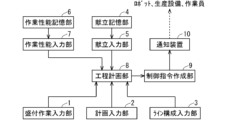
- FIG. 1 is a block diagram showing the configuration of a command creation device according to Embodiment 1.
- FIG. 3 is a diagram showing plating work information according to Embodiment 1.
- FIG. 3 is a diagram showing plan information according to the first embodiment.
- FIG. 3 is a diagram showing line configuration information according to the first embodiment.
- 3 is a diagram showing menu information according to Embodiment 1.
- FIG. 3 is a diagram showing work performance information according to the first embodiment.
- FIG. 3 is a diagram showing work performance information according to the first embodiment.
- FIG. 3 is a diagram showing a work plan according to the first embodiment.
- 3 is a flowchart showing the operation of the command generation device according to the first embodiment.
- 3 is a flowchart showing the operation of the command generation device according to the first embodiment.
- FIG. 2 is a block diagram showing the configuration of a command generation device according to a second embodiment.
- 7 is a diagram showing menu information according to Embodiment 2.
- FIG. 7 is a flowchart showing the operation of the command creation device according to Embodiment 2.
- FIG. 3 is a block diagram showing the configuration of a command generation device according to a third embodiment.
- FIG. 7 is a diagram showing plating work information according to Embodiment 3;
- FIG. 7 is a diagram showing menu information according to Embodiment 3.
- 7 is a flowchart showing the operation of the command generation device according to the third embodiment.
- FIG. 7 is a block diagram showing the configuration of a command creation device according to a fifth embodiment. 7 is a diagram showing monitoring information according to Embodiment 5. FIG. 12 is a flowchart showing the operation of the command generation device according to the fifth embodiment.
- FIG. 7 is a block diagram showing a hardware configuration of a command generation device according to another modification.
- FIG. 7 is a block diagram showing a hardware configuration of a command generation device according to another modification.
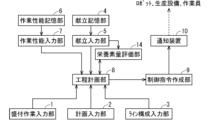
- FIG. 1 is a block diagram showing the configuration of a command generation device according to the first embodiment.
- the command creation device shown in FIG. It includes an input section 7, a process planning section 8, a control command creation section 9, and a notification device 10.
- plating work input section 1 For example, input devices, various interfaces, communication devices, etc. are used for the plating work input section 1, plan input section 2, line configuration input section 3, menu input section 5, and work performance input section 7.
- the plating work input unit 1, plan input unit 2, line configuration input unit 3, menu input unit 5, and work performance input unit 7 are included in the concept of an acquisition unit that acquires various information from a storage device, a server, a cloud, etc. It will be done.
- the process planning section 8 uses, for example, a processing circuit described below, and the control command creation section 9 uses, for example, various interfaces and communication devices.
- the process planning section 8 and the control command creation section 9 are included in the concept of a control section that performs information processing, control processing, etc. based on various information acquired by the acquisition section.
- a storage device is used for the menu storage unit 4 and the work performance storage unit 6.
- the notification device 10 for example, at least one of a display device and an audio output device is used.
- the plating work input unit 1 acquires plating work information including the plating work of a plurality of dishes into containers from outside the command creation device. Dishes are foods that have been processed, and include, for example, hamburgers, sauces, and the like. Processing includes, for example, cutting, heating, seasoning, and combinations thereof.
- the plating work information is input by, for example, a line supervisor and a menu creator such as a nutritionist.
- FIG. 2 is a diagram showing the plating work information according to the first embodiment.
- the plating work information in FIG. 2 includes a product name, a menu name, a plating amount, a plating location, and considerations during plating.
- the menu name is information that specifies the dishes that make up the product name, that is, the dishes that are served in the container. In the following description, either a name or an ID is used for each type of content as information for specifying each type of content, and either one may be used.
- the serving amount is the amount of food that can be served in a container.
- the serving place is the place in the container where the food is served. Matters to be considered during plating are matters to be considered when arranging food in containers. Note that the plating work information does not need to include the plating location and considerations during plating.
- the plan input unit 2 in FIG. 1 acquires plan information including the scheduled time for plating multiple dishes into containers from outside the command creation device.
- FIG. 3 is a diagram showing plan information according to the first embodiment.
- the plan information in FIG. 3 includes a plan ID, a scheduled work start date and time, a scheduled work end date and time, a manufacturing item name, a scheduled manufacturing quantity, and a lot number.
- the plan ID is information for identifying a scheduled plan.
- the time from the scheduled work start date and time to the scheduled work end date and time corresponds to the scheduled time.
- the manufacturing item name corresponds to the product name in FIG.
- the scheduled manufacturing quantity is the number of products scheduled to be manufactured within the scheduled time.
- the lot number is a number for identifying a combination of a shipping destination, a scheduled shipping date and time, and a scheduled shipping quantity. Note that the planning information does not need to include the lot number.
- the line configuration input unit 3 in FIG. 1 acquires line configuration information including the configuration of a plurality of lines on which plating work can be performed from outside the command generation device.
- a line includes at least one of a worker, a robot, and production equipment. Production equipment can be handled in the same way as robots, so below, production equipment and robots will be described as robots without distinguishing between them.
- FIG. 4 is a diagram showing line configuration information according to the first embodiment.
- the line configuration information in FIG. 4 includes a line ID, a scheduled start date and time of operation, a scheduled end date and time of operation, and each component.
- the line ID is information that identifies a line.
- the scheduled start date and time is the date and time when the line is scheduled to start operating
- the scheduled end date and time is the date and time when the line is scheduled to end its operation.
- Components make up lines.
- the line whose line ID is "1" in FIG. 4 is composed of workers A1, A2, A3 and robots B1, B2.
- the line configuration information includes the capabilities of robots and workers (e.g., processable content, skill ranks, years of experience, etc.), limitations of robots and workers (e.g., upper speed limit, work restrictions, etc.), and information on robot operation and It may also include information regarding the worker's work schedule and the condition of the work day (for example, daily inspection results, pre-operation inspection results, worker's physical condition results, etc.).
- the menu storage unit 4 in FIG. 1 stores menu information including the characteristics of a plurality of dishes, and the menu input unit 5 acquires menu information from the menu storage unit 4.
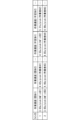
- FIG. 5 is a diagram showing menu information according to the first embodiment.
- the menu information in FIG. 5 includes a menu name, properties, allergen information, and manufacturer.
- the menu names correspond to the menu names in FIG.
- the property is the property of the dish indicated by the menu name.
- the properties include, for example, solid, semi-solid, bag-like, and amorphous.
- the allergen information indicates whether the dish indicated by the menu name contains various allergens (e.g., eggs, milk, wheat, etc.).
- the manufacturer is the manufacturer of the dish indicated by the menu name. Note that the menu information does not need to include allergen information and manufacturer information.
- the properties may include the degree of ease of crumbling, and may also include the shape of the dish indicated by the menu name (for example, quadrangular prism, flat plate, spherical, etc.).
- the properties of the hamburger A may be set to be rectangular prism-like and semi-solid, and the properties of the hamburger B may be set to be cylindrical and solid.
- the work performance storage unit 6 in FIG. 1 stores work performance information including work speeds of a plurality of lines for each of the properties of a plurality of dishes, and the work performance input unit 7 receives work performance information from the work performance storage unit 6. get.
- the work performance information may be created based on the measurement results of various sensors, etc., or may be created based on the specifications of the robot.
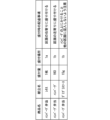
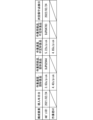
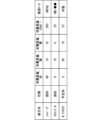
- FIG. 6 is a diagram showing work performance information according to the first embodiment.
- the work performance information in FIG. 6 includes a line ID and a work speed.
- the line ID corresponds to the line ID in FIG.
- the work speed is a line work speed set for each of the characteristics of a plurality of dishes.
- the working speed is expressed by working time, which is the reciprocal of the working speed, but it may of course be expressed by the working speed itself.
- the working speed of each component is used as is as the working speed of the line, but the speed is not limited to this.
- the line work speed is set for each of the solid and irregularly shaped dishes, but the speed is not limited to this. For example, if the characteristics of a dish are expressed by a combination of the degree of crumbleability and the shape of the dish, the work speed of the line may be set for each of the combinations.
- the work performance information is not limited to the information in FIG. 6 as long as it is information from which the information in FIG. 6 can be obtained.
- the work performance information may include components, installation date, work speed, work parts, and next maintenance inspection date instead of the information in FIG.
- the components correspond to those in FIG.
- the date of introduction is the date of introduction of the robot, which is set when the component is a robot.
- the work speed is the work speed of the component set for each of the properties of a plurality of dishes.
- Work parts include, for example, parts such as a robot hand that can be selectively attached to a robot during work.
- the work speed may be set for each work part that can be attached to the robot and for each type of cooking.
- the next maintenance inspection date is a date set when the component is a robot, and is the date on which the robot will undergo maintenance inspection next time.
- the information in FIG. 6 can be obtained by extracting the constituent elements of each line and the working speed of the constituent elements for each line from the information in FIG. 7 .
- the work performance information does not need to include the installation date, work parts, and next maintenance inspection date. Further, the work performance information may include a guideline for a setting change time, which is the time at which the settings used for the robot's work are changed.
- the line configuration information includes information about the capabilities of robots and workers, restrictions, schedules for robot operation and worker attendance, and conditions on the work day, Therefore, the working speeds in FIGS. 6 and 7 may be changed as appropriate.
- the process planning unit 8 creates a work plan for multiple lines to perform plating work on multiple dishes based on the plan information, line configuration information, menu information, and work performance information. Further, the process planning unit 8 determines the plating work in the work plan based on the plating work information. The operation of the process planning section 8 will be explained in detail later.
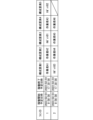
- FIG. 8 is a diagram showing a work plan created by the process planning section 8 according to the first embodiment.
- the work plan in FIG. 8 includes a line ID, a process ID, a scheduled work start date and time, components, a menu in charge, and a serving position.
- the line ID corresponds to the line ID in FIG.
- the process ID is information for identifying the work plan.
- the scheduled work start date and time is the date and time when the plating work of the work plan is scheduled to start.
- the components correspond to the components shown in FIG. 4, and are components that perform the work of arranging the work plan.
- the responsible menu and serving position are the dishes and positions that the component should serve. Note that the work plan does not need to include the scheduled start date and time of the work. Further, the work plan may include the scheduled end date and time of the work, which is the expected date and time when the work in the work plan is scheduled to be completed, considerations during plating, and selection results of work parts such as a robot hand.
- the control command creation unit 9 in FIG. 1 creates commands for multiple lines based on the work plan created by the process planning unit 8. For example, the control command creation unit 9 creates control signals as commands to a plurality of lines. This allows the robot to perform the operations specified in the work plan based on the control signals, and the notification device 10 to notify the menu creator and the worker of the contents of the work plan by display or voice. becomes.
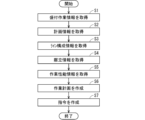
- FIG. 9 is a flowchart showing the overall operation of the command generation device according to the first embodiment.
- step S1 the plating work input section 1 acquires plating work information.
- step S2 the plan input unit 2 acquires plan information.
- step S3 the line configuration input unit 3 acquires line configuration information.
- step S4 the menu input section 5 acquires menu information from the menu storage section 4.
- step S5 the work performance input unit 7 acquires work performance information from the work performance storage unit 6. Note that the order of steps S1 to S5 is not limited to the order shown in FIG. 9, and may be changed as appropriate.
- step S6 the process planning unit 8 determines a schedule for multiple lines to perform plating work on a plurality of dishes based on the plating work information, plan information, line configuration information, menu information, and work performance information. Create a work plan.
- step S7 the control command creation unit 9 creates commands for a plurality of lines based on the work plan created by the process planning unit 8. After that, the operation in FIG. 9 ends.
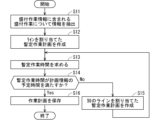
- FIG. 10 is a flowchart showing the operation of step S6 of the process planning section 8 according to the first embodiment.
- step S11 the process planning unit 8 extracts information from the plan information and menu information regarding the plating work included in the plating work information. For example, when the arrangement work indicates a hamburger lunch box in which lettuce, hamburger steak, and demi-glace sauce are arranged as shown in FIG. , extract information about hamburgers and demi-glace sauce.
- the process planning unit 8 creates the following work plan based on the information extracted in this way. Therefore, the menu creator can create a work plan for the plating work of the dish desired by the menu creator by having the plating work input unit 1 obtain the plating work information by inputting the plating work information or the like. I can do it. Note that for convenience of explanation, information extracted from the plan information and menu information will be described as plan information and menu information as is.
- step S12 the process planning unit 8 creates a provisional work plan in which any one of the plurality of lines is assigned to the plurality of dishes, based on the plan information and line configuration information. For example, the process planning department 8 determines whether the time from the scheduled start date and time of operation in FIG. 4 to the scheduled end date and time of operation is included in the time from the scheduled start date and time of FIG. A provisional work plan is created by assigning the number and the date and time of the provisional work plan.
- step S13 the process planning unit 8 determines, based on the provisional work plan, the menu information, and the work performance information, the provisional work time when the line performs the plating work of a plurality of dishes in accordance with the provisional work plan. seek. For example, the process planning unit 8 reads the work speed corresponding to the nature of the dish in the menu information of FIG. 5 from the work performance information of FIG. 6 for the line assigned to the provisional work plan. The process planning unit 8 obtains a provisional work time based on the planned production quantity assigned to the provisional work plan and the read work speed.
- the process planning unit 8 selects the top two solid solid work speeds that are faster from the solid work speed set in the work performance information in FIG. 6, and the top one that is faster from the irregular shape work speeds. One working speed and reading. Then, the process planning unit 8 calculates the time required for serving the two solids based on the planned production quantity assigned to the provisional work plan and the working speeds of the top two solids.
- the process planning unit 8 calculates the time required for serving one irregular shape from the scheduled production quantity assigned to the provisional work plan and the work speed of the one higher ranked irregular shape. Then, the process planning unit 8 calculates a provisional working time based on the time required for serving two solid pieces and the time required for serving one irregularly shaped piece. For example, when two solid-shaped plating operations and one irregular-shaped plating operation are performed in parallel, the process planning department 8 calculates the time required for the two solid-shaped plating operations and the one Of the time required for the work of arranging irregular shapes, the longer time is determined as the provisional work time.
- the process planning department 8 calculates the time required for the two solid-shaped plating operations and the one The sum of the time required for arranging irregular shapes is calculated as the provisional work time.
- step S14 the process planning unit 8 determines whether the provisional work time satisfies the scheduled time in the plan information. For example, if the provisional work time is less than or equal to the time from the scheduled work start date and time to the scheduled work end date and time in FIG. It is determined that the conditions are met. On the other hand, if the provisional work time is longer than the time from the scheduled work start date and time to the scheduled work end date and time in FIG. It is determined that there is no. If it is determined that the provisional work time satisfies the scheduled time in the plan information, the process proceeds to step S16, and if it is determined that the provisional work time does not meet the scheduled time in the plan information, the process proceeds to step S15. move on.
- step S15 the process planning unit 8 creates a provisional work plan in which a line other than the above-mentioned line is assigned to a plurality of dishes for a plurality of dishes, based on the plan information and line configuration information. After that, the process returns to step S13.
- a provisional work time that satisfies the scheduled time of the plan information is created as a work plan. Note that if another line does not exist, the process planning section 8 may notify the menu creator or the like via the notification device 10 that a work plan that satisfies the scheduled time in the plan information cannot be created.
- step S16 the process planning section 8 saves the work plan. Note that, as in other embodiments to be described later, the order of plating tasks for a plurality of dishes in the work plan may be determined before step S16. After that, the operation of FIG. 10 ends.
- the process planning section 8 can create multiple lines for multiple dishes based on the planning information, line configuration information, menu information, and work performance information. create a work plan for the plating work. Then, the control command creation unit 9 creates commands for a plurality of lines based on the work plan. According to such a configuration, even a person who is not accustomed to creating a work plan can easily create a work plan. Furthermore, since the work speeds of multiple lines for each of the characteristics of multiple dishes are taken into consideration, the accuracy of work planning can be improved.
- the process planning unit 8 determines the plating work in the work plan based on the plating work information. According to this configuration, it is possible for the menu creator to create a work plan for the work of plating the dishes desired by the menu creator. Note that if the food plating work is fixed, the plating work information does not need to be used by the process planning section 8.
- the process planning unit 8 creates a provisional work plan, obtains provisional work time from the provisional work plan, and if the provisional work time does not satisfy the scheduled time in the plan information, the process planning department 8 creates a provisional work plan.
- the creation of a work plan is not limited to this.
- the process planning department 8 may create a construction plan by performing reinforcement learning using AI (artificial intelligence) based on planning information, line configuration information, menu information, and work performance information. good.
- AI artificial intelligence
- the plating work input section 1, the plan input section 2, and the line configuration input section 3 may be provided in a remote location away from a place where the plating work of a plurality of dishes is performed.
- the command creation device includes the menu storage unit 4 and the work performance storage unit 6, but the menu storage unit 4 and the work performance storage unit 6 may be provided outside the command creation device.
- the menu input unit 5 may obtain menu information from outside the command creation device
- the work performance input unit 7 may obtain work performance information from outside the command creation device.
- the command creation device includes the notification device 10, but the notification device 10 may be provided outside the command creation device.
- the working speed of the plurality of lines may include the working speed of the robot for each of the plurality of robot hands.
- the process planning section 8 creates a work plan taking into account the work speed of the robot hand as well as the work speed of the line, so that the robot hand to be attached to the robot among the plurality of robot hands is planned for the work. May be included in the plan.
- the command generation device can acquire data on the robot picking success rate for each of the plurality of robot hands, the working speed of the robot hand may be determined based on the picking success rate.
- FIG. 11 is a block diagram showing the configuration of a command generation device according to the second embodiment.
- the command creation device in FIG. 11 has the same configuration as the command creation device in FIG. 1 with the addition of a menu planning change unit 11 included in the concept of a control unit.
- constituent elements according to the second embodiment constituent elements that are the same or similar to the above-mentioned constituent elements will be given the same or similar reference numerals, and different constituent elements will be mainly explained.
- FIG. 12 is a diagram showing menu information according to the second embodiment.
- the menu information in FIG. 12 not only includes the information in FIG. 5 but also includes the cost prices of multiple dishes.
- the menu planning change unit 11 changes the cost difference from the cost of the first dish in advance based on the menu information.
- the predetermined range is set, for example, to a range in which the cost of the first dish and the cost of the second dish are equivalent. For example, in the case of FIG.
- the menu planning change unit 11 replaces ketchup A with ketchup B for the plurality of dishes. Select multiple dishes containing ketchup B instead.
- the process planning unit 8 creates work plans for a plurality of dishes including the second dish selected by the menu planning changing unit 11. The operation of the process planning section 8 will be explained in detail later.
- FIG. 13 is a flowchart showing the operation of step S6 in FIG. 9 by the process planning section 8 according to the second embodiment.
- the flowchart of FIG. 13 is the same as the flowchart of FIG. 10 with step S21 and step S22 added, so step S21 and step S22 will be mainly described below.
- step S21 the process planning unit 8 determines whether provisional work plans have been created for each of all lines. . If it is determined that a provisional work plan has been created for each of all lines, the process proceeds to step S22, and if it is not determined that a provisional work plan has been created for each of all lines, the process proceeds to step S15. Proceed to.
- step S22 the menu planning change unit 11 changes the first dish included in the plurality of dishes used to calculate the provisional working time to the first dish whose cost is the same as that of the first dish, based on the menu information. 2 dishes, and select a plurality of dishes including the second dish.
- step S12. the process planning section 8 creates work plans for a plurality of dishes including the second dish selected by the menu planning changing section 11.
- the process planning unit 8 calculates the cost of the plurality of dishes including the first dish and the cost of the plurality of dishes including the second dish. Control may be performed to cause the notification device 10 to notify the following. According to such a configuration, the menu creator can easily know how the cost changes due to the change from the first dish to the second dish.
- FIG. 14 is a block diagram showing the configuration of a command generation device according to the third embodiment.
- the command creation device in FIG. 14 has the same configuration as the command creation device in FIG. 1 with the addition of a nutrient content evaluation unit 14 included in the concept of a control unit.
- a nutrient content evaluation unit 14 included in the concept of a control unit.
- FIG. 15 is a diagram showing the plating work information according to the third embodiment.
- the serving work information shown in FIG. 15 not only includes the information shown in FIG. 2 but also includes the order of the serving work of a plurality of dishes in containers. In the example of FIG. 15, it is shown that lettuce, hamburger steak, and demi-glace sauce are arranged in containers in this order.
- the plating work input unit 1 acquires the plating work information including the order of the plating work, but an input unit different from the plating work input unit 1 acquires the plating order. You may.
- the process planning unit 8 determines the order of plating tasks for a plurality of dishes in the work plan based on the order of plating tasks included in the plating task information. The operation of the process planning section 8 will be explained in detail later.
- FIG. 16 is a diagram showing menu information according to the third embodiment.
- the menu information in FIG. 16 not only includes the information in FIG. 5 but also includes the nutrient amounts of multiple dishes.
- the nutrient amounts in FIG. 16 include red nutrient amounts for proteins, green nutrient amounts for vegetables, yellow nutrient amounts for carbohydrates, and energy nutrient amounts.
- the nutrient content evaluation unit 14 calculates the difference between the nutrient content of the first dish and the first dish based on the menu information. Select a plurality of dishes including a second dish that falls within a predetermined range.
- the predetermined range is set, for example, to a range in which the amount of nutrients in the first dish and the amount of nutrients in the second dish are equivalent.
- the process planning unit 8 creates work plans for a plurality of dishes including the second dish selected by the menu planning changing unit 11. The operation of the process planning section 8 will be explained in detail later.
- FIG. 17 is a flowchart showing the operation of step S6 in FIG. 9 by the process planning section 8 according to the third embodiment.
- the flowchart in FIG. 17 is similar to the flowchart in FIG. 10 with steps S31 to S33 added, so steps S31 to S33 will be mainly described below.
- step S31 the process planning unit 8 determines whether provisional work plans have been created for each of all lines. . If it is determined that a provisional work plan has been created for each of all lines, the process proceeds to step S32, and if it is not determined that a provisional work plan has been created for each of all lines, the process proceeds to step S15. Proceed to.
- step S32 the menu planning change unit 11 determines, based on the menu information, that the first dish included in the plurality of dishes used to calculate the provisional working time has the same nutritional content as the first dish. A plurality of dishes including the second dish are selected in place of the second dish. After that, the process proceeds to step S12. Thereby, the process planning section 8 creates work plans for a plurality of dishes including the second dish selected by the menu planning changing section 11.
- step S33 the process planning section 8 determines that the provisional work time is within the work plan based on the order of the plating work included in the plating work information. Determine the order of plating multiple dishes. As a result, the order of the line components in the work plan is determined. For example, assume that the order of serving tasks as shown in FIG. 15 has been acquired. In this case, the process planning unit 8 sets the line in the work plan so that the components of the line are worked on in this order: a component assigned to lettuce, a component assigned to hamburger steak, and a component assigned to demi-glace sauce. Reorder the work of its components. After that, the process advances to step S16.
- the process planning section 8 determines the order of plating operations for a plurality of dishes in the work plan based on the order of the plating operations. According to such a configuration, the order of the plating operations in the work plan can be set to the order of the plating operations desired by the menu creator. Note that in a case where the order of the food plating operations is fixed, the order of the plating operations does not need to be used by the process planning section 8.
- the process planning unit 8 determines that the difference between the amount of nutrients and the amount of nutrients in the first dish is predetermined.
- a work plan is created for a plurality of dishes including the second dish within the range. According to such a configuration, it is possible to increase the possibility that a work plan that satisfies the plan information will be created.
- the process planning unit 8 When creating a work plan for a plurality of dishes including a second dish, the process planning unit 8 notifies the nutrient content of the plurality of dishes including the first dish and the nutrient content of the plurality of dishes including the second dish. Control may be performed to cause the device 10 to notify. According to such a configuration, the menu creator can easily know how the amount of nutrients changes when changing from the first dish to the second dish.
- the third embodiment and its modifications may be applied to the second embodiment and its modifications.
- the process planning unit 8 calculates the cost and nutrient content of the plurality of dishes including the first dish, and the cost of the plurality of dishes including the second dish. Control may be performed to cause the notification device 10 to notify the information and the amount of nutrients.
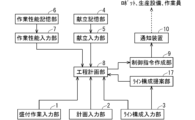
- FIG. 18 is a block diagram showing the configuration of a command generation device according to the fourth embodiment.
- the command creation device in FIG. 18 has a similar configuration to the command creation device in FIG. 1 with the addition of a line configuration proposal unit 17 included in the concept of a control unit.
- a line configuration proposal unit 17 included in the concept of a control unit.
- a worker's plating may be carried out between the first robot's plating work and the second robot's plating work.
- the work is done.
- the first robot has a range of movement that is prohibited for workers to enter, then after the first robot finishes the serving work, the first robot starts serving food without the worker doing the serving work. It is preferable that two robots perform the serving work.
- the line configuration proposal unit 17 determines the order of plating tasks for a plurality of dishes in the work plan based on the line configuration information.
- the line configuration information includes, for example, information on whether or not the first robot can automatically transport between the second robot and information on whether or not a prohibited area is set for the first robot. Then, when the line configuration information indicates that the first robot cannot automatically transport between the second robot and the second robot, the line configuration proposal unit 17 performs the plating work of the first robot and the plating work of the second robot. Assign the plating work to the workers. In addition, when the line configuration information indicates that an area where the first robot is prohibited from entering is set, the line configuration proposal unit 17 performs the plating work of the worker after the plating work of the first robot. Instead, the second robot is assigned the plating work.
- FIG. 19 is a flowchart showing the operation of step S6 in FIG. 9 by the process planning section 8 according to the fourth embodiment.
- the flowchart in FIG. 19 is similar to the flowchart in FIG. 10 with step S41 added, so step S41 will be mainly described below.
- step S41 the process planning unit 8 determines the order of plating work for the plurality of dishes in the work plan based on the line configuration information. Determine. As a result, the order of the line components in the work plan is determined. After that, the process advances to step S16.
- the line configuration proposal unit 17 determines the order of plating operations for a plurality of dishes in the work plan based on the line configuration information. According to such a configuration, the order of the plating operations in the work plan can be made suitable for the line configuration.
- the line configuration information includes information on whether the first robot can automatically transport between the second robot and information on whether a prohibited area is set for the first robot.
- the line configuration information may include information as to whether the work flow line of the first line and the work flow line of the second line partially overlap.
- the part where the work flow line of the first line and the work flow line of the second line overlap will be referred to as an overlapping part.
- the line configuration proposal unit 17 selects the first line based on the work plans of the first and second lines and the work speed of each component. The working time for each component of the line and the second line may be determined. Then, the line configuration proposal unit 17 arranges the dishes on the first line and the second line so that the time when the first line uses the overlapping part and the time when the second line uses the overlapping part do not overlap. The order of work may be determined.
- FIG. 20 is a block diagram showing the configuration of a command generation device according to the fifth embodiment.
- the command creation device shown in FIG. 20 has a similar configuration to the command creation device shown in FIG. be.
- the monitoring content input unit 21 is included in the concept of an acquisition unit, and the monitoring content planning unit 22 and the monitoring execution unit 23 are included in the concept of a control unit.
- constituent elements according to the fifth embodiment constituent elements that are the same or similar to the above-mentioned constituent elements will be given the same or similar reference numerals, and different constituent elements will be mainly explained.
- the monitoring content storage unit 20 stores monitoring information in which at least one of a plurality of dishes is associated with the monitoring content in advance, and the monitoring content input unit 21 acquires the monitoring information from the monitoring content storage unit 20.
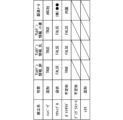
- FIG. 21 is a diagram showing monitoring information according to the fifth embodiment.
- the correspondence information in FIG. 21 includes a product name, a monitoring target, and monitoring details.
- the product name corresponds to the product name in FIG.
- the monitoring target corresponds to the menu name in FIG. 2, that is, the dish.
- Monitoring targets are associated with monitoring details including monitoring items, lower limit values, and upper limit values.
- the monitoring contents are set in advance based on various laws and regulations and various guidelines, such as HACCP (Hazard Analysis and Critical Control Point). Note that the correspondence information may include the monitoring importance level and information regarding contents not to be monitored.
- the monitoring content planning unit 22 determines monitoring content for at least one of the plurality of dishes in the work plan. For example, if the monitoring information as shown in FIG. 21 is acquired and the task of serving hamburgers is assigned in the work plan, the monitoring content planning unit 22 monitors that the temperature of the hamburgers is 80°C. Decide what to monitor and add it to the work plan.
- the monitoring execution unit 23 in FIG. 20 performs monitoring based on the monitoring content added to the work plan.
- the monitoring execution unit 23 may perform control to notify the notification device 10 of this fact when the autopsy result does not satisfy the monitoring content. Further, the monitoring execution unit 23 may store the monitoring results in the monitoring content storage unit 20.
- FIG. 22 is a flowchart showing the overall operation of the command generation device according to the fifth embodiment.
- the flowchart of FIG. 22 is similar to the flowchart of FIG. 9 with step S51 added and step S7 changed to step S52 and step S53, so steps S51 to S53 will be mainly described below.
- step S5 the monitoring content input unit 21 acquires monitoring information from the monitoring content storage unit 20 in step S51.
- step S51 the order of steps S1 to S5 and step S51 is not limited to the order shown in FIG. 22, and may be changed as appropriate.
- the process proceeds to step S6, and the process planning section 8 creates a work plan.
- step S52 the monitoring content planning unit 22 determines monitoring content for at least one of the plurality of dishes in the work plan, based on the monitoring information acquired by the monitoring content input unit 21.
- step S53 the control command creation unit 9 creates commands for a plurality of lines based on the work plan created by the process planning unit 8.
- the monitoring execution unit 23 performs monitoring based on the monitoring details added to the work plan created by the process planning unit 8. After that, the operation of FIG. 22 ends.
- the monitoring content planning unit 22 determines the monitoring content of at least one of the plurality of dishes in the work plan based on the monitoring information. According to such a configuration, at least one of the plurality of dishes in the work plan can be appropriately monitored.
- the monitoring information may be supervised by a health center or the like and automatically generated based on a hygiene management plan created in consultation with the health center or the like. An example will be explained below.
- the command creation device sets important monitoring details for each dish based on past hygiene management plans, and sets hygiene risk indicators based on the number of times the important monitoring details are set. For example, the command creation device sets the hygiene risk index such that the greater the number of times the important monitoring content is set, the larger the hygiene risk index becomes. Then, the command generation device generates monitoring information by setting the important monitoring content for which the hygiene risk index is the highest or the hygiene risk index is equal to or higher than the threshold value as the monitoring content for the monitoring information. According to such a configuration, it is possible to reduce the effort and time required for humans to create monitoring information.
- the creation command device may change the hygiene risk index based on the components of the line that performs the plating work. For example, changing the handling of food ingredients from workers to robots may reduce hygiene risks. Therefore, the command creation device may change the hygiene risk index to be smaller when the robot is set to be in charge of the food.
- the above-described acquisition unit and control unit are hereinafter referred to as “acquisition unit, etc.”.
- the acquisition unit and the like are realized by the processing circuit 81 shown in FIG.
- the processing circuit 81 generates plan information including the scheduled time for plating a plurality of dishes into containers, line configuration information including the configuration of a plurality of lines in which the plating work can be performed, and a plurality of an acquisition unit that acquires menu information including the characteristics of the dishes, work performance information including the work speeds of the plurality of lines for each of the characteristics of the plurality of dishes, and planning information, line configuration information, menu information, and work performance.
- a control unit that creates a work plan for a plurality of lines to perform plating work on a plurality of dishes based on the information, and creates instructions to the plurality of lines based on the work plan.
- Dedicated hardware may be applied to the processing circuit 81, or a processor that executes a program stored in a memory may be applied. Examples of the processor include a central processing unit, a processing unit, an arithmetic unit, a microprocessor, a microcomputer, and a DSP (Digital Signal Processor).
- the processing circuit 81 is dedicated hardware, the processing circuit 81 is, for example, a single circuit, a composite circuit, a programmed processor, a parallel programmed processor, an ASIC (Application Specific Integrated Circuit), an FPGA (Field Programmable Gate Array), or a combination of these.
- the functions of each section such as the acquisition section may be realized by a circuit in which processing circuits are distributed, or the functions of each section may be realized by a single processing circuit.
- the processing circuit 81 When the processing circuit 81 is a processor, functions such as the acquisition unit are realized by combination with software and the like. Note that software and the like correspond to, for example, software, firmware, or software and firmware. Software etc. are written as programs and stored in memory. As shown in FIG. 24, a processor 82 applied to a processing circuit 81 realizes the functions of each part by reading and executing a program stored in a memory 83. That is, when executed by the processing circuit 81, the command creation device generates planning information including the scheduled time for the work of serving a plurality of dishes in containers, and information about the number of lines on which the work of serving dishes can be done.
- the memory 83 is a non-volatile or Volatile semiconductor memory, HDD (Hard Disk Drive), magnetic disk, flexible disk, optical disk, compact disk, mini disk, DVD (Digital Versatile Disc), their drive devices, or any storage media that will be used in the future. You can.
- HDD Hard Disk Drive
- magnetic disk flexible disk
- optical disk compact disk
- mini disk mini disk
- DVD Digital Versatile Disc
- each function such as the acquisition unit is realized by either hardware or software
- the present invention is not limited to this, and a configuration may be adopted in which a part of the acquisition unit etc. is realized by dedicated hardware and another part is realized by software etc.
- the function is realized by a processing circuit 81 as dedicated hardware, an acquisition circuitry such as an interface, etc., and for other parts, the processing circuit 81 as a processor 82 executes the program stored in the memory 83.
- the function can be realized by reading and executing it.
- the processing circuit 81 can implement the above-mentioned functions using hardware, software, etc., or a combination thereof.
- the command creation device described above also includes an information processing device, a communication terminal including a mobile terminal such as a mobile phone, a smartphone, and a tablet, and the functions of an application installed in at least one of the information processing device and the communication terminal.
- the present invention can also be applied to a command creation system constructed as a system by appropriately combining , and servers. In this case, each function or each component of the command creation device explained above may be distributed and arranged in each device constructing the system, or may be arranged centrally in any one device. .
Landscapes
- Business, Economics & Management (AREA)
- Tourism & Hospitality (AREA)
- Human Resources & Organizations (AREA)
- Engineering & Computer Science (AREA)
- Economics (AREA)
- Strategic Management (AREA)
- Theoretical Computer Science (AREA)
- Entrepreneurship & Innovation (AREA)
- General Physics & Mathematics (AREA)
- Marketing (AREA)
- General Business, Economics & Management (AREA)
- Physics & Mathematics (AREA)
- Educational Administration (AREA)
- Quality & Reliability (AREA)
- Operations Research (AREA)
- Game Theory and Decision Science (AREA)
- Development Economics (AREA)
- Health & Medical Sciences (AREA)
- General Health & Medical Sciences (AREA)
- Primary Health Care (AREA)
- Management, Administration, Business Operations System, And Electronic Commerce (AREA)
Abstract
Description
図1は、本実施の形態1に係る指令作成装置の構成を示すブロック図である。図1の指令作成装置は、盛付作業入力部1と、計画入力部2と、ライン構成入力部3と、献立記憶部4と、献立入力部5と、作業性能記憶部6と、作業性能入力部7と、工程計画部8と、制御指令作成部9と、通知装置10とを備える。
図9は、本実施の形態1に係る指令作成装置の全体動作を示すフローチャートである。
以上のような本実施の形態1に係る指令作成装置によれば、工程計画部8は、計画情報、ライン構成情報、献立情報、及び、作業性能情報に基づいて、複数の料理について複数のラインが盛付作業を行うための作業計画を作成する。そして、制御指令作成部9は、作業計画に基づいて複数のラインへの指令を作成する。このような構成によれば、作業計画の作成に慣れていない人であっても、作業計画を容易に作成することができる。また、複数の料理の性質のそれぞれの複数のラインの作業速度を考慮するため、作業計画の精度を高めることができる。
盛付作業入力部1、計画入力部2及びライン構成入力部3は、複数の料理の盛付作業が行われる場所から離れた遠隔地に設けられてもよい。
図11は、本実施の形態2に係る指令作成装置の構成を示すブロック図である。図11の指令作成装置は、図1の指令作成装置に、制御部の概念に含まれる献立案変更部11が追加された構成と同様である。以下、本実施の形態2に係る構成要素のうち、上述の構成要素と同じまたは類似する構成要素については同じまたは類似する参照符号を付し、異なる構成要素について主に説明する。
本実施の形態2に係る指令作成装置の全体動作は、実施の形態1に係る指令作成装置の全体動作(図9参照)と同様である。図13は、本実施の形態2に係る工程計画部8の、図9のステップS6の動作を示すフローチャートである。図13のフローチャートは、図10のフローチャートにステップS21及びステップS22が追加されたフローチャートと同様であるため、以下ステップS21及びステップS22について主に説明する。
以上のような本実施の形態2に係る指令作成装置によれば、工程計画部8は、第1料理を含む複数の料理について、計画情報を満たす作業計画を作成できない場合に、第1料理の原価との差が予め定められた範囲内である第2料理を含む複数の料理について作業計画を作成する。このような構成によれば、計画情報を満たす作業計画が作成される可能性を高めることができる。
実施の形態2において工程計画部8は、第2料理を含む複数の料理について作業計画を作成する場合に、第1料理を含む複数の料理の原価と、第2料理を含む複数の料理の原価とを通知装置10に通知させる制御を行ってもよい。このような構成によれば、献立作成者は、第1料理から第2料理への変更によって原価がどのように変更するのかを容易に知ることができる。
図14は、本実施の形態3に係る指令作成装置の構成を示すブロック図である。図14の指令作成装置は、図1の指令作成装置に、制御部の概念に含まれる栄養素量評価部14が追加された構成と同様である。以下、本実施の形態3に係る構成要素のうち、上述の構成要素と同じまたは類似する構成要素については同じまたは類似する参照符号を付し、異なる構成要素について主に説明する。
本実施の形態3に係る指令作成装置の全体動作は、実施の形態1に係る指令作成装置の全体動作(図9参照)と同様である。図17は、本実施の形態3に係る工程計画部8の、図9のステップS6の動作を示すフローチャートである。図17のフローチャートは、図10のフローチャートにステップS31~ステップS33が追加されたフローチャートと同様であるため、以下ステップS31~ステップS33について主に説明する。
以上のような本実施の形態3に係る指令作成装置によれば、工程計画部8は、盛付作業の順序に基づいて、作業計画における複数の料理の盛付作業の順序を決定する。このような構成によれば、作業計画における盛付作業の順序を、献立作成者が望む盛付作業の順序にすることができる。なお、料理の盛付作業の順序が固定されているような場合には、盛付作業の順序は工程計画部8に用いられなくてもよい。
工程計画部8は、第2料理を含む複数の料理について作業計画を作成する場合に、第1料理を含む複数の料理の栄養素量と、第2料理を含む複数の料理の栄養素量とを通知装置10に通知させる制御を行ってもよい。このような構成によれば、献立作成者は、第1料理から第2料理への変更によって栄養素量がどのように変更するのかを容易に知ることができる。
図18は、本実施の形態4に係る指令作成装置の構成を示すブロック図である。図18の指令作成装置は、図1の指令作成装置に、制御部の概念に含まれるライン構成提案部17が追加された構成と同様である。以下、本実施の形態4に係る構成要素のうち、上述の構成要素と同じまたは類似する構成要素については同じまたは類似する参照符号を付し、異なる構成要素について主に説明する。
本実施の形態4に係る指令作成装置の全体動作は、実施の形態1に係る指令作成装置の全体動作(図9参照)と同様である。図19は、本実施の形態4に係る工程計画部8の、図9のステップS6の動作を示すフローチャートである。図19のフローチャートは、図10のフローチャートにステップS41が追加されたフローチャートと同様であるため、以下ステップS41について主に説明する。
以上のような本実施の形態4に係る指令作成装置によれば、ライン構成提案部17は、ライン構成情報に基づいて、作業計画における複数の料理の盛付作業の順序を決定する。このような構成によれば、作業計画における盛付作業の順序を、ラインの構成に適した順序にすることができる。
以上の説明では、ライン構成情報は、第1ロボットが第2ロボットとの間で自動搬送できるか否かの情報、及び、第1ロボットに立入禁止範囲が設定されているか否かの情報を含んだが、これに限ったものではない。例えば、ライン構成情報は、第1ラインの作業動線と、第2ラインの作業動線とが部分的に重なるか否かの情報を含んでもよい。以下、第1ラインの作業動線と第2ラインの作業動線とが重なる部分を重複部分と記す。
図20は、本実施の形態5に係る指令作成装置の構成を示すブロック図である。図20の指令作成装置は、図1の指令作成装置に、監視内容記憶部20と、監視内容入力部21と、監視内容計画部22と、監視実行部23とが追加された構成と同様である。監視内容入力部21は取得部の概念に含まれ、監視内容計画部22及び監視実行部23は制御部の概念に含まれる。以下、本実施の形態5に係る構成要素のうち、上述の構成要素と同じまたは類似する構成要素については同じまたは類似する参照符号を付し、異なる構成要素について主に説明する。
図22は、本実施の形態5に係る指令作成装置の全体動作を示すフローチャートである。図22のフローチャートは、図9のフローチャートにステップS51が追加され、ステップS7をステップS52及びステップS53に変更したフローチャートと同様であるため、以下ステップS51~ステップS53について主に説明する。
以上のような本実施の形態5に係る指令作成装置によれば、監視内容計画部22は、監視情報に基づいて、作業計画における複数の料理の少なくともいずれか1つの監視内容を決定する。このような構成によれば、作業計画における複数の料理の少なくともいずれか1つについて適切に監視を行うことができる。
監視情報は、保健所などで監督され、保健所などと相談して作成される衛生管理計画に基づいて自動的に生成されてもよい。以下その一例について説明する。
上述した取得部及び制御部を、以下「取得部等」と記す。取得部等は、図23の処理回路81により実現される。すなわち、処理回路81は、容器への複数の料理の盛付作業で予定されている予定時間を含む計画情報と、盛付作業が可能な複数のラインの構成を含むライン構成情報と、複数の料理の性質を含む献立情報と、複数の料理の性質のそれぞれの複数のラインの作業速度を含む作業性能情報とを取得する取得部と、計画情報、ライン構成情報、献立情報、及び、作業性能情報に基づいて、複数の料理について複数のラインが盛付作業を行うための作業計画を作成し、作業計画に基づいて複数のラインへの指令を作成する制御部と、を備える。処理回路81には、専用のハードウェアが適用されてもよいし、メモリに格納されるプログラムを実行するプロセッサが適用されてもよい。プロセッサには、例えば、中央処理装置、処理装置、演算装置、マイクロプロセッサ、マイクロコンピュータ、DSP(Digital Signal Processor)などが該当する。
Claims (12)
- 容器への複数の料理の盛付作業で予定されている予定時間を含む計画情報と、前記盛付作業が可能な複数のラインの構成を含むライン構成情報と、前記複数の料理の性質を含む献立情報と、前記複数の料理の前記性質のそれぞれの前記複数のラインの作業速度を含む作業性能情報とを取得する取得部と、
前記計画情報、前記ライン構成情報、前記献立情報、及び、前記作業性能情報に基づいて、前記複数の料理について前記複数のラインが前記盛付作業を行うための作業計画を作成し、前記作業計画に基づいて前記複数のラインへの指令を作成する制御部と
を備える、指令作成装置。 - 請求項1に記載の指令作成装置であって、
前記取得部は、容器への複数の料理の盛付作業を含む盛付作業情報をさらに取得し、
前記制御部は、
前記盛付作業情報に基づいて前記作業計画における前記複数の料理の前記盛付作業を決定する、指令作成装置。 - 請求項1または請求項2に記載の指令作成装置であって、
前記制御部は、
前記計画情報、及び、前記ライン構成情報に基づいて、前記複数の料理について前記複数のラインのうちのいずれかのラインを割り当てた暫定作業計画を作成し、
前記暫定作業計画、前記献立情報、及び、前記作業性能情報に基づいて、前記ラインが前記暫定作業計画に沿って前記複数の料理の前記盛付作業を行った場合の暫定作業時間を求め、
前記暫定作業時間が前記計画情報の前記予定時間を満たさない場合に、前記暫定作業計画の前記ラインを別のラインに変更することによって、前記作業計画を作成する、指令作成装置。 - 請求項1から請求項3のうちのいずれか1項に記載の指令作成装置であって、
前記ラインは、複数の作業用部品を選択的に装着可能なロボットを含み、
前記複数のラインの作業速度は、前記複数の作業用部品のそれぞれについての前記ロボットの作業速度を含み、
前記作業計画は、前記複数の作業用部品のうち前記ロボットが装着すべき作業用部品の計画を含む、指令作成装置。 - 請求項1から請求項4のうちのいずれか1項に記載の指令作成装置であって、
前記献立情報は、前記複数の料理の原価をさらに含み、
前記制御部は、
第1料理を含む前記複数の料理について、前記計画情報を満たす前記作業計画を作成できない場合に、前記第1料理の前記原価との差が予め定められた範囲内である第2料理を含む前記複数の料理について前記作業計画を作成する、指令作成装置。 - 請求項5に記載の指令作成装置であって、
前記制御部は、
前記第2料理を含む前記複数の料理について前記作業計画を作成する場合に、前記第1料理を含む前記複数の料理の前記原価と、前記第2料理を含む前記複数の料理の前記原価とを通知装置に通知させる制御を行う、指令作成装置。 - 請求項1から請求項6のうちのいずれか1項に記載の指令作成装置であって、
前記取得部は、容器への複数の料理の盛付作業の順序をさらに取得し、
前記制御部は、
前記盛付作業の前記順序に基づいて、前記作業計画における前記複数の料理の前記盛付作業の順序を決定する、指令作成装置。 - 請求項1から請求項7のうちのいずれか1項に記載の指令作成装置であって、
前記献立情報は、前記複数の料理の栄養素量をさらに含み、
前記制御部は、
第1料理を含む前記複数の料理について、前記計画情報を満たす前記作業計画を作成できない場合に、前記第1料理の前記栄養素量との差が予め定められた範囲内である第2料理を含む前記複数の料理について前記作業計画を作成する、指令作成装置。 - 請求項8に記載の指令作成装置であって、
前記制御部は、
前記第2料理を含む前記複数の料理について前記作業計画を作成する場合に、前記第1料理を含む前記複数の料理の前記栄養素量と、前記第2料理を含む前記複数の料理の前記栄養素量とを通知装置に通知させる制御を行う、指令作成装置。 - 請求項1から請求項9のうちのいずれか1項に記載の指令作成装置であって、
前記制御部は、
前記ライン構成情報に基づいて、前記作業計画における前記複数の料理の前記盛付作業の順序を決定する、指令作成装置。 - 請求項1から請求項10のうちのいずれか1項に記載の指令作成装置であって、
前記取得部は、前記複数の料理の少なくともいずれか1つと監視内容とが予め対応付けられた監視情報をさらに取得し、
前記制御部は、
前記監視情報に基づいて、前記作業計画における前記複数の料理の少なくともいずれか1つの前記監視内容を決定する、指令作成装置。 - 容器への複数の料理の盛付作業で予定されている予定時間を含む計画情報と、前記盛付作業が可能な複数のラインの構成を含むライン構成情報と、前記複数の料理の性質を含む献立情報と、前記複数の料理の前記性質のそれぞれの前記複数のラインの作業速度を含む作業性能情報とを取得し、
前記計画情報、前記ライン構成情報、前記献立情報、及び、前記作業性能情報に基づいて、前記複数の料理について前記複数のラインが前記盛付作業を行うための作業計画を作成し、前記作業計画に基づいて前記複数のラインへの指令を作成する、指令作成方法。
Priority Applications (3)
| Application Number | Priority Date | Filing Date | Title |
|---|---|---|---|
| DE112022006816.7T DE112022006816T5 (de) | 2022-05-12 | 2022-05-12 | Befehls-Erzeugungsvorrichtung und Befehls-Erzeugungsverfahren |
| PCT/JP2022/020088 WO2023218608A1 (ja) | 2022-05-12 | 2022-05-12 | 指令作成装置及び指令作成方法 |
| JP2024520185A JP7566210B2 (ja) | 2022-05-12 | 2022-05-12 | 指令作成装置及び指令作成方法 |
Applications Claiming Priority (1)
| Application Number | Priority Date | Filing Date | Title |
|---|---|---|---|
| PCT/JP2022/020088 WO2023218608A1 (ja) | 2022-05-12 | 2022-05-12 | 指令作成装置及び指令作成方法 |
Publications (1)
| Publication Number | Publication Date |
|---|---|
| WO2023218608A1 true WO2023218608A1 (ja) | 2023-11-16 |
Family
ID=88730137
Family Applications (1)
| Application Number | Title | Priority Date | Filing Date |
|---|---|---|---|
| PCT/JP2022/020088 Ceased WO2023218608A1 (ja) | 2022-05-12 | 2022-05-12 | 指令作成装置及び指令作成方法 |
Country Status (3)
| Country | Link |
|---|---|
| JP (1) | JP7566210B2 (ja) |
| DE (1) | DE112022006816T5 (ja) |
| WO (1) | WO2023218608A1 (ja) |
Citations (3)
| Publication number | Priority date | Publication date | Assignee | Title |
|---|---|---|---|---|
| JP2011246206A (ja) * | 2010-05-24 | 2011-12-08 | Engineering Aiki:Kk | 弁当盛り付け用コンベア装置 |
| WO2020075368A1 (ja) * | 2018-10-09 | 2020-04-16 | ソニー株式会社 | 情報処理装置、情報処理方法及びプログラム |
| JP2021131605A (ja) * | 2020-02-18 | 2021-09-09 | パナソニックIpマネジメント株式会社 | 作業管理支援方法および作業管理支援サービス提供方法 |
-
2022
- 2022-05-12 DE DE112022006816.7T patent/DE112022006816T5/de not_active Withdrawn
- 2022-05-12 JP JP2024520185A patent/JP7566210B2/ja active Active
- 2022-05-12 WO PCT/JP2022/020088 patent/WO2023218608A1/ja not_active Ceased
Patent Citations (3)
| Publication number | Priority date | Publication date | Assignee | Title |
|---|---|---|---|---|
| JP2011246206A (ja) * | 2010-05-24 | 2011-12-08 | Engineering Aiki:Kk | 弁当盛り付け用コンベア装置 |
| WO2020075368A1 (ja) * | 2018-10-09 | 2020-04-16 | ソニー株式会社 | 情報処理装置、情報処理方法及びプログラム |
| JP2021131605A (ja) * | 2020-02-18 | 2021-09-09 | パナソニックIpマネジメント株式会社 | 作業管理支援方法および作業管理支援サービス提供方法 |
Non-Patent Citations (2)
| Title |
|---|
| NAGABA KEIKO, BP NIKKEI: "Mitsubishi Corporation introduces robots to convenience store bento manufacturing process, automating the arrangement of irregularly shaped ingredients such as salmon and croquettes", NIKKEI ROBOTICS, 10 April 2017 (2017-04-10), XP093107742, Retrieved from the Internet <URL:https://xtech.nikkei.com/dm/atcl/mag/15/00141/00020/> [retrieved on 20231201] * |
| SUZUKI ATSUO: "Production scheduling and shift creation in food factories", OPERATIONS RESEARCH, vol. 65, no. 3, 1 March 2020 (2020-03-01), pages (3) 129 - (7) 133, XP093107744 * |
Also Published As
| Publication number | Publication date |
|---|---|
| JPWO2023218608A1 (ja) | 2023-11-16 |
| DE112022006816T5 (de) | 2025-02-13 |
| JP7566210B2 (ja) | 2024-10-11 |
Similar Documents
| Publication | Publication Date | Title |
|---|---|---|
| KR102505693B1 (ko) | 로봇 기반의 재고 주문 피킹 방법, 장치, 시스템 및 전자기기 및 저장매체 | |
| CN108960708B (zh) | 货物上架方法、装置、系统、货物上架终端及存储介质 | |
| Cirulis et al. | Augmented reality in logistics | |
| JP7107222B2 (ja) | 商品需要予測システム、商品需要予測方法および商品需要予測プログラム | |
| US20130275460A1 (en) | Consumer Information System for Nutritional Substances | |
| Chongwatpol et al. | Achieving lean objectives through RFID: A simulation‐based assessment | |
| CA2936753A1 (en) | Overstock inventory sorting at retail sales facilities | |
| US12141729B2 (en) | Systems and methods for determining path solutions associated with a supply chain network | |
| WO2014178097A1 (ja) | 農業生産情報管理システム、サーバ装置および農業生産情報管理用プログラム | |
| AU2023350960B2 (en) | Methods and apparatus for machine learning system for edge computer vision and active reality | |
| JPWO2020017160A1 (ja) | 作業系列識別装置、作業系列識別システム、作業系列識別方法、及びプログラム | |
| WO2017141332A1 (ja) | 負荷分散装置 | |
| US20180253779A1 (en) | System and method for dynamically providing recommendations to one or more vendors | |
| CN114675819B (zh) | Rpa组件的推荐方法、装置、设备和可读存储介质 | |
| WO2018232857A1 (zh) | 一种食品加工期限的监控方法及系统 | |
| WO2023218608A1 (ja) | 指令作成装置及び指令作成方法 | |
| US10222788B2 (en) | Plan generating device and plan generating method | |
| Batista et al. | Monitoring restaurants in real-time | |
| JP5219964B2 (ja) | 製造指示装置、プログラム、製造指示システム及び製造指示方法 | |
| KR102906706B1 (ko) | 인공지능 모델을 통해 예측된 판매량을 바탕으로 원재료의 사용량을 예측하여 발주 관련 정보를 생성하는 전자 장치 | |
| JP2020190980A (ja) | 劣化推定装置、劣化推定システム、劣化推定方法および劣化推定プログラム | |
| US10929801B1 (en) | System and method for automated batch inbound transportation appointment setting for retailer distribution centers | |
| Sridhar et al. | Smart Containers for Dieticians: Enabling Efficient Nutritional Monitoring through IoT | |
| JP2024055566A (ja) | 作業情報処理装置、作業情報処理方法、及びプログラム | |
| CN116934210A (zh) | 一种仓储数据的处理方法和装置 |
Legal Events
| Date | Code | Title | Description |
|---|---|---|---|
| 121 | Ep: the epo has been informed by wipo that ep was designated in this application |
Ref document number: 22941688 Country of ref document: EP Kind code of ref document: A1 |
|
| WWE | Wipo information: entry into national phase |
Ref document number: 2024520185 Country of ref document: JP |
|
| WWE | Wipo information: entry into national phase |
Ref document number: 112022006816 Country of ref document: DE |
|
| WWP | Wipo information: published in national office |
Ref document number: 112022006816 Country of ref document: DE |
|
| 122 | Ep: pct application non-entry in european phase |
Ref document number: 22941688 Country of ref document: EP Kind code of ref document: A1 |