WO2023210775A1 - 免疫隔離デバイス - Google Patents
免疫隔離デバイス Download PDFInfo
- Publication number
- WO2023210775A1 WO2023210775A1 PCT/JP2023/016742 JP2023016742W WO2023210775A1 WO 2023210775 A1 WO2023210775 A1 WO 2023210775A1 JP 2023016742 W JP2023016742 W JP 2023016742W WO 2023210775 A1 WO2023210775 A1 WO 2023210775A1
- Authority
- WO
- WIPO (PCT)
- Prior art keywords
- immunoisolation
- layer
- cell
- porous membrane
- hydrogel
- Prior art date
- Legal status (The legal status is an assumption and is not a legal conclusion. Google has not performed a legal analysis and makes no representation as to the accuracy of the status listed.)
- Ceased
Links
Images





Classifications
-
- A—HUMAN NECESSITIES
- A61—MEDICAL OR VETERINARY SCIENCE; HYGIENE
- A61F—FILTERS IMPLANTABLE INTO BLOOD VESSELS; PROSTHESES; DEVICES PROVIDING PATENCY TO, OR PREVENTING COLLAPSING OF, TUBULAR STRUCTURES OF THE BODY, e.g. STENTS; ORTHOPAEDIC, NURSING OR CONTRACEPTIVE DEVICES; FOMENTATION; TREATMENT OR PROTECTION OF EYES OR EARS; BANDAGES, DRESSINGS OR ABSORBENT PADS; FIRST-AID KITS
- A61F2/00—Filters implantable into blood vessels; Prostheses, i.e. artificial substitutes or replacements for parts of the body; Appliances for connecting them with the body; Devices providing patency to, or preventing collapsing of, tubular structures of the body, e.g. stents
- A61F2/02—Prostheses implantable into the body
- A61F2/022—Artificial gland structures using bioreactors
-
- A—HUMAN NECESSITIES
- A61—MEDICAL OR VETERINARY SCIENCE; HYGIENE
- A61L—METHODS OR APPARATUS FOR STERILISING MATERIALS OR OBJECTS IN GENERAL; DISINFECTION, STERILISATION OR DEODORISATION OF AIR; CHEMICAL ASPECTS OF BANDAGES, DRESSINGS, ABSORBENT PADS OR SURGICAL ARTICLES; MATERIALS FOR BANDAGES, DRESSINGS, ABSORBENT PADS OR SURGICAL ARTICLES
- A61L27/00—Materials for grafts or prostheses or for coating grafts or prostheses
- A61L27/36—Materials for grafts or prostheses or for coating grafts or prostheses containing ingredients of undetermined constitution or reaction products thereof, e.g. transplant tissue, natural bone, extracellular matrix
- A61L27/3683—Materials for grafts or prostheses or for coating grafts or prostheses containing ingredients of undetermined constitution or reaction products thereof, e.g. transplant tissue, natural bone, extracellular matrix subjected to a specific treatment prior to implantation, e.g. decellularising, demineralising, grinding, cellular disruption/non-collagenous protein removal, anti-calcification, crosslinking, supercritical fluid extraction, enzyme treatment
- A61L27/3687—Materials for grafts or prostheses or for coating grafts or prostheses containing ingredients of undetermined constitution or reaction products thereof, e.g. transplant tissue, natural bone, extracellular matrix subjected to a specific treatment prior to implantation, e.g. decellularising, demineralising, grinding, cellular disruption/non-collagenous protein removal, anti-calcification, crosslinking, supercritical fluid extraction, enzyme treatment characterised by the use of chemical agents in the treatment, e.g. specific enzymes, detergents, capping agents, crosslinkers, anticalcification agents
-
- A—HUMAN NECESSITIES
- A61—MEDICAL OR VETERINARY SCIENCE; HYGIENE
- A61L—METHODS OR APPARATUS FOR STERILISING MATERIALS OR OBJECTS IN GENERAL; DISINFECTION, STERILISATION OR DEODORISATION OF AIR; CHEMICAL ASPECTS OF BANDAGES, DRESSINGS, ABSORBENT PADS OR SURGICAL ARTICLES; MATERIALS FOR BANDAGES, DRESSINGS, ABSORBENT PADS OR SURGICAL ARTICLES
- A61L27/00—Materials for grafts or prostheses or for coating grafts or prostheses
- A61L27/50—Materials characterised by their function or physical properties, e.g. injectable or lubricating compositions, shape-memory materials, surface modified materials
- A61L27/52—Hydrogels or hydrocolloids
-
- A—HUMAN NECESSITIES
- A61—MEDICAL OR VETERINARY SCIENCE; HYGIENE
- A61L—METHODS OR APPARATUS FOR STERILISING MATERIALS OR OBJECTS IN GENERAL; DISINFECTION, STERILISATION OR DEODORISATION OF AIR; CHEMICAL ASPECTS OF BANDAGES, DRESSINGS, ABSORBENT PADS OR SURGICAL ARTICLES; MATERIALS FOR BANDAGES, DRESSINGS, ABSORBENT PADS OR SURGICAL ARTICLES
- A61L27/00—Materials for grafts or prostheses or for coating grafts or prostheses
- A61L27/50—Materials characterised by their function or physical properties, e.g. injectable or lubricating compositions, shape-memory materials, surface modified materials
- A61L27/56—Porous materials, e.g. foams or sponges
-
- C—CHEMISTRY; METALLURGY
- C08—ORGANIC MACROMOLECULAR COMPOUNDS; THEIR PREPARATION OR CHEMICAL WORKING-UP; COMPOSITIONS BASED THEREON
- C08L—COMPOSITIONS OF MACROMOLECULAR COMPOUNDS
- C08L1/00—Compositions of cellulose, modified cellulose or cellulose derivatives
- C08L1/02—Cellulose; Modified cellulose
-
- C—CHEMISTRY; METALLURGY
- C08—ORGANIC MACROMOLECULAR COMPOUNDS; THEIR PREPARATION OR CHEMICAL WORKING-UP; COMPOSITIONS BASED THEREON
- C08L—COMPOSITIONS OF MACROMOLECULAR COMPOUNDS
- C08L23/00—Compositions of homopolymers or copolymers of unsaturated aliphatic hydrocarbons having only one carbon-to-carbon double bond; Compositions of derivatives of such polymers
- C08L23/02—Compositions of homopolymers or copolymers of unsaturated aliphatic hydrocarbons having only one carbon-to-carbon double bond; Compositions of derivatives of such polymers not modified by chemical after-treatment
- C08L23/04—Homopolymers or copolymers of ethene
- C08L23/08—Copolymers of ethene
- C08L23/0846—Copolymers of ethene with unsaturated hydrocarbons containing atoms other than carbon or hydrogen
- C08L23/0853—Ethylene vinyl acetate copolymers
- C08L23/0861—Saponified copolymers, e.g. ethylene vinyl alcohol copolymers
Definitions
- Immunoisolation devices have been developed as a means of performing cell transplantation therapy without the need for administration of immunosuppressants.
- the macroencapsulated immunoisolation device has the advantage of being able to identify the transplant site and replace the device in the event of iPS cell-derived somatic cell transplantation where there is a concern about the risk of cancer, or when the function of the transplanted cells declines. It is considered to be an effective method.
- the functions necessary for a macroencapsulated immunoisolation device include the ability to uniformly disperse and immobilize cells or cell clusters without aggregation, the ability to easily permeate oxygen and/or nutritional components to transplanted cells, and the ability to meet the needs of therapeutic effects.
- cytokines cytokines, hormones, growth factors, etc.
- the device It should be able to easily release target physiologically active substances (cytokines, hormones, growth factors, etc.) released by cells in response to cell responses, and be impermeable to immune response cells and immune response factors, and It is important that the device has excellent biocompatibility and is unlikely to cause adhesion with surrounding tissue or inflammatory reactions such as granulation.
- target physiologically active substances cytokines, hormones, growth factors, etc.
- Patent Document 1 Many immunoisolation devices using porous membranes have been studied so far (Patent Document 1), but there have been problems such as protein adsorption to the porous membrane material, decrease in permeability due to fibrosis, and permeation due to adhesion to surrounding tissues.
- One of the challenges has been a decline in the rate. Internal necrosis of cell clusters, etc. is said to occur when the diameter exceeds 500 ⁇ m, so in order to easily maintain the engraftment of embedded cells in the recipient body and release physiologically active substances, it is necessary to It is necessary to appropriately control the thickness of the immunoisolation layer that constitutes the device, and it is desirable that the immunoisolation layer constituting the device be as thin as possible.
- the membrane strength and durability to prevent the device from tearing, twisting, etc., but it is not easy to achieve both thinning and durability.
- cell sheet a single sheet of cells containing extracellular matrix, adhesion factors, etc., which is called a "cell sheet.”
- Myocardial sheets, etc. in which skeletal muscle cell sheets are attached to hospital bed sites, have been put into practical use as regenerative medicine products.
- pancreatic islet cells a method for manufacturing a cell sheet and a method for utilizing the same are disclosed in Patent Document 2.
- Advantages of cell sheets include that they contain extracellular matrix, cell adhesion factors, etc., do not excessively form cell clusters due to cell association, and have high cell engraftment upon transplantation.
- One object of the present invention is to provide an immunoisolation device that achieves both a reduction in diffusion distance that is effective for improving the permeability of substances such as physiologically active substances and nutrients, and an improvement in durability that can withstand long-term transplantation. purpose.
- Another object of the present invention is to provide an immune control technology using a cell sheet.
- the present invention provides the following immunoisolation device.
- An immunoisolation device having a sheet-like cell aggregate containing cells and an extracellular matrix, and an immunoisolation layer covering the cell aggregate.
- the immunoisolation layer includes a porous membrane or a fibrous structure, The immunoisolation device according to any one of [1] to [3], wherein the porous membrane or the fibrous structure contains at least one selected from the group consisting of ethylene vinyl alcohol copolymer and cellulose acetate.
- the immunoisolation layer is a multilayer immunoisolation layer containing the porous membrane or fibrous structure and a hydrogel.
- the outermost layer of the multilayer immunoisolation layer is the porous membrane or fibrous structure, and the innermost layer is the hydrogel.
- the immunoisolation device according to [5], wherein the outermost layer of the multilayer immunoisolation layer is the hydrogel, and the innermost layer is the porous membrane or fibrous structure.
- the immunoisolation layer is composed of a plurality of layers, and the innermost layer of the immunoisolation layer is a hydrogel or porous membrane on which a cell adhesive protein and/or a cell adhesive peptide is immobilized. 1] to [7].
- the immunoisolation device according to any one of [7].
- [9] The immunoisolation device according to any one of [5] to [8], wherein the hydrogel contains at least one member selected from the group consisting of polyvinyl alcohol and polyethylene glycol.
- the present invention it is possible to provide an immunoisolation device that achieves both a reduction in the diffusion distance, which is effective in improving the permeability of substances such as physiologically active substances and nutrients, and an improvement in durability that can withstand long-term transplantation. can. Further, the present invention can provide an immune control technology using a cell sheet.
- FIG. 1 Perspective view of a bag-shaped immunoisolation device
- FIG. 1 Perspective view of a bag-shaped immunoisolation device
- FIG. 1 Perspective view of a bag-shaped immunoisolation device
- FIG. 1 Perspective view of a bag-shaped immunoisolation device
- FIG. 1 Perspective view of a bag-shaped immunoisolation device
- FIG. 1 Perspective view of a bag-shaped immunoisolation device
- FIG. 1 Perspective view of a bag-shaped immunoisolation device
- FIG. 1 Perspective view of a bag-shaped immunoisolation device
- FIG. 1 Perspective view of a bag-shaped immunoisolation device
- FIG. 1 Perspective view of a bag-shaped immunoisolation device
- FIG. 1 Perspective view of a bag-shaped immunoisolation device
- FIG. 1 Perspective view of a bag-shaped immunoisolation device
- FIG. 1 Perspective view of a bag-shaped immunoisolation device
- FIG. 1 Perspective view of a bag-shaped immunoisolation device
- Figure 12A Tissue staining image.
- Figures 12B to D Fluorescent staining images (Figure 12B: Original drawing.
- Figure 12C Original drawing ( Figure 12B) with insulin-positive areas (Anti-Insulin (pancreatic islet ⁇ cells) displayed in black.
- Figure 12D Original drawing In the drawing (FIG. 12B), the cell nucleus portion (Hoechest dye portion) is shown in black.) As shown in FIGS. 12B to D, cell nuclei were observed in the insulin-positive area in the fluorescent staining image.
- the immunoisolation device of the present invention comprises a sheet-like cell aggregate containing cells and an extracellular matrix and an immunoisolation layer, and the cell aggregate is covered with the immunoisolation layer, thereby forming a cell aggregate of immune cells and cytokines. can prevent intrusion into the
- the immunoisolation layer is also preferably a multilayer immunoisolation layer comprising a porous membrane or fibrous structure and a hydrogel.
- the cell aggregate used in the immunoisolation device of the present invention is a sheet-like cell aggregate containing cells and an extracellular matrix.
- Cell aggregates include composites of cells and extracellular matrix, cells immobilized on scaffolding materials such as collagen sheets or collagen sponges, or cells prepared using temperature-responsive culture dishes, etc. Examples include sheets. Examples of cell aggregates include those that do not contain scaffolding materials such as collagen sheets. Note that the cells may be cell clusters.
- the cell aggregate is a cell sheet.
- the term "cell sheet” refers to a cell aggregate in which cells are connected to each other by intercellular bonds to form a single-layer or multiple-layer (preferably single-layer) sheet.
- a cell sheet is composed of cells and an extracellular matrix, and maintains adhesion between the cells.
- the cell sheet has a structure in which sheet-like cells (11) are stacked on a sheet-like extracellular matrix (10).
- the cells are preferably arranged on the extracellular matrix in a monolayer.
- cell sheets are produced by culturing cells on a stimulus-responsive culture substrate coated with a polymer whose molecular structure changes depending on stimuli such as temperature, pH, light, etc., and by changing stimulus conditions such as temperature, pH, light, etc. can be obtained by changing the surface of the stimulus-responsive culture substrate.
- stimulus-responsive culture substrates include UpCell (registered trademark), which is a temperature-responsive culture dish commercially available from CellSeed.
- an extracellular matrix is formed in the cell culturing process, and the cells are maintained in an adhered state.
- a single cell sheet may be used as a cell aggregate, or two or three sheets may be stacked and used as a cell aggregate.
- a cell sheet When using a cell sheet as a cell aggregate, it may be used in a state where it is layered on a scaffolding material such as a collagen sponge for the purpose of improving operability, but it is not necessary to use a scaffolding material.
- a scaffolding material such as a collagen sponge
- an immunoisolation device can be manufactured without intentionally adding a scaffold material.
- the present invention provides the above-mentioned immunoisolation device, wherein the cell aggregate is a cell sheet composed of cells and extracellular matrix, without intentionally adding scaffolding material.
- the thickness of the cell aggregate is not particularly limited, but is preferably 10 ⁇ m or more, more preferably 20 ⁇ m or more. Further, the thickness is preferably 300 ⁇ m or less, more preferably 290 ⁇ m or less, and even more preferably 150 ⁇ m or less. When the thickness is within the above range, the supply of oxygen and the like to the cells is less likely to be inhibited, which is preferable.
- the animal species of the cells used in the cell assembly may be mammals such as humans, rats, mice, guinea pigs, marmosets, rabbits, dogs, cats, sheep, pigs, goats, monkeys, chimpanzees, or their immunodeficient animals. Examples include animals, birds, reptiles, amphibians, fish, and insects.
- the immunoisolation device of the present invention it is preferable to use human-derived cells.
- cells collected from the patient himself or herself, cells collected from someone else, or commercially available cell lines may be used.
- Cells used in cell aggregates include, for example, somatic cells constituting a living body (cardiomyocytes, hepatic parenchymal cells, renal cells, adrenal cortex cells, epidermal cells, vascular endothelial cells, mucosal cells, pancreatic islet cells, etc.), germ cells. (sperm, eggs, etc.), stem cells (mesenchymal stem cells, ES cells, iPS cells, etc.), progenitor cells, cells that have been separated from a living body and have acquired immortality and are stably maintained outside the body; Examples include cells that have been artificially genetically modified, cells that have been separated from a living body and that have had their nuclei artificially exchanged.
- the cells used in the cell assembly include those that release physiologically active substances out of the immunoisolation device.
- physiologically active substances include mesenchymal stem cells, pancreatic islet cells, islet-like insulin-producing cells, pituitary hormone-producing cells, lysosomal enzyme-producing cells, and the like.
- the cell aggregate may be composed of multiple types of cells listed above.
- the immunoisolation device of the present invention comprises an immunoisolation layer covering the cell aggregate.
- the immunoisolation layer preferably covers the entire surface of the cell aggregate in order to obtain a sufficient immunoisolation effect. From the same point of view, it is preferable that the immunoisolation layer has no holes such as pinholes penetrating the membrane.
- the immunoisolation layer preferably includes a porous membrane or a fibrous structure, and more preferably a multilayer immunoisolation layer containing a porous membrane or fibrous structure and a hydrogel.
- the immunoisolation layer may be a multilayer immunoisolation layer comprising a porous membrane and a fibrous structure, or it may be a multilayer immunoisolation layer comprising a porous membrane, a fibrous structure and a hydrogel.
- the porous membrane constituting the immunoisolation layer is a membrane having multiple pores.
- the porous membrane can be confirmed by a scanning electron microscope (SEM) image or a transmission electron microscope (TEM) image of a cross section of the membrane.
- the porous membrane is a semipermeable membrane.
- the thickness of the porous membrane is not particularly limited, but is preferably 300 ⁇ m or less, more preferably 15 ⁇ m to 290 ⁇ m, and even more preferably 30 ⁇ m to 150 ⁇ m. When the thickness is within the above range, the strength of the immunoisolation layer is maintained and the supply of oxygen and the like to the cells is not easily inhibited, which is preferable.
- the average pore diameter of the porous membrane is not particularly limited, but is preferably 0.01 ⁇ m to 10 ⁇ m, more preferably 0.01 ⁇ m to 5 ⁇ m, and even more preferably 0.01 to 3 ⁇ m.
- the average pore diameter can be determined from SEM or TEM images. For example, the surface of a porous membrane is observed using a SEM, and 50 pores are arbitrarily selected from among the pores formed on the surface. The major diameter of each hole is measured, and the average value of the 50 major diameters is derived to be the average pore diameter.
- the maximum pore diameter of the porous membrane is not particularly limited, but is preferably 0.01 ⁇ m to 10 ⁇ m, more preferably 0.01 ⁇ m to 5 ⁇ m, and even more preferably 0.01 ⁇ m to 4 ⁇ m. If the maximum pore size is within the above range, it is possible to suppress the invasion of immune response cells into the device, and to suppress the intrusion of immune response cells into the device, and to suppress the intrusion of immune response cells into the device, as well as nutrients such as amino acids, vitamins, inorganic salts, and carbon sources such as glucose, oxygen, carbon dioxide, cytokines, etc. Physiologically active substances such as hormones and insulin can be sufficiently permeated.
- the maximum pore diameter can be determined from a SEM image or a TEM image.
- the surface of a porous membrane is observed using a SEM, and 50 pores are arbitrarily selected from among the pores formed on the surface.
- the major diameter of each hole is measured, and the maximum value among the 50 major diameters is defined as the maximum hole diameter.
- the porous membrane needs to have the function of suppressing infiltration of cells from the recipient as well as preventing leakage of the transplanted cells, so the average or maximum pore size should be 5 ⁇ m or less, which is smaller than the cell diameter. desirable.
- the porous membrane contains a polymer and is substantially composed of the polymer.
- polymers include thermoplastic or thermoset polymers.
- the polymer may be biocompatible.
- Specific examples of polymers include ethylene vinyl alcohol copolymer, polysulfone, cellulose acetate such as cellulose acetate, nitrocellulose, sulfonated polysulfone, polyethersulfone, polyacrylonitrile, styrene-acrylonitrile copolymer, styrene-butadiene copolymer, polyvinyl Examples include alcohol, polycarbonate, organosiloxane-polycarbonate copolymer, polyester carbonate, organopolysiloxane, polyphenylene oxide, polyamide, polyimide, polyamideimide, polybenzimidazole, polytetrafluoroethylene (PTFE), and the like.
- PTFE polytetrafluoroethylene
- the polymer constituting the porous membrane may include hydrophilic polymers such as polyvinylpyrrolidone, hydroxypropylcellulose, hydroxyethylcellulose, and polyethylene glycol. Biocompatibility can be improved by combining hydrophilic and hydrophobic polymers.
- the ethylene vinyl alcohol copolymer can usually be obtained by saponifying an ethylene-vinyl ester copolymer.
- the production and saponification of the ethylene-vinyl ester copolymer can be carried out by known methods.
- Vinyl acetate is a typical vinyl ester, but other fatty acid vinyls such as vinyl formate, vinyl propionate, vinyl valerate, vinyl caprate, vinyl laurate, vinyl stearate, vinyl pivalate, and vinyl versatate can also be used. It may also be an ester.
- the ethylene unit content in the ethylene vinyl alcohol copolymer is preferably 20 mol% or more, more preferably 25 mol% or more. Moreover, the ethylene unit content in the ethylene vinyl alcohol copolymer is preferably 60 mol% or less, more preferably 55 mol% or less, and even more preferably 50 mol% or less.
- the degree of saponification of the ethylene vinyl alcohol copolymer is preferably 80 mol% or more, more preferably 90 mol% or more, and even more preferably 95 mol% or more. Moreover, the degree of saponification of the ethylene vinyl alcohol copolymer may be 100 mol% or less, or may be 99.99 mol% or less.
- the degree of saponification of the ethylene vinyl alcohol copolymer can be calculated by performing 1 H-NMR measurement and measuring the peak area of the hydrogen atoms contained in the vinyl ester structure and the peak area of the hydrogen atoms contained in the vinyl alcohol structure. .
- the ethylene vinyl alcohol copolymer may have units derived from monomers other than ethylene, vinyl ester, and saponified products thereof, as long as the object of the present invention is not impaired.
- the content of the other monomer units relative to the total monomer units of the ethylene vinyl alcohol copolymer is preferably 30 mol% or less, and 20 mol% or less. is more preferable, 10 mol% or less is even more preferable, and 5 mol% or less is particularly preferable.
- the lower limit may be 0.05 mol% or 0.10 mol%.
- Examples of other monomers include alkenes such as propylene, butylene, pentene, and hexene; 3-acyloxy-1-propene, 3-acyloxy-1-butene, 4-acyloxy-1-butene, 3,4-diacyloxy -1-butene, 3-acyloxy-4-methyl-1-butene, 4-acyloxy-2-methyl-1-butene, 4-acyloxy-3-methyl-1-butene, 3,4-diacyloxy-2-methyl -1-butene, 4-acyloxy-1-pentene, 5-acyloxy-1-pentene, 4,5-diacyloxy-1-pentene, 4-acyloxy-1-hexene, 5-acyloxy-1-hexene, 6-acyloxy Alkenes having ester groups such as -1-hexene, 5,6-diasiloxy-1-hexene, 1,3-diacetoxy-2-methylenepropane, or saponified products thereof; acrylic acid, me
- Unsaturated acids or their anhydrides, salts, or mono- or dialkyl esters Nitriles such as acrylonitrile and methacrylonitrile; Amides such as acrylamide and methacrylamide; Olefin sulfones such as vinylsulfonic acid, allylsulfonic acid, and methalylsulfonic acid.
- Acids are their salts; vinyl silane compounds such as vinyltrimethoxysilane, vinyltriethoxysilane, vinyltri( ⁇ -methoxy-ethoxy)silane, ⁇ -methacryloxypropylmethoxysilane; alkyl vinyl ethers, vinyl ketones, N-vinylpyrrolidone, vinyl chloride, Examples include vinylidene chloride.
- the ethylene vinyl alcohol copolymer may be post-modified such as urethanization, acetalization, cyanoethylation, oxyalkylenation, etc.
- Ethylene vinyl alcohol copolymers may be used alone or in combination of two or more.
- the polymer forming the porous membrane is preferably a material with excellent biocompatibility that does not easily cause adhesion or inflammation with the tissue surrounding the transplant of the recipient.
- the porous membrane preferably contains at least one member selected from the group consisting of ethylene vinyl alcohol copolymer and cellulose acetate.
- the porous membrane may be composed of one type of porous membrane, or two or more types of porous membranes may be laminated. Furthermore, when the porous membrane includes two or more porous membranes, these porous membranes may be directly laminated, or a hydrogel or a fibrous structure may be interposed between the two porous membranes.
- porous membrane is a membrane formed from one composition as a single layer, and one preferred embodiment is that the porous membrane does not have a laminated structure of multiple layers.
- fibrous structure examples of the fibrous structure constituting the immunoisolation layer include nonwoven fabrics, woven fabrics, and knitted fabrics, with nonwoven fabrics being preferred.
- a fibrous structure is one in which fibers are bonded or intertwined by thermal, mechanical or chemical action.
- the basis weight can be adjusted by adjusting the fiber diameter and/or amount, and as a result, it is possible to control not only the strength but also the transmittance and/or filterability.
- the basis weight of the fibrous structure is preferably 10 to 100 g/m 2 .
- the thickness of the fiber structure is preferably 300 ⁇ m or less, and preferably as thin as possible, 200 ⁇ m or less, in consideration of the diffusion efficiency of the physiologically active substance from the implanted object.
- the fiber materials of the fiber structure include gelatin, collagen, chitin, chitosan, fibronectin, dextran, cellulose, polyethylene (PE), polypropylene (PP), polyurethane, polyamide, polyester, polyvinyl alcohol (PVA), and ethylene vinyl alcohol.
- PVA modified with monomers such as copolymers, polylactic acid, polyglycolic acid, polylactic acid-polyglycolic acid copolymers, methacrylic modified PVA, acrylic modified PVA, polycaprolactone, polyglycerol sebacic acid, polyhydroxyalkanoic acid , polybutylene succinate, polymerylene carbonate, cellulose diacetate, cellulose triacetate, methyl cellulose, propyl cellulose, benzyl cellulose, carboxymethyl cellulose, and other cellulose acetates, fibroin, silk, and the like.
- the fibrous material of the fibrous structure is preferably biocompatible.
- ethylene vinyl alcohol copolymer and cellulose acetate are included.
- the surface of the fiber structure is smoothed by thermal, mechanical or chemical treatment.
- Hydrosols for producing the hydrogel constituting the immunoisolation layer include, for example, a sol that gels in the presence of metal ions to form a hydrogel, a sol that gels in response to temperature to form a hydrogel, Examples include a sol that gels to form a hydrogel in response to pH, a sol that forms a hydrogel in response to light, and the like.
- Metal ions and pH are examples of chemical effects. In order to gel these hydrosols, depending on the properties of the gel used, it is necessary to bring metal ions into contact, adjust the temperature to gelling conditions, adjust pH to gelling conditions, and apply light to gelling conditions. Operations such as irradiation or applying a magnetic field for gelation conditions may be performed.
- Hydrogels that gel in the presence of metal ions include alginate gels that gel in the presence of divalent or trivalent metal ions, preferably alkaline earth metal ions such as calcium ions and magnesium ions; Examples include carrageenan gel that gels in the presence of potassium ions; and acrylic acid-based synthetic gels that gel in the presence of sodium ions.
- Temperature-responsive hydrogels include temperature-responsive hydrogels made by crosslinking poly(N-isopropylacrylamide) with polyethylene glycol (commercial name: Mebiol gel), methylcellulose, hydroxypropylcellulose, copolymers of lactic acid and ethylene glycol, and polyethylene glycol. and polypropylene oxide triblock copolymers (commercial name: Pluronic (registered trademark), poloxamer), agarose, polyvinyl alcohol, and the like.
- pH-responsive hydrogel examples include alginate gel, chitosan gel, carboxymethylcellulose gel, acrylic acid-based synthetic gel, and the like.
- photoresponsive hydrogels include synthetic gels that combine azobenzene and cyclodextrin in the skeleton, gels that consist of supramolecular molecules with fumaric acid amide spacers, gels that are cross-linked or bonded via nitrobenzyl groups, and modified polyvinyl alcohol. Examples include gels consisting of.
- modified polyvinyl alcohol examples include (meth)acryloyl group-modified polyvinyl alcohol.
- a (meth)acryloyl group can be introduced by subjecting a hydroxyl group, which is a side chain of polyvinyl alcohol, to an esterification reaction or transesterification reaction with an ethylenically unsaturated group-containing compound in the presence of a base.
- the ethylenically unsaturated group-containing compound include (meth)acrylic acid or its derivatives such as (meth)acrylic acid, (meth)acrylic anhydride, (meth)acrylic acid halide, and (meth)acrylic acid ester. can be mentioned.
- hydrogels include polyvinyl alcohol, polyethylene glycol, chitosan, alginates, and the like.
- the hydrogel preferably contains at least one member selected from the group consisting of polyvinyl alcohol and polyethylene glycol, and more preferably contains polyvinyl alcohol.
- Polyvinyl alcohol can be produced, for example, by saponifying a polyvinyl ester obtained by polymerizing a vinyl ester monomer and converting the ester groups in the polyvinyl ester into hydroxyl groups.
- vinyl ester monomer examples include vinyl formate, vinyl acetate, vinyl propionate, vinyl n-butyrate, vinyl isobutyrate, vinyl pivalate, vinyl versatate, vinyl caproate, vinyl caprylate, and vinyl caprate. , aliphatic vinyl esters such as vinyl laurate, vinyl myristate, vinyl palmitate, vinyl stearate, and vinyl oleate; and aromatic vinyl esters such as vinyl benzoate. One type of these may be used alone or two or more types may be used in combination.
- the polyvinyl ester is preferably polyvinyl acetate obtained by polymerizing vinyl acetate.
- the polyvinyl ester may optionally contain a structural unit derived from a monomer other than the vinyl ester monomer, within a range that does not impair the effects of the present invention.
- the other monomers include ⁇ -olefins such as ethylene, propylene, n-butene, and isobutylene; acrylic acid or its salts; methyl acrylate, ethyl acrylate, n-propyl acrylate, and i-acrylate.
- Acrylic acid alkyl esters such as propyl, n-butyl acrylate, i-butyl acrylate, t-butyl acrylate, 2-ethylhexyl acrylate, dodecyl acrylate, octadecyl acrylate; Methacrylic acid or its salt; Methyl methacrylate , ethyl methacrylate, n-propyl methacrylate, i-propyl methacrylate, n-butyl methacrylate, i-butyl methacrylate, t-butyl methacrylate, 2-ethylhexyl methacrylate, dodecyl methacrylate, octadecyl methacrylate, etc.
- Methacrylic acid alkyl esters acrylamide, N-methylacrylamide, N-ethylacrylamide, N,N-dimethylacrylamide, diacetone acrylamide, acrylamide propane sulfonic acid or its salt, acrylamide propyldimethylamine or its salt or quaternary salt, N - Acrylamide derivatives such as methylolacrylamide or its derivatives; methacrylamide, N-methylmethacrylamide, N-ethylmethacrylamide, methacrylamidepropanesulfonic acid or its salt, methacrylamidepropyldimethylamine or its salt or quaternary salt, N- Methacrylamide derivatives such as methylolmethacrylamide or its derivatives; N-vinylamide derivatives such as N-vinylformamide and N-vinylacetamide; methyl vinyl ether, ethyl vinyl ether, n-propyl vinyl ether, i-propyl vinyl ether, n-butyl vinyl ether
- the average degree of polymerization of polyvinyl alcohol is preferably 300 to 10,000, more preferably 500 to 5,000, even more preferably 1,000 to 5,000, and particularly preferably 2,000 to 5,000. If it is within the above range, it is preferable from the viewpoint of substance permeability and multi-layer handling property.
- the average degree of polymerization of polyvinyl alcohol in this specification refers to the average degree of polymerization measured according to JIS K 6726:1994. Specifically, it can be determined from the intrinsic viscosity measured in water at 30° C. after saponifying and purifying the raw material PVA.
- the degree of saponification of polyvinyl alcohol is preferably 50 mol% or more, more preferably 60 mol% or more, and still more preferably 65 mol% or more.
- the degree of saponification of polyvinyl alcohol is preferably 99 mol% or less.
- the degree of saponification of polyvinyl alcohol is defined as the number of vinyl alcohol units relative to the total number of moles of structural units (for example, vinyl acetate units) and vinyl alcohol units that can be converted into vinyl alcohol units by saponification in the raw material PVA. It means the proportion (mol%) occupied by the number of moles, and can be measured according to JIS K6726:1994.
- the thickness of the hydrogel is not particularly limited, but is preferably 1 to 300 ⁇ m, more preferably 5 to 200 ⁇ m, and even more preferably 10 to 100 ⁇ m.
- the hydrogel may be composed of one type of hydrogel, or two or more types of hydrogel may be stacked. Furthermore, when the hydrogel includes two or more hydrogels, those hydrogels may be directly stacked, or a porous membrane or a fibrous structure may be interposed between the two hydrogels.
- hydrogels can adjust the permeability, strength, etc. of nutritional substances such as glucose, physiologically active substances such as insulin, humoral factors of the immune system, etc.
- the gel strength of the hydrogel is preferably 20 to 300 kPa, more preferably 50 to 200 kPa. Note that the gel strength can be measured by the following procedure using a tensile tester.
- a hydrosol solution is poured between glass plates sandwiching a 1 mm thick spacer and treated under predetermined gelling conditions to obtain a 1 mm thick gel sheet.
- a test piece is cut out from this using a dumbbell cutter according to JISK-6251-3 standard.
- the test piece is set in a tensile tester (Model 5566) manufactured by Easton Corporation, and the breaking stress and breaking strain are measured while acquiring image data, and the stress at the time when the test piece breaks is defined as gel strength.
- the immunoisolation layer of the present invention includes a porous membrane or a fibrous structure, and the porous membrane or fibrous structure preferably includes at least one selected from the group consisting of ethylene vinyl alcohol copolymer and cellulose acetate. . Furthermore, the immunoisolation layer of the present invention is more preferably a multilayer immunoisolation layer comprising a porous membrane or a fibrous structure and a hydrogel.
- Multi-layering with hydrogel makes the immunoisolation properties stronger and improves the strength as an immunoisolation layer. Balancing the permeability and immunoisolation properties can be adjusted by adjusting the pore diameter of the porous membrane and the gel strength and/or degree of crosslinking of the hydrogel.
- Porous membranes can suppress cell infiltration and cell leakage, but it is easy to suppress infiltration of immune system humoral factors such as IgG antibodies without suppressing the permeability of necessary physiologically active substances. isn't it. Therefore, by adjusting the gel strength or crosslinking density of the hydrogel multilayered in a porous membrane, we can suppress the infiltration of immune system humoral factors such as IgG antibodies without suppressing the permeability of physiologically active substances. It becomes possible to do so.
- Porous membranes, fibrous structures, and hydrogels each form layers, and the boundaries between them may be clearly separated, or the boundaries between two layers may not be clear, or two or three types may be integrated. may be combined to form one layer.
- an immunoisolation layer containing two types, a fibrous structure and a hydrogel may be a multi-layer immunoisolation layer in which the fibrous structure and the hydrogel are clearly separated, and the fibrous structure and the hydrogel may have a fiber structure between them. It may have a layer in which the structure and the hydrogel are mixed, or the fiber structure and the hydrogel may be completely integrated to form one layer.
- the immunoisolation layer containing two types, a fibrous structure and a porous membrane may be a multilayer immunoisolation layer in which the fibrous structure and the porous membrane are clearly separated, and there is a layer between the fibrous structure and the porous membrane. It may have a layer in which the fibrous structure and the porous membrane are mixed, or the fibrous structure and the porous membrane may be completely integrated to form one layer.
- the immunoisolation layer containing two types, a hydrogel and a porous membrane may be a multilayer immunoisolation layer in which the hydrogel and the porous membrane are clearly separated. It may have a layer in which porous membranes are mixed, or the hydrogel and porous membrane may be completely integrated to form one layer.
- a particularly preferred immunoisolation device of the present invention is composed of any one of the following three types of multilayer structures (i) to (iii).
- a porous membrane as a base material
- a hydrogel is applied or impregnated onto the porous membrane.
- the fibrous structure is coated with or impregnated with a hydrogel.
- a porous membrane is formed using the fibrous structure as a base material, and a hydrogel is further applied or impregnated.
- the immunoisolation layer has multiple layers, those layers may be adhered by adhesive, heat, pressure, etc., and when adjacent layers are composed of highly compatible materials, the layers may be bonded one after another. By forming it, it can be bonded.
- a porous membrane is used as a base material, a hydrosol solution is applied directly to the porous membrane, and the membrane is hydrogelated by heat, temperature, light, or chemical action to form a multilayer structure.
- a hydrosol solution is applied directly to the fibrous structure, and the structure is formed into a multilayer by hydrogel formation by heat, temperature, light, or chemical action.
- the solid content concentration of the hydrosol solution is preferably 3 to 15% by mass, more preferably 3 to 10% by mass, even more preferably 3 to 8% by mass, and even more preferably 3 to 5% by mass. It is particularly preferable. If it is within the above range, it is possible to maintain permeability of substances such as glucose and insulin while suppressing permeation of IgG and the like, which are humoral factors of the immune system.
- the polymer solution that is the raw material for the porous membrane is directly applied onto the base material, and the porous membrane raw material is solidified by phase separation, which is a phase transition phenomenon, to form a porous membrane. It becomes possible to form.
- pretreatment may be necessary to dry the hydrogel in advance to lower the water content.
- a highly durable fibrous structure is used as a base material, and a porous membrane or a hydrogel is formed on the fibrous structure, or both a porous membrane and a hydrogel are formed on the fibrous structure.
- the thickness of the immunoisolation layer is not particularly limited, but is preferably 10 ⁇ m or more and 500 ⁇ m or less, more preferably 300 ⁇ m or less, even more preferably 200 ⁇ m or less, even more preferably 170 ⁇ m or less, and particularly preferably 150 ⁇ m. It is as follows. Furthermore, in the case where the immunoisolation layer is a multilayer immunoisolation layer, the above range is also preferable. Note that the thickness of the immunoisolation layer is desirably as thin as possible, 100 ⁇ m or less, in consideration of the diffusion efficiency of the physiologically active substance from the transplanted object.
- the outermost layer of the immunoisolation layer is preferably biocompatible to prevent it from being recognized as a foreign substance.
- the immunoisolation layer is required to have the necessary permeability to allow sufficient oxygen and nutrient permeation to the recipient therein.
- the entire immunoisolation layer has a pore size that prevents the passage of immunocompetent cells on the outer surface, inner surface, or inside of the immunoisolation layer. preferable.
- the outermost layer of the immunoisolation layer may be a porous membrane, a fibrous structure, or a hydrogel, or may be a mixture of two or three of these.
- the innermost layer of the immunoisolation layer may be a porous membrane, a fibrous structure, or a hydrogel, or may be a mixture of two or three of these.
- the outermost layer of the immunoisolation layer refers to the layer constituting the outer portion of the immunoisolation device of the present invention, that is, the layer in contact with the tissue surrounding the (host) transplant site
- the innermost layer of the immunoisolation layer means the layer that constitutes the portion (inner portion) of the immunoisolation layer that comes into contact with the cell aggregate of the immunoisolation device of the present invention.
- the porous membrane be made of a material that is more biocompatible than the hydrogel, which prevents the hydrogel from adhering to the recipient transplant site tissue and causing inflammation. It also has the role of
- the fibrous structure is preferably a material with better biocompatibility than hydrogel, which prevents adhesion of the hydrogel with the recipient transplant site tissue and the induction of inflammation. Therefore, it is desirable to smooth the surface of the fiber structure, which is the outermost layer, by thermal, mechanical, or chemical treatment.
- the outermost layer By suppressing the induction of inflammatory reactions by modifying the hydrogel, it is also possible to make the outermost layer a hydrogel and the innermost layer a porous membrane. In that case, it becomes possible to carry a physiologically active substance on the hydrogel and impart functionality such as inducing angiogenesis.
- the innermost layer of the immunoisolation layer is preferably composed of a hydrogel or porous membrane on which cell adhesive proteins and/or cell adhesive peptides are immobilized.
- the cell aggregate can be adhered to the innermost layer of the immunoisolation layer, and a scaffolding material is not required for the cell aggregate, so that the overall thickness of the immunoisolation device can be reduced.
- each layer may be made of the same material or different materials.
- layers single layer, multiple layers
- inner layers including the innermost layer but not including the outermost layer are collectively referred to as inner layers. Therefore, in the present invention, the concept of "inner layer” may include a single innermost layer or a layer consisting of multiple layers including the innermost layer.
- the innermost layer can be interpreted as the "inner layer”
- the two layers can be interpreted as the "inner layer”
- the three consecutive layers including the innermost layer can be interpreted as the "inner layer”.
- a layer can also be interpreted as an "inner layer.”
- the inner layer may be a porous membrane, a fibrous structure, or a hydrogel, or may be a mixture of two or three of these.
- cell adhesive proteins include one or more of gelatin, fibrin, fibronectin, laminin, collagen, retronectin, vitronectin, and elastin.
- cell adhesive peptides include one or more of RGD peptide, RGDS peptide, GRGD peptide, GRGDS peptide, and the like.
- Methods for immobilizing cell adhesive proteins and/or cell adhesive peptides onto hydrogels or porous membranes are not limited, but examples include, but are not limited to, conventional physical methods such as coating a known aqueous solution of cell adhesive proteins and cell adhesive peptides. This is achieved by performing targeted adsorption, etc. Alternatively, this can be achieved by converting the functional groups on the surface of the hydrogel into active esters using a condensing agent such as water-soluble carbodiimide, and covalently bonding the functional groups with the amino groups of cell adhesive proteins and/or cell adhesive peptides.
- a condensing agent such as water-soluble carbodiimide
- the amount of immobilized cell adhesive protein and/or cell adhesive peptide is not particularly limited, but is preferably 0.05 ⁇ g/cm 2 or more, and more preferably 0.1 ⁇ g/cm 2 or more.
- the amount of cell adhesive protein and/or cell adhesive peptide immobilized is determined by mixing a portion of the hydrogel or porous membrane with excess PBS (PBS tablets (manufactured by Takara Bio Inc.) and a specified amount of ion-exchanged water. It can be measured by the bicinchoninic acid (BCA) method (BCA Protein Assay Kit (manufactured by Takara Bio Inc.)).
- the immunoisolation layer of the present invention has sufficient strength, exists stably in the recipient's body, and can suppress the invasion of immunocompetent cells into the device. At the same time, it is possible to prevent the invasion of Therefore, even if the transplanted object is derived from iPS cells that are likely to become cancerous, it can be used with confidence.
- the amount of permeation of glucose, insulin, immune system humoral factors, etc. through the immunoisolation layer can be determined by sandwiching the immunoisolation layer between two glass chambers of the same volume, and filling chamber a with a sample solution of insulin, etc. at a known concentration. It can be measured by placing the same amount of water in chamber b, stirring at 37°C, and quantifying the amount of insulin, etc. contained in the liquid sampled from chamber b after a certain period of time by ELISA etc. ( Figure 8) . Note that the liquid volumes in chambers a and b are adjusted to be equal when the sample solution is introduced into chamber a.
- the insulin and glucose permeability of the immunoisolation layer of the present invention is preferably 50% or more, more preferably 90% or more, even more preferably 95% or more.
- the permeability of the immune system humoral factors of the immunoisolation layer of the present invention is preferably 30% or less, more preferably 10% or less.
- the substance permeability can be controlled by the pore diameter of the porous membrane or the gel strength and crosslinking degree of the hydrogel.
- the pore size of the porous membrane is desirably smaller than the size that does not permeate cells, and hydrogels do not suppress the permeation of physiologically active substances, but can suppress the permeation of immune response factors such as cells and antibodies. desirable.
- Immune responsive cells include macrophages, cytotoxic T cells, natural killer cells, dendritic cells, helper T cells, etc., and immune system humoral factors include antibodies, complement, cytokines, etc.
- the immunoisolation device is bag-shaped, tubular, cylindrical, prismatic, spherical, cubic, rectangular parallelepiped, sheet-shaped, or hollow fiber-shaped, and has a cell aggregate encapsulated therein.
- physiologically active substances such as enzymes, hormones, cytokines, and drugs may also be encapsulated.
- An immunoisolation device may be prepared by covering the cell aggregate with an immunoisolation layer, then sealing the peripheral portion of the device with heat fusion and forming it into a pouch shape.
- an opening in a device prepared in advance with an immunoisolation layer inserting the cell aggregate therein, and then closing the opening with heat fusion, immune response cells and immune cells can be released from the opening. It may also be possible to prevent the entry of system humoral factors. Since oxygen and nutrients can permeate through the immunoisolation layer other than the opening, the opening can be closed to reduce the permeation of substances, including nutrients.
- the Isolation devices may also be created.
- heat fusion can be performed by sandwiching a resin between immune isolation layers.
- the recipient with decreased function is removed, a new functional recipient is introduced, this operation is repeated, and the immunoisolation device is repeatedly inserted into the recipient. It may be used for introduction and the immunoisolation device may be removed with the recipient.
- the immunoisolation device of the present invention preferably has shape retention to have sufficient strength in vivo.
- the immunoisolation layer be made of a material with excellent biocompatibility.
- a material with excellent biocompatibility serve as the outermost contact surface that contacts the transplant side, that is, the recipient's transplant site.
- materials with excellent biocompatibility include ethylene vinyl alcohol copolymer.
- the ethylene vinyl alcohol copolymer those described in the description of the porous membrane can be preferably used.
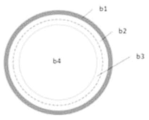
- the device schematic diagram shows the immunoisolation layer formed into a bag shape (FIG. 1) or a tube shape (FIG. 2).
- the bag-like device ( Figure 1) consists of multiple layers of immunoisolation layers (a1 and a2) shown below, which are separated by a certain distance (a4) and subjected to heat and ultraviolet treatment in order to secure a space for encapsulating cell aggregates. It is formed by welding (a3) using sonic waves, high frequencies, electron beams, etc. A spacer may be provided to ensure a certain distance (a4).
- the tubular device (Fig. 2) is composed of each immunoisolation layer (b1, b2, b3) formed into a tubular shape, a cell aggregate is enclosed in the tubular interior (b4), and both ends of the tubular are heated and heated. It is molded by welding and sealing using sound waves, high frequencies, electron beams, etc.
- the device conceptually has a bag-like or tubular shape, and a transplant target such as cells or cell masses is enclosed as a cell aggregate inside the device.
- FIG. 3 is a conceptual diagram of a cell sheet. It is composed of cells (11), which are the transplant recipient, and an extracellular matrix (10).
- FIG. 4 is a conceptual diagram of an immunoisolation device encapsulating a cell sheet.
- a conceptual diagram of a cell sheet (14) prepared using transplanted cells or cell aggregates inserted into a device is shown.
- the immunoisolation device is made in the form of a pouch using a multi-layer immunoisolation layer in which the outermost layer is a porous membrane (12) and the innermost layer is a hydrogel (13).
- the porous membrane is preferably made of ethylene vinyl alcohol copolymer or the like.
- the hydrogel for the innermost layer polyvinyl alcohol or the like is preferable.
- the immunoisolation layer shown in FIGS. 5 and 6 is composed of a combination of the following materials.
- the outermost layer contacts the recipient's transplant site tissue, and the innermost layer contacts the cell aggregate.
- These immunoisolation layers are formed into a bag shape ( Figure 1) or a tube shape ( Figure 2), and a cell aggregate with fixed cells and/or cell aggregates as a transplant object is enclosed inside, and immunoisolation is performed. device.
- Figure 5 shows a multilayer immunoisolation layer of a porous membrane (15) and a hydrogel (17).
- the hydrogel (17) is formed by coating or impregnating (16) on the porous membrane (15), the outermost layer surface (18) is composed of the porous membrane, and the innermost layer surface (19) is the hydrogel Consists of.
- Figure 6 shows a multilayer immunoisolation layer of fibrous structure (20) and hydrogel (21).
- the hydrogel (21) is formed by coating or impregnating the fiber structure (20), the outermost layer surface (22) is made of the fiber structure, and the innermost layer surface (23) is made of the hydrogel. .
- a porous membrane formed using ethylene vinyl alcohol copolymer (hereinafter referred to as EVOH) and a hydrogel whose main component is methacryloyl group-modified polyvinyl alcohol (hereinafter referred to as MA-PVA) were multilayered in the following procedure.
- EVOH ethylene vinyl alcohol copolymer
- MA-PVA methacryloyl group-modified polyvinyl alcohol
- a hydrogel was formed on the porous membrane by irradiating it with 365 nm light at an intensity of 15 mW/cm 2 for 3 minutes with the sol side facing up, thereby producing a multilayer immunoisolation layer.
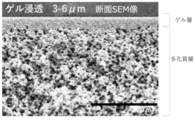
- a SEM image of the cross section of the obtained multilayer immunoisolation layer is shown in FIG. It was found that the hydrogel penetrated into the porous membrane to a depth of about 3 to 6 ⁇ m.
- Collagen which is a cell adhesion protein, was immobilized (covalently bonded) on the surface of the hydrogel for the multilayer immunoisolation layer using the following procedure.
- 20 multilayer immunoisolation layers (size 24 mm x 32 mm) were prepared by forming MA-PVA hydrogel on one side of an EVOH porous membrane.
- 20 mL of MES (2-morpholinoethanesulfonic acid) buffer was placed in a petri dish, and the multilayer immunoisolation layer from (1) was immersed therein, followed by shaking at 100 rpm for 30 minutes.
- the NHS/WSC solution was removed from the petri dish, and the multilayer immunoisolation layer was immersed in 20 mL of MES buffer, and washed with shaking at room temperature.
- a collagen solution Cell Matrix (registered trademark) Type IC, Nitta Gelatin Co., Ltd.
- the multilayer immunoisolation layer was immersed in 20 mL of this solution and shaken at 100 rpm for 20 hours at room temperature.
- the multilayer immunoisolation layer was taken out, immersed in 20 mL of distilled water, and washed by shaking at 100 rpm for 5 minutes at room temperature.
- Co-cultured cell sheet (circular 8 mm diameter, thickness (approximately 100 ⁇ m) was produced using the following procedure. (1) 45 ⁇ 10 4 iGL cells and 40 ⁇ 10 4 hASCs were seeded in a temperature-responsive culture dish (12-well multiwell “Upcell (registered trademark)”; manufactured by Cell Seed Co., Ltd.), and incubated in a 37°C incubator for 24 hours. Cultured for hours. (2) Thereafter, the temperature-responsive culture dish was taken out of the incubator and left to stand at room temperature of about 20°C for 10 minutes to peel off the cells that had adhered and spread on the bottom of the culture dish to obtain a co-cultured cell sheet.
- a temperature-responsive culture dish (12-well multiwell “Upcell (registered trademark)”; manufactured by Cell Seed Co., Ltd.
- iGL cells are cells whose parent strain is the rat pancreatic ⁇ cell line INS-1E, into which a fusion protein of insulin and secretory Gaussia luciferase has been inserted, and which react with the luminescent substrate coelenterazine (CTZ) and emit light. Insulin release ability can be measured based on this luminescence intensity.
- CTZ luminescent substrate coelenterazine
- ⁇ Preparation of immunoisolation device Encapsulation of cell sheet in immunoisolation layer> [Example 1]
- the cell sheet prepared in Production Example 4 was placed on the center of a collagen sponge ("Pernac” (registered trademark), product number PN-S82060, manufactured by Gunze Co., Ltd.) cut into 1 cm square pieces, and this collagen sponge was placed in the center of the collagen sponge prepared in Production Example 2.
- a strip-shaped cell sheet encapsulation device with a size of 2 cm x 3 cm was obtained by sandwiching the fabricated multilayer immunoisolation layer and processing the periphery of the multilayer immunoisolation layer into a pouch shape using heat sealing. Created.
- the multi-layer immunoisolation layer is prepared with the MA-PVA hydrogel side and the EVOH porous membrane side facing the cell sheet (the EVOH porous membrane faces the surface of the device). (so that it is exposed).
- a conceptual diagram of the device is shown in FIG. Note that the broken line in FIG. 9 means that a part of the device is omitted.
- the cell sheet encapsulation device produced in Example 1 was transplanted to SD rats (wild rats with immune function), and the immunoisolation performance was confirmed by cell engraftment and survival.
- 1) Immunoisolation Device Transplantation The rat's abdomen was opened, and a cell sheet encapsulation device was inserted between the hepatic lobes of the liver and fixed using fibrin glue (trade name: Volheal Tissue Adhesion, manufactured by KM Biologics).
- fibrin glue trade name: Volheal Tissue Adhesion, manufactured by KM Biologics.
- the cell sheet supernatant had a luminescence intensity of iGL cells that was predominantly correlated with insulin release ability.
- Example 2 The cell sheet prepared in Production Example 4 was placed on the collagen-immobilized hydrogel surface of the multilayer immunoisolation layer prepared in Production Example 3, placed in a 60 mm dish, and cultured in a medium ("DMEM/F12 GlutaMAX"). 5 mL of Thermo Fisher Scientific Co., Ltd.) was injected. This 60 mm dish was placed in a 37° C. incubator, and 24 hours later, it was taken out and visually observed, and it was found that the cell sheet had adhered to the surface of the multilayer immunoisolation layer.
- a medium (“DMEM/F12 GlutaMAX"
- the present invention relates to a transplant device used in cell transplantation therapy, etc., and particularly relates to an immunoisolation device for protecting a transplant recipient from immune rejection.
- the immunoisolation device is primarily intended to be used for cell transplantation treatment as a regenerative medicine product, it can also be applied to the transplantation of physiologically active substances other than cells, such as enzymes, hormones, and drugs.
Landscapes
- Health & Medical Sciences (AREA)
- Chemical & Material Sciences (AREA)
- Life Sciences & Earth Sciences (AREA)
- Medicinal Chemistry (AREA)
- Transplantation (AREA)
- Chemical Kinetics & Catalysis (AREA)
- Veterinary Medicine (AREA)
- Public Health (AREA)
- General Health & Medical Sciences (AREA)
- Oral & Maxillofacial Surgery (AREA)
- Animal Behavior & Ethology (AREA)
- Dermatology (AREA)
- Epidemiology (AREA)
- Dispersion Chemistry (AREA)
- Polymers & Plastics (AREA)
- Organic Chemistry (AREA)
- Engineering & Computer Science (AREA)
- Biomedical Technology (AREA)
- Botany (AREA)
- Molecular Biology (AREA)
- General Chemical & Material Sciences (AREA)
- Cardiology (AREA)
- Heart & Thoracic Surgery (AREA)
- Vascular Medicine (AREA)
- Materials For Medical Uses (AREA)
- Medicines Containing Material From Animals Or Micro-Organisms (AREA)
- Micro-Organisms Or Cultivation Processes Thereof (AREA)
Priority Applications (4)
| Application Number | Priority Date | Filing Date | Title |
|---|---|---|---|
| US18/860,198 US20250276111A1 (en) | 2022-04-28 | 2023-04-27 | Immunoisolation device |
| CN202380050672.0A CN119451708A (zh) | 2022-04-28 | 2023-04-27 | 免疫隔离装置 |
| EP23796510.8A EP4516330A4 (en) | 2022-04-28 | 2023-04-27 | Immuno-Isolation Device |
| JP2024518051A JPWO2023210775A1 (https=) | 2022-04-28 | 2023-04-27 |
Applications Claiming Priority (2)
| Application Number | Priority Date | Filing Date | Title |
|---|---|---|---|
| JP2022-075135 | 2022-04-28 | ||
| JP2022075135 | 2022-04-28 |
Publications (1)
| Publication Number | Publication Date |
|---|---|
| WO2023210775A1 true WO2023210775A1 (ja) | 2023-11-02 |
Family
ID=88518864
Family Applications (1)
| Application Number | Title | Priority Date | Filing Date |
|---|---|---|---|
| PCT/JP2023/016742 Ceased WO2023210775A1 (ja) | 2022-04-28 | 2023-04-27 | 免疫隔離デバイス |
Country Status (5)
| Country | Link |
|---|---|
| US (1) | US20250276111A1 (https=) |
| EP (1) | EP4516330A4 (https=) |
| JP (1) | JPWO2023210775A1 (https=) |
| CN (1) | CN119451708A (https=) |
| WO (1) | WO2023210775A1 (https=) |
Citations (3)
| Publication number | Priority date | Publication date | Assignee | Title |
|---|---|---|---|---|
| JP2016123326A (ja) * | 2014-12-26 | 2016-07-11 | 大日本印刷株式会社 | 収容構造を有する細胞構造体 |
| JP2021003527A (ja) * | 2019-06-27 | 2021-01-14 | 株式会社日立製作所 | 生体親和性多孔質膜、バイオカプセルデバイスおよび生体親和性多孔質膜の製造方法 |
| JP2022075135A (ja) | 2020-11-06 | 2022-05-18 | 株式会社アイシン | センサモジュール |
Family Cites Families (4)
| Publication number | Priority date | Publication date | Assignee | Title |
|---|---|---|---|---|
| ATE156344T1 (de) * | 1991-04-25 | 1997-08-15 | Univ Brown Res Found | Implantierbare, biokompatible immunisolator- trägersubstanz zum abgeben ausgesuchter, therapeutischer produkte |
| EP3297693A1 (en) * | 2015-05-17 | 2018-03-28 | Massachusetts Institute of Technology | Multi-layer hydrogel capsules for encapsulation of cells and cell aggregates |
| JP6920681B2 (ja) * | 2016-04-27 | 2021-08-18 | 株式会社クラレ | 移植用デバイス及びその製造方法並びにバイオ人工臓器の製造方法 |
| EP4041127B1 (en) * | 2019-10-10 | 2025-11-26 | W. L. Gore & Associates, Inc. | Cell encapsulation devices |
-
2023
- 2023-04-27 US US18/860,198 patent/US20250276111A1/en active Pending
- 2023-04-27 JP JP2024518051A patent/JPWO2023210775A1/ja active Pending
- 2023-04-27 CN CN202380050672.0A patent/CN119451708A/zh active Pending
- 2023-04-27 WO PCT/JP2023/016742 patent/WO2023210775A1/ja not_active Ceased
- 2023-04-27 EP EP23796510.8A patent/EP4516330A4/en active Pending
Patent Citations (3)
| Publication number | Priority date | Publication date | Assignee | Title |
|---|---|---|---|---|
| JP2016123326A (ja) * | 2014-12-26 | 2016-07-11 | 大日本印刷株式会社 | 収容構造を有する細胞構造体 |
| JP2021003527A (ja) * | 2019-06-27 | 2021-01-14 | 株式会社日立製作所 | 生体親和性多孔質膜、バイオカプセルデバイスおよび生体親和性多孔質膜の製造方法 |
| JP2022075135A (ja) | 2020-11-06 | 2022-05-18 | 株式会社アイシン | センサモジュール |
Non-Patent Citations (1)
| Title |
|---|
| See also references of EP4516330A4 |
Also Published As
| Publication number | Publication date |
|---|---|
| CN119451708A (zh) | 2025-02-14 |
| EP4516330A1 (en) | 2025-03-05 |
| JPWO2023210775A1 (https=) | 2023-11-02 |
| EP4516330A4 (en) | 2025-11-26 |
| US20250276111A1 (en) | 2025-09-04 |
Similar Documents
| Publication | Publication Date | Title |
|---|---|---|
| Razavi et al. | Three‐dimensional cryogels for biomedical applications | |
| Drachuk et al. | Biomimetic coatings to control cellular function through cell surface engineering | |
| An et al. | Developing robust, hydrogel-based, nanofiber-enabled encapsulation devices (NEEDs) for cell therapies | |
| ES2856873T3 (es) | Biomaterial multicapa para la regeneración de tejidos y la cicatrización de las heridas | |
| CN102858380B (zh) | 胰岛细胞片、制造方法及其利用方法 | |
| Nayak et al. | Silk sericin–alginate–chitosan microcapsules: Hepatocytes encapsulation for enhanced cellular functions | |
| Watanabe et al. | Millimeter-thick xenoislet-laden fibers as retrievable transplants mitigate foreign body reactions for long-term glycemic control in diabetic mice | |
| US20140212484A1 (en) | Multilayered polyelectrolyte-based capsules for cell encapsulation and delivery of therapeutic compositions | |
| CA2500410A1 (en) | Programmable scaffold and methods for making and using the same | |
| CN110418835B (zh) | 细胞或组织包埋装置 | |
| US20150250827A1 (en) | Bio-mimetic ultrathin hydrogel coatings for pancreatic islet transplantation | |
| Rim et al. | Characterization of gelatin/gellan gum/glycol chitosan ternary hydrogel for retinal pigment epithelial tissue reconstruction materials | |
| Anton-Sales et al. | Bacterial nanocellulose and titania hybrids: cytocompatible and cryopreservable cell carriers | |
| CN110418635A (zh) | 细胞或组织包埋装置 | |
| JP6920681B2 (ja) | 移植用デバイス及びその製造方法並びにバイオ人工臓器の製造方法 | |
| Waheed et al. | Cell Encapsulation 12 | |
| WO2022092198A1 (ja) | 免疫隔離デバイス | |
| WO2023210775A1 (ja) | 免疫隔離デバイス | |
| JP2022524955A (ja) | 細胞カプセル化デバイスおよびそれを使用する方法 | |
| US20210316043A1 (en) | Cell transplantation kit, method for producing sac-shaped structure, and therapeutic agent for diabetes | |
| US20230302204A1 (en) | Hydrogel for cell embedding, immunoisolation device, and transplant material | |
| US20250170572A1 (en) | Immunoisolation device | |
| JP2025500494A (ja) | 免疫防護型の植込み可能な細胞送達デバイス | |
| US20220275342A1 (en) | Dissolvable and degradable artificial circulation systems for large volume tissues | |
| JP2022071773A (ja) | 血管新生を惹起することができる免疫隔離デバイス |
Legal Events
| Date | Code | Title | Description |
|---|---|---|---|
| 121 | Ep: the epo has been informed by wipo that ep was designated in this application |
Ref document number: 23796510 Country of ref document: EP Kind code of ref document: A1 |
|
| ENP | Entry into the national phase |
Ref document number: 2024518051 Country of ref document: JP Kind code of ref document: A |
|
| WWE | Wipo information: entry into national phase |
Ref document number: 2023796510 Country of ref document: EP |
|
| NENP | Non-entry into the national phase |
Ref country code: DE |
|
| ENP | Entry into the national phase |
Ref document number: 2023796510 Country of ref document: EP Effective date: 20241128 |
|
| WWE | Wipo information: entry into national phase |
Ref document number: 202380050672.0 Country of ref document: CN |
|
| WWP | Wipo information: published in national office |
Ref document number: 202380050672.0 Country of ref document: CN |
|
| WWP | Wipo information: published in national office |
Ref document number: 18860198 Country of ref document: US |