WO2023199764A1 - 遠隔制御方法、処理装置、および非一時的なコンピュータ可読媒体 - Google Patents
遠隔制御方法、処理装置、および非一時的なコンピュータ可読媒体 Download PDFInfo
- Publication number
- WO2023199764A1 WO2023199764A1 PCT/JP2023/013608 JP2023013608W WO2023199764A1 WO 2023199764 A1 WO2023199764 A1 WO 2023199764A1 JP 2023013608 W JP2023013608 W JP 2023013608W WO 2023199764 A1 WO2023199764 A1 WO 2023199764A1
- Authority
- WO
- WIPO (PCT)
- Prior art keywords
- user
- test data
- remote control
- mobile device
- alcohol
- Prior art date
- Legal status (The legal status is an assumption and is not a legal conclusion. Google has not performed a legal analysis and makes no representation as to the accuracy of the status listed.)
- Ceased
Links
Images




Classifications
-
- E—FIXED CONSTRUCTIONS
- E05—LOCKS; KEYS; WINDOW OR DOOR FITTINGS; SAFES
- E05B—LOCKS; ACCESSORIES THEREFOR; HANDCUFFS
- E05B49/00—Electric permutation locks; Circuits therefor ; Mechanical aspects of electronic locks; Mechanical keys therefor
Definitions
- the present disclosure relates to a method for remotely controlling the operation of a controlled device.
- the present disclosure also relates to a processing device that remotely controls the operation of a controlled device, and a non-transitory computer-readable medium storing a computer program executable by a processor installed in the processing device.
- European Patent Application Publication No. 3418985 discloses a housing device that is placed in a vehicle interior that is opened and closed by a vehicle door.
- the housing device includes a storage section, a communication section, and an actuator.
- the storage unit stores an electronic key as an example of a wireless communication device.
- An electronic key is a device that allows a locking/unlocking device mounted on the vehicle to unlock a door through wireless communication when a specific operation is performed.
- the communication unit receives an unlocking instruction from a mobile device that can be carried by a user, the actuator performs the above-mentioned specific operation on the electronic key.
- the operation of the locking/unlocking device can be remotely controlled from outside the vehicle through a mobile device while the electronic key remains in the vehicle.
- One example aspect provided by the present disclosure is a method for remotely controlling the operation of a controlled device based on instructions transmitted from a mobile device that is portable by a user, the method comprising: causing a processing device to receive test data indicating whether the user is under the influence of alcohol through wireless communication; If the test data indicates that the user is intoxicated, causing the processing device to override the instruction.
- One example embodiment provided by the present disclosure is a processing device that includes: an interface that accepts test data indicating whether the user is under the influence of alcohol through wireless communication; disabling remote control of the operation of the controlled device based on instructions transmitted from a portable mobile device by the user if the test data indicates that the user is acting under the influence of alcohol; a processor; It is equipped with
- One of the embodiments provided by the present disclosure is a non-transitory computer-readable medium storing a computer program executable by a processor installed in a processing device, the medium comprising: By being executed, the processing device: Accepts test data indicating whether the user is under the influence of alcohol via wireless communication, If the test data indicates that the user is intoxicated, disabling remote control of the operation of the controlled device based on instructions transmitted from a portable mobile device by the user.
- the results of an alcohol test can be linked to the mobile device.
- use of the controlled device by a user who is under the influence of alcohol can be restricted.
- a high degree of freedom can be secured regarding the location of alcohol testing and the location of processing equipment.
- FIG. 1 illustrates a configuration of a remote control system according to an embodiment.
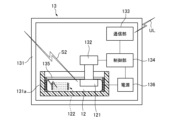
- An example of the configuration of the housing device in FIG. 1 is shown.
- An example of the operation of the housing device of FIG. 2 is shown.
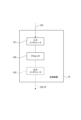
- 2 illustrates an example of the configuration of the processing device in FIG. 1.
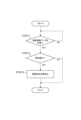
- FIG. 5 shows an example of the flow of processing executed by the processor of FIG. 4.
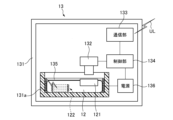
- An example of the configuration of the housing device in FIG. 1 is shown.
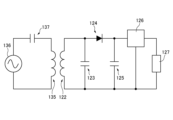
- the circuit configuration of the wireless power supply system in FIG. 6 is illustrated.
- An example of the operation of the housing device of FIG. 6 is shown.
- An example of the operation of the housing device of FIG. 6 is shown.
- 5 shows another example of the flow of processing executed by the processor of FIG. 4.
- FIG. 1 illustrates the configuration of a remote control system 10 according to an example embodiment.
- the scale is changed as appropriate to make each illustrated element recognizable in size.
- the remote control system 10 includes a mobile device 11.
- Mobile device 11 is a device that can be carried by user 20 .
- An example of the mobile device 11 is a general-purpose portable information terminal such as a smartphone.
- the remote control system 10 includes an electronic key 12.
- Electronic key 12 is also a device that can be carried by user 20.
- the electronic key 12 is a wireless communication device that allows a control device 31 mounted on the vehicle 30 to control the operation of the locking/unlocking device 32 based on first wireless communication.
- the locking and unlocking device 32 is a device that locks and unlocks a door 34 that opens and closes a compartment 33 of the vehicle 30.
- the vehicle 30 is an example of a moving object.
- the lock/unlock device 32 is an example of a controlled device.
- the door 34 is an example of an opening/closing body.
- the vehicle compartment 33 is an example of a space that is opened and closed by an opening/closing body.
- the first wireless communication includes transmission and reception of a first signal S1 using a first frequency band and a second signal S2 using a second frequency band.
- the first frequency band and the second frequency band are different.
- An example of the first frequency band is a long wave (LF) band.
- An example of the second frequency band is the ultra high frequency (UHF) band.
- the electronic key 12 outputs information necessary for controlling the lock/unlock device 32.
- the first signal S1 is transmitted through a communication device placed at an appropriate location in the vehicle 30.
- the first signal S1 may be transmitted continuously or intermittently.
- the electronic key 12 includes a communication device including an antenna capable of receiving a first signal S1 and transmitting a second signal S2.
- the electronic key 12 is configured to transmit a second signal S2 upon receiving the first signal S1.
- the second signal S2 is configured to include authentication information necessary for authenticating the electronic key 12.
- the authentication information is information that can identify at least one of the electronic key 12 and the user 20.
- the control device 31 is configured to execute the authentication process when receiving the second signal S2 through a communication device placed at an appropriate location in the vehicle 30. Specifically, the control device 31 is configured to check the authentication information included in the second signal S2 with the authentication information of the electronic key 12 stored in advance in a storage device (not shown). If the degree of coincidence of both pieces of information exceeds the threshold, the control device 31 determines that the electronic key 12 has been authenticated.
- the control device 31 is configured to output a control signal CS that causes the lock/unlock device 32 to perform a lock/unlock operation when it is determined that the electronic key 12 has been authenticated.
- the lock/unlock device 32 may be configured to lock/unlock the door 34 when the user 20 touches a touch sensor provided on the door handle after the electronic key 12 has been authenticated.
- the electronic key 12 is authenticated through the first wireless communication. Once the authentication is successful, the user 20 can lock and unlock the door 34 without inserting a key into a key cylinder and turning it.
- the remote control system 10 includes a housing device 13.
- the housing device 13 is configured to be installed at an appropriate location within the cabin 33 of the vehicle 30.
- the location may include a space for accommodating a glove box, an accessory box, etc. installed in the vehicle compartment 33.
- the housing device 13 is configured to be able to store the electronic key 12. That is, the electronic key 12 can be placed inside the vehicle compartment 33.
- the housing device 13 includes a housing 131.
- the housing 131 is made of a material through which at least the second signal S2 can pass.
- the housing 131 has a storage section 131a in which the electronic key 12 is stored.
- the housing device 13 includes an actuator 132.
- the actuator 132 is configured to be able to operate the movable part 121 of the electronic key 12 stored in the storage part 131a.
- the electronic key 12 is configured to transmit a second signal S2 when a predetermined operation is performed on the movable part 121, regardless of the receiving state of the first signal S1.
- the movable part 121 may be realized by a button, a lever, or the like.
- the actuator 132 may be realized by a solenoid, a cam mechanism, a rack and pinion mechanism, or the like.
- An example of the operation of the movable part 121 for causing the electronic key 12 to transmit the second signal S2 is a repeated pressing operation N times.
- the housing device 13 includes a communication section 133.
- the communication unit 133 includes an antenna for performing second wireless communication with the mobile device 11.
- the second wireless communication is short range wireless communication.
- short-range wireless communication means wireless communication performed in accordance with the standard IEEE802.15 or IEEE802.11. Technologies that can perform such wireless communications include Bluetooth (registered trademark), Bluetooth Low Energy (registered trademark), ZigBee (registered trademark), Wi-Fi (registered trademark), and UWB (Ultra Wide Band). It will be done. "Short-range wireless communication” in this specification is distinguished from “proximity wireless communication” which uses non-contact communication technology in which a mobile device transmits information by obtaining minute power from radio waves transmitted from a reading device. . Examples of technologies that can perform close proximity wireless communication include RF-ID and NFC.
- the user 20 who wishes to unlock the door 34 of the vehicle 30 with the electronic key 12 stored in the housing device 13 inputs a predetermined operation to the mobile device 11 .
- the operation input may be performed by operating a switch or a switch image, inputting a voice instruction, inputting a gesture, or the like.
- the mobile device 11 is configured to transmit an unlock signal UL based on the predetermined operation.
- the housing device 13 includes a control section 134.
- the control unit 134 is configured to be able to control the operation of the actuator 132. Specifically, as illustrated in FIG. 3, when the communication unit 133 receives the unlock signal UL, the control unit 134 controls the movable unit 121 to cause the electronic key 12 to transmit the second signal S2. It is configured to cause the actuator 132 to perform the operation. That is, when the communication unit 133 receives the unlock signal UL, the electronic key 12 transmits the second signal S2.
- the control unit 134 having the above functions can be realized by an integrated circuit element such as a microcontroller, ASIC, or FPGA.
- the second signal S2 transmitted from the electronic key 12 is received by the control device 31 mounted on the vehicle 30. As described above, upon receiving the second signal S2, the control device 31 performs the authentication process of the electronic key 12. When the authentication process is completed, the control device 31 outputs a control signal CS that causes the lock/unlock device 32 to unlock the door 34.
- the door 34 can be unlocked.
- the user 20 can unlock the door 34 from outside the vehicle interior 33 by performing a predetermined operation on the mobile device 11 without carrying the electronic key 12.
- the remote control system 10 includes an alcohol detector 14.
- the alcohol detector 14 is a device that detects the alcohol concentration contained in the user's breath.
- the alcohol detector 14 is configured to output test data CK indicating whether the user is under the influence of alcohol, based on the detected alcohol concentration.
- the test data CK may be in the form of analog data or digital data. If the alcohol concentration contained in the user's exhaled breath is equal to or higher than the threshold value, the user is considered to be under the influence of alcohol.
- the test data CK may include the detected alcohol concentration itself as information, or may include information indicating whether or not the person is under the influence of alcohol.
- the remote control system 10 includes a processing device 15.
- the processing device 15 is installed in the mobile device 11.
- the processing device 15 includes an input interface 151.
- the input interface 151 is configured as a hardware interface that receives test data CK from the alcohol detector 14 via wireless communication. However, there is no intention to exclude a configuration in which the test data CK is exchanged through a wired connection between the mobile device 11 and the alcohol detector 14.
- the input interface 151 includes an appropriate conversion circuit including an A/D converter.
- FIG. 1 a configuration is illustrated in which the processing device 15 receives test data CK from the alcohol detector 14 via the wireless communication network 40.
- the wireless communication network 40 is a network that enables wireless communication in accordance with standards such as LTE (Long Term Evolution), 4G, 5G, and Wi-Fi (registered trademark).
- the test data CK may be sent and received from the alcohol detector 14 to the processing device 15 through the aforementioned short-range wireless communication or close proximity wireless communication.
- the processing device 15 includes a processor 152.
- the processor 152 is configured to determine, based on the test data CK, whether to disable the unlocking operation of the locking/unlocking device 23 based on the unlocking signal UL transmitted from the mobile device 11.
- the processor 152 determines whether the test data CK has been accepted by the input interface 151 (STEP 11). The process is repeated until it is determined that the test data CK has been accepted (NO in STEP 11). That is, if the user 20 has not taken an alcohol test, it is not possible to proceed to the subsequent process for unlocking the door 34.
- the processor 152 determines whether the user 20 is under the influence of alcohol based on the test data CK (STEP 12). When the test data CK indicates a detected alcohol concentration value, the determination is made based on whether the value is greater than or equal to a predetermined threshold. If the test data CK already includes information on whether the person is under the influence of alcohol, the determination is made by referring to the information.
- the processor 152 performs processing to invalidate the unlock instruction (STEP 13). For example, the processor 152 sets identification information indicating unlocking invalidity in a predetermined storage area. The identification information is referred to when a predetermined operation for outputting the unlock signal UL is performed on the mobile device 11. The process then ends.
- the mobile device 11 is configured not to transmit an unlocking signal UL even if an operation for instructing unlocking is performed when identification information indicating invalidation of unlocking is set. Therefore, the communication unit 133 of the housing device 13 cannot receive the unlocking signal UL, and the actuator 132 for operating the movable part 121 of the electronic key 12 does not operate. As a result, the door 34 is not unlocked by the lock/unlock device 32.
- the mobile device 11 may be configured not to accept an operation for instructing unlocking if identification information indicating invalidation of unlocking is set.
- the expression "invalidating the unlocking instruction" used in this specification may also include such cases.
- the processor 152 ends the process without performing the invalidation process in STEP 13.
- an unlocking signal UL is transmitted from the mobile device 11 in response to an operation input for an unlocking instruction.
- the control unit 134 activates the actuator 132 to operate the electronic key 12, and the lock/unlock device 32 unlocks the door 34.
- the results of the test performed by the breathalyzer 14 can be linked to the mobile device 11, so that the use of the vehicle 30 by the user 20 who is under the influence of alcohol can be alleviated while easing restrictions on the location of the breathalyzer test. can be restricted.
- FIG. 6 shows another configuration example of the electronic key 12 and the housing device 13. Elements that are the same as those in the example shown in FIG. 2 are given the same reference numerals, and repeated explanations will be omitted.
- the electronic key 12 is equipped with a first coil 122.
- the first coil 122 is an air-core coil having an axis 122a.
- the first coil 122 may be housed in the housing of the electronic key 12 instead of the battery 120 illustrated in FIG. 2 .
- the housing device 13 includes a second coil 135.
- the second coil 135 is an air-core coil having an axis 135a.
- the second coil 135 is arranged to surround the first coil 122 of the electronic key 12 stored in the storage section 131a.
- the second coil 135 surrounds the first coil 122
- the expression “the second coil 135 surrounds the first coil 122" used in this specification means that at least the first coil 122 and the second coil 135 are This means that some parts overlap.
- the housing device 13 includes a power source 136.
- Power source 136 is an AC power source.
- the operating frequency of the power supply 136 is set to be different from the frequency of the first signal S1 and the frequency of the second signal S2, and so as not to affect the frequency of the first signal S1 and the frequency of the second signal S2. determined. For example, frequencies that are multiples of the frequency of the first signal S1 and the frequency of the second signal S2 are not used.
- the power supply 136 forms a primary side wireless power supply circuit together with the second coil 135 and the capacitor 137.
- the second coil 135 and the capacitor 137 form an LC series resonant circuit.
- the first coil 122 forms a secondary side wireless power supply circuit together with a capacitor 123, a diode 124, and a capacitor 125.
- the first coil 122 and the capacitor 123 form a resonant loop circuit.
- Diode 124 is provided to perform half-way rectification.
- Capacitor 125 is provided for smoothing.
- control unit 134 is configured to cause the power supply 136 to supply power to the second coil 135 when the communication unit 133 receives the unlock signal UL.
- the control unit 134 is configured to cause the power supply 136 to supply power to the second coil 135 when the communication unit 133 receives the unlock signal UL.
- the electronic key 12 is equipped with a voltage regulator 126.
- the voltage regulator 126 is configured to limit the power generated in the first coil 122 by wireless power supply to a predetermined value and supply it to the load 127.
- Load 127 includes elements necessary for transmitting second signal S2.
- the vehicle 30 is equipped with a starting device 35.
- the starting device 35 is a device that starts the drive source of the vehicle 30.
- the drive source may include at least one of an internal combustion engine and an electric motor.
- the electronic key 12 can also be used to cause the control device 31 to control the operation of the starter device 35.
- the starting device 35 is an example of a controlled device.
- the first signal S1 may be transmitted from a communication device installed at an appropriate location in the vehicle 30.
- the electronic key 12 receives this first signal S1, it transmits a second signal S2 as a response.
- this second signal S2 is received by the control device 31, the electronic key 12 is authenticated as described above.
- the control device 31 is configured to output a control signal CS that starts the drive source to a starter 35 mounted on the vehicle 30. It can be done.
- the control unit 134 is configured to stop feeding power from the power source 136 to the second coil 135 when a predetermined length of time has elapsed after transmitting the second signal S2. That is, when a predetermined length of time has elapsed after the door 34 was unlocked, the second signal S2 cannot be transmitted. As a result, the driving source cannot be started by the starting device 35. In other words, remote control of the operation of the starter 35 is permitted only while wireless power is being supplied to the electronic key 12.
- the starter device 35 In order to make the starter device 35 operational again, it is necessary to issue a power supply instruction using the mobile device 11. Specifically, when the user 20 inputs a predetermined operation to the mobile device 11, the power supply signal PS is transmitted from the mobile device 11.
- the control unit 134 is configured to cause the power supply 136 to start supplying power to the second coil 135 when the communication unit 133 receives the power supply signal PS.
- FIG. 10 shows another example of the flow of processing performed by the processing device 15 on the electronic key 12 and the housing device 13 according to this example. Processing elements that are the same as those in the example shown in FIG. 5 are given the same reference numerals, and repeated explanations will be omitted.
- the processor 152 when it is determined that the user 20 is under the influence of alcohol (YES in STEP 12), the processor 152 performs processing to invalidate the power supply instruction (STEP 23). For example, the processor 152 sets identification information indicating that power supply is disabled in a predetermined storage area. The identification information is referred to when a predetermined operation for outputting the power supply signal PS is performed on the mobile device 11. The process then ends.
- the mobile device 11 is configured not to transmit the power supply signal PS even if an operation for instructing power supply is performed when identification information indicating that power supply is disabled is set. Therefore, the communication unit 133 of the housing device 13 cannot receive the power supply signal PS, and the electronic key 12 does not start. As a result, the starter 35 cannot be activated.
- the mobile device 11 may be configured not to accept an operation for instructing power supply when identification information indicating that power supply is disabled is set.
- the expression "invalidating the power supply instruction" used in this specification may also include such cases.
- the processor 152 ends the process without performing the invalidation process in STEP 23.
- the power supply signal PS is transmitted from the mobile device 11 in response to the operation input for instructing power supply.
- the control unit 134 activates the electronic key 12 through wireless power supply, and the starting device 35 is permitted to start.
- the test results from the breathalyzer 14 can be linked to the mobile device 11, so while allowing entry into the vehicle interior 33, the use of the vehicle 30 by the user 20 who is under the influence of alcohol is prohibited. can be restricted.
- the power supply to the electronic key 12 is not limited to the wireless power supply described with reference to FIGS. 6 to 9.
- a configuration may also be adopted in which the operation of a switching element that can switch between enabling and disabling power supply from the battery 120 to the electronic key 12 is controlled by magnetic force. Examples of such devices include magnetic sensors and magnetic reed switches.
- the alcohol detector 14 may be provided within the vehicle interior 33. In this case, wireless power supply to the electronic key 12 is stopped while the alcohol test is being performed. If it is determined that the user 20 is under the influence of alcohol based on the test data CK acquired in the vehicle compartment 33, the transmission of the power supply signal PS from the mobile device 11 is disabled in the same manner as described above.
- the mobile device 11 includes a display device 111.
- the processor 152 of the processing device 15 may be configured to display information included in the test data CK on the display device 111 when invalidating the instruction to operate the controlled device based on the test data CK.
- the processing device 15 includes an output interface 153.
- the processor 152 outputs, from the output interface 153, a display control signal DS that causes the display device 111 to display the fact that the user 20 is under the influence of alcohol, the detected alcohol concentration, and the like. That is, the output interface 153 is configured as a hardware interface that can output the invalidation signal IV.
- a configuration may also be adopted in which information included in the test data CK is displayed on the display device 111 even if it is determined that the user 20 is not under the influence of alcohol based on the test data CK.
- the processor 152 of the processing device 15 having the various functions described above can be realized by a general-purpose microprocessor that operates in cooperation with a general-purpose memory.
- general-purpose microprocessors include CPUs, MPUs, and GPUs.
- general-purpose memory include ROM and RAM.
- the ROM may store a computer program that executes the above-described processing.
- ROM is an example of a non-transitory computer-readable medium that stores a computer program.
- the general-purpose microprocessor specifies at least a part of the computer program stored on the ROM, loads it on the RAM, and executes the above-described processing in cooperation with the RAM.
- the computer program described above may be preinstalled in a general-purpose memory, or may be installed in a general-purpose memory after being downloaded from an external server device.
- the external server device is an example of a non-transitory computer-readable medium that stores a computer program.
- the processor 152 may be realized by a dedicated integrated circuit such as a microcontroller, ASIC, or FPGA that is capable of executing the computer program described above. In this case, the above-mentioned computer program is preinstalled in the memory element included in the dedicated integrated circuit.
- the storage element is an example of a non-transitory computer-readable medium that stores a computer program.
- Processor 152 may also be implemented by a combination of a general purpose microprocessor and a special purpose integrated circuit.
- the processing device 15 is installed in the mobile device 11. Since remote control of the controlled device is based on instructions transmitted from the mobile device 11, in this case, the remote control system 10 can be constructed with the minimum number of devices required. However, the remote control system 10 according to the present disclosure can ensure a high degree of freedom regarding the location of the processing device 15.
- the remote control system 10 may include a server device 16.
- the server device 16 is configured to be able to share test data CK with the mobile device 11 via the wireless communication network 40.
- the test data CK may be transmitted from the alcohol detector 14 to the server device 16 via the wireless communication network 40.
- the processing device 15 may be installed in the server device 16.
- the test data CK transmitted from the mobile device 11 or the alcohol detector 14 is accepted by the input interface 151.
- the processor 152 outputs the invalidation signal IV from the output interface 153. configured to output.
- the invalidation signal IV is transmitted to the mobile device 11 via the wireless communication network 40.
- the invalidation signal IV is configured to disable the mobile device 11 from transmitting the above-described unlock signal UL and power supply signal PS.
- the processing device 15 may be installed in the housing device 13.
- the control section 134 may have the functions of the processing device 15, or a processing device different from the control section 134 may be provided.
- the input interface 151 may receive test data CK from the mobile device 11 or may receive test data CK from the breathalyzer 14 or the server device 16 via a communication device 36 mounted on the vehicle 30 and connectable to the wireless communication network 40 . Data CK may also be received.
- the processor 152 When it is determined that the user 20 carrying the mobile device 11 is under the influence of alcohol based on the test data CK, the processor 152 performs control based on the unlocking signal UL and power supply signal PS received by the communication unit 133.
- the operation of the unit 134 may be disabled, or a disabling signal IV may be sent from the output interface 153 to the mobile device 11.
- the processing device 15 may be installed in the control device 31.
- the input interface 151 may receive the test data CK from the mobile device 11 or the housing device 13, or perform alcohol detection via the communication device 36 mounted on the vehicle 30 and connectable to the wireless communication network 40.
- the test data CK may be received from the device 14 or the server device 16.
- communication between the control device 31 and the housing device 13 may be established by a wireless connection via the communication unit 133, or by an appropriate wired connection. may be established via.
- the display device on which information included in the test data CK is displayed is not limited to the display device 111 of the mobile device 11.
- the information may be displayed on a display device 37 installed in the cabin 33 of the vehicle 30.
- the display device 37 may be placed on the meter panel or center cluster.
- the display device 37 may include a display that displays a screen containing the information, or may include a projection device that projects the information onto the windshield.
- the processor 152 of the processing device 15 outputs a display control signal for displaying the information on the display device from the output interface 153. According to such a configuration, the information can be provided using a display system already installed in the vehicle 30. Since there is no need to add equipment or wiring, it is possible to suppress the increase in costs associated with adding functions.
- an electronic key 12 independent of the mobile device 11 is used to lock and unlock the door 34, and the electronic key 12 is housed in a housing device 13 installed in the vehicle interior 33.
- the mobile device 11 itself may have the function of an electronic key.
- an unlocking signal is sent to the locking/unlocking device 32 to unlock the door 34.
- the UL may be automatically transmitted from the mobile device 11.
- the housing device 13 is not essential.
- the first wireless communication performed between the control device 31 and the electronic key 12 uses different frequency bands.
- the first wireless communication may be performed based on any appropriate wireless communication standard using the same frequency band.
- the second wireless communication performed between the mobile device 11 and the communication unit 133 of the housing device 13 is short-range wireless communication.
- the degree of freedom in arranging the housing device 13 installed in the vehicle compartment 33 can be increased.
- the second wireless communication may be close proximity wireless communication.
- the remote control system 10 can also be applied to other moving objects that require restrictions on use when under the influence of alcohol.
- Examples of other moving objects include trains, aircraft, ships, and the like.
- the types of controlled devices whose use via the mobile device 11 is restricted are determined as appropriate depending on the specifications of the mobile object.
- the door 34 that opens and closes the vehicle interior 33 is exemplified as the opening/closing body that is locked and unlocked by the locking/unlocking device 32.
- the form of the door 34 may be a hinged door as illustrated in FIG. 1, or a sliding door.
- the opening/closing body that opens and closes the vehicle interior 33 may include a sunroof.
- the opening/closing body mounted on the vehicle 30 may include a trunk and a hood. In this case, the housing device 13 may be placed in a space that can be opened and closed by a trunk or hood.
- the opening/closing body that is locked and unlocked by the locking/unlocking device does not necessarily need to be mounted on a moving body. Doors and windows in facilities that require restrictions on use by persons under the influence of alcohol can also be examples of opening/closing objects.
- the types of other controlled devices whose use via the mobile device 11 is restricted are determined as appropriate depending on the specifications of the facility.
Landscapes
- Lock And Its Accessories (AREA)
Abstract
ユーザ(20)により携帯可能なモバイル装置(11)から送信される解錠信号(UL)に基づいて施解錠装置(32)の動作が遠隔制御される。処理装置(15)は、ユーザ(20)が酒気帯びしているかを示す検査データ(CK)を、無線通信を通じて受け付ける。処理装置(15)は、ユーザ(20)が酒気帯びしていることを検査データ(CK)が示している場合、モバイル装置(11)による解錠信号(UL)の送信を不能にする。
Description
本開示は、被制御装置の動作を遠隔制御する方法に関連する。本開示は、被制御装置の動作を遠隔制御する処理装置、および当該処理装置に搭載されたプロセッサにより実行可能なコンピュータプログラムが記憶された非一時的なコンピュータ可読媒体にも関連する。
欧州特許出願公開第3418985号明細書は、車両のドアにより開閉される車室内に配置される筐体装置を開示している。筐体装置は、格納部、通信部、およびアクチュエータを備えている。格納部は、無線通信装置の一例としての電子キーを格納する。電子キーは、特定の操作がなされることにより、無線通信を通じて当該車両に搭載された施解錠装置にドアの施錠を解除させる装置である。ユーザによる携帯が可能であるモバイル装置から通信部が解錠指示を受信すると、アクチュエータは、電子キーに対して上記特定の操作を行なう。これにより、車室内に電子キーを残した状態で、例えば車室外からモバイル装置を通じて施解錠装置の動作を遠隔制御できる。
酒気帯びしたユーザによる被制御装置の使用を制限することが求められている。
本開示により提供される態様例の一つは、ユーザにより携帯可能なモバイル装置から送信される指示に基づいて被制御装置の動作を遠隔制御する方法であって、
前記ユーザが酒気帯びしているかを示す検査データを、処理装置に無線通信を通じて受け付けさせ、
前記ユーザが酒気帯びしていることを前記検査データが示している場合、前記処理装置に前記指示を無効化させる。
前記ユーザが酒気帯びしているかを示す検査データを、処理装置に無線通信を通じて受け付けさせ、
前記ユーザが酒気帯びしていることを前記検査データが示している場合、前記処理装置に前記指示を無効化させる。
本開示により提供される態様例の一つは、処理装置であって、
ユーザが酒気帯びしているかを示す検査データを、無線通信を通じて受け付けるインタフェースと、
前記ユーザが酒気帯びでしていることを前記検査データが示している場合、前記ユーザにより携帯可能なモバイル装置から送信される指示に基づいてなされる被制御装置の動作の遠隔制御を無効化するプロセッサと、
を備えている。
ユーザが酒気帯びしているかを示す検査データを、無線通信を通じて受け付けるインタフェースと、
前記ユーザが酒気帯びでしていることを前記検査データが示している場合、前記ユーザにより携帯可能なモバイル装置から送信される指示に基づいてなされる被制御装置の動作の遠隔制御を無効化するプロセッサと、
を備えている。
本開示により提供される態様例の一つは、処理装置に搭載されたプロセッサにより実行可能なコンピュータプログラムが記憶された非一時的なコンピュータ可読媒体であって、
実行されることにより、前記処理装置は、
ユーザが酒気帯びしているかを示す検査データを、無線通信を通じて受け付け、
前記ユーザが酒気帯びしていることを前記検査データが示している場合、前記ユーザにより携帯可能なモバイル装置から送信される指示に基づいてなされる被制御装置の動作の遠隔制御を無効化する。
実行されることにより、前記処理装置は、
ユーザが酒気帯びしているかを示す検査データを、無線通信を通じて受け付け、
前記ユーザが酒気帯びしていることを前記検査データが示している場合、前記ユーザにより携帯可能なモバイル装置から送信される指示に基づいてなされる被制御装置の動作の遠隔制御を無効化する。
上記の各態様に係る構成によれば、モバイル装置を介して被制御装置の動作を遠隔制御するシステムにおいて、アルコール検査の結果を当該モバイル装置に連携させることができる。結果として、酒気帯びしたユーザによる被制御装置の使用を制限できる。加えて、アルコール検査の場所や処理装置の所在について高い自由度を確保できる。
添付の図面を参照しつつ、実施形態の例について以下詳細に説明する。図1は、一実施形態例に係る遠隔制御システム10の構成を例示している。各図においては、例示される各要素を認識可能な大きさとするために、縮尺を適宜に変更している。
遠隔制御システム10は、モバイル装置11を含んでいる。モバイル装置11は、ユーザ20により携帯可能な装置である。モバイル装置11の例としては、スマートフォンなどの汎用携帯情報端末が挙げられる。
遠隔制御システム10は、電子キー12を含んでいる。電子キー12もまた、ユーザ20による携帯が可能な装置である。電子キー12は、第一無線通信に基づいて車両30に搭載された制御装置31に施解錠装置32の動作制御を行なわせることが可能な無線通信装置である。施解錠装置32は、車両30の車室33を開閉するドア34を施解錠する装置である。
車両30は、移動体の一例である。施解錠装置32は、被制御装置の一例である。ドア34は、開閉体の一例である。車室33は、開閉体により開閉される空間の一例である。
第一無線通信は、第一周波数帯を用いる第一信号S1と第二周波数帯を用いる第二信号S2の送受信を含んでいる。第一周波数帯と第二周波数帯は相違している。第一周波数帯の例としては、長波(LF)帯が挙げられる。第二周波数帯の例としては、極超短波(UHF)帯が挙げられる。換言すると、電子キー12は、施解錠装置32の制御に必要な情報を出力する。
具体的には、車両30における適宜の箇所に配置された通信装置を通じて第一信号S1が送信される。第一信号S1の送信は、連続的になされてもよいし、断続的になされてもよい。電子キー12は、第一信号S1の受信と第二信号S2の送信が可能なアンテナを含む通信装置を備えている。電子キー12は、第一信号S1を受信すると第二信号S2を送信するように構成されている。第二信号S2は、電子キー12の認証に必要な認証情報を含むように構成されている。認証情報は、電子キー12とユーザ20の少なくとも一方を特定可能な情報である。
制御装置31は、車両30における適宜の箇所に配置された通信装置を通じて第二信号S2を受信すると、認証処理を実行するように構成されている。具体的には、制御装置31は、第二信号S2に含まれる認証情報を、不図示の記憶装置に予め格納されている電子キー12の認証情報と照合するように構成されている。両情報の一致度が閾値を上回る場合、制御装置31は、電子キー12の認証が成立したと判断する。
制御装置31は、電子キー12の認証が成立したと判断されると、施解錠装置32に施解錠動作を実行させる制御信号CSを出力するように構成されている。施解錠装置32は、例えば、電子キー12の認証が成立した状態でユーザ20がドアハンドルに設けられたタッチセンサに触れるとドア34の施解錠を行なうように構成されうる。
すなわち、電子キー12を携帯したユーザ20が第一信号S1を受信可能な領域に進入すると、第一無線通信を通じて電子キー12の認証がなされる。認証が成立すると、ユーザ20は、キーをキーシリンダに挿入して回すといった動作を行なうことなく、ドア34を施解錠できる。
遠隔制御システム10は、筐体装置13を含んでいる。筐体装置13は、車両30の車室33内における適宜の場所に設置されるように構成されている。当該場所には、車室33内に設置されたグローブボックスやアクセサリボックスなどの収容空間が含まれうる。筐体装置13は、電子キー12を格納できるように構成されている。すなわち、電子キー12は、車室33内に配置されうる。
図2に例示されるように、筐体装置13は、筐体131を備えている。筐体131は、少なくとも第二信号S2が透過可能な材料により形成されている。筐体131は、電子キー12が格納される格納部131aを有している。
筐体装置13は、アクチュエータ132を備えている。アクチュエータ132は、格納部131aに格納された電子キー12の可動部121を操作可能に構成されている。電子キー12は、可動部121に対して所定の操作がなされると、第一信号S1の受信状態に依らず第二信号S2を送信するように構成されている。可動部121は、ボタンやレバーなどにより実現されうる。アクチュエータ132は、ソレノイド、カム機構、ラックピニオン機構などにより実現されうる。電子キー12に第二信号S2を送信させるための可動部121の操作の例としては、N回の繰り返し押下操作などが挙げられる。
筐体装置13は、通信部133を備えている。通信部133は、モバイル装置11と第二無線通信を行なうためのアンテナを備えている。本例においては、第二無線通信は、短距離無線通信である。
本明細書において用いられる「短距離無線通信」という語は、標準規格であるIEEE802.15またはIEEE802.11に準拠して行なわれる無線通信を意味する。そのような無線通信を実行可能な技術としては、Bluetooth(登録商標)、Bluetooth Low Energy(登録商標)、ZigBee(登録商標)、Wi-Fi(登録商標)、UWB(Ultra Wide Band)などが挙げられる。本明細書における「短距離無線通信」は、読取装置から送信される電波から微小な電力を得てモバイル装置が情報の送信を行なう非接触通信技術を用いる「近接無線通信」とは区別される。近接無線通信を実行可能な技術としては、RF-IDやNFCなどが挙げられる。
筐体装置13に電子キー12が格納された状態で車両30のドア34の解錠を希望するユーザ20は、モバイル装置11に対して所定の操作を入力する。操作入力は、スイッチまたはスイッチ画像の操作、音声指示入力、ジェスチャ入力などによりなされうる。図1に例示されるように、モバイル装置11は、当該所定の操作に基づいて解錠信号ULを送信するように構成されている。
図2に例示されるように、筐体装置13は、制御部134を備えている。制御部134は、アクチュエータ132の動作を制御可能に構成されている。具体的には、図3に例示されるように、制御部134は、通信部133により解錠信号ULが受信されると、電子キー12に第二信号S2を送信させるための可動部121の操作をアクチュエータ132に行なわせるように構成されている。すなわち、通信部133により解錠信号ULが受信されると、電子キー12から第二信号S2が送信される。
上記のような機能を有する制御部134は、マイクロコントローラ、ASIC、FPGAなどの集積回路素子により実現されうる。
電子キー12から送信された第二信号S2は、車両30に搭載された制御装置31により受信される。前述の通り、制御装置31は、第二信号S2を受信すると、電子キー12の認証処理を行なう。認証処理が成立すると、制御装置31は、施解錠装置32にドア34を解錠させる制御信号CSを出力する。
よって、車室33内に設置された筐体装置13に電子キー12が格納された状態でユーザ20がモバイル装置11から解錠信号ULを送信すると、ドア34を解錠できる。換言すると、ユーザ20は、電子キー12を携帯せずとも、車室33の外からモバイル装置11に対する所定の操作を通じてドア34を解錠できる。
図1に例示されるように、遠隔制御システム10は、アルコール検知器14を含んでいる。アルコール検知器14は、ユーザの呼気中に含まれるアルコール濃度を検出する装置である。
アルコール検知器14は、検出されたアルコール濃度に基づき、当該ユーザが酒気帯びしているかを示す検査データCKを出力するように構成されている。検査データCKは、アナログデータの形態であってもよいし、デジタルデータの形態であってもよい。ユーザの呼気中に含まれるアルコール濃度が閾値以上である場合、当該ユーザは酒気帯びしているとみなされる。検査データCKは、検出されたアルコール濃度自体を情報として含んでもよいし、酒気帯びしているか否かを示す情報を含んでもよい。
遠隔制御システム10は、処理装置15を含んでいる。本実施形態例においては、処理装置15は、モバイル装置11に搭載されている。
図4に例示されるように、処理装置15は、入力インタフェース151を備えている。入力インタフェース151は、アルコール検知器14から無線通信を通じて検査データCKを受け付けるハードウェアインタフェースとして構成されている。但し、モバイル装置11とアルコール検知器14の有線接続を通じて検査データCKの授受がなされる構成を排除する意図はない。検査データCKがアナログデータの形態である場合、入力インタフェース151は、A/Dコンバータを含む適宜の変換回路を備える。
図1においては、処理装置15は、無線通信ネットワーク40を介してアルコール検知器14から検査データCKを受信する構成が例示されている。無線通信ネットワーク40は、LTE(Long Term Evolution)、4G、5G、Wi-Fi(登録商標)などの規格に準じた無線通信を可能にするネットワークである。しかしながら、アルコール検知器14から処理装置15への検査データCKの授受は、前述した短距離無線通信や近接無線通信を通じてなされてもよい。
図4に例示されるように、処理装置15は、プロセッサ152を備えている。プロセッサ152は、検査データCKに基づいて、モバイル装置11から送信される解錠信号ULに基づく施解錠装置23の解錠動作を無効にするかを判断するように構成されている。
図5を参照しつつ、プロセッサ152により実行される処理の流れの一例について説明する。
プロセッサ152は、入力インタフェース151により検査データCKが受け付けられたかを判断する(STEP11)。検査データCKが受け付けられたと判断されるまで、当該処理が繰り返される(STEP11においてNO)。すなわち、ユーザ20がアルコール検査を受けていない状態では、ドア34を解錠するための後続する処理に進むことができない。
入力インタフェース151により検査データCKが受け付けられたと判断されると(STEP11においてYES)、プロセッサ152は、検査データCKに基づいて、ユーザ20が酒気帯びしているかを判断する(STEP12)。検査データCKが検出されたアルコール濃度の値を示している場合、当該判断は、当該値が所定の閾値以上であるかに基づいてなされる。検査データCKが、酒気帯びの有無についての情報を既に含んでいる場合、当該判断は、当該情報を参照することによりなされる。
ユーザ20が酒気帯びしていると判断されると(STEP12においてYES)、プロセッサ152は、解錠指示の無効化処理を行なう(STEP13)。例えば、プロセッサ152は、所定の記憶領域に解錠無効を示す識別情報をセットする。当該識別情報は、解錠信号ULを出力するための所定の操作がモバイル装置11に対してなされた場合に参照される。その後、処理は終了する。
モバイル装置11は、解錠無効を示す識別情報がセットされている場合、解錠指示のための操作が行なわれても解錠信号ULを送信しないように構成されている。したがって、筐体装置13の通信部133は解錠信号ULを受信できず、電子キー12の可動部121を操作するためのアクチュエータ132は作動しない。結果として、施解錠装置32によるドア34の解錠がなされない。
あるいは、モバイル装置11は、解錠無効を示す識別情報がセットされている場合、解錠指示のための操作を受け付けないように構成されうる。本明細書で用いられる「解錠指示の無効化」という表現は、このような場合も含みうる。
ユーザ20が酒気帯びしていないと判断されると(STEP12においてNO)、プロセッサ152は、STEP13の無効化処理を行なうことなく、処理を終了する。
この場合、解錠無効を示す識別情報がセットされていないので、解錠指示のための操作入力に応答して解錠信号ULがモバイル装置11から送信される。筐体装置13の通信部133により解錠信号ULが受信されると、制御部134がアクチュエータ132を作動させて電子キー12を操作し、施解錠装置32によるドア34の解錠がなされる。
このような構成によれば、アルコール検知器14による検査の結果をモバイル装置11に連携させることができるので、アルコール検査の場所についての制約を緩和しつつ、酒気帯びしたユーザ20による車両30の使用を制限できる。
図6は、電子キー12および筐体装置13の別構成例を示している。図2に示された例と同一の要素については同一の参照符号を付与し、繰り返しとなる説明は省略する。
本例に係る電子キー12は、第一コイル122を搭載している。第一コイル122は、軸心122aを有する空芯コイルである。第一コイル122は、図2に例示される電池120に代えて電子キー12の筐体内に収容されうる。
本例に係る筐体装置13は、第二コイル135を備えている。第二コイル135は、軸心135aを有する空芯コイルである。第二コイル135は、格納部131aに格納された電子キー12の第一コイル122を包囲するように配置されている。
本明細書で用いられる「第二コイル135が第一コイル122を包囲する」という表現は、第二コイル135の軸心135aに直交する向きから見て第一コイル122と第二コイル135の少なくとも一部が重なっている状態を意味している。
本例に係る筐体装置13は、電源136を備えている。電源136は、交流電源である。電源136の動作周波数は、上記の第一信号S1の周波数および第二信号S2の周波数と異なるように、かつ第一信号S1の周波数および第二信号S2の周波数の各々に影響を与えないように定められる。例えば、第一信号S1の周波数および第二信号S2の周波数の各々の逓倍である周波数は使用されない。
具体的には、図7に例示されるように、電源136は、第二コイル135およびコンデンサ137とともに一次側の無線給電回路を形成している。第二コイル135とコンデンサ137は、LC直列共振回路を形成している。
他方、電子キー12においては、第一コイル122がコンデンサ123、ダイオード124、およびコンデンサ125とともに二次側の無線給電回路を形成している。第一コイル122とコンデンサ123は、共振ループ回路を形成している。ダイオード124は半端整流を行なうために設けられている。コンデンサ125は、平滑化を行なうために設けられている。
本例においては、制御部134は、通信部133が解錠信号ULを受信すると、電源136に第二コイル135への給電を行なわせるように構成されている。これにより、図8に例示されるように、第二コイル135から第一コイル122への無線給電がなされ、第一コイル122に起電力が発生する。
図7に例示されるように、電子キー12には電圧レギュレータ126が搭載されている。電圧レギュレータ126は、無線給電により第一コイル122に生じた電力を所定の値に制限して負荷127へ供給するように構成されている。負荷127は、第二信号S2の送信に必要な要素を含んでいる。
したがって、図9に例示されるように、筐体装置13の通信部133が解錠信号ULを受信すると、無線給電を通じて電子キー12が起動され、アクチュエータ132による可動部121の操作を通じて第二信号S2が送信される。
図1に例示されるように、車両30には始動装置35が搭載されている。始動装置35は、車両30の駆動源を始動させる装置である。駆動源は、内燃機関と電動モータの少なくとも一方を含みうる。電子キー12は、始動装置35の動作制御を制御装置31に行なわせるためにも使用されうる。始動装置35は、被制御装置の一例である。
具体的には、運転席に着座したユーザ20がブレーキペダルを踏むと、車両30の適宜の箇所に設置された通信装置から第一信号S1が送信されるように構成されうる。電子キー12がこの第一信号S1を受信すると、応答として第二信号S2を送信する。この第二信号S2が制御装置31により受信されると、前述の通り電子キー12の認証処理が行なわれる。電子キー12の認証が成立した状態で、ユーザ20が例えばイグニッションスイッチに触れると、制御装置31は、車両30に搭載された始動装置35に駆動源を始動させる制御信号CSを出力するように構成されうる。
制御部134は、第二信号S2の送信後に所定長さの時間が経過すると、電源136から第二コイル135への給電を中止させるように構成されている。すなわち、ドア34が解錠されてから所定長さの時間が経過すると、第二信号S2の送信ができなくなる。結果として、始動装置35による駆動源の始動ができなくなる。換言すると、始動装置35の動作の遠隔制御は、電子キー12への無線給電がなされている間のみ許容される。
始動装置35を再び作動可能にするためには、モバイル装置11を用いて給電指示を行なう必要がある。具体的には、ユーザ20がモバイル装置11に所定の操作を入力することにより、モバイル装置11から給電信号PSが送信される。制御部134は、通信部133により給電信号PSが受信されると、電源136に第二コイル135への給電を開始させるように構成されている。
図10は、本例に係る電子キー12と筐体装置13に対して処理装置15により実行される処理の流れの別例を示している。図5に示した例と同一の処理要素については同一の参照符号を付与し、繰り返しとなる説明は省略する。
本例においては、ユーザ20が酒気帯びしていると判断されると(STEP12においてYES)、プロセッサ152は、給電指示の無効化処理を行なう(STEP23)。例えば、プロセッサ152は、所定の記憶領域に給電無効を示す識別情報をセットする。当該識別情報は、給電信号PSを出力するための所定の操作がモバイル装置11に対してなされた場合に参照される。その後、処理は終了する。
モバイル装置11は、給電無効を示す識別情報がセットされている場合、給電指示のための操作が行なわれても給電信号PSを送信しないように構成されている。したがって、筐体装置13の通信部133は給電信号PSを受信できず、電子キー12は起動しない。結果として、始動装置35を作動させることができない。
あるいは、モバイル装置11は、給電無効を示す識別情報がセットされている場合、給電指示のための操作を受け付けないように構成されうる。本明細書で用いられる「給電指示の無効化」という表現は、このような場合も含みうる。
ユーザ20が酒気帯びしていないと判断されると(STEP12においてNO)、プロセッサ152は、STEP23の無効化処理を行なうことなく、処理を終了する。
この場合、給電無効を示す識別情報がセットされていないので、給電指示のための操作入力に応答して給電信号PSがモバイル装置11から送信される。筐体装置13の通信部133により給電信号PSが受信されると、制御部134が無線給電を通じて電子キー12を起動し、始動装置35の始動が許容される。
このような構成によっても、アルコール検知器14による検査の結果をモバイル装置11に連携させることができるので、車室33内への進入は許容しつつも、酒気帯びしたユーザ20による車両30の使用を制限できる。
なお、電子キー12への給電は、図6から図9を参照して説明した無線給電に限られない。電池120から電子キー12への給電を可能にする状態と不能にする状態を切り替え可能なスイッチング素子の動作を磁力で制御するような構成も採用されうる。そのような素子の例としては、磁気センサや磁気リードスイッチが挙げられる。
本例においては車室33内へのユーザ20の進入を予め許容しているので、アルコール検知器14は、車室33内に設けられてもよい。この場合、アルコール検査が行なわれている間に、電子キー12への無線給電が中止される。車室33内で取得された検査データCKに基づいてユーザ20が酒気帯びしていると判断されると、上記と同様にしてモバイル装置11からの給電信号PSの送信が不能とされる。
図1に例示されるように、モバイル装置11は、表示装置111を備えている。処理装置15のプロセッサ152は、検査データCKに基づいて被制御装置を動作させる指示を無効化する場合、検査データCKに含まれる情報を、表示装置111に表示させるように構成されうる。
この場合、図4に例示されるように、処理装置15は、出力インタフェース153を備える。プロセッサ152は、ユーザ20が酒気帯びである事実や検出されたアルコール濃度などを表示装置111に表示させる表示制御信号DSを、出力インタフェース153から出力する。すなわち、出力インタフェース153は、無効化信号IVを出力可能なハードウェアインタフェースとして構成される。
このような構成によれば、モバイル装置11から指示を送信したにも関わらず被制御装置が動作しない理由について、ユーザ20の納得を促すことができる。
検査データCKに基づいてユーザ20が酒気帯びでないと判断された場合であっても、検査データCKに含まれる情報が表示装置111に表示される構成も採用されうる。
これまで説明した様々な機能を有する処理装置15のプロセッサ152は、汎用メモリと協働して動作する汎用マイクロプロセッサにより実現されうる。汎用マイクロプロセッサとしては、CPU、MPU、GPUが例示されうる。汎用メモリとしては、ROMやRAMが例示されうる。この場合、ROMには、上述した処理を実行するコンピュータプログラムが記憶されうる。ROMは、コンピュータプログラムを記憶している非一時的なコンピュータ可読媒体の一例である。汎用マイクロプロセッサは、ROM上に記憶されたコンピュータプログラムの少なくとも一部を指定してRAM上に展開し、RAMと協働して上述した処理を実行する。上記のコンピュータプログラムは、汎用メモリにプリインストールされてもよいし、外部サーバ装置からダウンロードされた後、汎用メモリにインストールされてもよい。この場合、外部サーバ装置は、コンピュータプログラムを記憶している非一時的なコンピュータ可読媒体の一例である。
プロセッサ152は、マイクロコントローラ、ASIC、FPGAなどの上記のコンピュータプログラムを実行可能な専用集積回路によって実現されてもよい。この場合、当該専用集積回路に含まれる記憶素子に上記のコンピュータプログラムがプリインストールされる。当該記憶素子は、コンピュータプログラムを記憶している非一時的なコンピュータ可読媒体の一例である。プロセッサ152は、汎用マイクロプロセッサと専用集積回路の組合せによっても実現されうる。
上記の実施形態例は、本開示の理解を容易にするための例示にすぎない。上記の実施形態例に係る構成は、本開示の趣旨を逸脱しなければ、適宜に変更されうる。
上記の実施形態例においては、処理装置15は、モバイル装置11に搭載されている。被制御装置の遠隔制御はモバイル装置11から送信される指示に基づくことを前提にしているので、この場合、必要最低限数の装置で遠隔制御システム10を構築できる。しかしながら、本開示に係る遠隔制御システム10は、処理装置15の所在についても高い自由度を確保できる。
図1に例示されるように、遠隔制御システム10は、サーバ装置16を含みうる。サーバ装置16は、無線通信ネットワーク40を介してモバイル装置11と検査データCKを共有できるように構成されている。この場合、アルコール検知器14からサーバ装置16へ無線通信ネットワーク40を介して検査データCKが送信されてもよい。
例えば、処理装置15は、サーバ装置16に搭載されうる。この場合、モバイル装置11またはアルコール検知器14から送信された検査データCKは、入力インタフェース151により受け付けられる。図4に例示されるように、プロセッサ152は、検査データCKに基づいてモバイル装置11を携帯しているユーザ20が酒気帯びしていると判断されると、出力インタフェース153から無効化信号IVを出力するように構成される。
無効化信号IVは、無線通信ネットワーク40を介してモバイル装置11へ送信される。無効化信号IVは、前述した解錠信号ULや給電信号PSのモバイル装置11からの送信を不能にするように構成される。
図1に例示されるように、処理装置15は、筐体装置13に搭載されてもよい。この場合、制御部134が処理装置15の機能を備えてもよいし、制御部134とは別の処理装置が設けられてもよい。
入力インタフェース151は、モバイル装置11から検査データCKを受信してもよいし、車両30に搭載されて無線通信ネットワーク40に接続可能な通信装置36を介してアルコール検知器14またはサーバ装置16から検査データCKを受信してもよい。
検査データCKに基づいてモバイル装置11を携帯しているユーザ20が酒気帯びしていると判断された場合、プロセッサ152は、通信部133により受信された解錠信号ULや給電信号PSに基づく制御部134の動作を不能にしてもよいし、出力インタフェース153からモバイル装置11へ無効化信号IVを送信してもよい。
図1に例示されるように、処理装置15は、制御装置31に搭載されてもよい。この場合、入力インタフェース151は、モバイル装置11または筐体装置13から検査データCKを受信してもよいし、車両30に搭載されて無線通信ネットワーク40に接続可能な通信装置36を介してアルコール検知器14またはサーバ装置16から検査データCKを受信してもよい。制御装置31が筐体装置13から検査データCKを受信する場合、制御装置31と筐体装置13の間の通信は、通信部133を介する無線接続により確立されてもよいし、適宜の有線接続を介して確立されてもよい。
少なくとも検査データCKに基づいて被制御装置を動作させる指示が無効化される場合において検査データCKに含まれる情報が表示される表示装置は、モバイル装置11の表示装置111に限られない。当該情報は、車両30の車室33内に設置された表示装置37に表示されてもよい。表示装置37は、メータパネルやセンタクラスタに配置されうる。表示装置37は、当該情報を含む画面を表示するディスプレイを備えてもよいし、フロントガラスに当該情報を投影する投影装置を備えてもよい。この場合、処理装置15のプロセッサ152は、当該表示装置に当該情報を表示させるための表示制御信号を、出力インタフェース153から出力する。このような構成によれば、車両30に既に搭載されている表示システムを利用して当該情報を提供できる。装置や配線の追加が不要であるので、機能追加に伴うコストの増大を抑制できる。
上記の実施形態例においては、モバイル装置11とは独立した電子キー12がドア34の施解錠に使用され、車室33に設置された筐体装置13内に電子キー12が収容されている。しかしながら、検査データCKに基づいてユーザ20が酒気帯びしていると判断された場合にモバイル装置11を介しての施解錠装置32や始動装置35の遠隔制御を無効にできるのであれば、モバイル装置11自体に電子キーの機能を持たせてもよい。
例えば、ユーザ20の車両30への接近に伴い車両30とモバイル装置11の間でなされる無線通信の信号強度が閾値を上回ると、施解錠装置32にドア34を解錠させるための解錠信号ULがモバイル装置11から自動的に送信されうる。本例においては、検査データCKに基づいてユーザ20が酒気帯びしていると判断された場合、解錠信号ULの自動送信が無効化される。この場合、筐体装置13は必須ではない。
上記の実施形態例においては、制御装置31と電子キー12との間で行なわれる第一無線通信は、異なる周波数帯を使用している。しかしながら、第一無線通信は、同一の周波数帯を用いる適宜の無線通信規格に基づいて行なわれうる。
上記の実施形態例においては、モバイル装置11と筐体装置13の通信部133との間で行なわれる第二無線通信は、短距離無線通信である。この場合、車室33内に設置される筐体装置13の配置自由度を高めることができる。しかしながら、第二無線通信は、近接無線通信であってもよい。
本開示に係る遠隔制御システム10は、酒気帯びでの使用制限が必要とされる他の移動体にも適用されうる。その他の移動体の例としては、鉄道、航空機、船舶などが挙げられる。モバイル装置11を介しての使用が制限される被制御装置の種別は、移動体の仕様に応じて適宜に定められる。
上記の実施形態例においては、施解錠装置32により施解錠される開閉体として車室33を開閉するドア34が例示されている。ドア34の形態は、図1に例示されるようなヒンジドアであってもよいし、スライドドアであってもよい。車室33を開閉する開閉体は、サンルーフを含みうる。車両30に搭載される開閉体は、トランクやボンネットを含みうる。この場合、トランクやボンネットにより開閉される空間に筐体装置13が配置されてもよい。
施解錠装置により施解錠される開閉体は、必ずしも移動体に搭載されることを要しない。酒気帯びでの使用制限が必要とされる施設における扉や窓もまた開閉体の一例になりうる。モバイル装置11を介しての使用が制限される他の被制御装置の種別は、施設の仕様に応じて適宜に定められる。
本開示の一部を構成するものとして、2022年4月13日付にて提出された日本国特許出願2022-066457号の内容が援用される。
Claims (12)
- ユーザにより携帯可能なモバイル装置から送信される指示に基づいて被制御装置の動作を遠隔制御する方法であって、
前記ユーザが酒気帯びしているかを示す検査データを、処理装置に無線通信を通じて受け付けさせ、
前記ユーザが酒気帯びしていることを前記検査データが示している場合、前記処理装置に前記指示を無効化させる、
遠隔制御方法。 - 前記処理装置は、前記モバイル装置に搭載されている、
請求項1に記載の遠隔制御方法。 - 前記被制御装置は、開閉体の施解錠装置であり、
前記ユーザが酒気帯びしていることを前記検査データが示している場合、前記処理装置は、前記モバイル装置による前記施解錠装置に前記開閉体の施錠を解除させる指示を無効化する、
請求項1または2に記載の遠隔制御方法。 - 前記開閉体は、移動体に搭載されている、
請求項3に記載の遠隔制御方法。 - 前記被制御装置は、開閉体の施解錠装置を含んでおり、
前記開閉体により開閉される空間に配置された筐体装置内に無線通信装置が収容されており、
前記筐体装置から前記無線通信装置に給電がなされている間、前記被制御装置の遠隔制御が許容されており、
前記ユーザが酒気帯びしていることを前記検査データが示している場合、前記処理装置は、前記モバイル装置による前記無線通信装置への給電を開始させる指示を無効化する、
請求項1または2に記載の遠隔制御方法。 - 前記開閉体は、移動体に搭載されており、
前記被制御装置は、前記移動体の駆動源を始動させる始動装置を含んでいる、
請求項5に記載の遠隔制御方法。 - 少なくとも前記指示が無効化される場合において、前記検査データに含まれる情報を表示装置に表示させる、
請求項1から6のいずれか一項に記載の遠隔制御方法。 - ユーザが酒気帯びしているかを示す検査データを、無線通信を通じて受け付けるインタフェースと、
前記ユーザが酒気帯びでしていることを前記検査データが示している場合、前記ユーザにより携帯可能なモバイル装置から送信される指示に基づいてなされる被制御装置の動作の遠隔制御を無効化するプロセッサと、
を備えている、
処理装置。 - 前記プロセッサは、少なくとも前記指示が無効化される場合において、前記検査データに含まれる情報を表示装置に表示させる、
請求項8に記載の処理装置。 - 処理装置に搭載されたプロセッサにより実行可能なコンピュータプログラムが記憶されたコンピュータ可読媒体であって、
実行されることにより、前記処理装置は、
ユーザが酒気帯びしているかを示す検査データを、無線通信を通じて受け付け、
前記ユーザが酒気帯びしていることを前記検査データが示している場合、前記ユーザにより携帯可能なモバイル装置から送信される指示に基づいてなされる被制御装置の動作の遠隔制御を無効化する、
非一時的なコンピュータ可読媒体。 - 前記処理装置は、前記モバイル装置に搭載されており、
前記ユーザが酒気帯びしていることを前記検査データが示している場合、前記被制御装置の動作を遠隔制御するための指示が前記モバイル装置から送信されない、
請求項10に記載の非一時的なコンピュータ可読媒体。 - 前記処理装置は、少なくとも前記指示が無効化される場合において、前記検査データに含まれる情報を表示装置に表示させる、
請求項10または11に記載の非一時的なコンピュータ可読媒体。
Priority Applications (1)
| Application Number | Priority Date | Filing Date | Title |
|---|---|---|---|
| JP2024514889A JPWO2023199764A1 (ja) | 2022-04-13 | 2023-03-31 |
Applications Claiming Priority (2)
| Application Number | Priority Date | Filing Date | Title |
|---|---|---|---|
| JP2022-066457 | 2022-04-13 | ||
| JP2022066457 | 2022-04-13 |
Publications (1)
| Publication Number | Publication Date |
|---|---|
| WO2023199764A1 true WO2023199764A1 (ja) | 2023-10-19 |
Family
ID=88329549
Family Applications (1)
| Application Number | Title | Priority Date | Filing Date |
|---|---|---|---|
| PCT/JP2023/013608 Ceased WO2023199764A1 (ja) | 2022-04-13 | 2023-03-31 | 遠隔制御方法、処理装置、および非一時的なコンピュータ可読媒体 |
Country Status (2)
| Country | Link |
|---|---|
| JP (1) | JPWO2023199764A1 (ja) |
| WO (1) | WO2023199764A1 (ja) |
Citations (3)
| Publication number | Priority date | Publication date | Assignee | Title |
|---|---|---|---|---|
| JP2009029376A (ja) * | 2007-07-30 | 2009-02-12 | Tokai Rika Co Ltd | 飲酒運転防止システム |
| CN105905041A (zh) * | 2016-06-12 | 2016-08-31 | 王则林 | 一种高安全性的汽车遥控器存放装置 |
| US20200124589A1 (en) * | 2018-10-05 | 2020-04-23 | Yolanda Gonzales | Alcohol Testing Machine With Lock Controller |
-
2023
- 2023-03-31 JP JP2024514889A patent/JPWO2023199764A1/ja active Pending
- 2023-03-31 WO PCT/JP2023/013608 patent/WO2023199764A1/ja not_active Ceased
Patent Citations (3)
| Publication number | Priority date | Publication date | Assignee | Title |
|---|---|---|---|---|
| JP2009029376A (ja) * | 2007-07-30 | 2009-02-12 | Tokai Rika Co Ltd | 飲酒運転防止システム |
| CN105905041A (zh) * | 2016-06-12 | 2016-08-31 | 王则林 | 一种高安全性的汽车遥控器存放装置 |
| US20200124589A1 (en) * | 2018-10-05 | 2020-04-23 | Yolanda Gonzales | Alcohol Testing Machine With Lock Controller |
Also Published As
| Publication number | Publication date |
|---|---|
| JPWO2023199764A1 (ja) | 2023-10-19 |
Similar Documents
| Publication | Publication Date | Title |
|---|---|---|
| JP7053216B2 (ja) | 車両操作装置および車両システム | |
| CN106907069B (zh) | 无钥匙车辆系统 | |
| JP6954801B2 (ja) | キーユニットおよび制御システム | |
| US10220814B2 (en) | Vehicle control system | |
| JP2014148842A (ja) | 車両扉開閉装置 | |
| US20220198856A1 (en) | Communication control system and communication control method | |
| US20140022053A1 (en) | Lock device | |
| US20220025682A1 (en) | Locking device for car doors | |
| US20220025683A1 (en) | Locking device for car doors | |
| JP2018145615A (ja) | キーシステムを用いた車載機器の制御方法およびキーシステム | |
| JP2018003447A (ja) | 車両用制御装置 | |
| US10145153B2 (en) | Closing element, in particular for a motor vehicle | |
| JP6016089B2 (ja) | スマートシステム | |
| JP2013231327A (ja) | 通信システム、制御装置、及び携帯機並びに通信方法 | |
| US9821764B2 (en) | Smart entry system | |
| JP2022114671A (ja) | 筐体装置、および遠隔制御システム | |
| JP2022114672A (ja) | 筐体装置、および遠隔制御システム | |
| US20240317176A1 (en) | Housing device | |
| JP2023170100A (ja) | 筐体装置 | |
| JP2015113613A (ja) | 施解錠制御装置およびシステム | |
| JP2023174132A (ja) | 筐体装置 | |
| JP2023069310A (ja) | 筐体装置、および無線給電システム | |
| JP2023172138A (ja) | 筐体装置 | |
| JP2025074649A (ja) | キーユニット | |
| JP2025173963A (ja) | 制御装置および制御方法 |
Legal Events
| Date | Code | Title | Description |
|---|---|---|---|
| 121 | Ep: the epo has been informed by wipo that ep was designated in this application |
Ref document number: 23788184 Country of ref document: EP Kind code of ref document: A1 |
|
| WWE | Wipo information: entry into national phase |
Ref document number: 2024514889 Country of ref document: JP |
|
| NENP | Non-entry into the national phase |
Ref country code: DE |
|
| 122 | Ep: pct application non-entry in european phase |
Ref document number: 23788184 Country of ref document: EP Kind code of ref document: A1 |