WO2023182334A1 - 通信装置、通信方法、及びプログラム - Google Patents
通信装置、通信方法、及びプログラム Download PDFInfo
- Publication number
- WO2023182334A1 WO2023182334A1 PCT/JP2023/011145 JP2023011145W WO2023182334A1 WO 2023182334 A1 WO2023182334 A1 WO 2023182334A1 JP 2023011145 W JP2023011145 W JP 2023011145W WO 2023182334 A1 WO2023182334 A1 WO 2023182334A1
- Authority
- WO
- WIPO (PCT)
- Prior art keywords
- program
- processor
- communication device
- firmware
- server
- Prior art date
- Legal status (The legal status is an assumption and is not a legal conclusion. Google has not performed a legal analysis and makes no representation as to the accuracy of the status listed.)
- Ceased
Links
Images







Classifications
-
- G—PHYSICS
- G06—COMPUTING OR CALCULATING; COUNTING
- G06F—ELECTRIC DIGITAL DATA PROCESSING
- G06F8/00—Arrangements for software engineering
- G06F8/60—Software deployment
- G06F8/65—Updates
-
- H—ELECTRICITY
- H04—ELECTRIC COMMUNICATION TECHNIQUE
- H04W—WIRELESS COMMUNICATION NETWORKS
- H04W88/00—Devices specially adapted for wireless communication networks, e.g. terminals, base stations or access point devices
- H04W88/08—Access point devices
Definitions
- the present disclosure relates to a communication device, a communication method, and a program.
- Examples of such communication devices include the following technologies. That is, a cluster consisting of a master computer and slave computers is connected to a patch distribution server via a communication path. There is a patch distribution method in which when a slave computer receives a patch application instruction from a master computer, it separates itself from the cluster and then acquires the patch from a patch distribution server (for example, Patent Document 1 below).
- the master computer is always incorporated into the cluster and continues to operate, while the slave computers can apply patch processing.Since patch processing is distributed, there is no need to install a computer dedicated to patch processing. It is said that there is no.
- a communication device of one embodiment is a communication device including a processor and a memory.
- the memory stores a first program for executing the functions of the communication device, and a second program that is an updated program of the first program and is downloaded from the server.
- the processor detects repetition of reset by the second program while starting the second program.
- the wireless communication method is a communication method in a communication device including a processor and a memory.
- the memory stores a first program for executing the functions of the communication device, and a second program that is an updated program of the first program and is downloaded from the server.
- the communication method includes the step of detecting repetition of reset by the second program while the processor is activating the second program.
- the program according to the third aspect is a program that is executed by the communication device.
- the communication device has a memory that stores a first program for executing the functions of the communication device, and a second program that is an updated program of the first program and is downloaded from a server.
- the program causes the communication device to execute a process of detecting repetition of reset by the second program while the second program is activated.
- FIG. 1 is a diagram illustrating a configuration example of a communication system according to a first embodiment.
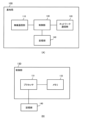
- FIG. 2(A) shows a configuration example of a base station according to the first embodiment
- FIG. 2(B) is a diagram showing a configuration example of a control unit according to the first embodiment.
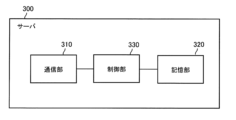
- FIG. 3 is a diagram illustrating a configuration example of a server according to the first embodiment.
- FIG. 4 is a diagram illustrating a configuration example of a memory according to the first embodiment.
- FIG. 5 is a diagram illustrating an operation example of the download method using the first pattern according to the first embodiment.
- FIG. 6 is a diagram for explaining a switching method using the first pattern according to the first embodiment.
- FIG. 1 is a diagram illustrating a configuration example of a communication system according to a first embodiment.
- FIG. 2(A) shows a configuration example of a base station according to the first embodiment
- FIG. 2(B) is a diagram showing a configuration example of a control unit according to the
- FIG. 7 is a diagram illustrating an example of the operation of the switching method using the first pattern according to the first embodiment.
- FIG. 8 is a diagram for explaining the download method using the second pattern according to the first embodiment.
- FIG. 9 is a diagram illustrating an operation example of the download method using the second pattern according to the first embodiment.
- FIG. 10 is a diagram illustrating an operation example of the switching method using the second pattern according to the first embodiment.
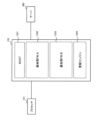
- FIG. 11 is a diagram illustrating an example of the operation when the abnormal reset according to the first embodiment is repeated.
- FIG. 12 is a diagram illustrating an operation example of the recovery method according to the first embodiment.
- FIG. 13 is a diagram illustrating an operation example of the recovery method according to the first embodiment.
- FIG. 14 is a diagram illustrating an operation example of the recovery method according to the first embodiment.
- FIG. 15 is a diagram illustrating an operation example of the recovery method according to the first embodiment.
- FIG. 16 is a diagram illustrating an operation example of the recovery method according to the first embodiment.
- FIG. 17 is a diagram illustrating an operation example of the recovery method according to the first embodiment.
- FIG. 18 is a diagram illustrating an operation example of the recovery method according to the first embodiment.
- the slave computer may not operate properly. In such a case, it would take a lot of man-hours for a person in charge to go to the location where the slave computer is installed and deal with the problem, resulting in a work load.
- one aspect of the present disclosure is to enable automatic recovery even when the update program is not properly activated.
- a communication carrier (or communication carrier) operates a base station
- the communication carrier can install the base station on land rented by the carrier and freely manage maintenance and operation. Also, when updating the software program installed in the base station, a local worker belonging to the communication carrier can be present at the site and carry out the work.
- distributors are managing the maintenance and operation of base stations remotely. For example, a retailer updates a program at a base station by downloading an update program from an external server to the base station.
- the updated program may not start properly.
- the first embodiment aims to be able to automatically recover even if the update program is not properly activated in the communication device.
- a base station will be described as an example of a communication device.
- the communication device may be, for example, a client-side communication device in a server-client system.
- FIG. 1 is a diagram illustrating a configuration example of a communication system 10 according to the first embodiment.
- the communication system 10 includes a base station 100, a UE 200, and a server 300.
- the base station 100 is a communication device capable of wireless communication with the UE 200.
- the base station 100 can perform wireless communication with the UE 200 and provide various services to the UE 200.
- the base station 100 may be a base station (i.e., gNB (next generation Node B)) in a 5G system.
- the base station 100 may be a base station (i.e., eNB (evolved Node B)) in a 4G system.
- the base station 100 may be a base station (ie, en-gNB) that can be connected to the base station.
- the base station 100 may be a base station for the 6G system or later.
- Base station 100 may be, for example, a base station in a local 5G system.
- the base station 100 may include a central unit (CU), a distribution unit (DU), and a radio unit (RU) for each functional block.
- CU central unit
- DU distribution unit
- RU radio unit
- the base station 100 may be connected to a CN (Core Network).
- the CN is a network between the base station 100 and functional units (or functional entities) within the CN.
- the functional unit connected to the CN allows the base station 100 to be connected to the Internet and to transmit and receive user data and the like to and from the base station 100 via the Internet.
- the UE 200 is a communication device that can communicate wirelessly with the base station 100.
- UE 200 may be a smartphone, a feature phone, a personal computer, or the like. Further, the UE 200 may be an IoT (Internet of Things) device or an IoT sensor.
- IoT Internet of Things
- the server 300 provides the base station 100 with update programs, factory default programs, and the like.
- the server 300 may provide the program to the base station 100 using asynchronous serial communication (for example, UART (Universal Asynchronous Receiver/Transmitter)). Further, the server 300 may provide the program to the base station 100 using synchronous serial communication (for example, Universal Synchronous Asynchronous Receiver/Transmitter (USART)).
- UART Universal Asynchronous Receiver/Transmitter
- USB Universal Synchronous Asynchronous Receiver/Transmitter
- the server 300 and the base station 100 may be connected via a LAN (Local Area Network).
- the server 300 may be a server operated and managed by a seller.
- Base station configuration example Next, a configuration example of the base station 100 will be described.
- FIG. 2(A) is a diagram showing a configuration example of the base station 100 according to the first embodiment.
- the base station 100 includes a wireless communication section 110, a network communication section 120, a control section 130, and a storage section 140.
- the wireless communication unit 110 performs wireless communication with the UE 200.
- the wireless communication unit 110 performs various types of transmission and reception under the control of the control unit 130.
- the wireless communication unit 110 includes an antenna, converts (downconverts) a wireless signal received by the antenna into a baseband signal (received signal), and outputs the baseband signal (received signal) to the control unit 130.
- the wireless communication unit 110 includes an antenna, converts (up-converts) the baseband signal (transmission signal) output by the control unit 130 into a wireless signal, and transmits the signal from the antenna.
- the network communication unit 120 communicates with the server 300 through wired or wireless communication. Further, the network communication unit 120 may communicate with the CN by wired communication. The network communication unit 120 performs various types of reception and transmission under the control of the control unit 130. The network communication unit 120 receives a packet (or signal) from the server 300, extracts a program from the received packet, and outputs the program to the control unit 130. Further, the network communication unit 120 transmits the packet (or signal) output by the control unit 130 to the outside.
- the control unit 130 performs various controls in the base station 100.
- FIG. 2(B) is a diagram illustrating a configuration example of the control unit 130 according to the first embodiment.
- control unit 130 includes a processor 131 and a memory 133.
- the processor 131 stores the program received from the network communication unit 120 in the memory 133.
- the processor 131 then reads a program stored in the memory 133 and executes the program to perform various controls in the base station 100.
- the processor 131 performs modulation/demodulation, encoding/decoding, etc. of a baseband signal in order to perform wireless communication with the UE 200.
- the processor may be a CPU (Central Processing Unit), an MPU (Micro Processing Unit), an FPGA (Field-Programmable Gate Array), or the like.
- each operation or each process in the base station 100 may be performed by the processor 131 or the control unit 130.
- the memory 133 stores programs executed by the processor 131.
- the program may be a program installed in the memory 133 when the base station 100 is shipped. Alternatively, the program may be a program downloaded from the server 300. Further, the program may be an update program, in which case the update program is a program downloaded from the server 300.
- the memory 133 may be divided into ROM (Read Only Memory) and RAM (Radom Access Memory). In that case, the memory 133 may be mainly described as a RAM.
- Memory 133 may be main memory or main storage. In that case, the storage unit 140 may serve as an auxiliary storage device.
- the memory 133 may be, for example, DRAM (Dynamic Random Access Memory), SDRAM (Synchronous Dynamic Random Access Memory), or the like. Note that details of the memory 133 will be described later.
- the storage unit 140 is a storage device with a large capacity compared to the memory 133.
- the storage unit 140 stores an operating system and the like when firmware is executed by the processor 131.
- the storage unit 140 may be, for example, an HDD (Hard Disk Drive) or an SSD (Solid State Drive).
- the storage unit 140 may be an external storage device when viewed from the control unit 130.
- FIG. 3 is a diagram showing a configuration example of the server 300 according to the first embodiment.
- the server 300 includes a communication section 310, a storage section 320, and a control section 330.
- the communication unit 310 communicates with the base station 100 under the control of the control unit 330.
- the communication unit 310 receives packets (or signals) transmitted from the base station 100 and outputs the received packets to the control unit 330. Furthermore, the communication unit 310 receives the program output from the control unit 330, generates a packet (or signal) including the program, and transmits the packet to the base station 100.
- the control unit 330 performs various controls in the server 300.
- the control unit 330 reads the program from the storage unit 320 and outputs it to the communication unit 310.
- the programs are at least an update program executed by the base station 100 and a factory-installed program.
- Control unit 330 also includes at least one memory and at least one processor electrically connected to the memory. Note that in each embodiment described below, each process or each operation in the server 300 may be performed by the control unit 330.
- the storage unit 320 stores update programs, factory default programs, and the like.
- FIG. 4 is a diagram showing a configuration example of the memory 133 according to the first embodiment.
- the memory 133 includes an area 1331 where a boot program is stored, an area 1332 where firmware A is stored, an area 1333 where firmware B is stored, and an area 1334 where an update engine is stored. has.
- the area 1331 in which the boot program is stored may be simply referred to as "boot program 1331.”
- the boot program stored in the area 1332 and the "boot program 1331” may be used without distinction.
- the area 1332 in which firmware A is stored may be referred to as "firmware A1332.”
- firmware A stored in the area 1332 and “firmware A 1332” may be used without distinction.
- the area 1333 where firmware B is stored may be referred to as "firmware B 1333.”
- firmware B stored in the area 1333 and "firmware B 1333” may be used without distinction.
- the area 1334 in which the update engine 1334 is stored may be referred to as "update engine 1334.” In this case, the update engine program stored in the area 1334 and the "update engine 1334" may be used without distinction.
- firmware will be explained as a control program.
- firmware is also a type of program.
- Software is a collection of programs that implement a certain function.
- program the terms "program,” “software,” and “software program” may be used without distinction.
- the boot program 1331 is a program for starting the operating system.
- Processor 131 reads boot program 1331 from memory 133 and executes it.
- the processor 131 that executes the boot program 1331 reads an operating system for executing firmware from the storage unit 140 and starts the operating system.
- the processor 131 then executes the firmware on the operating system.
- Starting an operating system and making firmware executable is sometimes referred to as "boot processing.”
- the boot process is performed, for example, when the base station 100 is started up or reset.
- the firmware A1332 is a program for executing the functions of the base station 100, and is a control software program.
- the firmware A1332 may be a program currently being executed or operating in the base station 100.
- the firmware B1333 is a program for executing the functions of the base station 100, and is a control software program.
- Firmware B1333 is an older version of the software program than firmware A1332.
- the update engine 1334 is a software program that performs processing to write an updated program into the memory 133.
- the update program downloaded from the server 300 can be stored in the area 1333.
- each area 1331 to 1334 is predetermined in the memory 133, and each program may be stored in the area determined in this way.
- the program for firmware A is stored in a predetermined area 1332
- the program for firmware B is also stored in a predetermined area 1333.
- the first pattern is mainly an example of an operation performed by a local worker.
- FIG. 5 is a diagram illustrating an operation example of the download method according to the first embodiment.
- step S10 the processor 131 executes the update engine 1334 and downloads the update program from the server 300.
- the update program may be a difference program from firmware A1332.
- step S11 the processor 131 writes the update program to the area 1333. Thereafter, the processor 131 that executes the update engine 1334 checks whether writing of the update program to the area 1333 has been completed, and completes the update. Area 1333 stores update programs.
- FIG. 6 is a diagram for explaining a switching method using the first pattern according to the first embodiment
- FIG. 7 is a diagram illustrating an operation example of the switching method using the first pattern according to the first embodiment. While explaining FIG. 7, FIG. 6 will be explained as appropriate. Note that FIGS. 6 and 7 show an example of the operation after downloading the update program shown in FIG. 5.
- step S20 the base station 100 starts processing.
- step S21 the base station 100 turns off the power.
- a field worker manually turns off the power to the base station 100.
- a local worker manually switches the startup program from firmware A1332 to firmware B1333 (or update program).
- the base station 100 includes a switch that switches the connection to the processor 131 from firmware A 1332 to firmware B 1333 (or from firmware B 1333 to firmware A 1332).
- the on-site worker switches the update program by switching the switch from firmware A1332 to firmware B1333.
- step S23 the base station 100 turns on the power.
- a field worker manually turns on the power to the base station 100.
- the processor 131 executes the boot program 1331, calls the firmware B1333 (or the update program), and executes the firmware B1333 (or the update program) (see FIG. 6).
- step S24 an operation check of the firmware B1333 (or update program) is performed. For example, a field worker may check whether the firmware B 1333 is operating normally by measuring parameters related to a wireless signal transmitted from the base station 100. If the operation check of the firmware B1333 (or update program) is OK (OK in step S24), the process moves to step S25. On the other hand, if the operation check of the firmware B1333 (or the update program) is NG (NG in step S24), the process moves to step S27.
- step S25 the update work is completed.
- step S26 the base station 100 ends the series of processes.
- step S27 the startup program is switched to firmware A1332 and restarted.
- a field worker turns off the power of the base station 100 and switches the switch to switch the startup program from firmware B 1333 (or update program) to original firmware A 1332. Then, the field worker turns on the power of the base station 100.
- the processor 131 executes the boot program 1331, calls the firmware A1332, and starts executing the firmware A1332 (see FIG. 6).
- firmware B1333 (or update program) to original firmware A1332 according to the first pattern is performed by a local worker. After switching, the base station 100 is operated with firmware A1332.
- the second pattern is a pattern in which update program switching is performed automatically.
- an activation flag is used in the second pattern.
- the startup flag indicates whether the startup program is firmware A1332 or firmware B1333.
- FIG. 8 is a diagram for explaining a method for downloading an update program according to the second pattern according to the first embodiment.
- the memory 133 further includes a boot flag storage area 1335.
- a startup flag is stored in the startup flag storage area 1335.
- the processor 131 can determine whether the program to be booted is firmware A 1332 or firmware B 1333.
- FIG. 9 is a diagram illustrating an example of the operation of the update program download method according to the second pattern according to the first embodiment. It is assumed that before the start of the operation shown in FIG. 9, the startup flag storage area 1335 stores a startup flag indicating that the startup program is firmware A1332.
- Steps S30 to S33 are the same as the update program download method according to the first pattern (steps S10 and S11 in FIG. 5).
- step S34 the base station 100 receives the activation flag switching instruction transmitted from the server 300.
- the switching instruction includes information indicating that firmware B1333 (or update program) is to be started.
- the processor 131 that executes the update engine 1334 receives the switching instruction, it rewrites the activation flag in accordance with the switching instruction. That is, the processor 131 rewrites the boot flag indicating that the boot program is firmware A1332 to the boot flag indicating that the boot program is firmware B1333 (or update program), and stores the boot flag in the boot flag storage area. 1335.
- step S35 the base station 100 receives the reset instruction sent from the server 300.
- the base station 100 that has received the reset instruction performs a reset by automatically turning off the power of the base station 100 and then automatically turning on the power in accordance with the reset instruction.
- step S36 the base station 100 ends the series of processes.
- FIG. 10 is a diagram illustrating an example of the operation of the update program switching method according to the second pattern according to the first embodiment.
- the operation example shown in FIG. 10 is based on the premise that firmware B (or update program) is stored in the area 1333 by the process shown in FIG.
- step S40 the base station 100 is activated, the processor 131 executes the boot program 1331, and checks the activation flag.
- the processor 131 reads the operating system for executing the firmware B 1333 (or update program) from the storage unit 140 and starts the operating system.
- the processor 131 then starts executing the firmware B1333 on the operating system. This completes the activation of the firmware B1333 (or update program) in the base station 100.
- the update program may repeatedly reset the program.
- the update program may repeatedly cause a reset.
- base station 100 does not complete activation of the update program.
- a reset that occurs when the processor 131 is booting the operating system is called an "abnormal reset.”
- FIG. 11 is a diagram illustrating an example of the operation when the abnormal reset according to the first embodiment is repeated.
- Step S40 is the same as step S40 in FIG.
- step S41 when the processor 131 is booting the operating system, an abnormal reset by the firmware B 1333 (or update program) occurs. Then, abnormal reset occurs repeatedly.
- a file system is stored in a predetermined area of the memory 133.
- the file system indicates what kind of programs (or files) are stored in each area of the memory 133.
- the processor 131 first accesses the file system to check in which area of the memory 133 firmware A 1332 or firmware B 1333 is stored. Then, the processor 131 can read firmware A 1332 or firmware B 1333 from the memory 133 by accessing the area.
- the firmware A 1332 or the firmware B 1333 is being written, the information stored in the file system and the actual information stored in the memory 133 may be reset multiple times.
- the firmware may deviate from (or be out of sync with) the firmware.
- step S41 the abnormality reset many times.
- the base station 100 that has been repeatedly reset abnormally is unable to access the server 300 because it attempts to activate the firmware by repeating the reset many times.
- the processor 131 detects repeated resets (or abnormal resets) by the update program while starting the update program (for example, the second program). As a result, even if, for example, the update program is not properly activated, it is possible to automatically take various measures to the base station 100 by detecting the repetition.
- the processor 131 uses the activation flag to change the program to be activated from firmware B 1333 (or update program) to firmware A 1332 (for example, the first program).
- firmware B 1333 or update program
- firmware A 1332 for example, the first program
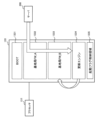
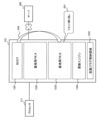
- FIGS. 12 and 13 are diagrams illustrating an example of the operation of the recovery method according to the first embodiment. 12 and 13 show an example of the operation of the recovery method when the updated program cannot be started normally in the base station 100.
- FIG. 12 will be explained as appropriate while explaining FIG. 13. Note that the examples shown in FIGS. 12 and 13 will be described assuming that the startup flag is firmware B1333 (or an update program), and the state is before the reset is repeated.
- step S50 the base station 100 (or processor 131) starts processing.
- step S51 the processor 131 checks the startup flag and calls the firmware B1333 (or update program). That is, the processor 131 executes the boot program 1331, reads the operating system for executing the firmware B 1333 (or update program) from the storage unit 140, and starts booting the operating system.
- step S52 while the processor 131 is booting the operating system, an abnormal reset occurs by the firmware B 1333 (or update program).
- step S53 the abnormality reset is repeatedly performed (see FIG. 12).
- the processor 131 detects the repetition of the abnormal reset. That is, the processor 131 detects repeated resets by the update program while booting the operating system for executing the update program (that is, booting the update program).
- the processor 131 may detect repetition of the reset by the update program until the repetition of the reset satisfies a predetermined condition (for example, a first predetermined condition).
- the predetermined condition may be a condition indicated by repeating the reset a predetermined number of times within a predetermined time. Such a predetermined condition may be that the repetition of the reset is detected five times within one hour. The following description will be made assuming that the processor 131 detects the repetition of the reset five times within one hour.
- the processor 131 since the operating system is booting, the processor 131 cannot utilize the time service functions available on the operating system. Therefore, the processor 131 counts the resets using an RTC (Real Time Clock).
- the RTC is, for example, a built-in clock in the control unit 130 or an integrated circuit having such a function. The RTC can continue counting even when the base station 100 is powered off.
- the processor 131 may store the activation factor information in the activation flag storage area 1335.
- the activation factor information is, for example, information representing a history of abnormal resets by the firmware B1333 (or update program).
- the activation factor information includes the count value of the abnormal reset, the time when the abnormal reset occurred, and the like.
- step S55 the processor 131 changes the startup flag to firmware A1332.
- the processor 131 can change the program to be started from firmware B1333 (or update program) to firmware A1332. That is, if the repetition of reset by the update program (for example, the second program) satisfies the predetermined condition (step S54), the processor 131 changes the program to be activated to firmware A1332.
- step S56 the processor 131 reads the operating system for executing the firmware A1332 from the storage unit 140 and starts booting the operating system.
- step S57 the processor 131 starts executing the firmware A1332 on the operating system. This completes the startup of firmware A1332.
- step S58 the processor 131 ends the series of processing.
- the startup program is changed to the original firmware A1332.
- the base station can be automatically restored without any work by local workers.
- the original firmware A1332 may not be able to start normally. Similar to when an update program fails to start properly, the file system may be the cause. For example, if there is a mismatch between the information regarding the original firmware A 1332 included in the file system and the firmware A 1332 stored in the memory 133, the original firmware A 1332 may not be able to start normally. In this case, as in the case where the update program cannot be started normally, the processor 131 repeats the abnormal reset.
- the base station 100 deletes the firmware A 1332 and the firmware B 1333 from the memory 133. Then, the base station 100 downloads the factory-installed firmware from the server 300 and starts the firmware.
- the processor 131 changes the program to be activated to the original firmware A 1332 (for example, the first program) when the repetition of reset by the update program (for example, the second program) satisfies the first predetermined condition. . Then, while the original firmware A 1332 is activated, if the repetition of reset by the original firmware A 1332 satisfies the second predetermined condition, the processor 131 transfers the third program (for example, the factory-shipped firmware) to the server 300. , and store it in the memory 133.
- the third program for example, the factory-shipped firmware
- the factory firmware can be downloaded automatically, so even if the update program is not started properly and the original firmware A1332 is not started properly, the on-site worker can do no work. It becomes possible to automatically restore the base station 100.
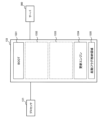
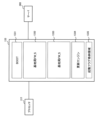
- FIGS. 14 to 18 are diagrams illustrating an example of the operation of the recovery method according to the first embodiment. 14, FIG. 17, and FIG. 18 will be explained as appropriate while explaining FIG. 15 and FIG. 16.
- steps S50 to S56 are similar to "(3) Example of operation when the updated program does not start normally" (FIG. 13). Since the update program (or firmware B1333) repeatedly undergoes abnormal resets and does not start normally, the processor 131 changes the update flag to firmware A1332 and calls firmware A1332. The fact that the processor 131 is executing the boot program 1331 is similar to "(3) Example of operation when the updated program does not start normally" (FIG. 13).
- step S60 when the firmware A 1332 is activated in the processor 131 (that is, when the operating system for executing the firmware A 1332 is activated), an abnormal reset occurs due to the activation of the firmware A 1332 (FIG. 14 reference).
- step S61 the abnormal reset occurs repeatedly.
- the processor 131 detects the repetition of the abnormal reset.
- the processor 131 may detect the repetition of the abnormal reset by the firmware A 1332 until the repetition of the abnormal reset satisfies a predetermined condition (for example, a second predetermined condition).
- the predetermined condition may be a condition indicated by repeating the reset a predetermined number of times within a predetermined time. Such a predetermined condition may be that the repetition of the abnormal reset is detected five times within one hour. The following description will be made assuming that the processor 131 detects the repetition of the reset five times within one hour. Counting by the RTC and storing the activation factor information in the memory 133 are the same as in the case of detecting repeated abnormal resets by the update program (step S54).
- step S63 the processor 131 completely erases the file system area. That is, the processor 131 erases the firmware A 1332 (for example, the first program) and the firmware B 1333 (for example, the second program) from the memory 133.
- FIG. 17 shows an example of the configuration of the memory 133 after firmware A 1332 and firmware B 1333 are erased.
- step S64 the processor 131 stores information indicating that the file system area has been completely erased in the boot flag storage area 1335.
- step S65 the processor 131 refers to the IP address of the server 300.
- the IP address of the server 300 is stored in the boot flag storage area 1335, and the processor 131 can access the server 300 based on the IP address and download the factory-installed firmware from the server 300.
- step S66 the processor 131 transmits a request packet including a specific discriminator to the server 300 based on the IP address.
- the specific discriminator is a discriminator indicating that the base station connects to the server 300 by executing the boot program 1331.
- the server 300 that has received the request packet can confirm that the base station 100 is transmitting the request packet to the server 300 by simply executing the boot program, using a specific identifier.
- the server 300 can then automatically transmit the factory-shipped firmware to the base station 100 in response to receiving the request packet.
- step S67 the processor 131 receives the factory firmware sent from the server 300.
- step S68 the processor 131 stores the factory-shipped firmware in the memory 133.
- FIG. 18 shows an example of the configuration of the memory 133 in which two areas 1332 and 1333 store firmware at the time of factory shipment. As shown in FIG. 18, the same firmware (FW_S) is stored in two areas 1332 and 1333. Thereby, the safety of the firmware (FW_S) can be ensured. However, the processor 131 may store the factory-installed firmware (FW_S) in one area 1332 or 1333 and store nothing in the other area 1333 or 1332.
- step S69 the processor 131 restarts the base station 100.
- the processor 131 turns off the power of the base station 100 and then turns on the power of the base station 100.
- step S70 the processor 131 downloads various setting information from the server 300.
- step S71 the processor 131 writes information regarding the factory-shipped firmware (FW_S) to the file system. Specifically, the processor 131 stores information indicating in which area of the memory 133 the factory-shipped firmware (FW_S) is stored in the area of the memory 133 where the file system is stored.
- step S72 the restoration is completed.
- the processor 131 executes the boot program 1331, starts an operating system for executing the factory-installed firmware (FW_S), and starts executing the firmware (FW_S) on the operating system. Thereby, recovery at the base station 100 may be completed.
- FW_S factory-installed firmware
- step S73 the processor 131 ends the series of processing.
- a program that causes a computer to execute each process according to the embodiments described above may be provided.
- the program may be recorded on a computer readable medium.
- Computer-readable media allow programs to be installed on a computer.
- the computer-readable medium on which the program is recorded may be a non-transitory recording medium.
- the non-transitory recording medium is not particularly limited, and may be, for example, a recording medium such as a CD-ROM or a DVD-ROM.
- Such a recording medium may be the memory 133.
- the processor 131 of the base station 100 may implement the functions described in the above-described embodiments by reading a program from a recording medium and executing the program.
- the terms “based on” and “depending on” refer to “based solely on” and “depending solely on,” unless expressly stated otherwise. ” does not mean. Reference to “based on” means both “based solely on” and “based at least in part on.” Similarly, the phrase “in accordance with” means both “in accordance with” and “in accordance with, at least in part.” Furthermore, the terms “include”, “comprise”, and variations thereof do not mean to include only the listed items, and may include only the listed items, or may include only the listed items. In addition, it means that further items may be included. Also, as used in this disclosure, the term “or” is not intended to be exclusive OR.
- any reference to elements using the designations "first,” “second,” etc. used in this disclosure does not generally limit the amount or order of those elements. These designations may be used herein as a convenient way of distinguishing between two or more elements. Thus, reference to a first and second element does not imply that only two elements may be employed therein or that the first element must precede the second element in any way.
- articles are added by translation for example, a, an, and the in English, these articles are used in the plural unless the context clearly indicates otherwise. shall include things.
- a processor comprising a memory storing a first program for executing a function of the communication device, and a second program downloaded from a server, which is an updated program of the first program;
- the communication device wherein the processor detects repetition of reset by the second program while starting the second program.
- the processor changes the program to be activated from the second program to the first program when the repetition of the reset by the second program satisfies a first predetermined condition.
- the processor downloads a third program, which is a factory default program, from the server and stores it in the memory when the repetition of the reset by the second program satisfies a first predetermined condition.
- a third program which is a factory default program
- the first predetermined condition is a condition indicated by a predetermined number of times the reset is repeated within a predetermined time.
- the processor changes the program to be activated to the first program, and when the first program is activated, the processor changes the program to be activated to the first program. If the repetition of reset by the program satisfies a second predetermined condition, downloading the third program from the server and storing it in the memory;
- the communication device according to any one of (1) to (4) above.
- the processor downloads the third program from the server after erasing the first program and the second program from the memory;
- the communication device according to any one of (1) to (5) above.
- the processor downloads the third program from the server based on the IP address of the server written in the memory.
- the communication device according to any one of (1) to (6) above.
- the processor transmits to the server a discriminator indicating that the communication device connects to the server by executing a boot program;
- the communication device according to any one of (1) to (7) above.
- the second predetermined condition is a condition indicated by a predetermined number of times the reset is repeated by the first program within a predetermined time.
- the processor detects repeated resets by the second program while booting an operating system for executing the second program.
- the communication device according to any one of (1) to (9) above.
- the processor detects repeated resets by the first program while booting an operating system for executing the first program.
- the communication device according to any one of (1) to (10) above.
- the communication device is a base station;
- the communication device according to any one of (1) to (11) above.
- a communication method in a communication device comprising: a first program for executing a function of the communication device; and a second program downloaded from a server, the second program being an updated program of the first program. There it is, A communication method, comprising: detecting repetition of reset by the second program while the processor is activating the second program.
- a communication device having a memory that stores a first program for executing a function of the communication device, and a second program downloaded from a server, which is an updated program of the first program.
- a program that executes processing for detecting repetition of reset by the second program when activated.
- Communication system 100 Base station 110: Wireless communication section 120: Network communication section 130: Control section 131: Processor 133: Memory 140: Storage unit 200: UE 300: Server 310: Communication department 320: Storage unit 330: Control unit
Landscapes
- Engineering & Computer Science (AREA)
- Software Systems (AREA)
- General Engineering & Computer Science (AREA)
- Theoretical Computer Science (AREA)
- Computer Security & Cryptography (AREA)
- Physics & Mathematics (AREA)
- General Physics & Mathematics (AREA)
- Computer Networks & Wireless Communication (AREA)
- Signal Processing (AREA)
- Mobile Radio Communication Systems (AREA)
Priority Applications (1)
| Application Number | Priority Date | Filing Date | Title |
|---|---|---|---|
| JP2024510213A JPWO2023182334A1 (https=) | 2022-03-25 | 2023-03-22 |
Applications Claiming Priority (2)
| Application Number | Priority Date | Filing Date | Title |
|---|---|---|---|
| JP2022050632 | 2022-03-25 | ||
| JP2022-050632 | 2022-03-25 |
Publications (1)
| Publication Number | Publication Date |
|---|---|
| WO2023182334A1 true WO2023182334A1 (ja) | 2023-09-28 |
Family
ID=88101552
Family Applications (1)
| Application Number | Title | Priority Date | Filing Date |
|---|---|---|---|
| PCT/JP2023/011145 Ceased WO2023182334A1 (ja) | 2022-03-25 | 2023-03-22 | 通信装置、通信方法、及びプログラム |
Country Status (2)
| Country | Link |
|---|---|
| JP (1) | JPWO2023182334A1 (https=) |
| WO (1) | WO2023182334A1 (https=) |
Citations (8)
| Publication number | Priority date | Publication date | Assignee | Title |
|---|---|---|---|---|
| JPS6318443A (ja) * | 1986-07-10 | 1988-01-26 | Nec Corp | 緊急制御方式 |
| JP2001331327A (ja) * | 2000-05-24 | 2001-11-30 | Matsushita Electric Ind Co Ltd | 電子機器 |
| JP2003099146A (ja) * | 2001-09-20 | 2003-04-04 | Fujitsu Ltd | 計算機システムの起動制御方式 |
| JP2011227764A (ja) * | 2010-04-21 | 2011-11-10 | Kyocera Corp | 電子機器及び電子システム並びに電子機器でのプログラムの実行方法 |
| JP2013143019A (ja) * | 2012-01-11 | 2013-07-22 | Kyocera Corp | 無線中継装置および無線通信方法 |
| JP2014003472A (ja) * | 2012-06-19 | 2014-01-09 | Nec Access Technica Ltd | 通信装置および起動プログラムコード選択方法 |
| JP2015041334A (ja) * | 2013-08-23 | 2015-03-02 | 矢崎エナジーシステム株式会社 | 車載ソフトウェア更新装置 |
| JP2020038508A (ja) * | 2018-09-04 | 2020-03-12 | 日本無線株式会社 | 基地局、制御方法およびプログラム |
-
2023
- 2023-03-22 JP JP2024510213A patent/JPWO2023182334A1/ja active Pending
- 2023-03-22 WO PCT/JP2023/011145 patent/WO2023182334A1/ja not_active Ceased
Patent Citations (8)
| Publication number | Priority date | Publication date | Assignee | Title |
|---|---|---|---|---|
| JPS6318443A (ja) * | 1986-07-10 | 1988-01-26 | Nec Corp | 緊急制御方式 |
| JP2001331327A (ja) * | 2000-05-24 | 2001-11-30 | Matsushita Electric Ind Co Ltd | 電子機器 |
| JP2003099146A (ja) * | 2001-09-20 | 2003-04-04 | Fujitsu Ltd | 計算機システムの起動制御方式 |
| JP2011227764A (ja) * | 2010-04-21 | 2011-11-10 | Kyocera Corp | 電子機器及び電子システム並びに電子機器でのプログラムの実行方法 |
| JP2013143019A (ja) * | 2012-01-11 | 2013-07-22 | Kyocera Corp | 無線中継装置および無線通信方法 |
| JP2014003472A (ja) * | 2012-06-19 | 2014-01-09 | Nec Access Technica Ltd | 通信装置および起動プログラムコード選択方法 |
| JP2015041334A (ja) * | 2013-08-23 | 2015-03-02 | 矢崎エナジーシステム株式会社 | 車載ソフトウェア更新装置 |
| JP2020038508A (ja) * | 2018-09-04 | 2020-03-12 | 日本無線株式会社 | 基地局、制御方法およびプログラム |
Also Published As
| Publication number | Publication date |
|---|---|
| JPWO2023182334A1 (https=) | 2023-09-28 |
Similar Documents
| Publication | Publication Date | Title |
|---|---|---|
| US8661429B2 (en) | Updating peripheral device firmware via a portable device | |
| US20170139778A1 (en) | Relay apparatus, relay method, and computer program product | |
| CN110621011A (zh) | 一种基于蓝牙设备端的ota固件升级方法及系统 | |
| US20160085538A1 (en) | Over-the-air updates for ble devices | |
| CN106020875B (zh) | 嵌入式终端的固件更新管理方法和装置 | |
| US20130060890A1 (en) | Apparatus and method for providing application execution using a cloud system | |
| GB2412042A (en) | Firmware update method of a wireless communication terminal | |
| CN109857437A (zh) | 一种蓝牙设备的升级方法及系统 | |
| EP4270299A1 (en) | Operating system upgrade method, electronic device, and storage medium | |
| CN105897480A (zh) | 车载终端及其固件功能完善方法 | |
| US11614933B2 (en) | Disabling a script based on indications of unsuccessful execution of the script | |
| JP2012243106A (ja) | ファイル管理装置及びその制御プログラム | |
| JP2005242691A (ja) | プログラムダウンロード及び切替え方法及びその装置 | |
| CN113141267A (zh) | 固件升级、信息处理方法、装置及设备 | |
| EP2653967A1 (en) | Methods, apparatus, and systems for electronic device recovery | |
| CN108874410B (zh) | 补丁管理方法及装置 | |
| CN112966046A (zh) | 数据同步方法和装置、电子设备和存储介质 | |
| CN111813854B (zh) | 计量网络的同步 | |
| WO2023182334A1 (ja) | 通信装置、通信方法、及びプログラム | |
| CN113918423A (zh) | 云平台监控方法、装置及其应用 | |
| KR20090076712A (ko) | 펌웨어 업그레이드 시스템 | |
| CN116931995A (zh) | 系统升级方法、装置、电子设备及存储介质 | |
| CN113377385A (zh) | 客户端自动部署方法及装置 | |
| US10171290B1 (en) | Systems and methods for real-time correction of core applications | |
| US20260023989A1 (en) | Gradual joined inference during ai model downloading |
Legal Events
| Date | Code | Title | Description |
|---|---|---|---|
| 121 | Ep: the epo has been informed by wipo that ep was designated in this application |
Ref document number: 23774929 Country of ref document: EP Kind code of ref document: A1 |
|
| ENP | Entry into the national phase |
Ref document number: 2024510213 Country of ref document: JP Kind code of ref document: A |
|
| NENP | Non-entry into the national phase |
Ref country code: DE |
|
| 122 | Ep: pct application non-entry in european phase |
Ref document number: 23774929 Country of ref document: EP Kind code of ref document: A1 |