WO2023176806A1 - 線維芽細胞または線維芽細胞様細胞を従来型2型樹状細胞にリプログラミングするための方法 - Google Patents
線維芽細胞または線維芽細胞様細胞を従来型2型樹状細胞にリプログラミングするための方法 Download PDFInfo
- Publication number
- WO2023176806A1 WO2023176806A1 PCT/JP2023/009757 JP2023009757W WO2023176806A1 WO 2023176806 A1 WO2023176806 A1 WO 2023176806A1 JP 2023009757 W JP2023009757 W JP 2023009757W WO 2023176806 A1 WO2023176806 A1 WO 2023176806A1
- Authority
- WO
- WIPO (PCT)
- Prior art keywords
- cells
- fibroblast
- cell
- cdc2
- ebp
- Prior art date
- Legal status (The legal status is an assumption and is not a legal conclusion. Google has not performed a legal analysis and makes no representation as to the accuracy of the status listed.)
- Ceased
Links
Images






Classifications
-
- A—HUMAN NECESSITIES
- A61—MEDICAL OR VETERINARY SCIENCE; HYGIENE
- A61K—PREPARATIONS FOR MEDICAL, DENTAL OR TOILETRY PURPOSES
- A61K35/00—Medicinal preparations containing materials or reaction products thereof with undetermined constitution
- A61K35/12—Materials from mammals; Compositions comprising non-specified tissues or cells; Compositions comprising non-embryonic stem cells; Genetically modified cells
- A61K35/14—Blood; Artificial blood
- A61K35/15—Cells of the myeloid line, e.g. granulocytes, basophils, eosinophils, neutrophils, leucocytes, monocytes, macrophages or mast cells; Myeloid precursor cells; Antigen-presenting cells, e.g. dendritic cells
-
- A—HUMAN NECESSITIES
- A61—MEDICAL OR VETERINARY SCIENCE; HYGIENE
- A61K—PREPARATIONS FOR MEDICAL, DENTAL OR TOILETRY PURPOSES
- A61K40/00—Cellular immunotherapy
- A61K40/10—Cellular immunotherapy characterised by the cell type used
- A61K40/19—Dendritic cells
-
- A—HUMAN NECESSITIES
- A61—MEDICAL OR VETERINARY SCIENCE; HYGIENE
- A61K—PREPARATIONS FOR MEDICAL, DENTAL OR TOILETRY PURPOSES
- A61K40/00—Cellular immunotherapy
- A61K40/20—Cellular immunotherapy characterised by the effect or the function of the cells
- A61K40/24—Antigen-presenting cells [APC]
-
- A—HUMAN NECESSITIES
- A61—MEDICAL OR VETERINARY SCIENCE; HYGIENE
- A61K—PREPARATIONS FOR MEDICAL, DENTAL OR TOILETRY PURPOSES
- A61K40/00—Cellular immunotherapy
- A61K40/40—Cellular immunotherapy characterised by antigens that are targeted or presented by cells of the immune system
- A61K40/41—Vertebrate antigens
- A61K40/42—Cancer antigens
-
- A—HUMAN NECESSITIES
- A61—MEDICAL OR VETERINARY SCIENCE; HYGIENE
- A61K—PREPARATIONS FOR MEDICAL, DENTAL OR TOILETRY PURPOSES
- A61K40/00—Cellular immunotherapy
- A61K40/40—Cellular immunotherapy characterised by antigens that are targeted or presented by cells of the immune system
- A61K40/41—Vertebrate antigens
- A61K40/42—Cancer antigens
- A61K40/4271—Melanoma antigens
-
- A—HUMAN NECESSITIES
- A61—MEDICAL OR VETERINARY SCIENCE; HYGIENE
- A61K—PREPARATIONS FOR MEDICAL, DENTAL OR TOILETRY PURPOSES
- A61K40/00—Cellular immunotherapy
- A61K40/40—Cellular immunotherapy characterised by antigens that are targeted or presented by cells of the immune system
- A61K40/41—Vertebrate antigens
- A61K40/42—Cancer antigens
- A61K40/428—Undefined tumor antigens, e.g. tumor lysate or antigens targeted by cells isolated from tumor
-
- A—HUMAN NECESSITIES
- A61—MEDICAL OR VETERINARY SCIENCE; HYGIENE
- A61P—SPECIFIC THERAPEUTIC ACTIVITY OF CHEMICAL COMPOUNDS OR MEDICINAL PREPARATIONS
- A61P35/00—Antineoplastic agents
-
- C—CHEMISTRY; METALLURGY
- C12—BIOCHEMISTRY; BEER; SPIRITS; WINE; VINEGAR; MICROBIOLOGY; ENZYMOLOGY; MUTATION OR GENETIC ENGINEERING
- C12N—MICROORGANISMS OR ENZYMES; COMPOSITIONS THEREOF; PROPAGATING, PRESERVING, OR MAINTAINING MICROORGANISMS; MUTATION OR GENETIC ENGINEERING; CULTURE MEDIA
- C12N5/00—Undifferentiated human, animal or plant cells, e.g. cell lines; Tissues; Cultivation or maintenance thereof; Culture media therefor
- C12N5/0018—Culture media for cell or tissue culture
-
- C—CHEMISTRY; METALLURGY
- C12—BIOCHEMISTRY; BEER; SPIRITS; WINE; VINEGAR; MICROBIOLOGY; ENZYMOLOGY; MUTATION OR GENETIC ENGINEERING
- C12N—MICROORGANISMS OR ENZYMES; COMPOSITIONS THEREOF; PROPAGATING, PRESERVING, OR MAINTAINING MICROORGANISMS; MUTATION OR GENETIC ENGINEERING; CULTURE MEDIA
- C12N5/00—Undifferentiated human, animal or plant cells, e.g. cell lines; Tissues; Cultivation or maintenance thereof; Culture media therefor
- C12N5/06—Animal cells or tissues; Human cells or tissues
- C12N5/0602—Vertebrate cells
- C12N5/0634—Cells from the blood or the immune system
- C12N5/0639—Dendritic cells, e.g. Langherhans cells in the epidermis
-
- A—HUMAN NECESSITIES
- A61—MEDICAL OR VETERINARY SCIENCE; HYGIENE
- A61K—PREPARATIONS FOR MEDICAL, DENTAL OR TOILETRY PURPOSES
- A61K2239/00—Indexing codes associated with cellular immunotherapy of group A61K40/00
- A61K2239/31—Indexing codes associated with cellular immunotherapy of group A61K40/00 characterized by the route of administration
-
- A—HUMAN NECESSITIES
- A61—MEDICAL OR VETERINARY SCIENCE; HYGIENE
- A61K—PREPARATIONS FOR MEDICAL, DENTAL OR TOILETRY PURPOSES
- A61K2239/00—Indexing codes associated with cellular immunotherapy of group A61K40/00
- A61K2239/38—Indexing codes associated with cellular immunotherapy of group A61K40/00 characterised by the dose, timing or administration schedule
-
- A—HUMAN NECESSITIES
- A61—MEDICAL OR VETERINARY SCIENCE; HYGIENE
- A61K—PREPARATIONS FOR MEDICAL, DENTAL OR TOILETRY PURPOSES
- A61K2239/00—Indexing codes associated with cellular immunotherapy of group A61K40/00
- A61K2239/46—Indexing codes associated with cellular immunotherapy of group A61K40/00 characterised by the cancer treated
- A61K2239/57—Skin; melanoma
-
- C—CHEMISTRY; METALLURGY
- C12—BIOCHEMISTRY; BEER; SPIRITS; WINE; VINEGAR; MICROBIOLOGY; ENZYMOLOGY; MUTATION OR GENETIC ENGINEERING
- C12N—MICROORGANISMS OR ENZYMES; COMPOSITIONS THEREOF; PROPAGATING, PRESERVING, OR MAINTAINING MICROORGANISMS; MUTATION OR GENETIC ENGINEERING; CULTURE MEDIA
- C12N2501/00—Active agents used in cell culture processes, e.g. differentation
- C12N2501/60—Transcription factors
-
- C—CHEMISTRY; METALLURGY
- C12—BIOCHEMISTRY; BEER; SPIRITS; WINE; VINEGAR; MICROBIOLOGY; ENZYMOLOGY; MUTATION OR GENETIC ENGINEERING
- C12N—MICROORGANISMS OR ENZYMES; COMPOSITIONS THEREOF; PROPAGATING, PRESERVING, OR MAINTAINING MICROORGANISMS; MUTATION OR GENETIC ENGINEERING; CULTURE MEDIA
- C12N2501/00—Active agents used in cell culture processes, e.g. differentation
- C12N2501/60—Transcription factors
- C12N2501/604—Klf-4
-
- C—CHEMISTRY; METALLURGY
- C12—BIOCHEMISTRY; BEER; SPIRITS; WINE; VINEGAR; MICROBIOLOGY; ENZYMOLOGY; MUTATION OR GENETIC ENGINEERING
- C12N—MICROORGANISMS OR ENZYMES; COMPOSITIONS THEREOF; PROPAGATING, PRESERVING, OR MAINTAINING MICROORGANISMS; MUTATION OR GENETIC ENGINEERING; CULTURE MEDIA
- C12N2506/00—Differentiation of animal cells from one lineage to another; Differentiation of pluripotent cells
- C12N2506/13—Differentiation of animal cells from one lineage to another; Differentiation of pluripotent cells from connective tissue cells, from mesenchymal cells
- C12N2506/1307—Differentiation of animal cells from one lineage to another; Differentiation of pluripotent cells from connective tissue cells, from mesenchymal cells from adult fibroblasts
-
- C—CHEMISTRY; METALLURGY
- C12—BIOCHEMISTRY; BEER; SPIRITS; WINE; VINEGAR; MICROBIOLOGY; ENZYMOLOGY; MUTATION OR GENETIC ENGINEERING
- C12N—MICROORGANISMS OR ENZYMES; COMPOSITIONS THEREOF; PROPAGATING, PRESERVING, OR MAINTAINING MICROORGANISMS; MUTATION OR GENETIC ENGINEERING; CULTURE MEDIA
- C12N2506/00—Differentiation of animal cells from one lineage to another; Differentiation of pluripotent cells
- C12N2506/13—Differentiation of animal cells from one lineage to another; Differentiation of pluripotent cells from connective tissue cells, from mesenchymal cells
- C12N2506/1346—Differentiation of animal cells from one lineage to another; Differentiation of pluripotent cells from connective tissue cells, from mesenchymal cells from mesenchymal stem cells
-
- C—CHEMISTRY; METALLURGY
- C12—BIOCHEMISTRY; BEER; SPIRITS; WINE; VINEGAR; MICROBIOLOGY; ENZYMOLOGY; MUTATION OR GENETIC ENGINEERING
- C12N—MICROORGANISMS OR ENZYMES; COMPOSITIONS THEREOF; PROPAGATING, PRESERVING, OR MAINTAINING MICROORGANISMS; MUTATION OR GENETIC ENGINEERING; CULTURE MEDIA
- C12N2510/00—Genetically modified cells
- C12N2510/04—Immortalised cells
Definitions
- the present invention relates to methods and compositions for preparing conventional type 2 dendritic cells from fibroblasts or fibroblast-like cells by direct reprogramming.
- Pancreatic cancer has a 5-year relative survival rate of less than 10% and is known as an intractable cancer with an extremely poor prognosis compared to other cancers.
- One of the characteristics of intractable cancers such as pancreatic cancer is that a large amount of stroma surrounds cancer cells.
- the stroma contains many cells that promote angiogenesis and the proliferation and invasion of cancer cells, and among these, the cells that predominate in terms of quantity are cancer-associated fibroblasts (CAFs).
- CAFs cancer-associated fibroblasts
- CAF not only promotes the proliferation of cancer cells by producing growth factors, but also hardens cancer tissues by overproducing extracellular matrix such as collagen. As a result, intractable cancers exhibit strong resistance to conventional chemotherapy and radiotherapy.
- iPSCs induced pluripotent stem cells
- the present invention was made with the aim of providing a new therapeutic strategy for intractable cancer and an easy and efficient method for preparing a DC vaccine.
- cDC2 type 2 dendritic cell
- the present invention provides a method for generating conventional type 2 dendritic cell (cDC2)-like cells from fibroblasts or fibroblast-like cells, comprising: PU. 1, KLF4, IRF4, and C/EBP into the fibroblast or fibroblast-like cell.
- cDC2 conventional type 2 dendritic cell
- the C/EBP is preferably C/EBP alpha or C/EBP beta.
- the fibroblasts or fibroblast-like cells are preferably cancer-related fibroblasts.
- the fibroblasts or fibroblast-like cells are preferably mesenchymal stem cells.
- the present invention also provides a pharmaceutical composition for preventing or treating cancer in a subject, comprising conventional type 2 dendritic cell (cDC2)-like cells prepared by the above method. It provides:
- the cDC2-like cells are loaded with a cancer antigen.
- the cDC2-like cells are autologous to the subject.
- the cDC2-like cells may be immortalized.
- the present invention also provides PU. 1, a nucleic acid encoding KLF4, a nucleic acid encoding IRF4, and a nucleic acid encoding C/EBP, converting a fibroblast or fibroblast-like cell into a conventional type 2 dendritic cell-like cell.
- the present invention provides a composition for transdifferentiation.
- fibroblasts or fibroblast-like cells can be directly transdifferentiated into cDC2-like cells. Therefore, according to the method of the present invention, a DC vaccine can be easily and efficiently prepared.
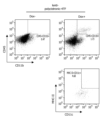
- FIG. 1 is a diagram showing the results of flow cytometry gating of MEFs into which mouse 4 transcription factor was introduced, based on the expression of CD45, CD11b, CD11c, and MHC class II.
- FIG. 2 shows the expression of cDC2-specific markers (CLEC10A, SIRP ⁇ and CCR7) in CD45+CD11b+MHC-II+CD11c+ cells.
- FIG. 3 shows the expression of C-type lectins (SIGNR1 and DC-SIGN) in CD45+CD11b+MHC-II+CD11c+ cells.
- FIG. 1 is a diagram showing the results of flow cytometry gating of MEFs into which mouse 4 transcription factor was introduced, based on the expression of CD45, CD11b, CD11c, and MHC class II.
- FIG. 2 shows the expression of cDC2-specific markers (CLEC10A, SIRP ⁇ and CCR7) in CD45+CD11b+MHC-II+CD11c+ cells.
- FIG. 4 shows the expression of macrophage-specific markers (CD115 and F4/80) and monocyte-specific markers (Ly6C) in CD45+CD11b+MHC-II+CD11c+ cells.
- FIG. 5 is a graph showing the results of quantifying the expression of cDC-specific transcription factor Zbtb46 in icDC2 by RT-qPCR.
- FIG. 6 is a graph showing the results of quantifying the expression of macrophage-specific tyrosine kinase MerTK in icDC2 by RT-qPCR.
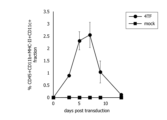
- FIG. 7 is a graph showing the time course of transdifferentiation of immortalized MEFs into cDC2-like cells into which mouse 4 transcription factor has been introduced.
- FIG. 8 is a graph showing proliferation of cDC2-like cells derived from immortalized MEFs.
- FIG. 10 is a schematic diagram showing the construction of a polycistronic vector expressing mouse 4 transcription factor under the control of the TRE promoter.
- FIG. 11 is a diagram showing the results of flow cytometry gating of MEFs into which mouse 4 transcription factors were introduced using individual vectors, based on the expression of CD45, CD11b, CD11c, and MHC class II.
- FIG. 12 is a diagram showing the results of flow cytometry gating of MEFs into which four transcription factors were introduced using a single polycistronic vector, based on the expression of CD45, CD11b, CD11c, and MHC class II.
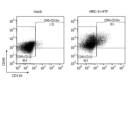
- FIG. 13 is a diagram showing the results of flow cytometry gating of MRC-5 into which human 4 transcription factor was introduced, based on the expression of CD45 and CD11b.
- FIG. 14 is a diagram showing enhanced expression of HLA-DR in CD45+CD11b+ cells.
- FIG. 15 is a diagram showing enhanced expression of CD11c in CD45+CD11b+ cells.
- FIG. 16 is a plot showing an increase in the number of CD3 epsilon positive cells in a mixed cell population of MEFs, MSCs, 3T3 and CD4 positive T cells into which mouse 4 transcription factor has been introduced.
- FIG. 17 is a diagram showing enhanced expression of CD69 in CD4-positive T cells mixed with MEFs introduced with mouse 4 transcription factor.
- FIG. 18 is a graph comparing tumor sizes in model mice administered with and without administration of MEF into which mouse 4 transcription factor was introduced.
- the present invention provides a method for generating conventional type 2 dendritic cell (cDC2)-like cells from fibroblasts or fibroblast-like cells, comprising: PU. 1, a nucleic acid encoding KLF4, a nucleic acid encoding IRF4, and a nucleic acid encoding C/EBP into the fibroblast or fibroblast-like cell.
- cDC2 conventional type 2 dendritic cell
- Fibroblasts are spindle-shaped cells that exist in the interstitium and produce extracellular matrix constituent proteins and their degrading enzymes.
- fibroblast-like cells refer to cells that are defined only by their spindle shape similar to fibroblasts, and whose functions such as differentiation potential are not specified. Morphologically, fibroblasts and fibroblast-like cells cannot be distinguished. The method of this embodiment can use either fibroblasts or fibroblast-like cells.
- the fibroblasts or fibroblast-like cells in this embodiment may be derived from any vertebrate, but are preferably from mice, rats, guinea pigs, rabbits, dogs, sheep, pigs, cows, horses, and goats. , monkeys, humans, and other mammals, and particularly preferably humans. Furthermore, the fibroblasts or fibroblast-like cells in this embodiment may be derived from any tissue of a fetus or an adult, and the tissue may be either normal tissue or cancer tissue.
- the fibroblasts or fibroblast-like cells in this embodiment include, for example, mouse embryonic fibroblasts (MEF), immortalized mouse fetal fibroblasts (3T3), and adult mouse tail end fibroblasts (TTF). ), human fetal fibroblasts (HEF), cancer-associated fibroblasts (CAF), adipose-derived mesenchymal stem cells (AD-MSC), bone marrow mesenchymal stem cells (BM-MSC), etc. but not limited to.
- MEF mouse embryonic fibroblasts
- 3T3 immortalized mouse fetal fibroblasts
- TTF adult mouse tail end fibroblasts
- HEF human fetal fibroblasts
- CAF cancer-associated fibroblasts
- AD-MSC adipose-derived mesenchymal stem cells
- BM-MSC bone marrow mesenchymal stem cells
- fibroblasts or fibroblast-like cells are well established and can be prepared according to methods known in the art.
- already established fibroblast cell lines or fibroblast-like cell lines may be obtained from, for example, RIKEN BioResource Center (RIKEN BRC), ATCC (American Type Culture Collection), or the like.
- Nucleic acids encoding KLF4, IRF4 and C/EBP are introduced into fibroblasts or fibroblast-like cells.
- PU.1 "KLF4", "IRF4" and "C/EBP” are all transcription factors.
- the C/EBP family consists of C/EBP alpha, C/EBP beta, C/EBP gamma, C/EBP delta, C/EBP epsilon, and CHOP (C/EBP zeta), and C/EBP in this embodiment is: It may be any of them, but preferably C/EBP alpha or C/EBP beta. PU in this embodiment. 1.
- KLF4, IRF4 and C/EBP may be derived from any vertebrate, but are preferably derived from mouse, rat, guinea pig, rabbit, dog, sheep, pig, cow, horse, goat, monkey, human. It is derived from mammals such as humans, and is particularly preferably derived from humans.
- PU The genes encoding 1, KLF4, IRF4 and C/EBP have already been cloned, and their nucleic acid sequence information can be obtained from predetermined databases. For example, human PU. If it is 1, it is NM_003120, mouse PU.
- NM_011355 human KLF4 for NM_004235, mouse KLF4 for NM_010637, human IRF4 for NM_002460, mouse IRF4 for NM_013674, human C/EBP alpha for NM_004364, mouse C/EBP alpha for If available, NM_007678, NM_005194 for human C/EBP beta, and NM_009883 for mouse C/EBP beta (all from the NCBI Nucleotide database) can be used.
- KLF4, IRF4 and C/EBP may also include variants and homologs thereof having equivalent transcriptional regulatory activity.
- KLF4, IRF4 and C/EBP have at least 80%, preferably at least 90%, more preferably about 95% of the amino acid sequence registered in the database, as long as their transcriptional regulatory activity is maintained. Proteins consisting of amino acid sequences having % or more identity may be included. Amino acid sequence identity can be calculated using sequence analysis software or using programs commonly used in the art (FASTA, BLAST, etc.). Moreover, PU in this embodiment. 1.
- KLF4, IRF4, and C/EBP have one to several amino acid substitutions, deletions, insertions, and and/or proteins consisting of added amino acid sequences may be included.
- “1 to several” means, for example, “1 to 30", preferably “1 to 10", particularly preferably "1 to 5".
- Nucleic acids encoding KLF4, IRF4, and C/EBP can be introduced into fibroblasts or fibroblast-like cells by methods well known in the art, for example, by cloning the nucleic acids into expression vectors. , can be introduced into cells.
- An appropriate expression vector can be selected and used depending on the target fibroblast or fibroblast-like cell.
- viral vectors such as retrovirus, lentivirus, adenovirus, and Sendai virus, plasmid vectors such as pCMV, etc. can be used.
- P.U. Nucleic acids encoding KLF4, IRF4, and C/EBP may each be expressed from separate vectors or from a single polycistronic vector.
- the expression vector can be introduced into cells by methods well known in the art depending on the type.
- Non-viral vectors can be introduced, for example, by lipofection, electroporation, microinjection, and the like.
- Viral vectors can be introduced by infecting cells at an appropriate titer or multiplicity of infection (MOI).
- transdifferentiation refers to the direct conversion of one mature (differentiated) cell type to another mature (differentiated) cell type without passing through a pluripotent cell state. It means something.
- cDC2 dendritic cell-like cells
- cDC1 conventional type 1 dendritic cells
- cDC2 conventional type 2 dendritic cells
- pDC plasmacytoid dendritic cells
- the cDC2-like cells in this embodiment may be defined by any combination of well-known hemocyte markers, myeloid cell markers, and cDC2-specific markers, such as CD45+, CD11b+, CD11c+, and MHC class II (HLA-DR). )+.
- MHC class II HLA-DR
- the cDC2-like cells in this embodiment preferably further express CLEC10A, SIRP ⁇ , and/or CCR7, and further express C-type lectins such as SIGNR1 and DC-SIGN. More preferred.
- the cDC2-like cells in this embodiment may express not only a cDC2-specific marker but also a macrophage-specific marker such as CD115 or a monocyte-specific marker such as Ly6C. Marker expression can be analyzed by known techniques such as RT-PCR, Western blotting, and flow cytometry.
- cDC2-like cells can be directly generated from fibroblasts or fibroblast-like cells without undergoing a pluripotent cell state. Since fibroblasts can be easily obtained and proliferated, the method of this embodiment is useful for preparing DC vaccines.
- the present invention is a pharmaceutical composition for preventing or treating cancer in a subject, comprising cDC2-like cells prepared by the above method.
- preventing means not only preventing the onset of cancer in a subject who is at risk of developing cancer, but also reducing the risk of developing cancer or treating a subject before it develops. This also includes delaying the progression or reducing the severity of symptoms when a subject develops cancer. “Treat” does not only mean completely curing cancer, but also remitting or alleviating cancer symptoms, delaying or stopping cancer progression, and improving cancer prognosis. Also includes.
- the "subject” in this embodiment may be any vertebrate, but is preferably a mammal such as a mouse, rat, rabbit, sheep, pig, cow, goat, monkey, or human, and is particularly preferably a human. It is. Subjects can be of any age, including infants, young children, adolescents, adults, and geriatric subjects.
- the cDC2-like cells in this embodiment are the same as those defined in the first embodiment, and are prepared from fibroblasts or fibroblast-like cells derived from any tissue of any vertebrate. good.
- the cDC2-like cells in this embodiment may be prepared from fibroblasts or fibroblast-like cells, preferably allogeneic or autologous, more preferably autologous, to the subject.
- the cDC2-like cells in this embodiment may optionally be immortalized.
- immortalized in a cell means that the cell remains capable of proliferating even after repeating a certain number of divisions, that is, the cell has the ability to proliferate indefinitely.
- Methods for immortalizing cells have already been established, and known techniques can be employed.
- cells can be immortalized by introducing an immortalization gene such as the SV40T antigen gene or the telomerase reverse transcriptase (TERT) gene into cells using a retroviral vector.
- an immortalization gene such as the SV40T antigen gene or the telomerase reverse transcriptase (TERT) gene into cells using a retroviral vector.
- the cDC2-like cells in this embodiment are preferably loaded with cancer antigens.
- Methods for loading dendritic cells with cancer antigens are well established, and cDC2-like cells in this embodiment can be loaded with cancer antigens according to methods known in the art.
- cDC2-like cells may be cultured for 12 hours to several days in a medium containing a full-length or partial fragment of a cancer antigen peptide or a tumor lysate.
- a nucleic acid encoding a full-length or partial fragment of a cancer antigen peptide may be introduced into cells using a viral vector or a non-viral vector.
- Cancer antigens that can be used in this embodiment are not particularly limited, and may include, for example, HER2/NEU, TERT, WT1, MAGE-A3, NY-ESO-1, PAP, PSA, and the like.
- the pharmaceutical composition of this embodiment contains the above cDC2-like cells as an active ingredient.
- the pharmaceutical composition of this embodiment may be composed only of the active ingredient, but may further include known pharmaceutically acceptable carriers, buffers, and other ingredients (such as CpG DNA) as optional ingredients.
- Toll-like receptor ligands, STING agonists such as synthetic cyclic nucleotides, cytokines/chemokines such as GM-CSF, CCL19, FLT3L), and the like.
- the pharmaceutical composition of this embodiment can be prepared in the form of an injection using a carrier such as phosphate buffered saline that can maintain the survival of cells, which are active ingredients.
- cDC2-like cells may be suspended in the carrier at a concentration of, for example, 1 ⁇ 10 6 to 1 ⁇ 10 8 cells/mL.
- the pharmaceutical composition of this embodiment can be administered by an appropriate method such as, for example, injection, infusion, or implantation.
- the pharmaceutical composition of this embodiment may be injected intravenously, subcutaneously, intradermally, or into a lymph node.
- the dosage of the pharmaceutical composition of the present embodiment may vary depending on the subject's age, body weight, severity of cancer, etc., and is, for example, 1 ⁇ 10 5 to 1 ⁇ 10 10 cells/kg (body weight). It's fine. The above dosage may be administered once or over multiple times.
- the pharmaceutical composition of this embodiment can safely and effectively activate antitumor immune responses. Therefore, it is useful for treating intractable cancers that are difficult to treat with conventional chemotherapy and radiation therapy.
- PU. 1 a nucleic acid encoding KLF4, a nucleic acid encoding IRF4, and a nucleic acid encoding C/EBP, converting a fibroblast or fibroblast-like cell into a conventional type 2 dendritic cell-like cell.
- This is a composition for transdifferentiation.
- Nucleic acids encoding 1, KLF4, IRF4 and C/EBP are similar to those defined in the first embodiment and can be prepared and used as described in the first embodiment.
- Mouse embryonic fibroblasts were obtained from 13.5-day embryos according to a conventional method. MEFs were seeded in 24-well plates (4 x 10 4 cells per well) and 100 ⁇ L of virus suspension per well was added the next day. The next day (referred to as day 1), cells in one well were subcultured into three wells and maintained until measurement. DMEM containing 10% FCS was used for culture. After 13 days, cells were collected and immunostained for marker proteins. To stain marker proteins, cells collected by trypsin treatment were suspended in an antibody solution, incubated at 37°C for 20 minutes, and then incubated at 4°C for 15 minutes. The cells after staining were observed by FACS Verse (BD Biosciences).
- Figure 1 shows the results of cell gating by flow cytometry based on the expression of blood cell marker CD45, myeloid cell marker CD11b, dendritic cell marker CD11c, and antigen-presenting cell marker MHC class II (MHC-II).
- 4TF means PU. 1, cells into which four transcription factors, KLF4, IRF4, and C/EBP alpha were introduced; "mock” indicates cells without introduction treatment. It was confirmed that dendritic cell-like cells expressing the blood cell marker CD45, myeloid cell marker CD11b, dendritic cell marker CD11c, and antigen-presenting cell marker MHC class II were obtained from the cells into which the 4 transcription factors were introduced.
- Figures 2 to 4 show the results of comparing the expression of cDC2-specific markers and other monocytic cell markers between CD45+CD11b+MHC-II+CD11c+ cells and CD45- cells.
- CD45+CD11b+MHC-II+CD11c+ cells were found to express cDC2-specific markers CLEC10A, SIRP ⁇ and CCR7 ( Figure 2).
- CD45+CD11b+MHC-II+CD11c+ cells expressed SIGNR1 and DC-SIGN, which are C-type lectins expressed in dendritic cells (FIG. 3).
- CD45+CD11b+MHC-II+CD11c+ cells were different from cDC2 in that they expressed macrophage-specific markers (CD115 and F4/80) and monocyte-specific marker Ly6C. From these results, PU.
- the cells obtained by introducing the four transcription factors 1, KLF4, IRF4, and C/EBP alpha are cDC2-like cells, and named them "induced cDC2 (icDC2)."
- GM-CSF-induced bone marrow-derived dendritic cells were prepared by the following procedure and used as a positive control. Bone marrow cells were collected from the femur of a mouse, and the bone marrow cells from one mouse were mixed with 24 mL of GM-CSF medium (10 ng/mL GM-CSF (Peprotech), 3.5 ⁇ L 2-mercaptoethanol (Nacalai Tesque), 10% FCS. RPMI 1640 medium) and seeded in 24-well plates at 1 mL per well. Half of the culture supernatant was replaced with fresh medium every two days. Floating cells were collected 6 days after the start of culture and used as GM-DC.
- C/EBP Beta (RefSeq ID: NM_009883, SEQ ID NO: 13)
- C/EBP Delta RefSeq ID: NM_007679, SEQ ID NO: 14
- C/EBP Epsilon (RefSeq ID: NM_207131, The transdifferentiation efficiency according to SEQ ID NO: 15) was compared.
- Retroviral vectors expressing each C/EBP family were prepared by the same procedure as in 1 above, and PU. 1. It was introduced into MEFs in combination with KLF4 and IRF4, and the transdifferentiation efficiency was evaluated.
- C/EBP beta showed a transdifferentiation efficiency equivalent to that of C/EBP alpha, whereas C/EBP delta or C/EBP epsilon had lower transdifferentiation efficiency (data not shown).
- lentiviral particles were introduced into HEK293 cells to produce lentiviral particles.
- a virus concentrate was prepared by the same procedure as in 1 above and stored at -80°C.
- PU. 1 KLF4, IRF4, or C/EBP alpha genes were used to produce lentiviral particles for each transcription factor using the same procedure.
- MEFs were seeded in 24-well plates (4 x 10 4 cells per well) and 100 ⁇ L of virus suspension per well was added the next day. The next day, 1 ⁇ g/mL doxycycline (Sigma-Aldrich) was added, and the medium was replaced every other day. After 13 days, marker expression was observed using the same procedure as in 1 above.
- mice melanoma cell line B16F1 mouse lung cancer cell line 3LL (National Institute of Biomedical Innovation)
- mouse In the same manner as in 1 above, using breast cancer cell line e0771 (CH3 BioSystems), mouse lymphoma cell line EL4 (RIKEN), adult mouse tail tip fibroblasts (TTF), and mouse adipose-derived mesenchymal stem cells (AD-MSC). Analyzed.
- TTF was prepared from C57BL/6 mice by a standard method (Takahashi et al., Nat. Protocol, 2007).
- AD-MSCs are obtained by digesting white adipose tissue isolated from C57BL/6 mice with a collagenase solution (RPMI 1640 medium containing 100 U/mL collagenase (Wako) and 5% FCS) and obtaining adherent cells therefrom. Prepared by All cells were cultured in DMEM containing 10% FCS.
- TTF and AD-MSC were transdifferentiated into cDC2-like cells, while B16F1, 3LL, e0771, and EL4 were not transdifferentiated into cDC2-like cells (data omitted).
- This result showed that fibroblasts and fibroblast-like cells can be used to generate cDC2-like cells by introducing the 4 transcription factors.
- CD45+CD11b+ cells were obtained by introducing the 4 transcription factor (FIG. 13, MRC-5+4TF). Furthermore, the expression of HLA-DR and CD11c was enhanced in CD45+CD11b+ cells compared to CD45-CD11b- cells (FIGS. 14 and 15). Similarly, when human immortalized AD-MSC line SCRC-4000 (ATCC) was used instead of MRC-5, CD45+CD11b+HLA-DR+CD11c+ cells were observed (data omitted). From these results, human PU. It was shown that icDC2 can be generated from human fibroblasts or fibroblast-like cells by four transcription factors: 1, KLF4, IRF4, and C/EBP alpha.
- 3T3 immortalized mouse fetal fibroblasts
- MEFs (negative control); or GM-DC (positive control) (2 x 10 4 cells each) and 2 x 10 4 CD4 positive T cells, or nothing (mock, negative control); Seed in round bottom 96 well plates.
- CD4-positive T cells were cultured for 7 days with or without addition of 10 ⁇ g/mL chicken ovalbumin 323-339 peptide. The total cell number, the number of CD3 epsilon positive cells, and the expression of CD69 were observed using FACS Verse (BD Biosciences).
- cDC2-like cells were induced from fibroblasts derived from C57BL/6 CD45.1 mice by introducing 4 transcription factors according to the same procedure as in 1 above. B16F1 melanoma cell lysate was loaded onto cDC2-like cells and cultured for 16 hours. Thereafter, cDC2-like cells were intravenously administered to the above tumor-bearing model mouse, and tumor size was measured every week.
Landscapes
- Health & Medical Sciences (AREA)
- Life Sciences & Earth Sciences (AREA)
- Engineering & Computer Science (AREA)
- General Health & Medical Sciences (AREA)
- Biomedical Technology (AREA)
- Chemical & Material Sciences (AREA)
- Veterinary Medicine (AREA)
- Animal Behavior & Ethology (AREA)
- Public Health (AREA)
- Biotechnology (AREA)
- Organic Chemistry (AREA)
- Zoology (AREA)
- Epidemiology (AREA)
- Wood Science & Technology (AREA)
- Genetics & Genomics (AREA)
- Bioinformatics & Cheminformatics (AREA)
- Immunology (AREA)
- Cell Biology (AREA)
- Hematology (AREA)
- General Engineering & Computer Science (AREA)
- Biochemistry (AREA)
- Microbiology (AREA)
- Medicinal Chemistry (AREA)
- Pharmacology & Pharmacy (AREA)
- Chemical Kinetics & Catalysis (AREA)
- General Chemical & Material Sciences (AREA)
- Nuclear Medicine, Radiotherapy & Molecular Imaging (AREA)
- Developmental Biology & Embryology (AREA)
- Virology (AREA)
- Micro-Organisms Or Cultivation Processes Thereof (AREA)
Priority Applications (4)
| Application Number | Priority Date | Filing Date | Title |
|---|---|---|---|
| US18/846,376 US20250195569A1 (en) | 2022-03-18 | 2023-03-14 | Method for reprogramming fibroblast or fibroblast-like cell to conventional type-2 dendritic cell |
| JP2024508173A JP7810466B2 (ja) | 2022-03-18 | 2023-03-14 | 線維芽細胞または線維芽細胞様細胞を従来型2型樹状細胞にリプログラミングするための方法 |
| CN202380025193.3A CN118871574A (zh) | 2022-03-18 | 2023-03-14 | 一种用于将成纤维细胞或成纤维细胞样细胞重编程为常规2型树突状细胞的方法 |
| EP23770761.7A EP4477749A4 (en) | 2022-03-18 | 2023-03-14 | Method for reprogramming fibroblasts or fibroblast-like cells into conventional type 2 dendritic cells |
Applications Claiming Priority (2)
| Application Number | Priority Date | Filing Date | Title |
|---|---|---|---|
| JP2022043701 | 2022-03-18 | ||
| JP2022-043701 | 2022-03-18 |
Publications (1)
| Publication Number | Publication Date |
|---|---|
| WO2023176806A1 true WO2023176806A1 (ja) | 2023-09-21 |
Family
ID=88023842
Family Applications (1)
| Application Number | Title | Priority Date | Filing Date |
|---|---|---|---|
| PCT/JP2023/009757 Ceased WO2023176806A1 (ja) | 2022-03-18 | 2023-03-14 | 線維芽細胞または線維芽細胞様細胞を従来型2型樹状細胞にリプログラミングするための方法 |
Country Status (5)
| Country | Link |
|---|---|
| US (1) | US20250195569A1 (https=) |
| EP (1) | EP4477749A4 (https=) |
| JP (1) | JP7810466B2 (https=) |
| CN (1) | CN118871574A (https=) |
| WO (1) | WO2023176806A1 (https=) |
Citations (4)
| Publication number | Priority date | Publication date | Assignee | Title |
|---|---|---|---|---|
| WO2018185709A1 (en) | 2017-04-05 | 2018-10-11 | Centro De Neurociencias E Biologia Celular | Compositions for reprogramming cells into dendritic cells or antigen presenting cells, methods and uses thereof |
| WO2021069672A1 (en) * | 2019-10-10 | 2021-04-15 | Asgard Therapeutics Ab | Composition for reprogramming cells into plasmacytoid dendritic cells or interferon type i-producing cells, methods and uses thereof |
| WO2021105234A1 (en) | 2019-11-25 | 2021-06-03 | Asgard Therapeutics Ab | Compositions for reprogramming cells into dendritic cells type 2 competent for antigen presentation, methods and uses thereof |
| WO2021133775A1 (en) * | 2019-12-23 | 2021-07-01 | University Of Florida Research Foundation, Incorporated | Immunotherapy for direct reprogramming of cancer cells into immune cells/antigen presenting cells/dendritic cells |
Family Cites Families (1)
| Publication number | Priority date | Publication date | Assignee | Title |
|---|---|---|---|---|
| EP3385373A1 (en) * | 2017-04-05 | 2018-10-10 | Centro de Neurociências e Biologia Celular | Compositions for reprogramming cells into dendritic cells or antigen presenting cells, methods and uses thereof |
-
2023
- 2023-03-14 WO PCT/JP2023/009757 patent/WO2023176806A1/ja not_active Ceased
- 2023-03-14 EP EP23770761.7A patent/EP4477749A4/en active Pending
- 2023-03-14 CN CN202380025193.3A patent/CN118871574A/zh active Pending
- 2023-03-14 US US18/846,376 patent/US20250195569A1/en active Pending
- 2023-03-14 JP JP2024508173A patent/JP7810466B2/ja active Active
Patent Citations (5)
| Publication number | Priority date | Publication date | Assignee | Title |
|---|---|---|---|---|
| WO2018185709A1 (en) | 2017-04-05 | 2018-10-11 | Centro De Neurociencias E Biologia Celular | Compositions for reprogramming cells into dendritic cells or antigen presenting cells, methods and uses thereof |
| JP2020513191A (ja) * | 2017-04-05 | 2020-05-07 | アスガード セラピューティクス エービー | 細胞を樹状細胞または抗原提示細胞にリプログラムするための組成物、その方法および使用 |
| WO2021069672A1 (en) * | 2019-10-10 | 2021-04-15 | Asgard Therapeutics Ab | Composition for reprogramming cells into plasmacytoid dendritic cells or interferon type i-producing cells, methods and uses thereof |
| WO2021105234A1 (en) | 2019-11-25 | 2021-06-03 | Asgard Therapeutics Ab | Compositions for reprogramming cells into dendritic cells type 2 competent for antigen presentation, methods and uses thereof |
| WO2021133775A1 (en) * | 2019-12-23 | 2021-07-01 | University Of Florida Research Foundation, Incorporated | Immunotherapy for direct reprogramming of cancer cells into immune cells/antigen presenting cells/dendritic cells |
Non-Patent Citations (7)
| Title |
|---|
| HOCKEMEYER ET AL., CELL STEM CELL, 2008 |
| KITAMURA ET AL., EXP. HEMATOL., 2003 |
| ROSA FF ET AL., SCI. IMMUNOL., vol. 3, no. 30, 7 December 2018 (2018-12-07), pages eaau4292 |
| See also references of EP4477749A4 |
| TAKAHASHI ET AL., NAT. PROTOCOL, 2007 |
| TODAROGREEN, J. CELL BIOL, 1962 |
| VAN DER BORGHT KATRIEN, SCOTT CHARLOTTE L., MARTENS LIESBET, SICHIEN DORINE, VAN ISTERDAEL GERT, NINDL VERONIKA, SAEYS YVAN, BOON : "Myocarditis Elicits Dendritic Cell and Monocyte Infiltration in the Heart and Self-Antigen Presentation by Conventional Type 2 Dendritic Cells", FRONTIERS IN IMMUNOLOGY, vol. 9, 21 November 2018 (2018-11-21), XP093090005, DOI: 10.3389/fimmu.2018.02714 * |
Also Published As
| Publication number | Publication date |
|---|---|
| EP4477749A4 (en) | 2025-06-04 |
| US20250195569A1 (en) | 2025-06-19 |
| JP7810466B2 (ja) | 2026-02-03 |
| EP4477749A1 (en) | 2024-12-18 |
| CN118871574A (zh) | 2024-10-29 |
| JPWO2023176806A1 (https=) | 2023-09-21 |
Similar Documents
| Publication | Publication Date | Title |
|---|---|---|
| ES2549155T3 (es) | Células iPS obtenidas a partir de células NKT y células NKT obtenidas a partir de las mismas | |
| JP7778708B2 (ja) | 多能性幹細胞からナチュラルキラー細胞を産生するための方法 | |
| US20250084145A1 (en) | Method for establishing pluripotent stem cells bearing genes encoding antigen specific t cell receptor | |
| JP2024000006A (ja) | ガンを処置するための方法及び組成物 | |
| JP2026016357A (ja) | ウイルスベクターを含む細胞組成物及び処置方法 | |
| TW202330910A (zh) | T細胞的製造方法 | |
| EP4255499A1 (en) | Vector | |
| US20230183645A1 (en) | Method for producing regenerated t cells via ips cells | |
| US20130171115A1 (en) | Cell-mediated gene therapy for cancer using mesenchymal stem cells expressing a suicide gene | |
| WO2011024550A1 (ja) | 口腔粘膜由来細胞を利用した誘導多能性幹細胞の効率的な製造方法 | |
| EP4324917A1 (en) | Cell bank composed of ips cells for introducing t cell receptor gene | |
| JP2011520473A (ja) | 抗腫瘍細胞 | |
| JP7810466B2 (ja) | 線維芽細胞または線維芽細胞様細胞を従来型2型樹状細胞にリプログラミングするための方法 | |
| JP7407415B2 (ja) | Cd4陽性制御性t細胞の製造方法 | |
| CN119452076A (zh) | 免疫细胞的产生 | |
| WO2021206104A1 (ja) | がんの処置に用いるpp65含有人工アジュバントベクター細胞 | |
| US20220233665A1 (en) | Medicinal composition | |
| JP2022542247A (ja) | 不死化幹細胞株の製造方法およびその用途 | |
| KR20260017386A (ko) | 다능성 줄기 세포 유래 cd4 양성 t 세포, 그의 제조 방법 및 그 용도 | |
| KR102184341B1 (ko) | 역분화 만능 유도세포 유도용 조성물 | |
| EP4177344A1 (en) | Novel transplantation cells having reduced immunogenicity | |
| EP4132545A1 (en) | Treating autoimmune diseases with genetically modified cells | |
| Liu | TGF-beta and cancer development: The role of TGF-beta in converting CD4+ CD25-T cells into CD4+ CD25+ T regulatory cells and a TbetaRIIDN-tk/ganciclovir suicide system in cancer gene therapy | |
| HK1186977A (en) | Use of mesenchymal stem cells (msc) expressing suicide gene to perform cell-mediated cancer gene therapy |
Legal Events
| Date | Code | Title | Description |
|---|---|---|---|
| 121 | Ep: the epo has been informed by wipo that ep was designated in this application |
Ref document number: 23770761 Country of ref document: EP Kind code of ref document: A1 |
|
| WWE | Wipo information: entry into national phase |
Ref document number: 202380025193.3 Country of ref document: CN |
|
| ENP | Entry into the national phase |
Ref document number: 2024508173 Country of ref document: JP Kind code of ref document: A |
|
| WWE | Wipo information: entry into national phase |
Ref document number: 18846376 Country of ref document: US |
|
| WWE | Wipo information: entry into national phase |
Ref document number: 2023770761 Country of ref document: EP |
|
| ENP | Entry into the national phase |
Ref document number: 2023770761 Country of ref document: EP Effective date: 20240913 |
|
| NENP | Non-entry into the national phase |
Ref country code: DE |
|
| WWP | Wipo information: published in national office |
Ref document number: 18846376 Country of ref document: US |