WO2023167280A1 - 車両制御システム、車両制御方法、及び車両制御プログラム - Google Patents
車両制御システム、車両制御方法、及び車両制御プログラム Download PDFInfo
- Publication number
- WO2023167280A1 WO2023167280A1 PCT/JP2023/007771 JP2023007771W WO2023167280A1 WO 2023167280 A1 WO2023167280 A1 WO 2023167280A1 JP 2023007771 W JP2023007771 W JP 2023007771W WO 2023167280 A1 WO2023167280 A1 WO 2023167280A1
- Authority
- WO
- WIPO (PCT)
- Prior art keywords
- command
- unit
- vehicle control
- vehicle
- determination
- Prior art date
- Legal status (The legal status is an assumption and is not a legal conclusion. Google has not performed a legal analysis and makes no representation as to the accuracy of the status listed.)
- Ceased
Links
Images




Classifications
-
- H—ELECTRICITY
- H04—ELECTRIC COMMUNICATION TECHNIQUE
- H04L—TRANSMISSION OF DIGITAL INFORMATION, e.g. TELEGRAPHIC COMMUNICATION
- H04L67/00—Network arrangements or protocols for supporting network services or applications
- H04L67/01—Protocols
- H04L67/12—Protocols specially adapted for proprietary or special-purpose networking environments, e.g. medical networks, sensor networks, networks in vehicles or remote metering networks
- H04L67/125—Protocols specially adapted for proprietary or special-purpose networking environments, e.g. medical networks, sensor networks, networks in vehicles or remote metering networks involving control of end-device applications over a network
-
- B—PERFORMING OPERATIONS; TRANSPORTING
- B60—VEHICLES IN GENERAL
- B60K—ARRANGEMENT OR MOUNTING OF PROPULSION UNITS OR OF TRANSMISSIONS IN VEHICLES; ARRANGEMENT OR MOUNTING OF PLURAL DIVERSE PRIME-MOVERS IN VEHICLES; AUXILIARY DRIVES FOR VEHICLES; INSTRUMENTATION OR DASHBOARDS FOR VEHICLES; ARRANGEMENTS IN CONNECTION WITH COOLING, AIR INTAKE, GAS EXHAUST OR FUEL SUPPLY OF PROPULSION UNITS IN VEHICLES
- B60K35/00—Instruments specially adapted for vehicles; Arrangement of instruments in or on vehicles
- B60K35/10—Input arrangements, i.e. from user to vehicle, associated with vehicle functions or specially adapted therefor
-
- B—PERFORMING OPERATIONS; TRANSPORTING
- B60—VEHICLES IN GENERAL
- B60K—ARRANGEMENT OR MOUNTING OF PROPULSION UNITS OR OF TRANSMISSIONS IN VEHICLES; ARRANGEMENT OR MOUNTING OF PLURAL DIVERSE PRIME-MOVERS IN VEHICLES; AUXILIARY DRIVES FOR VEHICLES; INSTRUMENTATION OR DASHBOARDS FOR VEHICLES; ARRANGEMENTS IN CONNECTION WITH COOLING, AIR INTAKE, GAS EXHAUST OR FUEL SUPPLY OF PROPULSION UNITS IN VEHICLES
- B60K35/00—Instruments specially adapted for vehicles; Arrangement of instruments in or on vehicles
- B60K35/20—Output arrangements, i.e. from vehicle to user, associated with vehicle functions or specially adapted therefor
-
- B—PERFORMING OPERATIONS; TRANSPORTING
- B60—VEHICLES IN GENERAL
- B60R—VEHICLES, VEHICLE FITTINGS, OR VEHICLE PARTS, NOT OTHERWISE PROVIDED FOR
- B60R16/00—Electric or fluid circuits specially adapted for vehicles and not otherwise provided for; Arrangement of elements of electric or fluid circuits specially adapted for vehicles and not otherwise provided for
- B60R16/02—Electric or fluid circuits specially adapted for vehicles and not otherwise provided for; Arrangement of elements of electric or fluid circuits specially adapted for vehicles and not otherwise provided for electric constitutive elements
-
- B—PERFORMING OPERATIONS; TRANSPORTING
- B60—VEHICLES IN GENERAL
- B60W—CONJOINT CONTROL OF VEHICLE SUB-UNITS OF DIFFERENT TYPE OR DIFFERENT FUNCTION; CONTROL SYSTEMS SPECIALLY ADAPTED FOR HYBRID VEHICLES; ROAD VEHICLE DRIVE CONTROL SYSTEMS FOR PURPOSES NOT RELATED TO THE CONTROL OF A PARTICULAR SUB-UNIT
- B60W50/00—Details of control systems for road vehicle drive control not related to the control of a particular sub-unit, e.g. process diagnostic or vehicle driver interfaces
- B60W50/06—Improving the dynamic response of the control system, e.g. improving the speed of regulation or avoiding hunting or overshoot
-
- G—PHYSICS
- G06—COMPUTING OR CALCULATING; COUNTING
- G06F—ELECTRIC DIGITAL DATA PROCESSING
- G06F9/00—Arrangements for program control, e.g. control units
- G06F9/06—Arrangements for program control, e.g. control units using stored programs, i.e. using an internal store of processing equipment to receive or retain programs
- G06F9/46—Multiprogramming arrangements
- G06F9/54—Interprogram communication
-
- B—PERFORMING OPERATIONS; TRANSPORTING
- B60—VEHICLES IN GENERAL
- B60W—CONJOINT CONTROL OF VEHICLE SUB-UNITS OF DIFFERENT TYPE OR DIFFERENT FUNCTION; CONTROL SYSTEMS SPECIALLY ADAPTED FOR HYBRID VEHICLES; ROAD VEHICLE DRIVE CONTROL SYSTEMS FOR PURPOSES NOT RELATED TO THE CONTROL OF A PARTICULAR SUB-UNIT
- B60W50/00—Details of control systems for road vehicle drive control not related to the control of a particular sub-unit, e.g. process diagnostic or vehicle driver interfaces
- B60W2050/0062—Adapting control system settings
- B60W2050/0075—Automatic parameter input, automatic initialising or calibrating means
- B60W2050/009—Priority selection
- B60W2050/0091—Priority selection of control inputs
-
- B—PERFORMING OPERATIONS; TRANSPORTING
- B60—VEHICLES IN GENERAL
- B60W—CONJOINT CONTROL OF VEHICLE SUB-UNITS OF DIFFERENT TYPE OR DIFFERENT FUNCTION; CONTROL SYSTEMS SPECIALLY ADAPTED FOR HYBRID VEHICLES; ROAD VEHICLE DRIVE CONTROL SYSTEMS FOR PURPOSES NOT RELATED TO THE CONTROL OF A PARTICULAR SUB-UNIT
- B60W50/00—Details of control systems for road vehicle drive control not related to the control of a particular sub-unit, e.g. process diagnostic or vehicle driver interfaces
- B60W50/06—Improving the dynamic response of the control system, e.g. improving the speed of regulation or avoiding hunting or overshoot
- B60W2050/065—Improving the dynamic response of the control system, e.g. improving the speed of regulation or avoiding hunting or overshoot by reducing the computational load on the digital processor of the control computer
Definitions
- the present disclosure relates to a vehicle control system, a vehicle control method, and a vehicle control program for controlling a controlled object by a vehicle control device.
- Patent Literature 1 discloses a configuration of the above-mentioned vehicle control system, in which when one request is received, another request is rejected for a certain period of time, and at that time, a rejection notification is sent.
- a processing result indicating that the processing has been completed is notified after the processing for the request is completed.
- the above vehicle control system does not notify the processing result until the processing is completed when a request is received, so it is not possible to perform feedback control during the processing, resulting in poor convenience. was done.
- One aspect of the present disclosure is to improve convenience in a vehicle control system, a vehicle control method, and a vehicle control program for controlling a controlled object by a vehicle control device.
- One aspect of the present disclosure is a vehicle control system that includes at least one vehicle controller and an actuation controller.
- the operation control device is a device having an operation control section for controlling a controlled object, and is a separate device from the vehicle control device.
- the vehicle control system includes an input section, an acceptance determination section, a determination transmission section, and an output section.
- the input unit is configured so that commands from multiple applications are input.
- the acceptance determination unit is configured to determine whether or not the first command can be accepted with respect to the controlled object when the first command is input from the application to the input unit.
- the determination transmission unit is configured to transmit a determination result by the acceptance determination unit to the application.
- the output unit is configured to output a second command based on the first command to the operation control unit when the acceptance determination unit determines that the request is acceptable.
- the acceptance determination unit determines whether or not the first command can be accepted based on at least one of the vehicle equipment, the vehicle state, and the command syntax included in the first command.
- a function as a first determination unit that is configured to determine may be realized.
- FIG. 1 is a block diagram showing the configuration of a vehicle control system
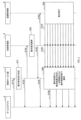
- FIG. 1 is a ladder chart showing basic operations performed in a vehicle control system in an embodiment
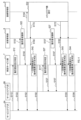
- FIG. 10 is a ladder chart showing an operation example when receiving multiple requests to open and close the slide door
- FIG. 10 is a ladder chart showing an operation example when a request to open a slide door and a request to start an air conditioner conflict with each other
- FIG. 11 is a ladder chart showing a setting example for transmitting operation results
- FIG. FIG. 4 is a ladder chart showing basic operations performed in a vehicle control system in another embodiment
- any one of the ECUA 10, ECUC 20, ECUD 25, and ECUE 30 corresponds to the vehicle control device in the present disclosure.
- the memories 12, 22, 27, and 32 correspond to storage units in the present disclosure.
- the functions of the vehicle service section 7 and the state management section 8 are implemented by the vehicle control program of the present disclosure.
- the vehicle service unit 7 corresponds to the first management unit in the present disclosure
- the state management unit 8 corresponds to the second management unit in the present disclosure
- the equipment management unit 9 corresponds to the third management unit in the present disclosure. corresponds to
- the processes of S10 and S20 correspond to the function of the acceptance determination section in the present disclosure
- the process of S10 corresponds to the function of the first determination section in the present disclosure
- the processing of S20 corresponds to the function of the second determination unit in the present disclosure
- the processes of S20, S110, and S160 in the embodiment correspond to the functions of the output section in the present disclosure
- the processes of S120, S140, and S150 correspond to the functions of the determination transmission section in the present disclosure.
- processing of S120 in the embodiment corresponds to the function of the first transmission unit in this disclosure
- processing of S140 and S150 corresponds to the function of the second transmission unit in this disclosure
- S40, S170 to The processing of S190 corresponds to the function of the motion transmission unit in the present disclosure.
- a vehicle control system 1 shown in FIG. 1 is mostly installed in a vehicle such as a passenger car, and includes a plurality of ECUs 10, 15, 20, 25, 30, 41 to 48 (hereinafter referred to as a large number of ECUs 10, etc.).
- the vehicle control system 1 may include a center 35 outside the vehicle.
- the center 35 is configured as a server capable of providing functions to vehicles.
- the center 35 can, for example, provide the vehicle with functions related to automatic driving or the like.
- a large number of ECUs 10, etc. and a center 35 are respectively provided with CPUs 11, 16, 21, 26, 31, 36 (hereinafter referred to as CPUs 11 to 36), semiconductor memories 12, 17, 22, 27 such as RAM, ROM, flash memory, etc. 32, 37 (hereinafter referred to as memories 12-37).
- CPUs 11 to 36 CPUs 11, 16, 21, 26, 31, 36
- semiconductor memories 12, 17, 22, 27 such as RAM, ROM, flash memory, etc. 32, 37
- memories 12-37 the ECUs 41 to 48 are also provided with CPUs and memories, illustration thereof is omitted.
- ECU represents an electronic control unit.
- a large number of ECUs 10 and the like and the center 35 are configured to control the controlled objects mounted on the vehicle.
- Controlled objects include, for example, engines, brakes, motors, various lights, display devices, air conditioners, seats, horns, generators, and the like. Note that illustration of the controlled object is omitted.
- the controlled objects are individually controlled by ECUs 41 to 48, which are operation control devices.
- the ECUs 41 to 48 include an ECUF 41 having a camera control section 91, an ECUG 42 having a millimeter wave control section 92, an ECUH 43 having a brake control section 93, and an ECUI 44 having a steering control section 94. It also includes an ECUJ 45 having a display control section 95 , an ECUK 46 having a sound control section 96 , an ECUL 47 having an HVAC control section 98 , and an ECUM 48 having a seat control section 99 .
- Each control unit 91-99 has an operation control program for operating the controlled object.
- the camera control unit 91 acquires an image captured by the vehicle-mounted camera, and controls exposure and the like of the vehicle-mounted camera.
- the millimeter wave control unit 92 controls a millimeter wave radar provided in the vehicle and acquires detection results obtained by the millimeter wave radar.
- the brake control unit 93 controls the brake.
- a steering control unit 94 controls steering.
- the display control unit 95 controls indicators such as meters and warning lights.
- the sound control unit 96 controls sounds such as warning sounds and voices generated from the speaker.
- a light control unit 97 controls various lights mounted on the vehicle. Note that the light control unit 97 is provided in the ECUE 30 .
- the HVAC control unit 98 controls the in-vehicle air conditioner. HVAC is an abbreviation for Heating Ventilation and Air-Conditioning.
- the seat control unit 99 controls the electric power seat of the vehicle.
- the CPUs 11 to 31 executing programs stored in non-transitional substantive recording media.
- memories 12 to 32 correspond to non-transitional substantive recording media storing programs.
- a method corresponding to the program is executed.
- the non-transitional substantive recording medium means a recording medium excluding electromagnetic waves.
- the number of microcomputers constituting the large number of ECUs 10 and the like and the center 35 may be one or more.
- the ECUA 10 implements functions as applications (hereinafter referred to as apps) 61 and 62, the vehicle API 71, and the motor system equipment control section 82 by executing programs.
- ECUB 15 implements a function as application 63 .
- the center 35 implements functions as an application 64 .
- the applications 61-64 are programs for providing services to vehicle users.
- the applications 61 to 64 indirectly transmit commands to the controlled object and operate the controlled object to provide useful functions to the user.
- These applications 61 to 64 may be installed in the ECUA 10, may be installed in the ECUB 15, or may be installed in the center .
- the applications 61-64 are configured to generate a first command, which is a command that does not designate the control units 91-99 described later, to the vehicle API 71.
- the “command” includes commands such as operation requests, commands such as arguments, function calls, and the like among the data used by the vehicle API 71 .
- the "command” may include priority information indicating which command should be preferentially processed.
- the applications 61 to 64 are not programs created specifically for a vehicle type, grade, etc., but are general-purpose programs that can support many vehicle types, grades, etc. Therefore, the applications 61 to 64 cannot specify how the vehicle in which they are mounted controls the controlled object. Therefore, the applications 61 to 64 output commands that do not specify specific control amounts of the controlled objects, in other words, the control units 91 to 99 that the vehicle API 71 uses. On the other hand, the applications 61-64 generate desired abstract operation contents. For example, the applications 61 to 64 only instruct the operation contents to turn on the lights, and do not specifically include in the operation contents which lights are to be turned on. Vehicle API 71 provides an API that can command abstract operation contents.
- At least one of the applications 61 to 64 is hereinafter also referred to as the service application 6.
- the vehicle API 71 unlike the applications 61-64, is a program created specifically for the vehicle type, grade, etc. That is, the vehicle API 71 is a program that absorbs differences in vehicle types, grades, etc. so that the applications 61 to 64 need not be aware of the differences in vehicle types, grades, and the like.
- the vehicle API 71 is a program that functions as an API for matching commands handled by the applications 61 to 64 with commands handled by the state management unit 8 and the equipment management unit 9, which will be described later. Note that API is an abbreviation for Application Programming Interface.
- the vehicle API 71 is mounted on the ECUA 10.
- the vehicle API 71 receives commands from the ECUA 10 itself, the ECUB 15 that is another ECU, and a plurality of applications 61 to 64 installed in the center 35 .
- At least one of the vehicle APIs 71 is hereinafter also referred to as the vehicle service unit 7. Note that the vehicle service unit 7 may be provided with a plurality of vehicle APIs.
- the ECUC 20 realizes the function as the state recognition section 81.
- ECUD 25 realizes a function as HMI system state recognition section 83 .
- ECUE 30 implements a function as body system control unit 84 .
- At least one of the state recognition unit 81 , the exercise system equipment control unit 82 , the HMI system state recognition unit 83 , and the body system control unit 84 is also referred to as the state management unit 8 hereinafter.
- the state management unit 8 is one of the programs for controlling the controlled object.
- the state management unit 8 for example, calculates the amount of actuation of an actuator to be controlled, and sends commands including the amount of actuation to various control units 91-99.
- the state management unit 8 has a function of generating a second command embodying the first command when the abstracted first command is input.
- the vehicle service section 7 may have the function of generating the second command that embodies the first command.
- the state management unit 8 is also a program for sending data obtained from sensors and the like to the service application 6.
- the state management unit 8 realizes a "state recognition" function and an "equipment control” function.
- the state recognition function converts sensor data obtained from the equipment management unit 9 (control units 91 to 99 to be described later) into a format suitable for the vehicle service unit 7 and transmits the converted data to the vehicle service unit 7 .
- the equipment control function distributes driving instructions from the vehicle service unit 7 to the equipment management unit 9 .
- the state management unit 8 may be mounted in the same ECUA 10 as the vehicle API 71, or may be mounted in another ECU, the ECUC 20, the ECUD 25, or the ECUE 30.
- the state recognition unit 81, the motor system equipment control unit 82, the HMI system state recognition unit 83, and the body system control unit 84, which are the state management unit 8, may all be mounted in the same ECUA 10 as the vehicle API 71, or may be mounted in each domain. It may be distributed and mounted on each ECU that supervises .
- the state recognition function implements a function for classifying individual sensor raw data acquired by the equipment management unit 9 from vehicle sensors into data for each sensing target that is easy for the service application 6 to use. Also, it implements a function of integrating data, converting it into information with a higher degree of abstraction, and transmitting it to the vehicle service section 7 .
- each control unit 91 to 99 constituting the equipment management unit 9 acquires individual information such as the vehicle speed of 0 km/h, the shift position P, and the absence of a driver in the vehicle. to output that the vehicle is parked. This information is further transmitted to the service application 6 via the vehicle service section 7 .
- the vehicle service unit 7 combines the ack from the lights and the ack from the horn, which are responses to the light and horn control request, into one operation result. You may respond to the service application 6.
- the car finder is a function of an application that notifies the user of the location of a vehicle such as a parking lot in an easy-to-understand manner.
- each control unit 91 to 99 in the equipment management unit 9 (for example, the engine, steering, shift, door, window, air conditioner, etc.). Then, the data is converted into a data format that can be accepted by each of the control units 91 to 99, and distributed in consideration of the data transmission order.
- the function of the equipment control is "request to output 1000Nm to the engine, - A request to output 0.1 rad” is output.
- the state management unit 8 is divided into a plurality of programs for each type of vehicle operation corresponding to the type of the first command.
- the types of vehicle motions include, for example, driving systems such as turning, running, and stopping of the vehicle, HMI systems related to information presentation to the user, body systems related to changes in the state of the body, and the like.
- the state management unit 8 is provided with management functions 81 to 84 according to the type of domain. It is stored in the memory 32 or the memory 12 of the ECUA 10, which is the central unit.
- the state management unit 8 is classified not by means of implementation (for example, the control units 91 to 99) that are likely to depend on vehicle variations, but by vehicle operations that the service application 6 is likely to request.
- the state recognition unit 81 acquires information from the camera control unit 91 and the millimeter wave control unit 92, converts it into information on the positions of vehicles and pedestrians, and outputs the information to the vehicle service unit 7.
- the motor system equipment control unit 82 converts the vehicle operation request into control amounts for the brake control unit 93 and the steering control unit 94 and outputs them.
- the HMI system state recognition unit 83 receives a command such as an alarm, determines whether to perform notification using the display control unit 95 and the sound control unit 96, and outputs a control amount.
- the body system control unit 84 receives a command regarding the vehicle environment, determines which one of the light control unit 97, the HVAC control unit 98, the seat control unit 99, etc. should be operated, converts it into a suitable command, and outputs it. do.
- the architecture within the vehicle network is such that the first layer is the equipment management unit 9, the second layer is the state management unit 8, the third layer is the vehicle service unit 7, and the fourth layer is the service application 6. Configured.
- the service application 6 transmits an operation request (that is, the first command in the present disclosure) to the vehicle service unit 7 in S110. Then, in S10, the vehicle service section 7 determines whether the operation request is accepted.
- the operation request acceptance determination is a process of determining whether or not each of the control units 91 to 99 can accept the first command.
- the vehicle service unit 7 determines whether or not the first command can be accepted based on at least one of the vehicle equipment, the vehicle state, and the command syntax included in the first command. configured to The vehicle equipment and vehicle state indicate the equipment and state of the vehicle in which the vehicle control system 1 is mounted.
- the vehicle service unit 7 determines whether or not the operation request from the service application 6 can be accepted based on, for example, the following six items.
- an abnormality e.g., data or communication abnormality, operation outside normal specifications, etc.
- the number of requests that can be made within the range indicates the number of requests that are received within a predetermined period of time.
- an operation request that does not match the vehicle state is rejected. For example, while traveling at a speed of 100 km/h, the operation request to open the door is rejected.
- determination items may be set for each vehicle API 71 in the vehicle service section 7 .
- the memory 12 stores equipment information of the vehicle, the authentication status of the service application 6 and whether or not there is an access right, the current vehicle status related to the equipment, and the abnormality information of the vehicle and both service departments.
- the memory 12 also stores information such as cache state information that the vehicle service section 7 refers to when determining whether or not the service can be accepted.
- the vehicle service unit 7 transmits to the service application 6 the determination result as to whether or not the first command can be accepted. That is, in S160, the vehicle service unit 7 transmits the determination result to the service application 6 before the equipment management unit 9 receives the operation instruction.
- the vehicle service section 7 transmits an operation request to the state management section 8 in S130.
- the operation request at S130 is transmitted only when the first command can be accepted.
- the operation request here corresponds to the management command in this disclosure.
- the state management unit 8 When the state management unit 8 receives an operation request from the vehicle service unit 7, it mediates the operation request in S20. In the operation request arbitration, the state management unit 8 determines whether or not the first command can be accepted in consideration of competition between the first command and another command different from the first command and the second command. The state management unit 8 determines whether or not the request can be received in consideration of conflict with a request received by another API (for example, another vehicle API) different from the requested API (for example, the vehicle API 71).
- another API for example, another vehicle API
- the requested API for example, the vehicle API 71
- the vehicle state or the like is referred to, and it is determined whether or not the operation request can be accepted regardless of other commands. It is determined whether or not the operation request can be accepted in consideration of conflicts with commands and the like. It should be noted that the state management unit 8 generates, as an operation instruction, a second instruction that embodies the abstracted first instruction when the operation request can be accepted.
- the state management unit 8 determines whether or not the operation request can be accepted based on, for example, the following five items.
- Request priority arbitration Whether or not the priority of the first command is higher than requests based on other applications or user operations
- Request source cancellation request The request source requests cancellation of the request, and the request is processed ⁇ 3>>
- User cancel request Whether or not an operation interruption request has been generated by the user ⁇ 4>>
- Request processing load overload Whether or not the controlled object receives more requests than it can process ⁇ 5
- Abnormal state management unit 8/equipment management unit 9 Whether or not an abnormality (such as data or communication abnormality, normal operation outside normal operation) has occurred in the state management unit 8 or equipment management unit 9 , The priority is specified by the application, and the operation based on the priority is determined by the receiving side. However, the receiving side may ignore the priority specified by the application.
- the state management unit 8 determines that the request cannot be accepted if there is a possibility that the vehicle drive control amount that satisfies both of the requests will cause the vehicle to deviate from the road.
- priority information for requests, information about requester cancellation, information about user cancellation, and thresholds (for example, the number of requests, control amount, processing load, etc.) that can be processed by the controlled object are stored in memory 12 or memory 22. , 27 and 32.
- the memory 12 or the memories 22 , 27 , and 32 also store information that the state management unit 8 refers to when determining whether or not to accept, such as abnormality information of the state management unit 8 and the equipment management unit 9 .
- the threshold value that can be processed by the controlled object may be changeable according to the situation.
- the service application 6 and the state management unit 8 set the thresholds stored in the memory 12 or the memories 22, 27, and 32 to data obtained from the vehicle or data obtained from a device outside the vehicle (for example, new threshold).
- the state management unit 8 may determine whether or not the first command can be accepted in consideration of whether or not the amount of processing for the first command and other commands is permissible. More specifically, the state management unit 8 can accept the first command by comparing the amount of processing relating to the first command and other commands with threshold values stored in the memory 12 or the memories 22, 27, and 32. It may be determined whether or not
- OTA Over The Air
- the allowable value of the remaining battery level may be updated. More specifically, when deterioration of the battery is detected, the allowable value of the remaining battery capacity may be updated to a higher value (eg, 25%) than normal (eg, 20%).
- the state management unit 8 transmits the determination result (that is, the arbitration result) of S20 to the service application 6. Send to.
- the vehicle service unit 7 relays the mediation result transmitted from the state management unit 8, and sends the mediation result to the service application 6 in S150.
- the state management unit 8 outputs a second command (that is, an operation instruction) based on the first command to each of the control units 91 to 99 of the equipment management unit 9 in S160.
- Each control unit 91 to 99 is loaded with an operation control program for operating the object to be controlled, and each control unit 91 to 99 of the equipment management unit 9 that receives the operation instruction executes the operation control program. . That is, the memory of each ECU 41-48, which is each operation control device, stores an operation control program constituting each control unit 91-99, and the program is executed by the CPU.
- Each of the control units 91 to 99 controls the operation of the controlled object based on the second command (S30). Then, in S170, each of the control units 91 to 99 successively and repeatedly transmits the operating state of the object to be controlled over the communication line. For example, operating conditions are transmitted as CAN® data.
- the operating state is received by the vehicle service unit 7 and the state management unit 8.
- the state management unit 8 may relay the received operation state to the vehicle service unit 7 in S180.
- the vehicle service unit 7 receives the operation status transmitted from each of the control units 91 to 99 of the equipment management unit 9, and recognizes the operation result based on the operation status.
- the operation result is data representing whether or not the controlled object is operating normally.
- Vehicle service unit 7 transmits the operation result to service application 6 .
- the operation result is recognized based on the data indicating the operating state of each of the control units 91 to 99 acquired from the communication line.
- the vehicle service unit 7 determines, for example, whether there is an alert included in the operating state, whether the values such as sensor values are within the normal range, and whether the rate of change of the values is within the normal range. etc. to determine the operation result.
- the operation result includes, for example, at least one of normal, abnormal, operating, stopping, and the like.
- the vehicle service unit 7 receives a plurality of operating states for the same data (predetermined data item) in a certain controlled object. Then, the vehicle service section 7, at regular intervals, or when the difference (for example, rate of change) between one operating state at the first point in time and another operating state at the second point in time satisfies a preset condition, The operation result is transmitted to the service application 6 as S190.
- the vehicle service unit 7 may transmit the vehicle speed data to the service application 6 every second, or may transmit the vehicle speed data to the service application 6 when the vehicle speed data changes from a stopped state to a running state. good. Further, the vehicle speed data may be transmitted to the service application 6 when the rate of change of the vehicle speed data during running exceeds a predetermined value.
- the preset condition is a condition that is arbitrarily set. For example, when the above-mentioned operable level is changed, when the operating state transitions from operating to stopped, or from stopped to operating. etc. may be included.
- the vehicle service unit 7 reduces the frequency of transmitting operation results to the service application 6 than the frequency of receiving operation states transmitted from each of the control units 91-99. With this configuration, the processing load on the service application 6 can be reduced.
- two service applications 6A and 6B are provided as service applications 6, and an example of processing when receiving different commands from these service applications 6A and 6B is shown.
- the service application 6A transmits an opening request to the vehicle service section 7 to open the sliding door. Then, in S12, the vehicle service section 7 determines whether the operation request is accepted.
- the vehicle service department 7 makes the same determination as in S10, and here determines that the request can be accepted. Therefore, in S122, the vehicle service unit 7 transmits to the service application 6A that the first command can be received. Subsequently, the vehicle service section 7 transmits a slide door open request to the state management section 8 in S132.
- the state management unit 8 When the state management unit 8 receives a slide door opening request from the vehicle service unit 7, it mediates the operation request in S22. Here, the state management unit 8 determines that the slide door open request can be accepted. In S142, the state management unit 8 notifies the service application 6A that the slide door opening request can be accepted. The vehicle service section 7 relays the fact that it can be received, and in S152, sends the fact that it can be received to the service application 6A. In addition, the state management unit 8 outputs a second command based on the first command (that is, an instruction to open the slide door) to the equipment management unit 9 in S162.
- the first command that is, an instruction to open the slide door
- the equipment management unit 9 successively and repeatedly transmits the operating state of the sliding door over the communication line.
- the operating state here includes, for example, the position of the slide door, during opening operation, during closing operation, during stop, and the like.
- the operating state is received by the vehicle service unit 7 and the state management unit 8.
- the state management unit 8 may relay the received operation state to the vehicle service unit 7 in S182.
- the vehicle service unit 7 receives the operation state transmitted from the equipment management unit 9, and recognizes the operation result based on the operation state.
- the service application 6B transmits to the vehicle service section 7 a request to stop the sliding door. Then, in S26, the vehicle service section 7 determines whether the operation request is accepted.
- the vehicle service department 7 makes the same determination as in S10, and here determines that the request can be accepted. Therefore, in S126, the vehicle service unit 7 transmits to the service application 6B that the first command can be received. Subsequently, the vehicle service section 7 transmits a slide door stop request to the state management section 8 in S136.
- the state management section 8 Upon receiving the sliding door stop request from the vehicle service section 7, the state management section 8 performs operation request arbitration in S26.
- the status management unit 8 determines that the slide door stop request cannot be accepted because the slide door open request that has already been accepted has a higher priority.
- the state management unit 8 transmits to the service application 6B that the slide door stop request cannot be accepted.
- the vehicle service unit 7 relays the fact that the reception is not possible, and in S156, sends the information that the reception is possible to the service application 6.
- the state management section 8 will not output the second command (that is, the sliding door stop command) to the equipment management section 9 . That is, the sliding door continues to operate until it is fully opened without being stopped in the middle of the opening operation.
- the vehicle service unit 7 repeatedly receives the operation state transmitted from the equipment management unit 9 in S43 and S44, and recognizes the operation result based on the operation state each time. In S193, the vehicle service unit 7, for example, transmits to the service application 6A that the slide door is being opened normally. A message to the effect that the operation has ended normally is sent to the service application 6A.
- the service application 6B transmits an air conditioner activation request to the vehicle service section 7 in S117. Then, in S27, the vehicle service section 7 determines whether the operation request is accepted.
- the vehicle service department 7 makes the same determination as in S10, and here determines that the request can be accepted. Therefore, in S127, the vehicle service unit 7 transmits to the service application 6B that the first command can be received. Subsequently, the vehicle service section 7 transmits an air conditioner activation request to the state management section 8 in S137.
- the state management unit 8 When the state management unit 8 receives an air conditioner activation request from the vehicle service unit 7, it mediates the operation request in S27. Here, the state management unit 8 determines that the request to start the air conditioner cannot be accepted because the sum of the power required for the request to open the sliding door that has already been accepted and the power required for the request to start the air conditioner exceeds the allowable power. do.
- the state management unit 8 transmits to the service application 6B that the request to start the air conditioner cannot be accepted.
- the vehicle service section 7 relays the fact that the reception is not possible, and in S157, sends the information that the reception is possible to the service application 6. In this case, the state management section 8 will not output the second command (that is, the air conditioner activation command) to the equipment management section 9 .
- One aspect of the present disclosure is executed by at least one ECU 10, 15, 20, 25, 30, and for controlling each control unit 91 to 99 such as actuators, lights, sound devices, and display devices related to running. It is a vehicle control program.
- a vehicle control program is arranged as a vehicle service section 7 and a state management section 8 .
- the vehicle service unit 7 and the state management unit 8 When the vehicle service unit 7 and the state management unit 8 receive the first command from the service application 6 in S110, the vehicle service unit 7 and the state management unit 8 have a function of outputting a second command based on the first command to each of the control units 91 to 99 in S160. come true.
- the state management unit 8 when the abstracted first command is input, the state management unit 8 generates a second command that embodies the first command.
- Each control unit 91-99 is configured as a separate device from the ECUs 10, 15, 20, 25, 30, and an operation control program is installed in each control unit 91-99.
- the operation control program is a program for controlling each control section 91-99.
- the vehicle service unit 7 and the state management unit 8 realize the function of determining whether each control unit 91 to 99 can accept the first command. Before the second command is transmitted to each of the control units 91 to 99, the vehicle service unit 7 and the state management unit 8 determine in S120, S140, and S150 whether or not the first command can be received. A function of transmitting to the service application 6 is realized.
- the vehicle service unit 7 accepts the first command based on at least one of the vehicle equipment, the vehicle state, and the command syntax included in the first command. configured to determine whether it is possible.
- the state management unit 8 is capable of accepting the first command in view of the conflict between the first command and another command different from the first command and the second command. It is configured to determine whether there is The state management unit 8 may make the determination in consideration of conflicts with requests received by the state management unit 8 of other APIs.
- the vehicle service unit 7 transmits the determination result in S10 to the service application 6 before the computation of the determination result in S20 ends. Also, the state management unit 8 transmits the determination result of S20 to the service application 6 in S140.
- the vehicle service unit 7 recognizes an operation result indicating whether each of the control units 91 to 99 is operating normally, and sends the operation result to the service. configured to send to app 6;
- the operation result is recognized based on the data indicating the operation state of each of the control units 91 to 99 acquired from the communication line.
- the service application 6 since the operation result of each of the control units 91 to 99 is transmitted to the service application 6, the service application 6 does not need to calculate the operation result from the operating state, and recognizes the operation result with a simple configuration. can do.
- the vehicle service unit 7 satisfies a preset condition at regular intervals or a difference (for example, rate of change) between one operation state and another operation state. Sometimes it is arranged to send the result of the operation to the service application 6 .
- operation results can be thinned out and transmitted, so the processing load when the service application 6 processes the operation results can be reduced.
- the vehicle service unit 7 and the state management unit 8 realize a function of outputting a plurality of second commands corresponding to a plurality of first commands to each of the control units 91-99. At least part of the vehicle service unit 7 and the state management unit 8 is divided into a plurality of programs for each type of vehicle operation corresponding to the type of the first command.
- the vehicle service unit 7 is configured to transmit the operation result to the service application 6 under preset conditions in S40, but the present invention is not limited to this.
- the service application 6 may be configured to set how the vehicle service section 7 is to transmit the operation result.
- the operation result in FIG. 2 is described as availability.
- Availability generally indicates the resistance of a system to failure, but here, it is a concept that includes determination results of failures and the like, operation results described above, and the like.
- the vehicle service unit 7 can adopt either the Pub/Sub (Publish-Subscribe) type or the Req/Res (Request-Response) type.
- Pub/Sub type is a transmission method in which once transmission parameters such as the transmission cycle of availability and the number of times of transmission are registered, data is transmitted according to the settings.
- the Req/Res type is a transmission method that transmits data only when a request is received.
- the service application 6 sets transmission parameters in advance before S40. For example, the service application 6 transmits an availability distribution registration request to the vehicle service section 7 in S210. Upon receiving the availability distribution registration request, the vehicle service unit 7 transmits the availability to the service application 6 in S240 according to the settings of the transmission parameters included in this request.
- the vehicle service section 7 receives a plurality of operating states transmitted by the equipment management section 9 and the state management section 8 in S220 and S230, and generates availability. At this time, the vehicle service section 7 may determine the operable level (that is, whether or not the first command can be received) from the operating state, and change the setting of the operable level. The vehicle service unit 7 may transmit the availability when changing the setting of the operable level.
- the service application 6 transmits an availability distribution registration request to the vehicle service section 7 in S310.
- the vehicle service unit 7 Upon receiving the availability distribution registration request, the vehicle service unit 7 transmits the requested availability to the service application 6 in S240.
- the vehicle service section 7 receives at least one operating state transmitted by the equipment management section 9 and the state management section 8 in S225 and S235, and generates availability. At this time, the vehicle service section 7 may determine the operable level from the operating state and transmit the availability including the operable level.
- the state management unit 8 is configured to respond to the arbitration result requested by the vehicle service unit 7, but the configuration is not limited to this.
- the vehicle service unit 7 substitutes the function of the state management unit 8 in S11. It may be configured so that it can be executed by In this case, in S11A, the vehicle service unit 7 acquires a part of the arbitration result transmitted from the state management unit 8, the operation state of the state management unit 8, and the operation state transmitted from the equipment management unit 9. . Then, the vehicle service section 7 may use these arbitration results and operation states to perform part or all of the operation request arbitration (for example, the process of S20).
- the state management unit 8 receives the reception result for the operation request transmitted from the vehicle service unit 7, the operation state of the state management unit 8 itself, and the operation state of the controlled object transmitted from the equipment management unit 9 to the vehicle service unit. 7.
- the operation request arbitration (S20, S22) described above may be performed by the vehicle service section 7. FIG.
- the functions as the acceptance determination unit, the determination transmission unit, the output unit, and the operation execution unit in the present disclosure are at least one of the first management unit, the second management unit, and the third management unit may be performed by
- one management unit may implement all the functions of the acceptance determination unit, determination transmission unit, output unit, and operation execution unit, or a plurality of management units may cooperate as in the present embodiment.
- function may be realized.
- each function may be implemented by an arbitrary management unit.
- a plurality of functions possessed by one component in the above embodiment may be realized by a plurality of components, or a function possessed by one component may be realized by a plurality of components. . Also, a plurality of functions possessed by a plurality of components may be realized by a single component, or a function realized by a plurality of components may be realized by a single component. Also, part of the configuration of the above embodiment may be omitted. Moreover, at least part of the configuration of the above embodiment may be added or replaced with respect to the configuration of the other above embodiment.
Landscapes
- Engineering & Computer Science (AREA)
- Mechanical Engineering (AREA)
- Automation & Control Theory (AREA)
- Transportation (AREA)
- Health & Medical Sciences (AREA)
- Human Computer Interaction (AREA)
- Signal Processing (AREA)
- Computer Networks & Wireless Communication (AREA)
- Medical Informatics (AREA)
- General Health & Medical Sciences (AREA)
- Computing Systems (AREA)
- Theoretical Computer Science (AREA)
- Chemical & Material Sciences (AREA)
- Software Systems (AREA)
- Combustion & Propulsion (AREA)
- General Physics & Mathematics (AREA)
- General Engineering & Computer Science (AREA)
- Physics & Mathematics (AREA)
- Selective Calling Equipment (AREA)
Priority Applications (4)
| Application Number | Priority Date | Filing Date | Title |
|---|---|---|---|
| JP2024504748A JP7726369B2 (ja) | 2022-03-02 | 2023-03-02 | 車両制御システム、車両制御方法、及び車両制御プログラム |
| CN202380024702.0A CN118843855A (zh) | 2022-03-02 | 2023-03-02 | 车辆控制系统、车辆控制方法以及车辆控制程序 |
| DE112023001186.9T DE112023001186T5 (de) | 2022-03-02 | 2023-03-02 | Fahrzeugsteuerungssystem, fahrzeugsteuerungsverfahren und fahrzeugsteuerungsprogramm |
| US18/780,937 US20240380820A1 (en) | 2022-03-02 | 2024-07-23 | Vehicle control system, vehicle control method, and vehicle control program product |
Applications Claiming Priority (2)
| Application Number | Priority Date | Filing Date | Title |
|---|---|---|---|
| JP2022032029 | 2022-03-02 | ||
| JP2022-032029 | 2022-03-22 |
Related Child Applications (1)
| Application Number | Title | Priority Date | Filing Date |
|---|---|---|---|
| US18/780,937 Continuation US20240380820A1 (en) | 2022-03-02 | 2024-07-23 | Vehicle control system, vehicle control method, and vehicle control program product |
Publications (1)
| Publication Number | Publication Date |
|---|---|
| WO2023167280A1 true WO2023167280A1 (ja) | 2023-09-07 |
Family
ID=87883843
Family Applications (1)
| Application Number | Title | Priority Date | Filing Date |
|---|---|---|---|
| PCT/JP2023/007771 Ceased WO2023167280A1 (ja) | 2022-03-02 | 2023-03-02 | 車両制御システム、車両制御方法、及び車両制御プログラム |
Country Status (5)
| Country | Link |
|---|---|
| US (1) | US20240380820A1 (https=) |
| JP (1) | JP7726369B2 (https=) |
| CN (1) | CN118843855A (https=) |
| DE (1) | DE112023001186T5 (https=) |
| WO (1) | WO2023167280A1 (https=) |
Cited By (1)
| Publication number | Priority date | Publication date | Assignee | Title |
|---|---|---|---|---|
| WO2024048756A1 (ja) * | 2022-09-02 | 2024-03-07 | 株式会社デンソー | 車両制御装置、車両制御システム、受付判定方法、及びプログラム |
Families Citing this family (1)
| Publication number | Priority date | Publication date | Assignee | Title |
|---|---|---|---|---|
| US12545105B2 (en) * | 2023-09-29 | 2026-02-10 | Rivian Ip Holdings, Llc | Modular microcontroller architecture |
Citations (3)
| Publication number | Priority date | Publication date | Assignee | Title |
|---|---|---|---|---|
| WO2009093732A1 (ja) * | 2008-01-24 | 2009-07-30 | Autonetworks Technologies, Ltd. | 機器制御装置及び機器制御プログラム |
| JP2010030506A (ja) * | 2008-07-30 | 2010-02-12 | Autonetworks Technologies Ltd | 制御装置、制御システム及びコンピュータプログラム |
| JP2011081671A (ja) * | 2009-10-08 | 2011-04-21 | Autonetworks Technologies Ltd | 制御装置、制御方法及びコンピュータプログラム |
-
2023
- 2023-03-02 JP JP2024504748A patent/JP7726369B2/ja active Active
- 2023-03-02 CN CN202380024702.0A patent/CN118843855A/zh active Pending
- 2023-03-02 WO PCT/JP2023/007771 patent/WO2023167280A1/ja not_active Ceased
- 2023-03-02 DE DE112023001186.9T patent/DE112023001186T5/de active Pending
-
2024
- 2024-07-23 US US18/780,937 patent/US20240380820A1/en active Pending
Patent Citations (3)
| Publication number | Priority date | Publication date | Assignee | Title |
|---|---|---|---|---|
| WO2009093732A1 (ja) * | 2008-01-24 | 2009-07-30 | Autonetworks Technologies, Ltd. | 機器制御装置及び機器制御プログラム |
| JP2010030506A (ja) * | 2008-07-30 | 2010-02-12 | Autonetworks Technologies Ltd | 制御装置、制御システム及びコンピュータプログラム |
| JP2011081671A (ja) * | 2009-10-08 | 2011-04-21 | Autonetworks Technologies Ltd | 制御装置、制御方法及びコンピュータプログラム |
Cited By (1)
| Publication number | Priority date | Publication date | Assignee | Title |
|---|---|---|---|---|
| WO2024048756A1 (ja) * | 2022-09-02 | 2024-03-07 | 株式会社デンソー | 車両制御装置、車両制御システム、受付判定方法、及びプログラム |
Also Published As
| Publication number | Publication date |
|---|---|
| CN118843855A (zh) | 2024-10-25 |
| JPWO2023167280A1 (https=) | 2023-09-07 |
| DE112023001186T5 (de) | 2025-04-10 |
| US20240380820A1 (en) | 2024-11-14 |
| JP7726369B2 (ja) | 2025-08-20 |
Similar Documents
| Publication | Publication Date | Title |
|---|---|---|
| US20240380820A1 (en) | Vehicle control system, vehicle control method, and vehicle control program product | |
| KR102789190B1 (ko) | 차량 및 그 제어방법 | |
| CN112429012A (zh) | 汽车电控系统、自动驾驶控制方法及汽车 | |
| US20240101049A1 (en) | Vehicle control device, non-transitory computer-readable storage medium storing vehicle control program, and vehicle control system | |
| US10877474B2 (en) | Autonomous driving control apparatus, vehicle having the apparatus, and method of controlling the apparatus | |
| CN116890809A (zh) | 基于情境的车辆配置 | |
| US12528430B2 (en) | Vehicle control device and vehicle control system | |
| CN114435267B (zh) | 一种自动驾驶系统及汽车 | |
| JP7540353B2 (ja) | 車載装置、及び情報処理方法 | |
| WO2019111526A1 (ja) | 制御装置、制御方法および制御プログラム | |
| JP2020188407A (ja) | 電子制御装置および移動体制御システム | |
| US12097890B2 (en) | Middleware software layer for vehicle autonomy subsystems | |
| US20250171036A1 (en) | Vehicle control device, inquiry method, storage medium storing program, and vehicle control system | |
| JP7816636B2 (ja) | 車両制御装置、及び車両制御方法 | |
| JP7852725B2 (ja) | 車両制御装置、車両制御システム、受付判定方法、及びプログラム | |
| WO2020129911A1 (ja) | 統括ecu、制御方法、制御システム及びプログラム | |
| JP2022149917A (ja) | 通信システム | |
| US20250187554A1 (en) | Onboard device, center device, storage medium storing vehicle control program, and vehicle control method | |
| US20230318872A1 (en) | Vehicle variant-aware services | |
| WO2024085010A1 (ja) | 車両の制御装置、車両制御システム、制御方法、及びプログラム | |
| JP2024061957A (ja) | 車載装置、プログラム提供装置、車両用システム、機能部制御方法、プログラム保存方法及びプログラム提供方法 | |
| JP2022114880A (ja) | 車載装置、及び状態変化検出方法 |
Legal Events
| Date | Code | Title | Description |
|---|---|---|---|
| 121 | Ep: the epo has been informed by wipo that ep was designated in this application |
Ref document number: 23763537 Country of ref document: EP Kind code of ref document: A1 |
|
| ENP | Entry into the national phase |
Ref document number: 2024504748 Country of ref document: JP Kind code of ref document: A |
|
| WWE | Wipo information: entry into national phase |
Ref document number: 202380024702.0 Country of ref document: CN |
|
| WWE | Wipo information: entry into national phase |
Ref document number: 112023001186 Country of ref document: DE |
|
| 122 | Ep: pct application non-entry in european phase |
Ref document number: 23763537 Country of ref document: EP Kind code of ref document: A1 |
|
| WWP | Wipo information: published in national office |
Ref document number: 112023001186 Country of ref document: DE |