WO2023112635A1 - インフラ電波センサ - Google Patents
インフラ電波センサ Download PDFInfo
- Publication number
- WO2023112635A1 WO2023112635A1 PCT/JP2022/043471 JP2022043471W WO2023112635A1 WO 2023112635 A1 WO2023112635 A1 WO 2023112635A1 JP 2022043471 W JP2022043471 W JP 2022043471W WO 2023112635 A1 WO2023112635 A1 WO 2023112635A1
- Authority
- WO
- WIPO (PCT)
- Prior art keywords
- abnormality
- recovery
- unit
- radio wave
- reflected wave
- Prior art date
- Legal status (The legal status is an assumption and is not a legal conclusion. Google has not performed a legal analysis and makes no representation as to the accuracy of the status listed.)
- Ceased
Links
Images






Classifications
-
- G—PHYSICS
- G01—MEASURING; TESTING
- G01S—RADIO DIRECTION-FINDING; RADIO NAVIGATION; DETERMINING DISTANCE OR VELOCITY BY USE OF RADIO WAVES; LOCATING OR PRESENCE-DETECTING BY USE OF THE REFLECTION OR RERADIATION OF RADIO WAVES; ANALOGOUS ARRANGEMENTS USING OTHER WAVES
- G01S13/00—Systems using the reflection or reradiation of radio waves, e.g. radar systems; Analogous systems using reflection or reradiation of waves whose nature or wavelength is irrelevant or unspecified
- G01S13/88—Radar or analogous systems specially adapted for specific applications
- G01S13/91—Radar or analogous systems specially adapted for specific applications for traffic control
-
- G—PHYSICS
- G01—MEASURING; TESTING
- G01S—RADIO DIRECTION-FINDING; RADIO NAVIGATION; DETERMINING DISTANCE OR VELOCITY BY USE OF RADIO WAVES; LOCATING OR PRESENCE-DETECTING BY USE OF THE REFLECTION OR RERADIATION OF RADIO WAVES; ANALOGOUS ARRANGEMENTS USING OTHER WAVES
- G01S7/00—Details of systems according to groups G01S13/00, G01S15/00, G01S17/00
- G01S7/02—Details of systems according to groups G01S13/00, G01S15/00, G01S17/00 of systems according to group G01S13/00
- G01S7/40—Means for monitoring or calibrating
-
- G—PHYSICS
- G01—MEASURING; TESTING
- G01S—RADIO DIRECTION-FINDING; RADIO NAVIGATION; DETERMINING DISTANCE OR VELOCITY BY USE OF RADIO WAVES; LOCATING OR PRESENCE-DETECTING BY USE OF THE REFLECTION OR RERADIATION OF RADIO WAVES; ANALOGOUS ARRANGEMENTS USING OTHER WAVES
- G01S7/00—Details of systems according to groups G01S13/00, G01S15/00, G01S17/00
- G01S7/02—Details of systems according to groups G01S13/00, G01S15/00, G01S17/00 of systems according to group G01S13/00
- G01S7/40—Means for monitoring or calibrating
- G01S7/4004—Means for monitoring or calibrating of parts of a radar system
- G01S7/4039—Means for monitoring or calibrating of parts of a radar system of sensor or antenna obstruction, e.g. dirt- or ice-coating
Definitions
- Patent Document 1 discloses an in-vehicle radar device that detects an abnormality when the sensitivity of the radar device is lowered or the transmission/reception circuit fails while the vehicle is running.
- radio waves emitted to a first object that exists constantly and a second object that is different from the first object are emitted from the first object and the second object.
- a generator for generating first reflected wave data indicating information including a signal level of the reflected wave based on the reflected wave reflected from the object; and reference data indicating information including the position of the first object. and the first reflected wave data an object detection unit that detects the second object; an abnormality detection unit that detects a first abnormality that is an abnormality in the detection result of the object detection unit; a recovery unit that executes recovery processing for recovering from the first error when the error detection unit detects the first error.
- the generation unit newly generates second reflected wave data based on the reflected wave of the radio wave emitted after the abnormality detection unit detects the first abnormality, and the recovery process includes the second reflected wave data. is a process of updating the reference data based on the reflected wave data of .
- FIG. 1 is a diagram showing a usage example of an infrastructure radio wave sensor according to an embodiment.
- FIG. 2 is a perspective view showing an example of the external configuration of the infrastructure radio wave sensor according to the embodiment.
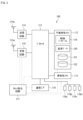
- FIG. 3 is a block diagram showing an example of the internal configuration of the infrastructure radio wave sensor according to the embodiment.
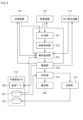
- FIG. 4 is a functional block diagram showing an example of functions of the infrastructure radio wave sensor according to the embodiment.
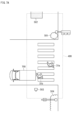
- FIG. 5A is a diagram showing an example of a detection area of an infrastructure radio wave sensor.
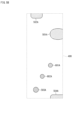
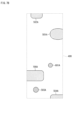
- FIG. 5B is a diagram for explaining reflected wave data obtained by irradiating the detection area shown in FIG. 5A with radio waves.
- FIG. 6 is a diagram explaining an example of the first reference data.
- FIG. 1 is a diagram showing a usage example of an infrastructure radio wave sensor according to an embodiment.
- FIG. 2 is a perspective view showing an example of the external configuration of the infrastructure radio wave sensor according to the embodiment.
- FIG. 3 is a block diagram showing an example of the internal
- FIG. 7A is a diagram showing an example of a detection area when the number of standing objects increases.
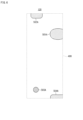
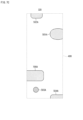
- FIG. 7B is a diagram for explaining reflected wave data obtained by irradiating the detection area shown in FIG. 7A with radio waves.
- FIG. 7C is a diagram illustrating an example of the second reference data;
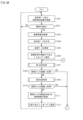
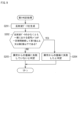
- FIG. 8A is a flowchart showing a part of an example of a process for determining reflected wave data abnormality or detection state abnormality by an infrastructure radio wave sensor according to the embodiment.
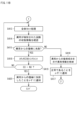
- FIG. 8B is a flowchart illustrating another part of the example of the reflected wave data abnormality or detection state abnormality determination process by the infrastructure radio wave sensor according to the embodiment;
- FIG. 9 is a flow chart showing an example of the first determination process.
- FIG. 8A is a flowchart showing a part of an example of a process for determining reflected wave data abnormality or detection state abnormality by an infrastructure radio wave sensor according to the embodiment.
- FIG. 8B is a flowchart illustrating
- FIG. 10 is a flow chart showing an example of the second determination process.
- FIG. 11A is a flowchart illustrating a part of an example of module abnormality determination processing by an infrastructure radio wave sensor according to the embodiment
- FIG. 11B is a flowchart illustrating another part of the example of module abnormality determination processing by the infrastructure radio wave sensor according to the embodiment;
- infrastructure radio sensors used for traffic monitoring are fixed to structures (arms, etc.) installed on the road, and the detection area is a fixed point on the road.
- Such infrastructure radio wave sensors cannot normally detect objects (vehicles, people, etc.) due to dirt on the radio wave transmitting/receiving surface, deviation of the position or angle of the infrastructure radio wave sensor, construction of buildings within the detection area, etc. It may disappear.
- a delay in recovering from an abnormality in an infrastructure radio wave sensor hinders accurate traffic monitoring.
- an infrastructure radio wave sensor can be recovered from an abnormality.
- a radio wave irradiated to a first object that is stationary and a second object different from the first object becomes a reflected wave reflected from the first object and the second object.
- the return process is a process of updating the reference data based on the second reflected wave data.
- the apparatus may further include a determination unit that executes a second determination process for determining whether recovery from the first abnormality has succeeded or failed when the recovery process has been performed. According to this configuration, it is possible to determine whether or not the infrastructure radio wave sensor has recovered from the abnormality by updating the reference data.
- the determination unit determines from the first abnormality based on the detection result before the reference data is updated and the detection result after the reference data is updated. It may be determined whether or not the recovery of is successful. According to this configuration, since the state of the object to be detected is different before the occurrence of an abnormality and after execution of the restoration process, it is possible to determine whether or not the infrastructure radio wave sensor has successfully recovered from the abnormality.
- the determination unit determines whether recovery from the first abnormality has failed based on third reflected wave data newly generated by the generation unit after the recovery process is executed.
- a first determination process for determination may be performed, and the second determination process may be performed when it is determined in the first determination process that recovery from the first abnormality has not failed. According to this configuration, it is possible to more accurately determine whether or not the infrastructure radio wave sensor has recovered from the abnormality based on both the state of radio wave reflection and the state of the detection target before the occurrence of the abnormality and after execution of the recovery process. can.
- the signal level of the reflected wave in at least part of the third reflected wave data continues for a certain period of time to be equal to or higher than a first value or equal to or lower than a second value in the first determination processing, Alternatively, it may be determined that recovery from the first abnormality has failed. According to this configuration, it is possible to more accurately determine that the infrastructure radio wave sensor has failed to recover from an abnormality.
- the abnormality detection unit is capable of detecting a second abnormality that is an abnormality in at least a part of the plurality of modules; , when the second abnormality is detected, the recovery unit may execute a partial reset process for resetting the module in which the second abnormality is detected.
- the recovery unit may further perform a full reset process for resetting the entire infrastructure radio wave sensor. According to this configuration, an abnormality that cannot be resolved by the partial reset process can be resolved by the overall reset process.
- the plurality of modules may include a transmission circuit that transmits the radio waves, a reception circuit that receives the reflected waves, and a clock generation circuit that transmits clock signals to the transmission circuit and the reception circuit. According to this configuration, when an abnormality occurs in the transmission circuit, the reception circuit, and the clock generation circuit of the infrastructure radio wave sensor, the infrastructure radio wave sensor can be recovered from the abnormality.
- a notification unit may be further provided for notifying the user that recovery from the abnormality has failed when the determination unit has determined that the recovery from the abnormality has failed.
- the notification unit notifies the user of the occurrence of the first abnormality, notifies the user that recovery from the abnormality is being performed during execution of the second determination process, and When it is determined that the recovery from the abnormality has failed in the first determination process, or when it is determined that the recovery from the abnormality has failed in the second determination process, the recovery from the abnormality has failed The user may be notified of this.
- the notification unit may notify the user of the normal state when it is determined in the second determination process that recovery from the first abnormality has succeeded.
- a notification unit for notifying a user of occurrence of the second abnormality wherein the notification unit notifies the user that the partial reset process is being performed while the partial reset process is being performed.
- FIG. 1 is a diagram showing a usage example of an infrastructure radio wave sensor according to an embodiment.
- the infrastructure radio wave sensor 100 according to this embodiment is a radio wave radar for traffic monitoring.
- the infrastructure radio wave sensor 100 is, for example, a millimeter wave radar.
- the infrastructure radio wave sensor 100 is attached to an arm 320 connected to a pole 310 that is a stationary object provided on the road 20 .
- the infrastructure radio wave sensor 100 emits radio waves (millimeter waves) to a detection area 400 on the road 20 and receives the reflected waves to detect objects (for example, pedestrians 31 and vehicles 32) within the detection area 400. .
- the infrastructure radio wave sensor 100 measures the distance from the infrastructure radio wave sensor 100 to an object moving on the road, the speed of the object, and the horizontal angle (azimuth) of the position of the object with respect to the radio wave irradiation axis of the object. can be detected.
- a traffic monitoring system (object detection system) 10 includes an infrastructure radio wave sensor 100 and a control device 200 .
- the control device 200 is installed on the ground beside the road 20 .
- the control device 200 and the infrastructure radio wave sensor 100 are connected by a cable (not shown).
- the infrastructure radio wave sensor 100 transmits detection result data (hereinafter also referred to as "detection data"), data for notifying the state of the infrastructure radio wave sensor 100 (hereinafter also referred to as "state notification data”), etc. to the control device 200. can be done.
- FIG. 2 is a perspective view showing an example of the external configuration of the infrastructure radio wave sensor 100 according to the embodiment.
- the infrastructure radio wave sensor 100 has a transmitting/receiving surface 101 for transmitting/receiving millimeter waves.
- the infrastructure radio wave sensor 100 incorporates at least one transmitting antenna and at least one receiving antenna.
- the infrastructure radio wave sensor 100 transmits modulated waves, which are millimeter waves, from a transmission antenna through a transmission/reception surface 101 .
- the modulated wave hits an object and is reflected, and the receiving antenna receives the reflected wave.
- the infrastructure radio wave sensor 100 performs signal processing on the transmitted wave signal and the received wave signal, and detects the distance to an object, the azimuth angle, and the velocity of the object.
- the infrastructure radio wave sensor 100 is configured so that the installation angle can be adjusted.
- the infrastructure radio wave sensor 100 includes a sensor main body 102 , a depression angle adjuster 103 , a horizontal angle adjuster 104 , and a roll angle adjuster 105 .
- the sensor main body 102 is formed in a box shape, and the depression angle adjusting section 103 is attached to the side surface of the sensor main body 102 .
- the sensor main body 102 is rotatable about the horizontal axis by the depression angle adjusting section 103, whereby the depression angle of the sensor main body 102 is adjusted.
- the sensor main body 102 connected to the roll angle adjusting section 105 via the depression angle adjusting section 103 is rotatable in the horizontal direction by the roll angle adjusting section 105, whereby the roll angle of the sensor main body 102 is adjusted.
- the horizontal angle adjuster 104 is fixed to a pole 310 to be installed.
- the sensor main body 102 connected to the horizontal angle adjusting section 104 via the depression angle adjusting section 103 and the roll angle adjusting section 105 is rotatable about the vertical axis by the horizontal angle adjusting section 104, thereby adjusting the sensor main body 102 horizontally. angle is adjusted.
- the sensor main body 102 is provided with a plurality of LEDs (Light Emitting Diodes) 118a, 118b, 118c, and 118d.
- the LED 118a emits light when the infrastructure radio wave sensor 100 is normal.
- the LED 118b emits light when part of the circuit of the infrastructure radio wave sensor 100 is reset.
- the LED 118c emits light during the recovery operation from the abnormality.
- the LED 118d emits light when the infrastructure radio wave sensor 100 fails to recover from an abnormality.
- FIG. 3 is a block diagram showing an example of the internal configuration of the infrastructure radio wave sensor according to the embodiment.
- the infrastructure radio wave sensor 100 includes a processor 111, a nonvolatile memory 112, a volatile memory 113, a transmission circuit 114, a reception circuit 115, a communication interface (communication I/F) 116, a clock generation circuit 117, and an LED 118a. , 118b, 118c, 118d.
- the volatile memory 113 is, for example, a semiconductor memory such as SRAM (Static Random Access Memory) or DRAM (Dynamic Random Access Memory).
- the nonvolatile memory 112 is, for example, a flash memory, a hard disk, or a ROM (Read Only Memory).
- the nonvolatile memory 112 stores a control program 119 which is a computer program and first reference data 120 used for executing the control program 119 .
- the infrastructure radio wave sensor 100 is configured with a computer, and each function of the infrastructure radio wave sensor 100 is exhibited by the processor 111 executing a control program 119, which is a computer program stored in the storage device of the computer. .
- the control program 119 can be stored in a recording medium such as flash memory, ROM, CD-ROM.
- the processor 111 can detect an abnormality in the infrastructure radio wave sensor 100 and execute recovery processing from the abnormality by means of the control program 119 .
- the processor 111 is, for example, a CPU (Central Processing Unit). However, the processor 111 is not limited to a CPU.
- the processor 111 may be a GPU (Graphics Processing Unit).
- the processor 111 may be, for example, an ASIC (Application Specific Integrated Circuit), a gate array, or an FPGA (Field Programmable Gate Array) programmable logic device. In this case, the ASIC or programmable logic device is configured to be able to execute processing similar to that of the control program 119 .
- the transmission circuit 114 includes a transmission antenna 114a. Note that the number of transmission antennas 114a is not limited to one, and may be plural.
- the transmission circuit 114 generates a modulated wave and transmits the generated modulated wave from a transmission antenna 114a.
- the transmitted modulated wave hits an object (eg pedestrian 31, vehicle 32) and is reflected.
- the receiving circuit 115 includes a plurality of receiving antennas 115a.
- the receiving circuit 115 performs signal processing on the received reflected wave. Reflected wave data generated by signal processing is provided to the processor 111 .
- Processor 111 analyzes the reflected wave data to detect object position (distance and azimuth) and velocity. The processor 111 writes the object detection result to the nonvolatile memory 112 or the volatile memory 113 .
- the communication I/F 116 can communicate with external devices.
- Communication I/F 116 is connected to control device 200 via a cable, and can transmit detection data, state notification data, and the like to control device 200 .
- communication I/F 116 may include a wireless communication interface for DSRC (Dedicated Short Range Communications).
- Communication I/F 116 can transmit position information and speed information of an object detected by road-to-vehicle communication to vehicle 32 traveling on road 20 .
- the clock generation circuit 117 transmits clock signals to each of the processor 111, the nonvolatile memory 112, the volatile memory 113, the transmission circuit 114, the reception circuit 115, and the communication I/F 116.
- the processor 111 is connected to each of the LEDs 118a, 118b, 118c and 118d.
- the processor 111 causes the LEDs 118a, 118b, 118c, and 118d to emit light according to the state of the infrastructure radio wave sensor 100.
- FIG. 1
- the transmission circuit 114, the reception circuit 115, and the clock generation circuit 117 have the function of detecting circuit abnormalities.
- the transmission circuit 114 includes a transmission power monitoring circuit, and can detect an abnormality in the transmission power by the monitoring circuit.
- the receiving circuit 115 may include a current monitoring circuit to detect abnormalities in the bias current of the receiving circuit 115 .
- the clock generation circuit 117 includes a PLL (Phase Locked Loop) and can detect unlocking of the PLL.
- the transmission circuit 114, the reception circuit 115, and the clock generation circuit 117 can notify the processor 111 of abnormality detection.
- the non-volatile memory 112 includes a detection result database (detection result DB) 121.
- the detection result DB 121 is a database that stores past object detection results.
- the non-volatile memory 112 includes a log database (log DB) 122.
- the log DB 122 is a database that records status information of the infrastructure radio sensor 100 .
- FIG. 4 is a functional block diagram showing an example of functions of the infrastructure radio wave sensor 100 according to the embodiment.
- the infrastructure radio wave sensor 100 includes a generation unit 131, an object detection unit 132, an abnormality detection unit 133, a recovery unit 134, a determination unit 135, a notification unit 136, Each function with the recording unit 137 is exhibited.
- the generation unit 131 generates reflected wave data indicating information including the signal level of the reflected wave based on the reflected wave of the radio wave emitted to the object and reflected by the object.
- the transmission circuit 114 transmits a transmission signal, which is a modulated wave, from the transmission antenna 114a.
- a transmitted signal from the transmitting antenna 114a hits an object and is reflected.
- the receiving antenna 115a receives a reflected wave from an object.
- Generation section 131 synthesizes the modulated wave signal output from transmission circuit 114 and the reflected wave signal output from reception circuit 115 to generate an intermediate frequency signal (hereinafter referred to as “IF signal”).
- IF signal intermediate frequency signal
- the generation unit 131 performs a fast Fourier transform (FFT) on the IF signal to obtain information on distance, velocity and azimuth angle.
- FFT fast Fourier transform
- the generation unit 131 generates reflected wave data based on the acquired distance and azimuth angle information.
- the reflected wave data is, for example, data in a polar coordinate system in which the distance from the infrastructure radio wave sensor 100 is the radius and the angle from the radio wave irradiation direction is the declination, and the reception level and phase of the reflected wave are shown for each coordinate position. Data.
- the object detection unit 132 detects a constant Detect an object (a second object) different from the object existing in .
- 5A is a diagram showing an example of the detection area 400 of the infrastructure radio wave sensor 100
- FIG. 5B is a diagram for explaining reflected wave data obtained by irradiating the detection area 400 shown in FIG. 5A with radio waves. be.
- the detection area 400 is rectangular for the sake of simplification of illustration.
- a detection area 400 shown in FIG. 5A includes a pedestrian crossing.
- the detection area 400 there are a traffic light and a plant 501, a building 502, a traffic light 503, and a plant 504 near the pedestrian crossing.
- These traffic lights and plants 501 , buildings 502 , traffic lights 503 and plants 504 are included in the detection area 400 .
- Pedestrians 31a and 31b are present in the crosswalk.
- the generation unit 131 calculates the positions (distances and azimuth angles) of not only the pedestrians 31a and 31b in the detection area 400, but also the traffic lights and the plant 501, the building 502, the traffic light 503, and the plant 504.
- the reflected wave data includes position information of detected objects 501A, 502A, 503A, 504A, 601A and 602A.
- a detected object 501A corresponds to a traffic light and a plant 501
- a detected object 502A corresponds to a building 502
- a detected object 503A corresponds to a traffic light 503
- a detected object 504A corresponds to a plant 504
- a detected object 601A corresponds to a pedestrian 31a.
- the detected object 602A corresponds to the pedestrian 31b.
- FIG. 6 is a diagram explaining an example of the first reference data.
- the first reference data 120 is reflected wave data obtained by irradiating the detection area 400 with radio waves when there are no moving objects (pedestrians and vehicles).
- the first reference data 120 includes position information of objects that constantly exist in the detection area 400 .
- the objects standing in the detection area 400 are traffic lights and plants 501 , buildings 502 , traffic lights 503 and plants 504 . Therefore, the first reference data 120 includes position information of the detected objects 501A, 502A, 503A, and 504A.
- the object detection unit 132 compares the first reference data 120 and the reflected wave data to detect a moving object. Specifically, the object detection unit 132 calculates the difference between the first reference data 120 and the reflected wave data. The difference includes only the detected object 601A corresponding to the pedestrian 31a and the detected object 602A corresponding to the pedestrian 31b. Thus, the object detection unit 132 identifies the pedestrians 31a and 31b.
- the anomaly detection unit 133 detects an anomaly in the detection result of the object detection unit 132. If the arm 320 rotates around the pole 310 or the angle of the sensor main body 102 changes due to strong wind, vibration, or the like, the position or angle of the infrastructure radio wave sensor 100 shifts. After the position of the infrastructure radio wave sensor 100 is displaced, the detection area 400 changes from before the position of the infrastructure radio wave sensor 100 is displaced. For example, when the transmitting/receiving surface 101 faces the sky, no object exists within the detection area 400 and the infrastructure radio wave sensor 100 does not receive the reflected wave. Therefore, the reception level of the reflected wave is near the lower limit for the entire reflected wave data (the entire detection area 400).
- the reception level of the reflected wave is near the lower limit in part of the reflected wave data.
- the transmitting/receiving surface 101 faces an obstacle that reflects radio waves at a very high level, such as a traffic signal, a very high level reflected wave is received from the obstacle within the detection area 400 . Therefore, the reception level of the reflected wave is near the upper limit value in at least part of the reflected wave data.
- the reception level of the reflected wave is near the upper limit in part of the reflected wave data.
- the abnormality detection unit 133 analyzes the reflected wave data, and if the reception level of the reflected wave in at least part of the reflected wave data is equal to or higher than the first value continuously for a certain period of time, the reflected wave data in at least part of the reflected wave data It determines that the wave reception level is near the upper limit and detects an abnormality.
- the abnormality detection unit 133 analyzes the reflected wave data, and if the reception level of the reflected wave in at least part of the reflected wave data continues for a certain period of time and is equal to or lower than the second value, the reflected wave data in at least part of the reflected wave data It judges that the wave reception level is near the lower limit and detects an abnormality.
- reflected wave data abnormality An abnormality detected by analyzing the reflected wave data is hereinafter referred to as a "reflected wave data abnormality (first abnormality)".
- first value is a value determined based on the upper limit value
- second value is a value determined based on the lower limit value.
- the infrastructure radio wave sensor 100 detects the object normally. cannot be detected.
- the anomaly detection unit 133 can detect such an anomaly.
- FIG. 7A is a diagram showing an example of the detection area 400 when the number of standing objects increases.
- 7B is a diagram for explaining reflected wave data obtained by irradiating the detection area 400 shown in FIG. 7A with radio waves.
- FIG. 7C is a diagram showing an example of second reference data.
- the number of construction vehicles 700 which are objects standing near the pedestrian crossing, is increased from the example of FIG. 5A.
- the detected object 700A corresponds to the construction vehicle 700.
- the construction vehicle 700 is made of metal, and the signal level of the reflected wave is high. Therefore, the reflected wave from the construction vehicle 700 interferes with the reflected wave from the pedestrian 31b near the construction vehicle 700, and the object detection unit 132 cannot detect the pedestrian 31b.
- the abnormality detection unit 133 analyzes the reflected wave data. When the signal level of the reflected wave has a portion equal to or higher than the first value, the abnormality detection unit 133 can determine that the portion is near the upper limit value, and can detect the abnormality as described above. This anomaly is also one of reflected wave data anomalies.
- the transmitting/receiving surface 101 may face a location different from the location where vehicles or pedestrians, such as roads and pedestrian crossings, are present. For example, when the transmitting/receiving surface 101 faces a building, moving objects such as pedestrians 31 and vehicles 32 are not detected. As another example, when the angle of the transmitting/receiving plane 101 changes and the detection area 400 that includes the entire pedestrian crossing now includes only a portion of the pedestrian crossing, the number of pedestrians 31 detected per unit time decreases.
- the anomaly detection unit 133 compares the number of detected objects per unit time (for example, one hour) with the past actual value by the object detection unit 132, and if the number of detected objects per unit time differs from the actual value by a predetermined value or more, an abnormality is detected. to detect.
- Such an abnormality in the detection state of the object detection unit 132 is hereinafter referred to as "detection state abnormality".
- Past performance values are acquired from the detection result DB 121 .
- the anomaly detection unit 133 may detect an anomaly by comparing the detection result of the object detection unit 132 with past performance values in the same time period as the time period in which the detection result was obtained. Furthermore, the abnormality detection unit 133 may detect an abnormality by comparing the detection result of the object detection unit 132 with past performance values on the same day of the week as the day of the week when the detection result was obtained. Thereby, an abnormality can be detected more accurately.
- the abnormality detection unit 133 determines that the object detection state occurs frequently or continues. can also detect anomalies. If the number of objects detected by the object detection unit 132 per unit time is equal to or less than a predetermined value and continues for a certain period of time (for example, one day), the abnormality detection unit 133 determines that the object non-detection state frequently occurs or continues. and can detect anomalies.
- the abnormality detection unit 133 can determine that the number of detections does not change and detect an abnormality. Such abnormalities are also included in the detection status abnormalities.
- the transmission circuit 114 can detect an abnormality of the transmission circuit 114 .
- the transmission circuit 114 detects an abnormality, it holds state information indicating the detected abnormality.
- receiving circuit 115 detects an abnormality in receiving circuit 115, it holds status information indicating the detected abnormality.
- the clock generation circuit 117 detects an abnormality of the clock generation circuit 117, the clock generation circuit 117 holds state information indicating the detected abnormality.
- the anomaly detection unit 133 can detect an anomaly by checking the state information of the transmission circuit 114 , the reception circuit 115 and the clock generation circuit 117 .
- module abnormalities second abnormalities
- Transmitter circuit 114, receiver circuit 115, and clock generator circuit 117 are examples of “modules.”
- the restoration unit 134 executes restoration processing for recovering from the abnormality.
- the return process includes a first return process and a second return process.
- the first recovery process is a process of updating the first reference data 120
- the second recovery process is a process of resetting the module in which an error has occurred.
- the generation unit 131 When the abnormality detection unit 133 detects a reflected wave data abnormality or a detection state abnormality, the generation unit 131 generates a new reflected wave based on the reflected wave of the radio wave emitted after the abnormality detection unit 133 detects an abnormality in the detection result. Generate wave data.
- the recovery unit 134 updates the first reference data 120 based on the new reflected wave data generated by the generation unit 131 in the first recovery process. Even if the first reference data 120 is updated, the generation of the reflected wave data is not affected because the radio wave irradiation conditions and reception conditions are not changed.
- Reflected wave data anomalies and detection state anomalies may be resolved by updating the first reference data 120 .
- the pedestrian can be detected normally. 31b may be detected. Therefore, the recovery unit 134 generates the second reference data 220 based on the new reflected wave data generated after the abnormality detection.
- the reflected wave data used to update the first reference data 120 may be generated based on reflected waves obtained from the detection area 400 while no moving object exists in the detection area 400 . For example, it is possible to generate reflected wave data multiple times after an abnormality is detected, and select one of the reflected wave data that has the smallest number of detected objects as the second reference data 220. .
- the second reference data 220 may be generated by synthesizing a plurality of pieces of reflected wave data generated after an abnormality is detected.
- a moving object is detected based on the difference between the first reference data 120 before update and the new reflected wave data, the detected moving object is deleted from the new reflected wave data, and the 2 reference data 220 may be generated.
- the recovery unit 134 When the abnormality detection unit 133 detects a module abnormality, the recovery unit 134 performs partial reset processing for resetting the circuit in which the abnormality has occurred among the transmission circuit 114, the reception circuit 115, and the clock generation circuit 117 in the second recovery processing. to run. In the partial reset process, a reset command is issued to the circuit to be reset. A circuit that receives a reset command resets itself.
- the recovery unit 134 executes the overall reset processing for resetting the entire infrastructure radio wave sensor 100 .
- the processor 111 shown in FIG. 118d is reset.
- the power of the infrastructure radio wave sensor 100 is kept ON.
- Some of the control circuits of processor 111, clock generation circuit 117, and non-volatile memory 112 are not reset.
- some control circuits of the processor 111 cooperate with the processor 111 to restart the process from S107, which will be described later.
- the determination unit 135 determines whether the recovery from the abnormality has succeeded when the recovery process is executed.
- the determination processing by the determination unit 135 may be the same as or similar to the abnormality detection processing by the abnormality detection unit 133 described above.
- the determination unit 135 can execute a first determination process and a second determination process.
- the first determination process is a process of determining whether recovery from an abnormality has failed based on the reflected wave data generated by the generation unit 131 after the first recovery process is executed. For example, the determination unit 135 analyzes reflected wave data generated by the generation unit 131 after execution of the first return process. The determination unit 135 determines that the recovery from the abnormality has failed when the signal level of the reflected wave in at least part of the reflected wave data is continuously equal to or greater than the first value or equal to or less than the second value for a certain period of time.
- the determination unit 135 determines that recovery from the abnormality has not failed.
- the second value is a value less than the first value.
- the determination unit 135 executes the second determination process.
- the second determination process is a process of determining whether recovery from the abnormality has succeeded based on the detection result by the object detection unit 132 after the first recovery process is executed.
- the determination unit 135 compares the number of detected objects per unit time (for example, one hour) by the object detection unit 132 after the first recovery process is executed with the past performance value, and successfully recovers from the abnormality. determine whether or not The determination unit 135 determines that recovery from the abnormality has failed when the number of detected objects per unit time differs from the actual value by a predetermined value or more. If the number of object detections per unit time falls within a predetermined range from the past performance value, the determination unit 135 determines that recovery from the abnormality has succeeded. Past performance values are acquired from the detection result DB 121 .
- the determination unit 135 compares the detection result of the object detection unit 132 after the execution of the first recovery process with the past performance value in the same time period as the time period in which the detection result was obtained, and determines whether the abnormality has occurred. It may be determined whether or not the recovery was successful. Furthermore, the determination unit 135 compares the detection result of the object detection unit 132 after the execution of the first recovery process with the past performance value on the same day of the week as the day of the week when the detection result was obtained, It may be determined whether or not the recovery was successful.
- the determination unit 135 determines whether or not the number of objects detected by the object detection unit 132 per unit time is equal to or greater than a predetermined value for a certain period of time (for example, one day) after the first return process is executed. It may be determined whether recovery from the abnormality has succeeded. If the number of object detections is equal to or greater than a predetermined value continues for a certain period of time, the determination unit 135 can determine that the object detection state has occurred frequently or continues, and that recovery from the abnormality has failed. The determination unit 135 can determine that recovery from the abnormality has succeeded when the state in which the number of detected objects is equal to or greater than a predetermined value does not continue for a certain period of time.
- the determination unit 135 determines whether or not the number of objects detected by the object detection unit 132 per unit time is equal to or less than a predetermined value for a certain period of time (for example, one day) after the first recovery process is executed. It may be determined whether recovery from the abnormality has succeeded. When the number of detected objects is equal to or less than a predetermined value continues for a certain period of time, the determination unit 135 can determine that the undetected object state frequently occurs or continues, and that recovery from the abnormality has failed. . The determining unit 135 can determine that recovery from the abnormality has succeeded when the state in which the number of detected objects is equal to or less than a predetermined value does not continue for a certain period of time.
- the determination unit 135 determines whether the number of objects detected by the object detection unit 132 per unit time falls within a predetermined range for a certain period of time (for example, one day). It may be determined whether or not the When the number of object detections falls within a predetermined range for a certain period of time, the determination unit 135 can determine that the number of detections does not change, and that recovery from the abnormality has failed. If the number of object detections deviates from the predetermined range for a certain period of time, the determination unit 135 can determine that recovery from the abnormality has succeeded.
- a predetermined range for a certain period of time for example, one day.
- the determination unit 135 determines whether or not recovery from the abnormality has succeeded after the partial reset process has been executed when a module abnormality is detected.
- the determination unit 135 confirms the state information of the reset circuit after the partial reset process is executed.
- the state information indicates an abnormality
- the determination unit 135 determines that recovery from the abnormality has failed.
- the recovery unit 134 executes the overall reset processing of the infrastructure radio wave sensor 100 .
- the determination unit 135 determines that recovery from the abnormality has succeeded.
- the determination unit 135 determines whether recovery from the abnormality has succeeded after the overall reset processing of the infrastructure radio wave sensor 100 has been executed.
- the determination unit 135 confirms the state information of the circuit for which the partial reset has been performed after the overall reset process has been performed. When the state information indicates an abnormality, the determination unit 135 determines that recovery from the abnormality has failed. When the status information indicates normal, the determination unit 135 determines that recovery from the abnormality has succeeded.
- the notification unit 136 notifies the user of the determination result by the determination unit 135 .
- the notification unit 136 notifies the user that the recovery from the abnormality has failed when the determination unit 135 determines that the recovery from the abnormality has failed.
- the notification unit 136 includes, for example, LEDs 118a, 118b, 118c, and 118d.
- the notification unit 136 lights the LED 118d.
- the notification unit 136 lights the LED 118a.
- the notification unit 136 includes the communication I/F 116, for example.
- the external device is the control device 200, for example.
- the control device 200 is provided with an LED for notifying the user of the state of the infrastructure radio wave sensor 100, and the control device 200 controls the LED according to the received notification information.
- the external device may be a terminal used by the user. The terminal receives the notification information and displays on the screen information for notifying the user that recovery from the abnormality has failed according to the notification information.
- the notification unit 136 may transmit notification information for notifying the user that the infrastructure radio wave sensor 100 is normal to the external device.
- the external device turns on the LED or displays the screen according to the received notification information.
- the notification unit 136 determines that the recovery from the abnormality has failed. You can notify the user that you have done so, as described above.
- the notification unit 136 notifies the user that the recovery operation from the abnormality is being performed while the second determination process is being performed. For example, the notification unit 136 lights the LED 118c during execution of the second determination process. The notification unit 136 may transmit notification information for notifying that the recovery operation from the abnormality is being performed to the external device during the execution of the second determination process. During execution of the first determination process and during execution of the second determination process, the notification unit 136 may turn on the LED 118c or may transmit notification information to the external device.
- the notification unit 136 notifies the user that the partial reset process is being performed while the partial reset process is being performed for the circuit in which the module failure has occurred. For example, the notification unit 136 lights the LED 118b during execution of the partial reset process. During execution of the partial reset process, the notification unit 136 may transmit notification information for notifying that the partial reset process is being executed to the external device.
- the notification unit 136 may notify the user that the overall reset process will be performed when the overall reset process of the infrastructure radio wave sensor 100 is to be performed. For example, when the general reset process is executed, the notification unit 136 may transmit notification information for notifying that the general reset process is to be executed to the external device.
- the recording unit 137 records anomaly information regarding an anomaly when the anomaly detection unit 133 detects an anomaly.
- the recording unit 137 stores state information of the infrastructure radio sensor 100 in the log DB 122 .
- the recording unit 137 stores abnormality information including the date and time when the abnormality occurred and the type of abnormality (eg, reflected wave data abnormality, detection state abnormality, module abnormality) in the log DB 122 .
- the recording unit 137 records anomaly information including a recovery method.
- the recording unit 137 may record abnormality information including a recovery method.
- the recording unit 137 stores the abnormality information including the updating of the reference data as the restoration method in the log DB 122 .
- the recording unit 137 stores in the log DB 122 anomaly information including partial reset processing as a recovery method.
- the abnormality information may include information specifying the circuit that has undergone the partial reset.
- the recording unit 137 stores in the log DB 122 anomaly information including the general reset process as a recovery method.
- FIGS. 8A and 8B are flowcharts showing an example of processing for determining reflected wave data abnormality or detection state abnormality by the infrastructure radio wave sensor according to the present embodiment. This processing is implemented by the control program 119 . When starting this process, the counter C1 is initialized to zero.
- the processor 111 confirms the reflected wave data and the detection result of the object (step S101). Specifically, as described above, the processor 111 determines whether the signal level of the reflected wave in at least part of the reflected wave data continues for a certain period of time and is equal to or higher than the first value or the second value or lower. Detects wave data anomalies. Furthermore, the processor 111 compares the number of object detections per unit time (for example, one hour) with past performance values to detect detection state abnormalities.
- the processor 111 determines whether an abnormality (reflected wave data abnormality or detection state abnormality) has been detected (step S102). If no abnormality is detected (NO in step S102), processor 111 returns to step S101.
- step S102 If an anomaly is detected (YES in step S102), the processor 111 stores anomaly information indicating that an anomaly has been detected in the log DB 122 (step S103).
- the processor 111 controls the transmission circuit 114 and the reception circuit 115 . Thereby, a modulated wave is transmitted from the transmitting antenna 114a and a reflected wave is received by the receiving antenna 115a.
- Processor 111 combines the modulated wave signal output from transmission circuit 114 and the reflected wave signal output from reception circuit 115 to generate an IF signal.
- the processor 111 acquires distance, speed and azimuth angle information by performing signal processing such as FFT on the IF signal, and generates reflected wave data (step S104).
- the processor 111 updates the first reference data 120 based on the generated reflected wave data (step S105).
- the processor 111 lights the LED 118c and transmits notification information to the external device, thereby notifying the user that recovery from the abnormality is being performed (step S106).
- the processor 111 executes the first determination process (step S107).
- FIG. 9 is a flow chart showing an example of the first determination process.
- the processor 111 generates reflected wave data by the same process as in step S104 (step S201).
- the processor 111 analyzes the reflected wave data and determines whether the signal level in at least part of the reflected wave data continues for a certain period of time to be equal to or higher than the first value or equal to or lower than the second value (step S202).
- step S203 If the signal level of the reflected wave in all of the reflected wave data continues to exceed the second value and is less than the first value for a certain period of time (NO in step S202), the processor 111 determines that recovery from the abnormality has not failed.
- Determine step S203. For example, since the update of the reference data does not affect the generation of the reflected wave data, the cause of the influence on the radio wave reception condition (for example, an object such as a bird temporarily existing in front of the transmission/reception surface 101) ) is resolved, the signal level of the reflected wave is lowered from the value equal to or higher than the first value. In such a case, the infrastructure radio wave sensor 100 recovers naturally from the abnormality, and it is determined in step S203 that recovery from the abnormality has not failed.
- processor 111 determines that recovery from the abnormality has failed (step S204). With this, the first determination processing is completed.
- the processor 111 determines whether or not it is determined in the first determination process that recovery from the abnormality has failed (step S108).
- FIG. 10 is a flow chart showing an example of the second determination process.
- the processor 111 generates reflected wave data by the same process as in step S104 (step S301).
- the processor 111 calculates the difference between the reflected wave data and the first reference data 120, and detects an object (step S302).
- the number of detected objects calculated in step S302 is hereinafter referred to as "current value of the number of detected objects".
- the processor 111 determines whether or not the object detection in steps S301 and S302 has been performed a predetermined number of times (step S303). If object detection has not been performed the predetermined number of times (NO in step S303), the processor 111 returns to step S301 and performs object detection again.
- the processor 111 acquires the detection result of the infrastructure radio wave sensor 100 before updating the first reference data 120 from the detection result DB 121 (step S304).
- the number of detected objects obtained from the detection result DB 121 will be referred to as "actual value of the number of detected objects”.
- the processor 111 performs predetermined statistical processing on each of the current value and actual value of the number of detected objects (step S305). Statistical processing is, for example, time averaging.
- the processor 111 determines whether the current object detection result (after updating the first reference data 120) is abnormal (step S306).
- step S306 for example, the processor 111 compares the current value and the actual number of object detections after statistical processing, and if the difference between the current value and the actual number of object detections is equal to or greater than a predetermined value, the current It determines that the object detection result is abnormal.
- the processor 111 can determine that the current object detection result is abnormal when the number of detected objects continues for a certain period of time after the first reference data 120 is updated.
- the processor 111 can determine that the current object detection result is abnormal when the number of detected objects continues for a certain period of time after updating the first reference data 120 .
- the processor 111 can determine that the current object detection result is abnormal when the number of object detections falls within a predetermined range for a certain period of time after updating the first reference data 120 .
- step S306 determines that recovery from the abnormality has succeeded (step S307). If the current object detection result is abnormal (YES in step S306), processor 111 determines that recovery from the abnormality has failed (step S307). With this, the second determination processing ends.
- the processor 111 determines whether or not it is determined in the second determination process that recovery from the abnormality has failed (step S110).
- the processor 111 stores in the log DB 122 abnormality information indicating that the recovery from the abnormality has succeeded (step S111).
- the abnormality information includes information indicating updating of the reflected wave data as a recovery method from the abnormality.
- the processor 111 lights the LED 118a and transmits notification information to the external device, thereby notifying the user of the successful recovery from the abnormality (step S112). As a result, one cycle of determination processing of reflected wave data abnormality or detection state abnormality is completed, and the process returns to step 101 .
- step S108 If it is determined in the first determination process or the second determination process that recovery from the abnormality has failed (YES in step S108 or step S110), the processor 111 increments the counter C1 by 1 (step S113).
- the processor 111 determines whether C1 is equal to a predetermined value N1 (step S114).
- N1 may be 1, or may be a value of 2 or more. If C1 is smaller than N1 (NO in step S114), processor 111 executes the overall reset process of infrastructure radio wave sensor 100 (step S115), and returns to step S107. As a result, the processes after step S107 are executed again.
- step S114 If C1 is equal to N1 (YES in step S114), recovery from abnormality has failed N1 times. In this case, the processor 111 lights the LED 118d and notifies the user that recovery from the abnormality has failed by transmitting notification information to the external device (step S116). With this, the determination processing of reflected wave data abnormality or detection state abnormality is completed.
- FIGS. 11A and 11B are flowcharts showing an example of module abnormality determination processing by the infrastructure radio wave sensor according to the present embodiment. This processing is implemented by the control program 119 . When starting this process, each of the counters C2 and C3 is initialized to zero.
- the processor 111 confirms the state information of the transmission circuit 114, the reception circuit 115, and the clock generation circuit 117 (step S401).
- the processor 111 determines whether an abnormality (module abnormality) has been detected in any one of the transmission circuit 114, the reception circuit 115, and the clock generation circuit 117 (step S402). If no abnormality is detected (NO in step S402), processor 111 returns to step S401.
- an abnormality module abnormality
- step S402 If an anomaly is detected (YES in step S402), the processor 111 stores anomaly information indicating that an anomaly has been detected in the log DB 122 (step S403).
- the processor 111 notifies the user that the partial reset process is being executed by lighting the LED 118b and transmitting notification information to the external device (step S404).
- the processor 111 executes partial reset processing and outputs a reset command to the circuit in which the abnormality is detected (step S405).
- the circuit receiving the command resets.
- the processor 111 confirms the state information of the reset circuit (step S406).
- the processor 111 determines whether recovery from the abnormality has failed based on the status information (step S407). That is, the processor 111 determines that the recovery from the abnormality has failed if the reset circuit is in an abnormal state, and that the recovery from the abnormality has succeeded if the reset circuit is in the normal state.
- the processor 111 stores in the log DB 122 abnormality information indicating that recovery from the abnormality has succeeded (step S408).
- the anomaly information includes information indicating partial reset as a recovery method from an anomaly.
- the processor 111 lights the LED 118a and transmits notification information to the external device, thereby notifying the user of the successful recovery from the abnormality (step S409). After that, the processor 111 returns to step S401.
- step S407 When it is determined that recovery from the abnormality has failed (YES in step S407), the processor 111 increments the counter C2 by 1 (step S410).
- the processor 111 determines whether C2 is equal to a predetermined value N2 (step S411).
- N2 may be 1, or may be a value of 2 or more. If C2 is smaller than N2 (NO in step S411), processor 111 returns to step S405. As a result, the partial reset process is executed again.
- step S411 If C2 is equal to N2 (YES in step S411), recovery from the abnormality has failed even after N2 partial resets. In this case, the processor 111 notifies the user that the overall reset process will be executed by transmitting notification information to the external device (step S412). The processor 111 executes an overall reset process for the infrastructure radio wave sensor 100 (step S413).
- the processor 111 confirms the state information of the circuit in which the abnormality was detected (step S414). Based on the status information, the processor 111 determines whether recovery from the abnormality has failed (step S415). In other words, the processor 111 determines that recovery from the abnormality has failed if the state of the circuit in which the abnormality has been detected remains abnormal, and if the state of the circuit has returned to normal, it is not possible to recover from the abnormality. judged to be successful.
- the processor 111 stores in the log DB 122 anomaly information indicating that the recovery from the abnormality has succeeded (step S416).
- the anomaly information includes information indicating a general reset as a recovery method from an anomaly.
- the processor 111 lights the LED 118a and transmits notification information to the external device, thereby notifying the user of the successful recovery from the abnormality (step S417). After that, the processor 111 returns to step S401.
- step S4175 If it is determined that recovery from the abnormality has failed (YES in step S415), the processor 111 increments the counter C3 by 1 (step S418).
- the processor 111 determines whether C3 is equal to a predetermined value N3 (step S419).
- N3 may be 1, or may be a value of 2 or more. If C3 is smaller than N3 (NO in step S419), processor 111 returns to step S413. As a result, the general reset process is executed again.
- step S419 If C3 is equal to N3 (YES in step S419), recovery from the abnormality has failed even after N3 overall resets.
- the processor 111 lights the LED 118d and notifies the user that recovery from the abnormality has failed by transmitting notification information to the external device (step S420). This completes the module abnormality determination process.
- the reflected wave data abnormality or detection state abnormality determination process includes the first determination process and the second determination process, but is not limited to this.
- the determination processing of the reflected wave data abnormality or the detection state abnormality may include only the first determination processing.
- the first determination process determines whether recovery from the abnormality has failed. In the modified example, it is determined that there is a high probability that the recovery from the anomaly has succeeded if the recovery from the anomaly has not failed. That is, the processor 111 can determine whether recovery from the abnormality has succeeded or failed in the first determination process.
- the determination processing of the reflected wave data abnormality or the detection state abnormality may include only the second determination processing. That is, the processor 111 can determine whether recovery from the abnormality has succeeded or failed in the second determination process.
- Traffic monitoring system (object detection system) 20 Road 31, 31a, 31b Pedestrian 32 Vehicle 100 Infrastructure radio wave sensor 101 Transmission/reception surface 102 Sensor body 103 Depression angle adjustment unit 104 Horizontal angle adjustment unit 105 Roll angle adjustment unit 111 Processor 112 Nonvolatile memory 113 Volatile memory 114 Transmission circuit 114a Transmission Antenna 115 Receiving circuit 115a Receiving antenna 116 Communication interface (communication I/F) 117 clock generation circuit 118a, 118b, 118c, 118d LED 119 control program 120 first reference data 220 second reference data 121 detection result database (detection result DB) 122 log database (log DB) 131 generation unit 132 object detection unit 133 abnormality detection unit 134 return unit 135 determination unit 136 notification unit 137 recording unit 200 control device 310 pole 320 arm 400 detection area 501 traffic light and plant 502 building 503 traffic light 504 plant 501A, 502A, 503A, 504A, 601A, 602A, 700A Detected object 700 Construction
Landscapes
- Engineering & Computer Science (AREA)
- Radar, Positioning & Navigation (AREA)
- Remote Sensing (AREA)
- Physics & Mathematics (AREA)
- Computer Networks & Wireless Communication (AREA)
- General Physics & Mathematics (AREA)
- Electromagnetism (AREA)
- Radar Systems Or Details Thereof (AREA)
Priority Applications (2)
| Application Number | Priority Date | Filing Date | Title |
|---|---|---|---|
| US18/716,516 US20250035777A1 (en) | 2021-12-17 | 2022-11-25 | Infrastructure radio wave sensor |
| JP2023567649A JPWO2023112635A1 (https=) | 2021-12-17 | 2022-11-25 |
Applications Claiming Priority (2)
| Application Number | Priority Date | Filing Date | Title |
|---|---|---|---|
| JP2021204800 | 2021-12-17 | ||
| JP2021-204800 | 2021-12-17 |
Publications (1)
| Publication Number | Publication Date |
|---|---|
| WO2023112635A1 true WO2023112635A1 (ja) | 2023-06-22 |
Family
ID=86774109
Family Applications (1)
| Application Number | Title | Priority Date | Filing Date |
|---|---|---|---|
| PCT/JP2022/043471 Ceased WO2023112635A1 (ja) | 2021-12-17 | 2022-11-25 | インフラ電波センサ |
Country Status (3)
| Country | Link |
|---|---|
| US (1) | US20250035777A1 (https=) |
| JP (1) | JPWO2023112635A1 (https=) |
| WO (1) | WO2023112635A1 (https=) |
Citations (4)
| Publication number | Priority date | Publication date | Assignee | Title |
|---|---|---|---|---|
| JP2002257922A (ja) * | 2001-03-06 | 2002-09-11 | Natl Inst For Land & Infrastructure Management Mlit | ミリ波センサのデータ確信度判定方式 |
| JP2005233615A (ja) * | 2004-02-17 | 2005-09-02 | Kyosan Electric Mfg Co Ltd | 障害物検知装置及び検知方法 |
| WO2011121081A1 (en) * | 2010-04-01 | 2011-10-06 | Paolo Alberto Paoletti | Surveillance radar system with modular structure |
| JP2012127906A (ja) * | 2010-12-17 | 2012-07-05 | Fujitsu Ltd | 制御装置、レーダ検知システム、レーダ検知方法 |
Family Cites Families (7)
| Publication number | Priority date | Publication date | Assignee | Title |
|---|---|---|---|---|
| JP3723835B2 (ja) * | 1998-12-03 | 2005-12-07 | 国土交通省国土技術政策総合研究所長 | 道路上の障害物検出方法 |
| JP3626879B2 (ja) * | 1999-06-25 | 2005-03-09 | 富士通株式会社 | 道路の障害物検出装置、道路の障害物検出方法、道路の障害物検出システム及び道路の障害物検出プログラムを記録した記録媒体 |
| JP3520326B2 (ja) * | 2000-09-22 | 2004-04-19 | 国土交通省国土技術政策総合研究所長 | ミリ波レーダによる走行車両検出方法 |
| JP5821419B2 (ja) * | 2011-08-30 | 2015-11-24 | 富士通株式会社 | 移動物体検出装置、移動物体検出方法及び移動物体検出用コンピュータプログラム |
| JP7091688B2 (ja) * | 2018-02-13 | 2022-06-28 | オムロン株式会社 | オブジェクト検出装置、オブジェクト検出方法、及びオブジェクト検出プログラム |
| DE102018205322A1 (de) * | 2018-04-10 | 2019-10-10 | Audi Ag | Verfahren und Steuervorrichtung zum Erkennen einer Fehlfunktion zumindest eines Umfeldsensors eines Kraftfahrzeugs |
| JP7272462B2 (ja) * | 2019-12-06 | 2023-05-12 | 日本電気株式会社 | 測定制御装置、測定システム、測定制御方法及び測定制御プログラム |
-
2022
- 2022-11-25 JP JP2023567649A patent/JPWO2023112635A1/ja active Pending
- 2022-11-25 WO PCT/JP2022/043471 patent/WO2023112635A1/ja not_active Ceased
- 2022-11-25 US US18/716,516 patent/US20250035777A1/en active Pending
Patent Citations (4)
| Publication number | Priority date | Publication date | Assignee | Title |
|---|---|---|---|---|
| JP2002257922A (ja) * | 2001-03-06 | 2002-09-11 | Natl Inst For Land & Infrastructure Management Mlit | ミリ波センサのデータ確信度判定方式 |
| JP2005233615A (ja) * | 2004-02-17 | 2005-09-02 | Kyosan Electric Mfg Co Ltd | 障害物検知装置及び検知方法 |
| WO2011121081A1 (en) * | 2010-04-01 | 2011-10-06 | Paolo Alberto Paoletti | Surveillance radar system with modular structure |
| JP2012127906A (ja) * | 2010-12-17 | 2012-07-05 | Fujitsu Ltd | 制御装置、レーダ検知システム、レーダ検知方法 |
Also Published As
| Publication number | Publication date |
|---|---|
| US20250035777A1 (en) | 2025-01-30 |
| JPWO2023112635A1 (https=) | 2023-06-22 |
Similar Documents
| Publication | Publication Date | Title |
|---|---|---|
| US20230334776A1 (en) | Sensor calibration with environment map | |
| EP2814012B1 (en) | Cooperative intrusion detection | |
| US20230065727A1 (en) | Vehicle and vehicle control method | |
| CN112083441A (zh) | 激光雷达和毫米波雷达深度融合的障碍物检测方法及系统 | |
| JP4613934B2 (ja) | 気象レーダ装置 | |
| JPWO2018061425A1 (ja) | センサ故障検出装置およびそのための制御方法 | |
| CN103026395A (zh) | 混合交通传感器系统和相关的方法 | |
| US20210124041A1 (en) | Method and device for ascertaining an installation angle between a roadway on which a vehicle travels and a detection direction of a measurement or radar sensor | |
| JP7419359B2 (ja) | 異常診断装置 | |
| JP6302848B2 (ja) | 地図生成システム及び地図生成方法 | |
| US10109191B2 (en) | Method of quickly detecting road distress | |
| CN115641656B (zh) | 地上物数据收集装置、地上物数据收集方法以及地上物数据收集用计算机程序 | |
| WO2018198239A1 (ja) | 処理装置および物体識別情報の生成方法 | |
| JP2019527312A (ja) | 風力発電所航空機ビーコンシステム、そのシステムを有する風力発電所、ビーコンを有する風力発電所の提供方法 | |
| WO2021106197A1 (ja) | 物体認識装置及び物体認識方法 | |
| KR101768938B1 (ko) | 초광대역 레이더를 이용한 낙석감시 시스템 | |
| TW201732754A (zh) | 電子地圖上顯示信標收訊狀態之電腦實施方法 | |
| CN113625232B (zh) | 雷达检测中多径虚假目标抑制方法、装置、介质和设备 | |
| WO2023112635A1 (ja) | インフラ電波センサ | |
| JP2023002082A (ja) | 地図更新装置、地図更新方法及び地図更新用コンピュータプログラム | |
| EP4047581A1 (en) | Information processing system, information processing method, and information processing device | |
| JP7800547B2 (ja) | 物体検出システム及びインフラセンサ | |
| US11585656B2 (en) | Sensor control device | |
| WO2025059203A1 (en) | Hybrid non-line-of-sight detection in wireless networks | |
| CN114526744A (zh) | 地图更新装置和地图更新方法 |
Legal Events
| Date | Code | Title | Description |
|---|---|---|---|
| 121 | Ep: the epo has been informed by wipo that ep was designated in this application |
Ref document number: 22907166 Country of ref document: EP Kind code of ref document: A1 |
|
| ENP | Entry into the national phase |
Ref document number: 2023567649 Country of ref document: JP Kind code of ref document: A |
|
| WWE | Wipo information: entry into national phase |
Ref document number: 18716516 Country of ref document: US |
|
| NENP | Non-entry into the national phase |
Ref country code: DE |
|
| 122 | Ep: pct application non-entry in european phase |
Ref document number: 22907166 Country of ref document: EP Kind code of ref document: A1 |