WO2023100766A1 - 非水電解質二次電池 - Google Patents
非水電解質二次電池 Download PDFInfo
- Publication number
- WO2023100766A1 WO2023100766A1 PCT/JP2022/043541 JP2022043541W WO2023100766A1 WO 2023100766 A1 WO2023100766 A1 WO 2023100766A1 JP 2022043541 W JP2022043541 W JP 2022043541W WO 2023100766 A1 WO2023100766 A1 WO 2023100766A1
- Authority
- WO
- WIPO (PCT)
- Prior art keywords
- positive electrode
- composite oxide
- particles
- metal composite
- lithium metal
- Prior art date
- Legal status (The legal status is an assumption and is not a legal conclusion. Google has not performed a legal analysis and makes no representation as to the accuracy of the status listed.)
- Ceased
Links
Images
Classifications
-
- H—ELECTRICITY
- H01—ELECTRIC ELEMENTS
- H01M—PROCESSES OR MEANS, e.g. BATTERIES, FOR THE DIRECT CONVERSION OF CHEMICAL ENERGY INTO ELECTRICAL ENERGY
- H01M10/00—Secondary cells; Manufacture thereof
- H01M10/05—Accumulators with non-aqueous electrolyte
- H01M10/056—Accumulators with non-aqueous electrolyte characterised by the materials used as electrolytes, e.g. mixed inorganic/organic electrolytes
- H01M10/0564—Accumulators with non-aqueous electrolyte characterised by the materials used as electrolytes, e.g. mixed inorganic/organic electrolytes the electrolyte being constituted of organic materials only
- H01M10/0566—Liquid materials
- H01M10/0567—Liquid materials characterised by the additives
-
- H—ELECTRICITY
- H01—ELECTRIC ELEMENTS
- H01M—PROCESSES OR MEANS, e.g. BATTERIES, FOR THE DIRECT CONVERSION OF CHEMICAL ENERGY INTO ELECTRICAL ENERGY
- H01M10/00—Secondary cells; Manufacture thereof
- H01M10/05—Accumulators with non-aqueous electrolyte
- H01M10/052—Li-accumulators
-
- H—ELECTRICITY
- H01—ELECTRIC ELEMENTS
- H01M—PROCESSES OR MEANS, e.g. BATTERIES, FOR THE DIRECT CONVERSION OF CHEMICAL ENERGY INTO ELECTRICAL ENERGY
- H01M10/00—Secondary cells; Manufacture thereof
- H01M10/05—Accumulators with non-aqueous electrolyte
- H01M10/052—Li-accumulators
- H01M10/0525—Rocking-chair batteries, i.e. batteries with lithium insertion or intercalation in both electrodes; Lithium-ion batteries
-
- H—ELECTRICITY
- H01—ELECTRIC ELEMENTS
- H01M—PROCESSES OR MEANS, e.g. BATTERIES, FOR THE DIRECT CONVERSION OF CHEMICAL ENERGY INTO ELECTRICAL ENERGY
- H01M4/00—Electrodes
- H01M4/02—Electrodes composed of, or comprising, active material
- H01M4/13—Electrodes for accumulators with non-aqueous electrolyte, e.g. for lithium-accumulators; Processes of manufacture thereof
- H01M4/131—Electrodes based on mixed oxides or hydroxides, or on mixtures of oxides or hydroxides, e.g. LiCoOx
-
- H—ELECTRICITY
- H01—ELECTRIC ELEMENTS
- H01M—PROCESSES OR MEANS, e.g. BATTERIES, FOR THE DIRECT CONVERSION OF CHEMICAL ENERGY INTO ELECTRICAL ENERGY
- H01M4/00—Electrodes
- H01M4/02—Electrodes composed of, or comprising, active material
- H01M4/36—Selection of substances as active materials, active masses, active liquids
-
- H—ELECTRICITY
- H01—ELECTRIC ELEMENTS
- H01M—PROCESSES OR MEANS, e.g. BATTERIES, FOR THE DIRECT CONVERSION OF CHEMICAL ENERGY INTO ELECTRICAL ENERGY
- H01M4/00—Electrodes
- H01M4/02—Electrodes composed of, or comprising, active material
- H01M4/36—Selection of substances as active materials, active masses, active liquids
- H01M4/48—Selection of substances as active materials, active masses, active liquids of inorganic oxides or hydroxides
- H01M4/50—Selection of substances as active materials, active masses, active liquids of inorganic oxides or hydroxides of manganese
- H01M4/505—Selection of substances as active materials, active masses, active liquids of inorganic oxides or hydroxides of manganese of mixed oxides or hydroxides containing manganese for inserting or intercalating light metals, e.g. LiMn2O4 or LiMn2OxFy
-
- H—ELECTRICITY
- H01—ELECTRIC ELEMENTS
- H01M—PROCESSES OR MEANS, e.g. BATTERIES, FOR THE DIRECT CONVERSION OF CHEMICAL ENERGY INTO ELECTRICAL ENERGY
- H01M4/00—Electrodes
- H01M4/02—Electrodes composed of, or comprising, active material
- H01M4/36—Selection of substances as active materials, active masses, active liquids
- H01M4/48—Selection of substances as active materials, active masses, active liquids of inorganic oxides or hydroxides
- H01M4/52—Selection of substances as active materials, active masses, active liquids of inorganic oxides or hydroxides of nickel, cobalt or iron
- H01M4/525—Selection of substances as active materials, active masses, active liquids of inorganic oxides or hydroxides of nickel, cobalt or iron of mixed oxides or hydroxides containing iron, cobalt or nickel for inserting or intercalating light metals, e.g. LiNiO2, LiCoO2 or LiCoOxFy
-
- H—ELECTRICITY
- H01—ELECTRIC ELEMENTS
- H01M—PROCESSES OR MEANS, e.g. BATTERIES, FOR THE DIRECT CONVERSION OF CHEMICAL ENERGY INTO ELECTRICAL ENERGY
- H01M4/00—Electrodes
- H01M4/02—Electrodes composed of, or comprising, active material
- H01M4/62—Selection of inactive substances as ingredients for active masses, e.g. binders, fillers
-
- H—ELECTRICITY
- H01—ELECTRIC ELEMENTS
- H01M—PROCESSES OR MEANS, e.g. BATTERIES, FOR THE DIRECT CONVERSION OF CHEMICAL ENERGY INTO ELECTRICAL ENERGY
- H01M4/00—Electrodes
- H01M4/02—Electrodes composed of, or comprising, active material
- H01M2004/021—Physical characteristics, e.g. porosity, surface area
-
- H—ELECTRICITY
- H01—ELECTRIC ELEMENTS
- H01M—PROCESSES OR MEANS, e.g. BATTERIES, FOR THE DIRECT CONVERSION OF CHEMICAL ENERGY INTO ELECTRICAL ENERGY
- H01M4/00—Electrodes
- H01M4/02—Electrodes composed of, or comprising, active material
- H01M2004/026—Electrodes composed of, or comprising, active material characterised by the polarity
- H01M2004/028—Positive electrodes
-
- Y—GENERAL TAGGING OF NEW TECHNOLOGICAL DEVELOPMENTS; GENERAL TAGGING OF CROSS-SECTIONAL TECHNOLOGIES SPANNING OVER SEVERAL SECTIONS OF THE IPC; TECHNICAL SUBJECTS COVERED BY FORMER USPC CROSS-REFERENCE ART COLLECTIONS [XRACs] AND DIGESTS
- Y02—TECHNOLOGIES OR APPLICATIONS FOR MITIGATION OR ADAPTATION AGAINST CLIMATE CHANGE
- Y02E—REDUCTION OF GREENHOUSE GAS [GHG] EMISSIONS, RELATED TO ENERGY GENERATION, TRANSMISSION OR DISTRIBUTION
- Y02E60/00—Enabling technologies; Technologies with a potential or indirect contribution to GHG emissions mitigation
- Y02E60/10—Energy storage using batteries
Definitions
- the present disclosure relates to non-aqueous electrolyte secondary batteries.
- Patent Document 1 in order to improve cycle characteristics, as a positive electrode active material, a non-aqueous electrolyte secondary using single crystal particles that are non-aggregated particles and secondary particles formed by aggregating a plurality of primary particles A battery is disclosed. Further, Patent Document 2 discloses a non-aqueous electrolyte secondary battery having a non-aqueous electrolyte containing a silane compound having a carbon-carbon unsaturated bond.
- An object of the present disclosure is to provide a non-aqueous electrolyte secondary battery with high capacity and excellent cycle characteristics.
- a non-aqueous electrolyte secondary battery that is one aspect of the present disclosure is a non-aqueous electrolyte secondary battery that includes a positive electrode, a negative electrode, and a non-aqueous electrolyte.
- the positive electrode mixture layer is composed of first lithium metal composite oxide particles, which are non-aggregated particles having a volume-based median diameter of 2 to 10 ⁇ m, as a positive electrode active material; and Primary particles having an average particle diameter of 50 nm to 2 ⁇ m are aggregated, and the second lithium metal composite oxide particles are secondary particles having a volume-based median diameter of 10 to 30 ⁇ m.
- the non-aqueous electrolyte is characterized by containing a silane compound having a carbon-carbon unsaturated bond.
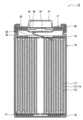
- FIG. 1 is a cross-sectional view of a non-aqueous electrolyte secondary battery that is an example of an embodiment
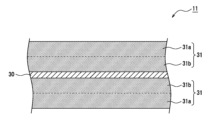
- FIG. 1 is a cross-sectional view of a positive electrode that is an example of an embodiment
- FIG. 1 is a cross-sectional view of a negative electrode that is an example of an embodiment
- non-aqueous electrolyte secondary batteries As described above, it is an important issue to achieve both high capacity and excellent cycle characteristics in non-aqueous electrolyte secondary batteries. As a result of extensive studies to solve this problem, the present inventors have found that specific non-aggregated particles and specific secondary particles are used in combination as a positive electrode active material, and the surface side of the positive electrode mixture layer is more than the core material side It was discovered that a non-aqueous electrolyte secondary battery with high capacity and excellent cycle characteristics can be obtained by adding a silane compound having a carbon-carbon unsaturated bond to the non-aqueous electrolyte while allowing a large amount of non-aggregated particles to exist. rice field.
- a silane compound having a carbon-carbon unsaturated bond forms a protective film on the surface of the negative electrode, and is thought to improve cycle characteristics.
- a silane compound having a carbon-carbon unsaturated bond forms a protective film on the surface of the negative electrode, and is thought to improve cycle characteristics.
- an increase in resistance due to such a side reaction can be suppressed. That is, it is possible to modify the negative electrode while suppressing problems due to the addition of the silane compound. Therefore, according to the non-aqueous electrolyte secondary battery according to the present disclosure, the effect of improving the cycle characteristics appears remarkably.
- the content of non-aggregated particles in the positive electrode mixture layer is such that the first region on the surface side of the positive electrode mixture layer>the second region on the core side, and the silane compound having a carbon-carbon unsaturated bond in the non-electrolyte is used.
- the silane compound having a carbon-carbon unsaturated bond in the non-electrolyte is used.
- a cylindrical battery in which the wound electrode body 14 is housed in a cylindrical outer can 16 with a bottom is exemplified, but the outer casing of the battery is not limited to a cylindrical outer can. It may be an outer can (rectangular battery) or an outer body (laminate battery) composed of a laminate sheet including a metal layer and a resin layer. Further, the electrode body may be a laminated electrode body in which a plurality of positive electrodes and a plurality of negative electrodes are alternately laminated with separators interposed therebetween.
- FIG. 1 is a diagram schematically showing a cross section of a non-aqueous electrolyte secondary battery 10 that is an example of an embodiment.
- the non-aqueous electrolyte secondary battery 10 includes a wound electrode body 14, a non-aqueous electrolyte, and an outer can 16 that accommodates the electrode body 14 and the non-aqueous electrolyte.
- the electrode body 14 has a positive electrode 11 , a negative electrode 12 , and a separator 13 , and has a wound structure in which the positive electrode 11 and the negative electrode 12 are spirally wound with the separator 13 interposed therebetween.
- the outer can 16 is a bottomed cylindrical metal container that is open on one side in the axial direction. In the following description, for convenience of explanation, the side of the sealing member 17 of the battery will be referred to as the upper side, and the bottom side of the outer can 16 will be referred to as the lower side.
- the positive electrode 11, the negative electrode 12, and the separator 13, which constitute the electrode assembly 14, are all strip-shaped elongated bodies, and are alternately laminated in the radial direction of the electrode assembly 14 by being spirally wound.
- the negative electrode 12 is formed with a size one size larger than that of the positive electrode 11 in order to prevent deposition of lithium. That is, the negative electrode 12 is formed longer than the positive electrode 11 in the longitudinal direction and the width direction (transverse direction).
- the separator 13 is formed to have a size at least one size larger than that of the positive electrode 11, and two separators 13 are arranged so as to sandwich the positive electrode 11 therebetween.
- the electrode body 14 has a positive electrode lead 20 connected to the positive electrode 11 by welding or the like, and a negative electrode lead 21 connected to the negative electrode 12 by welding or the like.
- Insulating plates 18 and 19 are arranged above and below the electrode body 14, respectively.
- the positive electrode lead 20 extends through the through hole of the insulating plate 18 toward the sealing member 17
- the negative electrode lead 21 extends through the outside of the insulating plate 19 toward the bottom of the outer can 16 .
- the positive electrode lead 20 is connected to the lower surface of the internal terminal plate 23 of the sealing body 17 by welding or the like, and the cap 27, which is the top plate of the sealing body 17 electrically connected to the internal terminal plate 23, serves as the positive electrode terminal.
- the negative electrode lead 21 is connected to the inner surface of the bottom of the outer can 16 by welding or the like, and the outer can 16 serves as a negative electrode terminal.
- the outer can 16 is a bottomed cylindrical metal container that is open on one side in the axial direction.
- a gasket 28 is provided between the outer can 16 and the sealing member 17 to ensure hermeticity inside the battery and insulation between the outer can 16 and the sealing member 17 .
- the outer can 16 is formed with a grooved portion 22 that supports the sealing member 17 and has a portion of the side surface projecting inward.
- the grooved portion 22 is preferably annularly formed along the circumferential direction of the outer can 16 and supports the sealing member 17 on its upper surface.
- the sealing member 17 is fixed to the upper portion of the outer can 16 by the grooved portion 22 and the open end of the outer can 16 crimped to the sealing member 17 .
- the sealing body 17 has a structure in which an internal terminal plate 23, a lower valve body 24, an insulating member 25, an upper valve body 26, and a cap 27 are layered in order from the electrode body 14 side.
- Each member constituting the sealing member 17 has, for example, a disk shape or a ring shape, and each member other than the insulating member 25 is electrically connected to each other.
- the lower valve body 24 and the upper valve body 26 are connected at their central portions, and an insulating member 25 is interposed between their peripheral edge portions.
- the positive electrode 11, the negative electrode 12, the separator 13, and the non-aqueous electrolyte that constitute the non-aqueous electrolyte secondary battery 10 will be described in detail below, particularly the positive electrode 11 and the non-aqueous electrolyte.
- the positive electrode 11 includes a positive electrode core material 30 and a positive electrode mixture layer 31 formed on the surface of the positive electrode core material 30 .
- a foil of a metal such as aluminum or an aluminum alloy that is stable in the potential range of the positive electrode 11, a film having the metal on the surface layer, or the like can be used.
- An example of the positive electrode core material 30 is an aluminum or aluminum alloy foil with a thickness of 10 to 20 ⁇ m.
- the positive electrode mixture layer 31 contains a positive electrode active material, a conductive agent, and a binder, and is preferably formed on both sides of the positive electrode core material 30 .
- the thickness of the positive electrode mixture layer 31 is, for example, 30 to 100 ⁇ m on one side of the positive electrode core material 30 .
- a positive electrode mixture slurry containing a positive electrode active material, a conductive agent, a binder, and the like is applied onto the positive electrode core material 30, dried, and then compressed to form a positive electrode mixture layer 31. can be formed on both sides of the positive electrode core material 30 .
- Examples of the conductive agent contained in the positive electrode mixture layer 31 include carbon materials such as carbon black, acetylene black, ketjen black, graphite, carbon nanotubes, carbon nanofibers, and graphene.
- the content of the conductive agent is, for example, 0.01 to 10 parts by mass, preferably 0.05 to 5 parts by mass, per 100 parts by mass of the positive electrode active material.
- binder contained in the positive electrode mixture layer 31 examples include fluorine-containing resins such as polytetrafluoroethylene (PTFE) and polyvinylidene fluoride (PVdF), polyacrylonitrile (PAN), polyimide, acrylic resin, polyolefin, and the like. Further, these resins may be used in combination with carboxymethyl cellulose (CMC) or salts thereof, polyethylene oxide (PEO), and the like.
- the content of the binder is, for example, 0.1 to 10 parts by mass, preferably 0.5 to 5 parts by mass, per 100 parts by mass of the positive electrode active material.
- the positive electrode mixture layer 31 contains particulate lithium metal composite oxide as a positive electrode active material.
- a lithium metal composite oxide is a composite oxide containing metal elements such as Co, Mn, Ni and Al in addition to Li.
- Metal elements constituting the lithium metal composite oxide include, for example, Mg, Al, Ca, Sc, Ti, V, Cr, Mn, Fe, Co, Ni, Cu, Zn, Ga, Ge, Y, Zr, Sn, Sb , W, Pb, and Bi. Among them, it is preferable to contain at least one selected from Co, Ni, and Mn.
- suitable composite oxides include lithium metal composite oxides containing Ni, Co and Mn and lithium metal composite oxides containing Ni, Co and Al.
- the positive electrode mixture layer 31 contains two types of lithium metal composite oxide particles.
- the positive electrode mixture layer 31 is divided into two equal parts in the thickness direction and defined as a first region 31a and a second region 31b in order from the surface side of the positive electrode 11, the regions included in the first region 31a and the second region 31b The materials are different from each other.
- the types of lithium metal composite oxide particles contained in the first region 31a and the second region 31b are different, or when two types of lithium metal composite oxide particles are contained in each region , with different mass ratios.
- the types and contents of the conductive agent and the binder may be the same or different between the first region 31a and the second region 31b.
- the positive electrode mixture layer 31 is composed of first lithium metal composite oxide particles that are non-aggregated particles and second lithium metal composite oxide particles that are secondary particles formed by aggregating primary particles having an average particle size of 50 nm to 2 ⁇ m. particles.
- the positive electrode mixture layer 31 may contain only the first and second lithium metal composite oxide particles as the positive electrode active material, and the third lithium metal composite oxide particles may be included as long as the object of the present disclosure is not impaired. may contain particles. Examples of the third lithium-metal composite oxide particles include composite oxide particles that do not satisfy the particle size conditions described below.
- the volume-based median diameter (hereinafter sometimes referred to as "D50") of the first lithium metal composite oxide particles is 2 to 10 ⁇ m, preferably 3 to 8 ⁇ m.
- D50 of the second lithium metal composite oxide particles is 10 to 30 ⁇ m, preferably 12 to 20 ⁇ m.
- D50 means the particle size at which the cumulative frequency is 50% from the smaller particle size in the volume-based particle size distribution.
- the particle size distribution of the lithium metal composite oxide particles can be measured using a laser diffraction particle size distribution analyzer (eg MT3000II manufactured by Microtrack Bell Co., Ltd.) using water as a dispersion medium.
- the first lithium metal composite oxide particles are particles that do not have grain boundaries inside, and are, for example, primary single-crystal particles.
- the crystallinity of the lithium metal composite oxide particles can be confirmed using a scanning ion microscope.
- the first composite oxide particles, which are non-aggregated particles may contain 5 or less primary particles.
- non-agglomerated particles mean particles composed of one primary particle having no grain boundary inside, and particles composed of 5 or less primary particles.
- the second lithium metal composite oxide particles are secondary particles formed by aggregation of primary particles having an average particle size of 50 nm to 2 ⁇ m, preferably 500 nm to 2 ⁇ m. Grain boundaries of primary particles are present in the second lithium metal composite oxide particles. The primary particles can be confirmed by observing the second lithium metal composite oxide particles with a scanning electron microscope (SEM). The plurality of primary particles are adhered to each other with such a strength that they do not fall apart even when a strong force is applied, such as during pulverization after synthesis of the second lithium metal composite oxide particles or during preparation of the positive electrode mixture slurry.
- the average particle size of the primary particles that make up the second lithium metal composite oxide particles can be obtained by analyzing the SEM image of the cross section of the particles.
- the positive electrode 11 is embedded in resin, a cross-section is produced by cross-section polisher (CP) processing, and this cross-section is photographed with an SEM. Randomly select 30 primary particles from the SEM image, observe the grain boundaries, determine the diameter of the circumscribed circle of each of the 30 primary particles, and take the average value as the average particle size.
- Each lithium metal composite oxide particle can be synthesized by the method described in Examples below.
- the first composite oxide particles are used more when synthesizing a precursor (metal composite hydroxide) containing Ni, Co, Mn, Al, etc. than when synthesizing the second composite oxide particles. It can be synthesized by increasing the pH of the alkaline aqueous solution. Alternatively, it can be synthesized by increasing the calcination temperature of the precursor instead of or in addition to increasing the pH of the alkaline aqueous solution.
- An example of a suitable pH of the alkaline aqueous solution when synthesizing the first composite oxide particles is 10 to 11, and a suitable example of the firing temperature is 950 to 1100°C.
- a suitable example of the firing temperature is 950 to 1100°C.
- an alkaline aqueous solution having a pH of 9 to 10 is used, and the firing temperature is set to 950° C. or lower.
- the main component means the component having the largest mass among the components constituting the lithium metal composite oxide particles.
- the composition of each lithium metal composite oxide particle may be the same or different.
- the positive electrode mixture layer 31 contains the first and second lithium metal composite oxide particles as the positive electrode active material. Matter is different from each other.
- the content of the first lithium metal composite oxide particles in the positive electrode mixture layer 31 is not uniform, and the first lithium metal composite oxide particles are contained more in the first region 31a than in the second region 31b. .
- the contact area with the electrolytic solution can be reduced, and the silane in the positive electrode 11 can be reduced. It is thought that the side reaction between the compound and the electrolytic solution is suppressed.
- the first lithium metal composite oxide particles are less likely to crack in the manufacturing process of the positive electrode 11 than the second lithium metal composite oxide particles, the first lithium metal composite oxide particles are used as the positive electrode.
- the first region 31a of the mixture layer 31 contain a large amount of the electrolyte, the flow path for the electrolytic solution is ensured in the first region 31a. In this case, it is considered that the penetration of the electrolytic solution into the second region 31b is improved, and the cycle characteristics are improved.
- the content of the positive electrode active material may differ between the first region 31a and the second region 31b, but is preferably substantially the same.
- the content of the positive electrode active material is, for example, 90 to 99.9% by mass, preferably 95 to 99% by mass, based on the mass of the positive electrode mixture layer 31 .
- the content of the first lithium metal composite oxide particles in the first region 31a is preferably 50% by mass or more with respect to the mass of the positive electrode active material contained in the first region 31a. In this case, the effect of improving cycle characteristics becomes more pronounced.
- the first region 31a may substantially contain only the first lithium metal composite oxide particles as the positive electrode active material.
- the first lithium metal composite oxide particles may, for example, be contained only in the first region 31a and not present in the second region 31b.
- the mass ratio of each composite oxide particle in the first region 31a is preferably higher for the first lithium metal composite oxide particles.
- the content of the first lithium metal composite oxide particles in the first region 31a is preferably higher than the content of the second lithium metal composite oxide particles in the first region 31a.
- the content of the first lithium metal composite oxide particles in the first region 31a is more preferably 70% by mass or more, particularly preferably 80% by mass or more, relative to the mass of the positive electrode active material contained in the first region 31a. .
- the second lithium metal composite oxide particles are contained more in the second region 31b than in the first region 31a. Since the second lithium metal composite oxide particles can be filled more per unit volume than the first lithium metal composite oxide particles, the positive electrode mixture layer 31 can be filled by using the second lithium metal composite oxide particles. can be densified. By allowing a large amount of the second lithium metal composite oxide particles to exist in the second region 31b on the side of the positive electrode core material 30, which has little influence on the permeability of the electrolytic solution, high capacity is achieved while maintaining good cycle characteristics. be able to.
- the second region 31b may substantially contain only the second lithium metal composite oxide particles as the positive electrode active material.
- the second lithium metal composite oxide particles may, for example, be contained only in the second region 31b and not present in the first region 31a.
- the content of the second lithium metal composite oxide particles in the second region 31b is the first lithium metal composite oxide in the second region 31b. It is preferably larger than the content of solid particles.
- the content of the second lithium metal composite oxide particles in the second region 31b is preferably 50% by mass or more, more preferably 70% by mass or more, relative to the mass of the positive electrode active material contained in the second region 31b. 80% by mass or more is particularly preferred.
- the negative electrode 12 includes a negative electrode core material and a negative electrode mixture layer formed on the surface of the negative electrode core material.
- a foil of a metal such as copper or a copper alloy that is stable in the potential range of the negative electrode 12, a film in which the metal is arranged on the surface layer, or the like can be used.
- An example of the negative electrode core material is a copper or copper alloy foil with a thickness of 5 to 15 ⁇ m.
- the negative electrode mixture layer contains a negative electrode active material and a binder, and is preferably formed on both sides of the negative electrode core material. The thickness of the negative electrode mixture layer is, for example, 30 to 150 ⁇ m on one side of the negative electrode core material.
- a negative electrode mixture slurry containing a negative electrode active material, a binder, etc. is applied onto the negative electrode core material, the coating film is dried, and then compressed to form negative electrode mixture layers on both sides of the negative electrode core material. It can be produced by
- the negative electrode mixture layer contains, as a negative electrode active material, for example, a carbon-based active material that reversibly absorbs and releases lithium ions.
- a carbon-based active material for example, a carbon-based active material that reversibly absorbs and releases lithium ions.
- Suitable carbon-based active materials are graphite such as natural graphite such as flake graphite, massive graphite and earthy graphite, artificial graphite such as massive artificial graphite (MAG) and graphitized mesophase carbon microbeads (MCMB).
- a Si-based active material composed of at least one of Si and a Si-containing compound may be used as the negative electrode active material, or a carbon-based active material and a Si-based active material may be used in combination.
- the binder contained in the negative electrode mixture layer fluorine-containing resins such as PTFE and PVdF, PAN, polyimide, acrylic resin, polyolefin, styrene-butadiene rubber (SBR), and the like can be used.
- the negative electrode mixture layer may contain CMC or its salt, polyacrylic acid (PAA) or its salt, polyvinyl alcohol (PVA), or the like.
- the content of the binder is, for example, 0.1 to 10 parts by mass, preferably 0.5 to 5 parts by mass, per 100 parts by mass of the negative electrode active material.
- a conductive agent such as carbon black, acetylene black, or ketjen black may be added to the negative electrode mixture layer.
- a porous sheet having ion permeability and insulation is used for the separator 13 .
- porous sheets include microporous thin films, woven fabrics, and non-woven fabrics.
- Polyolefins such as polyethylene and polypropylene, cellulose, and the like are suitable for the material of the separator.
- the separator 13 may have a single layer structure or a multilayer structure.
- a resin layer having high heat resistance such as aramid resin may be formed on the surface of the separator 13 .
- a filler layer containing an inorganic filler may be formed at the interface between the separator 13 and at least one of the positive electrode 11 and the negative electrode 12 .
- inorganic fillers include oxides containing metal elements such as Ti, Al, Si, and Mg, and phosphoric acid compounds.
- the filler layer can be formed by applying slurry containing the filler to the surfaces of the positive electrode 11 , the negative electrode 12 , or the separator 13 .
- the non-aqueous electrolyte contains a non-aqueous solvent and an electrolyte salt.
- non-aqueous solvents examples include esters, ethers, nitriles such as acetonitrile, amides such as dimethylformamide, and mixed solvents of two or more thereof.
- the non-aqueous solvent may contain a halogen-substituted product obtained by substituting at least part of the hydrogen atoms of these solvents with halogen atoms such as fluorine.
- halogen-substituted compounds include fluorinated cyclic carbonates such as fluoroethylene carbonate (FEC), fluorinated chain carbonates, and fluorinated chain carboxylates such as methyl fluoropropionate (FMP).
- FEC fluoroethylene carbonate
- FMP fluorinated chain carboxylates
- esters examples include cyclic carbonates such as ethylene carbonate (EC), propylene carbonate (PC) and butylene carbonate, dimethyl carbonate (DMC), ethyl methyl carbonate (EMC), diethyl carbonate (DEC), methyl propyl carbonate. , Ethyl propyl carbonate, Methyl isopropyl carbonate, and other chain carbonates; ⁇ -Butyrolactone (GBL), ⁇ -Valerolactone (GVL), and other cyclic carboxylic acid esters; ), and chain carboxylic acid esters such as ethyl propionate.
- ethers examples include 1,3-dioxolane, 4-methyl-1,3-dioxolane, tetrahydrofuran, 2-methyltetrahydrofuran, propylene oxide, 1,2-butylene oxide, 1,3-dioxane, 1,4 -Dioxane, 1,3,5-trioxane, furan, 2-methylfuran, 1,8-cineol, cyclic ethers such as crown ether, 1,2-dimethoxyethane, diethyl ether, dipropyl ether, diisopropyl ether, di Butyl ether, dihexyl ether, ethyl vinyl ether, butyl vinyl ether, methyl phenyl ether, ethyl phenyl ether, butyl phenyl ether, pentyl phenyl ether, methoxytoluene, benzyl ethyl ether, diphenyl ether, dipheny
- the non-aqueous electrolyte further contains a silane compound having a carbon-carbon unsaturated bond.
- the silane compound is dissolved in the non-aqueous solvent.
- a silane compound having a carbon-carbon unsaturated bond is thought to polymerize on the surface of the negative electrode to form a protective film, improving the cycle characteristics of the battery.
- the silane compound may cause a side reaction in the positive electrode 11 and increase the positive electrode resistance. specifically improves cycle characteristics.
- the non-aqueous electrolyte may contain additives such as vinylene carbonate (VC).
- silane compounds include methyltrivinylsilane, dimethyldivinylsilane, vinyltrimethylsilane, tetravinylsilane, diethyldivinylsilane, allyltrimethylsilane, diallyldimethylsilane, triallylmethylsilane, tetraallylsilane, diallyldiethylsilane, and tetrapropenyl.
- Silane etc. are mentioned.
- One type of silane compound may be used, or two or more types may be used in combination. Further, the molecule of the silane compound may contain a hetero element.
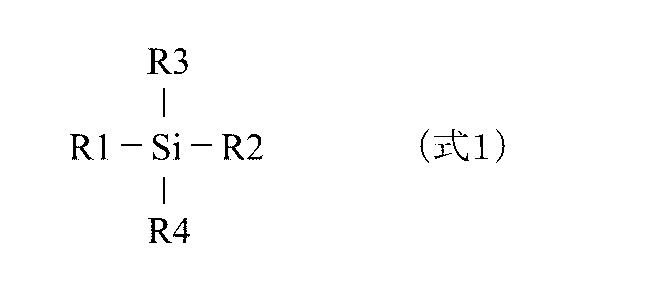
- the silane compound is preferably a compound represented by formula (1).
- R1, R2, R3 and R4 may be the same substituents or different substituents, but at least one of them contains a carbon-carbon double bond.
- the number of carbon atoms in R1, R2, R3 and R4 is preferably 1-10, particularly preferably 1-5.
- At least one of R1, R2, R3 and R4 is, for example, at least one selected from the group consisting of a vinyl group, an allyl group and a propenyl group.
- suitable silane compounds include methyltrivinylsilane, dimethyldivinylsilane, vinyltrimethylsilane, and tetravinylsilane.
- the silane compound contributes to the improvement of the cycle characteristics even when added in a small amount, but its content is preferably 0.01 to 0.5% by mass with respect to the mass of the non-aqueous electrolyte.
- the content of the silane compound may be more than 0.5% by mass, but from the viewpoint of suppressing positive electrode resistance, the upper limit is preferably 0.5% by mass.
- the content of the silane compound is more preferably 0.05 to 0.4% by mass, particularly preferably 0.1 to 0.3% by mass, based on the mass of the non-aqueous electrolyte.
- the electrolyte salt is a lithium salt.
- lithium salts include LiBF4 , LiClO4 , LiPF6 , LiAsF6 , LiSbF6 , LiAlCl4 , LiSCN, LiCF3SO3 , LiCF3CO2 , Li(P( C2O4 ) F4 ) , LiPF 6-x (C n F 2n+1 ) x (1 ⁇ x ⁇ 6, n is 1 or 2), LiB 10 Cl 10 , LiCl, LiBr, LiI, lithium chloroborane, lithium lower aliphatic carboxylate, Li 2 B 4O7 , borates such as Li (B( C2O4 ) F2 ), LiN( SO2CF3 ) 2 , LiN( C1F2l + 1SO2 )( CmF2m + 1SO2 ) ⁇ l , where m is an integer of 0 or more ⁇ .
- Lithium salts may be used singly or in combination.
- Example 1 [Synthesis of first lithium metal composite oxide particles] Nickel sulfate, cobalt sulfate, and manganese sulfate were mixed at a predetermined ratio and uniformly mixed in an alkaline aqueous solution of pH 10 to 11 to prepare a precursor. Next, the precursor and lithium carbonate were mixed, fired at a temperature of 1000° C. for 15 hours, and then pulverized to obtain first lithium-metal composite oxide particles that were non-aggregated particles.
- the composition and D50 of the particles are as follows. Composition : LiNi0.5Co0.2Mn0.3O2 _ D50: 4.5 ⁇ m
- the first lithium metal composite oxide particles, acetylene black (AB), and polyvinylidene fluoride (PVdF) are mixed at a mass ratio of 98:1:1, and N-methyl-2-pyrrolidone ( NMP) was added in an appropriate amount to prepare a first positive electrode mixture slurry having a solid content concentration of 70% by mass.
- NMP N-methyl-2-pyrrolidone
- the second lithium metal composite oxide particles were prepared in the same manner as the first positive electrode mixture slurry, except that the second lithium metal composite oxide particles were used instead of the first lithium metal composite oxide particles.
- a positive electrode mixture slurry was prepared.
- the second positive electrode mixture slurry is applied to both surfaces of the positive electrode core material made of aluminum foil, and then the first positive electrode mixture slurry is applied onto the coating film of the second positive electrode mixture slurry, After drying and compressing the coating film (linear pressure: 3000 N/m), it was cut into a predetermined electrode size to prepare a positive electrode in which positive electrode mixture layers were formed on both sides of a positive electrode core material.
- the coating amounts of the first positive electrode mixture slurry and the second positive electrode mixture slurry were the same.
- a negative electrode active material As a negative electrode active material, a mixture of 95 parts by mass of graphite powder and 5 parts by mass of a Si-containing compound represented by SiO x was used. 100 parts by mass of the negative electrode active material, 1 part by mass of carboxymethylcellulose sodium (CMC-Na), and water are mixed, and 1.2 parts by mass of styrene-butadiene rubber (SBR) dispersion is mixed. to prepare a negative electrode mixture slurry. Next, the negative electrode mixture slurry is applied to both sides of a negative electrode core material made of copper foil, the coating film is dried and compressed, and then cut into a predetermined electrode size to form negative electrode mixture layers on both sides of the negative electrode core material. A formed negative electrode was produced.
- CMC-Na carboxymethylcellulose sodium
- SBR styrene-butadiene rubber
- Ethylene carbonate (EC), methyl ethyl carbonate (MEC), and dimethyl carbonate (DMC) were mixed in a volume ratio of 20:5:75 (25°C).
- LiPF 6 was dissolved in this mixed solvent so as to have a concentration of 1.4 mol/L, and vinylene carbonate (VC) and vinyltrimethylsilane (VTMS) were added.
- VC and VTMS were added to concentrations of 3% by mass and 0.2% by mass, respectively.
- Electrode terminals were attached to the positive electrode and the negative electrode, respectively, and the positive electrode and the negative electrode were spirally wound with a separator interposed therebetween to prepare a wound electrode assembly.
- the electrode body was housed in a bottomed cylindrical outer can, the negative electrode lead was welded to the bottom inner surface of the outer can, and the positive electrode lead was welded to the internal terminal plate of the sealing body.
- the above non-aqueous electrolyte was injected into the outer can, and the opening edge of the outer can was crimped and fixed to the sealing body to produce a cylindrical secondary battery A1 with a battery capacity of 3400 mAh.
- Example 2 A nonaqueous electrolyte secondary battery A2 was produced in the same manner as in Example 1, except that tetravinylsilane (TVS) was added instead of vinyltrimethylsilane (VTMS) in the preparation of the nonaqueous electrolyte.
- TVS tetravinylsilane
- VTMS vinyltrimethylsilane
- Example 1 In the preparation of the positive electrode, the second positive electrode mixture slurry is used instead of the first positive electrode mixture slurry (the positive electrode mixture layer is formed using only the second positive electrode mixture slurry), and the non-aqueous electrolyte is prepared.
- a non-aqueous electrolyte secondary battery B1 was produced in the same manner as in Example 1, except that no silane compound was added.
- Example 2 A non-aqueous electrolyte secondary battery B2 was fabricated in the same manner as in Example 1, except that the second positive electrode mixture slurry was used instead of the first positive electrode mixture slurry in fabricating the positive electrode.
- a non-aqueous electrolyte secondary battery B3 was produced in the same manner as in Example 1, except that no silane compound was added in the preparation of the non-aqueous electrolyte.
- Battery B1 of Comparative Example 1 which does not contain non-aggregated particles and a silane compound, has a significantly lower capacity retention rate than Batteries A1 and A2 of Examples.
- Battery B2 of Comparative Example 2 in which the silane compound was added to battery B1, also had a small effect of improving the cycle characteristics and had a low capacity retention rate.
- the capacity retention rate of Battery B3 of Comparative Example 3, which contains non-aggregated particles and does not contain a silane compound, is greatly improved compared to the capacity retention rates of Batteries B1 and B2, but the capacity retention rates of Batteries A1 and A2 are significantly higher than those of Batteries A1 and A2. not reach.
- the packing density of the positive electrode active material can be increased by using the non-aggregated particles and the secondary particles together, and the capacity of the battery can be increased.
Landscapes
- Chemical & Material Sciences (AREA)
- Chemical Kinetics & Catalysis (AREA)
- Electrochemistry (AREA)
- General Chemical & Material Sciences (AREA)
- Engineering & Computer Science (AREA)
- Manufacturing & Machinery (AREA)
- Materials Engineering (AREA)
- Inorganic Chemistry (AREA)
- Physics & Mathematics (AREA)
- Condensed Matter Physics & Semiconductors (AREA)
- General Physics & Mathematics (AREA)
- Battery Electrode And Active Subsutance (AREA)
- Secondary Cells (AREA)
Abstract
Description
正極11は、正極芯材30と、正極芯材30の表面に形成された正極合剤層31とを備える。正極芯材30には、アルミニウム、アルミニウム合金など正極11の電位範囲で安定な金属の箔、当該金属を表層に配置したフィルム等を用いることができる。正極芯材30の一例は、厚みが10~20μmのアルミニウム又はアルミニウム合金の箔である。正極合剤層31は、正極活物質、導電剤、及び結着剤を含み、正極芯材30の両面に形成されることが好ましい。正極合剤層31の厚みは、例えば、正極芯材30の片側で30~100μmである。正極11は、例えば、正極芯材30上に正極活物質、導電剤、及び結着剤等を含む正極合剤スラリーを塗布し、塗膜を乾燥させた後、圧縮して正極合剤層31を正極芯材30の両面に形成することにより作製できる。
負極12は、負極芯材と、負極芯材の表面に形成された負極合剤層とを備える。負極芯材には、銅、銅合金などの負極12の電位範囲で安定な金属の箔、当該金属を表層に配置したフィルム等を用いることができる。負極芯材の一例は、厚みが5~15μmの銅又は銅合金の箔である。負極合剤層は、負極活物質及び結着剤を含み、負極芯材の両面に形成されることが好ましい。負極合剤層の厚みは、例えば、負極芯材の片側で30~150μmである。負極12は、負極芯材上に負極活物質、結着剤等を含む負極合剤スラリーを塗布し、塗膜を乾燥させた後、圧縮して負極合剤層を負極芯材の両面に形成することにより作製できる。
セパレータ13には、イオン透過性及び絶縁性を有する多孔性シートが用いられる。多孔性シートの具体例としては、微多孔薄膜、織布、不織布等が挙げられる。セパレータの材質としては、ポリエチレン、ポリプロピレン等のポリオレフィン、セルロースなどが好適である。セパレータ13は、単層構造であってもよく、複層構造を有していてもよい。また、セパレータ13の表面には、アラミド樹脂等の耐熱性の高い樹脂層が形成されていてもよい。
非水電解質は、非水溶媒と、電解質塩とを含む。非水溶媒には、例えばエステル類、エーテル類、アセトニトリル等のニトリル類、ジメチルホルムアミド等のアミド類、及びこれらの2種以上の混合溶媒等を用いることができる。非水溶媒は、これら溶媒の水素の少なくとも一部をフッ素等のハロゲン原子で置換したハロゲン置換体を含有していてもよい。ハロゲン置換体としては、フルオロエチレンカーボネート(FEC)等のフッ素化環状炭酸エステル、フッ素化鎖状炭酸エステル、フルオロプロピオン酸メチル(FMP)等のフッ素化鎖状カルボン酸エステルなどが挙げられる。
[第1のリチウム金属複合酸化物粒子の合成]
硫酸ニッケルと、硫酸コバルトと、硫酸マンガンを所定の割合で混合し、pH10~11のアルカリ性水溶液中で均一に混合して前駆体を作製した。次に、当該前駆体と炭酸リチウムを混合し、1000℃の温度で15時間焼成した後、粉砕することで非凝集粒子である第1のリチウム金属複合酸化物粒子を得た。当該粒子の組成、D50は下記の通りである。
組成:LiNi0.5Co0.2Mn0.3O2
D50:4.5μm
上記アルカリ性水溶液中のpHを9~10、焼成温度を900℃にそれぞれ変更したこと以外は、第1のリチウム金属複合酸化物粒子の場合と同様にして、一次粒子が凝集してなる二次粒子である第2のリチウム金属複合酸化物粒子を得た。当該粒子の組成、一次粒子の平均粒径、及び二次粒子のD50は下記の通りである。
組成:LiNi0.5Co0.2Mn0.3O2
一次粒子の平均粒径:1.6μm
二次粒子(第2のリチウム金属複合酸化物粒子)のD50:14.1μm
第1のリチウム金属複合酸化物粒子と、アセチレンブラック(AB)と、ポリフッ化ビニリデン(PVdF)とを、98:1:1の質量比で混合し、分散媒としてN-メチル-2-ピロリドン(NMP)を適量加えて、固形分濃度が70質量%の第1の正極合剤スラリーを調製した。また、第1のリチウム金属複合酸化物粒子の代わりに、第2のリチウム金属複合酸化物粒子を用いたこと以外は、第1の正極合剤スラリーを調製する場合と同様にして、第2の正極合剤スラリーを調製した。次に、第2の正極合剤スラリーをアルミニウム箔からなる正極芯材の両面に塗布し、続いて、第1の正極合剤スラリーを第2の正極合剤スラリーの塗膜上に塗布し、塗膜を乾燥、圧縮(線圧3000N/m)した後、所定の電極サイズに切り取って、正極芯材の両面に正極合剤層が形成された正極を作製した。第1の正極合剤スラリーと第2の正極合剤スラリーの塗布量は同じとした。
負極活物質として、95質量部の黒鉛粉末と、5質量部のSiOxで表されるSi含有化合物との混合物を用いた。100質量部の負極活物質と、1質量部のカルボキシメチルセルロースナトリウム(CMC-Na)と、水とを混合し、さらに、1.2質量部のスチレン-ブタジエンゴム(SBR)のディスパージョンを混合して、負極合剤スラリーを調製した。次に、当該負極合剤スラリーを銅箔からなる負極芯材の両面に塗布し、塗膜を乾燥、圧縮した後、所定の電極サイズに切り取って、負極芯材の両面に負極合剤層が形成された負極を作製した。
エチレンカーボネート(EC)、メチルエチルカーボネート(MEC)、及びジメチルカーボネート(DMC)を、20:5:75の体積比(25℃)で混合した。この混合溶媒に対し、LiPF6を1.4mol/Lの濃度となるように溶解させ、ビニレンカーボネート(VC)とビニルトリメチルシラン(VTMS)を添加した。VC、VTMSは、それぞれ3質量%、0.2質量%の濃度となるように添加した。
上記正極及び上記負極にリード端子をそれぞれ取り付け、セパレータを介して正極及び負極を渦巻き状に巻回することにより、巻回型の電極体を作製した。当該電極体を有底円筒形状の外装缶に収容し、負極リードの外装缶の底部内面に溶接し、正極リードを封口体の内部端子板に溶接した。その後、外装缶に上記非水電解質を注入し、外装缶の開口縁部を封口体にかしめ固定して、電池容量3400mAhの円筒形二次電池A1を作製した。
非水電解液の調製において、ビニルトリメチルシラン(VTMS)に代えて、テトラビニルシラン(TVS)を添加したこと以外は、実施例1と同様にして非水電解質二次電池A2を作製した。
正極の作製において、第1の正極合剤スラリーの代わりに第2の正極合剤スラリーを用い(第2の正極合剤スラリーのみを用いて正極合剤層を形成)、非水電解液の調製において、シラン化合物を添加しなかったこと以外は、実施例1と同様にして非水電解質二次電池B1を作製した。
正極の作製において、第1の正極合剤スラリーの代わりに第2の正極合剤スラリーを用いたこと以外は、実施例1と同様にして非水電解質二次電池B2を作製した。
非水電解液の調製において、シラン化合物を添加しなかったこと以外は、実施例1と同様にして非水電解質二次電池B3を作製した。
実施例及び比較例の電池について、25℃の温度環境下、990mA(0.3時間率)の電流で電池電圧が4.2Vになるまで定電流充電を行った後、4.2Vで終止電流を66mAとした定電圧充電を行った。その後、990mAの電流で電池電圧が3Vになるまで定電流放電を行った。この充放電を400サイクル行い、下記式により容量維持率を算出した。評価結果を表1に示す。
容量維持率=(400サイクル目の放電容量/1サイクル目の放電容量)×100

Claims (4)
- 正極と、負極と、非水電解質とを備える非水電解質二次電池であって、
前記正極は、正極芯材と、前記正極芯材の表面に形成された正極合剤層とを有し、
前記正極合剤層は、正極活物質として、体積基準のメジアン径が2~10μmの非凝集粒子である第1のリチウム金属複合酸化物粒子と、平均粒径が50nm~2μmの一次粒子が凝集してなり、体積基準のメジアン径が10~30μmの二次粒子である第2のリチウム金属複合酸化物粒子とを含み、
前記正極合剤層を厚み方向に2等分し、前記正極の表面側から順に第1領域、第2領域と定義した場合に、前記第1のリチウム金属複合酸化物粒子は、前記第2領域よりも前記第1領域に多く含まれ、
前記非水電解質は、炭素-炭素不飽和結合を有するシラン化合物を含む、非水電解質二次電池。 - 前記シラン化合物は、式(1)で表される化合物であり、

- 前記シラン化合物の含有量は、前記非水電解質の質量に対して0.01~0.5質量%である、請求項1又は2に記載の非水電解質二次電池。
- 前記第1領域における前記第1のリチウム金属複合酸化物粒子の含有量は、前記第1領域に含まれる前記正極活物質の質量に対して50質量%以上である、請求項1~3のいずれか一項に記載の非水電解質二次電池。
Priority Applications (3)
| Application Number | Priority Date | Filing Date | Title |
|---|---|---|---|
| CN202280077310.6A CN118369799A (zh) | 2021-11-30 | 2022-11-25 | 非水电解质二次电池 |
| US18/710,809 US20250046856A1 (en) | 2021-11-30 | 2022-11-25 | Non-aqueous electrolyte secondary battery |
| JP2023564935A JPWO2023100766A1 (ja) | 2021-11-30 | 2022-11-25 |
Applications Claiming Priority (2)
| Application Number | Priority Date | Filing Date | Title |
|---|---|---|---|
| JP2021193820 | 2021-11-30 | ||
| JP2021-193820 | 2021-11-30 |
Publications (1)
| Publication Number | Publication Date |
|---|---|
| WO2023100766A1 true WO2023100766A1 (ja) | 2023-06-08 |
Family
ID=86612150
Family Applications (1)
| Application Number | Title | Priority Date | Filing Date |
|---|---|---|---|
| PCT/JP2022/043541 Ceased WO2023100766A1 (ja) | 2021-11-30 | 2022-11-25 | 非水電解質二次電池 |
Country Status (4)
| Country | Link |
|---|---|
| US (1) | US20250046856A1 (ja) |
| JP (1) | JPWO2023100766A1 (ja) |
| CN (1) | CN118369799A (ja) |
| WO (1) | WO2023100766A1 (ja) |
Citations (6)
| Publication number | Priority date | Publication date | Assignee | Title |
|---|---|---|---|---|
| JP2005135691A (ja) * | 2003-10-29 | 2005-05-26 | Nichia Chem Ind Ltd | 非水電解質二次電池用正極活物質、非水電解質二次電池用正極および非水電解質二次電池 |
| JP2009245922A (ja) * | 2008-03-13 | 2009-10-22 | Hitachi Maxell Ltd | 非水電解液二次電池 |
| JP2013120736A (ja) * | 2011-12-08 | 2013-06-17 | Sony Corp | 電極、電池、電池パック、電子機器、電動車両、蓄電装置および電力システム |
| WO2019181704A1 (ja) * | 2018-03-23 | 2019-09-26 | 株式会社Adeka | 熱暴走の抑制剤 |
| WO2021153397A1 (ja) * | 2020-01-31 | 2021-08-05 | パナソニックIpマネジメント株式会社 | 二次電池用正極および二次電池 |
| WO2022044935A1 (ja) * | 2020-08-28 | 2022-03-03 | 三洋電機株式会社 | 非水電解質二次電池用正極及び非水電解質二次電池 |
-
2022
- 2022-11-25 US US18/710,809 patent/US20250046856A1/en active Pending
- 2022-11-25 JP JP2023564935A patent/JPWO2023100766A1/ja active Pending
- 2022-11-25 CN CN202280077310.6A patent/CN118369799A/zh active Pending
- 2022-11-25 WO PCT/JP2022/043541 patent/WO2023100766A1/ja not_active Ceased
Patent Citations (6)
| Publication number | Priority date | Publication date | Assignee | Title |
|---|---|---|---|---|
| JP2005135691A (ja) * | 2003-10-29 | 2005-05-26 | Nichia Chem Ind Ltd | 非水電解質二次電池用正極活物質、非水電解質二次電池用正極および非水電解質二次電池 |
| JP2009245922A (ja) * | 2008-03-13 | 2009-10-22 | Hitachi Maxell Ltd | 非水電解液二次電池 |
| JP2013120736A (ja) * | 2011-12-08 | 2013-06-17 | Sony Corp | 電極、電池、電池パック、電子機器、電動車両、蓄電装置および電力システム |
| WO2019181704A1 (ja) * | 2018-03-23 | 2019-09-26 | 株式会社Adeka | 熱暴走の抑制剤 |
| WO2021153397A1 (ja) * | 2020-01-31 | 2021-08-05 | パナソニックIpマネジメント株式会社 | 二次電池用正極および二次電池 |
| WO2022044935A1 (ja) * | 2020-08-28 | 2022-03-03 | 三洋電機株式会社 | 非水電解質二次電池用正極及び非水電解質二次電池 |
Also Published As
| Publication number | Publication date |
|---|---|
| JPWO2023100766A1 (ja) | 2023-06-08 |
| US20250046856A1 (en) | 2025-02-06 |
| CN118369799A (zh) | 2024-07-19 |
Similar Documents
| Publication | Publication Date | Title |
|---|---|---|
| JP7721542B2 (ja) | 非水電解質二次電池用正極及び非水電解質二次電池 | |
| WO2019163483A1 (ja) | 非水電解質二次電池 | |
| JP7596277B2 (ja) | 非水電解質二次電池用正極活物質、及び非水電解質二次電池 | |
| WO2021241078A1 (ja) | 非水電解質二次電池用正極活物質および非水電解質二次電池 | |
| JP7300658B2 (ja) | 非水電解質二次電池用正極活物質、及び非水電解質二次電池 | |
| WO2023162709A1 (ja) | 非水電解質二次電池用正極、及び非水電解質二次電池 | |
| JP7584048B2 (ja) | 非水電解質二次電池用正極活物質、非水電解質二次電池、及び非水電解質二次電池用正極活物質の製造方法 | |
| WO2023162698A1 (ja) | 非水電解質二次電池用正極活物質、及び非水電解質二次電池 | |
| WO2023140103A1 (ja) | 非水電解質二次電池 | |
| JP7745182B2 (ja) | 非水電解質二次電池用正極活物質および非水電解質二次電池 | |
| JP7759572B2 (ja) | 非水電解質二次電池用正極活物質、及び非水電解質二次電池 | |
| WO2022138031A1 (ja) | 非水電解質二次電池用正極、及び非水電解質二次電池 | |
| JP7665440B2 (ja) | 非水電解質二次電池 | |
| US20230155126A1 (en) | Positive electrode active material for nonaqueous electrolyte secondary batteries, and nonaqueous electrolyte secondary battery | |
| WO2022138846A1 (ja) | 非水電解質二次電池用正極活物質、及び非水電解質二次電池 | |
| WO2023100766A1 (ja) | 非水電解質二次電池 | |
| WO2023100748A1 (ja) | 非水電解質二次電池 | |
| US20250192234A1 (en) | Non-aqueous electrolyte secondary battery | |
| WO2023145507A1 (ja) | 非水電解質二次電池用正極活物質、及び非水電解質二次電池 | |
| WO2023068229A1 (ja) | 非水電解質二次電池用正極及び非水電解質二次電池 | |
| WO2023127425A1 (ja) | 非水電解質二次電池用正極活物質及び非水電解質二次電池 | |
| WO2025070166A1 (ja) | 非水電解質二次電池 | |
| WO2026048786A1 (ja) | 正極活物質および正極活物質の製造方法 | |
| WO2022163531A1 (ja) | 非水電解質二次電池用活物質、及び非水電解質二次電池 | |
| WO2023119990A1 (ja) | 非水電解質二次電池用負極、及び非水電解質二次電池 |
Legal Events
| Date | Code | Title | Description |
|---|---|---|---|
| 121 | Ep: the epo has been informed by wipo that ep was designated in this application |
Ref document number: 22901199 Country of ref document: EP Kind code of ref document: A1 |
|
| ENP | Entry into the national phase |
Ref document number: 2023564935 Country of ref document: JP Kind code of ref document: A |
|
| WWE | Wipo information: entry into national phase |
Ref document number: 18710809 Country of ref document: US |
|
| WWE | Wipo information: entry into national phase |
Ref document number: 202280077310.6 Country of ref document: CN |
|
| NENP | Non-entry into the national phase |
Ref country code: DE |
|
| 122 | Ep: pct application non-entry in european phase |
Ref document number: 22901199 Country of ref document: EP Kind code of ref document: A1 |