WO2023073772A1 - 走行制御装置 - Google Patents
走行制御装置 Download PDFInfo
- Publication number
- WO2023073772A1 WO2023073772A1 PCT/JP2021/039337 JP2021039337W WO2023073772A1 WO 2023073772 A1 WO2023073772 A1 WO 2023073772A1 JP 2021039337 W JP2021039337 W JP 2021039337W WO 2023073772 A1 WO2023073772 A1 WO 2023073772A1
- Authority
- WO
- WIPO (PCT)
- Prior art keywords
- vehicle
- merging
- control device
- lane
- acc
- Prior art date
- Legal status (The legal status is an assumption and is not a legal conclusion. Google has not performed a legal analysis and makes no representation as to the accuracy of the status listed.)
- Ceased
Links
Images


Classifications
-
- B—PERFORMING OPERATIONS; TRANSPORTING
- B60—VEHICLES IN GENERAL
- B60W—CONJOINT CONTROL OF VEHICLE SUB-UNITS OF DIFFERENT TYPE OR DIFFERENT FUNCTION; CONTROL SYSTEMS SPECIALLY ADAPTED FOR HYBRID VEHICLES; ROAD VEHICLE DRIVE CONTROL SYSTEMS FOR PURPOSES NOT RELATED TO THE CONTROL OF A PARTICULAR SUB-UNIT
- B60W30/00—Purposes of road vehicle drive control systems not related to the control of a particular sub-unit, e.g. of systems using conjoint control of vehicle sub-units
- B60W30/14—Adaptive cruise control
- B60W30/16—Control of distance between vehicles, e.g. keeping a distance to preceding vehicle
-
- B—PERFORMING OPERATIONS; TRANSPORTING
- B60—VEHICLES IN GENERAL
- B60W—CONJOINT CONTROL OF VEHICLE SUB-UNITS OF DIFFERENT TYPE OR DIFFERENT FUNCTION; CONTROL SYSTEMS SPECIALLY ADAPTED FOR HYBRID VEHICLES; ROAD VEHICLE DRIVE CONTROL SYSTEMS FOR PURPOSES NOT RELATED TO THE CONTROL OF A PARTICULAR SUB-UNIT
- B60W30/00—Purposes of road vehicle drive control systems not related to the control of a particular sub-unit, e.g. of systems using conjoint control of vehicle sub-units
- B60W30/14—Adaptive cruise control
- B60W30/16—Control of distance between vehicles, e.g. keeping a distance to preceding vehicle
- B60W30/165—Automatically following the path of a preceding lead vehicle, e.g. "electronic tow-bar"
-
- B—PERFORMING OPERATIONS; TRANSPORTING
- B60—VEHICLES IN GENERAL
- B60W—CONJOINT CONTROL OF VEHICLE SUB-UNITS OF DIFFERENT TYPE OR DIFFERENT FUNCTION; CONTROL SYSTEMS SPECIALLY ADAPTED FOR HYBRID VEHICLES; ROAD VEHICLE DRIVE CONTROL SYSTEMS FOR PURPOSES NOT RELATED TO THE CONTROL OF A PARTICULAR SUB-UNIT
- B60W2554/00—Input parameters relating to objects
- B60W2554/40—Dynamic objects, e.g. animals, windblown objects
- B60W2554/404—Characteristics
- B60W2554/4045—Intention, e.g. lane change or imminent movement
-
- B—PERFORMING OPERATIONS; TRANSPORTING
- B60—VEHICLES IN GENERAL
- B60W—CONJOINT CONTROL OF VEHICLE SUB-UNITS OF DIFFERENT TYPE OR DIFFERENT FUNCTION; CONTROL SYSTEMS SPECIALLY ADAPTED FOR HYBRID VEHICLES; ROAD VEHICLE DRIVE CONTROL SYSTEMS FOR PURPOSES NOT RELATED TO THE CONTROL OF A PARTICULAR SUB-UNIT
- B60W2554/00—Input parameters relating to objects
- B60W2554/40—Dynamic objects, e.g. animals, windblown objects
- B60W2554/404—Characteristics
- B60W2554/4049—Relationship among other objects, e.g. converging dynamic objects
-
- B—PERFORMING OPERATIONS; TRANSPORTING
- B60—VEHICLES IN GENERAL
- B60W—CONJOINT CONTROL OF VEHICLE SUB-UNITS OF DIFFERENT TYPE OR DIFFERENT FUNCTION; CONTROL SYSTEMS SPECIALLY ADAPTED FOR HYBRID VEHICLES; ROAD VEHICLE DRIVE CONTROL SYSTEMS FOR PURPOSES NOT RELATED TO THE CONTROL OF A PARTICULAR SUB-UNIT
- B60W2554/00—Input parameters relating to objects
- B60W2554/80—Spatial relation or speed relative to objects
Definitions
- the ACC registration of the merging vehicle is performed using only the information of the map locator 4 and the image information of the stereo camera 18 without using millimeter wave radar, light detection and ranging (LiDAR), and inter-vehicle communication for detecting the merging vehicle. 150 can be selected.
- ⁇ CASE4 This is the case where the own vehicle 100 travels at 30 km/h and the speed of the merging vehicle 150 is 20 km/h. In other words, it is a traffic jam. For example, if the speed of the own vehicle 100 is less than or equal to a predetermined value and the preceding vehicle 200 is present, it can be determined that the traffic is congested. In the case of traffic congestion, the speed difference between the own vehicle 100 and the merging vehicle 150 is small and the distance is short. In such a case, the merging vehicle 150 close in distance is ACC-registered.
- step S103 determines whether the host vehicle 100 is ready for merging, that is, in a state in which the merging vehicle 150 is accepted in front of the host vehicle. Determine whether or not there is For example, if the vehicle 100 is flashing the turn signal lamp, or the driver is making a large steering operation in an unexpected curve or as a danger avoidance behavior, and is about to change lanes to the overtaking lane 302 side, Assume that it is not in a merging compatible state. In that case, the process is returned to step S101 because no merging is assumed.
- FIG. 6 shows a setting example of the effective lateral position range.
- the travel control device 2 specifies the lateral area start point AS, for example, with reference to the travel lane 300 of the own vehicle 100 .
- the white line position between the driving lane 300 and the merging lane 301 is set as the area start point AS. If the white line cannot be clearly recognized in the image of the stereo camera 18 due to deterioration of the white line or weather conditions, the left end position of the preceding vehicle 200 or a position shifted by a predetermined amount from the left end position to the merging lane 301 side is designated as an area.
- the starting point AS may be set.
- the area width W1 is set to an appropriate value such as 5m to 7m. However, since various situations are assumed, it is desirable that the area width W1 be varied according to the conditions as follows.
- the object is a merging vehicle 150 that has already been ACC-registered.
- the merging lane 301 is the merging path from the inside of the curve of the driving lane 300 .
- the inclination of the object with respect to the traveling direction of the straight lane 300 is such that it can be determined as the merging vehicle 150 .
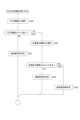
- step S105 of FIG. 5 shows a detailed processing example of this step S105.
- the cruise control device 2 After setting one or a plurality of objects as determination targets, the cruise control device 2 confirms whether or not each determination target has an element to be ACC registered or is the merging vehicle 150 after step S152 in FIG. I will continue.
- step S201 the cruise control device 2 determines whether or not the vehicle has already been ACC-registered in the processing of the previous frame, etc. If it has been registered, in step S205, it determines that there is a registration element. This is because the registration should be maintained continuously.
- the cruise control device 2 determines in step S202 whether or not the vehicle has a high probability. For example, it may be determined whether or not the vehicle has been confirmed by some method. Specifically, this corresponds to the case where it is recognized as a vehicle by 3D determination of the image, the case where it is recognized as a vehicle by vehicle-to-vehicle communication, and the like. If it is determined that the object is likely to be a vehicle, the cruise control device 2 determines that there is a registered element in step S206.
- the cruise control device 2 determines in step S203 whether or not the object is at a short distance.
- the distance in this case, for example, it is determined whether or not the distance dZ in the Z direction (advancing direction) in FIG. 2 is within a predetermined distance.
- the predetermined distance is assumed to be 10m. A condition that the inclination of the side surface of the object with respect to the traveling direction is within 10 degrees may be added. If so, the cruise control device 2 determines that there is a registered element in step S207.
- the above-described lap determination is processing in which an object that is not in the driving lane 300 of the host vehicle 100, in other words, an object that is in the merging lane 301, should be registered. Even if the rate is not 0%, the already registered merging vehicle 150 and the vehicle whose side can be confirmed at a short distance are not excluded from the ACC registration.
- step S153 of FIG. 5 the cruise control device 2 determines whether or not the preceding vehicle 200 to be ACC-targeted was registered before the current frame. If it is registered, it is determined that there is no registered element. If the preceding vehicle 200 has not been previously registered as an ACC-targeted preceding vehicle, it is determined that there is a registered element.
- the threshold th1 is set to 1.8 seconds, for example, regardless of the vehicle speed. This is to facilitate registration when the distance dZ is sufficient.
- the acceleration threshold th2 is selected, for example, according to the relative speed between the vehicle 100 and the object as follows.
- the relative velocity is (velocity of the object considered to be the merging vehicle 150)-(self vehicle velocity). Note that "s ⁇ 2" indicates the square of s (seconds).
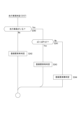
- the travel control device 2 determines the effective lateral position in step S155 of FIG. A specific example is shown in FIG.
- the cruise control device 2 acquires the information on the effective area AA previously calculated at step S104 in FIG.
- the travel control device 2 determines forward movement in step S156 of FIG.
- the cruise control device 2 determines whether the object is moving forward. In other words, it is whether or not it can be said that the merging vehicle 150 is traveling. Moreover, even if it is a vehicle, it is a way of thinking that a stopped vehicle is excluded. Therefore, the speed of the object is checked. The travel control device 2 determines that there is a registered element if the object is moving forward, and determines that there is no registered element if the object is not moving forward.
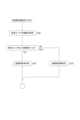
- step S157 the cruise control device 2 determines whether there is a preceding vehicle.
- FIG. 11 shows a processing example.
- the cruise control device 2 adds the distance dZ between the own vehicle 100 and the object and the distance dZP (see FIG. 2) between the vehicle 100 and the preceding vehicle 200 to the predetermined distance d1 in step S241. Compare with the value
- the predetermined distance d1 is, for example, 10 m.
- the cruise control device 2 determines that there is a registered element in step S243. This is because it can be determined that the merging vehicle 150 , which is an object, may merge between the own vehicle 100 and the preceding vehicle 200 .
- the cruise control device 2 determines in step S244 that there is no registered element. This is because it can be estimated that there is a high possibility that the merging vehicle 150 , which is the object, will merge ahead of the preceding vehicle 200 .
- step S158 one or more candidates for the merging vehicle 150 to be ACC-registered are set based on the determination of these several factors. For example, an object for which the number of times (count value) of determination as "presence of registration element” is greater than or equal to a predetermined number is set as a candidate for ACC registration. In addition, the number of times the determination of “no registered element” has been made or the type of determination item may be used as one of the criteria for determining whether or not to make a candidate.
- step S105 in FIG. 4 when the processing as shown in FIG. 5 is performed, the cruise control device 2 next gives priority to the registration candidates in step S106 in FIG.
- the priority is set according to the traveling direction position (Z-direction position) of the candidate merging vehicle 150 .
- the merging vehicle 150 having a shorter distance dZ from the own vehicle 100 is given higher priority.
- Prioritization may be, for example, an increase in the count value of "registered element present", or may be weighted processing.
- the cruise control device 2 confirms in step S108 whether it is safe to perform ACC registration. For example, by registering ACC, it is determined whether or not there is a possibility that danger will occur due to sudden braking. Do not register if ACC registration may pose a hazard.
- the cruise control device 2 ACC-registers the object (merging vehicle 150) in step S109.
- the cruise control device 2 By performing ACC registration in this manner, the cruise control device 2 recognizes the merging vehicle 150 as a merging vehicle and performs follow-up control by the function of the follow-up control unit 2b. As a result, smooth merging can be realized, and unnatural driving of the own vehicle 100 can be prevented.
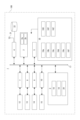
- the travel control device 2 of the embodiment has a computer device that performs ACC to cause the host vehicle 100 to travel at a set vehicle speed or follow the preceding vehicle 200 . Then, the computer device as the travel control device 2 determines that the vehicle detected in the merging lane 301, which is the merging path to the lane in which the vehicle 100 is traveling, is the merging vehicle 150 that intends to enter just in front of the vehicle 100. 4 and 5, and registers the vehicle as a merging vehicle subject to follow-up control according to the determination. It also includes a follow-up control unit 2b that performs ACC processing with the merging vehicle 150 registered by the control object setting unit 2a as the object of follow-up control.
- the merging vehicles 150 traveling in the merging lane 301 are registered as targets for follow-up control. That is, it is registered before the own vehicle 100 enters the travel lane 300 .
- the ACC performs speed control assuming the merging vehicle 150, so smooth running can be achieved without canceling the ACC. be possible.
- the merging vehicle 150 to be subject to follow-up control is determined according to the suitability determination process of the vehicle intending to enter directly in front of the host vehicle 100. Since registration is performed, all vehicles in the merging lane 301 are not unconditionally subject to follow-up control. Of the vehicles on the merging lane 301, the vehicle that is estimated to be subject to ACC, that is, the vehicle that is likely to enter in front of the own vehicle 100 is accurately registered as the target of follow-up control. As a result, the number of vehicles subject to ACC will not increase and the large acceleration/deceleration of the own vehicle 100 will not increase. For these reasons, the safety of driving with ACC is improved, and the operating rate of ACC is also improved.
- the merging vehicle 150 it is possible to detect the merging vehicle 150 to be registered without using millimeter wave radar, lidar, vehicle-to-vehicle communication, or the like. That is, the merging vehicle 150 to be registered as an ACC target can be selected based on only the information of the map locator 4 and the information of the stereo camera 18 . In this regard, there is also the advantage that realization is easy.
- the travel control device 2 determines that the TTC (time to collision) between the own vehicle 100 and the vehicle to be judged is the speed of the own vehicle, or An example of performing a process of comparing with the threshold th1 selected according to the distance measured between the own vehicle and the vehicle to be determined has been given (see FIG. 9). If the TTC is too short for the vehicle to be judged traveling in the merging lane 301 , the vehicle is not likely to enter directly ahead of the host vehicle 100 . Therefore, it is difficult to think that the vehicle is a merging vehicle approaching just before the own vehicle 100 . In other words, when the TTC is longer than the threshold th1, there is a possibility that the vehicle is in a merging lane.
- the TTC which indicates that it is easy to merge
- the threshold th1 is selected according to the distance dZ between the vehicle to be determined and the own vehicle 100 and the speed of the own vehicle 100 .
- the vehicle to be determined is more likely to be the merging vehicle 150 immediately before the own vehicle 100 . Therefore, by determining the TTC and the threshold th1, it is possible to improve the determination accuracy of suitability as the merging vehicle 150 to be subjected to ACC.
- the cruise control device 2 sets the acceleration of the vehicle to be determined to a threshold value selected according to the relative speed with respect to the own vehicle in the suitability determination processing by the function of the controlled object setting unit 2a.
- An example of performing processing for comparison with th2 was given (see FIG. 9).
- the acceleration of the determination target vehicle traveling in the merging lane 301 is large, it can be said that there is a high possibility that the vehicle 100 will enter the traveling lane 300 in which it is traveling and merge. Accelerating to a certain extent from a short TTC state in particular can be regarded as an action of increasing the distance dZ in the direction of travel from the own vehicle 100 .
- the travel control device 2 sets the effective area AA in the lateral direction from the own vehicle according to conditions in the suitability determination processing by the function of the control object setting unit 2a, and the vehicle to be determined is valid.
- An example of performing processing for detecting whether or not the area is within the area AA was given (see step S104 in FIG. 4, step S155 in FIG. 5, and FIG. 10). It is not appropriate to determine that all vehicles detected on the merging lane 301 side from the driving lane 300 of the own vehicle 100 are the merging vehicles 150 . This is because detection of a stopped vehicle laterally away from the driving lane 300 or detection of an object other than the vehicle may be erroneously detected.
- the vehicle is within the effective area AA. This makes it possible to improve the determination accuracy.
- the range of the effective area AA according to conditions such as the curve of the road, the vehicle recognition state, and the presence or absence of the preceding vehicle 200, it is possible to determine whether or not the merging vehicle 150 will merge immediately before the own vehicle. It can be one of the criteria.
- the cruise control device 2 uses the function of the controlled object setting unit 2a to subject the vehicle whose body side surface is recognized in the merging lane 301 to the suitability determination process.
- a vehicle traveling in the merging lane 301 cannot recognize the rear surface of the vehicle body unless there is a certain distance dZ in the direction of travel from the vehicle 100 .
- the rear surface of the preceding vehicle 200 is recognized for follow-up control, but registration of the rear surface is assumed to be delayed in order to register the merging vehicle 150 as an ACC target. Therefore, the vehicle whose side surface is recognized is also subject to the determination process.
- the merging vehicle 150 can be registered as an ACC target at an appropriate timing.
- 5, 8, 9, 10, and 11 are stored in a non-volatile memory in the running control device 2 or in the vehicle control system 1. It can be stored in a storage medium such as a non-volatile memory. Further, the program can be stored in a portable storage medium, or can be downloaded from a server device to vehicle 100 through network communication.
Landscapes
- Engineering & Computer Science (AREA)
- Automation & Control Theory (AREA)
- Transportation (AREA)
- Mechanical Engineering (AREA)
- Traffic Control Systems (AREA)
- Control Of Driving Devices And Active Controlling Of Vehicle (AREA)
Priority Applications (3)
| Application Number | Priority Date | Filing Date | Title |
|---|---|---|---|
| JP2023555900A JP7684416B2 (ja) | 2021-10-25 | 2021-10-25 | 走行制御装置 |
| PCT/JP2021/039337 WO2023073772A1 (ja) | 2021-10-25 | 2021-10-25 | 走行制御装置 |
| US18/393,401 US20240116509A1 (en) | 2021-10-25 | 2023-12-21 | Traveling control apparatus |
Applications Claiming Priority (1)
| Application Number | Priority Date | Filing Date | Title |
|---|---|---|---|
| PCT/JP2021/039337 WO2023073772A1 (ja) | 2021-10-25 | 2021-10-25 | 走行制御装置 |
Related Child Applications (1)
| Application Number | Title | Priority Date | Filing Date |
|---|---|---|---|
| US18/393,401 Continuation US20240116509A1 (en) | 2021-10-25 | 2023-12-21 | Traveling control apparatus |
Publications (1)
| Publication Number | Publication Date |
|---|---|
| WO2023073772A1 true WO2023073772A1 (ja) | 2023-05-04 |
Family
ID=86157508
Family Applications (1)
| Application Number | Title | Priority Date | Filing Date |
|---|---|---|---|
| PCT/JP2021/039337 Ceased WO2023073772A1 (ja) | 2021-10-25 | 2021-10-25 | 走行制御装置 |
Country Status (3)
| Country | Link |
|---|---|
| US (1) | US20240116509A1 (https=) |
| JP (1) | JP7684416B2 (https=) |
| WO (1) | WO2023073772A1 (https=) |
Families Citing this family (1)
| Publication number | Priority date | Publication date | Assignee | Title |
|---|---|---|---|---|
| EP4644836A1 (en) * | 2024-04-30 | 2025-11-05 | AUMOVIO Autonomous Mobility Germany GmbH | Method for detecting a road merge, method for controlling a vehicle, and advanced driver assistance system |
Citations (3)
| Publication number | Priority date | Publication date | Assignee | Title |
|---|---|---|---|---|
| JPH07334790A (ja) * | 1994-06-13 | 1995-12-22 | Toyota Motor Corp | 合流車予見装置およびこれを用いた走行制御装置 |
| JP2012051503A (ja) * | 2010-09-02 | 2012-03-15 | Fujitsu Ten Ltd | 車両制御システム、車両制御装置、及び、車両制御方法 |
| WO2018158875A1 (ja) * | 2017-03-01 | 2018-09-07 | 本田技研工業株式会社 | 車両制御システム、車両制御方法、および車両制御プログラム |
Family Cites Families (15)
| Publication number | Priority date | Publication date | Assignee | Title |
|---|---|---|---|---|
| JP2009220630A (ja) * | 2008-03-13 | 2009-10-01 | Fuji Heavy Ind Ltd | 車両の走行制御装置 |
| JP5180641B2 (ja) * | 2008-03-25 | 2013-04-10 | 富士重工業株式会社 | 車両用運転支援装置 |
| DE112009004643B4 (de) * | 2009-04-08 | 2016-05-19 | Toyota Jidosha Kabushiki Kaisha | Fahrzeugfahrsteuervorrichtung |
| US10328935B2 (en) * | 2016-06-08 | 2019-06-25 | GM Global Technology Operations LLC | Adaptive cruise control system and method of operating the same |
| JP2019180074A (ja) * | 2018-03-30 | 2019-10-17 | パナソニックIpマネジメント株式会社 | 運転支援システム、画像処理装置及び画像処理方法 |
| US10745007B2 (en) * | 2018-06-08 | 2020-08-18 | Denso International America, Inc. | Collision avoidance systems and methods |
| JP2021005189A (ja) * | 2019-06-26 | 2021-01-14 | 株式会社デンソー | 送電装置、車両 |
| US11072326B2 (en) * | 2019-08-22 | 2021-07-27 | Argo AI, LLC | Systems and methods for trajectory based safekeeping of vehicles |
| KR20210035523A (ko) * | 2019-09-24 | 2021-04-01 | 현대자동차주식회사 | 차량 주행제어 방법 및 장치 |
| KR20210130324A (ko) * | 2020-04-21 | 2021-11-01 | 현대자동차주식회사 | 운전자 보조 장치, 그를 가지는 차량 및 그 제어 방법 |
| FR3114287B1 (fr) * | 2020-09-22 | 2023-05-12 | Valeo Vision | Système d’aide à la conduite d’un véhicule |
| JP7534193B2 (ja) * | 2020-11-13 | 2024-08-14 | 株式会社デンソー | 車両制御装置 |
| JP2022099146A (ja) * | 2020-12-22 | 2022-07-04 | パナソニックIpマネジメント株式会社 | 車両制御システム及び車両制御方法 |
| JP7645125B2 (ja) * | 2021-04-20 | 2025-03-13 | 日立Astemo株式会社 | 車両制御装置 |
| JP7756523B2 (ja) * | 2021-09-13 | 2025-10-20 | Astemo株式会社 | 車両制御装置 |
-
2021
- 2021-10-25 JP JP2023555900A patent/JP7684416B2/ja active Active
- 2021-10-25 WO PCT/JP2021/039337 patent/WO2023073772A1/ja not_active Ceased
-
2023
- 2023-12-21 US US18/393,401 patent/US20240116509A1/en active Pending
Patent Citations (3)
| Publication number | Priority date | Publication date | Assignee | Title |
|---|---|---|---|---|
| JPH07334790A (ja) * | 1994-06-13 | 1995-12-22 | Toyota Motor Corp | 合流車予見装置およびこれを用いた走行制御装置 |
| JP2012051503A (ja) * | 2010-09-02 | 2012-03-15 | Fujitsu Ten Ltd | 車両制御システム、車両制御装置、及び、車両制御方法 |
| WO2018158875A1 (ja) * | 2017-03-01 | 2018-09-07 | 本田技研工業株式会社 | 車両制御システム、車両制御方法、および車両制御プログラム |
Also Published As
| Publication number | Publication date |
|---|---|
| JP7684416B2 (ja) | 2025-05-27 |
| US20240116509A1 (en) | 2024-04-11 |
| JPWO2023073772A1 (https=) | 2023-05-04 |
Similar Documents
| Publication | Publication Date | Title |
|---|---|---|
| JP7207256B2 (ja) | 車両制御システム | |
| US11402844B2 (en) | Vehicle control apparatus, vehicle control method, and storage medium | |
| US11608062B2 (en) | Vehicle control method and vehicle control device | |
| US11225249B2 (en) | Vehicle control device, vehicle control method, and storage medium | |
| US10407061B2 (en) | Vehicle control system | |
| US11247682B2 (en) | Vehicle control system, vehicle control method, and vehicle control program | |
| US11021155B2 (en) | Vehicle control apparatus and vehicle control method | |
| US11661057B2 (en) | Vehicle control device, vehicle control method, and storage medium | |
| US11180141B2 (en) | Vehicle control system | |
| JP6975255B2 (ja) | 車両制御装置、車両制御方法、およびプログラム | |
| CN111661041A (zh) | 车辆控制装置 | |
| JP7698057B2 (ja) | 走行制御装置 | |
| US11975715B2 (en) | Driving assistance apparatus | |
| US20220009496A1 (en) | Vehicle control device, vehicle control method, and non-transitory computer-readable medium | |
| US20210107482A1 (en) | Vehicle control apparatus | |
| US10821980B2 (en) | Vehicle control device | |
| US20200168097A1 (en) | Vehicle control device, vehicle control method, and storage medium | |
| US11535249B2 (en) | Vehicle action determining method and vehicle action determining device | |
| JP7123867B2 (ja) | 車両制御装置、車両制御装方法、およびプログラム | |
| US11654914B2 (en) | Vehicle control device, vehicle control method, and storage medium | |
| JP6930483B2 (ja) | 走行制御装置 | |
| JP2021041828A (ja) | 先行車車線変更推定方法及び先行車追従制御方法、先行車車線変更推定装置 | |
| JP2021096720A (ja) | 車両の走行環境推定方法、及び、走行環境推定システム | |
| JP6750012B2 (ja) | 車両位置制御装置 | |
| JP7684416B2 (ja) | 走行制御装置 |
Legal Events
| Date | Code | Title | Description |
|---|---|---|---|
| 121 | Ep: the epo has been informed by wipo that ep was designated in this application |
Ref document number: 21962322 Country of ref document: EP Kind code of ref document: A1 |
|
| WWE | Wipo information: entry into national phase |
Ref document number: 2023555900 Country of ref document: JP |
|
| NENP | Non-entry into the national phase |
Ref country code: DE |
|
| 122 | Ep: pct application non-entry in european phase |
Ref document number: 21962322 Country of ref document: EP Kind code of ref document: A1 |