WO2023063133A1 - 動画生成システム、コンピュータプログラム及び制御方法 - Google Patents
動画生成システム、コンピュータプログラム及び制御方法 Download PDFInfo
- Publication number
- WO2023063133A1 WO2023063133A1 PCT/JP2022/036905 JP2022036905W WO2023063133A1 WO 2023063133 A1 WO2023063133 A1 WO 2023063133A1 JP 2022036905 W JP2022036905 W JP 2022036905W WO 2023063133 A1 WO2023063133 A1 WO 2023063133A1
- Authority
- WO
- WIPO (PCT)
- Prior art keywords
- game
- player
- information
- moving image
- viewing
- Prior art date
- Legal status (The legal status is an assumption and is not a legal conclusion. Google has not performed a legal analysis and makes no representation as to the accuracy of the status listed.)
- Ceased
Links
Images

Classifications
-
- A—HUMAN NECESSITIES
- A63—SPORTS; GAMES; AMUSEMENTS
- A63F—CARD, BOARD, OR ROULETTE GAMES; INDOOR GAMES USING SMALL MOVING PLAYING BODIES; VIDEO GAMES; GAMES NOT OTHERWISE PROVIDED FOR
- A63F13/00—Video games, i.e. games using an electronically generated display having two or more dimensions
- A63F13/20—Input arrangements for video game devices
- A63F13/21—Input arrangements for video game devices characterised by their sensors, purposes or types
- A63F13/213—Input arrangements for video game devices characterised by their sensors, purposes or types comprising photodetecting means, e.g. cameras, photodiodes or infrared cells
-
- A—HUMAN NECESSITIES
- A63—SPORTS; GAMES; AMUSEMENTS
- A63F—CARD, BOARD, OR ROULETTE GAMES; INDOOR GAMES USING SMALL MOVING PLAYING BODIES; VIDEO GAMES; GAMES NOT OTHERWISE PROVIDED FOR
- A63F13/00—Video games, i.e. games using an electronically generated display having two or more dimensions
- A63F13/45—Controlling the progress of the video game
- A63F13/49—Saving the game status; Pausing or ending the game
-
- A—HUMAN NECESSITIES
- A63—SPORTS; GAMES; AMUSEMENTS
- A63F—CARD, BOARD, OR ROULETTE GAMES; INDOOR GAMES USING SMALL MOVING PLAYING BODIES; VIDEO GAMES; GAMES NOT OTHERWISE PROVIDED FOR
- A63F13/00—Video games, i.e. games using an electronically generated display having two or more dimensions
- A63F13/45—Controlling the progress of the video game
- A63F13/49—Saving the game status; Pausing or ending the game
- A63F13/497—Partially or entirely replaying previous game actions
-
- A—HUMAN NECESSITIES
- A63—SPORTS; GAMES; AMUSEMENTS
- A63F—CARD, BOARD, OR ROULETTE GAMES; INDOOR GAMES USING SMALL MOVING PLAYING BODIES; VIDEO GAMES; GAMES NOT OTHERWISE PROVIDED FOR
- A63F13/00—Video games, i.e. games using an electronically generated display having two or more dimensions
- A63F13/50—Controlling the output signals based on the game progress
- A63F13/52—Controlling the output signals based on the game progress involving aspects of the displayed game scene
-
- A—HUMAN NECESSITIES
- A63—SPORTS; GAMES; AMUSEMENTS
- A63F—CARD, BOARD, OR ROULETTE GAMES; INDOOR GAMES USING SMALL MOVING PLAYING BODIES; VIDEO GAMES; GAMES NOT OTHERWISE PROVIDED FOR
- A63F13/00—Video games, i.e. games using an electronically generated display having two or more dimensions
- A63F13/60—Generating or modifying game content before or while executing the game program, e.g. authoring tools specially adapted for game development or game-integrated level editor
- A63F13/63—Generating or modifying game content before or while executing the game program, e.g. authoring tools specially adapted for game development or game-integrated level editor by the player, e.g. authoring using a level editor
-
- A—HUMAN NECESSITIES
- A63—SPORTS; GAMES; AMUSEMENTS
- A63F—CARD, BOARD, OR ROULETTE GAMES; INDOOR GAMES USING SMALL MOVING PLAYING BODIES; VIDEO GAMES; GAMES NOT OTHERWISE PROVIDED FOR
- A63F13/00—Video games, i.e. games using an electronically generated display having two or more dimensions
- A63F13/70—Game security or game management aspects
- A63F13/79—Game security or game management aspects involving player-related data, e.g. identities, accounts, preferences or play histories
-
- A—HUMAN NECESSITIES
- A63—SPORTS; GAMES; AMUSEMENTS
- A63F—CARD, BOARD, OR ROULETTE GAMES; INDOOR GAMES USING SMALL MOVING PLAYING BODIES; VIDEO GAMES; GAMES NOT OTHERWISE PROVIDED FOR
- A63F13/00—Video games, i.e. games using an electronically generated display having two or more dimensions
- A63F13/80—Special adaptations for executing a specific game genre or game mode
- A63F13/814—Musical performances, e.g. by evaluating the player's ability to follow a notation
-
- A—HUMAN NECESSITIES
- A63—SPORTS; GAMES; AMUSEMENTS
- A63F—CARD, BOARD, OR ROULETTE GAMES; INDOOR GAMES USING SMALL MOVING PLAYING BODIES; VIDEO GAMES; GAMES NOT OTHERWISE PROVIDED FOR
- A63F13/00—Video games, i.e. games using an electronically generated display having two or more dimensions
- A63F13/85—Providing additional services to players
- A63F13/86—Watching games played by other players
-
- H—ELECTRICITY
- H04—ELECTRIC COMMUNICATION TECHNIQUE
- H04L—TRANSMISSION OF DIGITAL INFORMATION, e.g. TELEGRAPHIC COMMUNICATION
- H04L67/00—Network arrangements or protocols for supporting network services or applications
- H04L67/01—Protocols
- H04L67/131—Protocols for games, networked simulations or virtual reality
-
- H—ELECTRICITY
- H04—ELECTRIC COMMUNICATION TECHNIQUE
- H04N—PICTORIAL COMMUNICATION, e.g. TELEVISION
- H04N21/00—Selective content distribution, e.g. interactive television or video on demand [VOD]
- H04N21/20—Servers specifically adapted for the distribution of content, e.g. VOD servers; Operations thereof
- H04N21/23—Processing of content or additional data; Elementary server operations; Server middleware
- H04N21/234—Processing of video elementary streams, e.g. splicing of video streams or manipulating encoded video stream scene graphs
-
- H—ELECTRICITY
- H04—ELECTRIC COMMUNICATION TECHNIQUE
- H04N—PICTORIAL COMMUNICATION, e.g. TELEVISION
- H04N21/00—Selective content distribution, e.g. interactive television or video on demand [VOD]
- H04N21/20—Servers specifically adapted for the distribution of content, e.g. VOD servers; Operations thereof
- H04N21/23—Processing of content or additional data; Elementary server operations; Server middleware
- H04N21/239—Interfacing the upstream path of the transmission network, e.g. prioritizing client content requests
Definitions
- the present invention relates to a video generation system that generates a viewing video that expresses a player's actions, a computer program for the video generation system, and a control method for the video generation system.
- Patent Document 1 discloses a game machine that records ghost data representing a player's performance while a racing game is being played, and a score/result server to which the recorded ghost data is uploaded.
- the gaming machine updates the orientation, velocity, and position of the ghost player based on the location, orientation, and state stored in the ghost data.
- the score/result server then downloads the ghost data selected by the player to the player's game machine.
- Patent Literature 2 discloses a game device for a music game that is provided with a ghost mode in which input motion data recorded in previous game play is used to perform ghost display.
- the game device records input motion data related to the game play each time the player plays the game.
- the game device uses the recorded input motion data to display-control a display body that indicates the motion content of the input motion that the player performed as the operation input in the past game play.
- ghost display is performed using the ghost data recorded for the play music of the game play.
- a display that reproduces the input timing of each operation input during play and the motion content of the input motion is displayed.
- the desired moving image to be created is a moving image of a player playing the game, a moving image of a game screen, or the like.
- These moving images are not only used for viewing by players, but may also be used for distribution to multiple viewers.
- it is not easy for a player to create a moving image because equipment and skills are required to create the moving image.
- the player may be hesitant to distribute the game to viewers because the player's appearance is captured.
- a moving image generating system is a moving image generating system that generates viewing moving images related to a game involving actions of a player, wherein information indicating the actions of the player while playing the game is used as a material.
- Material information acquiring means for acquiring information, and based on the acquired material information, a moving image in which the movement of the player is expressed in a display mode different from the actual appearance of the player is generated as the viewed moving image. and generating means.
- a computer program is a computer program for a video generating system that includes a computer and generates viewing videos related to a game involving actions of a player, wherein the computer is playing the game.
- material information acquisition means for acquiring information indicating the action of the player during the period as material information; and based on the acquired material information, the action of the player is displayed in a manner different from the actual appearance of the player.
- the expressed moving image is made to function as generating means for generating the viewing moving image.
- a control method is a control method for a moving image generation system that generates viewing moving images related to a game involving actions of a player, wherein the actions of the player while playing the game are The information shown is acquired as material information, and based on the acquired material information, a moving image in which the action of the player is expressed in a display mode different from the actual appearance of the player is generated as the viewed moving image.
- the player can easily create viewing videos related to the game and acquire the created viewing videos.
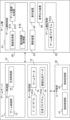
- Schematic diagram for explaining a moving image generation system A schematic diagram of a game screen. Schematic block diagram of a video generation system. Schematic block diagram of a game server. Schematic flow chart of video generation.
- a moving image generation system 100 shown in FIG. 1 generates a viewed moving image regarding a game accompanied by actions of a player.
- a viewing moving image is a moving image played on the user terminal 40, and can be distributed from the distribution server 30 to a plurality of viewing users who are viewers.
- the moving image generation system 100 includes a game server 10 which is an example of a generation server that generates a viewed moving image, a distribution server 30 that distributes the viewed moving image, and a user terminal 40 that is used by an editing user as an editor of the viewed moving image. , and a game machine 60 for providing games to the players.
- the distribution server 30 may not be included in the moving image generation system 100 .
- the editing user may be the player himself or another user who is not a player.
- the editing user then uploads the viewing video generated by the game server 10 to the distribution server 30 .
- a user terminal 40 can be connected to the game server 10 and the distribution server 30 via a predetermined network 50 .
- the game machine 60 can be connected to the game server 10 via a predetermined network 50 .
- a plurality of viewing users view the viewing video distributed from the distribution server 30 using their respective reproduction terminals (for example, personal computers, mobile phones, etc.).
- the game server 10 and the distribution server 30 are configured as one logical server device by combining server units as a plurality of computers. However, the game server 10 and distribution server 30 may be configured by a single server unit. Alternatively, the game server 10 and distribution server 30 may be logically configured using cloud computing. Note that the game server 10 and the distribution server 30 may function in cooperation with an external server.
- the game server 10 provides various services for game devices, including game services, to the game machine 60, which is an example of a game device.
- This service includes a game distribution service that distributes and updates game programs or data for the game machine 60 via the network 50 .
- the game server 10 appropriately distributes various programs or data necessary for providing games to each game machine 60 through this game distribution service.
- the game service may include a service in which the game server 10 receives user identification information identifying the user from the game machine 60 and authenticates the user.
- the game service may also include a service in which the game server 10 receives play data including play results of the authenticated user from the game machine 60 and stores the play data.
- the game service may include a service of providing play data stored by the game server 10 to the game machine 60 .
- the game service may include a service in which the game server 10 matches users with each other when multiple users play a common game via the network 50 .
- the game service may also include a service in which the game server 10 collects fees from users.
- the game server 10 also provides web services to users of the user terminals 40 via the network 50 .
- the game server 10 provides a video generation service
- the game machine 60 receives operation information, which will be described later, and generates a viewing video.
- the game server 10 then transmits the generated viewing video to the user terminal 40 .
- web services include information provision services that provide various types of information about viewing videos, community services that provide a place for interaction such as information transmission, exchange, and sharing by viewing users, and user identification to identify each viewing user. Other services such as a service that provides information may be included.
- the web service may include a service in which the game server 10 receives the user's user identification information from the user terminal 40 and authenticates the user.
- the distribution server 30 provides a video distribution service that allows viewing videos to be viewed by viewing users including editing users who use the user terminals 40 . For example, when a game video, which is an example of a viewing video to be distributed, is uploaded from the user terminal 40, the distribution server 30 distributes the game video to the terminal used by the viewing user.
- the moving image distribution service includes a service of distributing or updating a moving image reproduction program or data for the terminal used by the viewing user via the network 50 .
- the distribution server 30 may appropriately distribute various programs or data necessary for viewing the viewing moving image to the terminal used by the viewing user.
- the network 50 is configured so that the game server 10 can be connected to the user terminals 40 and the game machines 60, respectively. Also, the network 50 is configured to connect the distribution server 30 and the user terminal 40 . As an example, network 50 is configured to implement network communications using the TCP/IP protocol.
- the LAN 52 connects each of the game server 10 and the distribution server 30 to the Internet 51 .
- An Internet 51 as a WAN and a LAN 52 are connected via a router 53 .
- the user terminal 40 and the game machine 60 are also configured to be connected to the Internet 51 .
- a local server may be installed between the game machine 60 and the router 53 of the store where the game machine 60 is installed.
- the game machine 60 can be communicatively connected to the game server 10 via this local server.
- the game server 10, the user terminal 40 and the game machine 60 may be interconnected by the Internet 51 instead of or in addition to the LAN 52. Also, the distribution server 30 and the user terminal 40 may be connected to each other by the Internet 51 instead of or in addition to the LAN 52 .
- the network 50 may be a dedicated line, a telephone line, an in-house network, a mobile communication network, other communication lines, or a combination thereof, and may be wired or wireless. .
- thin lines indicate connections to the Internet 51, and thick lines indicate services provided and information to be transmitted. The bold lines do not indicate that the devices communicate directly, although the devices may be configured to communicate directly.
- the user terminal 40 is a computer device that can be connected to a network.
- the user terminal 40 includes a stationary or book-type personal computer 44 and a mobile terminal device 45 such as a mobile phone (including a smart phone).
- the user terminal 40 includes various computer devices such as a stationary home game device, a portable game device, and a portable tablet terminal device.
- the user terminal 40 can allow users to enjoy various services provided by the game server 10 or the distribution server 30 by installing various computer software.
- the user terminal 40 functions as an editing terminal that creates viewing videos through a web browser.
- the user terminal 40 functions as a playback terminal for viewing videos through software for playing videos.
- the game machine 60 is a commercial (or business) game device that allows the user to play a game within a range corresponding to the payment in exchange for payment of a charge, which is a predetermined consideration. This game machine 60 is sometimes called an arcade game machine. Also, the game machine 60 is a computer device, and is installed in a store or the like for the main purpose of making a large number of users repeatedly play the game to increase profits.
- the game machine 60 provides a music game in which a player dances to music, as an example of a game involving player's actions. In addition, the game machine 60 may provide games other than music games, such as fighting games, puzzle games, quiz games, sports games, and other games involving player actions. A case of providing a music game will be described below as an example.
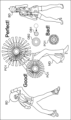
- FIG. 2 is a schematic diagram showing a game screen
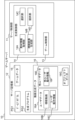
- FIG. 3 is a schematic block diagram of the moving image generation system 100.
- the game machine 60 has a display device 64 on which guide objects and character objects are displayed.
- the display device 64 is, for example, a display such as a liquid crystal display, an organic EL display, an inorganic EL display, or a touch panel.
- the display device 64 may be a light-emitting device (for example, light-emitting diodes) arranged in a matrix, or a projector that projects a game screen onto a part of the housing.
- the game machine 60 also includes an audio output device 65 for outputting game music, sound effects, and the like to be reproduced during the game.
- the audio output device 65 is, for example, a speaker.
- the display device 64 and the audio output device 65 are both provided in the housing of the game machine 60, but may be separate from the housing.
- a guide object that guides the player as to the timing or position of the action, and the main dancer MD and the backup dancer BD as character objects are displayed on the display device 64. Is displayed. Then, the main dancer MD moves in synchronism with the actions of the player. That is, when the player moves his or her body, the main dancer MD also moves in synchronization with the player's body movement. For example, when the player moves the arm up and down, the arm of the main dancer MD also moves up and down, and when the player moves the leg left and right, the leg of the main dancer MD also moves left and right.
- two back dancers BD are shown in FIG. 2, there may be no back dancers BD. Also, the number of back dancers BD may be one or three or more. Furthermore, instead of or in addition to the dancers, objects such as items or animals that move to the music may be displayed.
- the guide object includes a position object OB2 that guides the motion position and a timing object OB1 that guides the motion timing.
- the position object OB2 guides the player to an action position where a part of the body of the main dancer MD is superimposed.
- the player performs a dance motion such that a part of the body of the main dancer MD, which moves in synchronization with the player's own motion, overlaps the position object OB2.
- the timing object OB1 guides the action timing of the player's action. Therefore, the timing object OB1 jumps out of the position object OB2 and moves so as to return to the position object OB2 at the timing when the player should perform the action.
- the player moves such that a part of the body of the main dancer MD overlaps the position object OB2.
- FIG. 2 shows the state before the timing object OB1 jumps out of the position object OB2 and returns.
- the timing object OB1 moves in the direction indicated by the arrow (from right to left in FIG. 2) toward the position object OB2.
- the player moves a part of the body of the main dancer MD, such as an arm or leg, overlapping the position object OB2. Since the main dancer MD moves in synchronism with the movement of the player, the player moves his/her body while looking at the main dancer MD displayed on the display device 64 .
- the guidance timing guided by the timing object OB1 is compared with the movement timing when a part of the body of the main dancer MD overlaps the position object OB2.
- a high evaluation is obtained when the deviation between the guidance timing and the operation timing is small. Also, if the difference between the guidance timing and the operation timing is large, a low evaluation is obtained or no evaluation is obtained.
- a good evaluation is obtained when the deviation is small, and the character "Good! is displayed on the display device 64 as an example of a high evaluation result.
- the player moves his/her body according to the guide timing and action position guided by the guide object. For example, the player moves the body at the timing when the timing object OB1 returns to the position object OB2. At this time, the player moves the body so that a part of the body of the main dancer MD overlaps the position object OB2. Thus, the player is guided to perform dance motions in time with the music. Also, the main dancer MD moves in synchronization with the actions of the player. Therefore, the player sees the movement of the main dancer MD displayed on the display device 64 and moves the body so that a part of the main dancer MD touches the position object OB2.
- the guide object may change in various ways over time.
- the change modes of the guide object include a mode in which the area gradually decreases, a mode in which the color gradually changes, a mode in which the density gradually increases or decreases, a mode in which the density gradually increases or decreases, and a mode in which the number of objects gradually increases. includes an aspect in which there is more or less.
- the guide object may have a shape other than a circle, and may include letters, graphics, patterns, numbers, symbols, and combinations thereof.
- FIG. 4 is a schematic block diagram of the game server 10.
- the game server 10 includes a server control unit 11 that controls the game server 10, and a server storage unit 12 that is an example of storage means that stores the game program PG1 and the generation program PG2 of the game server 10.
- FIG. The server control unit 11 is configured as a computer that combines a processor that executes various kinds of arithmetic processing and operation control according to a predetermined program and other peripheral devices.
- the processor of the server control unit 11 is a CPU (Central Processing Unit) or MPU (Micro-Processing Unit), and controls the entire game server 10 based on a program stored in the server storage unit 12. At the same time, it also controls various processes in an integrated manner.
- the server storage unit 12 includes a RAM (Random Access Memory) that is a system work memory for the processor to operate, a ROM (Read Only Memory) that stores programs and system software, a HDD (Hard Disc Drive) and an SSD ( Solid State Drive) and other storage devices.
- RAM Random Access Memory
- ROM Read Only Memory
- HDD Hard Disc Drive
- SSD Solid State Drive
- An interface including a keyboard or various switches for inputting predetermined commands and data is wired or wirelessly connected to the server control unit 11 .
- the server control unit 11 is also wired or wirelessly connected to a monitor (not shown) that displays the input state, setting state, measurement results, and various information of the device.
- the server control unit 11 can be used for portable recording media such as CDs (Compact Discs), DVDs (Digital Versatile Discs), CF (Compact Flash) cards, USB (Universal Serial Bus) memories, or servers on the Internet. Control can also be performed according to a program stored in an external storage medium.
- the server storage unit 12 is an external storage device such as a hard disk and a semiconductor storage device that includes a non-volatile storage medium that is an example of a computer-readable non-temporary storage medium.
- the server storage unit 12 may store all data in one storage unit, or may distribute and store data in a plurality of storage units.
- the server storage unit 12 records a game program PG1 and a generating program PG2 as examples of computer programs that cause the server control unit 11 to execute various necessary processes.
- the server control unit 11 provides game services to players who play the game machine 60 by executing the game program PG1.
- the server control unit 11 also provides a moving image generation service to the editing user by executing the generation program PG2.
- the server storage unit 12 also stores game data 15 for a music game and moving image generation data 16 including user data 16A.
- the game data 15 stores image data, music data, and sequence data.
- the image data includes, for example, guide objects, effect images, icons, various objects, and background data.
- the music data includes data such as songs, judgment sounds, evaluation sounds, effect sounds and production sounds.
- the sequence data is data that defines the operation procedure of the game, and includes, for example, data such as the display timing and display position of the guidance object, the type of the guidance object, and the like.
- the user data 16A included in the moving image generation data 16 shown in FIG. 4 includes play histories (not shown) such as scores obtained by the user playing the game as a player. Further, the user data 16A includes a viewing moving image 16B created by the user as an editing user, and user action information 16C as an example of information indicating actions of the player. The user data 16A is stored in association with user identification information unique to each user for identifying the user.
- the user terminal 40 includes a terminal control section 41 that controls the user terminal 40 and a terminal storage section 42 that stores control programs.
- the terminal control unit 41 is a computer that combines a processor that executes various kinds of arithmetic processing and operation control according to a predetermined program and other peripheral devices.
- the processor is, for example, a CPU or an MPU, and controls the entire user terminal 40 based on a program stored in the terminal storage unit 42, as well as centrally controlling various processes.
- the terminal storage unit 42 also includes storage devices such as RAM, which is a system work memory for the processor to operate, and ROM, HDD, and SSD for storing programs and system software.
- the terminal control unit 41 can also be controlled according to programs stored in portable recording media such as CDs, DVDs, CF cards, and USB memories, or external storage media such as servers on the Internet.
- the terminal storage unit 42 is an external storage device such as a hard disk and a semiconductor storage device that includes a non-volatile storage medium that is an example of a computer-readable non-temporary storage medium.
- the terminal storage unit 42 can store viewing videos generated by the game server 10 in order to upload them to the distribution server 30 .
- the editing user can use application software from the Internet 51 as a web application provided by the game server 10 when creating a viewing moving image.
- the terminal storage unit 42 may store editing software used when creating viewing moving images. Such editing software may be distributed from the game server 10 .
- the user terminal 40 has a display (not shown) as an example of a display device that displays the viewed video and the web page provided by the game server 10 . Further, the user terminal 40 has a speaker (not shown) as an example of an output device for outputting music or the like when viewing a viewing video. The user terminal 40 also has a keyboard, mouse, etc. (not shown) as an example of an input device for inputting information. Note that a touch panel functioning as a display device may function as an input device.
- the game machine 60 includes a game machine control section 61 that controls the game machine 60, and a game machine storage section 62 that stores a control program.
- the game machine control unit 61 is a computer that combines a processor that executes various kinds of arithmetic processing and operation control according to a predetermined program and other peripheral devices.
- the processor is, for example, a CPU or an MPU, and controls the entire game machine 60 based on a program stored in the game machine storage unit 62, as well as comprehensively controls various processes.
- the game machine storage unit 62 also includes RAM, which is a system work memory for the processor to operate, and storage devices such as ROM, HDD, and SSD for storing programs and system software.
- the game machine control section 61 can also be controlled according to programs stored in portable recording media such as CDs, DVDs, CF cards, and USB memories, or external storage media such as servers on the Internet.
- the game machine storage unit 62 is an external storage device such as a hard disk and a semiconductor storage device that includes a non-volatile storage medium that is an example of a computer-readable non-temporary storage medium.
- the game machine storage unit 62 records game data acquired from the game server 10 together with the game machine program PG3.
- the game data is used to make the user play a predetermined game according to the game machine program PG3.
- the game data may include image data, music data, and sequence data, like the game data 15 stored in the server storage unit 12 .
- the game data may include object data.
- the game machine 60 also has a photographing device 63 as an example of a detection device that detects the actions of the player during game play.
- the photographing device 63 photographs the action of the player and stores it in the game machine storage section 62 as a play animation.
- the game machine 60 has a display device 64 on which a game screen is displayed.
- the game machine 60 also includes an audio output device 65 that outputs sounds such as music, judgment sounds, evaluation sounds, and effect sounds that are output during game play.
- the photographing device 63 is a camera as an example, and may be composed of a plurality of cameras. The camera is arranged so that the shooting range includes the entire body of the player.
- the motion information acquisition unit 61B of the game machine control unit 61 analyzes the play video captured by the imaging device 63 and acquires bone information as an example of motion information.
- Bone information means information indicating bones connecting points indicating position coordinates of parts of the player's body, and bones in the bone information are connected to each other by connection points.
- the player's play motion can be recorded as motion information based on the position, orientation, and displacement amount of the player's bone in the play moving image.
- the bone information represents the player's bones at each point in time with the passage of time from the start of the game.
- the motion information acquisition unit 61B may predict the bone position, orientation, and displacement amount and include them in at least part of the bone information.
- the photographing device 63 may be a camera that photographs a marker worn by the player.
- the motion information acquisition unit 61B analyzes the video of the marker as the play video and acquires the motion information.
- the sensing device may include a sensor that senses the player's body movements.
- the detection device may consist of an inertial sensor such as a gyro sensor and an acceleration sensor that detects the movement of the player's body, and a recording device that records the detected movement.
- the detection device may consist of a magnetic or mechanical sensor that detects the movement of the player's body and a recording device that records the detected movement.
- the game machine control unit 61 provides the game to the player based on the game machine program PG3.
- the game machine control section 61 executes various arithmetic controls necessary for the progress of the game.
- the game machine control section 61 causes the display device 64 to display the operation timing and the operation position based on the position and movement speed of the timing object OB1 moving toward the position object OB2.
- the game machine control section 61 has, as logical devices, a video acquisition section 61A, an action information acquisition section 61B, and a game video generation section 61C. These logical devices are realized by a combination of the hardware resources of the game machine control section 61 and the game machine program PG3 as software resources.
- 61 A of moving image acquisition parts acquire the play moving image which image
- the video acquisition unit 61A acquires a play video captured by the imaging device 63 .
- the video acquisition unit 61A may acquire the play video from a device other than the game machine 60 .
- the game machine 60 is a home-use game machine
- the player uses a camera or the like mounted on a smart phone to shoot the play action during the game.
- the smartphone transmits the captured play video to the game machine 60 .
- 61 A of animation acquisition parts acquire the play animation which the game machine 60 received.
- the motion information acquisition section 61B analyzes the play video acquired by the video acquisition section 61A. Then, the motion information acquiring unit 61B acquires the player's motion information from the analysis result and stores it in the game machine storage unit 62.
- the motion information is information describing the motion of the player from the start to the end of the game selected by the player, and is stored in the server storage unit 12 as part of the motion picture generation data 16 .
- the game starts when the player performs a start operation and ends when the game time set by the sequence data elapses.
- the motion information is bone information acquired by bone analysis performed by the motion information acquisition unit 61B.
- the motion information may be data indicating the position, orientation, and amount of displacement of each part of the player's body.
- the game animation generation unit 61C generates a game animation displayed on the display device 64 using the motion information acquired by the motion information acquisition unit 61B.
- the game animation generation unit 61C uses the object data 16G acquired in advance from the game server 10 to generate a game animation in which the character object moves according to the movement information.
- the game moving image generating section 61C may generate a game moving image in which the character object serving as the main dancer MD moves and the character object serving as the backup dancer BD also moves.
- the game animation includes images or videos such as guide objects, backgrounds, and effect images.
- the character object also has bones set, and the game animation generation unit 61C changes the relative positions and orientations of adjacent bones of the character object according to the player's action information.
- the outer shape of the character object also changes.
- the appearance of the character object is represented by a texture that changes with changes in the position and orientation of the bone.
- the action of the player during the game is reflected in the movement of the character object in real time. For example, when the player moves the arm up and down, the arm of the character object also moves up and down. While watching the character object displayed on the display device 64, the player moves his or her body so as to perform a dance motion guided by the guide object.
- the game animation generation unit 61C may use motion information acquired from the game server 10.
- the game machine control unit 61 uses action information prepared in advance by the administrator of the game server 10 or other user action information 16F.
- the game animation generation unit 61 ⁇ /b>C generates a game animation such that at least a part thereof includes a character object that moves according to the action information acquired from the game server 10 .
- the game animation generation unit 61C may generate a game animation such that the main dancer MD overlaps the character object.
- the game moving image generation unit 61C may select motion information as material candidates from a group of usable materials based on an instruction from the player.
- the game animation generation unit 61C includes the backup dancer BD or the main dancer MD that moves according to the selected action information in the game animation.
- the game provided by the game machine control unit 61 may include a plurality of play options that the player can select as a play target. Play options are, for example, game stages, music, or difficulty levels.
- the play option can be identified by object identification information that identifies the play object selected by the player.
- the target identification information is identification information for identifying sequence data, but may be identification information for identifying stages, songs, or difficulty levels.
- the game provided by the game machine control section 61 may be configured to request the player to perform a dance motion corresponding to music as the player motion. As an example, the player performs a dance motion so that the character object partially overlaps the position indicated by the position object OB2 at the timing guided by the timing object OB1.
- dance motions corresponding to music are not limited to motions guided by guidance objects. The player may move his or her body to the rhythm of the music, or may perform arbitrary actions in time with the music.
- the game machine control unit 61 compares the motion timing at which the body of the main dancer MD reaches the position object OB2 or the motion timing predicted to reach the position object OB2 with the guide timing. Then, the game machine control section 61 evaluates the user's action based on the comparison result. As an example, the game machine control section 61 acquires the motion timing from the motion information acquisition section 61B and compares it with the guide timing of the sequence data. Then, the game machine control section 61 causes the game machine storage section 62 to store a high evaluation when the operation timing is close to the guidance timing. On the other hand, the game machine control section 61 stores a low evaluation in the game machine storage section 62 when the operation timing is far from the guide timing. Then, the game machine control section 61 causes the display device 64 to display an image or characters (for example, characters of "Perfect", "Good” or "Bad") indicating the evaluation result.
- an image or characters for example, characters of "Perfect", "Good” or "Bad
- the game machine control unit 61 determines whether or not the user's motion is within a predetermined determination range. As an example, when the game machine control unit 61 determines that the difference between the action timing and the guidance timing is within a narrow range, the game machine control unit 61 evaluates the game so as to improve the performance, and adds a high score to the user's score. Also, when the game machine control unit 61 judges that the difference between the two is not included in the narrow range but is included in the standard range, the game is evaluated so as to improve the score, and a low score is added to the user's score.
- the game machine control section 61 judges that the difference between the two is not within the standard range, it evaluates the game so as to lower the score of the game and deducts the user's score. Alternatively, if the game machine control section 61 judges that it is not within the standard range, it is not necessary to add points so as not to improve the game results. Also, the determination range may be a distance range between the motion position and the position indicated by the position object OB2. When the game ends, the game machine control section 61 causes the display device 64 to display the score of the game.
- the game machine control unit 61 controls the game so that the difficulty level of the game is determined according to the player's selection. For example, when a high difficulty level is selected, the game machine control section 61 narrows the determination range. On the other hand, when a low difficulty level is selected, the game machine control section 61 widens the determination range. Instead of or in addition to the determination range, the game machine control section 61 may change the number or positions of the position objects OB2. As an example, when a high difficulty level is selected, the game machine control section 61 increases the number of position objects OB2. On the other hand, when a low difficulty level is selected, the game machine control section 61 reduces the number of position objects OB2.
- the game machine control unit 61 may perform an effect to notify the player that the guidance timing has been reached.
- the game machine control section 61 displays an effect image different from the position object OB2 outside the position object OB2 at the guidance timing.
- the game machine control section 61 may perform an effect of notifying the player of the evaluation result.
- the game machine control unit 61 notifies the evaluation result by displaying a fireworks effect image PO1 (FIG. 2) that gradually increases in size from the guidance timing, starting from the position object OB2.
- the game machine control unit 61 displays small fireworks or no fireworks in the case of low evaluation results, and displays large fireworks in the case of high evaluation results.
- the game machine control section 61 may notify the evaluation result so that the position object OB2 is set as a starting point and gradually changes like a flower opening.
- the game machine control unit 61 displays a small flower or does not open a flower in the case of a low evaluation result, and displays a large flower in the case of a high evaluation result.
- the game machine control section 61 may notify the evaluation result from the timing when the evaluation result is obtained after the guidance timing. Alternatively, the game machine control section 61 may display the effect image from a timing before the guide timing. In this case, the game machine control unit 61 performs an effect according to the evaluation result by changing the mode of change from the timing when the evaluation result is obtained.
- the server control section 11 has a game control section 13 and a generation control section 14 .
- the game control unit 13 is a logical device for providing game services
- the generation control unit 14 is a logical device for providing animation generation services.
- the generation control unit 14 includes a material information acquisition unit 14A as an example of material information acquisition means, a viewing video generation unit 14B as an example of a generation means, a selection unit 14C as an example of a selection means, and and a providing unit 14D as an example.
- the game control unit 13 is a logical device, and is implemented by a combination of the hardware resources of the server control unit 11 and the game program PG1 as software resources.
- the generation control unit 14, the material information acquisition unit 14A, the viewing video generation unit 14B, the selection unit 14C, and the provision unit 14D are logical devices, and the hardware resources of the server control unit 11 and the generation as software resources. It is realized by combination with program PG2.
- the material information acquisition unit 14A acquires information indicating the actions of the player while playing the game as material information.
- the game machine control unit 61 stores the material information as data necessary for regenerating the game animation as the user identification information. , and transmitted to the game server 10 .
- the game machine control section 61 may transmit the material information at a preset timing, such as once a day at a predetermined time.
- the material information acquisition unit 14A causes the server storage unit 12 to store the received material information. Further, in the case of a game in which the player is requested to perform dance motions corresponding to music, the material information acquisition unit 14A acquires motion information indicating dance motions as material information.
- the material information includes target identification information that identifies the play target in addition to bone information for each elapsed time during the game.
- the sequence data, music data, and image data of the game played by the player can be specified based on the object identification information.
- the material information may include sequence data, music data, image data, etc., in addition to bone information for each elapsed time during the game.
- the game animation can be regenerated using the material information.
- the game machine control section 61 of the game machine 60 may send the game animation generated by the game animation generation section 61C to the game server 10 .
- the server storage unit 12 may store the game animation including the game animation in the user data 16A. A user can designate a stored game video and reproduce it on the terminal.
- the viewing video generation unit 14B generates a viewing video based on the material information acquired by the material information acquisition unit 14A.
- the viewing video generation unit 14B selects an object selected from among a plurality of objects based on an instruction from the editing user using the object data 16G, based on the action information acquired by the material information acquisition unit 14A.
- the object selection includes object selection by the editing user's operation, object selection preset by the game server 10 , and object selection automatically performed by the game server 10 .
- the viewing video generation unit 14B generates a viewing video by regenerating a game video.
- the player can create a game moving image simply by playing the game on the game machine 60 . Therefore, the player does not need to prepare a camera, object data 16G, video editing software, or the like.
- the viewing video generation unit 14B may regenerate the game video such that at least one of the guide object and the effect image is excluded. This makes it possible to prevent the bodies of the main dancers MD and the backup dancers BD from being hidden by the guide object or the effect image in the viewing video.
- the viewing video generation unit 14B when the viewing video is for distribution, the viewing video generation unit 14B generates the viewing video in a distributable format.
- the viewing video generation unit 14B generates a viewing video in a file format such as MOV format, MPEG4 format, AVI format, WMV format, MPEGPS format, FLV format, 3GPP format, or WebM format so that it can be distributed by the distribution server 30.
- the viewed video generation unit 14B may generate a viewed video according to encoding settings that can be distributed by the distribution server 30 .
- the viewing video generation unit 14B generates the viewing video such that the audio codec, video codec, frame rate, bit rate, resolution, aspect ratio, or color space satisfy predetermined conditions required by the distribution server 30 .
- the viewing video generation unit 14B generates viewing videos so that the actions of the player during the game are expressed in a display mode different from the actual appearance of the player. This allows the player to obtain a viewing video generated to hide their appearance (eg, face).
- a viewing video generated to hide their appearance eg, face.
- the moving image generation system 100 it is possible to generate a viewing moving image in which the player's actions are represented by a display mode (for example, a character object) different from the player's actual appearance. Therefore, it is possible to remove psychological obstacles for the player to distribute moving images.
- a different display mode is, for example, a mode represented as an object that moves so as to reflect the actions of the player.
- the viewing video generation unit 14B uses the object data 16G pre-stored in the server storage unit 12 to generate a viewing video in which the object moves according to the motion information.
- the object data 16G includes texture data applied to the appearance of the character object.
- the object may be an object imitating a predetermined character, an object imitating the player's silhouette, or an object imitating a predetermined item such as a costume.
- the different display mode may be a mode in which a part of the player's body (for example, face) is rendered unclear by mosaic or the like. As a result, it is possible to generate a viewing moving image in which the appearance of the player is not discriminated.
- the viewed video generation unit 14B generates the viewed video so that the instruction of the editing user as an editor is reflected in the player's display mode.
- the editing user's instructions include addition or deletion of backup dancers BD, change of objects as main dancers MD or backup dancers BD, and change of action information reflected in movements of main dancers MD or backup dancers BD.
- the editing user designates his/her own user action information 16C saved in the past, other user action information 16F of other players, or action information prepared by the administrator of the game server 10. may Additionally, the editing user may indicate changes, additions or deletions of at least one of time, brightness, color, sound, image, text, and the like.
- the editing user may use the action information during play to create a viewing video including a character dancing to a different tune than that during play.
- the viewing video generation unit 14B may generate the viewing video such that the main dancer MD overlaps the backup dancer BD, for example, the backup dancer BD is positioned behind the main dancer MD. Note that an instruction by the editing user is sent to the game server 10 according to an operation on the user terminal 40 .
- the selection unit 14C selects material candidates from a material group that can be used to generate a viewing moving image based on an instruction from the editing user. Then, the viewing video generation unit 14B generates a viewing moving image based on the material candidate selected by the selection unit 14C. For example, the selection unit 14C presents the action information group to the editing user as a material group consisting of a plurality of usable material candidates. Then, the editing user designates and instructs the motion information to be used from the presented motion information group. Based on the editing user's instruction, the selection unit 14C selects the motion information to be used for generating the viewed moving image. Then, the viewing video generation unit 14B generates a viewing video using the motion information selected by the selection unit 14C.
- the editing user can change the contents of the video after playing the game. For example, the editing user can acquire a viewing video in which the character or the costume worn by the character is changed. As an example, an editing user can use one type of action information to obtain viewing videos in which different characters (or the same character in different costumes) move. Therefore, the editing user can acquire a plurality of different types of viewing moving images using one type of motion information. In this case, the editing user can compare a plurality of types of viewed moving images to obtain a more attractive moving image. Also, the editing user can increase the number of backup dancers BD after the play, or create a moving image of dancing alongside the backup dancers BD using motion information of other users.
- the editing user can search for a character whose legs are not hidden by clothes as a target of use of motion information characterized by leg motions. Also, by using the motion information during play, it is also possible to obtain viewing videos in which the character moves, which becomes available after the play.
- game videos created or filmed during game play are limited to the content of the video during play. In other words, it is not possible to change the characters in the game animation or the clothes worn by the characters after the game is played. Also, the game moving image created or captured during play includes a guide object. On the other hand, according to the viewing video generation unit 14B, since the content can be changed after the play, the viewing video can be generated so as not to include the guide object.
- the editing user's instruction may be an instruction for the selection unit 14C to automatically select the action information.
- the selection unit 14C automatically selects motion information from the motion information group stored in the server storage unit 12 .
- the selection unit 14C may select the motion information at random, or may select the motion information by referring to the play history included in the editing user's user data 16A.
- the selection unit 14C selects play action information that has earned a score similar to the game score obtained by the editing user.
- the selection unit 14C may select, as the action information to be used for the backup dancers BD, the action information used for the backup dancers BD in the viewing video created in the past by the editing user.
- the material group includes the material information acquired by the material information acquisition unit 14A as at least one material candidate.
- a material group consisting of material candidates is stored in the server storage unit 12 as an example of storage means.
- the server storage unit 12 stores user action information 16C as material information that is a material candidate.
- the material group stored in the server storage unit 12 is included in the moving image generation data 16 .
- Material information that is a material candidate other than the user action information 16C is the other user action information 16F included in the other user data 16E.
- the server storage unit 12 may store motion information prepared in advance by the administrator of the game server 10 as material information that is a material candidate other than the user motion information 16C.
- the motion information indicates a dance motion of a professional dancer who has played the game.
- Attributes may be assigned to each material candidate that constitutes the material group, and the editing user can designate the material candidate by specifying the attribute.
- the attributes include a friend attribute that indicates the relationship with the editing user, a celebrity attribute that indicates the number of times of use, and an evaluation attribute that indicates evaluation contents such as game scores.
- the editing user can designate the material candidate by designating the attribute with the high score of the game.
- the object moves so as to reflect the dance motion that gives a high score. Therefore, the editing user can practice the dance action by referring to the movement of the object.
- each material candidate may be associated with a user, for example, with specific information that identifies the user (eg, user name or user identification information).
- the editing user can designate a user name or designate a user registered as his/her friend, and designate a material candidate associated with the user identification information.
- each material candidate may be classified according to the name of the song, the time of playing the game, the place of playing the game, the content of the game such as the score of the game, or the name of the dancer.
- An editing user can designate a material candidate by specifying a classification.
- each material candidate may be tagged, and the editing user can designate a material candidate by specifying a tag.
- the selection unit 14C may select a plurality of material candidates from the material group.
- the editing user can indicate material candidates by designating a plurality of different motion information so that the motion information used for the backup dancers BD and the motion information used for the main dancers MD are different. . Then, the selection unit 14C selects a plurality of material candidates based on the editing user's instruction.
- the selection unit 14C may be restricted to select material candidates associated with the editing user from the material group. For example, the editing user is presented with only material candidates associated with the editing user as selectable material candidates. This allows the editing user to specify only material candidates associated with the editing user. Therefore, the selection unit 14C is restricted so that material candidates associated with other users are not selected.
- the selection unit 14C may select other-user material candidates that are not associated with the editing user from the material group as material candidates.
- the other user's material candidate is the other user's action information 16F included in the other user's data 16E.
- the other user action information 16F is acquired by the material information acquisition unit 14A when a user other than the editing user plays the game.
- the action information can be shared among a plurality of players.
- the editing user can move the backup dancer BD using motion information of other players.
- the editing user can also use action information of a friend, action information of a famous player, or action information of a player with a high score ranking.
- by sharing the action information it is possible to activate community activities among the players. For example, it is possible to create a ranking based on the content or usage of the action information, to reward the user according to the number of times the action information is used, or to certify the video as an official viewing video.
- the editing user may create viewing videos that co-star with other users (for example, famous players).
- the editing user can also use, as a model, a viewed moving image including characters that move using the other user's motion information 16F.
- an editing user can search for action information suitable for him/herself based on conditions such as sex or physique, and create a viewing video that serves as a model.
- the other user motion information 16F it is possible to increase the motion information for moving the backup dancers BD. Therefore, even an editing user who does not play many times can easily create a viewing moving image including a backup dancer BD.
- the selection unit 14C may select material candidates associated with the selected play objects from the material group.
- the server storage unit 12 stores the material information in association with the target identification information that identifies the play target selected by the player.
- the selection unit 14C specifies a play target based on an instruction from the editing user. For example, when music can be selected as a play option, the action information acquired by the material information acquisition unit 14A is associated with object identification information (for example, music name or music ID) that identifies the music played by the player. . Then, the server storage unit 12 stores the motion information acquired by the material information acquisition unit 14A in association with the target identification information.
- the editing user designates and instructs target identification information such as a song name, and the selection unit 14C specifies a song to be played based on the instruction of the editing user. Then, the selection unit 14C selects the action information group associated with the specified music and presents it to the editing user. The editing user designates desired action information from the presented action information group. Then, the selection unit 14C selects motion information based on an instruction from the editing user.
- target identification information such as a song name
- the selection unit 14C specifies a song to be played based on the instruction of the editing user. Then, the selection unit 14C selects the action information group associated with the specified music and presents it to the editing user. The editing user designates desired action information from the presented action information group. Then, the selection unit 14C selects motion information based on an instruction from the editing user.
- the providing unit 14D provides the viewing video to the user terminal 40 based on the editing user's instruction. For example, the editing user selects a download icon to designate a viewing video to be downloaded, and transmits a download instruction to the game server 10 . Then, the providing unit 14D transmits and provides the viewing video to the user terminal 40 in response to the download instruction. The user terminal 40 acquires the received viewing video and stores it in the terminal storage unit 42 . The editing user can view the downloaded viewing video and upload it to the distribution server 30. - ⁇
- the providing unit 14D may provide the viewing video to the distribution server 30 that distributes the viewing video to a plurality of users.
- the server storage unit 12 stores the viewing moving image 16B created by the editing user, including it in the moving image generation data 16 .
- the providing unit 14D presents the viewing moving image 16B to the editing user.
- the editing user designates and instructs a viewing moving image to be distributed from among the presented viewing moving images 16B.
- the providing unit 14D identifies the viewed moving image 16B based on the editing user's instruction.
- the providing unit 14 ⁇ /b>D provides the distribution server 30 with the viewing video by uploading the identified viewing video 16 ⁇ /b>B to the distribution server 30 .
- the editing user can distribute the viewing moving image without uploading the viewing moving image from the user terminal 40 to the distribution server 30 . Therefore, it is possible to reduce the labor and time required for uploading the viewing video. Furthermore, the viewing user can distribute the viewing video from the distribution server 30 with a simpler operation.
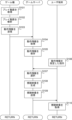
- a game machine control unit 61 of the game machine 60 provides a game according to the player's operation. For example, the game machine control unit 61 collects a fee from the player, and when the player selects a piece of music and a difficulty level to play, the game corresponding to the selected piece of music is started. Specifically, the game machine control unit 61 starts outputting the sound of the music, and displays the position object OB2 at the display timing of the guide object. The display timing of the position object OB2 precedes the guidance timing guided by the timing object OB1. After that, the game machine control section 61 changes the position of the timing object OB1 so that the timing object OB1 overlaps the position object OB2 at the guidance timing. As a result, the player is informed of the motion position and the motion timing.
- the game machine control unit 61 reads the guidance timing information included in the sequence data, and displays the guidance object while referring to the display timing set for each piece of music.
- the game machine control section 61 may determine the display timing of the guide object by calculating back from the read guide timing.
- the video acquisition unit 61A acquires a play video in which the action of the player is captured (S101).
- the action information acquisition unit 61B analyzes the play animation acquired by the animation acquisition unit 61A (S102). Then, the motion information acquiring unit 61B acquires the player's motion information from the analysis result and stores it in the game machine storage unit 62.
- the game moving image generating section 61C generates a game moving image to be displayed on the display device 64 using the motion information acquired by the motion information acquiring section 61B.
- the game machine control unit 61 causes the display device 64 to display the game animation generated by the game animation generation unit 61C. Then, the player moves the body of the main dancer MD so that a part of the body of the main dancer MD overlaps with the position object OB2 at the guidance timing guided by the timing object OB1. Thus, the player is guided to perform dance motions in time with the music. Also, the main dancer MD moves in synchronization with the actions of the player. Therefore, the player sees the movement of the main dancer MD displayed on the display device 64 and moves the body so that a part of the main dancer MD touches the position object OB2.
- the game machine control unit 61 compares the motion timing when the body of the main dancer MD reaches the position object OB2 and the guidance timing. Then, the game machine control section 61 evaluates the user's action based on the comparison result. Furthermore, the game machine control section 61 causes the display device 64 to display an image or characters indicating the evaluation result. After that, when the game ends, the game machine control section 61 causes the display device 64 to display, for example, the score as the result of the game. When the player chooses to continue the game, the player pays a further consideration as an operation for continuing the game. Further, when the player selects to continue and end the game, the player either does not perform an operation to continue or selects an operation to continue and terminate.
- the game machine 60 transmits play data related to the game played by the user to the game server 10 .
- the game machine 60 includes the action information stored in the game machine storage unit 62 as material information in the play data and transmits the play data to the game server 10 (S103).
- the play data may include game results, play history, game moving images generated by the game machine 60, and the like.
- the material information acquisition unit 14A of the game server 10 acquires the action information received from the game machine 60 (S104). Then, the material information acquisition unit 14A stores and saves the received motion information in the server storage unit 12 (S105).
- An editing user for example, a player who wishes to create a viewing video logs into the game server 10 from the user terminal 40 and performs an operation requesting creation of a viewing video.
- the editing user selects a viewing video generation icon from a web page provided by the generation control unit 14 .
- the selection unit 14C presents the editing user with a material group that can be used to generate a viewing moving image.
- the selection unit 14C may present a material group selected based on an instruction such as designation of a user name by the editing user.
- the editing user designates and instructs desired action information from the presented material group (S106).
- the selection unit 14C selects motion information based on an instruction from the editing user (S107).
- the viewing video generation unit 14B generates a viewing video based on the motion information selected by the selection unit 14C (S108). Then, the viewing video generation unit 14B causes the server storage unit 12 to store the generated viewing video.
- the editing user transmits a download instruction to the game server 10 .
- the providing unit 14D transmits and provides the viewing video to the user terminal 40 based on the download instruction (S109).
- the user terminal 40 acquires the received viewing video and stores it in the terminal storage unit 42 (S110).
- the editing user can view the saved viewing video on the user terminal 40 and upload it to the distribution server 30 .
- the player can easily create a viewing video regarding the game and acquire the created viewing video. Players can also obtain viewing videos generated to mask their appearance.
- the game server 10 and the game machine 60 may cooperate to generate viewing moving images.
- the generation program PG2 and the game machine program PG3 cooperate to function as a computer program of the moving image generation system 100.
- viewing videos are not limited to videos generated for distribution.
- a viewing video may be generated for viewing by a player on his or her terminal of use or for viewing by other users on their terminal of use.
- viewing videos may be generated for saving as data for recording.
- the viewing moving image does not have to include a guide object (for example, Notes) that guides the player to play actions. Even if notes or the like are not displayed in the viewed moving image, the viewer can enjoy watching the characters dancing.
- a part of the logical device of the game server 10 may be provided in the game machine 60. Also, part of the logical devices of the game machine 60 may be provided in the game server 10 .
- the video acquisition unit 61A and the motion information acquisition unit 61B may be provided in the game server 10 . In this case, the video acquisition unit 61A of the game server 10 acquires the play video from the game machine 60, and the motion information acquisition unit 61B analyzes the acquired play video. Also, in the game server 10, the motion information acquisition unit 61B acquires motion information from the analysis result.
- the viewing image generating unit 14B when the moving image generating system 100 is applied to a quiz game, the viewing image generating unit 14B generates a viewing moving image in which a character that moves behind the respondent or a respondent other than the player moves according to the acquired motion information. may be generated.
- the game animation generation section 61C may also generate a game animation in which the character or the respondent moves according to the acquired action information.
- a moving image generating system 100 for generating viewing moving images related to a game involving actions of a player includes material information acquisition means 14A for acquiring information indicating the actions of the player while playing the game as material information; and generating means 14B for generating, as the viewed moving image, a moving image in which the action of the player is expressed in a display mode different from the actual appearance of the player, based on the material information.
- the computer programs PG2 and PG3 of the moving image generation system 100 which includes the computers 11 and 61 and generates a viewing moving image related to the game involving the actions of the players, cause the computers to perform the actions of the players while playing the game.
- a material information acquiring means 14A for acquiring information indicating a movement as material information; and based on the acquired material information, a moving image in which the movement of the player is expressed in a display mode different from the actual appearance of the player. , to function as the generation means 14B for generating the viewing moving image.
- the moving image generation system 100 for generating a viewing moving image related to a game involving actions of a player information indicating the actions of the player while playing the game is acquired as material information, and the acquired Based on the material information, a moving image in which the action of the player is expressed in a display mode different from the actual appearance of the player is generated as the viewing moving image.
- the player can easily create viewing videos related to the game and acquire the created viewing videos.
- Players can also obtain viewing videos generated to mask their appearance.
- the motion picture generation system 100 includes motion picture acquisition means 61A for acquiring a play motion picture of the action of the player, and information describing the motion of the player by analyzing the acquired play motion picture.
- a motion information acquisition unit 61B for acquiring motion information included in the material information is further provided. As a result, the player can use the motion information describing his/her own motion obtained by playing the game to create a viewing moving image.
- the generation means 14B generates the viewing moving image so that the instruction of the editing user as an editor is reflected in the display mode of the player. This allows the editing user to change the content of the video after playing the game. Also, by using one type of motion information, it is possible to acquire different types of viewing moving images. Furthermore, the editing user can compare multiple types of viewing videos to obtain a more attractive video.
- the moving image generation system 100 includes a storage unit 12 that stores the material information as at least one material candidate in the material group that can be used for generating the viewed moving image, and based on the instruction of the editing user, the material information from the material group A selection unit 14C for selecting the material candidate is further provided, and the generation unit 14B generates the viewed moving image based on the material candidate selected by the selection unit. Further, the selection means 14C selects a plurality of material candidates from the material group. As a result, it is possible to increase the amount of action information that the editing user can use to create a viewing moving image. Therefore, even an editing user who does not play many times can easily create a viewing moving image.
- the selection means 14C selects other-user material candidates 16F that are not associated with the editing user from the material group as the material candidates.
- the editing user can use, as a model, the viewed moving image including the character that moves using the other user's motion information 16F.
- the generating means 14B generates the viewing moving image such that an object selected from among a plurality of objects moves based on the motion information.
- the player can easily create a viewing video relating to the game, and acquire the created viewing video.
- Players can also obtain viewing videos generated to mask their appearance.
- the game includes a plurality of play options that can be selected by the player as play targets, and the storage means 12 stores the material information in association with target identification information that identifies the play targets selected by the player.
- the selecting means 14C specifies the play object based on the instruction of the editing user, and selects the material candidate associated with the selected play object from the material group.
- the game is configured to request the player to perform a dance motion corresponding to music as the motion of the player, and the material information acquiring means 14A acquires information indicating the dance motion as the material information. do.
- the editing user can use, as a model, the viewing video containing the character that moves using the motion information associated with the selected play target. Furthermore, the editing user can increase the motion information for moving the backup dancers BD. Therefore, even an editing user who does not play many times can easily create a viewing moving image including a backup dancer BD.
- the moving image generation system 100 further includes providing means 14D for providing the viewing moving image to the distribution server 30 that distributes the viewing moving image to a plurality of users.
- the editing user can distribute the viewing moving image from the distribution server 30 without uploading the viewing moving image to the distribution server 30 . Therefore, it is possible to reduce the labor and time required for uploading the viewing video. Furthermore, the viewing user can distribute the viewing video from the distribution server 30 with a simpler operation.
- Server control unit (computer) 12: Server storage unit (storage means) 14A: Material information acquisition unit (material information acquisition means) 14B: Viewing moving image generating unit (generating means) 14C: Selection unit (selection means) 14D: Providing unit (providing means) 30: Distribution server 61: Game machine control unit (computer) 61A: Moving image acquisition unit (moving image acquisition means) 61B: Motion information acquisition unit (motion information acquisition means) 100: Movie generation system PG2: Generation program (computer program) PG3: game machine program (computer program)
Landscapes
- Engineering & Computer Science (AREA)
- Multimedia (AREA)
- Signal Processing (AREA)
- Human Computer Interaction (AREA)
- Business, Economics & Management (AREA)
- Computer Security & Cryptography (AREA)
- General Business, Economics & Management (AREA)
- Computer Networks & Wireless Communication (AREA)
- Two-Way Televisions, Distribution Of Moving Picture Or The Like (AREA)
- Processing Or Creating Images (AREA)
Applications Claiming Priority (2)
| Application Number | Priority Date | Filing Date | Title |
|---|---|---|---|
| JP2021167168A JP7084069B1 (ja) | 2021-10-12 | 2021-10-12 | 動画生成システム、コンピュータプログラム及び制御方法 |
| JP2021-167168 | 2021-10-12 |
Publications (1)
| Publication Number | Publication Date |
|---|---|
| WO2023063133A1 true WO2023063133A1 (ja) | 2023-04-20 |
Family
ID=82016053
Family Applications (1)
| Application Number | Title | Priority Date | Filing Date |
|---|---|---|---|
| PCT/JP2022/036905 Ceased WO2023063133A1 (ja) | 2021-10-12 | 2022-10-03 | 動画生成システム、コンピュータプログラム及び制御方法 |
Country Status (2)
| Country | Link |
|---|---|
| JP (2) | JP7084069B1 (enExample) |
| WO (1) | WO2023063133A1 (enExample) |
Families Citing this family (1)
| Publication number | Priority date | Publication date | Assignee | Title |
|---|---|---|---|---|
| JP7535151B1 (ja) | 2023-03-31 | 2024-08-15 | 株式会社Cygames | 情報処理プログラム、情報処理方法および情報処理システム |
Citations (5)
| Publication number | Priority date | Publication date | Assignee | Title |
|---|---|---|---|---|
| JP2014023745A (ja) * | 2012-07-27 | 2014-02-06 | Seek Japan Corp | ダンス教習装置 |
| JP2016052368A (ja) * | 2014-09-02 | 2016-04-14 | 株式会社インターネットレボリューション | サーバ装置、動画配信システム、それに用いられる制御方法及びコンピュータプログラム |
| JP2020116127A (ja) * | 2019-01-23 | 2020-08-06 | 株式会社コロプラ | ゲームプログラム、方法、および情報処理装置 |
| JP2020162882A (ja) * | 2019-03-29 | 2020-10-08 | 株式会社バンダイナムコエンターテインメント | サーバシステムおよびプレイデータコミュニティシステム |
| JP2020162880A (ja) * | 2019-03-29 | 2020-10-08 | 株式会社バンダイナムコエンターテインメント | プログラムおよびコンピュータシステム |
Family Cites Families (2)
| Publication number | Priority date | Publication date | Assignee | Title |
|---|---|---|---|---|
| JP2007316842A (ja) * | 2006-05-24 | 2007-12-06 | Daiwa Tsusho:Kk | モーション画像生成プログラム |
| JP6776425B1 (ja) * | 2019-09-30 | 2020-10-28 | 株式会社コロプラ | プログラム、方法、および配信端末 |
-
2021
- 2021-10-12 JP JP2021167168A patent/JP7084069B1/ja active Active
-
2022
- 2022-05-25 JP JP2022084971A patent/JP2023057994A/ja active Pending
- 2022-10-03 WO PCT/JP2022/036905 patent/WO2023063133A1/ja not_active Ceased
Patent Citations (5)
| Publication number | Priority date | Publication date | Assignee | Title |
|---|---|---|---|---|
| JP2014023745A (ja) * | 2012-07-27 | 2014-02-06 | Seek Japan Corp | ダンス教習装置 |
| JP2016052368A (ja) * | 2014-09-02 | 2016-04-14 | 株式会社インターネットレボリューション | サーバ装置、動画配信システム、それに用いられる制御方法及びコンピュータプログラム |
| JP2020116127A (ja) * | 2019-01-23 | 2020-08-06 | 株式会社コロプラ | ゲームプログラム、方法、および情報処理装置 |
| JP2020162882A (ja) * | 2019-03-29 | 2020-10-08 | 株式会社バンダイナムコエンターテインメント | サーバシステムおよびプレイデータコミュニティシステム |
| JP2020162880A (ja) * | 2019-03-29 | 2020-10-08 | 株式会社バンダイナムコエンターテインメント | プログラムおよびコンピュータシステム |
Also Published As
| Publication number | Publication date |
|---|---|
| JP2023057994A (ja) | 2023-04-24 |
| JP7084069B1 (ja) | 2022-06-14 |
| JP2023057608A (ja) | 2023-04-24 |
Similar Documents
| Publication | Publication Date | Title |
|---|---|---|
| US12064699B2 (en) | Method for sharing a portion of gameplay of a video game | |
| JP7461174B2 (ja) | 共有インターフェースを介してアクセスされるミニゲーム | |
| US11014012B2 (en) | Sharing gameplay in cloud gaming environments | |
| US11406906B2 (en) | Network connected controller for direct to cloud gaming | |
| US10016677B2 (en) | Remote control of a first user's session by a second user | |
| CN110523079B (zh) | 基于所记录的游戏玩法自动产生为云游戏建议的小游戏 | |
| WO2023063133A1 (ja) | 動画生成システム、コンピュータプログラム及び制御方法 | |
| JP7093590B1 (ja) | ゲームシステム、コンピュータプログラム及び制御方法 |
Legal Events
| Date | Code | Title | Description |
|---|---|---|---|
| 121 | Ep: the epo has been informed by wipo that ep was designated in this application |
Ref document number: 22880829 Country of ref document: EP Kind code of ref document: A1 |
|
| NENP | Non-entry into the national phase |
Ref country code: DE |
|
| 122 | Ep: pct application non-entry in european phase |
Ref document number: 22880829 Country of ref document: EP Kind code of ref document: A1 |