WO2023053184A1 - 光ファイバセンシングシステム、光ファイバセンシング機器、及び道路監視方法 - Google Patents
光ファイバセンシングシステム、光ファイバセンシング機器、及び道路監視方法 Download PDFInfo
- Publication number
- WO2023053184A1 WO2023053184A1 PCT/JP2021/035596 JP2021035596W WO2023053184A1 WO 2023053184 A1 WO2023053184 A1 WO 2023053184A1 JP 2021035596 W JP2021035596 W JP 2021035596W WO 2023053184 A1 WO2023053184 A1 WO 2023053184A1
- Authority
- WO
- WIPO (PCT)
- Prior art keywords
- lane
- lanes
- optical fiber
- vibration data
- vehicle
- Prior art date
- Legal status (The legal status is an assumption and is not a legal conclusion. Google has not performed a legal analysis and makes no representation as to the accuracy of the status listed.)
- Ceased
Links
Images




Classifications
-
- G—PHYSICS
- G01—MEASURING; TESTING
- G01H—MEASUREMENT OF MECHANICAL VIBRATIONS OR ULTRASONIC, SONIC OR INFRASONIC WAVES
- G01H9/00—Measuring mechanical vibrations or ultrasonic, sonic or infrasonic waves by using radiation-sensitive means, e.g. optical means
- G01H9/004—Measuring mechanical vibrations or ultrasonic, sonic or infrasonic waves by using radiation-sensitive means, e.g. optical means using fibre optic sensors
-
- G—PHYSICS
- G08—SIGNALLING
- G08G—TRAFFIC CONTROL SYSTEMS
- G08G1/00—Traffic control systems for road vehicles
-
- G—PHYSICS
- G08—SIGNALLING
- G08G—TRAFFIC CONTROL SYSTEMS
- G08G1/00—Traffic control systems for road vehicles
- G08G1/01—Detecting movement of traffic to be counted or controlled
- G08G1/0104—Measuring and analyzing of parameters relative to traffic conditions
- G08G1/0108—Measuring and analyzing of parameters relative to traffic conditions based on the source of data
- G08G1/0116—Measuring and analyzing of parameters relative to traffic conditions based on the source of data from roadside infrastructure, e.g. beacons
-
- G—PHYSICS
- G08—SIGNALLING
- G08G—TRAFFIC CONTROL SYSTEMS
- G08G1/00—Traffic control systems for road vehicles
- G08G1/01—Detecting movement of traffic to be counted or controlled
- G08G1/04—Detecting movement of traffic to be counted or controlled using optical or ultrasonic detectors
Definitions
- the present disclosure relates to an optical fiber sensing system, an optical fiber sensing device, and a road monitoring method.
- Patent Document 1 an impact sensor is fixed to a road guardrail or the like, and an accident detection signal indicating that a traffic accident has occurred is generated when the level of an electric signal output from the impact sensor is equal to or higher than a threshold. is disclosed.
- Patent Literature 1 can only detect whether or not a traffic accident has occurred on a road.
- an object of the present disclosure is to provide an optical fiber sensing system, an optical fiber sensing device, and a road monitoring method capable of solving the above-described problems and detecting the running state of a vehicle for each lane on a road with multiple lanes. to provide.
- a fiber optic sensing system comprises: a plurality of optical fibers provided corresponding to each of the plurality of lanes along a road having a plurality of lanes; a sensing unit that receives an optical signal from an optical fiber provided for each of the plurality of lanes, and detects vibrations generated by the vehicle running in the lane based on the optical signal; , a vibration data calculation unit that calculates, for each of the plurality of lanes, vibration data indicating the vibration detected in the lane based on the optical signal received from the optical fiber provided corresponding to the lane; and a driving state detection unit that detects, for each of the plurality of lanes, the driving state of a vehicle traveling in the lane based on the vibration data calculated for the lane.
- a fiber optic sensing device comprises: By receiving an optical signal from an optical fiber provided corresponding to each lane along the road for each of a plurality of lanes of the road, and driving the vehicle in the lane based on the optical signal a sensing unit that detects the generated vibration; a vibration data calculation unit that calculates, for each of the plurality of lanes, vibration data indicating the vibration detected in the lane based on the optical signal received from the optical fiber provided corresponding to the lane; and a driving state detection unit that detects, for each of the plurality of lanes, the driving state of a vehicle traveling in the lane based on the vibration data calculated for the lane.
- a road monitoring method comprises: A road monitoring method using an optical fiber sensing device, By receiving an optical signal from an optical fiber provided corresponding to each lane along the road for each of a plurality of lanes of the road, and driving the vehicle in the lane based on the optical signal a sensing step for detecting the generated vibration; a vibration data calculation step of calculating, for each of the plurality of lanes, vibration data indicating the vibration detected in the lane based on the optical signal received from the optical fiber provided corresponding to the lane; and a driving state detection step of detecting, for each of the plurality of lanes, the driving state of the vehicle traveling in the lane based on the vibration data calculated for the lane.
- an optical fiber sensing system capable of detecting the running state of a vehicle for each lane on a road having a plurality of lanes. be done.
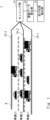
- FIG. 1 is a diagram showing a configuration example of an optical fiber sensing system according to Embodiment 1;
- FIG. 4A and 4B are diagrams for explaining an example of vibration data calculated by a vibration data calculation unit according to Embodiment 1;
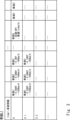
- FIG. 4 is a diagram illustrating an example of a running state of a vehicle detected by a running state detection unit according to Embodiment 1;
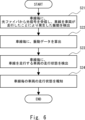
- FIG. 4 is a flow diagram illustrating a schematic operation example of the optical fiber sensing system according to Embodiment 1;
- FIG. FIG. 10 is a diagram showing a configuration example of an optical fiber sensing system according to Embodiment 2;
- FIG. 10 is a flow diagram illustrating a schematic operation example of the optical fiber sensing system according to Embodiment 2;
- FIG. 10 is a diagram showing a configuration example of an optical fiber sensing device according to another embodiment;
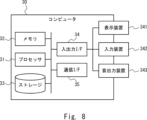
- FIG. 11 is a block diagram showing a hardware configuration example of a computer that implements an optical fiber sensing device according to another embodiment
- the optical fiber sensing system 1 includes three optical fibers 10-1 to 10-3, a sensing unit 21, a vibration data calculation unit 22, and a running state detection unit 23. It has Hereinafter, when the optical fibers 10-1 to 10-3 are not specified, they are appropriately referred to as "optical fibers 10".
- the optical fibers 10-1 to 10-3 are provided along the road R corresponding to the lanes L1 to L3, respectively.
- one optical fiber 10 is provided in one lane L in FIG. 1
- a plurality of optical fibers 10 may be provided in one lane L.
- the optical fibers 10-1 to 10-3 are buried in the road R, but the laying method of the optical fibers 10-1 to 10-3 Not limited.
- the optical fibers 10-1 to 10-3 may be wired overhead along the road R to structures such as utility poles.
- the sensing unit 21 is connected to optical fibers 10-1 to 10-3 laid along the road R. As shown in FIG. Therefore, the sensing unit 21 is installed near the road R.
- the vibration data calculation unit 22 and the running state detection unit 23, which will be described later, can be installed at any location, and may be arranged on the cloud, for example.
- the sensing unit 21 causes pulsed light to enter the optical fiber 10-1 provided corresponding to the lane L1.
- the sensing unit 21 also receives backscattered light generated as the pulsed light is transmitted through the optical fiber 10-1 as an optical signal via the optical fiber 10-1.
- the sensing unit 21 can detect the vibration caused by the vehicle running on the lane L1 based on the optical signal received from the optical fiber 10-1.
- Sensing unit 21 performs the same operation as above for lanes L2 and L3. That is, the sensing unit 21 receives an optical signal from the optical fiber 10 provided corresponding to each lane L for each of the lanes L1 to L3, and the vehicle travels in the lane L based on the optical signal. Detects vibrations caused by
- the vibration data calculation unit 22 calculates vibration data indicating the vibration detected in the lane L1 by the sensing unit 21 based on the optical signal received from the optical fiber 10-1 provided corresponding to the lane L1. For example, the vibration data calculator 22 calculates vibration data indicating the vibration detected in the lane L1 as follows.
- the vibration data calculation unit 22 calculates the position and time at which the vibration detected by the sensing unit 21 occurred in the lane L1.
- the calculation of the position where the vibration occurs is performed, for example, as follows.
- the optical signal is generated based on the time difference between the time when the pulsed light is incident on the optical fiber 10-1 by the sensing unit 21 and the time when the optical signal is received from the optical fiber 10-1 by the sensing unit 21. It is possible to calculate the position (the distance of the optical fiber 10-1 from the sensing unit 21).
- the vibration data calculation unit 22 calculates the position where the optical signal is generated by the method described above. , and the calculated position may be set as the position where the vibration detected in the lane L1 occurs.
- the vibration data calculation unit 22 sets the horizontal axis to the position at which the vibration detected in the lane L1 occurred, and the vertical axis.
- a graph whose axis is the time when the vibration detected in the lane L1 occurred is calculated as the vibration data of the vibration detected in the lane L1.
- the vibration data calculator 22 also performs the same operation as above for the lanes L2 and L3. That is, the vibration data calculation unit 22, for each of the lanes L1 to L3, based on the optical signal received from the optical fiber 10 provided corresponding to the lane L, the vibration detected by the sensing unit 21 in the lane L Vibration data indicative of vibration is calculated.
- FIG. 2 is an example of vibration data indicating vibration detected in a certain lane L (vibration detected when the vehicle is in a different running state than in FIG. 1).
- the horizontal axis indicates the position at which the vibration occurred (the distance of the optical fiber 10 from the sensing section 21), and the vertical axis indicates the passage of time at which the vibration occurred.
- the vertical axis goes in the positive direction, the data becomes older.
- one diagonal line indicates that one vehicle is traveling in lane L over time.
- the absolute value of the slope of the line represents the speed of the vehicle, and the smaller the absolute value of the slope of the line, the faster the vehicle speed.
- the positive or negative of the slope of the line indicates the running direction of the vehicle. For example, if there is a vehicle corresponding to a positive slope line and a vehicle corresponding to a negative slope line, these vehicles are traveling in opposite directions (e.g., opposite directions). driving in the lane).
- a change in the slope of the line indicates that the vehicle is accelerating or decelerating.
- the interval G in the horizontal axis direction of the line represents the inter-vehicle distance, and the shorter the interval G, the shorter the inter-vehicle distance.
- the driving state detection unit 23 detects the lane L for each of the lanes L1 to L3 based on the vibration data (for example, the vibration data shown in FIG. 2) calculated by the vibration data calculation unit 22. Detects the running state of the vehicle running.
- the traveling state detection unit 23 detects the vehicle speed and position of each vehicle traveling in each of the lanes L1 to L3. Since six lines are represented in lane L in the example of FIG. 2, six vehicles corresponding to the six lines are traveling. Therefore, the running state detector 23 detects the vehicle speed and position for each of the six vehicles.
- FIG. 3 an example of vehicle speed and position data of each vehicle traveling in lane L1 detected by the traveling state detection unit 23 is shown.
- the vehicle speed and position data of each vehicle traveling on the lane L1 are shown for each hour.
- the running state at any time in FIG. 3 corresponds to the running state in FIG.
- the vehicle speed is added with positive and negative signs indicating the traveling direction.
- vehicle 1 is a vehicle ID (Identifier) valid only in this time zone, and vehicle 1 at time 0 and time 0.1 represents the same vehicle.
- the running state detection unit 23 also detects the running state of the lanes L2 and L3 so that the data shown in FIG. 3 can be obtained.
- the traveling state detection unit 23 not only detects the vehicle speed and position of each vehicle traveling in the lane L for each of the lanes L1 to L3, but also detects the inter-vehicle distance between the vehicle and the preceding vehicle or the following vehicle. may be detected. Moreover, when detecting the inter-vehicle distance, it is possible to arbitrarily decide whether to detect the inter-vehicle distance to the preceding vehicle or the following vehicle.
- the sensing unit 21 receives an optical signal from the optical fiber 10 provided corresponding to each of the lanes L1 to L3, and based on the optical signal, detects the corresponding lane L. Vibration generated by the vehicle running is detected (step S11).
- the vibration data calculation unit 22 detects, for each of the lanes L1 to L3, the sensing unit 21 in the lane L based on the optical signal received from the optical fiber 10 provided corresponding to the lane L. Vibration data indicating the vibration is calculated (step S12). For example, the vibration data calculator 22 calculates vibration data as shown in FIG. 2 for each of the lanes L1 to L3.
- the running state detection unit 23 detects the running state of the vehicle traveling in each of the lanes L1 to L3 based on the vibration data calculated by the vibration data calculation unit 22 for the lane L (step S13). For example, the running state detection unit 23 detects the running state as shown in FIG. 3 for each of the lanes L1 to L3.
- the sensing unit 21 receives an optical signal from the optical fiber 10 provided corresponding to each of the lanes L1 to L3, and based on the optical signal. Vibration generated by the vehicle running on the lane L is detected.
- the vibration data calculation unit 22 calculates the vibration detected by the sensing unit 21 in each lane L based on the optical signal received from the optical fiber 10 provided corresponding to the lane L for each of the lanes L1 to L3. Calculate the vibration data shown.
- the running state detection unit 23 detects the running state of the vehicle traveling in each of the lanes L1 to L3 based on the vibration data calculated by the vibration data calculation unit 22 for the lane L.
- the optical fiber sensing system 2 according to Embodiment 2 differs from Embodiment 1 described above in that a notification unit 24 is added.
- the notification unit 24 notifies a predetermined notification destination of the running state of the vehicle in the lanes L1 to L3 detected by the running state detection unit 23 .
- the predetermined notification destination may be set arbitrarily. For example, if the road R is an expressway, it is conceivable to set the road control center as the predetermined notification destination.
- any notification method may be used.
- the notification method may be a method of displaying a GUI (Graphical User Interface) screen on the display, monitor, or the like of the terminal of the notification destination.
- GUI screen it is conceivable to use a GUI screen that displays data as shown in FIG. 3 for each of the lanes L1 to L3.
- the notification method may be a method of outputting the message by voice from the speaker of the terminal of the notification destination.
- steps S21 to S23 similar to steps S11 to S13 in FIG. 4 are performed.
- the notification unit 24 notifies a predetermined notification destination of the running state of the vehicle in the lanes L1 to L3 detected by the running state detection unit 23 (step S24).
- the notification unit 24 notifies a predetermined notification destination of the running state of the vehicle in the lanes L1 to L3 detected by the running state detection unit 23 .
- the notification destination can know the running state of the vehicle for each lane L on the road R having a plurality of lanes L.
- Embodiment 1 the sensing unit 21, the vibration data calculation unit 22, and the running state detection unit 23 are provided separately, but these components are integrated into one device (optical fiber sensing device ) may be collectively provided inside.
- an optical fiber sensing device 20 includes a sensing section 21, a vibration data calculation section 22, and a running state detection section 23. As shown in FIG. Note that the optical fiber sensing device 20 may further include the notification unit 24 according to the second embodiment described above.
- FIG. 8 shows an example hardware configuration of a computer 30 that implements the optical fiber sensing device 20 according to another embodiment described above.
- the computer 30 includes a processor 31, a memory 32, a storage 33, an input/output interface (input/output I/F) 34, a communication interface (communication I/F) 35, and the like.
- the processor 31, the memory 32, the storage 33, the input/output interface 34, and the communication interface 35 are connected by a data transmission path for mutually transmitting and receiving data.
- the processor 31 is an arithmetic processing device such as a CPU (Central Processing Unit) or a GPU (Graphics Processing Unit).
- the memory 32 is, for example, RAM (Random Access Memory) or ROM (Read Only Memory).
- the storage 33 is a storage device such as a HDD (Hard Disk Drive), an SSD (Solid State Drive), or a memory card. Also, the storage 33 may be a memory such as a RAM or a ROM.
- a program is stored in the storage 33.
- the program includes instructions (or software code) that, when read into a computer, cause the computer 30 to perform one or more of the functions in the fiber optic sensing device 20 described above.
- the sensing unit 21, the vibration data calculation unit 22, the running state detection unit 23, and the notification unit 24 in the optical fiber sensing device 20 described above are realized by the processor 31 reading and executing a program stored in the storage 33.
- the memory function in the optical fiber sensing device 20 described above may be realized by the memory 32 or the storage 33 .
- the above program may be stored in a non-transitory computer-readable medium or a tangible storage medium.
- computer readable media or tangible storage media may include RAM, ROM, flash memory, SSD or other memory technology, CD (Compact Disc)-ROM, DVD (Digital Versatile Disc), Blu-ray ( (registered trademark) discs or other optical disc storage, magnetic cassettes, magnetic tapes, magnetic disk storage or other magnetic storage devices.
- the program may also be transmitted on a transitory computer-readable medium or communication medium.
- transitory computer readable media or communication media include electrical, optical, acoustic, or other forms of propagated signals.
- the input/output interface 34 is connected to a display device 341, an input device 342, a sound output device 343, and the like.
- the display device 341 is a device that displays a screen corresponding to drawing data processed by the processor 31, such as an LCD (Liquid Crystal Display), a CRT (Cathode Ray Tube) display, or a monitor.
- the input device 342 is a device that receives an operator's operation input, such as a keyboard, a mouse, and a touch sensor.
- the display device 341 and the input device 342 may be integrated and implemented as a touch panel.
- the sound output device 343 is a device, such as a speaker, that outputs sound corresponding to the sound data processed by the processor 31 .
- the communication interface 35 transmits and receives data to and from an external device.
- the communication interface 35 communicates with external devices via wired or wireless communication paths.
- (Appendix 1) a plurality of optical fibers provided corresponding to each of the plurality of lanes along a road having a plurality of lanes; a sensing unit that receives an optical signal from an optical fiber provided for each of the plurality of lanes, and detects vibrations generated by the vehicle running in the lane based on the optical signal; , a vibration data calculation unit that calculates, for each of the plurality of lanes, vibration data indicating the vibration detected in the lane based on the optical signal received from the optical fiber provided corresponding to the lane; a driving state detection unit that detects the driving state of a vehicle traveling in each of the plurality of lanes based on the vibration data calculated for the lane, Fiber optic sensing system.
- the vibration data calculation unit For each of the plurality of lanes, based on the optical signal received from the optical fiber provided corresponding to the lane, calculate the position and time when the vibration detected in the lane occurs, For each of the plurality of lanes, a graph in which the horizontal axis is the position where the vibration detected in the lane occurred and the vertical axis is the time when the vibration detected in the lane is generated is calculated as the vibration data.
- the running state detection unit is For each of the plurality of lanes, detecting the vehicle speed and position of each vehicle traveling in the lane based on the vibration data calculated for the lane; 3.
- the running state detection unit is For each of the plurality of lanes, based on the vibration data calculated for the lane, the inter-vehicle distance between each vehicle traveling in the lane and the preceding vehicle or the following vehicle is further detected.
- the optical fiber sensing system according to any one of Appendices 1 to 4.
- the vibration data calculation unit For each of the plurality of lanes, based on the optical signal received from the optical fiber provided corresponding to the lane, calculate the position and time when the vibration detected in the lane occurs, For each of the plurality of lanes, a graph in which the horizontal axis is the position where the vibration detected in the lane occurred and the vertical axis is the time when the vibration detected in the lane is generated is calculated as the vibration data.
- the running state detection unit is For each of the plurality of lanes, detecting the vehicle speed and position of each vehicle traveling in the lane based on the vibration data calculated for the lane; The optical fiber sensing device according to appendix 6 or 7.
- the running state detection unit is For each of the plurality of lanes, based on the vibration data calculated for the lane, the inter-vehicle distance between each vehicle traveling in the lane and the preceding vehicle or the following vehicle is further detected.
- the optical fiber sensing device according to any one of appendices 6 to 9.
- a road monitoring method using an optical fiber sensing device By receiving an optical signal from an optical fiber provided corresponding to each lane along the road for each of a plurality of lanes of the road, and driving the vehicle in the lane based on the optical signal a sensing step for detecting the generated vibration; a vibration data calculation step of calculating, for each of the plurality of lanes, vibration data indicating the vibration detected in the lane based on the optical signal received from the optical fiber provided corresponding to the lane; a driving state detection step of detecting the driving state of a vehicle traveling in each of the plurality of lanes based on the vibration data calculated for the lane, Road monitoring method.
Landscapes
- Physics & Mathematics (AREA)
- General Physics & Mathematics (AREA)
- Chemical & Material Sciences (AREA)
- Analytical Chemistry (AREA)
- Traffic Control Systems (AREA)
Priority Applications (3)
| Application Number | Priority Date | Filing Date | Title |
|---|---|---|---|
| JP2023550772A JPWO2023053184A1 (https=) | 2021-09-28 | 2021-09-28 | |
| US18/690,792 US20240385032A1 (en) | 2021-09-28 | 2021-09-28 | Optical fiber sensing system, optical fiber sensing device, and road monitoring method |
| PCT/JP2021/035596 WO2023053184A1 (ja) | 2021-09-28 | 2021-09-28 | 光ファイバセンシングシステム、光ファイバセンシング機器、及び道路監視方法 |
Applications Claiming Priority (1)
| Application Number | Priority Date | Filing Date | Title |
|---|---|---|---|
| PCT/JP2021/035596 WO2023053184A1 (ja) | 2021-09-28 | 2021-09-28 | 光ファイバセンシングシステム、光ファイバセンシング機器、及び道路監視方法 |
Publications (1)
| Publication Number | Publication Date |
|---|---|
| WO2023053184A1 true WO2023053184A1 (ja) | 2023-04-06 |
Family
ID=85781483
Family Applications (1)
| Application Number | Title | Priority Date | Filing Date |
|---|---|---|---|
| PCT/JP2021/035596 Ceased WO2023053184A1 (ja) | 2021-09-28 | 2021-09-28 | 光ファイバセンシングシステム、光ファイバセンシング機器、及び道路監視方法 |
Country Status (3)
| Country | Link |
|---|---|
| US (1) | US20240385032A1 (https=) |
| JP (1) | JPWO2023053184A1 (https=) |
| WO (1) | WO2023053184A1 (https=) |
Cited By (1)
| Publication number | Priority date | Publication date | Assignee | Title |
|---|---|---|---|---|
| WO2024224569A1 (ja) * | 2023-04-27 | 2024-10-31 | 日本電気株式会社 | 車線識別システム、車線識別装置、及び車線識別方法 |
Citations (2)
| Publication number | Priority date | Publication date | Assignee | Title |
|---|---|---|---|---|
| JP2004152134A (ja) * | 2002-10-31 | 2004-05-27 | Sumitomo Electric Ind Ltd | 火災検知装置 |
| WO2020116030A1 (ja) * | 2018-12-03 | 2020-06-11 | 日本電気株式会社 | 道路監視システム、道路監視装置、道路監視方法、及び非一時的なコンピュータ可読媒体 |
Family Cites Families (3)
| Publication number | Priority date | Publication date | Assignee | Title |
|---|---|---|---|---|
| JP3375968B2 (ja) * | 1994-04-19 | 2003-02-10 | ハネウエル・インコーポレーテッド | 磁力計車両検出器 |
| JP3528435B2 (ja) * | 1996-06-27 | 2004-05-17 | トヨタ自動車株式会社 | 路上物体検出装置 |
| GB0103665D0 (en) * | 2001-02-15 | 2001-03-28 | Secr Defence | Road traffic monitoring system |
-
2021
- 2021-09-28 WO PCT/JP2021/035596 patent/WO2023053184A1/ja not_active Ceased
- 2021-09-28 US US18/690,792 patent/US20240385032A1/en active Pending
- 2021-09-28 JP JP2023550772A patent/JPWO2023053184A1/ja active Pending
Patent Citations (2)
| Publication number | Priority date | Publication date | Assignee | Title |
|---|---|---|---|---|
| JP2004152134A (ja) * | 2002-10-31 | 2004-05-27 | Sumitomo Electric Ind Ltd | 火災検知装置 |
| WO2020116030A1 (ja) * | 2018-12-03 | 2020-06-11 | 日本電気株式会社 | 道路監視システム、道路監視装置、道路監視方法、及び非一時的なコンピュータ可読媒体 |
Cited By (1)
| Publication number | Priority date | Publication date | Assignee | Title |
|---|---|---|---|---|
| WO2024224569A1 (ja) * | 2023-04-27 | 2024-10-31 | 日本電気株式会社 | 車線識別システム、車線識別装置、及び車線識別方法 |
Also Published As
| Publication number | Publication date |
|---|---|
| JPWO2023053184A1 (https=) | 2023-04-06 |
| US20240385032A1 (en) | 2024-11-21 |
Similar Documents
| Publication | Publication Date | Title |
|---|---|---|
| JP2023184539A (ja) | 道路監視システム、道路監視装置、道路監視方法、及びプログラム | |
| JP7332020B2 (ja) | 光ファイバセンシングシステム、道路監視方法、及び光ファイバセンシング機器 | |
| JP2024014948A (ja) | 道路監視システム、道路監視装置、道路監視方法、及びプログラム | |
| JPWO2015145637A1 (ja) | 渋滞判定装置、渋滞判定方法、渋滞判定プログラム、端末装置、渋滞情報表示方法、及び、渋滞情報表示プログラム | |
| JP7424394B2 (ja) | 車両監視システム、車両監視方法、及び車両監視装置 | |
| US20240377242A1 (en) | Optical fiber sensing system, optical fiber sensing apparatus, and breakage detection method | |
| WO2023053184A1 (ja) | 光ファイバセンシングシステム、光ファイバセンシング機器、及び道路監視方法 | |
| KR101631748B1 (ko) | 돌발 상황 정보 제공 시스템 | |
| WO2023053179A1 (ja) | 光ファイバセンシングシステム、光ファイバセンシング機器、及び道路監視方法 | |
| US20230112149A1 (en) | Optical fiber sensing system, optical fiber sensing method, and optical fiber sensing apparatus | |
| WO2021152787A1 (ja) | 構造物劣化検出システム、構造物劣化検出方法、及び構造物劣化検出装置 | |
| WO2018168083A1 (ja) | 事故抑制装置、事故抑制方法、および事故抑制プログラム | |
| JP7718501B2 (ja) | 光ファイバセンシングシステム、光ファイバセンシング機器、及び光ファイバセンシング方法 | |
| JP2026011264A (ja) | 交通監視装置、交通監視システム、交通監視方法、及びプログラム | |
| JP7505645B2 (ja) | 敷設状態特定システム、敷設状態特定装置、及び敷設状態特定方法 | |
| JP2017117148A (ja) | 他車両接近警告システム、方法およびプログラム | |
| JPWO2023053184A5 (https=) | ||
| JP2025093826A (ja) | 車線変更検出システム、車線変更検出装置、車線変更検出方法、及びプログラム | |
| JP7616402B2 (ja) | 検出システム、検出装置、及び検出方法 | |
| US20240361178A1 (en) | Monitoring system, monitoring apparatus, and monitoring method | |
| WO2021117749A1 (ja) | 検出システム、検出装置及び検出方法 | |
| JP7708215B2 (ja) | 信号解析装置、信号解析方法及びプログラム | |
| WO2024057379A1 (ja) | 光ファイバセンシングシステム、光ファイバセンシング機器、及び破断検知方法 | |
| WO2024201773A1 (ja) | 通信制御システム、通信制御装置、及び通信制御方法 | |
| JP7371693B2 (ja) | 検出システム、検出方法、及び検出装置 |
Legal Events
| Date | Code | Title | Description |
|---|---|---|---|
| 121 | Ep: the epo has been informed by wipo that ep was designated in this application |
Ref document number: 21959235 Country of ref document: EP Kind code of ref document: A1 |
|
| WWE | Wipo information: entry into national phase |
Ref document number: 18690792 Country of ref document: US Ref document number: 2023550772 Country of ref document: JP |
|
| NENP | Non-entry into the national phase |
Ref country code: DE |
|
| 122 | Ep: pct application non-entry in european phase |
Ref document number: 21959235 Country of ref document: EP Kind code of ref document: A1 |