WO2023042758A1 - 複合繊維を含有する組成物およびその製造方法 - Google Patents
複合繊維を含有する組成物およびその製造方法 Download PDFInfo
- Publication number
- WO2023042758A1 WO2023042758A1 PCT/JP2022/033821 JP2022033821W WO2023042758A1 WO 2023042758 A1 WO2023042758 A1 WO 2023042758A1 JP 2022033821 W JP2022033821 W JP 2022033821W WO 2023042758 A1 WO2023042758 A1 WO 2023042758A1
- Authority
- WO
- WIPO (PCT)
- Prior art keywords
- fibers
- composite
- fiber
- group
- acid
- Prior art date
- Legal status (The legal status is an assumption and is not a legal conclusion. Google has not performed a legal analysis and makes no representation as to the accuracy of the status listed.)
- Ceased
Links
Images
Classifications
-
- C—CHEMISTRY; METALLURGY
- C08—ORGANIC MACROMOLECULAR COMPOUNDS; THEIR PREPARATION OR CHEMICAL WORKING-UP; COMPOSITIONS BASED THEREON
- C08L—COMPOSITIONS OF MACROMOLECULAR COMPOUNDS
- C08L1/00—Compositions of cellulose, modified cellulose or cellulose derivatives
-
- C—CHEMISTRY; METALLURGY
- C08—ORGANIC MACROMOLECULAR COMPOUNDS; THEIR PREPARATION OR CHEMICAL WORKING-UP; COMPOSITIONS BASED THEREON
- C08L—COMPOSITIONS OF MACROMOLECULAR COMPOUNDS
- C08L101/00—Compositions of unspecified macromolecular compounds
-
- C—CHEMISTRY; METALLURGY
- C08—ORGANIC MACROMOLECULAR COMPOUNDS; THEIR PREPARATION OR CHEMICAL WORKING-UP; COMPOSITIONS BASED THEREON
- C08L—COMPOSITIONS OF MACROMOLECULAR COMPOUNDS
- C08L101/00—Compositions of unspecified macromolecular compounds
- C08L101/16—Compositions of unspecified macromolecular compounds the macromolecular compounds being biodegradable
-
- D—TEXTILES; PAPER
- D04—BRAIDING; LACE-MAKING; KNITTING; TRIMMINGS; NON-WOVEN FABRICS
- D04H—MAKING TEXTILE FABRICS, e.g. FROM FIBRES OR FILAMENTARY MATERIAL; FABRICS MADE BY SUCH PROCESSES OR APPARATUS, e.g. FELTS, NON-WOVEN FABRICS; COTTON-WOOL; WADDING ; NON-WOVEN FABRICS FROM STAPLE FIBRES, FILAMENTS OR YARNS, BONDED WITH AT LEAST ONE WEB-LIKE MATERIAL DURING THEIR CONSOLIDATION
- D04H1/00—Non-woven fabrics formed wholly or mainly of staple fibres or like relatively short fibres
- D04H1/40—Non-woven fabrics formed wholly or mainly of staple fibres or like relatively short fibres from fleeces or layers composed of fibres without existing or potential cohesive properties
- D04H1/413—Non-woven fabrics formed wholly or mainly of staple fibres or like relatively short fibres from fleeces or layers composed of fibres without existing or potential cohesive properties containing granules other than absorbent substances
-
- D—TEXTILES; PAPER
- D04—BRAIDING; LACE-MAKING; KNITTING; TRIMMINGS; NON-WOVEN FABRICS
- D04H—MAKING TEXTILE FABRICS, e.g. FROM FIBRES OR FILAMENTARY MATERIAL; FABRICS MADE BY SUCH PROCESSES OR APPARATUS, e.g. FELTS, NON-WOVEN FABRICS; COTTON-WOOL; WADDING ; NON-WOVEN FABRICS FROM STAPLE FIBRES, FILAMENTS OR YARNS, BONDED WITH AT LEAST ONE WEB-LIKE MATERIAL DURING THEIR CONSOLIDATION
- D04H1/00—Non-woven fabrics formed wholly or mainly of staple fibres or like relatively short fibres
- D04H1/40—Non-woven fabrics formed wholly or mainly of staple fibres or like relatively short fibres from fleeces or layers composed of fibres without existing or potential cohesive properties
- D04H1/42—Non-woven fabrics formed wholly or mainly of staple fibres or like relatively short fibres from fleeces or layers composed of fibres without existing or potential cohesive properties characterised by the use of certain kinds of fibres insofar as this use has no preponderant influence on the consolidation of the fleece
- D04H1/425—Cellulose series
-
- D—TEXTILES; PAPER
- D21—PAPER-MAKING; PRODUCTION OF CELLULOSE
- D21H—PULP COMPOSITIONS; PREPARATION THEREOF NOT COVERED BY SUBCLASSES D21C OR D21D; IMPREGNATING OR COATING OF PAPER; TREATMENT OF FINISHED PAPER NOT COVERED BY CLASS B31 OR SUBCLASS D21G; PAPER NOT OTHERWISE PROVIDED FOR
- D21H13/00—Pulp or paper, comprising synthetic cellulose or non-cellulose fibres or web-forming material
- D21H13/10—Organic non-cellulose fibres
- D21H13/20—Organic non-cellulose fibres from macromolecular compounds obtained otherwise than by reactions only involving carbon-to-carbon unsaturated bonds
- D21H13/24—Polyesters
-
- D—TEXTILES; PAPER
- D21—PAPER-MAKING; PRODUCTION OF CELLULOSE
- D21H—PULP COMPOSITIONS; PREPARATION THEREOF NOT COVERED BY SUBCLASSES D21C OR D21D; IMPREGNATING OR COATING OF PAPER; TREATMENT OF FINISHED PAPER NOT COVERED BY CLASS B31 OR SUBCLASS D21G; PAPER NOT OTHERWISE PROVIDED FOR
- D21H15/00—Pulp or paper, comprising fibres or web-forming material characterised by features other than their chemical constitution
- D21H15/02—Pulp or paper, comprising fibres or web-forming material characterised by features other than their chemical constitution characterised by configuration
- D21H15/10—Composite fibres
- D21H15/12—Composite fibres partly organic, partly inorganic
-
- D—TEXTILES; PAPER
- D21—PAPER-MAKING; PRODUCTION OF CELLULOSE
- D21H—PULP COMPOSITIONS; PREPARATION THEREOF NOT COVERED BY SUBCLASSES D21C OR D21D; IMPREGNATING OR COATING OF PAPER; TREATMENT OF FINISHED PAPER NOT COVERED BY CLASS B31 OR SUBCLASS D21G; PAPER NOT OTHERWISE PROVIDED FOR
- D21H17/00—Non-fibrous material added to the pulp, characterised by its constitution; Paper-impregnating material characterised by its constitution
- D21H17/63—Inorganic compounds
- D21H17/67—Water-insoluble compounds, e.g. fillers, pigments
Definitions
- Patent Document 1 describes composite fibers of cellulose fibers and inorganic particles as a technique for surface modification of fibers. Further, Patent Document 2 proposes to improve the dimensional stability by using composite fibers in processed paper. Furthermore, Patent Literature 3 describes the production of a wet-laid nonwoven fabric from a composite fiber and a thermoplastic resin.
- the present invention includes, but is not limited to, the following aspects.
- [1] A composition containing composite fibers in which inorganic particles are fixed to cellulose fibers, and a thermoplastic resin, wherein 15% or more of the cellulose fiber surface of the composite fibers is coated with inorganic particles, The above composition containing the bicomponent fiber and the thermoplastic resin in a weight ratio of 97:3 to 50:50.
- [2] The composition according to [1], wherein the cellulose fibers contain bleached hardwood kraft pulp (LBKP) and bleached softwood kraft pulp (NBKP), and the weight ratio of LBKP/NBKP is 50/50 to 5/95. thing.
- LLKP bleached hardwood kraft pulp
- NKP bleached softwood kraft pulp
- thermoplastic resin comprises a polyester resin and/or a polylactic acid resin.
- inorganic particles are selected from the group consisting of magnesium carbonate, barium sulfate, aluminum hydroxide and hydrotalcite.
- B/A which is the weight ratio of the inorganic substance amount (B) in the residue remaining on the composition.
- a method for producing the composition according to any one of [1] to [5], comprising mixing composite fibers in which inorganic particles are fixed to cellulose fibers with a thermoplastic resin; and heat treating the mixture of bicomponent fibers and said thermoplastic resin.
- the present invention it is possible to obtain a composition that has excellent dimensional stability, does not easily fall apart, and has a high effect of inorganic particles such as flame retardancy.
- a composition having high strength, excellent biodegradability, and excellent water retention can be obtained. This is presumably because in the composition obtained by heat-treating the mixture of the conjugate fiber and the thermoplastic resin, the conjugate fiber and the thermoplastic resin were partially melted and strongly bound together by heating.
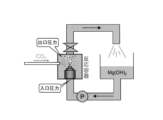
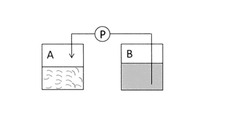
- FIG. 1 is a schematic diagram of an apparatus for synthesizing composite fiber 1 of Experiment 1.
- FIG. 1 is a schematic diagram of an apparatus for synthesizing a composite fiber 2 of Experiment 1.
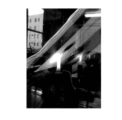
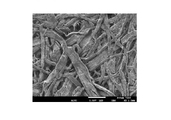
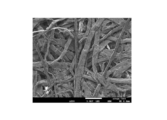
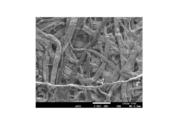
- FIG. 10 is a diagram showing a state of a flame retardancy test in Experiment 2; 3 is an electron micrograph of Sheet 3 produced in Example (magnification: 200 times). 4 is an electron micrograph of Sheet 5 produced in Example (magnification: 200 times). 4 is an electron micrograph of sheet 6 produced in Example (magnification: 200 times).
- the composition of the present invention can be obtained by mixing composite fibers with a thermoplastic resin.
- the blending ratio of the thermoplastic resin in the composition can be appropriately adjusted according to the quality of the product to be obtained. For example, it can be 50% by mass or less, or 10% by mass or less, or 3% by mass or less.
- thermoplastic resin used in the present invention may be in any form, such as fibrous, granular, or granular, and can be selected in consideration of manufacturing and physical properties such as moldability, processability, and handling.
- a fibrous form is preferred for ease of handling, but any form may be used.
- two or more thermoplastic resins can be used at the same time.
- Biodegradable resins with thermoplasticity are also included.
- thermoplastic resins include polyvinyl chloride, polyethylene, polypropylene, polystyrene, polymethyl methacrylate, polyvinyl alcohol, polyvinylidene chloride, polyethylene terephthalate, acrylonitrile-butadiene-styrene (ABS), acrylonitrile-styrene (AS), polyamide (nylon), polyacetal, polycarbonate, polyphenylene ether, polybutylene terephthalate, ultra-high molecular weight polyethylene, polyvinylidene fluoride, polyester, etc., but not limited to these, as long as it is a resin that can be plasticized and molded by heat. Either can be used. Among them, polyester is preferable from the viewpoint of moldability.
- thermoplastic resin examples include, but are not limited to, polylactic acid (PLA), polybutylene succinate, polyethylene succinate, polyglycol, polycaprolactone, and polyvinyl alcohol.
- PLA polylactic acid
- PMMA polybutylene succinate
- polyethylene succinate polyethylene succinate
- polyglycol polyglycol
- polycaprolactone polyvinyl alcohol
- polyvinyl alcohol polyvinyl alcohol
- the weight ratio of the composite fiber to the thermoplastic resin is 97:3 to 50:50.
- the weight ratio of the composite fiber to the thermoplastic resin is 97:3-60:40, 97:3-70:30, 90:10-80:20.
- the composition of the present invention can be obtained by heat-treating a mixture of composite fibers and a thermoplastic resin.
- the temperature at which the composition of the present invention is heat-treated is usually about 80 to 300°C, preferably 90 to 250°C, particularly preferably 100 to 200°C, particularly preferably 120 to 180°C.
- the sheet surface has less unevenness.
- the composition obtained by the present invention can be used for various purposes, and the composition according to the present invention can be blended for a given use to produce a product.
- the composition according to the present invention includes, for example, paper, non-woven fabrics, fibers, cellulosic composite materials, filter materials, paints, plastics and other resins, rubbers, elastomers, ceramics, glass, tires, building materials (asphalt, asbestos, cement , boards, concrete, bricks, tiles, plywood, fiberboards, ceiling materials, etc.), various carriers (catalyst carriers, pharmaceutical carriers, agricultural chemical carriers, microorganism carriers, etc.), adsorbents (removing impurities, deodorizing, dehumidifying, etc.), Anti-wrinkle agents, clay, abrasives, modifiers, repair materials, heat insulating materials, moisture-proof materials, water-repellent materials, water-resistant materials, light-shielding materials, sealants, shield materials, insect repellents, adhesives, inks, cosmetics
- adsorbents impurity removal, deodorant, dehumidification, etc.
- sanitary products masks, wiper sheets, nursing care sheets, disposable diapers, sanitary napkins, incontinent pads, breast milk pads, pet toilets
- filters paper, cardboard, non-woven fabric, and packaging materials are preferred.
- a paper machine can be used to produce the composition according to the present invention.
- the paper machine includes, for example, a fourdrinier paper machine, a cylinder paper machine, a gap former, a hybrid former, a multi-layer paper machine, and a known paper machine obtained by combining these machines.
- a product such as a sheet is produced, not only can it be made by single layer making, but it can also be made by multi-layer making of two or more layers.
- at least one layer contains the composite fiber, and for example, it can be contained only in the middle layer.
- the interlayer strength of the sheet is, for example, 50 to 150 N/m, preferably 70 to 130 N/m.
- the method for bonding the fibers is not particularly limited, and known methods can be used. Examples include a chemical bond method in which an emulsion-based adhesive resin is impregnated or applied to a sheet by a method such as spraying, and then heated and dried to bond the intersections of the fibers; Examples include a thermal bond method in which fibers are bonded together by passing a mixed sheet through hot rolls and applying hot air to the sheet by thermocompression bonding.
- cellulosic fibers have many hydroxyl groups in their molecules, so it is known that adhesion based on hydrogen bonding is performed and the physical strength of the sheet is developed.
- synthetic fibers do not have functional groups capable of hydrogen bonding in their molecules. intervene and inhibit the adhesion, resulting in a phenomenon that the strength of the sheet is lowered.
- thermoplastic resin fibers generally include polyethylene terephthalate fiber (hereinafter referred to as polyester fiber), polypropylene fiber, polyethylene fiber, polyolefin synthetic pulp (for example, SWP manufactured by Mitsui Chemicals), vinylon fiber (PVA fiber), etc.
- polyester fiber polyethylene terephthalate fiber
- PVA fiber polyolefin synthetic pulp
- a sheet is formed using a binder that does not require high temperature treatment.
- the binder for example, one or a combination of polyvinyl alcohol, polyvinylidene chloride, acrylonitrile, ethylene vinyl acetate, acrylic, and polyvinyl acetate can be preferably used.
- the content of the binder resin can be, for example, 3.0 to 20.0% by mass, preferably 4.0 to 15.0% by mass, more preferably 5.0 to 10% by mass, based on the total mass. .0% by mass.
- coating machines such as roll coaters, blade coaters, rod coaters, air knife coaters, gate roll coaters, curtain coaters, size press coaters, sim sizers, etc. can be used.
- coating can be coated or impregnated with a coating solution containing an externally added chemical by using these coating facilities. Coating can be performed on-machine (making and drying the base paper and coating and drying the binder resin continuously) and off-machine (after making and drying the base paper and winding it, a secondary coating and drying) may be used.
- the sheet formed by the method described above may be provided with unevenness on one side or both sides thereof, and may be subjected to a treatment such as embossing. This makes it easier to impregnate the liquid. Furthermore, since the unevenness increases the specific surface area, the area of contact with the target part increases, so that various functions such as deodorant and antibacterial can be more easily realized.
- various organic substances such as polymers, various inorganic substances such as pigments, and various fibers such as pulp fibers may be applied.
- various organic substances such as polymers, various inorganic substances such as pigments, and various fibers such as pulp fibers may be applied later.
- cellulosic fibers can be preferably used, including softwood bleached kraft pulp (NBKP), unbleached kraft pulp (NUKP), hardwood bleached kraft pulp (LBKP), and hardwood unbleached kraft pulp.
- Chemical pulp such as pulp (LUKP), softwood bleached sulfite pulp (NBSP) or unbleached sulfite pulp (NUSP), hardwood bleached sulfite pulp (LBSP), hardwood unbleached sulfite pulp (LUSP), or , mechanical pulp such as ground pulp (GP), thermomechanical pulp (TMP), chemithermomechanical pulp (CTMP, etc.), deinked pulp (DIP), non-wood fiber pulp such as cotton and kenaf, and regenerated fibers such as rayon.
- MRP thermomechanical pulp
- CTMP chemithermomechanical pulp
- DIP deinked pulp
- non-wood fiber pulp such as cotton and kenaf
- regenerated fibers such as rayon.
- One type of these fibers can be blended, or two or more types can be combined and blended.
- the weight ratio of LBKP to NBKP in the cellulose fibers is preferably 50/50 to 5/95, more preferably 50/50 to 20/80.
- fillers in order to impart opacity, nonflammability, and flame retardancy, fillers may be blended in the range of, for example, 30% by mass or less.
- a filler in that case, it is preferable to use calcined clay from the viewpoint of opacity, nonflammability and flame retardancy.
- Other fillers include kaolin, calcined kaolin, delaminated kaolin, clay, delaminated clay, illite, ground calcium carbonate, ground calcium carbonate, ground calcium carbonate-silica composite, magnesium carbonate, barium carbonate,
- Inorganic fillers such as titanium dioxide, zinc oxide, silicon oxide, amorphous silica, aluminum hydroxide, calcium hydroxide, magnesium hydroxide and zinc hydroxide can be used. These fillers are not included in some applications such as wallpaper.
- sizing agents can be used in the same way as for ordinary paper.
- the sizing agent may be added internally or externally.
- sizing agents used include rosin sizing agents, rosin binder resin sizing agents, alpha-carboxymethyl saturated fatty acids, alkylketene dimers, alkenyl succinic anhydrides, cationic polymer sizing agents, and the like.
- various modified starches such as oxidized starch and enzyme-modified starch, water-soluble binders such as carboxymethyl cellulose and casein, surface strength agents, dyes, pigments (clay, kaolin, calcium carbonate, titanium dioxide, etc.) are used as appropriate. can do.
- the basis weight of the sheet may be appropriately selected depending on the application. m 2 or more.
- the upper limit is usually about 3000 g/m 2 .
- each layer has a basis weight of 10 g/m 2 or more from the viewpoint of producing a sheet that is uniform and has minimum strength in handling during production.
- the basis weight (basis weight) in the present invention is determined by drying a sample having an area of 0.05 m 2 or more at 105°C until it reaches a constant mass, then leaving it in a constant temperature room at 23°C and 50% RH for 16 hours or more. Just measure the mass.
- the thickness of the sheet may be 100-5000 ⁇ m, preferably 300-5000 ⁇ m, more preferably 400-2500 ⁇ m, and even more preferably 500-1500 ⁇ m.
- each layer preferably has a thickness of 20 ⁇ m or more from the viewpoint of producing a uniform sheet.
- the density of the sheet is not particularly limited, but may be 0.31 g/cm 3 or more, 0.35 g/cm 3 or more, or 0.40 g/cm 3 or more. Although the upper limit is not particularly defined, it is 1.5 g/cm 3 or less, more preferably 1.0 g/cm 3 or less, and further preferably 0.8 g/cm 3 or less.
- the number of layers can be two or more, or three or more. Two or more layers are preferable because the strength can be increased.
- the specific surface area is preferably 3 m 2 /g to 200 m 2 /g, more preferably 10 m 2 /g to 180 m 2 /g, in order to effectively develop various performances.
- the ash content in the sheet is preferably 3% by weight to 80% by weight, more preferably 10% by weight or more.
- the ash content in the present invention can be adjusted by adjusting the amount of inorganic particles contained in the composite and the amount of a filler (hereinafter also referred to as an internal filler) that is appropriately added separately from the inorganic particles that are combined with the composite. is preferably 20 to 50% by weight.
- the above ash content is a value measured according to JIS P-8251:2003.
- the content of the composite is preferably 10 to 90% by weight, more preferably 20 to 80% by weight, even if it is 60% by weight or less or 40% by weight or less, relative to the total weight of the composition. good. When the content of the composite is within the above range, the effects of the present invention can be sufficiently exhibited.
- inorganic particles to be combined with fibers are not particularly limited, but inorganic particles that are insoluble or sparingly soluble in water are preferred.
- inorganic particles are synthesized in an aqueous system, and the composite is sometimes used in an aqueous system, so it is preferable that the inorganic particles are insoluble or sparingly soluble in water.
- the inorganic particles referred to here refer to metals or metal compounds.
- Metal compounds include metal cations (eg, Na + , Ca 2+ , Mg 2+ , Al 3+ , Ba 2+ ) and anions (eg, O 2 ⁇ , OH ⁇ , CO 3 2 ⁇ , PO 4 3 - , SO 4 2- , NO 3 - , Si 2 O 3 2- , SiO 3 2- , Cl - , F - , S 2- , etc.) combined by ionic bonds, generally called inorganic salts say.
- a method for synthesizing these inorganic particles may be either a gas-liquid method or a liquid-liquid method.
- An example of the gas-liquid method is the carbon dioxide method.
- magnesium carbonate can be synthesized by reacting magnesium hydroxide and carbon dioxide.
- the liquid-liquid method include reacting an acid (hydrochloric acid, sulfuric acid, etc.) and a base (sodium hydroxide, potassium hydroxide, etc.) by neutralization, reacting an inorganic salt with an acid or base, and reacting inorganic salts with each other.
- a method of causing a reaction can be mentioned.
- barium sulfate is obtained by reacting barium hydroxide with sulfuric acid
- aluminum hydroxide is obtained by reacting aluminum sulfate with sodium hydroxide
- calcium and aluminum are obtained by reacting calcium carbonate with aluminum sulfate.
- Composite inorganic particles can be obtained.
- any metal or metal compound can coexist in the reaction solution.
- any metal or metal compound can coexist in the reaction solution.
- composite particles of calcium phosphate and titanium can be obtained by allowing titanium dioxide to coexist in the reaction solution when phosphoric acid is added to calcium carbonate to synthesize calcium phosphate.
- the composite of the present invention can be obtained by synthesizing inorganic particles in the presence of fibers. This is because the fiber surface becomes a suitable site for precipitation of the inorganic particles, so that it is easy to synthesize a composite of the inorganic particles and the fiber.
- the average primary particle size of the inorganic particles in the composite of the present invention can be, for example, less than 1 ⁇ m. of inorganic particles, and inorganic particles of 100 nm or less can be used. Also, the average primary particle size of the inorganic particles can be 10 nm or more.
- the inorganic particles in the composite of the present invention may take the form of secondary particles in which fine primary particles are aggregated, and the secondary particles can be generated according to the application by the aging process, and by pulverization. Agglomerates can also be broken down. Grinding methods include ball mills, sand grinder mills, impact mills, high pressure homogenizers, low pressure homogenizers, dyno mills, ultrasonic mills, Kanda grinders, attritors, stone mills, vibration mills, cutter mills, jet mills, disaggregators, and beaters. , short-screw extruders, twin-screw extruders, ultrasonic stirrers, household juicer mixers, and the like.
- the strength of binding between fibers and inorganic particles in a composite can be evaluated, for example, by a numerical value such as ash retention (%), that is, (ash of sheet/ash of composite before disaggregation) x 100.
- ash retention %
- the composite is dispersed in water to adjust the solid content concentration to 0.2%, and after disintegration for 5 minutes with a standard disintegrator specified in JIS P 8220-1:2012, according to JIS P 8222:1998
- the ash retention when sheeted using a wire of 150 mesh can be used for evaluation.
- the composite used in the present invention has an ash content retention of 20% by mass or more, more preferably 50% by mass or more.
- composite of hydrotalcite and fiber As an example of the composite used in the present invention, a composite of hydrotalcite (HT) and fibers will be described below.
- the composite has high deodorant properties.
- hydrotalcite has the structure of [M 2+ 1 ⁇ x M 3+ x (OH) 2 ][A n ⁇ x/n ⁇ mH2O] (where M 2+ is a divalent metal ion, M 3+ is a trivalent A n ⁇ x/n represents an interlayer anion, and is represented by the general formula: 0 ⁇ x ⁇ 1, n is the valence of A, and 0 ⁇ m ⁇ 1.
- the divalent metal ion M 2+ is a trivalent metal ion such as Mg 2+ , Co 2+ , Ni 2+ , Zn 2+ , Fe 2+ , Ca 2+ , Ba 2+ , Cu 2+ , Mn 2+ , etc.
- M 3+ are, for example, Al 3+ , Fe 3+ , Cr 3+ , Ga 3+ , etc.
- a n ⁇ are n-valent anions, such as OH ⁇ , Cl ⁇ , CO 3 ⁇ , SO 4 ⁇ .
- Anions may be mentioned, where x generally ranges from 0.2 to 0.33.
- Mg 2+ , Zn 2+ , Fe 2+ and Mn 2+ are preferable as the divalent metal ions.
- the crystal structure has a laminated structure consisting of a two-dimensional basic layer in which positively charged regular octahedral brucite units are arranged and a negatively charged intermediate layer.
- Hydrotalcite has been developed into various applications that take advantage of its anion exchange function, such as ion exchange materials, adsorbents, and deodorants.
- hydrotalcite in which each constituent metal ion is in a well-mixed state is dehydrated by heating, or further heated and sintered to easily produce a composite oxide with a uniform composition.
- a catalyst etc.
- the proportion of hydrotalcite in the composite of the present invention can be 10% or more, 20% or more, and preferably 40% or more.
- the ash content of the composite of hydrotalcite and fiber can be measured according to JIS P 8251:2003.
- the ash content of the composite of hydrotalcite and fiber can be 10% or more, can be 20% or more, and preferably 40% or more.
- the composite of hydrotalcite and fiber of the present invention preferably contains 10% or more, more preferably 40% or more, of magnesium, iron, manganese or zinc in the ash.
- the content of magnesium or zinc in ash can be quantified by fluorescent X-ray analysis.
- the composite of the present invention has a fiber coverage (area ratio) of hydrotalcite of 25% or more, more preferably 40% or more. According to the present invention, the coverage is 60% or more. It is also possible to produce a composite with a ratio of 80% or more.
- hydrotalcite is not only fixed on the outer surface of the fiber and the inside of the lumen, but also formed inside the microfibrils. It is clear from the results of microscopic observation.
- the hydrotalcite and the fiber are composited according to the present invention
- the hydrotalcite is more likely to be yielded in the product than when the hydrotalcite is simply mixed with the fiber, and the hydrotalcite is uniformly dispersed without agglomeration. You can get the finished product. That is, according to the present invention, it is possible to increase the yield of the composite of hydrotalcite and fiber to the product (weight ratio of the charged hydrotalcite remaining in the product) to 65% or more, and 70% or more. or 85% or more.
- a composite of hydrotalcite and fibers is produced by synthesizing hydrotalcite in solution in the presence of fibers.
- a known method can be used to synthesize hydrotalcite. For example, fibers are immersed in a carbonate aqueous solution and an alkaline solution (such as sodium hydroxide) containing carbonate ions constituting an intermediate layer in a reaction vessel, and then an acid solution (divalent metal ions and trivalent metal ions constituting the basic layer). A metal salt aqueous solution containing metal ions) is added, and the temperature, pH, etc. are controlled, and a coprecipitation reaction is performed to synthesize hydrotalcite.
- an alkaline solution such as sodium hydroxide
- the fibers are immersed in an acid solution (a metal salt aqueous solution containing divalent metal ions and trivalent metal ions constituting the basic layer), and then a carbonate aqueous solution containing carbonate ions constituting the intermediate layer. and an alkaline solution (sodium hydroxide, etc.) are added dropwise, and the temperature, pH, etc. are controlled, and a coprecipitation reaction can be performed to synthesize hydrotalcite.
- an acid solution a metal salt aqueous solution containing divalent metal ions and trivalent metal ions constituting the basic layer
- a carbonate aqueous solution containing carbonate ions constituting the intermediate layer a carbonate aqueous solution containing carbonate ions constituting the intermediate layer.
- an alkaline solution sodium hydroxide, etc.
- various chlorides, sulfides, nitrates, and sulfates of magnesium, zinc, barium, calcium, iron, copper, cobalt, nickel, and manganese are used as a source of divalent metal ions constituting the basic layer.
- Various chlorides, sulfides, nitrates, and sulfates of aluminum, iron, chromium, and gallium can be used as a source of trivalent metal ions constituting the basic layer.
- water is used for preparation of the suspension, etc.
- ordinary tap water, industrial water, ground water, well water, etc. can be used, as well as ion-exchanged water, distilled water, ultra Pure water, industrial wastewater, and water obtained during manufacturing processes can be suitably used.
- carbonate ions, nitrate ions, chloride ions, sulfate ions, phosphate ions, etc. can be used as interlayer anions.
- Sodium carbonate is used as the source when carbonate is the interlayer anion.
- sodium carbonate can be replaced by a gas containing carbon dioxide (carbon dioxide gas), and may be substantially pure carbon dioxide gas or a mixture with other gases.
- carbon dioxide gas gas containing carbon dioxide
- the carbonation reaction can also be performed using carbon dioxide generated from the lime calcination process.
- auxiliary agents can be added.
- chelating agents can be added to the neutralization reaction, specifically polyhydroxycarboxylic acids such as citric acid, malic acid, tartaric acid; dicarboxylic acids such as oxalic acid; sugar acids such as gluconic acid; Acetic acid, aminopolycarboxylic acids such as ethylenediaminetetraacetic acid and their alkali metal salts, polyphosphoric acid alkali metal salts such as hexametaphosphoric acid and tripolyphosphoric acid, amino acids such as glutamic acid and aspartic acid and their alkali metal salts, acetylacetone, acetoacetic acid Examples include ketones such as methyl and allyl acetoacetate, sugars such as sucrose, and polyols such as sorbitol.
- saturated fatty acids such as palmitic acid and stearic acid
- unsaturated fatty acids such as oleic acid and linoleic acid
- resin acids such as alicyclic carboxylic acids and abietic acid, their salts, esters and ethers, and alcohol-based Active agents, sorbitan fatty acid esters, amide-based and amine-based surfactants, polyoxyalkylene alkyl ethers, polyoxyethylene nonylphenyl ether, sodium alpha olefin sulfonate, long-chain alkylamino acids, amine oxides, alkylamines, quaternary Secondary ammonium salts, aminocarboxylic acids, phosphonic acids, polyvalent carboxylic acids, condensed phosphoric acids and the like can be added.
- a dispersing agent can also be used as needed.
- the dispersant include sodium polyacrylate, sucrose fatty acid ester, glycerin fatty acid ester, acrylic acid-maleic acid copolymer ammonium salt, methacrylic acid-naphthoxypolyethylene glycol acrylate copolymer, methacrylic acid-polyethylene glycol.
- the timing of addition may be before or after the neutralization reaction.
- Such additives can be added in an amount of preferably 0.001 to 20%, more preferably 0.1 to 10%, relative to hydrotalcite.
- the temperature of the synthesis reaction can be, for example, 30 to 100.degree. C., preferably 40 to 80.degree. C., more preferably 50 to 70.degree. C., and particularly preferably about 60.degree. If the temperature is too high or too low, the reaction efficiency tends to decrease and the cost tends to increase.
- the neutralization reaction can be a batch reaction or a continuous reaction. Generally, it is preferred to perform a batch reaction process for the convenience of discharging the residue after the neutralization reaction.
- the scale of the reaction is not particularly limited, but the reaction may be performed on a scale of 100 L or less, or on a scale of more than 100 L.
- the size of the reaction vessel can be, for example, about 10 L to 100 L, or about 100 L to 1000 L.
- the neutralization reaction can be controlled by monitoring the pH of the reaction suspension, depending on the pH profile of the reaction liquid, e.g. The neutralization reaction can be carried out until
- the synthesis reaction can be controlled by the reaction time, specifically by adjusting the residence time of the reactants in the reaction vessel.
- the reaction can be controlled by stirring the reaction solution in the reaction vessel or by conducting the neutralization reaction in multiple stages.
- the composite which is the reaction product
- it may be stored in a storage tank and subjected to treatments such as concentration, dehydration, pulverization, classification, aging, and dispersion as necessary. can be done. These can be carried out according to known processes, and may be appropriately determined in consideration of usage, energy efficiency, and the like.
- concentration/dehydration treatment is performed using a centrifugal dehydrator, a sedimentation concentration machine, or the like. Examples of this centrifugal dehydrator include decanters and screw decanters.
- a filter or dehydrator there is no particular limitation on the type thereof, and common ones can be used.
- a calcium carbonate cake can be obtained by suitably using a vacuum drum dehydrator such as an Oliver filter.
- Grinding methods include ball mills, sand grinder mills, impact mills, high pressure homogenizers, low pressure homogenizers, dyno mills, ultrasonic mills, Kanda grinders, attritors, stone mills, vibration mills, cutter mills, jet mills, disaggregators, and beaters. , short-screw extruders, twin-screw extruders, ultrasonic stirrers, household juicer mixers, and the like.
- Classification methods include sieves such as meshes, outward-type or inward-type slit or round-hole screens, vibrating screens, heavy-duty foreign matter cleaners, light-weight foreign matter cleaners, reverse cleaners, sieving testers, and the like.
- Dispersion methods include a high-speed disperser and a low-speed kneader.
- the composite obtained by the present invention can be blended with fillers and pigments in a suspension state without being completely dehydrated, but can also be dried and powdered.
- the dryer in this case is also not particularly limited, but for example, a flash dryer, a band dryer, a spray dryer, or the like can be preferably used.
- Intercalating compounds include anionic substances, such as copper or silver thiosulfato complexes, copper chloride, silver chloride, copper nitrate, and silver nitrate.
- a method for intercalation a known method can be used, and a solution containing an anionic substance can be added to the composite of hydrotalcite and fiber and mixed.
- a solution containing a cationic substance such as copper chloride, silver chloride, copper nitrate, or silver nitrate can be added to the composite of hydrotalcite and fibers to treat the surface of the composite.
- the composite obtained by the present invention can be modified by known methods.
- the surface can be made hydrophobic to enhance miscibility with resins and the like.
- Fibers that make up the composite are composited. Fibers constituting the composite are not particularly limited as long as they are cellulose fibers. Examples of raw materials for cellulose fibers include pulp fibers (wood pulp and non-wood pulp) and bacterial cellulose, and wood pulp may be produced by pulping wood raw materials.
- Wood raw materials include red pine, black pine, Sakhalin fir, spruce, red pine, larch, fir, hemlock, cedar, cypress, larch, white fir, spruce, hiba, Douglas fir, hemlock, white fir, spruce, balsam fir, cedar, pine, Coniferous trees such as Mercury pine and radiata pine, and mixtures of these, broadleaf trees such as beech, birch, alder, oak, tab, chinensis, white birch, cotton willow, poplar, ash, willow, eucalyptus, mangrove, lauan, and acacia, and mixtures thereof material is exemplified.
- the method of pulping wood raw materials is not particularly limited, and examples include pulping methods commonly used in the paper industry.
- Wood pulp can be classified by pulping method, for example, chemical pulp cooked by methods such as Kraft method, sulfite method, soda method, polysulfide method; mechanical pulp obtained by mechanical power such as refiner and grinder; semi-chemical pulp obtained by mechanical pulping after pretreatment with a cellulose; waste paper pulp; deinked pulp, and the like.
- the wood pulp may be unbleached (before bleaching) or bleached (after bleaching).
- non-wood-derived raw materials include cotton, hemp, sisal hemp, Manila hemp, flax, straw, bamboo, bagasse, kenaf, sugar cane, corn, rice straw, kozo, and mitsumata.
- the pulp fibers may be either unbeaten or beaten, and may be selected according to the physical properties of the composite sheet, but beating is preferred. This can be expected to improve the sheet strength and promote the fixation of calcium carbonate.
- these cellulose raw materials are further processed to obtain powdered cellulose, chemically modified cellulose such as oxidized cellulose, and cellulose nanofibers: CNF (microfibrillated cellulose: MFC, TEMPO-oxidized CNF, phosphorylated CNF, carboxymethylated CNF, mechanical pulverized CNF, etc.) can also be used.
- CNF microfibrillated cellulose: MFC, TEMPO-oxidized CNF, phosphorylated CNF, carboxymethylated CNF, mechanical pulverized CNF, etc.
- an undegraded residue obtained after acid hydrolysis of selected pulp is purified, dried, pulverized, and sieved.
- a crystalline cellulose powder having a distribution may be used, or commercially available products such as KC Floc (manufactured by Nippon Paper Industries), Ceorus (manufactured by Asahi Kasei Chemicals), and Avicel (manufactured by FMC) may be used.
- the degree of polymerization of cellulose in powdered cellulose is preferably about 100 to 1500
- the crystallinity of powdered cellulose by X-ray diffraction method is preferably 70 to 90%
- the volume average particle diameter by laser diffraction particle size distribution analyzer is preferably 1 ⁇ m or more and 100 ⁇ m or less.
- the oxidized cellulose used in the present invention can be obtained, for example, by oxidation in water using an oxidizing agent in the presence of an N-oxyl compound and a compound selected from the group consisting of bromides, iodides, or mixtures thereof.
- a method of defibrating the above cellulose raw material is used.
- a defibration method for example, an aqueous suspension of chemically modified cellulose such as cellulose or oxidized cellulose is mechanically ground or beaten by a refiner, a high-pressure homogenizer, a grinder, a uniaxial or multiaxial kneader, a bead mill, or the like.
- a method of defibrating can be used.
- Cellulose nanofibers may be produced by combining one or more of the above methods.
- the fiber diameter of the produced cellulose nanofibers can be confirmed by electron microscope observation or the like, and is, for example, in the range of 5 nm to 1000 nm, preferably 5 nm to 500 nm, more preferably 5 nm to 300 nm.
- an optional compound may be further added to react with the cellulose nanofibers to modify the hydroxyl groups. can.
- Functional groups to be modified include acetyl group, ester group, ether group, ketone group, formyl group, benzoyl group, acetal, hemiacetal, oxime, isonitrile, allene, thiol group, urea group, cyano group, nitro group and azo group.
- aryl group, aralkyl group amino group, amide group, imide group, acryloyl group, methacryloyl group, propionyl group, propioloyl group, butyryl group, 2-butyryl group, pentanoyl group, hexanoyl group, heptanoyl group, octanoyl group, nonanoyl group , decanoyl group, undecanoyl group, dodecanoyl group, myristoyl group, palmitoyl group, stearoyl group, pivaloyl group, benzoyl group, naphthoyl group, nicotinoyl group, isonicotinoyl group, furoyl group, acyl group such as cinnamoyl group, 2-methacryloyloxyethyl isocyanate isocyanate group such as noyl group, methyl group, ethyl group, propyl group, 2-
- Hydrogen atoms in these substituents may be substituted with functional groups such as hydroxyl groups and carboxyl groups. Moreover, a part of the alkyl group may be an unsaturated bond.
- the compounds used to introduce these functional groups are not particularly limited, and examples thereof include compounds having a group derived from phosphoric acid, compounds having a group derived from carboxylic acid, compounds having a group derived from sulfuric acid, and compounds derived from sulfonic acid. group, a compound having an alkyl group, a compound having an amine-derived group, and the like.
- the compound having a phosphate group is not particularly limited, but examples thereof include phosphoric acid and lithium salts of phosphoric acid such as lithium dihydrogen phosphate, dilithium hydrogen phosphate, trilithium phosphate, lithium pyrophosphate, and lithium polyphosphate. .
- phosphoric acid and lithium salts of phosphoric acid such as lithium dihydrogen phosphate, dilithium hydrogen phosphate, trilithium phosphate, lithium pyrophosphate, and lithium polyphosphate.
- sodium dihydrogen phosphate, disodium hydrogen phosphate, trisodium phosphate, sodium pyrophosphate and sodium polyphosphate, which are sodium salts of phosphoric acid may be mentioned.
- potassium dihydrogen phosphate, dipotassium hydrogen phosphate, tripotassium phosphate, potassium pyrophosphate, and potassium polyphosphate, which are potassium salts of phosphoric acid may be mentioned.
- ammonium dihydrogen phosphate diammonium hydrogen phosphate, triammonium phosphate, ammonium pyrophosphate, ammonium polyphosphate, etc., which are ammonium salts of phosphoric acid
- phosphoric acid, sodium salt of phosphoric acid, potassium salt of phosphoric acid, and ammonium salt of phosphoric acid are preferable from the viewpoint of high efficiency of introduction of phosphoric acid group and easy industrial application, and sodium dihydrogen phosphate.
- Disodium hydrogen phosphate is more preferable, but not particularly limited.
- the compound having a carboxyl group is not particularly limited, but includes dicarboxylic acid compounds such as maleic acid, succinic acid, phthalic acid, fumaric acid, glutaric acid, adipic acid and itaconic acid, and tricarboxylic acid compounds such as citric acid and aconitic acid.
- Acid anhydrides of compounds having a carboxyl group are not particularly limited, but include acid anhydrides of dicarboxylic acid compounds such as maleic anhydride, succinic anhydride, phthalic anhydride, glutaric anhydride, adipic anhydride, and itaconic anhydride. be done.
- Derivatives of compounds having a carboxyl group are not particularly limited, but include imidized acid anhydrides of compounds having a carboxyl group and derivatives of acid anhydrides of compounds having a carboxyl group.
- Examples of imidized acid anhydrides of compounds having a carboxyl group include, but are not particularly limited to, imidized dicarboxylic acid compounds such as maleimide, succinimide and phthalimide.
- the acid anhydride derivative of a compound having a carboxyl group is not particularly limited.
- At least part of the hydrogen atoms of the acid anhydride of the compound having a carboxyl group is a substituent (e.g., an alkyl group, a phenyl group, etc.). ) is substituted with.
- a substituent e.g., an alkyl group, a phenyl group, etc.
- the compounds having a group derived from a carboxylic acid maleic anhydride, succinic anhydride, and phthalic anhydride are preferable because they are industrially applicable and easily gasified, but are not particularly limited.
- the cellulose nanofibers may be modified in such a manner that the modifying compound physically adsorbs to the cellulose nanofibers without chemically bonding them.
- the physically adsorbable compound include surfactants, which may be anionic, cationic or nonionic.
- the fibers shown above may be used alone, or a plurality of them may be mixed. Among them, it preferably contains wood pulp or a combination of wood pulp and non-wood pulp and/or synthetic fibers, more preferably wood pulp only.
- the fibers constituting the composite of the present invention are pulp fibers.
- fibrous material recovered from paper mill effluents may be used in the present invention.
- thermoplastic fibers are used in addition to the above composite fibers.
- the thermoplastic fibers used in the present invention are polyester-based, polypropylene-based, and polyethylene-based synthetic fibers from the viewpoint of mixability with the composite (composite fiber) and papermaking properties (water squeezing, formation). is preferred.
- polyester-based synthetic fibers it is preferable to use polyester-based synthetic fibers.
- the synthetic fiber may be a main fiber having a single concentric structure, or may be a core-sheath type fiber in which the core and the sheath have different melting points.
- the synthetic fiber has a fineness of 0.5 to 4.5 dtex and a fiber length of 3 to 30 mm (preferably 5 to 20 mm, more preferably 5 to 15 mm) from the viewpoint of fiber dispersibility. desirable.
- the fineness and fiber length of this synthetic fiber are measured based on JIS L 1015:2010.
- the melting point of the synthetic fiber is, for example, in the range of 110 to 300°C, preferably in the range of 110 to 280°C. It is more preferably in the range of ⁇ 260°C.
- the melting point is as low as less than 110° C., stains (fluffing) derived from synthetic fibers tend to occur in the papermaking drier during sheet making.
- blending synthetic fibers with a melting point exceeding 300° C. is not only technically meaningless, but also uneconomical.
- the melting point of the sheath is selected within the above range. The melting point of synthetic fibers is measured according to JIS K 7121:2012.
- Binders include heat-fusible fibers and hot water-soluble fibers.
- Heat-fusible fibers include core-sheath polyester conjugate fibers, polyethylene terephthalate (PET) fibers, core-sheath polyolefin conjugate fibers, and hydrophilic pulp-like multibranched fibers.
- core-sheath type polyester composite fibers include composite fibers (core-sheath fibers) in which the sheath portion (low melting point component) is made of modified polyester and the core portion (high melting point component) is made of polyethylene terephthalate.
- core-sheath type polyolefin conjugate fibers include conjugate fibers (core-sheath fibers) having a sheath (low-melting point component) made of polyethylene and a core (high-melting point component) made of polypropylene.
- the hydrophilic pulp-like multi-branched fiber is also called polyolefin synthetic pulp, and for example, one commercially available from Mitsui Chemicals, Inc. under the trade name of SWP can be mentioned.
- Hot-water-soluble fibers are hardly soluble in water at room temperature and maintain their fibrous form, but when heated on the surface of a dryer after papermaking, they begin to dissolve easily, and after dehydration and drying, they re-solidify and become strong.
- hot water-soluble fibers used in the present invention include polyvinyl alcohol-based fibrous binders. This is usually made by cutting polyvinyl alcohol fibers into short pieces, which swells but does not dissolve in water at room temperature, but dissolves in hot water of 60 to 90° C. and functions as a binder.
- natural fibers such as cellulose fibers, protein fibers such as wool, silk thread, and collagen fibers, chitin/chitosan fibers, or alginic acid fibers may be blended as necessary.
- Preferred natural fibers are cellulose fibers, such as chemical pulp, mechanical pulp, semi-chemical pulp, waste paper pulp, deinked pulp, powdered cellulose, chemically modified cellulose such as oxidized cellulose, and cellulose nanofibers: CNF (microfibrillated Cellulose: MFC, TEMPO-oxidized CNF, phosphate-esterified CNF, carboxymethylated CNF, mechanically pulverized CNF, etc.), and the like.
- CNF microfibrillated Cellulose: MFC, TEMPO-oxidized CNF, phosphate-esterified CNF, carboxymethylated CNF, mechanically pulverized CNF, etc.
- compositions according to the present invention may contain ingredients other than those mentioned above.
- a wet strength agent paper strength enhancer
- wet paper strength agents include urea formaldehyde resin, melamine formaldehyde resin, polyamide/polyamine/epichlorohydrin resin, vegetable gum, latex, polyethyleneimine, glyoxal, gum, mannogalactan polyethyleneimine resin, and polyacrylamide resin.
- polyvinylamine resin, polyvinyl alcohol, etc. composite polymers or copolymers composed of two or more selected from the above resins; starch and modified starch; carboxymethylcellulose, guar gum, urea resin, and the like.
- the wet paper strength agent When the wet paper strength agent is further added to the composite, the wet paper strength agent may be further added to the slurry obtained after manufacturing the composite, and then papermaking may be performed.
- the content of the wet paper strength agent can be appropriately adjusted depending on the application. % by weight is preferable, and 0.3 to 0.7% by weight is more preferable.
- one or more other materials may be included, if necessary, in addition to composites and synthetic fibers.
- the types of other materials are not particularly limited, but examples include stabilizers such as heat stabilizers and weather stabilizers, fillers, antistatic agents, slip agents, antiblocking agents, antifogging agents, lubricants, dyes, and pigments. , natural oils, synthetic oils, waxes, and the like. These may be used alone or in combination of two or more. The total content of these materials is preferably within a range not exceeding 10% by mass.
- stabilizers include antioxidants such as 2,6-di-t-butyl-4-methyl-phenol (BHT); tetrakis[methylene-3-(3,5-di-t-butyl-4- hydroxyphenyl)propionate]methane, ⁇ -(3,5-di-t-butyl-4-hydroxyphenyl)propionic acid alkyl ester, 2,2′-oxamide bis[ethyl-3-(3,5-di-t- Butyl-4-hydroxyphenyl)propionate], phenolic antioxidants; fatty acid metal salts such as zinc stearate, calcium stearate, calcium 1,2-hydroxystearate; glycerin monostearate, glycerin distearate, pentaerythritol monostearate and polyhydric alcohol fatty acid esters such as polyols, pentaerythritol distearate, and pentaerythritol tristearate.
- antioxidants such
- fillers include silica, diatomaceous earth, alumina, titanium oxide, magnesium oxide, pumice powder, pumice balloon, aluminum hydroxide, magnesium hydroxide, basic magnesium carbonate, dolomite, calcium sulfate, potassium titanate, sulfuric acid. Barium, calcium sulfite, talc, clay, mica, asbestos, calcium silicate, montmorillonite, pentonite, graphite, aluminum powder, molybdenum sulfide and the like.
- coloring agents include inorganic coloring agents such as titanium oxide and calcium carbonate, and organic coloring agents such as phthalocyanine.
- lubricants examples include oleic acid amide, erucic acid amide, and stearic acid amide.
- high-molecular polymers and inorganic substances can be added to promote the fixation of fillers to fibers and to improve the retention of fillers and fibers.
- coagulants polyethyleneimines and modified polyethyleneimines containing tertiary and/or quaternary ammonium groups, polyalkyleneimines, dicyandiamide polymers, polyamines, polyamine/epichlorohydrin polymers, and dialkyldiallyl quaternary ammonium monomers, dialkyl Cations of aminoalkyl acrylates, dialkylaminoalkyl methacrylates, dialkylaminoalkylacrylamides, polymers of dialkylaminoalkylmethacrylamides and acrylamides, polymers of monoamines and epihalohydrin, polyvinylamines, polymers with vinylamine moieties, and mixtures thereof cation-rich amphoteric polymers obtained by copolymerizing anionic groups such as carboxyl groups and sulfone
- Cationic, anionic, and amphoteric polyacrylamide-based substances can also be used as retention agents.
- at least one kind of cationic or anionic polymer can be used together, so-called dual polymer retention system can be applied, and at least one kind of anionic bentonite, colloidal silica, polysilicic acid,
- a multi-component yield system that uses at least one type of inorganic fine particles such as polysilicic acid or polysilicate microgels and aluminum-modified products thereof, and organic fine particles having a particle size of 100 ⁇ m or less, which are so-called micropolymers obtained by cross-linking polymerization of acrylamide. good too.
- the polyacrylamide-based substances used alone or in combination have a weight-average molecular weight of 2 million daltons or more as determined by the intrinsic viscosity method, a good yield can be obtained, preferably 5 million daltons or more, more preferably 5 million daltons or more.
- a good yield can be obtained, preferably 5 million daltons or more, more preferably 5 million daltons or more.
- the form of this polyacrylamide-based substance may be an emulsion type or a solution type.
- the specific composition is not particularly limited as long as the substance contains an acrylamide monomer unit as a structural unit. and quaternary ammonium salts obtained by copolymerizing acrylic acid esters.
- the cationic charge density of the cationic polyacrylamide-based material is not particularly limited.
- drainage improver In addition, depending on the purpose, drainage improver, internal sizing agent, pH adjuster, defoaming agent, pitch control agent, slime control agent, bulking agent, calcium carbonate, kaolin, talc, inorganic particles such as silica (so-called filler) and the like.
- the amount of each additive used is not particularly limited.
- LLKP bleached hardwood kraft pulp
- NNKP bleached softwood kraft pulp
- CSF Canadian Standard Freeness
- SDR single disc refiner
- DDR double disc refiner
- Niagara Beater the average fiber length of the pulp in the pulp slurry was measured with a fiber tester (Lorentzen & Wettre).
- cavitation bubbles were generated in the reaction vessel by circulating the reaction solution and injecting it into the reaction vessel. Specifically, the reaction solution was injected at high pressure through a nozzle (nozzle diameter: 1.5 mm) to generate cavitation bubbles, but the jet velocity was about 70 m / s, and the inlet pressure (upstream pressure) was 1.8 MPa, outlet pressure (downstream pressure) was 0.3 MPa.
- Composite Fiber 3 Composite Fiber of Aluminum Hydroxide Particles and Cellulose Fiber A solution for synthesizing aluminum hydroxide was prepared.
- As the acid solution a commercially available aluminum sulfate aqueous solution (sulfuric acid band, manufactured by Asahi Kagaku Kogyo Co., Ltd.) was used as it was.
- ⁇ Alkaline solution A solution, sodium hydroxide concentration: 25%
- Acid solution B solution, aluminum sulfate concentration: about 27%)
- Experiment 2 Production and evaluation of hand-made sheets 2-1.
- Production of hand-made sheets (1) Sheet 1 A polyester fiber (fiber length: 5 mm) was added as a thermoplastic resin to an aqueous suspension (approximately 1.5%) of the composite fiber 1, and the weight ratio of the composite fiber and the polyester fiber was adjusted to 90:10. bottom.
- a wet paper was prepared from this aqueous suspension using a square papermaking machine based on JIS P 8222, sandwiched between stainless steel plates heated to 130°C, and pressed at 1 MPa for 1 minute with a press (manufactured by Kumagai Riki). It was processed to produce a sheet.
- Sheet 7 (comparative example) A sheet was made in the same manner as Sheet 3, except that no thermoplastic resin was used.
- Aluminum hydroxide (B-103, Nippon Light Metal) is mixed with this, 200 ppm of an anionic retention agent (FA230, Hymo) and 200 ppm of a cationic retention agent (ND300, Hymo) are added, and the rotation speed is 500 rpm. to prepare a suspension.
- Wet paper was prepared from the obtained suspension using a rectangular papermaking machine based on JIS P 8222, sandwiched between stainless steel plates heated to 130°C, and pressed at 1 MPa for 1 minute with a press (manufactured by Kumagai Riki). A sheet was produced by pressing.
- Dust drop Dust drop was visually confirmed based on the following criteria. First, the sample was cut with a cutter or scissors, and the presence or absence of paper dust generation was visually confirmed. Next, the cut sample piece was held between the thumb and forefinger, and tapped on black drawing paper set on a desk with a light force that did not bend the sample piece. At this time, the cut surface of the sample piece was made perpendicular to the desk. After that, the state of the powder adhering to the black drawing paper was determined visually.
- a sheet (25 cm x 25 cm) cut into a certain size was dried at 50°C for 48 hours, then left in a desiccator containing silica gel for drying for 24 hours to be used as a sample for a combustion test (heating test).
- a 45° flammability tester FL-45M manufactured by Suga Test Instruments Co., Ltd.
- a Meckel burner (height: 160 mm, inner diameter: 20 mm) was used for heating, and only gas was supplied without mixing primary air for combustion.
- Liquefied petroleum gas No. 5 (based on butane and butylene, JIS K 2240) was used as the fuel, and the flame length was adjusted to 65 mm without attaching the sample.
- Charred length Measure the maximum length of the supporting frame in the longitudinal direction of the charred portion of the heating surface of the specimen (the strength is clearly changed by charring).
- ⁇ Afterflame time Measure the time that the test piece continues to burn after the end of heating.
- ⁇ Residue A state of flameless combustion from the end of heating.
- the examples (sheets 1 to 6) of the present invention were good in all of the dimensional change rate, dust fallout, and flame retardancy compared to the comparative example. there were. It was also found that the sheet 3 has better flame retardancy than the sheet 9 to which the inorganic particles are internally added, and that the composition containing the composite fiber has a higher effect of the inorganic particles.
Landscapes
- Chemical & Material Sciences (AREA)
- Chemical Kinetics & Catalysis (AREA)
- Health & Medical Sciences (AREA)
- Medicinal Chemistry (AREA)
- Polymers & Plastics (AREA)
- Organic Chemistry (AREA)
- Inorganic Chemistry (AREA)
- Engineering & Computer Science (AREA)
- Textile Engineering (AREA)
- Paper (AREA)
- Compositions Of Macromolecular Compounds (AREA)
- Biological Depolymerization Polymers (AREA)
- Manufacture Of Macromolecular Shaped Articles (AREA)
- Chemical Or Physical Treatment Of Fibers (AREA)
Priority Applications (1)
| Application Number | Priority Date | Filing Date | Title |
|---|---|---|---|
| JP2022575328A JP7269454B1 (ja) | 2021-09-16 | 2022-09-09 | 複合繊維を含有する組成物およびその製造方法 |
Applications Claiming Priority (2)
| Application Number | Priority Date | Filing Date | Title |
|---|---|---|---|
| JP2021-151128 | 2021-09-16 | ||
| JP2021151128 | 2021-09-16 |
Publications (1)
| Publication Number | Publication Date |
|---|---|
| WO2023042758A1 true WO2023042758A1 (ja) | 2023-03-23 |
Family
ID=85602845
Family Applications (1)
| Application Number | Title | Priority Date | Filing Date |
|---|---|---|---|
| PCT/JP2022/033821 Ceased WO2023042758A1 (ja) | 2021-09-16 | 2022-09-09 | 複合繊維を含有する組成物およびその製造方法 |
Country Status (2)
| Country | Link |
|---|---|
| JP (2) | JP7269454B1 (cg-RX-API-DMAC7.html) |
| WO (1) | WO2023042758A1 (cg-RX-API-DMAC7.html) |
Cited By (1)
| Publication number | Priority date | Publication date | Assignee | Title |
|---|---|---|---|---|
| IT202300020391A1 (it) * | 2023-10-03 | 2025-04-03 | Inx S R L | Vernici per assorbenti igienici conduttivi |
Families Citing this family (1)
| Publication number | Priority date | Publication date | Assignee | Title |
|---|---|---|---|---|
| DE112024004022T5 (de) * | 2023-09-27 | 2026-07-23 | Nippon Paper Industries Co., Ltd. | Kohlenstoffmaterialvorläufer und verfahren zur herstellung von kohlenstoffmaterial unter verwendung desselben |
Citations (5)
| Publication number | Priority date | Publication date | Assignee | Title |
|---|---|---|---|---|
| JPS61258865A (ja) * | 1985-05-13 | 1986-11-17 | Calp Corp | 複合樹脂組成物 |
| JP2002138170A (ja) * | 2000-10-31 | 2002-05-14 | Ykk Corp | セルロース系粉体含有複合樹脂成形体及びその製造方法 |
| JP2019002004A (ja) * | 2017-06-16 | 2019-01-10 | 凸版印刷株式会社 | 光熱変換材料、光熱変換組成物、および光熱変換成形体 |
| WO2019135384A1 (ja) * | 2018-01-05 | 2019-07-11 | 凸版印刷株式会社 | 複合粒子、複合粒子の製造方法、乾燥粉体、および成型用樹脂組成物 |
| JP2019137938A (ja) * | 2018-02-09 | 2019-08-22 | 日本製紙株式会社 | 湿式不織布 |
Family Cites Families (1)
| Publication number | Priority date | Publication date | Assignee | Title |
|---|---|---|---|---|
| JP2021123840A (ja) * | 2020-01-31 | 2021-08-30 | 日本製紙株式会社 | 抗アレルゲン繊維製品 |
-
2022
- 2022-09-09 WO PCT/JP2022/033821 patent/WO2023042758A1/ja not_active Ceased
- 2022-09-09 JP JP2022575328A patent/JP7269454B1/ja active Active
-
2023
- 2023-04-20 JP JP2023069446A patent/JP2023106385A/ja active Pending
Patent Citations (5)
| Publication number | Priority date | Publication date | Assignee | Title |
|---|---|---|---|---|
| JPS61258865A (ja) * | 1985-05-13 | 1986-11-17 | Calp Corp | 複合樹脂組成物 |
| JP2002138170A (ja) * | 2000-10-31 | 2002-05-14 | Ykk Corp | セルロース系粉体含有複合樹脂成形体及びその製造方法 |
| JP2019002004A (ja) * | 2017-06-16 | 2019-01-10 | 凸版印刷株式会社 | 光熱変換材料、光熱変換組成物、および光熱変換成形体 |
| WO2019135384A1 (ja) * | 2018-01-05 | 2019-07-11 | 凸版印刷株式会社 | 複合粒子、複合粒子の製造方法、乾燥粉体、および成型用樹脂組成物 |
| JP2019137938A (ja) * | 2018-02-09 | 2019-08-22 | 日本製紙株式会社 | 湿式不織布 |
Cited By (2)
| Publication number | Priority date | Publication date | Assignee | Title |
|---|---|---|---|---|
| IT202300020391A1 (it) * | 2023-10-03 | 2025-04-03 | Inx S R L | Vernici per assorbenti igienici conduttivi |
| WO2025074221A1 (en) * | 2023-10-03 | 2025-04-10 | Inx S.R.L. | Coatings for conductive sanitary pads |
Also Published As
| Publication number | Publication date |
|---|---|
| JP7269454B1 (ja) | 2023-05-08 |
| JPWO2023042758A1 (cg-RX-API-DMAC7.html) | 2023-03-23 |
| JP2023106385A (ja) | 2023-08-01 |
Similar Documents
| Publication | Publication Date | Title |
|---|---|---|
| JP6559299B2 (ja) | ハイドロタルサイトと繊維の複合体 | |
| JP6516854B2 (ja) | セルロース繊維と無機粒子の複合体 | |
| JP7101493B2 (ja) | 湿式不織布 | |
| JP7034936B2 (ja) | 繊維と無機粒子の複合体の製造方法、および、繊維と無機粒子の複合体を含有する積層体 | |
| JP7806121B2 (ja) | 乾式不織布 | |
| JP6595048B2 (ja) | 組成物 | |
| JP6786745B2 (ja) | セルロース繊維と無機粒子の複合繊維およびその製造方法 | |
| JP6713891B2 (ja) | 硫酸バリウムと繊維との複合体およびその製造方法 | |
| JP2018119220A (ja) | 加工紙 | |
| JP7269454B1 (ja) | 複合繊維を含有する組成物およびその製造方法 | |
| JP2018132387A (ja) | 放射線遮断材 | |
| JP2022133416A (ja) | セルロース繊維と無機粒子の複合繊維およびその製造方法 | |
| JP2019137948A (ja) | 難燃複合繊維およびその製造方法 | |
| JP2019049063A (ja) | フェロシアン化金属化合物と繊維との複合繊維およびその製造方法 | |
| JP7590817B2 (ja) | ハイドロタルサイトと繊維の複合繊維およびそれを含む製品 | |
| JP6744241B2 (ja) | 炭酸マグネシウムと繊維の複合繊維の溶解抑制 | |
| JP2021123840A (ja) | 抗アレルゲン繊維製品 | |
| JP2022056827A (ja) | 排水処理方法 | |
| JP2024093260A (ja) | セルロース繊維と硫酸バリウムの複合繊維からシートを製造する方法 | |
| JP7274639B2 (ja) | 難燃材料 | |
| JP7737836B2 (ja) | 繊維と無機粒子との複合繊維を含有する固形物の製造方法 | |
| JP2023020440A (ja) | カビ臭および/または腐敗臭に対する消臭用組成物 | |
| JP2023140486A (ja) | 繊維と無機粒子の複合体 | |
| JP2024051717A (ja) | 無機粒子と繊維の複合繊維を含むx線造影材 | |
| JP2022135260A (ja) | 無機粒子複合繊維シートの製造方法 |
Legal Events
| Date | Code | Title | Description |
|---|---|---|---|
| WWE | Wipo information: entry into national phase |
Ref document number: 2022575328 Country of ref document: JP |
|
| 121 | Ep: the epo has been informed by wipo that ep was designated in this application |
Ref document number: 22869905 Country of ref document: EP Kind code of ref document: A1 |
|
| NENP | Non-entry into the national phase |
Ref country code: DE |
|
| 122 | Ep: pct application non-entry in european phase |
Ref document number: 22869905 Country of ref document: EP Kind code of ref document: A1 |