WO2022270588A1 - 融合タンパク質、融合タンパク質の製造方法、電極、酸化還元装置、酸化還元方法、ジスルフィド結合の切断方法、及び、アレルゲンの不活化方法 - Google Patents
融合タンパク質、融合タンパク質の製造方法、電極、酸化還元装置、酸化還元方法、ジスルフィド結合の切断方法、及び、アレルゲンの不活化方法 Download PDFInfo
- Publication number
- WO2022270588A1 WO2022270588A1 PCT/JP2022/025134 JP2022025134W WO2022270588A1 WO 2022270588 A1 WO2022270588 A1 WO 2022270588A1 JP 2022025134 W JP2022025134 W JP 2022025134W WO 2022270588 A1 WO2022270588 A1 WO 2022270588A1
- Authority
- WO
- WIPO (PCT)
- Prior art keywords
- fusion protein
- electrode
- linker peptide
- linker
- thioredoxin
- Prior art date
- Legal status (The legal status is an assumption and is not a legal conclusion. Google has not performed a legal analysis and makes no representation as to the accuracy of the status listed.)
- Ceased
Links
Images







Classifications
-
- C—CHEMISTRY; METALLURGY
- C12—BIOCHEMISTRY; BEER; SPIRITS; WINE; VINEGAR; MICROBIOLOGY; ENZYMOLOGY; MUTATION OR GENETIC ENGINEERING
- C12N—MICROORGANISMS OR ENZYMES; COMPOSITIONS THEREOF; PROPAGATING, PRESERVING, OR MAINTAINING MICROORGANISMS; MUTATION OR GENETIC ENGINEERING; CULTURE MEDIA
- C12N9/00—Enzymes; Proenzymes; Compositions thereof; Processes for preparing, activating, inhibiting, separating or purifying enzymes
- C12N9/0004—Oxidoreductases (1.)
- C12N9/0051—Oxidoreductases (1.) acting on a sulfur group of donors (1.8)
-
- C—CHEMISTRY; METALLURGY
- C07—ORGANIC CHEMISTRY
- C07K—PEPTIDES
- C07K14/00—Peptides having more than 20 amino acids; Gastrins; Somatostatins; Melanotropins; Derivatives thereof
- C07K14/435—Peptides having more than 20 amino acids; Gastrins; Somatostatins; Melanotropins; Derivatives thereof from animals; from humans
- C07K14/46—Peptides having more than 20 amino acids; Gastrins; Somatostatins; Melanotropins; Derivatives thereof from animals; from humans from vertebrates
- C07K14/47—Peptides having more than 20 amino acids; Gastrins; Somatostatins; Melanotropins; Derivatives thereof from animals; from humans from vertebrates from mammals
-
- C—CHEMISTRY; METALLURGY
- C07—ORGANIC CHEMISTRY
- C07K—PEPTIDES
- C07K17/00—Carrier-bound or immobilised peptides; Preparation thereof
-
- C—CHEMISTRY; METALLURGY
- C12—BIOCHEMISTRY; BEER; SPIRITS; WINE; VINEGAR; MICROBIOLOGY; ENZYMOLOGY; MUTATION OR GENETIC ENGINEERING
- C12N—MICROORGANISMS OR ENZYMES; COMPOSITIONS THEREOF; PROPAGATING, PRESERVING, OR MAINTAINING MICROORGANISMS; MUTATION OR GENETIC ENGINEERING; CULTURE MEDIA
- C12N15/00—Mutation or genetic engineering; DNA or RNA concerning genetic engineering, vectors, e.g. plasmids, or their isolation, preparation or purification; Use of hosts therefor
- C12N15/09—Recombinant DNA-technology
- C12N15/11—DNA or RNA fragments; Modified forms thereof; Non-coding nucleic acids having a biological activity
- C12N15/62—DNA sequences coding for fusion proteins
-
- C—CHEMISTRY; METALLURGY
- C12—BIOCHEMISTRY; BEER; SPIRITS; WINE; VINEGAR; MICROBIOLOGY; ENZYMOLOGY; MUTATION OR GENETIC ENGINEERING
- C12N—MICROORGANISMS OR ENZYMES; COMPOSITIONS THEREOF; PROPAGATING, PRESERVING, OR MAINTAINING MICROORGANISMS; MUTATION OR GENETIC ENGINEERING; CULTURE MEDIA
- C12N9/00—Enzymes; Proenzymes; Compositions thereof; Processes for preparing, activating, inhibiting, separating or purifying enzymes
- C12N9/0004—Oxidoreductases (1.)
-
- C—CHEMISTRY; METALLURGY
- C12—BIOCHEMISTRY; BEER; SPIRITS; WINE; VINEGAR; MICROBIOLOGY; ENZYMOLOGY; MUTATION OR GENETIC ENGINEERING
- C12Y—ENZYMES
- C12Y108/00—Oxidoreductases acting on sulfur groups as donors (1.8)
- C12Y108/01—Oxidoreductases acting on sulfur groups as donors (1.8) with NAD+ or NADP+ as acceptor (1.8.1)
- C12Y108/01009—Thioredoxin-disulfide reductase (1.8.1.9), i.e. thioredoxin-reductase
-
- C—CHEMISTRY; METALLURGY
- C07—ORGANIC CHEMISTRY
- C07K—PEPTIDES
- C07K2319/00—Fusion polypeptide
-
- C—CHEMISTRY; METALLURGY
- C12—BIOCHEMISTRY; BEER; SPIRITS; WINE; VINEGAR; MICROBIOLOGY; ENZYMOLOGY; MUTATION OR GENETIC ENGINEERING
- C12Y—ENZYMES
- C12Y108/00—Oxidoreductases acting on sulfur groups as donors (1.8)
- C12Y108/07—Oxidoreductases acting on sulfur groups as donors (1.8) with an iron-sulfur protein as acceptor (1.8.7)
- C12Y108/07002—Ferredoxin:thioredoxin reductase (1.8.7.2)
Definitions
- the present disclosure includes a fusion protein of thioredoxin reductase and thioredoxin and a method for producing the same, an electrode immobilizing the fusion protein, an oxidation-reduction device including the electrode, an oxidation-reduction method using the electrode, a method for cleaving disulfide bonds, and It relates to an allergen inactivation method.
- thioredoxin and thioredoxin reductase In order for thioredoxin to be reduced by the catalytic action of thioredoxin reductase, thioredoxin and thioredoxin reductase must form a heteroprotein complex.
- a protein complex in which thioredoxin and thioredoxin reductase are fused via an oil body surface-avoiding linker peptide remains active while associated with the oil body in the plant cell.
- a method of preparation is disclosed.
- an oil body surface-evading linker peptide located between thioredoxin and thioredoxin reductase is added so as to retain activity in association with oil bodies in plant cells. It is composed of amino acid residues and long, more negatively charged sequences of amino acids. Therefore, the protein complex of thioredoxin and thioredoxin reductase produced by the method described in Patent Document 1 lacks flexibility and is not suitable for extracellular use.
- the present disclosure provides a fusion protein of thioredoxin and thioredoxin reductase fused via a linker peptide having flexibility and moderate hydrophilicity, and a method for producing the same.
- a fusion protein according to an aspect of the present disclosure is a fusion protein in which ferredoxin-thioredoxin reductase and thioredoxin are fused via a linker peptide, and the linker peptide contains glycine (G) and serine (S). .
- a fusion protein of thioredoxin and thioredoxin reductase fused via a linker peptide having flexibility and moderate hydrophilicity can be provided.
- FIG. 1 is a diagram for explaining an application example of the fusion protein according to this embodiment.
- FIG. 2 is a diagram showing an example of a configuration of an oxidation-reduction device including electrodes according to the present embodiment.
- FIG. 3 is a cross-sectional view taken along line II-II of FIG.
- FIG. 4 is a diagram schematically showing an electron mediator and a fusion protein immobilized on an electrode.
- FIG. 5 is a flow chart showing an example of the electrode manufacturing method according to the present embodiment.
- FIG. 6 is a diagram schematically showing each flow in FIG.
- FIG. 7 is a diagram for explaining the oxidation-reduction method of the target molecule.
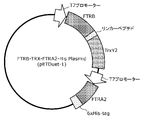
- FIG. 8 is a conceptual diagram of an expression vector for producing a fusion protein.
- FIG. 1 is a diagram for explaining an application example of the fusion protein according to this embodiment.
- FIG. 2 is a diagram showing an example of a configuration of an oxidation-reduction device including electrodes according to the present embodiment.
- FIG. 9 is a conceptual diagram of a fusion protein.
- Figure 10 shows the amino acid sequence of the fusion protein.
- 11 shows SDS-polyacrylamide gel electrophoresis (SDS-PAGE) images for evaluation of reductase activity in Comparative Examples 1, 2 and Example 1.
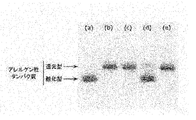
- FIG. 12 is a diagram showing electropherograms after SDS-PAGE of Examples 3, 4, Comparative Examples 3, and 4.
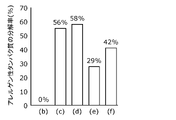
- FIG. 13 is a diagram showing the calculation results of the decomposition rate of allergenic proteins.
- a fusion protein according to one aspect of the present disclosure is a fusion protein in which thioredoxin reductase and thioredoxin are fused via a linker peptide, and the linker peptide contains glycine (G) and serine (S).
- the linker peptide contains glycine with a low molecular weight and a non-polar side chain and serine with a low molecular weight and hydrophilicity, so that it can have flexibility and moderate hydrophilicity.
- the linker peptide consists of an amino acid sequence of more than 5 residues and less than or equal to 50 residues.
- the linker peptide comprises at least one glycine and at least one serine, and further comprises (i) H 2 N--CHR--COOH, where R is a hydrogen group , or an alkyl group having 1 to 4 carbon atoms), and (ii) H 2 N-CHR-COOH (provided that R is at least one alkyl group having 1 or 2 carbon atoms) one hydrogen group is substituted with a hydroxyl group).
- the linker peptide can maintain flexibility and moderate hydrophilicity even if it contains amino acids corresponding to the above (i) and (ii) other than glycine and serine.
- the linker peptide comprises an amino acid sequence of (GGGGS) n , where n is an integer of 2 or greater.
- the fused proteins can have a relatively high degree of freedom in movement, and the linker peptide can have flexibility and moderate hydrophilicity.
- a method for producing a fusion protein includes preparing a linker peptide containing glycine (G) and serine (S), and fusing thioredoxin reductase and thioredoxin via the prepared linker peptide.
- the fusion protein production method creates a linker peptide containing a glycine having a low molecular weight and a non-polar side chain and a low molecular weight and hydrophilic serine. Fusion proteins can be produced that are fused via a peptide.
- the electrode according to one aspect of the present disclosure has any of the above fusion proteins immobilized thereon.
- an oxidation-reduction device includes the electrodes described above and a power supply that applies a voltage to the electrodes, and oxidizes or reduces a target molecule.
- the redox device can efficiently oxidize or reduce the target molecule because electrons are transported from the electrode to the target molecule.
- the redox method according to one aspect of the present disclosure uses the electrodes described above to oxidize or reduce the target molecule.
- the method for cleaving disulfide bonds uses the electrode described above to cleave the disulfide bonds of a protein that is a target molecule.
- the disulfide bond cleavage method transports electrons from the electrode to the target molecule, so the disulfide bond of the target molecule can be efficiently reduced.
- an allergen inactivation method uses the electrode described above to inactivate an allergen, which is a target molecule.
- the allergen inactivation method electrons are transported from the electrode to the allergen, which is the target molecule, and the allergen is reduced, so the allergen can be efficiently inactivated.
- the X-axis direction, the Y-axis direction, and the Z-axis direction which are orthogonal to each other, will be appropriately used for description.
- the positive side in the Z-axis direction is described as the upper side
- the negative side is described as the lower side.
- the fusion protein according to this embodiment is a fusion protein in which thioredoxin reductase and thioredoxin are fused via a linker peptide. More specifically, the fusion protein is a fusion protein in which NADPH-thioredoxin reductase or ferredoxin-thioredoxin reductase (FTR) and thioredoxin (Trx) are fused via a linker peptide. is an enzyme. As shown in FIG. 1, the fusion protein donates electrons to the target molecule (here, the allergen) upon receiving electrons donated from the electrode to the electron mediator.
- FIG. 1 is a diagram for explaining an application example of the fusion protein according to this embodiment.
- FIG. 1 shows an example in which the fusion protein is applied to inactivate allergens.
- an allergen is a protein having disulfide bonds, and is also called an allergenic protein.
- a disulfide bond is a very strong bond and is not easily broken by heat, acid and enzymes (eg, gastric digestive enzymes). Therefore, proteins with disulfide bonds are highly likely to cause allergies.
- the fusion protein When the fusion protein is applied to inactivate allergens, the fusion protein donates electrons to the allergen upon accepting electrons donated from the electrode to the electron mediator. Then, the allergen disulfide bond (for example, (a) in FIG.
- the linker peptide in the embodiment is a linker peptide for producing a fusion protein by fusing thioredoxin reductase and thioredoxin.
- the linker peptide fuses thioredoxin to thioredoxin reductase such that the redox-active disulfide of thioredoxin can interact with the redox-active disulfide of thioredoxin reductase.
- the linker peptide contains glycine (G) and serine (S).
- the linker peptide consists of an amino acid sequence of more than 5 residues and no more than 50 residues.
- the linker peptide comprises at least one glycine and at least one serine, and (i) H 2 N--CHR--COOH, where R is a hydrogen group or an alkyl group having 1 to 4 carbon atoms. and (ii) H 2 N--CHR--COOH (wherein R is an alkyl group having 1 or 2 carbon atoms, at least one hydrogen group of which is substituted with a hydroxyl group).
- the linker peptide comprises an amino acid sequence of (GGGGS) n , where n is an integer of 2 or greater.
- the linker peptide is one unit when an amino acid sequence consisting of five residues of glycine (G)-glycine (G)-glycine (G)-glycine (G)-serine (S) is taken as one unit.
- GGGGS glycine
- Glycine is a hydrophobic amino acid with no side chains and is more flexible than other amino acids.
- Serine is a water-soluble amino acid.
- Patent Document 1 discloses a linker peptide consisting of 49 negatively charged amino acid residues for fusing thioredoxin reductase and thioredoxin.
- the linker peptide of the present disclosure consists of an amino acid sequence of 5 to 15 residues containing glycine, which has a small side chain, is uncharged, and is more flexible than other amino acids, and serine, which is a water-soluble amino acid. Become. Therefore, the linker peptide of the present invention differs from the linker peptide described in Patent Document 1 in terms of amino acid sequence configuration and length, and also in effects.
- a fusion protein of thioredoxin reductase and thioredoxin fused via the above linker peptide can be produced by a conventional technique for fusing the respective proteins.
- thioredoxin reductase and DNA encoding thioredoxin can be isolated from plants, animals, or microorganisms by the polymerase chain reaction (PCR) method.
- PCR polymerase chain reaction
- Arabidopsis thaliana thioredoxin reductase and thioredoxin they can be isolated by PCR from cDNA after reverse transcription using total RNA extracted from Arabidopsis thaliana. Primers necessary for isolation can be designed using the sequence information of each organism's gene.
- TAIR The Arabidopsis Information Resource
- NCBI National Center for Biotechnology Information
- the gene encoding the protein can be incorporated into an expression vector according to a known method.
- the type of expression vector can be appropriately selected according to the type of host into which the vector is to be incorporated.
- the prepared expression vector can be transformed into a host such as a microorganism such as E. coli, a plant body, a plant cell, an animal cell, or an insect cell to express the protein. It may also be produced using a cell-free protein expression system without using a host.
- a host such as a microorganism such as E. coli, a plant body, a plant cell, an animal cell, or an insect cell to express the protein. It may also be produced using a cell-free protein expression system without using a host.
- FIG. 2 is a diagram illustrating an example of a configuration of an oxidation-reduction device including electrodes according to the embodiment.
- the oxidation-reduction device 100 includes an electrode on which a fusion protein is immobilized (for example, the cathode electrode 1 in FIG. 2) and a power supply 20 that applies voltage to the electrode to oxidize or reduce target molecules.
- the redox device 100 performs electron transport between the electrode and the fusion protein by applying a voltage to the electrode. As a result, electron transfer occurs between the electrode on which the fusion protein is immobilized and the target molecule in the sample 9, so that the target molecule is oxidized or reduced.
- the oxidation-reduction device 100 applies a voltage to the electrodes while the sample 9 (for example, sample solution) containing the target molecules is in a non-flowing state, so that the fusion protein immobilized on the electrodes and the target molecules in the sample 9 are separated from each other. Electrons are transferred between and the target molecule is oxidized or reduced.
- the oxidation-reduction device 100 includes the stirrer 8 and the stirrer 40 that rotates the stirrer 8 , but the stirrer 8 and the stirrer 40 may not be provided. In the example of FIG.
- the oxidation-reduction device 100 causes the stirring unit 40 to rotate the stirrer 8 to switch the sample solution from a non-fluid state to a fluid state, thereby introducing oxidized or reduced target molecules into the sample solution. Diffuse. In this manner, the oxidation-reduction device 100 can efficiently oxidize or reduce the target molecules in the entire solution by repeatedly switching the flow state of the sample 9 (sample solution).
- the solution when the solution is in a non-fluid state, for example, the solution is not stirred or shaken (that is, it is not subjected to external force such as shearing force or vibration), and the liquid surface is not moving such as fluctuation. It means the state of not being seen.
- FIG. 1 the configuration of the oxidation-reduction device 100 according to the embodiment will be described with reference to FIGS. 2 to 4.
- FIG. 2 the configuration of the oxidation-reduction device 100 according to the embodiment will be described with reference to FIGS. 2 to 4.
- FIG. 2 the configuration of the oxidation-reduction device 100 according to the embodiment will be described with reference to FIGS. 2 to 4.
- the oxidation-reduction device 100 agitates the sample 9 containing the target molecule to make it fluid, and the target molecule by performing electron transfer between the agitator 40 and the target molecule.
- It comprises an electrode (cathode electrode 1) to which a fusion protein to be oxidized or reduced is immobilized, a power source 20 that applies voltage to the electrode, and a control unit 30 that controls the power source 20 and the stirring unit 40.
- An electron carrier and a fusion protein enzyme are immobilized on the electrode.
- the voltage application unit 10 includes, for example, a cathode electrode 1 (also referred to as a working electrode), a reference electrode 2, a counter electrode 3, a cell 4, a lid 5, terminals 6a, 6b, 6c, and leads 7a, 7b, 7c. It is an electrode type cell.
- the voltage application unit 10 may be a two-electrode cell including a working electrode (cathode electrode 1) and a counter electrode 3, for example.
- the cathode electrode 1 and counter electrode 3 are made of a conductive material.
- the conductive material may be, for example, a carbon material, a conductive polymer material, a semiconductor, or a metal.
- FIG. 3 is a cross-sectional view taken along line II-II of FIG.
- FIG. 4 is a diagram schematically showing an electron carrier and an oxidoreductase immobilized on an electrode.
- the cathode electrode 1 is an electrode on which a fusion protein is immobilized.
- the cathode electrode 1 includes, for example, a glass substrate 11, a titanium deposition layer 12 deposited on the glass substrate 11, a cathode substrate 13 formed on the titanium deposition layer 12, an electron carrier fixed to the cathode substrate 13, and and a reaction layer 14 containing the fusion protein.
- a conductive substrate such as gold, glassy carbon, or ITO (Indium Tin Oxide) may be used.
- the thickness of the cathode substrate 13 is not particularly limited.
- the electron carrier immobilized on the cathode substrate 13 is not particularly limited as long as it is a substance that enables electron transfer between the electrode and the fusion protein immobilized on the electrode. Examples include viologen, quinone, or indophenol.
- the electron carrier is immobilized on the cathode substrate 13 by, for example, a chain-like first linker.
- the first linker includes, for example, an alkyl chain having 2 to 5 carbon atoms.
- the first linker has a thiol group at its end.
- the electron mediator is immobilized on the surface of the electrode by chemically bonding the first linker and the electrode (specifically, the cathode substrate 13).
- the electron carrier immobilized on the electrode and the fusion protein should have the following characteristics (1) to (4).
- the first linker that connects the electron carrier and the electrode has conductivity
- (2) The second linker that connects the fusion protein and the electrode has a structure similar to that of the first linker. but not conductive.
- (3) the distance between the fusion protein and the electrode is greater than the distance between the electron carrier and the electrode.
- the distance between the electron carrier and the fusion protein is such that electron transfer is possible (for example, within several ⁇ m). This makes it easier for the electrons transferred from the electrode to the electron carrier to transfer to the fusion protein.
- the fusion protein is arranged on the outermost surface of the electrode and is immobilized on the electrode with the chain-like second linker, the degree of freedom of the fusion protein is increased and it becomes easier to act on the target molecule.
- the number of carbon atoms in the first linker and the second linker may be changed within the above preferable range.
- the second linker does not have conductivity means that it slightly conducts electricity, but has sufficiently low conductivity compared to the first linker and can be regarded as substantially non-conductive. include.
- the fusion protein immobilized on the surface of the electrode is a fusion of an oxidation-reduction protein (eg, thioredoxin) and an oxidation-reduction enzyme (eg, ferredoxin-thioredoxin reductase) via a linker peptide. and oxidizes or reduces target molecules.
- the fusion protein is immobilized on the cathode substrate 13 with a chain-like second linker longer than the first linker.
- the second linker includes, for example, an alkyl chain with 3 or more and 20 or less carbon atoms, and may include an alkyl chain with 6 or more and 14 or less carbon atoms.
- the reference electrode 2 is an electrode that does not react with the components in the sample 9 and maintains a constant potential. be.
- the reference electrode 2 is, for example, a silver/silver chloride electrode.
- the counter electrode 3 is, for example, a platinum electrode.
- the power supply 20 applies a voltage between the cathode electrode 1 and the counter electrode 3 of the voltage application unit 10 according to the control signal output from the control unit 30, and sets the potential between the cathode electrode 1 and the reference electrode 2 to a predetermined level. value control.
- the control unit 30 performs information processing for controlling the voltage application of the power supply 20 and the movement of the motor (not shown) of the stirring unit 40 .
- the controller 30 is implemented by, for example, a processor, microcomputer, or dedicated circuit.
- the stirring section 40 controls the rotation speed and rotation time of the stirrer 8 set in the voltage applying section 10 by controlling the operation of the motor according to the control signal output from the control section 30 .
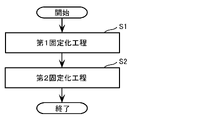
- FIG. 5 is a flow chart showing an example of the electrode manufacturing method according to the present embodiment.
- FIG. 6 is a diagram schematically showing each flow in FIG. (a) of FIG. 6 shows the first immobilization step, and (b) of FIG. 6 shows the second immobilization step. It should be noted that the electrode according to this embodiment is the cathode electrode 1 .
- the electrode manufacturing method includes a first immobilization step (S1) and a second immobilization step (S2) of immobilizing the fusion protein on the electrode via a second linker.
- the electron carrier is immobilized on the electrode via the chain-like first linker.
- a solution containing an electron carrier (e.g., an electron mediator) bound to the first linker and a second linker is prepared, and electron transfer is performed in the same manner as in the formation of a self-assembled monolayer (SAM).
- SAM self-assembled monolayer
- a first linker bound to the body and a second linker are immobilized on the electrode.
- the electrode is immersed in this mixed solution for 1 hour or more and allowed to stand.
- the electron carrier has a first linker.
- the first linker has a thiol group at its end. By chemically bonding the first linker and the electrode, the electron carrier is immobilized on the electrode via the first linker.
- the first linker is an alkyl chain with a length that allows electrons to move from the electrode to the electron carrier.
- the first linker is, for example, an alkyl chain having 2 to 5 carbon atoms.
- the second linker for immobilizing the fusion protein on the electrode is an alkyl chain with 3 or more carbon atoms. is preferably an alkyl chain of In addition, the second linker is an alkyl chain having 20 or less carbon atoms. is preferably an alkyl chain of That is, the second linker has 3 or more and 20 or less carbon atoms, and more preferably, for example, the second linker may be an alkyl chain having 6 or more and 14 or less carbon atoms. Also, the second linker has a carboxyl group or an amino group at one end and a thiol group at the other end.
- the second linker is preferably an alkyl chain having less than 15 carbon atoms.
- the length of the alkyl chain of the second linker may be appropriately determined according to the length of the alkyl chain of the first linker and the size (molecular weight) of the electron carrier that binds to the first linker.
- the fusion protein is immobilized on the electrode via the second linker. More specifically, as shown in FIG. 6(b), the second linker immobilized on the electrode is bound to the fusion protein. At this time, for example, the amino group of the thioredoxin reductase in the fusion protein and the carboxyl group of the second linker are bound by an amine coupling reaction. This immobilizes the fusion protein on the electrode via the second linker.
- Target Molecule Redox Method Next, a method for redoxing the target molecule will be described with reference to FIGS. 3 and 7.
- FIG. FIG. 7 is a diagram for explaining the oxidation-reduction method of the target molecule.
- Target molecules are, for example, proteins or allergens and have disulfide bonds.
- the oxidation-reduction method of the target molecule is carried out by using, for example, a three-electrode voltage application unit 10 having an electrode on which a fusion protein is immobilized as a cathode electrode 1, an anode electrode as a counter electrode 3, and a reference electrode 2, and a sample 9. oxidizes or reduces target molecules contained in The surface area of the anode electrode is sufficiently larger than that of the cathode electrode 1, for example.
- Sample 9 is an aqueous solution containing target molecules.
- the voltage applied to the sample 9 may be controlled so that the potential of the cathode electrode 1 with respect to the reference electrode 2 becomes the oxidation potential of the electron carrier (electron mediator).
- Example 1 [Preparation of fusion protein of thioredoxin reductase and thioredoxin] [Example 1]
- the configuration of the fusion protein was as follows.
- One unit of the linker peptide in Example 1 was an amino acid sequence (GGGGS) consisting of five residues of glycine (G)-glycine (G)-glycine (G)-glycine (G)-serine (S).
- the thioredoxin reductase used was ferredoxin: thioredoxin reductase (hereinafter, FTR), and the thioredoxin used was thioredoxin Y2 (hereinafter, TrxY2).
- FTR consists of a catalytic subunit (hereinafter FTRB) and a variable subunit (hereinafter FTRA2), both of which form a heterodimer.
- FIG. 8 is a conceptual diagram of an expression vector for producing a fusion protein.
- a gene (SEQ ID NO: 1) encoding the 32nd to 146th amino acids of FTRB was introduced into the 5′ side of the multicloning site 1 of the enzyme expression vector (pETDuet-1: manufactured by Novagen). Then, a gene (SEQ ID NO: 2) encoding the 59th to 167th amino acids of TrxY2 was introduced on the 3' side. Between these two genes, genes encoding linker peptides (SEQ ID NOs: 3-5) were introduced in the necessary units and in the proper order for expression.
- a gene (SEQ ID NO: 6) encoding the 73rd to 184th amino acids of FTRA2 and a gene (SEQ ID NO: 7) encoding a histidine tag (His-Tag) were introduced into the multicloning site 2.
- a gene encoding amino acids 32-146 of FTRB (SEQ ID NO: 1) ATGGCGAAAACGGAACCGTCGGAGAAATCAGTAGAGATTATGAGGAAATTCTCCGAGCAATATGCTCGTCGCTCTGGGACTTACTTCTGTGTTGATAAAGGAGTTACTTCAGTCGTTATTAAGGGTTTGGCTGAGCATAAAGATTCATATGGTGCACCGCTTTGCCCTTGCAGACACTATGATGATAAAGCTGCTGAGGTTGGACAAGGCTTTTGGAATTGTCCGTGTGTTCCAATGAGAGAGAGGAAGGAAGGAGTGCCATTGTATGCTTCTTAACTCCTGATAATGATTTCGCTGGAAAAGATCAGACGATTACATCGGATGAAATAAAAGAAACTACAGCTAACATG (2) A gene encoding amino acids 59-167 of TrxY2 (stop codon: TAG) (SEQ ID NO: 2) ATGGCAGCAAAGAAGCAAACTTTCAACTCTTTTGATG
- FIG. 9 is a conceptual diagram of the fusion protein
- FIG. 10 is a diagram showing the amino acid sequence.
- FIG. 9(a) is a conceptual diagram showing a fusion protein of FTRB and TrxY2, and FIG.
- FIG. 10(a) shows the amino acid sequence of the fusion protein of FTRB and TrxY2, and the underlined part shows the sequence of the linker peptide.
- FIG. 10(b) shows the amino acid sequence of the fusion protein of FTRA2 and histidine tag, and the underlined part shows the sequence of histidine tag.
- E. coli was suspended in xTractor Buffer (Clontech) and incubated for 10 minutes at 4°C using a rotator. Cell debris was removed by centrifugation at 12,000 ⁇ g and 4° C. for 20 minutes. The expressed fusion protein was purified from the supernatant after centrifugation using Ni2+ affinity chromatography.
- Example 2 The enzymatic activity of the fusion protein purified in Example 1 was examined according to the following known method.
- the reductase activity evaluation method is as follows.
- a sample containing an oxidized allergenic protein was mixed with 1.0 mM reduced nicotinamide dinucleotide phosphate (NADPH), 0.2 ⁇ M ferredoxin:NADPH reductase, 1 ⁇ M ferredoxin, 1 ⁇ M of the fusion protein of the present disclosure,
- An enzymatic reaction solution was prepared and allowed to incubate at 37° C. for 1 hour.
- 10 mM 4-acetamido-4-maleimidyl-stilbene-2,2-disulfonate (AMS) was added, incubated at 37°C for 1 hour, and subjected to SDS-PAGE.
- AMS is a low-molecular-weight compound that specifically binds to thiol groups. Proteins that have undergone oxidative modification and proteins that have not undergone modification have different numbers of AMSs that bind. can be detected as a difference in mobility.
- FIG. 11 is an SDS polyacrylamide gel electrophoresis (SDS-PAGE) image for evaluating reductase activity in Comparative Examples 1, 2 and Example 1. ⁇ -lactoglobulin was used as the allergenic protein.
- FIG. 11 is an electropherogram obtained by reducing ⁇ -lactoglobulin with a fusion protein fused via a linker peptide (GGGGS) 3 of 15 amino acid residues shown in SEQ ID NO: 5 of Example 1. is.
- (c) of FIG. 11 is an electropherogram when ⁇ -lactoglobulin is reduced with a fusion protein fused via a linker peptide (GGGGS) 2 of 10 amino acid residues shown in SEQ ID NO: 4 of Example 1. is.
- FIG. 11 is an electropherogram obtained by reducing ⁇ -lactoglobulin with a fusion protein fused via a linker peptide (GGGGS) 1 having five amino acid residues shown in SEQ ID NO: 3 of Example 1. is.
- the reduced form of the allergenic protein was detected in all of (b) to (d) of FIG. 11, confirming reductase activity.
- the use of a linker peptide having 10 ((c) in FIG. 11) or 15 ((b) in FIG. 11) amino acid residues for the production of a fusion protein provides excellent allergenic protein reductase activity. It has been suggested.
- Comparative Example 1 was carried out in the same manner as in Example 2, except that a solution obtained by removing the fusion protein from the enzyme reaction solution was used. In this case, as shown in FIG. 11(a), the reduced form of the allergenic protein was not detected, and no reductase activity was confirmed.
- Comparative Example 2 was carried out in the same manner as in Example 2, except that FTRB and TrxY2 were individually added to the enzyme reaction solution instead of the fusion protein. In this case, as shown in FIG. 11(e), the reduced form of the allergenic protein was detected, confirming the reductase activity.
- sample solution A sample containing an allergenic protein (hereinafter referred to as sample solution) was prepared by dissolving ⁇ -lactoglobulin in pH 7.4 phosphate-buffered saline (PBS) at 3.3 mg/ml.
- PBS pH 7.4 phosphate-buffered saline
- the electrode uses an alkyl chain with 4 carbon atoms as the first linker to immobilize an electron carrier (e.g., methylviologen) on the electrode, and uses an alkyl chain with 10 carbon atoms as the second linker to form a fusion protein (more Specifically, a fusion protein in which ferredoxin-thioredoxin reductase and thioredoxin are bound with a linker peptide) was immobilized on an electrode.
- an electron carrier e.g., methylviologen
- FIG. 12 is a diagram showing electropherograms of Examples 3, 4, Comparative Examples 3, and 4 after SDS-PAGE.
- FIG. 12 shows the allergenic protein residual rate calculated by proportional calculation to the allergenic protein residual rate in the control sample.
- FIG. 12(a) is an electropherogram of the molecular weight markers and
- FIG. 12(b) is an electropherogram of the control sample.
- FIG. 13 is a figure which shows the calculation result of the decomposition rate of the allergenic protein.
- FIG. 13(b) is a graph showing the degradation rate of allergenic proteins in the control sample. The percentage of allergenic protein degradation in the control sample is 0%.
- Example 3 In Example 3, the fusion protein fused via the linker peptide (GGGGS) 3 of 15 amino acid residues shown in SEQ ID NO: 5 of Example 1 was used as described in [3. Electrode Manufacturing Method], an electrode immobilized on the surface of the electrode (cathode electrode 1 in FIG. 2) was prepared and used. The results are shown in FIG. 12(c).
- (c) of FIG. 12 is an electrophoretic image of Example 3.
- FIG. In addition, (c) of FIG. 13 is a graph showing the decomposition rate of the allergenic protein in Example 3. As shown in FIG. In Example 3, it was confirmed that the allergenic protein persistence rate was 44% and the decomposition rate was 56%.
- Example 4 The procedure was carried out in the same manner as in Example 3, except that a fusion protein fused via a linker peptide (GGGGS) 2 consisting of 10 amino acid residues shown in SEQ ID NO: 4 of Example 1 was used. The results are shown in FIG. 12(d).
- FIG. 12(d) is an electrophoretic image of Example 4.
- FIG. in addition, (d) of FIG. 13 is a graph showing the decomposition rate of the allergenic protein in Example 4. In FIG. In Example 4, it was confirmed that the allergenic protein persistence rate was 42% and the decomposition rate was 58%.
- Comparative Example 3 was carried out in the same manner as in Example 3, except that a fusion protein fused via a linker peptide (GGGGS) 1 of five amino acid residues shown in SEQ ID NO: 3 of Example 1 was used. .
- the results are shown in FIG. 12(e).
- (e) of FIG. 12 is an electrophoretic image of Comparative Example 3.
- FIG. in addition, (e) of FIG. 13 is a graph showing the decomposition rate of the allergenic protein in Comparative Example 3. In FIG. In Comparative Example 3, it was confirmed that the allergenic protein residual rate was 71% and the decomposition rate was 29%.
- Comparative Example 4 Comparative Example 4 was performed in the same manner as Example 3 except that a normal electrode was used and ferredoxin-thioredoxin reductase and thioredoxin were separately added to the sample. The results are shown in FIG. 12(f).
- (f) of FIG. 12 is an electrophoretic image of Comparative Example 4.
- FIG. in addition, (f) of FIG. 13 is a graph showing the decomposition rate of the allergenic protein in Comparative Example 4. In FIG. In Comparative Example 4, it was confirmed that the allergenic protein residual rate was 58% and the decomposition rate was 42%.
- the present disclosure includes, for example, a fusion protein capable of continuously reducing and inactivating an allergenic protein, a method for producing the fusion protein, an electrode, a redox device, a redox method, a method for breaking disulfide bonds, and , can be used as an allergen inactivation method.
Landscapes
- Chemical & Material Sciences (AREA)
- Health & Medical Sciences (AREA)
- Life Sciences & Earth Sciences (AREA)
- Organic Chemistry (AREA)
- Genetics & Genomics (AREA)
- Engineering & Computer Science (AREA)
- Zoology (AREA)
- Bioinformatics & Cheminformatics (AREA)
- Wood Science & Technology (AREA)
- General Health & Medical Sciences (AREA)
- Biochemistry (AREA)
- Molecular Biology (AREA)
- General Engineering & Computer Science (AREA)
- Biomedical Technology (AREA)
- Medicinal Chemistry (AREA)
- Biotechnology (AREA)
- Microbiology (AREA)
- Biophysics (AREA)
- Proteomics, Peptides & Aminoacids (AREA)
- Toxicology (AREA)
- Gastroenterology & Hepatology (AREA)
- Physics & Mathematics (AREA)
- Plant Pathology (AREA)
- Peptides Or Proteins (AREA)
Priority Applications (6)
| Application Number | Priority Date | Filing Date | Title |
|---|---|---|---|
| CA3222715A CA3222715A1 (en) | 2021-06-23 | 2022-06-23 | Fusion protein, fusion protein production method, electrode, redox device, redox method, method for cutting disulfide bonds, and method for inactivating allergen |
| AU2022296206A AU2022296206A1 (en) | 2021-06-23 | 2022-06-23 | Fusion protein, fusion protein production method, electrode, redox device, redox method, method for cutting disulfide bonds, and method for inactivating allergen |
| CN202280043276.0A CN117500917A (zh) | 2021-06-23 | 2022-06-23 | 融合蛋白、融合蛋白的制造方法、电极、氧化还原装置、氧化还原方法、二硫键的切断方法和过敏原的灭活方法 |
| EP22828504.5A EP4361179A4 (en) | 2021-06-23 | 2022-06-23 | Fusion protein, fusion protein production method, electrode, redox device, redox method, method for cutting disulfide bonds, and method for inactivating allergen |
| JP2023530121A JPWO2022270588A1 (https=) | 2021-06-23 | 2022-06-23 | |
| US18/390,220 US20240117325A1 (en) | 2021-06-23 | 2023-12-20 | Fusion protein, fusion protein production method, electrode, redox device, redox method, disulfide bond cleavage method, and allergen inactivation method |
Applications Claiming Priority (2)
| Application Number | Priority Date | Filing Date | Title |
|---|---|---|---|
| JP2021-104343 | 2021-06-23 | ||
| JP2021104343 | 2021-06-23 |
Related Child Applications (1)
| Application Number | Title | Priority Date | Filing Date |
|---|---|---|---|
| US18/390,220 Continuation US20240117325A1 (en) | 2021-06-23 | 2023-12-20 | Fusion protein, fusion protein production method, electrode, redox device, redox method, disulfide bond cleavage method, and allergen inactivation method |
Publications (1)
| Publication Number | Publication Date |
|---|---|
| WO2022270588A1 true WO2022270588A1 (ja) | 2022-12-29 |
Family
ID=84544446
Family Applications (1)
| Application Number | Title | Priority Date | Filing Date |
|---|---|---|---|
| PCT/JP2022/025134 Ceased WO2022270588A1 (ja) | 2021-06-23 | 2022-06-23 | 融合タンパク質、融合タンパク質の製造方法、電極、酸化還元装置、酸化還元方法、ジスルフィド結合の切断方法、及び、アレルゲンの不活化方法 |
Country Status (7)
| Country | Link |
|---|---|
| US (1) | US20240117325A1 (https=) |
| EP (1) | EP4361179A4 (https=) |
| JP (1) | JPWO2022270588A1 (https=) |
| CN (1) | CN117500917A (https=) |
| AU (1) | AU2022296206A1 (https=) |
| CA (1) | CA3222715A1 (https=) |
| WO (1) | WO2022270588A1 (https=) |
Cited By (3)
| Publication number | Priority date | Publication date | Assignee | Title |
|---|---|---|---|---|
| WO2024237019A1 (ja) * | 2023-05-16 | 2024-11-21 | パナソニックIpマネジメント株式会社 | 酵素反応装置および酵素反応方法 |
| WO2024259559A1 (en) * | 2023-06-19 | 2024-12-26 | Hangzhou Enhe Biotechnology Co., Ltd. | Fusion polypeptides for production of 7-dehydrocholesterol and methods of use thereof |
| EP4563699A4 (en) * | 2022-07-26 | 2025-11-26 | Panasonic Ip Man Co Ltd | ENZYMATIC ELECTRODE, ENZYMATIC REACTION DEVICE, ENZYMATIC REACTION METHOD, MODIFIED PROTEIN AND METHOD FOR PRODUCING MODIFIED PROTEIN |
Citations (6)
| Publication number | Priority date | Publication date | Assignee | Title |
|---|---|---|---|---|
| JP2004527227A (ja) * | 2000-12-19 | 2004-09-09 | セムバイオシス ジェネティクス インコーポレイテッド | 多量体タンパク質の生産のための方法、および関連組成物 |
| JP2005505250A (ja) * | 2001-05-04 | 2005-02-24 | ゼンコー | 核酸およびチオレドキシンレダクターゼ活性を有するタンパク質 |
| JP2007240528A (ja) * | 2006-02-10 | 2007-09-20 | Canon Inc | 試料中のチオレドキシン類の濃度に関する情報取得装置、ストレス度情報取得装置及びストレス度判定方法 |
| JP2009002689A (ja) * | 2007-06-19 | 2009-01-08 | Canon Inc | チオレドキシン類測定用電極、チオレドキシン類の測定方法、チオレドキシン類の測定装置 |
| WO2021261511A1 (ja) * | 2020-06-23 | 2021-12-30 | パナソニックIpマネジメント株式会社 | アレルゲンの不活化方法及びアレルゲン不活化装置 |
| WO2021261509A1 (ja) * | 2020-06-23 | 2021-12-30 | パナソニックIpマネジメント株式会社 | タンパク質中のジスルフィド結合の切断方法及びタンパク質中のジスルフィド結合の切断装置 |
Family Cites Families (2)
| Publication number | Priority date | Publication date | Assignee | Title |
|---|---|---|---|---|
| US20030211511A1 (en) * | 2001-05-04 | 2003-11-13 | Briggs Steven P. | Nucleic acids and proteins with thioredoxin reductase activity |
| CN101899460B (zh) * | 2010-02-24 | 2013-06-19 | 浙江大学 | 一种制备降低食物过敏原反应的融合蛋白的方法 |
-
2022
- 2022-06-23 JP JP2023530121A patent/JPWO2022270588A1/ja not_active Withdrawn
- 2022-06-23 CN CN202280043276.0A patent/CN117500917A/zh active Pending
- 2022-06-23 AU AU2022296206A patent/AU2022296206A1/en active Pending
- 2022-06-23 WO PCT/JP2022/025134 patent/WO2022270588A1/ja not_active Ceased
- 2022-06-23 EP EP22828504.5A patent/EP4361179A4/en not_active Withdrawn
- 2022-06-23 CA CA3222715A patent/CA3222715A1/en active Pending
-
2023
- 2023-12-20 US US18/390,220 patent/US20240117325A1/en active Pending
Patent Citations (6)
| Publication number | Priority date | Publication date | Assignee | Title |
|---|---|---|---|---|
| JP2004527227A (ja) * | 2000-12-19 | 2004-09-09 | セムバイオシス ジェネティクス インコーポレイテッド | 多量体タンパク質の生産のための方法、および関連組成物 |
| JP2005505250A (ja) * | 2001-05-04 | 2005-02-24 | ゼンコー | 核酸およびチオレドキシンレダクターゼ活性を有するタンパク質 |
| JP2007240528A (ja) * | 2006-02-10 | 2007-09-20 | Canon Inc | 試料中のチオレドキシン類の濃度に関する情報取得装置、ストレス度情報取得装置及びストレス度判定方法 |
| JP2009002689A (ja) * | 2007-06-19 | 2009-01-08 | Canon Inc | チオレドキシン類測定用電極、チオレドキシン類の測定方法、チオレドキシン類の測定装置 |
| WO2021261511A1 (ja) * | 2020-06-23 | 2021-12-30 | パナソニックIpマネジメント株式会社 | アレルゲンの不活化方法及びアレルゲン不活化装置 |
| WO2021261509A1 (ja) * | 2020-06-23 | 2021-12-30 | パナソニックIpマネジメント株式会社 | タンパク質中のジスルフィド結合の切断方法及びタンパク質中のジスルフィド結合の切断装置 |
Cited By (4)
| Publication number | Priority date | Publication date | Assignee | Title |
|---|---|---|---|---|
| EP4563699A4 (en) * | 2022-07-26 | 2025-11-26 | Panasonic Ip Man Co Ltd | ENZYMATIC ELECTRODE, ENZYMATIC REACTION DEVICE, ENZYMATIC REACTION METHOD, MODIFIED PROTEIN AND METHOD FOR PRODUCING MODIFIED PROTEIN |
| WO2024237019A1 (ja) * | 2023-05-16 | 2024-11-21 | パナソニックIpマネジメント株式会社 | 酵素反応装置および酵素反応方法 |
| WO2024259559A1 (en) * | 2023-06-19 | 2024-12-26 | Hangzhou Enhe Biotechnology Co., Ltd. | Fusion polypeptides for production of 7-dehydrocholesterol and methods of use thereof |
| US12258588B2 (en) | 2023-06-19 | 2025-03-25 | Hangzhou Enhe Biotechnology Co., Ltd. | Fusion polypeptides for production of 7-dehydrocholesterol and methods of use thereof |
Also Published As
| Publication number | Publication date |
|---|---|
| EP4361179A4 (en) | 2024-12-25 |
| EP4361179A1 (en) | 2024-05-01 |
| JPWO2022270588A1 (https=) | 2022-12-29 |
| US20240117325A1 (en) | 2024-04-11 |
| AU2022296206A1 (en) | 2024-01-04 |
| CA3222715A1 (en) | 2022-12-29 |
| CN117500917A (zh) | 2024-02-02 |
Similar Documents
| Publication | Publication Date | Title |
|---|---|---|
| US20240117325A1 (en) | Fusion protein, fusion protein production method, electrode, redox device, redox method, disulfide bond cleavage method, and allergen inactivation method | |
| US20230119996A1 (en) | Allergen inactivation method and allergen inactivation device | |
| AU2021295937A2 (en) | Method for cleaving disulfide bond in protein and device for cleaving disulfide bond in protein | |
| US20220162569A1 (en) | Recombinant flavin-adenine dinucleotide glucose dehydrogenase and uses thereof | |
| US20060246426A1 (en) | Recombinant fusion proteins with high affinity binding to gold and applications thereof | |
| JP7818927B2 (ja) | 熱安定性が向上した変異型グルコースデヒドロゲナーゼ及びその利用 | |
| US20220306996A1 (en) | Mutant Glucose Dehydrogenase Having Improved Thermal Stability, and Use Thereof | |
| Godigamuwa et al. | Fabrication of silica on chitin in ambient conditions using silicatein fused with a chitin-binding domain | |
| JP6264602B2 (ja) | グルコース多段階酸化系酵素電極、当該酵素電極の製造方法、及び当該酵素電極を利用したバイオ燃料電池 | |
| Avila et al. | An electrochemical study of the factors responsible for modulating the reduction potential of putidaredoxin | |
| EP4563699A1 (en) | Enzyme electrode, enzymatic reaction device, enzymatic reaction method, modified protein, and production method of modified protein | |
| WO2024005059A1 (ja) | 標的分子の還元方法、還元装置、及び、電極 | |
| US20250145972A1 (en) | Enzyme electrode, reduction device, reduction method, modified protein, and modified protein production method | |
| JP2024087723A (ja) | 酵素電極、酸化還元装置、ジスルフィド結合を切断する方法、及び酵素電極を製造する方法 | |
| US20260056159A1 (en) | Enzymatic reaction device and enzymatic reaction method | |
| US12359238B2 (en) | Recombinant flavin-adenine dinucleotide glucose dehydrogenase and uses thereof | |
| WO2024249874A9 (en) | Orientation controllable direct electron transfer type glucose dehydrogenases and their biosensor applications | |
| JP2025030829A (ja) | 乳酸応答性酵素電極 | |
| JP2002125689A (ja) | 融合蛋白質 | |
| Islama et al. | REDUCING THE STRUCTURE OF PYRANOSE 2-OXIDASE AS AN EFFECTIVE TOOL FOR A SMART DESIGN OF ENZYMATIC ELECTRODES |
Legal Events
| Date | Code | Title | Description |
|---|---|---|---|
| 121 | Ep: the epo has been informed by wipo that ep was designated in this application |
Ref document number: 22828504 Country of ref document: EP Kind code of ref document: A1 |
|
| WWE | Wipo information: entry into national phase |
Ref document number: 3222715 Country of ref document: CA Ref document number: 2022296206 Country of ref document: AU Ref document number: AU2022296206 Country of ref document: AU |
|
| WWE | Wipo information: entry into national phase |
Ref document number: 2023530121 Country of ref document: JP |
|
| WWE | Wipo information: entry into national phase |
Ref document number: 202280043276.0 Country of ref document: CN |
|
| ENP | Entry into the national phase |
Ref document number: 2022296206 Country of ref document: AU Date of ref document: 20220623 Kind code of ref document: A |
|
| WWE | Wipo information: entry into national phase |
Ref document number: 2022828504 Country of ref document: EP |
|
| NENP | Non-entry into the national phase |
Ref country code: DE |
|
| ENP | Entry into the national phase |
Ref document number: 2022828504 Country of ref document: EP Effective date: 20240123 |
|
| WWW | Wipo information: withdrawn in national office |
Ref document number: 2022828504 Country of ref document: EP |