WO2022264250A1 - 照明装置 - Google Patents
照明装置 Download PDFInfo
- Publication number
- WO2022264250A1 WO2022264250A1 PCT/JP2021/022640 JP2021022640W WO2022264250A1 WO 2022264250 A1 WO2022264250 A1 WO 2022264250A1 JP 2021022640 W JP2021022640 W JP 2021022640W WO 2022264250 A1 WO2022264250 A1 WO 2022264250A1
- Authority
- WO
- WIPO (PCT)
- Prior art keywords
- data
- brightness
- light source
- light
- fluctuation
- Prior art date
- Legal status (The legal status is an assumption and is not a legal conclusion. Google has not performed a legal analysis and makes no representation as to the accuracy of the status listed.)
- Ceased
Links
Images






Classifications
-
- H—ELECTRICITY
- H05—ELECTRIC TECHNIQUES NOT OTHERWISE PROVIDED FOR
- H05B—ELECTRIC HEATING; ELECTRIC LIGHT SOURCES NOT OTHERWISE PROVIDED FOR; CIRCUIT ARRANGEMENTS FOR ELECTRIC LIGHT SOURCES, IN GENERAL
- H05B45/00—Circuit arrangements for operating light-emitting diodes [LED]
- H05B45/10—Controlling the intensity of the light
-
- H—ELECTRICITY
- H05—ELECTRIC TECHNIQUES NOT OTHERWISE PROVIDED FOR
- H05B—ELECTRIC HEATING; ELECTRIC LIGHT SOURCES NOT OTHERWISE PROVIDED FOR; CIRCUIT ARRANGEMENTS FOR ELECTRIC LIGHT SOURCES, IN GENERAL
- H05B47/00—Circuit arrangements for operating light sources in general, i.e. where the type of light source is not relevant
- H05B47/10—Controlling the light source
- H05B47/105—Controlling the light source in response to determined parameters
-
- H—ELECTRICITY
- H05—ELECTRIC TECHNIQUES NOT OTHERWISE PROVIDED FOR
- H05B—ELECTRIC HEATING; ELECTRIC LIGHT SOURCES NOT OTHERWISE PROVIDED FOR; CIRCUIT ARRANGEMENTS FOR ELECTRIC LIGHT SOURCES, IN GENERAL
- H05B47/00—Circuit arrangements for operating light sources in general, i.e. where the type of light source is not relevant
- H05B47/10—Controlling the light source
- H05B47/155—Coordinated control of two or more light sources
-
- H—ELECTRICITY
- H05—ELECTRIC TECHNIQUES NOT OTHERWISE PROVIDED FOR
- H05B—ELECTRIC HEATING; ELECTRIC LIGHT SOURCES NOT OTHERWISE PROVIDED FOR; CIRCUIT ARRANGEMENTS FOR ELECTRIC LIGHT SOURCES, IN GENERAL
- H05B47/00—Circuit arrangements for operating light sources in general, i.e. where the type of light source is not relevant
- H05B47/10—Controlling the light source
- H05B47/16—Controlling the light source by timing means
-
- Y—GENERAL TAGGING OF NEW TECHNOLOGICAL DEVELOPMENTS; GENERAL TAGGING OF CROSS-SECTIONAL TECHNOLOGIES SPANNING OVER SEVERAL SECTIONS OF THE IPC; TECHNICAL SUBJECTS COVERED BY FORMER USPC CROSS-REFERENCE ART COLLECTIONS [XRACs] AND DIGESTS
- Y02—TECHNOLOGIES OR APPLICATIONS FOR MITIGATION OR ADAPTATION AGAINST CLIMATE CHANGE
- Y02B—CLIMATE CHANGE MITIGATION TECHNOLOGIES RELATED TO BUILDINGS, e.g. HOUSING, HOUSE APPLIANCES OR RELATED END-USER APPLICATIONS
- Y02B20/00—Energy efficient lighting technologies, e.g. halogen lamps or gas discharge lamps
- Y02B20/40—Control techniques providing energy savings, e.g. smart controller or presence detection
Definitions
- the present disclosure relates to a lighting device that simulates the appearance of a starry sky.
- Patent Document 1 discloses an example of lighting technology for simulating a starry sky.
- Patent Document 1 discloses a blinking device for a planetarium projector.
- a reference value for the bright signal time for each cycle is set, and a random number is added to the reference value to determine the bright signal time for each cycle. and the dark signal time are varied randomly to simulate the twinkling of a star.
- An object of the present disclosure is to solve the above-described problems, and to provide a lighting device capable of producing more natural twinkling stars.
- a lighting device is a lighting device that simulates the twinkling of a star, and includes a light source unit associated with one star and including a plurality of light emitting points, and a plurality of light emitting points included in the light source unit. and a drive control unit that controls the driving of the light source unit, the drive control unit distributes the brightness assigned to the light source unit to the plurality of light emitting points, and distributes the brightness of the plurality of light emitting points at each luminous intensity that is the brightness after distribution. Each is made to emit light.
- the lighting device According to the lighting device according to the present disclosure, it is possible to produce more natural twinkling of stars.
- FIG. 1 is a block diagram showing an example of a lighting device according to Embodiment 1;
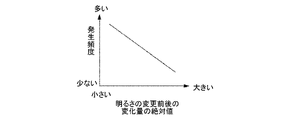
- FIG. 7 is a graph for explaining luminance fluctuation data used in the lighting devices according to Embodiments 1 to 3.
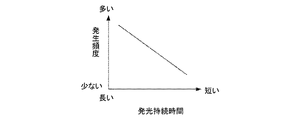
- FIG. 7 is a graph for explaining temporal fluctuation data used in lighting devices according to Embodiments 1 to 3.
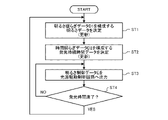
- FIG. 5 is a flowchart showing an example of processing of the lighting device according to Embodiment 1;
- FIG. 10 is a block diagram showing an example of a lighting device according to Embodiment 2;
- FIG. 10 is a graph for explaining center-of-gravity fluctuation data used in the lighting devices according to Embodiments 2 and 3.
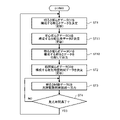
- FIG. 11 is a conceptual diagram for explaining the angular distribution of a plurality of light source units according to Embodiment 2; 13 is a flow chart showing an example of processing of the lighting device according to Embodiment 2.
- FIG. 8 is a block diagram showing another example of the configuration of the light source drive control circuit of the lighting device according to the second embodiment;
- FIG. 11 is a block diagram showing an example of a lighting device according to Embodiment 3;
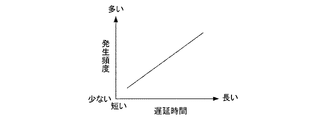
- FIG. 11 is a graph for explaining delay time fluctuation data used in the lighting device according to Embodiment 3;
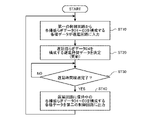
- FIG. 13 is a flow chart showing a processing example of a delay circuit used in the lighting device according to Embodiment 3;
- Embodiment 1 First, the configuration of a lighting device 100 according to Embodiment 1 will be described with reference to FIGS. 1 to 3.
- FIG. 1 is a block diagram showing an example of a lighting device 100 according to Embodiment 1.
- FIG. 1 is a block diagram showing an example of a lighting device 100 according to Embodiment 1.
- the illumination device 100 simulates the twinkling of stars as a natural illumination environment, and by extension, the starry sky.
- the illumination device 100 roughly includes a drive control section 1 and a light source unit 5 .
- the drive control unit 1 is a portion that controls driving of a light emitting point 51 (described later) of the light source unit 5, and includes a control unit 2 that controls overall control, a brightness control data holding circuit 3, a light source drive control circuit 4, have
- the illumination device 100 has one light source unit 5 associated with one star. That is, the illumination device 100 reproduces one star with one light source unit 5 .
- the light source unit 5 has one or more light emitting points 51 .
- FIG. 1 shows an example of one light emitting point 51 .
- the light-emitting point 51 may be a surface-mount type LED element, a COB-type LED module, a light-emitting element such as a solid-state laser element, a semiconductor laser element, or an organic EL element, or a general light-emitting body such as an incandescent light bulb. can be widely applied.
- the "light emitting point 51" included in the light source unit 5 may be the light source element itself, or may be the light emitting surface of a light guide member that guides light from light sources provided at different positions.
- the light emitting point 51 and the light source may not correspond one-to-one.
- the light emitting point 51 may be a light emitting surface that guides and emits light from the outside.
- the light-emitting points 51 include those that do not themselves emit light.
- the light emitting point 51 may include scratches, unevenness, or a light reflecting surface provided for emitting the light guided in the light guide member to the outside.
- the “light emitting point 51” of the light source unit 5 is not particularly limited as long as it can be regarded as a light source in the installation environment of the lighting device 100, and it does not matter whether it is an element itself or a virtual light source.
- the “light emitting point 51 ” may be a light emitting surface large enough for a person to regard it as a point light source in the installation environment of the lighting device 100 .
- the plurality of light emitting points 51 may have the same configuration or may have different configurations.
- the light source unit 5 may be one light source device including one light emitting point 51, or may be a unit including a plurality of light source devices each including one light emitting point 51. A case where the light source unit 5 is a light source device including one light emitting point 51 will be described below as an example.
- the control unit 2 provides brightness fluctuation data representing the brightness of the entire light source unit 5 corresponding to the star when reproducing one star, which is the brightness fluctuation assigned to the light source unit 5. Determine D1.
- the control unit 2 also determines time fluctuation data D2 indicating fluctuations in light emission duration, which is the time during which the light source unit 5 emits light with the brightness assigned to the light source unit 5 based on the brightness fluctuation data D1.
- the control unit 2 outputs the determined brightness fluctuation data D1 and time fluctuation data D2 to the brightness control data holding circuit 3 in the subsequent stage.
- the brightness fluctuation data D1 is, more specifically, data for reproducing the brightness fluctuation of one star seen by the observer, and is used for simulating the brightness change of the star.
- the brightness fluctuation data D1 has a plurality of brightness data, and the brightness fluctuation is reproduced by the plurality of brightness data.
- the brightness data may be any data that can define brightness, and may be luminance, or a value indicating a current amount or a light emission ratio (ratio to a predetermined maximum light emission amount).
- the brightness data may be any value between 0 and 1 as a coefficient of the current flowing through the LED light source, for example, when one light source unit 5 is regarded as one LED light source.
- the brightness data may be analog data or digital data with high resolution.
- the brightness fluctuation data D1 may be data in which a plurality of brightness data are arranged in time series so that the data as a whole changes with a fluctuation component of 1/f.
- An example of the brightness fluctuation data D1 is data having an order such as a 1 , a 2 , a 3 , . . . , an.
- the brightness fluctuation data D1 may be a data series that changes sequentially.
- the brightness fluctuation data D1 has a plurality of brightness data and expresses brightness fluctuation when viewed as a whole.
- the brightness fluctuation data D1 is described as having brightness data a 1 , a 2 , a 3 , . . . , an.
- the brightness fluctuation data D1 is set, for example, based on the graph shown in FIG.
- FIG. 2 is a graph for explaining the brightness fluctuation data D1 used in the illumination device 100 according to Embodiments 1 to 3.
- FIG. 2 the horizontal axis is the absolute value of the amount of change in brightness before and after the change.
- the vertical axis represents the occurrence frequency in the brightness fluctuation data D1 at which the "brightness change" of the "absolute value of the brightness change amount” specified by the horizontal axis occurs.
- the brightness fluctuation data D1 is configured such that the smaller the absolute value of the amount of change in brightness before and after the change in brightness, the more frequently the "change in brightness of that amount” occurs in the brightness fluctuation data D1.
- the brightness fluctuation data D1 is based on the condition that the greater the absolute value of the amount of change before and after the change in brightness, the less frequently the "change in brightness of that amount” occurs in the brightness fluctuation data D1. configured to meet
- the brightness fluctuation data D1 is the amount of change when the brightness changes from, for example, the brightness specified by the brightness data a1 to the brightness specified by the brightness data a2 . is set so as to satisfy the condition that the larger the absolute value of , the less frequently it occurs in the brightness fluctuation data D1.
- the following fluctuation can be expressed in the light source unit 5 that emits light based on the brightness fluctuation data D1.
- the light source unit 5 repeats light emission with a small change in brightness and occasionally emits light with a large change in brightness, thereby expressing fluctuations in brightness.
- the magnitude of change in brightness of light coming from one star is determined by the magnitude of density change in the atmosphere that occurs along the optical path of that light and the size of the range (spatial quantity) in which the density change occurs. likely to be affected. It is thought that the frequency of occurrence of large atmospheric density changes that cause large brightness changes upon arrival tends to be lower than the occurrence frequency of small atmospheric density changes that cause small brightness changes upon arrival. In addition, the frequency of occurrence of wide-range (spatially large) atmospheric density changes that cause large brightness changes upon arrival is the frequency of occurrence of narrow-range (spatially small) atmospheric density changes that cause only small brightness changes upon arrival.
- the drive control unit 1 drives and controls the light source unit 5 based on the brightness fluctuation data D1 having fluctuation set based on FIG. can be done.
- the brightness value may include a value such as zero that indicates a non-light emitting state.
- the graph of FIG. 2 used for determining each brightness data of the brightness fluctuation data D1 is an example, and is not limited to the graph of FIG.
- the time fluctuation data D2 is used to reproduce the temporal fluctuation of the luminous state of a certain brightness of one star seen from the observer (fluctuation of the duration of a certain luminous state). data.
- the time fluctuation data D2 is data for simulating changes in the emission duration of the brightness of one star seen by the observer.
- the time fluctuation data D2 is data indicating the fluctuation of the light emission duration.
- the time fluctuation data D2 has a plurality of light emission duration data, and the fluctuation of the light emission duration is reproduced by the plurality of light emission duration data.
- the light emission duration data may be time [sec], or may be a count value, for example, any value from 1 to a set value, which counts the duration of a certain brightness.
- the time fluctuation data D2 may be data in which a plurality of light emission duration data are arranged in time series so that the data as a whole changes with a fluctuation component of 1/f.
- the time fluctuation data D2 may be a data sequence indicating that each brightness indicated by the brightness fluctuation data D1 is maintained for a time period having a fluctuation component of 1/f.
- An example of the time fluctuation data D2 is data having an order such as b 1 , b 2 , b 3 , . . . , bn .
- the time fluctuation data D2 may be a data series that changes sequentially.
- the time fluctuation data D2 should have a plurality of light emission duration data, and express the fluctuation of the light emission duration when viewed as a whole.
- the time fluctuation data D2 is described as having light emission duration data b1 , b2, b3 , . . . , bn .
- the time fluctuation data D2 is set based on, for example, the graph shown in FIG. 3 below.
- FIG. 3 is a graph for explaining the temporal fluctuation data D2 used in the lighting device 100 according to Embodiments 1 to 3.
- the horizontal axis is the light emission duration.
- the vertical axis is the occurrence frequency in the time fluctuation data D2 of the light emission duration specified by the horizontal axis.
- the time fluctuation data D2 is configured such that the longer the light emission duration data is, the higher the rate of occurrence in the time fluctuation data. Further, the time fluctuation data D2 is configured to satisfy the condition that the shorter the light emission duration data is, the lower the occurrence rate in the time fluctuation data is.
- the light source unit 5 that emits light based on the time fluctuation data D2 can express the following fluctuations.
- the light source unit 5 repeats light emission with a long light emission duration for a certain brightness while changing the brightness, and occasionally emits light with a short light emission duration. can be expressed.
- the time fluctuation data D2 further indicates that the greater the previous brightness of the light source unit 5, the shorter the current light emission duration, and the lower the previous brightness, the current light emission duration. It may be a data series having fluctuations such that .
- the time fluctuation data D2 is such that the longer b1 + b2 is, the more frequently the change of b1 ⁇ b2 occurs, and the shorter b1 + b2 is, the more frequently the change of b1 ⁇ b2 occurs.
- a data series having less fluctuation may also be used.
- the duration of each brightness of the fluctuating light coming from a star is determined by the magnitude of the density change in the atmosphere and the extent of its range (spatial amount). For example, large or wide-area (spatially large) changes in atmospheric density that result in large brightness changes on arrival occur relatively infrequently. After such atmospheric density changes occur, such atmospheric conditions tend to persist for a relatively long time, that is, large or wide-range atmospheric density changes tend to occur less frequently. On the other hand, small or narrow (spatially small) changes in atmospheric density that result in small brightness changes on arrival are relatively frequent. And it is thought that the duration of such atmospheric conditions tends to be relatively short. Therefore, by driving and controlling the light source unit 5 based on the time fluctuation data D2 having fluctuation set based on FIG. can be made to emit light.
- the brightness fluctuation data D1 and the time fluctuation data D2 are not limited to data prepared in advance. It may be streaming data.
- the brightness fluctuation data D1 and the time fluctuation data D2 are constructed as described above. Therefore, when outputting the brightness fluctuation data D1 and the time fluctuation data D2 to the brightness control data holding circuit 3, the control unit 2 uses a plurality of brightness data a 1 , a 2 , a 3 , . , and a plurality of light emission duration data b 1 , b 2 , b 3 , . The control unit 2 may sequentially output the brightness of the light source unit 5 to be instructed at the next control timing (brightness update timing) t in the brightness fluctuation data D1. Similarly, the control unit 2 may, for example, sequentially output the light emission duration of the brightness of the light source unit 5 to be instructed at the next control timing t as the time fluctuation data D2.
- the format for outputting the brightness fluctuation data D1 and the time fluctuation data D2 from the control section 2 to the brightness control data holding circuit 3 does not matter.
- the brightness fluctuation data D1 and the time fluctuation data D2 should be output from the control section 2 to the brightness control data holding circuit 3 . It is assumed that even each brightness and each emission duration that are sequentially output have fluctuations as described above as a whole.
- the brightness control data holding circuit 3 receives brightness fluctuation data D1 and time fluctuation data D2.
- the brightness fluctuation data D1 may be input to the brightness control data holding circuit 3 at once as a group of a plurality of brightness data, or one brightness data constituting the brightness fluctuation data D1 may be input sequentially. may be entered. In short, at least the brightness data at of the light source unit 5 to be instructed at the next control timing t is input to the brightness control data holding circuit 3 based on the input brightness fluctuation data D1.
- the brightness control data holding circuit 3 may receive the time fluctuation data D2 at once as a group of a plurality of light emission duration data, or may receive one light emission duration data constituting the time fluctuation data D2. may be entered sequentially. In short, at least the light emission duration data bt of the light source unit 5 to be instructed at the next control timing t is input to the brightness control data holding circuit 3 based on the input time fluctuation data D2.
- the brightness control data holding circuit 3 stores the brightness control data E having the brightness data at and the light emission duration data bt in the subsequent stage. is output to the light source drive control circuit 4 of .
- the brightness control data E is control data for the light source unit 5 to emit light with the brightness specified by the input brightness data at during the light emission duration specified by the light emission duration data bt . be.
- the brightness control data E for example, outputs a signal (for example, a current value) corresponding to the brightness data at to the light source drive control circuit 4 during the light emission duration specified by the light emission duration data bt . It may be a format that continues to do.
- the light source drive control circuit 4 is a circuit that controls driving of the light source unit 5 based on the brightness control data E input from the brightness control data holding circuit 3 .
- the light source drive control circuit 4 controls the light emission state of the light source unit 5 simulating one star based on the brightness control data E input from the brightness control data holding circuit 3 .
- the light source drive control circuit 4 outputs to the light source unit 5 a light source drive signal F for driving the light source unit 5 based on the brightness control data E input from the brightness control data holding circuit 3 .
- the light source drive signal F maintains the brightness specified by the brightness data at included in the brightness control data E for the light emission duration specified by the light emission duration data bt included in the brightness control data E. This signal is for driving the light source unit 5 . Therefore, by outputting the light source drive signal F from the light source drive control circuit 4 to the light source unit 5, the light source unit 5 has the brightness specified by the brightness data at and the light emission duration data bt . It emits light for the duration of the light emission.
- the format of the light source drive signal F is not limited to the above, and may be appropriately determined according to the light source unit 5 in the subsequent stage. Further, in Embodiment 1, the format of the brightness control data E and the format of the light source driving signal F may be the same or different. For example, when the brightness control data E continues to be input from the brightness control data holding circuit 3, the light source drive control circuit 4 may continue to output the light source drive signal F to the light source unit 5 during this period. In this configuration, when the brightness control data E is no longer input from the brightness control data holding circuit 3, the light source drive control circuit 4 stops outputting the light source drive signal F to the light source unit 5, 5 should be terminated.
- FIG. 4 is a flow chart showing an example of processing of the lighting device 100 according to the first embodiment.
- a processing example of the illumination device 100 will be described with an example in which the control unit 2 sequentially outputs brightness data and light emission duration data to the brightness control data holding circuit 3 .
- step ST1 the control unit 2 first assigns brightness to the light source unit 5 that reproduces one star, which constitutes brightness fluctuation data D1 that determines brightness with fluctuation. Determine the data at. Preset data may be used as the brightness data a1, which is the initial value of the brightness fluctuation data D1. The determined brightness data at is input to the brightness control data holding circuit 3 .
- step ST2 the control section 2 controls the light emission duration data constituting the time fluctuation data D2 which is the light emission duration of the brightness specified by the brightness data at and which defines the light emission duration having fluctuation.
- Determine b t Preset data may be used for the light emission duration data b1 , which is the initial value of the time fluctuation data D2.
- the determined light emission duration data bt is input to the brightness control data holding circuit 3 .
- step ST3 the brightness control data holding circuit 3 generates the brightness control data E based on the brightness data at and the light emission duration data bt input from the control section 2, and performs the brightness control data E at an appropriate timing. Output to the light source drive control circuit 4 .
- the brightness control data holding circuit 3 stores the brightness data at determined by the control unit 2 for at least the light emission duration specified by the light emission duration data bt or when the light emission duration ends. hold up to
- the light source drive control circuit 4 Based on the brightness control data E input from the brightness control data holding circuit 3, the light source drive control circuit 4 outputs a light source drive signal F to the light source units 5 forming one star to control the light emission state of the light source units 5. to control. More specifically, based on the brightness control data E, the light source drive control circuit 4 controls the light source unit 5 at the brightness specified by the brightness data at for the light emission duration specified by the light emission duration data b1. A light source driving signal F for causing light emission at a low level is output to the light source unit 5 to control the light emission state of the light source unit 5 . The light source unit 5 causes the light emitting point 51 to emit light based on the light source drive signal F input from the light source drive control circuit 4 .
- the light source unit 5 may emit light from the light source serving as the light emitting point 51 or from the light emitting surface with the light energy indicated by the light source driving signal F.
- the light source unit 5 has a plurality of light emitting points 51, the light source unit 5 is configured so that the light energy from the plurality of light emitting points 51 as a whole becomes the light energy indicated by the input light source drive signal F.
- Each light emitting point 51 is caused to emit light.
- the light source unit 5 may equally distribute the light energy indicated by the input light source driving signal F to each light emitting point 51, or may distribute the light energy so that each light emitting point has different light energy.
- the light source unit 5 emits light so that the total light energy of each light emitting point 51 becomes the light energy indicated by the light source driving signal F.
- the light source unit 5 emits light so that the total brightness of the light emitting points 51 is the brightness specified by the brightness data a1.
- step ST4 the brightness control data holding circuit 3 determines whether or not the light emission duration of the brightness currently being controlled has expired. If the light emission duration has not expired (step ST4: NO), the brightness control data holding circuit 3 returns to step ST3. The brightness control data holding circuit 3 continues to output the brightness control data E specifying the current brightness and the duration of light emission to the light source drive control circuit 4, thereby maintaining the current light emission state. If the current light emission state can be maintained without continuously outputting the brightness control data E indicating the current brightness, the process from step ST4: NO to step ST3 may be omitted.
- step ST4 when the light emission duration has expired (step ST4: YES), the brightness control data holding circuit 3 stops outputting the brightness control data E to the light source drive control circuit 4, and the control section 2 performs step ST1. , and enters the next control timing t+1.
- the controller 2 updates the brightness data to be output to the brightness control data holding circuit 3 in step ST1. That is, the control unit 2 determines the next brightness data at +1 that constitutes the brightness fluctuation data D1.
- the control unit 2 determines the next brightness data a t+1 , if the control unit 2 holds a plurality of brightness data in advance as time-series data as the brightness fluctuation data D1, it holds them. The brightness data a t+1 may be determined. Further, if the control unit 2 does not previously hold a plurality of brightness data as time-series data as the brightness fluctuation data D1, the control unit 2 may perform the following.
- the control unit 2 Based on the previous brightness data at, the control unit 2 automatically generates the brightness data at +1 at the current control timing based on, for example, the conditions specified in the graph of FIG.
- the data at +1 may be output to the brightness control data holding circuit 3 .
- the updated brightness data a t +1 determined by the control unit 2 is a value having the above-described fluctuations with respect to the previous brightness data a 1 , a 2 , . . . It is determined.
- the controller 2 updates the light emission duration data to be output to the brightness control data holding circuit 3 in step ST2. That is, the control unit 2 determines the next light emission duration data bt+1 that constitutes the time fluctuation data D2.
- the light emission duration data b t+1 is the light emission duration of the brightness specified by the brightness data a t+1 and is data specifying the light emission duration with fluctuation.
- the control unit 2 determines the next light emission duration data bt+1 , if the control unit 2 holds a plurality of light emission duration data in advance as time-series data, the held light emission duration data Data b t+1 may be determined.
- the control unit 2 may perform the following. Based on the previous light emission duration data b1, the control unit automatically generated and generated the light emission duration data b_t+ 1 at the current control timing t+ 1 based on, for example, the conditions specified in the graph of FIG.
- the light emission duration data bt+1 may be output to the brightness control data holding circuit 3 .
- the updated light emission duration data b t+1 determined by the control unit 2 is a value having fluctuations as described above with respect to the previous light emission duration data b 1 , b 2 , . . . b t . It is determined.
- step ST3 the brightness control data holding circuit 3 generates the brightness control data E based on the brightness data a2 and the light emission duration data b2 input from the control unit 2 , and at an appropriate timing. Output to the light source drive control circuit 4 .
- step ST4 is the same as that described above, and by the control unit 2 repeating the processing of steps ST1 to ST4, the light source unit 5 emits light that simulates the twinkling of stars.
- the control unit 2 updates the brightness data of the brightness fluctuation data D1 and the light emission duration data of the time fluctuation data D2, but the following may be performed.
- the brightness control data holding circuit 3 holds the brightness fluctuation data D1 and the time fluctuation data D2 input from the control section 2 in an internal storage section. Then, the brightness control data holding circuit 3 reads the brightness data a t and the light emission duration data b t to be instructed at the next control timing t from the storage unit, and outputs the brightness control data to the light source driving control circuit 4.
- Data E may be updated.
- the brightness data and light emission duration data stored in the storage unit may be generated by the control unit 2 based on the previous brightness data and light emission duration data, or may be prepared in advance. .
- lighting device 100 controls the light emission state of light source unit 5 while repeating data update and determination of expiration of the light emission duration during brightness control.
- Data update refers to updating of the brightness data at and the light emission duration data bt instructed at the next control timing t by the control section 2 or the brightness control data holding circuit 3 .
- the illumination device 100 of Embodiment 1 has the light source unit 5 that reproduces one star. Since light emission of the light source unit 5 is controlled based on the brightness fluctuation data D1 and the time fluctuation data D2, it is possible to produce star twinkling that is close to natural. In other words, lighting device 100 separately has data specifying fluctuations in brightness and data specifying the light emission duration of the brightness, thereby increasing the degree of freedom of control and expressing more natural blinking. .
- Increasing the degree of freedom of control specifically means, for example, increasing the degree of freedom in selecting the brightness and the light emission duration itself, as well as increasing the degree of freedom in selecting the frequency of occurrence described above.
- the plurality of brightness data are arranged so that the smaller the absolute value of the amount of change before and after the change in brightness, the higher the frequency of "change in brightness with that amount of change" in the brightness fluctuation data. It is configured.
- the plurality of brightness data are configured to meet the condition that the greater the absolute value of the change amount, the lower the frequency of occurrence of "brightness change of that change amount” in the brightness fluctuation data. .
- the smaller the absolute value of the amount of change in brightness before and after the change in brightness of the light source unit 5 the more frequently the “change in brightness” occurs.
- the larger the absolute value of the amount of change before and after the change in the less frequently the "change in brightness” occurs, thereby reproducing the fluctuation in brightness.
- the plurality of light emission duration data are configured to meet the condition that the longer the length of the light emission duration data, the higher the occurrence ratio of the light emission duration data in the time fluctuation data, and , the plurality of light emission duration data are configured to satisfy the condition that the shorter the length of the light emission duration data, the lower the occurrence ratio of the light emission duration data in the time fluctuation data.
- the longer the light emission duration of the light emitting state in the light source unit 5 the higher the frequency of occurrence of the light emission duration. By reducing the frequency, the fluctuation of the light emission duration is reproduced.
- the illumination device 100 of Embodiment 1 not only does the brightness fluctuate and change at a constant timing, but also the timing of the change fluctuates, causing fluctuations in the atmosphere through which starlight passes. can be simulated, and as a result, the twinkling of a star can be simulated. Thus, according to the illumination device 100 of Embodiment 1, it is possible to produce more natural twinkling of stars.
- Embodiment 2 Next, a lighting device 100 according to Embodiment 2 will be described with reference to FIGS. 5 to 9.
- FIG. The following description will focus on the differences of the second embodiment from the first embodiment, and the configurations not described in the second embodiment are the same as those of the first embodiment.
- FIG. 5 is a block diagram showing an example of lighting device 100 according to Embodiment 2.
- the light source unit 5 has two light emitting points 51 and 52, as shown in FIG.
- the light emitting point 51 and the light emitting point 52 are arranged at a small angle within 3.3 arc minutes, for example, in order to reproduce one star. The minute angle will be explained again.
- the light-emitting points 51 and 52 are light-emitting elements such as surface-mounted LED elements, COB-type LED modules, solid-state laser elements, semiconductor laser elements, or organic EL elements, or various types of light sources such as incandescent lamps. Common objects such as light emitters can be widely applied.
- the drive control unit 1 includes a brightness control data holding circuit 3 and a light source drive control circuit 4 corresponding to the two light emitting points 51 and 52, respectively.
- FIG. 5 illustrates a configuration in which the light source unit 5 has two light emitting points, the number of light emitting points may be three or more.
- the brightness control data holding circuits 3 and the light source drive control circuits 4 are provided in the same number as the light emitting points.
- the brightness control data holding circuit 3 corresponding to the light emitting point 51 is referred to as the first brightness control data holding circuit 31, and the brightness control data holding circuit 3 corresponding to the light emitting point 52
- the brightness control data holding circuit 3 is called a second brightness control data holding circuit 32 .
- the operations of the first brightness control data holding circuit 31 and the second brightness control data holding circuit 32 are the same as those of the brightness control data holding circuit 3 of the first embodiment.
- the light source drive control circuit 4 corresponding to the light emitting point 51 is referred to as a first light source drive control circuit 41
- the light source drive control circuit 4 corresponding to the light emitting point 52 is referred to as a second light source drive. It is called a control circuit 42 .
- the operations of the first light source drive control circuit 41 and the second light source drive control circuit 42 are the same as those of the light source drive control circuit 4 of the first embodiment.
- the drive control unit 1 also includes a brightness control data distribution circuit 6 that distributes the brightness fluctuation data D1 to the light emitting points 51 and 52 of the light source unit 5 based on the distribution ratio of the barycentric fluctuation data D3, which will be described later. I have more.
- the brightness control data distribution circuit 6 distributes the brightness fluctuation data D1 to the same number as the number of light emitting points and outputs the data to each brightness control data holding circuit 3 .
- the illumination device 100 of the second embodiment differs from the first embodiment in that the center-of-gravity fluctuation data D3, which will be described later, is output from the control unit 2 to the brightness control data distribution circuit 6.
- FIG. The lighting device 100 of the second embodiment is configured in the same manner as the lighting device 100 of the first embodiment described above, except for the above configuration.
- the illumination device 100 of the second embodiment also uses the barycentric fluctuation data D3 to reproduce changes in the barycentric center of light emission of one star. , produces a more natural twinkle of stars.
- the barycenter fluctuation data D3 is data for simulating fluctuations in the direction of arrival of light due to changes in the light emission barycenter within one star as seen from the observer.
- the center-of-gravity fluctuation data D3 has a plurality of distribution ratio data specifying distribution ratios for distributing the brightness determined by the brightness fluctuation data D1 to the light emitting points 51 and 52, respectively.
- the center-of-gravity fluctuation data D3 has a plurality of distribution ratio data, and the fluctuation of the center of gravity of brightness is reproduced by the plurality of distribution ratio data. That is, the barycenter fluctuation data D3 is data for reproducing changes in the light emission barycenter within one star.
- the center-of-gravity fluctuation data D3 has a plurality of distribution ratio data, and it is sufficient that the fluctuation of the center of gravity of brightness is represented when viewed as a whole.
- the center-of-gravity fluctuation data D3 is described as having distribution ratio data c 1 , c 2 , c 3 , . . . , cn.
- FIG. 6 is a graph for explaining the center-of-gravity fluctuation data D3 used in the illumination device 100 according to the second and third embodiments.
- the horizontal axis is the brightness distribution ratio specified by the brightness data.
- the vertical axis is the frequency of occurrence of the distribution ratio specified by the horizontal axis in the center-of-gravity fluctuation data D3.
- the center-of-gravity fluctuation data D3 has the highest occurrence frequency in the center-of-gravity fluctuation data with a distribution ratio that evenly distributes the brightness to each of the light emitting points 51 and 52, that is, a distribution ratio of 50:50 (1:1).
- the center-of-gravity fluctuation data D3 is the frequency of occurrence in the center-of-gravity fluctuation data of the distribution ratio for distributing the brightness specified by the brightness data to the light emitting point 51 and the light emitting point 52. It is configured to satisfy the condition that the larger the number, the smaller the number.
- the brightness control data distribution circuit 6 is arranged at a small minute angle (when there is one light source, the minute angle is 0 minute angle) so that it can be regarded as one star at the distance from the observer based on the center of gravity fluctuation data D3.
- a ratio of distribution to the light emitting point 51 and the light emitting point 52 is determined.
- the light emitting point 51 and the light emitting point 52 which are the constituent elements for realizing the change in the light emission center of gravity, may not be the light emitting elements themselves.
- the light-emitting point 51 and the light-emitting point 52 include, for example, a scratch on the light guide plate or the emission surface of the light guide rod.
- the light emitting point also includes a virtual light source element that is positionally different from the actual light source element.
- the degree of light emission at one light emitting point included in the light source unit 5 is called “luminous intensity”.
- the degree of brightness of the light source unit 5 as a whole, which is obtained by combining light emitted from a plurality of light emitting points included in one light source unit 5, is referred to as "brightness.” Accordingly, the two will be distinguished in the following description.
- the light source unit 5 is a unit of a collection of light emitting points that simulate one star
- the "brightness” is also an index indicating the degree of brightness of one star reproduced by the light source unit 5. I can say. That is, the brightness assigned to the light source unit 5 by the brightness fluctuation data D1 is the "brightness".
- the "luminous intensity” is the brightness obtained by distributing and assigning this "brightness" to each light emitting point based on the distribution ratio.
- FIG. 7 is a conceptual diagram for explaining the arcuate angles of the plurality of light source units 5 according to the second embodiment.
- the value of the minute angle can be controlled by the dimension between the light emitting centers of the light emitting point 51 and the light emitting point 52 shown in FIG.
- a two-minute angle is 2*5000 [mm]*Sin (1/60) ⁇ 2.9 [mm].
- visual acuity 1 is the ability to recognize 1 arcmin, which is the reciprocal of visual acuity 1.
- the average person's visual acuity is 0.3, which is necessary for obtaining a driver's license, for example.
- the distance between the light emitting point 51 and the light emitting point 52 is 3. It is considered that if it is 3 arc minutes or less, it will be visually recognized as one luminous body. Therefore, the luminous point 51 and the luminous point 52 are arranged at a small arcmin, for example within 3.3 arcmin, in order to reproduce one star.
- the light emission center interval is the distance between the light emission point 51 and the light emission point 52 and the eyes of the observer who visually recognizes the light emission point in the light source unit 5 simulating a star when the lighting device 100 is installed. Defined using a distance and a minute angle. For example, in a building with a height of 31 [m] or more, the height dimension in the elevator car interior that must be installed is 2300 [mm] or more, and the average height of a person is about 1650 [mm]. Therefore, when the height difference between the height in the elevator car and the average height is 650 [mm] and the distance is 3.3 minutes, the distance between the light emission centers of the light emitting points 51 and 52 is 0.6 [mm]. becomes. In reality, the light emitted by the light emitting points 51 and 52 dazzles the human eye, so the distance between the light emitting centers is considered to be more relaxed.
- FIG. 8 is a flow chart showing a processing example of the lighting device 100 according to the second embodiment.
- Illumination device 100 includes steps ST11 and ST12 for distributing brightness fluctuation data D1 and barycenter fluctuation data D3 to light emission points 51 and 52 between steps ST1 and ST2. Then, the same processing as in FIG. 4 is performed.
- step ST1 the lighting device 100 first uses brightness fluctuation data that determines the brightness, which is the brightness assigned to the light source unit 5 that reproduces one star, and has fluctuations. Determine the brightness data at which constitutes D1. Preset data may be used as the brightness data a1, which is the initial value of the brightness fluctuation data D1. The determined brightness data a1 is input to the brightness control data distribution circuit 6.
- FIG. 1 A block diagram illustrating an exemplary display of the lighting device 100.
- step ST11 the control unit 2 determines distribution ratio data Ct that specifies a distribution ratio for distributing the brightness specified by the brightness data at to the light emitting points 51 and 52.
- FIG. Preset data may be used as the distribution ratio data ct , which is the initial value of the center-of-gravity fluctuation data D3.
- the determined distribution ratio data Ct is input to the brightness control data distribution circuit 6 .
- step ST12 the brightness control data distribution circuit 6 distributes the brightness specified by the brightness data at to the light emitting points 51 and 52 based on the distribution ratio data Ct to cause them to emit light.
- brightness fluctuation data D1-1 and brightness fluctuation data D1-2 for the control are generated and output to the brightness control data holding circuit 3.
- FIG. Specifically, the brightness control data distribution circuit 6 generates, as the brightness fluctuation data D1-1, the brightness data a1t specifying the brightness to be assigned to the light emitting point 51, and stores it in the first brightness control data holding circuit 31. Output.
- the brightness control data distribution circuit 6 also generates brightness data a2t specifying the brightness to be assigned to the light emitting point 52 as the brightness fluctuation data D1-2, and outputs it to the second brightness control data holding circuit 32.
- FIG. For example, when the brightness data is the amount of current [A], the brightness specified by the brightness data at is 10 [A], and the distribution ratio is 50:50, the luminous intensity data a1t and the luminous intensity data a2t are both 5 [A].
- step ST2 the control section 2 controls the light emission duration data constituting the time fluctuation data D2 which is the light emission duration of the brightness specified by the brightness data at and which defines the light emission duration having fluctuation. Determine b t .
- Preset data may be used for the light emission duration data b1 , which is the initial value of the time fluctuation data D2.
- the time fluctuation data D2 is output to the first brightness control data holding circuit 31 and the second brightness control data holding circuit 32 as shown in FIG.
- the control unit 2 outputs the light emission duration data bt forming the time fluctuation data D2 to the first brightness control data holding circuit 31 and the second brightness control data holding circuit 32 .
- the first brightness control data holding circuit 31 is supplied with the light intensity data a1t forming the brightness fluctuation data D1-1 and the light emission duration data bt forming the time fluctuation data D2.
- the second brightness control data holding circuit 32 receives the light intensity data a2t forming the brightness fluctuation data D1-2 and the light emission duration data bt forming the time fluctuation data D2.
- the operations of the first brightness control data holding circuit 31 and the second brightness control data holding circuit 32 to which the brightness fluctuation data D1-1 and the time fluctuation data D2 are input are the same as those of the brightness control data of the first embodiment. It is similar to the holding circuit 3 . That is, the control unit 2 performs steps ST3 and ST4 similar to those described above.
- the first brightness control data holding circuit 31 generates brightness control data E-1 and outputs it to the first light source drive control circuit 41 at appropriate timing.
- the brightness control data E-1 here includes luminous intensity data a 1t and light emission duration data b t .
- the second brightness control data holding circuit 32 also generates brightness control data E-2 and outputs it to the second light source drive control circuit 42 at appropriate timing.
- the brightness control data E-2 here includes luminous intensity data a 2t and light emission duration data b t .
- step ST4 the first brightness control data holding circuit 31 and the second brightness control data holding circuit 32 determine whether or not the light emission duration of the brightness currently being controlled has expired.
- step ST4: NO the first brightness control data holding circuit 31 and the second brightness control data holding circuit 32 return to step ST3.
- the first brightness control data holding circuit 31 and the second brightness control data holding circuit 32 store the brightness control data E-1 and E-2 specifying the current brightness and the light emission duration for driving the first light source. It continues to output to the control circuit 41 and the second light source drive control circuit 42 .
- the first light source drive control circuit 41 outputs a light source drive signal F-1 to the light emitting point 51 based on the brightness control data E-1 input from the first brightness control data holding circuit 31, thereby controlling the light emitting point 51. Controls the lighting state.
- the second light source drive control circuit 42 outputs a light source drive signal F-2 to the light emitting point 52 based on the brightness control data E-2 input from the second brightness control data holding circuit 32, thereby controlling the light emitting point 52. Controls the lighting state.
- the light emitting point 51 emits light with the light intensity specified by the light intensity data a1t for the light emission duration specified by the light emission duration data bt .
- the light emitting point 52 performs an operation of emitting light with a light intensity specified by the light intensity data a2t for a light emission duration specified by the light emission duration data bt .
- the light source unit 5 as a whole emits light with the brightness specified by the brightness data at for the light emission duration.
- the light emitting point 51 and the light emitting point 52 emit light with the luminous intensity assigned based on the distribution ratio specified by the distribution ratio data Ct . The light is emitted so that the center of gravity of the brightness is at .
- step ST4 when the light emission duration has expired (step ST4: YES), the control unit 2 shifts control to step ST1 and enters the next control timing t+1. Note that when the light emission duration has expired, the first brightness control data holding circuit 31 and the second brightness control data holding circuit 32 store the brightness to the first light source drive control circuit 41 and the second light source drive control circuit 42. Stop outputting control data E-1 and C-2.
- the control unit 2 returns to ST1 and repeats the same routine as above. In this manner, the illumination device 100 performs the above light emission processing while the control unit 2 repeatedly updates the brightness data a t , the distribution ratio data C t , and the light emission duration data b t .
- the drive control unit 1 changes the brightness, the light emission duration, and the distribution ratio on the time axis.
- the brightness fluctuation on the time axis by the brightness fluctuation data D1 the light emission duration fluctuation on the time axis by the time fluctuation data D2
- the intrastellar light by the barycentric fluctuation data D3 The three types of fluctuation characteristics are independent of the fluctuation of the luminous center of gravity on the time axis (fluctuation of the light arrival direction). By combining these three types of fluctuation characteristics, lighting device 100 can variously simulate starlight visually recognized by humans. Therefore, lighting device 100 can produce more natural twinkling of stars.
- the center of gravity of light emission in one star the more the distribution ratio of brightness to each light emission point approaches equal distribution, the more frequently the change in the light emission center of gravity occurs. By reducing the frequency of center-of-mass changes, we are able to reproduce fluctuations in the brightness of the center of mass within a single star.
- the illumination device 100 of the second embodiment not only does the brightness fluctuate and change at a constant timing, but also the timing of the change and the center of gravity of the brightness fluctuate, so that starlight is transmitted. It can simulate the coming atmospheric fluctuations and, as a result, the twinkling of stars. Thus, according to the illumination device 100 of the second embodiment, it is possible to produce more natural twinkling of stars.
- FIG. 9 is a block diagram showing another example of the configuration of the light source drive control circuit 4 of the illumination device 100 according to the second embodiment.
- one light source drive control circuit 4 may be used to control a plurality of light emitting points 51 and 52.
- the light source drive control circuit 4 may output the light source drive signal F-1 to the light emitting point 51 and the light source drive signal F-2 to the light emitting point 52.
- FIG. 9
- the brightness assigned to the light source unit 5 is distributed to a plurality of light emitting points, and each of the plurality of light emitting points emits light at each luminous intensity that is the brightness after distribution.
- the illumination device 100 has a configuration in which the brightness of the light source unit 5 corresponding to one star is distributed to a plurality of light emitting points to emit light. can be expressed, and it is possible to produce the twinkling of stars closer to nature.
- a combination of three types of fluctuation data that is, the brightness fluctuation data D1, the time fluctuation data D2, and the center-of-gravity fluctuation data D3, allows a human to visually recognize It can simulate the light of various stars. Further, not only does the brightness fluctuate and change at a constant timing, but also the timing of the change fluctuates, so that the illumination device 100 simulates the fluctuation of the atmosphere through which the light of the star passes, and as a result, It can simulate the twinkling of stars.
- the lighting device 100 not only fluctuates in brightness and changes at a constant timing, but also makes it appear as fluctuations in the direction of arrival of light due to changes in the center of gravity of light emission within a single star, thereby more simulating the twinkling of stars. effect is obtained.
- the illumination device 100 includes brightness fluctuations on the time axis based on the brightness fluctuation data D1, light emission duration fluctuations on the time axis based on the time fluctuation data D2, and light emission duration fluctuations on the time axis based on the barycentric fluctuation data D3.
- the fluctuation of the luminous center of gravity on the time axis fluctuation in the direction of arrival of light
- the light of stars visually recognized by humans is simulated.
- the vague part of human recognition such as the cognitive level based on the resolution of the human eye, or the illusion of blinking stars based on memory, it is possible to recognize stars that people can see without using all three types of changes. It is possible to simulate the light of
- Embodiment 3 Next, a lighting device 100 according to Embodiment 3 will be described with reference to FIGS. 10 to 12.
- FIG. The following description will focus on the differences of the third embodiment from the first and second embodiments, and the configurations not described in the third embodiment are the same as those of the first and second embodiments. is.
- Embodiment 3 further has a delay circuit and delay fluctuation data D4 for sharing and using each data used to reproduce one star.
- D4 delay circuit and delay fluctuation data
- FIG. 10 is a block diagram showing an example of lighting device 100 according to the third embodiment.
- the driving control section 1 controls the driving of the light source unit 5 using the brightness fluctuation data D1, the time fluctuation data D2, and the barycentric fluctuation data D3.
- the illumination device 100 of Embodiment 3 has a configuration including a control unit 2, a brightness control data distribution circuit 6, a first brightness control data holding circuit 31, a second brightness control data holding circuit 32, a first light source It is the same as the illumination device 100 of the above-described second embodiment shown in FIG.
- the processing of the lighting device 100 according to the third embodiment is the same as the processing of the lighting device 100 of the second embodiment shown in FIG.
- the lighting device 100 has two light source units 5 .
- the drive control unit 1 of the lighting device 100 includes the brightness control data distribution circuit 6, the first brightness control data holding circuit 31, the second Two sets of control circuits including a brightness control data holding circuit 32, a first light source drive control circuit 41 and a second light source drive control circuit 42 are provided. That is, the drive control section 1 has two sets of control circuits corresponding to the two light source units 5 .
- the two light source units 5 are referred to as a first light source unit 5A and a second light source unit 5B.
- the two sets of control circuits are referred to as a first control circuit 11 and a second control circuit 12 .
- the illumination device 100 includes two light source units 5 and two sets of control circuits.
- the lighting device 100 also includes a delay circuit 7 in addition to the configuration of the lighting device 100 of the second embodiment.
- the delay circuit 7 commonly holds various data such as brightness fluctuation data D1, time fluctuation data D2, and barycenter fluctuation data D3 in a plurality of light source units 5.
- FIG. The delay circuit 7 sequentially delays the light emission timing of each light source unit 5 by delaying the timing of giving various data to the control circuit of each light source unit 5 based on the delay time fluctuation data D4.
- Various data held by the delay circuit 7 are input from the control section 2 .
- the delay time fluctuation data D4 is used to cause the second light source unit 5B to emit light similar to the light emitted by the first light source unit 5A with a delay from the light emitted by the first light source unit 5A. is data for simulating fluctuations in the delay time of .
- the delay time fluctuation data D4 has a plurality of delay time data, and the delay time fluctuation is reproduced by the plurality of delay time data.
- the delay fluctuation data D4 has a plurality of pieces of delay time data, and it is sufficient that the delay time fluctuation is represented when viewed as a whole.
- the delay time fluctuation data D4 is described as having delay time data d1, d2 , d3 , . . . , dn.
- FIG. 11 is a graph for explaining the delay time fluctuation data D4 used in the lighting device 100 according to the third embodiment.
- the horizontal axis is the delay time
- the vertical axis is the occurrence frequency of the delay time specified by the horizontal axis in the delay fluctuation data D4.
- the delay time fluctuation data D4 is data having a fluctuation such that the shorter the delay time, the lower the frequency of occurrence of the delay time, and the longer the delay time, the higher the frequency of occurrence of the delay time. .
- the delay circuit 7 determines the timing (update timing) of giving various data such as the brightness fluctuation data D1, the time fluctuation data D2, and the barycentric fluctuation data D3 input from the control unit 2 to the second control circuit 12. Based on the delay time fluctuation data D4 input from the control section 2, it operates to delay.
- the brightness fluctuation data D ⁇ b>1 and the center-of-gravity fluctuation data D ⁇ b>3 among the various data whose update timing is delayed are input to the brightness control data distribution circuit 6 of the second control circuit 12 .
- the time fluctuation data D2 whose update timing is delayed is input to the first brightness control data holding circuit 31 and the second brightness control data holding circuit 32 of the second control circuit 12 .
- first control circuit 11 and the second control circuit 12 perform processing similar to that of the lighting device 100 of Embodiment 2 described above, except that the update timing described above is delayed.
- FIG. 12 is a flow chart showing a processing example of the delay circuit 7 used in the lighting device 100 according to the third embodiment.
- the control unit 2 controls the brightness data a t forming the brightness fluctuation data D1, the light emission duration data b t forming the time fluctuation data D2, and the distribution ratio data c t forming the barycenter fluctuation data D3. , to the first control circuit 11 .
- the routine of steps ST1, ST11, ST12, ST2, ST3, and ST4 shown in FIG. 8 is performed in the same manner as in the second embodiment. . That is, the first light source unit 5A emits light based on the brightness data a t , the light emission duration data b t and the distribution ratio data c t .
- the control unit 2 also converts the brightness data at which constitutes the brightness fluctuation data D1, the light emission duration data bt which constitutes the time fluctuation data, and the distribution ratio data ct which constitutes the center-of-gravity fluctuation data D3 . Output to the delay circuit 7 .
- Various data a t, b t, and c t constituting these various fluctuation data D1 to D3 are input to the delay circuit 7 as shown in step ST10.
- the delay circuit 7 holds the input various data a t, b t, and c t .
- the control section 2 determines the delay time data dt forming the delay time fluctuation data D4 and outputs it to the delay circuit 7.
- the delay time data dt is input to the delay circuit 7 .
- the delay circuit 7 holds the input delay time data dt .
- the delay circuit 7 holds various data at , bt , ct, and dt .
- step ST30 the delay circuit 7 determines whether or not the delay time specified by the held delay time data dt has elapsed. If the delay time has not elapsed (step ST30: NO), the delay circuit 7 returns to step ST30. When the delay time has passed (step ST30: YES), the delay circuit 7 sends various data a t, b t, and c t constituting the held various fluctuation data D1 to D3 to the second control circuit 12. Output.
- the routine of steps ST1, ST11, ST12, ST2, ST3, and ST4 shown in FIG. 8 is performed in the same manner as in the second embodiment. . That is, the second light source unit 5B emits light in the same manner as the first light source unit 5A with a delay time specified by the delay time data dt from the light emission of the first light source unit 5A.
- step ST40 the control unit 2 returns to step ST10 and repeats the same routine as above.
- the other star blinks in the same manner with a delay.
- the other star similarly blinks with a delay, and the delay time is determined based on the delay time fluctuation data. For this reason, lighting device 100 repeats the phenomenon in which the other star blinks after a relatively long time delay, while the other star occasionally blinks after a relatively short time. is performed, and the fluctuation of the delay time can be expressed.
- the illumination device 100 of Embodiment 3 has various data such as brightness fluctuation data D1, time fluctuation data D2, and barycenter fluctuation data D3 in common for a plurality of light source units 5 forming a plurality of stars.
- the illumination device 100 can simulate a starry sky by driving a plurality of light source units 5 by combining these various data, the delay circuit 7, and the delay fluctuation data. Therefore, since the lighting device 100 can avoid a complicated circuit configuration, manufacturing costs can be suppressed.
- the range of the time fluctuation data D2 is set in advance so that the duration of the light emitting state of the light source unit 5 is longer than the time during which the human is affected by photosensitivity. It is preferable to keep That is, it is preferable that the light emission duration of the light source unit 5 set by the time fluctuation data D2 is set longer than the light emission period set in advance as the period that makes people feel uncomfortable. By limiting in this way, the effect of suppressing the influence of photosensitivity on humans can be obtained.
Landscapes
- Circuit Arrangement For Electric Light Sources In General (AREA)
Priority Applications (2)
| Application Number | Priority Date | Filing Date | Title |
|---|---|---|---|
| JP2023528791A JP7313591B2 (ja) | 2021-06-15 | 2021-06-15 | 照明装置 |
| PCT/JP2021/022640 WO2022264250A1 (ja) | 2021-06-15 | 2021-06-15 | 照明装置 |
Applications Claiming Priority (1)
| Application Number | Priority Date | Filing Date | Title |
|---|---|---|---|
| PCT/JP2021/022640 WO2022264250A1 (ja) | 2021-06-15 | 2021-06-15 | 照明装置 |
Publications (1)
| Publication Number | Publication Date |
|---|---|
| WO2022264250A1 true WO2022264250A1 (ja) | 2022-12-22 |
Family
ID=84526845
Family Applications (1)
| Application Number | Title | Priority Date | Filing Date |
|---|---|---|---|
| PCT/JP2021/022640 Ceased WO2022264250A1 (ja) | 2021-06-15 | 2021-06-15 | 照明装置 |
Country Status (2)
| Country | Link |
|---|---|
| JP (1) | JP7313591B2 (https=) |
| WO (1) | WO2022264250A1 (https=) |
Citations (3)
| Publication number | Priority date | Publication date | Assignee | Title |
|---|---|---|---|---|
| JP2000155522A (ja) * | 1998-11-20 | 2000-06-06 | Goto Kogaku Kenkyusho:Kk | プラネタリウム用投映機の瞬き装置 |
| JP2009098571A (ja) * | 2007-10-19 | 2009-05-07 | Goto Optical Mfg Co | プラネタリウムにおける恒星の瞬き装置 |
| JP2019040223A (ja) * | 2015-02-12 | 2019-03-14 | 康文 間瀬 | 星空再現装置 |
-
2021
- 2021-06-15 WO PCT/JP2021/022640 patent/WO2022264250A1/ja not_active Ceased
- 2021-06-15 JP JP2023528791A patent/JP7313591B2/ja active Active
Patent Citations (3)
| Publication number | Priority date | Publication date | Assignee | Title |
|---|---|---|---|---|
| JP2000155522A (ja) * | 1998-11-20 | 2000-06-06 | Goto Kogaku Kenkyusho:Kk | プラネタリウム用投映機の瞬き装置 |
| JP2009098571A (ja) * | 2007-10-19 | 2009-05-07 | Goto Optical Mfg Co | プラネタリウムにおける恒星の瞬き装置 |
| JP2019040223A (ja) * | 2015-02-12 | 2019-03-14 | 康文 間瀬 | 星空再現装置 |
Also Published As
| Publication number | Publication date |
|---|---|
| JPWO2022264250A1 (https=) | 2022-12-22 |
| JP7313591B2 (ja) | 2023-07-24 |
Similar Documents
| Publication | Publication Date | Title |
|---|---|---|
| US11849252B2 (en) | Method and system for filming | |
| US11442339B2 (en) | Method and system for filming | |
| US7766489B2 (en) | Device for projecting a pixelated lighting pattern | |
| TWI564867B (zh) | 發光二極體驅動電路及方法 | |
| JP6210374B2 (ja) | Led駆動回路 | |
| KR970005022A (ko) | 계조표시방법 및 계조표시장치 | |
| JP6320994B2 (ja) | 制御可能な照明のための時分割多重化切り替え可能光学素子のためのデバイス及び方法 | |
| CN113326029B (zh) | 一种led灯具亮度调节方法、系统及计算机可读存储介质 | |
| JP7313591B2 (ja) | 照明装置 | |
| CN112930711A (zh) | 动态闪光照明设备 | |
| CN101009957B (zh) | 脉波宽度可调变的发光二极管驱动集成电路装置 | |
| JP7618024B2 (ja) | Led照明システム | |
| JP2010107715A (ja) | 表示ユニットおよび表示装置並びに表示ユニットの輝度調整方法 | |
| CN107666750B (zh) | 一种动态变化的照明方法 | |
| JP3149477U (ja) | Led点灯装置 | |
| AU2015202403B2 (en) | Method and System for Filming | |
| CN110566844A (zh) | 发光指示装置及其控制方法 | |
| JPWO2022264250A5 (https=) | ||
| CN208113016U (zh) | 照明器具 | |
| TW201742509A (zh) | 照明方法及執行照明方法的照明裝置 | |
| JP7223959B2 (ja) | 発光装置 | |
| KR101076863B1 (ko) | 조명 장치 | |
| NL2025610B1 (en) | Luminaire for lighting a control room | |
| JP2000182783A (ja) | 光照射方法 | |
| JP2025542559A (ja) | 人工スカイライト |
Legal Events
| Date | Code | Title | Description |
|---|---|---|---|
| 121 | Ep: the epo has been informed by wipo that ep was designated in this application |
Ref document number: 21945930 Country of ref document: EP Kind code of ref document: A1 |
|
| ENP | Entry into the national phase |
Ref document number: 2023528791 Country of ref document: JP Kind code of ref document: A |
|
| NENP | Non-entry into the national phase |
Ref country code: DE |
|
| 122 | Ep: pct application non-entry in european phase |
Ref document number: 21945930 Country of ref document: EP Kind code of ref document: A1 |