WO2022250126A1 - 樹脂組成物、成形体、積層体、ポリアリーレンエーテルの製造方法及びポリアリーレンエーテル - Google Patents
樹脂組成物、成形体、積層体、ポリアリーレンエーテルの製造方法及びポリアリーレンエーテル Download PDFInfo
- Publication number
- WO2022250126A1 WO2022250126A1 PCT/JP2022/021674 JP2022021674W WO2022250126A1 WO 2022250126 A1 WO2022250126 A1 WO 2022250126A1 JP 2022021674 W JP2022021674 W JP 2022021674W WO 2022250126 A1 WO2022250126 A1 WO 2022250126A1
- Authority
- WO
- WIPO (PCT)
- Prior art keywords
- polyarylene ether
- resin composition
- resin
- ppm
- peak
- Prior art date
- Legal status (The legal status is an assumption and is not a legal conclusion. Google has not performed a legal analysis and makes no representation as to the accuracy of the status listed.)
- Ceased
Links
Images


Classifications
-
- C—CHEMISTRY; METALLURGY
- C08—ORGANIC MACROMOLECULAR COMPOUNDS; THEIR PREPARATION OR CHEMICAL WORKING-UP; COMPOSITIONS BASED THEREON
- C08K—Use of inorganic or non-macromolecular organic substances as compounding ingredients
- C08K7/00—Use of ingredients characterised by shape
- C08K7/02—Fibres or whiskers
- C08K7/04—Fibres or whiskers inorganic
- C08K7/06—Elements
-
- C—CHEMISTRY; METALLURGY
- C08—ORGANIC MACROMOLECULAR COMPOUNDS; THEIR PREPARATION OR CHEMICAL WORKING-UP; COMPOSITIONS BASED THEREON
- C08L—COMPOSITIONS OF MACROMOLECULAR COMPOUNDS
- C08L69/00—Compositions of polycarbonates; Compositions of derivatives of polycarbonates
-
- C—CHEMISTRY; METALLURGY
- C08—ORGANIC MACROMOLECULAR COMPOUNDS; THEIR PREPARATION OR CHEMICAL WORKING-UP; COMPOSITIONS BASED THEREON
- C08L—COMPOSITIONS OF MACROMOLECULAR COMPOUNDS
- C08L71/00—Compositions of polyethers obtained by reactions forming an ether link in the main chain; Compositions of derivatives of such polymers
- C08L71/08—Polyethers derived from hydroxy compounds or from their metallic derivatives
- C08L71/10—Polyethers derived from hydroxy compounds or from their metallic derivatives from phenols
- C08L71/12—Polyphenylene oxides
-
- C—CHEMISTRY; METALLURGY
- C08—ORGANIC MACROMOLECULAR COMPOUNDS; THEIR PREPARATION OR CHEMICAL WORKING-UP; COMPOSITIONS BASED THEREON
- C08L—COMPOSITIONS OF MACROMOLECULAR COMPOUNDS
- C08L71/00—Compositions of polyethers obtained by reactions forming an ether link in the main chain; Compositions of derivatives of such polymers
- C08L71/08—Polyethers derived from hydroxy compounds or from their metallic derivatives
- C08L71/10—Polyethers derived from hydroxy compounds or from their metallic derivatives from phenols
- C08L71/12—Polyphenylene oxides
- C08L71/126—Polyphenylene oxides modified by chemical after-treatment
-
- C—CHEMISTRY; METALLURGY
- C08—ORGANIC MACROMOLECULAR COMPOUNDS; THEIR PREPARATION OR CHEMICAL WORKING-UP; COMPOSITIONS BASED THEREON
- C08G—MACROMOLECULAR COMPOUNDS OBTAINED OTHERWISE THAN BY REACTIONS ONLY INVOLVING UNSATURATED CARBON-TO-CARBON BONDS
- C08G65/00—Macromolecular compounds obtained by reactions forming an ether link in the main chain of the macromolecule
- C08G65/34—Macromolecular compounds obtained by reactions forming an ether link in the main chain of the macromolecule from hydroxy compounds or their metallic derivatives
- C08G65/48—Polymers modified by chemical after-treatment
- C08G65/485—Polyphenylene oxides
-
- C—CHEMISTRY; METALLURGY
- C08—ORGANIC MACROMOLECULAR COMPOUNDS; THEIR PREPARATION OR CHEMICAL WORKING-UP; COMPOSITIONS BASED THEREON
- C08K—Use of inorganic or non-macromolecular organic substances as compounding ingredients
- C08K7/00—Use of ingredients characterised by shape
- C08K7/02—Fibres or whiskers
- C08K7/04—Fibres or whiskers inorganic
-
- C—CHEMISTRY; METALLURGY
- C08—ORGANIC MACROMOLECULAR COMPOUNDS; THEIR PREPARATION OR CHEMICAL WORKING-UP; COMPOSITIONS BASED THEREON
- C08L—COMPOSITIONS OF MACROMOLECULAR COMPOUNDS
- C08L2207/00—Properties characterising the ingredient of the composition
- C08L2207/10—Peculiar tacticity
-
- C—CHEMISTRY; METALLURGY
- C08—ORGANIC MACROMOLECULAR COMPOUNDS; THEIR PREPARATION OR CHEMICAL WORKING-UP; COMPOSITIONS BASED THEREON
- C08L—COMPOSITIONS OF MACROMOLECULAR COMPOUNDS
- C08L25/00—Compositions of, homopolymers or copolymers of compounds having one or more unsaturated aliphatic radicals, each having only one carbon-to-carbon double bond, and at least one being terminated by an aromatic carbocyclic ring; Compositions of derivatives of such polymers
- C08L25/02—Homopolymers or copolymers of hydrocarbons
- C08L25/04—Homopolymers or copolymers of styrene
- C08L25/06—Polystyrene
-
- C—CHEMISTRY; METALLURGY
- C08—ORGANIC MACROMOLECULAR COMPOUNDS; THEIR PREPARATION OR CHEMICAL WORKING-UP; COMPOSITIONS BASED THEREON
- C08L—COMPOSITIONS OF MACROMOLECULAR COMPOUNDS
- C08L77/00—Compositions of polyamides obtained by reactions forming a carboxylic amide link in the main chain; Compositions of derivatives of such polymers
Definitions
- the present invention relates to a resin composition having excellent mechanical strength, a molded article, a laminate, a method for producing a polyarylene ether, and a polyarylene ether.
- Carbon fiber reinforced resin made of resin and carbon fiber (hereinafter sometimes abbreviated as “CF" is widely studied as a lightweight material.
- CFRP carbon fiber reinforced thermoplastic resins
- CFRTP carbon fiber reinforced thermoplastic resins
- Patent Document 1 in order to improve the affinity of such a resin / CF interface and improve the adhesiveness, a resin containing a polyarylene ether modified with a functional group and a thermoplastic resin and a carbon fiber are used.
- a resin composition comprising:
- One of the objects of the present invention is to provide a resin composition, a molded article, a laminate, a method for producing a polyarylene ether, and a polyarylene ether having excellent mechanical strength.
- the present inventors have studied to obtain a resin composition having excellent mechanical strength.
- the integrated values of the peaks from 3.80 to 3.92 ppm in the 1 H-NMR spectrum obtained by the 1 H-NMR spectrum measurement using deuterated chloroform as a solvent A resin composition containing a resin (S) containing a polyarylene ether (A) and a thermoplastic resin (B) having an integral value ratio of 0.05 to 5.0% and an inorganic filler (C) has mechanical strength. It was found that the above problem was solved by being excellent. According to the present invention, the following resin composition and the like can be provided. 1.
- thermoplastic resin (B) is at least one selected from the group consisting of polycarbonate resins, polystyrene resins, polyamides and polyolefins. 10. 10. The resin composition according to any one of 1 to 9, wherein the thermoplastic resin (B) is a styrene resin having a syndiotactic structure. 11. 11. The resin composition according to any one of 1 to 10, wherein the inorganic filler (C) is an inorganic fiber. 12. 12. The resin composition according to 11, wherein the inorganic fibers are carbon fibers. 13.
- a molded article comprising the resin composition according to any one of 1 to 13.
- the molded article according to 14, comprising at least one member selected from the group consisting of woven carbon fibers and non-woven carbon fibers.
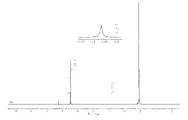
- FIG. 1 is a 1 H-NMR spectrum of Comparative Example 1;
- x to y represents a numerical range of "x or more and y or less”.
- the upper and lower limits recited for numerical ranges can be arbitrarily combined.
- features that are considered preferable are not essential and can be arbitrarily adopted, and combinations of preferable ones are more preferable.
- Resin composition The resin composition according to one aspect of the present invention has a peak integral value of 6.20 to 6.72 ppm in a 1 H-NMR spectrum obtained by 1 H-NMR spectrum measurement using deuterated chloroform as a solvent.
- Polyarylene ether hereinafter sometimes abbreviated as "(A)"
- thermoplastic resin B
- inorganic filler C
- the resin composition of this aspect is excellent in mechanical strength (for example, bending strength).
- the term "resin composition” refers to a product containing at least the resin (S) and the inorganic filler (C), regardless of the method of incorporation. Examples thereof include a product obtained by blending the resin (S) and the inorganic filler (C), and a product obtained by immersing the resin (S) in a member containing the inorganic filler (C).
- the inorganic filler (C) is a woven fabric, nonwoven fabric, or a unidirectional material
- a composite material in which the member is impregnated with the resin (S) is also included in the "resin composition” of the present invention.
- the term "impregnating" a resin or the like in an inorganic filler includes any addition method in which a resin component or the like is added to the inorganic filler.
- the resin (S) contained in the resin composition of this embodiment contains polyarylene ether (A) and thermoplastic resin (B).
- Polyarylene ether (A) Polyarylene ether (A) has a peak integral value (S 1 ) of 6.20 to 6.72 ppm in the 1 H-NMR spectrum obtained by 1 H-NMR spectrometry using deuterated chloroform as a solvent.
- the ratio ((S 2 /S 1 ) ⁇ 100[%]) of the peak integral value (S 2 ) of 80 to 3.92 ppm is 0.05 to 5.0%.
- the lower limit is 0.05% or more, preferably 0.1% or more, more preferably 0.2% or more, and still more preferably 0.3% or more.
- the upper limit is 5.0% or less, preferably 2.0% or less, more preferably 1.0% or less. In the present specification, this ratio is also referred to as "integral value ratio". As the ratio of the integral value increases, the effect of improving the mechanical strength of the resin composition is obtained. However, if it exceeds 5.0%, it adversely affects the mechanical strength.
- the ratio of integral values is measured by the method described in Examples.
- the ratio of the value (I 2 ) divided by the derived proton number 2 ((I 2 /I 1 ) ⁇ 100 [%]) is the methylene bridge structure (hereinafter also referred to as “MB structure”) in the polyarylene ether (A) .) can be an indicator of the ratio of In this specification, this ratio is also referred to as "MB dislocation ratio".
- MB structure refers to a structure in which two arylene groups are linked (bridged) by a methylene group.
- the polyarylene ether (A) has an MB rearrangement rate of 0.05% or more, 0.1% or more, 0.2% or more, or 0.3% or more.
- the upper limit is not particularly limited, and is, for example, 5.0% or less, preferably 2.0% or less, and more preferably 1.0% or less.
- the MB dislocation ratio is higher, the effect of improving the mechanical strength of the resin composition is obtained. However, if it exceeds 5.0%, it adversely affects the mechanical strength.
- the above description of the MB dislocation rate is also used for the second and third aspects described later.
- the MB structure that can be contained in the polyarylene ether (A) will be explained below using poly(2,6-dimethyl-1,4-phenyl ether) as an example.
- a polyarylene ether having no MB structure (hereinafter also referred to as “polyarylene ether (A′)”) is a repeating unit (monomer unit) composed of an arylene ether structure as represented by the following formula (1): It is configured.
- the polyarylene ether (A) contains an MB structure in which two arylene groups are linked (bridged) by a methylene group.
- Such an MB structure can be formed by rearrangement (MB rearrangement) of at least part of the arylene ether structure represented by formula (1) of the polyarylene ether (A') having no MB structure.
- the polyarylene ether (A) contains an MB structure represented by formula (2) below.
- the MB structure has a hydroxyl group bonded to at least one of two arylene groups bonded to a methylene group, as represented by the following formula (2).
- the hydroxyl group can be a phenolic hydroxyl group.
- the polyarylene ether (A) contains an MB structure represented by formula (3) below.
- the MB structure has no hydroxyl group bonded to any of the two arylene groups bonded to the methylene group, as represented by formula (3) below.
- the MB structure results in branching of the polymer backbone originating from the MB structure, as represented by formula (3) below.
- the polyarylene ether (A) contains one or more selected from the group consisting of MB structure represented by formula (2) and MB structure represented by formula (3). In one embodiment, the polyarylene ether (A) has an MB structure in which a hydroxyl group is bonded to at least one of the two arylene groups bonded to the methylene group and branching of the polymer main chain with respect to the total number of MB structures. one or more selected from the group consisting of resulting MB structures.
- polyarylene ether (A) is not particularly limited, and the following polyarylene ethers can be exemplified.
- the polyarylene ether (A) may be obtained by introducing an MB structure into these polyarylene ethers.
- Examples of polyarylene ether include poly(2,3-dimethyl-6-ethyl-1,4-phenylene ether), poly(2-methyl-6-chloromethyl-1,4-phenylene ether), poly(2 -methyl-6-hydroxyethyl-1,4-phenylene ether), poly(2-methyl-6-n-butyl-1,4-phenylene ether), poly(2-ethyl-6-isopropyl-1,4- phenylene ether), poly(2-ethyl-6-n-propyl-1,4-phenylene ether), poly(2,3,6-trimethyl-1,4-phenylene ether), poly[2-(4'- methylphenyl)-1,4-phenylene ether], poly(2-phenyl
- polymers and copolymers described in U.S. Pat. Nos. 3,306,874, 3,306,875, 3,257,357 and 3,257,358 is also appropriate.
- Further examples include graft copolymers and block copolymers of vinyl aromatic compounds such as polystyrene and the above polyphenylene ethers.
- poly(2,6-dimethyl-1,4-phenylene ether) is particularly preferably used.
- the polyarylene ether (A) may or may not be modified with a functional group.
- the functional group here does not include a methylene group that connects (bridges) two arylene groups in the MB structure described above.
- the polyarylene ether (A) is preferably modified with functional groups to further improve mechanical strength.
- a polyarylene ether modified with a functional group can be obtained by reacting the polyarylene ether exemplified above with a modifier described below.
- the polyarylene ether may or may not have an MB structure. Further, the MB rearrangement may proceed after the reaction with the modifier, or may proceed simultaneously with the reaction with the modifier.
- modifiers that modify the polyarylene ether include acid modifiers and the like.
- acid modifiers include dicarboxylic acids and derivatives thereof.
- Dicarboxylic acids used as modifiers include maleic anhydride and its derivatives, fumaric acid and its derivatives.
- a derivative of maleic anhydride is a compound having an ethylenic double bond and a polar group such as a carboxyl group or an acid anhydride group in the same molecule.
- Specific examples include maleic acid, maleic acid monoester, maleic acid diester, ammonium salt of maleic acid, metal salt of maleic acid, acrylic acid, methacrylic acid, methacrylic acid ester, glycidyl methacrylate, and the like.
- fumaric acid derivatives include fumaric acid diesters, fumaric acid metal salts, fumaric acid ammonium salts, and fumaric acid halides.
- fumaric acid or maleic anhydride is particularly preferably used.
- dicarboxylic acid-modified polyarylene ether is preferable, and fumaric acid-modified polyarylene ether or maleic acid-modified polyarylene ether is more preferable.
- modified polyphenylene ether-based polymers such as (styrene-maleic anhydride)-polyphenylene ether-graft polymer, maleic anhydride-modified polyphenylene ether, fumaric acid-modified polyphenylene ether, glycidyl methacrylate-modified polyphenylene ether, amine-modified polyphenylene ether, etc. is mentioned.
- modified polyphenylene ether is preferable, maleic anhydride-modified polyphenylene ether or fumaric acid-modified polyphenylene ether is more preferable, and fumaric acid-modified polyphenylene ether is particularly preferable.
- the degree of modification (modification rate, degree of modification or amount of modification) of polyarylene ether modified with functional groups can be determined by 1 H-NMR measurement, infrared (IR) absorption spectroscopy or titration method.
- the degree of modification is determined by 1 H-NMR measurement, for example, if the modifier is fumaric acid, 1 H-NMR spectrum measurement using deuterated chloroform as a solvent is used to measure the 1 H-NMR spectrum of the polyarylene ether.
- the fumaric acid modification rate is preferably 0.01 to 20%.
- the degree of modification is determined by infrared (IR) absorption spectroscopy, it can be determined from the intensity ratio of the spectrum of the peak intensity indicating the absorption of the compound used as the modifier and the peak intensity indicating the absorption of the corresponding polyarylene ether.
- IR infrared
- the degree of modification of the functional group-modified polyarylene ether (A) is preferably 0.05-20.
- Modification amount of the functional group-modified polyarylene ether (A) is preferably 0.1 to 20% by mass, more preferably 0.5 to 15% by mass, more preferably 1
- a modified amount of 0 to 10% by weight, particularly preferably 1.0 to 5.0% by weight, can be used.
- the degree of polymerization of the polyarylene ether (A) is not particularly limited and can be appropriately selected depending on the purpose of use.
- the number average molecular weight Mn of the polyarylene ether (A) is preferably 9,000 to 50,000, more preferably 9,500 to 30,000, 10,000 to 20 ,000 is more preferred.
- the number-average molecular weight Mn is 9,000 or more, the toughness of the polyarylene ether (A) is increased, resulting in excellent mechanical properties.
- the number average molecular weight Mn is 50,000 or less, the melt viscosity is prevented from becoming excessively high, and an effect of excellent moldability can be obtained.
- the polyarylene ether (A) has a molecular weight distribution Mw/Mn of 0.5 to 10.0.
- the degree of polymerization, number average molecular weight Mn and molecular weight distribution Mw/Mn of the polyarylene ether (A) are determined by gel permeation chromatography analysis (GPC) using chloroform as a solvent and by comparison with the elution time of standard polystyrene with a known molecular weight.
- GPC gel permeation chromatography analysis
- thermoplastic resin (B) The thermoplastic resin (B) contained in the resin composition of this embodiment is not particularly limited, but the polyarylene ether (A) described above does not fall under this category.
- specific examples of the thermoplastic resin (B) include polyamide resin, acrylic resin, polyphenylene sulfide resin, polyvinyl chloride resin, polystyrene resin, polyolefin, polyacetal resin, polycarbonate resin, polyurethane, polybutylene terephthalate, acrylonitrile butadiene styrene. (ABS) resin, modified polyphenylene ether resin, phenoxy resin, polysulfone, polyethersulfone, polyetherketone, polyetheretherketone, aromatic polyester and the like.
- thermoplastic resin (B) is polystyrene resin or polyamide.
- the polystyrene-based resin is not particularly limited, but a rubber-like polymer is dispersed in particles in a matrix composed of a homopolymer of a styrene-based compound, a copolymer of two or more styrene-based compounds, and a polymer of a styrene-based compound.
- rubber-modified polystyrene resin high impact polystyrene
- Styrenic compounds used as raw materials include, for example, styrene, o-methylstyrene, p-methylstyrene, m-methylstyrene, ⁇ -methylstyrene, ethylstyrene, ⁇ -methyl-p-methylstyrene, 2,4-dimethyl Styrene, monochlorostyrene, p-tert-butylstyrene and the like can be mentioned.
- the polystyrene-based resin may be a copolymer obtained by using two or more styrene-based compounds in combination, but among them, polystyrene obtained by polymerizing styrene alone is preferable. Examples thereof include polystyrenes having a stereoregular structure such as atactic polystyrene, isotactic polystyrene, and syndiotactic polystyrene.
- a styrene-based resin having a syndiotactic structure is particularly preferable.
- Syndiotactic polystyrene means a styrene-based resin (hereinafter sometimes abbreviated as "SPS") having a highly syndiotactic structure.
- SPS styrene-based resin
- the term “syndiotactic” means that the phenyl rings in adjacent styrene units are arranged alternately with respect to the plane formed by the main chain of the polymer block (hereinafter referred to as “syndiotacticity”). .) means that the percentage of Syndiotacticity can be quantitatively identified by a nuclear magnetic resonance method ( 13 C-NMR method) using carbon isotopes.
- the 13 C-NMR method it is possible to quantify the abundance ratio of a plurality of consecutive structural units, for example, two consecutive monomer units as diads, three consecutive monomer units as triads, and five consecutive monomer units as pentads.
- “Styrenic resin having a highly syndiotactic structure” is usually 75 mol% or more, preferably 85 mol% or more in terms of racemic diad (r), or usually 30 mol% or more in terms of racemic pentad (rrrr), Polystyrene, poly(hydrocarbon-substituted styrene), poly(halogenated styrene), poly(halogenated alkylstyrene), poly(alkoxystyrene), poly(vinyl benzoic acid ester) preferably having syndiotacticity of 50 mol % or more ), hydrogenated polymers or mixtures thereof, or copolymers based on these.
- Poly(hydrocarbon-substituted styrene) includes poly(methylstyrene), poly(ethylstyrene), poly(isopropylstyrene), poly(tert-butylstyrene), poly(phenyl)styrene, poly(vinylnaphthalene) and poly( vinyl styrene) and the like.
- Examples of poly(halogenated styrene) include poly(chlorostyrene), poly(bromostyrene) and poly(fluorostyrene), and examples of poly(halogenated alkylstyrene) include poly(chloromethylstyrene).
- Examples of poly(alkoxystyrene) include poly(methoxystyrene) and poly(ethoxystyrene).
- styrenic polymers particularly preferred ones include polystyrene, poly(p-methylstyrene), poly(m-methylstyrene), poly(p-tert-butylstyrene), poly(p-chlorostyrene), poly( m-chlorostyrene), poly(p-fluorostyrene). Further examples include copolymers of styrene and p-methylstyrene, copolymers of styrene and p-tert-butylstyrene, copolymers of styrene and divinylbenzene, and the like.
- the molecular weight of the syndiotactic polystyrene is not particularly limited . It is preferably 50,000 or more and 500,000 or less, and more preferably 50,000 or more and 300,000 or less. If the weight average molecular weight is 1 ⁇ 10 4 or more, a molded article having sufficient mechanical properties can be obtained. On the other hand, if the weight average molecular weight is 1 ⁇ 10 6 or less, there is no problem with the fluidity of the resin during molding.
- the MFR (melt flow rate) of syndiotactic polystyrene is preferably 2 g/10 minutes or more, preferably 4 g/10 minutes or more, and within this range, there is no problem with the fluidity of the resin during molding. .
- the MFR is 50 g/10 min or less, preferably 40 g/min or less, more preferably 30 g/min or less, a molded article having sufficient mechanical properties can be obtained.
- the MFR is a value measured in accordance with JIS K 7210-1:2014 at a measurement temperature of 300° C. and a load of 1.2 kg.
- polyamides known as polyamides can be used.
- Suitable polyamides include, for example, polyamide-4, polyamide-6, polyamide-6,6, polyamide-3,4, polyamide-12, polyamide-11, polyamide-6,10, polyamide-4T, polyamide-6T, polyamide -9T, polyamide-10T, and polyamides obtained from adipic acid and m-xylylenediamine.
- polyamide-6,6 is preferable.
- the inorganic filler (C) contained in the resin composition of this embodiment is not particularly limited. Since the inorganic filler (C) has a small number of functional groups on the surface, it is usually difficult to obtain interfacial shear strength at the resin/inorganic filler interface. It can improve mechanical strength.
- Examples of the inorganic filler (C) include inorganic fibers. Examples of inorganic fibers include carbon fibers and glass fibers. Among them, carbon fiber is preferred. As the carbon fiber, various types of carbon fibers such as PAN type made from polyacrylonitrile, pitch type made from coal tar pitch in petroleum or coal, and phenol type made from thermosetting resin such as phenol resin are used. can be used.
- the carbon fibers may be those obtained by vapor deposition, or may be recycled carbon fibers (RCF).
- the carbon fiber is not particularly limited as described above, it is selected from the group consisting of PAN-based carbon fiber, pitch-based carbon fiber, thermosetting carbon fiber, phenol-based carbon fiber, vapor-grown carbon fiber, and recycled carbon fiber (RCF). is preferably at least one carbon fiber.
- Some carbon fibers have different degrees of graphitization depending on the raw material quality and firing temperature at the time of manufacture, but they can be used regardless of the degree of graphitization.
- the shape of the carbon fiber is not particularly limited, and carbon having at least one shape selected from the group consisting of milled fiber, chopped strand, short fiber, roving, filament, tow, whisker, nanotube, etc.
- Fibers can be used. In the case of chopped strands, those having an average fiber length of 0.1 to 50 mm and an average fiber diameter of 5 to 20 ⁇ m are preferably used. Although the density of the carbon fiber is not particularly limited, it preferably ranges from 1.75 to 1.95 g/cm 3 .
- the form of the inorganic fiber may be a single fiber, a fiber bundle, or a mixture of both single fiber and fiber bundle. good.
- the number of single fibers constituting each fiber bundle may be substantially uniform in each fiber bundle, or may be different.
- the average fiber diameter of the inorganic fibers varies depending on the form.
- the "resin composition” only needs to contain at least the resin (S) and the inorganic filler (C), and the method of containing is not limited.
- a product (composite material) obtained by immersing a resin (S) in a member containing an inorganic filler (C) is also included in the "resin composition” and "molded article containing a resin composition” in the present invention.
- an inorganic fiber member in the form of a woven fabric, a nonwoven fabric, or a unidirectional material impregnated with the resin (S) can be used.
- the thermoplastic resin (B) is added, resulting in a resin composition containing the resin (S) and the inorganic filler (C). good.
- the member containing inorganic fibers is a woven fabric, non-woven fabric, or unidirectional material
- single fibers having an average fiber diameter of preferably 3 to 15 ⁇ m, more preferably 5 to 7 ⁇ m can be used.
- the member containing inorganic fibers has the form of a woven fabric, a non-woven fabric, or a unidirectional material
- a unidirectional bundle of inorganic fibers (fiber bundle) can be used.
- the member containing the inorganic fiber includes 6,000 (6K), 12,000 (12K), 24,000 (24K), or 60,000 (60K) inorganic fiber monofilaments supplied from an inorganic fiber manufacturer as a fiber bundle.
- the bundled product may be used as it is, or a product further bundled may be used.
- the fiber bundle may be untwisted yarn, twisted yarn, or untwisted yarn.
- the fiber bundle may be included in the molded article in an open state, or may be included as a fiber bundle without being opened.
- the member containing inorganic fibers is a woven fabric, nonwoven fabric, or unidirectional member
- a molded article can be obtained by immersing the member in the resin (S).
- Members containing inorganic fibers especially woven fabrics, non-woven fabrics, and unidirectional materials, preferably have a small thickness.
- the thickness of the member containing inorganic fibers is preferably 3 mm or less.
- the thickness is preferably 0.2 mm or less.
- the lower limit of the thickness of the member containing inorganic fibers is not particularly limited, but it is preferably 7 ⁇ m or more, and from the viewpoint of stable quality, it is 10 ⁇ m or more, more preferably 20 ⁇ m or more.
- a sizing agent When the inorganic filler (C) is an inorganic fiber, a sizing agent may be attached to the surface of the inorganic fiber.
- the type of the sizing agent can be appropriately selected according to the types of the inorganic fibers and the thermoplastic resin, and is not particularly limited.
- Various types of inorganic fibers have been produced, such as those treated with epoxy-based sizing agents, urethane-based sizing agents, polyamide-based sizing agents, and those that do not contain sizing agents. can be used regardless.
- the amount of the sizing agent is 0.1 to 5.0 with respect to the total amount of the inorganic filler (C) (including the inorganic fiber and the sizing agent). It can be 0% by weight.
- the polyarylene ether (A) modified with the functional group is preferably added to 100% by mass of the resin (S) at 0.00%. 5 to 30% by mass, more preferably 0.8 to 15% by mass, more preferably 1.0 to 10% by mass. If the amount of the functional group-modified polyarylene ether (A) in the resin (S) is 0.5% by mass or more, excellent interfacial shear strength can be obtained. If the amount of polyarylene ether (A) is 30% by mass or less, good mechanical strength and heat resistance can be maintained.
- the resin composition preferably contains 1 to 500 parts by mass, more preferably 1 to 400 parts by mass, and still more preferably 1 to 500 parts by mass of the inorganic filler (C) with respect to 100 parts by mass of the resin (S). 350 parts by weight, more preferably 1 to 200 parts by weight, even more preferably 1 to 100 parts by weight, and even more preferably 1 to 50 parts by weight. In order to obtain excellent strength, it is preferably contained in an amount of 15 parts by mass or more, more preferably 20 parts by mass or more. If the amount of the inorganic filler (C) is within the above range, the mechanical strength is further improved.
- the resin composition of this embodiment contains a generally used rubber-like elastic body, an antioxidant, a filler other than the inorganic filler (C), a cross-linking agent, a cross-linking aid, and a nucleating agent, as long as the object of the present invention is not hindered. , release agents, plasticizers, compatibilizers, colorants and/or antistatic agents.
- the rubber-like elastic body can be used as the rubber-like elastic body.
- natural rubber polybutadiene, polyisoprene, polyisobutylene, chloroprene rubber, polysulfide rubber, thiocol rubber, acrylic rubber, urethane rubber, silicone rubber, epichlorohydrin rubber, styrene-butadiene block copolymer (SBR), hydrogenated styrene- Butadiene block copolymer (SEB), styrene-butadiene-styrene block copolymer (SBS), hydrogenated styrene-butadiene-styrene block copolymer (SEBS), styrene-isoprene block copolymer (SIR), hydrogenation Styrene-isoprene block copolymer (SEP), styrene-isoprene-styrene block copolymer (SIS), hydrogenated styrene-
- Modified rubber-like elastomers include, for example, styrene-butyl acrylate copolymer rubber, styrene-butadiene block copolymer (SBR), hydrogenated styrene-butadiene block copolymer (SEB), styrene-butadiene-styrene.
- Block copolymer SBS
- SEBS hydrogenated styrene-butadiene-styrene block copolymer
- SIR hydrogenated styrene-isoprene block copolymer
- SEP hydrogenated styrene-isoprene block copolymer
- SIS hydrogenated styrene-isoprene-styrene block copolymer
- SEPS hydrogenated styrene-isoprene-styrene block copolymer
- SEPS hydrogenated styrene-butadiene random copolymer
- hydrogenated styrene-butadiene random copolymer hydrogenated styrene-butadiene random copolymer
- Polymers styrene-ethylene-butylene random copolymers, ethylene propylene rubber (EPR), ethylene propylene diene rubber (EPDM), etc., modified with a modifying agent
- An organic filler can also be added as a filler other than the inorganic filler (C).
- organic fillers include organic synthetic fibers and natural plant fibers. Specific examples of organic synthetic fibers include wholly aromatic polyamide fibers and polyimide fibers.
- One type of the organic filler may be used, or two or more types may be used in combination.
- the amount added is 100 parts by mass of the resin (S), or the total of the unmodified polyarylene ether and the thermoplastic resin It is preferably 1 to 350 parts by mass, more preferably 5 to 200 parts by mass, based on 100 parts by mass. When the amount is 1 part by mass or more, the effect of the filler is sufficiently obtained, and when the amount is 350 parts by mass or less, the dispersibility is not inferior and moldability is not adversely affected.
- antioxidants there are various antioxidants, but in particular monophosphites such as tris(2,4-di-tert-butylphenyl)phosphite and tris(mono- and di-nonylphenyl)phosphite and phosphorous such as diphosphite. antioxidants and phenolic antioxidants are preferred.
- diphosphite it is preferable to use a phosphorus-based compound represented by the general formula (4).
- R 30 and R 31 each independently represent an alkyl group having 1 to 20 carbon atoms, a cycloalkyl group having 3 to 20 carbon atoms, or an aryl group having 6 to 20 carbon atoms.
- Specific examples of the phosphorus compound represented by the general formula (4) include distearylpentaerythritol diphosphite, dioctylpentaerythritol diphosphite, diphenylpentaerythritol diphosphite, bis(2,4-di-tert- butylphenyl)pentaerythritol diphosphite, bis(2,6-di-tert-butyl-4-methylphenyl)pentaerythritol diphosphite, dicyclohexylpentaerythritol diphosphite and the like.
- phenolic antioxidants can be used, and specific examples thereof include 2,6-di-tert-butyl-4-methylphenol, 2,6-diphenyl-4-methoxyphenol, 2 , 2′-methylenebis(6-tert-butyl-4-methylphenol), 2,2′-methylenebis-(6-tert-butyl-4-methylphenol), 2,2′-methylenebis[4-methyl-6 -( ⁇ -methylcyclohexyl)phenol], 1,1-bis(5-tert-butyl-4-hydroxy-2-methylphenyl)butane, 2,2′-methylenebis(4-methyl-6-cyclohexylphenol), 2,2′-methylenebis(4-methyl-6-nonylphenol), 1,1,3-tris(5-tert-butyl-4-hydroxy-2-methylphenyl)butane, 2,2-bis(5-tert -butyl-4-hydroxy-2-methylphenyl)-4-n-dodecylmercaptobutane,
- the above antioxidant is usually 0.005 parts by mass or more and 5 parts by mass or less with respect to 100 parts by mass of the resin (S) or a total of 100 parts by mass of the polyarylene ether before MB rearrangement and the thermoplastic resin. is.
- the blending ratio of the antioxidant is 0.005 parts by mass or more, the decrease in the molecular weight of the thermoplastic resin (A) or the thermoplastic resin can be suppressed. If the amount is 5 parts by mass or less, the mechanical strength can be favorably maintained.
- multiple kinds of antioxidants are included in the composition as antioxidants, it is preferable to adjust the total amount so that it falls within the above range.
- the amount of the antioxidant compounded is more preferably 0.01 to 4 parts by mass, more preferably 100 parts by mass of the resin (S), or the total 100 parts by mass of the polyarylene ether before MB rearrangement and the thermoplastic resin. is 0.02 to 3 parts by mass.
- Nucleating agents include carboxylic acid metal salts such as aluminum di(p-tert-butylbenzoate), phosphoric acid metal salts such as methylenebis(2,4-di-tert-butylphenol) acid phosphate sodium, It can be used by arbitrarily selecting from known ones such as talc and phthalocyanine derivatives.
- Specific product names include ADEKA Co., Ltd. ADEKA STAB NA-10, ADEKA STAB NA-11, ADEKA STAB NA-21, ADEKA STAB NA-30, ADEKA STAB NA-35, ADEKA STAB NA-70, and Dainippon Ink & Chemicals Co., Ltd. and PTBBA-AL manufactured by Sanyo Co., Ltd.
- nucleating agents can be used alone or in combination of two or more.
- amount of the nucleating agent is not particularly limited, it is preferably 0.01 to 5 parts by mass with respect to 100 parts by mass of the resin (S), or the total 100 parts by mass of the polyarylene ether before MB rearrangement and the thermoplastic resin. More preferably, it is 0.04 to 2 parts by mass.
- the releasing agent it is possible to arbitrarily select and use known ones such as polyethylene wax, silicone oil, long-chain carboxylic acid, and long-chain carboxylic acid metal salt. These release agents can be used alone or in combination of two or more. Although the amount of the release agent is not particularly limited, it is preferably 0.1 to 3 parts by mass, more preferably 0.2 to 1 part by mass, with respect to 100 parts by mass of the resin composition or 100 parts by mass of the resin molding material. part by mass.
- the method for producing (preparing) the resin composition of this embodiment is not particularly limited, and mixing with a known mixer or melt-kneading with an extruder or the like may be performed.
- a member containing an inorganic filler may be immersed in a molten resin.
- a composition obtained by adding the resin (S), the inorganic filler (C), and, if necessary, the various components described above can be molded and injection molded.
- injection molding a mold having a predetermined shape may be used, and in extrusion molding, a film or sheet may be formed by T-die molding, and the obtained film or sheet may be heated and melted and extruded into a predetermined shape.
- the resin composition can also be press-molded, and known methods such as a cold press method and a hot press method can be used.
- a composite member is obtained by immersing a member containing the inorganic filler (C) in the resin (S), specifically, a solution of the resin (S) is added to a member (fabric, nonwoven fabric, etc.) containing the inorganic filler (C). , UD material, etc.).
- the member to be immersed in the resin may be a single member, or may be a laminate in which two or more members are laminated.
- the bending strength of the resin composition is 195 MPa or higher, 197 MPa or higher, 200 MPa or higher, or 202 MPa or higher.
- the upper limit is not particularly limited, and is, for example, 400 MPa or less.
- the bending strength of the resin composition is measured by the method described in Examples.
- the polyarylene ether (A) contained in the resin composition is 5% by mass of the polyarylene ether (A), SPS ("Zarec 300ZC” manufactured by Idemitsu Kosan Co., Ltd., MFR: 30 g / 10 minutes) 95 28 parts by mass of carbon fiber ("TR06UB4E", chopped carbon fiber manufactured by Mitsubishi Chemical Corporation) is added to 100 parts by mass of resin (S) composed of 100% by mass, and a twin-screw kneader with a cylinder diameter of 32 mm (manufactured by Coperion "ZSK32MC") using an injection molding machine ("SH100" manufactured by Sumitomo Heavy Industries, Ltd.), a cylinder temperature of 300 ° C., a mold temperature (ISO mold )
- SH100 manufactured by Sumitomo Heavy Industries, Ltd.
- ISO mold The flexural strength measured on a test piece obtained by injection molding at 150°C exceeds 185 MPa, and is 186 MPa or higher
- the upper limit is not particularly limited, and is, for example, 350 MPa or less.
- the flexural strength is measured by the method described in the Examples.
- the properties of the polyarylene ether (A) (ability to improve bending strength) can also be applied to the polyarylene ether according to one aspect of the present invention, which will be described later.
- the resin composition according to one aspect (also referred to as “first aspect”) of the present invention described above is obtained by 1 H-NMR spectrum measurement using deuterated chloroform as a solvent. It is characterized in that the ratio of the integrated value of the peak of 3.80 to 3.92 ppm to the integrated value of the peak of 6.20 to 6.72 ppm in the 1 H-NMR spectrum is 0.05 to 5.0%. , the invention is not limited to this first aspect.
- a resin composition according to another aspect (also referred to as "second aspect") of the present invention comprises a resin (S) containing a polyarylene ether (A) and a thermoplastic resin (B), an inorganic filler (C), for the integrated value of the peak from 6.20 to 6.72 ppm in the 1 H-NMR spectrum of the resin composition obtained by 1 H-NMR spectrum measurement using deuterated chloroform as a solvent
- the ratio of the integrated value of the peak of 3.80-3.92 ppm is 0.05-5.0%.
- the resin composition according to the second aspect also has good adhesion at the resin/inorganic filler interface and is excellent in mechanical strength (for example, bending strength).
- the polyarylene ether (A) is obtained by 1 H-NMR spectrometry using deuterated chloroform as a solvent .
- the percentage of the integrated value of the peak at 3.80-3.92 ppm may be 0.05-5.0%, and the percentage may not be 0.05-5.0%.
- the polyarylene ether (A) is 1 H obtained by 1 H-NMR spectroscopy using deuterated chloroform as a solvent, which is measured for the resin composition containing the polyarylene ether (A).
- the ratio of the integrated value of the peak of 3.80 to 3.92 ppm to the integrated value of the peak of 6.20 to 6.72 ppm in the NMR spectrum is 0.05 to 5.0%. .
- the peak at 6.20 to 6.72 ppm is the poly It corresponds to the phenylene ether structure of arylene ether (A). Also, the peak at 3.80 to 3.92 ppm corresponds to the methylene bridge structure of polyarylene ether (A). Therefore, the integrated value of the peak at 3.80 to 3.92 ppm relative to the value (I 1 ) obtained by dividing the integrated value of the peak at 6.20 to 6.72 ppm by the number of protons derived from the phenylene ether structure is 2 to the methylene bridge structure. The ratio of the value (I 2 ) divided by the derived proton number 2 ((I 2 /I 1 ) ⁇ 100 [%]) is the MB rearrangement rate.
- this MB rearrangement rate can also be obtained by using a solvent other than deuterated chloroform, a mixed solvent, or the like as a solvent for 1 H-NMR spectrum measurement (not limited to the second embodiment, the first It is also possible in the aspect.).
- a solvent other than deuterated chloroform, a mixed solvent, or the like as a solvent for 1 H-NMR spectrum measurement (not limited to the second embodiment, the first It is also possible in the aspect.).
- the peaks described above may shift from the positions described above observed when deuterated chloroform is used alone as a solvent.
- the ratio of the value (I B ) divided by the number of protons 2 ((I B /I A ) ⁇ 100 [%]) is the polyarylene ether (A) contained in the resin composition containing the polyarylene ether (A) is the proportion of the methylene bridge structure in the
- the MB dislocation rate should be in the range of 0.05 to 5.0%.
- the 1 H-NMR spectrum derived from the polyarylene ether (A) overlaps with the spectrum derived from other configurations, and the integrated value of each peak described above is affected, other It is desirable to separate the spectrum derived from the constituent components and obtain the integrated value based on the 1 H-NMR spectrum derived from the polyarylene ether (A).
- the 1 H-NMR spectrum measurement of the resin composition according to the second aspect can be performed by various methods. can do.
- a resin composition according to still another aspect (also referred to as "third aspect") of the present invention comprises a resin (S) containing a polyarylene ether (A) and a thermoplastic resin (B), and an inorganic filler (C). , wherein the integration of the peaks from 1.96 to 2.43 ppm in the 1 H-NMR spectrum obtained for the resin composition by 1 H-NMR spectrum measurement using deuterated chloroform as a solvent
- the value obtained by dividing the integrated value of the peak from 3.80 to 3.92 ppm by 2, with respect to the sum of the value obtained by dividing the value by 6 and the integrated value of the peak from 3.80 to 3.92 ppm divided by 2 is 0.05 to 5.0%.
- the resin composition according to the third aspect also has good adhesion at the resin/inorganic filler interface and is excellent in mechanical strength (for example, bending strength).
- the polyarylene ether (A) is obtained by 1 H-NMR spectroscopy using deuterated chloroform as a solvent .
- the percentage of the integrated value of the peak at 3.80-3.92 ppm may be 0.05-5.0%, and the percentage may not be 0.05-5.0%.
- the polyarylene ether (A) is measured for the resin composition containing the polyarylene ether (A) by 1 H-NMR spectrum measurement using deuterated chloroform as a solvent.
- the peaks at 1.96 to 2.43 ppm are the phenylene ether of the polyarylene ether (A) It corresponds to two methyl groups attached as substituents to the structure. Also, the peak at 3.80 to 3.92 ppm corresponds to the methylene bridge structure of polyarylene ether (A).
- the value obtained by dividing the integrated value of the peak at 1.96 to 2.43 ppm by the number of protons 6 derived from the two methyl groups bonded as substituents to the phenylene ether structure (I 3 ), and 3.80 to The integrated value of the peak at 3.80 to 3.92 ppm is derived from the methylene bridge structure with respect to the sum of the integrated value of the peak at 3.92 ppm and the value (I 2 ) divided by the number of protons derived from the methylene bridge structure.
- the ratio of the value (I 2 ) divided by the number of protons of 2 ((I 2 /[I 3 +I 2 ]) ⁇ 100[%]) is the MB dislocation ratio.
- this MB rearrangement rate can also be obtained by using a solvent other than deuterated chloroform, a mixed solvent, or the like as a solvent for 1 H-NMR spectrum measurement.
- the peaks described above may shift from the positions described above observed when deuterated chloroform is used alone as a solvent.
- a mixed solvent containing deuterated chloroform and deuterated benzene (benzene-d 6 ) at a volume ratio of 3:1 is used as the solvent, it corresponds to the methylene bridge structure of polyarylene ether (A).
- the peaks corresponding to the peaks shift from the positions described above (3.80 to 3.92 ppm) to 3.73 to 3.82 ppm.
- 3.73 ⁇ 3.73 ⁇ The ratio of the value obtained by dividing the integrated value of the peak at 3.82 ppm by 2 corresponds to the MB dislocation rate described above.
- 1 H-NMR spectrum measurement of the resin composition according to the third aspect can also be performed by various methods. can be measured.
- a molded article according to one aspect of the present invention includes the resin composition according to the above-described first, second, or third aspect of the present invention.
- a laminate according to one aspect of the present invention is formed by laminating a plurality of molded articles according to one aspect of the present invention.
- a plurality of laminated molded bodies may be the same or different.
- the molded article of this aspect can be obtained by molding a resin composition by mixing, melt-kneading, or immersing the resin (S) and the inorganic filler (C).
- a molded article is produced by a method comprising the steps of producing a member containing a polyarylene ether (A) and an inorganic filler (C), and adding a thermoplastic resin (B) to the member. It can also be molded.
- the means for producing the member containing the polyarylene ether (A) and the inorganic filler (C) is not particularly limited.
- a method of immersing the polyarylene ether (A) in the inorganic filler (C) under an appropriate solvent a method of applying a mixture of the polyarylene ether (A) in an appropriate vehicle to the inorganic filler (C), and sizing.
- a method of mixing the polyarylene ether (A) with the agent and adding it to the inorganic filler (C) can be used.
- the inorganic filler (C) is preferably an inorganic fiber, and the form of the inorganic fiber may include at least one form selected from chopped strands, woven fabrics, nonwoven fabrics and unidirectional materials. can.
- thermoplastic resin (B) is added to the member obtained by the above step in the subsequent step.
- the method of adding the thermoplastic resin (B) to the member is not limited, and the thermoplastic resin (B) may be in a solution state or a molten state. Specifically, in an appropriate solvent, a method of immersing the thermoplastic resin (B) in the member, a method of laminating a film containing the thermoplastic resin (B) and performing melt pressing, ) is directly added and then melted.
- the member may contain the polyarylene ether (A) and the inorganic filler (C), and the thermoplastic resin (B) may be added to the member having the form of a woven fabric, a nonwoven fabric, or a unidirectional material.
- the thermoplastic resin (B) may be added after the shaped member is cut into chopped shapes. After adding the thermoplastic resin (B) to the member, a molded body can be produced by various molding methods.
- the shape of the molded article of this embodiment is not particularly limited, and examples include sheets, films, fibers, woven fabrics, nonwoven fabrics, unidirectional materials (UD materials), containers, injection molded articles, and blow molded articles.
- the molded body may be an injection molded body as described above.
- the molded article may be a unidirectional fiber reinforcing material, or a molded article containing at least one member selected from woven carbon fibers and nonwoven carbon fibers.
- a laminate can also be obtained by laminating a plurality of the molded articles. This laminate is also included in the "molded article" in this specification.
- the molded article of this embodiment can be used in various applications such as automobile applications.
- Automotive applications include sliding parts such as gears, automotive panel members, millimeter wave radomes, IGBT housings, radiator grilles, meter hoods, fender supports, front engine covers, front strut tower panels, mission center tunnels, radio core supports, Front dash, door inner, rear luggage back panel, rear luggage side panel, rear luggage floor, rear luggage partition, roof, door frame pillar, seat back, headrest support, engine parts, crash box, front floor tunnel, front floor panel, Automotive parts such as undercovers, undersupport rods, impact beams, front cowls, and front strut tower bars can be exemplified.
- the molded product of this aspect suitably constitutes, for example, a power electronic unit, a quick charging plug, an onboard charger, a lithium ion battery, a battery control unit, a power electronic control unit, a three-phase synchronous motor, a home charging plug, and the like. can.
- the molded article of this embodiment further includes, for example, a solar twilight sensor, an alternator, an EDU (electronic injector driver unit), an electronic throttle, a tumble control valve, a throttle opening sensor, a radiator fan controller, a stick coil, an A/C pipe joint, a diesel Particulate filter, headlight reflector, charge air duct, charge air cooling head, intake air temperature sensor, gasoline fuel pressure sensor, cam/crank position sensor, combination valve, engine oil pressure sensor, transmission gear angle sensor, continuously variable transmission Machine oil pressure sensor, ELCM (evaporative leak check module) pump, water pump impeller, steering roll connector, ECU (engine computer unit) connector, ABS (anti-lock braking system) reservoir piston, actuator cover, etc.
- a solar twilight sensor an alternator
- EDU electronic injector driver unit
- an electronic throttle electronic injector driver unit
- a tumble control valve e.g., a throttle opening sensor
- a radiator fan controller e.g., a
- the molded product of this aspect is also suitable for use as a sealing material for sealing a sensor included in an in-vehicle sensor module, for example.
- the sensor is not particularly limited, and specifically includes an atmospheric pressure sensor (for example, for high altitude correction), a boost pressure sensor (for example, for fuel injection control), an atmospheric pressure sensor (for IC), and an acceleration sensor (for example, for airbag). , gauge pressure sensor (e.g. for seat condition control), tank internal pressure sensor (e.g. for fuel tank leak detection), refrigerant pressure sensor (e.g. for air conditioning control), coil driver (e.g.
- EGR exhaust gas recirculation
- MAP intake pipe pressure
- the molded article of this embodiment is not limited to the automotive parts exemplified above, and includes, for example, high voltage (harness) connectors, millimeter wave radomes, IGBT (insulated gate bipolar transistor) housings, battery fuse terminals, radiator grilles, meter hoods, Also suitable for inverter cooling water pumps, battery monitoring units, structural parts, intake manifolds, high voltage connectors, motor control ECUs (engine computer units), inverters, piping parts, canister purge valves, power units, bus bars, motor reducers, canisters, etc. used for The molded article of this aspect is also suitably used for motorcycle parts and bicycle parts, and more specifically motorcycle parts, motorcycle cowls, bicycle parts and the like.
- motorcycle/bicycle applications include motorcycle components, motorcycle cowls, and bicycle components.
- the molded product of this embodiment is also excellent in chemical resistance, so it can be used for various electric appliances.
- a part of a water heater specifically a natural refrigerant heat pump water heater known as a so-called "EcoCute (registered trademark)" or the like.
- Such parts include shower parts, pump parts, piping parts, etc. More specifically, single-mouth circulation fittings, relief valves, mixing valve units, heat-resistant traps, pump casings, composite water valves, and water inlet fittings. , resin joints, piping parts, resin pressure reducing valves, elbows for water taps, and the like.
- the molded product of this aspect is suitably used for home appliances and electronic devices, and more specifically, for telephones, mobile phones, microwave ovens, refrigerators, vacuum cleaners, OA equipment, power tool parts, electrical parts, static electricity Prevention applications, high frequency electronic parts, high heat dissipation electronic parts, high voltage parts, electromagnetic wave shielding parts, communication equipment products, AV equipment, personal computers, registers, fans, ventilation fans, sewing machines, ink peripheral parts, ribbon cassettes, air cleaner parts , warm water washing toilet seat parts, toilet seats, toilet lids, rice cooker parts, optical pickup devices, lighting equipment parts, DVD, DVD-RAM, DVD pickup parts, DVD pickup substrates, switch parts, sockets, displays, video cameras, filaments , plugs, high-speed color copiers (laser printers), inverters, air conditioners, keyboards, converters, TVs, facsimiles, optical connectors, semiconductor chips, LED parts, washing machine/washer/dryer parts, dish washer/dryer parts etc. can be mentioned.
- the molded article of this embodiment is also
- the molded article of this embodiment is also suitably used for miscellaneous goods, daily necessities, etc. More specifically, chopsticks, lunch boxes, tableware containers, food trays, food packaging materials, water tanks, tanks, toys, sporting goods, and surfboards. , door caps, door steps, parts for pachinko machines, remote control cars, remote control cases, stationery, musical instruments, tumblers, dumbbells, helmet box products, blades for shutters used in cameras, rackets for table tennis and tennis, skis Examples include structural members such as plate members for snowboards and the like.
- each of the various parts described above may be partially or wholly composed of the resin composition according to the first, second, or third aspect of the present invention or a molded article containing the resin composition.
- the molded body may be a laminate, or may not be a laminate.
- a method for producing a polyarylene ether according to one aspect of the present invention includes heat-treating a polyarylene ether at 250 to 400° C. for 1 minute or longer, using deuterated chloroform as a solvent.
- the ratio of the integrated value of the peak of 3.80 to 3.92 ppm to the integrated value of the peak of 6.20 to 6.72 ppm in the 1 H-NMR spectrum obtained by 1 H-NMR spectrum measurement is 0.05 to 5.
- the description given for the polyarylene ether (A) contained in the resin composition according to the first aspect of the present invention is used, and detailed here. Description is omitted.
- the temperature of the heat treatment (which can also be referred to as the reaction temperature of the reaction for introducing a methylene bridge structure into the polyarylene ether) may be 250°C or higher, but may be 270°C or higher, higher than 270°C, 271°C or higher, and 275°C. 280°C or higher, 280°C or higher, 281°C or higher, 285°C or higher, 290°C or higher, 295°C or higher, 300°C or higher, 300°C or higher, 301°C or higher, 305°C or higher, 310°C or higher, 320°C or higher, Furthermore, it is preferably 330° C. or higher.
- the temperature of the heat treatment may be 400° C. or lower, but is preferably 380° C. or lower, 370° C. or lower, further 350° C. or lower. If the temperature of the heat treatment exceeds 400° C., the cross-linking reaction proceeds, which causes deterioration of moldability and generation of foreign substances.
- the polyarylene ether is usually melted at a temperature of 250-400°C.
- the heat treatment time (which can also be referred to as the reaction time for introducing a methylene bridge structure into the polyarylene ether) may be 1 minute or longer, but may be 2 minutes or longer, 4 minutes or longer, and further 5 minutes or longer. Preferably. The longer the heat treatment time is, the more the reaction that introduces the methylene bridge structure into the polyarylene ether can proceed.
- the upper limit of the heat treatment time is not particularly limited. For example, if it is 3 hours or less, 2 hours or less, or 1 hour or less, the production efficiency of the polyarylene ether (A) is improved.
- the heat treatment time is 3 hours or less, preferably 2 hours or less, and more preferably 1 hour or less, the progress of the cross-linking reaction can be suppressed, and the deterioration of moldability and the formation of foreign matter can be suitably suppressed.
- the polyarylene ether may be left still, pressurized, or shear stress may be applied to the polyarylene ether.
- shear stress it is preferable to apply shear stress to the polyarylene ether in the heat treatment.
- the proportion of the integral value (or the MB rearrangement rate) of the obtained polyarylene ether (A) can be remarkably improved compared to the case of standing still or the case of pressurization.
- by applying a shear stress to the polyarylene ether in the heat treatment it is possible to suppress the formation of insoluble matter that may cause deterioration of physical properties.
- the method of applying shear stress to the polyarylene ether is not particularly limited, and examples thereof include a method of kneading the polyarylene ether.
- a kneader such as a twin-screw kneader (for example, a twin-screw extruder) can be used for kneading the polyarylene ether.
- As the heat treatment it is preferable to melt-knead the polyarylene ether (knead the polyarylene ether in a molten state).
- the temperature of the heat treatment can be controlled within the above range by a heater provided in the kneader.
- the heat treatment time can be controlled within the range described above as the residence time of the polyarylene ether in the kneader.
- a device (for example, a kneader) used for the heat treatment may be of a batch type, but is preferably of a continuous type. That is, the apparatus used for heat treatment heats the polyarylene ether continuously supplied to the apparatus continuously (preferably while kneading) in the apparatus, and the polyarylene ether (A) is obtained from the apparatus. is preferably configured to discharge continuously. From this point of view, a continuous kneader equipped with a heater such as a twin-screw kneader (for example, a twin-screw extruder) is preferably used.
- a twin-screw kneader for example, a twin-screw extruder
- a catalyst that promotes MB rearrangement of polyarylene ether can be used for the heat treatment described above. It is preferable to heat-treat the polyarylene ether in the presence of a catalyst that promotes MB rearrangement of the polyarylene ether.
- the present inventors have found that radical generators have excellent catalytic functions for promoting MB rearrangement of polyarylene ethers.
- the radical generator used as a catalyst for promoting MB rearrangement of polyarylene ether preferably has a temperature of less than 400° C. at which the half-life period is 1 minute.
- radical generators include 2,3-dimethyl-2,3-diphenylbutane, 2,3-diethyl-2,3-diphenylbutane, and 2,3-diethyl-2,3-diphenylhexane. , 2,3-dimethyl-2,3-di(p-methylphenyl)butane and the like. Among them, 2,3-dimethyl-2,3-diphenylbutane, which exhibits a half-life of 1 minute at a temperature of 285° C., is preferably used.
- the proportion of the radical generator used is preferably 0.1 to 10 parts by mass, more preferably 0.5 to 6 parts by mass, and still more preferably 1 to 3 parts by mass with respect to 100 parts by mass of the polyarylene ether. selected.
- the content is 0.1 part by mass or more, methylene bridge rearrangement can be efficiently generated.
- it is 10 parts by mass or less, the progress of the cross-linking reaction can be suppressed, and the deterioration of moldability and the generation of foreign matter can be suppressed.
- the polyarylene ether undergoes MB rearrangement and is modified with a modifier to obtain a functional group-modified polyarylene ether (A).
- the modifying agent the description of the polyarylene ether (A) according to one aspect of the present invention is used, and detailed description thereof is omitted here. It has been found that denaturants can inhibit MB rearrangement when denaturants are used in the heat treatment to promote MB rearrangement. In this case, it becomes difficult for the function of the radical generator to promote MB rearrangement to be exhibited.
- the MB rearrangement can be sufficiently advanced, and the degree of heat treatment is equal to or greater than when no denaturant is used. It was found that the integral value ratio (or MB dislocation ratio) can be realized.
- the heat treatment time of 1 minute is sufficient, and a longer time may lead to a decrease in productivity.
- the time is preferably 2 minutes or longer, more preferably 4 minutes or longer, and even more preferably 5 minutes or longer.
- the polyarylene ether is modified with a modifier to obtain a functional group-modified polyarylene ether, and then the functional group-modified polyarylene ether is heat treated to obtain a functional group-modified polyarylene ether.
- a polyarylene ether (A) can be obtained.
- the ratio of the modifier used is preferably 0.5 to 100 parts by mass of the polyarylene ether (which may or may not be MB-rearranged) per 100 parts by mass. 10 parts by mass, more preferably 1 to 5 parts by mass, still more preferably 2 to 4 parts by mass. If it is 0.5 parts by mass or more, a sufficient amount of modification (modification degree) will be obtained, and if it is 10 parts by mass or less, the modification efficiency by the modifier will be kept good, and the product (polyarylene ether modified with a functional group) can reduce the amount of denaturant remaining in the
- a polyarylene ether not modified with a functional group can be heat-treated to obtain a polyarylene ether (A) not modified with a functional group.
- the polyarylene ether (A) used in the carbon fiber reinforced resin composition is preferably produced by the method for producing a polyarylene ether according to this aspect.
- this carbon fiber reinforced resin composition the description of the resin composition and molded article (especially those containing carbon fiber as an inorganic filler) according to the first aspect of the present invention is used, and detailed description thereof is omitted here. do.
- Polyarylene ether The polyarylene ether according to one aspect of the present invention is obtained by 1 H-NMR spectrum measurement using deuterated chloroform as a solvent .
- the ratio of the integrated value of the peak of 3.80 to 3.92 ppm to the value (“percentage of integrated value”) is 0.05 to 5.0%.
- the description of the polyarylene ether (A) contained in the resin composition according to the first aspect of the present invention is used, and detailed description thereof is omitted here.
- the polyarylene ether according to this aspect is preferably used in carbon fiber reinforced resin compositions.
- this carbon fiber reinforced resin composition the description of the resin composition and molded article (especially those containing carbon fiber as an inorganic filler) according to the first aspect of the present invention is used, and detailed description thereof is omitted here. do.
- polyarylene ether (Example 1) Polyphenylene ether (BLUESTAR NEW CHEMICAL MATERIALS “LXR040", poly (2,6-dimethyl-1,4-phenyl ether) 100 parts by mass as polyarylene ether as a raw material, and a twin-screw extruder having a cylinder diameter of 11 mm. (“Process-11” manufactured by Thermo Fisher Scientific, cylinder volume 20 cc), heat treatment was performed while melt-kneading at a screw rotation speed of 200 rpm and a set temperature of 330 ° C. The raw material was extruded at 10 g per minute in a twin-screw extruder.
- reaction temperature was 330° C.
- residence time was 2 minutes. reaction time
- Example 2 A polyarylene ether (A-2) was obtained in the same manner as in Example 1, except that the heat treatment time (reaction time) was changed to 6 minutes.
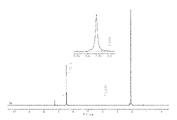
- Table 1 shows the results of evaluating the obtained polyarylene ether (A-2) in the same manner as in Example 1. 1 H-NMR spectrum is shown in FIG.
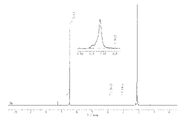
- Example 3 To 100 parts by mass of polyarylene ether (polyphenylene ether) as a raw material, 2 parts by mass of a radical generator (NOFMER BC90, manufactured by NOF Corporation, 2,3-dimethyl-2,3-diphenylbutane) are dry-blended. A polyarylene ether (A-3) was obtained in the same manner as in Example 1, except that it was supplied to the twin-screw extruder. Table 1 shows the results of evaluating the obtained polyarylene ether (A-3) in the same manner as in Example 1. 1 H-NMR spectrum is shown in FIG.
- NOFMER BC90 radical generator
- Example 4 To 100 parts by mass of polyarylene ether (polyphenylene ether) as a raw material, 2 parts by mass of a radical generator (NOFMER BC90, manufactured by NOF Corporation, 2,3-dimethyl-2,3-diphenylbutane) and a modifier (fumar Polyarylene ether (A-4) was obtained in the same manner as in Example 1, except that 2 parts by mass of acid) was dry-blended and supplied to the twin-screw extruder. The resulting polyarylene ether (A-4) was evaluated in the same manner as in Example 1, and the following fumaric acid modification rate was measured. Table 1 shows the results. 1 H-NMR spectrum is shown in FIG.
- the integrated value of the peak at 6.20 to 6.72 ppm is obtained by connecting the intensity at 6.20 ppm and the intensity at 6.72 ppm with a straight line and calculating the area of the region surrounded by the straight line and the peak.
- the integrated value of the peak at 3.06 to 3.17 ppm was obtained by connecting the intensity at 3.06 ppm and the intensity at 3.17 ppm with a straight line and obtaining the area surrounded by the straight line and the peak.
- Example 5 A polyarylene ether (A-5) was obtained in the same manner as in Example 1, except that the heat treatment time (reaction time) was changed to 10 minutes. The resulting polyarylene ether (A-5) was evaluated in the same manner as in Example 1, and the fumaric acid modification rate was measured. Table 1 shows the results.
- Example 6 A polyarylene ether (A-6) was obtained in the same manner as in Example 1, except that the heat treatment time (reaction time) was changed to 1 minute. The resulting polyarylene ether (A-6) was evaluated in the same manner as in Example 1, and the fumaric acid modification rate was measured. Table 1 shows the results.
- polyarylene ether (A) can be obtained by heat-treating polyarylene ether under specific conditions. It was also found that the proportion of the integral value of the obtained polyarylene ether (A) can be further improved by heat-treating the polyarylene ether under specific conditions in the presence of a radical generator.
- the percentage of the integral value of the obtained polyarylene ether (A) was 1.21%, but by-products Foreign matter (insoluble matter when dissolved in chloroform) was mixed. This foreign matter can be removed by purification (such as filtration with the polyarylene ether (A) dissolved in chloroform) as necessary.
- Example 7 A resin consisting of 10% by mass of the polyarylene ether (A-1) obtained in Example 1 and 90% by mass of a thermoplastic resin (B) (manufactured by Idemitsu Kosan Co., Ltd., SPS, MFR: 9 g / 10 minutes) ( S) To 100 parts by mass, 30 parts by mass of inorganic filler (C) (“TR03CMA4G” manufactured by Mitsubishi Engineering-Plastics, carbon fiber, filament diameter 7 ⁇ m) is added to a twin-screw extruder (Thermo Fisher Scientific The carbon fiber was side-fed and kneaded using "Process-11" manufactured by Co., Ltd. to obtain pellets of the resin composition.
- C inorganic filler
- the obtained measurement sample was subjected to 1 H-NMR measurement under the following conditions within 1 hour from the addition of the above deuterated benzene, and 1.96 to 2.43 ppm in the obtained 1 H-NMR spectrum
- the ratio of the divided value (“proportion of integral value”, unit: [%]) was obtained. Table 2 shows the results.
- Example 8 Pellets of a resin composition were obtained in the same manner as in Example 7, except that the polyarylene ether (A-2) obtained in Example 2 was used instead of the polyarylene ether (A-1). Table 2 shows the results of evaluating the obtained pellets in the same manner as in Example 7.
- Example 9 Pellets of a resin composition were obtained in the same manner as in Example 7 except that the polyarylene ether (A-3) obtained in Example 3 was used instead of the polyarylene ether (A-1). Table 2 shows the results of evaluating the obtained pellets in the same manner as in Example 7.
- Example 10 Pellets of a resin composition were obtained in the same manner as in Example 7 except that the polyarylene ether (A-4) obtained in Example 4 was used instead of the polyarylene ether (A-1). Table 2 shows the results of evaluating the obtained pellets in the same manner as in Example 7.
- Example 11 Pellets of a resin composition were obtained in the same manner as in Example 7 except that the polyarylene ether (A-5) obtained in Example 5 was used instead of the polyarylene ether (A-1).
- Table 2 shows the results of evaluating the obtained pellets in the same manner as in Example 7.
- Example 12 Pellets of a resin composition were obtained in the same manner as in Example 7 except that the polyarylene ether (A-6) obtained in Example 6 was used instead of the polyarylene ether (A-1). Table 2 shows the results of evaluating the obtained pellets in the same manner as in Example 7.
- Example 2 Pellets of a resin composition were obtained in the same manner as in Example 7 except that the polyphenylene ether of Comparative Example 1 was used instead of the polyarylene ether (A-1). Table 2 shows the results of evaluating the obtained pellets in the same manner as in Example 7.
- thermoplastic resin (B) 10 parts by mass of the polyphenylene ether of Comparative Example 1 and 90 parts by mass of thermoplastic resin (B) (manufactured by Idemitsu Kosan Co., Ltd., SPS, MFR: 9 g/10 min).
- the polyphenylene ether of Comparative Example 1 has a peak integral value of 6.20 to 6.72 ppm in the 1 H-NMR spectrum obtained by 1 H-NMR spectrum measurement using deuterated chloroform as a solvent, and 3.80 It does not correspond to the polyarylene ether (A) having a ratio of the integrated value of the peak at ⁇ 3.92 ppm of 0.05 to 5.0%, but corresponds to the thermoplastic resin (B). Therefore, the total amount of the thermoplastic resin (B) blended in Comparative Examples 2 and 3 is 100 parts by mass (90 parts by mass + 10 parts by mass).
- Example 13 A resin consisting of 10 parts by mass of the polyarylene ether (A-2) obtained in Example 2 and 90 parts by mass of a thermoplastic resin (B) (manufactured by Idemitsu Kosan Co., Ltd., SPS, MFR: 9 g / 10 minutes) ( S) was kneaded using a twin-screw extruder ("Process-11" manufactured by Thermo Fisher Scientific) with a cylinder diameter of 11 mm to obtain pellets of resin (S). The flexural strength of the obtained pellets was measured in the same manner as in Example 7, and the interfacial shear strength was measured by the measuring method described below. Table 3 shows the results.
- microdroplet method In order to evaluate the interfacial shear strength between the resin (S) in the resin composition and short fibers (carbon fibers), the following microdroplet method test was performed. In the "microdroplet method", a resin particle (droplet) is attached to a single fiber, the droplet is fixed, and then a pull-out test is performed on the single fiber from the droplet to determine the interfacial adhesion between the single fiber and the resin. It is a method of evaluating sexuality. In the microdroplet method, the interfacial shear strength is calculated from the following formula.
- ⁇ F/( ⁇ DL)
- ⁇ is the interfacial shear strength
- F is the maximum pull-out load
- L is the length of the single fiber embedded in the droplet
- D is the fiber diameter.
- MODEL HM410 manufactured by Toei Sangyo Co., Ltd.
- droplets were produced at a production temperature of 270 ° C., then cooled to room temperature, a drawing speed of 0.12 mm / min, and a load cell maximum load of 1 N. Carried out.
- As the carbon fiber “TR50S15L” (fiber diameter 7 ⁇ m) manufactured by Mitsubishi Chemical Corporation was used. The test was performed 20 times, and the interfacial shear strength [MPa] was obtained from the average value.
- Example 14 Pellets of resin (S) were obtained in the same manner as in Example 13 except that the polyarylene ether (A-4) obtained in Example 4 was used instead of the polyarylene ether (A-2). . The obtained pellets were evaluated in the same manner as in Example 13. Table 3 shows the results.
- Example 15 Pellets of resin (S) were obtained in the same manner as in Example 13 except that the polyarylene ether (A-5) obtained in Example 5 was used instead of the polyarylene ether (A-2). . The obtained pellets were evaluated in the same manner as in Example 13. Table 3 shows the results.
- Example 16 Pellets of resin (S) were obtained in the same manner as in Example 13 except that the polyarylene ether (A-6) obtained in Example 6 was used instead of the polyarylene ether (A-2). . The obtained pellets were evaluated in the same manner as in Example 13. Table 3 shows the results.
- Comparative Example 4 Resin pellets were obtained in the same manner as in Example 13, except that the polyphenylene ether of Comparative Example 1 was used instead of the polyarylene ether (A-2). The obtained pellets were evaluated in the same manner as in Example 13. Table 3 shows the results.
- polyarylene ether (A) did not significantly affect the bending strength of resin (S) alone.
- the resin (S) containing the polyarylene ether (A) is superior in interfacial shear strength compared to the resin not containing the polyarylene ether (A).
- the polyarylene ether (A) can improve the adhesion between the fiber and the resin (S) by MB rearrangement, and is suitable as a fiber-reinforced resin composition such as a carbon fiber-reinforced resin composition. I understand.
- Example 17 The polyphenylene ether of Comparative Example 1 was heat-treated using a rheometer (MCR302 manufactured by Anton Paar) under a nitrogen atmosphere (flow rate of 500 NL/h) at a set temperature of 330°C for a holding time of 10 minutes to obtain a polyarylene ether. rice field. Regarding the obtained polyarylene ether, the ratio of the integrated value was obtained in the same manner as in Example 1. Further, the interfacial shear strength was measured in the same manner as in Example 15. Table 4 shows the results.
- Example 18 A polyarylene ether was obtained in the same manner as in Example 17, except that the set temperature was changed to 300°C. The obtained polyarylene ether was evaluated in the same manner as in Example 17. Table 4 shows the results.
- Example 5 A polyarylene ether was obtained in the same manner as in Example 17, except that the set temperature was changed to 270°C. The obtained polyarylene ether was evaluated in the same manner as in Example 17. Table 4 shows the results.
Landscapes
- Chemical & Material Sciences (AREA)
- Health & Medical Sciences (AREA)
- Chemical Kinetics & Catalysis (AREA)
- Medicinal Chemistry (AREA)
- Polymers & Plastics (AREA)
- Organic Chemistry (AREA)
- General Chemical & Material Sciences (AREA)
- Compositions Of Macromolecular Compounds (AREA)
- Laminated Bodies (AREA)
Priority Applications (3)
| Application Number | Priority Date | Filing Date | Title |
|---|---|---|---|
| JP2023524238A JPWO2022250126A1 (https=) | 2021-05-28 | 2022-05-27 | |
| US18/564,574 US20240376300A1 (en) | 2021-05-28 | 2022-05-27 | Resin composition, molded object, multilayered object, method for producing poly(arylene ether), and poly(arylene ether) |
| CN202280038240.3A CN117396558A (zh) | 2021-05-28 | 2022-05-27 | 树脂组合物、成形体、层叠体、聚亚芳基醚的制造方法和聚亚芳基醚 |
Applications Claiming Priority (2)
| Application Number | Priority Date | Filing Date | Title |
|---|---|---|---|
| JP2021-090142 | 2021-05-28 | ||
| JP2021090142 | 2021-05-28 |
Publications (1)
| Publication Number | Publication Date |
|---|---|
| WO2022250126A1 true WO2022250126A1 (ja) | 2022-12-01 |
Family
ID=84228960
Family Applications (1)
| Application Number | Title | Priority Date | Filing Date |
|---|---|---|---|
| PCT/JP2022/021674 Ceased WO2022250126A1 (ja) | 2021-05-28 | 2022-05-27 | 樹脂組成物、成形体、積層体、ポリアリーレンエーテルの製造方法及びポリアリーレンエーテル |
Country Status (5)
| Country | Link |
|---|---|
| US (1) | US20240376300A1 (https=) |
| JP (1) | JPWO2022250126A1 (https=) |
| CN (1) | CN117396558A (https=) |
| TW (1) | TW202313331A (https=) |
| WO (1) | WO2022250126A1 (https=) |
Cited By (1)
| Publication number | Priority date | Publication date | Assignee | Title |
|---|---|---|---|---|
| CN118758989A (zh) * | 2024-09-05 | 2024-10-11 | 杭州研趣信息技术有限公司 | 一种pvc-abs合金塑料中pvc含量的定量检测方法 |
Citations (5)
| Publication number | Priority date | Publication date | Assignee | Title |
|---|---|---|---|---|
| JP2009091400A (ja) * | 2007-10-04 | 2009-04-30 | Mitsubishi Engineering Plastics Corp | 強化ポリフェニレンエーテル系樹脂組成物および成形品 |
| JP2009532574A (ja) * | 2006-04-05 | 2009-09-10 | サビック・イノベーティブ・プラスチックス・アイピー・ベスローテン・フェンノートシャップ | ポリ(アリーレンエーテル)/ポリアミド組成物、方法、及び物品 |
| JP2010222578A (ja) * | 2009-02-27 | 2010-10-07 | Asahi Kasei Chemicals Corp | 外装材用樹脂組成物 |
| WO2017056693A1 (ja) * | 2015-09-30 | 2017-04-06 | 帝人株式会社 | プレス成形体、及び複合材料 |
| WO2020174748A1 (ja) * | 2019-02-28 | 2020-09-03 | 出光興産株式会社 | 樹脂組成物及びその成形体 |
-
2022
- 2022-05-27 WO PCT/JP2022/021674 patent/WO2022250126A1/ja not_active Ceased
- 2022-05-27 CN CN202280038240.3A patent/CN117396558A/zh active Pending
- 2022-05-27 US US18/564,574 patent/US20240376300A1/en active Pending
- 2022-05-27 TW TW111119866A patent/TW202313331A/zh unknown
- 2022-05-27 JP JP2023524238A patent/JPWO2022250126A1/ja active Pending
Patent Citations (5)
| Publication number | Priority date | Publication date | Assignee | Title |
|---|---|---|---|---|
| JP2009532574A (ja) * | 2006-04-05 | 2009-09-10 | サビック・イノベーティブ・プラスチックス・アイピー・ベスローテン・フェンノートシャップ | ポリ(アリーレンエーテル)/ポリアミド組成物、方法、及び物品 |
| JP2009091400A (ja) * | 2007-10-04 | 2009-04-30 | Mitsubishi Engineering Plastics Corp | 強化ポリフェニレンエーテル系樹脂組成物および成形品 |
| JP2010222578A (ja) * | 2009-02-27 | 2010-10-07 | Asahi Kasei Chemicals Corp | 外装材用樹脂組成物 |
| WO2017056693A1 (ja) * | 2015-09-30 | 2017-04-06 | 帝人株式会社 | プレス成形体、及び複合材料 |
| WO2020174748A1 (ja) * | 2019-02-28 | 2020-09-03 | 出光興産株式会社 | 樹脂組成物及びその成形体 |
Cited By (1)
| Publication number | Priority date | Publication date | Assignee | Title |
|---|---|---|---|---|
| CN118758989A (zh) * | 2024-09-05 | 2024-10-11 | 杭州研趣信息技术有限公司 | 一种pvc-abs合金塑料中pvc含量的定量检测方法 |
Also Published As
| Publication number | Publication date |
|---|---|
| JPWO2022250126A1 (https=) | 2022-12-01 |
| US20240376300A1 (en) | 2024-11-14 |
| CN117396558A (zh) | 2024-01-12 |
| TW202313331A (zh) | 2023-04-01 |
Similar Documents
| Publication | Publication Date | Title |
|---|---|---|
| TWI448498B (zh) | 熱可塑性樹脂組成物的製造方法 | |
| CN115916906B (zh) | 热塑性树脂组合物 | |
| EP2410021A1 (en) | Fiber reinforced resin composition, molding material, and method for producing fiber reinforced resin composition | |
| CN1942523B (zh) | 导电树脂组合物 | |
| JP2009074043A (ja) | 長繊維強化樹脂ペレット | |
| JP2004107626A (ja) | 炭素繊維強化熱可塑性樹脂組成物、成形材料および成形品 | |
| WO2017013833A1 (ja) | 樹脂組成物及び成形体 | |
| WO2022250126A1 (ja) | 樹脂組成物、成形体、積層体、ポリアリーレンエーテルの製造方法及びポリアリーレンエーテル | |
| JP2011184483A (ja) | 樹脂組成物、樹脂組成物の製造方法及び成形品 | |
| JP7341219B2 (ja) | 樹脂組成物及びその成形体 | |
| CN107207850A (zh) | 树脂组合物、成型体、配管机械部件 | |
| JP4878895B2 (ja) | 導電性樹脂組成物 | |
| JP2023158352A (ja) | 熱可塑性樹脂組成物及びその成形体 | |
| JP7032163B2 (ja) | 樹脂組成物、樹脂組成物の製造方法及び成形体 | |
| JP2008101200A (ja) | 熱可塑性樹脂組成物 | |
| JP7340541B2 (ja) | 繊維強化樹脂ペレット、混合ペレット及び射出成形品 | |
| JP2022038965A (ja) | 熱可塑性樹脂組成物 | |
| WO2021187524A1 (ja) | 樹脂フィルム、繊維強化樹脂基材、積層体及び複合体、並びにそれらの製造方法 | |
| CN118667321A (zh) | 一种ppo/tpee合金及其制备方法、应用 | |
| CN117980410A (zh) | 树脂组合物 | |
| JP2023075003A (ja) | 樹脂組成物 |
Legal Events
| Date | Code | Title | Description |
|---|---|---|---|
| 121 | Ep: the epo has been informed by wipo that ep was designated in this application |
Ref document number: 22811394 Country of ref document: EP Kind code of ref document: A1 |
|
| WWE | Wipo information: entry into national phase |
Ref document number: 2023524238 Country of ref document: JP |
|
| WWE | Wipo information: entry into national phase |
Ref document number: 18564574 Country of ref document: US Ref document number: 202280038240.3 Country of ref document: CN |
|
| NENP | Non-entry into the national phase |
Ref country code: DE |
|
| 122 | Ep: pct application non-entry in european phase |
Ref document number: 22811394 Country of ref document: EP Kind code of ref document: A1 |