WO2022234772A1 - 固定無線機及び無線通信システム - Google Patents
固定無線機及び無線通信システム Download PDFInfo
- Publication number
- WO2022234772A1 WO2022234772A1 PCT/JP2022/018109 JP2022018109W WO2022234772A1 WO 2022234772 A1 WO2022234772 A1 WO 2022234772A1 JP 2022018109 W JP2022018109 W JP 2022018109W WO 2022234772 A1 WO2022234772 A1 WO 2022234772A1
- Authority
- WO
- WIPO (PCT)
- Prior art keywords
- fixed
- directional antenna
- unit
- radio
- host device
- Prior art date
- Legal status (The legal status is an assumption and is not a legal conclusion. Google has not performed a legal analysis and makes no representation as to the accuracy of the status listed.)
- Ceased
Links
Images



Classifications
-
- H—ELECTRICITY
- H04—ELECTRIC COMMUNICATION TECHNIQUE
- H04B—TRANSMISSION
- H04B7/00—Radio transmission systems, i.e. using radiation field
- H04B7/02—Diversity systems; Multi-antenna system, i.e. transmission or reception using multiple antennas
- H04B7/022—Site diversity; Macro-diversity
-
- H—ELECTRICITY
- H04—ELECTRIC COMMUNICATION TECHNIQUE
- H04W—WIRELESS COMMUNICATION NETWORKS
- H04W16/00—Network planning, e.g. coverage or traffic planning tools; Network deployment, e.g. resource partitioning or cells structures
- H04W16/24—Cell structures
- H04W16/28—Cell structures using beam steering
-
- H—ELECTRICITY
- H04—ELECTRIC COMMUNICATION TECHNIQUE
- H04W—WIRELESS COMMUNICATION NETWORKS
- H04W24/00—Supervisory, monitoring or testing arrangements
- H04W24/02—Arrangements for optimising operational condition
-
- Y—GENERAL TAGGING OF NEW TECHNOLOGICAL DEVELOPMENTS; GENERAL TAGGING OF CROSS-SECTIONAL TECHNOLOGIES SPANNING OVER SEVERAL SECTIONS OF THE IPC; TECHNICAL SUBJECTS COVERED BY FORMER USPC CROSS-REFERENCE ART COLLECTIONS [XRACs] AND DIGESTS
- Y02—TECHNOLOGIES OR APPLICATIONS FOR MITIGATION OR ADAPTATION AGAINST CLIMATE CHANGE
- Y02D—CLIMATE CHANGE MITIGATION TECHNOLOGIES IN INFORMATION AND COMMUNICATION TECHNOLOGIES [ICT], I.E. INFORMATION AND COMMUNICATION TECHNOLOGIES AIMING AT THE REDUCTION OF THEIR OWN ENERGY USE
- Y02D30/00—Reducing energy consumption in communication networks
- Y02D30/70—Reducing energy consumption in communication networks in wireless communication networks
Definitions
- the present invention relates to a wireless communication system that autonomously adjusts the beam angle of a directional antenna in a fixed wireless device, and more particularly to a fixed wireless device and a wireless communication system that perform directional beam control according to the installation state of the fixed wireless device. Regarding.
- 3GPP registered trademark
- 3rd Generation Partnership Project 3rd Generation Partnership Project
- 3GPP 3rd trademark
- optical transmission devices have a SlavePort optical conversion section and a MasterPort optical conversion section using technologies such as SERDES (SERializer/DESerializer), which is a high-speed serial communication standard, and CPRI (Common Public Radio Interface), Some have a function of carrying out data communication between a master station (master device) and a slave station (slave device) by mounting an optical transceiver.
- SERDES SERializer/DESerializer
- CPRI Common Public Radio Interface
- a wireless device having a directional antenna performs wireless communication via the directional antenna
- a DAS device or an ROF device as a wireless base station antenna extension device that extends the antenna.
- Patent Document 1 discloses a directivity control method capable of adjusting the beam angle at high speed in a wireless communication system that autonomously adjusts the beam angle of a directional antenna.
- Patent Document 1 discloses a method of setting an operation range when determining the vertical direction of a directional antenna with respect to a horizontal plane based on movement information obtained from a movement state acquisition unit that acquires the movement state.
- a movement state acquisition unit that acquires the movement state.
- the present invention has been made in view of the above circumstances, and aims to provide a fixed radio and a radio communication system that automatically perform directional beam control according to the installation state of the fixed radio.
- the present invention which solves the problems of the conventional example, is a fixed wireless device that autonomously adjusts the beam angle of a directional antenna in wireless communication, and has a detection unit that detects the installation direction and inclination of the wireless device. and a controller that adjusts the beam direction of the directional antenna based on the installation direction and inclination detected by the detector.
- the present invention is characterized in that, in the fixed wireless device, the detection section is a triaxial sensor, and the control section adjusts the beam direction by controlling the beam angle and beam width of the directional antenna.
- the present invention is characterized in that, in the fixed wireless device, the control unit corrects the beam direction of the directional antenna according to an instruction from a connected host device.
- the present invention is characterized in that, in the above-described fixed wireless device, the control unit transmits information regarding the beam direction of the directional antenna to the host device to which it is connected.
- the present invention is a radio communication system comprising a plurality of fixed radios as described above and having a host device connected to the plurality of fixed radios, wherein the host device provides information on beam directions of directional antennas from the plurality of fixed radios. and transmitting instructions to each fixed radio to individually correct the beam direction of the directional antenna at each fixed radio so as to optimize the overall beam area formed by the plurality of fixed radios;
- Each fixed wireless device is characterized in that it corrects the beam direction of the directional antenna according to an instruction from a host device.
- a fixed wireless device for autonomously adjusting the beam angle of a directional antenna in wireless communication, comprising: a detection unit for detecting the installation direction and inclination of the wireless device; and a control unit for adjusting the beam direction of the directional antenna based on the direction and inclination, so that the directional beam can be automatically controlled according to the installation state.
- control unit is the fixed wireless device that corrects the beam direction of the directional antenna according to an instruction from the host device to which it is connected, the beam direction can be easily corrected from the host device.
- control unit is the above-mentioned fixed wireless device that transmits information about the beam direction of the directional antenna to the host device to be connected
- the host device can easily check the status of the beam direction of the fixed wireless device to be connected. There are effects that can be managed.
- a radio communication system comprising a plurality of fixed radios and having a host device connected to the plurality of fixed radios, wherein the host device is configured to determine beam directions of directional antennas from the plurality of fixed radios. and send instructions to each fixed radio to individually correct the beam direction of the directional antenna at each fixed radio so as to optimize the overall beam area formed by the plurality of fixed radios.
- the host device since each fixed radio device corrects the beam direction of the directional antenna according to instructions from the host device, the beam area comprehensively formed by multiple fixed radio devices can be easily optimized by the host device. There is an effect that can be done.
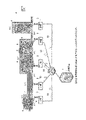
- FIG. 1 is a schematic diagram of the system showing the vertical spread of the beam when the radio is installed on the ceiling or wall;
- FIG. 1 is a schematic diagram of the system showing the horizontal spread of the beam when the radio is mounted on a wall;
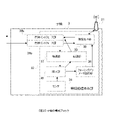
- FIG. 3 is a configuration block diagram of a child device;
- FIG. 10 is a flow diagram showing processing when a child device is activated;
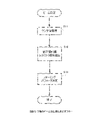
- FIG. 10 is a flow chart showing beam setting processing of a child device;
- FIG. 11 is a flow chart showing processing of an upper-level setting instruction for a child device;
- a fixed radio device (this radio device) according to an embodiment of the present invention is for autonomously adjusting the beam angle of a directional antenna in radio communication. Since the control unit adjusts the beam direction of the directional antenna based on the installation direction and inclination detected by the detection unit, the directional beam can be autonomously controlled according to the installation state. is possible.
- a radio communication system (this system) is a radio communication system having a host device connected to a plurality of present radio devices, wherein the host device receives directional signals from the plurality of present radio devices. receive information about the beam directions of the directional antennas and provide instructions to individually correct the beam directions of the directional antennas on each Radio so as to optimize the overall beam area formed by the multiple Radios; Since each radio device corrects the beam direction of the directional antenna according to the instruction from the host device, the beam area comprehensively formed by the multiple radio devices is can be easily optimized.
- FIGS. 1 and 2 This system will be described with reference to FIGS.
- Figure 1 is a schematic diagram of the system showing the vertical spread of the beam when the radio is installed on the ceiling or wall
- Figure 2 is the horizontal spread of the beam when the radio is installed on the wall
- 1 is a schematic diagram of the system showing the spread of
- FIG. 1 shows an image of selecting an installation direction with an acceleration sensor
- FIG. 2 shows an image of selecting an area by performing beam forming by area design and power control.
- this system comprises a host device 1 such as a server, an aggregation device (master station device/master device) 2, a plurality of wireless devices (slave station devices/slave devices) 3, A plurality of mobile devices 4 are provided.
- the host device 1 and the master device 2 are connected by wire or wirelessly
- the master device 2 and the slave device 3 are wiredly connected by a wired cable such as an optical fiber cable 10
- the slave device 3 and the mobile device 4 are wirelessly connected.
- the beam of the directional antenna required varies depending on the location where the handset 3 is installed. For example, as shown in FIG. 1, when the slave unit 3 is installed on the ceiling or on the wall, the beam is directed downward. A narrow beam is sufficient for installation. Further, as shown in FIG. 2, even when all of the child devices 3 are installed on the wall, the required horizontal direction and spread of the beam differ according to the shape and depth of the installation location.
- the slave unit 3 autonomously controls the beam direction and spread (angle) of the directional antenna according to the installation location, and the host device 1, based on the information from the multiple slave units 3 , the beam directions of the slave units 3 are individually corrected to form an optimum beam area.
- a host device 1 is a computer device such as a server, and manages a plurality of child devices 3 and mobile devices 4 . Specifically, the host device 1 stores the identification number (child device ID) of the child device 3 and its installation location (location), the inclination of the child device 3 obtained by the triaxial sensor in the child device 3, Installation direction information and beam direction information (angular direction [beam angle], half width [beam width]) of the directional antenna controlled by the information are obtained from the handset 3 and stored in association with the handset ID. is doing.
- the host device 1 transmits an instruction to correct the beam direction to the child device 3 via the parent device 2 .
- the instruction may be data on the beam angle and beam width, or correction parameters (setting parameters) for correcting the beam direction in operation.
- the high-level device 1 can optimize the beam area formed by the slaves 3 as a whole by individually controlling the beam directions of the slaves 3 .
- the parent device 2 is connected to the host device 1 and is also connected to a plurality of child devices 3 via optical fiber cables 10 .
- the communication interface section of the parent device 2 includes an optical/electrical conversion section that receives an optical signal from the child device 3 and converts it into an electrical signal, and an electrical/electrical conversion section that converts an electrical signal for the child device 3 into an optical signal for transmission. an optical conversion unit, and an interface unit for communication with the host device 1 . Note that the process performed by the host device 1 may be performed by the parent device 2 instead.
- a plurality of slave units 3 are arranged on the ceiling, walls, floors, etc., along the passages in the underground malls and buildings, have directional antennas, and perform wireless communication with mobile units 4 moving or stationary nearby.
- a built-in triaxial sensor (acceleration sensor) detects the inclination and installation direction information of the child device 3, and adjusts the beam direction (beam angle, beam width) of the directional antenna based on the detected information.
- the slave unit 3 has different inclinations and installation directions depending on where it is installed, so the slave unit 3 of this system autonomously adjusts the beam direction to an appropriate beam direction based on this information.
- FIG. 3 is a configuration block diagram of a child device.
- the child device 3 includes an antenna section 31, a radio processing main body section 32, a radio processing section 33, a sensor section 34, a correction section (forming pattern correction section) 35, and a forming parameter selection section. 36, a demodulation section 37, a modulation section 38, a wired interface section 39a, and a wired interface section 39b.
- the antenna unit 31 is a directional antenna and performs radio transmission/reception with the mobile device 4 .
- the wireless processing main unit 32 includes a wireless processing unit 33, a sensor unit 34, a correction unit 35, a forming parameter selection unit 36, a demodulation unit 37, a modulation unit 38, a wired interface unit 39a, and a wired interface unit 39b. and are built-in.
- the wireless processing unit 33 has functions of A/D conversion, D/A conversion, and RF signal conversion, receives a signal from the base unit 2 via the wired interface unit 39a, performs demodulation processing, and receives the signal.
- the modulated signal is output to the antenna unit 31 and transmitted to the mobile station 4 .
- the wireless processing unit 33 demodulates and receives a signal from the mobile unit 4 input from the antenna unit 31, further modulates the signal, and transmits the signal to the base unit 2 from the wired interface unit 39b.
- the radio processing unit 33 forms beams of directional antennas according to parameters set by the forming parameter selection unit 36 .
- the correction unit 35 corrects the beam direction and width in the vertical direction based on the detection data from the sensor unit 34, and corrects the beam direction and width in the horizontal direction based on the instruction data from the host device 1.
- width is corrected.
- the direction and width of the beam in the vertical direction may be corrected by the data of the instruction from the host device 1 .
- the correction unit 35 corrects the parameters using the correction values, and after the correction, the forming parameter selection unit 36 selects the parameters, sets them in the radio processing unit 33, and corrects the direction and width of the beam as described above. be. Therefore, the correction unit 35 corrects the forming pattern, and the forming parameter selection unit 36 selects the forming pattern.
- the sensor unit 34 is a triaxial sensor (acceleration sensor), and detects information on the tilt and installation direction of the child device 3 .
- the sensor section 34 is referred to as a detection section in the claims.
- a temperature sensor is included in the sensor unit 34 to detect whether or not the temperature has reached a specific threshold value or higher. The detection result of this temperature sensor is also related to the beam direction control of the directional antenna. Details will be described later.
- the correction unit 35 acquires a correction value for correcting the beam angle and width in the vertical direction based on information on the tilt and installation direction from the sensor unit 34 .
- the correction unit 35 has a registry (correspondence table), and outputs a correction value corresponding to the information on the tilt and installation direction. That is, the correcting unit 35 adds the correction value obtained from the registry to the beam forming parameters for forming the beam direction of the directional antenna.
- the tilt is a numerical value that indicates the degree of tilt (tilt state) of the child device 3
- the installation direction indicates the direction in which the antenna obtained from the installation position on the ceiling, wall, floor, or the like is directed. That is, the correction unit 35 adds the correction value to the beamforming parameter and outputs the added forming parameter to the forming parameter selection unit 36 .
- the correction unit 35 does not control the beam direction of the directional antenna and makes it omnidirectional. For example, when heat builds up near the ceiling and the temperature rises above a specific threshold, directivity control that consumes heat is stopped to prevent heat from rising.
- the forming parameter selection unit 36 selects parameters for wireless beam forming (beam forming) and sets them in the wireless processing unit 33 .
- the demodulation unit 37 receives the setting parameters from the host device 1 from the wired interface unit 39a, demodulates them, and outputs them to the correction unit 35.
- the modulating section 38 modulates the setting parameter, converts it into a transmission code for the host device 1, and outputs it to the wired interface section 39b.
- the correction unit 35, the forming parameter selection unit 36, the demodulation unit 37, and the modulation unit 38 are referred to as a control unit in the claims.
- the wired interface unit 39 a receives an optical signal from the base unit 2 , converts it into an electrical signal, outputs the electrical signal to the wireless processing unit 33 , and outputs a setting parameter signal to the demodulation unit 37 .
- the wired interface unit 39 b receives the signal from the wireless processing unit 33 and the setting parameter signal from the modulation unit 38 , converts the electrical signal into an optical signal, and transmits the optical signal to the base unit 2 .
- the mobile device 4 moves within the beam area formed by this system, wirelessly communicates with the child device 3, and communicates with the host device 1 via the base device 2 or the management server beyond the host device 1 via the network. It is managed.
- the optical fiber cable 10 communicates wireless data by optical multiplexing.
- FIG. 4 is a flow chart showing processing when the child device is activated
- FIG. 4 is a flow chart showing beam setting processing of the child device
- FIG. It is a diagram.
- Beam setting process FIG. 5
- the beam setting process of the slave unit 3 acquires the sensor value from the sensor unit 34 (S11), calculates the correction value in the correction unit 35, adds the registry value, and obtains the forming parameter ( S12). Then, the forming parameter selection unit 36 receives the forming parameter to which the correction value from the correction unit 35 is added, determines (selects) the forming parameter, sets the parameter in the wireless processing unit 33 (S13), and performs processing. exit.
- the demodulator 37 demodulates the setting parameters of the host device 1 from the wired interface unit 39a (S21), and the demodulated setting parameters are used to set the registry value of the correction unit 35. is updated (S22). Then, the beam setting process described with reference to FIG. 5 is performed (S23), and the process ends.
- the host device 1 or the parent device 2 can acquire from the sensor unit 34 of the child device 3 whether the installation location of the child device 3 is the ceiling or the wall, and the parameter information for forming can be obtained from the installation location.
- the beam correction information of the slave unit 3 can be corrected by instructing the slave units individually.
- the host device 1 or the parent device 2 comprehends the antenna beams constructed by the plurality of child devices 3 as a whole, and adjusts the balance of the overall beam area formed by the beamform of each child device 3 to adjust the beam area.
- the beam correction information is corrected for each slave unit 3 so as to optimize .
- the sensor information detected by the sensor unit 34 of the child unit 3 can be used to autonomously control the beam by reducing the half-value width in the downward direction when installed on a wall, or by widening the half-value width as much as possible in the case of installation on a ceiling. Construction of the machine 3 can be facilitated.
- information on the installation direction of the child device 3 and additional correction can be made by the host device 1 or the parent device 2 .
- This system has no restrictions on the installation direction, and the beam direction can be corrected autonomously by the accelerometer.
- the area partition is changed (a space where the area division is often changed, such as a shopping mall)
- fine adjustment of the beam direction of the directional antenna of the cordless handset 3 is performed from the host device 1 as necessary. This is advantageous as it can be easily modified after installation if done.
- ceiling installation has the disadvantage that it is difficult for heat to escape. This is advantageous because it is possible to suppress the amount of heat generated by setting non-directivity.
- the beam angle of the directional antenna in wireless communication is autonomously adjusted. Since the beam direction of the directional antenna is adjusted based on the installation direction and inclination detected in 1, there is an effect that the directional beam can be autonomously controlled according to the installation state.
- this system is a wireless communication system having a host device 1 connected to a plurality of wireless devices (child devices) 3. and transmitting to each child device 3 an instruction to individually correct the beam direction of the directional antenna in each child device 3 so as to optimize the overall beam area formed by the plurality of child devices 3; Since each cordless handset 3 corrects the beam direction of the directional antenna according to an instruction from the host device 1, the beam area comprehensively formed by a plurality of cordless handsets 3 can be easily optimized by the host device 1. It is possible.
- the present invention is suitable for fixed radios and radio communication systems that automatically perform directional beam control according to the installation state of the fixed radio.
Landscapes
- Engineering & Computer Science (AREA)
- Computer Networks & Wireless Communication (AREA)
- Signal Processing (AREA)
- Mobile Radio Communication Systems (AREA)
Priority Applications (1)
| Application Number | Priority Date | Filing Date | Title |
|---|---|---|---|
| JP2023518659A JP7585472B2 (ja) | 2021-05-07 | 2022-04-19 | 固定無線機及び無線通信システム |
Applications Claiming Priority (2)
| Application Number | Priority Date | Filing Date | Title |
|---|---|---|---|
| JP2021-079269 | 2021-05-07 | ||
| JP2021079269 | 2021-05-07 |
Publications (1)
| Publication Number | Publication Date |
|---|---|
| WO2022234772A1 true WO2022234772A1 (ja) | 2022-11-10 |
Family
ID=83932425
Family Applications (1)
| Application Number | Title | Priority Date | Filing Date |
|---|---|---|---|
| PCT/JP2022/018109 Ceased WO2022234772A1 (ja) | 2021-05-07 | 2022-04-19 | 固定無線機及び無線通信システム |
Country Status (2)
| Country | Link |
|---|---|
| JP (1) | JP7585472B2 (https=) |
| WO (1) | WO2022234772A1 (https=) |
Citations (2)
| Publication number | Priority date | Publication date | Assignee | Title |
|---|---|---|---|---|
| JP2011193085A (ja) * | 2010-03-12 | 2011-09-29 | Kyocera Corp | 基地局及び無線通信システム |
| WO2019026375A1 (ja) * | 2017-08-04 | 2019-02-07 | ソニー株式会社 | 制御装置、無線装置、方法及び記録媒体 |
Family Cites Families (2)
| Publication number | Priority date | Publication date | Assignee | Title |
|---|---|---|---|---|
| JP2001274616A (ja) | 2000-03-24 | 2001-10-05 | Matsushita Electric Ind Co Ltd | 携帯無線機 |
| CN206022624U (zh) | 2016-08-16 | 2017-03-15 | 钟彦珽 | 天线方向调整系统 |
-
2022
- 2022-04-19 JP JP2023518659A patent/JP7585472B2/ja active Active
- 2022-04-19 WO PCT/JP2022/018109 patent/WO2022234772A1/ja not_active Ceased
Patent Citations (2)
| Publication number | Priority date | Publication date | Assignee | Title |
|---|---|---|---|---|
| JP2011193085A (ja) * | 2010-03-12 | 2011-09-29 | Kyocera Corp | 基地局及び無線通信システム |
| WO2019026375A1 (ja) * | 2017-08-04 | 2019-02-07 | ソニー株式会社 | 制御装置、無線装置、方法及び記録媒体 |
Also Published As
| Publication number | Publication date |
|---|---|
| JPWO2022234772A1 (https=) | 2022-11-10 |
| JP7585472B2 (ja) | 2024-11-18 |
Similar Documents
| Publication | Publication Date | Title |
|---|---|---|
| US12191969B2 (en) | Device/UE-oriented beam recovery and maintenance mechanisms | |
| US10433184B2 (en) | Method and apparatus for directing an antenna beam based on a location of a communication device | |
| US8723741B2 (en) | Adjustment of radiation patterns utilizing a position sensor | |
| US10075221B2 (en) | Method and apparatus for directing an antenna beam based on motion of a communication device | |
| US20230102698A1 (en) | Network device, user equipment, wireless communication method and storage medium | |
| CN103155443A (zh) | 无线通信装置以及无线通信方法 | |
| WO2015033928A1 (ja) | 同期方法、移動局装置及び基地局装置 | |
| CN110710126A (zh) | 通信设备、通信控制方法和计算机程序 | |
| JP2014150388A (ja) | 無線通信装置、制御方法及び制御プログラム | |
| TW202345643A (zh) | 側鏈傳輸方法及使用者裝置 | |
| CN114175516B (zh) | 无线通信系统中的电子设备和方法 | |
| WO2022234772A1 (ja) | 固定無線機及び無線通信システム | |
| JP2018056961A (ja) | 通信制御装置、通信システムおよび通信方法 | |
| JP6747674B2 (ja) | 中継装置、無線通信システム、中継方法、及びプログラム | |
| JP7585505B2 (ja) | 無線通信システム | |
| JP2005323219A (ja) | 無線通信装置及び無線通信ネットワークシステム | |
| JP2017059933A (ja) | 通信システム、基地局及びアンテナ制御方法 | |
| KR101495750B1 (ko) | 무선 센서 노드 및 이를 이용한 무선 통신 방법 | |
| JP2014158127A (ja) | 基地局装置および無線信号送信方法 | |
| JP5890541B1 (ja) | 通信システム、第2基地局及び通信方法 | |
| JP2002100998A (ja) | ケーブルロスに対するアンプゲイン調整方法 | |
| EP4393085B1 (en) | A flexible backbone network for high-speed optical wireless communication | |
| WO2025064061A1 (en) | Interaction disable for wireless device | |
| US20160093952A1 (en) | Communication apparatus, control method, and storage medium | |
| US20140203983A1 (en) | Apparatus and method for controlling antenna in mobile communication system |
Legal Events
| Date | Code | Title | Description |
|---|---|---|---|
| 121 | Ep: the epo has been informed by wipo that ep was designated in this application |
Ref document number: 22798879 Country of ref document: EP Kind code of ref document: A1 |
|
| WWE | Wipo information: entry into national phase |
Ref document number: 2023518659 Country of ref document: JP |
|
| NENP | Non-entry into the national phase |
Ref country code: DE |
|
| 122 | Ep: pct application non-entry in european phase |
Ref document number: 22798879 Country of ref document: EP Kind code of ref document: A1 |