WO2022224469A1 - フェニルボロン酸化合物、変性ポリマー、ポリマー組成物及びタイヤ - Google Patents
フェニルボロン酸化合物、変性ポリマー、ポリマー組成物及びタイヤ Download PDFInfo
- Publication number
- WO2022224469A1 WO2022224469A1 PCT/JP2021/039219 JP2021039219W WO2022224469A1 WO 2022224469 A1 WO2022224469 A1 WO 2022224469A1 JP 2021039219 W JP2021039219 W JP 2021039219W WO 2022224469 A1 WO2022224469 A1 WO 2022224469A1
- Authority
- WO
- WIPO (PCT)
- Prior art keywords
- polymer
- modified
- group
- mass
- phenylboronic acid
- Prior art date
- Legal status (The legal status is an assumption and is not a legal conclusion. Google has not performed a legal analysis and makes no representation as to the accuracy of the status listed.)
- Ceased
Links
Images

Classifications
-
- C—CHEMISTRY; METALLURGY
- C07—ORGANIC CHEMISTRY
- C07F—ACYCLIC, CARBOCYCLIC OR HETEROCYCLIC COMPOUNDS CONTAINING ELEMENTS OTHER THAN CARBON, HYDROGEN, HALOGEN, OXYGEN, NITROGEN, SULFUR, SELENIUM OR TELLURIUM
- C07F5/00—Compounds containing elements of Groups 3 or 13 of the Periodic Table
- C07F5/02—Boron compounds
- C07F5/025—Boronic and borinic acid compounds
-
- B—PERFORMING OPERATIONS; TRANSPORTING
- B60—VEHICLES IN GENERAL
- B60C—VEHICLE TYRES; TYRE INFLATION; TYRE CHANGING; CONNECTING VALVES TO INFLATABLE ELASTIC BODIES IN GENERAL; DEVICES OR ARRANGEMENTS RELATED TO TYRES
- B60C1/00—Tyres characterised by the chemical composition or the physical arrangement or mixture of the composition
-
- C—CHEMISTRY; METALLURGY
- C08—ORGANIC MACROMOLECULAR COMPOUNDS; THEIR PREPARATION OR CHEMICAL WORKING-UP; COMPOSITIONS BASED THEREON
- C08C—TREATMENT OR CHEMICAL MODIFICATION OF RUBBERS
- C08C19/00—Chemical modification of rubber
- C08C19/30—Addition of a reagent which reacts with a hetero atom or a group containing hetero atoms of the macromolecule
- C08C19/42—Addition of a reagent which reacts with a hetero atom or a group containing hetero atoms of the macromolecule reacting with metals or metal-containing groups
-
- Y—GENERAL TAGGING OF NEW TECHNOLOGICAL DEVELOPMENTS; GENERAL TAGGING OF CROSS-SECTIONAL TECHNOLOGIES SPANNING OVER SEVERAL SECTIONS OF THE IPC; TECHNICAL SUBJECTS COVERED BY FORMER USPC CROSS-REFERENCE ART COLLECTIONS [XRACs] AND DIGESTS
- Y02—TECHNOLOGIES OR APPLICATIONS FOR MITIGATION OR ADAPTATION AGAINST CLIMATE CHANGE
- Y02T—CLIMATE CHANGE MITIGATION TECHNOLOGIES RELATED TO TRANSPORTATION
- Y02T10/00—Road transport of goods or passengers
- Y02T10/80—Technologies aiming to reduce greenhouse gasses emissions common to all road transportation technologies
- Y02T10/86—Optimisation of rolling resistance, e.g. weight reduction
Definitions
- the present disclosure relates to phenylboronic acid compounds, modified polymers, polymer compositions and tires.
- the present disclosure provides a phenylboronic acid compound capable of imparting a function of reversibly changing physical properties with water to a polymer, a polymer exhibiting a reversible change in physical properties with water, and using the polymer It is an object of the present invention to provide a polymer composition and a tire having a
- the present disclosure relates to a phenylboronic acid compound represented by the following formula (1-1).
- R 21 and R 22 are the same or different and are divalent hydrocarbon groups which may have a substituent and may contain a hetero atom.
- R 23 to R 25 are the same or different and are hydrogen atoms , or a monovalent hydrocarbon group that may have a substituent and may contain a heteroatom.
- m is an integer of 1 to 5.
- the phenylboronic acid compound represented by the above formula (1-1) can impart to the polymer the function of reversibly changing physical properties with water.
- the present disclosure is a modified polymer modified with a phenylboronic acid compound represented by the following formula (1).
- the modified polymer can exhibit reversible changes in physical properties due to water.
- the modified polymer obtained by reacting the polymer with the phenylboronic acid compound represented by the formula (1) is dried, the three molecules reversibly dehydrate and condense to form a boroxine (boroxine crosslink).
- the generated boroxine cross-linking points are decomposed.
- the modified polymer can exhibit reversible changes in physical properties by water. Further, for example, when the modified polymer is used in a tire, it is presumed that the elastic modulus is lowered when in contact with water, the loss on wet road surfaces is increased, and the wet grip performance is improved.
- the modified polymer is a polymer modified with a phenylboronic acid compound represented by the following formula (1).
- R 11 is the same or different and is a monovalent hydrocarbon group which may have a substituent and may contain a heteroatom.
- n is an integer of 1 to 5.
- the monovalent hydrocarbon group constituting the skeleton of R 11 includes linear, cyclic or branched alkyl groups, alkenyl groups, aryl groups, aralkyl groups and the like, with alkyl groups being particularly preferred.
- the number of carbon atoms in R 11 is preferably 1 or more, more preferably 2 or more, still more preferably 3 or more, and is preferably 30 or less, more preferably 20 or less, still more preferably 10 or less, and particularly preferably 6 or less. is.
- the substituent for R 11 may be added to the skeleton of the monovalent hydrocarbon group constituting the skeleton of R 11 or introduced into the skeleton.
- the substituent is not particularly limited, and includes known groups. For example, alkoxy groups having 1 to 4 carbon atoms such as methoxy group, ethoxy group and butoxy group; halogen atoms such as chlorine, bromine, iodine and fluorine; and aryl groups having 6 to 12 carbon atoms such as phenyl group, naphthyl group and biphenyl group.
- the substituent is preferably a carboxyl group, an amino group, a thiol group, or the like.
- the substituent is preferably a group having a nitrogen atom, and more preferably an amino group, from the viewpoint that the function of reversible physical property change by water can be obtained.
- the nitrogen atom and boron in the phenylboronic acid compound represented by the formula (1) are obtained from the viewpoint of obtaining the function of reversible change in physical properties by water.
- Atoms are preferably bonded through 1 to 6 carbon atoms.
- the number of carbon atoms intervening is preferably 2 to 5, more preferably 2 to 4, still more preferably 2 to 3.
- the phenylboronic acid compound C shown in FIG. 1 described later is a compound in which a nitrogen atom and a boron atom are bonded via three carbon atoms.
- the amino group as the substituent for R 11 includes, for example, a primary amino group (--NH 2 ), a secondary amino group (--NHR 1 ), and a tertiary amino group (--NR 1 R 2 ).
- R 1 and R 2 are exemplified by alkyl groups, phenyl groups, aralkyl groups and the like, and R 1 and R 2 preferably have 1 to 8 carbon atoms.
- the amino group may be an ammonium base, such as a tertiary ammonium base and a quaternary ammonium base.
- the amino group also includes a divalent amino group. Examples of the divalent amino group include -N(H)- and -N(R 3 )-.
- R 3 is exemplified by an alkyl group, a phenyl group, an aralkyl group and the like, and preferably has 1 to 8 carbon atoms. In the case of a divalent amino group, for example, it is introduced into the skeleton of R11.
- Heteroatoms in R 11 include a nitrogen atom, an oxygen atom, a sulfur atom and the like. Among them, a nitrogen atom is preferable from the viewpoint of obtaining more effects.
- n is preferably 1 to 4, more preferably 1 to 3, even more preferably 1 to 2, and particularly preferably 1, from the viewpoint of obtaining a better effect.
- R 21 and R 22 are the same or different and are divalent hydrocarbon groups which may have a substituent and may contain a hetero atom.
- R 23 to R 25 are the same or different and are hydrogen atoms , or a monovalent hydrocarbon group that may have a substituent and may contain a heteroatom.
- m is an integer of 1 to 5.
- the divalent hydrocarbon group constituting the skeleton of R 21 and R 22 may be linear, cyclic or branched, and examples thereof include an alkylene group, an alkenylene group, a cycloalkylene group, Examples include a cycloalkylalkylene group, an arylene group, an aralkylene group, and the like.
- the carbon number of R 21 and R 22 is preferably 1-30, more preferably 1-15, even more preferably 1-8, and particularly preferably 1-5. Specific examples include a methylene group, ethylene group, trimethylene group, tetramethylene group, pentamethylene group, hexamethylene group and the like.
- the substituents for R 21 and R 22 may be added to or introduced into the skeleton of the divalent hydrocarbon group constituting the skeleton of R 21 and R 22 .
- the substituent is not particularly limited and includes, for example, the same substituents as those for R 11 .
- Examples of heteroatoms for R 21 and R 22 include the same heteroatoms as those for R 11 .
- Examples of the monovalent hydrocarbon group constituting the skeleton of R 23 to R 25 include those similar to the monovalent hydrocarbon group constituting the skeleton of R 11 .
- the substituents for R 23 to R 25 may be added to or introduced into the skeleton of the monovalent hydrocarbon group constituting the skeleton of R 23 to R 25 .
- the substituent is not particularly limited and includes, for example, the same substituents as those for R 11 .
- Examples of heteroatoms for R 23 to R 25 include the same heteroatoms as those for R 11 .
- R 23 is preferably a hydrogen atom or a monovalent hydrocarbon group, more preferably a hydrogen atom, from the viewpoint of obtaining more effects.
- R 24 is preferably a hydrogen atom or a monovalent hydrocarbon group, more preferably a hydrogen atom, from the viewpoint of obtaining more effects.
- R 25 is preferably a hydrogen atom or a monovalent hydrocarbon group, more preferably a hydrogen atom, from the viewpoint of obtaining more effects.
- m is preferably 1 to 4, more preferably 1 to 3, even more preferably 1 to 2, and particularly preferably 1, from the viewpoint of obtaining a better effect.
- the phenylboronic acid compound represented by the formula (1) can be synthesized according to known methods. An example of a method for synthesizing the phenylboronic acid compound will be described below, but the phenylboronic acid compound is not limited to those obtained by such a synthetic method, and can be synthesized by any synthetic method. Including the resulting compound.
- a phenylboronic acid compound represented by formula (1) can be synthesized by reacting a predetermined phenylboronic acid compound with a compound into which a group represented by R 11 can be introduced.
- the reaction is usually carried out in a solvent.
- the solvent used for the reaction is not particularly limited, and any solvent that allows the reaction to proceed may be appropriately selected. Examples thereof include ethers such as ethylene glycol dimethyl ether, tetrahydrofuran and 1,4-dioxane, aromatic hydrocarbons such as toluene, water and mixtures thereof.
- a known catalyst such as a palladium catalyst can be used as appropriate.
- the amount of catalyst used in the reaction may be appropriately selected.
- the mixing ratio of the phenylboronic acid compound used in the reaction and the compound into which the group represented by R 11 can be introduced may be appropriately selected within the range in which the reaction proceeds.
- the reaction temperature is generally in the range of 50-110° C., and the reaction time is generally in the range of 1-24 hours.
- the reaction mixture may be appropriately extracted with an organic solvent, and the organic layer may be subjected to post-treatment such as concentration to isolate the desired product, which may be further purified by recrystallization, chromatography, etc., if necessary. .
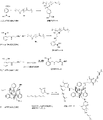
- a phenylboronic acid compound C can be synthesized by the synthetic route shown in FIG.
- Phenylboronic acid compound B and an amine compound are reacted in a solvent (methanol) at room temperature overnight and reduced with sodium borohydride (NaBH 4 ) to give hydrochloric acid.
- Phenylboronic acid compound C is synthesized by deprotecting Boc (tert-butoxycarbonyl group) with (HCl).
- the polymer constituting the skeleton of the modified polymer is not particularly limited, and any polymer can be used.
- the polymer may be an unmodified polymer or a modified polymer.
- the modified polymer may be a polymer having a functional group, for example, a terminal modified polymer (having the functional group at the terminal) obtained by modifying at least one end of the polymer with a compound (modifier) having the above functional group terminal modified polymer), a main chain modified polymer having the above functional group on the main chain, or a main chain terminal modified polymer having the above functional group on the main chain and the terminal (e.g., having the above functional group on the main chain, at least one Main chain end-modified polymer whose end is modified with the above-mentioned modifier) or modified (coupling) with a polyfunctional compound having two or more epoxy groups in the molecule, and hydroxyl group or epoxy group is introduced.
- a polymer etc. are mentioned.
- Examples of the functional groups include amino group, amido group, silyl group, alkoxysilyl group, isocyanate group, imino group, imidazole group, urea group, ether group, carbonyl group, oxycarbonyl group, mercapto group, sulfide group, disulfide group, sulfonyl group, sulfinyl group, thiocarbonyl group, ammonium group, imide group, hydrazo group, azo group, diazo group, carboxyl group, nitrile group, pyridyl group, alkoxy group, hydroxyl group, oxy group, epoxy group and the like.
- these functional groups may have a substituent.
- an amino group, an epoxy group, a carboxyl group, and the like are preferable from the viewpoint of reactivity with the phenylboronic acid compound represented by the formula (1).
- polymers having carbon-carbon double bonds examples include polymers having carbon-carbon double bonds.
- Polymers having carbon-carbon double bonds include, for example, polymers such as diene rubbers. Diene rubbers include isoprene rubber, butadiene rubber (BR), styrene butadiene rubber (SBR), styrene isoprene butadiene rubber (SIBR), ethylene propylene diene rubber (EPDM), chloroprene rubber (CR), acrylonitrile butadiene rubber (NBR). ) and the like. Polymers such as butyl rubber and fluororubber are also included.
- Diene rubbers include isoprene rubber, butadiene rubber (BR), styrene butadiene rubber (SBR), styrene isoprene butadiene rubber (SIBR), ethylene propylene diene rubber (EPDM), chloroprene rubber (CR), acrylonitrile butadiene rubber (N
- isoprene-based rubber, NBR, BR, and SBR are preferable, and isoprene-based rubber, NBR, and SBR are more preferable, from the viewpoint of reactivity with the phenylboronic acid compound represented by the formula (1). These may be used alone or in combination of two or more.
- the isoprene rubber includes natural rubber (NR), isoprene rubber (IR), modified NR, modified NR, modified IR, and the like.
- NR natural rubber
- IR isoprene rubber
- modified NR those commonly used in the rubber industry, such as SIR20, RSS#3, and TSR20, can be used.
- the IR is not particularly limited, and for example IR2200 or the like commonly used in the rubber industry can be used.
- Modified NR includes deproteinized natural rubber (DPNR), high-purity natural rubber (UPNR), etc.
- Modified NR includes epoxidized natural rubber (ENR), hydrogenated natural rubber (HNR), grafted natural rubber, etc.
- modified IR examples include epoxidized isoprene rubber, hydrogenated isoprene rubber, grafted isoprene rubber, and the like.
- the isoprene-based rubber may be an unmodified isoprene-based rubber or a modified isoprene-based rubber (such as ENR), as exemplified above. These may be used alone or in combination of two or more.
- the isoprene-based rubber is preferably modified isoprene-based rubber.
- the functional group to be imparted to the modified isoprene-based rubber include the functional groups described above, and among these, an epoxy group and a carboxyl group are preferred.
- BR is not particularly limited, and for example, high cis BR having a high cis content, BR containing syndiotactic polybutadiene crystals, BR synthesized using a rare earth catalyst (rare earth BR), and the like can be used. These may be used alone or in combination of two or more. Among them, high-cis BR having a cis content of 90% by mass or more is preferable because it improves wear resistance. BR may be non-modified BR or modified BR (such as carboxylic acid-modified BR). These may be used alone or in combination of two or more.
- BR is preferably modified BR.
- the functional group imparted to the modified BR include the functional groups described above, and among these, a carboxyl group, an amino group, and an epoxy group are preferred.
- As BR for example, products of Ube Industries, Ltd., JSR Corporation, Asahi Kasei Co., Ltd., Nippon Zeon Co., Ltd., etc. can be used.
- the SBR is not particularly limited, and for example, emulsion-polymerized styrene-butadiene rubber (E-SBR), solution-polymerized styrene-butadiene rubber (S-SBR), etc. can be used. These may be used alone or in combination of two or more. SBR may be non-modified SBR or modified SBR (such as carboxylic acid-modified SBR). These may be used alone or in combination of two or more.
- E-SBR emulsion-polymerized styrene-butadiene rubber
- S-SBR solution-polymerized styrene-butadiene rubber
- SBR may be non-modified SBR or modified SBR (such as carboxylic acid-modified SBR). These may be used alone or in combination of two or more.
- SBR is preferably modified SBR.
- the functional group imparted to the modified SBR include the functional groups described above, and among these, a carboxyl group, an amino group, and an epoxy group are preferred.
- the styrene content of SBR is preferably 3% by mass or more, more preferably 5% by mass or more, and still more preferably 7% by mass or more. Also, the styrene content is preferably 60% by mass or less, more preferably 55% by mass or less, and even more preferably 50% by mass or less. Within the above range, there is a tendency for better tire performance such as wet grip performance to be obtained. In this specification, the styrene content of SBR is calculated by 1 H-NMR measurement.
- the vinyl content of SBR is preferably 3% by mass or more, more preferably 5% by mass or more, and still more preferably 7% by mass or more.
- the vinyl content is preferably 60% by mass or less, more preferably 55% by mass or less, and even more preferably 50% by mass or less. Within the above range, there is a tendency for better tire performance such as wet grip performance to be obtained.
- the vinyl content (1,2-bonded butadiene unit amount) can be measured by infrared absorption spectrometry.
- SBR for example, SBR manufactured and sold by Sumitomo Chemical Co., Ltd., JSR Co., Ltd., Asahi Kasei Co., Ltd., Nippon Zeon Co., etc. can be used.
- Examples of the above polymer include polymers such as diene-based rubber, butyl-based rubber, and fluororubber, as well as liquid polymers that are in a liquid state at room temperature (25°C) (liquid resin, liquid diene-based polymer, liquid farnesene-based polymer, etc.). Available.
- Liquid resins include terpene resins (including terpene phenolic resins and aromatic modified terpene resins), rosin resins, styrene resins, C5 resins, C9 resins, C5/C9 resins, and dicyclopentadiene (DCPD) resins. , coumarone-indene resins (including coumarone and indene simple substance resins), phenol resins, olefin resins, polyurethane resins, acrylic resins, and the like. Hydrogenated products of these can also be used.
- terpene resins including terpene phenolic resins and aromatic modified terpene resins
- rosin resins rosin resins
- styrene resins C5 resins, C9 resins, C5/C9 resins
- DCPD dicyclopentadiene
- coumarone-indene resins including coumarone and indene simple substance resins
- liquid diene polymer examples include liquid styrene-butadiene copolymer (liquid SBR), liquid butadiene polymer (liquid BR), liquid isoprene polymer (liquid IR), liquid styrene-isoprene copolymer (liquid SIR), liquid styrene butadiene styrene block copolymer (liquid SBS block polymer), liquid styrene isoprene styrene block copolymer (liquid SIS block polymer), liquid farnesene polymer, liquid farnesene butadiene copolymer, and the like. . These may be modified with a polar group at the terminal or main chain. Hydrogenated products of these can also be used.
- a liquid farnesene-based polymer is a polymer obtained by polymerizing farnesene, and has structural units based on farnesene.
- Farnesene includes ⁇ -farnesene ((3E,7E)-3,7,11-trimethyl-1,3,6,10-dodecatetraene) and ⁇ -farnesene (7,11-dimethyl-3-methylene-1 ,6,10-dodecatriene), but (E)- ⁇ -farnesene, which has the following structure, is preferred.
- the liquid farnesene-based polymer may be a farnesene homopolymer (farnesene homopolymer) or a copolymer of farnesene and a vinyl monomer (farnesene-vinyl monomer copolymer). These may be used alone or in combination of two or more. Among them, a copolymer of farnesene and a vinyl monomer is preferred.
- Vinyl monomers include styrene, 2-methylstyrene, 3-methylstyrene, 4-methylstyrene, ⁇ -methylstyrene, 2,4-dimethylstyrene, 2,4-diisopropylstyrene, 4-tert-butylstyrene, 5- t-butyl-2-methylstyrene, vinylethylbenzene, divinylbenzene, trivinylbenzene, divinylnaphthalene, tert-butoxystyrene, vinylbenzyldimethylamine, (4-vinylbenzyl)dimethylaminoethyl ether, N,N-dimethylaminoethyl styrene, N,N-dimethylaminomethylstyrene, 2-ethylstyrene, 3-ethylstyrene, 4-ethylstyrene, 2-t-buty
- the farnesene-vinyl monomer copolymer is preferably a copolymer of farnesene and butadiene (farnesene-butadiene copolymer).
- the mass-based copolymerization ratio of farnesene and vinyl monomer is preferably 40/60 to 90/10.
- a liquid farnesene-based polymer having a weight average molecular weight (Mw) of 3,000 to 300,000 can be suitably used.
- the Mw of the liquid farnesene polymer is preferably 8,000 or more, more preferably 10,000 or more, and is preferably 100,000 or less, more preferably 60,000 or less, and still more preferably 50,000 or less.
- the weight average molecular weight (Mw) is a gel permeation chromatograph (GPC) (GPC-8000 series manufactured by Tosoh Corporation, detector: differential refractometer, column: TSKGEL manufactured by Tosoh Corporation. It can be obtained by standard polystyrene conversion based on the measured value by SUPER MULTIPORE HZ-M).
- GPC gel permeation chromatograph
- Resins can also be used as the polymer.
- examples of the above-mentioned resins include aromatic vinyl polymers that are solid at room temperature (25°C), coumarone-indene resins, coumarone resins, indene resins, phenolic resins, and rosin resins. , petroleum resins, terpene resins, and acrylic resins. Also, the resin may be hydrogenated. These may be used alone or in combination of two or more.
- the softening point of the resin is preferably 50°C or higher, more preferably 55°C or higher, and even more preferably 60°C or higher.
- the upper limit is preferably 160°C or lower, more preferably 150°C or lower, and even more preferably 145°C or lower. Within the above range, there is a tendency for better tire performance such as wet grip performance to be obtained.
- the softening point of the resin is the temperature at which the sphere descends when the softening point specified in JIS K6220-1:2001 is measured with a ring and ball type softening point measuring device.
- the aromatic vinyl polymer is a polymer containing an aromatic vinyl monomer as a structural unit.
- examples thereof include ⁇ -methylstyrene and/or resins obtained by polymerizing styrene. Specifically, styrene homopolymers (styrene resins), ⁇ -methylstyrene homopolymers ( ⁇ -methylstyrene resins ), copolymers of ⁇ -methylstyrene and styrene, and copolymers of styrene and other monomers.
- the coumarone-indene resin is a resin containing coumarone and indene as main monomer components constituting the skeleton (main chain) of the resin.
- monomer components contained in the skeleton other than coumarone and indene include styrene, ⁇ -methylstyrene, methylindene, and vinyltoluene.
- the coumarone resin is a resin containing coumarone as a main monomer component that constitutes the skeleton (main chain) of the resin.
- the indene resin is a resin containing indene as a main monomer component that constitutes the skeleton (main chain) of the resin.
- phenolic resin for example, known polymers obtained by reacting phenol with aldehydes such as formaldehyde, acetaldehyde and furfural with an acid or alkali catalyst can be used. Among them, those obtained by reacting with an acid catalyst (such as novolac phenolic resins) are preferable.
- rosin resin examples include natural rosin, polymerized rosin, modified rosin, ester compounds thereof, and rosin-based resins represented by hydrogenated products thereof.
- Examples of the petroleum resins include C5-based resins, C9-based resins, C5/C9-based resins, dicyclopentadiene (DCPD) resins, and hydrogenated products thereof. Among them, DCPD resin and hydrogenated DCPD resin are preferable.
- the terpene-based resin is a polymer containing terpene as a structural unit.
- examples thereof include polyterpene resins obtained by polymerizing terpene compounds, and aromatic modified terpene resins obtained by polymerizing terpene compounds and aromatic compounds.
- Aromatic modified terpene resins include terpene phenol resins made from terpene compounds and phenol compounds, terpene styrene resins made from terpene compounds and styrene compounds, and terpene compounds, phenol compounds and styrene compounds as raw materials.
- Terpene phenol styrene resins can also be used.
- the terpene compounds include ⁇ -pinene and ⁇ -pinene
- the phenolic compounds include phenol and bisphenol A
- the aromatic compounds include styrene compounds (styrene, ⁇ -methylstyrene, etc.).
- the acrylic resin is a polymer containing an acrylic monomer as a structural unit.
- examples thereof include styrene-acrylic resins such as styrene-acrylic resins, which have a carboxyl group and are obtained by copolymerizing an aromatic vinyl monomer component and an acrylic monomer component.
- solvent-free carboxyl group-containing styrene-acrylic resins can be preferably used.
- the reaction process between the phenylboronic acid compound represented by the formula (1) and the polymer is not particularly limited, and a known method can be used. It may be carried out without a solvent.
- the solvent is not particularly limited, it is preferably one in which both the phenylboronic acid compound and the polymer are easily dissolved. Specific examples of the solvent include those mentioned above.
- the reaction temperature and time may be appropriately set according to the phenylboronic acid compound and the polymer so that the reaction proceeds.
- modified polymers A to D can be synthesized by the synthesis route shown in FIG.
- the phenylboronic acid compound A or C in FIG. Liquid polyisoprene modified with a carboxyl group is dissolved in a solvent, and the prepared solution is stirred under appropriate temperature conditions to react. After completion of the reaction, the solution containing the product is precipitated in methanol and dried. to obtain the desired reactant (polymer modified with a phenylboronic acid compound represented by formula (1) (modified polymers A to D)).
- the modified polymer may be either a modified polymer that is solid at 25°C or a modified polymer that is liquid at 25°C.
- modified polymers that are solid at 25° C. include modified polymers that are solid at room temperature (25° C.), such as the aforementioned diene-based rubbers, butyl-based rubbers, and fluororubbers. Among them, a modified polymer that is solid at 25° C. and has a weight average molecular weight (Mw) of 10,000 or more is desirable.
- modified polymers that are liquid at 25° C. include modified polymers of liquid polymers that are liquid at room temperature (25° C.), such as the aforementioned liquid resins, liquid diene-based polymers, and liquid farnesene-based polymers.
- the polymer composition contains a modified polymer modified with the phenylboronic acid compound represented by the formula (1).
- the polymer composition may contain any form of the modified polymer described above.
- the polymer composition the above-mentioned diene-based rubber, butyl-based rubber, fluororubber, etc., which are in a solid state at normal temperature (25 ° C.) modified polymer, the above-mentioned liquid resin, liquid diene-based polymer, liquid farnesene and a modified polymer that is liquid at room temperature (25° C.), such as a modified polymer, such as a system polymer.
- the elastic modulus decreases when in contact with water, and loss on wet road surfaces increases, thereby improving wet grip performance.
- the content of the modified polymer modified with the phenylboronic acid compound represented by the formula (1) in 100% by mass of the polymer component is not particularly limited, but is preferably 1% by mass or more. % by mass or more is more preferable, and 5% by mass or more is even more preferable.
- the upper limit is not particularly limited, it is preferably 70% by mass or less, more preferably 50% by mass or less, and even more preferably 30% by mass or less. Within the above range, the effect tends to be obtained favorably.
- the polymer composition may contain a polymer other than the modified polymer modified with the phenylboronic acid compound represented by formula (1).
- Other polymers include, for example, the aforementioned diene-based rubber, butyl-based rubber, and fluororubber.
- the content of the other polymer in 100% by mass of the polymer component is particularly limited. However, it is preferably 5% by mass or more, more preferably 10% by mass or more, and even more preferably 15% by mass or more.
- the upper limit is not particularly limited, it is preferably 95% by mass or less, more preferably 90% by mass or less, and even more preferably 85% by mass or less. Within the above range, the effect tends to be obtained favorably.
- the "polymer component” is a component that contributes to cross-linking, and is generally a polymer having a weight average molecular weight (Mw) of 10,000 or more, and a polymer that cannot be extracted with acetone is the polymer component.
- Mw weight average molecular weight
- the "content of the modified polymer modified with the phenylboronic acid compound represented by the formula (1) in 100% by mass of the polymer component” and the "content of other polymers in 100% by mass of the polymer component ” means “content of modified polymer modified with phenylboronic acid compound represented by formula (1)” and “other polymer means the content of
- the polymer composition preferably contains a filler.
- a filler inorganic fillers such as silica, carbon black, calcium carbonate, talc, alumina, clay, aluminum hydroxide, aluminum oxide, and mica; difficult-to-disperse fillers; and other fillers known in the rubber field can be used. From the viewpoint of tire performance when applied to tire members, silica and carbon black are preferable.
- the total amount of fillers is preferably 5 parts by mass or more, more preferably 10 parts by mass or more, and still more preferably 15 parts by mass or more with respect to 100 parts by mass of the polymer component.
- the upper limit is preferably 200 parts by mass or less, more preferably 180 parts by mass or less, and even more preferably 160 parts by mass or less. Within the above range, there is a tendency for better tire performance such as wet grip performance to be obtained.
- Silica that can be used includes, for example, dry silica (anhydrous silica), wet silica (hydrous silica), and the like. Among them, wet-process silica is preferable because it has many silanol groups.
- silica for example, products of Degussa, Rhodia, Tosoh Silica, Solvay Japan, Tokuyama, etc. can be used.
- the nitrogen adsorption specific surface area (N 2 SA) of silica is preferably 10 m 2 /g or more, more preferably 20 m 2 /g or more, still more preferably 30 m 2 /g or more.
- the upper limit of N 2 SA of silica is not particularly limited, but is preferably 300 m 2 /g or less, more preferably 275 m 2 /g or less, and still more preferably 250 m 2 /g or less. Within the above range, there is a tendency for better tire performance such as wet grip performance to be obtained.
- the N 2 SA of silica is a value measured by the BET method according to ASTM D3037-93.
- the content of silica is preferably 5 parts by mass or more, more preferably 10 parts by mass or more, and still more preferably 15 parts by mass or more with respect to 100 parts by mass of the polymer component.
- the upper limit is preferably 200 parts by mass or less, more preferably 180 parts by mass or less, and even more preferably 160 parts by mass or less. Within the above range, there is a tendency for better tire performance such as wet grip performance to be obtained.
- silane coupling agent When silica is contained, a silane coupling agent may be blended together with silica.
- silane coupling agent any silane coupling agent conventionally used in combination with silica in the rubber industry can be used without particular limitation.
- sulfide bis(2-triethoxysilylethyl)tetrasulfide, bis(4-triethoxysilylbutyl)tetrasulfide, bis(3-trimethoxysilylpropyl)tetrasulfide, bis(2-trimethoxysilylethyl)tetrasulfide, Bis (2-triethoxysilylethyl) trisulfide, bis (4-trimethoxysilylbutyl) trisulfide, bis (3-triethoxysilylpropyl) disulfide, bis (2-triethoxysilylethyl) disulfide, bis (4- triethoxysilylbutyl)disulf
- amino-based, glycidoxy-based such as ⁇ -glycidoxypropyltriethoxysilane, ⁇ -glycidoxypropyltrimethoxysilane, nitro-based such as 3-nitropropyltrimethoxysilane, 3-nitropropyltriethoxysilane, 3- Chloro compounds such as chloropropyltrimethoxysilane and 3-chloropropyltriethoxysilane are included.
- products of Degussa, Momentive, Shin-Etsu Silicone Co., Ltd., Tokyo Chemical Industry Co., Ltd., Azumax Co., Ltd., Dow Corning Toray Co., Ltd., etc. can be used. These may be used alone or in combination of two or more. Among them, sulfide-based and mercapto-based are preferred.
- the content of the silane coupling agent is preferably 3 parts by mass or more, more preferably 6 parts by mass or more, relative to 100 parts by mass of silica. Moreover, 20 mass parts or less are preferable, and, as for the said content, 15 mass parts or less are more preferable.
- Usable carbon blacks include N134, N110, N220, N234, N219, N339, N330, N326, N351, N550, N762 and the like. These may be used alone or in combination of two or more.
- Commercially available products include Asahi Carbon Co., Ltd., Cabot Japan Co., Ltd., Tokai Carbon Co., Ltd., Mitsubishi Chemical Co., Ltd., Lion Corporation, Shin Nikka Carbon Co., Ltd., Columbia Carbon Co., Ltd., etc. can be used.
- the nitrogen adsorption specific surface area (N 2 SA) of carbon black is preferably 10 m 2 /g or more, more preferably 20 m 2 /g or more, still more preferably 30 m 2 /g or more.
- the upper limit of N 2 SA of silica is not particularly limited, but is preferably 300 m 2 /g or less, more preferably 275 m 2 /g or less, and still more preferably 250 m 2 /g or less. Within the above range, there is a tendency for better tire performance such as wet grip performance to be obtained.
- the nitrogen adsorption specific surface area of carbon black is determined according to JIS K6217-2:2001.
- the content of carbon black is preferably 5 parts by mass or more, more preferably 10 parts by mass or more, and still more preferably 15 parts by mass or more with respect to 100 parts by mass of the polymer component.
- the upper limit is preferably 200 parts by mass or less, more preferably 180 parts by mass or less, and even more preferably 160 parts by mass or less. Within the above range, there is a tendency for better tire performance such as wet grip performance to be obtained.
- the polymer composition may contain a plasticizer.
- the plasticizer is a material that imparts plasticity to the polymer component. ) and the like.
- the content of the plasticizer is preferably 3 parts by mass or more, more preferably 5 parts by mass or more, and still more preferably 7 parts by mass or more with respect to 100 parts by mass of the polymer component.
- the upper limit is preferably 120 parts by mass or less, more preferably 100 parts by mass or less, and even more preferably 90 parts by mass or less. Within the above range, there is a tendency for better tire performance such as wet grip performance to be obtained.
- the liquid plasticizer that can be used in the polymer composition is not particularly limited, and includes oils, liquid polymers (the aforementioned liquid resins, liquid diene polymers, liquid farnesene polymers, etc. ) and the like.
- the liquid polymer in addition to the aforementioned liquid resin, liquid diene-based polymer, and liquid farnesene-based polymer, a modified polymer obtained by reacting such a liquid resin or the like with a phenylboronic acid compound represented by the formula (1) is used. Also included are polymers. These liquid plasticizers may be used alone or in combination of two or more.
- the content of the liquid plasticizer is preferably 3 parts by mass or more, more preferably 5 parts by mass or more, and even more preferably 7 parts by mass or more with respect to 100 parts by mass of the polymer component.
- the upper limit is preferably 120 parts by mass or less, more preferably 100 parts by mass or less, and even more preferably 90 parts by mass or less. Within the above range, there is a tendency for better tire performance such as wet grip performance to be obtained.
- the content of the liquid plasticizer also includes the amount of oil contained in the oil-extended rubber.
- Oils include, for example, process oils, vegetable oils, or mixtures thereof.
- process oil for example, paraffinic process oil, aromatic process oil, naphthenic process oil, etc. can be used.
- Vegetable oils include castor oil, cottonseed oil, linseed oil, rapeseed oil, soybean oil, palm oil, coconut oil, peanut oil, rosin, pine oil, pine tar, tall oil, corn oil, rice bran oil, safflower oil, sesame oil, and olive oil. , sunflower oil, palm kernel oil, camellia oil, jojoba oil, macadamia nut oil, tung oil and the like.
- Examples of the above-mentioned resins (resins in a solid state at room temperature (25°C)) that can be used in the polymer composition include the aromatic vinyl polymers in a solid state at room temperature (25°C), coumarone-indene resins, and coumarone resins. , indene resins, phenol resins, rosin resins, petroleum resins, terpene resins, acrylic resins, and the like.
- the resin examples include the aromatic vinyl polymer, coumarone-indene resin, coumarone resin, indene resin, phenolic resin, rosin resin, petroleum resin, terpene-based resin, acrylic-based Besides the resin, a modified polymer obtained by reacting such an aromatic vinyl polymer with a phenylboronic acid compound represented by the formula (1) can also be used.
- the resin may be hydrogenated.
- These resins may be used alone or in combination of two or more. Among them, aromatic vinyl polymers, petroleum resins, and terpene resins are preferred.
- the content of the resin is preferably 3 parts by mass or more, more preferably 5 parts by mass or more, and still more preferably 7 parts by mass or more with respect to 100 parts by mass of the polymer component.
- the upper limit is preferably 120 parts by mass or less, more preferably 100 parts by mass or less, and even more preferably 90 parts by mass or less.
- plasticizers examples include Maruzen Petrochemical Co., Ltd., Sumitomo Bakelite Co., Ltd., Yasuhara Chemical Co., Ltd., Tosoh Corporation, Rutgers Chemicals, BASF, Arizona Chemical, Nichinuri Chemical Co., Ltd. Products of Nippon Shokubai, ENEOS Co., Ltd., Arakawa Chemical Co., Ltd., Taoka Chemical Co., Ltd., etc. can be used.
- the polymer composition preferably contains an anti-aging agent.
- Antiaging agents are not particularly limited, but naphthylamine antiaging agents such as phenyl- ⁇ -naphthylamine; diphenylamine antiaging agents such as octylated diphenylamine and 4,4′-bis( ⁇ , ⁇ ′-dimethylbenzyl)diphenylamine.
- p-phenylenediamine-based antioxidants and quinoline-based antioxidants are preferable, and N-(1,3-dimethylbutyl)-N'-phenyl-p-phenylenediamine, 2,2,4-trimethyl-1 , 2-dihydroquinoline polymers are more preferred.
- products of Seiko Chemical Co., Ltd., Sumitomo Chemical Co., Ltd., Ouchi Shinko Kagaku Kogyo Co., Ltd., Flexis, etc. can be used.
- the content of the antioxidant is preferably 0.2 parts by mass or more, more preferably 0.5 parts by mass or more, relative to 100 parts by mass of the polymer component.
- the content is preferably 7.0 parts by mass or less, more preferably 4.0 parts by mass or less.
- the polymer composition may contain stearic acid.
- the stearic acid content is preferably 0.5 to 10 parts by mass, more preferably 0.5 to 5 parts by mass, based on 100 parts by mass of the polymer component.
- stearic acid conventionally known ones can be used, for example, products of NOF Corporation, Kao Corporation, FUJIFILM Wako Pure Chemical Industries, Ltd., Chiba Fatty Acids Co., Ltd., etc. can be used.
- the polymer composition may contain zinc oxide.
- the content of zinc oxide is preferably 0.5 to 10 parts by mass, more preferably 1 to 5 parts by mass, per 100 parts by mass of the polymer component.
- zinc oxide conventionally known ones can be used. products can be used.
- Wax may be blended in the polymer composition.
- the wax content is preferably 0.5 to 10 parts by mass, more preferably 1 to 5 parts by mass, per 100 parts by mass of the polymer component.
- the wax is not particularly limited, and examples thereof include petroleum waxes and natural waxes. Synthetic waxes obtained by refining or chemically treating a plurality of waxes can also be used. These waxes may be used alone or in combination of two or more.
- Examples of petroleum wax include paraffin wax and microcrystalline wax.
- the natural wax is not particularly limited as long as it is derived from a resource other than petroleum.
- Examples include plant waxes such as candelilla wax, carnauba wax, Japan wax, rice wax, and jojoba wax; beeswax, lanolin, spermaceti, and the like. animal waxes; mineral waxes such as ozokerite, ceresin and petrolactam; and refined products thereof.
- plants such as candelilla wax, carnauba wax, Japan wax, rice wax, and jojoba wax
- animal waxes mineral waxes such as ozokerite, ceresin and petrolactam
- refined products thereof for example, products of Ouchi Shinko Kagaku Kogyo Co., Ltd., Nippon Seiro Co., Ltd., Seiko Kagaku Co., Ltd., etc. can be used
- the polymer composition may contain sulfur.
- the sulfur content is preferably 0.1 parts by mass or more, more preferably 0.5 parts by mass or more, and still more preferably 0.7 parts by mass or more with respect to 100 parts by mass of the polymer component. be.
- the content is preferably 6.0 parts by mass or less, more preferably 4.0 parts by mass or less, and even more preferably 3.0 parts by mass or less.
- Sulfur includes powdered sulfur, precipitated sulfur, colloidal sulfur, insoluble sulfur, highly dispersible sulfur, soluble sulfur and the like commonly used in the rubber industry.
- products of Tsurumi Chemical Industry Co., Ltd., Karuizawa Io Co., Ltd., Shikoku Kasei Kogyo Co., Ltd., Flexis Co., Ltd., Nippon Kantan Kogyo Co., Ltd., Hosoi Chemical Industry Co., Ltd., etc. can be used. These may be used alone or in combination of two or more.
- the polymer composition may contain a vulcanization accelerator.
- the content of the vulcanization accelerator is usually 0.3-10 parts by mass, preferably 0.5-7 parts by mass, per 100 parts by mass of the polymer component.
- Vulcanization accelerators include thiazole-based vulcanization accelerators such as 2-mercaptobenzothiazole, di-2-benzothiazolyl disulfide, and N-cyclohexyl-2-benzothiazylsulfenamide; tetramethylthiuram disulfide (TMTD ), tetrabenzyl thiuram disulfide (TBzTD), tetrakis (2-ethylhexyl) thiuram disulfide (TOT-N) and other thiuram vulcanization accelerators; N-cyclohexyl-2-benzothiazolesulfenamide, Nt-butyl- Sulfenamide-based vulcanization accelerators such as 2-benzothiazolylsulfenamide, N-oxyethylene-2-benzothiazolesulfenamide, N,N'-diisopropyl-2-
- the polymer composition may also contain additives such as release agents and pigments, which are commonly used for their use, as appropriate according to the field of application.
- each component can be kneaded using a rubber kneading device such as an open roll mixer or a Banbury mixer, and crosslinked as necessary.
- a rubber kneading device such as an open roll mixer or a Banbury mixer
- the kneading temperature is usually 50 to 200° C., preferably 80 to 190° C.
- the kneading time is usually 30 seconds to 30 minutes, preferably 1 minute to 30 minutes.
- the polymer composition can be used for tires, shoe soles, flooring materials, anti-vibration materials, seismic isolation materials, butyl frame materials, belts, hoses, packings, drug stoppers, other industrial rubber products, and the like.
- it is preferable to use it as a polymer composition for tires because it is excellent in tire performance such as wet grip performance.
- the tire member to which the polymer composition is applied is not particularly limited, and any tire member such as cap tread, sidewall, base tread, bead apex, clinch apex, inner liner, under tread, breaker topping, ply topping, etc. Each member is mentioned. In particular, it is suitable for cap treads because of its excellent wet grip performance.
- the polymer composition can be suitably used in tires.
- Tires include pneumatic tires, non-pneumatic tires, etc. Among them, pneumatic tires are preferred. In particular, it can be suitably used as a summer tire (summer tire), a winter tire (studless tire, snow tire, studded tire, etc.), an all-season tire, and the like.
- Tires can be used as tires for passenger cars, tires for large passenger cars, tires for large SUVs, tires for heavy loads such as trucks and buses, tires for light trucks, tires for two-wheeled vehicles, tires for racing (high performance tires), and the like. Among others, it can be suitably used for tires for passenger cars and tires for light trucks.
- Tires are manufactured by conventional methods using the polymer composition. For example, a polymer composition containing various materials is extruded in the unvulcanized stage to match the shape of a tire member, and then molded together with other tire members on a tire building machine by a normal method. After forming the unvulcanized tire, it can be heated and pressed in a vulcanizer to produce a tire.
- Phenylboronic acid compound C (phenylboronic acid compound represented by formula (1)) was synthesized according to the synthetic route shown in FIG. Specifically, it was synthesized by the following method.
- Phenylboronic acid compound B and an amine compound were reacted in methanol at room temperature overnight, reduced with sodium borohydride (NaBH 4 ), and removed with Boc (tert-butoxycarbonyl group) with hydrochloric acid (HCl). Phenylboronic acid compound C was synthesized by protection.
- modified polymers A to D modified polymers modified with phenylboronic acid compounds represented by formula (1)
- it is synthesized by the following method.
- Phenylboronic acid compound C and DMTMM are separately dissolved in water in a beaker and added to the carboxylic acid-modified SBR latex. Stir at room temperature for 48 h and coagulate with 1% aqueous sulfuric acid. The solid content is dried to obtain Modified Polymer C.
- Phenyl boronic acid compound B manufactured by Boron Molecular Pty Limited (Compound B in Figure 1) Amine compound: manufactured by Combi-Blocks (amine compound in FIG. 1) Phenylboronic acid compound A: manufactured by Combi-Blocks (compound A in FIG. 3) Sodium borohydride (NaBH4): manufactured by FUJIFILM Wako Pure Chemical Co., Ltd. Hydrochloric acid (HCl): manufactured by FUJIFILM Wako Pure Chemical Co., Ltd.
- ENR ENR25 manufactured by GUTHRIE POLYMER SDN BHD (epoxidation rate: 25% by mass)
- Carboxylic acid-modified SBR Carboxylic acid-modified SBR latex manufactured by Asahi Kasei Corporation, JSR, Nippon A&L Liquid polyisoprene modified with carboxyl groups (LIR-410 manufactured by Kuraray Co., Ltd., molecular weight 30,000, number of carboxyl groups per molecule 10 pieces, glass transition temperature -59°C)
- EDC 1-(3-dimethylaminopropyl)-3-ethylcarbodiimide (manufactured by TCI)
- HOBt 1-hydroxybenzotriazole (manufactured by TCI)
- modified polymers A to C modified polymers modified with phenylboronic acid compounds represented by formula (1) are believed to have been synthesized.
- the phenylboronic acid compound represented by the formula (1) can be synthesized, and a polymer modified with the phenylboronic acid compound represented by the formula (1) is synthesized. is considered possible.
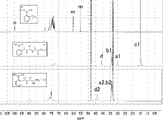
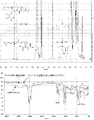
- the resulting modified polymers A to D are repeatedly dried under conditions of normal temperature and pressure until they reach a constant weight, and then immersed in water and moistened with water. It is believed that boroxine crosslinks) are formed, and then the resulting boroxine crosslinks decompose upon exposure to water. Therefore, it is considered that the modified polymers A to D have the function of reversibly changing physical properties with water.
- the modified polymer D became transparent and gel-like with no fluidity, indicating that cross-linking had progressed.
- the elastomer obtained by removing the solvent from this gel was moldable at 100°C, suggesting thermally reversible cross-linking.
- the phenylboronic acid compound represented by the formula (1) has high reactivity and is thought to be capable of reacting with various polymers. It is believed that it is possible to provide a polymer modified with
- the present disclosure (1) is a phenylboronic acid compound represented by the following formula (1-1).
- R 21 and R 22 are the same or different and are divalent hydrocarbon groups which may have a substituent and may contain a hetero atom.
- R 23 to R 25 are the same or different and are hydrogen atoms , or a monovalent hydrocarbon group that may have a substituent and may contain a heteroatom.
- m is an integer of 1 to 5.
- the present disclosure (2) is a modified polymer modified with a phenylboronic acid compound represented by the following formula (1).
- R 11 is the same or different and is a monovalent hydrocarbon group which may have a substituent and may contain a heteroatom.
- n is an integer of 1 to 5.
- the present disclosure (3) is the present disclosure (2), wherein the polymer constituting the skeleton of the modified polymer is at least one selected from the group consisting of isoprene-based rubbers, acrylonitrile-butadiene rubbers, butadiene rubbers, and styrene-butadiene rubbers. is a modified polymer of
- (4) of the present disclosure is the modified polymer according to (2) or (3) of the present disclosure, which is in a solid state at 25° C. and has a weight average molecular weight of 10,000 or more.
- (5) of the present disclosure is the modified polymer according to (2) of the present disclosure, which is in a liquid state at 25°C.
- Disclosure (6) is a polymer composition comprising the modified polymer of any of Disclosures (2)-(5).
- the present disclosure (7) comprises a rubber component, The polymer composition according to (6) of the present disclosure, wherein the rubber component comprises a modified polymer modified with the phenylboronic acid compound represented by the formula (1), which is in a solid state at 25°C.
- the present disclosure (8) includes a liquid polymer, The polymer composition according to (6) of the present disclosure, wherein the liquid polymer contains a modified polymer modified with the phenylboronic acid compound represented by the formula (1), which is in a liquid state at 25°C.
- Disclosure (9) is a tire having a tire member composed of the polymer composition according to any one of Disclosures (6) to (8).
Landscapes
- Chemical & Material Sciences (AREA)
- Organic Chemistry (AREA)
- Engineering & Computer Science (AREA)
- Mechanical Engineering (AREA)
- General Chemical & Material Sciences (AREA)
- Health & Medical Sciences (AREA)
- Chemical Kinetics & Catalysis (AREA)
- Medicinal Chemistry (AREA)
- Polymers & Plastics (AREA)
- Compositions Of Macromolecular Compounds (AREA)
Priority Applications (3)
| Application Number | Priority Date | Filing Date | Title |
|---|---|---|---|
| EP21937959.1A EP4316868A4 (en) | 2021-04-19 | 2021-10-25 | PHENYLBORONIC ACID COMPOUND, MODIFIED POLYMER, POLYMER COMPOSITION AND TIRE |
| JP2023516024A JPWO2022224469A1 (https=) | 2021-04-19 | 2021-10-25 | |
| CN202180096685.2A CN117157332A (zh) | 2021-04-19 | 2021-10-25 | 苯基硼酸化合物、改性聚合物、聚合物组合物和轮胎 |
Applications Claiming Priority (2)
| Application Number | Priority Date | Filing Date | Title |
|---|---|---|---|
| JP2021070484 | 2021-04-19 | ||
| JP2021-070484 | 2021-04-19 |
Publications (1)
| Publication Number | Publication Date |
|---|---|
| WO2022224469A1 true WO2022224469A1 (ja) | 2022-10-27 |
Family
ID=83723443
Family Applications (1)
| Application Number | Title | Priority Date | Filing Date |
|---|---|---|---|
| PCT/JP2021/039219 Ceased WO2022224469A1 (ja) | 2021-04-19 | 2021-10-25 | フェニルボロン酸化合物、変性ポリマー、ポリマー組成物及びタイヤ |
Country Status (4)
| Country | Link |
|---|---|
| EP (1) | EP4316868A4 (https=) |
| JP (1) | JPWO2022224469A1 (https=) |
| CN (1) | CN117157332A (https=) |
| WO (1) | WO2022224469A1 (https=) |
Cited By (1)
| Publication number | Priority date | Publication date | Assignee | Title |
|---|---|---|---|---|
| CN118222048A (zh) * | 2024-05-23 | 2024-06-21 | 西南石油大学 | 一种可再加工的三元乙丙橡胶复合材料及其制备方法 |
Citations (11)
| Publication number | Priority date | Publication date | Assignee | Title |
|---|---|---|---|---|
| JPS4832384B1 (https=) * | 1969-10-20 | 1973-10-05 | ||
| JP2009186350A (ja) * | 2008-02-07 | 2009-08-20 | Saitama Univ | リン酸イオンの検出方法および検出用キット |
| US20120004148A1 (en) * | 2010-06-30 | 2012-01-05 | Halliburton Energy Services, Inc. | Multifunctional Boronic Acid Crosslinking Agents and Associated Methods |
| US20130157926A1 (en) * | 2010-06-18 | 2013-06-20 | Johannes Franciscus Joseph Engbersen | Boronated polymers |
| JP5291930B2 (ja) * | 2005-03-09 | 2013-09-18 | 独立行政法人科学技術振興機構 | 錯化合物及びそれから成るmriプローブ |
| JP2014227458A (ja) * | 2013-05-21 | 2014-12-08 | 株式会社ブリヂストン | 変性剤及びその変性剤を用いた変性共役ジエン系重合体、並びにその変性共役ジエン系重合体の製造方法 |
| JP2015530994A (ja) * | 2012-08-14 | 2015-10-29 | シーエイチディー・バイオサイエンス,インコーポレーテッド | 過酸組成物を用いた創傷ケア製品 |
| CN105646872A (zh) * | 2016-02-26 | 2016-06-08 | 翁秋梅 | 一种动态聚合物材料 |
| CN105732981A (zh) * | 2014-12-10 | 2016-07-06 | 深圳先进技术研究院 | 改性聚乙烯亚胺、基因载体复合物及其制备方法和应用 |
| CN106167464A (zh) * | 2015-05-20 | 2016-11-30 | 中国医学科学院药物研究所 | 一类喹啉类衍生物、其制备方法和用途 |
| CN108610486A (zh) * | 2017-01-25 | 2018-10-02 | 翁秋梅 | 一种基于组合杂化交联动态聚合物的吸能方法 |
Family Cites Families (7)
| Publication number | Priority date | Publication date | Assignee | Title |
|---|---|---|---|---|
| JP3149553B2 (ja) * | 1992-07-20 | 2001-03-26 | 株式会社日立製作所 | 原子炉設備 |
| JP2010108372A (ja) * | 2008-10-31 | 2010-05-13 | Toshiba Corp | 映像表示装置、映像表示方法および映像システム |
| US9574024B1 (en) * | 2016-07-12 | 2017-02-21 | The Goodyear Tire & Rubber Company | Method of making a functionalized elastomer via allylboration |
| JP2018058868A (ja) * | 2017-11-24 | 2018-04-12 | カリフォルニア インスティテュート オブ テクノロジー | ニトロフェニルボロン酸組成物によって安定化したナノ粒子 |
| CA3093210A1 (en) * | 2018-03-07 | 2019-09-12 | Kuraray Co., Ltd. | Modified liquid diene polymer and rubber composition |
| CN111040203A (zh) * | 2019-01-01 | 2020-04-21 | 翁秋梅 | 一种基于杂化交联动态聚合物的吸能方法 |
| JP7419499B2 (ja) * | 2019-09-18 | 2024-01-22 | アルコン インク. | 湿式充填のソフトヒドロゲル眼用インサート |
-
2021
- 2021-10-25 WO PCT/JP2021/039219 patent/WO2022224469A1/ja not_active Ceased
- 2021-10-25 JP JP2023516024A patent/JPWO2022224469A1/ja active Pending
- 2021-10-25 CN CN202180096685.2A patent/CN117157332A/zh active Pending
- 2021-10-25 EP EP21937959.1A patent/EP4316868A4/en active Pending
Patent Citations (11)
| Publication number | Priority date | Publication date | Assignee | Title |
|---|---|---|---|---|
| JPS4832384B1 (https=) * | 1969-10-20 | 1973-10-05 | ||
| JP5291930B2 (ja) * | 2005-03-09 | 2013-09-18 | 独立行政法人科学技術振興機構 | 錯化合物及びそれから成るmriプローブ |
| JP2009186350A (ja) * | 2008-02-07 | 2009-08-20 | Saitama Univ | リン酸イオンの検出方法および検出用キット |
| US20130157926A1 (en) * | 2010-06-18 | 2013-06-20 | Johannes Franciscus Joseph Engbersen | Boronated polymers |
| US20120004148A1 (en) * | 2010-06-30 | 2012-01-05 | Halliburton Energy Services, Inc. | Multifunctional Boronic Acid Crosslinking Agents and Associated Methods |
| JP2015530994A (ja) * | 2012-08-14 | 2015-10-29 | シーエイチディー・バイオサイエンス,インコーポレーテッド | 過酸組成物を用いた創傷ケア製品 |
| JP2014227458A (ja) * | 2013-05-21 | 2014-12-08 | 株式会社ブリヂストン | 変性剤及びその変性剤を用いた変性共役ジエン系重合体、並びにその変性共役ジエン系重合体の製造方法 |
| CN105732981A (zh) * | 2014-12-10 | 2016-07-06 | 深圳先进技术研究院 | 改性聚乙烯亚胺、基因载体复合物及其制备方法和应用 |
| CN106167464A (zh) * | 2015-05-20 | 2016-11-30 | 中国医学科学院药物研究所 | 一类喹啉类衍生物、其制备方法和用途 |
| CN105646872A (zh) * | 2016-02-26 | 2016-06-08 | 翁秋梅 | 一种动态聚合物材料 |
| CN108610486A (zh) * | 2017-01-25 | 2018-10-02 | 翁秋梅 | 一种基于组合杂化交联动态聚合物的吸能方法 |
Non-Patent Citations (3)
| Title |
|---|
| HE CHUNXIAN, PREISS LAURA, WANG BIN, FU LEI, WEN HUI, ZHANG XIANG, CUI HUAQING, MEIER THOMAS, YIN DALI: "Structural Simplification of Bedaquiline: the Discovery of 3-(4-( N , N -Dimethylaminomethyl)phenyl)quinoline-Derived Antitubercular Lead Compounds", CHEMMEDCHEM COMMUNICATIONS, vol. 12, no. 2, 20 January 2017 (2017-01-20), DE , pages 106 - 119, XP055978481, ISSN: 1860-7179, DOI: 10.1002/cmdc.201600441 * |
| See also references of EP4316868A4 * |
| SUN XIAOLONG, JAMES TONY D., ANSLYN ERIC V.: "Arresting "Loose Bolt" Internal Conversion from −B(OH) 2 Groups is the Mechanism for Emission Turn-On in ortho -Aminomethylphenylboronic Acid-Based Saccharide Sensors", JOURNAL OF THE AMERICAN CHEMICAL SOCIETY, vol. 140, no. 6, 23 January 2018 (2018-01-23), pages 2348 - 2354, XP055978436, ISSN: 0002-7863, DOI: 10.1021/jacs.7b12877 * |
Cited By (1)
| Publication number | Priority date | Publication date | Assignee | Title |
|---|---|---|---|---|
| CN118222048A (zh) * | 2024-05-23 | 2024-06-21 | 西南石油大学 | 一种可再加工的三元乙丙橡胶复合材料及其制备方法 |
Also Published As
| Publication number | Publication date |
|---|---|
| EP4316868A1 (en) | 2024-02-07 |
| CN117157332A (zh) | 2023-12-01 |
| JPWO2022224469A1 (https=) | 2022-10-27 |
| EP4316868A4 (en) | 2024-09-25 |
Similar Documents
| Publication | Publication Date | Title |
|---|---|---|
| JP7407512B2 (ja) | 空気入りタイヤ | |
| JP6996094B2 (ja) | タイヤ用ゴム組成物及び空気入りタイヤ | |
| JP7458705B2 (ja) | タイヤ用ゴム組成物及び空気入りタイヤ | |
| JP7081082B2 (ja) | タイヤ用ゴム組成物及び空気入りタイヤ | |
| JP7516893B2 (ja) | ウィンタータイヤ | |
| JP6841090B2 (ja) | タイヤ用ゴム組成物及び空気入りタイヤ | |
| JP6848516B2 (ja) | タイヤ用ゴム組成物及び空気入りタイヤ | |
| WO2022244317A1 (ja) | ニトリルオキシド化合物及びイオン性官能基含有ポリマー | |
| JP2022018873A (ja) | タイヤ | |
| JP6805877B2 (ja) | タイヤ用ゴム組成物及び空気入りタイヤ | |
| JP7215304B2 (ja) | タイヤトレッド用ゴム組成物及びタイヤ | |
| JP6838430B2 (ja) | タイヤ用ゴム組成物及び空気入りタイヤ | |
| JP2023084930A (ja) | タイヤ用ゴム組成物及びタイヤ | |
| JP2023085807A (ja) | タイヤ用ゴム組成物及びタイヤ | |
| JP2023071373A (ja) | タイヤ用ゴム組成物及びタイヤ | |
| WO2021256151A1 (ja) | タイヤ及びゴム組成物 | |
| WO2022224469A1 (ja) | フェニルボロン酸化合物、変性ポリマー、ポリマー組成物及びタイヤ | |
| JP7686366B2 (ja) | 加硫ゴム組成物及びタイヤ | |
| JP2022021085A (ja) | タイヤ用ゴム組成物及びタイヤ | |
| JP2023155706A (ja) | ゴム組成物及びタイヤ | |
| JP7779095B2 (ja) | タイヤ用ゴム組成物及びタイヤ | |
| JP2025008588A (ja) | ポリマー用変性剤、ゴム組成物、及びタイヤ | |
| JP2023070919A (ja) | タイヤ用ゴム組成物及びタイヤ | |
| JP2022016107A (ja) | タイヤ用ゴム組成物及びタイヤ | |
| JP2022019301A (ja) | タイヤ用ゴム組成物及びタイヤ |
Legal Events
| Date | Code | Title | Description |
|---|---|---|---|
| 121 | Ep: the epo has been informed by wipo that ep was designated in this application |
Ref document number: 21937959 Country of ref document: EP Kind code of ref document: A1 |
|
| WWE | Wipo information: entry into national phase |
Ref document number: 2023516024 Country of ref document: JP |
|
| WWE | Wipo information: entry into national phase |
Ref document number: 2021937959 Country of ref document: EP |
|
| ENP | Entry into the national phase |
Ref document number: 2021937959 Country of ref document: EP Effective date: 20231031 |
|
| NENP | Non-entry into the national phase |
Ref country code: DE |