WO2022220232A1 - すい臓がん検出用蛍光プローブ - Google Patents
すい臓がん検出用蛍光プローブ Download PDFInfo
- Publication number
- WO2022220232A1 WO2022220232A1 PCT/JP2022/017566 JP2022017566W WO2022220232A1 WO 2022220232 A1 WO2022220232 A1 WO 2022220232A1 JP 2022017566 W JP2022017566 W JP 2022017566W WO 2022220232 A1 WO2022220232 A1 WO 2022220232A1
- Authority
- WO
- WIPO (PCT)
- Prior art keywords
- pancreatic cancer
- fluorescent probe
- tissue
- cancer
- residue
- Prior art date
- Legal status (The legal status is an assumption and is not a legal conclusion. Google has not performed a legal analysis and makes no representation as to the accuracy of the status listed.)
- Ceased
Links
Images


Classifications
-
- C—CHEMISTRY; METALLURGY
- C07—ORGANIC CHEMISTRY
- C07K—PEPTIDES
- C07K5/00—Peptides containing up to four amino acids in a fully defined sequence; Derivatives thereof
- C07K5/04—Peptides containing up to four amino acids in a fully defined sequence; Derivatives thereof containing only normal peptide links
- C07K5/06—Dipeptides
- C07K5/06008—Dipeptides with the first amino acid being neutral
- C07K5/06017—Dipeptides with the first amino acid being neutral and aliphatic
- C07K5/06026—Dipeptides with the first amino acid being neutral and aliphatic the side chain containing 0 or 1 carbon atom, i.e. Gly or Ala
-
- G—PHYSICS
- G01—MEASURING; TESTING
- G01N—INVESTIGATING OR ANALYSING MATERIALS BY DETERMINING THEIR CHEMICAL OR PHYSICAL PROPERTIES
- G01N33/00—Investigating or analysing materials by specific methods not covered by groups G01N1/00 - G01N31/00
- G01N33/48—Biological material, e.g. blood, urine; Haemocytometers
- G01N33/50—Chemical analysis of biological material, e.g. blood, urine; Testing involving biospecific ligand binding methods; Immunological testing
- G01N33/53—Immunoassay; Biospecific binding assay; Materials therefor
- G01N33/575—Immunoassay; Biospecific binding assay; Materials therefor for cancer
- G01N33/57525—Immunoassay; Biospecific binding assay; Materials therefor for cancer of the liver or pancreas
-
- A—HUMAN NECESSITIES
- A61—MEDICAL OR VETERINARY SCIENCE; HYGIENE
- A61K—PREPARATIONS FOR MEDICAL, DENTAL OR TOILETRY PURPOSES
- A61K49/00—Preparations for testing in vivo
-
- C—CHEMISTRY; METALLURGY
- C07—ORGANIC CHEMISTRY
- C07K—PEPTIDES
- C07K5/00—Peptides containing up to four amino acids in a fully defined sequence; Derivatives thereof
- C07K5/04—Peptides containing up to four amino acids in a fully defined sequence; Derivatives thereof containing only normal peptide links
- C07K5/06—Dipeptides
- C07K5/06008—Dipeptides with the first amino acid being neutral
- C07K5/06017—Dipeptides with the first amino acid being neutral and aliphatic
-
- C—CHEMISTRY; METALLURGY
- C07—ORGANIC CHEMISTRY
- C07K—PEPTIDES
- C07K5/00—Peptides containing up to four amino acids in a fully defined sequence; Derivatives thereof
- C07K5/04—Peptides containing up to four amino acids in a fully defined sequence; Derivatives thereof containing only normal peptide links
- C07K5/06—Dipeptides
- C07K5/06008—Dipeptides with the first amino acid being neutral
- C07K5/06078—Dipeptides with the first amino acid being neutral and aromatic or cycloaliphatic
-
- C—CHEMISTRY; METALLURGY
- C07—ORGANIC CHEMISTRY
- C07K—PEPTIDES
- C07K5/00—Peptides containing up to four amino acids in a fully defined sequence; Derivatives thereof
- C07K5/04—Peptides containing up to four amino acids in a fully defined sequence; Derivatives thereof containing only normal peptide links
- C07K5/06—Dipeptides
- C07K5/06104—Dipeptides with the first amino acid being acidic
- C07K5/06113—Asp- or Asn-amino acid
-
- C—CHEMISTRY; METALLURGY
- C07—ORGANIC CHEMISTRY
- C07K—PEPTIDES
- C07K5/00—Peptides containing up to four amino acids in a fully defined sequence; Derivatives thereof
- C07K5/04—Peptides containing up to four amino acids in a fully defined sequence; Derivatives thereof containing only normal peptide links
- C07K5/06—Dipeptides
- C07K5/06139—Dipeptides with the first amino acid being heterocyclic
- C07K5/06165—Dipeptides with the first amino acid being heterocyclic and Pro-amino acid; Derivatives thereof
-
- G—PHYSICS
- G01—MEASURING; TESTING
- G01N—INVESTIGATING OR ANALYSING MATERIALS BY DETERMINING THEIR CHEMICAL OR PHYSICAL PROPERTIES
- G01N21/00—Investigating or analysing materials by the use of optical means, i.e. using sub-millimetre waves, infrared, visible or ultraviolet light
- G01N21/62—Systems in which the material investigated is excited whereby it emits light or causes a change in wavelength of the incident light
- G01N21/63—Systems in which the material investigated is excited whereby it emits light or causes a change in wavelength of the incident light optically excited
- G01N21/64—Fluorescence; Phosphorescence
-
- G—PHYSICS
- G01—MEASURING; TESTING
- G01N—INVESTIGATING OR ANALYSING MATERIALS BY DETERMINING THEIR CHEMICAL OR PHYSICAL PROPERTIES
- G01N33/00—Investigating or analysing materials by specific methods not covered by groups G01N1/00 - G01N31/00
- G01N33/48—Biological material, e.g. blood, urine; Haemocytometers
-
- G—PHYSICS
- G01—MEASURING; TESTING
- G01N—INVESTIGATING OR ANALYSING MATERIALS BY DETERMINING THEIR CHEMICAL OR PHYSICAL PROPERTIES
- G01N33/00—Investigating or analysing materials by specific methods not covered by groups G01N1/00 - G01N31/00
- G01N33/48—Biological material, e.g. blood, urine; Haemocytometers
- G01N33/50—Chemical analysis of biological material, e.g. blood, urine; Testing involving biospecific ligand binding methods; Immunological testing
- G01N33/53—Immunoassay; Biospecific binding assay; Materials therefor
- G01N33/575—Immunoassay; Biospecific binding assay; Materials therefor for cancer
- G01N33/5758—Immunoassay; Biospecific binding assay; Materials therefor for cancer involving compounds serving as markers for tumours, cancers or neoplasias, e.g. cellular determinants, receptors, heat shock/stress proteins, A-protein, oligosaccharides or metabolites
- G01N33/5759—Immunoassay; Biospecific binding assay; Materials therefor for cancer involving compounds serving as markers for tumours, cancers or neoplasias, e.g. cellular determinants, receptors, heat shock/stress proteins, A-protein, oligosaccharides or metabolites involving compounds localised on the membrane of tumour or cancer cells
-
- G—PHYSICS
- G01—MEASURING; TESTING
- G01N—INVESTIGATING OR ANALYSING MATERIALS BY DETERMINING THEIR CHEMICAL OR PHYSICAL PROPERTIES
- G01N33/00—Investigating or analysing materials by specific methods not covered by groups G01N1/00 - G01N31/00
- G01N33/48—Biological material, e.g. blood, urine; Haemocytometers
- G01N33/50—Chemical analysis of biological material, e.g. blood, urine; Testing involving biospecific ligand binding methods; Immunological testing
- G01N33/58—Chemical analysis of biological material, e.g. blood, urine; Testing involving biospecific ligand binding methods; Immunological testing involving labelled substances
- G01N33/582—Chemical analysis of biological material, e.g. blood, urine; Testing involving biospecific ligand binding methods; Immunological testing involving labelled substances with fluorescent label
Definitions
- the present invention relates to a fluorescent probe for pancreatic cancer detection and a method for detecting pancreatic cancer cells or cancer tissues using the same.
- Pancreatic cancer is one of the major life-threatening diseases (eg, Non-Patent Document 1).
- Non-Patent Document 1 Despite recent advances in chemotherapy and radiotherapy, complete resection of cancer tissue remains the mainstay of curative therapy (2-3).
- Non-Patent Document 4 it may be more difficult to identify viable cancer tissue even by pathological examination of resected specimens (Non-Patent Document 5).
- Urano, and collaborators reported a new fluorescence imaging technique using activatable probes.
- This probe is initially non-fluorescent, but emits a visible fluorescent signal upon hydrolysis by ⁇ -glutamyl transpeptidase overexpressed in cancer cells (Non-Patent Document 6). Since then, more than 400 activatable fluorescent probes consisting of fluorescent substances such as amino acids or glucose and hydroxymethylrhodamine green (HMRG) have been developed (7-8) and are used for breast, esophageal and liver cancer. , lung, head and neck, colorectal and thyroid cancers.
- HMRG hydroxymethylrhodamine green
- An object of the present invention is to provide a fluorescent probe that can specifically detect pancreatic cancer. Another object of the present invention is to provide a method for detecting pancreatic cancer cells or cancer tissue using the fluorescent probe.
- the present inventors collected cancer tissue fragments and non-cancerous pancreatic tissue fragments from resected pancreatic cancer specimens, prepared lysates, and used an enzyme probe library consisting of approximately 400 types of HMRG derivative probes to identify pancreatic cancer. As a result of searching for a fluorescent probe that can be specifically detected, the present inventors have found that an HMRG derivative probe having a specific structure can specifically detect pancreatic cancer, and completed the present invention.
- a fluorescent probe for detecting pancreatic cancer comprising a compound represented by the following general formula (I) or a salt thereof.
- R 1 represents a hydrogen atom or 1 to 4 identical or different substituents bonded to the benzene ring
- R2 , R3 , R4 , R5 , R6 , and R7 each independently represent a hydrogen atom, a hydroxyl group, an alkyl group, or a halogen atom
- R 8 , R 9 and R 10 each independently represent a hydrogen atom or an alkyl group
- X represents a C 1 -C 3 alkylene group
- A is a proline residue
- B is an amino acid residue selected from glycine, leucine, proline, tyrosine or N ⁇ -acetyl-lysine residues
- A is linked to NH in the adjacent formula by forming an amide bond
- B is linked to A by forming an amide bond.
- R1 , R2 , R3, R4 , R5, R6 , R7 , R8, R9 and R10 are hydrogen atoms, and X is a methylene group, [ 1 ] or [ 2].
- a fluorescent probe for detecting pancreatic cancer comprising a compound or a salt thereof selected from the following group.
- [6] A pancreatic cancer detection kit comprising the fluorescent probe of any one of [1] to [4].
- a composition for diagnosing pancreatic cancer comprising the fluorescent probe of any one of [1] to [4].
- the composition for diagnosing pancreatic cancer according to [7] which is used for cancer surgical treatment or cancer examination.
- the composition for diagnosing pancreatic cancer according to [8], wherein the cancer surgical treatment is open surgery or endoscopic surgery.
- a method for detecting cancerous cells or tissue in the pancreas comprising: [11] A method for detecting pancreatic cancer, comprising the steps of (a) applying the fluorescent probe according to any one of [1] to [4] to a clinical specimen of pancreatic cancer, and (b) The method, comprising measuring a fluorescence image of a clinical specimen of pancreatic cancer to which the fluorescent probe is applied.
- (a) applying a fluorescent probe containing a compound represented by the following general formula (I) or a salt thereof to a specimen surgically excised from the pancreas of a subject; and (b) the fluorescence A method of determining the presence of pancreatic cancer cells and/or identifying the extent of pancreatic cancer tissue in a subject comprising measuring a fluorescent image of a resected specimen to which a probe has been applied.
- R 1 represents a hydrogen atom or 1 to 4 identical or different substituents bonded to the benzene ring
- R2 , R3 , R4 , R5 , R6 , and R7 each independently represent a hydrogen atom, a hydroxyl group, an alkyl group, or a halogen atom
- R 8 , R 9 and R 10 each independently represent a hydrogen atom or an alkyl group
- X represents a C 1 -C 3 alkylene group
- A is a proline residue
- B is an amino acid residue selected from glycine, leucine, proline, tyrosine or N ⁇ -acetyl-lysine residues
- A is linked to NH in the adjacent formula by forming an amide bond
- B is linked to A by forming an amide bond.
- the present invention can provide a fluorescent probe that can specifically detect pancreatic cancer. Further, by using the fluorescent probe of the present invention, a method for detecting pancreatic cancer cells or cancer tissue can be provided.
- the fluorescent probe for detecting pancreatic cancer of the present invention enables real-time identification of viable pancreatic cancer tissue in human resected specimens.
- a method for determining the presence of pancreatic cancer cells in a subject and/or identifying the extent of pancreatic cancer tissue during surgical treatment of pancreatic cancer by using the fluorescent probes of the present invention can provide. This makes it possible to clearly distinguish cancerous tissue from surrounding non-cancerous tissue as a fluorescent region in a specimen surgically excised from the subject's pancreas.
- cancer infiltration that cannot be confirmed with the naked eye may occur around blood vessels such as the splenic artery. It is possible to visualize cancer infiltration around blood vessels that cannot be confirmed with the naked eye, which can reduce the amount of cancer left behind during surgery.
- FI enhancement of candidate probes in primary selection using lysates obtained from pancreatic cancer patients TBR based on FI increase 30 minutes after administration of five probes to tissue fragments is shown.
- Figure 2 shows the trend of FI increase in cancer and non-cancerous tissue fragments after GP-HMRG administration.
- Fluorescent imaging patient #2 on a whole surgical specimen using GP-HMRG showing a uniform increase in fluorescent signal in pancreatic cancer tissue.
- Fluorescent imaging (patient #6) on a whole surgical specimen using GP-HMRG showing a heterogeneous increase in fluorescent signal in pancreatic cancer tissue.
- Fluorescence imaging (patient #8) on a whole surgical specimen using GP-HMRG showing cancer invasion into the splenic artery. The time course of the fluorescence intensity of GP-HMRG upon addition of each enzyme is shown.
- halogen atom means a fluorine atom, a chlorine atom, a bromine atom, or an iodine atom.
- alkyl may be straight chain, branched chain, cyclic, or an aliphatic hydrocarbon group consisting of a combination thereof.
- the number of carbon atoms in the alkyl group is not particularly limited . ). When the number of carbon atoms is specified, it means “alkyl” having the number of carbon atoms within the specified range.
- C 1-8 alkyl includes methyl, ethyl, n-propyl, isopropyl, n-butyl, isobutyl, sec-butyl, tert-butyl, n-pentyl, isopentyl, neo-pentyl, n-hexyl, isohexyl, n-heptyl, n-octyl and the like are included.
- an alkyl group may have one or more optional substituents.
- substituents include, but are not limited to, alkoxy groups, halogen atoms, amino groups, mono- or di-substituted amino groups, substituted silyl groups, acyl groups, and the like.
- alkyl group When an alkyl group has more than one substituent, they may be the same or different.
- alkyl moieties of other substituents containing alkyl moieties eg, alkoxy groups, arylalkyl groups, etc.
- substituents include, but are not limited to, alkyl groups, alkoxy groups, hydroxyl groups, carboxyl groups, halogen atoms, sulfo groups, amino groups, alkoxycarbonyl groups, oxo groups, and the like. . These substituents may further have a substituent. Examples of such groups include, but are not limited to, halogenated alkyl groups, dialkylamino groups, and the like.
- alkoxy group refers to a structure in which the aforementioned alkyl group is bonded to an oxygen atom, and examples thereof include saturated alkoxy groups that are linear, branched, cyclic, or a combination thereof.
- methoxy, ethoxy, n-propoxy, isopropoxy, cyclopropoxy, n-butoxy, isobutoxy, s-butoxy, t-butoxy, cyclobutoxy, cyclopropylmethoxy, n- Pentyloxy group, cyclopentyloxy group, cyclopropylethyloxy group, cyclobutylmethyloxy group, n-hexyloxy group, cyclohexyloxy group, cyclopropylpropyloxy group, cyclobutylethyloxy group, cyclopentylmethyloxy group and the like are preferred. Examples include:
- alkylamino and arylamino mean an amino group in which the hydrogen atom of the -NH2 group is replaced with one or two of the above alkyl or aryl. Examples include methylamino, dimethylamino, ethylamino, diethylamino, ethylmethylamino, benzylamino and the like.
- alkylthio and arylthio mean groups in which a hydrogen atom of a --SH group is replaced with the above alkyl or aryl. Examples include methylthio, ethylthio, benzylthio and the like.
- ring structure means a heterocyclic or carbocyclic group when formed by the combination of two substituents, and such groups may be saturated, unsaturated, or aromatic. can be.
- substituents can form a ring structure with another substituent, and when such substituents are attached, the skilled artisan will appreciate the particular substitution, e.g. is formed.
- One embodiment of the fluorescent probe for detecting pancreatic cancer of the present invention is a fluorescent probe for detecting pancreatic cancer containing a compound represented by the following general formula (I) or a salt thereof (hereinafter referred to as "the fluorescent probe of the present invention (also called a probe).
- R 1 represents a hydrogen atom or 1 to 4 substituents bonded to a benzene ring.
- substituents include, but are not limited to, alkyl groups, alkoxy groups, halogen atoms, amino groups, mono- or di-substituted amino groups, substituted silyl groups, acyl groups, and the like.
- the benzene ring has two or more substituents, they may be the same or different.
- a hydrogen atom is preferred as R 1 .
- R2 , R3 , R4 , R5 , R6 , and R7 each independently represent a hydrogen atom, a hydroxyl group, an alkyl group, or a halogen atom. It is preferred that R 2 and R 7 are hydrogen atoms. It is also preferred that R 3 , R 4 , R 5 and R 6 are hydrogen atoms. More preferably, all of R 2 , R 3 , R 4 , R 5 , R 6 and R 7 are hydrogen atoms.
- R 8 , R 9 and R 10 each independently represent a hydrogen atom or an alkyl group.
- R 8 and R 9 represent an alkyl group, they may be the same or different.
- R 8 and R 9 are hydrogen atoms
- R 8 is an alkyl group and R 9 is preferably a hydrogen atom
- R 8 and R 9 are hydrogen atoms is more preferred.
- R 10 is preferably a hydrogen atom.
- X represents a C 1 -C 3 alkylene group.
- the alkylene group may be either a linear alkylene group or a branched alkylene group. Examples include a methylene group (--CH 2 --), an ethylene group (--CH 2 --CH 2 --), a propylene group (--CH 2 --CH 2 --CH 2 --), and a branched alkylene group --CH ( CH 3 )—, —CH 2 —CH(CH 3 )—, —CH(CH 2 CH 3 )—, and the like can also be used. Among these, a methylene group or an ethylene group is preferred, and a methylene group is more preferred.
- a in general formula (I) is a proline residue.
- a screening test was performed using an enzyme probe library consisting of about 400 kinds of HMRG derivative probes. A trend was found to show significant differences and ratios between FI increases in cancer and non-cancer lysates.
- the above Xaa (B in general formula (I)) is a glycine residue, a glutamic acid residue, a leucine residue, a proline residue, a tyrosine residue, or N ⁇ -acetyl-lysine. It was found to be an amino acid residue selected from residues. Furthermore, among these amino acid residues, B is preferably a glycine residue, a leucine residue, a proline residue, a tyrosine residue or an N ⁇ -acetyl-lysine residue, with a glycine residue being particularly preferred.
- A is linked to NH in the adjacent formula by forming an amide bond
- B is linked to A by forming an amide bond.
- the compound represented by general formula (I) may exist as a salt.
- Such salts include base addition salts, acid addition salts, amino acid salts and the like.
- base addition salts include metal salts such as sodium salts, potassium salts, calcium salts and magnesium salts, ammonium salts, or organic amine salts such as triethylamine salts, piperidine salts and morpholine salts.
- examples thereof include mineral acid salts such as hydrochlorides, sulfates and nitrates, and organic acid salts such as carboxylates, methanesulfonates, p-toluenesulfonates, citrates and oxalates.
- Glycine salt etc. can be illustrated as an amino acid salt. However, it is not limited to these salts.
- the compound represented by the general formula (I) may have one or more asymmetric carbon atoms depending on the type of substituent, and stereoisomers such as optical isomers or diastereoisomers are present. sometimes. All stereoisomers in pure form, any mixtures of stereoisomers, racemates, etc. are included within the scope of the present invention.
- the compound represented by general formula (I) or a salt thereof may exist as a hydrate or solvate, and any of these substances are included within the scope of the present invention.
- the type of solvent that forms the solvate is not particularly limited, but examples include solvents such as ethanol, acetone, and isopropanol.
- the compound represented by the general formula (I), for example, has amino groups at the 3- and 6-positions, using a xanthene compound having a 2-carboxyphenyl group or a 2-alkoxycarbonylphenyl group at the 9-position as a starting material.
- a xanthene compound having a 2-carboxyphenyl group or a 2-alkoxycarbonylphenyl group at the 9-position can be easily produced by converting a 2-carboxyphenyl group or a 2-alkoxycarbonylphenyl group at the 9-position to a hydroxyalkyl group and then acylating the amino group at the 3-position.
- Examples of the 3,6-diaminoxanthene compound that can be used as a raw material include, for example, Rhodamine 110 and Rhodamine 123, which are both commercially available. An appropriate xanthene compound can be selected accordingly.
- the fluorescent probe of the present invention may be used as a composition by blending additives that are commonly used for preparing reagents, if necessary.
- additives such as dissolution aids, pH adjusters, buffers, and tonicity agents can be used, and the blending amounts of these can be appropriately selected by those skilled in the art. be.
- These compositions can be provided as a composition in an appropriate form such as a mixture of powder forms, a freeze-dried product, granules, tablets, liquids, and the like.
- the compound represented by the general formula (I) or a salt thereof may be used as it is. may be used.
- additives for using the reagent in a physiological environment additives such as dissolution aids, pH adjusters, buffers, and tonicity agents can be used, and the amount of these additives can be appropriately selected by those skilled in the art. It is possible.
- These compositions are generally provided as compositions in suitable forms such as powdered mixtures, lyophilized products, granules, tablets, and liquids. can be applied by dissolving in
- the fluorescent probe of the present invention can be used, for example, during surgery, during examination, and after surgery.
- the term "surgery” includes any surgery, including endoscopic or laparoscopic surgery.
- the term “examination” includes examination using an endoscope, treatment such as excision and sampling of tissue accompanying the examination, and examination performed on tissue separated and collected from a living body. These terms should be interpreted in the broadest sense and not exclusive in any way.
- cancer tissue means any tissue containing cancer cells.
- tissue should be interpreted in the broadest sense, including a part or the whole of an organ, and should not be interpreted restrictively in any way.
- diagnosis should be interpreted in the broadest sense, including macroscopically or microscopically confirming the presence of cancerous tissue in any living body site.
- One aspect of the present invention is a composition for detecting pancreatic cancer, containing the fluorescent probe of the present invention.
- pancreatic cancer diagnostic composition comprising the fluorescent probe of the present invention.
- Another aspect of the present invention is a composition for diagnosing pancreatic cancer used for cancer surgical treatment or cancer examination, containing the fluorescent probe of the present invention.
- cancer surgical treatment includes open surgery and endoscopic surgery.
- Detection method using fluorescent probe comprises a step of applying the fluorescent probe of the present invention to a tissue taken from the pancreas of a subject; A step of irradiating the tissue after application with excitation light, and a step of detecting fluorescence from the tissue, A method for detecting pancreatic cancer cells or tissue comprising:
- the subject includes humans and mammals other than humans (eg, dogs, cats, etc.).
- step (a) In order to apply the fluorescent probe to the tissue collected from the pancreas of the subject in the above step (a), for example, using a lysate prepared from a cancerous or non-cancerous tissue sample, for example, wells of a 384 plate, etc. This includes, but is not limited to, applying to
- Another embodiment of the present invention is a method for detecting pancreatic cancer, comprising the steps of (a) applying the fluorescent probe of the present invention to a clinical sample of pancreatic cancer, and (b) the fluorescent probe measuring the fluorescence image of a clinical specimen of pancreatic cancer to which is applied.
- step (a) above can be performed, for example, by spraying a solution of the fluorescent probe locally or entirely onto the clinical sample.
- the detection method and detection method of the present invention can further include observing the fluorescence response using fluorescence imaging means.
- fluorescence imaging means As means for observing the fluorescence response, a fluorometer having a wide measurement wavelength can be used, but the fluorescence response can also be visualized using fluorescence imaging means capable of displaying a two-dimensional image. By using the means of fluorescence imaging, the fluorescence response can be visualized in two dimensions, so that cancer cells or tissues can be visualized instantaneously.
- a device known in the art can be used as the fluorescence imaging device.
- it is also possible to detect the reaction between the sample to be measured and the fluorescent probe by means of a change in the ultraviolet-visible absorption spectrum (for example, a change in absorbance at a specific absorption wavelength).
- the method of using the fluorescent probe of the present invention is not particularly limited, and it can be used in the same manner as conventionally known fluorescent probes.
- the compound of the present invention or a salt thereof is added to an aqueous medium such as physiological saline or a buffer solution, or a mixture of a water-miscible organic solvent such as ethanol, acetone, ethylene glycol, dimethylsulfoxide and dimethylformamide and an aqueous medium. is dissolved, the solution is added to an appropriate buffer containing cells or tissues, and the fluorescence spectrum is measured.
- the fluorescent probe of the present invention may be used in the form of a composition in combination with suitable additives.
- the concentration of the compound of the present invention in the fluorescent probe of the present invention can be determined appropriately according to the type of cells to be measured, the measurement conditions, and the like.
- Another embodiment of the present invention is a kit for detecting pancreatic cancer cells or tissues, containing the fluorescent probe of the present invention.
- the fluorescent probe of the present invention is usually prepared as a solution. It can also be applied by dissolving in distilled water for injection or an appropriate buffer solution.
- kit may contain other reagents and the like as necessary.
- additives such as dissolution aids, pH adjusters, buffers, tonicity agents, and the like can be used, and the amount of these additives can be appropriately selected by those skilled in the art.
- the applied concentration of the fluorescent probe of the present invention is not particularly limited, but for example, a solution with a concentration of about 0.1 to 10 ⁇ M can be applied.
- Another embodiment of the present invention comprises: Determining the presence of pancreatic cancer cells in a subject, comprising applying a fluorescent probe comprising the represented compound or a salt thereof, and (b) measuring a fluorescent image of a resection specimen to which said fluorescent probe is applied. and/or identifying the range of pancreatic cancer tissue (hereinafter also referred to as "the identification method of the present invention, etc.”).
- the subject includes humans and mammals other than humans (eg, dogs, cats, etc.).
- R 1 , R 2 , R 3 , R 4 , R 5 , R 6 , R 7 , X, A, and B are as described in detail above.
- B in general formula (I) is a glycine residue.
- R 1 , R 2 , R 3 , R 4 , R 5 , R 6 , R 7 , R 8 , R 9 and R 10 are hydrogen atoms and X is preferably a methylene group.
- the identification method and the like of the present invention can further include visualizing the fluorescence image using fluorescence imaging means.
- the details of the fluorescence imaging means are as described in the detection method and detection method of the present invention.
- the identification method, etc. of the present invention can be performed during surgical treatment of pancreatic cancer.
- surgical treatment of pancreatic cancer includes open wound surgery and endoscopic surgery.
- the fluorescent region is the surrounding cancer tissue. It becomes possible to distinguish clearly from non-cancerous tissue.
- the identification method and the like of the present invention it is possible to identify cancer tissue rapidly and in real time based on the viability of cancer cells. As a result, it is possible to reduce the number of pathological examinations of tissues suspected of having cancer during surgery.
- cancer infiltration that cannot be confirmed with the naked eye may occur around blood vessels such as the splenic artery. It is possible to visualize cancer infiltration that cannot be confirmed with the naked eye around blood vessels, and this can reduce the amount of cancer left behind during surgery.
- fluorescence imaging such as by the identification method of the present invention, can visualize the spread of viable pancreatic cancer cells in real time, which is useful for intraoperative diagnosis of surgical margins and preoperative endoscopic evaluation of intraductal lesions. It is also useful for
- tissue pieces were collected from resected specimens of patients who underwent radical resection for pancreatic cancer. (Informed consent was obtained in the previous case before collection)
- Non-Patent Documents 6 to 8 lysates prepared from tissue fragments of cancerous and non-cancerous regions were mixed with fluorescent probes, respectively, and the increase in fluorescence intensity was measured. , candidate fluorescent probes were selected. Briefly, 5 ⁇ L of lysate (protein concentration: 0.20 mg/dL) was dropped into wells of a black 384 plate containing 15 ⁇ L of a library of dipeptide-HMRG compounds (Non-Patent Document 8). Final concentrations of candidate probes and lysate proteins were 1.0 ⁇ M and 0.050 mg/dL, respectively.
- FI fluorescence intensity
- FI was calculated by extracting fluorescence images at 540 nm and subtracting the mean fluorescence value of the region of interest (ROI) at 30 min from the fluorescence intensity of the same region at 1 min.
- ROI region of interest
- TBR tumor/background ratio
- DPP-IV Dipeptidyl peptidase 4
- its analogous enzyme was considered to be the target enzyme overexpressed in pancreatic cancer tissue.
- F-7000 Hitachi (Tokyo)
- human recombinant DPP-IV 50 ⁇ L; D4943, Sigma-Aldrich
- DPP-VIII 1.0 ⁇ g; ab162872, abcam
- DPP-IX 1.0 ⁇ g ; ab79621, abcam
- Excitation and emission wavelengths were set at 495 and 525 nm, respectively.
- DPP-IV expression in cut surfaces of surgical resection specimens was assessed by immunohistochemical (IHC) staining.
- the antibody used was an anti-DPP-IV mouse monoclonal antibody (TA500733; Origene Technologies Inc. (Rockville, Md.)).
- Antigen retrieval was performed at 110° C. for 15 minutes.
- the concentration of anti-DPP-IV antibody was 1:100, and incubation was carried out at 4°C overnight.
- IHC staining results were evaluated by a pathologist (MT) blinded to the fluorescence imaging results.
- MT pathologist
- Example 1 Primary and secondary probe screening 5
- a fluorescent probe (XaaP-HMRG) consisting of a dipeptide with a proline at the C-terminus that binds to HMRG with amide bonds was used to detect cancer.
- Fig. 1A There was a tendency for the difference and the increase ratio to be large between the increase in FI and the non-cancer lysate (Fig. 1A).
- five probes (AcKP-, GP-, LP-, PP-, and YP-HMRG) were selected as candidate probes and advanced to secondary screening.
- secondary screening cancerous and non-cancerous tissue pieces were collected from 11 patients.
- FIG. 1 shows the FI enhancement of candidate probes in primary and secondary screens using lysates and tissue sections obtained from pancreatic cancer patients.
- fluorescence imaging using lysates from five patients detected six types of probes (AcKP-, EP -, GP-, LP-, PP-, and YP-HMRG) showed a significant increase in FI in cancer tissue (C, solid line) in contrast to non-cancerous tissue (N, dotted line).
- FIG. 1B shows the FI increase 30 minutes after each probe administration for the tissue strips.
- the plot on the left is the result for cancerous tissue and the plot on the right is the result for non-cancerous tissue.
- the FI increase ratio of GP-HMRG cancer/non-cancerous area was AcKP-HMRG (0.95-1.36), LP-HMRG (1.10-2.38), PP-HMRG (2.37- 3.20) and among the remaining candidates including YP-HMRG (1.62-3.01) (range, 2.70-6.10). Bars indicate median values.
- FIG. 1C shows changes in FI increase over time in cancer and non-cancerous tissue fragments after administration of GP-HMRG.
- GP-HMRG was selected as a pancreatic cancer-labeling fluorescent probe, and the ability of fluorescence imaging to detect cancer was evaluated using surgically resected specimens.
- Example 2 Fluorescence Imaging of Whole Surgical Specimens Using GP-HMRG The cancer detectability of fluorescence imaging was evaluated by spraying GP-HMRG on cut surfaces of whole surgical specimens of 8 pancreatic adenocarcinoma patients immediately after resection. Patient backgrounds are summarized in Table 1. Neoadjuvant chemotherapy (NAC) with gemcitabine and nab-paclitaxel was indicated in two patients. Three patients were treated for diabetes but did not receive a DPP-IV inhibitor preoperatively.
- DM diabetes
- NAC preoperative chemotherapy
- PD pancreaticoduodenectomy
- DP tail pancreatectomy
- DP-CAR tail pancreatectomy pancreatectomy with celiac axis resection
- TBR tumor/background ratio
- tub 1/tub 2 well/moderately differentiated tubular adenocarcinoma adenocarcinoma
- por poorly differentiated adenocarcinoma
- the average TBR of fluorescence images 30 minutes after GP-HMRG spraying was 1.96 (range, 1.31-2.04).
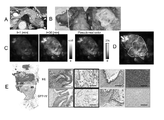
- patient numbers: 1, 2, 4 and 5 with TBR ranging from 1.93 to 3.10, the fluorescence signal of the cancer tissue was nearly uniform and macroscopically distinct from the surrounding pancreatic tissue. were identifiable (Fig. 2).
- FIG. 2 shows fluorescence imaging (patient #2) on a whole surgical specimen using GP-HMRG showing a uniform increase in fluorescence signal in pancreatic cancer tissue.
- FIG. 2A shows preoperative contrast-enhanced CT (arrow) of pancreatic body cancer.
- FIG. 2B shows the macroscopic image OR of the DP specimen after making a section of the tumor, and C is an enlarged view of the section containing the tumor.
- FIG. 2D shows the increase in fluorescence signal after spraying GP-HMRG on the cut surface.
- FIG. 2E shows a fluorescence image (left) and a pseudo-real color image (right) of the cut surface 30 minutes after probe administration.
- FIG. 2F shows the relationship between fluorescence signal and distribution of cancer tissue (solid white line) and surrounding pancreatic tissue (dotted white line) based on the macroscopic image (B) of the sample.
- FIG. 2G shows a low-magnification histopathological image of hematoxylin-eosin (H&E) staining corresponding to the fluorescent image (left, dashed lines indicate cancer borders). Magnifications of H&E and IHC staining of DPP-IV in cancer tissue (red) and pancreatic tissue (blue) are also shown (right). Scale bar is 100 ⁇ m.
- FIG. 3 shows fluorescence imaging (patient #6) on a whole surgical specimen using GP-HMRG showing a heterogeneous increase in fluorescence signal in pancreatic cancer tissue.
- FIG. 3A shows preoperative contrast-enhanced CT (arrow) of pancreatic head cancer.
- FIG. 3B shows a gross image of a PD specimen (left) and a section along the dotted line containing the tumor (right).
- FIG. 3C shows the increase in fluorescence signal after sprinkling GP-HMRG on the cut surface.
- FIG. 3D shows the relationship between fluorescence signals and distribution of cancer tissue (solid white line) and peripheral pancreatic tissue (dotted white line) based on the macroscopic image (B) of the sample.
- FIG. 3E is a low-magnification histopathological image of H&E staining corresponding to the fluorescence image (left, dotted line indicates cancer border). Magnifications of DPP-IV H&E and IHC staining in cancer tissue (solid white line) and pancreatic tissue (dotted white line) are also shown (right). Scale bar is 100 ⁇ m.
- FIG. 4 shows fluorescence imaging (patient #8) on a whole surgical specimen using GP-HMRG showing cancer invasion into the splenic artery.
- FIG. 4A shows preoperative contrast-enhanced CT (arrow) of pancreatic body cancer.
- Figure 4B is a macroscopic image of a DP specimen (left) and a section along the dotted line containing the tumor (right). indicates
- FIG. 4C shows the increase in fluorescence signal after spraying GP-HMRG on the cut surface and the pseudo-real color image at 30 minutes.
- FIG. 4D shows the relationship between fluorescence signals and distribution of cancer tissue (solid white line) and peripheral pancreatic tissue (dotted white line) based on the macroscopic image (B) of the sample. Arrows indicate the splenic artery.
- FIG. 4A shows preoperative contrast-enhanced CT (arrow) of pancreatic body cancer.
- Figure 4B is a macroscopic image of a DP specimen (left) and a section along the dotted line
- 4E shows a low-magnification histopathological image of H&E staining corresponding to the fluorescence image (left, dashed lines indicate cancer borders). Fluorescent (red) and minor fluorescent (black) portions of the main tumor by DPP-IV H&E and IHC staining, viable cancer infiltrates around the splenic arteries (green), and enlarged views of non-cancerous pancreatic tissue (blue) are also shown. shown (right). Scale bar is 100 ⁇ m.
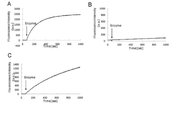
- FIG. 5 shows the time course of fluorescence intensity of GP-HMRG when each enzyme was added. Excitation/emission wavelengths were 495 nm/525 nm.
- FIG. 5A shows the result of adding DPP-IV
- FIG. 5B shows the result of adding DPP-VIII
- FIG. 5C shows the result of adding DPP-IX.
- IHC staining on resected samples from 8 patients showed no obvious difference in the expression level of DPP-IV between cancer tissue and surrounding pancreatic tissue (Table 1 and Table 1). 2-4).
- fluorescence imaging with GP-HMRG has the potential to visualize the spread of viable pancreatic cancer cells in real time, which is useful for intraoperative diagnosis of surgical margins and preoperative endoscopy of intraluminal lesions. It suggests that it is also useful for mirror evaluation.
- a major advantage of using activatable probes is that it allows rapid and real-time identification of cancerous tissue based on enzymatic activity, viability of cancer cells. Indeed, the present study confirmed an increase in fluorescence signal in cancer tissue 1 minute after topical administration of GP-HMRG, and furthermore, FI in cancer tissue decreased, possibly as a result of fibrosis and mucinous changes due to preoperative chemotherapy.
- a fluorescence imaging technique has also been developed for intraoperative identification of pancreatic cancer using a novel fluorophore that targets the factor 1 receptor (IGF-1R).
- these techniques which are based on systemic administration of 'deactivatable' probes, usually require longer intervals for washout of the fluorescent agent from background tissue, which can be activated by intraoperative local administration. can result in a lower TBR compared to the use of simple probes.
- the technology also has potential advantages in elucidating cancer tissue viability and enzymatic activity, which may allow prediction of chemotherapeutic sensitivity and postoperative outcome.
- fluorescence imaging using GP-HMRG enables rapid and real-time visualization of pancreatic cancer based on the enzymatic activity of cancer tissue.
Landscapes
- Chemical & Material Sciences (AREA)
- Health & Medical Sciences (AREA)
- Life Sciences & Earth Sciences (AREA)
- Molecular Biology (AREA)
- Organic Chemistry (AREA)
- General Health & Medical Sciences (AREA)
- Biochemistry (AREA)
- Engineering & Computer Science (AREA)
- Medicinal Chemistry (AREA)
- Immunology (AREA)
- Urology & Nephrology (AREA)
- Hematology (AREA)
- Biomedical Technology (AREA)
- Proteomics, Peptides & Aminoacids (AREA)
- Biophysics (AREA)
- Genetics & Genomics (AREA)
- Physics & Mathematics (AREA)
- Analytical Chemistry (AREA)
- General Physics & Mathematics (AREA)
- Pathology (AREA)
- Food Science & Technology (AREA)
- Cell Biology (AREA)
- Microbiology (AREA)
- Biotechnology (AREA)
- Epidemiology (AREA)
- Animal Behavior & Ethology (AREA)
- Public Health (AREA)
- Veterinary Medicine (AREA)
- Nuclear Medicine, Radiotherapy & Molecular Imaging (AREA)
- Investigating Or Analysing Biological Materials (AREA)
- Medicines Containing Antibodies Or Antigens For Use As Internal Diagnostic Agents (AREA)
- Gastroenterology & Hepatology (AREA)
- Oncology (AREA)
Priority Applications (2)
| Application Number | Priority Date | Filing Date | Title |
|---|---|---|---|
| JP2023514649A JPWO2022220232A1 (https=) | 2021-04-12 | 2022-04-12 | |
| US18/286,291 US20240201189A1 (en) | 2021-04-12 | 2022-04-12 | Fluorescent probe for use in detection of pancreatic cancer |
Applications Claiming Priority (4)
| Application Number | Priority Date | Filing Date | Title |
|---|---|---|---|
| US202163173574P | 2021-04-12 | 2021-04-12 | |
| US63/173,574 | 2021-04-12 | ||
| JP2021-081777 | 2021-05-13 | ||
| JP2021081777 | 2021-05-13 |
Publications (1)
| Publication Number | Publication Date |
|---|---|
| WO2022220232A1 true WO2022220232A1 (ja) | 2022-10-20 |
Family
ID=83640069
Family Applications (1)
| Application Number | Title | Priority Date | Filing Date |
|---|---|---|---|
| PCT/JP2022/017566 Ceased WO2022220232A1 (ja) | 2021-04-12 | 2022-04-12 | すい臓がん検出用蛍光プローブ |
Country Status (3)
| Country | Link |
|---|---|
| US (1) | US20240201189A1 (https=) |
| JP (1) | JPWO2022220232A1 (https=) |
| WO (1) | WO2022220232A1 (https=) |
Citations (5)
| Publication number | Priority date | Publication date | Assignee | Title |
|---|---|---|---|---|
| JP2004533449A (ja) * | 2001-05-11 | 2004-11-04 | ボード オブ リージェンツ, ザ ユニバーシティ オブ テキサス システム | Cd26を発現している細胞に関連する疾患の治療としての抗cd26モノクローナル抗体 |
| WO2011087000A1 (ja) * | 2010-01-13 | 2011-07-21 | 国立大学法人 東京大学 | がん診断薬 |
| WO2013180181A1 (ja) * | 2012-05-30 | 2013-12-05 | 国立大学法人 東京大学 | 高感度膵液検出用蛍光プローブ、及び膵液検出方法 |
| WO2016006678A1 (ja) * | 2014-07-11 | 2016-01-14 | 国立大学法人 東京大学 | ジペプチジルペプチダーゼiv検出用蛍光プローブ |
| WO2020235567A1 (ja) * | 2019-05-21 | 2020-11-26 | 国立大学法人 東京大学 | 脳腫瘍の検出用蛍光プローブ |
-
2022
- 2022-04-12 JP JP2023514649A patent/JPWO2022220232A1/ja active Pending
- 2022-04-12 US US18/286,291 patent/US20240201189A1/en active Pending
- 2022-04-12 WO PCT/JP2022/017566 patent/WO2022220232A1/ja not_active Ceased
Patent Citations (5)
| Publication number | Priority date | Publication date | Assignee | Title |
|---|---|---|---|---|
| JP2004533449A (ja) * | 2001-05-11 | 2004-11-04 | ボード オブ リージェンツ, ザ ユニバーシティ オブ テキサス システム | Cd26を発現している細胞に関連する疾患の治療としての抗cd26モノクローナル抗体 |
| WO2011087000A1 (ja) * | 2010-01-13 | 2011-07-21 | 国立大学法人 東京大学 | がん診断薬 |
| WO2013180181A1 (ja) * | 2012-05-30 | 2013-12-05 | 国立大学法人 東京大学 | 高感度膵液検出用蛍光プローブ、及び膵液検出方法 |
| WO2016006678A1 (ja) * | 2014-07-11 | 2016-01-14 | 国立大学法人 東京大学 | ジペプチジルペプチダーゼiv検出用蛍光プローブ |
| WO2020235567A1 (ja) * | 2019-05-21 | 2020-11-26 | 国立大学法人 東京大学 | 脳腫瘍の検出用蛍光プローブ |
Also Published As
| Publication number | Publication date |
|---|---|
| JPWO2022220232A1 (https=) | 2022-10-20 |
| US20240201189A1 (en) | 2024-06-20 |
Similar Documents
| Publication | Publication Date | Title |
|---|---|---|
| AU2017203340B2 (en) | Synthesis And Composition Of Amino Acid Linking Groups Conjugated To Compounds Used For The Targeted Imaging Of Tumors | |
| US20170232119A1 (en) | Synthesis and composition of amino acid linking groups conjugated to compounds used for the targeted imaging of tumors | |
| Fan et al. | Lighting-up breast cancer cells by a near-infrared fluorescent probe based on KIAA1363 enzyme-targeting | |
| EP2524702B1 (en) | Diagnostic for cancer | |
| KR20180123216A (ko) | Ca ix-표적 nir 염료 및 그의 용도 | |
| US20230417754A1 (en) | Near infrared-ii probes as high affinity targeting imaging agents and uses thereof | |
| JP5523282B2 (ja) | 蛍光コバラミンおよびその使用 | |
| Chen et al. | Synthesis, preclinical evaluation, and first-in-human assessment of ICG-PSMA-D5: a PSMA-targeted probe for fluorescence-guided surgery of prostate cancer | |
| Wei et al. | Vimentin-targeting AIEgen-peptide conjugates: wash-free fluorescence detection of EMT-type cancer cells and tissues | |
| Ham et al. | Endoscopic molecular imaging in inflammatory bowel disease | |
| US20100310459A1 (en) | Targeted Detection of Dysplasia In Barrett's Esophagus With A Novel Fluorescence-Labeled Polypeptide | |
| WO2022220232A1 (ja) | すい臓がん検出用蛍光プローブ | |
| CN113474342B (zh) | 检测癌症的荧光探针 | |
| Jiang et al. | Engineering a near-infrared LAP fluorescent probe with high sensitivity and selectivity for surgical resection of liver cancer | |
| US11884638B2 (en) | Compound or salt thereof, composition for cysteine detection, fluorescent probe and composition for diagnosing cancer containing the same, method for detecting cysteine, method for providing information for diagnosing cancer, and method for producing compound | |
| EP3974438A1 (en) | Fluorescent probe for use in detection of brain tumor | |
| EP3999094B1 (en) | A urokinase plasminogen activator receptor-targeting peptide | |
| Rabinowitz et al. | Far-Red Spray-On Imaging Probes for FAP-Targeted Cancer Surgery | |
| CN120698998B (zh) | 一种靶向突变型egfr的小分子探针及其制备方法及应用 | |
| JP5700392B2 (ja) | 生体試料の調製法 | |
| CA3259278A1 (en) | BICYCLONONYN REAGENTS FOR CELL IMAGING | |
| Mathejczyk | Innovative NIR fluorescent probes for an improved tumor detection in vivo | |
| Muguruma et al. | Endoscopic Molecular Imaging in Gastrointestinal Oncology | |
| HK1219675A1 (en) | Synthesis and composition of amino acid linking groups conjugated to compounds used for the targeted imaging of tumors |
Legal Events
| Date | Code | Title | Description |
|---|---|---|---|
| 121 | Ep: the epo has been informed by wipo that ep was designated in this application |
Ref document number: 22788157 Country of ref document: EP Kind code of ref document: A1 |
|
| WWE | Wipo information: entry into national phase |
Ref document number: 2023514649 Country of ref document: JP |
|
| WWE | Wipo information: entry into national phase |
Ref document number: 18286291 Country of ref document: US |
|
| NENP | Non-entry into the national phase |
Ref country code: DE |
|
| 122 | Ep: pct application non-entry in european phase |
Ref document number: 22788157 Country of ref document: EP Kind code of ref document: A1 |