WO2022210543A1 - 共重合体、圧電材料、圧電膜および圧電素子 - Google Patents
共重合体、圧電材料、圧電膜および圧電素子 Download PDFInfo
- Publication number
- WO2022210543A1 WO2022210543A1 PCT/JP2022/015022 JP2022015022W WO2022210543A1 WO 2022210543 A1 WO2022210543 A1 WO 2022210543A1 JP 2022015022 W JP2022015022 W JP 2022015022W WO 2022210543 A1 WO2022210543 A1 WO 2022210543A1
- Authority
- WO
- WIPO (PCT)
- Prior art keywords
- polymer
- group
- structural unit
- formula
- piezoelectric
- Prior art date
- Legal status (The legal status is an assumption and is not a legal conclusion. Google has not performed a legal analysis and makes no representation as to the accuracy of the status listed.)
- Ceased
Links
Images



Classifications
-
- C—CHEMISTRY; METALLURGY
- C09—DYES; PAINTS; POLISHES; NATURAL RESINS; ADHESIVES; COMPOSITIONS NOT OTHERWISE PROVIDED FOR; APPLICATIONS OF MATERIALS NOT OTHERWISE PROVIDED FOR
- C09D—COATING COMPOSITIONS, e.g. PAINTS, VARNISHES OR LACQUERS; FILLING PASTES; CHEMICAL PAINT OR INK REMOVERS; INKS; CORRECTING FLUIDS; WOODSTAINS; PASTES OR SOLIDS FOR COLOURING OR PRINTING; USE OF MATERIALS THEREFOR
- C09D133/00—Coating compositions based on homopolymers or copolymers of compounds having one or more unsaturated aliphatic radicals, each having only one carbon-to-carbon double bond, and at least one being terminated by only one carboxyl radical, or of salts, anhydrides, esters, amides, imides, or nitriles thereof; Coating compositions based on derivatives of such polymers
- C09D133/18—Homopolymers or copolymers of nitriles
- C09D133/20—Homopolymers or copolymers of acrylonitrile
-
- H—ELECTRICITY
- H10—SEMICONDUCTOR DEVICES; ELECTRIC SOLID-STATE DEVICES NOT OTHERWISE PROVIDED FOR
- H10N—ELECTRIC SOLID-STATE DEVICES NOT OTHERWISE PROVIDED FOR
- H10N30/00—Piezoelectric or electrostrictive devices
- H10N30/01—Manufacture or treatment
- H10N30/09—Forming piezoelectric or electrostrictive materials
- H10N30/098—Forming organic materials
-
- H—ELECTRICITY
- H10—SEMICONDUCTOR DEVICES; ELECTRIC SOLID-STATE DEVICES NOT OTHERWISE PROVIDED FOR
- H10N—ELECTRIC SOLID-STATE DEVICES NOT OTHERWISE PROVIDED FOR
- H10N30/00—Piezoelectric or electrostrictive devices
- H10N30/80—Constructional details
- H10N30/85—Piezoelectric or electrostrictive active materials
- H10N30/857—Macromolecular compositions
Definitions
- the present invention relates to copolymers, piezoelectric materials, piezoelectric films and piezoelectric elements. This application claims priority based on Japanese Patent Application No. 2021-054912 filed in Japan on March 29, 2021, the content of which is incorporated herein.
- PZT PbZrO 3 —PbTiO 3 system solid solution
- PZT is a ceramic material
- PZT has the disadvantage of being brittle because it contains lead and is a ceramic. Therefore, as a piezoelectric material, there is a demand for a material that has a low environmental load and is highly flexible.
- Polymer piezoelectric materials include ferroelectric polymers such as polyvinylidene fluoride (PVDF) and vinylidene fluoride-trifluoroethylene copolymer (P(VDF-TrFE)).
- PVDF polyvinylidene fluoride
- PVDF-TrFE vinylidene fluoride-trifluoroethylene copolymer
- these ferroelectric polymers have insufficient heat resistance. Therefore, a conventional piezoelectric material made of a ferroelectric polymer loses its piezoelectric properties and physical properties such as elastic modulus at high temperatures. Therefore, a piezoelectric element having a piezoelectric body made of a conventional ferroelectric polymer has a narrow usable temperature range.
- a piezoelectric material there is an amorphous polymer piezoelectric material that acquires piezoelectricity by cooling while being polarized at a temperature near the glass transition temperature. Amorphous polymers lose their piezoelectric properties when the temperature reaches around the glass transition temperature. Therefore, there is a demand for an amorphous polymeric piezoelectric material that has a high glass transition temperature and good heat resistance.
- a vinylidene cyanide-vinyl acetate copolymer is exemplified as an amorphous polymeric piezoelectric material with a high glass transition temperature (see Patent Document 1, for example).
- the vinylidene cyanide-vinyl acetate copolymer requires the use of vinylidene cyanide, which is difficult to handle, as a raw material monomer.
- acrylonitrile which is easy to handle, instead of using vinylidene cyanide as the raw material monomer of the piezoelectric polymer material.
- a polymer using acrylonitrile as a raw material monomer has a low glass transition temperature.
- a polymer using acrylonitrile as a raw material monomer also has low piezoelectric properties (see, for example, Non-Patent Documents 1 and 2).
- the present invention has been made in view of the above circumstances, and an object of the present invention is to provide a copolymer that can be used as a piezoelectric material from which a piezoelectric film having high heat resistance and piezoelectric properties can be obtained.
- R 1 and R 2 are any one selected from the group consisting of a hydrogen atom, a methyl group, a dimethyl group, an ethyl group, an isopropyl group, an isobutyl group, a phenyl group, and a benzyl group. or R 1 and R 2 form a benzoxazolidinone skeleton together with the oxazolidinone ring.
- R 1 is a hydrogen atom and R 2 is one selected from the group consisting of a hydrogen atom, a methyl group, and a dimethyl group, or R 1 is methyl dimethyl group, ethyl group, and isopropyl group, and R 2 is a hydrogen atom.
- R 1 is a hydrogen atom
- R 2 is one selected from the group consisting of a hydrogen atom, a methyl group, and a dimethyl group. polymer.
- R 1 is one selected from the group consisting of a methyl group, a dimethyl group, an ethyl group, and an isopropyl group
- R 2 is a hydrogen atom copolymer.
- a piezoelectric element comprising the piezoelectric film according to [5] and electrodes arranged on the surface of the piezoelectric film.
- the copolymer of the present invention has a structural unit represented by general formula (1) and a structural unit represented by formula (2). Therefore, the copolymer of the present invention can be used as a piezoelectric material from which a piezoelectric film having high heat resistance and piezoelectric properties can be obtained.
- the piezoelectric material of the present invention contains the copolymer of the present invention, a piezoelectric film having high heat resistance and piezoelectric properties can be obtained.
- the piezoelectric film of the present invention contains the copolymer of the present invention. Therefore, the piezoelectric film of the present invention and the piezoelectric element of the present invention having the piezoelectric film of the present invention are excellent in heat resistance and piezoelectric properties.
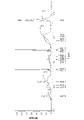
- FIG. 1 is a 1 H-NMR measurement chart of the polymer of Example 1.
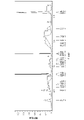
- FIG. 2 is a 1 H-NMR measurement chart of the polymer of Example 6.
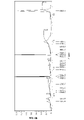
- FIG. 3 is a 1 H-NMR measurement chart of the polymer of Example 10.
- FIG. 4 is a 1 H-NMR measurement chart of the polymer of Example 14.
- FIG. 5 is a 1 H-NMR measurement chart of the polymer of Example 18.
- FIG. 6 is a 1 H-NMR measurement chart of the polymer of Example 22.
- FIG. 7 is a 1 H-NMR measurement chart of the polymer of Example 27.
- the present inventors focused on the heat resistance of polymers using acrylonitrile as a raw material monomer, and conducted extensive research. As a result, the inventors have found that a copolymer having a specific structural unit containing an oxazolidinone skeleton and a structural unit derived from acrylonitrile may be used.
- a compound in which a vinyl group is bonded to the nitrogen atom of the oxazolidinone skeleton has a high affinity with acrylonitrile. Therefore, a compound in which a vinyl group is bonded to the nitrogen atom of the oxazolidinone skeleton can form a copolymer with acrylonitrile.
- a compound in which a vinyl group is bonded to a nitrogen atom of an oxazolidinone skeleton has high polarity, by copolymerizing with acrylonitrile, a copolymer having good heat resistance is formed as compared with polyacrylonitrile.
- the dipole moment of a compound containing an oxazolidinone skeleton is about 6.0 debye, and the dipole moment of acrylonitrile is about 3.8 debye. That is, the structural unit containing an oxazolidinone skeleton has higher polarity than the structural unit derived from acrylonitrile.
- a nitrile group which is a polar group derived from acrylonitrile, can be formed by a structural unit containing a highly polar oxazolidinone skeleton.
- a copolymer having a structural unit containing an oxazolidinone skeleton and a structural unit derived from acrylonitrile will be a piezoelectric material from which a piezoelectric film having good heat resistance and piezoelectric properties can be obtained.
- the present inventors produced a copolymer having a specific structural unit containing an oxazolidinone skeleton and a structural unit derived from acrylonitrile, found that the copolymer had good heat resistance, and used it as a piezoelectric material. After confirming that the piezoelectric characteristics of the piezoelectric film are good, the present invention was conceived.
- the copolymer of this embodiment has a structural unit represented by the following general formula (1) and a structural unit represented by the following formula (2).
- R 1 and R 2 are any one selected from the group consisting of a hydrogen atom, a methyl group, a dimethyl group, an ethyl group, an isopropyl group, an isobutyl group, a phenyl group, and a benzyl group. or R 1 and R 2 form a benzoxazolidinone skeleton together with the oxazolidinone ring.
- R 1 and R 2 are a hydrogen atom, a methyl group, a dimethyl group, an ethyl group, an isopropyl group, an isobutyl group, a phenyl group, and Any one selected from the group consisting of benzyl groups.
- the copolymer of the present embodiment can be easily produced because R 1 and R 2 of the structural unit represented by formula (1) are as described above.
- the copolymer of the present embodiment can be used as a material for a piezoelectric film having good heat resistance and piezoelectric properties, since R 1 and R 2 of the structural units represented by formula (1) are as described above.
- R 1 and R 2 of the structural units represented by formula (1) do not have polarity, they preferably have small volumes. This is because the proportion of the volume of the portion having polarity in the entire copolymer is relatively increased, which contributes to the improvement of the piezoelectric properties of the piezoelectric film using this.
- R 1 is preferably a hydrogen atom
- R 2 is one selected from the group consisting of a hydrogen atom, a methyl group, and a dimethyl group.
- R 1 is one selected from the group consisting of a methyl group, a dimethyl group, an ethyl group, and an isopropyl group
- R 2 is a hydrogen atom.
- R 1 is any one selected from the group consisting of a hydrogen atom, a methyl group, a dimethyl group, an ethyl group, an isopropyl group, an isobutyl group, a phenyl group, and a benzyl group
- R 2 is a hydrogen atom Or it may be a methyl group.
- R 1 may be a hydrogen atom and R 2 may be a hydrogen atom or a methyl group.
- R 1 is a hydrogen atom and R 2 is a methyl group because it can be used as a material for a piezoelectric film having good heat resistance and piezoelectric properties.
- R 1 and R 2 may form a benzoxazolidinone skeleton together with an oxazolidinone ring. Even when R 1 and R 2 of the structural units represented by formula (1) in the copolymer of the present embodiment form a benzoxazolidinone skeleton together with an oxazolidinone ring, the copolymer can be easily produced, and heat resistance and piezoelectric properties can be improved. It can be used as a material for a piezoelectric film with good properties.
- the copolymer of the present embodiment there is no particular limitation on the arrangement order of the structural units represented by formula (1) and the structural units represented by formula (2), which are repeating units. Further, in the copolymer of the present embodiment, the number of structural units represented by formula (1) and the number of structural units represented by formula (2) may be the same or different. good too.
- the copolymer of the present embodiment has an alternating arrangement portion in which the structural units represented by the formula (1) and the structural units represented by the formula (2) are alternately arranged, and the structure represented by the formula (1)
- a random arrangement part in which the units and the structural units represented by formula (2) are arranged without order, and a part in which the structural units represented by formula (1) are continuously arranged and the structural units represented by formula (2) are arranged in succession, and the block arrangement portion having the portion arranged in succession may be distributed at an arbitrary ratio.
- the nitrile groups contained in the structural units represented by formula (2) are less likely to be oriented such that their polarities cancel each other out, and can be used as a piezoelectric material with good heat resistance and piezoelectric properties. Therefore, it is preferable to include an alternating arrangement portion.
- the content of the structural unit represented by formula (1) is preferably 10 to 80 mol%, more preferably 20 to 70 mol%, and 30 to 60 mol. % is more preferred.
- the content of the structural unit represented by formula (1) is 10 mol % or more, the copolymer has even better heat resistance.
- the content of the structural unit represented by formula (1) is 80 mol % or less, the piezoelectric film containing the copolymer becomes hard due to the excessive content of the structural unit represented by formula (1). It can be prevented from becoming brittle.
- the content of the structural unit represented by formula (1) is 80 mol % or less, it is possible to suppress a decrease in insulation resistance of the copolymer due to moisture absorption of the structural unit represented by formula (1).
- the content of the structural unit represented by formula (2) is preferably 10 to 80 mol%, more preferably 20 to 70 mol%, and 30 to 60 mol. % is more preferred.
- the content of the structural unit represented by formula (2) is 10 mol % or more, the copolymer has high insulation resistance and can form a flexible piezoelectric film.
- the content of the structural unit represented by formula (2) is 80 mol % or less, it becomes easier to secure the content of the structural unit represented by formula (1).
- the nitrile groups contained in the structural units represented by formula (2) are less likely to be oriented such that their polarities cancel each other out, resulting in a copolymer capable of forming a piezoelectric film with better heat resistance and piezoelectric properties.
- the copolymer of the present embodiment optionally contains one or more structural units other than the structural units represented by formula (1) and the structural units represented by formula (2). good too.
- Other structural units include, for example, structural units derived from known monomers or oligomers having polymerizable unsaturated bonds.
- the total content of the structural unit represented by formula (1) and the structural unit represented by formula (2) is 50% by mass or more. is preferable, more preferably 80% by mass or more, may be 90% by mass or more, and may be only the structural unit represented by formula (1) and the structural unit represented by formula (2) .
- the weight average molecular weight (Mw) of the copolymer of the present embodiment is preferably 10,000 to 1,000,000.
- the weight-average molecular weight (Mw) of the copolymer is 10,000 or more, the film-forming properties are excellent, and the piezoelectric film containing the copolymer of the present embodiment can be easily produced.
- the weight average molecular weight (Mw) of the copolymer is 1,000,000 or less, it can be easily dissolved in a solvent, and a piezoelectric film can be easily produced using a coating liquid dissolved in the solvent.
- the copolymer of the present embodiment uses, for example, a compound derived from the structural unit represented by formula (1), a raw material monomer containing acrylonitrile, and a polymerization initiator such as azobisbutyronitrile, It can be produced by radical copolymerization by a known method. Polymerization conditions such as reaction temperature and reaction time for producing the copolymer of the present embodiment can be appropriately determined according to the composition of the raw material monomers.
- the compound from which the structural unit represented by the formula (1) is derived has the structural unit represented by the formula (1) and the oxazolidinone skeleton and the atoms bonded to the carbon atoms of the oxazolidinone skeleton are the same, and the oxazolidinone skeleton It is a compound in which a vinyl group is attached to the nitrogen atom.
- compounds from which the structural unit represented by formula (1) is derived include N-vinyl-oxazolidinone, N-vinyl-5-methyloxazolidinone, N-vinyl-4-methyloxazolidinone, N-vinyl- 4,4-dimethyloxazolidinone, N-vinyl-4-ethyloxazolidinone, N-vinyl-4-propyloxazolidinone, N-vinyl-4-isopropyloxazolidinone, N-vinyl-4-isobutyloxazolidinone, N-vinyl-4-phenyl Examples include oxazolidinone, N-vinyl-4-benzyloxazolidinone, N-vinyl-2-benzoxazolinone, and the like, which are appropriately determined according to the structure of the target copolymer of the present embodiment.
- the piezoelectric material of this embodiment includes the copolymer of this embodiment.
- the copolymer of the present embodiment contained in the piezoelectric material of the present embodiment may be of only one type, or may be of two or more types.
- the piezoelectric material of the present embodiment may contain one or more known polymers other than the copolymer of the present embodiment together with the copolymer of the present embodiment, if necessary.
- the piezoelectric film of this embodiment contains the copolymer of this embodiment.
- the piezoelectric film of this embodiment can be manufactured, for example, by the method described below.
- the piezoelectric material of this embodiment containing the copolymer of this embodiment is dissolved in a solvent to prepare a coating liquid.
- the coating liquid is applied to a detachable base material in a predetermined thickness to form a coating film.
- a known substrate such as a resin film can be used as the substrate.
- a known method for applying the coating liquid a known method can be used according to the coating thickness, the viscosity of the coating liquid, and the like. After that, the coating film is dried to remove the solvent in the coating film to obtain a piezoelectric material sheet.
- the piezoelectric material sheet is peeled off from the substrate, and electrodes made of a known conductive material such as aluminum are provided on one side and the other side of the piezoelectric material sheet to form the piezoelectric material sheet. After voltage is applied at a temperature near the glass transition temperature of the piezoelectric material, it is cooled while the voltage is applied. This acquires piezoelectricity. A sheet-like piezoelectric film is obtained by the above steps.
- the electrode used for obtaining piezoelectricity may be used as it is as a member forming a piezoelectric element, or may be removed.
- the piezoelectric element of this embodiment has the piezoelectric film of this embodiment and electrodes arranged on the surface of the piezoelectric film. Specifically, one having a sheet-like piezoelectric film and electrodes arranged on one surface and the other surface of the piezoelectric film can be mentioned. A known conductive material such as aluminum can be used as the electrode material.
- the piezoelectric element of this embodiment can be manufactured, for example, by providing electrodes on one surface and the other surface of the piezoelectric film by a known method such as vapor deposition.
- the copolymer of the present embodiment has a structural unit represented by general formula (1) and a structural unit represented by formula (2). Therefore, the copolymer of this embodiment can be used as a piezoelectric material from which a piezoelectric film having high heat resistance and piezoelectric properties can be obtained. Moreover, since the piezoelectric material of the present embodiment contains the copolymer of the present embodiment, a piezoelectric film having high heat resistance and piezoelectric properties can be obtained. Also, the piezoelectric film of the present embodiment contains the copolymer of the present embodiment. Therefore, the piezoelectric film of this embodiment and the piezoelectric element of this embodiment having the piezoelectric film of this embodiment are excellent in heat resistance and piezoelectric characteristics.
- Example 1 0.4 ml (4 mmol) of N-vinyl-oxazolidinone represented by the following general formula (11) and 1.2 ml (16 mmol) of acrylonitrile were mixed in a 100 ml Schlenk tube, and 11.5 mg (0.07 mmol) of Azobisisobutyronitrile was added and reacted at 60° C. for 2 hours. The reaction product was poured into 200 ml of methanol for reprecipitation, filtered and dried to obtain 1.1 g of the polymer of Example 1. Yield was 78%.
- R 2 is a hydrogen atom.
- the polymer of Example 1 was subjected to 1 H-NMR measurement using an NMR (nuclear magnetic resonance) apparatus (trade name JNM-ECA500, manufactured by JEOL Ltd.) using dimethyl sulfoxide d6 (DMSO-d6) as a solvent. was performed to identify the molecular structure.
- 1 is a 1 H-NMR measurement chart of the polymer of Example 1.
- FIG. As a result, the polymer of Example 1 was composed of a structural unit A represented by the general formula (1) (R 1 and R 2 in the general formula (1) are hydrogen atoms) and a It was confirmed that it was a copolymer having a structural unit with Also, the composition ratio was calculated from the integrated value of each signal in the 1 H-NMR spectrum of Example 1. As a result, the content of the structural unit represented by formula (2) contained in the polymer of Example 1 was 70%.
- Example 2 0.4 ml (4 mmol) of N-vinyl-oxazolidinone and 0.4 ml (7 mmol) of acrylonitrile were mixed in a 100 ml Schlenk tube, and 6.8 mg (0.04 mmol) of azobisisobutyronitrile was added. , and 60° C. for 2 hours. The reaction product was poured into 200 ml of methanol for reprecipitation, filtered and dried to obtain 0.5 g of the polymer of Example 3. Yield was 68%.
- the polymer of Example 2 was subjected to 1 H-NMR measurement in the same manner as the polymer of Example 1 to identify the molecular structure.
- the polymer of Example 3 was, like the polymer of Example 1, a structural unit A represented by general formula (1) (R 1 and R 2 in general formula (1) are hydrogen atoms ) and the structural unit represented by formula (2).
- the composition ratio was calculated from the integrated value of each signal in the 1 H-NMR spectrum of Example 2.
- the content of the structural unit represented by formula (2) contained in the polymer of Example 3 was 49%.
- Example 3 0.4 ml (4 mmol) of N-vinyl-oxazolidinone and 0.3 ml (4 mmol) of acrylonitrile were mixed in a 100 ml Schlenk tube, and 5.9 mg (0.04 mmol) of azobisisobutyronitrile was added. , and 60° C. for 2 hours. The reaction product was poured into 200 ml of methanol for reprecipitation, filtered and dried to obtain 0.6 g of the polymer of Example 3. Yield was 87%.
- the polymer of Example 3 was subjected to 1 H-NMR measurement in the same manner as the polymer of Example 1 to identify the molecular structure.
- the polymer of Example 3 was, like the polymer of Example 1, a structural unit A represented by general formula (1) (R 1 and R 2 in general formula (1) are hydrogen atoms ) and the structural unit represented by formula (2).
- the composition ratio was calculated from the integrated value of each signal in the 1 H-NMR spectrum of Example 3.
- the content of the structural unit represented by formula (2) contained in the polymer of Example 4 was 24%.
- Example 4" 1.2 ml (12 mmol) of N-vinyl-oxazolidinone and 0.1 ml (2 mmol) of acrylonitrile were mixed in a 100 ml Schlenk tube, and 7.9 mg (0.05 mmol) of azobisisobutyronitrile was added. , and 60° C. for 2 hours. The reaction product was poured into 200 ml of methanol for reprecipitation, filtered and dried to obtain 1.1 g of the polymer of Example 4. Yield was 73%.
- the polymer of Example 4 was subjected to 1 H-NMR measurement in the same manner as the polymer of Example 1 to identify the molecular structure.
- the polymer of Example 4 like the polymer of Example 1, had a structural unit A represented by general formula (1) (R 1 and R 2 in general formula (1) are hydrogen atoms ) and the structural unit represented by formula (2).
- the composition ratio was calculated from the integrated value of each signal in the 1 H-NMR spectrum of Example 4.
- the content of the structural unit represented by formula (2) contained in the polymer of Example 4 was 14%.
- Example 5 Mix 0.6 ml (5 mmol) of N-vinyl-4-methyl-oxazolidinone with 0.7 ml (10 mmol) of acrylonitrile in a 100 ml Schlenk tube and add 9.4 mg (0.06 mmol) of azobisisobutyro Nitrile was added and reacted at 60° C. for 2 hours. The reaction product was poured into 200 ml of methanol for reprecipitation, filtered and dried to obtain 0.5 g of the polymer of Example 5. Yield was 44%.
- the polymer of Example 5 was subjected to 1 H-NMR measurement in the same manner as the polymer of Example 1 to identify the molecular structure.
- the polymer of Example 5 was a structural unit B represented by the general formula (1) (R 1 in the general formula (1) is a methyl group and R 2 is a hydrogen atom), ) was confirmed to be a copolymer having a structural unit represented by Also, the composition ratio was calculated from the integrated value of each signal in the 1 H-NMR spectrum of Example 5. As a result, the content of the structural unit represented by formula (2) contained in the polymer of Example 5 was 75%.
- Example 6 Mix 0.6 ml (5 mmol) of N-vinyl-4-methyl-oxazolidinone with 0.3 ml (5 mmol) of acrylonitrile in a 100 ml Schlenk tube and add 7.4 mg (0.04 mmol) of azobisisobutyro. Nitrile was added and reacted at 60° C. for 2 hours. The reaction product was poured into 200 ml of methanol for reprecipitation, filtered and dried to obtain 0.7 g of the polymer of Example 6. Yield was 68%.
- the polymer of Example 6 was subjected to 1 H-NMR measurement in the same manner as the polymer of Example 1 to identify the molecular structure.
- 2 is a 1 H-NMR measurement chart of the polymer of Example 6.
- FIG. As a result, similarly to Example 5, the polymer of Example 6 was a structural unit B represented by the general formula (1) (R 1 in the general formula (1) is a methyl group and R 2 is a hydrogen atom ) and the structural unit represented by formula (2). Also, the composition ratio was calculated from the integrated value of each signal in the 1 H-NMR spectrum of Example 6. As a result, the content of the structural unit represented by formula (2) contained in the polymer of Example 6 was 55%.
- Example 7 Mix 0.6 ml (5 mmol) of N-vinyl-4-methyl-oxazolidinone with 0.7 ml (10 mmol) of acrylonitrile in a 100 ml Schlenk tube and add 9.4 mg (0.06 mmol) of azobisisobutyro Nitrile was added and reacted at 60° C. for 2 hours. The reaction product was poured into 200 ml of methanol for reprecipitation, filtered and dried to obtain 0.7 g of the polymer of Example 7. Yield was 59%.
- the polymer of Example 7 was subjected to 1 H-NMR measurement in the same manner as the polymer of Example 1 to identify the molecular structure.
- the polymer of Example 7 was a structural unit B represented by the general formula (1) (R 1 in the general formula (1) is a methyl group and R 2 is a hydrogen atom ) and the structural unit represented by formula (2).
- the composition ratio was calculated from the integrated value of each signal in the 1 H-NMR spectrum of Example 7.
- the content of the structural unit represented by formula (2) contained in the polymer of Example 7 was 33%.
- Example 8 Mix 1.2 ml (10 mmol) of N-vinyl-4-methyl-oxazolidinone with 0.1 ml (2 mmol) of acrylonitrile in a 100 ml Schlenk tube and add 11.2 mg (0.07 mmol) of azobisisobutyro Nitrile was added and reacted at 60° C. for 2 hours. The reaction product was poured into 200 ml of methanol for reprecipitation, filtered and dried to obtain 0.9 g of the polymer of Example 8. Yield was 62%.
- the polymer of Example 8 was subjected to 1 H-NMR measurement in the same manner as the polymer of Example 1 to identify the molecular structure.
- the polymer of Example 8 was a structural unit B represented by the general formula (1) (R 1 in the general formula (1) is a methyl group and R 2 is a hydrogen atom ) and the structural unit represented by formula (2).
- the composition ratio was calculated from the integrated value of each signal in the 1 H-NMR spectrum of Example 8.
- the content of the structural unit represented by formula (2) contained in the polymer of Example 8 was 14%.
- Example 9 Mix 0.6 ml (5 mmol) of N-vinyl-4-ethyl-oxazolidinone with 0.6 ml (10 mmol) of acrylonitrile in a 100 ml Schlenk tube and add 9.8 mg (0.06 mmol) of azobisisobutyro Nitrile was added and reacted at 60° C. for 2 hours. The reaction product was poured into 200 ml of methanol for reprecipitation, filtered and dried to obtain 0.7 g of the polymer of Example 9. Yield was 55%.
- the polymer of Example 9 was subjected to 1 H-NMR measurement in the same manner as the polymer of Example 1 to identify the molecular structure.
- the polymer of Example 9 had a structural unit C represented by the general formula (1) (R 1 in the general formula (1) is an ethyl group and R 2 is a hydrogen atom), ) was confirmed to be a copolymer having a structural unit represented by Also, the composition ratio was calculated from the integrated value of each signal in the 1 H-NMR spectrum of Example 9. As a result, the content of the structural unit represented by formula (2) contained in the polymer of Example 9 was 73%.
- Example 10 Mix 0.6 ml (5 mmol) of N-vinyl-4-ethyl-oxazolidinone with 0.3 ml (5 mmol) of acrylonitrile in a 100 ml Schlenk tube and add 7.7 mg (0.05 mmol) of azobisisobutyro. Nitrile was added and reacted at 60° C. for 2 hours. The reaction product was poured into 200 ml of methanol for reprecipitation, filtered and dried to obtain 0.4 g of the polymer of Example 10. Yield was 44%.
- the polymer of Example 10 was subjected to 1 H-NMR measurement in the same manner as the polymer of Example 1 to identify the molecular structure.
- 3 is a 1 H-NMR measurement chart of the polymer of Example 10.
- the polymer of Example 10 was a structural unit C represented by the general formula (1) (R 1 in the general formula (1) is an ethyl group, R 2 is a hydrogen atom ) and the structural unit represented by formula (2).
- the composition ratio was calculated from the integrated value of each signal in the 1 H-NMR spectrum of Example 10.
- the content of the structural unit represented by formula (2) contained in the polymer of Example 10 was 60%.
- Example 11 Mix 0.6 ml (5 mmol) of N-vinyl-4-ethyl-oxazolidinone with 0.1 ml (2 mmol) of acrylonitrile in a 100 ml Schlenk tube and add 6.4 mg (0.06 mmol) of azobisisobutyro. Nitrile was added and reacted at 60° C. for 2 hours. The reaction product was poured into 200 ml of methanol for reprecipitation, filtered and dried to obtain 0.5 g of the polymer of Example 11. Yield was 62%.
- the polymer of Example 11 was subjected to 1 H-NMR measurement in the same manner as the polymer of Example 1 to identify the molecular structure.
- the polymer of Example 11 similarly to Example 9, the polymer of Example 11 had a structural unit C represented by the general formula (1) (R 1 in the general formula (1) is an ethyl group and R 2 is a hydrogen atom ) and the structural unit represented by formula (2).
- the composition ratio was calculated from the integrated value of each signal in the 1 H-NMR spectrum of Example 11.
- the content of the structural unit represented by formula (2) contained in the polymer of Example 11 was 39%.
- Example 12 Mix 1.2 ml (10 mmol) of N-vinyl-4-ethyl-oxazolidinone with 0.1 ml (2 mmol) of acrylonitrile in a 100 ml Schlenk tube and add 12.0 mg (0.07 mmol) of azobisisobutyro Nitrile was added and reacted at 60° C. for 2 hours. The reaction product was poured into 200 ml of methanol for reprecipitation, filtered and dried to obtain 0.7 g of the polymer of Example 12. Yield was 45%.
- the polymer of Example 12 was subjected to 1 H-NMR measurement in the same manner as the polymer of Example 1 to identify the molecular structure.
- the polymer of Example 12 similarly to Example 9, the polymer of Example 12 had a structural unit C represented by the general formula (1) (R 1 in the general formula (1) is an ethyl group and R 2 is a hydrogen atom ) and the structural unit represented by formula (2).
- the composition ratio was calculated from the integrated value of each signal in the 1 H-NMR spectrum of Example 12.
- the content of the structural unit represented by formula (2) contained in the polymer of Example 12 was 21%.
- Example 13 Mix 0.7 ml (5 mmol) of N-vinyl-4-isopropyl-oxazolidinone with 0.7 ml (10 mmol) of acrylonitrile in a 100 ml Schlenk tube and add 10.2 mg (0.06 mmol) of azobisisobutyro. Nitrile was added and reacted at 60° C. for 2 hours. The reaction product was poured into 200 ml of methanol for reprecipitation, filtered and dried to obtain 0.7 g of the polymer of Example 13. Yield was 55%.
- the polymer of Example 13 was subjected to 1 H-NMR measurement in the same manner as the polymer of Example 1 to identify the molecular structure.
- the polymer of Example 13 was a structural unit D represented by the general formula (1) (R 1 in the general formula (1) is an isopropyl group (iPr) and R 2 is a hydrogen atom), It was confirmed that the polymer was a copolymer having a structural unit represented by formula (2).
- the composition ratio was calculated from the integrated value of each signal in the 1 H-NMR spectrum of Example 13. As a result, the content of the structural unit represented by formula (2) contained in the polymer of Example 13 was 67%.
- Example 14 Mix 0.6 ml (5 mmol) of N-vinyl-4-isopropyl-oxazolidinone with 0.3 ml (5 mmol) of acrylonitrile in a 100 ml Schlenk tube and add 7.5 mg (0.05 mmol) of azobisisobutyro. Nitrile was added and reacted at 60° C. for 2 hours. The reaction product was poured into 200 ml of methanol for reprecipitation, filtered and dried to obtain 0.6 g of the polymer of Example 14. Yield was 66%.
- the polymer of Example 14 was subjected to 1 H-NMR measurement in the same manner as the polymer of Example 1 to identify the molecular structure.
- 4 is a 1 H-NMR measurement chart of the polymer of Example 14.
- FIG. similarly to Example 13, the polymer of Example 14 was a structural unit D represented by general formula (1) (R 1 in general formula (1) is isopropyl group (iPr), R 2 is hydrogen atom) and the structural unit represented by the formula (2). Also, the composition ratio was calculated from the integrated value of each signal in the 1 H-NMR spectrum of Example 14. As a result, the content of the structural unit represented by formula (2) contained in the polymer of Example 14 was 44%.
- Example 15 Mix 0.7 ml (5 mmol) of N-vinyl-4-isopropyl-oxazolidinone with 0.1 ml (2 mmol) of acrylonitrile in a 100 ml Schlenk tube and add 6.8 mg (0.04 mmol) of azobisisobutyro. Nitrile was added and reacted at 60° C. for 2 hours. The reaction product was poured into 200 ml of methanol for reprecipitation, filtered and dried to obtain 0.6 g of the polymer of Example 15. Yield was 72%.
- the polymer of Example 15 was subjected to 1 H-NMR measurement in the same manner as the polymer of Example 1 to identify the molecular structure.
- the polymer of Example 15 was a structural unit D represented by general formula (1) (R 1 in general formula (1) is isopropyl group (iPr), R 2 is hydrogen atom) and the structural unit represented by the formula (2).
- the composition ratio was calculated from the integrated value of each signal in the 1 H-NMR spectrum of Example 15.
- the content of the structural unit represented by formula (2) contained in the polymer of Example 15 was 32%.
- Example 16 1.4 ml (10 mmol) of N-vinyl-4-isopropyl-oxazolidinone and 0.1 ml (2 mmol) of acrylonitrile were mixed in a 100 ml Schlenk tube to obtain 13.2 mg (0.08 mmol) of azobisisobutyronitrile. was added and reacted at 60° C. for 2 hours. The reaction product was poured into 200 ml of methanol for reprecipitation, filtered and dried to obtain 0.9 g of the polymer of Example 16. Yield was 57%.
- the polymer of Example 16 was subjected to 1 H-NMR measurement in the same manner as the polymer of Example 1 to identify the molecular structure.
- the polymer of Example 16 was a structural unit D represented by general formula (1) (R 1 in general formula (1) is isopropyl group (iPr), R 2 is hydrogen atom) and the structural unit represented by the formula (2).
- the composition ratio was calculated from the integrated value of each signal in the 1 H-NMR spectrum of Example 16.
- the content of the structural unit represented by formula (2) contained in the polymer of Example 16 was 18%.
- Example 17 0.8 ml (6 mmol) of N-vinyl-4,4-dimethyl-oxazolidinone and 0.8 ml (12 mmol) of acrylonitrile are mixed in a 100 ml Schlenk tube and 12.6 mg (0.08 mmol) of azobisiso Butyronitrile was added and reacted at 60° C. for 2 hours. The reaction product was poured into 200 ml of methanol for reprecipitation, filtered and dried to obtain 0.8 g of the polymer of Example 17. Yield was 50%.
- the polymer of Example 17 was subjected to 1 H-NMR measurement in the same manner as the polymer of Example 1 to identify the molecular structure.
- the polymer of Example 17 had a structural unit E represented by the general formula (1) (R 1 in the general formula (1) is a dimethyl group and R 2 is a hydrogen atom), ) was confirmed to be a copolymer having a structural unit represented by Also, the composition ratio was calculated from the integrated value of each signal in the 1 H-NMR spectrum of Example 17. As a result, the content of the structural unit represented by formula (2) contained in the polymer of Example 17 was 73%.
- Example 18 0.8 ml (6 mmol) of N-vinyl-4,4-dimethyl-oxazolidinone and 0.4 ml (6 mmol) of acrylonitrile are mixed in a 100 ml Schlenk tube and 9.9 mg (0.06 mmol) of azobisiso Butyronitrile was added and reacted at 60° C. for 2 hours. The reaction product was poured into 200 ml of methanol for reprecipitation, filtered and dried to obtain 0.7 g of the polymer of Example 18. Yield was 53%.
- Example 18 was subjected to 1 H-NMR measurement in the same manner as the polymer of Example 1 to identify the molecular structure.
- 5 is a 1 H-NMR measurement chart of the polymer of Example 18.
- FIG. As a result, as in Example 17, the polymer of Example 18 was a structural unit E represented by general formula (1) (where R 1 is a dimethyl group and R 2 is a hydrogen atom). ) and the structural unit represented by formula (2). Also, the composition ratio was calculated from the integrated value of each signal in the 1 H-NMR spectrum of Example 18. As a result, the content of the structural unit represented by formula (2) contained in the polymer of Example 18 was 50%.
- Example 19 0.8 ml (6 mmol) of N-vinyl-4,4-dimethyl-oxazolidinone and 0.2 ml (3 mmol) of acrylonitrile are mixed in a 100 ml Schlenk tube and 8.6 mg (0.05 mmol) of azobisiso Butyronitrile was added and reacted at 60° C. for 2 hours. The reaction product was poured into 200 ml of methanol for reprecipitation, filtered and dried to obtain 0.4 g of the polymer of Example 19. Yield was 41%.
- the polymer of Example 19 was subjected to 1 H-NMR measurement in the same manner as the polymer of Example 1 to identify the molecular structure.
- the polymer of Example 19 was a structural unit E represented by general formula (1) (where R 1 is a dimethyl group and R 2 is a hydrogen atom). ) and the structural unit represented by formula (2).
- the composition ratio was calculated from the integrated value of each signal in the 1 H-NMR spectrum of Example 19.
- the content of the structural unit represented by formula (2) contained in the polymer of Example 19 was 33%.
- Example 20 Mix 1 ml (8 mmol) of N-vinyl-4,4-dimethyl-oxazolidinone with 0.1 ml (2 mmol) of acrylonitrile in a 100 ml Schlenk tube and add 10.0 mg (0.06 mmol) of azobisisobutyro. Nitrile was added and reacted at 60° C. for 2 hours. The reaction product was poured into 200 ml of methanol for reprecipitation, filtered and dried to obtain 0.8 g of the polymer of Example 20. Yield was 61%.
- the polymer of Example 20 was subjected to 1 H-NMR measurement in the same manner as the polymer of Example 1 to identify the molecular structure.
- the polymer of Example 20 had a structural unit E represented by general formula (1) (where R 1 is a dimethyl group and R 2 is a hydrogen atom). ) and the structural unit represented by formula (2).
- the composition ratio was calculated from the integrated value of each signal in the 1 H-NMR spectrum of Example 20.
- the content of the structural unit represented by formula (2) contained in the polymer of Example 20 was 17%.
- Example 21 0.5 ml (4 mmol) of N-vinyl-5-methyloxazolidinone (a compound in which R 2 in general formula (11) is a methyl group) and 1.0 ml (16 mmol) of acrylonitrile were mixed in a 100 ml Schlenk tube. Then, 10.7 mg (0.07 mmol) of azobisisobutyronitrile was added and reacted at 60° C. for 2 hours. The reaction product was poured into 200 ml of methanol for reprecipitation, filtered and dried to obtain 0.9 g of the polymer of Example 21. Yield was 68%.
- the polymer of Example 21 was subjected to 1 H-NMR measurement in the same manner as the polymer of Example 1 to identify the molecular structure.
- the polymer of Example 21 was a structural unit F represented by general formula (1) (R 1 in general formula (1) is a hydrogen atom and R 2 is a methyl group), It was confirmed that the polymer was a copolymer having a structural unit represented by formula (2).
- the composition ratio was calculated from the integrated value of each signal in the 1 H-NMR spectrum of Example 21. As a result, the content of the structural unit represented by formula (2) contained in the polymer of Example 6 was 76%.
- Example 22 Mix 1.4 ml (12 mmol) of N-vinyl-5-methyloxazolidinone with 1.0 ml (16 mmol) of acrylonitrile in a 100 ml Schlenk tube and mix 10.8 mg (0.07 mmol) of azobisisobutyronitrile. was added and reacted at 60° C. for 2 hours. The reaction product was poured into 200 ml of methanol for reprecipitation, filtered and dried to obtain 1.5 g of the polymer of Example 22. Yield was 67%.
- the polymer of Example 22 was subjected to 1 H-NMR measurement in the same manner as the polymer of Example 1 to identify the molecular structure.
- 6 is a 1 H-NMR measurement chart of the polymer of Example 22.
- FIG. As a result, similarly to the polymer of Example 21, the polymer of Example 22 had the structural unit F represented by the general formula (1) (R 1 in the general formula (1) is a hydrogen atom, R 2 is a methyl group) and the structural unit represented by the formula (2). Also, the composition ratio was calculated from the integrated value of each signal in the 1 H-NMR spectrum of Example 22. As a result, the content of the structural unit represented by formula (2) contained in the polymer of Example 22 was 44%.
- Example 23 Mix 1.4 ml (12 mmol) of N-vinyl-5-methyloxazolidinone with 0.8 ml (12 mmol) of acrylonitrile in a 100 ml Schlenk tube and add 9.1 mg (0.06 mmol) of azobisisobutyronitrile. was added and reacted at 60° C. for 2 hours. The reaction product was poured into 200 ml of methanol for reprecipitation, filtered and dried to obtain 1.3 g of the polymer of Example 23. Yield was 60%.
- the polymer of Example 23 was subjected to 1 H-NMR measurement in the same manner as the polymer of Example 1 to identify the molecular structure.
- the polymer of Example 23 similarly to the polymer of Example 21, the polymer of Example 23 had the structural unit F represented by the general formula (1) (R 1 in the general formula (1) is a hydrogen atom, R 2 is a methyl group) and the structural unit represented by the formula (2).
- the composition ratio was calculated from the integrated value of each signal in the 1 H-NMR spectrum of Example 23.
- the content of the structural unit represented by formula (2) contained in the polymer of Example 23 was 28%.
- Example 24 Mix 1.4 ml (12 mmol) of N-vinyl-5-methyloxazolidinone with 0.4 ml (6 mmol) of acrylonitrile in a 100 ml Schlenk tube and add 14.8 mg (0.09 mmol) of azobisisobutyronitrile. was added and reacted at 60° C. for 2 hours. The reaction product was poured into 200 ml of methanol for reprecipitation, filtered and dried to obtain 1.1 g of the polymer of Example 24. Yield was 60%.
- the polymer of Example 24 was subjected to 1 H-NMR measurement in the same manner as the polymer of Example 1 to identify the molecular structure.
- the polymer of Example 24 similarly to the polymer of Example 21, the polymer of Example 24 had the structural unit F represented by the general formula (1) (R 1 in the general formula (1) is a hydrogen atom, R 2 is a methyl group) and the structural unit represented by the formula (2).
- the composition ratio was calculated from the integrated value of each signal in the 1 H-NMR spectrum of Example 24.
- the content of the structural unit represented by formula (2) contained in the polymer of Example 24 was 13%.
- Example 25 Mix 0.5 ml (4 mmol) of N-vinyl-5,5-dimethyl-oxazolidinone with 1 ml (16 mmol) of acrylonitrile in a 100 ml Schlenk tube and add 11.2 mg (0.07 mmol) of azobisisobutyro Nitrile was added and reacted at 60° C. for 2 hours. The reaction product was poured into 200 ml of methanol for reprecipitation, filtered and dried to obtain 0.8 g of the polymer of Example 25. Yield was 54%.
- the polymer of Example 25 was subjected to 1 H-NMR measurement in the same manner as the polymer of Example 1 to identify the molecular structure.
- the polymer of Example 25 had a structural unit G represented by general formula (1) (R 1 in general formula (1) is a hydrogen atom and R 2 is a dimethyl group), and ) was confirmed to be a copolymer having a structural unit represented by Also, the composition ratio was calculated from the integrated value of each signal in the 1 H-NMR spectrum of Example 25. As a result, the content of the structural unit represented by formula (2) contained in the polymer of Example 25 was 74%.
- Example 26 Mix 1.5 ml (12 mmol) of N-vinyl-5,5-dimethyl-oxazolidinone with 1 ml (16 mmol) of acrylonitrile in a 100 ml Schlenk tube and add 20.4 mg (0.12 mmol) of azobisisobutyro. Nitrile was added and reacted at 60° C. for 2 hours. The reaction product was poured into 200 ml of methanol for reprecipitation, filtered and dried to obtain 1.1 g of the polymer of Example 26. Yield was 45%.
- the polymer of Example 26 was subjected to 1 H-NMR measurement in the same manner as the polymer of Example 1 to identify the molecular structure.
- the polymer of Example 26 was a structural unit G represented by general formula (1) (R 1 in general formula (1) is a hydrogen atom and R 2 is a dimethyl group ) and the structural unit represented by formula (2).
- the composition ratio was calculated from the integrated value of each signal in the 1 H-NMR spectrum of Example 26.
- the content of the structural unit represented by formula (2) contained in the polymer of Example 26 was 58%.
- Example 27 1.5 ml (12 mmol) of N-vinyl-5,5-dimethyl-oxazolidinone and 0.8 ml (12 mmol) of acrylonitrile are mixed in a 100 ml Schlenk tube and 18.7 mg (0.11 mmol) of azobisiso Butyronitrile was added and reacted at 60° C. for 2 hours. The reaction product was poured into 200 ml of methanol for reprecipitation, filtered and dried to obtain 0.9 g of the polymer of Example 27. Yield was 38%.
- the polymer of Example 27 was subjected to 1 H-NMR measurement in the same manner as the polymer of Example 1 to identify the molecular structure.
- 7 is a 1 H-NMR measurement chart of the polymer of Example 27.
- FIG. As a result, similarly to Example 25, the polymer of Example 27 was a structural unit G represented by general formula (1) (R 1 in general formula (1) is a hydrogen atom and R 2 is a dimethyl group ) and the structural unit represented by formula (2). Also, the composition ratio was calculated from the integrated value of each signal in the 1 H-NMR spectrum of Example 27. As a result, the content of the structural unit represented by formula (2) contained in the polymer of Example 27 was 41%.
- Example 28 1.5 ml (12 mmol) of N-vinyl-5,5-dimethyl-oxazolidinone and 0.4 ml (6 mmol) of acrylonitrile are mixed in a 100 ml Schlenk tube and 16.1 mg (0.10 mmol) of azobisiso Butyronitrile was added and reacted at 60° C. for 2 hours. The reaction product was poured into 200 ml of methanol for reprecipitation, filtered and dried to obtain 1.0 g of the polymer of Example 28. Yield was 49%.
- the polymer of Example 28 was subjected to 1 H-NMR measurement in the same manner as the polymer of Example 1 to identify the molecular structure.
- the polymer of Example 28 was a structural unit G represented by general formula (1) (R 1 in general formula (1) is a hydrogen atom and R 2 is a dimethyl group ) and the structural unit represented by formula (2).
- the composition ratio was calculated from the integrated value of each signal in the 1 H-NMR spectrum of Example 28.
- the content of the structural unit represented by formula (2) contained in the polymer of Example 28 was 19%.
- Comparative Example 1 Polyacrylonitrile (trade name 181315, manufactured by Sigma-Aldrich) was used as the polymer of Comparative Example 1.
- Comparative Example 2 Poly(acrylonitrile-CO-methyl acrylate) (trade name 517941, manufactured by Sigma-Aldrich) was used as the polymer in Comparative Example 2.
- the glass transition temperatures (Tg) of the polymers of Examples 1 to 28, Comparative Examples 1 and 2 were measured by the method described below. Table 1 shows the results. (Method for measuring glass transition temperature (Tg)) Using a high-sensitivity differential scanning calorimeter (trade name, DSC6200, manufactured by Seiko Instruments Inc.), under a nitrogen atmosphere, the temperature was increased from 30°C to 200°C at a temperature increase rate of 20°C per minute, and the temperature was decreased at a temperature decrease rate of 40°C per minute. The temperature was increased and decreased from 200°C to 30°C at a rate of 20°C per minute, and the inflection point at the second temperature increase was determined and taken as the glass transition temperature (Tg).
- Tg glass transition temperature
- piezoelectric films were produced by the method described below, and the piezoelectric constant d33 was measured. Table 1 shows the results.
- a piezoelectric material was dissolved in N,N-dimethylformamide as a solvent to prepare a 20 mass % polymer solution (coating liquid).
- the resulting polymer solution is coated on a PET film (trade name, Lumirror (registered trademark), manufactured by Toray Industries, Inc.) as a substrate so that the thickness after drying is 50 ⁇ m to form a coating film. did. Thereafter, the coating film formed on the PET film was dried on a hot plate at 120° C. for 6 hours to remove the solvent in the coating film and obtain a piezoelectric material sheet.
- the obtained piezoelectric material sheet was peeled off from the PET film, and electrodes made of aluminum were provided on one side and the other side of the piezoelectric material sheet by vapor deposition.
- a high-voltage power supply HARB-20R60 manufactured by Matsusada Precision Co., Ltd.
- HARB-20R60 manufactured by Matsusada Precision Co., Ltd.
- an electric field of 100 MV/m was applied, and held at 140° C. for 15 minutes, Thereafter, the film was slowly cooled to room temperature while the voltage was applied, and subjected to poling treatment to obtain a sheet-like piezoelectric film.
- Method for measuring piezoelectric constant d33 A pin having a tip diameter of 1.5 mm was used as a sample fixture to attach the piezoelectric film to the measurement device.
- a piezometer system PM200 manufactured by PIEZOTEST was used as a device for measuring the piezoelectric constant d33.
- the measured value of the piezoelectric constant d33 becomes a positive value or a negative value depending on the front and back of the piezoelectric film to be measured.
- the absolute value of the measured value is described as the value of the piezoelectric constant d33.
- the polymers of Examples 1 to 28 have higher glass transition temperatures (Tg) and better heat resistance than the polymers of Comparative Examples 1 and 2. was confirmed.
- the piezoelectric films formed using the polymer of Examples 1 to 28 as the piezoelectric material were formed using the polymer of Comparative Example 1 as the piezoelectric material, and the polymer of Comparative Example 2 was formed as the piezoelectric material. Compared with the piezoelectric film, the piezoelectric constant d33 was high and the piezoelectric properties were good.
- the piezoelectric constant d33 was high and the piezoelectric properties were good.
Landscapes
- Chemical & Material Sciences (AREA)
- Engineering & Computer Science (AREA)
- Physics & Mathematics (AREA)
- Spectroscopy & Molecular Physics (AREA)
- Life Sciences & Earth Sciences (AREA)
- Materials Engineering (AREA)
- Wood Science & Technology (AREA)
- Organic Chemistry (AREA)
- Manufacturing & Machinery (AREA)
- Addition Polymer Or Copolymer, Post-Treatments, Or Chemical Modifications (AREA)
Priority Applications (4)
| Application Number | Priority Date | Filing Date | Title |
|---|---|---|---|
| US17/800,491 US20240294794A1 (en) | 2021-03-29 | 2022-03-28 | Copolymer, piezoelectric material, piezoelectric film and piezoelectric element |
| DE112022001851.8T DE112022001851T5 (de) | 2021-03-29 | 2022-03-28 | Copolymer, piezoelektrisches material, piezoelektrische folie und piezoelektrisches element |
| CN202280002833.4A CN115413283B (zh) | 2021-03-29 | 2022-03-28 | 共聚物、压电材料、压电膜及压电元件 |
| JP2022551263A JP7797398B2 (ja) | 2021-03-29 | 2022-03-28 | 共重合体、圧電材料、圧電膜および圧電素子 |
Applications Claiming Priority (2)
| Application Number | Priority Date | Filing Date | Title |
|---|---|---|---|
| JP2021054912 | 2021-03-29 | ||
| JP2021-054912 | 2021-03-29 |
Publications (1)
| Publication Number | Publication Date |
|---|---|
| WO2022210543A1 true WO2022210543A1 (ja) | 2022-10-06 |
Family
ID=83456303
Family Applications (1)
| Application Number | Title | Priority Date | Filing Date |
|---|---|---|---|
| PCT/JP2022/015022 Ceased WO2022210543A1 (ja) | 2021-03-29 | 2022-03-28 | 共重合体、圧電材料、圧電膜および圧電素子 |
Country Status (5)
| Country | Link |
|---|---|
| US (1) | US20240294794A1 (https=) |
| JP (1) | JP7797398B2 (https=) |
| CN (1) | CN115413283B (https=) |
| DE (1) | DE112022001851T5 (https=) |
| WO (1) | WO2022210543A1 (https=) |
Cited By (1)
| Publication number | Priority date | Publication date | Assignee | Title |
|---|---|---|---|---|
| WO2024018765A1 (ja) * | 2022-07-20 | 2024-01-25 | Tdk株式会社 | 共重合体、圧電材料、圧電膜および圧電素子 |
Citations (3)
| Publication number | Priority date | Publication date | Assignee | Title |
|---|---|---|---|---|
| US2818362A (en) * | 1954-05-18 | 1957-12-31 | American Cyanamid Co | N-vinyl-2-oxazolidone and polymerization products thereof and method of making |
| US3337652A (en) * | 1964-10-26 | 1967-08-22 | Jack J Press | Modification of stereoregular polyolefins |
| JPS49122479A (https=) * | 1973-03-27 | 1974-11-22 |
Family Cites Families (19)
| Publication number | Priority date | Publication date | Assignee | Title |
|---|---|---|---|---|
| DE1069874B (de) * | 1954-05-18 | 1959-11-26 | American Cyanamid Company, New York, N. Y. (V. St. A.) | Verfahren zur Herstellung von Mischpolymeren |
| GB851773A (en) * | 1957-11-14 | 1960-10-19 | Dow Chemical Co | N-vinyl-x-alkyl-2-oxazolidinones and their polymers |
| US3086959A (en) * | 1957-11-25 | 1963-04-23 | Dow Chemical Co | Graft copolymers of certain monomeric sulfonic acid compounds on certain nu-vinyl-2-oxazolidinone copolymer substrates and improved acrylonitrile polymer compositions obtainable therewith |
| US3425969A (en) * | 1961-04-04 | 1969-02-04 | Jack J Press | Process of preferentially modifying stereoregular polyhydrocarbons to improve dyeability |
| US3277056A (en) * | 1963-11-27 | 1966-10-04 | Lubrizol Corp | N-3-oxohydrocarbon-substituted acrylamides and polymers thereof |
| US5057588A (en) | 1990-03-09 | 1991-10-15 | Hoechst Celanese Corp. | Vinylidene cyanide alternating copolymers |
| JP3558354B2 (ja) * | 1993-08-30 | 2004-08-25 | 川澄化学工業株式会社 | 熱可逆性高分子化合物およびその製造方法 |
| JPH0959535A (ja) * | 1995-06-14 | 1997-03-04 | Daicel U C B Kk | 活性エネルギー線硬化型樹脂組成物、その硬化物およびフレネルレンズ |
| EP1142912A1 (en) * | 2000-04-05 | 2001-10-10 | Dsm N.V. | Radiation curable compositions |
| JP2002338640A (ja) * | 2001-05-17 | 2002-11-27 | Nippon Shokubai Co Ltd | ラジカル硬化性樹脂組成物、硬化方法およびその製造方法 |
| JP2007023173A (ja) * | 2005-07-19 | 2007-02-01 | Eamex Co | 導電性高分子アクチュエータ素子 |
| WO2011145120A1 (en) * | 2010-05-17 | 2011-11-24 | Daunia Solar Cell S.R.L. | New gel electrolytes suitable for photoelectrochemical devices |
| JP6809776B2 (ja) * | 2014-03-28 | 2021-01-06 | 株式会社日本触媒 | 重合体、樹脂組成物、樹脂成形体、および重合体の製造方法 |
| US10217984B2 (en) * | 2014-09-29 | 2019-02-26 | Tdk Corporation | Separator and lithium ion secondary battery including the same |
| KR102596288B1 (ko) * | 2016-11-29 | 2023-10-30 | 엘지디스플레이 주식회사 | 접촉 감응 소자 및 그를 포함하는 표시 장치 |
| CN107353572A (zh) * | 2017-08-11 | 2017-11-17 | 太仓碧奇新材料研发有限公司 | 一种高压电系数柔性复合材料薄膜的制备方法 |
| WO2019087877A1 (ja) * | 2017-11-02 | 2019-05-09 | 日鉄ケミカル&マテリアル株式会社 | エポキシ樹脂組成物及びその硬化物 |
| JP7370002B2 (ja) | 2019-09-27 | 2023-10-27 | 株式会社ブリヂストン | 液晶材料、液晶フィルム、センサー及び光学素子 |
| CN111848868B (zh) * | 2020-07-16 | 2022-05-13 | 重庆市化工研究院有限公司 | 一种共聚物及其制备方法和用途 |
-
2022
- 2022-03-28 US US17/800,491 patent/US20240294794A1/en active Pending
- 2022-03-28 DE DE112022001851.8T patent/DE112022001851T5/de active Pending
- 2022-03-28 CN CN202280002833.4A patent/CN115413283B/zh active Active
- 2022-03-28 JP JP2022551263A patent/JP7797398B2/ja active Active
- 2022-03-28 WO PCT/JP2022/015022 patent/WO2022210543A1/ja not_active Ceased
Patent Citations (3)
| Publication number | Priority date | Publication date | Assignee | Title |
|---|---|---|---|---|
| US2818362A (en) * | 1954-05-18 | 1957-12-31 | American Cyanamid Co | N-vinyl-2-oxazolidone and polymerization products thereof and method of making |
| US3337652A (en) * | 1964-10-26 | 1967-08-22 | Jack J Press | Modification of stereoregular polyolefins |
| JPS49122479A (https=) * | 1973-03-27 | 1974-11-22 |
Cited By (1)
| Publication number | Priority date | Publication date | Assignee | Title |
|---|---|---|---|---|
| WO2024018765A1 (ja) * | 2022-07-20 | 2024-01-25 | Tdk株式会社 | 共重合体、圧電材料、圧電膜および圧電素子 |
Also Published As
| Publication number | Publication date |
|---|---|
| JPWO2022210543A1 (https=) | 2022-10-06 |
| CN115413283A (zh) | 2022-11-29 |
| US20240294794A1 (en) | 2024-09-05 |
| CN115413283B (zh) | 2024-05-07 |
| JP7797398B2 (ja) | 2026-01-13 |
| DE112022001851T5 (de) | 2024-01-18 |
Similar Documents
| Publication | Publication Date | Title |
|---|---|---|
| US8456067B2 (en) | Piezoelectric sensor and method for making the same | |
| Tugui et al. | Dielectric elastomers with dual piezo-electrostatic response optimized through chemical design for electromechanical transducers | |
| CN102272174B (zh) | 电活性聚合物及含有电活性聚合物的制品 | |
| JP7797398B2 (ja) | 共重合体、圧電材料、圧電膜および圧電素子 | |
| CN111699209A (zh) | 聚酰胺嵌段共聚物和包含其的聚酰胺膜 | |
| WO2023032614A1 (ja) | 共重合体、圧電材料、圧電膜および圧電素子 | |
| CN111670118A (zh) | 聚酰胺膜层合体 | |
| JPWO2020012660A1 (ja) | 圧電材料および圧電材料用組成物 | |
| WO2024018765A1 (ja) | 共重合体、圧電材料、圧電膜および圧電素子 | |
| WO2024042880A1 (ja) | 共重合体、圧電材料、圧電膜および圧電素子 | |
| EP4128379B1 (en) | Piezoelectric polymer blend and composite composition including lithium-doped potassium sodium niobate and manufacturing method thereof | |
| WO2025178111A1 (ja) | 共重合体、圧電材料、圧電膜および圧電素子 | |
| JP2019002003A (ja) | 高分子組成物、高分子組成物を含む塗布材料、高分子組成物を含む電子部品、モジュール、及び電気機器 | |
| Chung et al. | Polymers, ferroelectric | |
| WO2025206333A1 (ja) | 樹脂組成物、圧電材料、圧電膜および圧電素子 | |
| TWI771452B (zh) | 壓電材料及壓電材料用組成物 | |
| EP4473067A1 (en) | Composition for enhancing electroactive properties of a fluorinated polymer | |
| CN119708594A (zh) | 压电聚合物薄膜及其制备方法和应用 | |
| WO2025126940A1 (ja) | ポリマー、芳香族ポリアミド、成形体、フィルム、振動センサー、スピーカー、構造ヘルスモニタリングシステム | |
| JPS5864078A (ja) | 高分子圧電フイルムの製造法 | |
| JPS60111483A (ja) | 圧電性高分子材料 | |
| JPS62133780A (ja) | 複合圧電材料 | |
| JPS59138221A (ja) | 高分子圧電材料 |
Legal Events
| Date | Code | Title | Description |
|---|---|---|---|
| WWE | Wipo information: entry into national phase |
Ref document number: 17800491 Country of ref document: US |
|
| ENP | Entry into the national phase |
Ref document number: 2022551263 Country of ref document: JP Kind code of ref document: A |
|
| 121 | Ep: the epo has been informed by wipo that ep was designated in this application |
Ref document number: 22780754 Country of ref document: EP Kind code of ref document: A1 |
|
| WWE | Wipo information: entry into national phase |
Ref document number: 112022001851 Country of ref document: DE |
|
| 122 | Ep: pct application non-entry in european phase |
Ref document number: 22780754 Country of ref document: EP Kind code of ref document: A1 |