WO2022210465A1 - ナノゲル被覆型ワクチン - Google Patents
ナノゲル被覆型ワクチン Download PDFInfo
- Publication number
- WO2022210465A1 WO2022210465A1 PCT/JP2022/014798 JP2022014798W WO2022210465A1 WO 2022210465 A1 WO2022210465 A1 WO 2022210465A1 JP 2022014798 W JP2022014798 W JP 2022014798W WO 2022210465 A1 WO2022210465 A1 WO 2022210465A1
- Authority
- WO
- WIPO (PCT)
- Prior art keywords
- nanogel
- antigen
- vlps
- gii
- coated
- Prior art date
- Legal status (The legal status is an assumption and is not a legal conclusion. Google has not performed a legal analysis and makes no representation as to the accuracy of the status listed.)
- Ceased
Links
Images




Classifications
-
- A—HUMAN NECESSITIES
- A61—MEDICAL OR VETERINARY SCIENCE; HYGIENE
- A61K—PREPARATIONS FOR MEDICAL, DENTAL OR TOILETRY PURPOSES
- A61K39/00—Medicinal preparations containing antigens or antibodies
-
- A—HUMAN NECESSITIES
- A61—MEDICAL OR VETERINARY SCIENCE; HYGIENE
- A61K—PREPARATIONS FOR MEDICAL, DENTAL OR TOILETRY PURPOSES
- A61K39/00—Medicinal preparations containing antigens or antibodies
- A61K39/12—Viral antigens
-
- A—HUMAN NECESSITIES
- A61—MEDICAL OR VETERINARY SCIENCE; HYGIENE
- A61K—PREPARATIONS FOR MEDICAL, DENTAL OR TOILETRY PURPOSES
- A61K39/00—Medicinal preparations containing antigens or antibodies
- A61K39/39—Medicinal preparations containing antigens or antibodies characterised by the immunostimulating additives, e.g. chemical adjuvants
-
- A—HUMAN NECESSITIES
- A61—MEDICAL OR VETERINARY SCIENCE; HYGIENE
- A61P—SPECIFIC THERAPEUTIC ACTIVITY OF CHEMICAL COMPOUNDS OR MEDICINAL PREPARATIONS
- A61P31/00—Antiinfectives, i.e. antibiotics, antiseptics, chemotherapeutics
- A61P31/12—Antivirals
-
- A—HUMAN NECESSITIES
- A61—MEDICAL OR VETERINARY SCIENCE; HYGIENE
- A61P—SPECIFIC THERAPEUTIC ACTIVITY OF CHEMICAL COMPOUNDS OR MEDICINAL PREPARATIONS
- A61P31/00—Antiinfectives, i.e. antibiotics, antiseptics, chemotherapeutics
- A61P31/12—Antivirals
- A61P31/14—Antivirals for RNA viruses
-
- A—HUMAN NECESSITIES
- A61—MEDICAL OR VETERINARY SCIENCE; HYGIENE
- A61P—SPECIFIC THERAPEUTIC ACTIVITY OF CHEMICAL COMPOUNDS OR MEDICINAL PREPARATIONS
- A61P37/00—Drugs for immunological or allergic disorders
- A61P37/02—Immunomodulators
- A61P37/04—Immunostimulants
-
- A—HUMAN NECESSITIES
- A61—MEDICAL OR VETERINARY SCIENCE; HYGIENE
- A61K—PREPARATIONS FOR MEDICAL, DENTAL OR TOILETRY PURPOSES
- A61K39/00—Medicinal preparations containing antigens or antibodies
- A61K2039/54—Medicinal preparations containing antigens or antibodies characterised by the route of administration
- A61K2039/541—Mucosal route
-
- A—HUMAN NECESSITIES
- A61—MEDICAL OR VETERINARY SCIENCE; HYGIENE
- A61K—PREPARATIONS FOR MEDICAL, DENTAL OR TOILETRY PURPOSES
- A61K39/00—Medicinal preparations containing antigens or antibodies
- A61K2039/54—Medicinal preparations containing antigens or antibodies characterised by the route of administration
- A61K2039/541—Mucosal route
- A61K2039/543—Mucosal route intranasal
-
- A—HUMAN NECESSITIES
- A61—MEDICAL OR VETERINARY SCIENCE; HYGIENE
- A61K—PREPARATIONS FOR MEDICAL, DENTAL OR TOILETRY PURPOSES
- A61K39/00—Medicinal preparations containing antigens or antibodies
- A61K2039/555—Medicinal preparations containing antigens or antibodies characterised by a specific combination antigen/adjuvant
- A61K2039/55511—Organic adjuvants
- A61K2039/55555—Liposomes; Vesicles, e.g. nanoparticles; Spheres, e.g. nanospheres; Polymers
-
- A—HUMAN NECESSITIES
- A61—MEDICAL OR VETERINARY SCIENCE; HYGIENE
- A61K—PREPARATIONS FOR MEDICAL, DENTAL OR TOILETRY PURPOSES
- A61K39/00—Medicinal preparations containing antigens or antibodies
- A61K2039/555—Medicinal preparations containing antigens or antibodies characterised by a specific combination antigen/adjuvant
- A61K2039/55511—Organic adjuvants
- A61K2039/55583—Polysaccharides
-
- A—HUMAN NECESSITIES
- A61—MEDICAL OR VETERINARY SCIENCE; HYGIENE
- A61K—PREPARATIONS FOR MEDICAL, DENTAL OR TOILETRY PURPOSES
- A61K39/00—Medicinal preparations containing antigens or antibodies
- A61K2039/57—Medicinal preparations containing antigens or antibodies characterised by the type of response, e.g. Th1, Th2
- A61K2039/575—Medicinal preparations containing antigens or antibodies characterised by the type of response, e.g. Th1, Th2 humoral response
-
- A—HUMAN NECESSITIES
- A61—MEDICAL OR VETERINARY SCIENCE; HYGIENE
- A61K—PREPARATIONS FOR MEDICAL, DENTAL OR TOILETRY PURPOSES
- A61K39/00—Medicinal preparations containing antigens or antibodies
- A61K2039/60—Medicinal preparations containing antigens or antibodies characteristics by the carrier linked to the antigen
- A61K2039/6087—Polysaccharides; Lipopolysaccharides [LPS]
-
- A—HUMAN NECESSITIES
- A61—MEDICAL OR VETERINARY SCIENCE; HYGIENE
- A61K—PREPARATIONS FOR MEDICAL, DENTAL OR TOILETRY PURPOSES
- A61K39/00—Medicinal preparations containing antigens or antibodies
- A61K2039/64—Medicinal preparations containing antigens or antibodies characterised by the architecture of the carrier-antigen complex, e.g. repetition of carrier-antigen units
-
- C—CHEMISTRY; METALLURGY
- C12—BIOCHEMISTRY; BEER; SPIRITS; WINE; VINEGAR; MICROBIOLOGY; ENZYMOLOGY; MUTATION OR GENETIC ENGINEERING
- C12N—MICROORGANISMS OR ENZYMES; COMPOSITIONS THEREOF; PROPAGATING, PRESERVING, OR MAINTAINING MICROORGANISMS; MUTATION OR GENETIC ENGINEERING; CULTURE MEDIA
- C12N2770/00—MICROORGANISMS OR ENZYMES; COMPOSITIONS THEREOF; PROPAGATING, PRESERVING, OR MAINTAINING MICROORGANISMS; MUTATION OR GENETIC ENGINEERING; CULTURE MEDIA ssRNA viruses positive-sense
- C12N2770/00011—Details
- C12N2770/16011—Caliciviridae
- C12N2770/16034—Use of virus or viral component as vaccine, e.g. live-attenuated or inactivated virus, VLP, viral protein
Definitions
- the present invention relates to vaccines using nanogels. More specifically, it relates to a vaccine that is a composite of a vaccine antigen and a nanogel, in which the antigen is coated with the nanogel.
- vaccines are administered by injection.
- Vaccine administration by injection can induce an immune response, including the production of antibodies, in vivo.
- the virus often spreads to other people after infection and before symptoms due to the infection develop. could not.
- vaccines administered to the mucosa such as nasal vaccines, can induce mucosal immunity (mucosal IgA) in the mucosal area where pathogens infect and neutralize pathogens. Infection, or even transmission of pathogens to others, can be suppressed.
- Non-Patent Document 1 cholesteryl group-bearing pullulan
- Nanogels function as artificial chaperones, preventing aggregation and denaturation of antigens and aiding refolding after antigen release.
- the nanogels are effectively negatively charged mucosa. It has the property of adhering to the surface and induces an immune response by continuously releasing antigens and delivering them to antigen-presenting cells (Non-Patent Document 2, Non-Patent Document 3 and Patent Document 2).
- Nanogel-antigen complexes that have been reported so far contain protein antigens inside nanogels consisting of about 4 molecules of cCHP to prevent aggregation and denaturation of antigens, and to release antigens released from inside the nanogels. It promotes folding and induces an efficient immune response (Non-Patent Document 5). Therefore, it was thought that molecules with a molecular weight greater than the nanogel (about 1,000 kDa) could not be encapsulated in the nanogel, and that such macromolecules could not form a complex with the nanogel (Non-Patent Document 5).
- antigens such as viral antigens larger than nanogels (about 30 nm in diameter), VLPs (virus-like particles), and inactivated viruses are complexed with nanogels.
- the body could not be created.
- the problem to be solved by the present invention is to provide a complex of an antigen that is not encapsulated in a nanogel (an antigen that exceeds the size that can be encapsulated in a nanogel) and a nanogel, and a vaccine formulation containing the complex.
- the present inventors have extensively studied a method for forming a complex between an antigen and a nanogel that exceeds the size that can be encapsulated in the nanogel.
- the present inventors attach the nanogel to the surface of the vaccine antigen instead of encapsulating the vaccine antigen in the nanogel, that is, a composite in which the vaccine antigen is coated with the nanogel (hereinafter, such a composite is referred to as "nanogel-coated
- nanogel-coated When an attempt was made to produce a nanogel-coated composite, we succeeded in producing a nanogel-coated composite.
- the present inventors confirmed that nanogel-coated antigens induce effective mucosal immunity.
- the optimal mixing ratio of antigen and nanogel for preparing a conventional nanogel complex encapsulating an antigen is 1 per antigen molecule. ⁇ 2.5 molecules (1 to 10 in terms of CHPNH2 ), preferably 1 molecule (4 in terms of CHPNH2) (Patent Document 2 ).
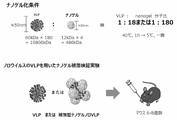
- the amount of nanogel to be mixed was greatly increased and the nanogel was treated with 18 molecules (72 in terms of CHPNH2 ) or 180 molecules (720 in terms of CHPNH2 ) of the nanogel, VLPs (antigens) were produced relatively uniformly in the nanogel. ) can be coated (see FIGS. 8 and 9).
- the particle size of norovirus VLP is about 30-40 nm, which is an antigen that exceeds the particle size of nanogel (about 30 nm). That is, the present inventors have found that even if the antigen is larger than the nanogel, such as VLP, the antigen is coated with the nanogel (instead of being encapsulated in the nanogel) to form a nanogel-antigen complex. This nanogel-antigen complex effectively induces mucosal immune response for the first time, and completed the present invention.
- the present invention is the following (1) to (7).
- the vaccine antigen is a VLP (virus like particle), an inactivated virus, a large protein molecule of 20 nm or more, or a polymer; Complex as described.
- FIG. 1 shows an overview of experimental conditions for a nanogel-coated nanogel-antigen complex according to an example of the present invention.
- the results of nasal immune responses by nanogel-coated VLPs are shown.
- A shows the results of intranasal administration of nanogel-coated GII.17 VLPs or GII.17 VLPs alone to mice, followed by measurement of serum IgG, nasal wash IgA, and fecal IgA antibody titers.
- B shows the results of measurement of IgG in serum and IgA in nasal washings after transnasal administration of nanogel-coated GII.4 VLPs or GII.4 VLPs alone to mice.
- VLP:nanogel 1:180 in molecular ratio.
- the results of nasal immune response by nanogel-coated VLPs are shown.
- IgG in serum and IgA in nasal washings were measured.
- the results of examining the neutralizing effect of antibodies induced by nanogel-coated VLPs GII.4 VLPs or GII.17 VLPs) are shown.
- A is the result of examining the growth inhibitory effect of norovirus GII.17 by IgG in serum and IgA in nasal washings induced by nanogel-coated GII.17 VLPs.
- B is the result of examining the growth inhibitory effect of norovirus GII.4 by IgG in serum and IgA in nasal wash fluid induced by nanogel-coated GII.4 VLPs.
- Pre is the result of measuring the viral genome copy number in the culture supernatant after treating the norovirus solution with mouse serum or nasal washes prior to nasal immunization, adding it to intestinal epithelial cells.
- cCHP + VLPs were treated with IgG in serum or IgA in nasal washings previously induced by nanogel-coated VLPs, and then added to intestinal epithelial cells to increase the number of viral genome copies in the culture supernatant. These are the results of measurements.
- the results of nasal immune response by nanogel-coated VLPs are shown. After intranasal administration of nanogel-coated GII.2 VLPs or GII.2 VLPs alone to mice, the antibody titers of IgG in serum, IgA in nasal wash, IgA in saliva, and IgA in intestinal wash were measured. is.
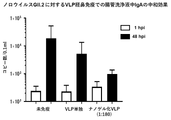
- FIG. 3 shows the results of examining the neutralizing effect of IgG in serum induced by nanogel-coated VLPs (GII.2 VLPs).
- Norovirus solutions were treated with mouse serum prior to intranasal immunization (unimmunized), treated with IgG in serum induced by VLPs alone (VLPs alone), or treated with IgG in serum induced by nanogel-coated VLPs. After (nanogelation VLP), it was added to intestinal epithelial cells, and the viral genome copy number in the culture supernatant was measured.
- Fig. 3 shows the results of examining the neutralizing effect of IgG in serum induced by nanogel-coated VLPs (GII.2 VLPs).
- Norovirus solutions were treated with mouse serum prior to intranasal immunization (unimmunized), treated with IgG in serum induced by VLPs alone (VLPs alone), or treated with IgG in serum induced by nanogel-coated VLP
- VLPs intestinal lavage fluid induced by nanogel-coated VLPs
- GII.2 VLPs nanogel-coated VLPs
- Norovirus solutions were treated with IgA in gut washings of mice prior to intranasal immunization (unimmunized), VLPs alone induced (VLPs alone) or nanogel-coated VLPs induced IgA in gut washings. After treatment (nanogelated VLP), it was added to intestinal epithelial cells, and the virus genome copy number in the culture supernatant was measured. An electron microscope image of nanogel-coated VLPs (GII.17 VLPs) is shown.
- A is an electron microscope image of GII.17 VLP
- B is an electron microscope image of nanogel
- C is an electron microscope image of nanogel-coated GII.17 VLP.
- C an image obtained by enlarging the area surrounded by a square in the observed image is also shown.
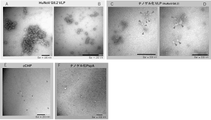
- An electron microscope image of nanogel-coated VLPs (GII.2 VLPs) is shown.
- a and B are electron microscope images of GII.2 VLPs
- C and D are electron microscope images of nanogel-coated GII.2 VLPs
- E is electron microscope images of nanogel (cCHP)
- F is nanogel encapsulating PspA.
- -PspA complex is an electron microscope image.
- Fig. 3 shows the results of a mouse pharmacokinetic study by intranasal administration of indium ( 111 In)-labeled nanogel.
- a first embodiment is a composite of a nanogel and a vaccine antigen (hereinafter also referred to as “nanogel-vaccine antigen (or antigen)”), wherein the vaccine antigen is coated with a nanogel (hereinafter (Also described as “the composite according to the present embodiment”).
- a nanogel is a polymer gel nanoparticle composed of a hydrophilic polysaccharide (for example, pullulan) to which hydrophobic cholesterol is added as a side chain. Nanogels can be produced based on known methods such as the method described in International Publication No. WO00/12564.
- a hydroxyl group-containing hydrocarbon or sterol having 12 to 50 carbon atoms and a dihydrogen represented by OCN-R 1 NCO (wherein R 1 is a hydrocarbon group having 1 to 50 carbon atoms)
- An isocyanate compound is reacted to produce an isocyanate group-containing hydrophobic compound in which one molecule of a hydroxyl group-containing hydrocarbon having 12 to 50 carbon atoms or a sterol is reacted.
- the resulting isocyanate group-containing hydrophobic compound is reacted with a polysaccharide to produce a hydrophobic group-containing polysaccharide containing a hydrocarbon group having 12 to 50 carbon atoms or a steryl group.
- a highly pure hydrophobic group-containing polysaccharide can be produced.
- polysaccharides pullulan, amylopectin, amylose, dextran, hydroxyethyldextran, mannan, levan, inulin, chitin, chitosan, xyloglucan, water-soluble cellulose, and the like can be used, and pullulan is particularly preferred.
- nanogels used in this embodiment include cationic cholesterol-group-bearing pullulan (referred to as cCHP) and derivatives thereof.
- cCHP has a structure in which pullulan having a molecular weight of 30,000 to 200,000, for example, 100,000, is substituted with 1 to 10, preferably 1 to 3, cholesterol per 100 monosaccharides.
- the amount of cCHP used in the present invention may be changed as appropriate depending on the size and degree of hydrophobicity of the antigen.
- an alkyl group (having 10 to 30 carbon atoms, preferably about 15 to 20 carbon atoms) may be added.
- the nanogel used in the present invention has a particle size of 10-50 nm, preferably 20-30 nm. Nanogels are already widely commercially available, and these commercial products may be used.
- the nanogel used in this embodiment is a nanogel into which a positively charged functional group such as an amino group is introduced so that the vaccine can penetrate the negatively charged nasal mucosa surface.
- a method for introducing amino groups into nanogels a method using amino group-added cholesterol pullulan (CHPNH 2 ) can be mentioned. Specifically, CHP dried under reduced pressure is dissolved in dimethylsulfoxide (DMSO), and 1-1′ carbonyldiimidazole is added thereto under a nitrogen stream and reacted at room temperature for several hours. Ethylenediamine is gradually added to the reaction solution and stirred for several hours to several tens of hours. The resulting reaction solution is dialyzed against distilled water for several days. The dialyzed reaction solution is freeze-dried to obtain a milky white solid. The degree of substitution of ethylenediamine can be evaluated using elemental analysis, H-NMR, and the like.
- Nanogel-antigen complexes that have been reported so far are in the form of nanoparticles (nanogels) consisting of about 4 molecules of cationic cholesterol-substituted pullulan, in which the antigen is encapsulated (Yuki et al., Molecular Pharmaceutics, https: http://dx.doi.org/10.1021/acs.molpharmaceut.0c01003 2021).
- the antigen is a substance that exceeds the size that can be encapsulated in the nanogel, the antigen is not encapsulated in the nanogel, and the nanogel is attached to the surface of the antigen (this Such a form is also described as "a form in which an antigen is coated with a nanogel") (see FIGS. 1, 8 and 9).
- the antigen that is not encapsulated in the nanogel is an antigen that is about the same size as the nanogel, or an antigen that is larger than the nanogel.
- a comparison of the sizes of the antigen and the nanogel is performed by, for example, the particle size of the antigen (assuming that the antigen is spherical) calculated by a light scattering method (e.g., dynamic light scattering (DLS) method).
- the diameter of the case can be used as an index, and the nanogel and antigen are observed by electron microscopy to evaluate each size.
- Various methods can be easily selected. More specifically, the particle size of the nanogel is about 30 nm (DLS method) (Yuki et al., Molecular Pharmaceutics, https://dx.doi.org/10.1021/acs.molpharmaceut.0c01003 2021).
- Antigens according to the embodiments preferably have a particle size of about 20 nm or more (e.g., about 20 nm or more and 1,000 nm or less, or about 30 nm or more and 600 nm or less), which is slightly smaller than the particle size of the nanogel as determined by the DLS method, for example.
- Examples of antigens according to this embodiment include inactivated viruses, VLPs (virus-like particles), large protein molecules or polymers of 20 nm or more (e.g., molecules with a molecular weight of 5,000 kDa or more), and the like. However, it is not limited to these. In addition, any virus may be used as the above virus. Viruses (e.g.
- H1N1, H5N1, H7N9 influenza virus coronaviruses (e.g. SARS-CoV, SARS-CoV 2, MERS-CoV, etc.), respiratory syncytial virus (type A, type B), rhinovirus, adenovirus, herpes virus, Human papillomavirus, enterovirus, cytomegalovirus, Ebola virus, West Nile virus, Zika virus, dengue virus, ATL (adult human T cell virus), HIV, hepatitis A virus, chikungunya virus and the like.
- coronaviruses e.g. SARS-CoV, SARS-CoV 2, MERS-CoV, etc.
- respiratory syncytial virus type A, type B
- rhinovirus e.g. SARS-CoV, SARS-CoV 2, MERS-CoV, etc.
- rhinovirus e.g. SARS-CoV 2, SARS-CoV 2, MERS-CoV, etc.
- rhinovirus e
- the complex according to this embodiment can be produced by allowing the nanogel and the vaccine antigen to coexist and interact with each other, and attaching the nanogel to the surface of the antigen.
- the mixing ratio of the nanogel and the vaccine antigen is not particularly limited, and can be easily determined by a person skilled in the art through preliminary experiments.
- a preferable mixing ratio of vaccine antigen and nanogel is vaccine antigen:nanogel in terms of molar ratio or molecular ratio, for example, about 1:10 (40 in terms of CHPNH 2 ) to 1:400 (1,600 in terms of CHPNH 2 ).
- the mixing ratio can be appropriately selected within the range of about 1:15 (60 in terms of CHPNH2 ) to 1: 200 (800 in terms of CHPNH2).
- the complex according to the present embodiment is produced by mixing the nanogel and the vaccine antigen and allowing the mixture to stand at 4°C to 50°C (e.g., 40°C) for 30 minutes to 48 hours (e.g., about 1 hour). be able to.
- the buffer used for forming the nanogel-vaccine antigen complex is not particularly limited, and Tris-HCl buffer and the like can be given as an example.
- the complex according to this embodiment may contain an adjuvant in addition to the nanogel-vaccine antigen complex (this complex is also included in the “composite according to this embodiment”).
- the adjuvant is synonymous with what is called an antigenic reinforcing agent or an immunostimulatory agent, and is used for the purpose of ordinary use of these agents in the art.
- the active ingredient of the adjuvant used in this embodiment is not particularly limited, but examples include STING ligands (e.g., cGAMP, cyclic-di AMP, cyclic-di GMP, cyclic-di AMP, cyclic-di GMP, cyclic- Cyclic dinucleotides such as di CMP, cyclic-di UMP or cyclic-di IMP and xanthenone derivatives such as DMXAA (5,6-dimethylXAA (xanthenone-4-acetic acid), Vadimezan or ASA404), polyIC or CpG ODN and the like can be mentioned.
- the adjuvant may further contain pharmaceutically acceptable carriers and other ingredients such as stabilizers, pH adjusters, preservatives, preservatives and buffers. Pharmaceutically acceptable carriers and other ingredients should be substances that do not adversely affect the health of the vaccinated animal.
- the content of the adjuvant is about 0.01% to 99.99% by weight with respect to 100% by weight of the vaccine formulation (see the second embodiment). It may be, for example, about 0.01 to 10 weights per weight of the vaccine antigen.
- Formation of the complex of this embodiment is performed by mixing nanogel and vaccine antigen, or nanogel, vaccine antigen and adjuvant, at 4°C to 50°C (e.g., 40°C) for 30 minutes to 48 hours (e.g., about 1 hour). ) can be carried out stationary.
- Buffers used for complex formation of nanogel and vaccine antigen, or nanogel, vaccine antigen and adjuvant are not particularly limited, and if exemplified, Tris-HCl buffer and the like can be mentioned.
- the second embodiment is a vaccine preparation (hereinafter referred to as "the present Also described as "a vaccine formulation according to an embodiment”).
- the vaccine formulation according to this embodiment may contain pharmacologically acceptable additives as a composition (vaccine composition according to this embodiment).
- the vaccine formulation according to the present embodiment is suitable for nasal administration, and the dosage form is preferably a form that allows nasal administration, including liquid formulations (nasal drops, injections, etc.).
- the active ingredient is optionally added with a pH adjuster such as hydrochloric acid, sodium hydroxide, lactose, lactic acid, sodium, sodium monohydrogen phosphate and sodium dihydrogen phosphate, and chloride.
- a tonicity agent such as sodium and glucose
- mannitol, dextrin, cyclodextrin and gelatin, etc. and freeze-dry in vacuum.
- the liquid formulation may contain known pharmaceutically acceptable stabilizers, preservatives, antioxidants, etc.
- Stabilizers include, for example, gelatin, dextran and sorbitol, and preservatives include Examples include thimerosal and ⁇ -propiolactone, and antioxidants include ⁇ -tocopherol.
- the vaccine formulation according to the second embodiment that is, a complex of a nanogel and a vaccine antigen, wherein the vaccine antigen is coated with a nanogel, is administered to a patient.
- a method of prophylaxis and/or treatment of disease comprising nasal administration.
- the disease targeted for treatment or prevention in the third embodiment depends on the vaccine antigen used and is not particularly limited, and may be infectious diseases caused by pathogens, cancer, or the like.
- the vaccine formulations of the invention may be administered through the nasal mucosa. Examples of the method include a method of administration into the nasal cavity by spraying, coating, dripping, etc. onto the nasal mucosa.
- the dose of the vaccine formulation according to the second embodiment can be appropriately determined according to the age, weight, etc. of the subject to be administered, and contains a pharmaceutically effective amount of the vaccine antigen.
- a pharmaceutically effective amount refers to the amount of antigen required to induce an immune response to the vaccine antigen.
- the vaccine antigen may be administered at a dose of several ⁇ g to several 10 mg once to several times a day, and may be administered several times in total at intervals of one week to several weeks, for example, about 1 to 5 times.
- VLP Viruses were crudely purified from feces containing HuNoV (human norovirus) provided by Osaka Institute of Public Health, and viral genomes were prepared therefrom. Primers were set outside the VP1 ORF of GII.4, GII.17 or GII.2 on the prepared genome, each ORF region was amplified by PCR, and the nucleotide sequence of the amplified product was determined. Each VP1 ORF was cloned into the pFastBac Dual Expression Vector (Invitrogen).
- the amino acid sequence of GII.4 VP1 and the nucleic acid sequence encoding it are shown in SEQ ID NO: 1 and SEQ ID NO: 2, respectively; In No. 4, the amino acid sequence of GII.2 VP1 and the nucleic acid sequence encoding it are shown in SEQ ID No. 5 and SEQ ID No. 6, respectively.
- Each construct was used to generate a recombinant baculovirus of the Bac-to-Bac expression system (Invitrogen) after confirming that its sequence was correct. High Five cells (Invitrogen) were infected with each recombinant baculovirus at an MOI (multiplicity of infection) of 7 pfu (plaque-forming units)/cell.
- VLPs were suspended in PBS.
- Concentrated VLPs were layered on a 10%-60% sucrose density gradient and purified by ultracentrifugation at 100,000 g for 1 hour.
- VLPs passed through a sucrose density gradient were dialyzed against 2 L of PBS three times to remove sucrose in the samples.
- VLPs were concentrated with an Amicon Ultra 30-kDa centrifugal filter (Millipore).
- Norovirus (GII.4_2012 Sydney, GII.17_2015 Kawasaki and GII.2 OSN201926; provided by Osaka Institute of Health and Safety) solution was basal medium (Advanced DMEM/F12 (Gibco) with 10 mM HEPES (pH 7.3, Gibco), 2 It was diluted with mM Glutamax (Gibco) and 100 units/mL Penicillin plus 100 ⁇ g/mL streptmycin (Gibco)) to 2 ⁇ 10 6 genome copies per 100 ⁇ L. The diluted virus solutions were then mixed with appropriately diluted mouse antisera or nasal washes, or not mixed with mouse antisera, nasal washes, and incubated at 37° C. for 90 minutes before infecting cells. The resulting virus solution was used to infect intestinal epithelial cells.
- 100 ⁇ L of the diluted virus solution was added to the monolayered intestinal epithelial cells to infect the intestinal epithelial cells with the virus, and then incubated at 37° C. under 5% CO 2 conditions for 1 hour or 3 hours. The virus solution was then removed and the cells were washed twice with 150 ⁇ L of basal medium.
- Differentiation medium (1x B-27 base medium, 1.25% calf serum (Biosera), 50 ng/mL mouse EGF, 375 ng/mL mouse R-Spondin1 (R&D Systems), 50 ng in the wells after washing) /mL mouse Noggin (Peprotech) and 500 nM A83-01 was added with 100 ⁇ L of a solution containing 0.03% bile, and the supernatant was collected immediately. Culture supernatants 1 hour or 3 hours after virus infection were used as 1 hpi (1 hour post infection) or 3 hpi samples, respectively.
- cCHP 1% cCHP was used as a stock solution. 5 ⁇ L of the sample was placed on a grid (MAXTAFORM grid HF36 Cu 400 mesh) on which a Formvar support film subjected to carbon vapor deposition and hydrophilization treatment was attached, and stained for 1 minute. After removing the sample solution and negatively staining with a 1% uranium acetate solution (dissolved in distilled water), observation was performed with a transmission electron microscope (JEM-1400, JEOL Ltd.).
- Effective immunity can be induced by encapsulating an antigen in a nanogel and performing transnasal immunization according to a conventionally reported method.
- the optimum mixing ratio of the antigen and the monomeric cCHP is about 1:2 to 1:8 in molecular ratio (antigen:cCHP). Converting this to the ratio of antigen to spherical nanogel (1 molecule of nanogel is formed by 4 molecules of cCHP: Kuroda et al., Langmuir 18: 3780-3786, 2002), the ratio is 1:0.5 to 1:2 (antigen : nanogel).
- nanogel contains one to two molecules of protein antigen (Yuki et al., Molecular Pharmaceutics, https://dx.doi.org/10.1021/acs.molpharmaceut.0c01003 2021 ).
- FIG. 2A Antibody titers induced in all mice immunized with the nanogel-GII.17 VLP complex were about 10-fold or more higher than those immunized with VLPs alone.
- FIG. 2A Antibody titers induced in all mice immunized with the nanogel-GII.17 VLP complex were about 10-fold or more higher than those immunized with VLPs alone.
- FIG. 2B shows the results of intranasal immunization with GII.4 VLP alone or nanogel-GII.4 VLP complex under similar conditions.
- Antibody titers induced in all mice immunized with the nanogel-GII.4 VLP complex were about 10-fold higher than those immunized with VLPs alone.
- FIG. 5 shows antigen-specific antibody titers of IgG in serum, IgA in nasal wash, IgA in saliva and IgA in intestinal wash after one week.
- Antibody titers induced in all mice immunized with nanogel-GII.2 VLP complexes were approximately 10- to 100-fold higher than those immunized with VLPs alone.
- the increase in the antibody titer in intestinal washings was remarkable.
- FIG. 8A shows an electron microscopic image of a GII.17 VLP alone sample.
- VLPs which are regular icosahedral hollow particles with a particle size of about 38 nm, were observed.
- the size (particle size) of the nanogel in the sample containing only 1% cCHP was about 20-40 nm, and was observed as a series of white particles with slightly weak contrast (Fig. 8B).
- VLPs and nanogels were observed, and VLPs forming complexes with nanogels were observed (indicated by arrows in the enlarged view of FIG. 5C).
- VLPs forming a complex with a nanogel appeared as a white disk overall because the surface was covered with cCHP (nanogel).
- cCHP nanogel
- FIG. 9A and B show observation images of GII.2 VLP alone samples.
- GII.2 VLPs which are regular icosahedral hollow particles with a diameter of about 30-40 nm, were observed.
- this GII.2 VLP is made up of 180 VP1 molecules with a molecular weight of 60,000, giving a molecular weight of approximately 10 million.
- Fig. 1 In the observation images of nanogelated GII.2 VLPs (Fig.
- non-nanogelated VLPs and cCHP can be seen, and the surface of the particles thought to be nanogelated is covered with cCHP, so the entire surface is White to light gray three-dimensional spheres were observed (arrows in the figure), and it was thought that nanogels with a size slightly larger than VLPs were coated nanogels. Similar to the above nanogel-coated GII.17 VLP, it is thought that the spherical particles were observed as slightly darker through the hollow of the VLP because the center was recessed in the vacuum state. be done. On the other hand, the size of the 1% cCHP alone sample (Fig. 9E) was slightly widened from about 15 to 40 nm, and was observed as hollow particles.
- cCHP nanogel had a particle size (DH) of 52 nm and a polydispersity index (PDI) of 0.394.
- PDI polydispersity index
- GII.2 VLP has a particle size of 70 nm and a PDI of 0.345, which is larger than the TEM observation image. it is conceivable that.
- the nanogel-coated VLP had a particle size of 109 nm and a PDI of 0.308.
- nanogel-coated antigen according to the present embodiment can be clinically applied as an intranasal vaccine without adding an adjuvant.
- These results are related to past intranasal influenza vaccines and E. coli heat-labile toxin adjuvants that translocated into the brain (Mutsch et al., N. Enlg. J Med 350: 896-903, 2004). It can be said that this is a very important result.
- the present inventors have so far reported the results of a pharmacokinetic test that denies migration of the antigen portion into the brain for a nanogel nasal vaccine (Yuki et al., J.
- the radioactivity of 111 In in various organs was measured (Fig. 10).
- cCHP nanogel which is a formulation additive, does not migrate into the olfactory bulb and the brain, confirming the safety of the nanogel itself.
- 111 In labeling was performed based on a previous report (Yuki et al., J. Immunol 185: 5436-5443, 2010).
- the present invention provides a nanogel vaccine formulation containing large antigen molecules, which has been difficult to formulate, and is expected to be used in the medical field.
Landscapes
- Health & Medical Sciences (AREA)
- Life Sciences & Earth Sciences (AREA)
- Chemical & Material Sciences (AREA)
- Public Health (AREA)
- Medicinal Chemistry (AREA)
- Pharmacology & Pharmacy (AREA)
- Veterinary Medicine (AREA)
- Animal Behavior & Ethology (AREA)
- General Health & Medical Sciences (AREA)
- Immunology (AREA)
- Virology (AREA)
- Mycology (AREA)
- Microbiology (AREA)
- Epidemiology (AREA)
- General Chemical & Material Sciences (AREA)
- Chemical Kinetics & Catalysis (AREA)
- Organic Chemistry (AREA)
- Nuclear Medicine, Radiotherapy & Molecular Imaging (AREA)
- Communicable Diseases (AREA)
- Oncology (AREA)
- Molecular Biology (AREA)
- Engineering & Computer Science (AREA)
- Bioinformatics & Cheminformatics (AREA)
- Medicinal Preparation (AREA)
- Medicines Containing Antibodies Or Antigens For Use As Internal Diagnostic Agents (AREA)
Priority Applications (7)
| Application Number | Priority Date | Filing Date | Title |
|---|---|---|---|
| JP2023511221A JPWO2022210465A1 (https=) | 2021-03-30 | 2022-03-28 | |
| EP22780676.7A EP4316511A4 (en) | 2021-03-30 | 2022-03-28 | NANOGEL-COATED VACCINE |
| AU2022248775A AU2022248775A1 (en) | 2021-03-30 | 2022-03-28 | Nanogel-coated vaccine |
| US18/285,148 US20240181033A1 (en) | 2021-03-30 | 2022-03-28 | Nanogel-coated vaccine |
| KR1020237035571A KR20230163443A (ko) | 2021-03-30 | 2022-03-28 | 나노겔 피복형 백신 |
| CA3212267A CA3212267A1 (en) | 2021-03-30 | 2022-03-28 | Nanogel-coated vaccine |
| CN202280025674.XA CN117098549A (zh) | 2021-03-30 | 2022-03-28 | 纳米凝胶被覆型疫苗 |
Applications Claiming Priority (2)
| Application Number | Priority Date | Filing Date | Title |
|---|---|---|---|
| JP2021056392 | 2021-03-30 | ||
| JP2021-056392 | 2021-03-30 |
Publications (1)
| Publication Number | Publication Date |
|---|---|
| WO2022210465A1 true WO2022210465A1 (ja) | 2022-10-06 |
Family
ID=83459198
Family Applications (1)
| Application Number | Title | Priority Date | Filing Date |
|---|---|---|---|
| PCT/JP2022/014798 Ceased WO2022210465A1 (ja) | 2021-03-30 | 2022-03-28 | ナノゲル被覆型ワクチン |
Country Status (8)
| Country | Link |
|---|---|
| US (1) | US20240181033A1 (https=) |
| EP (1) | EP4316511A4 (https=) |
| JP (1) | JPWO2022210465A1 (https=) |
| KR (1) | KR20230163443A (https=) |
| CN (1) | CN117098549A (https=) |
| AU (1) | AU2022248775A1 (https=) |
| CA (1) | CA3212267A1 (https=) |
| WO (1) | WO2022210465A1 (https=) |
Citations (3)
| Publication number | Priority date | Publication date | Assignee | Title |
|---|---|---|---|---|
| WO2000012564A1 (en) | 1998-08-31 | 2000-03-09 | Nof Corporation | High-purity polysaccharide containing hydrophobic groups and process for producing the same |
| WO2010050578A1 (ja) * | 2008-10-31 | 2010-05-06 | 国立大学法人東京医科歯科大学 | カチオン性ナノゲルを用いる粘膜ワクチン |
| WO2020027318A1 (ja) * | 2018-08-03 | 2020-02-06 | 国立研究開発法人農業・食品産業技術総合研究機構 | ウシ乳房炎に対する粘膜ワクチン組成物 |
-
2022
- 2022-03-28 KR KR1020237035571A patent/KR20230163443A/ko active Pending
- 2022-03-28 AU AU2022248775A patent/AU2022248775A1/en active Pending
- 2022-03-28 JP JP2023511221A patent/JPWO2022210465A1/ja active Pending
- 2022-03-28 CN CN202280025674.XA patent/CN117098549A/zh active Pending
- 2022-03-28 CA CA3212267A patent/CA3212267A1/en active Pending
- 2022-03-28 EP EP22780676.7A patent/EP4316511A4/en active Pending
- 2022-03-28 US US18/285,148 patent/US20240181033A1/en active Pending
- 2022-03-28 WO PCT/JP2022/014798 patent/WO2022210465A1/ja not_active Ceased
Patent Citations (4)
| Publication number | Priority date | Publication date | Assignee | Title |
|---|---|---|---|---|
| WO2000012564A1 (en) | 1998-08-31 | 2000-03-09 | Nof Corporation | High-purity polysaccharide containing hydrophobic groups and process for producing the same |
| WO2010050578A1 (ja) * | 2008-10-31 | 2010-05-06 | 国立大学法人東京医科歯科大学 | カチオン性ナノゲルを用いる粘膜ワクチン |
| JP2010105968A (ja) | 2008-10-31 | 2010-05-13 | Tokyo Medical & Dental Univ | カチオン性ナノゲルを用いる粘膜ワクチン |
| WO2020027318A1 (ja) * | 2018-08-03 | 2020-02-06 | 国立研究開発法人農業・食品産業技術総合研究機構 | ウシ乳房炎に対する粘膜ワクチン組成物 |
Non-Patent Citations (19)
| Title |
|---|
| ATMA ET AL., N. ENG. J. MED., vol. 365, 2011, pages 2187 - 87 |
| AYAME ET AL., BIOCONJUG CHEM, vol. 19, 2008, pages 882 - 890 |
| AYAME ET AL., BIOCONJUGATE CHEM, vol. 19, 2008, pages 882 - 890 |
| FUKUYAMA ET AL., MUCOSAL IMMUNOL., vol. 8, 2015, pages 1144 - 1153 |
| GLASS ET AL., N. ENGL. J. MED, vol. 361, 2009, pages 1776 - 1785 |
| KONG ET AL., INFECT IMMUN, vol. 81, 2013, pages 1625 - 1634 |
| KURODA ET AL., LANGMUIR, vol. 18, 2002, pages 3780 - 3786 |
| LISSETTE S. VELASQUEZ; SAMANTHA SHIRA; ALICE N. BERTA; JACQUELYN KILBOURNE; BABU M. MEDI; IAN TIZARD; YAWEI NI; CHARLES J. ARNTZEN: "Intranasal delivery of Norwalk virus-like particles formulated in an in situ gelling, dry powder vaccine", VACCINE, ELSEVIER, AMSTERDAM, NL, vol. 29, no. 32, 11 May 2011 (2011-05-11), AMSTERDAM, NL , pages 5221 - 5231, XP028239816, ISSN: 0264-410X, DOI: 10.1016/j.vaccine.2011.05.027 * |
| MUTSCH ET AL., N. ENLG. J MED, vol. 350, 2004, pages 896 - 903 |
| NOCHI ET AL., NAT MATER, vol. 9, 2010, pages 572 - 578 |
| SATO ET AL., CELL MOL GASTROENTEROL HEPATOL, vol. 7, 2019, pages 686 - 688 |
| See also references of EP4316511A4 |
| TANIMOTO, TAKESHI: "Development of nasal absorption influenza vaccine", DRUG DELIVERY SYSTEM., NIHON D D S GAKKAI, JAPAN, vol. 25, no. 1, 1 January 2010 (2010-01-01), Japan , pages 15 - 21, XP009540039, ISSN: 0913-5006 * |
| YUKI ET AL., BIOTECHNOL GENET ENG REV, vol. 29, 2013, pages 61 - 72 |
| YUKI ET AL., J . IMMUNOL, vol. 185, 2010, pages 5436 - 5443 |
| YUKI ET AL., J. IMMUNOL., vol. 185, 2010, pages 5436 - 5443 |
| YUKI ET AL., MOL. PHARMACEUTICS, vol. 18, 2021, pages 1582 - 1592 |
| YUKI ET AL., MOLECULAR PHARMACEUTICS, 2021, Retrieved from the Internet <URL:https://dx.doi.org/10.1021/acs.molpharmaceut.Oc01003> |
| YUKI ET AL., MOLECULAR PHARMACEUTICS, Retrieved from the Internet <URL:https://dx.doi.org/10.1021/acs.molpharmaceut.Oc010032021> |
Also Published As
| Publication number | Publication date |
|---|---|
| AU2022248775A1 (en) | 2023-10-12 |
| US20240181033A1 (en) | 2024-06-06 |
| CN117098549A (zh) | 2023-11-21 |
| JPWO2022210465A1 (https=) | 2022-10-06 |
| CA3212267A1 (en) | 2022-10-06 |
| KR20230163443A (ko) | 2023-11-30 |
| EP4316511A1 (en) | 2024-02-07 |
| EP4316511A4 (en) | 2025-05-21 |
Similar Documents
| Publication | Publication Date | Title |
|---|---|---|
| Li et al. | Enhanced intranasal delivery of mRNA vaccine by overcoming the nasal epithelial barrier via intra-and paracellular pathways | |
| Qiao et al. | Potency of a scalable nanoparticulate subunit vaccine | |
| Sayın et al. | TMC–MCC (N-trimethyl chitosan–mono-N-carboxymethyl chitosan) nanocomplexes for mucosal delivery of vaccines | |
| KR101342641B1 (ko) | 폴리감마글루탐산-키토산 나노입자를 함유하는 면역보강제 조성물 | |
| JP5476544B2 (ja) | ノロウイルスワクチン製剤 | |
| TWI624280B (zh) | 經鼻流感疫苗組成物 | |
| Sokolova et al. | The potential of nanoparticles for the immunization against viral infections | |
| KR102007278B1 (ko) | 바이러스 진단 및 치료를 위한 인지능 물질 및 이의 제조방법 | |
| US10245319B2 (en) | Lymph node-targeting nanoparticles | |
| EP3403671B1 (en) | Vaccine containing immobilized virus particles | |
| Zhao et al. | Dendrigraft poly-L-lysines delivery of DNA vaccine effectively enhances the immunogenic responses against H9N2 avian influenza virus infection in chickens | |
| Iyer et al. | Bioengineering strategies for developing vaccines against respiratory viral diseases | |
| US20210308249A1 (en) | Vlp formulations | |
| Witeof et al. | Atomic-layer deposition processes applied to phage λ and a phage-like particle platform yield thermostable, single-shot vaccines | |
| CN112089834B (zh) | 基于氧化石墨烯的茯苓多糖纳米佐剂及佐剂/抗原共递送疫苗的制备与应用 | |
| US9833407B2 (en) | Nasal vaccine for Streptococcus pneumoniae | |
| US20200306364A1 (en) | Mucoadhesive nanoparticle entrapped influenza virus vaccine delivery system | |
| Xu et al. | Immunoprotective effect of chitosan nanoparticles with different particle sizes against H9N2 avian influenza infection | |
| WO2022210465A1 (ja) | ナノゲル被覆型ワクチン | |
| JP7445897B2 (ja) | 細胞性免疫を誘導する経鼻ワクチン | |
| Rudometova et al. | Intranasal Immunization with Recombinant Hemagglutinin of Influenza A/H5 Virus Complexed with Novochizol Induces Virus-Neutralizing Antibodies and Protects Animals from Lethal Viral Challenge | |
| EP4661878A2 (en) | Adjuvant formulations including low viscosity chitosan or chitosan derivatives | |
| Wang et al. | Advances in Mucosal Adjuvants for Influenza Vaccines | |
| Zhao et al. | M13 Phage-Loaded Quaternized Chitosan Nano-Vaccine Against H9N2 Avian Influenza Virus | |
| KR20170046036A (ko) | 폴리감마글루탐산-키토산 나노입자 및 불활화 엔테로바이러스 71을 함유하는 백신 |
Legal Events
| Date | Code | Title | Description |
|---|---|---|---|
| 121 | Ep: the epo has been informed by wipo that ep was designated in this application |
Ref document number: 22780676 Country of ref document: EP Kind code of ref document: A1 |
|
| WWE | Wipo information: entry into national phase |
Ref document number: 2023511221 Country of ref document: JP |
|
| WWE | Wipo information: entry into national phase |
Ref document number: 3212267 Country of ref document: CA |
|
| WWE | Wipo information: entry into national phase |
Ref document number: 202280025674.X Country of ref document: CN Ref document number: 2022248775 Country of ref document: AU Ref document number: AU2022248775 Country of ref document: AU |
|
| WWE | Wipo information: entry into national phase |
Ref document number: 18285148 Country of ref document: US |
|
| ENP | Entry into the national phase |
Ref document number: 2022248775 Country of ref document: AU Date of ref document: 20220328 Kind code of ref document: A |
|
| ENP | Entry into the national phase |
Ref document number: 20237035571 Country of ref document: KR Kind code of ref document: A |
|
| WWE | Wipo information: entry into national phase |
Ref document number: 2023127769 Country of ref document: RU Ref document number: 2022780676 Country of ref document: EP |
|
| NENP | Non-entry into the national phase |
Ref country code: DE |
|
| ENP | Entry into the national phase |
Ref document number: 2022780676 Country of ref document: EP Effective date: 20231030 |