WO2022202909A1 - サリチル酸メチルをセンシングする方法、サリチル酸メチルセンサー、及び植物の病気感染の検出方法 - Google Patents
サリチル酸メチルをセンシングする方法、サリチル酸メチルセンサー、及び植物の病気感染の検出方法 Download PDFInfo
- Publication number
- WO2022202909A1 WO2022202909A1 PCT/JP2022/013573 JP2022013573W WO2022202909A1 WO 2022202909 A1 WO2022202909 A1 WO 2022202909A1 JP 2022013573 W JP2022013573 W JP 2022013573W WO 2022202909 A1 WO2022202909 A1 WO 2022202909A1
- Authority
- WO
- WIPO (PCT)
- Prior art keywords
- methyl salicylate
- zinc
- sensor
- detecting
- detection
- Prior art date
- Legal status (The legal status is an assumption and is not a legal conclusion. Google has not performed a legal analysis and makes no representation as to the accuracy of the status listed.)
- Ceased
Links
Images










Classifications
-
- G—PHYSICS
- G01—MEASURING; TESTING
- G01N—INVESTIGATING OR ANALYSING MATERIALS BY DETERMINING THEIR CHEMICAL OR PHYSICAL PROPERTIES
- G01N27/00—Investigating or analysing materials by the use of electric, electrochemical, or magnetic means
- G01N27/26—Investigating or analysing materials by the use of electric, electrochemical, or magnetic means by investigating electrochemical variables; by using electrolysis or electrophoresis
- G01N27/416—Systems
- G01N27/4166—Systems measuring a particular property of an electrolyte
- G01N27/4168—Oxidation-reduction potential, e.g. for chlorination of water
-
- A—HUMAN NECESSITIES
- A01—AGRICULTURE; FORESTRY; ANIMAL HUSBANDRY; HUNTING; TRAPPING; FISHING
- A01G—HORTICULTURE; CULTIVATION OF VEGETABLES, FLOWERS, RICE, FRUIT, VINES, HOPS OR SEAWEED; FORESTRY; WATERING
- A01G7/00—Botany in general
-
- G—PHYSICS
- G01—MEASURING; TESTING
- G01N—INVESTIGATING OR ANALYSING MATERIALS BY DETERMINING THEIR CHEMICAL OR PHYSICAL PROPERTIES
- G01N21/00—Investigating or analysing materials by the use of optical means, i.e. using sub-millimetre waves, infrared, visible or ultraviolet light
- G01N21/62—Systems in which the material investigated is excited whereby it emits light or causes a change in wavelength of the incident light
- G01N21/63—Systems in which the material investigated is excited whereby it emits light or causes a change in wavelength of the incident light optically excited
- G01N21/64—Fluorescence; Phosphorescence
-
- G—PHYSICS
- G01—MEASURING; TESTING
- G01N—INVESTIGATING OR ANALYSING MATERIALS BY DETERMINING THEIR CHEMICAL OR PHYSICAL PROPERTIES
- G01N21/00—Investigating or analysing materials by the use of optical means, i.e. using sub-millimetre waves, infrared, visible or ultraviolet light
- G01N21/62—Systems in which the material investigated is excited whereby it emits light or causes a change in wavelength of the incident light
- G01N21/63—Systems in which the material investigated is excited whereby it emits light or causes a change in wavelength of the incident light optically excited
- G01N21/64—Fluorescence; Phosphorescence
- G01N21/6428—Measuring fluorescence of fluorescent products of reactions or of fluorochrome labelled reactive substances, e.g. measuring quenching effects, using measuring "optrodes"
-
- G—PHYSICS
- G01—MEASURING; TESTING
- G01N—INVESTIGATING OR ANALYSING MATERIALS BY DETERMINING THEIR CHEMICAL OR PHYSICAL PROPERTIES
- G01N27/00—Investigating or analysing materials by the use of electric, electrochemical, or magnetic means
- G01N27/26—Investigating or analysing materials by the use of electric, electrochemical, or magnetic means by investigating electrochemical variables; by using electrolysis or electrophoresis
- G01N27/416—Systems
- G01N27/48—Systems using polarography, i.e. measuring changes in current under a slowly-varying voltage
-
- G—PHYSICS
- G01—MEASURING; TESTING
- G01N—INVESTIGATING OR ANALYSING MATERIALS BY DETERMINING THEIR CHEMICAL OR PHYSICAL PROPERTIES
- G01N33/00—Investigating or analysing materials by specific methods not covered by groups G01N1/00 - G01N31/00
- G01N33/48—Biological material, e.g. blood, urine; Haemocytometers
-
- G—PHYSICS
- G01—MEASURING; TESTING
- G01N—INVESTIGATING OR ANALYSING MATERIALS BY DETERMINING THEIR CHEMICAL OR PHYSICAL PROPERTIES
- G01N2333/00—Assays involving biological materials from specific organisms or of a specific nature
- G01N2333/415—Assays involving biological materials from specific organisms or of a specific nature from plants
Definitions
- the present invention relates to a method for sensing methyl salicylate, which is a plant hormone released when a plant is infected with a disease, a methyl salicylate sensor, a method for early detection of plant disease infection, and the like.
- Non-Patent Document 1 salicylic acid synthesized when infected with pathogens is methylated to methyl salicylate, which is released from plants as a volatile signal substance to notify surrounding plants of pathogen infection, thereby preliminarily establishing a defense mechanism. prompt.
- jasmonic acid which is synthesized at the time of pest damage, is also methylated to methyl jasmonate, which is released as a volatile signal from the plant, thereby preliminarily inducing resistance in surrounding plants. .
- plants are known to release plant hormones as signaling substances when they are damaged by pests, and it is possible to detect pest damage at an early stage by quickly sensing the signaling substances.
- monitor plants with photoprotein genes were cultivated alongside cultivated crops, and A method has been disclosed in which a monitor plant senses methyl jasmonate released when crops are damaged by pests and the monitor plant emits light (Patent Document 1).
- An object of the present invention is to provide a method for sensing methyl salicylate, which is a phytohormone released during disease infection, and a methyl salicylate sensor in the cultivation of plants including agricultural crops, thereby early disease infection of plants. , to provide a method of detecting on the spot.
- One aspect of the present invention utilizes a zinc compound that selectively recognizes and forms a complex with methyl salicylate, a volatile plant hormone, as a sensor receptor.
- plant disease infection is detected at an early stage by utilizing the fluorescence emission phenomenon of a complex formed by the reaction of methyl salicylate and a zinc compound.
- one embodiment of the present invention detects plant disease infection at an early stage by utilizing the phenomenon that methyl salicylate and a zinc compound react to change their electrochemical behavior.
- methyl salicylate a volatile plant hormone released when plants are infected with pathogens, can be selectively sensed. Furthermore, according to one aspect of the present invention, infection of plants by pathogenic fungi can be detected at an early stage.
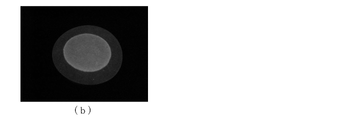
- FIG. 1 is a photograph confirming fluorescence emission in Example 1.
- FIG. 1 is a photograph confirming fluorescence emission in Example 1.
- FIG. 4 is a photograph confirming fluorescence emission in Comparative Example 1.
- FIG. 4 is a photograph confirming fluorescence emission in Comparative Example 1.
- FIG. 4 is a photograph confirming fluorescence emission in Example 2.
- FIG. 4 is a photograph confirming fluorescence emission in Example 3.
- FIG. 4 is a photograph confirming fluorescence emission in Example 4.
- FIG. 10 is a diagram showing fluorescence spectrum curves obtained in Example 5.
- FIG. 10 is a diagram showing fluorescence spectrum curves obtained in Example 6.
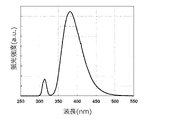
- FIG. 10 is a diagram showing a fluorescence spectrum curve of the ZnA/MSA mixed solution obtained in Example 7;
- FIG. 10 is a diagram plotting the relationship between the MSA ratio and the fluorescence intensity obtained in Example 7.
- FIG. 10 is a photograph confirming fluorescence emission in Example 8.
- FIG. 10 is a diagram showing a current-voltage curve (cyclic voltammogram) obtained in Example 9; 1 is an example of a schematic diagram of the configuration of a methyl salicylate sensor of the present embodiment.
- FIG. 10 is a diagram plotting the relationship between the MSA ratio and the fluorescence intensity obtained in Example 7.
- FIG. 10 is a photograph confirming fluorescence emission in Example 8.
- FIG. 10 is a diagram showing a current-voltage curve (cyclic voltammogram) obtained in Example 9;
- 1 is an example of a schematic diagram of the configuration of a methyl salicylate sensor of the present embodiment.
- methyl salicylate which is a volatile signal substance released by plants when infected with pathogens
- a zinc compound a zinc compound
- infection of plant pathogens by utilizing the fluorescence emission phenomenon from the complex formed by the reaction of methyl salicylate and a zinc compound or by utilizing the change in electrochemical behavior. can be detected at an early stage.
- Zinc Compound Zinc compounds that can be used as receptors for sensing methyl salicylate are not particularly limited, but zinc organic acids such as zinc carboxylate, zinc halides, and hydrates thereof are preferred.
- Zinc compounds such as zinc (II) acetate, zinc (II) formate dihydrate, zinc (II) butyrate, zinc oxalate dihydrate, zinc (II) hexanoate, zinc (II) propionate , zinc(II) benzoate, zinc(II) octoate, zinc(II) oleate, zinc(II) nitrate, zinc(II) chloride and the like, but are not limited to these.
- a zinc compound may be used individually by 1 type, and may be used in combination of 2 or more types.
- zinc (II) acetate can selectively recognize methyl salicylate by forming a complex with methyl salicylate through the reaction represented by the following formula (1).
- some embodiments of the present invention relate to a method of detecting methyl salicylate comprising reacting a zinc compound with methyl salicylate to form a complex.
- Some embodiments of the present invention also relate to a method for sensing methyl salicylate using a zinc compound as a receptor that selectively recognizes methyl salicylate.
- zinc (II) acetate can be used as the zinc compound.
- the reaction of the zinc compound and methyl salicylate is performed in solution.
- the solution can be, for example, but not limited to, a dimethylsulfoxide solution, a methanol solution, or an aqueous solution.
- the concentration of the zinc compound can be, for example, in the range of 0.00001 mol/L to 5 mol/L, such as in the range of 0.00004 mol/L to 1 mol/L.
- the reaction of the zinc compound and methyl salicylate is performed in a solid medium containing the zinc compound.
- Solid media include, for example, paper or glass (eg, glass fiber, porous glass substrates, etc.), or resins (eg, polymethyl methacrylate, polyethylene, polypropylene, polyvinyl chloride, polystyrene, nylon resin, polyamide, polycarbonate, polyethylene terephthalate). , polybutylene terephthalate, polyphenylene oxide, water-soluble polymers (cellulose-based, agarose, starch-based, sodium alginate, acrylic acid-based, acrylamide-based, polyvinyl alcohol, polyethylene oxide, polyvinylpyrrolidone, etc.), but are limited to these. not a thing
- a complex produced by the reaction of a zinc compound and methyl salicylate newly exhibits fluorescence emission.
- a complex formed by a reaction of a zinc compound and methyl salicylate is irradiated with excitation light having a wavelength of 200 to 400 nm to emit fluorescence.
- the zinc compound alone shows almost no fluorescence emission, which makes it possible to detect methyl salicylate.
- some embodiments of the present invention include the steps of: (i) reacting a zinc compound with methyl salicylate to form a complex; (ii) exposing the complex to excitation light; A method for detecting methyl salicylate, comprising the step of detecting.
- a suitable wavelength in the range of 200-400 nm is selected as the excitation wavelength.
- determining the concentration of methyl salicylate by comparing the intensity of the detected fluorescence to a predetermined reference value can also be performed.
- Some embodiments of the present invention also relate to a method for sensing methyl salicylate, which utilizes the phenomenon that methyl salicylate reacts with a zinc compound to form a zinc complex, thereby emitting fluorescence.
- the complex formed by the reaction of a zinc compound with methyl salicylate exhibits electrochemical behavior different from that of the receptor zinc compound. Specifically, cyclic voltammetry measurements of an electrochemical cell containing a complex of a zinc compound and methyl salicylate show a large change in current value near a certain potential. This makes it possible to detect methyl salicylate by monitoring this current value.
- some embodiments of the present invention include the steps of: (i) reacting a zinc compound with methyl salicylate in solution to form a complex; (ii) measuring the current flowing under a constant voltage; iii) A method for detecting methyl salicylate, comprising detecting a change in current value caused by formation of a complex.
- the voltage value is chosen to be a suitable value in the range of -1 to 2V (vs. NHE).
- the solution may contain, for example, tetrabutylammonium perchlorate or the like as a supporting electrolyte, but is not limited to this.
- determining the concentration of methyl salicylate by comparing the detected change in current value to a predetermined reference value can also be performed.
- some embodiments of the present invention utilize the phenomenon that a zinc compound forms a complex by reaction with methyl salicylate, and the electrochemical behavior of the complex is different from that of the zinc compound. Regarding.
- some embodiments of the present invention take advantage of the phenomenon that a zinc compound reacts with methyl salicylate to form a complex, and the current value in a potential region with the complex is different from that of the zinc compound. of the sensing method.
- the method for sensing methyl salicylate of the present invention can be used for detecting pathogen infection of agricultural crops.
- FIG. 12 shows an example of a schematic diagram of the configuration of the methyl salicylate sensor of this embodiment.
- the methyl salicylate sensor 1 using the zinc compound of the present embodiment as a receptor comprises at least a methyl salicylate (MSA) recognition part 2 and a detection part 3 for detecting that methyl salicylate is recognized by the recognition part.
- the recognition part 2 contains at least a zinc compound as a receptor. Zinc compounds do not react with and do not recognize plant hormones other than methyl salicylate, such as methyl jasmonate, so they can selectively recognize methyl salicylate.
- the detection unit 3 is configured to optically and/or electrochemically detect that methyl salicylate has been recognized by the methyl salicylate recognition unit 2 .
- the optical detection unit consists of at least an excitation light source and a detection element in order to detect the fluorescence emission of the complex formed by the zinc compound and methyl salicylate, and detects and measures the concentration of methyl salicylate from changes in fluorescence intensity. do.
- an electrochemical cell having electrodes so as to detect the current generated by the oxidation-reduction reaction of the complex formed by the reaction of the zinc compound and methyl salicylate, for example.
- A detection element
- A is constructed to detect methyl salicylate and measure its concentration using changes in the electrochemical behavior of the electrochemical cell (for example, changes in current value at a certain potential).
- some embodiments of the present invention provide a methyl salicylate sensor for detecting methyl salicylate, comprising a methyl salicylate recognition portion having a zinc compound that is a receptor that selectively recognizes methyl salicylate;
- the present invention relates to a methyl salicylate sensor including at least a detection unit for detecting recognition of methyl salicylate.
- the methyl salicylate sensor of the present invention detects methyl salicylate, a plant hormone released when crops are infected with pathogens. Therefore, the methyl salicylate sensor of the present invention can be used as a sensor for detecting pathogen infection of crops.
- the methyl salicylate sensor of the present invention can selectively detect methyl salicylate relative to methyl jasmonate.
- Some embodiments of the present invention also provide a methyl salicylate sensor for detecting methyl salicylate, comprising: (i) a recognition portion for methyl salicylate having a zinc compound; It relates to a methyl salicylate sensor comprising at least a detection unit that optically detects that In some embodiments, the optical detection portion includes at least an excitation light source and a detection element. In some embodiments, the methyl salicylate sensor of the present invention is capable of detecting and/or measuring the concentration of methyl salicylate based on changes in fluorescence intensity observed.
- some embodiments of the present invention are a methyl salicylate sensor for detecting methyl salicylate, comprising: (i) a methyl salicylate recognition portion having a zinc compound; It relates to a methyl salicylate sensor comprising at least a detection unit for electrochemically detecting that
- the electrochemical sensing portion includes an electrochemical cell having electrodes that detect the current generated by the redox reaction of the complex formed by the zinc compound and methyl salicylate.
- the methyl salicylate sensor of the present invention can detect and/or measure the concentration of methyl salicylate based on changes in the current value of the electrochemical cell.
- the detection unit may include a computer that executes a program that processes the detection and/or concentration measurement of methyl salicylate.
- a program may, for example, be stored in a computer, receiving signals from optical and/or electrochemical detection elements, analyzing the received signals to determine the presence and/or concentration of methyl salicylate. , as well as a program for executing the step of outputting analysis results.
- analyzing the received signal can include determining the presence and/or concentration of methyl salicylate, for example by comparing the received signal to a predetermined reference value.
- analysis results may be output to, for example, a display device connected to the sensor, or other device connected via a network.
- a methyl salicylate sensor for detecting methyl salicylate, comprising a methyl salicylate recognition portion having a zinc compound that is a receptor that selectively recognizes methyl salicylate;
- a methyl salicylate sensor comprising at least a detection unit for detecting that methyl salicylate has been recognized, the detection unit including a detection element and a computer, the computer comprising: (i) an optical and/or electrochemical detection element; (ii) analyzing the received signal to determine the presence and/or concentration of methyl salicylate; and (iii) outputting the results of the analysis.
- methyl salicylate sensor of the present invention As one of the applications of the methyl salicylate sensor of the present invention, it is possible to detect pathogen infection of crops at an early stage by installing the methyl salicylate sensor next to crops and detecting methyl salicylate with the sensor. is.
- the methyl salicylate sensor comprises a methyl salicylate recognition portion having a zinc compound that is a receptor that selectively recognizes methyl salicylate, and a detection portion that detects that methyl salicylate has been recognized by the recognition portion.
- a methyl salicylate sensor comprising at least:
- the methyl salicylate sensor comprises (i) a methyl salicylate recognition moiety having a zinc compound and (ii) an optical and/or electrochemical A methyl salicylate sensor comprising at least a detection unit that effectively detects.
- Crops that can be monitored include, for example, cucumbers, watermelons, tomatoes, eggplants, green peppers, paprika, pickles, green peppers, melons, Chinese cabbages, cabbages, radishes, lettuce, green onions, broccoli, onions, garlic, yam, asparagus, and carrots. , potato, celery, tobacco, rice, and strawberry.
- Root rot white silk disease, seedling wilt, brown spot, downy mildew, powdery mildew, gray mold, anthracnose, scab, sclerotia, vine wilt, leaf spot, plague, mosaic disease , yellow leaf curl disease, yellow leaf curl disease, bacterial wilt, soft rot, canker disease, stem bacterial disease, black spot bacterial disease, bacterial spot disease, etc., but are not limited to these, and , pathogenic infections that may be detected include, but are not limited to, infections by the causative agents of the diseases described above.
- examples of the term “nearby” include, for example, within 2 m, within 1 m, within 75 cm, within 50 cm, within 40 cm, within 30 cm from the monitored crop. Examples include, but are not limited to, distances within 20 cm, within 10 cm, or within 5 cm, and appropriate distances are appropriately selected in consideration of various factors. A person skilled in the art would be able to appropriately set the position where the sensor is installed after considering various conditions.
- some embodiments of the present invention relate to the use of methyl salicylate sensors in detecting pathogen infections in agricultural crops. Some embodiments of the invention also relate to the use of zinc compounds in the manufacture of methyl salicylate sensors.
- Example 1 0.2 ml of a solution of 0.1 g of zinc (II) acetate (ZnA) dissolved in 3 ml of methanol was dropped onto a circular filter paper (45 mm ⁇ ) and dried to obtain a filter paper containing ZnA. The obtained filter paper was excited with a UV lamp (wavelength: 365 nm) to confirm whether or not fluorescence was emitted ((a) in FIG. 1A). Next, 0.03 ml of an acetonitrile solution (0.1 mol/L) of methyl salicylate (MSA), which is released when plants are infected with pathogenic bacteria, is dropped onto the filter paper and dried.
- MSA methyl salicylate
- Example 1 From the results of Example 1 and Comparative Example 1, it was found that ZnA can selectively sense methyl salicylate released by plants when infected with pathogens.
- Example 2 0.2 ml of a solution of 0.1 g of zinc (II) acetate (ZnA) dissolved in 3 ml of methanol was dropped onto a circular filter paper (45 mm ⁇ ) and dried to obtain a filter paper containing ZnA.
- this filter paper and 0.05 g of methyl salicylate were placed in a petri dish and stored in a desiccator having a capacity of about 1.8 L so as not to come into direct contact with each other.
- the filter paper was taken out, and the filter paper was excited with a UV lamp (wavelength 365 nm) to evaluate whether or not there was fluorescence emission. As a result, bluish-white fluorescence was confirmed (Fig. 3). From this result, it was found that methyl salicylate released by plants during pathogen infection can be sensed as a volatile signal.
- Example 3 0.2 ml of a solution of 0.01 g of zinc (II) propionate (ZnP) dissolved in 3 ml of methanol was dropped onto a circular filter paper (45 mm ⁇ ) and dried to obtain a filter paper containing ZnP.
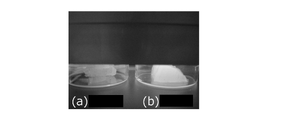
- This filter paper and 0.05 g of methyl salicylate were placed in a petri dish and stored in a desiccator having a capacity of about 1.8 L so as not to come into direct contact with each other. After 3 hours, the filter paper was taken out and excited with a UV lamp (wavelength 365 nm) together with an untreated filter paper to evaluate whether or not there was fluorescence emission. On the other hand, fluorescence emission was not observed in the untreated filter paper (Fig. 4(a)). From this result, it was found that methyl salicylate released by plants during pathogen infection can be sensed as a volatile signal.
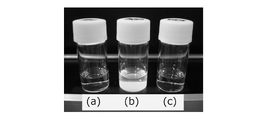
- Example 4 A ZnP solution was prepared by dissolving 0.01 g of zinc (II) propionate (ZnP) in 3 ml of methanol. Next, 1 drop of MSA was added to 1 ml of the ZnP solution to prepare a ZnP solution containing MSA. Also, one drop of MJA was added to 1 ml of the ZnP solution to prepare an MJA-containing ZnP solution. The obtained three kinds of solutions were excited with a UV lamp (wavelength: 365 nm) to confirm fluorescence emission (Fig. 5).
- the solution (a) containing only ZnP and the solution (c) containing MJA showed no fluorescence emission, but the solution (b) containing MSA showed bluish fluorescence emission, and methyl salicylate was selected. It turned out that it can actually sense.
- Example 5 [Fluorescence spectrum measurement] 0.9 ml of a DMSO solution of zinc (II) propionate (ZnP) (concentration 1.5 mmol/L) and 0.1 ml of a DMSO solution of methyl salicylate (MSA) (concentration 1.5 mmol/L) were mixed, and after 10 minutes The solution was diluted 20-fold and placed in a quartz cell, and the fluorescence spectrum was measured at an excitation wavelength of 365 nm.
- ZnP zinc (II) propionate
- MSA methyl salicylate
- a solid line represents the fluorescence spectrum of ZnP+MSA
- a dashed line represents the fluorescence spectrum of ZnP alone
- a dashed line represents the fluorescence spectrum of MSA alone.
- a solid line represents the fluorescence spectrum of ZnN+MSA
- a dashed line represents the fluorescence spectrum of ZnN alone
- a dashed line represents the fluorescence spectrum of MSA alone. From this result, it was found that ZnN does not show fluorescence by itself, but shows fluorescence emission (maximum wavelength 418 nm) by reacting with MSA.
- Example 7 [Quantitative evaluation of fluorescence intensity] 0.15 ml of a methanol solution of ZnA (concentration 0.01 mol/L) and 0.15 ml of a methanol solution of MSA (concentration 0.02 mol/L) were added, diluted 10-fold after 10 minutes, and the solution was placed in a quartz cell. , the fluorescence spectrum was measured at an excitation wavelength of 343 nm, and the fluorescence spectrum curve shown in FIG. 8 was obtained. The peak wavelength at which the fluorescence intensity at that time was the strongest was 381 nm.
- the horizontal axis of FIG. 9 represents "volume of MSA solution b/(volume of MSA solution b+volume of ZnA solution a)", and the vertical axis represents fluorescence intensity.
- Example 8 [Detection of MSA with zinc compound-containing agarose gel] 0.0459 g of zinc acetate (ZnA) and 0.5 g of agarose were dispersed in 25 ml of water, and heated and stirred at 95° C. to dissolve the agarose into a sol. After that, the ZnA-containing gel was obtained by standing to cool. A petri dish containing a portion of the obtained ZnA-containing gel and another petri dish containing 12 mg of methyl salicylate were stored in a desiccator without direct contact. After 24 hours, the gel was taken out and excited with a UV lamp (wavelength: 365 nm) to evaluate whether or not fluorescence was emitted.
- a UV lamp wavelength: 365 nm
- the resulting current-voltage curve (cyclic voltammogram) is shown in FIG.
- the dashed line is the measurement result for ZnP only, and the solid line is the measurement result after adding MSA to ZnP. From this result, it was found that new reduction peaks appeared at potentials of -0.09 V and -0.46 V after addition of MSA compared to before addition. This can be confirmed by monitoring the current value flowing through the electrode at voltages ( ⁇ 0.09 V and ⁇ 0.46 V for the Ag/Ag + electrode) at which the current value changes greatly before and after the reaction with MSA, for example. The change in value indicates that methyl salicylate can be sensed.
- Zinc compounds are zinc (II) acetate, zinc (II) formate dihydrate, zinc (II) butyrate, zinc oxalate dihydrate, zinc (II) hexanoate, zinc (II) propionate, zinc tartrate (II) at least one compound selected from the group consisting of dihydrate, zinc (II) benzoate, zinc (II) octoate, zinc (II) oleate, zinc (II) nitrate and zinc (II) chloride
- (Appendix 3) 3. The sensing method according to appendix 1 or 2, wherein methyl salicylate reacts with a zinc compound to form a complex, thereby emitting fluorescence.
- (Appendix 4) The sensing method according to any one of Appendices 1 to 3, which utilizes a phenomenon in which electrochemical behavior changes due to a reaction between a zinc compound and methyl salicylate.
- Appendix 5 The sensing method according to appendix 4, wherein the change in current value caused by the reaction between the zinc compound and methyl salicylate is used.
- Appendix 6 A methyl salicylate sensor for detecting methyl salicylate, comprising: i) a methyl salicylate recognition moiety with a zinc compound; ii) A methyl salicylate sensor comprising at least a detection unit for detecting that methyl salicylate has been recognized by the recognition unit.
- Appendix 7 A method for detecting pathogen infection of crops by installing the methyl salicylate sensor according to appendix 6 near the crops and detecting methyl salicylate with the methyl salicylate sensor.
- Appendix 8 A methyl salicylate sensor for detecting methyl salicylate, comprising a recognition portion for methyl salicylate having a zinc compound as a receptor that selectively recognizes methyl salicylate, and a detection portion for detecting that methyl salicylate is recognized by the recognition portion.
- the detection unit comprises an optical and/or electrochemical detection element and a computer
- the computer comprising: i) receiving a signal from an optical and/or electrochemical sensing element;
- a methyl salicylate sensor having a program causing the steps of ii) analyzing the received signal to determine the presence and/or concentration of methyl salicylate, and iii) outputting the results of the analysis.
- Appendix 9 A program for controlling a methyl salicylate sensor that detects methyl salicylate, wherein the methyl salicylate sensor has a methyl salicylate recognition portion having a zinc compound that is a receptor that selectively recognizes methyl salicylate, and methyl salicylate in the recognition portion.
- a detection unit for detecting that is recognized comprising an optical and/or electrochemical detection element and a computer, wherein the computer i) receiving a signal from an optical and/or electrochemical sensing element; ii) analyzing the received signal to determine the presence and/or concentration of methyl salicylate; and iii) outputting the results of the analysis.
- Appendix 10 Detection of methyl salicylate, comprising the steps of (i) reacting a zinc compound with methyl salicylate to form a complex, (ii) exposing the complex to excitation light, and (iii) detecting fluorescence emitted by the complex. Method. (Appendix 11) 11.
- Appendix 12 12.
- Appendix 13 (i) reacting a zinc compound with methyl salicylate in solution to form a complex; (ii) measuring the current flowing through the solution under a constant voltage; and (iii) the current resulting from the formation of the complex.
- a method for detecting methyl salicylate comprising detecting a change in value. (Appendix 14) 14.
- Zinc compounds are zinc (II) acetate, zinc (II) formate dihydrate, zinc (II) butyrate, zinc oxalate dihydrate, zinc (II) hexanoate, zinc (II) propionate, zinc tartrate (II) at least one compound selected from the group consisting of dihydrate, zinc (II) benzoate, zinc (II) octoate, zinc (II) oleate, zinc (II) nitrate and zinc (II) chloride
- the detection method according to any one of appendices 10 to 16.
- a methyl salicylate sensor for detecting methyl salicylate comprising at least (i) a recognition portion for methyl salicylate having a zinc compound, and (ii) a detection portion for optically detecting that methyl salicylate has been recognized by the recognition portion.
- Methyl salicylate sensor equipped. Appendix 19) 19. The methyl salicylate sensor of Claim 18, wherein the optical detection portion comprises at least an excitation light source and a detection element.
- a methyl salicylate sensor for detecting methyl salicylate comprising: (i) a recognition portion for methyl salicylate having a zinc compound; and (ii) a detection portion for electrochemically detecting recognition of methyl salicylate by the recognition portion.
- At least a methyl salicylate sensor At least a methyl salicylate sensor.
- Appendix 21 21.
- Appendix 22 A method for detecting pathogen infection of crops by installing the methyl salicylate sensor according to any one of Appendices 8 and 18 to 21 near crops and detecting methyl salicylate with the methyl salicylate sensor.
- Appendix 23 23. The method of detecting pathogen infection of crops according to appendix 7 or appendix 22, wherein the sensor is installed within 2 m from the crop.
Landscapes
- Health & Medical Sciences (AREA)
- Life Sciences & Earth Sciences (AREA)
- Chemical & Material Sciences (AREA)
- Immunology (AREA)
- Physics & Mathematics (AREA)
- Pathology (AREA)
- Analytical Chemistry (AREA)
- Biochemistry (AREA)
- General Health & Medical Sciences (AREA)
- General Physics & Mathematics (AREA)
- Chemical Kinetics & Catalysis (AREA)
- Molecular Biology (AREA)
- Nuclear Medicine, Radiotherapy & Molecular Imaging (AREA)
- Electrochemistry (AREA)
- Optics & Photonics (AREA)
- Engineering & Computer Science (AREA)
- Environmental Sciences (AREA)
- Ecology (AREA)
- Forests & Forestry (AREA)
- Botany (AREA)
- Biodiversity & Conservation Biology (AREA)
- Biomedical Technology (AREA)
- Hematology (AREA)
- Urology & Nephrology (AREA)
- Food Science & Technology (AREA)
- Medicinal Chemistry (AREA)
- Investigating Or Analysing Materials By The Use Of Chemical Reactions (AREA)
Priority Applications (2)
| Application Number | Priority Date | Filing Date | Title |
|---|---|---|---|
| JP2023509252A JP7616353B2 (ja) | 2021-03-24 | 2022-03-23 | サリチル酸メチルをセンシングする方法、サリチル酸メチルセンサー、及び植物の病気感染の検出方法 |
| US18/283,099 US20240183779A1 (en) | 2021-03-20 | 2022-03-23 | Method for sensing methyl salicylate, methyl salicylate sensor, and method for detecting pathogen infection of plants |
Applications Claiming Priority (2)
| Application Number | Priority Date | Filing Date | Title |
|---|---|---|---|
| JP2021049789 | 2021-03-24 | ||
| JP2021-049789 | 2021-03-24 |
Publications (1)
| Publication Number | Publication Date |
|---|---|
| WO2022202909A1 true WO2022202909A1 (ja) | 2022-09-29 |
Family
ID=83395738
Family Applications (1)
| Application Number | Title | Priority Date | Filing Date |
|---|---|---|---|
| PCT/JP2022/013573 Ceased WO2022202909A1 (ja) | 2021-03-20 | 2022-03-23 | サリチル酸メチルをセンシングする方法、サリチル酸メチルセンサー、及び植物の病気感染の検出方法 |
Country Status (3)
| Country | Link |
|---|---|
| US (1) | US20240183779A1 (https=) |
| JP (1) | JP7616353B2 (https=) |
| WO (1) | WO2022202909A1 (https=) |
Families Citing this family (2)
| Publication number | Priority date | Publication date | Assignee | Title |
|---|---|---|---|---|
| JP7359227B2 (ja) * | 2020-01-27 | 2023-10-11 | 日本電気株式会社 | 植物ホルモンのセンシング方法、及びそれを用いた植物の病気感染の早期検出方法 |
| JP2023018230A (ja) * | 2021-07-27 | 2023-02-08 | 日本電気株式会社 | 検出用装置、支援装置、支援方法及びプログラム |
Citations (2)
| Publication number | Priority date | Publication date | Assignee | Title |
|---|---|---|---|---|
| JP2005298349A (ja) * | 2004-04-07 | 2005-10-27 | Meiji Seika Kaisha Ltd | 植物の病害抵抗性誘導剤とその防除方法 |
| US20180142277A1 (en) * | 2015-04-15 | 2018-05-24 | University Of Georgia Research Foundation, Inc. | Electrochemical sensors and methods for using electrochemical sensors to detect plant pathogen infection |
-
2022
- 2022-03-23 US US18/283,099 patent/US20240183779A1/en active Pending
- 2022-03-23 JP JP2023509252A patent/JP7616353B2/ja active Active
- 2022-03-23 WO PCT/JP2022/013573 patent/WO2022202909A1/ja not_active Ceased
Patent Citations (2)
| Publication number | Priority date | Publication date | Assignee | Title |
|---|---|---|---|---|
| JP2005298349A (ja) * | 2004-04-07 | 2005-10-27 | Meiji Seika Kaisha Ltd | 植物の病害抵抗性誘導剤とその防除方法 |
| US20180142277A1 (en) * | 2015-04-15 | 2018-05-24 | University Of Georgia Research Foundation, Inc. | Electrochemical sensors and methods for using electrochemical sensors to detect plant pathogen infection |
Non-Patent Citations (2)
| Title |
|---|
| MALAMY JOCELYN, J P CARR, D F KLESSIG, I RASKIN: "Salicylic Acid: A Likely Endogenous Signal in the Resistance Response of Tobacco to Viral Infection", SCIENCE, vol. 250, no. 4983, 16 November 1990 (1990-11-16), pages 1002 - 1004, XP055969904, DOI: 10.1126/science.250.4983.1002 * |
| MÉTRAUX J.P., H SIGNER, J RYALS, E WARD, M WYSS-BENZ, J GAUDIN, K RASCHDORF, E SCHMID, W BLUM, B INVERARDI: "Increase in Salicylic Acid at the Onset of Systemic Acquired Resistance in Cucumber", SCIENCE, vol. 250, no. 4983, 16 November 1990 (1990-11-16), pages 1004 - 1006, XP055969900, DOI: 10.1126/science.250.4983.1004 * |
Also Published As
| Publication number | Publication date |
|---|---|
| JP7616353B2 (ja) | 2025-01-17 |
| JPWO2022202909A1 (https=) | 2022-09-29 |
| US20240183779A1 (en) | 2024-06-06 |
Similar Documents
| Publication | Publication Date | Title |
|---|---|---|
| JP7732492B2 (ja) | 希土類化合物を用いた植物ホルモンのセンシング方法、それを用いたセンサー、及び植物の病気感染の早期検出方法 | |
| WO2022202909A1 (ja) | サリチル酸メチルをセンシングする方法、サリチル酸メチルセンサー、及び植物の病気感染の検出方法 | |
| Strobl et al. | Trace ammonia sensors based on fluorescent near-infrared-emitting aza-BODIPY dyes | |
| CN105693591B (zh) | 一种比率型pH荧光探针及其制备方法与应用 | |
| Wu et al. | A biocompatible ruthenium-based composite fluorescent probe using bovine serum albumin as a scaffold for ethylene gas detection and its fluorescence imaging in plant tissues | |
| CN113234046B (zh) | 一种检测次氯酸根离子的荧光探针及其应用 | |
| JP7359227B2 (ja) | 植物ホルモンのセンシング方法、及びそれを用いた植物の病気感染の早期検出方法 | |
| AU2020305383B2 (en) | Sensor module for multiparametrically analysing a medium | |
| Lee et al. | Wearable volatile organic compound sensors for plant health monitoring | |
| Ali et al. | Turn-on ratiometric fluorescence sensor film for ammonia based on salicylaldehyde-ionic liquid | |
| US12613189B2 (en) | Method for sensing methyl salicylate, methyl salicylate sensor, and method for detecting pathogen infection of crops using terbium-sulfoxide complex | |
| US20240327704A1 (en) | Reagent for detecting methyl salicylate, methyl salicylate sensor, method for sensing methyl salicylate using the same and methods for detecting plant pathogen infections | |
| US20230304931A1 (en) | Method for sensing plant hormone using hydrazine derivative, sensor using the same, and method for early detection of plant disease infection | |
| JP2024007546A (ja) | サリチル酸メチルを検出するための試薬、サリチル酸メチルセンサー、それらを用いたサリチル酸メチルのセンシング方法、及び植物の病原菌感染の検出方法 | |
| JP3835600B2 (ja) | 酸素濃度計測素子とその製造方法 | |
| JPWO2022202909A5 (https=) | ||
| US20250283847A1 (en) | Microneedle-based plant sensors and methods of making and using thereof | |
| JP2025086973A (ja) | サリチル酸メチルを検出するための試薬、サリチル酸メチルセンサー、それらを用いたサリチル酸メチルのセンシング方法、及び植物の病原菌感染の検出方法 | |
| CN117050326A (zh) | 一种锌基配位聚合物及膜的制备方法和应用荧光检测金雀花碱 | |
| Wang et al. | Wearable sensors: in situ detection tools for plant physiological markers and growth environment information | |
| CN104865233B (zh) | 基于刺激响应共轭聚合物用于检测二氧化碳含量或转化的方法 | |
| Thottiparambil et al. | Styrylcyanine-based ratiometric and tunable fluorescent pH sensors | |
| US20260002948A1 (en) | Reagent for detecting methyl salicylate, methyl salicylate sensor, method for sensing methyl salicylate using the same, and method for detecting plant pathogen infection | |
| Hoh et al. | Let’s Get Real: Are Wearable Plant Sensors Ready for Crop Monitoring? | |
| Cardoso et al. | Monitoring the Daily Rhythm of Total Green Leaf Volatiles with a Low-Cost Multi-Sensor Node |
Legal Events
| Date | Code | Title | Description |
|---|---|---|---|
| 121 | Ep: the epo has been informed by wipo that ep was designated in this application |
Ref document number: 22775691 Country of ref document: EP Kind code of ref document: A1 |
|
| WWE | Wipo information: entry into national phase |
Ref document number: 2023509252 Country of ref document: JP |
|
| WWE | Wipo information: entry into national phase |
Ref document number: 18283099 Country of ref document: US |
|
| NENP | Non-entry into the national phase |
Ref country code: DE |
|
| 122 | Ep: pct application non-entry in european phase |
Ref document number: 22775691 Country of ref document: EP Kind code of ref document: A1 |