WO2022196474A1 - 被災情報処理装置、被災情報処理システム、被災情報処理方法及びプログラム - Google Patents
被災情報処理装置、被災情報処理システム、被災情報処理方法及びプログラム Download PDFInfo
- Publication number
- WO2022196474A1 WO2022196474A1 PCT/JP2022/010193 JP2022010193W WO2022196474A1 WO 2022196474 A1 WO2022196474 A1 WO 2022196474A1 JP 2022010193 W JP2022010193 W JP 2022010193W WO 2022196474 A1 WO2022196474 A1 WO 2022196474A1
- Authority
- WO
- WIPO (PCT)
- Prior art keywords
- damaged
- image
- damage
- building
- house
- Prior art date
- Legal status (The legal status is an assumption and is not a legal conclusion. Google has not performed a legal analysis and makes no representation as to the accuracy of the status listed.)
- Ceased
Links
Images



Classifications
-
- G—PHYSICS
- G06—COMPUTING OR CALCULATING; COUNTING
- G06V—IMAGE OR VIDEO RECOGNITION OR UNDERSTANDING
- G06V20/00—Scenes; Scene-specific elements
- G06V20/10—Terrestrial scenes
- G06V20/17—Terrestrial scenes taken from planes or by drones
-
- G—PHYSICS
- G08—SIGNALLING
- G08B—SIGNALLING SYSTEMS, e.g. PERSONAL CALLING SYSTEMS; ORDER TELEGRAPHS; ALARM SYSTEMS
- G08B21/00—Alarms responsive to a single specified undesired or abnormal condition and not otherwise provided for
- G08B21/02—Alarms for ensuring the safety of persons
- G08B21/10—Alarms for ensuring the safety of persons responsive to calamitous events, e.g. tornados or earthquakes
-
- G—PHYSICS
- G06—COMPUTING OR CALCULATING; COUNTING
- G06Q—INFORMATION AND COMMUNICATION TECHNOLOGY [ICT] SPECIALLY ADAPTED FOR ADMINISTRATIVE, COMMERCIAL, FINANCIAL, MANAGERIAL OR SUPERVISORY PURPOSES; SYSTEMS OR METHODS SPECIALLY ADAPTED FOR ADMINISTRATIVE, COMMERCIAL, FINANCIAL, MANAGERIAL OR SUPERVISORY PURPOSES, NOT OTHERWISE PROVIDED FOR
- G06Q50/00—Information and communication technology [ICT] specially adapted for implementation of business processes of specific business sectors, e.g. utilities or tourism
- G06Q50/10—Services
- G06Q50/26—Government or public services
-
- G—PHYSICS
- G06—COMPUTING OR CALCULATING; COUNTING
- G06T—IMAGE DATA PROCESSING OR GENERATION, IN GENERAL
- G06T7/00—Image analysis
-
- G—PHYSICS
- G06—COMPUTING OR CALCULATING; COUNTING
- G06V—IMAGE OR VIDEO RECOGNITION OR UNDERSTANDING
- G06V10/00—Arrangements for image or video recognition or understanding
- G06V10/20—Image preprocessing
- G06V10/25—Determination of region of interest [ROI] or a volume of interest [VOI]
-
- G—PHYSICS
- G06—COMPUTING OR CALCULATING; COUNTING
- G06V—IMAGE OR VIDEO RECOGNITION OR UNDERSTANDING
- G06V10/00—Arrangements for image or video recognition or understanding
- G06V10/70—Arrangements for image or video recognition or understanding using pattern recognition or machine learning
-
- G—PHYSICS
- G06—COMPUTING OR CALCULATING; COUNTING
- G06V—IMAGE OR VIDEO RECOGNITION OR UNDERSTANDING
- G06V20/00—Scenes; Scene-specific elements
- G06V20/10—Terrestrial scenes
- G06V20/176—Urban or other man-made structures
Definitions
- the present invention relates to a disaster information processing device, a disaster information processing system, a disaster information processing method, and a program, and more particularly to a technique for providing disaster information of a desired cause of disaster.
- Patent Document 1 discloses a method for detecting damaged houses using an image of a disaster area photographed from above and house polygons acquired before the disaster occurred.
- the present invention has been made in view of such circumstances, and provides a disaster information processing apparatus, a disaster information processing system, and a disaster information processing method for extracting and providing information on a building damaged by a specific disaster cause from an image including the building. and to provide programs.
- At least one processor calculates the number of extracted first damaged buildings for each area, and stores at least part of the first damage information for each area including the calculated number of first damaged buildings for each area. is preferably provided to the first terminal. This makes it possible to provide disaster information for each area.
- At least one processor acquires information of a first terminal for each area associated with a first cause of disaster, and converts at least part of the first disaster information for each area to a first terminal associated for each area. It is preferable to provide each for one terminal. Thereby, the disaster information for each area can be provided to the first terminal associated with each area.
- the at least one processor causes the display to be selectable by the user, and converts at least a part of the first disaster information of the user-selected area to the first area associated with the user-selected area. preferably provided to the terminal. Thereby, it is possible to provide the disaster information of the desired area to the first terminal associated with the desired area.
- At least one processor obtains regional area information corresponding to the obtained image, and obtains first disaster information for each area using the obtained regional area information. This makes it possible to appropriately obtain disaster information for each region.
- the at least one processor preferably causes the display to display at least part of the first disaster information. This allows the user to visually recognize the disaster information.
- At least one processor acquires building area information corresponding to the acquired image, and extracts buildings from the acquired image using the acquired building area information. Thereby, the building can be appropriately extracted from the image.
- At least one processor cuts out an image of a building region from the image, inputs the cut out image of the building region into the first trained model, and determines whether the building in the cut out image is the first damaged building.
- the first trained model preferably outputs whether or not the cause of damage to the building in the input image is the first cause of damage when a building image is given as an input. This makes it possible to appropriately determine the building that caused the first damage.
- a second damaged building damaged by a second cause of damage different from the first cause of damage is extracted from the acquired image, the number of the extracted second damaged buildings is calculated, and the extracted second damaged building providing at least part of second damage information including the calculated number of second damaged buildings to the second terminal associated with the second cause of damage; is preferred. This makes it possible to extract and provide information on buildings damaged by a second cause of damage that is different from the first cause of damage.
- At least one processor extracts, from the acquired image, damaged buildings damaged by each cause of damage among a plurality of causes of damage, calculates the number of extracted damaged buildings for each cause of damage, and calculates the number of damaged buildings related to the extracted damaged buildings.
- a third terminal different from the first terminal wherein at least a part of the damage information for each cause of damage including the calculated number of damaged buildings for each cause of damage is transmitted to a third terminal different from the first terminal; It is preferable to provide to the third terminal respectively associated with each cause. This makes it possible to extract information on buildings damaged by a plurality of disaster causes from an image including buildings, and provide the information to the third terminal.
- At least one processor identifies whether or not buildings included in the image are damaged, and extracts damaged buildings damaged by each damage cause from the buildings identified as being damaged. This makes it possible to extract information on damaged buildings without omission.
- At least one processor extracts an image of a building region from the image, inputs the extracted image of the building region to a second trained model, and acquires whether or not the building in the extracted image is damaged;
- the second trained model preferably outputs whether or not the building in the input image is damaged when given a building image as an input. This makes it possible to appropriately extract damaged buildings.
- the first cause of damage is a fire
- the first terminal is preferably associated with a fire department. This makes it possible to provide information on buildings damaged by fire to the fire department that has jurisdiction over the fire.
- the image is preferably an aerial image taken from an aircraft or a satellite image taken from an artificial satellite. As a result, it is possible to acquire damage information for a plurality of buildings from one image.
- One aspect of a disaster information processing system for achieving the above object includes at least one first processor and at least one first memory storing instructions to be executed by the at least one first processor. , at least one second processor, and at least one second memory storing instructions for causing the at least one second processor to execute; a server comprising at least one
- a disaster information processing system comprising a fourth terminal comprising three third processors and at least one third memory storing instructions for causing the at least one third processor to execute, at least one third processor acquiring an image including buildings, extracting an image of a building region from the acquired image, providing the extracted building region image to a server, and at least one second processor acquires an image of a building area provided from a fourth terminal, extracts a first damaged building damaged by a first cause of damage from the acquired image of a building area, and extracts the extracted first damaged building
- the number of buildings is calculated, and at least part of the first damage information related to the extracted first damaged building, which includes the calculated first damaged building number, is transferred to the first terminal, at least
- One aspect of the disaster information processing method for achieving the above object is an image acquisition step of acquiring an image including a building; 1, a damaged building extracting step, a calculating step of calculating the number of extracted first damaged buildings, and first damage information related to the extracted first damaged building, which is the calculated number of first damaged buildings. and a providing step of providing at least part of the first disaster information including to the first terminal associated with the first cause of disaster. According to this aspect, it is possible to extract and provide information on a building damaged by a specific disaster cause from an image including the building.
- One aspect of the program for achieving the above object is a program for causing a computer to execute the above disaster information processing method.
- a computer-readable non-transitory storage medium in which this program is recorded may also be included in this embodiment.
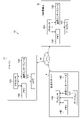
- FIG. 1 is a schematic diagram of a disaster information processing system.
- FIG. 2 is a block diagram of the disaster information processing system.
- FIG. 3 is a functional block diagram of the disaster information processing system.
- FIG. 4 is a flow chart showing each step of the disaster information processing method.
- FIG. 5 is a process diagram of each step of the disaster information processing method.
- FIG. 6 is a process diagram of disaster information processing for each region.
- FIG. 7 is a process diagram of the process of notifying the fire department in charge.
- FIG. 8 is a process diagram of sorting out collapsed houses, burnt houses, and flooded houses.
- FIG. 9 is a process diagram of sorting the collapsed houses and the flooded houses.
- FIG. 1 is a schematic diagram of a disaster information processing system 10 according to this embodiment.
- the disaster information processing system 10 includes a drone 12 , a local government server 14 , a fire station terminal 16 and a local government terminal 18 .
- the drone 12 (an example of a "fourth terminal") is an unmanned aerial vehicle (UAV: unmanned aerial vehicle, an example of a "flying object”) remotely controlled by the local government server 14 or a controller (not shown).
- Drone 12 may have an autopilot function that flies according to a predetermined program. For example, when a large-scale disaster occurs, the drone 12 captures an image of the ground from above to obtain an aerial image (high-altitude image) including buildings. Buildings refer to dwellings such as “single-family homes” and “multi-family housing,” but may also include general buildings such as "stores,” "offices,” and “factories.” In the following, buildings are referred to as "houses" without distinguishing between types.
- the local government server 14 is installed in the department involved in the housing damage certification survey within the government building of the local government.
- the local government server 14 is realized by at least one computer and constitutes a disaster information processing device.
- the municipality server 14 may be a cloud server provided by a cloud system.
- the fire department terminal 16 is installed in a fire department that is an organization that has jurisdiction over fires (an example of a "first cause of damage") and is associated with the municipality where the municipality server 14 is installed.
- the fire station terminal 16 (an example of a "first terminal") is realized by at least one computer and constitutes a disaster information processing device.
- the local government terminal 18 is installed in a department different from the department in which the local government server 14 is installed, inside the government building of the local government.
- the municipality terminal 18 is realized by at least one computer and connected to the communication network 20 .
- the local government terminal 18 may be installed at a branch office of the local government.
- the drone 12, the local government server 14, the fire station terminal 16, and the local government terminal 18 are each connected via a communication network 20 such as a 2.4 GHz band wireless LAN (Local Area Network) so that data can be transmitted and received.
- a communication network 20 such as a 2.4 GHz band wireless LAN (Local Area Network) so that data can be transmitted and received.
- the drone 12, the local government server 14, the fire station terminal 16, and the local government terminal 18 need only be able to exchange data, and do not have to be directly connected so that data can be sent and received.
- data may be exchanged via a data server (not shown).
- FIG. 2 is a block diagram showing an electrical configuration of the disaster information processing system 10. As shown in FIG. As shown in FIG. 2, drone 12 includes processor 12A, memory 12B, camera 12C, and communication interface 12D.
- the processor 12A executes instructions stored in the memory 12B.
- the hardware structure of the processor 12A is various processors as shown below.
- Various processors include a CPU (Central Processing Unit), which is a general-purpose processor that executes software (programs) and acts as various functional units, a GPU (Graphics Processing Unit), which is a processor specialized for image processing, A circuit specially designed to execute specific processing such as PLD (Programmable Logic Device), which is a processor whose circuit configuration can be changed after manufacturing such as FPGA (Field Programmable Gate Array), ASIC (Application Specific Integrated Circuit), etc. Also included are dedicated electrical circuits, which are processors with configuration, and the like.
- One processing unit may be composed of one of these various processors, or two or more processors of the same or different type (for example, a plurality of FPGAs, a combination of CPU and FPGA, or a combination of CPU and GPU).
- a plurality of functional units may be configured by one processor.
- a single processor is configured by combining one or more CPUs and software.
- a processor acts as a plurality of functional units.
- SoC System On Chip
- various functional units are configured using one or more of the above various processors as a hardware structure.
- the hardware structure of these various processors is, more specifically, an electrical circuit that combines circuit elements such as semiconductor elements.
- the memory 12B (an example of a "third memory”) stores instructions to be executed by the processor 12A.
- the memory 12B includes RAM (Random Access Memory) and ROM (Read Only Memory), not shown.
- the processor 12A uses the RAM as a work area, executes software using various programs and parameters stored in the ROM, and uses the parameters stored in the ROM or the like to perform various processes of the drone 12. Run.
- the camera 12C includes a lens (not shown) and an imaging device (not shown).
- the camera 12C is supported by the drone 12 via gimbals (not shown).
- the lens of the camera 12C forms an image of the received subject light on the imaging plane of the imaging element.
- the imaging element of the camera 12C receives the subject light imaged on the imaging plane and outputs an image signal of the subject.
- the camera 12C may acquire the angles of the roll axis, pitch axis, and yaw axis of the optical axis of the lens using a gyro sensor (not shown).
- the communication interface 12D controls communication via the communication network 20.
- the drone 12 may include a GPS (Global Positioning System) receiver, an air pressure sensor, an orientation sensor, a gyro sensor, etc. (not shown).
- GPS Global Positioning System
- the municipality server 14 includes a processor 14A, a memory 14B, a display 14C, and a communication interface 14D.
- Fire department terminal 16 includes processor 16A, memory 16B, display 16C, and communication interface 16D.
- the configuration of the processor 14A (an example of the "second processor") and the processor 16A (an example of the “first processor") is the same as the configuration of the processor 12A. Also, the configurations of the memory 14B (an example of the "second memory”) and the memory 16B (an example of the "first memory”) are the same as the configuration of the memory 12B.
- the display 14C is a display device for making the information processed by the disaster information processing system 10 visible to the staff (user) of the local government.
- a large-screen plasma display, or a multi-screen multi-display in which a plurality of displays are joined together, or the like can be applied.
- the display 14C also includes a projector that projects an image onto the screen.
- the display 16C (an example of the "first display") is a display device for allowing fire department personnel to view information processed in the disaster information processing system 10.
- the configuration of the display 16C is similar to that of the display 14C.
- the configurations of the communication interface 14D and the communication interface 16D are the same as the communication interface 12D.
- the configuration of the local government terminal 18 is similar to that of the fire station terminal 16.
- FIG. 3 is a functional block diagram of the disaster information processing system 10.
- the disaster information processing system 10 includes a house detection unit 30, a damage determination unit 32, a damage classification unit 34, a burnt house totalization unit 36, a burnt house information display unit 38, and a burnt house information display unit 38. and a house information notification unit 40 .
- the functions of the house detection unit 30 are implemented by the processor 12A. Moreover, the functions of the disaster determination unit 32, the disaster type sorting unit 34, the burnt house counting unit 36, the burnt house information display unit 38, and the burnt house information notification unit 40 are realized by the processor 14A. All these functions may be implemented by either processor 12A or processor 14A. Moreover, the disaster information processing system 10 may be interpreted as a "disaster information processing device" implemented by a plurality of processors.
- the house detection unit 30 detects a house area included in the high-altitude image acquired from the camera 12C, cuts out each of the detected house areas, and generates a house cutout image.
- the house detection unit 30 detects a house area from the high-altitude image and house area information (an example of "building area information") of the area captured by the high-altitude image.
- the house area information is information including at least one of house boundary line information, house position information, and house address information.
- the house boundary line information may be polygon information. House polygon information is generated from house outer shape data, house height data, and land elevation data.
- the house location information includes latitude and longitude information.
- the house address information includes information on prefectures, municipalities, town areas, chomes, and street numbers.
- the house area information is stored in the memory 12B.
- the damage determination unit 32 determines (identifies) whether or not the house included in the cut-out image of the house is damaged.
- the fact that the house is damaged means that the house is damaged by the disaster.
- the disaster determination unit 32 includes a disaster determination AI (Artificial Intelligence) 32A.
- the damage determination AI32A (an example of the "second learned model") is a learned model that outputs whether or not the house included in the cut-out house image is damaged when given the cut-out image of the house as an input.
- the damage judgment AI32A is machine learning based on a learning data set for learning, which is a set of a cut-out image of a house from which the region of the house is cut out and whether or not the house is damaged in the cut-out image of the house. be.
- the disaster determination AI 32A can apply a convolution neural network (CNN: Convolution Neural Network).
- the damage type sorting unit 34 sorts the damage type of the house in the cutout image of the house determined to be damaged, and determines whether the house was damaged by fire (an example of the “first cause of damage”) from the cutout image of the house.
- a burnt house an example of a “first damaged building”
- a collapsed house damaged by a collapse an example of a “second cause of damage”
- a second damaged building is extracted from the cutout image of a house.
- the disaster type sorting unit 34 includes a burn detection AI 34A and a collapse detection AI 34B.
- the burnt-down detection AI 34A is a trained model that outputs whether or not the house included in the cut-out house image is burnt down when given the cut-out image of the house as an input.
- the term "house destroyed by fire” means that the house is damaged by fire, and includes not only “completely burned” but also “half-burned,” “partially burned,” and “burned.”
- the burnt-down detection AI34A performs machine learning using a learning data set for learning, which is a set of a cut-out image of the house from which the area of the house has been cut out and the presence or absence of the burnt-down house included in the cut-out image of the house. be.
- the collapse detection AI 34B is a trained model that outputs whether or not the house included in the cutout image of the house has collapsed when given the cutout image of the house as an input.
- a collapsed house means that the house is destroyed, and includes not only “total collapse” but also "large-scale partial collapse” and "partial collapse”.
- the collapse detection AI 34B performs machine learning using a learning data set for learning, which is a set of a cut-out image of a house from which the area of the house has been cut out and the presence or absence of collapse of the house included in the cut-out image of the house. be.
- the burn detection AI 34A and the collapse detection AI 34B can apply convolutional neural networks.
- the burnt house tallying unit 36 tallies (an example of "calculation") the number of houses determined to be burnt down by the disaster classification unit 34 (burnt houses).
- the burnt house information display unit 38 displays at least part of the damage information related to the burnt houses sorted by the disaster type sorting unit 34 and including the number of burnt houses tallied by the burnt house tallying unit 36. , is displayed on the display 14C.
- the disaster information includes at least one of an image of the burnt-down house, location information, and address information.
- the burnt house information notification unit 40 receives damage information related to burnt houses sorted by the disaster type sorting unit 34 and including the number of burnt houses aggregated by the burnt house aggregation unit 36 (“first disaster information ”) is notified (an example of “providing”) to the fire department terminal 16 associated with the fire.
- the local government server 14 can provide disaster information to the fire department terminal 16, and the local government server 14 does not necessarily have to directly notify the fire department terminal 16 of the disaster information.
- the local government server 14 may upload the disaster information to a server (not shown), and the fire station terminal 16 may download the disaster information from the server (not shown).
- FIG. 4 is a flow chart showing each step of the disaster information processing method by the disaster information processing system 10.
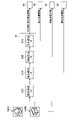
- FIG. 5 is a process diagram in each process of the disaster information processing method.
- the disaster information processing method is implemented by causing the processor 14A to execute a disaster information processing program stored in the memory 14B.
- the disaster information processing program may be provided by a computer-readable non-temporary storage medium.
- the local government server 14 may read the disaster information processing program from the non-temporary storage medium and store it in the memory 14B.
- step S1 an example of the "image acquisition process”
- the drone 12 flies over the city immediately after the large-scale disaster according to the instructions of the local government server 14, and captures high-altitude images including houses with the camera 12C.
- step S2 the disaster information processing system 10 extracts a burnt house (an example of a "first damaged house”) from the high-place image.
- the house detection unit 30 of the processor 12A of the drone 12 detects a house area from the high-altitude image captured in step S1 based on the house area information acquired from the memory 12B.
- FIG. 5 shows a high-altitude image 100 and house area information 102 at the same angle as the high-altitude image 100 .
- the house area information 102 is information created from a high-altitude image taken before the occurrence of a large-scale disaster, and here is information representing the outline shape of a house with lines.
- FIG. 5 shows a synthesized image 104 obtained by synthesizing the high place image 100 and the house area information 102 .
- the house detection unit 30 can recognize that the area surrounded by lines in the house area information 102 in the composite image 104 is a house.
- the house detection unit 30 cuts out the house areas detected by the composite image 104 from the high-altitude image 100 to generate house cutout images.
- FIG. 5 shows house clipped images 106A, 106B, . . . House cutout images are generated by the number of houses detected.
- the drone 12 transmits (an example of "providing") the house cut-out images 106A, 106B, .
- the municipality server 14 receives (an example of "acquisition") the cut-out house images 106A, 106B, . . . through the communication interface 14D.
- the damage determination unit 32 of the processor 14A of the municipality server 14 sequentially inputs the plurality of cut-out house images to the damage determination AI 32A, and determines whether or not the house included in each cut-out house image is damaged. do. That is, the damage determination unit 32 selects, from among the plurality of house cutout images, house cutout images in which the house is damaged and house cutout images in which the house is not damaged.
- FIG. 5 shows an example of inputting cut-out house images 106A, 106B, . . . to the disaster determination AI 32A.
- the damage type sorting unit 34 sequentially inputs the cut-out house images, among the multiple cut-out house images, for which the damage determination unit 32 determines that the house is damaged, to the burnt-down detection AI 34A, and It is determined whether or not the house included in the clipped image has been destroyed by fire. That is, the burnt-down detection AI 34A sorts out a house cut-out image in which the house is burnt down and a house cut-out image in which the house is not burnt down.
- the damage classification unit 34 selects a house cut-out image for which the damage determination unit 32 has determined that the house has been damaged among the plurality of house cut-out images, and which has been destroyed by fire in the burn-down detection AI 34A.
- the house cut-out images determined not to be collapsed are sequentially input to the collapse detection AI 34B, and it is determined whether or not the house included in each house cut-out image is collapsed. That is, the collapse detection AI 34B sorts out a house clipped image in which the house is collapsed and a house clipped image in which the house is not collapsed.
- the damage type sorting unit 34 selects, among a plurality of house cutout images in which a house is damaged, a house cutout image in which a house has been destroyed by fire and a house cutout image in which a house has collapsed. , and cropped images of damaged houses other than burnt down and collapsed houses. Therefore, the disaster information processing system 10 can extract burnt houses from high-place images.
- FIG. 5 shows an example of inputting a cut-out image of a house to the burnt-down detection AI 34A and the collapse detection AI 34B.
- the disaster type sorting unit 34 it is determined whether or not the house is destroyed after determining whether or not the house is destroyed by fire, but the order of sorting burnt houses and collapsed houses may be reversed. That is, the disaster type sorting unit 34 may determine whether the house has been destroyed by fire after determining whether the house has collapsed.
- the damage determination unit 32 determines whether or not the house included in the cut-out house image is damaged.
- the processes of the disaster determination unit 32 and the disaster type sorting unit 34 may be reversed. That is, the damage classification unit 34 sorts out the types of damage to the houses included in the cut-out house images, and for the cut-out house images that are not sorted, the damage determination unit 32 decides whether or not the house is damaged. It may be determined whether
- the burnt-down house tallying unit 36 tallies the number of burnt-down houses included in the high-place image.
- the number of burnt houses corresponds to the number of cutout images of houses determined to be burnt down in the process of the burnt house detection AI 34A in step S2.
- the burnt house tallying unit 36 may tally the number of collapsed houses (an example of the “second damaged house”) included in the high place image together with the tallying of the number of burnt houses.
- step S4 the burnt-down house information notification unit 40 sends damage information (an example of "first damage information") related to the burnt-down house extracted in step S2 to the fire station terminal 16. It is notified by the communication interface 14D.
- the damage information includes the number of burnt houses counted in step S3.
- the burnt house information notification unit 40 may notify the fire station terminal 16 of at least part of the disaster information.
- the burnt house information display unit 38 may display at least part of the disaster information on the display 14C.
- the burnt-down house information notification unit 40 is the damage information relating to the collapsed houses determined in step S2 and includes the number of collapsed houses aggregated in step S3 (an example of "second damage information"). may be notified to the local government terminal 18 (an example of the “second terminal”).
- the burnt house information display unit 38 may display at least part of this disaster information on the display 14C.
- the processor 16A of the fire department terminal 16 receives the disaster information transmitted from the burnt house information notification unit 40 through the communication interface 16D and displays it on the display 16C. As a result, the fire department staff can visually recognize the information on the burnt-down house included in the high-altitude image.
- the processor 14A of the local government server 14 displays at least a part of the damage information regarding the collapsed houses determined in step S2 and including the number of collapsed houses counted in step S3 on the display 14C. You may let Furthermore, the processor 14A of the local government server 14 may display at least a part of the damage information of houses caused by damage other than burning and collapse on the display 14C or may provide it to the local government terminal 18. FIG.
- the disaster information processing system 10 it is possible to extract information on houses damaged by fire from high-altitude images including houses, and provide the information to the fire department that has jurisdiction over the fire.
- the disaster information processing system 10 it is possible to extract information on houses that have been damaged by collapse from high-place images including houses, and to provide the information to the departments of the local government that have jurisdiction over the collapse.
- the disaster information processing method may be performed for each region.
- the burnt house tallying unit 36 tallies the number of burnt houses by region
- the burnt house information display unit 38 displays information on burnt houses by region
- the burnt house information notification unit 40 displays disaster information by region. You may notify to the fire station terminal 16 for every area.
- Each region may be for each ward or municipality, may be for each town area, or may be for each chome.
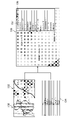
- FIG. 6 is a process diagram of disaster information processing for each region.
- FIG. 6 shows burnt house information 110 and chome area information 112 in a certain area.
- the burnt house information 110 includes at least one of an image of the burnt house, position information, and address information.
- the chome area information 112 is an example of the area area information corresponding to the high-altitude image including the burnt house information 110.
- the chome area information 112 is represented by white lines representing the boundaries of each chome. Information.
- the burnt-down house tabulation unit 36 uses the chome region information 112 to perform tabulation processing for each chome. If the burnt house information 110 does not include address information, the boundary line information is used to determine which chome the burnt house is in and totalize.
- FIG. 6 shows an example of situation grasping information displayed on the display 14C by the burnt-down house information display unit 38, including tabulated results 114 and 116 for each chome, an address list 118 of burnt-out houses, a cut-out image 120 of a house, Estimate 122 of the amount of work for the housing damage certification survey.
- the tally result 114 is a map of the area, and the chome area is color-coded according to the number of burnt houses in each chome.
- the burnt-down house information display section 38 displays chomes with a relatively large number of burnt-down houses in red, and chomes with a relatively small number of burnt-down houses in blue.
- the burnt-down house information display section 38 may also display a higher density for each color area as the number of burnt-down houses is relatively larger.
- the tally result 116 is a map in which a part of the tally result 114 is enlarged.
- the tabulation result 116 displays the name of each chome and the number of burnt houses in each chome.
- the address list 118 is a list of addresses of burnt houses included in the chome selected by the user from the displayed map.
- the house cutout image 120 is, for example, an image of a burnt house included in the chome selected by the user from the high place image.
- House clipping image 120 may be an image of a burnt house selected by the user from address list 118 .
- the estimate 122 includes the total number of burnt houses in the chome selected by the user from the displayed map and the number of houses surveyed by the local government.
- the number of surveyed houses is 91,535 (449,269 houses), of which 12,782 burnt down houses account for 14% of the number of surveyed houses.
- Estimate 122 includes a pie chart displaying the number of these houses, with 14% corresponding to burnt houses shown in red and the other 86% shown in a color other than red.
- These status comprehension information may be displayed on the display 16C.
- the burnt-down house information notification unit 40 may notify the fire stations having jurisdiction over each chome of at least a part of the disaster information for each chome.
- FIG. 7 is a process diagram of the process of notifying the fire department in charge.
- FIG. 7 shows tabulation results 130 and tabulation results 132 for each chome, and fire station information 134 that has jurisdiction over each chome.
- the aggregated results 130 and 132 are similar to the aggregated results 114 and 116 shown in FIG.
- each chome name is associated with the fire station that has jurisdiction over the chome.
- FIG. 7 shows an address list 136 of chome selected on the map.
- Address list 136 is similar to address list 118 shown in FIG.
- the burnt house information display unit 38 allows the display 14C to selectably display the user's desired chome (an example of "area"), and displays the user-selected chome address list 136 on the display 14C.
- the burnt-down house information display unit 38 acquires the information of the fire station that has jurisdiction over each chome from the fire station information 134, automatically assigns the fire station in charge of each chome, and displays the fire station in charge.
- the name 137 of the fire station that has jurisdiction over the chome of the address list 136 and a button 138 for notifying the fire station of disaster information are displayed.
- the burnt house information notification unit 40 notifies the fire station terminal 16 of the fire station with the name 137 of the damage information included in that chome.
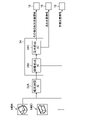
- Fig. 8 is a process diagram of processing when houses burnt down by fire, houses destroyed by shaking, and houses flooded by inland water are mixed due to the occurrence of an earthquake disaster.
- the disaster type sorting unit 34 includes a burnt-down detection AI 34A, a collapsed house detection AI 34B, and a flood detection AI 34C, and sorts out burned houses, collapsed houses, flooded houses, and other damaged houses. .
- the flood detection AI34C is a trained model that outputs whether or not the house included in the cutout image of the house is flooded when given the cutout image of the house as input.
- the house being flooded is not limited to "above-floor flooding,” in which water reaches above the floor of the dwelling, but also includes “underfloor flooding,” down to below the floor of the dwelling.
- the inundation detection AI34C is machine-learned using a learning data set for learning, which is a set of a cut-out image of a house from which the area of the house is cut out and the presence or absence of flooding in the house included in the cut-out image of the house. be.
- FIG. 8 shows an example of inputting the cut-out house images 140A, 140B, . . .
- the disaster determination AI 32A determines whether or not the house included in each house clipped image is damaged.
- a cut-out house image determined by the damage determination AI 32A that the house included in the cut-out house image is damaged is input to the disaster classification unit 34 .
- the damage type sorting unit 34 inputs the cut-out house images determined by the damage determination unit 32 that the house is damaged to the burnt-down detection AI 34A, and determines whether or not the house included in each cut-out house image is burnt down. determine whether
- the damage classification unit 34 selects a house cut-out image for which the damage determination unit 32 has determined that the house has been damaged among the plurality of house cut-out images, and which has been destroyed by fire in the burn-down detection AI 34A.
- the cut-out image of the house that is determined not to have collapsed is input to the collapse detection AI 34B, and it is determined whether or not the house included in the cut-out image of the house has collapsed.
- the damage type sorting unit 34 selects a house cut-out image for which the damage determination unit 32 determines that the house is damaged among the plurality of house cut-out images, and the house has been destroyed by fire in the burn-down detection AI 34A. It is determined that the house has not collapsed, and the collapse detection AI 34B determines that the house has not collapsed. do.
- the damage type sorting unit 34 divides a plurality of house cut-out images in which a house is damaged, a house cut-out image in which the house is destroyed by fire, a house cut-out image in which the house is destroyed, and a house cut-out image in which the house is destroyed. It is possible to sort out the cutout image of the flooded house and the cutout image of the damaged house other than burnt down, collapsed and flooded.
- fire station terminal 16 is notified of burnt house information, collapsed house information and flooded house information are notified to municipality terminal 18, and other damaged house information is sent to other terminal 19. I am notifying you.
- the local government terminal 18 and other terminals 19 are examples of "third terminals associated with each cause of disaster".
- FIG. 9 is a process diagram of processing when houses collapsed due to storm and flooded houses due to flooding of external water or inland water coexist due to the occurrence of wind and flood damage.
- the disaster type distribution unit 34 includes a collapse detection AI 34B and a flood detection AI 34C, and distributes collapsed houses and flooded houses.
- the disaster information processing system 10 can sort disaster types according to the situation of the disaster and provide disaster information to the terminals of the organizations that have jurisdiction over each type of disaster.
- the high-altitude image may be an image captured by a camera.
- the high-altitude image may be a satellite image captured by a geostationary satellite (an example of an “artificial satellite”).
- Collapse detection AI 34C Flood detection AI 36 Burned house tallying unit 38 Burned house information display unit 40 Burned house information notification unit 100 Height image 102 House area information 104 Composite image 106A House cutout image 106B House cutout image 110 Burned house Information 112 Chome area information 114 Aggregation result 116 Aggregation result 118 Address list 120 House cut-out image 134 Fire station information 136 Address list 137 Name 138 Button 140A House cut-out image 140B House cut-out image S1 to S4: Each step of the disaster information processing method
Landscapes
- Engineering & Computer Science (AREA)
- Physics & Mathematics (AREA)
- General Physics & Mathematics (AREA)
- Theoretical Computer Science (AREA)
- Business, Economics & Management (AREA)
- Multimedia (AREA)
- Emergency Management (AREA)
- Geology (AREA)
- General Life Sciences & Earth Sciences (AREA)
- Life Sciences & Earth Sciences (AREA)
- Environmental & Geological Engineering (AREA)
- Health & Medical Sciences (AREA)
- Computer Vision & Pattern Recognition (AREA)
- General Health & Medical Sciences (AREA)
- Tourism & Hospitality (AREA)
- Evolutionary Computation (AREA)
- Artificial Intelligence (AREA)
- Computing Systems (AREA)
- Medical Informatics (AREA)
- Software Systems (AREA)
- Databases & Information Systems (AREA)
- Human Resources & Organizations (AREA)
- Educational Administration (AREA)
- Economics (AREA)
- Development Economics (AREA)
- Marketing (AREA)
- Primary Health Care (AREA)
- Strategic Management (AREA)
- General Business, Economics & Management (AREA)
- Remote Sensing (AREA)
- Management, Administration, Business Operations System, And Electronic Commerce (AREA)
- Alarm Systems (AREA)
Priority Applications (2)
| Application Number | Priority Date | Filing Date | Title |
|---|---|---|---|
| JP2023507013A JP7756149B2 (ja) | 2021-03-19 | 2022-03-09 | 被災情報処理装置、被災情報処理システム、被災情報処理方法及びプログラム |
| US18/469,115 US20240005770A1 (en) | 2021-03-19 | 2023-09-18 | Disaster information processing apparatus, disaster information processing system, disaster information processing method, and program |
Applications Claiming Priority (2)
| Application Number | Priority Date | Filing Date | Title |
|---|---|---|---|
| JP2021-046119 | 2021-03-19 | ||
| JP2021046119 | 2021-03-19 |
Related Child Applications (1)
| Application Number | Title | Priority Date | Filing Date |
|---|---|---|---|
| US18/469,115 Continuation US20240005770A1 (en) | 2021-03-19 | 2023-09-18 | Disaster information processing apparatus, disaster information processing system, disaster information processing method, and program |
Publications (1)
| Publication Number | Publication Date |
|---|---|
| WO2022196474A1 true WO2022196474A1 (ja) | 2022-09-22 |
Family
ID=83320532
Family Applications (1)
| Application Number | Title | Priority Date | Filing Date |
|---|---|---|---|
| PCT/JP2022/010193 Ceased WO2022196474A1 (ja) | 2021-03-19 | 2022-03-09 | 被災情報処理装置、被災情報処理システム、被災情報処理方法及びプログラム |
Country Status (3)
| Country | Link |
|---|---|
| US (1) | US20240005770A1 (https=) |
| JP (1) | JP7756149B2 (https=) |
| WO (1) | WO2022196474A1 (https=) |
Families Citing this family (1)
| Publication number | Priority date | Publication date | Assignee | Title |
|---|---|---|---|---|
| WO2022070981A1 (ja) * | 2020-10-01 | 2022-04-07 | 富士フイルム株式会社 | 災害情報処理装置、災害情報処理装置の作動方法、災害情報処理装置の作動プログラム、並びに災害情報処理システム |
Citations (3)
| Publication number | Priority date | Publication date | Assignee | Title |
|---|---|---|---|---|
| JP2008107941A (ja) * | 2006-10-24 | 2008-05-08 | Mitsubishi Electric Corp | 監視装置 |
| JP2008210360A (ja) * | 2007-02-27 | 2008-09-11 | Inha-Industry Partnership Inst | 無線通信とウェブ−gisを利用した災害被害調査の実時間自動更新システム及び方法 |
| JP2019095886A (ja) * | 2017-11-20 | 2019-06-20 | 株式会社パスコ | 建物被害推定装置 |
Family Cites Families (4)
| Publication number | Priority date | Publication date | Assignee | Title |
|---|---|---|---|---|
| JP4787380B1 (ja) * | 2011-02-18 | 2011-10-05 | 克也 沢田 | 災害支援システム及び災害支援プログラム |
| JP6795901B2 (ja) * | 2016-04-14 | 2020-12-02 | 株式会社パスコ | 災害発生時の危険度評価装置及び災害発生時の危険度評価プログラム |
| US20190168036A1 (en) * | 2017-12-02 | 2019-06-06 | M-Fire Suppression, Inc. | Systems and methods for automated early fire-outbreak and arson-attack detection and elimination in wood-framed and mass timber buildings |
| CA3181231A1 (en) * | 2020-06-04 | 2021-12-09 | Ron Richardson | Systems and methods for detecting, extracting, and categorizing structure data from imagery |
-
2022
- 2022-03-09 JP JP2023507013A patent/JP7756149B2/ja active Active
- 2022-03-09 WO PCT/JP2022/010193 patent/WO2022196474A1/ja not_active Ceased
-
2023
- 2023-09-18 US US18/469,115 patent/US20240005770A1/en active Pending
Patent Citations (3)
| Publication number | Priority date | Publication date | Assignee | Title |
|---|---|---|---|---|
| JP2008107941A (ja) * | 2006-10-24 | 2008-05-08 | Mitsubishi Electric Corp | 監視装置 |
| JP2008210360A (ja) * | 2007-02-27 | 2008-09-11 | Inha-Industry Partnership Inst | 無線通信とウェブ−gisを利用した災害被害調査の実時間自動更新システム及び方法 |
| JP2019095886A (ja) * | 2017-11-20 | 2019-06-20 | 株式会社パスコ | 建物被害推定装置 |
Also Published As
| Publication number | Publication date |
|---|---|
| US20240005770A1 (en) | 2024-01-04 |
| JP7756149B2 (ja) | 2025-10-17 |
| JPWO2022196474A1 (https=) | 2022-09-22 |
Similar Documents
| Publication | Publication Date | Title |
|---|---|---|
| US20200302188A1 (en) | Intra-facility activity analysis device, intra-facility activity analysis system, and intra-facility activity analysis method | |
| US10839612B1 (en) | Method and system for visualizing overlays in virtual environments | |
| US10019821B2 (en) | Apparatus and method for constructing indoor map using cloud point | |
| CN111982291B (zh) | 一种基于无人机的火点定位方法、装置及系统 | |
| KR102154950B1 (ko) | 무인 비행체에 의해 촬영된 이미지를 지도, 도면 또는 위성 사진에 대해 매칭시키는 방법 및 장치 | |
| KR102318489B1 (ko) | 인공지능과 드론 영상을 이용한 실시간 재난정보 탐지 시스템 및 방법 | |
| CN112988925A (zh) | 大规模紧急情况中的救援支持 | |
| US12207021B2 (en) | Disaster information processing apparatus, operation method of disaster information processing apparatus, operation program of disaster information processing apparatus, and disaster information processing system | |
| CN111639825B (zh) | 基于A-Star算法的森林火灾指示逃生路径方法及系统 | |
| De Sousa et al. | Aerial forest fire detection and monitoring using a small UAV | |
| US20180204387A1 (en) | Image generation device, image generation system, and image generation method | |
| CN114419835A (zh) | 一种基于数字孪生技术的历史建筑火灾监测方法及系统 | |
| CN114418932A (zh) | 一种基于数字孪生技术的历史建筑修复方法及系统 | |
| WO2022070956A1 (ja) | 情報処理装置、情報処理方法、プログラム、及び情報収集システム | |
| WO2022196474A1 (ja) | 被災情報処理装置、被災情報処理システム、被災情報処理方法及びプログラム | |
| JP2020091640A (ja) | 物体分類システム、学習システム、学習データ生成方法、学習済モデル生成方法、学習済モデル、判別装置、判別方法、およびコンピュータプログラム | |
| JP2000050156A (ja) | 報道支援システム | |
| US12613332B2 (en) | Information processing device, information processing method, and non-transitory computer-readable storage medium | |
| US12598272B2 (en) | PT/PT-Z camera command, control and visualization system and method utilizing artificial intelligence | |
| CN114491727A (zh) | 一种历史建筑的三维融合可视化方法、系统、设备及介质 | |
| JP2020017102A (ja) | 火災監視装置、および火災監視システム | |
| WO2018134943A1 (ja) | 判別装置、判別システム、判別方法及びプログラム | |
| Shishido et al. | Method to generate building damage maps by combining aerial image processing and crowdsourcing | |
| KR102788141B1 (ko) | 표준 사용자 장비를 사용하는 공기중 미립자 밀도 결정 | |
| CN108197524A (zh) | 一种火场火势成图的方法 |
Legal Events
| Date | Code | Title | Description |
|---|---|---|---|
| 121 | Ep: the epo has been informed by wipo that ep was designated in this application |
Ref document number: 22771226 Country of ref document: EP Kind code of ref document: A1 |
|
| WWE | Wipo information: entry into national phase |
Ref document number: 2023507013 Country of ref document: JP |
|
| NENP | Non-entry into the national phase |
Ref country code: DE |
|
| 122 | Ep: pct application non-entry in european phase |
Ref document number: 22771226 Country of ref document: EP Kind code of ref document: A1 |