WO2022190844A1 - 有機ルテニウム化合物を含む化学蒸着用原料及びルテニウム薄膜又はルテニウム化合物薄膜の化学蒸着法 - Google Patents
有機ルテニウム化合物を含む化学蒸着用原料及びルテニウム薄膜又はルテニウム化合物薄膜の化学蒸着法 Download PDFInfo
- Publication number
- WO2022190844A1 WO2022190844A1 PCT/JP2022/007082 JP2022007082W WO2022190844A1 WO 2022190844 A1 WO2022190844 A1 WO 2022190844A1 JP 2022007082 W JP2022007082 W JP 2022007082W WO 2022190844 A1 WO2022190844 A1 WO 2022190844A1
- Authority
- WO
- WIPO (PCT)
- Prior art keywords
- vapor deposition
- chemical vapor
- raw material
- ruthenium compound
- ligand
- Prior art date
- Legal status (The legal status is an assumption and is not a legal conclusion. Google has not performed a legal analysis and makes no representation as to the accuracy of the status listed.)
- Ceased
Links
Images




Classifications
-
- C—CHEMISTRY; METALLURGY
- C07—ORGANIC CHEMISTRY
- C07C—ACYCLIC OR CARBOCYCLIC COMPOUNDS
- C07C49/00—Ketones; Ketenes; Dimeric ketenes; Ketonic chelates
- C07C49/04—Saturated compounds containing keto groups bound to acyclic carbon atoms
- C07C49/12—Ketones containing more than one keto group
-
- C—CHEMISTRY; METALLURGY
- C07—ORGANIC CHEMISTRY
- C07F—ACYCLIC, CARBOCYCLIC OR HETEROCYCLIC COMPOUNDS CONTAINING ELEMENTS OTHER THAN CARBON, HYDROGEN, HALOGEN, OXYGEN, NITROGEN, SULFUR, SELENIUM OR TELLURIUM
- C07F15/00—Compounds containing elements of Groups 8, 9, 10 or 18 of the Periodic Table
-
- C—CHEMISTRY; METALLURGY
- C23—COATING METALLIC MATERIAL; COATING MATERIAL WITH METALLIC MATERIAL; CHEMICAL SURFACE TREATMENT; DIFFUSION TREATMENT OF METALLIC MATERIAL; COATING BY VACUUM EVAPORATION, BY SPUTTERING, BY ION IMPLANTATION OR BY CHEMICAL VAPOUR DEPOSITION, IN GENERAL; INHIBITING CORROSION OF METALLIC MATERIAL OR INCRUSTATION IN GENERAL
- C23C—COATING METALLIC MATERIAL; COATING MATERIAL WITH METALLIC MATERIAL; SURFACE TREATMENT OF METALLIC MATERIAL BY DIFFUSION INTO THE SURFACE, BY CHEMICAL CONVERSION OR SUBSTITUTION; COATING BY VACUUM EVAPORATION, BY SPUTTERING, BY ION IMPLANTATION OR BY CHEMICAL VAPOUR DEPOSITION, IN GENERAL
- C23C16/00—Chemical coating by decomposition of gaseous compounds, without leaving reaction products of surface material in the coating, i.e. chemical vapour deposition [CVD] processes
- C23C16/06—Chemical coating by decomposition of gaseous compounds, without leaving reaction products of surface material in the coating, i.e. chemical vapour deposition [CVD] processes characterised by the deposition of metallic material
- C23C16/18—Chemical coating by decomposition of gaseous compounds, without leaving reaction products of surface material in the coating, i.e. chemical vapour deposition [CVD] processes characterised by the deposition of metallic material from metallo-organic compounds
-
- C—CHEMISTRY; METALLURGY
- C23—COATING METALLIC MATERIAL; COATING MATERIAL WITH METALLIC MATERIAL; CHEMICAL SURFACE TREATMENT; DIFFUSION TREATMENT OF METALLIC MATERIAL; COATING BY VACUUM EVAPORATION, BY SPUTTERING, BY ION IMPLANTATION OR BY CHEMICAL VAPOUR DEPOSITION, IN GENERAL; INHIBITING CORROSION OF METALLIC MATERIAL OR INCRUSTATION IN GENERAL
- C23C—COATING METALLIC MATERIAL; COATING MATERIAL WITH METALLIC MATERIAL; SURFACE TREATMENT OF METALLIC MATERIAL BY DIFFUSION INTO THE SURFACE, BY CHEMICAL CONVERSION OR SUBSTITUTION; COATING BY VACUUM EVAPORATION, BY SPUTTERING, BY ION IMPLANTATION OR BY CHEMICAL VAPOUR DEPOSITION, IN GENERAL
- C23C16/00—Chemical coating by decomposition of gaseous compounds, without leaving reaction products of surface material in the coating, i.e. chemical vapour deposition [CVD] processes
- C23C16/44—Chemical coating by decomposition of gaseous compounds, without leaving reaction products of surface material in the coating, i.e. chemical vapour deposition [CVD] processes characterised by the method of coating
- C23C16/448—Chemical coating by decomposition of gaseous compounds, without leaving reaction products of surface material in the coating, i.e. chemical vapour deposition [CVD] processes characterised by the method of coating characterised by the method used for generating reactive gas streams, e.g. by evaporation or sublimation of precursor materials
- C23C16/4486—Chemical coating by decomposition of gaseous compounds, without leaving reaction products of surface material in the coating, i.e. chemical vapour deposition [CVD] processes characterised by the method of coating characterised by the method used for generating reactive gas streams, e.g. by evaporation or sublimation of precursor materials by producing an aerosol and subsequent evaporation of the droplets or particles
-
- C—CHEMISTRY; METALLURGY
- C23—COATING METALLIC MATERIAL; COATING MATERIAL WITH METALLIC MATERIAL; CHEMICAL SURFACE TREATMENT; DIFFUSION TREATMENT OF METALLIC MATERIAL; COATING BY VACUUM EVAPORATION, BY SPUTTERING, BY ION IMPLANTATION OR BY CHEMICAL VAPOUR DEPOSITION, IN GENERAL; INHIBITING CORROSION OF METALLIC MATERIAL OR INCRUSTATION IN GENERAL
- C23C—COATING METALLIC MATERIAL; COATING MATERIAL WITH METALLIC MATERIAL; SURFACE TREATMENT OF METALLIC MATERIAL BY DIFFUSION INTO THE SURFACE, BY CHEMICAL CONVERSION OR SUBSTITUTION; COATING BY VACUUM EVAPORATION, BY SPUTTERING, BY ION IMPLANTATION OR BY CHEMICAL VAPOUR DEPOSITION, IN GENERAL
- C23C16/00—Chemical coating by decomposition of gaseous compounds, without leaving reaction products of surface material in the coating, i.e. chemical vapour deposition [CVD] processes
- C23C16/44—Chemical coating by decomposition of gaseous compounds, without leaving reaction products of surface material in the coating, i.e. chemical vapour deposition [CVD] processes characterised by the method of coating
- C23C16/455—Chemical coating by decomposition of gaseous compounds, without leaving reaction products of surface material in the coating, i.e. chemical vapour deposition [CVD] processes characterised by the method of coating characterised by the method used for introducing gases into reaction chamber or for modifying gas flows in reaction chamber
- C23C16/45523—Pulsed gas flow or change of composition over time
- C23C16/45525—Atomic layer deposition [ALD]
- C23C16/45553—Atomic layer deposition [ALD] characterized by the use of precursors specially adapted for ALD
-
- H—ELECTRICITY
- H10—SEMICONDUCTOR DEVICES; ELECTRIC SOLID-STATE DEVICES NOT OTHERWISE PROVIDED FOR
- H10P—GENERIC PROCESSES OR APPARATUS FOR THE MANUFACTURE OR TREATMENT OF DEVICES COVERED BY CLASS H10
- H10P14/00—Formation of materials, e.g. in the shape of layers or pillars
- H10P14/40—Formation of materials, e.g. in the shape of layers or pillars of conductive or resistive materials
- H10P14/42—Formation of materials, e.g. in the shape of layers or pillars of conductive or resistive materials using a gas or vapour
-
- C—CHEMISTRY; METALLURGY
- C07—ORGANIC CHEMISTRY
- C07C—ACYCLIC OR CARBOCYCLIC COMPOUNDS
- C07C49/00—Ketones; Ketenes; Dimeric ketenes; Ketonic chelates
- C07C49/92—Ketonic chelates
Definitions
- the present invention relates to a chemical vapor deposition method comprising an organic ruthenium compound as a main component for producing a ruthenium thin film or a ruthenium compound thin film by a chemical vapor deposition method (chemical vapor deposition method (CVD method), atomic layer deposition method (ALD method)). Regarding raw materials. It also relates to a method for producing a ruthenium thin film or a ruthenium compound thin film by chemical vapor deposition.
- CVD method chemical vapor deposition method
- ALD method atomic layer deposition method
- ruthenium has low resistance and thermal and chemical stability, it is suitable as a wiring and electrode material for various semiconductor elements.
- ruthenium thin films are used as seed layers and liner layers in wiring structures of semiconductor devices, gate electrodes in transistors, capacitor electrodes in memories, and the like.
- Chemical vapor deposition methods such as the CVD method (chemical vapor deposition method) and the ALD method (atomic layer deposition method) are applied as methods for producing ruthenium thin films applied to these.
- the raw material for chemical vapor deposition consisting of the organic ruthenium compound of chemical formula 2 has a moderately high vapor pressure, can be liquid at room temperature, and has good basic properties required for the raw material for chemical vapor deposition.
- film formation using hydrogen as a reaction gas is also possible, and oxidation of thin films and substrates by oxygen can be suppressed.
- a ruthenium thin film with good step coverage and low resistance can be formed. Due to these many advantages, this raw material for chemical vapor deposition is useful in the process of manufacturing wiring and electrodes of various semiconductor devices, which are becoming more highly integrated and miniaturized.
- the raw material for chemical vapor deposition consisting of the above-mentioned conventional organic ruthenium compounds has many advantages as described above, and since it is possible to form high-quality ruthenium thin films, it has entered the stage of practical use. However, according to further studies by the present inventors, this organic ruthenium compound has been found to have improvements to promote its future wide use.
- This improvement is the problem of discoloration or powder precipitation that occurs when heating raw materials in the film formation process.
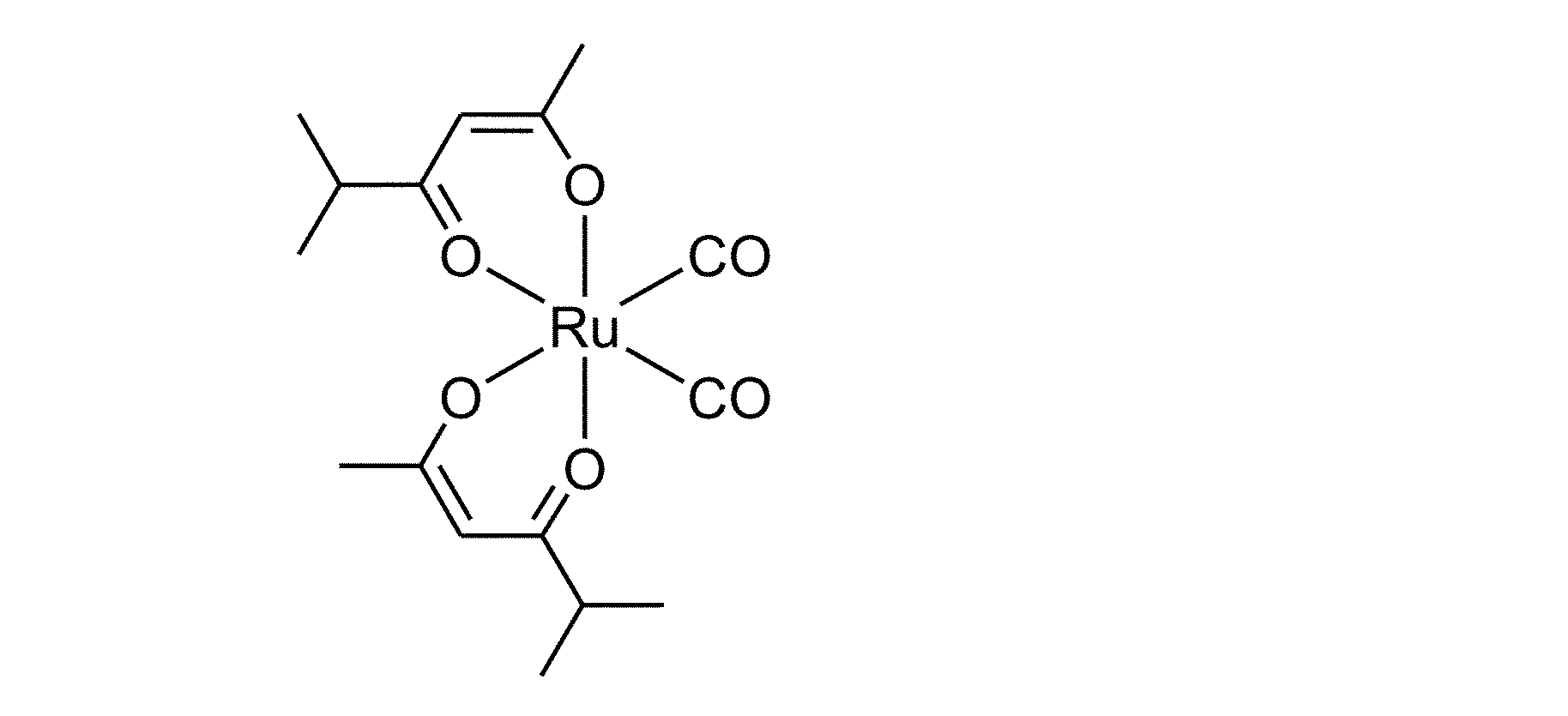
- the organic ruthenium compound (Ru complex 1) of Chemical Formula 1 will be described as an example.
- the raw material composed of this organic ruthenium compound is a pale yellow liquid at room temperature. According to the inventors of the present invention, if the heating temperature for vaporizing the organic ruthenium compound is set to 100° C. or higher and the heating is continued for about one month, red discoloration and precipitation of red powder may be observed.
- the heating temperature of the raw material is an important parameter that affects the amount of raw material gas produced. Efficient production of ruthenium thin films is necessary for mass production of semiconductor devices. For this purpose, it is necessary to introduce a large amount of raw material gas onto the substrate by increasing the amount of raw material used and raising the heating temperature to raise the vapor pressure of the raw material. However, such an increase in heating temperature can cause red discoloration and generation of red powder.
- discoloration and red powder generated in the raw material may remain in the thin film as particles. Therefore, discoloration and powder generation of the raw material must be avoided before it is introduced into the substrate.
- the present invention clarifies the factors that cause discoloration and powder precipitation when heated to high temperatures with respect to raw materials for chemical vapor deposition containing the organic ruthenium compound of Chemical Formula 2 including Chemical Formula 1 as a main component, and The purpose is to provide those that are suppressed. Also provided is a technique for forming a stable ruthenium thin film while applying a raw material for chemical vapor deposition comprising the organic ruthenium compound of Chemical Formula 2.
- the present inventors decided to confirm the reproducibility of the occurrence of discoloration and powder precipitation in the organic ruthenium compound of chemical formula 2, and to investigate the factors therefor. If the discoloration and powder generation of the organic ruthenium compound are caused by an irreversible factor such as decomposition of the organic ruthenium compound, it should be avoided to continue using the source gas at a temperature higher than that temperature. . This is because there is a possibility that the quality of the thin film obtained by film formation is deteriorated, and there is a risk of inducing rapid thermal decomposition of the raw material compound. On the other hand, if the cause of discoloration and powder generation is not decomposition and the like but reversible change, the possibility of suppression can be affirmed even if the heating temperature is increased.
- the present inventors have considered that the cause of the discoloration and powder generation in the organic ruthenium compound of Chemical Formula 2 lies in the reversible change to an intermediate compound that passes through in the process of synthesizing the organic ruthenium. .
- the details of this reversible transformation of the organic ruthenium compound will be described in relation to the synthesis process of the organic ruthenium compound.
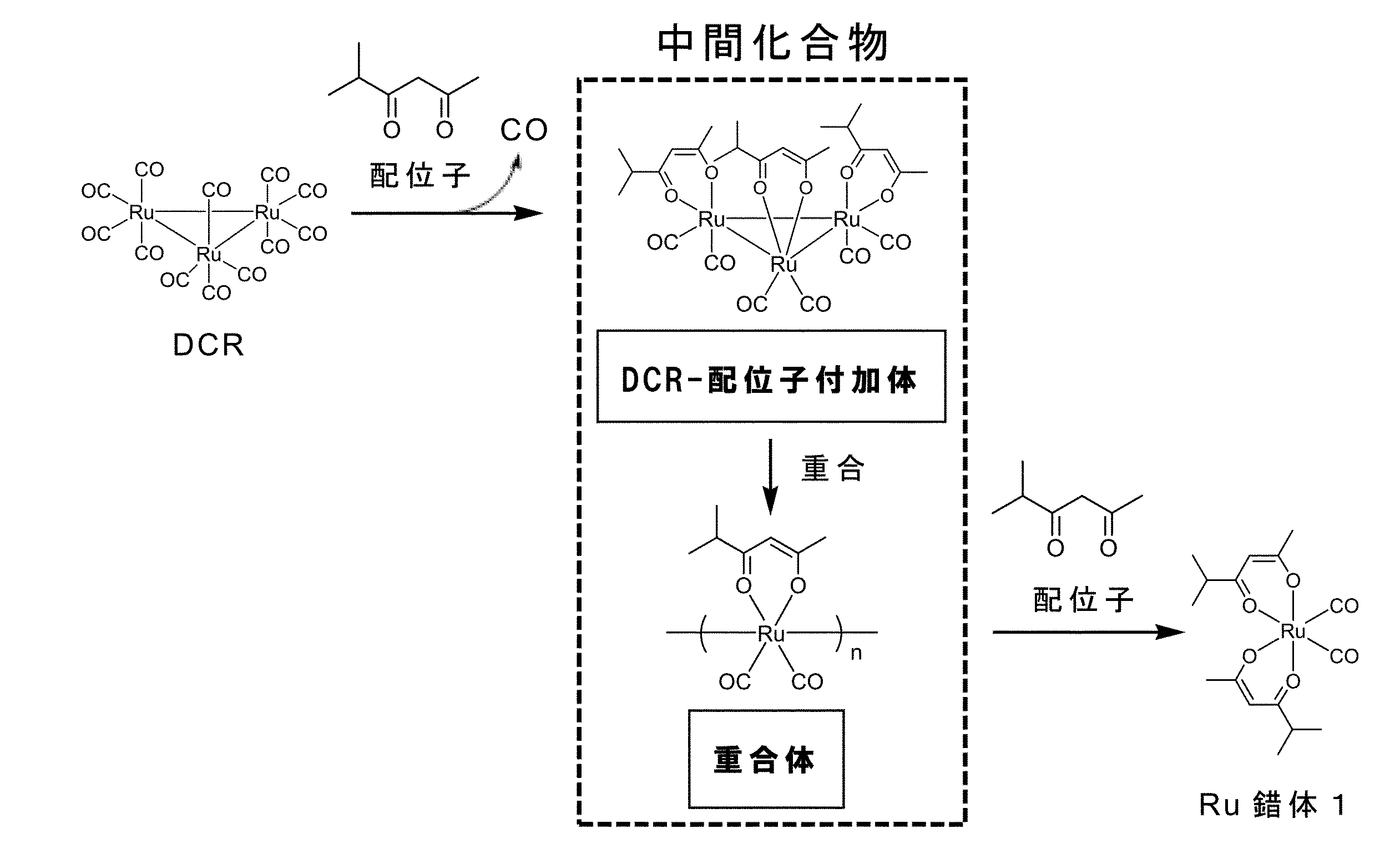
- the organic ruthenium compound of chemical formula 2 is synthesized by using dodecacarbonyl triruthenium (DCR) as a starting material and reacting DCR with ⁇ -diketone. This synthesis process is explained by taking the organic ruthenium compound (Ru complex 1) of Chemical Formula 1 as an example, and is represented by the following reaction formula.
- DCR dodecacarbonyl triruthenium
- the present inventors have found, from observation of the appearance when performing the synthesis reaction, that in the above synthesis reaction, several intermediate compounds are passed through until the formation of the organic ruthenium compound. Specifically, as shown in the following formula, in the process of producing an organic ruthenium compound, DCR and ⁇ -diketone react, and one ⁇ -diketone (ligand) and two carbonyls are coordinated to one Ru. A compound (termed “DCR-ligand adduct”) is produced. Then, the DCR-ligand adduct becomes a polymer through a polymerization reaction, which lowers the solubility and causes precipitation.
- the inventors of the present invention considered that the cause of the discoloration and the generation of red powder when the organic ruthenium compound was heated to a high temperature was the generation of intermediate compounds such as the DCR-ligand adducts and polymers described above ( Hereinafter, these intermediate compounds may be referred to as "polymers, etc.”). That is, when the organic ruthenium compound is heated to a high temperature, part of the organic ruthenium compound returns to a polymer or the like due to a reverse reaction, which causes discoloration or the like.
- the present inventors considered that the generation of polymers, etc. by the above-mentioned reverse reaction is a phenomenon different from thermal decomposition. It is considered that the above polymer is produced by elimination of one ⁇ -diketone from the organic ruthenium compound at high temperature. It is also believed that the above DCR-ligand adduct is produced by decomposition of the polymer. Therefore, it is considered that if the elimination of ⁇ -diketone can be suppressed, no polymer is produced and no DCR-ligand adduct is produced. It is presumed that the suppression of the production of these polymers ensures the stability of the organic ruthenium compound.
- the addition of the same ⁇ -diketone ligand to the raw material for chemical vapor deposition composed of an organic ruthenium compound can suppress the formation of polymers and the like even at high temperatures.
- the inventors have found that it can be used as a raw material for chemical vapor deposition, and have arrived at the present invention.
- the present invention which solves the above problems, is a raw material for chemical vapor deposition for producing a ruthenium thin film or a ruthenium compound thin film by a chemical vapor deposition method.
- the raw material for chemical vapor deposition is characterized by containing the same ⁇ -diketone as the ligand of the organic ruthenium compound.
- raw material for chemical vapor deposition is sometimes simply referred to as "raw material” in order to simplify the explanation.
- the organic ruthenium compound "the same ⁇ -diketone as the ligand of the organic ruthenium compound” constituting the raw material of the present invention may be referred to as a "ligand”.
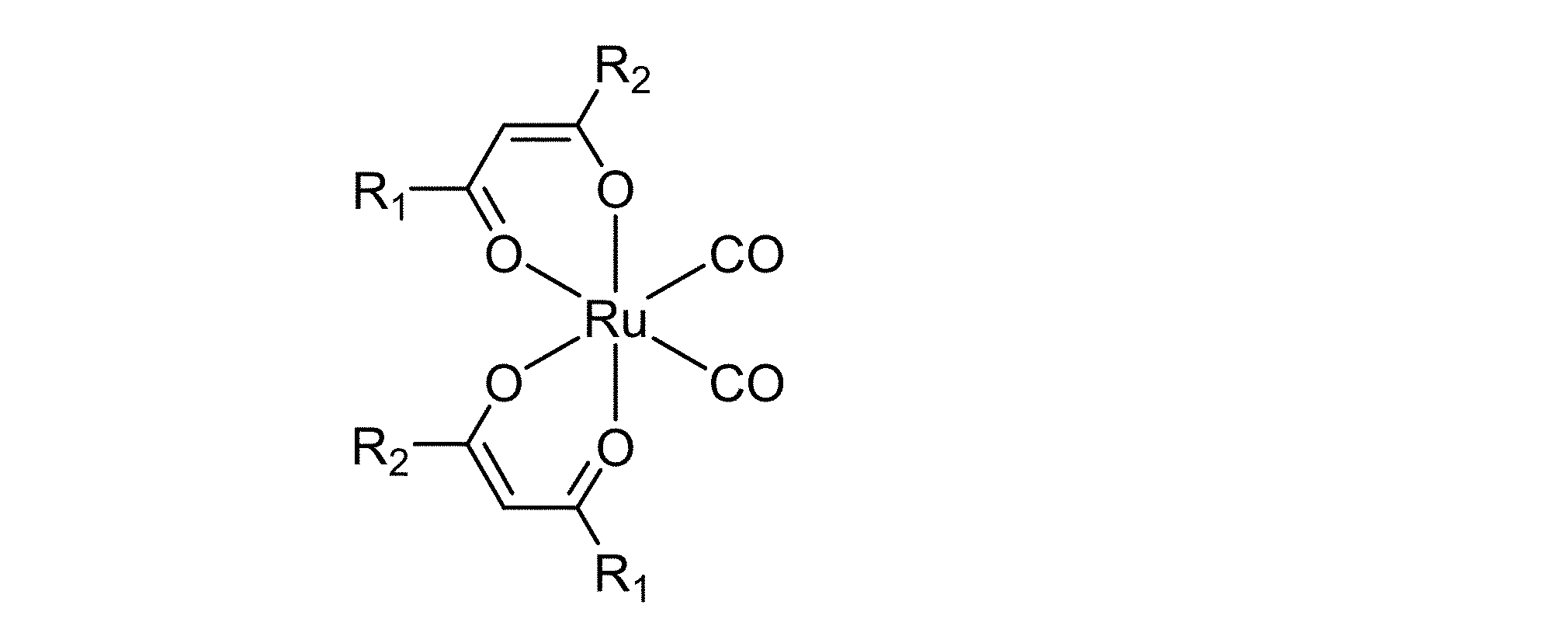
- the raw material for chemical vapor deposition according to the present invention is composed of the organic ruthenium compound represented by Chemical Formula 5 and the same ⁇ -diketone as its ligand. Each configuration will be described below.
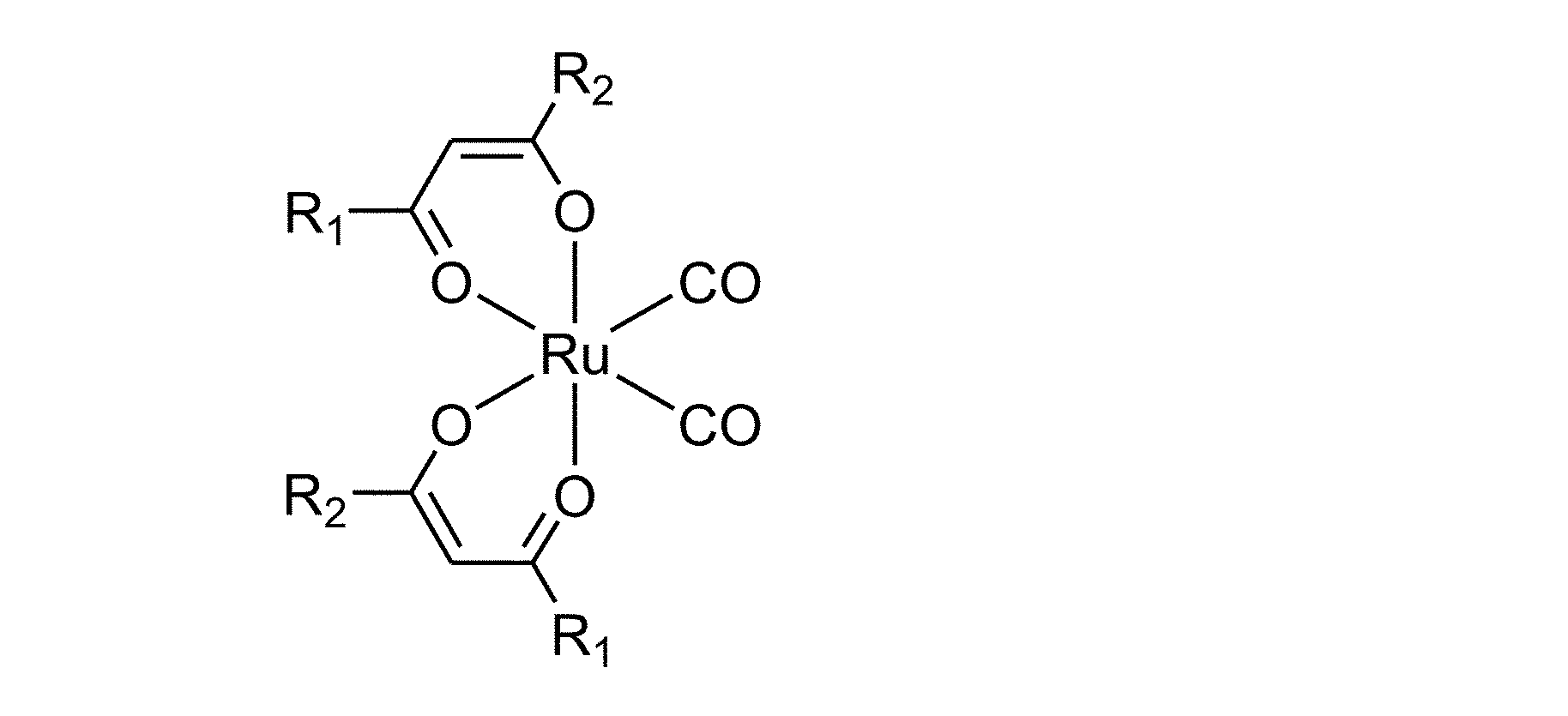
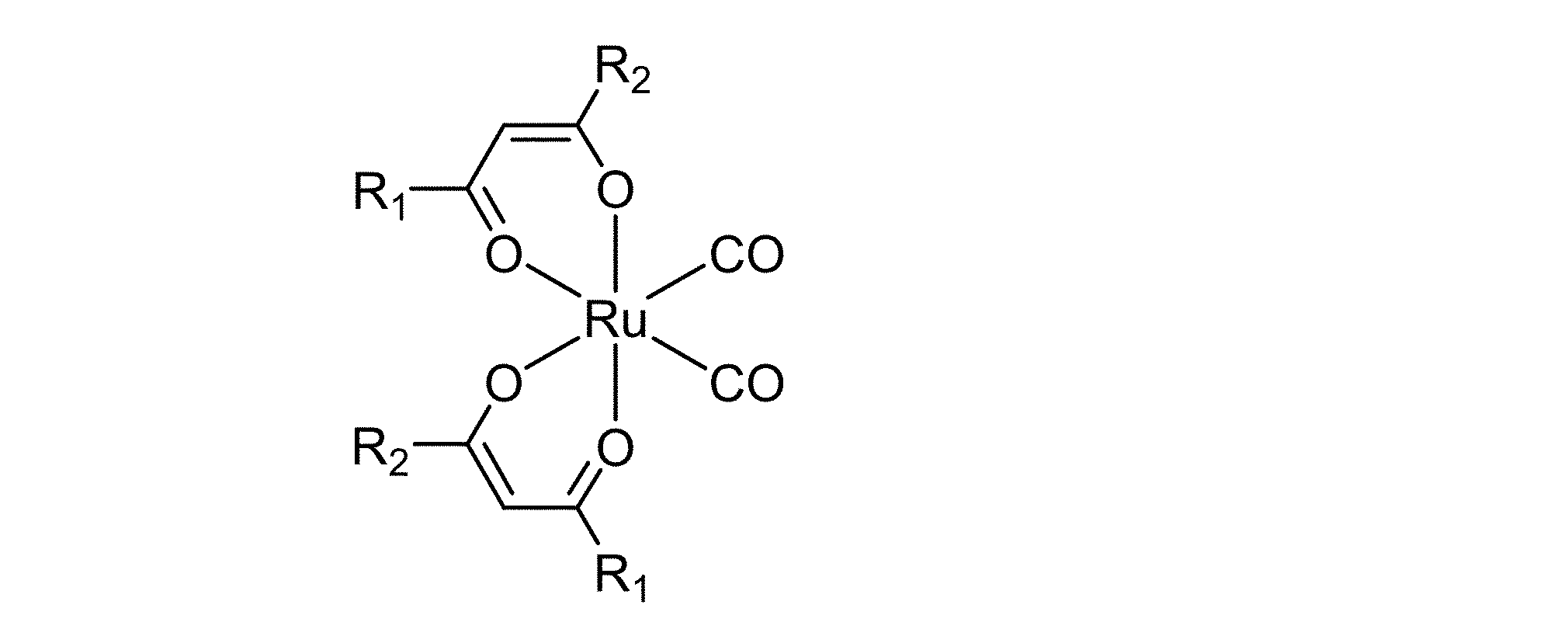
- the organic ruthenium compound which is the main component of the raw material for chemical vapor deposition of the present invention, is an organic ruthenium compound having the structure shown in chemical formula 5 above, in which ruthenium has two ⁇ -diketones and two carbonyls. It is a coordinated compound.
- the ⁇ -diketone has substituents R 1 and R 2 , each of which is hydrogen or a linear or branched alkyl group.
- R 1 and R 2 of the ⁇ -diketone of the organic ruthenium compound are hydrogen or linear or branched alkyl groups. This is to ensure the properties that are preferentially required as.
- Both R 1 and R 2 may be hydrogen.
- At least one of R 1 and R 2 may be a linear or branched alkyl group.
- the substituent R 1 or R 2 of the ⁇ -diketone is an alkyl group, it is preferably a linear or branched alkyl group having 2 or more and 4 or less carbon atoms.
- Preferred specific examples of the organic ruthenium compound applicable in the present invention include the following organic ruthenium compounds.
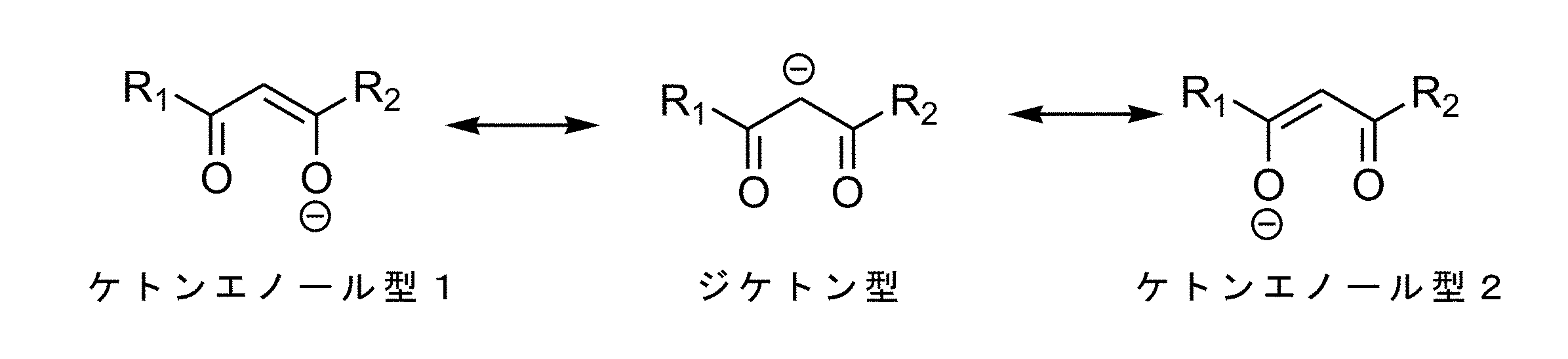
- the ruthenium complex (organoruthenium compound) is formed by coordination of Ru with an anion generated from ⁇ -diketone. At this time, the following anions are generated from ⁇ -diketone.
- ruthenium complex In an actual ruthenium complex, it is rare for a single anion out of the three types of anions described above to be coordinated, and it is often coordinated as a resonance anion in which multiple types of anions are mixed. Also, the shape of the anion in the complex is closer to the ketone enol type anions 1 and 2 having a negative charge on oxygen than to the diketone type anion having a negative charge on carbon. In the present specification, for the sake of formality, the structural formula of the ligand of the ruthenium complex is shown using a ketone enol type anion.
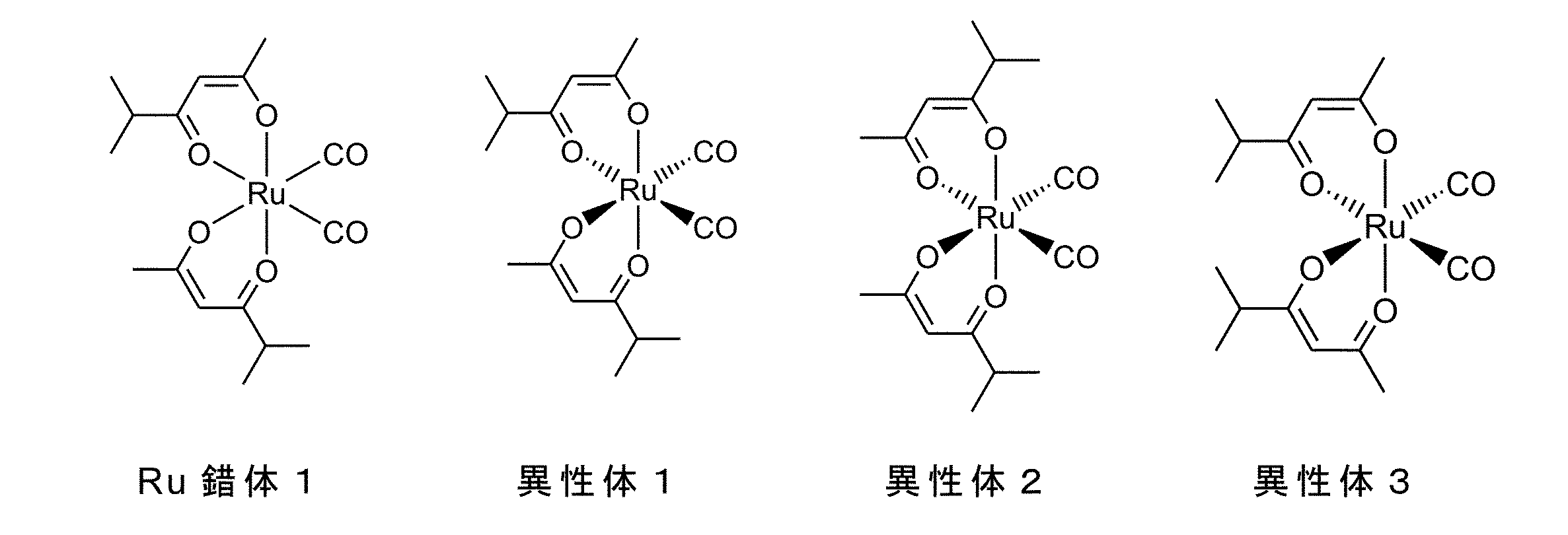
- the ruthenium complex applied in the present invention has a hexacoordinated octahedral coordination structure. It is a complex in which two carbonyl groups are coordinated in cis form. Therefore, when the substituents R 1 and R 2 of the ⁇ -diketone ligand are different, the ruthenium complex may have structural isomers.
- Ru complex 1 of Chemical formula 1 has the following three structural isomers. Structural formulas of ruthenium complexes are presented herein in an isomer-insensitive manner. However, when isomers are included, complexes of all structures are included in the scope of application of this case.
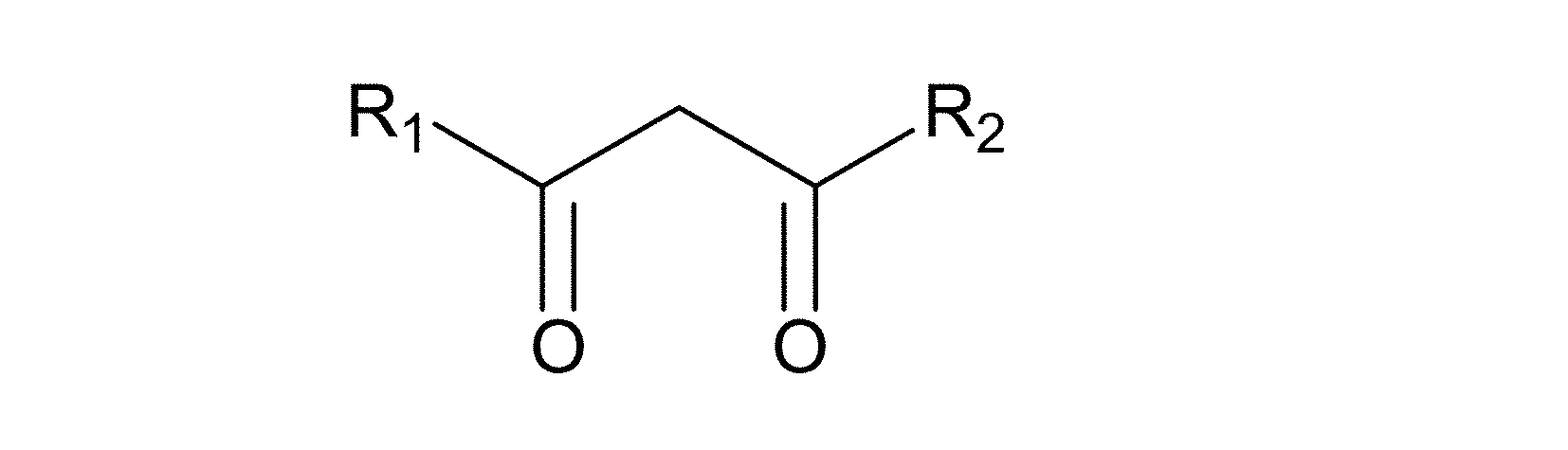
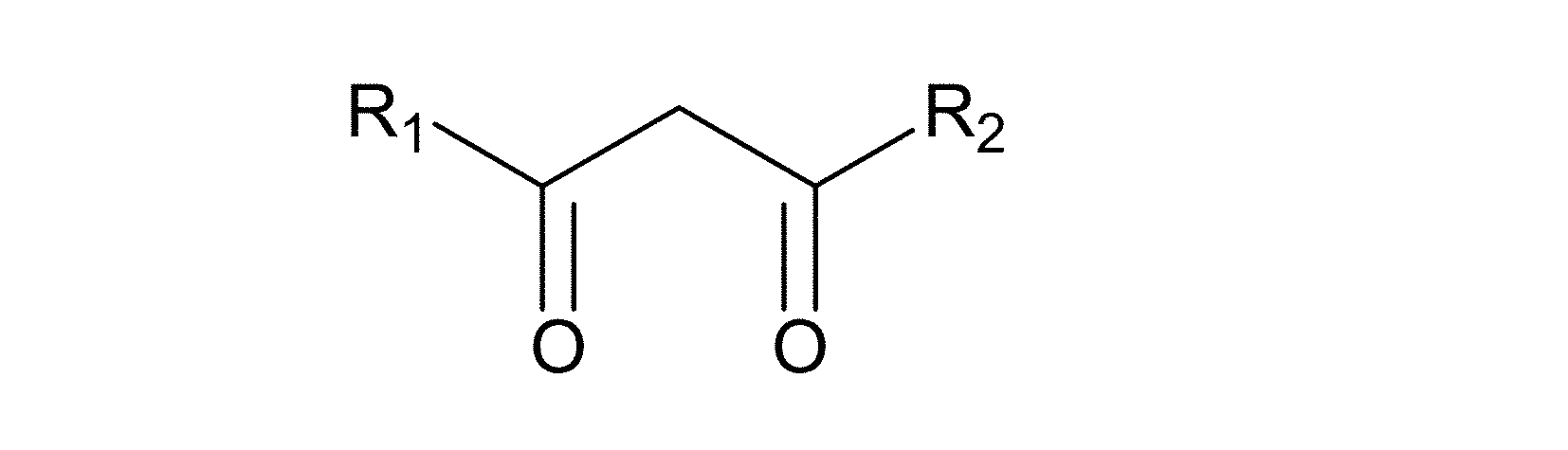
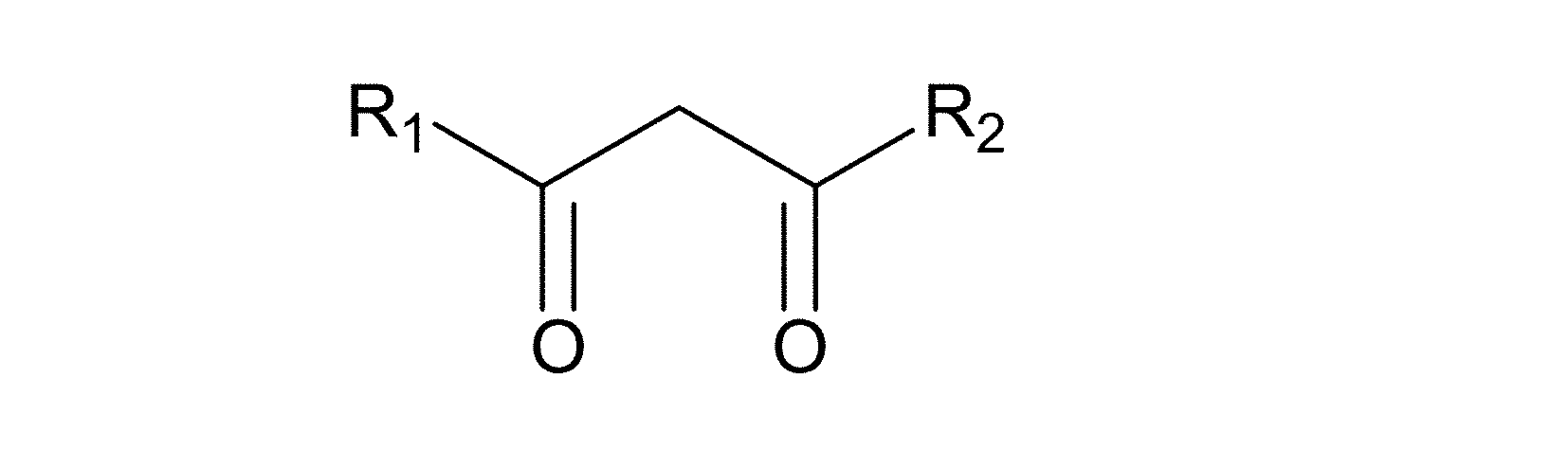
- the raw material for chemical vapor deposition according to the present invention is constituted by adding the ⁇ -diketone shown in Chemical Formula 6 to the organic ruthenium compound of Chemical Formula 5 described above.
- This ligand has the same substituents R 1 and R 2 as the organic ruthenium compound that is the main component of the raw material for chemical vapor deposition.
- the preferred ranges are, of course, the same as the substituents R 1 and R 2 of the organic ruthenium compound described above.
- the ligand has tautomers such as a diketone body and a ketone enol body as shown in chemical formula 9 below.
- tautomers such as a diketone body and a ketone enol body as shown in chemical formula 9 below.
- the ketone enol forms 1 and 2 shown in Chemical Formula 9 below the ketone and the alcohol are cis-bonded with respect to the double bond, but depending on the configuration of R 1 and R 2 , there are trans-type ketone enol forms.
- ligands are represented by structural formulas of diketone bodies.
- the ⁇ -diketone in the present invention is meant to include the above isomers.
- the ⁇ -diketone in the present invention also includes a mixture of these isomers.
- the ligand content is preferably 0.3% by mass or more and 10% by mass or less with respect to the mass of the organic ruthenium compound. If it is less than 0.3% by mass, it becomes difficult to suppress the formation of polymers and the like at high temperatures, resulting in discoloration of the raw material and powder precipitation. On the other hand, even if it exceeds 10% by mass, there is no difference in the effect of suppressing the formation of polymers and the like. Also, if excessive ligands are added, the physical properties and vaporization characteristics of the raw material as a whole may change, which may affect the film formation process.
- the content of this ligand is more preferably 0.4% by mass or more and 5% by mass or less, and particularly preferably 0.5% by mass or more and 5% by mass or less.
- the content of ligands in raw materials for chemical vapor deposition can be quantified by composition analysis such as NMR.
- composition analysis such as NMR
- a signal derived from the added ligand appears.
- the molar composition ratio and mass ratio of the ligand can be calculated from the signal integration ratio.
- the chemical vapor deposition method according to the present invention can be roughly divided into the following three patterns depending on the mode of addition of the ligand to the raw material (raw material gas) for chemical vapor deposition. be.
- This chemical vapor deposition method is the above-described chemical vapor deposition method for a ruthenium thin film or ruthenium compound thin film, wherein the raw material for chemical vapor deposition according to the present invention is It is a chemical vapor deposition method characterized by using raw materials.
- the raw material for chemical vapor deposition according to the present invention to which a ligand has been added in advance is used and heated to a desired temperature, so that the raw material gas is quickly released without discoloration or generation of powder. can be generated.
- the first chemical vapor deposition method is characterized only by using the raw material for chemical vapor deposition according to the present invention as a raw material, and the steps after heating the raw material to generate the raw material gas are the same as those of the conventional chemical vapor deposition method. is.
- the organic ruthenium compound according to the present invention can be heated as it is, or a solution dissolved in an appropriate solvent may be heated.
- the heating temperature of the raw material in this step is preferably 0° C. or higher and 300° C. or lower.
- the contained ligand enhances the thermal stability of the organic ruthenium compound, and the possibility of forming a polymer or the like is low, so high temperature heating of 200° C. or higher is possible.
- the raw material can be heated multiple times before the raw material gas is introduced into the reactor. For example, it is possible to heat the raw material in two steps, first heating it at a relatively low temperature (150° C. or less) and vaporizing it, and then heating it at a high temperature.
- the source gas is combined with an appropriate carrier gas and transported onto the substrate.
- a carrier gas it is preferable to use an inert gas (argon, nitrogen, etc.) as a carrier gas.
- an inert gas argon, nitrogen, etc.
- a reaction gas it is preferable to introduce a reaction gas together with the raw material gas.
- a reducing gas such as hydrogen can be used as the reactive gas.
- Reducing gas species such as ammonia, hydrazine, and formic acid can be used as the reaction gas in addition to hydrogen, and the use of these reaction gases is preferable from the viewpoint of preventing oxidation of the ruthenium thin film and the substrate.
- the organic ruthenium compound applied in the present invention can be decomposed using oxygen as a reaction gas. Therefore, oxygen can be applied as a reactive gas when the application of oxygen gas is not avoided. Since these reaction gases can also serve as a carrier gas, it is not essential to apply the carrier gas made up of the above-described inert gas or the
- the raw material gas is then transported to the reactor together with a carrier gas and an appropriate reaction gas and heated on the substrate surface to form a ruthenium thin film.
- the conditions set for the conventional ruthenium compound of Formula 2 can be applied. This is because the raw material for chemical vapor deposition according to the present invention does not change the vaporization characteristics and decomposition characteristics of the organic ruthenium compound.
- the film formation temperature during film formation is preferably 100° C. or more and 400° C. or less. If the temperature is less than 100° C., the decomposition reaction of the organic ruthenium compound is difficult to proceed, and efficient film formation is not possible. On the other hand, if the film formation temperature exceeds 400° C., it becomes difficult to form a uniform film, and there are concerns about damage to the substrate.
- the film formation temperature is usually adjusted by the heating temperature of the substrate.
- the second chemical vapor deposition method according to the present invention uses a raw material consisting only of an organic ruthenium compound as in the conventional method, but before or after generation of the raw material gas It is a method of adding a ligand to the raw material inside. That is, using an organic ruthenium compound represented by the following chemical vapor deposition raw material, before or during the heating of the chemical vapor deposition raw material, the same ligand as the organic ruthenium compound represented by the following chemical vapor deposition A chemical vapor deposition method characterized by adding a ⁇ -diketone.
- the compound raw material consisting of only the organic ruthenium compound of Chemical formula 10 is an organic compound that may directly affect the reaction for forming a ruthenium thin film (decomposition reaction of the organic ruthenium compound/precipitation reaction of ruthenium). It means that it does not contain In other words, it does not exclude the use of solvents and additives that cannot directly contribute to the film-forming reaction. Therefore, the organic ruthenium compound of Formula 10 may be heated as it is, or a solution dissolved in an appropriate solvent may be heated.
- the ligand may be added directly to the raw material container, or a pipe for ligand addition may be installed in the raw material container, You may add via the said piping.
- the amount of the ligand added is preferably 0.3% by mass or more and 10% by mass or less, more preferably 0.4% by mass or more and 5% by mass or less, relative to the mass of the organic ruthenium compound. , 0.5% by mass or more and 5% by mass or less.
- the film formation method and conditions after adding the ligand to the raw material can be the same as the first chemical vapor deposition method.
- the conditions for the raw material heating temperature, the reaction gas/carrier gas, and the film forming temperature may be the same as those in the first chemical vapor deposition method.
- the content of ligands may increase, in which case the vaporization characteristics of the raw material as a whole may be affected. Therefore, in the first and second chemical vapor deposition methods, if necessary, the content of the ligand in the raw material is within the range of 0.3% by mass or more and 10% by mass or less with respect to the mass of the organic ruthenium compound. It may be preferable to keep More preferably, it is in the range of 0.4% by mass or more and 5% by mass or less, and particularly preferably in the range of 0.5% by mass or more and 5% by mass or less.
- a method for maintaining the ligand content in the raw material is to add the ligand to the raw material during film formation.
- an organic ruthenium compound can be added to the raw material.
- a small amount of ligand is added at regular intervals to adjust the ligand content in the raw material.
- the amount and timing of addition of the ligand at this time can be adjusted according to the heating conditions of the raw material and the film forming conditions.
- the mixing ratio of the ligands contained in the raw material gas may be maintained within a predetermined range.
- the mixing ratio of the ligand in the raw material gas is preferably maintained in the range of 0.9% or more and 30% or less in terms of molar ratio with respect to the organic ruthenium compound. More preferably, the molar ratio is in the range of 1.2% or more and 15% by mass or less, and particularly preferably in the range of 1.5% or more and 15% or less.
- the method of adding the ligand to the raw material gas is not particularly limited.
- the pipe of the gas containing the ligand may be merged with the pipe of the raw material gas, or the raw material gas and the ligand may be accommodated in an appropriate vessel or tank and mixed.
- the addition of the ligand only the ligand may be added to the source gas, or the ligand may be added to the source gas after the ligand is mixed with the carrier gas or reaction gas.
- the operation of adding the ligand to the raw material gas may be performed in combination with the addition of the ligand to the raw material described above, or may be performed alone.
- the operations related to the ligand content in the raw material and raw material gas described above have the effect of suppressing the formation of polymers, etc. by compensating for the decrease in the ligand content in the raw material. There is also an effect that the content can be adjusted according to the heating temperature of the raw material. However, these operations are optional rather than essential.
- the present invention regarding the raw material for chemical vapor deposition mainly composed of organic ruthenium of Chemical Formula 2, it is found that the cause of discoloration and powder precipitation at high temperature is the formation of an intermediate compound such as a polymer due to a reverse reaction. Found it. Then, the present invention reveals that a ligand ( ⁇ -diketone) of an organic ruthenium compound is added to the organic ruthenium compound as an effective means for suppressing the formation of polymers and the like.
- the raw material for chemical vapor deposition and the chemical vapor deposition method according to the present invention can produce ruthenium thin films and ruthenium compound thin films more stably than before, while maintaining the favorable properties of the organic ruthenium compound of Chemical Formula 2. In particular, it becomes possible to cope with mass production by increasing the temperature of the raw material gas.
- FIG. 4 is a diagram showing infrared absorption spectra of red powder recovered from the organic ruthenium compound and synthesized red powder (polymer) after the heating test shown in the first embodiment.
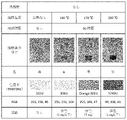
- Fig. 4 is a photograph showing results after heating an organic ruthenium compound at 140°C, 170°C, and 200°C for 80 hours;
- Fig. 3 is a photograph showing the results of a heating test (140°C or 170°C, 7 days) in which ⁇ -diketone, CO, and BHT were added to an organic ruthenium compound.
- 1 is a photograph showing the results of a heating test (200° C., 7 days) conducted by adding 0.1% by mass, 0.25% by mass, 0.5% by mass, and 1% by mass of a ligand to an organic ruthenium compound.
- the organic ruthenium compound of Chemical Formula 2 was subjected to an initial heating test to check for discoloration or powder precipitation during heating, and then to a test to confirm the chemical structure of the powder precipitation. Furthermore, a heating test was conducted to confirm the effect of suppressing discoloration and the like by adding a ligand to the organic ruthenium compound.
- Ru complex 1 (manufactured by Tanaka Kikinzoku Kogyo Co., Ltd., product name: Carish) of Chemical Formula 1 was prepared.
- This organic ruthenium compound is produced by reacting dodecacarbonyltriruthenium (DCR) as a starting material with 5-methylhexane-2,4-dione, and is a yellow transparent liquid at room temperature. 4.00 g of this organic ruthenium compound was weighed in an inert gas atmosphere and sealed in a sealed glass container. Then, the glass container was placed in a heating oven and heated at 140° C., 170° C., and 200° C. for 80 hours. After each sample was heated for 80 hours, it was taken out from the glass container and the appearance of the organic ruthenium compound in the container was observed to confirm the presence or absence of discoloration and powder precipitation.
- DCR dodecacarbonyltriruthenium
- the results of this heating test are shown in Fig. 3.
- the sample heated at 140° C. was a yellow transparent liquid and was in almost the same state as before heating.
- the sample heated at 170° C. turned into an orange liquid, and discoloration was confirmed.
- a red powder precipitate was found at the bottom of the container.
- the sample heated at 200° C. was discolored black and had a small amount of black precipitate.
- Examining the results of this heating test it is believed that the change due to heating at 200° C. is due to thermal decomposition of the organic ruthenium compound. Then, it was confirmed that the discoloration and powder precipitation of the organic ruthenium compound, which are the subject of the present invention, are caused by heating at 170°C.
- the polymer was synthesized. 5.00 g of dodecacarbonyl triruthenium (DCR) (manufactured by Tanaka Kikinzoku Kogyo Co., Ltd., 7.82 mmol), which is a raw material for the polymer, and 3.01 g of 5-methylhexane-2,4-dione (manufactured by Tanaka Kikinzoku Kogyo Co., Ltd. , 23.46 mmol) was added to 100 mL of dry decane. This was heated in an oil bath at 160° C. for 20 hours in a nitrogen gas atmosphere to cause a reaction. After that, it was cooled to room temperature.
- DCR dodecacarbonyl triruthenium
- the red powder when the organic ruthenium compound was heated to 170°C was filtered out from the sample, and about 7 mg of the red powder was recovered.
- the recovered red powder was subjected to elemental analysis and infrared absorption spectrum measurement.
- Table 2 shows the results of elemental analysis of the red powder obtained by the above heating test and the red powder (polymer) obtained by synthesis. Table 2 also shows the theoretical values of the constituent elements and content of the polymer calculated from the molecular structure.
- Fig. 1 shows the infrared absorption spectrum of the red powder obtained by the heating test and the infrared absorption spectrum of the red powder obtained by synthesis. As can be seen from FIG. 1, absorption peaks are observed in the same wavenumber region in both, and it can be determined that both are the same substance.
- the red powder produced by heating the organic ruthenium compound to a high temperature is highly likely to be a polymer, an intermediate compound produced in the process of synthesizing the organic ruthenium compound. be done. Also, discoloration of the organic ruthenium compound is presumed to be similarly caused by the production of the polymer.
- the polymer and the DCR-ligand adduct have the same value. It is not concluded that the factor lies solely in the production of polymer. It cannot be denied that the DCR-ligand adduct is generated along with the production of the polymer or instead of the polymer.
- FIG. 2 shows the 1 H NMR spectrum of the ligand-added organic ruthenium compound. As can be seen from FIG. 2, ligand-derived peaks are clearly observed in the ligand-added organic ruthenium compound. It was confirmed that in the raw material for chemical vapor deposition according to the present invention, even if the amount of ligand added is less than 1% by mass, the presence of the ligand can be easily identified.
- the ligand content can be measured by calculating the molar ratio between the organic ruthenium compound and the ligand based on the NMR peak area.
- the heating test was carried out under the same conditions as the initial heating test, with heating temperatures of 140° C. and 170° C. and a heating time of 7 days.
- Fig. 4 is a photograph showing the results of this heating test.
- the organic ruthenium compound to which the ligand was added maintained the yellow transparent state before the heating test even after being heated at any temperature. In each sample after the heating test, no red/orange discoloration was observed, and no red powder precipitated. On the other hand, both the CO-added sample and the BHT-added sample turned orange upon heating at 140°C.
- adding a ⁇ -diketone having the same structure as the ligand to the organic ruthenium compound is effective in suppressing discoloration and powder precipitation due to heating of the organic ruthenium compound.
- This effect can be said to be an effect that cannot be obtained by adding other ligands (carbonyl ligands) or by general deterioration inhibitors (antioxidants) such as antioxidants.
- the raw material for chemical vapor deposition made of the organic ruthenium compound to which the ligand is added according to the present invention has the effect of suppressing discoloration and powder generation due to the generation of polymers etc. when heated at high temperature. It was confirmed to have
- Second embodiment In this embodiment, a heating test was conducted to confirm the effect of the added amount of the ligand. 0.1% by mass, 0.25% by mass, 0.3% by mass, 0.5% by mass, and 1% by mass with respect to the same organic ruthenium compound (Ru complex 1) (product name: Carish) as in the first embodiment % was prepared with the ligand (5-methylhexane-2,4-dione).
- Ru complex 1 product name: Carish
- a ruthenium thin film formation test was conducted using a raw material for chemical vapor deposition comprising an organic ruthenium compound containing ligands.
- Substrate Si, SiO2 Raw material heating temperature: 180°C Carrier gas: Nitrogen (50 sccm) Reactive gas: hydrogen (500 sccm) Pressure: 4000Pa Substrate temperature: 350°C Film formation time: 60 minutes
- the raw material for chemical vapor deposition and the chemical vapor deposition method according to the present invention in the case of applying a predetermined raw material for chemical vapor deposition mainly composed of organic ruthenium, even if the heating temperature of the raw material is set to a high temperature, the organic ruthenium compound Discoloration and generation of powder can be suppressed. In this case, the characteristics of the organic ruthenium compound can be maintained, and the ruthenium thin film and the ruthenium compound thin film can be produced more stably than before.
- the present invention is useful for manufacturing wiring and electrodes of various semiconductor elements by chemical vapor deposition (CVD, ALD), and is particularly applicable to mass production of these.
Landscapes
- Chemical & Material Sciences (AREA)
- Organic Chemistry (AREA)
- General Chemical & Material Sciences (AREA)
- Chemical Kinetics & Catalysis (AREA)
- Engineering & Computer Science (AREA)
- Materials Engineering (AREA)
- Mechanical Engineering (AREA)
- Metallurgy (AREA)
- Dispersion Chemistry (AREA)
- Chemical Vapour Deposition (AREA)
- Organic Low-Molecular-Weight Compounds And Preparation Thereof (AREA)
- Electrodes Of Semiconductors (AREA)
Abstract
Description


上記の通り、本発明に係る化学蒸着用原料は、化5で示される有機ルテニウム化合物と、その配位子と同じβ-ジケトンから構成される。以下、各構成について説明する。
本発明の化学蒸着用原料の主成分である有機ルテニウム化合物は、上記化5の構造を有する有機ルテニウム化合物であり、ルテニウムに2つのβ-ジケトンと2つのカルボニルが配位した化合物である。β-ジケトンは置換基R1及びR2を有し、置換基R1及びR2は、それぞれ、水素又は直鎖若しくは分鎖のアルキル基である。

本発明に係る化学蒸着用原料は、上記した化5の有機ルテニウム化合物に、化6に示したβ-ジケトンが添加されることで構成される。この配位子は、化学蒸着用原料の主成分となる有機ルテニウム化合物と同一の置換基R1及びR2を有する。その好ましい範囲は、当然に上記した有機ルテニウム化合物の置換基R1及びR2と同じである。

以上説明した本発明に関し、原料となるルテニウム化合物にその配位子と同じβ-ジケトンを添加するという着想は、ルテニウム薄膜及びルテニウム化合物薄膜の化学蒸着法にも有用である。本発明に係る化学蒸着法は、基本的なプロセスは一般的なものと同様である。化学蒸着法では、化学蒸着用原料を加熱して原料ガスとし、原料ガスを基板表面に導入しつつ所定の成膜温度に加熱する。これにより、基板表面で有機ルテニウム化合物の分解とルテニウムの析出が生じてルテニウム薄膜又はルテニウム化合物薄膜が形成される。本発明もこの基本的なプロセスに従う。但し、これまで述べた本発明の特徴に基づき、化学蒸着用原料(原料ガス)への配位子の添加の態様により、本発明に係る化学蒸着法は、下記の3つのパターンに大別される。
この化学蒸着法は、上述のルテニウム薄膜又はルテニウム化合物薄膜の化学蒸着法において、前記化学蒸着用原料として上述した本発明に係る化学蒸着用原料を用いることを特徴とする化学蒸着法である。第1の化学蒸着法では、予め配位子が添加されている本発明に係る化学蒸着用原料を使用して所望の温度に加熱することで、変色や粉末発生させることなく速やかに原料ガスを生成することができる。
本発明に係る第2の化学蒸着方法は、従来と同様に、有機ルテニウム化合物のみからなる原料を用いるが、原料ガスの生成前又は生成中に配位子を原料に添加する方法である。即ち、化学蒸着用原料として下記化10で示される有機ルテニウム化合物を用い、前記化学蒸着用原料の前記加熱の前又は加熱中に、下記化11で示される前記有機ルテニウム化合物の配位子と同じβ-ジケトンを添加することを特徴とする化学蒸着法である。

化学蒸着法では、成膜中は原料を継続的に加熱する。このとき、原料に配位子が含まれている第1、第2の化学蒸着法においては、成膜の進行により原料中の配位子の含有量が変動することがある。例えば、有機ルテニウム化合物と配位子との気化特性の相違や加熱・バブリング条件等により、配位子が先に気化して初期の含有量より減少する可能性がある。そのため、配位子の含有量の減少により、原料中で重合体等が生成する可能性がある。また、逆に配位子の含有量が増加する場合もあり、その場合は原料全体の気化特性に影響が生じるおそれもある。そこで、第1、第2の化学蒸着法では、必要に応じて、原料中の配位子の含有量を、有機ルテニウム化合物の質量に対して0.3質量%以上10質量%以下の範囲内に維持することが好ましい場合がある。より好ましくは、0.4質量%以上5質量%以下の範囲内とし、特に好ましくは、0.5質量%以上5質量%以下の範囲内とする。
有機ルテニウム化合物として、上記化1のRu錯体1(田中貴金属工業株式会社製、製品名:Carish)を用意した。この有機ルテニウム化合物は、出発原料としてドデカカルボニルトリルテニウム(DCR)と5-メチルヘキサン-2,4-ジオンとの反応により製造されたものであり、室温において黄色透明の液体である。この有機ルテニウム化合物を不活性ガス雰囲気中で4.00g秤量し、密閉型ガラス容器に封入した。そして、ガラス容器を加熱用オーブンに設置して、140℃、170℃、200℃で80時間加熱した。各サンプルを80時間加熱後、ガラス容器から取り出して容器内の有機ルテニウム化合物の外観を観察して変色及び粉末沈殿の有無を確認した。
上記加熱試験の170℃で加熱したサンプルで生じた赤色粉末の組成を検討するため、有機ルテニウム化合物の重合体を合成して比較することとした。本発明の対象となる有機ルテニウム化合物(化2)は、DCRに含まれるRuに対して2等量の配位子(β-ジケトン)を反応させることで合成される。そこで、DCRのRuに対して1等量のβ-ジケトンを反応させて有機ルテニウム化合物の合成が未完となるようにすることで、重合体の合成が可能となると考えられる。

(1)有機ルテニウム化合物(化2)を高温加熱することで、「重合体」の理論値と一致する物質(赤色沈殿)が生成する。この物質は、当該有機ルテニウム化合物やDCRとは異なる物質である。
(2)加熱試験で生成した赤色沈殿と合成した赤色沈殿は、共に「重合体」と同じ元素分析値を示す。
以上の予備試験の結果から、化2の有機ルテニウム化合物は、高温(170℃)加熱により変色及び粉末沈殿が生じること、及びその要因が重合体の生成である可能性が高いことが確認された。そこで、配位子の添加による重合体生成の抑制効果を確認した。
g)添加し混合した。配位子を添加した有機ルテニウム化合物の1H NMRスペクトルを図2に示す。図2からわかるように、配位子を添加した有機ルテニウム化合物において、配位子由来のピークが明瞭に観測されている。本発明に係る化学蒸着用原料においては、配位子の添加量が1質量%未満であっても、その存在を容易に識別できることが確認された。尚、NMRのピーク面積に基づき、有機ルテニウム化合物と配位子とのモル比を算出することにより配位子の含有量を測定することができる。
本実施形態では、配位子の添加量による効果確認のための加熱試験を行った。第1実施形態と同じ有機ルテニウム化合物(Ru錯体1)(製品名:Carish) に対して、0.1質量%、0.25質量%、0.3質量%、0.5質量%、1質量%
の配位子(5-メチルヘキサン-2,4-ジオン)を添加した試料を調製した。
本実施形態では、配位子を含む有機ルテニウム化合物からなる化学蒸着用原料を使用したルテニウム薄膜の成膜試験を行った。
原料加熱温度:180℃
キャリアガス:窒素(50sccm)
反応ガス:水素(500sccm)
圧力:4000Pa
基板温度:350℃
成膜時間:60分
Claims (7)
- 化学蒸着法によりルテニウム薄膜又はルテニウム化合物薄膜を製造するための化学蒸着用原料において、
下記化1で示す有機ルテニウム化合物を含み、
更に、下記化2で示される、前記有機ルテニウム化合物の配位子と同じβ-ジケトンを含むことを特徴とする化学蒸着用原料。

- 前記配位子の含有量は、前記有機ルテニウム化合物の質量に対して0.3質量%以上10質量%以下である請求項1記載の化学蒸着用原料。
- 化学蒸着用原料を加熱して原料ガスとし、前記原料ガスを基板表面に導入しつつ加熱するルテニウム薄膜又はルテニウム化合物薄膜の化学蒸着法において、
前記化学蒸着用原料として、請求項1又は請求項2記載の化学蒸着用原料を用いることを特徴とする化学蒸着法。 - 化学蒸着用原料を加熱して原料ガスとし、前記原料ガスを基板表面に導入しつつ加熱するルテニウム薄膜又はルテニウム化合物薄膜の化学蒸着法において、
前記化学蒸着用原料として、下記化3で示される有機ルテニウム化合物からなる化学蒸着用原料を用い、
前記化学蒸着用原料の前記加熱の前又は加熱中に、下記化4で示される前記有機ルテニウム化合物の配位子と同じβ-ジケトンを添加することを特徴とする化学蒸着法。
- 前記配位子の添加量は、前記有機ルテニウム化合物の質量に対して0.3質量%以上10質量%以下である請求項4記載の化学蒸着法。
- 前記化学蒸着用原料に含まれる前記配位子の含有量を、前記有機ルテニウム化合物の質量に対して0.3質量%以上10質量%以下に維持する請求項3~請求項5のいずれかに記載の化学蒸着法。
- 前記原料ガスに含まれる前記配位子の混合比を、有機ルテニウム化合物に対しするモル比で0.9%以上30%以下に維持する請求項3~請求項5のいずれかに記載の化学蒸着法。
Priority Applications (3)
| Application Number | Priority Date | Filing Date | Title |
|---|---|---|---|
| US18/281,267 US20240060176A1 (en) | 2021-03-10 | 2022-02-22 | Raw material for chemical deposition containing organoruthenium compound, and chemical deposition method for ruthenium thin film or ruthenium compound thin film |
| KR1020237032365A KR102960109B1 (ko) | 2021-03-10 | 2022-02-22 | 유기 루테늄 화합물을 포함하는 화학 증착용 원료 및 루테늄 박막 또는 루테늄 화합물 박막의 화학 증착법 |
| US18/938,069 US20250059642A1 (en) | 2021-03-10 | 2024-11-05 | Raw material for chemical deposition containing organoruthenium compound, and chemical deposition method for ruthenium thin film or ruthenium compound thin film |
Applications Claiming Priority (2)
| Application Number | Priority Date | Filing Date | Title |
|---|---|---|---|
| JP2021-038084 | 2021-03-10 | ||
| JP2021038084A JP7075518B1 (ja) | 2021-03-10 | 2021-03-10 | 有機ルテニウム化合物を含む化学蒸着用原料及びルテニウム薄膜又はルテニウム化合物薄膜の化学蒸着法 |
Related Child Applications (2)
| Application Number | Title | Priority Date | Filing Date |
|---|---|---|---|
| US18/281,267 A-371-Of-International US20240060176A1 (en) | 2021-03-10 | 2022-02-22 | Raw material for chemical deposition containing organoruthenium compound, and chemical deposition method for ruthenium thin film or ruthenium compound thin film |
| US18/938,069 Division US20250059642A1 (en) | 2021-03-10 | 2024-11-05 | Raw material for chemical deposition containing organoruthenium compound, and chemical deposition method for ruthenium thin film or ruthenium compound thin film |
Publications (1)
| Publication Number | Publication Date |
|---|---|
| WO2022190844A1 true WO2022190844A1 (ja) | 2022-09-15 |
Family
ID=81746659
Family Applications (1)
| Application Number | Title | Priority Date | Filing Date |
|---|---|---|---|
| PCT/JP2022/007082 Ceased WO2022190844A1 (ja) | 2021-03-10 | 2022-02-22 | 有機ルテニウム化合物を含む化学蒸着用原料及びルテニウム薄膜又はルテニウム化合物薄膜の化学蒸着法 |
Country Status (4)
| Country | Link |
|---|---|
| US (2) | US20240060176A1 (ja) |
| JP (1) | JP7075518B1 (ja) |
| TW (1) | TWI808657B (ja) |
| WO (1) | WO2022190844A1 (ja) |
Cited By (1)
| Publication number | Priority date | Publication date | Assignee | Title |
|---|---|---|---|---|
| WO2025041856A1 (ja) * | 2023-08-24 | 2025-02-27 | ダイキン工業株式会社 | 金属錯体 |
Citations (4)
| Publication number | Priority date | Publication date | Assignee | Title |
|---|---|---|---|---|
| JP2003306472A (ja) * | 2002-04-18 | 2003-10-28 | Tanaka Kikinzoku Kogyo Kk | Cvd用原料化合物及びルテニウム又はルテニウム化合物薄膜の化学気相蒸着方法 |
| JP2012006858A (ja) * | 2010-06-24 | 2012-01-12 | Tanaka Kikinzoku Kogyo Kk | 化学蒸着用の有機ルテニウム化合物及び該有機ルテニウム化合物を用いた化学蒸着方法 |
| JP2013199673A (ja) * | 2012-03-23 | 2013-10-03 | Tokyo Electron Ltd | 酸化ルテニウム膜の成膜方法および酸化ルテニウム膜成膜用処理容器のクリーニング方法 |
| JP2014185353A (ja) * | 2013-03-21 | 2014-10-02 | Tokyo Electron Ltd | ルテニウム膜の形成方法および記憶媒体 |
Family Cites Families (3)
| Publication number | Priority date | Publication date | Assignee | Title |
|---|---|---|---|---|
| JP4152028B2 (ja) * | 1999-01-25 | 2008-09-17 | 株式会社Adeka | ルテニウム系薄膜の製造方法 |
| JP5984624B2 (ja) * | 2012-10-29 | 2016-09-06 | 田中貴金属工業株式会社 | β−ジケトン化合物からの非対称β−ジケトン化合物の抽出方法 |
| JP6043851B1 (ja) * | 2015-09-11 | 2016-12-14 | 田中貴金属工業株式会社 | 有機ルテニウム化合物からなる化学蒸着用原料及び該化学蒸着用原料を用いた化学蒸着法 |
-
2021
- 2021-03-10 JP JP2021038084A patent/JP7075518B1/ja active Active
-
2022
- 2022-02-22 WO PCT/JP2022/007082 patent/WO2022190844A1/ja not_active Ceased
- 2022-02-22 US US18/281,267 patent/US20240060176A1/en active Pending
- 2022-02-22 TW TW111106312A patent/TWI808657B/zh active
-
2024
- 2024-11-05 US US18/938,069 patent/US20250059642A1/en active Pending
Patent Citations (4)
| Publication number | Priority date | Publication date | Assignee | Title |
|---|---|---|---|---|
| JP2003306472A (ja) * | 2002-04-18 | 2003-10-28 | Tanaka Kikinzoku Kogyo Kk | Cvd用原料化合物及びルテニウム又はルテニウム化合物薄膜の化学気相蒸着方法 |
| JP2012006858A (ja) * | 2010-06-24 | 2012-01-12 | Tanaka Kikinzoku Kogyo Kk | 化学蒸着用の有機ルテニウム化合物及び該有機ルテニウム化合物を用いた化学蒸着方法 |
| JP2013199673A (ja) * | 2012-03-23 | 2013-10-03 | Tokyo Electron Ltd | 酸化ルテニウム膜の成膜方法および酸化ルテニウム膜成膜用処理容器のクリーニング方法 |
| JP2014185353A (ja) * | 2013-03-21 | 2014-10-02 | Tokyo Electron Ltd | ルテニウム膜の形成方法および記憶媒体 |
Cited By (2)
| Publication number | Priority date | Publication date | Assignee | Title |
|---|---|---|---|---|
| WO2025041856A1 (ja) * | 2023-08-24 | 2025-02-27 | ダイキン工業株式会社 | 金属錯体 |
| JP2025031687A (ja) * | 2023-08-24 | 2025-03-07 | ダイキン工業株式会社 | 金属錯体 |
Also Published As
| Publication number | Publication date |
|---|---|
| US20240060176A1 (en) | 2024-02-22 |
| JP7075518B1 (ja) | 2022-05-25 |
| KR20230147703A (ko) | 2023-10-23 |
| TWI808657B (zh) | 2023-07-11 |
| US20250059642A1 (en) | 2025-02-20 |
| JP2022138287A (ja) | 2022-09-26 |
| TW202248187A (zh) | 2022-12-16 |
Similar Documents
| Publication | Publication Date | Title |
|---|---|---|
| TWI546308B (zh) | A method for producing a film containing molybdenum oxide, a raw material for forming a film containing molybdenum oxide, and a compound of molybdenum amide (MOLYBDENUM AMIDE) | |
| TWI713747B (zh) | 釩化合物、薄膜形成用原料及薄膜之製造方法 | |
| JP7372352B2 (ja) | 有機ルテニウム化合物からなる化学蒸着用原料及び該化学蒸着用原料を用いた化学蒸着法 | |
| KR102763981B1 (ko) | 몰리브데늄 전구체 화합물, 이의 제조방법, 및 이를 이용한 몰리브데늄-함유 막의 증착 방법 | |
| JPWO2020071175A1 (ja) | 原子層堆積法用薄膜形成用原料、薄膜形成用原料、薄膜の製造方法および化合物 | |
| EP3712159B1 (en) | Ruthenium compound, raw material for forming thin film, and method for producing thin film | |
| EP3342899A1 (en) | Chemical vapor deposition starting material comprising a binuclear ruthenium complex and chemical vapor deposition method using chemical vapor deposition starting material | |
| WO2016181918A1 (ja) | 異種複核錯体からなる化学蒸着用原料及び該化学蒸着用原料を用いた化学蒸着法 | |
| US20250059642A1 (en) | Raw material for chemical deposition containing organoruthenium compound, and chemical deposition method for ruthenium thin film or ruthenium compound thin film | |
| JP2017505858A (ja) | 無機薄膜の生成方法 | |
| TWI861916B (zh) | 以化學蒸鍍法進行的釕薄膜或釕化合物薄膜之製造方法及釕薄膜或釕化合物薄膜 | |
| KR20220014227A (ko) | 코발트 화합물, 이를 포함하는 전구체 조성물, 및 이를 이용한 박막의 제조방법 | |
| KR102960109B1 (ko) | 유기 루테늄 화합물을 포함하는 화학 증착용 원료 및 루테늄 박막 또는 루테늄 화합물 박막의 화학 증착법 | |
| JP6321252B1 (ja) | イリジウム錯体からなる化学蒸着用原料及び該化学蒸着用原料を用いた化学蒸着法 | |
| TW201329092A (zh) | 鋁化合物、薄膜形成用原料及薄膜之製造方法 | |
| JP7478731B2 (ja) | 有機マンガン化合物からなる化学蒸着用原料及び該化学蒸着用原料を用いた化学蒸着法 | |
| CN111954674A (zh) | 铝前体和生成含金属膜的方法 | |
| WO2025052926A1 (ja) | 薄膜形成用原料、薄膜、薄膜の製造方法及びランタン化合物 | |
| JP5913663B2 (ja) | モリブデンアミド化合物 | |
| Reitfort | New single source precursors for MOCVD of tungsten carbonitride thin films |
Legal Events
| Date | Code | Title | Description |
|---|---|---|---|
| 121 | Ep: the epo has been informed by wipo that ep was designated in this application |
Ref document number: 22766807 Country of ref document: EP Kind code of ref document: A1 |
|
| WWE | Wipo information: entry into national phase |
Ref document number: 18281267 Country of ref document: US |
|
| ENP | Entry into the national phase |
Ref document number: 20237032365 Country of ref document: KR Kind code of ref document: A |
|
| WWE | Wipo information: entry into national phase |
Ref document number: 1020237032365 Country of ref document: KR |
|
| NENP | Non-entry into the national phase |
Ref country code: DE |
|
| 122 | Ep: pct application non-entry in european phase |
Ref document number: 22766807 Country of ref document: EP Kind code of ref document: A1 |