WO2022190648A1 - 非水系電解液および電気化学デバイス - Google Patents
非水系電解液および電気化学デバイス Download PDFInfo
- Publication number
- WO2022190648A1 WO2022190648A1 PCT/JP2022/001663 JP2022001663W WO2022190648A1 WO 2022190648 A1 WO2022190648 A1 WO 2022190648A1 JP 2022001663 W JP2022001663 W JP 2022001663W WO 2022190648 A1 WO2022190648 A1 WO 2022190648A1
- Authority
- WO
- WIPO (PCT)
- Prior art keywords
- atom
- metal
- group
- electrolytic solution
- organic
- Prior art date
- Legal status (The legal status is an assumption and is not a legal conclusion. Google has not performed a legal analysis and makes no representation as to the accuracy of the status listed.)
- Ceased
Links
Images


Classifications
-
- H—ELECTRICITY
- H01—ELECTRIC ELEMENTS
- H01M—PROCESSES OR MEANS, e.g. BATTERIES, FOR THE DIRECT CONVERSION OF CHEMICAL ENERGY INTO ELECTRICAL ENERGY
- H01M10/00—Secondary cells; Manufacture thereof
- H01M10/05—Accumulators with non-aqueous electrolyte
- H01M10/056—Accumulators with non-aqueous electrolyte characterised by the materials used as electrolytes, e.g. mixed inorganic/organic electrolytes
- H01M10/0564—Accumulators with non-aqueous electrolyte characterised by the materials used as electrolytes, e.g. mixed inorganic/organic electrolytes the electrolyte being constituted of organic materials only
- H01M10/0566—Liquid materials
- H01M10/0567—Liquid materials characterised by the additives
-
- C—CHEMISTRY; METALLURGY
- C07—ORGANIC CHEMISTRY
- C07D—HETEROCYCLIC COMPOUNDS
- C07D233/00—Heterocyclic compounds containing 1,3-diazole or hydrogenated 1,3-diazole rings, not condensed with other rings
- C07D233/54—Heterocyclic compounds containing 1,3-diazole or hydrogenated 1,3-diazole rings, not condensed with other rings having two double bonds between ring members or between ring members and non-ring members
- C07D233/56—Heterocyclic compounds containing 1,3-diazole or hydrogenated 1,3-diazole rings, not condensed with other rings having two double bonds between ring members or between ring members and non-ring members with only hydrogen atoms or radicals containing only hydrogen and carbon atoms, attached to ring carbon atoms
-
- C—CHEMISTRY; METALLURGY
- C07—ORGANIC CHEMISTRY
- C07D—HETEROCYCLIC COMPOUNDS
- C07D233/00—Heterocyclic compounds containing 1,3-diazole or hydrogenated 1,3-diazole rings, not condensed with other rings
- C07D233/54—Heterocyclic compounds containing 1,3-diazole or hydrogenated 1,3-diazole rings, not condensed with other rings having two double bonds between ring members or between ring members and non-ring members
- C07D233/66—Heterocyclic compounds containing 1,3-diazole or hydrogenated 1,3-diazole rings, not condensed with other rings having two double bonds between ring members or between ring members and non-ring members with hetero atoms or with carbon atoms having three bonds to hetero atoms with at the most one bond to halogen, e.g. ester or nitrile radicals, directly attached to ring carbon atoms
- C07D233/68—Halogen atoms
-
- C—CHEMISTRY; METALLURGY
- C07—ORGANIC CHEMISTRY
- C07D—HETEROCYCLIC COMPOUNDS
- C07D233/00—Heterocyclic compounds containing 1,3-diazole or hydrogenated 1,3-diazole rings, not condensed with other rings
- C07D233/54—Heterocyclic compounds containing 1,3-diazole or hydrogenated 1,3-diazole rings, not condensed with other rings having two double bonds between ring members or between ring members and non-ring members
- C07D233/66—Heterocyclic compounds containing 1,3-diazole or hydrogenated 1,3-diazole rings, not condensed with other rings having two double bonds between ring members or between ring members and non-ring members with hetero atoms or with carbon atoms having three bonds to hetero atoms with at the most one bond to halogen, e.g. ester or nitrile radicals, directly attached to ring carbon atoms
- C07D233/90—Carbon atoms having three bonds to hetero atoms with at the most one bond to halogen, e.g. ester or nitrile radicals
-
- C—CHEMISTRY; METALLURGY
- C07—ORGANIC CHEMISTRY
- C07D—HETEROCYCLIC COMPOUNDS
- C07D233/00—Heterocyclic compounds containing 1,3-diazole or hydrogenated 1,3-diazole rings, not condensed with other rings
- C07D233/54—Heterocyclic compounds containing 1,3-diazole or hydrogenated 1,3-diazole rings, not condensed with other rings having two double bonds between ring members or between ring members and non-ring members
- C07D233/66—Heterocyclic compounds containing 1,3-diazole or hydrogenated 1,3-diazole rings, not condensed with other rings having two double bonds between ring members or between ring members and non-ring members with hetero atoms or with carbon atoms having three bonds to hetero atoms with at the most one bond to halogen, e.g. ester or nitrile radicals, directly attached to ring carbon atoms
- C07D233/91—Nitro radicals
-
- C—CHEMISTRY; METALLURGY
- C07—ORGANIC CHEMISTRY
- C07D—HETEROCYCLIC COMPOUNDS
- C07D233/00—Heterocyclic compounds containing 1,3-diazole or hydrogenated 1,3-diazole rings, not condensed with other rings
- C07D233/54—Heterocyclic compounds containing 1,3-diazole or hydrogenated 1,3-diazole rings, not condensed with other rings having two double bonds between ring members or between ring members and non-ring members
- C07D233/66—Heterocyclic compounds containing 1,3-diazole or hydrogenated 1,3-diazole rings, not condensed with other rings having two double bonds between ring members or between ring members and non-ring members with hetero atoms or with carbon atoms having three bonds to hetero atoms with at the most one bond to halogen, e.g. ester or nitrile radicals, directly attached to ring carbon atoms
- C07D233/91—Nitro radicals
- C07D233/92—Nitro radicals attached in position 4 or 5
-
- C—CHEMISTRY; METALLURGY
- C07—ORGANIC CHEMISTRY
- C07D—HETEROCYCLIC COMPOUNDS
- C07D235/00—Heterocyclic compounds containing 1,3-diazole or hydrogenated 1,3-diazole rings, condensed with other rings
- C07D235/02—Heterocyclic compounds containing 1,3-diazole or hydrogenated 1,3-diazole rings, condensed with other rings condensed with carbocyclic rings or ring systems
- C07D235/04—Benzimidazoles; Hydrogenated benzimidazoles
- C07D235/06—Benzimidazoles; Hydrogenated benzimidazoles with only hydrogen atoms, hydrocarbon or substituted hydrocarbon radicals, directly attached in position 2
- C07D235/08—Radicals containing only hydrogen and carbon atoms
-
- C—CHEMISTRY; METALLURGY
- C07—ORGANIC CHEMISTRY
- C07D—HETEROCYCLIC COMPOUNDS
- C07D249/00—Heterocyclic compounds containing five-membered rings having three nitrogen atoms as the only ring hetero atoms
- C07D249/02—Heterocyclic compounds containing five-membered rings having three nitrogen atoms as the only ring hetero atoms not condensed with other rings
- C07D249/04—1,2,3-Triazoles; Hydrogenated 1,2,3-triazoles
-
- C—CHEMISTRY; METALLURGY
- C07—ORGANIC CHEMISTRY
- C07D—HETEROCYCLIC COMPOUNDS
- C07D249/00—Heterocyclic compounds containing five-membered rings having three nitrogen atoms as the only ring hetero atoms
- C07D249/02—Heterocyclic compounds containing five-membered rings having three nitrogen atoms as the only ring hetero atoms not condensed with other rings
- C07D249/08—1,2,4-Triazoles; Hydrogenated 1,2,4-triazoles
-
- C—CHEMISTRY; METALLURGY
- C07—ORGANIC CHEMISTRY
- C07D—HETEROCYCLIC COMPOUNDS
- C07D249/00—Heterocyclic compounds containing five-membered rings having three nitrogen atoms as the only ring hetero atoms
- C07D249/02—Heterocyclic compounds containing five-membered rings having three nitrogen atoms as the only ring hetero atoms not condensed with other rings
- C07D249/08—1,2,4-Triazoles; Hydrogenated 1,2,4-triazoles
- C07D249/10—1,2,4-Triazoles; Hydrogenated 1,2,4-triazoles with hetero atoms or with carbon atoms having three bonds to hetero atoms with at the most one bond to halogen, e.g. ester or nitrile radicals, directly attached to ring carbon atoms
-
- C—CHEMISTRY; METALLURGY
- C07—ORGANIC CHEMISTRY
- C07D—HETEROCYCLIC COMPOUNDS
- C07D249/00—Heterocyclic compounds containing five-membered rings having three nitrogen atoms as the only ring hetero atoms
- C07D249/02—Heterocyclic compounds containing five-membered rings having three nitrogen atoms as the only ring hetero atoms not condensed with other rings
- C07D249/08—1,2,4-Triazoles; Hydrogenated 1,2,4-triazoles
- C07D249/10—1,2,4-Triazoles; Hydrogenated 1,2,4-triazoles with hetero atoms or with carbon atoms having three bonds to hetero atoms with at the most one bond to halogen, e.g. ester or nitrile radicals, directly attached to ring carbon atoms
- C07D249/14—Nitrogen atoms
-
- C—CHEMISTRY; METALLURGY
- C07—ORGANIC CHEMISTRY
- C07D—HETEROCYCLIC COMPOUNDS
- C07D473/00—Heterocyclic compounds containing purine ring systems
-
- C—CHEMISTRY; METALLURGY
- C07—ORGANIC CHEMISTRY
- C07F—ACYCLIC, CARBOCYCLIC OR HETEROCYCLIC COMPOUNDS CONTAINING ELEMENTS OTHER THAN CARBON, HYDROGEN, HALOGEN, OXYGEN, NITROGEN, SULFUR, SELENIUM OR TELLURIUM
- C07F3/00—Compounds containing elements of Groups 2 or 12 of the Periodic Table
- C07F3/06—Zinc compounds
-
- H—ELECTRICITY
- H01—ELECTRIC ELEMENTS
- H01G—CAPACITORS; CAPACITORS, RECTIFIERS, DETECTORS, SWITCHING DEVICES, LIGHT-SENSITIVE OR TEMPERATURE-SENSITIVE DEVICES OF THE ELECTROLYTIC TYPE
- H01G11/00—Hybrid capacitors, i.e. capacitors having different positive and negative electrodes; Electric double-layer [EDL] capacitors; Processes for the manufacture thereof or of parts thereof
- H01G11/04—Hybrid capacitors
- H01G11/06—Hybrid capacitors with one of the electrodes allowing ions to be reversibly doped thereinto, e.g. lithium ion capacitors [LIC]
-
- H—ELECTRICITY
- H01—ELECTRIC ELEMENTS
- H01G—CAPACITORS; CAPACITORS, RECTIFIERS, DETECTORS, SWITCHING DEVICES, LIGHT-SENSITIVE OR TEMPERATURE-SENSITIVE DEVICES OF THE ELECTROLYTIC TYPE
- H01G11/00—Hybrid capacitors, i.e. capacitors having different positive and negative electrodes; Electric double-layer [EDL] capacitors; Processes for the manufacture thereof or of parts thereof
- H01G11/54—Electrolytes
- H01G11/58—Liquid electrolytes
- H01G11/60—Liquid electrolytes characterised by the solvent
-
- H—ELECTRICITY
- H01—ELECTRIC ELEMENTS
- H01G—CAPACITORS; CAPACITORS, RECTIFIERS, DETECTORS, SWITCHING DEVICES, LIGHT-SENSITIVE OR TEMPERATURE-SENSITIVE DEVICES OF THE ELECTROLYTIC TYPE
- H01G11/00—Hybrid capacitors, i.e. capacitors having different positive and negative electrodes; Electric double-layer [EDL] capacitors; Processes for the manufacture thereof or of parts thereof
- H01G11/54—Electrolytes
- H01G11/58—Liquid electrolytes
- H01G11/62—Liquid electrolytes characterised by the solute, e.g. salts, anions or cations therein
-
- H—ELECTRICITY
- H01—ELECTRIC ELEMENTS
- H01G—CAPACITORS; CAPACITORS, RECTIFIERS, DETECTORS, SWITCHING DEVICES, LIGHT-SENSITIVE OR TEMPERATURE-SENSITIVE DEVICES OF THE ELECTROLYTIC TYPE
- H01G11/00—Hybrid capacitors, i.e. capacitors having different positive and negative electrodes; Electric double-layer [EDL] capacitors; Processes for the manufacture thereof or of parts thereof
- H01G11/54—Electrolytes
- H01G11/58—Liquid electrolytes
- H01G11/64—Liquid electrolytes characterised by additives
-
- H—ELECTRICITY
- H01—ELECTRIC ELEMENTS
- H01M—PROCESSES OR MEANS, e.g. BATTERIES, FOR THE DIRECT CONVERSION OF CHEMICAL ENERGY INTO ELECTRICAL ENERGY
- H01M10/00—Secondary cells; Manufacture thereof
- H01M10/05—Accumulators with non-aqueous electrolyte
- H01M10/052—Li-accumulators
-
- H—ELECTRICITY
- H01—ELECTRIC ELEMENTS
- H01M—PROCESSES OR MEANS, e.g. BATTERIES, FOR THE DIRECT CONVERSION OF CHEMICAL ENERGY INTO ELECTRICAL ENERGY
- H01M10/00—Secondary cells; Manufacture thereof
- H01M10/05—Accumulators with non-aqueous electrolyte
- H01M10/052—Li-accumulators
- H01M10/0525—Rocking-chair batteries, i.e. batteries with lithium insertion or intercalation in both electrodes; Lithium-ion batteries
-
- H—ELECTRICITY
- H01—ELECTRIC ELEMENTS
- H01M—PROCESSES OR MEANS, e.g. BATTERIES, FOR THE DIRECT CONVERSION OF CHEMICAL ENERGY INTO ELECTRICAL ENERGY
- H01M10/00—Secondary cells; Manufacture thereof
- H01M10/05—Accumulators with non-aqueous electrolyte
- H01M10/056—Accumulators with non-aqueous electrolyte characterised by the materials used as electrolytes, e.g. mixed inorganic/organic electrolytes
- H01M10/0564—Accumulators with non-aqueous electrolyte characterised by the materials used as electrolytes, e.g. mixed inorganic/organic electrolytes the electrolyte being constituted of organic materials only
- H01M10/0566—Liquid materials
- H01M10/0568—Liquid materials characterised by the solutes
-
- H—ELECTRICITY
- H01—ELECTRIC ELEMENTS
- H01M—PROCESSES OR MEANS, e.g. BATTERIES, FOR THE DIRECT CONVERSION OF CHEMICAL ENERGY INTO ELECTRICAL ENERGY
- H01M10/00—Secondary cells; Manufacture thereof
- H01M10/05—Accumulators with non-aqueous electrolyte
- H01M10/056—Accumulators with non-aqueous electrolyte characterised by the materials used as electrolytes, e.g. mixed inorganic/organic electrolytes
- H01M10/0564—Accumulators with non-aqueous electrolyte characterised by the materials used as electrolytes, e.g. mixed inorganic/organic electrolytes the electrolyte being constituted of organic materials only
- H01M10/0566—Liquid materials
- H01M10/0569—Liquid materials characterised by the solvents
-
- H—ELECTRICITY
- H01—ELECTRIC ELEMENTS
- H01M—PROCESSES OR MEANS, e.g. BATTERIES, FOR THE DIRECT CONVERSION OF CHEMICAL ENERGY INTO ELECTRICAL ENERGY
- H01M2300/00—Electrolytes
- H01M2300/0017—Non-aqueous electrolytes
- H01M2300/0025—Organic electrolyte
- H01M2300/0028—Organic electrolyte characterised by the solvent
- H01M2300/0037—Mixture of solvents
-
- Y—GENERAL TAGGING OF NEW TECHNOLOGICAL DEVELOPMENTS; GENERAL TAGGING OF CROSS-SECTIONAL TECHNOLOGIES SPANNING OVER SEVERAL SECTIONS OF THE IPC; TECHNICAL SUBJECTS COVERED BY FORMER USPC CROSS-REFERENCE ART COLLECTIONS [XRACs] AND DIGESTS
- Y02—TECHNOLOGIES OR APPLICATIONS FOR MITIGATION OR ADAPTATION AGAINST CLIMATE CHANGE
- Y02E—REDUCTION OF GREENHOUSE GAS [GHG] EMISSIONS, RELATED TO ENERGY GENERATION, TRANSMISSION OR DISTRIBUTION
- Y02E60/00—Enabling technologies; Technologies with a potential or indirect contribution to GHG emissions mitigation
- Y02E60/10—Energy storage using batteries
Definitions
- the present invention relates to non-aqueous electrolytic solutions and electrochemical devices.
- electrochemical devices such as lithium ion secondary batteries and electric double layer capacitors have a structure in which a positive electrode, a negative electrode, a separator and a non-aqueous electrolytic solution are enclosed in an outer package (for example, Non-Patent Document 1 ).
- the non-aqueous electrolyte is oxidized during use to generate gas such as carbon dioxide.
- gas such as carbon dioxide
- Patent Document 1 an attempt is made to dispose zeolite as an adsorbent in an airtight container separately from the electrolytic solution in order to prevent swelling of the lithium ion battery and improve safety.
- An object of the present invention is to provide a non-aqueous electrolytic solution containing a metal organic structure with a sufficiently high carbon dioxide adsorption amount and an electrochemical device containing the non-aqueous electrolytic solution.
- Another object of the present invention is to provide an electrochemical device that can sufficiently prevent swelling due to generation of carbon dioxide gas while having a simple structure.
- the present invention A metal organic structure containing an azole organic molecule optionally having a hydrophobic group and a metal atom, and having a ratio of specific surface area to pore volume of 0.55 ⁇ ⁇ 1 or more and 0.71 ⁇ ⁇ 1 or less. and an electrochemical device containing the non-aqueous electrolyte.
- the metal-organic structure contained in the non-aqueous electrolytic solution of the present invention has a sufficiently high carbon dioxide adsorption amount. Therefore, the electrochemical device containing the non-aqueous electrolytic solution of the present invention can sufficiently prevent swelling due to generation of carbon dioxide gas while having a simple structure. Specifically, in the electrochemical device containing the non-aqueous electrolyte of the present invention, the metal organic structure contained in the non-aqueous electrolyte has a sufficiently high adsorption amount of carbon dioxide. , the prevention of swelling of the electrochemical device can be realized with a simple structure. More specifically, the metal-organic structure can adsorb gas generated from an electrochemical device, and can realize a highly safe and reliable electrochemical device with a simple structure.
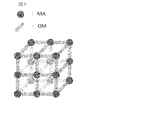
- FIG. 1 is a schematic view of a metal-organic structure that schematically shows the crystal structure of the metal-organic structure contained in the non-aqueous electrolytic solution of the present invention.
- FIG. 1 is a schematic cross-sectional view of a secondary battery as one example of an electrochemical device of the present invention;
- FIG. 1 is a schematic cross-sectional view of a capacitor as one example of the electrochemical device of the present invention;
- FIG. It is a schematic diagram for demonstrating the measuring method of the adsorption amount of the carbon dioxide measured in the Example.
- the non-aqueous electrolytic solution of the present invention is an electrolytic solution contained in an electrochemical device, which will be described later.
- the non-aqueous electrolytic solution means an electrolytic solution in which the medium through which electrolyte ions move does not contain water, that is, an electrolytic solution using only an organic solvent as the medium.
- the non-aqueous electrolytic solution of the present invention contains a specific metal-organic framework (ie, MOF: Metal-Organic Framework).
- the metal-organic framework is, for example, as shown in FIG. 1, a crystalline complex formed by bridging a metal atom (especially a metal atom ion) MA with an organic molecule OM as a ligand. It is a porous material based on coordination bonds with (especially metal atom ions).
- various elements in the drawings are merely shown schematically and exemplarily for the purpose of understanding the present invention, and their appearance and dimensional ratios may differ from the actual ones.
- the metal organic structure contained in the non-aqueous electrolytic solution contains an azole organic molecule which may have a hydrophobic group and a metal atom, and the ratio of the specific surface area to the pore volume is within a specific range. It is a metal-organic framework within.
- the ratio of the specific surface area to the pore volume in the metal-organic structure is 0.55 ⁇ -1 or more and 0.71 ⁇ -1 or less, and from the viewpoint of further increasing the carbon dioxide adsorption amount in the metal-organic structure, it is preferable. is 0.65 ⁇ ⁇ 1 or more and 0.71 ⁇ ⁇ 1 or less, more preferably 0.68 ⁇ ⁇ 1 or more and 0.71 ⁇ ⁇ 1 or less.
- the ratio of the specific surface area to the pore volume is too small, the unevenness of the pores is small, and if solvent molecules and/or electrolyte salt molecules enter the pores, carbon dioxide cannot be adsorbed sufficiently. If the ratio of the specific surface area to the pore volume is too large, the unevenness of the pores is large, so even if solvent molecules and/or electrolyte salt molecules enter the pores, carbon dioxide can be adsorbed, but the adsorbed carbon dioxide is reduced. liberated and unable to adequately adsorb and trap carbon dioxide.
- the ratio of specific surface area to pore volume is one parameter that expresses the unevenness of pores.
- the ratio of specific surface area to pore volume is obtained by converting the value obtained by dividing the specific surface area (m 2 /g) by the pore volume (cm 3 /g) into units of ⁇ ⁇ 1 values are used.
- the Connolly surface area (specific surface area) and pore volume obtained by calculation based on the structural data of the unit crystal of the metal-organic framework with a probe molecular diameter of 3.3 ⁇ are used.
- the Connolly surface area is a value obtained by calculating the total area where a sphere with a probe molecular diameter of 3.3 ⁇ can contact each atom (sphere with Van der Waals radius) in the metal organic framework.
- the pore diameter is a value obtained by calculating the volume in which a sphere with a probe molecular diameter of 3.3 ⁇ can enter a gap between each atom (a sphere with a Van der Waals radius) in the metal organic framework.
- the specific surface area and pore volume can be experimentally measured by the BET method or the like. Therefore, the specific surface area and pore volume of the metal-organic framework can be determined more accurately by using the method of calculating from the crystal structure as described above.
- the structure of the unit crystal possessed by the metal-organic structure is obtained by obtaining a crystal diffraction image with a single crystal measuring device manufactured by Rigaku Corporation, and analyzing the obtained diffraction image using the analysis software "Hermit crab XG2009". It can be detected by analysis.
- the specific surface area of the metal organic structure is not particularly limited, and is, for example, 1700 m 2 /g or more and 2500 m 2 /g or less, and preferably 1800 m 2 /g from the viewpoint of further increasing the carbon dioxide adsorption amount of the metal organic structure.
- the pore volume of the metal organic structure is not particularly limited, and is, for example, 0.20 cm 3 /g or more and 0.50 cm 3 /g or less. is 0.25 cm 3 /g or more and 0.40 cm 3 /g or less, more preferably 0.28 cm 3 /g or more and 0.35 cm 3 /g or less, still more preferably 0.31 cm 3 /g or more and 0.35 cm 3 /g or less It is below.
- the azole-based organic molecule which may have a hydrophobic group may be an azole-based organic molecule having no substituent, or may have only a hydrophobic group as a substituent even if it has a substituent. It may be an azole organic molecule, or a mixed molecule thereof.
- the azole-based organic molecule as the organic molecule constituting the metal organic structure has a water absorbing property such as an amino group, an imino group, a carboxyl group, a carboxylate group (that is, a carboxylic acid ester group), a hydroxyl group, a ketone group, or an aldehyde group. It has no groups (or hydrophilic groups).
- a metal-organic framework containing an azole organic molecule that may have a hydrophobic group is resistant to water absorption, and at the same time has the property of adsorbing gases (especially carbon dioxide) generated from an electrochemical device. can. Therefore, it is possible to more sufficiently prevent the decomposition of the lithium salt and more sufficiently prevent swelling by adsorbing gas (especially carbon dioxide) generated from the electrochemical device.
- the porosity of the metal-organic structure allows it to adsorb gas (particularly carbon dioxide) generated from the electrochemical device, thereby obtaining an effect of preventing swelling.
- the metal-organic structure has water absorption resistance, even if it is mixed with the electrolytic solution, the salt does not decompose, and the swelling prevention effect can be realized with a simple structure.
- a highly safe and reliable electrochemical device can be realized with a simple structure.
- a porous material such as zeolite easily adsorbs water as well as carbon dioxide gas. Therefore, if the non-aqueous electrolytic solution contains a porous body such as zeolite instead of the above-mentioned metal organic structure, the reaction with the adsorbed water decomposes the lithium salt to generate hydrofluoric acid, and members such as electrodes are damaged. to degrade.
- the reliability of electrochemical devices such as lithium ion batteries and electric double layer capacitors is lowered.
- the organic molecules constituting the metal organic framework have water-absorbing groups (or hydrophilic groups), the organic molecules adsorb water. Due to the reaction with the lithium salt, the lithium salt is decomposed, the members such as the electrode are deteriorated, and the reliability as an electrochemical device is lowered.
- the azole organic molecule that constitutes the metal organic structure is one or more organic molecules selected from the group consisting of imidazole, benzimidazole, triazole and purine. From the viewpoint of further increasing the carbon dioxide adsorption amount in the metal organic framework, one or more organic molecules are preferably selected from the group consisting of imidazole, benzimidazole, and purine, more preferably imidazole and benzimidazole. It is one or more (especially two) organic molecules selected from the group consisting of:
- the hydrophobic group that the azole organic molecule may have is one or more substituents selected from the group consisting of alkyl groups, halogen atoms, nitro groups, phenyl groups, pyridyl groups and cyano groups. From the viewpoint of further increasing the amount of carbon dioxide adsorbed in the metal organic framework, the azole organic molecule that constitutes the metal organic framework preferably has a hydrophobic group.
- the alkyl group is, for example, an alkyl group having 1 or more and 5 or less (especially 1 or more and 3 or less) carbon atoms.
- Specific examples of the alkyl group include methyl group, ethyl group, n-propyl group, isopropyl group, n-butyl group, isobutyl group, sec-butyl group, tert-butyl group, n-pentyl group and the like.
- Halogen atoms include, for example, fluorine, chlorine, and bromine atoms.
- the hydrophobic group is more preferably one or more hydrophobic groups selected from the group consisting of an alkyl group, a halogen atom and a nitro group, from the viewpoint of further increasing the carbon dioxide adsorption amount in the metal organic structure, and One or more hydrophobic groups selected from the group consisting of halogen atoms and nitro groups are preferred, and nitro groups are particularly preferred.
- the azole organic molecule that constitutes the metal organic framework is preferably an imidazole molecule that may have an alkyl group, a halogen atom, or a nitro group. and/or a benzimidazole-based molecule, more preferably an imidazole-based molecule and/or a benzimidazole-based molecule having an alkyl group, a halogen atom or a nitro group.
- the azole-based organic molecules constituting the metal organic structure are, for example, imidazole-based molecules represented by the following general formula (1), benzimidazole-based molecules represented by the following general formula (2), and the following general formula (3). and (4), and one or more organic molecules selected from the group consisting of purine molecules represented by general formula (5).
- R 1 to R 3 are each independently a hydrogen atom, an alkyl group, a halogen atom, a nitro group, a phenyl group, a pyridyl group or a cyano group, and the carbon dioxide adsorption amount in the metal organic structure. is preferably a hydrogen atom or a nitro group from the viewpoint of further increasing the .
- R 1 and R 3 are each independently a hydrogen atom or a nitro group
- R 2 is a hydrogen atom.
- imidazole-based molecules represented by general formula (1) include the following compounds.
- R 11 to R 15 each independently represent a hydrogen atom, an alkyl group, a halogen atom, a nitro group, a phenyl group, a pyridyl group or a cyano group, and the carbon dioxide adsorption amount in the metal organic structure.
- R 11 , R 13 , R 14 and R 15 are hydrogen atoms and R 12 is a hydrogen atom, an alkyl group, a halogen atom or a nitro group.
- benzimidazole-based molecule represented by general formula (2) include the following compounds.
- R 21 to R 22 are each independently a hydrogen atom, an alkyl group, a halogen atom, a nitro group, a phenyl group, a pyridyl group or a cyano group.
- triazole-based molecules represented by general formula (3) include the following compounds.
- R 31 to R 32 are each independently a hydrogen atom, an alkyl group, a halogen atom, a nitro group, a phenyl group, a pyridyl group or a cyano group.
- triazole-based molecules represented by general formula (4) include the following compounds.
- R 41 to R 43 are each independently a hydrogen atom, an alkyl group, a halogen atom, a nitro group, a phenyl group, a pyridyl group or a cyano group.
- purine-based molecule represented by general formula (5) include the following compounds.
- metal atoms constituting the metal organic framework are selected from the group consisting of zinc atoms, cobalt atoms, iron atoms, praseodymium atoms, cadmium atoms, mercury atoms, copper atoms, indium atoms, manganese atoms, lithium atoms and boron atoms; From the viewpoint of further increasing the carbon dioxide adsorption amount in the metal organic framework, it is preferably selected from the group consisting of zinc atoms, cobalt atoms and iron atoms, more preferably selected from the group consisting of zinc atoms and cobalt atoms, and still more preferably. is a zinc atom.
- the metal atoms constituting the metal-organic framework may be one or more metal atoms selected from the above group.
- the combination of the azole-based organic molecule and the metal atom in the metal organic structure is not particularly limited as long as the metal organic structure has the above-mentioned "ratio of specific surface area to pore volume".
- Combinations of azole organic molecules and metal atoms in the metal organic framework may be, for example, the following combinations:
- Combination (C1) an imidazole-based molecule represented by general formula (1) as an azole-based organic molecule and a benzimidazole-based molecule represented by general formula (2) (preferably, only the imidazole-based molecule and the benzimidazole-based molecule ) and a metal atom (preferably a zinc atom, more preferably only a zinc atom) as a metal atom;
- the preferred imidazole-based molecule is 2-nitroimidazole
- the preferred benzimidazole-based molecule is the group consisting of 5-nitrobenzimidazole, benzimidazole, 5-chlorobenzimidazole, 5-methylbenzimidazole, and 5-bromobenzimidazole.
- the molar ratio between the imidazole-based molecule and the benzimidazole-based molecule is not particularly limited, and is preferably 1/9 or more from the viewpoint of further increasing the carbon dioxide adsorption amount in the metal organic structure. 9/1 or less, more preferably 3/7 or more and 7/3 or less, still more preferably 4/6 or more and 6/4 or less:
- Combination (C2) containing 4-nitroimidazole (preferably only 4-nitroimidazole) as an azole-based organic molecule, and containing the above metal atom (preferably zinc atom, more preferably only zinc atom) as a metal atom combination.
- the ratio of the organic molecules to the metal atoms in the metal-organic framework is not particularly limited, but is usually determined by the types of organic molecules and metal atoms that constitute the metal-organic framework.
- an imidazole-based molecule e.g., an imidazole-based molecule represented by the general formula (1)
- a zinc atom e.g., an imidazole-based molecule represented by the general formula (1)
- a zinc atom e.g., an imidazole-based molecule represented by the general formula (1)
- M 1 metal-organic framework containing one or more metal atoms (M 1 ) selected from the group consisting of boron atoms
- M 1 (IM) 2 e.g., an imidazole-based molecule represented by the general formula (1)
- M 1 (IM) 2 e.g., an imidazole-based molecule represented by the general formula (1)
- M 1 (IM) 2 e.g., an imidazole-based molecule represented
- imidazole-based molecules e.g., imidazole-based molecules represented by general formula (1)
- BIM benzimidazole-based molecules
- M 1 metal atoms selected from the group consisting of zinc atoms, cobalt atoms, iron atoms, copper atoms, manganese atoms, indium atoms, cadmium atoms, lithium atoms and boron atoms.
- a body can be represented by the composition formula: M 1 (IM) (BIM).
- a benzimidazole molecule (e.g., a benzimidazole molecule represented by general formula (2)), a zinc atom, a cobalt atom, an iron atom, a copper atom, a manganese atom, an indium atom, a cadmium atom,
- a metal organic framework containing one or more metal atoms (M 1 ) selected from the group consisting of lithium atoms and boron atoms can be represented by the composition formula: M 1 (BIM) 2 .
- a triazole-based molecule (for example, a triazole-based molecule represented by general formula (3) and/or (4)), a zinc atom, a cobalt atom, an iron atom, a copper atom, a manganese atom, an indium atom , a cadmium atom , a lithium atom, and a boron atom.
- TRA triazole-based molecule
- a purine-based molecule (for example, a triazole-based molecule represented by the general formula (5)), a zinc atom, a cobalt atom, an iron atom, a copper atom, a manganese atom, an indium atom, a cadmium atom, a lithium atom , and boron atoms
- the metal-organic framework containing one or more metal atoms (M 1 ) selected from the group consisting of boron atoms can be represented by the composition formula: M 1 (PUR) 2 .
- imidazole-based molecules e.g., imidazole-based molecules represented by general formula (1)
- BIM benzimidazole-based molecules
- M 1 metal atoms selected from the group consisting of zinc atoms, cobalt atoms, iron atoms, copper atoms, manganese atoms, indium atoms, cadmium atoms, lithium atoms and boron atoms.
- an imidazole-based molecule (for example, an imidazole-based molecule represented by general formula (1)), a zinc atom, a cobalt atom, an iron atom, a copper atom, a manganese atom, an indium atom, a cadmium atom, a lithium atom
- IM imidazole-based molecule
- a metal organic framework containing two or more metal atoms (M 1 and M 2 ) selected from the group consisting of , and boron atoms can be represented by the composition formula: M 1 M 2 (IM) 4 .
- a metal organic structure can be synthesized by mixing a compound containing a predetermined organic molecule and a predetermined metal atom in a water solvent or an organic solvent. It can be produced by heating to 60-150° C. in order to promote grain growth.
- Compounds containing a predetermined metal atom include zinc nitrate, cobalt nitrate, iron nitrate, and the like.
- organic solvents include N,N-diethylformamide, N,N-dimethylformamide, methanol and the like.
- the heating time is not particularly limited, and may be, for example, 24 hours or more and 120 hours or less, particularly 72 hours or more and 120 hours or less.
- ZIF-8 is commercially available as ZIF-8 (product name: Basolite Z1200, manufactured by BASF, composition formula: Zn(mIm)2).
- the metal-organic structure contained in the non-aqueous electrolytic solution usually has a pore diameter of 1 ⁇ or more and 50 ⁇ or less, and from the viewpoint of further increasing the carbon dioxide adsorption amount in the metal-organic structure, it is preferably 1 ⁇ or more and 15 ⁇ or less. , particularly preferably 5 ⁇ or more and 12 ⁇ or less, more preferably 5 ⁇ or more and 10 ⁇ or less.
- the pore size depends on the types (especially bulkiness and size) of the organic molecules and metal atoms that make up the metal-organic structure. Therefore, the pore size can be adjusted by selecting the types of organic molecules and metal atoms.
- the pore diameter is defined as "the diameter of the maximum sphere that can be included when each atom in the crystal is a rigid sphere having a van der Waals radius", and contains no molecules in the pore. It is the pore diameter in the absence of Therefore, the pore size can be calculated from the crystal structure.
- Such pore diameters are listed as d p ( ⁇ ) in Table 1 of the following references, and the values given therein can be used: ANH PHAN et al., "Synthesis, Structure, and Carbon Dioxide Capture Properties of Zeolitic Imidazolate Frameworks” (ACCOUNTS OF CHEMICAL RESEARCH 58 67 January 2010 Vol. 43, No. 1)
- the metal-organic structure usually has an average particle size of 0.01 ⁇ m or more and 1 ⁇ m or less in the non-aqueous electrolytic solution, and from the viewpoint of further increasing the carbon dioxide adsorption amount in the metal-organic structure, it is preferably 0.02 ⁇ m or more. 0.5 ⁇ m or less, more preferably 0.05 ⁇ m or more and 0.2 ⁇ m or less.
- the average particle size of the metal-organic structure For the average particle size of the metal-organic structure, the average value of the maximum length of arbitrary 100 metal-organic structure particles based on the micrograph is used.
- the content of the metal-organic structure is not particularly limited, and is usually 0.1% by weight or more and 50% by weight or less with respect to the total amount of the non-aqueous electrolyte, and further increases the carbon dioxide adsorption amount of the metal-organic structure. from the viewpoint of, preferably 1% by weight or more and 10% by weight or less.
- the non-aqueous electrolytic solution may contain two or more metal-organic structures with mutually different organic molecule structures and/or metal atom types, in which case the total content thereof may be within the above range. .
- a non-aqueous electrolyte usually further contains an organic solvent and an electrolyte salt in addition to the metal-organic framework.
- organic solvent examples include all conventionally known organic solvents in the field of non-aqueous electrolyte solutions for electrochemical devices.
- organic solvents include cyclic carbonates of ⁇ -butyrolactone such as propylene carbonate (PC), ethylene carbonate (EC), butylene carbonate (BC) and vinylene carbonate (VC); dimethyl carbonate (DMC) and diethyl carbonate.
- PC propylene carbonate
- EC ethylene carbonate
- BC butylene carbonate
- VC vinylene carbonate
- DMC dimethyl carbonate
- DEC ethyl methyl carbonate
- EMC ethyl methyl carbonate
- DPC dipropyl carbonate
- chain carbonates such as methyl ethyl carbonate; tetrahydrofuran, dioxolane, sulfolane, dimethylformamide, dimethylacetamide, N-methyl-2-pyrrolidone, etc.
- the organic solvent preferably contains carbonates, and more preferably contains only carbonates.
- Carbonates are carbonates including the above-described cyclic carbonates and chain carbonates.
- the organic solvent contains one or more carbonates selected from the group consisting of cyclic carbonates and chain carbonates.
- the organic solvent preferably contains one or more (especially two) carbonates selected from the group consisting of cyclic carbonates, from the viewpoint of further increasing the amount of carbon dioxide adsorbed by the metal-organic structure.
- Propylene carbonate (PC) and ethylene carbonate (EC) are preferably included.
- the content of the organic solvent is usually 40% by weight or more and 95% by weight or less with respect to the total amount of the non-aqueous electrolytic solution, and is preferably 70% by weight or more from the viewpoint of further increasing the carbon dioxide adsorption amount in the metal organic structure. 90% by weight or less.
- Electrolyte salts include any electrolyte salt conventionally known in the field of non-aqueous electrolytes for electrochemical devices. Specific examples of electrolyte salts include LiPF 6 , LiBF 4 , LiClO 4 , LiCF 3 SO 3 , LiN(CF 3 SO 2 ) 2 , LiN(C 2 F 5 SO 2 ) 2 and LiC(CF 3 SO 2 ). 3 , LiC(C2F5SO2)3 and the like .
- the electrolyte salt preferably contains LiPF 6 , more preferably only LiPF 6 , from the viewpoint of further increasing the carbon dioxide adsorption amount in the metal-organic framework.
- the content of the electrolyte salt is usually 5% by weight or more and 25% by weight or less with respect to the total amount of the non-aqueous electrolytic solution, and from the viewpoint of further increasing the carbon dioxide adsorption amount in the metal organic structure, it is preferably 10% by weight or more. 20% by weight or less.
- the non-aqueous electrolytic solution may further contain any additive (eg, binder, filler, etc.) conventionally known in the field of non-aqueous electrolytic solutions for electrochemical devices.
- additive eg, binder, filler, etc.
- Binders such as polyacrylonitrile, polyvinylidene fluoride, polytetrafluoroethylene, polyhexafluoropropylene, polyethylene oxide, polypropylene oxide, polyphosphazene, polysiloxane, polyvinyl fluoride (PVF), polychlorotrifluoroethylene (PCTFE) , perfluoroalkoxy fluororesin (PFA), tetrafluoroethylene-hexafluoropropylene copolymer (FEP), ethylene-tetrafluoroethylene copolymer (ETFE), ethylene-chlorotrifluoroethylene copolymer (ECTFE) , polyvinyl acetate, polyvinyl alcohol, polymethyl methacrylate, polyacrylic acid, polymethacrylic acid, styrene-butadiene rubber, nitrile-butadiene rubber, polystyrene, polycarbonate, polyethylene oxide, vinyl chloride and the like.
- Binders may be used alone or in combination of two or more. Moreover, it may be a copolymer composed of two or more kinds of monomers constituting the binder.
- a specific example of such a copolymer is a copolymer of vinylidene fluoride and hexafluoropyrene. Among them, polyvinylidene fluoride and a copolymer of vinylidene fluoride and hexafluoropyrene are preferred from the viewpoint of electrochemical stability.
- the filler may contain highly heat-resistant compounds such as Al 2 O 3 , SiO 2 , TiO 2 and BN (boron nitride).
- a non-aqueous electrolytic solution can be obtained by mixing a metal organic structure, an organic solvent, an electrolyte salt, and other desired additives.
- the non-aqueous electrolytic solution may have a form such as liquid or gel.
- the electrochemical device of the present invention may be any device that utilizes an electrochemical reaction and contains the non-aqueous electrolytic solution of the present invention described above.
- Specific examples of such electrochemical devices include secondary batteries (especially lithium ion secondary batteries), capacitors (especially electric double layer capacitors), and the like.
- the secondary battery When the electrochemical device of the present invention is a secondary battery, the secondary battery has a positive electrode, a negative electrode, a separator, etc. enclosed in an exterior body in addition to the non-aqueous electrolytic solution described above.
- a seal portion (sealing portion) for holding a non-aqueous electrolytic solution or the like is usually formed in the peripheral portion of the secondary battery inside the exterior body.
- a plan view is a state when the secondary battery is placed and viewed from directly above in the thickness (height) direction, and is the same as a plan view. The placement is, for example, placement with the surface of the maximum area of the secondary battery as the bottom surface.
- the term "secondary battery” refers to a battery that can be repeatedly charged and discharged.
- “Secondary battery” is not limited to its name, and can include, for example, "power storage device”.
- the secondary battery 10 of the present invention for example, as shown in FIG. ing.
- Two external terminals (not shown) are connected to electrodes (positive electrode or negative electrode) via collector leads (not shown), and as a result are led out from the seal portion.
- the non-aqueous electrolytic solution 1 assists the movement of metal ions released from the electrodes (positive electrode/negative electrode).
- the secondary battery 10 has a planar laminated structure in which a positive electrode 2, a negative electrode 3, and a separator 4 disposed between the positive electrode 2 and the negative electrode 3 are laminated in a planar manner. Not limited.
- the secondary battery may have a wound structure in which the positive electrode 2, the negative electrode 3, and the separator 4 interposed between the positive electrode 2 and the negative electrode 3 are wound into a roll.
- the secondary battery may have a so-called stack-and-fold structure in which the positive electrode 2, the negative electrode 3, and the separator 4 interposed between the positive electrode 2 and the negative electrode 3 are stacked and then folded.
- FIG. 2 is a schematic cross-sectional view of a secondary battery as an example of the electrochemical device of the invention.
- the positive electrode 2 is usually composed of at least a positive electrode layer and a positive electrode current collector (foil), and the positive electrode layer is provided on at least one side of the positive electrode current collector.
- the positive electrode 2 may be provided with positive electrode layers on both sides of the positive electrode current collector, or may be provided with a positive electrode layer on one side of the positive electrode current collector.
- the positive electrode 2, which is preferable from the viewpoint of further increasing the capacity of the secondary battery, is provided with positive electrode layers on both sides of the positive electrode current collector.
- the positive electrode layer contains a positive electrode active material.
- the negative electrode 3 is usually composed of at least a negative electrode layer and a negative electrode current collector (foil), and the negative electrode layer is provided on at least one side of the negative electrode current collector.
- the negative electrode 3 may have a negative electrode layer provided on both sides of the negative electrode current collector, or may have a negative electrode layer provided on one side of the negative electrode current collector.
- the negative electrode layer contains a negative electrode active material.
- the positive electrode active material contained in the positive electrode layer and the negative electrode active material contained in the negative electrode layer are substances directly involved in the transfer of electrons in the secondary battery, and are the main materials of the positive and negative electrodes that are responsible for charging and discharging, that is, the battery reaction. More specifically, ions are brought to the non-aqueous electrolytic solution due to the “positive electrode active material contained in the positive electrode layer” and the “negative electrode active material contained in the negative electrode layer”, and such ions form a bond between the positive electrode and the negative electrode. Electrons are transferred between them and charged and discharged.
- mediator ions are not particularly limited as long as they can be charged and discharged, and examples thereof include lithium ions or sodium ions (especially lithium ions).
- the positive electrode layer and the negative electrode layer may in particular be layers capable of intercalating and deintercalating lithium ions.
- the secondary battery may be a secondary battery in which lithium ions move between the positive electrode and the negative electrode via a non-aqueous electrolyte to charge and discharge the battery.
- the secondary battery according to this embodiment corresponds to a so-called "lithium ion secondary battery”.
- the positive electrode active material of the positive electrode layer is made of, for example, a granular material, it is preferable that the positive electrode layer contains a binder for sufficient contact between particles and shape retention. Furthermore, it is also preferable that the positive electrode layer contains a conductive aid in order to facilitate the transfer of electrons that promote the battery reaction. Similarly, when the negative electrode active material of the negative electrode layer is composed of, for example, granules, it is preferable that a binder is included for sufficient contact between particles and shape retention, thereby facilitating electron transfer that promotes the battery reaction. Therefore, the negative electrode layer may contain a conductive aid. Because of such a configuration in which a plurality of components are contained, the positive electrode layer and the negative electrode layer can also be referred to as a "positive electrode mixture layer" and a "negative electrode mixture layer", respectively.
- the positive electrode active material is preferably a material that contributes to the absorption and release of lithium ions. From this point of view, the positive electrode active material is preferably a lithium-containing composite oxide, for example. More specifically, the positive electrode active material is preferably a lithium transition metal composite oxide containing lithium and at least one transition metal selected from the group consisting of cobalt, nickel, manganese and iron. That is, the positive electrode layer of the secondary battery according to this embodiment preferably contains such a lithium-transition metal composite oxide as a positive electrode active material.
- the positive electrode active material may be lithium cobaltate, lithium nickelate, lithium manganate, lithium titanate, or a transition metal thereof partially replaced by another metal. Although such a positive electrode active material may be contained as a single species, it may be contained in combination of two or more species. In a more preferred embodiment, the positive electrode active material contained in the positive electrode layer is lithium cobaltate.
- Binders that can be contained in the positive electrode layer are not particularly limited, but include polyvinylidene fluoride, vinylidene fluoride-hexafluoropropylene copolymer, vinylidene fluoride-tetrafluoroethylene copolymer and poly At least one selected from the group consisting of tetrafluoroethylene and the like can be mentioned.
- the conductive additive that can be contained in the positive electrode layer is not particularly limited, but includes carbon black such as thermal black, furnace black, channel black, ketjen black and acetylene black, copper, nickel, aluminum and silver. At least one selected from metal powders and polyphenylene derivatives can be used.
- the binder in the positive electrode layer is polyvinylidene fluoride
- the conductive aid in the positive electrode layer is carbon black
- the binder and conductive aid of the positive electrode layer are a combination of polyvinylidene fluoride and carbon black.
- the negative electrode active material is preferably a material that contributes to the absorption and release of lithium ions. From this point of view, the negative electrode active material is preferably, for example, various carbon materials, oxides, or lithium alloys.
- Examples of various carbon materials for the negative electrode active material include graphite (natural graphite, artificial graphite), hard carbon, diamond-like carbon, and the like.
- graphite is preferable because it has high electron conductivity and excellent adhesiveness to the negative electrode current collector.
- the oxide of the negative electrode active material at least one selected from the group consisting of silicon oxide, tin oxide, indium oxide, zinc oxide and lithium oxide can be used.
- the lithium alloy of the negative electrode active material may be any metal that can be alloyed with lithium, such as Al, Si, Pb, Sn, In, Bi, Ag, Ba, Ca, Hg, Pd, Pt, Te, Zn It may be a binary, ternary or higher alloy of a metal such as La and lithium.
- Such an oxide is preferably amorphous as its structural form. This is because deterioration due to non-uniformity such as grain boundaries or defects is less likely to occur.
- the negative electrode active material of the negative electrode layer is artificial graphite.
- the binder that can be contained in the negative electrode layer is not particularly limited, but can include at least one selected from the group consisting of styrene-butadiene rubber, polyvinylidene fluoride, polyimide-based resins, and polyamide-imide-based resins. .
- the binder contained in the negative electrode layer is styrene-butadiene rubber.
- Conductive agents that can be contained in the negative electrode layer are not particularly limited, but include carbon black such as thermal black, furnace black, channel black, ketjen black and acetylene black, copper, nickel, aluminum and silver. At least one selected from metal powders and polyphenylene derivatives can be used.
- the negative electrode layer may contain a component resulting from a thickening agent component (for example, carboxylmethyl cellulose) used at the time of manufacturing the battery.
- the negative electrode active material and binder in the negative electrode layer are a combination of artificial graphite and styrene-butadiene rubber.
- the positive electrode current collector and negative electrode current collector used for the positive electrode and negative electrode are members that contribute to collecting and supplying electrons generated in the active material due to the battery reaction.
- a current collector may be a sheet metal member and may have a perforated or perforated morphology.
- the current collector may be metal foil, perforated metal, mesh or expanded metal, or the like.
- the positive electrode current collector used for the positive electrode is preferably made of metal foil containing at least one selected from the group consisting of aluminum, stainless steel, nickel and the like, and may be aluminum foil, for example.
- the negative electrode current collector used for the negative electrode is preferably made of metal foil containing at least one selected from the group consisting of copper, stainless steel, nickel and the like, and may be, for example, copper foil.
- the separator 4 is a member provided from the viewpoint of preventing short circuits due to contact between positive and negative electrodes and retaining a non-aqueous electrolyte.
- the separator is a member that allows ions to pass through while preventing electronic contact between the positive electrode and the negative electrode.
- the separator is a porous or microporous insulating member and has a membrane morphology due to its small thickness.
- a polyolefin microporous membrane may be used as the separator.
- the microporous membrane used as the separator may contain, for example, only polyethylene (PE) or only polypropylene (PP) as the polyolefin.
- the separator may be a laminate composed of a "PE microporous membrane” and a "PP microporous membrane".
- the exterior body 5 is preferably a flexible pouch (soft bag body), but may be a hard case (hard housing).
- the flexible pouch is usually formed from a laminate film, and the periphery is heat-sealed to form a sealed portion.
- the laminate film a film obtained by laminating a metal foil and a polymer film is generally used. Specifically, a three-layer structure composed of an outer layer polymer film/metal foil/inner layer polymer film is exemplified.
- the outer layer polymer film is intended to prevent permeation of moisture or the like and damage to the metal foil due to contact and the like, and polymers such as polyamide and polyester can be suitably used.
- the metal foil is for preventing the permeation of moisture and gas, and foils of copper, aluminum, stainless steel, etc. can be suitably used.
- the inner layer polymer film is for protecting the metal foil from the electrolyte to be housed inside and also for melting and sealing during heat sealing, and polyolefin or acid-modified polyolefin can be suitably used.
- the thickness of the laminate film is not particularly limited, and is preferably 1 ⁇ m or more and 1 mm or less, for example.
- the exterior body 5 is a flexible pouch, and the lower film 5a and the upper film 5b are heat-sealed at their peripheral portions in plan view.
- the hard case is usually made of a metal plate, and the periphery is irradiated with a laser to form a seal.
- the metal plate metal materials such as aluminum, nickel, iron, copper, and stainless steel are generally used.
- the thickness of the metal plate is not particularly limited, and is preferably 1 ⁇ m or more and 1 mm or less, for example.
- a secondary battery can be manufactured by the following method.
- the positive electrode 2 and the negative electrode 3 are produced.
- the positive electrode 2 is prepared by mixing a positive electrode active material, a binder, etc. together, adding an organic solvent to prepare a slurry, coating the slurry on a positive electrode current collector by an arbitrary coating method, and drying it. ,Obtainable.
- the negative electrode 3 can be obtained by mixing a negative electrode active material, a binder, etc. together, adding an organic solvent to prepare a slurry, coating the slurry on the negative electrode current collector by an arbitrary coating method, and drying it. can be done.
- the organic solvent contained in the slurry for producing the positive electrode and negative electrode of the secondary battery is not particularly limited.
- Organic solvents such as basic solvents such as dimethyl carbonate and ⁇ -butyrolactone, non-aqueous solvents such as acetonitrile, tetrahydrofuran, nitrobenzene and acetone, and protic solvents such as methanol and ethanol can be used.
- a positive electrode lead (not shown) is attached to the positive electrode 2
- a negative electrode lead (not shown) is attached to the negative electrode 3
- the positive electrode 2 and the negative electrode 3 are laminated with the separator 4 interposed therebetween to form a laminated electrode assembly.
- a protective tape is attached to the outermost peripheral portion of the wound electrode body.
- a laminated electrode body or a wound electrode body is accommodated in this interior.
- the exterior body is sealed using a heat sealing method or the like. Heat treatment for monomer thermal polymerization or the like may be performed as necessary.
- the electric double-layer capacitor has a positive electrode, a negative electrode, a separator, etc. enclosed in an exterior body in addition to the non-aqueous electrolytic solution described above.
- the exterior body 27 has a positive electrode case 27a and a negative electrode case 27b, and the positive electrode case 27a and the negative electrode case 27b are both formed in a disk-like thin plate shape.
- a positive electrode 22 containing a positive electrode active material (electrode active material) and a conductive agent is disposed in the center of the bottom of the positive electrode case 27a.
- the positive electrode 22 is formed by forming a sheet-like mixture containing a positive electrode active material (electrode active material) and a conductive agent on a positive electrode current collector.
- a separator 24 formed of a porous sheet or film such as a microporous membrane, woven fabric, or non-woven fabric is laminated on the positive electrode 22 , and the negative electrode 23 is further laminated on the separator 24 . That is, in the negative electrode 23, as in the case of the positive electrode 22, a mixture containing a negative electrode active material (electrode active material) and a conductive agent is formed into a sheet on a negative electrode current collector 25 made of metal.
- FIG. 3 is a schematic cross-sectional view schematically showing a coin-type electric double layer capacitor as one embodiment of the electric double layer capacitor according to the present invention.
- charged particles in the non-aqueous electrolyte 21 are irregularly distributed in the non-aqueous electrolyte 21 before a voltage is applied between the positive electrode 22 and the negative electrode 23 .
- a voltage is applied between the positive electrode 22 and the negative electrode 23 , positive ions in the positive electrode 22 and negative ions in the nonaqueous electrolytic solution 21 are present at the interface between the positive electrode (positive electrode active material) 22 and the non-aqueous electrolytic solution 21 . are distributed in pairs.
- negative ions in the negative electrode 23 and positive ions in the non-aqueous electrolyte 21 are distributed in pairs at the interface between the negative electrode (negative electrode active material) 23 and the non-aqueous electrolyte 21 .
- positive ions and negative ions are distributed in layers at the contact interface with the non-aqueous electrolytic solution 21 on the positive electrode 22 side, and negative ions and positive ions are distributed in layers at the contact interface with the non-aqueous electrolytic solution 21 on the negative electrode 23 side. distributed and they form an electric double layer with a large surface area.
- any material that can be used as a positive electrode active material in the field of electric double layer capacitors can be used as the positive electrode active material.
- Specific examples of the positive electrode active material include, for example, activated carbon.
- any material that can be used as a negative electrode active material in the field of electric double layer capacitors can be used as the negative electrode active material.
- Specific examples of the negative electrode active material include, for example, carbon.
- the conductive agent that can be contained in the positive electrode and the negative electrode is not particularly limited. Conductive polymers such as polyaniline, polypyrrole, polythiophene, polyacetylene and polyacene can be used. A conductive agent can be used individually or in combination of 2 or more types.
- the positive electrode and the negative electrode may each independently contain a binder.
- a binder any binder that can be used as a binder in the field of positive electrodes and negative electrodes of electric double layer capacitors can be used.
- Specific examples of such binders include polyethylene, polypropylene, polyvinylidene fluoride, polyhexafluoropropylene, polytetrafluoroethylene, polyethylene oxide, carboxymethylcellulose, styrene-butadiene copolymer, and polymethyl acrylate.
- a binder can be used individually or in combination of 2 or more types.
- the separator 24 may be selected within the same range as the separator 4 of the secondary battery.
- An electric double layer capacitor can be manufactured by the following method.
- the positive electrode 22 and the negative electrode 23 are produced.
- the positive electrode 22 is prepared by mixing a positive electrode active material, a conductive agent, a binder, etc. together, adding an organic solvent to prepare a slurry, applying the slurry on a positive electrode current collector by an arbitrary coating method, and drying it.
- the negative electrode 23 is formed by mixing a negative electrode active material, a conductive agent, a binder, etc. together, adding an organic solvent to prepare a slurry, applying the slurry on a negative electrode current collector by an arbitrary coating method, and drying it. ,Obtainable.
- the organic solvent contained in the slurry for producing the positive electrode and negative electrode of the electric double layer capacitor is not particularly limited.
- the organic solvent contained in the slurry for producing the positive electrode and negative electrode of the secondary battery Organic solvents similar to may be used.
- the positive electrode 22 is impregnated with the non-aqueous electrolytic solution 21, and the negative electrode 23 and the negative electrode current collector 25 are arranged so as to face the positive electrode 22 via the separator 24 impregnated with the non-aqueous electrolytic solution 21.
- a non-aqueous electrolytic solution 21 is injected into the space.
- a metal spring 26 is seated on the negative electrode current collector 25, a gasket 28 is arranged on the peripheral edge, and the negative electrode case 27b is fixed to the positive electrode case 27a by a caulking machine or the like to seal the exterior, thereby forming a coin-shaped battery.
- An electric double layer capacitor is produced.
- the electric double layer capacitor of this embodiment has been described as a coin type electric double layer capacitor, the shape is not particularly limited.
- the electric double layer capacitor may be cylindrical, square, sheet, or the like.
- the exterior body 27 is not particularly limited, and a metal case, mold resin, aluminum laminate film, or the like may be used.
- Example 1 A metal-organic framework ZIF-78 was synthesized by the following method. 60 mL of an N,N-dimethylformamide solution containing 0.2 M of both 2-nitroimidazole and 5-nitrobenzimidazole as organic molecules and 20 mL of a 0.2 M zinc nitrate N,N-dimethylformamide solution were mixed, A powder was obtained by heating at 140° C. for 96 hours in a stainless steel jacket for precipitation. Furthermore, it was washed three times with an N,N-dimethylformamide solution, centrifuged, and dried to obtain ZIF-78.
- ZIF-78 was composed of zinc atoms, 2-nitroimidazole and 5-nitrobenzodazole, represented by the compositional formula Zn(2nIm) (5nbIm), and had a specific surface area/pore volume ratio of 0.67.
- the pore diameter was 7.1 ⁇ and the average particle size was 0.1 ⁇ m.
- ZIF-68 was synthesized in the same manner as for ZIF-78, except that an N,N-dimethylformamide solution containing 0.2 M of both 2-nitroimidazole and benzimidazole was used.
- ZIF-68 was composed of zinc atoms, 2-nitroimidazole and benzimidazole, represented by the compositional formula Zn(2nIm)(bIm), and had a specific surface area/pore volume ratio of 0.57. The pore diameter was 10.3 ⁇ and the average particle size was 0.1 ⁇ m.
- ZIF-69 was synthesized in the same manner as for ZIF-78 except that an N,N-dimethylformamide solution containing 0.2 M of both 2-nitroimidazole and 5-chlorobenzimidazole was used.
- ZIF-69 was composed of zinc atoms, 2-nitroimidazole and 5-chlorobenzimidazole, represented by the compositional formula Zn(2nIm)(5cbIm), and had a specific surface area/pore volume ratio of 0.62. The pore size was 7.8 ⁇ and the average particle size was 0.1 ⁇ m.
- ZIF-79 was synthesized in the same manner as for ZIF-78, except that an N,N-dimethylformamide solution containing 0.2 M of both 2-nitroimidazole and 5-methylbenzimidazole was used.
- ZIF-79 was composed of zinc atoms, 2-nitroimidazole and 5-methylbenzimidazole, represented by the compositional formula Zn(2nIm) (5mbIm), and had a specific surface area/pore volume ratio of 0.63. The pore diameter was 7.5 ⁇ and the average particle size was 0.1 ⁇ m.
- ZIF-81 was synthesized in the same manner as for ZIF-78 except that an N,N-dimethylformamide solution containing 0.2 M of both 2-nitroimidazole and 5-bromobenzimidazole was used.
- ZIF-81 was composed of zinc atoms, 2-nitroimidazole and 5-bromobenzimidazole, represented by the compositional formula Zn(2nIm)(5bbIm), and had a specific surface area/pore volume ratio of 0.62. The pore diameter was 7.4 ⁇ and the average particle size was 0.1 ⁇ m.
- Zn(4nIm)2 was synthesized in the same manner as for ZIF-78 except that an N,N-dimethylformamide solution containing 0.4M 4-nitroimidazole was used.
- Zn(4nIm)2 was composed of zinc atoms and 4-nitroimidazole, represented by the compositional formula Zn(4nIm) 2 , and had a specific surface area/pore volume ratio of 0.70. The pore size was 6.0 ⁇ and the average particle size was 0.1 ⁇ m.
- ZIF-8 was synthesized in the same manner as for ZIF-78, except that an N,N-dimethylformamide solution containing 0.4 M of 2-methylimidazole was used.
- ZIF-8 was composed of zinc atoms and 2-methylimidazole, represented by the compositional formula Zn(2mIm) 2 and had a specific surface area/pore volume ratio of 0.50. The pore diameter was 11.6 ⁇ and the average particle size was 0.1 ⁇ m.
- ZIF-77 was synthesized in the same manner as for ZIF-78, except that an N,N-dimethylformamide solution containing 0.4 M of 2-nitroimidazole was used.
- ZIF-77 was composed of zinc atoms and 2-nitroimidazole, represented by the composition formula Zn(2nIm) 2 and had a specific surface area/pore volume ratio of 0.74. The pore diameter was 3.6 ⁇ and the average particle size was 0.1 ⁇ m.
- ZIF-4 was synthesized in the same manner as for ZIF-78, except that an N,N-dimethylformamide solution containing 0.4 M imidazole was used.
- ZIF-4 was composed of zinc atoms and imidazole, represented by the compositional formula Zn(Im) 2 and had a specific surface area/pore volume ratio of 1.02. The pore size was 2.1 and the average particle size was 0.1 ⁇ m.
- ZIF-7 was synthesized in the same manner as for ZIF-78, except that an N,N-dimethylformamide solution containing 0.4 M benzimidazole was used.
- ZIF-7 was composed of zinc atoms and benzimidazole, represented by the compositional formula Zn(bIm) 2 and had a specific surface area/pore volume ratio of 1.02. The pore diameter was 4.3 ⁇ and the average particle size was 0.1 ⁇ m.
- the Connolly surface area (specific surface area) and pore volume at a probe molecular diameter of 3.3 ⁇ were calculated, and the ratio of this specific surface area to pore volume was calculated.
- ZIF-78 of Example 1 had a specific surface area of 2004 m 2 /g, a pore volume of 0.30 cm 3 /g, and a specific surface area/pore volume ratio of 0.67.
- Examples 2 to 6 were also calculated by the same method and shown in Table 6.
- the specific surface area and pore volume can be experimentally measured by the BET method or the like, it is not accurate because the measurement results vary depending on the washing conditions and measurement conditions.
- the CO2 adsorption selectivity can be evaluated more accurately by the method of calculating from the crystal structure as described above.
- the following abbreviations were used in the compositional formula: 2nIm: 2-nitroimidazole; bIm: benzimidazole; 4nIm: 4-nitroimidazole; 5mbIm: 5-methylbenzimidazole; 5cbIm: 5-chlorobenzimidazole; 5bbIm: 5-bromobenzimidazole; 5nbIm: 5-nitrobenzimidazole.
- the amount of CO2 adsorption to a non-aqueous electrolyte containing a metal-organic framework can be predicted by the grand canonical Monte Carlo method (GCMC method).
- the metal-organic framework was subjected to a calculation of the gas adsorption amount (in an equilibrium state) of CO2: 100 kPa, ethylene carbonate: 10000 kPa, and propylene carbonate: 10000 kPa under a temperature condition of 298K.
- the software used was Materials Studio Sorption (Dassault Systdiags), and calculations were performed by the Metropolitan method using the attached COMPASS II force field. Specifically, calculations were performed under the simulation conditions shown in Tables 8-1 to 8-25 below using the structures and conditions shown in Table 7 below.
- Predicted values and measured values described later were evaluated according to the following criteria. ⁇ : 120 mL/g ⁇ gas adsorption amount (best); ⁇ : 100 mL/g ⁇ gas adsorption amount ⁇ 120 mL/g (excellent); ⁇ : 60 mL/g ⁇ gas adsorption amount ⁇ 100 mL/g (good); ⁇ : 50 mL/g ⁇ gas adsorption amount ⁇ 60 mL/g (practically no problem) x: Gas adsorption amount ⁇ 50 mL/g (practically problematic). The results are shown in Table 6.
- the outer package 51 for measurement was prepared.
- the exterior body 51 was obtained by heat-sealing the three outer peripheral edge portions and the center portion 60 of two rectangular laminate films in a plan view.
- a gas adsorption chamber 51a and a gas injection chamber 51b are provided by forming a seal portion in the central portion 60.
- a non-sealed portion 61 was provided for moving the CO2 gas as described later.
- the gas injection chamber 51b was provided with an injection port 52 for injecting gas.
- the exterior body 51 is folded back at the heat-sealed portion of the central portion 60, and the opening of the gas adsorption chamber 51a contains 5 wt% of the metal organic structure shown in each example/comparative example and 1 mol/kg of LiPF6 .
- 2 mL of a non-aqueous electrolytic solution composed of ethylene carbonate and propylene carbonate at a ratio of 1:1 was injected. Furthermore, it was left at 60° C. for one week so that the solvent permeates the metal organic structure.
- a clip 53 was used to restrict mutual movement of the contents of both chambers.
- the total content of ethylene carbonate and propylene carbonate was 85% by weight with respect to the total amount of the non-aqueous electrolytic solution.
- the content of LiPF 6 was 15% by weight with respect to the total amount of the non-aqueous electrolyte.
- the metal-organic frameworks of Examples 1-6 have more sufficient CO2 adsorption performance in the electrolyte than the metal-organic frameworks of Comparative Examples 1-4. That is, the ratio of the specific surface area to the pore volume is 0.55 ⁇ -1 or more and 0.71 ⁇ -1 or less (preferably 0.65 ⁇ -1 or more and 0.71 ⁇ -1 or less, more preferably 0.68 ⁇ -1 or more and 0.68 ⁇ -1 or more and 0.71 ⁇ -1 or less). 71 ⁇ ⁇ 1 or less), the CO2 adsorption amount in the electrolytic solution can be sufficiently increased.
- the secondary battery had the original function of the secondary battery.
- the electric double layer capacitor had the original function of the electric double layer capacitor.
- An electrochemical device containing a metal-organic structure according to the present invention can be used in various fields where battery use or electricity storage is assumed.
- electrochemical devices according to the present invention in particular secondary batteries and electric double layer capacitors, can be used in the electronics packaging field.
- the secondary battery and the electric double layer capacitor according to one embodiment of the present invention are also used in the electric, information, and communication fields where mobile devices are used (for example, mobile phones, smartphones, laptops, digital cameras, activity meters, Arm computers, electronic paper, wearable devices, RFID tags, card-type electronic money, small electronic devices such as smart watches, etc.
- Electric / electronic equipment field or mobile equipment field e.g., power tools, golf Carts, household/nursing/industrial robots), large industrial applications (e.g. forklifts, elevators, harbor cranes), transportation systems (e.g. hybrid vehicles, electric vehicles, buses, trains, electric assist bicycles, electric motorcycles, etc.), power system applications (for example, various power generation, road conditioners, smart grids, general household electrical storage systems, etc.), medical applications (medical equipment such as earphone hearing aids), medical applications (fields such as medication management systems), IoT fields, and space/deep-sea applications (for example, fields such as space probes and submersible research vessels).
- transportation systems e.g. hybrid vehicles, electric vehicles, buses, trains, electric assist bicycles, electric motorcycles, etc.
- power system applications for example, various power generation, road conditioners, smart grids, general household electrical storage systems, etc.
- medical applications medical equipment such as earphone hearing aids
- medical applications fields such as medication management systems
- Non-aqueous electrolyte 2 Positive electrode 3: Negative electrode 4: Separator 5: Armor 10: Secondary battery 20: Electric double layer capacitor 21: Non-aqueous electrolyte 22: Positive electrode 23: Negative electrode 24: Separator 27: Armor
Landscapes
- Chemical & Material Sciences (AREA)
- Organic Chemistry (AREA)
- Engineering & Computer Science (AREA)
- Electrochemistry (AREA)
- Chemical Kinetics & Catalysis (AREA)
- Power Engineering (AREA)
- General Chemical & Material Sciences (AREA)
- Manufacturing & Machinery (AREA)
- Inorganic Chemistry (AREA)
- Physics & Mathematics (AREA)
- General Physics & Mathematics (AREA)
- Condensed Matter Physics & Semiconductors (AREA)
- Microelectronics & Electronic Packaging (AREA)
- Materials Engineering (AREA)
- Secondary Cells (AREA)
- Electric Double-Layer Capacitors Or The Like (AREA)
- Primary Cells (AREA)
Priority Applications (3)
| Application Number | Priority Date | Filing Date | Title |
|---|---|---|---|
| JP2023505172A JP7643523B2 (ja) | 2021-03-11 | 2022-01-18 | 非水系電解液および電気化学デバイス |
| CN202280008866.XA CN116670117A (zh) | 2021-03-11 | 2022-01-18 | 非水系电解液以及电化学装置 |
| US18/358,493 US20230420739A1 (en) | 2021-03-11 | 2023-07-25 | Non-aqueous electrolytic solution and electrochemical device |
Applications Claiming Priority (2)
| Application Number | Priority Date | Filing Date | Title |
|---|---|---|---|
| JP2021-039609 | 2021-03-11 | ||
| JP2021039609 | 2021-03-11 |
Related Child Applications (1)
| Application Number | Title | Priority Date | Filing Date |
|---|---|---|---|
| US18/358,493 Continuation US20230420739A1 (en) | 2021-03-11 | 2023-07-25 | Non-aqueous electrolytic solution and electrochemical device |
Publications (1)
| Publication Number | Publication Date |
|---|---|
| WO2022190648A1 true WO2022190648A1 (ja) | 2022-09-15 |
Family
ID=83226569
Family Applications (1)
| Application Number | Title | Priority Date | Filing Date |
|---|---|---|---|
| PCT/JP2022/001663 Ceased WO2022190648A1 (ja) | 2021-03-11 | 2022-01-18 | 非水系電解液および電気化学デバイス |
Country Status (4)
| Country | Link |
|---|---|
| US (1) | US20230420739A1 (https=) |
| JP (1) | JP7643523B2 (https=) |
| CN (1) | CN116670117A (https=) |
| WO (1) | WO2022190648A1 (https=) |
Cited By (1)
| Publication number | Priority date | Publication date | Assignee | Title |
|---|---|---|---|---|
| CN117654638A (zh) * | 2023-12-01 | 2024-03-08 | 淮北师范大学 | 一种Eu3+修饰的Mn-MOF催化剂及其制备方法和应用 |
Families Citing this family (1)
| Publication number | Priority date | Publication date | Assignee | Title |
|---|---|---|---|---|
| CN118054088B (zh) * | 2024-04-16 | 2024-08-06 | 河南师范大学 | 一种碱金属二次电池宽温电解液 |
Citations (6)
| Publication number | Priority date | Publication date | Assignee | Title |
|---|---|---|---|---|
| JP2006260889A (ja) * | 2005-03-16 | 2006-09-28 | Sanyo Electric Co Ltd | リチウム二次電池 |
| CN103474696A (zh) * | 2013-08-27 | 2013-12-25 | 中南大学 | 一种有机-无机杂化聚合物固体电解质材料及其应用 |
| JP2015005496A (ja) * | 2013-05-20 | 2015-01-08 | 栗田工業株式会社 | リチウムイオン電池、及びこれを用いた電子機器 |
| CN110518279A (zh) * | 2019-09-09 | 2019-11-29 | 厦门大学 | 一种peo包覆活化纳米颗粒的复合固态电解质及其制备方法 |
| CN111293359A (zh) * | 2018-12-07 | 2020-06-16 | 金华晨阳科技有限公司 | 一种用于低温锂离子电池的添加剂及使用该添加剂的电解液和锂离子电池 |
| WO2020192601A1 (en) * | 2019-03-22 | 2020-10-01 | Jinhua Chenyang Technology Co., Ltd | Quasi-solid-state electrolyte composite based on three-dimensionally ordered macroporous metal-organic framework materials for lithoum secondary battery and method for manufacturing the same |
Family Cites Families (4)
| Publication number | Priority date | Publication date | Assignee | Title |
|---|---|---|---|---|
| US9248395B2 (en) * | 2012-03-26 | 2016-02-02 | Samsung Electronics Co., Ltd. | Adsorbent for carbon dioxide, method of preparing the same, and capture module for carbon dioxide including the same |
| US9474997B1 (en) * | 2014-03-21 | 2016-10-25 | The United States Of America As Represented By The Secretary Of The Army | Metal-organic framework sorbents having hierarchical pore structure and method of making the same |
| JP2018538282A (ja) * | 2015-11-27 | 2018-12-27 | ザ リージェンツ オブ ザ ユニバーシティ オブ カリフォルニア | ゼオライト様イミダゾレート構造体 |
| CN109070049B (zh) * | 2016-03-04 | 2021-12-17 | 康奈尔大学 | 稳定的室温钠-硫电池 |
-
2022
- 2022-01-18 JP JP2023505172A patent/JP7643523B2/ja active Active
- 2022-01-18 WO PCT/JP2022/001663 patent/WO2022190648A1/ja not_active Ceased
- 2022-01-18 CN CN202280008866.XA patent/CN116670117A/zh active Pending
-
2023
- 2023-07-25 US US18/358,493 patent/US20230420739A1/en active Pending
Patent Citations (6)
| Publication number | Priority date | Publication date | Assignee | Title |
|---|---|---|---|---|
| JP2006260889A (ja) * | 2005-03-16 | 2006-09-28 | Sanyo Electric Co Ltd | リチウム二次電池 |
| JP2015005496A (ja) * | 2013-05-20 | 2015-01-08 | 栗田工業株式会社 | リチウムイオン電池、及びこれを用いた電子機器 |
| CN103474696A (zh) * | 2013-08-27 | 2013-12-25 | 中南大学 | 一种有机-无机杂化聚合物固体电解质材料及其应用 |
| CN111293359A (zh) * | 2018-12-07 | 2020-06-16 | 金华晨阳科技有限公司 | 一种用于低温锂离子电池的添加剂及使用该添加剂的电解液和锂离子电池 |
| WO2020192601A1 (en) * | 2019-03-22 | 2020-10-01 | Jinhua Chenyang Technology Co., Ltd | Quasi-solid-state electrolyte composite based on three-dimensionally ordered macroporous metal-organic framework materials for lithoum secondary battery and method for manufacturing the same |
| CN110518279A (zh) * | 2019-09-09 | 2019-11-29 | 厦门大学 | 一种peo包覆活化纳米颗粒的复合固态电解质及其制备方法 |
Non-Patent Citations (2)
| Title |
|---|
| LU ZHIYONG, XING HANG, SUN RAN, BAI JUNFENG, ZHENG BAISHU, LI YIZHI: "Water Stable Metal–Organic Framework Evolutionally Formed from a Flexible Multidentate Ligand with Acylamide Groups for Selective CO 2 Adsorption", CRYSTAL GROWTH & DESIGN, ASC WASHINGTON DC, US, vol. 12, no. 3, 7 March 2012 (2012-03-07), US , pages 1081 - 1084, XP055965204, ISSN: 1528-7483, DOI: 10.1021/cg201594p * |
| SUMER ZEYNEP, KESKIN SEDA: "Ranking of MOF Adsorbents for CO 2 Separations: A Molecular Simulation Study", INDUSTRIAL & ENGINEERING CHEMISTRY RESEARCH, AMERICAN CHEMICAL SOCIETY, vol. 55, no. 39, 5 October 2016 (2016-10-05), pages 10404 - 10419, XP055965207, ISSN: 0888-5885, DOI: 10.1021/acs.iecr.6b02585 * |
Cited By (1)
| Publication number | Priority date | Publication date | Assignee | Title |
|---|---|---|---|---|
| CN117654638A (zh) * | 2023-12-01 | 2024-03-08 | 淮北师范大学 | 一种Eu3+修饰的Mn-MOF催化剂及其制备方法和应用 |
Also Published As
| Publication number | Publication date |
|---|---|
| CN116670117A (zh) | 2023-08-29 |
| JP7643523B2 (ja) | 2025-03-11 |
| US20230420739A1 (en) | 2023-12-28 |
| JPWO2022190648A1 (https=) | 2022-09-15 |
Similar Documents
| Publication | Publication Date | Title |
|---|---|---|
| JP6765683B2 (ja) | リチウム二次電池用電極組み立て体、これを含むリチウム二次電池及び電池モジュール | |
| US5853916A (en) | Multi-layered polymeric gel electrolyte and electrochemical cell using same | |
| US10644347B2 (en) | Negative electrode active material and lithium ion secondary battery using the same | |
| CN111066189B (zh) | 固体电解质组合物和含固体电解质片材、它们的制造、保存方法、套件以及全固态二次电池 | |
| US12230810B2 (en) | Secondary battery and apparatus containing the same | |
| WO2003044882A1 (en) | Electrode active material, electrode, lithium ion secondary cell, method for producing electrode active material, and method for producing lithium ion secondary cell | |
| US11271250B2 (en) | Lithium ion secondary battery | |
| US20190173123A1 (en) | Lithium ion secondary battery | |
| US10811730B2 (en) | Pouch exterior for secondary battery and pouch-type secondary battery comprising same | |
| JP6962373B2 (ja) | 積層構造体及びその製造方法、並びに、ロールプレス装置 | |
| JP6879358B2 (ja) | 二次電池 | |
| JP7632590B2 (ja) | 電解液およびその製造方法ならびに二次電池 | |
| JP2020166926A (ja) | リチウムイオン二次電池 | |
| JP7643523B2 (ja) | 非水系電解液および電気化学デバイス | |
| KR20230054657A (ko) | 리튬 이온 전지 | |
| JPWO2020026705A1 (ja) | リチウム二次電池 | |
| US20230105000A1 (en) | Electrochemical device | |
| US20240274779A1 (en) | Secondary battery electrode and method for manufacturing secondary battery electrode | |
| CN105409047A (zh) | 锂二次电池及锂二次电池用电解液 | |
| JPWO2013047379A1 (ja) | リチウム二次電池及びその製造方法 | |
| TW201721941A (zh) | 非水電解質二次電池用負極活性物質的製造方法、及非水電解質二次電池的製造方法 | |
| CN119731833A (zh) | 二次电池和用电装置 | |
| WO2019012864A1 (ja) | リチウムイオン二次電池 | |
| JP7529030B2 (ja) | 二次電池およびその製造方法 | |
| JPWO2018062202A1 (ja) | 非水電解質電池及び電池パック |
Legal Events
| Date | Code | Title | Description |
|---|---|---|---|
| 121 | Ep: the epo has been informed by wipo that ep was designated in this application |
Ref document number: 22766616 Country of ref document: EP Kind code of ref document: A1 |
|
| ENP | Entry into the national phase |
Ref document number: 2023505172 Country of ref document: JP Kind code of ref document: A |
|
| WWE | Wipo information: entry into national phase |
Ref document number: 202280008866.X Country of ref document: CN |
|
| NENP | Non-entry into the national phase |
Ref country code: DE |
|
| 122 | Ep: pct application non-entry in european phase |
Ref document number: 22766616 Country of ref document: EP Kind code of ref document: A1 |