WO2022176882A1 - 画像形成装置、及び過電流検知方法 - Google Patents
画像形成装置、及び過電流検知方法 Download PDFInfo
- Publication number
- WO2022176882A1 WO2022176882A1 PCT/JP2022/006081 JP2022006081W WO2022176882A1 WO 2022176882 A1 WO2022176882 A1 WO 2022176882A1 JP 2022006081 W JP2022006081 W JP 2022006081W WO 2022176882 A1 WO2022176882 A1 WO 2022176882A1
- Authority
- WO
- WIPO (PCT)
- Prior art keywords
- motors
- motor
- overcurrent
- load
- unit
- Prior art date
- Legal status (The legal status is an assumption and is not a legal conclusion. Google has not performed a legal analysis and makes no representation as to the accuracy of the status listed.)
- Ceased
Links
Images



Classifications
-
- G—PHYSICS
- G03—PHOTOGRAPHY; CINEMATOGRAPHY; ANALOGOUS TECHNIQUES USING WAVES OTHER THAN OPTICAL WAVES; ELECTROGRAPHY; HOLOGRAPHY
- G03G—ELECTROGRAPHY; ELECTROPHOTOGRAPHY; MAGNETOGRAPHY
- G03G15/00—Apparatus for electrographic processes using a charge pattern
- G03G15/01—Apparatus for electrographic processes using a charge pattern for producing multicoloured copies
- G03G15/0105—Details of unit
-
- B—PERFORMING OPERATIONS; TRANSPORTING
- B41—PRINTING; LINING MACHINES; TYPEWRITERS; STAMPS
- B41J—TYPEWRITERS; SELECTIVE PRINTING MECHANISMS, i.e. MECHANISMS PRINTING OTHERWISE THAN FROM A FORME; CORRECTION OF TYPOGRAPHICAL ERRORS
- B41J29/00—Details of, or accessories for, typewriters or selective printing mechanisms not otherwise provided for
- B41J29/46—Applications of alarms, e.g. responsive to approach of end of line
-
- G—PHYSICS
- G03—PHOTOGRAPHY; CINEMATOGRAPHY; ANALOGOUS TECHNIQUES USING WAVES OTHER THAN OPTICAL WAVES; ELECTROGRAPHY; HOLOGRAPHY
- G03G—ELECTROGRAPHY; ELECTROPHOTOGRAPHY; MAGNETOGRAPHY
- G03G15/00—Apparatus for electrographic processes using a charge pattern
- G03G15/50—Machine control of apparatus for electrographic processes using a charge pattern, e.g. regulating differents parts of the machine, multimode copiers, microprocessor control
- G03G15/5004—Power supply control, e.g. power-saving mode, automatic power turn-off
-
- G—PHYSICS
- G03—PHOTOGRAPHY; CINEMATOGRAPHY; ANALOGOUS TECHNIQUES USING WAVES OTHER THAN OPTICAL WAVES; ELECTROGRAPHY; HOLOGRAPHY
- G03G—ELECTROGRAPHY; ELECTROPHOTOGRAPHY; MAGNETOGRAPHY
- G03G15/00—Apparatus for electrographic processes using a charge pattern
- G03G15/55—Self-diagnostics; Malfunction or lifetime display
-
- G—PHYSICS
- G03—PHOTOGRAPHY; CINEMATOGRAPHY; ANALOGOUS TECHNIQUES USING WAVES OTHER THAN OPTICAL WAVES; ELECTROGRAPHY; HOLOGRAPHY
- G03G—ELECTROGRAPHY; ELECTROPHOTOGRAPHY; MAGNETOGRAPHY
- G03G15/00—Apparatus for electrographic processes using a charge pattern
- G03G15/80—Details relating to power supplies, circuits boards, electrical connections
-
- G—PHYSICS
- G03—PHOTOGRAPHY; CINEMATOGRAPHY; ANALOGOUS TECHNIQUES USING WAVES OTHER THAN OPTICAL WAVES; ELECTROGRAPHY; HOLOGRAPHY
- G03G—ELECTROGRAPHY; ELECTROPHOTOGRAPHY; MAGNETOGRAPHY
- G03G21/00—Arrangements not provided for by groups G03G13/00 - G03G19/00, e.g. cleaning, elimination of residual charge
-
- H—ELECTRICITY
- H02—GENERATION; CONVERSION OR DISTRIBUTION OF ELECTRIC POWER
- H02P—CONTROL OR REGULATION OF ELECTRIC MOTORS, ELECTRIC GENERATORS OR DYNAMO-ELECTRIC CONVERTERS; CONTROLLING TRANSFORMERS, REACTORS OR CHOKE COILS
- H02P29/00—Arrangements for regulating or controlling electric motors, appropriate for both AC and DC motors
- H02P29/02—Providing protection against overload without automatic interruption of supply
- H02P29/024—Detecting a fault condition, e.g. short circuit, locked rotor, open circuit or loss of load
- H02P29/027—Detecting a fault condition, e.g. short circuit, locked rotor, open circuit or loss of load the fault being an over-current
-
- H—ELECTRICITY
- H02—GENERATION; CONVERSION OR DISTRIBUTION OF ELECTRIC POWER
- H02P—CONTROL OR REGULATION OF ELECTRIC MOTORS, ELECTRIC GENERATORS OR DYNAMO-ELECTRIC CONVERTERS; CONTROLLING TRANSFORMERS, REACTORS OR CHOKE COILS
- H02P4/00—Arrangements specially adapted for regulating or controlling the speed or torque of electric motors that can be connected to two or more different electric power supplies
Definitions
- the present invention relates to an image forming apparatus and an overcurrent detection method.
- an image forming apparatus configured to determine whether an overcurrent has occurred by using detection signals from a plurality of overcurrent detection circuits as one overcurrent detection signal (see, for example, Patent Document 1).
- An image forming apparatus temporarily stops a plurality of motors (toner motors) when an overcurrent detection signal indicating that an overcurrent has occurred in any one of the plurality of motors (toner motors). drive the motors one by one. Then, when the plurality of motors are sequentially driven, the image forming apparatus identifies the motor being driven at that time as the motor generating the overcurrent on the condition that the overcurrent detection signal is input. do.
- An object of the present invention is to provide an image forming apparatus and an overcurrent detection method that can easily shorten the time required from the occurrence of overcurrent to identify the motor that is the cause of the overcurrent.
- An image forming apparatus includes a plurality of motors, an overcurrent detection section, a load application section, and a specification section.
- Each of the plurality of motors has an output shaft.
- the overcurrent detection unit detects overcurrent with respect to a combined current including currents flowing through the plurality of motors.
- the load application unit applies a load to at least some of the plurality of motors during rotation of the plurality of motors so as to generate a fluctuation component in the combined current that allows the currents of the plurality of motors to be distinguished. applied to the output shaft.
- the identifying unit identifies the motor causing the overcurrent among the plurality of motors based on the combined current.
- An overcurrent detection method is an overcurrent detection method executed in an image forming apparatus having a plurality of motors each having an output shaft, comprising overcurrent detection processing, load application processing, and a specific process.
- overcurrent detection process overcurrent is detected with respect to a composite current including currents flowing through the plurality of motors.
- load application process when the plurality of motors are rotating, a load is applied to at least some of the plurality of motors to generate a fluctuation component in the combined current that allows the currents of the plurality of motors to be distinguished. applied to the output shaft.
- the identifying process when the overcurrent is detected, the motor causing the overcurrent is identified from among the plurality of motors based on the combined current.
- an image forming apparatus and an overcurrent detection method that can easily shorten the time required from the occurrence of overcurrent to identify the motor that is the cause of the overcurrent.
- FIG. 1 is a block diagram showing the configuration of an image forming apparatus according to the first embodiment.
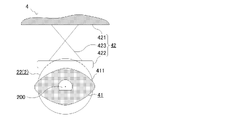
- FIG. 2 is a schematic diagram showing a configuration for applying a load to the output shaft of the second motor among the load applying units in the image forming apparatus according to the first embodiment.
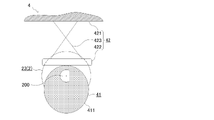
- FIG. 3 is a schematic diagram showing a configuration for applying a load to the output shaft of the third motor among the load applying units in the image forming apparatus according to the first embodiment.
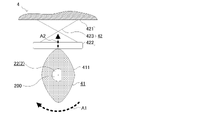
- FIG. 4 is a schematic diagram showing how a load is applied by the load applying section to the second motor in the image forming apparatus according to the first embodiment.
- FIG. 5 is a schematic diagram showing how a load is applied by the load applying section to the third motor in the image forming apparatus according to the first embodiment.
- FIG. 6 is a schematic diagram showing an example of a combined current waveform in the image forming apparatus according to the first embodiment.
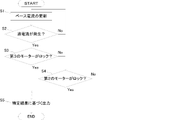
- FIG. 7 is a flowchart illustrating an example of an overcurrent detection method performed by the image forming apparatus according to the first embodiment;
- FIG. 8 is a schematic diagram showing an example of a combined current waveform when the first motor, the second motor, and the third motor are locked in the image forming apparatus according to the first embodiment.
- the image forming apparatus 10 is a composite image forming apparatus having multiple functions such as a scan function for acquiring image data from a document, a print function for forming an image based on the image data, a facsimile function, and a copy function. machine.
- the image forming device 10 may be a printer, a facsimile machine, a copier, or the like.
- the image forming apparatus 10 includes an automatic document feeder 11, an image reading unit 12, an image forming unit 13, a paper feeding unit 14, a developer supplying unit 15, a driving circuit 16, It further includes a control unit 17 , a storage unit 34 , a current monitoring circuit 18 and an operation display unit 19 .
- ADF Auto Document Feeder
- the image forming apparatus 10 includes a plurality of motors 2 .
- the plurality of motors 2 may include motors used for the functions of each section of the image forming apparatus 10, such as toner motors, lift-up motors, image forming drive motors, and transport drive motors.
- the plurality of motors 2 includes three motors 2, a first motor 21, a second motor 22 and a third motor 23, and these three motors 2 are all toner motors. It is included in the developer supply section 15 .
- the first motor 21, the second motor 22 and the third motor 23 are not particularly distinguished, each of the first motor 21, the second motor 22 and the third motor 23 is It is simply called "motor 2".
- the ADF 11 conveys a document whose image is to be read by the image reading section 12 .
- the ADF 11 has a document setting section, a plurality of transport rollers, a document pressing section, a paper discharge section, and the like.
- the image reading unit 12 reads an image from a document and outputs image data corresponding to the read image.
- the image reading unit 12 has a platen, a light source, a plurality of mirrors, an optical lens, a CCD (Charge Coupled Device), and the like.
- the image forming section 13 forms an image on a sheet by electrophotography based on the image data output from the image reading section 12 . Further, the image forming unit 13 forms an image on a sheet based on image data input from an information processing device external to the image forming apparatus 10, such as a personal computer.
- the image forming unit 13 includes four image forming units corresponding to four colors of C (cyan), M (magenta), Y (yellow), and K (black), an optical scanning device, an intermediate transfer belt, a secondary transfer roller, and It has a fixing device, etc.
- the image forming unit 13 may be configured to form an image on a sheet by an image forming method other than an electrophotographic method, such as an inkjet method.
- the paper feeding unit 14 supplies sheets to the image forming unit 13 .
- the image forming section 13 forms an image on a sheet supplied from the paper feeding section 14 .
- the developer supply unit 15 supplies toner as a developer to the image forming unit 13 .
- the image forming section 13 forms an image on a sheet using toner supplied from the developer supplying section 15 .
- the developer supply section 15 supplies ink (another example of developer) to the image forming section 13 instead of toner.
- the developer supply unit 15 has a plurality of (three in this case) motors 2 including a first motor 21 , a second motor 22 and a third motor 23 .
- the plurality of motors 2 each have an output shaft 200 (see FIG. 2).
- Each of the plurality of motors 2 operates to rotate its respective output shaft 200 by being supplied with electric power. That is, each of the plurality of motors 2 converts electrical energy into mechanical energy and outputs the converted mechanical energy from output shaft 200 .
- the first motor 21, the second motor 22, and the third motor 23 are all toner motors, and each drive a conveying screw for conveying toner. Therefore, the output shaft 200 of each motor 2 is mechanically connected to the conveying screw via a transmission mechanism including, for example, an electromagnetic clutch and a speed reducer. That is, the developer supply unit 15 supplies toner to the image forming unit 13 by rotating the conveying screw receiving power from the motor 2 .
- the toner supplied by the developer supply unit 15 includes, for example, toners of multiple colors of C (cyan), M (magenta), Y (yellow), and K (black). Therefore, the developer supplying section 15 also has a plurality of motors 2 as toner motors so as to correspond to the toners of a plurality of colors.
- the first motor 21, the second motor 22, and the third motor 23 correspond to C (cyan), M (magenta), and Y (yellow) toner, respectively. . That is, the first motor 21 supplies C (cyan) toner to the image forming unit 13 by driving the conveying screw, and the second motor 22 drives the conveying screw to supply M (magenta) toner. Toner is supplied to the image forming section 13, and the third motor 23 supplies Y (yellow) toner to the image forming section 13 by driving the conveying screw.
- K It has a motor (fourth motor) corresponding to (black) toner.
- one port of the overcurrent detection unit 31 (see FIG. 1), which will be described later, monitors overcurrent for C (cyan), M (magenta), and Y (yellow) toners. Assume that there are three motors 2 running That is, the motor corresponding to K (black) toner is monitored for overcurrent at a port different from that of the first motor 21, the second motor 22, and the third motor .
- the description of the motor 2 will refer to the three motors excluding the motor corresponding to K (black) toner among the plurality of toner motors included in the developer supply unit 15.
- the description refers to the motor 2 .
- the drive circuit 16 is a circuit that drives the multiple motors 2 by supplying power (electrical energy) to the multiple motors 2 .
- each of the plurality of motors 2 is a permanent magnet field type DC motor that operates when a DC voltage is applied. It operates at a constant speed and torque. Therefore, the drive circuit 16 rotates the rotor including the output shaft 200 of each motor 2 by applying a DC voltage to each of the plurality of motors 2 .
- the motor 2 is not limited to a permanent magnet field type direct current motor, and may be, for example, an electromagnet field type direct current motor, a brushless direct current (DC) motor, an alternating current motor, or the like.
- the rotation speed changes according to the magnitude of the input (applied) DC voltage, and the higher the input DC voltage, the higher the rotation speed.
- the drive circuit 16 outputs the same DC voltage to the plurality of motors 2 so that the number of revolutions of the motors 2 is common and constant among the plurality of motors 2 .
- the control unit 17 comprehensively controls the image forming apparatus 10 .
- the control unit 17 is mainly composed of a computer system having one or more processors and one or more memories.
- the functions of the control unit 17 are realized by one or more processors executing programs.
- the program may be pre-recorded in the memory (storage unit 34), may be provided through an electric communication line such as the Internet, or may be a computer system-readable non-temporary recording medium such as a memory card or an optical disc. may be recorded and provided to
- the one or more processors are composed of one or more electronic circuits including semiconductor integrated circuits. Additionally, computer systems herein include microcontrollers having one or more processors and one or more memories.
- the control unit 17 may be a control unit provided separately from the main control unit that controls the image forming apparatus 10 in an integrated manner.
- the storage unit 34 includes one or more nonvolatile memories, and information such as control programs for causing the control unit 17 to execute various processes is stored in advance. Furthermore, the storage unit 34 is used as a temporary storage memory (work area) for various processes executed by the control unit 17 .
- the current monitoring circuit 18 is a circuit that monitors the current flowing through the motor 2.
- the current monitoring circuit 18 outputs a monitoring signal corresponding to the magnitude of the current flowing through the motor 2 to the overcurrent detection unit 31 of the control unit 17, so that the overcurrent detection unit 31 detects an overcurrent generated in the motor 2. Makes the current detectable.
- a plurality of (three in this case) motors 2 are monitored for overcurrent at one port of the overcurrent detection unit 31 , so the current monitoring circuit 18 monitors these motors 2 .
- One monitor signal is generated and output to one port of the control section 17 .
- the current monitoring circuit 18 measures the sum of the currents flowing through the first motor 21, the second motor 22 and the third motor 23, that is, the "composite current” that is the sum of the currents flowing through the three motors 2. . Then, the current monitoring circuit 18 outputs a monitoring signal corresponding to the measured combined current to the control section 17 .
- the current monitoring circuit 18 measures a combined current of currents flowing from the drive circuit 16 to the first motor 21, the second motor 22, and the third motor 23 using a shunt resistor, a current transformer, or the like. and outputs a monitoring signal including the measurement result to one port of the control unit 17 .
- the control unit 17 can acquire the currents flowing through the first motor 21, the second motor 22, and the third motor 23 in an indistinguishable state from the monitor signal input to one port. becomes.
- the operation display unit 19 is a user interface in the image forming apparatus 10.
- the operation display unit 19 includes a display unit such as a liquid crystal display that displays various information according to control instructions from the control unit 17, and a switch or touch panel that inputs various information to the control unit 17 according to user operations. It has an operation part of
- the motor 2 is locked (restrained) in a state where the motor 2 does not rotate. condition can occur.
- a technique for detecting such a state that is, a state in which the output shaft 200 is locked so as not to rotate, using the current flowing through the motor 2 . That is, an overcurrent exceeding the rated current of the motor 2 flows through the motor 2 in the locked state. By detecting such an overcurrent, the locked state of the motor 2 can be detected. is possible.
- “Overcurrent” in the present disclosure means a current that is large enough to exceed the rated current of the motor 2.
- the output shaft 200 of the motor 2 is overloaded, such as being locked (restricted). is the current that flows to the motor 2 when
- such overcurrent can also flow in situations where the output shaft 200 of the motor 2 is overloaded, even if the output shaft 200 is not completely locked. That is, while the motor 2 is operating within the normal range (rated range or permissible range), such an overcurrent does not occur. Overcurrent occurs when the motor 2 operates.
- the image forming apparatus 10 includes an overcurrent detecting section 31, a load applying section 4, and a specifying section 32, as shown in FIG.
- the overcurrent detection unit 31 and the identification unit 32 are provided in the control unit 17 as one function of the control unit 17 .
- the overcurrent detection unit 31 detects overcurrent with respect to a combined current including currents flowing through the plurality of motors 2 .
- the load application unit 4 applies a load to the output shafts 200 of at least some of the plurality of motors 2 when the plurality of motors 2 rotate.
- the load applied by the load application unit 4 is a load that causes the combined current to have a fluctuating component that allows the currents of the plurality of motors 2 to be distinguished.
- the identification unit 32 identifies the motor 2 that is the cause of the overcurrent from among the plurality of motors 2 based on the combined current.
- the image forming apparatus 10 detects overcurrent for the plurality of motors 2 by one port of the overcurrent detection unit 31, and When an overcurrent occurs in , the motor 2 that is the cause of the overcurrent can be identified.
- the load applying unit 4 causes the combined current to generate a fluctuation component that allows the currents of the plurality of motors 2 to be distinguished when the plurality of motors 2 rotate. is applied to the output shaft 200 of at least a part of the motor 2.
- the load applying unit 4 by applying a load to the output shaft 200 by the load applying unit 4 , the combined current including the currents flowing in the plurality of motors 2 is added to the current of the plurality of motors 2 . It produces a fluctuating component that makes the currents distinguishable. Therefore, it is possible to distinguish which of the plurality of motors 2 is rotating according to the fluctuation component included in the combined current. Therefore, for example, in a state in which any one of the plurality of motors 2 is locked, the identification unit 32 identifies the motor 2 that is not rotating among the plurality of motors 2 based on the combined current, thereby preventing overcurrent.
- the motor 2 that is the cause can be specified.
- the image forming apparatus 10 when an overcurrent occurs, the plurality of motors 2 are temporarily stopped, and the overcurrent is prevented without sequentially driving the plurality of motors 2 one by one. It becomes possible to identify the motor 2 that is the cause. Therefore, when an overcurrent occurs, the motors 2, which are the cause of the overcurrent, are prevented from being caused by the occurrence of the overcurrent, compared to the above-described related art in which the plurality of motors 2 are temporarily stopped and the plurality of motors 2 are sequentially driven one by one. There is an advantage that it is easy to shorten the time required to identify the
- the load application unit 4 does not have an electrical connection relationship with other components.
- the load application unit 4 includes a mechanism that directly applies a load to at least some of the motors 2 by mechanically acting on the motors 2 .
- the dotted arrows pointing from the load application unit 4 to the second motor 22 and the third motor 23 represent mechanical action without electrical connection, that is, force transmission.
- Load in the present disclosure means a mechanical load applied to the output shaft 200 of the motor 2. That is, the load application unit 4 directly or indirectly applies a load (dynamic load) to the output shafts 200 of at least some of the motors 2 . In this embodiment, as an example, the load applying unit 4 applies a load only to the output shafts 200 of two motors 2, which are a part of the three motors 2 to be monitored for overcurrent. Suppose. However, the load application unit 4 may apply the load to all (here, three) output shafts 200 of the plurality of motors 2 to be monitored for overcurrent.
- the load application unit 4 applies a (dynamic) load to the output shafts 200 of at least some of the plurality of motors 2 when the plurality of motors 2 rotate.
- the load applied by the load applying unit 4 is a load that causes, in the combined current, a fluctuating component that allows the currents of the plurality of motors 2 to be distinguished when the plurality of motors 2 rotate.
- the load applying unit 4 applies current to the output shafts 200 of at least some of the plurality of motors 2, so that the currents of the plurality of motors 2 can be distinguished when the plurality of motors 2 rotate.
- a fluctuating component is generated in the composite current.
- the current flowing through the motor 2 changes according to the magnitude of the load applied to the output shaft 200.
- the larger the load applied to the output shaft 200 the larger the current flowing through the motor 2.
- the magnitude of the load applied to the output shaft 200 by the load applying section 4 is not constant, but fluctuates as the output shaft 200 rotates. In other words, the rotation angle of the output shaft 200 switches between a “high load state” in which the load is relatively large and a “low load state” in which the load is relatively small.
- the current flowing through the motor 2 is relatively large in the "high load state”
- the current flowing through the motor 2 is relatively small in the "low load state”.
- the load application unit 4 applies a load that periodically fluctuates with the rotation of the output shafts 200 to the output shafts 200 of the second motor 22 and the third motor 23 .
- the load applied to the output shaft 200 by the load applying section 4 fluctuates in synchronization with the rotation of the output shaft 200.
- the load fluctuates M times.
- the number of rotations of the plurality of motors 2 is common and constant among the plurality of motors 2 . Therefore, in the plurality of motors 2, the output shaft 200 rotates at a constant speed (common number of rotations) and a constant speed (constant number of rotations), and the load applied by the load applying section 4 also varies.
- the currents of the plurality of motors 2 can be distinguished at least by looking at the combined current for the load fluctuation period.
- the load applying section 4 may apply a load that fluctuates irregularly as the output shaft 200 rotates.
- the rotation speeds of the plurality of motors 2 to be monitored for overcurrent may differ from each other.
- the load applied to the output shaft 200 by the load applying section 4 has some difference for each motor 2 .
- the load application unit 4 causes the plurality of motors 2 to differ in at least one of the timing and the number of times that the load fluctuates with the rotation of the output shaft 200 in a predetermined period.
- the “timing” at which the load fluctuates includes the phase with respect to the rotation period of the output shaft 200 .
- the “number of times” that the load fluctuates means the number of times the load fluctuates during one or more rotations of the output shaft 200, including 0 times, that is, the case where the load does not fluctuate.
- the load application unit 4 causes the three motors 2 to vary the "number of times" that the load fluctuates by using the configuration described below.
- the load applying unit 4 applies such a load to the output shafts 200 of at least a portion of the motors 2 among the plurality of motors 2, thereby increasing the current of the plurality of motors 2 based on the combined current. be distinguishable.
- the load is applied by the load application unit 4
- the current flowing through the plurality of motors 2 is given a fluctuation component unique to each motor 2 . Therefore, the current flowing through each motor 2 can be identified by paying attention to the fluctuation component unique to each motor 2 even from the combined current obtained by adding the currents of a plurality of motors 2 .
- the load applying unit 4 applies a load to the output shaft 200 . That is, the load applying unit 4 does not apply the load to the first motor 21 of the three motors 2 that are monitored for overcurrent, and applies the load only to the remaining two motors 2. . Furthermore, the load applying unit 4 causes the second motor 22 and the third motor 23 to differ in the “number of times” that the load varies with the rotation of the output shaft 200 in a predetermined period.
- the current flowing through each motor 2 can be identified as the current of the first motor 21, the second motor 22, or the third motor 23. It is possible.
- the current of the first motor 21 does not have a fluctuation component. It becomes possible to identify something.
- the current of the second motor 22 is identified by the inclusion of the fluctuation component unique to the second motor 22. It becomes possible.
- the current of the third motor 23 is identified by including a fluctuation component unique to the third motor 23. It becomes possible.
- the load application unit 4 applies the load to motors 2 other than one of the plurality of motors 2 (here, the first motor 21). Therefore, compared with the case where loads are applied to a plurality of motors 2, it is possible to reduce the loss in the motors 2 to which no loads are applied.
- the load application unit 4 may apply the load to all the output shafts 200 of the plurality of motors 2 that are monitored for overcurrent.
- the load application unit 4 includes a mechanism that directly applies a load to at least some of the motors 2 by mechanically acting on them. More specifically, the load applying section 4 has a cam 41 and a pressing section 42, as shown in FIGS.
- the cam 41 is fixed to the output shafts 200 of at least some of the motors 2 and rotates together with the output shafts 200 .
- the cam 41 has an outer peripheral surface 411 and rotates together with the output shaft 200 while sliding the outer peripheral surface 411 against the pressing portion 42 .
- the pressing portion 42 contacts the outer peripheral surface 411 of the cam 41 and presses the contact portion of the outer peripheral surface 411 of the cam 41 toward the output shaft 200 . That is, since the load applying section 4 does not have an electrical connection relationship with other components (other than the load applying section 4) in the image forming apparatus 10, the load applying section 4 can be realized with a relatively simple structure. It becomes possible.
- the pressing portion 42 includes a fixed portion 421 , a movable portion 422 and an elastic portion 423 .
- the fixing portion 421 is, for example, part of the inner surface of the housing of the image forming apparatus 10 .
- the movable portion 422 is movable relative to the fixed portion 421 along the normal line of the fixed portion 421 (hereinafter also referred to as “reference straight line”) so that the distance from the fixed portion 421 is variable. It is a configured part.
- the elastic part 423 is, for example, a pantograph-type expansion and contraction mechanism including an elastic body such as a coil spring, and is installed between the fixed part 421 and the movable part 422 .
- the pressing portion 42 presses the surface of the movable portion 422 opposite to the fixed portion 421 against the outer peripheral surface 411 of the cam 41 by the elastic force of the elastic portion 423 .
- a pressure is applied to the cam 41 .
- the pressing portion 42 contacts the outer peripheral surface 411 of the cam 41 and presses the contact portion of the outer peripheral surface 411 of the cam 41 toward the output shaft 200 , that is, the side opposite to the fixed portion 421 .
- the elastic portion 423 of the pressing portion 42 is compressed. The acting pressure increases.
- the cam 41 is directly fixed to the output shaft 200 of the motor 2 to which the load is to be applied by the load applying section 4.
- the output shaft 200 is a D-cut shaft having a flat portion on a part of the outer circumference, and the output shaft 200 is inserted into a D-shaped hole formed in the cam 41 so that the cam 41 It is fixed to the output shaft 200 .
- the cam 41 rotates together with the output shaft 200, and when the output shaft 200 rotates once, the cam 41 also rotates once.
- the cam 41 is an eccentric cam in which the outer peripheral surface 411 is eccentric with respect to the rotation center (that is, the rotation center of the output shaft 200), or a deformed cam in which the outer peripheral surface 411 is a non-perfect circle such as an ellipse in plan view. is.
- the contact portion of the outer peripheral surface 411 with the pressing portion 42 that is, the portion of the outer peripheral surface 411 that faces the movable portion 422 moves along the reference straight line as the cam 41 rotates. displacement.
- the movable portion 422 of the pressing portion 42 is pushed by the outer peripheral surface 411 of the cam 41 and is periodically pushed toward the fixed portion 421 .
- the pressure acting on the cam 41 from the movable portion 422 increases. The force is greater and the load on the output shaft 200 is higher.
- the magnitude of the pressure acting on the cam 41 from the pressing portion 42 fluctuates, and the magnitude of the load applied to the output shaft 200 fluctuates.
- the cam 41 rotates in synchronization with the rotation of the output shaft 200
- the load applied to the output shaft 200 by the load applying section 4 periodically fluctuates in synchronization with the rotation of the output shaft 200 .
- the cam 41 is directly fixed to the output shaft 200, when the output shaft 200 rotates once, the cam 41 also rotates once. Therefore, the load applied to the output shaft 200 by the load applying section 4 always (once) fluctuates during one rotation of the output shaft 200 .
- the load is applied by the load applying unit 4 only to the second motor 22 and the third motor 23 among the first motor 21, the second motor 22 and the third motor 23. Therefore, the cam 41 and the pressing portion 42 as described above are provided for the second motor 22 and the third motor 23, respectively, as shown in FIGS.
- the load application unit 4 includes cams 41 having different shapes so that the second motor 22 and the third motor 23 have different "numbers" of load fluctuations accompanying the rotation of the output shaft 200 in a predetermined period. Applies. That is, the cam 41 fixed to the output shaft 200 of the second motor 22 and the cam 41 fixed to the output shaft 200 of the third motor 23 have different shapes.
- the cam 41 fixed to the output shaft 200 of the second motor 22 is, as shown in FIG. It is a deformed cam that adopts a shape where the center of rotation of In other words, in the cam 41 fixed to the output shaft 200 of the second motor 22 , the rotation angle of the cam 41 causes the distance from the contact portion of the outer peripheral surface 411 with the pressing portion 42 (movable portion 422 ) to the output shaft 200 . distance changes.
- the cam 41 fixed to the output shaft 200 of the third motor 23 is, as shown in FIG. It is an eccentric cam that adopts a shape where That is, in the cam 41 fixed to the output shaft 200 of the third motor 23 , the rotation angle of the cam 41 causes the distance from the contact portion of the outer peripheral surface 411 with the pressing portion 42 (movable portion 422 ) to the output shaft 200 . distance changes.
- the load applying unit 4 makes the "number of times" that the load fluctuates in a predetermined period of one rotation of the output shaft 200 different between the second motor 22 and the third motor 23. be able to. Furthermore, since no load is applied to the first motor 21 in the first place, the "number of times” that the load fluctuates during the predetermined period in which the output shaft 200 rotates once is "0". Therefore, according to the load application unit 4, a configuration is realized in which the “number of times” that the load varies among the three motors 2 is different.
- the load application unit 4 may vary at least one of the “timing” and “number of times” of load fluctuations among the plurality of motors 2, and the “number of times” of load fluctuations should be different among the plurality of motors 2. It is not necessary to let
- the distance (protrusion amount) from the output shaft 200 of the maximum point at which the distance from the output shaft 200 provided on the outer peripheral surface 411 of the cam 41 is maximum is larger than that of the second motor 22 .
- the third motor 23 is set large.
- the distance from the output shaft 200 to the pressing portion 42 in FIG. 5 is larger than the distance from the output shaft 200 to the pressing portion 42 in FIG. Therefore, the load applied to the output shaft 200 in a state where the maximum point contacts the pressing portion 42 is greater in the third motor 23 than in the second motor 22 .
- the movement width of the movable portion 422 during one rotation of the output shaft 200 is also set larger in the third motor 23 than in the second motor 22 .
- the load application unit 4 allows the width of variation (that is, the amplitude) when the load varies with the rotation of the output shaft 200 and the maximum value of the load to be different among the plurality of motors 2.
- FIG. 6 shows the combined current G1 in a state in which all the fluctuation components of the first motor 21, the second motor 22 and the third motor 23 are included, that is, the state in which all three motors 2 are rotating.
- the base current I0 represents the DC component excluding the fluctuating component in the combined current G1.
- a fluctuation component G12 represents a fluctuation component inherent to the second motor 22, and a fluctuation component G13 represents a fluctuation component inherent to the third motor 23.
- both the fluctuation component G12 and the fluctuation component G13 represent only the fluctuation component when the base current I0 is the minimum value, that is, the addition to the base current I0.
- the current flowing through the plurality of motors 2 is given a fluctuation component specific to each motor 2, and the combined current G1 is includes fluctuation components G12 and G13 unique to each motor 2 of .
- the combined current G1 has a waveform that includes a fluctuation component G12 specific to the second motor 22 and a fluctuation component G13 specific to the third motor 23 .
- the fluctuation components included in the combined current G1 are only the fluctuation component G12 and the fluctuation component G13. According to such a combined current G1, by paying attention to the fluctuation components G12 and G13 unique to each motor 2, the current flowing through each motor 2 can be identified.
- control unit 17 has an overcurrent detection unit 31 , a specification unit 32 and an output unit 33 . That is, the image forming apparatus 10 includes the output unit 33 as one function of the control unit 17 in addition to the overcurrent detection unit 31 and the identification unit 32 .
- the overcurrent detection unit 31 detects overcurrent for the multiple motors 2 with one port of the control unit 17 . That is, the current monitoring circuit 18 measures a combined current G1 obtained by summing the currents flowing through a plurality of (here, three) motors 2, and the overcurrent detector 31 receives a monitoring signal corresponding to the combined current G1. be done. When the monitor signal is input, the overcurrent detector 31 detects occurrence of overcurrent based on the magnitude of the combined current G1. Specifically, the overcurrent detection unit 31 obtains a base current I0 obtained by removing the fluctuating component from the combined current G1, and compares the base current I0 with a first threshold value Ith1 for overcurrent detection (see FIG. 8). , to detect overcurrent. However, the overcurrent detection unit 31 only detects that an overcurrent has occurred in one of the plurality of motors 2, and does not specify the motor 2 in which the overcurrent has occurred.
- the identification unit 32 identifies the motor 2 that is the cause of the overcurrent based on the monitoring signal input from the current monitoring circuit 18 to one port of the control unit 17 .
- the specifying unit 32 detects the overcurrent based on the fluctuation component included in the combined current G1.
- the locked motor 2 is identified as the motor 2 that is the cause of .
- the identification unit 32 extracts the feature amount of the fluctuation component included in the combined current G1 from the monitoring signal, thereby determining which motor 2 is included in the composite current G1. Then, the identification unit 32 identifies the motor 2 that does not include the fluctuating component in the combined current G1 as the motor 2 that is not rotating among the plurality of motors 2, that is, the motor 2 that causes the overcurrent.
- the feature quantity associated with the fluctuation component is estimated by comparing the composite current G1 with the second threshold Ith2 (see FIG. 8) and the third threshold Ith3 (see FIG. 8) for feature quantity estimation.
- the output unit 33 outputs based on the identification result of the identification unit 32. That is, when the identifying unit 32 identifies the motor 2 that is the cause of the overcurrent, the output unit 33 outputs based on the identification result.
- the mode of output of the output unit 33 includes notification such as display or voice output using the operation display unit 19, control of the motor 2, writing of logs to the storage unit 34, transmission to an external terminal by communication, and the like. As an example, if the mode of output is control of the motor 2, the output unit 33 limits (including stops) the output of the motor 2 that causes overcurrent. According to the output unit 33, the identification result of the identification unit 32 can be utilized.
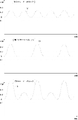
- FIG. 8 shows the procedure of the overcurrent detection method performed by the image forming apparatus 10
- steps S1, S2, . . . in the flowchart shown in FIG. 8 the upper stage shows the combined current G1 when the third motor 23 is locked
- the middle stage shows the combined current G1 when the second motor 22 is locked
- the lower stage shows the combined current G1 when the first motor 21 is locked.
- FIG. 11 shows the combined current G1 when locked.
- the drive circuit 16 is driving a plurality of motors 2.
- the load applying section 4 applies a load to the output shafts 200 of the second motor 22 and the third motor 23 .
- the load application process of applying the load to the output shafts 200 of at least some of the motors 2 during rotation of the plurality of motors 2 is performed in advance.
- step S1 the control unit 17 updates the base current I0. That is, since the combined current G1 is a current containing a fluctuating component, the control unit 17 causes the overcurrent detection unit 31 to extract the base current I0, which is a DC component from which the fluctuating component is removed from the combined current G1, and obtain the latest base current I0. update the base current I0 of The update of the base current I0 is performed at a constant update cycle (for example, about several seconds). As an example, the control unit 17 sets the minimum value of the combined current G1 within the update period as the base current I0, or extracts the combined current G1 from which the fluctuating component is removed by filtering as the base current I0.
- step S2 the control unit 17 determines whether or not an overcurrent is occurring in the overcurrent detection unit 31 (overcurrent detection processing). Specifically, the overcurrent detection unit 31 compares the base current I0 updated in step S1 with a first threshold value Ith1 for overcurrent detection.
- the overcurrent detection unit 31 determines that an overcurrent is occurring (S2: Yes), and the control unit 17 The process is shifted to step S3.
- the overcurrent detector 31 determines that an overcurrent has not occurred (S2: No), and the control unit 17 shifts the process to step S1. .
- step S3 the control unit 17 determines whether or not the third motor 23 is locked (specific processing). That is, the control unit 17 causes the identification unit 32 to determine whether or not the third motor 23 is the cause of the overcurrent.
- the identification unit 32 extracts the feature amount of the variation component included in the combined current G1 from the monitor signal, thereby identifying which motor 2 has the unique variation component included in the combined current G1. do. If the combined current G1 does not contain the fluctuation component specific to the third motor 23, the specifying unit 32 determines that the third motor 23 is locked, that is, it is the cause of the overcurrent. More specifically, the specifying unit 32 compares the combined current G1 with a second threshold Ith2 larger than the first threshold Ith1 and a third threshold Ith3 larger than the second threshold Ith2.
- the specifying unit 32 determines that the third motor 23 is the cause of the overcurrent. In this case, the identification unit 32 determines that the third motor 23 is locked (S3: Yes), and the control unit 17 shifts the process to step S5.
- the specifying unit 32 determines that the third motor 23 is not locked (S3: No), and the control unit 17 shifts the process to step S4.
- step S4 the control unit 17 determines whether or not the second motor 22 is locked (specific processing). That is, the control unit 17 causes the identification unit 32 to determine whether or not the cause of the overcurrent is the second motor 22 .
- the identification unit 32 determines that the second motor 22 is locked, that is, is the cause of the overcurrent. to decide. More specifically, the specifying unit 32 compares the combined current G1 with the second threshold Ith2 and the third threshold Ith3.
- the identification unit 32 determines that the second motor 22 is the cause of the overcurrent. In this case, the specifying unit 32 determines that the second motor 22 is locked (S4: Yes), and the control unit 17 shifts the process to step S5.
- the combined current G1 includes a fluctuation component unique to the second motor 22 .
- the specifying unit 32 determines that the second motor 22 is not locked (S4: No), and the control unit 17 shifts the process to step S5. Furthermore, in this case, the identification unit 32 determines that neither the third motor 23 nor the second motor 22 is the cause of the overcurrent. Identify the first motor 21 .
- step S5 the control unit 17 causes the output unit 33 to output based on the identification result of the identification unit 32 (output processing).
- the identification unit 32 displays an operation display to notify that the third motor 23 is abnormal (locked). Execution using the unit 19 . Further, for example, when it is specified that the second motor 22 is locked (S4: Yes), the specifying unit 32 causes the operation display unit 19 to display a notification that the second motor 22 is abnormal. run using Further, for example, when it is specified that the first motor 21 is locked (S4: No), the specifying unit 32 causes the operation display unit 19 to display a notification that the first motor 21 is abnormal. run using Alternatively, the output unit 33 may control the drive circuit 16 to limit the output of the motor 2 identified as locked.
- the procedure of the overcurrent detection method described above is merely an example, and the order of the processes shown in the flowchart of FIG. 7 may be changed as appropriate. For example, it may be determined whether the second motor 22 is locked (S2) before determining whether the third motor 23 is locked (S3).
- the plurality of motors 2 It is also possible to distinguish between For example, it is possible to identify the fluctuation component included in the combined current G1 from the timing or the number of times the pulsation of the combined current G1 appears in a predetermined period during which the output shaft 200 rotates once. In this case, the identifying unit 32 can identify the overcurrent regardless of the magnitude of the base current I0, so various overcurrents can be easily dealt with.
- a plurality of components included in the image forming apparatus 10 may be provided dispersedly in a plurality of housings.
- at least one of the overcurrent detection unit 31, the identification unit 32, and the output unit 33 is not limited to the configuration realized as one function of the control unit 17, and is provided in a separate housing from the control unit 17.
- the objects to be monitored for overcurrent by the image forming apparatus 10 may be a plurality of motors 2, not limited to three motors 2.
- two motors 2 or four or more motors 2 may be monitored for overcurrent. It may be a target.
- the plurality of motors 2 to be monitored for overcurrent are not limited to toner motors, and may be motors other than toner motors, such as lift-up motors, image forming drive motors, transport drive motors, and the like.
- the plurality of motors 2 to be monitored for overcurrent may include motors of different types (different functions) such as toner motors and lift-up motors.
- the image forming apparatus 10 detects the motor that is the cause of overcurrent among the plurality of motors 2 based on the combined current G1 when only some of the plurality of motors 2 are rotated. 2 is different from the image forming apparatus 10 according to the first embodiment.
- configurations similar to those of the first embodiment are denoted by common reference numerals, and descriptions thereof are omitted as appropriate.
- the control unit 17 when an overcurrent is detected, the control unit 17 removes the motor 2 causing the overcurrent while driving all of the plurality of motors 2 to be monitored for overcurrent. configured to identify In contrast, in the present embodiment, when overcurrent is detected, the control unit 17 stops some of the plurality of motors 2 to be monitored for overcurrent, and detects the cause of the overcurrent. It is configured to identify the motor 2 .
- the plurality of motors 2 to be monitored for overcurrent includes two sets of combinations of the first motor 21, the second motor 22, and the third motor 23 described in the first embodiment, and a total of six motors. 2. That is, the objects to be monitored for overcurrent are the first set of motors including the first motor 21, the second motor 22 and the third motor 23, the first motor 21, the second motor 22 and the third motor 23. and a second set of motors including motors 23 of .
- the image forming apparatus 10 when overcurrent is detected in any of the plurality (here, six) of the motors 2, the image forming apparatus 10 according to the present embodiment removes the motor 2 causing the overcurrent by the following procedure. Identify.
- the image forming apparatus 10 first stops the three motors 2 included in the first group of motors. As a result, of the six motors 2 to be monitored for overcurrent, only the three motors 2 included in the second group of motors are continuously driven. In this state, the overcurrent detection unit 31 detects overcurrent in the three motors 2 included in the second group of motors being driven. At this time, if an overcurrent is detected, the motor 2 causing the overcurrent should be included in the second group of motors, so the specifying unit 32 is included in the second group of motors. The motor 2 that is the cause of the overcurrent is identified from among the three motors 2 .
- the motor 2 causing the overcurrent is the first motor group, not the second group. It should be included in the motor group of the set.
- the image forming apparatus 10 stops the three motors 2 included in the second group of motors and re-drives the three motors 2 included in the first group of motors.
- the identifying unit 32 selects the three motors 2 included in the first group of motors for overcurrent. Identify the motor 2 that is the source of the current.
- the method by which the identifying unit 32 identifies the motor 2 causing the overcurrent from among the three motors 2 is as described in the first embodiment. As described above, according to the image forming apparatus 10 of the present embodiment, even if the number of motors 2 to be monitored for overcurrent increases, the motor 2 causing the overcurrent can be easily identified.
Landscapes
- Physics & Mathematics (AREA)
- General Physics & Mathematics (AREA)
- Engineering & Computer Science (AREA)
- Power Engineering (AREA)
- Microelectronics & Electronic Packaging (AREA)
- Control Of Multiple Motors (AREA)
Priority Applications (2)
| Application Number | Priority Date | Filing Date | Title |
|---|---|---|---|
| JP2023500876A JPWO2022176882A1 (https=) | 2021-02-17 | 2022-02-16 | |
| US18/546,654 US12537473B2 (en) | 2021-02-17 | 2022-02-16 | Image formation device and overcurrent detection method |
Applications Claiming Priority (2)
| Application Number | Priority Date | Filing Date | Title |
|---|---|---|---|
| JP2021-023541 | 2021-02-17 | ||
| JP2021023541 | 2021-02-17 |
Publications (1)
| Publication Number | Publication Date |
|---|---|
| WO2022176882A1 true WO2022176882A1 (ja) | 2022-08-25 |
Family
ID=82930602
Family Applications (1)
| Application Number | Title | Priority Date | Filing Date |
|---|---|---|---|
| PCT/JP2022/006081 Ceased WO2022176882A1 (ja) | 2021-02-17 | 2022-02-16 | 画像形成装置、及び過電流検知方法 |
Country Status (3)
| Country | Link |
|---|---|
| US (1) | US12537473B2 (https=) |
| JP (1) | JPWO2022176882A1 (https=) |
| WO (1) | WO2022176882A1 (https=) |
Citations (5)
| Publication number | Priority date | Publication date | Assignee | Title |
|---|---|---|---|---|
| JPH07272078A (ja) * | 1994-03-31 | 1995-10-20 | Sanyo Electric Co Ltd | 故障検出装置 |
| JP2008139536A (ja) * | 2006-12-01 | 2008-06-19 | Fuji Xerox Co Ltd | 現像装置及び画像形成装置 |
| JP2010217663A (ja) * | 2009-03-18 | 2010-09-30 | Fuji Xerox Co Ltd | 安全装置、画像形成装置、安全管理プログラム、及び安全制御プログラム |
| JP2015205769A (ja) * | 2014-04-23 | 2015-11-19 | キヤノンファインテック株式会社 | シート処理装置と画像形成装置 |
| JP2019104552A (ja) * | 2017-12-08 | 2019-06-27 | キヤノン株式会社 | シート搬送装置及び画像形成装置 |
Family Cites Families (5)
| Publication number | Priority date | Publication date | Assignee | Title |
|---|---|---|---|---|
| JPS5019312A (https=) * | 1973-06-21 | 1975-02-28 | ||
| JP5175520B2 (ja) | 2007-10-26 | 2013-04-03 | 京セラドキュメントソリューションズ株式会社 | 画像形成装置,過電流発生部特定方法 |
| JP5558729B2 (ja) * | 2009-03-23 | 2014-07-23 | キヤノン株式会社 | コンバータ、スイッチング電源及び画像形成装置 |
| JP5459199B2 (ja) * | 2010-12-21 | 2014-04-02 | ブラザー工業株式会社 | 画像形成装置 |
| JP5990979B2 (ja) * | 2012-03-30 | 2016-09-14 | ブラザー工業株式会社 | 画像形成装置 |
-
2022
- 2022-02-16 JP JP2023500876A patent/JPWO2022176882A1/ja active Pending
- 2022-02-16 WO PCT/JP2022/006081 patent/WO2022176882A1/ja not_active Ceased
- 2022-02-16 US US18/546,654 patent/US12537473B2/en active Active
Patent Citations (5)
| Publication number | Priority date | Publication date | Assignee | Title |
|---|---|---|---|---|
| JPH07272078A (ja) * | 1994-03-31 | 1995-10-20 | Sanyo Electric Co Ltd | 故障検出装置 |
| JP2008139536A (ja) * | 2006-12-01 | 2008-06-19 | Fuji Xerox Co Ltd | 現像装置及び画像形成装置 |
| JP2010217663A (ja) * | 2009-03-18 | 2010-09-30 | Fuji Xerox Co Ltd | 安全装置、画像形成装置、安全管理プログラム、及び安全制御プログラム |
| JP2015205769A (ja) * | 2014-04-23 | 2015-11-19 | キヤノンファインテック株式会社 | シート処理装置と画像形成装置 |
| JP2019104552A (ja) * | 2017-12-08 | 2019-06-27 | キヤノン株式会社 | シート搬送装置及び画像形成装置 |
Also Published As
| Publication number | Publication date |
|---|---|
| US12537473B2 (en) | 2026-01-27 |
| JPWO2022176882A1 (https=) | 2022-08-25 |
| US20240223121A1 (en) | 2024-07-04 |
Similar Documents
| Publication | Publication Date | Title |
|---|---|---|
| US7979011B2 (en) | Image forming apparatus having a photoconductive drum | |
| US8558858B2 (en) | Image forming apparatus | |
| EP2363757A2 (en) | Power control apparatus, image forming apparatus, and power control program product | |
| US8731416B2 (en) | Electronic device, malfunction determining method, and computer program product | |
| EP4246239B1 (en) | Sound diagnosis system, information processing apparatus, and computer-readable storage medium | |
| US8259150B2 (en) | Image forming apparatus | |
| US8391728B2 (en) | Image forming apparatus and voltage applying device comprising a control unit for controlling another control unit when the other control unit is abnormally restarted | |
| US8311421B2 (en) | Conveyer-member control device, image forming apparatus, and drive control method | |
| US8558860B2 (en) | Image forming apparatus | |
| WO2022176882A1 (ja) | 画像形成装置、及び過電流検知方法 | |
| US20200366085A1 (en) | Power supply apparatus that outputs voltage supplied to load | |
| US8385764B2 (en) | Image forming apparatus | |
| JP5298058B2 (ja) | 画像形成装置 | |
| US11392072B2 (en) | Power supply apparatus configured to control plurality of power supply circuits | |
| JP7195864B2 (ja) | 画像形成装置 | |
| US20210099111A1 (en) | Image forming apparatus having motor, and motor control apparatus for controlling motor | |
| US12271135B2 (en) | Driving device and image forming apparatus | |
| JP2004053882A (ja) | 画像形成装置および画像形成装置の制御方法 | |
| JP7521267B2 (ja) | 画像形成装置、及び、画像形成装置の故障検知方法 | |
| JP7475157B2 (ja) | 画像形成装置、モータを制御するモータ制御装置及びモータの制御方法 | |
| JP2019085222A (ja) | 画像形成装置、ローラの寿命予測方法及び寿命予測プログラム | |
| JP2000354386A (ja) | 振動波モータ駆動制御装置、駆動制御方法、及び記憶媒体 | |
| JP2004240280A (ja) | 定着ヒータ制御装置及び画像形成装置 | |
| JP3466795B2 (ja) | 駆動装置およびこれを用いた複写機 | |
| JP2018025755A (ja) | 接離システム、画像形成装置、接離方法 |
Legal Events
| Date | Code | Title | Description |
|---|---|---|---|
| 121 | Ep: the epo has been informed by wipo that ep was designated in this application |
Ref document number: 22756200 Country of ref document: EP Kind code of ref document: A1 |
|
| WWE | Wipo information: entry into national phase |
Ref document number: 2023500876 Country of ref document: JP |
|
| NENP | Non-entry into the national phase |
Ref country code: DE |
|
| 122 | Ep: pct application non-entry in european phase |
Ref document number: 22756200 Country of ref document: EP Kind code of ref document: A1 |