WO2022172452A1 - データ処理装置及びデータ処理方法 - Google Patents
データ処理装置及びデータ処理方法 Download PDFInfo
- Publication number
- WO2022172452A1 WO2022172452A1 PCT/JP2021/005536 JP2021005536W WO2022172452A1 WO 2022172452 A1 WO2022172452 A1 WO 2022172452A1 JP 2021005536 W JP2021005536 W JP 2021005536W WO 2022172452 A1 WO2022172452 A1 WO 2022172452A1
- Authority
- WO
- WIPO (PCT)
- Prior art keywords
- data
- unit
- model
- estimation model
- operation data
- Prior art date
- Legal status (The legal status is an assumption and is not a legal conclusion. Google has not performed a legal analysis and makes no representation as to the accuracy of the status listed.)
- Ceased
Links
Images





Classifications
-
- F—MECHANICAL ENGINEERING; LIGHTING; HEATING; WEAPONS; BLASTING
- F24—HEATING; RANGES; VENTILATING
- F24F—AIR-CONDITIONING; AIR-HUMIDIFICATION; VENTILATION; USE OF AIR CURRENTS FOR SCREENING
- F24F11/00—Control or safety arrangements
- F24F11/62—Control or safety arrangements characterised by the type of control or by internal processing, e.g. using fuzzy logic, adaptive control or estimation of values
- F24F11/63—Electronic processing
-
- G—PHYSICS
- G05—CONTROLLING; REGULATING
- G05B—CONTROL OR REGULATING SYSTEMS IN GENERAL; FUNCTIONAL ELEMENTS OF SUCH SYSTEMS; MONITORING OR TESTING ARRANGEMENTS FOR SUCH SYSTEMS OR ELEMENTS
- G05B15/00—Systems controlled by a computer
- G05B15/02—Systems controlled by a computer electric
-
- G—PHYSICS
- G05—CONTROLLING; REGULATING
- G05B—CONTROL OR REGULATING SYSTEMS IN GENERAL; FUNCTIONAL ELEMENTS OF SUCH SYSTEMS; MONITORING OR TESTING ARRANGEMENTS FOR SUCH SYSTEMS OR ELEMENTS
- G05B17/00—Systems involving the use of models or simulators of said systems
- G05B17/02—Systems involving the use of models or simulators of said systems electric
-
- G—PHYSICS
- G05—CONTROLLING; REGULATING
- G05B—CONTROL OR REGULATING SYSTEMS IN GENERAL; FUNCTIONAL ELEMENTS OF SUCH SYSTEMS; MONITORING OR TESTING ARRANGEMENTS FOR SUCH SYSTEMS OR ELEMENTS
- G05B23/00—Testing or monitoring of control systems or parts thereof
- G05B23/02—Electric testing or monitoring
- G05B23/0205—Electric testing or monitoring by means of a monitoring system capable of detecting and responding to faults
- G05B23/0218—Electric testing or monitoring by means of a monitoring system capable of detecting and responding to faults characterised by the fault detection method dealing with either existing or incipient faults
- G05B23/0221—Preprocessing measurements, e.g. data collection rate adjustment; Standardization of measurements; Time series or signal analysis, e.g. frequency analysis or wavelets; Trustworthiness of measurements; Indexes therefor; Measurements using easily measured parameters to estimate parameters difficult to measure; Virtual sensor creation; De-noising; Sensor fusion; Unconventional preprocessing inherently present in specific fault detection methods like PCA-based methods
-
- G—PHYSICS
- G05—CONTROLLING; REGULATING
- G05B—CONTROL OR REGULATING SYSTEMS IN GENERAL; FUNCTIONAL ELEMENTS OF SUCH SYSTEMS; MONITORING OR TESTING ARRANGEMENTS FOR SUCH SYSTEMS OR ELEMENTS
- G05B23/00—Testing or monitoring of control systems or parts thereof
- G05B23/02—Electric testing or monitoring
- G05B23/0205—Electric testing or monitoring by means of a monitoring system capable of detecting and responding to faults
- G05B23/0218—Electric testing or monitoring by means of a monitoring system capable of detecting and responding to faults characterised by the fault detection method dealing with either existing or incipient faults
- G05B23/0243—Electric testing or monitoring by means of a monitoring system capable of detecting and responding to faults characterised by the fault detection method dealing with either existing or incipient faults model based detection method, e.g. first-principles knowledge model
- G05B23/0245—Electric testing or monitoring by means of a monitoring system capable of detecting and responding to faults characterised by the fault detection method dealing with either existing or incipient faults model based detection method, e.g. first-principles knowledge model based on a qualitative model, e.g. rule based; if-then decisions
-
- F—MECHANICAL ENGINEERING; LIGHTING; HEATING; WEAPONS; BLASTING
- F24—HEATING; RANGES; VENTILATING
- F24F—AIR-CONDITIONING; AIR-HUMIDIFICATION; VENTILATION; USE OF AIR CURRENTS FOR SCREENING
- F24F11/00—Control or safety arrangements
- F24F11/62—Control or safety arrangements characterised by the type of control or by internal processing, e.g. using fuzzy logic, adaptive control or estimation of values
- F24F11/63—Electronic processing
- F24F11/64—Electronic processing using pre-stored data
-
- G—PHYSICS
- G05—CONTROLLING; REGULATING
- G05B—CONTROL OR REGULATING SYSTEMS IN GENERAL; FUNCTIONAL ELEMENTS OF SUCH SYSTEMS; MONITORING OR TESTING ARRANGEMENTS FOR SUCH SYSTEMS OR ELEMENTS
- G05B2219/00—Program-control systems
- G05B2219/20—Pc systems
- G05B2219/26—Pc applications
- G05B2219/2614—HVAC, heating, ventillation, climate control
Definitions
- the present disclosure relates to technology for estimating the state of equipment.
- a method of using a regression model as an estimation model for estimating the state of equipment there is a method of using a regression model as an estimation model for estimating the state of equipment.
- operation data of equipment at the initial stage of installation is acquired for a certain period of time in order to generate a regression model.
- learning is performed by treating the acquired driving data as learning data in the normal range.
- learning generates a regression model for estimating parameter values for detecting anomalies according to environmental conditions and operating conditions.
- the operation data is acquired sequentially from the equipment.
- the parameter values (measured values) obtained by applying the operating data to the regression model are compared with the parameter values (estimated values) when the equipment is normal. is determined to be abnormal.
- Patent Document 1 proposes that, in the operation stage, operating data under conditions that greatly deviate from the conditions obtained in the learning stage, that is, operating data that does not satisfy the application conditions for application to the estimation model.
- the driving data is added to the learning data.
- the estimation model is updated using the added learning data to widen the application range of the estimation model.
- Patent Literature 1 simply adds the driving data to the learning data when driving data that does not satisfy the applicable conditions is acquired in the operation stage. Therefore, in the technique of Patent Document 1, driving data that should not be treated as learning data, for example, abnormal driving data, is added to the learning data as it is. As described above, in the technique of Patent Literature 1, driving data that should not be treated as learning data, that is, driving data that is not suitable for updating the estimation model is also used for updating the estimation model. For this reason, the technique of Patent Document 1 has a problem that there is a possibility that anomaly detection cannot be performed accurately with the updated estimation model.
- the main purpose of this disclosure is to solve such problems. More specifically, the present disclosure primarily aims to update the estimation model with only driving data suitable for updating the estimation model.
- the data processing device is an operating data acquisition unit that acquires operating data of the device from the device; a condition determination unit that determines whether the operation data satisfies an application condition for applying the operation data to an estimation model that estimates the state of the device; a data storage unit that stores the operating data as suspended operating data in a predetermined storage area when the condition determining unit determines that the operating data does not satisfy the applicable condition; determining whether or not the suspended operation data is operation data suitable for updating the estimation model; and if it is determined that the suspension operation data is operation data suitable for updating the estimation model, and a model updating unit that updates the estimation model using the data.
- the estimation model can be updated using only the driving data suitable for updating the estimation model.
- FIG. 1 is a diagram showing a configuration example of an anomaly detection system according to Embodiment 1;
- FIG. 1 is a diagram showing a configuration example of an air conditioning system according to Embodiment 1;
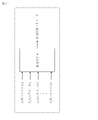
- FIG. 3 is a diagram for explaining an estimation model according to Embodiment 1;
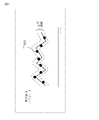
- FIG. 4 is a diagram showing normal values and normal regions of anomaly detection parameters according to Embodiment 1;
- FIG. 5 is a diagram showing an example of anomaly detection using an anomaly detection parameter according to the first embodiment;
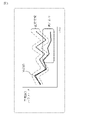
- FIG. 4 is a diagram showing an example of the scope of application according to the first embodiment;
- FIG. 5 is a diagram showing an example of extension of the scope of application according to the first embodiment; 4 is a flowchart showing an operation example of the abnormality detection device according to Embodiment 1;
- FIG. 7 is a diagram showing a configuration example of an anomaly detection system according to Embodiment 2;
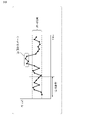
- FIG. 10 is a diagram showing an example of a coping process according to the second embodiment;
- FIG. 9 is a flowchart showing an example of the operation of the abnormality detection device according to Embodiment 2;
- FIG. 2 is a diagram showing a hardware configuration example of an abnormality detection device according to Embodiment 1;
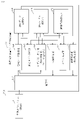
- FIG. 1 shows a schematic configuration of an anomaly detection system 500 according to the first embodiment.
- the abnormality detection system 500 is composed of the air conditioning system 1 and the abnormality detection device 100 .
- the air conditioning system 1 is used as an example of a device that is subject to abnormality detection.
- the equipment that is the target of abnormality detection is not limited to the air conditioning system 1 .
- the abnormality detection device 100 is connected to the air conditioning system 1 .
- the abnormality detection device 100 acquires operating data from the air conditioning system 1 .
- the abnormality detection device 100 estimates the state of the air conditioning system 1 using the operating data, and detects abnormality of the air conditioning system 1 .
- Anomaly detection device 100 is an example of a data processing device.
- the operation performed by the abnormality detection device 100 is an example of the data processing method. Details of the functional configuration of the abnormality detection device 100 will be described later.
- FIG. 2 shows an outline of the configuration of the air conditioning system 1.
- the air conditioning system 1 includes an outdoor unit 10 , an indoor unit 20 , and a connection pipe 30 that connects the outdoor unit 10 and the indoor unit 20 .
- FIG. 2 shows an air conditioning system 1 in which a plurality of indoor units 20 are connected to one outdoor unit 10.
- the air conditioning system 1 may have other configurations.
- one indoor unit 20 may be connected to one outdoor unit 10 .
- the air conditioning system 1 may include a plurality of outdoor units 10 .
- the outdoor unit 10 is composed of a compressor 11 , a four-way valve 12 , an outdoor heat exchanger 13 and an outdoor unit fan 14 .
- the indoor unit 20 is composed of an expansion valve 21 , an indoor heat exchanger 22 and an indoor unit fan 23 .
- a refrigerating cycle is configured by annularly connecting the compressor 11, the four-way valve 12, the outdoor heat exchanger 13, the expansion valve 21, and the indoor heat exchanger 22 by refrigerant pipes.
- the compressor 11 compresses the low-temperature, low-pressure refrigerant into a high-temperature, high-pressure refrigerant.
- the compressor 11 is driven by, for example, an inverter, and the capacity (amount of refrigerant discharged per unit time) is controlled by the inverter.
- the four-way valve 12 switches the refrigerant flow according to the operation mode of the air conditioning system 1, for example, cooling operation or heating operation.
- the outdoor heat exchanger 13 exchanges heat between the refrigerant flowing through the refrigeration cycle and the outdoor air.
- An outdoor unit fan 14 is adjacent to the outdoor heat exchanger 13 .
- the outdoor unit fan 14 blows air to the outdoor heat exchanger 13 . By controlling the number of revolutions of the outdoor unit fan 14, the amount of air blown can be adjusted.
- the expansion valve 21 is configured by a valve whose degree of opening can be variably controlled, such as an electronic expansion valve. By controlling the degree of opening of the expansion valve 21, the amount of pressure reduction of the refrigerant is controlled.
- the indoor heat exchanger 22 exchanges heat between the refrigerant flowing through the refrigeration cycle and the indoor air.
- An indoor unit fan 23 is adjacent to the indoor heat exchanger 22 .
- the indoor unit fan 23 blows air to the indoor heat exchanger 22 . By controlling the number of rotations of the indoor unit fan 23, the amount of air blown can be adjusted.
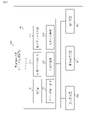
- the abnormality detection device 100 includes a communication unit 110, a driving data acquisition unit 120, an estimated model generation unit 121, a model application determination unit 122, a state estimation unit 123, a model update unit 124, a driving It has a data storage unit 130 , an estimation model storage unit 131 and an application condition storage unit 132 . Further, the abnormality detection device 100 has a hardware configuration shown in FIG. 13 . First, a hardware configuration example of the abnormality detection device 100 will be described with reference to FIG. 13 .
- Anomaly detection device 100 is a computer.
- the anomaly detection device 100 includes a processor 901, a main storage device 902, an auxiliary storage device 903, and a communication device 904 as hardware.
- Auxiliary storage device 903 stores a program that implements the functions of communication unit 110 , driving data acquisition unit 120 , estimation model generation unit 121 , model application determination unit 122 , state estimation unit 123 and model update unit 124 . These programs are loaded from the auxiliary storage device 903 to the main storage device 902 .
- the processor 901 executes these programs to perform the operations of the communication unit 110, the driving data acquisition unit 120, the estimated model generation unit 121, the model application determination unit 122, the state estimation unit 123, and the model update unit 124, which will be described later.
- the processor 901 is executing a program that implements the functions of the communication unit 110, the driving data acquisition unit 120, the estimated model generation unit 121, the model application determination unit 122, the state estimation unit 123, and the model update unit 124. is schematically represented.
- the operating data storage unit 130, the estimated model storage unit 131, and the application condition storage unit 132 in FIG. 1 are each realized by the auxiliary storage device 903, for example.
- the communication unit 110 communicates with the air conditioning system 1 .
- the communication unit 110 receives operating data from the air conditioning system 1 .
- the operating data acquisition unit 120 acquires operating data from the air conditioning system 1 via the communication unit 110 .
- the operating data is data with which the state estimator 123 can estimate the state of the air conditioning system 1 .
- the operating data is, for example, data indicating sensor values, control values, etc. obtained in the air conditioning system 1 .
- the sensor values are, for example, numerical values such as outside air temperature, refrigerant temperature, and refrigerant pressure.
- the control values are, for example, numerical values such as the frequency of the compressor 11, the rotation speed of the outdoor unit fan 14, and the valve opening degree of the expansion valve 21.
- the driving data acquisition unit 120 stores the driving data (learning data) acquired during the learning period in the driving data holding unit 130 .
- the operation data acquisition unit 120 outputs the operation data acquired in the operation stage after the learning period to the model application determination unit 122 .
- the learning period is a fixed period after installation of the air conditioning system 1 .
- the process performed by the driving data acquisition unit 120 is an example of the driving data acquisition process.
- the estimation model generation unit 121 generates an estimation model.
- the estimation model is used by the state estimator 123 to estimate the state of the air conditioning system based on the operating data. More specifically, the estimation model is a model for estimating numerical values of anomaly detection parameters. When the air conditioning system 1 is in a normal state, the numerical value of the abnormality detection parameter becomes a normal value. On the other hand, when the air conditioning system 1 is abnormal, the numerical value of the abnormality detection parameter becomes an abnormal value. Therefore, the state estimation unit 123 can estimate the state of the air conditioning system by analyzing the numerical value of the abnormality detection parameter.
- the estimation model is a model for estimating the numerical values of such anomaly detection parameters from the numerical values of other parameters.
- the estimated model generating unit 121 stores the generated estimated model in the estimated model holding unit 131 .
- the estimation model generation unit 121 stores the application condition of the estimation model in the application condition storage unit 132 .
- the application condition is a condition for applying the driving data to the estimation model. Details of the estimation model and application conditions will be described later.
- the model application determination unit 122 determines whether or not the driving data acquired by the driving data acquisition unit 120 satisfies application conditions. Then, when it is determined that the operating data does not satisfy the application condition, the model application determining unit 122 stores the operating data as pending operating data in the operating data holding unit 130 . It should be noted that the driving data storage unit 130 is assumed to have a separate storage area for storing learning data and a storage area for storing pending driving data. Note that the model application determination unit 122 is an example of a condition determination unit and a data storage unit. Further, the processing performed by the model application determination unit 122 is an example of condition determination processing and data storage processing.
- the state estimation unit 123 determines the state of the air conditioning system 1 by applying the operation data to the estimation model when the model application determination unit 122 determines that the operation data satisfies the application condition.
- the model updating unit 124 determines whether or not the suspended operating data is suitable for updating the estimation model. Then, when it is determined that the suspended operation data is suitable for updating the estimated model, the model updating unit 124 updates the estimated model using the suspended operation data. In addition, the model update unit 124 also updates the application condition in accordance with the update of the estimation model. Note that, in the present embodiment, the model updating unit 124 makes the following determination as a determination as to whether or not the suspended driving data is driving data suitable for updating the estimation model.
- the model updating unit 124 applies the subsequent operation data, which is the operation data acquired from the air conditioning system 1 after the pending operation data is stored in the operation data holding unit 130 by the model application determination unit 122, to the estimation model.
- the processing performed by the model update unit 124 is an example of model update processing.
- FIG. 3 shows an outline of an estimation model for estimating anomaly detection parameters.
- the estimation model estimates numerical values of anomaly detection parameters from the numerical values of N input parameters.
- N is an arbitrary number of 1 or more.
- the estimation model generation unit 121 acquires the driving data (learning data) during the learning period from the driving data holding unit 130 .
- the estimation model generation unit 121 acquires N pieces of learning data corresponding to N pieces of input parameters.
- the estimation model generation unit 121 uses the N learning data to learn the correlation between the numerical values of the N input parameters and the numerical values of the abnormality detection parameters.
- the estimated model generator 121 generates an estimated model from the learning result. That is, the estimation model generation unit 121 generates an estimation model for estimating the numerical value of the abnormality detection parameter from the numerical values of N input parameters.
- FIG. 4 shows an example of normal values and normal regions of anomaly detection parameters.
- the normal value of the abnormality detection parameter is the numerical value of the abnormality detection parameter when the air conditioning system 1 is in a normal state.
- a normal value is also called an estimated value.
- a normal region for an anomaly detection parameter is a predetermined range above and below the normal value.
- FIG. 4 shows normal values and normal regions of anomaly detection parameters in chronological order.
- the state estimator 123 applies the estimation model to the operation data acquired from the air conditioning system 1 in the operation stage after the learning period to obtain the numerical values of the abnormality detection parameters. Numerical values of the anomaly detection parameters obtained by applying the estimation model to the operation data in the operation stage are called actual measurement values of the anomaly detection parameters.
- the state estimation unit 123 determines whether or not the measured value of the abnormality detection parameter falls within the normal region illustrated in FIG. 4 . If the measured value of the abnormality detection parameter falls within the normal range, the state estimator 123 determines that the air conditioning system 1 is normal.
- the size of the width of the normal region is set in advance according to the degree of abnormality of the object to be detected.
- the expansion valve 21 is controlled so that the opening degree of the expansion valve 21 becomes small.
- the correlation between the input parameters 1 to N and the abnormality detection parameter diverges from the normal correlation.
- the state estimator 123 determines that the air conditioning system 1 is abnormal.
- the estimation model generating unit 121 stores the learning data used for generating the estimation model in the driving data holding unit 130 .
- the estimation model generation unit 121 derives the application condition of the estimation model from the learning data used to generate the estimation model, and stores the derived application condition in the application condition holding unit 132 .
- the conditions for applying the estimation model are the conditions for applying the driving data to the estimation model. If the operating data satisfies the application condition, the state estimating unit 123 can appropriately estimate the state of the air conditioning system 1 by the estimation model using the operating data as input data. Conversely, if the operating data does not satisfy the application condition, the state estimator 123 cannot properly estimate the state of the air conditioning system 1 using the estimation model even if the operating data is used as input data.
- an application condition it is conceivable that the attributes of the driving data match the attributes of the learning data. If the attribute of the driving data deviates from the attribute of the learning data, it is determined that the driving data does not satisfy the application condition.
- the numerical values of the operating data are within a range between the upper limit value and the lower limit value of the learning data (hereinafter referred to as the applicable range).
- the application condition is that the numerical value of the operating data is within the applicable range.
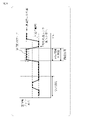
- FIG. 6 shows an example of the scope of application and exemption data.
- FIG. 6 shows changes over time in numerical values of operation data. More specifically, FIG. 6 shows changes over time in the outside air temperature as changes over time in numerical values of the operating data.
- the estimation model generation unit 121 generates an estimation model, which is a regression model of changes over time in the outside air temperature, using the driving data (learning data) during the learning period. Furthermore, the estimation model generation unit 121 sets the maximum value and minimum value of the learning data to the upper limit value and lower limit value of the applicable range. If the numerical value of the operational data acquired from the air conditioning system 1 in the operational stage does not fall within the applicable range, the operational data is excluded from application to the estimation model as non-application data.
- the estimation model generation unit 121 may set the application range by other methods. For example, the estimation model generation unit 121 may set the upper limit of the application range to the maximum value +1K and set the lower limit of the application range to the minimum value -1K in order to give a margin to the application range. In addition, the estimation model generating unit 121 sets (maximum value ⁇ 1.1) as the upper limit value of the applicable range, and sets (minimum value ⁇ 0.9) as the lower limit value of the applicable range. The upper limit of the applicable range and the lower limit of the applicable range may be set by multiplying the value by a predetermined ratio.
- the estimation model generation unit 121 may set the application range using interpolation conditions.
- the estimation model generation unit 121 sets the application range finely, such as “0° C. ⁇ T ⁇ 10° C.” and “15° C. ⁇ T ⁇ 22° C.” good too.
- the estimation model generation unit 121 may set the condition that the total value obtained in the following procedures (1) and (2) is equal to or less than a threshold.
- the model application determination unit 122 acquires application conditions from the application condition storage unit 132 . As described above, when the applicable condition is that the numerical value of the operating data is within the applicable range, the model application determining unit 122 acquires the applicable range from the applicable condition holding unit 132 . Also, the model application determination unit 122 acquires driving data from the driving data acquisition unit 120 . Then, the model application determination unit 122 determines whether or not the driving data acquired from the driving data acquisition unit 120 satisfies the application condition, that is, whether or not appropriate estimation can be performed by applying the driving data to the estimation model. do. When the driving data satisfies the application condition, the model application determination unit 122 outputs the driving data to the state estimation unit 123 . Note that the model application determination unit 122 may compare the acquired driving data with the learning data held in the driving data holding unit 130 .
- the state estimation unit 123 acquires the driving data output from the model application determination unit 122 . Also, the state estimating unit 123 acquires the estimated model from the estimated model holding unit 131 . The state estimator 123 then applies the operating data to the estimation model to estimate the state of the air conditioning system 1 . Specifically, the state estimation unit 123 uses the N pieces of operation data as the N pieces of input data to calculate the actual measurement values of the abnormality detection parameters. Then, the calculated actual value of the abnormality detection parameter is compared with the normal value (estimated value) of the abnormality detection parameter obtained in the learning stage. If the measured value is outside the normal range illustrated in FIG. 4, the state estimator 123 determines that the air conditioning system 1 is abnormal.
- the state estimation unit 123 determines that an abnormality has occurred in the air conditioning system 1, it notifies, for example, the administrator of the air conditioning system 1 that an abnormality has occurred in the air conditioning system 1. Ultimately, a maintenance company performs maintenance on the air conditioning system 1 .
- the model application determination unit 122 stores the operating data in the operating data holding unit 130 as pending operating data. If the operating data does not satisfy the application condition, the operating data is not applied to the estimation model, so the state estimation unit 123 does not estimate the state (normal/abnormal) of the air conditioning system 1 .
- the abnormality detection device 100 cannot detect the abnormality. Therefore, in such a case, it is desirable to extend the applicable conditions.
- the abnormality to be detected by the abnormality detection device 100 is an irreversible change, even if the operating data does not satisfy the application condition temporarily, if it can be confirmed later that the air conditioning system 1 is normal, It is guaranteed that the air conditioning system 1 was normal even during the period when the operating data did not satisfy the applicable conditions. That is, even if the operating data temporarily does not satisfy the application condition, the subsequent operation data acquired after the pending operation data is stored in the operation data holding unit 130 satisfies the application condition, and the subsequent operation data does not satisfy the application condition.
- the state of the air conditioning system 1 can be appropriately adjusted. can be estimated.
- model updating unit 124 determines that the suspended driving data is driving data suitable for updating the estimation model. Then, in order to extend the scope of application, the model updating unit 124 updates the estimation model using the suspended operation data. In other words, the model updating unit 124 performs learning using the learning data used to generate the estimation model and the pending operation data, updates (regenerates) the estimation model, and updates (extends) the application range.
- FIG. 7 shows an example of extension of the scope of application by the model updating unit 124 .
- FIG. 7 like FIG. 6, shows the applicable range of outside air temperature.
- FIG. 7 shows that the maximum value of the application exclusion data in FIG. 6 is set as the upper limit value of the new application range. That is, the model updating unit 124 updates the estimation model using the application exclusion data of FIG. 6, that is, the suspended operation data as the additional learning data, and as a result, the application range is expanded as shown in FIG. Therefore, it is possible to obtain an estimation model with a wider application range than the initial estimation model.
- the operation data that does not satisfy the application conditions is accumulated as the pending operation data, and when the subsequent operation data confirms that the air conditioning system 1 is normal, the subsequent operation data is used to repeatedly update the estimation model.
- the scope of application can be expanded step by step.
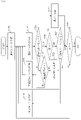
- step ST01 the estimation model generation unit 121 generates an estimation model using learning data, which is driving data during the learning period.
- step ST02 the operating data acquisition unit 120 acquires operating data of the air conditioning system 1.
- FIG. The estimation model generation unit 121 then outputs the acquired driving data to the model application determination unit 122 . It should be noted that the operating data acquisition unit 120 repeats the process of step ST02 each time the operating data is transmitted from the air conditioning system 1 .
- the model application determination section 122 determines whether or not the driving data acquired from the driving data acquisition section 120 satisfies the application condition. If the operating data does not satisfy the applicable conditions, the process proceeds to step ST04. On the other hand, when the operating data satisfies the application condition, the model application determining unit 122 outputs the operating data to the state estimating unit 123 . Moreover, a process progresses to step ST05. Note that the model application determination unit 122 repeats step ST03 every time it acquires the driving data from the driving data acquisition unit 120 .
- step ST04 the model application determination unit 122 stores the operating data in the operating data holding unit 130 as pending operating data.
- the state estimating section 123 applies the operating data to the estimation model to estimate the state of the air conditioning system 1 in step ST05. Specifically, as described above, the state estimating unit 123 applies the operating data to the estimation model, calculates the measured values of the abnormality detection parameters, and compares the calculated measured values with the normal values. Then, if there is an abnormality in the air conditioning system 1, the process proceeds to step ST06. On the other hand, if the air conditioning system 1 is in a normal state, the state estimation unit 123 notifies the model updating unit 124 that the air conditioning system 1 is in a normal state. Then, the process proceeds to ST07. It should be noted that state estimation section 123 repeats step ST04 each time it acquires driving data from model application determination section 122 .
- step ST06 the state estimating unit 123 notifies, for example, the administrator of the air conditioning system 1 of the abnormality of the air conditioning system 1.
- step ST07 the model updating unit 124 determines whether or not the operating data holding unit 130 stores pending operating data.
- the process proceeds to ST08.
- the process proceeds to step ST09.
- step ST08 the model updating unit 124 updates the estimation model using the learning data and the pending operation data. At the same time, the model updating unit 124 also updates the application condition of the estimation model. Then, the model update unit 124 stores the updated estimation model in the estimation model storage unit 131 and stores the updated application condition in the application condition storage unit 132 . After the estimation model and application conditions are updated in step ST08, the determination in step ST03 is made based on the updated application conditions, and the determination in step ST04 is also made based on the updated estimation model.
- step ST09 If the end of abnormality detection is instructed in step ST09, the process ends. On the other hand, if the end of abnormality detection is not instructed, the process returns to step ST02.
- the operating data when it is determined that the operating data does not satisfy the application condition, the operating data is stored in the storage area as the suspended operating data. Further, in the present embodiment, it is determined whether or not the suspended operation data is operation data suitable for updating the estimation model. Then, the estimation model is updated using the pending operation data. Therefore, according to the present embodiment, the estimation model is updated using only the driving data suitable for updating the estimation model. Therefore, according to the present embodiment, it is possible to avoid updating the estimation model using the operating data when an abnormality occurs in the air conditioning system.
- the estimation model by updating the estimation model, the applicable conditions are extended during operation of the air conditioning system, so the estimation model can be generated in a short learning period, and the short learning period is reduced. After that, the abnormality detection of the air conditioning system can be started early.
- Embodiment 2 In this embodiment, differences from the first embodiment will be mainly described. Matters not described below are the same as those in the first embodiment.
- FIG. 9 shows an outline of an anomaly detection system 500 according to the second embodiment.
- a control designation unit 125 is added to the abnormality detection device 100.
- the control designation unit 125 is also realized by, for example, a program, like the communication unit 110 and the like.
- the applicable condition is that the numerical value of the operating data is within the applicable range.
- the control designation unit 125 designates numerical values of control values used in the air conditioning system 1 .
- a numerical value designated by the control designation unit 125 is referred to as a designated numerical value.
- the control specifying unit 125 sends the communication unit 110 a specified numerical value that allows the numerical value of the operating data to be within the applicable range. command to the air conditioning system 1 via
- the air volume of the indoor unit fan 23 is used as an example of operation data
- the rotation speed of the indoor unit fan 23 is used as an example of a control value for changing the air volume of the indoor unit fan 23 .
- control designation unit 125 when the air volume of the indoor unit fan 23 is not within the applicable range, the control designation unit 125 notifies the air conditioning system 1 of the designated numerical value of the rotation speed of the indoor unit fan 23, and the air conditioning system 1 receives the designated numerical value.
- the indoor unit fan 23 is rotated at the corresponding rotation speed.
- the control specifying unit 125 makes the air volume of the indoor unit fan 23 (numerical value of the operation data) within the applicable range.
- the control designation unit 125 is an example of a handling processing unit.
- the state estimation unit 123 does not estimate the state of the air conditioning system 1 . Therefore, if the operating data continues to fail to satisfy the applicable conditions, even if an abnormality occurs in the air conditioning system 1, the abnormality detection device 100 cannot detect an abnormality in the air conditioning system 1.
- the control specifying unit 125 performs coping processing on the air conditioning system 1 when the model application determining unit 122 continues to determine that the operating data does not satisfy the application condition for a period equal to or greater than a threshold.
- the coping process is a process for making the operating data satisfy the applicable conditions.
- the coping process is a process for bringing the air volume (numerical value of the operation data) of the indoor unit fan 23 into the applicable range.
- the control designation unit 125 notifies the air conditioning system 1 of the designated numerical value of the rotation speed of the indoor unit fan 23, and causes the indoor unit fan to rotate at the rotation speed corresponding to the designated numerical value to the air conditioning system 1. 23 to set the air volume of the indoor unit fan 23 within the applicable range.
- Operation data determined by the model application determination unit 122 not to satisfy the application condition before the control designation unit 125 performs coping processing is stored in the operation data storage unit 130 as suspended operation data, as in the first embodiment. ing.
- the model application determination unit 122 determines that the subsequent operation data satisfies the application condition, and the state estimation unit 123 determines that the air conditioning system 1 is normal.
- the model updating unit 124 updates the estimation model using the pending driving data in the driving data holding unit 130, as in the first embodiment.
- FIG. 10 shows an example of coping processing by the control designation unit 125.
- FIG. 10 shows the time-dependent change in the air volume of the indoor unit fan 23 as the time-dependent change in the numerical value of the operating data. As described above, when the rotation speed of the indoor unit fan 23 is changed, the air volume of the indoor unit fan 23 is changed.
- the period outside the applicable range is a period during which the model application determination unit 122 continues to determine that the air volume of the indoor unit fan 23 is not within the applicable range.
- the threshold period is an upper limit period during which the model application determination unit 122 continues to determine that the air volume of the indoor unit fan 23 is not within the applicable range.
- the control designating unit 125 performs the coping process.
- the control specifying unit 125 notifies the air conditioning system 1 of the specified numerical value of the rotation speed of the indoor unit fan 23 as a coping process, so that the air volume of the indoor unit fan 23 falls within the applicable range. It is shown.
- FIG. 10 also shows that the model updating unit 124 has expanded the application range using the suspended operation data, which is the application exclusion data.
- the threshold period is set in advance based on the progress speed of the abnormality to be detected. For example, it is conceivable to set the threshold period in consideration of the period from when the parameter value changes to a detectable level until an unrepairable failure occurs. Considering that it takes time for the numerical value of the operation data to enter the applicable range after the control designation unit 125 performs the coping process, it is preferable to set the threshold period to be short.
- numerical values of control values for which numerical values of operating data are known to be out of the applicable range may be set in advance as abnormality determination numerical values.
- the air conditioning system 1 When the air conditioning system 1 is operated with the abnormality determination numerical value, the numerical value of the operating data is out of the applicable range.
- the estimation model generation unit 121 learns the operation data when it is operated with the abnormality determination numerical value. Then, the estimation model generation unit 121 identifies, through learning, numerical values that make the numerical values of the driving data the applicable range.
- the control designation unit 125 In the operation stage, when the out-of-applicability period is equal to or longer than the threshold period, the control designation unit 125 notifies the air conditioning system 1 of the numerical value obtained by learning as the designated numerical value as a coping process. By doing so, the numerical value of the operating data can be brought within the applicable range at an early stage.
- steps ST01 to ST09 in FIG. 11 are the same as those shown in FIG. 8, the description thereof is omitted.
- step ST021 and step ST022 added in FIG. 11 will be mainly described.
- the model application determination unit 122 determines in step ST03 that the operating data does not satisfy the application condition, the model application determination unit 122 notifies the control designation unit 125 that the operation data does not satisfy the application condition.
- step ST021 the control designating unit 125 determines whether or not the period (out-of-applicability period) after being first notified that the operating data does not satisfy the application condition is less than the threshold period. If the out-of-applicability period is less than the threshold, the control designation unit 125 instructs the model application determination unit 122 to store the operating data in the operating data holding unit 130 as pending operating data. Then, in step ST04, the model application determining section 122 stores the operating data in the operating data holding section 130 as pending operating data. On the other hand, if the out-of-applicability period is equal to or greater than the threshold, the control designating unit 125 carries out coping processing in step ST22.
- Embodiment 3 In this embodiment, differences from the first embodiment will be mainly described. Matters not described below are the same as those in the first embodiment.
- FIG. 12 shows an outline of an anomaly detection system 500 according to the third embodiment.
- the instruction device 3 receives an instruction from a user of the anomaly detection device 100 (hereinafter simply referred to as a user) and notifies the anomaly detection device 100 of the instruction from the user.
- the pointing device 3 is, for example, an input device such as a keyboard and a mouse.
- model updating unit 124 determines whether or not the user instructs to update the estimated model using the suspended driving data as a determination as to whether or not the suspended driving data is suitable for updating the estimated model. determine whether or not Then, when the user instructs to update the estimated model using the suspended operation data, the model updating unit 124 determines that the suspended operation data is suitable for updating the estimated model, and determines that the suspended operation data to update the estimation model.
- the model updating unit 124 estimates Update your model.
- the model updating unit 124 updates the estimation model.
- the model updating unit 124 uses one or more driving data acquired by the driving data acquiring unit 120 instead of the pending driving data.
- the estimation model may be updated. That is, when an instruction to update the estimation model from the user is obtained from the instruction device 3, the model updating unit 124, regardless of the determination results of the model application determining unit 122 and the state estimating unit 123, determines whether the predetermined period or the user may be acquired from the operating data acquisition unit 120 for the period specified by , and the estimation model may be updated using the acquired operating data.
- the present embodiment it is possible to update the estimation model using operation data in a state in which it can be ensured that the equipment is normal after the equipment has been repaired or maintained. Further, according to the present embodiment, when the operation mode of the equipment changes to a new operation mode, learning data of the new operation mode can be acquired and an estimation model of the new operation mode can be generated. For example, if the equipment is an air conditioning system, when the operation mode of the air conditioning system changes significantly, such as when switching between cooling and heating, learning data for the new operation mode is acquired and an estimation model for the new operation mode is created. (estimated model for cooling/estimated model for heating, etc.) can be generated.
- first to third embodiments have been described above, two or more of these embodiments may be combined for implementation. Alternatively, one of these embodiments may be partially implemented. Alternatively, two or more of these embodiments may be partially combined for implementation. Also, the configurations and procedures described in these embodiments may be changed as necessary.
- a processor 901 shown in FIG. 13 is an IC (Integrated Circuit) that performs processing.
- the processor 901 is a CPU (Central Processing Unit), a DSP (Digital Signal Processor), or the like.
- a main memory device 902 shown in FIG. 13 is a RAM (Random Access Memory).
- the auxiliary storage device 903 shown in FIG. 13 is a ROM (Read Only Memory), flash memory, HDD (Hard Disk Drive), or the like.
- the communication device 904 shown in FIG. 13 is an electronic circuit that executes data communication processing.
- the communication device 904 is, for example, a communication chip or a NIC (Network Interface Card).
- the auxiliary storage device 903 also stores an OS (Operating System). At least part of the OS is executed by the processor 901 . While executing at least part of the OS, the processor 901 executes the communication unit 110, the driving data acquisition unit 120, the estimation model generation unit 121, the model application determination unit 122, the state estimation unit 123, the model update unit 124, and the control designation unit 125. Run a program that implements a function. Task management, memory management, file management, communication control, and the like are performed by the processor 901 executing the OS.
- OS Operating System
- Information, data, and signal values indicating processing results of the communication unit 110, the driving data acquisition unit 120, the estimation model generation unit 121, the model application determination unit 122, the state estimation unit 123, the model update unit 124, and the control designation unit 125 and/or variable values are stored in at least one of the main memory device 902, the auxiliary memory device 903, the registers in the processor 901, and the cache memory.
- the programs that realize the functions of the communication unit 110, the driving data acquisition unit 120, the estimation model generation unit 121, the model application determination unit 122, the state estimation unit 123, the model update unit 124, and the control designation unit 125 are It may be stored in a portable recording medium such as a disk, an optical disk, a compact disk, a Blu-ray (registered trademark) disk, or a DVD. Then, a portable device in which a program for realizing the functions of the communication unit 110, the operation data acquisition unit 120, the estimation model generation unit 121, the model application determination unit 122, the state estimation unit 123, the model update unit 124, and the control designation unit 125 is stored. Recording media may be distributed.
- the communication unit 110, the driving data acquisition unit 120, the estimation model generation unit 121, the model application determination unit 122, the state estimation unit 123, the model update unit 124, and the control designation unit 125 are replaced with “circuit” or “process ” or “procedure” or “processing” or “circuitry”.
- the abnormality detection device 100 may be realized by a processing circuit.
- the processing circuits are, for example, logic ICs (Integrated Circuits), GAs (Gate Arrays), ASICs (Application Specific Integrated Circuits), and FPGAs (Field-Programmable Gate Arrays).
- the communication unit 110, the driving data acquisition unit 120, the estimation model generation unit 121, the model application determination unit 122, the state estimation unit 123, the model update unit 124, and the control designation unit 125 are each realized as part of the processing circuit. be done.
- the general concept of processors and processing circuits is referred to as “processing circuitry.”
- processors and processing circuitry are each examples of “processing circuitry.”
- Air conditioning system 3 Indicator, 10 Outdoor unit, 11 Compressor, 12 Four-way valve, 13 Outdoor heat exchanger, 14 Outdoor unit fan, 20 Indoor unit, 21 Expansion valve, 22 Indoor heat exchanger, 23 Indoor unit fan , 30 connection pipe, 100 abnormality detection device, 110 communication unit, 120 operation data acquisition unit, 121 estimation model generation unit, 122 model application determination unit, 123 state estimation unit, 124 model update unit, 125 control designation unit, 130 operation data Holding unit 131 Estimation model holding unit 132 Application condition holding unit 500 Anomaly detection system 901 Processor 902 Main storage device 903 Auxiliary storage device 904 Communication device.
Landscapes
- Engineering & Computer Science (AREA)
- Physics & Mathematics (AREA)
- Automation & Control Theory (AREA)
- General Physics & Mathematics (AREA)
- Signal Processing (AREA)
- General Engineering & Computer Science (AREA)
- Fuzzy Systems (AREA)
- Mechanical Engineering (AREA)
- Combustion & Propulsion (AREA)
- Chemical & Material Sciences (AREA)
- Mathematical Physics (AREA)
- Air Conditioning Control Device (AREA)
- Testing And Monitoring For Control Systems (AREA)
- Feedback Control In General (AREA)
Priority Applications (4)
| Application Number | Priority Date | Filing Date | Title |
|---|---|---|---|
| PCT/JP2021/005536 WO2022172452A1 (ja) | 2021-02-15 | 2021-02-15 | データ処理装置及びデータ処理方法 |
| US18/258,243 US20240044539A1 (en) | 2021-02-15 | 2021-02-15 | Data processing apparatus and data processing method |
| JP2022581154A JP7350198B2 (ja) | 2021-02-15 | 2021-02-15 | データ処理装置及びデータ処理方法 |
| EP21925701.1A EP4293455A4 (en) | 2021-02-15 | 2021-02-15 | Data processing device and data processing method |
Applications Claiming Priority (1)
| Application Number | Priority Date | Filing Date | Title |
|---|---|---|---|
| PCT/JP2021/005536 WO2022172452A1 (ja) | 2021-02-15 | 2021-02-15 | データ処理装置及びデータ処理方法 |
Publications (1)
| Publication Number | Publication Date |
|---|---|
| WO2022172452A1 true WO2022172452A1 (ja) | 2022-08-18 |
Family
ID=82837527
Family Applications (1)
| Application Number | Title | Priority Date | Filing Date |
|---|---|---|---|
| PCT/JP2021/005536 Ceased WO2022172452A1 (ja) | 2021-02-15 | 2021-02-15 | データ処理装置及びデータ処理方法 |
Country Status (4)
| Country | Link |
|---|---|
| US (1) | US20240044539A1 (https=) |
| EP (1) | EP4293455A4 (https=) |
| JP (1) | JP7350198B2 (https=) |
| WO (1) | WO2022172452A1 (https=) |
Cited By (3)
| Publication number | Priority date | Publication date | Assignee | Title |
|---|---|---|---|---|
| JP2023051341A (ja) * | 2021-09-30 | 2023-04-11 | ダイキン工業株式会社 | 情報処理システム、方法、およびプログラム |
| WO2025017902A1 (ja) * | 2023-07-20 | 2025-01-23 | 三菱電機株式会社 | 機器更新方法及び動作確認装置 |
| JPWO2025052569A1 (https=) * | 2023-09-06 | 2025-03-13 |
Families Citing this family (2)
| Publication number | Priority date | Publication date | Assignee | Title |
|---|---|---|---|---|
| KR20230027887A (ko) * | 2021-08-20 | 2023-02-28 | 삼성전자주식회사 | 트렌드를 이용한 뉴럴 네트워크 학습 방법 및 장치 |
| JP2026057081A (ja) * | 2024-09-20 | 2026-04-02 | コベルコ・コンプレッサ株式会社 | 流体機械システム |
Citations (3)
| Publication number | Priority date | Publication date | Assignee | Title |
|---|---|---|---|---|
| JP2003315211A (ja) * | 2002-04-17 | 2003-11-06 | Tokyo Gas Co Ltd | 機器の劣化を検出する方法 |
| JP2017207904A (ja) * | 2016-05-18 | 2017-11-24 | エヌ・ティ・ティ・コミュニケーションズ株式会社 | 異常検知システム、モデル生成装置、異常検知装置、異常検知方法、モデル生成プログラム、および、異常検知プログラム |
| JP2020091561A (ja) | 2018-12-04 | 2020-06-11 | 日立グローバルライフソリューションズ株式会社 | 異常診断装置及び異常診断方法 |
Family Cites Families (3)
| Publication number | Priority date | Publication date | Assignee | Title |
|---|---|---|---|---|
| JP2011107760A (ja) * | 2009-11-12 | 2011-06-02 | Yokogawa Electric Corp | プラント異常検出装置 |
| JP6697766B2 (ja) * | 2016-05-20 | 2020-05-27 | パナソニックIpマネジメント株式会社 | 劣化推定方法及び劣化推定装置 |
| JP6906612B2 (ja) | 2017-06-14 | 2021-07-21 | 株式会社東芝 | 異常検知装置、異常検知方法、およびプログラム |
-
2021
- 2021-02-15 EP EP21925701.1A patent/EP4293455A4/en not_active Withdrawn
- 2021-02-15 WO PCT/JP2021/005536 patent/WO2022172452A1/ja not_active Ceased
- 2021-02-15 JP JP2022581154A patent/JP7350198B2/ja active Active
- 2021-02-15 US US18/258,243 patent/US20240044539A1/en active Pending
Patent Citations (3)
| Publication number | Priority date | Publication date | Assignee | Title |
|---|---|---|---|---|
| JP2003315211A (ja) * | 2002-04-17 | 2003-11-06 | Tokyo Gas Co Ltd | 機器の劣化を検出する方法 |
| JP2017207904A (ja) * | 2016-05-18 | 2017-11-24 | エヌ・ティ・ティ・コミュニケーションズ株式会社 | 異常検知システム、モデル生成装置、異常検知装置、異常検知方法、モデル生成プログラム、および、異常検知プログラム |
| JP2020091561A (ja) | 2018-12-04 | 2020-06-11 | 日立グローバルライフソリューションズ株式会社 | 異常診断装置及び異常診断方法 |
Non-Patent Citations (1)
| Title |
|---|
| See also references of EP4293455A4 |
Cited By (5)
| Publication number | Priority date | Publication date | Assignee | Title |
|---|---|---|---|---|
| JP2023051341A (ja) * | 2021-09-30 | 2023-04-11 | ダイキン工業株式会社 | 情報処理システム、方法、およびプログラム |
| JP7678318B2 (ja) | 2021-09-30 | 2025-05-16 | ダイキン工業株式会社 | 情報処理システム、方法、およびプログラム |
| WO2025017902A1 (ja) * | 2023-07-20 | 2025-01-23 | 三菱電機株式会社 | 機器更新方法及び動作確認装置 |
| JPWO2025052569A1 (https=) * | 2023-09-06 | 2025-03-13 | ||
| WO2025052569A1 (ja) * | 2023-09-06 | 2025-03-13 | 三菱電機株式会社 | 冷凍サイクルシステム、冷凍サイクル装置、管理装置、管理方法、およびプログラム |
Also Published As
| Publication number | Publication date |
|---|---|
| EP4293455A4 (en) | 2024-04-10 |
| EP4293455A1 (en) | 2023-12-20 |
| JP7350198B2 (ja) | 2023-09-25 |
| US20240044539A1 (en) | 2024-02-08 |
| JPWO2022172452A1 (https=) | 2022-08-18 |
Similar Documents
| Publication | Publication Date | Title |
|---|---|---|
| JP7350198B2 (ja) | データ処理装置及びデータ処理方法 | |
| JP7284435B2 (ja) | 補正装置、予測装置、方法、プログラム、および補正モデル | |
| AU2022250941B2 (en) | Air conditioning system, abnormality estimation method for air conditioning system, air conditioner and abnormality estimation method for air conditioner | |
| CN111706959A (zh) | 用于一拖多空调的电子膨胀阀故障检测方法、装置及空调 | |
| CN109323363B (zh) | 空调器的冷媒泄露故障检测方法、检测系统和空调器 | |
| US10941956B2 (en) | Data processing method, refrigerant leakage detection method, system failure detection method and system performance detection method | |
| CN107560073B (zh) | 空调及其过冷管组的故障检测和处理方法 | |
| CN115597185B (zh) | 空调器的控制方法、控制装置、空调器和可读存储介质 | |
| JPH11148750A (ja) | 膨張バルブの動作を監視するための方法 | |
| CN108885022B (zh) | 空调吹出温度估计装置及计算机能读取的记录介质 | |
| WO2022209444A1 (ja) | 空気調和システム、空気調和システムの冷媒量推定方法、空気調和機及び空気調和機の冷媒量推定方法 | |
| CN114459119A (zh) | 一种空调堵塞检测方法、装置、设备及存储介质 | |
| JP7445533B2 (ja) | 異常検出装置、プログラムおよび電気機器システム | |
| JP4041395B2 (ja) | 故障検出装置及び故障検出方法 | |
| CN110940039A (zh) | 一种高温收液、多联机冷媒回收方法、装置及多联机系统 | |
| CN113432237A (zh) | 一种冷媒回收完成情况的判断方法、装置及空调器 | |
| JP6042024B2 (ja) | 空気調和装置 | |
| KR102624730B1 (ko) | 열펌프 시스템의 실시간 자가적응형 정상상태 진단방법, 이를 수행하기 위한 기록 매체 및 정상상태 진단장치 | |
| JP2026061362A (ja) | 遠隔監視装置および遠隔監視方法 | |
| CN117203474A (zh) | 检查装置以及检查方法 | |
| KR102063381B1 (ko) | 과열 저감기 정비 시기 예측 방법 및 시스템 | |
| CN119267194A (zh) | 热电联产空压智控方法、智控式热电联产空压系统及介质 | |
| WO2023175941A1 (ja) | 故障判定システム及び故障判定方法 | |
| WO2025194841A1 (zh) | 制冷系统及其控制方法 | |
| CN118856644A (zh) | 一种岩溶地区全套管全回转钻机施工装置降温系统及方法 |
Legal Events
| Date | Code | Title | Description |
|---|---|---|---|
| 121 | Ep: the epo has been informed by wipo that ep was designated in this application |
Ref document number: 21925701 Country of ref document: EP Kind code of ref document: A1 |
|
| ENP | Entry into the national phase |
Ref document number: 2022581154 Country of ref document: JP Kind code of ref document: A |
|
| WWE | Wipo information: entry into national phase |
Ref document number: 18258243 Country of ref document: US |
|
| WWE | Wipo information: entry into national phase |
Ref document number: 2021925701 Country of ref document: EP |
|
| NENP | Non-entry into the national phase |
Ref country code: DE |
|
| ENP | Entry into the national phase |
Ref document number: 2021925701 Country of ref document: EP Effective date: 20230915 |