WO2022158554A1 - 二量体化した環状ペプチドをスクリーニングする方法 - Google Patents
二量体化した環状ペプチドをスクリーニングする方法 Download PDFInfo
- Publication number
- WO2022158554A1 WO2022158554A1 PCT/JP2022/002117 JP2022002117W WO2022158554A1 WO 2022158554 A1 WO2022158554 A1 WO 2022158554A1 JP 2022002117 W JP2022002117 W JP 2022002117W WO 2022158554 A1 WO2022158554 A1 WO 2022158554A1
- Authority
- WO
- WIPO (PCT)
- Prior art keywords
- polypeptides
- peptide
- cyclic
- dimerization domain
- leucine zipper
- Prior art date
- Legal status (The legal status is an assumption and is not a legal conclusion. Google has not performed a legal analysis and makes no representation as to the accuracy of the status listed.)
- Ceased
Links
Images





Classifications
-
- C—CHEMISTRY; METALLURGY
- C12—BIOCHEMISTRY; BEER; SPIRITS; WINE; VINEGAR; MICROBIOLOGY; ENZYMOLOGY; MUTATION OR GENETIC ENGINEERING
- C12N—MICROORGANISMS OR ENZYMES; COMPOSITIONS THEREOF; PROPAGATING, PRESERVING, OR MAINTAINING MICROORGANISMS; MUTATION OR GENETIC ENGINEERING; CULTURE MEDIA
- C12N15/00—Mutation or genetic engineering; DNA or RNA concerning genetic engineering, vectors, e.g. plasmids, or their isolation, preparation or purification; Use of hosts therefor
- C12N15/09—Recombinant DNA-technology
- C12N15/10—Processes for the isolation, preparation or purification of DNA or RNA
- C12N15/1034—Isolating an individual clone by screening libraries
-
- C—CHEMISTRY; METALLURGY
- C12—BIOCHEMISTRY; BEER; SPIRITS; WINE; VINEGAR; MICROBIOLOGY; ENZYMOLOGY; MUTATION OR GENETIC ENGINEERING
- C12N—MICROORGANISMS OR ENZYMES; COMPOSITIONS THEREOF; PROPAGATING, PRESERVING, OR MAINTAINING MICROORGANISMS; MUTATION OR GENETIC ENGINEERING; CULTURE MEDIA
- C12N15/00—Mutation or genetic engineering; DNA or RNA concerning genetic engineering, vectors, e.g. plasmids, or their isolation, preparation or purification; Use of hosts therefor
- C12N15/09—Recombinant DNA-technology
- C12N15/10—Processes for the isolation, preparation or purification of DNA or RNA
- C12N15/1034—Isolating an individual clone by screening libraries
- C12N15/1041—Ribosome/Polysome display, e.g. SPERT, ARM
-
- C—CHEMISTRY; METALLURGY
- C40—COMBINATORIAL TECHNOLOGY
- C40B—COMBINATORIAL CHEMISTRY; LIBRARIES, e.g. CHEMICAL LIBRARIES
- C40B30/00—Methods of screening libraries
- C40B30/04—Methods of screening libraries by measuring the ability to specifically bind a target molecule, e.g. antibody-antigen binding, receptor-ligand binding
-
- C—CHEMISTRY; METALLURGY
- C40—COMBINATORIAL TECHNOLOGY
- C40B—COMBINATORIAL CHEMISTRY; LIBRARIES, e.g. CHEMICAL LIBRARIES
- C40B40/00—Libraries per se, e.g. arrays, mixtures
- C40B40/04—Libraries containing only organic compounds
- C40B40/10—Libraries containing peptides or polypeptides, or derivatives thereof
-
- C—CHEMISTRY; METALLURGY
- C40—COMBINATORIAL TECHNOLOGY
- C40B—COMBINATORIAL CHEMISTRY; LIBRARIES, e.g. CHEMICAL LIBRARIES
- C40B50/00—Methods of creating libraries, e.g. combinatorial synthesis
- C40B50/06—Biochemical methods, e.g. using enzymes or whole viable microorganisms
Definitions
- the present invention relates to a method for screening dimerized cyclic peptides, a library therefor, and molecules containing cyclic peptides that can be used for these.
- growth factors which are biomolecules important for cell differentiation
- growth factors which are biomolecules important for cell differentiation
- the development of alternative molecules that improve the production cost and storage stability of molecules that exhibit biological activity as such dimers has been carried out, and the use of cyclic peptides is also being studied. Therefore, a rapid and convenient method for screening dimerized cyclic peptides is highly desired.
- a peptide dimer was obtained by expressing a molecule in which a peptide and a leucine zipper region were linked using Escherichia coli and obtaining a peptide dimer through non-covalent interactions in the leucine zipper (International Publication No. 2000/018921). issue).
- WO 2000/018921 is intended to provide a substitute molecule for bFGF, is not intended for screening peptide dimers, and does not describe peptide dimer screening.
- An object of one aspect of the present invention is to provide a rapid and convenient method for screening a dimerized cyclic peptide, or a library therefor.
- the object is to provide a rapid and convenient method for screening dimerized cyclic peptides, or a molecule containing a cyclic peptide that can be used in a library therefor.
- the present invention may include, for example, the following aspects.
- a method for screening dimerized cyclic peptides (1) in a cell-free expression system, cyclic peptides, synthesizing at least one polypeptide comprising a dimerization domain comprising a cysteine residue and a leucine zipper region, and a peptide linker present between the cyclic peptide and the dimerization domain; and (2) measuring activity based on binding of the dimer to a target molecule.
- a method for screening dimerized cyclic peptides (1) in a cell-free expression system, cyclic peptides, obtained by synthesizing at least one polypeptide comprising a dimerization domain comprising a cysteine residue and a leucine zipper region, and a peptide linker present between said cyclic peptide and said dimerization domain and (2) measuring activity based on binding of the dimer to a target molecule.
- step (1) the at least one polypeptide comprises a plurality of different polypeptides expected to have binding affinity with the target molecule; and in step (2), the plurality of different The method of [1] or [2] above, which comprises measuring the activity of the polypeptide dimer based on binding to the target molecule.
- step (1) comprises preparing a library containing a plurality of said at least one polypeptide or said dimer, or step (1) comprises said at least one polypeptide or said dimer including preparing a library containing multiple bodies, The method according to any one of [1] to [3] above, wherein the plurality of polypeptides contain different cyclic peptides.
- a method for preparing a library containing the plurality of polypeptides or dimers of the plurality of polypeptides comprising synthesizing a plurality of polypeptides in a cell-free expression system, wherein the plurality of polypeptides but each cyclic peptides, A dimerization domain comprising a cysteine residue and a leucine zipper region, and a peptide linker present between the cyclic peptide and the dimerization domain, wherein the cyclic peptides differ among the plurality of polypeptides. the method described above.
- a library for screening dimerized cyclic peptides comprising a plurality of polypeptides or dimers of the plurality of polypeptides, or a plurality of nucleic acids encoding the plurality of polypeptides, each of the plurality of polypeptides, cyclic peptides, A dimerization domain comprising a cysteine residue and a leucine zipper region, and a peptide linker present between the cyclic peptide and the dimerization domain, wherein the cyclic peptides differ among the plurality of polypeptides. said library.
- [7] The library according to [6] above, comprising 8 or more polypeptides or dimers of said 8 or more polypeptides, or 8 or more nucleic acids encoding said 8 or more polypeptides.
- a method for screening dimerized cyclic peptides (1) obtaining one or more polypeptides having binding affinity to a target molecule from a library comprising a plurality of displayed polypeptides, each of said plurality of displayed polypeptides , cyclic peptides, a dimerization domain comprising a cysteine residue and a leucine zipper region, and a peptide linker present between said cyclic peptide and said dimerization domain, wherein said cyclic peptide differs among said plurality of displayed polypeptides.
- step (2) recovering the nucleic acid associated with the polypeptide obtained in step (1); (3) amplifying the nucleic acid recovered in step (2); (4) using the nucleic acid amplified in step (3), in a cell-free expression system, cyclic peptides, Synthesizing a polypeptide comprising a dimerization domain comprising a cysteine residue and a leucine zipper region, and a peptide linker present between the cyclic peptide and the dimerization domain, and forming a dimer of the polypeptide and (5) measuring activity based on binding of the dimer to a target molecule.
- step (1) is to generate a further library comprising a plurality of displayed polypeptides based on the obtained plurality of polypeptides;
- a library for screening dimerized cyclic peptides comprising a plurality of displayed polypeptides or a plurality of nucleic acids for expressing the plurality of displayed polypeptides, wherein the plurality of each of the displayed polypeptides is cyclic peptides, a dimerization domain comprising a cysteine residue and a leucine zipper region, and a peptide linker present between said cyclic peptide and said dimerization domain, wherein said cyclic peptide differs among said plurality of displayed polypeptides.
- Said library which contains .
- the library of [11] above comprising 10 5 or more displayed polypeptides or 10 5 or more nucleic acids for expressing the 10 5 or more displayed polypeptides.
- the activity based on binding to the target molecule is measured by the method according to any one of [1] to [4] and [8] to [10] above, and the activity based on binding to the target molecule is determined.
- a method for obtaining a dimerized cyclic peptide having [14] A method for preparing a dimerized cyclic peptide, In a cell-free expression system, cyclic peptides, Synthesizing a polypeptide comprising a dimerization domain comprising a cysteine residue and a leucine zipper region, and a peptide linker present between the cyclic peptide and the dimerization domain, and forming a dimer of the polypeptide
- the above method comprising preparing.
- dimerized cyclic peptides having activity based on binding to a target molecule can be screened quickly and easily compared to conventional techniques.
- to provide highly efficient screening (high-throughput screening) for dimerized cyclic peptides having activity based on binding to a target molecule compared to conventional techniques. can be done.
- low-cost screening for dimerized cyclic peptides having activity based on binding to a target molecule can be provided compared to conventional techniques.
- dimerized cyclic peptides having activity based on binding to target molecules can be seamlessly evaluated from the acquisition of displayed candidate polypeptides, which is not available in conventional methods. Screening can be provided.
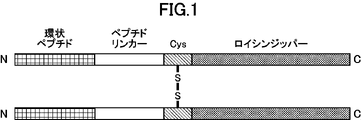
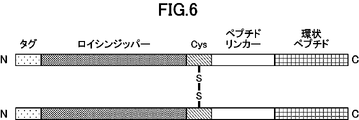
- FIG. 2 is a schematic diagram representing dimerized cyclic peptides.
- the structure “cyclic peptide” - “peptide linker” - “cysteine residue” - “leucine zipper” is shown.
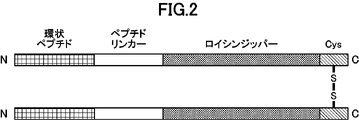
- FIG. 2 is a schematic diagram representing dimerized cyclic peptides.
- the structure “cyclic peptide” - “peptide linker” - “leucine zipper” - “cysteine residue” is shown.
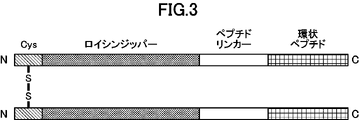
- FIG. 2 is a schematic diagram representing dimerized cyclic peptides.
- the structure “cysteine residue” - “leucine zipper” - "peptide linker” - “cyclic peptide” is shown.
- FIG. 2 is a schematic diagram representing dimerized cyclic peptides.
- FIG. 2 is a schematic diagram representing dimerized cyclic peptides.
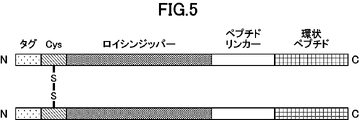
- the structure “tag sequence” - “cysteine residue” - “leucine zipper” - “peptide linker” - “cyclic peptide” is shown.
- FIG. 2 is a schematic diagram representing dimerized cyclic peptides.
- the structure “tag sequence” - “leucine zipper” - “cysteine residue” - "peptide linker” - “cyclic peptide” is shown.
- Lane 3 shows the results of SDS-polyacrylamide electrophoresis showing the synthesis of dimerized cyclic peptides by a cell-free expression system.
- Ladder is a marker
- lane 1 is a negative control (cell-free translation solution without addition of cDNA for expression)
- lane 2 is purified from the negative control using Dynabeads His-Tag Isolation & Pulldown (Thermo Fisher Scientific)
- Lane 3 is the cell-free translation solution of N11-Cys-Jun-PA8-aMD4dY
- Lane 4 is the Dynabeads His-Tag from the cell-free translation solution of N11-Cys-Jun-PA8-aMD4dY Fractions purified using Isolation & Pulldown
- lane 5 is the residual fraction
- lane 6 is N11-Cys-GCN4-PA8-aMD4dY
- lane 7 is N11-Cys-GCN4-PA8 This is a fraction pur
- Fig. 3 is a graph showing activity evaluation of dimerized cyclic peptides (aMD4dY-PA8-cys-Jun and aMD4dY-PA8-Jun) synthesized with HGF.
- the vertical axis represents the relative SRE receptor activity
- the horizontal axis represents the concentration of HGF
- FIG. 10 is a graph showing activity evaluation of a dimerized cyclic peptide (aMD4dY-PA8-cys-Jun ⁇ hep) synthesized with HGF.
- the vertical axis represents the relative SRE receptor activity
- the horizontal axis represents the concentration of HGF
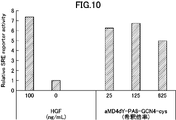
- Fig. 10 is a graph showing activity evaluation of a dimerized cyclic peptide (aMD4dY-PA8-GCN4-cys) synthesized with HGF.
- the vertical axis represents the relative SRE receptor activity
- the horizontal axis represents the concentration of HGF
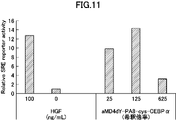
- Fig. 10 is a graph showing activity evaluation of a dimerized cyclic peptide (aMD4dY-PA8-cys-CEBP ⁇ ) synthesized with HGF.
- the vertical axis represents the relative SRE receptor activity
- the horizontal axis represents the concentration of HGF
- Fig. 3 is a graph showing activity evaluation of dimerized cyclic peptides (cys-Jun-PA8-aMD4dY and Jun-cys-PA8-aMD4dY) synthesized with HGF.
- the vertical axis represents the relative SRE receptor activity
- the horizontal axis represents the concentration of HGF
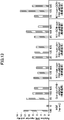
- Dimerized cyclic peptides synthesized with HGF (cys-Jun-PA8-aMD4dY, N11-Jun-cys-PA8-aMD4dY, N11-cys-Jun-PA8-aMD4dY, N11-GCN4-cys-PA8-aMD4dY, and N11-cys-GCN4-PA8-aMD4dY).
- the vertical axis represents the relative SRE receptor activity
- the horizontal axis represents the concentration of HGF
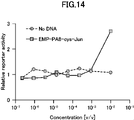
- FIG. 3 is a graph showing activity evaluation of synthesized dimerized cyclic peptide (EMP-cys-PA8-Jun).
- the vertical axis represents the relative receptor activity, and the horizontal axis represents the concentration of the reaction solution of the cell-free expression system with respect to the medium subjected to activity evaluation.
- As a negative control a cell-free expression system to which the EMP-cys-PA8-Jun synthesis gene was not added was used (No DNA).
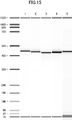
- Lane 1 is template DNA for aMD4dY-Jun-cys-N11-SecM-GS3
- lane 2 is template DNA for TPO-Jun-cys-N11-SecM-GS3
- lane 3 is EMP'-Jun-cys- N11-SecM-GS3 template DNA
- lane 4 is DNA mix
- lane 5 is DNA mix2.
- Fig. 3 is a graph showing activity evaluation of cell-free translated EMP'-Jun-cys-N11-SecM-GS3.
- the vertical axis represents the relative receptor activity
- the horizontal axis represents the concentration of HGF
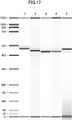
- Lane 1 is template DNA for EMP-Jun-cys-N11-SecM-GS3
- lane 2 is template DNA for aMD4dY-Jun-cys-N11-SecM-GS3
- lane 3 is TPO-Jun-cys-N11.
- lane 4 is DNA mix
- lane 5 is DNA mix2.
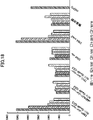
- DNA mix 1 is a graph showing activity evaluations of cell-free translation products of E. coli, cell-free translation products of DNA mix2, DNA-free group, and recombinant human EPO (rhEPO).
- the concentration of the cell-free expression system reaction solution in the medium subjected to activity evaluation is shown by five serial dilutions (1/110, 1/330, 1/990, 1/2970 and 1/8910).
- rhEPO 50 ⁇ g/mL of rhEPO was added to the medium used for activity evaluation at a concentration of 1/110.
- the vertical axis represents the chemiluminescence intensity (LU).
- One embodiment of the invention relates to molecules comprising cyclic peptides.
- Molecules comprising such cyclic peptides specifically include a cyclic peptide, a dimerization domain comprising a cysteine residue and a leucine zipper region, and between said cyclic peptide and said dimerization domain.
- a polypeptide comprising a peptide linker This polypeptide can be used in the methods of screening dimerized cyclic peptides and libraries therefor described herein.
- each amino acid may be either an L-amino acid or a D-amino acid, and may be either natural or non-natural.
- Each amino acid is preferably ⁇ - , ⁇ - or ⁇ -amino acids, more preferably ⁇ -amino acids.
- a polypeptide is, for example, a structure comprising "cyclic peptide” - “peptide linker” - “cysteine residue” - "leucine zipper region” from the N-terminal side, "cyclic peptide ”-“Peptide linker”-“Leucine zipper region”-“Cysteine residue” structure, from the N-terminal side “Cysteine residue”-“Leucine zipper region”-“Peptide linker”-“Cyclic peptide” structure Alternatively, it may have a structure comprising “leucine zipper region”-“cysteine residue”-“peptide linker”-“cyclic peptide” from the N-terminal side.
- polypeptide may be at the N-terminal side or the C-terminal side, or between a "cyclic peptide” and a “peptide linker", between a “peptide linker” and a “cysteine residue”, or between a "peptide linker” and a "leucine zipper”.
- Any amino acid sequence consisting of at least one amino acid residue between the "region" or between the "cysteine residue” and the "leucine zipper region” may be included.
- Any such amino acid sequence may include, but is not limited to, a tag sequence, an enzyme recognition sequence, or a sequence useful for enhancing expression of a polypeptide. Examples of tag sequences include N11 tag, FLAG tag, PA tag, histidine tag, etc.
- the tag sequence is preferably present on the N-terminal side of the above polypeptide.
- Enzyme recognition sequences include, for example, protease cleavage sequences, sugar chain modification sequences and the like. Between “cyclic peptide” and “peptide linker”, between “peptide linker” and “cysteine residue”, between “peptide linker” and “leucine zipper region”, or between “cysteine residue” and “leucine zipper region”
- the amino acid sequence that can be included between is not particularly limited, but includes, for example, one consisting of one or more glycines, preferably consisting of 1 to 5 glycines.
- the cyclic peptide is particularly limited
- the molecular weight may be 250 or greater, 500 or greater, 800 or greater, or 1000 or greater, and may be 10,000 or less, 9,000 or less, 8,000 or less, or 7,000 or less.
- the cyclic peptide is not particularly limited, but may consist of, for example, 3 or more, 6 or more, 10 or more, or 12 or more amino acid residues, 50 or less, 45 or less, 40 1 or less, or 35 or less amino acid residues.
- the cyclic peptide may form a cyclic structure by disulfide bond between two cysteine residues, for example, although there is no particular limitation on how the cyclic peptide forms a cyclic structure.
- the cyclic peptide include FGFR-binding peptide, c-Met (HGFR)-binding peptide, erythropoietin receptor-binding peptide, thrombopoietin receptor-binding peptide, albumin-binding peptide, EGFR-binding peptide, VEGFR-binding peptide, PDGFR-binding peptide, Axl binding peptide, PDGFR binding peptide, SCFR binding peptide, Flt-3 binding peptide, c-Ret binding peptide, ROR binding peptide, Tie binding peptide, NGFR binding peptide, Insulin receptor binding peptide, EphR binding peptide, Alk binding peptide, DDR binding peptid
- cyclic peptides include, but are not limited to, cyclic peptides that bind to c-Met (also simply referred to as Met).
- a cyclic peptide comprising or consisting of an amino acid sequence selected from the following (a) to (i), and forming a cyclic structure with a disulfide bond.
- (b) CRQFNRRTHEVWNLDC (SEQ ID NO: 2) also referred to herein as aMD4dY).
- amino acid sequence homology can be calculated using known analysis tools, for example, by using the homology algorithm BLAST (Basic local alignment search tool) of the National Center for Biotechnology Information (NCBI) can be calculated. For calculation of amino acid sequence homology, default (initial setting) parameters in the analysis tool may be used.
- BLAST Basic local alignment search tool
- NCBI National Center for Biotechnology Information
- amino acid modification is phosphorylation, methylation, acetylation, adenylation, ADP-ribosylation, or glycosylation.
- Met is an HGF receptor and a tyrosine kinase receptor, and such cyclic peptides that bind to Met (HGFR) are known to function as Met (HGFR) agonists by dimerization. .
- substitution, deletion or addition means a substitution with a known amino acid, preferably a conservative amino acid substitution.
- a “conservative amino acid substitution” is one in which an amino acid residue is replaced by another amino acid residue having a side chain R group with similar chemical properties (eg, charge or hydrophobicity).
- side chain R group with similar chemical properties
- amino acid groups having side chains with similar chemical properties include glycine, alanine, valine, leucine, and isoleucine with aliphatic side chains, serine and threonine with aliphatic hydroxyl side chains, amide-containing side chains.
- Each amino acid to be introduced by substitution may be an L-amino acid or a D-amino acid, and may be a natural amino acid or a non-natural amino acid.
- substitution, deletion or addition means that a known amino acid is added to the end of an amino acid sequence, or a known amino acid is inserted between amino acid residues of an amino acid sequence.
- Each amino acid to be introduced by addition may be an L-amino acid or a D-amino acid, and may be a natural amino acid or a non-natural amino acid. is an amino acid that constitutes
- cyclic peptides that bind to erythropoietin receptors are listed below, but are not limited thereto.
- a cyclic peptide comprising or consisting of an amino acid sequence selected from the following (j) to (n), and forming a cyclic structure with a disulfide bond.
- sequence identity may be 92% or greater, 95% or greater, or 98% or greater.
- amino acid modification is phosphorylation, methylation, acetylation, adenylation, ADP-ribosylation, or glycosylation.
- the peptide linker is particularly limited However, it can have a molecular weight of 10,000 or less and consist of 50 or less amino acid residues. In one embodiment, the peptide linker has a molecular weight of 10,000 or less and can consist of 50 or less amino acid residues, and at least 90%, at least 95%, or 100% of its amino acid sequence is alanine (A ), proline (P) and serine (S).
- proline residues may constitute more than 4% and less than 40% of the amino acid sequence of the peptide linker.
- proline residues are greater than about 4%, greater than about 5%, greater than about 6%, greater than about 8%, greater than about 10%, greater than about 15%, or greater than about 20% in the amino acid sequence of the peptide linker. may comprise less than about 40%, or less than about 35%.
- alanine and serine residues may each independently constitute greater than about 4%, greater than about 10%, or greater than about 20%, or less than about 50%.
- the term "about X%" is not limited to the number X, but also includes additional values of 10% to 20% more or 10% to 20% less.
- amino acid residues different from alanine, serine and proline are Arg, Asn, Asp, Cys, Gln, Glu, Gly, His, Ile, Leu, Lys, Met, Phe, Thr, Trp , Tyr and Val.
- amino acid residues different from alanine, serine and proline include those without hydrophobic side chains such as Val, Ile, Leu, Met, Phe, Tyr or Trp, and/or Lys, Arg, Those without charged side chains, such as Asp or Glu, are preferred.
- the peptide linker has a molecular weight of 10,000 or less and can consist of 50 or less amino acid residues, wherein at least 90%, at least 95%, or 100% of its amino acid sequence is alanine (A) and It may consist of amino acid residues selected from proline (P).
- proline residues may constitute more than 10% and less than 75% of the amino acid sequence of the peptide linker.
- proline residues are more than about 10%, more than about 12%, more than about 14%, more than about 18%, more than about 20%, more than about 22%, more than about 23%, may comprise greater than about 24%, or greater than about 25%, less than about 75%, less than about 70%, less than about 65%, less than about 60%, less than about 55%, less than about 50%, about 48% less than about 46%, less than about 44%, less than about 42%, less than about 41%, less than about 40%, less than about 39%, less than about 38%, less than about 37%, less than about 36%, or about 35 % may be configured.
- alanine residues are greater than about 25%, greater than about 30%, greater than about 35%, greater than about 40%, greater than about 45%, greater than about 50%, greater than about 52%, greater than about 54%, about 56% about 58%, about 59%, about 60%, about 61%, about 62%, about 63%, about 64%, or about 65%, about less than 90%, less than about 88%, less than about 86%, less than about 84%, less than about 82%, less than about 80%, less than about 79%, less than about 78%, less than about 77%, less than about 76%, or It may constitute less than about 75%.
- amino acid residues different from alanine, serine and proline are Arg, Asn, Asp, Cys, Gln, Glu, Gly, His, Ile, Leu, Lys, Met, Phe, Thr, Trp , Tyr and Val.
- amino acid residues different from alanine, serine and proline include those without hydrophobic side chains such as Val, Ile, Leu, Met, Phe, Tyr or Trp, and/or Lys, Arg, Those without charged side chains, such as Asp or Glu, are preferred.
- the peptide linker comprises a plurality of amino acid repeats, the amino acid repeats consist of alanine (A), proline (P) and serine (S), and the same amino acid residues are consecutive in the amino acid repeats.
- the number can be 6 residues or less, 5 residues or less, 4 residues or less, or 3 residues or less.
- the peptide linker comprises a plurality of amino acid repeats, the amino acid repeats consist of alanine (A) and proline (P), and the number of consecutive identical amino acid residues in the amino acid repeats is 6 residues. No more than 5 residues, 4 residues or less, or 3 residues or less.
- the peptide linker may contain two or more repeat sequences represented by AP or AAP.
- the peptide linker may comprise a sequence composed of glycine (G) and serine (S).
- the peptide linker may repeatedly comprise an amino acid sequence selected from the group consisting of GGGGS, GGGS, GGS and GS.
- the peptide linker may comprise consecutive glycines or may consist of glycines only.
- the peptide linker may repeatedly comprise the amino acid sequence designated EAAAK.
- the amino acid sequence of the peptide linker is preferably one consisting of A, P and S, one consisting of A and P, or one consisting of repeats of the sequence represented by GGGGS, but is limited to these. not a thing
- the length of the peptide linker may consist of 50 amino acid residues or less; It can consist of one or fewer amino acid residues.
- the length of the peptide linker can consist of 1 or more amino acid residues, but for example, the peptide linker can be 4 or more, 8 or more, 12 or more, or 16 or more amino acid residues. It can consist of residues.
- peptide linker examples include, but are not limited to, those containing the following amino acid sequences and those consisting of the following amino acid sequences.
- AAPAAPAPAAPAAPAPAAPAAPA SEQ ID NO: 9
- AAPAAPAPAAPAAPAPAAPAAP SEQ ID NO: 10
- AAPAAPAPAAPAAP SEQ ID NO: 11
- AAPAAAPAPAAPAAPAPAAP SEQ ID NO: 12
- AAAPAAPAAPAAAPAAPAAP SEQ ID NO: 13
- AAPAAPAAPAAPAAPAAPAAPAAP SEQ ID NO: 14
- APAAAAPAPAAAPAAPAAAPAPAAAP SEQ ID NO: 15
- AAAPAAPAAPPAAAAPAAPAAPPA SEQ ID NO: 16
- APAPAPAPAPAPAPAPAPAP SEQ ID NO: 17
- ASPAAPAPASPAAPAPSAPA SEQ ID NO: 18
- AAPASPAPAAPSAPAPAAPS SEQ ID NO: 19
- APSSPSPSAPSSPSPASPSS SAPSSPSPSAPS
- Circularly permuted sequences can be obtained, for example, by removing the first alanine of the above sequence and adding another alanine to the end of the above sequence, for example by removing the first alanine of the above sequence It can be easily made.
- Such a circularly permuted sequence of SEQ ID NO:9 becomes APAAPAPAAPAAPAPAAPAA (SEQ ID NO:28).
- non-limiting examples of circularly permuted amino acid residue sequences of SEQ ID NO:7 include the following.
- PAAPAPAAPAAPAPAAPAAA (SEQ ID NO: 29), AAPAPAAPAAPAPAAPAAPAAA (SEQ ID NO: 29), AAPAPAAPAAPAAPAAPAAAP (SEQ ID NO: 30), APAPAAPAAPAPAAPAAAPA (SEQ ID NO: 31), PAPAAPAAPAPAAPAAAPAA (SEQ ID NO: 32), APAAPAAPAPAAPAAAPAAP (SEQ ID NO: 33), PAAPAAPAPAAPAAAPAAPA (SEQ ID NO: 34), AAPAAPAPAAPAAAPAAPAP ( SEQ ID NO: 35), APAAPAPAAPAAAPAAPAPA (SEQ ID NO: 36), and PAAPAPAAPAAAPAAPAPAA (SEQ ID NO: 37).
- specific examples of the peptide linker include, but are not limited to, those containing the following amino acid sequences and those consisting of the following amino acid sequences.
- a polypeptide comprising a cyclic peptide, a dimerization domain comprising a cysteine residue and a leucine zipper region, and a peptide linker present between the cyclic peptide and the dimerization domain
- in the dimerization domain may have only one cysteine residue, or may have two or more cysteine residues.
- the leucine zipper region in the dimerization domain is a region that forms an ⁇ -helix and has a leucine residue every seven residues.
- the leucine zipper region is not particularly limited, but can consist of, for example, 60 or less, 45 or less, 35 or less, or 25 or less amino acid residues.
- the leucine zipper region in the dimerization domain is not particularly limited as long as it forms a dimer. Jun ⁇ hep (M. D. Ballinger et al., Nat. Biotechnol. 17, 1199-1204 (1999), incorporated herein by reference), deficient in heparin-binding ability by replacing the positively charged amino acids in the domain with glutamine.
- the content of the document is cited as a reference.) and the like.
- Specific examples of the leucine zipper region include, but are not limited to, those containing the following amino acid sequences and those consisting of the following amino acid sequences.
- the leucine zipper region in the dimerization domain may have its heparin binding ability removed.
- a polypeptide as described herein comprising a cyclic peptide, a dimerization domain comprising a cysteine residue and a leucine zipper region, and a peptide linker present between said cyclic peptide and said dimerization domain,
- the molecular weight may be, for example, 3,000 or more, 4,000 or more, 5,000 or more, or 6,000 or more, and may be 20,000 or less, 18,000 or less, 16,000 or less, or 14,000 or less.
- polypeptide is not particularly limited, but may consist of, for example, 30 or more, 40 or more, 50 or more, or 60 or more amino acid residues, and may consist of 200 or less, 180 or less, 160 1 or less, or 140 or less amino acid residues.
- a polypeptide as described herein comprising a cyclic peptide, a dimerization domain comprising a cysteine residue and a leucine zipper region, and a peptide linker present between said cyclic peptide and said dimerization domain, It can be prepared using well-known techniques based on the nucleic acid encoding the polypeptide.
- the polypeptides can also dimerize through non-covalent interactions at the leucine zipper region in the dimerization domain and disulfide bonds between cysteine residues in the dimerization domain. Disulfide bonds between cysteine residues contribute to tight dimerization and can greatly affect the activity of dimerized cyclic peptides.
- a nucleic acid encoding the polypeptide can be either DNA or RNA (mRNA). Synthesis of such nucleic acids can be appropriately carried out by those skilled in the art using conventional synthesis techniques based on the amino acid sequence of the desired polypeptide.
- the nucleic acid encoding the polypeptide may have a promoter sequence necessary for cell-free expression (eg, T7 promoter sequence) and a ribosome binding sequence on the 5' side.
- the nucleic acid may have a termination codon and an untranslated region on the 3' side.
- One embodiment of the invention relates to a method of preparing dimerized cyclic peptides.
- Methods for preparing such dimerized cyclic peptides include, for example, a cyclic peptide, a dimerization domain comprising a cysteine residue and a leucine zipper region, and a dimerization domain between the cyclic peptide and the dimerization domain. in a cell-free expression system, and preparing a dimer of said polypeptide, said dimer may be a homodimer or a heterodimer.
- cyclic peptides, dimerization domains (cysteine residues and leucine zipper regions), and peptide linkers are as described herein above.
- Protein synthesis in a cell-free expression system is a technique well known to those skilled in the art, and a cell extract may be used, or a commercially available cell-free expression reagent may be used.
- the components contained in the cell-free expression system include a nucleic acid (DNA or mRNA) encoding a desired template polypeptide, proteins necessary for transcription, translation, energy regeneration, and post-translational modification (RNA polymerase, ribosome, aminoacyl-tRNA, synthase, translation initiation factor, translation elongation factor, translation termination factor, ribosome regeneration factor, nucleoside diphosphate kinase, adenosine kinase, creatine kinase, prolyl isomerase, disulfide bond isomerase, chaperone, etc.), tRNA, aminoacyl-tRNA, natural amino acids , unnatural amino acids, NTPs, buffers, and the like.
- Commercially available cell-free expression reagents include, for
- One embodiment of the invention relates to a method of screening dimerized cyclic peptides.
- Methods for screening such dimerized cyclic peptides include, for example, the following steps (1A) or (1B) and step (2).
- (1A) in a cell-free expression system cyclic peptides, synthesizing at least one polypeptide comprising a dimerization domain comprising a cysteine residue and a leucine zipper region, and a peptide linker present between the cyclic peptide and the dimerization domain; preparing a dimer, or (1B) in a cell-free expression system, cyclic peptides, obtained by synthesizing at least one polypeptide comprising a dimerization domain comprising a cysteine residue and a leucine zipper region, and a peptide linker present between said cyclic peptide and said dimerization domain providing a dimer of said polypeptide; and (2) measuring activity based on binding of said dimer to a
- the method of screening dimerized cyclic peptides may further comprise the step of screening or selecting the dimers (dimerized cyclic peptides) based on the activity measured in step (2).
- one embodiment of the present invention measures the activity based on binding to the target molecule by a method of screening dimerized cyclic peptides, dimerized having activity based on binding to the target molecule It relates to a method for obtaining cyclic peptides.
- step (1A) is as described herein above with respect to the method for preparing a dimerized cyclic peptide
- step (1B) is The idea is to provide dimerized cyclic peptides (polypeptide dimers) obtained by a method as described herein above.
- a cyclic peptide, a dimerization domain comprising a cysteine residue and a leucine zipper region, and a peptide linker present between the cyclic peptide and the dimerization domain For "at least one polypeptide”, "a cyclic peptide, a dimerization domain comprising a cysteine residue and a leucine zipper region, and a dimerization domain comprising said cyclic peptide and said dimerization domain" as described herein above.
- the contents of "polypeptides with intervening peptide linkers” can be applied as such.
- polypeptide dimer is synonymous with “dimerized cyclic peptide” as described herein above.
- target molecule means a molecule to which the cyclic peptide or dimerized cyclic peptide described herein binds or is expected to bind.
- the target molecule is preferably a receptor, more preferably a receptor that is activated by dimerization, such as growth factor receptors, growth factor receptors, cytokine receptors, and the like.
- target molecules include FGFR, c-Met (HGFR), erythropoietin receptor, thrombopoietin receptor, albumin, EGFR, VEGFR, PDGFR, Axl, PDGFR, SCFR, Flt-3, c-Ret, ROR , Tie, NGFR, Insulin receptor, EphR, Alk, DDR, TGFBR, Activin receptor, BMP receptor, Interleukin receptor, T cell receptor, Transferrin receptor, Lipoprotein receptor, Ubiquitin ligase, Antibody, Complement body, GPCR, ion channel, virus, etc., but not limited to these.
- step (2) "activity based on the binding of the dimer to the target molecule” means the action and/or its strength brought about by the binding of the dimer to the target molecule, agonistic activity and Any meaning of antagonistic activity can be included.
- activity can include receptor activity, signaling activity, apoptotic activity, and the like.
- the measurement in step (2) can be performed using well-known techniques, by bioluminescence assays such as the luciferase reporter assay, by receptor dimerization assays such as the PathHunter® Receptor Dimerization assay, or It can be carried out by measuring fluorescence resonance energy transfer (FRET), or by cross-linking with a chemical linker and dimerization analysis by SDS-PAGE, or the like.
- FRET fluorescence resonance energy transfer
- the cell-free expression reaction solution obtained in step (1) may be used as it is, or may be used after being diluted as appropriate.
- the method for screening dimerized cyclic peptides comprises, in step (1), screening a plurality of different polypeptides, at least one of which is expected to have binding affinity with a target molecule. and in step (2), measuring activity based on binding to said target molecule for said plurality of dimers of different polypeptides.
- the method for screening a dimerized cyclic peptide wherein step (1) comprises preparing a library containing a plurality of at least one polypeptide or dimers thereof, wherein a plurality of said polypeptides It contains cyclic peptides that vary between peptides.
- the library containing at least one polypeptide or a plurality of dimers thereof includes the polypeptides or dimers thereof, for example, 2 or more, 8 or more, 16 or more, 32 or more, 48 Above, 96 or more, 200 or more, 1000 or more, 10000 or more, 10 5 or more, or 10 6 or more.
- a library containing a plurality of at least one polypeptide or dimers thereof may contain, for example, 10 species or less, 10 species or less, or 10 species or less of the polypeptides or dimers thereof.
- a "library” shall mean a collection containing a plurality of different substances (eg, different polypeptides or different nucleic acids).
- a method for producing such a library includes, for example, synthesizing a plurality of polypeptides in a cell-free expression system, a method for producing a library containing the plurality of polypeptides or dimers of the plurality of polypeptides wherein each of the plurality of polypeptides comprises a cyclic peptide, a dimerization domain comprising a cysteine residue and a leucine zipper region, and a peptide linker present between the cyclic peptide and the dimerization domain and wherein different cyclic peptides are included among the plurality of polypeptides.
- the step of "synthesizing a plurality of polypeptides in a cell-free expression system” is as described herein above for the method of preparing dimerized cyclic peptides.
- the plurality of polypeptides each comprise a cyclic peptide, a dimerization domain containing a cysteine residue and a leucine zipper region, and a peptide linker present between the cyclic peptide and the dimerization domain.
- references to a polypeptide "comprising” refer to "a cyclic peptide, a dimerization domain comprising a cysteine residue and a leucine zipper region, and between said cyclic peptide and said dimerization domain" described herein above. can be applied as is.
- One embodiment of the invention relates to libraries for screening dimerized cyclic peptides.
- a library comprises, for example, a plurality of polypeptides or dimers of said plurality of polypeptides, or a plurality of nucleic acids encoding said plurality of polypeptides, said plurality of polypeptides each comprising a cyclic peptide, A dimerization domain comprising a cysteine residue and a leucine zipper region, and a peptide linker present between the cyclic peptide and the dimerization domain, wherein the cyclic peptide differs between the plurality of polypeptides It is included.
- the plurality of polypeptides are each a cyclic peptide, a dimerization domain containing a cysteine residue and a leucine zipper region, and a peptide present between the cyclic peptide and the dimerization domain
- the content for a polypeptide "comprising a linker” is defined herein above as "a dimerization domain comprising a cyclic peptide, a cysteine residue and a leucine zipper region, and said cyclic peptide and said dimer can be applied as is.
- Such a library contains a plurality of polypeptides or dimers of the plurality of polypeptides, for example, 2 or more, 8 or more, 16 or more, 32 or more, 48 or more, 96 or more, 200 Above, 1000 or more, 10000 or more, 10 5 or more, or 10 6 or more. Also, such a library can comprise a plurality of polypeptides or dimers of said plurality of polypeptides, eg, 10 15 or less, 10 14 or less, or 10 13 or less.
- such a library may contain a plurality of nucleic acids encoding a plurality of polypeptides, for example, 2 or more, 8 or more, 16 or more, 32 or more, 48 or more, 96 or more, 200 or more, It may contain 1000 or more, 10000 or more, 105 or more, or 106 or more. Also, such a library can contain a plurality of nucleic acids encoding a plurality of polypeptides, eg, 10 15 or less, 10 14 or less, or 10 13 or less.
- the "nucleic acid encoding a polypeptide" is as described herein above.
- One embodiment of the invention relates to a method of screening dimerized cyclic peptides.
- Methods for screening such dimerized cyclic peptides include, for example, the following steps (1') to (5') as methods different from those described above.
- (1′) obtaining one or more polypeptides having binding affinity to a target molecule from a library comprising a plurality of displayed polypeptides, wherein the plurality of displayed polypeptides are Each, cyclic peptides, a dimerization domain comprising a cysteine residue and a leucine zipper region; and a peptide linker present between said cyclic peptide and said dimerization domain, wherein said cyclic peptide differs among said plurality of displayed polypeptides.
- step (1′) recovering the nucleic acid associated with the polypeptide obtained in step (1′), (3') amplifying the nucleic acid recovered in step (2'); (4') using the nucleic acid amplified in step (3'), in a cell-free expression system, cyclic peptides, Synthesizing a polypeptide comprising a dimerization domain comprising a cysteine residue and a leucine zipper region, and a peptide linker present between the cyclic peptide and the dimerization domain, and forming a dimer of the polypeptide (5′) measuring the activity based on the binding of said dimer to a target molecule.
- a method for screening a dimerized cyclic peptide comprising such steps (1') to (5') for a dimerized cyclic peptide having activity based on binding to a target molecule, display Evaluable screening can be provided seamlessly from the acquisition of the proposed candidate polypeptides.
- a method for screening a dimerized cyclic peptide comprising such steps (1′) to (5′) further comprises the dimer (dimeric embodied cyclic peptides).
- one embodiment of the present invention measures the activity based on binding to the target molecule by a method of screening a dimerized cyclic peptide comprising such steps (1') to (5'), It relates to a method for obtaining dimerized cyclic peptides with activity based on binding to a target molecule.
- Step (1′) is obtaining one or more polypeptides having binding affinity with the target molecule from a library containing a plurality of displayed polypeptides.
- a "library comprising a plurality of displayed polypeptides” can be produced using well-known display technology.
- Such display techniques include, for example, ribosome display, mRNA display, phage display, bacterial display, yeast display, and the like.
- the introduction of the SecM sequence into the template DNA sequence facilitates the preparation of ribosome-polypeptide (fusion protein)-mRNA complexes, allowing convenient preparation of libraries containing multiple displayed polypeptides.
- the arrays and display methods used are not limited to this.
- the library comprises a plurality of displayed polypeptides, for example, 2 or more, 8 or more, 16 or more, 32 or more, 48 or more, 96 or more, 200 or more, 1000 10,000 or more species, 10 5 or more species, 10 6 or more species, 10 7 or more species, 10 8 or more species, 10 9 or more species, or 10 10 or more species.
- a library can comprise a plurality of polypeptides or dimers of said plurality of polypeptides, eg, 10 15 or less, 10 14 or less, or 10 13 or less.
- step (1′) the “target molecule” and the “cyclic peptide” of the “plurality of displayed polypeptides”, the “dimerization domain comprising a cysteine residue and a leucine zipper region”, and “the A peptide linker present between the cyclic peptide and said dimerization domain” is as described herein above.
- step (1′) obtaining one or more polypeptides having binding affinity with the target molecule can be performed by a well-known technique, for example, expressing a recombinant target molecule or a target molecule This can be done by affinity selection on cells.
- Step (2') is a step of recovering the nucleic acid associated with the polypeptide obtained in step (1'). This can be done by well-known techniques, such as magnetic bead recovery, ELISA plate recovery, cell pellet recovery, nanodroplet recovery, microflow It can be performed by a method using a road or the like.
- Step (3') is a step of amplifying the nucleic acid recovered in step (2'). This can be done by well-known techniques, eg by PCR. In PCR, if the recovered nucleic acid is DNA, it can be used as it is, and if the recovered nucleic acid is mRNA, cDNA can be prepared by RT-PCR and the nucleic acid amplified.
- Step (4 ') is a cell-free expression system using the nucleic acid amplified in step (3 '), a dimerization domain containing a cyclic peptide, a cysteine residue and a leucine zipper region, and the cyclic peptide and the A step of synthesizing a polypeptide containing a peptide linker present between it and a dimerization domain to prepare a dimer of said polypeptide. This is as described herein above for methods of preparing dimerized cyclic peptides.
- a polypeptide comprising a cyclic peptide, a dimerization domain comprising a cysteine residue and a leucine zipper region, and a peptide linker present between the cyclic peptide and the dimerization domain is described herein. As described above.
- Step (5′) is a step of measuring the activity based on the binding of the dimer to the target molecule.
- the activity based on the binding of the dimer to the target molecule means the action and/or its strength brought about by the binding of the dimer to the target molecule, and agonist activity and antagonist activity.
- activity can include receptor activity, signaling activity, apoptotic activity, and the like.
- the "target molecule” in step (5') is as described herein above.
- Measurements in step (5′) can be performed using well-known techniques, by bioluminescence assays such as the luciferase reporter assay, by receptor dimerization assays such as the PathHunter® Receptor Dimerization assay, Alternatively, it can be performed by measurement of fluorescence resonance energy transfer (FRET), or by cross-linking with a chemical linker and dimerization analysis by SDS-PAGE, or the like.
- bioluminescence assays such as the luciferase reporter assay
- receptor dimerization assays such as the PathHunter® Receptor Dimerization assay
- FRET fluorescence resonance energy transfer
- the method for screening dimerized cyclic peptides is characterized in that step (1′) is based on the obtained plurality of polypeptides to generate a further library comprising a plurality of displayed polypeptides. and obtaining from said additional library one or more polypeptides having binding affinity with the target molecule.
- step (1′) is based on the obtained plurality of polypeptides to generate a further library comprising a plurality of displayed polypeptides. and obtaining from said additional library one or more polypeptides having binding affinity with the target molecule.
- further libraries containing the plurality of displayed polypeptides can be produced by the following steps.
- Step (1′-1) A step of recovering the nucleic acid associated with the polypeptide obtained in step (1′)
- Step (1′-2) Amplifying the nucleic acid recovered in step (1′-1) process to do.
- Step (1'-1) can be carried out in the same manner as described for step (2').
- Step (1'-2) can be carried out in the same manner as described for step (3').
- Retrieving one or more polypeptides having binding affinity to the target molecule from the additional library thus generated can be performed in the same manner as step (1').
- the method for screening dimerized cyclic peptides comprises, in step (1′), generating a further library comprising a plurality of displayed polypeptides based on the obtained plurality of polypeptides. and obtaining from said additional library one or more polypeptides having binding affinity to the target molecule, repeated 2, 3, 4, 5, 6, or 7 or more times may
- One embodiment of the invention relates to libraries for screening dimerized cyclic peptides.
- a library apart from the aforementioned library, comprises, for example, a plurality of displayed polypeptides or a plurality of nucleic acids for expressing said plurality of displayed polypeptides, and said plurality of displayed polypeptides.
- each of said polypeptides comprises a cyclic peptide, a dimerization domain comprising a cysteine residue and a leucine zipper region, and a peptide linker present between said cyclic peptide and said dimerization domain; Cyclic peptides that differ among the plurality of displayed polypeptides are included.
- a "cyclic peptide” of "a plurality of displayed polypeptides”, a “dimerization domain comprising a cysteine residue and a leucine zipper region”, and a “dimerization domain between said cyclic peptide and said dimerization domain The "intervening peptide linker” is as described herein above.
- Such libraries may contain a plurality of displayed polypeptides, e.g. species or more, 10 5 or more, 10 6 or more, 10 7 or more, 10 8 or more, 10 9 or more, or 10 10 or more.
- a library can comprise a plurality of polypeptides or dimers of said plurality of polypeptides, eg, 10 15 or less, 10 14 or less, or 10 13 or less.
- such libraries may contain a plurality of nucleic acids for expressing a plurality of displayed polypeptides, e.g., 2 or more, 8 or more, 16 or more, 32 or more, 48 or more, 96 or more.
- such a library can comprise a plurality of polypeptides or dimers of said plurality of polypeptides, eg, 10 15 or less, 10 14 or less, or 10 13 or less.
- HGFs used in Examples are recombinant human HGFs (rhHGF, R&D Systems), and in the present specification and drawings, recombinant human HGFs are simply referred to as HGFs.
- Example 1 Design of cyclic peptide-leucine zipper fusion and expression by cell-free expression system (1-1) Overview of design of aMD4dY-leucine zipper fusion Cyclic peptide aMD4dY (SEQ ID NO: 2) is dimerized It has been reported that it exhibits HGF-like activity, that is, acts as a Met agonist. Therefore, we designed a peptide sequence to express aMD4dY as a fusion with a leucine zipper region that self-dimerizes. Also, the binding is reversible, as the leucine zipper region leads to non-covalent dimerization.
- a construct with an N11 tag, which is an affinity tag, added to the N-terminus was also designed in the same manner. Specifically, the following peptide sequences were designed (Figs. 5 and 6). ⁇ "Tag sequence"-"Leucine zipper region"-"Cysteine residue"-"Peptide linker"-"aMD4dY” ⁇ "Tag sequence"-"Cysteine residue"-"Leucine zipper region"-"Peptide linker"-"aMD4dY”
- the leucine zipper region the leucine zipper domains of c-Jun, GCN4 and CEBP ⁇ proteins, which are known to form homodimers, and the positively charged amino acids of the c-Jun leucine zipper domain are replaced with glutamine.
- Jun ⁇ hep lacking heparin-binding ability was used. These leucine zipper domains are hereinafter referred to as Jun, GCN4, CEBP ⁇ and Jun ⁇ hep, respectively.
- base sequences encoding the above amino acid sequences (a) to (k) are respectively used. designed.
- a T7 promoter sequence and a ribosome binding sequence necessary for cell-free expression were added to the 5' side of these, and a termination codon and an untranslated region were added to the 3' side.
- Nucleotide sequences for cell-free expression corresponding to the above (a)-(k) are shown in (l)-(v), respectively.
- EMP-leucine zipper fusion EMP which is a cyclic peptide described in Johnson, D. L. et al. Chem. Biol. have been reported to exhibit erythropoietin (EPO)-like activity. Therefore, we designed a peptide sequence to express EMP as a fusion with a leucine zipper domain that self-dimerizes. In addition, a cysteine residue was added in the same manner as in (1-1) above, and the peptide sequence was designed to be "EMP" - "peptide linker” - "cysteine residue” - "leucine zipper region".
- EMP-PA8-cys-Jun MGGLYACHMGPMTWVCQPLRGAAPAAPAPAAGCGGRIARLEEKVKTLKAQNSELASTANMLREQVAQLKQKVMN SEQ ID NO: 67
- EMP is as described in (1-5) above, PA8 represents a peptide linker, cys represents a cysteine residue, and Jun represents the leucine zipper domain of the c-Jun protein.
- Example 2 Activity Evaluation of aMD4dY-Leucine Zipper Fusions Dimers of each aMD4dY-leucine zipper fusion were evaluated by luciferase assay.
- 0.6 ⁇ L of Attractene Transfection Reagent (QIAGEN) was added to 25 ⁇ L of Opti-MEM medium (Thermo Fisher Scientific) and incubated at room temperature for 5 minutes.
- a mixed solution of 25 ⁇ L of Opti-MEM and 1 ⁇ L of SRE reporter vector (QIAGEN) was added to the mixed solution, and incubated at room temperature for 20 minutes.
- This mixed solution was added to a 96-well plate, HEK293E cells were seeded thereon at 40,000 cells/well, and incubated overnight at 37°C in a 5% CO 2 incubator. After transfection, all the culture supernatant was removed and Opti-MEM medium containing 0.5% FBS (Thermo Fisher Scientific), 1% non-essential amino acid solution (Thermo Fisher Scientific) and penicillin-streptomycin (Nacalai Tesque) was added. The cells were starved by adding 100 ⁇ L of evaluation basal medium) and culturing at 37° C. for 4 hours.
- each dimer when aMD4dY-PA8-GCN4-cys and aMD4dY-PA8-cys-CEBP ⁇ were expressed, each dimer was found to have signal activation ability. From this, it was understood that it is possible to widely use the leucine zipper region that forms homodimers in the dimerization domain. As shown in FIG. 12, when cys-Jun-PA8-aMD4dY and Jun-cys-PA8-aMD4dY were expressed, each dimer was found to have signal activation ability.
- the activity of the cyclic peptide (growth factor-like activity) can be obtained even if the order of the cyclic peptide, peptide linker, cysteine residue, and leucine zipper region is changed.
- FIG. 13 it was revealed that even when the construct with the N11 tag added to the N-terminus was used, the ability to activate signal was exhibited. From this, it was understood that it is also possible to add a tag sequence to the N-terminus of the expressed polypeptide.
- Example 3 Activity evaluation of EMP-leucine zipper fusion
- PathHunter registered trademark
- eXpress EpoR-JAK2 Functional Assay Kit DiscoveRx
- EPO activity evaluation cells contained in the PathHunter (registered trademark) eXpress EpoR-JAK2 Functional Assay Kit were seeded in a 96-well plate and cultured for 24 hours at 37°C under 5% CO 2 .
- a cell-free expression reaction mixture containing the EMP-leucine zipper fusion was diluted and added to the cells.
- the cell-free expression system was diluted at the same magnification as this reaction solution, and the cell-free expression system was prepared as described in (1-9) above, except that the gene with the base sequence indicated by (x) was not included.
- the treated unreacted solution was added.
- the prepared Substrate Reagent was added to the cells stimulated at room temperature for 3 hours and incubated for 60 minutes. Chemiluminescence intensity was quantified with a Nivo plate reader (Perkin Elmer). The results are shown in FIG. These results revealed that the EMP-PA8-cys-Jun dimer activates EpoR.
- Example 4 Screening to Enrich HGF-Like Active Molecules from Cyclic Peptide-Leucine Zipper Fusion Libraries Based on Binding to c-Met Molecules Cell-Free from Multiple DNAs Each Encoding a Cyclic Peptide-Leucine Zipper Fusion Molecule We expressed the fusion by translation, enriched the fusion molecule that binds to c-Met and the DNA encoding the molecule, and confirmed that the enriched fusion molecule has HGF-like activity.
- the SecM sequence (referred to as SecM below) is a sequence represented by the amino acid sequence of FSTPVWISQAQGIRAG (SEQ ID NO: 86), and inhibits the elongation reaction of the ribosome to facilitate ribosome-cyclic peptide-leucine zipper fusion. Its purpose is to form a body-mRNA complex.
- the sequence denoted as GS3 below is a sequence consisting of three repeats of "glycine"-"serine" and is a spacer sequence.
- T7 RNA polymerase T7 RNA polymerase (Takara Bio, 2540A) and rNTPs (Promega, E6000) were used for transcription.
- the reaction was carried out in the tank for 6 hours.
- a 50 mM EDTA solution was then added. It was purified with RNA Clean & Concentrator 5 (ZYMO RESEARCH, R1015) and made into a 2 ⁇ M mRNA mix.
- Target molecules were immobilized on magnetic beads.
- 5 ⁇ L of 2 pM Recombinant Human HGFR/c-MET Fc Chimera Protein (R&D systems, 8614-MT-100), 5 ⁇ L slurry of Dynabeads (invitrogen, DB10003) and 10 ⁇ L of 1x TBS-T buffer (50 mM Tris- HCl, 150 mM NaCl, 0.05% Tween 20) were mixed and mixed by inversion for 30 minutes at 4°C.
- the magnetic beads were washed three times with 100 ⁇ L of 1x TBS-T buffer, then resuspended in 10 ⁇ L of 1x TBS-T buffer and left standing on ice.
- Reporter assays were performed as follows. 0.6 ⁇ L of Attractene Transfection Reagent (QIAGEN) was added to 25 ⁇ L of Opti-MEM medium (Thermo Fisher Scientific) and incubated at room temperature for 5 minutes. A mixed solution of 25 ⁇ L of Opti-MEM and 1 ⁇ L of SRE reporter vector (QIAGEN) was added to the mixed solution, and incubated at room temperature for 20 minutes. This mixed solution was added to a 96-well plate, HEK293E cells were seeded thereon at 40,000 cells/well, and incubated overnight at 37°C in a 5% CO 2 incubator.
- QIAGEN Attractene Transfection Reagent
- Opti-MEM medium containing 0.5% FBS (Thermo Fisher Scientific), 1% non-essential amino acid solution (Thermo Fisher Scientific) and penicillin-streptomycin (Nacalai Tesque) was added.
- the cells were starved by adding 100 ⁇ L of evaluation basal medium) and culturing at 37° C. for 4 hours. Add 0 to 100 ng/mL HGF to the evaluation basal medium, or add the above cell-free expression reaction solution to the medium so that it is diluted 25 to 625 times, and add 100 ⁇ L of the evaluation basal medium to the cells. did. Cells were stimulated by culturing overnight in a 37°C, 5% CO 2 incubator.
- a Dual-Luciferase Reporter Assay System (Promega) was used for signal intensity detection. 100 ⁇ L of the medium supernatant was removed, 50 ⁇ L of Glo reagent was added, and the cells were lysed at room temperature for 10 minutes. Activation of the HGF-Erk-SRE pathway was quantified by detecting Firefly luciferase luminescence from cell lysates with a plate reader. Subsequently, 50 ⁇ L of Glo & Stop reagent solution was added, and after 10 minutes, luminescence of Renilla luciferase, an internal standard, was detected to quantify the number of cells.
- SRE activity (luminescence intensity of Firefly luciferase)/(luminescence intensity of Renilla luciferase).
- a signal activity value relative to the sample to which the evaluation compound was not added was obtained and used as the relative receptor activity (Relative SRE reporter activity).
- the results are shown in FIG. DNA mix showed no relative receptor activity, whereas DNA mix2 showed similar activity to HGF.
- aMD4dY-Jun Since only -cys-N11-SecM-GS3 showed activity, it was found that DNA mix2 was enriched with aMD4dY-Jun-cys-N11-SecM-GS3.
- Example 5 Screening Method for Enriching Active Molecules from Cyclic Peptide-Leucine Zipper Fusion Library Based on Binding to EPO Receptor Molecule The screening method performed in Example 4 is possible regardless of the target molecule To demonstrate, we enriched peptides that bind to the EPO receptor from multiple cyclic peptide-leucine zipper fusion molecules and confirmed the presence or absence of activity based on binding of the enriched DNA to the EPO receptor.
- the ribosome display method and the cyclic peptide-leucine zipper fusion were combined to recover the complex of the cyclic peptide-leucine zipper fusion that binds to the EPO receptor immobilized on the magnetic beads, the ribosome, and the mRNA complex. did. Through a series of manipulations, it was confirmed that template DNAs for cyclic peptide-leucine zipper fusions that bind to the EPO receptor were enriched from the library.
- EMP-Jun-cys-N11-SecM-GS3 MAETGGLYACHMGPMTWVCQPLRGAAPAAPAPAAGGRIARLEEKVKTLKAQNSELASTANMLREQVAQLKQKVMNGCGGKDHLIHNHHKHEHAHAEHLFSTPVWISQAQGIRAGGSGSGS (SEQ ID NO: 87)
- Construction of template DNA for EMP-leucine zipper fusion As template DNA for expressing EMP-Jun-cys-N11-SecM-GS3, nucleotide sequences encoding the above (i) amino acid sequences were designed.
- DNA sequence of EMP-Jun-cys-N11-SecM-GS3 was prepared by PCR. Two types of DNA sequences, aMD4dY-Jun-cys-N11-SecM-GS3 and TPO-Jun-cys-N11-SecM-GS3, prepared in Example 4 were used. DNA mix of EMP-Jun-cys-N11-SecM-GS3, aMD4dY-Jun-cys-N11-SecM-GS3, and TPO-Jun-cys-N11-SecM-GS3 at a ratio of 1:50:50 was made.
- T7 RNA polymerase was used to transcribe DNA.
- T7 RNA polymerase (Takara Bio, 2540A) and rNTPs (Promega, E6000) were also used for transcription.
- the reaction was carried out in the tank for 6 hours.
- a 50 mM EDTA solution was then added. It was purified with RNA Clean & Concentrator 5 (ZYMO RESEARCH, R1015) and made into a 2 ⁇ M mRNA mix.
- Target molecules were immobilized on magnetic beads.
- 5 ⁇ L of 2 pM Recombinant Human Erythropoietin R Fc Chimera Protein, CF (R&D systems, 963-ER-50), 5 ⁇ L slurry of Dynabeads (invitrogen, DB10003) and 10 ⁇ L of 1x TBS-T buffer (50 mM Tris-HCl) , 150 mM NaCl, 0.05% Tween 20) were mixed and mixed by inversion at 4°C for 30 minutes.
- the magnetic beads were washed three times with 100 ⁇ L of 1x TBS-T buffer, then resuspended in 10 ⁇ L of 1x TBS-T buffer and left standing on ice.
- PCR Amplification of cDNA The recovered cDNA was amplified by PCR.
- KOD-Plus- Ver.2 (Toyobo, KOD-211) was used for PCR. 10 ⁇ L of 10x PCR buffer, 4 ⁇ L of 250 mM MgSO 4 , 10 ⁇ L of 2 mM dNTPs, 1 ⁇ L of 100 ⁇ M selec_PCR_F1.F39, 1 ⁇ L of 100 ⁇ M selec_PCR_R2.R24, 63 ⁇ L of ultrapure water to 4 ⁇ L of completed reverse transcription reaction. , KOD-Plus- 2 ⁇ L was mixed, and a cycle was created under the conditions of 94° C. 30 seconds ⁇ 55° C. 40 seconds ⁇ 68° C. 60 seconds, and the cycles were repeated 20 to 25 times. The collected DNA was used as DNA mix2.
- Lanes 1-5 in order, EMP-Jun-cys-N11-SecM-GS3, aMD4dY-Jun-cys-N11-SecM-GS3, TPO-Jun-cys-N11-SecM-GS3, DNA mix, DNA mix2 corresponds to When the DNA mix2 band obtained after the ribosome display method was compared with the DNA mix band, a shift toward longer DNA length was confirmed, and EMP-Jun-cys-N11-SecM The band showing the same DNA length as the -GS3-encoding DNA showed the highest intensity.
- the prepared Substrate Reagent was added to the cells stimulated at room temperature for 3 hours and incubated for 60 minutes. Chemiluminescence intensity was quantified with a Nivo plate reader (Perkin Elmer). The results are shown in FIG. Comparing the relative receptor activity calculated from the chemiluminescence intensity between DNA mix and DNA mix2, it was clarified that only DNA mix2 had activity.
Landscapes
- Chemical & Material Sciences (AREA)
- Life Sciences & Earth Sciences (AREA)
- Health & Medical Sciences (AREA)
- Organic Chemistry (AREA)
- Genetics & Genomics (AREA)
- Engineering & Computer Science (AREA)
- Biochemistry (AREA)
- Molecular Biology (AREA)
- Bioinformatics & Cheminformatics (AREA)
- Biomedical Technology (AREA)
- Zoology (AREA)
- Wood Science & Technology (AREA)
- General Engineering & Computer Science (AREA)
- Biotechnology (AREA)
- General Health & Medical Sciences (AREA)
- Microbiology (AREA)
- General Chemical & Material Sciences (AREA)
- Medicinal Chemistry (AREA)
- Chemical Kinetics & Catalysis (AREA)
- Physics & Mathematics (AREA)
- Crystallography & Structural Chemistry (AREA)
- Plant Pathology (AREA)
- Biophysics (AREA)
- Immunology (AREA)
- Bioinformatics & Computational Biology (AREA)
- Peptides Or Proteins (AREA)
- Investigating Or Analysing Biological Materials (AREA)
- Measuring Or Testing Involving Enzymes Or Micro-Organisms (AREA)
Priority Applications (3)
| Application Number | Priority Date | Filing Date | Title |
|---|---|---|---|
| JP2022576754A JPWO2022158554A1 (https=) | 2021-01-22 | 2022-01-21 | |
| EP22742673.1A EP4282873A4 (en) | 2021-01-22 | 2022-01-21 | METHOD FOR SCREENING DIMERIZED CYCLIC PEPTIDES |
| US18/356,516 US20240026343A1 (en) | 2021-01-22 | 2023-07-21 | Method for screening dimerized cyclic peptide |
Applications Claiming Priority (2)
| Application Number | Priority Date | Filing Date | Title |
|---|---|---|---|
| JP2021008420 | 2021-01-22 | ||
| JP2021-008420 | 2021-01-22 |
Related Child Applications (1)
| Application Number | Title | Priority Date | Filing Date |
|---|---|---|---|
| US18/356,516 Continuation US20240026343A1 (en) | 2021-01-22 | 2023-07-21 | Method for screening dimerized cyclic peptide |
Publications (1)
| Publication Number | Publication Date |
|---|---|
| WO2022158554A1 true WO2022158554A1 (ja) | 2022-07-28 |
Family
ID=82549756
Family Applications (1)
| Application Number | Title | Priority Date | Filing Date |
|---|---|---|---|
| PCT/JP2022/002117 Ceased WO2022158554A1 (ja) | 2021-01-22 | 2022-01-21 | 二量体化した環状ペプチドをスクリーニングする方法 |
Country Status (4)
| Country | Link |
|---|---|
| US (1) | US20240026343A1 (https=) |
| EP (1) | EP4282873A4 (https=) |
| JP (1) | JPWO2022158554A1 (https=) |
| WO (1) | WO2022158554A1 (https=) |
Cited By (1)
| Publication number | Priority date | Publication date | Assignee | Title |
|---|---|---|---|---|
| WO2024214800A1 (ja) | 2023-04-11 | 2024-10-17 | 富士フイルム株式会社 | 生理活性評価用のポリペプチド溶液を調製する方法、及びポリペプチドの生理活性を評価する方法 |
Citations (5)
| Publication number | Priority date | Publication date | Assignee | Title |
|---|---|---|---|---|
| WO2000018921A2 (en) | 1998-09-30 | 2000-04-06 | Chiron Corporation | Synthetic peptides having fgf receptor affinity |
| JP2014199261A (ja) * | 2008-10-29 | 2014-10-23 | ビージー メディシン, インコーポレイテッド | ガレクチン−3の免疫アッセイ |
| JP2018172415A (ja) * | 2012-06-07 | 2018-11-08 | プレジデント・アンド・フェロウズ・オブ・ハーバード・カレッジ | 薬物標的指向化のためのナノ療法 |
| JP2019509054A (ja) * | 2016-01-08 | 2019-04-04 | メディトープ バイオサイセンシーズ インク.Meditope Biosciences, Inc. | 自己架橋性抗体 |
| JP2020040886A (ja) * | 2018-09-06 | 2020-03-19 | 国立大学法人 東京大学 | 環状ペプチド |
Family Cites Families (5)
| Publication number | Priority date | Publication date | Assignee | Title |
|---|---|---|---|---|
| US5773569A (en) * | 1993-11-19 | 1998-06-30 | Affymax Technologies N.V. | Compounds and peptides that bind to the erythropoietin receptor |
| US7241733B2 (en) * | 2002-06-28 | 2007-07-10 | Centocor, Inc. | Mammalian EPO mimetic CH1 deleted mimetibodies, compositions, methods and uses |
| EP2647720B1 (en) * | 2010-12-03 | 2019-06-19 | The University of Tokyo | Peptide library production method, peptide library, and screening method |
| CA3126917A1 (en) * | 2019-01-14 | 2020-07-23 | New York University | Cyclic peptide dimers |
| CN110101880A (zh) * | 2019-05-08 | 2019-08-09 | 北京大学 | 一种基于2PisoDGR2多肽的放射性药物及其制备方法 |
-
2022
- 2022-01-21 JP JP2022576754A patent/JPWO2022158554A1/ja active Pending
- 2022-01-21 WO PCT/JP2022/002117 patent/WO2022158554A1/ja not_active Ceased
- 2022-01-21 EP EP22742673.1A patent/EP4282873A4/en active Pending
-
2023
- 2023-07-21 US US18/356,516 patent/US20240026343A1/en active Pending
Patent Citations (5)
| Publication number | Priority date | Publication date | Assignee | Title |
|---|---|---|---|---|
| WO2000018921A2 (en) | 1998-09-30 | 2000-04-06 | Chiron Corporation | Synthetic peptides having fgf receptor affinity |
| JP2014199261A (ja) * | 2008-10-29 | 2014-10-23 | ビージー メディシン, インコーポレイテッド | ガレクチン−3の免疫アッセイ |
| JP2018172415A (ja) * | 2012-06-07 | 2018-11-08 | プレジデント・アンド・フェロウズ・オブ・ハーバード・カレッジ | 薬物標的指向化のためのナノ療法 |
| JP2019509054A (ja) * | 2016-01-08 | 2019-04-04 | メディトープ バイオサイセンシーズ インク.Meditope Biosciences, Inc. | 自己架橋性抗体 |
| JP2020040886A (ja) * | 2018-09-06 | 2020-03-19 | 国立大学法人 東京大学 | 環状ペプチド |
Non-Patent Citations (3)
| Title |
|---|
| JOHNSON, D. L. ET AL., CHEM. BIOL., vol. 4, 1997, pages 939 - 950 |
| M. D. BALLINGER ET AL., NAT. BIOTECHNOL., vol. 17, 1999, pages 1199 - 1204 |
| WU X.-Q., XU L., HECHT N. B.: "Dimerization of the testis brain RNA-binding protein (translin) is mediated through its C-terminus and is required for DNA- and RNA-binding", NUCLEIC ACIDS RESEARCH, OXFORD UNIVERSITY PRESS, GB, vol. 26, no. 7, 1 April 1998 (1998-04-01), GB , pages 1675 - 1680, XP055953108, ISSN: 0305-1048, DOI: 10.1093/nar/26.7.1675 * |
Cited By (2)
| Publication number | Priority date | Publication date | Assignee | Title |
|---|---|---|---|---|
| WO2024214800A1 (ja) | 2023-04-11 | 2024-10-17 | 富士フイルム株式会社 | 生理活性評価用のポリペプチド溶液を調製する方法、及びポリペプチドの生理活性を評価する方法 |
| EP4678650A1 (en) | 2023-04-11 | 2026-01-14 | FUJIFILM Corporation | Method for preparing polypeptide solution for evaluating physiological activity, and method for evaluating physiological activity of polypeptide |
Also Published As
| Publication number | Publication date |
|---|---|
| US20240026343A1 (en) | 2024-01-25 |
| EP4282873A4 (en) | 2024-11-27 |
| EP4282873A1 (en) | 2023-11-29 |
| JPWO2022158554A1 (https=) | 2022-07-28 |
Similar Documents
| Publication | Publication Date | Title |
|---|---|---|
| KR102481388B1 (ko) | 내열성의 역전사 효소 돌연변이체 | |
| US5723584A (en) | Biotinylation of proteins | |
| JP2025113367A (ja) | 生理活性を有するペプチドの製造方法及び短鎖リンカーを含むペプチド | |
| AU2013300549B2 (en) | Peptide library and use thereof | |
| TW201835328A (zh) | 用於定序反應之聚合酶 | |
| US11136574B2 (en) | Methods for in vitro ribosome synthesis and evolution | |
| US20170305988A1 (en) | Method of using a peptide library | |
| KR20240042497A (ko) | 폴리펩타이드의 제작 방법, 태그, 발현 벡터, 폴리펩타이드의 평가 방법, 핵산 디스플레이 라이브러리의 제작 방법 및 스크리닝 방법 | |
| CN109689681B (zh) | 源自鲎属的重组蛋白及编码该重组蛋白的dna | |
| JP2019163270A (ja) | 親和性タンパク質及びその使用 | |
| US20240026343A1 (en) | Method for screening dimerized cyclic peptide | |
| CN109748970B (zh) | α-酮戊二酸光学探针及其制备方法和应用 | |
| CN115850507B (zh) | 一种正交、双组份蛋白质自组装偶联体系及其构建方法 | |
| CN110938610B (zh) | 一种转座酶突变体、融合蛋白、其制备方法和应用 | |
| US20220073908A1 (en) | Methods of producing high diversity peptide libraries and promoting protein folding | |
| KR20220023985A (ko) | 효율적인 피피알 단백질의 작제방법 및 그의 이용 | |
| CN121046336A (zh) | 海萤荧光素酶突变体及其应用 | |
| CN118028263A (zh) | 一种dna聚合酶及其制备方法与应用、表达基因、表达载体及重组细胞 |
Legal Events
| Date | Code | Title | Description |
|---|---|---|---|
| 121 | Ep: the epo has been informed by wipo that ep was designated in this application |
Ref document number: 22742673 Country of ref document: EP Kind code of ref document: A1 |
|
| ENP | Entry into the national phase |
Ref document number: 2022576754 Country of ref document: JP Kind code of ref document: A |
|
| NENP | Non-entry into the national phase |
Ref country code: DE |
|
| ENP | Entry into the national phase |
Ref document number: 2022742673 Country of ref document: EP Effective date: 20230822 |