WO2022158335A1 - 重合体、組成物、重合体の製造方法、膜形成用組成物、レジスト組成物、レジストパターン形成方法、感放射線性組成物、リソグラフィー用下層膜形成用組成物、リソグラフィー用下層膜の製造方法、回路パターン形成方法、光学部材形成用組成物 - Google Patents
重合体、組成物、重合体の製造方法、膜形成用組成物、レジスト組成物、レジストパターン形成方法、感放射線性組成物、リソグラフィー用下層膜形成用組成物、リソグラフィー用下層膜の製造方法、回路パターン形成方法、光学部材形成用組成物 Download PDFInfo
- Publication number
- WO2022158335A1 WO2022158335A1 PCT/JP2022/000590 JP2022000590W WO2022158335A1 WO 2022158335 A1 WO2022158335 A1 WO 2022158335A1 JP 2022000590 W JP2022000590 W JP 2022000590W WO 2022158335 A1 WO2022158335 A1 WO 2022158335A1
- Authority
- WO
- WIPO (PCT)
- Prior art keywords
- group
- forming
- film
- composition
- polymer
- Prior art date
- Legal status (The legal status is an assumption and is not a legal conclusion. Google has not performed a legal analysis and makes no representation as to the accuracy of the status listed.)
- Ceased
Links
Classifications
-
- C—CHEMISTRY; METALLURGY
- C08—ORGANIC MACROMOLECULAR COMPOUNDS; THEIR PREPARATION OR CHEMICAL WORKING-UP; COMPOSITIONS BASED THEREON
- C08G—MACROMOLECULAR COMPOUNDS OBTAINED OTHERWISE THAN BY REACTIONS ONLY INVOLVING UNSATURATED CARBON-TO-CARBON BONDS
- C08G61/00—Macromolecular compounds obtained by reactions forming a carbon-to-carbon link in the main chain of the macromolecule
- C08G61/02—Macromolecular compounds containing only carbon atoms in the main chain of the macromolecule, e.g. polyxylylenes
- C08G61/025—Polyxylylenes
-
- C—CHEMISTRY; METALLURGY
- C08—ORGANIC MACROMOLECULAR COMPOUNDS; THEIR PREPARATION OR CHEMICAL WORKING-UP; COMPOSITIONS BASED THEREON
- C08G—MACROMOLECULAR COMPOUNDS OBTAINED OTHERWISE THAN BY REACTIONS ONLY INVOLVING UNSATURATED CARBON-TO-CARBON BONDS
- C08G61/00—Macromolecular compounds obtained by reactions forming a carbon-to-carbon link in the main chain of the macromolecule
- C08G61/02—Macromolecular compounds containing only carbon atoms in the main chain of the macromolecule, e.g. polyxylylenes
-
- C—CHEMISTRY; METALLURGY
- C08—ORGANIC MACROMOLECULAR COMPOUNDS; THEIR PREPARATION OR CHEMICAL WORKING-UP; COMPOSITIONS BASED THEREON
- C08G—MACROMOLECULAR COMPOUNDS OBTAINED OTHERWISE THAN BY REACTIONS ONLY INVOLVING UNSATURATED CARBON-TO-CARBON BONDS
- C08G10/00—Condensation polymers of aldehydes or ketones with aromatic hydrocarbons or halogenated aromatic hydrocarbons only
-
- C—CHEMISTRY; METALLURGY
- C08—ORGANIC MACROMOLECULAR COMPOUNDS; THEIR PREPARATION OR CHEMICAL WORKING-UP; COMPOSITIONS BASED THEREON
- C08G—MACROMOLECULAR COMPOUNDS OBTAINED OTHERWISE THAN BY REACTIONS ONLY INVOLVING UNSATURATED CARBON-TO-CARBON BONDS
- C08G8/00—Condensation polymers of aldehydes or ketones with phenols only
- C08G8/04—Condensation polymers of aldehydes or ketones with phenols only of aldehydes
- C08G8/08—Condensation polymers of aldehydes or ketones with phenols only of aldehydes of formaldehyde, e.g. of formaldehyde formed in situ
- C08G8/16—Condensation polymers of aldehydes or ketones with phenols only of aldehydes of formaldehyde, e.g. of formaldehyde formed in situ with amino- or nitrophenols
-
- C—CHEMISTRY; METALLURGY
- C08—ORGANIC MACROMOLECULAR COMPOUNDS; THEIR PREPARATION OR CHEMICAL WORKING-UP; COMPOSITIONS BASED THEREON
- C08G—MACROMOLECULAR COMPOUNDS OBTAINED OTHERWISE THAN BY REACTIONS ONLY INVOLVING UNSATURATED CARBON-TO-CARBON BONDS
- C08G8/00—Condensation polymers of aldehydes or ketones with phenols only
- C08G8/04—Condensation polymers of aldehydes or ketones with phenols only of aldehydes
- C08G8/08—Condensation polymers of aldehydes or ketones with phenols only of aldehydes of formaldehyde, e.g. of formaldehyde formed in situ
- C08G8/20—Condensation polymers of aldehydes or ketones with phenols only of aldehydes of formaldehyde, e.g. of formaldehyde formed in situ with polyhydric phenols
- C08G8/22—Resorcinol
-
- G—PHYSICS
- G03—PHOTOGRAPHY; CINEMATOGRAPHY; ANALOGOUS TECHNIQUES USING WAVES OTHER THAN OPTICAL WAVES; ELECTROGRAPHY; HOLOGRAPHY
- G03F—PHOTOMECHANICAL PRODUCTION OF TEXTURED OR PATTERNED SURFACES, e.g. FOR PRINTING, FOR PROCESSING OF SEMICONDUCTOR DEVICES; MATERIALS THEREFOR; ORIGINALS THEREFOR; APPARATUS SPECIALLY ADAPTED THEREFOR
- G03F7/00—Photomechanical, e.g. photolithographic, production of textured or patterned surfaces, e.g. printing surfaces; Materials therefor, e.g. comprising photoresists; Apparatus specially adapted therefor
- G03F7/004—Photosensitive materials
- G03F7/038—Macromolecular compounds which are rendered insoluble or differentially wettable
-
- G—PHYSICS
- G03—PHOTOGRAPHY; CINEMATOGRAPHY; ANALOGOUS TECHNIQUES USING WAVES OTHER THAN OPTICAL WAVES; ELECTROGRAPHY; HOLOGRAPHY
- G03F—PHOTOMECHANICAL PRODUCTION OF TEXTURED OR PATTERNED SURFACES, e.g. FOR PRINTING, FOR PROCESSING OF SEMICONDUCTOR DEVICES; MATERIALS THEREFOR; ORIGINALS THEREFOR; APPARATUS SPECIALLY ADAPTED THEREFOR
- G03F7/00—Photomechanical, e.g. photolithographic, production of textured or patterned surfaces, e.g. printing surfaces; Materials therefor, e.g. comprising photoresists; Apparatus specially adapted therefor
- G03F7/004—Photosensitive materials
- G03F7/039—Macromolecular compounds which are photodegradable, e.g. positive electron resists
-
- G—PHYSICS
- G03—PHOTOGRAPHY; CINEMATOGRAPHY; ANALOGOUS TECHNIQUES USING WAVES OTHER THAN OPTICAL WAVES; ELECTROGRAPHY; HOLOGRAPHY
- G03F—PHOTOMECHANICAL PRODUCTION OF TEXTURED OR PATTERNED SURFACES, e.g. FOR PRINTING, FOR PROCESSING OF SEMICONDUCTOR DEVICES; MATERIALS THEREFOR; ORIGINALS THEREFOR; APPARATUS SPECIALLY ADAPTED THEREFOR
- G03F7/00—Photomechanical, e.g. photolithographic, production of textured or patterned surfaces, e.g. printing surfaces; Materials therefor, e.g. comprising photoresists; Apparatus specially adapted therefor
- G03F7/004—Photosensitive materials
- G03F7/09—Photosensitive materials characterised by structural details, e.g. supports, auxiliary layers
- G03F7/11—Photosensitive materials characterised by structural details, e.g. supports, auxiliary layers having cover layers or intermediate layers, e.g. subbing layers
-
- G—PHYSICS
- G03—PHOTOGRAPHY; CINEMATOGRAPHY; ANALOGOUS TECHNIQUES USING WAVES OTHER THAN OPTICAL WAVES; ELECTROGRAPHY; HOLOGRAPHY
- G03F—PHOTOMECHANICAL PRODUCTION OF TEXTURED OR PATTERNED SURFACES, e.g. FOR PRINTING, FOR PROCESSING OF SEMICONDUCTOR DEVICES; MATERIALS THEREFOR; ORIGINALS THEREFOR; APPARATUS SPECIALLY ADAPTED THEREFOR
- G03F7/00—Photomechanical, e.g. photolithographic, production of textured or patterned surfaces, e.g. printing surfaces; Materials therefor, e.g. comprising photoresists; Apparatus specially adapted therefor
- G03F7/20—Exposure; Apparatus therefor
-
- G—PHYSICS
- G03—PHOTOGRAPHY; CINEMATOGRAPHY; ANALOGOUS TECHNIQUES USING WAVES OTHER THAN OPTICAL WAVES; ELECTROGRAPHY; HOLOGRAPHY
- G03F—PHOTOMECHANICAL PRODUCTION OF TEXTURED OR PATTERNED SURFACES, e.g. FOR PRINTING, FOR PROCESSING OF SEMICONDUCTOR DEVICES; MATERIALS THEREFOR; ORIGINALS THEREFOR; APPARATUS SPECIALLY ADAPTED THEREFOR
- G03F7/00—Photomechanical, e.g. photolithographic, production of textured or patterned surfaces, e.g. printing surfaces; Materials therefor, e.g. comprising photoresists; Apparatus specially adapted therefor
- G03F7/20—Exposure; Apparatus therefor
- G03F7/22—Exposing sequentially with the same light pattern different positions of the same surface
-
- G—PHYSICS
- G03—PHOTOGRAPHY; CINEMATOGRAPHY; ANALOGOUS TECHNIQUES USING WAVES OTHER THAN OPTICAL WAVES; ELECTROGRAPHY; HOLOGRAPHY
- G03F—PHOTOMECHANICAL PRODUCTION OF TEXTURED OR PATTERNED SURFACES, e.g. FOR PRINTING, FOR PROCESSING OF SEMICONDUCTOR DEVICES; MATERIALS THEREFOR; ORIGINALS THEREFOR; APPARATUS SPECIALLY ADAPTED THEREFOR
- G03F7/00—Photomechanical, e.g. photolithographic, production of textured or patterned surfaces, e.g. printing surfaces; Materials therefor, e.g. comprising photoresists; Apparatus specially adapted therefor
- G03F7/26—Processing photosensitive materials; Apparatus therefor
-
- H—ELECTRICITY
- H10—SEMICONDUCTOR DEVICES; ELECTRIC SOLID-STATE DEVICES NOT OTHERWISE PROVIDED FOR
- H10P—GENERIC PROCESSES OR APPARATUS FOR THE MANUFACTURE OR TREATMENT OF DEVICES COVERED BY CLASS H10
- H10P76/00—Manufacture or treatment of masks on semiconductor bodies, e.g. by lithography or photolithography
Definitions
- the present invention provides a polymer, a composition, a method for producing a polymer, a film-forming composition, a resist composition, a method for forming a resist pattern, a radiation-sensitive composition, a composition for forming an underlayer film for lithography, and an underlayer film for lithography. , a method for forming a circuit pattern, and a composition for forming an optical member.
- Patent Documents 1 and 2 propose the use of polyphenol compounds or resins having specific skeletons.
- the light source for lithography used for resist pattern formation has been shortened from the KrF excimer laser (248 nm) to the ArF excimer laser (193 nm).
- the resist pattern becomes finer and finer, a resolution problem or a problem that the resist pattern collapses after development occurs.
- Merely thinning the resist to meet such a demand makes it difficult to obtain a resist pattern having a film thickness sufficient for substrate processing. Therefore, not only the resist pattern, but also a process of forming a resist underlayer film between the resist and the semiconductor substrate to be processed and giving the resist underlayer film a function as a mask during substrate processing is required.
- resist underlayer films are currently known for such processes.
- a resist underlayer film for lithography having a dry etching rate selectivity close to that of a resist can be mentioned.
- a resin component having at least a substituent group that produces a sulfonic acid residue when a terminal group is eliminated by application of a predetermined energy, and a solvent As a material for forming such a resist underlayer film for lithography, a resin component having at least a substituent group that produces a sulfonic acid residue when a terminal group is eliminated by application of a predetermined energy, and a solvent.
- Underlayer film-forming materials for multi-layer resist processes have been proposed (see, for example, Patent Document 3 below).
- a resist underlayer film for lithography having a dry etching rate selectivity ratio smaller than that of a resist can also be used.
- a resist underlayer film material containing a polymer having a specific structural unit As a material for forming such a resist underlayer film for lithography, a resist underlayer film material containing a polymer having a specific structural unit has been proposed (see, for example, Patent Document 4). Furthermore, a resist underlayer film for lithography having a dry etching rate selectivity ratio smaller than that of a semiconductor substrate can also be used. As a material for forming such a resist underlayer film for lithography, a resist underlayer film material containing a polymer obtained by copolymerizing an acenaphthylene structural unit and a structural unit having a substituted or unsubstituted hydroxyl group has been proposed. (See, for example, Patent Document 5 below.). Also, a resist underlayer film material containing an oxidized polymer of a specific bisnaphthol compound has been proposed (see, for example, Patent Document 6 below).
- CVD chemical vapor deposition
- a method of forming a silicon nitride film for example, a method of forming a silicon nitride film (see, for example, Patent Document 7 below) and a method of forming a silicon nitride film by CVD ( For example, see Patent Document 8 below.) is known.
- a material containing a silsesquioxane-based silicon compound is known (see, for example, Patent Document 9 below).
- the present inventors have proposed a composition for forming an underlayer film for lithography containing a specific compound or resin (see, for example, Patent Document 10 below).
- the materials described in Patent Literatures 1 and 2 still have room for improvement in properties such as heat resistance and etching resistance, and development of new materials that are even more excellent in these physical properties is desired.
- the polyphenol-based resin obtained based on the method of Non-Patent Document 1 has both an oxyphenol unit and a unit having a phenolic hydroxyl group in the molecule as structural units.
- An oxyphenol unit is usually obtained by bonding between a carbon atom on an aromatic ring of one phenolic monomer and a phenolic hydroxyl group of the other phenolic.
- the above-mentioned unit having a phenolic hydroxyl group in the molecule is obtained by bonding phenols, which are monomers, between carbon atoms on their aromatic rings.
- Such a polyphenol-based resin becomes a polymer having flexibility because the aromatic rings are bonded to each other through oxygen atoms, but is not preferable from the viewpoint of crosslinkability and heat resistance because the phenolic hydroxyl group disappears.
- compositions for optical members have been proposed so far, but none have achieved high levels of heat resistance, transparency, and refractive index, and the development of new materials is required.
- the present invention has been made in view of the above problems, and includes a polymer having excellent heat resistance and etching resistance, a composition, a method for producing a polymer, a film-forming composition, a resist composition, and a method for forming a resist pattern. , a radiation-sensitive composition, a composition for forming an underlayer film for lithography, a method for producing an underlayer film for lithography, a method for forming a circuit pattern, and a composition for forming an optical member.
- the present invention includes the following aspects.
- R is a monovalent group
- m is an integer of 1 to 5, wherein at least one of R is a hydroxyl group, optionally substituted carbon atoms 1 to 40 alkoxy group, or optionally substituted amino group having 0 to 40 carbon atoms.
- ⁇ 2> m in the formula (0) is 2 or more, and at least two of R may have a hydroxyl group, an optionally substituted alkoxy group having 1 to 40 carbon atoms, or a substituent
- a structural unit derived from the monomer represented by the formula (0) including a structural unit derived from another copolymerizable compound copolymerizable with the monomer represented by the formula (0)
- (x) and a structural unit derived from another copolymerizable compound (y) have a molar ratio (x:y) of 1:99 to 99:1.
- the other copolymerizable compound is selected from the group consisting of monomers represented by the following formulas (1A) to (1D) or heteroatom-containing aromatic monomers, ⁇ 3 > the polymer described in.
- each X is independently an oxygen atom, a sulfur atom, a single bond or non-crosslinked
- Y 0 is a 2n-valent group or a single bond having 1 to 60 carbon atoms, and when X is non-bridged, Y 0 is the 2n1valent group
- each A is independently benzene, biphenyl, terphenyl, diphenylmethylene or a condensed ring
- each R 0 is independently A hydrogen atom, an optionally substituted C1-40 alkyl group, an optionally substituted C6-40 aryl group, an optionally substituted carbon number alkenyl groups of 2 to 40 carbon atoms, alkynyl groups of 2 to 40 carbon atoms, alkoxy groups of optionally substituted carbon atoms of 1 to 40 atoms, halogen atoms, thiol groups, amino groups, nitro groups, carboxyl groups or hydroxyl groups where at least one of R 0 is a hydroxyl group
- R 0 and m1 have the same definitions as those described in formula (1A) above, and at least one of R 0 is a hydroxyl group and optionally substituted carbon atoms of 1 to 40 alkoxy groups or optionally substituted amino groups having 0 to 40 carbon atoms.
- n2 is an integer of 1 to 500
- Y is a divalent group having 1 to 60 carbon atoms or a single bond.
- R 0 and m1 have the same definitions as those described in formula (1A) above, and at least one of R 0 is a hydroxyl group, an optionally substituted alkoxy group having 1 to 40 carbon atoms or a substituted It is an amino group having 0 to 40 carbon atoms which may have a group.
- n3 is an integer of 1 to 10
- Y has the same meaning as described in formula (1C) above
- A, R 0 and m1 are those described in formula (1A) above. and at least one of R 0 is a hydroxyl group, an optionally substituted alkoxy group having 1 to 40 carbon atoms or an optionally substituted amino group having 0 to 40 carbon atoms. be.
- each R 1 is independently a hydrogen atom, an optionally substituted alkyl group having 1 to 40 carbon atoms, an optionally substituted carbon number of 6 to 40 aryl group optionally substituted alkenyl group having 2 to 40 carbon atoms, alkynyl group having 2 to 40 carbon atoms, alkoxy group having 1 to 40 carbon atoms optionally having substituent(s), halogen an atom, a thiol group, an amino group, a nitro group, a carboxyl group, or a hydroxyl group;
- A, R 0 , m1, and n2 are the same as those described in formula (1C) above; and at least one of R 0 is a hydroxyl group , an alkoxy group having 1 to 40 carbon atoms which may have a substituent or an amino group having 0 to 40 carbon atoms which may have a substituent.
- each R 1 is independently a hydrogen atom, an optionally substituted alkyl group having 1 to 40 carbon atoms, an optionally substituted carbon number 6-40 aryl group, optionally substituted C2-40 alkenyl group, C2-40 alkynyl group, optionally substituted C1-40 alkoxy group, halogen atom, thiol group, amino group, nitro group, carboxyl group or hydroxyl group; is a hydroxyl group, an optionally substituted alkoxy group having 1 to 40 carbon atoms, or an optionally substituted amino group having 0 to 40 carbon atoms.
- composition comprising the polymer according to any one of ⁇ 1> to ⁇ 9>.
- composition according to ⁇ 10> further comprising a solvent.
- the solvent contains at least one selected from the group consisting of propylene glycol monomethyl ether, propylene glycol monomethyl ether acetate, cyclohexanone, cyclopentanone, ethyl lactate and methyl hydroxyisobutyrate.
- the composition according to . ⁇ 13> The composition according to ⁇ 11> or ⁇ 12>, wherein the impurity metal content is less than 500 ppb for each metal species.
- the impurity metal contains at least one selected from the group consisting of copper, manganese, iron, cobalt, ruthenium, chromium, nickel, tin, lead, silver and palladium.
- the described composition ⁇ 15> The composition according to ⁇ 13> or ⁇ 14>, wherein the content of the impurity metal is 1 ppb or less.
- a method for producing a polymer comprising the step of polymerizing with ⁇ 17>
- One or more monomers represented by the formula (0) and another copolymerizable compound copolymerizable with the monomer represented by the formula (0) are combined with an oxidizing agent.
- the oxidizing agent is a metal salt or metal complex containing at least one selected from the group consisting of copper, manganese, iron, cobalt, ruthenium, chromium, nickel, tin, lead, silver and palladium.
- a film-forming composition comprising the polymer according to any one of ⁇ 1> to ⁇ 9>.
- a resist composition comprising the film-forming composition according to ⁇ 19>.
- ⁇ 22> forming a resist film on a substrate using the resist composition according to ⁇ 20> or ⁇ 21>; exposing at least part of the formed resist film; developing the exposed resist film to form a resist pattern;
- a method of forming a resist pattern comprising: ⁇ 23> A radiation-sensitive composition containing the film-forming composition according to ⁇ 19>, a diazonaphthoquinone photoactive compound, and a solvent, The content of the solvent is 20 to 99 parts by mass with respect to the total amount of 100 parts by mass of the radiation-sensitive composition, A radiation-sensitive composition, wherein the content of solids other than the solvent is 1 to 80 parts by mass per 100 parts by mass of the radiation-sensitive composition.
- ⁇ 24> forming a resist film on a substrate using the radiation-sensitive composition according to ⁇ 23>; exposing at least part of the formed resist film; A method of forming a resist pattern, comprising the step of developing the exposed resist film to form a resist pattern.
- a composition for forming an underlayer film for lithography comprising the film-forming composition according to ⁇ 19>.
- the composition for forming an underlayer film for lithography according to ⁇ 25> further containing at least one selected from the group consisting of a solvent, an acid generator, a base generator and a cross-linking agent.
- a method for producing an underlayer film for lithography comprising forming an underlayer film on a substrate using the composition for forming an underlayer film for lithography according to ⁇ 25> or ⁇ 26>.
- ⁇ 28> forming an underlayer film on a substrate using the composition for forming an underlayer film for lithography according to ⁇ 25> or ⁇ 26>; forming at least one photoresist layer on the underlayer film; a step of irradiating a predetermined region of the photoresist layer with radiation and developing to form a resist pattern;
- a method of forming a resist pattern comprising: ⁇ 29> forming an underlayer film on a substrate using the composition for forming an underlayer film for lithography according to ⁇ 25> or ⁇ 26>; forming an intermediate layer film on the underlayer film using a resist intermediate layer film material containing silicon atoms; forming at least one photoresist layer on the intermediate layer film; a step of irradiating a predetermined region of the photo
- An optical member-forming composition comprising the film-forming composition according to ⁇ 19>.
- a polymer having excellent heat resistance and etching resistance a composition, a method for producing a polymer, a film-forming composition, a resist composition, a method for forming a resist pattern, a radiation-sensitive composition, and an underlayer for lithography
- a composition for forming a film, a method for producing an underlayer film for lithography, a method for forming a circuit pattern, and a composition for forming an optical member can be provided.
- this embodiment a mode for carrying out the present invention (hereinafter referred to as “this embodiment") will be described in detail, but the present invention is not limited to this, and various modifications can be made without departing from the scope of the invention. is possible.
- the polymer of the present embodiment is a polymer having structural units derived from the monomer represented by the formula (0), wherein the structural units are the aromatic rings of the monomer represented by the formula (0). It has moieties that are linked by direct bonds. Since the polymer of the present embodiment is configured as described above, it has superior performance in terms of performance such as heat resistance and etching resistance.
- R is a monovalent group
- m is an integer of 1 to 5, wherein at least one of R is a hydroxyl group, optionally substituted carbon atoms 1 to 40 or an optionally substituted amino group having 0 to 40 carbon atoms.
- the polymer of the present embodiment typically has the following properties (1) to (4), although not limited to the following.
- the polymer of the present embodiment has excellent solubility in organic solvents (especially safe solvents). Therefore, for example, when the polymer of this embodiment is used as a lithography film-forming material, a lithography film can be formed by a wet process such as spin coating or screen printing.
- the polymer of the present embodiment has a relatively high carbon concentration and a relatively low oxygen concentration.
- it since it has a reactive site in the molecule, it is useful for forming a cured product by reaction with a curing agent, but even when used alone, a cured product can be formed by a cross-linking reaction of the reactive site during high-temperature baking.
- the polymer of the present embodiment can exhibit high heat resistance, and when used as a film-forming material for lithography, deterioration of the film during high-temperature baking is suppressed, and it has excellent etching resistance to oxygen plasma etching and the like. can form a film for lithography.
- the polymer of the present embodiment can exhibit high heat resistance and etching resistance, and has excellent adhesion to resist layers and resist intermediate layer film materials. Therefore, when used as a film-forming material for lithography, a film for lithography having excellent resist pattern formability can be formed.
- resist pattern formability refers to properties in which no large defects are observed in the resist pattern shape and both resolution and sensitivity are excellent.
- the polymer of the present embodiment has a high density of aromatic rings, it has a high refractive index, suppresses coloration even after heat treatment, and has excellent transparency. Therefore, the polymer of this embodiment is also useful as a composition for forming various optical members.
- the composition of the present embodiment contains the polymer of the present embodiment, the composition is also endowed with the properties described above.
- the density of aromatic rings is high, and the carbon-carbon atoms of the aromatic rings are directly linked to each other through direct bonds, so the resin has a relatively low molecular weight.
- the heat resistance, etching resistance, and the like are superior.
- the polymer of this embodiment can be preferably applied as a film-forming material for lithography due to the properties described above.
- the composition of the present embodiment containing the polymer can be variously used, such as a film-forming composition, a resist composition, a radiation-sensitive composition, a composition for forming an underlayer film for lithography, and a composition for forming an optical member.
- a film-forming composition such as a film-forming composition, a resist composition, a radiation-sensitive composition, a composition for forming an underlayer film for lithography, and a composition for forming an optical member.
- the method for forming a resist pattern, the method for producing an underlayer film for lithography, and the method for forming a circuit pattern using the composition of the present embodiment in addition to the heat resistance and etching resistance of the pattern, electron beam irradiation of the resist pattern embedding properties of the underlying film; resolution, sensitivity, resist pattern shape after development; optical properties such as refractive index, extinction coefficient, and transparency; Formability can be exhibited.
- substituted means that at least one of hydrogen atoms bonded to carbon atoms constituting an aromatic ring and hydrogen atoms in a certain functional group is substituted with a substituent.
- substituted includes, for example, a halogen atom, a hydroxyl group, a carboxyl group, a cyano group, a nitro group, a thiol group, a heterocyclic group, an alkyl group having 1 to 30 carbon atoms, and an alkyl group having 6 to 20 carbon atoms.
- the "alkyl group” may be in any of a linear aliphatic hydrocarbon group, a branched aliphatic hydrocarbon group, and a cyclic aliphatic hydrocarbon group.
- R is a monovalent group, each independently, for example, a hydrogen atom, an optionally substituted alkyl group having 1 to 40 carbon atoms, a substituent and an aryl group having 6 to 40 carbon atoms which may be substituted, an alkenyl group having 2 to 40 carbon atoms which may have a substituent, an alkynyl group having 2 to 40 carbon atoms which may have a substituent, and 1 carbon atom which may have a substituent 40 to 40 alkoxy groups, 0 to 40 carbon atoms amino groups, halogen atoms, thiol groups, nitro groups, carboxyl groups or hydroxyl groups.
- the alkyl group may be linear, branched or cyclic.
- At least one of R is a hydroxyl group, an optionally substituted alkoxy group having 1 to 40 carbon atoms or an optionally substituted amino group having 0 to 40 carbon atoms (here , an amino group having 0 carbon atoms means “—NH 2 ”).
- each R is independently i) a hydroxyl group, an alkoxy group having 1 to 40 carbon atoms which may have a substituent, and 0 to 40 carbon atoms which may have a substituent.
- R is preferably a hydroxyl group, an optionally substituted alkoxy group having 1 to 40 carbon atoms or an amino group having 0 to 40 carbon atoms which may have a substituent, ii) a hydroxyl group, a substituent
- alkyl groups having 1 to 40 carbon atoms include, but are not limited to, methyl group, ethyl group, n-propyl, i-propyl group, n-butyl group, i-butyl group, t-butyl group, n -pentyl group, n-hexyl group, n-dodecyl group, barrel group and the like.
- aryl group having 6 to 40 carbon atoms include, but are not limited to, phenyl group, naphthalene group, biphenyl group, anthracyl group, pyrenyl group, perylene group and the like.
- alkenyl groups having 2 to 40 carbon atoms include, but are not limited to, ethynyl, propenyl, butynyl, and pentynyl groups.
- alkynyl groups having 2 to 40 carbon atoms include, but are not limited to, the following.
- An acetylene group and an ethynyl group can be mentioned.
- alkoxy groups having 1 to 40 carbon atoms include, but are not limited to, methoxy, ethoxy, propoxy, butoxy, pentoxy and the like.
- amino group having 0 to 40 carbon atoms examples include, but are not limited to, amino group, methylamino group, dimethylamino group, ethylamino group, diethylamino group, diphenylamino and the like.
- the compound represented by formula (0) is not particularly limited, and examples include the following compounds.
- the compound having a hydroxyl group is preferably benzenediol which may have an alkyl group, resorcinol, catechol, More preferred is 3,3'-dimethyl-4,4'-dihydroxybiphenyl, particularly preferred is resorcinol.
- m is 2 or more, and at least two of R have a hydroxyl group, an alkoxy group having 1 to 40 carbon atoms which may have a substituent, or a substituent.
- a monomer represented by formula (0) which is an amino group having 0 to 40 carbon atoms which may be It is more preferably an alkoxy group of to 40 or an amino group having 0 to 40 carbon atoms which may have a substituent, two of R are hydroxyl groups, and 1 to 40 carbon atoms which may have a substituent It is more preferably an alkoxy group or an amino group having 0 to 40 carbon atoms which may have a substituent, two of R are a hydroxyl group, an alkoxy having 1 to 40 carbon atoms which may have a substituent
- An amino group having 0 to 4 carbon atoms which may have a group or a substituent (for example, -NH 2 , -NH(CH 3 ), -N(CH 3 ) 2 or -N(CH 2 CH 3 ) 2 ) is particularly preferred.
- a hydroxyl group or an optionally substituted alkoxy group having 1 to 40 carbon atoms is preferable.
- an amino group or an optionally substituted amino group having 1 to 40 carbon atoms is preferable.
- the polymer of the present embodiment further includes a structural unit derived from another copolymerizable compound that is copolymerizable with the monomer represented by formula (0).
- more preferred is a polymer in a molar ratio of 81 to 99:1, more preferred is a polymer in a molar ratio of 49:51 to 99:1, more preferred is a polymer in a molar ratio of 79:21 to 91:19.
- Polymers are particularly preferred. It is preferable that the structural unit derived from the monomer represented by formula (0) and the other copolymerizable compound are directly bonded to each other through the aromatic rings.
- the other copolymerizable compound is preferably a polymer selected from the group consisting of monomers represented by formulas (1A) to (1D) or heteroatom-containing aromatic monomers.
- each X is independently an oxygen atom, a sulfur atom, a single bond or non-crosslinked
- Y 0 is a 2n-valent group having 1 to 60 carbon atoms or a single bond, , when X is non-bridged, Y 0 is the above 2n-valent group
- A is each independently benzene, biphenyl, terphenyl, diphenylmethylene or a condensed ring
- R 0 is each independently hydrogen Atoms, optionally substituted C1-40 alkyl groups, optionally substituted C6-40 aryl groups, optionally substituted C2 an alkenyl group of up to 40, an alkynyl group of 2 to 40 carbon atoms, an alkoxy group of optionally substituted carbon atoms of 1 to 40, a halogen atom, a thiol group, an amino group, a nitro group, a carboxyl group or a hydroxyl group; where at least one
- the upper limit of m1 is not particularly limited, and varies depending on the number of bondable sites of R0 in the ring structure represented by A. Therefore, although the range of m1 is not particularly limited, each m1 can be independently an integer of 1 to 9, for example.
- each A independently represents benzene, biphenyl, terphenyl, diphenylmethylene or a condensed ring.
- the condensates include naphthalene, anthracene, naphthacene, pentacene, benzopyrene, chrysene, pyrene, triphenylene, corannulene, coronene, ovalene, and fluorene.
- Anthracene, pyrene and fluorene are preferred.
- benzene is preferable.
- X indicates an oxygen atom, a sulfur atom, a single bond, or no cross-linking.
- X is preferably an oxygen atom from the viewpoint of heat resistance.
- X is preferably non-crosslinked from the viewpoint of solubility and etching resistance.
- Y 0 is a 2n1-valent group having 1 to 60 carbon atoms or a single bond, wherein when X is non-crosslinked, Y 0 is the 2n1-valent group.
- the 2n-valent group having 1 to 60 carbon atoms is, for example, a 2n-valent hydrocarbon group, and the hydrocarbon group may have various functional groups described later as substituents.
- Examples of the 2n-valent hydrocarbon group include groups in which a 2n+1-valent hydrocarbon group is bonded to a linear hydrocarbon group, a branched hydrocarbon group, or an alicyclic hydrocarbon group.
- the alicyclic hydrocarbon group also includes a bridged alicyclic hydrocarbon group.
- Examples of the 2n+1-valent hydrocarbon group include, but are not limited to, a trivalent methine group, an ethyne group, and the like.
- the 2n-valent hydrocarbon group may have a double bond, a triple bond, a hetero atom and/or an aryl group having 6 to 59 carbon atoms.
- Y 0 may contain a group derived from a compound having a fluorene skeleton such as fluorene or benzofluorene.
- the 2n-valent group may contain a halogen group, a nitro group, an amino group, a hydroxyl group, an alkoxy group, a thiol group, or an aryl group having 6 to 40 carbon atoms. Furthermore, the 2n-valent group may contain an ether bond, a ketone bond, an ester bond or a double bond.
- the 2n-valent group preferably contains a branched hydrocarbon group or an alicyclic hydrocarbon group rather than a linear hydrocarbon group from the viewpoint of heat resistance, and may contain an alicyclic hydrocarbon group. More preferred. Further, in the present embodiment, it is particularly preferred that the 2n-valent group has an aryl group having 6 to 60 carbon atoms.
- the linear hydrocarbon group and branched hydrocarbon group, which may be included in the 2n-valent group, are not particularly limited, and examples thereof include unsubstituted methyl group, ethyl group, and n-propyl group. , i-propyl group, n-butyl group, i-butyl group, t-butyl group, n-pentyl group, n-hexyl group, n-dodecyl group, barrel group and the like.
- substituents that can be included in the 2n-valent group include, but are not limited to, unsubstituted phenyl group, naphthalene group, biphenyl group, anthracyl group, pyrenyl group, cyclohexyl group, cyclododecyl group, dicyclopentyl group, tricyclodecyl group, adamantyl group, phenylene group, naphthalenediyl group, biphenyldiyl group, anthracenediyl group, pyrenediyl group, cyclohexanediyl group, cyclo dodecanediyl group, dicyclopentanediyl group, tricyclodecanediyl group, adamantanediyl group, benzenetriyl group, naphthalenetriyl group
- R 0 is a monovalent group, each independently having an optionally substituted alkyl group having 1 to 40 carbon atoms, an optionally substituted carbon number 6-40 aryl group, optionally substituted C2-40 alkenyl group, C2-40 alkynyl group, optionally substituted C1-40 alkoxy group, an amino group having 0 to 40 carbon atoms, a halogen atom, a thiol group, a nitro group, a carboxyl group or a hydroxyl group.
- the alkyl group may be linear, branched or cyclic.
- at least one of R 0 is a hydroxyl group, an optionally substituted C 1-40 alkoxy group, or an optionally substituted C 0-40 amino group.
- alkyl groups having 1 to 40 carbon atoms include, but are not limited to, methyl group, ethyl group, n-propyl group, i-propyl group, n-butyl group, i-butyl group, t-butyl group, n-pentyl group, n-hexyl group, n-dodecyl group, barrel group, benzyl group, phenethyl group and the like.
- a methyl group, an ethyl group, a benzyl group and a phenethyl group are preferred, and a methyl group and a benzyl group are more preferred.
- Examples of the aryl group having 6 to 40 carbon atoms include, but are not limited to, phenyl group, naphthalene group, biphenyl group, anthracyl group, pyrenyl group, perylene group and the like.
- a phenyl group is preferred.
- Examples of alkenyl groups having 2 to 40 carbon atoms include, but are not limited to, ethynyl, propenyl, butynyl, and pentynyl groups. Ethynyl groups are preferred.
- Examples of alkynyl groups having 2 to 40 carbon atoms include, but are not limited to, the following. An acetylene group, an ethynyl group and an ethynyl group are preferred.
- alkoxy groups having 1 to 40 carbon atoms include, but are not limited to, methoxy, ethoxy, propoxy, butoxy, pentoxy and the like. Methoxy and ethoxy groups are preferred.
- the amino group having 0 to 40 carbon atoms include, but are not limited to, amino group, methylamino group, dimethylamino group, ethylamino group, diethylamino group, diphenylamino and the like. Amino, methylamino and dimethylamino groups are preferred.
- Each m1 is independently an integer from 1 to 9. From the viewpoint of solubility, 1 to 6 are preferred, 1 to 4 are more preferred, and from the viewpoint of raw material availability, 1 to 2 are even more preferred.
- n1 is an integer from 1 to 4. 1 to 2 are preferable from the viewpoint of solubility, and 1 is more preferable from the viewpoint of raw material availability.
- R 0 and m1 have the same meanings as described in formula (1A) above. Further, in formula (1B), at least one of R 0 is a hydroxyl group, an optionally substituted alkoxy group having 1 to 40 carbon atoms, or an optionally substituted C 0 to 40 It is an amino group. In formula (1B), A is preferably a condensed ring.
- Y is a 2n-valent group having 1 to 60 carbon atoms
- n2 is an integer of 1 to 500
- A, R 0 and m1 are the same as those described in formula (1A) above. is.
- at least one of R 0 is a hydroxyl group, an optionally substituted alkoxy group having 1 to 40 carbon atoms, or an optionally substituted C 0 to 40 It is an amino group.
- Y is a divalent group having 1 to 60 carbon atoms or a single bond.
- the divalent group having 1 to 60 carbon atoms is, for example, a divalent hydrocarbon group, and the hydrocarbon group may have various functional groups described later as substituents.
- a divalent hydrocarbon group is an alkylene group having 1 to 60 carbon atoms. Examples of the divalent hydrocarbon group include groups in which a divalent hydrocarbon group is bonded to a linear hydrocarbon group, a branched hydrocarbon group, or an alicyclic hydrocarbon group. Here, the alicyclic hydrocarbon group also includes a bridged alicyclic hydrocarbon group.
- divalent hydrocarbon groups include, but are not limited to, trivalent methine groups and ethyne groups. Also, the divalent hydrocarbon group may have a double bond, a triple bond, a hetero atom and/or an aryl group having 6 to 59 carbon atoms. Y may contain a group derived from a compound having a fluorene skeleton such as fluorene or benzofluorene.
- the divalent group may contain a halogen group, a nitro group, an amino group, a hydroxyl group, an alkoxy group, a thiol group, or an aryl group having 6 to 40 carbon atoms. Furthermore, the divalent group may contain an ether bond, a ketone bond, an ester bond or a double bond.
- the divalent group preferably contains a branched hydrocarbon group or an alicyclic hydrocarbon group rather than a linear hydrocarbon group from the viewpoint of heat resistance, and may contain an alicyclic hydrocarbon group. More preferred. Further, in this embodiment, it is particularly preferred that the divalent group has an aryl group having 6 to 60 carbon atoms.
- the linear hydrocarbon group and the branched hydrocarbon group, which are substituents that can be included in the divalent group, are not particularly limited, and examples thereof include unsubstituted methyl group, ethyl group, and n-propyl group. , i-propyl group, n-butyl group, i-butyl group, t-butyl group, n-pentyl group, n-hexyl group, n-dodecyl group, barrel group and the like.
- Substituents that can be included in the divalent group are not particularly limited, but for example, unsubstituted phenyl group, naphthalene group, biphenyl group, anthracyl group, pyrenyl group, cyclohexyl group, cyclododecyl group, dicyclopentyl group, tricyclodecyl group, adamantyl group, phenylene group, naphthalenediyl group, biphenyldiyl group, anthracenediyl group, pyrenediyl group, cyclohexanediyl group, cyclo dodecanediyl group, dicyclopentanediyl group, tricyclodecanediyl group, adamantanediyl group, benzenetriyl group, naphthalenetriyl group
- n3 is an integer of 1 to 10
- Y has the same meaning as described in formula (1C) above
- A, R 0 and m1 are those described in formula (1A) above. is synonymous with Further, in formula (1D), at least one of R 0 is a hydroxyl group, an optionally substituted alkoxy group having 1 to 40 carbon atoms, or an optionally substituted C 0 to 40 It is an amino group.
- the compound represented by formula (1A) is preferably a polymer represented by formula (1A-1) below.
- n4 is each independently an integer of 0 to 3
- X, Y 0 , R 0 , m1 and n1 are the same as defined in formula (1A) above.
- the compound represented by formula (1A-1) is more preferably a polymer represented by formula (1A-2a) below.
- Z is each independently an oxygen atom or a sulfur atom
- Y 0 , R 0 , m 1 , n 1 and n 4 are those described in formula (1A-1) above. is synonymous with
- the compound represented by formula (1A-2a) is more preferably a polymer represented by formula (1A-2a-1) below.
- Y 0 , R 0 , m1, n1 and n4 have the same meanings as described in formula (1A-1) above.
- a polymer in which the compound represented by the formula (1A-2b) is a compound represented by the following formula (1A-2b-1) is more preferable.
- Y 0 , R 0 , m1 and n1 are the same as defined in formula (1A-2b) above.
- a polymer in which the compound represented by formula (1A-1) is at least one compound represented by formula (1A-2c) below is more preferable.
- Z is each independently an oxygen atom or a sulfur atom
- Y 0 , R 0 , m1, n1 and n4 are the same as those described in formula (1A-1) be.
- a polymer in which the compound represented by the formula (1A-2c) is at least one compound represented by the following formula (1A-2c-1) is more preferable.
- a polymer in which the compound represented by the formula (1A-2a-1) is at least one compound represented by the following formula (1A-3a) is more preferable.
- Y 0 , R 0 , m1 and n1 are the same as defined in formula (1A-2a) above.
- Y 0 , R 0 , m1 and n1 are the same as defined in formula (1A-2a-1) above.
- Y 0 , R 0 , m1 and n1 are the same as defined in formula (1A-2a-1) above.
- Y 0 is preferably a group represented by "R A -R B ".
- R 1 A is preferably a methine group
- R 2 B is preferably an aryl group having 6 to 40 carbon atoms which may have a substituent.
- n1 is preferably 1 to 2, more preferably 1, in each of the above formulas.
- the compound represented by formula (1C) is preferably a polymer represented by formula (1C-1) below.
- each R 1 is independently a hydrogen atom, an optionally substituted alkyl group having 1 to 40 carbon atoms, an optionally substituted carbon number 6 to 40 aryl group optionally substituted C2 to C40 alkenyl group, C2 to C40 alkynyl group, optionally substituted C1 to C40 alkoxy group , a halogen atom, a thiol group, an amino group, a nitro group, a carboxyl group, or a hydroxyl group; is a hydroxyl group, an optionally substituted alkoxy group having 1 to 40 carbon atoms or an optionally substituted amino group having 0 to 40 carbon atoms.
- the compound represented by formula (1C-1) is preferably a polymer represented by formula (1C-2) below.
- p2 is each independently an integer of 1 to 4
- q2 is each independently an integer of 0 to 4
- R 1 , A, R 0 , m1 and n2 has the same definition as described in the formula (1C-1)
- at least one of R 0 has a hydroxyl group, an alkoxy group having 1 to 40 carbon atoms which may have a substituent, or a substituent is an amino group having 0 to 40 carbon atoms that may be
- R 1 , A, R 0 , m1, n2 and p2 are the same as those described in formula (1C-2) above, and at least one of R 0 is a hydroxyl group, substituted an alkoxy group having 1 to 40 carbon atoms which may have a group or an amino group having 0 to 40 carbon atoms which may have a substituent.
- R 1 , A, R 0 , m1, and n2 are the same as those described in formula (1C-3) above, and at least one of R 0 is a hydroxyl group or a substituent. It is an alkoxy group having 1 to 40 carbon atoms which may have or an amino group having 0 to 40 carbon atoms which may have a substituent.
- A is preferably a benzene ring or a naphthalene ring, and more preferably A is a benzene ring.
- R 1 is preferably a hydrogen atom.
- the compound represented by formula (1D) is preferably a polymer represented by formula (1D-1) below.
- each R 1 is independently a hydrogen atom, an optionally substituted alkyl group having 1 to 40 carbon atoms, an optionally substituted carbon number 6-40 aryl group, optionally substituted C2-40 alkenyl group, C2-40 alkynyl group, optionally substituted C1-40 alkoxy group, halogen atom, thiol group, amino group, nitro group, carboxyl group or hydroxyl group; is a hydroxyl group, an optionally substituted alkoxy group having 1 to 40 carbon atoms, or an optionally substituted amino group having 0 to 40 carbon atoms.
- p3 is each independently an integer of 1 to 3, and R 0 , R 1 , m1 and n3 are the same as defined in formula (1D) above.
- a in the compound represented by formula (1B), formula (1C) or formula (1D) is benzene, biphenyl, terphenyl, diphenylmethylene, naphthalene, anthracene, naphthacene.
- pentacene benzopyrene, chrysene, pyrene, triphenylene, corannulene, coronene, ovalene and fluorene, and from the viewpoint of etching resistance, benzene, biphenyl, terphenyl, naphthalene, anthracene, naphthacene, pentacene, benzopyrene, chrysene.
- pyrene, triphenylene, colannulene, coronene and ovalene and fluorene are more preferred, and are biphenyl, terphenyl, naphthalene, anthracene, naphthacene, pentacene, benzopyrene, chrysene, pyrene, triphenylene, colannulene, coronene, ovalene and fluorene.
- Polymers are more preferred, and polymers that are biphenyl, naphthalene, anthracene and fluorene are particularly preferred.
- R 1 is more preferably a hydrogen atom or a structure selected from the group shown below.
- the position of the heteroatom in the heteroatom-containing aromatic monomer is not particularly limited, but from the viewpoint of heat resistance, solubility and etching resistance, the heteroatom preferably constitutes an aromatic ring. That is, the heteroatom-containing aromatic monomer preferably contains a heterocyclic aromatic compound.
- the heteroatom in the heteroatom-containing aromatic monomer is not particularly limited, and examples include an oxygen atom, a nitrogen atom, a phosphorus atom and a sulfur atom.
- the heteroatom-containing aromatic monomer is a substituted or unsubstituted monomer represented by the following formula (1E-1), or a substituted or unsubstituted formula (1E-2). It is preferred to include the represented monomers.
- each X is independently a group represented by NR 0 , a sulfur atom, an oxygen atom or a group represented by PR 0
- R 0 and R 1 are each independently, a hydrogen atom, a hydroxyl group, a substituted or unsubstituted alkoxy group having 1 to 30 carbon atoms, a halogen atom, a substituted or unsubstituted alkyl group having 1 to 30 carbon atoms, or a substituted or unsubstituted 6 to 30 carbon atoms is an aryl group of
- Q 1 and Q 2 are a single bond, a substituted or unsubstituted C 1-20 alkylene group, a substituted or unsubstituted C 3-20 cycloalkylene group, a substituted or unsubstituted C 6-20 arylene group, substituted or unsubstituted heteroarylene group having 2 to 20 carbon atoms, substituted or unsubstituted alkenylene group having 2 to 20 carbon atoms, substituted or unsubstituted alkynylene group having 2 to 20 carbon atoms, carbonyl group, NR a group represented by a, an oxygen atom, a sulfur atom or a group represented by PR a , wherein each R a is independently a hydrogen atom, a substituted or unsubstituted alkyl group having 1 to 10 carbon atoms, or a halogen atom, wherein when both Q 1 and Q 2 are present in said monomer, at least one of them contains
- each X is independently a group represented by NR 0 , a sulfur atom, an oxygen atom or a group represented by PR 0
- R 0 and R 1 are each independently , a hydrogen atom, a hydroxyl group, a substituted or unsubstituted alkoxy group having 1 to 30 carbon atoms, a halogen atom, a substituted or unsubstituted alkyl group having 1 to 30 carbon atoms, or a substituted or unsubstituted aryl having 6 to 30 carbon atoms is the base.
- each X is preferably independently a group represented by NR 0 , a sulfur atom, or a group represented by PR 0 .
- substituted or unsubstituted alkoxy groups having 1 to 30 carbon atoms include, but are not limited to, methoxy, ethoxy, propoxy, butoxy, pentoxy, hexyloxy, octyloxy, 2-ethylhexyloxy, and the like. mentioned.
- halogen atoms include, but are not limited to, fluorine, chlorine, bromine, and iodine atoms.
- substituted or unsubstituted alkyl groups having 1 to 30 carbon atoms include, but are not limited to, methyl group, ethyl group, n-propyl group, i-propyl group, n-butyl group, i-butyl group, t-butyl group, sec-butyl group, n-pentyl group, neopentyl group, isoamyl group, n-hexyl group, n-heptyl group, n-octyl group, n-dodecyl group, barrel group, 2-ethylhexyl and the like. be done.
- substituted or unsubstituted aryl groups having 6 to 30 carbon atoms include, but are not limited to, phenyl group, naphthyl group, biphenyl group, fluorenyl group, anthryl group, pyrenyl group, azulenyl group, acenaphthylenyl group, terphenyl group, phenanthryl group, perylene group, and the like.
- R 1 in formula (1E-1) is preferably a substituted or unsubstituted phenyl group.
- Q 1 and Q 2 are a single bond, a substituted or unsubstituted alkylene group having 1 to 20 carbon atoms, a substituted or unsubstituted cycloalkylene group having 3 to 20 carbon atoms, a substituted or unsubstituted substituted or unsubstituted arylene group having 6 to 20 carbon atoms, substituted or unsubstituted heteroarylene group having 2 to 20 carbon atoms, substituted or unsubstituted alkenylene group having 2 to 20 carbon atoms, substituted or unsubstituted 2 to 20 carbon atoms an alkynylene group, a carbonyl group, a group represented by NR a , an oxygen atom, a sulfur atom or a group represented by PR a , wherein each R a is independently a hydrogen atom, a substituted or unsubstituted carbon 1 to 10 alkyl groups or halogen atoms, wherein when both Q
- Q 3 is a nitrogen atom, a phosphorus atom or a group represented by CR b , wherein Q 3 in the monomer contains a heteroatom.
- Ra and Rb is independently a hydrogen atom, a substituted or unsubstituted alkyl group having 1 to 10 carbon atoms, or a halogen atom.
- substituted or unsubstituted alkylene groups having 1 to 20 carbon atoms include, but are not limited to, methylene group, ethylene group, n-propylene group, i-propylene group, n-butylene group, i-butylene group, t-butylene group, n-pentylene group, n-hexylene group, n-dodecylene group, valerene group, methylmethylene group, dimethylmethylene group, methylethylene group and the like.
- Examples of the substituted or unsubstituted cycloalkylene group having 3 to 20 carbon atoms include, but are not limited to, a cyclopropylene group, a cyclobutylene group, a cyclopentylene group, a cyclohexylene group, a cyclododecylene group, a cyclovalylene group, and the like. be done.
- Examples of substituted or unsubstituted arylene groups having 6 to 20 carbon atoms include, but are not limited to, phenylene groups, naphthylene groups, anthrylene groups, phenanthrylene groups, pyrenylene groups, perylenylene groups, fluorenylene groups, and biphenylene groups.
- Examples of the substituted or unsubstituted heteroarylene group having 2 to 20 carbon atoms include, but are not limited to, thienylene group, pyridinylene group, furylene group and the like.
- Examples of the substituted or unsubstituted alkenylene group having 2 to 20 carbon atoms include vinylene group, propenylene group and butenylene group.
- the substituted or unsubstituted alkynylene group having 2 to 20 carbon atoms includes an ethynylene group, a propynylene group, a butynylene group and the like.
- substituted or unsubstituted alkyl groups having 1 to 10 carbon atoms include, but are not limited to, methyl group, ethyl group, n-propyl group, i-propyl group, n-butyl group, i-butyl group, t-butyl group, n-pentyl group, n-hexyl group, n-dodecyl group, barrel group and the like.
- Halogen atoms include fluorine, chlorine, bromine, and iodine atoms.
- the heat resistance can be improved by direct bonding of the heteroatom-containing aromatic monomer.
- a heteroatom such as P, N, O or S
- the polarity of the polymer is increased by the heteroatom, so that it can be dissolved in a solvent. can improve sexuality.
- an organic film using a polymer in which the above-described aromatic monomer having a heteroatom in the structural unit is directly bonded can ensure an excellent film density, and can improve processing accuracy by etching.
- the heteroatom-containing aromatic monomer is preferably a substituted or unsubstituted monomer represented by the following formula (1E-1), such as indole, 2-phenylbenzoxazole, 2 It is more preferable to include at least one selected from the group consisting of -phenylbenzothiazole, carbazole and dibenzothiophene.
- the polymer of the present embodiment preferably further has a monomer-derived structural unit represented by the following formula (1E-3).
- Q 4 and Q 5 are a single bond, a substituted or unsubstituted alkylene group having 1 to 20 carbon atoms, a substituted or unsubstituted cycloalkylene group having 3 to 20 carbon atoms, a substituted or unsubstituted They are a substituted arylene group having 6 to 20 carbon atoms, a substituted or unsubstituted alkenylene group having 2 to 20 carbon atoms, and a substituted or unsubstituted alkynylene group having 2 to 20 carbon atoms.
- Q 6 is a group represented by CR b ', and R b ' is a hydrogen atom or a substituted or unsubstituted alkyl group having 1 to 10 carbon atoms.
- the 2 to 20 alkenylene group and the substituted or unsubstituted alkynylene group having 2 to 20 carbon atoms are the same as defined in formula (1E-2) above.
- the number and ratio of each structural unit are not particularly limited, but are preferably adjusted appropriately in consideration of the application and the value of the molecular weight described below.
- the polymer of the present embodiment can be composed only of formula (0) or can be composed by copolymerizing with other copolymerizable components described above, but the performance according to the application is not impaired.
- Other structural units include, for example, structural units having an ether bond formed by condensation of phenolic hydroxyl groups, structural units having a ketone structure, and the like. As described above, these other structural units may also be directly bonded to the structural unit derived from the monomer represented by formula (0) via aromatic rings.
- the weight average molecular weight of the polymer of the present embodiment is not particularly limited, but in terms of both heat resistance and solubility, it is preferably in the range of 400 to 100000, more preferably 500 to 20000, and 1000 to 15,000 is more preferred.
- the ratio (Mw/Mn) of the weight-average molecular weight (Mw) to the number-average molecular weight (Mn) is not particularly limited because the required ratio varies depending on the application. Examples of preferred molecular weights include those in the range of 3.0 or less, more preferred ones in the range of 1.05 to 3.0, and particularly preferred ones of 1. 05 or more and less than 2.0 are mentioned, and from the viewpoint of heat resistance, 1.05 or more and less than 1.5 are more preferable.
- the order of bonding of the structural units possessed by the polymer of the present embodiment in the polymer is not particularly limited. For example, only one unit derived from one type of monomer represented by formula (0) may be included as a structural unit, or two or more types of monomers represented by formula (0) One or more of the derived units may be included.
- the order may be either block copolymerization or random copolymerization.
- structural unit (0) is a carbon atom on the benzene ring of one structural unit (0) and a carbon atom on the benzene ring of the other structural unit (0). is bonded with a single bond, that is, an aspect having a site directly bonded without passing through another atom such as a carbon atom, an oxygen atom, or a sulfur atom.
- the polymer of the present embodiment has an aromatic ring and is derived from another copolymerizable compound.
- the benzene ring of the structural unit (0) and the aromatic ring of the structural unit derived from another copolymerizable compound are bonded by a single bond, i.e., a carbon atom, an oxygen atom, Embodiments having sites directly bonded without passing through another atom such as a sulfur atom are also included.
- the position at which the structural units in the polymer of the present embodiment are directly bonded is not particularly limited, and any one carbon atom to which no substituent is bonded participates in the direct bonding between the monomers. From the viewpoint of heat resistance, it is preferable that any one carbon atom of the monomer participates in direct bonding between aromatic rings.
- the structural unit (0) or a structural unit derived from another copolymerizable compound has two or more aromatic rings
- each structural unit A structure in which each of the two or more aryl structures in the group is bonded to another structural unit is preferred.
- the position of the carbon atom bonded to the other structural unit in each aromatic ring may be different, or each corresponding position (For example, each may be bound to the 4-position).
- all structural units (0) are other structural units (0) or structural units derived from other copolymerizable aromatic ring-containing compounds, and direct Although it is preferable to be bonded by a bond, a structural unit (0) that is bonded to another structural unit via another atom such as oxygen or carbon may be included.
- a structural unit (0) that is bonded to another structural unit via another atom such as oxygen or carbon may be included.
- the polymer of the present embodiment preferably has sites in which the structural units (0) are connected to each other by direct bonding between aromatic rings.
- the polymer of the present embodiment preferably has high solubility in solvents from the viewpoint of easier application of wet processes. More specifically, the polymers of this embodiment are propylene glycol monomethyl ether (PGME), propylene glycol monomethyl ether acetate (PGMEA), cyclohexanone (CHN), cyclopentanone (CPN), ethyl lactate (EL) and hydroxy
- PGME propylene glycol monomethyl ether
- PMEA propylene glycol monomethyl ether acetate
- CHN cyclohexanone
- CPN cyclopentanone
- EL ethyl lactate
- the solubility in one or more selected from the group consisting of methyl isobutyrate (HBM) is preferably 1% by mass or more. Specifically, the solubility in the solvent at a temperature of 23° C.
- the solubility in PGME, PGMEA, CHN, CPN, EL and/or HBM is defined as "mass of polymer/(mass of polymer + mass of solvent) x 100 (mass%)". For example, 10 g of a polymer is evaluated as soluble in 90 g of PGMEA when the solubility of the polymer in PGMEA is "10% by mass or more", and is evaluated as not soluble when the solubility is " less than 10% by mass”.
- the polymer of this embodiment may further have a modified portion derived from a crosslinkable compound. That is, the polymer of this embodiment having the structure described above may have a modified portion obtained by reaction with a compound having cross-linking reactivity.
- a (modified) polymer is also excellent in heat resistance and etching resistance, and can be used as a semiconductor coating agent, a resist material, and a semiconductor underlayer film forming material.
- cross-linkable compounds include, but are not limited to, aldehydes, ketones, carboxylic acids, carboxylic acid halides, halogen-containing compounds, amino compounds, imino compounds, isocyanate compounds, and unsaturated hydrocarbon group-containing compounds. compounds and the like. These can be used alone or can be used in combination as appropriate.
- the crosslinkable compound is preferably aldehydes or ketones. More specifically, it is preferably a polymer obtained by subjecting the polymer of the present embodiment having the structure described above to a polycondensation reaction of aldehydes or ketones in the presence of a catalyst.
- a novolak-type polymer can be obtained by further polycondensing an aldehyde or ketone corresponding to the desired structure under normal pressure, optionally under pressure, under a catalyst.
- aldehydes examples include formaldehyde, paraformaldehyde, trioxane, benzaldehyde, methylbenzaldehyde, dimethylbenzaldehyde, trimethylbenzaldehyde, ethylbenzaldehyde, propylbenzaldehyde, butylbenzaldehyde, pentabenzaldehyde, butylmethylbenzaldehyde, hydroxybenzaldehyde, dihydroxybenzaldehyde, fluoromethyl Examples include, but are not limited to, benzaldehyde and the like. These can be used individually by 1 type or in combination of 2 or more types.
- benzaldehyde methylbenzaldehyde, dimethylbenzaldehyde, trimethylbenzaldehyde, ethylbenzaldehyde, propylbenzaldehyde, butylbenzaldehyde, pentabenzaldehyde, butylmethylbenzaldehyde and the like are preferably used from the viewpoint of providing high heat resistance.
- ketones examples include acetophenone, acetylmethylbenzene, acetyldimethylbenzene, acetyltrimethylbenzene, acetylethylbenzene, acetylpropylbenzene, acetylbutylbenzene, acetylpentabenzene, acetylbutylmethylbenzene, acetylhydroxybenzene, acetyldihydroxybenzene, Examples include acetylfluoromethylbenzene and the like, but are not particularly limited to these. These can be used individually by 1 type or in combination of 2 or more types.
- acetophenone acetylmethylbenzene, acetyldimethylbenzene, acetyltrimethylbenzene, acetylethylbenzene, acetylpropylbenzene, acetylbutylbenzene, acetylpentabenzene, and acetylbutylmethylbenzene are used from the viewpoint of providing high heat resistance. preferable.
- the catalyst used in the reaction can be appropriately selected from known catalysts and is not particularly limited. Acid catalysts and base catalysts are preferably used as the catalyst. As these base catalysts, acid catalysts and base catalysts described in PCT/JP2021/26669 can be used. In addition, about a catalyst, it can be used individually by 1 type or in combination of 2 or more types. In addition, the amount of the catalyst used can be appropriately set according to the raw material used, the type of catalyst used, and the reaction conditions, and is not particularly limited, but is 0.001 to 100 parts by mass with respect to 100 parts by mass of the reaction raw material. It is preferable that it is a part.
- a reaction solvent may be used during the reaction.
- the reaction solvent is not particularly limited as long as the reaction between the aldehydes or ketones used and the polymer proceeds, and can be appropriately selected from known solvents and used. Examples include water and methanol. , ethanol, propanol, butanol, tetrahydrofuran, dioxane, ethylene glycol dimethyl ether, ethylene glycol diethyl ether, or mixed solvents thereof.
- a solvent can be used individually by 1 type or in combination of 2 or more types.
- the amount of these solvents to be used can be appropriately set according to the raw materials to be used, the type of acid catalyst to be used, reaction conditions, and the like.
- the amount of the solvent used is not particularly limited, it is preferably in the range of 0 to 2000 parts by mass with respect to 100 parts by mass of the reaction raw material.
- the reaction temperature in the above reaction can be appropriately selected according to the reactivity of the reaction raw materials.
- the reaction temperature is not particularly limited, it is usually preferably in the range of 10 to 200°C.
- the reaction method can be appropriately selected and used from known methods, and is not particularly limited. There is a method in which the compound is added dropwise in the presence of an acid catalyst. After completion of the polycondensation reaction, isolation of the obtained compound can be carried out according to a conventional method, and is not particularly limited. For example, in order to remove unreacted raw materials, acid catalysts, etc. present in the system, a general method such as raising the temperature of the reactor to 130 to 230 ° C. and removing volatile matter at about 1 to 50 mmHg is used. By taking it, the target compound can be obtained.
- the method for producing the polymer of the present embodiment is not limited to the following, but may include, for example, a step of polymerizing one or more of the above monomers in the presence of an oxidizing agent. Specifically, it includes a step of polymerizing one or more monomers represented by formula (0) in the presence of an oxidizing agent. Further, when the polymer of the present embodiment contains structural units derived from the other copolymerizable compounds described above, the production method comprises one or more monomers represented by the formula (0) and another copolymerizable compound copolymerizable with the monomer represented by formula (0) in the presence of an oxidizing agent. In carrying out such a step, K.I.
- an oxidative coupling reaction in which one-electron oxidized radicals due to the monomer are coupled causes CC coupling at the ⁇ -position to occur selectively.
- regioselective polymerization can be performed using a copper/diamine type catalyst.
- the oxidizing agent in the present embodiment is not particularly limited as long as it causes an oxidative coupling reaction.
- metal salts For example, by dissolving or dispersing the monomer represented by the formula (0) in an organic solvent, adding a metal salt containing copper, manganese or cobalt, and reacting with, for example, oxygen or an oxygen-containing gas for oxidative polymerization. A desired polymer can be obtained. According to the method for producing a polymer by oxidation polymerization as described above, it is relatively easy to control the molecular weight, and it is possible to obtain a polymer with a narrow molecular weight distribution without leaving raw material monomers or low-molecular-weight components associated with the increase in molecular weight. Therefore, it tends to be superior from the viewpoint of high heat resistance and low sublimation. Other production methods include, for example, a coupling reaction using a Grignard reagent, Suzuki-Miyahara coupling reaction, and the like.
- metal salts include, but are not limited to, halides, carbonates, acetates, nitrates, phthalates, or phosphates of copper, manganese, cobalt, ruthenium, chromium, palladium, etc. .
- the metal complex is not particularly limited, and known ones can be used. Specific examples thereof are not limited to the following, but examples of the copper-containing complex catalyst include catalysts described in JP-B-36-18692, JP-B-40-13423, JP-A-49-490, and other publications.
- manganese-containing complex catalysts are disclosed in JP-B-40-30354, JP-B-47-5111, JP-A-56-32523, JP-A-57-44625, JP-A-58-19329, JP-A-60-83185, etc. and the complex catalyst containing cobalt includes the catalyst described in JP-B-45-23555.
- organic peroxides include, but are not limited to, t-butyl hydroperoxide, di-t-butyl peroxide, cumene hydroperoxide, dicumyl peroxide, peracetic acid, perbenzoic acid, and the like. can be done.
- the oxidizing agents can be used singly or in combination.
- the amount of these to be used is not particularly limited. It is preferably 0.002 mol to 10 mol, more preferably 0.003 mol to 3 mol, still more preferably 0.005 mol to 0.3 mol, per 1 mol (total amount with monomer) . That is, the oxidizing agent in this embodiment can be used at a low concentration with respect to the monomer.
- a base in addition to the oxidizing agent used in the oxidative polymerization step.
- the base is not particularly limited, and a known one can be used. Specific examples thereof include inorganic bases such as alkali metal hydroxides, alkaline earth metal hydroxides, alkali metal alkoxides, Organic bases such as primary to tertiary monoamine compounds and diamines may also be used. Each can be used alone or in combination.
- the method of oxidation is not particularly limited, and there is a method of directly using oxygen gas or air, but air oxidation is preferred from the standpoint of safety and cost.
- air oxidation is preferred from the standpoint of safety and cost.
- a method of introducing air by bubbling into the liquid in the reaction solvent is preferred from the viewpoint of improving the rate of oxidation polymerization and increasing the molecular weight of the polymer.
- the oxidation reaction in the present embodiment can be carried out under pressure, preferably 2 kg/cm 2 to 15 kg/cm 2 from the viewpoint of accelerating the reaction, and 3 kg/cm 2 from the viewpoint of safety and controllability. 2 to 10 kg/cm 2 is more preferable.
- the oxidation reaction of the monomer can be carried out in the absence of a reaction solvent, but it is generally preferred to carry out the reaction in the presence of a solvent.
- a solvent various known solvents can be used as long as they dissolve the catalyst to some extent as long as they do not interfere with obtaining the polymer of the present embodiment.
- alcohols such as methanol, ethanol, propanol, butanol, ethers such as dioxane, tetrahydrofuran or ethylene glycol dimethyl ether; solvents such as amides or nitriles; acetone, methyl ethyl ketone, methyl isobutyl ketone, cyclohexanone, cyclopentanone and other ketones; or by mixing them with water.
- the reaction can be carried out in a two-phase system of hydrocarbons immiscible with water, such as benzene, toluene, or hexane, or water.
- reaction conditions may be appropriately adjusted according to the substrate concentration and the type and concentration of the oxidizing agent. 120° C. is more preferable.
- the reaction time is preferably 30 minutes to 24 hours, more preferably 1 hour to 20 hours.
- the method of stirring during the reaction is not particularly limited, and may be shaking, or stirring using a rotor or a stirring blade. This step may be carried out in a solvent or in an air stream as long as the stirring conditions satisfy the above conditions.
- composition The polymer of this embodiment can be used as a composition assuming various uses. That is, the composition of this embodiment contains the polymer of this embodiment.
- the composition of the present embodiment preferably further contains a solvent from the viewpoint of facilitating film formation by applying a wet process.
- the solvent include, but are not limited to, ketone solvents such as acetone, methyl ethyl ketone, methyl isobutyl ketone and cyclohexanone; cellosolve solvents such as propylene glycol monomethyl ether and propylene glycol monomethyl ether acetate; ethyl lactate and methyl acetate.
- solvents one or more selected from the group consisting of propylene glycol monomethyl ether, propylene glycol monomethyl ether acetate, cyclohexanone, cyclopentanone, ethyl lactate and methyl hydroxyisobutyrate is particularly preferable from the viewpoint of safety. .
- the content of the solvent in the composition of the present embodiment is not particularly limited, but from the viewpoint of solubility and film formation, it is 100 to 10,000 parts by mass with respect to 100 parts by mass of the polymer of the present embodiment. preferably 200 to 5,000 parts by mass, and even more preferably 200 to 1,000 parts by mass.
- the polymer of the present embodiment is preferably obtained as a crude product by the oxidation reaction described above, and then further purified to remove the remaining oxidizing agent.
- metal salts or metals containing copper, manganese, iron or cobalt which are mainly used as metal oxidizing agents derived from oxidizing agents, from the viewpoint of preventing deterioration of polymers over time and storage stability. It is preferable to avoid residues such as complexes. That is, in the composition of the present embodiment, the content of impurity metals is preferably less than 500 ppb, more preferably 1 ppb or less for each metal type.
- the impurity metal is not particularly limited, but is selected from the group consisting of copper, manganese, iron, cobalt, ruthenium, chromium, nickel, tin, lead, silver and palladium. At least one selected is included.
- the amount of residual metals derived from the oxidizing agent is less than 500 ppb, it tends to be usable even in the form of a solution without impairing storage stability.
- the purification method is not particularly limited, but a step of dissolving the polymer in a solvent to obtain a solution (S), and contacting the obtained solution (S) with an acidic aqueous solution to and a step of extracting impurities (first extraction step), and the solvent used in the step of obtaining the solution (S) includes an organic solvent that is arbitrarily immiscible with water.
- the contents of various metals that may be contained as impurities in the polymer can be reduced. More specifically, the polymer can be dissolved in an organic solvent that is arbitrarily immiscible with water to obtain a solution (S), and the solution (S) can be brought into contact with an acidic aqueous solution for extraction treatment. .
- the metal content contained in the solution (S) is transferred to the aqueous phase, and then the organic phase and the aqueous phase are separated to obtain a polymer with a reduced metal content.
- the solvent arbitrarily immiscible with water used in the purification method is not particularly limited, but an organic solvent that can be safely applied to the semiconductor manufacturing process is preferable.
- the solubility in water at room temperature is 30%. less than 20%, more preferably less than 10% of the organic solvent.
- the amount of the organic solvent used is preferably 1 to 100 times the mass of the total amount of the polymer used.
- water-immiscible solvents include, but are not limited to, ethers such as diethyl ether and diisopropyl ether, esters such as ethyl acetate, n-butyl acetate and isoamyl acetate, methyl ethyl ketone, and methyl isobutyl.
- ethers such as diethyl ether and diisopropyl ether
- esters such as ethyl acetate, n-butyl acetate and isoamyl acetate, methyl ethyl ketone, and methyl isobutyl.
- Ketones such as ketone, ethyl isobutyl ketone, cyclohexanone, cyclopentanone, 2-heptanone, 2-pentanone; ethylene glycol monoethyl ether acetate, ethylene glycol monobutyl ether acetate, propylene glycol monomethyl ether acetate (PGMEA), propylene glycol monoethyl glycol ether acetates such as ether acetate; aliphatic hydrocarbons such as n-hexane and n-heptane; aromatic hydrocarbons such as toluene and xylene; and halogenated hydrocarbons such as methylene chloride and chloroform. .
- toluene, 2-heptanone, cyclohexanone, cyclopentanone, methyl isobutyl ketone, propylene glycol monomethyl ether acetate, ethyl acetate, etc. are preferred, and methyl isobutyl ketone, ethyl acetate, cyclohexanone, propylene glycol monomethyl ether acetate are more preferred. More preferred are methyl isobutyl ketone and ethyl acetate. Methyl isobutyl ketone, ethyl acetate, etc. have a relatively high saturation solubility of the polymer and a relatively low boiling point. It becomes possible. Each of these solvents can be used alone, or two or more of them can be used in combination.
- the acidic aqueous solution used in the purification method is appropriately selected from aqueous solutions in which generally known organic compounds or inorganic compounds are dissolved in water.
- a mineral acid aqueous solution obtained by dissolving mineral acids such as hydrochloric acid, sulfuric acid, nitric acid, and phosphoric acid in water, or acetic acid, propionic acid, oxalic acid, malonic acid, succinic acid, fumaric acid, and maleic acid , tartaric acid, citric acid, methanesulfonic acid, phenolsulfonic acid, p-toluenesulfonic acid, trifluoroacetic acid, and the like dissolved in water.
- each of these acidic aqueous solutions can be used alone, or two or more of them can be used in combination.
- one or more mineral acid aqueous solutions selected from the group consisting of hydrochloric acid, sulfuric acid, nitric acid and phosphoric acid, or acetic acid, propionic acid, oxalic acid, malonic acid, succinic acid, fumaric acid, maleic acid
- aqueous solutions of carboxylic acids such as acetic acid, oxalic acid, tartaric acid and citric acid
- the water used here is preferably water with a low metal content, such as ion-exchanged water, in line with the purpose of the purification method of the present embodiment.
- the pH of the acidic aqueous solution used in the purification method is not particularly limited, it is preferable to adjust the acidity of the aqueous solution in consideration of the effect on the polymer.
- the pH range is usually about 0 to 5, preferably about 0 to 3.
- the amount of the acidic aqueous solution used in the purification method is not particularly limited, but from the viewpoint of reducing the number of times of extraction for metal removal and from the viewpoint of ensuring operability in consideration of the total liquid volume, the amount used is Adjusting is preferred. From the above viewpoint, the amount of the acidic aqueous solution used is preferably 10 to 200 parts by mass, more preferably 20 to 100 parts by mass, relative to 100 parts by mass of the solution (S).
- the metal component can be extracted from the polymer in the solution (S) by bringing the acidic aqueous solution into contact with the solution (S).
- the solution (S) may further contain an organic solvent arbitrarily miscible with water.
- an organic solvent that is arbitrarily miscible with water included, the amount of the polymer to be charged can be increased, the liquid separation property is improved, and there is a tendency that purification can be performed with high pot efficiency.
- the method of adding the organic solvent arbitrarily miscible with water is not particularly limited.
- any of a method of adding in advance to a solution containing an organic solvent a method of adding in advance to water or an acidic aqueous solution, and a method of adding after contacting a solution containing an organic solvent with water or an acidic aqueous solution may be used.
- the method of adding in advance to a solution containing an organic solvent is preferable in terms of workability of operation and ease of control of the amount to be charged.
- the organic solvent arbitrarily miscible with water used in the purification method is not particularly limited, but an organic solvent that can be safely applied to the semiconductor manufacturing process is preferable.
- the amount of the organic solvent that is arbitrarily miscible with water is not particularly limited as long as the solution phase and the aqueous phase are separated. preferably 0.1 to 50 times by mass, and even more preferably 0.1 to 20 times by mass.
- organic solvent optionally miscible with water used in the purification method include, but are not limited to, ethers such as tetrahydrofuran and 1,3-dioxolane; alcohols such as methanol, ethanol and isopropanol; , N-methylpyrrolidone and other ketones; ethylene glycol monoethyl ether, ethylene glycol monobutyl ether, propylene glycol monomethyl ether, propylene glycol monoethyl ether and other glycol ethers and other aliphatic hydrocarbons.
- ethers such as tetrahydrofuran and 1,3-dioxolane
- alcohols such as methanol, ethanol and isopropanol
- N-methylpyrrolidone and other ketones N-methylpyrrolidone and other ketones
- ethylene glycol monoethyl ether ethylene glycol monobutyl ether
- propylene glycol monomethyl ether propylene glycol monoeth
- N-methylpyrrolidone, propylene glycol monomethyl ether and the like are preferred, and N-methylpyrrolidone and propylene glycol monomethyl ether are more preferred.
- Each of these solvents can be used alone, or two or more of them can be used in combination.
- the temperature during the extraction process is usually 20-90°C, preferably 30-80°C.
- the extraction operation is performed, for example, by mixing well by stirring or the like, and then allowing the mixture to stand still. As a result, the metal content contained in the solution (S) migrates to the aqueous phase. In addition, this operation reduces the acidity of the solution, thereby suppressing deterioration of the polymer.
- the mixed solution separates into a solution phase containing a polymer and a solvent and an aqueous phase by standing still, so the solution phase is recovered by decantation or the like.
- the time for standing is not particularly limited, but it is preferable to adjust the time for standing from the viewpoint of better separation of the solution phase containing the solvent and the aqueous phase.
- the standing time is 1 minute or longer, preferably 10 minutes or longer, and more preferably 30 minutes or longer.
- the extraction process may be performed only once, but it is also effective to repeat the operations of mixing, standing, and separating multiple times.
- the purification method after the first extraction step, it is preferable to include a step (second extraction step) of further contacting the solution phase containing the polymer with water to extract impurities in the polymer.
- a step (second extraction step) of further contacting the solution phase containing the polymer with water to extract impurities in the polymer.
- the solution phase containing the recovered polymer and solvent extracted from the aqueous solution to an extraction treatment with water.
- the extraction treatment with water described above is not particularly limited.
- the solution phase and water are mixed well by stirring or the like, and then the resulting mixed solution is allowed to stand.
- the mixed solution after standing is separated into a solution phase containing the polymer and the solvent and an aqueous phase, so that the solution phase can be recovered by decantation or the like.
- the water used here is preferably water with a low metal content, such as ion-exchanged water, in line with the purpose of the present embodiment.
- the extraction process may be performed only once, but it is also effective to repeat the operations of mixing, standing, and separating multiple times.
- conditions such as the ratio of both used, temperature, time, etc. are not particularly limited, but may be the same as in the case of the contact process with the acidic aqueous solution.
- the water that may be mixed in the solution containing the polymer and solvent obtained in this way can be easily removed by carrying out operations such as distillation under reduced pressure. Further, if necessary, a solvent can be added to the solution to adjust the concentration of the polymer to an arbitrary concentration.
- the polymer in the method for purifying a polymer according to the present embodiment, can also be purified by passing a solution obtained by dissolving the polymer in a solvent through a filter.
- the contents of various metals in the polymer can be effectively and significantly reduced.
- the amount of these metal components can be measured by the method described in Examples below.
- the term "liquid passage" in the present embodiment means that the solution passes from the outside of the filter through the inside of the filter and then moves to the outside of the filter again. are excluded, as well as modes in which the solution is moved outside the ion exchange resin while being in contact on the surface (i.e., simply in contact).
- a commercially available filter for liquid filtration can be used as the filter used to remove metal components from the solution containing the polymer and the solvent.
- the filtration accuracy of the filter is not particularly limited, but the nominal pore size of the filter is preferably 0.2 ⁇ m or less, more preferably less than 0.2 ⁇ m, even more preferably 0.1 ⁇ m or less, and even more preferably 0 less than 0.1 ⁇ m, more preferably less than 0.05 ⁇ m.
- the lower limit of the nominal pore size of the filter is not particularly limited, but is usually 0.005 ⁇ m.
- the nominal pore size here is the nominal pore size that indicates the separation performance of the filter, and is determined by a test method determined by the filter manufacturer, such as bubble point test, mercury intrusion test, standard particle supplement test, etc. pore size. When using a commercially available product, it is the value described in the manufacturer's catalog data.
- the nominal pore size By setting the nominal pore size to 0.2 ⁇ m or less, it is possible to effectively reduce the metal content after passing the solution through the filter once. In this embodiment, in order to further reduce the content of each metal component in the solution, the filter passing step may be performed twice or more.
- hollow fiber membrane filters As for the form of the filter, hollow fiber membrane filters, membrane filters, pleated membrane filters, and filters filled with filter media such as non-woven fabric, cellulose, and diatomaceous earth can be used.
- the filter is preferably one or more selected from the group consisting of hollow fiber membrane filters, membrane filters and pleated membrane filters.
- the material of the filter includes polyolefins such as polyethylene and polypropylene, polyethylene resins having functional groups having ion exchange ability by graft polymerization, polar group-containing resins such as polyamide, polyester, and polyacrylonitrile, and fluorinated polyethylene (PTFE).
- polyolefins such as polyethylene and polypropylene
- polyethylene resins having functional groups having ion exchange ability by graft polymerization such as polyamide, polyester, and polyacrylonitrile
- fluorinated polyethylene (PTFE) fluorinated polyethylene
- the filter material of the filter is one or more selected from the group consisting of polyamide, polyolefin resin and fluororesin.
- Polyamide is particularly preferred from the viewpoint of the effect of reducing heavy metals such as chromium. From the viewpoint of avoiding metal elution from the filter medium, it is preferable to use a filter made of a material other than sintered metal.
- polyamide-based filters include, but are not limited to the following (registered trademarks), for example, Polyfix Nylon Series manufactured by Kitz Micro Filter Co., Ltd., Ultipleated P-Nylon 66 manufactured by Nippon Pall Co., Ltd., Ultipor N66, Examples include LifeAssure PSN series and LifeAssure EF series manufactured by 3M Corporation.
- polyolefin filters include, but are not limited to, Ultipleat PE Clean manufactured by Nippon Pall Co., Ltd., Ion Clean, Protego series manufactured by Nippon Entegris Co., Ltd., Microguard Plus HC10, Optimizer D, and the like. can be mentioned.
- polyester-based filter examples include, but are not limited to, Gelaflow DFE manufactured by Central Filter Industry Co., Ltd., and Bleats type PMC manufactured by Nippon Filter Co., Ltd., and the like.
- polyacrylonitrile filter examples include, but are not limited to, Ultra Filter AIP-0013D, ACP-0013D, ACP-0053D manufactured by Advantech Toyo Co., Ltd., and the like.
- fluororesin filter examples include, but are not limited to, Enflon HTPFR manufactured by Nippon Pall Co., Ltd., Lifesure FA series manufactured by 3M Corporation, and the like. These filters may be used alone or in combination of two or more.
- the filter may contain an ion exchanger such as a cation exchange resin, a cationic charge control agent that generates a zeta potential in the organic solvent solution to be filtered, and the like.
- filters containing ion exchangers include, but are not limited to, Protego series manufactured by Nihon Entegris Co., Ltd., and Clan Graft manufactured by Kurashiki Textile Processing Co., Ltd.
- a filter containing a substance having a positive zeta potential such as polyamide polyamine epichlorohydrin cationic resin (hereinafter, registered trademark)
- Zeta Plus 40QSH manufactured by 3M Co., Ltd.
- Zeta Plus 020GN Life Assure EF series, and the like.
- the method of isolating the polymer from the resulting solution containing the polymer and solvent is not particularly limited, and known methods such as removal under reduced pressure, separation by reprecipitation, and combinations thereof can be used. If necessary, known treatments such as concentration operation, filtration operation, centrifugation operation, and drying operation can be performed.
- the composition of this embodiment can be used for film formation applications. That is, since the film-forming composition of the present embodiment contains the polymer of the present embodiment, it can exhibit excellent heat resistance and etching resistance.
- film as used herein means, for example, a film for lithography, an optical member, or the like (but not limited thereto), and its size and shape are not particularly limited. , typically has a general form as a film for lithography or an optical member. That is, the "film-forming composition” is a precursor of such a film, and is clearly distinguished from the “film” in its form and/or composition. Further, the term “film for lithography” is a concept broadly including films for lithography such as permanent resist films and underlayer films for lithography.
- the film-forming composition of the present embodiment contains the polymer described above, but can have various compositions depending on its specific use. They are sometimes referred to as “resist composition”, “radiation-sensitive composition”, and “composition for forming an underlayer film for lithography”.
- the resist composition of this embodiment contains the film-forming composition of this embodiment. That is, the resist composition of the present embodiment contains the polymer of the present embodiment as an essential component, and can further contain various optional components in consideration of being used as a resist material. Specifically, the resist composition of this embodiment preferably further contains at least one selected from the group consisting of a solvent, an acid generator, a base generator and an acid diffusion controller.
- the solvent that can be contained in the resist composition of the present embodiment is not particularly limited, and various known organic solvents can be used. For example, those described in International Publication No. 2013/024778 can be used. These solvents can be used alone or in combination of two or more.
- the solvent used in this embodiment is preferably a safe solvent, more preferably PGMEA (propylene glycol monomethyl ether acetate), PGME (propylene glycol monomethyl ether), CHN (cyclohexanone), CPN (cyclopentanone) , 2-heptanone, anisole, butyl acetate, ethyl propionate and ethyl lactate, more preferably at least one selected from PGMEA, PGME and CHN.
- PGMEA propylene glycol monomethyl ether acetate
- PGME propylene glycol monomethyl ether
- CHN cyclohexanone
- CPN cyclopentanone
- 2-heptanone 2-heptanone
- anisole butyl acetate
- ethyl propionate and ethyl lactate more preferably at least one selected from PGMEA, PGME and CHN.
- the amount of the solid components (components other than the solvent in the resist composition of the present embodiment) and the amount of the solvent are not particularly limited.
- the solid component is 1 to 80 parts by mass and the solvent is 20 to 99 parts by mass, more preferably the solid component is 1 to 50 parts by mass and the solvent is 50 to 99 parts by mass, and the solid component is 2 to 40 parts by mass. 60 to 98 parts by mass of the solvent, particularly preferably 2 to 10 parts by mass of the solid component and 90 to 98 parts by mass of the solvent.
- acid generator (C) In the resist composition of the present embodiment, acid is generated directly or indirectly by irradiation with any radiation selected from visible light, ultraviolet rays, excimer lasers, electron beams, extreme ultraviolet rays (EUV), X-rays and ion beams. It is preferable that one or more acid generators (C) are included. Although the acid generator (C) is not particularly limited, for example, those described in International Publication No. 2013/024778 can be used. The acid generator (C) can be used alone or in combination of two or more.
- the amount of the acid generator (C) used is preferably 0.001 to 49% by mass, more preferably 1 to 40% by mass, still more preferably 3 to 30% by mass, and 10 to 25% by mass of the total mass of the solid components. Especially preferred. By using it within the above range, a pattern profile with high sensitivity and low edge roughness can be obtained.
- the method for generating acid is not limited as long as acid is generated in the system. If an excimer laser is used instead of g-line, i-line, and other ultraviolet rays, finer processing is possible, and if electron beams, extreme ultraviolet rays, X-rays, and ion beams are used as high-energy beams, even finer processing is possible. is possible.
- Base generator (B) A case where the base generator (B) is a photobase generator will be described.
- a photobase generator is one that generates a base upon exposure to light, and does not show activity under normal conditions of normal temperature and pressure. ) is not particularly limited as long as it generates.
- the photobase generator that can be used in the present invention is not particularly limited, and known ones can be used. oxime derivatives and the like.
- the basic substance generated from the photobase generator is not particularly limited, but includes compounds having an amino group, particularly monoamines, polyamines such as diamines, and amidines. From the viewpoint of sensitivity and resolution, the generated basic substance is preferably a compound having an amino group with a higher degree of basicity (the pKa value of the conjugate acid is high).
- Examples of photobase generators include base generators having a cinnamic acid amide structure as disclosed in JP-A-2009-80452 and WO 2009/123122, JP-A-2006-189591 and JP-A-2006-189591.
- a base generator having a carbamate structure as disclosed in JP-A-2008-247747, an oxime structure as disclosed in JP-A-2007-249013 and JP-A-2008-003581, a base having a carbamoyloxime structure Generators include compounds described in JP-A-2010-243773, but are not limited to these, and other known base generator structures can also be used.
- a photobase generator can be used individually by 1 type or in combination of 2 or more types.
- the preferred content of the photobase generator in the actinic ray- or radiation-sensitive resin composition is the same as the preferred content of the photoacid generator in the actinic ray- or radiation-sensitive resin composition described above. .
- the resist composition can contain one or more acid crosslinking agents (G).
- the acid crosslinking agent (G) is a compound capable of intramolecularly or intermolecularly crosslinking the polymer (component (A)) of the present embodiment in the presence of an acid generated from the acid generator (C).
- Examples of such an acid cross-linking agent (G) include compounds having one or more groups capable of cross-linking the component (A) (hereinafter referred to as "crosslinkable groups").
- crosslinkable groups include, but are not limited to, (i) hydroxy groups such as hydroxy (C1-C6 alkyl group), C1-C6 alkoxy (C1-C6 alkyl group), acetoxy (C1-C6 alkyl group), etc.
- the acid cross-linking agent (G) having a cross-linkable group is not particularly limited, but for example, those described in International Publication No. 2013/024778 can be used.
- the acid cross-linking agent (G) can be used alone or in combination of two or more.
- the amount of the acid cross-linking agent (G) used is preferably 0.5 to 49% by mass, more preferably 0.5 to 40% by mass, and even more preferably 1 to 30% by mass of the total mass of the solid components. 2 to 20% by weight is particularly preferred.
- the mixing ratio of the acid cross-linking agent (G) is 0.5% by mass or more, the effect of suppressing the solubility of the resist film in an alkaline developer is improved, the residual film rate is lowered, and swelling and meandering of the pattern are prevented.
- it is set to 50% by mass or less it is preferable because a decrease in heat resistance as a resist can be suppressed.
- an acid diffusion control agent (E) that controls diffusion in the resist film of the acid generated from the acid generator upon exposure to radiation and has an effect of preventing undesirable chemical reactions in the unexposed region. may be incorporated into the resist composition.
- an acid diffusion controller (E) By using such an acid diffusion controller (E), the storage stability of the resist composition is improved. In addition, the resolution is improved, and the change in line width of the resist pattern due to fluctuations in the holding time before irradiation and the holding time after irradiation can be suppressed, resulting in extremely excellent process stability.
- Examples of such an acid diffusion controller (E) include, but are not limited to, radiolytic basic compounds such as nitrogen atom-containing basic compounds, basic sulfonium compounds, and basic iodonium compounds.
- the acid diffusion controller (E) is not particularly limited, for example, those described in International Publication No. 2013/024778 can be used.
- the acid diffusion controller (E) can be used alone or in combination of two or more.
- the amount of the acid diffusion control agent (E) is preferably 0.001 to 49% by mass, more preferably 0.01 to 10% by mass, still more preferably 0.01 to 5% by mass, based on the total mass of the solid components. 0.01 to 3% by weight is particularly preferred. Within the above range, it is possible to prevent deterioration of resolution, pattern shape, dimensional fidelity, and the like. Furthermore, even if the holding time from electron beam irradiation to heating after irradiation becomes long, the shape of the pattern upper layer portion is not deteriorated. Further, when the blending amount is 10% by mass or less, it is possible to prevent deterioration of sensitivity, developability of unexposed areas, and the like. In addition, by using such an acid diffusion control agent, the storage stability of the resist composition is improved, and the resolution is improved. A change in the line width of the resist pattern can be suppressed, resulting in extremely excellent process stability.
- the resist composition of the present embodiment may optionally contain, as other components (F), a dissolution accelerator, a dissolution control agent, a sensitizer, a surfactant, an organic carboxylic acid or a phosphorus oxoacid, or a derivative thereof. 1 type or 2 types or more of various additives can be added.
- a dissolution accelerator for example, those described in International Publication WO2020/145406.
- the total amount of the optional component (F) is 0 to 99% by mass, preferably 0 to 49% by mass, more preferably 0 to 10% by mass, based on the total mass of solid components. ⁇ 5% by mass is more preferable, 0 to 1% by mass is more preferable, and 0% by mass is particularly preferable.
- the content of the polymer (component (A)) in the present embodiment is not particularly limited, but the total mass of solid components (polymer (A), acid generator (C) or Optionally used components such as a base generator (B), an acid cross-linking agent (G), an acid diffusion controller (E) and other components (F) (also referred to as “optional components (F)”)
- the resolution tends to be further improved and the line edge roughness (LER) tends to be further reduced.
- the content ratio of the optional component (F) (component (A) / acid generator (C) or base generator (B) / acid cross-linking agent (G) / acid diffusion control agent (E) / optional component (F) ) is preferably 50 to 99.4 mass %/0.001 to 49 mass %/0.5 to 49 mass %/0.001 to 49 mass %/ 0 to 49% by mass, more preferably 55 to 90% by mass/1 to 40% by mass/0.5 to 40% by mass/0.01 to 10% by mass/0 to 5% by mass, more preferably 60 to 80% by mass/3 to 30% by mass/1 to 30% by mass/0.01 to 5% by mass/0 to 1% by mass, particularly preferably 60 to 70% by mass/10 to 25% by mass/2 ⁇ 20% by mass/0.01 to 3% by mass,
- the blending ratio of the components is selected from each range so that the sum total is 100% by mass.
- performances such as sensitivity, resolution and developability tend to be excellent.
- solid content refers to the component excluding the solvent
- solid content 100% by mass refers to the component excluding the solvent being 100% by mass.
- the resist composition of the present embodiment is usually prepared by dissolving each component in a solvent to form a uniform solution at the time of use, and then, if necessary, filtering through a filter having a pore size of about 0.2 ⁇ m. be.
- the resist composition of the present embodiment can contain resins other than the polymer of the present embodiment, if necessary.
- the other resin is not particularly limited, and examples thereof include novolak resins, polyvinylphenols, polyacrylic acid, polyvinyl alcohol, styrene-maleic anhydride resins, and acrylic acid, vinyl alcohol, or vinylphenol as monomer units. Polymers containing or derivatives thereof may be mentioned.
- the content of the other resin is not particularly limited, and is appropriately adjusted according to the type of component (A) used. It is preferably 10 parts by mass or less, more preferably 5 parts by mass or less, and particularly preferably 0 parts by mass.
- the resist composition of this embodiment can form an amorphous film by spin coating. Moreover, it can be applied to a general semiconductor manufacturing process. Either a positive resist pattern or a negative resist pattern can be formed depending on the type of developer used.
- the dissolution rate of the amorphous film formed by spin-coating the resist composition of the present embodiment in a developer at 23° C. is preferably 5 ⁇ /sec or less, more preferably 0.05 to 5 ⁇ /sec. Preferably, 0.0005 to 5 ⁇ /sec is more preferable. When the dissolution rate is 5 ⁇ /sec or less, it is insoluble in a developer and can be used as a resist. Further, when the dissolution rate is 0.0005 ⁇ /sec or more, the resolution may be improved.
- the dissolution rate of the amorphous film formed by spin coating the resist composition of the present embodiment in a developer at 23° C. is preferably 10 ⁇ /sec or more.
- the dissolution rate is 10 ⁇ /sec or more, it is easily soluble in a developer and is more suitable for resist.
- the dissolution rate is 10 ⁇ /sec or more, the resolution may be improved. This is presumed to be due to the dissolution of microscopic surface sites of component (A), which reduces the LER. In addition, there is an effect of reducing defects.
- the dissolution rate is determined by immersing an amorphous film in a developer at 23° C. for a predetermined time, and measuring the film thickness before and after the immersion by a known method such as visual observation or cross-sectional observation using an ellipsometer or scanning electron microscope. can.
- the portion of the amorphous film formed by spin-coating the resist composition of the present embodiment exposed to radiation such as KrF excimer laser, extreme ultraviolet ray, electron beam or X-ray is exposed to a developer at 23 ° C.
- the dissolution rate is preferably 10 ⁇ /sec or more. When the dissolution rate is 10 ⁇ /sec or more, it is easily soluble in a developer and is more suitable for resist. Further, when the dissolution rate is 10 ⁇ /sec or more, the resolution may be improved. This is presumed to be due to the dissolution of microscopic surface sites of component (A), which reduces the LER. In addition, there is an effect of reducing defects.
- the portion of the amorphous film formed by spin-coating the resist composition of the present embodiment exposed to radiation such as KrF excimer laser, extreme ultraviolet ray, electron beam or X-ray is exposed to a developer at 23 ° C.
- the dissolution rate is preferably 5 ⁇ /sec or less, more preferably 0.05 to 5 ⁇ /sec, even more preferably 0.0005 to 5 ⁇ /sec.
- the dissolution rate is 5 ⁇ /sec or less, it is insoluble in a developer and can be used as a resist. Further, when the dissolution rate is 0.0005 ⁇ /sec or more, the resolution may be improved.
- the radiation-sensitive composition of the present embodiment is a radiation-sensitive composition containing the film-forming composition of the present embodiment, the diazonaphthoquinone photoactive compound (B), and a solvent.
- the content is 20 to 99 parts by mass with respect to 100 parts by mass of the total amount of the radiation-sensitive composition, and the content of components other than the solvent is with respect to 100 parts by mass of the total amount of the radiation-sensitive composition. , 1 to 80 parts by mass. That is, the radiation-sensitive composition of the present embodiment may contain the polymer of the present embodiment, the diazonaphthoquinone photoactive compound (B), and a solvent as essential components, and is radiation-sensitive. Considered, various optional ingredients can be further included.
- the radiation-sensitive composition of the present embodiment contains a polymer (component (A)) and is used in combination with the diazonaphthoquinone photoactive compound (B). It is useful as a base material for a positive resist that becomes a readily soluble compound in a developer when irradiated with an excimer laser, an ArF excimer laser, extreme ultraviolet rays, electron beams or X-rays.
- component (A) do not change significantly when exposed to g-line, h-line, i-line, KrF excimer laser, ArF excimer laser, extreme ultraviolet rays, electron beams, or X-rays, but diazonaphthoquinone, which is sparingly soluble in a developer, is photoactive.
- a resist pattern can be formed by a development step.
- the glass transition temperature of the polymer of the present embodiment (component (A)) contained in the radiation-sensitive composition of the present embodiment is preferably 100° C. or higher, more preferably 120° C. or higher, and still more preferably 140° C. or higher. Particularly preferably, it is 150° C. or higher.
- the upper limit of the glass transition temperature of component (A) is not particularly limited, it is, for example, 600°C. When the glass transition temperature of the component (A) is within the above range, it tends to have heat resistance capable of maintaining the pattern shape and improve performance such as high resolution in the semiconductor lithography process.
- the crystallization heat value of the component (A) contained in the radiation-sensitive composition of the present embodiment is preferably less than 20 J/g.
- (crystallization temperature) - (glass transition temperature) is preferably 70°C or higher, more preferably 80°C or higher, still more preferably 100°C or higher, and particularly preferably 130°C or higher.
- the heat of crystallization is less than 20 J/g, or (crystallization temperature) - (glass transition temperature) is within the above range, an amorphous film can be easily formed by spin-coating the radiation-sensitive composition, and The film-forming property necessary for the resist can be maintained for a long period of time, and the resolution tends to be improved.
- the crystallization heat value, crystallization temperature and glass transition temperature can be determined by differential scanning calorimetry using Shimadzu DSC/TA-50WS.
- About 10 mg of a sample is placed in a non-sealed aluminum container and heated to above the melting point at a heating rate of 20° C./min in a nitrogen gas stream (50 mL/min). After quenching, the temperature is again raised to the melting point or higher at a heating rate of 20° C./min in a nitrogen gas stream (30 mL/min). After further rapid cooling, the temperature is again raised to 400° C. in a nitrogen gas stream (30 mL/min) at a temperature elevation rate of 20° C./min.
- the glass transition temperature (Tg) is defined as the temperature at the midpoint of the stepped change in the baseline (where the specific heat is halved), and the temperature of the exothermic peak that appears after that is defined as the crystallization temperature.
- the calorific value is obtained from the area of the region surrounded by the exothermic peak and the baseline, and is defined as the crystallization calorific value.
- Component (A) to be contained in the radiation-sensitive composition of the present embodiment has a temperature of 100° C. or less, preferably 120° C. or less, more preferably 130° C. or less, even more preferably 140° C. or less, and particularly preferably 150° C. or less under normal pressure.
- WHEREIN It is preferable that sublimability is low. Low sublimability means that the weight loss when held at a predetermined temperature for 10 minutes in thermogravimetric analysis is 10% or less, preferably 5% or less, more preferably 3% or less, further preferably 1% or less, and particularly preferably 1% or less. indicates that it is 0.1% or less. Due to the low sublimability, it is possible to prevent contamination of the exposure apparatus due to outgassing during exposure. Also, a good pattern shape with low roughness can be obtained.
- Component (A) to be contained in the radiation-sensitive composition of the present embodiment includes propylene glycol monomethyl ether acetate (PGMEA), propylene glycol monomethyl ether (PGME), cyclohexanone (CHN), cyclopentanone (CPN), and 2-heptanone.
- PGMEA propylene glycol monomethyl ether acetate
- PGME propylene glycol monomethyl ether
- CHN cyclohexanone
- CPN cyclopentanone
- 2-heptanone 2-heptanone
- component (A) anisole, butyl acetate, ethyl propionate and ethyl lactate, and in a solvent exhibiting the highest dissolving ability for component (A) at 23° C., preferably 1% by mass or more, more preferably 5% by mass % or more, more preferably 10 mass % or more, more preferably selected from PGMEA, PGME, and CHN, and exhibiting the highest dissolving power for component (A) at 23 ° C., 20 It dissolves at 20% by mass or more at 23° C., and preferably dissolves at 20% by mass or more in PGMEA. Satisfying the above conditions enables use in semiconductor manufacturing processes in actual production.
- the diazonaphthoquinone photoactive compound (B) included in the radiation-sensitive composition of this embodiment is a diazonaphthoquinone material, including polymeric and non-polymeric diazonaphthoquinone photoactive compounds, generally in positive resist compositions, It is not particularly limited as long as it is used as a photosensitive component (photosensitizer), and one or more of them can be arbitrarily selected and used.
- photosensitizers include those obtained by reacting naphthoquinonediazide sulfonyl chloride, benzoquinonediazide sulfonyl chloride, or the like with a low-molecular-weight compound or high-molecular-weight compound having a functional group capable of condensation reaction with these acid chlorides.
- Compounds are preferred.
- the functional group capable of condensing with the acid chloride is not particularly limited, and examples thereof include a hydroxyl group and an amino group, with a hydroxyl group being particularly preferred.
- the compound that can be condensed with an acid chloride containing a hydroxyl group is not particularly limited, but examples include hydroquinone, resorcinol, 2,4-dihydroxybenzophenone, 2,3,4-trihydroxybenzophenone, 2,4,6-trihydroxybenzophenone, 2,4,4'-trihydroxybenzophenone, 2,3,4,4'-tetrahydroxybenzophenone, 2,2',4,4'-tetrahydroxybenzophenone, 2,2',3,4,6'- Hydroxybenzophenones such as pentahydroxybenzophenone, hydroxyphenylalkanes such as bis(2,4-dihydroxyphenyl)methane, bis(2,3,4-trihydroxyphenyl)methane and bis(2,4-dihydroxyphenyl)propane , 4,4′,3′′,4′′-tetrahydroxy-3,5,3′,5′-tetramethyltriphenylmethane, 4,4′,2′′,3′′,4′′-p
- acid chlorides such as naphthoquinonediazide sulfonyl chloride and benzoquinonediazide sulfonyl chloride
- 1,2-naphthoquinonediazide-5-sulfonyl chloride, 1,2-naphthoquinonediazide-4-sulfonyl chloride and the like are preferable. mentioned.
- the radiation-sensitive composition of the present embodiment is prepared, for example, by dissolving each component in a solvent at the time of use to form a uniform solution, and then, if necessary, filtering through a filter having a pore size of about 0.2 ⁇ m. preferably.
- solvents that can be used in the radiation-sensitive composition of the present embodiment are not particularly limited, but examples include propylene glycol monomethyl ether acetate, propylene glycol monomethyl ether, cyclohexanone, cyclopentanone, 2-heptanone, anisole, and butyl acetate. , ethyl propionate, and ethyl lactate. Among these, propylene glycol monomethyl ether acetate, propylene glycol monomethyl ether, and cyclohexanone are preferable.
- the solvent may be used singly or in combination of two or more.
- the content of the solvent is 20 to 99 parts by mass, preferably 50 to 99 parts by mass, more preferably 60 to 98 parts by mass, and particularly It is preferably 90 to 98 parts by mass.
- the content of components (solid components) other than the solvent is 1 to 80 parts by mass, preferably 1 to 50 parts by mass, more preferably 100 parts by mass of the total amount of the radiation-sensitive composition. 2 to 40 parts by mass, particularly preferably 2 to 10 parts by mass.
- the radiation-sensitive composition of this embodiment can form an amorphous film by spin coating. Moreover, it can be applied to a general semiconductor manufacturing process. Either a positive resist pattern or a negative resist pattern can be formed depending on the type of developer used.
- the dissolution rate of the amorphous film formed by spin-coating the radiation-sensitive composition of the present embodiment in a developer at 23° C. is preferably 5 ⁇ /sec or less, more preferably 0.05 to 5 ⁇ /sec. is more preferable, and 0.0005 to 5 ⁇ /sec is even more preferable.
- the dissolution rate is 5 ⁇ /sec or less, it is insoluble in a developer and can be used as a resist. Further, when the dissolution rate is 0.0005 ⁇ /sec or more, the resolution may be improved.
- the dissolution rate of the amorphous film formed by spin-coating the radiation-sensitive composition of the present embodiment in a developer at 23° C. is preferably 10 ⁇ /sec or more.
- the dissolution rate is 10 ⁇ /sec or more, it is easily soluble in a developer and is more suitable for resist.
- the dissolution rate is 10 ⁇ /sec or more, the resolution may be improved. This is presumed to be due to the dissolution of microscopic surface sites of component (A), which reduces the LER. In addition, there is an effect of reducing defects.
- the dissolution rate can be determined by immersing an amorphous film in a developer at 23°C for a predetermined period of time and measuring the film thickness before and after the immersion by visual observation, an ellipsometer, a QCM method, or other known methods.
- the amorphous film formed by spin-coating the radiation-sensitive composition of the present embodiment is irradiated with radiation such as KrF excimer laser, extreme ultraviolet rays, electron beams or X-rays, or after 20 to
- the dissolution rate of the exposed portion after heating at 500° C. (preferably 50 to 500° C.) in the developer at 23° C. is preferably 10 ⁇ /sec or more, more preferably 10 to 10000 ⁇ /sec, and 100 to 1000 ⁇ . /sec is more preferred.
- the dissolution rate is 10 ⁇ /sec or more, it is easily soluble in a developer and is more suitable for resist. Further, when the dissolution rate is 10000 ⁇ /sec or less, the resolution may be improved.
- the amorphous film formed by spin-coating the radiation-sensitive composition of the present embodiment is irradiated with radiation such as KrF excimer laser, extreme ultraviolet rays, electron beams or X-rays, or after 20 to
- the dissolution rate in the developer at 23° C. of the exposed portion after heating at 500° C. is preferably 5 ⁇ /sec or less, more preferably 0.05 to 5 ⁇ /sec, and 0 0.0005 to 5 ⁇ /sec is more preferred.
- the dissolution rate When the dissolution rate is 5 ⁇ /sec or less, it is insoluble in a developer and can be used as a resist. Further, when the dissolution rate is 0.0005 ⁇ /sec or more, the resolution may be improved. It is presumed that this is because the change in the solubility of component (A) before and after exposure increases the contrast at the interface between the unexposed area that dissolves in the developer and the exposed area that does not dissolve in the developer. It also has the effect of reducing LER and reducing defects.
- the content of the polymer of the present embodiment is the total mass of solid components (the polymer of the present embodiment, the diazonaphthoquinone photoactive compound (B) and other is preferably 1 to 99% by mass, more preferably 5 to 95% by mass, based on the sum of optionally used solid components such as the component (D) of (the same applies hereinafter for the radiation-sensitive composition), More preferably 10 to 90% by mass, particularly preferably 25 to 75% by mass.
- the content of the polymer of the present embodiment is within the above range, a pattern with high sensitivity and low roughness can be obtained.
- the content of the diazonaphthoquinone photoactive compound (B) is preferably 1 to 99% by mass, more preferably 5 to 95% by mass, based on the total mass of the solid components. , more preferably 10 to 90% by mass, particularly preferably 25 to 75% by mass.
- the radiation-sensitive composition of the present embodiment can obtain a pattern with high sensitivity and low roughness.
- the radiation-sensitive composition of the present embodiment may optionally contain the acid generator, acid cross-linking agent, acid One or two or more of various additives such as diffusion controllers, dissolution accelerators, dissolution controllers, sensitizers, surfactants, organic carboxylic acids or phosphorus oxoacids or derivatives thereof can be added.
- the other component (D) may be referred to as an optional component (D).
- the content ratio ((A)/(B)/(D)) of the polymer of the present embodiment (component (A)), the diazonaphthoquinone photoactive compound (B), and the optional component (D) is It is preferably 1 to 99% by mass/99 to 1% by mass/0 to 98% by mass, more preferably 5 to 95% by mass/95 to 5% by mass relative to 100% by mass of the solid content of the radiation-sensitive composition.
- %/0 to 49% by mass more preferably 10 to 90% by mass/90 to 10% by mass/0 to 10% by mass, particularly preferably 20 to 80% by mass/80 to 20% by mass/0 to 5 wt%, most preferably 25-75 wt%/75-25 wt%/0 wt%.
- the blending ratio of each component is selected from each range so that the sum total is 100% by mass.
- the radiation-sensitive composition of the present embodiment is excellent in properties such as sensitivity, resolution, etc., in addition to roughness, when the blending ratio of each component is within the above range.
- the radiation-sensitive composition of this embodiment may contain a resin other than the polymer of this embodiment.
- resins include novolak resins, polyvinyl phenols, polyacrylic acid, polyvinyl alcohol, styrene-maleic anhydride resins, and polymers containing acrylic acid, vinyl alcohol, or vinyl phenol as monomer units, or Derivatives thereof and the like are included.
- the blending amount of the other resin is appropriately adjusted according to the type of the polymer of the present embodiment to be used, but is preferably 30 parts by mass or less, more preferably 100 parts by mass of the polymer of the present embodiment. It is 10 parts by mass or less, more preferably 5 parts by mass or less, and particularly preferably 0 parts by mass.
- the method for producing an amorphous film of this embodiment includes the step of forming an amorphous film on a substrate using the radiation-sensitive composition.
- the resist pattern can be formed by using the resist composition of this embodiment or by using the radiation-sensitive composition of this embodiment. As will be described later, a resist pattern can also be formed using the composition for forming an underlayer film for lithography of the present embodiment.
- a method for forming a resist pattern using the resist composition of the present embodiment includes the steps of forming a resist film on a substrate using the resist composition of the present embodiment described above, and removing at least part of the formed resist film. It comprises a step of exposing, and a step of developing the exposed resist film to form a resist pattern.
- the resist pattern in this embodiment can also be formed as an upper layer resist in a multilayer process.
- the method for forming a resist pattern using the radiation-sensitive composition of the present embodiment includes the steps of forming a resist film on a substrate using the radiation-sensitive composition, and removing at least a portion of the formed resist film from It includes a step of exposing, and a step of developing the exposed resist film to form a resist pattern.
- the same operation as in the following resist pattern forming method using a resist composition can be performed.
- the method for forming the resist pattern is not particularly limited, but includes, for example, the following methods.
- a resist film is formed by coating the resist composition of the present embodiment on a conventionally known substrate by a coating means such as spin coating, casting coating, roll coating, or the like.
- the conventionally known substrate is not particularly limited, and may be, for example, a substrate for electronic components or a substrate having a predetermined wiring pattern formed thereon. More specifically, although not particularly limited, examples include silicon wafers, metal substrates such as copper, chromium, iron, and aluminum substrates, and glass substrates.
- the material of the wiring pattern is not particularly limited, and examples thereof include copper, aluminum, nickel, and gold.
- an inorganic and/or organic film may be provided on the substrate.
- the inorganic film include, but are not particularly limited to, an inorganic antireflection film (inorganic BARC).
- the organic film include, but are not particularly limited to, an organic antireflection film (organic BARC). Surface treatment with hexamethylenedisilazane or the like may be performed.
- the heating conditions are preferably 20 to 250.degree. C., more preferably 20 to 150.degree. Heating is preferable because the adhesion of the resist to the substrate may be improved.
- the resist film is exposed to a desired pattern with radiation selected from the group consisting of visible light, ultraviolet light, excimer laser, electron beam, extreme ultraviolet (EUV), X-rays, and ion beams.
- the exposure conditions and the like are appropriately selected according to the composition of the resist composition and the like. In this embodiment, in order to stably form a fine pattern with high precision in exposure, it is preferable to heat after radiation irradiation.
- a predetermined resist pattern is formed by developing the exposed resist film with a developer.
- a solvent having a solubility parameter (SP value) close to that of the component (A) used such as a ketone solvent, an ester solvent, an alcohol solvent, an amide solvent, and an ether solvent.
- SP value solubility parameter
- a polar solvent such as a hydrocarbon solvent, or an alkaline aqueous solution can be used. Examples of the solvent and alkaline aqueous solution include those described in International Publication No. 2013/024778.
- the water content of the developer as a whole is less than 70% by mass, preferably less than 50% by mass, and more preferably less than 30% by mass.
- it is more preferably less than 10% by mass, and particularly preferably contains substantially no water. That is, the content of the organic solvent in the developer is 30% by mass or more and 100% by mass or less, preferably 50% by mass or more and 100% by mass or less, and 70% by mass or more and 100% by mass or less. It is more preferably 90% by mass or more and 100% by mass or less, and particularly preferably 95% by mass or more and 100% by mass or less.
- the developer contains at least one solvent selected from ketone-based solvents, ester-based solvents, alcohol-based solvents, amide-based solvents and ether-based solvents. is preferable because it improves the resist performance of
- surfactant is not particularly limited, for example, ionic or nonionic fluorine-based and/or silicon-based surfactants can be used.
- fluorine and/or silicon surfactants include JP-A-62-36663, JP-A-61-226746, JP-A-61-226745, and JP-A-62-170950.
- Non-ionic surfactant is not particularly limited, it is more preferable to use a fluorine-based surfactant or a silicon-based surfactant.
- the amount of surfactant used is usually 0.001 to 5% by mass, preferably 0.005 to 2% by mass, more preferably 0.01 to 0.5% by mass, relative to the total amount of the developer.
- the development method is not particularly limited, but for example, a method of immersing the substrate in a tank filled with a developer for a certain period of time (dip method), or a method of heaping up the developer on the surface of the substrate by surface tension and allowing it to stand still for a certain period of time.
- Development method (paddle method), method of spraying the developer onto the surface of the substrate (spray method), and continuous application of the developer while scanning the developer application nozzle at a constant speed onto the substrate rotating at a constant speed. method (dynamic dispensing method) and the like can be applied.
- the time for pattern development is not particularly limited, but is preferably 10 to 90 seconds.
- a step of stopping development may be performed while replacing with another solvent.
- a step of washing with a rinse containing an organic solvent after development is not particularly limited, and for example, the rinsing step described in International Publication WO2020/145406 can be appropriately employed.
- a patterned wiring board is obtained by etching after forming a resist pattern. Etching can be carried out by known methods such as dry etching using plasma gas and wet etching with alkaline solution, cupric chloride solution, ferric chloride solution or the like.
- Plating can also be performed after forming the resist pattern.
- Examples of the plating method include copper plating, solder plating, nickel plating, and gold plating.
- the remaining resist pattern after etching can be removed with an organic solvent.
- organic solvent include, but are not particularly limited to, PGMEA (propylene glycol monomethyl ether acetate), PGME (propylene glycol monomethyl ether), EL (ethyl lactate), and the like.
- the peeling method is not particularly limited, but includes, for example, an immersion method, a spray method, and the like.
- the wiring board on which the resist pattern is formed may be a multilayer wiring board and may have a small-diameter through hole.
- the wiring board obtained in the present embodiment can also be formed by a method of forming a resist pattern, evaporating a metal in a vacuum, and then dissolving the resist pattern with a solution, that is, a lift-off method.
- the underlayer film-forming composition for lithography of the present embodiment contains the film-forming composition of the present embodiment. That is, the composition for forming an underlayer film for lithography of the present embodiment contains the polymer of the present embodiment as an essential component. can be further included. Specifically, the composition for forming an underlayer film for lithography of the present embodiment preferably further contains at least one selected from the group consisting of a solvent, an acid generator, a base generator and a cross-linking agent. .
- the content of the polymer in the present embodiment is preferably 1 to 100% by mass based on the total solid content in the composition for forming an underlayer film for lithography from the viewpoint of coatability and quality stability. It is more preferably 10 to 100% by mass, even more preferably 50 to 100% by mass, and particularly preferably 100% by mass.
- the content of the polymer in the present embodiment is not particularly limited, but is 1 to 40 parts by mass with respect to 100 parts by mass of the total amount including the solvent. is preferably 2 to 37.5 parts by mass, more preferably 3 to 35 parts by mass.
- the composition for forming an underlayer film for lithography of the present embodiment can be applied to wet processes and has excellent heat resistance and etching resistance. Furthermore, since the composition for forming an underlayer film for lithography of the present embodiment contains the polymer of the present embodiment, deterioration of the film during high-temperature baking is suppressed, and an underlayer film having excellent etching resistance to oxygen plasma etching or the like is formed. can be formed. Furthermore, since the composition for forming an underlayer film for lithography of the present embodiment has excellent adhesion to a resist layer, an excellent resist pattern can be obtained.
- the underlayer film-forming composition for lithography of the present embodiment may contain a known underlayer film-forming material for lithography, etc., as long as the desired effects of the present embodiment are not impaired.
- solvent As the solvent used in the underlayer film-forming composition for lithography of the present embodiment, any known solvent can be appropriately used as long as it dissolves at least the polymer of the present embodiment.
- solvents include, but are not particularly limited to, those described in International Publication No. 2013/024779. These solvents can be used singly or in combination of two or more.
- cyclohexanone propylene glycol monomethyl ether
- propylene glycol monomethyl ether acetate propylene glycol monomethyl ether acetate
- ethyl lactate propylene glycol monomethyl ether acetate
- ethyl lactate propylene glycol monomethyl ether acetate
- ethyl lactate propylene glycol monomethyl ether acetate
- ethyl lactate propylene glycol monomethyl ether acetate
- ethyl lactate methyl hydroxyisobutyrate
- anisole anisole
- the content of the solvent is not particularly limited, but from the viewpoint of solubility and film formation, it is preferably 100 to 10,000 parts by mass with respect to 100 parts by mass of the polymer in the present embodiment, and 200 to 5 parts by mass. ,000 parts by mass, more preferably 200 to 1,000 parts by mass.
- the composition for forming an underlayer film for lithography of the present embodiment may contain a cross-linking agent, if necessary.
- the cross-linking agent that can be used in the present embodiment is not particularly limited. can.
- a crosslinking agent can be used individually or in combination of two or more.
- cross-linking agents that can be used in the present embodiment include phenol compounds, epoxy compounds, cyanate compounds, amino compounds, benzoxazine compounds, acrylate compounds, melamine compounds, guanamine compounds, glycoluril compounds, urea compounds, and isocyanates. compounds, azide compounds, etc., but are not particularly limited thereto.
- These cross-linking agents can be used singly or in combination of two or more.
- a benzoxazine compound, an epoxy compound, or a cyanate compound is preferred, and a benzoxazine compound is more preferred from the viewpoint of improving etching resistance.
- melamine compounds and urea compounds are more preferable from the viewpoint of having good reactivity.
- cross-linking agents for example, cross-linking agents described in PCT/JP2021/26669 can be appropriately used.
- the content of the cross-linking agent is not particularly limited, but is preferably 5 to 50 parts by mass with respect to 100 parts by mass of the polymer in the present embodiment. More preferably 10 to 40 parts by mass.
- the amount is within the preferred range described above, the mixing phenomenon with the resist layer tends to be suppressed, the antireflection effect is enhanced, and the film formability after cross-linking tends to be enhanced.
- the underlayer film-forming composition for lithography of the present embodiment may optionally contain a cross-linking accelerator for promoting cross-linking and curing reactions.
- the cross-linking accelerator is not particularly limited as long as it promotes cross-linking and curing reactions, and examples thereof include amines, imidazoles, organic phosphines, and Lewis acids. These cross-linking accelerators can be used singly or in combination of two or more. Among these, imidazoles and organic phosphines are preferred, and imidazoles are more preferred from the viewpoint of lowering the cross-linking temperature.
- cross-linking accelerator a known one can be used and is not particularly limited, but examples thereof include those described in International Publication No. 2018/016614. From the viewpoint of heat resistance and curing acceleration, 2-methylimidazole, 2-phenylimidazole, and 2-ethyl-4-methylimidazole are particularly preferred.
- the content of the cross-linking accelerator is usually preferably 0.1 to 10 parts by mass, more preferably 0.1 to 10 parts by mass when the total mass of the composition is 100 parts by mass. It is 0.1 to 5 parts by mass, more preferably 0.1 to 3 parts by mass, from the viewpoint of ease and economy.
- the composition for forming an underlayer film for lithography of the present embodiment may optionally contain a radical polymerization initiator.
- the radical polymerization initiator may be a photopolymerization initiator that initiates radical polymerization with light, or a thermal polymerization initiator that initiates radical polymerization with heat.
- the radical polymerization initiator can be, for example, at least one selected from the group consisting of ketone-based photopolymerization initiators, organic peroxide-based polymerization initiators and azo-based polymerization initiators.
- Such a radical polymerization initiator is not particularly limited, and conventionally used ones can be appropriately employed. For example, those described in WO 2018/016614 can be mentioned. Among these, dicumyl peroxide, 2,5-dimethyl-2,5-bis(t-butylperoxy)hexane, and t-butylcumyl peroxide are particularly preferable from the viewpoint of raw material availability and storage stability. .
- radical polymerization initiator used in the present embodiment one of these may be used alone or in combination of two or more, and other known polymerization initiators may be used in combination. .
- the composition for forming an underlayer film for lithography of the present embodiment may contain an acid generator, if necessary, from the viewpoint of further accelerating the cross-linking reaction by heat.
- acid generators those that generate acid by thermal decomposition, those that generate acid by light irradiation, and the like are known, and any of them can be used.
- an acid generator is not particularly limited, for example, those described in International Publication No. 2013/024779 can be used.
- an acid generator can be used individually or in combination of 2 or more types.
- the content of the acid generator is not particularly limited, but should be 0.1 to 50 parts by mass with respect to 100 parts by mass of the polymer of the present embodiment. is preferred, and more preferably 0.5 to 40 parts by mass.
- the content is within the preferred range described above, the amount of acid generated tends to increase and the cross-linking reaction tends to be enhanced, and the occurrence of the mixing phenomenon with the resist layer tends to be suppressed.
- Base generator A case where the base generator is a photobase generator will be described.
- a photobase generator is one that generates a base upon exposure to light, and does not show activity under normal conditions of normal temperature and pressure. ) is not particularly limited as long as it generates.
- the photobase generator that can be used in the present invention is not particularly limited, and known ones can be used. oxime derivatives and the like.
- the basic substance generated from the photobase generator is not particularly limited, but includes compounds having an amino group, particularly monoamines, polyamines such as diamines, and amidines. From the viewpoint of sensitivity and resolution, the generated basic substance is preferably a compound having an amino group with a higher degree of basicity (the pKa value of the conjugate acid is high).
- Examples of photobase generators include base generators having a cinnamic acid amide structure as disclosed in JP-A-2009-80452 and WO 2009/123122, JP-A-2006-189591 and JP-A-2006-189591.
- a base generator having a carbamate structure as disclosed in JP-A-2008-247747, an oxime structure as disclosed in JP-A-2007-249013 and JP-A-2008-003581, a base having a carbamoyloxime structure Generators include, but are not limited to, compounds described in JP-A-2010-243773, and other known base generator structures can also be used.
- a photobase generator can be used individually by 1 type or in combination of 2 or more types.
- the preferred content of the photobase generator in the actinic ray- or radiation-sensitive resin composition is the same as the preferred content of the photoacid generator in the actinic ray- or radiation-sensitive resin composition described above. .
- composition for forming an underlayer film for lithography of the present embodiment may contain a basic compound from the viewpoint of improving storage stability.
- the basic compound plays the role of a quencher for the acid to prevent the acid generated in trace amounts from the acid generator from proceeding with the cross-linking reaction.
- Examples of such basic compounds include primary, secondary or tertiary aliphatic amines, mixed amines, aromatic amines, heterocyclic amines, nitrogen-containing compounds having a carboxyl group, Nitrogen-containing compounds having a sulfonyl group, nitrogen-containing compounds having a hydroxyl group, nitrogen-containing compounds having a hydroxyphenyl group, alcoholic nitrogen-containing compounds, amide derivatives, imide derivatives, etc., but not particularly limited thereto.
- the basic compound used in the present embodiment is not particularly limited, but for example, those described in International Publication No. 2013/024779 can be used.
- a basic compound can be used individually or in combination of 2 or more types.
- the content of the basic compound is not particularly limited, but should be 0.001 to 2 parts by mass with respect to 100 parts by mass of the polymer in the present embodiment. is preferred, more preferably 0.01 to 1 part by mass.
- the storage stability tends to be enhanced without excessively impairing the cross-linking reaction.
- composition for forming an underlayer film for lithography of the present embodiment may contain other resins and/or compounds for the purpose of imparting thermosetting properties and controlling absorbance.
- other resins and/or compounds include naphthol resin, xylene resin naphthol-modified resin, phenol-modified naphthalene resin, polyhydroxystyrene, dicyclopentadiene resin, (meth)acrylate, dimethacrylate, and trimethacrylate.
- the underlayer film-forming composition for lithography of the present embodiment may contain known additives.
- known additives include, but are not limited to, ultraviolet absorbers, surfactants, colorants, nonionic surfactants, and the like.
- a method for forming an underlayer film for lithography (manufacturing method) of the present embodiment includes a step of forming an underlayer film on a substrate using the composition for forming an underlayer film for lithography of the present embodiment.
- the method for forming a resist pattern using the composition for forming an underlayer film for lithography of the present embodiment includes the step of forming an underlayer film on a substrate using the composition for forming an underlayer film for lithography of the present embodiment (A-1 ) and a step (A-2) of forming at least one photoresist layer on the underlayer film.
- the resist pattern forming method may include a step (A-3) of irradiating a predetermined region of the photoresist layer with radiation and developing to form a resist pattern.
- the method for forming a circuit pattern using the composition for forming an underlayer film for lithography of the present embodiment includes the step of forming an underlayer film on a substrate using the composition for forming an underlayer film for lithography of the present embodiment (B-1 ), forming an intermediate layer film on the underlayer film using a resist intermediate layer film material containing silicon atoms (B-2), and forming at least one photoresist layer on the intermediate layer film. and, after the step (B-3), a step (B-4) of irradiating a predetermined region of the photoresist layer with radiation and developing to form a resist pattern.
- step (B-4) etching the intermediate layer film using the resist pattern as a mask to form an intermediate layer film pattern (B-5); and etching the obtained intermediate layer film pattern.
- step (B-6) etching the underlying film as a mask to form an underlying film pattern (B-6), and a step of etching the substrate using the obtained underlying film pattern as an etching mask to form a pattern on the substrate (B-6).
- the underlayer film for lithography of the present embodiment is formed from the underlayer film-forming composition for lithography of the present embodiment
- the forming method is not particularly limited, and known techniques can be applied.
- the organic solvent is removed by volatilization or the like. , can form an underlayer film.
- the baking temperature is not particularly limited, but is preferably in the range of 80 to 450.degree. C., more preferably 200 to 400.degree.
- the baking time is not particularly limited, but it is preferably in the range of 10 to 300 seconds.
- the thickness of the underlayer film can be appropriately selected according to the required performance, and is not particularly limited. is preferred.
- a silicon-containing resist layer or a conventional hydrocarbon-containing monolayer resist is placed thereon in the case of a two-layer process, and a silicon-containing intermediate layer is placed thereon in the case of a three-layer process, and then a silicon-containing intermediate layer is placed thereon in the case of a three-layer process. It is preferable to produce a single layer resist layer that does not contain silicon. In this case, a known photoresist material can be used for forming this resist layer.
- a silicon-containing resist layer or a normal hydrocarbon-containing monolayer resist can be formed on the underlayer film in the case of a two-layer process.
- a silicon-containing intermediate layer can be formed on the underlayer film, and a silicon-free monolayer resist layer can be formed on the silicon-containing intermediate layer.
- the photoresist material for forming the resist layer can be appropriately selected from known materials and used, and is not particularly limited.
- a silicon-containing resist material for a two-layer process from the viewpoint of oxygen gas etching resistance, a silicon atom-containing polymer such as a polysilsesquioxane derivative or a vinylsilane derivative is used as a base polymer, and an organic solvent, an acid generator, A positive photoresist material containing a basic compound or the like, if necessary, is preferably used.
- the silicon atom-containing polymer a known polymer used in this type of resist material can be used.
- a polysilsesquioxane-based intermediate layer is preferably used as the silicon-containing intermediate layer for the three-layer process. Reflection tends to be effectively suppressed by providing the intermediate layer with an antireflection film effect. For example, in a 193 nm exposure process, if a material containing many aromatic groups and having high substrate etching resistance is used as the underlayer film, the k value tends to increase and the substrate reflection tends to increase. can reduce the substrate reflection to 0.5% or less.
- the intermediate layer having such an antireflection effect is not limited to the following, but for 193 nm exposure, an acid- or heat-crosslinkable polysilsesquioxylate having a phenyl group or a silicon-silicon bond-containing light-absorbing group is introduced. Sun is preferably used.
- an intermediate layer formed by a Chemical Vapor Deposition (CVD) method can be used.
- a SiON film is known as an intermediate layer that is highly effective as an antireflection film produced by a CVD method.
- forming an intermediate layer by a wet process such as a spin coating method or screen printing is simpler and more cost effective than a CVD method.
- the upper layer resist in the three-layer process may be either positive type or negative type, and may be the same as a commonly used single layer resist.
- the underlayer film in this embodiment can also be used as an antireflection film for a normal single-layer resist or as a base material for suppressing pattern collapse. Since the underlayer film of the present embodiment is excellent in etching resistance for underlayer processing, it can be expected to function as a hard mask for underlayer processing.
- the resist layer is formed from the photoresist material
- a wet process such as spin coating or screen printing is preferably used as in the case of forming the underlayer film.
- prebaking is usually performed, and this prebaking is preferably performed at 80 to 180° C. for 10 to 300 seconds.
- exposure, post-exposure baking (PEB), and development are carried out according to a conventional method, whereby a resist pattern can be obtained.
- the thickness of the resist film is not particularly limited, it is generally preferably 30 to 500 nm, more preferably 50 to 400 nm.
- the exposure light may be appropriately selected and used according to the photoresist material to be used.
- high-energy rays with a wavelength of 300 nm or less, specifically excimer lasers of 248 nm, 193 nm and 157 nm, soft X-rays of 3 to 20 nm, electron beams, X-rays and the like can be used.
- etching is performed using the obtained resist pattern as a mask.
- Gas etching is preferably used for etching the lower layer film in the two-layer process.
- oxygen gas is suitable.
- inert gases such as He and Ar, and CO, CO2 , NH3 , SO2, N2 , NO2 and H2 gases.
- Gas etching can also be performed using only CO, CO 2 , NH 3 , N 2 , NO 2 and H 2 gases without using oxygen gas.
- the latter gas is preferably used for sidewall protection to prevent undercutting of pattern sidewalls.
- gas etching is also preferably used for etching the intermediate layer in the three-layer process.
- the gas etching the same one as described in the above two-layer process can be applied.
- a silicon oxide film, a silicon nitride film, a silicon oxynitride film (SiON film) is formed by a CVD method, an atomic layer deposition (ALD) method, or the like.
- the method for forming the nitride film is not limited to the following, but for example, the methods described in Japanese Patent Application Laid-Open No. 2002-334869 and International Publication No. 2004/066377 can be used.
- a photoresist film can be directly formed on such an intermediate layer film, an organic anti-reflective coating (BARC) is formed on the intermediate layer film by spin coating, and a photoresist film is formed thereon. You may
- a polysilsesquioxane-based intermediate layer is also preferably used as the intermediate layer. Reflection tends to be effectively suppressed by giving the resist intermediate layer film an effect as an antireflection film.
- specific materials for the polysilsesquioxane-based intermediate layer are not limited to the following, for example, those described in JP-A-2007-226170 and JP-A-2007-226204 can be used.
- Etching of the next substrate can also be carried out by a conventional method.
- the substrate is SiO 2 or SiN
- etching mainly using Freon-based gas Gas-based etching can be performed.
- Freon-based gas the silicon-containing resist in the two-layer resist process and the silicon-containing intermediate layer in the three-layer process are stripped at the same time as the substrate is processed.
- the substrate is etched with a chlorine-based or bromine-based gas, the silicon-containing resist layer or the silicon-containing intermediate layer is removed separately, and generally, after the substrate is processed, the dry-etching removal is performed with a flon-based gas. .
- the underlayer film in this embodiment is characterized by being excellent in etching resistance of these substrates.
- the substrate can be appropriately selected and used from known substrates, and is not particularly limited, but examples thereof include Si, ⁇ -Si, p-Si, SiO 2 , SiN, SiON, W, TiN, and Al. .
- the substrate may also be a laminate having a film to be processed (substrate to be processed) on a base material (support).
- Such films to be processed include various Low-k films such as Si, SiO 2 , SiON, SiN, p-Si, ⁇ -Si, W, W-Si, Al, Cu, and Al-Si, and their stopper films.
- the thickness of the substrate to be processed or the film to be processed is not particularly limited, it is generally preferably about 50 to 1,000,000 nm, more preferably 75 to 500,000 nm.
- a resist permanent film can also be produced using the film-forming composition of the present embodiment. It is suitable as a permanent film that remains in the final product after a resist pattern is formed by a process. Specific examples of the permanent film are not particularly limited. In relation to this, thin film transistor protective film, liquid crystal color filter protective film, black matrix, spacer, etc. can be mentioned.
- the permanent film made of the film-forming composition of the present embodiment has excellent heat resistance and moisture resistance, and also has the very excellent advantage of being less susceptible to contamination by sublimation components. Especially for display materials, it becomes a material that has high sensitivity, high heat resistance, and moisture absorption reliability with less deterioration of image quality due to contamination, which is important.
- the film-forming composition of the present embodiment is used for resist permanent film applications, in addition to the curing agent, other resins, surfactants, dyes, fillers, cross-linking agents, dissolution accelerators, etc. By adding various additives and dissolving in an organic solvent, a resist permanent film composition can be obtained.
- the composition for resist permanent film can be prepared by blending the above components and mixing them using a stirrer or the like.
- the film-forming composition of the present embodiment contains a filler or a pigment, it is dispersed or mixed using a dispersing device such as a dissolver, a homogenizer, or a three-roll mill to prepare a composition for a permanent resist film. can do.
- composition for forming an optical member can also be used for optical member formation (or optical component formation). That is, the optical member-forming composition of the present embodiment contains the film-forming composition of the present embodiment. In other words, the optical member-forming composition of the present embodiment contains the polymer of the present embodiment as an essential component.
- optical member includes film-shaped and sheet-shaped components, as well as plastic lenses (prism lenses, lenticular lenses, microlenses, Fresnel lenses, viewing angle control lenses, contrast enhancement lenses etc.), retardation films, electromagnetic wave shielding films, prisms, optical fibers, solder resists for flexible printed wiring, plating resists, interlayer insulating films for multilayer printed wiring boards, and photosensitive optical waveguides.
- plastic lenses prism lenses, lenticular lenses, microlenses, Fresnel lenses, viewing angle control lenses, contrast enhancement lenses etc.
- retardation films electromagnetic wave shielding films
- prisms optical fibers
- solder resists for flexible printed wiring
- plating resists interlayer insulating films for multilayer printed wiring boards
- photosensitive optical waveguides photosensitive optical waveguides.
- the polymer in this embodiment is useful for forming these optical members.
- the optical member-forming composition of the present embodiment can further contain various optional components in consideration of being used as an optical member-forming material.
- the composition for forming an optical member of the present embodiment preferably further contains at least one selected from the group consisting of a solvent, an acid generator and a cross-linking agent.
- a solvent an acid generator
- a cross-linking agent a cross-linking agent that can be used are the same as the components that can be contained in the underlayer film-forming composition for lithography of the present embodiment described above. , can be appropriately set in consideration of the specific application.
- the molecular weights of the compounds were determined by LC-MS (Liquid Chromatography-Mass Spectrometry) analysis using a Water Acquity UPLC/MALDI-Synapt HDMS.
- polystyrene equivalent molecular weight By gel permeation chromatography (GPC) analysis, polystyrene-equivalent weight average molecular weight (Mw) and number average molecular weight (Mn) were determined, and the degree of dispersion (Mw/Mn) was determined.
- GPC gel permeation chromatography
- Mw polystyrene-equivalent weight average molecular weight
- Mn number average molecular weight
- Mw/Mn degree of dispersion
- Synthesis Examples 1-2 to 1-4 Synthesis of Polymers (R1-2 to R1-4) In Synthesis Examples 1-2 to 1-4, 1,3-dimethoxybenzene was used instead of resorcinol, respectively. Polymers (R1-2) to (R1-4) were synthesized in the same manner as in Synthesis Example 1-1, except that , aniline, or N,N-dimethylaniline was used.
- reaction solution was neutralized with a 24% sodium hydroxide aqueous solution, 100 g of pure water was added to precipitate a reaction product, cooled to room temperature, and filtered to separate a solid matter.
- the obtained solid was dried and then separated and purified by column chromatography to obtain 25.5 g of the target compound (BisN-1) represented by the following formula.
- the following peaks were found by 400 MHz- 1 H-NMR, confirming that the obtained compound has the chemical structure of the following formula. Further, it was confirmed that the substitution position of 2,7-dihydroxynaphthol was the 1-position from the fact that the proton signals at the 3- and 4-positions were doublets.
- ethylbenzene (special reagent grade manufactured by Wako Pure Chemical Industries, Ltd.) was added as a diluting solvent to the reaction solution, and after standing, the lower aqueous phase was removed. Furthermore, neutralization and washing with water were carried out, and ethylbenzene and unreacted 1,5-dimethylnaphthalene were distilled off under reduced pressure to obtain 1.25 kg of light brown solid dimethylnaphthalene formaldehyde resin.
- Table 1 shows the results of evaluating the heat resistance of the polymers obtained in each Synthesis Example and Comparative Synthesis Example 1 according to the following evaluation method.
- Tg thermal decomposition temperature
- composition for forming underlayer film for lithography was prepared so as to have the composition shown in Table 2. Next, these compositions for forming an underlayer film for lithography are spin-coated on a silicon substrate, and then baked at 240° C. for 60 seconds and further at 400° C. for 120 seconds in a nitrogen atmosphere to obtain a film thickness of 200 to 250 nm. were prepared respectively.
- Etching device "RIE-10NR" manufactured by Samco International Output: 50W Pressure: 20Pa Time: 2min Etching gas
- Ar gas flow rate: CF4 gas flow rate: O2 gas flow rate 50: 5 :5 (sccm)
- Etching resistance was evaluated by the following procedure. First, a novolac underlayer film was prepared under the same conditions as described above, except that novolak (“PSM4357” manufactured by Gunei Chemical Co., Ltd.) was used. The etching test described above was performed on this novolac underlayer film, and the etching rate at that time was measured.
- novolak PSM4357 manufactured by Gunei Chemical Co., Ltd.
- the etching test was performed in the same manner for the underlayer films of Examples and Comparative Example 2, and the etching rate was measured.
- the etching rate of the novolak underlayer film was evaluated according to the following evaluation criteria. [Evaluation criteria] A: The etching rate is less than ⁇ 20% compared to the novolac underlayer film. B: The etching rate is ⁇ 20% or more and ⁇ 10% or less compared to the novolak underlayer film. C: The etching rate is higher than the novolak underlayer film. , greater than -10%
- each example exhibits an etching rate equivalent to or superior to that of the novolak underlayer film and the polymer of Comparative Example 2.
- the polymer of Comparative Example 2 was inferior in etching rate to the underlayer film of novolac.
- turbidity (HAZE) of the solution after holding the PGMEA solution obtained in each of the following examples at 23 ° C. for 240 hours was measured using a color difference / turbidity meter. evaluated.
- Apparatus color difference/turbidity meter COH400 (manufactured by Nippon Denshoku Co., Ltd.)
- Optical path length 1 cm Use of quartz cell [Evaluation criteria] 0 ⁇ HAZE ⁇ 1.0: Good 1.0 ⁇ HAZE ⁇ 2.0: Acceptable 2.0 ⁇ HAZE: Poor
- Example 1F Purification of polymer (R1-1) with acid Into a 1000 mL four-necked flask (bottom-out type), the polymer (R1-1) obtained in Synthesis Example 1-1 was added to CHN. 150 g of the dissolved solution (10% by mass) was charged and heated to 80° C. while stirring. Next, 37.5 g of an aqueous oxalic acid solution (pH 1.3) was added to the resulting solution, stirred for 5 minutes, and then allowed to stand for 30 minutes. After the mixture was separated into an oil phase and an aqueous phase, the aqueous phase was removed.
- an aqueous oxalic acid solution pH 1.3
- Example 2F Purification of polymer (R1A-1) with acid
- the polymer (R1A-1) obtained in Synthesis Example 1A-1 was added to CHN.
- 140 g of the dissolved solution (10% by mass) was charged and heated to 60° C. while stirring.
- 37.5 g of an aqueous oxalic acid solution (pH 1.3) was added to the resulting solution, stirred for 5 minutes, and then allowed to stand for 30 minutes. After the mixture was separated into an oil phase and an aqueous phase, the aqueous phase was removed.
- Example 3F Purification by passing through a filter In a class 1000 clean booth, the polymer (R1-1) obtained in Synthesis Example 1-1 was placed in a 1000 mL four-necked flask (bottom-out type). was dissolved in CHN to a concentration of 10% by mass, and then the air inside the kettle was removed under reduced pressure. After adjusting the oxygen concentration to less than 1%, the mixture was heated to 30°C with stirring.
- the solution is extracted from a bottom vent valve, passed through a pressure resistant tube made of fluororesin, and passed through a diaphragm pump at a flow rate of 100 mL/min with a nylon hollow fiber membrane filter having a nominal pore size of 0.01 ⁇ m (manufactured by Kitz Micro Filter Co., Ltd., Product name: Polyfix nylon series).
- Various metal contents of the obtained polymer (R1-1) solution were measured by ICP-MS.
- the oxygen concentration was measured with an oxygen concentration meter "OM-25MF10" manufactured by AS ONE Co., Ltd. (same below). Table 3 shows the measurement results.
- Example 4F Except for using a polyethylene (PE) hollow fiber membrane filter with a nominal pore size of 0.01 ⁇ m (manufactured by Kitz Microfilter Co., Ltd., trade name: Polyfix), the same liquid was passed as in Example 3F to obtain Various metal contents of the polymer (R1-1) solution were measured by ICP-MS. Table 3 shows the measurement results.
- PE polyethylene
- Example 5F The polymer ( R1-1) Various metal contents of the solution were measured by ICP-MS. Table 3 shows the measurement results.
- Example 6F The polymer ( R1-1) Various metal contents of the solution were measured by ICP-MS. Table 3 shows the measurement results.
- Example 7F Examples except that a zeta potential filter with a nominal pore size of 0.2 ⁇ m (Zeta Plus Filter 020GN (manufactured by 3M Corporation, with ion exchange capacity, different from Zeta Plus Filter 40QSH in filtration area and filter media thickness)) was used. Various metal contents of the obtained polymer (R1-1) solution were measured by ICP-MS. Table 3 shows the measurement results.
- Example 8F Except that the polymer (R1A-1) obtained in Synthesis Example 1A-1 was used instead of the polymer (R1-1) in Example 3F, the solution was passed in the same manner as in Example 3F to obtain Various metal contents of the polymer (R1A-1) solution were measured by ICP-MS. Table 3 shows the measurement results.
- Example 9F Except that the polymer (R1A-1) obtained in Synthesis Example 1A-1 was used instead of the polymer (R1-1) in Example 4F, the solution was passed in the same manner as in Example 4F to obtain Various metal contents of the polymer (R1A-1) solution were measured by ICP-MS. Table 3 shows the measurement results.
- Example 10F Except that the polymer (R1A-1) obtained in Synthesis Example 1A-1 was used instead of the polymer (R1-1) in Example 5F, the solution was passed in the same manner as in Example 5F to obtain Various metal contents of the polymer (R1A-1) solution were measured by ICP-MS. Table 3 shows the measurement results.
- Example 11F Except that the polymer (R1A-1) obtained in Synthesis Example 1A-1 was used instead of the polymer (R1-1) in Example 6F, the solution was passed in the same manner as in Example 6F to obtain Various metal contents of the polymer (R1A-1) solution were measured by ICP-MS. Table 3 shows the measurement results.
- Example 12F Except for using the polymer (R1A-1) obtained in Synthesis Example 1A-1 instead of the polymer (R1-1) in Example 7F, the solution was passed in the same manner as in Example 7F to obtain Various metal contents of the polymer (R1A-1) solution were measured by ICP-MS. Table 3 shows the measurement results.
- Example 13F Combined use of acid washing and filter passage 1
- a 10% by weight CHN solution of the polymer with reduced metal content (R1-1) obtained in Example 1F was added to a 300 mL four-necked flask (bottom-out type). 140 g of was charged, then the air inside the kettle was removed under reduced pressure, nitrogen gas was introduced to return to atmospheric pressure, and nitrogen gas was passed at 100 mL per minute to adjust the internal oxygen concentration to less than 1%. Heat to 30° C. with stirring.
- the solution is extracted from the bottom vent valve, and passed through a pressure resistant tube made of fluororesin with a diaphragm pump at a flow rate of 10 mL per minute with an ion exchange filter having a nominal pore size of 0.01 ⁇ m (manufactured by Nippon Pall Co., Ltd., trade name: ion clean series). Thereafter, the collected solution was returned to the 300 mL four-necked flask, the filter was changed to a high-density PE filter with a nominal diameter of 1 nm (manufactured by Nihon Entegris Co., Ltd.), and pumping was performed in the same manner.
- Various metal contents of the obtained polymer (R1-1) solution were measured by ICP-MS.
- the oxygen concentration was measured with an oxygen concentration meter "OM-25MF10" manufactured by AS ONE Corporation. Table 3 shows the measurement results.
- Example 14F Combined use of acid washing and filter passage 2
- a 10% by weight CHN solution of the polymer with reduced metal content (R1-1) obtained in Example 1F was added to a 300 mL four-necked flask (bottom-out type). 140 g of was charged, then the air inside the kettle was removed under reduced pressure, nitrogen gas was introduced to return to atmospheric pressure, and nitrogen gas was passed at 100 mL per minute to adjust the internal oxygen concentration to less than 1%. Heat to 30° C. with stirring.
- the solution is extracted from the bottom vent valve, passed through a pressure-resistant tube made of fluororesin, and passed through a diaphragm pump at a flow rate of 10 mL per minute using a nylon hollow fiber membrane filter with a nominal pore size of 0.01 ⁇ m (manufactured by Kitz Micro Filter Co., Ltd., Product name: Polyfix). Thereafter, the recovered solution was returned to the 300 mL four-necked flask, the filter was changed to a high-density PE filter with a nominal diameter of 1 nm (manufactured by Nihon Entegris Co., Ltd.), and pumping was performed in the same manner.
- Various metal contents of the obtained polymer (R1-1) solution were measured by ICP-MS.
- the oxygen concentration was measured with an oxygen concentration meter "OM-25MF10" manufactured by AS ONE Corporation. Table 3 shows the measurement results.
- Example 15F Combined use of acid washing and filtering through a filter 3 Same as Example 13F except that the 10% by mass CHN solution of the polymer (R1-1) used in Example 1F was changed to the 10% by mass CHN solution of the polymer (R1A-1) obtained in Example 2F. was performed to recover a 10% by mass PGMEA solution of the polymer (R1A-1) with a reduced metal content. Various metal contents of the resulting solution were measured by ICP-MS. The oxygen concentration was measured with an oxygen concentration meter "OM-25MF10" manufactured by AS ONE Corporation. Table 3 shows the measurement results.
- Example 16F Combined use of acid washing and filter passage 4 Same as Example 14F except that the 10% by mass CHN solution of the polymer (R1-1) used in Example 1F was changed to the 10% by mass CHN solution of the polymer (R1A-1) obtained in Example 2F. was performed to recover a 10% by mass PGMEA solution of the polymer (R1A-1) with a reduced metal content. Various metal contents of the resulting solution were measured by ICP-MS. The oxygen concentration was measured with an oxygen concentration meter "OM-25MF10" manufactured by AS ONE Corporation. Table 3 shows the measurement results.
- a resist composition was prepared according to the composition shown in Table 4 using each of the polymers synthesized above.
- the acid generator (C), acid diffusion controller (E) and solvent used were as follows.
- Acid generator (C) P-1 Triphenylbenzenesulfonium trifluoromethanesulfonate (Midori Chemical Co., Ltd.)
- Acid cross-linking agent (G) C-1: Nikalac MW-100LM (Sanwa Chemical Co., Ltd.)
- Solvent S-1 CHN (Tokyo Chemical Industry Co., Ltd.)
- a uniform resist composition was spin-coated on a clean silicon wafer and then pre-exposure baked (PB) in an oven at 110° C. to form a resist film with a thickness of 60 nm.
- the resulting resist film was irradiated with an electron beam with a line-and-space setting of 1:1 at intervals of 50 nm using an electron beam lithography system (ELS-7500, manufactured by Elionix Co., Ltd.).
- ELS-7500 electron beam lithography system
- each resist film was heated at a predetermined temperature for 90 seconds, and developed by being immersed in an alkaline developer containing 2.38% by mass of tetramethylammonium hydroxide (TMAH) for 60 seconds. Thereafter, the resist film was washed with ultrapure water for 30 seconds and dried to form a resist pattern.
- TMAH tetramethylammonium hydroxide
- the lines and spaces of the formed resist pattern were observed with a scanning electron microscope ("S-4800" manufactured by Hitachi High Technology Co., Ltd.) to evaluate the reactivity of the resist composition to electron beam irradiation.
- a good resist pattern was obtained by irradiating the electron beam with a line and space setting of 1:1 with an interval of 50 nm.
- the line edge roughness when the unevenness of the pattern was less than 5 nm, it was considered good.
- Comparative Example 3 a good resist pattern could not be obtained.
- B-1 Naphthoquinonediazide photosensitizer having the following chemical structural formula (G) (product name “4NT-300”, Toyo Gosei Co., Ltd.) Furthermore, the following were used as solvents.
- S-1 CHN (Tokyo Chemical Industry Co., Ltd.)
- the lines and spaces obtained in the formed resist pattern were observed with a scanning electron microscope (S-4800 manufactured by Hitachi High Technology Co., Ltd.). Line edge roughness was evaluated as good when the unevenness of the pattern was less than 5 nm.
- the radiation-sensitive compositions of Examples 1S to 6S can form a resist pattern with less roughness and better shape than the radiation-sensitive composition of Comparative Example 4. I found out. Radiation-sensitive compositions other than those described in the examples exhibit similar effects as long as they satisfy the requirements of the present embodiment described above.
- composition for forming underlayer film for lithography was prepared so as to have the composition shown in Table 6. Next, these compositions for forming an underlayer film for lithography were spin-coated on a silicon substrate, and then baked at 240° C. for 60 seconds and further at 400° C. for 120 seconds to prepare underlayer films each having a thickness of 200 nm. .
- the following acid generators, cross-linking agents and organic solvents were used. ⁇ Acid generator: Midori Chemical Co., Ltd.
- DTDPI ditertiary butyl diphenyl iodonium nonafluoromethanesulfonate
- Etching device RIE-10NR manufactured by Samco International Output: 50W Pressure: 20Pa Time: 2min Etching gas
- Ar gas flow rate: CF4 gas flow rate: O2 gas flow rate 50: 5 :5 (sccm)
- Etching resistance was evaluated by the following procedure. First, a novolac underlayer film was prepared under the same conditions as described above except that novolac (“PSM4357” manufactured by Gun Ei Kagaku Co., Ltd.) was used. The etching test described above was performed on this novolac underlayer film, and the etching rate at that time was measured.
- novolac (“PSM4357” manufactured by Gun Ei Kagaku Co., Ltd.) was used.
- the etching test described above was performed on this novolac underlayer film, and the etching rate at that time was measured.
- Example 8U to 14U, Comparative Example 7 the composition for forming an underlayer film for lithography prepared in each Example and Comparative Example 5 in Table 6 was applied onto a 60 nm line-and-space SiO 2 substrate with a film thickness of 80 nm, and baked at 240° C. for 60 seconds. By doing so, a 90 nm lower layer film was formed.
- Evaluation of embeddability was performed by the following procedure. A cross-section of the film obtained under the above conditions was cut out and observed with an electron beam microscope to evaluate embeddability. Table 7 shows the evaluation results.
- Example 15U to 21U the composition for forming an underlayer film for lithography prepared in each example in Table 6 was applied onto a SiO2 substrate having a film thickness of 300 nm, and baked at 240°C for 60 seconds and further at 400°C for 120 seconds. A lower layer film having a film thickness of 85 nm was formed. An ArF resist solution was applied on the underlayer film and baked at 130° C. for 60 seconds to form a photoresist layer with a film thickness of 140 nm.
- the compound of formula (16) below was prepared as follows. That is, 4.15 g of 2-methyl-2-methacryloyloxyadamantane, 3.00 g of methacryloyloxy- ⁇ -butyrolactone, 2.08 g of 3-hydroxy-1-adamantyl methacrylate, and 0.38 g of azobisisobutyronitrile were added to tetrahydrofuran. It was made to melt
- Example 22U The composition for forming an underlayer film for lithography prepared in Example 22U was applied onto a SiO2 substrate having a film thickness of 300 nm, and baked at 240°C for 60 seconds and further at 400°C for 120 seconds to form an underlayer having a film thickness of 90 nm. A film was formed. A silicon-containing intermediate layer material was applied onto the underlayer film and baked at 200° C. for 60 seconds to form an intermediate layer film having a thickness of 35 nm. Further, the ArF resist solution was applied onto the intermediate layer film and baked at 130° C. for 60 seconds to form a photoresist layer with a film thickness of 150 nm. As the material for the silicon-containing intermediate layer, a polymer containing silicon atoms (polymer 1) described in ⁇ Synthesis Example 1> of Japanese Patent Application Laid-Open No. 2007-226170 was used.
- the photoresist layer was mask-exposed, baked (PEB) at 115° C. for 90 seconds, and coated with 2.38% by mass of tetramethylammonium hydroxide.
- a positive resist pattern of 45 nm L/S (1:1) was obtained by developing with a (TMAH) aqueous solution for 60 seconds.
- the obtained resist pattern was used as a mask to dry-etch the silicon-containing intermediate layer film (SOG). Subsequently, the underlayer film was dry-etched using the obtained silicon-containing intermediate layer film pattern as a mask, and the SiO 2 film was dry-etched using the obtained underlayer film pattern as a mask.
- Examples A02 to A06 and Comparative Example A01 A resin film was prepared in the same manner as in Example A01 except that the polymer used was changed from the polymer (R1-1) to the polymer shown in Table 9, and the optical properties were evaluated.
- Example B01 The resin film produced in Example A01 was evaluated for heat resistance using a lamp annealing furnace. Heating was continued at 450° C. in a nitrogen atmosphere as the heat-resistant treatment conditions, and the film thickness change rate was obtained by comparing the film thickness after 4 minutes and 10 minutes from the start of heating. Further, heating was continued at 550° C. in a nitrogen atmosphere, and the film thickness change rate was obtained by comparing the film thickness after 4 minutes from the start of heating and after 10 minutes at 550° C. These film thickness change rates were evaluated as indices of heat resistance of cured films.
- the film thickness before and after the heat resistance test was measured by an interference film thickness meter, and the ratio of the film thickness fluctuation value to the film thickness before the heat resistance test treatment was obtained as a film thickness change rate (percentage).
- Examples B02 to B06, Comparative Examples B01 to B02 Heat resistance was evaluated in the same manner as in Example B01 except that the polymer used was changed from the polymer (R1-1) to the polymer shown in Table 10.
- the film-forming composition containing the polymer of the present embodiment produced a highly heat-resistant resin film with less film thickness change even at a temperature of 550° C. compared to Comparative Examples B01 and B02. was found to be able to form
- Example C01 ⁇ PE-CVD film formation evaluation> A 12-inch silicon wafer was subjected to thermal oxidation treatment, and a resin film having a thickness of 100 nm was formed on the obtained substrate having a silicon oxide film using the resin solution of Example A01 in the same manner as in Example A01. did. On the resin film, a silicon oxide film having a thickness of 70 nm was formed at a substrate temperature of 300° C. using TEOS (tetraethylsiloxane) as a raw material using a film forming apparatus TELINDY (manufactured by Tokyo Electron Ltd.). rice field.
- TEOS tetraethylsiloxane
- the prepared wafer with a cured film laminated with a silicon oxide film was further inspected for defects using a defect inspection apparatus "SP5" (manufactured by KLA-Tencor), and the number of defects of 21 nm or more was used as an index, and the following criteria were used. , the number of defects in the formed oxide film was evaluated. (standard) A number of defects ⁇ 20 B 20 ⁇ number of defects ⁇ 50 C 50 ⁇ number of defects ⁇ 100 D 100 ⁇ number of defects ⁇ 1000 E 1000 ⁇ number of defects ⁇ 5000 F 5000 ⁇ number of defects
- ⁇ SiN film evaluation> Using a film forming apparatus TELINDY (manufactured by Tokyo Electron Co., Ltd.), a raw material was deposited on a cured film prepared on a substrate having a silicon oxide film thermally oxidized to a thickness of 100 nm on a 12-inch silicon wafer by the same method as described above. Using SiH 4 (monosilane) and ammonia as the substrate, a SiN film having a thickness of 40 nm, a refractive index of 1.94 and a film stress of ⁇ 54 MPa was formed at a substrate temperature of 350°C.
- TELINDY manufactured by Tokyo Electron Co., Ltd.
- the wafer with a cured film on which the prepared SiN film is laminated is further subjected to defect inspection using a defect inspection apparatus "SP5" (manufactured by KLA-tencor).
- SP5" defect inspection apparatus
- the number of defects in the formed oxide film was evaluated. (standard) A number of defects ⁇ 20 B 20 ⁇ number of defects ⁇ 50 C 50 ⁇ number of defects ⁇ 100 D 100 ⁇ number of defects ⁇ 1000 E 1000 ⁇ number of defects ⁇ 5000 F 5000 ⁇ number of defects
- Example C02 to C06 and Comparative Examples C01 to C02 Defect evaluation of the film was performed in the same manner as in Example C01 except that the resin used was changed from the polymer (R1-1) to the resin shown in Table 11.
- the number of defects having a size of 21 nm or more is 50 or less (evaluation B or higher). , was shown to decrease.
- Example D01 ⁇ Evaluation of etching after high temperature treatment> A 12-inch silicon wafer was subjected to thermal oxidation treatment, and a resin film having a thickness of 100 nm was formed on the obtained substrate having a silicon oxide film using the resin solution of Example A01 in the same manner as in Example A01. did. The resin film was further annealed by heating at 600° C. for 4 minutes in a nitrogen atmosphere using a hot plate capable of high-temperature treatment, to fabricate a wafer on which the annealed resin films were laminated. The produced annealed resin film was cut out, and the carbon content was determined by elemental analysis.
- a 12-inch silicon wafer was subjected to thermal oxidation treatment, and a resin film having a thickness of 100 nm was formed on the obtained substrate having a silicon oxide film using the resin solution of Example A01 in the same manner as in Example A01. was made.
- the resin film was further annealed by heating at 600° C. for 4 minutes in a nitrogen atmosphere to form a resin film. Etching was performed under conditions using 4 /Ar and under conditions using Cl 2 /Ar, and the etching rate was evaluated. As a reference, the etching rate was evaluated using a 200 nm-thick resin film prepared by annealing a photoresist "SU8 3000" manufactured by Nippon Kayaku Co., Ltd. at 250 ° C.
- evaluation criteria A: The etching rate is less than -20% compared to the resin film of SU8 3000 B: The etching rate is -20% or more and 0% or less compared to the resin film of SU8 3000 C: Etching compared to the resin film of SU8 3000 rate is more than +0%
- the resin film was etched under the conditions of CF 4 /O 2 /Ar to expose the substrate on the surface of the oxide film. Further, an etching process was performed under the condition that the oxide film was etched by 100 nm with a gas composition ratio of CF 4 /Ar, and an etched wafer was produced. The number of defects of 19 nm or larger was measured for the manufactured etched wafer using a defect inspection apparatus SP5 (manufactured by KLA-tencor), and the evaluation of defects due to the etching treatment of the laminated film was carried out according to the following criteria. (standard) A number of defects ⁇ 20 B 20 ⁇ number of defects ⁇ 50 C 50 ⁇ number of defects ⁇ 100 D 100 ⁇ number of defects ⁇ 1000 E 1000 ⁇ number of defects ⁇ 5000 F 5000 ⁇ number of defects
- Example E01 Purification of the polymer (R1-1) with an acid
- the polymer (R1-1) obtained in Synthesis Example 1 was dissolved in CHN in a 1000 mL four-necked flask (bottom-out type).
- 150 g of the solution (10% by mass) was charged and heated to 80° C. while stirring.
- 37.5 g of an aqueous oxalic acid solution (pH 1.3) was added, stirred for 5 minutes, and then allowed to stand for 30 minutes. Since this separated into an oil phase and an aqueous phase, the aqueous phase was removed.
- a solution sample was prepared by filtering the prepared polymer solution through a UPE filter having a nominal pore size of 3 nm manufactured by Nihon Entegris Co., Ltd. under conditions of 0.5 MPa.
- a resin film was formed on the wafer as described above, and after the resin film was transferred to the substrate side by etching, etching defect evaluation was performed on the laminated film.
- Example E02 Purification of polymer (R1A-1) by acid 140 g of the dissolved solution (10% by mass) was charged and heated to 60° C. while stirring. Then, 37.5 g of an aqueous oxalic acid solution (pH 1.3) was added, stirred for 5 minutes, and allowed to stand for 30 minutes. After the mixture was separated into an oil phase and an aqueous phase, the aqueous phase was removed. After repeating this operation once, 37.5 g of ultrapure water was added to the obtained oil phase, stirred for 5 minutes, allowed to stand for 30 minutes, and the aqueous phase was removed.
- an aqueous oxalic acid solution pH 1.3
- Example E03 Purification by passing through a filter In a class 1000 clean booth, the polymer (R1-1) obtained in Synthesis Example 1-1 was placed in a 1000 mL four-necked flask (bottom-out type). was dissolved in CHN at a concentration of 10% by mass, and then the air inside the kettle was removed under reduced pressure. After adjusting the oxygen concentration to less than 1%, the mixture was heated to 30°C with stirring.
- the solution is extracted from the bottom vent valve, passed through a pressure resistant tube made of fluororesin, and passed through a diaphragm pump at a flow rate of 100 mL/min with a nylon hollow fiber membrane filter having a nominal pore size of 0.01 ⁇ m (manufactured by Kitz Micro Filter Co., Ltd., (trade name: Polyfix Nylon Series) was passed through pressure filtration so that the filtration pressure was 0.5 MPa.
- the resin solution after filtration is diluted with EL grade CHN (reagent manufactured by Kanto Chemical Co., Ltd.), and the concentration is adjusted to 10% by mass to obtain CHN of the polymer (R1-1) with a reduced metal content. A solution was obtained.
- Example E04 As a purification process using filters, "IONKLEEN” manufactured by Nippon Pall, "Nylon Filter” manufactured by Nippon Pall, and UPE filters with a nominal pore size of 3 nm manufactured by Nihon Entegris are connected in series in this order to construct a filter line. did. Except that the prepared filter line was used instead of the 0.1 ⁇ m nylon hollow fiber membrane filter, the liquid was passed by pressure filtration so that the filtration pressure was 0.5 MPa in the same manner as in Example E03. .
- a CHN solution of a polymer (R1-1) with a reduced metal content was obtained by diluting with EL grade CHN (reagent manufactured by Kanto Kagaku Co., Ltd.) and adjusting the concentration to 10% by mass.
- the prepared polymer solution was pressurized and filtered through a UPE filter with a nominal pore size of 3 nm manufactured by Nihon Entegris Co., Ltd. so that the filtration pressure was 0.5 MPa. After preparing a solution sample, it was laminated in the same manner as in Example E01. An etch defect evaluation was performed on the film.
- Example E05 The solution sample prepared in Example E01 was further pressurized and filtered using the filter line prepared in Example E04 so that the filtration pressure was 0.5 MPa. Etching defect evaluation in the laminated film was performed in the same manner.
- Example E06 For the polymer (R1A-1) prepared in Synthesis Example 1A-1, after preparing a solution sample purified by the same method as in Example E05, evaluation of etching defects in the laminated film was performed in the same manner as in Example E01. did.
- Example E06-1 For the polymer (R1E-1) prepared in Synthesis Example 1E-1, after preparing a solution sample purified by the same method as in Example E05, evaluation of etching defects in the laminated film was performed in the same manner as in Example E01. did.
- Example E07 For the polymer (R1B-1) produced in Synthesis Example 3, a purified solution sample was produced in the same manner as in Example E05, and then evaluation of etching defects in the laminated film was carried out.
- Examples 1L to 7L and Comparative Example 9 A composition for forming an optical member having the same composition as the composition for forming an underlayer film for lithography prepared in Examples and Comparative Example 5 in Table 6 was applied on a SiO2 substrate having a film thickness of 300 nm, and was heated at 260°C for 300 seconds. By baking, a film for optical members having a film thickness of 100 nm was formed. Then, using a vacuum ultraviolet multi-incidence angle spectroscopic ellipsometer "VUV-VASE" manufactured by JA Woollam Japan Co., Ltd., a refractive index and transparency test was performed at a wavelength of 633 nm, and the refractive index and transparency were determined according to the following criteria. evaluated the sex. Table 14 shows the evaluation results.
- VUV-VASE vacuum ultraviolet multi-incidence angle spectroscopic ellipsometer
- the optical member-forming composition of each example in the table not only had a high refractive index, but also had a low absorption coefficient and excellent transparency. On the other hand, it was found that the composition of Comparative Example 9 was inferior in performance as an optical member.
- Example X1 to X11 Heat resistance evaluation and solubility evaluation were performed in the same manner as in Example 1 for each polymer obtained in Synthesis Examples X1 to X11. The results are shown in the table below.
- Example 43 a composition for forming an underlayer film for lithography was prepared in the same manner as in Example 43, except that the polymer shown in the table below was used instead of the polymer R1-1 obtained in Synthesis Example 1-1. prepared the product. Next, these compositions for forming an underlayer film for lithography are spin-coated on a silicon substrate, and then baked at 240° C. for 60 seconds and further at 400° C. for 120 seconds in a nitrogen atmosphere to obtain a film thickness of 200 to 250 nm. were prepared respectively. The obtained underlayer film was subjected to an etching test in the same manner as in Example 43 to evaluate the etching resistance.
- Examples X9A and X11A which have units derived from diaminobenzene, had an etching evaluation of "B", but other examples were even more excellent with an evaluation of "A".
- Examples Z1 to Z4 [Stability test] At 23° C., the polymers obtained in the examples shown in the table below were dissolved in propylene glycol monomethyl ether (PGME) to form a 10% by mass solution, and the composition shown in the table was used to form an underlayer film for lithography. A composition was prepared. Then, it was stored at 10°C for 30 days. These compositions for forming an underlayer film for lithography were spin-coated on a silicon substrate and then baked at 400° C. for 60 seconds to prepare underlayer films each having a thickness of 200 nm.
- PGME propylene glycol monomethyl ether
- the manufactured underlayer film was further inspected for defects using a defect inspection apparatus "SP5" (manufactured by KLA-Tencor), and the number of defects of 21 nm or more was used as an index, and the following criteria were used to determine the number of defects of the formed underlayer film. An evaluation of the number of defects was performed. ⁇ standard ⁇ A number of defects ⁇ 20 B 20 ⁇ number of defects ⁇ 50 C 50 ⁇ number of defects ⁇ 100
- Example Z1 using resorcinol as the monomer represented by formula (0) had catechol and 3,3′-dimethylbiphenyl-4,4′ as monomers represented by formula (0).
- the results of the stability evaluation were superior to those of Examples Z2 to Z4 in which diaminobenzene was used in -dio, diaminobenzene.
- the present invention provides a novel polymer having a site where the aromatic rings of the monomer represented by formula (0) are linked together without a cross-linking group, i.e., the aromatic rings are linked directly by a bond. It provides.
- Such polymers are excellent in heat resistance, etching resistance, solvent solubility, etc., and are particularly excellent in heat resistance and etching resistance, and can be used as semiconductor coating agents, resist materials, and semiconductor underlayer film forming materials. is.
- the present invention can be used as an optical member, a photoresist component, a resin raw material for electric/electronic component materials, a curable resin raw material such as a photocurable resin, a resin raw material for structural materials, or a resin curing agent. It has industrial applicability as a composition capable of
Landscapes
- Physics & Mathematics (AREA)
- General Physics & Mathematics (AREA)
- Chemical & Material Sciences (AREA)
- Medicinal Chemistry (AREA)
- Polymers & Plastics (AREA)
- Organic Chemistry (AREA)
- Health & Medical Sciences (AREA)
- Chemical Kinetics & Catalysis (AREA)
- Spectroscopy & Molecular Physics (AREA)
- Engineering & Computer Science (AREA)
- Architecture (AREA)
- Structural Engineering (AREA)
- Materials For Photolithography (AREA)
- Addition Polymer Or Copolymer, Post-Treatments, Or Chemical Modifications (AREA)
Abstract
Description
また、非特許文献1の方法に基づいて得られるポリフェノール系樹脂は、オキシフェノールユニットと、分子中にフェノール性水酸基を有するユニットとの両方を構成単位とするものである。オキシフェノールユニットは、通常、モノマーである一方のフェノール類の芳香環上の炭素原子と他方のフェノール類のフェノール性水酸基との間で結合が生じて得られる。また、上述の分子中にフェノール性水酸基を有するユニットは、モノマーであるフェノール類がその芳香環上の炭素原子間で結合されることにより得られる。かかるポリフェノール系樹脂は、芳香環同士が酸素原子を介して結合しているため、柔軟性を有する重合体となるが、架橋性及び耐熱性の観点からはフェノール性水酸基が消失するため好ましくない。
<1> 下記式(0)で表されるモノマー由来の構成単位を含む重合体であって、
構成単位同士が芳香環同士の直接結合によって連結している部位を有する、重合体。

(式(0)中、Rは1価の基であり、mは1~5の整数であり、ここで、Rの少なくとも1つは水酸基、置換基を有していてもよい炭素数1~40のアルコキシ基、又は、置換基を有していてもよい炭素数0~40のアミノ基である。)
<2> 前記式(0)におけるmが2以上であり、Rの少なくとも2つが水酸基、置換基を有していてもよい炭素数1~40のアルコキシ基又は置換基を有していてもよい炭素数0~40のアミノ基である、前記<1>に記載の重合体。
<3> さらに、前記式(0)で表されるモノマーと共重合可能な、他の共重合可能な化合物に由来の構成単位を含み、前記式(0)で表されるモノマー由来の構成単位(x)と、他の共重合可能な化合物(y)に由来する構成単位とモル比(x:y)が、1:99~99:1である、前記<1>又は前記<2>に記載の重合体。
<4> 前記他の共重合可能な化合物が、下記式(1A)~下記式(1D)で表されるモノマー、又は、ヘテロ原子含有芳香族モノマーで構成される群から選ばれる、前記<3>に記載の重合体。
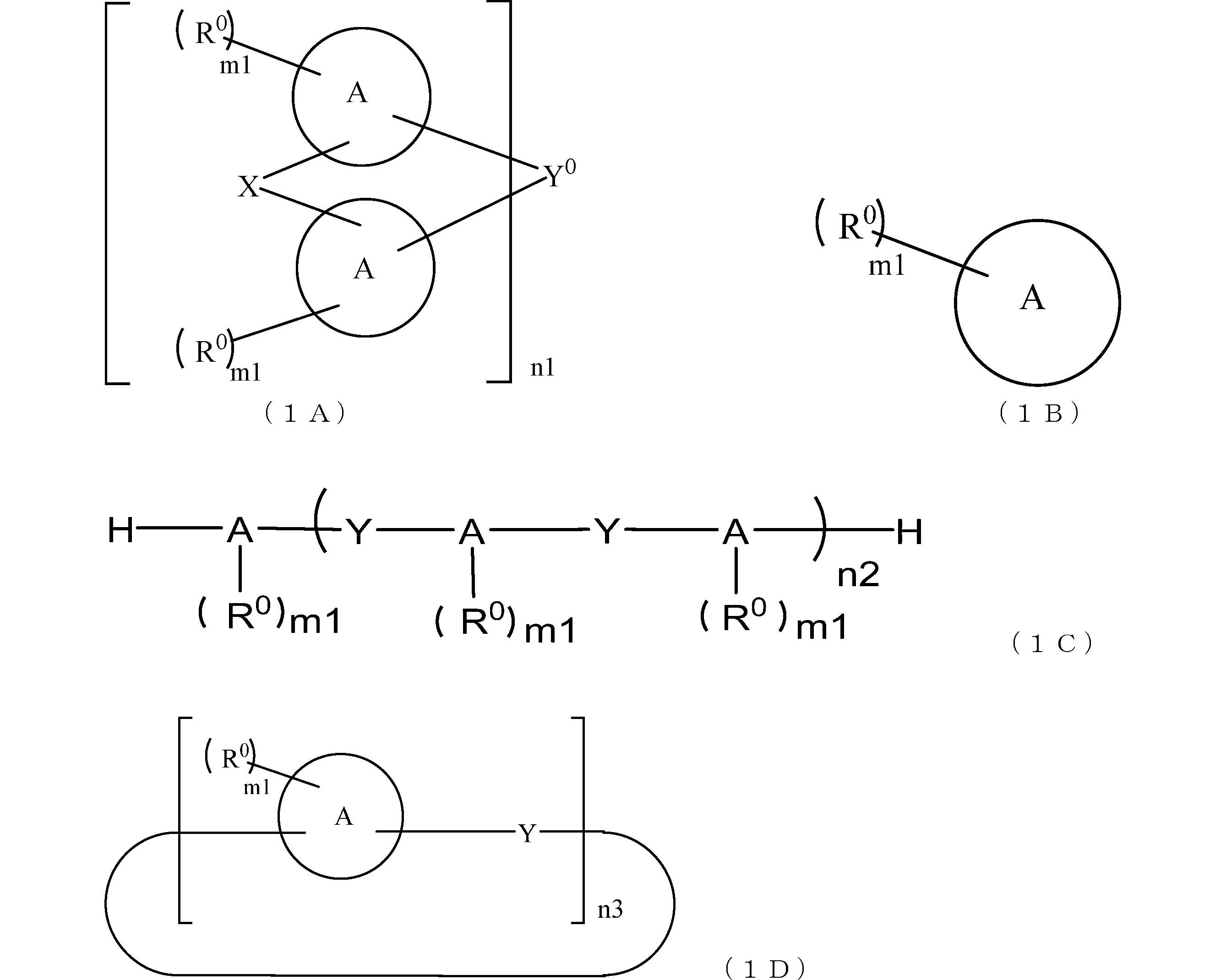
(式(1A)中、Xは各々独立して酸素原子、硫黄原子、単結合又は無架橋であることを示し、Y0は炭素数1~60の2n価の基又は単結合であり、ここで、Xが無架橋であるとき、Y0は前記2n1価の基であり、Aは各々独立してベンゼン、ビフェニル、ターフェニル、ジフェニルメチレン又は縮合環であり、R0は各々独立して、水素原子、置換基を有していてもよい炭素数1~40のアルキル基、置換基を有していてもよい炭素数6~40のアリール基、置換基を有していてもよい炭素数2~40のアルケニル基、炭素数2~40のアルキニル基、置換基を有していてもよい炭素数1~40のアルコキシ基、ハロゲン原子、チオール基、アミノ基、ニトロ基、カルボキシル基又は水酸基でありここで、R0の少なくとも1つは水酸基、置換基を有していてもよい炭素数1~40のアルコキシ基又は置換基を有していてもよい炭素数0~40のアミノ基であり、m1は各々独立して1以上の整数であり、n1は1~4の整数である。
式(1B)中、A、R0及びm1は、前記式(1A)において説明したものと同義であり、R0の少なくとも1つは水酸基、置換基を有していてもよい炭素数1~40のアルコキシ基又は置換基を有していてもよい炭素数0~40のアミノ基である。
式(1C)中、n2は1~500の整数であり、Yは、炭素数1~60の2価の基又は単結合である。A、R0及びm1は、前記式(1A)において説明したものと同義であり、R0の少なくとも1つは水酸基、置換基を有していてもよい炭素数1~40のアルコキシ基又は置換基を有していてもよい炭素数0~40のアミノ基である。
式(1D)中、n3は1~10の整数であり、Yは、前記式(1C)において説明したものと同義であり、A、R0及びm1は、前記式(1A)において説明したものと同義であり、R0の少なくとも1つは水酸基、置換基を有していてもよい炭素数1~40のアルコキシ基又は置換基を有していてもよい炭素数0~40のアミノ基である。)
<5> 下記式(1A)で示される化合物が、下記式(1A-1)で示される化合物である前記<4>に記載の重合体。
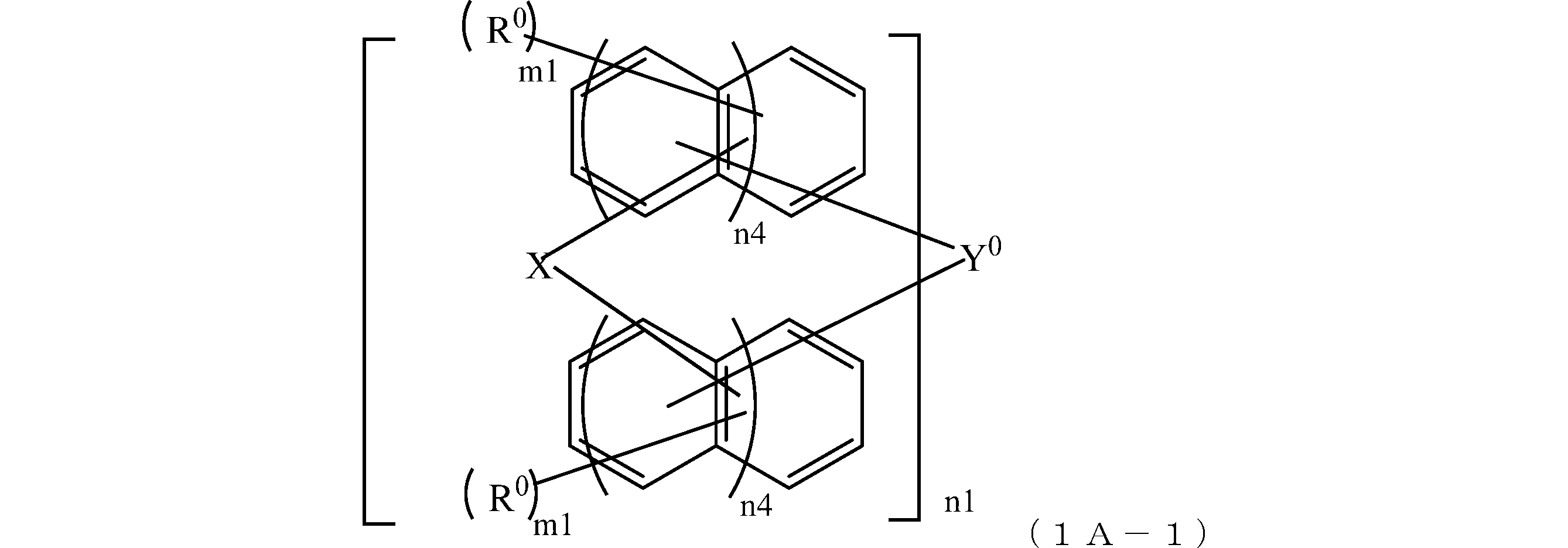
(式(1A-1)中、n4は、各々独立して0~3の整数であり、X、Y0、R0、m1及びn1は、前記式(1A)において説明したものと同義である。)
<6> 前記Aが、ベンゼン、ビフェニル、ターフェニル、ジフェニルメチレン、ナフタレン、アントラセン、ナフタセン、ペンタセン、ベンゾピレン、クリセン、ピレン、トリフェニレン、コランニュレン、コロネン、オバレン及びフルオレンである、前記<4>に記載の重合体。
<7> 前記式(1C)で示される化合物が、下記式(1C-1)で示される化合物である前記<4>に記載の重合体。

(式(1C)中、R1は、各々独立して、水素原子、置換基を有していてもよい炭素数1~40のアルキル基、置換基を有していてもよい炭素数6~40のアリール基置換基を有していてもよい炭素数2~40のアルケニル基、炭素数2~40のアルキニル基、置換基を有していてもよい炭素数1~40のアルコキシ基、ハロゲン原子、チオール基、アミノ基、ニトロ基、カルボキシル基又は水酸基であり、A、R0、m1、n2は、前記式(1C)において説明したものと同義であり、R0の少なくとも1つは水酸基、置換基を有していてもよい炭素数1~40のアルコキシ基又は置換基を有していてもよい炭素数0~40のアミノ基である。)
<8> 前記式(1D)で示される化合物が、下記式(1D-1)で示される化合物である前記<4>に記載の重合体。
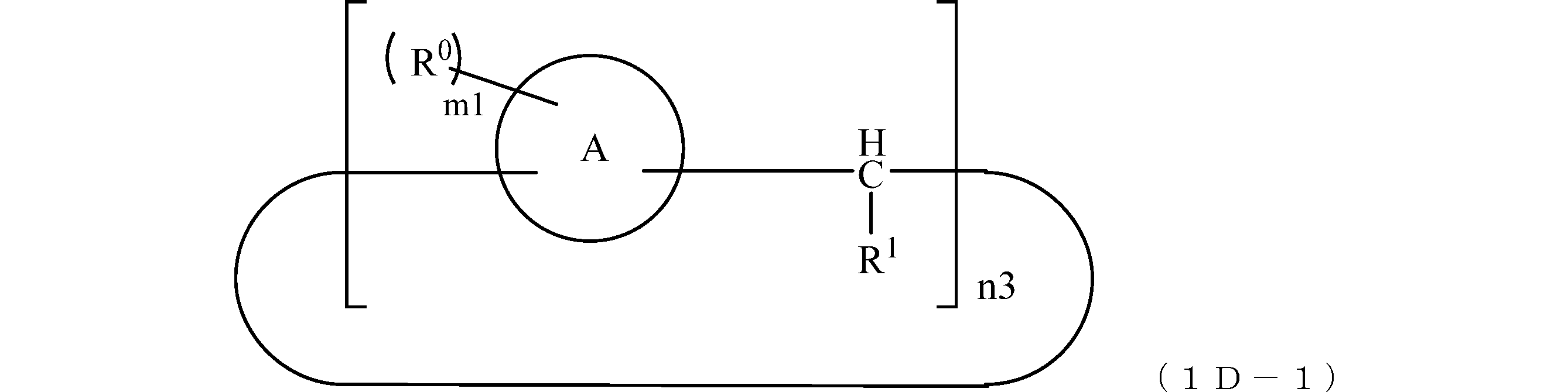
(式(1D-1)中、R1は、各々独立して、水素原子、置換基を有していてもよい炭素数1~40のアルキル基、置換基を有していてもよい炭素数6~40のアリール基、置換基を有していてもよい炭素数2~40のアルケニル基、炭素数2~40のアルキニル基、置換基を有していてもよい炭素数1~40のアルコキシ基、ハロゲン原子、チオール基、アミノ基、ニトロ基、カルボキシル基又は水酸基であり、A、R0、m1、n3は、前記式(1D)において説明したものと同義であり、R0の少なくとも1つは水酸基、置換基を有していてもよい炭素数1~40のアルコキシ基又は置換基を有していてもよい炭素数0~40のアミノ基である。)
<9> 前記ヘテロ原子含有芳香族モノマーが、複素環式芳香族化合物を含む、前記<4に記載の重合体。
<10> 前記<1>~前記<9>のいずれかに記載の重合体を含む、組成物。
<11> 溶媒をさらに含む、前記<10>に記載の組成物。
<12> 前記溶媒が、プロピレングリコールモノメチルエーテル、プロピレングリコールモノメチルエーテルアセテート、シクロヘキサノン、シクロペンタノン、乳酸エチル及びヒドロキシイソ酪酸メチルで構成される群より選択される少なくとも1種を含む、前記<11>に記載の組成物。
<13> 不純物金属の含有量が金属種毎に500ppb未満である、前記<11>又は前記<12>に記載の組成物。
<14> 前記不純物金属が、銅、マンガン、鉄、コバルト、ルテニウム、クロム、ニッケル、スズ、鉛、銀及びパラジウムで構成される群より選択される少なくとも1種を含有する、前記<13>に記載の組成物。
<15> 前記不純物金属の含有量が、1ppb以下である、前記<13>又は前記<14>に記載の組成物。
<16> 前記<1>~前記<9>のいずれかに記載の重合体の製造方法であって、1種又は2種以上の前記式(0)で表されるモノマーを酸化剤の存在下で重合させる工程を含む、重合体の製造方法。
<17> 1種又は2種以上の前記式(0)で表されるモノマーと、前記式(0)で表されるモノマーと共重合可能な、他の共重合可能な化合物と、を酸化剤の存在下で重合させる工程を含む、前記<16>に記載の重合体の製造方法。
<18> 前記酸化剤が、銅、マンガン、鉄、コバルト、ルテニウム、クロム、ニッケル、スズ、鉛、銀及びパラジウムで構成される群より選択される少なくとも1種を含有する金属塩類又は金属錯体である、前記<16>又は前記<17>に記載の重合体の製造方法。
<19> 前記<1>~前記<9>のいずれかに記載の重合体を含む、膜形成用組成物。
<20> 前記<19>に記載の膜形成用組成物を含む、レジスト組成物。
<21> 溶媒、酸発生剤、塩基発生剤及び酸拡散制御剤で構成される群より選択される少なくとも1種をさらに含有する、前記<20>に記載のレジスト組成物。
<22> 前記<20>又は前記<21>に記載のレジスト組成物を用いて、基板上にレジスト膜を形成する工程と、
形成された前記レジスト膜の少なくとも一部を露光する工程と、
露光した前記レジスト膜を現像してレジストパターンを形成する工程と、
を含む、レジストパターン形成方法。
<23> 前記<19>に記載の膜形成用組成物と、ジアゾナフトキノン光活性化合物と、溶媒と、を含有する感放射線性組成物であって、
前記溶媒の含有量が、前記感放射線性組成物の総量100質量部に対して20~99質量部であり、
前記溶媒以外の固形分の含有量が、前記感放射線性組成物の総量100質量部に対して1~80質量部である、感放射線性組成物。
<24> 前記<23>に記載の感放射線性組成物を用いて、基板上にレジスト膜を形成する工程と、
形成された前記レジスト膜の少なくとも一部を露光する工程と、
露光した前記レジスト膜を現像して、レジストパターンを形成する工程を含む、レジストパターン形成方法。
<25> 前記<19>に記載の膜形成用組成物を含む、リソグラフィー用下層膜形成用組成物。
<26> 溶媒、酸発生剤、塩基発生剤及び架橋剤で構成される群から選択される少なくとも1つをさらに含有する、前記<25>に記載のリソグラフィー用下層膜形成用組成物。
<27> 前記<25>又は前記<26>に記載のリソグラフィー用下層膜形成用組成物を用いて、基板上に下層膜を形成する工程を含む、リソグラフィー用下層膜の製造方法。
<28> 前記<25>又は前記<26>に記載のリソグラフィー用下層膜形成用組成物を用いて、基板上に、下層膜を形成する工程と、
前記下層膜上に、少なくとも1層のフォトレジスト層を形成する工程と、
前記フォトレジスト層の所定の領域に放射線を照射し、現像してレジストパターンを形成する工程と、
を有する、レジストパターン形成方法。
<29> 前記<25>又は前記<26>に記載のリソグラフィー用下層膜形成用組成物を用いて、基板上に下層膜を形成する工程と、
前記下層膜上に、珪素原子を含有するレジスト中間層膜材料を用いて中間層膜を形成する工程と、
前記中間層膜上に、少なくとも1層のフォトレジスト層を形成する工程と、
前記フォトレジスト層の所定の領域に放射線を照射し、現像してレジストパターンを形成する工程と、
前記レジストパターンをマスクとして前記中間層膜をエッチングして、中間層膜パターンを形成する工程と、
前記中間層膜パターンをエッチングマスクとして前記下層膜をエッチングして、下層膜パターンを形成する工程と、
前記下層膜パターンをエッチングマスクとして前記基板をエッチングして、前記基板にパターンを形成する工程と、
を有する、回路パターン形成方法。
<30> 前記<19>に記載の膜形成用組成物を含む、光学部材形成用組成物。
<31> 溶媒、酸発生剤、塩基発生剤及び架橋剤で構成される群から選択される少なくとも1つをさらに含有する、前記<30>に記載の光学部材形成用組成物。
<32>
前記<1>~前記<9>のいずれかに記載の重合体を、溶媒に溶解させて溶液(S)を得る工程と、得られた溶液(S)と酸性の水溶液とを接触させて、前記重合体中の不純物を抽出する工程(第一抽出工程)とを含み、前記溶液(S)を得る工程で用いる溶媒が、水と任意に混和しない有機溶媒を含む、精製方法。
本実施形態の重合体は、式(0)で表されるモノマー由来の構成単位を有する重合体であって、前記構成単位同士が、前記式(0)で表されるモノマーの芳香環同士の直接結合によって連結している部位を有する。本実施形態の重合体は、このように構成されていることから、耐熱性、耐エッチング性などの性能において、より優れた性能を有する。

(1)本実施形態の重合体は、有機溶媒(特に安全溶媒)に対する優れた溶解性を有する。このため、例えば、本実施形態の重合体をリソグラフィー用膜形成材料として用いると、スピンコート法やスクリーン印刷等の湿式プロセスによりリソグラフィー用膜を形成できる。
(2)本実施形態の重合体では、炭素濃度が比較的高く、酸素濃度が比較的低い。また、分子中に反応活性部位を有するため、硬化剤との反応による硬化物の形成に有用であるが、単独でも高温ベーク時に反応活性部位が架橋反応することにより硬化物を形成できる。これらに起因して、本実施形態の重合体は、高い耐熱性を発現でき、リソグラフィー用膜形成材料として用いると、高温ベーク時の膜の劣化が抑制され、酸素プラズマエッチング等に対するエッチング耐性に優れたリソグラフィー用膜を形成できる。
(3)本実施形態の重合体は、上述のように、高い耐熱性及びエッチング耐性を発現できるとともに、レジスト層やレジスト中間層膜材料との密着性に優れる。このため、リソグラフィー用膜形成材料として用いると、レジストパターン形成性に優れたリソグラフィー用膜を形成できる。なお、ここでいう「レジストパターン形成性」とは、レジストパターン形状に大きな欠陥が見られず、解像性及び感度ともに優れる性質をいう。
(4)本実施形態の重合体は、芳香環密度が高いため高屈折率であり、加熱処理しても着色が抑制され、透明性に優れる。このため、本実施形態の重合体は、各種光学部材形成用組成物としても有用である。
なお、精製により不純物金属含有量を低減させることで、これら本実施形態の組成物の保存安定性をさらに高めることも可能である。
本実施形態の重合体は、上述した特性により、リソグラフィー用膜形成材料として好ましく適用できる。すなわち、当該重合体を含む本実施形態の組成物は、膜形成用組成物、レジスト組成物、感放射線性組成物、リソグラフィー用下層膜形成用組成物、及び光学部材形成用組成物等、種々の用途に使用できる。
さらに、本実施形態の組成物を用いた、レジストパターン形成方法、リソグラフィー用下層膜の製造方法、回路パターン形成方法によれば、パターンの耐熱性及びエッチング耐性に加えて、レジストパターンの電子線照射に対する反応性;下層膜の埋め込み性;解像性、感度、現像後のレジストパターン形状;屈折率、消衰係数、及び透明性等の光学特性;膜の欠陥数の低減などを優れたレジストパターン形成性を発揮することができる。
本実施形態において、「置換」とは、別段定義がない限り、芳香環を構成する炭素原子に結合した水素原子、及び或る官能基中の水素原子の少なくとも1つが、置換基で置換されることを意味する。
「置換基」としては、別段定義がない限り、例えば、ハロゲン原子、水酸基、カルボキシル基、シアノ基、ニトロ基、チオール基、複素環基、炭素数1~30のアルキル基、炭素数6~20のアリール基、炭素数1~30のアルコキシル基、炭素数2~30のアルケニル基、炭素数2~30のアルキニル基、炭素数1~30のアシル基、炭素数0~30のアミノ基等が挙げられる。
本実施形態において、「アルキル基」は、別段定義がない限り、直鎖状脂肪族炭化水素基、分岐状脂肪族炭化水素基、及び環状脂肪族炭化水素基のいずれの態様でも構わない。
式(0)中、Rとしては、各々独立して、i)水酸基、置換基を有していてもよい炭素数1~40のアルコキシ基、置換基を有していてもよい炭素数0~40のアミノ基、置換基を有していてもよい炭素数1~40のアルキル基、又は、置換基を有していてもよい炭素数6~40のアリール基であり、Rの少なくとも1つは水酸基、置換基を有していてもよい炭素数1~40のアルコキシ基又は置換基を有していてもよい炭素数0~40のアミノ基であることが好ましく、ii)水酸基、置換基を有していてもよい炭素数1~40のアルコキシ基、置換基を有していてもよい炭素数0~40のアミノ基、又は、炭素数1~6のアルキル基、又は、水酸基、炭素数1~40のアルコキシ基、炭素数0~40のアミノ基若しくは炭素数1~6のアルキル基を有していてもよい炭素数6~12のアリ―ル基であり、Rの少なくとも1つは水酸基、置換基を有していてもよい炭素数1~40のアルコキシ基又は置換基を有していてもよい炭素数0~40のアミノ基であることがさらに好ましく、iii)水酸基、置換基を有していてもよい炭素数1~40のアルコキシ基、置換基を有していてもよい炭素数0~40のアミノ基、メチル基、又は、水酸基、メチル基若しくはアミノ基を有していてもよいフェニル基であり、Rの少なくとも1つは、水酸基、又は置換基を有していてもよい炭素数0~40のアミノ基であることが特に好ましい。
また、式(0)中、mは1~5の整数であり、1~3が好ましく、1~2が好ましい。
炭素数6~40のアリール基としては、以下に限定されないが、例えば、フェニル基、ナフタレン基、ビフェニル基、アントラシル基、ピレニル基、ペリレン基等が挙げられる。
炭素数2~40のアルケニル基としては、以下に限定されないが、例えば、エチニル基、プロペニル基、ブチニル基、ペンチニル基等が挙げられる。
炭素数2~40のアルキニル基としては、以下に限定されないが、例えば、等が挙げられる。アセチレン基、エチニル基が挙げられる。
炭素数1~40のアルコキシ基としては、以下に限定されないが、例えば、メトキシ基、エトキシ基、プロポキシ基、ブトキシ基、ペントキシ等が挙げられる。
炭素数0~40のアミノ基としては、以下に限定されないが、例えば、アミノ基、メチルアミノ基、ジメチルアミノ基、エチルアミノ基、ジエチルアミノ基、ジフェニルアミノ等が挙げられる。

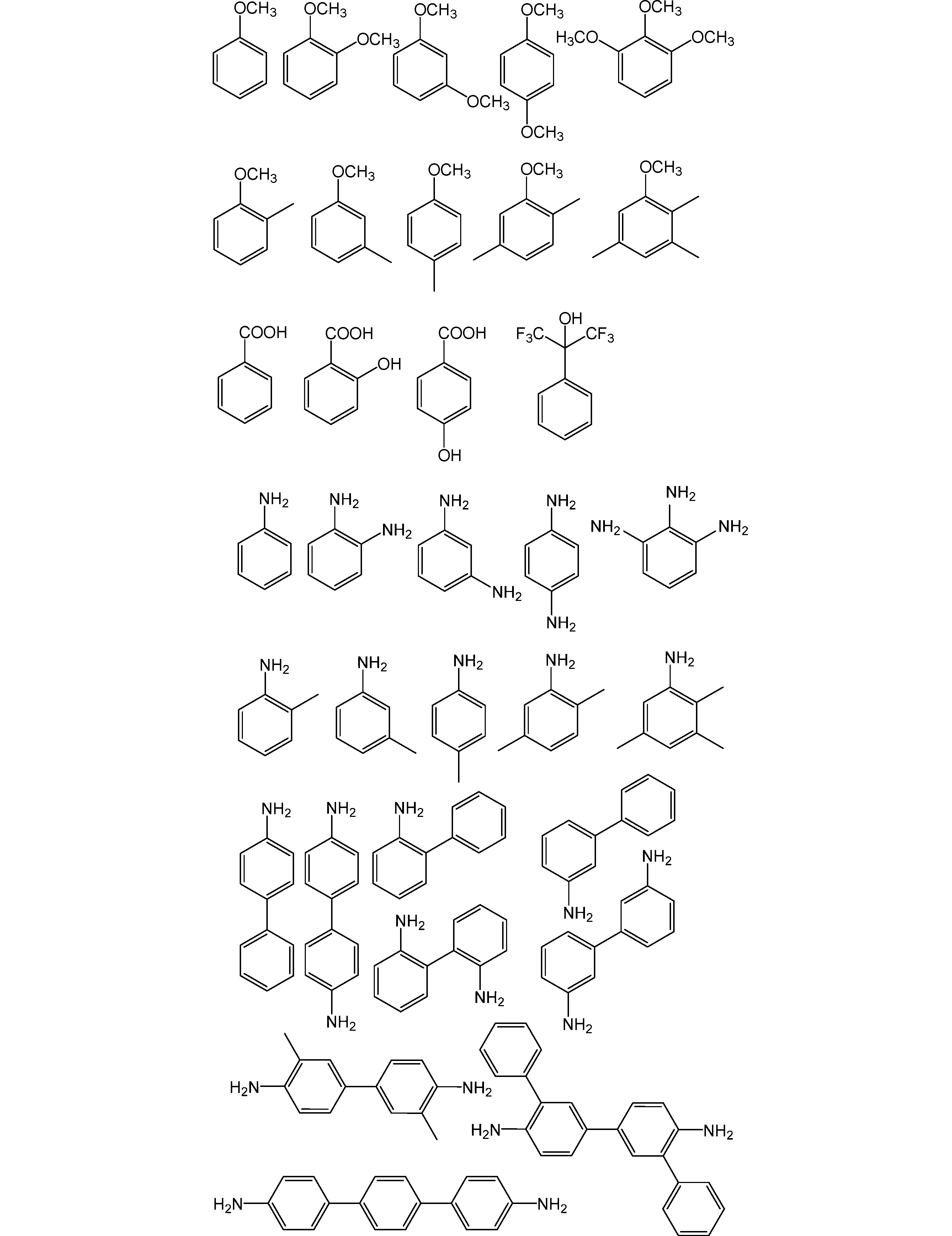

また塗布性の観点からは、水酸基又は置換基を有していてもよい炭素数1~40のアルコキシ基が好ましい。酸素ガスを併用する際のエッチング耐性の観点からは、アミノ基又は置換基を有していてもよい炭素数1~40のアミノ基が好ましい。

式(1A)中、Xは各々独立して酸素原子、硫黄原子、単結合又は無架橋であることを示し、Y0は炭素数1~60の2n価の基又は単結合であり、ここで、Xが無架橋であるとき、Y0は前記2n価の基であり、Aは各々独立してベンゼン、ビフェニル、ターフェニル、ジフェニルメチレン又は縮合環であり、R0は各々独立して、水素原子、置換基を有していてもよい炭素数1~40のアルキル基、置換基を有していてもよい炭素数6~40のアリール基、置換基を有していてもよい炭素数2~40のアルケニル基、炭素数2~40のアルキニル基、置換基を有していてもよい炭素数1~40のアルコキシ基、ハロゲン原子、チオール基、アミノ基、ニトロ基、カルボキシル基又は水酸基であり、ここで、R0の少なくとも1つは水酸基、置換基を有していてもよい炭素数1~40のアルコキシ基又は置換基を有していてもよい炭素数0~40のアミノ基であり、m1は各々独立して1以上の整数であり、n1は1~4の整数である。なお、m1の上限値は特に限定はなく、Aが示す環構造におけるR0の結合可能部位の数に応じて変動する。このため、m1の範囲は特に限定されるものではないが、例えば、m1は各々独立して1~9の整数とすることができる。
2n+1価の炭化水素基としては、以下に限定されないが、例えば、3価のメチン基、エチン基等が挙げられる。
また、前記2n価の炭化水素基は、二重結合、三重結合、ヘテロ原子及び/又は炭素数6~59のアリール基を有していてもよい。なお、Y0はフルオレンやベンゾフルオレン等のフルオレン骨格を有する化合物に由来する基を含んでいてもよい。
2n価の基に含まれ得る置換基であって、脂環式炭化水素基及び炭素数6~60の芳香族基としては、特に限定されないが、例えば、無置換のフェニル基、ナフタレン基、ビフェニル基、アントラシル基、ピレニル基、シクロヘキシル基、シクロドデシル基、ジシクロペンチル基、トリシクロデシル基、アダマンチル基、フェニレン基、ナフタレンジイル基、ビフェニルジイル基、アントラセンジイル基、ピレンジイル基、シクロヘキサンジイル基、シクロドデカンジイル基、ジシクロペンタンジイル基、トリシクロデカンジイル基、アダマンタンジイル基、ベンゼントリイル基、ナフタレントリイル基、ビフェニルトリイル基、アントラセントリイル基、ピレントリイル基、シクロヘキサントリイル基、シクロドデカントリイル基、ジシクロペンタントリイル基、トリシクロデカントリイル基、アダマンタントリイル基、ベンゼンテトライル基、ナフタレンテトライル基、ビフェニルテトライル基、アントラセンテトライル基、ピレンテトライル基、シクロヘキサンテトライル基、シクロドデカンテトライル基、ジシクロペンタンテトライル基、トリシクロデカンテトライル基、アダマンタンテトライル基等が挙げられる。
炭素数6~40のアリール基としては、以下に限定されないが、例えば、フェニル基、ナフタレン基、ビフェニル基、アントラシル基、ピレニル基、ペリレン基等が挙げられる。フェニル基が好ましい。
炭素数2~40のアルケニル基としては、以下に限定されないが、例えば、エチニル基、プロペニル基、ブチニル基、ペンチニル基等が挙げられる。エチニル基が好ましい。
炭素数2~40のアルキニル基としては、以下に限定されないが、例えば、等が挙げられる。アセチレン基、エチニル基、エチニル基が好ましい。
炭素数1~40のアルコキシ基としては、以下に限定されないが、例えば、メトキシ基、エトキシ基、プロポキシ基、ブトキシ基、ペントキシ等が挙げられる。メトキシ基及びエトキシ基が好ましい。
炭素数0~40のアミノ基としては、以下に限定されないが、例えば、アミノ基、メチルアミノ基、ジメチルアミノ基、エチルアミノ基、ジエチルアミノ基、ジフェニルアミノ等が挙げられる。アミノ基、メチルアミノ基及びジメチルアミノ基が好ましい。
式(1B)中、A、R0及びm1は、前記式(1A)において説明したものと同義である。また、式(1B)において、R0の少なくとも1つは水酸基、置換基を有していてもよい炭素数1~40のアルコキシ基又は置換基を有していてもよい炭素数0~40のアミノ基である。なお、式(1B)において、Aは縮合環であることが好ましい。
式(1C)中、Yは炭素数1~60の2n価の基であり、n2は1~500の整数であり、A、R0及びm1は、前記式(1A)において説明したものと同義である。また、式(1C)において、R0の少なくとも1つは水酸基、置換基を有していてもよい炭素数1~40のアルコキシ基又は置換基を有していてもよい炭素数0~40のアミノ基である。
2価の炭化水素基としては、以下に限定されないが、例えば、3価のメチン基、エチン基等が挙げられる。
また、前記2価の炭化水素基は、二重結合、三重結合、ヘテロ原子及び/又は炭素数6~59のアリール基を有していてもよい。なお、Yはフルオレンやベンゾフルオレン等のフルオレン骨格を有する化合物に由来する基を含んでいてもよい。
2価の基に含まれ得る置換基であって、脂環式炭化水素基及び炭素数6~60の芳香族基としては、特に限定されないが、例えば、無置換のフェニル基、ナフタレン基、ビフェニル基、アントラシル基、ピレニル基、シクロヘキシル基、シクロドデシル基、ジシクロペンチル基、トリシクロデシル基、アダマンチル基、フェニレン基、ナフタレンジイル基、ビフェニルジイル基、アントラセンジイル基、ピレンジイル基、シクロヘキサンジイル基、シクロドデカンジイル基、ジシクロペンタンジイル基、トリシクロデカンジイル基、アダマンタンジイル基、ベンゼントリイル基、ナフタレントリイル基、ビフェニルトリイル基、アントラセントリイル基、ピレントリイル基、シクロヘキサントリイル基、シクロドデカントリイル基、ジシクロペンタントリイル基、トリシクロデカントリイル基、アダマンタントリイル基、ベンゼンテトライル基、ナフタレンテトライル基、ビフェニルテトライル基、アントラセンテトライル基、ピレンテトライル基、シクロヘキサンテトライル基、シクロドデカンテトライル基、ジシクロペンタンテトライル基、トリシクロデカンテトライル基、アダマンタンテトライル基等が挙げられる。
式(1D)中、n3は1~10の整数であり、Yは、前記式(1C)において説明したものと同義であり、A、R0及びm1は、前記式(1A)において説明したものと同義である。また、式(1D)において、R0の少なくとも1つは水酸基、置換基を有していてもよい炭素数1~40のアルコキシ基又は置換基を有していてもよい炭素数0~40のアミノ基である。
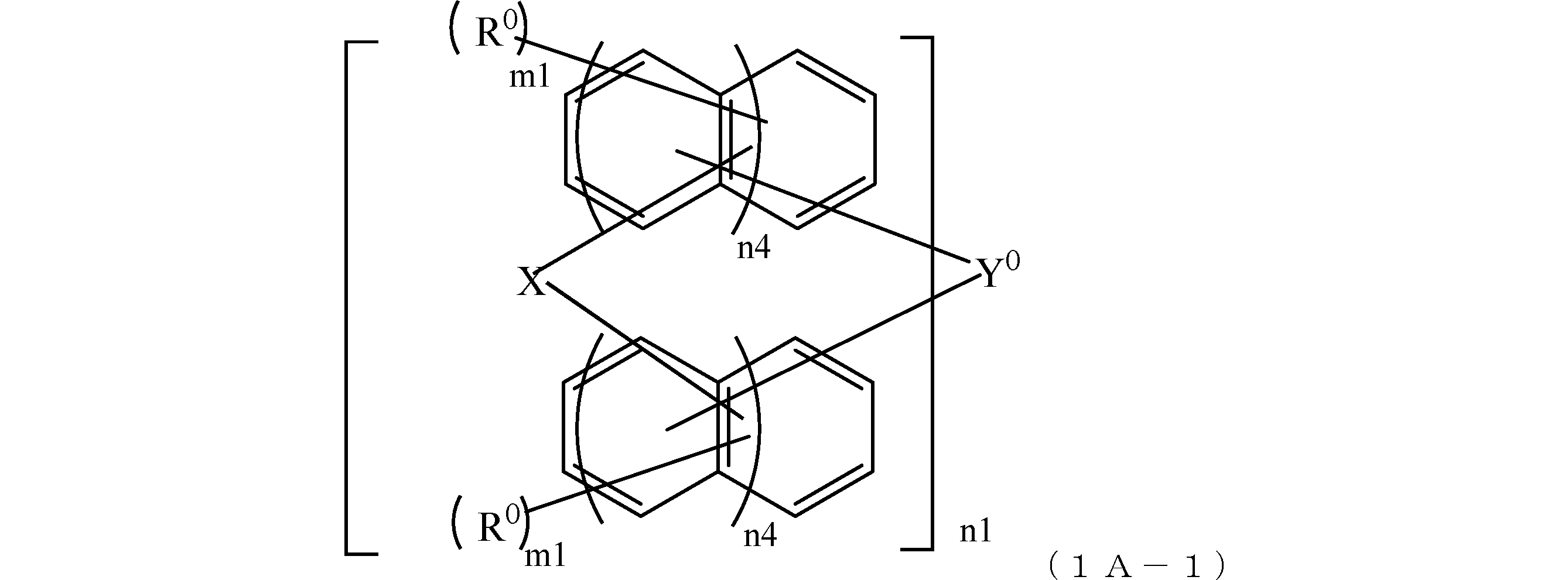
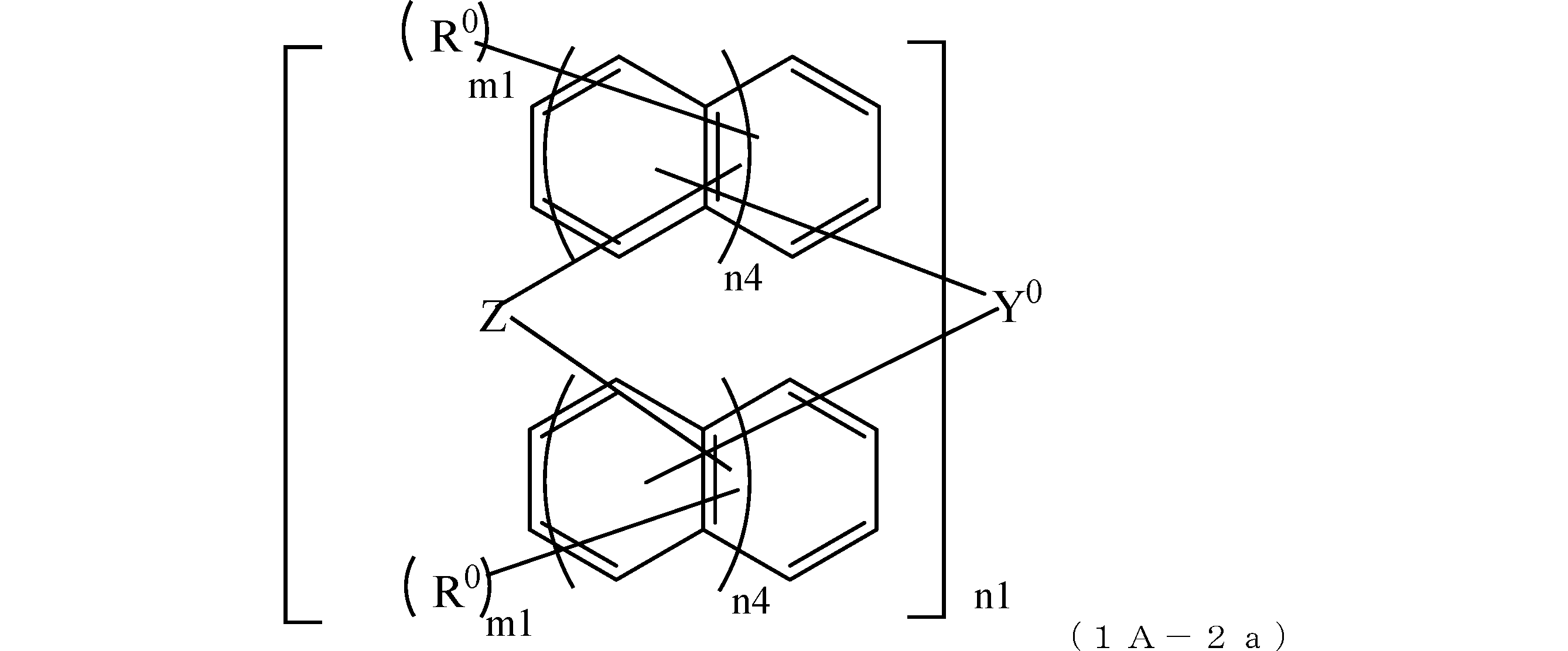

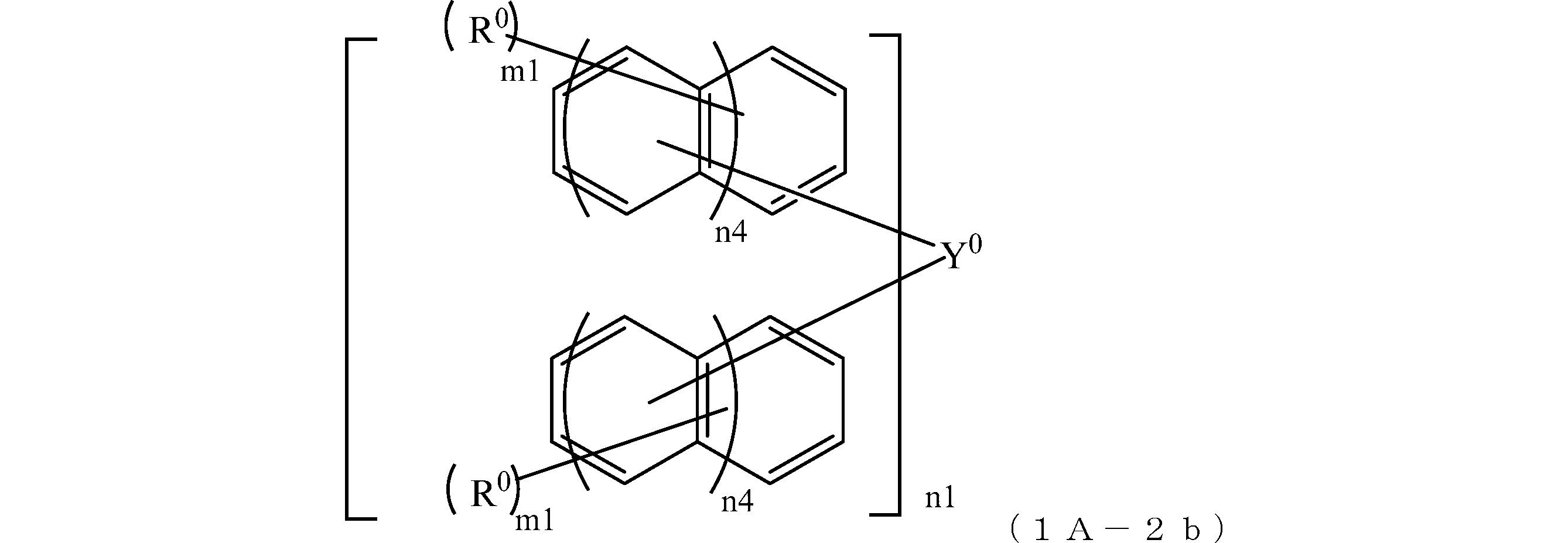
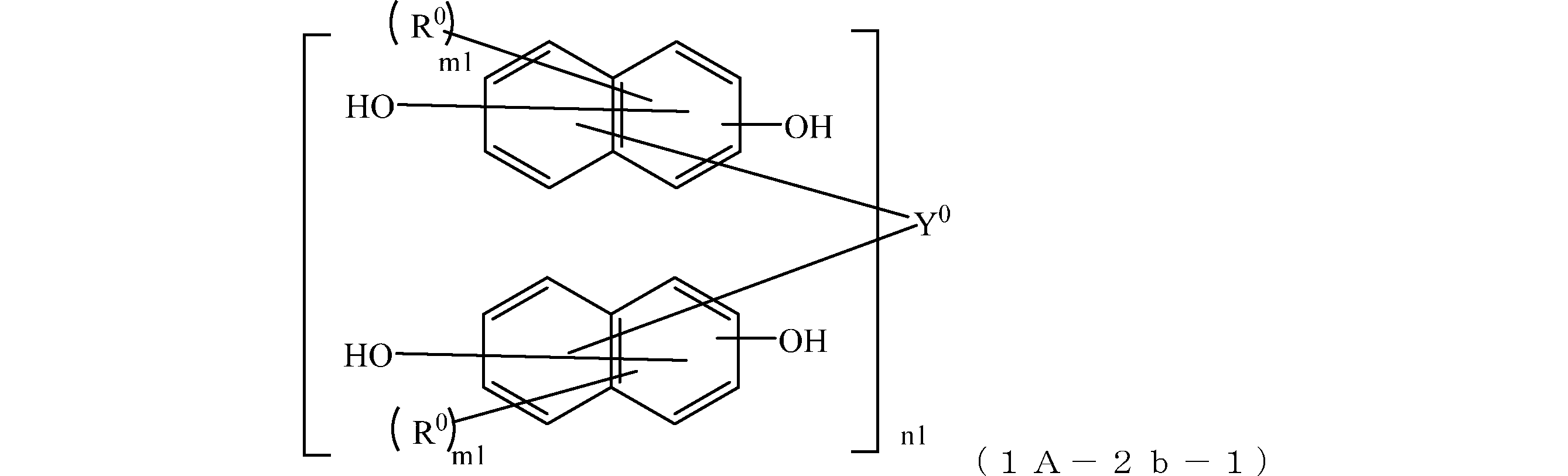
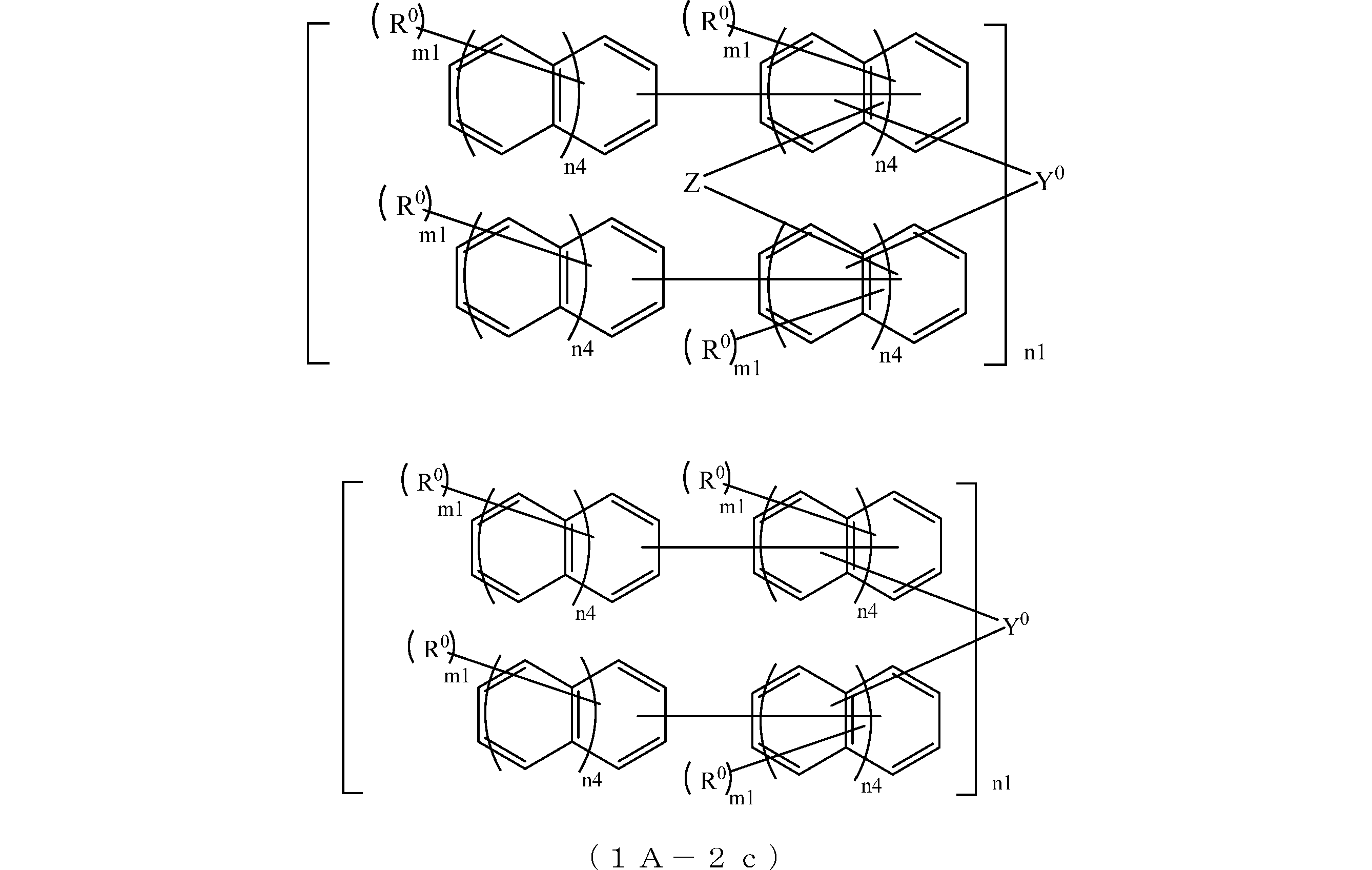
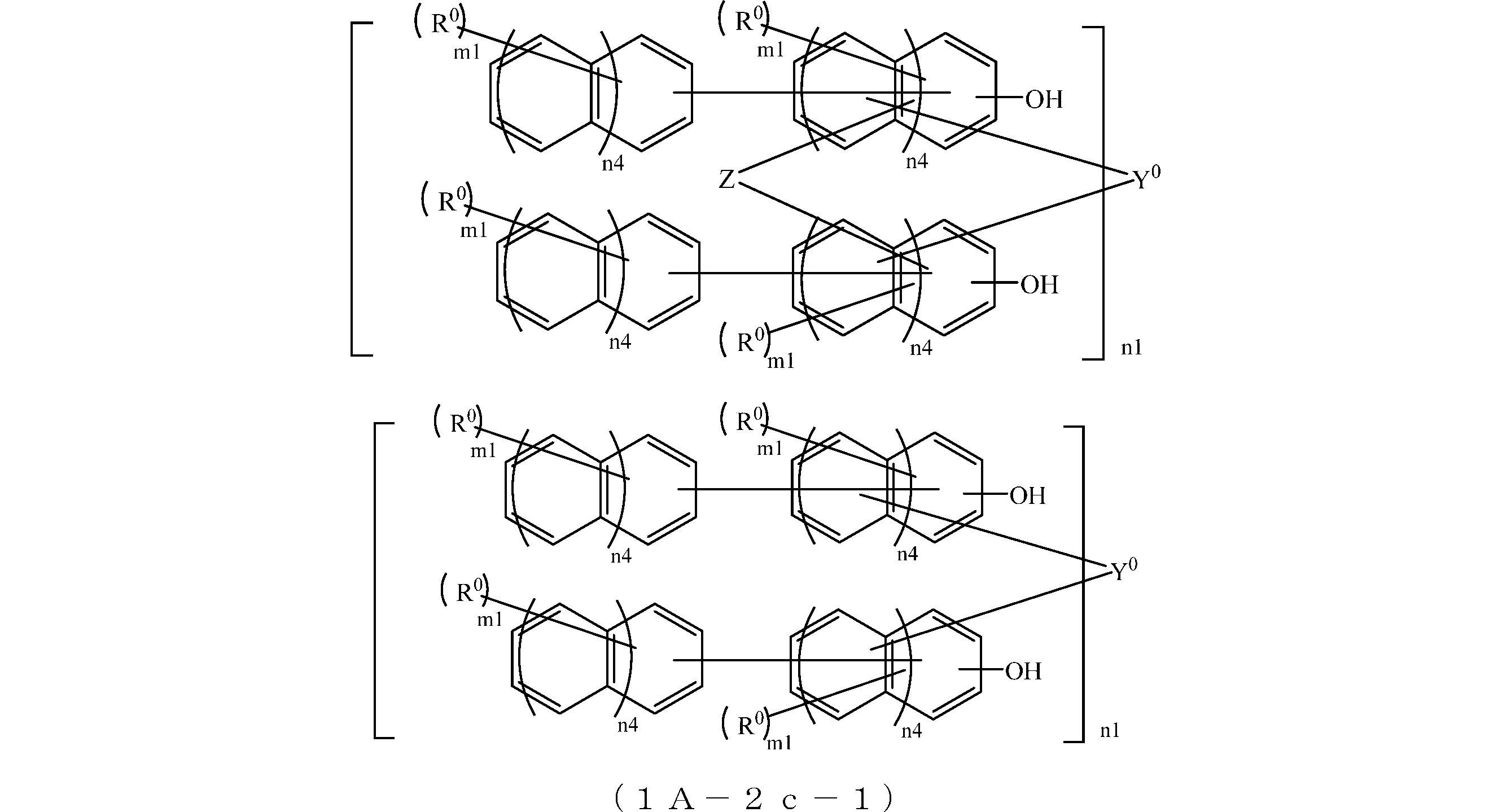
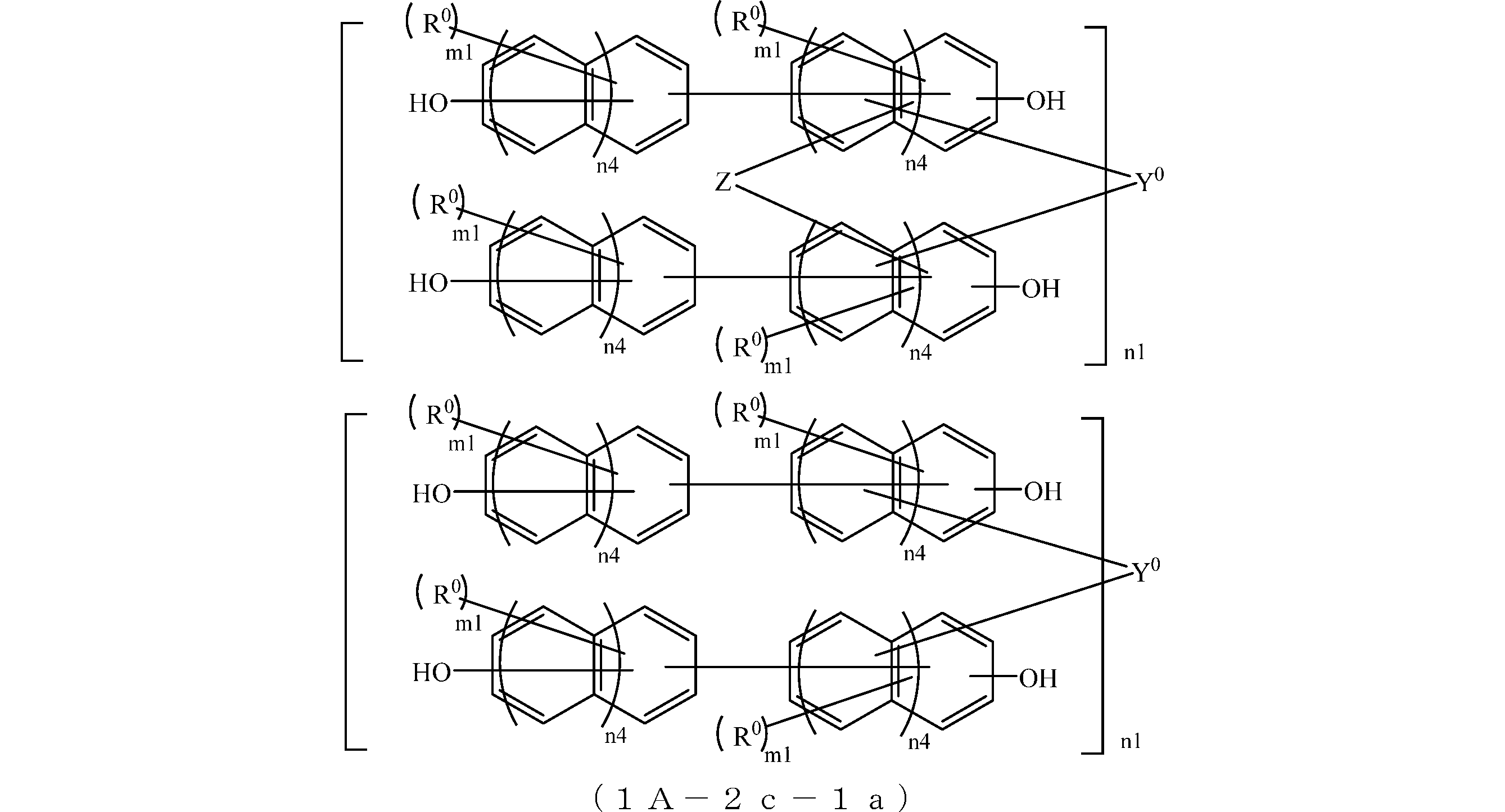
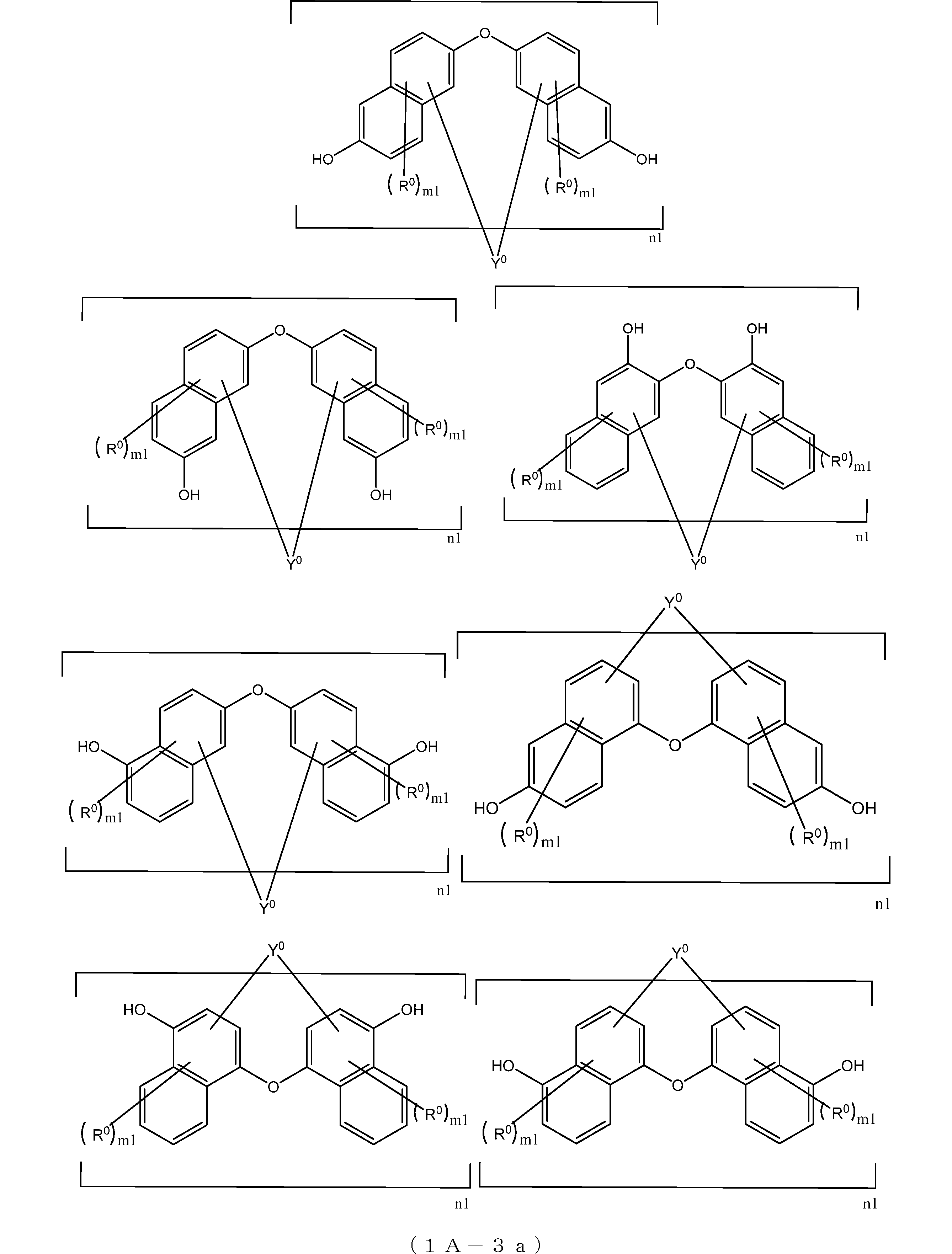
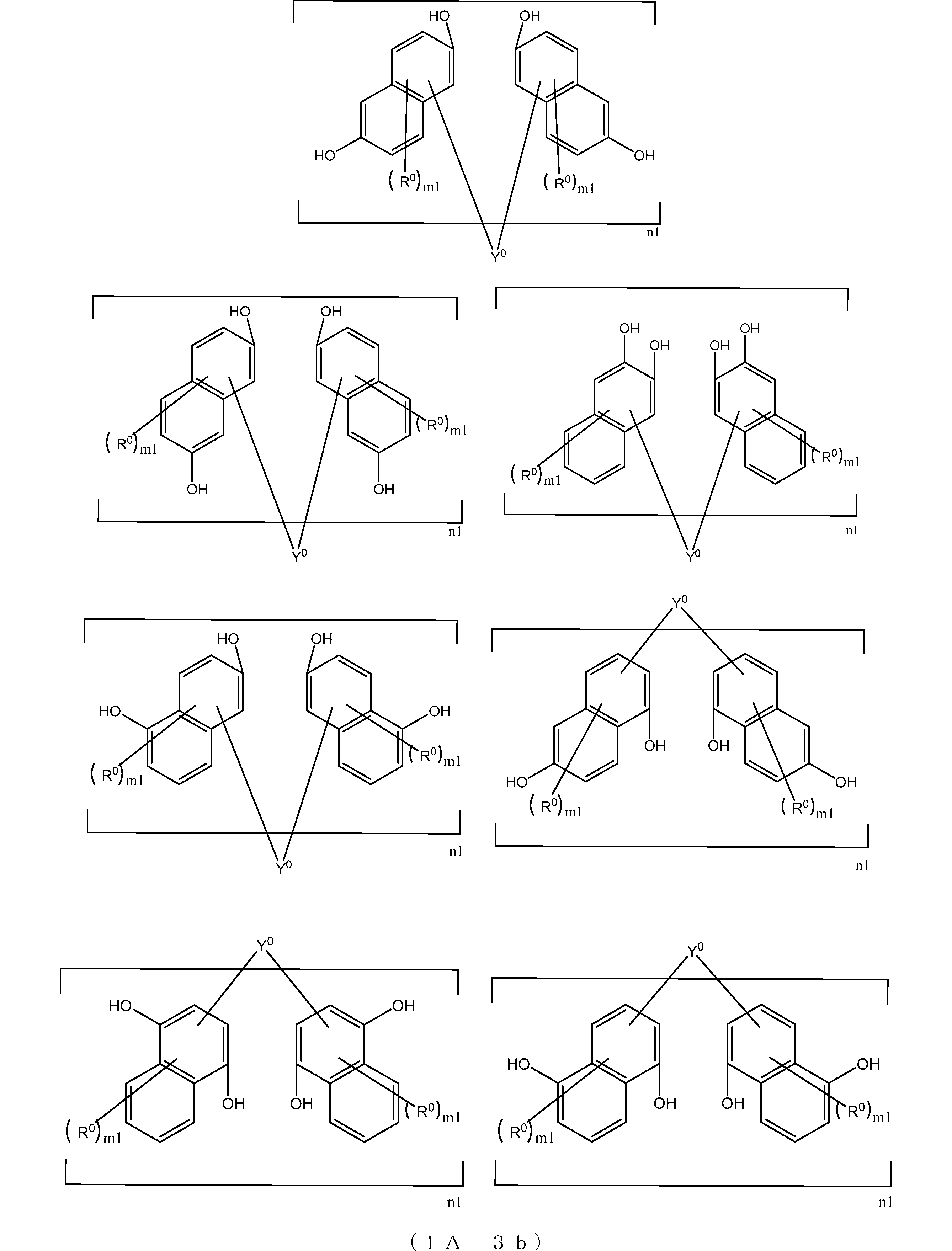


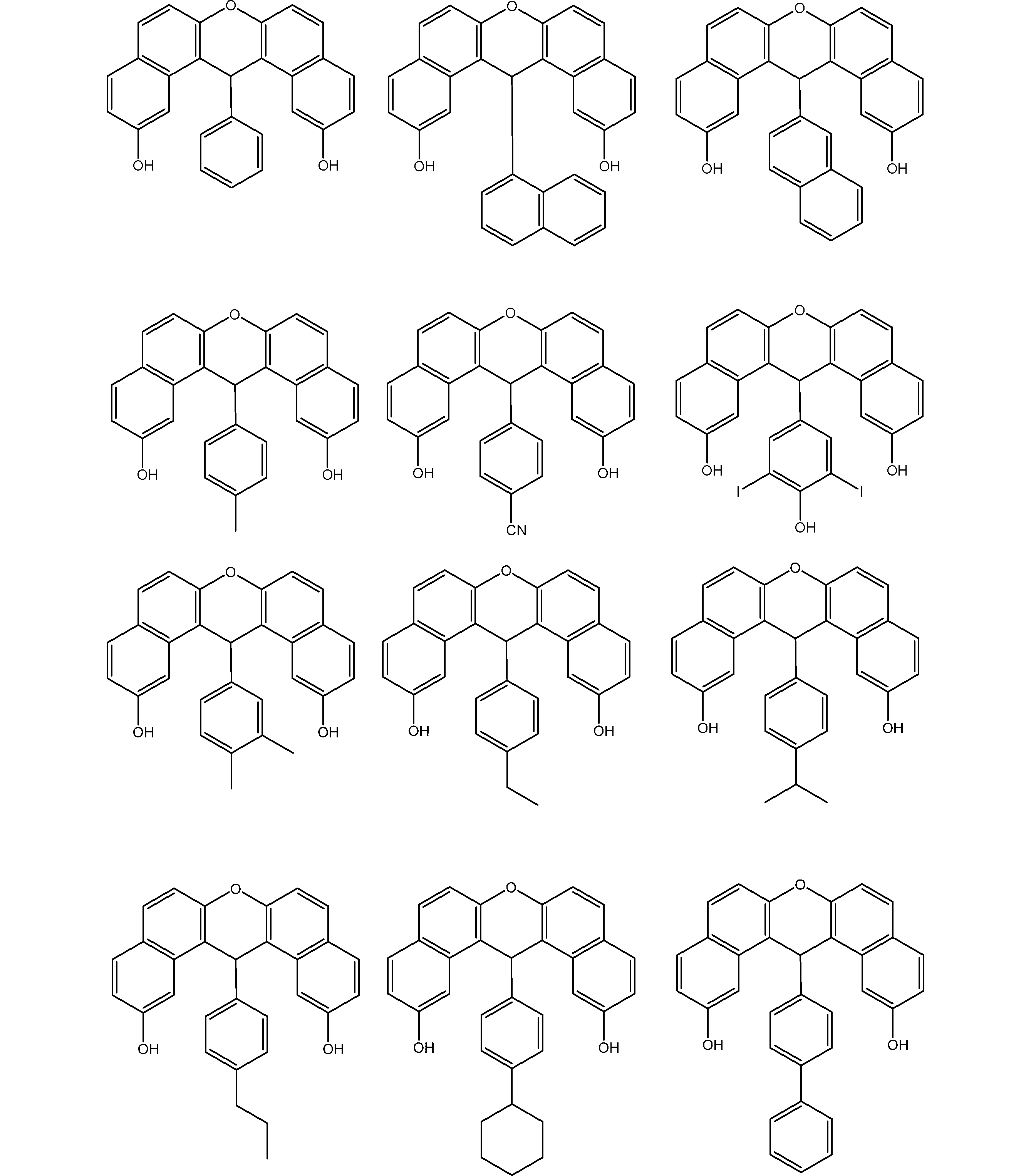

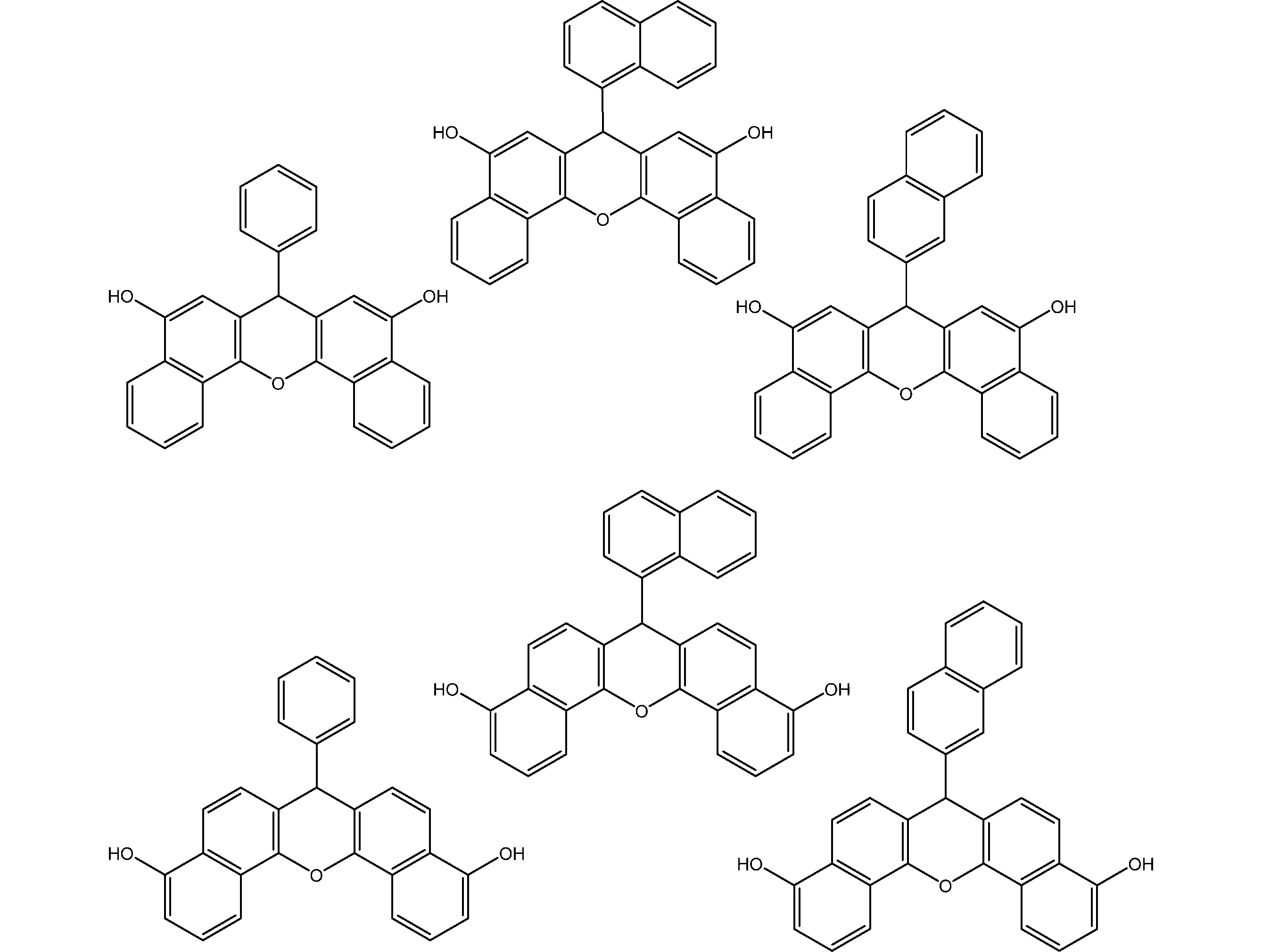

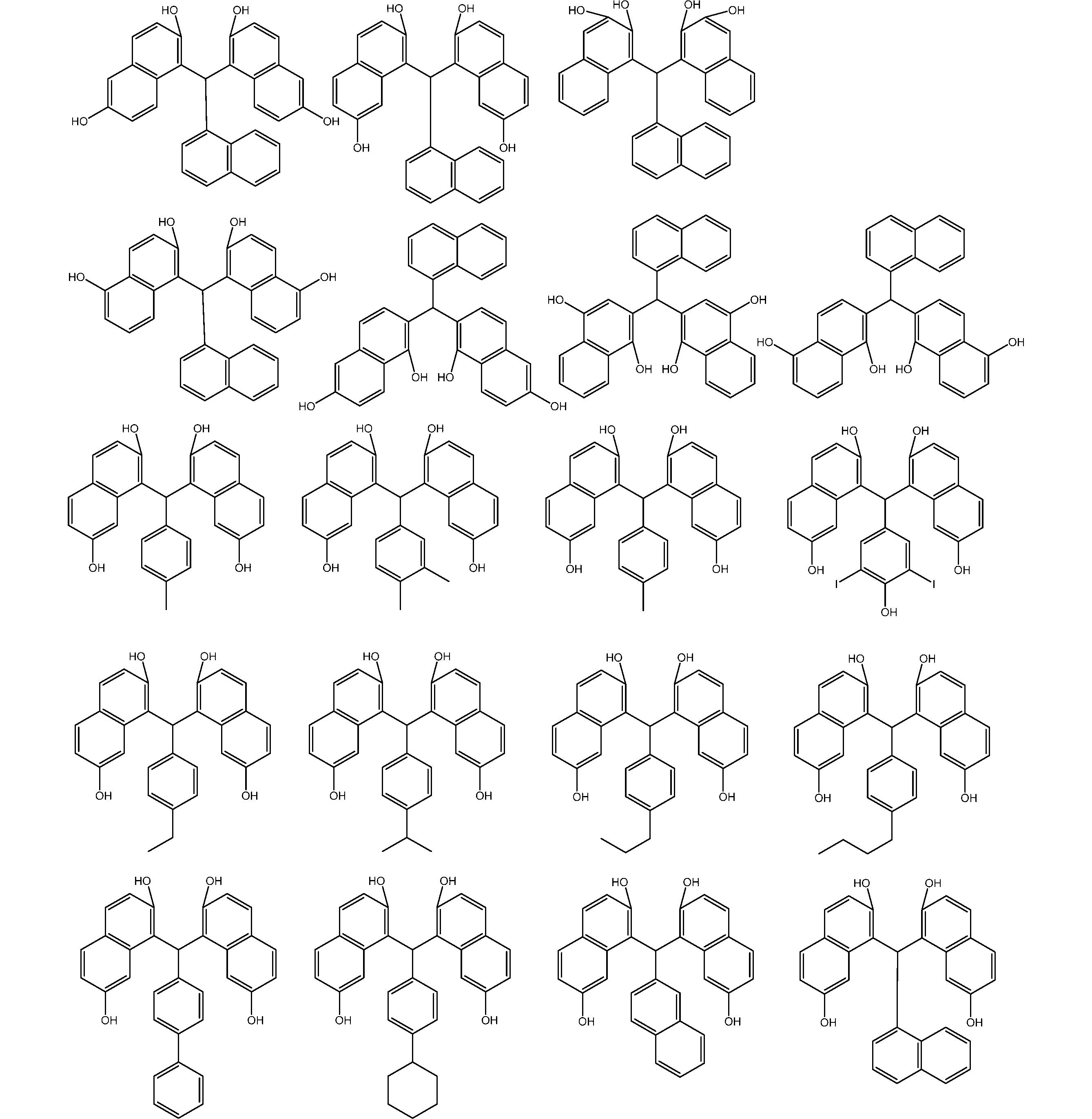
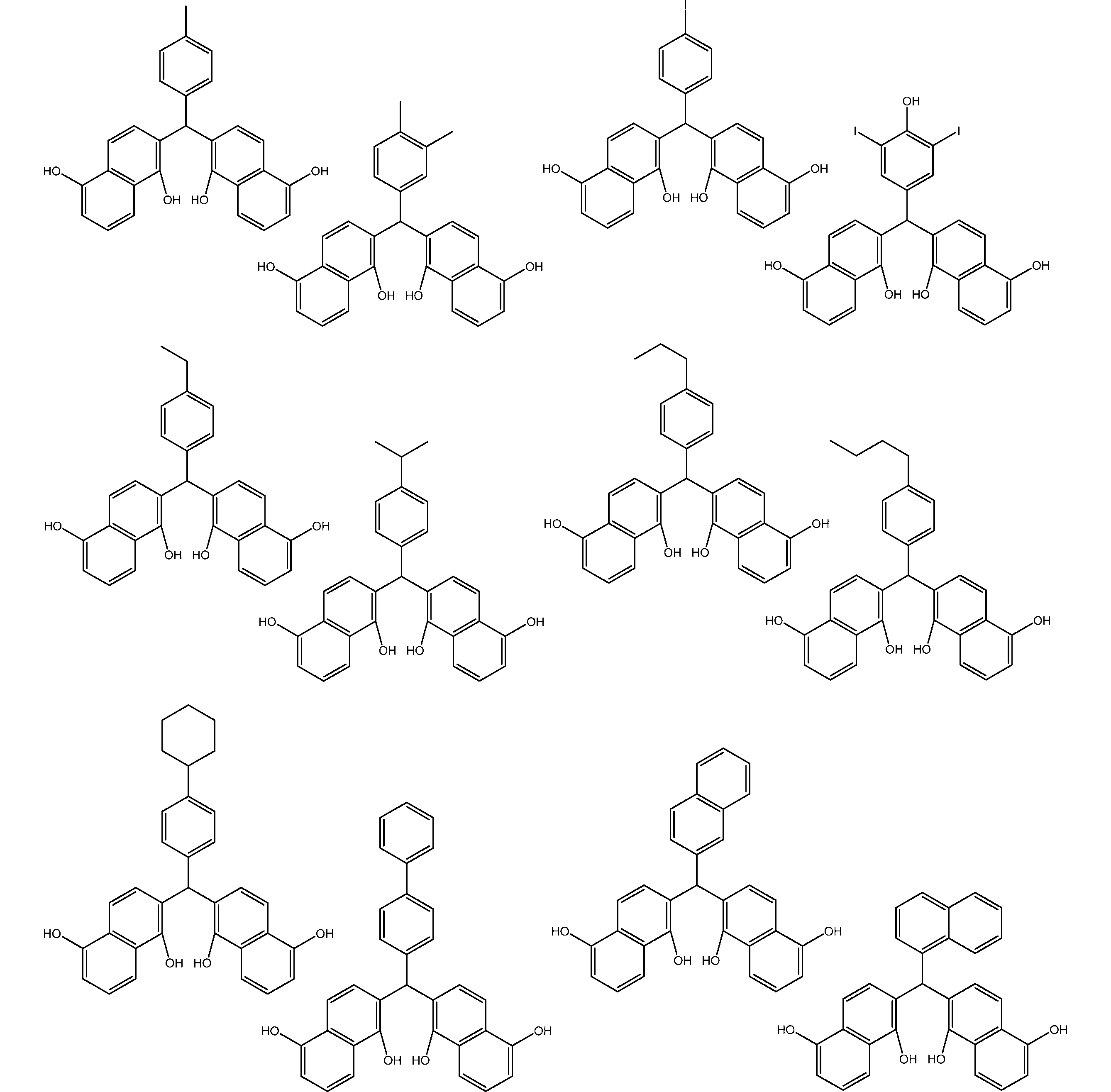

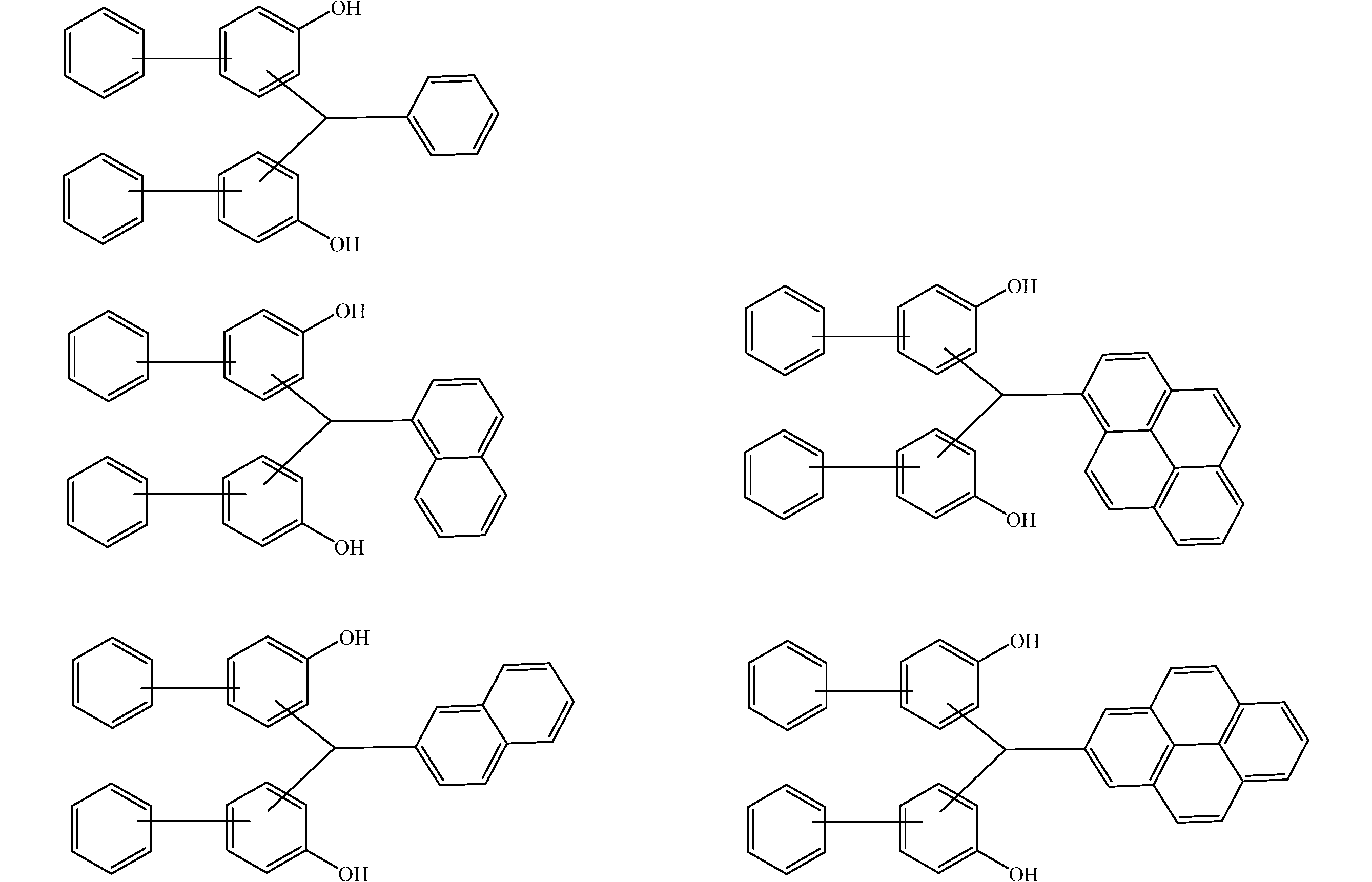
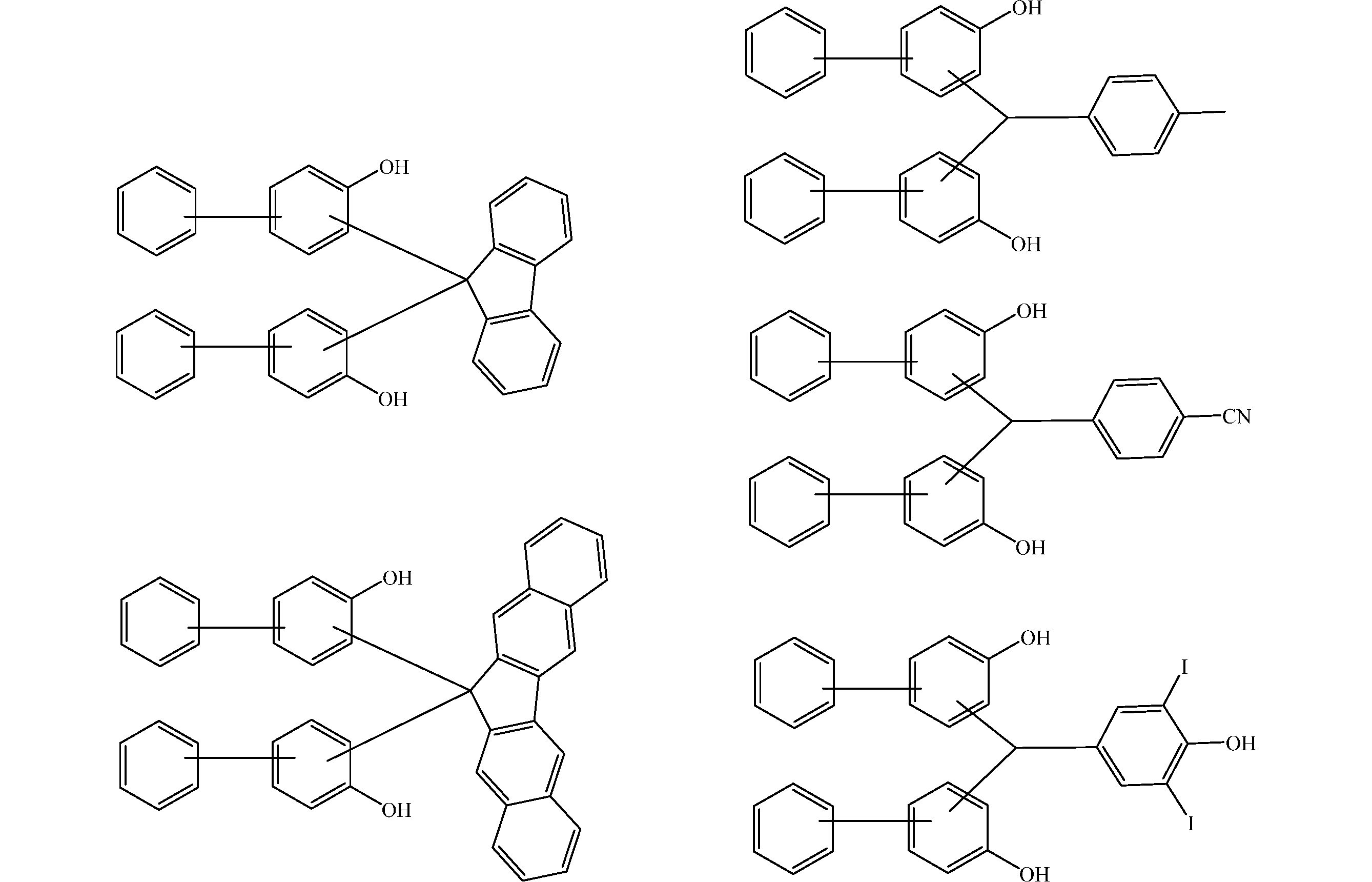
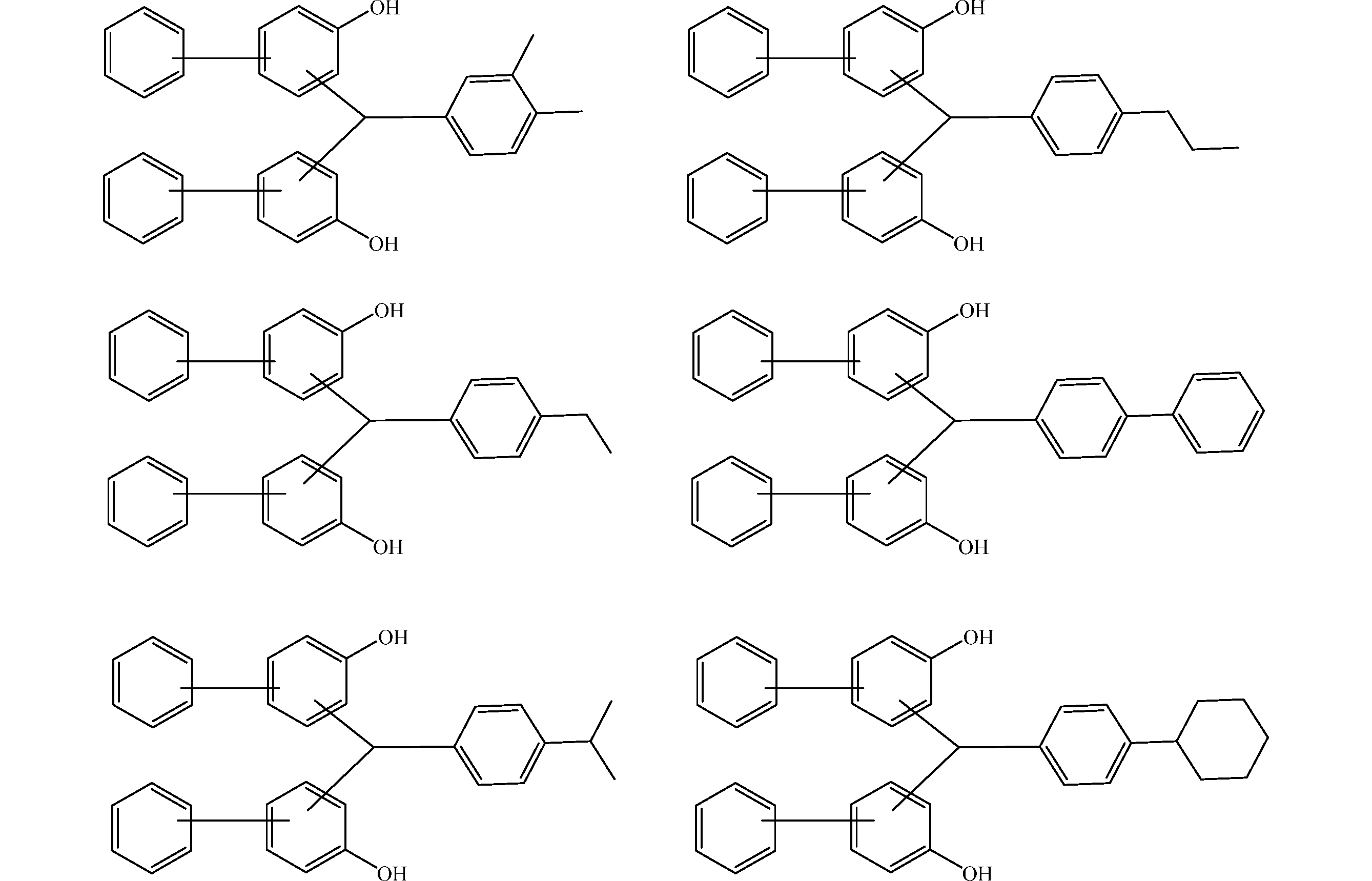

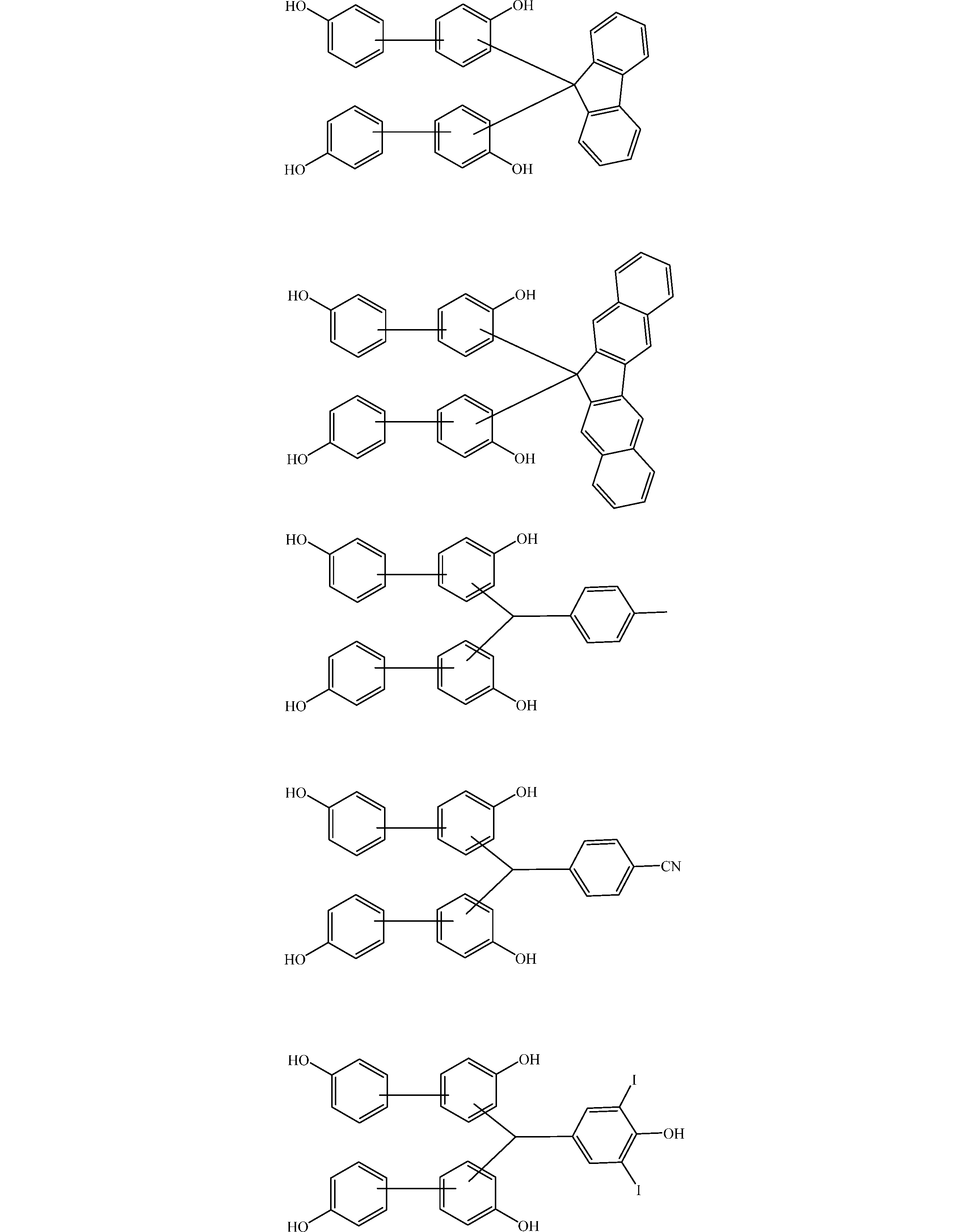
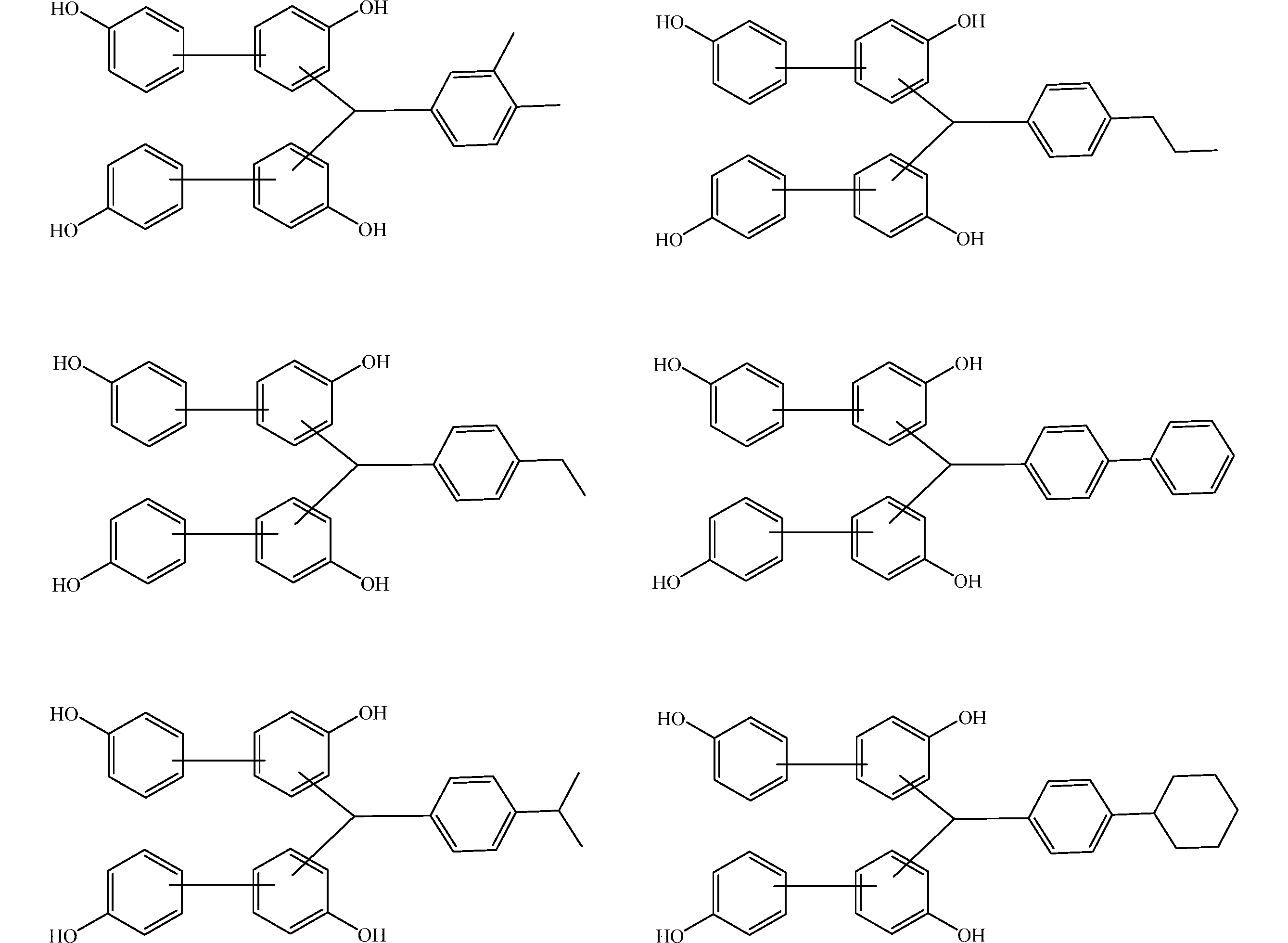

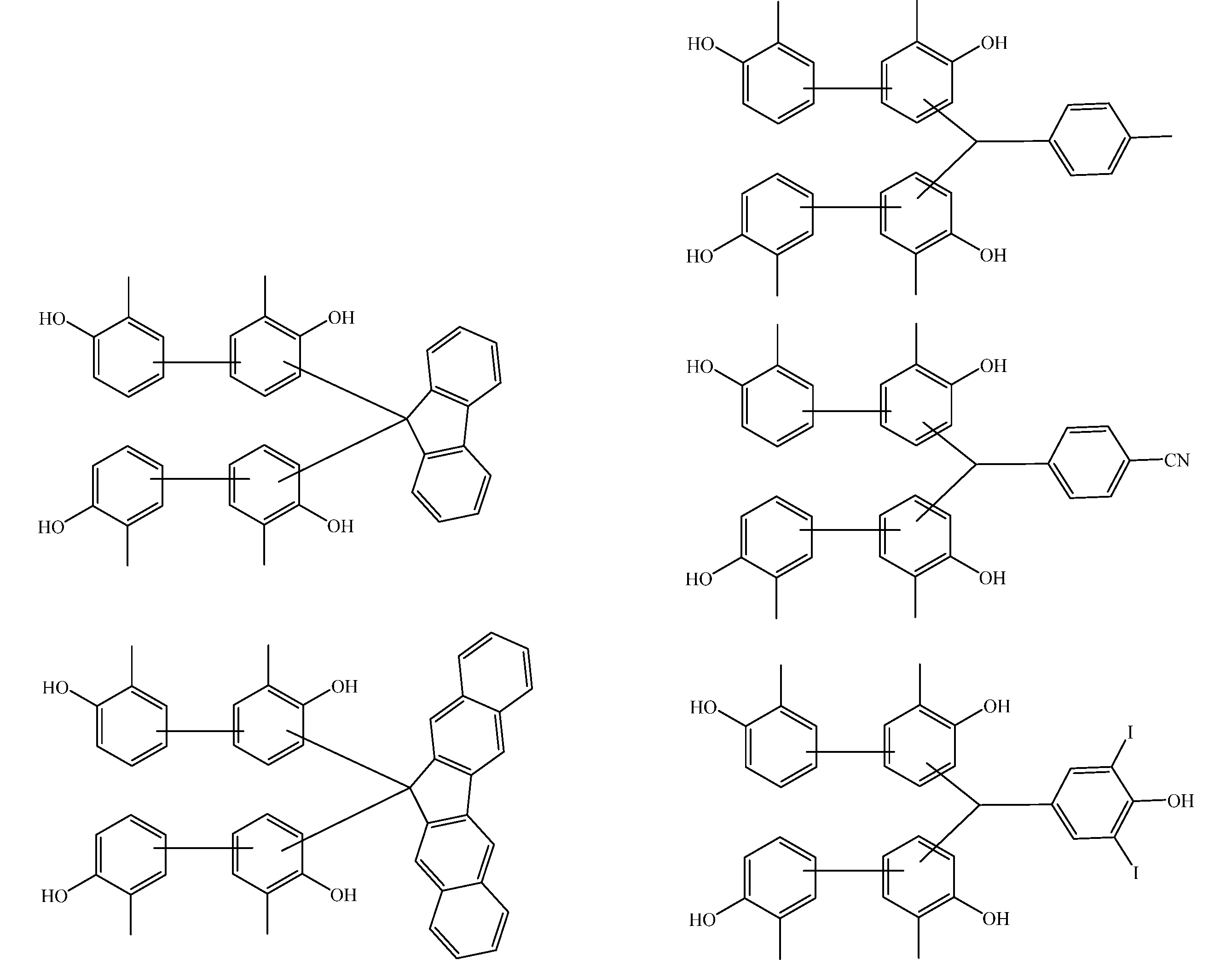


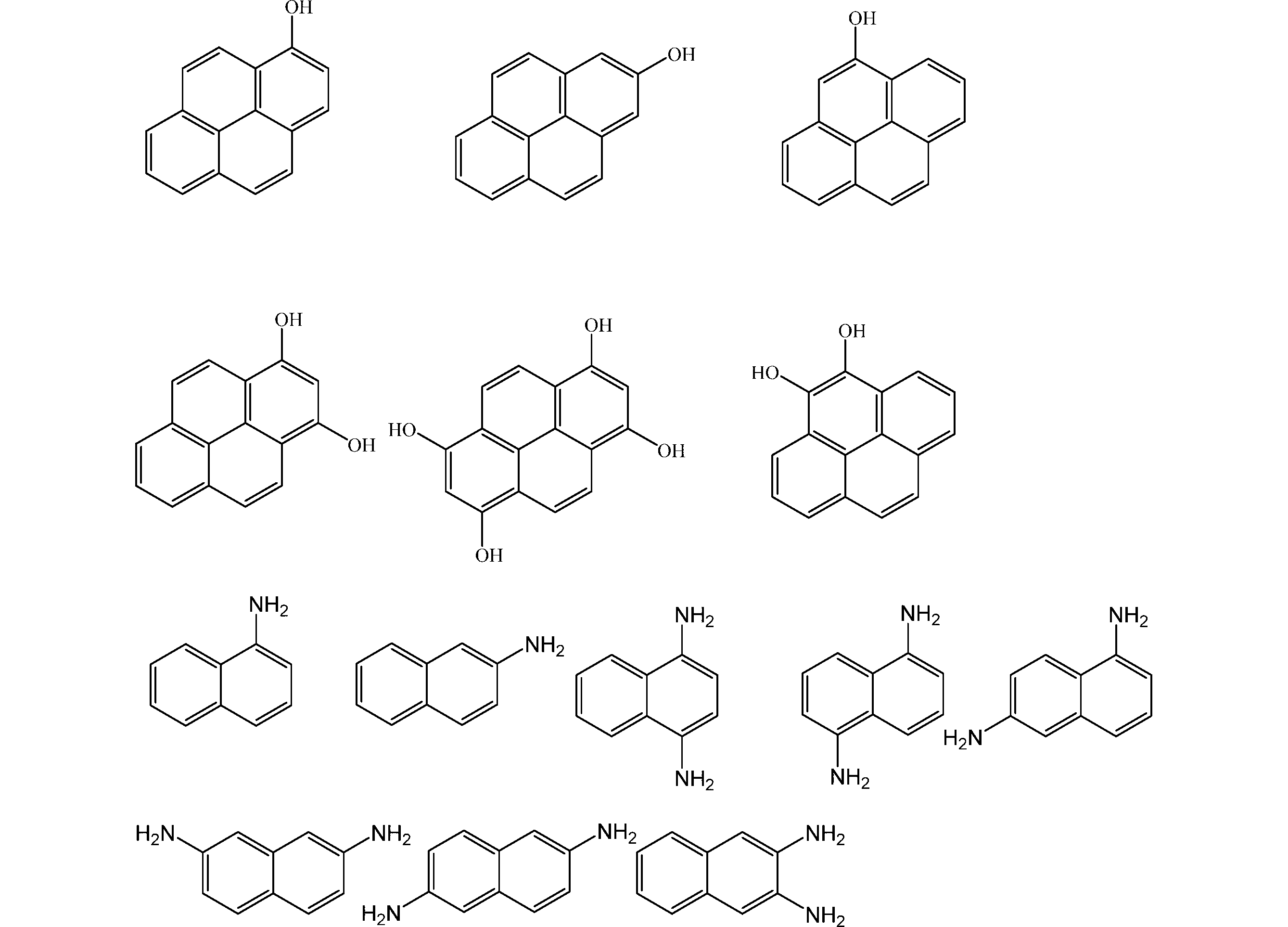
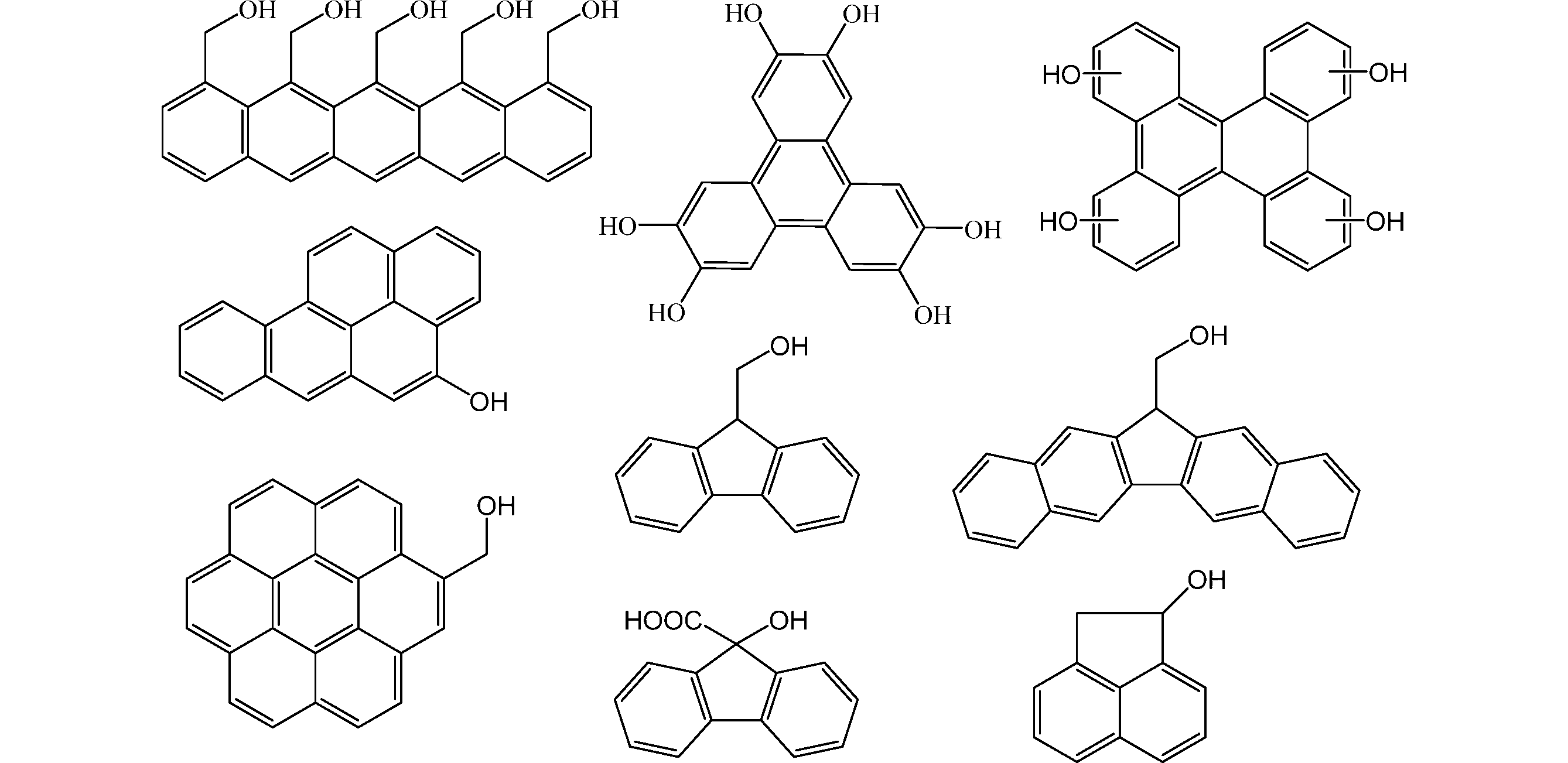

(式(1C-1)中、R1は、各々独立して、水素原子、置換基を有していてもよい炭素数1~40のアルキル基、置換基を有していてもよい炭素数6~40のアリール基置換基を有していてもよい炭素数2~40のアルケニル基、炭素数2~40のアルキニル基、置換基を有していてもよい炭素数1~40のアルコキシ基、ハロゲン原子、チオール基、アミノ基、ニトロ基、カルボキシル基又は水酸基であり、A、R0、m1、n2は、前記式(1C)において説明したものと同義であり、R0の少なくとも1つは水酸基、置換基を有していてもよい炭素数1~40のアルコキシ基又は置換基を有していてもよい炭素数0~40のアミノ基である。)

(式(1C-2)中、p2は、各々独立して1~4の整数であり、q2は、各々独立して0~4の整数であり、R1、A、R0、m1及びn2は、前記式(1C-1)において説明したものと同義であり、R0の少なくとも1つは水酸基、置換基を有していてもよい炭素数1~40のアルコキシ基又は置換基を有していてもよい炭素数0~40のアミノ基である。)

(式(1C-3)中、R1、A、R0、m1、n2及びp2は、前記式(1C-2)において説明したものと同義であり、R0の少なくとも1つは水酸基、置換基を有していてもよい炭素数1~40のアルコキシ基又は置換基を有していてもよい炭素数0~40のアミノ基である。)
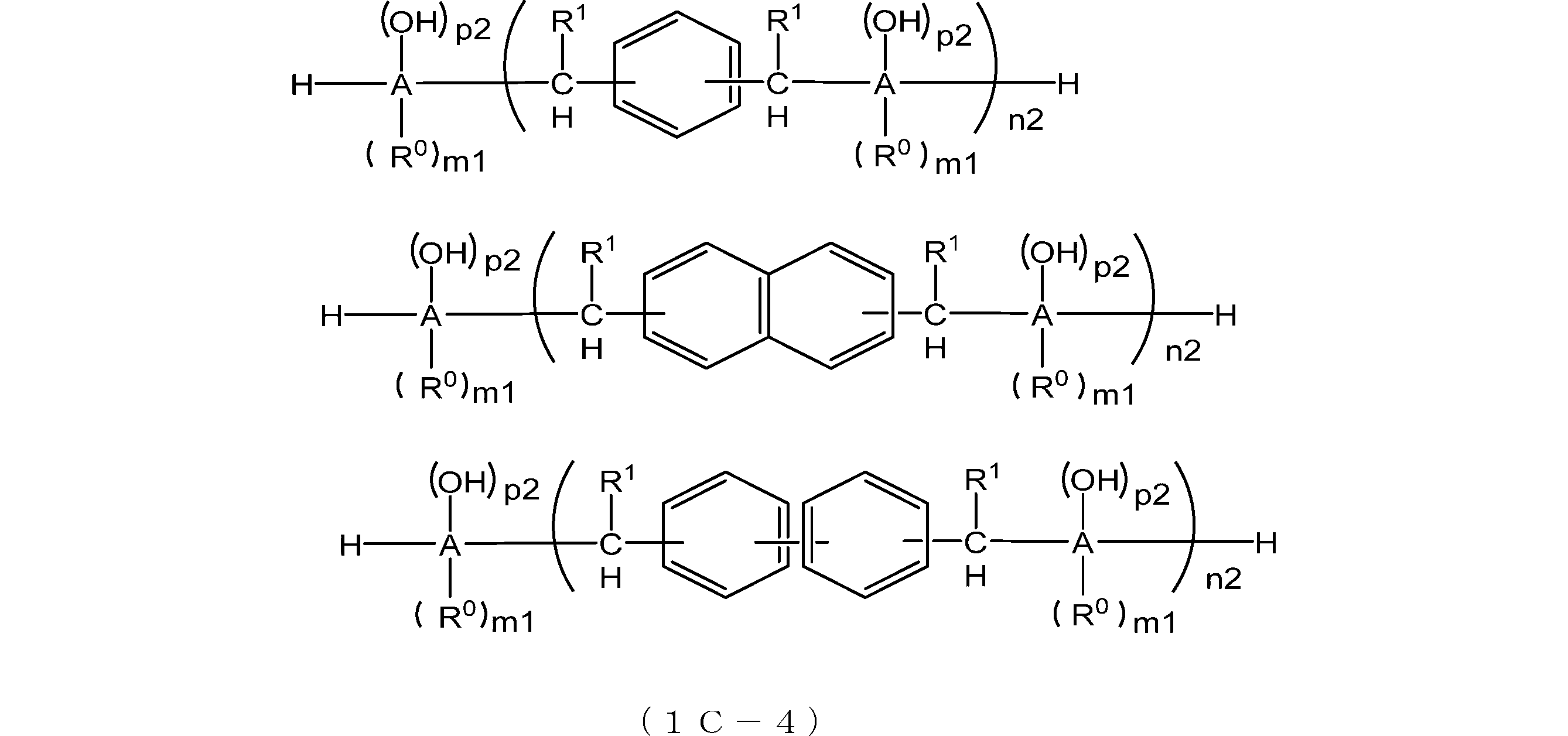
(式(1C-4)中、R1、A、R0、m1、n2は、前記式(1C-3)において説明したものと同義であり、R0の少なくとも1つは水酸基、置換基を有していてもよい炭素数1~40のアルコキシ基又は置換基を有していてもよい炭素数0~40のアミノ基である。)
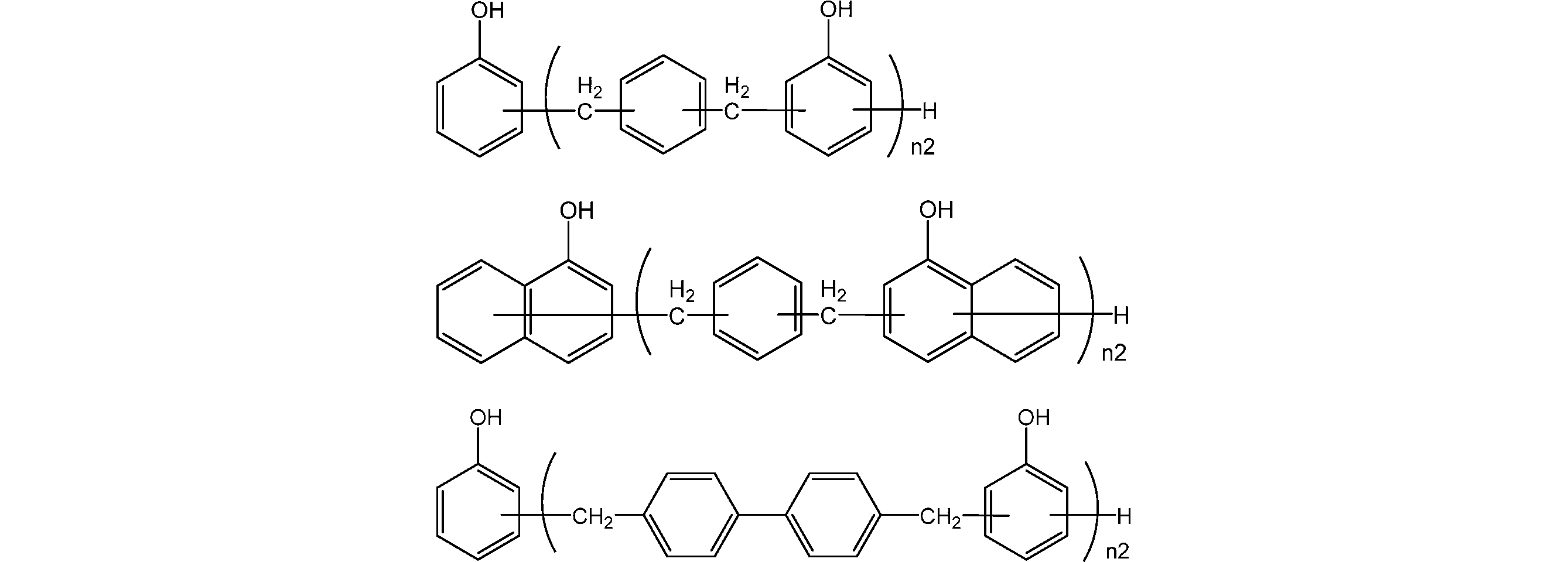
(n2は、前記式(1C)において説明したものと同義である。)
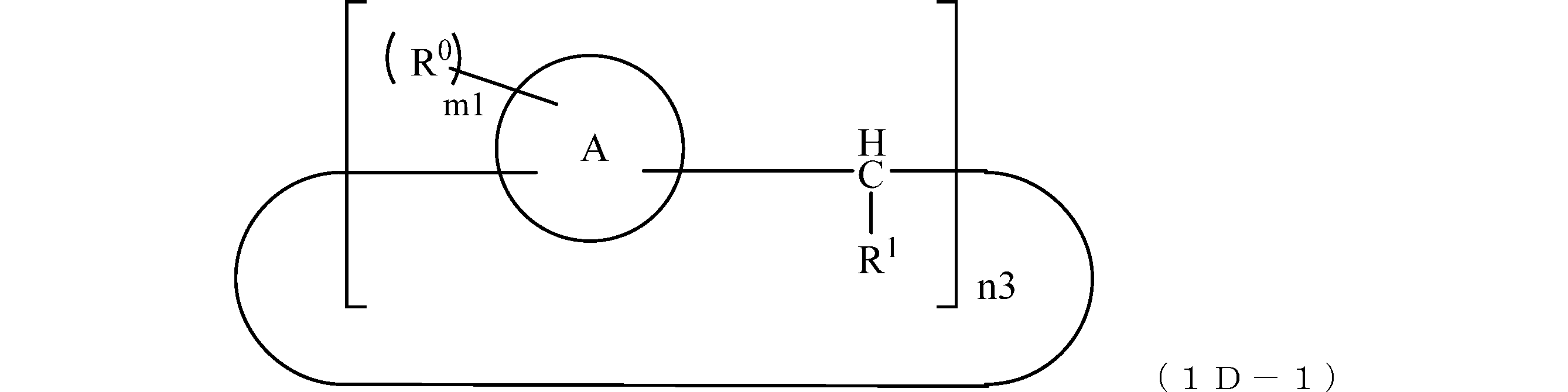
(式(1D-1)中、R1は、各々独立して、水素原子、置換基を有していてもよい炭素数1~40のアルキル基、置換基を有していてもよい炭素数6~40のアリール基、置換基を有していてもよい炭素数2~40のアルケニル基、炭素数2~40のアルキニル基、置換基を有していてもよい炭素数1~40のアルコキシ基、ハロゲン原子、チオール基、アミノ基、ニトロ基、カルボキシル基又は水酸基であり、A、R0、m1、n3は、前記式(1D)において説明したものと同義であり、R0の少なくとも1つは水酸基、置換基を有していてもよい炭素数1~40のアルコキシ基又は置換基を有していてもよい炭素数0~40のアミノ基である。)


(式(1D-3)中、各々独立して1~3の整数であり、R0、R1、m1及びn3は、前記式(1D)において説明したものと同義である。)
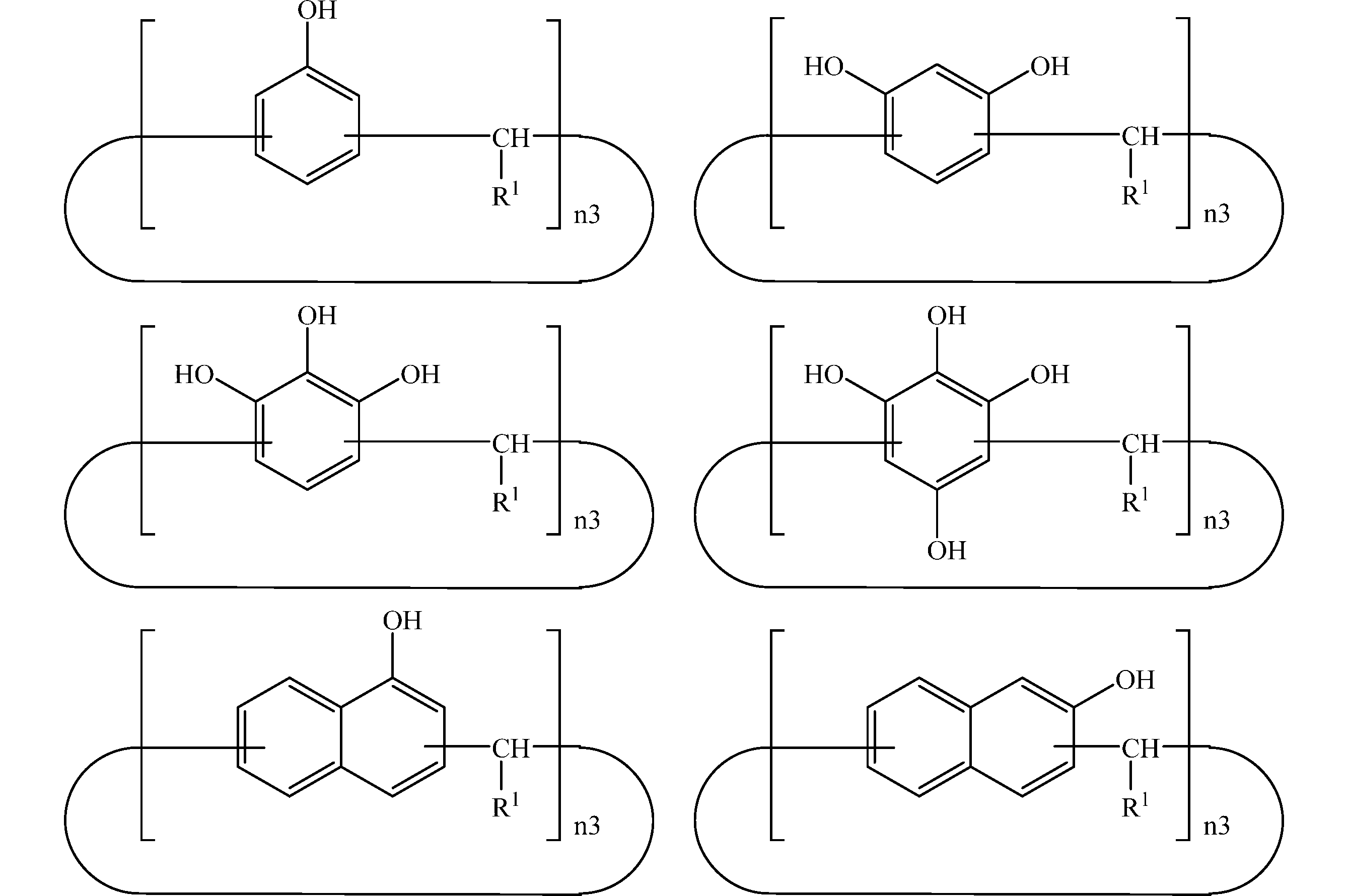
(式中、R1及びn3は、前記式(1D)において説明したものと同義である。)
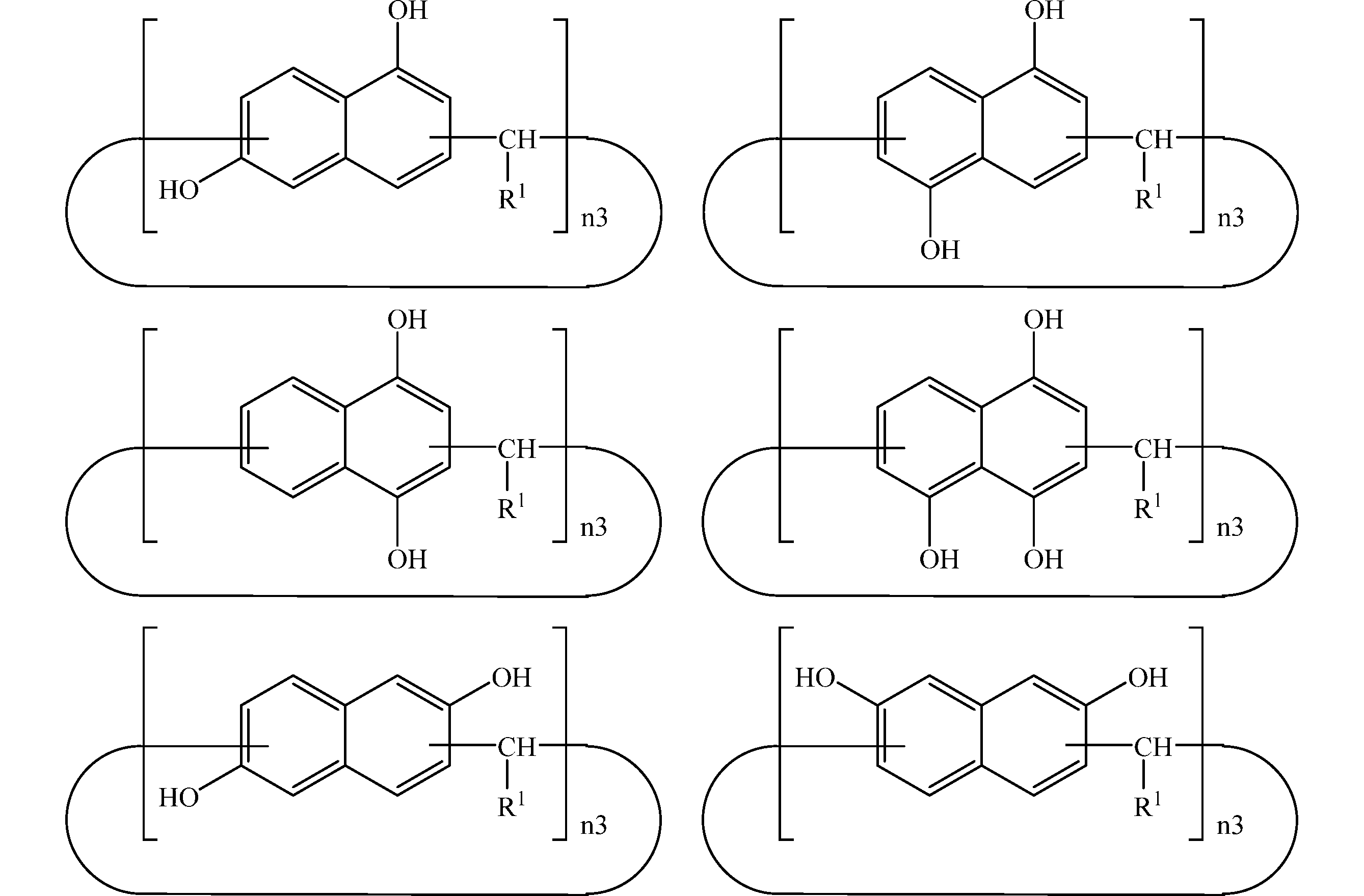
(式中、R1及びn3は、前記式(1D)において説明したものと同義である。)

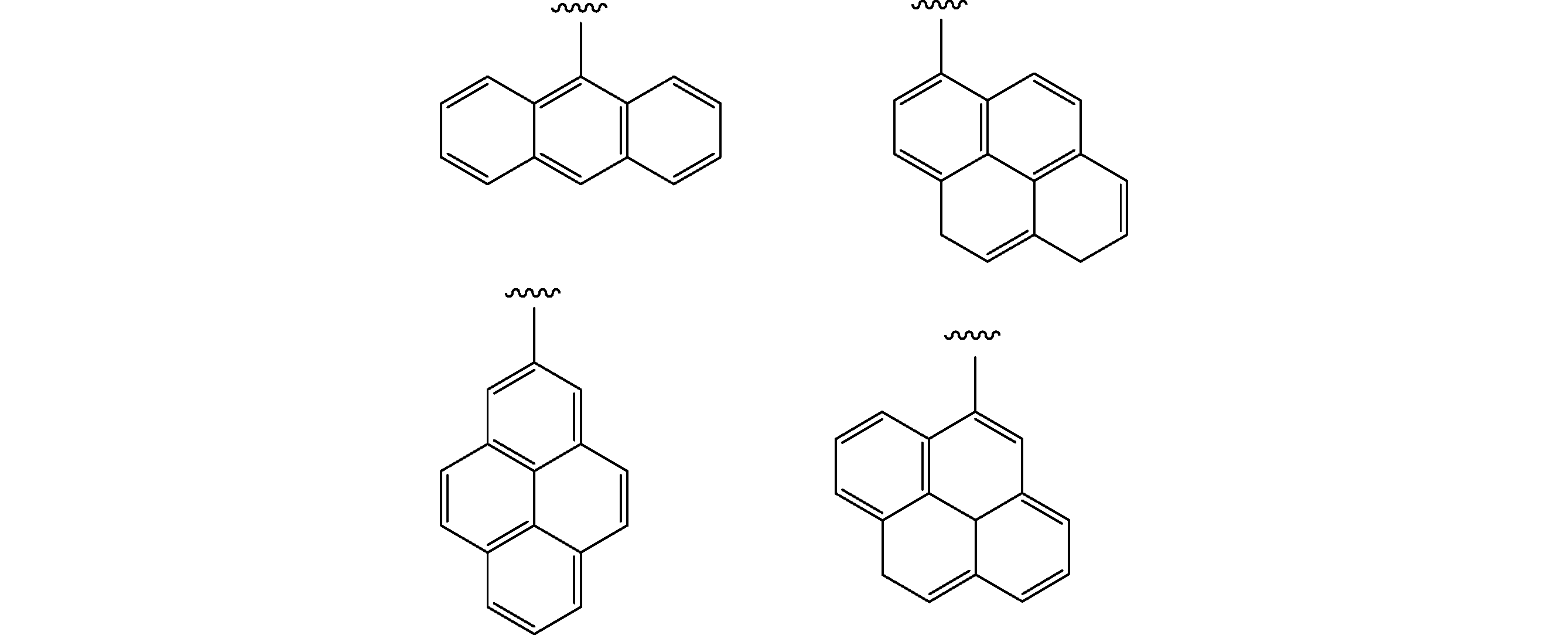
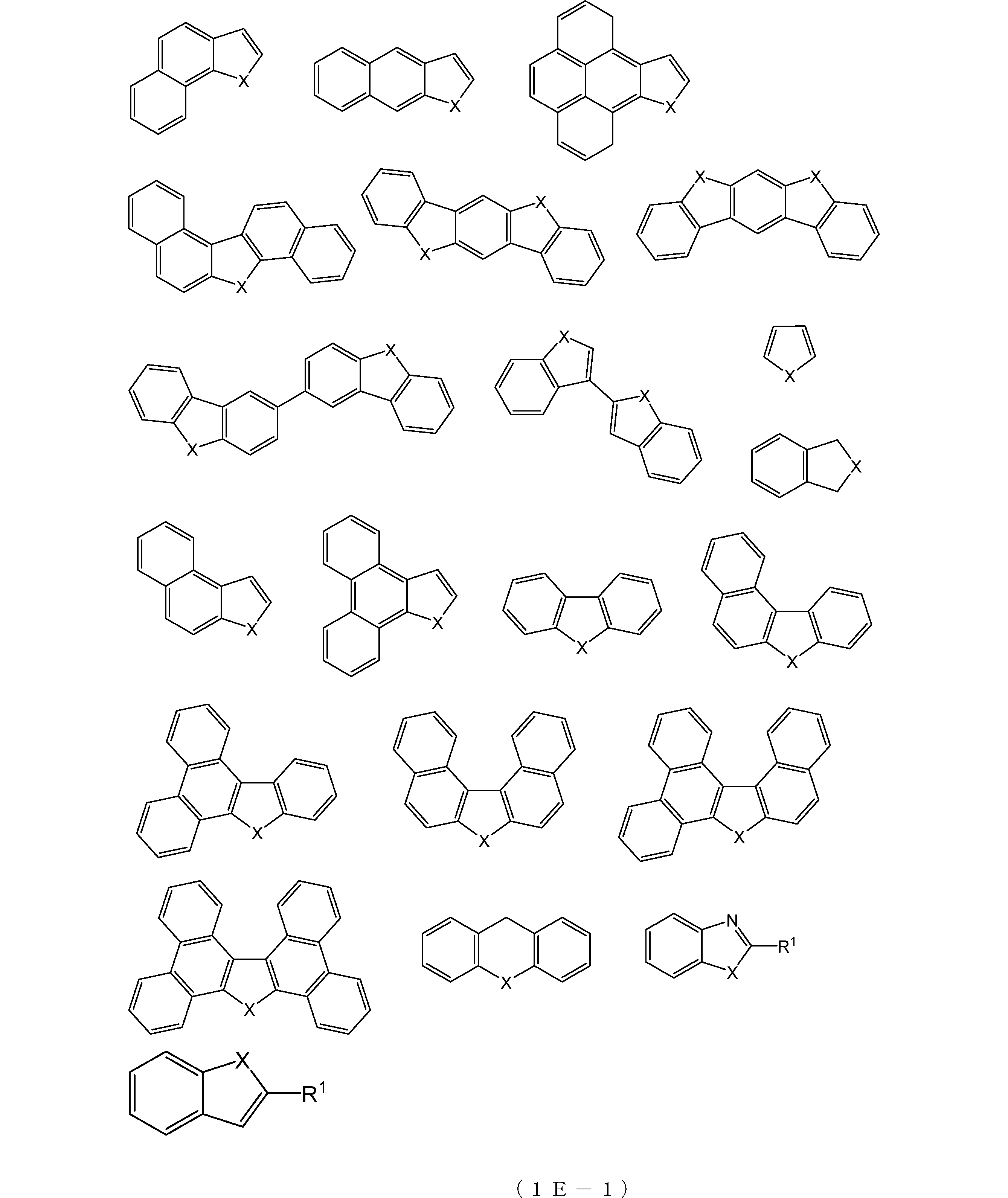
(前記式(1E-1)中、Xは、各々独立して、NR0で表される基、硫黄原子、酸素原子又はPR0で表される基であり、R0及びR1は、各々独立して、水素原子、水酸基、置換若しくは非置換の炭素数1~30のアルコキシ基、ハロゲン原子、置換若しくは非置換の炭素数1~30のアルキル基又は置換若しくは非置換の炭素数6~30のアリール基である。)
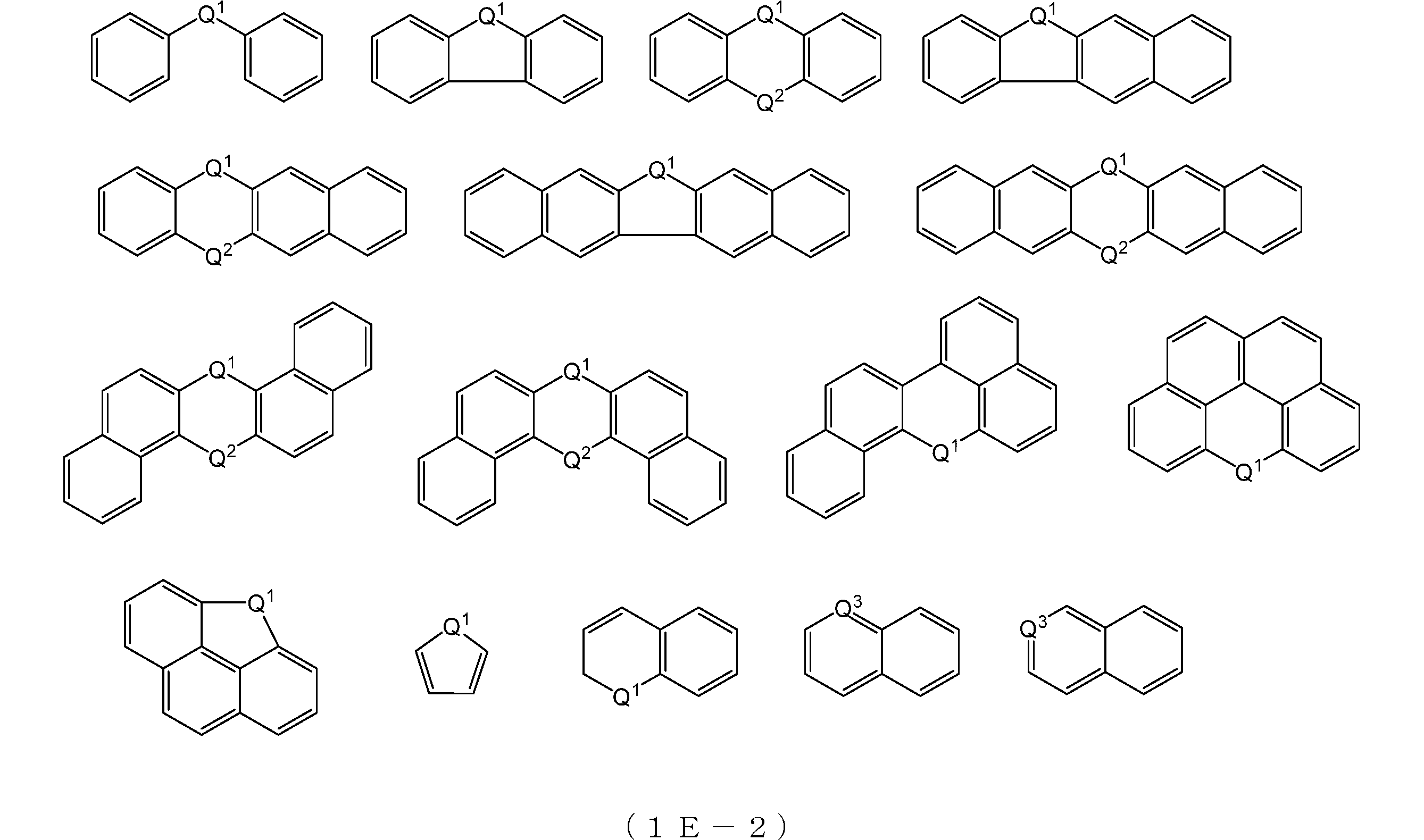
(前記式(1E-2)中、
Q1及びQ2は、単結合、置換若しくは非置換の炭素数1~20のアルキレン基、置換若しくは非置換の炭素数3~20のシクロアルキレン基、置換若しくは非置換の炭素数6~20のアリーレン基、置換若しくは非置換の炭素数2~20のヘテロアリーレン基、置換若しくは非置換の炭素数2~20のアルケニレン基、置換若しくは非置換の炭素数2~20のアルキニレン基、カルボニル基、NRaで表される基、酸素原子、硫黄原子又はPRaで表される基であり、前記Raは、各々独立して、水素原子、置換若しくは非置換の炭素数1~10のアルキル基又はハロゲン原子であり、ここで、前記モノマーにおいてQ1及びQ2の双方が存在する場合、これらの少なくとも一方がヘテロ原子を含み、前記モノマーにおいてQ1のみが存在する場合、当該Q1はヘテロ原子を含み、 Q3は、窒素原子、リン原子又はCRbで表される基であり、ここで、前記モノマーにおいてQ3はヘテロ原子を含み、 前記Ra及びRbは、各々独立して、水素原子、置換若しくは非置換の炭素数1~10のアルキル基又はハロゲン原子である。)
式(1E-1)中、Xは、各々独立して、NR0で表される基、硫黄原子、又はPR0で表される基であることが好ましい。
置換若しくは非置換の炭素数1~30のアルコキシ基としては、以下に限定されないが、例えば、メトキシ基、エトキシ基、プロポキシ基、ブトキシ基、ペントキシ、ヘキシルオキシ、オクチルオキシ、2-エチルヘキシルオキシ等が挙げられる。
ハロゲン原子とは、以下に限定されないが、例えば、フッ素原子、塩素原子、臭素原子、ヨウ素原子等が挙げられる。
置換若しくは非置換の炭素数1~30のアルキル基としては、以下に限定されないが、例えば、メチル基、エチル基、n-プロピル基、i-プロピル基、n-ブチル基、i-ブチル基、t-ブチル基、sec-ブチル基、n-ペンチル基、ネオペンチル基、イソアミル基、n-ヘキシル基、n-ヘプチル基、n-オクチル基、n-ドデシル基、バレル基、2-エチルヘキシル等が挙げられる。
置換若しくは非置換の炭素数6~30のアリール基としては、以下に限定されないが、例えば、フェニル基、ナフチル基、ビフェニル基、フルオレニル基、アンスリル基、ピレニル基、アズレニル基、アセナフチレニル基、ターフェニル基、フェナンスリル基、ペリレン基等が挙げられる。
式(1E-2)中、Q3は、窒素原子、リン原子又はCRbで表される基であり、ここで、前記モノマーにおいてQ3はヘテロ原子を含む。
前記Ra及びRbは、各々独立して、水素原子、置換若しくは非置換の炭素数1~10のアルキル基又はハロゲン原子である。
置換若しくは非置換の炭素数1~20のアルキレン基としては、以下に限定されないが、例えば、メチレン基、エチレン基、n-プロピレン基、i-プロピレン基、n-ブチレン基、i-ブチレン基、t-ブチレン基、n-ペンチレン基、n-ヘキシレン基、n-ドデシレン基、バレレン基、メチルメチレン基、ジメチルメチレン基、メチルエチレン基等が挙げられる。
置換若しくは非置換の炭素数3~20のシクロアルキレン基としては、以下に限定されないが、例えば、シクロプロピレン基、シクロブチレン基、シクロペンチレン基、シクロヘキシレン基、シクロドデシレン基、シクロバレレン基等が挙げられる。
置換若しくは非置換の炭素数6~20のアリーレン基としては、以下に限定されないが、例えば、フェニレン基、ナフチレン基、アンスリレン基、フェナントリニレン基、ピレニレン基、ペリレニレン基、フルオレニレン基、ビフェニレン基等が挙げられる。
置換若しくは非置換の炭素数2~20のヘテロアリーレン基としては、以下に限定されないが、例えば、チエニレン基、ピリジニレン基、フリレン基等が挙げられる。
置換若しくは非置換の炭素数2~20のアルケニレン基としては、ビニレン基、プロペニレン基、ブテニレン基等が挙げられる。
置換若しくは非置換の炭素数2~20のアルキニレン基としては、エチニレン基、プロピニレン基、ブチニレン基等が挙げられる。
置換若しくは非置換の炭素数1~10のアルキル基としては、以下に限定されないが、例えば、メチル基、エチル基、n-プロピル基、i-プロピル基、n-ブチル基、i-ブチル基、t-ブチル基、n-ペンチル基、n-ヘキシル基、n-ドデシル基、バレル基等が挙げられる。
ハロゲン原子としては、フッ素原子、塩素原子、臭素原子、ヨウ素原子等が挙げられる。
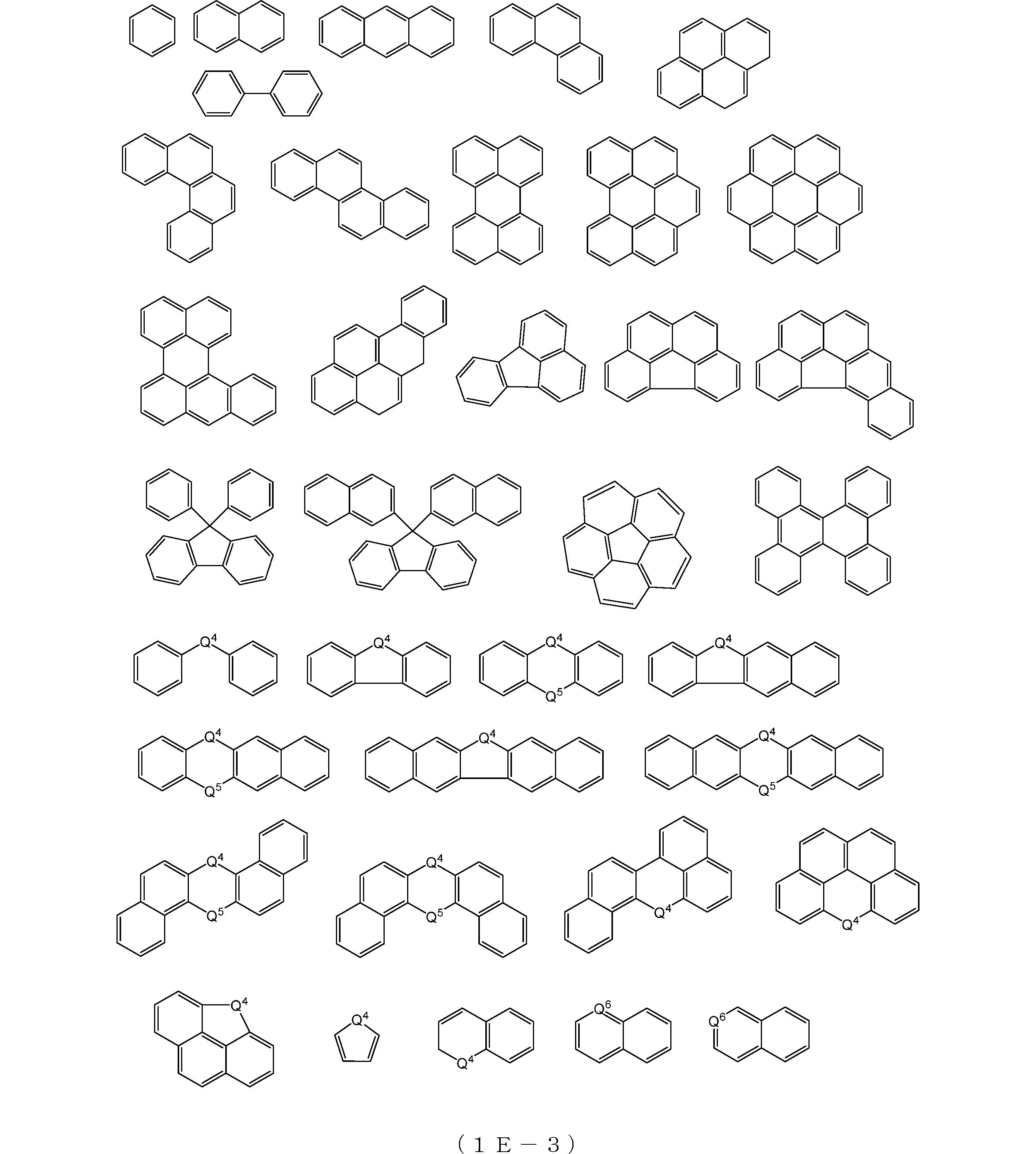
Q6は、CRb’で表される基であり、前記Rb’は、水素原子又は置換若しくは非置換の炭素数1~10のアルキル基である。
本実施形態の重合体の重量平均分子量は、特に限定されないが、耐熱性及び溶解性兼備の点で、400~100000の範囲であることが好ましく、500~20000であることがより好ましく、1000~15000であることがさらに好ましい。
重量平均分子量(Mw)と数平均分子量(Mn)との比(Mw/Mn)は、その用途に応じて求められる比も異なることから、特にその範囲が限定されるものではないが、より均質な分子量を有するものとして、例えば、好ましいものは3.0以下の範囲のものが挙げられ、より好ましいものは1.05以上3.0以下の範囲のものが挙げられ、特に好ましいものとして1.05以上2.0未満のものが挙げられ、耐熱性の観点から一層好ましいものとして1.05以上1.5未満のものが挙げられる。
本実施形態の重合体における構成単位同士が直接結合する位置としては、特に限定されず、置換基が結合していないいずれか一つの炭素原子がモノマー同士の直接結合に関与する。
耐熱性の観点から、モノマーのいずれか一つの炭素原子が芳香環同士の直接結合に関与することが好ましい。換言すると、構成単位(0)や他の共重合可能な化合物に由来の構成単位が2以上の芳香環を有する場合、一つの構成単位に対して2つの構成単位が結合する場合、各構成単位中の2以上のアリール構造の各々において、他の構成単位と結合している構造が好ましい。2以上の芳香環の各々において他の構成単位と結合している場合、各芳香環において他の構成単位と結合している炭素原子の位置は、各々異なっていてもよいし、各々対応する箇所(例えば、各々4位の位置に結合しているなど)であってもよい。
なお、触媒については、1種を単独で、又は2種以上を組み合わせて用いることができる。また、触媒の使用量は、使用する原料及び使用する触媒の種類、さらには反応条件などに応じて適宜設定でき、特に限定されないが、反応原料100質量部に対して、0.001~100質量部であることが好ましい。
本実施形態の重合体の製造方法としては、以下に限定されないが、例えば、1種又は2種以上の前記モノマーを酸化剤の存在下で重合させる工程を含むものとすることができる。具体的には、1種又は2種以上の前記式(0)で表されるモノマーを酸化剤の存在下で重合させる工程を含む。また、本実施形態の重合体が、上述の他の共重合可能な化合物に由来の構成単位を含む場合、前記製造方法は、1種又は2種以上の前記式(0)で表されるモノマーと、前記式(0)で表されるモノマーと共重合可能な、他の共重合可能な化合物と、を酸化剤の存在下で重合させる工程を含んでいてもよい。
かかる工程を実施するに際しては、K. Matsumoto, Y. Shibasaki, S. Ando and M. Ueda, Polymer, 47, 3043 (2006)の内容を適宜参照することができる。すなわち、β-ナフトール型モノマーの酸化重合においては、そのモノマーに起因して一電子酸化されたラジカルがカップリングする酸化カップリング反応により、α-位のC-Cカップリングが選択的に生じるとされており、例えば、銅/ジアミン型触媒を用いることで、位置選択的重合を行うことができる。
本実施形態における酸化剤としては、酸化カップリング反応を生ずるものであれば特に限定されないが、銅、マンガン、鉄、コバルト、ルテニウム、クロム、ニッケル、スズ、鉛、銀若しくはパラジウムなどを含有する金属塩類、過酸化水素又は過塩素酸類などの過酸化物、有機過酸化物が用いられる。これらの中でも銅、マンガン、鉄、コバルト、ルテニウム、クロム、ニッケル、スズ、鉛、銀及びパラジウムで構成される群から選択される少なくとも1種を含有する金属塩類又は金属錯体を好ましく用いることができる。
銅、マンガン、鉄、コバルト、ルテニウム、鉛、ニッケル、銀、スズ、クロム若しくはパラジウムなどの金属は、反応系中で還元することにより酸化剤として使用することもできる。これらは金属塩類に含まれる。
例えば、前記式(0)で表されるモノマーを有機溶媒に溶解又は分散させ、さらに銅、マンガン又はコバルトを含有する金属塩類を添加し、例えば酸素又は酸素含有気体と反応させて酸化重合することにより、所望の重合体を得ることができる。
上述のような酸化重合による重合体の製造方法によれば、分子量制御が比較的容易であり、高分子量化に伴う原料モノマーや低分子成分を残さずに分子量分布の小さい重合体を得ることができるため、高耐熱性や低昇華物の観点から優位となる傾向にある。
その他の製造方法としては、例えば、グリニャール試薬を用いたカップリング反応、鈴木・宮原カップリング反応等が挙げられる。
金属錯体としては、特に限定されず、公知のものを用いることができ。その具体例としては、以下に限定されないが、銅を含有する錯体触媒は、特公昭36-18692号、同40-13423号、特開昭49-490号等各公報に記載の触媒が挙げられ、マンガンを含有する錯体触媒は、特公昭40-30354号、同47-5111号、特開昭56-32523号、同57-44625号、同58-19329号、同60-83185号等各公報に記載の触媒が挙げられ、コバルトを含有する錯体触媒は、特公昭45-23555号公報に記載の触媒が挙げられる。
また、本実施形態における酸化反応は加圧下での反応とすることも可能であり、反応促進の観点から2kg/cm2~15kg/cm2が好ましく、安全面と制御性の観点から3kg/cm2~10kg/cm2がさらに好ましい。
本実施形態の重合体は、種々の用途を想定し、組成物として使用することができる。すなわち、本実施形態の組成物は、本実施形態の重合体を含む。本実施形態の組成物は、湿式プロセスの適用によって膜形成が容易になる等の観点から、溶媒をさらに含むことが好ましい。
溶媒の具体例としては、特に限定されないが、例えば、アセトン、メチルエチルケトン、メチルイソブチルケトン、シクロヘキサノン等のケトン系溶媒;プロピレングリコールモノメチルエーテル、プロピレングリコールモノメチルエーテルアセテート等のセロソルブ系溶媒;乳酸エチル、酢酸メチル、酢酸エチル、酢酸ブチル、酢酸イソアミル、メトキシプロピオン酸メチル、ヒドロキシイソ酪酸メチル等のエステル系溶媒;メタノール、エタノール、イソプロパノール、1-エトキシ-2-プロパノール等のアルコール系溶媒;トルエン、キシレン、アニソール等の芳香族系炭化水素等が挙げられる。これらの溶媒は、1種を単独で、或いは2種以上を組み合わせて用いることができる。
前記酸化剤由来の金属残留量(不純物金属の含有量)が500ppb未満であることにより、溶液形態においても、保存安定性が損なわれることなく使用できる傾向にある。
前記精製方法によれば、重合体に不純物として含まれ得る種々の金属の含有量を低減することができる。
より詳細には、前記重合体を、水と任意に混和しない有機溶媒に溶解させて溶液(S)を得て、さらにその溶液(S)を酸性水溶液と接触させて抽出処理を行うことができる。これにより、前記溶液(S)に含まれる金属分を水相に移行させたのち、有機相と水相とを分離して金属含有量の低減された重合体を得ることができる。
また、ここで用いる水は、本実施形態の目的に沿って、金属含有量の少ない水、例えば、イオン交換水等であることが好ましい。抽出処理は1回だけでもかまわないが、混合、静置、分離という操作を複数回繰り返して行うのも有効である。また、抽出処理における両者の使用割合や、温度、時間等の条件は特に限定されないが、先の酸性の水溶液との接触処理の場合と同様で構わない。
本実施形態に係る重合体の精製方法によれば、前記重合体中の種々の金属分の含有量を効果的に著しく低減することができる。これらの金属成分量は後述する実施例に記載の方法で測定することができる。
なお、本実施形態における「通液」とは、前記溶液がフィルターの外部から当該フィルターの内部を通過して再度フィルターの外部へと移動することを意味し、例えば、前記溶液を単にフィルターの表面で接触させる態様や、前記溶液を当該表面上で接触させつつイオン交換樹脂の外部で移動させる態様(すなわち、単に接触する態様)は除外される。
本実施形態におけるフィルター通液工程において、前記重合体と溶媒とを含む溶液中の金属分の除去に用いられるフィルターは、通常、液体ろ過用として市販されているものを使用することができる。フィルターの濾過精度は特に限定されないが、フィルターの公称孔径は0.2μm以下であることが好ましく、より好ましくは0.2μm未満であり、さらに好ましくは0.1μm以下であり、よりさらに好ましくは0.1μm未満であり、一層好ましくは0.05μm以下である。また、フィルターの公称孔径の下限値は、特に限定されないが、通常、0.005μmである。ここでいう公称孔径とは、フィルターの分離性能を示す名目上の孔径であり、例えば、バブルポイント試験、水銀圧入法試験、標準粒子補足試験など、フィルターの製造元により決められた試験法により決定される孔径である。市販品を用いた場合、製造元のカタログデータに記載の値である。公称孔径を0.2μm以下にすることで、溶液を1回フィルターに通液させた後の金属分の含有量を効果的に低減することができる。本実施形態においては、溶液の各金属分の含有量をより低減させるために、フィルター通液工程を2回以上行ってもよい。
ポリオレフィン系フィルターとしては、以下に限定されないが、例えば、日本ポール(株)製のウルチプリーツPEクリーン、イオンクリーン、日本インテグリス(株)製のプロテゴシリーズ、マイクロガードプラスHC10、オプチマイザーD等を挙げることができる。
ポリエステル系フィルターとしては、以下に限定されないが、例えば、セントラルフィルター工業(株)製のジェラフローDFE、日本フィルター(株)製のブリーツタイプPMC等を挙げることができる。
ポリアクリロニトリル系フィルターとしては、以下に限定されないが、例えば、アドバンテック東洋(株)製のウルトラフィルターAIP-0013D、ACP-0013D、ACP-0053D等を挙げることができる。
フッ素樹脂系フィルターとしては、以下に限定されないが、例えば、日本ポール(株)製のエンフロンHTPFR、スリーエム(株)製のライフシュアFAシリーズ等を挙げることができる。
これらのフィルターはそれぞれ単独で用いても2種類以上を組み合わせて用いてもよい。
イオン交換体を含むフィルターとして、以下に限定されないが、例えば、日本インテグリス(株)製のプロテゴシリーズ、倉敷繊維加工(株)製のクラングラフト等を挙げることができる。
また、ポリアミドポリアミンエピクロロヒドリンカチオン樹脂などの正のゼータ電位を有する物質を含むフィルターとしては(以下、登録商標)、以下に限定されないが、例えば、スリーエム(株)製ゼータプラス40QSHやゼータプラス020GN、或いはライフアシュアEFシリーズ等が挙げられる。
本実施形態の組成物は、膜形成用途に使用できる。すなわち、本実施形態の膜形成用組成物は、本実施形態の重合体を含有するため、優れた耐熱性及びエッチング耐性を発揮できる。
本実施形態の膜形成用組成物は、上述した重合体を含有するものであるが、その具体的な用途に応じて様々な組成とすることができ、その用途ないし組成に応じ、以下では「レジスト組成物」、「感放射線性組成物」、「リソグラフィー用下層膜形成用組成物」と称する場合がある。
本実施形態のレジスト組成物は、本実施形態の膜形成用組成物を含む。すなわち、本実施形態のレジスト組成物は、本実施形態の重合体を必須成分として含有するものであり、レジスト材料として用いられることを考慮し、種々の任意成分をさらに含有することができる。具体的には、本実施形態のレジスト組成物は、溶媒、酸発生剤、塩基発生剤及び酸拡散制御剤で構成される群から選択される少なくとも1つをさらに含有することが好ましい。
また、本実施形態のレジスト組成物が含みうる溶媒としては、特に限定されず、種々公知の有機溶媒を用いることができる。例えば、国際公開第2013/024778号に記載のものを用いることができる。これらの溶媒は、単独で又は2種以上を使用することができる。
本実施形態のレジスト組成物において、可視光線、紫外線、エキシマレーザー、電子線、極端紫外線(EUV)、X線及びイオンビームから選ばれるいずれかの放射線の照射により直接的又は間接的に酸を発生する酸発生剤(C)を一種以上含むことが好ましい。酸発生剤(C)は、特に限定されないが、例えば、国際公開第2013/024778号に記載のものを用いることができる。酸発生剤(C)は、単独で又は2種以上を使用することができる。
塩基発生剤(B)が光塩基発生剤である場合について説明する。
光塩基発生剤とは、露光により塩基を発生するものであり、常温常圧の通常の条件下では活性を示さないが、外部刺激として電磁波の照射と加熱が行なわれると、塩基(塩基性物質)を発生するものであれば特に限定されるものではない。
発生される塩基性物質は、より塩基性度の高い(共役酸のpKa値が高い)アミノ基を有する化合物が感度及び解像性の観点から好ましい。
光塩基発生剤としては、例えば、特開2009-80452号公報及び国際公開第2009/123122号パンフレットで開示されたような桂皮酸アミド構造を有する塩基発生剤、特開2006-189591号公報及び特開2008-247747号公報で開示されたようなカルバメート構造を有する塩基発生剤、特開2007-249013号公報及び特開2008-003581号公報で開示されたようなオキシム構造、カルバモイルオキシム構造を有する塩基発生剤、特開2010-243773号公報に記載の化合物等が挙げられるが、これらに限定されず、その他にも公知の塩基発生剤の構造を用いることができる。
光塩基発生剤の感活性光線性又は感放射線性樹脂組成物中の好ましい含有量は、前述の光酸発生剤の感活性光線性又は感放射線性樹脂組成物中の好ましい含有量と同様である。
本実施形態においてレジスト組成物は、酸架橋剤(G)を一種以上含むことができる。酸架橋剤(G)とは、酸発生剤(C)から発生した酸の存在下で、本実施形態の重合体(成分(A))を分子内又は分子間架橋し得る化合物である。このような酸架橋剤(G)としては、例えば成分(A)を架橋し得る1種以上の基(以下、「架橋性基」という。)を有する化合物を挙げることができる。
本実施形態においては、放射線照射により酸発生剤から生じた酸のレジスト膜中における拡散を制御して、未露光領域での好ましくない化学反応を阻止する作用等を有する酸拡散制御剤(E)をレジスト組成物に配合してもよい。この様な酸拡散制御剤(E)を使用することにより、レジスト組成物の貯蔵安定性が向上する。また解像度が向上するとともに、放射線照射前の引き置き時間、放射線照射後の引き置き時間の変動によるレジストパターンの線幅変化を抑えることができ、プロセス安定性に極めて優れたものとなる。このような酸拡散制御剤(E)としては、特に限定されないが、例えば、窒素原子含有塩基性化合物、塩基性スルホニウム化合物、塩基性ヨードニウム化合物等の放射線分解性塩基性化合物が挙げられる。
本実施形態のレジスト組成物には、その他の成分(F)として、必要に応じて、溶解促進剤、溶解制御剤、増感剤、界面活性剤及び有機カルボン酸又はリンのオキソ酸若しくはその誘導体等の各種添加剤を1種又は2種以上添加することができる。これらその溶解促進剤、溶解制御剤、増感剤、界面活性剤及び有機カルボン酸又はリンのオキソ酸若しくはその誘導体としては、例えば、国際公開WO2020/145406号に記載のものが挙げられる。
本実施形態のレジスト組成物において、本実施形態における重合体(成分(A))の含有量は、特に限定されないが、固形成分の全質量(重合体(A)、酸発生剤(C)又は塩基発生剤(B)、酸架橋剤(G)、酸拡散制御剤(E)及びその他の成分(F)(「任意成分(F)」とも記す。)などの任意に使用される成分を含む固形成分の総和、以下レジスト組成物について同様。)の50~99.4質量%であることが好ましく、より好ましくは55~90質量%、さらに好ましくは60~80質量%、特に好ましくは60~70質量%である。前記含有量の場合、解像度が一層向上し、ラインエッジラフネス(LER)が一層小さくなる傾向にある。
本実施形態のレジスト組成物は、スピンコートによりアモルファス膜を形成することができる。また、一般的な半導体製造プロセスに適用することができる。用いる現像液の種類によって、ポジ型レジストパターン及びネガ型レジストパターンのいずれかを作り分けることができる。
本実施形態の感放射線性組成物は、本実施形態の膜形成用組成物と、ジアゾナフトキノン光活性化合物(B)と、溶媒と、を含有する感放射線性組成物であって、前記溶媒の含有量が、前記感放射線性組成物の総量100質量部に対して、20~99質量部であり、前記溶媒以外の成分の含有量が、前記感放射線性組成物の総量100質量部に対して、1~80質量部である。すなわち、本実施形態の感放射線性組成物は、本実施形態における重合体と、ジアゾナフトキノン光活性化合物(B)と、溶媒とを必須成分として含有してもよく、感放射線性であることを考慮し、種々の任意成分をさらに含有することができる。
本実施形態の感放射線性組成物に含まれるジアゾナフトキノン光活性化合物(B)は、ポリマー性及び非ポリマー性ジアゾナフトキノン光活性化合物を含む、ジアゾナフトキノン物質であり、一般にポジ型レジスト組成物において、感光性成分(感光剤)として用いられているものであれば特に限定されず、1種又は2種以上を任意に選択して用いることができる。
本実施形態の感放射線性組成物に用いることにできる溶媒としては、特に限定されないが、例えば、プロピレングリコールモノメチルエーテルアセテート、プロピレングリコールモノメチルエーテル、シクロヘキサノン、シクロペンタノン、2-ヘプタノン、アニソール、酢酸ブチル、プロピオン酸エチル、及び乳酸エチルが挙げられる。このなかでもプロピレングリコールモノメチルエーテルアセテート、プロピレングリコールモノメチルエーテル、シクロヘキサノンが好ましい、溶媒は、1種単独で用いても2種以上を併用してもよい。
本実施形態の感放射線性組成物は、スピンコートによりアモルファス膜を形成することができる。また、一般的な半導体製造プロセスに適用することができる。用いる現像液の種類によって、ポジ型レジストパターン及びネガ型レジストパターンのいずれかを作り分けることができる。
ネガ型レジストパターンの場合、本実施形態の感放射線性組成物をスピンコートして形成したアモルファス膜のKrFエキシマレーザー、極端紫外線、電子線又はX線等の放射線により照射した後、又は、20~500℃(好ましくは、50~500℃)で加熱した後の露光した部分の、23℃における現像液に対する溶解速度は、5Å/sec以下が好ましく、0.05~5Å/secがより好ましく、0.0005~5Å/secがさらに好ましい。当該溶解速度が5Å/sec以下であると現像液に不溶で、レジストとすることができる。また、0.0005Å/sec以上の溶解速度を有すると、解像性が向上する場合もある。これは、成分(A)の露光前後の溶解性の変化により、現像液に溶解する未露光部と、現像液に溶解しない露光部との界面のコントラストが大きくなるからと推測される。またLERの低減、ディフェクトの低減効果がある。
本実施形態の感放射線性組成物において、本実施形態の重合体(成分(A))の含有量は、固形成分全質量(本実施形態の重合体、ジアゾナフトキノン光活性化合物(B)及びその他の成分(D)などの任意に使用される固形成分の総和、感放射線性組成物について以下同様。)に対して、好ましくは1~99質量%であり、より好ましくは5~95質量%、さらに好ましくは10~90質量%、特に好ましくは25~75質量%である。本実施形態の感放射線性組成物は、本実施形態の重合体の含有量が前記範囲内であると、高感度でラフネスの小さなパターンを得ることができる。
本実施形態の感放射線性組成物には、必要に応じて、溶媒、本実施形態の重合体及びジアゾナフトキノン光活性化合物(B)以外の成分として、上述の酸発生剤、酸架橋剤、酸拡散制御剤、溶解促進剤、溶解制御剤、増感剤、界面活性剤、有機カルボン酸又はリンのオキソ酸若しくはその誘導体等の各種添加剤を1種又は2種以上添加することができる。なお、本実施形態の感放射線性組成物に関して、その他の成分(D)を任意成分(D)ということがある。
本実施形態のアモルファス膜の製造方法は、前記感放射線性組成物を用いて、基板上にアモルファス膜を形成する工程を含む。
本実施形態において、レジストパターンは、本実施形態のレジスト組成物を用いるか、或いは、本実施形態の感放射線性組成物を用いることにより、形成することができる。また、後述するが、本実施形態のリソグラフィー用下層膜形成用組成物を用いてレジストパターンを形成することもできる。
本実施形態のレジスト組成物を用いたレジストパターンの形成方法は、上述した本実施形態のレジスト組成物を用いて基板上にレジスト膜を形成する工程と、形成されたレジスト膜の少なくとも一部を露光する工程と、露光した前記レジスト膜を現像してレジストパターンを形成する工程とを備える。本実施形態におけるレジストパターンは多層プロセスにおける上層レジストとして形成することもできる。
本実施形態の感放射線性組成物を用いたレジストパターン形成方法は、前記感放射線性組成物を用いて、基板上にレジスト膜を形成する工程と、形成された前記レジスト膜の少なくとも一部を露光する工程と、露光した前記レジスト膜を現像してレジストパターンを形成する工程と、を含む。なお、詳細には以下の、レジスト組成物を用いたレジストパターン形成方法と同様の操作とすることができる。
レジストパターンを形成する方法としては、特に限定されないが、例えば、以下の方法が挙げられる。まず、従来公知の基板上に前記本実施形態のレジスト組成物を、回転塗布、流延塗布、ロール塗布等の塗布手段によって塗布することによりレジスト膜を形成する。従来公知の基板とは、特に限定されず、例えば、電子部品用の基板や、これに所定の配線パターンが形成されたもの等を例表することができる。より具体的には、特に限定されないが、例えば、シリコンウェハー、銅、クロム、鉄、アルミニウム等の金属製の基板や、ガラス基板等が挙げられる。配線パターンの材料としては、特に限定されないが、例えば、銅、アルミニウム、ニッケル、金等が挙げられる。また必要に応じて、前述基板上に無機系及び/又は有機系の膜が設けられたものであってもよい。無機系の膜としては、特に限定されないが、例えば、無機反射防止膜(無機BARC)が挙げられる。有機系の膜としては、特に限定されないが、例えば、有機反射防止膜(有機BARC)が挙げられる。ヘキサメチレンジシラザン等による表面処理を行ってもよい。
本実施形態のリソグラフィー用下層膜形成用組成物は、本実施形態の膜形成用組成物を含むものである。すなわち、本実施形態のリソグラフィー用下層膜形成用組成物は、本実施形態における重合体を必須成分として含有するものであり、リソグラフィー用下層膜形成材料として用いられることを考慮し、種々の任意成分をさらに含有することができる。具体的には、本実施形態のリソグラフィー用下層膜形成用組成物は、溶媒、酸発生剤、塩基発生剤及び架橋剤で構成される群から選択される少なくとも1つをさらに含有することが好ましい。
本実施形態のリソグラフィー用下層膜形成用組成物において用いられる溶媒としては、本実施形態の重合体が少なくとも溶解するものであれば、公知のものを適宜用いることができる。
本実施形態のリソグラフィー用下層膜形成用組成物は、インターミキシングを抑制する等の観点から、必要に応じて架橋剤を含有していてもよい。本実施形態で使用可能な架橋剤としては、特に限定されないが、例えば、国際公開第2013/024778号、国際公開第2013/024779号や国際公開第2018/016614号に記載のものを用いることができる。なお、本実施形態において、架橋剤は、単独で又は2種以上を使用することができる。
本実施形態のリソグラフィー用下層膜形成用組成物には、必要に応じて架橋、硬化反応を促進させるための架橋促進剤を用いることができる。
本実施形態のリソグラフィー用下層膜形成用組成物には、必要に応じてラジカル重合開始剤を配合することができる。ラジカル重合開始剤としては、光によりラジカル重合を開始させる光重合開始剤であってもよいし、熱によりラジカル重合を開始させる熱重合開始剤であってもよい。ラジカル重合開始剤としては、例えば、ケトン系光重合開始剤、有機過酸化物系重合開始剤及びアゾ系重合開始剤で構成される群から選ばれる少なくとも1種とすることができる。
本実施形態のリソグラフィー用下層膜形成用組成物は、熱による架橋反応をさらに促進させるなどの観点から、必要に応じて酸発生剤を含有していてもよい。酸発生剤としては、熱分解によって酸を発生するもの、光照射によって酸を発生するものなどが知られているが、いずれのものも使用することができる。
塩基発生剤が光塩基発生剤である場合について説明する。
光塩基発生剤とは、露光により塩基を発生するものであり、常温常圧の通常の条件下では活性を示さないが、外部刺激として電磁波の照射と加熱が行なわれると、塩基(塩基性物質)を発生するものであれば特に限定されるものではない。
発生される塩基性物質は、より塩基性度の高い(共役酸のpKa値が高い)アミノ基を有する化合物が感度及び解像性の観点から好ましい。
光塩基発生剤としては、例えば、特開2009-80452号公報及び国際公開第2009/123122号パンフレットで開示されたような桂皮酸アミド構造を有する塩基発生剤、特開2006-189591号公報及び特開2008-247747号公報で開示されたようなカルバメート構造を有する塩基発生剤、特開2007-249013号公報及び特開2008-003581号公報で開示されたようなオキシム構造、カルバモイルオキシム構造を有する塩基発生剤、特開2010-243773号公報に記載の化合物等が挙げられるが、これらに限定されず、その他にも公知の塩基発生剤の構造を用いることができる。
光塩基発生剤の感活性光線性又は感放射線性樹脂組成物中の好ましい含有量は、前述の光酸発生剤の感活性光線性又は感放射線性樹脂組成物中の好ましい含有量と同様である。
さらに、本実施形態のリソグラフィー用下層膜形成用組成物は、保存安定性を向上させる等の観点から、塩基性化合物を含有していてもよい。
また、本実施形態のリソグラフィー用下層膜形成用組成物は、熱硬化性の付与や吸光度をコントロールする目的で、他の樹脂及び/又は化合物を含有していてもよい。このような他の樹脂及び/又は化合物としては、例えば、ナフトール樹脂、キシレン樹脂ナフトール変性樹脂、ナフタレン樹脂のフェノール変性樹脂、ポリヒドロキシスチレン、ジシクロペンタジエン樹脂、(メタ)アクリレート、ジメタクリレート、トリメタクリレート、テトラメタクリレート、ビニルナフタレン、ポリアセナフチレンなどのナフタレン環、フェナントレンキノン、フルオレンなどのビフェニル環、チオフェン、インデンなどのヘテロ原子を有する複素環を含む樹脂や芳香族環を含まない樹脂;ロジン系樹脂、シクロデキストリン、アダマンタン(ポリ)オール、トリシクロデカン(ポリ)オール及びそれらの誘導体等の脂環構造を含む樹脂又は化合物等が挙げられるが、これらに特に限定されない。さらに、本実施形態のリソグラフィー用下層膜形成用組成物は、公知の添加剤を含有していてもよい。前記公知の添加剤としては、以下に限定されないが、例えば、紫外線吸収剤、界面活性剤、着色剤、ノニオン系界面活性剤等が挙げられる。
本実施形態のリソグラフィー用下層膜の形成方法(製造方法)は、本実施形態のリソグラフィー用下層膜形成用組成物を用いて、基板上に下層膜を形成する工程を含む。
本実施形態のリソグラフィー用下層膜形成用組成物を用いたレジストパターン形成方法は、本実施形態のリソグラフィー用下層膜形成用組成物を用いて、基板上に下層膜を形成する工程(A-1)と、前記下層膜上に、少なくとも1層のフォトレジスト層を形成する工程(A-2)と、を含む。また、当該レジストパターン形成方法は、前記フォトレジスト層の所定の領域に放射線を照射し、現像してレジストパターンを形成する工程(A-3)を含んでもよい。
本実施形態のリソグラフィー用下層膜形成用組成物を用いた回路パターン形成方法は、本実施形態のリソグラフィー用下層膜形成用組成物を用いて、基板上に下層膜を形成する工程(B-1)と、前記下層膜上に、珪素原子を含有するレジスト中間層膜材料を用いて中間層膜を形成する工程(B-2)と、前記中間層膜上に、少なくとも1層のフォトレジスト層を形成する工程(B-3)と、前記工程(B-3)の後、前記フォトレジスト層の所定の領域に放射線を照射し、現像してレジストパターンを形成する工程(B-4)と、前記工程(B-4)の後、前記レジストパターンをマスクとして前記中間層膜をエッチングして、中間層膜パターンを形成する工程(B-5)と、得られた中間層膜パターンをエッチングマスクとして前記下層膜をエッチングして、下層膜パターンを形成する工程(B-6)と、得られた下層膜パターンをエッチングマスクとして基板をエッチングすることで基板にパターンを形成する工程(B-7)と、を有する。
なお、本実施形態の膜形成用組成物を用いてレジスト永久膜を作製することもできる、本実施形態の膜形成用組成物を基材等に塗布してなるレジスト永久膜は、必要に応じてレジストパターンを形成した後、最終製品にも残存する永久膜として好適である。永久膜の具体例としては、特に限定されないが、例えば、半導体デバイス関係では、ソルダーレジスト、パッケージ材、アンダーフィル材、回路素子等のパッケージ接着層や集積回路素子と回路基板の接着層、薄型ディスプレー関連では、薄膜トランジスタ保護膜、液晶カラーフィルター保護膜、ブラックマトリクス、スペーサーなどが挙げられる。特に、本実施形態の膜形成用組成物からなる永久膜は、耐熱性や耐湿性に優れている上に昇華成分による汚染性が少ないという非常に優れた利点も有する。特に表示材料において、重要な汚染による画質劣化の少ない高感度、高耐熱、吸湿信頼性を兼ね備えた材料となる。
本実施形態の膜形成用組成物は、光学部材形成(又は光学部品形成)用として使用することもできる。すなわち、本実施形態の光学部材形成用組成物は、本実施形態の膜形成用組成物を含有するものである。換言すると、本実施形態の光学部材形成用組成物は、本実施形態における重合体を必須成分として含有するものである。ここで、「光学部材」(又は「光学部品」)とは、フィルム状、シート状の部品の他、プラスチックレンズ(プリズムレンズ、レンチキュラーレンズ、マイクロレンズ、フレネルレンズ、視野角制御レンズ、コントラスト向上レンズ等)、位相差フィルム、電磁波シールド用フィルム、プリズム、光ファイバー、フレキシブルプリント配線用ソルダーレジスト、メッキレジスト、多層プリント配線板用層間絶縁膜、感光性光導波路をいう。本実施形態における重合体はこれら光学部材形成用途に有用である。本実施形態の光学部材形成用組成物は、光学部材形成材料として用いられることを考慮し、種々の任意成分をさらに含有することができる。具体的には、本実施形態の光学部材形成用組成物は、溶媒、酸発生剤及び架橋剤で構成される群から選択される少なくとも1つをさらに含有することが好ましい。溶媒、酸発生剤及び架橋剤として使用し得る具体例としては、前述した本実施形態のリソグラフィー用下層膜形成用組成物に含まれ得る各成分と同様とすることができ、その配合比としても、具体的な用途を考慮して適宜設定することができる。
1H-NMR測定については、Bruker社製「Advance600II spectrometer」を用いて、以下の条件にて行った。
周波数:400MHz
溶媒:d6-DMSO
内部標準:TMS
測定温度:23℃
化合物の分子量は、LC-MS(Liquid Chromatography-Mass spectrometry)分析により、Water社製Acquity UPLC/MALDI-Synapt HDMSを用いて測定した。
ゲル浸透クロマトグラフィー(GPC)分析により、ポリスチレン換算の重量平均分子量(Mw)、数平均分子量(Mn)を求め、分散度(Mw/Mn)を求めた。
装置:Shodex GPC-101型(昭和電工(株)製)
カラム:KF-80M×3
溶離液:THF 1mL/min
温度:40℃
攪拌機、冷却管及びビュレットを備えた内容積500mLの容器に、下記式で表されるレゾルシノール(東京化成工業(株)製)11.0g(100mmol)とフタル酸モノブチル銅10.1g(20mmol)とを仕込み、溶媒としてクロロホルムを100mL加えて、反応液を61℃で6時間撹拌して反応を行った。

得られた重合体について、上述の方法によりポリスチレン換算分子量を測定した結果、Mn:880、Mw:1150、Mw/Mn:1.3であった。
得られた重合体について、上述の測定条件でNMR測定を行ったところ、以下のピークが見出され、下記式の化学構造を有し且つ芳香環同士が直接結合していることを確認した。
δ(ppm)10.0(2H,-OH)、6.3~7.0(2H,Ph-H);Ph-Hは芳香環のプロトンを示す。

合成実施例1-2~1-4において、レゾルシノールの代わりに、それぞれ、1,3-ジメトキシベンゼン、アニリン、又は、N,N-ジメチルアニリンを使用したことを除き、合成実施例1-1と同様に重合体(R1-2)~(R1-4)を合成した。

Mn:888、Mw:1180、Mw/Mn:1.3
δ(ppm)6.3~7.3(2H,Ph-H)、3.8(6H,-CH3)
δ(ppm)6.7~7.2(3H,Ph-H)、5.0(2H,-NH2)
Mn:622、Mw:886、Mw/Mn:1.4
δ(ppm)6.7~7.2(3H,Ph-H)、3.0(6H,-N(CH3)2)
攪拌機、冷却管及びビュレットを備えた内容積1000mLの容器に、下記式で表されるレゾルシノール(東京化成工業(株)製)11.0g(100mmol)、化合物(1A-1)46.7g(100mmol)と、フタル酸モノブチル銅20.2g(40mmol)とを仕込み、溶媒としてクロロホルムを200mL加えて、反応液を61℃で6時間撹拌して反応を行った。
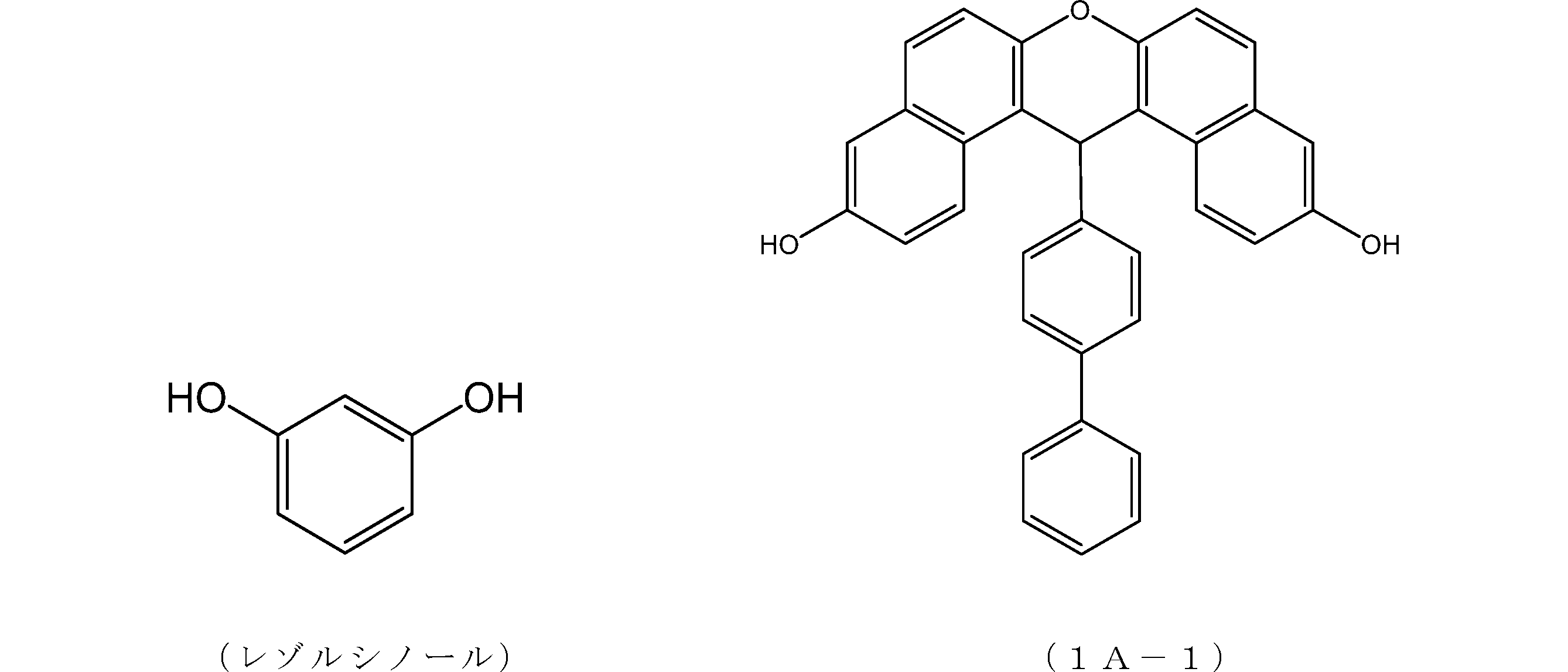
得られた重合体について、上述の方法によりポリスチレン換算分子量を測定した結果、Mn:4682、Mw:5850、Mw/Mn:1.2であった。
得られた重合体について、上述の測定条件でNMR測定を行ったところ、以下のピークが見出され、下記式の化学構造を有し且つ構成単位の芳香環同士が直接結合していることを確認した。
δ(ppm)10.0(2H,-OH)、9.3~9.7(2H,O-H)、7.2~8.5(17H,Ph-H)、6.3~7.0(2H,Ph-H)、6.7~6.9(1H,C-H)
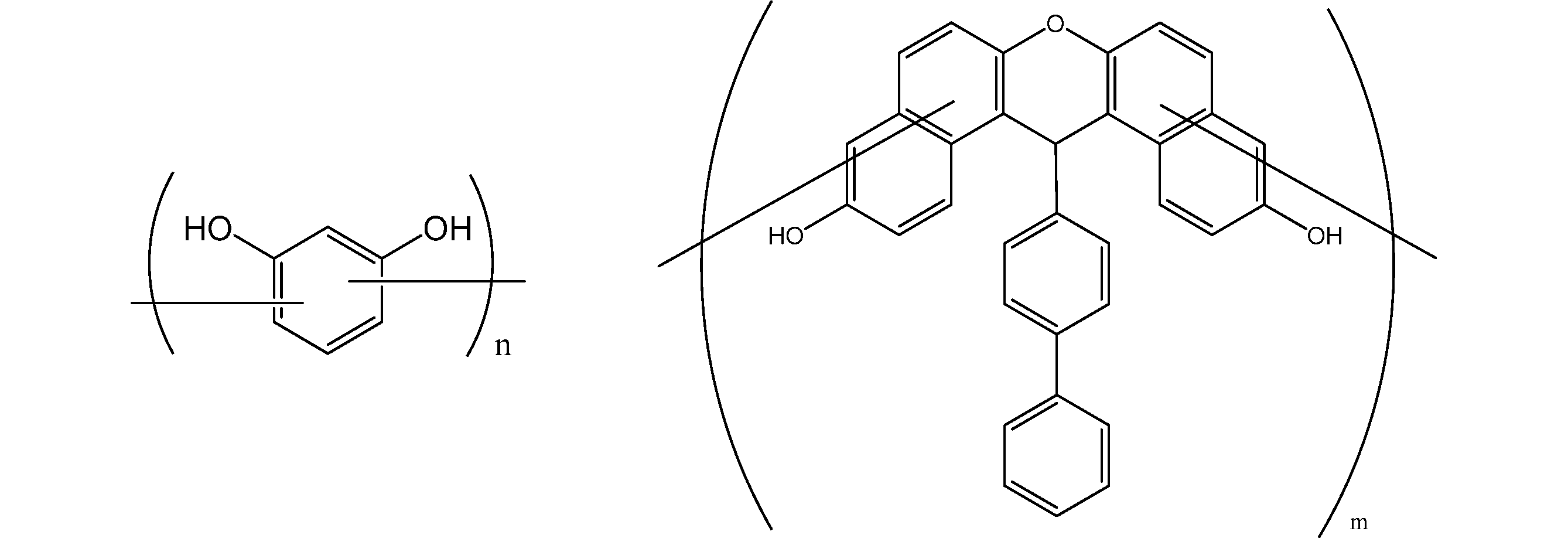
(R1A-1)
合成実施例1A-1aにおいて、クロロホルムの代わりにブタノールを用い、フタル酸モノブチル銅の代わりに酢酸銅一水和物を用い、反応液を“61℃で6時間撹拌”の代わりに“110℃で12時間撹拌”を適用したことを除き、合成実施例1A-1と同様に重合体(R1A-1a)を合成した。
合成実施例1A-1bにおいて、さらに、レゾルシノール11.0g(100mmol)、及び、化合物(1A-1)46.7g(100mmol)の代わりに、レゾルシノール7.4g(67mmol)、及び、化合物(1A-1)15.4g(33mmol)を用いたことを除き、合成実施例1A-1aと同様に重合体(R1A-1b)を合成した。
Mn:4264、Mw:6861、Mw/Mn:1.6
δ(ppm)10.0(2H,-OH)、9.3~9.7(2H,O-H)、7.2~8.5(17H,Ph-H)、6.3~7.0(2H,Ph-H)、6.7~6.9(1H,C-H)
(R1A-1b)
Mn:6380、Mw:11050、Mw/Mn:1.7
δ(ppm)10.0(13H,-OH)、9.3~9.7(6H,O-H)、7.2~8.5(51H,Ph-H)、6.3~7.0(13H,Ph-H)、6.7~6.9(3H,C-H)
合成実施例1A-2~1A-15において、化合物(1A-1)の代わりに、それぞれ、下記化合物(1A-2)~(1A-15)を使用したことを除き、合成実施例1A-1と同様に重合体(R1A-2)~(R1A-15)を合成した。

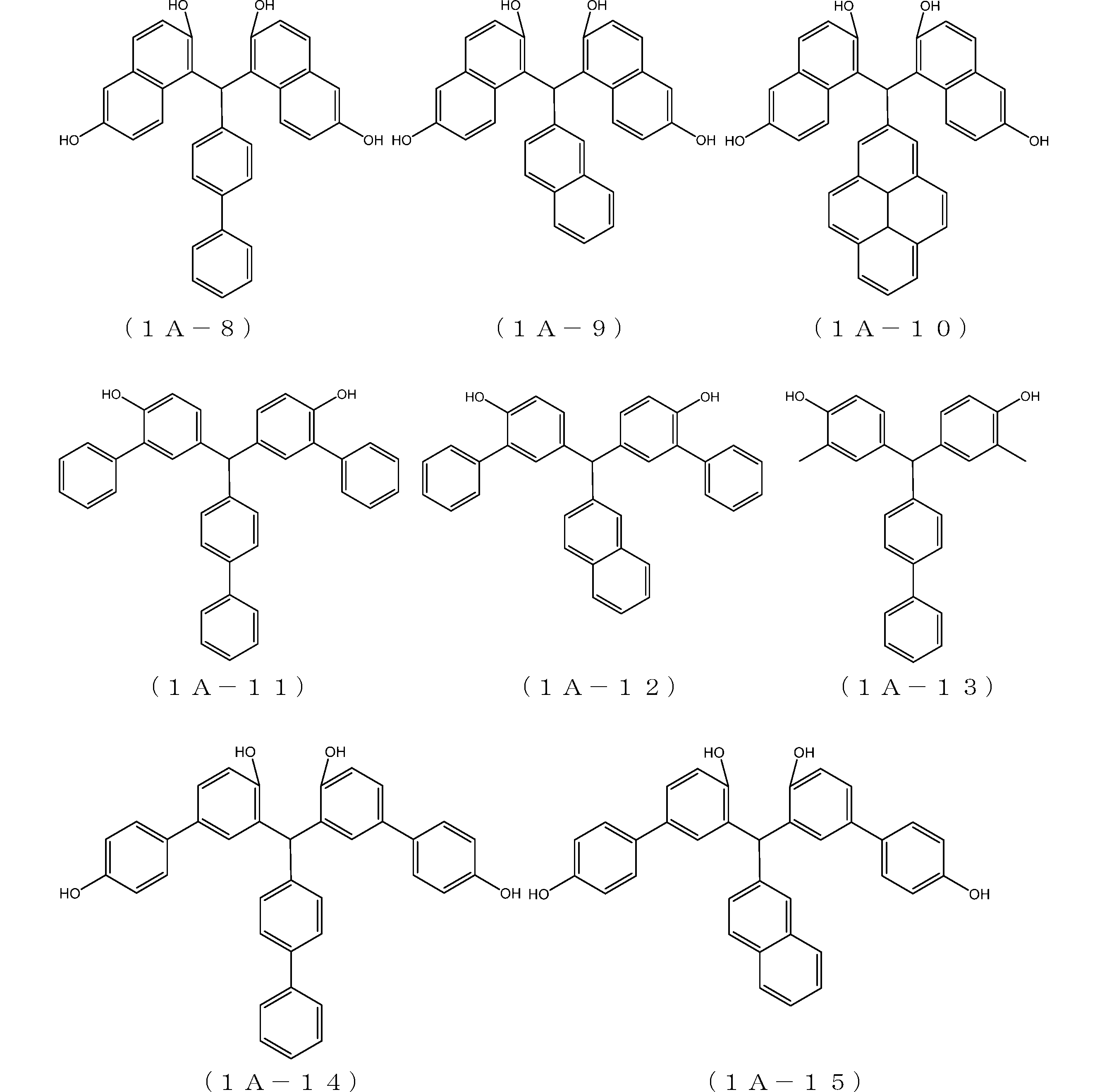
Mn:824、Mw:1122、Mw/Mn:1.4
δ(ppm)10.0(2H,-OH)、9.3~9.7(2H,O-H)、7.2~8.5(13H,Ph-H)、6.3~7.0(2H,Ph-H)、6.7~6.9(1H,C-H)
(R1A-3)
Mn:857、Mw:1102、Mw/Mn:1.3
δ(ppm)10.0(2H,-OH)、9.3~9.7(2H,O-H)、7.2~8.5(15H,Ph-H)、6.3~7.0(2H,Ph-H)、6.7~6.9(1H,C-H)
(R1A-4)
Mn:904、Mw:1248、Mw/Mn:1.4
δ(ppm)10.0(2H,-OH)、9.3~9.7(2H,O-H)、7.2~8.5(17H,Ph-H)、6.3~7.0(2H,Ph-H)、6.7~6.9(1H,C-H)
(R1A-5)
Mn:892、Mw:1055、Mw/Mn:1.2
δ(ppm)10.0(2H,-OH)、9.3~9.7(2H,O-H)、7.2~8.5(17H,Ph-H)、6.3~7.0(2H,Ph-H)、6.7~6.9(1H,C-H)
(R1A-6)
Mn:902、Mw:1212、Mw/Mn:1.3
δ(ppm)10.0(2H,-OH)、9.3~9.7(2H,O-H)、7.2~8.5(17H,Ph-H)、6.3~7.0(2H,Ph-H)、6.7~6.9(1H,C-H)
(R1A-7)
Mn:856、Mw:1192、Mw/Mn:1.4
δ(ppm)10.0(2H,-OH)、9.3~9.7(2H,O-H)、7.2~8.5(17H,Ph-H)、6.3~7.0(2H,Ph-H)、6.7~6.9(1H,C-H)
(R1A-8)
Mn:876、Mw:1140、Mw/Mn:1.3
δ(ppm)10.0(2H,-OH)、9.3~9.7(4H,O-H)、7.2~8.5(17H,Ph-H)、6.3~7.0(2H,Ph-H)、6.7~6.9(1H,C-H)
(R1A-9)
Mn:852、Mw:1104、Mw/Mn:1.3
δ(ppm)10.0(2H,-OH)、9.3~9.7(4H,O-H)、7.2~8.5(15H,Ph-H)、6.3~7.0(2H,Ph-H)、6.7~6.9(1H,C-H)
(R1A-10)
Mn:900、Mw:1202、Mw/Mn:1.3
δ(ppm)10.0(2H,-OH)、9.3~9.7(4H,O-H)、7.2~8.5(17H,Ph-H)、6.3~7.0(2H,Ph-H)、6.7~6.9(1H,C-H)
(R1A-11)
Mn:922、Mw:1246、Mw/Mn:1.4
δ(ppm)10.0(2H,-OH)、9.3~9.7(2H,O-H)、7.2~8.5(23H,Ph-H)、6.3~7.0(2H,Ph-H)、6.7~6.9(1H,C-H)
(R1A-12)
Mn:856、Mw:1168、Mw/Mn:1.4
δ(ppm)10.0(2H,-OH)、9.3~9.7(2H,O-H)、7.2~8.5(21H,Ph-H)、6.3~7.0(2H,Ph-H)、6.7~6.9(1H,C-H)
(R1A-13)
Mn:892、Mw:1196、Mw/Mn:1.3
δ(ppm)10.0(2H,-OH)、9.3~9.7(2H,O-H)、7.2~8.5(13H,Ph-H)、6.3~7.0(2H,Ph-H)、6.7~6.9(1H,C-H)、2.0~2.1(6H,ーCH3)
(R1A-14)
Mn:898、Mw:1192、Mw/Mn:1.3
δ(ppm)10.0(2H,-OH)、9.3~9.7(4H,O-H)、7.2~8.5(21H,Ph-H)、6.3~7.0(2H,Ph-H)、6.7~6.9(1H,C-H)
(R1A-15)
Mn:898、Mw:1222、Mw/Mn:1.4
δ(ppm)10.0(2H,-OH)、9.3~9.7(2H,O-H)、7.2~8.5(19H,Ph-H)、6.3~7.0(2H,Ph-H)、6.7~6.9(1H,C-H)
攪拌機、冷却管及びビュレットを備えた内容積1000mLの容器に、下記式で表されるレゾルシノール(東京化成工業(株)製)11.0g(100mmol)と、2-ナフトール(東京化成工業(株)製)(下記化合物1B-1)14.4g(100mmol)と、フタル酸モノブチル銅20.2g(40mmol)と、を仕込み、溶媒としてクロロホルムを200mL加えて、反応液を61℃で6時間撹拌して反応を行った。

得られた重合体について、上述の方法によりポリスチレン換算分子量を測定した結果、Mn:824、Mw:1002、Mw/Mn:1.2であった。
得られた重合体について、上述の測定条件でNMR測定を行ったところ、以下のピークが見出され、下記式の化学構造を有し且つ構成単位の芳香環同士が直接結合していることを確認した。
δ(ppm)10.0(2H,-OH)、9.2(1H,-OH)、7.1~8.0(5H,Ph-H)、6.3~7.0(2H,Ph-H)

合成実施例1B-2~1B-8において、化合物(1B-1)の代わりに、それぞれ、下記化合物(1B-2)~(1B-8)を使用したことを除き、合成実施例1B-1と同様に重合体(R1B-2)~(R1B-8)を合成した。
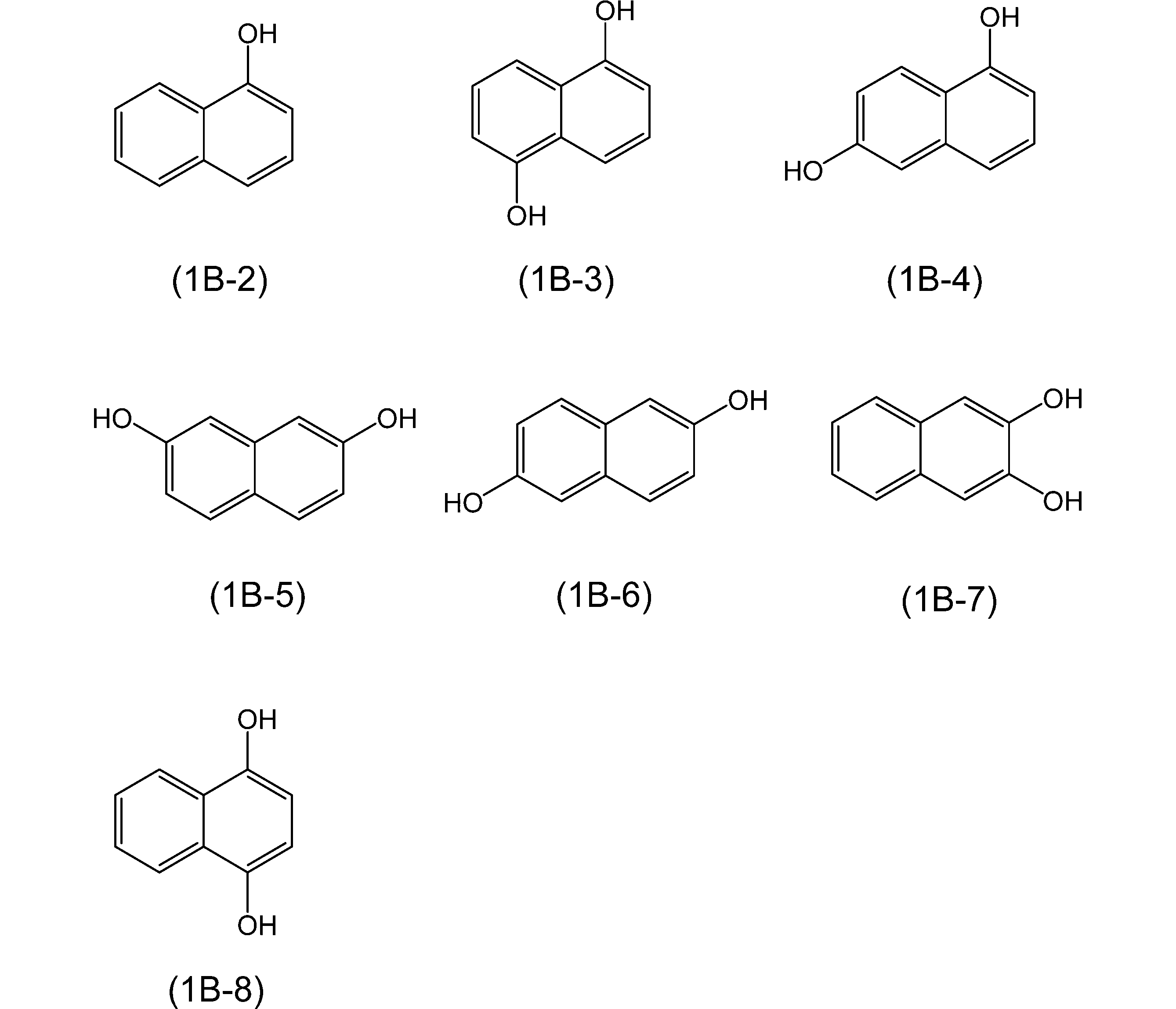
Mn:898、Mw:1115、Mw/Mn:1.2
δ(ppm)10.0(2H,-OH)、9.2(1H,-OH)、7.1~8.0(5H,Ph-H)、6.3~7.0(2H,Ph-H)
(R1B-3)
Mn:920、Mw:1222、Mw/Mn:1.3
δ(ppm)10.0(2H,-OH)、9.2(2H,-OH)、7.1~8.0(4H,Ph-H)、6.3~7.0(2H,Ph-H)
(R1B-4
Mn:900、Mw:1156、Mw/Mn:1.3
δ(ppm)10.0(2H,-OH)、9.2(2H,-OH)、7.1~8.0(4H,Ph-H)、6.3~7.0(2H,Ph-H)
(R1B-5)
Mn:802、Mw:966、Mw/Mn:1.2
δ(ppm)10.0(2H,-OH)、9.2(2H,-OH)、7.1~8.0(4H,Ph-H)、6.3~7.0(2H,Ph-H)
(R1B-6)
Mn:822、Mw:1012、Mw/Mn:1.2
δ(ppm)10.0(2H,-OH)、9.2(2H,-OH)、7.1~8.0(4H,Ph-H)、6.3~7.0(2H,Ph-H)
(R1B-7)
Mn:802、Mw:965、Mw/Mn:1.2
δ(ppm)10.0(2H,-OH)、9.2(2H,-OH)、7.1~8.0(4H,Ph-H)、6.3~7.0(2H,Ph-H)
(R1B-8)
Mn:800、Mw:970、Mw/Mn:1.2
δ(ppm)10.0(2H,-OH)、9.2(2H,-OH)、7.1~8.0(4H,Ph-H)、6.3~7.0(2H,Ph-H)
攪拌機、冷却管及びビュレットを備えた内容積1000mLの容器に、下記式で表されるレゾルシノール(東京化成工業(株)製)11.0g(100mmol)と、化合物1C-1(29.0g(100mmol)と、フタル酸モノブチル銅20.2g(40mmol)と、を仕込み、溶媒としてクロロホルムを200mL加えて、反応液を61℃で6時間撹拌して反応を行った。

得られた重合体について、上述の方法によりポリスチレン換算分子量を測定した結果、Mn:1024、Mw:1242、Mw/Mn:1.2であった。
得られた重合体について、上述の測定条件でNMR測定を行ったところ、以下のピークが見出され、下記式の化学構造を有し且つ構成単位の芳香環同士が直接結合していることを確認した。
δ(ppm)δ(ppm)10.0(2H,-OH)、9.1(2H,-OH)、6.2~7.1(14H,-Ph)、4.1(4H,-CH2-)

合成実施例1C-2~1C-4において、化合物(1C-1)の代わりに、それぞれ、下記化合物(1C-2)~(1C-4)を使用したことを除き、合成実施例1C-1と同様に重合体(R1C-2)~(R1C-4)を合成した。
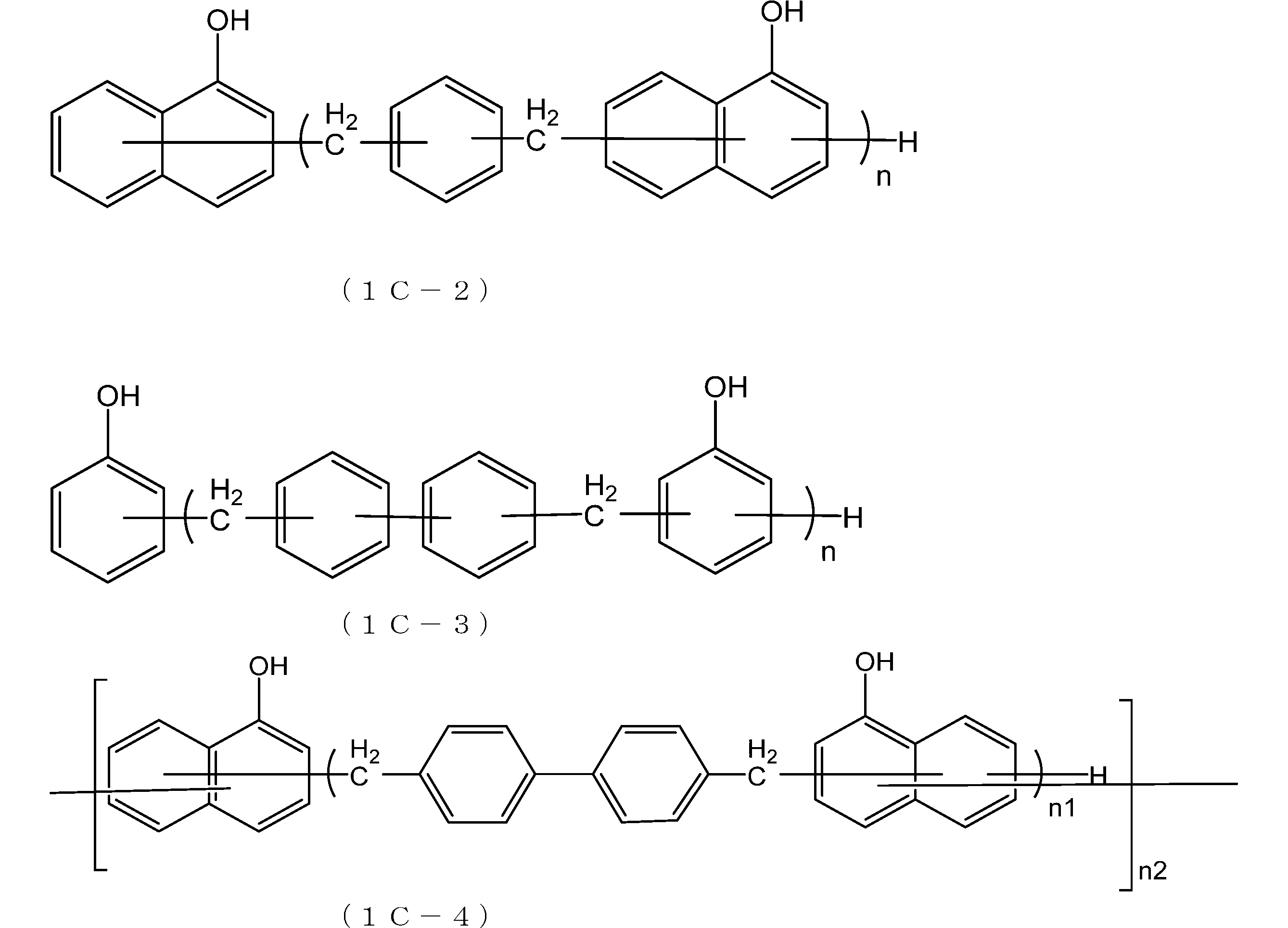
Mn:1001、Mw:1221、Mw/Mn:1.2
δ(ppm)10.0(2H,-OH)、9.1(2H,-OH)、6.2~7.1(16H,-Ph)、4.1(4H,-CH2-)
(R1C-3)
Mn:1002、Mw:1198、Mw/Mn:1.2
δ(ppm)10.0(2H,-OH)、9.1(2H,-OH)、6.2~7.1(18H,-Ph)、4.1(4H,-CH2-)
(R1C-4)
Mn:1002、Mw:1120、Mw/Mn:1.1
δ(ppm)10.0(2H,-OH)、9.1(2H,-OH)、6.2~7.1(22H,-Ph)、4.1(4H,-CH2-)
攪拌機、冷却管及びビュレットを備えた内容積1000mLの容器に、下記式で表されるレゾルシノール(東京化成工業(株)製)11.0g(100mmol)、4-t-ブチルカリックス[4]アレーン(東京化成工業(株)製)(化合物1D-1)64.9g(100mmol)と、フタル酸モノブチル銅20.2g(40mmol)と、を仕込み、溶媒としてクロロホルムを200mL加えて、反応液を61℃で6時間撹拌して反応を行った。

得られた重合体について、上述の方法によりポリスチレン換算分子量を測定した結果、Mn:4084、Mw:5212、Mw/Mn:1.3であった。
得られた重合体について、上述の測定条件でNMR測定を行ったところ、以下のピークが見出され、下記式の化学構造を有し且つ構成単位の芳香環同士が直接結合していることを確認した。
δ(ppm)10.2(4H,O-H)、10.0(2H,-OH)、7.1~7.3(6H,Ph-H)、6.3~7.0(2H,Ph-H)、3.5~4.3(8H,C-H)、1.2(36H,-CH3)
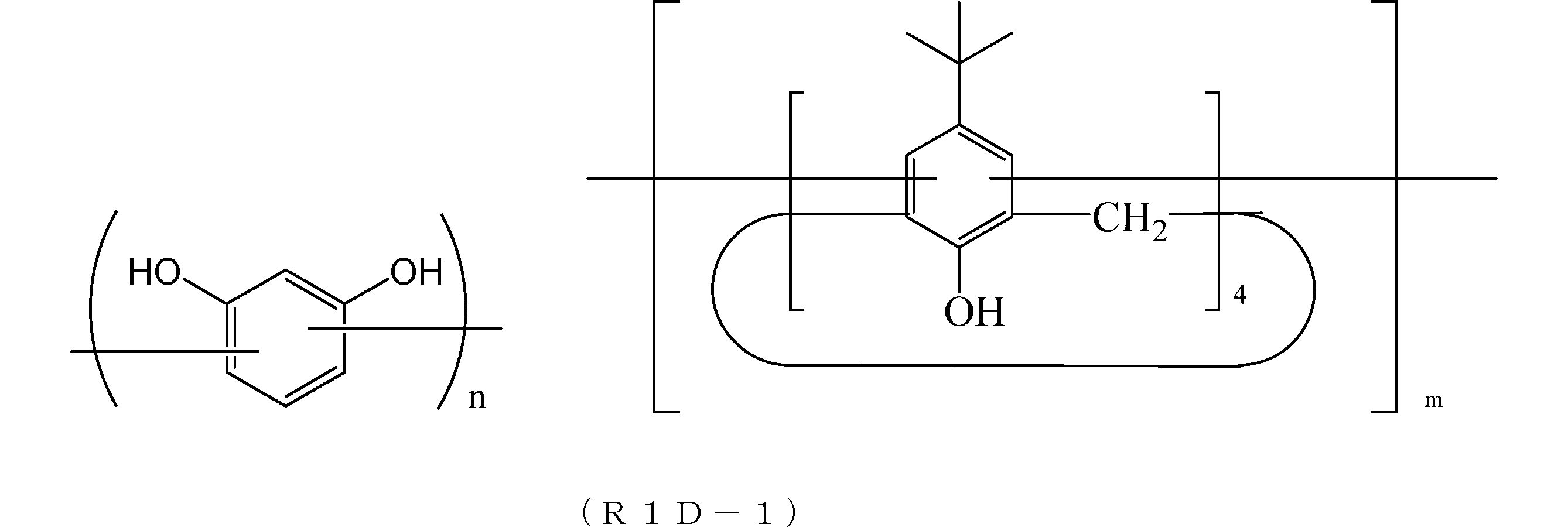
合成実施例1D-2~1D-5において、化合物(1D-1)の代わりに、それぞれ、下記化合物(1D-2)~(1D-5)を使用したことを除き、合成実施例1D-1と同様に重合体(R1D-2)~(R1D-5)を合成した。

Mn:4024、Mw:5202、Mw/Mn:1.3
δ(ppm)10.0(2H,-OH)、8.4~8.5(8H,O-H)、6.0~7.0(24H,Ph-H)、5.5~5.6(4H,C-H)、0.8~1.9(44H,-シクロヘキシル基)
(R1D-3)
Mn:3980、Mw:5002、Mw/Mn:1.3
δ(ppm)10.0(2H,-OH)、8.4~8.5(8H,O-H)、6.0~7・0(24H,Ph-H)、5.5~5.6(4H,C-H)
(R1D-4)
Mn:3898、Mw:4988、Mw/Mn:1.3
δ(ppm)10.0(2H,-OH)、9.0~9.6(12H,O-H)、5.9~8.7(36H,Ph-H,C-H)
(R1D-5)
Mn:4034、Mw:5112、Mw/Mn:1.3
δ(ppm)10.0(2H,-OH)、9.2~9.6(8H,O-H)、5.9~8.7(36H,Ph-H,C-H)
攪拌機、冷却管及びビュレットを備えた内容積1000mLの容器に、下記式で表されるレゾルシノール(東京化成工業(株)製)11.0g(100mmol)、インドール(化合物1E-1)11.7g(100mmol)とフタル酸モノブチル銅を20.2g(40mmol)仕込み、溶媒としてクロロホルムを200mL加えて、反応液を61℃で6時間撹拌して反応を行った。

得られた重合体について、上述の方法によりポリスチレン換算分子量を測定した結果、Mn:1050、Mw:1250、Mw/Mn:1.2であった。
得られた重合体について、上述の測定条件でNMR測定を行ったところ、以下のピークが見出され、下記式の化学構造を有し且つ構成単位の芳香環同士が直接結合していることを確認した。
δ(ppm)10.1(1H,N-H)、10.0(2H,-OH)、6.3~7.0(2H,Ph-H)、6.4~7.6(4H,Ph-H)
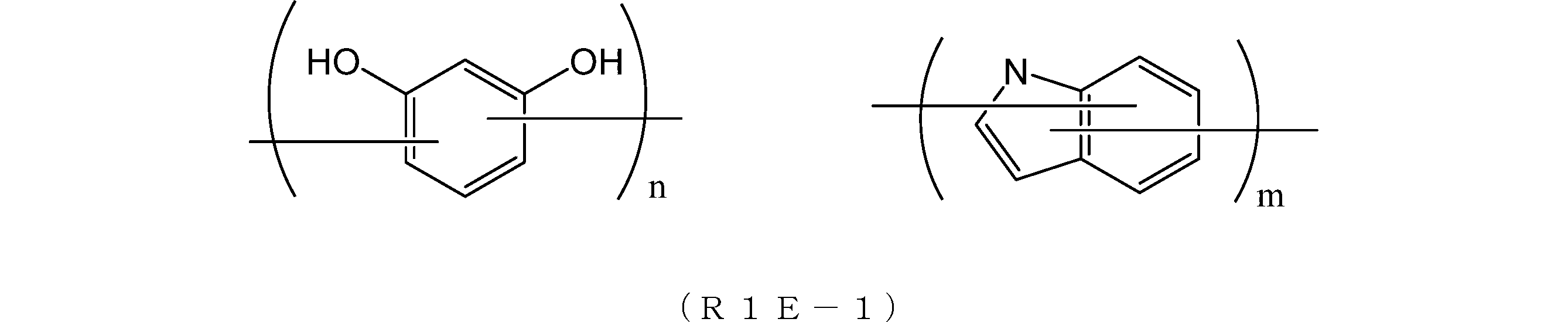
合成実施例1E-2~1E-6において、化合物(1D-1)の代わりに、それぞれ、下記化合物(1E-2)~(1E-6)を使用したことを除き、合成実施例1D-1と同様に重合体を合成した。
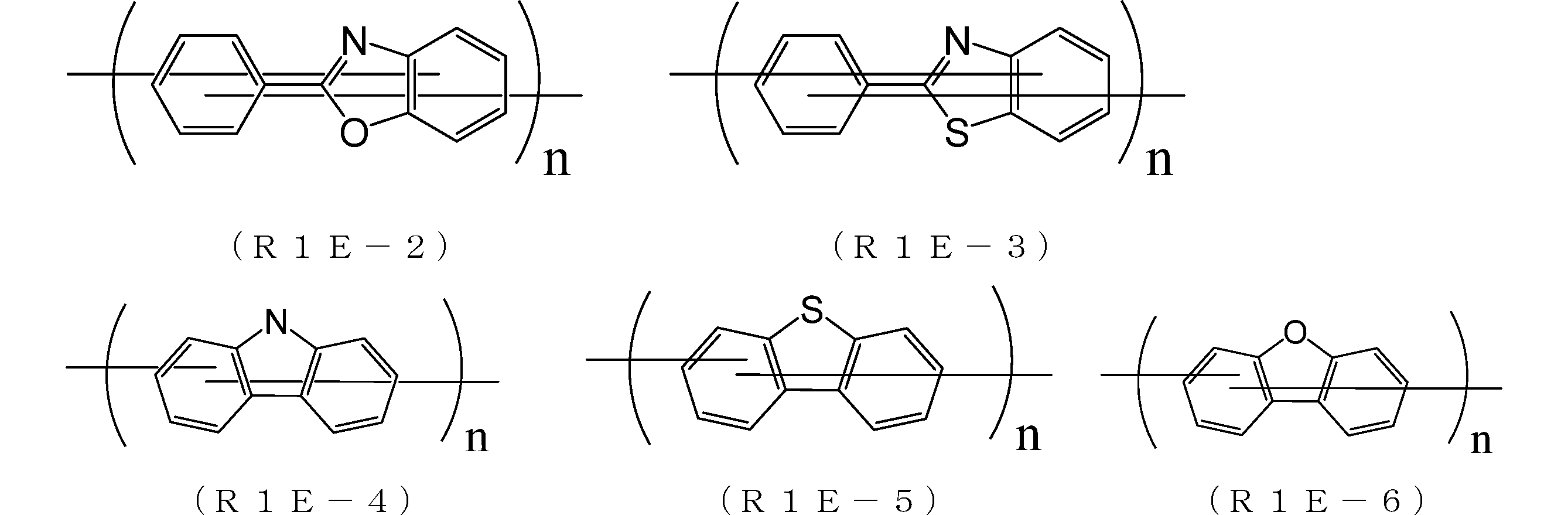
Mn:1000、Mw:1228、Mw/Mn:1.2
δ(ppm)10.0(2H,-OH)、7.3~8.2(7H,Ph-H)、6.3~7.0(2H,Ph-H)
(R1E-3)
Mn:1012、Mw:1220、Mw/Mn:1.2
δ(ppm)10.0(2H,-OH)、7.5~8.2(7H,Ph-H)、6.3~7.0(2H,Ph-H)(R1Eー4)
(R1E-4)
Mn:989、Mw:1198、Mw/Mn:1.2
δ(ppm)12.1(1H,N-H)、10.0(2H,-OH)、7.2~8.2(6H,Ph-H)、6.3~7.0(2H,Ph-H)(R1Eー5)
(R1E-5)
Mn:996、Mw:1186、Mw/Mn:1.2
δ(ppm)10.0(2H,-OH)、7.4~8.5(6H,Ph-H)、6.3~7.0(2H,Ph-H)(R1Eー6)
(R1E-6)
Mn:998、Mw:1198、Mw/Mn:1.2
δ(ppm)10.0(2H,-OH)、7.3~8.0(6H,Ph-H)、6.3~7.0(2H,Ph-H)
攪拌機、冷却管及びビュレットを備えた内容積500mLの容器に、2,7-ナフタレンジオール(シグマ-アルドリッチ社製試薬)32.0g(200mmol)と、4-ビフェニルアルデヒド(三菱瓦斯化学(株)製)18.2g(100mmol)と、1,4-ジオキサン200mLと、を仕込み、95%の硫酸10mLを加えて、100℃で6時間撹拌して反応を行った。次に、24%水酸化ナトリウム水溶液にて反応液を中和し、純水100gを加えて反応生成物を析出させ、室温まで冷却した後、濾過を行って固形物を分離した。得られた固形物を乾燥させた後、カラムクロマトによる分離精製を行うことにより、下記式で表される目的化合物(BisN-1)25.5gを得た。
なお、400MHz-1H-NMRにより以下のピークが見出され、得られた化合物が下記式の化学構造を有することを確認した。また、2,7-ジヒドロキシナフトールの置換位置が1位であることは、3位と4位のプロトンのシグナルがダブレットであることから確認した。
1H-NMR:(d-DMSO、内部標準TMS)
δ(ppm)9.6(2H,O-H)、7.2~8.5(19H,Ph-H)、6.6(1H,C-H)
また、LC-MS分析により、分子量が下記化学構造相当の466であることが確認された。

得られた重合体について、上述の方法によりポリスチレン換算分子量を測定した結果、Mn:1278、Mw:1993、Mw/Mn:1.56であった。
得られた重合体について、前記測定条件でNMR測定を行ったところ、以下のピークが見出され、下記式の化学構造を有することを確認した。
δ(ppm)9.7(2H,O-H)、7.2~8.5(17H,Ph-H)、6.6(1H,C-H)、4.1(2H,-CH2)

ジムロート冷却管、温度計及び攪拌翼を備えた、底抜きが可能な内容積10Lの四つ口フラスコを準備した。この四つ口フラスコに、窒素気流中、1,5-ジメチルナフタレン1.09kg(7mol、三菱ガス化学(株)製)、40質量%ホルマリン水溶液2.1kg(ホルムアルデヒドとして28mol、三菱ガス化学(株)製)及び98質量%硫酸(関東化学(株)製)0.97mLを仕込み、常圧下、100℃で還流させながら7時間反
応させた。その後、希釈溶媒としてエチルベンゼン(和光純薬工業(株)製試薬特級)1.8kgを反応液に加え、静置後、下相の水相を除去した。さらに、中和及び水洗を行い、エチルベンゼン及び未反応の1,5-ジメチルナフタレンを減圧下で留去することにより、淡褐色固体のジメチルナフタレンホルムアルデヒド樹脂1.25kgを得た。
各合成実施例、及び比較合成例1で得られた重合体を用いて、以下に示す評価方法によって、耐熱性を評価した結果を表1に示す。
エスアイアイ・ナノテクノロジー社製のEXSTAR6000TG/DTA装置を使用し、試料約5mgをアルミニウム製非密封容器に入れ、窒素ガス(30mL/min)気流中昇温速度10℃/minで700℃まで昇温した。その際、10重量%の熱減量が観測される温度を熱分解温度(Tg)とし、以下の基準で耐熱性を評価した。
A:熱分解温度が430℃以上
B:熱分解温度が375℃以上430未満
C:熱分解温度が320℃未満375℃未満
23℃にて、各例で得られた重合体をシクロヘキサノン(CHN)に対して5質量%溶液になるよう溶解させた。その後、10℃にて30日間静置したときのCHN溶液の外観を以下の基準にて評価した。
A:目視にて析出物がないことを確認した。
C:目視にて析出物があることを確認した。

《リソグラフィー用下層膜形成用組成物の調製》
表2に示す組成となるように、リソグラフィー用下層膜形成用組成物を調製した。次に、これらのリソグラフィー用下層膜形成用組成物をシリコン基板上に回転塗布し、その後、窒素雰囲気下において、240℃で60秒間、さらに400℃で120秒間ベークして、膜厚200~250nmの下層膜を各々作製した。
エッチング装置:サムコインターナショナル社製「RIE-10NR」
出力:50W
圧力:20Pa
時間:2min
エッチングガス
Arガス流量:CF4ガス流量:O2ガス流量=50:5:5(sccm)
エッチング耐性の評価は、以下の手順で行った。まず、ノボラック(群栄化学(株)製「PSM4357」)を用いること以外は、上述の条件と同様にしてノボラックの下層膜を作製した。このノボラックの下層膜を対象として、上述のエッチング試験を行い、そのときのエッチングレートを測定した。
[評価基準]
A:ノボラックの下層膜に比べてエッチングレートが、-20%未満
B:ノボラックの下層膜に比べてエッチングレートが、-20%以上-10%以下
C:ノボラックの下層膜に比べてエッチングレートが、-10%超

重合体の精製前後の金属含有量と溶液の保存安定性とを以下の方法で評価した。
ICP-MS(Inductively Coupled Plasma Mass Spectrometry)を用いて下記測定条
件にて、以下の実施例、比較例によって得られた各種重合体のプロピレングリコールモノメチルエーテルアセテート(PGMEA)溶液中の金属含有量を測定した。
装置:アジレント社製AG8900
温度:25℃
環境:クラス100クリーンルーム
以下の各例によって得られたPGMEA溶液を23℃にて240時間保持した後の溶液の濁度(HAZE)を色差・濁度計を用いて測定し、以下の基準にて溶液の保存安定性を評価した。
装置:色差・濁度計COH400(日本電色(株)製)
光路長:1cm
石英セル使用
[評価基準]
0 ≦HAZE≦1.0 :良好
1.0<HAZE≦2.0 :可
2.0<HAZE :不良
1000mL容量の四つ口フラスコ(底抜き型)に、合成実施例1-1で得られた重合体(R1-1)をCHNに溶解させた溶液(10質量%)を150g仕込み、攪拌しながら80℃まで加熱した。次いで、得られた溶液に蓚酸水溶液(pH1.3)37.5gを加え、5分間攪拌後、30分間静置した。これにより油相と水相とに分離したのち、水相を除去した。この操作を1回繰り返した後、得られた油相に、超純水37.5gを仕込み、5分間攪拌後、30分静置し、水相を除去した。この操作を3回繰り返した後、80℃に加熱しながらフラスコ内を200hPa以下に減圧することで、残留水分及びCHNを濃縮留去した。その後、ELグレードのCHN(関東化学(株)製試薬)で希釈し、10質量%に濃度調整を行うことにより、金属含有量の低減された重合体(R1-1)のCHN溶液を得た。
蓚酸水溶液の代わりに、超純水を用いる以外は実施例F1と同様に実施し、10質量%に濃度調整を行うことにより、重合体(R1-1)のCHN溶液を得た。
1000mL容量の四つ口フラスコ(底抜き型)に、合成実施例1A-1で得られた重合体(R1A-1)をCHNに溶解させた溶液(10質量%)を140g仕込み、攪拌しながら60℃まで加熱した。次いで、得られた溶液に蓚酸水溶液(pH1.3)37.5gを加え、5分間攪拌後、30分間静置した。これにより油相と水相とに分離したのち、水相を除去した。この操作を1回繰り返した後、得られた油相に、超純水37.5gを仕込み、5分間攪拌後、30分静置し、水相を除去した。この操作を3回繰り返した後、80℃に加熱しながらフラスコ内を200hPa以下に減圧することで、残留水分及びCHNを濃縮留去した。その後、ELグレードのCHN(関東化学(株)製試薬)で希釈し、10質量%に濃度調整を行うことにより、金属含有量の低減された重合体(R1A-1)のCHN溶液を得た。
蓚酸水溶液の代わりに、超純水を用いる以外は実施例2Fと同様に実施し、10質量%に濃度調整を行うことにより、重合体(R1A-1)のCHN溶液を得た。
クラス1000のクリーンブース内にて、1000mL容量の四つ口フラスコ(底抜き型)に、合成実施例1-1で得られた重合体(R1-1)をCHNに溶解させた濃度10質量%の溶液を500g仕込み、続いて釜内部の空気を減圧除去した後、窒素ガスを導入して大気圧まで戻し、窒素ガスを毎分100mLで通気下、内部の酸素濃度を1%未満に調整した後、攪拌しながら30℃まで加熱した。底抜きバルブから前記溶液を抜き出し、フッ素樹脂製の耐圧チューブを経由してダイヤフラムポンプで毎分100mLの流量で公称孔径が0.01μmのナイロン製中空糸膜フィルター(キッツマイクロフィルター(株)製、商品名:ポリフィックスナイロンシリーズ)に通液した。得られた重合体(R1-1)の溶液の各種金属含有量をICP-MSによって測定した。なお、酸素濃度はアズワン(株)製の酸素濃度計「OM-25MF10」により測定した(以下も同様)。測定結果を表3に示す。
公称孔径が0.01μmのポリエチレン(PE)製の中空糸膜フィルター(キッツマイクロフィルター(株)製、商品名:ポリフィックス)を使用した以外は、実施例3Fと同様に通液し、得られた重合体(R1-1)溶液の各種金属含有量をICP-MSによって測定した。測定結果を表3に示す。
公称孔径が0.04μmのナイロン製中空糸膜フィルター(キッツマイクロフィルター(株)製、商品名:ポリフィックス)を使用した以外は、実施例3Fと同様に通液し、得られた重合体(R1-1)溶液の各種金属含有量をICP-MSによって測定した。測定結果を表3に示す。
公称孔径が0.2μmのゼータ電位フィルター(ゼータプラスフィルター40QSH(スリーエム(株)製、イオン交換能あり))を使用した以外は、実施例3Fと同様に通液し、得られた重合体(R1-1)溶液の各種金属含有量をICP-MSによって測定した。測定結果を表3に示す。
公称孔径が0.2μmのゼータ電位フィルター(ゼータプラスフィルター020GN(スリーエム(株)製、イオン交換能あり、ゼータプラスフィルター40QSHとはろ過面積及びろ材厚みが異なる))を使用した以外は、実施例3Fと同様に通液し、得られた重合体(R1-1)溶液の各種金属含有量をICP-MSによって測定した。測定結果を表3に示す。
実施例3Fにおける重合体(R1-1)の代わりに、合成実施例1A-1で得られた重合体(R1A-1)を使用した以外は、実施例3Fと同様に通液し、得られた重合体(R1A-1)溶液の各種金属含有量をICP-MSによって測定した。測定結果を表3に示す。
実施例4Fにおける重合体(R1-1)の代わりに、合成実施例1A-1で得られた重合体(R1A-1)を使用した以外は、実施例4Fと同様に通液し、得られた重合体(R1A-1)溶液の各種金属含有量をICP-MSによって測定した。測定結果を表3に示す。
実施例5Fにおける重合体(R1-1)の代わりに、合成実施例1A-1で得られた重合体(R1A-1)を使用した以外は、実施例5Fと同様に通液し、得られた重合体(R1A-1)溶液の各種金属含有量をICP-MSによって測定した。測定結果を表3に示す。
実施例6Fにおける重合体(R1-1)の代わりに、合成実施例1A-1で得られた重合体(R1A-1)を使用した以外は、実施例6Fと同様に通液し、得られた重合体(R1A-1)溶液の各種金属含有量をICP-MSによって測定した。測定結果を表3に示す。
実施例7Fにおける重合体(R1-1)の代わりに、合成実施例1A-1で得られた重合体(R1A-1)を使用した以外は、実施例7Fと同様に通液し、得られた重合体(R1A-1)溶液の各種金属含有量をICP-MSによって測定した。測定結果を表3に示す。
クラス1000のクリーンブース内にて、300mL容量の四つ口フラスコ(底抜き型)に、実施例1Fによって得られた金属含有量の低減された重合体(R1-1)の10質量%CHN溶液を140g仕込み、続いて釜内部の空気を減圧除去した後、窒素ガスを導入して大気圧まで戻し、窒素ガスを毎分100mLで通気下、内部の酸素濃度を1%未満に調整した後、攪拌しながら30℃まで加熱した。底抜きバルブから前記溶液を抜き出し、フッ素樹脂製の耐圧チューブを経由してダイヤフラムポンプで毎分10mLの流量で公称孔径が0.01μmのイオン交換フィルター(日本ポール(株)製、商品名:イオンクリーンシリーズ)に通液した。その後、回収された溶液を前記300mL容量の四つ口フラスコに戻し、フィルターを公称口径1nmの高密度PE製フィルター(日本インテグリス(株)製)に変え、同様にポンプ通液を実施した。得られた重合体(R1-1)の溶液の各種金属含有量をICP-MSによって測定した。なお、酸素濃度はアズワン(株)製の酸素濃度計「OM-25MF10」により測定した。測定結果を表3に示す。
クラス1000のクリーンブース内にて、300mL容量の四つ口フラスコ(底抜き型)に、実施例1Fによって得られた金属含有量の低減された重合体(R1-1)の10質量%CHN溶液を140g仕込み、続いて釜内部の空気を減圧除去した後、窒素ガスを導入して大気圧まで戻し、窒素ガスを毎分100mLで通気下、内部の酸素濃度を1%未満に調整した後、攪拌しながら30℃まで加熱した。底抜きバルブから前記溶液を抜き出し、フッ素樹脂製の耐圧チューブを経由してダイヤフラムポンプで毎分10mLの流量で公称孔径が0.01μmのナイロン製中空糸膜フィルター(キッツマイクロフィルター(株)製、商品名:ポリフィックス)に通液した。その後、回収された溶液を前記300mL容量の四つ口フラスコに戻し、フィルターを公称口径1nmの高密度PE製フィルター(日本インテグリス社製)に変え、同様にポンプ通液を実施した。得られた重合体(R1-1)の溶液の各種金属含有量をICP-MSによって測定した。なお、酸素濃度はアズワン(株)製の酸素濃度計「OM-25MF10」により測定した。測定結果を表3に示す。
実施例1Fで使用した重合体(R1-1)の10質量%CHN溶液を実施例2Fによって得られた重合体(R1A-1)の10質量%CHN溶液に変えた以外は実施例13Fと同様の操作を行い、金属量の低減された重合体(R1A-1)の10質量%PGMEA溶液を回収した。得られた溶液の各種金属含有量をICP-MSによって測定した。なお、酸素濃度はアズワン(株)製の酸素濃度計「OM-25MF10」により測定した。測定結果を表3に示す。
実施例1Fで使用した重合体(R1-1)の10質量%CHN溶液を実施例2Fによって得られた重合体(R1A-1)の10質量%CHN溶液に変えた以外は実施例14Fと同様の操作を行い、金属量の低減された重合体(R1A-1)の10質量%PGMEA溶液を回収した。得られた溶液の各種金属含有量をICP-MSによって測定した。なお、酸素濃度はアズワン(株)製の酸素濃度計「OM-25MF10」により測定した。測定結果を表3に示す。
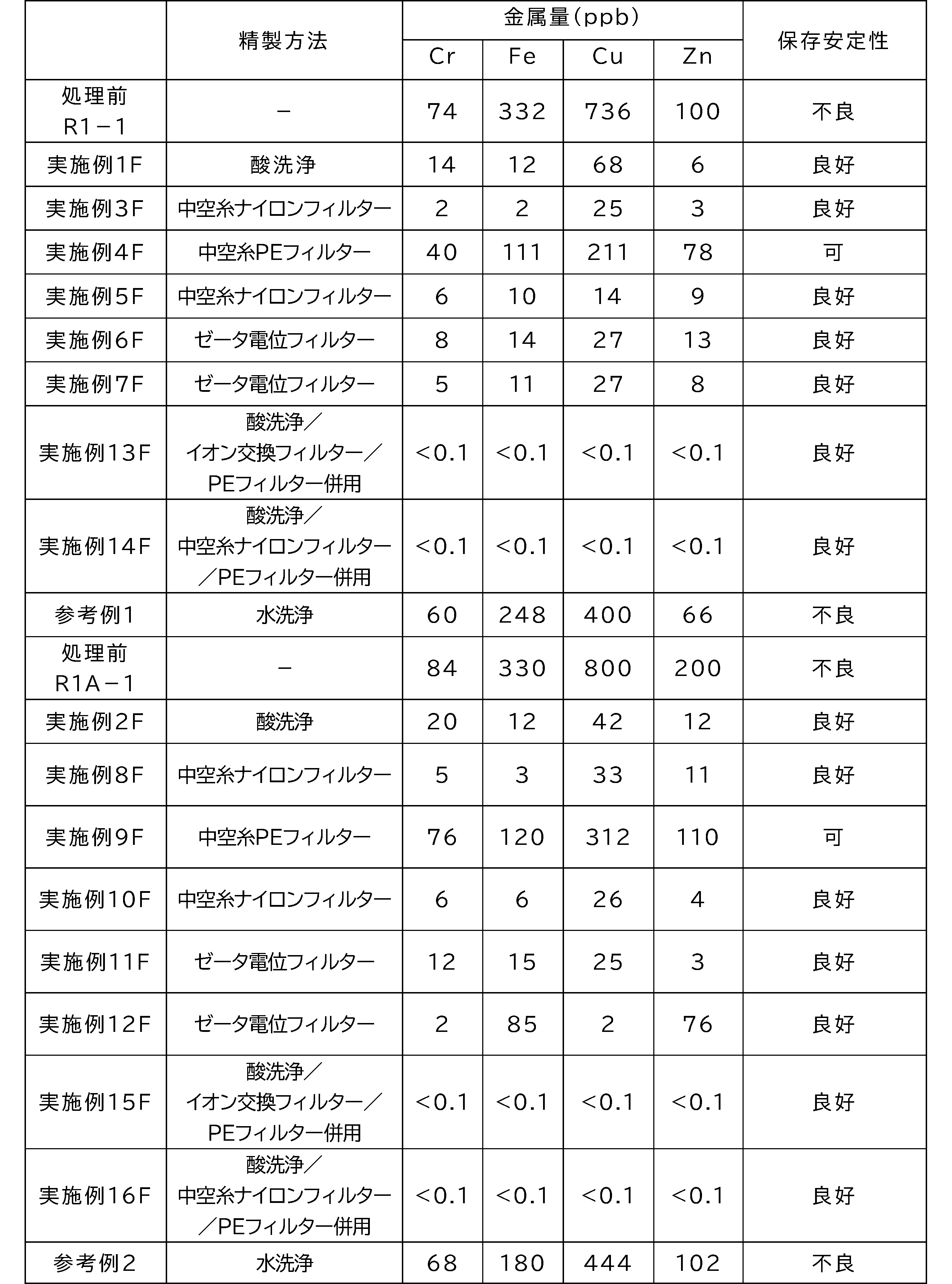
特に酸洗浄方法とイオン交換フィルター或いはナイロンフィルターを使用することで、イオン性の金属を効果的に低減し、高精細な高密度ポリエチレン製の微粒子除去フィルターを併用することで、劇的な金属除去効果を得ることができる。
<レジスト性能>
表4中に記載の合成実施例及び比較合成例1で得られた重合体を用いて、下記のレジスト性能評価を行った結果を表4に示す。
前記で合成した各重合体を用いて、表4に示す配合でレジスト組成物を調製した。なお、表4中のレジスト組成物の各成分のうち、酸発生剤(C)、酸拡散制御剤(E)及び溶媒については、以下のものを用いた。
酸発生剤(C)
P-1:トリフェニルベンゼンスルホニウム トリフルオロメタンスルホネート(みどり化学(株))
酸架橋剤(G)
C-1:ニカラックMW-100LM(三和ケミカル(株))
酸拡散制御剤(E)
Q-1:トリオクチルアミン(東京化成工業(株))
溶媒
S-1:CHN(東京化成工業(株))
均一なレジスト組成物を清浄なシリコンウェハー上に回転塗布した後、110℃のオーブン中で露光前ベーク(PB)して、厚さ60nmのレジスト膜を形成した。得られたレジスト膜に対して、電子線描画装置(ELS-7500、(株)エリオニクス社製)を用いて、50nm間隔の1:1のラインアンドスペース設定の電子線を照射した。電子線照射後に、レジスト膜を、それぞれ所定の温度で、90秒間加熱し、テトラメチルアンモニウムヒドロキシド(TMAH)2.38質量%のアルカリ現像液に60秒間浸漬して現像を行った。その後、レジスト膜を、超純水で30秒間洗浄、乾燥して、レジストパターンを形成した。
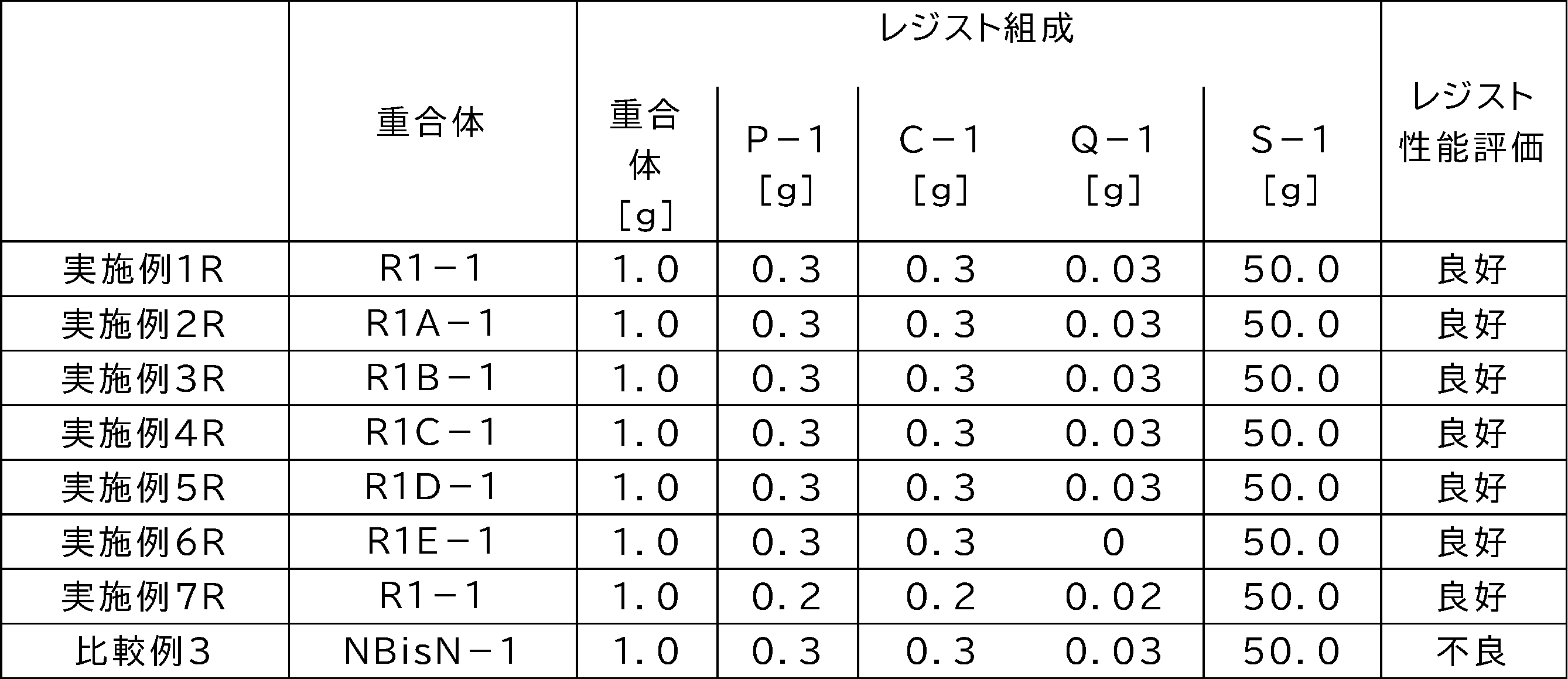
(感放射線性組成物の調製)
表5に記載の配合で成分を調合し、均一溶液としたのち、得られた均一溶液を、孔径0.1μmのテフロン(登録商標)製メンブランフィルターで濾過して、感放射線性組成物を調製した。調製した各々の感放射線性組成物について以下の評価を行った。

PHS-1:ポリヒドロキシスチレン Mw=8000(シグマ-アルドリッチ社)
また、光活性化合物(B)として、次のものを用いた。
B-1:下記化学構造式(G)のナフトキノンジアジド系感光剤(製品名「4NT-300」、東洋合成工業(株))
さらに、溶媒として、次のものを用いた。
S-1:CHN(東京化成工業(株))

前記で得られた感放射線性組成物を清浄なシリコンウェハー上に回転塗布した後、110℃のオーブン中で露光前ベーク(PB)して、厚さ200nmのレジスト膜を形成した。該レジスト膜に対して、紫外線露光装置(ミカサ製マスクアライナMA-10)を用いて紫外線を露光した。紫外線ランプは超高圧水銀ランプ(相対強度比はg線:h線:i線:j線=100:80:90:60)を使用した。照射後に、レジスト膜を、110℃で90秒間加熱し、TMAH2.38質量%アルカリ現像液に60秒間浸漬して現像を行った。その後、レジスト膜を、超純水で30秒間洗浄し、乾燥して、5μmのレジストパターンを形成した。
なお、各合成実施例で得られた重合体は、比較的に低分子量で低粘度であることから、これを用いたリソグラフィー用下層膜形成材料は埋め込み特性や膜表面の平坦性が比較的に有利に高められ得ると評価された。また、熱分解温度はいずれも430℃以上(評価A)であり、高い耐熱性を有するので、高温ベーク条件でも使用することができると評価された。これらの点を確認するべく、下層膜用途を想定し、以下の評価を行った。
(リソグラフィー用下層膜形成用組成物の調製)
表6に示す組成となるように、リソグラフィー用下層膜形成用組成物を調製した。次に、これらのリソグラフィー用下層膜形成用組成物をシリコン基板上に回転塗布し、その後、240℃で60秒間、さらに400℃で120秒間ベークして、膜厚200nmの下層膜を各々作製した。酸発生剤、架橋剤及び有機溶媒については以下のものを用いた。
・酸発生剤:
みどり化学(株)製 ジターシャリーブチルジフェニルヨードニウムノナフルオロメタンスルホナート(DTDPI)
・架橋剤:
三和ケミカル(株)製 ニカラックMX270(ニカラック)
本州化学工業社製 TMOM-BP(下記式で表される化合物)

・ノボラック:群栄化学(株)製 PSM4357
エッチング装置:サムコインターナショナル社製 RIE-10NR
出力:50W
圧力:20Pa
時間:2min
エッチングガス
Arガス流量:CF4ガス流量:O2ガス流量=50:5:5(sccm)
エッチング耐性の評価は、以下の手順で行った。まず、ノボラック(群栄化学(株)製「PSM4357」)を用いること以外は、前記条件と同様にしてノボラックの下層膜を作製した。このノボラックの下層膜を対象として、上述のエッチング試験を行い、そのときのエッチングレートを測定した。
[評価基準]
A:ノボラックの下層膜に比べてエッチングレートが、-20%未満
B:ノボラックの下層膜に比べてエッチングレートが、-20%以上0%以下
C:ノボラックの下層膜に比べてエッチングレートが、+0%超
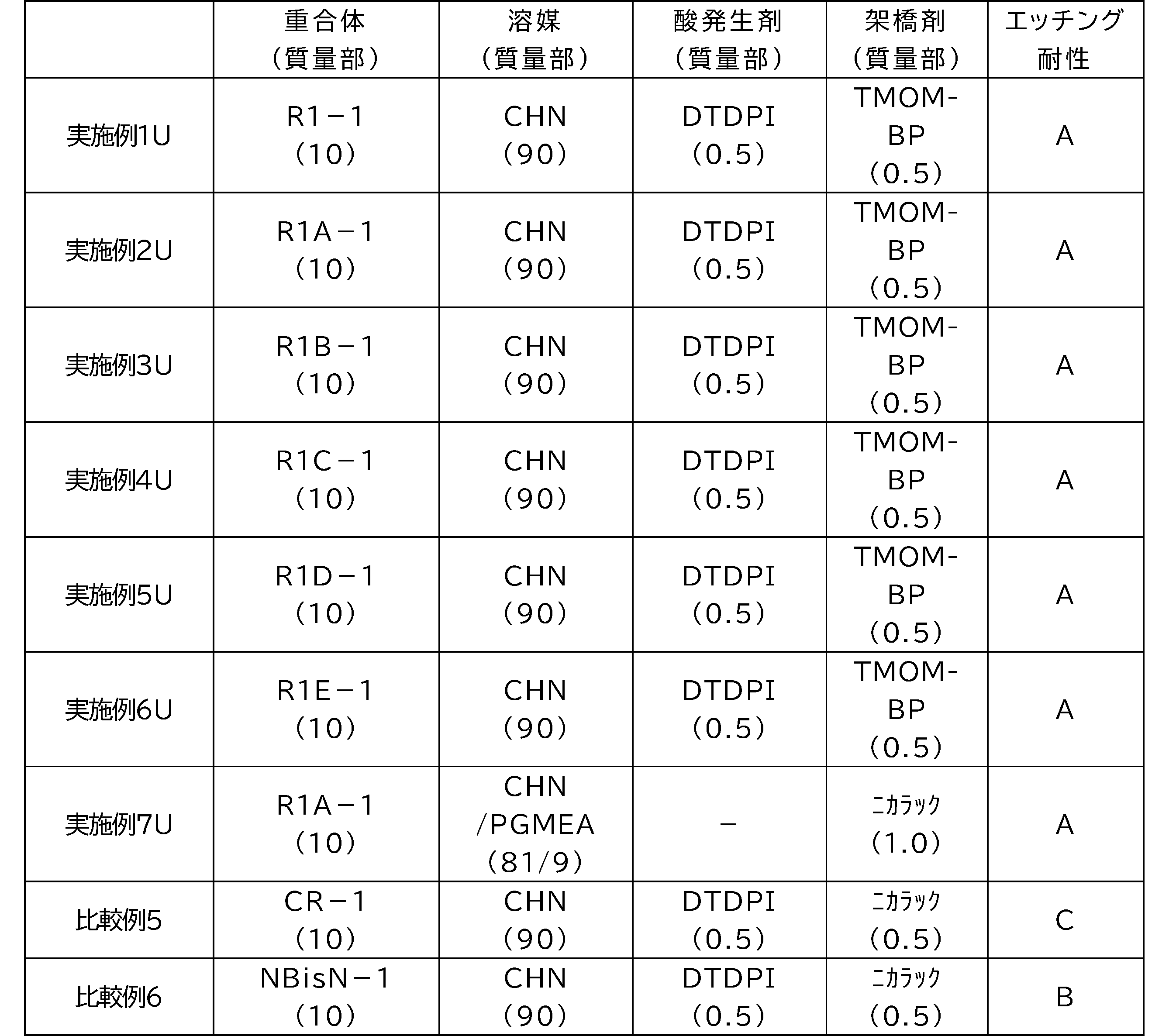
次に、表6中の各実施例,比較例5で調製したリソグラフィー用下層膜形成用組成物を膜厚80nmの60nmラインアンドスペースのSiO2基板上に塗布して、240℃で60秒間ベークすることにより90nmの下層膜を形成した。
埋め込み性の評価は、以下の手順で行った。前記条件で得られた膜の断面を切り出し、電子線顕微鏡にて観察し、埋め込み性を評価した。評価結果を表7に示す。
A:50nmラインアンドスペースのSiO2基板の凹凸部分に欠陥無く下層膜が埋め込まれている。
C:50nmラインアンドスペースのSiO2基板の凹凸部分に欠陥があり下層膜が埋め込まれていない。
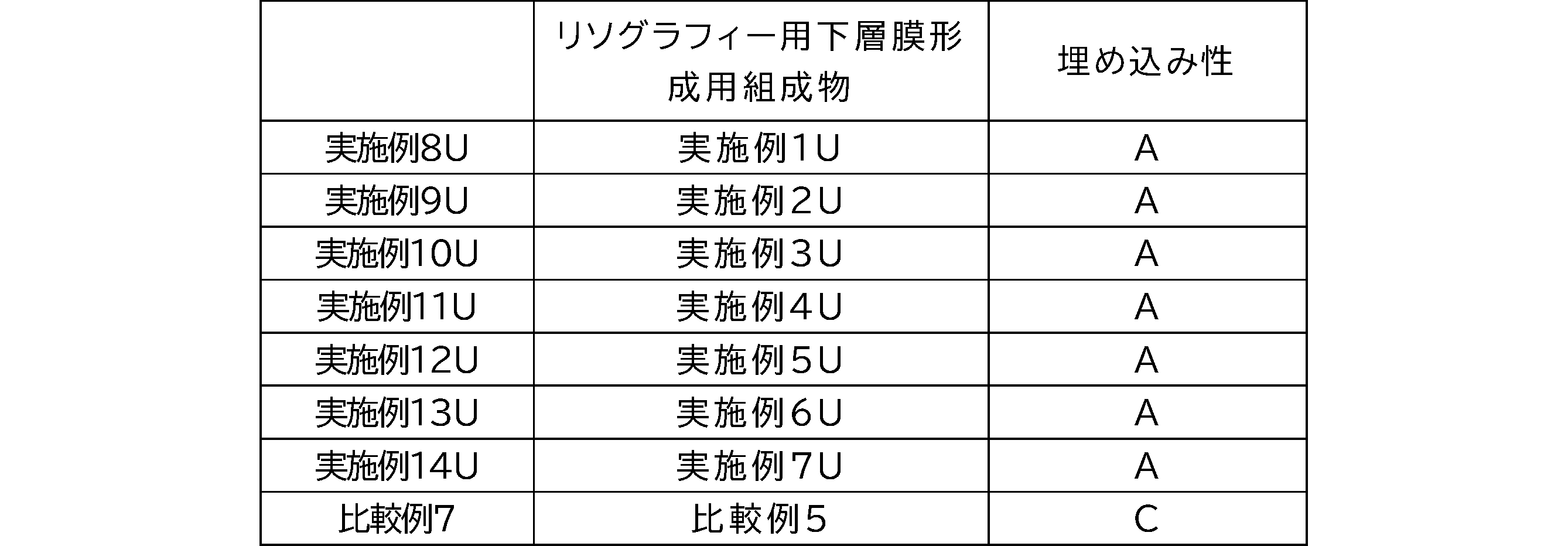
次に、表6中の各実施例で調製したリソグラフィー用下層膜形成用組成物を膜厚300nmのSiO2基板上に塗布して、240℃で60秒間、さらに400℃で120秒間ベークすることにより、膜厚85nmの下層膜を形成した。この下層膜上に、ArF用レジスト溶液を塗布し、130℃で60秒間ベークすることにより、膜厚140nmのフォトレジスト層を形成した。
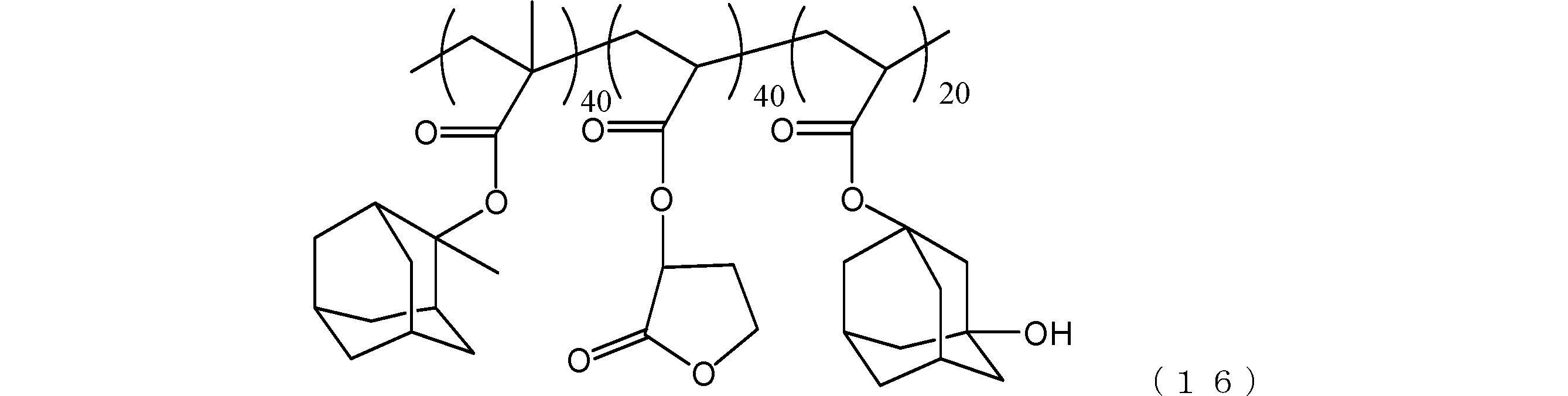
(式(16)中、40、40、20とあるのは、各構成単位の比率を示すものであり、ブロック共重合体を示すものではない。)
下層膜の形成を行わないこと以外は、実施例50と同様にしてフォトレジスト層をSiO2基板上に直接形成し、ポジ型のレジストパターンを得た。
表8中に記載の各実施例及び比較例8のそれぞれについて、得られた40nmL/S(1:1)及び80nmL/S(1:1)のレジストパターンの形状を(株)日立製作所製電子顕微鏡「S-4800」を用いて観察した。現像後のレジストパターンの形状については、パターン倒れがなく、矩形性が良好なものを「良好」とし、そうでないものを「不良」として評価した。また、当該観察の結果、パターン倒れが無く、矩形性が良好な最小の線幅を解像性として評価の指標とした。さらに、良好なパターン形状を描画可能な最小の電子線エネルギー量を感度として、評価の指標とした。その結果を表8に示す。
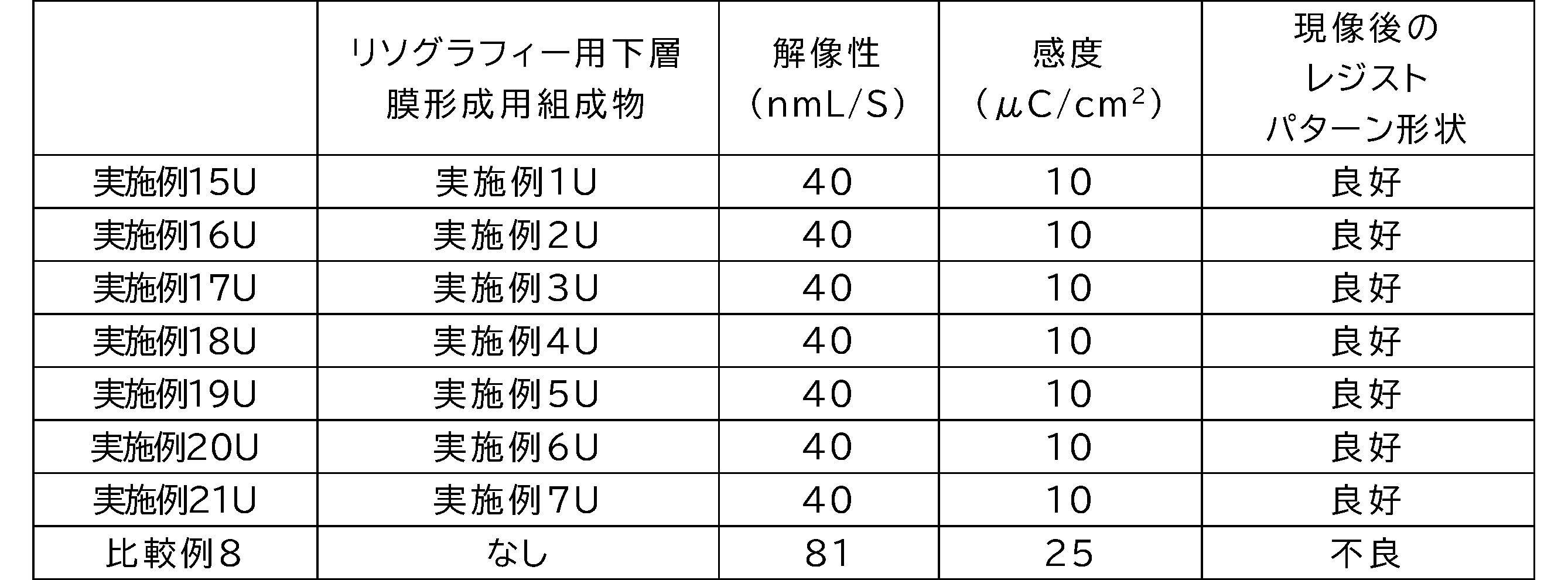
実施例22Uで調製したリソグラフィー用下層膜形成用組成物を膜厚300nmのSiO2基板上に塗布して、240℃で60秒間、さらに400℃で120秒間ベークすることにより、膜厚90nmの下層膜を形成した。この下層膜上に、珪素含有中間層材料を塗布し、200℃で60秒間ベークすることにより、膜厚35nmの中間層膜を形成した。さらに、この中間層膜上に、前記ArF用レジスト溶液を塗布し、130℃で60秒間ベークすることにより、膜厚150nmのフォトレジスト層を形成した。なお、珪素含有中間層材料としては、特開2007-226170号公報<合成例1>に記載の珪素原子含有ポリマー(ポリマー1)を用いた。
(レジストパターンのレジスト中間層膜へのエッチング条件)
出力:50W
圧力:20Pa
時間:1min
・エッチングガス
Arガス流量:CF4ガス流量:O2ガス流量=50:8:2(sccm)
出力:50W
圧力:20Pa
時間:2min
・エッチングガス
Arガス流量:CF4ガス流量:O2ガス流量=50:5:5(sccm)
出力:50W
圧力:20Pa
時間:2min
・エッチングガス
Arガス流量:C5F12ガス流量:C2F6ガス流量:O2ガス流量
=50:4:3:1(sccm)
上述のようにして得られた実施例22Uのパターン断面(エッチング後のSiO2膜の形状)を、(株)日立製作所製電子顕微鏡「S-4800」を用いて観察したところ、本実施形態の下層膜を用いた実施例は、多層レジスト加工におけるエッチング後のSiO2膜の形状は矩形であり、欠陥も認められず良好であることが確認された。
<樹脂膜の作製>
[実施例A01]
溶媒としてPGMEAを用い、合成実施例1のR1-1を溶解して固形分濃度10質量%の樹脂溶液を調製した(実施例A01の樹脂溶液)。
調製した樹脂溶液を、スピンコーターLithiusPro(東京エレクトロン社製)を用いて12インチシリコンウエハ上に成膜し、200nmの膜厚となるように回転数を調整しながら成膜後、ベーク温度を250℃1分の条件でベーク処理して重合体(R1-1)からなる膜を積層した基板を作製した。作製した基板を更に高温処理可能なホットプレートを使用し、350℃、1分の条件でベークすることで硬化した樹脂膜を得た。この際、得られた硬化した樹脂膜をCHN槽に1分間浸漬する前後の膜厚変化が3%以下であれば、硬化したと判断した。硬化が不十分と判断される場合は硬化温度を50℃ずつ変更して硬化する温度を調査し、硬化する温度範囲の中で一番温度が低い条件で硬化するベーク処理を行った。
<光学特性値評価>
作製した樹脂膜について、分光エリプソメトリーVUV-VASE(J.A.Woollam社製)を用いて光学特性値(光学定数として、屈折率nと、消衰係数k)の評価を行った。
使用した重合体を重合体(R1-1)から表9に示す重合体に変更したこと以外は実施例A01と同様にして樹脂膜を作製し、光学特性値評価を実施した。
[評価基準]屈折率n
A:1.4以上
C:1.4未満
[評価基準]消衰係数k
A:0.5未満
C:0.5以上
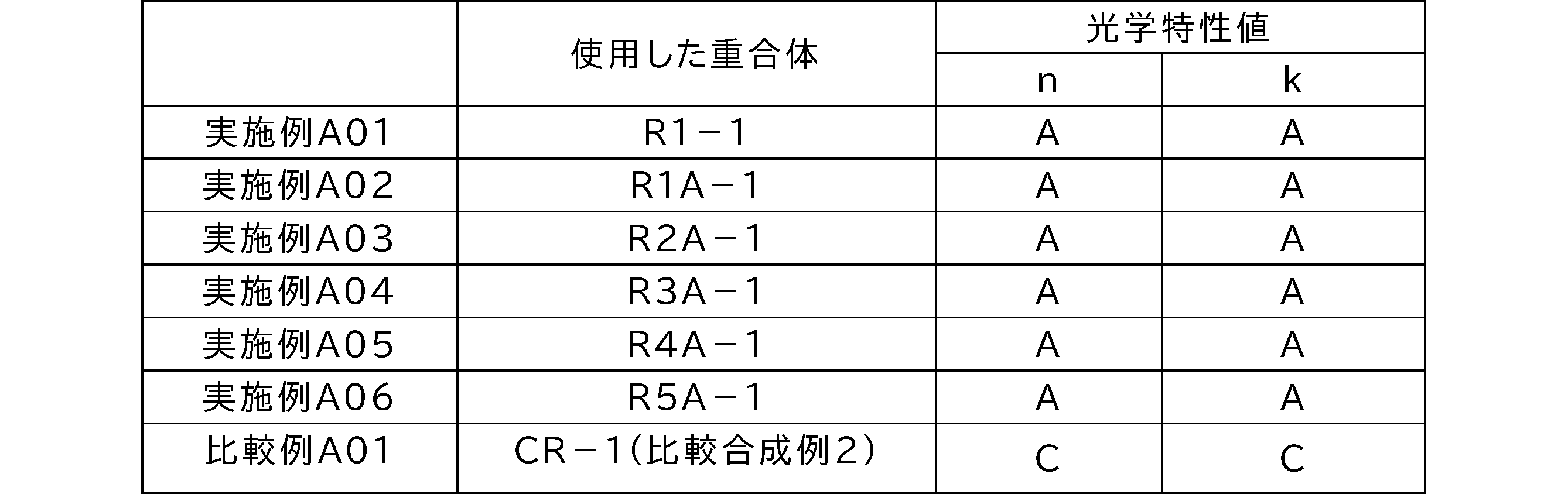
[実施例B01]
実施例A01で作製した樹脂膜について、ランプアニール炉を用いた耐熱性評価を行った。耐熱処理条件としては窒素雰囲気下450℃で加熱を継続し、加熱開始からの経過時間4分間後及び10分間後の膜厚を比較した膜厚変化率を求めた。また、窒素雰囲気下550℃で加熱を継続し、加熱開始からの経過時間4分間後及び550℃10分間後の膜厚を比較した膜厚変化率を求めた。これらの膜厚変化率を硬化膜耐熱性の指標として評価した。耐熱試験前後の膜厚は、干渉膜厚計で計測して膜厚の変動値を耐熱試験処理前の膜厚に対する比を膜厚変化率(百分率%)として求めた。
[評価基準]
A:膜厚変化率が、10%未満
B:膜厚変化率が、10%以上15%以下
C:膜厚変化率が、15%超
使用した重合体を重合体(R1-1)から表10に示す重合体に変更したこと以外は実施例B01と同様にして耐熱性評価を実施した。
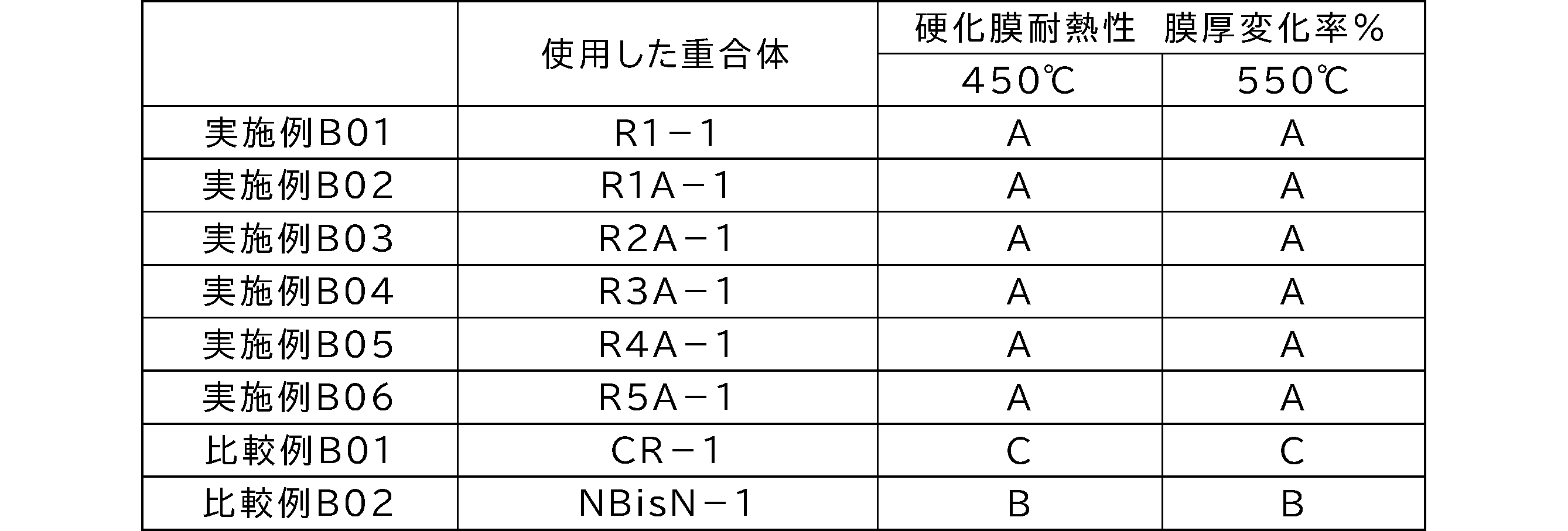
<PE-CVD成膜評価>
12インチシリコンウエハに熱酸化処理を実施し、得られたシリコン酸化膜を有する基板上に、実施例A01と同様の方法により、実施例A01の樹脂溶液を用いて100nmの厚みで樹脂膜を作製した。当該樹脂膜上に、成膜装置TELINDY(東京エレクトロン(株)製)を用い、原料としてTEOS(テトラエチルシロキサン)を使用し、基板温度300℃にて膜厚70nmの酸化シリコン膜の成膜を行った。作製した酸化シリコン膜を積層した硬化膜付きウエハについて、更に欠陥検査装置「SP5」(KLA-Tencor社製)を用いて欠陥検査を行い、21nm以上となる欠陥の個数を指標として、下記の基準に従い、成膜した酸化膜の欠陥数の評価を行った。
(基準)
A 欠陥数≦20個
B 20個<欠陥数≦50個
C 50個<欠陥数≦100個
D 100個<欠陥数≦1000個
E 1000個<欠陥数≦5000個
F 5000個<欠陥数
前記と同様の方法により12インチシリコンウエハ上に100nmの厚みで熱酸化処理されたシリコン酸化膜を有する基板上に作製した硬化膜上に、成膜装置TELINDY(東京エレクトロン社製)を用い、原料としてSiH4(モノシラン)、アンモニアを使用し、基板温度350℃にて膜厚40nm、屈折率1.94、膜応力-54MPaのSiN膜の成膜を行った。作製したSiN膜を積層した硬化膜付きウエハについて、更に欠陥検査装置「SP5」(KLA-tencor社製)を用いて欠陥検査を行い、21nm以上となる欠陥の個数を指標として、下記基準に従い、成膜した酸化膜の欠陥数の評価を行った。
(基準)
A 欠陥数≦20個
B 20個<欠陥数≦50個
C 50個<欠陥数≦100個
D 100個<欠陥数≦1000個
E 1000個<欠陥数≦5000個
F 5000個<欠陥数
使用した樹脂を重合体(R1-1)から表11に示す樹脂に変更したこと以外は実施例C01と同様にして膜の欠陥評価を実施した。

<高温処理後のエッチング評価>
12インチシリコンウエハに熱酸化処理を実施し、得られたシリコン酸化膜を有する基板上に、実施例A01と同様の方法により、実施例A01の樹脂溶液を用いて100nmの厚みで樹脂膜を作製した。当該樹脂膜に対して、更に窒素雰囲気下で高温処理可能なホットプレートにより600℃4分の条件で加熱によるアニーリング処理を行い、アニーリングされた樹脂膜が積層されたウエハを作製した。作製したアニーリングされた樹脂膜を削り出し、元素分析により炭素含有率を求めた。
更に、12インチシリコンウエハに熱酸化処理を実施し、得られたシリコン酸化膜を有する基板上に、実施例A01と同様の方法により、実施例A01の樹脂溶液を用いて100nmの厚みで樹脂膜を作製した。当該樹脂膜について、更に窒素雰囲気下で600℃4分間の条件で加熱によりアニーリングされた樹脂膜を形成したのち、該基板をエッチング装置「TELIUS」(東京エレクトロン社製)を用い、エッチングガスとしてCF4/Arを用いた条件、及びCl2/Arを用いた条件でエッチング処理を行い、エッチングレートの評価を行った。エッチングレートの評価はリファレンスとして日本化薬(株)製のフォトレジスト「SU8 3000」を250℃1分間アニーリング処理して作製した200nm膜厚の樹脂膜を用い、SU8 3000に対するエッチングレートの速度比を相対値として求めて、下記評価基準に従って、評価した。
[評価基準]
A:SU8 3000の樹脂膜に比べてエッチングレートが、-20%未満
B:SU8 3000の樹脂膜に比べてエッチングレートが、-20%以上0%以下
C:SU8 3000の樹脂膜に比べてエッチングレートが、+0%超
使用した重合体を重合体(R1-1)から表12に示す重合体に変更したこと以外は実施例D01と同様にしてエッチングレート評価を実施した。
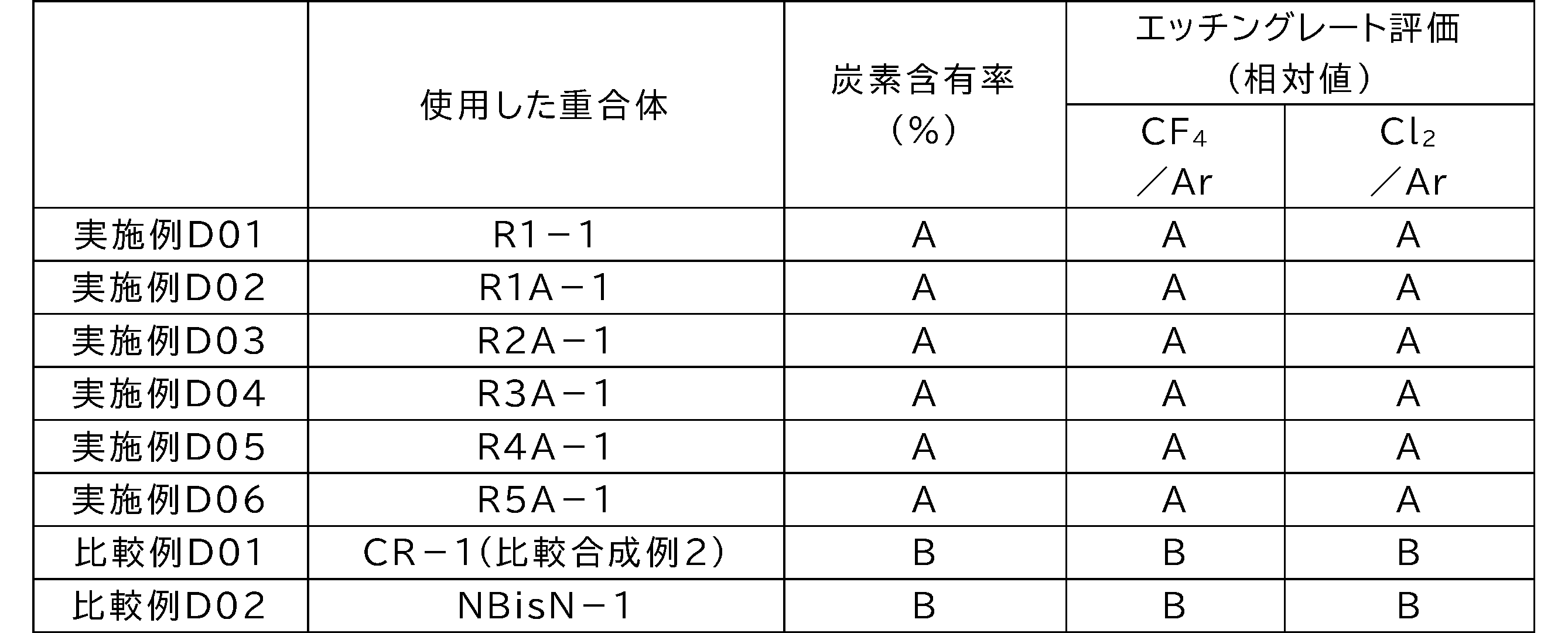
<積層膜でのエッチング欠陥評価>
以下において合成実施例で得られた重合体について、精製処理前後での品質評価を実施した。すなわち、後述する精製処理前後の各々において、重合体を用いてウエハ上に成膜した樹脂膜をエッチングにより基板側に転写したのち、欠陥評価を行うことで評価した。
12インチシリコンウエハに熱酸化処理を実施し、100nmの厚みのシリコン酸化膜を有する基板を得た。当該基板上に、重合体の樹脂溶液を100nmの厚みとなるようにスピンコート条件を調整して成膜後、150℃ベーク1分、続いて350℃ベーク1分を行うことで重合体を熱酸化膜付きシリコン上に積層した積層基板を作製した。
エッチング装置として「TELIUS」(東京エレクトロン社製)を用い、CF4/O2/Arの条件で樹脂膜をエッチングし、酸化膜表面の基板を露出させた。更にCF4/Arのガス組成比にて酸化膜を100nmエッチングする条件でエッチング処理を行い、エッチングしたウエハを作製した。
作製したエッチングウエハを欠陥検査装置SP5(KLA-tencor社製)にて19nm以上の欠陥数を測定し、下記基準に従い、積層膜でのエッチング処理による欠陥評価として実施した。
(基準)
A 欠陥数≦20個
B 20個<欠陥数≦50個
C 50個<欠陥数≦100個
D 100個<欠陥数≦1000個
E 1000個<欠陥数≦5000個
F 5000個<欠陥数
1000mL容量の四つ口フラスコ(底抜き型)に、合成実施例1で得られた重合体(R1-1)をCHNに溶解させた溶液(10質量%)を150g仕込み、攪拌しながら80℃まで加熱した。次いで、蓚酸水溶液(pH1.3)37.5gを加え、5分間攪拌後、30分静置した。これにより油相と水相に分離したので、水相を除去した。この操作を1回繰り返した後、得られた油相に、超純水37.5gを仕込み、5分間攪拌後、30分間静置し、水相を除去した。この操作を3回繰り返した後、80℃に加熱しながらフラスコ内を200hPa以下に減圧することで、残留水分及びCHNを濃縮留去した。その後、ELグレードのCHN(関東化学(株)製試薬)で希釈し、10質量%に濃度調整を行うことにより、金属含有量の低減されたR1-1のCHN溶液を得た。作製した重合体溶液を日本インテグリス(株)製の公称孔径3nmのUPEフィルターにより0.5MPaの条件で濾過した溶液サンプルを作製した。
当該精製処理前後の各々の溶液サンプルについて、上述のようにウエハ上に樹脂膜を成膜し、樹脂膜をエッチングにより基板側に転写したのち、積層膜でのエッチング欠陥評価を実施した。
1000mL容量の四つ口フラスコ(底抜き型)に、合成実施例1A-1で得られた重合体(R1A-1)をCHNに溶解させた溶液(10質量%)を140g仕込み、攪拌しながら60℃まで加熱した。次いで、蓚酸水溶液(pH1.3)37.5gを加え、5分間攪拌後、30分間静置した。これにより油相と水相とに分離したのち、水相を除去した。この操作を1回繰り返した後、得られた油相に、超純水37.5gを仕込み、5分間攪拌後、30分静置し、水相を除去した。この操作を3回繰り返した後、80℃に加熱しながらフラスコ内を200hPa以下に減圧することで、残留水分及びCHNを濃縮留去した。その後、ELグレードのCHN(関東化学(株)製試薬)で希釈し、10質量%に濃度調整を行うことにより、金属含有量の低減された重合体(R1A-1)のCHN溶液を得た。作製した重合体溶液を日本インテグリス(株)製の公称孔径3nmのUPEフィルターにより0.5MPaの条件で濾過した溶液サンプルを作製した後、実施例E01と同様に積層膜でのエッチング欠陥評価を実施した。
クラス1000のクリーンブース内にて、1000mL容量の四つ口フラスコ(底抜き型)に、合成実施例1-1で得られた重合体(R1-1)をCHNに溶解させた濃度10質量%の溶液を500g仕込み、続いて釜内部の空気を減圧除去した後、窒素ガスを導入して大気圧まで戻し、窒素ガスを毎分100mLで通気下、内部の酸素濃度を1%未満に調整した後、攪拌しながら30℃まで加熱した。底抜きバルブから前記溶液を抜き出し、フッ素樹脂製の耐圧チューブを経由してダイヤフラムポンプで毎分100mLの流量で公称孔径が0.01μmのナイロン製中空糸膜フィルター(キッツマイクロフィルター(株)製、商品名:ポリフィックスナイロンシリーズ)に濾過圧が0.5MPaの条件となるように加圧濾過にて通液した。濾過後の樹脂溶液をELグレードのCHN(関東化学(株)製試薬)で希釈し、10質量%に濃度調整を行うことにより、金属含有量の低減された重合体(R1-1)のCHN溶液を得た。作製した重合体溶液を日本インテグリス(株)製の公称孔径3nmのUPEフィルターにより0.5MPaの条件で濾過した溶液サンプルを作製した後、実施例E01と同様に積層膜でのエッチング欠陥評価を実施した。なお、酸素濃度はアズワン(株)製の酸素濃度計「OM-25MF10」により測定した(以下も同様)。
フィルターによる精製工程として、日本ポール社製の「IONKLEEN」、日本ポール社製の「ナイロンフィルター」、更に日本インテグリス社製の公称孔径3nmのUPEフィルターをこの順番に直列に接続し、フィルターラインとして構築した。0.1μmのナイロン製中空糸膜フィルターの代わりに、作製したフィルターラインを使用した以外は、実施例E03と同様にして濾過圧が0.5MPaの条件となるように加圧濾過により通液した。ELグレードのCHN(関東化学(株)製試薬)で希釈し、10質量%に濃度調整を行うことにより、金属含有量の低減された重合体(R1-1)のCHN溶液を得た。作製した重合体溶液を日本インテグリス(株)製の公称孔径3nmのUPEフィルターにより濾過圧が0.5MPaの条件となるように加圧濾過した溶液サンプルを作製した後、実施例E01と同様に積層膜でのエッチング欠陥評価を実施した。
実施例E01で作製した溶液サンプルを、さらに実施例E04で作製したフィルターラインを使用して濾過圧が0.5MPaの条件となるように加圧濾過した溶液サンプルを作製した後、実施例E01と同様に積層膜でのエッチング欠陥評価を実施した。
合成実施例1A-1で作製した重合体(R1A-1)について、実施例E05と同様の方法により精製した溶液サンプルを作製した後、実施例E01と同様に積層膜でのエッチング欠陥評価を実施した。
合成実施例1E-1で作製した重合体(R1E-1)について、実施例E05と同様の方法により精製した溶液サンプルを作製した後、実施例E01と同様に積層膜でのエッチング欠陥評価を実施した。
合成実施例3で作製した重合体(R1B-1)について、実施例E05と同様の方法により精製した溶液サンプルを作製した後、積層膜でのエッチング欠陥評価を実施した。
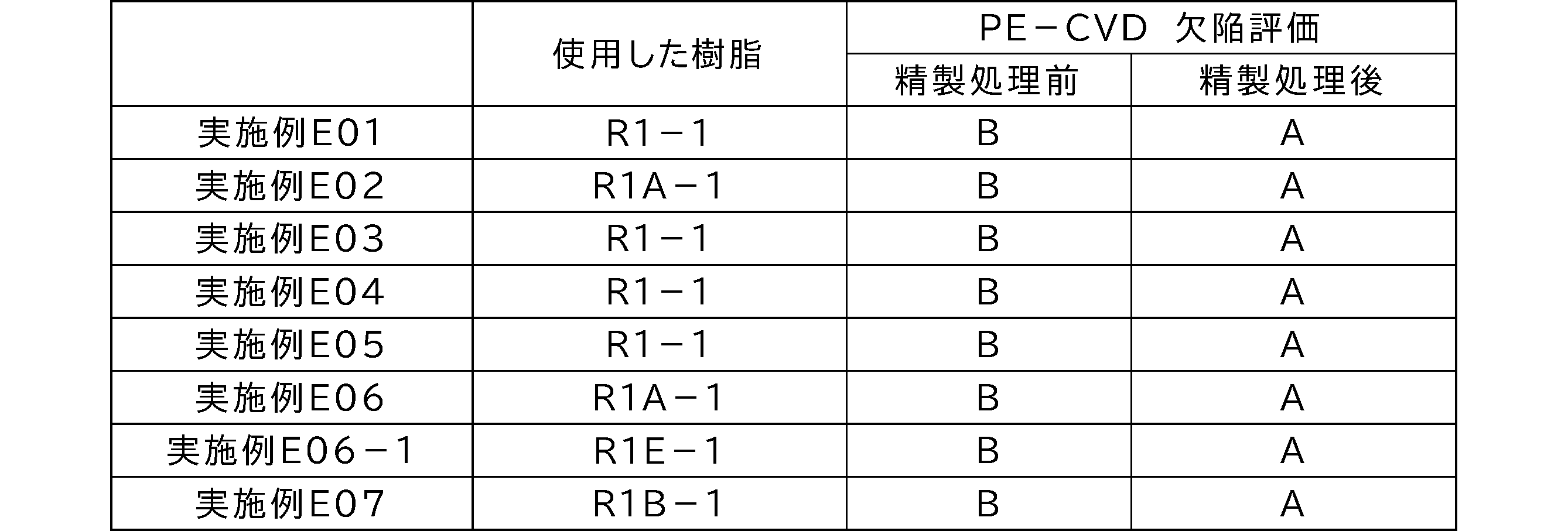
表6中の各実施例及び比較例5で調製したリソグラフィー用下層膜形成組成物と同組成の光学部材形成用組成物を膜厚300nmのSiO2基板上に塗布して、260℃で300秒間ベークすることにより、膜厚100nmの光学部材用の膜を形成した。次いで、ジェー・エー・ウーラム・ジャパン社製 真空紫外域多入射角分光エリプソメーター「VUV-VASE」を用いて、633nmの波長における屈折率及び透明性試験を行い、以下の基準に従って屈折率及び透明性を評価した。評価結果を表14に示す。
A:屈折率が1.60以上
C:屈折率が1.60未満
A:消衰定数が0.03未満
C:消衰定数が0.03以上
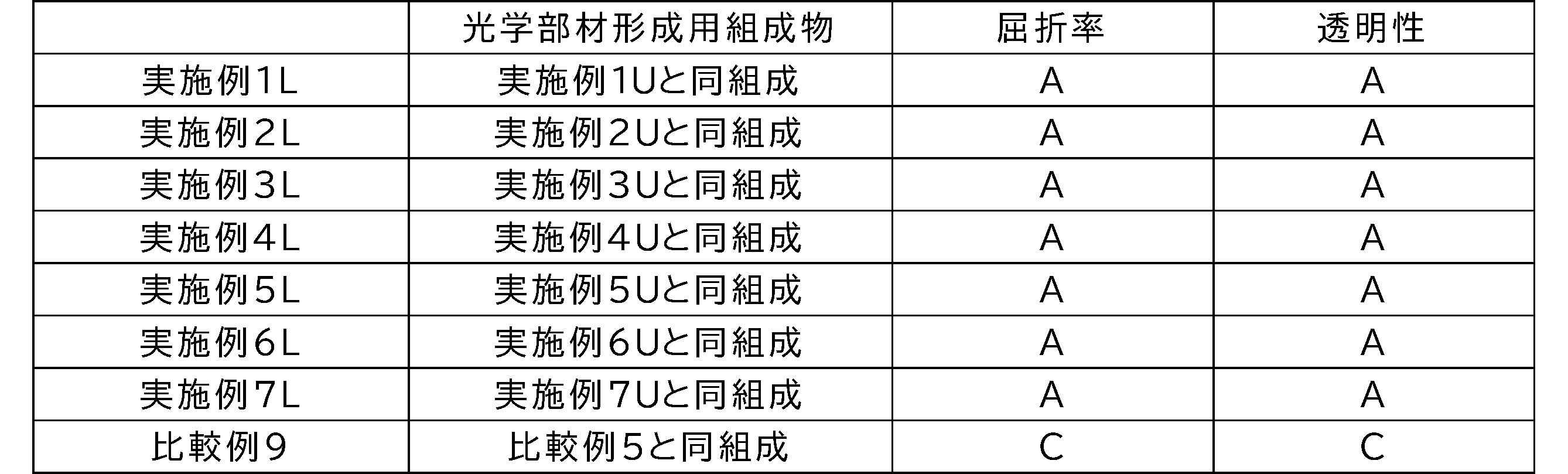
化合物(1A-1)の代わりに、それぞれ、下記化合物(1A-16)~(1A-17)を使用したことを除き、合成実施例1A-1と同様に重合体(R1A-16)~(R1A-17)を合成した。なお、化合物(1A-16)は、o-,m-,p-位置換体の混合物である。
なお、下記に示すように、重合体(R1A-16)~(R1A-17)において、400MHz-1H-NMRにより以下のピークが見出され、各々前記式の化学構造を基本構造として有し且つ構成単位の芳香環同士が直接結合した構造を有することを確認した。さらに、得られた各重合体について、上述の方法によりポリスチレン換算分子量を測定した結果を併せて示す。
Mn:863、Mw:1126、Mw/Mn:1.3
δ(ppm)9.5―10.0(4H,O-H)、7.2~8.5(23H,Ph-H)、6.2―6.9(2H, Ph―H)、6.7~6.9(1H,C-H)
(R1A-17)
Mn:789、Mw:916、Mw/Mn:1.2
δ(ppm)9.5―10.0(4H,O-H)、7.2~8.5(23H,Ph-H)、6.2―6.9(2H, Ph―H)、6.7~6.9(1H,C-H)
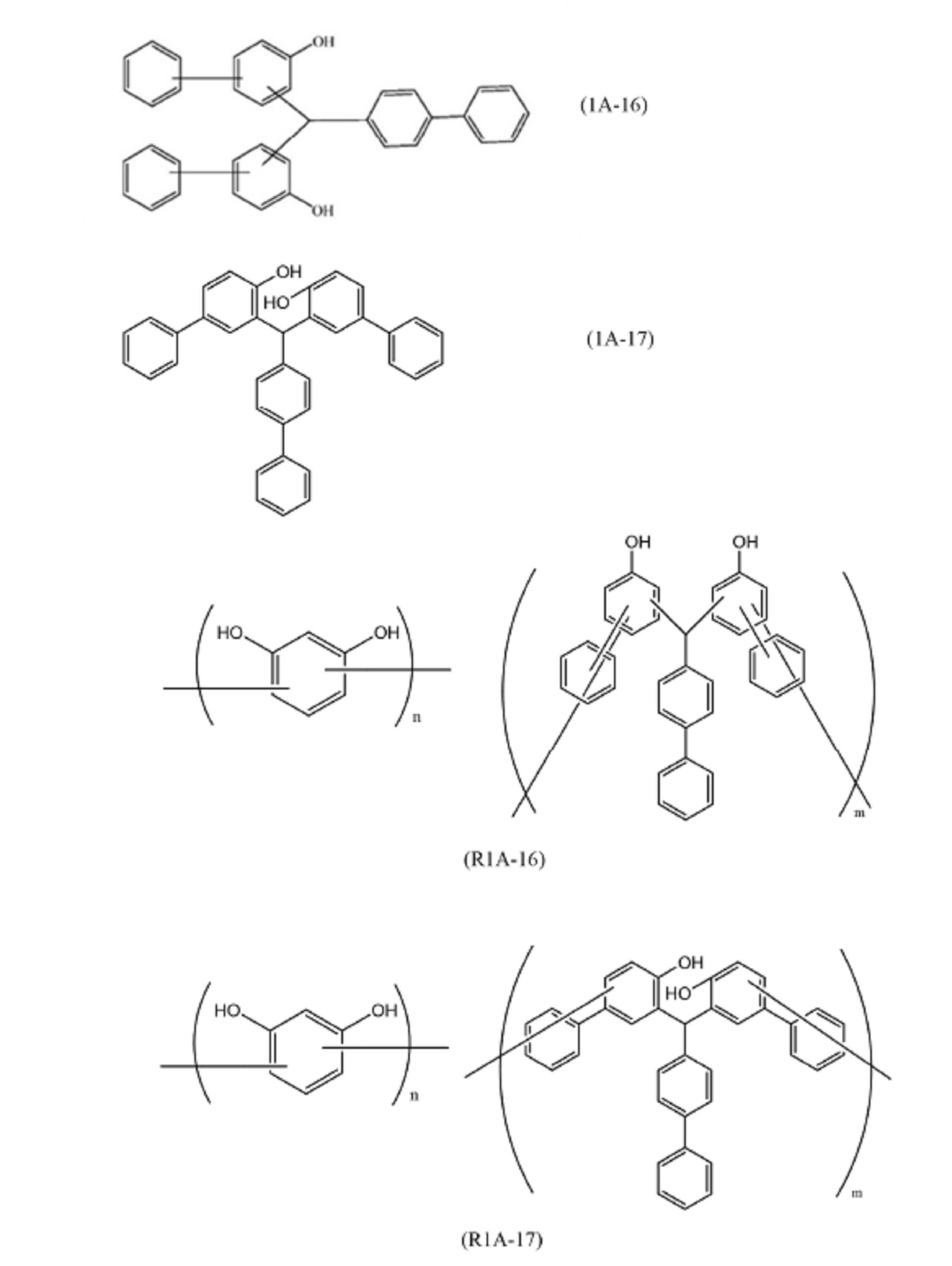
化合物(1B-1)の代わりに、それぞれ、下記化合物(1B-9)~(1B-11)を使用したことを除き、合成実施例1B-1と同様に重合体(R1B-9)~(R1B-11)を合成した。なお、化合物(1B-11)は、o-,m-,p-位置換体の混合物である。
なお、下記に示すように、重合体(R1B-9)~(R1B-11)において、400MHz-1H-NMRにより以下のピークが見出され、各々前記式の化学構造を基本構造として有し且つ構成単位の芳香環同士が直接結合した構造を有することを確認した。さらに、得られた各重合体について、上述の方法によりポリスチレン換算分子量を測定した結果を併せて示す。
Mn:700、Mw:870、Mw/Mn:1.2
δ(ppm)10.0(2H、―OH)9.0―9.2(1H,-OH)、7.1~8.0(7H,Ph-H)、6.3~7.0(2H,Ph-H)
(R1B-10)
Mn:1805、Mw:2122、Mw/Mn:1.2
δ(ppm)10.0(2H、―OH)9.0―9.2(1H,-OH)、7.0~8.0(7H,Ph-H)、6.3~7.0(2H,Ph-H)
(R1B-11)
Mn:1508、Mw:1912、Mw/Mn:1.3
δ(ppm)10.0(2H、―OH)9.0―9.2(1H,-OH)、7.0~8.0(7H,Ph-H)、6.3~7.0(2H,Ph-H)

[合成実施例X6~X8]重合体(RX6)~(RX8)の合成
レゾルシノールの代わりに、それぞれ、下記化合物(X6;カテコール)、(X7;3,3’-ジメチルビフェニル-4,4’-ジオール)、(X8;ジアミノベンゼン)を使用したことを除き、合成実施例1A-5と同様に重合体(RX6)~(RX8)を合成した。
なお、下記に示すように、重合体(RX6)~(RX8)において、400MHz-1H-NMRにより以下のピークが見出され、各々前記式の化学構造を基本構造として有し且つ構成単位の芳香環同士が直接結合した構造を有することを確認した。さらに、得られた各重合体について、上述の方法によりポリスチレン換算分子量を測定した結果を併せて示す。
Mn:1021、Mw:1125、Mw/Mn:1.1
δ(ppm)10.0(2H,-OH)、8.6~9.1(2H,O-H)、7.2~8.5(17H,Ph-H)、6.3~7.0(2H,Ph-H)、6.7~6.9(1H,C-H)
(RX7)
Mn:743、Mw:810、Mw/Mn:1.1
δ(ppm)10.0(2H,-OH)、9.4~9.6(2H,O-H)、7.2~6.3(23H,Ph-H)、6.7~6.9(1H,C-H)、
2.0~2.1(6H,CH2-H)
(RX8)
Mn:1021、Mw:1125、Mw/Mn:1.1
δ(ppm)10.3(2H、NH-H)、9.4~9.6(2H,-OH)、7.0~8.5(18H,Ph-H)、6.7~6.9(1H,C-H)、5.8~6.2(1H,Ph-H)
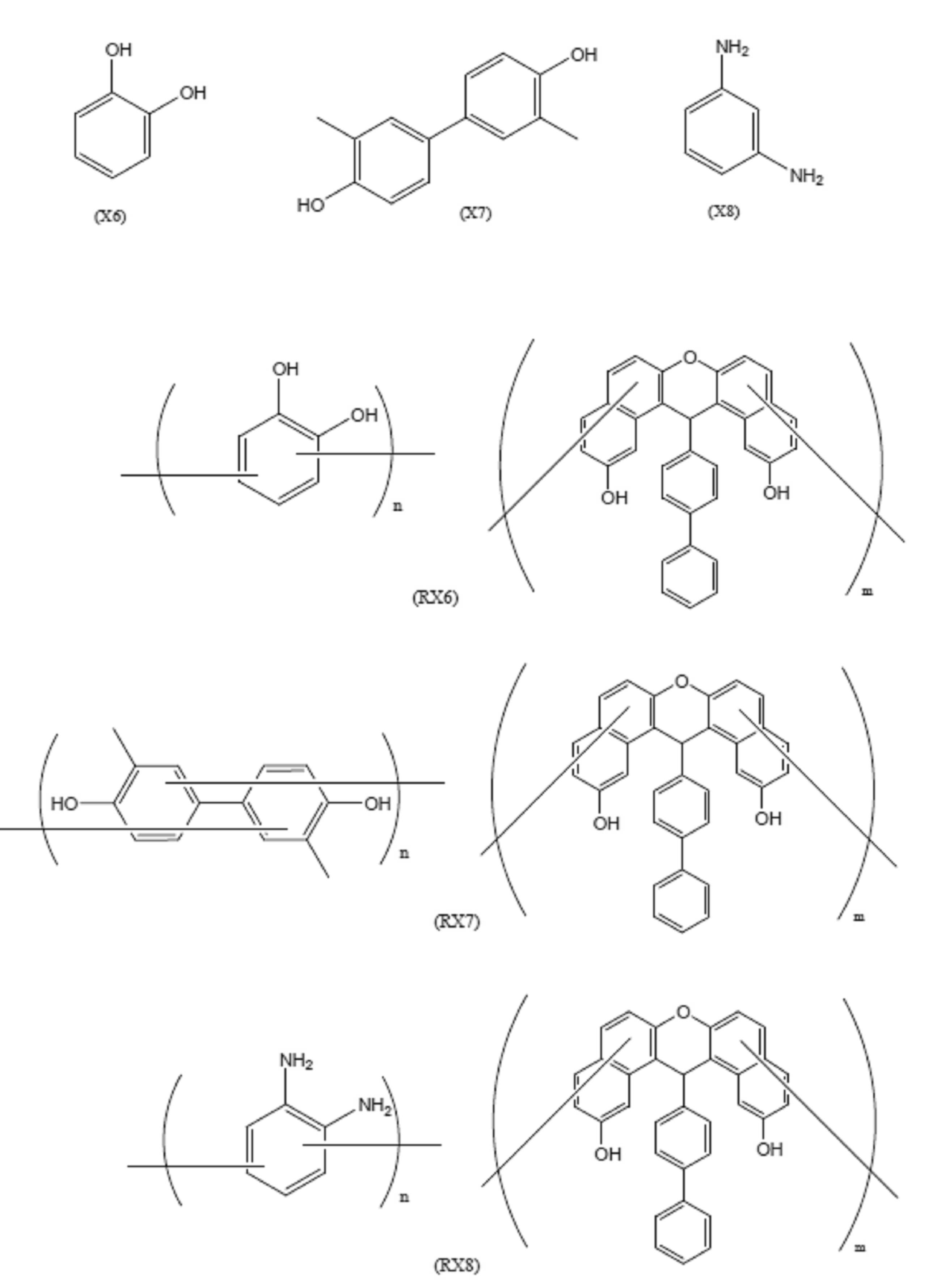
レゾルシノールの代わりに、それぞれ、上記化合物(X6;カテコール)、上記化合物(X7;3,3’-ジメチルビフェニル-4,4’-ジオール)、上記化合物(X8;ジアミノベンゼン)を使用したことを除き、合成実施例X3と同様に重合体(RX9)~(RX11)を合成した。
なお、下記に示すように、重合体(RX9)~(RX11)において、400MHz-1H-NMRにより以下のピークが見出され、各々前記式の化学構造を基本構造として有し且つ構成単位の芳香環同士が直接結合した構造を有することを確認した。さらに、得られた各重合体について、上述の方法によりポリスチレン換算分子量を測定した結果を併せて示す。
Mn:750、Mw:860、Mw/Mn:1.1
δ(ppm)10.0(2H、―OH)、9.0-9.3(1H,-OH)、7.1~8.0(7H,Ph-H)、6.3~7.0(2H,Ph-H)
(RX10)
Mn:704、Mw:801、Mw/Mn:1.1
δ(ppm)10.0(2H、―OH)、9.0―9.5(3H,-OH)、6.3~8.0(11H,Ph-H)、2.0~2.1(6H,CH2-H)
(RX11)
Mn:700、Mw:870、Mw/Mn:1.2
δ(ppm)10.3(2H、NH-H)、9.0―9.2(1H,-OH)、7.1~8.0(7H,Ph-H)、7.0~5.7(2H,Ph-H)
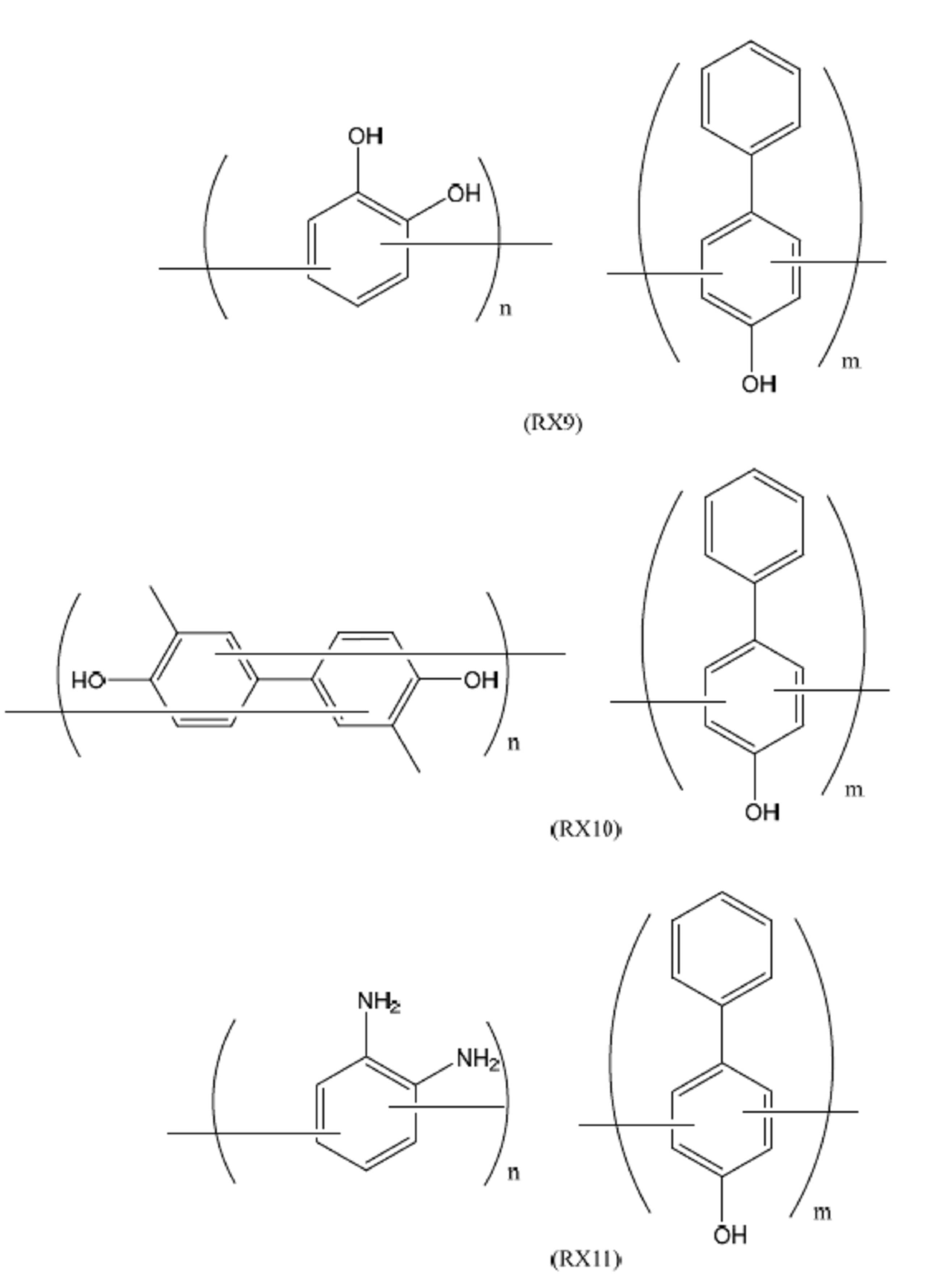
合成実施例X1~X11により得られた各重合体について、実施例1と同様に、耐熱性評価、溶解性評価を行った。結果を下記表に示す。
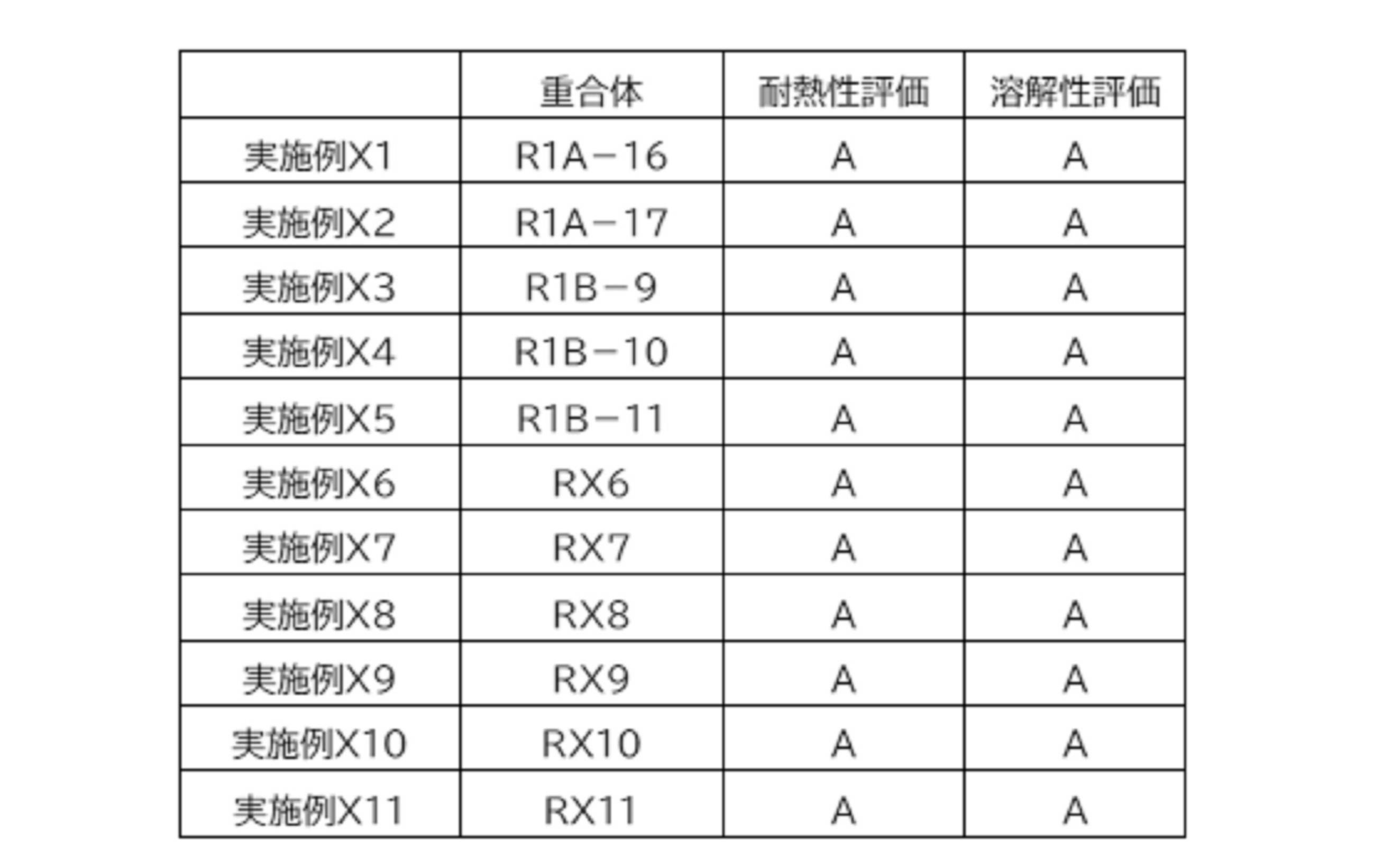
実施例43において、合成実施例1-1で得られた重合体R1-1の代わりに下記表に記載の重合体を用いた以外は実施例43と同様にして、リソグラフィー用下層膜形成用組成物を調製した。次に、これらのリソグラフィー用下層膜形成用組成物をシリコン基板上に回転塗布し、その後、窒素雰囲気下において、240℃で60秒間、さらに400℃で120秒間ベークして、膜厚200~250nmの下層膜を各々作製した。得られた下層膜について、実施例43と同様に、エッチング試験を行い、エッチング耐性を評価した。
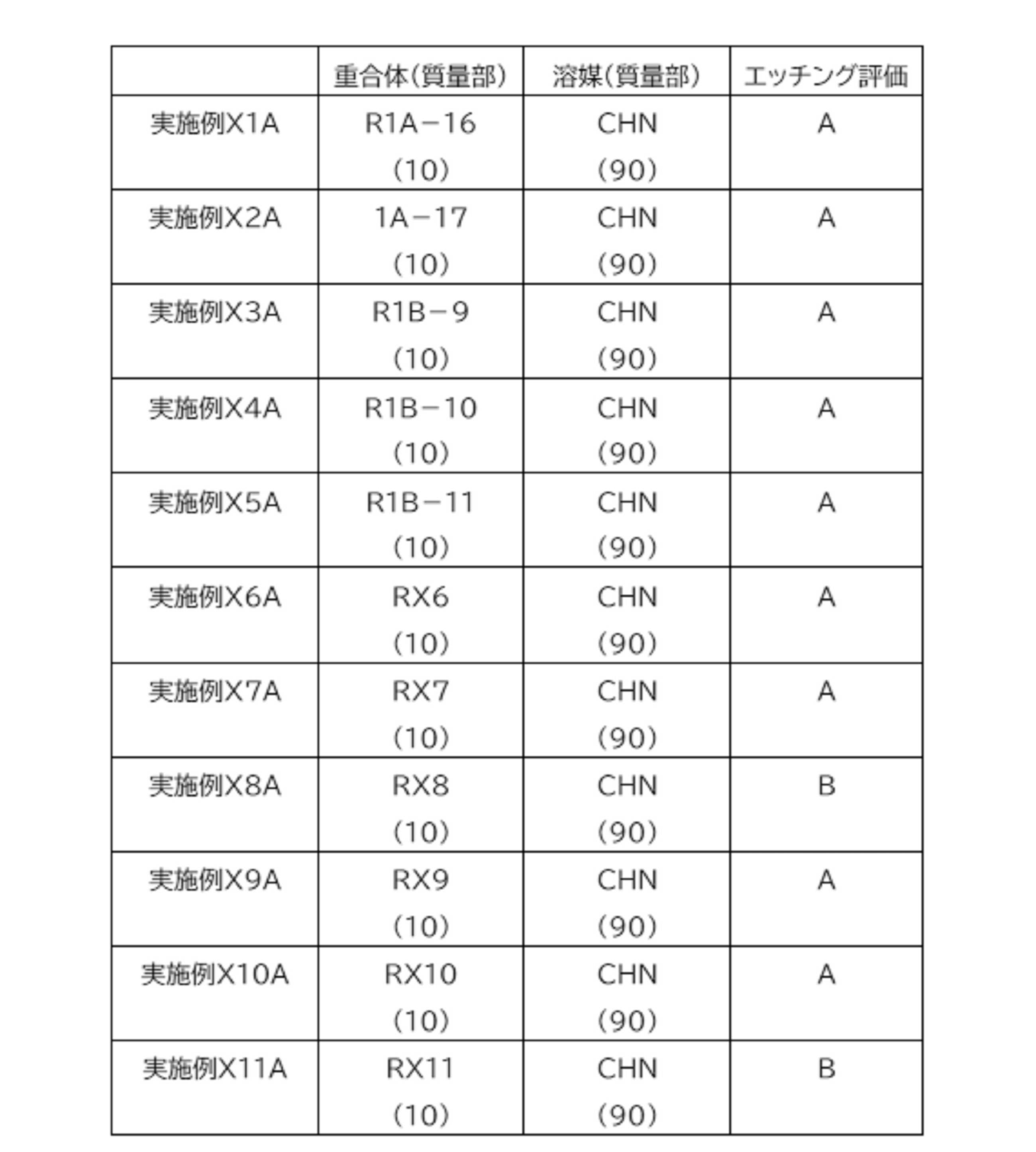
〔安定性試験〕
23℃にて、下記表に記載の実施例で得られた重合体をプロピレングリコールモノメチルエーテル(PGME)に対して10質量%溶液になるよう溶解させ表中に示す組成のリソグラフィー用下層膜形成用組成物を調製した。その後、10℃にて30日間、保存した。これらのリソグラフィー用下層膜形成用組成物をシリコン基板上に回転塗布し、その後、400℃で60秒間ベークして、膜厚200nmの下層膜を各々作製した。作製した下層膜について、更に欠陥検査装置「SP5」(KLA-Tencor社製)を用いて欠陥検査を行い、21nm以上となる欠陥の個数を指標として、下記の基準に従い、成膜した下層膜の欠陥数の評価を行った。
〔基準〕
A 欠陥数≦20個
B 20個<欠陥数≦50個
C 50個<欠陥数≦100個
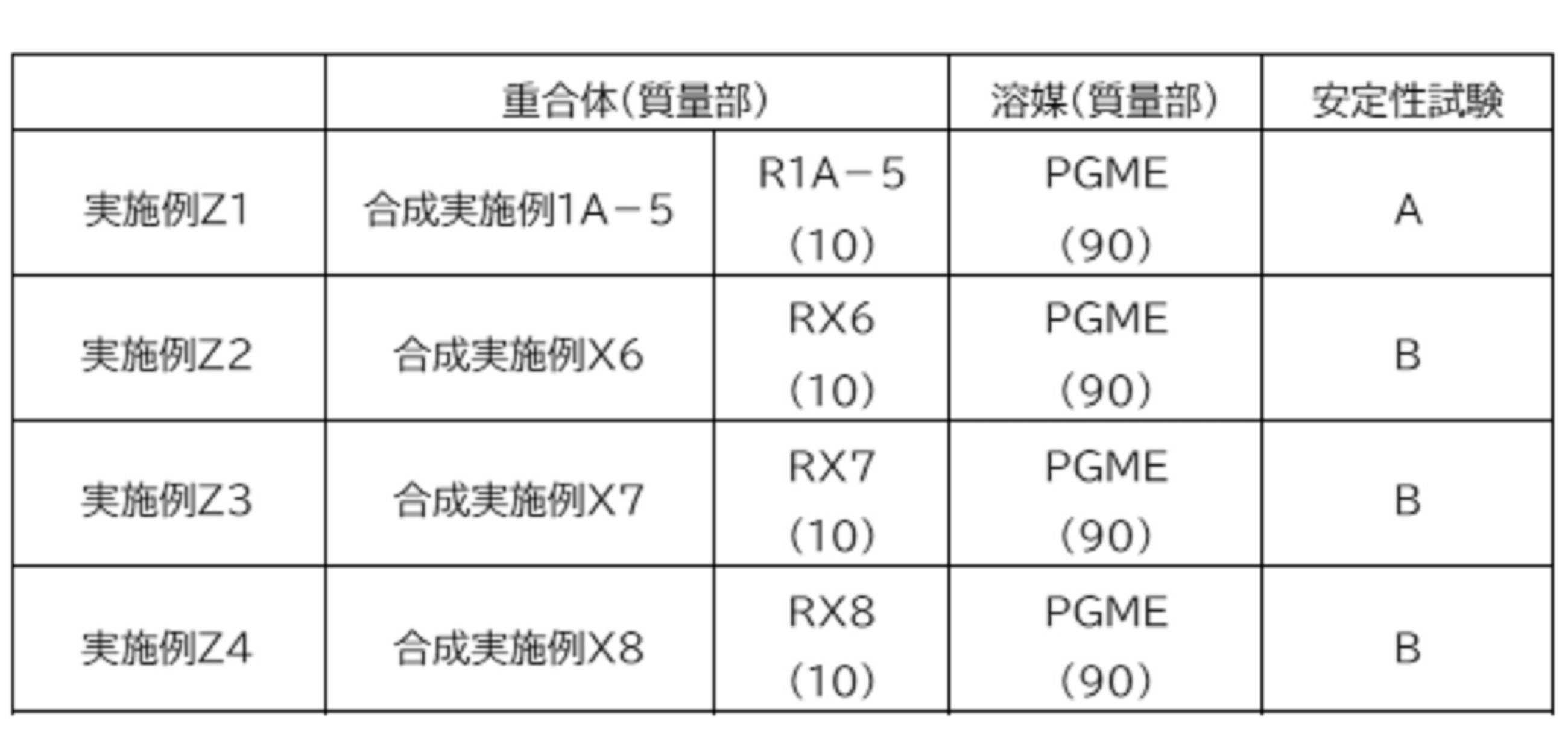
また、明細書に記載された全ての文献、特許出願、及び技術規格は、個々の文献、特許出願、及び技術規格が参照により取り込まれることが具体的かつ個々に記された場合と同程度に、本明細書中に参照により取り込まれる。
Claims (32)
- 下記式(0)で表されるモノマー由来の構成単位を含む重合体であって、
構成単位同士が芳香環同士の直接結合によって連結している部位を有する、重合体。

(式(0)中、Rは1価の基であり、mは1~5の整数であり、ここで、Rの少なくとも1つは水酸基、置換基を有していてもよい炭素数1~40のアルコキシ基、又は、置換基を有していてもよい炭素数0~40のアミノ基である。) - 前記式(0)におけるmが2以上であり、Rの少なくとも2つが水酸基、置換基を有していてもよい炭素数1~40のアルコキシ基又は置換基を有していてもよい炭素数0~40のアミノ基である、請求項1に記載の重合体。
- さらに、前記式(0)で表されるモノマーと共重合可能な、他の共重合可能な化合物に由来の構成単位を含み、前記式(0)で表されるモノマー由来の構成単位(x)と、他の共重合可能な化合物(y)に由来する構成単位とモル比(x:y)が、1:99~99:1である、請求項1又は請求項2に記載の重合体。
- 前記他の共重合可能な化合物が、下記式(1A)~下記式(1D)で表されるモノマー、又は、ヘテロ原子含有芳香族モノマーで構成される群から選ばれる、請求項3に記載の重合体。
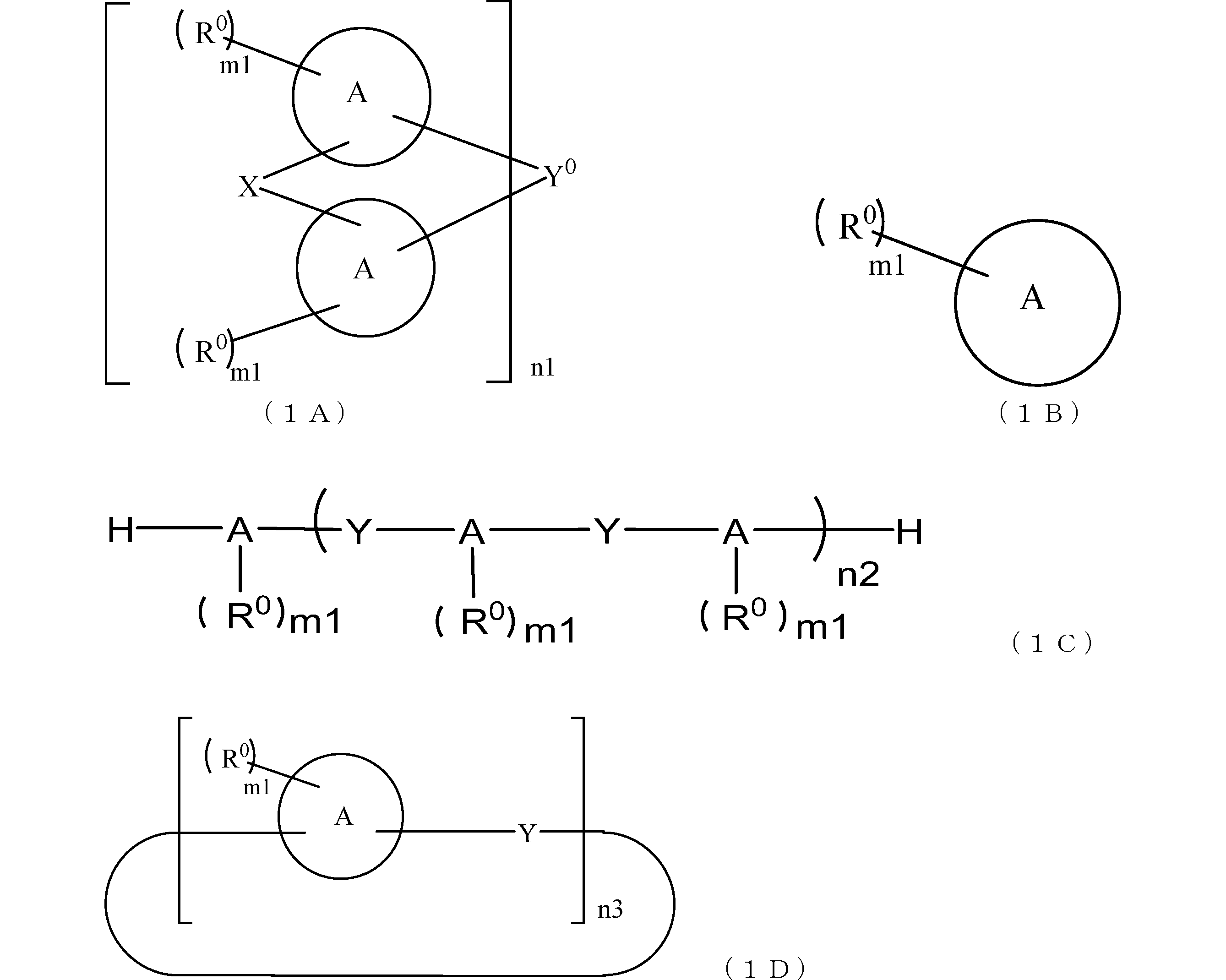
(式(1A)中、Xは各々独立して酸素原子、硫黄原子、単結合又は無架橋であることを示し、Y0は炭素数1~60の2n価の基又は単結合であり、ここで、Xが無架橋であるとき、Y0は前記2n1価の基であり、Aは各々独立してベンゼン、ビフェニル、ターフェニル、ジフェニルメチレン又は縮合環であり、R0は各々独立して、水素原子、置換基を有していてもよい炭素数1~40のアルキル基、置換基を有していてもよい炭素数6~40のアリール基、置換基を有していてもよい炭素数2~40のアルケニル基、炭素数2~40のアルキニル基、置換基を有していてもよい炭素数1~40のアルコキシ基、ハロゲン原子、チオール基、アミノ基、ニトロ基、カルボキシル基又は水酸基でありここで、R0の少なくとも1つは水酸基、置換基を有していてもよい炭素数1~40のアルコキシ基又は置換基を有していてもよい炭素数0~40のアミノ基であり、m1は各々独立して1以上の整数であり、n1は1~4の整数である。
式(1B)中、A、R0及びm1は、前記式(1A)において説明したものと同義であり、R0の少なくとも1つは水酸基、置換基を有していてもよい炭素数1~40のアルコキシ基又は置換基を有していてもよい炭素数0~40のアミノ基である。
式(1C)中、n2は1~500の整数であり、Yは、炭素数1~60の2価の基又は単結合である。A、R0及びm1は、前記式(1A)において説明したものと同義であり、R0の少なくとも1つは水酸基、置換基を有していてもよい炭素数1~40のアルコキシ基又は置換基を有していてもよい炭素数0~40のアミノ基である。
式(1D)中、n3は1~10の整数であり、Yは、前記式(1C)において説明したものと同義であり、A、R0及びm1は、前記式(1A)において説明したものと同義であり、R0の少なくとも1つは水酸基、置換基を有していてもよい炭素数1~40のアルコキシ基又は置換基を有していてもよい炭素数0~40のアミノ基である。) - 下記式(1A)で示される化合物が、下記式(1A-1)で示される化合物である請求項4に記載の重合体。
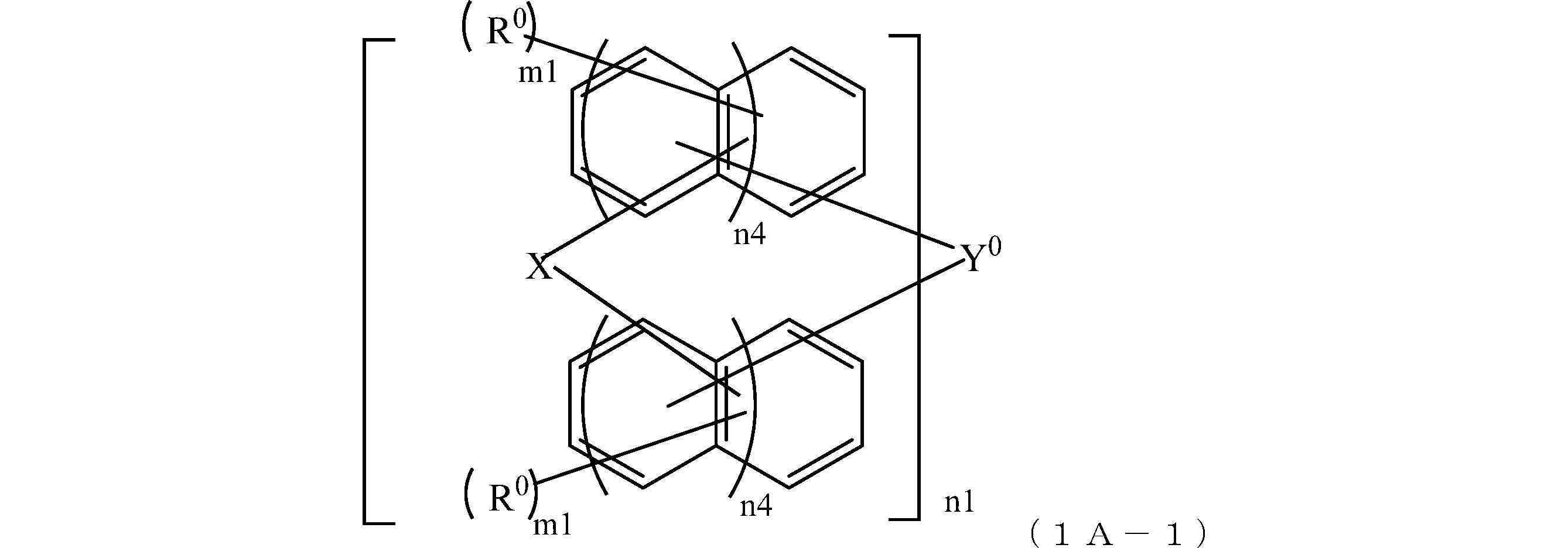
(式(1A-1)中、n4は、各々独立して0~3の整数であり、X、Y0、R0、m1及びn1は、前記式(1A)において説明したものと同義である。) - 前記Aが、ベンゼン、ビフェニル、ターフェニル、ジフェニルメチレン、ナフタレン、アントラセン、ナフタセン、ペンタセン、ベンゾピレン、クリセン、ピレン、トリフェニレン、コランニュレン、コロネン、オバレン及びフルオレンである、請求項4に記載の重合体。
- 前記式(1C)で示される化合物が、下記式(1C-1)で示される化合物である請求項4に記載の重合体。

(式(1C)中、R1は、各々独立して、水素原子、置換基を有していてもよい炭素数1~40のアルキル基、置換基を有していてもよい炭素数6~40のアリール基置換基を有していてもよい炭素数2~40のアルケニル基、炭素数2~40のアルキニル基、置換基を有していてもよい炭素数1~40のアルコキシ基、ハロゲン原子、チオール基、アミノ基、ニトロ基、カルボキシル基又は水酸基であり、A、R0、m1、n2は、前記式(1C)において説明したものと同義であり、R0の少なくとも1つは水酸基、置換基を有していてもよい炭素数1~40のアルコキシ基又は置換基を有していてもよい炭素数0~40のアミノ基である。) - 前記式(1D)で示される化合物が、下記式(1D-1)で示される化合物である請求項4に記載の重合体。
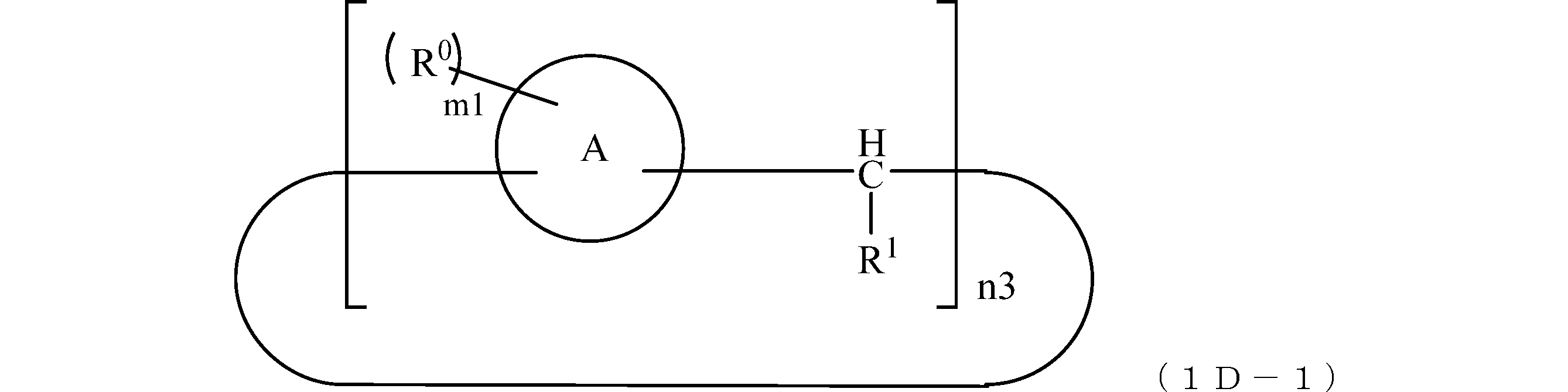
(式(1D-1)中、R1は、各々独立して、水素原子、置換基を有していてもよい炭素数1~40のアルキル基、置換基を有していてもよい炭素数6~40のアリール基、置換基を有していてもよい炭素数2~40のアルケニル基、炭素数2~40のアルキニル基、置換基を有していてもよい炭素数1~40のアルコキシ基、ハロゲン原子、チオール基、アミノ基、ニトロ基、カルボキシル基又は水酸基であり、A、R0、m1、n3は、前記式(1D)において説明したものと同義であり、R0の少なくとも1つは水酸基、置換基を有していてもよい炭素数1~40のアルコキシ基又は置換基を有していてもよい炭素数0~40のアミノ基である。) - 前記ヘテロ原子含有芳香族モノマーが、複素環式芳香族化合物を含む、請求項4に記載の重合体。
- 請求項1~請求項9のいずれか1項に記載の重合体を含む、組成物。
- 溶媒をさらに含む、請求項10に記載の組成物。
- 前記溶媒が、プロピレングリコールモノメチルエーテル、プロピレングリコールモノメチルエーテルアセテート、シクロヘキサノン、シクロペンタノン、乳酸エチル及びヒドロキシイソ酪酸メチルで構成される群より選択される少なくとも1種を含む、請求項11に記載の組成物。
- 不純物金属の含有量が金属種毎に500ppb未満である、請求項11又は請求項12に記載の組成物。
- 前記不純物金属が、銅、マンガン、鉄、コバルト、ルテニウム、クロム、ニッケル、スズ、鉛、銀及びパラジウムで構成される群より選択される少なくとも1種を含有する、請求項13に記載の組成物。
- 前記不純物金属の含有量が、1ppb以下である、請求項13又は請求項14に記載の組成物。
- 請求項1~請求項9のいずれか1項に記載の重合体の製造方法であって、1種又は2種以上の前記式(0)で表されるモノマーを酸化剤の存在下で重合させる工程を含む、重合体の製造方法。
- 1種又は2種以上の前記式(0)で表されるモノマーと、前記式(0)で表されるモノマーと共重合可能な、他の共重合可能な化合物と、を酸化剤の存在下で重合させる工程を含む、請求項16に記載の重合体の製造方法。
- 前記酸化剤が、銅、マンガン、鉄、コバルト、ルテニウム、クロム、ニッケル、スズ、鉛、銀及びパラジウムで構成される群より選択される少なくとも1種を含有する金属塩類又は金属錯体である、請求項16又は請求項17に記載の重合体の製造方法。
- 請求項1~請求項9のいずれか1項に記載の重合体を含む、膜形成用組成物。
- 請求項19に記載の膜形成用組成物を含む、レジスト組成物。
- 溶媒、酸発生剤、塩基発生剤及び酸拡散制御剤で構成される群より選択される少なくとも1種をさらに含有する、請求項20に記載のレジスト組成物。
- 請求項20又は請求項21に記載のレジスト組成物を用いて、基板上にレジスト膜を形成する工程と、
形成された前記レジスト膜の少なくとも一部を露光する工程と、
露光した前記レジスト膜を現像してレジストパターンを形成する工程と、
を含む、レジストパターン形成方法。 - 請求項19に記載の膜形成用組成物と、ジアゾナフトキノン光活性化合物と、溶媒と、を含有する感放射線性組成物であって、
前記溶媒の含有量が、前記感放射線性組成物の総量100質量部に対して20~99質量部であり、
前記溶媒以外の固形分の含有量が、前記感放射線性組成物の総量100質量部に対して1~80質量部である、感放射線性組成物。 - 請求項23に記載の感放射線性組成物を用いて、基板上にレジスト膜を形成する工程と、
形成された前記レジスト膜の少なくとも一部を露光する工程と、
露光した前記レジスト膜を現像して、レジストパターンを形成する工程を含む、レジストパターン形成方法。 - 請求項19に記載の膜形成用組成物を含む、リソグラフィー用下層膜形成用組成物。
- 溶媒、酸発生剤、塩基発生剤及び架橋剤で構成される群から選択される少なくとも1つをさらに含有する、請求項25に記載のリソグラフィー用下層膜形成用組成物。
- 請求項25又は請求項26に記載のリソグラフィー用下層膜形成用組成物を用いて、基板上に下層膜を形成する工程を含む、リソグラフィー用下層膜の製造方法。
- 請求項25又は請求項26に記載のリソグラフィー用下層膜形成用組成物を用いて、基板上に、下層膜を形成する工程と、
前記下層膜上に、少なくとも1層のフォトレジスト層を形成する工程と、
前記フォトレジスト層の所定の領域に放射線を照射し、現像してレジストパターンを形成する工程と、
を有する、レジストパターン形成方法。 - 請求項25又は請求項26に記載のリソグラフィー用下層膜形成用組成物を用いて、基板上に下層膜を形成する工程と、
前記下層膜上に、珪素原子を含有するレジスト中間層膜材料を用いて中間層膜を形成する工程と、
前記中間層膜上に、少なくとも1層のフォトレジスト層を形成する工程と、
前記フォトレジスト層の所定の領域に放射線を照射し、現像してレジストパターンを形成する工程と、
前記レジストパターンをマスクとして前記中間層膜をエッチングして、中間層膜パターンを形成する工程と、
前記中間層膜パターンをエッチングマスクとして前記下層膜をエッチングして、下層膜パターンを形成する工程と、
前記下層膜パターンをエッチングマスクとして前記基板をエッチングして、前記基板にパターンを形成する工程と、
を有する、回路パターン形成方法。 - 請求項19に記載の膜形成用組成物を含む、光学部材形成用組成物。
- 溶媒、酸発生剤、塩基発生剤及び架橋剤で構成される群から選択される少なくとも1つをさらに含有する、請求項30に記載の光学部材形成用組成物。
- 請求項1~請求項9のいずれか1項に記載の重合体を、溶媒に溶解させて溶液(S)を得る工程と、得られた溶液(S)と酸性の水溶液とを接触させて、前記重合体中の不純物を抽出する工程(第一抽出工程)とを含み、前記溶液(S)を得る工程で用いる溶媒が、水と任意に混和しない有機溶媒を含む、精製方法。
Priority Applications (4)
| Application Number | Priority Date | Filing Date | Title |
|---|---|---|---|
| KR1020237015895A KR20230129974A (ko) | 2021-01-19 | 2022-01-11 | 중합체, 조성물, 중합체의 제조방법, 막형성용 조성물, 레지스트 조성물, 레지스트패턴 형성방법, 감방사선성 조성물, 리소그래피용 하층막형성용 조성물, 리소그래피용 하층막의 제조방법, 회로패턴 형성방법, 광학부재형성용 조성물 |
| US18/273,014 US20240117102A1 (en) | 2021-01-19 | 2022-01-11 | Polymer, composition, method for producing polymer, composition for film formation, resist composition, resist pattern formation method, radiation-sensitive composition, composition for underlayer film formation for lithography, method for producing underlayer film for lithography, circuit pattern formation method, and composition for optical member formation |
| JP2022576612A JPWO2022158335A1 (ja) | 2021-01-19 | 2022-01-11 | |
| CN202280010691.6A CN116710500A (zh) | 2021-01-19 | 2022-01-11 | 聚合物、组合物、聚合物的制造方法、膜形成用组合物、抗蚀剂组合物、抗蚀图案形成方法、辐射敏感组合物、光刻用下层膜形成用组合物、光刻用下层膜的制造方法、电路图案形成方法、光学构件形成用组合物 |
Applications Claiming Priority (2)
| Application Number | Priority Date | Filing Date | Title |
|---|---|---|---|
| JP2021-006655 | 2021-01-19 | ||
| JP2021006655 | 2021-01-19 |
Publications (1)
| Publication Number | Publication Date |
|---|---|
| WO2022158335A1 true WO2022158335A1 (ja) | 2022-07-28 |
Family
ID=82549394
Family Applications (1)
| Application Number | Title | Priority Date | Filing Date |
|---|---|---|---|
| PCT/JP2022/000590 Ceased WO2022158335A1 (ja) | 2021-01-19 | 2022-01-11 | 重合体、組成物、重合体の製造方法、膜形成用組成物、レジスト組成物、レジストパターン形成方法、感放射線性組成物、リソグラフィー用下層膜形成用組成物、リソグラフィー用下層膜の製造方法、回路パターン形成方法、光学部材形成用組成物 |
Country Status (6)
| Country | Link |
|---|---|
| US (1) | US20240117102A1 (ja) |
| JP (1) | JPWO2022158335A1 (ja) |
| KR (1) | KR20230129974A (ja) |
| CN (1) | CN116710500A (ja) |
| TW (1) | TW202235476A (ja) |
| WO (1) | WO2022158335A1 (ja) |
Cited By (1)
| Publication number | Priority date | Publication date | Assignee | Title |
|---|---|---|---|---|
| WO2026121179A1 (ja) * | 2024-12-02 | 2026-06-11 | 日産化学株式会社 | レジスト下層膜形成用組成物、レジスト下層膜、レジストパターンの形成方法、及び半導体装置の製造方法 |
Families Citing this family (1)
| Publication number | Priority date | Publication date | Assignee | Title |
|---|---|---|---|---|
| CN113302223A (zh) * | 2019-01-11 | 2021-08-24 | 三菱瓦斯化学株式会社 | 膜形成用组合物、抗蚀剂组合物、辐射线敏感性组合物、非晶膜的制造方法、抗蚀图案形成方法、光刻用下层膜形成用组合物、光刻用下层膜的制造方法和电路图案形成方法 |
Citations (3)
| Publication number | Priority date | Publication date | Assignee | Title |
|---|---|---|---|---|
| JPS6144920A (ja) * | 1984-08-09 | 1986-03-04 | Dainippon Ink & Chem Inc | ポリハイドロキノンおよびその製造方法 |
| WO2020145406A1 (ja) * | 2019-01-11 | 2020-07-16 | 三菱瓦斯化学株式会社 | 膜形成用組成物、レジスト組成物、感放射線性組成物、アモルファス膜の製造方法、レジストパターン形成方法、リソグラフィー用下層膜形成用組成物、リソグラフィー用下層膜の製造方法及び回路パターン形成方法 |
| WO2022014684A1 (ja) * | 2020-07-15 | 2022-01-20 | 三菱瓦斯化学株式会社 | 多環ポリフェノール樹脂、組成物、多環ポリフェノール樹脂の製造方法、膜形成用組成物、レジスト組成物、レジストパターン形成方法、感放射線性組成物、リソグラフィー用下層膜形成用組成物、リソグラフィー用下層膜の製造方法、回路パターン形成方法、及び光学部材形成用組成物 |
Family Cites Families (18)
| Publication number | Priority date | Publication date | Assignee | Title |
|---|---|---|---|---|
| DE3686153T2 (de) * | 1985-11-13 | 1993-01-07 | Mead Corp | Entwicklungsblaetter, aufzeichnungsmaterialen und dazu benuetzbare harzen. |
| JP3075496B2 (ja) * | 1992-06-09 | 2000-08-14 | 日本化薬株式会社 | ポリフェノール樹脂、ポリフェノールエポキシ樹脂及びその製造法 |
| JP3774668B2 (ja) | 2001-02-07 | 2006-05-17 | 東京エレクトロン株式会社 | シリコン窒化膜形成装置の洗浄前処理方法 |
| JP3914493B2 (ja) | 2002-11-27 | 2007-05-16 | 東京応化工業株式会社 | 多層レジストプロセス用下層膜形成材料およびこれを用いた配線形成方法 |
| KR100771800B1 (ko) | 2003-01-24 | 2007-10-30 | 도쿄 엘렉트론 가부시키가이샤 | 피처리 기판 상에 실리콘 질화막을 형성하는 cvd 방법 |
| JP3981030B2 (ja) | 2003-03-07 | 2007-09-26 | 信越化学工業株式会社 | レジスト下層膜材料ならびにパターン形成方法 |
| JP4388429B2 (ja) | 2004-02-04 | 2009-12-24 | 信越化学工業株式会社 | レジスト下層膜材料ならびにパターン形成方法 |
| JP4781280B2 (ja) | 2006-01-25 | 2011-09-28 | 信越化学工業株式会社 | 反射防止膜材料、基板、及びパターン形成方法 |
| JP2009114144A (ja) * | 2007-11-08 | 2009-05-28 | Japan Science & Technology Agency | ジクロロジシアノベンゾキノンを用いたフェノールオリゴマーの製造方法 |
| JP2010138393A (ja) | 2008-11-13 | 2010-06-24 | Nippon Kayaku Co Ltd | 光学レンズシート用エネルギー線硬化型樹脂組成物及びその硬化物 |
| JP5485185B2 (ja) * | 2011-01-05 | 2014-05-07 | 信越化学工業株式会社 | レジスト下層膜材料及びこれを用いたパターン形成方法 |
| US9316913B2 (en) | 2011-08-12 | 2016-04-19 | Mitsubishi Gas Chemical Company, Inc. | Underlayer film-forming material for lithography, underlayer film for lithography, and pattern formation method |
| JP5821419B2 (ja) | 2011-08-30 | 2015-11-24 | 富士通株式会社 | 移動物体検出装置、移動物体検出方法及び移動物体検出用コンピュータプログラム |
| JP5890984B2 (ja) | 2011-08-30 | 2016-03-22 | 株式会社フジキン | 流体制御装置 |
| WO2014123005A1 (ja) | 2013-02-08 | 2014-08-14 | 三菱瓦斯化学株式会社 | 新規アリル化合物及びその製造方法 |
| JP2015174877A (ja) | 2014-03-13 | 2015-10-05 | 日産化学工業株式会社 | 特定の硬化促進触媒を含む樹脂組成物 |
| US10886119B2 (en) | 2018-08-17 | 2021-01-05 | Rohm And Haas Electronic Materials Llc | Aromatic underlayer |
| WO2020222701A1 (en) * | 2019-05-02 | 2020-11-05 | Singapore Airlines Limited | Method, transaction management device and computer-readable media for facilitating concurrent transactions |
-
2022
- 2022-01-11 US US18/273,014 patent/US20240117102A1/en active Pending
- 2022-01-11 CN CN202280010691.6A patent/CN116710500A/zh active Pending
- 2022-01-11 JP JP2022576612A patent/JPWO2022158335A1/ja active Pending
- 2022-01-11 KR KR1020237015895A patent/KR20230129974A/ko active Pending
- 2022-01-11 WO PCT/JP2022/000590 patent/WO2022158335A1/ja not_active Ceased
- 2022-01-12 TW TW111101317A patent/TW202235476A/zh unknown
Patent Citations (3)
| Publication number | Priority date | Publication date | Assignee | Title |
|---|---|---|---|---|
| JPS6144920A (ja) * | 1984-08-09 | 1986-03-04 | Dainippon Ink & Chem Inc | ポリハイドロキノンおよびその製造方法 |
| WO2020145406A1 (ja) * | 2019-01-11 | 2020-07-16 | 三菱瓦斯化学株式会社 | 膜形成用組成物、レジスト組成物、感放射線性組成物、アモルファス膜の製造方法、レジストパターン形成方法、リソグラフィー用下層膜形成用組成物、リソグラフィー用下層膜の製造方法及び回路パターン形成方法 |
| WO2022014684A1 (ja) * | 2020-07-15 | 2022-01-20 | 三菱瓦斯化学株式会社 | 多環ポリフェノール樹脂、組成物、多環ポリフェノール樹脂の製造方法、膜形成用組成物、レジスト組成物、レジストパターン形成方法、感放射線性組成物、リソグラフィー用下層膜形成用組成物、リソグラフィー用下層膜の製造方法、回路パターン形成方法、及び光学部材形成用組成物 |
Cited By (1)
| Publication number | Priority date | Publication date | Assignee | Title |
|---|---|---|---|---|
| WO2026121179A1 (ja) * | 2024-12-02 | 2026-06-11 | 日産化学株式会社 | レジスト下層膜形成用組成物、レジスト下層膜、レジストパターンの形成方法、及び半導体装置の製造方法 |
Also Published As
| Publication number | Publication date |
|---|---|
| JPWO2022158335A1 (ja) | 2022-07-28 |
| US20240117102A1 (en) | 2024-04-11 |
| KR20230129974A (ko) | 2023-09-11 |
| CN116710500A (zh) | 2023-09-05 |
| TW202235476A (zh) | 2022-09-16 |
Similar Documents
| Publication | Publication Date | Title |
|---|---|---|
| JP2022033731A (ja) | 化合物、樹脂、組成物並びにレジストパターン形成方法及び回路パターン形成方法 | |
| TW201817721A (zh) | 化合物、樹脂及組成物、及阻劑圖型形成方法及電路圖型形成方法 | |
| JP7290114B2 (ja) | 化合物、樹脂、組成物及びパターン形成方法 | |
| JP7859316B2 (ja) | 重合体、組成物、重合体の製造方法、組成物、膜形成用組成物、レジスト組成物、感放射線性組成物、リソグラフィー用下層膜形成用組成物、レジストパターン形成方法、リソグラフィー用下層膜の製造方法、回路パターン形成方法、及び光学部材形成用組成物 | |
| WO2020145406A1 (ja) | 膜形成用組成物、レジスト組成物、感放射線性組成物、アモルファス膜の製造方法、レジストパターン形成方法、リソグラフィー用下層膜形成用組成物、リソグラフィー用下層膜の製造方法及び回路パターン形成方法 | |
| CN115968391B (zh) | 组合物、树脂、非晶质膜的制造方法、抗蚀图案形成方法、光刻用下层膜的制造方法及电路图案形成方法 | |
| WO2022014684A1 (ja) | 多環ポリフェノール樹脂、組成物、多環ポリフェノール樹脂の製造方法、膜形成用組成物、レジスト組成物、レジストパターン形成方法、感放射線性組成物、リソグラフィー用下層膜形成用組成物、リソグラフィー用下層膜の製造方法、回路パターン形成方法、及び光学部材形成用組成物 | |
| JP7090843B2 (ja) | 化合物、樹脂、組成物、パターン形成方法及び精製方法 | |
| KR20230129974A (ko) | 중합체, 조성물, 중합체의 제조방법, 막형성용 조성물, 레지스트 조성물, 레지스트패턴 형성방법, 감방사선성 조성물, 리소그래피용 하층막형성용 조성물, 리소그래피용 하층막의 제조방법, 회로패턴 형성방법, 광학부재형성용 조성물 | |
| JP7861318B2 (ja) | スピンオンカーボン膜形成用組成物、スピンオンカーボン膜形成用組成物の製造方法、リソグラフィー用下層膜、レジストパターン形成方法、及び回路パターン形成方法 | |
| WO2019004142A1 (ja) | 膜形成材料、リソグラフィー用膜形成用組成物、光学部品形成用材料、レジスト組成物、レジストパターン形成方法、レジスト用永久膜、感放射線性組成物、アモルファス膜の製造方法、リソグラフィー用下層膜形成材料、リソグラフィー用下層膜形成用組成物、リソグラフィー用下層膜の製造方法及び回路パターン形成方法 | |
| TWI843730B (zh) | 化合物、樹脂、組成物、阻劑圖型形成方法、電路圖型形成方法及樹脂之精製方法 | |
| TW201827439A (zh) | 化合物、樹脂、組成物,以及阻劑圖型形成方法及圖型形成方法 | |
| TW201827389A (zh) | 化合物、樹脂、組成物,以及阻劑圖型形成方法及電路圖型形成方法 | |
| WO2020189712A1 (ja) | リソグラフィー用膜形成材料、リソグラフィー用膜形成用組成物、リソグラフィー用下層膜、パターン形成方法、及び精製方法 | |
| JP7139622B2 (ja) | 化合物、樹脂、組成物及びパターン形成方法 | |
| TW201829362A (zh) | 化合物、樹脂、組成物及圖型形成方法 | |
| CN116529671A (zh) | 多环多酚树脂、组合物、多环多酚树脂的制造方法、膜形成用组合物、抗蚀剂组合物、抗蚀图案形成方法、辐射敏感组合物、光刻用下层膜形成用组合物、光刻用下层膜的制造方法、电路图案形成方法、及光学构件形成用组合物 | |
| WO2021039843A1 (ja) | リソグラフィー用膜形成組成物、レジストパターン形成方法、回路パターン形成方法及び精製方法 |
Legal Events
| Date | Code | Title | Description |
|---|---|---|---|
| 121 | Ep: the epo has been informed by wipo that ep was designated in this application |
Ref document number: 22742457 Country of ref document: EP Kind code of ref document: A1 |
|
| ENP | Entry into the national phase |
Ref document number: 2022576612 Country of ref document: JP Kind code of ref document: A |
|
| WWE | Wipo information: entry into national phase |
Ref document number: 18273014 Country of ref document: US |
|
| WWE | Wipo information: entry into national phase |
Ref document number: 202280010691.6 Country of ref document: CN |
|
| NENP | Non-entry into the national phase |
Ref country code: DE |
|
| 122 | Ep: pct application non-entry in european phase |
Ref document number: 22742457 Country of ref document: EP Kind code of ref document: A1 |